


Abstract
The production route for cement clinker, including the clinkerization protocol and temperature, is highly dependent on the selection of raw materials. Natural resource reserves used in cement manufacturing are steadily declining due to rapid urbanization and the growing demand for building materials. Consequently, there is an urgent need to identify alternative resources, potentially from cost-effective primary raw materials or waste products. This study aims to evaluate the feasibility of incorporating recycled concrete as construction and demolition waste (C&DW) with unconventional clayey materials (bentonite and zeolite) into clinker synthesis at a reduced temperature of 1300 °C. The effect of mechanical pretreatment of the clinker raw meal, applied for durations of 10 to 30 min, was investigated. Mix designs combining traditional and alternative raw materials, along with different mechanical pretreatment durations, were systematically tested to assess their impact on raw meal clinkerization and the resulting cement mechanical properties. Despite variations in raw meal composition, the produced clinkers consistently exhibited phase compositions comprising C3S, C2S, C3A, and C4AF, as confirmed by XRD, FTIR, and SEM/EDS analyses. Among the studied raw materials, clayey components played a dominant role in controlling the formation of the main cement minerals, demonstrating that zeolite and bentonite can effectively substitute standard clays. Additionally, C&DW did not impede clinkerization; rather, it functioned as a silica source, replacing quartz sand. Short mechanical pretreatments (10 min) enhanced the content of cement minerals, whereas longer treatments adversely affected clinkerization. This study offers new insights into cement clinker production at reduced temperatures through the use of C&DW combined with unconventional clayey materials. The clinkerization temperature was reduced by approximately 100 °C from the conventional 1400–1450 °C, while still producing cements with mechanical performance comparable to ordinary Portland cement (OPC). The resulting zeolite- and bentonite-based cements, either mechanically untreated or subjected to short pretreatment, are potentially suitable for structural concrete applications, while cements produced with longer mechanical pretreatments may be more appropriate for lower-demand or non-structural uses.
1. Introduction
The rising demand for cement-based products and the global expansion of infrastructure and building projects negatively impact the environment. Cement production is regarded as an energy-intensive sector, with significant pressure to reduce carbon emissions [1]. In addition, waste generation and civil engineering are tightly related given that construction and demolition waste (C&DW) accounts for a significant percentage of the 1.3 billion tons of debris produced per year [2]. On the other side, ordinary Portland cement (OPC), due to its advantageous qualities, including excellent mechanical properties, has been the main binder in the construction industry for more than 200 years [3,4,5]. It is unlikely that OPC will be replaced in the near future. Cement manufacturing and consumption together account for 8% of global CO2 emissions [6,7,8]. About 50% of carbon emissions come from the manufacturing of clinker, 40% from fuel burning, and 10% from transportation and raw material processing [9,10]. Also, there are serious environmental concerns as a result of the cement industry’s reliance on non-renewable resources. As a result, scientists and industry professionals are coming up with innovative ways to address these growing problems. Their main goals are to minimize the use of natural resources by employing alternative raw materials or waste streams and to make the cement manufacturing less energy-demanding.
OPC is commercially made in rotary kilns [11,12]. Clinker characterization is an essential initial step in the altering of the cement production. When replacing the basic componential materials, priority should be placed on a defined product’s quality with little manufacturing variation, low emissions, and reduced fuel usage [13,14]. Recycling waste materials to keep industrial byproducts out of landfills is an ongoing research project in this industry. Cement is currently produced using both anthropogenic (steel production, agricultural, and incinerator wastes) and natural raw materials (limestone, clay, and sand) [14,15,16]. Besides the fact that alternative resources must be of acceptable quality, they have to be available in sufficient amounts. Using different basic components means a difference in the composition of the cement. According to Ludwig et al. [17], seven phases (Ca3SiO5, Ca2SiO4, Ca3Al2O6, a solid solution with variable Fe2O3/Al2O3, periclase, free lime, and alkali sulphates) are present in OPC clinker. However, alite (C3S), belite (C2S), tricalcium aluminate (C3A), and tetracalcium aluminoferrite (C4AF) are four key components in the cement production [17]. The guidelines for cement clinker synthesis are provided in the literature, but it should be highlighted that the chemical and mineral characteristics of additional or alternative starting raw materials have a significant impact on the types and quantities of hydrates formed [15,16].
Consequently, the growing demand for sustainability and circularity has driven numerous studies investigating the use of waste materials as substitutes for the primary components in various types of cement. A substantial body of research has focused predominantly on OPC cement clinker production, particularly over the past two decades. The shared objective of these studies is to identify suitable alternative raw materials for cement production while preserving the desired quality standards [18,19,20]. For instance, the feasibility of utilizing biobased waste materials, such as pulverized eggshells, as a substitute for limestone in the OPC clinker production was investigated in the study by Her et al. [21]. This study served as a primary inspiration for the presented work, particularly in the context of repurposing base component materials with waste. Her et al. [21] successfully synthesized biobased cement at 1470 °C, attributed to the trigonal-calcite structure of eggshell powder and its similarity to limestone. The resulting material exhibited the four principal cement clinker phases (C3S, C2S, C3A, and C4AF), with strength development comparable to those of OPC. However, no reduction in clinkerization temperature was achieved, nor was any pretreatment applied to the raw materials. Raw material particle size is crucial for clinker formation and cement performance, thereby the effects of individual material fineness on clinker burnability are investigated in the study by Chen et al. [22]. This experiment varied the fineness of limestone, shale, and iron-bearing materials, controlling residue levels on an 80 μm sieve, to assess impacts on raw meal burnability and cement properties. Limestone fineness was the main factor influencing free lime content and clinker burnability, while aluminosilicate and iron-bearing fineness had minor effects. Clinkers with 10–15% sieve residue showed consistent phase compositions (C3S, C2S, C3A, and C4AF) and cement pastes exhibited similar setting times, strengths, and hydration products. The findings show that cement performance stays consistent despite moderate variations in raw material fineness, particularly when limestone fineness is well-regulated, which was employed as the foundation for the present study. In regard to C&DW reapplication, Puertas et al. [23] incorporated ceramic wastes in the OPC clinker demonstrating that the reactivity of raw mixes containing fired red or white ceramic tile wastes as substitute raw materials was higher than that of standard mixes. The mineralogical composition of the experimental clinker closely resembled the conventional OPC clinker. C&DW, specifically pulverized recycled concrete aggregate (RCA) and recycled masonry aggregate (RMA), was utilized in cement clinker production in the study conducted by Galbenis et al. [24], which is the closest to C&DW used in the presented study. Since RCA and RMA are calcareous and siliceous, respectively, the free lime content in mixtures sintered at 1350, 1400, and 1450 °C was employed to assess the reactivity. It was concluded that incorporation of this kind of C&DW enhanced the burnability of the raw mixes without adversely affecting clinker properties. Precisely, X-ray diffraction analysis confirmed the presence of the main cement minerals in C&DW-based clinkers sintered at 1450 °C, which is, again, considered as standard clinkerization temperature of OPC. Li et al. [25] examined the characteristics and carbon footprint of cement clinker produced from RCA powder and calcium carbide slag. The principal clinker phases including C3S2 formed around 1300 °C, with conversion to C2S occurring at higher temperatures. Life cycle analysis revealed a significant reduction in carbon emissions by 57.62%. Sintering temperature of 1300 °C was selected for the here presented work.
Also, a variety of traditional industrial byproducts has been used in the experimental synthesis of OPC. The application of lime sludge from the paper industry was examined by Dikshit et al. [26]. Clinkerization was achieved using lime sludge (0–50%), limestone, clay, bauxite, and laterite. Clinker fired at 1450 °C contained 37–59 wt.% of C3S along with a minor amount of free lime. The experimental cement exhibited satisfactory mechanical strength. Nunoo et al. [27] evaluated black shale in cement manufacturing. The black shale demonstrated promising attributes in terms of strength, chemical composition, setting time, and potential contributions to durability. Ryu et al. [28] investigated the application of steelmaking slag in OPC clinker production. Steelmaking slag, enriched with non-carbonated CaO from limestone decarbonization during steel manufacturing proved to be a valuable raw material for cement production with potential CO2 reduction benefits since it serves as an abundant CaO source and may reduce the energy required for sintering. It was also concluded that pretreatment techniques such as grinding, screening, magnetic separation, air separation, and wet processing can enhance CaO content while reducing deleterious components Fe and Cr. Pei et al. [29] utilized copper tailings to produce OPC. The resulting clinkers were dominated by calcium silicate minerals exhibiting a low Ca/Si ratio. The interlocking of calcium carbonate and silica gel chains contributed to a denser microstructure and enhanced mechanical strength. The objective of the Mend et al. study [30], which is to reduce the OPC clinker sintering temperature, is also one of our study’s goals. Raw mixtures of 6%, 9%, and 12% fluorine-containing semi-conductor sludge were sintered at 1300–1500 °C. Sludge addition decreased the sintering temperature by 150 °C. Fluorine stabilized β-C2S polymorph, reducing C3A concentration and boosting clinker formation. Kuandykova et al. [31] discovered that Waelz clinker from zinc ores may substitute iron-deficient additions. Waelz clinker, phosphorus slag, coal mining waste, and sodium fluoride were mixed to produce high-quality clinker. Burning clinker raw mixes made from industrial waste at 1350 °C reduced fuel consumption and CO2 emissions.
Thereby, significant advancements have been made in cement clinker research, including the development of new cement types, the use of alternative raw materials for clinker production, and modifications to manufacturing processes such as the introduction of various raw material pretreatments. Despite these efforts, goals such as “zero waste” and “net zero” remain unmet. There remains considerable potential to explore alternative raw materials in cement clinker production. Previous studies have investigated a range of natural and waste-derived materials for the production of OPC and other specialized cement types. However, substantial opportunities still exist to further examine the use of abundant natural raw materials, such as clayey materials, commonly used as supplementary cementitious material (SCM), and the incorporation of C&DW in OPC manufacturing. The primary objective of this study is to achieve clinkerization of an OPC equivalent by utilizing a combination of alternative clayey raw materials (bentonite and zeolite, alongside kaolinitic–illitic clay) and C&DW. The consequent goal is to determine whether it is possible to achieve a sintering temperature lower than the conventional 1400–1450 °C by employing mechanical pretreatment (0–30 min) on the clinker raw meal prior sintering. Experimental clinkers characterization by DSC/TG, XRD, FTIR, and SEM/EDS aims to identify the four main clinker phases (C3S, C2S, C3A, and C4AF) in commercial OPC proportions. Mechanical strength tests will benchmark the new cements against OPC. This approach aligns with the overarching goal of evaluating the feasibility of alternative raw materials for sustainable and energy-efficient cement clinker production, as their utilization can conserve natural resources.
2. Materials and Methods
2.1. Raw Materials
The raw materials used in clinker synthesis comprise both natural and waste sources. Natural raw materials include zeolite (Z), bentonite (B), kaolinitic–illitic clay (KI), and limestone (LS). Zeolite and bentonite serve as substitutes for clay in cement clinker production. Secondary raw materials incorporated in all clinker blends consist of Fe-bearing slag and construction and demolition waste (C&DW). C&DW (crushed and subsequently pulverized concrete debris) is primarily utilized as a silicon source, replacing quartz sand. Fe-bearing slag is employed as a ferriferous additive in form of α-Fe2O3 (hematite) to adjust the Fe2O3 content of the mixture, ensuring compliance with the requirements for the formation of principal cement clinker minerals.
All raw materials utilized in the experiment were sourced from regional deposits or local suppliers. Previous studies have investigated the properties of zeolite, bentonite, and limestone, including their responsiveness to mechanical pretreatment (activation) and their suitability for application in construction materials [32,33,34,35]. The clay was extracted from the local clay mine “Dink-Elka” in Serbia. Fe-bearing slag was procured from the steel industry in Skopje, North Macedonia (Makstil AD). Construction and demolition waste (C&DW) originated from crushed (jaw crusher) and ground (laboratory batch ball mill) test samples prepared in affiliated laboratories [36]. Concrete cubes and prisms of M30-50 class were employed to simulate the C&DW mix.
To achieve optimal experimental conditions for clinker formation, all raw materials were separately pulverized to match the −25 + 0.00 µm grain size class. A common benchmark in industry is grinding clayey materials to a state where more than 66% of the material passes a 45 μm sieve, but a finer grain size promotes better mixing and allows more effective reactions during thermal processing in a laboratory furnace. Particle size distribution characteristics (effective minimal, average, and maximal grain, i.e., D10, D50, and D90) were obtained using a sieve analysis. The results are presented in Table 1. Raw material densities were determined using a pycnometer and obtained values are given in Table 1.
Table 1.
Particle size characteristics of the raw materials for cement clinker mix.
Table 2 shows chemical analyses of component materials conducted using the atomic absorption spectroscopy (AAS) technique. Loss on ignition (LoI) was partially estimated, for each raw material, at 1000 °C.
Table 2.
Quantification of the major oxides present in the raw materials for cement clinker mix.
2.2. Methodology
2.2.1. Mix Design and Bogue Optimization
To produce cement clinker with qualities similar to OPC clinker, three raw meal compositions, labelled as CC-B, CC-Z, and CC-KI, were developed using an optimization method. Chemical optimization of the cement clinker mixture ratio was done using the Bogue equation, which helps to achieve the appropriate functional characteristics through the assembly of anhydrous cement clinker phases such as C3S (alite), C2S (belite), C3A (tricalcium aluminate), and C4AF (tetracalcium aluminoferrite) [3,21,37,38]. The Bogue formula is suitable for estimating the principal mineral phases in OPC clinker because it translates, in a simplified manner, the total elemental oxide composition (CaO, SiO2, Al2O3, and Fe2O3) obtained from chemical analysis into phase percentages based on stoichiometric assumptions. However, this optimization has limits, particularly in complicated and waste-rich systems, as it assumes thermodynamic equilibrium, disregards minor components, and oversimplifies phase solid solutions. Its main drawbacks include underestimating alite by 5–10% and overestimating belite, making it rather incorrect for modern, high-impurity clinker. Data provided in Table 2 were used in the calculation. The equations are as follows:
The lime saturation factor (LSF) was set between 0.92–0.98. The silica modulus (SM) was 2.2 to 2.3. The alumina modulus (AM), which typically ranges from 1 to 2.5 in grey cements, was kept low (≤1.1). An AM around 1.1 can result in lower liquidus temperatures and increased tricalcium silicate (C3S) content, which is beneficial for strength development according to Zang et al. [39]. During the proportioning process, two of the three target modulus values were rigidly maintained, while the third was as closely modified as possible to provide a well-balanced raw mix with good burnability. The expected proportions of the main cement minerals are as follows: C3S (50 to 60%), C2S (20 to 25%), C3A (6 to 10%), and C4AF (6 to 10%).
Figure 1 shows the final raw meal compositions of the experimental clinkers (CC-B, CC-Z, and CC-KI).
Figure 1.
Mix proportions of raw materials for cement clinkers (by wt.%).
2.2.2. Mechanical Pretreatment and Sintering
The raw materials were accurately measured and blended according to the mix design detailed in Figure 1. Mixing was performed in a laboratory mixer for a duration of 10 min. Samples CC-B, CC-Z, and CC-KI were not further mechanically treated. Three additional sample groups with the same mix-design underwent mechanical pretreatment using a high-energy ring mill (KHD Humboldt Wedag, Cologne, Germany) following initial homogenization in the laboratory mixer. According to official data, the Humboldt Wedag ring mill grinding circuit has a recorded specific energy consumption of 13.36 kWh/t. The mechanical pretreatment durations were set at 10, 20, and 30 min. Each mixture was subjected to sieve analysis to determine the mean grain size (D50). The mechanical treatment plan, sample labels, and corresponding D50 values are presented in Table 3. D50 values stabilized after 20 min of activation. The D50 values for samples CC-B30, CC-Z30, and CC-KI30 were comparable to those obtained after 20 min of activation; consequently, longer activation periods were not applied. The D50 increased as the treatments lasted longer.
Table 3.
The mechanical treatment plan, sample labels, and corresponding D50 values.
The prepared mixtures were further homogenized in a laboratory mixer with ethanol for 3 min. The resulting mixtures were then formed into disc-shaped samples with an approximate thickness of 7 mm and a diameter of 50 mm using a laboratory hydraulic press. The samples were subsequently dried in air at 50 °C for 24 h in a laboratory dryer to ensure complete ethanol evaporation and achieve a solid state. After drying, each sample was placed in a platinum crucible and transferred to a high-temperature furnace (RHF 15/8 Carbolite, Carbolite Furnaces, Sheffield, UK).
The sintering process was carried out in two stages: (1) heating to 800 °C with a 60 min hold to ensure the decomposition of calcium carbonate, and (2) further heating to a maximum temperature of 1300 °C. Upon reaching the maximum temperature, the samples were held isothermally for an additional 60 min to promote clinker formation. All samples (single pellets) were sintered in identical loading conditions (positioned at the center of the furnace). Sintering was conducted in air atmosphere. The synthesized samples were then removed from the furnace and rapidly cooled to ambient temperature using forced air. Cooling was achieved by placing the cement clinker at room temperature (20 ± 3 °C) with a fan-assisted airflow. Upon cooling, the samples were preserved in hermetically sealed bags. This sintering regime and subsequent cooling regime were selected after initial trials. A laboratory furnace differs from the rotary kiln, and it is extremely hard to make a replica of the exact same conditions.
2.3. Instrumental Analyses
Chemical analysis of raw material samples was performed using atomic absorption spectroscopy (AAS) on a Perkin Elmer PinAAcle 900 instrument (PerkinElmer, Shelton, CT 06484, USA). AAS offers a high degree of accuracy, with typical results ranging between 0.5% and 5%. This highly sensitive technique can detect concentrations as low as parts per billion (g/kg), depending on the material analyzed. The instrument features a flame-only design with a true double-beam configuration, enabling rapid startup and long-term reliability. It incorporates fiber optics to maximize light throughput for enhanced detection limits, an eight-lamp mount, and automated flame and burner assembly optimization to improve productivity. Analyses were conducted on pulverized (D50 < 25 μm) and dried (105 °C) samples.
Simultaneous DSC/TG analysis was carried out on clinker-raw meal samples using a STA 449 F5 Jupiter (NETZSCH, Gerätebau, GmbH, Selb, Germany) thermal analyzer. Samples were placed in alumina pans and heated from 20 °C to 1000 °C at a rate of 10 °C/min under static airflow conditions.
X-ray diffraction (XRD) analysis was employed to determine the mineralogical composition of the produced cement clinkers. Diffraction patterns were collected using a Rigaku SmartLab X-ray powder diffractometer (Rigaku Corporation, Tokyo, Japan) operating in Bragg–Brentano parafocusing geometry (CBO optics, BlueOptics, Mülheim a. d. Ruhr, Germany, with BB slit). A ceramic copper X-ray tube with a long fine focus (LFF) served as the radiation source, operating at 40 kV and 30 mA. Data acquisition was performed with a D/teX Ultra 250 strip detector over a 2θ range of 4° to 65°, with a step size of 0.01° and a collection speed of 0.5 min/° 2θ.
Fourier transform infrared (FTIR) spectroscopy was conducted on powdered cement clinker samples using a Thermo Fisher Scientific Nicolet IS-50 spectrometer (Thermo Fisher Scientific Inc., Waltham, MA, USA). The attenuated total reflectance (ATR) technique was utilized to record spectra within the 4000–400 cm−1 range, at 64 scans and 2 cm−1 resolution. Post-acquisition processing included automatic baseline correction and atmospheric suppression.
Scanning electron microscopy (SEM) was performed on sintered cement clinker samples using a JEOL JSM–7001F (JEOL Ltd., Tokyo, Japan) field emission SEM equipped with an INCA energy-dispersive X-ray spectroscopy (EDS) unit. An acceleration voltage of 20 kV was applied. Prior to analysis, samples were briefly milled in a laboratory agate mill and coated with a 15 nm thick gold layer using a LEICA SCD005 (Leica Microsystems, Vienna, Austria) sputter coater. The EDX detection limit was approximately 0.3 wt.% (2σ).
2.4. Preparation and Testing of the Mechanical Properties on Cement Samples
Experimental cements were prepared by blending 95 wt.% ground clinker with 5 wt.% calcium sulfate dihydrate (gypsum) in a laboratory mixer for 10 min, in accordance with the specifications outlined in SRPS EN 197-1:2013 [40]. The gypsum, supplied by Brenntag d.o.o, Belgrade Serbia, was of analytical reagent-grade calcium sulfate dihydrate. Subsequent pulverization of the experimental cements was performed in two stages to achieve uniform particle size distributions comparable to commercial OPC (CEM I 42.5R, Holcim Srbija d.o.o, Beočin, Serbia). Initially, cement samples were milled using a planetary mono mill PULVERISETTE 6 classic line (Fritsch Manufaktur, Karben, Germany) operating at rotational speeds up to 650 rpm. The resulting powders were then sieved to obtain a cement mixture with particle sizes ranging from 0.1 to 50 μm and a specific surface area of approximately 2300 cm2/g, as determined by the Blaine test. For comparison, OPC (Lafarge) has a specific surface area of 2250 cm2/g (Blaine).
Cement mortar samples were prepared following the guidelines outlined in SRPS EN 1015-2:2008 [41]. The strength development of the produced CM-B, CM-Z, and CM-KI mortars was analyzed and compared with that of OPC-based mortar. The OPC used in the experiments was Lafarge’s OPC 42.5R.
Mortar samples were prepared according to the standard procedure [41], utilizing experimental cements and standardized quartz sand aggregate in a 1:3 mixing ratio. The water-to-cement ratio (w/c) was maintained at 0.5. The mixtures were dry-homogenized using a Controls laboratory pan mixer for 120 s. Water required to achieve self-flowing consistency was gradually added during mixing, with the water–binder ratio fixed at 0.5. Fresh mortar mixes were cast into steel molds measuring 40 × 40 × 160 mm. The molds were subsequently sealed in polyethylene bags and cured at 20 ± 2 °C and 95 ± 5% relative humidity for 48 h. After demolding, samples were maintained under identical conditions for an additional 5 days, followed by storage at 20 ± 2 °C and 65 ± 5% relative humidity until the 28th day.
Compressive and flexural strengths were measured using a laboratory testing machine (Amsler hydraulic press) in accordance with the standard method specified in SRPS EN 1015-11:2019 [42]. The load was applied continuously at a rate of 50 N/s to ensure failure occurred within 30 to 90 s. The maximum load recorded during testing (in N) was used to calculate strength values. All reported results represent the average of three specimens.
3. Results and Discussion
Cement clinker manufacturing requires a multi-stage heat treatment in the kiln due to its complex combination of raw materials. The kiln phase consists of several successive steps, such as evaporation of the free water (≈120 °C), calcination in which limestone decomposes into calcium oxide and carbon dioxide (800–900 °C), and finally the sintering process at high temperatures (1400–1450 °C) when clinker minerals are formed through solid-state and liquid-phase reactions. Simulation of the kiln procedure was monitored through combination of DSC/TG thermal analysis and X-ray diffraction analysis.
The samples of clinker raw meals were subjected to DSC/TG analyses up to 1000 °C to confirm the soundness of chosen initial two-step thermal treatment. The DCS/TG analysis of CC-B, CC-Z, and CC-KI samples are provided in Figure 2a,b.
Figure 2.
Thermal analysisof the CC-B, CC-Z, and CC-KI raw meals for cement clinker production: (a) DCS; (b) TG.
DSC curves (Figure 2a) of the CC-B, CC-Z, and CC-KI raw mixes are similarly shaped. DSC curves are composed of two endothermic sections: (1) 20–600 °C and (2) 600–1000 °C.
Section 1 is the initial stage of heating, which is typically associated with the water evaporation from the raw meal [43]. Endothermal minima registered for CC-B, CC-Z, and CC-KI samples are located at 92°, 109°, and 115 °C, respectively. Recorded intensities of initial peaks are very similar, ranging from −8 to −10 µV. The intensities of the observed peaks are relatively low, indicating a little amount of water in the initial feed, implying proper preparation of the selected raw materials. Additionally, the type of clay used has an impact on the release of water. The structural characteristics of different clay minerals influence their ability to retain or release water under different circumstances. Namely, the strength of the water–clay connections varies among clay types. In contrast to clay with weaker connections (e.g., kaolin clay), those with stronger links (e.g., clay with fibrous structures or smectites) release water at higher temperatures and with greater energy [44]. Free water evaporates at low temperatures, frequently below 60 °C, and by 108 °C it is entirely gone. At higher temperatures, usually between 350 and 500 °C, chemically bonded water is pushed out [45]. Bentonite and zeolite easily release free water around 60 °C [44,46]. Kaolinitic–illitic clays lose water in two stages: physically bound water is driven off at lower temperatures (55–72 °C) and during dehydroxylation of the clay minerals at higher temperatures (450–500 °C) [47]. Due to the small amount of clay in the raw mix composition (8–9%), not all water-releasing effects are identified by DSC analysis. However, as shown in Figure 2a, the initial peaks for CC-B and CC-Z are set at lower temperatures than those for CC-KI, which can be attributed to faster water release from zeolite and bentonite structures compared to kaolinitic–illitic clay. The small effect at 573 °C, visible on all DCS curves, is commonly associated with the α- to β-quartz polymorphic transition. The observed peak is endothermic since the transformation to the higher-temperature β-quartz requires energy input to change the crystal structure [48]. In this raw meal complex system, quartz predominantly originates from C&DW.
Section 2 refers to the decomposition of calcium carbonate, i.e., loss of carbon dioxide from the limestone [49]. Isolated calcium carbonate decarbonizes at 894 °C [50]. In experimental conditions calcination was recorded in small range from 836 °C to 848 °C depending of the amount of CaCO3 in the feed and presence of other mineral phases. The exact endothermal peaks associated to the calcination are located at 848°, 841°, and 836 °C for CC-B, CC-Z, and CC-KI, respectively (Figure 2a). Peak intensity was higher for CC-B (approx. −50 µV) than those of CC-Z and CC-KI (approx. −40 µV). The detected peaks support the soundness selection of the experimental thermal treatment, which included a one-hour delay at 800 °C to prompt the calcination of the raw meal. It should be noted that the addition of C&DW had no negative effect or delay on CaCO3 decomposition.
Mass loss, assessed using TG curves (Figure 2b), is also divided into two stages. The observed mass loss corresponds directly to the endothermal effects identified by DSC analysis. The first stage, corresponding to the evaporation of water (20–600 °C), accounts for a minor mass loss of up to 2.6%, 2.7%, and 2.5% for CC-B, CC-Z, and CC-KI, respectively. The second stage, associated with calcination (600–1000 °C), results in a significantly greater mass loss of 31.5%, 32.0%, and 33.5% for CC-B, CC-Z, and CC-KI, respectively. The total mass loss for all three clinker raw meals is approximately consistent, measuring 34.1% for CC-B, 34.7% for CC-Z, and 36% for CC-KI.
As expected, the initial two stages are consistent across all clinker raw meal samples and are influenced by the chemical and mineralogical properties of the limestone, C&DW and clayey materials.
The second step involved a comparative assessment of the mineralogical phases generated in the obtained clinkers after initial mechanical treatments of the raw meals (time ranging from 0 to 30 min) after which sintering at 1300 °C was applied in accordance with the previously given protocol. As previously highlighted, the appearance of the four principal cement mineral phases during thermal treatment is an indicator that clinkerization of the raw meal was carried out successfully. This experiment tracks the variations in the key cement mineral phases. According to the literature [51,52], the expected proportions of the main cement minerals are as follows: C3S (50 to 60%), C2S (20 to 25%), C3A (6 to 10%), and C4AF (6 to 10%). Figure 3, Figure 4 and Figure 5 illustrate the identification of all four cement minerals in the CC-B, CC-Z, and CC-KI samples. The comparison of X-ray diffractograms is intended to evaluate which of the experimental clinkers has the most suitable and promising mineral-phase composition for later processing of cement.
Figure 3.
XRD diffractograms of CC-B clinkers following mechanical treatment: (a) duration = 0 min; (b) duration = 10 min and sintering at 1300 °C.
Figure 4.
XRD diffractograms of CC-Z clinkers following mechanical treatment (a) duration = 0 min; (b) duration = 10 min and sintering at 1300 °C.
Figure 5.
XRD diffractograms of CC-KI clinkers following mechanical treatment: (a) duration = 0 min; (b) duration = 10 min and sintering at 1300 °C.
As shown in Figure 3a, the XRD diffractogram of the CC-B sample reveals two predominant mineral phases: Ca3SiO5-C3S (JCPDS 86-0402) and Ca2SiO4-C2S) (JCPDS 32-0302). Alite forms through complex high-temperature reactions between silica (SiO2) and calcium oxide (CaO) and is essential for cement strength development after hydration [53,54]. According to the literature and industry practice, high-quality cement clinker requires sufficient alite content, as it imparts the cementing properties to the material [51,52]. Belite is less reactive than alite, but it is nonetheless essential to the cement’s overall performance, as it ensures the long-term strength [55,56]; therefore, its presence in the XRD diffractograms, as in the clinker composition, is vital. Belite may appear in several crystalline forms including alpha, alpha prime (both high and low temperature forms), beta, and gamma [57,58]. In the XRD diffractogram (Figure 3a), belite is identified as its beta polymorph (β-Ca2SiO4), which is considered the most reactive form [59]. The presence of both C3S and β-C2S indicates that chemical reactions among bentonite, limestone, C&DW, and Fe-slag at 1300 °C occurred, leading to clinkerization in the CC-B sample. The other two main cement phases, C3Al2O6-C3A (JCPDS 33-0251) and Ca2(Al, Fe)2O5-C4AF (JCPDS 89-2827), were also detected in the mineral composition of the CC-B sample, albeit in lower abundance (Figure 3a). This observation aligns with literature values, which report C3A and C4AF contents in the range of 6–10% [52,53]. Quartz (SiO2) (JCPDS 46-1045), originating from C&DW, was observed near 17° 2θ in the CC-B sample (Figure 3a) superposed with the belite peak. Other mineral phase reflections were either weak or masked by overlapping peaks from the identified primary cement minerals.
In Figure 3a, the main alite reflections in sample CC-B are observed within the 2θ range of approximately 30° to 35°. This observation aligns with the findings of Courtial et al. [60], who reported prominent alite reflections in the 32° to 34° range. In the absence of detailed Rietveld refinement, peak intensities are expressed in arbitrary units (a.u.) for descriptive and comparative purposes. The peak intensities for all investigated CC-B, CC-Z, and CC-KI samples are summarized in Table 4. As illustrated in Figure 3a, the most prominent alite reflections in the CC-B sample occur at 30° (260 a.u.), 32° (180 a.u.), and 34.5° (110 a.u.). Other alite reflections within the 15° to 25° interval exhibit lower intensities, below 80 a.u. Additionally, alite reflections are present in the 42° to 56° range, averaging 50 a.u. in intensity, with the exception of the peak at 48°, which reaches 75 a.u.
Table 4.
Positions and intensities of main cement minerals’ peaks in cement clinkers.
Belite peaks are predominantly distributed across the 5° to 40° 2θ range, with characteristic reflections commonly observed between 32° and 34° 2θ [60]. In sample CC-B, belite reflections coincide with alite at 30° (260 a.u.), 32° (180 a.u.), and 34.5° (110 a.u.), as depicted in Figure 3a. A belite reflection merged with C4AF is present at 31.5° (145 a.u.). A merged reflection of C2S and C3A appears at 33.5°, with a combined intensity of 80 a.u. This observation is consistent with literature reports, as the most prominent C3A peak is typically found near 33.2° 2θ. Furthermore, according to the study conducted by Black et al. [61], in the context of cement clinker or cementitious composites, this peak serves for identification and quantification purposes but may diminish or disappear during materials’ hydration. Belite peaks within the 12° to 42° range generally exhibit intensities below 75 a.u. and are strongly superimposed with other reflections.
In XRD analyses of cement, C4AF displays peaks particularly noticeable within the 29° to 35° 2θ range where they superimpose with C3S and C2S [62]. These peaks are typically high-angle reflections associated with the specific crystal structure of the material [63]. In the CC-B sample, the primary C4AF peaks coincide with belite at 31.5° and with both belite and alite at 34.5°, with intensities of 145 a.u. and 110 a.u., respectively. Weaker C4AF reflections are observed up to 60° 2θ but exhibit lower intensities (25–30 a.u.). The presence of C3A and C4AF in CC-B (Figure 3) supports the suitability of the mineralogical compositions of the produced type B cement clinkers. C3A is the most reactive mineral phase, significantly influencing both the early hydration process and the rheological properties of cement-based materials. During cement production, gypsum is added to regulate the hydration process, as the rapid reactivity of C3A can otherwise cause “flash setting” (instantaneous setting) [64,65]. C4AF is a complex inorganic compound that plays a vital role in OPC composition by affecting strength, color, and setting time [66]. Naturally occurring as the rare mineral brownmillerite, C4AF appears in clinker as a dark brown crystalline phase that commonly fills the voids between other mineral grains. It influences the hydration process and overall cement properties, although its contribution to strength is less significant than alite and belite [67].
The main C3S reflections observed in the CC-B10 sample (Figure 3b) are located at 30° with an intensity of 195 a.u., at 32° with 270 a.u., and at 34.5° with 130 a.u. Reflections at 23° (C2S and C3S) and 48° (C3S and C3A) exhibit intensities of 100 a.u. The C2S and C4AF reflection at 31.5° registers 187 a.u., while the C2S and C3A peak at 33.5° remains consistent at 77 a.u., comparable to the CC-B sample. Except for the peak at 30°, all other primary reflections demonstrate increased intensity in the CC-B10 sample relative to CC-B.
In the CC-B20 sample (Supplementary Materials Figure S1), peak intensities are noticeably lower than those observed in CC-B and CC-B10 (Table 4). Specifically, the mean intensities at 30°, 31.5°, 32°, 33.5°, and 34.5° are 60, 165, 160, 152, and 156 a.u., respectively. With the exception of the initial alite–belite peak at 30°, the reflections identified in the CC-B30 sample (Supplementary Materials Figure S1) indicate a further reduction in peak intensities, reflecting a decrease in abundance of the main cement mineral phases.
Furthermore, comparison of the XRD diffractograms (Figure 3a,b and Supplementary Materials Figure S1) indicates that the CC-B and CC-B10 samples exhibit higher intensities of C3S, C2S, C3A, and C4AF reflections compared to the CC-B20 and CC-B30 clinkers. The positions and intensities of peaks for all clinkers are evaluated, compared, and summarized in Table 4. It can be inferred that mechanical pretreatment for 10 min positively influenced the subsequent thermal processing of CC-B. Specifically, the diffractograms (Figure 3a,b) demonstrate an increase in peak intensities corresponding to the primary crystalline mineral phases in the CC-B10 sample, with alite and belite being the most prominent. This observation aligns with literature findings [68], which suggest that brief mechanical treatments enhance the quantity and crystallinity of reactive cement minerals. Thereby, short mechanical pretreatment may contribute to energy savings by reducing the sintering temperature from 1400–1450 °C to 1300 °C [69]. Conversely, longer mechanical pretreatment is apparently not energetically sustainable since it adversely affects the reactivity of constituent materials [70,71,72]. In this case, extended activation times likely caused increased mean grain size, resulting in decreased reactivity at the same sintering temperature (1300 °C) and producing samples with poorly defined clinker mineral phases (Supplementary Materials Figure S1).
The overall view of the XRD analyses of CC-Z cement clinkers (Figure 4) closely corresponds to that of the CC-B samples (Figure 3). The primary reflection positions for C3S and C2S in CC-Z align with those observed in CC-B, as do the reflections of C3A and C4AF. The XRD reflection patterns confirm that the clinkerization of the mixture containing zeolite, C&DW, and Fe-slag led to the formation of the main cement minerals. As illustrated in Figure 4a and detailed in Table 4, the primary alite–belite reflections of the CC-Z sample, identified at 30° and 32°, exhibit intensities of 105 a.u. and 162 a.u., respectively. These values are 40% and 10% lower than those observed in the CC-B clinker, indicating that, in non-mechanically-treated state exposed to 1300 °C temperature, bentonite reacted more effectively to the clinkerization protocol than zeolite. The C2S and C4AF peak at 31.5° is approximately 15% higher in CC-Z compared to CC-B. Intensities of the C2S-C3A peaks at 33.5° are comparable between CC-Z and CC-B (Table 4), whereas the C3S-C2S-C4AF peak at 34.5° is 38% more intense in CC-Z than in CC-B. Iron-bearing minerals typically function as fluxing agents during sintering. Alongside C3A, they form a liquid phase (22 to 28% of the total melt), which is essential for facilitating the formation of alite from belite and free lime. Additionally, a higher C4AF content lowers the required calcination temperatures, thereby reducing energy consumption during cement production [73]. However, the non-treated CC-Z sample did not demonstrate higher intensities of alite and belite peaks compared to its bentonite counterpart. Moreover, none of the combined phase peaks within the 10–30° 2θ range exceeded 75 a.u. Relatively low intensity of the peaks despite high intensity of C4AF (i.e., flux) based reflections suggests that sintering temperature for CC-Z sample should have been higher to achieve the performances of CC-B.
When comparing the CC-Z10 sample (Figure 4b; Table 4) with the non-activated samples, CC-Z and CC-B, it is evident that the inclusion of a 10 min mechanical pretreatment introduced several positive effects. Precisely, peaks at 31.5° (C2S-C4AF) and 32° (C3S-C2S) increased to 255 a.u. each. These values represent increases of 33% and 36%, respectively, compared to CC-Z. Consequently, the intensities of the CC-Z10 peaks are significantly higher than those of CC-B, while the CC-Z10 and CC-B10 values across the 30–35° 2θ range are comparable. This indicates a high degree of clinkerization, as the main cement phase reflections demonstrate strong intensity. Additionally, in CC-Z10, two relatively intense peaks (100 a.u.) corresponding to alite and alite–belite phases appear at 20.2° and 23.5°. Further strong peaks attributed to C3S (75 a.u.), C3S-C2S-C4AF (80 a.u.), and C3S-C2S (115 a.u.) are observed at 38°, 42°, and 48°, respectively. Based on the XRD results, the 10 min pretreated zeolite sample sintered at 1300 °C shows promise as a clinker material for cement production.
Similar to bentonite-based clinkers, CC-Z20 and CC-Z30 (Supplementary Materials Figure S2) exhibited lower intensities of the main cement minerals reflections compared to the CC-Z and CC-Z10 samples. Except for the C2S-C3A reflection at 33.5°, which increased to 120 and 98 a.u. for CC-Z20 and CC-Z30 respectively, from 75 a.u. for CC-Z and CC-Z10, all other reflections for the 20 and 30 min pretreated samples were reduced by at least 20–30%. The alite–belite peak at 30° decreased to approximately 50 a.u. for CC-Z20 and CC-Z30, indicating the advantage of shorter mechanical pretreatment durations. Detail comparison of the results is provided in Table 4.
If kaolinitic–illitic clay is considered a common raw material for the production of OPC clinker, then its high similarity to the diffractograms of the CC-B and CC-Z samples provides strong support for the use of zeolite and bentonite in cement manufacturing. Furthermore, the presence of C2S, C3S, C3A, and C4AF phases in the diffractogram of CC-KI (Figure 5) clearly demonstrates that the incorporation of C&DW did not impede the clinkerization process.
Figure 5a and Table 4 indicate that the CC-KI sample’s major C3S-C2S reflections at 30° and 32° exhibited high intensities of 330 a.u. and 240 a.u., respectively. The initial peak located at 30° for C-KI is 31% and 21% more intense than the same peak observed in CC-Z and CC-B (Figure 3a and Figure 4a). This finding supports the use of KI clay combined with C&DW in cement clinker production. The highly intense C3S-C2S reflections further demonstrate that, similar to bentonite, KI clay in its untreated state, when subjected to 1300 °C, reacted more efficiently during the clinkerization process compared to zeolite. The C2S-C4AF peak at 31.5° in the CC-KI sample, with an intensity of 110 a.u., is significantly lower than the corresponding peaks in CC-Z and CC-B (Table 4). Additionally, the intensity of the C2S-C3A peak at 33.5° is approximately 20% lower than that observed in CC-Z and CC-B. The C3S-C2S-C4AF peak at 34.5° is nearly 50% less intense in CC-KI compared to CC-Z and CC-B. Distinct peaks for C3S at 16°, C2S at 20.5°, and a combined C3S-C2S peak at 23.5° exhibited 100 a.u. A C2S-C3A reflection at 48° exceeded 100 a.u.
When comparing the CC-KI10 sample (Figure 5b; Table 4) with the non-activated CC-KI sample, similar to observations in zeolite and bentonite mixes, it is evident that the 10 min mechanical pretreatment imparted multiple beneficial effects. Specifically, the C3S-C2S peaks at 30° and 32° increased to 360 a.u. and 415 a.u., respectively. The peak at 31.5° (C2S-C4AF) remained unchanged, while the peaks at 33.5° (C2S-C3A) and 34.5° (C3S-C2S-C4AF) increased by 15% and 12%, respectively, compared to CC-KI. The singular belite peak at 20.5° and the combined C3S-C2S peak at 23.5° increased to 152 and 176 a.u., respectively, while the C2S-C3A reflection at 48° exhibited an intensity of 230 a.u. These results indicate a high degree of clinkerization, as the principal cement phase reflections demonstrate strong intensities. Notably, the peak intensities of CC-KI10 are significantly higher than those observed in CC-B, CC-Z, CC-B10, and CC-Z10 samples. Thereby, based on the XRD analysis, the 10 min mechanically pretreated combination of C&DW and KI clay sintered at 1300 °C shows considerable potential as a material for cement production.
Similar to bentonite- and zeolite-based clinkers, CC-KI20 and CC-KI30 (Supplementary Materials Figure S3) exhibited reduced intensities of the primary cement reflections in their XRD diffractograms compared to the CC-KI and CC-KI10 samples. Specifically, the C3S-C2S reflections at 30° and 32° were approximately half the intensity observed in CC-KI and CC-KI10 (Table 4). Conversely, reflections at 31.5°, 33.54°, and 34.5° were more pronounced, indicating an increased presence of C3A and C4AF phases. A higher concentration of these mineral phases in cement clinker typically enhances reactivity, which can significantly and often adversely affect the fresh and hardened properties of cementitious composites. Elevated levels of C3A may lead to rapid hydration and uncontrolled setting, thereby reducing workability. High C4AF content in cements can promote excessive ettringite formation, resulting in structural degradation and cracking [74,75].
The intensity and positions of the main cement minerals for all analyzed samples are summarized in Table 4. Notably, the CC-B10, CC-Z10, and CC-KI10 samples, which underwent mechanical pretreatment for 10 min followed by sintering at 1300 °C, demonstrated superior performance compared to untreated samples. This brief mechanical pretreatment suggests a process with low energy consumption. Samples subjected to mechanical pretreatment for 20 and 30 min exhibited less favorable results regarding the intensity of the main cement minerals’ reflections.
TIR spectroscopy analysis of cement clinkers was performed in the 4000–400 cm−1 wave-length range in order to verify and confirm the presence of specific bonds corresponding to C2S, C3S, C3A, and C4AF previously detected by XRD. The association between recognized functional groups and mineral phases usually assists in quality control, composition analysis, and properties determination of a material [76]. Figure 6a–c shows the spectra of CC-B(0, 10, 20, 30), CC-Z(0, 10, 20, 30), and CC-KI(0, 10, 20, 30) samples. The complex spectrum correlations between the groups in the diagrams are expected due to the great number of oxides in the samples’ chemical composition (Table 2) and superimposed crystalline phases (Figure 3, Figure 4 and Figure 5). There are several distinctions and commonalities among the analyzed samples seen in the FTIR spectra. Primarily, three distinctive regions (Region-1: 1200–1600 cm−1; Region-2: 700–1000 cm−1; and Region 3: 600–400 cm−1) can be observed on each of the recorded diagrams in the Figure 6a–c.
Figure 6.
FTIR analyses of the cement clinkers: (a) CC-B; (b) CC-Z; and (c) CC-KI.
A single small peak is present at 3640 cm−1 in FTIR spectra of all investigated samples (Figure 6). The 3600–4000 cm−1 region of FTIR spectra for cement clinker reveals both free and water-interacting hydroxyl groups. The band located around 3600 cm−1 represents free O-H. Al-OH groups have distinct absorption bands in infrared spectroscopy, with the O−H stretching vibration often appearing as a broad band in the 3200–3700 cm−1 range [77]. Thereby, this band may be associated with Al-OH.
Region-1 (1200–1600 cm−1) of the FTIR spectra (Figure 6a–c) is characterized by bands located around 1400 cm−1 which correspond to CaCO3 [77,78]. According to the literature [79,80], in FTIR analyses of cement clinker and hydrated cement paste, a strong, broad absorption band appearing around 1410–1470 cm−1 (often cited around 1420 cm−1) is attributed to carbonate (CO32−) group. According to Lodeiro et al. [81] this peak is a marker for calcite which is formed from the incomplete calcination of raw materials. This band at 1472 cm−1 in the initial cement clinker samples (CC-B, CC-Z, and CC-KI) has negligible intensity. Similarly, samples CC-B10, CC-Z10, and CC-KI10 exhibited low-intensity bands at 1412, 1410, and 1412 cm−1, respectively. A sample treated for 20 min displayed slightly more intense bands within a similar range of 1410–1413 cm−1. In contrast, samples CC-B30, CC-Z30, and CC-KI30 exhibit bands of significant intensity in the 1410–1467 cm−1 range which might correspond to unreacted calcite originating from limestone. For samples activated for 30 min, the band also splits into two distinct bands located at 1410 cm−1 and 1467 cm−1, indicating slight distortion of the carbonate groups. This distortion suggest that the duration of mechanical pretreatment was excessive. Additionally, samples CC-B30, CC-Z30, and CC-KI30 display additional bands at 874 cm−1 and 713 cm−1, corresponding to Region-2 in the diagram (Figure 6), which are characteristic for calcite [77,78,82]. These findings contribute to the assumption that 30 min activation can be considered too long because it leads to increase in D50 parameter and decreased reactivity.
In Region-2 (700–1000 cm−1), the bands observed at 995 cm−1 in samples activated for 20 and 30 min, and at 928 cm−1 in non-activated samples and those activated for 10 min, correspond to Si–O vibrations within the belite structure. The dominant band at 844 cm−1, present in FTIR diagrams of the samples CC-B, CC-Z, CC-KI, as well as those activated for 10 min, is attributed to Si–O vibrations of belite [83,84]. Bands at 844 cm−1 and 845 cm−1 are also detected in samples activated for 20 and 30 min but with significantly reduced intensity, indicating a lower abundance of belite in samples subjected to extended mechanical treatment.
The FTIR band at 815 cm−1 in CC-B, CC-Z, CC-KI, CC-B10, CC-Z10, and CC-KI10 is attributed to Si-O vibrations in C3S structure. Bands at 897 cm−1 and 743 cm−1 are assigned to Al-O vibrations of C3A [83]. C4AF appears at approximately 700 cm−1 in the OPC clinker [82]. In the experimental clinkers, the C4AF corresponding band was found at 713 cm−1. The effect located at 920 cm−1 (often reported in the 900–930 cm−1 range) is primarily associated with the vibrations of Si-O bonds in the main siliceous phases C3S and C2S [85].
Bands located below 600 cm−1 (Region-3) correspond to the Si-O bending vibrations. The band with a peak at approximately 560 cm−1 corresponds to the O-Si-O bending vibrations of the silicate tetrahedra, which are part of the primary silicate phases C3S and C2S. Similarly, the 500 cm−1 corresponds to the bending modes of the SiO4 groups [83,84]. In all of the investigated clinker samples, the bands that correspond to C3S and C2S were detected at low wavenumbers of 490 cm−1 and 437 cm−1, respectively. These bands match the symmetric bending Si-O vibrations found in C3S and C2S [83,84]. The FTIR spectra of CC-B10, CC-Z10, and CC-KI10 show the sharpest and most visible peaks. These results are supported by XRD analyses, which suggests that 10 min long mechanical pretreatment followed by 1300 °C sintering is the most effective technique for acquiring the optimum amount of cement minerals.
The images shown in Figure 7a–c, Figure 8a–c, and Figure 9 were obtained from SEM analyses performed on two representative groups of experimental clinkers: (1) CC-B, CC-Z, CC-KI, and (2) CC-B10, CC-Z10, CC-KI10. Non-treated clinkers are chosen as benchmark samples. Samples CC-B10, CC-Z10, and CC-KI10 were indicated by XRD and FTIR analyses as optimal for potential cement production. The microphotographs of selected cement clinkers confirm presence of main cement mineral phases, which is in accordance with XRD analysis (Figure 3, Figure 4 and Figure 5). Namely, alite (denoted as A in Figure 7 and Figure 8) and belite (B) are the predominant mineral phases in all samples, followed by C3A (T) and C4AF (F).
Figure 7.
SEM microphotographs of cement clinkers: (a) CC-B; (b) CC-Z, and (c) CC-KI.
Figure 8.
SEM microphotographs of cement clinkers: (a) CC-B10; (b) CC-Z10, and (c) CC-KI10.
Figure 9.
Tricalcium aluminate in CC-Z10 cement clinker recorded via SEM method.
Figure 7a presents the CC-B clinker at 1000× magnification, highlighting a mixture of the main cement mineral phases. In the CC-B sample, alite particles (A) are mostly prismatic with sharp, uneven edges measuring approximately 30 µm in length. C3S as 20 × 20 µm particles, characterized by highly irregularly shape and relatively rounded yet uneven edges are also observed. In Figure 7b, C3S particles within the CC-Z sample are larger and more robust than those in the CC-B, exceeding 30 µm in length. Alite in CC-B and CC-Z consist of notably compact particles, which suggests that the 1300 °C clinkerization temperature was adequately chosen. The literature indicates that high sintering temperature followed by rapid cooling during clinker formation can induce microcracks [86]. Microcracks are absent in the CC-B sample, suggesting that the cooling process was adequately controlled. However, microcrack formations (denoted as “m” in Figure 7b) are present on certain particles in the CC-Z clinker. These defects are probably result of internal stress induced by too rapid increase or decrease in treatment’s temperature. This implies that the cooling protocol may be suboptimal for zeolite-based mixtures. Alite particles in the CC-KI clinker (Figure 7c) are comparatively smaller than those in CC-B and CC-Z, suggesting that the sintering temperature of 1300 °C is more suitable for KI clays than for zeolite and bentonite-based clinkers, since higher sintering temperatures induce bigger mineral formations [86]. The CC-KI’s alite particles measure approximately 15 µm in length, exhibiting prismatic and irregular shapes with sharp edges, but also semi-globular forms, which is consistent with analyses reported in previous studies and the literature [86,87,88,89]. Similar to non-treated samples, the majority of particles correspond to alite mineral phase in CC-B10, CC-Z10, and CC-KI10 microphotographs (Figure 8a–c). In the observed samples, alite particles exhibit a combination of prismatic and semi-globular morphologies, predominantly thick with less defined edges. Grain sizes are mostly uniform, reaching approximately 15 µm. Figure 8a illustrates the coalescence of several alite particles (denoted as A*). The absence of microcracks in CC-B10, CC-Z10, and CC-KI10 indicates that the cooling process was appropriately controlled. In sample CC-KI10 (Figure 8c), coalescence of alite and belite grains is identified (marked with A + B). The merging of phases suggests the potential for further reduction of the sintering temperature.
Belite particles exhibits considerable variability in size and morphology (denoted as B in Figure 7 and Figure 8), depending on clinker production and cooling processes. A higher sintering temperatures generally yield larger belite grains, resulting in reduced reactivity. Rapid cooling of clinker promotes the formation of smaller, distorted, and defective crystals, which exhibit enhanced reactivity [90]. Typically, belite grain diameters range from a few mm to several dozen µm. Some studies report average grain sizes around 20 µm, while others document ranges spanning 1–10 µm [91,92]. Microphotographs of CC-B, CC-Z, and CC-KI (Figure 7a–c) and CC-B10, CC-Z10, and CC-KI10 (Figure 8a–c) demonstrate various belite particles morphologies, predominantly rounded or oval-shaped, with grain sizes approximately 5 µm. Rounded particles are evident in Figure 7a (CC-B), while irregular to prismatic forms appear in Figure 7b (CC-Z), with notably smaller grains observed in Figure 7c (CC-KI). At sintering temperatures of 1300 °C, belite developed distinct subhedral to euhedral morphologies with quadrangular or hexagonal cross-sections which is in accordance with work by Žibret et al. [90]. Rapid cooling, which was applied in this case, aids in preserving these more regular, high-temperature structures (Figure 7a). As previously noted, it may also contribute to the formation of smaller, distorted crystals exhibiting enhanced reactivity. Such crystals are more abundant in CC-B10, CC-Z10, and CC-KI10 clinkers (Figure 8a–c). Belite crystals also tend to form clusters (Figure 8c), which can later influence clinker grindability, whereas isolated grains typically exhibit a blocky but gritty structure [89], as observed in Figure 7b. Excessive clustering or secondary belite, indicative of slow cooling [91,92], was not observed in the examined samples. Additionally, belite nests, which signify coarse raw feed particularly rich in siliceous components, were absent.
In OPC clinker, C3A particles form part of the interstitial phase and display variability in size and shape influenced by cooling and sintering conditions. C3A, recorded upon higher magnification (3000×) and denoted as T, is recorded in the CC-Z10 sample as a form of clustered grains (Figure 9). The grain size of C3A ranges from approximately 15 to 20 µm, but it can be smaller, down to about 1 µm or less, depending on synthesis and processing methods [93]. In this case, the particles are sized 1–3 µm in length. C3A commonly exhibit well-defined, isometric crystal shapes, such as spherical or orthorhombic dodecahedrons [54,64]. Preferred morphology consists of well-defined and isometric crystals. Figure 9 illustrates ovoid (approximately 1 µm) and ellipsoidal particles (1–2 µm).
C4AF (denoted as F in Figure 7) is characterized by a crystal structure with variable grain size and morphology, which depend on its composition and formation conditions [67]. The grain size is influenced by the liquid phase content during clinkerization, affecting the eutectic point and crystal morphology [72,78]. Consequently, the morphology of C4AF particles varies according to chemical composition, particularly the Al-to-Fe ratio. The liquid phase content during clinkerization plays a critical role in crystal growth and morphology. Typically, C4AF particle sizes in OPC range from 1 to 100 µm, with median size between 5 and 50 µm [67,94]. Literature reports indicate that laboratory-prepared C4AF powders have median particle sizes of 11.35 µm [67]. Within standard clinker, C4AF is present as an interstitial phase among larger silicate crystals, with particle sizes commonly between 10 and 50 µm. Figure 7c depicts a crystalline solid formed from the fusion of C3A and C4AF, measuring approximately 40 to 50 µm in length.
Cement clinkers CC-B10, CC-Z10, and CC-KI10, shown in Figure 8a–c, predominantly consist of smaller grains in comparison with non-pretreated clinkers (Figure 7a–c). This grain size reduction is a prerequisite for enhanced reactivity of the material as demonstrated in previous studies [34,35].
Selected points on the microphotographs of CC-B, CC-Z, and CC-KI and CC-B10, CC-Z10, and CC-KI10, in which EDS analyses were conducted, are provided in Figure 10a–c and Figure 11a–c, respectively. Figure 12 illustrates an example of the obtained spectra (6–9) for the CC-B sample. All recorded spectra are provided in Supplementary Materials (Figures S4–S22). Obtained results of the elemental analyses and assessed mineral phases are also given in Supplementary Materials as Tables S1 and S2 for each group of the observed experimental clinkers.
Figure 10.
The positions of the spectra for EDS analysis of: (a) CC-B; (b) CC-Z; (c) and CC-KI.
Figure 11.
The positions of the spectra for EDS analysis of: (a) CC-B10; (b) CC-Z10; and (c) CC-KI10.
Figure 12.
Example of the obtained EDS spectra (6–9) for CC-B sample.
Given the inherent limitations of EDS analysis, including low detection sensitivity for light elements (atomic number less than 11), limited energy resolution, and challenges in quantitatively analyzing trace elements, the results obtained should be considered preliminary. Additional potential sources of error include technical factors such as sample thickness, surface roughness, overlapping X-ray peaks, and difficulties associated with analyzing unpolished samples. In this study, the samples were unpolished, representing original clinker grains. Therefore, the mineral phases present or predominant in the examined grains (Spectra 6–9 in Figure 10a–c and Supplementary Materials Figures S4–S7, spectra 27–29 in Supplementary Materials Figures S8–S10, and spectra 40–42 in Supplementary Materials Figures S11–S13) for CC-B, CC-Z, and CC-KI can only be tentatively identified based on EDS data. As shown in Supplementary Materials Table S1, the presence of principal cement minerals (C3S, C2S, C3A, C4AF) is confirmed within the analyzed clinkers. Namely, spectra 6 and 7 recorded on CC-B sample are consistent with C4AF according to Ca/Si ratio and identified high percentage of Fe. Spectra 8 and 9 recorded on CC-B sample correspond to C3S and C2S, respectively, in accordance Ca/Si ratio and presence of minor Al/Fe. Analogously, in CC-Z sample, spectrum 27 corresponds to C3S, while both 28 and 29 spectra can be correlated to C2S based on Ca/Si ratio (Supplementary Materials Table S1). Similarly, spectra 40 and 42 (sample CC-KI) correspond to C3S and C2S, respectively. The spectra 41 exhibited higher percentage of Al which is indicative of C3A presence in the mineral composition of this sample. These findings are consistent with visual inspections and microstructural assessments derived from SEM micrographs (Figure 7a–c).
Similarly, the mineral phases identified in grains (spectra 76–78 in Supplementary Materials Figures S14–S16, spectra 91–93 in Supplementary Materials Figures S17–S19, and spectra 109–111 in Supplementary Materials Figures S20–S22) for cement clinkers CC-B10, CC-Z10, and CC-KI10 (Figure 11a–c) correspond with prior SEM analyses (Figure 8). Quantitative data detailing elemental composition at selected points, along with estimated mineral phases, are presented in Supplementary Materials Table S2, which confirms the presence of key cement minerals in the studied clinkers. Spectra 76 and 77 recorded from the CC-B10 sample are consistent with the C3S phase, as indicated by the Ca/Si ratio and the presence of minor Al and Fe. Similarly, spectrum 78 corresponds to the C2S phase, as detailed in Supplementary Materials Table S2. In the CC-Z10 sample, spectra 91 and 92 correspond to C3S, while spectrum 93 is attributed to the C3A phase due to the elevated Al/Fe ratio. Spectra 109 and 111, detected in the CC-KI10 clinker, are correlated with the C3S phase based on the high Ca/Si ratio and low Al/Fe ratio, whereas spectrum 110 corresponds to the C2S phase.
Assessment of the Mechanical Properties of Experimental Cements
Scrivener et al. [95] noted in the RILEM Technical Letter that “strength activity index tests” are the most prevalent way of evaluating the reactivity of Supplementary Cementitious Materials (SCMs). ASTM C311 [96], which states that a mortar with a 20% SCM addition should attain more than 75% of the reference strength, is the best illustration of such a test. These tests have a number of issues. The primary issue is that the water-to-solid ratio will fluctuate when the mortars are mixed to a consistent workability. Although a well-designed concrete mix would have quite different flow qualities from a mortar, particularly in the case of the ASTM test where the sand specified is very fine, it is argued that this mimics reality in the field. The inconsistency of the reference cements utilized is a second issue. Although absolute strength levels can differ, it is not always the case that relative strengths should be comparable. Due to the lack of relevant standards for clinker composition and properties, the previously mentioned literature is adopted as “reference” for further calculation of mechanical strengths.
In this experiment the hypothesis from the technical letter regarding 75% of the reference strength is applied to the comparison and further validation of the mechanical properties (compressive and flexural strengths) of the cements prepared with laboratory-produced clinkers. The tests are conducted as described in Section 2.3 and Section 2.4, in accordance with standard methodology. OPC 42.5R was used for a comparison of the results. The water-to-cement ratio was fixed to 0.5 in all mixtures. The results of the obtained compressive strengths are illustrated in Figure 13, while flexural strengths are given in Figure 14. In Figure 13 and Figure 14, CS is compressive strength, FS is flexural strength, and in CS-x or FS-x, x is the day of the testing (x = 2, 4, 7, 28, or 90 days). Detailed tables with results and standard deviations are provided in Supplementary Materials Tables S3 and S4.
Figure 13.
Compressive strengths of cement mortars based on laboratory prepared cement clinkers.
Figure 14.
Flexural strengths of cement mortars based on laboratory prepared cement clinkers.
As illustrated in Figure 13, compared to CM-OPC, early compressive strengths (CS-2) were higher for bentonite samples CM-B and CM-B10 and the CM-Z10 zeolite sample. The remaining cement mortars exhibited CS values lower than that of CM-OPC, which was 20.5 MPa. CM-B (21.3 MPa) and CM-B10 (23.5 MPa) demonstrated 3.9% and 12.7% higher CS-2 strengths than CM-OPC (20.5 MPa), respectively. The CS-2 for CM-Z was 1.9% lower than that of CM-OPC, whereas CS-2 for CM-Z10 (21.9 MPa) was 6.8% higher. CS-2 values for CM-KI and CM-KI10 were 18.9 and 19.7 MPa, respectively, both lower than that of CM-OPC. Overall, according to the results of the initial strengths, the majority of the investigated cement mortars attained more than 75% of the reference strength, which can be considered satisfactory. All of the samples treated for 20 and 30 min showed reduced strength relative to the reference cement mortar; however, their CS-2 values remained above 75% of CM-OPC’s strength. The lowest value was observed for CM-KI30 (15.3 MPa), corresponding to 74.6% of CM-OPC’s strength, and per ASTM standards, this sample is deemed unsuitable for structural concrete applications.
The trends observed in CS-4 and CS-7 values for the experimental cements closely mirrored those of CS-2. The highest CS-4 values were recorded for CM-B (34.5 MPa) and CM-B10 (36.8 MPa), representing increases of 2.3% and 8.4%, respectively, over CM-OPC (33.7 MPa). The lowest CS-4 value was noted for CM-Z30 (21.8 MPa), which is 35% below the reference value. Samples CM-Z20 and CM-KI30, both at 25.4 MPa, exhibited limited applicability due to values exactly 25% lower than the reference strength (33.7 MPa). The highest CS-7 value was observed for CM-B10 (40.5 MPa), which is approximately 5.2% higher than CM-OPC (38.4 MPa). Conversely, the lowest CS-7 value of 29.9 MPa for CM-Z30 was 23% below the reference strength.
Instrumental analyses including DSC, XRD, and FTIR indicate multiple factors contributing to the increased early strength observed in samples CM-B, CM-B10, CM-Z, CM-Z10, CM-KI, and CM-KI10. For instance, the release of weakly bound and chemically bonded water in CC-B and CC-Z cement clinker samples occurs more rapidly compared to standard kaolinitic–illitic clays, as demonstrated by the DSC/TG results (Figure 2). This accelerated initial reaction likely influences subsequent hydration mechanisms, facilitating faster hydration and resulting in higher early compressive strengths. Samples subjected to a 10 min mechanical pretreatment exhibited further enhancements, consistent with XRD analyses (Figure 3b, Figure 4b, and Figure 5b), which revealed more intense and well-defined peaks corresponding to C3S, C2S, and particularly C3A. Alite, identified as the predominant phase through XRD (Figure 3, Figure 4 and Figure 5) and SEM/EDS analyses (Figure 7, Figure 8, Figure 9, Figure 10, Figure 11 and Figure 12), plays a primary role in early strength development. Furthermore, C3A significantly contributes to early strength via its rapid hydration reaction, producing heat and forming hydration products that improve structural integrity. It is noteworthy that the addition of C&DW did not negatively impact initial strengths; rather, it served as a source of SiO2.
The 28-day compressive strength (CS-28) serves as a standard benchmark, representing approximately 99% of the designed strength. The highest CS-28 values were recorded for CM-B10 (48.7 MPa) and CM-KI10 (48.9 MPa). The CS-28 for CM-OPC was 45.5 MPa. CM-B10 showed CS-28 by 7.03% higher than that of OPC, while the strength of CM-KI10 was 7.47% higher than OPC. Belite, identified as the second most abundant phase in the analyzed samples influences concrete strength by contributing to long-term (late-age) strength development due to its slow hydration rate. The incorporation of C&DW as a silica source further enhanced long-term strength. Zeolite-based samples CM-Z and CM-Z10 exhibited satisfactory CS-28 values of 40.2 and 41.7 MPa, respectively, which is 11.6% and 8.3% lower than that of CM-OPC. Similarly, CM-KI demonstrated a CS-28 value 4% lower than CM-OPC. However, CM-Z30 and CM-KI30, with CS-28 values of 30.4 MPa (33% lower than the reference) and 33.4 MPa (26.5% lower than the reference), respectively, are deemed unsuitable for structural concrete applications. As illustrated in Figure 13, most CS-90 values differed very little from their corresponding CS-28 values. The most significant increase in late strength was observed in the bentonite-based sample CM-B10, where CS-90 exceeded CS-28 by 4%.
The flexural strengths of the experimental cements evaluated in this study align with those reported for OPC, as illustrated in Figure 14. Specifically, at early age (2 days, FS-2), the CM-OPC exhibited a flexural strength of 3.7 MPa. The highest FS-2 value was recorded for the CM-B10 sample, achieving 3.9 MPa, representing a 5.4% increase compared to the OPC reference. In contrast, the zeolite-based samples (CM-Z20 and CM-Z30) demonstrated lower early flexural strengths of 2.9 MPa, approximately 21% below the OPC benchmark. Despite this reduction, these values remain within acceptable limits for application in construction concrete.
At 4 days (FS-4), the CM-B10 sample again exhibited the highest flexural strength of 4.3 MPa, corresponding to a 10.2% improvement over OPC. The lowest strength at this age was observed for CM-Z30, measuring 3.4 MPa, which is 12.8% lower than the OPC reference. Similarly, at 7 days (FS-7), CM-B10 maintained superior performance with a flexural strength of 4.8 MPa, representing a 6.7% increase relative to CM-OPC. The CM-Z30 sample recorded the lowest strength at this stage, measuring 4.0 MPa, or 11.1% below the CM-OPC value. Overall, early-age flexural strengths across all tested cements were satisfactory and exhibited minimal deviation from the OPC control sample.
Long-term flexural strength results at 28 days (FS-28) followed a comparable trend. The CM-B10 sample achieved the highest strength of 6.5 MPa, which is 6.5% greater than that of CM-OPC. The CM-Z30 sample recorded the lowest FS-28 value at 5.8 MPa, representing a 5% decrease relative to the OPC benchmark. Measurements at 90 days (FS-90) revealed no significant variation from the 28-day strengths, indicating stability in flexural performance over time.
After reviewing all compressive and flexural strength values it can be concluded that samples CM-B, CM-B10, CM-Z, CM-Z10, CM-KI, and CM-KI10 are potentially suitable for structural concrete, while CM-B20, CM-B30, CM-Z20, CM-Z30, CM-KI20, and CM-KI30 might be more appropriate for lower-demands or non-structural applications.
Limitations of the study: Although this work provides insight into the conditions under which C&DW can be effectively included into cement production with uncommon clayey components (bentonite and zeolite), certain aspects require further investigation. One major limitation of this inquiry is its focus on laboratory-scale investigations, which may not easily translate to scaled-up production. To completely assess the viability of manufacturing cement clinkers from recycled waste materials and alternate clayey components, experimental work on kiln replicas and procedural optimization is required.
Subsequent research should use advanced characterization methods such as transmission electron microscopy (TEM), nuclear magnetic resonance (NMR), and quantitative XRD to elucidate phase composition and microstructural evolution, as well as include comprehensive mechanical and durability testing.
4. Conclusions
This study demonstrates the feasibility of synthesizing cement clinkers by incorporating alternative raw materials, including clayey materials (zeolite and bentonite), construction and demolition waste (C&DW), limestone, and Fe-bearing slag, at reduced sintering temperatures (1300 °C) compared to conventional 1400–1450 °C range. This approach highlights the potential for substantial energy savings and enhanced sustainability in clinker production.
Comprehensive characterization confirmed the formation of the four principal clinker phases (C3S, C2S, C3A, and C4AF), closely mirroring those found in ordinary Portland cement. The pivotal role of clayey materials in phase development was elucidated, with zeolite and bentonite effectively substituting traditional kaolinitic–illitic clays. Additionally, C&DW functioned as a valuable source of SiO2 and alumino-silicates without compromising clinker quality, while Fe-bearing slag contributed both reactive iron for ferrite formation and fluxing action to lower sintering temperatures.
Mechanical pretreatment of raw materials for a short duration (10 min) emerged as a critical parameter, enabling clinkerization at reduced temperatures and yielding clinkers with mechanical properties comparable to OPC. Conversely, extended mechanical pretreatment was detrimental, impairing clinker phase development and mechanical integrity.
Mechanical testing further validated the structural viability of the synthesized clinkers, with compressive and flexural strengths meeting those of conventional OPC, particularly for bentonite and kaolinitic–illitic clay-based cements. After reviewing all compressive and flexural strength values it can be concluded that samples CM-B, CM-B10, CM-Z, CM-Z10, CM-KI, and CM-KI10 are potentially suitable for structural concrete, while CM-B20, CM-B30, CM-Z20, CM-Z30, CM-KI20, and CM-KI30 might be more appropriate for lower-demands or non-structural applications.
In summary, this research introduces an innovative and integrative methodology that leverages alternative raw materials and optimized mechanical pretreatment to produce high-quality cement clinker at lower sintering temperatures. The findings underscore significant opportunities for enhancing resource efficiency in cement manufacturing through the valorization of industrial by-products and waste streams.
Supplementary Materials
The following supporting information can be downloaded at: https://www.mdpi.com/article/10.3390/ma19040741/s1, Figure S1: XRD diffractograms of CC-B clinkers following mechanical treatments of 20 and 30 min; Figure S2: XRD diffractograms of CC-Z clinkers following mechanical treatments of 20 and 30 min; Figure S3: XRD diffractograms of CC-KI clinkers following mechanical treatments of 20 and 30 min; Figure S4: Spectrum 6 for CC-B sample from Figure 10a; Figure S5: Spectrum 7 for CC-B sample from Figure 10a; Figure S6: Spectrum 8 for CC-B sample from Figure 10a; Figure S7: Spectrum 9 for CC-B sample from Figure 10a; Figure S8: Spectrum 27 for CC-Z sample from Figure 10b; Figure S9: Spectrum 28 for CC-Z sample from Figure 10b; Figure S10: Spectrum 29 for CC-Z sample from Figure 10b; Figure S11: Spectrum 40 for CC-KI sample from Figure 10c; Figure S12: Spectrum 41 for CC-KI sample from Figure 10c; Figure S13: Spectrum 42 for CC-KI sample from Figure 10c; Figure S14: Spectrum 76 for CC-B10 sample from Figure 11a; Figure S15: Spectrum 77 for CC-B10 sample from Figure 11a; Figure S16: Spectrum 78 for CC-B10 sample from Figure 11a; Figure S17: Spectrum 91 for CC-Z10 sample from Figure 11b; Figure S18: Spectrum 92 for CC-Z10 sample from Figure 11b; Figure S19: Spectrum 93 for CC-Z10 sample from Figure 11b; Figure S20: Spectrum 109 for CC-KI10 sample from Figure 11c; Figure S21: Spectrum 110 for CC-KI10 sample from Figure 11c; Figure S22: Spectrum 111 for CC-KI10 sample from Figure 11c; Table S1: Results of the EDS elemental analysis performed on the CC-B, CC-Z, and CC-KI samples in selected spots in Figure 10a–c; Table S2: Results of the EDS elemental analysis performed on the CC-B10, CC-Z10, and CC-KI10 samples in selected spots in Figure 11a–c; Table S3: Compressive strengths of cement mortar samples based on laboratory prepared cement clinkers; Table S4: Flexural strengths of cement mortar samples based on laboratory prepared cement clinkers.
Author Contributions
Conceptualization, A.T.; methodology, A.T. and D.R.; validation, A.T., J.S., M.M., D.R. and A.R.S.; formal analysis, A.T., J.S., M.M., D.R., A.R.S. and I.N.J.; investigation, A.T., D.R., M.M. and J.S.; writing—original draft preparation, review and corrections, A.T., J.S. and M.M.; design and implementation of the research, A.T. and D.R.; supervision, A.T. All authors have read and agreed to the published version of the manuscript.
Funding
This investigation is financially supported by the Ministry of Science, Technological Development and Innovation of the Republic of Serbia under Contract No.: 451-03-33/2026-03/200012.
Institutional Review Board Statement
Not applicable.
Informed Consent Statement
Not applicable.
Data Availability Statement
The original contributions presented in this study are included in the article/Supplementary Material. Further inquiries can be directed to the corresponding author.
Conflicts of Interest
The authors declare they have no competing interest or financial conflicts.
References
- Rong, N.; Wang, S.; Chu, C.; Guo, Z.; Liu, K.; Han, L.; Ge, L.; Shi, X.; Wang, G.; Wang, Y. Deactivated Ca-based sorbent derived from calcium looping CO2 capture as a partial substitute for cement to obtain low-carbon cementitious building materials. Constr. Build. Mater. 2024, 454, 139175. [Google Scholar] [CrossRef] [Scilit]
- Van Oss, H.G.; Padovani, A.C. Cement Manufacture and the Environment Part II: Environmental Challenges and Opportunities. J. Ind. Ecol. 2003, 7, 93–126. [Google Scholar] [CrossRef] [Scilit]
- Taylor, H.F.W. Cement Chemistry; Emerald Publishing Limited: Leeds, UK, 1997. [Google Scholar] [CrossRef] [Scilit]
- Schneider, M. Process technology for efficient and sustainable cement production. Cem. Concr. Res. 2015, 78, 14–23. [Google Scholar] [CrossRef] [Scilit]
- Abbas, M.M. Recycling waste materials in construction: Mechanical properties and predictive modeling of Waste-Derived cement substitutes. Waste Manag. Bull. 2025, 3, 168–192. [Google Scholar] [CrossRef] [Scilit]
- Xue, Z.; Zhu, W.; Li, L.; Jiang, C.; Yan, C.; Wang, Y.; Gao, J.; Luo, J. Carbon emissions assessment of cement mixing piles for soft loess improvement and carbon emission reduction using white mud-cement composite material. Case Stud. Constr. Mater. 2024, 21, e03397. [Google Scholar] [CrossRef] [Scilit]
- Andrew, R.M. Global CO2 emissions from cement production, 1928–2018. Earth Syst. Sci. Data 2019, 11, 1675–1710. [Google Scholar] [CrossRef] [Scilit]
- Cao, H.; Han, L.; Liu, M.; Li, L. Spatial differentiation of carbon emissions from energy consumption based on machine learning algorithm: A case study during 2015–2020 in Shaanxi, China. J. Environ. Sci. 2023, 149, 358–373. [Google Scholar] [CrossRef] [Scilit] [PubMed]
- Hanifa, M.; Agarwal, R.; Sharma, U.; Thapliyal, P.C.; Singh, L.P. A review on CO2 capture and sequestration in the construction industry: Emerging approaches and commercialised technologies. J. CO2 Util. 2022, 67, 102292. [Google Scholar] [CrossRef] [Scilit]
- Benhelal, E.; Zahedi, G.; Shamsaei, E.; Bahadori, A. Global strategies and potentials to curb CO2 emissions in cement industry. J. Clean. Prod. 2012, 51, 142–161. [Google Scholar] [CrossRef] [Scilit]
- Atmaca, A.; Yumrutaş, R. Analysis of the parameters affecting energy consumption of a rotary kiln in cement industry. Appl. Therm. Eng. 2014, 66, 1–2. [Google Scholar] [CrossRef] [Scilit]
- Madlool, N.A.; Saidur, R.; Rahim, N.A.; Kamalisarvestani, M. An overview of energy savings measures for cement industries. Renew. Sustain. Energy Rev. 2012, 19, 18–29. [Google Scholar] [CrossRef] [Scilit]
- Rößler, C.; Zimmer, D.; Trimby, P.; Ludwig, H.-M. Chemical–crystallographic characterisation of cement clinkers by EBSD-EDS analysis in the SEM. Cem. Concr. Res. 2022, 154, 106721. [Google Scholar] [CrossRef] [Scilit]
- Schneider, M.; Romer, M.; Tschudin, M.; Bolio, H. Sustainable cement production—Present and future. Cem. Concr. Res. 2011, 41, 642–650. [Google Scholar] [CrossRef] [Scilit]
- Schneider, M.; Hoenig, V.; Ruppert, J.; Rickert, J. The cement plant of tomorrow. Cem. Concr. Res. 2023, 173, 107290. [Google Scholar] [CrossRef] [Scilit]
- Scrivener, K.L.; John, V.M.; Gartner, E.M. Eco-efficient cements: Potential economically viable solutions for a low-CO2 cement-based materials industry. Cem. Concr. Res. 2018, 114, 2–26. [Google Scholar] [CrossRef] [Scilit]
- Ludwig, H.-M.; Zhang, W. Research review of cement clinker chemistry. Cem. Concr. Res. 2015, 78, 24–37. [Google Scholar] [CrossRef] [Scilit]
- Mikulčić, H.; Klemeš, J.J.; Vujanović, M.; Urbaniec, K.; Duić, N. Reducing greenhouse gasses emissions by fostering the deployment of alternative raw materials and energy sources in the cleaner cement manufacturing process. J. Clean. Prod. 2016, 136, 119–132. [Google Scholar] [CrossRef] [Scilit]
- Terán-Cuadrado, G.; Tahir, F.; Nurdiawati, A.; Almarshoud, M.A.; Al-Ghamdi, S.G. Current and potential materials for the low-carbon cement production: Life cycle assessment perspective. J. Build. Eng. 2024, 96, 110528. [Google Scholar] [CrossRef] [Scilit]
- El-Gamal, S.M.A.; Selim, F.A. Utilization of some industrial wastes for eco-friendly cement production. Sustain. Mater. Technol. 2017, 12, 9–17. [Google Scholar] [CrossRef] [Scilit]
- Her, S.; Park, J.; Li, P.; Bae, S. Feasibility study on utilization of pulverized eggshell waste as an alternative to limestone in raw materials for Portland cement clinker production. Constr. Build. Mater. 2022, 324, 126589. [Google Scholar] [CrossRef] [Scilit]
- Chen, S.; Yue, X.; Zhou, Y. Influence of Raw Material Fineness on Clinker Burnability and Cement Performance. Materials 2025, 18, 2453. [Google Scholar] [CrossRef] [Scilit] [PubMed]
- Puertas, F.; García-Díaz, I.; Barba, A.; Gazulla, M.F.; Palacios, M.; Gómez, M.P.; Martínez-Ramírez, S. Ceramic wastes as alternative raw materials for Portland cement clinker production. Cem. Concr. Compos. 2008, 30, 798–805. [Google Scholar] [CrossRef] [Scilit]
- Galbenis, C.-T.; Tsimas, S. Use of construction and demolition wastes as raw materials in cement clinker production. China Particuol. 2006, 4, 83–85. [Google Scholar] [CrossRef] [Scilit]
- Li, X.; Ma, W.; Li, S.; Hou, S.; Chen, Y.; Wen, X.; Dan, J.; Huang, J.; Lv, Y. Study on the properties and carbon footprint of low heat cement clinker prepared by recycled concrete powder and calcium carbide slag. Constr. Build. Mater. 2024, 441, 137542. [Google Scholar] [CrossRef] [Scilit]
- Dikshit, A.K.; Gupta, S.; Chaturvedi, S.K.; Singh, L.P. Usage of lime sludge waste from paper industry for production of Portland cement Clinker: Sustainable expansion of Indian cement industry. Case Stud. Chem. Environ. Eng. 2023, 9, 100557. [Google Scholar] [CrossRef] [Scilit]
- Nunoo, S.; Owusu-Sasu, T.A.; Amponsah, P.O.; Achampong, F.; Abu, M.; Forson, E.D.; Ackom, E.K.; Touvet, R.; Dickson, P.; Chegbeleh, L.P. Geological evaluation of black shale as a suitable Supplementary Cementitious Material (SCM) to optimize the use of clinker in cement production. Heliyon 2024, 10, e38605. [Google Scholar] [CrossRef] [Scilit] [PubMed]
- Ryu, G.U.; Kim, H.J.; Yu, H.J.; Pyo, S. Utilization of steelmaking slag in cement clinker production: A review. J. CO2 Util. 2024, 84, 102842. [Google Scholar] [CrossRef] [Scilit]
- Pei, T.; Zheng, Y.; Wang, Y.; Zhang, D.; Zhang, P.; Cui, S.; Zheng, Y.; Zhao, S. Utilization of copper tailings in the preparation of low-calcium Portland cement clinker and carbonation-hardening mechanism. Constr. Build. Mater. 2024, 457, 139362. [Google Scholar] [CrossRef] [Scilit]
- Mend, B.; Lee, Y.; Kim, J.-H.J.; Chu, Y.-S. Reducing Cement Clinker Sintering Temper-ature Using Fluorine-Containing Semiconductor Waste. Materials 2025, 18, 4202. [Google Scholar] [CrossRef] [Scilit] [PubMed]
- Kuandykova, A.; Taimasov, B.; Potapova, E.; Sarsenbaev, B.; Kolesnikov, A.; Begentayev, M.; Kuldeyev, E.; Dauletiyarov, M.; Zhanikulov, N.; Amiraliyev, B.; et al. Production of Composite Cement Clinker Based on Industrial Waste. J. Compos. Sci. 2024, 8, 257. [Google Scholar] [CrossRef] [Scilit]
- Terzić, A.; Pezo, L.; Mijatović, N.; Stojanović, J.; Kragović, M.; Miličić, L.; Andrić, L. The effect of alternations in mineral additives (zeolite, bentonite, fly ash) on physico-chemical behavior of Portland cement based binders. Constr. Build. Mater. 2018, 180, 199–210. [Google Scholar] [CrossRef] [Scilit]
- Terzić, A.; Pezo, L.; Andrić, L. Chemometric assessment of mechano-chemically activated zeolites for application in the construction composites. Compos. Part B Eng. 2016, 109, 30–44. [Google Scholar] [CrossRef] [Scilit]
- Terzić, A.; Pezo, L.; Andrić, L.; Pavlović, V.B.; Mitić, V.V. Optimization of bentonite clay mechano-chemical activation using artificial neural network modeling. Ceram. Int. 2016, 43, 2549–2562. [Google Scholar] [CrossRef] [Scilit]
- Terzić, A.; Radulović, D.; Pezo, L.; Andrić, L.; Miličić, L.; Stojanović, J.; Grigorova, I. The effect of mechano-chemical activation and surface treatment of limestone filler on the properties of construction composites. Compos. Part B Eng. 2017, 117, 61–73. [Google Scholar] [CrossRef] [Scilit]
- Vasic, M.; Terzic, A.; Stojanovic, M.; Vorkapic, M.; Bojovic, D. Assessment of construction and demolition waste application for improving frost resistance in masonry clay units. Sci. Sinter. 2024, 31. [Google Scholar] [CrossRef] [Scilit]
- Wesselsky, A.; Jensen, O.M. Synthesis of pure Portland cement phases. Cem. Concr. Res. 2009, 39, 973–980. [Google Scholar] [CrossRef] [Scilit]
- Kwon, E.; Ahn, J.; Cho, B.; Park, D. A study on development of recycled cement made from waste cementitious powder. Constr. Build. Mater. 2015, 83, 174–180. [Google Scholar] [CrossRef] [Scilit]
- Zhang, W.; Luan, Z.; Ren, X.; Ye, J.; Shi, D.; Zhang, H. Influence of alumina modulus on formation of high-magnesium clinker and morphological evolution of MgO. Cem. Concr. Res. 2022, 162, 106986. [Google Scholar] [CrossRef] [Scilit]
- SRPS EN 197-1:2013; Cement—Part 1: Composition, Specifications and Conformity Criteria for Common Cements. The Institute for Standardization of Serbia: Belgrade, Serbia, 2013. Available online: https://iss.rs/en/project/show/iss:proj:35388 (accessed on 12 January 2026).
- SRPS EN 1015-2:2008; Methods of Test for Mortar for Masonry—Part 2: Bulk Sampling of Mortars and Preparation of Test Mortars. The Institute for Standardization of Serbia: Belgrade, Serbia, 2008. Available online: https://iss.rs/en/project/show/iss:proj:19763 (accessed on 12 January 2026).
- SRPS EN 1015-11:2019; Methods of Test for Mortar for Masonry—Part 11: Determination of Flexural and Compressive Strength of Hardened Mortar. The Institute for Standardization of Serbia: Belgrade, Serbia, 2019. Available online: https://iss.rs/en/project/show/iss:proj:63674 (accessed on 12 January 2026).
- Sha, W.; O’Neill, E.A.; Guo, Z. Differential scanning calorimetry study of ordinary Portland cement. Cem. Concr. Res. 1999, 29, 1487–1489. [Google Scholar] [CrossRef] [Scilit]
- Chowdhury, N.; Ghasemi-Fare, O. Quantitative investigation of temperature-dependent bound water degeneration in bentonite clays. Eng. Geol. 2024, 342, 107737. [Google Scholar] [CrossRef] [Scilit]
- Li, S.; Wang, C.; Zhang, X.; Zou, L.; Dai, Z. Classification and characterization of bound water in marine mucky silty clay. J. Soils Sediments 2019, 19, 2509–2519. [Google Scholar] [CrossRef] [Scilit]
- Bish, D.L.; Carey, J.W. Thermal behavior of natural zeolites. Rev. Mineral. Geochem. 2001, 45, 403–452. [Google Scholar] [CrossRef] [Scilit]
- Húlan, T.; Štubňa, I. Young’s modulus of kaolinite-illite mixtures during firing. Appl. Clay Sci. 2020, 190, 105584. [Google Scholar] [CrossRef] [Scilit]
- Folstad, M.B.; Yu, H.; Wang, H.; Tangstad, M. Disintegration of Six Different Quartz Types during Heating to 1600 °C. Minerals 2023, 13, 132. [Google Scholar] [CrossRef] [Scilit]
- Kakali, G.; Tsivilis, S.; Kolovos, K.; Voglis, N.; Aivaliotis, J.; Perraki, T.; Passialakou, E.; Stamatakis, M. Use of secondary mineralizing raw materials in cement production. A case study of a wolframite–stibnite ore. Cem. Concr. Compos. 2004, 27, 155–161. [Google Scholar] [CrossRef] [Scilit]
- Simoni, M.; Wilkes, M.D.; Brown, S.; Provis, J.L.; Kinoshita, H.; Hanein, T. Decarbonising the lime industry: State-of-the-art. Renew. Sustain. Energy Rev. 2022, 168, 112765. [Google Scholar] [CrossRef] [Scilit]
- Li, X.; Shen, X.; Tang, M.; Li, X. Stability of tricalcium silicate and other primary phases in Portland cement clinker. Ind. Eng. Chem. Res. 2014, 53, 1954–1964. [Google Scholar] [CrossRef] [Scilit]
- Simoni, M.; Hanein, T.; Duvallet, T.Y.; Jewell, R.B.; Provis, J.L.; Kinoshita, H. Producing cement clinker assemblages in the system: CaO-SiO2-Al2O3-SO3-CaCl2-MgO. Cem. Concr. Res. 2021, 144, 106418. [Google Scholar] [CrossRef] [Scilit]
- Beaudoin, J.; Odler, I. 5—Hydration, setting and hardening of Portland cement. In Lea’s Chemistry of Cement and Concrete, 5th ed.; Elsevier: Amsterdam, The Netherlands, 2019; pp. 157–250. [Google Scholar] [CrossRef] [Scilit]
- Ravaszová, S.; Dvořák, K. Development of crystallinity of triclinic polymorph of tricalcium silicate. Materials 2020, 13, 3734. [Google Scholar] [CrossRef] [Scilit]
- Dahhou, M.; Hamidi, A.E.; Moussaouiti, M.E.; Arshad, M.A. Synthesis and characterization of belite clinker by sustainable utilization of alumina sludge and natural fluorite (CaF2). Materialia 2021, 20, 101204. [Google Scholar] [CrossRef] [Scilit]
- Li, Z.; Benboudjema, F.; Delsaute, B.; Ducman, V.; Hu, Z.; Lacante, M.; Li, N.; Lu, T.; Lv, Y.; Ma, Y.; et al. Autogenous shrinkage of Alkali-Activated materials. In Mechanical Properties of Alkali-Activated Materials; RILEM State-of-the-Art Reports; Springer: Cham, Switzerland, 2026; pp. 349–428. [Google Scholar] [CrossRef] [Scilit]
- Stemmermann, P.; Ullrich, A.; Beuchle, G.; Garbev, K.; Schweike, U. Belite cement clinker from autoclaved aerated concrete waste—A contribution towards CO2-reduced circular building materials. Ce/Papers 2022, 5, 17–26. [Google Scholar] [CrossRef] [Scilit]
- Cuesta, A.; Ayuela, A.; Aranda, M.A.G. Belite cements and their activation. Cem. Concr. Res. 2020, 140, 106319. [Google Scholar] [CrossRef] [Scilit]
- Krishnan, S.; Zunino, F.; Bishnoi, S.; Scrivener, K. Characterisation and hydration kinetics of β-C2S synthesised with K2SO4 as dopant. Cem. Concr. Res. 2023, 167, 107119. [Google Scholar] [CrossRef] [Scilit]
- Courtial, M.; Noirfontaine, M.; Dunstetter, F.; Gasecki, G.; Signes-Frehel, M. Polymorphism of tricalcium silicate in Portland cement: A fast visual identification of structure and superstructure. Powder Diffr. 2003, 18, 7–15. [Google Scholar] [CrossRef] [Scilit]
- Black, L.; Breen, C.; Yarwood, J.; Deng, C.-S.; Phipps, J.; Maitland, G. Hydration of tricalcium aluminate (C3A) in the presence and absence of gypsum—Studied by Raman spectroscopy and X-ray diffraction. J. Mater. Chem. 2006, 16, 1263. [Google Scholar] [CrossRef] [Scilit]
- Nagao, M.; Kobayashi, K.; Jin, Y.; Maruyama, I.; Hibino, T. Ionic conductive and photocatalytic properties of cementitious materials: Calcium silicate hydrate and calcium aluminoferrite. J. Mater. Chem. A 2020, 8, 15157–15166. [Google Scholar] [CrossRef] [Scilit]
- Wan, D.; Zhang, W.; Tao, Y.; Wan, Z.; Wang, F.; Hu, S.; He, Y. The impact of Fe dosage on the ettringite formation during high ferrite cement hydration. J. Am. Ceram. Soc. 2020, 104, 3652–3664. [Google Scholar] [CrossRef] [Scilit]
- Ravaszová, S.; Dvořák, K.; Boháč, M.; Všianský, D.; Jančíková, A. Formation, stability, and crystallinity of various tricalcium aluminate polymorphs. Materials 2024, 17, 735. [Google Scholar] [CrossRef] [Scilit]
- Hirsch, T.; Matschei, T.; Stephan, D. The hydration of tricalcium aluminate (Ca3Al2O6) in Portland cement-related systems: A review. Cem. Concr. Res. 2023, 168, 107150. [Google Scholar] [CrossRef] [Scilit]
- Aïtcin, P.-C. 3—Portland cement. In Science and Technology of Concrete Admixtures; Elsevier: Amsterdam, The Netherlands, 2015; pp. 27–51. [Google Scholar] [CrossRef] [Scilit]
- Ye, S.; Feng, P.; Liu, J. Dissolution and early hydration of tetracalcium aluminoferrite (C4AF) in water and in aqueous sulfate solutions. Cem. Concr. Res. 2024, 186, 107676. [Google Scholar] [CrossRef] [Scilit]
- Bouchenafa, O.; Hamzaoui, R.; Florence, C.; Mansoutre, S. Cement and clinker production by indirect mechanosynthesis process. Constr. Mater. 2022, 2, 200–216. [Google Scholar] [CrossRef] [Scilit]
- Csáki, Š.; Štubňa, I.; Dobroň, P.; Minárik, P.; Záleská, M.; Václavů, T.; Vozár, L. Influence of mechanical treatment on thermophysical processes in illitic clay during firing. Appl. Clay Sci. 2017, 141, 240–247. [Google Scholar] [CrossRef] [Scilit]
- Mejdoub, R.; Hammi, H.; Khitouni, M.; Suñol, J.J.; M’nif, A. The effect of prolonged mechanical activation duration on the reactivity of Portland cement: Effect of particle size and crystallinity changes. Constr. Build. Mater. 2017, 152, 1041–1050. [Google Scholar] [CrossRef] [Scilit]
- Lee, J.; Lothenbach, B.; Moon, J. Performance improvement of Portland-limestone cement by mechanochemical activation. Cem. Concr. Res. 2023, 176, 107411. [Google Scholar] [CrossRef] [Scilit]
- Chen, Z.; Lu, S.; Tang, M.; Ding, J.; Buekens, A.; Yang, J.; Qiu, Q.; Yan, J. Mechanical activation of fly ash from MSWI for utilization in cementitious materials. Waste Manag. 2019, 88, 182–190. [Google Scholar] [CrossRef] [Scilit]
- Ye, S.; Feng, P. Dissolution and Early Hydration Interaction of C3A-C4AF Polyphase in Water and Aqueous Sulfate Solutions. Materials 2025, 18, 3399. [Google Scholar] [CrossRef] [Scilit]
- Sotiriadis, K.; Mróz, R.; Mácová, P.; Mazur, A.S.; Krajnc, A. Long-term sulfate resistance of synthesized cement systems with variable C3A/C4AF ratio at low temperature or ambient conditions: Insights into the crystalline and amorphous phase assemblage. Cem. Concr. Res. 2022, 160, 106902. [Google Scholar] [CrossRef] [Scilit]
- Plowman, C.; Cabrera, J.G. Mechanism and kinetics of hydration of C3A and C4AF. Extracted from cement. Cem. Concr. Res. 1984, 14, 238–248. [Google Scholar] [CrossRef] [Scilit]
- Hughes, T.L.; Methven, C.M.; Jones, T.G.J.; Pelham, S.E.; Fletcher, P.; Hall, C. Determining cement composition by Fourier transform infrared spectroscopy. Adv. Cem. Based Mater. 1995, 2, 91–104. [Google Scholar] [CrossRef]
- Horgnies, M.; Chen, J.J.; Bouillon, C. Overview about the use of Fourier Transform Infrared spectroscopy to study cementitious materials. WIT Trans. Eng. Sci. 2013, 1, 251–262. [Google Scholar] [CrossRef] [Scilit]
- Hamzaoui, R.; Bouchenafa, O. Equivalent cement clinker obtained by indirect mechanosynthesis process. Materials 2020, 13, 5045. [Google Scholar] [CrossRef] [Scilit]
- Ylmén, R.; Jäglid, U. Carbonation of Portland cement studied by diffuse reflection Fourier Transform Infrared Spectroscopy. Int. J. Concr. Struct. Mater. 2013, 7, 119–125. [Google Scholar] [CrossRef] [Scilit]
- Araos, P.; Aponte, D.; Barra, M. Ladle furnace slag as a new source of supplementary cementitious material: Evaluating long-term performance and environmental impact in Portland cement systems. J. Build. Eng. 2024, 95, 109995. [Google Scholar] [CrossRef] [Scilit]
- Garcia-Lodeiro, I.; Goracci, G.; Dolado, J.S.; Blanco-Varela, M.T. Mineralogical and microstructural alterations in a portland cement paste after an accelerated decalcification process. Cem. Concr. Res. 2020, 140, 106312. [Google Scholar] [CrossRef] [Scilit]
- Cai, G.-B.; Chen, S.-F.; Liu, L.; Jiang, J.; Yao, H.-B.; Xu, A.-W.; Yu, S.-H. 1,3-Diamino-2-hydroxypropane-N,N,N′,N′-tetraacetic acid stabilized amorphous calcium carbonate: Nucleation, transformation and crystal growth. CrystEngComm 2009, 12, 234–241. [Google Scholar] [CrossRef] [Scilit]
- Król, M.; Koleżyński, A.; Florek, P.; Jeleń, P.; Kozień, D.; Mozgawa, W. Full spectroscopic characterization of clinker minerals (anhydrous cement). J. Mol. Struct. 2022, 1255, 132454. [Google Scholar] [CrossRef] [Scilit]
- Timón, V.; Torrens-Martin, D.; Fernández-Carrasco, L.J.; Martínez-Ramírez, S. Infrared and Raman vibrational modelling of β-C2S and C3S compounds. Cem. Concr. Res. 2023, 169, 107162. [Google Scholar] [CrossRef] [Scilit]
- Amor, F.; Diouri, A.; Ellouzi, I.; Ouanji, F. Development of Zn-Al-Ti mixed oxides-modified cement phases for surface photocatalytic performance. Case Stud. Constr. Mater. 2018, 9, e00209. [Google Scholar] [CrossRef] [Scilit]
- Zheng, Q.; Liang, C.; Jiang, J.; Li, X.; Li, S. Alite hydration at the single grain level. Cem. Concr. Compos. 2023, 144, 105297. [Google Scholar] [CrossRef] [Scilit]
- Li, J.; Li, B.; Yuan, B.; Yang, K.; Chen, W. Effect of Fe2O3 content on clinkerization of low calcium carbonatable belite-rankinite clinker. Constr. Build. Mater. 2025, 463, 140078. [Google Scholar] [CrossRef] [Scilit]
- Terzić, A.; Paunović, V.; Stojanović, J. Effect of the titanium-dioxide addition on the structural, dielectric, and mechanical properties of different cement-based mortars with corundum aggregate. Constr. Build. Mater. 2024, 412, 134847. [Google Scholar] [CrossRef] [Scilit]
- Stutzman, P. Scanning electron microscopy imaging of hydraulic cement microstructure. Cem. Concr. Compos. 2004, 26, 957–966. [Google Scholar] [CrossRef] [Scilit]
- Žibret, L.; Ipavec, A.; Dolenec, S. Microstructural characteristics of belite–sulfoaluminate cement clinkers with bottom ash. Constr. Build. Mater. 2022, 321, 126289. [Google Scholar] [CrossRef] [Scilit]
- Sokol, E.V.; Kokh, S.N.; Vapnik, Y.; Thiery, V.; Korzhova, S.A. Natural analogs of belite sulfoaluminate cement clinkers from Negev Desert, Israel. Am. Mineral. 2014, 99, 1471–1487. [Google Scholar] [CrossRef] [Scilit]
- Erdoğan, S.T.; Nie, X.; Stutzman, P.E.; Garboczi, E.J. Micrometer-scale 3-D shape characterization of eight cements: Particle shape and cement chemistry, and the effect of particle shape on laser diffraction particle size measurement. Cem. Concr. Res. 2010, 40, 731–739. [Google Scholar] [CrossRef] [Scilit]
- Kása, E.; Szabó, Y.; Szabados, M.; Kukovecz, Á.; Kónya, Z.; Sipos, P.; Kutus, B. The neutralization of tricalcium aluminate hexahydrate and its spontaneous transformation into Friedel’s salt, a layered double hydroxide. Cem. Concr. Res. 2023, 177, 107414. [Google Scholar] [CrossRef] [Scilit]
- Chen, X.; Li, J.; Lu, Z.; Ng, S.; Niu, Y.; Jiang, J.; Xu, Y.; Lai, Z.; Liu, H. The role of Brownmillerite in preparation of High-Belite Sulfoaluminate cement Clinker. Appl. Sci. 2022, 12, 4980. [Google Scholar] [CrossRef] [Scilit]
- Scrivener, K.; Haha, M.B.; Juilland, P.; Levy, C. Research needs for cementitious building materials with focus on Europe. RILEM Tech. Lett. 2023, 7, 220–252. [Google Scholar] [CrossRef] [Scilit]
- ASTM C311-07; Standard Test Methods for Sampling and Testing Fly Ash or Natural Pozzolans for Use in Portland—Cement Concrete. ASTM International: West Conshohocken, PA, USA. Available online: https://store.astm.org/c0311-07.html (accessed on 15 December 2025).
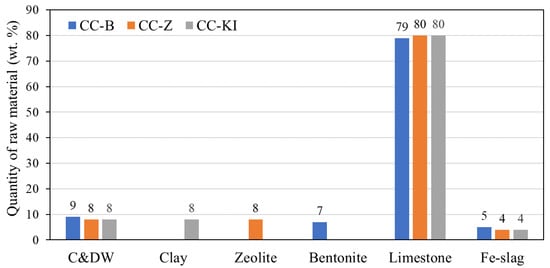
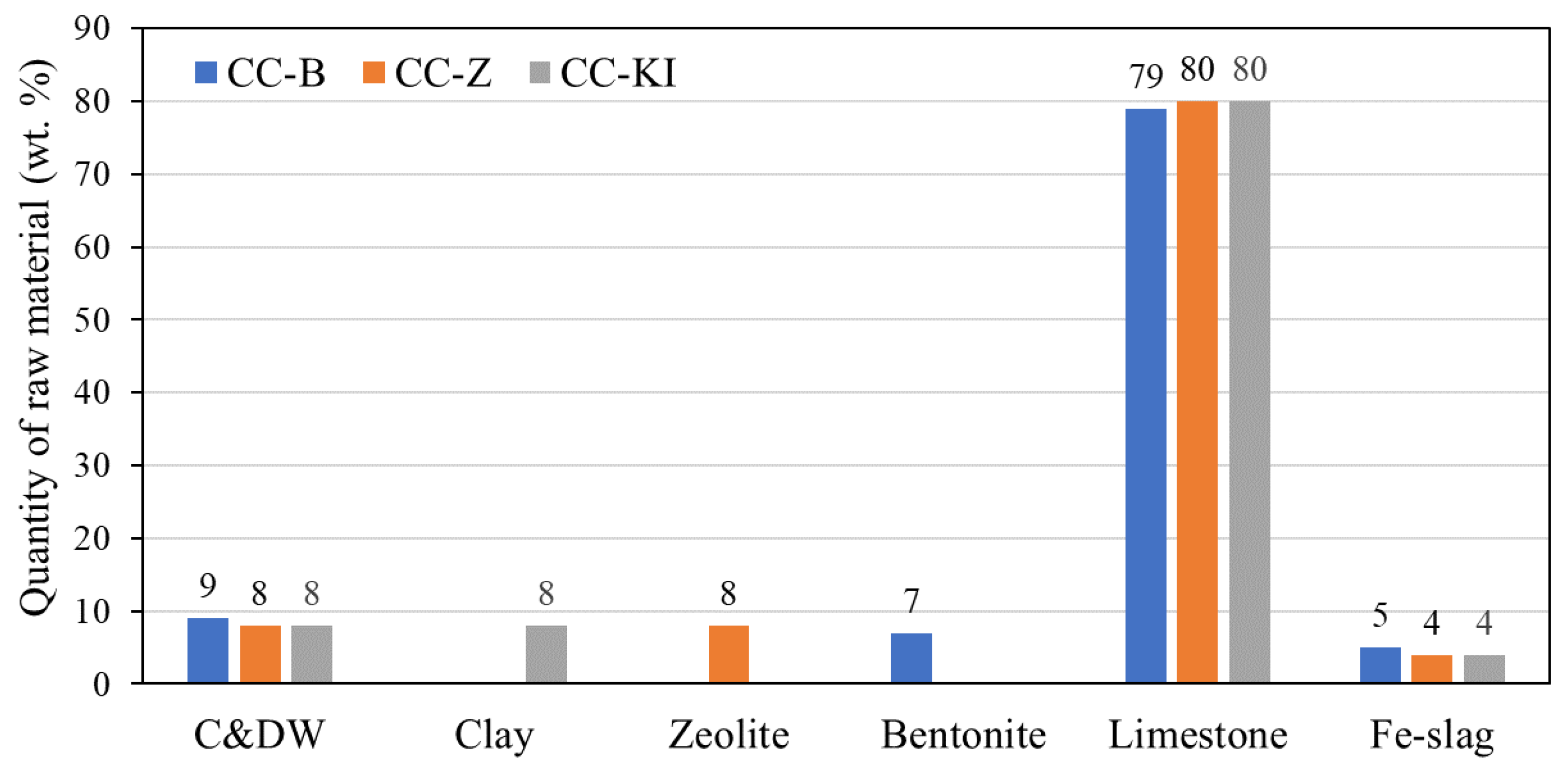
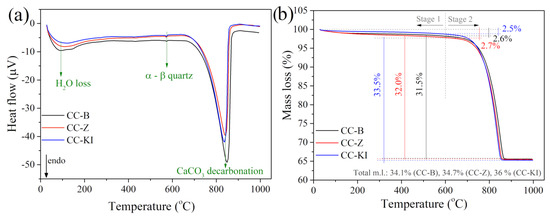
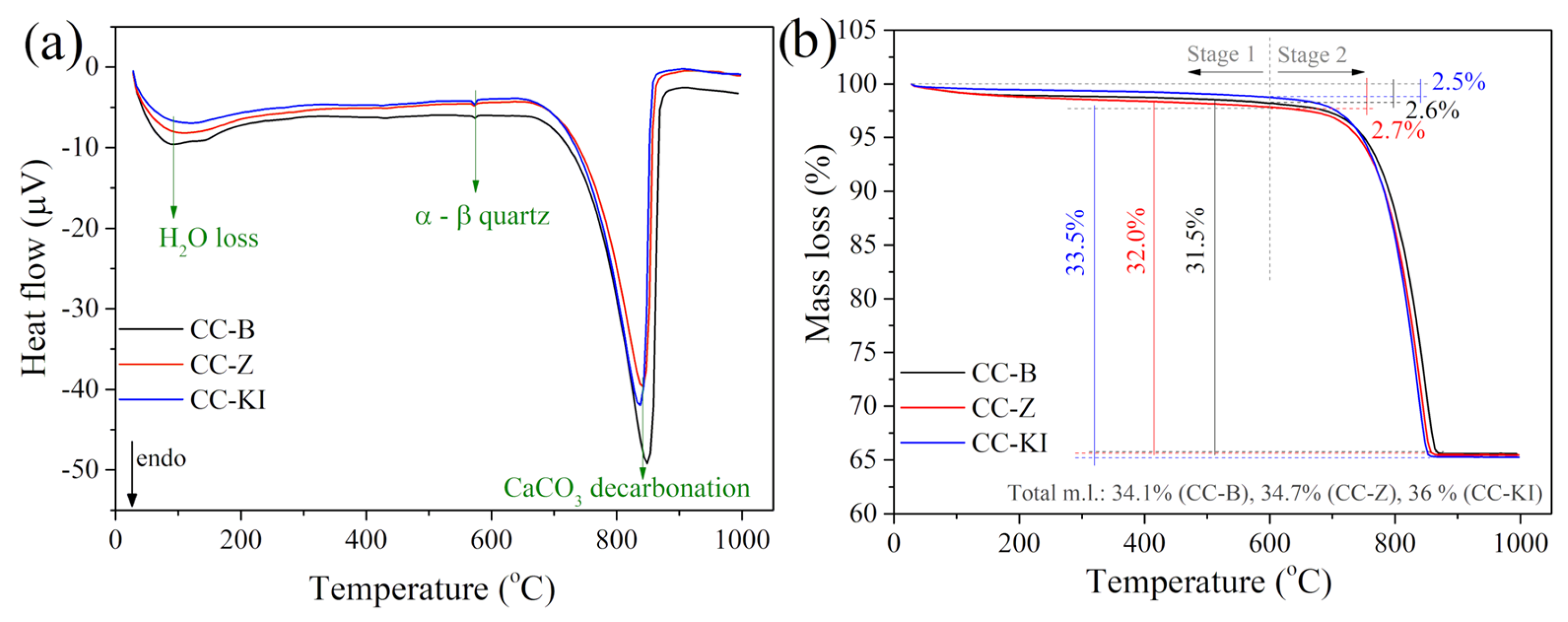
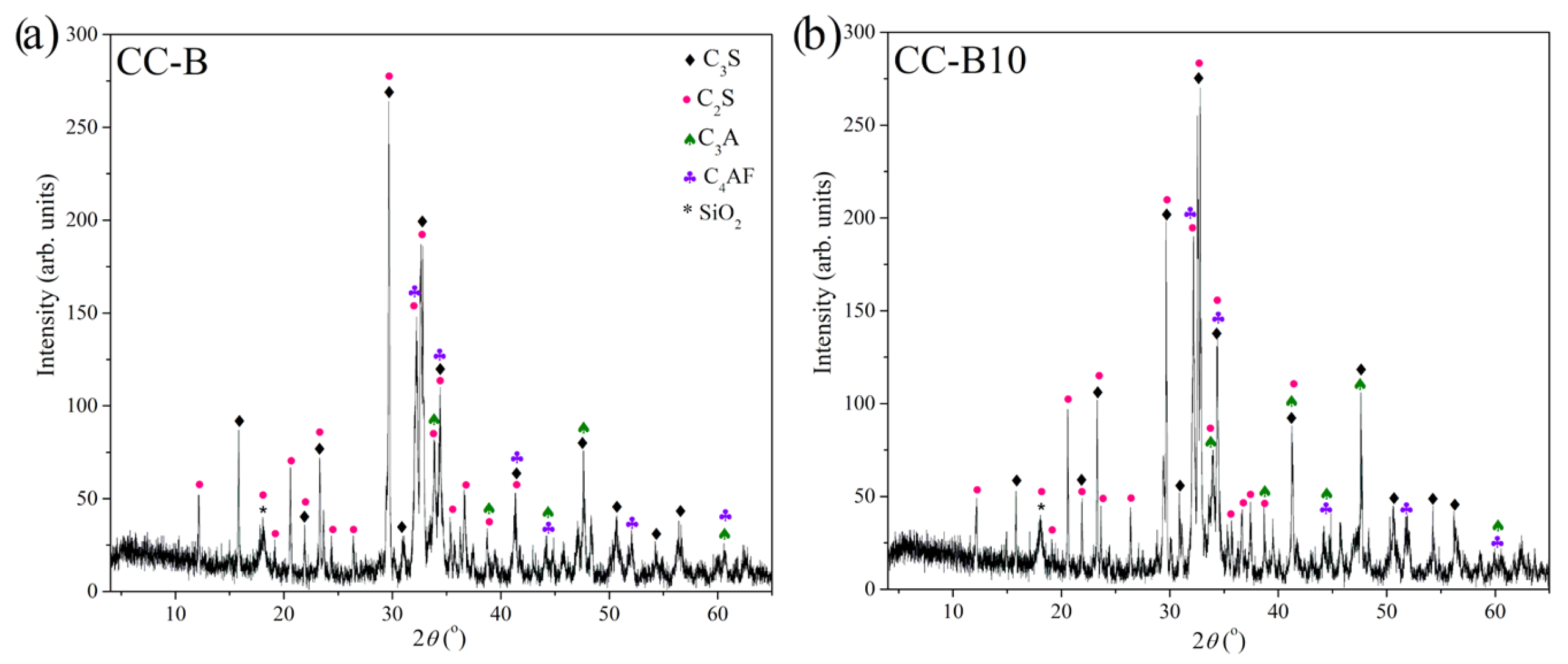
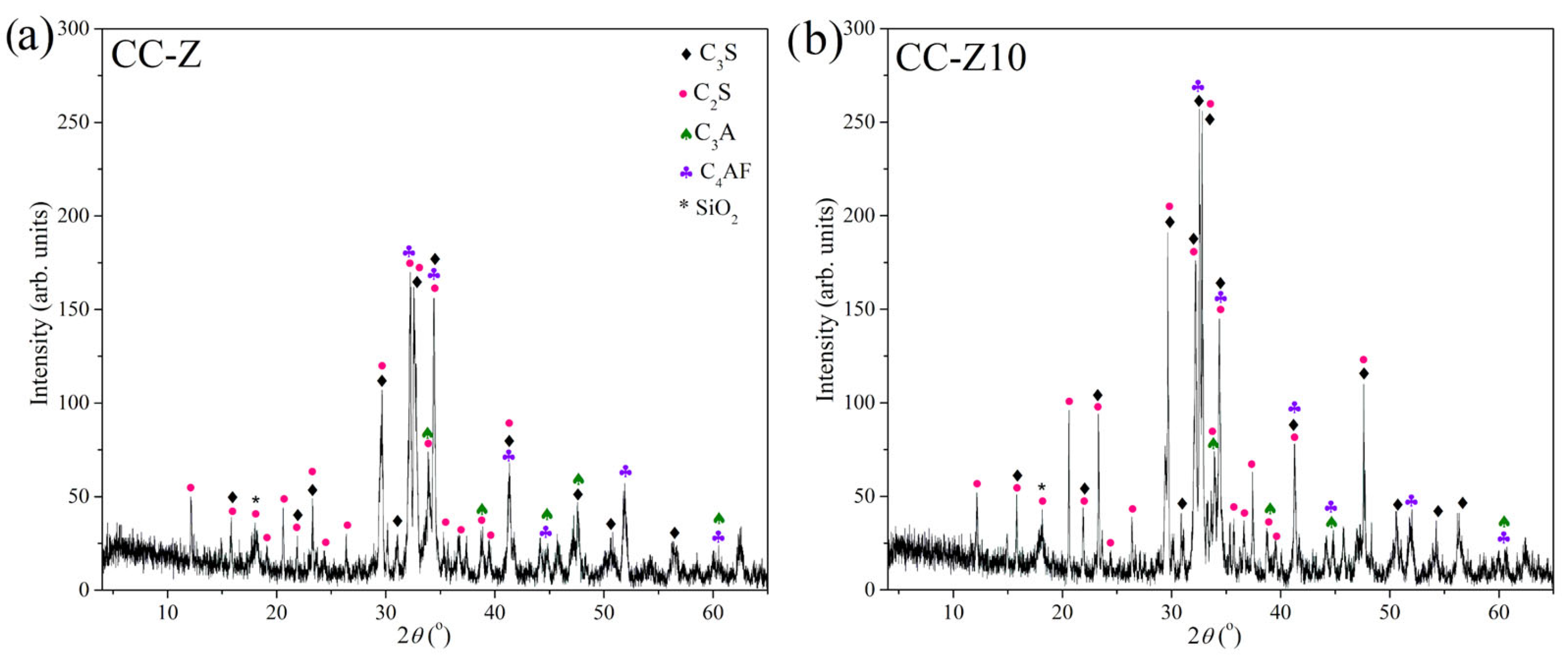
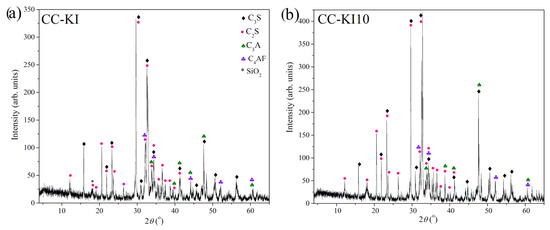
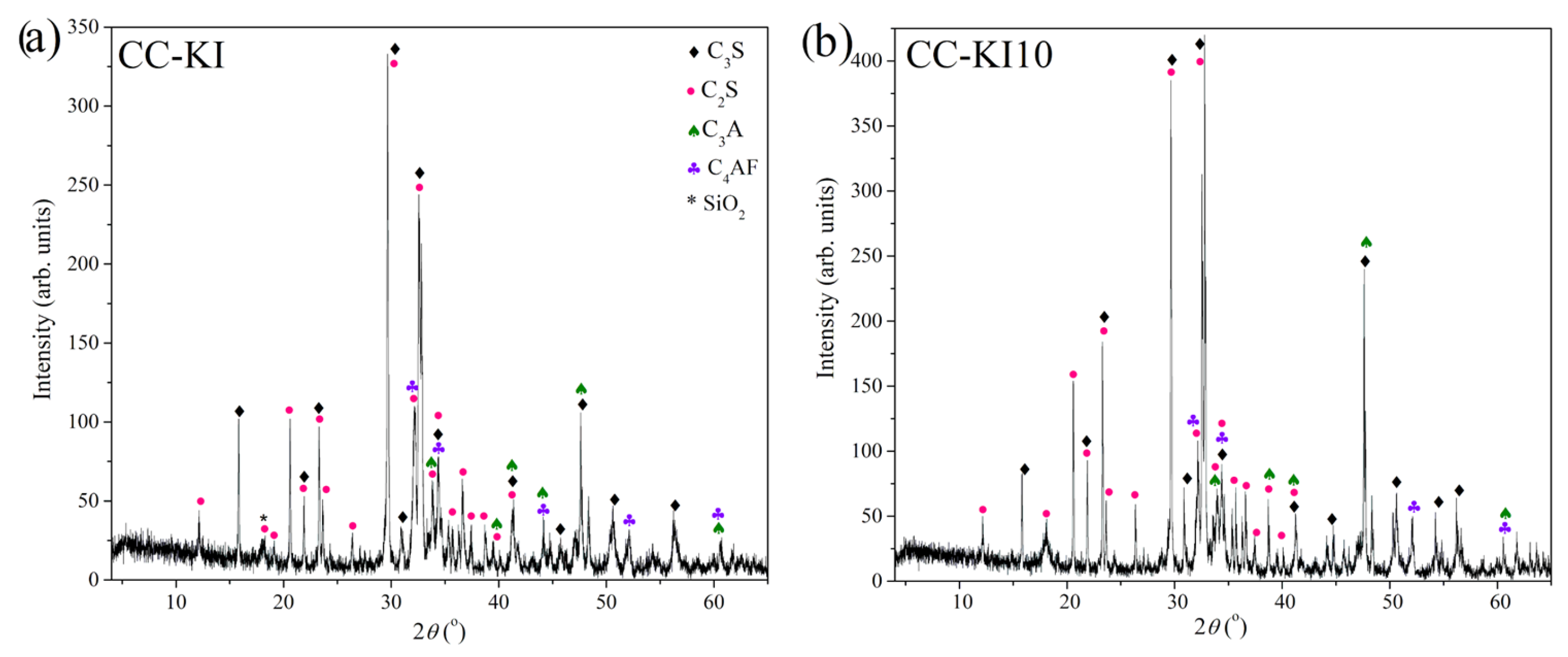
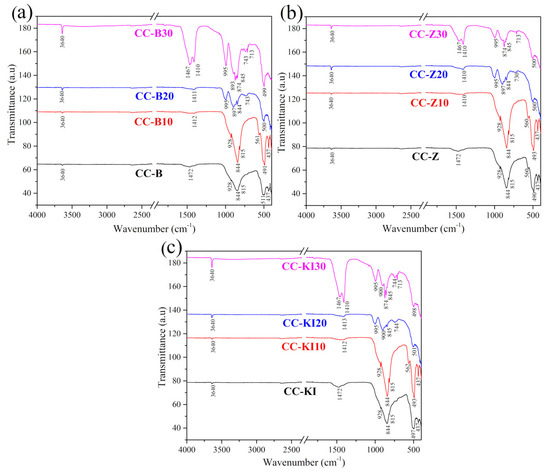
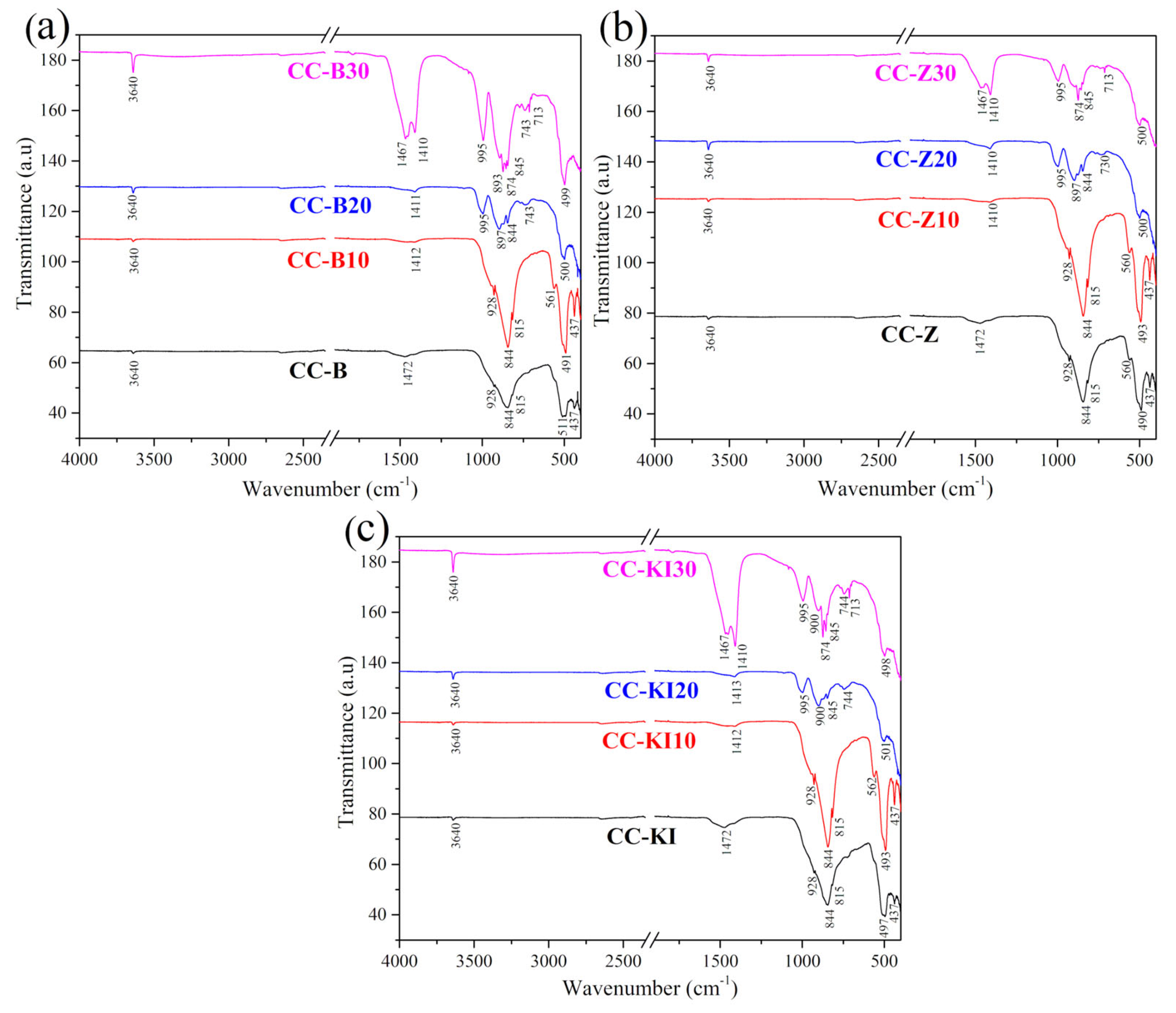
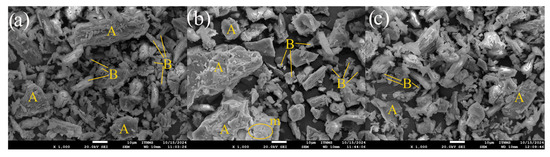
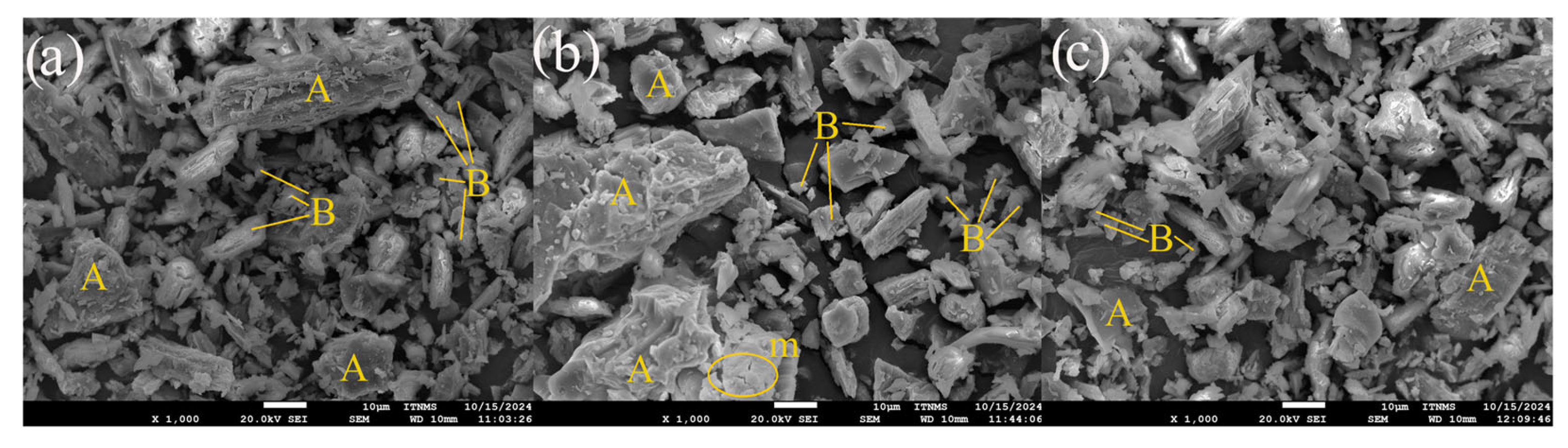
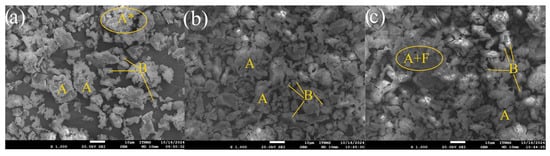
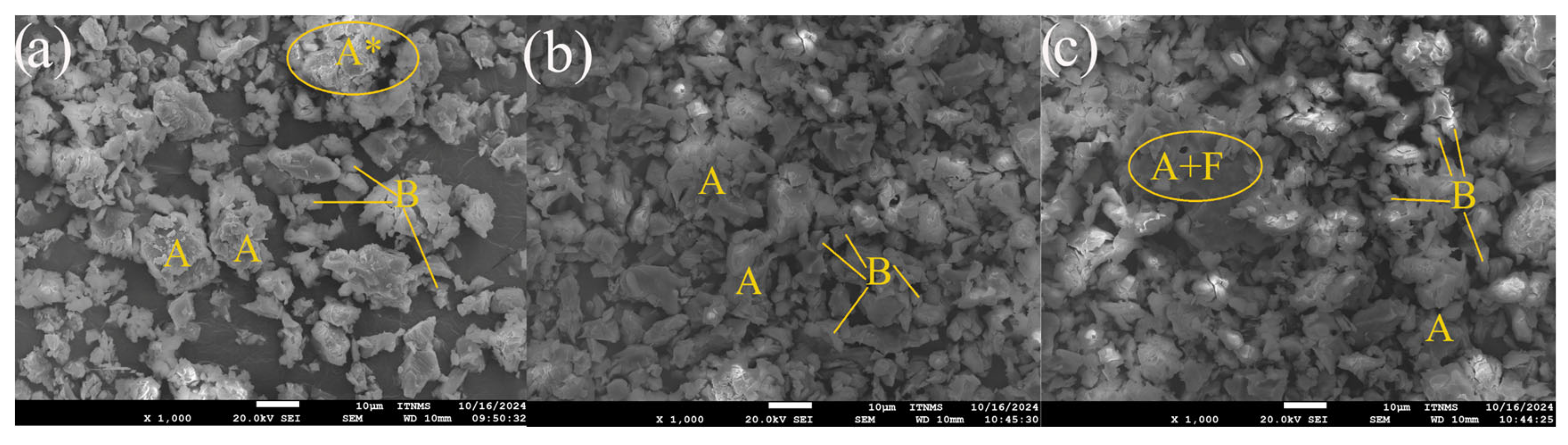
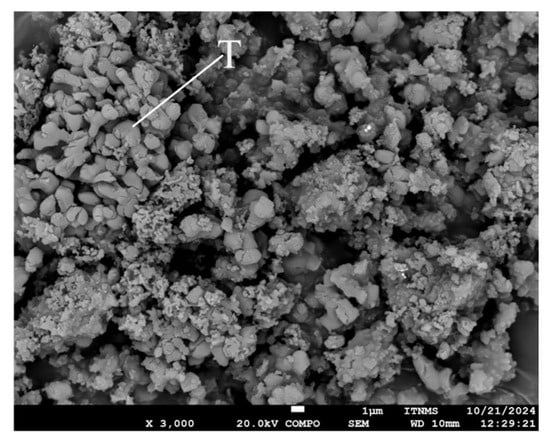
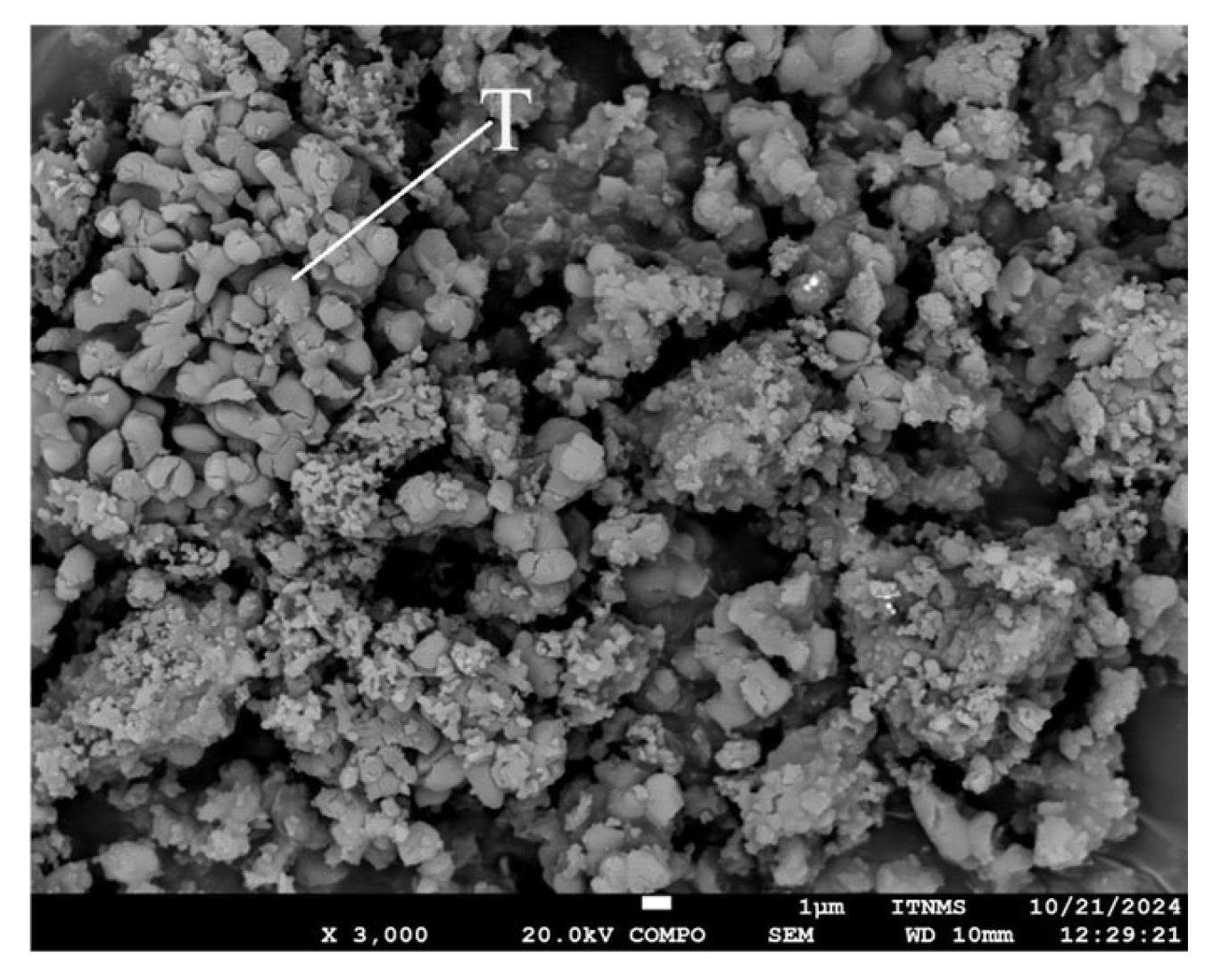
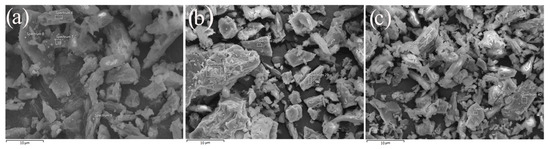
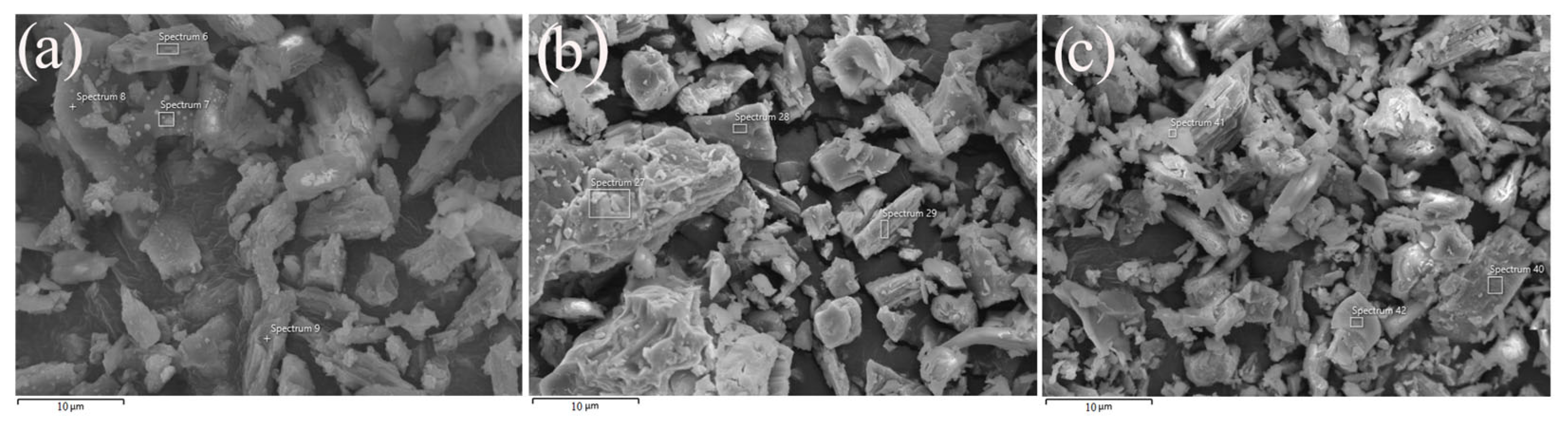
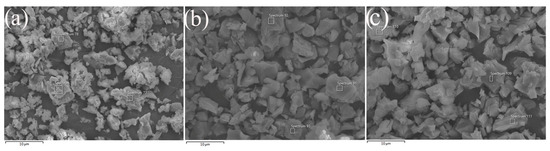
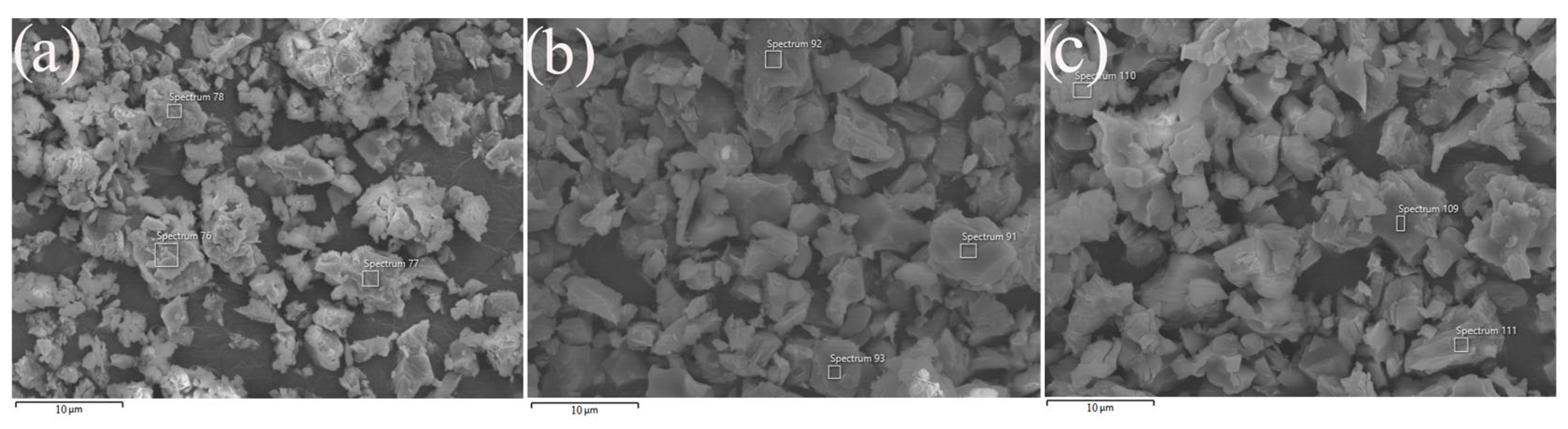
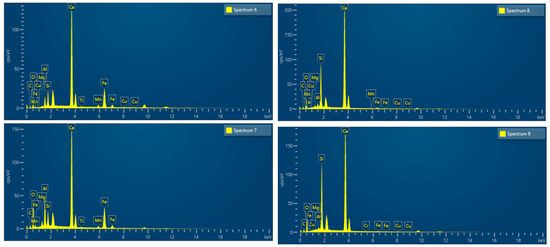
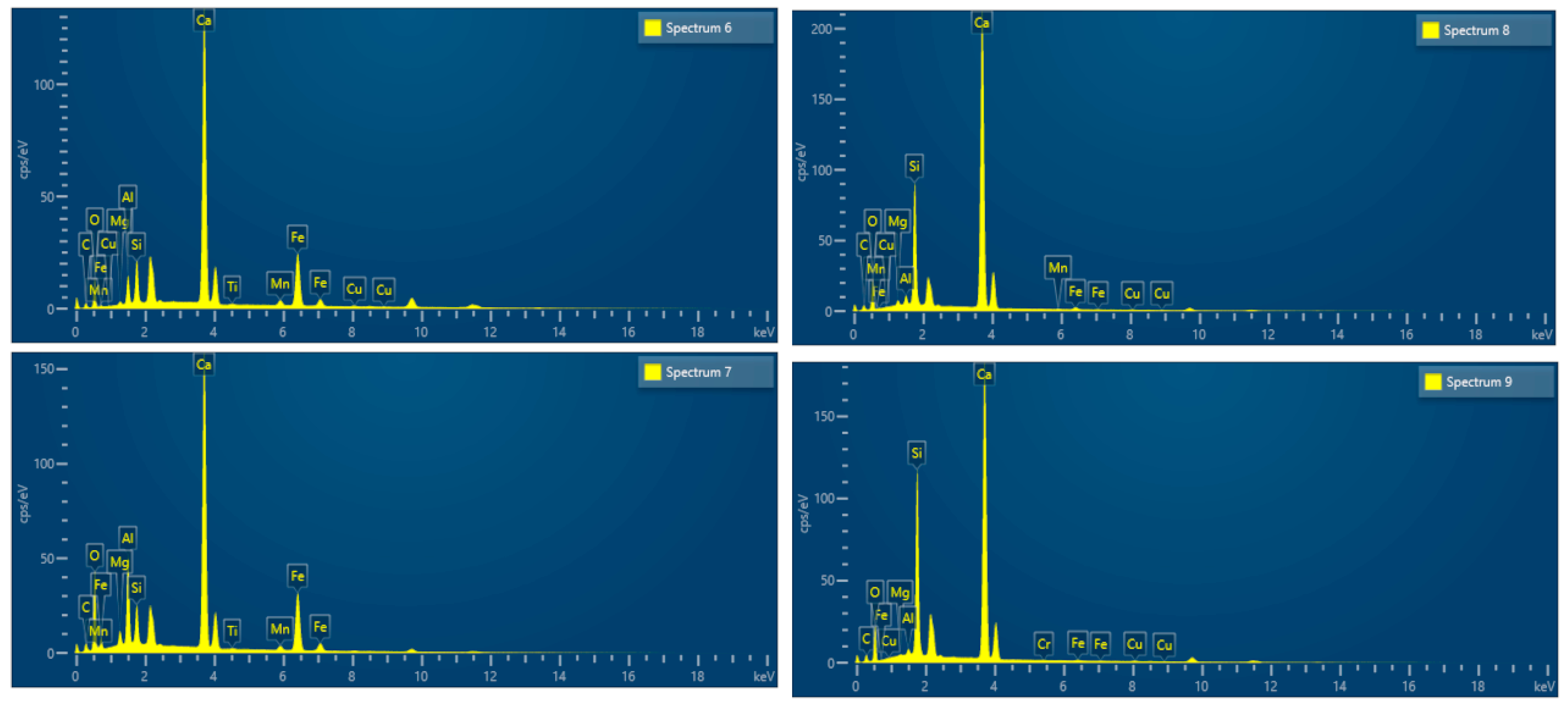
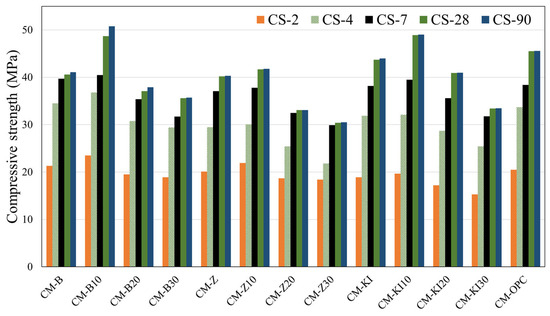
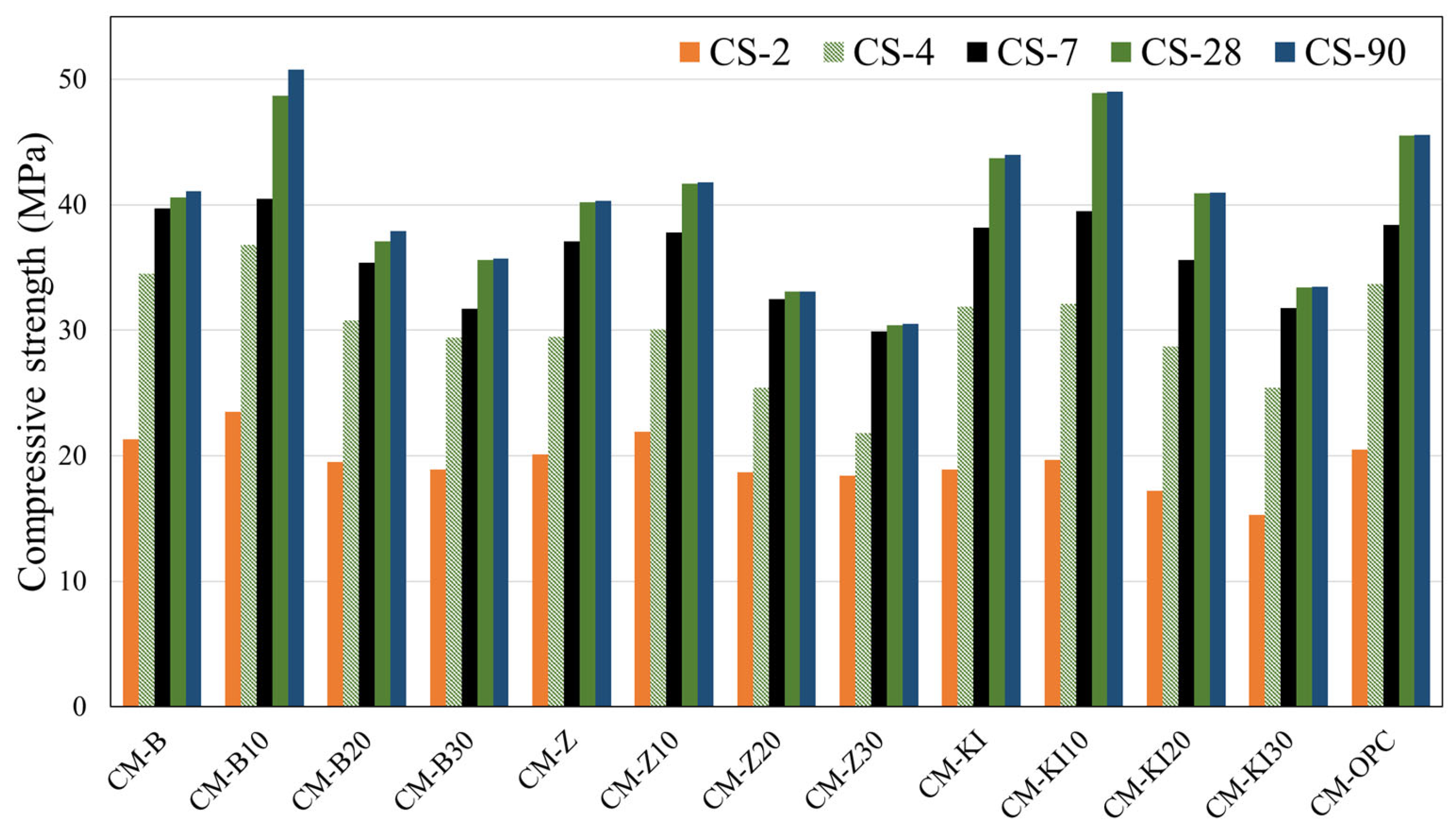
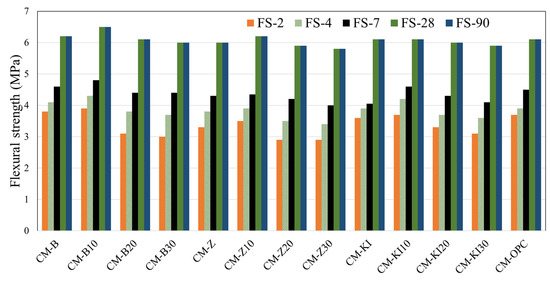
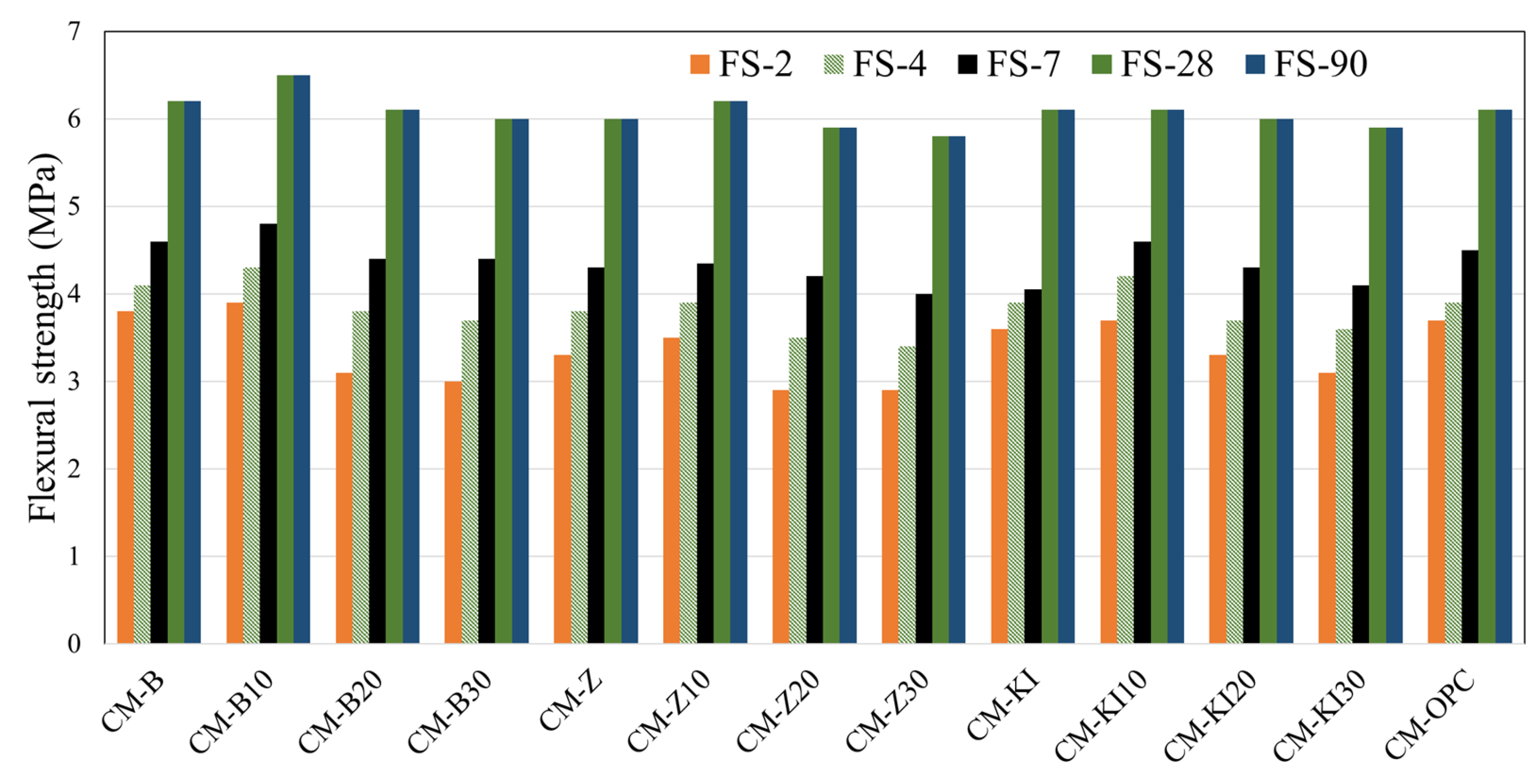

Disclaimer/Publisher’s Note: The statements, opinions and data contained in all publications are solely those of the individual author(s) and contributor(s) and not of MDPI and/or the editor(s). MDPI and/or the editor(s) disclaim responsibility for any injury to people or property resulting from any ideas, methods, instructions or products referred to in the content. |
© 2026 by the authors. Licensee MDPI, Basel, Switzerland. This article is an open access article distributed under the terms and conditions of the Creative Commons Attribution (CC BY) license.