


Highlights
- Chemically treated spruce chips by Al2(SO4)3, CaCl2, Na2SiO3 and NaOH were analyzed.
- Compatibility of these spruce chips with Portland/blended cements (limestone and power plant slag) was assessed.
- Differences in trend of hydration temperature curves due to blended cement types investigated are significant.
- Compatibility factor provided a complementary assessment of hydration behavior in the investigated blended-cement wood–cement systems.
- Inhibitory index and compatibility factor showed different sensitivities to changes in hydration-temperature profiles.
Abstract
This article presents the results of research focusing on the compatibility of two types of blended cements with spruce chips (SCs), which have high potential use in the industrial production of wood-cement composites (WCCs). The blended cements were produced by modifying Portland cement with finely ground power plant slag (H) and limestone (L). Na2SiO3, Al2(SO4)3·18H2O, CaCl2 and NaOH, in quantities ranging from 0.5 to 6.0%, were used to modulate the hydration reactions and stabilize the properties of the SCs. Firstly, the effect of these chemical modifiers on the properties of the chemically treated SCs themselves (changes in composition, structure and water absorption) was investigated. Subsequently, the temperature development during the hydration of cement pastes and WCCs was evaluated, with the determination of the inhibitory index and the compatibility factor. The results demonstrated that partial replacement of Portland cement with 15% L or H altered the hydration behavior and compatibility of the cement–SC systems, while the effectiveness of the chemical modifiers depended strongly on binder composition. Among the investigated modifiers, CaCl2 resulted in the highest compatibility factor values, reaching 81.2% for Portland cement, 75.4% for H-modified cement, and 71.3% for L-modified cement at the highest investigated dosage. In contrast, the effectiveness of Al2(SO4)3·18H2O was reduced in the H-containing binder. Overall, the results demonstrate that chemical modifiers cannot be selected independently of cement composition when blended binders are used in wood–cement composites.
1. Introduction
Wood-cement composites (WCCs) are an important category of building materials. These composites also include the widely used cement-bonded particleboards (CBPs). Cement, plant particles (PPs), and water make up the dominant portion of the CBP. One of the major European producers of CBPs—CIDEM Hranice, a.s.—currently uses CEM I 42.5 R and CEM II/A-S 42.5 R cement in the production of these boards. However, given the current environmental situation, there is growing pressure to use blended cements. This can lead to a significant reduction in the carbon footprint and, consequently, help mitigate climate change. The use of locally available alternative raw materials (e.g., finely ground limestone and power plant slag) is a viable option.
The substitution of Portland clinker with alternative components impacts the kinetics of hydration reactions [1,2,3] as well as the compatibility between cement and PPs [4]. The compatibility between cement and PPs is related to the decomposition of PPs, which in turn inhibits cement hydration. Inhibition of the hydration reactions of the cement binder caused by decomposing hemicellulose and lignin [5,6] can adversely affect the final structure of the C-S-H phases [7] and the properties of the cement matrix [8], and thus also the WCC [9]. This inhibition is caused primarily by sugars or their elemental components [10,11,12,13], which are released from PPs upon their contact with the cement matrix [14]. In particular, Ca2+ ions and possibly also Al3+ and Fe3+ ions complex with the organic components of PPs, thereby affecting the hydration kinetics of cement clinker minerals (e.g., retardation of the C3S reaction) [15,16,17]. The decomposition of unstable PP components (primarily hemicellulose) that are in alkaline and aqueous environments along with ion exchange with hydrating cement (or other chemicals) results in chemical changes in the PPs. Changes in the cellular structure of PPs contribute to mineralization [18] and thus to the partial stabilization of the properties and structure of PPs [14]. Mineralization and structural stabilization of PPs have a positive effect on the compatibility of cement and PPs.
To limit the retardation of hydration reactions and enhance the stabilization of the properties and structure of PPs, appropriate chemicals such as hydration accelerators and PP property stabilizers are used. Effective accelerators used for CBPs include Al2(SO4)3, CaCl2, MgCl2 [19,20,21], and combinations thereof [22]. Notable mineralizers and stabilizers include cement, lime, Na2SiO3, Ca(OH)2, and NaOH [21,23]. Stabilization can also be enhanced by treating WCCs with CO2, which has a positive effect on mechanical properties [24]. Another option for improving the stability of the resulting WCC is the partial substitution of primary PPs with particles that have already been stabilized, such as those derived from CBP waste offcuts [25,26,27]. To achieve optimal compatibility between cement and PPs in the industrial production of CBPs, a combination of a stabilizer and an accelerator like Na2SiO3 and Al2(SO4)3·18H2O is frequently used [25,26,28,29]. Biswas and Ifle [17] demonstrated that this combination is more effective than Al2(SO4)3 alone through an analysis of temperature development during hydration.
The principle behind stabilizing the properties and structure of PPs primarily lies in the decomposition and removal of hemicellulose (a source of polysaccharides), tannins, and other soluble substances that cause cement hydration to be delayed [10,11,12,13]. Hemicellulose is also significant in terms of the high water absorption of wood, or PPs, which is undesirable. Extraction of inhibitory substances is possible using, among other things, NaOH, CaCl2, or cement [16,23,30]. The effectiveness of stabilization also depends on the type of PPs [31,32,33,34] and the cement-to-PPs ratio [35].
The mechanisms of acceleration vary depending on the chemical used and the type of cement. When sulfate-based accelerators, such as Al2(SO4)3·18H2O, are added to Portland cement, the released Al3+ ions are converted into the [Al(OH)4]− complex, which reacts with SO42− and Ca2+ ions to form ettringite or monosulfoaluminate [36,37]. Sulfate accelerators thus primarily influence the C3A reaction. However, the dissolution of calcium silicate phases, mainly C3S, is also promoted immediately after the addition of the accelerator [36,38]. In the presence of fine limestone, the secondary C3A reaction and AFm formation are promoted due to acceleration by Al2(SO4)3 [36]. In contrast, accelerators containing Ca2+ ions, such as CaCl2, supply the hydration reactions with calcium cations. This compensates for the deficiency caused by the complexation of Ca2+ with the organic components of PPs. As a result, C3S hydration is accelerated and the development of C-S-H phases is stabilized. CaCl2 acts as a catalyst for early-age C3S and C2S hydration and likely promotes the formation of a more permeable (porous) C-S-H gel that allows for faster ion diffusion and, consequently, faster hydration of cement particles at early ages [39]. However, the chloride is found to be incorporated in various hydration products—Friedel’s salt, etc. [39]. Also possible formation of “ferrihydrite gel” in the Class H slurries, as CaCl2 has been reported to accelerate the reaction of C4AF with gypsum [40,41]. Na2SiO3 is not primarily an accelerator. However, higher concentrations of Si in the solution facilitate the formation of primary C-S-H nuclei [42]. A reaction between Na2SiO3 and Ca(OH)2 has been demonstrated, resulting in the formation of additional C-S-H gel [43]. Na2SiO3 serves as a source of soluble silicates. However, the effectiveness of Na2SiO3 as an accelerator may be limited by the complexation of Ca2+ ions with the organic components of PPs. A change in the Ca/Si ratio could negatively affect the formation of C-S-H phases [44]. Although NaOH is used primarily for the pretreatment of PPs, its effect on the kinetics of cement hydration reactions has been demonstrated. The addition of NaOH accelerates hydration reactions, thereby shortening the induction period of hydration within the first few hours [45] by up to 75% [46]. In the presence of NaOH, the cleavage of Si–O bonds is facilitated, the surface hydroxylation of C3S and C2S is accelerated, the dissolution of C3S and C3A is hastened, and consequently, the formation of CH and C-S-H phases is also accelerated [45]. However, there is also a significant decrease in the concentration of Ca2+ ions in the pore solution. Although C-S-H forms more rapidly, it does so with altered morphology [47]. The result is a shortening of the silicate chains, a decrease in mean chain length, a higher water content in the C-S-H phase, a weaker “C-S-H bridge,” etc. [45,48]. Moslemi et al. [23] however, report that WCCs with added NaOH achieved very good results in terms of the course of hydration reactions.
To evaluate the compatibility of PPs and cement (or to verify the effectiveness of the accelerators and stabilizers used), various indicators have been successively developed and empirically validated—the inhibitory index [16,19,49,50,51,52,53], or the compatibility factor [19,54,55,56]. These characteristics are based on an assessment of the curing process of the cement matrix containing PPs. The evaluation criterion is the temperature profile, or the heat released during cement hydration.
Blended cements represent an inevitable alternative to conventional cements and should receive greater attention in future research and applications. However, the effectiveness of commonly used chemical modifiers has not been sufficiently investigated when Portland clinker is partially replaced by alternative constituents, and it remains unclear whether conventional compatibility indices adequately describe the hydration behavior of such WCCs based on blended cement. A knowledge gap in the evaluation of the compatibility of PPs and blended cements was identified. Compared with our previous investigations of WCCs containing L or H [4], the present study places particular emphasis on the effects of four chemical modifiers on the SCs themselves and on the subsequent hydration compatibility of the treated chips with blended cements (modified by 15% L or H). The hydration temperature was monitored and assessed during the initial stage. Thus, present study provides a comparative assessment of treatment-related changes in SCs properties and their relationship with cement hydration behavior. Research presented in our previous study [4] is focused more on the stabilization of SCs by various cement matrices (modified by 10% of L or H) with support of mechanical tests and long-term water uptake measurements performed on WCCs. Therefore, the present study aimed to determine how binder composition (Portland cement and Portland cement modified with 15% limestone or power plant slag), modifier type and modifier dosage affect the compatibility between spruce chips and the cementitious matrix. Particular attention was given to whether the inhibitory index and compatibility factor provide consistent assessments when applied to (L and H-) blended-cement WCCs.
2. Materials and Methods
2.1. Raw Materials
For the first phase of the research, spruce chips (SCs; Picea abies) supplied by the Czech CBP producer CIDEM Hranice, a. s. were used as PPs. The chemical composition of the SCs used (see Table 1) was determined according to the Seifert method (cellulose), the Wise method (holocellulose), the Klason method and TAPPI T 222 om-11 (lignin), TAPPI T 280 wd-06 (extractives), and TAPPI T 211 om-02 (ash). Hemicellulose was computed from the cellulose and holocellulose contents. SCs with identical properties (particle size, density, bulk density, etc.) and microstructure (before chemical treatment) were used, as described by Melichar et al. [27]. Prior to treatment, the material was conditioned at (20 ± 2) °C temperature and (65 ± 5)% relative humidity for 10 days.
Table 1.
Composition of spruce chips (mass percentage).
In addition, four types of additives were used in the experiments: aluminum sulfate Al2(SO4)3·18 H2O (AS), sodium silicate Na2SiO3 (NS), calcium chloride CaCl2 (CC), and sodium hydroxide NaOH (NH). AS is highly soluble in water and has a pH ranging from 4 to 6. Specifically, AS type ALG (Kemwater ProChemie s.r.o., Kolín, Czech Republic) was used. NS is a basic substance with a pH ranging from 11 to 12. Specifically, NS type Tonasil Na 1740 (Vodní sklo, a.s., Ústí nad Labem, Czech Republic) was used. CC is highly soluble in water, and its pH ranges from 8 to 9. Specifically, CC (10043-52-4, Penta, s.r.o., Praha, Czech Republic) was used. NH is highly soluble in water, and its pH is around 14. Specifically, NH (1310-73-2, Penta, s.r.o., Czech Republic) was used.
Portland cement CEM I 42.5 R (CE; Cement Hranice, a.s., Hranice, Czech Republic). This cement was used for mineralization in the first stage of research as well as for the WCCs production (temperature measurements). The major components are CaO at 57.2% and SiO2 at 18.4%, followed by Al2O3 at 5.1%, Fe2O3 at 3.6%, with an alkali content up to 1.2% and MgO 1.4% determined according to EN 196-2 [57]. The specific surface of the cement is 406 m2/kg, and the density 3129 kg/m3 determined according to EN 196-6 [58]. The initial setting time is 178 min from mixing determined according to EN 196-3 [59]. The normalized compressive strength after 28 days reaches 59.0 MPa determined according to EN 196-1 [60].
Finely ground limestone (L) type VMV15-F from Štramberk (Czech Republic) was used as a partial substituent of CE. The major component is CaCO3 at 96.9% and then SiO2 at 1.43% determined according to EN 196-2 [57]. The specific surface of L is 469 m2/kg, and the density 2692 kg/m3 determined according to EN 196-6 [58].
Thermal power plant slag (H) from Oslavany (Czech Republic) is a particular material with grains up to 16 mm and was used as a partial substituent of CE. H was therefore ground in a ball mill and reached specific surface area of 514 m2/kg determined according to EN 196-6 [58]. H contains a high proportion of the amorphous phase (84.3%), SiO2 (51.3%) and Al2O3 (21.9%). The amorphous phase was determined by quantitative X-ray diffraction analysis (with CaF2 standard).
Three cementitious binders (see Figure 1) were investigated: Portland cement (CE) and two blended cements obtained by replacing 15% of Portland cement with finely ground power plant slag (CEH) or limestone (CEL). The graphs (see Figure 1) have been constructed directly according to data specified in the technical standard EN 197-1 [61], which outlines limit values of each cement component. Since the composition of commercial cements is not entirely constant, the minimum (left vertical axis of the graph) and maximum (right vertical axis of the graph) contents of individual components are indicated. Since CIDEM Hranice, a.s. utilizes portland-slag cement CEM II/A-S 42.5 R in the production of CBPs, the composition of this commercial cement type is included solely for comparison, although it was not investigated within the scope of the presented research.
Figure 1.
Composition of the investigated cementitious binders and a commercial Portland slag cement included for comparison—Portland cement CEM I (CE), Portland slag cement CEM II/A-S (only for comparison) and modified Portland cements (CEH, CEL); C—clinker, L—limestone, H—power plant slag, SU—supplementary compounds. Values are expressed as mass percentages.
2.2. Methods—Spruce Chips
2.2.1. Treatment of Chips
The SCs were exposed to chemical additives. For the purposes of the research, accelerators and stabilizers (or mineralizers)—Na2SiO3, Al2(SO4)3·18H2O, CaCl2 and NaOH were selected based on findings from the review of the technical literature and input from industry experts (CBP manufacturers). The dose range of individual modifiers was selected with reference to findings in the scientific literature: Na2SiO3 [17,20,62,63,64,65], Al2(SO4)3·18H2O [17,19,20,28,63,64,65,66], CaCl2 [19,23,49,62,64,66,67,68,69,70] and NaOH [23,69,70,71,72]. Additionally, information from the company CIDEM Hranice, a.s. was taken into account when determining the chosen dose. NaOH and Na2SiO3 were investigated because of their potential to modify the chemical and physical characteristics of spruce chips, whereas CaCl2 and Al2(SO4)3 were primarily selected for their established influence on cement hydration. The mixing ratio of the components corresponded to the actual formulation of cement-bonded particleboards—for compositions, see, e.g., [14,25,26,27]. The wood chips were therefore mixed with an aqueous solution containing the given additive in a wood chip: water ratio of SCs: W = 0.6:1.0. The investigated dose levels were intended to examine concentration-dependent responses under the selected experimental conditions, rather than to establish universally applicable industrial optimum concentrations. In particular, NaOH was included to evaluate the influence of alkaline treatment on wood constituents, while Na2SiO3 was investigated for its potential to modify the wood surface and introduce inorganic deposits. The doses (C01 to C03) or concentrations (C01a to C03a) of the modifiers used are listed in the Table 2. The modifier doses are expressed relative to the cement mass, while the concentrations in the aqueous solutions are expressed relative to the water content. Symbols and suffixes corresponding to the modifier dose relative to the cement mass (AS1.0 to AS3.0, etc.) are used throughout the text to ensure unified labeling and comparability with the scientific literature, which also expresses doses as percentage relative to the cement mass. The numerical suffix denotes the corresponding modifier dosage according to the sample-naming convention used in the tables and figures (e.g., AS1.0, CC3.0, NH0.5, and NS1.0). Untreated spruce chips are designated as REF.
Table 2.
Dose and concentration of modifying additives in the water solution (mass percentage of the cement C01 to C03 or water C01a to C03a).
Under the selected treatment conditions, the aqueous modifier solutions were observed to be taken up by the spruce chips within approximately 30–60 min. This interval was estimated from visual observations during sample preparation and was not determined through a separate quantitative absorption-kinetics experiment. The subsequent water absorption measurements (4–168 h) were performed independently to evaluate the moisture-related behavior of the treated spruce chips. Twenty-four hours after mixing this aqueous solution, the wood chips were placed in a dryer and dried to constant mass at a temperature of approximately 35 °C. SCs were then further processed for the required tests and analyses (specified below). SCs were intentionally not rinsed after chemical treatment to determine the extent to which the chemicals might react. Further rinsing with water could also affect the content of more easily soluble polysaccharides (i.e., the breakdown of residual hemicellulose, etc.).
2.2.2. Analysis of Composition Changes
Fourier transform infra-red (FTIR) spectra of the finely ground samples (grain up to 45 µm) were obtained with a PerkinElmer Frontier spectrometer (PerkinElmer, Shelton, CT, USA) equipped with a single reflectance ATR attachment using diamond crystal. The FTIR spectra were analyzed in the absorbance mode from 500 to 4000 cm−1 at a resolution of 2 cm−1 and 16 scans per spectrum. The spectrometer was used for analyzing chemical changes in composition of SCs. An X-ray diffractometer, Empyrean Panalytical (PANanalytical B.V., Almedo, The Netherlands; CuKα radiation), with an angular resolution of 0.026° was used for assessing the phase composition (crystallinity index). Quantification of selected phases was carried out on a differential thermal analyzer, Mettler Toledo TGA/DSC 1 STAR System (Mettler-Toledo, LLC, Columbus, OH, USA), with a sensitivity of the DSC sensor of 0.1 mW and a temperature resolution of 0.00003 °C. Approximately 30 mg of each sample was heated from 40 to 1000 °C at a heating rate of 20 °C/min under an air atmosphere, with a purge-gas flow rate of 40 mL/min. The samples were placed in corundum, and the resulting TG, DTG, and DSC signals were evaluated to characterize the thermal behavior of untreated and chemically treated spruce chips. For each treatment condition, at least 3 independently prepared samples were analyzed.
2.2.3. Crystallinity Index
To determine the crystallinity index (TCI) of SCs cellulose, FTIR spectra of Seifert cellulose were analyzed. The crystalline state significantly affects the elasticity, absorption capacity, and other essential physical properties of SCs. All spectra obtained were baseline-corrected, assigned to the C–O vibrational mode in cellulose, and thus normalized to the 1032 cm−1 band. After deconvolution, the TCI was determined as the ratio of the absorption peaks at 1368 and 2894 cm−1.
The crystallinity index of SCs cellulose was also verified using X-ray diffraction analysis. The determination was performed using the Segal method. The Segal method estimates the amorphous fraction of cellulose Iβ materials simply based on the intensity at 18° 2θ in an X-ray diffraction pattern. [73] This method was developed by Segal and colleagues for rapid comparison of the crystallinity of cellulose samples. [74] Equation of crystallinity determination according to the Segal peak height method is [74]:
The height of the 200 peak () located between the scattered angles of 2θ = 22° to 23° represents the sum of the crystalline and amorphous components, and the amorphous-only component () is represented in this empirical method by the intensity at the minimum of about 18° between the 110 and 200 peaks [74].
The Segal peak-height method provides an empirical apparent crystallinity index rather than an absolute quantitative determination of cellulose crystallinity. In the present study, the method was applied to chemically treated whole-wood samples without mathematical correction for the contributions of non-cellulosic constituents or residual inorganic modifiers. Consequently, the calculated values may be influenced by changes in the relative proportions of cellulose, hemicelluloses, and lignin, as well as by diffraction contributions from inorganic compounds retained after treatment. This limitation is particularly relevant because the treated spruce chips were not rinsed before characterization. Accordingly, the reported values were used as comparative indicators of the diffraction characteristics of the investigated samples and should not be interpreted as direct quantitative measurements of cellulose crystallinity.
2.2.4. Microstructure
A scanning electron microscope TESCAN MIRA3 XMU (TESCAN, Brno, Czech Republic) with resolution 1.2–1.5 nm at 30 kV in SE mode and 2 nm at 30 kV in BSE mode was used for analyzing the microstructure of SCs. For detailed assessment of the structure, a Keyence VHX-950F (Keyence Ltd., Osaka, Japan) optical microscope was also used, featuring a maximum magnification of 2500× and the use of a LIBS probe for elemental analysis.
2.2.5. Water Uptake
To assess the effectiveness of mineralizing the tested chemicals directly on the wood chips, water absorption was determined, which serves as an indirect indicator of the extent to which the composition and structure of the SCs have changed. Hemicellulose has a significant impact on water absorption; the more hemicellulose the SCs contain, the higher their water absorption. Similarly, changes in crystallinity or in the filling of the cellular structure with a mineralizer or stabilizer alter the water absorption of SCs.
Water absorption was therefore analyzed for both modified and unmodified (reference) SCs. The SCs were placed in perforated metal sleeves (with a mesh size of approximately 50 µm) and then immersed in water. Approximately 20 g were placed in each perforated sleeve. The volume of the water bath was 1000 mL. At specified time intervals, the SCs were removed, allowed to drain for 1–2 min to remove excess water, and then weighed to the nearest 0.01 g. The SCs were weighed 4, 24, 72, and 168 h after immersion in the water bath. Water-uptake measurements were performed using 10 independent replicates for each treatment condition. Results are expressed as mean.
2.3. Methods—Wood-Cement Composite
2.3.1. Hydration Temperature
Compatibility testing was conducted on WCCs with a composition based on an actual formulation for the industrial production of CPBs by CIDEM Hranice, a.s.—for the composition, see, e.g., [14,25,26,27]. The only difference lay in the dosage of accelerators and structure stabilizers. The standard formulation uses a combination of AS and NS—a total of 2% by weight of the total mixture (after conversion—approximately 4% of the total cement weight, i.e., 2% + 2%). In this case, AS, CC, NH, and NS were added separately. The objective was to assess the effect of individual additives on the hydration process of newly developed modified cements (substitution of Portland clinker by L and H) and, consequently, on the compatibility of these cements with SCs. The ratio of CE(L, H): SCs: W = 2.7:1:1.67. The tested mixtures differed in the modification of Portland cement and in the use of various additives, including different doses. Fifteen percent of Portland cement was substituted by L and H. For comparison, the cement-based pastes themselves were also analyzed, as well as the L- and H-modified cements with a water coefficient w = 0.4. This water coefficient was chosen regarding the composition of the mixture to produce CPBs and about the amount of water that SCs can absorb [19,50,75]. The composition of the tested mixtures is shown in the tables (see Table 3, Table 4 and Table 5).
Table 3.
Composition of cement pastes and wood-cement mixtures based on Portland cement for compatibility analysis (mass percentage).
Table 4.
Composition of cement pastes and wood-cement mixtures based on L modified Portland cement for compatibility analysis (mass percentage).
Table 5.
Composition of cement pastes and wood-cement mixtures based on H modified Portland cement for compatibility analysis (mass percentage).
To evaluate the compatibility of blended cements and SCs, the temperature profile during their hydration was determined. This procedure made it possible to assess the degree of retardation or acceleration of the hydration process of SCs for a specific additive. For each blend variant, three independent test specimens (each with a volume of 0.22 dm3 and dimensions of 60 × 60 × 60 mm) were analyzed. The temperature-time curves represent the mean of these three measurements. When placing the mixture into the mold, a temperature sensor was inserted into the center of the test specimen. After leveling and lightly compacting the mixture, temperature monitoring began. Wire temperature sensors connected to an Almemo 710 data logger (Ahlborn Mess- und Regelungstechnik GmbH, Holzkirchen, Germany) were used to measure the temperature. The device recorded temperatures at one-minute intervals. Measurements always began immediately after the mixture was placed in the mold and ended after 36 h. The data obtained from the three measurements for a given mixture were averaged and plotted on a graph.
2.3.2. Compatibility of Wood-Cement Composite
Hydration-temperature monitoring was selected as a comparative method for assessing the influence of chemically treated spruce chips on the hydration behavior of the investigated cementitious systems. This approach enables the evaluation of temperature development, the time required to reach maximum temperature, and the relative changes in hydration profiles under consistent experimental conditions. Unlike isothermal calorimetry, however, temperature monitoring does not directly quantify the heat released during hydration, since the recorded temperature response is also influenced by the thermal properties of the specimens and heat exchange with the surroundings. Therefore, the resulting parameters were interpreted as comparative indicators of hydration behavior rather than direct measurements of hydration heat.
To evaluate the compatibility of cement and SCs, the inhibitory index I was used, based on findings from the technical literature [19,52,75]. Parameters obtained from monitoring temperatures during the hydration of WCCs were used to calculate the inhibitory index. I was determined using the following formula:
T’ or T—maximum temperature during hydration of neat cement paste or inhibited cement (WCC) in °C.
t’ or t—time to reach maximum temperature of neat cement paste or inhibited cement (WCC) in h.
S’ or S—maximum temperature-time slope of neat cement paste or inhibited cement (WCC) in °C/h.
Temperature (T) and time (t) were recorded directly with the Almemo 710 data logger. The maximum temperature slope (S) was calculated as the maximum rate of change over time (in °C/h) along the rising phase. This determination was carried out during the linear increase of the temperature curve. CE was selected as the reference, i.e., neat cement paste for the WCCs in Table 3 and also for the comparison of the cement pastes. CEL was selected as the reference neat cement paste for the WCCs in Table 4. CEH was selected as the reference neat cement paste for the WCCs in Table 5.
The individual categories of the inhibitory index are listed in the table (see Table 6).
Table 6.
Compatibility assessment—inhibitory index by temperature during cement hydration in WCC according to [16,19,69].
Even before the experiments began, it was found that in some cases (highly efficient accelerator—CC), negative values of I could be determined [30,76]. For this reason, the category I < 0, “Extreme low inhibition or acceleration”, was also introduced for evaluation.
Compatibility factor CA was also used for assessing the compatibility of blended cements and SCs. Usually, CA is determined from heat evolution [50]. Slightly modified CA was used for computations. Instead of the hydration heat rate (kcal/h), the increase in temperature (°C) over time (h) was used [55] according the following equation:
—area under the temperature curve of the WCC.
—area under the temperature curve of the cement paste.
Both areas were calculated relative to a baseline temperature of 23 °C over the time interval 0–24 h.
For mixtures prepared with blended cements, the reference area was calculated from the temperature curve of the corresponding neat blended cement paste (CEH or CEL, respectively), rather than from Portland cement paste. Compared with the procedure described in the reference publication (3.5–24 h), the integration interval was extended to 0–24 h in order to include the initial stage of hydration. This modification was considered necessary because the investigated systems showed markedly different early temperature development, and exclusion of the first 3.5 h would omit a relevant part of their compatibility response.
Categories of CA are shown in the table (see Table 7).
Table 7.
Compatibility assessment—compatibility factor for cement hydration in WCC according to [54,55].
In the present study, the compatibility factor was calculated from the integrated temperature-time response rather than directly measured hydration heat. This approach was adopted because isothermal calorimetry typically requires relatively small and homogeneous specimens, whereas the investigated systems contained spruce chips with dimensions that are difficult to represent adequately in calorimetric measurements. Temperature monitoring enabled the use of larger specimens more representative of the actual wood-cement composites. Therefore, the resulting CA values represent a temperature-based comparative index and should not be interpreted as equivalent to ratios of cumulative hydration heat. The temperature recorded within a specimen depends not only on the rate of heat generation during cement hydration but also on the thermal capacity, conductivity, geometry, and heat losses of the investigated system. The presence of spruce chips and the partial replacement of Portland cement with limestone or power plant slag may influence these properties. Consequently, the temperature-based CA provides an indirect assessment of hydration behavior under the selected experimental conditions, and its applicability beyond the investigated systems requires further validation.
2.4. Statistical Analysis
Water uptake measurements were performed using ten independent replicates per treatment, while hydration-temperature measurements were conducted using three independent specimens per mixture. Results are presented as mean values with corresponding standard deviations. Differences in water uptake among chemical treatments and concentrations were evaluated using appropriate statistical methods, with statistical significance established at p < 0.05. For the hydration experiments, characteristic parameters, including maximum temperature Tmax and time to maximum temperature tmax, were calculated separately for each replicate. The variability among replicates is reported as standard deviations of Tmax and tmax, while the temperature-time curves are presented as mean profiles.
3. Results and Discussion
3.1. Changes of Chemical and Phase Composition of Spruce Chips
The chemical modification of SCs may influence their compatibility with cementitious matrices through changes in the chemical composition, functional groups, structural organization, and moisture-related behavior of the lignocellulosic material. However, these effects should be distinguished from the direct influence of chemical modifiers on cement hydration reactions. In the present study, the effects of AS, CC, NH and NS on the chemical and structural characteristics of SCs were first investigated independently of the cement matrix using FTIR spectroscopy (see Figure 2), XRD, thermal analysis, and microscopic observations. Among the investigated modifiers, CC and AS are primarily recognized for their accelerating effects on cement hydration [36,62,77,78], although their interactions with the lignocellulosic component may also influence the chemical environment of the wood. In particular, the ionic species introduced by AS may interact with oxygen-containing functional groups of wood constituents, while CC may influence moisture-related interactions due to its hygroscopic nature. In contrast, NH and NS were primarily investigated for their potential to modify or stabilize the chemical and physical characteristics of SCs, although their effects on cement hydration have also been reported in previous studies [43,45,48]. Particular attention was therefore given to treatment-induced changes in the principal wood constituents, including cellulose, hemicelluloses, and lignin, as well as to the possible presence of inorganic residues. The FTIR results of the chemically treated SCs are presented in Figure 2, whereas their subsequent effects on cement hydration and wood–cement compatibility are discussed separately in Section 3.4. As expected, the use of NH caused significant degradation of polysaccharides in SCs (see Figure 2c). The most noticeable changes in absorbance occur at a wavelength of 1731 cm−1. This band represents C=O stretching from carbonyl and acetyl groups in hemicellulose [79,80,81,82,83]. Both NH and NS are highly alkaline substances. Even at the lowest dose of NH, hemicellulose decomposes (see Figure 2c, red area). A more noticeable decomposition of hemicellulose due to NS treatment becomes apparent only at a higher dose (see Figure 2d, red area). The 1511 cm−1 band corresponds to the C=C bond in lignin, i.e., the phenyl ring skeletal vibration [84,85,86]. A trend of decreasing absorbance in the 1511 cm−1 band was observed for NS, with more pronounced changes occurring upon treatment of SCs with NH.
Figure 2.
Changes of chemical composition (FTIR) of chemically treated and untreated spruce chips—(a) CaCl2; (b) Al2(SO4)3; (c) NaOH and (d) Na2SiO3; decomposition of hemicellulose (red area) and lignin (blue area).
The changes resulting from the AS treatment are not significant (see Figure 2b). However, slight differences can be observed primarily in the bands corresponding to bonds in hemicellulose, cellulose, and, to a lesser extent, lignin. As the amount of AS increases, a decreasing trend in absorbance is observed in the 1731 cm−1 band. The absorbance curves of CC-treated wood chips do not indicate clear correlations with respect to the decomposition of hemicellulose or lignin. However, changes in the CC absorption bands were identified. A very pronounced difference between CC and other chemicals can be observed in the absorption band at 3336 cm−1, which corresponds to O–H stretching in phenolic and aliphatic structures [87,88]. The increase in intensity in this band may be related to water binding to SCs, i.e., hydration, since CC is a highly hygroscopic substance. At the same time, Ca2+ ions interact with the hydroxyl groups of the cellulose SCs, which may disrupt the original network of hydrogen bonds. AS and CC did not exhibit a significant effect (lignin decomposition) with a demonstrable dependence on increasing amounts of these substances.
An increasing trend in TCI (see Table 8) can be observed in the treatment of SCs by NH and NS. This increasing trend may also reflect changes in the cellulose structure and the removal of amorphous components, the interpretation of which was further refined by XRD analysis. The reduction in amorphous constituents may correspond to the degradation of the amorphous fraction of cellulose, as also indicated by the results presented in [73,89]. When treating SCs, a TCI of 0.828 was recorded for NH at a 2% dose, which is approximately what Yildiz et al. [89] determined for heated spruce wood (150 °C/6 h). When comparing NH and NS, a steeper increase in TCI is evident specifically for NH. In contrast, AS and especially CC are characterized by a decreasing trend in TCI. This does not necessarily indicate an unambiguous increase in amorphous cellulose, but rather a change in the arrangement of the cellulose structure and hydrogen bonds, which was observed through a comparison of absorption spectra using FTIR. CC is highly hygroscopic, and Ca2+ ions interact with the hydroxyl groups of cellulose. This can lead to partial swelling of the fibers, changes in hydration, and disruption of the original network of hydrogen bonds. This, in turn, can result in a decrease in TCI, since the ratio of bands used for its calculation is sensitive not only to TCI itself but also to changes in the binding environment of cellulose. In the case of AS, a phenomenon similar to that observed with CC may occur, albeit to a lesser extent. Al3+ has a high affinity for oxygen-containing groups and can interact with the hydroxyl groups of cellulose as well as other components of the lignocellulosic matrix. At the same time, AS can partially acidify the environment, which may lead to changes in hydrogen bonds and local loosening of less ordered regions. Therefore, the TCI determined by FTIR may decrease without a corresponding increase in the amorphous fraction of cellulose, although the XRD results do not independently confirm this interpretation (see Table 9).
Table 8.
Total crystallinity index (TCI—A1368/A2894) of chemically treated SCs (FTIR).
Table 9.
Apparent crystallinity index (CrI) of chemically treated SCs determined by XRD using the Segal peak height method.
The differing FTIR-based TCI and XRD-based CrI trends, particularly for AS- and CC-treated SCs, should be interpreted in view of the different sensitivities and limitations of these indices. TCI is an empirical absorbance ratio that may respond to changes in the chemical environment of cellulose, whereas the Segal CrI is derived from diffraction intensities and, in whole-wood samples, may also be influenced by non-cellulosic constituents and residual inorganic phases. Consequently, decreasing TCI values accompanied by relatively stable or increasing CrI values do not necessarily indicate contradictory changes in cellulose crystallinity. Neither index alone establishes the underlying mechanism, and the results should be regarded as complementary indicators rather than directly equivalent measurements. As can be seen from the CrI results, CrI values for all types of treated SCs increase with increasing dose of the given chemical. Only in the case of the lowest dose of chemical treatment of SCs can a slight decrease be observed compared to the reference SCs (see Table 9). This phenomenon is likely caused by slight variability in the composition of individual SC samples. As expected, the most significant increase was observed for NH, followed by NS. In contrast, SCs treated with AS and CC exhibited relatively stable CrI values with a very slight increase. The CrI values of the reference SCs roughly correspond to the results presented, for example, by Andersson et al. [90].
The apparent CrI values should be interpreted with caution because the investigated samples consisted of chemically treated whole wood rather than purified cellulose. In addition to possible changes in cellulose organization, the observed variations may reflect alterations in the relative contribution of amorphous wood constituents and residual inorganic modifiers to the diffraction patterns. Consequently, the higher CrI values recorded for NH- and NS-treated samples cannot be attributed exclusively to an increase in cellulose crystallinity. Similarly, the comparatively small differences observed for AS- and CC-treated samples should not be regarded as conclusive evidence of changes in crystalline cellulose organization, particularly in the absence of statistical evaluation of the corresponding experimental variability [68,69].
Comparison of the FTIR-derived TCI and XRD-derived apparent CrI revealed both corresponding and divergent treatment-dependent trends. For NH- and NS-treated spruce chips, both indices generally increased with modifier concentration, suggesting changes in the relative structural organization and composition of the lignocellulosic material. However, the responses differed for AS and CC. In particular, at the highest CC dosage, TCI decreased from 0.719 in the untreated reference to 0.646, whereas the apparent XRD CrI increased from 22.77 to 24.89. For AS, the corresponding values were 0.687 and 21.95, respectively, indicating decreases relative to the untreated reference for both indices, although their concentration-dependent responses were not identical. These differences can be attributed, at least in part, to the distinct analytical principles of FTIR and XRD. FTIR band-intensity ratios are sensitive to changes in the local chemical environment and relative vibrational contributions, whereas XRD-derived apparent CrI depends on diffraction intensities influenced by both ordered cellulose domains and other sample constituents. Moreover, residual inorganic modifiers may affect the diffraction response of the treated whole-wood samples. Therefore, the two indices should be considered complementary, method-dependent indicators of treatment-induced changes rather than interchangeable quantitative measures of cellulose crystallinity.
The thermal decomposition of the major components of spruce wood occurs in a temperature range of approximately 250 to 560 °C; at temperatures above 430 °C, decomposition processes occur only to a minor extent [91], which was confirmed for the reference SCs—REF (see Figure 3).
Figure 3.
Thermal analysis of untreated (REF) and chemically treated SCs: (a) Na2SiO3; (b) Al2(SO4)3; (c) CaCl2 and (d) NaOH, where thermogravimetric (TG) curves, derivative thermogravimetric (DTG) curves, and differential scanning calorimetry (DSC) curves, are available.
At temperatures between 250 °C and 300 °C, hemicelluloses decompose; between 300 °C and 350 °C, cellulose decomposes; and between 300 °C and 500 °C, lignin follows [92]. Cellulose in its crystalline form is nearly inert to thermal decomposition at temperatures <300 °C [89,93]. CC and AS decompose at temperatures around 770 °C to 780 °C, while NH and NS decompose at temperatures >1000 °C.
The DSC/TGA results indicate systematic changes in the thermal decomposition behavior of the SCs following treatment with NH and NS (see Figure 3, Table 10). However, changes of all samples should be interpreted together with the slight contribution of residual inorganic modifier to the final sample mass. Mass losses decreased with increasing doses of NH and NS (see Figure 3a,d). Although the lowest mass losses were recorded for CC (see Figure 3c), this can be attributed to the hygroscopicity of CC; that is, SC samples treated with CC contained higher levels of free and physically bound water. AS had the least effect on stability, with no clear dose-dependent relationship (see Figure 3b). AS can therefore be characterized purely as an accelerator of cement hydration reactions without a direct effect on the stabilization of SCs.
Table 10.
Mass loss of chemically treated SCs (DSC).
The DSC results (see Figure 3) also point to an interesting phenomenon, specifically a shift in the temperature ranges of the SC decomposition reactions and a change in the thermal profile of these reactions. The change in reaction enthalpy is evident as a function of the type of SC chemical modifier and the dose of that modifier. The presence of CC, AS, NS, and NH causes the dominant decomposition reaction of SCs to split into multiple segments—two exothermic effects. As the modifier dosage increases, particularly in the case of NH and NS, the reaction shifts, i.e., the second part of the exothermic effect moves to higher temperatures. The shift of the decomposition reactions toward higher temperatures indicates greater thermal and thus overall stability of SCs [18,94]. This is related, among other things, to the prior decomposition of hemicellulose and other less stable compounds in SCs (see FTIR results—Figure 2), which is consistent with the findings in [88,93]. Changes in the cellulose structure (or crystallinity), which were recorded using FTIR and XRD, may also be a partial cause of this phenomenon (see Table 8 and Table 9). The DSC and DTG curves are similar for NH and NS. However, at higher doses, NH exhibits a more pronounced shift in the reaction (as well as in mass loss) to a much higher temperature—a mass loss of approximately 30% was recorded in the temperature range of 630 °C to 730 °C. In contrast, the effect of AS is negligible; although the distribution of the reaction enthalpy changes with increasing dosage, the temperature range of the decomposition reactions is nearly identical.
3.2. Microstructure of Spruce Chips
Using an optical microscope, crystals of modifiers—primarily AS and CC—were identified in the structure of the SCs (see Figure 4b,c). Analysis of the microstructure of SCs treated with NH indicates degradation of the cellular structure (see Figure 4d). In contrast, the cellular structure of SCs modified with NS appears unchanged (see Figure 4a). Structure of reference (untreated) SCs was also analysed (see Figure 4e,f).
Figure 4.
Microstructure of chemically treated spruce chips (captured with an optical microscope)—(a) Na2SiO3; (b) Al2(SO4)3; (c) CaCl2; (d) NaOH; (e) and (f) reference (untreated).
The different mechanisms of action of the SC modifiers used as well as reference SCs’ structure are evident from the SEM microstructural analysis (see Figure 5, Figure 6, Figure 7, Figure 8 and Figure 9). Different modes of interaction of the chemical modifiers used were identified—crystallization within the SC cell structure, the formation of a thin film on the SC surface, and, furthermore, more pronounced degradation of the SC structure.
Figure 5.
Microstructure of SCs chemically treated with Na2SiO3—detail of partially filled SCs cell structure by NS: (a,b) 2% and (c,d) 3%.
Figure 6.
Microstructure of SCs chemically treated with Al2(SO4)3—detail of crystals of AS in/on SCs: (a,b) 2% and (c,d) 3%.
Figure 7.
Microstructure of SCs chemically treated with CaCl2—detail of crystals of CC in/on SCs: (a,b) 4,5% and (c,d) 6%.
Figure 8.
Microstructure of SCs chemically treated with NaOH—detail of wood cell structure deterioration (a–d).
Figure 9.
Microstructure of untreated (reference) SCs—detail of wood cell structure (a,b).
Although NS is a relatively alkaline substance, no significant structural damage was identified. In the case of SC treatment with an NS solution, localized penetration of NS into the cellular structure of the SCs can be observed (see Figure 5c,d), as well as the formation of a thin film on the surface of the SCs (see Figure 5a,b). The penetration of NS into the cellular structure of wood is also confirmed by the results presented by Peng et al. [94].
On the surface of SCs treated with AS and CC, small crystals can be observed locally (see Figure 6 and Figure 7). Although these crystals penetrate the cellular structure of SCs, they predominantly form discontinuous clusters there (see Figure 6b and Figure 7c), which thus do not contribute to stabilization (i.e., reduction of moisture content, etc.). The mechanism of partial stabilization of CC and AS for SCs thus lies in the decomposition of less stable, predominantly polysaccharide substances, as demonstrated by FTIR (see Figure 2).
Significant disruption of the SCs’ cellular structure is evident following treatment with NH (see Figure 8), which is related to the high alkalinity of this stabilizer. In some places, residues in the form of tiny crystals can be observed on the surface of the SCs (see Figure 8d). The significant disruption of the SCs’ cellular structure corresponds with the FTIR results (see Figure 2) and was also reflected in the greatest changes in cellulose crystallinity (see Table 8 and Table 9).
3.3. Water Uptake of Spruce Chips
All of the analyzed additives influenced the water absorption of SCs (see Figure 10). The main factors influencing water absorption in wood are cellulose and hemicelluloses [95]. These components degrade relatively quickly in an alkaline environment [95] (in the case of cellulose, only its amorphous fraction). The alkalinity of the substances used is thus directly related to the water absorption of PPs. As expected, the stabilizers NH and NS had the greatest effect, with the lowest water absorption recorded (see Figure 10a,d). This finding corresponds with the FTIR results (see Figure 2), microstructural analysis, and the results presented by Yel [70]. Although NH and NS had very similar effects on water absorption, each of these substances act in a different way. NH primarily breaks down the chains of hemicellulose, cellulose, and, in some cases, lignin [70], that is, there is more pronounced degradation (see Figure 8) of the less stable components, which also contribute to water absorption. In contrast, NS causes less pronounced degradation of the SC structure and, at the same time, leads to the sealing (see Figure 5) of the cellular structure [94].
Figure 10.
Water uptake of variously modified spruce chips—modification by: (a) Na2SiO3; (b) Al2(SO4)3; (c) CaCl2 and (d) NaOH.
The AS treatment had the least pronounced effect on water absorption. A slightly positive change was observed only at concentrations of ≥2% (see Figure 10b). Considering the results of changes in chemical composition and microstructure, it is evident that minimal interaction occurred here, with only localized AS crystals observable within the SC cell structure (see Figure 4b and Figure 6). An interesting finding concerns the water uptake behavior of CC-treated spruce chips, for which increasing the modifier concentration did not result in a consistent reduction in water absorption. Although CC was the most effective accelerator of cement hydration, this effect must be distinguished from its influence on chip water upatke, which was measured without cement (see Figure 10c). Water uptake was lower at a CC dosage of 4.5% than at 6%. The higher uptake at 6% may be associated with a greater amount of residual CC and its affinity for water. However, hygroscopicity alone cannot fully explain the results of an immersion test, during which salt dissolution and leaching may also influence the measured mass change. This interpretation therefore remains tentative. From a practical perspective, the dosage providing the strongest hydration acceleration does not necessarily minimize chip water uptake. The appropriate dosage for composite production should balance hydration behaviour and moisture-related performance, with the latter subsequently verified on hardened composites. A concentration of 2% was confirmed as the optimal amount of NS. Although an increase to 3% results in an improvement, it is only slight. AS behaves almost identically at concentrations of 2% and 3%. NH exhibits virtually identical behavior at concentrations of 0.5% and 1%, and only when the concentration is increased to 2% does a more noticeable reduction in the water absorption of SCs occur.
3.4. Hydration of Wood-Cement Composites—Temperature, Inhibition
The parameter analyzed to assess the compatibility of modified blended cements and SCs was the temperature profile during the formation of the compact structure (hydration reactions) of WCCs, or, where applicable, of cement pastes alone. The influence of chemical modifiers on the hydration behavior of wood–cement composites involves mechanisms that are distinct from those governing the chemical and physical modification of spruce chips. Whereas changes in wood composition, structure, and water uptake may affect the interaction of lignocellulosic particles with the cementitious environment, the hydration-temperature response also depends on the direct effects of the modifiers on cement hydration kinetics and the availability of reactive ionic species. Consequently, improvements in the moisture-related or structural properties of spruce chips do not necessarily correspond to enhanced cement hydration compatibility. The following analysis therefore evaluates the combined response of the chemically treated wood particles and the investigated cementitious binders, while distinguishing experimentally observed temperature changes from their possible underlying mechanisms.
First, the temperature evolution of cement pastes and WCCs without chemical additives was analyzed (see Figure 11). Two peaks related to the reactions of C3A and C3S can be observed in the hydration temperature/time curves of portland cement, when the major contribution to heat evolution is hydration of C3S [62]. The CE paste was characterized by a relatively smooth temperature rise without any delay, with the second peak dominating (C3S hydration) consequently, the first peak (reaction of C3A) is indistinct on the curve.
Figure 11.
Temperature development during hydration over time—cement matrix (CE, CEH, CEL) and wood-cement composites without chemical additives (CE-SC, CEH-SC, CEL-SC).
Due to the addition of various alternative materials including plant particles or chemical modificators, the hydration process and thus the maximum temperature Tmax and the time required to reach this temperature tmax are affected [33,50,54,96]. As expected, substituting just 15% of CE with limestone L and power plant slag H resulted in a change in the temperature profile. A decrease in Tmax along with an increase in tmax was observed. This trend corresponds with the findings reported in publications [2,3]. As anticipated, the addition of SCs led to a further decrease in Tmax and an increase in tmax. The temperature curves for WCCs (CE-SC, CEH-SC, and CEL-SC) show that the first peak, i.e., the C3A reaction, which is relatively fast is maintained even in the presence of SCs. However, due to the influence of SCs, a significant decrease in the Tmax of the second peak, where C3S is the predominant reactant that was observed. This finding corresponds with the results reported by Shild and Cool [55]. As with the pastes alone, WCCs based on blended cements containing L and H also exhibited lower Tmax. However, the increase in tmax was not as pronounced as that observed for the cement pastes alone and was observed only in the case of materials containing L.
The CE reference paste reached Tmax of 76.5 °C in 10.5 h. For the H and L modifications, Tmax values of 58 °C and 61 °C were reached in 11.9 h and 11.8 h, respectively. This represents a decrease in Tmax of approximately 24% and 20%, accompanied by an increase in tmax of approximately 13% and 12%. When comparing the temperature profiles of the WCCs, the differences between the reference (CE-SC) and modified cements (CEH-SC and CEL-SC) are no longer as pronounced, i.e., 15% and 14% for Tmax with changes in tmax ranging within 2%, although a slight decrease was observed for CEH-SC compared to CE-SC. The effects of H and L are relatively balanced, with H having a slightly more negative effect.
The following graphs (see Figure 12, Figure 13, Figure 14 and Figure 15) compare, on a case-by-case basis, WCCs based on modified blended cements and containing variously modified SCs. Pastes and CE-based WCCs serve as references.
Figure 12.
Temperature profiles during hydration over time—cement matrix and wood-cement composites with added Na2SiO3, modified with: (a) power plant slag and (b) limestone.
Figure 13.
Temperature profiles during hydration over time—cement matrix and wood-cement composites with added Al2(SO4)3, modified with: (a) power plant slag and (b) limestone.
Figure 14.
Temperature profiles during hydration over time—cement matrix and wood-cement composites with added CaCl2, modified with: (a) power plant slag and (b) limestone.
Figure 15.
Temperature profiles during hydration over time—cement matrix and wood-cement composites with added NaOH, modified with: (a) power plant slag and (b) limestone.
From the perspective of the hydration process, the effect of NS can be assessed as negative for all three tested variants, i.e., 1% to 3% (see Figure 12). The addition of NS resulted in lower temperatures than in the case of WCC without NS. The only positive effect was a reduction in tmax when 3% NS was added.
Of particular interest is the behavior of blended cement-based WCCs, where CEH suppresses the second peak of the exothermic reaction (see Figure 12a). It is evident that increasing the amount of NS raises the maximum temperature reached in the first phase C3A, while the second phase of hydration i.e.,C3S is already suppressed. This phenomenon can be attributed to the alkaline activation capacity of H. In contrast, the limestone-based blended cement CEL containing SCs treated with NS reaches Tmax in the second phase (the second temperature peak), and the trend of the CEL-SC temperature curves is thus more similar to that of CE-SC (see Figure 12b). This demonstrates the better compatibility of L with CE, which corresponds, for example, to the findings in [26]. However, as in the case of CEH, the Tmax values for CE-SC were not reached. For NS, therefore, the benefit is evident more as a structural stabilizer than as a promoter of the hydration process. A slight deterioration in the hydration behavior of WCCs due to the addition of NS i.e., a decrease in Tmax was demonstrated by Sudin and Ibrahim [97]. No accelerating effects of NS on hydration of portland or blast blended furnace slag cement mixed with wood particles proved Wei et al. [33]. A decrease in heat flux during hydration was observed by Costa et al. [98]. Biswas and Ifle [17] observed a very slight increase in Tmax during the hydration of WCCs.
The effect of AS is clearly an accelerating one (see Figure 13). An increase in was observed for all tested variants. However, a fundamental difference was observed in the trends of the temperature curves for the H- and L-modified mixtures. CEH-SC-based mixtures are characterized by a dominant increase in temperature during the early stage of hydration (C3A), i.e., up to approximately 4–5 h. It is interesting to compare the CEH-SC/AS and CEH-SC/NS curves, where it is evident that, compared to NS, AS results in the complete suppression of the second hydration phase; that is, the second peak (C3S reaction) is absent from the CEH-SC/AS curves. CEL-SC-based mixtures accelerated with AS exhibit curve profiles similar to those of CE-SC. The dominant peak—Tmax for CEL-SC/AS1.0-3.0—ranges from approximately 18 to 21 h. The effectiveness of AS is significantly higher when the cement is modified with limestone. In the case of CEL-SC/AS, acceleration occurs not only in the first phase (C3A) but also in the subsequent dominant reaction (C3S) reactions are accelerated starting at just 1% AS, as evidenced by an increase in Tmax and a reduction in tmax. The temperature curves for CEH-SC/AS (see Figure 13a) correspond with the findings of Wei et al. [33], who, among other things, analyzed the temperature profiles of WCCs based on a mixed slag-Portland cement.
As expected, CC proved to be the most effective accelerator (see Figure 14). CE-based WCCs achieved Tmax > 50 °C, which roughly corresponds to the findings of Wei et al. [62]. This is because CC increases the concentration of Ca2+ ions bound to SC extractives, thereby reducing the blocking of hydration product nucleation and, consequently, suppressing the inhibition caused by these organic substances [77,99]. Even at the lowest dosage of 3%, a significant acceleration of the CEH-SC and CEL-SC systems was achieved. During hydration, very similar Tmax values of approximately 34 °C were recorded for CEH-SC/CC6.0 and CEL-SC/CC6.0. However, a fundamental difference was observed in the temperature profiles: CEH-SC/CC6.0 reached Tmax at approximately 1.7 h, while CEL-SC/CC6.0 reached tmax at approximately 9–10 h. The effectiveness of CC in the CEH-SC composite is therefore evident in the first phase of hydration, i.e., C3A. The dominant C3S temperature peak is already insignificant. Another significant finding is that, when CC is added to the CEH matrix, the Tmax is slightly higher than that of CEL. As was the case with NS and AS, the early C3A hydration phase was dominant in terms of higher temperature development in CEH and CEH-SC, and the subsequent course of C3S hydration reactions was suppressed. However, it is evident from the shape of the curves (see Figure 14a) that the suppression of the second peak on the temperature curve was not as pronounced as in the case of AS (see Figure 13). Based on the results, the optimum CC content for CEH blended cement containing SCs is 6%, whereas for CEL and CEL-SC, 4.5% and 5%, respectively, appear to be more effective. Moslemi et al. [23] also found this amount of accelerator to be optimal for pine-Portland cement-based WCC. However, compared to the results presented by some other authors, e.g., [51,62,77] this is a slightly higher amount.
As the NH dose increased, a gradual increase in Tmax and a decrease in tmax were observed (see Figure 15). This phenomenon is supported by the findings of Geng et al. [46]. Geng states that NaOH increases the rate of Ca and Si release from C3S, which is expected to shorten the time required for the interfacial solution to reach the critical supersaturation for heterogeneous C–S–H nucleation. However, Geng analyzed only isolated C3S. In the case of Portland-type cement, C3A also plays a significant role. The increase in the initial phase of hydration may also indicate an acceleration of the hydration of this particular mineral. The preferential hydration of C3A over C3S is also suggested by the temperature curves of WCCs based on blended cements (both CEH and CEL; see Figure 15), where the second peak at tmax is virtually suppressed at approximately 18 h, and the maximum Tmax occurs in the early stage of hydration within the range of tmax 2 to 2.5 h. Zhang et al. [100] found that NH has a negative effect on the later stage of microstructure development and cement hydration. Given the origin and composition of H [4], one can also partially infer alkaline activation of this component, whereby hydroxyl ions facilitate the dissolution of silicate and aluminate phases. Furthermore, differences in the temperature curves of CEH- and CEL-based WCCs can be observed. The CEH-SC specimens are accelerated in the initial phase due to the addition of NH, i.e., there is an increase in Tmax compared to the reference CE-SC specimen. In contrast, the CEL-SC specimens exhibit a suppression of both the first and second temperature peaks, accompanied by a prolongation of tmax. It is therefore evident that NH has a negative effect on the kinetics of CEL hydration reactions. Consequently, a negative effect of NH on the resulting microstructure of this blended cement matrix can be assumed, which corresponds to the findings of Huang et al. [45,100]. However, it is also necessary to mention the ambivalent effect of NH: in addition to accelerating hydration reactions, it simultaneously causes intensive decomposition of the wood matrix; and as a result of the reduction in the concentration of free Ca2+ ions necessary for the formation of C-S-H (and other hydration products), the inhibitory effect of SCs is enhanced. Although L alone exhibits a favorable nucleation effect and generally does not adversely affect hydration, when combined with NH, a deterioration in hydration activity was observed. The results thus indicate that NH is not a suitable agent for improving the compatibility of SCs with a cement matrix based on a blended cement combining portland clinker and limestone. In none of the WCC cases (i.e., CE-, CEH-, and CEL-based) was a significantly beneficial effect of NH confirmed, as reported by Moslemi et al. [23]. In fact, Moslemi observed a higher Tmax for NH than when CC was used.
The table below (see Table 11) summarizes the average values of Tmax and tmax, together with their corresponding standard deviations. The table shows changes in these monitored parameters depending on the type of blended cement matrix and the chemical additive used to treat the SCs. In summary, it can be stated that modifying the cement composition with alternative components resulted in a decrease in Tmax, and the addition of SCs led to a further decrease in Tmax, while tmax was extended. In the case of some additives, there was a significant reduction in tmax, however, this was caused by the attenuation of the second temperature peak, during which C3S hydration predominantly occurs. This phenomenon was most pronounced in materials based on CEH blended cement with the addition of AS and NH.
Table 11.
Maximum temperature and time to reach this temperature of all tested WCC.
WCC compatibility was classified using the inhibitory index (see Table 12) and the compatibility factor (see Table 13). Negative values of I were also observed (see Table 12), which corresponds to the findings of Budiman et al. [76]. Based on the I values, it is evident that CC had the most favorable effect, both in the case of the reference and modified WCCs. Conversely, the least favorable values were observed when NS was used. The reason for the frequent use of this additive therefore lies more in its beneficial effect on stabilizing the cellular structure of SCs than in its positive influence on the kinetics of hydration reactions. The effect of AS is diametrically different for WCCs based on CEH and CEL cements. At higher AS dosages in CEH-SC mixtures, Tmax was approximately maintained within the region of the first temperature peak; however, there was a complete suppression of the temperature maximum in the later phase of binder hydration (see Figure 13). The need to evaluate the entire course of the temperature curves, and not just the I values, was confirmed for NH-modified CEH- and CEL-based WCCs. Here, negative I values can be observed, indicating very low inhibition or, conversely, acceleration of the hydration reactions. However, the curves (see Figure 15) show the disappearance of the second temperature peak and, in the case of CEL-SC, a decrease in Tmax, which indicates high inhibition.
Table 12.
Inhibitory index of tested WCCs (blue: Extreme low inhibition or acceleration (I < 0); green: Low inhibition (I < 10); orange: Moderate inhibition (10 ≤ I ≤ 50); red: High inhibition (50 ≤ I ≤ 100)).
Table 13.
Compatibility factor of tested WCCs; Green: Compatible (CA > 68%); Orange: Moderately compatible (68% ≥ CA ≥ 28%).
Based on the resulting CA values, the following table distinguishes only two categories: compatible and moderately compatible. For the investigated spruce–cement systems, CA appears to provide a complementary description of hydration behavior by accounting for the overall temperature–time response. However, its predictive reliability relative to the inhibitory index cannot be established without independent validation against mechanical or durability properties. This phenomenon is particularly evident when comparing the effect of NH, where the I values (see Table 12) indicate very low inhibition or even acceleration of the WCCs hydration process (CEH-SC and CEL-SC), which is not entirely consistent with the temperature curves (see Figure 15). In contrast, the CA values confirm a gradual slowing of hydration due to the use of CEH and CEL blended cements, i.e., a decrease in CA. The lowest CA values were recorded for the CEL-SC/NH mixtures.
Although the temperature-based CA provided a more consistent qualitative description of certain hydration-temperature profiles than the I in the investigated systems, this observation does not establish its greater accuracy or predictive reliability. Further validation using direct calorimetric measurements and independent composite performance data is required before the temperature-based CA can be considered a generally applicable compatibility indicator. However, the closer agreement of CA with the observed hydration-temperature profiles does not necessarily demonstrate its greater accuracy or predictive reliability, which would require independent validation against mechanical performance and durability data. In the future, it would be advisable to refine the evaluation of this characteristic by incorporating findings regarding the compatibility of blended cements and PPs. This is because the scope of the presented research was limited to only two types of blended cement (limestone- and power plant slag-modified) and one type of PPs. Without independent validation, CA can only be described as more consistent with the observed temperature profiles in the tested WCCs. Developing a new evaluation scale, differentiated into more categories (than the current three with threshold values of 28% and 68%), would allow for a more detailed assessment of the compatibility of various WCCs containing higher amounts of alternative components (particularly binder modifications). It should be emphasized that the I and CA were evaluated exclusively on the basis of hydration-temperature measurements and were not independently validated against the mechanical strength or long-term durability of the resulting WCCs. Consequently, these parameters should be regarded as indicators of the relative hydration compatibility of the investigated systems rather than direct predictors of their engineering performance. Although favorable hydration behavior may contribute to improved cement matrix development, the mechanical performance of wood–cement composites also depends on additional factors, including particle–matrix bonding, wood particle distribution, porosity, and curing conditions. Therefore, further investigations incorporating mechanical and durability testing are necessary to establish whether the observed improvements in hydration compatibility translate into enhanced composite performance.
The findings of the present study should be considered within the scope of the investigated materials and experimental conditions. The research was limited to spruce (Picea abies) chips and three cementitious binders, including Portland cement and two blended formulations containing 15% limestone or power plant slag. Since the chemical composition, extractives content, and hygroscopic behavior of lignocellulosic materials vary among species, their responses to chemical modification and interactions with cement hydration may differ. Therefore, the effectiveness of the investigated modifiers and the applicability of the compatibility indices should not be directly generalized to other wood species, lignocellulosic materials, or binder compositions. Further investigations involving different feedstocks and cement formulations, together with mechanical and durability assessments, are needed to validate and extend the present findings.
4. Conclusions
The aim of the presented research was to evaluate the compatibility of blended cements (15% power plant slag—H, or 15% limestone—L) and spruce wood chips (SCs). These blended cements show potential for use in the production of wood-cement composites (WCCs), such as cement-bonded particleboards. Four types of chemicals—Na2SiO3, Al2(SO4)3.18H2O, CaCl2 and NaOH were used to modulate the hydration reactions of the WCC binder and stabilize the properties of the SCs. In the first phase, the effect of the chemical additives used on the SCs themselves was analyzed, followed by an analysis of their effect during the hydration of the WCC matrix. Based on the results and findings, the following conclusions can be drawn:
- Na2SiO3 and NaOH exhibit strong stabilizing effects on the properties of SCs, whereas Al2(SO4)3 and CaCl2 act primarily as accelerators. However, the influence of NaOH and Na2SiO3 on the course of hydration reactions was also demonstrated. Similarly, the (rather negligible) influence of Al2(SO4)3 and CaCl2 on changes in the properties and composition of SCs was demonstrated.
- Changing the binder composition by replacing portland clinker with alternative components H and L has a significant effect on the curing process and, consequently, on the compatibility of the blended binder and SCs. The differences in the curing behavior of WCCs are further amplified depending on the type of chemical additive (accelerators and stabilizers) used.
- Differences in the temperature curves indicate significant changes in the kinetics of hydration reactions due to changes in cement composition and the type of modifier used.
- Na2SiO3—the temperature curves are roughly similar for all types of cement used, and in all cases, a negative effect of this chemical additive on hydration was observed.
- Al2(SO4)3—The effectiveness of this accelerator decreases significantly when combined with H. Although the temperature-time curves suggest a slight acceleration of the early hydration phase (i.e., C3A), the subsequent phase—the C3S reaction is eliminated.
- CaCl2—In terms of Tmax, this accelerator shows higher effectiveness in blended cement containing H. Of particular interest are the differing temperature curves for H and L; in the case of H, there is again an intense early phase of hydration, i.e., C3A.
- NaOH—C3S hydration was suppressed for both types of blended cements. A more pronounced negative effect on the curing process was observed in the blended cement containing L. Conversely, in the case of H, a slight acceleration was observed in the early hydration phase.
Tmax, tmax, I and CA provided useful information on the hydration behavior of the investigated WCCs. Differences between I and CA indicate that evaluation based solely on selected characteristics of the temperature curve may not fully reflect variations in hydration profiles, particularly in blended-cement formulations. The temperature-based CA may therefore serve as a complementary indicator for the investigated systems. However, its greater reliability or predictive accuracy cannot be established without further validation using additional wood species, binder compositions, and mechanical-performance measurements.
Driven by environmental aspects, the industrial use of blended cements in CBPs or WCCs manufacturing has become essential today. Therefore, follow-up research will be needed to clarify the mechanisms of action of individual chemicals. Since the present study was limited to spruce chips and the investigated cement formulations, the applicability of the findings to other lignocellulosic materials and binder compositions requires further verification. It would also be appropriate to conduct studies on multiple types of blended cements, the properties and composition of which are described in detail, for example, by Baránek et al. [101]. The kinetics of hydration reactions will need to be analyzed in detail using physico-chemical and microstructural methods, including direct calorimetric measurements. This will allow for the elucidation of the development of particular hydration products in relation to their physico-chemical properties, etc. Future analysis of mechanical properties is essential to verify whether the observed changes in compatibility translate into modified engineering performance. It will also be necessary to identify new, effective variants of WCC hydration modulators suitable for industrial production. This will ultimately lead to improvements such that, for example, CBPs based on these blended cements will be competitive with those containing conventional cements.
Author Contributions
Conceptualization, T.M., R.D. and J.B.; methodology, T.M., K.H., J.B. and V.K.; validation, J.B., R.D., V.K. and T.M.; formal analysis, T.M., A.D. and A.P.; investigation, T.M., A.P., K.H., V.K. and S.V.; resources, T.M. and R.D.; data curation, R.D., A.D. and J.B.; writing—original draft preparation, T.M., A.P., K.H., S.V. and A.D.; writing—review and editing, T.M., R.D., A.P. and V.K.; visualization, T.M. and A.P.; supervision, J.B., R.D. and V.K.; project administration, R.D. and J.B.; funding acquisition, J.B., R.D. and T.M. All authors have read and agreed to the published version of the manuscript.
Funding
Research presented in the article was supported by the Ministry of Education, Youth and Sports of the Czech Republic under the specific higher education research of Brno University of Technology, project FAST-S-26-8986 “Advanced building materials with reduced environmental impact and greenhouse emissions”.
Data Availability Statement
The datasets used and/or analysed during the current study are available from the corresponding author on reasonable request.
Acknowledgments
All tests and analyses were carried out at Brno University of Technology, Faculty of Civil Engineering, Institute of Technology of Building Materials and AdMaS Centre (Czech Republic), Czech University of Life Sciences Prague, Faculty of Forestry and Wood Sciences, Department of Wood Processing and Biomaterials (Czech Republic) and Aristotle University of Thessaloniki, Department of Forestry and Natural Environment, Wood Science Lab (Greece).
Conflicts of Interest
The authors declare no conflicts of interest.
Abbreviations
The following abbreviations are used in this manuscript:
| AS | Aluminum sulfate octadecahydrate Al2(SO4)3.18H2O |
| AS1.0–3.0 | Spruce chips chemically treated with Al2(SO4)3.18H2O—dose of 1.0% to 3.0% (relative to the cement mass) or concentration of 1.67% to 5.00% (in aqueous solution) |
| CA | Compatibility factor |
| C01 to C03 | Modifier doses relative to the cement mass |
| C01a to C03a | Modifier concentrations in aqueous solution relative to water content |
| CBPs | Cement-bonded particleboards |
| CC | Calcium chloride CaCl2 |
| CC3.0–6.0 | Spruce chips chemically treated with CaCl2—dose of 3.0% to 6.0% (relative to the cement mass) or concentration of 5.00% to 10.00% (in aqueous solution) |
| CE | Portland cement |
| CEH | Blended cement—Portland/powerplant slag |
| CEL | Blended cement—Portland/limestone |
| CH | Portlandite |
| CrI | Apparent crystallinity according to Segal peak height method |
| C-S-H | Calcium silicate hydrate gel |
| H | Power plant slag |
| I | Inhibitory index |
| L | Limestone |
| NH | Sodium Hydroxide NaOH |
| NH0.5–2.0 | Spruce chips chemically treated with NaOH—dose of 0.5% to 2.0% (relative to the cement mass) or concentration of 0.83% to 3.33% (in aqueous solution) |
| NS | Sodium silicate (water glass) Na2SiO3 |
| NS1.0–3.0 | Spruce chips chemically treated with Na2SiO3—dose of 1.0% to 3.0% (relative to the cement mass) or concentration of 1.67% to 5.00% (in aqueous solution) |
| PPs | Plant particles |
| SCs | Spruce chips |
| S or S’ | Temperature-time slope |
| SU | Supplementary compounds |
| t or t’ | Time |
| TCI | Total crystallinity index |
| Tmax | Maximum temperature |
| tmax | Time when maximum temperature was reached |
| T or T’ | Temperature |
| W | Water |
| WCCs | Wood-cement composites |
References
- Ewuzie, U.; Ani, P.C.; Yusuf, A.O.; Smith, J.D.; Okoronkwo, M.U. Investigation of Portland limestone cement blended with biochar from downdraft gasification: Hydration kinetics, microstructure, rheology, and performance mechanisms. Constr. Build. Mater. 2026, 526, 146426. [Google Scholar] [CrossRef] [Scilit]
- Han, F.H.; Zhang, Z.Q.; Wang, D.M.; Yan, P.Y. Hydration heat evolution and kinetics of blended cement containing steel slag at different temperatures. Thermochim. Acta 2015, 605, 43–51. [Google Scholar] [CrossRef] [Scilit]
- O’Quinn, K.; Bernal, S.A.; Juenger, M.C.G. Blending portland limestone cement with supplementary cementitious materials to minimize clinker content. Constr. Build. Mater. 2025, 505, 144657. [Google Scholar] [CrossRef] [Scilit]
- Melichar, T.; Bydzovsky, J.; Meszarosova, L.; Dufka, A.; Schwarzova, I. Spruce Chips Stabilization in Wood-Cement Materials: Effect of Matrix Composition. Maderas-Cienc. Tecnol. 2024, 26, 1–18. [Google Scholar] [CrossRef] [Scilit]
- Liu, Z.Q.; Han, C.P.; Li, Q.S.; Li, X.L.; Zhou, H.Q.; Song, X.; Zu, F.J. Study on wood chips modification and its application in wood-cement composites. Case Stud. Constr. Mat. 2022, 17, e01350. [Google Scholar] [CrossRef] [Scilit]
- Castro, V.G.; Azambuja, R.D.; Bila, N.F.; Parchen, C.F.A.; Sassaki, G.I.; Iwakiri, S. Correlation between Chemical Composition of Tropical Hardwoods and Wood-Cement Compatibility. J. Wood Chem. Technol. 2018, 38, 28–34. [Google Scholar] [CrossRef] [Scilit]
- Juenger, M.C.G.; Jennings, H.M. New insights into the effects of sugar on the hydration and microstructure of cement pastes. Cem. Concr. Res. 2002, 32, 393–399. [Google Scholar] [CrossRef] [Scilit]
- Ahmad, S.; Lawan, A.; Al-Osta, M. Effect of sugar dosage on setting time, microstructure and strength of Type I and Type V Portland cements. Case Stud. Constr. Mat. 2020, 13, e00364. [Google Scholar] [CrossRef] [Scilit]
- Çavdar, A.D.; Yel, H.; Torun, S.B. Microcrystalline cellulose addition effects on the properties of wood cement boards. J. Build. Eng. 2022, 48, 103975. [Google Scholar] [CrossRef] [Scilit]
- Doudart De La Grée, G.C.H.; Yu, Q.L.; Brouwers, H.J.H. The effect of glucose on the hydration kinetics of Ordinary Portland Cement. Acad. J. Civ. Eng. 2015, 33, 126–131. [Google Scholar] [CrossRef]
- Kochova, K.; Schollbach, K.; Gauvin, F.; Brouwers, H.J.H. Effect of saccharides on the hydration of ordinary Portland cement. Constr. Build. Mater. 2017, 150, 268–275. [Google Scholar] [CrossRef] [Scilit]
- Milestone, N.B. Hydration of Tricalcium Silicate in the Presence of Lignosulfonates, Glucose, and Sodium Gluconate. J. Am. Ceram. Soc. 1979, 62, 321–324. [Google Scholar] [CrossRef] [Scilit]
- Thomas, N.L.; Birchall, J.D. The Retarding Action of Sugars on Cement Hydration. Cem. Concr. Res. 1983, 13, 830–842. [Google Scholar] [CrossRef] [Scilit]
- Melichar, T.; Meszarosova, L.; Bydzovsky, J.; Ledl, M.; Vasas, S. The effect of moisture on the properties of cement-bonded particleboards made with non-traditional raw materials. J. Wood Sci. 2021, 67, 75. [Google Scholar] [CrossRef] [Scilit]
- Miller, D.P.; Moslemi, A.A. Wood-Cement Composites—Effect of Model Compounds on Hydration Characteristics and Tensile-Strength. Wood Fiber Sci. 1991, 23, 472–482. [Google Scholar]
- Na, B.; Wang, Z.Q.; Wang, H.Q.; Lu, X.N. Wood-Cement Compatibility Review. Wood Res.-Slovak. 2014, 59, 813–825. [Google Scholar] [CrossRef] [Scilit]
- Biswas, D.I.M. The hydration of cement in the presence of wood and various additives. In Proceedings of the 13th International Inorganic-Bonded Fiber Composite Conference, Canberra, Australia, 10–14 September 2012; pp. 113–121. [Google Scholar]
- Merk, V.; Chanana, M.; Gaan, S.; Burgert, I. Mineralization of wood by calcium carbonate insertion for improved flame retardancy. Holzforschung 2016, 70, 867–876. [Google Scholar] [CrossRef] [Scilit]
- Nasser, R.A.; Salem, M.Z.M.; Al-Mefarrej, H.A.; Aref, I.M. Use of tree pruning wastes for manufacturing of wood reinforced cement composites. Cem. Concr. Comp. 2016, 72, 246–256. [Google Scholar] [CrossRef] [Scilit]
- Sudin, R.; Swamy, N. Bamboo and wood fibre cement composites for sustainable infrastructure regeneration. J. Mater. Sci. 2006, 41, 6917–6924. [Google Scholar] [CrossRef] [Scilit]
- Frybort, S.; Mauritz, R.; Teischinger, A.; Müller, U. Cement Bonded Composites—A Mechanical Review. Bioresources 2008, 3, 602–626. [Google Scholar] [CrossRef] [Scilit]
- Fernandez, E.C.; Taja-on, V.P.; Evans, P.D. The use and processing of rice straw in the manufacture of cement-bonded fibreboard. In ACIAR Proceedings; ACIAR: Forrest, ACT, Australia, 2002. [Google Scholar]
- Moslemi, A.A.; Garcia, J.F.; Hofstrand, A.D. Effect of Various Treatments and Additives on Wood-Portland Cement-Water Systems. Wood Fiber Sci. 1983, 15, 164–176. [Google Scholar]
- Wang, L.; Chen, S.S.; Tsang, D.C.W.; Poon, C.S.; Dai, J.G. CO2 curing and fibre reinforcement for green recycling of contaminated wood into high-performance cement-bonded particleboards. J. CO2 Util. 2017, 18, 107–116. [Google Scholar] [CrossRef] [Scilit]
- Melichar, T.; Bydzovsky, J.; Brozovsky, J.; Vacula, M. Structural, physical and mechanical changes of cement-bonded particleboards during sudden fluctuations in temperature and moisture. J. Wood Sci. 2022, 68, 3. [Google Scholar] [CrossRef] [Scilit]
- Melichar, T.; Dufka, A.; Dvorák, K.; Bayer, P.; Vasas, S.; Novakova, I.; Schwarzova, I.; Bydzovsky, J. Durability of Wood-Cement Composites with Modified Composition by Limestone and Stabilised Spruce Chips. Materials 2024, 17, 24. [Google Scholar] [CrossRef] [Scilit]
- Melichar, T.; Dvorák, R.; Topolár, L.; Pazdera, L.; Dvorák, K.; Novakova, I.; Skibicki, S.; Bydzovsky, J. Failure mechanism during bending stress of cement-bonded particleboards analysed by acoustic emission. Constr. Build. Mater. 2025, 482, 141617. [Google Scholar] [CrossRef] [Scilit]
- Badejo, S.O.O. Influences of pre-treatment temperature and additive concentration on the properties of cement-bonded particleboard from plantation-grown tropical hardwoods. Trop. Sci. 1989, 29, 285–296. [Google Scholar]
- Ranjan, M.; Kushwaha, P.K.; Nandanwar, A.; Upadhyay, V.K. Development of bamboo reinforced cement bonded particle board. Adv. Bamboo Sci. 2024, 8, 100095. [Google Scholar] [CrossRef] [Scilit]
- Nasser, R.; Al-Mefarrej, H. Midribs of date palm as a raw material for wood-cement composite industry in Saudi Arabia. World Appl. Sci. J. 2011, 15, 12. [Google Scholar]
- Defo, M.; Cloutier, A.; Riedl, B. Wood-cement compatibility of some Eastern Canadian woods by isothermal calorimetry. For. Prod. J. 2004, 54, 49–56. [Google Scholar]
- Fan, M.Z.; Ndikontar, M.K.; Zhou, X.M.; Ngamveng, J.N. Cement-bonded composites made from tropical woods: Compatibility of wood and cement. Constr. Build. Mater. 2012, 36, 135–140. [Google Scholar] [CrossRef] [Scilit]
- Wei, Y.M.; Tomita, B.; Hiramatsu, Y.; Miyatake, A.; Fujii, T. Study of hydration behaviors of wood-cement mixtures: Compatibility of cement mixed with wood fiber strand obtained by the water-vapor explosion process. J. Wood Sci. 2002, 48, 365–373. [Google Scholar] [CrossRef] [Scilit]
- Wei, Y.M.; Zhou, Y.G.; Tomita, B. Hydration behavior of wood cement-based composite I: Evaluation of wood species effects on compatibility and strength with ordinary portland cement. J. Wood Sci. 2000, 46, 296–302. [Google Scholar] [CrossRef] [Scilit]
- Lee, A.W.C.; Hong, Z.L.; Phillips, D.R.; Hse, C.Y. Effect of Cement Wood Ratios and Wood Storage-Conditions on Hydration Temperature, Hydration Time, and Compressive Strength of Wood-Cement Mixtures. Wood Fiber Sci. 1987, 19, 262–268. [Google Scholar]
- Briendl, L.G.; Mittermayr, F.; Baldermann, A.; Steindl, F.R.; Sakoparnig, M.; Letofsky-Papst, I.; Galan, I. Early hydration of cementitious systems accelerated by aluminium sulphate: Effect of fine limestone. Cem. Concr. Res. 2020, 134, 106069. [Google Scholar] [CrossRef] [Scilit]
- Salvador, R.P.; Cavalaro, S.H.P.; Segura, I.; Figueiredo, A.D.; Pérez, J. Early age hydration of cement pastes with alkaline and alkali-free accelerators for sprayed concrete. Constr. Build. Mater. 2016, 111, 386–398. [Google Scholar] [CrossRef] [Scilit]
- Paglia, C.; Wombacher, F.; Böhni, H. The influence of alkali-free and alkaline shotcrete accelerators within cement systems I.: Characterization of the setting behavior. Cem. Concr. Res. 2001, 31, 913–918. [Google Scholar] [CrossRef] [Scilit]
- Bentz, D.; Zunino, F.; Lootens, D. Chemical vs. Physical Acceleration of Cement Hydration: CaCl2 vs. Limestone Powder. Concr. Int. Des. Constr. 2016, 38, 37–44. [Google Scholar]
- Shanahan, N.; Sedaghat, A.; Zayed, A. Effect of cement mineralogy on the effectiveness of chloride-based accelerator. Cem. Concr. Comp. 2016, 73, 226–234. [Google Scholar] [CrossRef] [Scilit]
- Ramachandran, V.S. 5—Accelerators. In Concrete Admixtures Handbook, 2nd ed.; Ramachandran, V.S., Ed.; William Andrew Publishing: Park Ridge, NJ, USA, 1996; pp. 185–285. [Google Scholar]
- Aretxabaleta, X.M.; López-Zorrilla, J.; Etxebarria, I.; Manzano, H. Multi-step nucleation pathway of C-S-H during cement hydration from atomistic simulations. Nat. Commun. 2023, 14, 7979. [Google Scholar] [CrossRef] [Scilit]
- Wang, Z.M.; Sun, Y.N.; Zhang, S.; Wang, Y.L. Effect of sodium silicate on Portland cement/calcium aluminate cement/gypsum rich-water system: Strength and microstructure. RSC Adv. 2019, 9, 9993–10003. [Google Scholar] [CrossRef] [Scilit]
- Casar, Z.; Mohamed, A.K.; Bowen, P.; Scrivener, K. Atomic-Level and Surface Structure of Calcium Silicate Hydrate Nanofoils. J. Phys. Chem. C 2023, 127, 18652–18661. [Google Scholar] [CrossRef] [Scilit]
- Huang, T.J.; Zhang, K.; Kang, K.G.; Yuan, Q. The effect of NaOH addition on the physico-chemical phenomena of cement setting acceleration. Constr. Build. Mater. 2025, 458, 139761. [Google Scholar] [CrossRef] [Scilit]
- Geng, J.L.; Guan, K.; Wei, J.X. Concentration-dependent acceleration of tricalcium silicate dissolution by NaOH: Macroscopic kinetics and atomistic insights from molecular dynamics. Colloid Surf. A 2026, 749, 141241. [Google Scholar] [CrossRef] [Scilit]
- Mota, B.; Matschei, T.; Scrivener, K. Impact of NaOH and Na2SO4 on the kinetics and microstructural development of white cement hydration. Cem. Concr. Res. 2018, 108, 172–185. [Google Scholar] [CrossRef] [Scilit]
- Yan, Y.R.; Yang, S.Y.; Miron, G.D.; Collings, I.E.; L’Hôpital, E.; Skibsted, J.; Winnefeld, F.; Scrivener, K.; Lothenbach, B. Effect of alkali hydroxide on calcium silicate hydrate (C-S-H). Cem. Concr. Res. 2022, 151, 106636. [Google Scholar] [CrossRef] [Scilit]
- Ashori, A.; Tabarsa, T.; Sepahvand, S. Cement-bonded composite boards made from poplar strands. Constr. Build. Mater. 2012, 26, 131–134. [Google Scholar] [CrossRef] [Scilit]
- Hachmi, M.; Moslemi, A.A.; Campbell, A.G. A New Technique to Classify the Compatibility of Wood with Cement. Wood Sci. Technol. 1990, 24, 345–354. [Google Scholar] [CrossRef] [Scilit]
- Olorunnisola, A.O. Effects of pre-treatment of rattan (Laccosperma secundiflorum) on the hydration of Portland cement and the development of a new compatibility index. Cem. Concr. Comp. 2008, 30, 37–43. [Google Scholar] [CrossRef] [Scilit]
- Hofstrand, A.D.; Moslemi, A.A.; Garcia, J.F. Curing characteristics of wood particles from nine northern Rocky Mountain species mixed with portland cement [Cement hydration, Idaho]. For. Prod. J. 1984, 34, 57–61. [Google Scholar]
- Ma, L.F.; Yamauchi, H.; Pulido, O.R.; Tamura, Y.; Sasaki, H.; Kawai, S. Manufacture of Cement-bonded Boards from Wood and Other Lignocellulosic Materials: Relationships between Cement Hydration and Mechanical Properies of Cement-bonded Boards. In ACIAR Proceedings; ACIAR: Forrest, ACT, Australia, 2000. [Google Scholar]
- Hachmi, M.H.; Moslemi, A.A. Correlation between Wood-Cement Compatibility and Wood Extractives. For. Prod. J. 1989, 39, 55–58. [Google Scholar]
- Schild, A.; Cool, J. Hydration tests of four wood composites particles with cement. Wood Sci. Technol. 2025, 59, 49. [Google Scholar] [CrossRef] [Scilit]
- Gigar, F.Z.; Khennane, A.; Liow, J.L.; Tekle, B.H.; Li, Z.J. From Portland cement to alkali-activated system: Advances in wood-cement composites for sustainable building applications. Clean Mater. 2026, 19, 100365. [Google Scholar] [CrossRef] [Scilit]
- EN 196-2; Methods of Testing Cement—Part 2: Chemical Analysis of Cement. The European Committee for Standardization, CEN: Brussels, Belgium, 2026.
- EN 196-6; Methods of Testing Cement—Part 6: Determination of Fineness. The European Committee for Standardization, CEN: Brussels, Belgium, 2019.
- EN 196-3; Methods of Testing Cement—Part 3: Determination of Setting Times and Soundness. The European Committee for Standardization, CEN: Brussels, Belgium, 2017.
- EN 196-1; Methods of Testing Cement—Part 1: Determination of Strength. The European Committee for Standardization, CEN: Brussels, Belgium, 2016.
- EN 197-1; Cement—Part 1: Composition, Specifications and Conformity Criteria for Common Cements. The European Committee for Standardization, CEN: Brussels, Belgium, 2012.
- Wei, Y.M.; Zhou, Y.G.; Tomita, B. Study of hydration behavior of wood cement-based composite II: Effect of chemical additives on the hydration characteristics and strengths of wood-cement composites. J. Wood Sci. 2000, 46, 444–451. [Google Scholar] [CrossRef] [Scilit]
- Marzuki, A.R.; Rahim, S.; Hamidah, M.; Ruslan, R.A. Effects of Wood:Cement Ratio on Mechanical and Physical Properties of Three-Layered Cement-Bonded Particleboards From. J. Trop. For. Sci. 2011, 23, 67–72. [Google Scholar]
- Semple, K.E.; Evans, P.D. Manufacture of wood-cement composites from Acacia mangium. Part II. Use of accelerators in the manufacture of wood-wool cement boards from A. mangium. Wood Fiber Sci. 2007, 39, 120–131. [Google Scholar]
- Fernandez, E.C.; Lamason, C.R.G.; Delgado, T.S. Cement–Bonded Boards from Wastewater Treatment Sludge of a Recycled Paper Mill. In ACIAR Proceedings; ACIAR: Forrest, ACT, Australia, 2000. [Google Scholar]
- Eusebio, D.A.; Soriano, F.P.; Cabangon, R.J.; Evans, P.D. Manufacture of Low–cost Wood–Cement Composites in the Philippines Using Plantation–grown Australian Species: II. Acacias. In ACIAR Proceedings; ACIAR: Forrest, ACT, Australia, 2000. [Google Scholar]
- Papadopoulos, A.N. Performance of cement bonded boards made from maple particles. Holz Roh Werkst. 2008, 66, 385–387. [Google Scholar] [CrossRef] [Scilit]
- Cavdar, A.D.; Yel, H.; Boran, S.; Pesman, E. Cement type composite panels manufactured using paper mill sludge as filler. Constr. Build. Mater. 2017, 142, 410–416. [Google Scholar] [CrossRef] [Scilit]
- Ferraz, J.M.; Del Menezzi, C.H.S.; Souza, M.R.; Okino, E.Y.A.; Martins, S.A. Compatibility of Pretreated Coir Fibres (Cocos nucifera L.) with Portland Cement to Produce Mineral Composites. Int. J. Polym. Sci. 2012, 2012, 290571. [Google Scholar] [CrossRef] [Scilit]
- Yel, H. Effect of alkaline pre-treatment and chemical additives on the performance of wood cement panels manufactured from sunflower stems. J. Build. Eng. 2022, 52, 104465. [Google Scholar] [CrossRef] [Scilit]
- Abdalla, A.M.A.; Abdelrhman, H.A. Suitability of Prosopis Chilensis (Mesquite) wood for cement bonded aggregates. J. For. Prod. Ind. 2013, 2, 16–21. [Google Scholar]
- Akin, C.S.; Ar, İ.; HacioĞLu, S. Life Cycle Assessment (LCA) Case Study on Cement-bonded Particle Board Produced by Using Construction Demolition Wood Waste. MAS J. Appl. Sci. 2023, 8, 897–906. [Google Scholar]
- Nam, S.; French, A.D.; Condon, B.D.; Concha, M. Segal crystallinity index revisited by the simulation of X-ray diffraction patterns of cotton cellulose Iβ and cellulose II. Carbohyd Polym. 2016, 135, 1–9. [Google Scholar] [CrossRef] [Scilit]
- Salem, K.S.; Kasera, N.K.; Rahman, M.A.; Jameel, H.; Habibi, Y.; Eichhorn, S.J.; French, A.D.; Pal, L.; Lucia, L.A. Comparison and assessment of methods for cellulose crystallinity determination. Chem. Soc. Rev. 2023, 52, 6417–6446. [Google Scholar] [CrossRef] [Scilit]
- Papadopoulos, A.N. Natural durability and performance of hornbeam cement bonded particleboard. Maderas-Cienc. Tecnol. 2008, 10, 93–98. [Google Scholar] [CrossRef] [Scilit]
- Budiman, I.; Subyakto, S.; Munawar, S.; Subiyanto, B. Cement Bonded Particleboard from Natural and Plantation of Red Meranti (Shorea leprosula). In Proceedings of the 214th Symposium on Sustainable Humanosphere—International Symposium on Sustainable Development and Human Security in Southeast Asia Through Biorefinery and Low Cost House, Kyoto, Japan, 11–12 December 2012. [Google Scholar]
- Azrieda, A.R.; Razali, A.K.; Kamal, I.; Sudin, R.; Aziz, M. Hydration performance of cement-bonded wood composites: Compatibility assessment of six pioneer forest species. J. Borneo Sci. 2010, 25, 47–57. [Google Scholar]
- Kirchheim, A.P.; Dal Molin, D.C.; Fischer, P.; Emwas, A.H.; Provis, J.L.; Monteiro, P.J.M. Real-Time High-Resolution X-ray Imaging and Nuclear Magnetic Resonance Study of the Hydration of Pure and Na-Doped C3A in the Presence of Sulfates. Inorg. Chem. 2011, 50, 1203–1212. [Google Scholar] [CrossRef] [Scilit]
- Jesus, E.; Franca, T.; Calvani, C.; Lacerda, M.; Gonçalves, D.; Oliveira, S.L.; Marangoni, B.; Cena, C. Making wood inspection easier: FTIR spectroscopy and machine learning for Brazilian native commercial wood species identification. RSC Adv. 2024, 14, 7283–7289. [Google Scholar] [CrossRef] [Scilit]
- Pandey, K.K.; Pitman, A.J. FTIR studies of the changes in wood chemistry following decay by brown-rot and white-rot fungi. Int. Biodeter. Biodegr. 2003, 52, 151–160. [Google Scholar] [CrossRef] [Scilit]
- Popescu, M.C.; Popescu, C.M.; Lisa, G.; Sakata, Y. Evaluation of morphological and chemical aspects of different wood species by spectroscopy and thermal methods. J. Mol. Struct. 2011, 988, 65–72. [Google Scholar] [CrossRef] [Scilit]
- Poletto, M.; Zattera, A.J.; Santana, R.M.C. Structural differences between wood species: Evidence from chemical composition, FTIR spectroscopy, and thermogravimetric analysis. J. Appl. Polym. Sci. 2012, 126, E336–E343. [Google Scholar] [CrossRef] [Scilit]
- Schwanninger, M.; Rodrigues, J.C.; Pereira, H.; Hinterstoisser, B. Effects of short-time vibratory ball milling on the shape of FT-IR spectra of wood and cellulose. Vib. Spectrosc. 2004, 36, 23–40. [Google Scholar] [CrossRef] [Scilit]
- Lupoi, J.S.; Singh, S.; Parthasarathi, R.; Simmons, B.A.; Henry, R.J. Recent innovations in analytical methods for the qualitative and quantitative assessment of lignin. Renew. Sust. Energ. Rev. 2015, 49, 871–906. [Google Scholar] [CrossRef] [Scilit]
- Mukrimin, M.; Conrad, A.O.; Kovalchuk, A.; Julkunen-Tiitto, R.; Bonello, P.; Asiegbu, F.O. Fourier-transform infrared (FT-IR) spectroscopy analysis discriminates asymptomatic and symptomatic Norway spruce trees. Plant Sci. 2019, 289, 110247. [Google Scholar] [CrossRef] [Scilit]
- Xu, G.Q.; Wang, L.H.; Liu, J.L.; Wu, J.Z. FTIR and XPS analysis of the changes in bamboo chemical structure decayed by white-rot and brown-rot fungi. Appl. Surf. Sci. 2013, 280, 799–805. [Google Scholar] [CrossRef] [Scilit]
- Doczekalska, B.; Stachowiak-Wencek, A.; Bujnowicz, K.; Sydor, M. Enhancing Functional and Visual Properties of Paulownia Wood Through Thermal Modification in a Steam Atmosphere. Polymers 2025, 17, 2000. [Google Scholar] [CrossRef] [Scilit]
- Esteves, B.; Marques, A.V.; Domingos, I.; Pereira, H. Chemical Changes of Heat Treated Pine and Eucalypt Wood Monitored by Ftir. Maderas-Cienc. Tecnol. 2013, 15, 245–258. [Google Scholar] [CrossRef] [Scilit]
- Yildiz, S.; Gümüskaya, E. The effects of thermal modification on crystalline structure of cellulose in soft and hardwood. Build. Environ. 2007, 42, 62–67. [Google Scholar] [CrossRef] [Scilit]
- Andersson, S.; Serimaa, R.; Paakkari, T.; Saranpää, P.; Pesonen, E. Crystallinity of wood and the size of cellulose crystallites in Norway spruce (Picea abies). J. Wood Sci. 2003, 49, 531–537. [Google Scholar] [CrossRef] [Scilit]
- Barta-Rajnai, E.; Wang, L.; Sebestyén, Z.; Barta, Z.S.; Khalil, R.; Skreiberg, O.; Gronli, M.; Jakab, E.; Czégény, Z. Effect of Temperature and Duration of Torrefaction on the Thermal Behavior of Stem Wood, Bark, and Stump of Spruce. Enrgy Proced. 2017, 105, 551–556. [Google Scholar] [CrossRef] [Scilit]
- Carrier, M.; Loppinet-Serani, A.; Denux, D.; Lasnier, J.M.; Ham-Pichavant, F.; Cansell, F.; Aymonier, C. Thermogravimetric analysis as a new method to determine the lignocellulosic composition of biomass. Biomass Bioenerg. 2011, 35, 298–307. [Google Scholar] [CrossRef] [Scilit]
- Yildiz, S.; Gezer, E.D.; Yildiz, U.C. Mechanical and chemical behavior of spruce wood modified by heat. Build. Environ. 2006, 41, 1762–1766. [Google Scholar] [CrossRef] [Scilit]
- Peng, Y.; Han, Y.; Gardner, D.J. Sodium silicate coated wood. In Proceedings of the International Convention of Society of Wood Science and Technology and United Nations Economic Commission for Europe—Timber Committee, Geneva, Switzerland, 11–14 October 2010. [Google Scholar]
- Zhang, Y.; Hosseinaei, O.; Wang, S.Q.; Zhou, Z.B. Influence of Hemicellulose Extraction on Water Uptake Behavior of Wood Strands. Wood Fiber Sci. 2011, 43, 244–250. [Google Scholar]
- Lee, A.W.C.; Short, P.H. Pretreating Hardwood for Cement-Bonded Excelsior Board. For. Prod. J. 1989, 39, 68–70. [Google Scholar]
- Sudin, R.; Ibrahim, W.A. Cement bonded particleboard from Acacia Mangium—A preliminary study. J. Trop. For. Sci. 1990, 2, 267–273. [Google Scholar]
- Costa, R.P.; Medeiros, M.H.G.D.; Matsuura, A.N.; Suzuki, S.; Bergmann, C.P.; Kirchheim, A.P. Influence of alternative accelerators on the hydration and strength of Portland cement with phosphogypsum. Ambiente Construído 2025, 25, e139248. [Google Scholar] [CrossRef] [Scilit]
- Pasca, S.A.; Hartley, I.D.; Reid, M.E.; Thring, R.W. Evaluation of Compatibility between Beetle-Killed Lodgepole Pine (Pinus Contorta var. Latifolia) Wood with Portland Cement. Materials 2010, 3, 5311–5319. [Google Scholar] [CrossRef] [Scilit]
- Zhang, Z.Q.; Shao, Y.; Huang, L.; Liu, X.M.; Han, F.H.; Yan, P.Y. A new hydration kinetic model based on boundary nucleation and growth mechanism with time-dependent growth rate: Application to quantitively characterize the influence of alkali on the early hydration of cement. Constr. Build. Mater. 2024, 411, 134616. [Google Scholar] [CrossRef] [Scilit]
- Baránek, S.; Cerny, V.; Mészárosová, L.; Melichar, J.; Drochytka, R. Sustainable cement-based composites: The effect of blended cements and CO-cured ladle slag on electrical conductivity of silicate composites. Sci. Rep. 2025, 16, 504. [Google Scholar] [CrossRef] [Scilit]
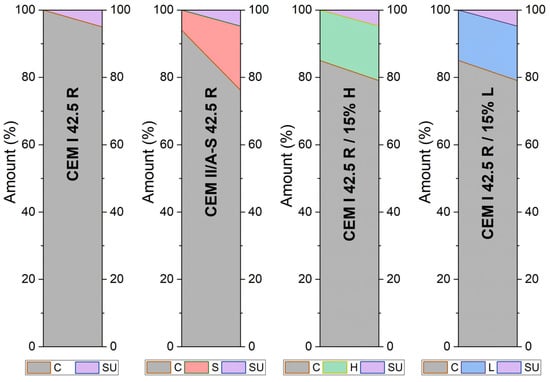
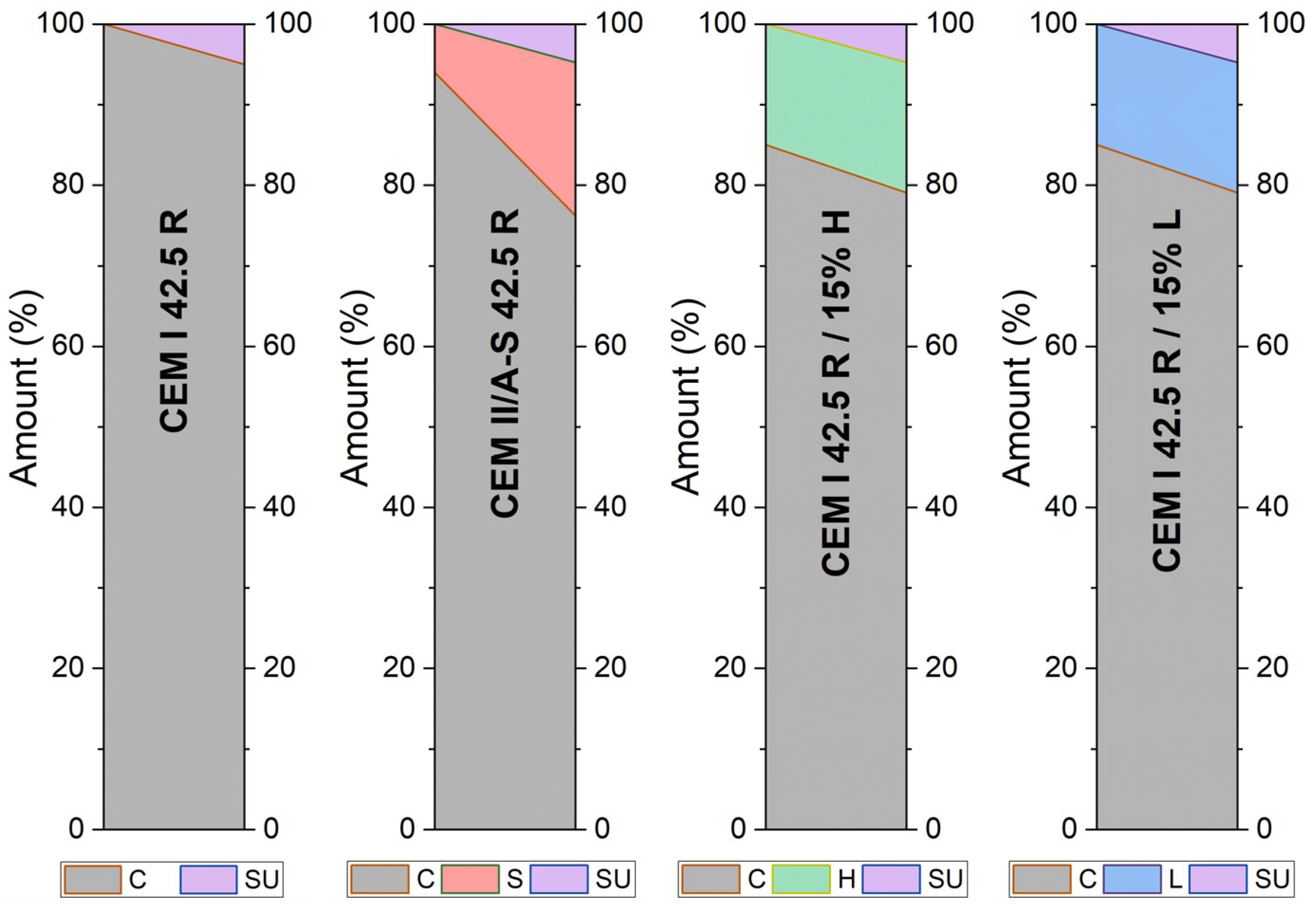
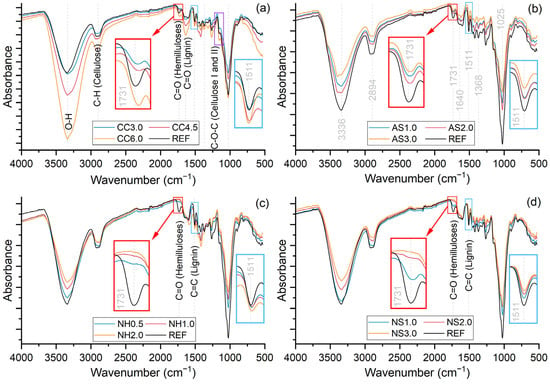
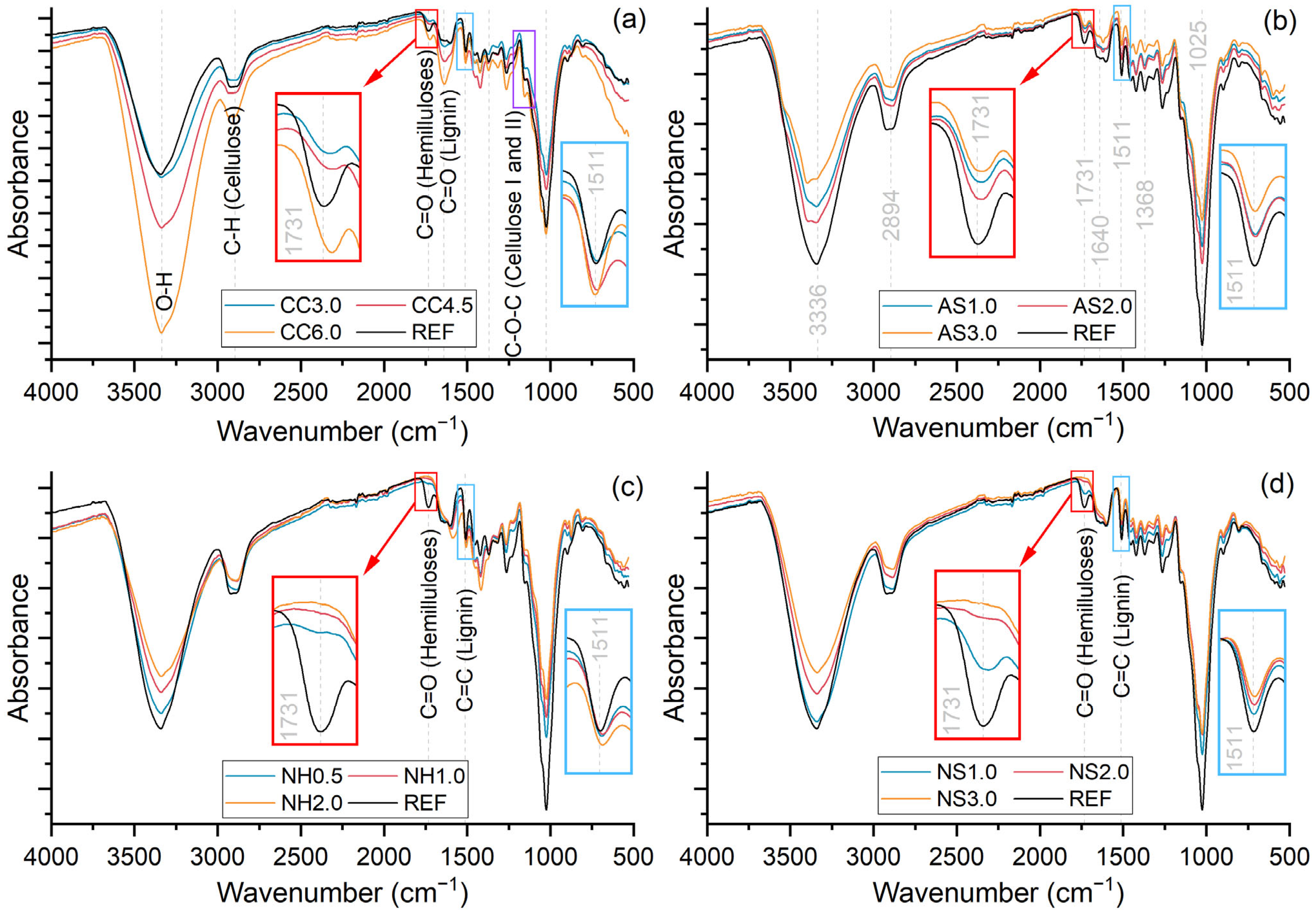
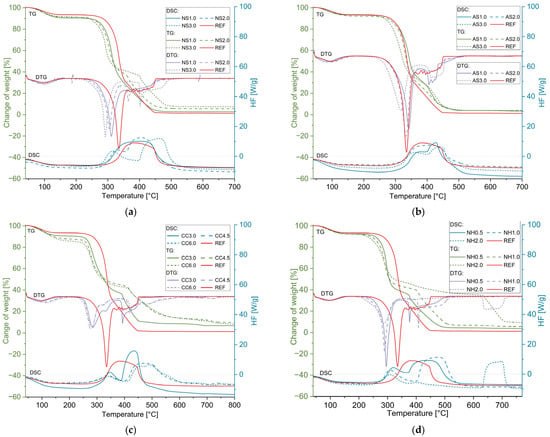
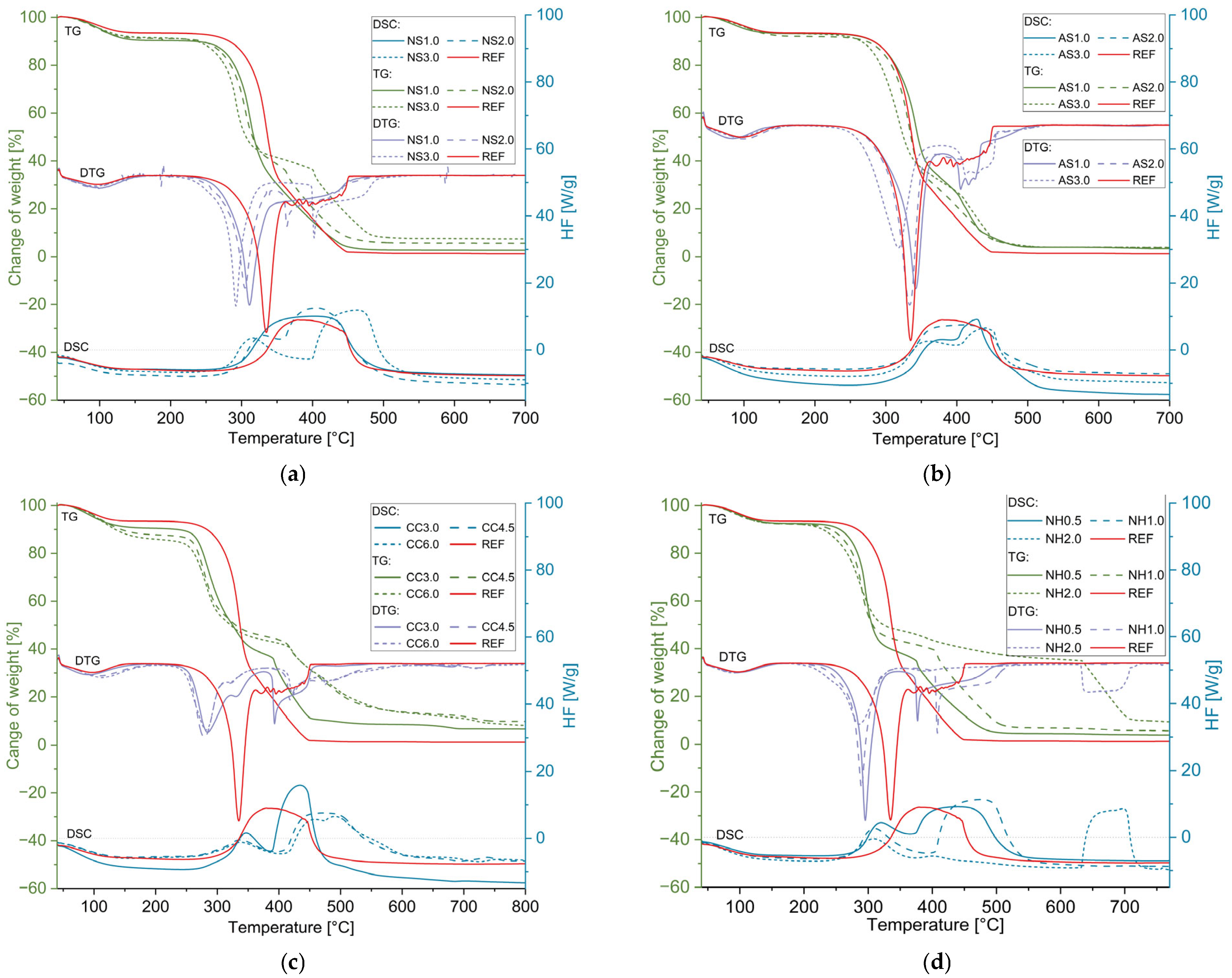
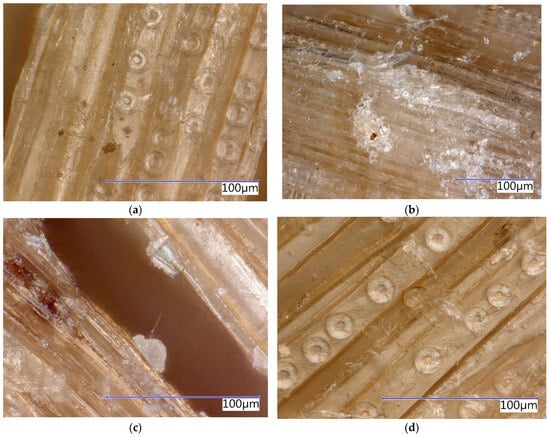
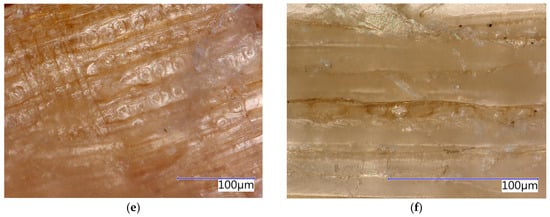
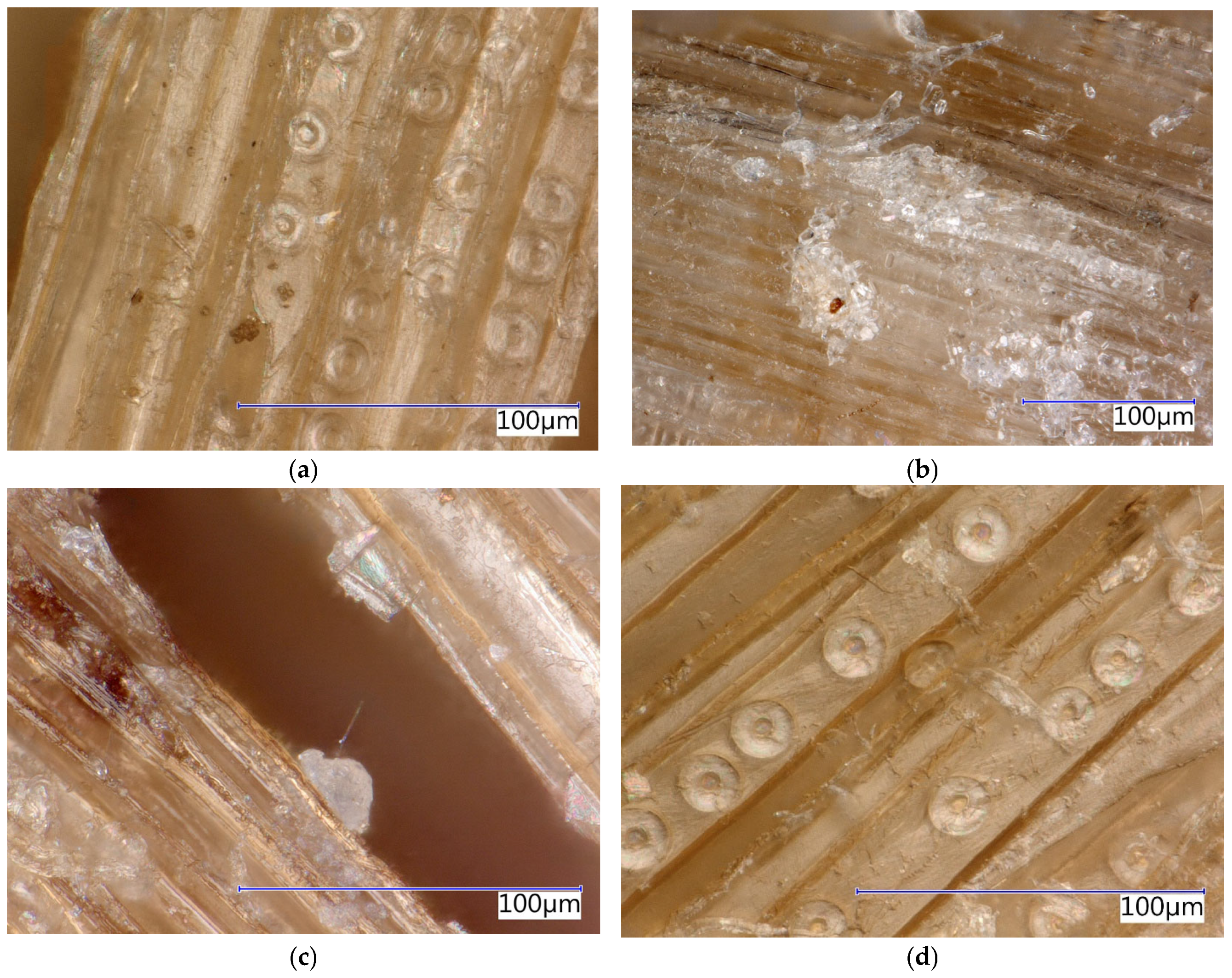
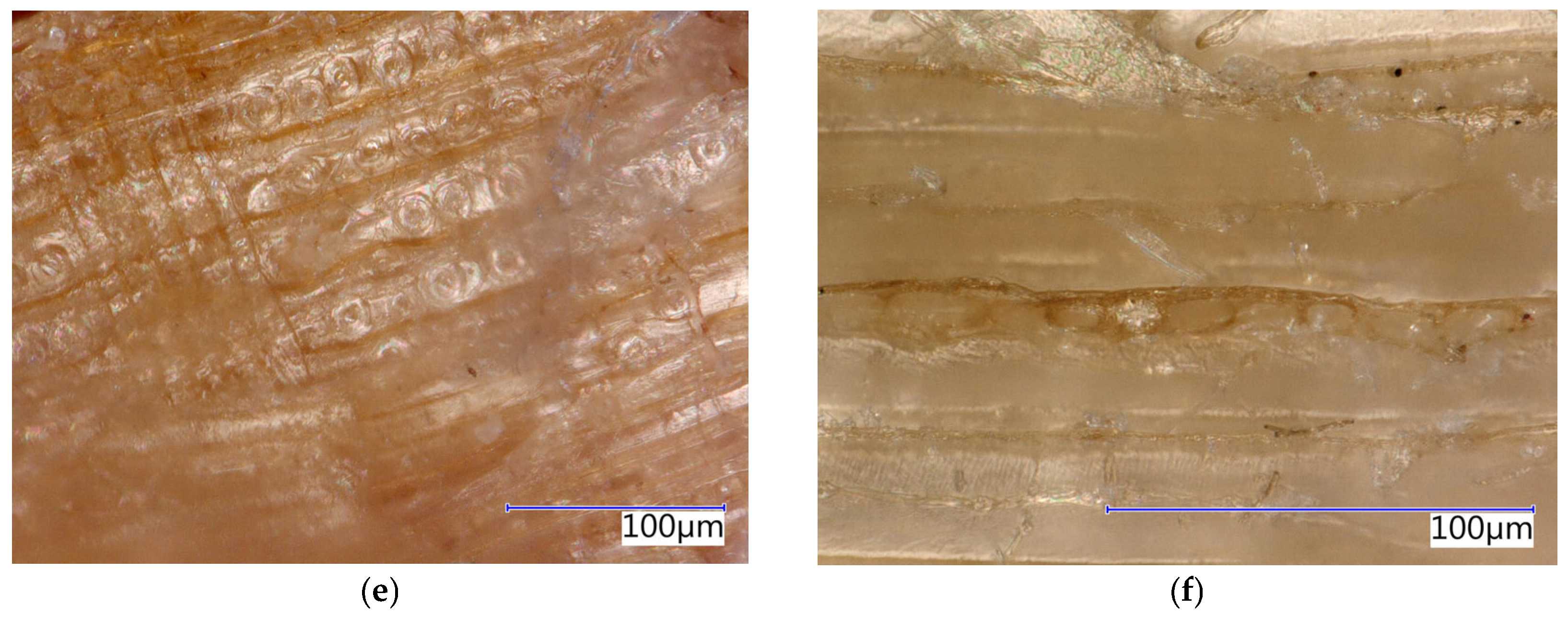
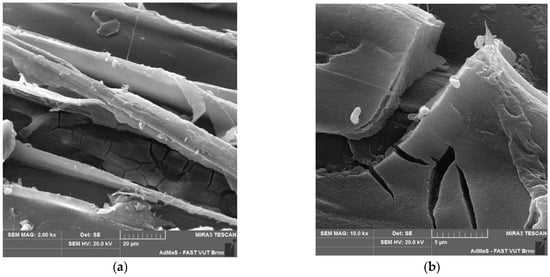
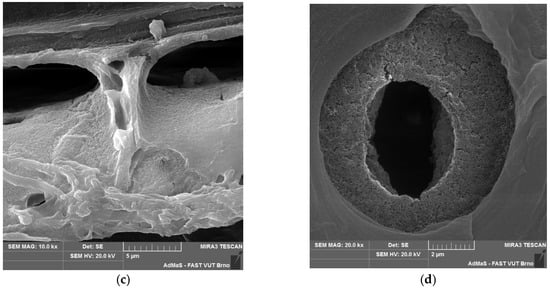
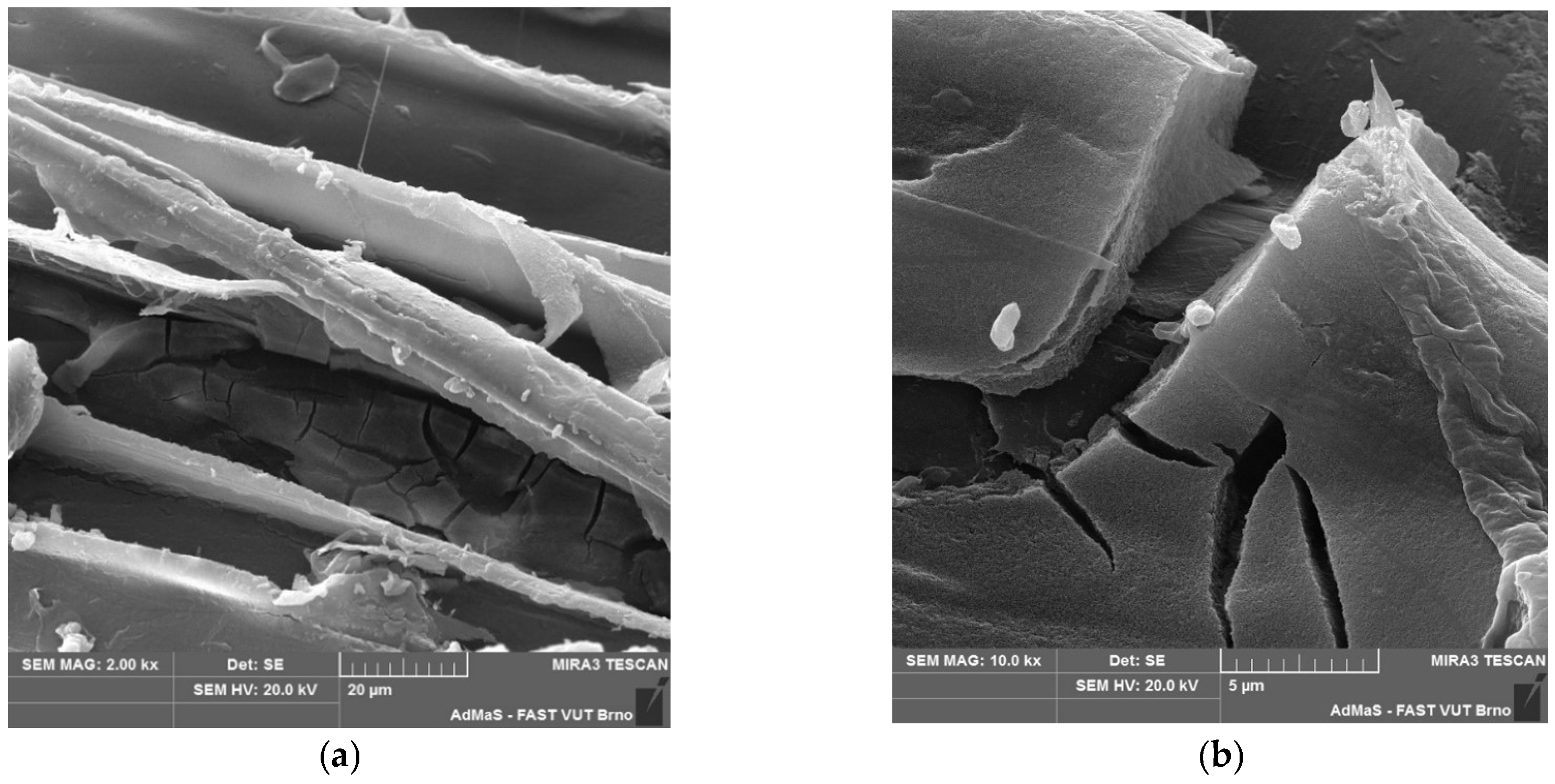
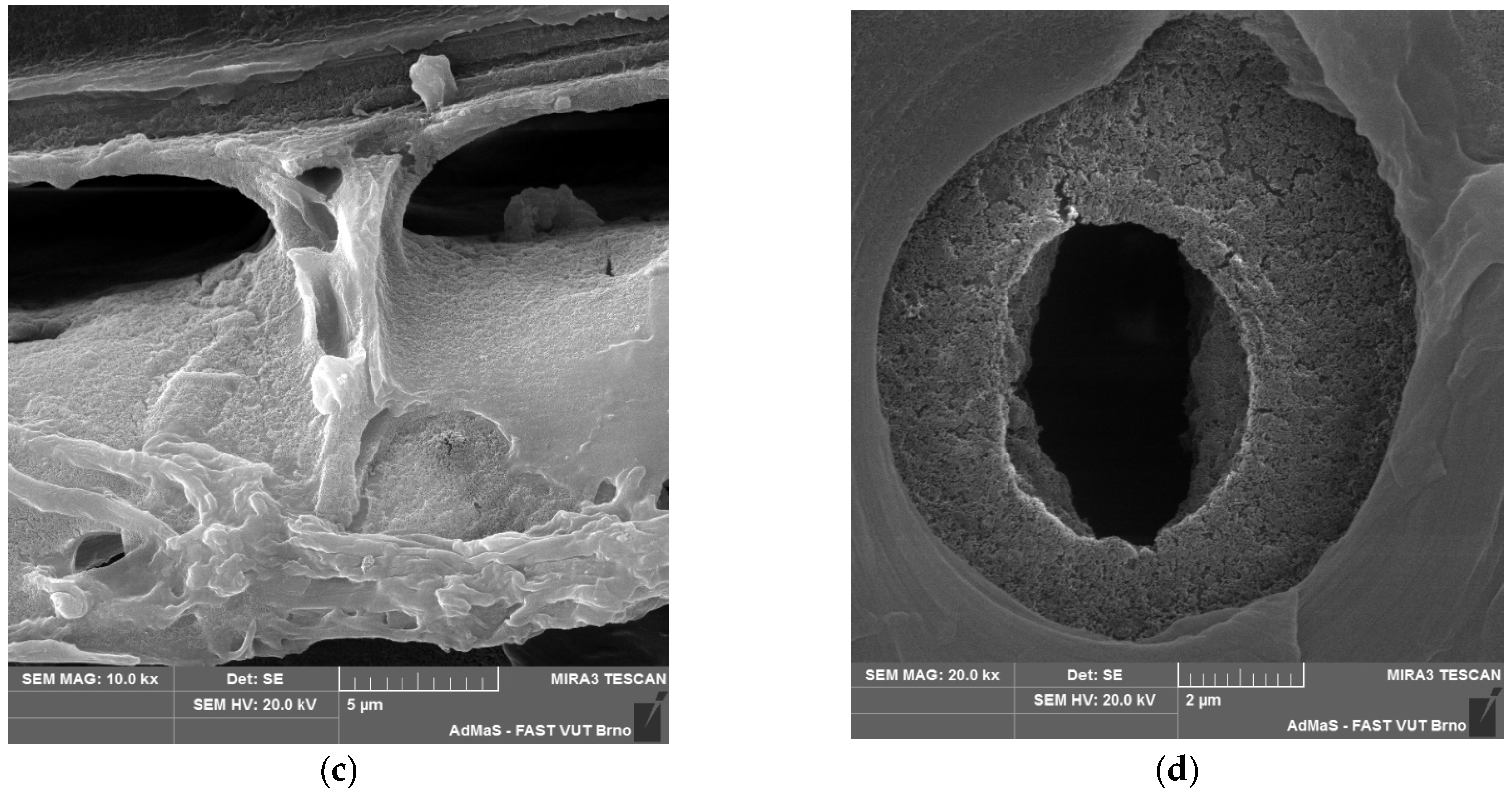
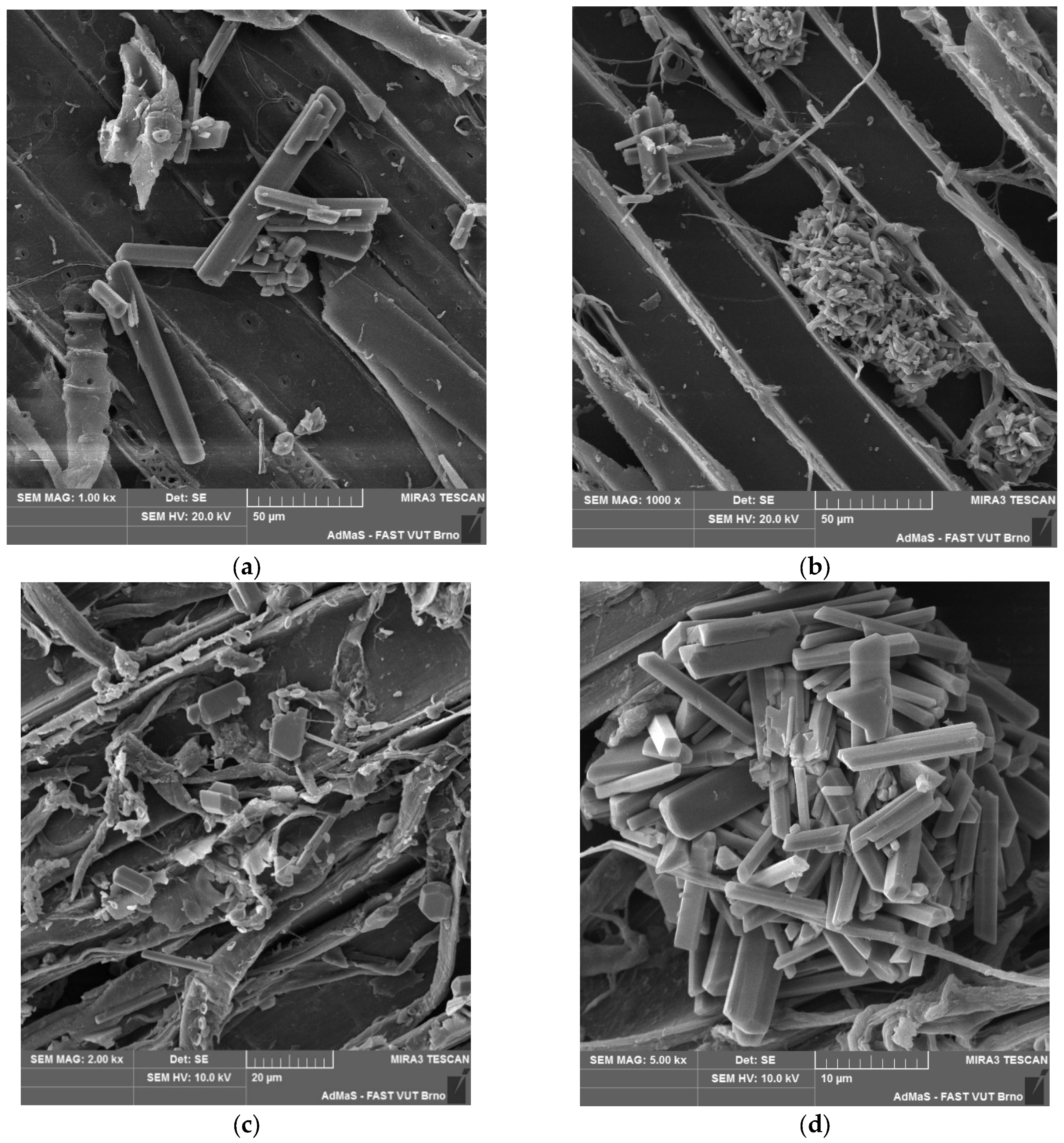
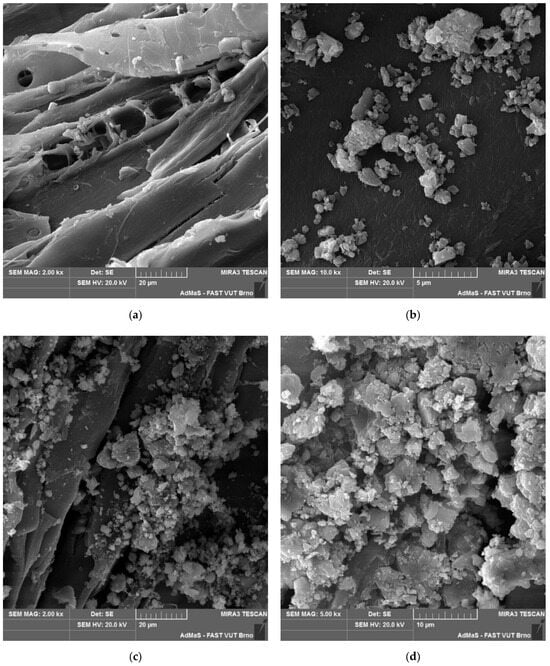
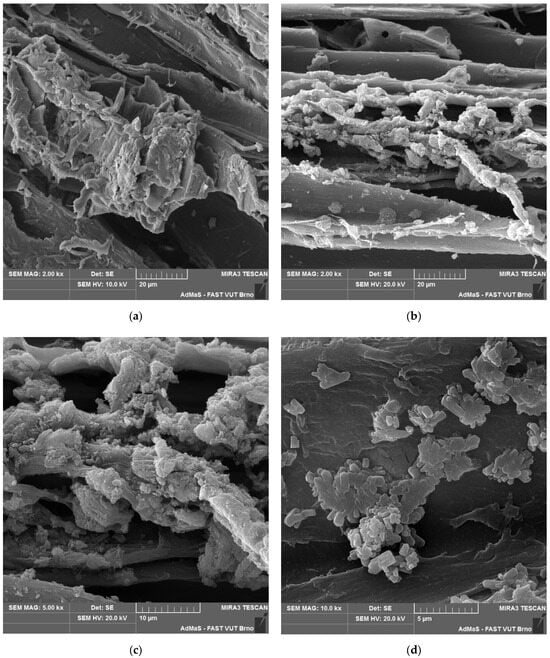
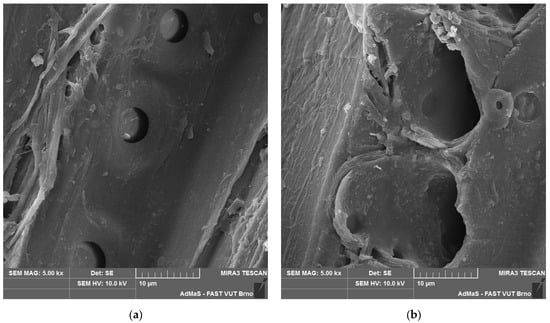
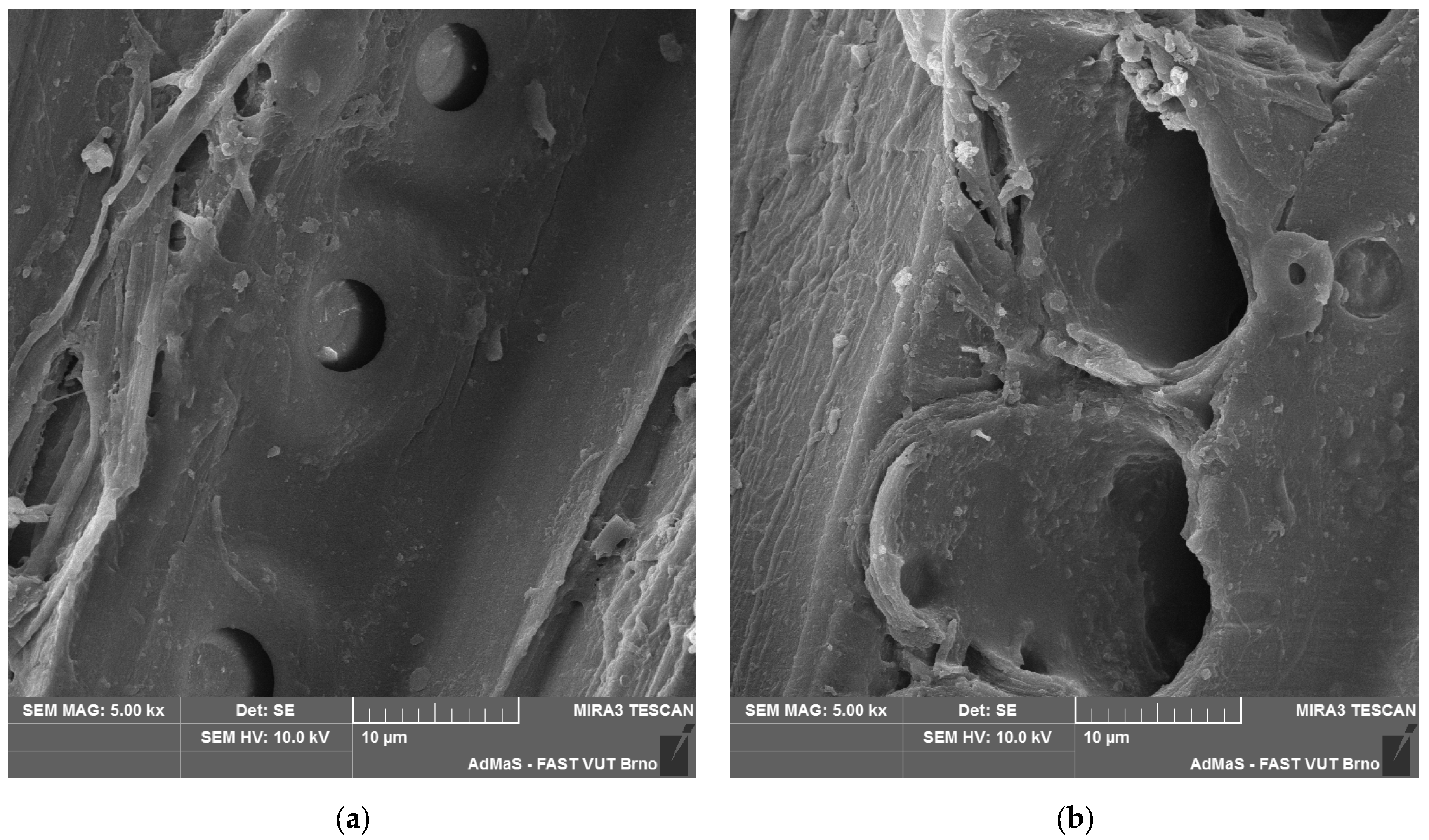
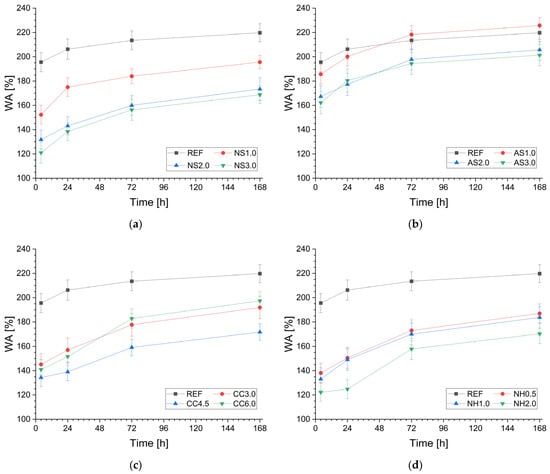
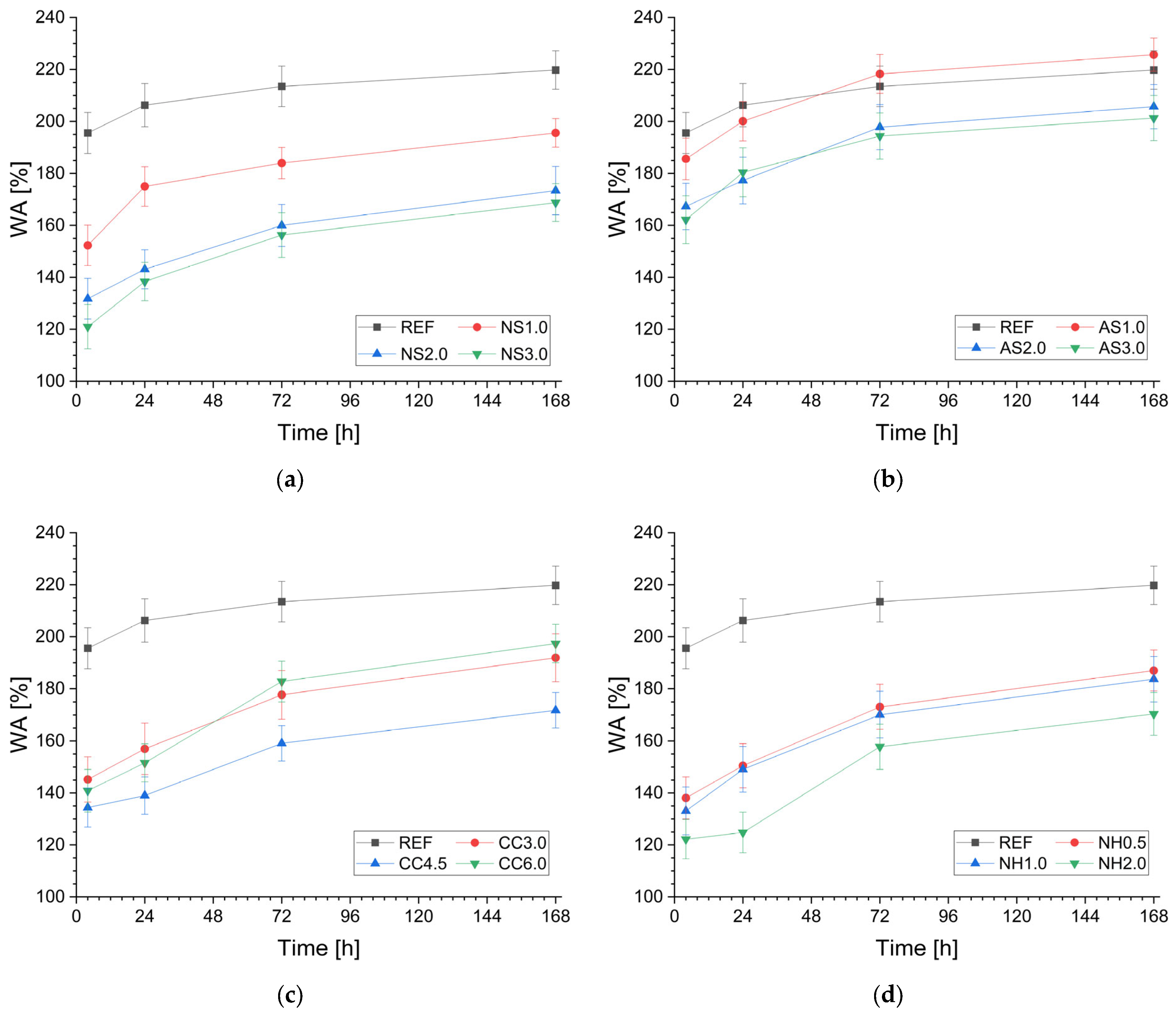
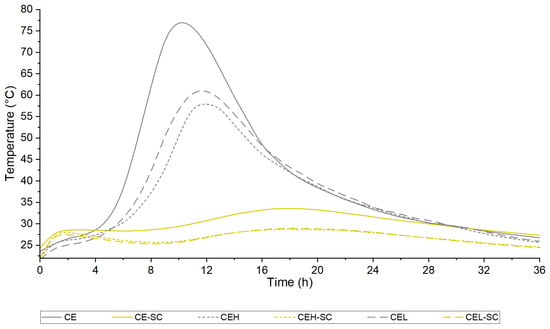
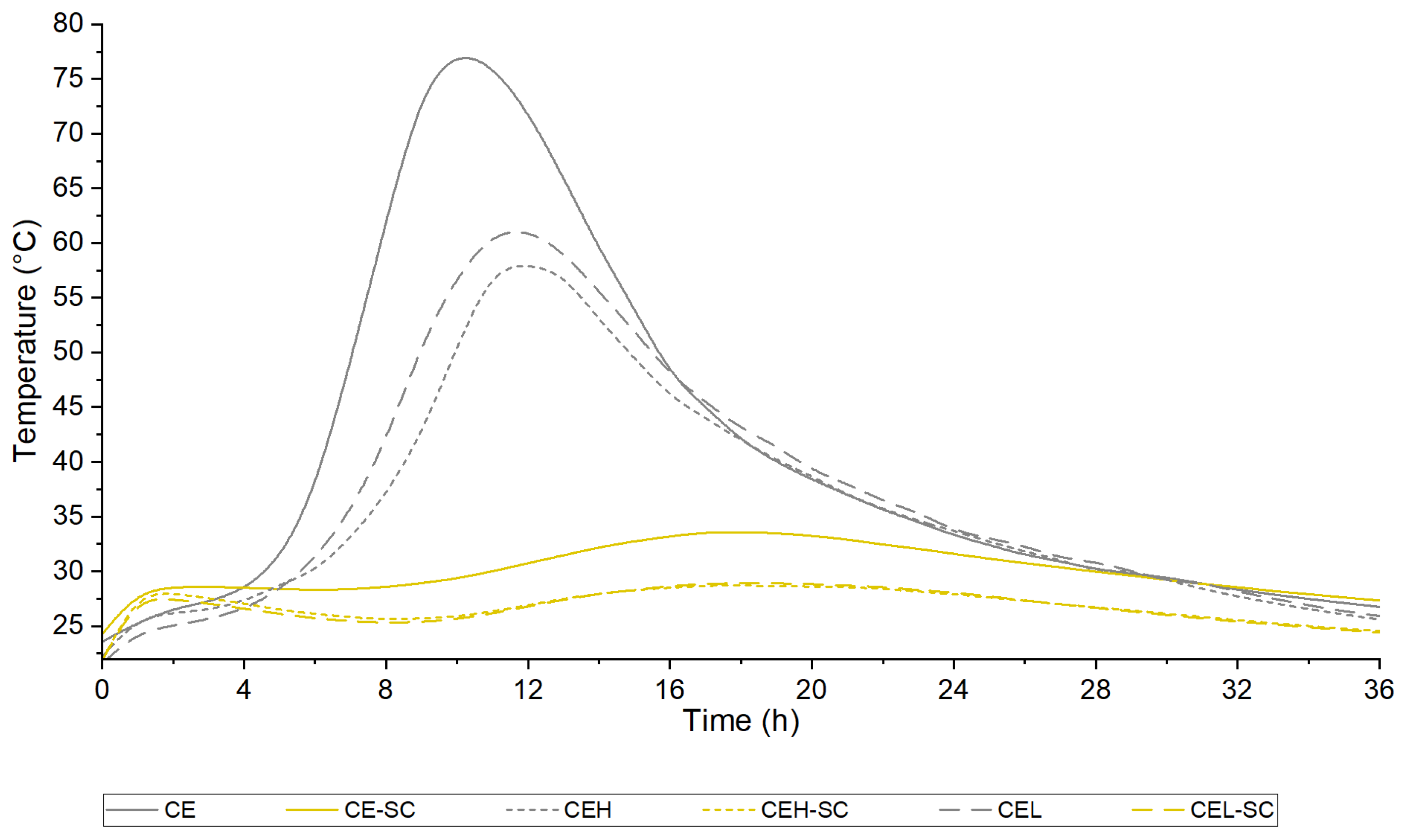
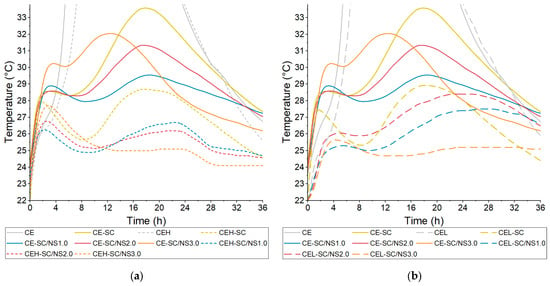
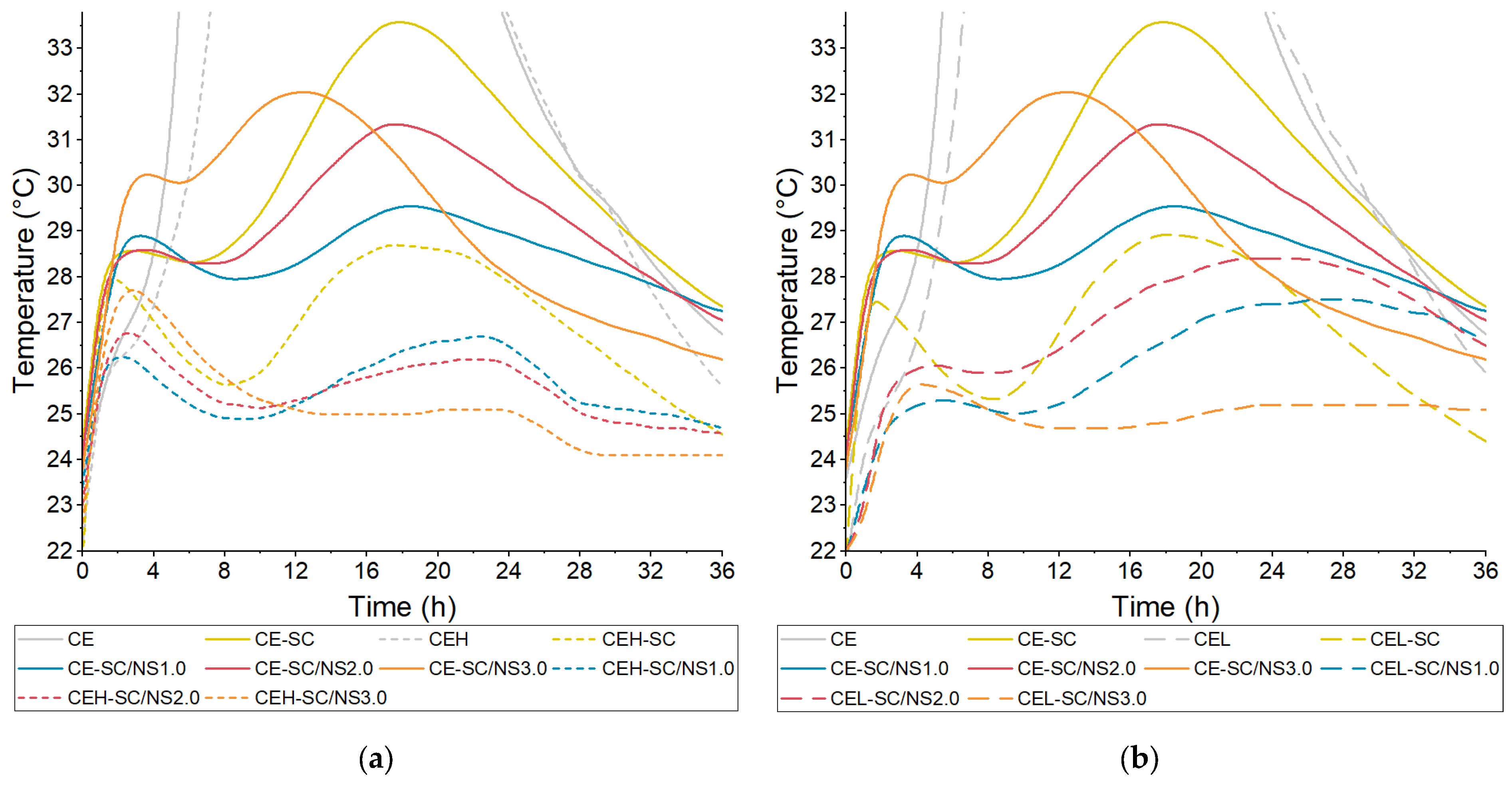
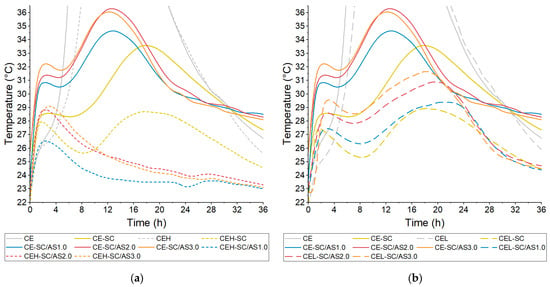
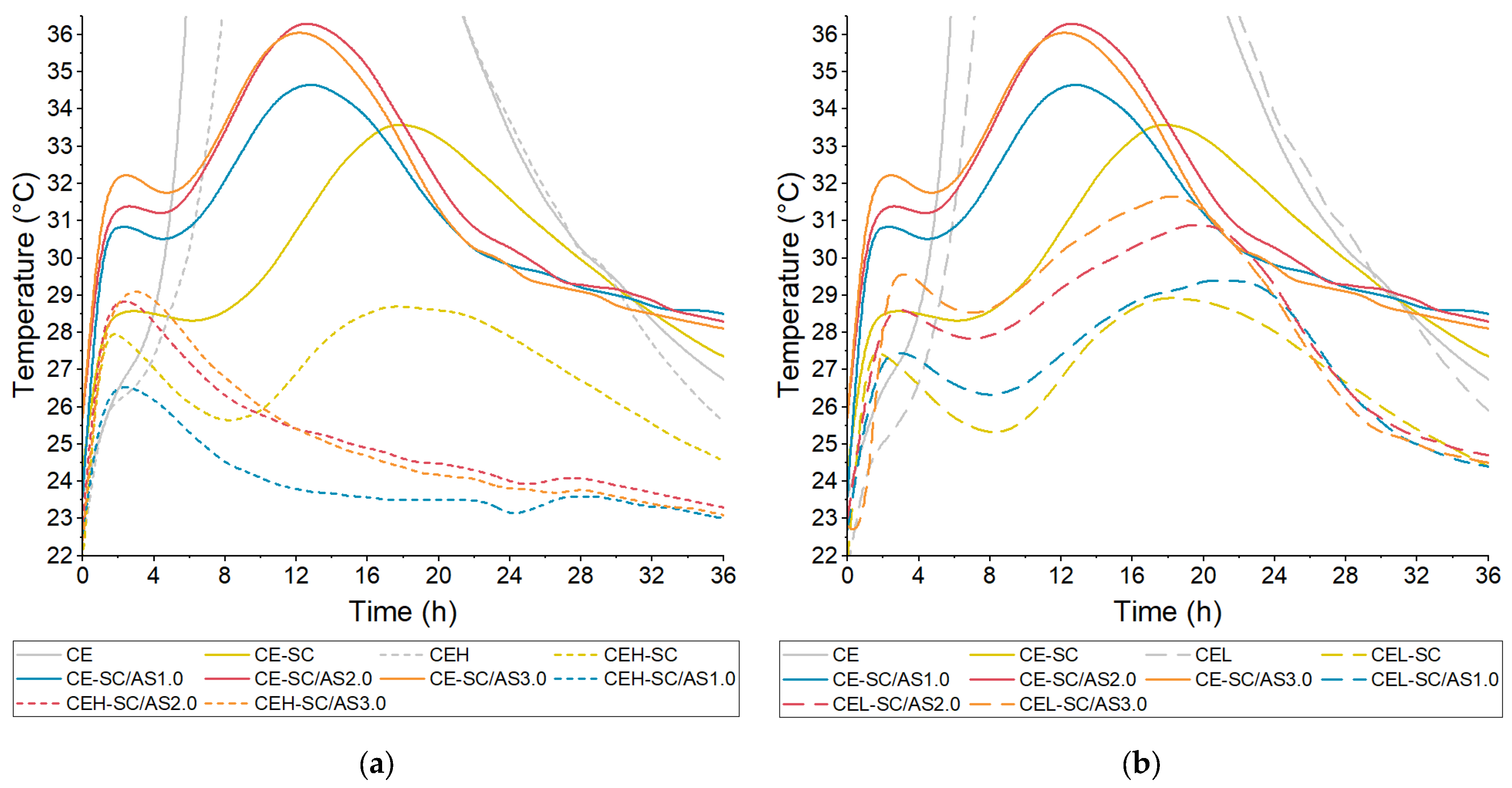
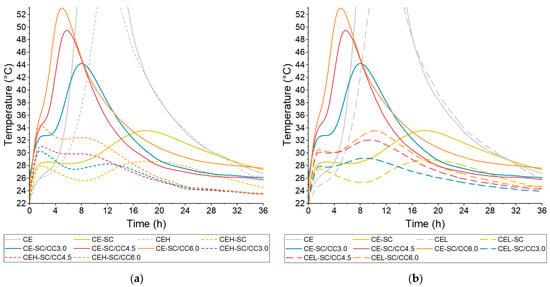
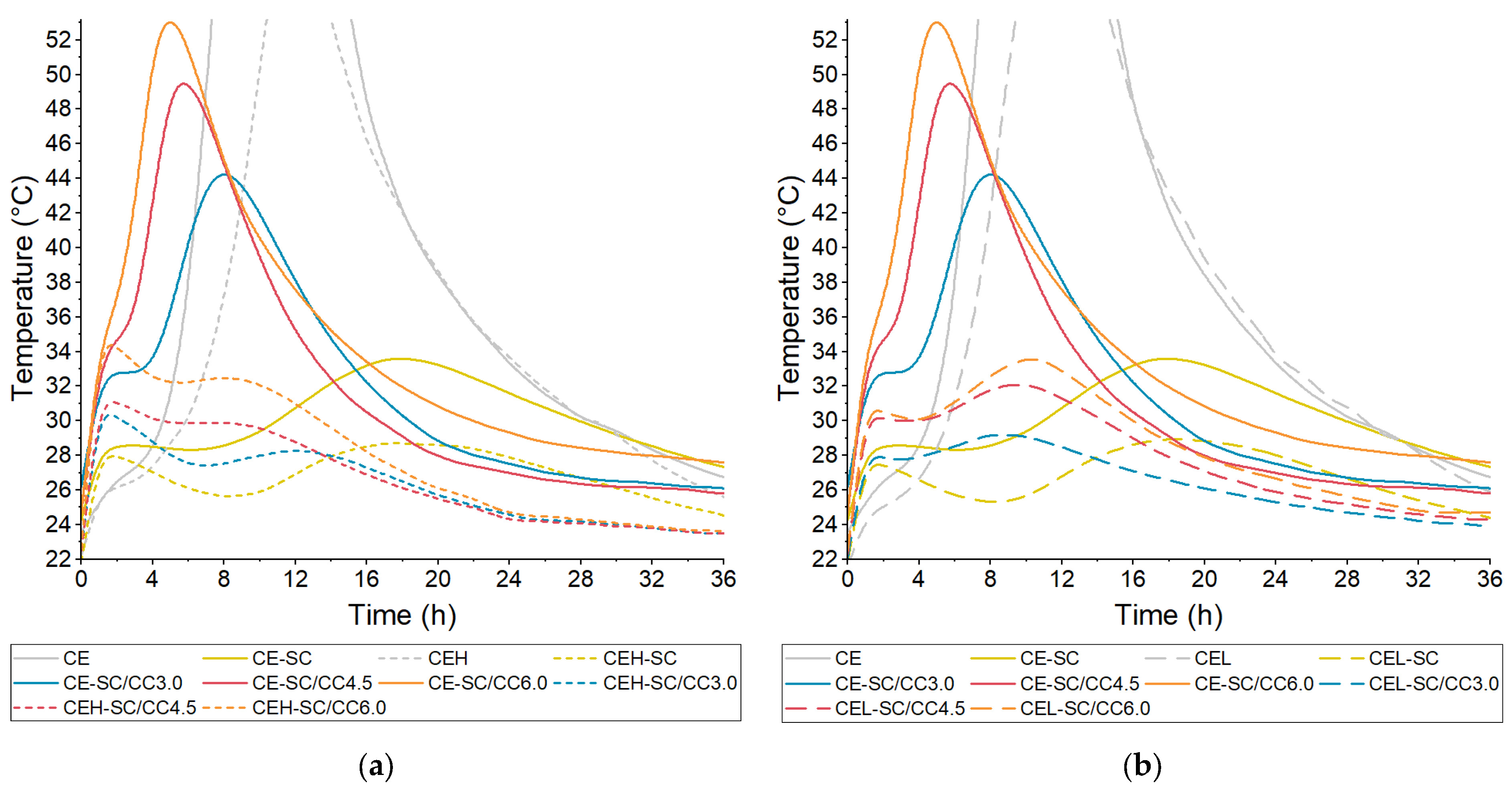
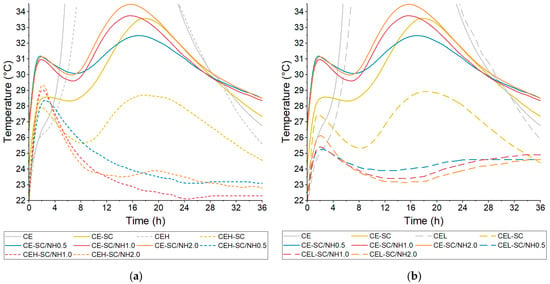
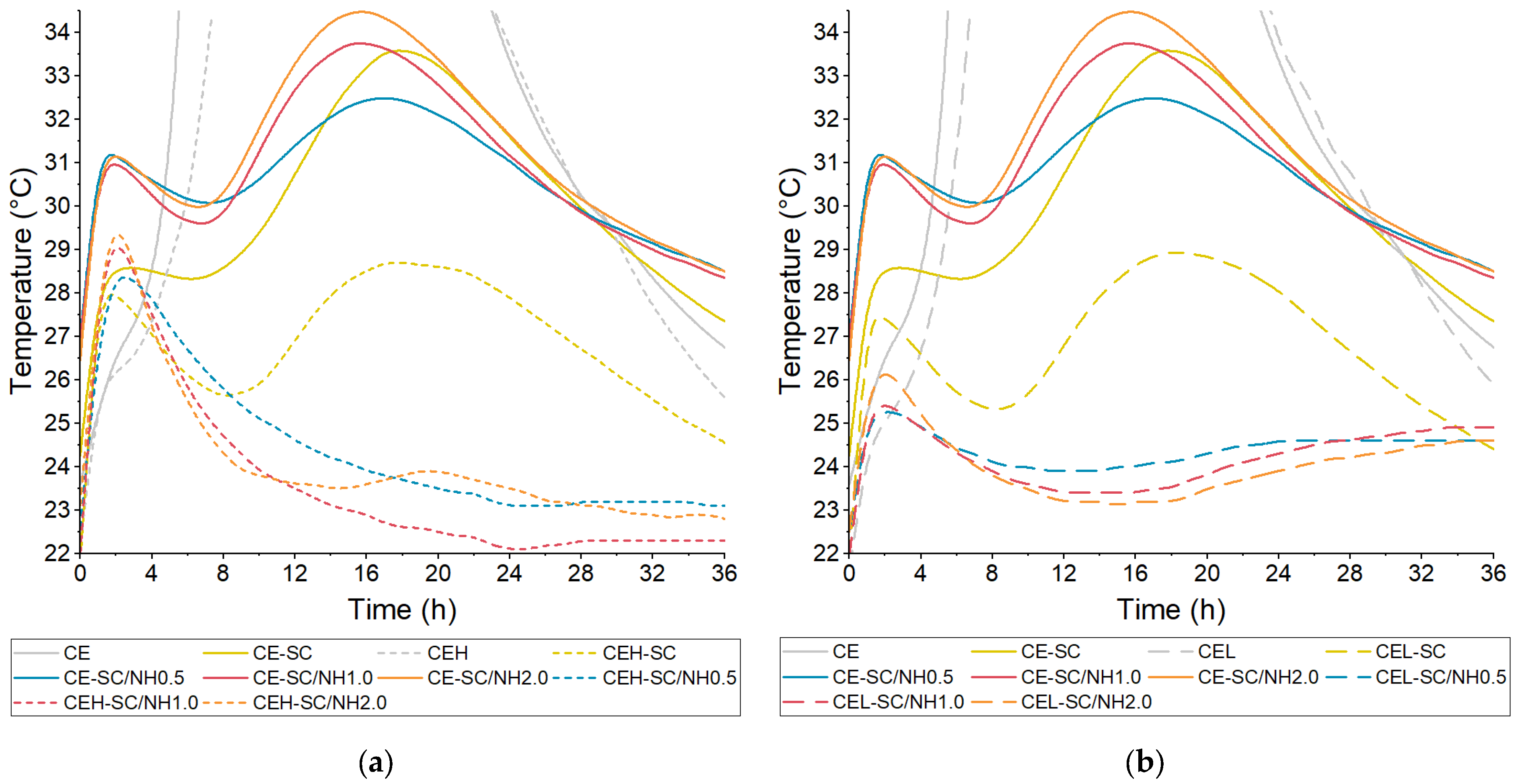

Disclaimer/Publisher’s Note: The statements, opinions and data contained in all publications are solely those of the individual author(s) and contributor(s) and not of MDPI and/or the editor(s). MDPI and/or the editor(s) disclaim responsibility for any injury to people or property resulting from any ideas, methods, instructions or products referred to in the content. |
© 2026 by the authors. Licensee MDPI, Basel, Switzerland. This article is an open access article distributed under the terms and conditions of the Creative Commons Attribution (CC BY) license.