


Abstract
Canine vehicle restraint systems are multi-material safety products in which polymer structure and condition govern energy absorption, containment, restraint, comfort, hygiene, and durability. This critical scoping review integrates materials-science studies, canine exposure studies, standards, producer data sheets, and manufacturer declarations to compare expanded polypropylene (EPP), polypropylene (PP), flexible polyurethane (PU) foams, polyamide (PA), poly(ethylene terephthalate) (PET), thermoplastic polyurethane (TPU), and glass-fibre-reinforced polymers. Quantitative comparison shows that moisture conditioning halves the yield strength of PA6, that conditioned PA6 loses 85% of its notched impact strength at −30 °C, that EPP crushing strength increases 3.45-fold between 20 and 60 kg/m3, and that viscoelastic PU foam hardens about 58-fold between 20 and −20 °C. Reproducible ageing-sensitivity and circularity classes, derived from explicit indicator thresholds, place PP/EPP and PET in the most favourable region at 1.3–2.1 USD/kg. A property-based service-life model with normalised margins, a hard-fail step function, and stated Arrhenius validity conditions is proposed and linked to dynamic safety. A Polymer Material Safety and Sustainability (PMSS) framework is compared with established methods and illustrated by an energy-absorber example. Matched dynamic testing of aged restraints is identified as the priority research need.
1. Introduction
Passenger-car transport systems for companion dogs occupy an unusual engineering space. They must function as consumer products during everyday use, as containment systems during braking and evasive manoeuvres, and as safety structures during a collision. The mechanical system may include a body-worn harness, a soft or rigid seat-mounted carrier, a cargo-area crate, or a hybrid carrier-and-base assembly. Although metal components may provide local structural load paths, polymeric materials frequently dominate the dog-facing surfaces, energy-absorbing elements, webbing, shell components, connectors, liners, coatings, and interfaces that determine how the complete system behaves.
The crashworthiness problem has previously been treated mainly at product or restraint-system level. Direct experimental work on dog travel crates has shown that apparent performance depends strongly on the test fixture and vehicle-side boundary conditions [1]. Field surveys also show that dogs are transported using heterogeneous restraint practices [2]. However, the material condition of a restraint at the time of a crash is equally important. A product that was mechanically adequate when new may no longer provide the same load distribution, impact absorption, or closure integrity after years of thermal cycling, ultraviolet (UV) exposure, moisture uptake, abrasion, repeated cleaning, cyclic compression, and animal-induced damage.
Material selection also interacts with animal welfare. Road transport can induce measurable physiological stress [3], while cage geometry affects posture, balance, and the animal’s ability to stabilise itself [4]. Vehicle interiors may experience substantial temperature excursions [5,6]. These conditions matter for polymers because elevated temperature accelerates diffusion, oxidation, and volatile release; UV radiation promotes photo-oxidation; moisture changes the response of hygroscopic polymers; and repeated dog contact introduces saliva, skin oils, claws, hair, urine, cleaning agents, and local abrasion. The relevant service environment is therefore a coupled thermal–chemical–mechanical exposure rather than a simple indoor condition.
Commercial systems illustrate the diversity of material strategies. Tavo describes a pet carrier that uses expanded polypropylene (EPP) as a lightweight energy-absorbing structure and memory foam in side-impact protection [7]. MIMsafe Care2 combines a shatter-resistant nylon (polyamide, PA) structure with aircraft-grade aluminium [8]. The 4pets PRO NOIR uses aluminium profiles and glass-fibre-reinforced polymer (GFRP) connectors and lock housings [9]. Sleepypod specifies luggage-grade ballistic nylon and a neoprene buckle shield in its Clickit Range harness [10], whereas the TRIXIE 13176 seat is a polyester-based textile product with foam padding [11]. Products sold for the same purpose may therefore depend on fundamentally different polymer families and ageing mechanisms.
The central materials-engineering question is therefore not only whether a transport system passes a crash test when new, but whether its multi-material architecture retains the required mechanical and functional properties throughout realistic service exposure while minimising chemical and particulate release and enabling responsible end-of-life management. This issue becomes especially important as the automotive sector increases recycled-polymer content and adopts design-for-circularity strategies.
No review identified in the present search integrated polymer environmental ageing, crash-critical property retention, canine contact exposure, and end-of-life design for vehicle restraint products within one materials framework. Accordingly, this review has five objectives: (i) to identify the principal polymer families used in canine vehicle restraint and transport systems and to compare them quantitatively (density, stiffness, strength, impact resistance, moisture uptake, temperature limits, and cost); (ii) to relate their structure and properties to energy absorption, containment, comfort, and vehicle attachment; (iii) to evaluate ageing mechanisms, define a property-based service-life model, and link property loss to dynamic safety performance; (iv) to examine chemical and particulate exposure of dogs and the end-of-life options for each polymer family; and (v) to propose and illustrate a Polymer Material Safety and Sustainability (PMSS) framework and a material architecture for a next-generation carrier mounted on ISOFIX (International Organization for Standardization FIX) vehicle anchorages [12]. The review is organised accordingly: Section 2 describes the review methodology and the scoring rules used for material comparison; Section 3 presents the materials, their quantitative properties and cost; Section 4 addresses environmental ageing, service-life modelling, and consequences for dynamic safety; Section 5 covers chemical and particulate exposure and circularity; Section 6 presents the PMSS framework, a worked example, the proposed architecture, and the validation programme; and Section 7 summarises the discussion, limitations, and conclusions.
2. Review Methodology and Evidence Framework
2.1. Review Design, Information Sources, and Search Strategy
The study was designed as a critical, materials-centred scoping review and reported following the applicable items of the Preferred Reporting Items for Systematic Reviews and Meta-Analyses extension for Scoping Reviews (PRISMA-ScR) [13]. A statistical meta-analysis was not attempted because the evidence base combines polymer ageing experiments, crashworthiness studies, toxicological biomonitoring, recycling research, standards, and manufacturer material declarations, which use incompatible specimen geometries, exposure conditions, and outcome metrics. The literature was identified in PubMed and in publisher and journal databases resolved through DOI/Crossref (ScienceDirect, MDPI, SpringerLink, Wiley Online Library, and Taylor & Francis Online), with searches updated through 16 September 2026, and was complemented by the official International Organization for Standardization (ISO), International Electrotechnical Commission (IEC), and ASTM International catalogues for standards, producer data sheets, and official manufacturer technical pages. To make the record counts reproducible, the database search blocks were re-executed in OpenAlex, which indexes Crossref-registered publications of all major publishers, on 22 October 2026. No lower publication-date limit was imposed because several foundational polymer ageing and recycling papers remain directly relevant to mechanism and lifetime modelling; only English-language sources were considered.
Five search blocks were used (Table 1); the strings in Table 1 are given exactly as executed, and the searched field (title, or title and abstract) is stated for each string, because broad polymer terms searched in abstracts return records dominated by unrelated applications. Reference lists of highly relevant review and experimental papers were additionally screened (backward citation chaining), and citing articles of key papers were checked (forward chaining).
Table 1.
Search blocks, search strings as executed in OpenAlex Topics 2.0 on 22 October 2026, searched field, number of records identified, and number of sources included.
2.2. Eligibility Criteria, Screening, and Appraisal
Sources were included when they met at least one of the following criteria: (a) experimental evidence on polymer structure, ageing, property retention, recycling, migration, emissions, or particle release; (b) peer-reviewed evidence on canine exposure or transport conditions relevant to material selection; (c) a current international standard applicable to polymer ageing, foams, textiles, or restraint testing; (d) an official manufacturer declaration or technical data sheet identifying a material or property used in this review. Duplicate records, non-authoritative retail or affiliate pages, unsourced toxicity claims, and product pages that did not identify a material or relevant engineering feature were excluded. Manufacturer information was used to document material architecture and typical property values only and was not treated as independent evidence of durability, toxicological safety, or comparative superiority.
The database searches returned 6123 records in total (sum of blocks A–D, without removal of overlaps between blocks; Table 1). Records were screened by title and abstract against the eligibility criteria, potentially relevant records were assessed in full text, and uncertainties were resolved by discussion among the authors. Together with sources obtained by citation chaining and by targeted retrieval of standards, data sheets, market data, and product declarations, 92 sources were included. Each included source was appraised for relevance using three binary questions: whether it addresses one of the seven material families considered (EPP/polypropylene (PP), polyurethane (PU) foam, PA, poly(ethylene terephthalate) (PET), thermoplastic elastomers (TPE) or thermoplastic polyurethane (TPU), and GFRP); whether it reports quantitative data or a mechanistic explanation; and whether its exposure or loading conditions are representative of a vehicle cabin. Full texts were excluded when they were outside the material scope, contained no quantitative or mechanistic content, or came from a non-authoritative or unverifiable source.
2.3. Evidence Hierarchy
Evidence was interpreted using four levels. Level I comprised peer-reviewed experimental studies directly characterising polymer properties, ageing, recycling, chemical migration, or canine exposure. Level II comprised peer-reviewed reviews, handbooks, and international standards used to establish general mechanisms, property ranges, and test methods. Level III comprised official manufacturer documentation and producer data sheets specifying material composition, typical properties, or declared certification. Level IV comprised engineering inference where a material family could be identified but grade, additive package, or processing history was not disclosed. Level IV information was used only to formulate research needs and hypotheses, not to claim product-specific toxicity or lifetime; where it is used in the text, it is explicitly identified as a hypothesis.
2.4. Assessment Domains and Transparent Scoring Rules
The material assessment was organised around seven interacting domains: structural and energy-management function; environmental ageing; mechanical damage and fatigue; hygiene and animal-contact exposure; chemical transparency and additive burden; repairability and replacement of sacrificial components; and recyclability and end-of-life separation. A material is considered suitable only if it simultaneously satisfies its mechanical function and remains acceptably stable during the intended service environment.
To make the comparative figures reproducible, two ordinal indices were defined: an ageing-sensitivity class and a circularity class. Each index is derived from four quantitative or verifiable indicators. Each indicator is converted into a sub-score of 1, 3, or 5 using explicit thresholds (Section 4.3 and Section 5.3), and the class is the arithmetic mean of the determined sub-scores, rounded to the nearest integer; materials with fewer than two determined indicators are not classified. The indicator values and their sources are reported for every material, so that any reader can recompute or contest a score. Because the classes are ordinal, they are used only to order the material families and are not interpreted as measured quantities. A single cross-material “crash-function suitability” score used in an earlier version of this analysis was abandoned because the materials serve different functions (energy absorption, tensile restraint, structural containment) that cannot be placed on one scale; function-specific quantitative properties are compared instead (Section 3.2).
3. Polymer Materials: Properties, Cost, and Functional Roles
3.1. Material Architectures of Representative Commercial Systems
Commercial disclosure is uneven. Some manufacturers identify polymer families such as EPP, nylon, polyester, or glass-fibre-reinforced plastic, whereas others describe only generic foam, fabric, or plastic. This disclosure gap is relevant to service-life and circularity assessment because unknown resin grades and additive packages prevent robust prediction of UV stability, thermal oxidation, chemical migration, and recycling compatibility. Table 2 summarises representative systems for which material information could be verified from official sources and identifies, for each, the dominant ageing concern and the validation information still missing. The objective is not to rank brands: public declarations are incomplete and no independent comparative ageing programme was identified.
Table 2.
Representative canine transport systems: manufacturer-declared material architectures, safety-critical polymer roles, and priority validation needs.
3.2. Quantitative Property and Cost Comparison
Table 3 and Table 4 compile typical property values and indicative prices for the material families considered, including PP and PA6 reinforced with 30 wt% short glass fibres (PP-GF30 and PA6-GF30) as representatives of GFRP. To keep the comparison verifiable, each row refers to an identified commercial grade or to a cited study, rather than to undocumented generic ranges; individual grades can differ substantially, and the values are intended to show orders of magnitude and directions of change, not design allowables. Prices are indicative European market values for 2025–2026 reported by market-price services, given in the currency of the source; they fluctuate with feedstock prices and should be re-checked at the time of design.
Table 3.
Typical properties and indicative prices of solid polymers and fibres used in canine transport systems (23 °C unless stated; d = dry as moulded, c = conditioned at 23 °C and 50% relative humidity (RH)).
Table 4.
Typical properties of cellular and elastomeric materials used for energy absorption, cushioning, and damping.
Figure 1 visualises the data that are most relevant to the safety function. Three observations follow directly. First, moisture conditioning halves the yield strength of PA6 (80 → 40 MPa) and reduces the strength of PA6-GF30 by 38% (185 → 115 MPa), whereas PP and PET absorb no more than 0.03% water (Figure 1a). Second, conditioned PA6 is tough at 23 °C (23 kJ/m2) but loses 85% of its notched impact strength at −30 °C (3.4 kJ/m2), and the PP impact copolymer loses 56% between 23 and −20 °C, while PP-GF30 retains 90% (Figure 1b); winter qualification is therefore not optional for PP and PA latches, housings, and connectors. Third, the cellular materials differ by orders of magnitude in their temperature stability: the crushing strength of EPP is set mainly by density, increasing 3.45-fold between 20 and 60 kg/m3 [28] (Figure 1c), whereas the hardness of a viscoelastic PU foam increases about 58-fold between 20 and −20 °C because its glass transition lies at 10–20 °C [33] (Figure 1d). On a cost basis, PP, PET, and PP-GF30 are the least expensive structural candidates (1.3–2.1 USD/kg), PA6 is moderately more expensive (1.95–2.12 USD/kg), and TPE/TPU is the most expensive of the thermoplastics considered (≈2.6 USD/kg); recycled PP regranulate was quoted at 0.77–0.78 €/kg in early 2026 [17].
Figure 1.
Quantitative comparison of the principal material families. (a) Tensile or yield strength versus density of solid polymers and short-glass-fibre compounds; arrows show the effect of moisture conditioning (dry → 23 °C/50% RH) on PA6 and PA6-GF30 [14,18,19,21,23,25,37]. (b) Notched Charpy impact strength at 23 °C and at −20 °C (PP grades) or −30 °C (PA grades) [14,18,23,25]. (c) Mean crushing strength of EPP versus density, quasi-static compression at 12 mm/min [28]. (d) Hardness at 40% compression of a viscoelastic PU foam versus temperature (logarithmic scale); the shaded band marks the glass transition (10–20 °C) [33]. Values are for the identified grades and are not design allowables.
3.3. Material Families: Structure, Function, and Limitations
3.3.1. Polyolefins: EPP Foam and Impact-Modified PP
EPP is attractive for vehicle-facing energy-management components because it combines low density, recoverable deformation over moderate strains, chemical resistance, and a tunable crushing plateau, and it is already widely used in automotive impact-management applications [40]. Compression studies show that density strongly affects crushing strength, energy absorption, and specific energy absorption [28]: increasing EPP density from 20 to 60 kg/m3 increased the mean crushing strength by 245.2% (0.115 → 0.397 MPa), total energy absorption by 187.2% (54.06 → 155.49 J), energy absorption efficiency by 42.3%, specific energy absorption by 54.3%, and energy absorbed per unit volume by 242.8% (Figure 1c). Density, thickness, bead-fusion quality, and available crush stroke must therefore be specified jointly as safety-critical parameters rather than as generic foam characteristics.
Impact-modified PP is a candidate for injection-moulded housings because of its low density and established recycling infrastructure (Table 3). The main durability concern for both forms is oxidation: polyolefins undergo thermo-oxidative ageing in which stabilisers are progressively consumed, oxygen-containing groups accumulate, and chain scission ultimately reduces molecular weight and toughness [41]. UV exposure is a separate qualification variable, because it produces surface-concentrated photo-oxidation [42]. A PP or EPP component should therefore be assessed through retained force–displacement response and impact-energy absorption, not visual appearance.
3.3.2. Flexible PU and Viscoelastic Foams
Flexible PU foams and viscoelastic (memory) foams are useful where local cushioning, side-impact contact management, pressure distribution, or comfort are required, and their chemistry can be tailored over a broad range of stiffness and damping. Flexible PU is a crosslinked network, so it cannot be remelted, and ageing may include oxidation, hydrolysis of susceptible linkages, compression set, embrittlement, and changes in cell structure; the ageing behaviour depends on hard-segment structure and phase separation, so the generic label “PU foam” is insufficient for service-life prediction [43]. Oxidative ageing is also relevant to in-vehicle air quality, because autoxidation of flexible PU foam can generate carbonyl VOCs including formaldehyde, acetaldehyde, and acrolein, at rates strongly dependent on temperature and formulation [44]. In a canine carrier, PU inserts should therefore be removable and replaceable rather than bonded into a mixed-material assembly.
3.3.3. Polyamides and Ballistic Nylon
Polyamides are used in high-strength technical textiles, injection-moulded components, and rigid or semi-rigid carrier structures because of their strength, fatigue and abrasion resistance, and toughness. Their main limitation is moisture sensitivity: water uptake disrupts inter-chain hydrogen bonding and plasticizes the polymer, reducing stiffness and strength while increasing ductility (Table 3), and UV exposure can promote photo-oxidation and embrittlement [45]. For harnesses and carrier structures, tensile strength measured on dry, new material is therefore not sufficient; qualification should use conditioned specimens, wet/dry cycling, UV exposure, and abrasion at belt-routing regions.
3.3.4. PET Textiles and Webbing
Polyester, most commonly PET, is widely used in seat fabrics, covers, straps, and technical textiles because of its dimensional stability, low water uptake relative to polyamides, washability, and established fibre-processing routes. Repeated washing, flexing, claw abrasion, and UV exposure can nevertheless damage fibres and increase microfibre release [46,47,48]. Dog-facing textiles should therefore be assessed for tensile performance, cleanability, abrasion resistance, and shedding after ageing rather than only when new.
3.3.5. Elastomers, TPE/TPU, and Neoprene
Elastomeric materials appear in buckle shields, anti-slip feet, seals, pads, and local dampers. Neoprene (polychloroprene) offers cushioning and resistance to water and many chemicals, but as a crosslinked elastomer it is difficult to remelt and recycle mechanically. TPE and TPU grades provide similar functional compliance while enabling thermoplastic processing. Their relevant ageing modes are hardening, softening, permanent set, surface cracking, and loss of damping; because elastomer response is strongly temperature-dependent, temperature-conditioned dynamic characterisation is necessary [49].
3.3.6. Fibre-Reinforced Polymer Composites
GFRPs are attractive for connectors and load-bearing frames because they provide high specific stiffness and strength (Table 3). Their performance depends on fibre orientation and length, matrix chemistry, processing defects, moisture, and interface integrity, and ageing can produce matrix microcracking, interfacial debonding, and local stiffness loss without visible change in geometry. Mechanical recycling shortens fibres, whereas thermal and solvolytic fibre-recovery routes require more complex processing [50]. Composite use should therefore be restricted to locations where its mechanical benefit is clear and the component can be separated.
3.3.7. Coatings, Adhesives, and Functional Additives
Water-repellent, stain-resistant, antimicrobial, flame-resistant, UV-stabilised, and odour-control finishes can improve service performance but introduce a second layer of chemistry that is often invisible in product descriptions; research increasingly emphasises lower-impact and non-fluorinated water-repellent strategies [51]. Permanent adhesive bonding between foam, textile, composite, and metal components may improve local stiffness but makes end-of-life separation difficult; mechanical fastening, reversible attachment, replaceable liners, and material identification should be preferred where crash load paths permit.
3.4. Structure–Property–Function Relationships
Material choice must be linked to the function of each component, because energy absorption, tensile restraint, structural containment, side-contact cushioning, anti-slip behaviour, and washable comfort cannot be optimised with one property. Table 5 relates the structural basis of each family to its candidate functions. For crash-critical parts, property retention is more important than nominal virgin-material performance: a higher initial modulus is not beneficial if ageing creates brittle failure, and a very compliant foam is not safer if densification occurs too early or residual deformation allows excessive carrier excursion. Animal welfare adds further constraints: dog-facing surfaces should avoid sharp fragments, excessive heat storage, abrasive fibre ends, and poorly ventilated closed-cell assemblies, and components that can be bitten or licked require attention because animal behaviour creates oral exposure pathways uncommon for automotive trim parts.
Table 5.
Polymer families, structure–property basis, and candidate functions in canine transport systems.
4. Environmental Ageing, Service-Life Modelling, and Dynamic Safety
4.1. Vehicle-Cabin Service Environment
A canine transport system experiences a demanding microenvironment. In parked cars on clear days, cabin air temperatures of 43–62 °C were measured by 13:00 at ambient temperatures of 15–34 °C, with a largest 60 min rise of 25.8 °C [6]; after about one hour in the sun, mean surface temperatures reached 69 °C on the dashboard and 51 °C on the seat, against 48 and 41 °C in shade [52]. A two-year monitoring study of four UK cars recorded cabin temperatures from −7.4 to 54.5 °C, with values above 35 °C occurring from April to September [5]. A qualification envelope of at least −30 to +70 °C for dog-facing and structural polymer parts is therefore justified, and the upper bound lies above the glass transition of PA6 (45 °C) and of viscoelastic PU foam (10–20 °C) but below that of PET (81 °C) (Table 3 and Table 4). In addition, oxygen is continuously available; UV radiation reaches exposed components through glazing; wet fur, saliva, urine, cleaning water, and disinfectants introduce moisture and chemicals; and the dog produces repeated local loads by sitting, standing, scratching, and chewing.
4.2. Degradation Mechanisms and Quantitative Evidence
Oxidation is the central long-term degradation mechanism of most of the polymers considered, and its relationship with property loss and lifetime prediction is well established [53]. In polyolefins, thermal oxidation can initially be masked by crystallinity changes before antioxidant depletion and chain scission produce a marked reduction in toughness: in oven ageing at 115–135 °C, tensile strength peaked after 29 days at 125 °C and was significantly lower after 98 days, while the surface oxygen-to-carbon ratio fell from 0.195 to 0.135 after 29 days and 0.128 after 98 days [41]. UV exposure adds surface-concentrated photo-oxidation; for post-consumer recycled PP exposed to 225–1240 kJ/m2 (at 340 nm), an interior-grade compound retained stable tensile strength and showed only a small decrease in impact energy [42]. Thermal ageing and UV exposure should, therefore, be qualified separately rather than treated as interchangeable.
Moisture is the dominant variable for polyamides. A 3D-printed PA6 composite gained 5.6 ± 0.48% mass after 504 h at 50% relative humidity (RH), and its Charpy impact energy decreased from 0.463 to 0.28 J/mm2 (−40%); UV-C exposure reduced it to 0.32 J/mm2 (−31%) while increasing tensile strength from 29 to 33.6 MPa and Shore D hardness from 59.1 to 66.8, i.e., the material became stiffer but less tough [45]. For nylon 6,6 webbing, 15 days of xenon-arc exposure (stated to correspond to 107 days of outdoor exposure in Arizona) reduced breaking strength by 20% for coloured webbings and by 6% for white webbing [54], showing that colourant and stabiliser package are as important as polymer family. Dog-facing components also encounter saliva (salts, proteins, enzymes) and cleaning agents (surfactants, alcohols, oxidants), so compatibility testing should include realistic cleaning cycles and synthetic canine-saliva extraction.
Mechanical degradation is component-specific. Foams develop permanent set under repeated or sustained compression: for TPU, the most pronounced increase in compression set occurred between 70 and 80 °C, and water increased compression set through plasticization [49]; data-sheet values for 87 Shore A TPU are 25% at 23 °C but 35–45% at 70 °C (Table 4). Textiles shed fibres under abrasion: after 5000 Martindale rubs, 12 polyester textiles released 4900–640,000 microplastic fibres and up to 350,000 fibrils per gram, more than ten times the release caused by washing alone [47]. Moulded connectors experience cyclic bending and notch-sensitive crack initiation, and composite joints accumulate damage at holes and rivets; these mechanisms can occur without obvious gross failure.
4.3. Ageing-Sensitivity Classification
To replace the earlier author-assigned scores with a reproducible classification, ageing sensitivity is rated by four indicators (Table 6): moisture uptake (A1), change of the safety-relevant property between 23 °C and −20/−30 °C (A2), permanent set at elevated temperature for cellular and elastomeric materials (A3), and the largest documented property loss after accelerated ageing (A4). Each indicator value is converted to a sub-score of 1, 3, or 5 using the thresholds in Table 6; the class is the rounded mean of the determined sub-scores, and materials with fewer than two determined indicators are not classified. Table 7 lists every indicator value with its source, and Figure 2 shows the resulting sub-scores and classes.
Table 6.
Indicators and thresholds used to derive the ageing-sensitivity class.
Table 7.
Indicator values, sources, and resulting ageing-sensitivity sub-scores (→) and classes; (k/4) = number of indicators determined.
Figure 2.
Ageing-sensitivity sub-scores (A1–A4) and resulting class for the principal material families, derived from the indicator values and thresholds in Table 6 and Table 7. Sub-score 1 = low, 2 = low-to-moderate, 3 = moderate, 4 = moderate-to-high, 5 = high sensitivity; class = rounded mean of determined sub-scores; (k/4) = number of indicators determined; n.d. = not determined; n.a. = not applicable; n.c. = not classified.
The classification separates three groups. PA6 (class 5) and PA6-GF30 (class 4) are the most ageing-sensitive because moisture uptake and low-temperature embrittlement act together. Flexible PU foam and TPU fall into class 3, but for different reasons: the viscoelastic foam because of its extreme temperature dependence near its glass transition, TPU because of high compression set at 70 °C. PP, EPP, and PET fall into class 2; for EPP, this class conceals one high sub-score (temperature dependence of collapse stress), which is why the energy absorber must still be qualified at −30 and +70 °C (Section 4.4). PP-GF30 is not classified because only one indicator could be determined. Evidence coverage is reported with every class because classes based on two indicators are less robust than those based on four.
4.4. Consequences of Ageing for Dynamic Safety
The safety relevance of ageing lies in how property changes alter the structural response of the restraint during a collision or sudden deceleration. Four links can be identified, and Table 8 distinguishes the part of each link that is experimentally demonstrated from the part that is an engineering hypothesis requiring system-level testing.
First, loss of available crush stroke in an energy absorber raises the deceleration of the protected mass. If a crushable element with an approximately constant plateau stress must dissipate the relative kinetic energy of the dog and carrier over a stroke s, the mean deceleration and its change after a permanent stroke loss δ (as a fraction of the original stroke) are approximately.
where āmean is the mean deceleration during crushing; vrel is the relative velocity to be dissipated; s is the available crush stroke before densification; and δ is the fractional stroke loss caused by compression set, residual crush, or prior impact. Equation (1) is a first-order energy balance and neglects rate effects and elastic rebound.
A stroke loss of 10% therefore raises the mean deceleration by 11%, and a loss of 20% by 25%; if the residual stroke becomes shorter than required, the absorber densifies and the peak deceleration rises sharply. Second, a change in plateau stress shifts the force level directly: a collapse-stress increase of about 110% at −30 °C [31,32] would roughly double the force transmitted by an EPP absorber of fixed area, whereas a 50% decrease at 60 °C halves the energy that can be dissipated within the same stroke. Third, embrittlement changes the failure mode of load-path components: conditioned PA6 retains only 15% of its notched impact strength at −30 °C, and the impact energy of a PA6 composite decreased by 40% after humidity exposure [18,45]; a latch or connector that deforms ductilely when new may fracture when cold or aged. Fourth, strength loss of webbing reduces the safety margin of the tensile restraint path, as shown by the 6–20% reduction in breaking strength of nylon webbing after accelerated UV exposure [54].
System-level evidence for these links remains limited and partly reassuring. In sled tests of child restraint systems aged from 3 to 269 months, no clear relationship between dummy responses and seat age was found, although the head excursion of forward-facing seats increased by 0.27 mm per month of age (95% confidence interval 0.13–0.42; R2 = 0.59) and the odds of critical damage increased by a factor of 1.031 per month [56]. Field-used expanded-polystyrene bicycle helmets up to 26 years old showed no loss of impact attenuation, with an age effect of at most 0.76 g per year [57]. These findings indicate that well-stabilised foam liners can retain their function for long periods, but that ageing of plastic shells, connectors, and textiles can produce measurable kinematic drift. Equivalent data for canine restraints do not exist.
Table 8.
Links between ageing-induced material changes and dynamic safety performance, with evidence status.
Table 9 translates these links into a failure-mode matrix that can be used in design reviews and maintenance instructions.
Table 9.
Polymer-focused failure-mode and verification matrix for canine transport systems.
4.5. Property-Based Service-Life Model
Universal statements such as “nylon lasts five years” or “EPP lasts ten years” are not defensible for safety-critical products, because service life depends on resin grade, stabiliser package, geometry, manufacturing history, exposure, and load history. Service life is therefore defined here through safety-critical properties, with an explicit distinction between gradual performance loss and irreversible critical events. The descriptive retention of property i is
where Pi(t) is the measured value of safety-critical property i after service or accelerated-ageing time t, and Pi,0 is the mean value of the qualified unaged batch. Ri is a descriptive quantity; it is not used directly for decisions because the acceptable retention differs between properties.
For decisions, each property is normalised by its own acceptance limit, giving a dimensionless margin that equals 1 for the new material and 0 at the acceptance limit:
where Mi(t) is the normalised margin of property i; Pi,min is the minimum acceptable value of a property for which larger is better (e.g., impact strength, absorbed energy, breaking force); and Pi,max is the maximum acceptable value of a property for which smaller is better (e.g., compression set, residual crush, migration or emission rate). The normalisation basis is therefore the distance between the qualified new state and the acceptance limit, which makes margins of different properties comparable regardless of their units.
The acceptance limits are determined experimentally rather than assumed. Specimens are conditioned to several degradation levels, the property is measured on coupons, and matched complete systems with the same conditioning are tested dynamically (Section 6.5). The limit is the lower statistical tolerance bound of the property values for which the system still met its dynamic acceptance criteria (e.g., carrier excursion, peak acceleration, absence of structural fracture):
where and si,pass are the mean and standard deviation of property i in the lowest conditioning level that still passed the dynamic test (n specimens), and kn,0.95,0.95 is the one-sided normal tolerance factor for 95% coverage and 95% confidence (4.20 for n = 5; 2.91 for n = 10). The analogous upper bound is used for Pi,max.
Gradual performance loss ends service when the first margin reaches zero, whereas critical events act as an irreversible step that is not captured by gradual retention:
where tG is the gradual-loss limit; H(t) is a step (Heaviside) function that switches irreversibly from 0 to 1 at time tH, the first occurrence of a non-recoverable damage state (crash activation of an absorber, cracked connector, torn restraint, delaminated composite, closure malfunction); and tSL is the service-life limit. Because tH is a random event time rather than a degradation trend, it is controlled by inspection and post-crash replacement rules, whereas tG is predicted from ageing data.
For the complete system, the conservative condition is
where Msys(t) is the system margin, and the index i covers the structural (S), energy absorption (E), tensile restraint (T), and closure/connector (C) functions. The system is serviceable while Msys(t) > 0. Unlike a plain minimum of retention ratios, this formulation is normalised against validated acceptance limits and becomes zero immediately when a hard-fail event occurs, irrespective of the remaining margins.
Table 10 lists the critical properties, hard replacement triggers, and recommended actions for the principal polymer components. Calendar age remains useful for scheduling inspections, but replacement should be tied to the margins and hard-fail states defined above, and manufacturers should publish the qualified ageing envelope, inspection criteria, and post-crash replacement rules.
Table 10.
Property-based service-life criteria for principal polymer components.
4.6. Accelerated Ageing and Validity of Arrhenius Extrapolation
Accelerated ageing is necessary because calendar-life testing is impractical, but the elevated test temperature must not create a degradation mechanism that does not occur in service. For a degradation process with a single dominant mechanism, the time-scaling between test and use temperature can be described by the Arrhenius acceleration factor (AF) [53]:
where AF is the acceleration factor; tuse and ttest are the times needed to reach the same value of the property under use and test conditions; Ea is the apparent activation energy of the governing process (J/mol); R = 8.314 J·mol−1·K−1; and Tuse and Ttest are absolute temperatures (K).
The sensitivity of extrapolation to Ea is large. For the formation of one oxidation product of flexible PU foam, Ea increased from 87 kJ/mol in low-index to 108 kJ/mol in high-index formulations [44]. For Tuse = 40 °C and Ttest = 80 °C, these values give AF = 44 and 110, respectively, so that 1000 h of testing would represent about 5 or 12.5 years of continuous exposure at 40 °C; a 21 kJ/mol uncertainty in Ea thus changes the predicted life by a factor of 2.5. The same study observed deviations from Arrhenius behaviour above 100 °C for formaldehyde and acrolein formation [44].
Equation (9) is therefore applied only when the following conditions are verified: (i) the property–time curves at no fewer than three test temperatures superimpose by time–temperature shifting, and ln(ttest) is linear in 1/Ttest without curvature; (ii) no thermal transition lies between Tuse and Ttest, which excludes extrapolation across the glass transition of PA6 (45 °C), PET (81 °C), or viscoelastic PU foam (10–20 °C) and requires Ttest to remain well below the onset of melting; (iii) oxidation is homogeneous through the thickness, i.e., the specimen is thinner than the diffusion-limited-oxidation depth, which is checked by oxidation profiles across the section [53]; (iv) stabilisers are not lost by evaporation or migration at Ttest at a rate that does not occur in service; (v) humidity is held constant, because moisture-driven processes in PA and polyester-type PU require a separate humidity term; and (vi) the same failure metric is used at all temperatures, since oxidation induction time, tensile strength, impact toughness, compression set, and VOC generation can have different activation energies. Extrapolated lives must finally be verified against at least one field-aged or naturally weathered condition.
5. Chemical and Particulate Exposure, End-of-Life, and Circularity
5.1. Dog-Specific Exposure Pathways and Chemical Classes
The chemical-safety discussion requires careful source attribution. Dogs are exposed to plastic-associated chemicals and polymer-derived particles in the home environment, but available biomonitoring does not establish canine car seats, harnesses, or crates as the source. The interpretation adopted here is therefore hazard- and pathway-based: identify chemicals that can occur in relevant polymer systems, identify dog-specific contact pathways, and test migration from the actual transport product before making product-specific health claims. Dogs have several pathways that differ from those of an adult human occupant: prolonged dermal and fur contact, inhalation in a small enclosure, licking, chewing and mouthing of edges or straps, ingestion of abraded fibres or fragments, and transfer of residues from coat and paws.
Direct canine-product evidence exists for plastic toys and training devices: Wooten and Smith showed that selected phthalates and bisphenol A (BPA) leached from dog products into synthetic canine saliva and that simulated ageing or chewing influenced release for some compounds [60]. Biomonitoring confirms that pet dogs are exposed to phthalates, with multiple urinary phthalate metabolites detected [61], and reviews of endocrine-disrupting chemicals (EDCs) in companion animals identify ingestion, inhalation, and transdermal uptake as relevant pathways for phthalates, bisphenols, flame retardants, and per- and polyfluoroalkyl substances (PFAS) [62]. Dog biomonitoring also confirms exposure to organophosphate flame retardants, although food was an important pathway [63]. The preferred design approach is therefore not to assume that any additive chemistry is unsafe, but to require full material declaration, low-migration formulations, and emission and migration testing for dog-facing components.
Elevated cabin temperature increases emissions from plastics, composites, foams, rubbers, sealants, and adhesives. Automotive material testing using thermal-desorption and headspace gas chromatography–mass spectrometry (TD-GC-MS and HS-GC-MS) found particularly high total VOC potential for some composite and PU-foam materials and a strong temperature dependence of emissions [64], and kinetic work on flexible PU foams confirms that oxidation generates low-molecular-weight carbonyl VOCs [44]. Synthetic textiles release fibrous microplastics during production, abrasion, laundering, and ageing [46,47]; PET and polycarbonate (PC) microplastics have been measured in pet food and faeces, and dietary intake did not fully explain faecal levels [65]. Table 11 summarises the exposure classes and the corresponding evidence gaps for transport systems.
Table 11.
Potential chemical and particulate exposure classes relevant to dog-facing polymer components.
5.2. End-of-Life Routes by Material Family
Circularity is governed less by the theoretical recyclability of an individual polymer than by the architecture of the assembled product. Sorting, contamination, polymer compatibility, and degradation during reprocessing are the main barriers to mechanical recycling [66], while chemical routes can complement it for difficult waste streams [67]. The current scale of recovery is modest: in 2022 the post-consumer recycling rate of plastics in the EU27, Norway, Switzerland, and the UK was 26.9% (8.7 Mt), recycled post-consumer material covered 12.6% of new plastic products, and chemical recycling accounted for 0.1%; in the automotive sector, 18.8% of the 1.6 Mt of collected plastic waste was recycled and recycled content was 4.6% [68]. The situation differs strongly between families (Table 12). PET has the most developed loop: the collection rate of PET bottles in Europe was 60% in 2022 [69], and glycolysis and methanolysis operate at commercial scale, e.g., a 10 kt/yr glycolysis plant since 2019 [67,70]. PA6 can be depolymerized to caprolactam at industrial scale; a plant in Ljubljana processes 28 t of PA6 waste per day [71]. Flexible PU foam is crosslinked and cannot be remelted; in 2017 only 14% of the approximately 40 million mattresses reaching end of life annually in the EU were recycled, about half being landfilled [72], and glycolysis can recover polyol (about 70% within 25 min with catalysis) that replaces up to 50% of virgin polyol without significant loss of foam quality [73]. For glass-fibre-reinforced polymers, thermal and chemical fibre-recovery processes are not close to commercialization [74], mechanical recycling shortens fibres [50], and the most mature route remains grinding [75].
Table 12.
End-of-life routes and circular-design implications for polymer families used in canine transport systems.
5.3. Circularity Classification
Circularity potential is rated by four indicators (Table 13): melt reprocessability (C1), existence of a secondary-material market with a published regranulate price or documented recycling stream (C2), retention of mechanical properties after one reprocessing cycle (C3), and maturity of chemical or monomer recovery (C4). The scoring rule is the same as for the ageing class (Section 2.4). Table 14 lists the values and sources, and Figure 3 shows the resulting sub-scores. The classification refers to the material family in a clean, separable form; coatings, laminates, blends, and adhesives in a real product reduce the achievable circularity and are addressed by the design measures in Table 12 and Section 5.5.
Table 13.
Indicators and thresholds used to derive the circularity class.
Table 14.
Indicator values, sources, and resulting circularity sub-scores (→) and classes; (k/4) = number of indicators determined.
Figure 3.
Circularity sub-scores (C1–C4) and resulting class for the principal material families, derived from the indicator values and thresholds in Table 13 and Table 14. Sub-score 1 = low, 2 = low-to-moderate, 3 = moderate, 4 = moderate-to-high, and 5 = high circularity potential; class = rounded mean of determined sub-scores; (k/4) = number of indicators determined; n.d. = not determined; n.c. = not classified.
PP/EPP and PET reach class 5 because they are thermoplastics with traded recyclates, good retention after reprocessing, and at least partial chemical routes; PA6 also reaches class 5 at material level because of industrial depolymerization, although coated technical fabrics and mixed textile constructions in real products are much harder to recover. Flexible PU foam (class 2) and PA6-GF30 (class 2) are the least circular, and PP-GF30 is intermediate (class 3) because its thermoplastic matrix can be reprocessed with only slight property loss [78], but the fibres cannot be recovered at full value. TPU could not be classified because only one indicator was documented.
Figure 4 combines the two classes with indicative prices. PP/EPP occupies the favourable region (low ageing sensitivity, high circularity) at 1.51–2.05 USD/kg, together with PET at 1.33 USD/kg; PA6 is equally circular at material level but has the highest ageing sensitivity; and flexible PU foam and PA6-GF30 combine moderate-to-high ageing sensitivity with low circularity. This explains why PP/EPP is preferred for the replaceable structural and energy-absorbing modules in Section 6, but it does not make PP/EPP universally superior: EPP is temperature-sensitive (sub-score A2 = 5), and PP cannot replace high-tenacity textiles in the tensile restraint path.
Figure 4.
Ageing-sensitivity class versus circularity class of the material families, with indicative virgin-material prices (Table 3 and Table 4). The shaded region marks low ageing sensitivity (class ≤ 2) combined with high circularity (class ≥ 4). For PP/EPP, the higher of the two ageing classes is shown. TPU (ageing class 3; circularity not classified) and PP-GF30 (ageing not classified; circularity class 3) are not placed because one of the two classes is undetermined. Price data were not available for PA6-GF30.
5.4. Recycled Content in Safety-Critical Components
Increasing recycled content must be reconciled with mechanical reproducibility. Automotive PP-glass-fibre composite showed only a slight reduction in elastic modulus and tensile and flexural strength after one recycling cycle [78], and an end-of-life-vehicle-derived recycled PP-GF reached a longitudinal tensile strength of 49.08 MPa and an elastic modulus of 3.84 GPa in material extrusion [80]. By contrast, the impact strength of glass-fibre-reinforced PP decreased from 15.2 to 8.2 kJ/m2 (about −46%) when the post-consumer recycled fraction of the matrix reached 70%, which was associated with matrix heterogeneity and titanium-dioxide contamination [58]. Recycled-content percentage alone is therefore a poor predictor of safety performance; the specification should include contaminant control, fibre-length distribution, impact strength, and lower-tail variability. A practical hierarchy is to use high-quality recyclates first in non-critical covers and housings and to introduce them into semi-structural or reinforced parts only after batch variability and aged dynamic performance have been demonstrated; a replaceable EPP or PP module is advantageous because it can be characterised separately.
5.5. Design for Disassembly and Material Traceability
A circular canine transport system should be designed around disassembly rather than end-of-life shredding. Recommended measures include polymer identification marks, a digital material passport, mechanical rather than irreversible adhesive joining where feasible, replaceable crash absorbers, detachable washable liners, separable electronics, and avoidance of unnecessary mixed-polymer laminates. Compliance with the EU Regulation on Registration, Evaluation, Authorisation and Restriction of Chemicals (REACH) is useful but not equivalent to full material transparency; suppliers should disclose resin family, relevant substances of very high concern, flame-retardant strategy, coating chemistry, recycled content, and recycling instructions.
6. PMSS Framework, Material Architecture, and Validation Programme
6.1. Purpose, Non-Compensatory Hard Gates, and Reporting Domains
A materials-centred comparison requires a framework that prevents one strength from concealing a critical weakness. A highly recyclable component should not receive an acceptable overall rating if it loses crash strength after UV ageing, and an exceptionally durable polymer should not receive a high rating if accessible additives exhibit unacceptable migration. The proposed Polymer Material Safety and Sustainability (PMSS) framework therefore uses two layers: non-compensatory hard gates evaluated on the aged material state, and a profile of separately reported evidence domains.
A material system fails, regardless of its performance in other domains, if any of the following occurs within the validated ageing envelope: brittle fracture of a primary structural component; permanent loss of energy-absorber geometry outside the qualified range; rupture of restraint textile; closure or connector failure; chemical migration exceeding an applicable regulatory or product-specific limit; uncontrolled shedding of sharp reinforcing fibres; or inability to separate a replaceable crash-critical component after activation. In the notation of Section 4.5, each gate corresponds either to a property margin falling to zero or to the hard-fail indicator switching to one.
For products that pass all hard gates, the PMSS framework reports six domain outcomes (Table 15) rather than a single weighted total. The purpose is diagnostic: designers and certifiers should be able to see whether a material architecture is limited by mechanical retention, environmental durability, chemical or particulate safety, circularity, hygiene, or traceability. Numerical weighting is deliberately not prescribed, because no empirical dataset currently supports universal weights for these domains.
Table 15.
PMSS reporting domains, evidence requirements, and decision role.
6.2. Positioning of PMSS Relative to Established Methods
PMSS is not intended to replace established material-selection and risk-assessment tools but to combine elements of them for a specific class of ageing, animal-contact safety products. Table 16 compares PMSS with four established approaches: performance-index materials selection using property charts [81], multi-criteria decision-making (MCDM) methods such as the analytic hierarchy process (AHP) and the technique for order of preference by similarity to ideal solution (TOPSIS) [82,83], failure mode and effects analysis (FMEA) [84], and life cycle assessment (LCA) [85,86].
Table 16.
Comparison of PMSS with established material-selection and assessment methods.
The original contribution of PMSS therefore lies in four features that are absent from, or optional in, the established methods: (i) gates are evaluated on the aged rather than the new material; (ii) time enters explicitly through the normalised property margins and the hard-fail step of Section 4.5; (iii) dog-specific contact exposure is a separate domain rather than an ecotoxicity category; and (iv) the traceability domain lowers the confidence of all other domains when composition is undisclosed. PMSS is conceptual and has not yet been validated experimentally; the worked example below illustrates its use but does not constitute validation.
6.3. Worked Example: Selecting the Material of a Replaceable Base Energy Absorber
To illustrate how PMSS guides a technical decision, it is applied to the replaceable energy absorber between the carrier and its ISOFIX base. The design values below are illustrative assumptions (evidence Level IV) chosen to demonstrate the procedure, and the material data are quasi-static values from Table 4; a real design would use dynamic (rate-dependent) crushing data.
Step 1—functional requirement (domain MP). For a combined dog-and-carrier mass of 15 kg and a target mean deceleration of 25 g, the absorber must transmit a mean force of about 3.68 kN; with an available stroke of 40 mm it dissipates 147 J, corresponding to a relative velocity of 4.4 m/s. Because the transmitted force equals the crushing strength multiplied by the loaded area, the required area is 256, 157, and 93 cm2 for EPP of 30, 45, and 60 kg/m3, respectively (crushing strengths 0.144, 0.235, and 0.397 MPa [28]). With a densification strain of 0.6–0.7 [28], the 40 mm stroke requires a block thickness of about 67 mm. A viscoelastic PU foam with a hardness of 2–3 kPa at 20 °C [33] would need about 1.5 m2 of loaded area, which is geometrically impossible; it therefore fails the MP gate as an energy absorber and is restricted to comfort inserts.
Step 2—hard gate on the aged and temperature-conditioned state (domains MP and AD). For EPP of 45 kg/m3 sized at 157 cm2, the reported collapse-stress changes [31,32] imply a mean deceleration of about 52 g at −30 °C, while at 60 °C only about 74 J (50%) can be dissipated within the 40 mm stroke, so that the remainder would be absorbed after densification. The gate is therefore passed only conditionally: the design must be resized (longer stroke, density grading, or geometric triggering) and verified by sled tests at −30, 23, and +70 °C, before and after the multi-stressor ageing of Section 6.5. A compression set of 3–4% after 24 h recovery [29,30] corresponds to a stroke loss δ ≈ 0.04, i.e., about 4% higher deceleration according to Equation (1), which is acceptable if confirmed after ageing.
Step 3—domain profile. Table 17 reports the PMSS profile of the two candidates. No weighted total is calculated.
Step 4—decision. EPP is selected for the replaceable absorber, with density, area, stroke, and temperature-conditioned dynamic performance as controlled specifications, and the PU foam is restricted to a removable comfort layer. The example shows the added value of PMSS over a performance-index ranking alone: an Ashby index would rank the foams by energy absorbed per unit mass but would not reveal the fourfold temperature variation in the transmitted force, the emission issue, or the replacement logic after crash activation.
6.4. Proposed Material Architecture and Its Technical Rationale
The system-level concept of a rigid canine cell attached to an ISOFIX base can be formulated as a materials-design problem whose objective is a controlled load path with minimal material complexity, ageing sensitivity, and end-of-life burden. Table 18 lists the proposed material for each subsystem together with its quantitative rationale, the principal ageing risk, the validation test with its acceptance parameter, and the circular-design measure. The selection follows four rules derived from Section 3, Section 4 and Section 5: (i) materials that carry crash loads must keep their function across −30 to +70 °C and after conditioning (Figure 1, Table 7); (ii) materials in contact with each other should belong to compatible thermoplastic families or be mechanically separable; (iii) sacrificial elements are separate monomaterial modules; and (iv) each subsystem has a test that defines its acceptance limit Pi,min for Equation (5).
Table 18.
Proposed material architecture for a next-generation ISOFIX-mounted canine safety carrier, with rationale and validation parameters.
The rationale for PP/EPP in the structural and energy-absorbing modules is therefore not a general superiority of the material but the combination, documented above, of low moisture uptake, an established recycling loop, a price below those of PA6 and TPE, and compatibility between housing, shell, and absorber within one polymer family. The components that require specific experimental validation before the architecture can be considered proven are the EPP absorber (temperature-conditioned and aged dynamic response), the shell and connectors (low-temperature fracture mode after UV ageing), and the restraint webbing (breaking force after UV, moisture, and abrasion).
6.5. Recommended Experimental Validation Programme
The most valuable next step is not another unconditioned crash test of a new product but quantification of how polymer ageing changes crashworthiness and dog-contact exposure over service life. Table 19 proposes a staged programme that can be applied to candidate materials and complete systems, and Figure 5 shows the evidence chain that links the stages to a service-life or replacement rule.
Table 19.
Proposed experimental programme for polymer ageing, exposure, and post-ageing dynamic validation.
Figure 5.
Proposed evidence chain for polymer qualification in canine vehicle restraint systems, linking material identification, baseline properties, realistic ageing, dog-contact exposure assessment, post-ageing dynamic performance, and the final service-life or replacement rule.
Single-factor ageing identifies mechanisms but does not reproduce the service environment, in which the most severe material state may result from sequential or simultaneous exposure: UV-induced surface oxidation may increase susceptibility to abrasion; moisture may plasticize PA before impact; heat may increase TPU compression set while accelerating VOC emission; and repeated cleaning may remove surface stabilisers. Table 20 therefore defines service scenarios that combine environmental exposure with component function. They are not proposed as finalised certification severities but identify the combinations that should be represented when accelerated protocols are calibrated against field-aged products.
Table 20.
Proposed multi-stressor service scenarios for material qualification.
The statistical plan should be defined before testing and should treat material batch, exposure condition, and geometry as controlled factors. For coupon-scale tests, at least five specimens per material–condition combination are recommended as a starting point, because the one-sided 95%/95% tolerance factor used in Equation (5) decreases from 4.20 at n = 5 to 2.91 at n = 10 and 2.40 at n = 20; small groups therefore produce conservative acceptance limits. For destructive sled tests, at least three repeats per configuration give an initial estimate of repeatability. Results should be reported as mean, standard deviation, coefficient of variation, effect size, and confidence interval; multi-factor ageing should be analysed by analysis of variance or regression to separate temperature, UV, moisture, cleaning, and interaction effects; and where the response is monotonic with exposure, degradation curves should be fitted and the uncertainty of the threshold-crossing time propagated into the service-life estimate. For crash-related outputs, a transition from ductile deformation to brittle fracture should be treated as more important than a modest change in a mean scalar metric.
7. Discussion, Limitations, and Conclusions
7.1. Synthesis of Findings
The central finding of this review is that canine transport systems should be treated as ageing polymer safety systems. Instead of asking only which material is strongest or softest when new, the relevant question is whether the complete material architecture preserves its required load path, energy absorption, surface integrity, and chemical profile after realistic service exposure. The quantitative comparison supports a clear division of roles: EPP for replaceable energy absorbers, impact-modified PP for housings, high-tenacity PET or PA for restraint webbing, TPE/TPU for dampers and feet, flexible PU only for removable comfort inserts, and GFRP only for separable, highly loaded connectors. EPP/PP occupies the most favourable region of the ageing–circularity map at a price (1.51–2.05 USD/kg) comparable to PET and below PA6 and TPE (Figure 4), but this position depends on separable monomaterial design, stabilisation against UV, and specification of density and crush stroke.
The second finding is the material-transparency gap. Product pages may disclose a principal polymer family but rarely provide the resin grade, stabiliser package, flame-retardant chemistry, surface treatment, adhesive system, recycled content, or migration data, although two products both described as “nylon” or “foam” can have very different durability and emission profiles. The third finding is that chemical safety must be treated cautiously: dogs are demonstrably exposed to plastic-associated chemicals and microplastics [60,61,62,63,65], yet there is insufficient evidence to assign that exposure to vehicle products, so source-resolved testing is required. The fourth finding is that service life should be property based, with replacement triggered by a vanishing normalised margin or an irreversible damage event (Section 4.5) rather than by an unsupported calendar interval. The fifth finding is that circularity is decided at the architecture stage: a replaceable EPP absorber, removable PET liner, separable metal anchor, and mechanically fastened thermoplastic shell create a substantially better end-of-life pathway than a bonded laminate.
7.2. Limitations
This review has several limitations. First, it is a critical scoping review; pooled effect estimation was not possible because of heterogeneous test methods. Second, the commercial market is large and specifications change, so the selected products are representative examples rather than an exhaustive census. Third, manufacturer declarations rarely provide complete resin grades, stabiliser systems, coatings, adhesives, or additive packages, and no proprietary chemistry was inferred. Fourth, the property values in Table 3 are typical ranges from handbooks, data sheets, and the cited studies; individual grades may fall outside these ranges, and the cost figures are indicative market prices that fluctuate. Fifth, the ageing-sensitivity and circularity classes are ordinal summaries of the indicators in Table 6 and Table 13; they order material families but are not measurements, and different threshold choices could shift a family by one class. Sixth, much of the ageing literature concerns automotive, textile, or general engineering applications rather than canine products; polymer-family mechanisms are transferable, but product-specific lifetime requires direct testing. Seventh, the PMSS framework and the worked example are conceptual and have not yet been validated through interlaboratory experiments or field-aged products. Finally, no dataset was identified that directly correlates accelerated ageing with the post-ageing crash response of canine restraint systems; the links in Section 4.4 are, therefore, partly engineering hypotheses.
7.3. Conclusions
Canine vehicle restraint systems are polymer-intensive, multi-material safety products in which energy absorption, structural containment, restraint, cushioning, hygiene, and animal contact depend on composition, morphology, interfaces, and properties that evolve throughout service. EPP/PP, flexible PU foams, PA, PET, TPE/TPU, and GFRP offer complementary functions, but each introduces distinct sensitivities to thermal oxidation, UV radiation, moisture, compression, abrasion, and end-of-life processing.
Service life should be property-based rather than assigned as a universal number of years. A component should remain in service only while every safety-critical property retains a positive normalised margin relative to an acceptance limit derived from matched dynamic tests and while no irreversible damage is present; accelerated-ageing extrapolation is admissible only under the stated Arrhenius validity conditions. Because a reduction in available crush stroke raises the mean deceleration in inverse proportion, and because moisture, low temperature, and recycled-content contamination measurably reduce the impact performance of PA and PP-based materials, ageing must be evaluated through post-ageing dynamic tests rather than inferred from appearance.
Chemical and particulate exposure is a second, currently under-resolved requirement; product-specific synthetic-saliva extraction, heated-chamber VOC/SVOC analysis, and particle-shedding tests after ageing are more defensible than extrapolated toxicity claims. Circularity is determined primarily by product architecture: replaceable monomaterial EPP absorbers, recyclable thermoplastic housings, detachable textile liners, separable hardware, minimal adhesive bonding, and material identification improve repairability and recovery without weakening the safety concept. The decisive research need is a matched dataset of unaged and aged complete restraints tested dynamically after controlled thermal, UV, moisture, cleaning, abrasion, and cyclic-loading histories, which would allow accelerated protocols to be calibrated and defensible service-life specifications to be written.
Author Contributions
Conceptualisation, M.P., D.F., M.G. and J.J.; methodology, M.J., D.F., M.G. and J.J.; investigation, D.F.; literature, standards and patent analysis, M.P., D.F., M.J. and J.J.; writing—original draft preparation, D.F.; writing—review and editing, M.P., D.F., M.J. and J.J.; visualisation, D.F.; supervision, M.J., M.G. and D.F. All authors have read and agreed to the published version of the manuscript.
Funding
This research received no external funding.
Institutional Review Board Statement
Not applicable. This study is a literature and methodological review and did not involve live animals or human participants.
Informed Consent Statement
Not applicable.
Data Availability Statement
No new data were created or analyzed in this study. Data sharing is not applicable to this article.
Conflicts of Interest
The authors declare no conflicts of interest.
Abbreviations
The following abbreviations are used in this manuscript
| AD | Ageing and durability (PMSS domain) |
| AF | Acceleration factor |
| AHP | Analytic hierarchy process |
| ATR-FTIR | Attenuated total reflectance Fourier-transform infrared spectroscopy |
| BPA | Bisphenol A |
| CR | Circularity and end-of-life (PMSS domain) |
| CS | Chemical and particulate safety (PMSS domain) |
| DSC | Differential scanning calorimetry |
| EDC | Endocrine-disrupting chemical |
| EPP | Expanded polypropylene |
| FMEA | Failure mode and effects analysis |
| GFRP | Glass-fibre-reinforced polymer |
| HDT | Heat deflection temperature |
| HS-GC-MS | Headspace gas chromatography–mass spectrometry |
| HU | Hygiene and dog-contact usability (PMSS domain) |
| IEC | International Electrotechnical Commission |
| ISO | International Organization for Standardization |
| ISOFIX | International Organization for Standardization FIX child-restraint anchorage system |
| LCA | Life cycle assessment |
| MCDM | Multi-criteria decision-making |
| MDI | Methylene diphenyl diisocyanate |
| MP | Mechanical and crash-energy performance (PMSS domain) |
| NDT | Non-destructive testing |
| OIT | Oxidation induction time |
| PA | Polyamide |
| PA6-GF30 | Polyamide 6 with 30 wt% short glass fibres |
| PC | Polycarbonate |
| PET | Poly(ethylene terephthalate) |
| PFAS | Per- and polyfluoroalkyl substances |
| PMSS | Polymer Material Safety and Sustainability |
| PP | Polypropylene |
| PP-GF30 | Polypropylene with 30 wt% short glass fibres |
| PRISMA-ScR | Preferred Reporting Items for Systematic Reviews and Meta-Analyses extension for Scoping Reviews |
| PU | Polyurethane |
| REACH | Registration, Evaluation, Authorisation and Restriction of Chemicals |
| RH | Relative humidity |
| rPP/rPA6/rPET | Recycled PP/PA6/PET |
| SEA | Specific energy absorption |
| SVOC | Semi-volatile organic compound |
| TD-GC-MS | Thermal-desorption gas chromatography–mass spectrometry |
| TGA | Thermogravimetric analysis |
| TOPSIS | Technique for order of preference by similarity to ideal solution |
| TPE | Thermoplastic elastomer |
| TPU | Thermoplastic polyurethane |
| TR | Traceability and transparency (PMSS domain) |
| TRL | Technology readiness level |
| UV | Ultraviolet |
| VOC | Volatile organic compound |
References
- Ivarsson, B.J.; Davidsson, J. Dogs in passenger vehicles—Crash safety evaluation of travel crates. Int. J. Crashworthiness 2018, 23, 266–277. [Google Scholar] [CrossRef] [Scilit]
- Hazel, S.J.; Kogan, L.R.; Montrose, V.T.; Hebart, M.L.; Oxley, J.A. Restraint of dogs in vehicles in the US, UK and Australia. Prev. Vet. Med. 2019, 170, 104714. [Google Scholar] [CrossRef] [Scilit]
- Herbel, J.; Aurich, J.E.; Gautier, C.; Melchert, M.; Aurich, C. Stress response of Beagle dogs to repeated short-distance road transport. Animals 2020, 10, 2114. [Google Scholar] [CrossRef] [Scilit]
- Skånberg, L.; Gauffin, O.; Norling, Y.; Lindsjö, J.; Keeling, L.J. Cage size affects comfort, safety and the experienced security of working dogs in cars. Appl. Anim. Behav. Sci. 2018, 205, 132–140. [Google Scholar] [CrossRef] [Scilit]
- Carter, A.J.; Hall, E.J.; Connolly, S.L.; Russell, Z.F.; Mitchell, K. Drugs, dogs, and driving: The potential for year-round thermal stress in UK vehicles. Open Vet. J. 2020, 10, 216–225. [Google Scholar] [CrossRef] [Scilit]
- Grundstein, A.; Dowd, J.; Meentemeyer, V. Quantifying the Heat-Related Hazard for Children in Motor Vehicles. Bull. Am. Meteorol. Soc. 2010, 91, 1183–1192. [Google Scholar] [CrossRef] [Scilit]
- Tavo Pets. Maeve iso Series Pet Car Seat. Available online: https://tavopets.com/eu/maeve-iso-series-pet-car-seat (accessed on 14 September 2026).
- MIMsafe. Care2 Crash-Tested Pet Carrier. Available online: https://mimsafe.com/uk/mimsafe-care2-safest-crash-tested-pet-carrier/ (accessed on 14 September 2026).
- 4pets by Brüggli. PRO NOIR Dog Crate for Passenger-Car Cargo Areas. Available online: https://www.4pets-products.com/en/pro-noir-black-dog-crate.html (accessed on 14 September 2026).
- Sleepypod. Clickit Range Crash-Tested Harness. Available online: https://sleepypod.com/products/clickit-range (accessed on 14 September 2026).
- TRIXIE Heimtierbedarf GmbH & Co. KG. Car Seat, Item 13176. Available online: https://www.trixie.de/en/dog/transport-travel/car-accessories/car-seat-1001435627-1001443475 (accessed on 14 September 2026).
- ISO 13216-1:1999; Road Vehicles—Anchorages in Vehicles and Attachments to Anchorages for Child Restraint Systems—Part 1: Seat Bight Anchorages and Attachments. International Organization for Standardization: Geneva, Switzerland, 1999.
- Tricco, A.C.; Lillie, E.; Zarin, W.; O’Brien, K.K.; Colquhoun, H.; Levac, D.; Moher, D.; Peters, M.D.J.; Horsley, T.; Weeks, L.; et al. PRISMA Extension for Scoping Reviews (PRISMA-ScR): Checklist and Explanation. Ann. Intern. Med. 2018, 169, 467–473. [Google Scholar] [CrossRef] [Scilit]
- Borealis AG. BD310MO Product Data Sheet, 8th ed.; Borealis: Vienna, Austria, 2025; Available online: https://www.borealisgroup.com/storage/Datasheets/BD310MO-PDS-REG_WORLD-EN-V8-PDS-WORLD-24264-PDS_BD310MO_8_25042025.pdf (accessed on 22 October 2026).
- Ensinger GmbH. TECAPRO MT White (PP) Technical Data. Available online: https://www.ensingerplastics.com/en/shapes/pp-medical-tecapro-mt-white (accessed on 22 October 2026).
- IMARC Group. Polypropylene Pricing Report. Available online: https://www.imarcgroup.com/polypropylene-pricing-report (accessed on 22 October 2026).
- bvse—Bundesverband Sekundärrohstoffe und Entsorgung. Marktbericht Kunststoff, Januar 2026. Available online: https://plasticker.de/docs/preise/bvse_Marktbericht_Kunststoff_2026_01.pdf (accessed on 22 October 2026).
- BASF SE. Ultramid B3S HP R01 Uncolored, Preliminary Product Data Sheet; BASF: Ludwigshafen, Germany, 2026; Available online: https://download.basf.com/p1/8a80825f8ec1f32b018ee0f5a5bf6e14/en/Ultramid%C2%AE_B3S_HP_R01_UNCOLORED (accessed on 22 October 2026).
- Ensinger GmbH. TECAMID 6 Natural (PA6) Technical Data. Available online: https://www.ensingerplastics.com/en/shapes/pa6-tecamid-6-natural (accessed on 22 October 2026).
- IMARC Group. PA6 (Nylon 6) Pricing Report. Available online: https://www.imarcgroup.com/pa6-nylon-6-pricing-report (accessed on 22 October 2026).
- Ensinger GmbH. TECADUR PET Natural Technical Data. Available online: https://www.ensingerplastics.com/en/shapes/polyester-tecadur-pet-natural (accessed on 22 October 2026).
- IMARC Group. Polyethylene Terephthalate Pricing Report. Available online: https://www.imarcgroup.com/polyethylene-terephthalate-pricing-report (accessed on 22 October 2026).
- Borealis AG. Fibremod GB317SF Product Data Sheet, 3rd ed.; Borealis: Vienna, Austria, 2023; Available online: https://www.borealisgroup.com/storage/Datasheets/GB317SF-PDS-REG_WORLD-EN-V3-PDS-WORLD-51826-PDS_GB317SF_3_31032023.pdf (accessed on 22 October 2026).
- IMARC Group. Polypropylene Glass Filled Compound Pricing Report. Available online: https://www.imarcgroup.com/polypropylene-glass-filled-compound-pricing-report (accessed on 22 October 2026).
- BASF SE. Ultramid B3EG6 Product Data Sheet; BASF: Ludwigshafen, Germany, 2026; Available online: https://download.basf.com/p1/8a8081c57fd4b609017fd640cfa907fa/en/ULTRAMID%C2%AE_B3EG6 (accessed on 22 October 2026).
- Radicifil SpA. Raditeck DoubleSix PA6.6 High Tenacity Yarns; Technical Brochure; Radicifil SpA: Casnigo, Italy, 2013. [Google Scholar]
- TEXXCORE. Polyester High-Tenacity Industrial Yarns, Technical Data. Available online: https://en.texxcore.com/products/yarns/ (accessed on 22 October 2026).
- Xing, Y.; Sun, D.; Zhang, M.; Shu, G. Crushing Responses of Expanded Polypropylene Foam. Polymers 2023, 15, 2059. [Google Scholar] [CrossRef] [Scilit]
- JSP. ARPLANK 30 Technical Data Sheet. Available online: https://www.gumex.cz/Files/ProductDocuments/13-Katalogové listy/10543xxx-KL-arplank-30-EN.pdf (accessed on 22 October 2026).
- JSP. ARPLANK 45 Technical Data Sheet. Available online: https://www.gumex.cz/Files/ProductDocuments/13-Katalogové listy/10544xxx-KL-arplank-45-EN.pdf (accessed on 22 October 2026).
- Morton, D.T.; Reyes, A.; Clausen, A.H.; Hopperstad, O.S. Mechanical Response of Low Density Expanded Polypropylene Foams in Compression and Tension at Different Loading Rates and Temperatures. Mater. Today Commun. 2020, 23, 100917. [Google Scholar] [CrossRef] [Scilit]
- Meuchelböck, J.; Koch, I.; Grüber, B.; Müller-Pabel, M.; Gude, M.; Ruckdäschel, H. Compression Testing of EPP Bead Foams in a Vacuum Chamber: Experimental Investigation on the Influence of the Cell Gas. Polym. Test. 2024, 132, 108388. [Google Scholar] [CrossRef] [Scilit]
- Malewska, E.; Raftopoulos, K.N.; Rytlewski, P.; Michałowski, S.; Koman, N.; Kurańska, M.; Prociak, A. Bio-Based Viscoelastic Polyurethane Foams: Functional Behavior Across Application Temperatures. Polymers 2026, 18, 174. [Google Scholar] [CrossRef] [Scilit]
- IMARC Group. Methylene Diphenyl Diisocyanate Pricing Report. Available online: https://www.imarcgroup.com/methylene-diphenyl-diisocyanate-pricing-report (accessed on 22 October 2026).
- IMARC Group. Polyether Polyol Pricing Report. Available online: https://www.imarcgroup.com/polyether-polyol-pricing-report (accessed on 22 October 2026).
- Rogers Corporation. PORON 4790-92 Extra Soft Slow Rebound Polyurethane Data Sheet; Publication 17-114. Available online: https://www.jbc-tech.com/media/1327/poron-4790-92-12039-p-extra-softslow-reboundsupported_jbc.pdf (accessed on 22 October 2026).
- BASF Polyurethanes GmbH. Elastollan Product Range; BASF: Lemförde, Germany, 2016; Available online: https://basf.com/dam/jcr:f7c775d7-afe0-3dca-a44c-856e0853a81d/basf/www/kr/documents/ko/product/Thermoplastic%20Polyurethane_Elastollan_Product%20Range.pdf (accessed on 22 October 2026).
- Material Data Center. Elastollan 1180 A, BASF Polyurethanes GmbH, Property Data. Available online: https://materialdatacenter.com/ms/fr/Elastollan/BASF+Polyurethanes+GmbH/Elastollan%C2%AE+1180+A/c7d8a74c/906 (accessed on 22 October 2026).
- Expert Market Research. Thermoplastic Elastomer Price Trends. Available online: https://www.expertmarketresearch.com/price-forecast/thermoplastic-elastomer-price-trends (accessed on 22 October 2026).
- Rumianek, P.; Dobosz, T.; Nowak, R.; Dziewit, P.; Aromiński, A. Static Mechanical Properties of Expanded Polypropylene Crushable Foam. Materials 2021, 14, 249. [Google Scholar] [CrossRef] [Scilit]
- Li, R.; Xu, Y.; Li, C.; Duan, X.; Liu, Z.; Jiang, N.; Zhang, Z. Mechanical Property Evolution and Mechanisms of Polyolefins Under Thermo-Oxidative Aging. Polymers 2026, 18, 462. [Google Scholar] [CrossRef] [Scilit]
- Arese, M.; Cavallo, B.; Ciaccio, G.; Brunella, V. Characterization of Morphological, Thermal, and Mechanical Performances and UV Ageing Degradation of Post-Consumer Recycled Polypropylene for Automotive Industries. Materials 2025, 18, 1090. [Google Scholar] [CrossRef] [Scilit]
- Sonnenschein, M.F.; Wendt, B.L.; Schrock, A.K.; Sonney, J.-M. The relationship between polyurethane foam microstructure and foam aging. Polymer 2008, 49, 934–942. [Google Scholar] [CrossRef] [Scilit]
- Sandten, C.S.; Kreyenschmidt, M.; Albach, R. A Kinetic Study of the Autoxidative Formation of VOCs, Including Formaldehyde, Acetaldehyde and Acrolein from Polyurethane Soft Foams. Polymers 2026, 18, 496. [Google Scholar] [CrossRef] [Scilit]
- Reyes-Flores, B.; Díaz-Rodríguez, J.G.; Uribe-Beas, E.; López-Mena, E.R.; Guajardo-Cuéllar, A. The Effect of Humidity and UV Light Exposure on the Mechanical Properties of PA6 Matrix Reinforced with Short Carbon Fibers and Built by Additive Manufacturing. Polymers 2026, 18, 164. [Google Scholar] [CrossRef] [Scilit]
- Hossain, M.I.; Zhang, Y.; Haque, A.N.M.A.; Naebe, M. Fibrous Microplastics Release from Textile Production Phases: A Brief Review of Current Challenges and Applied Research Directions. Materials 2025, 18, 2513. [Google Scholar] [CrossRef] [Scilit]
- Yang, T.; Gao, M.; Nowack, B. Formation of Microplastic Fibers and Fibrils during Abrasion of a Representative Set of 12 Polyester Textiles. Sci. Total Environ. 2023, 862, 160758. [Google Scholar] [CrossRef] [Scilit]
- Šaravanja, A.; Pušić, T.; Volmajer Valh, J.; Dekanić, T. Aging and Modified Washing Process for Polyester Fabrics—Environmental Impact. Polymers 2024, 16, 3238. [Google Scholar] [CrossRef] [Scilit]
- Slater, C.; Davis, C.; Strangwood, M. Compression set of thermoplastic polyurethane under different thermal-mechanical-moisture conditions. Polym. Degrad. Stab. 2011, 96, 2139–2144. [Google Scholar] [CrossRef] [Scilit]
- Oliveux, G.; Dandy, L.O.; Leeke, G.A. Current status of recycling of fibre reinforced polymers: Review of technologies, reuse and resulting properties. Prog. Mater. Sci. 2015, 72, 61–99. [Google Scholar] [CrossRef] [Scilit]
- Rungruangkitkrai, N.; Phromphen, P.; Chartvivatpornchai, N.; Srisa, A.; Laorenza, Y.; Wongphan, P.; Harnkarnsujarit, N. Water Repellent Coating in Textile, Paper and Bioplastic Polymers: A Comprehensive Review. Polymers 2024, 16, 2790. [Google Scholar] [CrossRef] [Scilit]
- Vanos, J.K.; Middel, A.; Poletti, M.N.; Selover, N.J. Evaluating the Impact of Solar Radiation on Pediatric Heat Balance within Enclosed, Hot Vehicles. Temperature 2018, 5, 276–292. [Google Scholar] [CrossRef] [Scilit]
- Celina, M.C. Review of polymer oxidation and its relationship with materials performance and lifetime prediction. Polym. Degrad. Stab. 2013, 98, 2419–2429. [Google Scholar] [CrossRef] [Scilit]
- Rajendran, N.; DenHartog, E. Accelerated UV Degradation Behavior of High Tensile Nylon 6, 6 Webbings. J. Polym. Res. 2025, 32, 374. [Google Scholar] [CrossRef] [Scilit]
- Unirope Ltd. Exposure to Sun and UV Light (Summary of Web Sling and Tie Down Association Sunlight Exposure Tests). Available online: https://www.unirope.com/sling/exposure-to-sun-and-uv-light/ (accessed on 22 October 2026).
- Whyte, T.; Kent, N.; Griffiths, M.; Bilston, L.E.; Brown, J. Dynamic Frontal Crash Performance of Old and Used Child Restraint Systems. Traffic Inj. Prev. 2021, 22, 570–575. [Google Scholar] [CrossRef] [Scilit]
- DeMarco, A.L.; Good, C.A.; Chimich, D.D.; Bakal, J.A.; Siegmund, G.P. Age Has a Minimal Effect on the Impact Performance of Field-Used Bicycle Helmets. Ann. Biomed. Eng. 2017, 45, 1974–1984. [Google Scholar] [CrossRef] [Scilit]
- Bortoletto, A.; Michelini, M.; Sorgato, M.; Gazzola, L.; Kelly, A.L.; Whiteside, B.R.; Lucchetta, G. Influence of post-consumer recycled polypropylene on the mechanical performance of glass fiber-reinforced polypropylene. J. Clean. Prod. 2026, 569, 148608. [Google Scholar] [CrossRef] [Scilit]
- ISO 1856:2018; Flexible Cellular Polymeric Materials—Determination of Compression Set. ISO: Geneva, Switzerland, 2018.
- Wooten, K.J.; Smith, P.N. Canine toys and training devices as sources of exposure to phthalates and bisphenol A: Quantitation of chemicals in leachate and in vitro screening for endocrine activity. Chemosphere 2013, 93, 2245–2253. [Google Scholar] [CrossRef] [Scilit]
- Karthikraj, R.; Lee, S.; Kannan, K. Urinary concentrations and distribution profiles of 21 phthalate metabolites in pet cats and dogs. Sci. Total Environ. 2019, 690, 70–75. [Google Scholar] [CrossRef] [Scilit]
- Pocar, P.; Grieco, V.; Aidos, L.; Borromeo, V. Endocrine-Disrupting Chemicals and Their Effects in Pet Dogs and Cats: An Overview. Animals 2023, 13, 378. [Google Scholar] [CrossRef] [Scilit]
- Park, S.-H.; Yun, P.J.; Hong, Y.; Kim, K.-T.; Choo, G. Organophosphate flame retardants and their metabolites in paired dog food and urine: Pet exposure through food consumption. Chemosphere 2025, 370, 143960, Corrigendum in Chemosphere 2025, 372, 144128. [Google Scholar] [CrossRef] [Scilit]
- Patil, Y.; Bawase, M.; Thipse, S. Volatile organic compound emissions from automotive interior materials: Material selection implications for in-vehicle air quality. J. Chromatogr. A 2026, 1785, 467299. [Google Scholar] [CrossRef] [Scilit]
- Zhang, J.; Wang, L.; Kannan, K. Polyethylene Terephthalate and Polycarbonate Microplastics in Pet Food and Feces from the United States. Environ. Sci. Technol. 2019, 53, 12035–12042. [Google Scholar] [CrossRef] [Scilit]
- Ragaert, K.; Delva, L.; Van Geem, K. Mechanical and chemical recycling of solid plastic waste. Waste Manag. 2017, 69, 24–58. [Google Scholar] [CrossRef] [Scilit]
- Vollmer, I.; Jenks, M.J.F.; Roelands, M.C.P.; White, R.J.; van Harmelen, T.; de Wild, P.; van der Laan, G.P.; Meirer, F.; Keurentjes, J.T.F.; Weckhuysen, B.M. Beyond Mechanical Recycling: Giving New Life to Plastic Waste. Angew. Chem. Int. Ed. 2020, 59, 15402–15423. [Google Scholar] [CrossRef] [Scilit]
- Plastics Europe. The Circular Economy for Plastics—A European Analysis 2024; Plastics Europe: Brussels, Belgium, 2024; Available online: https://plasticseurope.org/wp-content/uploads/2024/05/Circular_Economy_report_Digital_light_FINAL.pdf (accessed on 22 October 2026).
- Plastics Recyclers Europe. PET Market in Europe: State of Play 2024; Plastics Recyclers Europe: Brussels, Belgium, 2024; Available online: https://www.plasticsrecyclers.eu (accessed on 22 October 2026).
- Amundarain, I.; López-Montenegro, S.; Fulgencio-Medrano, L.; Leivar, J.; Iruskieta, A.; Asueta, A.; Miguel-Fernández, R.; Arnaiz, S.; Pereda-Ayo, B. Improving the Sustainability of Catalytic Glycolysis of Complex PET Waste through Bio-Solvolysis. Polymers 2024, 16, 142. [Google Scholar] [CrossRef] [Scilit]
- MacPlas. Aquafil: Regenerated Caprolactam from PA6 Waste in Ljubljana. Available online: https://www.macplas.it/en/node/13974 (accessed on 22 October 2026).
- EUROPUR. Mattress Recycling in Europe. Available online: https://europur.org/mattress-recycling-in-europe/ (accessed on 22 October 2026).
- Wieczorek, K.; Bukowski, P.; Stawiński, K.; Ryłko, I. Recycling of Polyurethane Foams via Glycolysis: A Review. Materials 2024, 17, 4617. [Google Scholar] [CrossRef] [Scilit]
- Composites UK. FRP Circular Economy Study; Composites UK: Chesham, UK, 2018; Available online: https://compositesuk.co.uk/wp-content/uploads/2021/10/FRP-CE-Report-Final_0.pdf (accessed on 22 October 2026).
- Rybicka, J.; Tiwari, A.; Leeke, G.A. Technology Readiness Level Assessment of Composites Recycling Technologies. J. Clean. Prod. 2016, 112, 1001–1012. [Google Scholar] [CrossRef] [Scilit]
- Zheng, L.; Wang, M.; Li, Y.; Xiong, Y.; Wu, C. Recycling and Degradation of Polyamides. Molecules 2024, 29, 1742. [Google Scholar] [CrossRef] [Scilit]
- Bianchi, S.; Pinna, M.; Bartoli, F.; Minei, P.; Filidei, D.; Coltelli, M.-B. Recycling Textiles: From Post-Consumer Polyester Garments to Materials for Injection Molding. Polymers 2025, 17, 748. [Google Scholar] [CrossRef] [Scilit]
- Colucci, G.; Simon, H.; Roncato, D.; Martorana, B.; Badini, C. Effect of recycling on polypropylene composites reinforced with glass fibres. J. Thermoplast. Compos. Mater. 2017, 30, 707–723. [Google Scholar] [CrossRef] [Scilit]
- Solis, M.; Silveira, S. Technologies for Chemical Recycling of Household Plastics—A Technical Review and TRL Assessment. Waste Manag. 2020, 105, 128–138. [Google Scholar] [CrossRef] [Scilit]
- Kim, B.J.; Jang, J.; Kim, W.-B. Processability of End-of-Life Vehicle-Derived Recycled Polypropylene–Glass Fiber Composites in Material Extrusion: Heterophase Blend Structure and Dimensional Stability. Polym. Compos. 2026, 47, 15564–15581. [Google Scholar] [CrossRef] [Scilit]
- Ashby, M.F. Materials Selection in Mechanical Design, 5th ed.; Butterworth-Heinemann: Oxford, UK, 2017; ISBN 978-0-08-100599-6. [Google Scholar]
- Jahan, A.; Ismail, M.Y.; Sapuan, S.M.; Mustapha, F. Material Screening and Choosing Methods—A Review. Mater. Des. 2010, 31, 696–705. [Google Scholar] [CrossRef] [Scilit]
- Emovon, I.; Oghenenyerovwho, O.S. Application of MCDM Method in Material Selection for Optimal Design: A Review. Results Mater. 2020, 7, 100115. [Google Scholar] [CrossRef] [Scilit]
- IEC 60812:2018; Failure Modes and Effects Analysis (FMEA and FMECA). International Electrotechnical Commission: Geneva, Switzerland, 2018.
- ISO 14040:2006; Environmental Management—Life Cycle Assessment—Principles and Framework. International Organization for Standardization: Geneva, Switzerland, 2006.
- ISO 14044:2006; Environmental Management—Life Cycle Assessment—Requirements and Guidelines. International Organization for Standardization: Geneva, Switzerland, 2006.
- ISO 3386-1:2025; Polymeric Materials, Cellular Flexible—Determination of Stress-Strain Characteristics in Compression—Part 1: Low-Density Materials. ISO: Geneva, Switzerland, 2025.
- ISO 4892-3:2024; Plastics—Methods of Exposure to Laboratory Light Sources—Part 3: Fluorescent UV Lamps. ISO: Geneva, Switzerland, 2024.
- ISO 62:2008; Plastics—Determination of Water Absorption. ISO: Geneva, Switzerland, 2008.
- ISO 188:2023; Rubber, Vulcanized or Thermoplastic—Accelerated Ageing and Heat Resistance Tests. ISO: Geneva, Switzerland, 2023.
- ISO 6330:2021; Textiles—Domestic Washing and Drying Procedures for Textile Testing. ISO: Geneva, Switzerland, 2021.
- ISO 12947-2:2016; Textiles—Determination of the Abrasion Resistance of Fabrics by the Martindale Method—Part 2: Determination of Specimen Breakdown. ISO: Geneva, Switzerland, 2016.
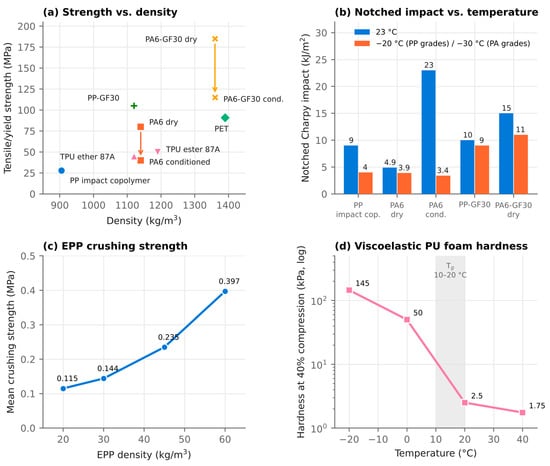
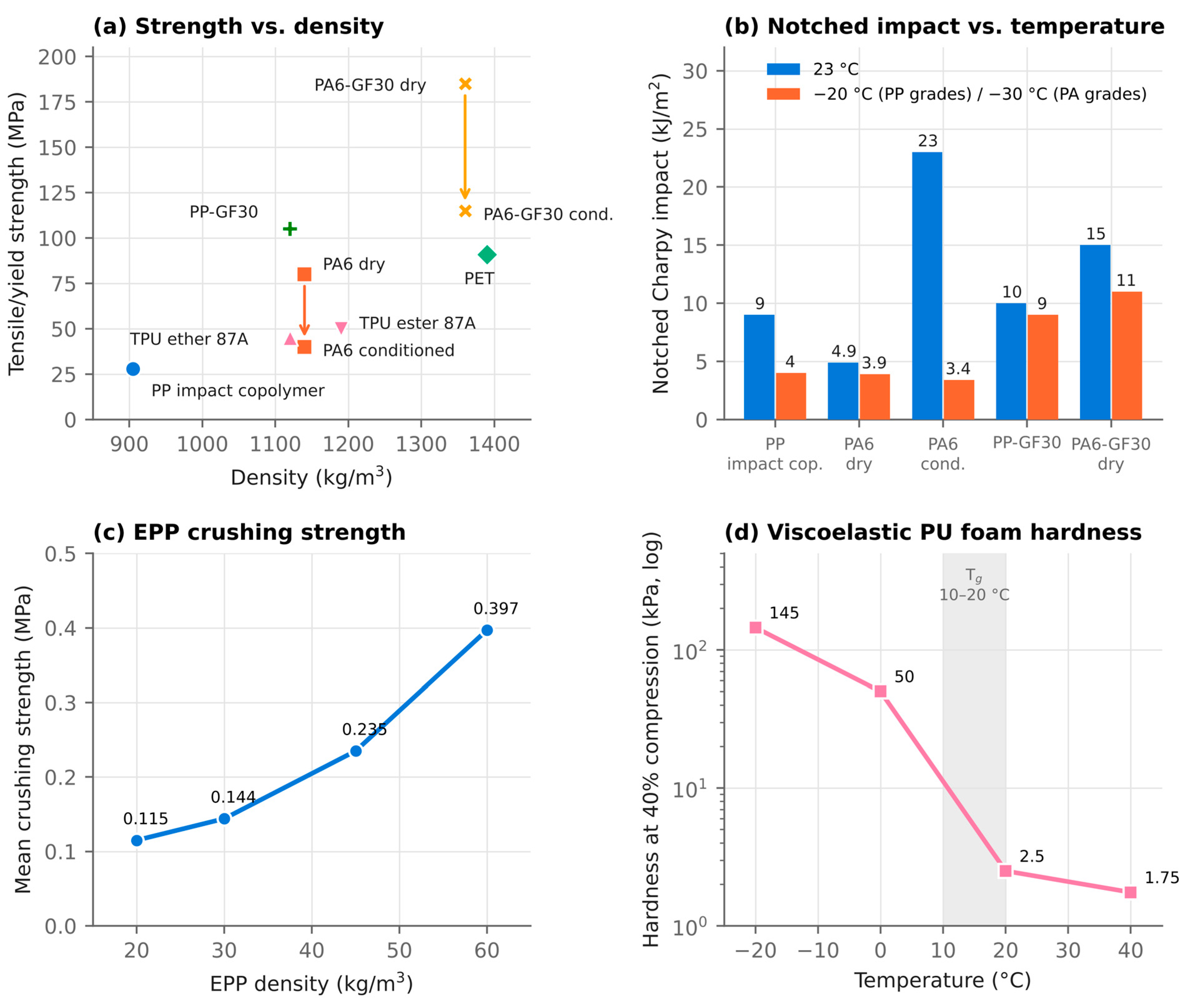
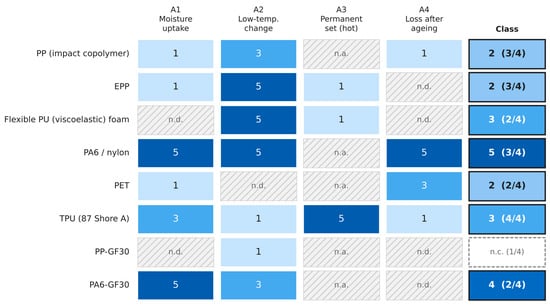
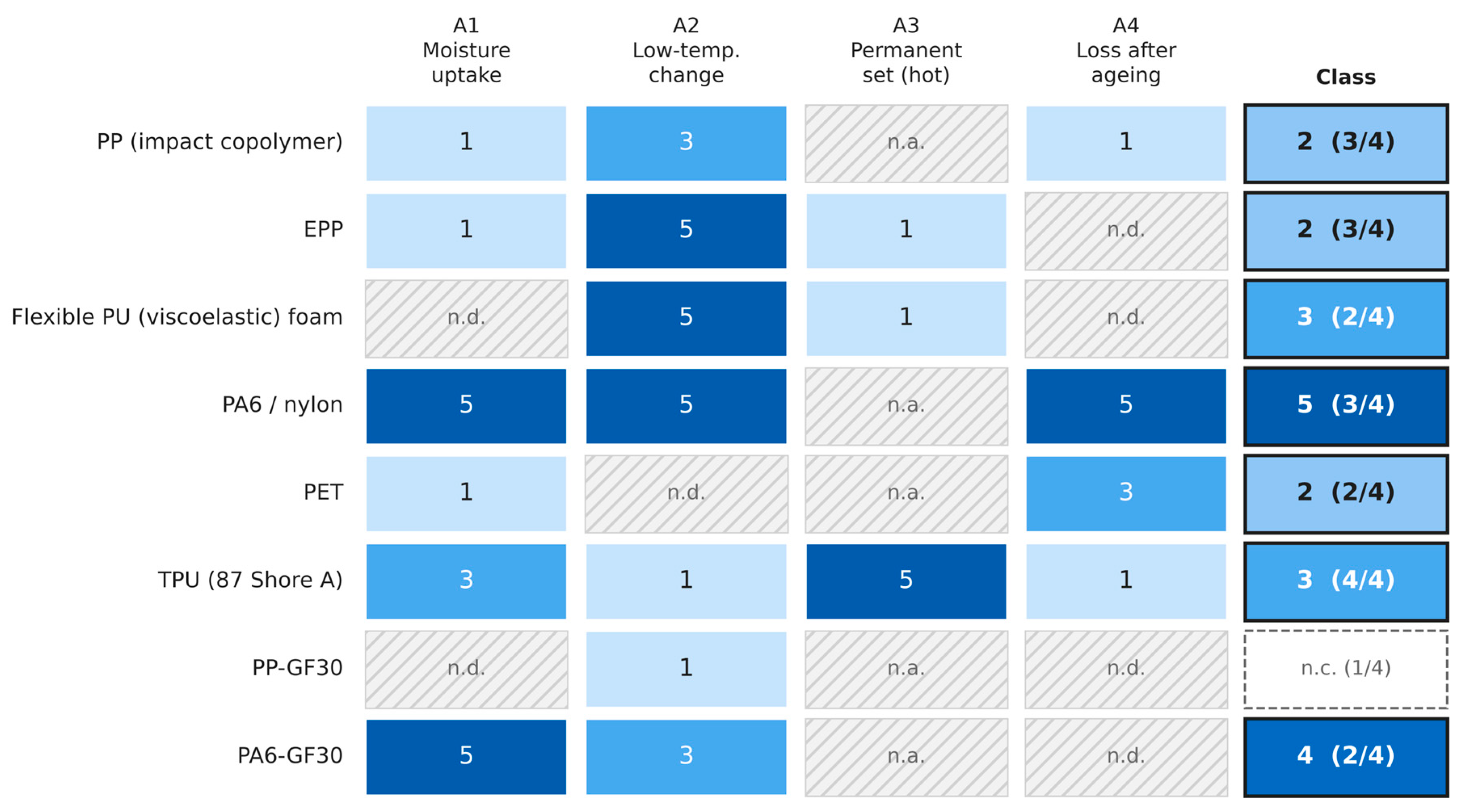
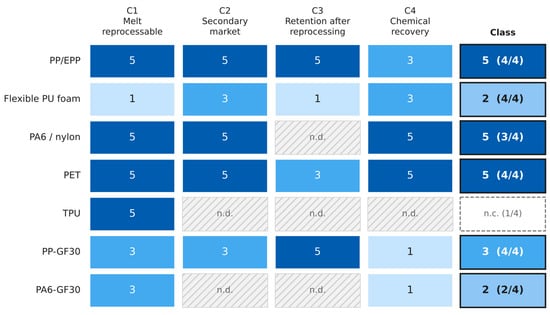
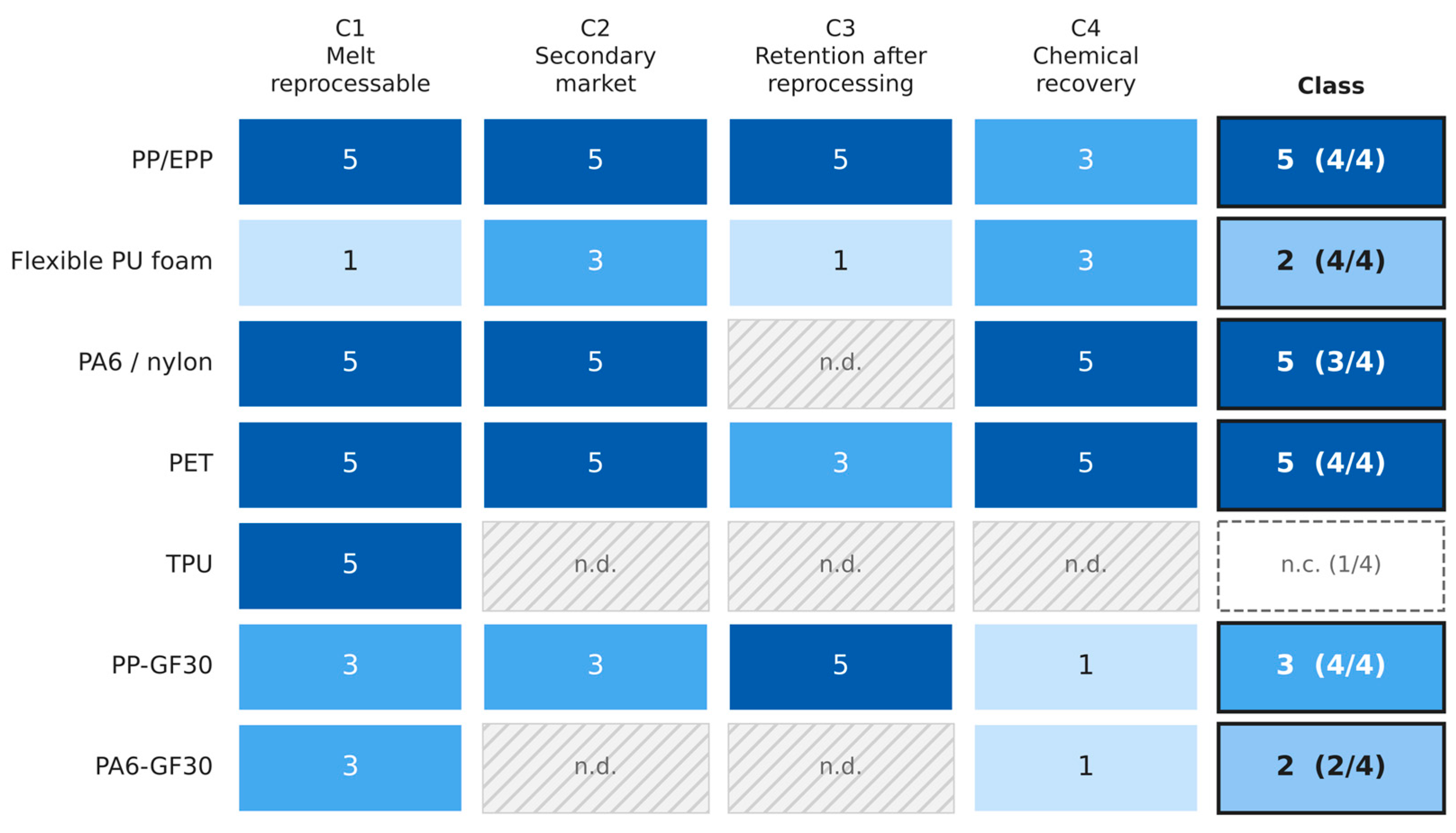
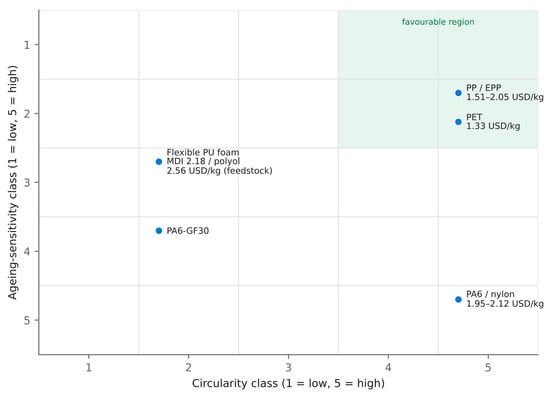
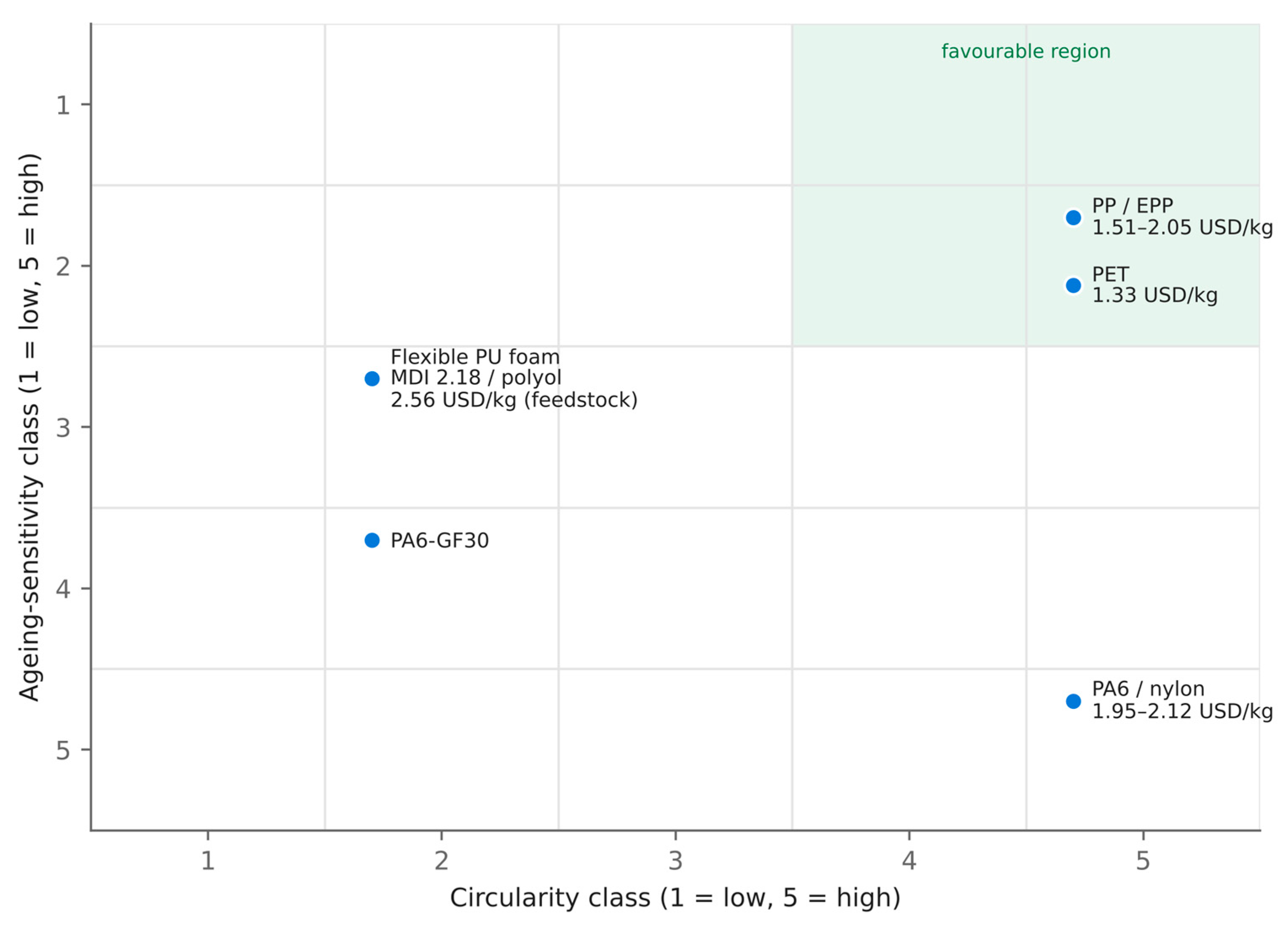
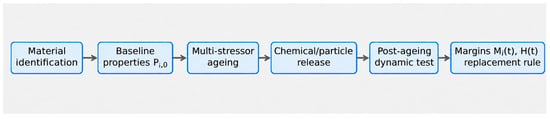
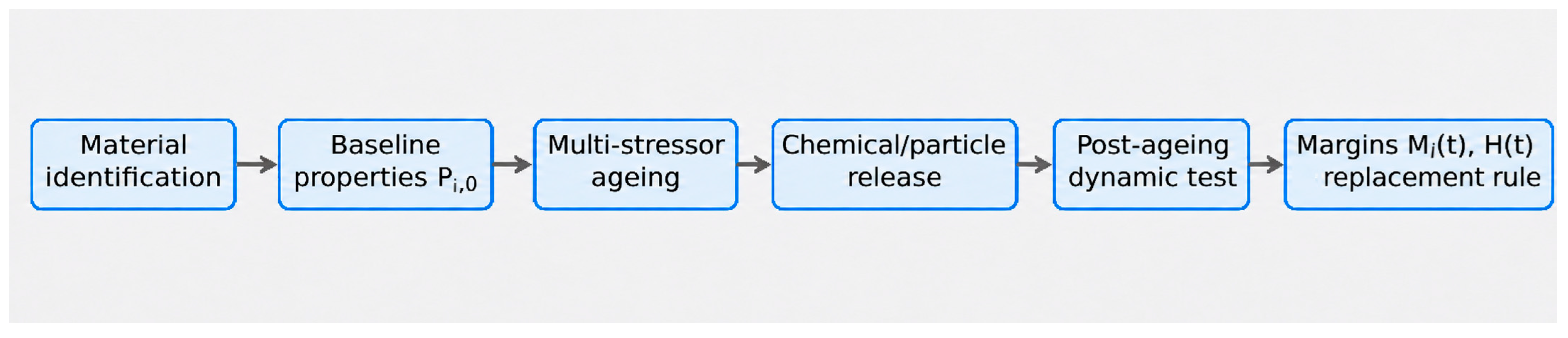

Disclaimer/Publisher’s Note: The statements, opinions and data contained in all publications are solely those of the individual author(s) and contributor(s) and not of MDPI and/or the editor(s). MDPI and/or the editor(s) disclaim responsibility for any injury to people or property resulting from any ideas, methods, instructions or products referred to in the content. |
© 2026 by the authors. Licensee MDPI, Basel, Switzerland. This article is an open access article distributed under the terms and conditions of the Creative Commons Attribution (CC BY) license.