


Abstract
Warm-mix asphalt (WMA) reduces mixing and compaction temperatures through wax additives, chemical additives, and foaming techniques, but their dominant mechanisms, performance trade-offs, and evaluation priorities differ. This structured narrative review synthesizes evidence for Sasobit, Evotherm, and Advera as representative technologies across mixture, binder and mastic, interfacial and microstructural, and molecular scale. Sasobit-type wax additives improve construction-stage fluidity and high-temperature stability through viscosity–temperature regulation and wax crystallization, while low-temperature and fatigue risks require attention. Evotherm-type chemical additives enhance wetting and moisture resistance through surface-active adsorption, thin-film lubrication, and improved interfacial adhesion, with high-temperature shear resistance requiring verification. Advera-type zeolite foaming extends the compaction window through water release and microbubble formation, but residual moisture and wet-condition durability remain critical concerns. On this basis, technology-specific cross-scale evidence chains are established, and a mechanism-oriented evaluation framework is proposed, linking engineering scenarios, dominant mechanisms, reduced-temperature mix design feasibility, durability constraints, and applicability assessment. Mixture performance serves as the final criterion, while binder and interfacial evidence supports risk screening and molecular evidence provides mechanistic interpretation. The framework supports targeted material selection, experimental design, risk diagnosis, and process optimization.
1. Introduction
Against the backdrop of global climate change, the low-carbon transition of transportation infrastructure, and increasingly stringent health and safety requirements for road construction, the sustainability of asphalt pavement construction has received increasing attention. Energy consumption, greenhouse gas emissions, and asphalt fumes generated during asphalt mixture production, together with the continued consumption of non-renewable resources, have become major constraints on the sustainable development of road infrastructure [1,2,3,4,5]. Conventional hot-mix asphalt (HMA) is generally produced at approximately 150–180 °C, whereas Warm-mix asphalt (WMA) is typically produced at temperatures about 20–40 °C lower than those of equivalent HMA [6]. This reduction can decrease fuel consumption and construction-related fume emissions while also mitigating, to some extent, the short-term aging of the asphalt binder [1,2,3,7,8].
Existing studies indicate that WMA is not merely a temperature reduction technology but a coupled material–process system that simultaneously influences binder rheology, asphalt–aggregate interfacial adhesion, mixture air-void structure, and long-term durability [1,2,9,10,11,12]. Lower construction temperatures can reduce energy consumption and fume emissions while limiting the short-term aging of the asphalt binder [1,2,3,7,8,11,12]. However, lower production and compaction temperatures may also result in incomplete aggregate drying, inadequate compaction, discontinuous asphalt films, residual moisture at the asphalt–aggregate interface, reduced moisture resistance, and greater susceptibility to fatigue and low-temperature cracking [11,13,14,15]. Therefore, the engineering value of WMA should not be assessed solely on the basis of temperature reduction or changes in rotational viscosity. Instead, it should be evaluated comprehensively in terms of construction feasibility, pavement performance, and long-term durability risks [2,15,16,17].
Extensive research has been conducted on WMA in relation to mix design, the determination of mixing and compaction temperatures, pavement performance [2,11,17], incorporation of reclaimed asphalt pavement (RAP) contents [18,19,20], interfacial moisture damage [13,14,15,21,22], and molecular simulation [23,24], providing a substantial foundation for its engineering application. Nevertheless, two major limitations remain in the existing body of review and experimental research. First, the roles and evidential boundaries of different analytical scales have not been clearly defined. Improvements in mixture compaction, reductions in binder viscosity, interfacial wetting, and molecular adsorption are often discussed without clearly distinguishing their respective scales or functions. Consequently, the pathways through which material-scale mechanisms translate into engineering performance remain insufficiently understood. Second, a differentiated evaluation rationale for distinct WMA technologies has yet to be fully established. Many studies continue to evaluate WMA using individual indicators, such as the magnitude of temperature reduction, rotational viscosity, rutting resistance, or the tensile strength ratio (TSR) [13,15,17,21]. Relatively few studies have systematically determined, on the basis of dominant mechanisms, which indicators are appropriate for each technology, how potential risks should be identified, and how engineering applicability should be assessed. Nevertheless, existing reviews and technical guidelines provide a foundation for developing such a differentiated evaluation framework.
To address these limitations, this review selects Sasobit, Evotherm, and Advera as representative wax additive-based, chemical additive-based, and foaming-based WMA technologies, respectively, and systematically examines their mechanisms at the mixture, binder, interface and microstructure, and molecular scales. Building on this multiscale synthesis, a mechanism-oriented framework for evaluating WMA technologies is developed to support targeted material selection, experimental design, risk identification, and process optimization.
The principal objectives of this review are to: (1) summarize the technical classifications and applicability characteristics of wax additive-based, chemical additive-based, and foaming-based WMA technologies; (2) analyze the mechanisms of action and potential risk sources of the three technology categories at the mixture, binder, interface and microstructure, and molecular scales; (3) construct cross-scale evidence chains that clarify the dominant action targets and evaluation priorities of each technology category; and (4) propose a mechanism-oriented evaluation framework and illustrate its application logic for material selection and risk assessment through a hypothetical engineering scenario. Overall, this review seeks to advance WMA evaluation from a temperature reduction-centered approach towards an integrated framework that combines mechanisms, performance indicators, risk identification, and engineering scenarios.
2. Review Methodology and Evidence Synthesis
2.1. Review Methodology
This study adopted a structured narrative review approach to synthesize the multiscale mechanisms and engineering evaluation of warm-mix asphalt (WMA) technologies. The literature search was conducted primarily using Google Scholar and covered publications from 2000 to 2026. The literature search was completed in June 2026, and additional studies identified during manuscript preparation were evaluated using the same criteria. The search strategy combined general WMA-related terms (“warm mix asphalt” OR “WMA” OR “warm-mix asphalt”) with technology-specific and mechanism-related terms, including “wax additive”, “Sasobit”, “Fischer–Tropsch wax”, “chemical additive”, “Evotherm”, “surfactant”, “adhesion promoter”, “foaming”, “zeolite”, “Advera”, “water release”, “rheology”, “viscosity”, “surface free energy”, “adhesion”, “moisture damage”, “RAP”, “molecular dynamics”, and “multiscale mechanism”.
The literature selection consisted of title and abstract screening followed by full-text assessment. Studies were included when they provided evidence related to WMA mechanisms or engineering evaluation at the mixture, binder and mastic, interfacial and microstructural, or molecular scales. Studies were excluded if they lacked sufficient information on materials or experimental methods, were unrelated to WMA mechanisms or engineering performance, or substantially duplicated previously published studies. Peer-reviewed journal articles constituted the primary evidence base, supplemented by technical reports, field studies, and engineering guidelines where they provided relevant mechanistic or engineering evidence.
During evidence synthesis and manuscript preparation, additional studies were identified through reference-list screening, citation tracking, and targeted supplementary searches addressing specific mechanisms and performance issues. These studies were evaluated using the same inclusion and exclusion criteria and incorporated when they provided relevant evidence for cross-scale mechanism interpretation.
Approximately 100 publications were ultimately included in the evidence base, with most studies published between 2005 and 2026. Because of substantial heterogeneity in materials, additive types, testing conditions, and evaluation methods, quantitative meta-analysis was not performed. Instead, qualitative evidence synthesis was conducted to distinguish consistent trends, condition-dependent findings, and contradictory results reported across different studies. The selected studies were organized according to WMA technology category and analytical scale to support the construction of cross-scale mechanism chains and the mechanism-oriented evaluation framework proposed in this study. The literature identification, screening, and supplementary search procedures are summarized in Figure 1.
Figure 1.
Literature identification and screening process.
2.2. Evidence Classification
The selected literature was organized using a two-dimensional classification framework based on WMA technology category and analytical scale. According to the technology category, the reviewed studies were classified into three groups: wax additives, chemical additives, and foaming techniques.
Sasobit, Evotherm, and Advera were selected as representative cases because relatively comprehensive cross-scale evidence is available for these products across multiple analytical scales. Findings from these products were treated primarily as product-level evidence and were extended to broader WMA categories only when comparable mechanisms or trends were supported by additional studies.
According to the analytical scale, the available evidence was classified into four levels: (1) mixture scale, covering compactability, air-void structure, rutting resistance, moisture resistance, fatigue performance, and low-temperature cracking resistance; (2) binder and mastic scale, covering viscosity–temperature behavior, rheological responses, phase transition characteristics, aging behavior, and flow characteristics; (3) interfacial and microstructural scale, covering asphalt–aggregate wetting, interfacial adhesion, surface free energy, moisture-induced debonding, and microstructural damage; (4) molecular scale, covering diffusion, adsorption, crystallization, intermolecular interactions, molecular rearrangement, and moisture migration. Table 1 presents the resulting three-category × four-scale evidence matrix. The matrix summarizes the distribution of available evidence and provides a basis for constructing cross-scale mechanism chains; however, it does not quantitatively weight evidence strength. Support for cross-scale mechanism chains was assessed qualitatively according to cross-scale consistency, methodological complementarity, and engineering relevance, as described in Section 2.3.
Table 1.
Evidence distribution of representative WMA technologies across analytical scales.
2.3. Criteria for Establishing Cross-Scale Evidence Chains
Cross-scale evidence chains were established qualitatively based on three considerations: cross-scale consistency, methodological complementarity, and engineering relevance. These criteria evaluate whether observations across different scales support a consistent mechanistic interpretation, whether different analytical approaches provide complementary evidence, and whether lower-scale observations can plausibly explain larger-scale performance responses.
No fixed minimum number of studies was required for each analytical scale because evidence availability varies among WMA technologies and analytical levels. Mechanism chains supported by multiple studies and complementary cross-scale evidence were considered to have stronger support, whereas condition-dependent or contradictory findings were retained to identify potential limitations and applicability boundaries.
3. Classification of WMA
According to the 2024 EAPA technical briefing, common WMA production technologies can be broadly classified into organic additives, chemical additives, and foaming technologies [25]. Previous reviews have indicated that this mechanism-based classification provides a more rational basis for interpreting differences among WMA technologies in terms of binder viscosity, asphalt–aggregate interfacial adhesion, moisture susceptibility, low-temperature cracking resistance, rutting resistance, RAP compatibility, and life-cycle assessment results [1,2,9,11,12,17,18,25,26,27,28].
3.1. Wax Additives
Organic WMA additives are generally composed of wax-based organic materials [25,29,30]. Typical materials include Fischer–Tropsch synthetic waxes, Montan waxes, fatty acid amides, bio-waxes, and other organic viscosity-reducing agents [26,29,30]. These additives are mainly used to regulate the temperature sensitivity of asphalt binders, allowing mixtures to maintain sufficient workability at lower mixing and compaction temperatures [26,29,30,31,32,33,34]. Representative products include Sasobit, Asphaltan-B, FT wax, Montan wax, and several bio-wax products [26,29,30]. Existing studies have suggested that wax WMA additives can achieve a temperature reduction of approximately 20–30 °C; however, their effectiveness is jointly affected by asphalt source, additive melting point, dosage, mixture type, and construction temperature regime [1,2,11,17,26,29,30,31,32,33,34].
From an engineering perspective, the advantages of organic WMA additives lie in their relatively direct temperature reduction effect. Their application scenarios include conventional dense-graded mixtures, SMA, high-temperature heavy-duty pavement sections, and selected high-RAP systems [11,15,17,18,19,20,26,27,28,33]. However, organic WMA additives should not be regarded simply as “temperature-reducing agents”. Their low-temperature toughness, fatigue performance, compatibility with polymer-modified asphalt, such as SBS-modified binders, and phase-structure stability after long-term aging still need to be verified through performance-based tests.
3.2. Chemical Additives
Chemical WMA additives are usually composed of surface-active compounds, adhesion promoters, emulsifying agents, or anti-stripping agents [35,36,37,38,39,40]. Compared with organic WMA additives, chemical additives do not necessarily produce a significant reduction in the bulk viscosity of the binder [35,36,37]. Instead, they mainly expand the mixing and compaction temperature window by improving wetting at the asphalt–aggregate interface, aggregate coating, and inter-particle lubrication [35,36,37]. Representative products include Evotherm, Rediset, Cecabase, and Zycotherm [26,39,40]. Relevant studies have indicated that the typical temperature reduction range of chemical WMA additives is approximately 20–40 °C [1,2,11,17,26,34,37,39,40]. However, because the compositions of different products vary considerably, their applicability should be comprehensively evaluated by considering aggregate mineralogy, asphalt source, RAP content, and moisture-stability requirements.
The reported engineering benefits of chemical WMA additives mainly include improved aggregate coating at lower mixing temperatures and enhanced compactability, while improvements in moisture resistance are more dependent on the specific asphalt–aggregate system and conditioning conditions [35,36,37,38,39,40]. Because their mechanism is not equivalent to bulk viscosity reduction alone, construction temperatures should not be determined solely using the equiviscous-temperature method.
3.3. Foaming Techniques
Foamed WMA technology introduces a small amount of water into hot asphalt, where the water vaporizes and forms asphalt foam [26,41,42]. This process improves binder dispersion, aggregate coating, and compaction performance within a limited time window [41,42,43,44,45]. According to the method of water introduction, foaming technologies can be divided into direct water-injection foaming and indirect foaming using water-bearing minerals [42]. The former relies on nozzles, pumping systems, and asphalt plant control systems to inject a controlled amount of water into hot asphalt, whereas the latter uses minerals containing crystalline water, such as zeolites, to release water at elevated temperatures and generate controlled foaming [42,43,44,45]. Representative technologies include mechanical water-injection foaming, WAM-Foam, Aspha-min, and Advera [42].
The engineering advantages of foaming technology include lower demand for external chemical additives, a high degree of equipment-based control, and suitability for large-scale production [27,28,42]. It also has strong synergistic potential for warm recycling of RAP [27,28]. Its application effectiveness is closely related to foaming water content, asphalt temperature, foam expansion ratio, half-life, aggregate moisture content, RAP moisture content, mixing sequence, and construction time window [41,43,44,45]. Compared with organic and chemical additives, foaming technology is more dependent on process control. Therefore, from the perspective of technological classification, it should be regarded as a WMA route governed by the combined effects of materials, equipment, and process parameters.
3.4. Comparative Classification of the Three WMA Technologies
Table 2 summarizes the classification basis, representative materials, typical temperature reduction ranges, and engineering application scenarios of the three major WMA technology categories.
Table 2.
Classification, representative materials, and applicability of three WMA technologies.
4. Multiscale Mechanisms of WMA
This section examines WMA mechanisms across four scales: the mixture scale, the binder and mastic scale, the interfacial and microstructural scale, and the molecular scale. Sasobit, Evotherm, and Advera are selected as representative wax additives, chemical additives, and zeolite-based foaming techniques, respectively, to construct technology-specific cross-scale evidence chains for the three WMA categories.
Sasobit, Evotherm, and Advera are used in this review as representative cases rather than as universal proxies for all technologies within their respective categories. Sasobit primarily represents Fischer–Tropsch wax additives and may not fully capture the behavior of Montan waxes, fatty acid amides, or bio-based waxes. Evotherm products may differ in formulation, carrier system, and product generation, whereas Advera represents water-releasing zeolite-based foaming rather than mechanical water-injection foaming. Accordingly, findings obtained for these products are treated as direct product-level evidence. Any extension of these findings to broader WMA categories is regarded as a conditional category-level inference and requires sufficient similarity in dominant mechanism, material composition, and application conditions. In particular, test methods and interpretive criteria based on foam expansion ratio and half-life, which are commonly used for mechanically foamed asphalt, should not be transferred directly to all zeolite-based WMA systems without method-specific validation.
4.1. Mixture-Scale Mechanisms
The macroscopic mixture scale serves as the primary level for engineering verification of WMA mechanisms. At this scale, indicators such as aggregate coating ratio, Superpave gyratory compactor (SGC) compaction curves, air-void content (Va), mixture density, Marshall stability, indirect tensile strength (ITS), TSR, Hamburg wheel-tracking test (HWTT) and Asphalt Pavement Analyser (APA) rutting performance, flow number, dynamic modulus, fatigue life, and resistance to low-temperature cracking are used to determine whether mixtures retain adequate constructability and in-service reliability under reduced-temperature conditions [46,47,48]. Existing mix design and field-performance studies indicate that the ability of a mixture to achieve the target compaction level at the intended temperature reduction is a fundamental criterion for evaluating WMA applicability [49,50]. Moreover, WMA performance should not be assessed solely on the basis of temperature reduction magnitude or changes in rotational viscosity; degree of compaction, moisture resistance, and long-term performance should be considered together [49,50].
For Sasobit-type wax additives, the mixture-scale response is primarily characterized by improved compactability and enhanced rutting resistance [51]. The NCAT report by Hurley and Prowell showed that Sasobit improved compactability under both gyratory and vibratory compaction conditions. In mixtures containing PG 64-22 binder, the average air-void content was reduced by up to approximately 0.87%, and rutting potential was generally reduced. However, production at lower temperatures could increase moisture susceptibility [51]. Using dynamic modulus, TSR, four-point bending fatigue, flow number, and APA rutting tests, You et al. further demonstrated that the mixture-scale response to Sasobit depends jointly on dosage, mixing temperature, and mixture structure [52].
Additional studies indicate that Sasobit generally improves high-temperature stability [29,32,33,53]. However, variations in RAP content, compaction at reduced production temperatures, or aging state may make fatigue performance and moisture resistance limiting factors [33,52]. Therefore, at the mixture scale, the effects of Sasobit should not be summarized solely as “rutting reduction.” A more appropriate evidence chain is “improved compactability–enhanced rutting resistance–potential constraints on cracking and moisture resistance.”
The principal mixture-scale responses reported for Evotherm-type chemical additives include retained compactability at reduced production temperatures, while improvements in moisture resistance are more dependent on the specific material system and conditioning conditions [41,44,54,55]. NCAT Report 06-02 and subsequent field studies indicate that Evotherm can maintain adequate compaction at construction temperatures below those used for HMA [44,48,54]. In some systems, visible stripping was reduced, moisture resistance was improved, and TSR values were comparable to or higher than those of control mixtures [41,44,54,55]. Because chemical additives do not necessarily increase the bulk stiffness of the binder, their engineering benefits are often more clearly reflected in aggregate coating ratio, degree of compaction, TSR, HWTT, moisture-conditioned strength, and field density [33,41,44,54,55].
The mixture-scale effect of Advera-type zeolite foaming additives is primarily associated with extending the effective short-term compaction window [56]. Previous studies and engineering assessments have shown that Advera can improve mixture compactability and facilitate construction at reduced production temperatures through internally stored water release and transient microfoaming effects [28,42,44,52]. However, mixture performance indicators, including TSR, wet APA or HWTT, dynamic modulus, and fatigue response, may vary depending on material characteristics and testing conditions [52,56]. These findings indicate that the effectiveness of zeolite-based foaming techniques depends not only on whether foam is generated but also on foam half-life, the time available for compaction, and adequate control of residual moisture and moisture susceptibility.
4.2. Binder-Scale Mechanisms
The binder and mastic scale represents the material response level connecting mixture-scale performance with interfacial mechanisms. It addresses whether a warm-mix additive alters viscosity at mixing temperatures, viscoelastic behavior under service conditions, the shear resistance of thin mastic films, phase transition behavior, short-term aging, and susceptibility to long-term aging [32,33,37,57,58,59,60,61,62]. Common methods include rotational viscosity (RV), dynamic shear rheometry (DSR), multiple stress creep and recovery (MSCR), frequency sweeps, bending beam rheometry (BBR), linear amplitude sweep (LAS) testing, rolling thin-film oven and pressure aging vessel (PAV) conditioning, differential scanning calorimetry (DSC), Fourier-transform infrared spectroscopy (FTIR), saturates, aromatics, resins, and asphaltenes (SARA) analysis, gel permeation chromatography (GPC), and mastic lubrication or friction testing [32,33,37,57,58,59,60,61,62].
At the binder scale, the dominant mechanism of Sasobit is regulation of the bulk viscosity–temperature relationship [32,33,57,58,60,61]. Studies by Arega and Bhasin, among others, indicate that, unlike many chemical additives, Sasobit can partly compensate for the lower early-life stiffness associated with reduced short-term aging at lower production temperatures. Its action can be interpreted as viscosity reduction caused by wax melting at elevated temperatures, followed by stiffness enhancement through crystallization during cooling [60]. Saed et al. investigated Sasobit-modified warm recycled binders and found that Sasobit improved workability and high-temperature rutting resistance but reduced low-temperature flexibility [59]. These findings indicate that low-temperature relaxation capacity and fatigue cracking resistance are key constraints for this type of material. Therefore, Sasobit should be evaluated using a combination of RV, MSCR, BBR, LAS, DSC, FTIR, and SARA analysis rather than rotational viscosity alone.
The binder-scale response of Evotherm differs from that of Sasobit. Its dominant mechanism is not wax-crystal-induced stiffening but the reduction in thin-film shear resistance, improvement of lubrication, and regulation of rheological balance by surface-active components [37,58,63]. Studies of Evotherm-DAT show that it can improve the workability of rubberized asphalt and reduce construction temperatures, although high-temperature performance may be slightly lower than that of the corresponding system without a warm-mix additive [64,65,66]. When surfactants are combined with foaming, foam half-life may also be extended; however, excessive dosage may reduce and compromise high-temperature stability [67]. Therefore, binder-scale evaluation of Evotherm should be combined with interfacial tests.
Advera exhibits a transient and process-dependent response at the binder and mastic scale [68]. Comparisons between hydrated and dehydrated Advera indicate that hydrated Advera produces a water release-induced foaming effect together with a particle-filling effect, whereas dehydrated Advera primarily reflects the filling effect of zeolite particles. Because zeolite is insoluble in asphalt, the presence of solid particles and gradual water release may complicate the interpretation of conventional steady-state viscosity and DSR results [42,60,68]. Advera should therefore be regarded as a coupled material–process system involving the superposition of transient microfoaming and residual mineral-particle effects. Its evaluation should therefore emphasize water release behavior, comparisons with dehydrated Advera, residual moisture measurements, and rheological responses, while foam expansion, half-life, and foam index may also be considered where applicable to the specific zeolite system.
4.3. Interfacial and Microstructural-Scale Mechanisms
The interfacial and microstructural scale focuses on contact, spreading, adsorption, and adhesion between asphalt films and aggregate mineral surfaces, as well as stripping behavior after moisture intrusion [39,69,70,71,72,73,74,75]. Common methods include contact angle measurement, surface free energy analysis, work of adhesion, work of debonding, energy ratio, binder bond strength (BBS) pull-off testing, atomic force microscopy (AFM) adhesion force measurement, scanning electron microscopy and fluorescence microscopy, the Hamburg stripping inflection point, and observation of failure morphology after freeze–thaw conditioning [70,71,72,73,74,75,76,77,78]. Unlike the binder scale, the interfacial scale emphasizes the specific asphalt–aggregate combination rather than the bulk properties of the binder alone [69,71,72,73,74,75,76,77,78].
Interfacial evidence for Sasobit indicates that its effects on spreading and surface free energy characteristics are aggregate-dependent [39,69,71,72,76,79,80,81]. Wasiuddin et al. found that Sasobit reduced the contact angle and increased the total surface free energy of the binder, although changes in energy ratio differed between Davis limestone and Snyder granite [79]. Ghabchi et al. also reported that Sasobit and Advera could reduce moisture damage potential in some asphalt–aggregate combinations but did not perform satisfactorily in strongly acidic granite systems [76]. In addition, aging pathways such as ultraviolet exposure and RTFO/PAV conditioning may further alter the interfacial adhesion behavior of Sasobit [39,75,80,81].
The interfacial mechanism of Evotherm is supported by more direct evidence. Ghabchi et al. measured surface free energy using the Wilhelmy plate method and a universal sorption device and found that 0.75% Evotherm significantly increased the work of adhesion in asphalt–limestone and asphalt–granite systems while reducing the work of debonding in the presence of water [76]. Together with the review by Button et al., FHWA technical information, and subsequent studies of surface free energy and moisture-conditioned interfacial behavior, these findings support an Evotherm mechanism chain of “surface-active adsorption–enhanced wetting–reduced work of moisture-induced debonding.” However, its effectiveness remains influenced by product generation, binder source, and aggregate mineralogy [26,82,83,84].
The interfacial mechanism of Advera is dual in nature. When zeolite releases water and forms microbubbles, the effective volume and mobility of the asphalt phase temporarily increase, allowing the asphalt film to spread more readily over aggregate surfaces. However, after foam collapse, residual water that is not removed or is retained within aggregate pores may form weak interfacial water films and reduce adhesion under wet conditions [26,27,42,60,68,74,78]. In recent years, the combination of AFM and molecular dynamics has provided a new evidence pathway for interfacial mechanisms by linking nanoscale adhesion force, molecular-scale work of adhesion, and mixture-scale moisture damage [75,85,86].
4.4. Molecular-Scale Mechanisms
Molecular-scale analysis is used to elucidate the fundamental origins of phenomena observed at the mixture, binder and mastic, and interfacial scales. At this scale, molecular dynamics (MD) simulations are commonly combined with AFM–MD cross-scale validation, SARA analysis and surface free energy (SFE) measurements [73,75,87,88]. These approaches are used to characterize molecular and physicochemical descriptors such as mean square displacement (MSD), diffusion coefficient, radial distribution function (RDF), fractional free volume (FFV), cohesive energy density (CED), glass transition temperature (), adsorption energy, interaction energy, work of adhesion, shear stress, and molecular orientation [74,75,87,88,89,90,91,92,93,94,95].
The molecular mechanism of Sasobit-type wax additives involves the coupled regulation of molecular mobility, component distribution, cohesive state, and interfacial interactions after long-chain alkane or Fischer–Tropsch wax molecules enter the multicomponent SARA system of asphalt [96,97,98,99,100]. At elevated temperatures, wax molecules remain dispersed within the asphalt continuous phase, potentially increasing local free volume and promoting the mobility and diffusion of lighter fractions [96,97,98,99,100]. During cooling, wax chains become increasingly oriented and form localized crystalline domains, thereby restricting the mobility of asphaltene–resin structures and increasing cohesive energy density and system rigidity [96,97,98]. In high-RAP systems, wax molecules may facilitate initial contact between virgin and aged binders, although crystallization-induced constraints may limit subsequent interdiffusion [92,99]. Therefore, diffusion coefficient, free volume distribution, molecular orientation, wax crystallization behavior, and asphaltene aggregation state should be considered together.
Because publicly available atomistic models representing the proprietary Evotherm formulation are limited, molecular-scale discussion should focus on Evotherm-type surface-active chemical additives rather than on a product-specific molecular structure. MD shear and friction models show that surface-active molecules can reduce shear resistance at the asphalt–mineral interface through polar-head adsorption and nonpolar-chain lubrication [90,100]. However, molecular-scale evidence also indicates that lubrication does not necessarily correspond to enhanced adhesion under all conditions. Mineral surface characteristics, moisture, asphalt component models, and force-field selection can all influence the calculated work of adhesion and interfacial interaction energy [75,89,101].
The molecular mechanism of Advera-type zeolite foaming additives should be interpreted through three coupled processes: crystalline water release, molecular rearrangement within the asphalt phase, and competitive adsorption by residual water [95,102]. When bound water is released from zeolite pores during heating, microbubbles form and temporarily disturb the asphalt continuous phase, altering local density, free volume, and molecular mobility. After foam collapse, residual water may migrate toward the asphalt–aggregate interface and compete with polar asphalt components for active adsorption sites on mineral surfaces, thereby reducing the work of adhesion and increasing susceptibility to stripping [89,95,102].
Molecular-scale indicators should not be treated as engineering acceptance limits but as tools for mechanistic interpretation and early risk screening. For Sasobit, priority descriptors include MSD, diffusion coefficient, , CED, FFV, and wax crystallization or phase transition behavior [23,93,94,98,99,100,101]. For Evotherm, adsorption energy, shear stress, RDF, molecular orientation, interfacial interaction energy, and competitive water adsorption should be emphasized [73,89,90,94,100,101]. For Advera, water diffusion pathways, local density distribution, cohesive interactions, work of adhesion, and work of debonding should be considered [26,74,77,78,89,95,101,102]. These indicators should be cross-validated against upper-scale tests such as RV, DSR/MSCR, SFE, BBS, TSR, HWTT, and freeze–thaw damage tests. The scale-specific evaluation priorities and principal risks associated with the three representative WMA technologies are summarized in Table 3.
Table 3.
Scale-specific evaluation priorities and principal risks for the three WMA technologies.
4.5. Cross-Scale Integration of Mechanism–Performance Pathways
The three WMA technology categories exhibit distinct cross-scale mechanism–performance pathways. For Sasobit-type wax additives, the dominant mechanism chain can be summarized as “wax dispersion and crystallization–viscosity–temperature regulation–interfacial modification–improved compactability and rutting resistance, accompanied by potential low-temperature cracking and fatigue risks.” For Evotherm-type chemical additives, the dominant mechanism chain is “surface-active adsorption–thin-film lubrication–enhanced wetting and adhesion–maintained compactability and moisture resistance under reduced production temperatures.” For Advera-type zeolite foaming, the dominant mechanism chain is “crystalline water release–microbubble formation–temporary improvement in workability and aggregate coating–residual moisture-induced interfacial risk.” The scale-specific manifestations and corresponding evaluation priorities of these mechanism chains are summarized in Table 4.
Table 4.
Mechanism chains for the three WMA technologies.
Overall, evidence supporting reduced-temperature workability mechanisms is relatively consistent, whereas moisture resistance, cracking-related performance, aging response, and long-term durability remain strongly dependent on material characteristics and testing conditions.
5. Mechanism-Oriented WMA Evaluation Framework
Building on the multiscale mechanism analysis presented above, this review proposes a mechanism-oriented framework for evaluating WMA technologies. The framework translates engineering scenarios, dominant mechanisms, cross-scale evidence, and identified risks into an operational pathway for material selection, experimental design, and process optimization. The dominant mechanisms, performance responses, and evaluation priorities identified in Section 4 provide the scientific basis for the engineering evaluation framework developed in this section. Section 5 therefore focuses on integrating these cross-scale findings into indicator selection, performance verification, engineering applicability assessment, and feedback-based adjustment.
5.1. Basic Logic of the Evaluation Framework
The central principle of the framework is to select technology-specific combinations of indicators according to the dominant action targets of different WMA technologies and to translate the resulting evidence into engineering applicability decisions. Its logic follows the sequence “scenario definition–dominant mechanism identification–indicator selection–performance verification–risk mitigation and feedback adjustment.”
Mixture-scale performance serves as the final engineering decision criterion; binder-scale evidence provides process constraints and identifies rheological or material response risks; interfacial and microstructural evidence supports risk screening, particularly for adhesion and moisture-related damage; and molecular-scale evidence provides mechanistic interpretation and early risk identification.
From an engineering perspective, mixture-scale performance remains the final basis for applicability decisions. When material systems are complex, environmental conditions are sensitive, or test results are inconsistent, binder- and mastic-scale, interfacial, and molecular evidence can be used to trace the origins of performance variation and potential failure, thereby guiding targeted material and process optimization. The functional roles of different scales in mechanism-oriented WMA evaluation are summarized in Table 5.
Table 5.
Functional roles of different scales in mechanism-oriented WMA evaluation.
5.2. Evaluation Procedure
Mechanism-oriented WMA evaluation can be implemented through a six-stage procedure: scenario definition, preliminary material screening, mix design verification, durability assessment, applicability classification, and feedback-based adjustment. This procedure is compatible with established WMA mix design methods and field-performance verification practices. Before evaluation, the engineering scenario and design constraints should be defined, including the target temperature reduction, traffic loading level, climatic conditions, aggregate mineralogy, RAP content and moisture, construction season, mixing equipment, and compaction conditions. The applicable specifications and project-specific performance requirements should also be identified at this stage, and the corresponding acceptance thresholds should be defined before testing rather than prescribed universally by the present framework.
During preliminary material screening, indicators should be selected according to the WMA technology category and its dominant action target. For wax additives, priority should be given to the viscosity–temperature relationship, DSC phase transition behavior, dynamic shear rheometer and MSCR responses, and low-temperature rheological risks. For chemical additives, priority indicators include aggregate coating ratio, contact angle, SFE, work of adhesion, and work of moisture-induced debonding. For zeolite-based foaming techniques, priority indicators include water release behavior, residual moisture, and foam collapse behavior, while expansion ratio, foam half-life, and foam index may be considered where applicable to the specific system. If preliminary screening indicates that the target temperature reduction is unattainable or that pronounced low-temperature embrittlement, moisture-induced debonding, or residual moisture risks are present, the system should be revised before proceeding to full mixture design verification.
Under the target reduced-temperature conditions, mix design verification should examine SGC compaction curves, air-void content, density, VMA, VFA, asphalt film continuity, and aggregate coating quality. These indicators determine whether the mixture can achieve the target compaction level and satisfy the volumetric design requirements. Durability assessment should then be conducted using technology-specific indicators. For wax additives, rutting resistance, low-temperature cracking resistance, and fatigue performance should be evaluated together. For chemical additives, TSR, HWTT, BBS, moisture-conditioned adhesion, and freeze–thaw damage should be prioritized. For zeolite-based foaming techniques, TSR, moisture-conditioned APA or HWTT, freeze–thaw strength retention, residual moisture, and foam collapse behavior should be evaluated.
On the basis of the evaluation results and the predefined acceptance criteria, a WMA scheme can be classified as applicable, conditionally applicable, or not applicable. A scheme may be classified as applicable when all mandatory mixture-scale performance requirements are satisfied under the target reduced-temperature conditions and the supporting lower-scale evaluations do not identify unresolved engineering risks requiring further mitigation or verification. A scheme should be classified as conditionally applicable when the mandatory mixture-scale performance requirements are satisfied, but one or more identifiable and controllable engineering risks remain and require targeted mitigation or further verification. A risk is considered controllable when its likely source can be identified, a feasible material or process adjustment can be implemented, and the affected performance can be reassessed after modification. A scheme should be classified as not applicable when one or more mandatory mixture-scale performance requirements cannot be satisfied under the target reduced-temperature conditions, including after reasonable material or process adjustment and targeted reassessment. The proposed mechanism-oriented framework for evaluating WMA technologies is illustrated in Figure 2. The cross-scale evidence chain supporting mechanism interpretation and indicator selection is presented in Figure 3.
Figure 2.
Mechanism-oriented framework for evaluating WMA technologies. Note: Solid arrows indicate the primary evaluation pathway, while dashed arrows indicate feedback and iterative adjustment within the framework.
Figure 3.
Cross-scale evidence chain.
5.3. Illustrative Scenario-Based Application
To illustrate the application of the proposed framework, a hypothetical heavy-traffic pavement project in a hot and humid region of southern China is considered. The project uses an asphalt mixture containing 30% RAP and requires the mixing and compaction temperatures to be reduced by approximately 30 °C relative to those used for the corresponding HMA control. The region is characterized by high summer pavement temperatures and frequent rainfall, while the selected aggregate exhibits moderate susceptibility to moisture-induced damage. In addition, the relatively high RAP content may increase effective binder stiffness and susceptibility to intermediate- and low-temperature cracking. The evaluation must therefore address compactability at the target mixing and compaction temperatures, resistance to permanent deformation, moisture durability, fatigue resistance, low-temperature cracking resistance, and performance retention after aging. An HMA mixture prepared with the same binder, aggregate, gradation, and RAP content should be used as the reference. Acceptance criteria for each evaluation should be defined in advance on the basis of project specifications and non-inferiority requirements relative to the HMA control.
During technology identification, wax additives, chemical additives, and foaming techniques should all be considered candidate solutions; however, none should be regarded as inherently superior solely on the basis of its technology category. For wax additives, binder melting–crystallization behavior and potential losses in low-temperature relaxation and fatigue resistance should be screened. For chemical additives, priority should be given to asphalt–aggregate wetting, interfacial adhesion, and resistance to moisture-induced debonding. For foaming techniques, the water release profile or the foam expansion and collapse characteristics should be evaluated according to the specific foaming mechanism. Following technology-specific pre-screening, all candidate mixtures should be evaluated at the target mixing and compaction temperatures using Superpave gyratory compaction, volumetric properties, aggregate coating quality, and asphalt film continuity. For foamed mixtures, residual moisture and the effective foaming and compaction window should also be assessed. Only candidates that achieve acceptable volumetric structure, aggregate coating, and compactability should proceed to the common mixture performance evaluation gate.
To illustrate how the framework can support mechanism-oriented diagnosis, consider a scenario in which all three candidate mixtures satisfy the compactability and volumetric requirements in Step 4, but one candidate exhibits a relatively low TSR or an early stripping response in the HWTT during Step 5. A conventional, technology-agnostic evaluation would identify only inadequate moisture durability, whereas the proposed framework uses evidence from the preceding steps to diagnose the underlying source of failure. For a chemical additive, a concurrent reduction in moisture-conditioned BBS would indicate inadequate interfacial adhesion, suggesting that the additive dosage, anti-stripping treatment, or aggregate moisture content should be adjusted. For a foaming technique, excessive residual moisture or a mismatch between foam stability and the mixing–compaction sequence would instead indicate the need to adjust the water dosage or release profile, foaming temperature, mixing and compaction timing, and curing conditions. For a wax additive, aggregate coating quality, air-void structure, and asphalt film continuity under reduced-temperature conditions should be examined, together with the potential effects of wax crystallization and binder stiffening. After corrective action, the failed evaluation gate and any downstream gates affected by the modification should be reassessed. Under this hot–humid, high-RAP scenario, the three WMA routes therefore lead to different screening priorities and corrective actions. The framework does not presume that any technology category is inherently superior; rather, suitability is determined by whether scenario-specific risks can be controlled while the common mixture performance requirements are satisfied. Accordingly, the same mixture-scale failure may lead to different material- or process-specific adjustments depending on the underlying mechanism. This hypothetical case is intended to illustrate the decision logic of the framework and does not constitute experimental or field validation. The evaluation results and applicability classification of the hypothetical WMA scheme are summarized in Table 6.
Table 6.
Scenario-specific application of the proposed mechanism-oriented WMA evaluation framework.
5.4. Limitations and Future Research
Several limitations of the present review and the proposed framework should be acknowledged.
First, the available WMA literature exhibits substantial heterogeneity in binder source, aggregate mineralogy, additive dosage, RAP content, aging condition, production temperature, conditioning protocols, and testing methodologies. These differences limit direct quantitative comparisons among studies and may partly explain the inconsistent performance outcomes reported in the literature. Therefore, quantitative meta-analysis was not conducted; instead, this review focused on the consistency, variability, and applicability boundaries of mechanism–performance relationships reported across studies.
Second, Sasobit, Evotherm, and Advera were selected as representative cases because relatively comprehensive multiscale evidence is available for these products. However, these products should not be assumed to represent all wax additives, chemical additives, or foaming techniques. Accordingly, product-specific observations were extended to broader technology categories only when similar mechanisms or performance trends were supported by additional studies involving materials with comparable functional characteristics. In addition, the quantity and maturity of available evidence are unevenly distributed among WMA technology categories and analytical scales. Mixture- and binder-scale studies are generally more abundant than interfacial or molecular-scale investigations; therefore, some cross-scale mechanism chains are supported by stronger evidence than others.
Third, the practical decision thresholds within the proposed framework cannot be universally fixed. The classification of a WMA technology as applicable, conditionally applicable, or not applicable should ultimately be determined according to local specifications, climatic conditions, traffic conditions, material characteristics, and project-specific performance requirements.
Finally, the proposed mechanism-oriented evaluation framework requires further validation through dedicated experimental programs and field projects. The scenario presented in Section 5.3 is intended to illustrate the application logic of the framework rather than serve as formal validation. Future research should therefore validate the framework using independent laboratory datasets, field trials, and long-term pavement performance data while further refining technology-specific evaluation indicators and decision thresholds under diverse engineering conditions.
6. Conclusions
In the context of sustainable asphalt pavement construction, WMA evaluation should consider its mechanisms, performance responses, and associated risks. Using a structured narrative review, this study synthesizes multiscale evidence and develops a mechanism-oriented evaluation framework. The main conclusions are as follows:
- The three representative WMA technologies exhibit distinct mechanism–performance pathways. Wax additives are mainly associated with temperature-dependent rheological modification and phase transition, chemical additives with interfacial interactions, and foaming techniques with transient water-induced workability improvement. These differences result in technology-specific benefits and risks. Evidence from Sasobit, Evotherm, and Advera should be generalized only when comparable mechanisms and material characteristics are supported by additional studies.
- The mechanism-oriented framework shown in Figure 2 links engineering scenario definition, dominant mechanism identification, targeted screening, reduced-temperature mixture design and performance assessment, and applicability classification. It provides a structured basis for material selection, experimental design, risk diagnosis, and process adjustment according to technology-specific mechanisms and project conditions.
- Evidence across different analytical scales serves distinct functional roles rather than having equivalent engineering significance. As summarized in Table 5 and Figure 3, molecular-, binder-, and interfacial-scale evidence primarily supports mechanistic interpretation, process constraints, and risk identification, whereas mixture-scale performance remains the final engineering criterion. Cross-scale consistency strengthens interpretation but cannot replace direct mixture performance verification.
- The framework remains limited by study heterogeneity, uneven evidence distribution, the limited transferability of product-specific evidence, and the absence of independent experimental or field validation. Future research should validate and refine the framework using laboratory, field, and long-term pavement performance data under different climatic, traffic, RAP, and material conditions.
Author Contributions
Conceptualization, X.Z. and Y.L.; methodology, X.Z. and Y.L.; investigation, X.Z.; data curation, X.Z.; formal analysis, X.Z. and Y.L.; validation, Y.L. and X.L.; visualization, X.Z.; writing—original draft preparation, X.Z.; writing—review and editing, Y.L. and X.L.; supervision, Y.L.; project administration, Y.L.; funding acquisition, X.Z. and Y.L. All authors have read and agreed to the published version of the manuscript.
Funding
This research was funded by Scientific and Technological Research Programs of Chongqing Municipal Education Commission (Grant No. KJQN202301909 and KJQN202301908), the Talent Introduction Program of Chongqing Institute of Engineering (Grant No. 2021gcky01), and the Guangdong Provincial Communications Group (Grant No. JT2023YB12).
Institutional Review Board Statement
Not applicable.
Informed Consent Statement
Not applicable.
Data Availability Statement
No new data were created or analyzed in this study. Data sharing is not applicable to this article.
Acknowledgments
During the preparation of this manuscript, the authors used OpenAI ChatGPT (GPT-5.6 Thinking) to assist with language editing and improvement of textual clarity. The authors reviewed and edited the output and take full responsibility for the content of this publication.
Conflicts of Interest
Author Xinhai Liu was employed by the company Guangdong Jiaoke Technology Development Co., Ltd. The remaining authors declare that the research was conducted without any commercial or financial relationships that could be construed as a potential conflict of interest.
References
- Alqahtani, T. Properties and Applications of Warm Mix Asphalt in the Road Construction Industry: A Comprehensive Review and Insights toward Facilitating Large-Scale Adoption. Rev. Adv. Mater. Sci. 2026, 65, 20250187. [Google Scholar] [CrossRef] [Scilit]
- Liu, N.; Liu, L.; Li, M.; Sun, L. A Comprehensive Review of Warm-Mix Asphalt Mixtures: Mix Design, Construction Temperatures Determination, Performance and Life-Cycle Assessment. Road Mater. Pavement Des. 2024, 25, 1381–1425. [Google Scholar] [CrossRef] [Scilit]
- Sun, G.; Ning, W.; Jiang, X.; Qiu, K.; Cao, Z.; Ding, Y. A Comprehensive Review on Asphalt Fume Suppression and Energy Saving Technologies in Asphalt Pavement Industry. Sci. Total Environ. 2024, 913, 169726. [Google Scholar] [CrossRef] [Scilit] [PubMed]
- Germin-Aizac, J.; Maitre, A.; Balducci, F.; Montlevier, S.; Marques, M.; Tribouiller, J.; Demeilliers, C.; Persoons, R. Bitumen Fumes and PAHs in Asphalt Road Paving: Emission Characteristics, Determinants of Exposure and Environmental Impact. Environ. Res. 2023, 228, 115824. [Google Scholar] [CrossRef] [Scilit] [PubMed]
- Decký, M.; Remišová, E.; Samek, M. Research on the Possibilities of Reusing Mixed Reclaimed Asphalt Materials with a Focus on the Circular Economy. Appl. Sci. 2025, 15, 12004. [Google Scholar] [CrossRef] [Scilit]
- European Asphalt Pavement Association (EAPA). What Is Asphalt. Available online: https://eapa.org/what-is-asphalt/ (accessed on 25 May 2026).
- Milad, A.; Babalghaith, A.M.; Al-Sabaeei, A.M.; Dulaimi, A.; Ali, A.; Reddy, S.S.; Bilema, M.; Yusoff, N.I.M. A Comparative Review of Hot and Warm Mix Asphalt Technologies from Environmental and Economic Perspectives: Towards a Sustainable Asphalt Pavement. Int. J. Environ. Res. Public. Health 2022, 19, 14863. [Google Scholar] [CrossRef] [Scilit] [PubMed]
- T. Calabi-Floody, A.; A. Valdés-Vidal, G.; Sanchez-Alonso, E.; A. Mardones-Parra, L. Evaluation of Gas Emissions, Energy Consumption and Production Costs of Warm Mix Asphalt (WMA) Involving Natural Zeolite and Reclaimed Asphalt Pavement (RAP). Sustainability 2020, 12, 6410. [Google Scholar] [CrossRef] [Scilit]
- Martinez-Soto, A.; Calabi-Floody, A.; Valdes-Vidal, G.; Hucke, A.; Martinez-Toledo, C. Life Cycle Assessment of Natural Zeolite-Based Warm Mix Asphalt and Reclaimed Asphalt Pavement. Sustainability 2023, 15, 1003. [Google Scholar] [CrossRef] [Scilit]
- Maciejewski, K.; Chomicz-Kowalska, A.; Bartos, J. Effects of Laboratory Ageing on the Chemical Composition and High-Temperature Performance of Warm Mix Asphalt Binders. Appl. Sci. 2024, 14, 8524. [Google Scholar] [CrossRef] [Scilit]
- Sukhija, M.; Saboo, N. A Comprehensive Review of Warm Mix Asphalt Mixtures-Laboratory to Field. Constr. Build. Mater. 2021, 274, 121781. [Google Scholar] [CrossRef] [Scilit]
- Caputo, P.; Abe, A.A.; Loise, V.; Porto, M.; Calandra, P.; Angelico, R.; Oliviero Rossi, C. The Role of Additives in Warm Mix Asphalt Technology: An Insight into Their Mechanisms of Improving an Emerging Technology. Nanomaterials 2020, 10, 1202. [Google Scholar] [CrossRef] [Scilit] [PubMed]
- Sukhija, M.; Saboo, N.; Pani, A. Effect of Warm Mix Asphalt (WMA) Technologies on the Moisture Resistance of Asphalt Mixtures. Constr. Build. Mater. 2023, 369, 130589. [Google Scholar] [CrossRef] [Scilit]
- Ji, J.; Yao, H.; Yuan, Z.; Suo, Z.; Xu, Y.; Li, P.; You, Z. Moisture Susceptibility of Warm Mix Asphalt (WMA) with an Organic Wax Additive Based on X-Ray Computed Tomography (CT) Technology. Adv. Civ. Eng. 2019, 2019, 7101982. [Google Scholar] [CrossRef] [Scilit]
- Diab, A.; Saboo, N.; You, L. Moisture, Rutting, and Fatigue-Cracking Susceptibility of Water-Carrying, Wax-Based, and Chemical-Based Warm Mix Asphalt Systems. J. Mater. Civ. Eng. 2022, 34, 04022099. [Google Scholar] [CrossRef] [Scilit]
- Yousefi, A.A.; Underwood, B.S.; Ghodrati, A.; Behnood, A.; Vahidi, E.; Nowrouzi, A.; Ayar, P.; Haghshenas, H.F. Towards a Durable and Sustainable Warm Mix Asphalt: Techno-Economic and Environmental Evaluation Considering Balanced Mix Design Approach. J. Clean. Prod. 2025, 486, 144311. [Google Scholar] [CrossRef] [Scilit]
- Sukhija, M.; Saboo, N.; Pani, A. Suitability of Warm Mix Asphalt (WMA) Technologies Based on Performance and Energy Consumption. Road Mater. Pavement Des. 2024, 25, 1479–1506. [Google Scholar] [CrossRef] [Scilit]
- Jain, S. A State-of-the-Art Review on Warm Mix Asphalt with Recycled Asphalt: Sustainable Approach to Utilize High RAP Contents. J. Traffic Transp. Eng. Engl. Ed. 2026, 13, 737–762. [Google Scholar] [CrossRef] [Scilit]
- Rathore, M.; Haritonovs, V.; Zaumanis, M. Performance Evaluation of Warm Asphalt Mixtures Containing Chemical Additive and Effect of Incorporating High Reclaimed Asphalt Content. Materials 2021, 14, 3793. [Google Scholar] [CrossRef] [Scilit] [PubMed]
- Zaremotekhases, F.; Sadek, H.; Hassan, M.; Berryman, C. Impact of Warm-Mix Asphalt Technologies and High Reclaimed Asphalt Pavement Content on the Performance of Alternative Asphalt Mixtures. Constr. Build. Mater. 2022, 319, 126035. [Google Scholar] [CrossRef] [Scilit]
- Sarkar, M.T.A.; Elseifi, M.A. Experimental Evaluation of Asphalt Mixtures with Emerging Additives against Cracking and Moisture Damage. J. Road Eng. 2023, 3, 336–349. [Google Scholar] [CrossRef] [Scilit]
- Abdulrahman, S.; Haruna, S.I.; Ibrahim, Y.E.; Aliyu Yaro, N.S.; Farouk, A.I.B. Mechanistic Review on Moisture Damage Susceptibility of Warm Mix Asphalt with Reclaimed Asphalt Pavement. Eng 2026, 7, 349. [Google Scholar] [CrossRef] [Scilit]
- Yao, H.; Liu, J.; Xu, M.; Ji, J.; Dai, Q.; You, Z. Discussion on Molecular Dynamics (MD) Simulations of the Asphalt Materials. Adv. Colloid Interface Sci. 2022, 299, 102565. [Google Scholar] [CrossRef] [Scilit] [PubMed]
- Peng, C.; Yang, H.; You, Z.; Ma, H.; Xu, F.; You, L.; Diab, A.; Lu, L.; Hu, Y.; Liu, Y.; et al. Investigation of Adhesion Performance of Wax Based Warm Mix Asphalt with Molecular Dynamics Simulation. Materials 2022, 15, 5930. [Google Scholar] [CrossRef] [Scilit] [PubMed]
- European Asphalt Pavement Association (EAPA). Recommendations for Road Authorities to Achieve Circular Economy Goals Through the Maintenance, Re-Use and Recycling of Asphalt; EAPA: Brussels, Belgium, 2022.
- Federal Highway Administration (FHWA). Warm Mix Asphalt Technologies and Research. Available online: https://www.fhwa.dot.gov/pavement/asphalt/wma.cfm (accessed on 25 May 2026).
- Wasilewska, M.; Pacholak, R.; Gierasimiuk, P.; Gardziejczyk, W.; Woszuk, A.; Bichajlo, L.; Siwowski, T. The Effect of a Zeolite Addition to Modified Bitumen on the Properties of Stone Matrix Asphalt Lärmarmer Mixtures Produced as Warm Mix Asphalt. Materials 2024, 17, 5848. [Google Scholar] [CrossRef] [Scilit] [PubMed]
- Bichajło, L.; Gardziejczyk, W.; Gierasimiuk, P.; Kołodziej, K.; Kowalski, K.; Malinowski, S.; Siwowski, T.; Wasilewska, M. Effect of the Addition of Zeolites on the Resistance to Permanent Deformations of Mastic Asphalt Bridge Pavement. Materials 2025, 18, 4325. [Google Scholar] [CrossRef] [Scilit] [PubMed]
- Şahan, N.; Kumandaş, A.; Kabadayı, E.; Çavdar, E.; Oruç, Ş. The Use of Wax-Based Additives in Bitumen Modification: A Systematic Quantitative Literature Review. Constr. Build. Mater. 2023, 407, 133423. [Google Scholar] [CrossRef] [Scilit]
- Belc, A.L.; Coleri, E.; Belc, F.; Costescu, C. Influence of Different Warm Mix Additives on Characteristics of Warm Mix Asphalt. Materials 2021, 14, 3534. [Google Scholar] [CrossRef] [Scilit] [PubMed]
- Sigwarth, T.; Büchner, J.; Wistuba, M.P. Bio-Degradable Wax to Modify Asphalt Binder for Warm Mix Asphalt. Sustainability 2022, 14, 10219. [Google Scholar] [CrossRef] [Scilit]
- Yuan, H.; Liu, J.; Ding, H.; Xie, Q.; Qiu, Y. Evaluation of Physical Hardening of Wax-Based Warm Mix Asphalt Binders from Low-Temperature Rheological Properties. Constr. Build. Mater. 2024, 419, 135496. [Google Scholar] [CrossRef] [Scilit]
- Pang, J.; Chen, Y.; Jing, L.; Song, H.; Liu, Z. Performance Evaluation of Warm-Mix Asphalt Binders with an Emphasis on Rutting and Intermediate-Temperature Cracking Resistance. Materials 2025, 18, 1571. [Google Scholar] [CrossRef] [Scilit] [PubMed]
- Huang, J.; Chen, B.; Cai, Y.; Yue, J.; Hong, B.; Tang, G. Research on the Influence of Different Wax-Based Warm Mix Additives on Rheological and Aging Behaviors of High-Viscosity Modified Asphalt. Polymers 2026, 18, 646. [Google Scholar] [CrossRef] [Scilit] [PubMed]
- Tong, B.; Song, X.; Shen, J.; Jiang, T.; Chen, J.; Niu, J. Effect of Sasobit Warm Mix on Micro Properties of Asphalt with Different Degrees of Regeneration. Front. Mater. 2022, 9, 950550. [Google Scholar] [CrossRef] [Scilit]
- Darshan, N.; Kataware, A.V. Exploring Different Approaches to Understand Effect of WMA Modification on Mixing and Compaction Temperatures of Asphalt Binders: A Laboratory Study. Constr. Build. Mater. 2025, 458, 139562. [Google Scholar] [CrossRef] [Scilit]
- Ali, A.; Ali, A.; Mehta, Y.; Nazzal, M. Evaluation of the Impact of Warm Mix Additives and Binder Grade on Properties and Performance of Asphalt Binder and Mixtures. Road Mater. Pavement Des. 2026, 1–27. [Google Scholar] [CrossRef] [Scilit]
- Kakar, M.R.; Hamzah, M.O.; Akhtar, M.N.; Woodward, D. Surface Free Energy and Moisture Susceptibility Evaluation of Asphalt Binders Modified with Surfactant-Based Chemical Additive. J. Clean. Prod. 2016, 112, 2342–2353. [Google Scholar] [CrossRef] [Scilit]
- Kassem, E.; Garcia Cucalon, L.; Masad, E.; Little, D. Effect of Warm Mix Additives on the Interfacial Bonding Characteristics of Asphalt Binders. Int. J. Pavement Eng. 2018, 19, 1111–1124. [Google Scholar] [CrossRef] [Scilit]
- Yu, S.; Shen, S.; Steger, R.; Wang, X. Effect of Warm Mix Asphalt Additive on the Workability of Asphalt Mixture: From Particle Perspective. Constr. Build. Mater. 2022, 360, 129548. [Google Scholar] [CrossRef] [Scilit]
- Elnaml, I.; Mohammad, L.N.; Akentuna, M.; Duvvuru, M.K.R.; Parajuli, S.; Cooper, S.B.; Cooper, S.B. Effect of Amine-Based and Chemical WMA Additives on Moisture Damage Resistance of Asphalt Mixtures at Different Conditioning Protocols. Constr. Build. Mater. 2025, 495, 143480. [Google Scholar] [CrossRef] [Scilit]
- Woszuk, A.; Franus, W. A Review of the Application of Zeolite Materials in Warm Mix Asphalt Technologies. Appl. Sci. 2017, 7, 293. [Google Scholar] [CrossRef] [Scilit]
- Çakı, M.; Baş, F.İ. Optimizing Bitumen Performance in Warm Mix Asphalt Using Cecabase RT BIO10: A Taguchi-Based Experimental Approach. Appl. Sci. 2025, 15, 1761. [Google Scholar] [CrossRef] [Scilit]
- Hossain, Z.; Elsayed, A.; Oyan, M.N.S. Feasibility Assessment of Warm Mix Asphalt in Arkansas; Final Research Report, Project No. 20BASU24; Transportation Consortium of South-Central States (Tran-SET): Baton Rouge, LA, USA, 2021; Available online: https://repository.lsu.edu/transet_pubs/98/ (accessed on 28 May 2026).
- He, Y.; Li, H.; He, C.; Zhang, Y.; Wang, P.; Li, P. Effect of Foaming Water Dosage on Mechanical Properties of Warm Foamed Asphalt Mixture. Front. Mater. 2025, 12, 1585978. [Google Scholar] [CrossRef] [Scilit]
- Bonaquist, R. Mix Design Practices for Warm-Mix Asphalt; NCHRP Report 691; The National Academies Press: Washington, DC, USA, 2011. [Google Scholar] [CrossRef] [Scilit] [PubMed]
- Washington State University; Louisiana Transportation Research Center; Pennsylvania State University—Altoona. Long-Term Field Performance of Warm Mix Asphalt Technologies; NCHRP Research Report 843; The National Academies Press: Washington, DC, USA, 2017. [Google Scholar] [CrossRef] [Scilit] [PubMed]
- West, R.C.; Rodezno, M.C.; Julian, G.; Prowell, B.D.; Frank, B.; Osborn, L.V.; Kriech, A.J. Field Performance of Warm Mix Asphalt Technologies; NCHRP Report 779; The National Academies Press: Washington, DC, USA, 2014. [Google Scholar] [CrossRef] [Scilit] [PubMed]
- Gao, Y.; Zhou, Y.; Gong, H.; Zhang, H.; Shan, W. A Probabilistic Investigation of Long-Term Field Performance of Warm Mix Asphalt Pavements. Case Stud. Constr. Mater. 2024, 21, e03460. [Google Scholar] [CrossRef] [Scilit]
- Puccinelli, J.; Schmalzer, P.N.; Senn, K.; McDonald, L. Long-Term Pavement Performance Warm-Mix Asphalt Study, Volume I: Final Report; Report No. FHWA-HRT-22-018; Federal Highway Administration, Office of Infrastructure Research and Development: McLean, VA, USA, 2023. Available online: https://rosap.ntl.bts.gov/view/dot/66595 (accessed on 26 May 2026).
- Hurley, G.C.; Prowell, B.D. Evaluation of Sasobit® for Use in Warm Mix Asphalt; NCAT Report 05-06; National Center for Asphalt Technology, Auburn University: Auburn, AL, USA, 2005; Available online: https://www.eng.auburn.edu/research/centers/ncat/files/technical-reports/rep05-06.pdf (accessed on 25 May 2026).
- You, Z.; Goh, S.W.; Dai, Q. Laboratory Evaluation of Warm Mix Asphalt; Report No. RC-1556; Michigan Department of Transportation: Lansing, MI, USA, 2011. Available online: https://rosap.ntl.bts.gov/view/dot/23692 (accessed on 25 May 2026).
- Rezazad Gohari, A.; Lamothe, S.; Bilodeau, J.-P.; Mansourian, A.; Carter, A. Laboratory Study on the Effect of Kraft Lignin and Sasobit on Construction Temperatures, Compactability and Physical Properties of Hot and Warm Mix Asphalt. Infrastructures 2025, 10, 327. [Google Scholar] [CrossRef] [Scilit]
- Hurley, G.C.; Prowell, B.D. Evaluation of Evotherm® for Use in Warm Mix Asphalt; NCAT Report 06-02; National Center for Asphalt Technology, Auburn University: Auburn, AL, USA, 2006; Available online: https://www.eng.auburn.edu/research/centers/ncat/files/technical-reports/rep06-02.pdf (accessed on 28 May 2026).
- Sanchez, X.; Varamini, S. Comparison of Moisture Susceptibility of Evotherm 3G Warm Mix Asphalt versus Hot Mix Asphalt. Can. J. Civ. Eng. 2022, 49, 1885–1891. [Google Scholar] [CrossRef] [Scilit]
- Khosla, N.P.; Tayebali, A.A.; Ayyala, D.; Malladi, H. An Evaluation of Warm Mix Asphalt Technology for NCDOT Mixes; Final Report No. FHWA/NC/2011-04; North Carolina Department of Transportation: Raleigh, NC, USA, 2015. Available online: https://connect.ncdot.gov/projects/research/RNAProjDocs/2011-04FinalReport.pdf (accessed on 28 May 2026).
- Poulikakos, L.D.; Cannone Falchetto, A.; Wang, D.; Porot, L.; Hofko, B. Impact of Asphalt Aging Temperature on Chemo-Mechanics. RSC Adv. 2019, 9, 11602–11613. [Google Scholar] [CrossRef] [Scilit] [PubMed]
- Wagh, V.P.; Saboo, N.; Gupta, A. Tribology as Emerging Science for Warm Mix Technology: A Review. Constr. Build. Mater. 2022, 359, 129445. [Google Scholar] [CrossRef] [Scilit]
- Saed, S.A.; Ziari, H.; Kamboozia, N.; Dehaghi, E.A. Rheological and Aging Performance of Reclaimed Asphalt Binders Modified by Warm Mix Additive and Recycling Agent. Sci. Rep. 2025, 15, 44697. [Google Scholar] [CrossRef] [Scilit] [PubMed]
- Arega, Z.; Bhasin, A.; Tarefder, R.A. Interim Report: Binder Rheology and Performance in Warm Mix Asphalt; Report No. FHWA/TX-12/0-6591-2; Center for Transportation Research, The University of Texas at Austin: Austin, TX, USA, 2012; Available online: https://library.ctr.utexas.edu/ctr-publications/0-6591-2.pdf (accessed on 28 May 2026).
- Al-Khateeb, G.G.; Sukkari, A.; Ezzat, H.; Nasr, E.; Zeiada, W. Rheology of Crumb Rubber-Modified Warm Mix Asphalt (WMA). Polymers 2024, 16, 906. [Google Scholar] [CrossRef] [Scilit] [PubMed]
- Qin, Q.; Farrar, M.J.; Pauli, A.T.; Adams, J.J. Morphology, Thermal Analysis and Rheology of Sasobit Modified Warm Mix Asphalt Binders. Fuel 2014, 115, 416–425. [Google Scholar] [CrossRef] [Scilit]
- Bairgi, B.K.; Manna, U.A.; Tarefder, R.A. Tribological evaluation of asphalt binder with chemical warm-mix additives. In Proceedings of the International Airfield and Highway Pavements Conference 2019: Testing and Characterization of Pavement Materials, Chicago, IL, USA, 21–24 July 2019; pp. 266–273. [Google Scholar] [CrossRef] [Scilit]
- Yu, H.; Leng, Z.; Dong, Z.; Tan, Z.; Guo, F.; Yan, J. Workability and Mechanical Property Characterization of Asphalt Rubber Mixtures Modified with Various Warm Mix Asphalt Additives. Constr. Build. Mater. 2018, 175, 392–401. [Google Scholar] [CrossRef] [Scilit]
- Yu, H.; Leng, Z.; Zhou, Z.; Shih, K.; Xiao, F.; Gao, Z. Optimization of Preparation Procedure of Liquid Warm Mix Additive Modified Asphalt Rubber. J. Clean. Prod. 2017, 141, 336–345. [Google Scholar] [CrossRef] [Scilit]
- Yu, H.; Leng, Z.; Xiao, F.; Gao, Z. Rheological and Chemical Characteristics of Rubberized Binders with Non-Foaming Warm Mix Additives. Constr. Build. Mater. 2016, 111, 671–678. [Google Scholar] [CrossRef] [Scilit]
- Lu, G.; Zhang, S.; Xu, S.; Dong, N.; Yu, H. Rheological Behavior of Warm Mix Asphalt Modified with Foaming Process and Surfactant Additive. Crystals 2021, 11, 410. [Google Scholar] [CrossRef] [Scilit]
- Liu, N.; Liu, L.; Li, M.; Sun, L. Effects of Zeolite on Rheological Properties of Asphalt Materials and Asphalt-Filler Interaction Ability. Constr. Build. Mater. 2023, 382, 131300. [Google Scholar] [CrossRef] [Scilit]
- Bhatt, B.R.; Gopika, V.; Narayan, S.P.A. Methodology to Evaluate the Effect of Warm-Mix Additives on the Wettability of Asphalt Binder on Aggregates. Transp. Res. Rec. J. Transp. Res. Board 2026, 2680, 341–354. [Google Scholar] [CrossRef] [Scilit]
- Tu, C.; Xi, L.; Luo, R.; Huang, T.; Luo, J. Effect of Water Vapor Concentration on Adhesion between Asphalt and Aggregate. Mater. Struct. 2022, 55, 237. [Google Scholar] [CrossRef] [Scilit]
- Ji, J.; Yao, H.; Liu, L.; Suo, Z.; Zhai, P.; Yang, X.; You, Z. Adhesion Evaluation of Asphalt-Aggregate Interface Using Surface Free Energy Method. Appl. Sci. 2017, 7, 156. [Google Scholar] [CrossRef] [Scilit]
- Habal, A.; Singh, D. Effects of Warm Mix Asphalt Additives on Bonding Potential and Failure Pattern of Asphalt-Aggregate Systems Using Strength and Energy Parameters. Int. J. Pavement Eng. 2021, 22, 467–479. [Google Scholar] [CrossRef] [Scilit]
- Zhang, J.; He, A.; Wang, J.; Zhang, Y.; Yan, C.; Liu, Y. Study of Bonding Property of Warm Mix Asphalt Based on Binder Bond Strength and Molecular Dynamics Simulations. J. Mater. Civ. Eng. 2023, 35, 04023414. [Google Scholar] [CrossRef] [Scilit]
- Liu, N.; Liu, L.; Zhang, Z.; Li, M.; Sun, L. Study on Cohesion and Adhesion Behaviors of the Zeolite Foamed Asphalt-Warm Mix Mixture Based on Molecular Dynamics Simulation. Case Stud. Constr. Mater. 2024, 21, e03424. [Google Scholar] [CrossRef] [Scilit]
- Wang, X.; Cao, S.; Wu, X.; Mu, Q. Investigating Adhesion Mechanisms in Warm-Mix Recycled Asphalt: A Multiscale Atomic Force Microscopy and Molecular Dynamics Approach. Front. Built Environ. 2025, 11, 1643779. [Google Scholar] [CrossRef] [Scilit]
- Ghabchi, R.; Singh, D.; Zaman, M.; Tian, Q. Mechanistic Evaluation of the Effect of WMA Additives on Wettability and Moisture Susceptibility Properties of Asphalt Mixes. J. Test. Eval. 2013, 41, 933–942. [Google Scholar] [CrossRef] [Scilit]
- Cui, W.; Huang, W.; Xiao, Z.; Xie, J.; Hu, B.; Cai, X.; Wu, K. The Effect of Moisture on the Adhesion Energy and Nanostructure of Asphalt-Aggregate Interface System Using Molecular Dynamics Simulation. Molecules 2020, 25, 4165. [Google Scholar] [CrossRef] [Scilit] [PubMed]
- Sun, Z.; Guo, Y.; Liu, S.; Li, S.; Sun, X. Moisture Susceptibility Evaluation of Zeolite-Foamed Asphalts Based on the Surface Free Energy (SFE) Concept. Constr. Build. Mater. 2023, 371, 130762. [Google Scholar] [CrossRef] [Scilit]
- Wasiuddin, N.M.; Zaman, M.M.; O’Rear, E.A. Effect of Sasobit and Aspha-Min on Wettability and Adhesion between Asphalt Binders and Aggregates. Transp. Res. Rec. J. Transp. Res. Board 2008, 2051, 80–89. [Google Scholar] [CrossRef] [Scilit]
- Wang, R.; Zhang, G.; Chen, B.; Ma, X. A Multi-Scale Perspective on the Effectiveness of UV and Water Aging on the Interfacial Properties of the Asphalt-Aggregate Systems Modified by Warm Agents/Polymers. Constr. Build. Mater. 2025, 496, 143768. [Google Scholar] [CrossRef] [Scilit]
- Li, B.; Wang, Y.; Ren, X.; Teng, X.; Su, X. Influence of Ultraviolet Aging on Adhesion Performance of Warm Mix Asphalt Based on the Surface Free Energy Theory. Appl. Sci. 2019, 9, 2046. [Google Scholar] [CrossRef] [Scilit]
- Button, J.W.; Estakhri, C.K.; Wimsatt, A.J. A Synthesis of Warm-Mix Asphalt; Report No. SWUTC/07/0-5597-1; Texas Transportation Institute, The Texas A&M University System: College Station, TX, USA, 2007. Available online: https://rosap.ntl.bts.gov/view/dot/39636 (accessed on 28 May 2026).
- Alvarez, A.E.; Diaz, E.J.; Mejía, R.A.; Arámbula-Mercado, E.; Reyes-Ortiz, O.J. Optimizing the Dose of Warm-Mix Asphalt Additives by Maximizing the Asphalt-Aggregate Adhesion Measured via Surface-Free Energy. J. Mater. Civ. Eng. 2023, 35, 04022410. [Google Scholar] [CrossRef] [Scilit]
- He, L.; Tao, M.; Liu, Z.; Cao, Z.; Zhu, J.; Gao, J.; Bergh, W.V.D.; Chailleux, E.; Huang, Y.; Vasconcelos, K.; et al. Biomass Valorization toward Sustainable Asphalt Pavements: Progress and Prospects. Waste Manag. 2023, 165, 159–178. [Google Scholar] [CrossRef] [Scilit] [PubMed]
- Ouyang, Q.; Xie, Z.; Liu, J.; Gong, M.; Yu, H. Application of Atomic Force Microscopy as Advanced Asphalt Testing Technology: A Comprehensive Review. Polymers 2022, 14, 2851. [Google Scholar] [CrossRef] [Scilit] [PubMed]
- Cavalli, M.C.; Chen, D.; Chen, Q.; Chen, Y.; Cannone Falchetto, A.; Fang, M.; Gu, H.; Han, Z.; He, Z.; Hu, J.; et al. Review of Advanced Road Materials, Structures, Equipment, and Detection Technologies. J. Road Eng. 2023, 3, 370–468. [Google Scholar] [CrossRef] [Scilit]
- Xing, C.; Xiong, Z.; Lu, T.; Li, H.; Zhou, W.; Li, C. Performance of Asphalt Materials Based on Molecular Dynamics Simulation: A Review. Polymers 2025, 17, 2051. [Google Scholar] [CrossRef] [Scilit] [PubMed]
- Wang, Z.; Zhou, Y.; Zhang, J.; Ji, X.; Zhan, H. Molecular Components and Molecular Modelling for Asphalt: A Review. Adv. Phys. Res. 2025, 4, 2400128. [Google Scholar] [CrossRef] [Scilit]
- Ma, L.; Salehi, H.S.; Jing, R.; Erkens, S.; Vlugt, T.J.H.; Moultos, O.A.; Greenfield, M.L.; Varveri, A. Water Diffusion Mechanisms in Bitumen Studied through Molecular Dynamics Simulations. Constr. Build. Mater. 2023, 409, 133828. [Google Scholar] [CrossRef] [Scilit]
- Zhao, P.; Zhou, X.; Yang, Y.; Wang, C.; Wang, C.; Liang, H.; Li, C.; Ren, H. Molecular Dynamics Simulation Study of the Effect of Molecular Structure of Warm Mix Additive on Lubricating Properties. Constr. Build. Mater. 2023, 407, 133529. [Google Scholar] [CrossRef] [Scilit]
- Fang, Y.; Pang, Y.; Zhang, J.; Nie, Y.; Lu, H. Glass Transition Temperature of Asphalt Binder Based on Atomistic Scale Simulation. Front. Mater. 2024, 11, 1485669. [Google Scholar] [CrossRef] [Scilit]
- Hu, Q.; Zhang, D.; Xu, P. Molecular Dynamics Investigation of the Diffusion Mechanisms and Thermodynamic Behaviors in Warm Mix Recycled Asphalt Binders with and Without Rejuvenators. Materials 2025, 18, 703. [Google Scholar] [CrossRef] [Scilit] [PubMed]
- Liu, S.; Wang, H.; Yang, J.; Luo, S.; Liu, Y.; Huang, W.; Hu, J.; Xu, G.; Min, Z. Force Field Benchmark of Asphalt Materials: Density, Viscosity, Glass Transition Temperature, Diffusion Coefficient, Cohesive Energy Density and Molecular Structures. J. Mol. Liq. 2024, 398, 124166. [Google Scholar] [CrossRef] [Scilit]
- Zhao, P.; Dong, M.; Yang, Y.; Shi, J.; Wang, J.; Wu, W.; Zhao, X.; Zhou, X.; Wang, C. Research on the Mechanism of Surfactant Warm Mix Asphalt Additive-Based on Molecular Dynamics Simulation. Coatings 2021, 11, 1303. [Google Scholar] [CrossRef] [Scilit]
- Yao, H.; Liu, J.; Wang, Y.; Li, X.; Zeng, J.; Li, J.; Ji, J.; Dai, Q.; You, Z. Mechanism Exploration of the Foamed Asphalt Binder Using the Molecular Dynamics (MD) Method. J. Clean. Prod. 2022, 374, 134015. [Google Scholar] [CrossRef] [Scilit]
- Zhang, H.; Li, H.; Pan, J.; Liu, M.; Ncube, M.H. Molecular Dynamics Insight into Thermodynamic Behaviors of Waxes in Aged Bitumen at Low Temperatures. Constr. Build. Mater. 2025, 481, 141645. [Google Scholar] [CrossRef] [Scilit]
- Samieadel, A.; Oldham, D.; Fini, E.H. Multi-Scale Characterization of the Effect of Wax on Intermolecular Interactions in Asphalt Binder. Constr. Build. Mater. 2017, 157, 1163–1172. [Google Scholar] [CrossRef] [Scilit]
- Zhu, J.; Gao, Y.; Wang, S.; Li, Y.; Li, W.; Zhao, F. A Novel DOA-Pretreated Sasobit Strategy for Asphalt Modification: Synergistic Mechanism and Molecular Characterization. Constr. Build. Mater. 2026, 519, 145913. [Google Scholar] [CrossRef] [Scilit]
- Xu, P.; Zhang, D.; Liu, Z.; Wang, F.; Luan, D. Diffusion Mechanism Explorations on the Sustainable Warm Mix Asphalt and Synchronous Rejuvenated SBS-Modified Asphalt Binder Using the Free Volume Theory. Sustain. Mater. Technol. 2024, 41, e01061. [Google Scholar] [CrossRef] [Scilit]
- Hu, B.; Ai, X.; Feng, J. Comparative Study of Typical Asphalt Binders in Xinjiang Region Modified with Warm Mix Additives. Front. Mater. 2024, 11, 1363474. [Google Scholar] [CrossRef] [Scilit]
- Luo, L.; Chu, L.; Fwa, T.F. Molecular Dynamics Analysis of Moisture Effect on Asphalt-Aggregate Adhesion Considering Anisotropic Mineral Surfaces. Appl. Surf. Sci. 2020, 527, 146830. [Google Scholar] [CrossRef] [Scilit]
- Li, Q.; Song, S.; Wang, J.; Wang, N.; Zhang, S. A Review of the Development of Asphalt Foaming Technology. J. Road Eng. 2024, 4, 334–347. [Google Scholar] [CrossRef] [Scilit]
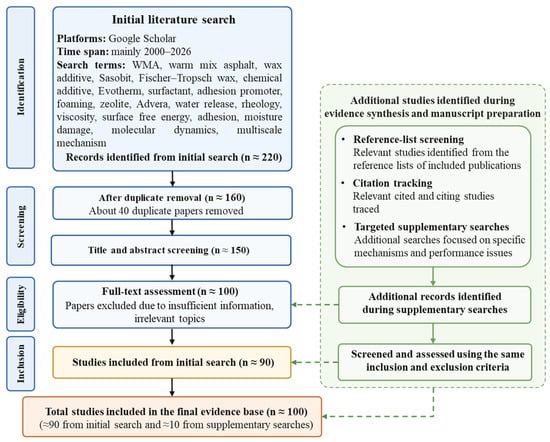
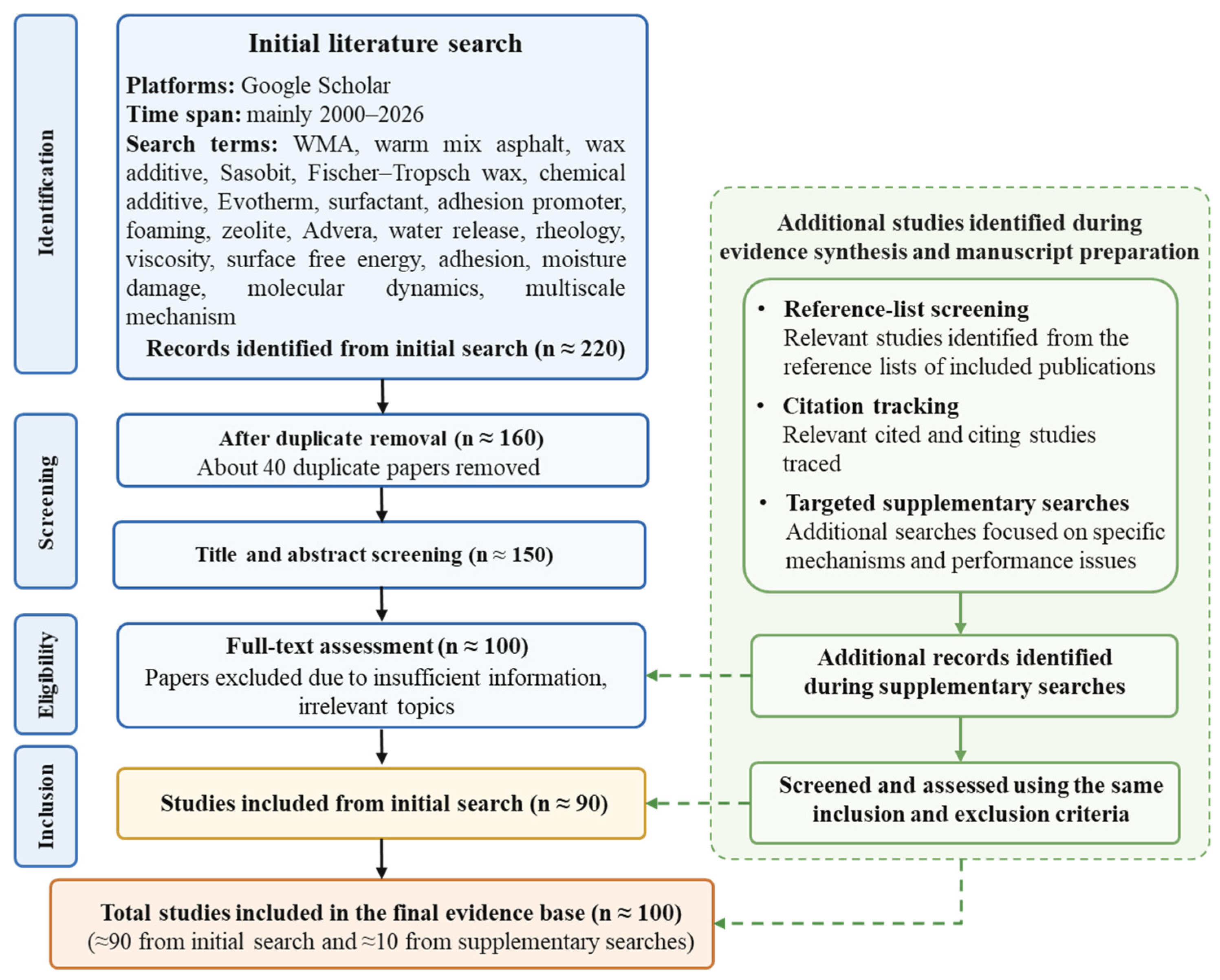
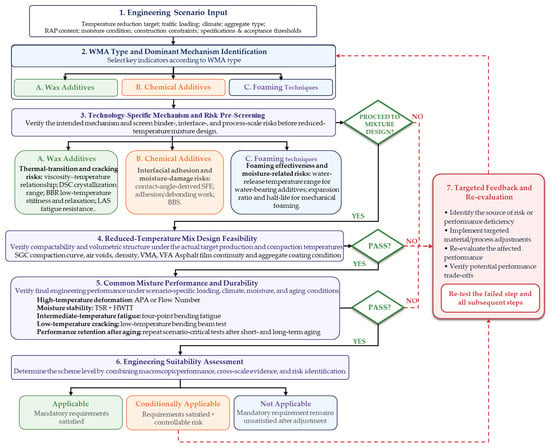
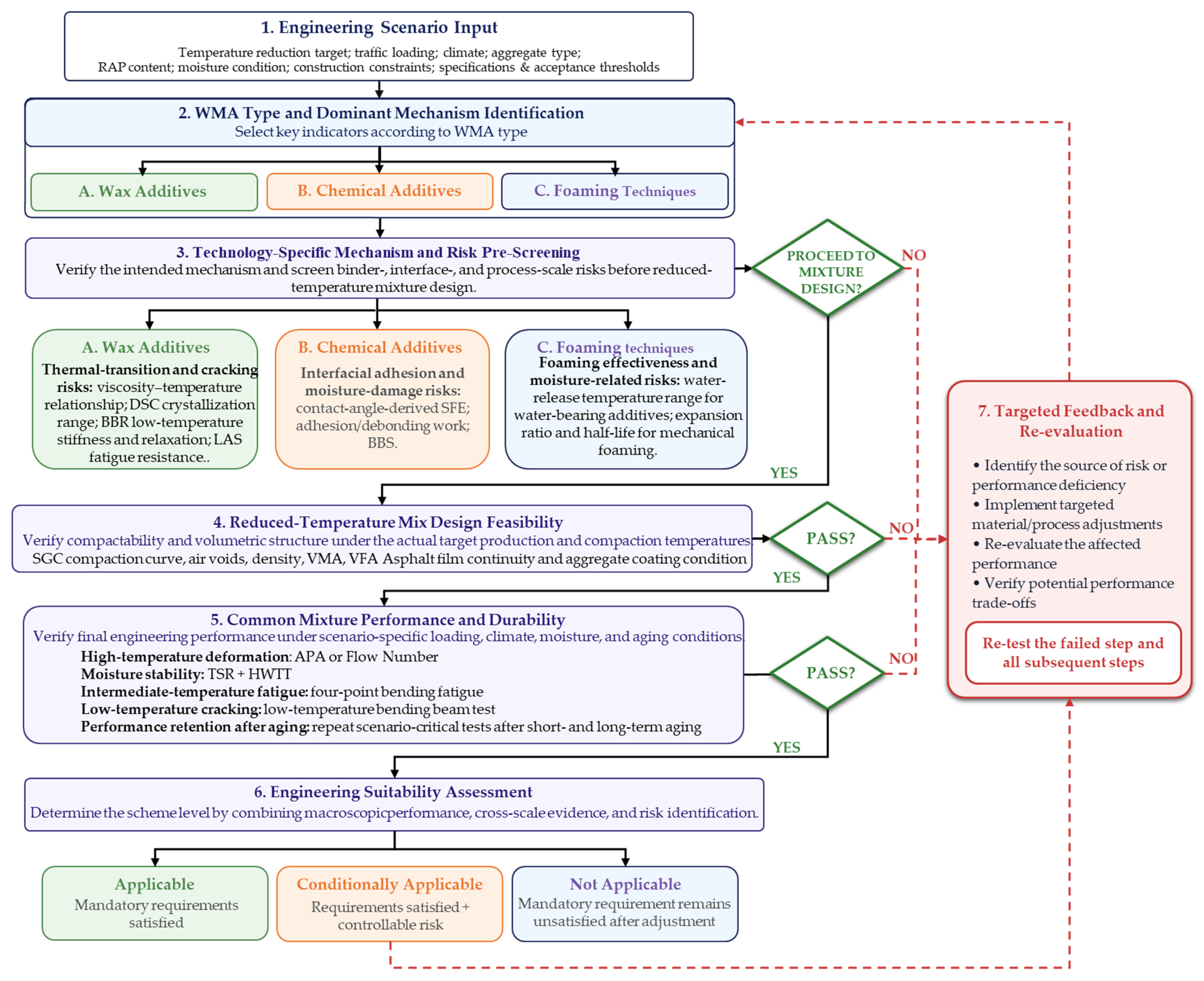
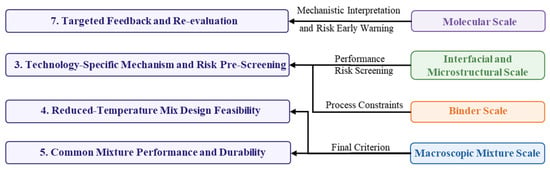
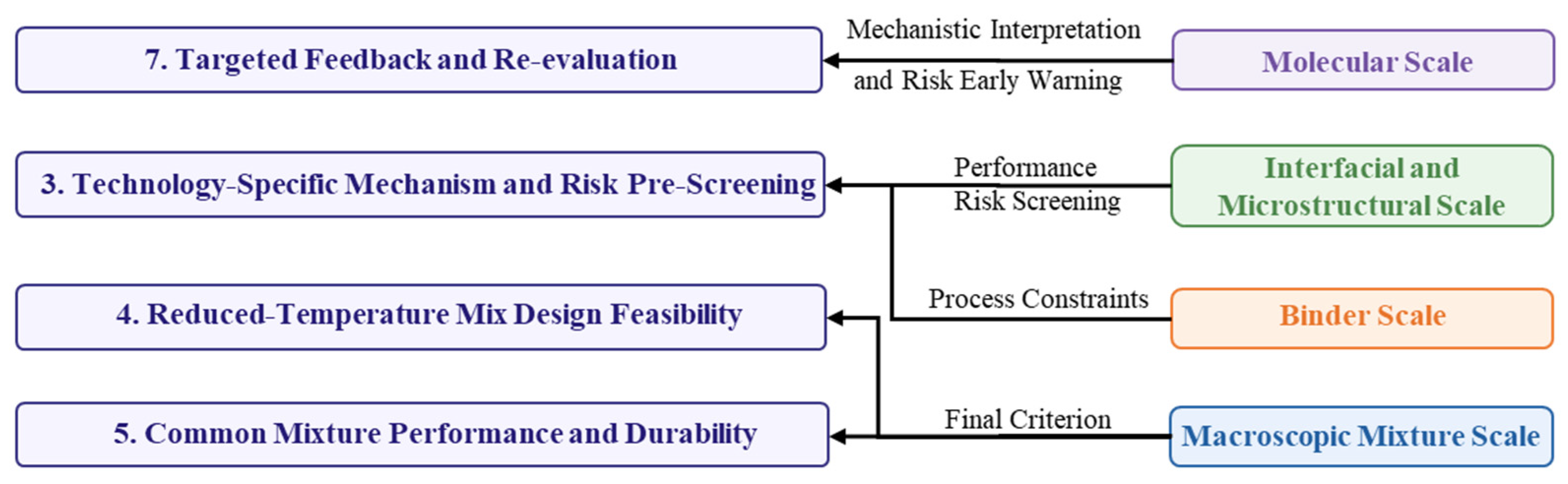

Disclaimer/Publisher’s Note: The statements, opinions and data contained in all publications are solely those of the individual author(s) and contributor(s) and not of MDPI and/or the editor(s). MDPI and/or the editor(s) disclaim responsibility for any injury to people or property resulting from any ideas, methods, instructions or products referred to in the content. |
© 2026 by the authors. Licensee MDPI, Basel, Switzerland. This article is an open access article distributed under the terms and conditions of the Creative Commons Attribution (CC BY) license.