Review

Nanophysics Is Boosting Nanotechnology for Clean Renewable Energy

by
Rui F. M. Lobo
1,* and
César A. C. Sequeira
2
1
Laboratory of Nanophysics/Nanotechnology and Energy (N2E), Center of Technology and Systems (CTS), Physics Department, NOVA School of Science & Technology, NOVA University of Lisbon, 2829-516 Caparica, Portugal
2
Materials Electrochemistry Group, Department of Chemical Engineering, Instituto Superior Técnico, Av. Rovisco Pais, 1049-001 Lisboa, Portugal
*
Author to whom correspondence should be addressed.
Materials 2024, 17(21), 5356; https://doi.org/10.3390/ma17215356
Submission received: 18 September 2024 / Revised: 23 October 2024 / Accepted: 30 October 2024 / Published: 1 November 2024
(This article belongs to the Special Issue Advanced Nanotechnology for Sustainable Energy)

Abstract

As nanophysics constitutes the scientific core of nanotechnology, it has a decisive potential for advancing clean renewable energy applications. Starting with a brief foray into the realms of nanophysics’ potential, this review manuscript is expected to contribute to understanding why and how this science’s eruption is leading to nanotechnological innovations impacting the clean renewable energy economy. Many environmentally friendly energy sources are considered clean since they produce minimal pollution and greenhouse gas emissions; however, not all are renewable. This manuscript focuses on experimental achievements where nanophysics helps reduce the operating costs of clean renewable energy by improving efficiency indicators, thereby ensuring energy sustainability. Improving material properties at the nanoscale, increasing the active surface areas of reactants, achieving precise control of the physical properties of nano-objects, and using advanced nanoscale characterization techniques are the subject of this in-depth analysis. This will allow the reader to understand how nanomaterials can be engineered with specific applications in clean energy technologies. A special emphasis is placed on the role of such signs of progress in hydrogen production and clean storage methods, as green hydrogen technologies are unavoidable in the current panorama of energy sustainability.
Keywords: clean energy; energy storage; green hydrogen; nanocatalysts; laser and plasma processing; ultramicroscopy clean energy; energy storage; green hydrogen; nanocatalysts; laser and plasma processing; ultramicroscopy
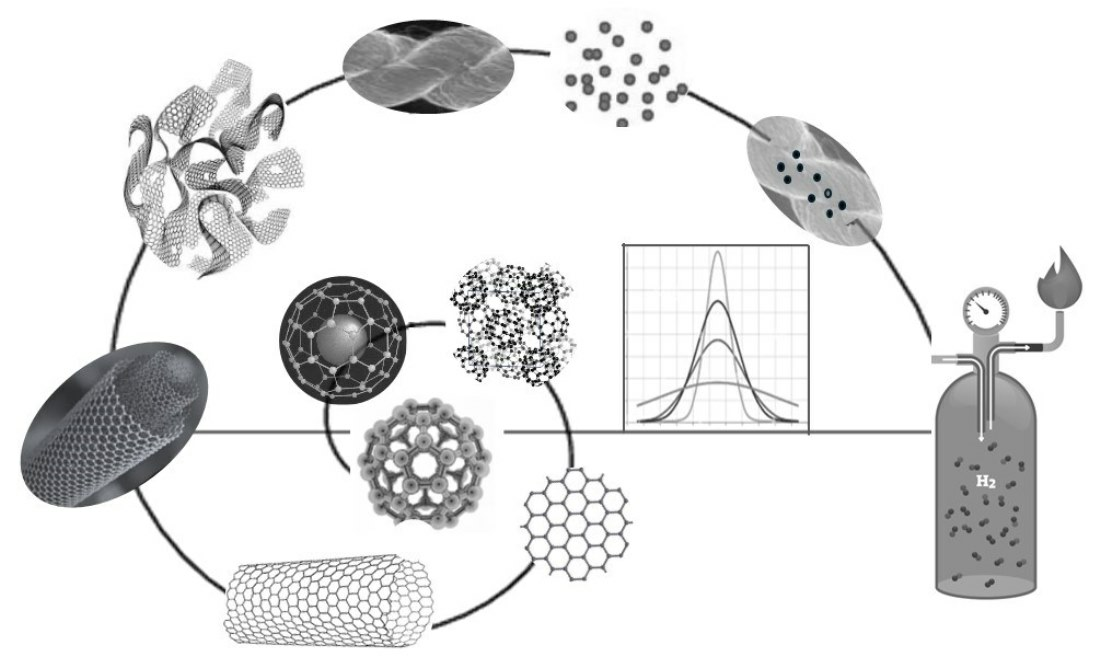
Graphical Abstract