


Abstract
A large amount of silt may be produced in river and lake regulation. It not only occupies land but also pollutes the environment. Therefore, it is urgent to seek effective disposal and utilization methods. Based on the problems of poor stability of stabilized soil and its tendency to soften easily in water, as well as its low strength with low curing agent dosage, this paper proposes a method to improve stabilized soil’s solidification effect by adding materials such as cement, lime, fly ash, triethanolamine, sodium hydroxide, sodium silicate, etc., while mixing construction waste debris. Using construction waste and ordinary sand as a comparative test, the curing mechanism of construction waste debris on the mechanical properties, permeability, and microstructure of solidified sludge was studied through unconfined compression tests, dry and wet cycle tests, permeability tests, and micro-structure tests such as XRD, MIP, and SEM. The test results show that the strength increases 8.5%~72.1% by adding construction waste materials, and it grew with the increase in particle size and amount. Addition of construction waste debris reduced the content of large pore size of solidified sediment and optimized the internal pore structure. At the same time, construction waste debris formed a new structure filled by rigid skeleton material. Thus, it improved its unit section stress, built up the curing effect and water stability. The findings of this study can be used to modify solidified silt to improve stability and compaction characteristics.
1. Introduction
The regulation of rivers and lakes is often inseparable from sludge dredging, which is often accompanied by problems such as large sludge volume, high water content and difficult disposal. How to achieve scientific reduction, rational utilization and green environmental protection has become a hot topic in research [1,2,3]. For example, the Pearl River Delta generates 80 million m3 of dredged sludge every year. During the 13th Five-Year Plan period (2016–2020) in Zhejiang Province, the dredging sludge exceeded 360 million m3 [4,5,6]. Generally, solidified sludge is a kind of ecological environmental friendly material, which can be used in engineering filling, slope stabilization and other areas. It has the advantages of rich resources, simple preparation, recycling and so on [7,8,9].
Researchers from various disciplines and fields have carried out a lot of research on the influence of factors such as moisture content of solidified soil, curing agent, organic matter and pH on the strength and the modification of solidified soil [10,11,12,13,14]. Some researchers [15] have mixed organic modifiers such as plant fiber and starch into the Yellow River silt soil to improve soil cohesiveness. They added polymer short fiber into solidified sludge for strength replenishment. Other researchers [16,17] modified the solidified clay using steel waste slag, slag and other wastes and found that the modified solidified clay has high strength and water resistance. Most of the researchers [18] have used cement, slag, fly, ash and gypsum as the curing agent and cooperated with polypropylene fiber to improve the sludge-stabilized soil. Jalal [19,20] proposed the development of new empirical prediction models to evaluate swell pressure and unconfined compression strength of expansive soils. The research results can help researchers readily evaluate the swell-strength characteristics of the widespread expansive soils and the sustainable use of construction wastes. The compressive and tensile properties were significantly improved, but the permeability was not significantly improved. At present, the solidified soil still has poor water stability and is easy to disintegrate in the dry–wet cycle [21], which is difficult to meet the long-term deformation and stability requirements in complex environments.
“Treating waste with waste” is a current hot topic for research in environmental protection and treatment. Although industrial solid waste has been proved to have a good effect on the modification of solidified soil, the properties of solid waste materials are uneven, the performance is unstable, and the chemical and physical properties of river sludge vary greatly. How to use them more efficiently is still a current problem. Therefore, in order to solve the stability of the solidified soil and improve the mechanical properties, this paper proposes to utilize construction waste debris as the skeleton matrix of the solidified dredging sludge material. By controlling the amount of admixture and particle size, the strength of the solidified sludge and solidification effect will be adjusted. X-ray diffraction, and scanning electron microscopy were used to analyze the physical phase, pore structure and micro morphology of the solidified sludge. This analysis will reveal the mechanism of action and solidification of construction waste debris in the process of solidification of dredged sludge, and screen out the better scheme. Finally, a theoretical basis for the application of solidified soil in water conservancy, municipal, construction and other industrial projects will be provided. It is therefore recommended that construction waste debris can be reliably used for modifying solidified silt to improve stability and compaction characteristics.
2. Materials and Methods
2.1. Raw Materials
In this study, the dredged sludge of lake was selected as the test sludge. The basic physical and chemical properties and particle composition of the test sludge were measured according to the highway geotechnical Test (JTG 3430-2020) [22]. The water content was about 97.6%, the liquid limit was 53.2% and the plastic limit was 28.3%. Among them, the content of soil particles with a particle size of less than 0.005 mm was about 32.7% and the content of soil particles with a particle size of 0.005 mm~0.075 mm was about 67.3%, which was clay. According to the characteristics of test sludge, P·II 52.5 Portland cement (C), lime (CaO), fly ash (FA), triethanolamine (TEA), sodium hydroxide (NaOH) and sodium silicate (Na2SiO3) were used as the curing materials, with the mass ratio of C:CaO:FA:TEA:NaOH:Na2SiO3 = 27:11.85:39:0.15:3:19 and the mixing amount of the curing materials 8% of the dry soil mass, marked as “G8”. “G0” was not mixed with any reagent. In this test, construction waste (S), such as sintered brick slag and concrete wall slag, was used to fill the pores of solidified sludge. The construction waste consisted predominantly of fine particles: 8.63% were smaller than 0.075 mm, 78.86% ranged between 0.075 mm and 2 mm, and 12.51% were larger than 2 mm. Single graded sand (S’) with particle sizes of 0.075~0.25 mm, 0.25~0.5 mm, 0.5~1 mm and 1~2 mm was mixed in, and ordinary river sand (S’) with the same particle size distribution was used as the control test.
2.2. Methods
2.2.1. Unconfined Compressive Strength Test
Thirteen equal portions of sludge, each of a predetermined mass, were prepared and cleared of impurities. Subsequently, varying proportions of solidifying agents, construction waste fragments, or ordinary river sand were incorporated into each portion, with the dosages calculated based on the dry soil mass. The specific mixing proportions are presented in Table 1. The compaction procedure was conducted in accordance with the heavy compaction test specified in the highway geotechnical Test (JTG 3430-2020), with a unit volume compaction effort of 2684.9 kJ/m3. A small three-way compaction mould, measuring 37.5 mm in diameter and 76.4 mm in height, was employed. Each mixture was thoroughly homogenized and then air-dried until the moisture content reached 40%. The prepared material was placed into the compaction mould in three equal layers. Each layer was compacted by 100 free drops of the compaction hammer. After the compaction of each layer, the surface was scarified using a geotechnical knife prior to the addition of the subsequent layer. Upon completion of compaction, the sample surface was leveled with a scraper, wrapped with a sealing film, and cured in a standard curing chamber maintained at a temperature of 20 ± 2 °C and a relative humidity of 95% ± 3%for a period of 7 days.
Table 1.
Ratio of solidified silt.
2.2.2. Dry–Wet Cycle Test
After the curing period, referring to the relevant requirements of unconfined compressive strength test in the highway geotechnical Test (JTG 3430-2020), a STWCY-1 unconfined pressure gauge (Nanjing Ningxi Soil Instrument Co., LTD, Nanjing, Jiangsu, China) is used to test the unconfined compressive strength of solidified sludge. Three parallel samples are taken from each group. During the test, the peak strength or axial compressive strain of 15% is taken as the termination condition, and the average value is taken as the unconfined compressive strength of the group of samples.
2.2.3. Permeability Test
The water resistance of solidified sludge was studied by the mass loss and volume shrinkage of samples after standard curing for 7 days after drying and wetting cycles. To simulate dry–wet cycling, the solidified sludge samples were first dried at 40 °C for 24 h, followed by immersion in distilled water for 24 h. Upon completion of the final cycle, the samples were removed from the distilled water and allowed to drain for 1 h prior to weighing. The mass loss of the solidified sludge was subsequently recorded after each designated number of dry–wet cycles. The experimental methods were quoted by the specification for highway geotechnical Test (JTG 3430-2020).
2.2.4. X-ray Diffraction Spectrum
For X-ray diffraction (XRD) analysis, approximately 10 g of the parallel specimen, originally prepared for the unconfined compressive strength test, was collected. The sample was initially dried in a forced-air oven at 40 °C, then pulverized and sieved through a 200-mesh screen. The mineralogical composition of the sieved solidified sludge was subsequently determined by a D8 Discover diffractometer (Bruker Instruments, Ingelfingen, Germany).
2.2.5. Pore Structure
For mercury intrusion porosimetry (MIP) analysis, the parallel specimen from the unconfined compressive strength test was vertically divided into upper, middle, and lower sections. From each section, approximately 10 g of blocky fragments, measuring roughly 7 mm in size, were collected. These fragments were then dried in a forced-air oven at 40 °C for 24 h. Subsequently, the pore structure distribution of the dried samples was determined using an AutoPore IV 9520 mercury intrusion porosimeter (Micromeritics, Norcross, GA, USA).
2.2.6. SEM
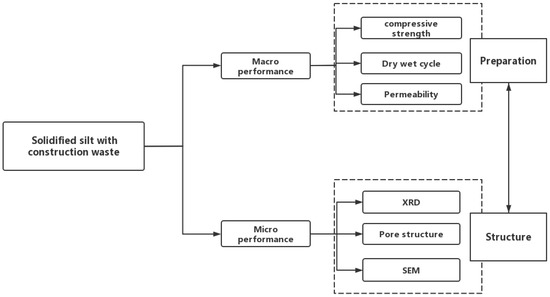
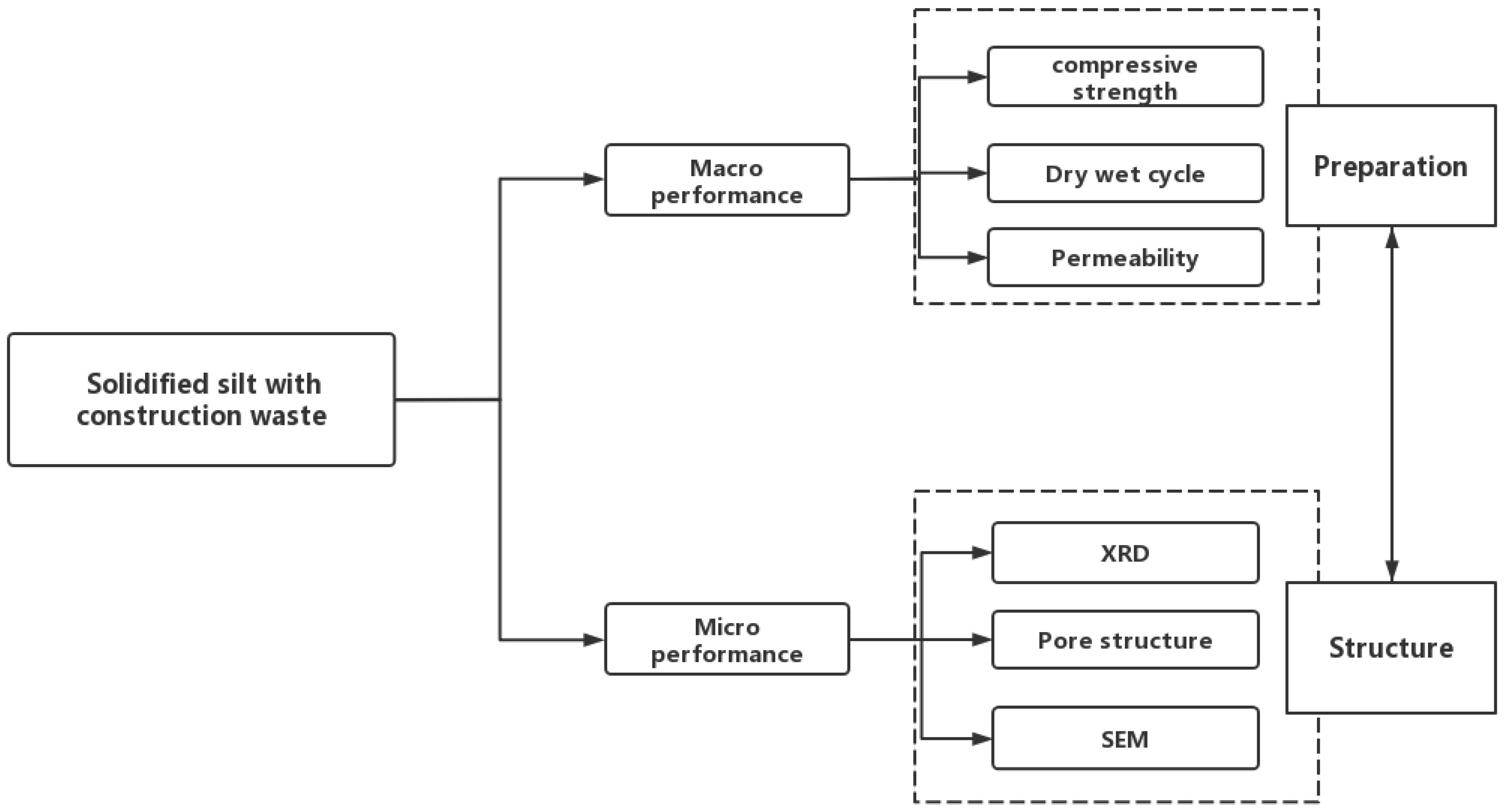
For scanning electron microscope (SEM) analysis, a block-shaped specimen measuring approximately 10 mm in size was cut from the parallel sample used in the unconfined compressive strength test. The specimen was initially dried in a forced-air oven at 40 °C for 24 h, after which its surface was sputter-coated with platinum to enhance conductivity. The micromorphology of the prepared block was then examined using a field-emission environmental scanning electron microscope (FEI Quanta 3D SEM, FEI Company, Hillsboro, OR, USA). The technical route diagram proposed for this paper is shown in Figure 1.
Figure 1.
Technical route diagram.
3. Results
3.1. Unconfined Compressive Strength
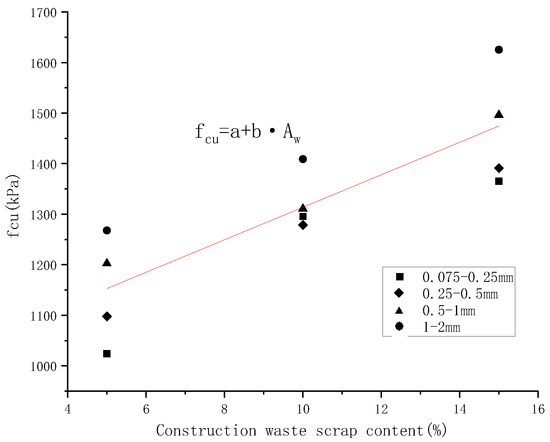
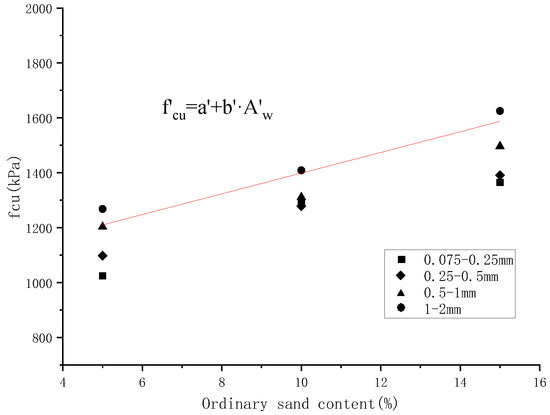
It can be seen from Table 2 and Figure 2 and Figure 3 that the strength growth rates in the table are all based on G8. The unconfined compressive strength of G8 solidified sludge without aggregate is 0.944 MPa. In general, the unconfined compressive strength of solidified sludge increases with the increase in particle size and content of construction debris, and the strength growth rate after adding construction debris is 8.50%~72.16%. The sample mixed with ordinary sand also has the same change trend. However, when the particle size is less than 0.25 mm, the unconfined compressive strength of solidified sludge is increased more by adding construction debris. Among them, the unconfined compressive strength of 1G8S5 is 1.024 MPa, while the unconfined compressive strength of sample 1G8S’5 is 0.861. The strength ratio of both is about 1.19. When the amount of construction debris is increased from 5% to 15%, the strength ratio is greater than 1 MPa. With the increase in aggregate size, the unconfined compressive strength of solidified sludge mixed with construction debris is about 90% of that of ordinary sand-solidified sludge. The results indicate that the porous surface structure of fine-sized construction aggregates adsorbs free water, thereby reducing the thickness of the water film surrounding sludge particles. Compared with ordinary sand of equivalent particle size, this aggregate type provides a more effective skeletal reinforcement due to its enhanced structural integrity. Furthermore, the incorporation of larger-sized construction aggregates substantially improves the unconfined compressive strength of the stabilized sludge. Collectively, these findings demonstrate that the use of construction aggregates as a skeletal matrix material is fundamentally viable.
Table 2.
Compressive strength between construction debris (S) and ordinary sand (S’) solidified soil.
Figure 2.
Relationship between solidified construction debris silt’s unconfined compressive strength with content.
Figure 3.
Relationship between solidified ordinary sand silt’s unconfined compressive strength with content.
Figure 2 and Figure 3 respectively, show the fitting curve of unconfined compressive strength and aggregate content of construction debris (S) and ordinary sand (S’) solidified dredging sludge. It can be seen from the figure that the rule of adding construction debris is basically consistent with that of ordinary sand. With the increase in aggregate size and content, its unconfined compressive strength increases linearly and rapidly, as shown in Formula (1). Except for the group of 0.075~0.25 mm, the rest R2 is above 0.95, which indicates that the curve fit is good.
where fcu refers to unconfined compressive strength, Aw refers to the amount of skeleton matrix material, and a and b are correlation coefficients.
In summary, the addition of large size construction debris greatly improves the unconfined compressive strength of solidified sludge. Considering economic, applicability, green and environmental protection factors, the best research object is construction debris with a particle size of 1~2 mm. When the addition amount is 10%, the unconfined compressive strength of solidified sludge for sample G8 increases by about 49%.
3.2. Dry Wet Cycle
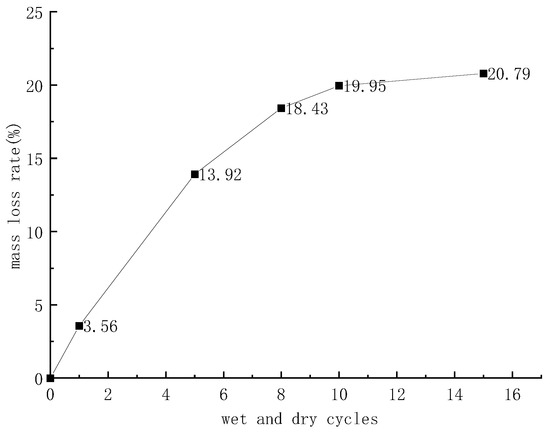
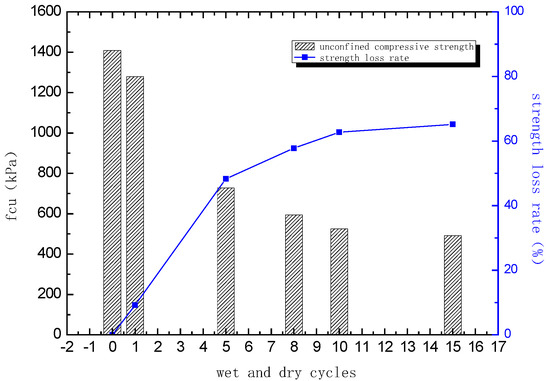
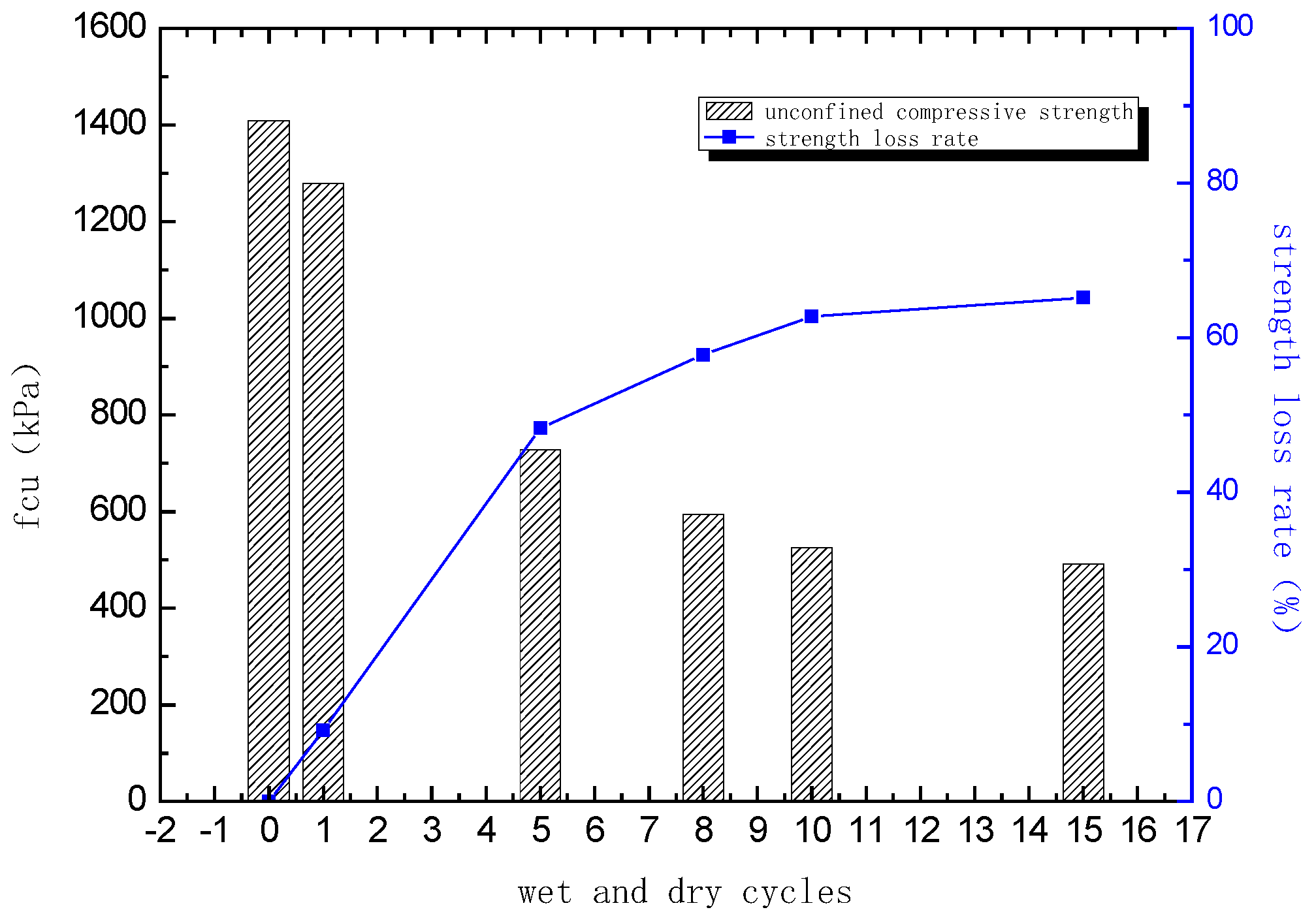
It can be seen from Figure 4 that the mass loss of solidified sludge increases with the increase in the cycle period. During the test, when the dry–wet cycle lasts for one cycle, the sample shape remains basically unchanged and no obvious quality defects appear. However, after the dry–wet cycle lasts for five cycles, the test surface peels off obviously, and the mass loss rate of the solidified sludge during the dry–wet cycle that lasts for eight cycles reaches 18.43%, then the growth rate of the mass loss rate slows down with the increase in the number of cycles. The unconfined compressive strength of samples after different dry–wet cycles is shown in Figure 5. The figure shows that the unconfined compressive strength of test 4G8S10 decreases with the increase in the number of dry and wet cycles. After eight cycles of dry and wet cycles, the strength loss rate reaches 57.78%, and then the reduction in strength gradually slows down with the lengthening of the cycle. The test results show that the solidified sludge particles dehydrate during the drying and wetting cycling, resulting in the continuous increase in pores and the gradual decrease in matrix suction. With the increase in the drying and wetting cycling, when the solidified sludge shrinks to a certain extent and absorbs water again, the sludge particles are restricted by the surrounding skeleton matrix materials, and the volume is slightly expanded. At this time, the internal structure is loose and the strength is reduced.
Figure 4.
Mass loss rate of 4G8S10 under different wet and dry cycles.
Figure 5.
Intensity variation in 4G8S10 under different wet and dry cycles.
3.3. Permeability
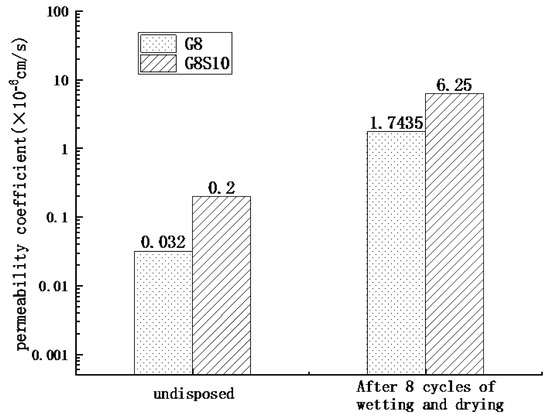
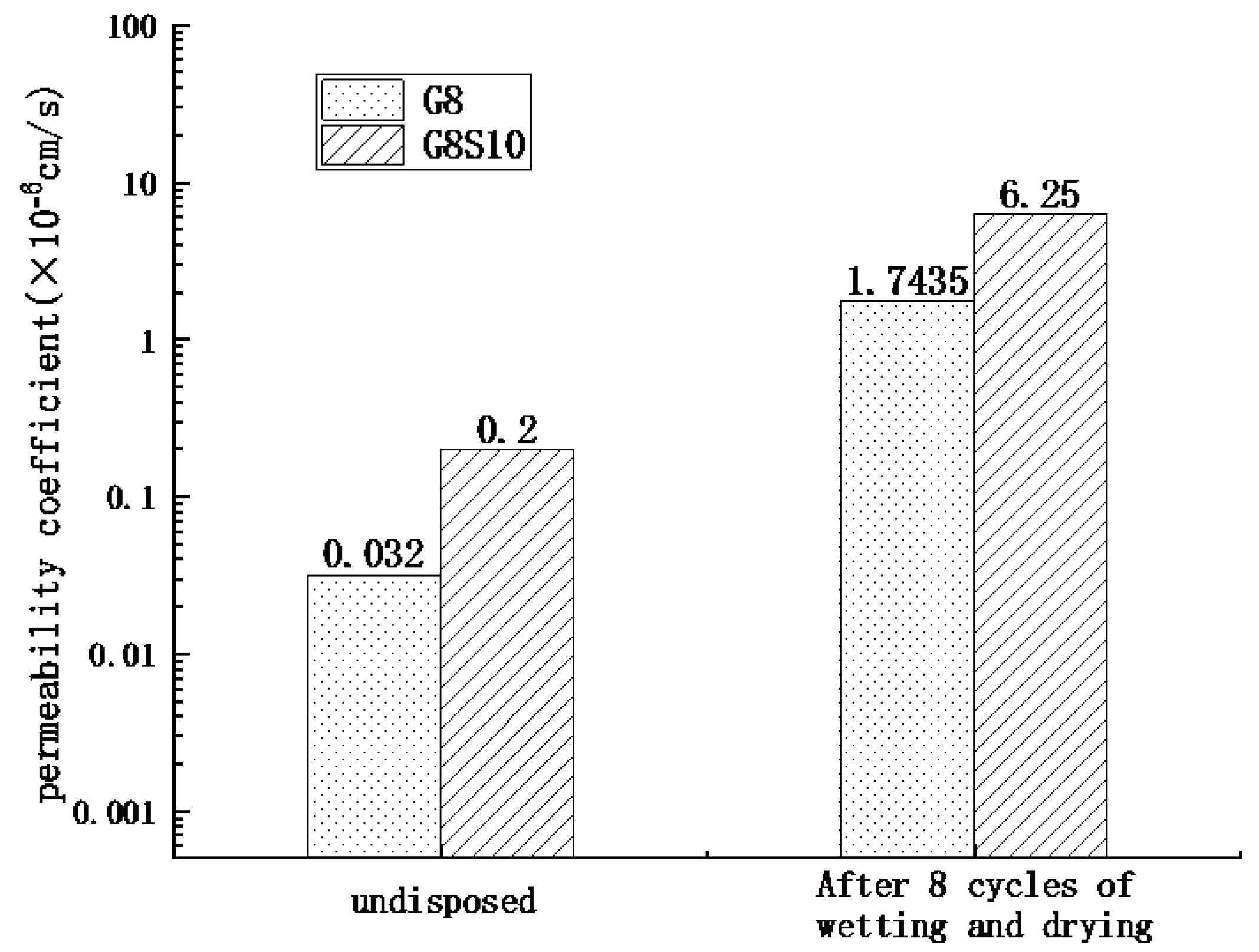
Combined with the test results of water resistance, the G8 and G8S10 groups of solidified sludge samples were selected in this experiment to study the change in permeability coefficient before and after the dry–wet cycle. The permeability coefficient of samples G8 and G8S10 is shown in Figure 6. As shown in the figure, the permeability coefficient of sample G8S10 is 2.00 × 10⁻⁷ cm/s, which is approximately 6.25 times higher than that of sample G8 (3.20 × 10⁻⁸ cm/s). This increase of one order of magnitude indicates that the addition of construction debris increases the fine pores between solidified sludge particles, provides a seepage channel for the solidified sludge and enhances the permeability. After eight cycles of drying and wetting, the permeability coefficient of sample G8S10 has increased by one order of magnitude and the permeability coefficient of sample G8 has increased by two orders of magnitude. This increase indicates that the internal pores of sample G8 and G8S10 become larger due to the effect of drying and wetting cycles, and some of the pores between particles develop into inside particle pores, leading to an increase in the permeability coefficient. Meanwhile, the skeleton role of the skeleton material in the solidified sludge increases its resistance to drying and wetting cycles.
Figure 6.
Permeability coefficient of the sample before and after the wetting and drying cycle.
3.4. Micro-Structure
3.4.1. XRD
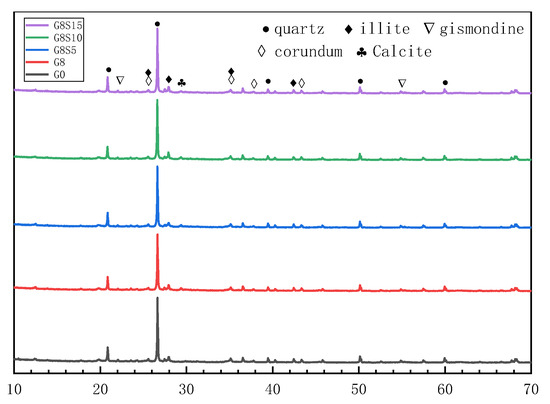
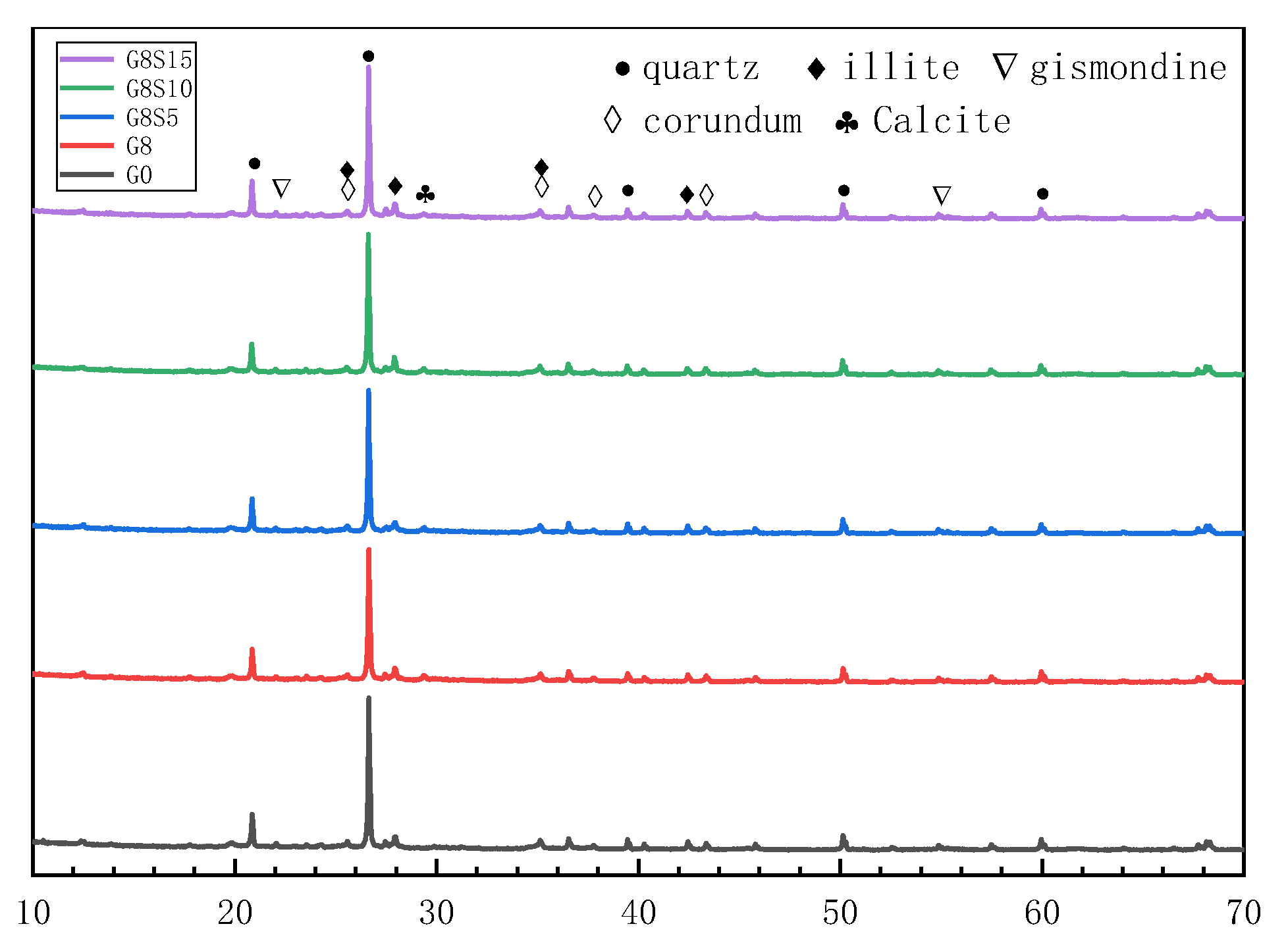
See Figure 7 for the analysis results of X-ray diffraction patterns of samples G0, G8, G8S5, G8S10 and G8S15. The peak shape, intensity and d value of the diffraction peak in the X-ray diffraction pattern were used to identify the mineral species, and calculate the mineral content semi-quantitatively. It can be seen from Figure 7 that the main phases are illite (aluminum oxide potassium oxide silicon oxide complex), corundum (aluminum oxide), quartz (silicon dioxide), plagioclase (calcium oxide aluminum oxide silicon dioxide complex), orthoclase (calcium oxide aluminum oxide silicon dioxide complex), calcite (calcium carbonate), etc. There is also a small amount of amorphous material, but the dispersion peak is not obvious. The phase composition of sample G8, G8S5, G8S10 and G8S15 is basically similar to that of sample G0, but with slight changes. All five samples have characteristic peaks of illite, quartz (20.86°, 26.65°, 60.12°) and gismondine (8.86°, 22.05°, 51.14°). However, due to the addition of 8% curing agent to samples G8, G8S5, G8S10 and G8S15, a characteristic peak of calcium carbonate appears near 29.35°. This is because, with the increment in curing materials, the content of CaO increased, which would form calcium carbonate through carbonization reaction.
Figure 7.
X-ray diffraction patterns of G0, G8, G8S5, G8S10 and G8S15.
3.4.2. Pore Structure
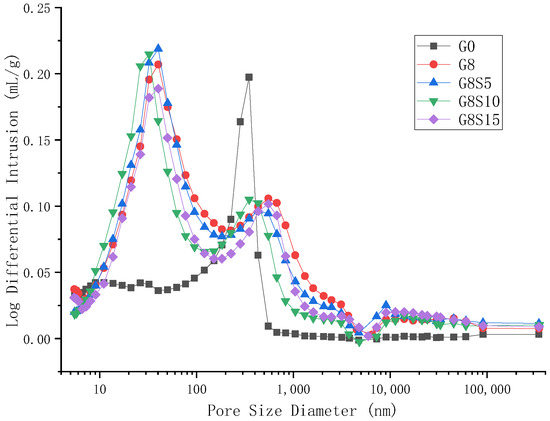
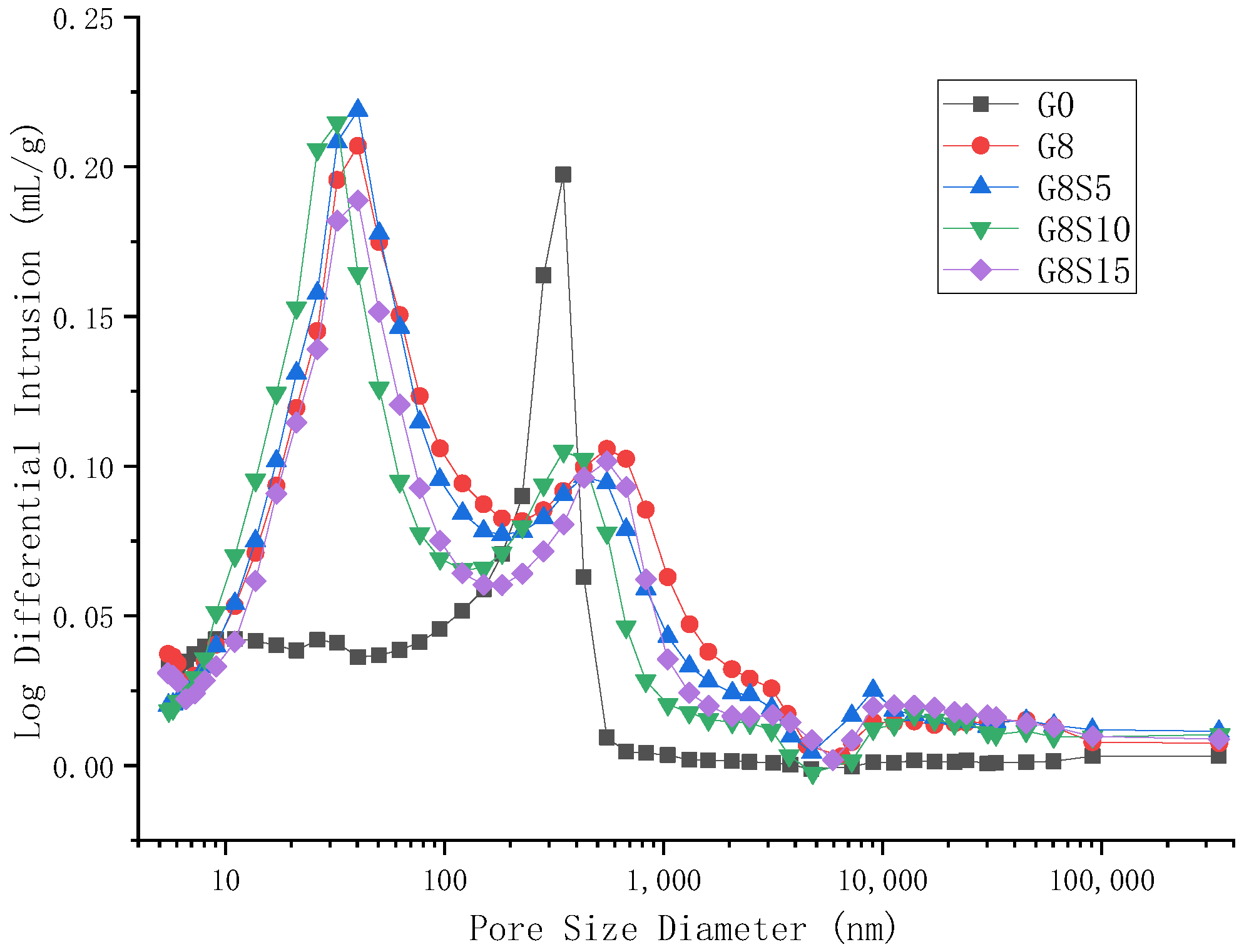
The pore size distribution of samples is shown in Figure 8. The results show that the average porosity of samples G0, G8, G8S5, G8S10 and G8S15 are 26.3%, 40.4%, 39.1%, 38.2% and 36.9%, respectively. The average pore diameters are 42.05 nm, 44.95 nm, 43.73 nm, 43.15 nm and 45.43 nm, respectively. The most probable aperture of sample G0 is 250~550 nm, and the secondary probable aperture is 30~50 nm. However, the most probable aperture of G8, G8S5, G8S10 and G8S15 is 30~50 nm, and the sub-probable aperture is 340~560 nm. It can be seen that the addition of curing agent and construction debris increases the number of small holes in the sample and decreases the number of medium and large holes with a pore diameter greater than 100 nm. Combined with the analysis results of X-ray diffraction patterns, the curing agent reacts with water to generate hydrated products, forming an obvious skeleton structure with silt particles and filling harmful pores. These pores are mainly concentrated in the small holes with a pore diameter less than 100 nm. The most probable pore size of G8S10 and G8S15 solidified dredged sludge is lower than that of sample G8, indicating that slightly large pores between skeletons are filled with construction debris.
Figure 8.
Pore size distribution of sample G0, G8, G8S5, G8S10 and G8S15.
3.4.3. SEM
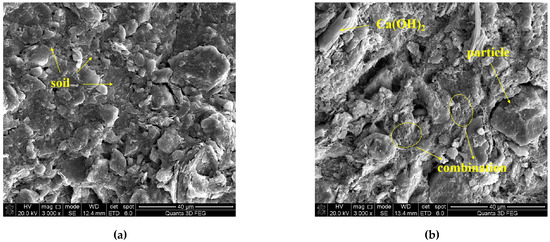
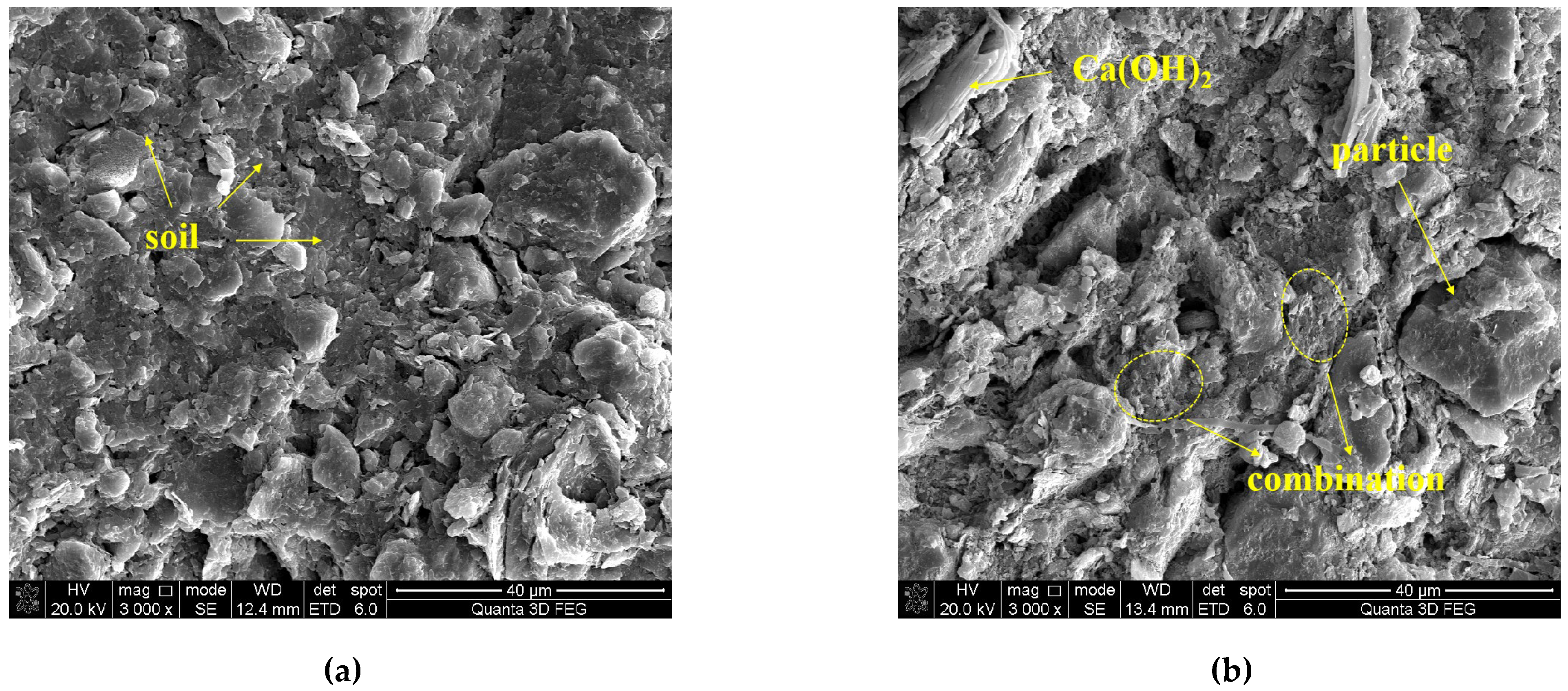
The SEM images of samples G0 and G8S10 at 3000 times magnification show that a large amount of Ca2+ has been introduced into the curing agent, as shown in Figure 9. Since the curing method involves wrapping with plastic wrap, calcium hydroxide (C-H) and a small amount of other hydration products (such as C-S-H, AFt, etc.) are formed in the solidified soil. These products fill the gaps between loose clay particles and cement them together to form a “hydration product clay” agglomerated cementation structure. However, this structure contributes little to the filling of silt soil pores, and only slightly increases the strength. However, skeleton matrix materials such as construction debris have greatly contributed to the filling of larger pore sizes, making the solidified soil more dense and providing greater rigidity for the solidified aggregate structure. This improves the overall particle size distribution and structure, and the introduction of skeleton materials has increased the strength of the solidified soil by 49%.
Figure 9.
SEM images of G0 and G8S10. (a) G0; (b) G8S10.
4. Discussion
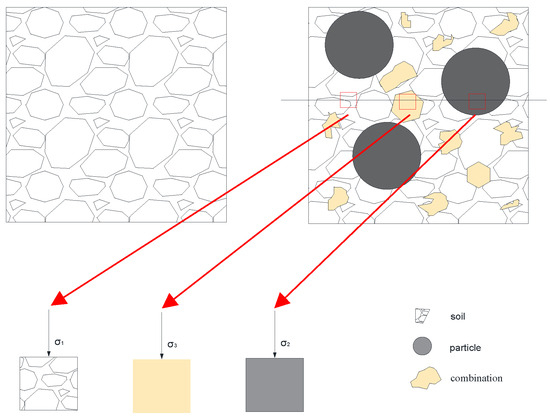
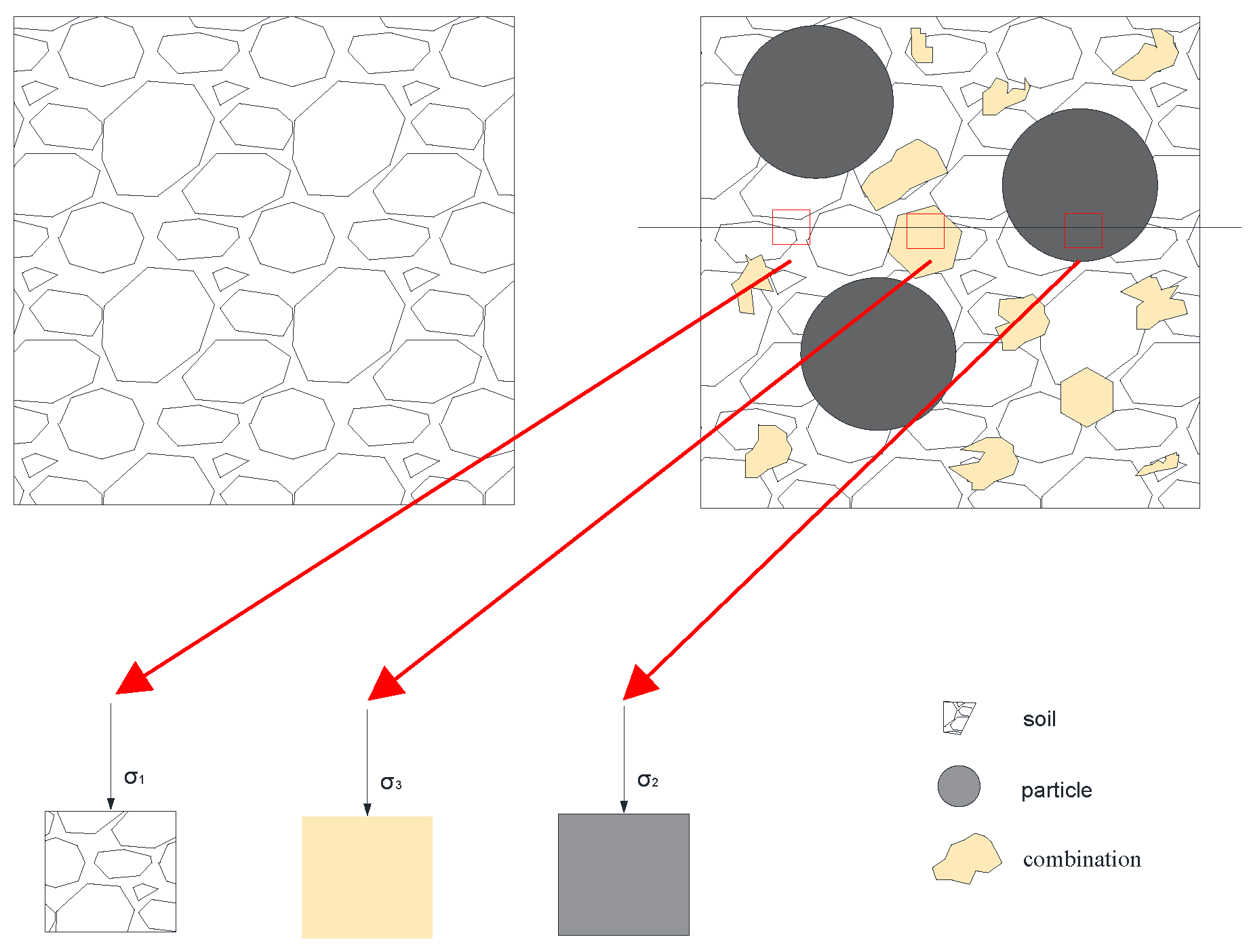
The addition of construction waste debris greatly improves the strength of solidified dredged sludge, mainly due to two reasons. Firstly, after the addition of cement, fly ash, sodium silicate and other materials, a hydration reaction occurs, generating more C-H, C-S-H gel and a small amount of hydrated calcium silicate and other hydration products [12]. This reaction plays a dual role of filling and cementation, improving the strength of solidified soil to a certain extent, but also adds more micro-pores, so the strength contribution rate is slightly lower. Secondly, the introduction of skeleton matrix materials, such as construction debris, further fills pores with slightly larger diameters, reducing the porosity of the solidified soil. Construction debris is a rigid material with a large elastic and a high hardness and it is not easy to deform. Therefore, adding rigid materials to the solidified sludge is helpful. Figure 10 shows that σ1 is the principal stress of silt, σ2 is the principal stress of agglomerate cement and σ3 is the principal stress of construction debris, with σ1 < σ2 < σ3. The average principal stress of a unit section is determined by σ1. The reinforcement is , where i, j, and k represent the numbers of sludge particles, cementitious aggregates, and construction debris particles within the unit cross-section, respectively. This shows that the curing agent and construction debris have a synergistic effect on the overall structural strength. Construction debris played an important role in the improving the unconfined compressive strength. It mainly consists of silicon raw materials such as quartz, basalt, etc. The powders in construction debris filled the pores of solidified silt, improving its compaction.
Figure 10.
Schematic diagram of unit section’s principal stress after silt solidification.
5. Conclusions
In this paper, a skeleton matrix, such as construction waste debris, is introduced to modify solidified dredged sludge. The optimal scheme of construction waste debris used for modified solidified sludge is discussed through unconfined compressive strength, XRD, MIP and SEM. The relevant conclusions are as follows:
- (1)
- When mixing construction waste debris, ordinary sand and other skeleton materials into the solidified, dredged sludge material, the unconfined compressive strength increases with the increase in particle size and content of the skeleton material. The unconfined compressive strength of solidified sludge with building waste debris ranges from 0.89 to 1.19 of that of ordinary sand solidified sludge, while the water stability of solidified sludge is improved. It indicates that construction waste debris has a significant reinforcement effect on the modification of solidified silt.
- (2)
- Due to the addition of a curing agent, calcium hydroxide (C-H) and a small amount of other hydration products (such as C-S-H), loose clay particles are cemented together, most of the macro pores are filled, and a particle skeleton structure is formed in the soil mass. The addition of construction debris further improves the pore structure of solidified sludge, provides a rigid aggregate support system and greatly improves the principal stress of the unit section of solidified sludge, thus greatly improving the strength of solidified sludge.
- (3)
- Considering economic applicability, environmental protection and other factors, it is recommended that construction debris with a particle size of 1~2 mm and a content of about 10% be used as the modified proportion of solidified dredged sludge materials in future engineering applications to improve the water stability of solidified sludge. Large-scale use of construction waste can also reduce the disposal cost of solidified soil and a new method for the disposal of river sludge can be provided in future.
Author Contributions
Y.S., H.W. and J.Y. are the main contributor of this research work. They carried out the mainly experimental program, analyzed the experimental results and drafted the research paper; Y.G. mainly processed the experimental data and proofread the paper. All authors have read and agreed to the published version of the manuscript.
Funding
This work was supported by the Water Resources Science and Technology Plan Project of Zhejiang Provincial(RC1906), the Key R&D Project of Zhejiang Provincial (2017C03008), the Science and Technology Project of Sinohydro Bureau 7 Co., Ltd. (2021-749-59-4).
Institutional Review Board Statement
Not applicable.
Informed Consent Statement
Not applicable.
Data Availability Statement
Not applicable.
Conflicts of Interest
The authors declare no conflict of interest.
References
- Pu, S.Y.; Zhu, Z.D.; Wang, H.R.; Song, W.L.; Wei, R.J. Mechanical characteristics and water stability of silt solidified by incorpprating lime, limw and cement mixture, adn seu-2 binder. Constr. Build. Mater. 2019, 214, 111–120. [Google Scholar] [CrossRef] [Scilit]
- Zhang, T.; Yang, Y.L.; Liu, S.Y. A shear model for solidified soils considering conservation of energy. Comput. Geotech. 2020, 120, 103439. [Google Scholar] [CrossRef] [Scilit]
- Jiang, X.L.; Huang, Z.Y.; Ma, F.Q. Analysis of strength development and soil-water characteristics of rice husk ash-lime stabilized soft soil. Materials 2019, 12, 3873. [Google Scholar] [CrossRef] [Scilit]
- Gao, Y.F.; Li, Z.F.; Zhang, J.; Zhang, C.; Chen, J.P. Synthesis, characterization and properties of solid waste based high belite cement. Chem. Lett. 2020, 50, 128–130. [Google Scholar] [CrossRef] [Scilit]
- Pu, S.Y.; Zhu, Z.D.; Song, W.L.; Yu, W.; Wang, H.R.; Song, S.G.; Zhang, J. Mechanical and microscopic properties of cement stabilized silt. KSCE J. Civ. Eng. 2020, 24, 2333–2344. [Google Scholar] [CrossRef] [Scilit]
- Zhu, Z.D.; Pu, S.Y.; Zhang, J.H.; Yu, W.; Song, W.L.; Wang, H.R. Water resistance and compressibility of silt solidified with lime and fly-ash mixtures. Environ. Earth 2019, 80, 103. [Google Scholar] [CrossRef] [Scilit]
- Wang, F.; Hu, Y.G.; Liu, L.; Deng, Y.; Gu, S. Interphase effect on the macro nonlinear mechanical behavior of cement-based solidified sand mixture. Materials 2022, 15, 1972. [Google Scholar] [CrossRef] [Scilit]
- Tastan, E.O.; Edil, T.B.; Benson, C.H.; Aydilek, A.H. Stabilization of organic soil with fly ash. J. Geotech. Geoenviron. 2011, 139, 2170–2181. [Google Scholar] [CrossRef] [Scilit]
- Bian, J.; Wu, H.; Xiao, X.; Wu, Q.; Zhou, Z.L. Experimental Study on the gmax characteristics of the sand-silt mixed soil materials using bender element testing. Materials 2022, 15, 6200. [Google Scholar] [CrossRef] [Scilit]
- Liu, Q.; Wang, X.N.; Gao, M.; Guan, Y.Y.; Wu, C.F.; Wang, Q.H.; Rao, Y.; Liu, S. Heavy metal leaching behaviour and long-term environmental risk assessment of cement-solidified municipal solid waste incineration fly ash in sanitary landfill. Chemosphere 2022, 300, 134571. [Google Scholar] [CrossRef] [Scilit]
- Rahmi, A.; Taib, S.; Sahdi, F. Investigation of the application of various water additive ratios on unconfined comressive strength of cement-stabilized amorphous peat at different natural moisture contents. Adv. Civ. Eng. 2018, 2018, 1945808. [Google Scholar] [CrossRef] [Scilit]
- Pacheco, V.L.; Bragagnolo, L.; Thome, A. Artificial neural networks applied for solidified soils data prediction: A bibliometric and systematic review. Eng. Comput. 2021, 38, 3104–3131. [Google Scholar] [CrossRef] [Scilit]
- Yang, X.L.; Wang, H.L. Strength of hollow compressed stabilized earth-block masonry prisms. Adv. Civ. Eng. 2019, 2019, 7854721. [Google Scholar] [CrossRef] [Scilit]
- Wang, H.S.; Tang, C.S.; Gu, K.; Shi, B.; Inyang, H.I. Mechanical behavior of fiber-reinforced, chemically stabilized dredged sludge. Bull. Eng. Geol. Environ. 2020, 79, 629–643. [Google Scholar] [CrossRef] [Scilit]
- Liu, L.; Zhou, A.; Deng, Y.F.; Cui, Y.J.; Yu, Z.; Yu, C. Strength performance of cement/slag-based stabilized soft clays. Constr. Build. Mater. 2019, 211, 909–918. [Google Scholar] [CrossRef] [Scilit]
- Chen, R.M.; Jian, W.B.; Zhang, X.F.; Fang, Z.H. Experimental study on performance of sludge stabilized by CSFG-FR synergy. Rock Soil Mech. 2022, 43, 1020–1030. [Google Scholar] [CrossRef]
- Huang, S.B.; He, Y.B.; Liu, X.W.; Xin, Z.K. Experimental investigation of the influence of dry-wet, freeze-thaw and water immersion treatments on the mechanical strength of the clay-bearing green sandstone. Int. J. Rock. Mech. Min. 2021, 138, 104613. [Google Scholar] [CrossRef] [Scilit]
- Shen, K.Y. Experimental study on preseeure sensitive properties of copper contaminated soil solidified by modified red mud. J. Environ. Eng. Landsc. 2019, 27, 93–100. [Google Scholar] [CrossRef] [Scilit]
- Jalal, F.E.; Xu, Y.; Iqbal, M.; Javed, M.F.; Jamhiri, B. Predictive modeling of swell-strength of expansive soils using artificial intelligence approaches: ANN, ANFIS and GEP. J. Environ. Manag. 2021, 289, 112420. [Google Scholar] [CrossRef] [Scilit]
- Jalal, F.E.; Xu, Y.; Iqbal, M.; Jamhiri, B.; Javed, M.F. Predicting the compaction characteristics of expansive soils using two genetic programming-based algorithms. Transp. Geotch. 2021, 289, 100608. [Google Scholar] [CrossRef] [Scilit]
- Asghar, R.; Khan, M.A.; Alyousef, R.; Javed, M.F.; Ali, M. Promoting the green construction: Scientometric review on the mechanical and structural performance of geopolymer concrete. Constr. Build. Mater. 2023, 368, 130502. [Google Scholar] [CrossRef] [Scilit]
- JTG 3430-2020; Test Methods of Soils for Highway Engineering. China Communications Press: Beijing, China, 2020. (In Chinese)

Disclaimer/Publisher’s Note: The statements, opinions and data contained in all publications are solely those of the individual author(s) and contributor(s) and not of MDPI and/or the editor(s). MDPI and/or the editor(s) disclaim responsibility for any injury to people or property resulting from any ideas, methods, instructions or products referred to in the content. |
© 2023 by the authors. Licensee MDPI, Basel, Switzerland. This article is an open access article distributed under the terms and conditions of the Creative Commons Attribution (CC BY) license (https://creativecommons.org/licenses/by/4.0/).