New Ceramic Tiles Produced Using Old Technology Applied on Historic Roofs—Possibilities and Challenges

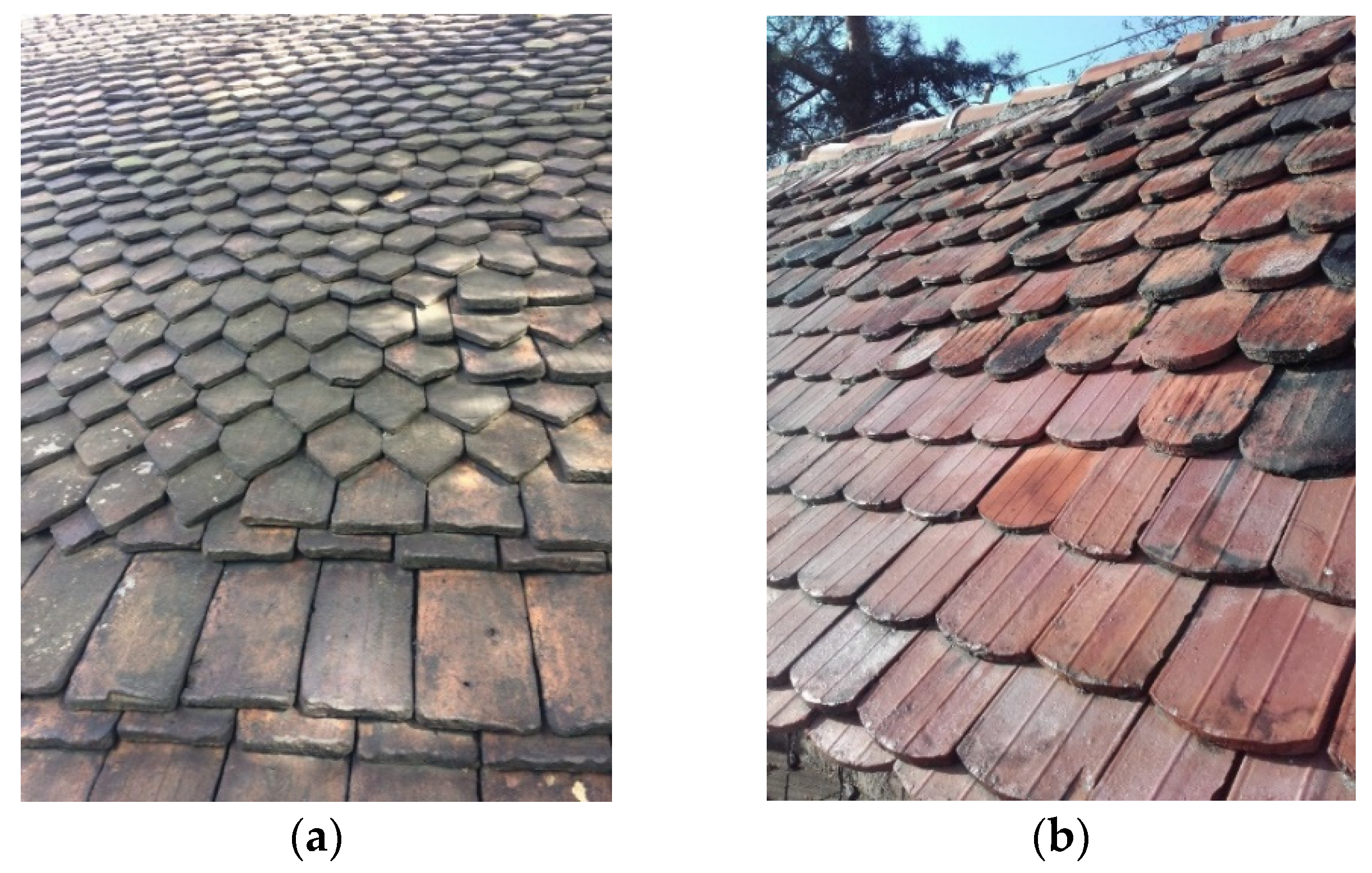
 ,
,  ,
,
Abstract
1. Introduction
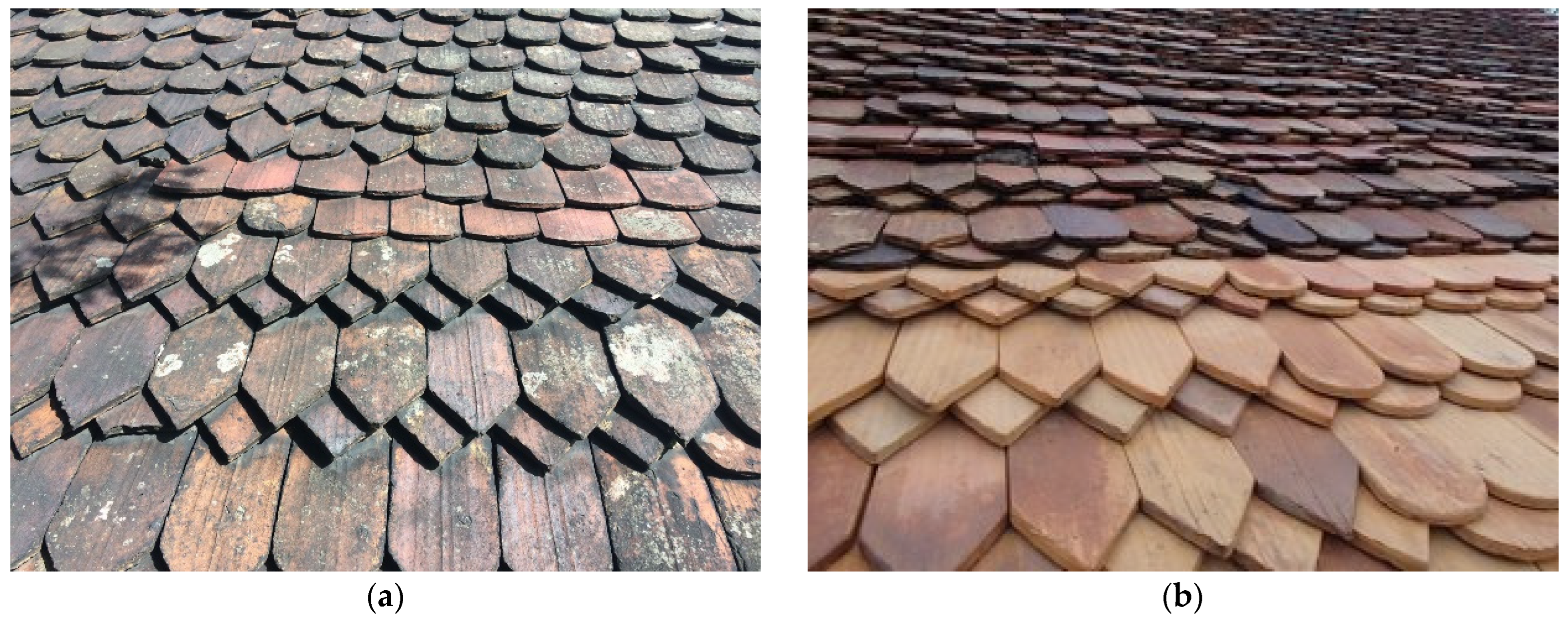
- Changes to the appearance of the roof covering;
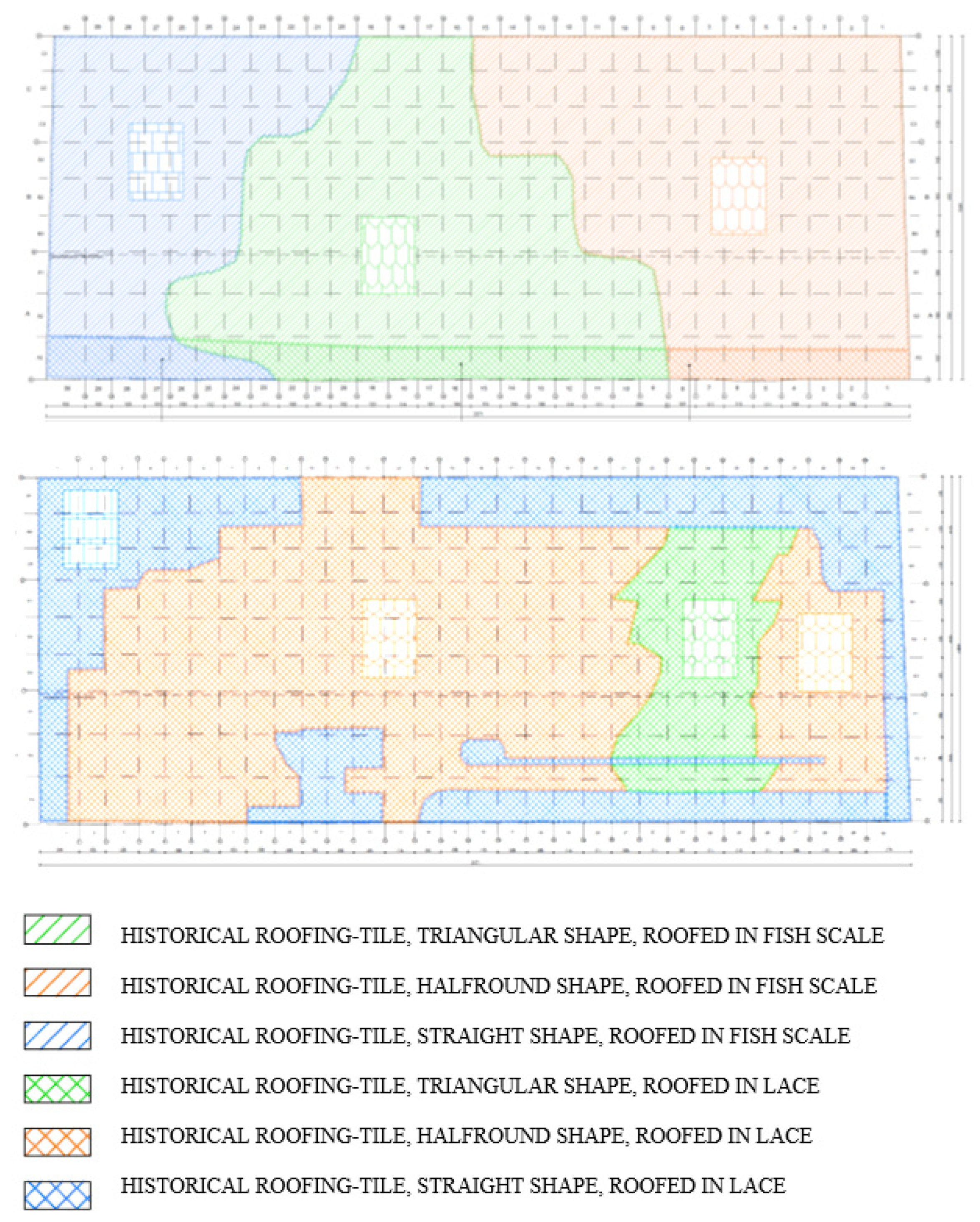
- The obliteration of the original arrangement of tiles, often of different shapes, built into the roof slope and constituting evidence of its transformation relevant from the point of view of monument documentation;
- The necessity of leveling the roof slope for new tiling, resulting in the incorporation or, worse, the removal of original carpentry elements or their fragments;
- The need to apply new layers, including vapor-permeable foil, which sometimes leads to a disruption of the microclimate within the loft and acceleration of the biological corrosion process of the original elements of the roof trusses;
- A reduction in the weight of the roof covering, which in the case of high roofs (e.g., churches) and in places of contact with high partitions (e.g., church towers) often results in the tiles being torn out of the roof slope despite their proper fixing.
2. Materials and Methods
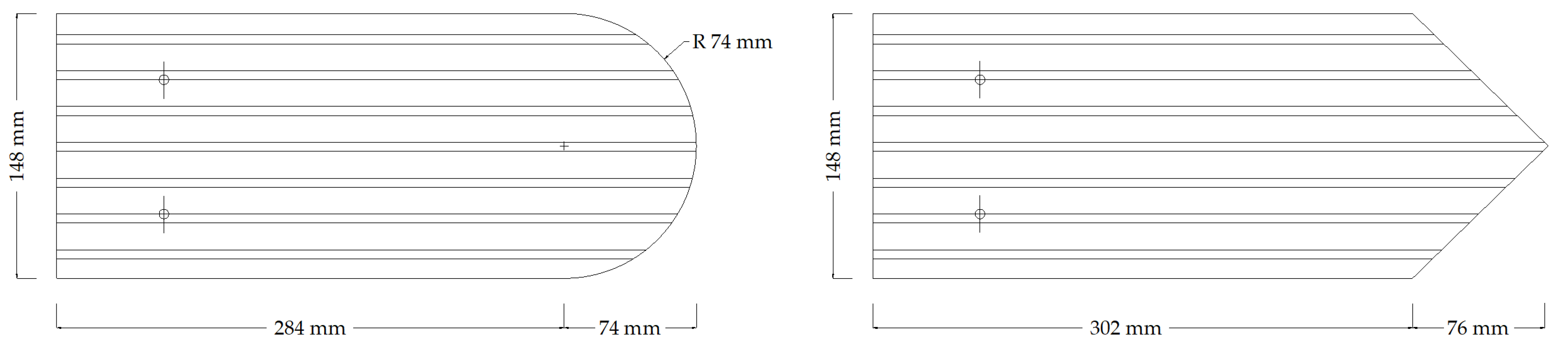
- The tiles came in various sizes and shapes;
- The age of the tiles was estimated to be around 100 years;
- Traces of various mortars were observed on many tiles;
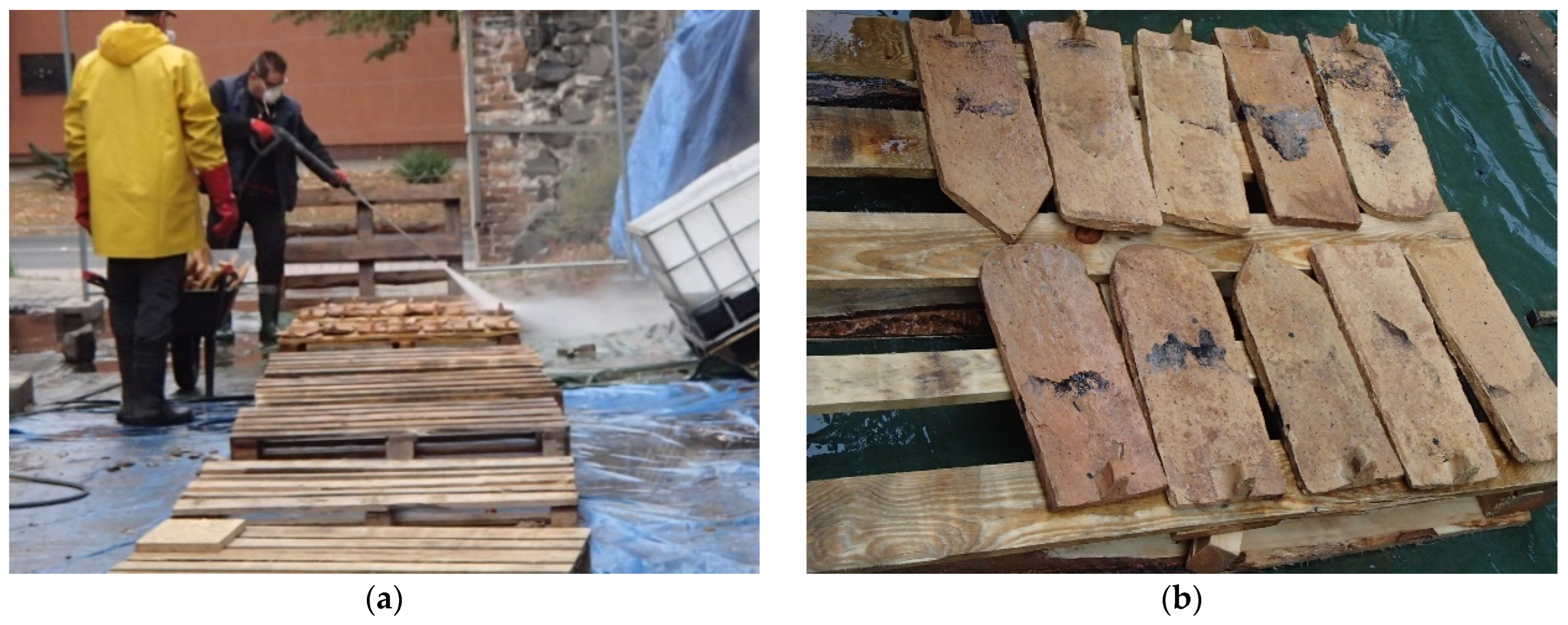
- The tiles were heavily and moderately soiled;
- Numerous roof tiles were chipped;
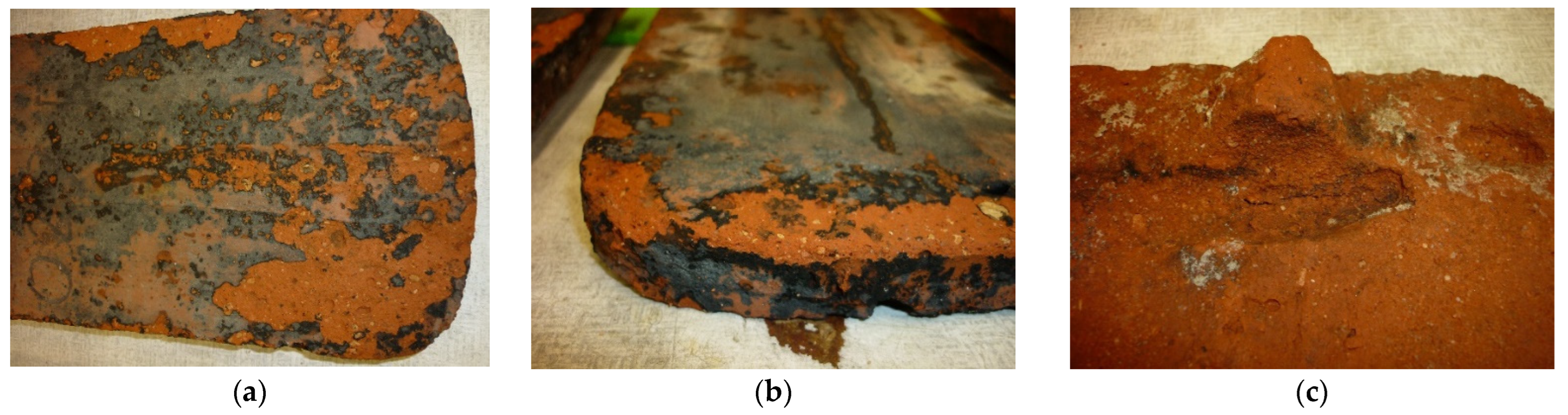
- There were numerous traces of biological corrosion on the right (upper) surfaces of the tiles, which was contributed to by moss and algae growth (visible, for example, on sample Nos. 010, 029, and 038);
- One of the tiles (sample No. 051) was cracked.
2.1. Water Absorption Test
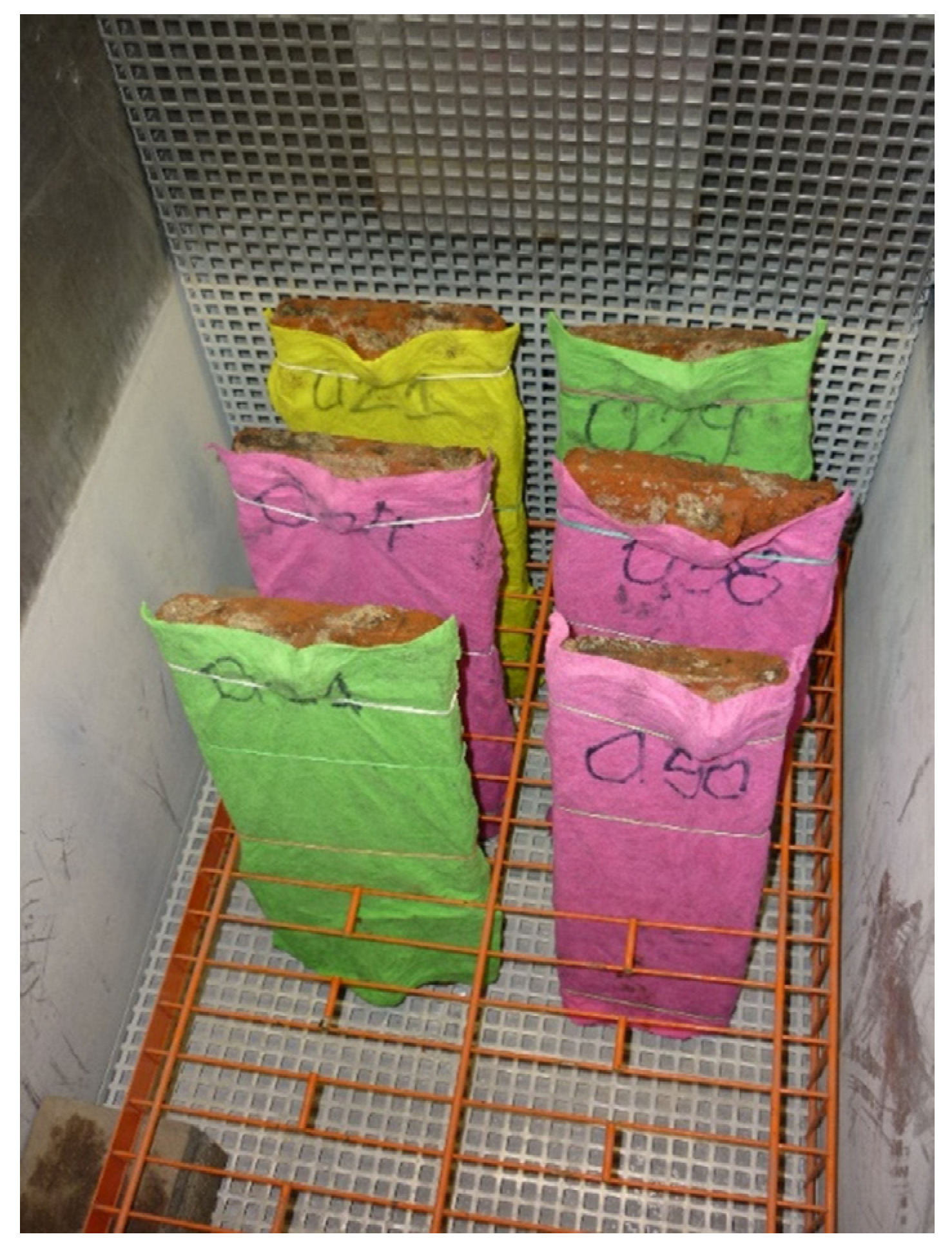
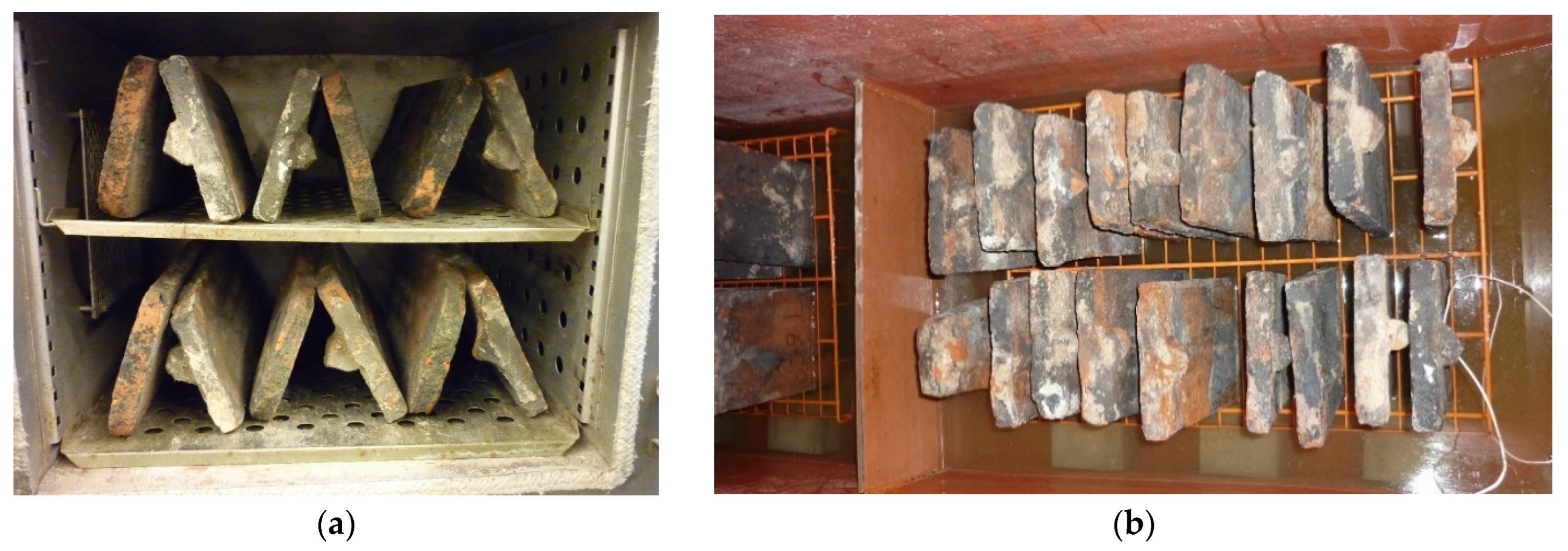
2.2. Frost Resistance Test
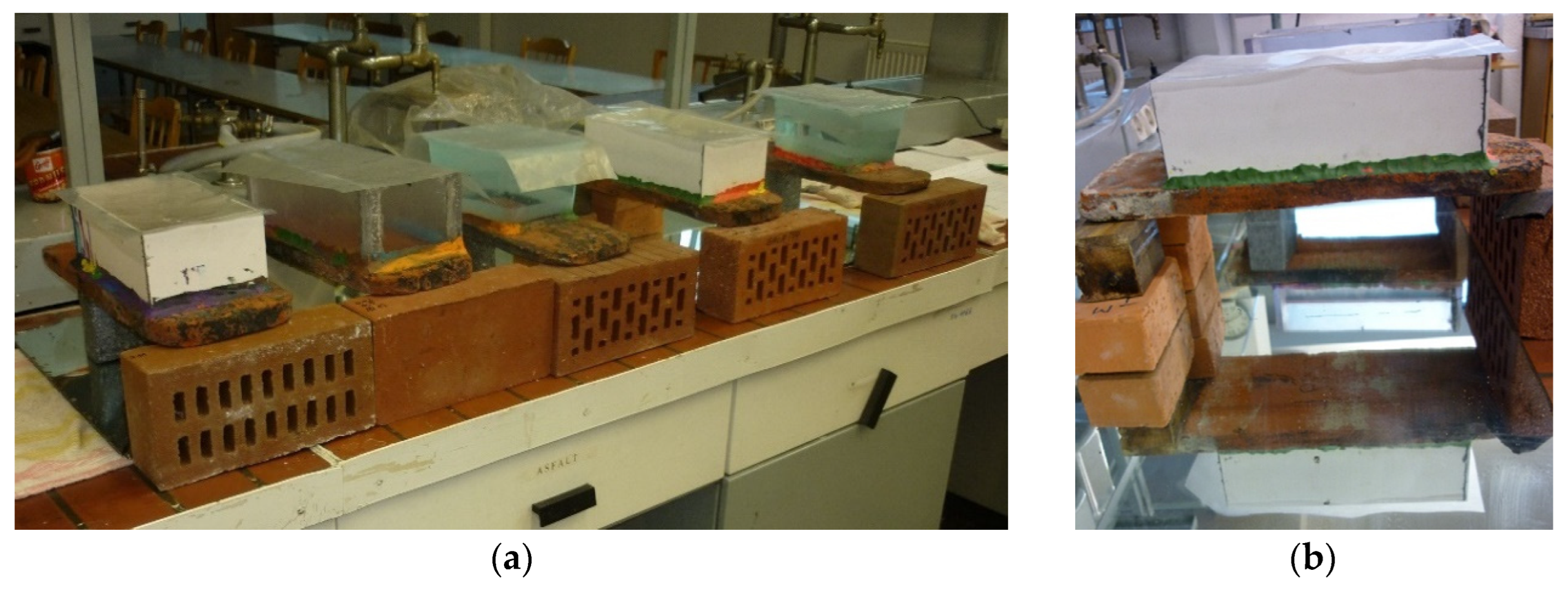
2.3. Permeability Test
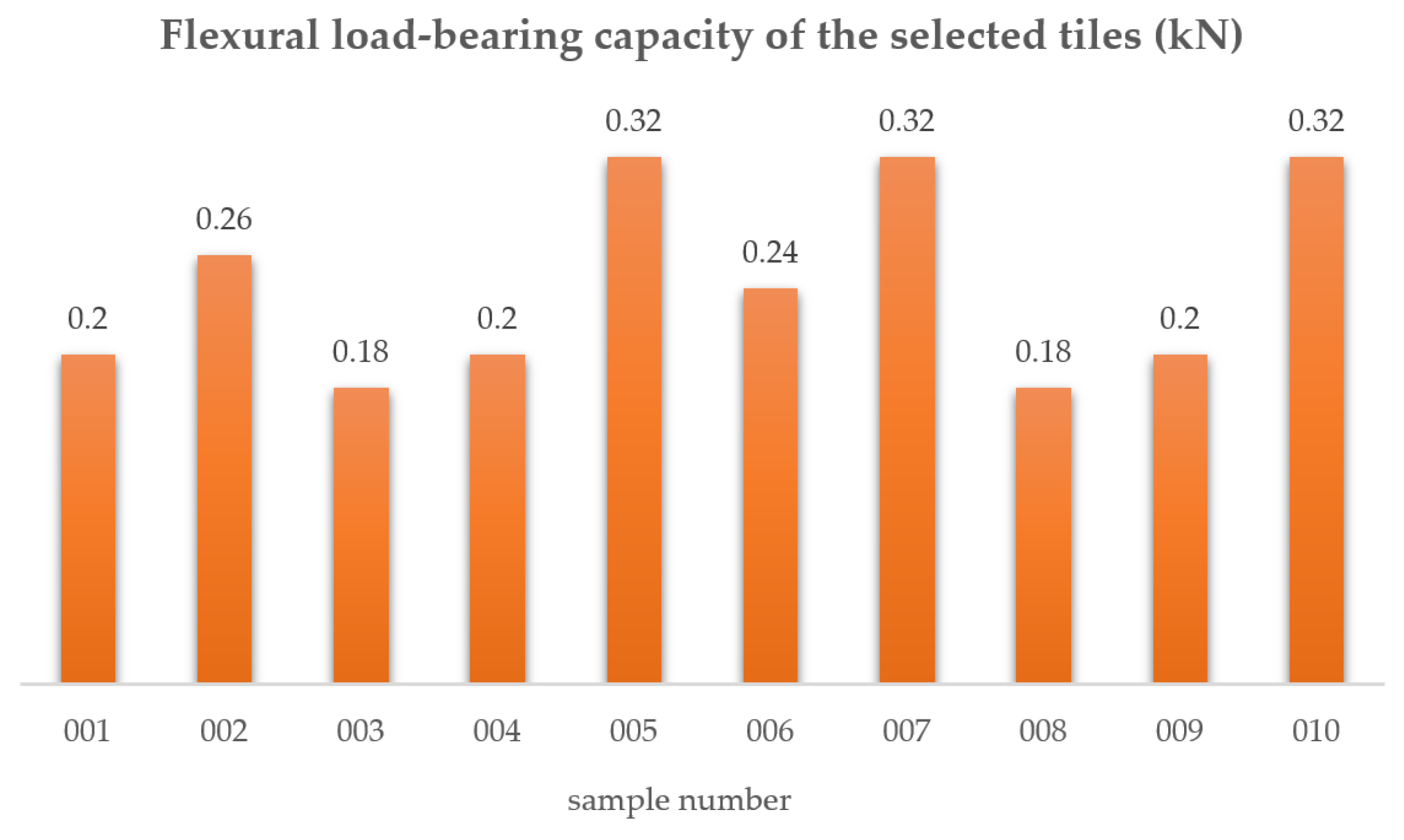
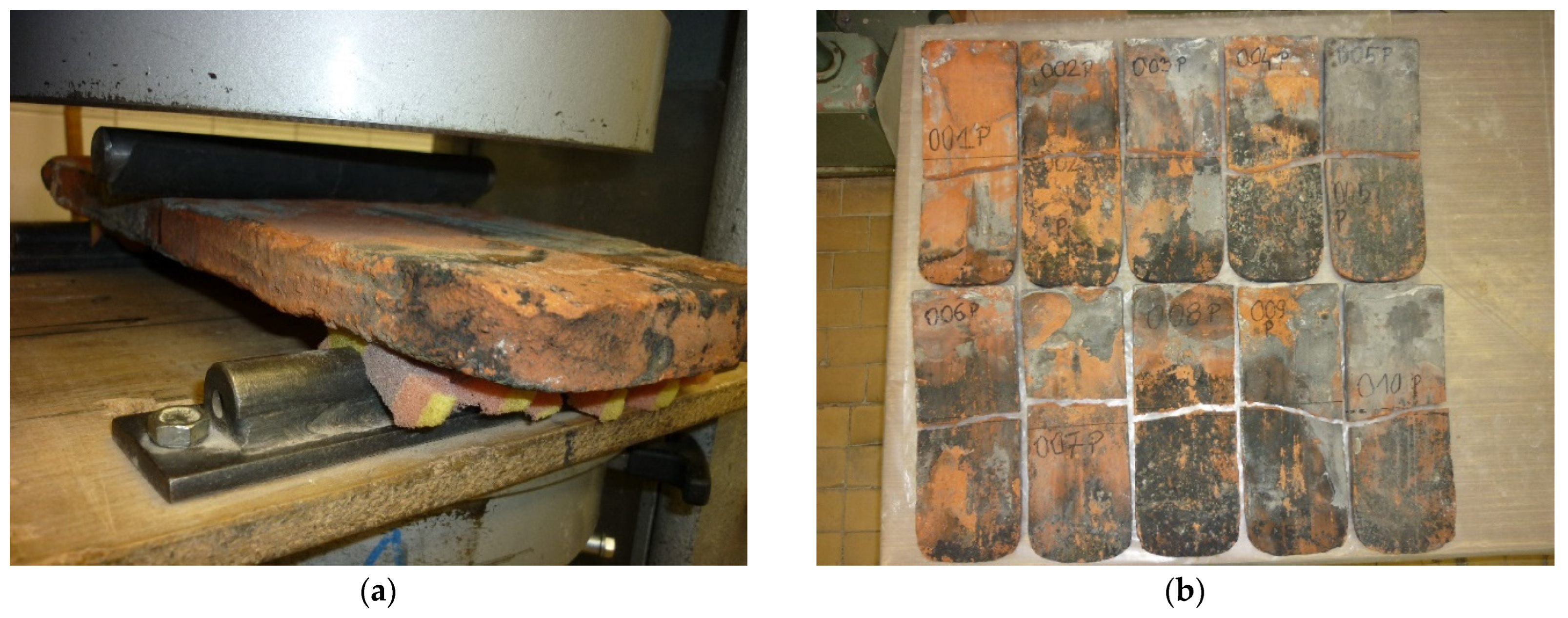
2.4. Flexural Load Capacity Test
3. Results of Case Study
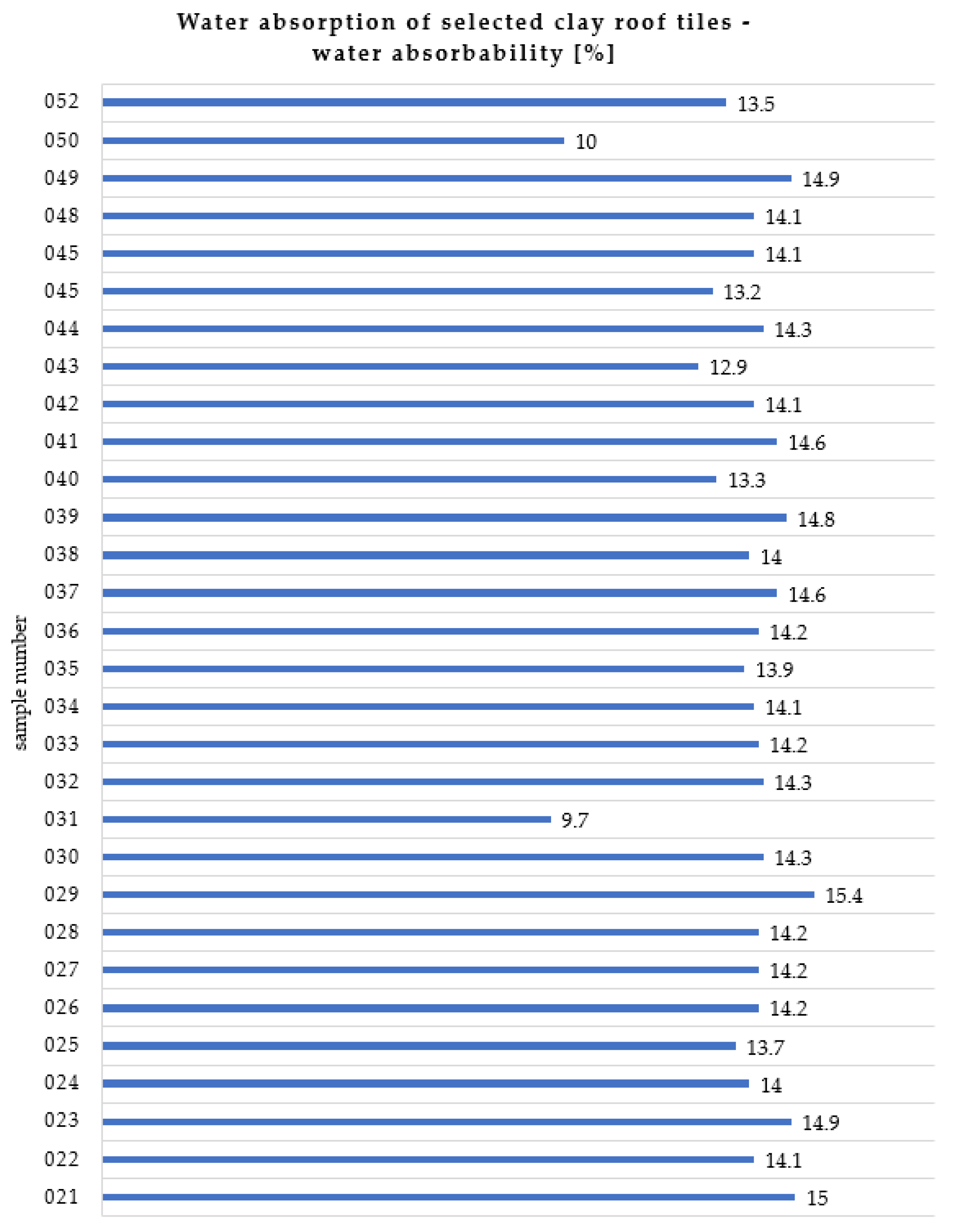
- The absorbability (water absorption) condition was not met by 28 out of 30 samples;
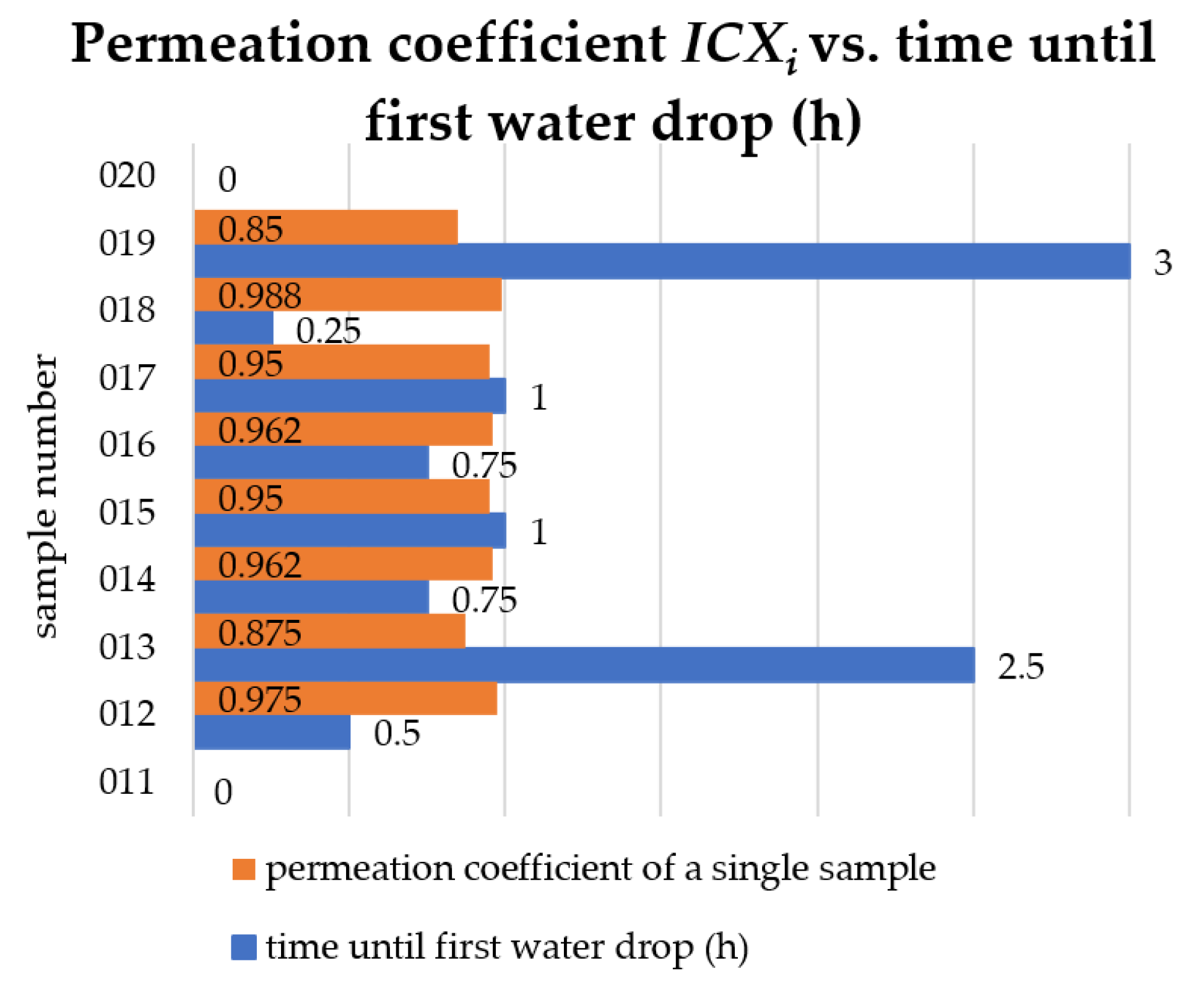
- Although the condition regarding the average water absorption coefficient ICXiav was met, the value of the water absorption coefficient for single samples, ICXi, was not met by 7 out of 10 samples;
- The condition concerning frost resistance was not fulfilled;
- The condition concerning flexural capacity was not fulfilled.
4. Discussion
5. Conclusions
Author Contributions
Funding
Institutional Review Board Statement
Informed Consent Statement
Data Availability Statement
Conflicts of Interest
References
- Journal of Polish Laws 2003 No. 162 Item. 1568 Day 23 July 2003 on the Protection and Guardianship of Monuments. Available online: https://isap.sejm.gov.pl/isap.nsf/download.xsp/WDU20031621568/U/D20031568Lj.pdf (accessed on 5 November 2022).
- Conservation Officer’s Handbook International Standards in Cultural Heritage Protection; ICOMOS—Polish Committee of International Council on Monuments and Sites: Warsaw, Poland, 2015.
- International Charter for the Conservation and Restoration of Monuments and Sites (The Venice Charter). In Proceedings of the 2nd International Congress of Architects and Technicians of Historic Monuments, Venice, Italy, 25–31 May 1964.
- Ałykow, K.; Napiórkowska-Ałykow, M. On the inadequate modelling of the structure of architectural heritage. J. Herit. Conserv. 2015, 41, 59–64. [Google Scholar]
- Ałykow, K.; Napiórkowska-Ałykow, M. Re-modeling of the Monumental Building According to Existing Standards on Cultural Heritage Protection. In Structural Analysis of Historical Constructions; Aguilar, R., Torrealva, D., Moreira, S., Pando, M.A., Ramos, L.F., Eds.; Springer: Cham, Switzerland, 2019. [Google Scholar] [CrossRef] [Scilit]
- Łapacz, P.; Winkowski, M. The renovation of the Salt House in Luban. In Quantitative and Qualitative Analysis of Historic Roof Tiles; PKN: Wrocław, Poland, 2016. [Google Scholar]
- EN 538:1999; Clay Roofing Tiles for Discontinuous Laying—Flexural Strength Test. PKN: Warszawa, Poland, 1999.
- EN 539-2:2013-07; Clay Roofing Tiles for Discontinuous Laying—Determination of Physical Characteristics—Part 2: Test for Frost Resistance. PKN: Warszawa, Poland, 2013.
- EN 1304:2013-10; Clay Roofing Tiles and Fittings—Product Definitions and Specifications. PKN: Warszawa, Poland, 2013.
- EN 539-1:2007; Clay Roofing Tiles for Discontinuous Laying—Determination of Physical Characteristics—Part 1: Impermeability Test. PKN: Warszawa, Poland, 2007.
- Krzywka, Ł. Historical-Architectural Analysis and Conservation Proposals for the Salt House in Luban; Salt House: Lubań, Poland, 2017. [Google Scholar]
- Available online: https://medievalheritage.eu/pl/strona-glowna/zabytki/polska/luban-dom-solny/ (accessed on 10 August 2022).
- Fokt, K.; Tekiela, Ł.; Bena, W.; Koreś, D. Vademecum of Upper Łużyce History; Stowarzyszenie Południowo-Zachodnie Forum Samorządu Terytorialnego “Pogranicze”: Luban, Poland, 2010. [Google Scholar]
- Tekiela, Ł. Defence Walls; Salt House: Lubań, Poland, 2014. [Google Scholar]
- Gąsior, M. Programme of Conservation and Restoration Work for the Salt House Building in Luban; PKN: Wrocław, Poland, 2018. [Google Scholar]
- Bajno, D.; Bednarz, Ł.; Nowak, T. Problems relating to assessment, repair and restoration of wooden roof structures in historic buildings, as exemplified by two case studies in southern Poland. Adv. Mater. Res. 2013, 778, 888–894. [Google Scholar]
- Bednarz, L.; Bajno, D.; Matkowski, Z.; Skrzypczak, I.; Leśniak, A. Elements of Pathway for Quick and Reliable Health Monitoring of Concrete Behavior in Cable Post-Tensioned Concrete Girders. Materials 2021, 14, 1503. [Google Scholar] [CrossRef] [Scilit] [PubMed]
- Kuśnierz-Krupa, D. Protection issues in selected European historic towns and their contemporary development. In E3S Web of Conferences; EDP Sciences: Ulis, France, 2018; p. 00043. [Google Scholar]
- Chernyshev, D.; Ivashko, Y.; Kuśnierz-Krupa, D.; Dmytrenko, A. Role of natural landscape in perception of Ukrainian sacral architecture monuments. Landscape architecture. Sci. J. Latv. Univ. Agric. 2020, 17, 13–21. [Google Scholar]
- Québec Declaration on The Preservation of The Spirit of Place (Genius Loci). In Proceedings of the ICOMOS 16th General Assembly, Quebec, QC, Canada, 30 September–4 October 2008; Available online: https://whc.unesco.org/uploads/activities/documents/activity-646-2.pdf (accessed on 5 November 2022).
- Wang, X.; Wu, C.; Lu, Y.; Tian, M. The Synergy of Metadata and Metamodel through Algorithm Modeling—Case Study of the Roof Tiles in Yangxindian Palace (Beijing, China). Appl. Sci. 2022, 12, 7031. [Google Scholar] [CrossRef] [Scilit]
- Basiricò, T.; Enea, D. Seismic and Energy Retrofit of the Historic Urban Fabric of Enna (Italy). Sustainability 2018, 10, 1138. [Google Scholar] [CrossRef] [Scilit]
- Shen, J.; Li, L.; Wang, J.-P.; Li, X.; Zhang, D.; Ji, J.; Luan, J.-Y. Architectural Glazed Tiles Used in Ancient Chinese Screen Walls (15th–18th Century AD): Ceramic Technology, Decay Process and Conservation. Materials 2021, 14, 7146. [Google Scholar] [CrossRef] [Scilit] [PubMed]
- Małachowicz, M. 900 Years of Ceramic Roof Tiles in Poland; Oficyna Wydawnicza ATUT—Wrocławskie Wydawnictwo Oświatowe: Wrocław, Poland, 2022. [Google Scholar]
- Recommendation on The Historic Urban Landscape. In Proceedings of the General Conference of UNESCO, Paris, France, 10 November 2011; Available online: https://whc.unesco.org/uploads/activities/documents/activity-638-98.pdf (accessed on 5 November 2022).
- The Nara Document on Authenticity. In Proceedings of the Nara Conference on Authenticity, Nara, Japan, 1–6 November 1994; Available online: https://whc.unesco.org/document/116018 (accessed on 5 November 2022).




| Tile No. | Appearance Before Frost Resistance Testing | Appearance After Frost Resistance Testing |
|---|---|---|
| 021 |  |  |
| 024 | 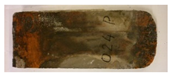 |  |
| 029 | 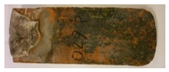 | 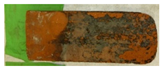 |
| 031 |  | 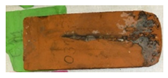 |
| 038 | 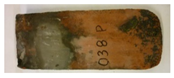 | 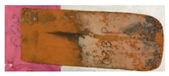 |
| 050 |  | 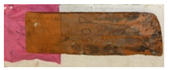 |
| Properties | Value |
|---|---|
| Water absorption | <10% |
| Permeability | ICxi ≤ 0.85 |
| Frost resistance | Frost resistant after 150 cycles |
| Flexural load capacity | ≥1.2 kN |
Publisher’s Note: MDPI stays neutral with regard to jurisdictional claims in published maps and institutional affiliations. |
© 2022 by the authors. Licensee MDPI, Basel, Switzerland. This article is an open access article distributed under the terms and conditions of the Creative Commons Attribution (CC BY) license (https://creativecommons.org/licenses/by/4.0/).
Share and Cite
Ałykow, K.; Bednarz, Ł.; Piechówka-Mielnik, M.; Napiórkowska-Ałykow, M.; Krupa, M. New Ceramic Tiles Produced Using Old Technology Applied on Historic Roofs—Possibilities and Challenges. Materials 2022, 15, 7835. https://doi.org/10.3390/ma15217835
Ałykow K, Bednarz Ł, Piechówka-Mielnik M, Napiórkowska-Ałykow M, Krupa M. New Ceramic Tiles Produced Using Old Technology Applied on Historic Roofs—Possibilities and Challenges. Materials. 2022; 15(21):7835. https://doi.org/10.3390/ma15217835
Chicago/Turabian StyleAłykow, Krzysztof, Łukasz Bednarz, Magdalena Piechówka-Mielnik, Magdalena Napiórkowska-Ałykow, and Michał Krupa. 2022. "New Ceramic Tiles Produced Using Old Technology Applied on Historic Roofs—Possibilities and Challenges" Materials 15, no. 21: 7835. https://doi.org/10.3390/ma15217835
APA StyleAłykow, K., Bednarz, Ł., Piechówka-Mielnik, M., Napiórkowska-Ałykow, M., & Krupa, M. (2022). New Ceramic Tiles Produced Using Old Technology Applied on Historic Roofs—Possibilities and Challenges. Materials, 15(21), 7835. https://doi.org/10.3390/ma15217835