Article

Effects of Intrabony Length and Cortical Bone Density on the Primary Stability of Orthodontic Miniscrews


1
Department of Orthodontics, Institute of Craniofacial Deformity, Yonsei University College of Dentistry, Seoul 03722, Korea
2
Department and Research Institute of Dental Biomaterials and Bioengineering, Yonsei University College of Dentistry, Seoul 03722, Korea
3
BK21 FOUR Project, Yonsei University College of Dentistry, Seoul 03722, Korea
*
Author to whom correspondence should be addressed.
Materials 2020, 13(24), 5615; https://doi.org/10.3390/ma13245615
Submission received: 16 November 2020 / Revised: 5 December 2020 / Accepted: 8 December 2020 / Published: 9 December 2020
(This article belongs to the Special Issue Biomaterials for Medical and Dental Application)

Abstract

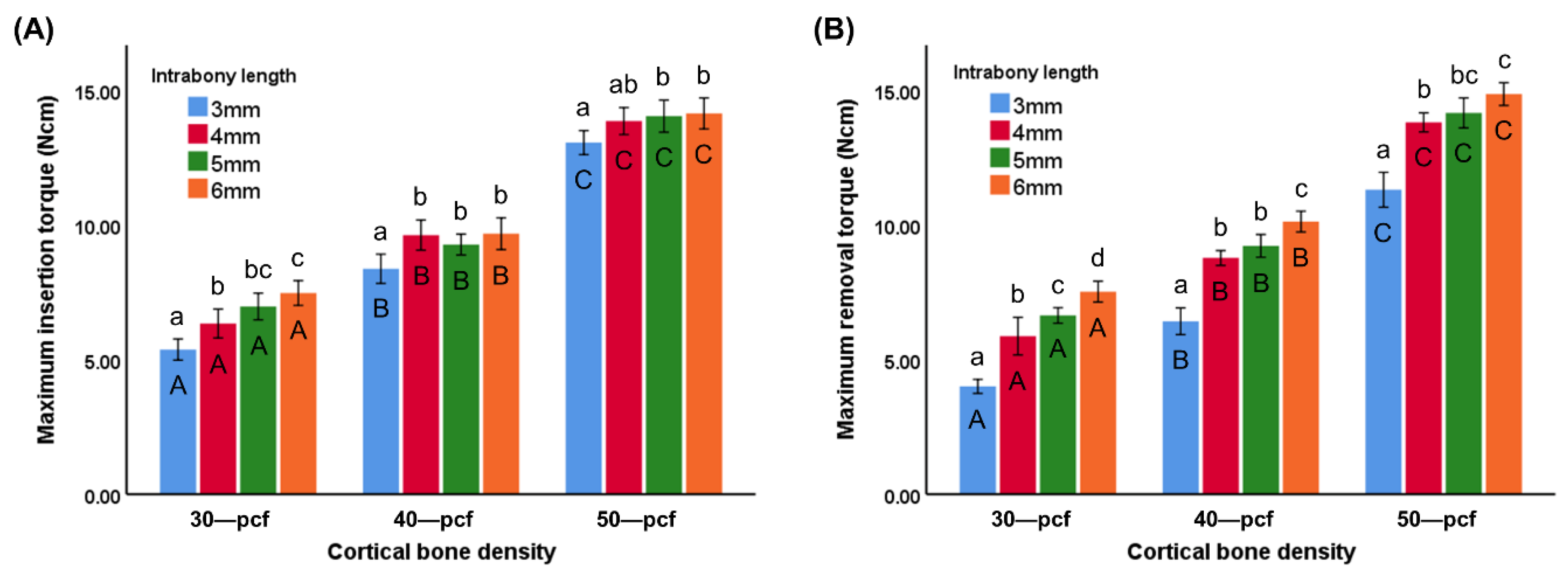
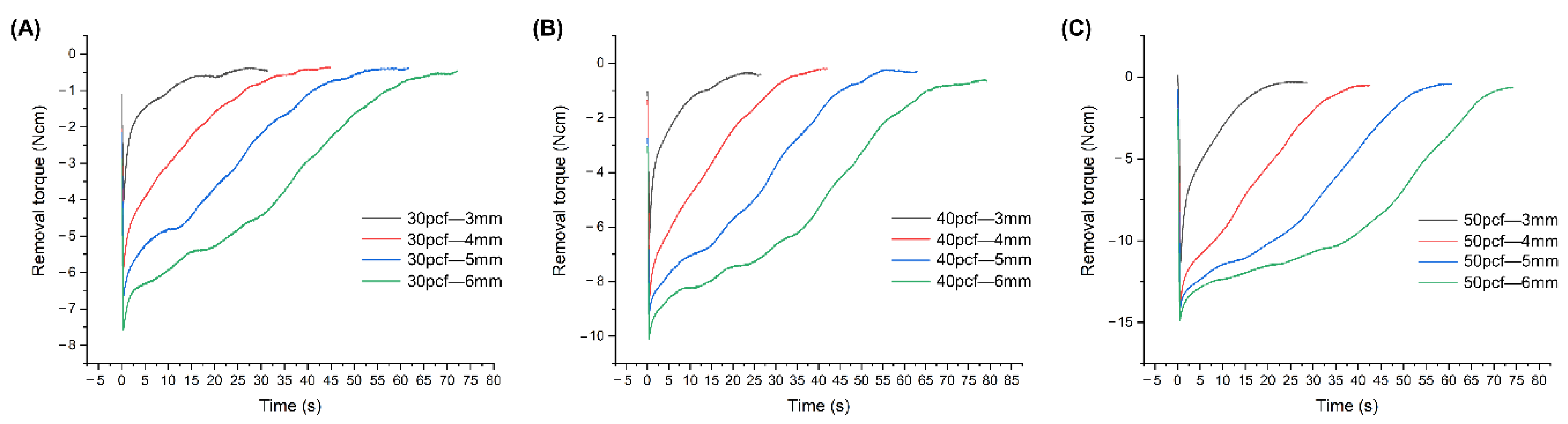
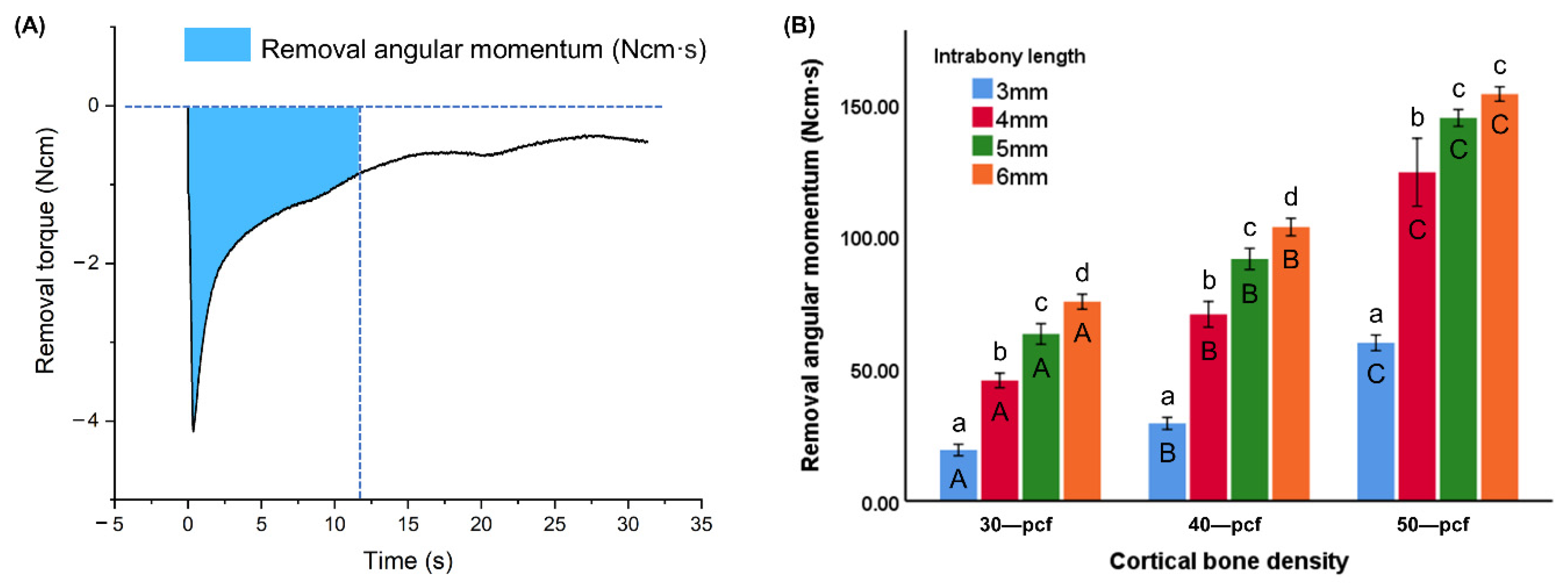
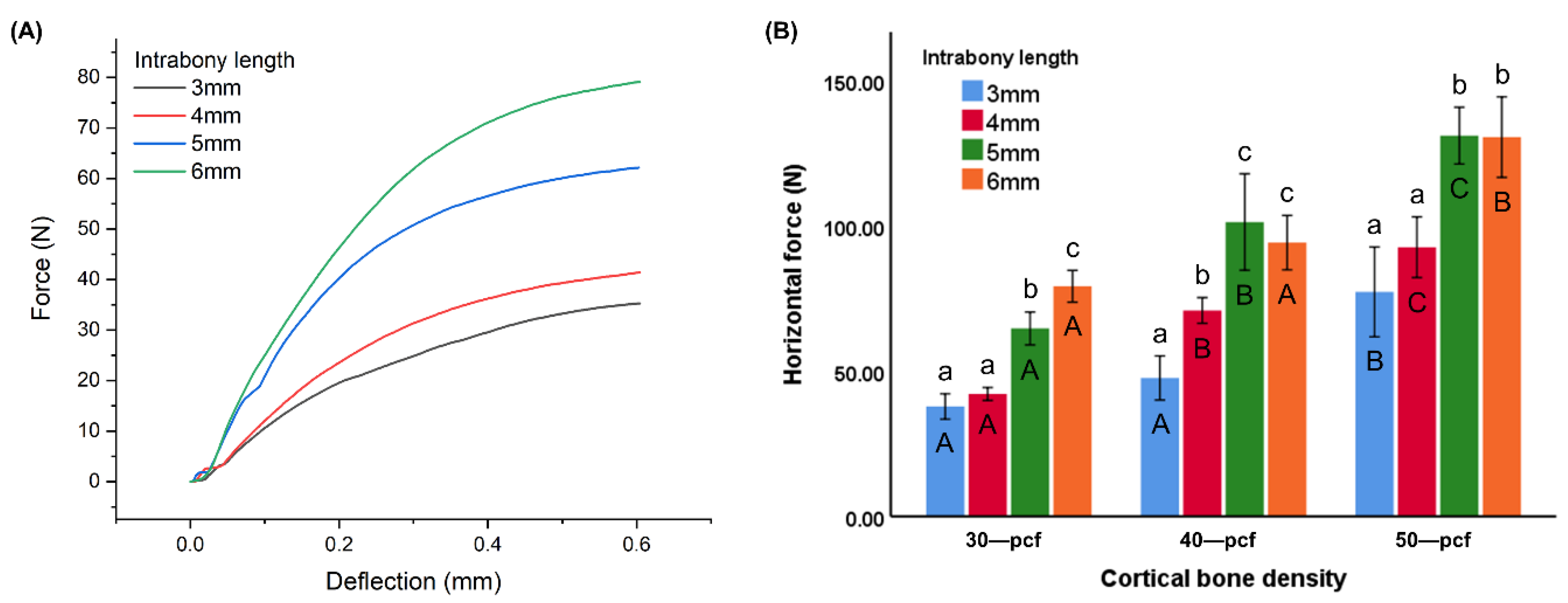
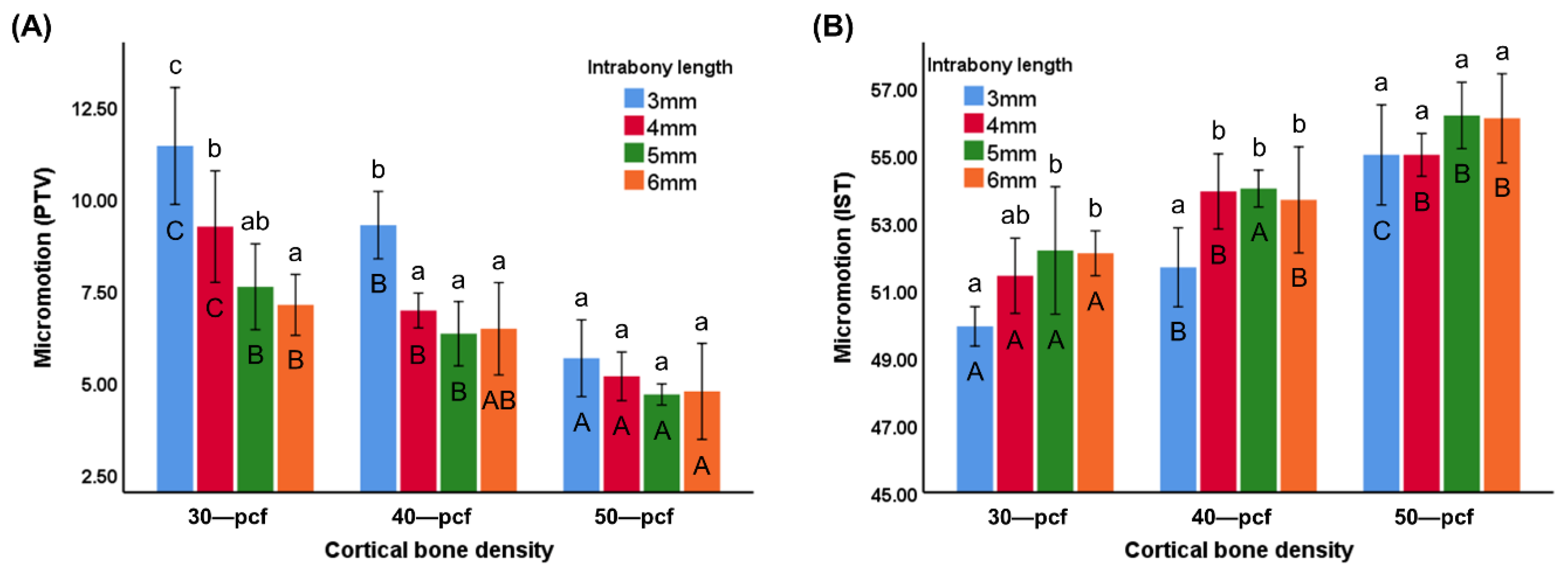
Miniscrews have gained recent popularity as temporary anchorage devices in orthodontic treatments, where failure due to sinus perforations or damage to the neighboring roots have increased. Issues regarding miniscrews in insufficient interradicular space must also be resolved. This study aimed to evaluate the primary stability of miniscrews shorter than 6 mm and their feasibility in artificial bone with densities of 30, 40, and 50 pounds per cubic foot (pcf). The primary stability was evaluated by adjusting the intrabony miniscrew length, based on several physical properties: maximum insertion torque (MIT), maximum removal torque (MRT), removal angular momentum (RAM), horizontal resistance, and micromotion. The MIT and micromotion results demonstrated that the intrabony length of a miniscrew significantly affected its stability in low-density cortical bone, unlike cases with a higher cortical bone density (p < 0.05). The horizontal resistance, MRT, and RAM were affected by the intrabony length, regardless of the bone density (p < 0.05). Thus, the primary stability of miniscrews was affected by both the cortical bone density and intrabony length. The effect of the intrabony length was more significant in low-density cortical bone, where the implantation depth increased as more energy was required to remove the miniscrew. This facilitated higher resistance and a lower risk of falling out.
Keywords: miniscrews; miniscrew length; primary stability; intrabony length; removal angular momentum; cortical bone density miniscrews; miniscrew length; primary stability; intrabony length; removal angular momentum; cortical bone density