


Abstract
The increasing demand for energy, the finite nature of fossil fuel resources, and the necessity to reduce greenhouse gas emissions have intensified research on renewable energy sources of plant origin. Among potential energy feedstocks, herbaceous biomass has attracted growing interest due to its high productivity, rapid growth, and widespread occurrence. The aim of this study was to evaluate the energy potential of select sedge species (Carex spp.) commonly occurring in Poland as an alternative to fossil fuels. Aboveground biomass of eight sedge species was collected from natural habitats located in the Warta River valley. Cellulose, lignin, holocellulose, hemicellulose, and ash content in the biomass was determined. In addition, key energy parameters, namely net calorific value and gross calorific value, were analyzed. Differences among species were assessed using one-way analysis of variance, while similarities were explored using hierarchical clustering methods. The results revealed significant interspecific variation in both chemical composition and energy properties. Most analyzed sedge species had favorable lignocellulosic composition and energy parameters comparable to those of woody biomass, particularly willow and poplar. In contrast, Carex riparia was distinguished by a high ash content and lower calorific values, limiting its suitability for energy applications. Overall, the findings indicate that select Carex species may represent a valuable renewable feedstock for energy production, especially in the context of local and decentralized biomass-based energy systems.
Keywords:
biofuels; renewable energy; energy value; combustion heat; chemical composition; sedges; Carex 1. Introduction
The development of modern societies and economies is inherently dependent on access to energy [1], which remains the fundamental driver of industrial growth and social progress. Despite dynamic advancements in renewable energy technologies, fossil fuels—particularly coal—continue to play a dominant role in global energy production. Hard coal and lignite are still widely used for electricity and heat generation, both in Poland and worldwide [2].
In 2023, global hard coal production reached 9.1 billion tonnes, representing a 3.1% increase compared with 2022. This growth was primarily driven by increased extraction in Asian countries, notably China, India, and Indonesia [3]. While coal consumption declined in Europe by approximately 7%, production surpluses persisted in Asia, reflecting regional disparities in energy demand. Despite the rapid expansion of solar and wind power capacity in 2024, fossil fuels still accounted for approximately 85% of global primary energy consumption, with coal alone contributing more than 27% [4].
The extensive use of fossil fuels for electricity generation continues to result in high carbon dioxide emissions, particularly in the context of increasing energy demand from developing economies. Consequently, coal-fired power plants remain a cornerstone of energy systems in many countries [5]. At the same time, the adoption and gradual implementation of the Paris Agreement [6] and related international climate frameworks have intensified global efforts to reduce greenhouse gas emissions and accelerate the transition toward low-carbon energy systems.
According to data from Statistics Poland [7,8], the primary energy consumption structure in Poland in 2024 was dominated by hard coal, crude oil, and natural gas. Despite a downward trend, these energy carriers accounted for a total of 4039.3 PJ, whereas renewable energy sources contributed 618.8 PJ. The Directive 2009/28/EC of the European Parliament and of the Council [9] established a national target of 15% of gross national energy consumption to be from renewable energy sources by 2020 in Poland. This target was exceeded, reaching (16.1%).
The updated Directive (EU) 2023/2413 [10] introduced more ambitious targets for Member States by 2030. In 2024, the share of renewable energy in Poland’s gross final energy consumption reached 17.7%, with a declared target of 21% by 2030 [8,11,12]. In 2023, solid biofuels dominated renewable primary energy production in Poland, accounting for 60.1% (EU average: 37%), whereas liquid biofuels and biogas contributed only 7.7% and 2.7%, respectively [7,8].
Analyses of inland renewable energy consumption by energy carriers reveal the continued dominance of solid biofuels (55.6%). However, household energy consumption per capita in 2023 indicates that hard coal remains a significant energy source in Poland, exceeding 20% of total consumption, compared with an EU average of only 2.2% [7,8]. These figures highlight the persistent dependence on coal and underscore the need for alternative, sustainable biomass resources.
Ongoing economic growth, increasing environmental degradation, and the gradual depletion of fossil fuel reserves have stimulated research into alternative energy carriers capable of supporting the energy sector [13]. Expanding the share of renewable energy sources has become a key component of energy transition strategies worldwide and is widely recognized as a necessary pathway toward sustainable development [5].
Under Polish legislation, solid fuels include not only coal but also biomass derived from trees, shrubs, and agricultural plant materials [14]. Within this category, biomass originating from semi-natural grasslands represents a largely underexplored resource. Among such biomass types, sedges (Carex spp.) constitute a particularly promising group.
Sedges are perennial herbaceous plants belonging to the family Cyperaceae and are widely distributed across diverse climatic zones and habitat types. The Cyperaceae family plays an important ecological and economic role, especially in wetland and marsh ecosystems [15,16]. Species of the genus Carex display two primary growth forms—tussock-forming and rhizomatous—both of which are associated with high biomass productivity and rapid vegetative expansion.
Although sedges are capable of sexual reproduction through seed formation, vegetative propagation is often the dominant mode of expansion. Seed germination is frequently limited by morphological constraints, such as the presence of a persistent perigynium, which may delay or inhibit emergence [17]. Consequently, many Carex species exhibit substantial annual biomass accumulation through clonal growth. Large rhizomatous species, such as Carex riparia, can form extensive monospecific stands characterized by high biomass yields within a single growing season [18,19,20,21].
The area of wetland resources in Poland in 2024 was estimated at approximately 4.4 million hectares, which corresponds to 14.2% of the total area of the country [22]. The area occupied by tall sedge communities accounts for less than 3% of the land [23] and is mainly concentrated in river valleys, with most of these areas being used for agricultural purposes. Due to the low forage value of the hay, it is primarily harvested for use as bedding for livestock.
The high productivity and widespread occurrence of this annual species make it a reasonable renewable energy feedstock. Despite their abundance in natural and semi-natural ecosystems, sedges remain underrepresented in studies addressing biomass-based energy production. Although interest in herbaceous biomass for bioenergy applications is increasing, information on the energy-related properties of Carex species remains limited. Previous studies have focused on their biomass productivity potential and ecological significance, while their energy-related properties are not fully understood. The present study addresses this gap by providing a comprehensive evaluation of the energy properties of select sedge species, including analysis of the structural composition of biomass and basic fuel parameters, which allows for a more objective assessment of their suitability as feedstock for energy production.
The aim of this study was to evaluate the energy potential of select Carex species based on their chemical composition and fuel parameters. The aim of this study was to evaluate and identify Carex species suitable as renewable lignocellulosic energy feedstock.
2. Materials and Methods
2.1. Material Collection
Field studies and the collection of plant material in the form of aboveground biomass of select sedge species were conducted during the 2014 growing season. In the same year, chemical composition analyses of the collected material were also performed.
Eight Carex species commonly occurring in Poland and frequently found in plant communities associated with river valleys were selected for the study. The investigated species included Carex praecox Schreb., C. riparia Curt., C. spicata Huds., C. pilulifera L., C. diandra Schrank, C. vulpina L., C. brizoides L., and C. leporina L. were selected for the study. Plant material was collected exclusively from natural stands.
Species were selected to represent a broad range of morphological growth forms and ecological strategies, which directly influence energy value. To facilitate the interpretation of interspecific differences, a brief characterization of the individual species is presented in Table 1.
Table 1.
Characteristics of selected sedge species.
The study area encompassed the Warta River valley and included five sampling locations: Olchowo (52°10′52″ N, 17°56′56″ E)—C. diandra; Radojewo (52°29′52″ N, 16°58′02″ E)—C. praecox and C. riparia; Słonawy (52°39′57″ N, 16°47′13″ E)—C. vulpina and C. brizoides; Obrzycko (52°42′03″ N, 16°35′42″ E)—C. spicata; and Sieraków (52°38′15″ N, 16°03′49″ E)—C. leporina and C. pilulifera. The sites are located within or adjacent to protected areas belonging to the Natura 2000 network, including Ostoja Nadwarciańska (PLH300009), Biedrusko (PLH300001), Puszcza Notecka (PLB300015), Dąbrowy Obrzyckie (PLH300003), and Ostoja Międzychodzko–Sierakowska (PLH300032).
The Wielkopolska region is characterized by a lowland landscape and seasonal variation in isotherm orientation, with zonal patterns prevailing in summer and meridional patterns in winter. The mean annual air temperature is approximately 8.5 °C, with a spatial gradient of up to 0.9 °C between the northern and south-western parts of the region. Annual precipitation totals range from 500 to 550 mm, although lower values—by up to 100 mm—are occasionally recorded in the Gniezno Lakeland region [24].
Given that all sampling sites are located within the Warta River valley, meteorological data from the Poznań–Ławica station were used as representatives of the study area. Long-term climate data for the period 1991–2020 indicate a mean annual temperature of 9.4 °C and average annual precipitation of 538.9 mm. July is characterized by the highest mean temperature (19.5 °C) and precipitation (84.4 mm), whereas January records the lowest mean temperature (−0.4 °C). The lowest monthly precipitation totals occur in April (28.6 mm) and February (30.7 mm) [25].
Biomass samples (in three replications) were collected from plant communities in which the target species exhibited the highest constancy and abundance. These communities occurred mainly on medium-quality grasslands (2z) as well as poor and very poor grasslands (3z), developed on alluvial soils, silty peat soils, and organic–mineral and muck soils. oil texture types included light loamy sands, weakly loamy sands, loose sands, and light loams [26].
2.2. Chemical Composition
The determination of the basic chemical components of the biomass was performed using standard analytical methods commonly applied to plant-derived raw materials, following the procedures described in previous studies [27,28]. The following parameters were determined:
- Cellulose content using the acetylacetone and dioxane method according to Seifert [29].
- Lignin content using 72% nitric acid [30].
- Holocellulose content using the sodium chlorite method [31].
All results are expressed as a percentage of dry matter. The theoretical hemicellulose content was calculated as the arithmetic difference between holocellulose and cellulose contents. Ash content was determined in accordance with the DIN 51731 standard [32]. Gross calorific value (GCV), also referred to as higher heating value (HHV), represents the total amount of heat released during the complete combustion of fuel when the water produced during combustion is fully condensed. Net calorific value (NCV), also known as lower heating value (LHV), represents the useful heat obtained from combustion after subtracting the latent heat of vaporization of water formed during the combustion process. In this study, GCV was determined experimentally using a bomb calorimeter according to PN-81/G-04513 [33], whereas NCV was calculated from the obtained GCV values.
2.3. Statistical Analysis
To access differences among the studied sedge species, a permutational multivariate analysis of variance (PERMANOVA) was performed. This method was selected due to its suitability for multivariate datasets and its robustness to deviations from normality.
Moreover, differences among mean values of chemical composition parameters, including cellulose, lignin, holocellulose, and hemicellulose contents, as well as ash content, gross calorific value (GCV), and net calorific value (NCV), were evaluated using one-way analysis of variance (ANOVA). This approach was chosen as an appropriate method for comparing means across multiple independent groups.
Post hoc comparisons between individual Carex species were performed using Tukey’s honest significant difference (HSD) test at a significance level of p < 0.05. Additionally, the coefficient of variation was calculated for all parameters of chemical composition as well as for the NCV and GCV.
Differences and similarities among the analyzed Carex species were further explored using hierarchical cluster analysis. Clustering was performed using the unweighted pair-group method with arithmetic mean (UPGMA) and the Bray–Curtis similarity index. These methods were selected due to their widespread application in ecological and environmental studies and their suitability for quantitative compositional data. The dendrograms presented in this study were created separately for each analyzed parameter.
The Bray–Curtis similarity measure allows for the assessment of differences based on both the presence and relative proportions of variables, making it particularly useful for ecological datasets. The combination of Bray–Curtis similarity and UPGMA clustering enables the visualization of similarity patterns and the identification of the groups based on multivariate relationships.
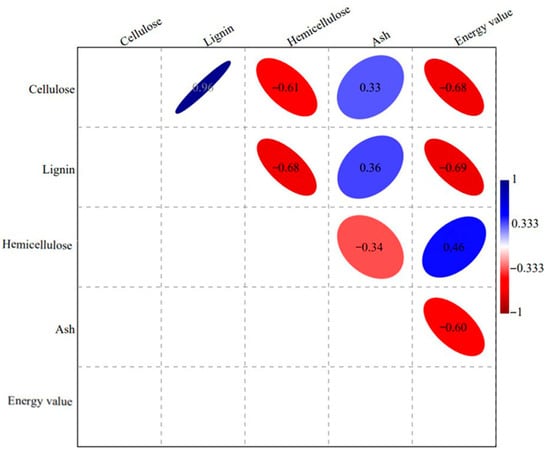
Additionally, to illustrate the structural composition of sedge biomass, a scatter plot was prepared showing the proportions of cellulose, hemicellulose, and lignin. Pearson’s correlation analysis was also performed to evaluate relationships between chemical composition and energy parameters.
All statistical analyses were conducted using R software version 4.4.0 [34], with the agricolae [35], dplyr [36], and vegan [37] packages. Dendrograms, Pearson correlation result, and scatter plot of biomass structural composition were visualized using PAST 4.16c software [38,39] while principal component analysis (PCA) was performed using R [34].
3. Results and Discussion
The chemical composition of plant biomass is influenced by multiple factors, including species, growth conditions, habitat type, and the part of the plant. Even within a single species, substantial variation in the proportion of individual components may occur [40,41,42].
Multivariate analysis revealed statistically significant differences in chemical composition, ash content, NCV, and GCV among the analyzed sedge species (F = 25.12; p = 0.001). Species as a factor explained 91.7% of the total variance in the dataset (R2 = 0.917), indicating a very strong separation among the analyzed groups. Additionally, the analyzed parameters exhibited high discriminatory power, enabling effective differentiation of individual sedge species.
Furthermore, the univariate analyses confirmed statistically significant differences in all major chemical composition components among the investigated Carex species (Table 2).
Table 2.
Main components of selected grass species with statistically significant differences (Tukey’s test) and coefficient of variation (CV). Mean values with standard deviation for each species are presented (statistically significant at p < 0.05).
Statistically significant differences were observed among the analyzed Carex species for all major chemical components. In the case of cellulose and lignin contents, four homogeneous groups (“a–d”) and one subgroup (“bc”) were distinguished. Holocellulose content formed three homogeneous groups (“a”, “b”, “d”) and two subgroups (“bc”, “cd”), whereas hemicellulose content was characterized by five homogeneous groups (“a–e”) and one subgroup (“bc”).
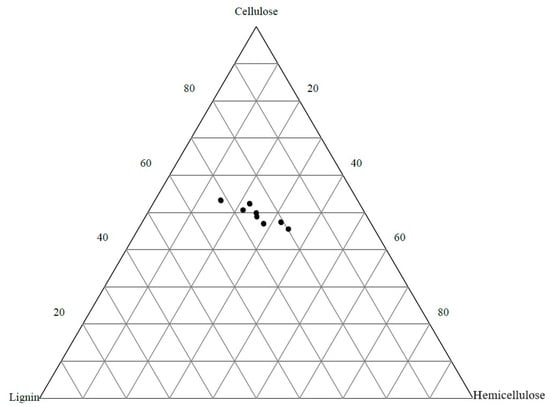
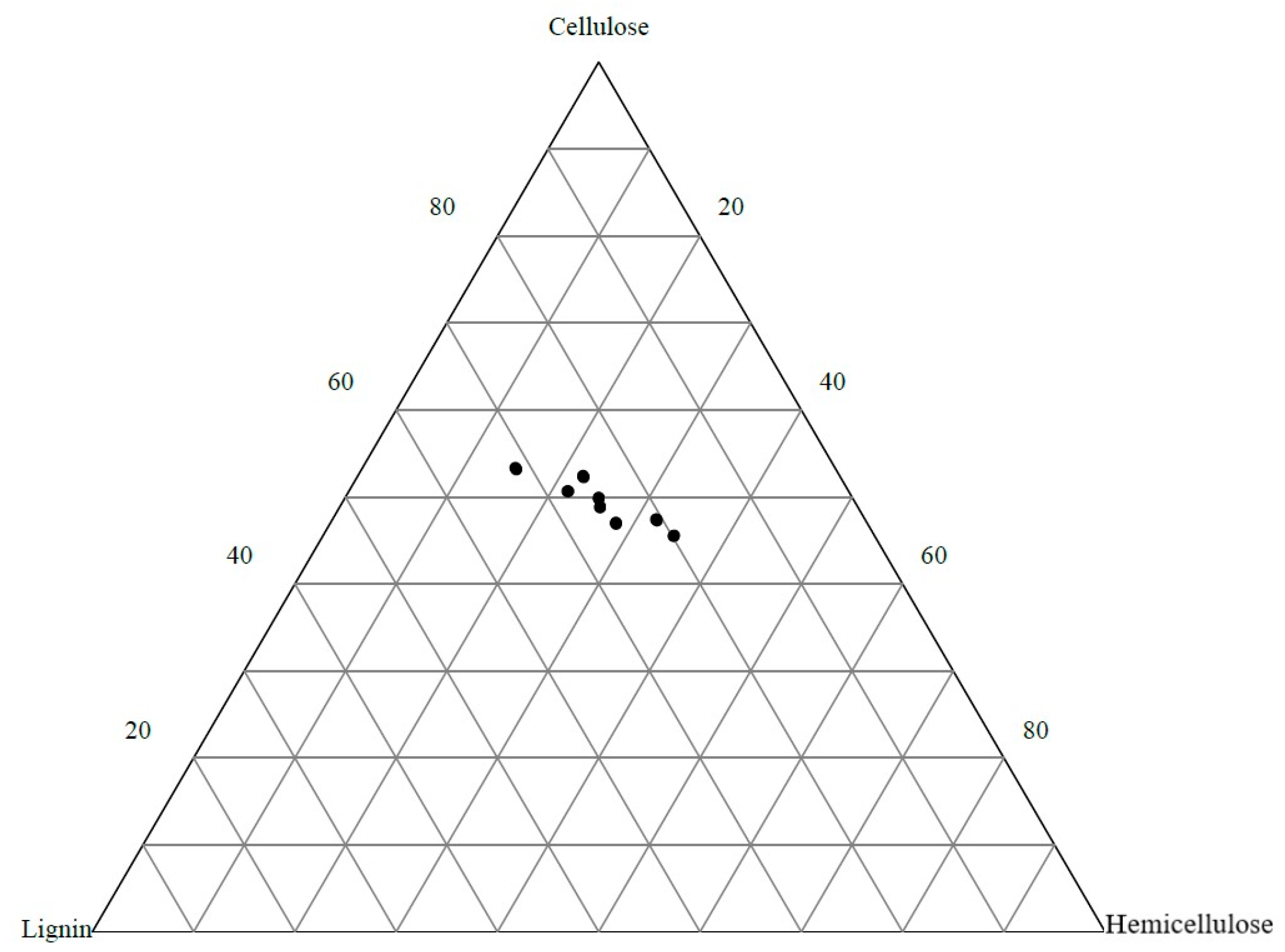
The coefficients of variation (CV) calculated for all analyzed components across the investigated Carex species were low, generally not exceeding 2%. This low variability indicates high repeatability of the measurements and confirms the representativeness and stability of the analyzed samples. Additionally, a scatter plot illustrating the structural composition of the biomass is presented in Figure 1.
Figure 1.
Scatter plot of structural composition of sedges biomass.
The lowest lignin contents (Table 2) were recorded in C. praecox (13.0%) and C. spicata (13.1%), whereas the highest lignin content, similar to cellulose, was observed in C. riparia (25.3%). The remaining sedge species exhibit lignin content ranging from 18.3% to 19.9%. The mean lignin across all analyzed species was 18.3%, with a coefficient of variation (CV) of 20.66%. Comparable lignin contents (16.8–19.2%) for other sedge species were reported by Grzelak et al. [43], while Czubaszek et al. [44] reported values of 16.0% and 20.8%. Considerable variation in lignin content has also been observed among grasses and other monocotyledonous plants, even when originating from similar habitats [42,44]. Bamboo represents an extreme example, with lignin contents reported in the range of 21.9–29.7% [45] and even as high as 39–46% [46].
The mean cellulose content in the analyzed Carex species ranged from 29.9% in C. praecox to 42.8% in C. riparia. Cellulose content in C. spicata was 30.1% while the remaining species exhibited comparable cellulose levels, ranging from 34.9% to 37.8%. The mean cellulose content across all analyzed species was 35.9%, with a coefficient of variation (CV) of 11.57%.
Comparable cellulose contents have been reported in the literature for other sedge species. Grzelak et al. [43] reported values ranging from 31.5% to 40.61% for C. vesicaria, C. rostrata, C. panicea, C. lasiocarpa, and C. elata. Lower cellulose contents were reported by Czubaszek et al. [44] for C. elata (26.8%) and for a mixture of C. acutiformis and C. elata (29.4%). Similar cellulose levels (35.1–38.7%) to those observed in the present study have also been reported for various grass species from Polish meadows [42]. In contrast, significantly higher cellulose contents have been documented for bamboo species, ranging from 40% to 75% [45], and even from 61% to 78% for Bambusa vulgaris [46]. These differences in cellulose content may be associated with species-specific anatomical structure and habitat conditions.
The total carbohydrate content, expressed as holocellulose, ranged from 49.8% to 60.3% in the analyzed sedge species, with a mean value of 54.2% and the lowest coefficient of variation among all components (CV = 6.36%). The highest holocellulose content was observed in C. diandra, whereas the lowest was recorded in C. vulpina. A relatively low holocellulose content (50.1%) was also found in C. praecox. In the remaining species, holocellulose content ranged from 53.0% to 56.8%. Similar values (48.98–57.15%) for sedge species were reported by Grzelak et al. [43]. In contrast, higher holocellulose contents, approximately 70%, have been reported for other monocotyledonous [42].
Hemicelluloses, representing low-polymerized structural carbohydrates, typically occur in plant biomass at levels of approximately 20–25%. In the present study, relatively low hemicellulose contents were observed in C. riparia (12.2%) and C. vulpina (14.9%), while slightly higher values were recorded for C. brizoides (16.1%). The highest hemicellulose contents were found in C. spicata (22.9%) and C. diandra (22.6%), although these values remain lower than those typically reported for grasses [41]. The mean hemicellulose content across all analyzed species was 18.4%, with a coefficient of variation (CV) of 19.51%. Considerably higher hemicellulose contents in monocotyledonous plants were reported by Czubaszek et al. [44].
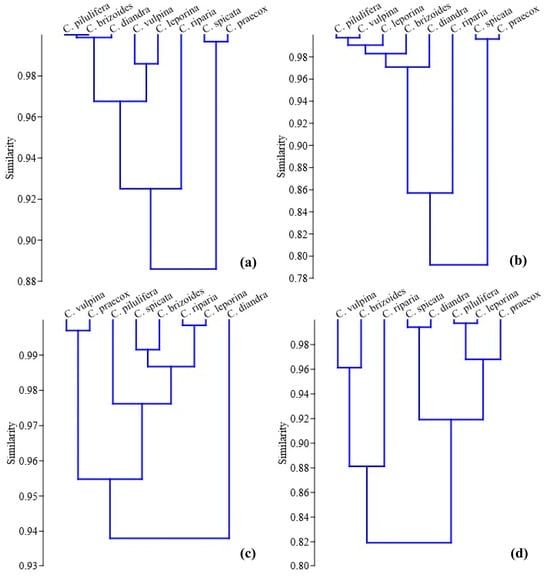
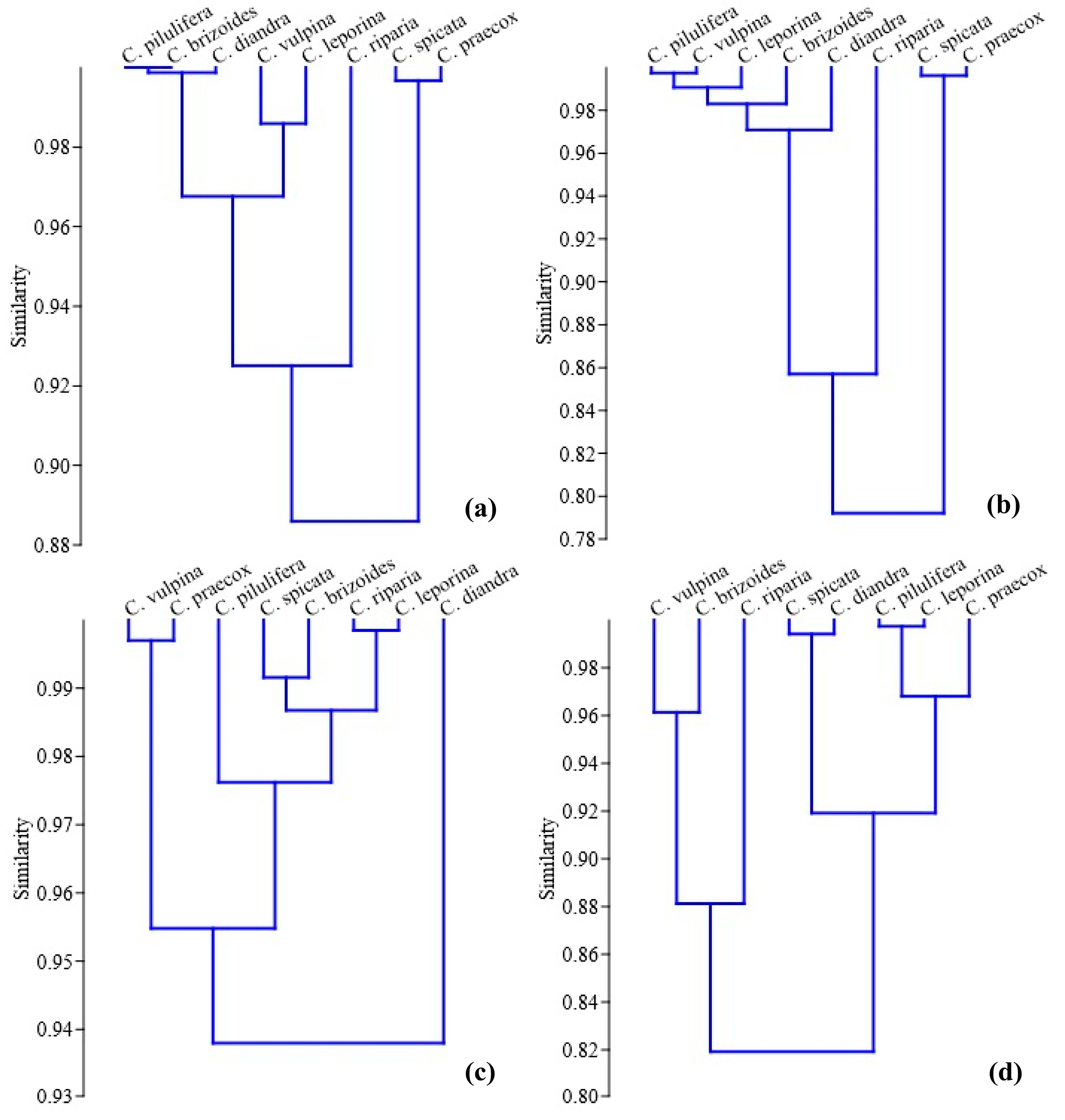
Analysis of the similarity dendrogram (Figure 2) indicates that no clear relationships among the analyzed Carex species can be identified based on taxonomic affiliation, habitat preferences, or morphological traits.
Figure 2.
UPGMA-based classification dendrograms of cellulose “(a)”, lignin “(b)”, holocellulose “(c)”, and hemicellulose “(d)” contents in the biomass of the analyzed Carex species, constructed using the Bray–Curtis similarity index.
In terms of cellulose content (Figure 2a), a distinct cluster is formed by C. spicata and C. praecox, with a similarity level slightly above 88%. C. praecox typically prefers sandy substrates, dry grasslands, and roadside habitats, whereas C. spicata exhibits a broader ecological amplitude that also includes habitats characteristic of C. praecox, such as well-insulated and relatively dry sites. Additionally, C. spicata is known to exhibit considerable morphological variability of its vegetative organs [47].
A species clearly separated from the remaining taxa is C. riparia, which diverges at the first similarity level (approximately 93%). This species is unique among the analyzed taxa in occupying permanently waterlogged habitats and sites with stagnant water throughout the growing season. It is highly probable that these specific habitat conditions contributed to the distinctiveness of C. riparia relative to the other species, including C. praecox and C. spicata, which originate from comparatively dry habitats.
The third cluster, formed at the second similarity level (approximately 97%), includes the remaining taxa and can be further divided into two closely related subgroups. The first subgroup, comprising C. leporina and C. vulpina, exhibits certain morphological similarities, primarily related to reduced leaf abundance in the second half of the growing season during the stage of full perigynium maturity. These species also share partially overlapping habitat requirements and may occur in similar ecological conditions, although they are not closely related taxonomically.
The second subgroup, consisting of C. pilulifera, C. diandra, and C. brizoides, does not show any clear associations in terms of the analyzed morphological or ecological traits.
For lignin content (Figure 2b), clustering patterns were similar to those observed for cellulose. A distinct group consisting of C. spicata and C. praecox was again identified, along with a separate position of C. riparia. The remaining five taxa formed a single cluster, which appears to reflect a gradient of habitat moisture preferences, with similarity reaching approximately 97%. This gradient ranges from the wettest habitats preferred by C. diandra to the relatively dry conditions characteristic of C. pilulifera.
In contrast, dendrograms based on holocellulose and hemicellulose contents (Figure 2c,d) did not reveal any clear relationships or grouping patterns among the analyzed Carex species.
The ash content of wood, which represents the most commonly used solid biomass fuel, is typically below 1% [40,48,49]. In contrast, annual and perennial herbaceous plants, such as sedges, grasses, and cereals, are characterized by substantially higher ash contents than woody biomass, with reported values reaching several tens of percent in extreme cases [50,51].
The analyzed Carex species exhibited considerable variation in ash content, which resulted in their classification into three homogeneous groups (“a”, “b”, “d”) and two subgroups (“bc” and “cd”) (Table 3). The mean ash content across all investigated sedge species was 6.4%, with a coefficient of variation (CV) of 20.47%, indicating substantial interspecific variability in mineral matter accumulation.
Table 3.
Ash content, NCV, and GCV with statistically significant differences (Tukey’s test) and coefficient of variation (CV). Mean values with standard deviation for each sedge species are presented (statistically significant for p < 0.05).
The highest ash content (9.2%) was recorded for C. riparia, whereas the lowest value (5.0%) was observed in C. vulpina. The coefficient of variation calculated for individual species ranged from 2.90% to 7.21%. Four of the analyzed sedge species contained mineral matter in the range of 6.2–6.9%, while C. brizoides and C. diandra exhibited lower ash contents of 5.3% and 5.4%, respectively.
In studies conducted by Grzelak et al. [52], ash contents of 8.1% and 8.6% were reported for C. praecox and C. riparia, respectively, whereas values for other sedge species ranged from 6.8% to 8.2%. Similarly, Grzelak et al. [43] reported higher ash contents in sedges, ranging from 6.9% to 7.8%. Lower ash contents were reported by Zając et al. [51] for miscanthus and common reed biomass (2.36–3.63%). For comparison, Liang et al. [45] reported ash contents in bamboo ranging from 1.17% to 3.77%, while Pochwatka et al. [53] reported an ash content of 7.3% for tobacco biomass, representing dicotyledonous plants.
Ash content is a critical parameter for biomass intended for combustion, as its physical properties may adversely affect combustion processes and necessitate the use of specialized boilers to prevent operational issues such as grate clogging or slag formation [54].
Analysis of the NCV of the investigated sedge species (Table 2) revealed that the highest values, reaching 18.0 MJ·kg−1 (mean: 17.6 MJ·kg−1), were recorded for C. spicata and C. leporina. In contrast, the lowest NCV (16.6 MJ·kg−1) was observed for C. riparia, which was the only species assigned to homogeneous group “b” and exhibited the highest coefficient of variation (CV = 2.90%). This result confirms the comparatively unfavorable energetic properties of C. riparia.
The remaining Carex species displayed more favorable characteristics, with NCV values ranging from 17.2 to 18.0 MJ·kg−1. These values indicate that most of the analyzed sedge species can be classified as energetically valuable lignocellulosic biomass resources. Lower NCV values for sedges were reported by Grzelak et al. [43,52], ranging from 15.8 to 16.9 MJ·kg−1 and from 16.0 to 18.7 MJ·kg−1, respectively. In particular, C. riparia and C. praecox analyzed by Grzelak et al. [52] exhibited lower energy values than those reported in the present study. Lower NCV values were also reported for various grass species (excluding Calamagrostis epigejos) by Waliszewska et al. [42], as well as for tobacco biomass by Pochwatka et al. [53].
The GCV values of the analyzed Carex species were relatively high and, for most taxa, ranged from 19.2 to 19.8 MJ·kg−1 (homogeneous group “a” and subgroup “ab”), with an overall mean of 19.1 MJ·kg−1 (Table 3). Only C. riparia exhibited a distinctly lower GCV (17.7 MJ·kg−1), comparable to values reported by Grzelak et al. [52]. The mean coefficient of variation for all species was 3.55%, exceeding the CV values calculated for individual taxa (0.77–3.17%).
The relatively high GCV of sedge biomass are comparable to those reported for various willow clones, ranging from 18.3 to 18.7 MJ·kg−1 (dry matter) [55]. Similarly, Krzyżaniak et al. [41] reported GCV values of 19.36–19.58 MJ·kg−1 for seven willow clones, while Stolarski et al. [56] reported an average GCV of approximately 20 MJ·kg−1 for poplar wood. The comparable GCV of sedge biomass relative to willow and poplar wood indicates that Carex species are a valuable plant-based biomass suitable for energy production. Additionally, it is worth noting the energetic potential of bamboo biomass, which—despite its absence in Poland—exhibits GCV ranging from 18 to 21 MJ·kg−1 [45].
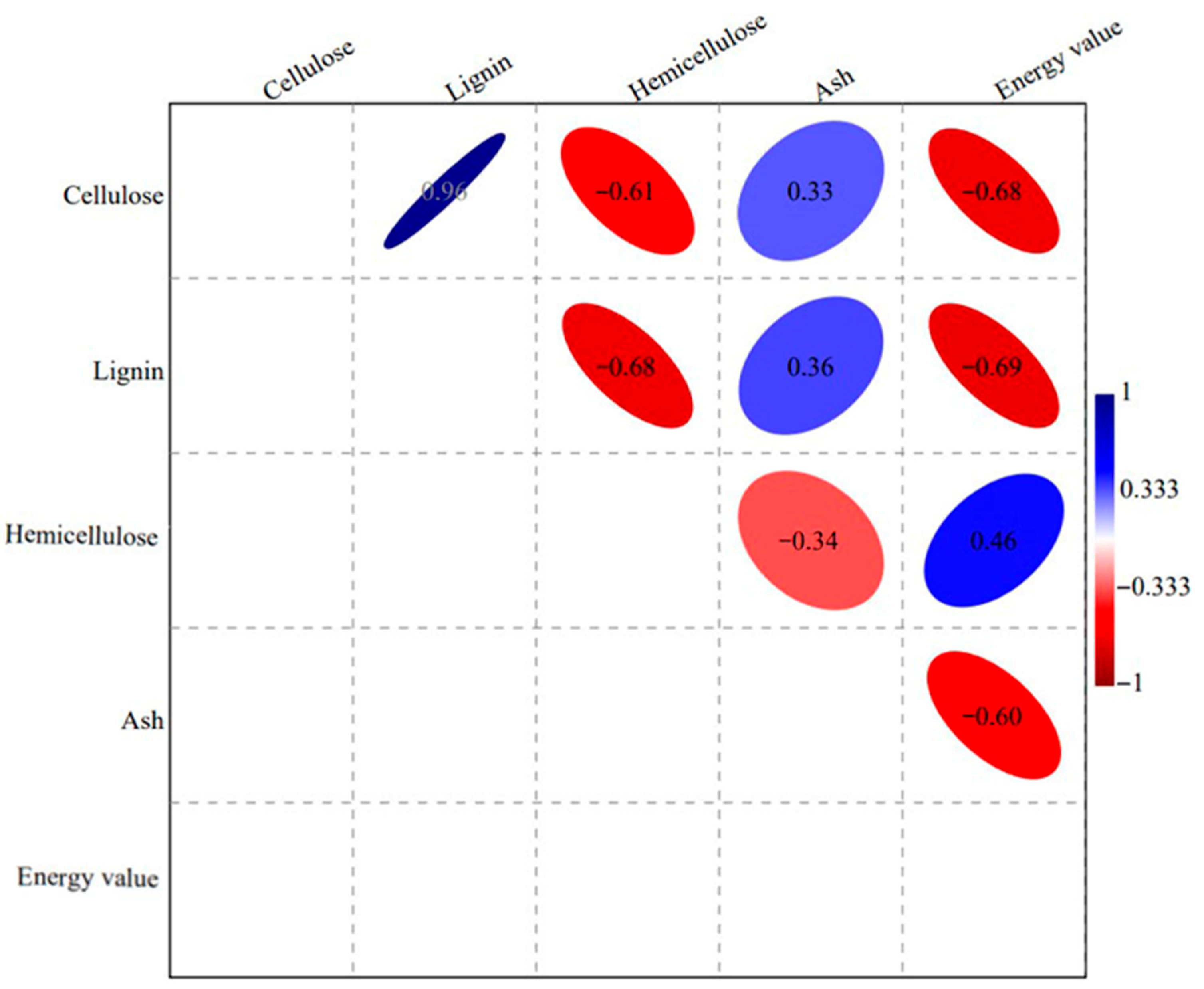
The results of the Pearson correlation analysis are presented in Figure 3. Cellulose content showed a positive correlation with lignin and ash content, whereas negative correlations were observed with hemicellulose content and NCV, amounting to −0.61 and −0.68, respectively. The negative correlation between cellulose and hemicellulose is contrary to the results reported by Park et al. [57]. This discrepancy may be because the cited authors investigated dicotyledonous species and wood, which are characterized by relatively high cellulose content, whereas the present study focused on monocotyledonous sedge species. A moderate negative correlation was also observed between lignin content and NCV (−0.69). In contrast, hemicellulose was the only structural component positively correlated with NCV (0.46), which may appear unusual, as this relationship has been reported as negative for wood and dicotyledonous plants [57]. Additionally, a negative correlation was observed between ash content and NCV (−0.60), which is consistent with previous studies indicating that higher mineral content generally reduces the fuel quality of biomass. In general, lignin is considered the biomass component most strongly associated with higher calorific value due to its higher aromaticity and carbon content compared with cellulose and hemicellulose. However, the correlations obtained in the present study suggest that, within the analyzed sedge biomass, hemicellulose content showed the strongest positive association with NCV.
Figure 3.
Result of Pearson correlation coefficient.
This pattern may reflect species-specific structural characteristics of sedge biomass as well as the relatively narrow range of variation observed for lignin and cellulose contents among the analyzed species. Nevertheless, due to the limited number of analyzed species, these relationships should be interpreted with caution. And require further verification in broader studies, including a larger number of taxa and environmental conditions.
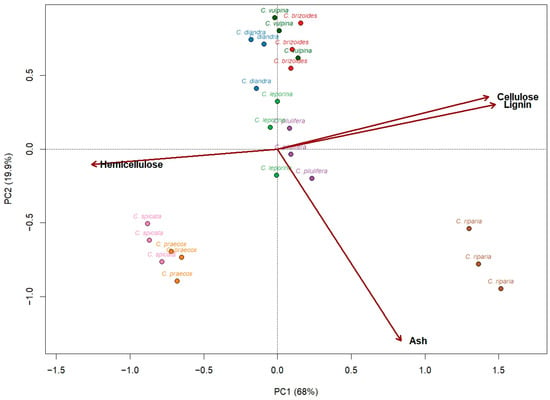
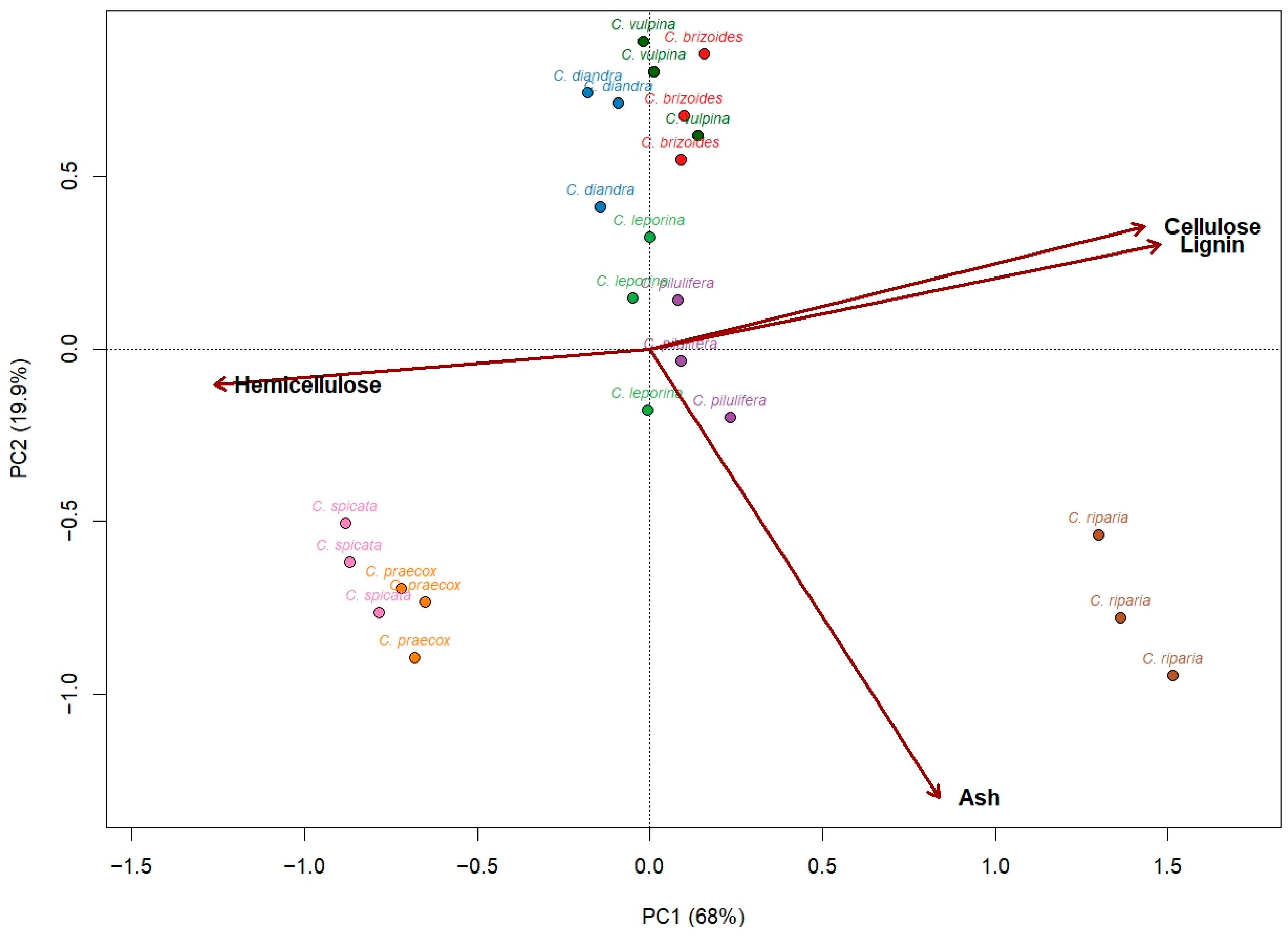
To determine the range and the direction of variability of the analyzed chemical composition parameters, a principal component analysis (PCA) was performed (Table 4, Figure 4). The eigenvalues of the first two principal components (2.72 and 0.80) explained 87.9% of the total variability of the dataset (PC1—68%, PC2—19.9%), indicating that the ordination adequately represents the relationships among the analyzed species.
Table 4.
Correlation coefficients between the PCA axes and lignin, cellulose, hemicellulose, and ash.
Figure 4.
PCA analysis of selected chemical composition factors (lignin, cellulose, hemicellulose, ash) along the first two coordinate axes. The species are color-coded: pink—C. spicata, orange—C. praecox, purple—C. pilulifera, brown—C. riparia, blue—C. diandra, dark green—C. vulpina, green—C. leporina, red—C. brizoides.
The relationships between the PCA axes and the analyzed parameters indicate a strong positive association between lignin (1.478) and cellulose (1.433). The taxa are arranged along PC1 according to increasing contents of plant cell wall components, indicating their dominance relative to hemicellulose.
The results also show a negative relationship between PC2 and ash content, allowing a clear separation of species characterized by a higher capacity for mineral accumulation from those with lower ash contents. The distribution of species in the ordination space suggests that the analyzed sedges form distinct functional groups in terms of both structural traits and chemical composition.
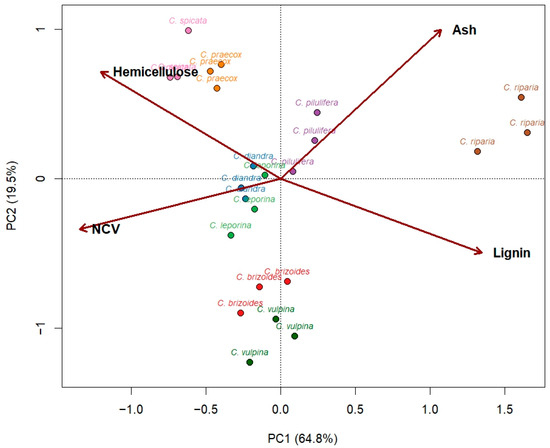
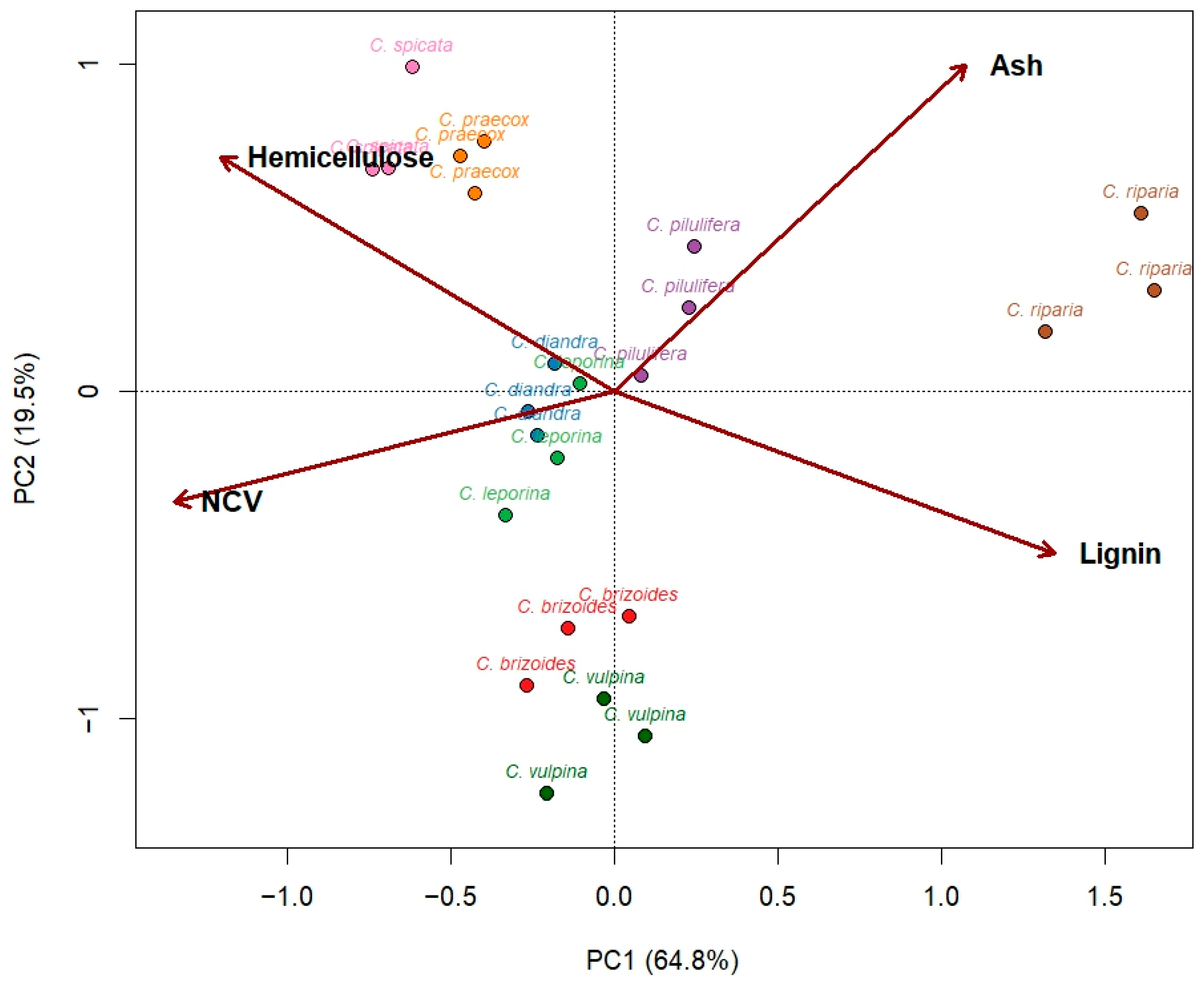
To further emphasize the relationships between chemical composition and energy-related parameters, an additional PCA analysis was performed, including lignin, hemicellulose, ash content, and NCV (Table 5, Figure 5). The first two principal components explained 84.3% of the total variability of the dataset (PC1—64.8%, PC2—19.95%).
Table 5.
Correlation coefficients between the PCA axes and lignin, hemicellulose, ash, and NCV.
Figure 5.
PCA analysis of selected chemical composition components (lignin, hemicellulose, ash) and NCV along the first two coordinate axes. The species are color-coded: pink—C. spicata, orange—C. praecox, purple—C. pilulifera, brown—C. riparia, blue—C. diandra, dark green—C. vulpina, green—C. leporina, red—C. brizoides.
The ordination results indicate a strong negative relationship between NCV and both lignin and ash content along the first principal component (NCV −1.343; lignin 1.346; ash 1.076). The analyzed taxa are arranged along a gradient from species characterized by lower ash and lignin contents to those with higher proportions of these components.
Hemicellulose was negatively associated with lignin but was positioned on the same side of the ordination space as NCV, suggesting that species with higher calorific values tend to have lower ash content, even when the hemicellulose proportion is relatively high. These results indicate that ash content may play a more important role in determining NCV than the proportion of high-energy lignin alone.
The second principal component analysis showed a positive relationship between ash content (0.996) and hemicellulose (0.715). The distribution of species along this axis suggests differentiation between taxa characterized by higher hemicellulose and ash contents (positive PC2 values) and those dominated by lignin in their structural composition.
These results indicate that the energetic quality of the analyzed sedge biomass is determined not only by the proportion of structural components such as lignin and hemicellulose but also strongly influenced by ash content, which may significantly affect the practical suitability of individual Carex species as solid biofuel feedstocks.
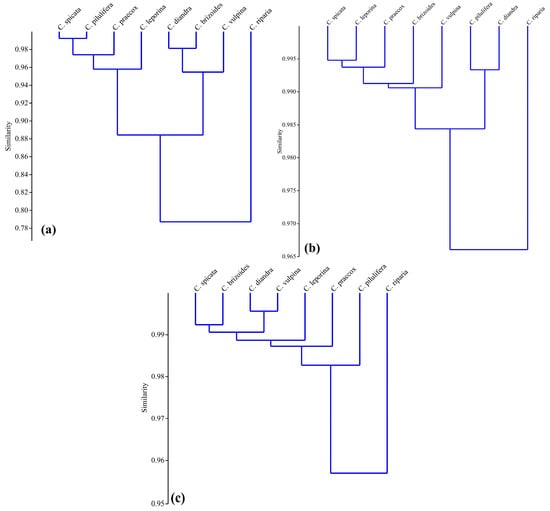
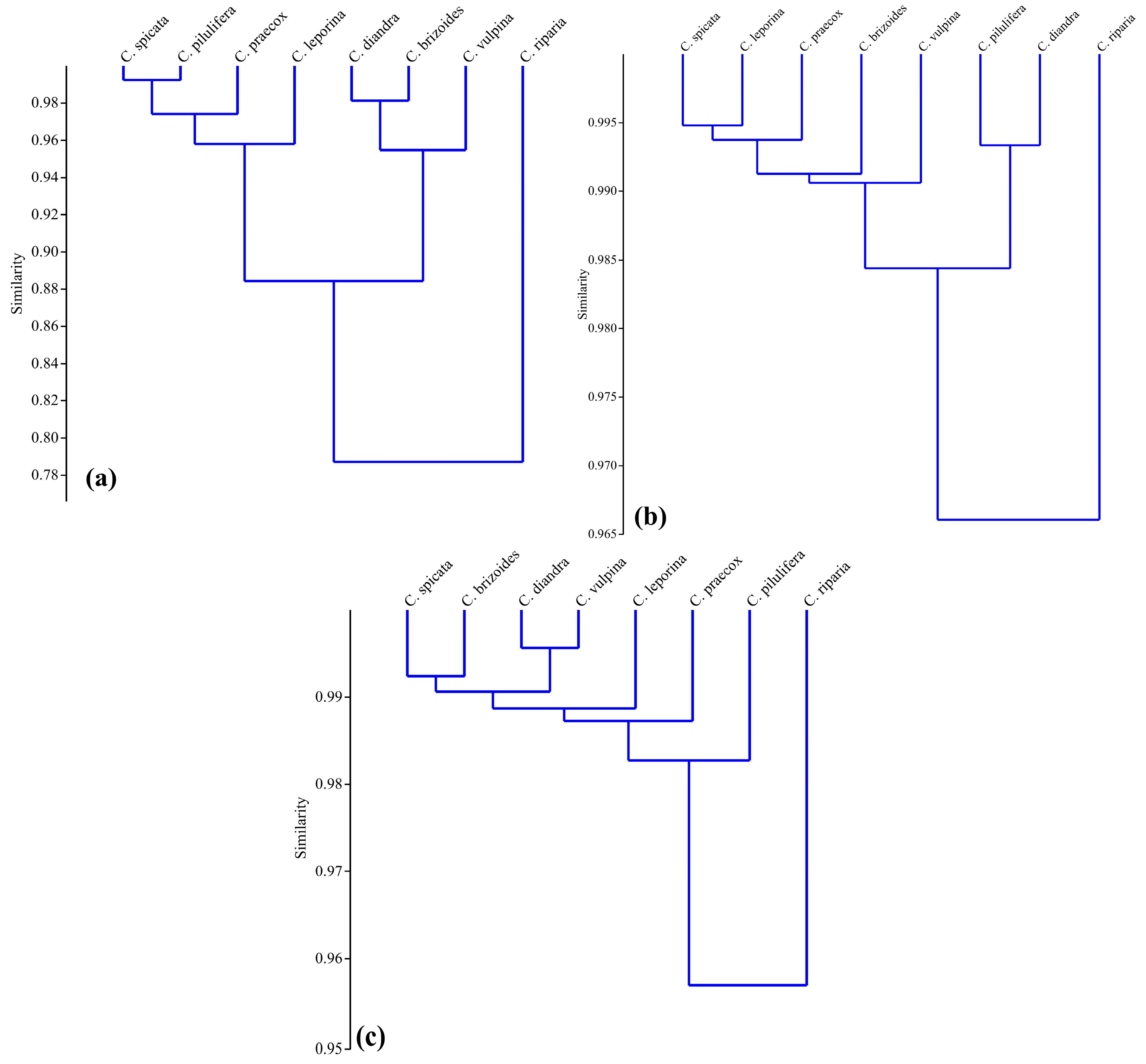
The dendrogram illustrating ash content in the analyzed samples (Figure 6a) clearly indicates a pronounced separation of C. riparia. As noted previously, this species is unique among the analyzed taxa in occupying specific habitats characterized by frequent and prolonged water stagnation. Moreover, in contrast to the remaining species, C. riparia develops robust, thick culms and exhibits a high biomass accumulation within a single growing season.
Figure 6.
UPGMA-based classification dendrograms of ash content “(a)”, NCV “(b)”, and GCV “(c)” in the biomass of the analyzed Carex species, constructed using the Bray–Curtis similarity index.
The two remaining clusters suggest a division primarily driven by habitat moisture conditions. C. spicata, C. pilulifera, C. leporina, and C. praecox typically occur under comparatively drier soil conditions, whereas C. brizoides, C. vulpina, and C. diandra are associated with more humid habitats.
For NCV (Figure 6b), C. riparia again forms a distinct cluster, which may be attributed to its specific morphological and ecological characteristics. Within the group formed by the remaining species, two subgroups can be distinguished at the first similarity level (exceeding 98%). However, no clear or meaningful taxonomic, morphological, or habitat-related relationships can be identified within these subgroups. A similar pattern is observed for GCV (Figure 6c), where C. riparia is clearly separated from the other species. This distinctiveness is most likely related to its unique morphology, including large size, structural rigidity, specific habitat preferences, and rapid biomass accumulation rate. The remaining seven Carex taxa do not exhibit any clear mutual relationships in the dendrogram.
A key factor determining the energy properties of fuels is their chemical composition, which affects both the calorific value and the course of thermochemical conversion processes [58,59,60,61,62]. In the case of fossil fuels, the high content of carbon and hydrogen is one of the main factors responsible for their high calorific value [63,64]. In contrast, the energy properties of plant biomass are largely related to the structural composition of the cell wall, primarily including lignin, cellulose, and hemicellulose, as well as ash content. These components influence both the calorific value of biomass and the course of combustion and other thermochemical conversion processes; therefore, their analysis is essential for assessing the suitability of biomass as a renewable energy source. Although this aspect was not directly addressed in the present study, it has been discussed in earlier publications by Janyszek et al. [65,66]. In contrast to liquid crude oil and gaseous natural gas, solid fossil fuels such as hard coal and lignite are characterized by the presence of inherent moisture, hygroscopic behavior, and measurable ash content [64,67]. Nevertheless, the high concentrations of carbon and hydrogen remain the principal factors determining the calorific value of fossil fuels.
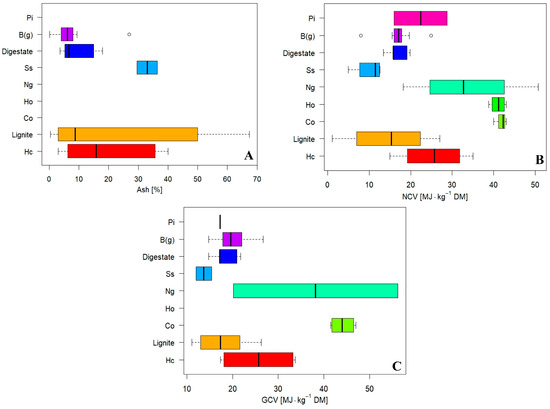
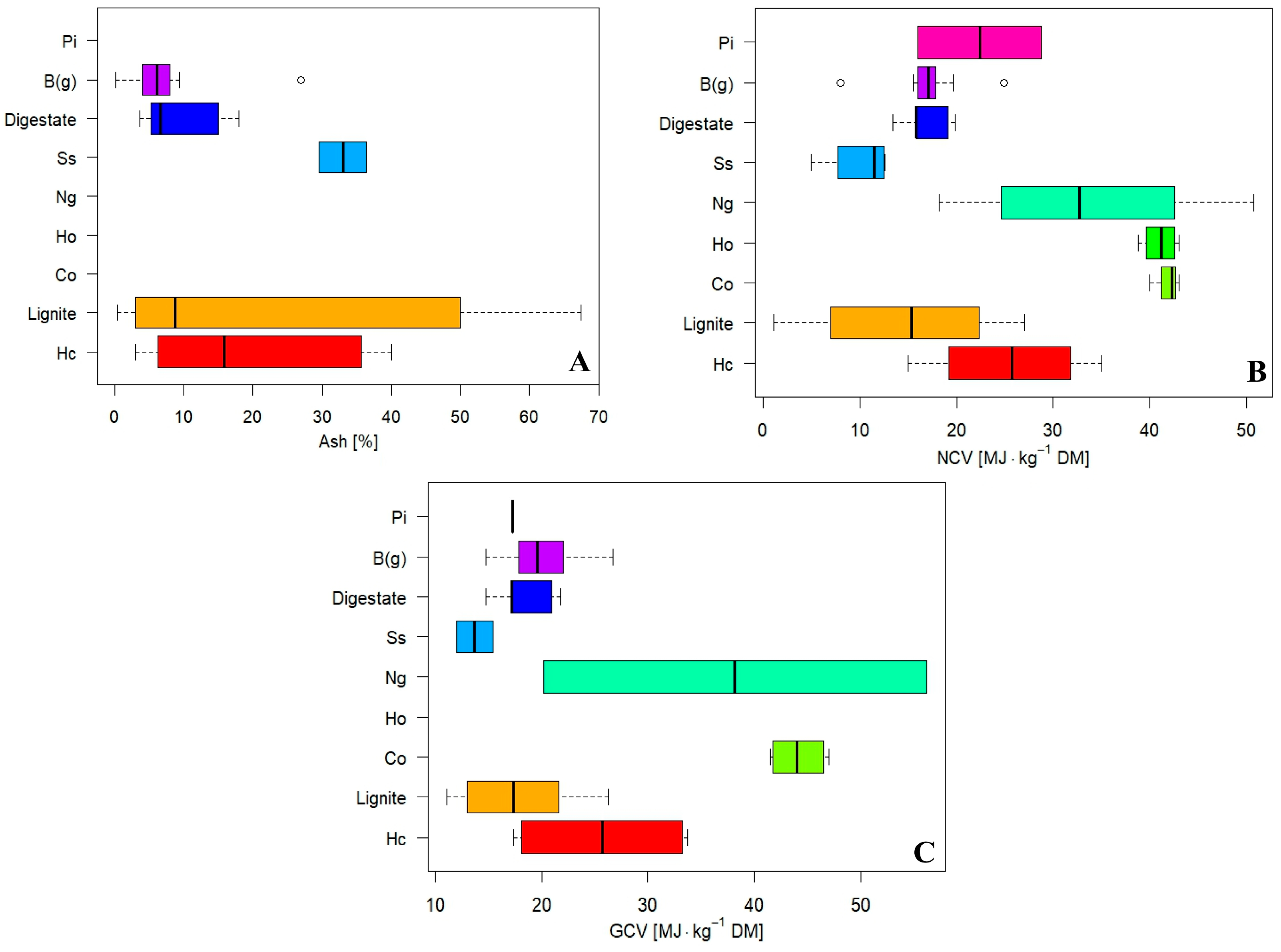
The calorific value of lignocellulosic biomass is generally lower than that of fossil fuels, but it is comparable to many other types of biomass currently used for energy production (Figure 7).
Figure 7.
Ash content (A), NCV (B), and GCV (C) of selected solid and liquid conventional fuels and alternative energy sources, based on selected literature sources. Hc—hard coal [59,60,64,68,69,70,71], lignite [13,59,61,67,68,69,70,71,72,73], Co—crude oil [3,74], Ho—heating oil [70,75,76], Ng—natural gas [59,70,76], Ss—sewage sludge [68,77,78], Digestate [13,54,79], B(g)—biomass (general) [51,59,68,69,71,80] and Pi—pulp industry [77].
The calorific values obtained in the present study indicate that sedge biomass may represent a promising alternative to traditional solid fuels. For example, the calorific value of hard coal typically ranges from approximately 24 to 30 MJ·kg−1, while lignite usually ranges from 8 to 15 MJ·kg−1. In the case of woody biomass, calorific values commonly range between 18 and 20 MJ·kg−1, whereas cereal straw typically exhibits values of approximately 16–18 MJ·kg−1. The values obtained in this study for sedge biomass fall within the range typical for lignocellulosic biomass, indicating its potential suitability as a renewable fuel source. However, it should be emphasized that, in addition to calorific value, other fuel-related parameters, such as ash content and structural biomass composition, are also important. The variation observed among the analyzed sedge species suggests that suitability as an energy feedstock may differ among species. In the context of the increasing importance of renewable energy sources and the need to utilize biomass from wetland and marginal habitats, sedges may represent an attractive bioenergy resource, particularly within local biomass utilization systems.
Fossil fuels constitute a valuable source of energy; however, their resources are finite. In contrast, the availability and energetic properties of alternative energy sources are determined by different factors. In the case of wood and wood-derived fuels, the amount of energy obtained depends primarily on species composition, chemical structure, and moisture content, while the time required for feedstock acquisition is relatively long due to tree growth cycles.
In contrast, sewage sludge, digestate, and agricultural biomass are characterized by continuous availability. For sewage sludge and digestate, calorific value is strongly influenced by chemical composition, particle fraction, and source of origin. Agricultural biomass, dominated by monocotyledonous plants such as cereals (straw), grasses, and sedges, exhibits high potential for resource acquisition. In the case of grasses and sedges, up to three harvests per growing season are possible, allowing for the production of substantial amounts of feedstock with favorable chemical composition and good calorific value.
The results obtained in this study indicate that the biomass of the analyzed sedge species may represent a potential source of bioenergy feedstock, particularly in the context of utilizing biomass derived from wetland and marginal habitats. In many regions of Europe, biomass originating from such ecosystems remains underutilized, despite the fact that its periodic removal is often required for habitat conservation and maintenance of ecological balance. In this context, the use of sedge biomass as a renewable fuel feedstock may represent an element of sustainable biomass management, combining both environmental and energy-related objectives. The results of this study suggest that differences in the structural composition of biomass among sedge species may play an important role in evaluating their energy suitability as energy feedstock.
3.1. Why Is the Energy Potential of C. riparia Biomass Lower than That of Other Species?
Among the analyzed species, C. riparia showed the least favorable energy-related parameters, including the highest ash content and the lowest calorific value. The elevated ash content indicates a greater accumulation of mineral components in plant tissues, which may reduce the calorific value of biomass and increase the risk of slagging during combustion processes. Therefore, the obtained results suggest that C. riparia biomass may be less suitable for solid biofuel production compared with the other analyzed sedge species.
3.2. Limitations of the Study
The presented results should be interpreted with consideration of several methodological and environmental limitations. The analysis was based on biomass samples collected during a single growing season, which may not fully reflect the variability in the chemical and energy-related properties of the analyzed species. An additional factor that could have influenced the obtained results is the variability of environmental conditions among the sampling sites, including differences in soil moisture, soil nutrient availability, and other uncontrolled habitat factors. It should also be emphasized that part of the research was conducted in areas protected under the Natura 2000 network, which may have limited the extent of environmental intervention and the possibility of conducting more intensive field studies. Therefore, further research covering a greater number of growing seasons and study sites would allow for a more comprehensive assessment of the energy potential of the analyzed species.
3.3. Direction for Future Research
The obtained results indicate a differentiated energy potential of the analyzed sedge species; however, a comprehensive assessment of their suitability as solid fuel requires further research. Combustion tests, including an assessment of pollutant emissions, should be conducted. Likewise, the suitability of the biomass for densification processes, such as pellet or briquette production, should also be investigated. An important direction for future research includes multi-season and multi-site experiments, which would allow the stability of biomass productivity and energy parameters to be evaluated. Furthermore, it would be beneficial to determine energy productivity per unit area and to compare the studied species with other herbaceous plants currently used in bioenergy production. Based on literature data, the annual dry matter production of sedge communities may reach levels that justify considering their use for bioenergy purposes. However, biomass yield is strongly dependent on species, habitat conditions (moisture regime and trophic status), management practices, and fertilization [81,82,83,84,85,86,87,88]. Average yields, depending on the species, may range from 2.8 to 7.8 Mg·ha−1 [81,83]. Among the species analyzed in this study, the highest biomass yield was recorded for C. riparia, as reported by Grzelak et al. [81,82]. Similar or even higher yields are achieved by other species, such as in C. gracilis and C. acutiformis, which occur in habitats similar to those of C. riparia [81,82,83]. It is also worth noting plant communities with a diverse species composition, in which the proportion of sedges ranges from 17.8 to 51.8%, while the average yield varies from 3.7 to 4.85 Mg·ha−1 DM [85,86].
4. Conclusions
The ash content in sedge biomass was higher than that in woody biomass; however, it was comparable to that of other herbaceous feedstocks, such as grasses or straw. At the same time, most of the analyzed species exhibited ash contents within ranges acceptable for biomass combustion processes. The NCV and GCV of the biomass of most Carex species were comparable to the energy parameters of woody biomass, particularly willow and poplar, allowing these species to be classified as valuable lignocellulosic feedstocks for energy purposes. Among the analyzed species, C. riparia had unfavorable energy-related parameters, including the highest ash content and the lowest NCV and GCV, which limit its potential application in energy production compared with the other species. The widespread occurrence of sedges, their relatively high biomass productivity, and the possibility of multiple harvests per growing season indicate that selected Carex species may represent a valuable supplementary biomass resource in renewable energy systems. The obtained results also reveal a significant positive correlation between hemicellulose content and the energy value of the biomass, whereas ash content showed a negative correlation with the energy-related parameters. However, it should be emphasized that the available literature data mainly concern the biomass of dicotyledonous plants and wood; therefore, the results obtained in this study indicate that the importance of hemicellulose in monocotyledonous plants requires further investigation, including a larger number of species.
Author Contributions
Conceptualization, M.J.-S., M.K.M. and L.M.; methodology, B.W., M.J.-S. and M.Z.; software, M.K.M.; validation, L.M. and M.K.M.; formal analysis, L.M. and B.W.; investigation, M.J.-S.; resources, M.J.-S., B.W. and M.Z.; data curation, M.J.-S. and L.M.; writing—original draft preparation, M.J.-S., M.K.M. and L.M.; writing—review and editing, B.W. and M.Z.; visualization, M.K.M. and L.M.; supervision, B.W. and M.Z.; project administration, M.K.M. and L.M.; funding acquisition, M.J.-S., B.W. and M.Z. All authors have read and agreed to the published version of the manuscript.
Funding
The research was conducted with a budget from the Department of Botany and the Department of Chemical Wood Technology at the Poznan University of Life Sciences.
Data Availability Statement
Available upon reasonable request.
Acknowledgments
The authors are grateful for the support provided by the Poznan University of Life Sciences, Poland, including technical support and materials used for field experiments.
Conflicts of Interest
The authors declare no conflicts of interest.
References
- Getaneh, A.; Eba, K.; Tucho, G.T. Assessment of Biomass Energy Potential for Biogas Technology Adoption and Its Determinant Factors in Rural District of Limmu Kossa, Jimma, Ethiopia. Energies 2024, 17, 2176. [Google Scholar] [CrossRef] [Scilit]
- Hycnar, E.; Ratajczak, T.; Jończyk, W.; Wagner, M. The ecological criteria for evaluation the quality lignite on the example of the Bełchatów deposit. Zesz. Nauk. IGSMiE PAN 2015, 91, 81–89. Available online: https://min-pan.krakow.pl/wp-content/uploads/sites/4/2017/12/06-hycnar-i-in.pdf (accessed on 3 January 2026). (In Polish)
- Grudziński, Z. The thermal coal market–current state and outlook. Zesz. Nauk. IGSMiE PAN 2025, 1, 97–110. (In Polish) [Google Scholar] [CrossRef] [Scilit]
- Available online: https://dieselnet.com/news/2025/06energyreview.php (accessed on 27 January 2026).
- He, Y.; Ouyang, Z.; Ding, H.; Wang, H.; Li, S.; Wu, L. A State-of-the-Art Review on Coupling Technology of Coal-Fired Power and Renewable Energy. Energies 2026, 19, 178. [Google Scholar] [CrossRef] [Scilit]
- Official Journal of the European Union. Paris Agreement; OJ L 282, 19.10.2016; Official Journal of the European Union: Luxembourg, 2016; pp. 4–18. Available online: https://eur-lex.europa.eu/legal-content/EN/TXT/?uri=CELEX%3A22016A1019%2801%29 (accessed on 30 December 2025).
- Statistics Poland. Energy; Statistical Office in Rzeszów: Rzeszów, Poland, 2025. Available online: https://rzeszow.stat.gov.pl/en/publications/energy/energy-2025,2,3.html (accessed on 12 January 2026).
- Statistics Poland. Energy from Renewable Sources in 2024; Statistical Office in Rzeszów: Warszawa, Poland; Rzeszów, Poland, 2025. Available online: https://stat.gov.pl/en/topics/environment-energy/energy/energy-from-renewable-sources-in-2024,3,17.html (accessed on 12 January 2026).
- Directive 2009/28/EC of the European Parliament and of the Council of 23 April 2009 on the Promotion of the Use of Energy from Renewable Sources and Amending and Subsequently Repealing Directives 2001/77/EC and 2003/30/EC. Available online: https://eur-lex.europa.eu/legal-content/PL/TXT/?uri=celex:32009L0028 (accessed on 21 December 2025).
- Directive (EU) 2023/2413 of the European Parliament and of the Council of 18 October 2023 amending Directive (EU) 2018/2001, Regulation (EU) 2018/1999 and Directive 98/70/EC as Regards the Promotion of Energy from Renewable Sources, and Repealing Council Directive (EU) 2015/652. Available online: https://eur-lex.europa.eu/legal-content/PL/TXT/?uri=CELEX%3A32023L2413 (accessed on 21 December 2025).
- Eurostat. Available online: https://ec.europa.eu/eurostat/statistics-explained/index.php?title=Renewable_energy_statistics (accessed on 12 January 2026).
- Statistics Poland. Energy from Renewable Sources in 2024. Signal Information in PDF Format 2025. Available online: https://stat.gov.pl/obszary-tematyczne/srodowisko-energia/energia/energia-ze-zrodel-odnawialnych-w-2024-r-,10,8.html (accessed on 12 January 2026).
- Kufka, D.; Pleśniak, Ł. Energetic utilization of the fermented wastes and lignite. Górnictwo Odkryw. 2017, 1, 45–52. Available online: https://yadda.icm.edu.pl/baztech/element/bwmeta1.element.baztech-fb7d2613-4f09-4af5-a8d7-ff41bddc3e00 (accessed on 1 January 2026). (In Polish)
- Ustawa z Dnia 5 Lipca 2018 r. o Zmianie Ustawy o Systemie Monitorowania i Kontrolowania Jakości Paliw Oraz Ustawy o Krajowej Administracji Skarbowej (Dz. U. poz. 1654). Available online: https://dziennikustaw.gov.pl/D2018000165401.pdf (accessed on 3 February 2026). (In Polish)
- Ebrahimbabaie, P.; Smith, A.; Zahran, E.M.; Pichtel, J. Phytoremediation of Engineered Nanoparticles Using Typha latifolia and Carex rostrata. Appl. Environ. Soil Sci. 2023, 2023, 3417525. [Google Scholar] [CrossRef] [Scilit]
- Barett, R.L. Sedges on the edge: New agronomic and research opportunities? Plant Soil 2024, 495, 195–200. [Google Scholar] [CrossRef] [Scilit]
- Egorova, T.V. The Sedges Carex L. of Russia and Adjacent States (Within the Limits of the Former USSR); St. Petersburg State Chemical-Pharmaceutical Academy: St. Petersburg, Russia; Missouri Botanical Garden Press: St. Louis, MO, USA, 1999; p. 772. [Google Scholar]
- Goetghebeur, P. Cyperaceae. The Families and Genera of Vascular Plants, 4: Flowering Plants, Monocotyledons: Alismatanae and Commelinanae (Except Gramineae); Kubitzki, K., Ed.; Springer: Berlin/Heidelberg, Germany, 1998; pp. 141–190. [Google Scholar]
- Ball, P.W.; Reznicek, A.A. Carex. In Flora of North America North of Mexico, Vol. 23: Magnoliophyta: Commelinidae (in Part): Cyperaceae; Flora of North America Editorial Committee, Ed.; Oxford University Press: New York, NY, USA, 2002; pp. 254–273. [Google Scholar]
- Smith, C.; Ashton, P.A. Distinction between the sedges Carex vulpina L. and C. otrubae Podp. and the potential for identification of hybrids. Watsonia 2006, 26, 15–25. Available online: https://archive.bsbi.org.uk/Wats26p15.pdf (accessed on 26 January 2026).
- Poland, J.; Clement, E.J. The Vegetative Key to the British Flora: A New Approach to Plant Identification; Botanical Society of the British Isles: London, UK, 2009; p. 526. [Google Scholar]
- Available online: https://www.pgi.gov.pl/surowce/skalne-i-inne/torfy.html#2024 (accessed on 4 March 2026).
- Available online: https://www.itp.edu.pl/GIS_mokradla/html/index.php?page=mokradla (accessed on 4 March 2026).
- Urząd Wojewódzki w Poznaniu. Program Ochrony Środowiska dla Województwa Wielkopolskiego do Roku 2030; Urząd Wojewódzki w Poznaniu: Poznań, Poland, 2020; pp. 12–13. Available online: https://bip.umww.pl/artykuly/2826771/pliki/20210126124350_programochronyrodiwskadlawojewdztwawielkopolskiegodoroku2030.pdf (accessed on 2 December 2025). (In Polish)
- Instytut Meteorologii i Gospodarki Wodnej–Państwowy Instytut Badawczy. Rocznik Meteorologiczny 2024. IMGW-PIB 2024. Available online: https://danepubliczne.imgw.pl/data/dane_pomiarowo_obserwacyjne/Roczniki/Rocznik%20meteorologiczny/Rocznik%20Meteorologiczny%202024.pdf (accessed on 30 December 2025).
- Geoportal.gov.pl. Available online: https://mapy.geoportal.gov.pl/imapnext/imap/index.html?moduleId=modulRol&mapview=52.459311%2C17.020750%2C250000s (accessed on 4 January 2026).
- Murawski, M.; Czekała, W.; Majchrzak, L.; Waliszewska, B.; Lerczak, A.; Janyszek-Sołtysiak, M.; Zborowska, M.; Cieślik, M.; Sieradzka, A.; Dach, J. Ruderal Habitats: A Source for Biomass and Biogas. Energies 2025, 18, 3482. [Google Scholar] [CrossRef] [Scilit]
- Waliszewska, B.; Waliszewska, H.; Grzelak, M.; Majchrzak, L.; Gaweł, E.; Murawski, M.; Sieradzka, A.; Vaskina, I.; Spek-Dźwigała, A. Evaluation of Changes in the Chemical Composition of Grasses as a Result of the Methane Fermentation Process and Biogas Production Efficiency. Energies 2024, 17, 4100. [Google Scholar] [CrossRef] [Scilit]
- Seifert, K. Zur Frage der Cellulose-Schnellbestimmung nach der Acetylaceton-Methode. Das. Pap. 1960, 14, 104–106. [Google Scholar]
- TAPPI T 222 om-06; Acid-Insoluble Lignin in Wood and Pulp. Technical Association of the Pulp and Paper Industry (TAPPI): Atlanta, GA, USA, 2006.
- TAPPI T 9 wd-75; Holocellulose in Wood. Technical Association of the Pulp and Paper Industry (TAPPI): Atlanta, GA, USA, 2006.
- Testing of Solid Fuels—Natural Wood Briquettes—Requirements and Testing. Beuth: Berlin, Germany, 1996. Available online: https://www.dinmedia.de/de/norm/din-51731/2842397 (accessed on 2 January 2026).
- PN-81/G-04513; Polska Norma. Paliwa Stałe. Oznaczanie Ciepła Spalania i Obliczanie Wartości Opałowej. Polski Komitet Normalizacji: Warsaw, Poland, 1981.
- R Core Team. R: A Language and Environment for Statistical Computing; R Foundation for Statistical Computing: Vienna, Austria, 2024; Available online: https://www.R-project.org/ (accessed on 11 November 2025).
- de Mendiburu, F. Agricolae: Statistical Procedures for Agricultural Research, R Package Version 1.3-7. 2023. Available online: https://cran.r-project.org/web/packages/agricolae/agricolae.pdf (accessed on 11 November 2025).
- Wickham, H.; François, R.; Henry, L.; Müller, K.; Vaughan, D. dplyr: A Grammar of Data Manipulation. R Package Version 1.1.4. 2023. Available online: https://dplyr.tidyverse.org (accessed on 5 January 2026).
- Oksanen, J.; Simpson, G.; Blanchet, F.; Kindt, R.; Legendre, P.; Minchin, P.; O’Hara, R.; Solymos, P.; Stevens, M.; Szoecs, E.; et al. Vegan: Community Ecology Package. R Package Version 2.7-3. 2026. Available online: https://cran.r-project.org/web/packages/vegan/index.html (accessed on 6 January 2026).
- Hammer, Ø. PAST: PAleontological STatistics Version 4.02; Reference manual; Natural History Museum, University of Oslo: Oslo, Norway, 2020; p. 280. [Google Scholar]
- Hammer, Ø.; Harper, D.A.T.; Ryan, P.D. PAST: Paleontological statistics software package for education and data analysis. Palaeontol. Electron. 2001, 4, 1–9. [Google Scholar]
- Prosiński, S. Chemia Drewna; PWRiL: Warszawa, Poland, 1984. [Google Scholar]
- Krzyżaniak, M.; Stolarski, M.; Waliszewska, B.; Szczukowski, S.; Tworkowski, J.; Załuski, D.; Śnieg, M. Willow biomass as feedstock for an integrated multi-product biorefinery. Ind. Crops Prod. 2014, 58, 230–237. [Google Scholar] [CrossRef] [Scilit]
- Waliszewska, B.; Grzelak, M.; Gaweł, E.; Spek-Dźwigała, A.; Sieradzka, A.; Czekała, W. Chemical Characteristics of Selected Grass Species from Polish Meadows and Their Potential Utilization for Energy Generation Purposes. Energies 2021, 14, 1669. [Google Scholar] [CrossRef] [Scilit]
- Grzelak, M.; Waliszewska, B.; Murawski, M.; Gaweł, E.; Knioła, A.; Jaśkowski, M. Plonowanie, Skład Chemiczny i Wartość Energetyczna Niektórych Gatunków z Rodzaju Carex L. Aktualne Problemy Inżynierii Biosystemów; Lipiński, M., Przybyła, J., Eds.; Wyd. UP: Poznań, Poland, 2015; pp. 244–251. (In Polish) [Google Scholar]
- Czubaszek, R.; Wysocka-Czubaszek, A.; Wichtmann, W.; Banaszuk, P. Specific Methane Yield of Wetland Biomass in Dry and Wet Fermentation Technologies. Energies 2021, 14, 8373. [Google Scholar] [CrossRef] [Scilit]
- Liang, Z.; Neményi, A.; Kovács, G.P.; Gyuricza, C. Potential use of bamboo resources in energy value-added conversion technology and energy systems. GCB Bioenergy 2023, 15, 936–953. [Google Scholar] [CrossRef] [Scilit]
- Aizuddin, K.N.A.K.; Lai, K.-S.; Baharum, N.A.; Yong, W.T.L.; Hoon, L.N.; Hamid, M.Z.A.; Cheng, W.H.; Abdullah, J.O. Bamboo for biomass energy production. BioResources 2023, 18, 2386–2407. [Google Scholar] [CrossRef] [Scilit]
- Jagodziński, A.M.; Janyszek, M.; Janyszek, S.; Wrońska-Pilarek, D.; Grzelak, M. Variability of the inflorescence morphology of Carex spicata (Cyperaceae) and its implication to taxonomy. Nord. J. Bot. 2017, 35, 95–106. [Google Scholar] [CrossRef] [Scilit]
- Ragland, K.W.; Aerts, D.J.; Baker, A.J. Properties of wood for combustion analysis. Bioresour. Technol. 1991, 37, 161–168. [Google Scholar] [CrossRef] [Scilit]
- Eichermüller, J.; Heilmann, V.; Kappler, A.; Thorwarth, H. Composition of ashes from heating plants and solubility of ash-forming elements determined by BCR sequential extraction. Biomass Bioenergy 2026, 205, 108527. [Google Scholar] [CrossRef] [Scilit]
- James, A.K.; Thring, R.W.; Helle, S.; Ghuman, H.S. Ash Management Review—Applications of Biomass Bottom Ash. Energies 2012, 5, 3856–3873. [Google Scholar] [CrossRef] [Scilit]
- Zając, G.; Szyszlak-Bargłowicz, J.; Gołębiowski, W.; Szczepanik, M. Chemical Characteristics of Biomass Ashes. Energies 2018, 11, 2885. [Google Scholar] [CrossRef] [Scilit]
- Grzelak, M.; Gaweł, E.; Waliszewska, B.; Janyszek, M.; Wrońska-Pilarek, D.; Murawski, M.; Knioła, A. Floristic and habitat variability, nature and energy value of selected sedge communities. Steciana 2016, 20, 233–238. [Google Scholar] [CrossRef] [Scilit]
- Pochwatka, P.; Kowalczyk-Juśko, A.; Pituła, M.; Mazur, A.; Vaskina, I.; Dach, J. Energetic Potential of Tobacco Waste Within Combustion or Anaerobic Digestion. Energies 2025, 18, 762. [Google Scholar] [CrossRef] [Scilit]
- Herkowiak, M.; Adamski, M.; Marek, P.; Waliszewska, B.; Dzida, K.; Kapłan, M.; Klimek, K.E. Development of Digestate for Energy Purposes Using Excess Heat from Biogas Plants. Energies 2025, 18, 4896. [Google Scholar] [CrossRef] [Scilit]
- Fijałkowska, D.; Styszko, L.; Boguski, A. Effect of years of cultivation, fertilizer combinations and clones of willow on higher heating value and lower heating value of the willow biomass obtained during winter and after a short-term seasoning. Fragm. Agron. 2014, 31, 41–49. Available online: https://pta.up.poznan.pl/pdf/2014/FA%2031(3)%202014%20Fijalkowska.pdf (accessed on 27 January 2026). (In Polish)
- Stolarski, M.J.; Krzyżaniak, M.; Waliszewska, B.; Szczukowski, S.; Tworkowski, J.; Zaborowska, M. Lignocellulosic biomass derived from agricultural land as industrial and energy feedstock. Drewno 2013, 56, 5–23. [Google Scholar] [CrossRef] [Scilit]
- Park, S.; Kim, S.Y.; Kim, H.E.; Oh, K.C.; Kim, S.J.; Cho, L.H.; Jeon, Y.K.; Kim, D. Calorific Value Prediction Model Using Structure Composition of Heat-Treated Lignocellulosic Biomass. Energies 2023, 16, 7896. [Google Scholar] [CrossRef] [Scilit]
- Schobert, H. Composition, classification, and properties of petroleum. In Chemistry of Fossil Fuels and Biofuels; Cambridge Series in Chemical Engineering; Cambridge University Press: Cambridge, UK, 2013; pp. 174–191. [Google Scholar] [CrossRef] [Scilit]
- Dincer, I.; Zamfirescu, C. Fossil Fuels and Alternatives. Adv. Power Gener. Syst. 2014, 3, 95–141. [Google Scholar] [CrossRef] [Scilit]
- Starzycka, A.; Młynarczyk, M.; Zdanowski, A. Hard Coal; Polish Geological Institute-National Research Institute: Warsaw, Poland, 2020; p. 26. Available online: https://www.pgi.gov.pl/images/muzeum/kopalnia_wiedzy/surowce/foldery/wegiel_kamienny.pdf (accessed on 25 January 2026).
- Starzycka, A.; Kasiński, J.; Saternus, A.; Urbański, P. Lignite; Polish Geological Institute-National Research Institute: Warsaw, Poland, 2020; p. 22. Available online: https://www.pgi.gov.pl/images/muzeum/kopalnia_wiedzy/surowce/foldery/wegiel_brunatny.pdf (accessed on 25 January 2026).
- Jurga, B.; Kiersnowski, H.; Sidorczuk, M.; Pachytel, R. Crude Oil, Natural Gas; Polish Geological Institute-National Research Institute: Warsaw, Poland, 2020; p. 30. Available online: https://www.pgi.gov.pl/images/muzeum/kopalnia_wiedzy/surowce/foldery/gaz_i_ropa.pdf (accessed on 25 January 2026).
- Jarmołowicz-Szulc, K. Application of Fluid Inclusions to Petroleum Basin Recognition—A Case Study from Poland. Minerals 2021, 11, 500. [Google Scholar] [CrossRef] [Scilit]
- Campbell, Q.P.; le Roux, M.; Nakhaei, F. Coal Moisture Variations in Response to Rainfall Event in Mines and Coal-Fired Power Plant Stockpiles—Part 1: Runoff, Infiltration, and Drainage. Minerals 2021, 11, 1365. [Google Scholar] [CrossRef] [Scilit]
- Janyszek-Sołtysiak, M.; Murawski, M.; Majchrzak, L.; Waliszewska, B. Lowland Sedge Meadows as a Potential Source of Macro and Micronutrient Supplementation. Agronomy 2025, 15, 539. [Google Scholar] [CrossRef] [Scilit]
- Janyszek-Sołtysiak, M.; Grzelak, M.; Gajewski, P.; Jagodzinski, A.M.; Gaweł, E.; Wrońska-Pilarek, D. Mineral Contents in Aboveground Biomass of Sedges (Carex L., Cyperaceae). Energies 2021, 14, 8007. [Google Scholar] [CrossRef] [Scilit]
- Bielowicz, B. Characteristics of technological types of lignite in fluidized bed gasification. Przegląd Górniczy 2013, 69, 1–9. Available online: https://open.icm.edu.pl/handle/123456789/2242 (accessed on 13 January 2026). (In Polish)
- Kijo-Kleczkowska, A.; Kosowska-Golachowska, M.; Gajewski, W.; Środa, K.; Musiał, T.; Wolski, K. Sewage sludge combustion with reference to the coal and biomass. Rzesz. Univ. Technol. Sci. Pap. Mech. 2014, 3, 383–392. (In Polish) [Google Scholar] [CrossRef] [Scilit]
- Ferens, W. Kaloryczność paliw stałych. Zesz. Energetyczne 2014, 1, 149–158. Available online: https://ze.pwr.edu.pl/wp-content/uploads/2018/03/ZE_1_15_Ferens.pdf (accessed on 22 December 2025). (In Polish)
- Available online: https://www.instalacjebudowlane.pl/5044-23-40-wartosc-energetyczna-wegla-gazu-oleju-i-innych-paliw.html (accessed on 21 December 2025).
- Available online: http://www.polytechnik.com.pl/pl/oferta/biomasaemisje/wartosci_energetyczne_i_sklad_elementarny_niektorych_paliw.html (accessed on 21 December 2025).
- Pawelec, S.; Bielowicz, B. Location of the lignite from the Dęby Szlacheckie deposit in the international classifications. Biul. Państwowego Inst. Geol. 2016, 466, 233–244. (In Polish) [Google Scholar] [CrossRef] [Scilit]
- Zielińska, A.; Grabas, K. Gasification of brown coal in a laboratory scale fixed bed reactor. Górnictwo Odkryw. 2020, 3, 39–44. Available online: https://www.igo.wroc.pl/wp-content/uploads/2021/02/GO_03_2020_5_39_44.pdf (accessed on 19 January 2026). (In Polish)
- de Paulo, E.H.; dos Santos, F.D.; Folli, G.S.; Santos, L.P.; Nascimento, M.H.C.; Moro, M.K.; da Cunha, P.H.P.; Castro, E.V.R.; Neto, A.C.; Filgueiras, P.R. Determination of gross calorific value in crude oil by variable selection methods applied to 13C NMR spectroscopy. Fuel 2022, 311, 122527. [Google Scholar] [CrossRef] [Scilit]
- Krajowy Ośrodek Bilansowania i Zarządzania Emisjami. Wartości Opałowe (WO) i Wskaźniki Emisji CO2 (WE) w Roku 2023 do Raportowania w Ramach Systemu Handlu Uprawnieniami do Emisji za Rok 2026. KOBiZE 2025. Available online: https://www.kobize.pl/uploads/materialy/materialy_do_pobrania/aktualnosci/2025/135.WO_i_WE_do_monitorowania_ETS_2026.pdf (accessed on 21 December 2025). (In Polish)
- Available online: https://baltykgaz.pl/faq/wartosci-opalowe-nosnikow-energii/ (accessed on 21 December 2025). (In Polish)
- Sikorski, W. Kaloryczność paliw niekonwencjonalnych. Energ. I Recykling 2019, 17, 30–33. Available online: https://www.cire.pl/pliki/2/2019/kalor_paliw.pdf (accessed on 2 January 2026). (In Polish)
- Gholizadeh, T.; Ghiasirad, H.; Skorek-Osikowska, A. Sustainable Biomethanol and Biomethane Production via Anaerobic Digestion, Oxy-Fuel Gas Turbine and Amine Scrubbing CO2 Capture. Energies 2024, 17, 4703. [Google Scholar] [CrossRef] [Scilit]
- Czekała, W. Solid Fraction of Digestate from Biogas Plant as a Material for Pellets Production. Energies 2021, 14, 5034. [Google Scholar] [CrossRef] [Scilit]
- Stolarski, M.J.; Krzyżaniak, M.; Olba-Zięty, E. Properties of Pellets from Forest and Agricultural Biomass and Their Mixtures. Energies 2025, 18, 3137. [Google Scholar] [CrossRef] [Scilit]
- Grzelak, M.; Murawski, M.; Knioła, A.; Jaśkowski, M. Habitat conditions, nature value, economic value and useful of rush communities in flooded areas. Grassl. Sci. Pol. 2015, 18, 85–97. Available online: https://sparrow.up.poznan.pl/ptl/download/07-9/ (accessed on 5 March 2026). (In Polish)
- Grzelak, M.; Gaweł, E.; Majchrzak, L. Diversity of Floristic, Habitat and Energy Value of Selected Species of Genus Carex L. Acta Sci. Pol. Agric. 2019, 18, 181–187. [Google Scholar] [CrossRef]
- Grzelak, M.; Waliszewska, B.; Sieradzka, A.; Speak-Dźwigała, A. Ecological Meadow Communities with Participation of Species From Sedge (Carex) Family. J. Res. Appl. Agric. Eng. 2011, 56, 122–126. Available online: https://www.jraae.com/pdf-198310-118546?filename=Ecological-meadow-communi.pdf (accessed on 6 March 2025). (In Polish)
- Grzelak, M.; Majchrzak, L.; Janyszek-Sołtysiak, M.; Gaweł, E.; Wrońska-Pilarek, D. Influence of Selected Habitat Factors on Floristic Diversity, Natural Values and Economic Value of the Black Sedge (Carex nigra Reichard) Community in the Noteć Bystra Valley. Fragm. Agron. 2019, 36, 27–35. Available online: https://pta.up.poznan.pl/pdf/2019/FA%2036(2)%202019%20Grzelak.pdf (accessed on 6 March 2025). (In Polish)
- Dembek, R. Agricultural value of extensively utilized meadows in the Bydgoszcz Canal Valley (research note). Grassl. Sci. Pol. 2008, 11, 237–245. Available online: https://sparrow.up.poznan.pl/ptl/download/23/ (accessed on 6 March 2025). (In Polish)
- Grzelak, M. The Productivity And Fodder Value of Hay from Extensively Utilised Noteć River Valley Meadows. Nauka Przyr. Technol. 2010, 4, 10. Available online: https://www.npt.up-poznan.net/pub/art_4_10.pdf (accessed on 5 March 2025). (In Polish)
- Hinzke, T.; Li, G.; Tanneberger, F.; Seeber, E.; Aggenbach, C.; Lange, J.; Kozub, Ł.; Knorr, K.H.; Kreyling, J.; Kotowski, W. Potentially peat-forming biomass of fen sedges increases with increasing nutrient levels. Funct. Ecol. 2021, 35, 1579–1595. [Google Scholar] [CrossRef] [Scilit]
- Honissová, M.; Hovorka, F.; Kuncová, S.; Moulisová, L.; Vítková, J.; Plsová, M.; Čížek, J.; Čížková, H. Seasonal dynamics of biomass partitioning in a tall sedge, Carex acuta L. Aquat. Bot. 2015, 125, 64–71. [Google Scholar] [CrossRef] [Scilit]

Disclaimer/Publisher’s Note: The statements, opinions and data contained in all publications are solely those of the individual author(s) and contributor(s) and not of MDPI and/or the editor(s). MDPI and/or the editor(s) disclaim responsibility for any injury to people or property resulting from any ideas, methods, instructions or products referred to in the content. |
© 2026 by the authors. Licensee MDPI, Basel, Switzerland. This article is an open access article distributed under the terms and conditions of the Creative Commons Attribution (CC BY) license.