


Abstract
Due to the high energy density and long cycle life, lithium-ion batteries play an important role in electric transportation and energy storage systems. Therefore, accurate state of health (SOH) estimation is of great significance for battery lifetime management and safe operation. Existing SOH estimation methods are highly dependent on data and suffer from insufficient physical interpretability and limited cross-scenario generalization. To address the issues, introducing physical information constraints enables physical consistency requirements to be incorporated into the estimation process and confines the estimation to the physically feasible domain, thereby improving prediction performance and enhancing physical interpretability. From the perspective of sources of physical constraints and forms of constraint implementation, the review systematically summarizes the current research. Regarding the sources of constraints, equivalent circuit constraints, mechanism-based constraints, and degradation-dynamics constraints are introduced, and the advantages, disadvantages, and applicable scenarios of typical implementation forms, including physics-informed loss, physics-informed initialization, physics-driven architecture design, and virtual physics-driven fusion, are summarized. Finally, current challenges and future research directions are outlined based on a comprehensive comparison of existing studies, with the aim of providing a useful reference for future research on physics-informed SOH estimation.
1. Introduction
Lithium-ion batteries are widely used in electric transportation and energy storage systems due to their high energy density and long cycle life [1,2]. However, during long-term operation, the issues of capacity degradation and increasing internal resistance may lead to diminished battery performance, resulting in reduced range, power limitations, and decreased safety margins [3,4]. The degradation stems from multi-scale, multiphysics coupled processes within the battery: thickening of the anode SEI film, lithium loss from active material (LLI), loss of active material from both electrodes (LAM), electrolyte decomposition and accumulation of side reactions, particle cracking and structural evolution, as well as localized accelerated aging triggered by temperature and current distribution non-uniformity [5,6,7]. The aging mechanisms are significantly influenced by operating conditions such as temperature, rate, SOC window, and cycle depth [8,9], resulting in highly nonlinear, phased, and individual–specific degradation pathways [10,11,12,13]. Therefore, accurately assessing the state of health (SOH) of lithium-ion batteries is crucial for ensuring safe and reliable operation, optimizing energy management strategies, and extending service life.
Existing SOH estimation strategies could be categorized into model-based, data-driven, and hybrid approaches [14,15,16,17]. Model-based methods rely on equivalent circuits or simplified electrochemical models [18,19]. They offer strong interpretability but are typically sensitive to model assumptions, parameter identifiability, and calibration conditions [20,21]. Data-driven approaches leverage machine learning or deep learning for mapping battery data, demonstrating strong feature extraction and fitting capabilities. Deep learning architectures such as CNN, LSTM, BiGRU, and autoencoder have been widely applied in battery health estimation tasks. Time-series models such as LSTM and BiGRU are capable of capturing temporal dependencies and degradation evolution patterns in sequential data. Zhang et al. [22] developed an EVAE-BiGRU framework based on EIS data, which integrates latent feature learning, modal decomposition-based denoising, and bidirectional temporal modeling to achieve accurate SOH estimation under multiple temperature conditions. Autoencoders are commonly used for denoising, dimensionality reduction, and latent feature extraction from high-dimensional battery data. Song et al. [23] combined variational mode decomposition (VMD) with a variational autoencoder to construct an EVAE–Transformer framework, enhancing the extraction of latent features from noisy EIS data and enabling robust SOH estimation. CNN is effective in extracting local patterns and multi-scale features from measurement signals. Xing et al. [24] utilized CNNs to extract degradation-related features from EIS data and combined feature reconstruction with transfer learning to achieve cross-battery SOH estimation. However, they heavily depend on data quality and sample size, with relatively limited model interpretability and physical consistency [25,26].
Hybrid prediction methods attempt to combine the strengths of both approaches by incorporating physical mechanisms or structural priors to enhance model robustness and credibility [27,28,29,30]. In recent years, integrating electrochemical, thermal, and aging processes into data-driven modeling has gradually emerged as an important development direction in lithium-ion battery state estimation and health management. Such approaches have been increasingly applied to various battery state and performance characterization tasks, including state of charge (SOC), SOH, state of power (SOP), and core temperature estimation [31]. They have demonstrated strong potential in improving the physical consistency of models, enhancing generalization across operating conditions, and supporting engineering-oriented analysis.
Ozkan et al. [32] proposed a hybrid framework that integrates Neural ODE, PINN, and LSTM/Transformer to jointly model the electrochemical, thermal, and aging dynamics of batteries, and further introduced the concept of State of Mission (SOM) for evaluating task execution capability. This work extends traditional state estimation from static diagnosis to mission feasibility prediction, providing a more forward-looking analytical framework for SOC, SOP, temperature, and task-level battery management. He et al. [33] proposed an adaptive physics-informed neural network based on an electrochemical model, which combines a temperature-coupled extended single-particle model with a PINN observer for online estimation of SOC and internal electrochemical states of lithium-ion batteries. For example, Son et al. [34] developed a physics-informed dual-stage network (PIDN) applicable to multiple aging levels and temperature conditions. The method first employs FFRLS to identify parameters of a 1-RC equivalent circuit model, and then integrates an aging subnetwork, a temperature compensation subnetwork, and Kalman filtering to achieve SOC estimation. The paradigm of physics-informed or physics-constrained modeling is equally applicable to SOH estimation. Since SOH reflects the long-term degradation evolution of batteries, its modeling requires a careful balance between data representation capability and consistency with underlying physical mechanisms.
In recent years, SOH estimation paradigms guided by physics-informed constraints and physical consistency have garnered significant attention [35,36,37,38]. Their core principle is to embed analyzable, computable, or interpretable physical laws of battery systems, including state-space relationships in equivalent circuit models, thermodynamic and heat-transfer mechanisms, electrochemical reaction kinetics, and empirical or semi-empirical degradation-dynamics equations into the learning process in the form of constraints [39,40,41,42,43]. This approach suppresses non-physical predictions, enhances generalization performance, and improves interpretability under conditions of limited data and complex operating scenarios [44,45,46]. Compared with black-box models that rely solely on data fitting, this line of research emphasizes the physical plausibility of the estimated results, providing more reliable outputs for safety-margin evaluation and decision support in engineering deployment [47,48].
Against this backdrop of SOH estimation based on physical information constraints, relevant studies are reviewed and summarized in this article. Starting from battery aging mechanisms and health characterization, the paper introduces battery aging mechanisms and the definition of SOH, while also mentioning relevant evaluation metrics and datasets. From the perspective of primary sources of physical constraints, related types are summarized such as equivalent circuit models based, electrochemical and thermal mechanisms, explicit and implicit degradation dynamics. After outlining the sources of physical constraints, the implementation pathways for physical information are also crucial. This paper summarizes four implementation pathways: physics-informed loss, physics-informed initialization, physics-guided architecture, and virtual physics-driven integration. Finally, based on a comprehensive discussion, existing challenges are identified and future research directions are proposed, providing a systematic reference for high-reliability SOH estimation under complex operating conditions.
2. Lithium-Ion Battery Aging Mechanisms
During cycling and storage, lithium-ion batteries typically exhibit progressive capacity fade and a continuous increase in internal resistance. These phenomena originate from the combined effects of multiple parasitic side reactions and the structural evolution of electrode materials [49,50,51]. Figure 1 demonstrates the major aging mechanisms of lithium-ion batteries. For the purpose of modeling and feature design in existing SOH estimation studies, battery aging mechanisms are commonly categorized into LLI, LAM, and resistance increase [52,53,54,55].
Figure 1.
Aging mechanisms for lithium-ion batteries.
Specifically, LLI is characterized by a reduction in the amount of cyclable lithium ions available for charge/discharge reactions [56,57]. The primary causes include lithium consumption induced by anode SEI growth, lithium plating and dead-lithium formation under low-temperature or high-rate charging conditions [58], and the irreversible sequestration of cyclable lithium by interfacial side reactions at both the cathode and anode [59,60]. The accumulation of LLI directly leads to a reduction in available capacity and is macroscopically manifested as systematic shifts in the voltage–capacity and voltage–time curves, such as voltage variation at the same capacity point, displacement of characteristic plateau positions, and peak shifts in incremental capacity dQ/dV curves [61]. Therefore, features constructed from voltage curves, such as characteristic voltage points, segmented capacity, charging capacity and charging time during the constant-current and constant-voltage stages, as well as IC peak positions, can more directly characterize the cumulative effect of LLI [62]. LAM refers to the loss of electrochemically active material or the reduction in the effective reaction area in the electrode [63]. It may result from active material failure caused by particle cracking, structural phase transitions, and surface reconstruction [64], or from binder aging, conductive network fracture, or degraded contact with the current collector, thereby reducing the available capacity [65]. In addition, LAM can also cause significant structural changes in the voltage–capacity relationship [66] such as shortened plateaus and the attenuation, broadening, or splitting of peaks in incremental capacity curves [67,68]. Impedance growth reflects the overall increase in internal ohmic resistance, interfacial charge-transfer resistance, and diffusion-related resistance within the battery [69]. Its causes include the thickening of the SEI and CEI, deterioration of pore structure and wettability conditions, mass-transport limitations induced by by-product deposition, as well as hindered electron and ion transport resulting from electrode structural degradation and contact deterioration [70,71,72]. Resistance growth intensifies polarization, thereby altering the voltage slope and overpotential characteristics during the constant-current stage, while also prolonging charging time during the constant-voltage stage and enhancing temperature rise and thermal response [73,74]. In addition, trends of progressive increase with cycling or aging can also be observed from the perspectives of internal resistance or spectral parameters using DCIR or EIS data [75,76]. Accordingly, voltage dynamic features, impedance features, and temperature-related features are also closely associated with resistance growth [77,78].
The above discussion provides a general mechanistic framework for lithium-ion battery aging. However, across different types of lithium-ion batteries, the relative dominance, evolution pathways, and observable manifestations of LLI, LAM, and resistance growth are not identical [79,80,81]. For example, in NMC-based batteries, degradation is often associated with the coupling of layered-structure instability, surface reconstruction, transition-metal dissolution, particle cracking, and the resulting lithium inventory loss and impedance rise [82]. These phenomena are typically more pronounced under high cutoff voltage, elevated temperature, or fast-charging conditions. In LFP-based batteries [83,84], the olivine structure generally provides better structural and thermal stability, yet aging remains non-negligible and is often characterized by lithium inventory loss, interfacial side reactions, limitations in lithium transport kinetics, and increased polarization, particularly under low-temperature, high-rate, or prolonged high-SOC conditions. In LCO-based batteries [85], higher cutoff voltages tend to aggravate structural instability and interfacial parasitic reactions, thereby accelerating impedance growth and capacity fade. In NCA-based batteries [86], which also belong to Ni-rich layered systems, degradation is closely related to structural instability at high delithiation states, surface reconstruction, microcrack propagation, cation mixing, and intensified interfacial side reactions, ultimately leading to increased impedance and reduced capacity retention.
Overall, although different battery types exhibit variations in dominant degradation pathways and their manifestations, these mechanisms are rarely isolated in practical operation and typically evolve in a coupled manner under specific operating conditions. LLI, LAM, and resistance growth commonly coexist during battery operation [87], and are mutually coupled through processes such as interfacial side reactions and structural degradation, thereby leading to capacity fade and intensified polarization [88]. In addition, battery aging usually exhibits strong operating-condition dependence and mechanism coupling. Stress factors such as temperature, SOC window, rate, and charging strategy can alter side-reaction kinetics and structural evolution pathways [89], causing the degradation characteristics of capacity, polarization, and thermal response to vary dynamically with time and operating conditions. This directly results in inconsistent sensitivity of observable signals across different datasets and usage conditions [90,91]. Battery aging factors are closely related to measurable signals. Summarizing the aging process of lithium-ion batteries from a mechanistic perspective and establishing the correspondence between degradation processes and observable signal responses can therefore provide the necessary physical background and basis for feature selection, model representation, and result interpretation in SOH estimation [92].
3. SOH Estimation
3.1. Definition of SOH
SOH is key metric characterizing the aging level and remaining usable capacity of lithium-ion batteries. It can be defined across three dimensions: capacity retention, battery power, and internal resistance degradation. Typical definitions can be expressed as shown in the following equations [93,94,95]. Existing SOH estimation methods can generally be categorized into three types including model-based methods, data-driven methods, and hybrid methods.
Model-based SOH estimation methods utilize battery models to map externally measurable information to internal states, thereby estimating state of health [96]. Commonly employed models include equivalent circuit models and simplified electrochemical models. The former focuses on characterizing voltage response and polarization behavior using lumped parameters, while the latter describes internal dynamic processes such as ion diffusion and interfacial reactions. Related research often combines methods such as Kalman filtering, unscented Kalman filtering, and particle filtering to update model states and parameters, thereby indirectly estimating capacity degradation or internal resistance changes [97,98]. While these methods offer advantages in physical interpretability, they are sensitive to model structural assumptions, parameter identifiability, and calibration conditions. They often struggle to maintain stable accuracy under complex operating conditions and in scenarios involving multi-mechanism coupling [99].
Data-driven estimation methods directly learn the mapping relationship from observable signals to SOH and usually do not explicitly rely on analytical mechanistic models [100]. Early studies mostly adopted feature engineering and conventional regression models, in which health indicators such as voltage plateau features, internal resistance features, and incremental capacity features were extracted and used to construct regressors for estimation [101]. In recent years, the rapid development of machine learning, particularly deep learning, has provided more diverse modeling paradigms and methodological options for SOH estimation [102]. The introduction of graph neural networks, time-series modeling methods, self-supervised learning, and transfer learning has further expanded the modeling frameworks and implementation pathways of data-driven SOH estimation [103,104], promoting its evolution from traditional feature engineering and shallow regression models toward more advanced strategies with stronger feature representation capabilities [105].
A graph neural network (GNN) is capable of representing the relationships among health indicators or sample states as graph structures, and modeling high-order dependencies among complex variables through node interaction and feature propagation mechanisms. Fan et al. [106] proposed a spatiotemporal graph attention network (ST-GAT) combined with an improved asynchronous successive halving algorithm for hyperparameter optimization, achieving accurate prediction of SOH evolution under different temperature conditions using data collected at 25 °C. Dai et al. developed a sparrow search algorithm-optimized graph neural network (SSA-GNN) for SOH estimation.
Self-supervised learning leverages the intrinsic structural information embedded in unlabeled data by designing pretext tasks such as reconstruction, denoising, or auxiliary prediction, enabling the learning of effective representations related to battery degradation. This paradigm helps alleviate challenges such as high labeling cost, data scarcity, and limited cross-condition generalization in SOH estimation. Yuan et al. [107] proposed an xPatch model that combines self-supervised pretraining with transfer learning. By integrating reconstruction, denoising, and prediction tasks into a unified self-supervised strategy, the model enhances adaptability to different degradation patterns and noise disturbances, enabling robust multi-step SOH prediction. Zhang et al. [108] further proposed a CNN–Transformer–TTT framework that combines self-supervised reconstruction with online fine-tuning. By introducing voltage sequence reconstruction as an auxiliary task and updating partial model parameters during the testing phase based on reconstruction errors of unlabeled samples, the model improves adaptability to time-varying degradation characteristics in real-world operating conditions.
Time-series models such as RNN, GRU, LSTM, and Transformer are capable of learning degradation evolution patterns from sequential battery data, including voltage, current, capacity, and related health indicators. By modeling temporal dependencies, these approaches effectively capture the dynamic evolution of SOH and have been widely adopted in data-driven SOH estimation. Wang et al. [109] combined RNN with Kolmogorov–Arnold Networks to construct an RNN-KAN hybrid model, enhancing the representation of complex nonlinear degradation processes and long-term temporal features, thereby improving estimation accuracy and generalization. Park et al. [110] proposed a Transformer-based configuration-agnostic SOH estimation framework, which extracts key health indicators and leverages attention mechanisms to model inter-feature dependencies, enabling generalized health assessment across different battery configurations. Zhang et al. [111] developed a GRU-based SOH estimation model, incorporating feature extraction from the gradually decreasing current during the constant-voltage charging stage, dual correlation analysis, and sparrow search algorithm optimization to improve feature utilization efficiency and estimation performance.
The data-driven estimation methods are readily extendable to scenarios involving multiple operating conditions and multiple signals, but they often suffer from limited interpretability and poor robustness under out-of-distribution conditions, and are also sensitive to data coverage and label quality. Combining the aforementioned mechanistic understanding to screen health features and introducing reasonable constraints during the learning process can help alleviate the fluctuations of purely data-driven methods under noise and distribution shift.
Hybrid estimation methods retain the nonlinear modeling capability and multi-source information fusion ability of data-driven models, while further introducing physical mechanisms and physics-consistent relationships to constrain the learning process, thereby guiding the model to search within a physically feasible domain and improving the stability and reliability of cross-condition prediction [112]. The physics-informed hybrid SOH estimation methods addressed in this study mainly draw physical information from equivalent circuit parameters and states, electrochemical and thermal governing equations, and degradation dynamics, and they incorporate such information into training and inference through structured intermediate physical quantities, residuals of governing equations, trajectory priors such as monotonicity and boundary constraints, or physically meaningful representations calculated from mechanisms [113]. These methods can help suppress non-physical fluctuations and enhance interpretability under conditions of limited data or distribution shift, but attention still needs to be paid to the applicability boundaries of physical priors, the trade-off in constraint strength, and issues related to multi-constraint coordination and reproducibility. Overall, physics-informed hybrid estimation methods for SOH, by explicitly introducing physics-consistency constraints into the learning framework, are gradually becoming an important development direction for improving estimation reliability under complex operating conditions.
3.2. Datasets and Experimental Evaluation Metrics
Datasets are closely related to SOH estimation research and constitute an important foundation for model development, validation, and comparative analysis. Existing data sets used for SOH estimation can generally be divided into two categories [114]. Laboratory data are usually obtained through cycling tests under controlled conditions, which enables them to provide relatively complete multidimensional battery operation and degradation characterization data, thereby facilitating mechanism analysis and reproducible experiments [115]. Common publicly available laboratory datasets include the NASA dataset [116], CALCE dataset [117], Oxford dataset [118], HUST dataset [119], TJU and XJTU dataset [120,121]. Real-world data are mostly collected from vehicles or actual operating systems, and are characterized by more complex operating conditions and stronger noise, making them more capable of reflecting a model’s generalization ability in practical applications. Due to the scarcity of publicly available real-world data, current research still mainly relies on laboratory data, while gradually strengthening transfer and validation under real operating conditions [122]. Publicly available real-world data are often presented in the form of onboard operation records or battery management system (BMS) logs, and their common characteristics include strong randomness of operating conditions, large load variations, and more obvious sensor noise and missing data [123]. Compared with laboratory data, such data place greater emphasis on a model’s adaptability to condition drift, asynchronous sampling, and fluctuations in data quality, and are therefore often used to evaluate the engineering applicability and robustness of different methods. Common evaluation metrics include MAE, RMSE, MAPE and R2, which are used to measure SOH estimation accuracy, and their definitions are given in the following equations. Here, N denotes the number of samples, and denote the predicted value and true value, respectively, and denotes the mean of the true values.
4. Physics-Informed Constraint-Based Methods for Lithium-Ion Battery SOH Estimation
SOH estimation is the key function of BMS for ensuring lifetime management and operational safety [124]. Hybrid SOH estimation methods integrate the advantages of model-based and data-driven approaches by coupling physical/electrochemical models or equivalent circuit models with data-driven algorithms. Such a framework preserves a certain level of physical interpretability while enhancing nonlinear mapping capability and generalization performance. Building upon this idea, physics-informed constraint-based SOH estimation methods have gradually emerged as an active research topic [125]. These methods do not rely solely on data fitting; instead, they incorporate battery aging mechanisms, physical consistency relationships, or degradation constraints into data-driven models in explicit or implicit forms, so as to guide the learning process toward physically plausible solution spaces. In this way, the stability, interpretability, and practical applicability of SOH estimation can be improved, especially under limited-data conditions [126]. This line of research provides important support for achieving reliable SOH estimation under complex operating conditions. Therefore, this chapter reviews and summarizes representative recent studies in this field.
4.1. Sources of Physical-Information Constraints
Physical information provides an important foundation for improving the interpretability, physical consistency, and generalization ability of SOH estimation models. Since different sources of physical-information constraints differ in representation level, modeling complexity, and applicable scenarios, it is necessary to first clarify their main origins before discussing specific embedding pathways. This section therefore systematically summarizes the sources of physical-information constraints from three aspects, namely equivalent circuit-based constraints, electrochemical and thermal mechanism-based constraints, and degradation-dynamics-based constraints. Among them, degradation-dynamics-based constraints can be further divided into explicit degradation dynamics and implicit degradation dynamics. This classification also provides a basis for the subsequent discussion of different implementation pathways and their applicability.
4.1.1. Physics-Informed Constraints Based on Equivalent Circuit Model
The constraints derived from the equivalent circuit model (ECM) essentially originate from its lumped-parameter representation of the relationship between battery terminal responses and internal states. Through predefined circuit topologies and state-space formulations, the ECM links observable voltage/current signals with unobservable internal states, such as the state of charge and polarization-related states, thereby providing mechanistic priors with clear structure and explicit physical meaning [127]. The ECM can provide parameters and state variables that inherently possess definite electrical physical significance, such as ohmic internal resistance, polarization-related parameters and their associated state variables, and the relationship between open-circuit voltage and SOC. These quantities serve as equivalent representations of internal transport processes, polarization behavior, and reversible electrochemical states within the battery [128]. As shown in Figure 2, the equivalent parameters and states provided by the ECM are structurally incorporated into the ECM-informed neural network, forming a set of intermediate outputs with explicit physical meaning, namely interpretable electrical parameters and states. These intermediate physical quantities preserve their electrical semantics within the model and can be further organized and transformed into health-related physical indicators. Since these parameters and states exhibit relatively stable variation trends and physically feasible domains under different temperature conditions and aging processes, they provide a physical basis for extracting health-related intermediate indicators and establishing their relationship with SOH. Therefore, they constitute a key source of constraints for equivalent circuit model-based physics-informed modeling.
Figure 2.
Illustration of ECM-based physical constraint sources.
Fu et al. [129] used a second-order ECM as the primary source of physics-informed constraints. Specifically, the ECM provides a set of circuit parameters and state variables, including the ohmic resistance R0, two groups of polarization branch parameters (R1, C1) and (R2, C2), as well as the corresponding polarization states U1 and U2, and the open-circuit voltage UOC. Among them, U1, U2 and SOC are treated as internal state variables that evolve during battery operation and are used to characterize the dynamic response of the battery under current excitation. In addition, the researchers employed SOC as the input to a multilayer perceptron (MLP) to learn the nonlinear mapping UOC = f(SOC), which is used to represent the voltage source term in the ECM that is difficult to model accurately through explicit analytical expressions.
On this basis, the researchers incorporated the state description of the ECM into the RNN-based modeling framework by taking [SOC, U1, U2] as the hidden states of the RNN. The polarization states U1 and U2 are updated according to the discrete state-transition relationships determined by R1, C1, R2, C2, while SOC is updated in combination with the current integration relationship. According to Kirchhoff’s voltage law, the terminal voltage Ut can be expressed analytically as the sum of UOC, the ohmic voltage drop R0I, and the two polarization voltage drops U1 and U2. As shown in Equation (8), during training, the error between the predicted and measured Ut is formulated as the loss function and serves as the main optimization objective of the model. In this way, while fitting the observed data, the model simultaneously achieves consistent calibration of the state variables and related parameters, ensuring that the outputs remain consistent with the voltage superposition relationship and dynamic response characteristics described by the ECM. In the SOH prediction stage, the ECM-informed RNN identifies the key circuit parameters of the battery cell online from operational data, particularly the ohmic resistance R0 and the related polarization parameters. Subsequently, based on cycle-life test data, the authors verified a significant linear correlation between capacity and R0, with a Pearson correlation coefficient (PCC) of −0.9649. On this basis, a linear capacity–R0 calibration relationship was established. In practical operation, the real-time identified R0 is substituted into this linear relationship to calculate the current available capacity, and the capacity-based SOH is then obtained by normalizing the available capacity with respect to the initial capacity.
Su et al. [130] also adopted a second-order ECM as the primary source of physics-informed constraints. Notably, the researchers coupled a thermal model with the ECM, where the temperature state provided by the thermal model was used to characterize the temperature dependence of the ECM parameters, thereby incorporating thermal effects into the parameter identification and modeling process. During the CV stage, the terminal voltage remains constant while the current decays over time. Based on this characteristic, the researchers introduced E = VOCV − VT and reformulated the second-order ECM into a discrete difference recursive form with E and current-lag terms as variables. Discrete coefficients were used to describe the temporal update of the current, thereby avoiding explicit dependence on the initial values of the polarization hidden states (V1, V2) and improving online applicability.
On this basis, the above discrete recursive structure was mapped into an RNN framework, with [Ek, Ek−1, Ik−1] as the inputs, Ik as the output, and [Ik, Ik−1, SOCk] as the hidden states. Meanwhile, the network weights were designed to correspond to the difference coefficients and the SOC update term, so that the recursive process of the RNN became equivalent to executing the discrete update of the ECM, thereby achieving structural embedding of the ECM. During training, the MSE between the predicted and measured current was used as the main loss function, and the model parameters were updated by minimizing this error. For SOH assessment, the current decay data collected during the CV charging stage were used to estimate the internal resistance indicator IR through the RNN model embedded with ECM dynamic mechanisms. Subsequently, the capacity-defined SOH obtained from the reference performance test was taken as the benchmark. The experimental results showed that the estimated IR had a significant negative correlation with capacity-based SOH, with a PCC of −0.9362. Therefore, IR was regarded as a health-related intermediate physical indicator to support battery SOH estimation and evaluation.
4.1.2. Physics-Informed Constraints Based on Electrochemical and Thermal Mechanism
In existing studies, an important category of physics-informed constraints originates from analytically tractable mechanistic models of the internal battery processes. Rather than relying on empirical degradation curves or purely data-driven evolution assumptions, such methods start from the real physicochemical processes occurring during battery operation and incorporate them as structural priors into the learning process, thereby enhancing the physical consistency and interpretability of the prediction results [131]. As shown in Figure 3, the relevant mechanistic constraint sources can be broadly classified into two categories: electrochemical mechanisms and thermal mechanisms. The former includes not only the charge-transfer kinetics of the main reactions, but also side reactions such as SEI formation and lithium plating, as well as the evolution of interfacial layers. The latter characterizes temperature response with energy conservation and heat transfer as its core principles [132,133]. It should be noted that some studies do not employ only one type of mechanism in isolation, but instead combine electrochemical and thermal mechanisms within a unified framework to jointly characterize the aging process and provide the basis for consistency constraints. At present, research on mechanism-based constraints mainly follows these two lines: electrochemical mechanisms focus on describing capacity fade and impedance growth through interfacial reaction kinetics and side-reaction evolution, whereas thermal mechanisms focus on establishing health-related mappings of heat generation and temperature response through energy conservation and heat transfer, thereby constructing the physically feasible domain and consistency constraints for degradation evolution.
Figure 3.
Schematic illustration of physics-informed constraint sources based on mechanistic models: electrochemical, thermal, and multiphysics coupled mechanisms.
From the perspective of electrochemical mechanisms, battery aging largely originates from interfacial reactions between the electrodes and the electrolyte, as well as the evolution of interfacial layers. During cycling, interfacial charge transfer and the progression of side reactions continuously consume cyclable lithium and introduce additional interfacial impedance, thereby promoting polarization and reducing energy efficiency. At the macroscopic level, these irreversible processes are manifested as a decline in available discharge capacity and an earlier drop in the terminal voltage plateau, ultimately corresponding to the continuous deterioration of the health state and the accumulation of capacity loss. Therefore, interfacial reactions and side-reaction mechanisms can serve as important sources of physics-informed constraints, providing a basis for constructing physically consistent priors for subsequent degradation evolution modeling and SOH prediction.
Seo et al. [134] employed the charge-transfer kinetics of Faradaic reactions at the electrode–electrolyte interface as physical constraints originate from. As shown in Equation (9), the researchers employed the Butler–Volmer (B-V) equation as a mechanistic prior, which describes the nonlinear dynamic relationship between current density and overpotential, thereby introducing the sensitivity of interfacial reaction rates to overpotential and temperature into the learning process. Unlike constraints that rely solely on empirical degradation patterns, this prior is directly anchored at the level of interfacial reaction kinetics and characterizes charge-transfer capability through kinetic parameters such as exchange current density. In this way, it provides the model with interpretable electrochemical constraint signals, restricts the feasible solution space under data-scarce conditions, and improves the physical consistency and credibility of the predicted trajectories. In the proposed Butler–Volmer informed neural network (BVINN), the B-V equation is embedded into the training process as a mechanistic consistency regularization signal. Specifically, an overpotential sequence is constructed from the measured terminal voltage and temperature, while kinetic parameters such as the exchange current density are provided based on experimental calibration or parameter identification. The overpotential is then substituted into the B-V equation to calculate the Faradaic current density sequence jn(m) during cycling. Subsequently, discrete Coulomb-counting integration is performed on this current density sequence over the time step, yielding a dynamics-consistent predicted output governed by the Butler–Volmer equation. Based on this, the BV loss is constructed to guide the network predictions to follow the interfacial kinetic trends.
From the perspective of thermal mechanisms, aging is closely associated with heat generation and the evolution of the temperature field, while the temperature level and its distribution can significantly affect the degradation rate. The ohmic heat, reaction heat, and entropic heat generated during charge and discharge lead to temperature rise and temperature gradients. In turn, the temperature level and its distribution influence the intensity of interfacial reactions and side reactions and alter the impedance characteristics, thereby accelerating the accumulation of irreversible losses. As the health state deteriorates, the increase in internal resistance and polarization further changes heat generation and temperature response, causing thermal behavior to exhibit a consistent correlation with capacity loss and SOH degradation.
Jang et al. [135] introduced physical constraints from thermodynamic and heat-transfer mechanisms, using the thermal balance derived from energy conservation within the cell as the physical prior. Specifically, the heat generation rate equation was adopted as the governing equation of the physics-informed neural network (PINN), as shown in Equation (10). The surface temperature Tmeasurement, obtained through OFDR-based distributed fiber-optic temperature sensing, was used as labeled data to constrain the predicted temperature and provide constraint information on the temperature state variable.
The outputs of the PINN are the predicted temperature and heat generation rate. By constructing the governing-equation residual loss in Equation (11), the heat generation rate qg is constrained within a physically feasible domain that satisfies the thermal balance mechanism. Meanwhile, the temperature fitting loss in Equation (12) is used to enforce consistency between the predicted temperature and the measured temperature. Through the joint training of temperature supervision and equation residuals, the outputs of the PINN, including temperature and heat generation rate, are extracted as thermal features and further used as inputs to the MLP, 1D-CNN, and LSTM + CNN models for subsequent SOH estimation.
Some studies simultaneously incorporate electrochemical processes and heat-transfer processes within a multiphysics mechanistic framework, using temperature response and heat-transfer behavior as external manifestations of mechanistic consistency, while also considering the influence of thermal conditions on reaction and side-reaction processes to characterize the relationship between degradation evolution and capacity fade.
Sun et al. [136] developed a multiphysics simulation framework from the perspective of electrochemical side-reaction mechanisms and thermal behavior during battery aging. This framework incorporates electrochemistry, heat transfer, and SEI evolution, making the coupled electrochemical–thermal–SEI multiphysics simulation model the carrier and quantitative tool for representing the underlying mechanistic processes. The researchers coupled a thermal model with a computational fluid dynamics model to simulate the three-dimensional flow and heat-transfer phenomena within the battery pack, and validated the model’s ability to reproduce temperature response through battery temperature verification experiments and comparisons between the measured temperature rise and the simulation results. In addition, the SEI formation model proposed by Henrik Ekström was introduced to describe capacity degradation from an electrochemical mechanistic perspective. In this multiphysics simulation, the SEI side-reaction current ISEI was regarded as the key variable governing capacity fade, and the charge loss QSEI caused by SEI formation was obtained by integrating this current, as shown in Equation (13). By running the simulation model, the degradation sequence of SOH/HI was further derived from QSEI, and this information was then used as physics-informed knowledge for the training and online calibration of the data-driven model.
Luo et al. [137] started from the electrochemical side-reaction mechanisms of battery aging and established a unified model for processes such as SEI formation and lithium plating within an electrochemical–thermal–mechanical (ETM) multiphysics coupling framework. In addition, the influence of the growth of side-reaction product films on reaction overpotential and transport resistance was taken into account, thereby yielding the film resistance (MR) characterization Rfilm, which is associated with capacity loss. Numerical solution and simulation data acquisition were carried out using the COMSOL Multiphysics 6.2 platform, through which the cycle-evolving capacity loss Closs was further calculated, as shown in Equation (14). The researchers then evaluated the Spearman correlation between MR and capacity loss, and the results demonstrated a significant correlation between them. This can be attributed to the fact that an increase in film resistance corresponds to the gradual thickening of the SEI film, which reflects the elongation of the lithium-ion transport pathway and the enhancement of charge-transfer resistance within the film, thereby reducing the availability of active lithium and accelerating capacity degradation.
MR, as a health indicator with explicit physical meaning, is directly used as a model input to enhance the interpretable characterization of the aging process. The data-driven model adopts a CNN–GRU–Attention architecture for temporal feature extraction and mapping, and further combines the BOA for hyperparameter optimization to obtain a better training configuration and improved generalization performance. In addition, the monotonic positive relationship between capacity loss and MR is transformed into a physics-consistency constraint term and incorporated into the training process in the form of a loss function. In this way, the model enhances the physical consistency and interpretability of the predicted degradation trajectory while maintaining data-fitting accuracy. The physical loss term is expressed in Equation (15): while minimizing the fitting error of capacity loss, a consistency regularization term based on the differences between adjacent samples is introduced to penalize cases where the variation direction of MR is inconsistent with that of the predicted capacity loss, thereby suppressing nonphysical declines and unreasonable fluctuations.
Overall, the reason why mechanism-based constraints can serve as a source of physical constraints lies in the fact that their priors directly correspond to the objectively existing physicochemical processes during battery degradation, and they explicitly define the structural relationships among state variables through conservation laws or kinetic principles, thereby providing physically feasible constraint boundaries for degradation evolution. In this way, mechanistic models are transformed from traditional interpretive tools into physical priors that constrain the learning process. By imposing restrictions on the predicted results, they exclude solutions that violate mechanistic principles, enabling the model outputs to better reflect real degradation behavior and improving the stability and credibility of the predictions.
4.1.3. Physics-Informed Constraints Based on Degradation Dynamics
Unlike strategies that treat SOH as a static supervised regression target and only learn a feature-to-label mapping u = f(x), constraint methods based on degradation dynamics model SOH decay or capacity fade as a dynamic evolution process governed by degradation-dynamics priors. In such methods, the degradation state evolves with time or cycle number, and the degradation rate or state-transition behavior is described by discrete difference equations, ordinary differential equation (ODE), or partial differential equations (PDE) [138,139,140]. Specifically, the degradation state is represented by u(t) or u(x,t), where t corresponds to time or cycle number and x denotes health features or operating-condition information. The degradation process can then be written in the form of Equation (16):
According to the way degradation-dynamics priors are introduced, existing studies can generally be divided into two categories: explicit degradation-dynamics equation priors and implicit dynamics-discovery priors. The essential difference between them lies in how kinetic uncertainty is represented. The former relies on predefined degradation equations with explicit analytical forms, whereas the latter does not prescribe a specific analytical structure for the governing dynamics in advance, but instead represents the degradation rate or state-transition law as a parameterized functional form, whose structure and dependencies are identified from observed sequences under the joint effects of data-driven learning and dynamics-consistency constraints. The specific interpretations of these two degradation-dynamics-based constraint forms are as follows:
- (A)
- Explicit empirical degradation-equation prior constraints: Empirical or semi-empirical degradation-dynamics equations with explicit analytical forms, such as exponential, power-law, and Verhulst/Logistic models, are directly specified in advance. In this way, the basic functional form of the degradation trajectory and the physical meanings of key parameters are imposed as priors, thereby defining the evolution structure and its physically interpretable parameters.
- (B)
- Implicit dynamics identification prior constraint: When reliable analytical models are unavailable or the degradation mechanism varies significantly under different operating conditions, no explicit governing equation is specified beforehand. Instead, the unknown dynamic terms are represented as learnable functions, and neural networks are used to identify the degradation patterns and dynamic structure from data.
While treating degradation dynamics as a source of physical constraints, related studies often further impose restrictions on the feasible solution space and structural form of the degradation trajectory [141]. Researchers constrain the solution space by exploiting the general properties of degradation processes and system conditions [142]. Common forms include value-bound and failure-threshold constraints, initial-value and boundary-condition constraints, degradation-rate sign or range constraints, as well as trajectory-structure constraints such as monotonicity, stage-wise behavior, and smoothness [143]. In this way, the model outputs are restricted to the physically feasible domain and its corresponding space of reasonable degradation trajectories [144]. In addition, some studies introduce mechanistic inspirations at the physical level to construct or strengthen the degradation-dynamics formulation, for example by constraining the physical meaning, direction of variation, and magnitude scale of key parameters, or by incorporating stress factors such as temperature, C-rate, SOC, or DOD window into the parameterization of the rate term, so that the dynamic response becomes more physically reasonable under changing operating conditions [145]. As shown in Figure 4, in prediction tasks, researchers usually flexibly combine and co-design different forms of degradation-dynamics constraints by comprehensively considering data scale, noise level, and operating-condition complexity. Table 1 further summarizes the constraint forms adopted in different studies, as detailed below.
Figure 4.
Schematic illustration of degradation-dynamics-based physics-informed constraints.
Table 1.
Degradation-dynamics-based physics-informed constraint forms adopted in representative studies.
As shown in Equation (17), Wang et al. [146] modeled the SOH degradation process as cycle-scale nonlinear empirical degradation dynamics and adopted a cubic polynomial as the lowest-order form capable of accommodating inflection points, so as to characterize the typical three-stage SOH evolution pattern, namely, slow degradation in the early-life stage, approximately linear decline in the middle-life stage, and accelerated deterioration in the end-of-life stage. In addition, constraints were introduced from the perspective of trajectory-structure priors. Specifically, the monotonicity constraint was used to penalize local increases in the predicted sequence, thereby encouraging an overall monotonic decrease in SOH between adjacent cycles. The global slope constraint was imposed on the overall trend between the beginning and the end of the prediction horizon, so as to prevent non-decreasing behavior or reverse drift over long-range predictions, thereby ensuring the physical plausibility of the macroscopic degradation trajectory.
Based on the measurable electrical signals, including V, I and resistance-related parameters, Hao et al. [147] constructed a degradation-related variable y associated with capacity fade, as specifically expressed in Equation (18). Since SOH reflects capacity degradation, and capacity degradation is usually accompanied by variations in measurable electrical behaviors such as the voltage dynamic response, internal resistance, and ohmic voltage drop, these electrical quantities can be exploited to indirectly characterize the degradation process. By further taking the time partial derivative of y, the authors obtained , which was subsequently discretized to derive a degradation-dynamics term P(I,V) with an explicit analytical form. In addition, the authors introduced a prior on the sensitivity of SOH to the input feature x to impose a smoothness prior on the SOH-feature mapping and thereby avoid physically implausible over-sensitive responses of the prediction results to input features. The above degradation-dynamics consistency constraint and sensitivity-smoothing prior together constitute the main sources of the physics-informed loss term. After being constructed on a cycle basis and normalized, the input features were fed into a dual-branch network composed of a CNN branch and a Transformer branch. The features extracted by the two branches were then fused and passed to an MLP regressor to obtain the SOH prediction .
Xia et al. [148] provided a physical interpretation of capacity degradation in retired batteries from the perspective of electrochemical aging mechanisms, pointing out that the continuous thickening of the SEI layer induces irreversible loss of active lithium and is accompanied by an increase in impedance. Based on the single-particle model (SPM), the effects of lithium transport and side reactions on capacity loss were described using mechanistic relationships such as solid-phase diffusion and interfacial reaction kinetics. Inspired by this mechanism, the authors did not directly solve the full set of mechanistic equations; instead, the degradation process was equivalently represented at the macroscopic level by an explicit Verhulst-type degradation-dynamics governing equation, with the evolution of the degradation variable u serving as the core constraint. The dynamic expression is given in Equation (19), where the constant A characterizes the initial capacity loss caused by natural variations such as SEI growth and K denotes the upper bound of the degradation variable. Considering the nonlinear coupling in the degradation process and the significant parameter uncertainty, a direct solution of the mechanistic model is computationally expensive. Therefore, the authors incorporated the residual of the Verhulst governing equation, together with the data-fitting term, into the composite loss function of the PINN. By minimizing the physical residual while fitting the data, the method promotes the physical consistency of the learned battery state trajectory and improves the generalization capability under cross-temperature operating conditions.
Similarly, Zhan et al. [149] described the degradation dynamics of capacity loss using a first-order Verhulst differential equation, as given in Equation (20), and incorporated factors such as temperature, charge/discharge rate, and the initial SEI-related loss into the formulation.
Chen et al. [150] proposed a Logistic-based semi-empirical degradation-dynamics equation, as shown in Equation (21). Specifically, the Arrhenius mechanism was incorporated through the temperature T and activation energy Ea to characterize the accelerated irreversible lithium loss induced by SEI growth, while cycle-number-related terms were introduced to capture the structural degradation accumulated over cycling, thereby yielding an explicit governing equation/dynamic expression. In addition, the saturation structure of the Logistic model naturally introduces an upper-bound K for capacity loss, thereby constraining the prediction within a physically feasible domain.
Kadiwala et al. [151], based on the sparse regression equation-discovery framework of PDE-FIND, did not predefine an analytical structure for the degradation equation. Instead, they identified the dynamic structure of battery capacity degradation directly from experimental data and constructed an explicit rate model describing capacity evolution over cycling. The specific form of the degradation dynamics is given in Equation (22), which describes the explicit rate relationship governing capacity evolution with respect to cycle number and temperature. After obtaining this dynamics equation, the authors further transformed each term of the physical equation into numerical representations. By combining the actual operating conditions and measured values in the dataset, the variables in the equation were assigned and evaluated point by point, yielding a set of numerical values that varied with cycle number. These results were then organized into array-based features and used as inputs to a Gaussian process regressor (GPR) for capacity degradation modeling and prediction.
In contrast, Yang et al. [152] adopted an implicit degradation-dynamics consistency prior established under the deep hidden physics model (DeepHPM) framework as the source of the physics-informed constraint. Battery capacity was represented as a function, y = f (t,x), of time and degradation-related factors, where x corresponds to factors affecting degradation, such as temperature and charge/discharge protocols. Since these factors are difficult to measure directly, the authors used health features extracted from charging voltage/current segments to characterize them. On this basis, the degradation-rate term was obtained by taking the partial derivative of the output with respect to time. Here, u(⋅) denotes the unknown degradation-dynamics term, whose explicit form cannot be specified a priori. Instead, it is approximated in a learnable manner, while the first- and second-order partial derivatives of y with respect to the features, among others, are incorporated into the dynamic expression, thereby yielding . Based on this, a hidden physical-equation residual was constructed and embedded into model training, as shown in Equation (23). Within this framework, DeepHPM does not directly predict the health state; rather, it serves as a learnable approximator of the unknown degradation-dynamics function u(⋅), which is used to characterize the generative law governing the temporal evolution of the output.
Wang et al. [153] proposed PINN for the SOH prediction of lithium-ion batteries. SOH was represented as a multi-source function u(x,t), jointly determined by time t and health features x, and its evolution dynamics were described by the degradation-rate equation ut = g(⋅). Because the explicit analytical form of g(⋅) is difficult to obtain, a learnable function approximator was introduced to parameterize the nonlinear dynamics term g’(⋅), as shown in Equation (24). The model explicitly incorporates only first-order derivative information, thereby reducing the dependence on higher-order derivatives while preserving the key constraints on degradation trends, which improves training stability and numerical robustness. In addition, by introducing a monotonicity constraint into the loss function, the authors enforced an overall monotonically decreasing trend in the predicted SOH sequence, thereby strengthening the trajectory-structure prior of global degradation and enhancing prediction stability. Zhang et al. [154] modeled capacity degradation as q = f(x,n), where n denotes the charge–discharge cycle number of the battery. In terms of the constraint formulation, their study is largely consistent with that of Wang et al. [153].
The study by Tanigawa et al. [155] was also based on an implicit dynamics equation constraint, as shown in Equation (25), in which the specific form of g(⋅) remains unknown. A neural network G(⋅) was employed to parameterize and approximate the unknown dynamic term, on the basis of which a dynamic residual r was constructed. After normalization, r was used to formulate the physics-informed PDE loss. For the trajectory-structure prior constraint, namely monotonicity, a Softplus-relaxed monotonic penalty was adopted, as given in Equation (26). This design still suppresses increases in the predicted SOH sequence by penalizing , thereby enforcing the trajectory-structure prior of overall degradation. Meanwhile, the Softplus function provides continuous gradients near the boundary, which helps alleviate gradient instability and oscillation during training and improves optimization convergence and numerical stability.
Similarly, Wei et al. [156] also employed an implicit dynamics equation constraint and further introduced the second-order derivative of the degradation state with respect to the features, as shown in Equation (27). Likewise, a trajectory-structure prior constraint reflecting the overall degradation trend was incorporated to enforce an overall monotonically decreasing pattern in the predicted SOH sequence as cycling proceeds. Specifically, as given in Equation (28), the authors further weighted the penalty strength, thereby constraining the model output within a more physically reasonable degradation-trajectory space.
It is worth noting that some studies do not rely exclusively on either an explicit or an implicit form. Instead, within the same degradation modeling and physics-consistency constraint framework, they simultaneously incorporate an interpretable explicit degradation-dynamics prior and a data-driven implicit dynamics-discovery model. These two components can be used for mutual comparison and complementary support, with the implicit dynamics providing a more flexible description of the evolution process when the explicit prior is insufficient, thereby forming a dual-mode constraint paradigm characterized by explicit–implicit collaboration. In the study by Wen et al. [157], the two types of dynamic constraints were employed in parallel, where u denotes the percentage capacity loss (PCL). On the basis of a simplified semi-empirical ODE, the authors further introduced a modified Verhulst/Logistic dynamic model incorporating the upper-bound K and the initial SEI-related loss C, and extended it to the form u(x,t) by integrating the health features x. In this way, an explicit empirical degradation-equation prior constraint with a clear analytical expression was established, as shown in Equation (29). During training, the corresponding ODE/PDE residuals were minimized to constrain the predicted trajectory within a physically feasible solution space that satisfies the prescribed degradation law. On the other hand, when reliable explicit dynamics are unavailable or when the dynamics vary significantly under different operating conditions, the unknown dynamic term (⋅) was learned/identified implicitly using DeepHPM. Specifically, (⋅) was parameterized as a learnable function, allowing the neural network to approximate the degradation evolution law directly from the data, as shown in Equation (30), while the ODE/PDE residual term was likewise used to enforce dynamic consistency.
Similarly, Hu et al. [158] adopted a comparable research strategy. When a usable semi-empirical degradation prior was available, an improved Verhulst-type dynamics was introduced to describe the evolution of the health state. The semi-empirical degradation equation with an explicit analytical form is given in Equation (31), where α denotes the overall degradation-rate coefficient, C0 represents the initial loss characterizing the early irreversible loss induced by factors such as SEI formation, and K is the upper bound of the maximum degradation. Meanwhile, the physically feasible range of the degradation state was also specified, thereby constraining the prediction within a reasonable interval. When a reliable explicit equation was unavailable, the DeepHPM model was employed to define the system dynamics in the general form ut = D(⋅), as shown in Equation (32). In this way, the unknown dynamic term was learned in a data-driven manner, and dynamic consistency was enforced by minimizing the dynamic residual.
4.2. Integration and Implementation Mechanisms of Physics-Informed Constraints
After clarifying the sources of physics-informed constraints, a further question that needs to be addressed is how these physical priors are implemented as specific constraint terms or structural designs during modeling and learning, so as to impose physical-consistency restrictions on model parameter identification and prediction results. Existing studies generally summarize the implementation pathways of physical constraints into four commonly used mechanisms according to the level and position at which physical information enters the prediction framework: physics-informed loss, physics-informed initialization, physics-guided architecture, and virtual physics-driven integration. It should be noted that, in current related studies, these four mechanisms are usually not employed in isolation, nor do they constitute mutually exclusive choices. In many cases, one mechanism is adopted as the primary implementation pathway, while one or more additional mechanisms are superimposed for collaborative design, so as to achieve a better balance among physics-consistency constraints, model representational capability, training and inference stability.
4.2.1. Physics-Informed Loss
This mechanism integrates data and physics at the training-objective level by constructing physics-consistency regularization terms in addition to the data-fitting loss and transforming physical laws into optimizable penalty signals. The physical terms may originate from ODE/PDE residuals, conservation/constraint relationships, boundary and initial conditions, feasible-domain constraints such as value ranges and failure thresholds, as well as monotonicity and smoothness requirements. During training, the network is required to not only fit the observed labels but also search for solutions within the physically feasible domain, thereby suppressing physically implausible fluctuations and improving stability and generalization under small-sample conditions.
At present, physics-informed loss functions are the most widely used mechanism in existing studies. Such methods introduce computable physics-consistency penalties in addition to the data-fitting term and optimize them jointly during training, thereby constraining the model output within a more physically reasonable feasible solution space. Typical expressions of the related loss functions are summarized in Table 2. It should be noted that some studies do not rely solely on the loss-function mechanism, but may also incorporate strategies such as physics-informed initialization, physics-guided architecture design, or hybrid modeling. Table 2 summarizes only those loss-term expressions in the literature that fall under the physics-informed loss-function mechanism.
Table 2.
Typical expressions of physics-informed loss functions in existing studies.
In [134], B-V interfacial reaction kinetics was adopted as the core physical prior, and LBV was constructed to enforce consistency between the network prediction and the dynamics-consistent prediction given by the B-V equation. In addition, the initial-condition loss LIC, boundary-condition loss LBC, and regeneration-constraint loss Lregen were further incorporated. These physics-based loss terms, together with the data-fitting term, constitute a composite loss function, thereby reinforcing the adherence of the prediction results to electrochemical mechanistic trends and feasible-domain constraints under data-scarce conditions.
In both [153,154], LPDE was adopted as the core physics loss for implicit degradation dynamics, together with an additional monotonicity loss Lmono to suppress a physically implausible rebound in the SOH sequence. These terms were typically combined with the data-fitting term to form a composite loss function, so that joint optimization could enhance the physical plausibility and prediction stability of the degradation trajectory while maintaining fitting accuracy. In [146], on the basis of a weighted data-fitting term, a physics-consistency penalty was constructed to incorporate the cycle-scale empirical nonlinear degradation dynamics into the loss constraint, and additional monotonicity regularization and global slope constraints were introduced. Through joint training, physically implausible rebound and long-term drift were suppressed, thereby improving the stability and generalizability of long-horizon SOH prediction. In [159], the physics-informed PDE loss was taken as the core term, where LPDE simultaneously constrained first- and second-order dynamic consistency, and a multi-scale smoothing regularization term Lsmooth was further incorporated for joint training with the data-fitting term. Through the collaboration of dynamic-consistency constraints and trajectory-smoothing priors, physically implausible fluctuations were suppressed and multi-scale prediction stability was improved.
4.2.2. Physics-Informed Initialization
This mechanism emphasizes the use of physical information to provide reasonable initial states before optimization begins, thereby reducing the difficulty of parameter search and improving convergence stability. For example, the model may be pretrained using physical models or simulation data and then fine-tuned with real data. Physical feasible domains can also be used to specify the initial values and ranges of network weights or key parameters. In addition, mechanistic knowledge can guide the initialization of hyperparameters, such as the scale of time constants and the strength of positivity constraints.
In the study of Fu et al. [129], the mapping module with explicit physical semantics was employed to provide a more reasonable starting point, thereby improving the convergence efficiency and stability of subsequent learning. Specifically, the nonlinear mapping between open-circuit voltage and state of charge was treated as a key submodule. MLP was first trained on ground-test data to obtain an initial model, and its learned parameters were then used as the starting point for retraining and updating with a small amount of newly acquired operational data, thereby reducing the instability associated with learning from scratch and improving convergence.
In the study of Chen et al. [150], a Logistic-type semi-empirical degradation equation was adopted as the prior backbone. Based on the criterion that a capacity loss of approximately 20% can be regarded as failure, the feasible range of the saturation upper-bound parameter K was roughly estimated and constrained to a physically feasible interval of about 20–100%. In this way, the parameter-search scale was restricted before training, thereby improving convergence stability under small-sample conditions. Similarly, wen et al. [157] also specified a feasible range of K within the Verhulst/Logistic framework to constrain the upper bound of degradation, and further introduced an empirical setting for the initial loss term u0 to characterize early irreversible loss induced by factors such as SEI formation. This design explicitly defines the initial degradation state at the early stage of modeling and provides a more reasonable starting point for subsequent parameter identification.
In the study by Zhu et al. [160], simulation data were first generated using a physical model before training began, and these data were then used to pretrain the equation approximator, enabling the network to acquire a basic capability to characterize the behavior governed by the control equation. The pretrained parameters were subsequently used as the initialization basis for the downstream network, after which calibration and training were carried out under limited real-data conditions. In this two-stage learning paradigm, the model was first pretrained on simulation data to inject mechanistic priors, and was then calibrated and fine-tuned using a small amount of measured data. As a result, the initial solution space was constrained to a feasible region more consistent with the underlying mechanism, thereby improving convergence stability.
4.2.3. Physics-Guided Architecture
This mechanism emphasizes the integration of key physical structures into the overall prediction framework through architecture-level injection, such that the model explicitly contains intermediate states, parameters, or physical modules with clear physical semantics. Through structural design, the prediction process is thereby constrained within a physically feasible representation space. Its structured implementation is mainly reflected in three aspects: first, interpretable intermediate states or parameters are explicitly introduced to preserve stable physical semantics; second, key relationships such as state-space recursion, parameter mapping, or port-response superposition are modularized so that the inference process is aligned with the physical update process; and third, a physical branch or residual branch is introduced in addition to the main prediction branch, allowing physical consistency to participate in representation learning and parameter updating at the framework level through explicit information interaction mechanisms.
In the study of Fu et al. [129], the discrete state-equation structure of the second-order ECM was structurally embedded into the RNN recursive framework, with current as the input, U1, U2 and SOC as the hidden states, and the recursive weights of the RNN constrained according to the discrete ECM coefficients, so that the network update process was approximately isomorphic to the ECM state-update process. Meanwhile, an MLP was used to learn the nonlinear UOC-SOC mapping, and the terminal voltage output was realized through a summation layer at the output end. The ECM parameters were introduced as shared trainable weights throughout the sequence recursion, thereby ensuring that the intermediate states and parameters possessed explicit electrical semantics and interpretability. Similarly, in the research of Su et al. [130], the discrete recursive state equations of the second-order ECM during the constant-voltage stage were embedded into the RNN recursive framework. To address the difficulty of obtaining the initial values of the polarization hidden states during the CV stage, the ECM was first reformulated into a differential recursive form represented by E = VOCV − VT and a current-lag term, thereby reducing the dependence on the initial values of the hidden states. The recursive relationship was then mapped onto the RNN, with the network weights corresponding to the differential coefficients and SOC update terms, such that the RNN update process became approximately isomorphic to the ECM state-update process.
Hu et al. [161] proposed a multimodal fusion architecture, in which the temporal modeling module and the physics-consistency branch were deeply integrated through polarity cross-attention. In this framework, physical information no longer appears solely in the form of a loss term, but instead enters the processes of representation learning and information-flow fusion, where the attention mechanism enables collaborative alignment of heterogeneous modal information at the architectural level, thereby establishing a unified prediction framework for SOH estimation.
Yang et al. [162] constructed a dual-network architecture composed of a solution network and a physics network, in which the physics network serves as the structural module that carries physical information. Specifically, the raw features, the SOH prediction, and its derivatives/gradients were taken as inputs to characterize degradation-dynamics consistency and generate physics-constraint signals. These signals acted on model parameter updating through joint optimization and backpropagation, thereby giving physical consistency an explicit structural role at the framework level and allowing it to participate directly in the learning process. Similarly, Tanigawa et al. [155], in addition to the data-driven prediction module, further introduced a residual module in the prediction framework as a structural component for carrying physical information. This module takes feature, time, the predicted output, and its derivatives as inputs, and uses them to approximate the degradation-dynamics term and construct the equation residual. In this way, a structured coupling between the prediction module and the physical residual module is established at the framework level, enabling the degradation-dynamics consistency constraint to participate in joint optimization and parameter updating through this module.
4.2.4. Virtual Physics-Driven Integration
This mechanism integrates virtual physical components and neural networks as two complementary modules, thereby forming series, parallel, or closed-loop collaboration at the system level. The virtual physical component is used to characterize mechanistic evolution, provide constraints on the physically feasible domain, or infer physical quantities that are difficult to observe directly. The neural network is employed to learn complex nonlinear mappings and achieve efficient prediction. Common collaborative forms include the following: state variables, parameters, or physical representations computed by the virtual physical component are taken as inputs to the network; the virtual physical component and the data-driven model operate in parallel, with physical evaluation results used to calibrate predictions and trigger updates; the data-driven model first provides rapid predictions, which are then physically corrected by the virtual physical component to ensure consistency.
Zhang et al. [135] first constructed a PINN under the constraint of the thermal balance governing equations and used the measured temperature as the supervisory signal to inversely infer thermal representations such as temperature and heat generation rate. The temperature and heat generation rate output by the PINN were then fed into an MLP to estimate SOH, such that the physical features obtained through physics-based inversion were further mapped into health-state estimation results by the downstream data-driven model. Luo et al. [137] developed a multiphysics aging model integrating electrochemical, thermal, mechanical, and SEI processes, in which the growth of the side-reaction product film was explicitly characterized in the mechanistic calculation, yielding physically meaningful quantities such as film resistance. The film resistance was subsequently used as a health-related feature and fed into a data-driven model for SOH estimation, thereby enabling the interpretable physical representations derived from mechanistic calculations to be transformed into effective characterizations of the health state within the learning framework.
Sun et al. [136] operated a multiphysics simulation model and an LSTM prognostic model in parallel during the practical operation stage. On the simulation side, health-indicator evaluations that were more consistent with the underlying mechanism but subject to a certain delay were produced, whereas the LSTM side provided rapid online prediction. When simulation results became available, they were compared with the LSTM predictions over the corresponding time interval. If the error exceeded a preset threshold, model updating was triggered, and the features and labels generated by the simulation were added to the training data to retrain the LSTM, thereby achieving a simulation-calibrated closed-loop evolution scheme for maintaining long-term predictive capability.
Kadiwala et al. [151] identified the governing equation of capacity degradation from experimental data using PDE-FIND, and on this basis further fitted and integrated the equation form to obtain an expression suitable for prediction. Subsequently, each term of the governing equation was numerically evaluated point by point at the sample locations and organized into feature arrays. These enhanced features computed from the governing equation were then fed into a Gaussian process regression model for training and prediction, allowing the construction and solution results of the governing equation to participate in the data-driven modeling process as physics-supporting information.
Overall, physics-informed SOH estimation methods can be systematically reviewed from two aspects, namely the sources of physical-information constraints and the ways in which they are used in SOH estimation. On the one hand, physical information may originate from different levels of prior knowledge, including equivalent circuits, electrochemical and thermal mechanisms, and degradation dynamics, each exhibiting distinct characteristics in terms of physical depth, modeling complexity, and applicable scenarios. On the other hand, such information can be utilized in SOH estimation through different forms, including physics-informed loss, physics-informed initialization, physics-guided architecture, and virtual physics-driven integration. The main differences among these approaches lie in the coupling depth between physical information and data-driven methods, as well as the trade-offs among implementation difficulty, training stability, and physical consistency. Therefore, the key to physics-informed SOH estimation does not lie in pursuing a single optimal source of constraints or usage form, but in selecting and coordinating physical-information sources and usage strategies according to specific task requirements, data conditions, and the availability of prior knowledge, so as to achieve a balance among estimation accuracy, physical plausibility, and engineering applicability. Further discussions on these aspects will be systematically summarized in the following section.
5. Results and Discussion
In comparative experiments involving battery experimental data, multiple studies indicate that compared to prediction methods without physical constraints, the introduction of physical consistency constraints typically yields lower prediction errors and higher result stability under identical or similar network scales. Zhan et al. [149] propose the PI-TNet method achieves higher SOH estimation accuracy than baseline models such as CNN, Transformer, VIT, and BPINN on both NASA and CALCE datasets. On the NASA dataset, the MAE reaches the order of 10−3, while on the CALCE dataset, the MAE is further reduced by 22.8% compared with the second-best model, indicating good predictive performance under different dataset conditions. Chen et al. [150] proposed a SPINN-based SOH estimation method which outperforms data-driven baselines such as CNN and LSTM across multiple datasets. Even when only 50% of the training data are used, the maximum RMSPE remains below 5%, demonstrating improved accuracy and stability.
Physics-based constraints incorporate degradation evolution patterns, state relationships, or mechanistic priors into the model construction and learning process, thereby restricting the model from deviating from the physically feasible domain to a certain extent and reducing its reliance on data. As a result, this method can effectively mitigate performance degradation caused by distribution shifts and enhance the adaptability of the model by varying operating conditions and battery chemistries. For example, Wang et al. [146] systematically evaluated the performance of the proposed model under changes in battery chemistry, temperature, and C-rate. Their study considered four categories including LCO pouch, NCA, NCM, and NCA + NCM hybrid cells, and designed three types of tests including cross-chemistry, cross-rate, and cross-temperature evaluations. In addition, the estimation results for NCA and NCM cells under 35 °C and 45 °C were further examined. The results showed that, under medium- and high-temperature conditions, both the RMSE and MAE for NCA cells remained below 0.5%, while the RMSE for NCM cells was below 0.6%, with consistently high R2 values, indicating good predictive stability under cross-condition scenarios. Furthermore, Wang et al. [153] validated their method on XJTU, TJU, HUST, and MIT, covering multiple battery chemistries such as NCM, NCA, and LiFePO4, as well as temperature conditions ranging from 25 to 45 °C and C-rates from 0.25 C to 4 C. In addition, small-sample and cross-dataset transfer experiments were conducted. The results showed that the model maintained relatively low RMSE and MAE values across different data sources and operating conditions. Even when only a small number of target-domain samples were used for fine-tuning, the model still preserved good prediction accuracy and stability, demonstrating promising generalization capability in cross-chemistry, cross-protocol, and small-sample scenarios.
These methods improve estimation accuracy without necessarily incurring prohibitive computational costs. During the online inference stage, high-complexity electrochemical or thermodynamic numerical solvers are not directly involved. Instead, physical knowledge is embedded into the model training process in the form of prior structures, simplified state equations, or physics-based residual constraints, thereby constraining the parameter search space, reducing ineffective fitting, and improving learning efficiency. Therefore, the incorporation of physical information primarily manifests as constraints on model behavior during the training stage, rather than a significant increase in computational cost during inference. As a result, under the same or comparable network scale, the inference overhead of physics-informed models is generally not higher than that of purely data-driven approaches, and may even reduce model complexity and operational variability to some extent. Accordingly, some models shift the computational burden to the offline training stage, retaining only the forward inference process during online deployment, thereby achieving favorable real-time performance and resource adaptability. This provides a feasible foundation for practical implementation in battery management systems and lightweight edge hardware. For instance, Yang et al. [152] proposed a multi-task physics-informed network whose training time is higher than that of baseline models such as MLP, Bi-LSTM, and Transformer; however, its inference stage achieves millisecond-level response on both GPU and CPU, indicating that such methods are more suitable for an offline training–online deployment paradigm. Wei et al. [156] proposed the Attention-KAN-PINN, which not only maintains a relatively low parameter scale, but also explicitly states that the physics-based loss term is not required during deployment and that inference can be performed using only the forward prediction network. Combined with strategies such as ONNX, TensorRT, quantization, and pruning, the model has demonstrated response times ranging from milliseconds to tens of milliseconds on lightweight platforms such as Jetson Nano. Furthermore, Hu et al. [161] proposed the PI-TFT-iDOA method, which, in comparison with models such as TFT, CNN-LSTM, LSTM, CNN, and PINN, demonstrates that while maintaining high accuracy, its FLOPs, average GPU runtime, and computational variability are all significantly lower than those of more complex sequence-based baseline models. Nevertheless, several limitations remain. Current evaluations of computational efficiency are predominantly conducted under laboratory conditions, and their generalizability to real-world scenarios with hardware constraints, data variability, and long-term operation is not yet fully established. In addition, the deployment performance is often dependent on specific compression techniques and platform configurations, while unified benchmarks for edge deployment are still lacking. As a result, the practical scalability and reliability of these methods require further systematic validation.
Introducing physical information constraints into SOH estimation prevents models from over-reliance on data fitting, instead confining training to a feasible solution space that adheres to physical laws. By constraining the range of values, trend changes, and consistency in temporal evolution, common non-physical recoveries, localized violent fluctuations, and abrupt changes in health state trajectories are often suppressed. This enhances prediction accuracy and ensures consistency with battery degradation patterns. Simultaneously, intermediate representations with explicit physical semantics serve as a physical reference for health information. For instance, incorporating electrical parameters, thermal behavior quantities, or health-related metrics derived from mechanisms into the modeling process enables an interpretable mapping from external measurements to internal health evolution states. This approach reduces reliance on data and maintains high credibility even under conditions with strong noise or more complex operating scenarios.
From the perspective of constraint sources, existing physics-informed constraints can generally be categorized into equivalent circuit model priors based on external electrical signals, electrochemical and thermal mechanism priors based on reaction and transport processes and degradation-dynamics priors based on health evolution patterns. Based on this classification, Table 3 summarizes and compares the differences among equivalent circuit model constraints, mechanism-model constraints, explicit degradation-dynamics constraints, and implicit degradation-dynamics constraints in terms of their main advantages, major limitations, and applicable scenarios, thereby providing an intuitive reference for subsequent method selection and fusion strategy design.
Table 3.
Comparison of the advantages, limitations, and applicable scenarios of different physics-informed constraints.
ECM-based priors are more closely aligned with voltage and current information that is acquired by BMS and the connection between terminal responses and internal states such as polarization and impedance could be established. This methodology exhibits strong engineering applicability and more controllable computational cost, but is easily constrained by circuit-structure assumptions and parameter identifiability conditions. When the charge rate, discharge rate, temperature, or operating range varies significantly, structural mismatch and parameter drift may introduce systematic bias, which becomes even more pronounced in the later stage of battery life or when the degradation mechanism changes.
In contrast, electrochemical- and thermal mechanism-related priors offer greater potential in terms of physical interpretability and transferability, which can directly transform laws governing reaction kinetics, energy conservation, and heat-transfer into computable consistency requirements. Nevertheless, such priors usually require more measurement support, calibration procedures, or simulation assistance, leading to higher modeling and implementation costs. Moreover, the credibility of physics mechanism-based constraints is strongly affected by uncertainty in key material and thermal parameters, such as thermal conductivity, specific heat capacity, diffusion coefficients, and interfacial heat transfer coefficients. When such parameters are treated as fixed constants or are inaccurately calibrated, the imposed physical constraints may deviate from the actual thermo-electrochemical behavior of the battery, thereby reducing the reliability of the resulting predictions. In particular, under varying temperatures, aging states, or cell-to-cell inconsistencies, parameter mismatch may cause the model to satisfy a simplified physical equation mathematically while failing to faithfully represent the true degradation process.
Degradation-dynamics-based priors are naturally aligned with SOH-related tasks at the macroscopic level. They may use explicit evolution laws to characterize degradation patterns, or adopt learnable unknown evolution terms to accommodate unclear mechanisms or dynamic differences caused by changing operating conditions. Explicit forms are often more stable and interpretable, making them suitable for small-sample scenarios and cases with reliable prior knowledge. Implicit forms are more flexible and are better suited to situations where degradation patterns vary significantly across operating conditions. In many studies, a collaborative strategy in which the two are used in parallel or as mutual compensation is particularly appealing, as it preserves an interpretable baseline constraint while also leaving room for bias correction when prior knowledge is insufficient.
Based on the above analysis, different types of constraint sources exhibit distinct advantages and limitations. From the perspective of engineering feasibility, ECM-based constraints are generally more advantageous, as they are closely aligned with signals readily available from BMS, involve relatively low computational cost, and are more suitable for online deployment. However, in terms of physical fidelity and mechanistic representation, they are generally inferior to mechanism-model-based constraints. This limitation becomes more pronounced under complex operating conditions, at late stages of battery life, or when dominant degradation mechanisms shift, where structural simplifications and parameter drift can significantly degrade performance. In contrast, mechanism-based constraints typically offer stronger physical interpretability and are more likely to maintain their validity across different application scenarios. The reasons are that this methodology is grounded in reaction kinetics, mass and heat transfer, and energy conservation laws that are more closely related to the intrinsic degradation mechanisms of batteries, rather than relying on simplified mappings between external measurable signals and health states. However, these methods depend more heavily on material parameters, boundary conditions, and the quality of mechanistic modeling, resulting in higher implementation costs and increased sensitivity to parameter uncertainty. From the perspective of degradation trajectory regulation, explicit degradation-dynamics constraints generally perform better in preserving trends, ensuring result stability, and maintaining consistency with prior knowledge, making them more suitable for scenarios with limited data and relatively reliable prior information. In contrast, implicit degradation-dynamics constraints are more capable of accommodating complex operating conditions, cell-to-cell variability, and unknown evolution patterns, but this often comes at the expense of reduced interpretability and increased uncertainty. Overall, ECM-based constraints and explicit degradation-dynamics constraints place greater emphasis on stability, controllability, and engineering feasibility, whereas mechanism-model-based constraints and implicit degradation-dynamics constraints demonstrate stronger capabilities in representing underlying physical processes and modeling complex degradation behaviors. The former are more suitable for resource-constrained or online application scenarios, while the latter are better suited for tasks that require enhanced physical consistency or the modeling of complex degradation patterns.
Physical information embedding locations and functional forms in a model directly affect the training stability, generalization performance, and engineering implementation cost of the method. From the perspective of constraint utilization, existing methods can generally be categorized into four typical forms: physics-informed loss, physics-informed initialization, physics-guided architecture, and virtual physics-driven integration. Table 4 summarizes and compares the four forms of constraint utilization in this paper.
Table 4.
Comparison of different forms of physics-informed constraint utilization.
Physics-informed loss introduces physical consistency into the training process at relatively low implementation cost. It has a wide range of applicability and can be easily transferred and reused across different network structures, and is therefore often used as a baseline constraint form. However, such methods are easily affected by the inconsistency in scale between the data term and the physical term, thereby creating a significant trade-off between data fitting and physical consistency. Excessively large constraint weights may introduce systematic bias and suppress the model’s ability to represent data features, whereas overly small weights may fail to provide sufficient constraints, resulting in unstable performance gains. The strategy of physics-informed initialization is more sensitive to the quality of the initial calibration, and prior bias may be solidified in subsequent training. When facing out-of-distribution operating conditions or shifts in operating conditions, such methods usually still require online calibration or recalibration mechanisms. Compared with applying constraints only at the loss level, the strategy of physics-guided architecture is more conducive to reducing the degrees of freedom of non-physical solutions and achieving more stable physical consistency. However, it also leads to higher model design complexity and training pipeline complexity, and imposes higher requirements on data organization, parameter identification, and module coupling. Virtual physics-driven integration is suitable for long-term operation and continuous updating, and its potential performance upper bound is relatively high. However, its engineering complexity is also greater, as it requires handling temporal alignment among multiple modules and error propagation, while suppressing drift accumulation during long-term operation. Otherwise, maintenance costs will increase over time and affect deploy ability.
Overall, there are relatively clear trade-offs among four forms. Physics-informed loss and physics-informed initialization generally offer advantages in terms of ease of implementation and deployment efficiency, mainly because they do not require substantial modifications to the core network architecture. Instead, they incorporate physical priors at the loss-function level or during the initialization stage, resulting in minimal changes to existing data-driven models and relatively low difficulty when transferring across different backbone networks. Meanwhile, these approaches rely less on additional modules, complex coupling relationships, or long-term updating mechanisms, and therefore their computational overhead, implementation time, and engineering deployment complexity are typically more manageable. In contrast, physics-guided architecture typically demonstrates stronger capability in enhancing physical consistency, as it embeds physical knowledge directly into the model structure, intermediate variables, or module interactions. This enables the model to constrain the solution space at a deeper level, effectively reducing physically inconsistent representations during the generation process. Virtual physics-driven integration, on the other hand, shows greater advantages in supporting more complex health management tasks. This is because it can continuously correct data-driven outputs through external physical models, digital twins, or sequential updating mechanisms, making it more suitable for long-term operation, closed-loop correction, and multi-task collaborative scenarios. Therefore, Physics-guided architecture and virtual physics-driven integration generally require higher-quality parameter identification, more complex module coordination, and stricter time synchronization and error control, which significantly increases the cost of design, training, and maintenance.
Based on the aforementioned comparative analysis, physics-informed loss and physics-informed initialization are more suitable as lightweight enhancements to existing models, whereas physics-guided architecture and virtual physics-driven integration are better suited for scenarios that emphasize interpretability, long-term updating capability, or system-level coordination. Ultimately, in practical applications, the way physical information is incorporated should be determined by the applicable form of the constraint itself and the requirements of the target task, rather than by assuming that any single embedding form can consistently outperform the others across all scenarios. Accordingly, the key issue is to decide, based on specific application needs, whether greater priority should be given to reducing implementation cost and deployment difficulty or to strengthening physical consistency and support for more complex tasks, and then to strike a reasonable balance among training stability, physical consistency, adaptability, and engineering cost.
Although physics-informed constraints can help improve the performance of the state-of-health estimation, their effectiveness is highly condition-dependent and is strongly influenced by the quality of prior knowledge and differences in application scenarios. In practice, their performance is jointly constrained by multiple factors, including prior credibility, constraint-strength settings, differences in data protocols, and deployment conditions. At the current stage, major challenges still remain in modeling assumptions and the applicability boundaries of priors, training optimization and controllability of constraint strength, data protocols and comparability of evaluation settings, engineering trustworthiness and uncertainty quantification, as well as deployment-time requirements such as real-time performance and long-term maintenance:
- (1)
- Applicability boundaries and mismatch risk of physical priors: Physical constraints are usually established under certain modeling assumptions and applicability conditions, such as implicit premises regarding charge/discharge rate, temperature, state-of-charge window, aging stage, and dominant degradation mechanism. When the actual operating conditions change or the degradation mechanism shifts, these prior relationships may no longer hold, and the constraint term may turn from a corrective factor into a source of bias, thereby introducing systematic errors. This issue becomes particularly serious when the constraint strength or weight is set too high, because the model may be forced to satisfy physical relationships that are no longer valid, pushing the prediction into an unreasonable feasible region. This may manifest as degraded cross-condition generalization, larger errors in the later stage of battery life, and distorted responses under abnormal operating conditions.
- (2)
- Limited physical interpretability and insufficient traceability: Although some methods incorporate physics-consistency constraints, they still lack intermediate outputs with explicit physical meaning and contribution-attribution mechanisms. As a result, the effect of the constraints is difficult to quantify and the resulting predictions are difficult to trace back and interpret. This problem is particularly prominent in implicit dynamics approaches and complex hybrid frameworks.
- (3)
- Insufficient controllability in multi-constraint and multi-objective training: Conflicts may arise between the data-fitting objective and multiple physics-consistency constraints, making the training process highly sensitive to weight settings. Because degradation rates and noise levels vary significantly across different life stages, fixed weights are often unable to maintain stable performance over the entire life cycle.
- (4)
- Noise sensitivity and training stability of physics-consistency constraints: Physics-consistency constraints are often built upon terminal measurements, extracted features, or intermediate physical quantities, and are therefore easily affected by measurement noise, sensor bias, and operating-condition disturbances. This may cause the constraint signal to become unstable or deviate from the true physical relationship, thereby misleading the training process and weakening generalization ability. This problem is more pronounced in scenarios where unknown evolution laws are learned directly from data. In particular, implicit degradation-dynamics methods are more likely to “absorb” noise and disturbances into the learned dynamic form itself, leading to biased pattern identification and reduced consistency of the results.
- (5)
- Dataset differences and inconsistent evaluation settings: Different datasets vary substantially in label acquisition methods, operating-condition coverage, sampling frequency, and testing procedures. In addition, data-splitting strategies and train-test protocols are not standardized. For example, within-condition splits and cross-condition splits, as well as within-cell evaluation and cross-cell transfer evaluation, are often mixed. These differences make the relative performance of methods dependent, to some extent, on specific evaluation configurations, resulting in the lack of a consistent benchmark for fair comparison and increasing the difficulty of result reproduction and conclusion generalization.
- (6)
- Insufficient engineering trustworthiness and limited risk characterization capability: Most existing studies only output a single prediction result, that is, a health-state value at a given time, while lacking simultaneous characterization of prediction uncertainty and confidence. In real-world operation, measurement noise, operating-condition drift, and cell-to-cell differences may cause the input features to deviate from the coverage of the training data. Without corresponding anomaly detection and failure-degradation mechanisms, the model output, even if it performs well on offline metrics, is still difficult to directly support risk-control decisions for safety and lifetime management. This in turn limits its engineering deployability and accountability.
- (7)
- Computational cost and long-term maintenance under deployment constraints: Multiphysics modeling and physics-constrained training usually introduce additional computational overhead and more complex implementation procedures, which may conflict with real-time requirements in resource-limited online scenarios. Meanwhile, operating-condition drift and cell-to-cell differences in practical use may gradually cause model mismatch, while the mechanisms for post-drift online updating, retraining, and recalibration are still immature. Therefore, the control of long-term maintenance cost and the assurance of long-term reliability still require further improvement.
Based on the above discussion, this paper further proposes several research prospects, with the aim of providing directional references for constraint selection, fusion-strategy design, and engineering implementation under different application scenarios:
- (1)
- Adaptive prior and constraint management for changing operating conditions: To address mechanism switching and signal distribution drift caused by changes in temperature, charge/discharge rate, and state-of-charge window, the long-term use of a fixed set of physical priors or constraint strengths should be avoided. More credible prior sources can be selected dynamically according to current operating-condition features and residual levels. Through constraint gating or adaptive weight adjustment, consistency constraints can be strengthened when the priors are reliable and moderately relaxed when the risk of mismatch increases. In this way, bias accumulation caused by overly strong constraints can be suppressed, and the robustness and stability of cross-condition transfer can be improved.
- (2)
- Adaptive weighting and coordinated multi-objective optimization strategies: Weight self-adjustment strategies based on gradient scale, physical residual magnitude, and prediction uncertainty should be developed so that the data-fitting term and the physical-constraint term can be balanced automatically during training, while the constraint strength can also be adjusted dynamically across different life stages. This would help avoid the failure of fixed weights in either the early or late stage. At the same time, more robust multi-objective optimization methods should be introduced to coordinate the competition among different constraints and reduce oscillation and non-convergence caused by gradient conflicts, thereby improving training stability and generalization performance.
- (3)
- Derivative estimation and residual stability for noisy and non-uniformly sampled data: Robust derivative estimation and stable identification are intended to alleviate the sensitivity of derivative-based or residual-based constraint methods to noise and sampling conditions. Measurement signals may first be denoised, followed by robust differentiation and smoothed derivative estimation to reduce the error-amplification effect in derivative calculation. Meanwhile, multi-timescale modeling can be incorporated to characterize fast and slow processes, and reweighting or interpolation can be applied to non-uniform sampling. These efforts can improve the numerical stability and identifiability of residual constraints, thereby enhancing the reliability of physics-consistency constraints.
- (4)
- Establishment of unified evaluation protocols and reproducible benchmark systems: The purpose of building unified evaluation protocols and reproducible benchmark systems is to reduce conclusion bias caused by differences in data processing and experimental settings across studies. Standardized partitioning procedures can be promoted for cross-cell, cross-batch, and cross-condition evaluation; the acquisition method and calibration frequency of health labels can be clearly specified; and the splitting principles, evaluation metrics, and reporting formats for training, validation, and testing can be standardized. In addition, preprocessing and partitioning scripts should be made publicly available, so as to form a unified benchmark oriented toward generalization and robustness, thereby improving the fairness of method comparison, the comparability of conclusions, and the reproducibility of experiments.
- (5)
- Systematic implementation of digital twins and closed-loop online calibration: Physical modules and data-driven models should be coordinated at the system level to build a sustainably updatable closed-loop health-management framework. During operation, drift monitoring can be used to identify operating-condition changes and model mismatch, thereby triggering online calibration or incremental updating to maintain physical consistency and prediction accuracy. At the same time, lightweight inference and edge-side collaborative deployment can be integrated to balance computational cost and real-time requirements, thus meeting the comprehensive demands of long-term operating scenarios in terms of reliability, maintainability, and traceability.
- (6)
- Hierarchical fusion and modular combination of multi-source physical information: Physical information from different sources should be organized hierarchically and introduced into the model in a coordinated manner. A physically meaningful intermediate representation layer can first be constructed, and then prior constraints related to evolution consistency and trajectory structure can be superimposed at the output stage, so as to achieve a more robust balance between interpretability and predictive performance. At the same time, a modular implementation can be adopted so that representation units and constraint units possess plug-and-play and combinable properties, facilitating flexible configuration and expansion for different application needs, and thereby forming a more general engineering implementation pathway.
6. Conclusions
The research progress on lithium-ion battery SOH estimation under physical information constraints is reviewed in this paper, and existing studies are summarized and discussed from the perspectives of the sources of physical information and the forms being used. Existing studies indicate that current physical constraints mainly originate from equivalent circuit models, electrochemical and thermal-related mechanisms, and degradation dynamics, and that different types of physical-constraint sources exhibit distinct characteristics in terms of mechanistic expressiveness, acquisition difficulty, and scope of applicability. On this basis, physical constraints can be incorporated into the SOH estimation process through physics-informed loss functions, physics-informed initialization, physics-driven architectural design, and virtual physics-driven fusion, thereby giving rise to diverse physics-guided estimation paradigms. Overall, the introduction of physically consistent constraints helps suppress non-physical fluctuations and improves estimation reliability under small-sample and cross-operating-condition scenarios; however, method performance remains constrained by factors such as the applicability boundaries of prior knowledge, the trade-off in constraint strength, differences in evaluation protocols, and deployment conditions. Future research may be further advanced through adaptive constraint management, robust optimization, and reproducible benchmarking, while also promoting the synergistic integration of physical modules and data-driven models to achieve more trustworthy and more readily deployable online health-state estimation.
Author Contributions
Conceptualization, J.L. and Y.C.; methodology, Y.C.; validation, J.L. and S.W.; formal analysis, Z.T. and J.Z.; investigation, H.D.; resources, J.Z.; writing—original draft preparation, Y.C.; writing—review and editing, K.W.; supervision, Z.T. All authors have read and agreed to the published version of the manuscript.
Funding
This work was supported by Qingdao Science and Technology Plan Park Cultivation Plan Project (No. 25-1-1-yqpy-33-qy), the Central guidance local funding project (No. YDZX2024060), the first batch of key projects in Shandong Province’s marine service industry in 2025 and the Taishan Industrial Experts Program.
Data Availability Statement
The original contributions presented in the study are included in the article, further inquiries can be directed to the corresponding author.
Acknowledgments
The authors would like to thank all individuals and institutions that provided support and assistance during the course of this research.
Conflicts of Interest
Authors Zheng Tang and Jinghui Zhu were employed by the company Jinzhao Times (Qingdao) New Energy Technology Co., Ltd. The remaining authors declare that the research was conducted in the absence of any commercial or financial relationships that could be construed as a potential conflict of interest. The authors declare that this study received funding from the Qingdao Science and Technology Plan Park Cultivation Plan Project and Central guidance local funding project. The funder was not involved in the study design, collection, analysis, interpretation of data, the writing of this article or the decision to submit it for publication.
References
- Lin, Z.; Tong, Z.; Cai, H.; Li, C.; Ding, Y.; Lv, C.; Lu, M. Prelithiation technology for high energy density lithium-ion batteries: Design, progress, advantages and challenges. Energy Storage Mater. 2025, 83, 104709. [Google Scholar] [CrossRef] [Scilit]
- Ding, T.; von Jouanne, A.; Dong, L.; Fang, X.; Fang, T.; Rivas, P.; Yokochi, A. A Review of AI Applications in Lithium-Ion Batteries: From State-of-Health Estimations to Prognostics. Energies 2026, 19, 562. [Google Scholar] [CrossRef] [Scilit]
- Jiang, W.; Tan, C.; Su, E.; Lu, J.; Shi, H.; Wang, Y.; Song, J.; Wang, K. Advanced Electronic Materials for Liquid Thermal Management of Lithium-Ion Batteries: Mechanisms, Materials and Future Development Directions. Coatings 2026, 16, 59. [Google Scholar] [CrossRef] [Scilit]
- Karger, A.; Schmitt, J.; Kirst, C.; Singer, J.P.; Wildfeuer, L.; Jossen, A. Mechanistic calendar aging model for lithium-ion batteries. J. Power Sources 2023, 578, 233208. [Google Scholar] [CrossRef] [Scilit]
- Li, R.; Bao, L.; Chen, L.; Zha, C.; Dong, J.; Qi, N.; Tang, R.; Lu, Y.; Wang, M.; Huang, R.; et al. Accelerated aging of lithium-ion batteries: Bridging battery aging analysis and operational lifetime prediction. Sci. Bull. 2023, 68, 3055–3079. [Google Scholar] [CrossRef] [Scilit]
- Lei, M.; Zhang, M.; Wang, K. Research on bidding optimization strategy for virtual power plants with wind–solar–storage systems based on IGDT–DRO. Electr. Eng. 2026, 108, 208. [Google Scholar] [CrossRef] [Scilit]
- Wang, Y.; Xiang, H.; Soo, Y.-Y.; Fan, X. Aging mechanisms, prognostics and management for lithium-ion batteries: Recent advances. Renew. Sust. Energy Rev. 2025, 207, 114915. [Google Scholar] [CrossRef] [Scilit]
- Wu, Z.; Zhang, Y.; Wang, H. Battery degradation diagnosis under normal usage without requiring regular calibration data. J. Power Sources 2024, 608, 234670. [Google Scholar] [CrossRef] [Scilit]
- Li, A.G.; West, A.C.; Preindl, M. Characterizing degradation in lithium-ion batteries with pulsing. J. Power Sources 2023, 580, 233328. [Google Scholar] [CrossRef] [Scilit]
- Liu, J.; Zhou, L.; Zhang, H.; Zhao, K.; Wang, Z. Aging and thermal behavior of lithium-ion battery under high charging current cycling. Therm. Sci. Eng. Prog. 2026, 69, 104466. [Google Scholar] [CrossRef] [Scilit]
- le Roux, F.; Donkers, T.; Bergveld, H.J. Lithium-ion battery ageing modeling: Towards physically consistent implementations of SEI growth, Lithium plating, and Cathode oxidation. J. Power Sources 2026, 664, 238926. [Google Scholar] [CrossRef] [Scilit]
- Kawashima, Y.; Sun, S.; Sumiya, D.; Yonezu, A.; Xu, J. Aging-driven mechanical degradation of lithium-ion battery cathodes. J. Power Sources 2026, 663, 238949. [Google Scholar] [CrossRef] [Scilit]
- Zhang, J.; Li, Y.; Ma, L. Study on the effects of aging temperatures on evolutionary characteristics of thermal runaway in lithium-ion batteries. J. Power Sources 2026, 665, 238997. [Google Scholar] [CrossRef] [Scilit]
- Lou, C.; Zhang, J.; Mu, X.; Zeng, F.; Wang, K. Innovative deep learning method for predicting the state of health of lithium-ion batteries based on electrochemical impedance spectroscopy and attention mechanisms. Front. Chem. Sci. Eng. 2025, 19, 52. [Google Scholar] [CrossRef] [Scilit]
- Jiang, W.; Wang, J.; Guo, R.; Wang, J.; Song, J.; Wang, K. Electrode Materials and Prediction of Cycle Stability and Remaining Service Life of Supercapacitors. Coatings 2026, 16, 41. [Google Scholar] [CrossRef] [Scilit]
- Wang, S.; Zhang, M.; Zhou, L.; Fernandez, C.; Blaabjerg, F. Critical review of battery health state estimation with deep learning methods. J. Power Sources 2026, 666, 239106. [Google Scholar] [CrossRef] [Scilit]
- Vennam, G.; Sahoo, A.; Ahmed, S. A survey on lithium-ion battery internal and external degradation modeling and state of health estimation. J. Energy Storage 2022, 52, 104720. [Google Scholar] [CrossRef] [Scilit]
- Gao, W.; Gu, Z.; Cheng, H. State of health estimation for lithium-ion batteries via electro-thermal feature fusion and a GRU-Guided Attention Network. Int. J. Electr. Power Energy Syst. 2026, 174, 111456. [Google Scholar] [CrossRef] [Scilit]
- He, R.; Peng, T.; Zhang, X.; Chen, Z.; Yao, J.; Nazir, M.S.; Zhang, C. A novel hybrid model for state of health prediction in lithium batteries based on non-stationary transformers optimized by tree-structured Parzen estimator considering health factors. Appl. Energy 2026, 402, 127030. [Google Scholar] [CrossRef] [Scilit]
- Li, C.; Yang, L.; Li, Q.; Zhang, Q.; Zhou, Z.; Meng, Y.; Zhao, X.; Wang, L.; Zhang, S.; Li, Y.; et al. SOH estimation method for lithium-ion batteries based on an improved equivalent circuit model via electrochemical impedance spectroscopy. J. Energy Storage 2024, 86, 111167. [Google Scholar] [CrossRef] [Scilit]
- Ma, L.; Xu, Y.; Zhang, H.; Yang, F.; Wang, X.; Li, C. Co-estimation of state of charge and state of health for lithium-ion batteries based on fractional-order model with multi-innovations unscented Kalman filter method. J. Energy Storage 2022, 52, 104904. [Google Scholar] [CrossRef] [Scilit]
- Zhang, L.; Chen, B.; Lyu, D.; Wang, L.; Wang, K. Estimation of lithium-ion battery health state using enhanced variational autoencoder and bidirectional gated recurrent unit based on electrochemical impedance spectroscopy. J. Power Sources 2025, 655, 237957. [Google Scholar] [CrossRef] [Scilit]
- Song, J.; Wang, H.; Liu, Y.; Wang, R.; Wang, K. Enhancing variational autoencoder for estimation of lithium-ion batteries State-of-Health using impedance data. Energy 2025, 337, 138739. [Google Scholar] [CrossRef] [Scilit]
- Xing, Q.; Zhang, M.; Fu, Y.; Wang, K. Transfer learning to estimate lithium-ion battery state of health with electrochemical impedance spectroscopy. J. Energy Storage 2025, 110, 115345. [Google Scholar] [CrossRef] [Scilit]
- Liu, Z.; Liu, Y.; Zhang, Y.; Wu, C.; Zhang, S.; Sun, C. Data-driven lithium-ion battery SOH prediction: A novel SHMM-transformer-BiGRU hybrid neural network method. Measurement 2026, 257, 118579. [Google Scholar] [CrossRef] [Scilit]
- Giazitzis, S.; Isse, A.A.; Blasuttigh, N.; Massi Pavan, A.; Raimondo, D.M.; Badha, S.; Rosetti, F.; Ogliari, E. TinyML models for SoH estimation of lithium-ion batteries based on Electrochemical Impedance Spectroscopy. J. Power Sources 2025, 653, 237568. [Google Scholar] [CrossRef] [Scilit]
- Gao, K.; Li, Q.; Hu, L.; Huang, J.; Li, H.; Wu, Y. Physical informed neural network for SOH estimation of lithium-ion battery with electrochemical mechanism. Energy 2026, 342, 139753. [Google Scholar] [CrossRef] [Scilit]
- Wang, K.; Lin, X.; Zhang, X.; Zheng, J.; He, H.; Xu, Y.; Wang, D.; Zheng, Z.; Huang, Y. Integrated approaches for lithium-ion battery state estimation and life prediction: A critical review of model-driven, data-driven, and hybrid techniques. J. Clean. Prod. 2025, 521, 146229. [Google Scholar] [CrossRef] [Scilit]
- Zhou, D.; Liang, J.; Li, F.; Cui, Y.; Shan, Y.; Zhang, Y.; Chen, M.; Li, S. SOH prediction of lithium-ion batteries using a hybrid model approach integrating single particle model and neural networks. J. Energy Storage 2024, 104, 114579. [Google Scholar] [CrossRef] [Scilit]
- Zeng, J.; Yang, Z.; Zhu, H.; Chen, Y.; Huang, T.; Tan, P.; Zhou, X.; Zhou, M.; Zhang, Y.; Zhou, H. Hybrid experts-decoupled and physics-informed neural network for lithium-ion battery degradation modeling and prognosis. Energy Storage Mater. 2026, 86, 105002. [Google Scholar] [CrossRef] [Scilit]
- Yu, H.; Zhang, H.; Zhang, Z.; Yang, S. State estimation of lithium-ion batteries via physics-machine learning combined methods: A methodological review and future perspectives. eTransportation 2025, 24, 100420. [Google Scholar] [CrossRef] [Scilit]
- Ozkan, C.; Ozkan, M. State of mission: Battery management with neural networks and electrochemical AI. iScience 2025, 28, 113593. [Google Scholar] [CrossRef] [Scilit] [PubMed]
- He, L.; Tian, A.; Ding, T.; Dong, K.; Wang, Y.; Gao, Y.; Jiang, J. Lithium-ion battery state estimation based on adaptive physics-informed neural network of electrochemical model. Measurement 2025, 257, 118985. [Google Scholar] [CrossRef] [Scilit]
- Son, D.; Park, S.; Oh, J.; Lee, T.; Kim, S. Physics-informed dual-stage network for lithium-ion battery state-of-charge estimation under various aging and temperature conditions. Appl. Energy 2025, 401, 126770. [Google Scholar] [CrossRef] [Scilit]
- Chen, L.; Xie, S.; Lopes, A.M.; Li, H.; Bao, X.; Zhang, C.; Li, P. A new SOH estimation method for Lithium-ion batteries based on model-data-fusion. Energy 2024, 286, 129597. [Google Scholar] [CrossRef] [Scilit]
- Li, J.; Fan, G.; Zhang, X. Hybrid end-to-end battery modeling and SOH estimation via physics-data fusion and maximum mean discrepancy minimization. Energy 2025, 340, 139253. [Google Scholar] [CrossRef] [Scilit]
- Jiang, Y.; Zhang, J.; Xia, L.; Liu, Y. State of Health Estimation for Lithium-Ion Battery Using Empirical Degradation and Error Compensation Models. IEEE Access 2020, 8, 123858–123868. [Google Scholar] [CrossRef] [Scilit]
- Lyu, Z.; Gao, R.; Chen, L. Li-Ion Battery State of Health Estimation and Remaining Useful Life Prediction Through a Model-Data-Fusion Method. IEEE Trans. Power Electron. 2021, 36, 6228–6240. [Google Scholar] [CrossRef] [Scilit]
- Chen, L.; Bao, X.; Lopes, A.M.; Xu, C.; Wu, X.; Kong, H.; Ge, S.; Huang, J. State of health estimation of lithium-ion batteries based on equivalent circuit model and data-driven method. J. Energy Storage 2023, 73, 109195. [Google Scholar] [CrossRef] [Scilit]
- Song, J.; Wang, S.; Wang, L.; Li, Z.; Wang, K. Innovations and practices in lithium-ion battery heating technology: Key pathways for enhancing low-temperature performance. J. Energy Storage 2025, 137, 118533. [Google Scholar] [CrossRef] [Scilit]
- Yang, D.; Qi, N.; Huo, M.; Liu, Y.; Lyu, C.; Duan, M. SOC-SOH co-estimation across the battery life cycle using a simplified electrochemical model with adaptive parameter updating and LSTM. Int. J. Electrochem. Sci. 2026, 21, 101300. [Google Scholar] [CrossRef] [Scilit]
- Li, Z.; Qu, Z.; Jiang, Z.; Huang, H.; Tao, W. Degradation mechanism of lithium-ion battery under appropriate in-plane temperature gradient. Green. Energy Intell. Transp. 2025, 4, 100352. [Google Scholar] [CrossRef] [Scilit]
- Sordi, G.; Stecchini, A.; Evangelista, R.; Luder, D.; Li, W.; Sauer, D.U.; Casalegno, A.; Rabissi, C. Degradation of lithium-ion batteries under automotive-like conditions: P2D model-based understanding and ex-situ validation. eTransportation 2025, 24, 100410. [Google Scholar] [CrossRef] [Scilit]
- Wang, J.V.; Liu, Y.; Wang, Q.; Kang, J.; Meng, P.; Zhu, G. Battery SOH estimation based on thermodynamic parameters from an electrochemical fractional-order model and LSTM. iScience 2026, 29, 114234. [Google Scholar] [CrossRef] [Scilit]
- Lee, G.; Kwon, D.; Lee, C. A convolutional neural network model for SOH estimation of Li-ion batteries with physical interpretability. Mech. Syst. Signal Proc. 2023, 188, 110004. [Google Scholar] [CrossRef] [Scilit]
- Sun, J.; Liu, Y.; Kainz, J. A comparative study of parameter identification methods for equivalent circuit models for lithium-ion batteries and their application to state of health estimation. J. Energy Storage 2025, 114, 115707. [Google Scholar] [CrossRef] [Scilit]
- Hu, Z.; Wu, Z.; Wang, X.; Song, J.; Lu, S. SOH estimation and prediction of lithium-ion batteries based on a physically constrained hybrid neural network. J. Energy Storage 2026, 151, 120587. [Google Scholar] [CrossRef] [Scilit]
- Jiang, F.; Ren, Y.; Tang, T.; Wu, Z.; Xia, Q.; Qian, C.; Sun, B.; Yang, D. A physics-enhanced online joint estimation method for SOH and SOC of lithium-ion batteries in eVTOL aircraft applications. J. Energy Storage 2025, 112, 115567. [Google Scholar] [CrossRef] [Scilit]
- Ren, J.; Ma, J.; Wang, H.; Yu, T.; Wang, K. A Comprehensive Review on Research Methods for Lithium-ion Battery of State of Health Estimation and End of Life Prediction: Methods, Properties, and Prospects. Prot. Control Mod. Power Syst. 2025, 10, 146–165. [Google Scholar] [CrossRef] [Scilit]
- Wang, Z.; Song, Y.; Zhao, Q.; Shi, B.; He, J.; Li, J. Unveiling the electrochemical degradation behavior of 18650 lithium-ion batteries involved different humidity conditions. J. Power Sources 2025, 630, 236185. [Google Scholar] [CrossRef] [Scilit]
- Schmitt, J.; Rehm, M.; Karger, A.; Jossen, A. Capacity and degradation mode estimation for lithium-ion batteries based on partial charging curves at different current rates. J. Energy Storage 2023, 59, 106517. [Google Scholar] [CrossRef] [Scilit]
- Wu, Z.; Wang, H.; Zhang, Y. Mechanism-traced diagnosis of lithium inventory loss for lithium-ion batteries using physics-driven machine learning. Energy 2025, 338, 138936. [Google Scholar] [CrossRef] [Scilit]
- Wang, P.; Xiong, R.; Shen, W.; Sun, F. Aging-induced, rate-independent Lithium plating: A complete mechanism analysis throughout the battery lifecycle. Appl. Energy 2025, 393, 126094. [Google Scholar] [CrossRef] [Scilit]
- Wang, H.; An, H.; Chen, M.; Duan, R.; Liu, J.; Xu, F.; Song, Y.; Chen, C.; Cai, K.; Wang, J. Extending battery cycle life via recovery of reversible lithium losses reversible lithium losses. Nano Energy 2025, 146, 111512. [Google Scholar] [CrossRef] [Scilit]
- Zhuo, M.; Offer, G.; Marinescu, M. Degradation model of high-nickel positive electrodes: Effects of loss of active material and cyclable lithium on capacity fade. J. Power Sources 2023, 556, 232461. [Google Scholar] [CrossRef] [Scilit]
- Zhao, D.; Chen, J.; Tao, M.; Su, M.; Huang, W.; Shan, P.; Lin, H.; Zhou, Y.; He, Z.; Jin, Y.; et al. Revealing the reversible mechanism of lithium hydride and its role in accelerating graphite anode failure. Energy Storage Mater. 2025, 75, 104057. [Google Scholar] [CrossRef] [Scilit]
- Shin, J.; Choi, W.; Jang, J. Unlocking the potential of anode-free lithium metal batteries: Innovative strategies for extended cycle life. J. Energy Chem. 2026, 117, 488–507. [Google Scholar] [CrossRef] [Scilit]
- Wang, J.; Zhou, Y.; Zhuo, Y.; Fang, K.; Wang, S.; Zhao, B.; Zhou, J.; Wang, H. The challenges and strategies towards high-performance anode-free post-lithium metal batteries. Chem. Sci. 2024, 16, 552–574. [Google Scholar] [CrossRef] [Scilit]
- Gasper, P.; Sunderlin, N.; Dunlap, N.; Walker, P.; Finegan, D.P.; Smith, K.; Thakkar, F. Lithium loss, resistance growth, electrode expansion, gas evolution, and Li plating: Analyzing performance and failure of commercial large-format NMC-Gr lithium-ion pouch cells. J. Power Sources 2024, 604, 234494. [Google Scholar] [CrossRef] [Scilit]
- Du, Y.; Wang, X.; Xia, B.; Chen, Z. Guiding lithium to grow right: A lithiophilicity-gradient-engineered Cu current collector for anode-free lithium metal batteries. J. Alloy. Compd. 2026, 1052, 186156. [Google Scholar] [CrossRef] [Scilit]
- Liu, Y.; Li, Y.; Chen, L.; Yan, F.; Lin, Z.; Wang, J.; Qiu, J.; Cao, G.; Wang, B.; Zhang, H. Expanding the reversibility of graphite-Li metal hybrid anodes by interface and inner-structure modifications. Energy Storage Mater. 2022, 53, 621–628. [Google Scholar] [CrossRef] [Scilit]
- Barcellona, S.; Colnago, S.; Codecasa, L. Combined effect of cycle aging and temperature on the variation of the open-circuit voltage of lithium cobalt oxide batteries. J. Power Sources 2025, 660, 238479. [Google Scholar] [CrossRef] [Scilit]
- Clerici, D.; Pistorio, F.; Somà, A. Aging diagnostics in lithium-ion batteries with differential mechanical measurements. Appl. Energy 2025, 386, 125524. [Google Scholar] [CrossRef] [Scilit]
- Rauf, H.; Khalid, M.; Arshad, N. A review of processes and mechanisms driving structural and mechanical evolution in lithium-ion batteries. Sustain. Energy Technol. Assess. 2025, 82, 104545. [Google Scholar] [CrossRef] [Scilit]
- Lee, D.; Kim, Y.; Lee, Y.; Kim, D.; Ko, J.; Kim, S.; Kim, D.K. Development of a fast-charging strategy considering degradation in lithium-ion batteries. Case Stud. Therm. Eng. 2025, 74, 107013. [Google Scholar] [CrossRef] [Scilit]
- Yu, G.; Wang, Y.; Cui, Y.; Guo, S.; Shan, R.; Yu, W.; Zhao, L.; Li, J.; Wang, Z. Multi-stage degradation mechanisms of lithium iron phosphate batteries under alternating salt spray and cycling conditions. Electrochim. Acta 2025, 538, 147002. [Google Scholar] [CrossRef] [Scilit]
- Zhang, X.; Gao, X.; Duan, L.; Gong, Q.; Wang, Y.; Ao, X. A novel method for state of health estimation of lithium-ion batteries based on fractional-order differential voltage-capacity curve. Appl. Energy 2025, 377, 124404. [Google Scholar] [CrossRef] [Scilit]
- Zhang, L.; Yang, K.; Zhang, X. Particle swarm optimization-gated recurrent unit neural network lithium battery state of health estimation based on feature optimization selection strategy. J. Power Sources 2025, 654, 237798. [Google Scholar] [CrossRef] [Scilit]
- Qian, G.; Zhu, Z.; Guo, P.; Liu, L.; Sun, Y.; Zheng, Y.; Han, X.; Ouyang, M. Multi-scenario state of charge adaptive estimation of lithium iron phosphate batteries based on impedance timescale information. Energy 2025, 338, 138745. [Google Scholar] [CrossRef] [Scilit]
- Fischer, M.; Brand, M.J.; Karger, A.; Gomez, M.R.; Rehm, M.; Natterer, J.; Jossen, A. How degradation of lithium-ion batteries impacts capacity fade and resistance increase: A systematic, correlative analysis. J. Power Sources 2025, 656, 237921. [Google Scholar] [CrossRef] [Scilit]
- Ouyang, D.; Weng, J.; Chen, M.; Wang, J.; Wang, Z. How does saltwater immersion affect the topographic, electrochemical and thermal characteristics of lithium-ion cells? J. Loss Prev. Process Ind. 2022, 80, 104894. [Google Scholar] [CrossRef] [Scilit]
- Wang, F.-M.; Yu, M.-H.; Hsiao, Y.-J.; Tsai, Y.; Hwang, B.-J.; Wang, Y.-Y.; Wan, C.-C. Aging Effects to Solid Electrolyte Interface (SEI) Membrane Formation and the Performance Analysis of Lithium Ion Batteries. Int. J. Electrochem. Sci. 2011, 6, 1014–1026. [Google Scholar] [CrossRef] [Scilit]
- Barcellona, S.; Colnago, S.; Codecasa, L.; Piegari, L. An accelerated aging test procedure for lithium-ion battery based on a dual-temperature approach. J. Power Sources 2025, 644, 237167. [Google Scholar] [CrossRef] [Scilit]
- Qian, G.; Zhu, Z.; Sun, Y.; Zheng, Y.; Han, X.; Ouyang, M. Cross-capacity internal temperature estimation in lithium-ion batteries using multiple impedance features from the negative electrode. Appl. Energy 2025, 396, 126259. [Google Scholar] [CrossRef] [Scilit]
- Wu, L.; Gong, Y.; Song, S.; Zhao, Y.; Wang, X.; Li, F.; Tang, X.; Sun, Y.; Zhang, X.; Sun, X.; et al. Low-frequency characteristics and fractional-order impedance model for electrochemical impedance spectroscopy in large-capacity lithium-ion batteries. J. Energy Storage 2025, 134, 118222. [Google Scholar] [CrossRef] [Scilit]
- Khan, M.A.; Chu, C.; Onori, S. Calendar and cycle aging dataset for lithium-ion batteries with multi-SOC electrochemical impedance spectroscopy measurements. Data Brief. 2026, 64, 112282. [Google Scholar] [CrossRef] [Scilit] [PubMed]
- Sun, Y.; Xiong, R.; Wang, P.; Li, H.; Sun, F. A deep learning approach for enhanced degradation diagnostics of NMC lithium-ion batteries via impedance spectra. J. Energy Chem. 2025, 107, 894–907. [Google Scholar] [CrossRef] [Scilit]
- Leng, X.; Li, Y.; Xu, G.; Xiong, W.; Xiao, S.; Li, C.; Chen, J.; Yang, M.; Li, S.; Chen, Y.; et al. Prediction of lithium-ion battery internal temperature using the imaginary part of electrochemical impedance spectroscopy. Int. J. Heat. Mass. Transf. 2025, 240, 126664. [Google Scholar] [CrossRef] [Scilit]
- Menye, J.S.; Camara, M.-B.; Dakyo, B. Lithium Battery Degradation and Failure Mechanisms: A State-of-the-Art Review. Energies 2025, 18, 342. [Google Scholar] [CrossRef] [Scilit]
- Wu, L.; Hu, Y.; Du, X.; Lu, J.; Li, Z.; Cao, N.; Du, H. Movable SiO2 reinforced polymethyl methacrylate dual network coating for highly stable zinc anodes. J. Energy Storage 2025, 132, 117752. [Google Scholar] [CrossRef] [Scilit]
- Hu, Y.; Du, H.; Lu, J.; Zhang, H.; Li, S.; Du, X. Interface synergistic stabilization of zinc anodes via polyacrylic acid doped polyvinyl alcohol ultra-thin coating. J. Energy Storage 2024, 87, 111444. [Google Scholar] [CrossRef] [Scilit]
- Britala, L.; Marinaro, M.; Kucinskis, G. A review of the degradation mechanisms of NCM cathodes and corresponding mitigation strategies. J. Energy Storage 2023, 73, 108875. [Google Scholar] [CrossRef] [Scilit]
- Wang, L.; Qiu, J.; Wang, X.; Chen, L.; Cao, G.; Wang, J.; Zhang, H.; He, X. Insights for understanding multiscale degradation of LiFePO4 cathodes. eScience 2022, 2, 125–137. [Google Scholar] [CrossRef] [Scilit]
- Kang, J.; Yang, G.; Wang, Y.; Wang, J.; Wang, Q.; Zhu, G. Study of aging mechanisms in LiFePO4 batteries with various SOC levels using the zero-sum pulse method. iScience 2024, 27, 110287. [Google Scholar] [CrossRef] [Scilit] [PubMed]
- Wang, G.; Bi, Z.; Zhang, A.; Das, P.; Lin, H.; Wu, Z. High-voltage and fast-charging lithium cobalt oxide cathodes: From key challenges and strategies to future perspectives. Engineering 2024, 37, 105–127. [Google Scholar] [CrossRef] [Scilit]
- Park, K.; Hwang, J.; Ryu, H.; Maglia, F.; Kim, S.; Lamp, P.; Yoon, C.; Sun, Y. Degradation mechanism of Ni-enriched NCA cathode for lithium batteries: Are microcracks really critical? ACS Energy Lett. 2019, 4, 1394–1400. [Google Scholar] [CrossRef] [Scilit]
- Pham, T.A.; Friedrich, S.; Sommer, A.; Pivarníková, I.; Didier, C.; Maróti, B.; Jossen, A.; Peterson, V.K.; Müller-Buschbaum, P.; Gilles, R. Understanding the lithium loss in 5 Ah multilayer pouch cells with silicon-dominant anodes and NCA cathodes during cyclic aging. J. Power Sources 2025, 654, 237769. [Google Scholar] [CrossRef] [Scilit]
- Sun, J.; Guo, S.; Li, S. Mechanistic Investigation of Capacity Degradation in Lithium Iron Phosphate Batteries under Low Temperature Cycling Conditions. Energy Eng. 2025, 122, 3625–3646. [Google Scholar] [CrossRef] [Scilit]
- Wan, Z.; Pannala, S.; Solbrig, C.; Garrick, T.R.; Stefanopoulou, A.G.; Siegel, J.B. Degradation and expansion of lithium-ion batteries with silicon/graphite anodes: Impact of pretension, temperature, C-rate and state-of-charge window. eTransportation 2025, 24, 100416. [Google Scholar] [CrossRef] [Scilit]
- Amuta, O.; Droese, D.; Kowal, J. Investigations of battery degradation behaviour and state of charge reset of lithium-ion batteries using differential temperature. J. Energy Storage 2026, 145, 119871. [Google Scholar] [CrossRef] [Scilit]
- Liu, B.; Wu, C.; Liu, Y.; Pan, Y.; Li, D.; Chu, Z.; Zhang, C.; Li, H. Electrochemical-mechanical understanding of the accelerated degradation of lithium-ion batteries caused by mechanical stress. Energy 2025, 333, 137420. [Google Scholar] [CrossRef] [Scilit]
- Furtmair, M.; Wolters, A.; Šimić, S.; Ruhl, G.; Sternad, M. The effect of fluorine-containing SEI on aging at the anode–separator interface in lithium-ion batteries. J. Power Sources 2026, 673, 239675. [Google Scholar] [CrossRef] [Scilit]
- Wang, G.; Jiang, B.; Liu, Y.; Wang, L.; Zhang, Y.; Yan, J.; Wang, K. Source-Load Coordinated Optimization Framework for Distributed Energy Systems Using Quasi-Potential Game Method. Prot. Control Mod. Power Syst. 2025, 10, 103–122. [Google Scholar] [CrossRef] [Scilit]
- Zhu, J.; Xu, W.; Knapp, M.; Dewi Darma, M.S.; Mereacre, L.; Su, P.; Hua, W.; Liu-Théato, X.; Dai, H.; Wei, X.; et al. A method to prolong lithium-ion battery life during the full life cycle. Cell Rep. Phys. Sci. 2023, 4, 101464. [Google Scholar] [CrossRef] [Scilit]
- Liu, C.; Li, H.; Li, K.; Wu, Y.; Lv, B. Deep Learning for State of Health Estimation of Lithium-Ion Batteries in Electric Vehicles: A Systematic Review. Energies 2025, 18, 1463. [Google Scholar] [CrossRef] [Scilit]
- Wang, Y.; Tian, J.; Sun, Z.; Wang, L.; Xu, R.; Li, M.; Chen, Z. A comprehensive review of battery modeling and state estimation approaches for advanced battery management systems. Renew. Sust. Energ. Rev. 2020, 131, 110015. [Google Scholar] [CrossRef] [Scilit]
- Plett, G.L. Extended Kalman filtering for battery management systems of LiPB-based HEV battery packs: Part 2. Modeling and identification. J. Power Sources 2004, 134, 262–276. [Google Scholar] [CrossRef] [Scilit]
- Duan, W.; Song, S.; Xiao, F.; Chen, Y.; Peng, S.; Song, C. Battery SOH estimation and RUL prediction framework based on variable forgetting factor online sequential extreme learning machine and particle filter. J. Energy Storage 2023, 65, 107322. [Google Scholar] [CrossRef] [Scilit]
- Sylvestrin, G.R.; Maciel, J.N.; Amorim, M.L.; Carmo, J.P.; Afonso, J.A.; Lopes, S.F.; Ando Junior, O.H. State of the Art in Electric Batteries’ State-of-Health (SoH) Estimation with Machine Learning: A Review. Energies 2025, 18, 746. [Google Scholar] [CrossRef] [Scilit]
- Chen, K.; Luo, Y.; Long, Z.; Li, Y.; Nie, G.; Liu, K.; Xin, D.; Gao, G.; Wu, G. Big data-driven prognostics and health management of lithium-ion batteries:A review. Renew. Sust. Energ. Rev. 2025, 214, 115522. [Google Scholar] [CrossRef] [Scilit]
- Li, Y.; Liu, K.; Foley, A.M.; Zülke, A.; Berecibar, M.; Nanini-Maury, E.; Van Mierlo, J.; Hoster, H.E. Data-driven health estimation and lifetime prediction of lithium-ion batteries: A review. Renew. Sust. Energ. Rev. 2019, 113, 109254. [Google Scholar] [CrossRef] [Scilit]
- Xie, Y.; Luo, K.; Zheng, L.; Zheng, H.; Santos, J.; Alodhayb, A.; Chen, P.; Shi, Z. A state of health estimation method for lithium-ion batteries based on initial charging segment and Gated Recurrent Unit neural network. J. Power Sources 2025, 638, 236607. [Google Scholar] [CrossRef] [Scilit]
- Jiang, W.; Xie, X. Short-term load forecasting based on the improved bi-directional long short-term memory model. Int. J. Electr. Power Energy Syst. 2026, 177, 111789. [Google Scholar] [CrossRef] [Scilit]
- Lv, X.; Cui, S.; Wang, Y.; Lu, J.; Yu, P.; Wang, K. Patch Time Series Transformer-Based Short-Term Photovoltaic Power Prediction Enhanced by Artificial Fish. Energies 2026, 19, 284. [Google Scholar] [CrossRef] [Scilit]
- Song, J.; Yao, S.; Xu, K.; Wang, K. Blockchain and IoT-driven sustainable battery recycling: Integration and challenges. CHAIN 2025, 2, 81–103. [Google Scholar] [CrossRef] [Scilit]
- Fan, Y.; Li, Y.; Yuan, Y.; Wang, J.; Zhang, W.; Gao, G.; Yang, F.; Tan, X. A spatiotemporal graph attention network-based SOH estimation method for lithium batteries in cross-temperature scenarios. J. Energy Storage 2025, 123, 116752. [Google Scholar] [CrossRef] [Scilit]
- Yuan, Z.; Deng, Z.; He, Y.; Ning, Z.; Liu, J. Multi-step prediction of battery state of health based on self-supervised pre-training and transfer learning using the xPatch model. Energy 2025, 341, 139410. [Google Scholar] [CrossRef] [Scilit]
- Zhang, Y.; Wang, Y.; Soo, Y.; Sun, Z. A multi-task transformer approach for lithium-ion battery pack health state estimation using self-supervised reconstruction and online fine-tuning. J. Energy Storage 2025, 140, 118922. [Google Scholar] [CrossRef] [Scilit]
- Wang, L.; Liu, X.; Guo, W.; Chen, G.; Gao, Q.; Pan, H.; Min, Y. Synergistic integration of Kolmogorov-Arnold networks with RNN for enhanced lithium-ion battery state-of-health estimation with optimized feature extraction. Energy 2025, 341, 139521. [Google Scholar] [CrossRef] [Scilit]
- Park, S.; Kim, Y.; Yoo, R.; Choi, Y.; Kim, D. Transformer-based framework for configuration-agnostic Li-ion battery SoH estimation by exploring novel health indicators. Chem. Eng. J. 2026, 528, 172197. [Google Scholar] [CrossRef] [Scilit]
- Zhang, C.; Luo, L.; Yang, Z.; Zhao, S.; He, Y.; Wang, X.; Wang, H. Battery SOH estimation method based on gradual decreasing current, double correlation analysis and GRU. Green. Energy Intell. Transp. 2023, 2, 100108. [Google Scholar] [CrossRef] [Scilit]
- Fan, G.; Zhou, B.; Ye, S.; Shen, H.; Huo, D.; Zhang, X. Unveiling the secrets behind physics-based modeling of lithium-ion battery degradation and its key applications. J. Energy Storage 2024, 102, 114086. [Google Scholar] [CrossRef] [Scilit]
- Lin, C.; Tuo, X.; Wu, L.; Zhang, G.; Lyu, Z.; Zeng, X. Physics-informed machine learning for accurate SOH estimation of lithium-ion batteries considering various temperatures and operating conditions. Energy 2025, 318, 134937. [Google Scholar] [CrossRef] [Scilit]
- Mayemba, Q.; Mingant, R.; Li, A.; Ducret, G.; Venet, P. Aging datasets of commercial lithium-ion batteries: A review. J. Energy Storage 2024, 83, 110560. [Google Scholar] [CrossRef] [Scilit]
- Sulzer, V.; Mohtat, P.; Aitio, A.; Lee, S.; Yeh, Y.T.; Steinbacher, F.; Khan, M.U.; Lee, J.W.; Siegel, J.B.; Stefanopoulou, A.G.; et al. The challenge and opportunity of battery lifetime prediction from field data. Joule 2021, 5, 1934–1955. [Google Scholar] [CrossRef] [Scilit]
- Wang, X.; Dai, K.; Hu, M.; Ni, N. Lithium-ion battery health state and remaining useful life prediction based on hybrid model MFE-GRU-TCA. J. Energy Storage 2024, 95, 112442. [Google Scholar] [CrossRef] [Scilit]
- Su, L.; Tao, S.; Chen, Y.; Zou, C.; Zhang, X. Incremental capacity feature selection for lithium-ion battery state of health estimation considering estimation capability and efficiency. Cell Rep. Phys. Sci. 2026, 7, 103083. [Google Scholar] [CrossRef] [Scilit]
- Tian, J.; Xiong, R.; Shen, W.; Sun, F. Electrode ageing estimation and open circuit voltage reconstruction for lithium ion batteries. Energy Storage Mater. 2021, 37, 283–295. [Google Scholar] [CrossRef] [Scilit]
- Ma, G.; Xu, S.; Jiang, B.; Cheng, C.; Yang, X.; Shen, Y.; Yang, T.; Huang, Y.; Ding, H.; Yuan, Y. Real-time personalized health status prediction of lithium-ion batteries using deep transfer learning. Energy Environ. Sci. 2022, 15, 4083–4094. [Google Scholar] [CrossRef] [Scilit]
- Zhu, J.; Wang, Y.; Huang, Y.; Bhushan Gopaluni, R.; Cao, Y.; Heere, M.; Mühlbauer, M.J.; Mereacre, L.; Dai, H.; Liu, X.; et al. Data-driven capacity estimation of commercial lithium-ion batteries from voltage relaxation. Nat. Commun. 2022, 13, 2261. [Google Scholar] [CrossRef] [Scilit]
- Wang, F.; Zhai, Z.; Liu, B.; Zheng, S.; Zhao, Z.; Chen, X. Open access dataset, code library and benchmarking deep learning approaches for state-of-health estimation of lithium-ion batteries. J. Energy Storage 2024, 77, 109884. [Google Scholar] [CrossRef] [Scilit]
- Pozzato, G.; Allam, A.; Pulvirenti, L.; Negoita, G.A.; Paxton, W.A.; Onori, S. Analysis and key findings from real-world electric vehicle field data. Joule 2023, 7, 2035–2053. [Google Scholar] [CrossRef] [Scilit]
- Hassini, M.; Redondo-Iglesias, E.; Venet, P. Lithium–Ion Battery Data: From Production to Prediction. Batteries 2023, 9, 385. [Google Scholar] [CrossRef] [Scilit]
- Hu, X.; Feng, F.; Liu, K.; Zhang, L.; Xie, J.; Liu, B. State estimation for advanced battery management: Key challenges and future trends. Renew. Sust. Energ. Rev. 2019, 114, 109334. [Google Scholar] [CrossRef] [Scilit]
- Soon, K.L.; Pang, W.L.; Goh, H.H.; Sim, Y.W.; Phang, S.K.; Choo, H.L.; Soon, L.T.; Lai, N.S.; Chow, C.-O.; Sooriamoorthy, D. Synthesizing physics and quantum machine learning for next-generation battery health prognostics: A critical review and roadmap. Results Eng. 2026, 29, 109538. [Google Scholar] [CrossRef] [Scilit]
- Chen, R.; Wu, Z.; Wang, H.; Li, J.; Ruan, H.; Zhang, Y. Physics-informed degradation diagnostics of lithium-ion batteries using practical charging segments. Energy Storage Mater. 2025, 83, 104702. [Google Scholar] [CrossRef] [Scilit]
- Xiong, Y.Y.; Li, D.; Zhang, J.Q. An equivalent time-varying circuit model of lithium-ion batteries with its applications. Energy 2025, 323, 135904. [Google Scholar] [CrossRef] [Scilit]
- Liu, F.; Shao, C.; Su, W.; Liu, Y. Online joint estimator of key states for battery based on a new equivalent circuit model. J. Energy Storage 2022, 52, 104780. [Google Scholar] [CrossRef] [Scilit]
- Fu, H.; Liu, Z.; Cui, K.; Du, Q.; Wang, J.; Shi, D. Physics-Informed Neural Network for Spacecraft Lithium-Ion Battery Modeling and Health Diagnosis. IEEE-ASME Trans. Mechatron. 2024, 29, 3546–3555. [Google Scholar] [CrossRef] [Scilit]
- Shaosen, S.; Gao, L.; Garg, A.; Li, W. Physics-constrained machine learning for real-time lithium-ion battery health estimation from constant voltage charging data. Electrochim. Acta 2025, 543, 147608. [Google Scholar] [CrossRef] [Scilit]
- Amiri, M.N.; Håkansson, A.; Burheim, O.S.; Lamb, J.J. Lithium-ion battery digitalization: Combining physics-based models and machine learning. Renew. Sust. Energy Rev. 2024, 200, 114577. [Google Scholar] [CrossRef] [Scilit]
- Lin, X.-W.; Shi, C.; Xie, S.; Xie, Y.; Lin, X.-Y.; He, Z.; Zhou, Z.-F. Insights into the non-uniform electrochemical and thermal mechanisms of pouch-type lithium-ion battery. Int. J. Therm. Sci. 2026, 219, 110209. [Google Scholar] [CrossRef] [Scilit]
- Qu, X.; Pang, F.; Wang, S.; Chen, X.; Li, X.; Zhou, F.; Wang, D.; Gao, S.; Wang, D.; Yin, H. An electrochemical resistor for discharging spent lithium-ion batteries: Discharging mechanism and environmental impact analysis. Green Chem. 2025, 27, 7678–7690. [Google Scholar] [CrossRef] [Scilit]
- Seo, Y.; Kim, T.; Barde, S. Enhancing battery SOH prediction with Butler–Volmer informed neural networks in data-scarce environments. Energy 2025, 335, 138316. [Google Scholar] [CrossRef] [Scilit]
- Jang, J.; Jo, J.; Kim, J.; Lee, S.; Lee, T.; Yoo, J. State of health estimation of lithium-ion battery cell based on optical thermometry with physics-informed machine learning. Eng. Appl. Artif. Intell. 2025, 140, 109704. [Google Scholar] [CrossRef] [Scilit]
- Sun, B.; Pan, J.; Wu, Z.; Xia, Q.; Wang, Z.; Ren, Y.; Yang, D.; Guo, X.; Feng, Q. Adaptive evolution enhanced physics-informed neural networks for time-variant health prognosis of lithium-ion batteries. J. Power Sources 2023, 556, 232432. [Google Scholar] [CrossRef] [Scilit]
- Luo, Y.; Ju, S.; Li, P.; Zhang, H. A method for estimating lithium-ion battery state of health based on physics-informed hybrid neural network. Electrochim. Acta 2025, 525, 146110. [Google Scholar] [CrossRef] [Scilit]
- Liu, Y.; Liu, C.; Liu, Y.; Sun, F.; Qiao, J.; Xu, T. Review on degradation mechanism and health state estimation methods of lithium-ion batteries. J. Traffic Transp. Eng. (Engl. Ed.) 2023, 10, 578–610. [Google Scholar] [CrossRef] [Scilit]
- Kuzhiyil, J.A.; Damoulas, T.; Planella, F.B.; Widanage, W.D. Lithium-ion battery degradation modelling using universal differential equations: Development of a cost-effective parameterisation methodology. Appl. Energy 2025, 382, 125221. [Google Scholar] [CrossRef] [Scilit]
- Soyoye, B.D.; Bhattacharya, I.; Anthony Dhason, M.V.; Banik, T. State of Charge and State of Health Estimation in Electric Vehicles: Challenges, Approaches and Future Directions. Batteries 2025, 11, 32. [Google Scholar] [CrossRef] [Scilit]
- Li, F.; Feng, H.; Min, Y.; Zhang, Y.; Zuo, H.; Bai, F.; Zhang, Y. Prediction of lithium-ion battery degradation trajectory in electric vehicles under real-world scenarios. Energy 2025, 317, 134663. [Google Scholar] [CrossRef] [Scilit]
- Yang, X.; Xie, H.; Zhang, L.; Yang, K.; Liu, Y.; Chen, G.; Ma, B.; Liu, X.; Chen, S. Early-stage degradation trajectory prediction for lithium-ion batteries: A generalized method across diverse operational conditions. J. Power Sources 2024, 612, 234808. [Google Scholar] [CrossRef] [Scilit]
- Lin, M.; You, Y.; Meng, J.; Wang, W.; Wu, J.; Stroe, D.-I. Lithium-ion battery degradation trajectory early prediction with synthetic dataset and deep learning. J. Energy Chem. 2023, 85, 534–546. [Google Scholar] [CrossRef] [Scilit]
- Sun, J.; Lou, J.; Kainz, J. A degradation trajectory prediction method applicable to various life stages of lithium-ion batteries under complex variable aging conditions. Appl. Energy 2025, 398, 126425. [Google Scholar] [CrossRef] [Scilit]
- Cai, L.; Yan, J.; Jin, H.; Meng, J.; Peng, J.; Wang, B.; Liang, W.; Teodorescu, R. A two-stage method with twin autoencoders for the degradation trajectories prediction of lithium-ion batteries. J. Energy Chem. 2025, 103, 759–772. [Google Scholar] [CrossRef] [Scilit]
- Wang, S.; Zhou, R.; Ren, Y.; Liu, H.; Lin, Y.; Lian, C. A generalizable physics-informed neural network for lithium-ion battery SOH estimation utilizing partial charging segments. J. Energy Chem. 2026, 112, 977–986. [Google Scholar] [CrossRef] [Scilit]
- Hao, S.; Feng, J.; Dong, J.; Cui, W.; Cheng, J.; Gong, M. Physics-informed hierarchical perception modulation network for lithium-ion battery health management. Energy 2025, 335, 138229. [Google Scholar] [CrossRef] [Scilit]
- Xia, F.; Dong, Q.; Xia, L.; An, Z.; Xia, Z.; Gong, C. Health state estimation of retired batteries based on physical constraints. Eng. Appl. Artif. Intell. 2025, 162, 112390. [Google Scholar] [CrossRef] [Scilit]
- Zhan, Y.; Yan, K.; Zheng, X. Integrating transformers into physics-informed neural networks: An approach to lithium-ion battery state-of-health prognostics. Int. J. Electr. Power Energy Syst. 2025, 172, 111173. [Google Scholar] [CrossRef] [Scilit]
- Chen, L.; Chang, C.; Liu, X.; Jiang, J.; Jiang, Y.; Tian, A. Physics-informed neural networks for small sample state of health estimation of lithium-ion batteries. J. Energy Storage 2025, 122, 116559. [Google Scholar] [CrossRef] [Scilit]
- Kadiwala, S.; Savsaviya, P.; Pandey, S.V.; Singh, A.K.; Prochowicz, D.; Akin, S.; Khanna, S.; Yadav, P. Decoding degradation: The synergy of partial differential equations and advanced predictive models for lithium-ion battery. J. Power Sources 2025, 627, 235771. [Google Scholar] [CrossRef] [Scilit]
- Yang, L.; He, M.; Ren, Y.; Gao, B.; Qi, H. Physics-informed neural network for co-estimation of state of health, remaining useful life, and short-term degradation path in Lithium-ion batteries. Appl. Energy 2025, 398, 126427. [Google Scholar] [CrossRef] [Scilit]
- Wang, F.; Zhai, Z.; Zhao, Z.; Di, Y.; Chen, X. Physics-informed neural network for lithium-ion battery degradation stable modeling and prognosis. Nat. Commun. 2024, 15, 4332. [Google Scholar] [CrossRef] [Scilit] [PubMed]
- Zhang, W.; Zhang, H.; Bi, Z. A time series physics-informed neural network framework for the state of health estimation of lithium-ion batteries. J. Energy Storage 2026, 142, 119549. [Google Scholar] [CrossRef] [Scilit]
- Tanigawa, R.; Geng, Y.; Kaneko, H.; Meng, L. A hybrid MLP-Attention physics-informed neural network for robust SOH estimation of lithium-ion batteries. In Proceedings of the 2025 International Conference on Advanced Mechatronic Systems (ICAMechS), Xi’an, China, 19–22 September 2025. [Google Scholar] [CrossRef] [Scilit]
- Wei, C.; Pang, H.; Huang, T.; Quan, Z.; Qian, Z. Predicting lithium-ion battery health using attention mechanism with Kolmogorov-Arnold and physics-informed neural networks. Expert. Syst. Appl. 2026, 296, 128969. [Google Scholar] [CrossRef] [Scilit]
- Wen, P.; Ye, Z.S.; Li, Y.; Chen, S.; Xie, P.; Zhao, S. Physics-Informed Neural Networks for Prognostics and Health Management of Lithium-Ion Batteries. IEEE Trans. Intell. Veh. 2024, 9, 2276–2289. [Google Scholar] [CrossRef] [Scilit]
- Hu, Y.; Liao, Y.; Guo, L.; Cui, Y.; Cui, K.; Deng, J. Estimation of Lithium Battery Health Status and Prediction of Remaining Useful Life Based on Improved PINN. In Proceedings of the 2025 IEEE 14th Data Driven Control and Learning Systems (DDCLS), Wuxi, China, 9–11 May 2025. [Google Scholar] [CrossRef] [Scilit]
- Li, H.; Chen, B.; Chen, J.; Long, Y.; Li, S.; He, F.; Hu, Y. SOH-KPINN: A wavelet-enhanced physics-informed kolmogorov-arnold network for multiscale battery health prediction. Measurement 2026, 259, 119769. [Google Scholar] [CrossRef] [Scilit]
- Zhu, R.; Hu, J.; Peng, W. Bayesian calibrated physics-informed neural networks for second-life battery SOH estimation. Reliab. Eng. Syst. Saf. 2025, 264, 111432. [Google Scholar] [CrossRef] [Scilit]
- Hu, Y.; Yun, Z.; Wang, J.; Guan, L. A battery SOH estimation method based on PI-TFT-iDOA driven Li-battery discharge state features. Energy 2025, 335, 138239. [Google Scholar] [CrossRef] [Scilit]
- Yang, Y.; Sun, Y.; Chen, X.; Zhuo, S.; Wang, S.; Fu, J. Physics-Informed Neural Networks for Real-Vehicle Li-ion Battery SOH Estimation. In Proceedings of the IECON 2025—51st Annual Conference of the IEEE Industrial Electronics Society, Madrid, Spain, 14–17 October 2025. [Google Scholar] [CrossRef] [Scilit]
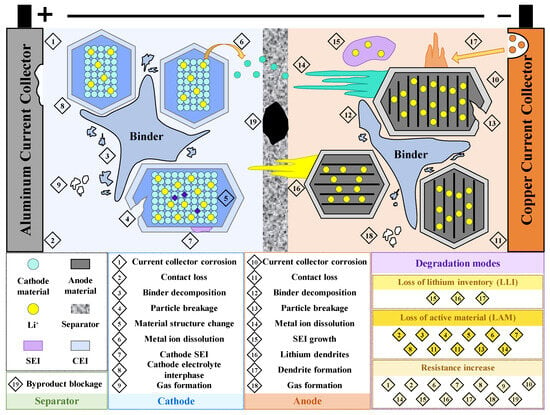
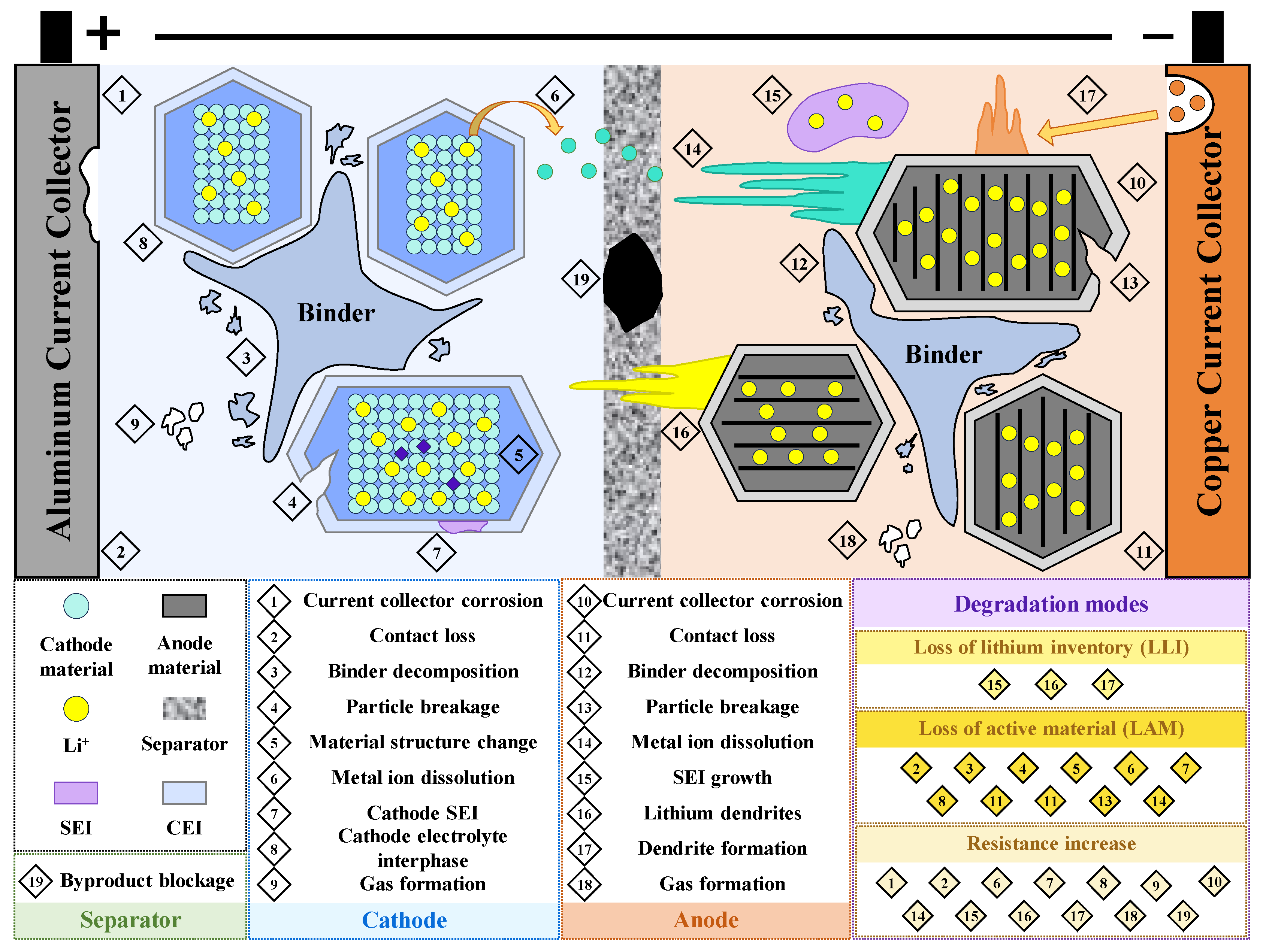
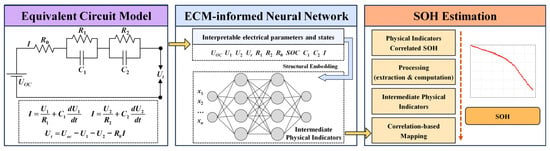
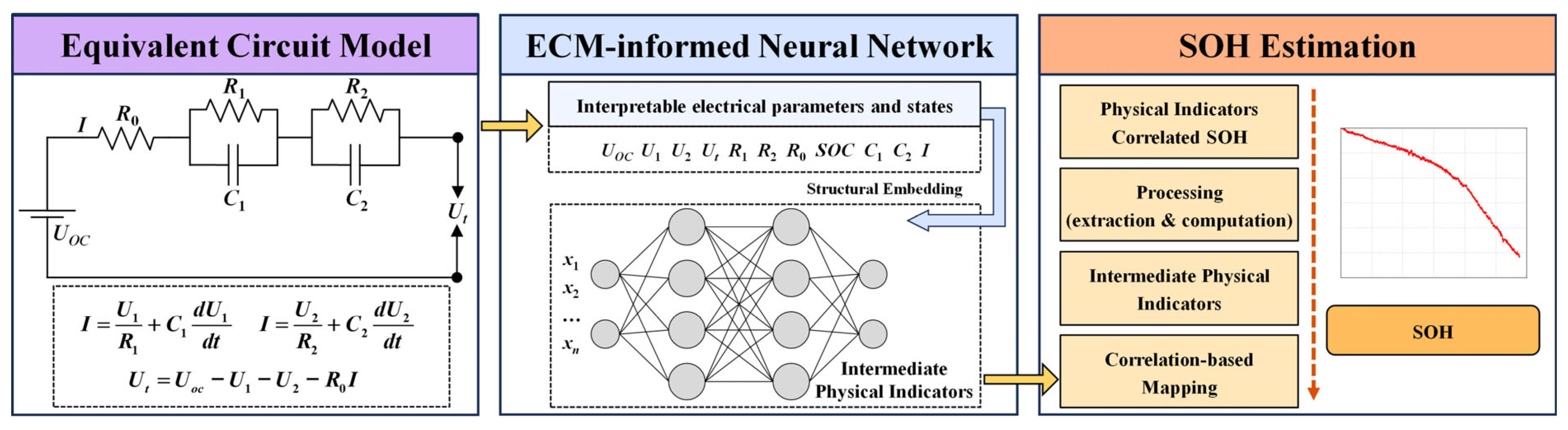
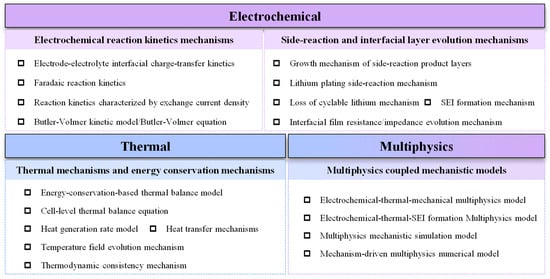
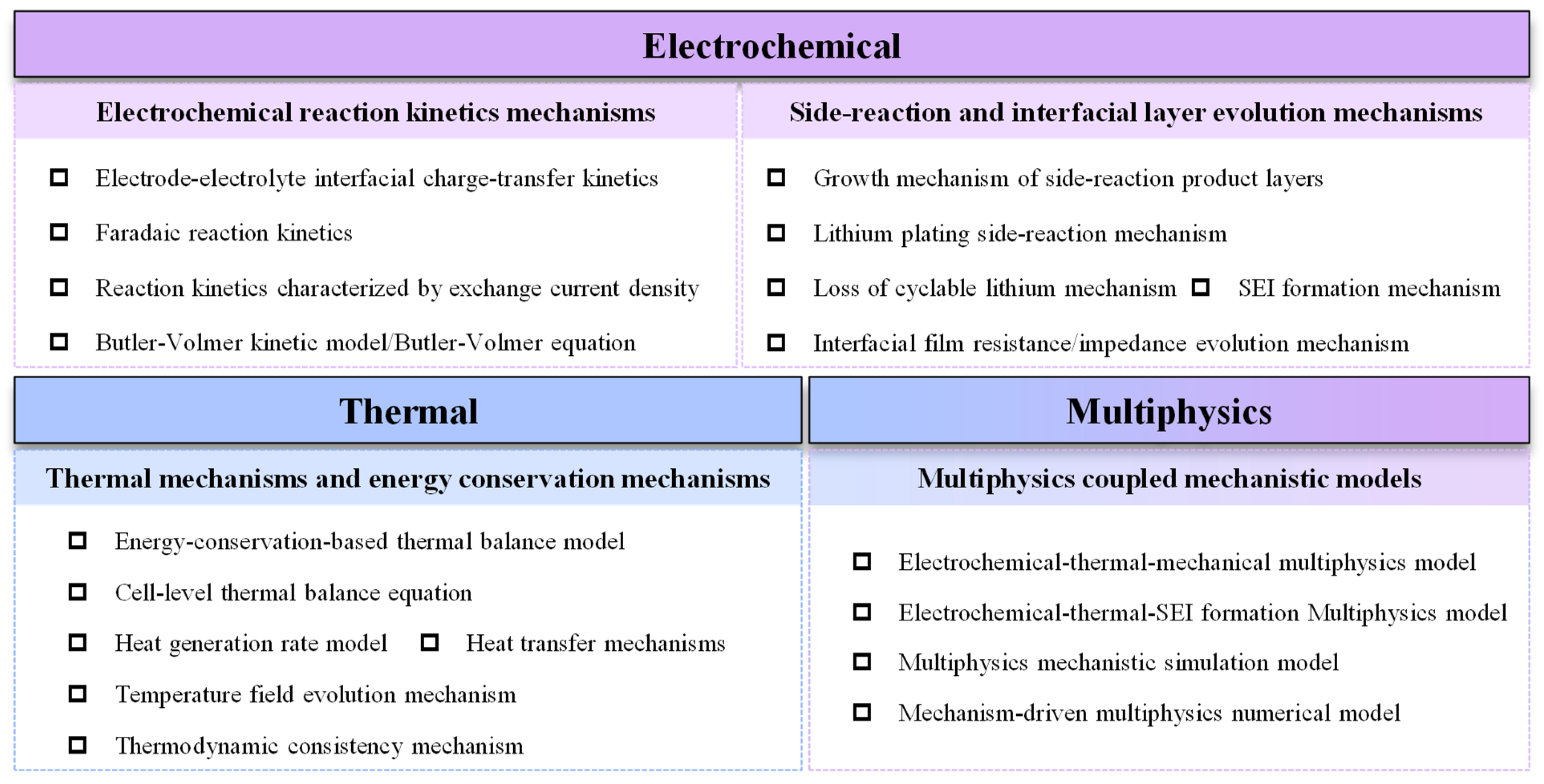
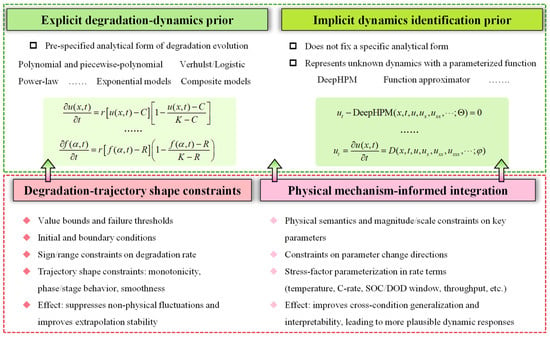
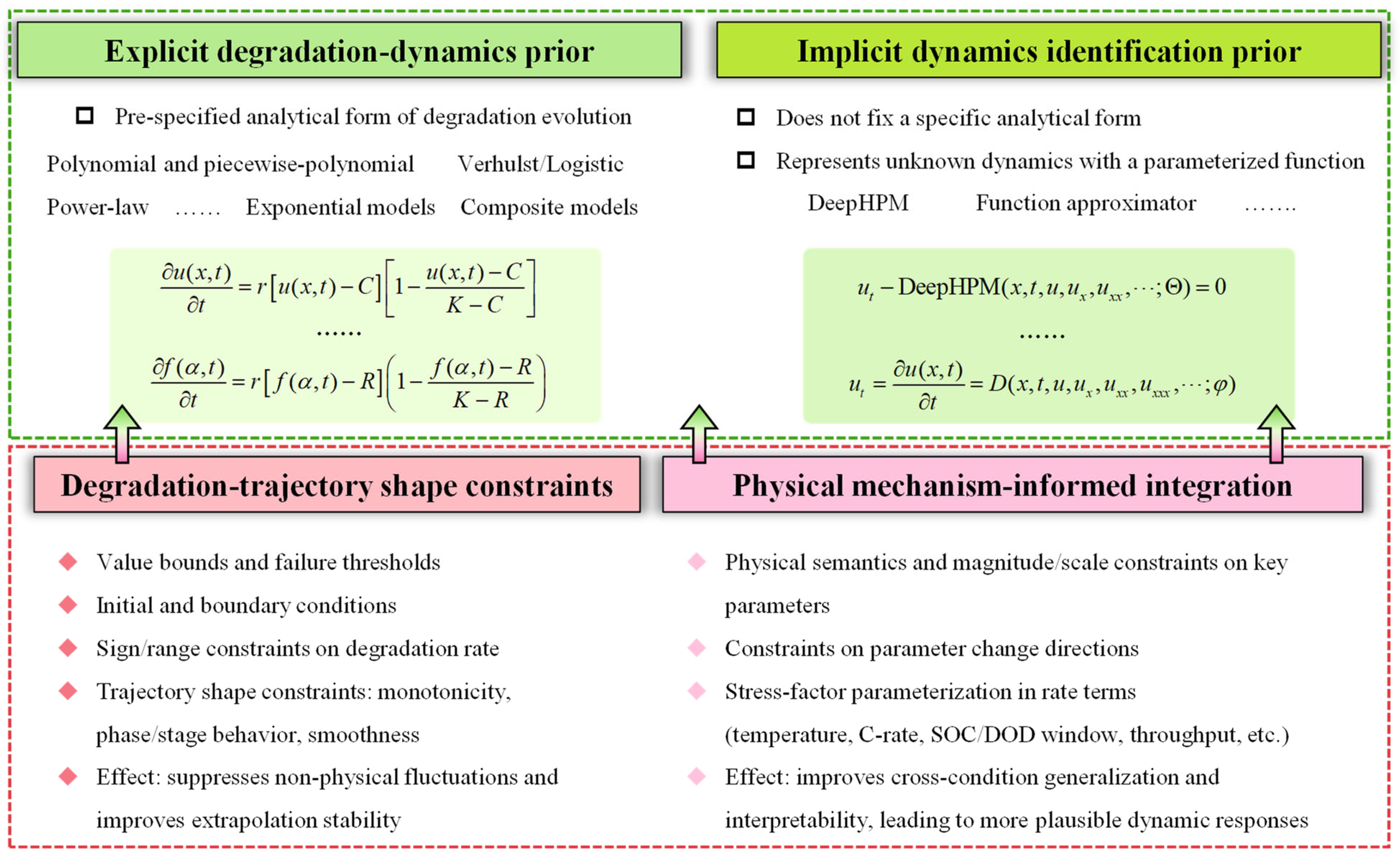

Disclaimer/Publisher’s Note: The statements, opinions and data contained in all publications are solely those of the individual author(s) and contributor(s) and not of MDPI and/or the editor(s). MDPI and/or the editor(s) disclaim responsibility for any injury to people or property resulting from any ideas, methods, instructions or products referred to in the content. |
© 2026 by the authors. Licensee MDPI, Basel, Switzerland. This article is an open access article distributed under the terms and conditions of the Creative Commons Attribution (CC BY) license.