


Abstract
This article presents a proposed a new method for estimating the degree of dilution of lubricating oil with diesel oil, which can be applied to systems for ongoing monitoring of lubricating oil quality in an internal combustion engine. The test is performed for reference blends based on two commonly used single-season lubricating oils for marine and industrial engines. SAE 30 and SAE 40 viscosity grade base oils and ISO-F-DMX category diesel oil are used. For each base oil, reference blends are prepared with diesel oil content in the lubricating oil mixture equal to 0, 1, 2, 5, 10, 20, 30, 40, 50, 75, and 100% m/m. Concentration estimates are made for each mixture based on measured kinematic viscosity at different temperatures. Measurements are made for 40, 50, 60, 70, 80, 90, and 100 °C. The results are evaluated by determining the model’s fit to the empirical data and the maximum percentage absolute error in estimating the degree of dilution of the lubricating oil with diesel fuel. The results are contrasted with a previously used model based on the inverse Arrhenius equation for determining the viscosity of binary mixtures. The proposed new model for both base oils, for all tested reference concentrations and for all tested temperatures shows a much better fit to empirical data (R2 > 0.999). Moreover, the maximum absolute error of the SATUFER estimation did not exceed the value of 1.5% m/m and, relative to the model based on the inverse Arrhenius equation, it is ~8.9 times higher for mixtures of SAE 30 grade base oil and ~10.3 for mixtures of SAE 40 grade base oil.
1. Introduction
One of the problems associated with the operation of internal combustion engines is the potential leakage of fuel into the lubricating oil due to damage to the fuel injection system, the drainage system, and the deteriorated condition of the piston, cylinder liner [1], and piston rings [2], or improperly prepared fuel [3]. Lubricating oil diluted with fuel has inferior lubricating properties, lower viscosity, lower density, and lower flash point [4]. The operation of an engine lubricated with fuel-diluted oil (>2% v/v diesel oil in lubricating oil [5,6]) can cause accelerated lubricating oil aging, accelerated wear of bearings, cylinder liners, and other components of tribological pairs, and at high concentrations (>8% v/v diesel oil in lubricating oil [7,8]) can be one of the factors leading to explosions in the crankcase.
It is, therefore, necessary to conduct ongoing periodic or continuous monitoring of the physicochemical properties of lubricating oil for potential fuel dilution, among other things [2,9]. Among the many methods of detecting lubricating oil dilution with fuel, macro-analytical methods (among which the distillation curve determination and flash point and viscosity measurements are predominant) are mentioned as commonly used [10]. These methods are inexpensive and provide sufficient accuracy for engineering applications. The first two parameters can basically only be determined in the laboratory, while oil viscosity can be measured both in the laboratory and directly in the engine.
According to oil manufacturers’ and engine makers’ guidelines, the kinematic viscosity of engine oil, compared with the viscosity of unused oil, measured at a reference temperature (either 40 °C or 100 °C), should remain within a variation from −10% to +10%, regarded as the warning threshold [11], or −20% to +30%, which defines the alarm threshold (necessitating preventive action) [12]. Another set of recommendations states that the kinematic viscosity of circulating lubricating oil at 100 °C should not decrease by more than 3.0 mm2/s or increase by more than 3.5 mm2/s compared to fresh oil [13]. The CIMAC guidelines specify viscosity alert limits as −20% to +25% at 40 °C and −15% to +15% at 100 °C, with alarm limits set at −25% to +45% at 40 °C and −10% to +25% at 100 °C [14].
With a suitable measurement system and an accurate algorithm, it is possible to assess the change in viscosity potentially caused by fuel contamination of lubricating oil [15,16]. Contamination with diesel fuel as a substance with a lower viscosity than the lubricating oil will result in a decrease in the viscosity of the lubricating oil. Measurement of density, temperature, and viscosity of both kinematic and dynamic circulating oil in the engine, along with temperature measurement, can be undertaken on a continuous basis using commercially available sensors [17,18].
Chybowski et al. conducted research into the possibility of automating the process of detecting lubricating oil dilution with fuel and assessing the degree of dilution, proposing the use of a relatively simple inverse Arrhenius model [19]. This method is based on the known value of the dynamic viscosity of the fresh lubricating oil ηFLO, the dynamic viscosity of the diesel oil used in the engine ηDO, and the measured value of the instantaneous kinematic viscosity of the oil used in the engine ηULO. All viscosities are determined at the same temperature. The estimated diesel content of the lubricating oil is determined using the following formula:
The advantage of the proposed model (1) is its simplicity, while the absolute error obtained from its application was ~12% m/m. Moreover, it requires knowledge of dynamic viscosity, while measuring kinematic viscosity is usually simpler. For this reason, the degree of dilution of lubricating oil with diesel oil is based on knowledge of the kinematic viscosity of fresh lubricating oil νFLO, the kinematic viscosity of used lubricating oil νULO, and the kinematic viscosity of diesel oil νDO. Adopted in the practical application of the measurement system under development, the values of νFLO and νDO can be entered into the system manually, or they can be measured by independent sensors located in the lubricating oil supply system and in the engine fuel supply system [20]. The determination of viscosity as a function of temperature can be assisted by the application of regression models, which were found for the data presented in this article by authors in an earlier study [21]. However, the issue that remained to be resolved was to find a mathematical model that was as simple and accurate as possible, and that did not use empirical material indices that depended on the properties of a particular lubricating oil or diesel oil, enabling the determination of the relationship between the viscosity of the mixture and the viscosity of the components and providing the possibility of a simple transformation of this formula into a model describing the estimated value of the diesel oil concentration in the lubricating oil mixture [6,22].
Since Arrhenius [23] developed an equation that fits within the framework of the absolute reaction rate theory [24], a number of methods have been developed that are useful in practice for determining the viscosity of liquid mixtures with a known mass proportion of components and known viscosities of the liquids forming the mixture [25,26,27]. Many empirical [1] or analytical-empirical methods and equations are available in the literature, and some of them have been standardized [28]. This is particularly important in evaluating the properties of petroleum products, such as fuels and lubricating oils. One such method widely used for determining the kinematic viscosity of petroleum product mixtures with known kinematic viscosities, known by the acronym REFUTAS [29], was developed in the first half of the 20th century by British Petroleum [30,31]. In the following years, the method was widely used in petrochemicals [32].
The REFUTAS method is based on a function called the viscosity blending index VBI, which is determined using appropriate tables or empirical formulas. This function for the i-th component of the mixture whose kinematic viscosity νi is known can be determined using one of two equivalent formulas:
Function based on the decimal logarithm [33,34]:
Function based on the natural logarithm [26,32]:
The value of the REFUTAS viscosity blending indices VBI of the blend is calculated based on the weight fraction of each component according to the following formula:
where xi is the mass fraction of the i-th component of the mixture and n is the number of components of the mixture.
The value of the viscosity of the mixture is determined on the basis of the relevant tables or, alternatively, calculated from the transformed Equation (1) or Equation (2) of the form:
This method is sufficiently accurate in practical applications [29] and simple in application [35], which attracted the attention of the authors and was adopted to evaluate the degree of dilution of lubricating oil with diesel fuel. To improve the quality of communication, it was necessary to introduce a short name for the new method. Since the application in question used an inverted REFUTAS model for the newly developed method and model, the name SATUFER was proposed, which is an acronym for “Speedy Analysis of The degree of lUbricating oil with FuEl Rarefaction”, which is the word REFUTAS read backward. The present method constitutes a novel approach, which has been validated by the research presented in this paper. Its industrial application is currently being pursued through the development of a prototype measurement system. The invention described in this article, along with the technical systems utilizing it, is the subject of a filed patent application [20]. The results of applying this method for such a purpose and comparing the estimation results with the previously proposed inverse Arrhenius model were the subject of this experiment and are presented later in this article.
2. Materials and Methods
2.1. Lubricating Oil–Diesel Blends Under Study
The experiment used the results of viscosity measurements of the test substances at different temperatures presented in the authors’ earlier publications [4]. Single-season lubricating oils of viscosity class SAE 30 and SAE 40 [36], which are the most widely used lubricating oils in the circulating lubrication systems of industrial and marine internal combustion engines operating in confined spaces, were used as the base lubricating oils for preparation. The lubricating oils were blended with B7 diesel oil, meeting DMX class requirements for marine fuels. This fuel is now widely used today in the European Union countries [37]. The Agip/Eni Cladium SAE 30 CD/CF lubricating oils [38], the Agip/Eni Cladium SAE 40 CD/CF [39], and the Orlen Efecta Diesel Biodiesel oil (designation CN27102011D) [40] were used. The declared by the manufacturer’s properties of the lubricating oils and diesel oil used to prepare the blends tested in this experiment are provided in Table 1.
Table 1.
Characteristics of the lubricating oils used in the experiment (compiled from data charts [38,39,41,42]).
For each tested lubricating oil blend, the kinematic viscosity was measured for mixtures containing diesel oil at mass fractions of 0% (pure lubricating oil), 1, 2, 5, 10, 20, 30, 40, 50, 75, and 100% m/m (pure diesel oil) of the total mixture. These measurements were conducted at temperatures of 40, 50, 60, 70, 80, 90, and 100 °C. The temperatures of 40, 50, and 100 °C were selected as reference points for the viscosity and derived value determinations, following the guidelines of various standards. The temperature range adopted coincides with the usual lubricating oil temperatures in the engine lubrication system.
2.2. Estimation of Diesel Oil Concentration in Lubricating Oil and Evaluation of Results
According to the assumptions made in the introduction, a formula was derived that determines the mass concentration of diesel oil in lubricating oil. Using Equation (3), the viscosity blending index values were determined for diesel oil VBIDO, which is fed into the engine under study, fresh lubricating oil VBIFLO, and a mixture of these oils VBIBLEND with a known mass percentage of diesel oil in the lubricating oil mixture C:
where mDO is the mass of diesel oil in the diesel-lubricating oil mixture, and mFLO is the mass of lubricating oil in the diesel-lubricating oil mixture.
The viscosity blending index of the diesel-lubricating oil mixture VBIBLEND is the idealized equivalent of the viscosity blending index value of the lubricating oil used VBIULO, whose viscosity is to be monitored during engine operation. The base equations are of the following form:
The estimated diesel content of the lubricating oil mixture determined using Relations (8)–(10) is found according to the following equation:
After substituting Relations (8)–(10) into Equation (11) and performing simple algebraic transformations, Relation (11) then takes the following form:
After taking into account the standard formula for simplifying the logarithm difference, an equation of the following form is obtained:
The results presented in the article refer to a value of the correction coefficient in the logarithmic expressions equal to 0.8 mm2/s, and all accuracy estimations for curve fitting were carried out exclusively for this value.
2.3. Model Quality Evaluation
The estimated concentration values were presented with reference (exact) values. The results were evaluated using the coefficient of determination R2 by which the fit of the estimated results for the reference (exact) values of the mass concentration of diesel oil in the lubricating oil mixture was determined. The values of the maximum absolute error at a given measurement temperature determining the absolute maximum difference between the estimated value and the actual value of the diesel oil concentration in the lubricating oil mixture were also determined according to the relation:
All the results were contrasted with those obtained by applying the inverse Arrhenius model described by Relation (3) and presented in the publication by Chybowski et al. [19].
3. Results and Discussion
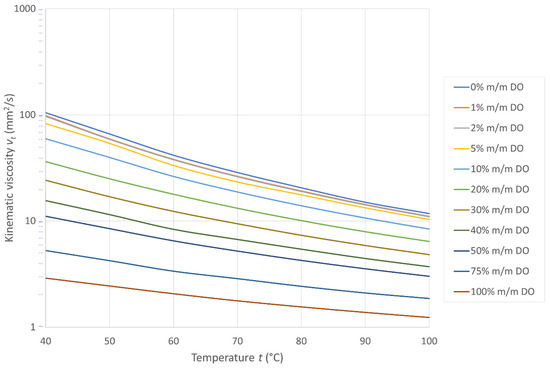
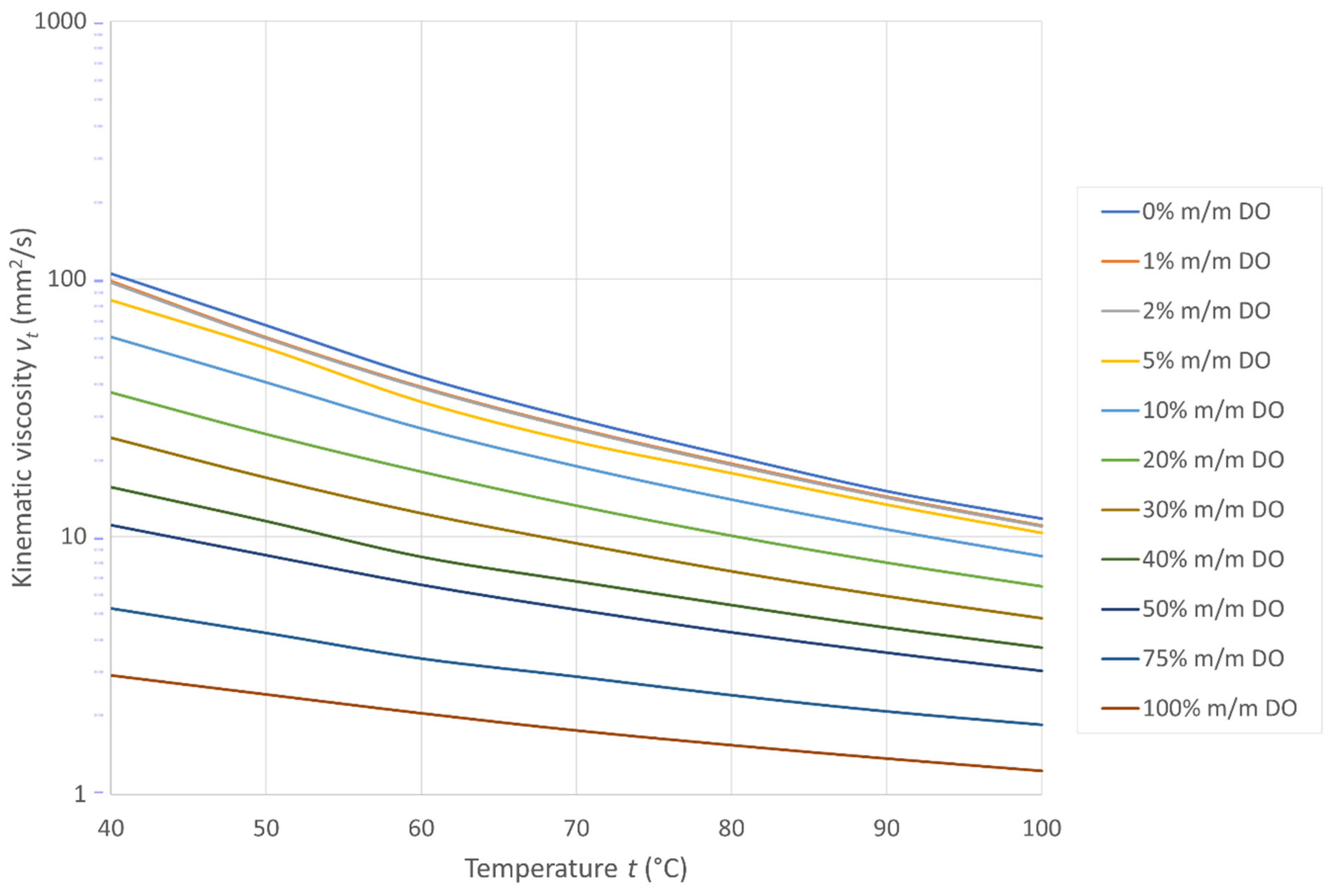
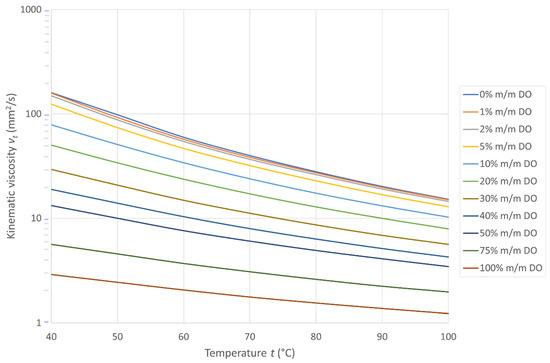
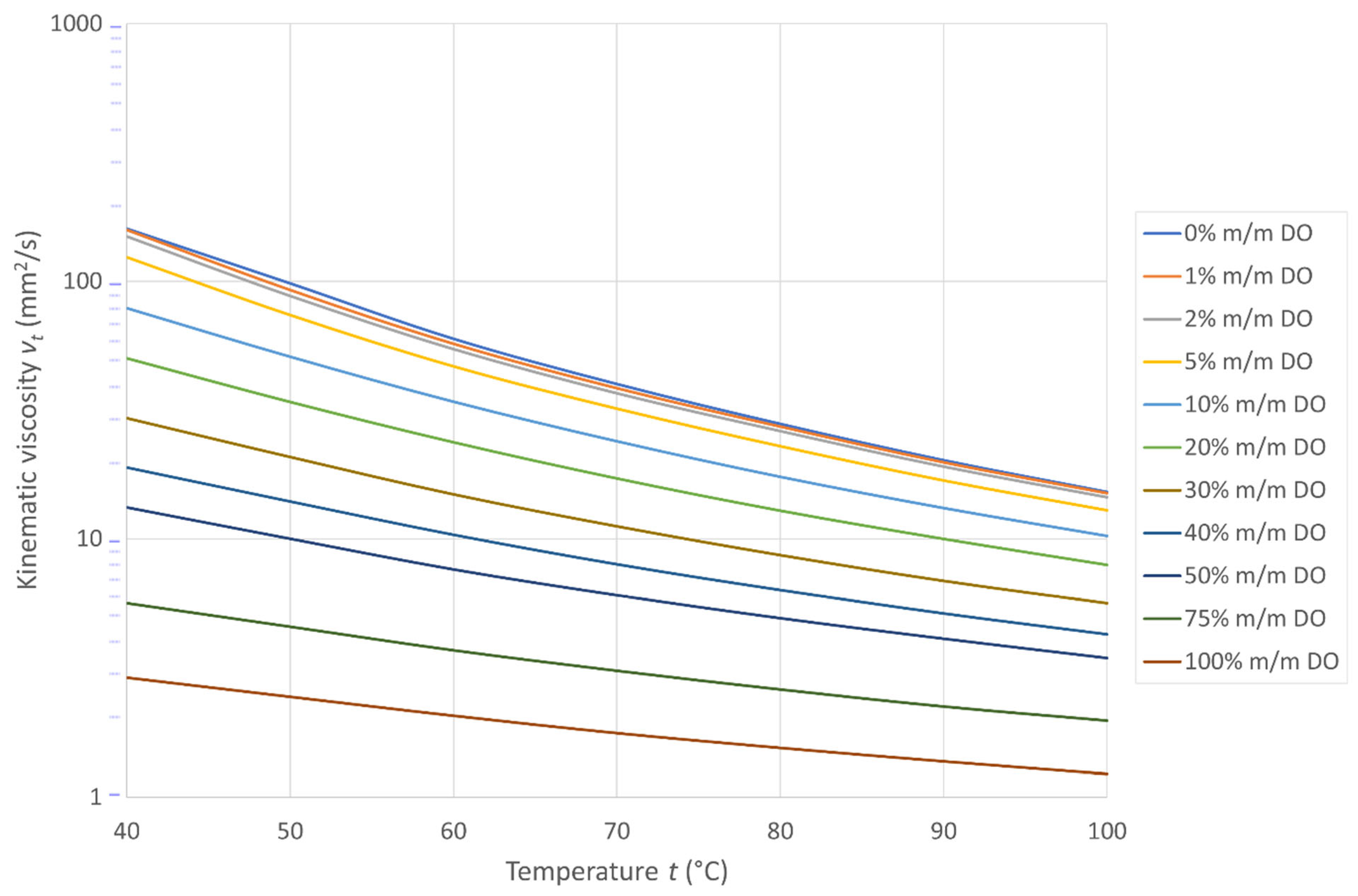
The measured kinematic viscosity for lubricating oil–diesel blends for all assumed mass concentrations of diesel oil and all measurement temperatures are shown for the SAE 30 grade and SAE 40 grade oil-based blends in Figure 1 and Figure 2, respectively.
Figure 1.
Measured kinematic viscosity of the tested blends of the SAE 30 grade lubricating oil and diesel oil. The blue lines on the left side are scales.
Figure 2.
Measured kinematic viscosity of tested blends of the SAE 40 class lubricating oil with diesel oil. The blue lines on the left side are scales.
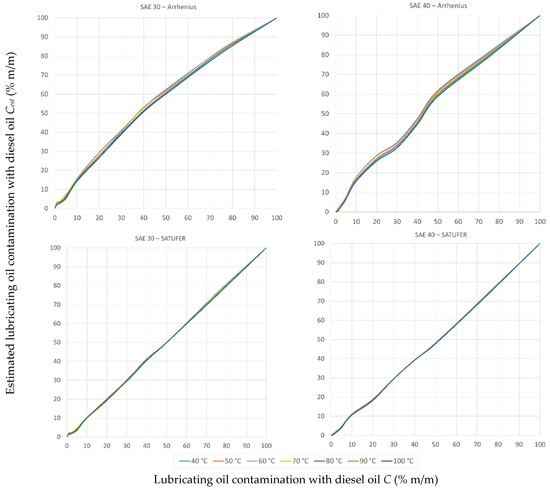
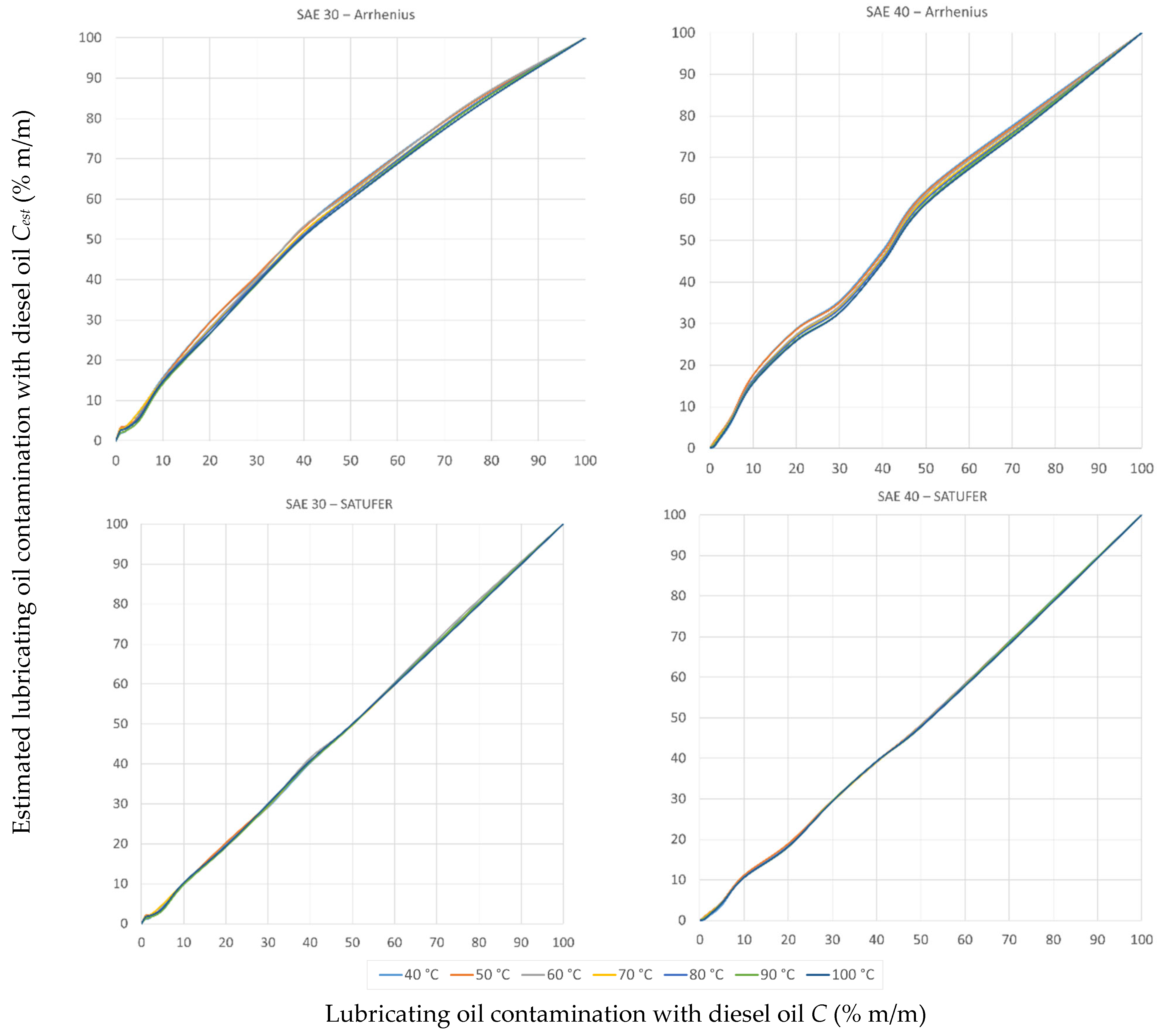
For the measured values of kinematic viscosity, based on the models discussed in the introduction, an analysis of the accuracy of the estimation of diesel oil content in the lubricating oil mixture was performed. A comparison of the estimated values of the percentage mass concentration of Cest diesel oil in the lubricating oil mixture with the reference values of C is shown in Figure 3 as a function of Cest = f(C).
Figure 3.
Estimated concentration of diesel oil in the lubricating oil mixture as a function of the reference value for the tested base oils and the analyzed models.
Figure 3 shows the values of this function for both of the tested base oils. For each type of oil, a function was determined for the estimates using the SATUFER method and the inverse Arrhenius equation. The ideal course should be in the form of the function Cest = C (in Figure 3, this should be a straight line inclined at 45°). In a preliminary analysis of the results for the model based on the inverse Arrhenius equation of both tested base oils, the estimated Cest value shows an increase relative to the reference value (an increase in the deviation of the function from the ideal form) as the value approaches the 50% m/m concentration. Minimum values are found at extreme concentrations, i.e., for pure lubricating oil and pure diesel oil. The results obtained using the SATUFER method are much more accurate (they are close to the ideal function). In addition, the SATUFER algorithm shows less sensitivity of the estimation results to the temperature at which the oil viscosity is measured.
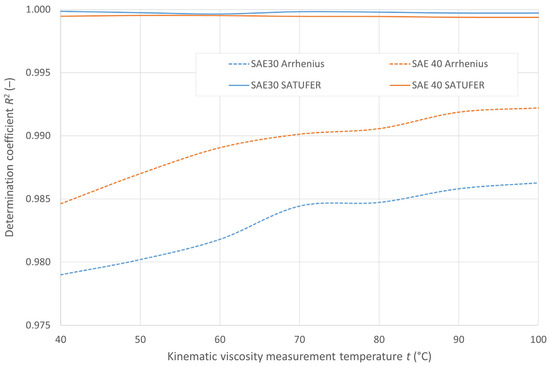
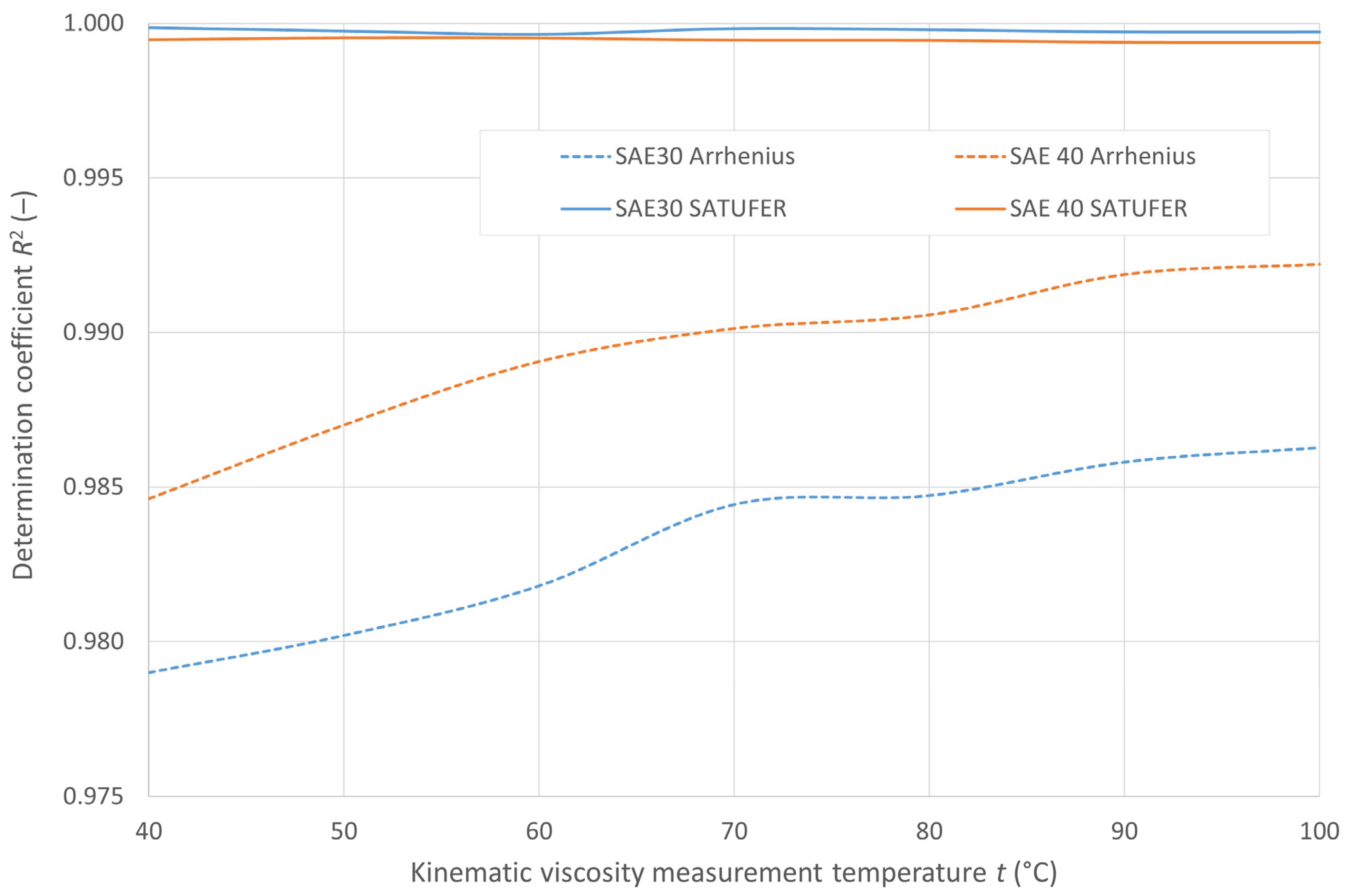
The fit of the empirical data to the exact data is shown using the coefficient of determination in Figure 4. The results confirm the observations made in the conclusions for the functions shown in Figure 3. The coefficient of determination for the SATUFER model is very high and takes R2 > 0.999 for the estimates at all analyzed viscosity measurement temperatures for both base oils tested. This shows that the model fits the measured (reference) data very effectively. On the other hand, the coefficient of determination for estimates using the inverse Arrhenius equation for the tested base oils is in the range of 0.978 < R2 < 0.987 for SAE 30 grade oil and in the range of 0.984 < R2 < 0.993 for SAE 40 grade oil. Thus, the results obtained using the newly proposed algorithm show a better fit. The small variation in the coefficient of determination as a function of temperature shows that the proposed new model is not very sensitive to temperature variation and, thus, will be useful for measuring oil viscosity values at different temperatures, depending on the type of engine and its operating conditions.
Figure 4.
Determination coefficient for the estimated values of diesel oil concentration in the lubricating oil mixture as a function of viscosity measurement temperature.
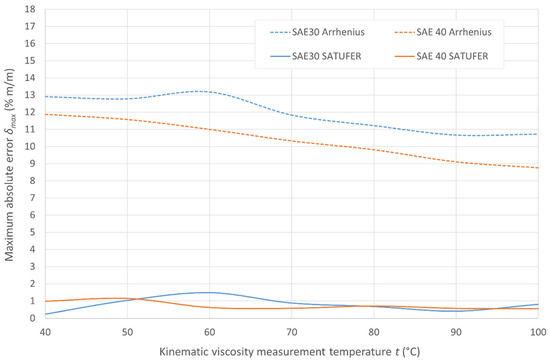
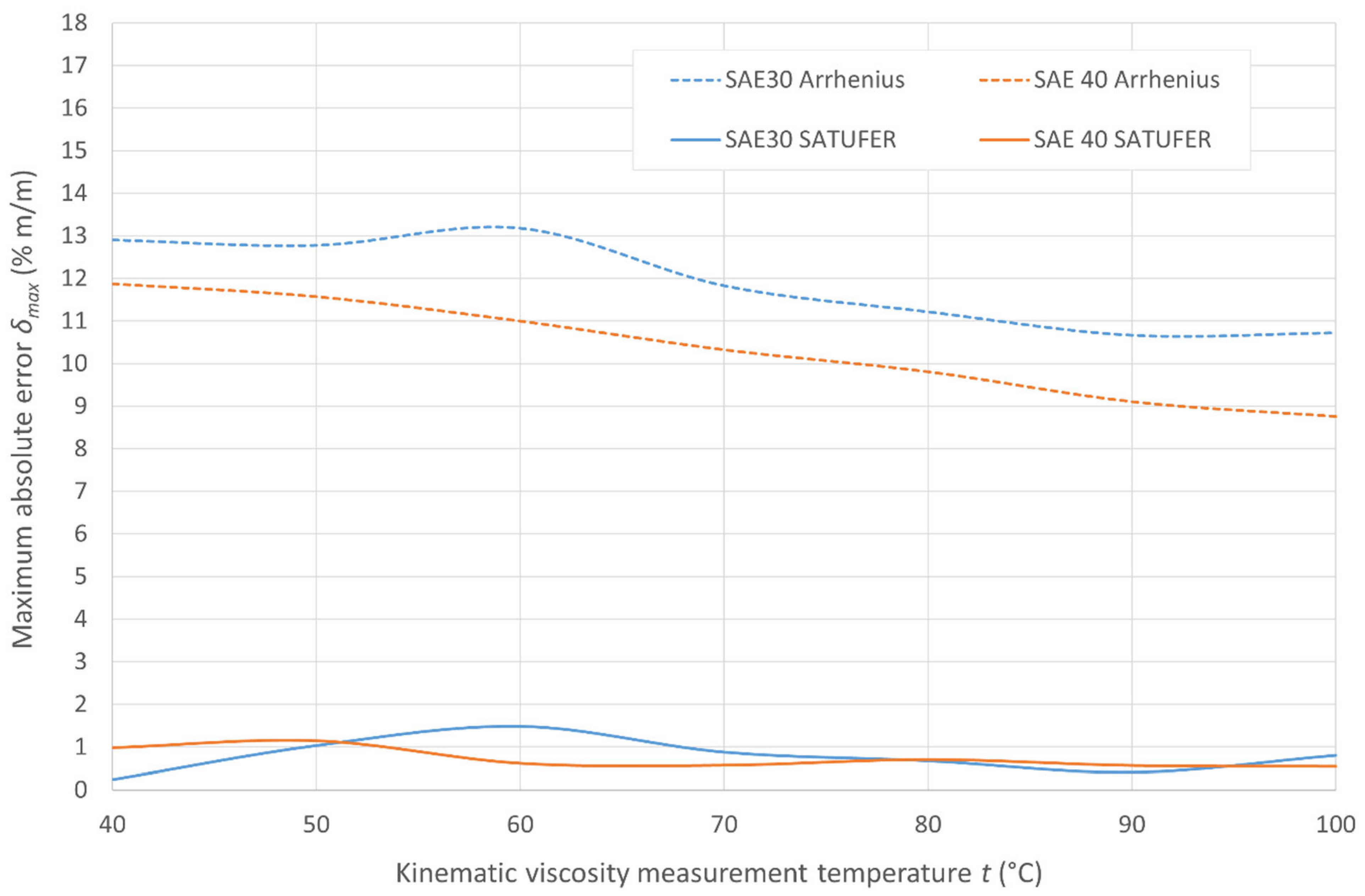
In order to assess the value of the potential inaccuracy of the estimate, the maximum absolute error of the estimate relative to the reference value of diesel oil concentration in the lubricating oil mixture was determined. The value of this error as a function of temperature is shown in Figure 5.
Figure 5.
Maximum absolute error of estimation of the value of diesel oil concentration in the lubricating oil mixture as a function of viscosity measurement temperature.
The newly used SATUFER model shows a significant increase in estimation accuracy. For SAE 30 grade oil mixtures, the maximum absolute error of estimation of diesel oil content in the lubricating oil mixture for the new model over the entire analyzed temperature range of viscosity measurement is less than 1.48% m/m and, for SAE 40 grade lubricating oil mixtures, it does not exceed 1.15% m/m.
The maximum estimation error for the model based on the inverse Arrhenius equation is 13.18% m/m for mixtures based on SAE 30 grade oil and a maximum of 11.87 for mixtures based on SAE 40 grade lubricating oil. Thus, the new model provides a significant improvement in estimation accuracy, as the maximum absolute error of the SATUFER model estimate relative to the estimate based on the inverse Arrhenius equation is ~8.90 times higher for SAE 30 grade base oil blends and ~10.32 times higher for SAE 40 grade base oil blends.
4. Conclusions
The experiment conducted confirmed the usefulness of the model based on the SATUFER method for estimating the degree of dilution of lubricating oil with diesel fuel. The new model shows a very good fit to empirical data for all the analyzed viscosity measurement temperatures and the entire range of lubricating oil diesel concentrations. This is true for both commonly used single-season oils with SAE 30 and SAE 40 viscosity classes in marine and industrial internal combustion engines. In addition, the results obtained using the SATUFER model show a smaller scatter of results at different viscosity measurement temperatures relative to the inverse Arrhenius model.
The new method makes it possible to improve the accuracy of the estimated value of the mass concentration of diesel oil in lubricating oil based on viscosity, i.e., assuming that the change in viscosity depends only on the diesel content of the lubricating oil. Nevertheless, even in general, the method makes it possible to assess the deterioration of lubricating oil resulting from oil aging by determining a surrogate indicator, which is a hypothetical dilution of lubricating oil with diesel oil. As the proposed method has been validated under laboratory conditions, it may not fully represent real engine operating conditions, which will be the subject of further research. However, the proposed method can be used in assessing the condition of lubricating oil.
The next stage of this research will be the practical application of the model presented in this article and the development of a suitable prototype device for assessing the degree of lubricating oil dilution with diesel oil. Moreover, we used the most employed single-grade oils with viscosity classes SAE 30 and SAE 40 in circulation lubrication systems of marine and industrial engines, while the fuel used met the ISO-D-DMX grade standard. The application of the presented method to oils and fuels of other types will require additional research, which, unlike the experiments presented in the article, could be simplified and limited to verifying the accuracy of viscosity indications only at selected reference temperatures.
Author Contributions
Conceptualization, L.C.; methodology, L.C.; software, L.C., M.S. and P.K.; validation, L.C., M.S. and P.K.; formal analysis, L.C., M.S. and P.K.; investigation, L.C., M.S. and P.K.; resources, L.C., M.S. and P.K.; data curation, L.C. and M.S.; writing—original draft preparation, L.C., M.S. and P.K.; writing—review and editing, L.C., M.S. and P.K.; visualization, L.C., M.S. and P.K.; supervision, L.C.; project administration, L.C.; funding acquisition, L.C. and M.S. All authors have read and agreed to the published version of the manuscript.
Funding
This research was funded by Ministry of Science and Higher Education of Poland, grant number 1/S/KSO/26 and 1/S/KE/26.
Data Availability Statement
Dataset (https://doi.org/10.17632/scbx3h2bmf.3) is available at https://data.mendeley.com/datasets/scbx3h2bmf/3 (accessed on 6 March 2026) [43] and in the book by L. Chybowski [21].
Conflicts of Interest
The authors declare no conflicts of interest. The funders had no role in the design of the study; in the collection, analyses, or interpretation of data; in the writing of the manuscript; or in the decision to publish the results.
Abbreviations
The following abbreviations are used in this manuscript:
| API | American Petroleum Institute |
| C | percentage mass concentration of diesel oil in the mixture with lubricating oil |
| CD/CF | API-defined quality classes of lubricating oils for diesel engines |
| CIMAC | International Council on Combustion Engines |
| DIN | German Institute for Standardization |
| DMX | distillate fuel category according to ISO 8217:2024 marked as ISO-F-DMX |
| DO | lower index in markings for diesel oil |
| est | lower index for estimated values |
| FLO | lower index in markings for fresh lubricating oil |
| i | sequential number of the components of the mixture |
| ISO | International Organization for Standardization |
| j | sequence number of the measurement carried out at the set temperature t |
| mDO | mass of diesel oil in the mixture |
| mFLO | mass of fresh lubricating oil in the mixture |
| REFUTAS | a method for estimating the viscosity of a mixture developed by the British Petroleum Co. |
| R2 | coefficient of determination |
| SAE | SAE International—US-based international Society of Automotive Engineers |
| SAE 30, SAE 40 | lubricating oil viscosity classes according to SAE J300 viscosity classification |
| SATUFER | method/model for estimating diesel oil concentration in lubricating oil, an acronym for Speedy Analysis of The degree of lUbricating oil with FuEl Rarefaction |
| t | the temperature at which the measurement of liquid viscosity is carried out |
| ULO | lower index in markings for used lubricating oil |
| VBI | viscosity blending index |
| VBIBLEND | viscosity blending of the test mixture |
| VBIDO | viscosity blending index of diesel oil |
| VBIFLO | viscosity blending index of fresh lubricating oil |
| VBIi | viscosity blending index of the i-th component of the mixture |
| VBIULO | viscosity blending index of the used lubricating oil |
| δmax | maximum absolute error of estimation of the percentage mass concentration of diesel in the lubricating oil mixture |
| ηDO | dynamic viscosity of diesel oil |
| ηFLO | dynamic viscosity of fresh lubricating oil |
| ηULO | dynamic viscosity of the lubricating oil used |
| νBLEND | kinematic viscosity of the test mixture |
| νDO | kinematic viscosity of diesel oil |
| νFLO | kinematic viscosity of fresh lubricating oil |
| νi | kinematic viscosity of the i-th component of the mixture |
| νULO | kinematic viscosity of the used lubricating oil |
References
- Chybowski, L.; Kowalak, P.; Dąbrowski, P. Assessment of the Impact of Lubricating Oil Contamination by Biodiesel on Trunk Piston Engine Reliability. Energies 2023, 16, 5056. [Google Scholar] [CrossRef] [Scilit]
- Wolak, A.; Zając, G.; Żółty, M. Changes of properties of engine oils diluted with diesel oil under real operating conditions. Combust. Engines 2018, 173, 34–40. [Google Scholar] [CrossRef] [Scilit]
- Klyus, O.; Szczepanek, M.; Cisek, J.; Olszowski, S.; Behrendt, C.; Chybowski, L. External fuel reforming for compression-ignition engines. Fuel 2025, 397, 135418. [Google Scholar] [CrossRef] [Scilit]
- Chybowski, L. Study of the Relationship between the Level of Lubricating Oil Contamination with Distillation Fuel and the Risk of Explosion in the Crankcase of a Marine Trunk Type Engine. Energies 2023, 16, 683. [Google Scholar] [CrossRef] [Scilit]
- Zaharia, C.; Niculescu, R.; Clenci, A.; Iorga, V. Analyse of used oil in order to emit diagnosis interpretations of the diesel engine operation. Rom. J. Automot. Eng. 2019, 25, 5–11. [Google Scholar]
- Taylor, R.I. Fuel-Lubricant Interactions: Critical Review of Recent Work. Lubricants 2021, 9, 92. [Google Scholar] [CrossRef] [Scilit]
- Li, J.; Tian, H.; Yunling, S.; Huang, H.; He, W. Monitoring Fuel Dilution of Diesel Engine Lubricant Oil by Ultraviolet Fluorescence Spectroscopy. J. Phys. Conf. Ser. 2022, 2206, 012029. [Google Scholar] [CrossRef] [Scilit]
- Sejkorová, M.; Hurtová, I.; Jilek, P.; Novák, M.; Voltr, O. Study of the Effect of Physicochemical Degradation and Contamination of Motor Oils on Their Lubricity. Coatings 2021, 11, 60. [Google Scholar] [CrossRef] [Scilit]
- Wolak, A.; Zając, G.; Fijorek, K.; Janocha, P.; Matwijczuk, A. Experimental Investigation of the Viscosity Parameters Ranges—Case Study of Engine Oils in the Selected Viscosity Grade. Energies 2020, 13, 3152. [Google Scholar] [CrossRef] [Scilit]
- Montaud, A.; Fabriek, W.P.; Vrolijk, D.J.E.; Lim, K.C.; Dunn, A. Contamination of marine crankcase lubricants by raw fuel: Consequences, and methods of detection. J. Inst. Energy 1998, 71, 2–11. [Google Scholar]
- Krupowies, J. Badania i Ocena Zmian Właściwości Użytkowych Olejów Urządzeń Okrętowych; Maritime University of Szczecin: Szczecin, Poland, 2009. [Google Scholar]
- Krupowies, J. Badania Zmian Właściwości Oleju Obiegowego Okrętowych Silników Pomocniczych; Wyższa Szkoła Morska w Szczecinie: Szczecin, Poland, 2002. [Google Scholar]
- CIMAC Working Group ‘Marine Lubricants’. CIMAC Recommendation 31. The Lubrication of Two-Stroke Crosshead Diesel Engines; CIMAC: Frankfurt, Germany, 2017. [Google Scholar]
- CIMAC Working Group ‘Marine Lubricants’. Guidelines for the Lubrication of Medium Speed Siesel Engines, 2nd ed.; The International Council on Combustion Engines: Frankfurt am Main, Germany, 2008. [Google Scholar]
- Kaminski, P. Experimental Investigation into the Effects of Fuel Dilution on the Change in Chemical Properties of Lubricating Oil Used in Fuel Injection Pump of Pielstick PA4 V185 Marine Diesel Engine. Lubricants 2022, 10, 162. [Google Scholar] [CrossRef] [Scilit]
- Hu, T.; Teng, H.; Luo, X.; Lu, C.; Luo, J. Influence of Fuel Dilution of Crankcase Oil on Ignitability of Oil Particles in a Highly Boosted Gasoline Direct Injection Engine. In Proceedings of the SAE Technical Paper 2015-01-2811; SAE International: Warrendale, PA, USA, 2015. [Google Scholar]
- Machinery Lubrication Continuous Oil Condition Monitoring for Machine Tool and Industrial Processing Equipment. Available online: https://www.machinerylubrication.com/Read/523/machine-tool-oil-analysis (accessed on 3 September 2024).
- SenGenuity Oil and Fuel Monitoring Using the ViSmart Viscosity Sensor. Available online: https://www.machinerylubrication.com/Read/2071/oil-fuel-viscosity-sensor (accessed on 17 January 2025).
- Chybowski, L.; Szczepanek, M.; Gawdzińska, K. Arrhenius Equation for Calculating Viscosity in Assessing the Dilution Level of Lubricating Oil with Diesel Oil—A Case Study of SAE 30 and SAE 40 Grade Marine Lubricating Oils. Energies 2024, 17, 444. [Google Scholar] [CrossRef] [Scilit]
- Chybowski, L. Systems and Method for Detecting the Level of Lubricating Oil Dilution with Fuel in a Reciprocating Internal Combustion Engine. Patent Pending P.451769, 4 October 2025. [Google Scholar]
- Chybowski, L. Rozcieńczenie Oleju Paliwem Jako Czynnik Ryzyka Eksplozji w Skrzyniach Korbowych Okrętowych Bezwodzikowych Silników Spalinowych; Maritime University of Szczecin Press: Szczecin, Poland, 2023; ISBN 978-83-64434-56-3. [Google Scholar]
- ASTM D7152-11(2016)e1; Standard Practice for Calculating Viscosity of a Blend of Petroleum Products. ASTM: West Conshohocken, PA, USA, 2023.
- Arrhenius, S. Über die innere Reibung verdünnter wässeriger Lösungen. Z. Phys. Chem. 1887, 1, 285–298. [Google Scholar] [CrossRef] [Scilit]
- Glasstone, S.; Laidler, K.J.; Eyring, H. The Theory of Rate Processes; McGraw Hill: New York, NY, USA, 1941. [Google Scholar]
- Roegiers, M. Discussion of The Fundamental Equation of Viscosity. Ind. Lubr. Tribol. 1951, 3, 27–29. [Google Scholar] [CrossRef] [Scilit]
- Zhmund, B. Viscosity Blending Equations. Eur. Lubr. Ind. Mag. 2014, 121, 24–29. [Google Scholar]
- Grunberg, L.; Nissan, A.H. Mixture Law for Viscosity. Nature 1949, 164, 799–800. [Google Scholar] [CrossRef] [Scilit] [PubMed]
- Centeno, G.; Sánchez-Reyna, G.; Ancheyta, J.; Muñoz, J.A.D.; Cardona, N. Testing Various Mixing Rules for Calculation of Viscosity of Petroleum Blends. Fuel 2011, 90, 3561–3570. [Google Scholar] [CrossRef] [Scilit]
- Maples, R.E. Petroleum Refinery Process Economics, 2nd ed.; Pennwell Books: Tulsa, OK, USA, 2000; ISBN 0-87814-779-9. [Google Scholar]
- British Petroleum Co. Sunbury Report No. 3282; British Petroleum Co.: Sunbury-on-Thames, UK, 1947. [Google Scholar]
- British Petroleum Co. Sunbury Report No. 3339; British Petroleum Co.: Sunbury-on-Thames, UK, 1947. [Google Scholar]
- Baird, C.T. Guide to Petroleum Product Blending; HPI Consultants, Inc.: Austin, TX, USA, 1989. [Google Scholar]
- Al-Besharah, J.M.; Mumford, C.J.; Akashah, S.A.; Salman, O. Prediction of the viscosity of lubricating oil blends. Fuel 1989, 68, 809–811. [Google Scholar] [CrossRef] [Scilit]
- Al-Maliky, N. Improvment of Pipeline Transportation of Fuel Oil. Master’s Thesis, Al-Nahrain University, Baghdad, Iraq, 2004. [Google Scholar]
- Argirov, G.; Ivanov, S.; Cholakov, G. Estimation of crude oil TBP from crude viscosity. Fuel 2012, 97, 358–365. [Google Scholar] [CrossRef] [Scilit]
- SAE J300-2021; Engine Oil Viscosity Classification. SAE International: Warrendale, PA, USA, 2021.
- ISO 8217:2024; Petroleum Products—Fuels (Class F)—Specifications of Marine Fuels. 7th ed. ISO: Geneva, Switzerland, 2024.
- Oleje-Smary AGIP Cladium 120 SAE 30 CD. Available online: https://oleje-smary.pl/pl/p/AGIP-Cladium-120-SAE-30-CD-20-litrow/186 (accessed on 12 July 2022).
- Oleje-Smary AGIP Cladium 120 SAE 40 CD. Available online: https://oleje-smary.pl/pl/p/AGIP-Cladium-120-SAE-40-CD-20-litrow/188 (accessed on 12 July 2022).
- PKN Orlen S.A. ZN-ORLEN-5—Przetwory Naftowe. Olej Napędowy EFECTA DIESEL; PKN Orlen S.A.: Płock, Poland, 2019. [Google Scholar]
- PKN Orlen S.A. Olej Napędowy. Ecodiesel Ultra B,D,F, Olej Napędowy Arktyczny Klasy 2, Efecta Diesel B,D,F, Verva ON B,D,F; PKN Orlen S.A.: Płock, Poland, 2021. [Google Scholar]
- Chybowski, L. The Initial Boiling Point of Lubricating Oil as an Indicator for the Assessment of the Possible Contamination of Lubricating Oil with Diesel Oil. Energies 2022, 15, 7927. [Google Scholar] [CrossRef] [Scilit]
- Chybowski, L. Lube Oil—Diesel Oil Mixes—Dataset; Elsevier: Amsterdam, The Netherlands, 2022; Version 3. [Google Scholar]

Disclaimer/Publisher’s Note: The statements, opinions and data contained in all publications are solely those of the individual author(s) and contributor(s) and not of MDPI and/or the editor(s). MDPI and/or the editor(s) disclaim responsibility for any injury to people or property resulting from any ideas, methods, instructions or products referred to in the content. |
© 2026 by the authors. Licensee MDPI, Basel, Switzerland. This article is an open access article distributed under the terms and conditions of the Creative Commons Attribution (CC BY) license.