


Abstract
Financial development is widely regarded as an important factor influencing renewable energy consumption. Nevertheless, empirical studies conducted by various scholars have revealed that the effect of financial development on renewable energy consumption remains controversial. Based on this backdrop, this paper endeavors to analyze the nonlinear influence of financial development on renewable energy consumption from the perspective of moderating effects. First of all, this paper theoretically analyzes the potential moderating effects of financial development itself, urbanization, and environmental regulation on the impact of financial development on renewable energy consumption. Subsequently, leveraging the Panel Smooth Transition Regression (PSTR) model and the global panel data of 143 countries from 1996 to 2020, the empirical tests are conducted to verify these moderating effects. The results indicate that the variations in moderating variables can lead to disparities in the influence of financial development on renewable energy consumption. Specifically, with the increase in financial development level, urbanization rate, and environmental regulation intensity, the promoting effect of financial development on renewable energy consumption gradually strengthens. Finally, based on the aforementioned research findings, this paper proposes corresponding policy recommendations from the perspectives of these moderating factors.
1. Introduction
Energy, as the cornerstone of modern society’s operations, not only provides a continuous supply of power for human productive activities, but also serves as a critical element in ensuring the daily lives of residents [1,2]. Amid economic development, technological progress, and population growth, energy consumption across various sectors has been significantly increasing [3]. From a global perspective, traditional fossil fuels such as oil and coal, which are characterized by high pollution emissions, still dominate the current energy consumption structure [4]. The extensive use of these fossil fuels has led to a series of issues including global climate change and environmental degradation [5,6].
The combustion of fossil fuels releases vast amounts carbon dioxide, which further exacerbates global warming, leading to glacier melting, sea-level rise, and the frequent occurrence of extreme weather events, thereby threatening the balance of ecosystems and the sustainable development of human society [7,8]. Additionally, the combustion process of fossil fuels emits other air pollutants, such as sulfur dioxide, nitrogen oxides, and volatile organic compounds. These pollutants contribute to an increase in respiratory and cardiovascular diseases, exerting a detrimental impact on human health [9,10]. Constrained by geographical factors, the global distribution of traditional fossil fuels exhibits a marked imbalance. This disparity poses severe challenges to countries with limited fossil fuel reserves in terms of energy supply, making it difficult to effectively safeguard their energy security [11].
Developing and utilizing renewable energy and enhancing their consumption are crucial avenues to mitigate the greenhouse effect and safeguard energy security [12,13,14]. Not only can they significantly reduce greenhouse gas emissions, effectively curb the greenhouse effect, and improve the global ecological environment, but the extensive sources of renewable energy also overcome the geographical constraints of fossil fuels, greatly enhancing the reliability of energy supply [15,16,17]. Furthermore, the development of the renewable energy industry promotes economic growth, and through the extension of the industrial chain, drives innovation and upgrading of related industries, creating numerous job opportunities for society. Therefore, fostering the development and consumption of renewable energy holds great significance for accelerating the transformation of energy structures and promoting green sustainable development [18,19,20].
As an emerging industry, renewable energy necessitates substantial capital infusion into infrastructure construction, equipment procurement, and research and development (R&D) [21,22]. In its initial stages of development, the renewable energy sector primarily relies on government support; however, as technology continually advances and market demand grows, solely relying on government incentive policies and subsidies becomes insufficient to meet the sector’s developmental needs, potentially leading to market distortions and inefficient resource allocation. Consequently, there is an urgent need for market-oriented financing channels to facilitate the development of renewable energy [23]. Theoretical studies conducted by some scholars suggest that the development of the financial sector can effectively propel the growth of the renewable energy industry, subsequently promoting renewable energy consumption [24,25,26]. They argue that the financial sector can provide abundant financial support and diversified financing channels to renewable energy enterprises and projects, thereby broadening funding avenues and reducing financing costs. Additionally, financial service institutions, such as financial consulting firms, can contribute by analyzing market trends and industry dynamics to formulate reasonable investment plans and development strategies for renewable energy enterprises, optimizing their capital operations and management.
Numerous scholars have conducted empirical studies, which indicate that financial development indeed exerts a notable positive impact on renewable energy consumption [27,28,29]. Nevertheless, some scholars have also observed no effect or even a negative impact of financial development on renewable energy consumption [30,31,32]. This suggests that empirical research has not reached a consensus on how financial development influences renewable energy consumption. Some scholars point out that such discrepancies arise because the influence of financial development on renewable energy consumption may vary due to certain internal and external factors [33]. Therefore, when examining the relationship between the two, it is imperative to fully consider the potential moderating effects of other factors. Consequently, this paper endeavors to explore the potential nonlinear effects of financial development on renewable energy consumption from the perspective of “moderating effects”, aiming to make a marginal contribution on this topic.
The innovations of this paper lie in the following aspects: (1) Research perspective: While most scholars focus on the direct impact of financial development on renewable energy consumption, this paper analyzes the nonlinear effects of financial development on renewable energy consumption by fully considering the moderating effects of internal and external factors. Currently, only a few scholars have conducted research from this perspective. Moreover, in terms of nonlinear perspectives, scholars tend to use single countries or regions as samples. This paper selects a global sample comprising 143 countries for analysis, thereby further providing empirical evidence at the macro level for research on this topic. (2) Theoretical analysis: Regarding the internal and external factors that may influence the relationship between financial development and renewable energy consumption, the existing research tends to verify from empirical perspective, with relatively limited theoretical analysis. This paper further attempts to systematically elaborate on the potential moderating effects of internal and external factors at the theoretical level, thereby providing a corresponding theoretical foundation for empirical analysis. (3) Research methodology: This paper employs the Panel Smooth Transition Regression (PSTR) model, which can depict the transition characteristics and variation levels of regression coefficients across different regimes of the moderating variables, thus better capturing the nonlinear effects of financial development on renewable energy consumption.
2. Literature Review
In recent years, the research conclusions on the impact of financial development on renewable energy consumption are not entirely consistent.
According to many scholars’ research, financial development has a significant positive impact on renewable energy consumption [34,35,36,37,38], However, several scholars’ research has indicated that financial development does not necessarily promote renewable energy consumption, and may even have a negative impact [39,40,41,42,43].
Some scholars’ research has revealed that the effect of financial development on renewable energy consumption is relatively complex. Using the data of 36 countries from 1990 to 2017 and a series of financial development proxy indicators, Köksal et al. [44] explored the impact of financial system efficiency on renewable energy demand. The study found that while the overall financial market and financial institution can effectively promote renewable energy demand, the efficiency of the financial system had no significant effect on renewable energy demand. Based on the data of several highly polluting economies from 1990 to 2019 and under nonlinear assumptions, Hu et al. [45] attempted to analyze the impact of financial efficiency on renewable energy consumption. The results of the panel NARDL (Nonlinear Autoregressive Distributed Lag) method indicated that positive shocks in financial institution and financial market had significantly promoted renewable energy consumption, while negative shocks in financial institution led to a significant decline in renewable energy consumption. However, the short-term NARDL results showed that regardless of positive or negative shocks, the financial sector did not significantly affect renewable energy consumption. Other literature has also found that the impact of financial development on renewable energy exhibits complex characteristics [46,47,48].
In addition, several scholars argued that other factors might influence the impact of financial development on renewable energy consumption, and have explored the nonlinear impact of financial development on renewable energy consumption from the perspective of moderating effects. Wang et al. [49] analyzed the impact of financial development and education on renewable energy based on the data of N-11 countries from 1990 to 2016. It is argued that to improve the efficiency of renewable energy utilization, policymakers should coordinate policies related to education and financial development. Muoneke et al. [50] explored the nonlinear effect of political conflicts on the finance-renewable energy relationship using the data of 46 African countries from 2010 to 2020. The empirical results revealed that financial development could effectively promote the utilization of renewable energy only when the political environment reached a certain level. The authors suggested that governments should provide a favorable safety environment to create favorable conditions for financial development to facilitate the transition to renewable energy. Other scholars have also explored the potential moderating effects of financial development on renewable energy consumption from different perspectives [51,52,53].
According to the existing research, while many scholars believe that financial development can effectively promote renewable energy consumption, there are still studies that indicate no significant correlation between the two, or even that financial development may have a negative impact on renewable energy consumption. Other scholars argue that the impact of financial development on renewable energy consumption is more complex, exhibiting diversified characteristics. In addition to the aforementioned views, some scholars further suggest that the influence of financial development on renewable energy consumption may exhibit nonlinear characteristics due to the influence of other factors.
It is evident that despite numerous studies attempting to explore this issue from different perspectives and using various methods, there is no consensus on the influence of financial development on renewable energy consumption. This reflects the complexity and multidimensional nature of the topic. Nevertheless, the existing research has provided important theoretical references and practical bases for the formulation of relevant financial and energy policies.
This paper argues that the impact of financial development on renewable energy consumption does not follow a single linear pattern, but instead exhibits complex and variable characteristics, due to the influence of a series of internal and external factors. Therefore, this paper attempts to analyze this topic from a nonlinear perspective. By reviewing the existing literature, this paper theoretically analyzes the potential moderating effects of financial development itself, urbanization, and environmental regulation, and further employs the PSTR model for empirical testing, aiming to make a marginal contribution to research in this field.
3. Theoretical Analysis
Through a review of existing theoretical research, this paper argues that financial development, urbanization, and environmental regulation may play a moderating role in the impact of financial development on renewable energy consumption. This section will elaborate on the moderating effect mechanisms of these factors from a theoretical perspective.
3.1. Financial Development
Based on existing research, financial development can promote renewable energy consumption through various channels. However, in a country with underdeveloped financial systems, the marginal impact of financial development on renewable energy consumption is relatively limited, and the positive role of the financial sector in promoting renewable energy consumption may not be effectively realized [52]. When financial development is at a low level, there are typically limited numbers and types of financial institutions, a small financial market size, imperfect risk management in the financial sector, and a lack of transparency and regulatory mechanisms. Consequently, the resource allocation function of the financial sector is constrained, making it difficult for renewable energy industries and projects to obtain effective financing support [48].
On the contrary, with the enhancement of financial development, a diverse range of financial tools, products, and models can provide renewable energy enterprises and projects with diversified financing channels and financial services [36]. On one hand, financial institutions can formulate personalized financing solutions based on the risk profile and credit rating of enterprises, reducing financing costs and risks, and provide more flexible financing methods tailored to their specific characteristics and needs [22]. Financial service institutions such as securities companies and financial consulting firms, with their rich business experience, can assist renewable energy enterprises and projects in making sound investment decisions and strategic planning, optimizing their operating strategies, avoiding potential risks, and achieving long-term stable returns. On the other hand, the improved information disclosure mechanism in financial markets imposes important constraints on the operation and investment decisions of enterprises. To establish a good corporate image, enterprises are more inclined to invest in renewable energy and other related environmental protection projects, thereby promoting the production and consumption of renewable energy [54]. Therefore, this paper argues that with the improvement of financial development, it can more effectively promote the consumption of renewable energy.
3.2. Urbanization
Existing research has identified positive impacts of urbanization on renewable energy consumption [55]. Urbanization not only provides comprehensive public infrastructure and a favorable living environment, but also accelerates the transformation of residents’ modern concepts, making the concept of sustainable development deeply rooted in people’s hearts [56]. This has enhanced people’s acceptance and emphasis on clean renewable energy [57]. Additionally, with the expansion of urban scale and population growth, issues such as environmental pollution and ecological destruction have become increasingly prominent, further increasing the demand for renewable energy. Therefore, the improvement of urbanization levels can effectively promote the consumption of renewable energy [58].
Urbanization plays a significant moderating role in the financial promotion of renewable energy consumption. As urbanization levels increase, renewable energy enterprises and projects can obtain better support from the financial sector. Firstly, the expansion of urban scale and continuous population concentration enable the large-scale construction of renewable energy projects, which helps significantly reduce unit costs and improve the expected economic benefits of the projects [59,60]. Secondly, such projects are often government-led or receive corresponding support, with strict bidding procedures. The project party conducts rigorous qualification reviews of bidders to ensure they possess the required qualifications, experience, and technical capabilities. There are also sound management regulations during the later stages of project implementation to ensure smooth progress. Therefore, these projects generally do not face severe information asymmetry issues, and the risks are relatively low. Thirdly, renewable energy projects have favorable social benefits, contributing to reducing dependence on traditional fossil fuels, lowering greenhouse gas emissions, and air pollution. They often receive government subsidies or corresponding policy support [61].
Profit-oriented financial sectors primarily consider the expected economic returns and potential risks of projects when selecting financing options, comprehensively evaluating their investment value. Considering the above factors, these renewable energy projects have high profitability potential, low expected risks, and certain policy guarantees, making them more likely to receive financing support from the financial sector. Therefore, this paper argues that with the increase in urbanization level, financial development can better promote renewable energy consumption.
3.3. Environmental Regulation
Due to the immaturity of renewable energy technology and high investment and construction costs, enterprises generally have low enthusiasm for the application of renewable energy [62]. Additionally, the profit-driven nature of the financial sector often leads to the flow of most financial capital into high-carbon-emission industries with higher returns, causing market failures. In such a context, the government can intervene in the market through environmental regulatory policies such as environmental taxes, prompting enterprises to prioritize clean production and renewable energy applications [63]. Although stringent environmental regulation may initially increase production costs, forcing enterprises to reduce their scale of operations and cut down on production inputs in the short term, in the long run, these regulations encourage enterprises, especially energy-intensive and highly polluting ones, to innovate technologically, increase investment in clean technology research and development, creating a “technological innovation compensation effect” [64,65], and promoting the optimization of industrial structure and energy structure.
The increase in the level of environmental regulation can further enhance the positive impact of financial development on renewable energy consumption. As the government strengthens environmental regulation, enterprises will increase investments in environmental aspects, including green technology research and development, clean transformation of production processes, and the utilization of renewable energy [66]. This is not only a long-term process but also requires significant capital investment. The internal funds of enterprises are insufficient to support environmental protection investments; thus, enterprises urgently need external financing support. As the primary external financing channel for enterprises, the development of the financial sector can alleviate financing constraints, promote green R&D investments, and renewable energy investments [67]. Furthermore, environmental regulation can also enhance the disclosure level of environmental information of enterprises [68], alleviate information asymmetry issues, facilitate information screening and selection by financial institutions and investors in financial markets, improve the efficiency of green credit allocation, and reduce the risks of green equity financing, thus better supporting enterprises’ clean production and renewable energy investments with financial resources. Therefore, this paper argues that as the intensity of environmental regulation increases, financial development can more effectively promote renewable energy consumption.
4. Methodology and Data
4.1. Empirical Model
This study aims to explore the nonlinear effect of financial development on renewable energy consumption. To achieve this purpose, we adopted the panel smooth transition regression model (PSTR) [69] for analysis. This model can depict the transition characteristics and varying levels of regression coefficients across different regions of the moderating variable, thereby more accurately reflecting the nonlinear relationship between variables. Additionally, based on the features of PSTR model, there is a particular value of the estimated regression parameter for each level of threshold variable, therefore this model can limit the potential endogeneity bias to a certain extent [70].
To investigate the nonlinear impact of financial development on renewable energy consumption, this paper adopts financial development itself, urbanization, and environmental regulation as the transition variables, respectively, and sets the PSTR model in the following form:
In this model, REC represents renewable energy consumption, FD represents financial development, and Con denotes control variables, which include a series of other factors that may affect renewable energy consumption. is the transition function of the model, q indicates transition variable, which includes financial development, urbanization, and environmental regulation, respectively. and represent the regression coefficients for the linear and nonlinear parts of financial development, respectively. and are the regression coefficients for the linear and nonlinear parts of each control variable, respectively. and represent the slope parameter and location parameter of the transition function, respectively. indicates the individual effect and is the random error term. In addition, r and l represent the number of transition functions and control variables, respectively.
4.2. Data
In line with the common practice of scholars [71,72,73], this paper adopts renewable energy consumption (per capita) as the dependent variable of the model.
Regarding the financial development, scholars generally use a single indicator or a set of indicators to measure it. This paper adopts the FD index constructed by Svirydzenka [74] to measure the level of financial development [75]. This index is calculated based on 20 original variables, which are selected according to financial development theory and can fully reflect the multi-dimensional characteristics and rich connotations of financial development.
We also include several control variables based on relevant literature [76,77,78,79], to control for other factors that may affect renewable energy consumption, including economic growth, foreign direct investment, and carbon emissions. Economic growth is measured by the indicator of GDP (Gross Domestic Product) per capita growth (annual %). Foreign direct investment is measured by the indicator of foreign direct investment (% of GDP). Carbon emissions are measured by the indicator of CO2 emissions (per capita).
According to theoretical analysis, we adopt three indexes as moderating variables, which are financial development itself, urbanization and environmental regulation. Urbanization is measured by the indicator of urban population (% of total population). Environmental regulation is measured by the indicator of environmentally related tax revenue (% of total tax revenue). Table 1 presents the symbols of the variables and the specific indicators that are used.
Table 1.
Variables of the study.
Based on data availability, our dataset contains a total sample of 143 countries covering the period from 1996 to 2020. REC and CE are selected from the database of Energy Information Administration (EIA). FD is constructed by Svirydzenka [74]. EG, FDI and UR are extracted from World Development Indicators (WDIs). ER comes from the database of Organization for Economic Cooperation and Development (OECD). It should be noted that due to the large number of missing values in ER, when environmental regulation is used as the moderating variable, the sample size of the model is 73. Therefore, the relevant empirical results should be interpreted with caution. To enhance the reliability of the empirical findings as much as possible, we conducted two robustness checks using alternative indicators. With regard to other individual missing values, this study employs linear interpolation and moving average methods for supplementation. In addition to the aforementioned approaches, we have also employed alternative methods for testing, such as multiple imputation, and observed no significant alterations in the results, thereby further substantiating the robustness of our missing value handling procedures.
5. Results
In this section, we analyze the nonlinear influence of financial development on renewable energy consumption. Section 5.1 executes two pretests, which are panel unit root test and panel cointegration test, to check the suitability of the model estimation data. Section 5.2, Section 5.3 and Section 5.4 exhibit and discuss the empirical results with different moderating variables.
To clearly distinguish models using different moderating variables, this paper refers to the models as Model 1, Model 2, and Model 3, respectively, when using financial development, urbanization, and environmental regulation as moderating variables.
5.1. Pretests
If the data used in the model is non-stationary, meaning there exists a unit root in the data, it can lead to biased regression results and the issue of “spurious regression”. To avoid this problem, this paper employs five panel unit root test methods to examine the stationarity of the data [80,81,82,83,84]. As can be seen from Table 2, all variables have passed the unit root test, which indicate that all the data are stationary series and there is no issue of unit root.
Table 2.
Results of unit root tests.
Next, we will further conduct panel cointegration test on the selected data to examine whether there exists a long-term cointegration relationship among the variables, with three common used methods [85,86,87]. As can be seen from Table 3, All the tests are significant under 1% level, which means that there is a significant cointegration relationship between variables for each regression.
Table 3.
Results of cointegration tests.
The results of panel unit root tests and panel cointegration tests indicate that the selected data are suitable for analysis using the PSTR model.
5.2. Financial Development as Moderating Variable
This section analyzes the nonlinear impact of financial development on renewable energy consumption, taking financial development itself as the moderating variable. Before conducting regression analysis using the PSTR model, it is necessary to test whether there is a nonlinear effect in the model. If the null hypothesis of “no nonlinear effect” cannot be rejected, it indicates that the moderating variable does not have a nonlinear effect in the model, and a general panel model can be used for analysis without the need for the PSTR model. If the nonlinear effect exists, the PSTR model can be used for further analysis. This article conducts the nonlinear tests based on the three statistics LM, LMF, and LRT constructed by González et al. [69]. If the model passes the nonlinear tests, in order to present the complete nonlinear effect of the model, it is necessary to continue with the residual nonlinear tests until the null hypothesis cannot be rejected. The residual nonlinear tests can further determine the optimal number of transition functions, thus presenting all the nonlinear effects of the model. Table 4 shows the results of the nonlinear tests when financial development itself is used as the moderating variable.
Table 4.
Results of nonlinear tests (Model 1).
As shown in Table 4, regardless of whether the number of location parameters m = 1 or m = 2, the nonlinear tests significantly reject the null hypothesis of “no nonlinear effect”. This indicates that financial development itself, as a transition variable, has a significant nonlinear effect in the model. Regarding the selection of the number of location parameters, González et al. [69] recommended judging based on the AIC (Akaike Information Criterion) and BIC (Bayesian Information Criterion) criteria, choosing the model with smaller AIC and BIC values. According to the test results in Table 4, when the number of location parameters is 1, the values of both criteria are smaller, so the number of location parameters in the model is determined to be 1. Based on the results of the residual nonlinear tests, when the null hypothesis of the model is “there is one transition function”, this null hypothesis cannot be rejected, thus determining that the number of transition functions in the model is 1. After determining the number of location parameters and transition functions, the estimation of the model’s parameters can be conducted. The estimation results are shown in Table 5.
Table 5.
Results of PSTR model (Model 1).
As can be seen from Table 5, the coefficient of the nonlinear part of financial development is significant at the 1% level, indicating that financial development itself, as a transition variable, has a significant moderating effect in the model. In other words, when the financial sector is in different stages of development, its marginal impact on renewable energy consumption will change.
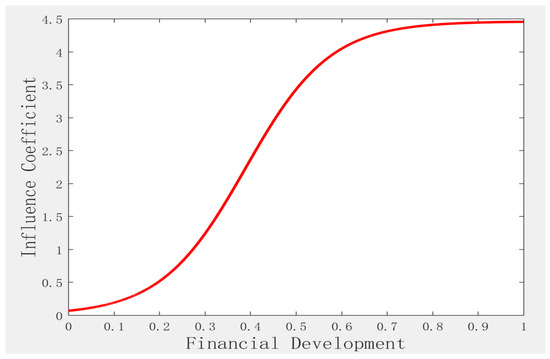
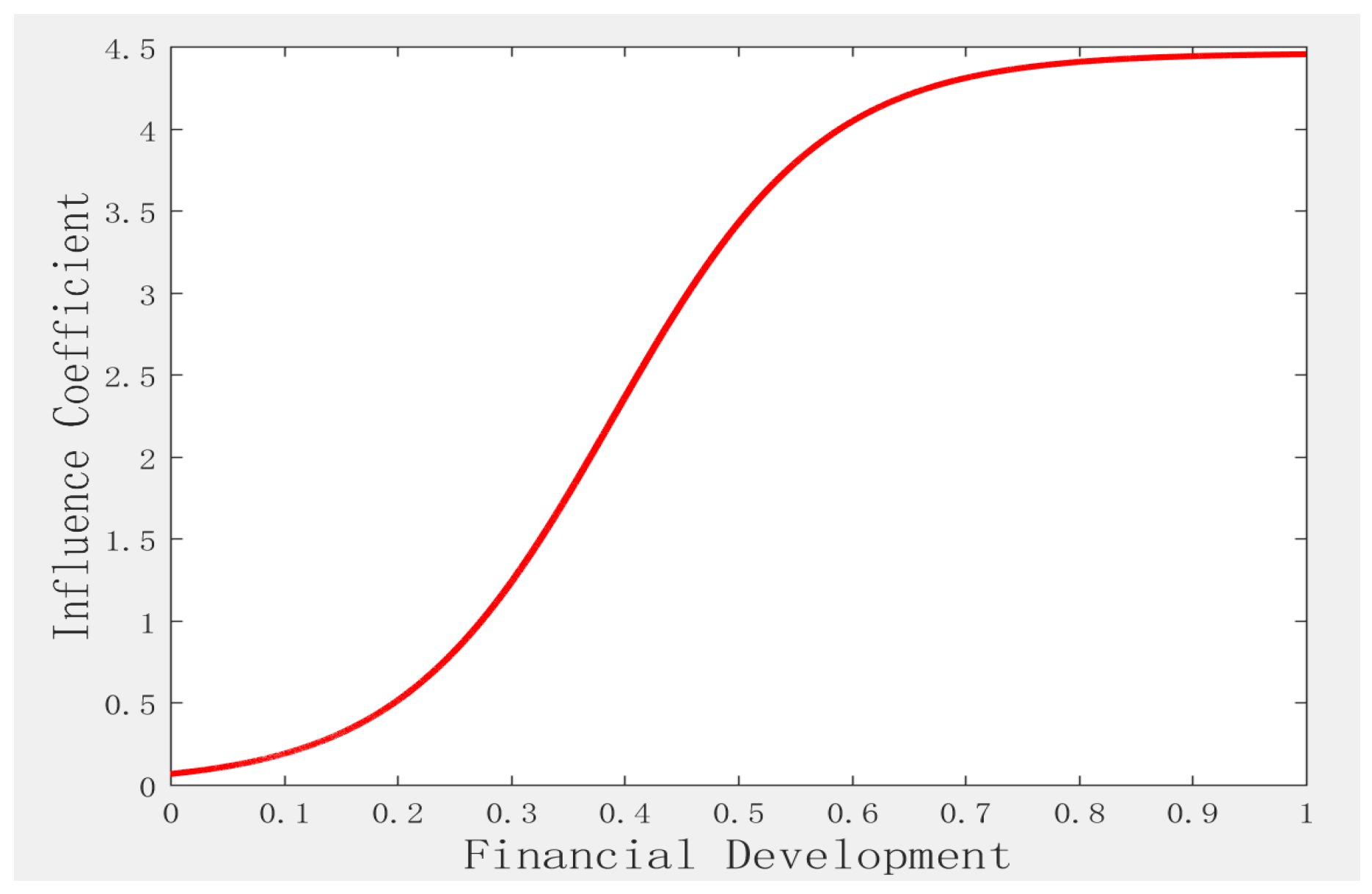
Specifically, the coefficient of the linear part of financial development is insignificant, indicating that when the level of financial development is very low, it does not have a significant impact on renewable energy consumption. As the level of financial development increases, the coefficient of the linear part does not form a superposition effect. However, the coefficient of the nonlinear part of financial development is 4.4593, which means that the moderating effect of financial development is monotonically increasing. As the level of financial development improves, its positive impact on renewable energy consumption continues to strengthen. As the transition function increases from 0 to 1, the impact coefficient of financial development on renewable energy consumption gradually increases from 0 to 4.4593. The slope parameter of the transition function is 1.7771, indicating that the enhancement of financial development’s role in promoting renewable energy consumption is a relatively gradual process.
Figure 1 visually illustrates the changes in the influence coefficient of financial development on renewable energy consumption under different levels of financial development. It is evident from the figure that when the level of financial development is low, such as within the range of 0 to 0.1, the positive impact of financial development on renewable energy consumption is limited. However, as the level of financial development increases, the impact coefficient continues to rise. Simultaneously, this change is a gradual process.
Figure 1.
The variation in influence coefficient (Model 1).
The empirical results are consistent with the theoretical analysis: when financial development is at a low level, it cannot effectively promote renewable energy consumption. The insufficient development of the financial sector implies that the number and variety of financial institutions are usually limited, and the scale of the financial market is relatively small, unable to provide sufficient liquidity and investment opportunities. Additionally, due to the immaturity of risk control mechanisms in the financial sector, investors may face higher risks, which further limits the financial market’s support for renewable energy industries. Under such conditions, renewable energy industries and projects often face financing difficulties.
However, as the level of financial development improves, it signifies that the financial structure is gradually maturing and stabilizing. This enables the renewable energy industry to attract more financial support by demonstrating its good development prospects and investment value. At the same time, the level of financial risk management is also improving. Countries with high financial development levels typically have more sophisticated financial regulatory systems and advanced risk management tools, which can more effectively prevent and respond to financial risks. Related financial service institutions can provide strong support to both investors and financiers by formulating reasonable investment plans for renewable energy enterprises, grasping industry trends, and effectively avoiding investment risks.
Therefore, the empirical results of the PSTR model confirm the theoretical analysis of this paper, which suggests that the higher the level of financial development, the greater its marginal promoting effect on renewable energy consumption.
5.3. Urbanization as Moderating Variable
In this section, urbanization will be used as a moderating variable to analyze the nonlinear impact of financial development on renewable energy consumption. Similar to the analysis of the moderating effect of financial development, when urbanization is used as the moderating variable, the nonlinear test and residual nonlinear test of the model are first performed to determine whether there is a nonlinear effect, as well as the number of location parameters and transition functions.
Table 6 represents the results of nonlinear tests when urbanization is used as the transition variable. It is necessary to explain that when estimated with m = 2, the model cannot export reasonable results due to the large amount of data and the complex algorithm of PSTR model. Therefore, we construct a PSTR model with one location parameter and two transition functions in this section. The regression results of the model are shown in Table 7.
Table 6.
Results of nonlinear tests (Model 2).
Table 7.
Results of PSTR model (Model 2).
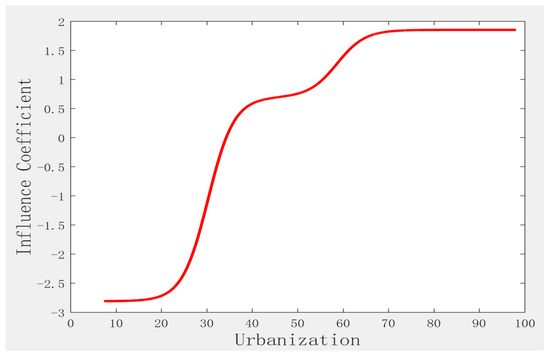
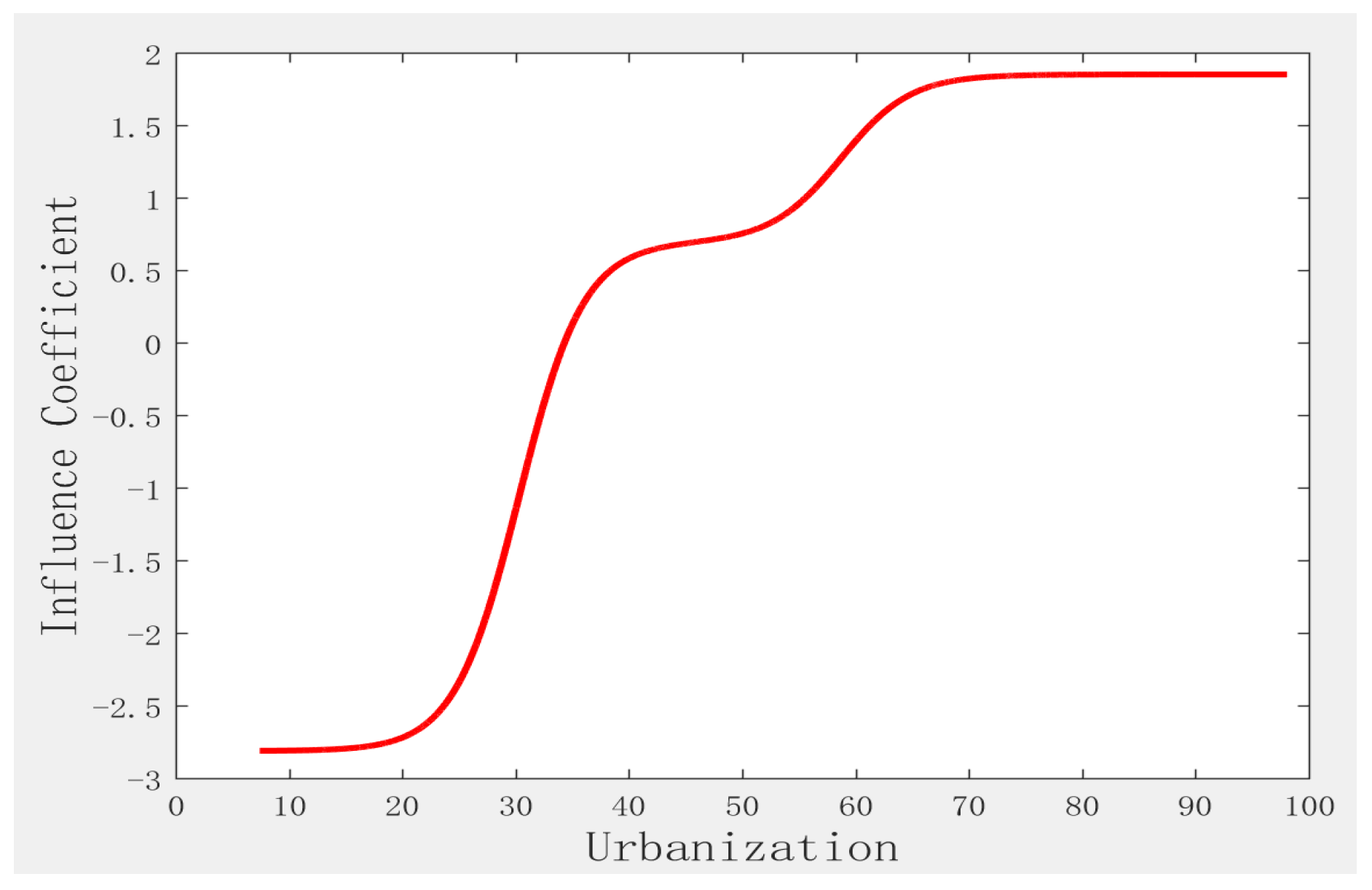
According to the regression results of the model, it can be seen that the coefficient of the linear part of financial development is negative and significant at the 1% level, indicating that when the urbanization level is very low, financial development will have a certain negative impact on renewable energy consumption. However, in both transition functions, the coefficients of the nonlinear part of financial development are positive and significant at the 1% level, suggesting that the marginal impact of financial development on renewable energy consumption will continue to increase as the urbanization level rises. This means that as the urbanization level improves, due to the superimposed effect of nonlinear impacts, the negative impact of financial development on renewable energy consumption will gradually weaken and ultimately turn into a positive impact. At the same time, with the increase in urbanization level, this positive impact will also be further enhanced. The slope parameters of the two transition functions are 0.9506 and 1.5247, indicating that when urbanization is taken as the transition variable, the process of financial development enhancing the promotion of renewable energy consumption is relatively gradual.
Figure 2 provides a more intuitive demonstration of how the impact coefficient of financial development on renewable energy consumption varies under different levels of urbanization. It is evident from the figure that when the level of urbanization is low, such as when the urbanization rate is below 25%, financial development has a significant negative effect on renewable energy consumption. As the urbanization rate increases, this negative effect gradually weakens and transitions into a positive impact. Furthermore, the figure reveals that when the urbanization rate ranges from 25% to 70%, the change in the impact effect of financial development on renewable energy consumption is most pronounced. When the urbanization rate exceeds 70%, the positive effect of financial development remains relatively stable at a high level, albeit with minimal variation.
Figure 2.
The variation in influence coefficient (Model 2).
This could be attributed to the fact that when the urbanization level is low, renewable energy-related infrastructure construction tends to be fragmented, making it difficult to achieve economies of scale, leading to high construction and maintenance costs, and making it difficult to obtain financing support from financial institutions. The improvement of urbanization level facilitates the large-scale construction of renewable energy projects, significantly reducing unit costs and enhancing the expected economic benefits of the projects. In addition, renewable energy projects have significant social benefits in terms of environmental protection and energy security, so the government usually provides subsidies or corresponding policy support for these projects. Therefore, as the urbanization level increases, renewable energy projects are more likely to obtain financing support from financial institutions, thus promoting the increase in renewable energy consumption.
5.4. Environmental Regulation as Moderating Variable
In this section, environmental regulation will be used as a moderating variable to analyze the nonlinear impact of financial development on renewable energy consumption.
Based on the nonlinear test results in Table 8, when environmental regulation is used as the transition variable, a PSTR model with one location parameter and one transition function will be constructed. The regression results of the model are shown in Table 9.
Table 8.
Results of nonlinear tests (Model 3).
Table 9.
Results of PSTR model (Model 3).
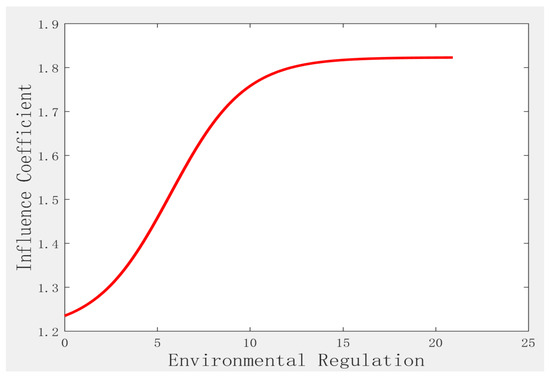
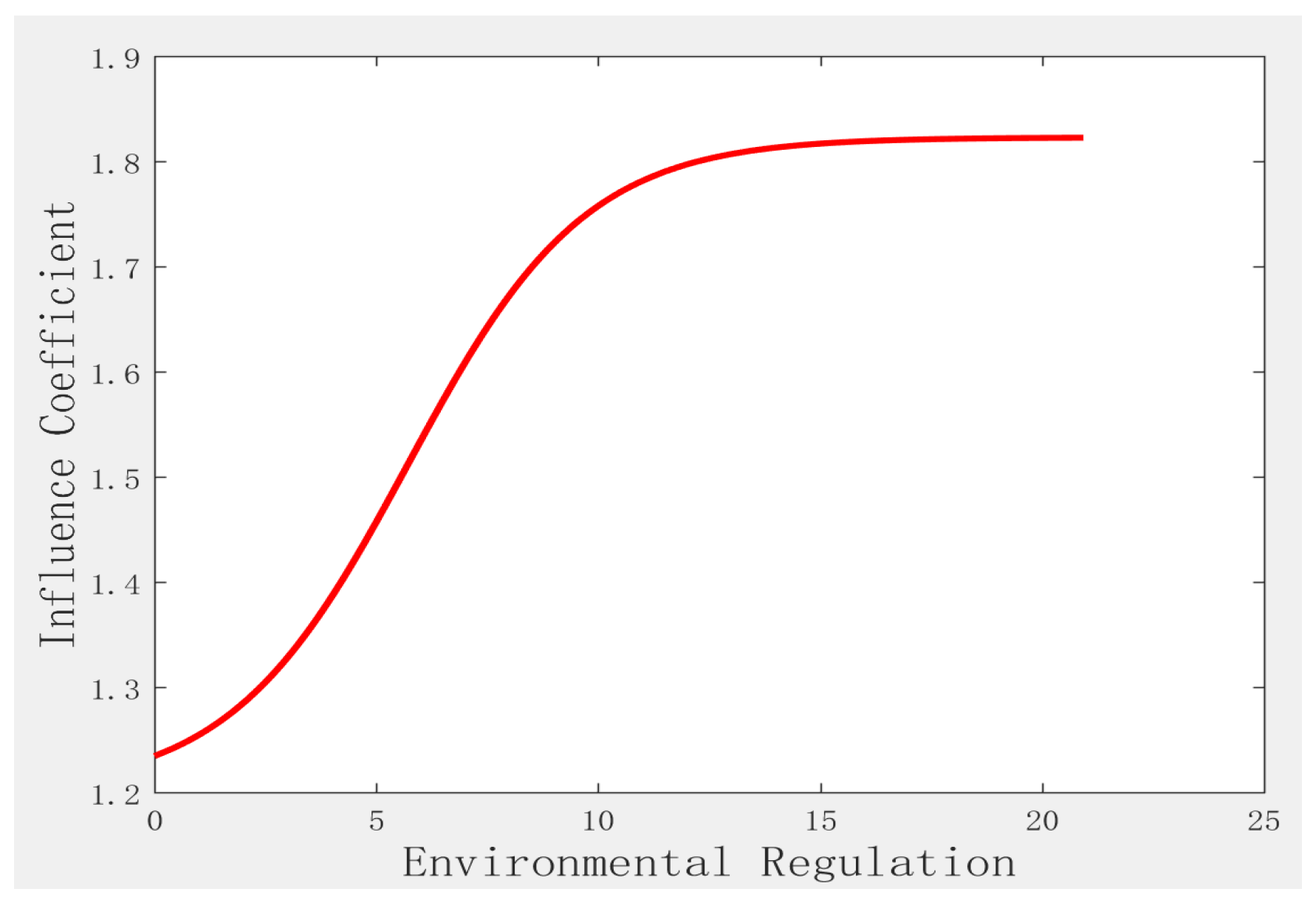
As can be seen from Table 9, the coefficient of the nonlinear part of financial development is positive and significant at the 1% level, indicating that the marginal impact of financial development on renewable energy consumption will continue to increase as the level of environmental regulation improves. The coefficient of the linear part of financial development is also positive and significant at the 1% level, suggesting that when the level of environmental regulation is very low, financial development still has a positive impact on renewable energy consumption. This impact will be further enhanced by the superposition of nonlinear effects as the level of environmental regulation increases, thereby strengthening the promotional role of financial development on renewable energy consumption. The slope parameter of the transition function is 1.9568, indicating that when environmental regulation is used as the transition variable, the marginal promotional effect of financial development on renewable energy consumption increases in a relatively gradual manner.
Figure 3 visually illustrates the changes in the impact coefficient of financial development on renewable energy consumption under different levels of environmental regulation. It is evident that even when the level of environmental regulation is low, such as within the range of 0 to 2, financial development still has a positive impact on renewable energy consumption. As the level of environmental regulation increases, the positive impact of financial development on renewable energy consumption further enhances. When the level of environmental regulation is within the range of 2 to 15, this positive effect is most pronounced. However, when the level of environmental regulation exceeds 15, the positive impact of financial development remains relatively stable but at a higher level.
Figure 3.
The variation in influence coefficient (Model 3).
When the intensity of environmental regulation is relatively low, considering factors such as cost, enterprises lack enthusiasm for investing in renewable energy due to their preference for allocating funds to other areas such as production and operation. However, as environmental regulation increases, enterprises will increase investments in environmental aspects, leading to a significant capital gap. In this scenario, the development of the financial sector can provide enterprises with financial support, promoting green research and development investments and renewable energy investments, thereby enhancing renewable energy consumption. At the same time, the strengthening of environmental regulation can improve the disclosure level of environmental information by enterprises, which is beneficial for financial institutions and financial market investors to conduct information screening and selection. Enterprises that prioritize environmental protection and renewable energy utilization will be more likely to obtain financing support from the financial sector. Additionally, as the level of environmental regulation improves, the approval and regulatory standards for high-energy-consuming and high-polluting projects will become stricter, while the support for green and environmentally friendly projects, including renewable energy-related projects, will be further enhanced. This will, to a certain extent, reduce the diversion of funds from traditional high-energy-consuming and high-polluting projects, indirectly reducing the financing competition pressure for renewable energy projects, alleviating their financing constraints and ultimately promoting the production and consumption of renewable energy. In summary, the empirical results of the PSTR model confirmed the theoretical analysis, suggesting that as the level of environmental regulation increases, financial development can more effectively promote renewable energy consumption.
5.5. Robustness Tests
In previous sections, we have analyzed the nonlinear impact of financial development on renewable energy consumption with financial development, urbanization, and environmental regulation as moderating variables. To further verify the reliability of the empirical results, this section conducts the robustness tests by replacing the core explanatory variable.
The FD index constructed by Svirydzenka [74] was adopted as a proxy variable to measure the level of financial development in the previous sections. In the robustness test, this paper replaces it with the indicator of “Domestic credit to private sector (% of GDP)” to verify the consistency of the empirical results. This indicator is also widely used by scholars in relevant research [88,89,90]. It should be noted that due to missing values, the sample size in the robustness test has been reduced. Table 10, Table 11 and Table 12 present the regression results for models 1–3. Furthermore, considering the relatively small sample size in the main regression model with environmental regulation as the moderating variable, in addition to the above robustness test, this paper further conducts an additional robustness test by replacing the proxy variable for environmental regulation based on the main regression of model 3 to ensure the reliability of the empirical results. Table 13 presents the relevant regression results.
Table 10.
Results of PSTR model (Robustness test for Model 1).
Table 11.
Results of PSTR model (Robustness test for Model 2).
Table 12.
Results of PSTR model (Robustness test for Model 3).
Table 13.
Results of PSTR model (Supplemental robustness test for Model 3).
According to the results of the nonlinear tests, the robustness test for Model 1 constructs a PSTR model with 1 location parameter and 1 transition function. Table 10 displays the regression results. It can be clearly observed that the coefficient of the nonlinear part of financial development is significant at the 1% level, while the coefficient of the linear part is insignificant. These indicate that when financial development is at a low level, it does not have a significant impact on renewable energy consumption; however, as the level of financial development improves, it has positive influence on renewable energy consumption and this effect continues to strengthen. The slope parameter of the transition function is 1.0064, reflecting that the enhancement of promoting effect is a relatively gradual process. These results are quite similar to those of the main regression, indicating that the findings are robust and consistent.
According to the results of the nonlinear tests, the robustness test for Model 2 constructs a PSTR model with 1 location parameter and 1 transition function. The regression results showed in Table 11 indicate that the coefficient of the linear part is insignificant, while the coefficient of the nonlinear part of financial development is significant at the 1% level. These implies that when the level of urbanization is very low, financial development does not have a significant promoting effect on renewable energy consumption. As the level of urbanization rises, the promoting effect of financial development on renewable energy consumption gradually emerges and intensifies with the further enhancement of urbanization. The slope parameter is 2.4028 which is relatively larger than that in main regression. It implies that the promoting effect financial development on renewable energy consumption changes a little faster around the location of 31.7914. While these results exhibit some differences compared with the main regression, the overall key conclusions remain consistent.
According to the results of the nonlinear tests, the robustness test for Model 3 constructs a PSTR model with 1 location parameter and 1 transition function. According to the results in Table 12, both the coefficients of linear and nonlinear parts are positive and significant at least at the 5% level, which indicate that when the level of environmental regulation is very low, financial development still has a positive impact on renewable energy consumption, and with the enhancement of environmental regulation, this positive effect will further strengthen. The slope parameter is 5.6196 which is much larger than that in main regression. It implies that the promoting effect financial development on renewable energy consumption changes much faster around the location of 5.8772. Overall, the results are basically consistent with the main regression.
As mentioned earlier, considering the relatively small sample size in Model 3 of the main regression, in addition to the aforementioned robustness tests, this paper further conducts additional robustness tests by replacing the proxy variable for environmental regulation based on the main regression of Model 3 to ensure the reliability of the empirical results. In the main regression, this paper adopted “environmentally related tax revenue (% of total tax revenue)” as the measure of the level of environmental regulation. Here, the indicator of “Environmental Policy Stringency” is used as a substitution [91,92]. This indicator also comes from the OECD database.
According to the results of the nonlinear tests, the supplemental robustness test for Model 3 constructs a PSTR model with 1 location parameter and 1 transition function. The results in Table 13 indicate that coefficient of the linear part of financial development is insignificant, while the coefficient of the nonlinear part is significant at the 1% level. These imply that when the level of environmental regulation is very low, the financial development does not have a obvious impact on renewable energy consumption. As the level of environmental regulation increases, the promoting effect of financial development on renewable energy consumption gradually emerges and intensifies with the further enhancement of environmental regulation. The slope parameter is 4.7716 which is much larger than that in main regression. Although there are differences in the estimation results of the nonlinear part and slope parameter compared to the main regression, the moderating effect of environmental regulation is generally similar to that of the main regression.
6. Conclusions and Policy Recommendations
Renewable energy plays a significant role in improving the ecological environment and ensuring energy supply. This paper theoretically analyzes the potential moderating effects of financial development itself, urbanization, and environmental regulations on the impact of financial development on renewable energy consumption. Furthermore, an empirical study is conducted based on the PSTR model and global panel data from 1996 to 2020. The results indicate that changes in moderating variables can lead to differences in the impact of financial development on renewable energy consumption. With the increase in financial development level, urbanization rate, and environmental regulation intensity, the promoting effect of financial development on renewable energy consumption gradually enhances. Based on the research conclusions, this paper proposes the following policy recommendations:
Firstly, the efficiency of resource allocation should be enhanced in the financial sector, to promote the development of the renewable energy industry. For countries with a relatively high level of financial development, policy recommendations should focus on the in-depth optimization and innovation of financial markets. It is essential to further refine information disclosure and rating systems, and strictly regulate financial reporting procedures to enhance market fairness and transparency. Meanwhile, financial product innovation should be encouraged to provide renewable energy enterprises with more diversified financing channels, such as green bonds and carbon financial derivatives. For countries with a relatively low level of financial development, policy priorities should lie in strengthening financial foundations and improving financial services. It is crucial to promote the digital transformation of financial institutions, leveraging technologies such as big data and artificial intelligence to transform traditional business models, thereby enhancing service efficiency and risk management capabilities. Additionally, financial infrastructure should be reinforced to improve the inclusiveness of the financial system, ensuring that renewable energy enterprises can access necessary credit support and thus fostering the healthy development of the entire industry.
Secondly, the process of urbanization should be promoted, and the layout of renewable energy should be emphasized. For countries with a high level of urbanization, the focus lies in deepening the optimization and upgrading of urban renewable energy utilization systems. Continuous efforts should be made to intensify the construction of smart grids and distributed energy systems. By leveraging advanced technologies, efficient interconnection and precise dispatching of energy can be achieved, fully harnessing economies of scale to further reduce construction and operational costs and enhance the overall economic benefits of renewable energy projects. For countries with a low level of urbanization, renewable energy utilization should be incorporated as a core consideration during the initial stages of urban planning and construction. It is essential to make forward-looking arrangements, clarify the application objectives of renewable energy in various fields and environmental protection standards, and prioritize the layout of suitable renewable energy development projects based on the unique local climatic and geographical conditions. This will help establish a renewable energy-friendly urban framework at the foundational level and gradually explore a path that aligns with their own development characteristics.
Thirdly, the environmental regulatory policies should be strengthened, to guide financial resources to support the development of renewable energy industry. On one hand, differentiated administrative command-based environmental regulations should be implemented based on the energy utilization patterns of different industries. These regulations, such as setting total carbon emission caps, environmental protection technical standards, and market entry criteria, aim to encourage enterprises to adjust their energy utilization structures, and flexibly adjusting policies based on the evolving industrial landscape. On the other hand, market-incentivized environmental regulation policies, such as environmental taxes and emissions trading schemes, should be actively promoted. These policies, leveraging taxation and pricing mechanisms, aim to incentivize enterprises’ voluntary and self-conscious environmental protection efforts, strengthening their motivation to adopt cleaner production methods and renewable energy. Moreover, it is crucial to strengthen the effective coordination between environmental regulation and financial policies.
Although this paper analyzes the nonlinear influence of financial development on renewable energy consumption from the perspective of moderating effects, there are still the following research limitations: Firstly, constrained by the length of the paper and data availability, this paper mainly focuses on macro-level moderating factors and does not explore micro-level ones. Future research can analyze the nonlinear impact of financial development on renewable energy consumption from a micro perspective, thereby further enriching the research perspectives and outcomes on this topic. Secondly, there may be measurement errors in the variables used in this paper, such as the financial development index. The existing research often relies on single or composite indicators to measure financial development. However, these indicators are inadequate in comprehensively reflect the depth, efficiency, and inclusiveness of the financial system. Future research can continuously track the latest achievements of international organizations and academia in measuring financial development and construct a more precise indicator system by integrating big data and machine learning methods. Thirdly, unobserved heterogeneity that may not be fully captured by individual effects. If this unobserved heterogeneity is correlated with financial development or moderating variables, it may lead to omitted variable bias. Future research can address this limitation by incorporating additional proxy variables or employing other econometric methods, such as instrumental variable regression.
Author Contributions
Conceptualization, X.M. and X.Z.; methodology, X.M. and X.Z.; software, X.Z.; validation, X.M., X.Z. and Q.M.; formal analysis, X.M. and X.Z.; investigation, X.Z.; resources, X.M. and X.Z.; data curation, Q.M.; writing—original draft preparation, X.M., X.Z. and Q.M.; writing—review and editing, X.M., X.Z. and Q.M.; visualization, Q.M.; supervision, Q.M.; project administration, Q.M.; funding acquisition, X.M. All authors have read and agreed to the published version of the manuscript.
Funding
This research was funded by Philosophy and Social Sciences Planning Project of Henan Province, grant number 2025BJJ046.
Data Availability Statement
The sources of data are provided in Section 4.2, and all data are publicly accessible.
Conflicts of Interest
The authors declare no conflicts of interest.
Abbreviations
The following abbreviations are used in this manuscript:
| PSTR | Panel Smooth Transition Regression |
| R&D | Research and Development |
| NARDL | Nonlinear Autoregressive Distributed Lag |
| OECD | Organization for Economic Co-operation and Development |
| GDP | Gross Domestic Product |
| EIA | Energy Information Administration |
| WDIs | World Development Indicators |
| AIC | Akaike Information Criterion |
| BIC | Bayesian Information Criterion |
References
- Shaari, M.S.; Majekodunmi, T.B.; Zainal, N.F.; Harun, N.H.; Ridzuan, A.R. The Linkage between Natural Gas Consumption and Industrial Output: New Evidence Based on Time Series Analysis. Energy 2023, 284, 129395. [Google Scholar] [CrossRef] [Scilit]
- Adu, D.; Jianguo, D.; Asomani, S.N.; Abbey, A. Energy Generation and Carbon Dioxide Emission—The Role of Renewable Energy for Green Development. Energy Rep. 2024, 12, 1420–1430. [Google Scholar] [CrossRef] [Scilit]
- Baydoun, H.; Aga, M. The Effect of Energy Consumption and Economic Growth on Environmental Sustainability in the GCC Countries: Does Financial Development Matter? Energies 2021, 14, 5897. [Google Scholar] [CrossRef] [Scilit]
- Methmini, D.; Dharmapriya, N.; Gunawardena, V.; Edirisinghe, S.; Jayathilaka, R.; Wickramaarachchi, C. Impact of Economic Growth, Energy Consumption, and Trade Openness on Carbon Emissions: Evidence from the Top 20 Emitting Nations. Clim. Dev. 2025, 17, 395–406. [Google Scholar] [CrossRef] [Scilit]
- Zheng, H.; Song, M.; Shen, Z. The Evolution of Renewable Energy and Its Impact on Carbon Reduction in China. Energy 2021, 237, 121639. [Google Scholar] [CrossRef] [Scilit]
- Aichele, R.; Felbermayr, G. Kyoto and the Carbon Footprint of Nations. J. Environ. Econ. Manag. 2012, 63, 336–354. [Google Scholar] [CrossRef] [Scilit]
- Aldegheishem, A. The Relationship between Urbanization, Energy Consumption, Economic Growth, and Carbon Dioxide Emissions in Middle Eastern Countries: Saudi Arabia, Jordan and Egypt. Environ. Res. Commun. 2024, 6, 065011. [Google Scholar] [CrossRef] [Scilit]
- Sharif, A.; Bashir, U.; Mehmood, S.; Cheong, C.W.H.; Bashir, M.F. Exploring the Impact of Green Technology, Renewable Energy and Globalization towards Environmental Sustainability in the Top Ecological Impacted Countries. Geosci. Front. 2024, 15, 101895. [Google Scholar] [CrossRef] [Scilit]
- Khurshid, N.; Egbe, C.E.; Akram, N. Integrating Non-Renewable Energy Consumption, Geopolitical Risks, Economic Development with the Ecological Intensity of Wellbeing: Evidence from Quantile Regression Analysis. Front. Energy Res. 2024, 12, 1391953. [Google Scholar] [CrossRef] [Scilit]
- Roy, B.; Schaffartzik, A. Talk Renewables, Walk Coal: The Paradox of India’s Energy Transition. Ecol. Econ. 2021, 180, 106871. [Google Scholar] [CrossRef] [Scilit]
- Lawal, A.I. Determinants of Renewable Energy Consumption in Africa: Evidence from System GMM. Energies 2023, 16, 2136. [Google Scholar] [CrossRef] [Scilit]
- Khan, K.; Su, C.W.; Khurshid, A.; Qin, M. Does Energy Security Improve Renewable Energy? A Geopolitical Perspective. Energy 2023, 282, 128824. [Google Scholar] [CrossRef] [Scilit]
- Adebayo, T.S.; Ullah, S.; Kartal, M.T.; Ali, K.; Pata, U.K.; Ağa, M. Endorsing Sustainable Development in BRICS: The Role of Technological Innovation, Renewable Energy Consumption, and Natural Resources in Limiting Carbon Emission. Sci. Total Environ. 2023, 859, 160181. [Google Scholar] [CrossRef] [Scilit] [PubMed]
- Ebaidalla, E.M. The Impact of Taxation, Technological Innovation and Trade Openness on Renewable Energy Investment: Evidence from the Top Renewable Energy Producing Countries. Energy 2024, 306, 132539. [Google Scholar] [CrossRef] [Scilit]
- Ehigiamusoe, K.U.; Dogan, E. The Role of Interaction Effect between Renewable Energy Consumption and Real Income in Carbon Emissions: Evidence from Low-Income Countries. Renew. Sustain. Energy Rev. 2022, 154, 111883. [Google Scholar] [CrossRef] [Scilit]
- Johansson, B. Security Aspects of Future Renewable Energy Systems—A Short Overview. Energy 2013, 61, 598–605. [Google Scholar] [CrossRef] [Scilit]
- Cergibozan, R. Renewable Energy Sources as a Solution for Energy Security Risk: Empirical Evidence from OECD Countries. Renew. Energy 2022, 183, 617–626. [Google Scholar] [CrossRef] [Scilit]
- Mukhtarov, S.; Humbatova, S.; Hajiyev, N.G.-O.; Aliyev, S. The Financial Development-Renewable Energy Consumption Nexus in the Case of Azerbaijan. Energies 2020, 13, 6265. [Google Scholar] [CrossRef] [Scilit]
- Elzaki, R.M. Impact of Financial Development Shocks on Renewable Energy Consumption in Saudi Arabia. Sustainability 2023, 15, 16004. [Google Scholar] [CrossRef] [Scilit]
- Yasmeen, R.; Shah, W.U.H. Energy Uncertainty, Geopolitical Conflict, and Militarization Matters for Renewable and Non-Renewable Energy Development: Perspectives from G7 Economies. Energy 2024, 306, 132480. [Google Scholar] [CrossRef] [Scilit]
- Ngcobo, R.; De Wet, M.C. The Impact of Financial Development and Economic Growth on Renewable Energy Supply in South Africa. Sustainability 2024, 16, 2533. [Google Scholar] [CrossRef] [Scilit]
- Kim, J.; Park, K. Financial Development and Deployment of Renewable Energy Technologies. Energy Econ. 2016, 59, 238–250. [Google Scholar] [CrossRef] [Scilit]
- Doran, M.D.; Poenaru, M.M.; Zaharia, A.L.; Vătavu, S.; Lobonț, O.R. Fiscal Policy, Growth, Financial Development and Renewable Energy in Romania: An Autoregressive Distributed Lag Model with Evidence for Growth Hypothesis. Energies 2022, 16, 70. [Google Scholar] [CrossRef] [Scilit]
- Chang, S.-C. Effects of Financial Developments and Income on Energy Consumption. Int. Rev. Econ. Financ. 2015, 35, 28–44. [Google Scholar] [CrossRef] [Scilit]
- Samour, A.; Baskaya, M.M.; Tursoy, T. The Impact of Financial Development and FDI on Renewable Energy in the UAE: A Path towards Sustainable Development. Sustainability 2022, 14, 1208. [Google Scholar] [CrossRef] [Scilit]
- Yadav, A.; Bekun, F.V.; Ozturk, I.; Ferreira, P.J.S.; Karalinc, T. Unravelling the Role of Financial Development in Shaping Renewable Energy Consumption Patterns: Insights from BRICS Countries. Energy Strategy Rev. 2024, 54, 101434. [Google Scholar] [CrossRef] [Scilit]
- Wang, Z.; Pham, T.L.H.; Sun, K.; Wang, B.; Bui, Q.; Hashemizadeh, A. The Moderating Role of Financial Development in the Renewable Energy Consumption-CO2 Emissions Linkage: The Case Study of Next-11 Countries. Energy 2022, 254, 124386. [Google Scholar] [CrossRef] [Scilit]
- Dimnwobi, S.K.; Madichie, C.V.; Ekesiobi, C.; Asongu, S.A. Financial Development and Renewable Energy Consumption in Nigeria. Renew. Energy 2022, 192, 668–677. [Google Scholar] [CrossRef] [Scilit]
- Mukhtarov, S.; Yüksel, S.; Dinçer, H. The Impact of Financial Development on Renewable Energy Consumption: Evidence from Turkey. Renew. Energy 2022, 187, 169–176. [Google Scholar] [CrossRef] [Scilit]
- Jiang, S.; Kakar, A.; Khan, A. Identifying the Roles of Governance, ICT, and Financial Development to Facilitate Renewable Energy Generation in BRICS Countries. Environ. Dev. Sustain. 2025, 27, 7193–7217. [Google Scholar] [CrossRef] [Scilit]
- Somoye, O.A.; Seraj, M.; Ozdeser, H.; Mar’I, M. Quantile Relationship Between Financial Development, Income, Price, CO2 Emissions and Renewable Energy Consumption: Evidence from Nigeria. Lett. Spat. Resour. Sci. 2023, 16, 2. [Google Scholar] [CrossRef] [Scilit]
- Lei, W.; Liu, L.; Hafeez, M.; Sohail, S. Do Economic Policy Uncertainty and Financial Development Influence the Renewable Energy Consumption Levels in China? Environ. Sci. Pollut. Res. 2022, 29, 7907–7916. [Google Scholar] [CrossRef] [Scilit] [PubMed]
- Yu, M.; Jin, H.; Zhang, H.; Chong, A.Y.L. ICT, Financial Development and Renewable Energy Consumption. J. Comput. Inf. Syst. 2023, 63, 190–203. [Google Scholar] [CrossRef] [Scilit]
- Wen, J.; Hong, L.; Khalid, S.; Mahmood, H.; Zakaria, M. Nexus between Renewable Energy Consumption, Foreign Capital Flows, and Financial Development: New Evidence Using CUP-FM and CUP-BC Advanced Methods. Struct. Change Econ. Dyn. 2023, 67, 82–88. [Google Scholar] [CrossRef] [Scilit]
- Ji, Q.; Zhang, D. How Much Does Financial Development Contribute to Renewable Energy Growth and Upgrading of Energy Structure in China? Energy Policy 2019, 128, 114–124. [Google Scholar] [CrossRef] [Scilit]
- Eren, B.M.; Taspinar, N.; Gokmenoglu, K.K. The Impact of Financial Development and Economic Growth on Renewable Energy Consumption: Empirical Analysis of India. Sci. Total Environ. 2019, 663, 189–197. [Google Scholar] [CrossRef] [Scilit]
- Chang, L.; Qian, C.; Dilanchiev, A. Nexus between Financial Development and Renewable Energy: Empirical Evidence from Nonlinear Autoregression Distributed Lag. Renew. Energy 2022, 193, 475–483. [Google Scholar] [CrossRef] [Scilit]
- Zhang, R.J.; Razzaq, A. Influence of Economic Policy Uncertainty and Financial Development on Renewable Energy Consumption in the BRICST Region. Renew. Energy 2022, 201, 526–533. [Google Scholar] [CrossRef] [Scilit]
- Saadaoui, H.; Chtourou, N. Do Institutional Quality, Financial Development, and Economic Growth Improve Renewable Energy Transition? Some Evidence from Tunisia. J. Knowl. Econ. 2023, 14, 2927–2958. [Google Scholar] [CrossRef] [Scilit]
- Amin, S.B.; Khan, F.; Rahman, M.A. The Relationship between Financial Development and Renewable Energy Consumption in South Asian Countries. Environ. Sci. Pollut. Res. 2022, 29, 58022–58036. [Google Scholar] [CrossRef] [Scilit]
- Assi, A.F.; Zhakanova Isiksal, A.; Tursoy, T. Renewable Energy Consumption, Financial Development, Environmental Pollution, and Innovations in the ASEAN + 3 Group: Evidence from (P-ARDL) Model. Renew. Energy 2021, 165, 689–700. [Google Scholar] [CrossRef] [Scilit]
- Irfan, M.; Rehman, M.A.; Razzaq, A.; Hao, Y. What Derives Renewable Energy Transition in G-7 and E-7 Countries? The Role of Financial Development and Mineral Markets. Energy Econ. 2023, 121, 106661. [Google Scholar] [CrossRef] [Scilit]
- Lin, B.; Okoye, J.O. Towards Renewable Energy Generation and Low Greenhouse Gas Emission in High-Income Countries: Performance of Financial Development and Governance. Renew. Energy 2023, 215, 118931. [Google Scholar] [CrossRef] [Scilit]
- Köksal, C.; Katircioglu, S.; Katircioglu, S. The Role of Financial Efficiency in Renewable Energy Demand: Evidence from OECD Countries. J. Environ. Manag. 2021, 285, 112122. [Google Scholar] [CrossRef] [Scilit]
- Hu, Y.; Jiang, W.; Dong, H.; Majeed, M.T. Transmission Channels between Financial Efficiency and Renewable Energy Consumption: Does Environmental Technology Matter in High-Polluting Economies? J. Clean. Prod. 2022, 368, 132885. [Google Scholar] [CrossRef] [Scilit]
- Skare, M.; Gavurova, B.; Sinkovic, D. Regional Aspects of Financial Development and Renewable Energy: A Cross-Sectional Study in 214 Countries. Econ. Anal. Policy 2023, 78, 1142–1157. [Google Scholar] [CrossRef] [Scilit]
- Best, R. Switching towards Coal or Renewable Energy? The Effects of Financial Capital on Energy Transitions. Energy Econ. 2017, 63, 75–83. [Google Scholar] [CrossRef] [Scilit]
- Le, T.-H.; Nguyen, C.P.; Park, D. Financing Renewable Energy Development: Insights from 55 Countries. Energy Res. Soc. Sci. 2020, 68, 101537. [Google Scholar] [CrossRef] [Scilit]
- Wang, Z.; Le Hoa Pham, T.; Wang, B.; Hashemizadeh, A.; Bui, Q.; Nawarathna, C.L.K. The Simultaneous Impact of Education and Financial Development on Renewable Energy Consumption: An Investigation of Next-11 Countries. Environ. Sci. Pollut. Res. 2022, 29, 85492–85509. [Google Scholar] [CrossRef] [Scilit]
- Muoneke, O.B.; Okere, K.I.; Egbo, O.P. Does Political Conflict Tilt Finance-Renewable Energy Dynamics in Africa? Accounting for the Multi-Dimensional Approach to Financial Development and Threshold Effect of Political Conflict. Heliyon 2023, 9, e14155. [Google Scholar] [CrossRef] [Scilit]
- Ben Abdallah, A.; Becha, H.; Sharif, A.; Bashir, M.F. Geopolitical Risk, Financial Development, and Renewable Energy Consumption: Empirical Evidence from Selected Industrial Economies. Environ. Sci. Pollut. Res. 2024, 31, 21935–21946. [Google Scholar] [CrossRef] [Scilit] [PubMed]
- Raza, S.A.; Shah, N.; Qureshi, M.A.; Qaiser, S.; Ali, R.; Ahmed, F. Non-Linear Threshold Effect of Financial Development on Renewable Energy Consumption: Evidence from Panel Smooth Transition Regression Approach. Environ. Sci. Pollut. Res. 2020, 27, 32034–32047. [Google Scholar] [CrossRef] [Scilit] [PubMed]
- Wang, Q.; Dong, Z. Does Financial Development Promote Renewable Energy? Evidence of G20 Economies. Environ. Sci. Pollut. Res. 2021, 28, 64461–64474. [Google Scholar] [CrossRef] [Scilit] [PubMed]
- Jiang, C.; Ma, X. The Impact of Financial Development on Carbon Emissions: A Global Perspective. Sustainability 2019, 11, 5241. [Google Scholar] [CrossRef] [Scilit]
- Su, M.; Wang, Q.; Li, R.; Wang, L. Per Capita Renewable Energy Consumption in 116 Countries: The Effects of Urbanization, Industrialization, GDP, Aging, and Trade Openness. Energy 2022, 254, 124289. [Google Scholar] [CrossRef] [Scilit]
- Zhang, N.; Yu, K.; Chen, Z. How Does Urbanization Affect Carbon Dioxide Emissions? A Cross-Country Panel Data Analysis. Energy Policy 2017, 107, 678–687. [Google Scholar] [CrossRef] [Scilit]
- Yang, J.; Zhang, W.; Zhang, Z. Impacts of Urbanization on Renewable Energy Consumption in China. J. Clean. Prod. 2016, 114, 443–451. [Google Scholar] [CrossRef] [Scilit]
- Tan, Y.; Uprasen, U. The Effect of Foreign Direct Investment on Renewable Energy Consumption Subject to the Moderating Effect of Environmental Regulation: Evidence from the BRICS Countries. Renew. Energy 2022, 201, 135–149. [Google Scholar] [CrossRef] [Scilit]
- Madlener, R.; Sunak, Y. Impacts of Urbanization on Urban Structures and Energy Demand: What Can We Learn for Urban Energy Planning and Urbanization Management? Sustain. Cities Soc. 2011, 1, 45–53. [Google Scholar] [CrossRef] [Scilit]
- Poumanyvong, P.; Kaneko, S. Does Urbanization Lead to Less Energy Use and Lower CO2 Emissions? A Cross-Country Analysis. Ecol. Econ. 2010, 70, 434–444. [Google Scholar] [CrossRef] [Scilit]
- Chen, Y. Factors Influencing Renewable Energy Consumption in China: An Empirical Analysis Based on Provincial Panel Data. J. Clean. Prod. 2018, 174, 605–615. [Google Scholar] [CrossRef] [Scilit]
- Kim, J.; Park, K. Effect of the Clean Development Mechanism on the Deployment of Renewable Energy: Less Developed vs. Well-Developed Financial Markets. Energy Econ. 2018, 75, 1–13. [Google Scholar] [CrossRef] [Scilit]
- Doğan, B.; Chu, L.K.; Ghosh, S.; Diep Truong, H.H.; Balsalobre-Lorente, D. How Environmental Taxes and Carbon Emissions Are Related in the G7 Economies? Renew. Energy 2022, 187, 645–656. [Google Scholar] [CrossRef] [Scilit]
- Kesidou, E.; Demirel, P. On the Drivers of Eco-Innovations: Empirical Evidence from the UK. Res. Policy 2012, 41, 862–870. [Google Scholar] [CrossRef] [Scilit]
- Porter, M.E.; Linde, C.V.D. Toward a New Conception of the Environment-Competitiveness Relationship. J. Econ. Perspect. 1995, 9, 97–118. [Google Scholar] [CrossRef] [Scilit]
- Zhao, X.; Mahendru, M.; Ma, X.; Rao, A.; Shang, Y. Impacts of Environmental Regulations on Green Economic Growth in China: New Guidelines Regarding Renewable Energy and Energy Efficiency. Renew. Energy 2022, 187, 728–742. [Google Scholar] [CrossRef] [Scilit]
- Zhang, D.; Zheng, W. Less Financial Constraints, More Clean Production? New Evidence from China. Econ. Lett. 2019, 175, 80–83. [Google Scholar] [CrossRef] [Scilit]
- Peng, Y.; Ji, Y. Can Informal Environmental Regulation Promote Green Innovation?–A Quasi-Natural Experiment Based on Environmental Information Disclosure Policy. Pol. J. Environ. Stud. 2022, 31, 2795–2809. [Google Scholar] [CrossRef] [Scilit]
- González, A.; Teräsvirta, T.; van Dijk, D. Panel Smooth Transition Regression Models. Work. Pap. Ser. Econ. Financ. 2005. Available online: https://swopec.hhs.se/hastef/abs/hastef0604.htm (accessed on 30 March 2026).
- Fouquau, J.; Hurlin, C.; Rabaud, I. The Feldstein–Horioka Puzzle: A Panel Smooth Transition Regression Approach. Econ. Model. 2008, 25, 284–299. [Google Scholar] [CrossRef] [Scilit]
- Aydin, M.; Bozatli, O. The Effects of Green Innovation, Environmental Taxes, and Financial Development on Renewable Energy Consumption in OECD Countries. Energy 2023, 280, 128105. [Google Scholar] [CrossRef] [Scilit]
- Qamruzzaman, M.; Jianguo, W. The Asymmetric Relationship Between Financial Development, Trade Openness, Foreign Capital Flows, and Renewable Energy Consumption: Fresh Evidence from Panel NARDL Investigation. Renew. Energy 2020, 159, 827–842. [Google Scholar] [CrossRef] [Scilit]
- Saygin, O.; Iskenderoglu, O. The Nexus between Financial Development and Renewable Energy Consumption: A Review for Emerging Countries. Environ. Sci. Pollut. Res. 2022, 29, 14522–14533. [Google Scholar] [CrossRef] [Scilit] [PubMed]
- Svirydzenka, K. Introducing a New Broad-Based Index of Financial Development. IMF Work. Pap. 2016, 1–42. [Google Scholar] [CrossRef] [Scilit]
- Alshagri, R.; Alsabhan, T.H.; Binsuwadan, J. Investigating the Role of Financial Development in Encouraging the Transition to Renewable Energy: A Fractional Response Model Approach. Sustainability 2024, 16, 8153. [Google Scholar] [CrossRef] [Scilit]
- Osińska, M.; Khan, A.M.; Kwiatkowski, J. Identifying Economic Factors of Renewable Energy Consumption—A Global Perspective. Energies 2024, 17, 3715. [Google Scholar] [CrossRef] [Scilit]
- Saadaoui, H. The Impact of Financial Development on Renewable Energy Development in the MENA Region: The Role of Institutional and Political Factors. Environ. Sci. Pollut. Res. 2022, 29, 39461–39472. [Google Scholar] [CrossRef] [Scilit]
- Khan, A.; Chenggang, Y.; Hussain, J.; Kui, Z. Impact of Technological Innovation, Financial Development and Foreign Direct Investment on Renewable Energy, Non-Renewable Energy and the Environment in Belt & Road Initiative Countries. Renew. Energy 2021, 171, 479–491. [Google Scholar] [CrossRef] [Scilit]
- Shahbaz, M.; Sinha, A.; Raghutla, C.; Vo, X.V. Decomposing Scale and Technique Effects of Financial Development and Foreign Direct Investment on Renewable Energy Consumption. Energy 2022, 238, 121758. [Google Scholar] [CrossRef] [Scilit]
- Choi, I. Unit Root Tests for Panel Data. J. Int. Money Financ. 2001, 20, 249–272. [Google Scholar] [CrossRef] [Scilit]
- Im, K.S.; Pesaran, M.H.; Shin, Y. Testing for Unit Roots in Heterogeneous Panels. J. Econom. 2003, 115, 53–74. [Google Scholar] [CrossRef] [Scilit]
- Breitung, J. The Local Power of Some Unit Root Tests for Panel Data. Adv. Econom. 2000, 15, 161–177. [Google Scholar]
- Harris, R.D.F.; Tzavalis, E. Inference for Unit Roots in Dynamic Panels Where the Time Dimension Is Fixed. J. Econom. 1999, 91, 201–226. [Google Scholar] [CrossRef] [Scilit]
- Levin, A.; Lin, C.-F.; James Chu, C.-S. Unit Root Tests in Panel Data: Asymptotic and Finite-Sample Properties. J. Econom. 2002, 108, 1–24. [Google Scholar] [CrossRef] [Scilit]
- Westerlund, J. New Simple Tests for Panel Cointegration. Econom. Rev. 2005, 24, 297–316. [Google Scholar] [CrossRef] [Scilit]
- Pedroni, P. Panel cointegration: Asymptotic and finite sample properties of pooled time series tests with an application to the PPP hypothesis. Econ. Theory 2004, 20, 597–625. [Google Scholar] [CrossRef] [Scilit]
- Kao, C. Spurious Regression and Residual-Based Tests for Cointegration in Panel Data. J. Econom. 1999, 90, 1–44. [Google Scholar] [CrossRef] [Scilit]
- Vatamanu, A.F.; Zugravu, B.G. Financial Development, Institutional Quality and Renewable Energy Consumption. A Panel Data Approach. Econ. Anal. Policy 2023, 78, 765–775. [Google Scholar] [CrossRef] [Scilit]
- Iqbal, S.; Wang, Y.; Ali, S.; Amin, N.; Kausar, S. Asymmetric Determinants of Renewable Energy Production in Pakistan: Do Economic Development, Environmental Technology, and Financial Development Matter? J. Knowl. Econ. 2024, 15, 4097–4114. [Google Scholar] [CrossRef] [Scilit]
- Saidi, K. Does Financial Development and Renewable Energy Matter for Economic Development? A Study of Emerging Economies. J. Knowl. Econ. 2023, 15, 9322–9338. [Google Scholar] [CrossRef] [Scilit]
- Luo, S.; Mabrouk, F. Nexus between Natural Resources, Globalization and Ecological Sustainability in Resource-Rich Countries: Dynamic Role of Green Technology and Environmental Regulation. Resour. Policy 2022, 79, 103027. [Google Scholar] [CrossRef] [Scilit]
- Chu, L.K.; Tran, T.H. The Nexus Between Environmental Regulation and Ecological Footprint in OECD Countries: Empirical Evidence Using Panel Quantile Regression. Environ. Sci. Pollut. Res. 2022, 29, 49700–49723. [Google Scholar] [CrossRef] [Scilit]

Disclaimer/Publisher’s Note: The statements, opinions and data contained in all publications are solely those of the individual author(s) and contributor(s) and not of MDPI and/or the editor(s). MDPI and/or the editor(s) disclaim responsibility for any injury to people or property resulting from any ideas, methods, instructions or products referred to in the content. |
© 2026 by the authors. Licensee MDPI, Basel, Switzerland. This article is an open access article distributed under the terms and conditions of the Creative Commons Attribution (CC BY) license.