


Abstract
The expected fossil fuel reserves, along with the continuous environmental degradation, underline the necessity to turn to more environmentally friendly energy resources. However, the significant exploitation of variable or even stochastic solar and wind potential challenges the market balance and the stability of most electrical networks. On the other hand, hydropower stands out, for almost one century, with its contribution to the global annual electricity consumption being nowadays almost 15%. In Greece, acknowledging the stagnation noted in the last fifteen years in the exploitation of the existing hydropower potential through large hydropower plants, small hydropower applications come to the forefront for revitalizing the pertinent total hydropower growth rates. Nevertheless, the relevant potential remains strongly under-exploited. The present work investigates the current status of the small hydropower potential exploitation with special focus on Greece, considering aspects such as the installed capacity and the geographical distribution of the corresponding power plants, their annual energy generation, and their pertinent Capacity Factors’ time evolution. The financial support schemes offered in the past by the Greek State are also investigated in comparison with the current status. The current progress and challenges of small hydropower installations are thoroughly scrutinized, thus revealing the future prospects and substantial benefits that could occur from both carbon-free, relatively stable electricity generation and a financial perspective.
1. Introduction
For more than a century, hydropower has stood out as the only mature renewable-based electricity generation sector, contributing large amounts of clean energy [1]. Nowadays, wind and solar power also provide significant amounts of clean energy; hydropower remains the only non-stochastic principal green energy electrification technology. By the end of 2024, the corresponding global hydropower electricity production was 4420 TWhe (representing 14.3% of the planet’s consumption) vs. 2500 TWhe of wind (8.1%) and 2130 TWhe (6.9%) of solar-based electricity generation.
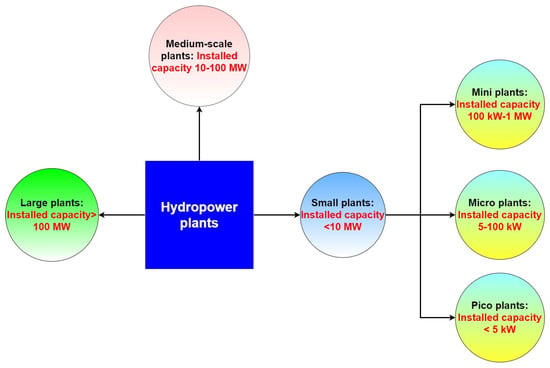
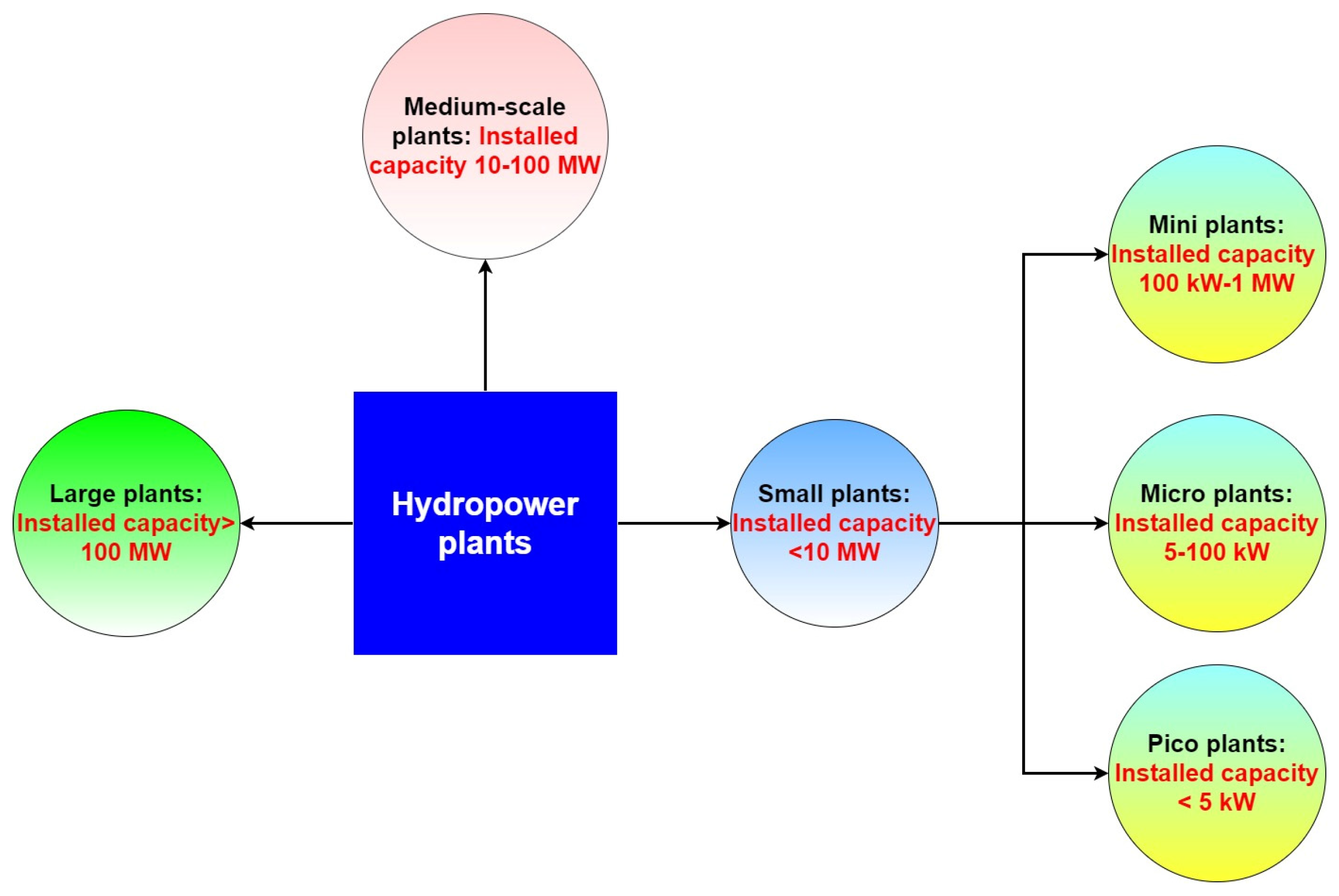
At this point, it is worth noting that hydropower plants, using the criteria of their installed capacity, are usually classified as large-scale (LHP) and small-scale (SHP) hydropower plants (Figure 1). Although LHPs have an installed capacity in the range of hundreds of MW, they also include medium-sized hydropower stations (i.e., rated power 10–100 MW). Thus, in most cases, LHPs are characterized as the power plants having installed capacity higher than a predefined value, usually 10 or 15 MW.
Figure 1.
Hydropower plants categorization based on their installed capacity.
On the other hand, SHPs are installed with a capacity of less than 10 or 15 MW, and include smaller capacities like Mini (less than 1 MW), Micro (less than 100 kW), and Pico (less than 10 kW), although the exact range of each sub-category may change from country to country.
Actually, the basic difference between LHPs and SHPs is their operational philosophy, since LHPs are based on the construction of huge water dams that store water and use the corresponding hydro potential according to the load demand of the entire electrical network. On the other hand, SHPs do not use water storage or a dam (except for the small head pond capacity), facing particular operational conditions (e.g., seasonal energy sources, minimum environmental flows, turbine maximum and minimum discharge capacities, operational days shortage, etc.). Although SHPs are characterized as low-environmental-impact power stations, during a complete ecological analysis, one should take into consideration extreme flow and flow dynamics elements, connectivity, and hydrodynamic conditions, as well as biological and fish integrity [2]. Moreover, a reduced water flow in river sections shows significantly greater degradation in ecological terms than reservoir and tail-race water sections. To this end, when all diverted water returns to the stream below the powerhouse, there is no major disturbance in the river regime, and the socioeconomic impacts are limited [2,3,4].
1.1. Small Hydropower Plants in the Global Electricity Generation Mix
As the global community strives to reduce greenhouse gas emissions and mitigate the effects of climate change, renewable energy technologies have emerged as vital solutions for a sustainable energy future. These technologies harness energy from natural sources that are constantly replenished, such as sunlight, wind, water, organic matter, and geothermal heat [5]. Among these technologies, the exploitation of hydro potential via SHPs stands out for its reliability, efficiency, and suitability for decentralized applications. Although their limited nominal capacity cannot significantly influence the dynamic behavior of large interconnected electrical grids, SHPs make an essential contribution to distributed renewable energy production [6]. They support local energy resilience and rural development by enabling access to clean electricity in remote areas where centralized grid expansion may be infeasible or economically unjustified [7]. According to recent research, see for example, [8], the significant contribution of stochastic renewable power threatens the stability of power systems; hence, novel distributed fuzzy load frequency control strategies have been developed to improve corresponding grid stability even under cross-layer random denial-of-service attacks.
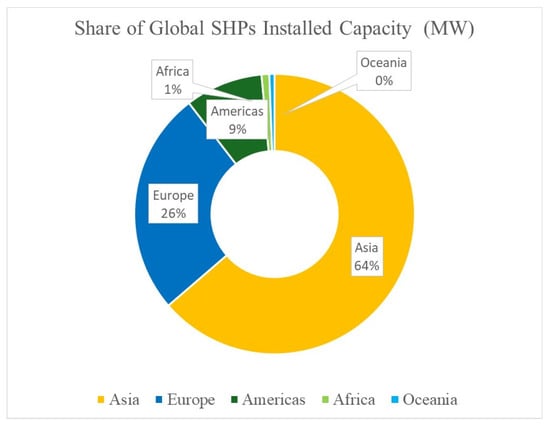
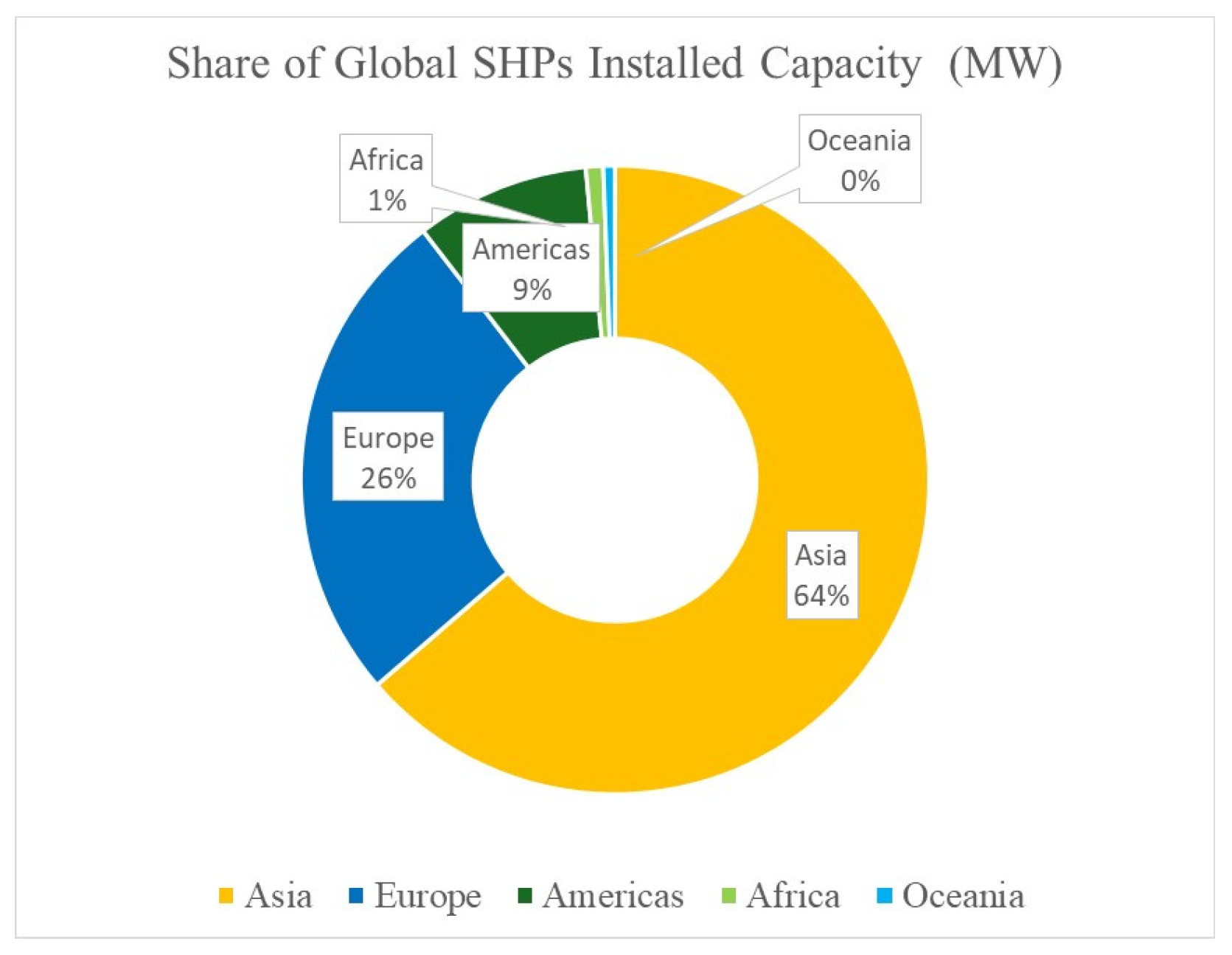
In 2024, the globally installed SHP capacity exceeded 80 GWe (while the potential capacity was estimated at 222 GWe), with Europe accounting for about 26% of this total [9]. According to the most recent official data [6], the average global energy yield is 250 TWhe/year, i.e., slightly less than 1% of our planet’s electricity generation. As seen in Figure 2, the majority of SHPs are located in Asia (50.5 GW), supporting rural electrification efforts, especially in countries like Nepal, India, and China. These nations have implemented supportive policies, technical assistance programs, and financial incentives to scale SHP deployment [9].
Figure 2.
Global distribution of SHPs (2022).
In Europe, the use of SHP is well established, particularly in Austria (1.6 GW), Italy (3.6 GW), and Norway (3 GW). It is well accepted that with proper planning, policy support, and community engagement, SHPs can significantly contribute to clean energy goals, particularly in rural and semi-rural regions with limited grid access. In this context, the EU has emphasized the modernization of existing SHP infrastructure to improve efficiency and environmental compatibility [10]. In Europe, the installed SHP capacity approached 20.5 GWe, representing 52% of the continent’s estimated potential capacity (39.6 GWe) [9], while the corresponding average annual electricity yield slightly exceeds 60 TWhe/year.
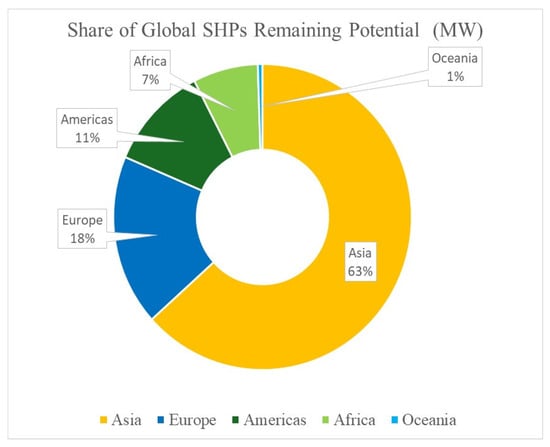
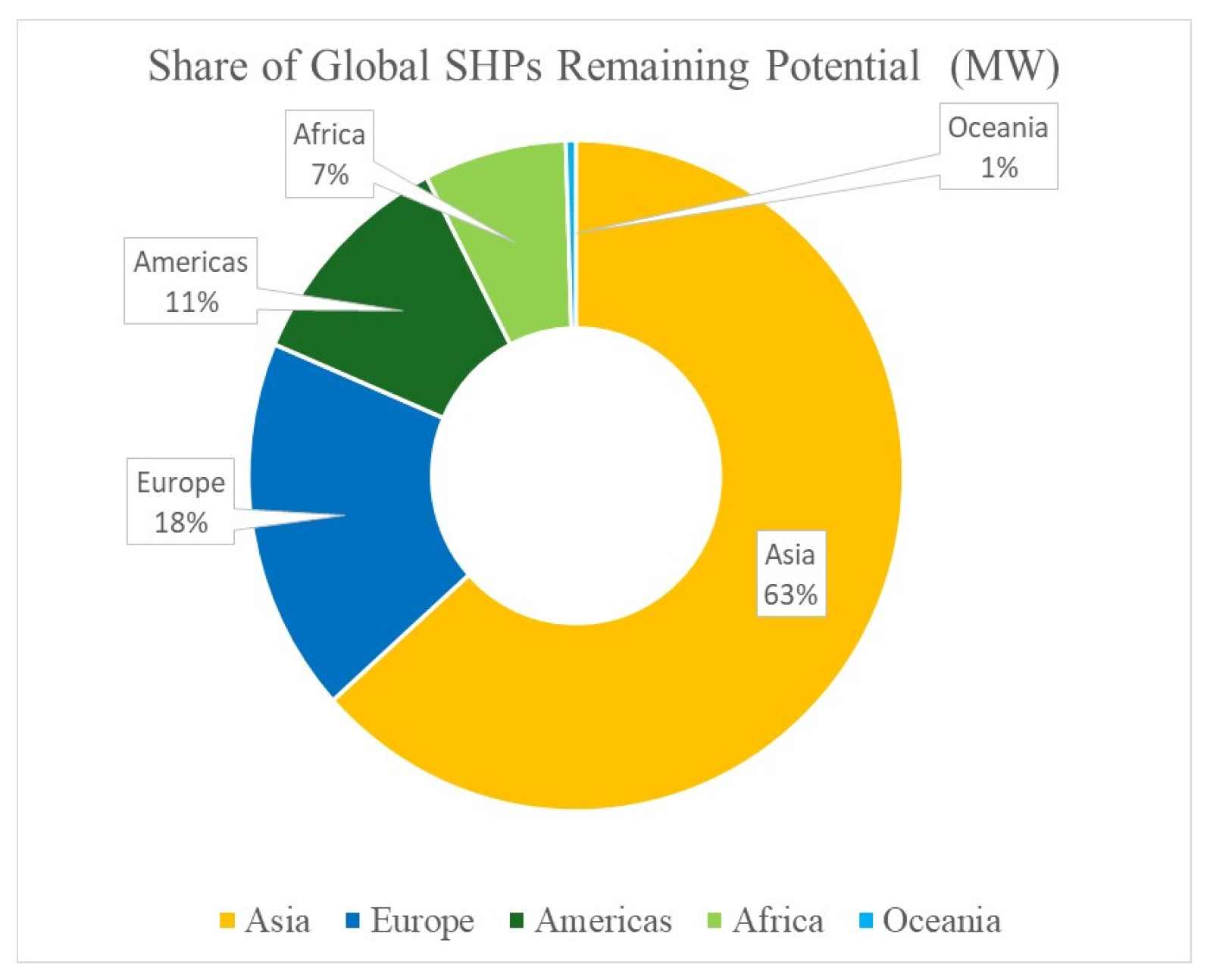
As illustrated in Figure 3, Asia holds the major share of remaining SHP potential (63%), followed by Europe (18%) and the Americas (11%). Africa and Oceania account for smaller proportions, 7% and 1% respectively. This distribution highlights both the early-stage development of SHPs in many Asian and African countries and the comparatively mature SHP infrastructure in Europe. Hence, it is obvious that the global remaining potential for SHP development reflects significant regional disparities. Moreover, while challenges remain, particularly around regulatory frameworks and seasonal flow variability [3], ongoing innovation and investment in small hydropower technology will continue to strengthen its role within the broader renewable energy landscape.
Figure 3.
Remaining global SHP potential by region (≤10 MW, 2022).
1.2. Small Hydropower Plants in the Greek Electricity Generation Mix
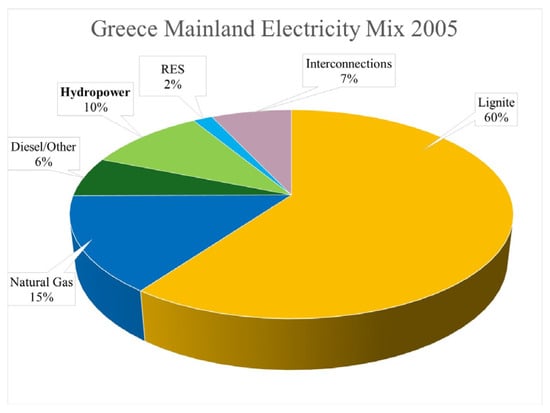
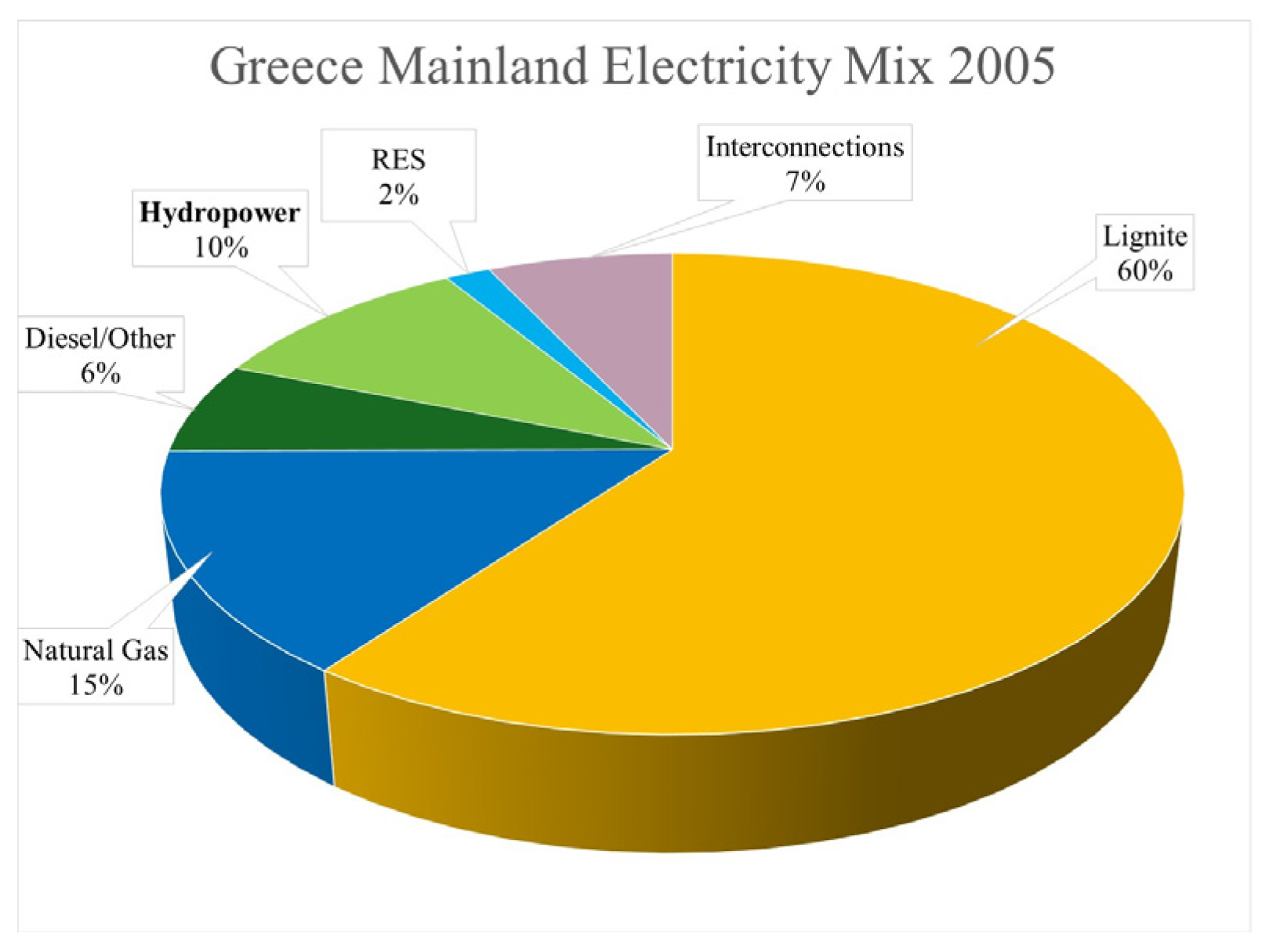
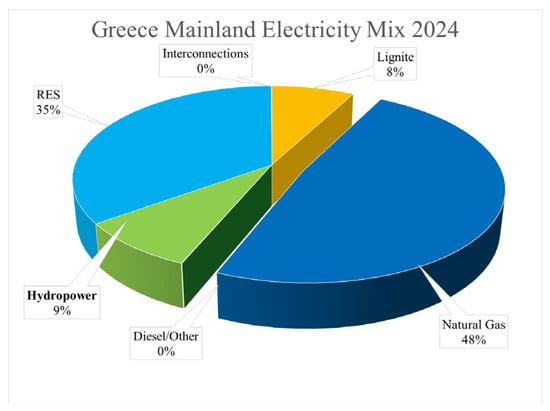
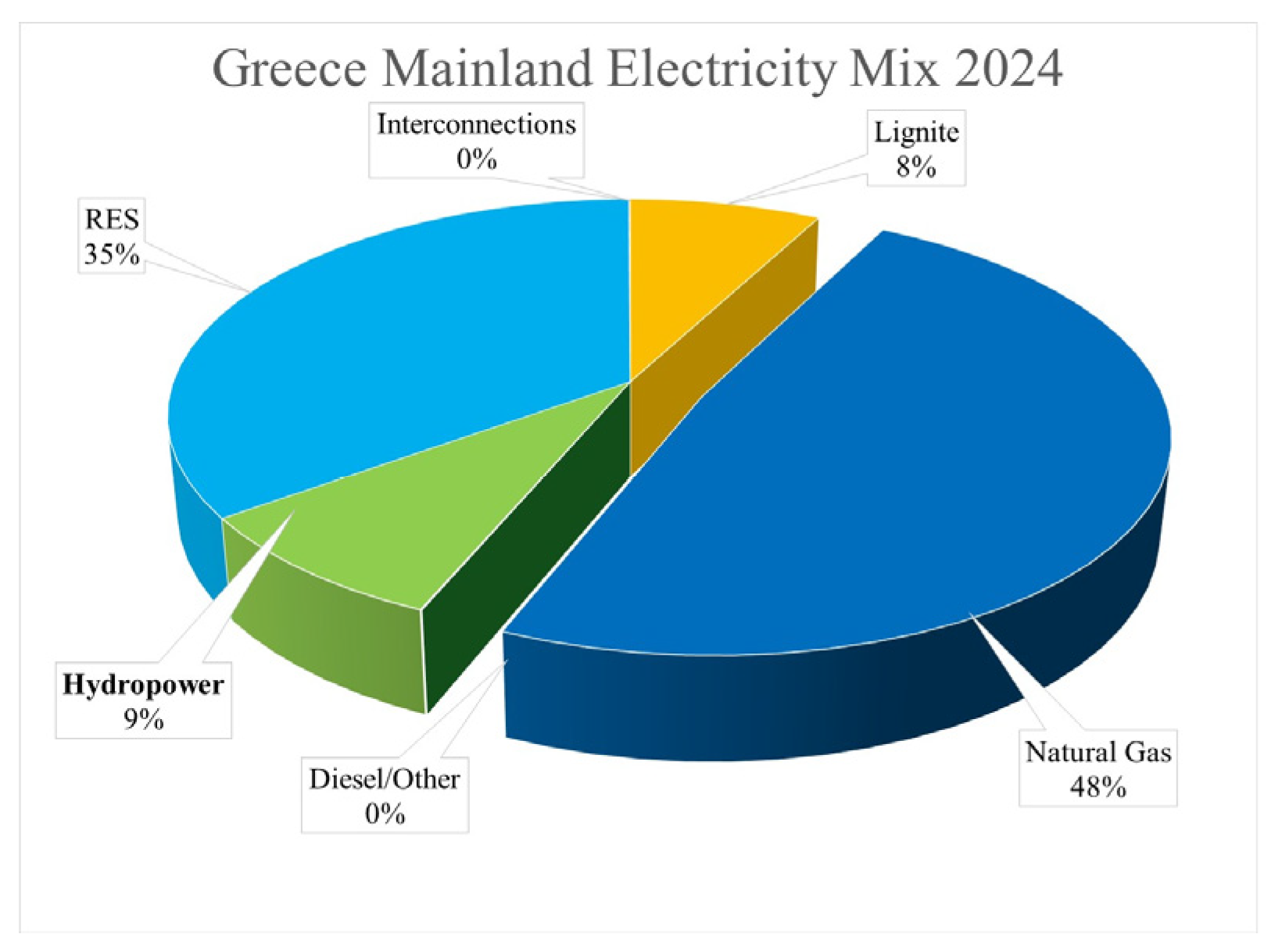
Focusing on the Greek electricity generation system, with the contribution of lignite power plants being radically decreased during the last twenty years (less than 6% in 2024 compared to 60% in 2005) (Figure 4 and Figure 5) [11,12], the Greek electricity generation system was based to a large extent (almost 40%) on imported natural gas in 2024 (Figure 5), while the total RES contribution (excluding hydropower) approached 46% [12].
Figure 4.
Greece mainland electricity generation mix in 2005 (Data used: IPTO [11]).
Figure 5.
Greece mainland electricity generation mix in 2024 (Data used: IPTO [12]).
Following the political decisions of the European Commission [13], Greece has also set (through the corresponding National Energy and Climate Plan (NECP) [14] issued in 2024) binding climate and energy targets for 2030 that are mainly comprised of GHG emissions’ reduction by at least 58.6% compared to the corresponding ones in 1990 and an increase in the share of RES in gross final energy consumption to 45.4% vs. 42.5% being the target by EU [14]. In this context, it is indisputable that the contribution of all RES-based energy sources (including solar and wind energy ones that have already noted a remarkable progress [15]) must be intensified.
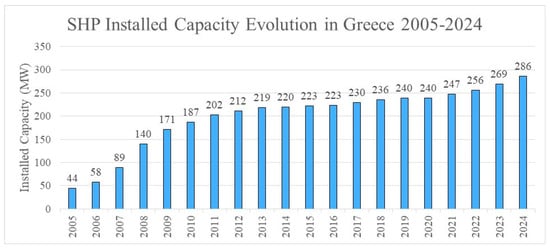
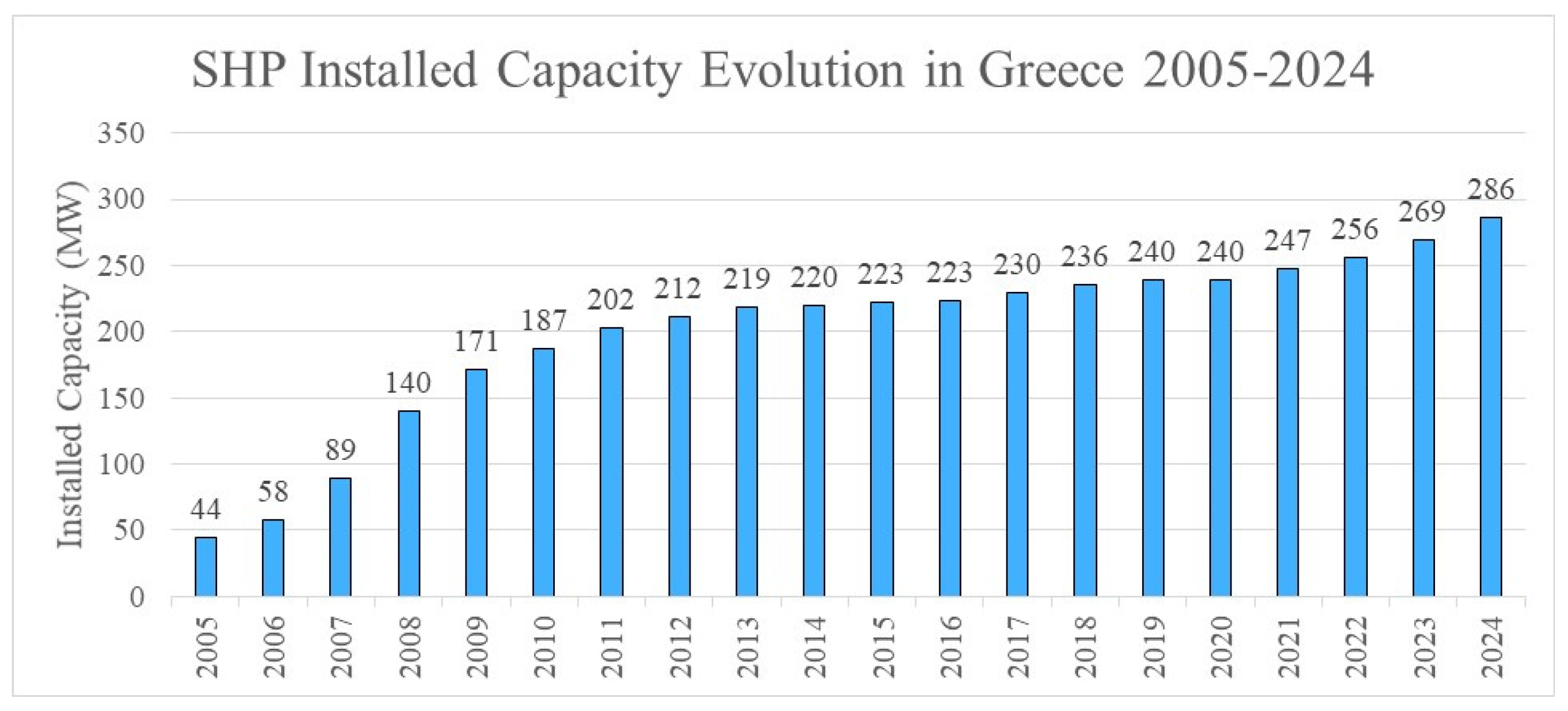
The total installed hydropower capacity (including pumped hydro storage stations) at the end of 2024 was 3485 MWe, while 3.43 TWhe were generated, corresponding to almost 9% of the national electricity generation mix (Figure 5), being more than 10% smaller than the corresponding value of 2005 (Figure 4). Since 2014, the cumulative installed LHP plants’ capacity is 3171 MWe [16], corresponding to sixteen (16) power plants [17]. Nevertheless, acknowledging the LHP plants’ stagnation during the last ten years, SHP plants constitute one of the most rational opportunities [18] for meeting the national energy targets set in the 2024 NECP [14]. The cumulative installed SHP plants’ capacity (Figure 6) was almost 290 MWe by the end of 2024 [19], corresponding to 142 operational SHPs [20].
Figure 6.
SHP installed capacity evolution during the time period 2005–2024.
Historically, the first SHP plants (six in number) were constructed by the Greek (once State-controlled) Public Power Corporation (PPC) S.A., in conjunction with the LHP ones during the time period from the late 1930s until the middle of the 1990s [21]. The next time period, 1995–2005, which followed the ratification of the Greek Law 2244/1994 (“Market Liberalization”) [22], coincided with the first (introductory) period of the SHP plants’ development in Greece, whereas the subsequent time period (2005–2020) has been characterized as the time period of the alleged maturity of the specific technology; see also Figure 6. During the last five years, investors’ interest in developing SHPs seemed to revive, in view of the 2030 energy and climate national targets (NEPC). Today (end of 2025), approximately 155 SHPs operate in Greece, contributing nearly 315 MW of installed capacity [12].
SHP plants, owing to their almost continuous operation, are characterized by large Capacity Factors (CF) (or utilization periods), compared to the corresponding values of LHP plants [16]. The last parameter, along with the investment cost and the hydro electricity market price, is the most decisive factor for a pertinent investment’s viability [23,24]. Kaldellis [18] reviewed in detail the existing situation of SHP plants in Greece, revealing the correlation that existed between the aforementioned constituents. To the authors’ knowledge, no relevant research work has been conducted since then in the specific domain. Malesios and Arabatzis [25] investigated the attitude of Greek society towards the exploitation of the available hydropower potential for energy generation from SHP plants, focusing on a specific prefecture of the Greek territory, in order to unveil its diversification with the various influencing factors. Kaldellis et al. [26] conducted a dedicated survey to assess the public acceptability levels of existing and planned RES-based projects, including the SHP technology, focusing on the area of Peloponnesus, i.e., a representative region of Southern Greece, where all types of power plants operate. It is noticeable that the authors’ research work revealed the high acceptability (at a level of 80%) that characterized SHP projects in the specific region. In its turn, Tzoraki [27] investigated the status of SHP plants in Greece in the context of providing recommendations for the hydrological models and supporting tools that could be used in the design of SHP plants installed in river basins of intermittent flow. Consequently, the objective of the current study is to expand the research work by Kaldellis [18] and investigate from the cradle the time evolution of SHP plants in Greece, with an attempt to update knowledge on the SHP plants’ progress noted during the aforementioned time periods and provide insights into their energy performance. In parallel, the technology’s future prospects in the country are discussed under the scope of further deployment of untapped Greek SHP potential.
The rest of the work is organized as follows: The existing situation of SHP plants in Greece is analyzed in Section 2. Next, Section 3 examines in thorough detail the energy generation and the CF of existing SHP plants in Greece, while in Section 4, the legislative and institutional issues that characterize SHP technology along with the relevant financial support schemes (established by the Greek State) throughout the time period under analysis are described, setting the ground for an integrated financial evaluation (in terms of the Complete Payback Period (PBP) and the Internal Rate of Return (IRR)) that is carried out. Finally, useful conclusions are drawn under the prism of bolstering the implementation and further deployment of SHP applications in the Greek territory.
2. Time Evolution of Existing Small Hydropower Plants in Greece
2.1. Small Hydropower Plants Before the Market Liberalization in Greece (1926–1994)
As already mentioned, the first SHP plants (a total of six) in Greece have been in operation by the Greek State-owned PPC S.A. (Table 1) [18].
Table 1.
SHP plants installed in Greece during the time period 1926–1994.
The first SHP plant in Greece (Glafkos SHP plant with an installed capacity equal to 3.7 MWe, located in Achaia, North Peloponnesus) came into commercial operation in 1926 [28], while ten years later, in 1936, the Vermio SHP plant (with an installed capacity equal to 1.5 MWe) was erected in Imathia, central Macedonia (North Greece). Both plants are under renovation. In the following decades, SHP deployment in the Greek territory has shown leaps and bounds of progression, as only four additional SHP plants with a cumulative installed capacity almost equal to 36 MWe were developed by 1994 [18]. More precisely, in 1954, the Louros SHP plant (with an installed capacity equal to 10.3 MWe) was erected in Western Greece. In 1988, the Giona SHP plant (with an installed capacity equal to 8.5 MWe) was constructed in Central Greece, while in the following year, the Stratos II SHP plant was erected in Western Greece, having an installed capacity equal to 6.2 MWe. Finally, the Makrochori SHP plant (with an installed capacity equal to 10.8 MWe) was erected in 1992 in North Greece [18]. At this point, one important remark that should be made is that, during the specific time period that characterized the continuous expansion of the country’s electrification rate, emphasis has been mainly placed on the deployment of LHP plants [16].
2.2. Small Hydropower Plants in Greece During the Introductory Period (1995–2010)
Following the ratification of the Greek Law 2244/1994 that permitted the development of RES-based power plants by private investors [22], an expansion in the development of new SHP plants has been noted, with the majority of licensing applications being submitted by private investors (“Market Liberalization”). Suffice it to say that between 2000 and 2010, almost one hundred new SHP plants came into commercial operation [19], with the cumulative installed capacity reaching 187 MWe at the end of 2010 (Figure 6) [20].
Owing to the considerable State-subsidization levels and the remarkable Feed-in-Tariff (FiT) values ascribed to new RES-based projects (encompassing the SHP ones), the peaks and valleys of the installed SHP capacity annual growth rate continued till 2010, with its average value being in the order of 35% during the 2005–2010 time period.
2.3. Small Hydropower Plants in Greece During the Second Development Period (2005–2020)
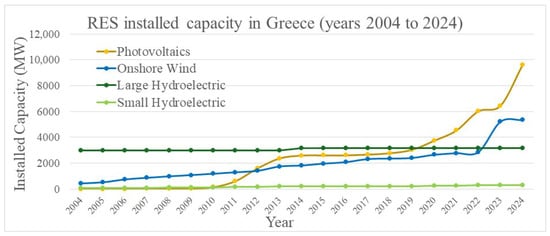
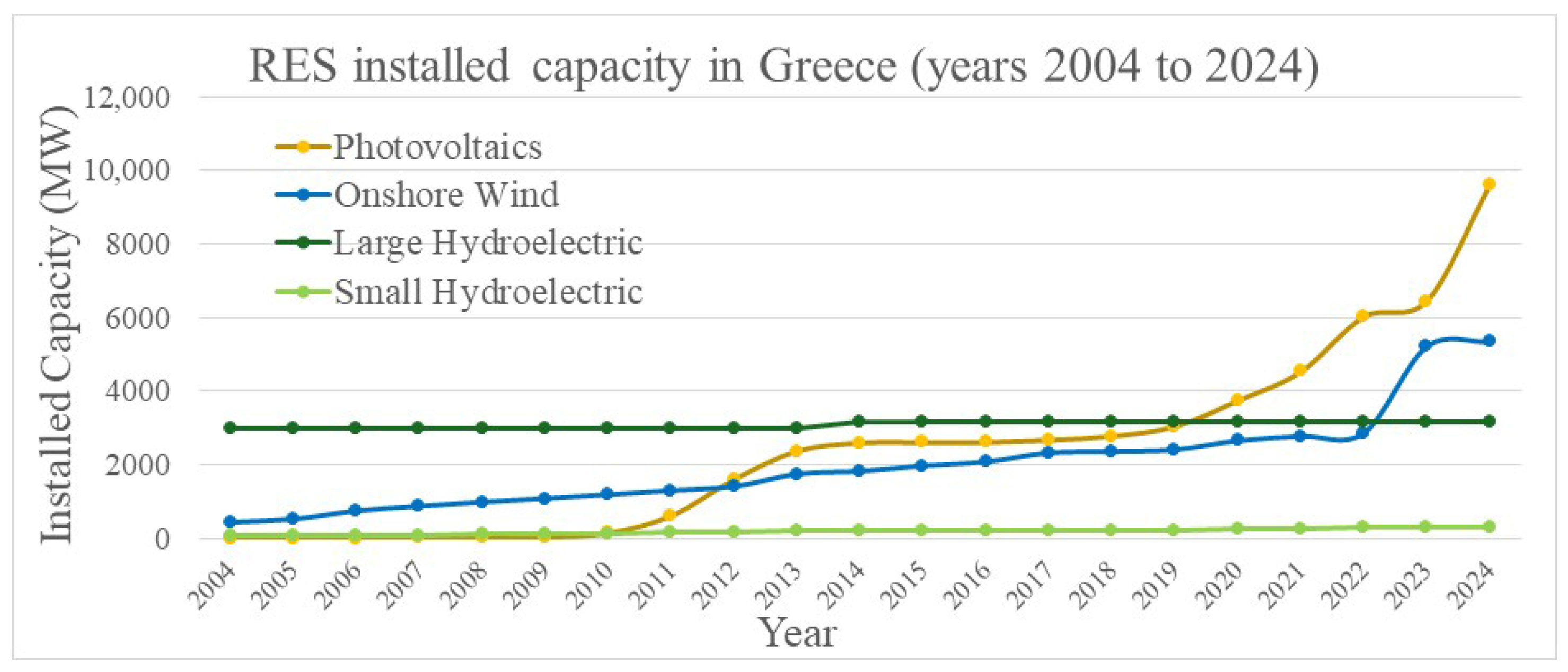
At the beginning of the decade 2010–2020, the situation changed drastically. Thus, the annual growth rates were steadily kept under 10%, while for four characteristic years, that is, for 2014, 2016, 2019, and 2020, the relevant annual growth rate was zero; see Figure 6. More precisely, during the decade 2010–2020, only 50 MWe have been added, indicating a gradual increase of approximately 5 MW per year, corresponding to the construction of two to five new SHP plants annually. The root cause of the specific tendency during the time period examined lies mainly in the emphasis that was placed on the development of photovoltaic and wind parks. This is obvious from the data in Figure 7, since, after 2010, the PV installations increased sharply while wind parks continued their steady increase.
Figure 7.
Comparing RES installed capacity time evolution in Greece (2004–2024).
2.4. Small Hydropower Plants in Greece: Current Situation and Future Targets (2020–2030)
Nowadays, based on the available information [20,29], more than 150 SHP plants with a nominal capacity of less than 15 MWe are operational in Greece, with their cumulative installed capacity slightly surpassing 315 MWe.
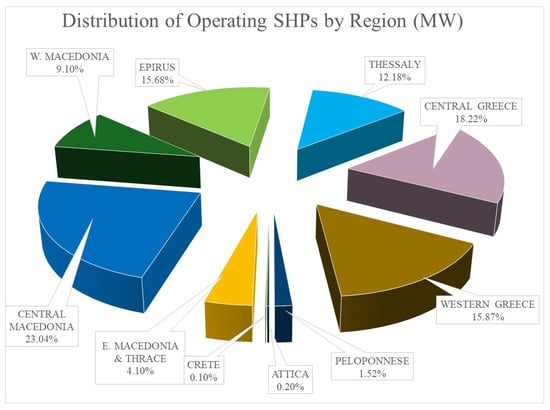
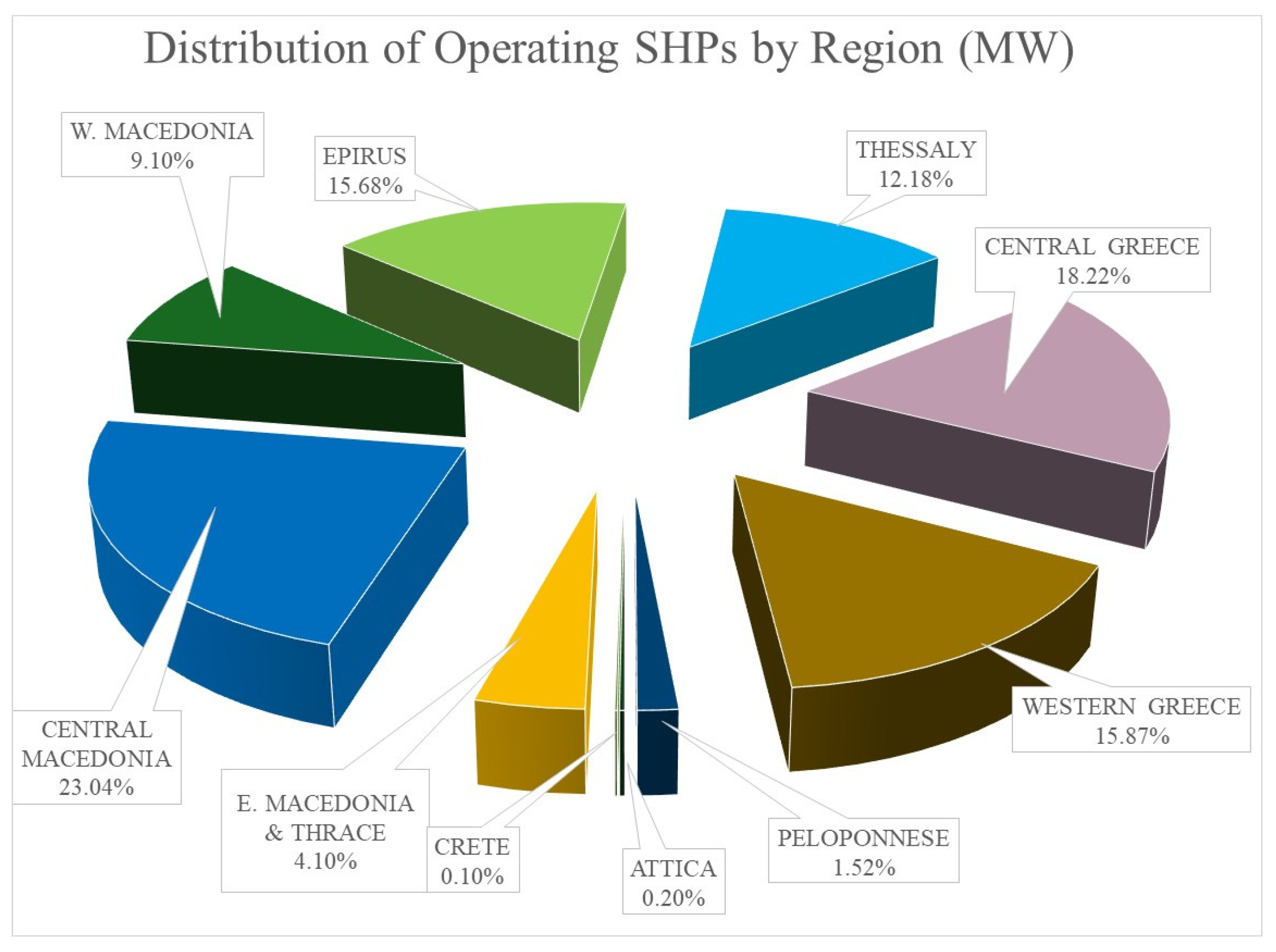
Regarding the geographical distribution of SHP plants (end 2024), the majority of them (greater than 95%) are located in Central Macedonia (exploiting the waters of the rivers from the north), Epirus (exploiting the rugged terrain of the region), and Western Greece, which is in regions characterized by relatively high annual precipitation values. More specifically, 72.7 MWe of SHP plants are installed in Central Macedonia, 49.5 MWe in Epirus, 50.1 MWe in Western Greece (encompassing also Western Peloponnesus), 57.5 MWe in Central Greece, 38.4 MWe in Thessaly, 28.7 MWe in Western Macedonia, 5 MWe in Eastern Peloponnesus and another 13 MWe in East Macedonia-Thrace, Attica, and Crete (Figure 8) [20,29].
Figure 8.
Geographical distribution of installed SHP plants in Greece in 2024.
Sixty-seven (67) out of the total SHP plants have installed capacity in a range of 1–15 MWe, fifty-one (51) in a range of 100–1000 kWe, whereas the remaining two (2) have an installed capacity of less than 100 kWe [20]. Moreover, it is worthwhile noting that eighteen (18) out of the total SHP plants belong to PPC Renewables (PPCR) S.A., the subsidiary of PPC S.A., having a cumulative installed capacity of 68 MWe [30] and thus representing almost 22% of the total country’s installed SHP capacity. Out of the rest of the SHP plants, five (5) belong to the Athens Water Supply and Sewerage Company (EYDAP) S.A., twenty-two (22) belong to local municipalities, and the remaining to private investors [20].
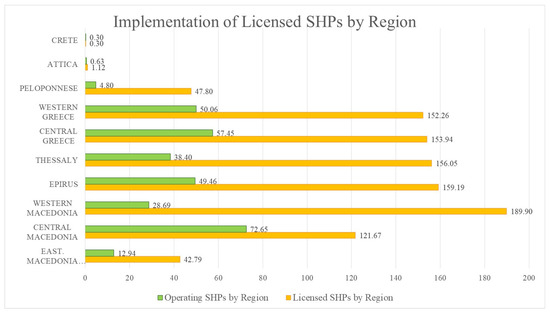
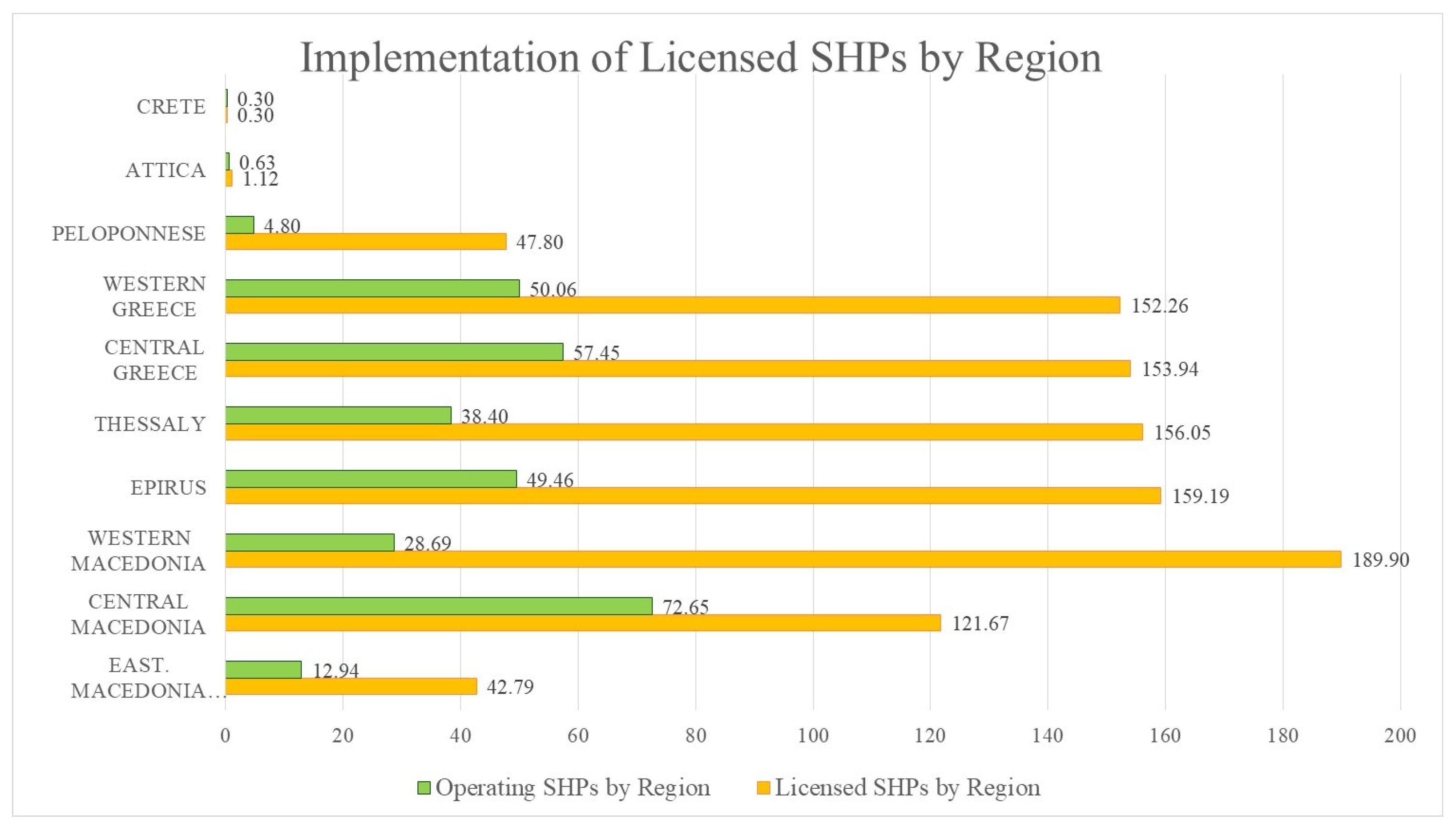
As of April 2025, the licensed SHP capacity totals 1025.01 MW, of which ~31% (~316 MW) is currently operational, indicating that more than two-thirds of licensed capacity remains unutilized [19,29]. Regionally, the licensed capacity distribution is demonstrated in Figure 9, in comparison with the already-in-operation SHP’s installed capacity.
Figure 9.
Licensed versus in operation SHP by region in Greece, as of May 2025.
These values demonstrate that the bulk of SHP development remains concentrated in hydrologically favorable mountainous areas, particularly in the western and northern mainland, where natural topography and river flow regimes offer optimal conditions for small-scale hydropower. It becomes evident that in many regions—such as Western Macedonia, Thessaly, and Central Macedonia—there is a significant gap between licensed capacity and actual implementation, suggesting delays, regulatory hurdles, or technical constraints in project realization. These gaps represent untapped renewable energy potential that could be leveraged in future policy and investment strategies.
3. Energy Generation and Capacity Factor of Small Hydropower Plants in Greece
3.1. Energy Yield of SHP
The total annual energy production “Ey” of SHP can be expressed (using hourly data from 1 to 8760 h per year) as:
where the instantaneous power P(t) of a hydropower station vs. time (t) depends primarily on the instantaneous river flow Q(t), the available head (elevation) h, the head losses δHf, the turbine efficiency η, and the electrical generator efficiency ηel:
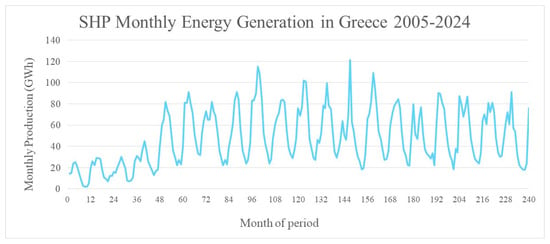
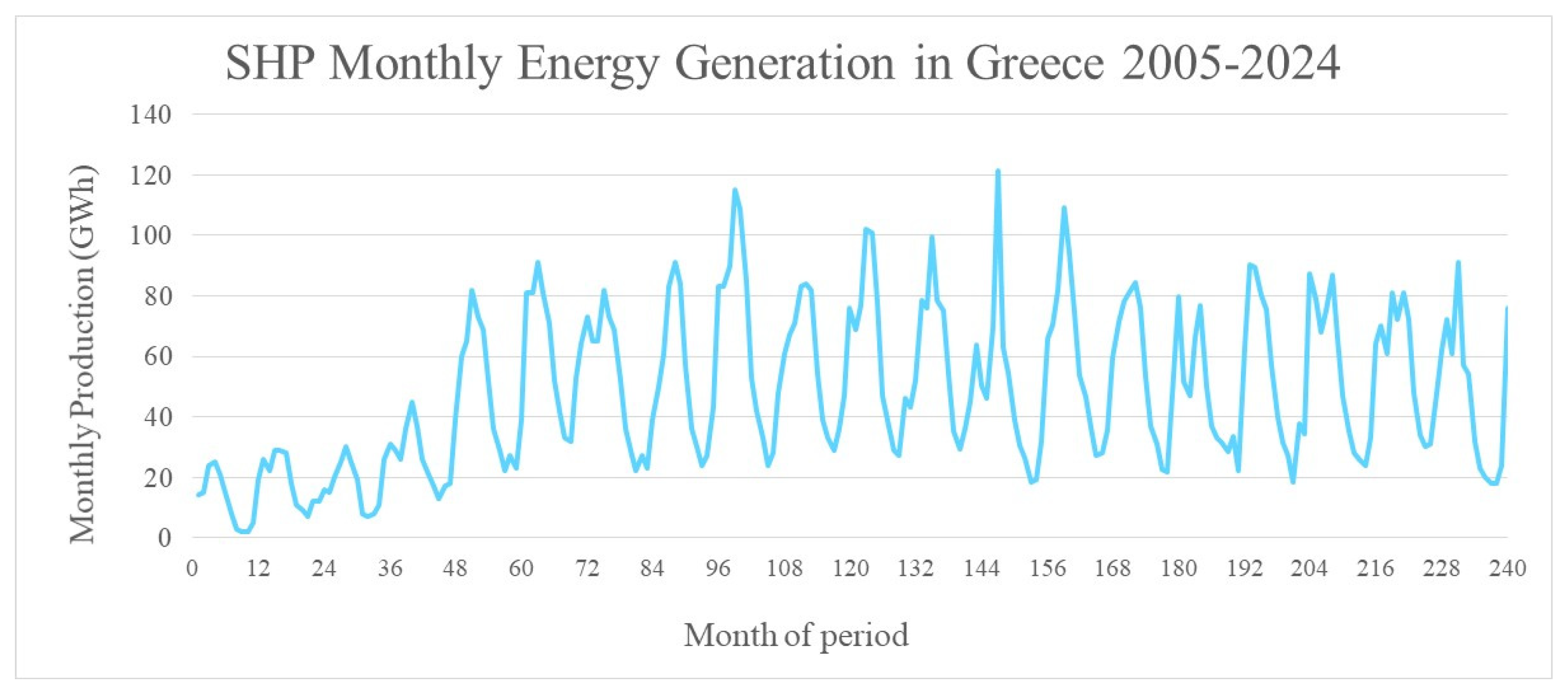
with “ρ” being the water density and “g” the gravitational acceleration. Thus, the annual energy output of a SHP directly reflects the temporal distribution of river discharges throughout the year. In this context, Figure 10 illustrates the monthly production pattern for SHP in Greece during the last twenty years (i.e., 240 months). On the basis of Figure 10, a strong seasonal trend is observed, i.e., during dry summer months (June–September), the production drops significantly, often reaching levels as low as 20 GWh per month.
Figure 10.
Monthly energy generation (in GWhe) of SHP plants in Greece during the 2005–2024 time period.
Contrariwise, during the wet winter and spring seasons (December–May), monthly output regularly exceeds 80 GWh, occasionally reaching peaks of up to 120 GWh in particularly wet years. In recent years, average monthly production has stabilized at around 60 GWh, confirming the seasonal nature of SHP output, which directly follows the availability of hydrological resources.
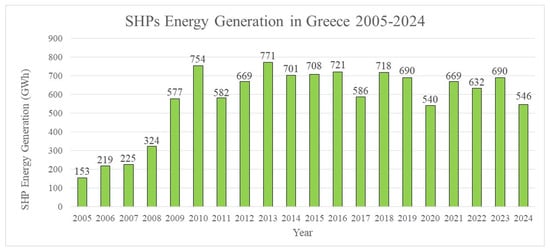
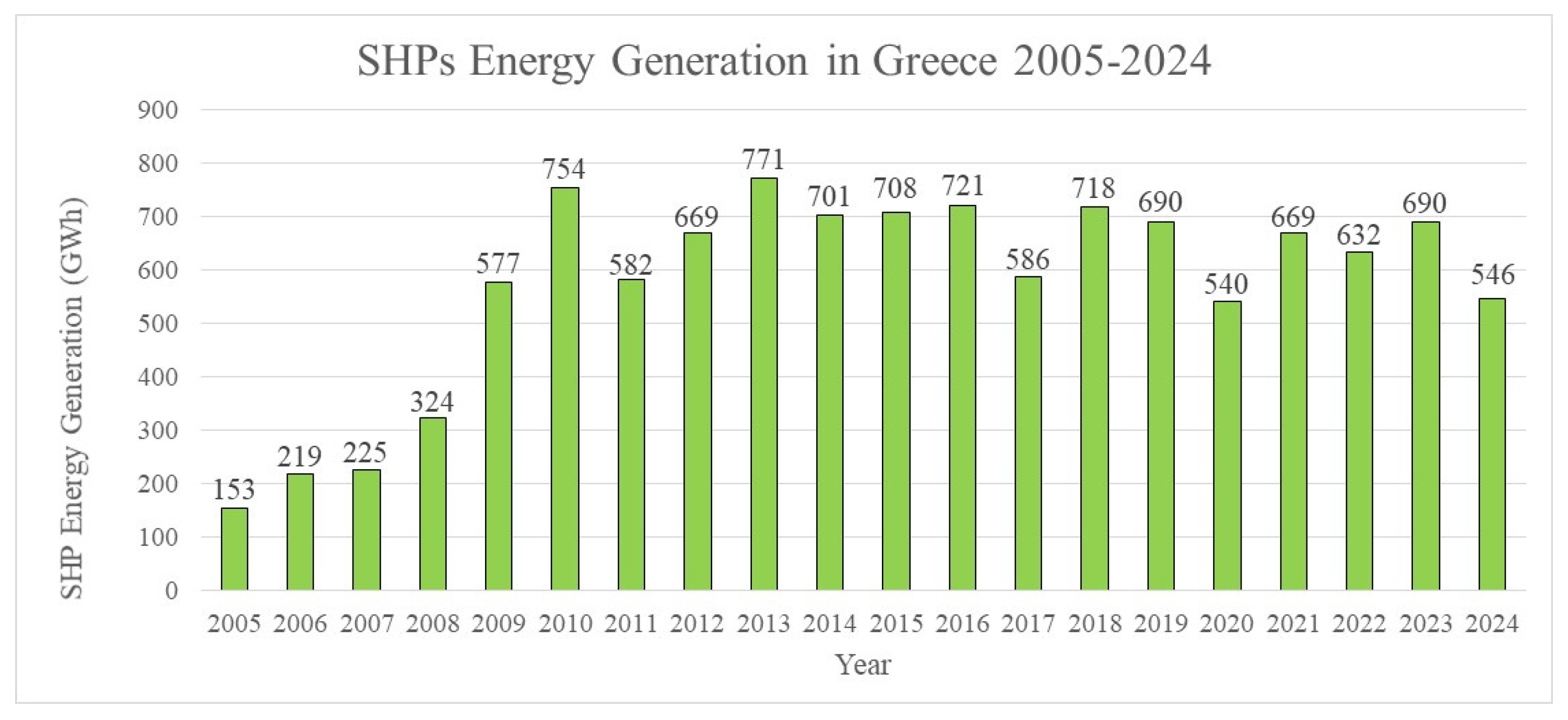
Accordingly, the total annual energy generation variation of SHP plants in Greece during the 2005–2024 time period is depicted in Figure 11. As can be observed, the evolution of SHP energy production in Greece over the past two decades illustrates both its stable contribution and strong seasonal variability. As shown in Figure 11, the annual SHP electricity generation during the period 2009–2024 ranged from approximately 540 GWh to 770 GWh. This output corresponds to roughly 1.3–1.5% of Greece’s total electricity consumption, a relatively modest but consistent share of the national energy mix, considering the limited installed capacity of SHPs compared to other renewable technologies (Figure 7).
Figure 11.
Total annual energy generation (in GWhe) of SHP plants in Greece during the 2005–2024 time period.
3.2. Capacity Factor of SHP
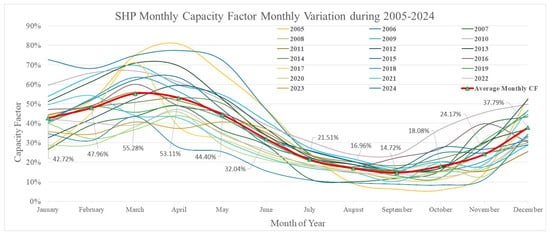
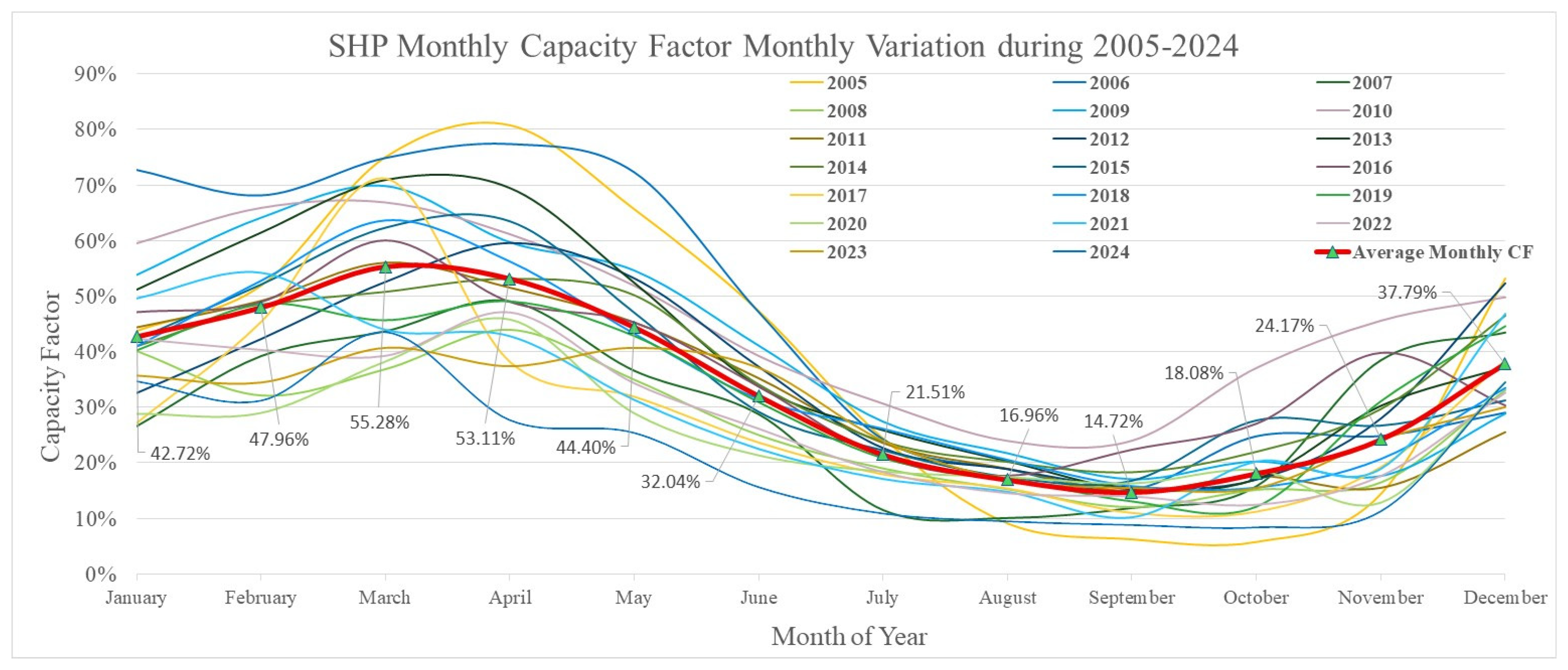
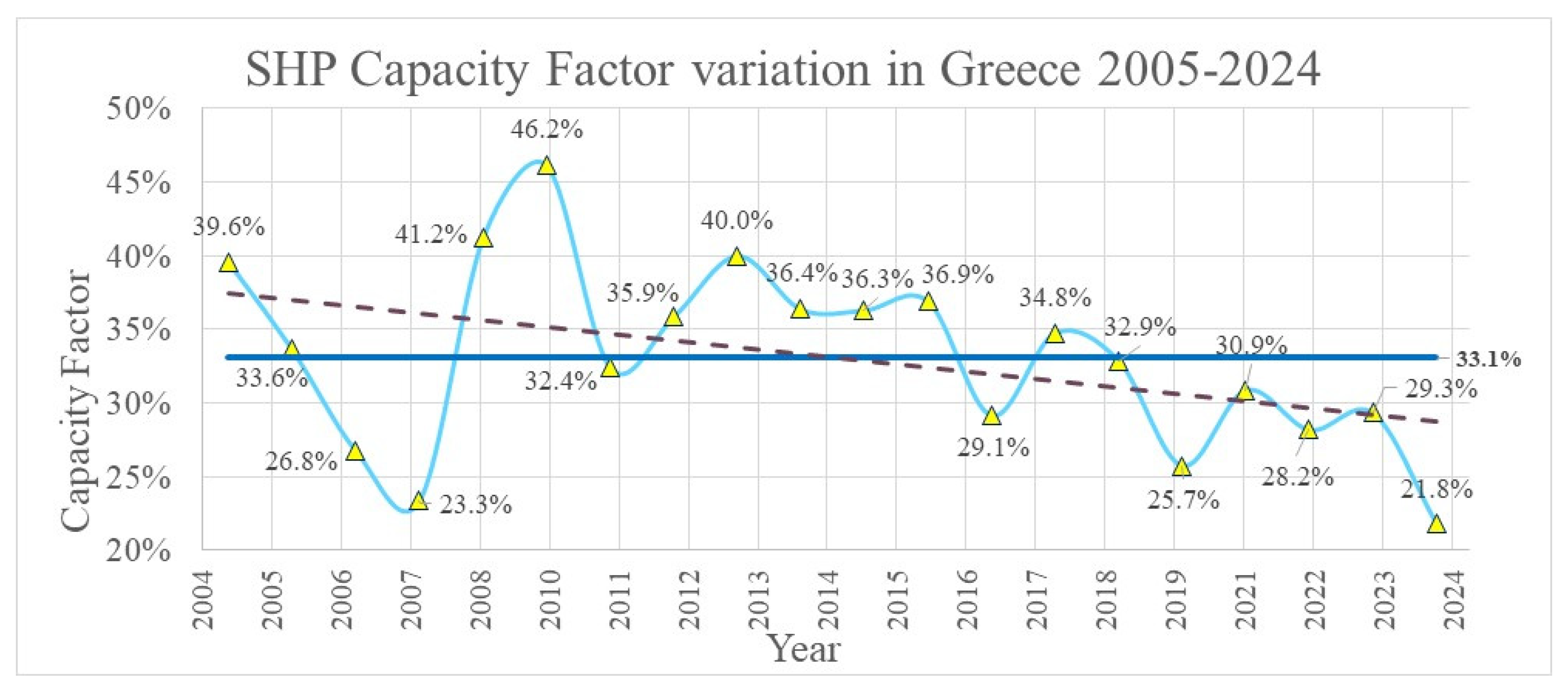
The remarkable fluctuation that characterizes SHP plants’ energy generation during the 2005–2024 time period can also be detected in the SHP plants’ corresponding CF time evolution (Figure 12 and Figure 13). The Capacity Factor CFΔt of a power plant with rated power Po for a given time period Δt can be defined as follows (Equation (3)) [21]:
where “EΔt” is the power plant’s energy yield during the specific time period Δt. “Po” is the average value of the installed Greek SHP plants’ capacity, estimated as the mean value between the beginning and the end of each year. Accordingly, “Δt” is the examined time period (e.g., equal to 8760 h for a one-year time period (or 8784 h for a leap year)).
Figure 12.
SHP monthly CF variation during the 2005–2024 time period.
Figure 13.
SHP annual CF variation during the 2005–2024 time period.
More precisely, as can be observed in Figure 12, the main operation of SHP plants is encountered in the wet months of the year (November to May), frequently reaching or exceeding 70%. On the other hand, during the dry months of the year (June to October), the SHP plants’ electricity generation is around one fourth to one third of the corresponding wet months’; thus, the value of the CF drops considerably, often reaching minimum values in September. This fact unveils the underlying correlation between the SHP plants’ operation and the recorded country’s precipitation, which, to a great extent, defines the water reserves in the SHP plants’ small head ponds.
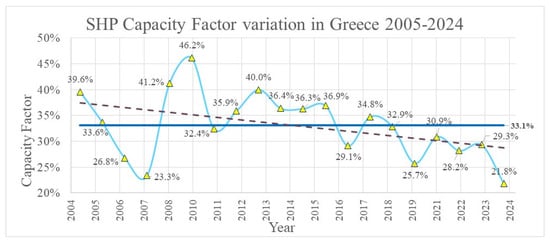
Accordingly, the annual average SHP plants’ CF takes values in the range (22–46%), with the long-term average SHP plants’ CF value for all years being equal to 33.1% (Figure 13), which is more than double the corresponding long-term CF for domestic photovoltaic systems [31]. This underscores the relatively stable and predictable output of SHPs compared to other intermittent RES technologies.
Moreover, a slight long-term declining trend of about 5% has been observed across the 20-year period, and is potentially linked to broader climatic changes affecting precipitation and snowmelt patterns [32]. However, this trend is indicative and not yet statistically validated. Finally, the long-term monthly CF distribution (Figure 13) offers a reliable projection for SHP output on a year-round basis and provides valuable input for national energy planning and electricity generation forecasting.
4. Prospects and Challenges of Small Hydropower Plant Development in Greece
4.1. Legislative and Institutional Issues
Based on the analysis carried out in the previous Sections, it is clear that SHP applications in Greece are characterized by a considerable performance and thus have a quite promising future. On the other hand, according to the available data [9,29,33], the economic potential for SHP plants in Greece is estimated to be more than 1000 MWe, pinpointing that only a minor part, equal to 30% of the local hydropower potential, is up to now exploited. Hence, the quite slow realization degree during the last fifteen (15) years of the specific applications can be underlined, necessitating a sound and detailed analysis of the principal factors responsible for delaying the deployment of SHP plants’ investments [34].
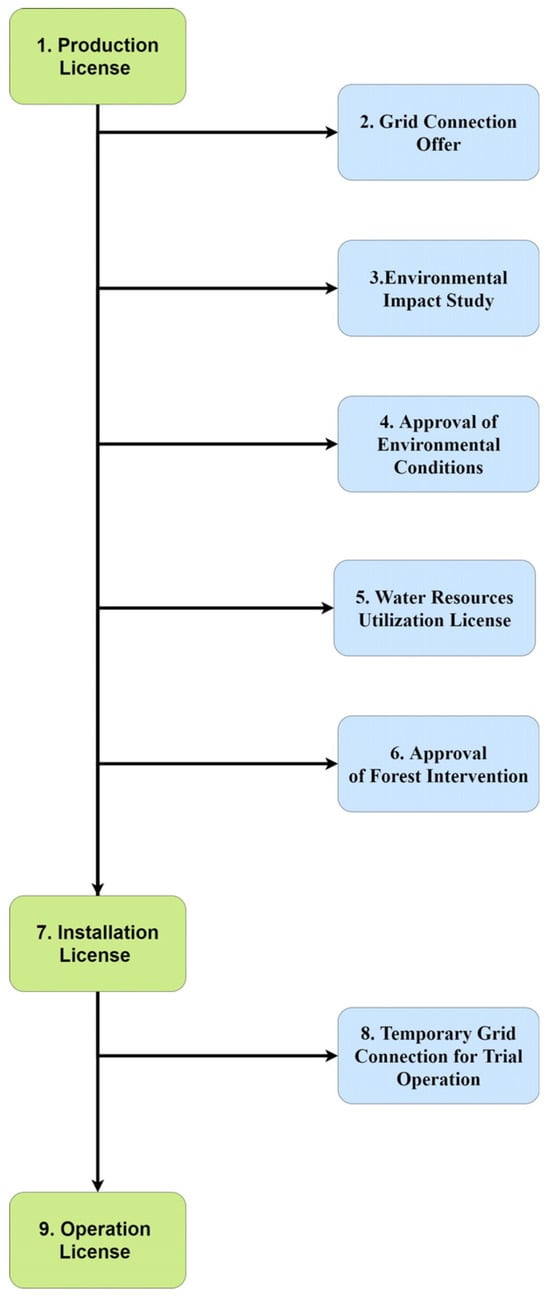
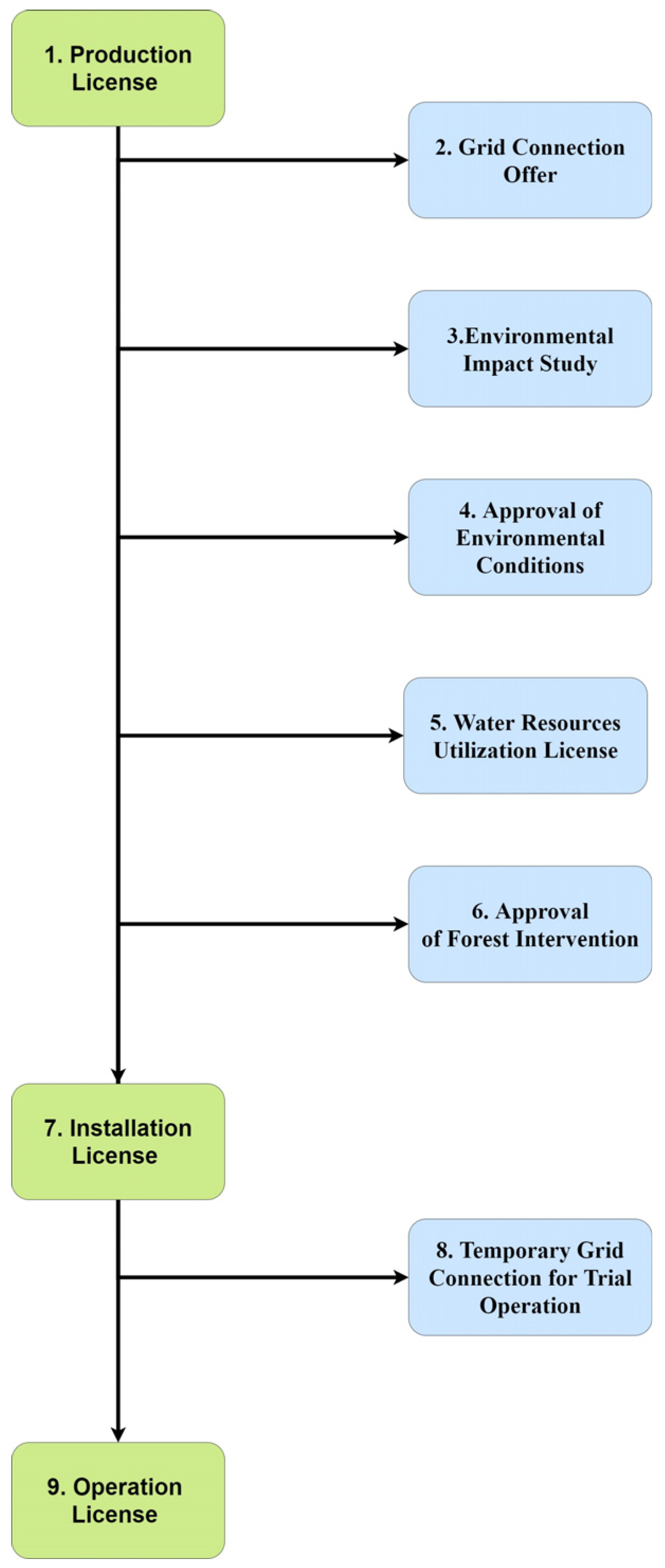
The absence of a thoroughly designed, integrated national water resources management plan, as well as the administrative–bureaucratic procedures that continue to lead to a long-lasting process of acquiring the necessary licenses, are some of the major hindrances decelerating SHP evolution in Greece. Suffice it to say that the hydropower potential exploitation status is totally unclear in the majority of the Greek regions, permitting agricultural cooperatives as well as local municipalities to raise preferential or even exclusive proprietary rights on the utilization planning of the existing water resources and exert pressure via their political influence [16]. In the same framework, albeit the efforts made by the Greek State to accelerate the relevant procedures and the pertinent progress noted till present, the time-span required to develop a new SHP plant remains lengthy (usually up to three years), involving a considerable number of documents that have to be acquired (production license, grid connection offer, environmental impact study, approval of environmental conditions, water resources utilization license, approval of forest intervention, installation license, and operation license) (Figure 14). Thus, a substantial institutional reform becomes of crucial importance to boost the SHP plants’ development rate.
Figure 14.
Typical licensing procedure of a small hydropower plant.
Moreover, most economically robust companies that are actively involved in the erection of power plants do not express great interest in such relatively small-scale projects (with a maximum budget approximately equal to 20 M€). Hence, SHP plant deployment is mostly realized by medium- and small-scale investors (mainly private companies) with restricted influence on both the local and national institutional levels from both social and economic perspectives. Meanwhile, the lack of technology know-how and expertise in specific sectors, as well as the absence of large-volume budgets, are among the main challenges being faced [18,20,24]. As a result, optimization of a specific power plant’s design and erection is not feasibly attainable, with oversized installations and extensive erection times being recorded in most cases. Furthermore, initial budgets are usually violated, and thus economies of scale cannot be achieved unless numerous SHP projects (cascade) are being realized in the same river basin [35,36].
Finally, there exist studies referring to environmental constraints that could eventually prevent the further exploitation of hydropower potential in Greece [37,38]. Hence, fruitful conclusions drawn from a dedicated deep dive on the correlation between climate change impact (mainly expressed through the monthly precipitation variation) and hydro energy generation could assist Greek energy sector policymakers in thorough energy system design. Moreover, since tapping SHP potential is crucial to mitigate climate change, alterations in streamflow volume, seasonality, and sediment load changes should be taken into consideration using available models and scenarios. To this end, the development of hydrological models for various climate scenarios relevant to local conditions and studies to reassess the SHP potential should be encouraged, along with the development of holistic climate change adaptation plans, including sectoral adaptation solutions for watersheds [39,40].
In the same context, smart features could also be integrated into the contemporary solutions being currently implemented, including, for example, the integration of river flow forecasting techniques by energy planners and hydrologists into the corresponding decision-making, as is also implemented in other regions of the world [39,40].
4.2. Financial Support Schemes and Financial Prospects of Small Hydropower Plants in Greece
The current Section first recapitulates the financial support schemes applicable to SHP plants in Greece throughout the time period of analysis, underlining their financial attractiveness for covering the energy demands in Greece. To highlight the analysis, the results of an integrated financial evaluation based on the methodology of already published research work by the authors [36] are presented afterwards.
In June 2006, the Greek Parliament ratified a new law for the promotion of RES and Combined Heat and Power (CHP) Plants (Law 3468/2006), establishing FiTs as the support mechanism for SHP plants, with their reference values being set at 73 €/MWhe for SHP plants installed in the mainland and 84.6 €/MWhe for SHP plants installed in the non-interconnected islands [37,41]. In August 2016, that specific law was replaced by a different support scheme (Law No. 4414/2016)—a mechanism of “Operating Support” on the basis of a Differential Compensation Price (Feed-in-Premium (FiP)) [42]. The reference value was set at 100 €/MWhe for SHP plants with an installed capacity less than or equal to 3 MWe and 97 €/MWhe for SHP plants with an installed capacity between 3 and 15 MWe [43]. In February 2020, the Greek Ministry of Environment and Energy redefined, through the Ministerial Decision 19295/690/2020, the energy generation sales reference values for SHP plants’ renovating schemes at 60% of the corresponding reference values that were established under Law No. 4414/2016 [44]. Finally, in March 2020, the reference value for the energy generation of SHP plants with an installed capacity less than or equal to 3 MWe was re-established at 90 €/MWhe through the Ministerial Decision No. 30971/1190, while the reference value for SHP plants with an installed capacity between 3 and 15 MWe was re-established at 87 €/MWhe [45]. It is also noteworthy that SHP plants have not participated in the tender procedures inaugurated in Greece with Law No. 4414/2016 and have been held since then.
At the other end of the spectrum, it is indisputable that a new SHP project investment shall be justified as financially attractive in order to be realized [18,34]. In this context, the Complete PBP and the IRR for a SHP project with a typical installed capacity, for example, 10 MWe, operating in Greece, can be calculated.
Depending on the area of study and the installed SHP plants’ capacity, the corresponding specific price (turnkey cost per MWe installed) presents great variations. A report from the International Renewable Energy Agency (IRENA) stated that the investment costs of SHP plants with an installed capacity in the range of 1–10 MWe receive values between 0.87 M€/MWe and 3.45 M€/MWe, with the upper limit even overreaching 8.5 M€/MWe (calculated by using current (October 2025) exchange rates) for SHP plants with an installed capacity of less than 1 MWe [46]. Another report from the Fraunhofer-Gesellschaft Institute defined the specific price range for SHP plants to be from 3 to 6.3 M€/MWe [47], while Singal et al. [48] stated in their research that, for SHP plants with an installed capacity less than 10 MWe, the specific price ranges between 1.2 and 3.5 M€/MWe for the EU-27 countries. In their turn, Uddin et al. [49] defined the specific price range as being between 1.1 and 7 M€/MWe (calculated using the current (December 2025) exchange rates). Finally, the Fixed Maintenance and Operation Costs coefficient is usually expressed as a percentage of the investment turnkey costs, typically receiving values between 1% and 4% [24,36,50].
Hence, based on the previous analysis and considering the values of Table 2 for a typical Greek SHP plant with an installed capacity equal to 10 MWe, one can calculate a Complete PBP value in the levels of seven to ten years, which is considered a satisfactory outcome in light of the specific applications’ extended lifecycle [36,51]. In its turn, an IRR value at a level of 15–20% can be calculated; see also Kaldellis et al. [36]. The specific value can be justified as an acceptable one, as it covers, by far, the requirement for the minimum IRR value to be over 5%, which is defined as an acceptable value for SHP investments in Greece [36,52].
Table 2.
Parameters considered during the financial analysis.
Based on the analysis conducted in the present Section, it can be derived that SHP investments present very good financial performance if the examined installation is thoroughly designed to collaborate effectively with the existing hydro potential. The specific high financial performance comes in contrast with the, up to now, slow SHP project implementation rate, thus necessitating that effective actions be taken for further sector deployment.
5. Conclusions
SHP technology comprises an environmentally friendly energy solution that, under preconditions, could considerably contribute to covering part of the Greek electricity consumption. In this framework, the present analysis novelty is to review the trends of SHP potential exploitation since the beginning of their development, attempting to highlight its current status while considering various aspects, such as the SHP plants’ installed capacity and their relevant annual energy generation and CF time evolution. For this purpose, the corresponding values of the last twenty years (2005–2024) have been analyzed in collation to existing scientific works that include relevant data up to 2005. To this end, the long-term average seasonal energy yield (or capacity factor) of the SHPs is established, providing a reliable performance profile in cases of energy planning throughout the year by the national grid operator, supporting the remaining stochastic power stations to cover the corresponding load demand. Finally, the proposed analysis underlines the relatively low implementation degree of the SHP installations vs. wind and solar energy applications despite the excellent financial and operational performance of the SHP.
According to the available hydro potential data and the estimated financial performance of SHP plants, the Greek hydropower potential remains greatly untapped. However, hydropower has the potential to become a key candidate for considerable applications, providing remarkable quantities of high-quality indigenous electricity and saving several million tons of greenhouse gases. In this sense, the pertinent prospects and challenges were also investigated. With more than 900 MWe being under licensing at the end of 2024, the main root causes of the sector’s small-scale deployment were identified in the absence of an integrated water resources management plan, as well as lengthy administrative–bureaucratic procedures, environmental constraints, and inaccurate planning. Finally, the financial support schemes throughout the analysis time period were examined.
Recapitulating, a comprehensive, multifaceted review of the progress noted from the emergence of the SHP technology in the Greek energy sector up to date has been carried out. The currently vastly under-exploited SHP potential was unveiled, rendering substantial institutional reform actions as prerequisites for the sector’s further development. In this way, assuming that the aforementioned prohibitive issues are appropriately dealt with, a boost cycle could begin, opening the road for new investments in SHP projects. Moreover, acknowledging that the SHP plants operate as base units, their continuous operation could strengthen the energy system’s security and enhance the indigenous lignite and imported fossil fuels replacement, thus assisting the country in attaining the national clean-green energy targets that have been set.
Future research concerning the hydro potential assessment and forecasting, especially in view of the forthcoming climate crisis, the environmental impact of SHPs minimization via a complete ecological analysis, and the smooth SHPs integration in the existing remote electrical grids, will definitely accelerate the remarkable untapped hydro potential exploitation all around the world.
Funding
This research received no external funding.
Data Availability Statement
Data used in the current study are open and available from the corresponding organizations.
Acknowledgments
The author would like to thank P. Triantafyllou and Ch. Karampas for their support in gathering the available data from the corresponding organizations.
Conflicts of Interest
The author declares no conflicts of interest.
Abbreviations
The following abbreviations are used in this manuscript:
| CF | Capacity Factor |
| EU | European Union |
| GHG | Greenhouse Gases |
| LHP | Large Hydropower |
| PHS | Pumped Hydro Storage |
| PPC | Public Power Corporation |
| RES | Renewable Energy Sources |
| SHP | Small Hydropower |
References
- Moran, E.F.; Lopez, M.C.; Moore, N.; Müller, N.; Hyndman, D.W. Sustainable hydropower in the 21st century. Proc. Natl. Acad. Sci. USA 2018, 115, 11891–11898. [Google Scholar] [CrossRef] [Scilit]
- Li, X.; Wang, Y.; Buytaert, W.; Ji, Q.; Liang, R.; Li, K. A framework for impact analysis of small hydropower on river ecological integrity. Water Res. 2025, 285, 123987. [Google Scholar] [CrossRef] [Scilit] [PubMed]
- Drakaki, Κ.-Κ.; Tsekouras, G.; Mitsis, G.; Efstratiadis An Papantonis, D.; Riziotis, V. Small hydropower plant enhanced with minimal storage capacity: Investigation of its techno-economic feasibility with intra-day regulation. Renew. Energy 2026, 256, 124601. [Google Scholar] [CrossRef] [Scilit]
- Basso, S.; Botter, G. Streamflow variability and optimal capacity of run-of-river hydropower plants. Water Resour. Res. 2012, 48, 10. [Google Scholar] [CrossRef] [Scilit]
- UNDP. What Is the Sustainable Energy Transition and Why Is It Key to Tackling Climate Change. 2025. Available online: https://climatepromise.undp.org/news-and-stories/what-sustainable-energy-transition-and-why-it-key-tackling-climate-change (accessed on 1 December 2025).
- IRENA World Energy Transitions Outlook 2023; International Renewable Energy Agency: Abu Dhabi, United Arab Emirates, 2023.
- Romano, E.; Trutnevyte, E. Local energy communities in rural Switzerland: National scalability under different incentives schemes and economic scenarios. Renew. Energy 2026, 256, 124569. [Google Scholar] [CrossRef] [Scilit]
- Hu, Z.; Liu, S.; Luo, W.; Wu, L. Resilient Distributed Fuzzy Load Frequency Regulation for Power Systems Under Cross-Layer Random Denial-of-Service Attacks. IEEE Trans. Cybern. 2020, 52, 2396–2406. [Google Scholar] [CrossRef] [Scilit]
- UNIDO; ICSHP. World Small Hydropower Development Report 2022. 2022. Available online: https://www.unido.org/WSHPDR2022 (accessed on 1 June 2025).
- European Commission. Hydropower and the Environment—European Guidelines. 2024. Available online: https://ec.europa.eu/environment/water/water-framework/hsps.html (accessed on 1 June 2025).
- Independent Power Transmission Operator (IPTO). Monthly Energy Bulletin. December 2005. Available online: https://www.admie.gr (accessed on 1 September 2025). (In Greek)
- Independent Power Transmission Operator (IPTO). Monthly Energy Bulletin. December 2024. Available online: https://www.admie.gr (accessed on 1 September 2025). (In Greek)
- European Commission. European Green Deal: Commission Proposes Transformation of EU Economy and Society to Meet Climate Ambitions. 2021. Available online: https://ec.europa.eu (accessed on 1 October 2025).
- Ministry of Environment and Energy. National Energy and Climate Plan. 2024. Available online: https://ec.europa.eu (accessed on 1 November 2025).
- Loumakis, S.; Giannini, E.; Maroulis, Z. Renewable Energy Sources Penetration in Greece: Characteristics and Seasonal Variation of the Electricity Demand Share Covering. Energies 2019, 12, 2441. [Google Scholar] [CrossRef] [Scilit]
- Kaldellis, J.K. Long-Term Analysis of Hydropower’s Pivotal Role in Sustainable Future of Greece. Energies 2025, 18, 2214. [Google Scholar] [CrossRef] [Scilit]
- Public Power Corporation (PPC) of Greece, S.A. Hydroelectric Projects—Renewable Energy Sources. 2024. Available online: www.ppcr.gr/en (accessed on 1 September 2025).
- Kaldellis, J.K. The contribution of small hydro power stations to the electricity generation in Greece: Technical and economic considerations. Energy Policy 2007, 35, 2187–2196. [Google Scholar] [CrossRef] [Scilit]
- DAPEEP RES and CHP Report. Concise Fact Sheet, December 2024. Available online: https://www.dapeep.gr (accessed on 1 September 2025). (In Greek)
- Greek Association of Small Hydropower Plants. Small Hydropower in Operation. Statistics. 2025. Available online: https://www.microhydropower.gr (accessed on 1 December 2025). (In Greek)
- Kaldellis, J.K. Critical evaluation of the hydropower applications in Greece. Renew. Sustain. Energy Rev. 2008, 12, 218–234. [Google Scholar] [CrossRef] [Scilit]
- Kaldellis, J.K. The future of renewable energy applications under the current Greek electricity production market circumstances. In Proceedings of the NTUA-RENES Unet, 2nd National Conference for the Application of Renewable Energy Sources, Athens, Greece, 19–21 March 2001; pp. 282–289. (In Greek) [Google Scholar]
- Anagnostopoulos, J.S.; Papantonis, D.E. Optimal sizing of a run-of-river small hydropower plant. Energy Convers. Manag. 2007, 48, 2663–2670. [Google Scholar] [CrossRef] [Scilit]
- Alexandre, J.; Kathumbi, L.; Javanbakht, G.; Allport, J.M. Effects of operation and maintenance costs on the financial sustainability ofmicro hydropower schemes. Sustain. Energy Technol. Assess. 2025, 83, 104651. [Google Scholar]
- Malesios, C.; Arabatzis, G. Small hydropower stations in Greece: The local people’s attitudes in a mountainous prefecture. Renew. Sustain. Energy Rev. 2010, 14, 2492–2510. [Google Scholar] [CrossRef] [Scilit]
- Kaldellis, J.K.; Kapsali, M.; Kaldellis, E.; Katsanou, E. Comparing recent views of public attitude on wind energy, photovoltaic and small hydro applications. Renew. Energy 2013, 52, 197–208. [Google Scholar] [CrossRef] [Scilit]
- Tzoraki, O. Operating Small Hydropower Plants in Greece under Intermittent Flow Uncertainty: The Case of Tsiknias River (Lesvos). Challenges 2020, 11, 17. [Google Scholar] [CrossRef] [Scilit]
- Papantonis, D. Small Hydro Power Stations; Symeon Editions: Athens, Greece, 2001. [Google Scholar]
- Regulatory Authority for Energy (RAE). Geoinformation Map. 2025. Available online: https://geo.rae.gr/ (accessed on 1 November 2025).
- Public Power Corporation Renewables (PPCR), S.A. Current Projects. 2025. Available online: https://ppcr.gr/en/projects/current-projects (accessed on 1 November 2025).
- Hellenic Association of Photovoltaic Companies. The Greek PV Market. 2025. Available online: https://www.helapco.gr (accessed on 1 December 2025).
- Skoulikaris, C. Run-of-River Small Hydropower Plants as Hydro-Resilience Assets against Climate Change. Sustainability 2021, 13, 14001. [Google Scholar] [CrossRef] [Scilit]
- Kaldellis, J.K.; Korbakis, G.; Metzos, M. Analyzing the Present Situation and the Future Prospects of Small Hydro Power Plants in Greece, 2006. In Proceedings of the IXth World Renewable Energy Congress (WREC), Florence, Italy, 19–25 August 2006. [Google Scholar]
- Alexandre, J.; Allport, J.M.; Javanbakht, G. An Investigation of the Barriers Impeding Small-Scale Hydropower Schemes from Greater Deployment in England. Sustain. Dev. 2025, 33, 9325–9334. [Google Scholar] [CrossRef]
- Guzovi’c, Z.; Barbari’c, M.; Medi’c, Z.-Β.; Degiuli, N. New Software for the Techno–Economic Analysis of Small Hydro Power Plants. Water 2023, 15, 1651. [Google Scholar] [CrossRef] [Scilit]
- Kaldellis, J.K.; Vlachou, D.S.; Korbakis, G. Techno-economic evaluation of small hydro power plants in Greece: A complete sensitivity analysis. Energy Policy 2005, 33, 1969–1985. [Google Scholar] [CrossRef] [Scilit]
- Vougioukli, A.d.-Z.; Didaskalou, Ε.; Georgakellos, D. Financial Appraisal of Small Hydro-Power Considering the Cradle-to-Grave Environmental Cost: A Case from Greece. Energies 2017, 10, 430. [Google Scholar] [CrossRef] [Scilit]
- Pang, M.; Zhang, L.; Ulgiati, S.; Wang, C. Ecological impacts of small hydropower in China: Insights from an emergy analysis of a case plant. Energy Policy 2015, 76, 112–122. [Google Scholar] [CrossRef] [Scilit]
- Huangpeng, Q.; Huang, W.; Gholinia, F. Forecast of the hydropower generation under influence of climate change based on RCPs and Developed Crow Search Optimization Algorithm. Energy Rep. 2021, 7, 385–397. [Google Scholar] [CrossRef] [Scilit]
- Peng, W.; Jiang, Z.; Yao, H.; Zhang, L.; Yu, J. Short-term hydropower generation prediction model for run-of-river hydropower plants considering hydrometeorological factors. Renew. Energy 2026, 254, 123790. [Google Scholar] [CrossRef] [Scilit]
- Hellenic Democracy. Government Gazette A’ 129, Law 3468: Generation of Electricity Using Renewable Energy Sources and High-Efficiency Cogeneration of Electricity and Heat and Miscellaneous Provisions. 2006. Available online: https://www.kodiko.gr (accessed on 1 October 2025). (In Greek)
- Hellenic Democracy. Government Gazette A’ 149, Law 4414: New Support Scheme of Renewable Energy and CHP Plants—Provisions Concerning the Legal and Administrative Unbundling of Natural Gas Supply and Distribution and Miscellaneous Provisions. 2016. Available online: https://www.kodiko.gr (accessed on 1 October 2025). (In Greek)
- Greek Association of Small Hydropower Plants. SHP Plants in the New Emerging Greek Electricity Market—Target Model. 2025. Available online: https://www.microhydropower.gr (accessed on 1 December 2025). (In Greek)
- Hellenic Democracy. Government Gazette 642, Ministerial Decision No. 19295/690/2020: Defining the Preconditions for the Integration of Small Hydroelectric Power Stations with Installed Capacity up to 15 MWe in the Regime of Radical Renewal of Their Production Equipment and Their Reference Values Applicable to These Stations, Based on par. 22, Article 3, Law No. 4414/2016 (Government Gazette 149 A’). 2020. Available online: https://www.e-nomothesia.gr (accessed on 1 November 2025). (In Greek)
- Hellenic Democracy. Government Gazette A’ 1045, Ministerial Decision No. 30971/1190: Addition of New Categories of Electricity Generation Stations from RES and CHP and Definition of Their Reference Values, Redefinition of Stations Categories 11, 29 and 30 and Modification of the Reference Values of Table 1, Case b, par. 1, ar. 4, Law No. 4414/2016, in Accordance with par. 5, 6 and 7, ar. 4, Law 4414/2016 (Government Gazette A’ 149) and Amendment of the Interest Rates of These Stations Categories, in Accordance with par. 10, ar 3, Law No. 4414/2016 (Government Gazette A’ 149), as in Force). 2020. Available online: https://helapco.gr (accessed on 1 November 2025). (In Greek)
- International Renewable Energy Agency (IRENA). Hydropower: Technology Brief. 2015. Available online: https://www.irena.org (accessed on 1 June 2025).
- Held, A.; Ragwitz, M.; Eichhammer, W.; Sensfuss, F.; Pudlik, M.; Pfluger, B.; Resch, G.; Olmos, L.; Ramos, A.; Rivier, M.; et al. Estimating Energy System Costs of Sectoral RES and EE Targets in the Context of Energy and Climate Targets for 2030. 2014. Available online: https://www.isi.fraunhofer.de (accessed on 1 October 2025).
- Singal, S.K.; Saini, R.P.; Raghuvanshi, C.S. Analysis for cost estimation of low head run-of-river small hydropower schemes. Energy Sustain. Dev. 2010, 14, 117–126. [Google Scholar] [CrossRef] [Scilit]
- Uddin, W.; Ayesha Zeb, K.; Haider, A.; Khan, B.; ul Islam, S.; Ishfaq, M.; Khan, I.; Adil, M.; Kim, H.J. Current and future prospects of small hydro power in Pakistan: A survey. Energy Strategy Rev. 2019, 24, 166–177. [Google Scholar] [CrossRef] [Scilit]
- International Finance Corporation (IFC). The World Bank Group. Hydroelectric Power. A Guide for Developers and Investors. 2015. Available online: https://www.ifc.org (accessed on 1 June 2025).
- Rotilio, M.; Marchionni, C.; De Berardinis, P. The Small-Scale Hydropower Plants in Sites of Environmental Value: An Italian Case Study. Sustainability 2017, 9, 2211. [Google Scholar] [CrossRef] [Scilit]
- Regulatory Authority for Energy (RAE). Regulatory Authority for Energy. 2025. Available online: https://www.raaey.gr/?lang=en (accessed on 1 November 2025).

Disclaimer/Publisher’s Note: The statements, opinions and data contained in all publications are solely those of the individual author(s) and contributor(s) and not of MDPI and/or the editor(s). MDPI and/or the editor(s) disclaim responsibility for any injury to people or property resulting from any ideas, methods, instructions or products referred to in the content. |
© 2026 by the author. Licensee MDPI, Basel, Switzerland. This article is an open access article distributed under the terms and conditions of the Creative Commons Attribution (CC BY) license.