


Abstract
Buildings can support electricity-grid services through flexible energy use, but dependable delivery requires more than efficient local scheduling. This scoping review examines how artificial intelligence (AI) methods and digital twins (DTs) contribute to the prediction, control, coordination and verification of building energy flexibility. A focused title-based search of five databases identified 164 eligible primary publications through 23 August 2026; their functions, methods, building scales and evaluation settings were charted and compared, with reporting informed by PRISMA-ScR. Demand-response control and scheduling appear in 115 publications (70.1%), whereas aggregation and explicit grid services each appear in 12 (7.3%). Learning-based prediction and control dominate the evidence, while four primary publications explicitly use DTs, mainly for model-based representation, training or integration. The synthesis distinguishes the improvement of local building operation from evidence that a feasible response can be coordinated and delivered against an external request. A service-oriented framework connects assets and participants, data, models, control, coordination and grid services, with governance and lifecycle evaluation as cross-cutting considerations. It identifies interfaces and validation questions that can guide the design and assessment of dependable building flexibility services.
1. Introduction
Buildings can help power systems accommodate variable renewable generation by shifting electricity use while maintaining their required services. Thermal mass, water heaters, heat pumps, air conditioning, batteries and electric vehicles provide different opportunities for shifting demand, while meters, sensors and automation enable the response to be observed and controlled [1,2,3]. This flexibility extends the objective of building energy management beyond reducing consumption. A grid-interactive building must also coordinate demand, on-site generation and storage in response to external conditions and provide evidence that the requested response was delivered.
Harnessing this resource requires a connection between what a building can change and what the grid needs. Forecasts and flexibility estimates inform device schedules under tariffs or demand response events [4,5]. Grid-interactive control extends those decisions to network conditions, including feeder limits and voltage excursions [6,7]. Aggregators coordinate responses across buildings, while trading and service arrangements determine how the response is requested, measured and compensated [8,9,10,11]. These functions connect local energy management with grid-service delivery. They can be combined in different ways: an individual building may provide a service directly, while a portfolio requires an additional coordination mechanism.
However, the connection is difficult because the available response changes with operating conditions. Building thermal dynamics are partly observed, occupants vary in presence and preference, and renewable generation, prices and grid requests are uncertain. Control must accommodate these changes while respecting comfort and equipment limits [5,12,13]. Across buildings, differences in equipment and occupancy interact with communication, privacy and participation requirements. Model drift, inaccurate baselines and poor transfer between climates or operating regimes can then affect the response delivered [14,15,16,17]. Therefore, a successful building-control strategy needs to be understood together with the conditions that make its flexibility usable by the grid.
Artificial intelligence (AI) addresses the prediction and decision problems within this connection. Learned models forecast demand, estimate baselines and flexibility, and represent building dynamics. Reinforcement learning develops control policies for appliances, heating, ventilation and air conditioning (HVAC), storage and vehicles, while multi-agent approaches coordinate decisions across buildings. These methods are also combined with model predictive control, optimisation and physical constraints [4,5,18,19,20]. Such combinations address a recurring trade-off: learning reduces some modelling requirements but depends on representative data, whereas physical models and explicit constraints help preserve feasible operation at the cost of calibration and computation [21,22,23].
Digital twins (DTs) address a related system-integration problem: how models, building data and control are connected. Primary applications include urban demand-response architectures, data–model fusion for dispatch, heat-pump peak shaving and a controller-training environment [24,25,26,27]. A separate review describes reduced-order models as potential components of decentralised DTs [28], but is used here only for contextual comparison. AI and DTs are considered together because they can fulfil complementary functions: AI supports estimation and control decisions, while a DT can provide a connected representation within which those decisions are tested or implemented. The small number of explicitly DT-labelled primary applications in the focused corpus limits any generalisation about DT deployment.
Existing reviews examine data-driven predictive control [29], reinforcement learning in grid-interactive buildings [30], virtual power plants and building energy management [31], flexibility indicators [32] and DT architectures [33]. Earlier reviews also synthesise reinforcement learning for demand response [34] and AI and machine learning for demand-side response [35]. These works establish important methods and challenges, including the predominance of local control. The present review asks a different, connected question: which capabilities support which flexibility functions, at which building or portfolio scales, and with what evidence of service delivery? This joint functional and evaluation perspective motivates the service-oriented synthesis.
This review aims to examine how AI and DT applications harness building energy flexibility for demand response and grid services, from quantification, prediction and control within buildings to coordination across communities, aggregators and grid or market interfaces.
Three research questions guide the synthesis:
RQ1. Which methods support which flexibility functions, assets and system scales?
RQ2. How are these capabilities integrated and evaluated, particularly when building-level response is extended to an external grid-service requirement?
RQ3. What interface and evaluation needs follow from the reported evidence?
Together, these questions connect technological functions, system boundaries and evidence conditions to a service-oriented research and system-design framework. The review does not claim that the local-to-grid gap itself is newly identified.
2. Methodology
A scoping review was selected to synthesise the range of applications, methods and evaluation designs in this interdisciplinary literature [36,37,38]. Reporting of study identification, selection and synthesis was informed by PRISMA-ScR [39]. No review protocol was prepared or registered. The scope covered applications in which AI or a DT made a substantive contribution to building energy flexibility, demand response, peak management, grid-interactive control, aggregation, trading or grid services. Eligible settings included households, residential, commercial and institutional buildings, and building-related clusters, campuses, communities and aggregator portfolios. Eligibility required primary research with sufficient information to identify methods, functions or outcomes. Journal articles, conference papers, preprints and primary-research book chapters were eligible, in English, without a publication-year or geographic restriction. Reviews and other non-primary material, unrelated uses of building terminology, and energy systems without a substantive building component were excluded from the primary-study synthesis. Relevant reviews could be cited for background and comparison without entering the quantitative evidence base.
Web of Science, Scopus, IEEE Xplore, arXiv and PubMed were searched on 23 August 2026; PubMed returned no matching records. No publication-year limits were applied, and the eligible primary literature ultimately spans 2010–2026. The final search required at least one term from each of three concepts in the title: AI or DTs, building-centred energy systems, and flexibility or grid-service functions (Table 1). This restriction defines a core literature in which the intersection of these concepts is explicitly presented as a principal subject. Restricting free-text terms to article titles is recognised as a precision-enhancing search option [40], but does not establish exhaustive recall. System scale, architecture and validation were examined during analysis without requiring these terms in the title.
Table 1.
Concepts and terms combined in the search. Source: authors’ search strategy.
The search strategy was refined through broader title–abstract–keyword iterations before the final title-based query (Appendix A). The broader title–abstract–keyword search retrieved 2691 unique records under the final thematic scope, compared with 216 in the title-based search (Table A2). This difference establishes a change in retrieval breadth, not how many additional records would meet the review eligibility criteria; the title-based query was retained to identify publications foregrounding all three concepts. Only the final query entered the quantitative synthesis. Therefore, the resulting evidence base is a deliberately defined core of explicitly framed applications, not an exhaustive enumeration of every potentially relevant AI or DT study. This precision–coverage trade-off is acknowledged in Section 5.
The final search returned 395 publications. Removing 179 cross-source duplicates and 13 publications without usable titles or abstracts left 203 for assessment. Screening excluded 38, leaving 165 initially retained publications. Full texts were available for 162, while three were analysed from their abstracts because full text could not be located. The three publications assessed from abstracts only were [41,42,43]. A subsequent eligibility correction identified one review article [28] among those initially retained; it is used only as contextual literature and excluded from the quantitative primary-study synthesis (n = 164; Figure 1). Appendix A reports original source-specific retrieval and screening counts, while the results and publication-level appendix report the corrected primary evidence base.
Figure 1.
Literature identification, screening and eligibility in the focused title-based search, using the PRISMA 2020 flow-diagram template [44] for descriptive reporting; the review was reported with reference to PRISMA-ScR [39]. One non-primary review [28] was excluded at eligibility assessment.
The first author led the literature search, screening, data extraction and analysis; cases of uncertain eligibility, classification or interpretation were discussed by all three authors until agreement. This was an author-led process with consensus resolution of uncertain cases, not independent duplicate screening, and no inter-reviewer agreement statistic is claimed. Each publication was characterised by its reported methods, flexibility and grid-service functions, system scale, flexible assets, integration architecture and evaluation setting. Contributions, outcomes, comparators, occupant constraints and limitations were also examined. For 162 initially retained references, full texts provided the principal analytical source; three unavailable texts were assessed from abstracts. The comparator and occupant/comfort indicators in Appendix A (Table A4) were conservatively recorded when explicit in abstracts, and should not be interpreted as full-text prevalence estimates. Because a publication could address multiple methods, functions, scales, assets or architectures, percentages within these dimensions may exceed 100%. Publications are the counting unit.
Evaluation settings were grouped into five broad reporting categories: (1) field, living-lab or operational, (2) prototype or hardware-in-the-loop, (3) simulation or co-simulation, (4) observational dataset or case study, and (5) conceptual or insufficiently specified. Each publication was assigned to its most advanced identifiable evaluation context. “Insufficiently specified” means that the source available for the publication did not provide enough information to assign a more specific evaluation category; no setting was inferred merely to reduce this category. The broad field/living-lab/operational group includes physical controller experiments as well as analyses of operational data, which must be distinguished when assessing deployment maturity. These labels describe reported evaluation settings and do not constitute a validated ranking of deployment readiness. DT applications were identified using the authors’ explicit terminology.
Descriptive summaries and cross-dimensional comparisons examined the relationships between technological methods, flexibility functions, scales and evaluation settings. Where studies discussed several methods, the reported designs were considered to distinguish combinations from comparisons. Performance outcomes were interpreted against the study-specific comparator and operating conditions without pooling heterogeneous effect sizes. The discussion then linked evidence on prediction, feasible control, coordination and measured response to the corresponding system interfaces in the proposed framework. Governance and lifecycle evaluation are cross-cutting design considerations informed by the reviewed limitations and adjacent literature, not separately quantified empirical categories. The framework is an interpretive synthesis intended to organise research design, not an experimentally validated system architecture. Unless otherwise specified, tables and figures are author-produced summaries or visualisations of the cited and classified literature.
3. Results
3.1. Development and Scope of the Reviewed Literature
The number of included primary publications increased substantially after 2020 (Table 2 and Figure 2). Of 164 publications, 141 appeared from 2020 onward and 100 (61.0%) from 2023 through the search date. The earliest work addresses residential device scheduling under uncertain prices using online reinforcement learning [45]. More recent primary applications include multi-agent coordination, physics-informed modelling and coupled building–grid simulation [46,47]. The 19 publications assigned to 2026 cover only the period up to 23 August.
Table 2.
Publication characteristics of the reviewed literature (n = 164). Source: authors’ screening and classification data.
Figure 2.
Included primary publications by publication year (n = 164); the 2026 count covers publications indexed to 23 August 2026. Source: authors’ analysis of the included primary publications.
The literature spans building science, energy engineering, control and power systems. Journal articles account for 116 publications and conference papers for 46, alongside one preprint and one primary-research book chapter. Leading journals include Applied Energy, Energy and Buildings, Journal of Building Engineering and IEEE Transactions on Smart Grid; conference contributions include IEEE smart-grid and control, ACM BuildSys and IBPSA Building Simulation publications. This scope allows prediction, control and integration to be considered as connected aspects of flexibility provision.
3.2. Applications from Building Flexibility to Grid Services
Research is concentrated on assessing and controlling building response (Table 3). Demand-response control and scheduling occur in 115 of the 164 primary publications (70.1%), forecasting and baseline estimation in 74 (45.1%), and flexibility quantification in 40 (24.4%). Applications also address peak management, grid-interactive control and trading, but aggregation and explicit grid services each appear in only twelve publications (7.3%). The contrast concerns the extent to which local response is linked to an external requirement for coordination or delivery, not a claim that this contrast was previously unknown.
Table 3.
Functions addressed by the reviewed applications, from building assessment and control to coordination and services. A publication may address several functions (n = 164). Source: authors’ classification and the representative studies cited.
These functions often support one another: 115 publications address two or more, while 31 address only the demand-response category. That category covers response-potential estimation and participant targeting as well as implemented control. Overall, 54 publications address trading, aggregation or grid services.
3.2.1. Assessing and Activating Building Flexibility
Demand response applications address two related questions: how much a building can change its demand and how that change should be controlled. Early work examined device scheduling under uncertain prices, thermal-load shifting within comfort limits, and population-level response potential [3,5,45,59]. Subsequent appliance-control studies introduced fuzzy-reward learning for fourteen appliances, adaptation to changing user preferences and coordination between appliance-level agents [48,73,74,75]. Thermal applications extended from thermostatically controlled loads and hot-water vessels to whole-building HVAC, constrained control and explainable decisions [5,12,49,76,77,78]. Across these designs, the control task is to schedule an available response while maintaining the building’s services.
Estimating response potential supports a different decision: which resources or participants to use. An analysis of 4200 Texas homes estimated the flexibility of thermostatically controlled loads, while mixture-density networks represented the distribution of individual demand reductions [3,79]. Smart meter analyses assessed air-conditioning potential, and clustering methods identified households with different response characteristics [80,81,82,83,84]. These approaches inform recruitment and dispatch by identifying where flexibility is available, complementing controllers that determine how it is used.
Forecasting supports control, preparation and measurement: Thermal and response models predict the consequences of control actions, using Gaussian processes, support-vector regression and neural networks; an input-convex recurrent formulation supports model predictive control within a five-minute solution interval [20,53,85]. Surrogate models also accelerate assessments that would otherwise require detailed building simulation [86,87]. Forecasts of prices, generation and loads support household, campus and portfolio schedules [52,75,88,89,90].
Baseline models serve another purpose: estimating the demand expected without an event so that the delivered reduction can be evaluated [4,51]. Therefore, prediction quality must be judged in relation to the decision or measurement it supports. Feature selection, training-data availability and event definition affect that relationship, while forecast-free control offers an alternative where forecast errors are consequential [14,54,91,92].
Flexibility quantification connects these predictions with dispatch by estimating the amount, duration and uncertainty of an available response. The 40 primary publications addressing this function use both statistical and physically structured representations. Aggregating roughly 700 households reduced the uncertainty of estimated potential below 10% in one cluster study [57]. Other approaches estimate comfort-constrained response capacity, distinguish uncertainty arising from variability and limited model knowledge, or predict the capacity and duration relevant to aggregators [55,58,93,94]. An automated assessment of 1249 demand-resource points across four commercial buildings illustrates the use of building data to reduce expert input [56].
Physical structure is particularly useful when flexibility depends on thermal inertia. Estimated thermal parameters support FlexOffer generation, physically consistent neural networks support control of a tropical net-zero office, and reduced-order models represent 2031 homes for aggregation [70,95,96]. These applications describe flexibility as a time-varying capability conditioned by weather, occupancy and the control strategy. An estimate becomes useful for dispatch when its capacity is accompanied by a time horizon and uncertainty, allowing the requested response to be matched to what the building can sustain [52,57].
Overall, prediction, flexibility estimation and control describe expected conditions, feasible changes and selected actions. Hybrid applications connect these tasks through learned models, rule-based safeguards, planning or integer programming [19,43,97,98].
3.2.2. Peak Management and Grid-Interactive Control
Peak shaving and load shifting use storage, vehicles and thermal pre-conditioning to change demand at the electricity interface. The 27 publications in this group target demand charges, peaks or capacity limits. Vehicle-to-building applications schedule discharge using demand forecasts, while campus studies coordinate electric-vehicle charging or battery dispatch [60,61,99,100]. In a warehouse application, HVAC pre-cooling creates charging windows for electric trucks without interrupting work [101]. Evaluations that also examine voltage drop, line losses or feeder current connect local schedules with their network consequences.
Grid-interactive control makes the network objective part of the decision itself. The 23 publications address functions such as voltage regulation using building loads, storage and inverters on an IEEE 33-bus feeder, and learned control of a five-zone commercial building during normal operation and demand-response events [6,7,102]. Other approaches enforce steady-state constraints, coordinate HVAC over different timescales or represent batteries and thermal mass together as generalised storage [22,62,63]. Multi-building and multi-zone applications then coordinate actions against shared objectives or limits [103,104,105,106].
Coupled building–grid simulation supports examination of these interactions before operation [47]. Alongside evaluations using operational data, it shows how control decisions can account for network conditions [6,62,105]. Demonstrating this coupling is distinct from demonstrating delivery under live requests and communication conditions, where tracking and verification also matter.
3.2.3. Trading, Aggregation and Grid-Service Provision
Trading and market participation connect flexibility with prices, exchanges and commitments. The 34 publications address two main arrangements. In retailer- or aggregator-led schemes, an upper-level pricing decision influences building schedules; learning-based approaches address this interaction, privacy-preserving coordination and safe price offers to occupants [19,65,107,108]. In peer-to-peer schemes, buildings or households trade with one another. Examples include a 50-player community, hierarchical coordination of appliance schedules and internal prices, and decentralised residential or multi-carrier markets [10,64,66,67,109]. Blockchain-based settlement provides another implementation approach [110].
Aggregation turns the responses of individual buildings into a portfolio decision. The twelve publications on aggregation and virtual power plants examine commercial-building coordination, virtual storage models and feasible allocation of portfolio commands back to individual buildings [8,68]. Other applications address buildings joining and leaving a portfolio, relationships between aggregation volume and tracking error, and market bidding under comfort constraints [11,69,111]. Therefore, the resource being scheduled is the response the portfolio can collectively deliver, subject to the constraints of its members.
Explicit grid services, also addressed in twelve publications, are evaluated against an external requirement. Examples include aggregated residential HVAC responding to PJM regulation signals, fast-timescale control across hundreds of houses, occupancy-aware frequency-stability control and compensated capacity services [9,13,71,72]. These applications make tracking, availability, feasible delivery and compensation relevant alongside cost and comfort. Five of the 23 publications addressing aggregation or grid services fall within the broad field/operational evaluation category described in Section 3.5.
The service-oriented literature identifies concrete ways to connect building response with operator signals and portfolio commitments. Its limited size concerns the range of applications and operating conditions examined, not a complete absence of practical examples. The main contrast with local-control research is the narrower coverage of coordinated and verified delivery.
3.3. System Scales and Flexible Assets
The applications are shaped by the resources and decisions available at each scale (Table 4). Residential buildings account for 79 primary publications (48.2%), followed by 36 commercial or institutional publications (22.0%). Collective applications include 22 publications on clusters and communities, 15 on campuses, districts or building microgrids, and twelve on aggregator or virtual-power-plant settings. A grid or market interface is addressed in 46 publications, while 26 do not specify the building scale. The distribution places much of the evidence close to individual buildings, where the controller has direct access to scheduled assets.
Table 4.
System scales and flexible assets in the reviewed literature. Counts and percentages refer to the 164 eligible primary publications, after removal of the non-primary review [28]. Categories may overlap. Source: authors’ classification of the included primary publications.
Among the 164 eligible primary publications, thermal flexibility remains the most frequently represented asset group (76, 46.3%). Multi-energy systems, electrical storage, photovoltaics and vehicles were also represented, often in combinations. The corrected asset counts exclude the non-primary review of grey-box thermal models [28]; the remaining category frequencies use the same original classification definitions.
3.3.1. Households and Single Buildings
Residential applications range from appliance scheduling to heat-pump, air-conditioning and photovoltaic–battery control [5,14,74,112,122,134,137,138]. District-level battery coordination extends these decisions across households [128,139]. Repeated device types allow related control approaches to be investigated across residential settings, while the available response remains sensitive to the people using those devices.
Participation is particularly visible in residential trials and metered-data studies. Analyses of a large-scale trial and a randomised controlled trial show differences in participation, persistence and gains across household groups [1,17]. Smart-meter analyses relate consumption variability and usage patterns to response potential [82,83,114,140]. A year of charging data from 46 homes also shows aggregate electric-vehicle charging patterns that can inform demand response [42].
Commercial and institutional buildings offer larger resources with diverse equipment, occupancy schedules and service priorities. Applications include chiller shutdown and setpoint control, whole-building HVAC scheduling and risk-aware operation [12,20,116]. A hybrid controller reduced peak grid import by 61% in a high-rise-office case, while studies in a large office compare learning-based and data-predictive control [115,141,142].
Institutional applications make competing facility objectives explicit. An analysis of 194 school buildings found inconclusive evidence on whether energy efficiency reduces demand-response capability [143]. University-building work examines how offices, laboratories and classrooms can provide flexibility while maintaining zone comfort, and campus characterisation supports realistic saving targets for demand-response events [144,145]. Therefore, flexibility has to be assessed against the building’s particular services and schedules, which energy efficiency alone does not specify the response it can provide.
The single-building literature identifies two requirements that become important in portfolios: participation varies across households, and equipment and operating priorities differ across facilities. Coordinating many buildings requires these differences to remain visible in the representation of their collective response.
3.3.2. Clusters, Campuses and Aggregator Portfolios
At cluster, campus and community scale, control becomes a coordination problem. Learning-based approaches coordinate buildings with limited information sharing, using multi-agent control, learning from offline optimisation and centralised training for decentralised operation [18,146]. One study reduced training time nearly forty-fold for 30 homes, while another examined scalability from two to 64 buildings [103,147]. Optimisation-based applications address heterogeneous storage in a 21-building cluster, community trading under climate change and campus microgrids with hydrogen storage [88,118,127]. A Portuguese flexibility pilot and an urban DT framework illustrate connections with a distribution system operator and utility feedback, respectively [25,117]. These applications extend local control by coordinating resources under shared objectives, communication requirements and network conditions.
An aggregator must also translate a portfolio commitment into feasible building actions. Virtual-storage models address this allocation explicitly, while adaptive coordination accommodates buildings joining or leaving during operation [11,68]. Commissioning-oriented models examine the relationship between aggregation volume, battery size and tracking error; customer grouping and incentive design account for heterogeneous flexibility, preferences and privacy [69,70,121]. Price- and incentive-based schemes provide the interface between these portfolio decisions and individual building schedules [65,135,148].
The distinction between a building controller and an aggregator is the object of the decision: The former schedules particular assets; the latter must offer a collective response that remains feasible as those assets and their participants change. The twelve aggregator-scale publications examine this additional responsibility, complementing the broader work on multi-building coordination.
3.3.3. Flexible Assets and Occupant Constraints
Thermal and electrical resources provide different opportunities for shifting demand. Thermal mass, heat pumps, water heaters and air conditioners allow electrical demand to be moved through thermal storage and operating schedules [3,123,124,125]. Electrical storage and vehicles introduce charging and discharging decisions, often coordinated with photovoltaic generation [60,61,128,129]. Multi-energy systems couple decisions across energy carriers, while appliance-level scheduling concentrates on household demand [11,64,75,88,90,133]. The asset mix determines which state variables, physical limits and interactions a control approach must represent.
Occupant requirements further define the usable response. Forty-one publications explicitly describe an occupant or comfort constraint. Reported approaches include reward penalties, constrained-policy bounds, occupancy sensing and explanations of control decisions [13,23,49,77,135]. Preference-adaptive control also responds to changes in what users accept [48]. These mechanisms serve different purposes: maintaining a temperature limit protects a specified comfort condition, while sensing, preference adaptation, and understandable decisions address the variation in participation observed in residential studies.
3.4. Roles of AI Methods and Digital Twins
The reviewed approaches perform four main roles: prediction, decision making, constraint handling and system representation (Table 5 and Figure 3). Classical machine learning and data-driven modelling appear in 91 publications (55.5%), while reinforcement-learning approaches collectively appear in 77 (47.0%). Optimisation, model predictive control, deep learning and physically structured models provide further components or comparators; four primary DT applications address representation, controller training or integration.
Table 5.
Roles, illustrative outcomes and associated functions of the reviewed methods and digital twins. Outcomes refer to individual applications; categories may overlap (n = 164). Source: authors’ classification and the representative studies cited.
Figure 3.
Methods and flexibility functions: number of included primary publications addressing each combination (n = 164; labels may overlap). Source: authors’ classification of the included primary publications. A dash indicates that no included publication addressed that combination.
Multiple method families are discussed in 109 publications (66.5%): 45 consider three or more, and 55 consider one. The applications include learned predictors within model predictive control, learning policies with safety constraints, and DT environments supporting controller development. Their contribution depends on the role of each component within the flexibility task, not simply the number of methods employed.
3.4.1. Predictive Models: Classical, Deep and Physics-Informed Learning
Learned models convert building and energy-system data into predictions, estimates and representations useful for flexibility decisions. Forecasting applications estimate demand and baselines for scheduling and measurement [2,4,54]. Surrogate models replace computationally demanding simulations in large-scale assessment, with reported speed-ups of several hundred times [86,87]. Other models identify how changes in setpoints affect aggregated HVAC power or how building thermal dynamics can be represented as virtual storage [68,71]. Physically restricted identification and data-enabled distributed optimisation offer further ways to use measured behaviour in control [124,149].
Data-driven analysis also characterises participants and uncertainty. Customer segmentation identifies different response patterns, while deep-learning models predict time-dependent loads, prices and baselines [17,51,52,80,91,140,150]. Bayesian deep-learning approaches distinguish uncertainty associated with variability from uncertainty in the learned model, and temporal convolutional models support assessment across buildings and climates [55,87,93].
The value of these models depends on whether their training data represent the operating conditions in which flexibility will be used. In a real non-residential building, a black-box model matched a white-box model’s accuracy but needed retraining for flexible operation [151]. Other work addresses transfer between buildings through physical structure and load disaggregation [86]. Comparisons of deep and classical learning also depend on data availability, with support-vector machines performing well in the lower-data conditions examined [54]. Model selection is consequently linked to the available data and the intended change in operation.
Physics-informed and grey-box approaches incorporate building dynamics to reduce dependence on training data. The 25 eligible primary publications in this group use resistance–capacitance structures, thermal parameters and differential equations in identification or prediction [21,78,95,123,152]. Reduced-order models also support representation of portfolios [70]; a related review discusses decentralised twin development [28]. Reported primary applications compare temperature prediction, data efficiency or closed-loop cost and comfort with black-box alternatives [78,112].
3.4.2. Decision Policies: Reinforcement Learning and Its Multi-Agent Extensions
Reinforcement learning addresses sequences of decisions whose consequences unfold over time. Of the 77 publications using a reinforcement-learning approach, 51 address demand-response control. Batch approaches learn from historical transitions, model-based approaches use an explicit representation of the system, and tabular approaches support appliance or pricing decisions [5,48,74,76,107,153]. Deep reinforcement learning accommodates larger state spaces and, in suitable formulations, continuous HVAC, storage and vehicle actions [19,113,141,144,154]. Multi-agent approaches distribute decisions across appliances, zones, buildings and households [9,90,104,106,139,146,155].
Constraint handling is central to the use of learned policies. Reward penalties can trade comfort violations against economic performance, whereas constrained formulations explicitly bound violations and have achieved savings comparable to model predictive control in the reported cases [23,77]. Other applications use physics-based rules, planning safeguards or physical and fuzzy control layers to restrict proposed actions [19,22,43]. Risk-aware objectives address extreme operating conditions [116,136]. These designs connect adaptation with the operating limits that determine whether a building can continue providing flexibility.
Multi-agent learning extends adaptation to coordinated systems, where each agent observes only part of the state and other agents’ behaviour changes during learning. Communication, training effort and transfer to operation become significant design considerations [15,18]. Offline training and decentralised execution provide ways to manage these demands, and independent agents have outperformed centralised control as the number of simulated buildings increases in selected comparisons [103,146]. These results establish useful coordination strategies while leaving their performance under heterogeneous, changing operating conditions as a separate evaluation question.
3.4.3. Scheduling and Constraint Handling: Optimisation, Predictive Control and Fuzzy Logic
Optimisation and model predictive control provide explicit scheduling and constraint-handling components. The 56 optimisation publications include neural-network forecasts combined with genetic algorithms or particle swarm optimisation, mixed-integer appliance scheduling paired with battery learning, storage deployment and bi-level pricing [65,98,118,119,156]. Model predictive control, discussed in 27 publications, uses a prediction horizon to select actions subject to modelled limits. Its predictors include Gaussian processes, support-vector regression, input-convex networks, physically consistent neural networks and reduced-order models [20,53,70,78,85,96]. Combining learned prediction with explicit optimisation allows data-driven representations to support constrained decisions.
The main trade-offs concern computation and model accuracy. Robust and hierarchical formulations account for forecast error and separate decisions across timescales; adaptive formulations use learning to tune controller parameters as models become less accurate [72,100,157]. Lightweight alternatives transfer the results of offline optimisation into simpler control. One rule-based controller reproduced most of the savings of model predictive control at a thousandth of its computational cost [158]. An experimental comparison in three identical buildings reported cost and emission savings of 2.1–33.4%, depending on objectives, temperature bounds and disturbances [159]. These results support choosing a control arrangement in relation to its operating task and computational resources.
Fuzzy logic provides another way to express preference-dependent or rule-based decisions. Its six publications include reward design for household scheduling, estimation of charging probability or demand-response willingness, and adaptive neuro-fuzzy control supplied by learned forecasts [27,43,74,91,152]. In these applications, fuzzy rules complement predictive and optimisation methods by translating preferences or operating knowledge into the decision process.
3.4.4. Digital Twins for Model Development and Operational Integration
Four eligible primary DT applications explicitly connect computational representations with building flexibility functions. An urban building-energy framework combines machine-learning and EnergyPlus models with utility feedback [25]. Data–model fusion supports dispatch under model-parameter error [24]. A household application uses a twin as an environment for training an energy manager [27], while an Internet of Things (IoT)-based architecture connects sensing, forecasting and two-way control for heat-pump peak shaving [26]. A separate review of grey-box building models [28] is cited for context but was removed from the primary-study counts. These applications illustrate distinct DT roles; they do not establish the prevalence or operational maturity of DTs across the field.
These roles also differ in their relationship to physical operation. A simulated training environment supports controller development, a model updated from measured data supports adaptation, and an operationally connected representation may enable live intervention. Related capabilities appear in adaptive surrogates and building–grid simulations without explicit DT terminology [47,55,158]. The relevant distinction is the representation’s role, update mechanism and connection to the flexibility decision, while the small DT subset limits generalisation.
3.4.5. Method–Function Relationships
The method–function relationships explain why applications frequently combine different approaches (Figure 3). Predictive models support forecasting, baseline estimation and flexibility assessment. Reinforcement learning supports sequential decisions; model predictive control combines prediction with operating limits; optimisation supports scheduling and pricing. Common pairings include classical learning with demand-response control (64 publications), forecasting (56) and flexibility assessment (30), and optimisation with demand-response control (37). These counts describe functions in the reviewed publications, not comparative superiority between method families.
The same comparison shows fewer applications connecting these methods directly to grid-service provision. Five publications pair any reinforcement-learning approach with an explicit grid-service function; the DT applications concentrate on flexibility modelling, forecasting, demand response and peak management. This contrasts with the extensive use of learned models and controllers within buildings.
3.5. Integration Architectures and Practical Evaluation
Integration concerns how data, computation and control actions are exchanged (Table 6). Distributed or decentralised operation is described in 39 publications and multi-agent operation in 33; ten describe centralised arrangements, six edge/cloud/IoT arrangements and one a federated design. In 111 included publications, no sufficiently specific control architecture was identified. An unspecified classification means the source does not clearly identify decision authority or computational placement; it is not evidence of absent architecture in the implemented system. The described examples nevertheless show distinct decisions about information sharing, computation and links to equipment.
Table 6.
Integration architectures and evaluation settings in the reviewed literature. All figures refer to the 164 included primary publications; the excluded review [28] is not counted in the architecture rows. Categories describe recorded information, not implementation maturity. Source: authors’ classification of the included primary publications.
Evaluation settings range from simulation to physical experiments and use of measured data (Table 6 and Figure 4). In the corrected primary corpus, 63 publications are classified as simulation or co-simulation, 21 in the broad field/living-lab/operational group, nine as observational data or case studies, and three as prototype or hardware-in-the-loop. Another 68 have conceptual or insufficiently specified evaluation. The broad field category includes studies using operational data without applying a controller in a physical building; these are not all evidence of live deployment.
Figure 4.
Evaluation settings by system scale. A publication may appear at several scales. The conceptual/unspecified category includes reviewed literature that does not describe their evaluation. Source: authors’ classification of the included primary publications; “unspecified” reflects insufficient information in the reviewed source, not a presumption about the original system.
3.5.1. Connecting Computation, Data and Control
The architecture-oriented applications explain implementation choices that an algorithm description alone leaves open. These include central or local computation, exchange of household data and the connection between a learned decision and a physical control action. For building operators and aggregators, these choices affect communication requirements, operating cost and responsibility for maintaining the system.
An edge–cloud design trains a policy centrally and distributes it to edge devices, reporting annual training costs equal to 2.25% of the demand-response incentive [160]. Cloud–fog and federated designs address coordination while limiting the sharing of consumer or participant data [108,161]. IoT applications connect monitoring and control in an institutional substation, an educational building and a DT architecture based on device gateways [26,41,89]. A hierarchical grid-edge design places physical and logical safety layers below the learning agent [43]. These examples show how the location of computation, data access and action safeguards become part of flexibility-system design.
3.5.2. What Simulation and Practical Applications Demonstrate
Operating experiments examine whether control strategies can function over time in physical buildings. Examples include a commercial-building virtual power plant in Shanghai, a 52-day Swiss secondary-frequency-control experiment, reinforcement learning operated in a house for more than three months, and controller comparisons in three identical buildings [8,16,76,159]. Trial analyses and real-data evaluations address different questions, including participation, response estimation and performance under measured conditions [1,17,62,105,116,137,162]. These physical-control examples should not be conflated with retrospective or offline assessments performed on measured datasets.
Prototype and data-based applications contribute further implementation experience. The three prototype-category publications describe campus demand-response software, sensor testbeds in two Singapore buildings and a Portuguese flexibility pilot using standard hardware [94,117,120]. Other applications use real-building data to evaluate flexibility prediction and assessment, or demonstrate an agentic modelling environment across a 20-building cluster [46,56,151]. These examples connect methodological development with building data, equipment and operating conditions, although the type of practical question differs across them.
Simulation remains important for repeatable comparison, safe controller training and exploration of operating conditions. EnergyPlus, Modelica, CityLearn and coupled building–grid environments support these purposes [6,47,53,103,158]. Growth in publication volume has not been accompanied by a steady increase in the proportion in the broad field/operational category: the counts are eight of 41 for 2020–2022, three of 47 for 2023–2024 and nine of 53 for 2025–2026. These figures describe evaluation classification only; practical maturity must instead be considered using the reported experiment, data source and operational connection.
Practical experience is also unevenly distributed across scales. Residential applications contribute ten of the 21 field/operational publications and eight of the nine observational publications. Commercial buildings contribute five field/operational publications, campuses three, aggregators three, clusters two and the grid/market interface four; some applications span several scales. Aggregators therefore have a relatively high share within a small body of work, with three of twelve publications in that category. The limitation is the breadth of operating settings represented, particularly for portfolios and services, not an inevitable decrease in validation as systems grow.
3.5.3. Interpreting Reported Performance and Limitations
Reported performance depends on the comparison being made. Baselines include default or rule-based control, model predictive control, competing learning algorithms and measured operation [16,76,117]. Outcomes range from single-digit changes in net load or cost to reductions of 20–50% against uncontrolled or rule-based cases [12,106,117,128,163]. Differences in tariffs, assets and evaluation designs mean that these percentages describe particular applications. The scientific comparison is more informative when it explains which prediction, control or coordination requirement an approach addresses and under which conditions its advantage was observed.
Across the applications, recurring limitations concern representative data, model mismatch, training effort, constraint handling, transfer to new conditions, privacy, communication and verification of delivered response. These are closely connected to the technological roles identified in Section 3.4. Prediction depends on suitable data, control depends on feasible actions, and portfolio services depend on coordination and measurement.
4. Discussion
4.1. From Local Control to Dependable Grid Services
The synthesis shows that building flexibility is supported by a substantial range of predictive and control methods, but their connection to external service delivery is less extensively examined. This distinction emerges from reading the applications together: local studies establish response potential or improve schedules, while aggregation and grid-service studies examine how a response is coordinated, requested and delivered. The difference is not simply one of system size. It concerns the additional relationships needed for another party to rely on the flexibility.
A local improvement and a dependable service answer different questions. Reducing a household’s bill under a time-of-use tariff establishes an economic benefit under that tariff. Offering the same flexibility to an operator additionally requires the response to be available at the requested time, compatible with operating limits and measurable against the service requirement. For a portfolio, the collective command must also be allocated feasibly among buildings. Aggregation models, commissioning-oriented work and regulation experiments make these connections explicit [16,68,69,71,72].
This interpretation connects the roles of AI and DTs: Prediction and control determine what response can be estimated and activated; models, data interfaces and coordination determine how those capabilities fit into an operating system. The smaller body of service applications provides practical examples of this connection, while its limited breadth leaves transfer between settings and sustained performance less well established. Therefore, the research opportunity is to connect advances in individual components with the behaviour of the complete flexibility service.
Previous syntheses establish relevant findings about learning-based building control, predictive control, flexibility measurement and DT architectures (Table 7) [29,30,31,32,33,34,35]. In particular, the predominance of local building optimisation and the limited evidence for scalable coordination have been recognised previously [15,30]. The added perspective here is to connect each computational capability with the flexibility function it serves, the scale at which it operates and the evaluation evidence supporting external service delivery. This relationship-based comparison distinguishes an improvement in a local scheduling objective from a response whose feasibility, allocation, tracking and measurement have been demonstrated under a service requirement. In particular, the method-centred perspectives of Vázquez-Canteli and Nagy [34] and Antonopoulos et al. [35] are read here alongside the flexibility functions (Table 3), system scales (Table 4), and evaluation settings (Table 6), distinguishing the use of an algorithm from evidence of an externally delivered grid service.
Table 7.
Existing review perspectives and their relationship to the present synthesis. Source: authors’ comparison of the reviews cited in the table.
The review relates methodological choices to functions, resources, scale and evaluation. This permits a comparison between an accurate predictor and a controller that uses its output, between a building-level schedule and an allocatable portfolio response, and between a simulated DT and one connected to operational data. The resulting distinction is analytical: a local cost reduction does not, by itself, demonstrate a dependable response to a grid-service request.
4.2. Implications for Technology Selection and System Design
4.2.1. Combining Prediction, Decisions and Operating Constraints
The reported combinations suggest that method selection should consider the complete control arrangement. Learned predictors exploit available building data, yet their suitability changes with the data and operating regime [54,92,151]. Reinforcement learning reduces some explicit modelling requirements but introduces demands for training and constraint handling; physics-informed modelling and predictive control retain physical structure and explicit operating limits [5,21,22,77]. These trade-offs concern where modelling effort, computation and safeguards are placed.
Therefore, a useful comparison asks whether the combination suits the data, assets and response required. For research, comparisons between controller families become more informative when forecasts, constraints, assets and evaluation conditions are aligned, addressing the comparability concerns identified by Nweye et al. [15]. For implementation, the same logic extends to model maintenance and fallback control. A predictor must remain representative, the controller must respect changing limits, and a fallback must preserve building services when the learned decision is unsuitable. Guardrailed control, adaptive prediction and lightweight alternatives illustrate different ways to distribute these responsibilities [16,19,158]. The practical choice is thus a maintainable combination of capabilities, not an algorithm considered in isolation.
4.2.2. Carrying Building Constraints into Portfolio Decisions
Flexibility cannot be transferred to portfolio scale by adding nominal device capacities alone. Residential trials show that participation and persistence vary, while smart meter analyses reveal differences in response potential between household groups [1,17,114]. Therefore, the available portfolio response is conditioned by which households and assets participate at a particular time. Preference-aware and occupancy-aware control address parts of this problem, but the resulting availability must also be represented in aggregation decisions.
Commercial and institutional buildings add differences in equipment, operating schedules and service priorities. The inconclusive relationship between efficiency and demand-response capability across school buildings illustrates why one building attribute cannot stand in for a complete flexibility assessment [143]. Multi-agent approaches address coordination among heterogeneous systems, although performance as the number of simulated buildings increases and performance after transfer to a new operating portfolio are different questions [15,18,103]. Evaluating transfer requires the physical and participation constraints to remain visible as coordination is extended.
Portfolio models provide the connection when they describe both the collective response and its feasible allocation to buildings. Work on virtual storage, dynamic participation and commissioning shows how aggregation changes the decision from local scheduling to delivery of an available response [11,68,69]. The implication is to carry uncertainty, duration and operating limits into the commitment offered externally. Tracking and compensation can then be evaluated against the response that the portfolio can actually provide [72].
4.2.3. Matching Digital Twin Capabilities to the Flexibility Task
The four primary DT applications illustrate how representation and integration may support flexibility, without establishing widespread operational deployment. A controller-training environment serves a different purpose from a representation linked to utility feedback or two-way building control [25,26,27]. Data–model fusion links representation error to dispatch quality in one application [24]. These cases are sufficient to illustrate complementary technical roles, while the small evidence base limits general claims about DT effectiveness.
The appropriate DT design consequently depends on the flexibility task. Controller development needs a representation adequate for the decisions being learned; operational use also requires updates and interfaces that remain consistent with the physical asset. Therefore, comparing implementations requires information about the physical counterpart, model maintenance, data exchange and the effect of representation error on the supported function. Making this relationship explicit would help evaluate the additional value of a DT alongside the AI model or controller it supports, including the effort required to keep the representation useful over time.
4.3. Connected Challenges in Practical Deployment
The reported challenges concern uncertainty, occupant requirements, modelling and computation, distributed integration, and measurement of response (Table 8). Their importance lies in how they interact. An uncertain flexibility estimate affects both the controller’s decisions and the response an aggregator can offer. Changing participation alters the available resource and the interpretation of delivered demand reduction. A model that is accurate during development may require updating when equipment or operating conditions change. The reported approaches address parts of these problems through physical structure, constraint handling, customer characterisation and privacy-preserving coordination.
Table 8.
Deployment challenges, responses in the reviewed literature and their implications for grid-service delivery. Source: authors’ synthesis of the cited literature.
Connecting these responses requires evaluation at the level of the intended service: A more accurate predictor is useful when it improves a scheduling, capacity or measurement decision; A coordination method is useful when its collective request can be allocated to available buildings; An integration architecture is useful when the required data and control actions can be exchanged and maintained in operation. This common application perspective links the separate research directions without prescribing one algorithm or architecture for every building.
4.4. Research and System Design Framework
The research and system-design framework (Figure 5) organises six responsibilities needed to translate building flexibility into an externally usable service: buildings, assets and participants; data and interoperability; models and digital twins; AI and adaptive control; coordination and aggregation; and grid services and markets. Its structure draws on the recurring connections identified in Section 3.2, Section 3.3, Section 3.4 and Section 3.5: asset and occupant constraints [3,12,17], prediction and control [20,77], distributed data exchange [108,160], feasible portfolio allocation [8,11,68] and the tracking or qualification of delivered response [16,71,72]. Governance and lifecycle evaluation are cross-cutting design considerations, informed by the limitations in Section 4.3, not separately quantified study categories. The framework remains a synthesis and research-design aid, not a validated architecture.
Figure 5.
Research and system-design framework linking six functional domains for building flexibility services. The arrows show the principal data, control and service exchanges; the shaded bands show governance and lifecycle evaluation across all domains. The diagram is an interpretive synthesis of the reviewed evidence, not a tested implementation architecture. Source: authors’ conceptual synthesis of the cited literature.
A retrospective reading illustrates its discrimination. A single-building HVAC demand-response study [12] mainly informs the asset–model–control loop and evaluates local control outcomes. A commercial-building virtual-power-plant application [8] additionally requires coordination of individual building actions within a portfolio-level demand-response objective. Comparing the two reveals which interfaces and verification responsibilities become relevant beyond the building boundary, without treating the framework itself as experimentally validated.
In the framework, buildings, assets and people define the response that is physically possible and acceptable to participants. This domain includes thermal systems, storage, generation, vehicles and other controllable loads, together with comfort requirements, operating schedules, participation and override decisions. It supplies measurements and constraints and receives control actions. The data and interoperability domain connects these resources to digital functions through sensing, communication and shared descriptions of assets and measurements. Research in these domains concerns changing asset availability and preferences, consistent data meaning, and interfaces that remain usable when equipment or information systems are replaced.
Models and digital twins provide representations of physical dynamics, operating states and possible responses. Their design choices include model fidelity, uncertainty, updating and composition across buildings. DTs can connect these representations to operational data and support simulation, controller development and model maintenance. The AI and adaptive control domain uses available information to predict conditions, estimate flexibility and select actions within physical and participant constraints. Transferable prediction, safe adaptation, explainability and fallback behaviour are research objectives within this domain. AI methods and twins can be combined or evaluated separately. The framework assigns their functions without requiring one particular algorithm or a twin in every application.
The coordination and aggregation domain translates local flexibility into collective commitments and allocates requests back to available buildings. Its research questions include feasible allocation, changing membership, heterogeneous preferences and communication failures. The grid services and markets domain defines the external purpose of the response: demand response, peak management, network support or another specified service, together with relevant requests, network limits, participation rules and compensation. Service qualification, measurement, rebound and settlement are part of the design problem. The two domains exchange offers, requests and delivered-response information. An individual building can connect directly to the service domain when an intermediary is unnecessary.
Governance and trust establishes who may access data, authorise actions, change models and accept responsibility for delivery. It incorporates privacy, cybersecurity, human oversight and the allocation of benefits and obligations among participants. Lifecycle evaluation and adaptation examines whether the connected system remains useful across sites, seasons and changes in equipment, occupancy or service conditions. It encompasses appropriate simulation, hardware and field evaluations, monitoring, recovery, commissioning and maintenance. These two requirements apply to every domain and exchange in Figure 5 and embed governance and cybersecurity, transferable validation and long-term adaptation within research design instead of treating them as checks added after control development.
The common object exchanged across the framework is a service-specific flexibility description: the feasible change in demand, its timing and duration, uncertainty, operating limits and recovery requirements, with location and response-rate information where relevant. Research should specify the meaning, units, time resolution and validity of these quantities at each interface. Measurements update representations; predictions inform actions; observed response updates the next decision. Service requests and portfolio allocations enter this feedback loop through the corresponding constraints. Therefore, a new model, controller or asset can be introduced by revising the affected interfaces and re-evaluating their consequences, while retaining the other domain responsibilities. This modularity provides a practical basis for adaptability as technologies and service arrangements evolve.
For research design, the framework links a question to a system boundary, an intervention, a comparison and an evaluation. A study first specifies the service, actors, assets, spatial scale and relevant timescales. It then selects a domain or interaction to investigate, identifies which inputs and assumptions are held constant, and defines how an intervention is expected to affect flexibility or service performance. Comparators and test conditions should distinguish the contribution of the proposed method from changes in resources, information access or operating constraints. Component measures, such as prediction error, are paired with relevant outcomes such as delivered capacity, tracking, comfort, rebound, cost or recovery. The study can focus on one interface while representing neighbouring domains at the detail needed to test that question.
For example, an illustrative future study could ask whether adaptive DT updating improves the response committed by a heat-pump and battery portfolio under changing occupancy. The intervention would be the update policy, comparing a fixed model, periodic updating and updating triggered by detected model drift while keeping the controller, assets and service request constant. Tests across seasons, participant availability and communication conditions would examine tracking, overcommitment, comfort violations, rebound and updating effort. This design connects model maintenance with control and coordination without assuming that a more frequently updated twin necessarily improves service delivery. Further research questions follow the same structure (Table 9), and application studies can also assess and refine the framework itself.
Table 9.
Research and implementation priorities for dependable building flexibility services. Source: authors’ synthesis of the cited literature.
4.5. Research and Implementation Priorities
Research questions and evaluation directions for the framework domains are organised around six priorities (Table 9). These extend documented needs in transfer and robust control [15,77,151], DT interoperability [24,25,26], portfolio allocation [8,11,68], measurement of service delivery [16,71,72], and privacy or data exchange [108,160,161]. Governance and cybersecurity are prospective design considerations supported by those interface challenges, not a claim that cybersecurity incidents were systematically charted. The priorities indicate evaluation needs arising from the literature rather than experimentally established prescriptions.
At building level, transferability studies should examine changes in climate, tariffs, equipment and occupancy, extending the evaluations already reported [11,87,141]. Control comparisons should pair economic outcomes with comfort, constraint violations and recovery under changed conditions, building on constrained and safe approaches [19,22,77]. For DTs, the key question is how model updates and interfaces affect the flexibility function they support. These evaluations would connect methodological improvements with the ability to retain useful performance outside the development setting.
At portfolio level, research should connect coordination with feasible allocation, changing participation and communication conditions. Regulation and capacity-service applications provide starting points for evaluating availability, response time, tracking, baselines and compensation [16,69,71,72]. Distributed, federated and edge–cloud designs should likewise be examined with their communication, privacy and security assumptions made explicit [108,160,161]. Commissioning effort, operator workload and model maintenance connect this technical performance to adoption [16,69]. Progress would then be assessed through the service sustained by the complete system as well as the performance of its individual components.
5. Conclusions
This scoping review examined 164 eligible primary publications on AI- and DT-related approaches to building energy flexibility. The literature provides diverse methods for prediction, assessment and control, predominantly at household or individual-building scale, while aggregation and explicit grid services appear in only twelve publications each. The main analytical distinction is between local improvements in building schedules and an externally usable response that can be allocated, delivered and verified under service requirements.
The synthesis shows how learning-based estimation, constrained decision making, integration architecture and portfolio coordination support different parts of this service pathway. Four included primary publications explicitly use DTs, mainly to provide representations, training environments or model–data–control connections; this limited evidence does not support general claims about DT deployment maturity. Physical-control experiments provide a different level of evidence from offline evaluations using measured data, even when both fall under broad original reporting categories.
The proposed framework provides a reusable way to identify the responsibilities and interfaces linking buildings, digital capabilities, coordination and services. It helps formulate questions about system boundaries, comparators and evaluation conditions, while governance and lifecycle evaluation remain cross-cutting design considerations. Its contribution is the evidence-informed linkage among methods, functions, scales and service requirements, not proof that a particular architecture performs better in operation.
The findings should be interpreted within the focused search and evidence base. Requiring all three concepts in publication titles intentionally prioritises research that explicitly foregrounds their intersection. Methodological guidance recognises title-field restriction as a means of increasing search precision [40], while comparisons of narrower and broader search strategies show that expanded searches can recover additional eligible literature, including in scoping reviews [165]. Therefore, publications addressing these concepts outside their titles may have been missed; the size and direction of this coverage effect cannot be established from the exploratory retrieval totals alone. The reported proportions describe this defined core corpus, not the prevalence of AI, DTs or service-oriented research across the entire field. Three initial publications lacked full texts and were assessed through abstracts; the coding approach was author-led with consensus resolution. The broad evaluation categories and the small DT subset also limit inferences about deployment maturity and generalisability. These boundaries define what this scoping synthesis can support without implying exhaustive coverage of all relevant literature.
Author Contributions
Conceptualization, Z.G.M., L.C. and B.N.J.; methodology, Z.G.M.; software, Z.G.M.; validation, Z.G.M., L.C. and B.N.J.; formal analysis, Z.G.M. and L.C.; investigation, Z.G.M. and B.N.J.; resources, Z.G.M. and B.N.J.; data curation, Z.G.M.; writing—original draft, Z.G.M.; writing—review and editing, Z.G.M., L.C. and B.N.J.; visualization, Z.G.M.; supervision, Z.G.M. and B.N.J.; project administration, B.N.J.; funding acquisition, B.N.J. All authors have read and agreed to the published version of the manuscript.
Funding
This project is part of the Project “EnergyBuilder—A Lifecycle Approach for Clean Energy Integration through Digital Transformation of Buildings into Active Energy Prosumers” funded by Innovation Fund Denmark, grant number 5235-00008B; Danish Energy Agency, grant number 134251-549133; and part of the Project “CEBE (Civil Engineering and the Green Transition in the Built Environment)” funded by the Villum Foundation, grant number VIL78951.
Data Availability Statement
All literature reviewed and the data extracted for this scoping review are reported in the main text and appendices. No new data were generated or collected during this study.
Acknowledgments
During the preparation of this manuscript, Microsoft Copilot Enterprise version and Grammarly desktopversion were used to improve grammar and polish the text. All the authors reviewed and edited the content as necessary and took full responsibility for the final manuscript.
Conflicts of Interest
The authors declare no conflicts of interest.
Abbreviations
The abbreviations used in the manuscript are listed below.
| ACM | Association for Computing Machinery |
| AI | Artificial intelligence |
| DT | Digital twin |
| HVAC | Heating, ventilation and air conditioning |
| IBPSA | International Building Performance Simulation Association |
| IEEE | Institute of Electrical and Electronics Engineers |
| IoT | Internet of Things |
| PJM | PJM Interconnection (regional transmission organisation, United States) |
| PRISMA-ScR | PRISMA extension for Scoping Reviews |
| PV | Photovoltaics |
Appendix A. Search and Analysis Details
Appendix A documents source-specific retrieval and screening (Table A1), search development (Table A2), executed query strings (Table A3), and charting categories (Table A4). Original screening-in totals (165) are distinguished from the corrected primary synthesis (164) following identification of one non-primary contextual review [28].
Table A1.
Literature selection by source in the final search on 23 August 2026. Source-attributed counts describe the original screening stage (165 initially retained); a subsequently identified review [28] was removed from the primary synthesis, leaving 164. The original source-attribution breakdown was not reconstructed for this correction. Source: authors’ database retrieval and screening records.
Table A2.
Search development. Broader title–abstract–keyword searches informed scope calibration; only the final title-based search contributed to the quantitative synthesis. The broad-to-focused transition defines the core intersection of the three concepts, with the coverage limitation described in Section 5. Source: authors’ recorded search iterations.
Table A3.
Search strings as executed in each source in the final search on 23 August 2026. Each string searched the title field only and contained no date, language or document-type limits; PubMed returned no records. Source: authors’ executed database search strategies.
Table A4.
Categories used to analyse the reviewed publications. Source: authors’ classification definitions.
Following screening, 38 publications were excluded: eleven non-primary sources, fifteen duplicate versions, six without an operational flexibility or grid-service function, five without a meaningful building component, and one with insufficient chartable information. One additional non-primary review [28] was identified when the initially retained publications were rechecked for this revision and was removed from the quantitative evidence base. It remains cited for contextual comparison.
Appendix B. Reviewed Publications and Application Characteristics
Appendix B defines the application-classification codes (Table A5) and lists the 164 included primary publications with their coded methods, functions, scales and evaluation settings (Table A6).
Table A5.
Abbreviations used for application classifications in Appendix B (not a duplicate of the general manuscript abbreviation list). Source: authors’ coding legend.
Table A6.
Included primary publications and their application characteristics (n = 164). Source: authors’ publication-level classification data.
References
- Antonopoulos, I.; Robu, V.; Couraud, B.; Flynn, D. Data-driven modelling of energy demand response behaviour based on a large-scale residential trial. Energy AI 2021, 4, 100071. [Google Scholar] [CrossRef] [Scilit]
- Copiaco, C.; Nour, M. Optimizing the Operation of Grid-Interactive Efficient Buildings (GEBs) Using Machine Learning. Sustainability 2024, 16, 8752. [Google Scholar] [CrossRef] [Scilit]
- Kara, E.C.; Tabone, M.D.; MacDonald, J.S.; Callaway, D.S.; Kiliccote, S. Quantifying flexibility of residential thermostatically controlled loads for demand response: A data-driven approach. In Proceedings of the 1st ACM Conference on Embedded Systems for Energy-Efficient Buildings (BuildSys ‘14); ACM: New York, NY, USA, 2014; pp. 140–147. [Google Scholar] [CrossRef] [Scilit]
- Park, S.; Ryu, S.; Choi, Y.; Kim, J.; Kim, H. Data-Driven Baseline Estimation of Residential Buildings for Demand Response. Energies 2015, 8, 10239–10259. [Google Scholar] [CrossRef] [Scilit]
- Ruelens, F.; Claessens, B.J.; Vandael, S.; De Schutter, B.; Babuska, R.; Belmans, R. Residential Demand Response of Thermostatically Controlled Loads Using Batch Reinforcement Learning. IEEE Trans. Smart Grid 2017, 8, 2149–2159. [Google Scholar] [CrossRef] [Scilit]
- Pigott, A.; Crozier, C.; Baker, K.; Nagy, Z. GridLearn: Multiagent reinforcement learning for grid-aware building energy management. Electr. Power Syst. Res. 2022, 213, 108521. [Google Scholar] [CrossRef] [Scilit]
- Zhang, X.; Chen, Y.; Bernstein, A.; Chintala, R.; Graf, P.; Jin, X.; Biagioni, D. Two-Stage Reinforcement Learning Policy Search for Grid-Interactive Building Control. IEEE Trans. Smart Grid 2022, 13, 1976–1987. [Google Scholar] [CrossRef] [Scilit]
- Chen, T.; Cui, Q.; Gao, C.; Hu, Q.; Lai, K.; Yang, J.; Lyu, R.; Zhang, H.; Zhang, J. Optimal demand response strategy of commercial building-based virtual power plant using reinforcement learning. IET Gener. Transm. Distrib. 2021, 15, 2309–2318. [Google Scholar] [CrossRef] [Scilit]
- Mai, V.; Maisonneuve, P.; Zhang, T.; Nekoei, H.; Paull, L.; Lesage-Landry, A. Multi-agent reinforcement learning for fast-timescale demand response of residential loads. Mach. Learn. 2024, 113, 5203–5234, Correction in Mach. Learn. 2024, 113, 3355. https://doi.org/10.1007/s10994-024-06514-1. [Google Scholar] [CrossRef] [Scilit]
- Pereira, H.; Gomes, L.; Vale, Z. Peer-to-peer energy trading optimization in energy communities using multi-agent deep reinforcement learning. Energy Inform. 2022, 5, 44. [Google Scholar] [CrossRef] [Scilit]
- Wu, H.; Qiu, D.; Zhang, L.; Sun, M. Adaptive multi-agent reinforcement learning for flexible resource management in a virtual power plant with dynamic participating multi-energy buildings. Appl. Energy 2024, 374, 123998. [Google Scholar] [CrossRef] [Scilit]
- Azuatalam, D.; Lee, W.-L.; de Nijs, F.; Liebman, A. Reinforcement learning for whole-building HVAC control and demand response. Energy AI 2020, 2, 100020. [Google Scholar] [CrossRef] [Scilit]
- Babosalam, S.; Kargar, S.M.; Moazzami, M.; Zanjani, S.M. Occupancy-aware energy optimization in building-to-grid systems using deep neural networks and model predictive control. J. Build. Eng. 2025, 112, 113714. [Google Scholar] [CrossRef] [Scilit]
- Ammari, A.C.; Lahyani, A.; Mansouri, M. Robust Peak Shaving in Residential PV-Battery Systems Using Forecast-Free Reinforcement Learning. IEEE Access 2026, 14, 88957–88976. [Google Scholar] [CrossRef] [Scilit]
- Nweye, K.; Liu, B.; Stone, P.; Nagy, Z. Real-world challenges for multi-agent reinforcement learning in grid-interactive buildings. Energy AI 2022, 10, 100202. [Google Scholar] [CrossRef] [Scilit]
- Shi, J.; Lian, Y.; Salzmann, C.; Jones, C.N. Adaptive data-driven prediction in a building control hierarchy: A case study of demand response in Switzerland. Energy Build. 2025, 333, 115498. [Google Scholar] [CrossRef] [Scilit]
- Todd-Blick, A.; Spurlock, C.A.; Jin, L.; Cappers, P.; Borgeson, S.; Fredman, D.; Zuboy, J. Winners are not keepers: Characterizing household engagement, gains, and energy patterns in demand response using machine learning in the United States. Energy Res. Soc. Sci. 2020, 70, 101595. [Google Scholar] [CrossRef] [Scilit]
- Charbonnier, F.; Morstyn, T.; McCulloch, M.D. Scalable multi-agent reinforcement learning for distributed control of residential energy flexibility. Appl. Energy 2022, 314, 118825. [Google Scholar] [CrossRef] [Scilit]
- Jang, D.; Spangher, L.; Nadarajah, S.; Spanos, C. Deep reinforcement learning with planning guardrails for building energy demand response. Energy AI 2023, 11, 100204. [Google Scholar] [CrossRef] [Scilit]
- Tang, R.; Fan, C.; Zeng, F.; Feng, W. Data-driven model predictive control for power demand management and fast demand response of commercial buildings using support vector regression. Build. Simul. 2022, 15, 317–331. [Google Scholar] [CrossRef] [Scilit]
- Chen, Y.; Yang, Q.; Chen, Z.; Yan, C.; Zeng, S.; Dai, M. Physics-informed neural networks for building thermal modeling and demand response control. Build. Environ. 2023, 234, 110149. [Google Scholar] [CrossRef] [Scilit]
- Huo, X.; Liu, B.; Dong, J.; Lian, J.; Liu, M. Optimal Management of Grid-Interactive Efficient Buildings via Safe Reinforcement Learning. In Proceedings of the IECON 2024—50th Annual Conference of the IEEE Industrial Electronics Society; IEEE: New York, NY, USA, 2024; pp. 1–6. [Google Scholar] [CrossRef] [Scilit]
- Sanchez, J.; Cai, J. Constrained Reinforcement Learning for Building Demand Response. In Proceedings of the 2024 American Control Conference (ACC); IEEE: New York, NY, USA, 2024; pp. 4813–4818. [Google Scholar] [CrossRef] [Scilit]
- Song, Y.; Xia, M.; Chen, Q.; Chen, F. A data-model fusion dispatch strategy for the building energy flexibility based on the digital twin. Appl. Energy 2023, 332, 120496. [Google Scholar] [CrossRef] [Scilit]
- Srinivasan, R.S.; Manohar, B.; Issa, R.R.A. Urban Building Energy CPS (UBE-CPS): Real-Time Demand Response Using Digital Twin. In Cyber-Physical Systems in the Built Environment; Anumba, C.J., Roofigari-Esfahan, N., Eds.; Springer: Cham, Switzerland, 2020; pp. 309–322. [Google Scholar] [CrossRef] [Scilit]
- Taouil, K.; Kharrat, M.W.; Allouche, M.; Kamoun, L.; Chaabene, M.; Fakhfakh, A. Data-Driven Building Digital Twin: Architecture and Heat-Pump Demand Peak-Shaving Scenario. In Proceedings of the 2025 IEEE 22nd International Conference on Sciences and Techniques of Automatic Control and Computer Engineering (STA); IEEE: New York, NY, USA, 2025; pp. 610–615. [Google Scholar] [CrossRef] [Scilit]
- Liu, H.; Liu, Q.; Rao, C.; Wang, F.; Alsokhiry, F.; Shvetsov, A.V.; Mohamed, M.A. An effective energy management Layout-Based reinforcement learning for household demand response in digital twin simulation. Sol. Energy 2023, 258, 95–105. [Google Scholar] [CrossRef] [Scilit]
- Bisogno Bernardini, L.A.; Kämpf, J.H.; Desideri, U.; Leccese, F.; Salvadori, G. Grey-Box RC Building Models for Intelligent Management of Large-Scale Energy Flexibility: From Mass Modeling to Decentralized Digital Twins. Energies 2026, 19, 77. [Google Scholar] [CrossRef] [Scilit]
- Kathirgamanathan, A.; De Rosa, M.; Mangina, E.; Finn, D.P. Data-driven predictive control for unlocking building energy flexibility: A review. Renew. Sustain. Energy Rev. 2021, 135, 110120. [Google Scholar] [CrossRef] [Scilit]
- Amer, A.A.; Bayhan, S.; Abu-Rub, H.; Massoud, A.; Ehsani, M. A review of deep reinforcement learning algorithms for grid services in grid-interactive efficient buildings. Energy Rep. 2026, 15, 108900. [Google Scholar] [CrossRef] [Scilit]
- Sierla, S.; Pourakbari-Kasmaei, M.; Vyatkin, V. A taxonomy of machine learning applications for virtual power plants and home/building energy management systems. Autom. Constr. 2022, 136, 104174. [Google Scholar] [CrossRef] [Scilit]
- Li, H.; Johra, H.; de Andrade Pereira, F.; Hong, T.; Le Dréau, J.; Maturo, A.; Wei, M.; Liu, Y.; Saberi-Derakhtenjani, A.; Nagy, Z.; et al. Data-driven key performance indicators and datasets for building energy flexibility: A review and perspectives. Appl. Energy 2023, 343, 121217. [Google Scholar] [CrossRef] [Scilit]
- Soman, S.M.; Golzar, F.; Rolando, D.; Molinari, M. A systematic literature review on digital twins for grid-interactive buildings. Results Eng. 2026, 31, 111588. [Google Scholar] [CrossRef] [Scilit]
- Vázquez-Canteli, J.R.; Nagy, Z. Reinforcement learning for demand response: A review of algorithms and modeling techniques. Appl. Energy 2019, 235, 1072–1089. [Google Scholar] [CrossRef] [Scilit]
- Antonopoulos, I.; Robu, V.; Couraud, B.; Kirli, D.; Norbu, S.; Kiprakis, A.; Flynn, D.; Elizondo-Gonzalez, S.; Wattam, S. Artificial intelligence and machine learning approaches to energy demand-side response: A systematic review. Renew. Sustain. Energy Rev. 2020, 130, 109899. [Google Scholar] [CrossRef] [Scilit]
- Arksey, H.; O’Malley, L. Scoping studies: Towards a methodological framework. Int. J. Soc. Res. Methodol. 2005, 8, 19–32. [Google Scholar] [CrossRef] [Scilit]
- Munn, Z.; Peters, M.D.J.; Stern, C.; Tufanaru, C.; McArthur, A.; Aromataris, E. Systematic review or scoping review? Guidance for authors when choosing between a systematic or scoping review approach. BMC Med. Res. Methodol. 2018, 18, 143. [Google Scholar] [CrossRef] [PubMed]
- Peters, M.D.J.; Marnie, C.; Tricco, A.C.; Pollock, D.; Munn, Z.; Alexander, L.; McInerney, P.; Godfrey, C.M.; Khalil, H. Updated methodological guidance for the conduct of scoping reviews. JBI Evid. Synth. 2020, 18, 2119–2126. [Google Scholar] [CrossRef] [Scilit] [PubMed]
- Tricco, A.C.; Lillie, E.; Zarin, W.; O’Brien, K.K.; Colquhoun, H.; Levac, D.; Moher, D.; Peters, M.D.J.; Horsley, T.; Weeks, L.; et al. PRISMA Extension for Scoping Reviews (PRISMA-ScR): Checklist and explanation. Ann. Intern. Med. 2018, 169, 467–473. [Google Scholar] [CrossRef] [Scilit] [PubMed]
- Klerings, I.; Robalino, S.; Booth, A.; Escobar-Liquitay, C.M.; Sommer, I.; Gartlehner, G.; Devane, D.; Waffenschmidt, S. Rapid reviews methods series: Guidance on literature search. BMJ Evid.-Based Med. 2023, 28, 412–417. [Google Scholar] [CrossRef] [Scilit] [PubMed]
- Aralasuralisubramanya, S.; Nagashree, A.N. Building cooling: A data-driven approach to assessing the impact of water-cooled HVAC system demand response. J. Green Build. 2026, 21, 247–272. [Google Scholar] [CrossRef] [Scilit]
- Kawka, E.; Mahmud, R.; Cetin, K.; Banerji, S. Data-Driven Residential Electric Vehicle Charging Behavior and Load Profile Modeling for Demand Response in the Midcontinent Independent System Operator Region. J. Archit. Eng. 2024, 30, 05024002. [Google Scholar] [CrossRef] [Scilit]
- Li, Y.; Li, J. Physics-informed deep reinforcement learning framework for residential demand response at the grid edge. In Proceedings of the International Conference on Power Electronics Technology and Grid Systems (PETGS 2026); SPIE: Bellingham, WA, USA, 2026; Volume 14189, p. 1418914. [Google Scholar] [CrossRef] [Scilit]
- Page, M.J.; McKenzie, J.E.; Bossuyt, P.M.; Boutron, I.; Hoffmann, T.C.; Mulrow, C.D.; Shamseer, L.; Tetzlaff, J.M.; Akl, E.A.; Brennan, S.E.; et al. The PRISMA 2020 statement: An updated guideline for reporting systematic reviews. BMJ 2021, 372, n71. [Google Scholar] [CrossRef] [Scilit] [PubMed]
- O’Neill, D.; Levorato, M.; Goldsmith, A.; Mitra, U. Residential Demand Response Using Reinforcement Learning. In Proceedings of the 2010 First IEEE International Conference on Smart Grid Communications; IEEE: New York, NY, USA, 2010; pp. 409–414. [Google Scholar] [CrossRef] [Scilit]
- Jiang, Z.; Xu, W.; Dong, B. An agentic AI-enabled physics-informed machine learning framework for grid-interactive, decarbonized building operations. Adv. Appl. Energy 2026, 22, 100273. [Google Scholar] [CrossRef] [Scilit]
- Zhang, B.; Mahdavi, N.; Sethuvenkatraman, S.; Salim, F. AutoB2G: Agentic Simulation and Reinforcement Learning for Spatio-Temporal Grid-Interactive Building Control. arXiv 2026, arXiv:2603.26005. [Google Scholar] [CrossRef] [Scilit]
- Chen, S.-J.; Chiu, W.-Y.; Liu, W.-J. User Preference-Based Demand Response for Smart Home Energy Management Using Multiobjective Reinforcement Learning. IEEE Access 2021, 9, 161627–161637. [Google Scholar] [CrossRef] [Scilit]
- Su, Y.; Xu, M.; Liu, X.; Tan, M.; Wang, R.; Yang, C. Explainable reinforcement learning for enhancing personal thermal comfort and optimizing demand response in household multi-zone HVAC system. Sci. China Technol. Sci. 2025, 68, 1600403. [Google Scholar] [CrossRef] [Scilit]
- Zhang, Y.; Zhao, Y.; Zhang, C.; Feng, C. Multi-agent reinforcement learning-based method for demand response of building HVAC systems. J. Build. Eng. 2025, 108, 112734. [Google Scholar] [CrossRef] [Scilit]
- Gassar, A.A.A. Short-Term Energy Forecasting to Improve the Estimation of Demand Response Baselines in Residential Neighborhoods: Deep Learning vs. Machine Learning. Buildings 2024, 14, 2242. [Google Scholar] [CrossRef] [Scilit]
- Hao, W.; Xie, B.; Meng, Z.; Li, H.; Tu, Y.; Fang, Q.; Xue, J.; Hu, Y. Data-driven residential electricity load forecasting method for virtual power plants. J. Eng. Appl. Sci. 2026, 73, 317. [Google Scholar] [CrossRef] [Scilit]
- Nghiem, T.X.; Jones, C.N. Data-driven demand response modeling and control of buildings with Gaussian Processes. In Proceedings of the 2017 American Control Conference (ACC); IEEE: New York, NY, USA, 2017; pp. 2919–2924. [Google Scholar] [CrossRef] [Scilit]
- Pallonetto, F.; Jin, C.; Mangina, E. Forecast electricity demand in commercial building with machine learning models to enable demand response programs. Energy AI 2022, 7, 100121. [Google Scholar] [CrossRef] [Scilit]
- Bampoulas, A.; Pallonetto, F.; Mangina, E.; Finn, D.P. A Bayesian deep-learning framework for assessing the energy flexibility of residential buildings with multicomponent energy systems. Appl. Energy 2023, 348, 121576. [Google Scholar] [CrossRef] [Scilit]
- Han, G.; Choi, H.; Lee, S.; Seo, B.; Kim, J. A scalable data-driven framework for demand flexibility in commercial building clusters enabling grid-interactive efficient buildings. J. Build. Eng. 2025, 109, 112731. [Google Scholar] [CrossRef] [Scilit]
- Wang, A.; Li, R.; You, S. Development of a data driven approach to explore the energy flexibility potential of building clusters. Appl. Energy 2018, 232, 89–100. [Google Scholar] [CrossRef] [Scilit]
- Wussow, P.; Haase, J. Machine Learning Models for Prediction of Energy Flexibility in Commercial Buildings. In Proceedings of the 2025 IEEE 8th International Conference on Industrial Cyber-Physical Systems (ICPS); IEEE: New York, NY, USA, 2025; pp. 1–6. [Google Scholar] [CrossRef] [Scilit]
- Claessens, B.; Vandael, S.; Ruelens, F.; De Craemer, K.; Beusen, B. Peak shaving of a heterogeneous cluster of residential flexibility carriers using reinforcement learning. In Proceedings of the IEEE PES ISGT Europe 2013; IEEE: New York, NY, USA, 2013; pp. 1–5. [Google Scholar] [CrossRef] [Scilit]
- Deng, Y.; Zhang, Y.; Chan, W.K.; Zhao, Y.; Adler, I. A Deep Reinforcement Learning Approach for Peak Shaving of Smart Buildings. In Energy Proceedings; Scanditale AB: Sollentuna, Sweden, 2024; Volume 47. [Google Scholar] [CrossRef] [Scilit]
- Ghafoori, M.; Abdallah, M.; Kim, S. Electricity peak shaving for commercial buildings using machine learning and vehicle to building (V2B) system. Appl. Energy 2023, 340, 121052. [Google Scholar] [CrossRef] [Scilit]
- Chen, Z.; Yu, L.; Zhang, S.; Hu, S.; Shen, C. Multiagent Hierarchical Deep Reinforcement Learning for Operation Optimization of Grid-Interactive Efficient Commercial Buildings. IEEE Trans. Artif. Intell. 2024, 5, 4280–4292. [Google Scholar] [CrossRef] [Scilit]
- Jin, J.; Sun, G.; Chen, S.; Li, Y.; Zhu, H.; Mao, W.; Ji, W. Buildings-to-grid with generalized energy storage: A multi-agent decomposed deep reinforcement learning approach for delayed rewards. Appl. Energy 2026, 404, 127181. [Google Scholar] [CrossRef] [Scilit]
- Mirzapour-Kamanaj, A.; Zare, K.; Mohammadi-Ivatloo, B. Real-time peer-to-peer energy trading of multi-carrier energy buildings: A multi-agent deep reinforcement learning solution. Energy Build. 2025, 347, 116349. [Google Scholar] [CrossRef] [Scilit]
- Wan, Y.; Qin, J.; Yu, X.; Yang, T.; Kang, Y. Price-Based Residential Demand Response Management in Smart Grids: A Reinforcement Learning-Based Approach. IEEE/CAA J. Autom. Sin. 2022, 9, 123–134. [Google Scholar] [CrossRef] [Scilit]
- Wang, J.; Li, L.; Zhang, J. Deep reinforcement learning for energy trading and load scheduling in residential peer-to-peer energy trading market. Int. J. Electr. Power Energy Syst. 2023, 147, 108885. [Google Scholar] [CrossRef] [Scilit]
- Yan, L.; Chen, X.; Chen, Y.; Wen, J. A Hierarchical Deep Reinforcement Learning-Based Community Energy Trading Scheme for a Neighborhood of Smart Households. IEEE Trans. Smart Grid 2022, 13, 4747–4758. [Google Scholar] [CrossRef] [Scilit]
- Cui, X.; Liu, S.; Ruan, G.; Wang, Y. Data-driven aggregation of thermal dynamics within building virtual power plants. Appl. Energy 2024, 353, 122126. [Google Scholar] [CrossRef] [Scilit]
- Koch, M.; Sawant, P.; Eismann, R.; Jones, C.N. A commissioning-oriented approach to data-driven modeling of buildings with heat pumps for predictive demand response. J. Build. Eng. 2025, 111, 113016. [Google Scholar] [CrossRef] [Scilit]
- Petrucci, A.; Vallianos, C.; Candanedo, J.A.; Buonomano, A.; Athienitis, A. Large-scale load profiling for energy flexibility in residential buildings: A data-driven approach for load aggregation through representative clusters. Energy Build. 2025, 346, 116195. [Google Scholar] [CrossRef] [Scilit]
- Abbas, A.; Chowdhury, B. A Data-Driven Approach for Providing Frequency Regulation with Aggregated Residential HVAC Units. In Proceedings of the 2019 North American Power Symposium (NAPS); IEEE: New York, NY, USA, 2019; pp. 1–6. [Google Scholar] [CrossRef] [Scilit]
- Yu, L.; Chen, Z.; Yue, D.; Ye, Y.; Strbac, G.; Wang, Y. Coordinated Operation Optimization of Grid-Interactive Residential Buildings Based on Neural Network-Assisted Hierarchical Model Predictive Control. IEEE Trans. Autom. Sci. Eng. 2025, 22, 13441–13457. [Google Scholar] [CrossRef] [Scilit]
- Ahmed, F.; Arshad, A.; Rehman, A.U. A Multi-Agent Reinforcement Learning Based Home Energy Management System for Demand Response. In Proceedings of the 2026 5th International Conference on Computing, Mathematics and Engineering Technologies (iCoMET); IEEE: New York, NY, USA, 2026; pp. 1–6. [Google Scholar] [CrossRef] [Scilit]
- Alfaverh, F.; Denai, M.; Sun, Y. Demand Response Strategy Based on Reinforcement Learning and Fuzzy Reasoning for Home Energy Management. IEEE Access 2020, 8, 39310–39321. [Google Scholar] [CrossRef] [Scilit]
- Shantanu, K.; Choudhary, N.K.; Singh, N.; Kumar, K. Demand response for residential appliances using multi-agent reinforcement learning with price and solar power uncertainty. Energy Rep. 2025, 14, 3725–3737. [Google Scholar] [CrossRef] [Scilit]
- Kazmi, H.; D’Oca, S. Demonstrating model-based reinforcement learning for energy efficiency and demand response using hot water vessels in net-zero energy buildings. In Proceedings of the 2016 IEEE PES Innovative Smart Grid Technologies Conference Europe (ISGT-Europe); IEEE: New York, NY, USA, 2016; pp. 1–6. [Google Scholar] [CrossRef] [Scilit]
- Sanchez, J.; Cai, J. Building demand response control through constrained reinforcement learning with linear policies. Appl. Energy 2025, 398, 126404. [Google Scholar] [CrossRef] [Scilit]
- Wang, D.; Hu, W.; Wang, W. Physics-informed neural networks with continuous-time thermal modelling for model predictive control of building energy systems in demand response. Energy Build. 2026, 352, 116864. [Google Scholar] [CrossRef] [Scilit]
- Shirsat, A.; Tang, W. Quantifying residential demand response potential using a mixture density recurrent neural network. Int. J. Electr. Power Energy Syst. 2021, 130, 106853. [Google Scholar] [CrossRef] [Scilit]
- Michalakopoulos, V.; Sarmas, E.; Papias, I.; Skaloumpakas, P.; Marinakis, V.; Doukas, H. A machine learning-based framework for clustering residential electricity load profiles to enhance demand response programs. Appl. Energy 2024, 361, 122943. [Google Scholar] [CrossRef] [Scilit]
- Ono, T.; Hagishima, A.; Tanimoto, J. Evaluating Demand Response Potential of Air Conditioners in Residential Sector: A Data-Driven Approach Estimating Room Temperature. In Proceedings of the 2023 IEEE PES Innovative Smart Grid Technologies—Asia (ISGT Asia); IEEE: New York, NY, USA, 2023; pp. 1–5. [Google Scholar] [CrossRef] [Scilit]
- Peng, B.; Cui, B.; Ma, X.; Liu, C. Data-Driven assessment of demand response potential of residential loads based on LSTM-WGCNA and Customer directrix load. Energy Build. 2026, 356, 117101. [Google Scholar] [CrossRef] [Scilit]
- Qi, N.; Cheng, L.; Xu, H.; Wu, K.; Li, X.; Wang, Y.; Liu, R. Smart meter data-driven evaluation of operational demand response potential of residential air conditioning loads. Appl. Energy 2020, 279, 115708. [Google Scholar] [CrossRef] [Scilit]
- Wen, H.; Lin, B.; Huang, G.; Li, J. A Data-Driven Analytic Approach for Demand Response of Residential Electricity Consumption. In Proceedings of the 2024 4th International Conference on Intelligent Power and Systems (ICIPS); IEEE: New York, NY, USA, 2024; pp. 1342–1347. [Google Scholar] [CrossRef] [Scilit]
- Paré, M.-C.; Dermardiros, V.; Lesage-Landry, A. Efficient Data-Driven Model Predictive Control for Demand Response of Commercial Buildings. In Proceedings of the IECON 2025—51st Annual Conference of the IEEE Industrial Electronics Society; IEEE: New York, NY, USA, 2025; pp. 1–8. [Google Scholar] [CrossRef] [Scilit]
- Feng, C.; Zhang, C.; Lu, J.; Zhao, Y. Hybrid data-driven and physics-based fast building cooling demand modeling method for large-scale building demand response control. J. Build. Eng. 2025, 100, 111808. [Google Scholar] [CrossRef] [Scilit]
- Qin, Q.; Evins, R. Deep temporal convolutional residual neural network (ResNet)-based surrogate models for time-series load prediction and fast demand response evaluation across buildings and climates. Energy Convers. Manag. 2026, 354, 121278. [Google Scholar] [CrossRef] [Scilit]
- Ali, M.F.; Azam, M.E.; Ullah, M.R.; Razzak, M.A. Optimized hybrid renewable-hydrogen microgrid with machine learning forecasting and demand response for sustainable campus electrification. Energy Convers. Manag. X 2026, 31, 102008. [Google Scholar] [CrossRef] [Scilit]
- Balakumar, P.; Vinopraba, T.; Chandrasekaran, K. Machine learning based demand response scheme for IoT enabled PV integrated smart building. Sustain. Cities Soc. 2023, 89, 104260. [Google Scholar] [CrossRef] [Scilit]
- Lu, R.; Hong, S.H.; Yu, M. Demand Response for Home Energy Management Using Reinforcement Learning and Artificial Neural Network. IEEE Trans. Smart Grid 2019, 10, 6629–6639. [Google Scholar] [CrossRef] [Scilit]
- Erten, M.Y.; Inanc, N. Forecasting Electricity Consumption for Accurate Energy Management in Commercial Buildings with Deep Learning Models to Facilitate Demand Response Programs. Electr. Power Compon. Syst. 2024, 52, 1636–1651. [Google Scholar] [CrossRef] [Scilit]
- Kathirgamanathan, A.; De Rosa, M.; Mangina, E.; Finn, D.P. Feature assessment in data-driven models for unlocking building energy flexibility. In Proceedings of Building Simulation 2019: 16th Conference of IBPSA; IBPSA: Toronto, ON, Canada, 2019; pp. 366–373. [Google Scholar] [CrossRef] [Scilit]
- Bampoulas, A.; Cheng, Y.; Pallonetto, F.; Finn, D.; Mangina, E. A Bayesian deep learning methodology with uncertainty quantification for harnessing the residential building heating system energy flexibility. In Proceedings of Building Simulation 2023: 18th Conference of IBPSA; IBPSA: Toronto, ON, Canada, 2023; pp. 924–931. [Google Scholar] [CrossRef] [Scilit]
- Jung, D.; Krishna, V.B.; Temple, W.G.; Yau, D.K.Y. Data-driven evaluation of building demand response capacity. In Proceedings of the 2014 IEEE International Conference on Smart Grid Communications (SmartGridComm); IEEE: New York, NY, USA, 2014; pp. 541–547. [Google Scholar] [CrossRef] [Scilit]
- Cibin, N.; Tibo, A.; Golmohamadi, H.; Skou, A.; Albano, M. Machine learning-based algorithms to estimate thermal dynamics of residential buildings with energy flexibility. J. Build. Eng. 2023, 65, 105683. [Google Scholar] [CrossRef] [Scilit]
- Liang, W.; Li, H.; Zhan, S.; Chong, A.; Hong, T. Energy flexibility quantification of a tropical net-zero office building using physically consistent neural network-based model predictive control. Adv. Appl. Energy 2024, 14, 100167. [Google Scholar] [CrossRef] [Scilit]
- Deltetto, D.; Coraci, D.; Pinto, G.; Piscitelli, M.S.; Capozzoli, A. Exploring the Potentialities of Deep Reinforcement Learning for Incentive-Based Demand Response in a Cluster of Small Commercial Buildings. Energies 2021, 14, 2933. [Google Scholar] [CrossRef] [Scilit]
- Felicetti, R.; Ferracuti, F.; Iarlori, S.; Monteriu, A. Peak shaving and self-consumption maximization in home energy management systems: A combined integer programming and reinforcement learning approach. Comput. Electr. Eng. 2024, 117, 109283. [Google Scholar] [CrossRef] [Scilit]
- Abdullah, H.M.; Gastli, A.; Ben-Brahim, L.; Islam, S. Peak Shaving and Solar Utilization for Sustainable Campus EV Charging Using Reinforcement Learning Approach. Sustainability 2026, 18, 2737. [Google Scholar] [CrossRef] [Scilit]
- Mary, N.; Dessaint, L.-A. Robust model predictive control of battery energy storage with neural network forecasting for peak shaving in university campus. J. Build. Eng. 2025, 107, 112445. [Google Scholar] [CrossRef] [Scilit]
- Assadian, A.; Javan, F.D.; Mamghani, A.H.; Perotti, S.; Rinaldi, F.; Najafi, B. Dynamic Deployment of HVAC Load Shifting via Machine Learning and Co-simulation for Supporting Electric Truck Charging in Warehouse Buildings. In Proceedings of the International Conference on Smart and Sustainable Built Environment (SASBE 2025); Lecture Notes in Civil Engineering; Springer: Singapore, 2026; Volume 844, pp. 323–333. [Google Scholar] [CrossRef] [Scilit]
- Zhang, X.; Chintala, R.; Bernstein, A.; Graf, P.; Jin, X. Grid-Interactive Multi-Zone Building Control Using Reinforcement Learning with Global-Local Policy Search. In Proceedings of the 2021 American Control Conference (ACC); IEEE: New York, NY, USA, 2021; pp. 4155–4162. [Google Scholar] [CrossRef] [Scilit]
- Almilaify, Y.; Nweye, K.; Nagy, Z. SCALEX: SCALability EXploration of Multi-Agent Reinforcement Learning Agents in Grid-Interactive Efficient Buildings. In Proceedings of the 10th ACM International Conference on Systems for Energy-Efficient Buildings, Cities, and Transportation (BuildSys ‘23); ACM: New York, NY, USA, 2023; pp. 261–264. [Google Scholar] [CrossRef] [Scilit]
- Han, Y.; Wu, J.; Chen, H.; Si, F.; Cao, Z.; Zhao, Q. Enhancing Grid-Interactive Buildings Demand Response: Sequential Update-Based Multiagent Deep Reinforcement Learning Approach. IEEE Internet Things J. 2024, 11, 24439–24451. [Google Scholar] [CrossRef] [Scilit]
- Han, Y.; Gao, W.; Wang, Z.; Zhao, Q. Optimizing grid-interactive buildings demand response: Sequence-based decision-making multi-agent policy decomposition deep reinforcement learning. Energy Build. 2025, 347, 116198. [Google Scholar] [CrossRef] [Scilit]
- Xie, J.; Ajagekar, A.; You, F. Multi-Agent attention-based deep reinforcement learning for demand response in grid-responsive buildings. Appl. Energy 2023, 342, 121162. [Google Scholar] [CrossRef] [Scilit]
- Li, J.; Li, H.; Huang, T.; Zheng, L.; Ji, L.; Yin, S. Model-Free Reinforcement Learning Economic Dispatch Algorithms for Price-Based Residential Demand Response Management System. IEEE Trans. Ind. Cyber-Phys. Syst. 2023, 1, 123–135. [Google Scholar] [CrossRef] [Scilit]
- Zhang, W.; Li, Y. Aggregator-Grid Interactive Building Dual-Layer Price-Responsive Demand Response Scheduling Based on Federated Deep Reinforcement Learning. IEEE Trans. Smart Grid 2025, 16, 1142–1154. [Google Scholar] [CrossRef] [Scilit]
- Shao, Z.; Zhu, J.; Lu, X.; Li, F.; Lu, X.; Zha, J.; Yang, S. Reinforcement learning based P2P energy trading for residential prosumers with heterogeneous loads. Sustain. Energy Grids Netw. 2026, 46, 102314. [Google Scholar] [CrossRef] [Scilit]
- Jiang, Y.; Feng, Y.; Fan, J.; Gao, B.; Wang, Y.; Liu, X. Deep Reinforcement Learning Home Energy Management Based Local Energy Trading in a Blockchain Platform. In Proceedings of the 2024 9th Asia Conference on Power and Electrical Engineering (ACPEE); IEEE: New York, NY, USA, 2024; pp. 895–900. [Google Scholar] [CrossRef] [Scilit]
- Wang, Z.; Wang, S.; Fan, H.; Zhao, Y.; Wang, J.; Gao, J.; Zhang, Z.; Run, W.; Lu, Y.; Liu, D. Building loads aggregation method based on reinforcement learning for electricity market participation. IET Conf. Proc. 2025, 2025, 319–323. [Google Scholar] [CrossRef] [Scilit]
- Pavirani, F.; Gokhale, G.; Claessens, B.; Develder, C. Demand response for residential building heating: Effective Monte Carlo Tree Search control based on physics-informed neural networks. Energy Build. 2024, 311, 114161. [Google Scholar] [CrossRef] [Scilit]
- Faghri, S.; Tahami, H.; Amini, R.; Katiraee, H.; Langeroudi, A.S.G.; Alinejad, M.; Nejati, M.G. Real-time energy flexibility optimization of grid-connected smart building communities with deep reinforcement learning. Sustain. Cities Soc. 2025, 119, 106077. [Google Scholar] [CrossRef] [Scilit]
- Zhou, D.; Balandat, M.; Tomlin, C. Residential demand response targeting using machine learning with observational data. In Proceedings of the 2016 IEEE 55th Conference on Decision and Control (CDC); IEEE: New York, NY, USA, 2016; pp. 6663–6668. [Google Scholar] [CrossRef] [Scilit]
- Kathirgamanathan, A.; Mangina, E.; Finn, D.P. Comparison of Data-driven Model-based and Model-free Control Approaches for Unlocking Building Energy Flexibility. In Proceedings of Building Simulation 2021: 17th Conference of IBPSA; IBPSA: Toronto, ON, Canada, 2022; pp. 503–510. [Google Scholar] [CrossRef] [Scilit]
- Madani, S.; Pineau, P.-O.; Charlin, L.; Desage, Y. Towards sustainable energy use: Reinforcement learning for demand response in commercial buildings. Energy Build. 2025, 342, 115721. [Google Scholar] [CrossRef] [Scilit]
- Maqueda, E.; Esteras, M.; Eguia, P.; Ispizua, B.; Jimeno, J.; Crespo, A.; Pimenta, P.; Marques, M.I. Data-driven methodology for building energy flexibility optimization through the application of machine learning algorithms. Energy Build. 2026, 361, 117489. [Google Scholar] [CrossRef] [Scilit]
- Ren, H.; Gao, D.-C.; Ma, Z.; Zhang, S.; Sun, Y. Data-driven surrogate optimization for deploying heterogeneous multi-energy storage to improve demand response performance at building cluster level. Appl. Energy 2024, 356, 122312. [Google Scholar] [CrossRef] [Scilit]
- Kampelis, N.; Tsekeri, E.; Kolokotsa, D.; Kalaitzakis, K.; Isidori, D.; Cristalli, C. Development of Demand Response Energy Management Optimization at Building and District Levels Using Genetic Algorithm and Artificial Neural Network Modelling Power Predictions. Energies 2018, 11, 3012. [Google Scholar] [CrossRef] [Scilit]
- Simmhan, Y.; Prasanna, V.; Aman, S.; Natarajan, S.; Yin, W.; Zhou, Q. Toward data-driven demand-response optimization in a campus microgrid. In Proceedings of the 3rd ACM Workshop on Embedded Sensing Systems for Energy-Efficiency in Buildings (BuildSys ‘11); ACM: New York, NY, USA, 2011; pp. 41–42. [Google Scholar] [CrossRef] [Scilit]
- van Tilburg, J.; Siebert, L.C.; Cremer, J.L. MARL-iDR: Multi-agent reinforcement learning for incentive-based residential demand response. In Proceedings of the 2023 IEEE Belgrade PowerTech; IEEE: New York, NY, USA, 2023; pp. 1–8. [Google Scholar] [CrossRef] [Scilit]
- Kou, X.; Du, Y.; Li, F.; Pulgar-Painemal, H.; Zandi, H.; Dong, J.; Olama, M.M. Model-Based and Data-Driven HVAC Control Strategies for Residential Demand Response. IEEE Open Access J. Power Energy 2021, 8, 186–197. [Google Scholar] [CrossRef] [Scilit]
- Sun, Y.; Zhang, J.; Guo, C.; Yuan, H.; Liu, Y.; Chai, J.; Sun, L. A physics-informed Seq2seq neural network-based control strategy for improving the energy flexibility of building-integrated thermal storage heat pump systems. Energy 2025, 341, 139409. [Google Scholar] [CrossRef] [Scilit]
- Xu, R.; Liu, X.; Ruan, G.; Zhang, T.; Liu, X. Data-driven thermal dynamics recognition and multi-objective optimization for building demand response. J. Build. Eng. 2025, 107, 112778. [Google Scholar] [CrossRef] [Scilit]
- Zhu, J.; Niu, J.; Tian, Z.; Zhou, R.; Ye, C. Rapid quantification of demand response potential of building HAVC system via data-driven model. Appl. Energy 2022, 325, 119796. [Google Scholar] [CrossRef] [Scilit]
- Krishnamoorthy, M.; Raj, P.A.-D.-V.; Subramaniam, N.P.; Sudhakaran, M.; Ramasamy, A. Design and Development of Optimal and Deep-Learning-Based Demand Response Technologies for Residential Hybrid Renewable Energy Management System. Sustainability 2023, 15, 13773. [Google Scholar] [CrossRef] [Scilit]
- Liu, J.; Zhou, Y.; Yang, H.; Wu, H. Uncertainty energy planning of net-zero energy communities with peer-to-peer energy trading and green vehicle storage considering climate changes by 2050 with machine learning methods. Appl. Energy 2022, 321, 119394. [Google Scholar] [CrossRef] [Scilit]
- Sajid, S.; Li, B.; Berehman, B.; Guo, Q.; Kang, Y.; Athar, M.; Muqtadir, A. Decentralized Multi-Agent Reinforcement Learning Control of Residential Battery Storage for Demand Response. Energies 2025, 18, 5712. [Google Scholar] [CrossRef] [Scilit]
- Yang, Z.; Kong, D.; Chen, Z.; Zhang, Z.; Du, D.; Zhu, Z. A Data-Driven Battery Energy Storage Regulation Approach Integrating Machine Learning Forecasting Models for Enhancing Building Energy Flexibility-A Case Study of a Net-Zero Carbon Building in China. Buildings 2025, 15, 3611. [Google Scholar] [CrossRef] [Scilit]
- Zhou, X.; Du, H.; Sun, Y.; Ren, H.; Cui, P.; Ma, Z. A new framework integrating reinforcement learning, a rule-based expert system, and decision tree analysis to improve building energy flexibility. J. Build. Eng. 2023, 71, 106536. [Google Scholar] [CrossRef] [Scilit]
- Belikov, J.; Matskevich, A.; Kose, A.; Petlenkov, E. Data-driven model for real-time evaluating capacity of commercial buildings to participate in the demand response. E3S Web Conf. 2024, 562, 04001. [Google Scholar] [CrossRef] [Scilit]
- Yu, X.; Ergan, S. Estimating power demand shaving capacity of buildings on an urban scale using extracted demand response profiles through machine learning models. Appl. Energy 2022, 310, 118579. [Google Scholar] [CrossRef] [Scilit]
- Abdullah, A.N.; Mutlag, A.H.; Ahmed, M.S. Neural Network Based Home Energy Management for Modelling and Controlling Home Appliances under Demand Response. J. Phys. Conf. Ser. 2021, 1963, 012097. [Google Scholar] [CrossRef] [Scilit]
- Ahmed, M.S.; Mohamed, A.; Shareef, H.; Homod, R.Z.; Ali, J.A. Artificial neural network based controller for home energy management considering demand response events. In Proceedings of the 2016 International Conference on Advances in Electrical, Electronic and Systems Engineering (ICAEES); IEEE: New York, NY, USA, 2016; pp. 506–509. [Google Scholar] [CrossRef] [Scilit]
- Gabrielski, J.; Salazar, E.J.; Rehtanz, C. Deep Reinforcement Learning for Occupancy-Based Energy Management in Residential Demand Response. In Proceedings of the 2025 IEEE Kiel PowerTech; IEEE: New York, NY, USA, 2025; pp. 1–6. [Google Scholar] [CrossRef] [Scilit]
- Liang, Z.; Huang, C.; Su, W.; Duan, N.; Donde, V.; Wang, B.; Zhao, X. Safe Reinforcement Learning-Based Resilient Proactive Scheduling for a Commercial Building Considering Correlated Demand Response. IEEE Open Access J. Power Energy 2021, 8, 85–96. [Google Scholar] [CrossRef] [Scilit]
- Amer, A.A.; Shaban, K.; Massoud, A.M. DRL-HEMS: Deep Reinforcement Learning Agent for Demand Response in Home Energy Management Systems Considering Customers and Operators Perspectives. IEEE Trans. Smart Grid 2023, 14, 239–250. [Google Scholar] [CrossRef] [Scilit]
- Pallonetto, F.; De Rosa, M.; Milano, F.; Finn, D.P. Demand response algorithms for smart-grid ready residential buildings using machine learning models. Appl. Energy 2019, 239, 1265–1282. [Google Scholar] [CrossRef] [Scilit]
- Sajid, S.; Li, B.; Qi, B.; Berehman, B.; Liang, F.; Lei, Y.; Muqtadir, A. AttentionKAN-Based Multi-Agent Reinforcement Learning for Coordinated Battery Energy Storage Control in Residential Demand Response. Sustainability 2026, 18, 4536. [Google Scholar] [CrossRef] [Scilit]
- Shi, R.; Jiao, Z. Individual household demand response potential evaluation and identification based on machine learning algorithms. Energy 2023, 266, 126505. [Google Scholar] [CrossRef] [Scilit]
- Kathirgamanathan, A.; Mangina, E.; Finn, D.P. Development of a Soft Actor Critic Deep Reinforcement Learning Approach for Harnessing Energy Flexibility in a Large Office Building. Energy AI 2021, 5, 100101. [Google Scholar] [CrossRef] [Scilit]
- Zhou, Y.; Zheng, S. Machine-learning based hybrid demand-side controller for high-rise office buildings with high energy flexibilities. Appl. Energy 2020, 262, 114416. [Google Scholar] [CrossRef] [Scilit]
- Andrews, A.; Roth, J.; Jain, R.K.; Mathieu, J.L. Data-Driven Examination of the Impact Energy Efficiency has on Demand Response Capabilities in Institutional Buildings. ASME J. Eng. Sustain. Build. Cities 2022, 3, 024501. [Google Scholar] [CrossRef] [Scilit]
- Friansa, K.; Pradipta, J.; Nanda, R.M.; Haq, I.N.; Mangkuto, R.A.; Iskandar, R.F.; Wasesa, M.; Leksono, E. Enhancing University Building Energy Flexibility Performance Using Reinforcement Learning Control. IEEE Access 2024, 12, 192377–192395. [Google Scholar] [CrossRef] [Scilit]
- Yu, X.; Ergan, S. A data-driven framework to estimate saving potential of buildings in demand response events. In Proceedings of the 35th International Symposium on Automation and Robotics in Construction (ISARC 2018); International Association for Automation and Robotics in Construction (IAARC): Oulu, Finland, 2018; pp. 1044–1051. [Google Scholar] [CrossRef] [Scilit] [PubMed]
- Vazquez-Canteli, J.R.; Henze, G.; Nagy, Z. MARLISA: Multi-Agent Reinforcement Learning with Iterative Sequential Action Selection for Load Shaping of Grid-Interactive Connected Buildings. In Proceedings of the 7th ACM International Conference on Systems for Energy-Efficient Buildings, Cities, and Transportation (BuildSys ‘20); ACM: New York, NY, USA, 2020; pp. 170–179. [Google Scholar] [CrossRef] [Scilit]
- Charbonnier, F.; Peng, B.; Vienne, J.; Stai, E.; Morstyn, T.; McCulloch, M. Centralised rehearsal of decentralised cooperation: Multi-agent reinforcement learning for the scalable coordination of residential energy flexibility. Appl. Energy 2025, 377, 124406. [Google Scholar] [CrossRef] [Scilit]
- Wan, H.; Wang, C.; Feng, N.; Lv, L.; Li, Y. Demand Response for Radial Residential Microgrid: Mixed-Term Framework and Data-Driven Method. In Proceedings of the 2025 IEEE Kiel PowerTech; IEEE: New York, NY, USA, 2025; pp. 1–7. [Google Scholar] [CrossRef] [Scilit]
- Wang, P.; Ma, Z.; Shao, M.; Zhao, J.; Srinivasan, D.; Zou, S.; Wang, G. Data-driven energy management in residential areas leveraging demand response. Energy Build. 2022, 269, 112235. [Google Scholar] [CrossRef] [Scilit]
- Saeed, F.; Paul, A.; Ahmed, M.J.; Gul, M.J.J.; Hong, W.H.; Seo, H. Intelligent implementation of residential demand response using multiagent system and deep neural networks. Concurr. Comput. Pract. Exp. 2021, 33, e6168. [Google Scholar] [CrossRef] [Scilit]
- Forchheim, M.H.; Kirant-Mitić, T.; Cano-Tirado, D.; Zdrallek, M. Electrical energy flexibilities’ prediction and validation of a real non-residential building through methods of machine learning. IET Conf. Proc. 2023, 2023, 458–462. [Google Scholar] [CrossRef] [Scilit]
- Song, Z.; Shi, J.; Li, S.; Chen, Z.; Jiao, F.; Yang, W.; Zhang, Z. Data-driven and physical model-based evaluation method for the achievable demand response potential of residential consumers’ air conditioning loads. Appl. Energy 2022, 307, 118017. [Google Scholar] [CrossRef] [Scilit]
- Vázquez-Canteli, J.; Ulyanin, S.; Kämpf, J.; Nagy, Z. Adaptive multi-agent control of HVAC systems for residential demand response using batch reinforcement learning. In Proceedings of the 2018 Building Performance Analysis Conference and SimBuild Co-Organized by ASHRAE and IBPSA-USA; ASHRAE: Atlanta, GA, USA, 2018; pp. 683–690. [Google Scholar] [CrossRef] [Scilit]
- Liu, W.; Wang, Y.; Jiang, F.; Cheng, Y.; Rong, J.; Wang, C.; Peng, J. A Real-time Demand Response Strategy of Home Energy Management by Using Distributed Deep Reinforcement Learning. In Proceedings of the 2021 IEEE 23rd Int Conf on High Performance Computing & Communications; 7th Int Conf on Data Science & Systems; 19th Int Conf on Smart City; 7th Int Conf on Dependability in Sensor, Cloud & Big Data Systems & Application (HPCC/DSS/SmartCity/DependSys); IEEE: New York, NY, USA, 2021; pp. 988–995. [Google Scholar] [CrossRef] [Scilit]
- Yuan, Q. Residential demand response online optimization based on multi-agent deep reinforcement learning. Electr. Power Syst. Res. 2024, 237, 110987. [Google Scholar] [CrossRef] [Scilit]
- ElNaggar, K.; Maher, R.; Amer, M.; El-Zonkoly, A. Toward grid-interactive and low-carbon buildings: A comparative analysis of artificial intelligence-driven optimization of renewable sizing and demand-side control. Int. J. Optim. Control Theor. Appl. (IJOCTA) 2026, 16, 383–403. [Google Scholar] [CrossRef] [Scilit]
- Liu, J.; Wu, B.; Meng, X.; Wu, J.; Ma, Z. LearnAMR: Learning-based adaptive model predictive control enhanced by reinforcement learning for optimizing energy flexibility in building energy systems incorporating demand-side management. Appl. Energy 2025, 401, 126707. [Google Scholar] [CrossRef] [Scilit]
- Zhu, J.; Tian, Z.; Niu, J.; Lu, Y.; Cheng, B.; Zhou, H. Machine learning-enhanced lightweight rule-based control strategy for building energy demand response. Build. Simul. 2025, 18, 1857–1876. [Google Scholar] [CrossRef] [Scilit]
- Langner, F.; Kovacevic, J.; Spatafora, L.; Dietze, S.; Waczowicz, S.; Cakmak, H.K.; Matthes, J.; Hagenmeyer, V. Experimental evaluation of model predictive control and fuzzy logic control for demand response in buildings. Appl. Energy 2025, 401, 126666. [Google Scholar] [CrossRef] [Scilit]
- Zhang, X.; Biagioni, D.; Cai, M.; Graf, P.; Rahman, S. An Edge-Cloud Integrated Solution for Buildings Demand Response Using Reinforcement Learning. IEEE Trans. Smart Grid 2021, 12, 420–431. [Google Scholar] [CrossRef] [Scilit]
- Reka, S.S.; Venugopal, P.; Ravi, V.; Dragicevic, T. Privacy-Based Demand Response Modeling for Residential Consumers Using Machine Learning with a Cloud-Fog-Based Smart Grid Environment. Energies 2023, 16, 1655. [Google Scholar] [CrossRef] [Scilit]
- Drasch, B.J.; Fridgen, G.; Häfner, L. Demand response through automated air conditioning in commercial buildings—A data-driven approach. Bus. Res. 2020, 13, 1491–1525. [Google Scholar] [CrossRef] [Scilit]
- Liu, S.; Yang, J.; Gao, D.-C. A Centralized Deep Reinforcement Learning Method for Demand Response in Building Clusters. In Proceedings of the 2025 International Conference on Smart Grid and Energy (ICSGE); IEEE: New York, NY, USA, 2025; pp. 86–90. [Google Scholar] [CrossRef] [Scilit]
- Papias, I.; Michalakopoulos, V.; Sarmas, E.; Marinakis, V.; Antonesi, G.; Cioara, T.; Anghel, I. A data-driven framework for estimating residential energy flexibility for aggregated demand-side management. Sustain. Energy Grids Netw. 2025, 43, 101783. [Google Scholar] [CrossRef] [Scilit]
- Swab, M. Comparing the performance of narrow vs. broad search strategies when using machine learning-based software for title/abstract screening. J. Med. Libr. Assoc. 2026, 114, 105–115. [Google Scholar] [CrossRef] [Scilit] [PubMed]
- Amer, A.; Bayhan, S.; Abu-Rub, H.; Ehsani, M.; Massoud, A. Enhancing Grid Stability through Grid-Interactive Efficient Buildings with Deep Reinforcement Learning: Innovations and Challenges. In Proceedings of the IECON 2024—50th Annual Conference of the IEEE Industrial Electronics Society; IEEE: New York, NY, USA, 2024; pp. 1–6. [Google Scholar] [CrossRef] [Scilit]
- Bampoulas, A.; Pallonetto, F.; Mangina, E.; Finn, D.P. A machine learning-based methodology for harnessing the energy flexibility potential of residential buildings. In Proceedings of Building Simulation 2021: 17th Conference of IBPSA; IBPSA: Toronto, ON, Canada, 2022; pp. 215–222. [Google Scholar] [CrossRef] [Scilit]
- Avendano, I.A.C.; Moazami, A.; Javan, F.D.; Najafi, B. Predicting HVAC-based demand flexibility in grid-interactive efficient buildings utilizing deep neural networks. In Proceedings of the 37th ECMS International Conference on Modelling and Simulation (ECMS 2023); European Council for Modelling and Simulation: London, UK, 2023; pp. 148–154. [Google Scholar] [CrossRef] [Scilit] [PubMed]
- Kang, D.; Yoon, S.; Lim, H. Deep Reinforcement Learning-based Building Energy Management using Electric Vehicles for Demand Response. In Proceedings of the 2023 International Conference on Artificial Intelligence in Information and Communication (ICAIIC); IEEE: New York, NY, USA, 2023; pp. 375–377. [Google Scholar] [CrossRef] [Scilit]
- Kansal, V.; AL-Attabi, K.; Kumar, R.; Boob, N.S.; Anand, S.; Gupta, P. Optimizing Energy Consumption in Smart Buildings through Reinforcement Learning-Based Demand Response Strategies. In Proceedings of the 2024 International Conference on Communication, Computer Sciences and Engineering (IC3SE); IEEE: New York, NY, USA, 2024; pp. 1616–1621. [Google Scholar] [CrossRef] [Scilit]
- Kapetanakis, D.S.; Neu, O.; Finn, D.P. Prediction of residential building demand response potential using data-driven techniques. In Proceedings of Building Simulation 2017: 15th Conference of IBPSA; IBPSA: Toronto, ON, Canada, 2017; pp. 1656–1666. [Google Scholar] [CrossRef] [Scilit]
- Reka, S.S.; Venugopal, P.; Alhelou, H.H.; Siano, P.; Golshan, M.E.H. Real Time Demand Response Modeling for Residential Consumers in Smart Grid Considering Renewable Energy with Deep Learning Approach. IEEE Access 2021, 9, 56551–56562. [Google Scholar] [CrossRef] [Scilit]
- Reymond, M.; Patyn, C.; Rădulescu, R.; Deconinck, G.; Nowé, A. Reinforcement learning for demand response of domestic household appliances. In Proceedings of the Adaptive Learning Agents Workshop (ALA 2018) at the Federated AI Meeting 2018, Stockholm, Sweden, 14–15 July 2018; Available online: https://ala2018.cs.universityofgalway.ie/papers/ALA_2018_paper_40.pdf (accessed on 17 November 2026).
- Shaqour, A.; Farzaneh, H. Analyzing the Impacts of a Deep-Learning Based Day-Ahead Residential Demand Response Model on The Jordanian Power Sector in Winter Season. In Proceedings of International Exchange and Innovation Conference on Engineering & Sciences (IEICES); Kyushu University: Fukuoka, Japan, 2021; Volume 7, pp. 247–254. [Google Scholar] [CrossRef] [Scilit]
- Shaqour, A.; Farzaneh, H.; Almogdady, H. Day-ahead residential electricity demand response model based on deep neural networks for peak demand reduction in the Jordanian power sector. Appl. Sci. 2021, 11, 6626. [Google Scholar] [CrossRef] [Scilit]
- Shirsat, A.; Tang, W. Identification of the Potential of Residential Demand Response Using Artificial Neural Networks. In Proceedings of the 2019 North American Power Symposium (NAPS); IEEE: New York, NY, USA, 2019; pp. 1–6. [Google Scholar] [CrossRef] [Scilit]
- Taboga, V.; Dagdougui, H. A distributed ADMM-based deep learning approach for thermal control in multi-zone buildings under demand response events. IEEE Trans. Autom. Sci. Eng. 2025, 22, 5994–6008. [Google Scholar] [CrossRef] [Scilit]
- Wang, R.-G.; Wang, S.; Chuang, M.-L.; Ho, W.-J.; Chiang, K.-C.; Hung, Y.-C.; Hong, R.-C.; Syu, H.; Chou, C.-C. Integrating Smart Meter Data and Building Energy Modeling for Demand Response Management Using Deep Learning and Temporal Database Techniques. IEEE Access 2026, 14, 99679–99706. [Google Scholar] [CrossRef] [Scilit]
- Xu, F.Y.; Wang, X.; Lai, L.L.; Lai, C.S. Agent-based Modeling and Neural Network for Residential Customer Demand Response. In Proceedings of the 2013 IEEE International Conference on Systems, Man, and Cybernetics (SMC 2013); IEEE: New York, NY, USA, 2013; pp. 1312–1316. [Google Scholar] [CrossRef] [Scilit]
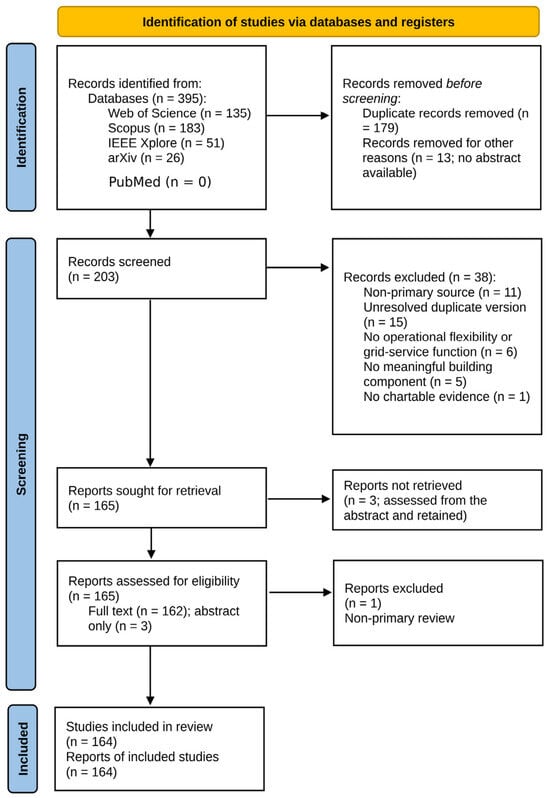
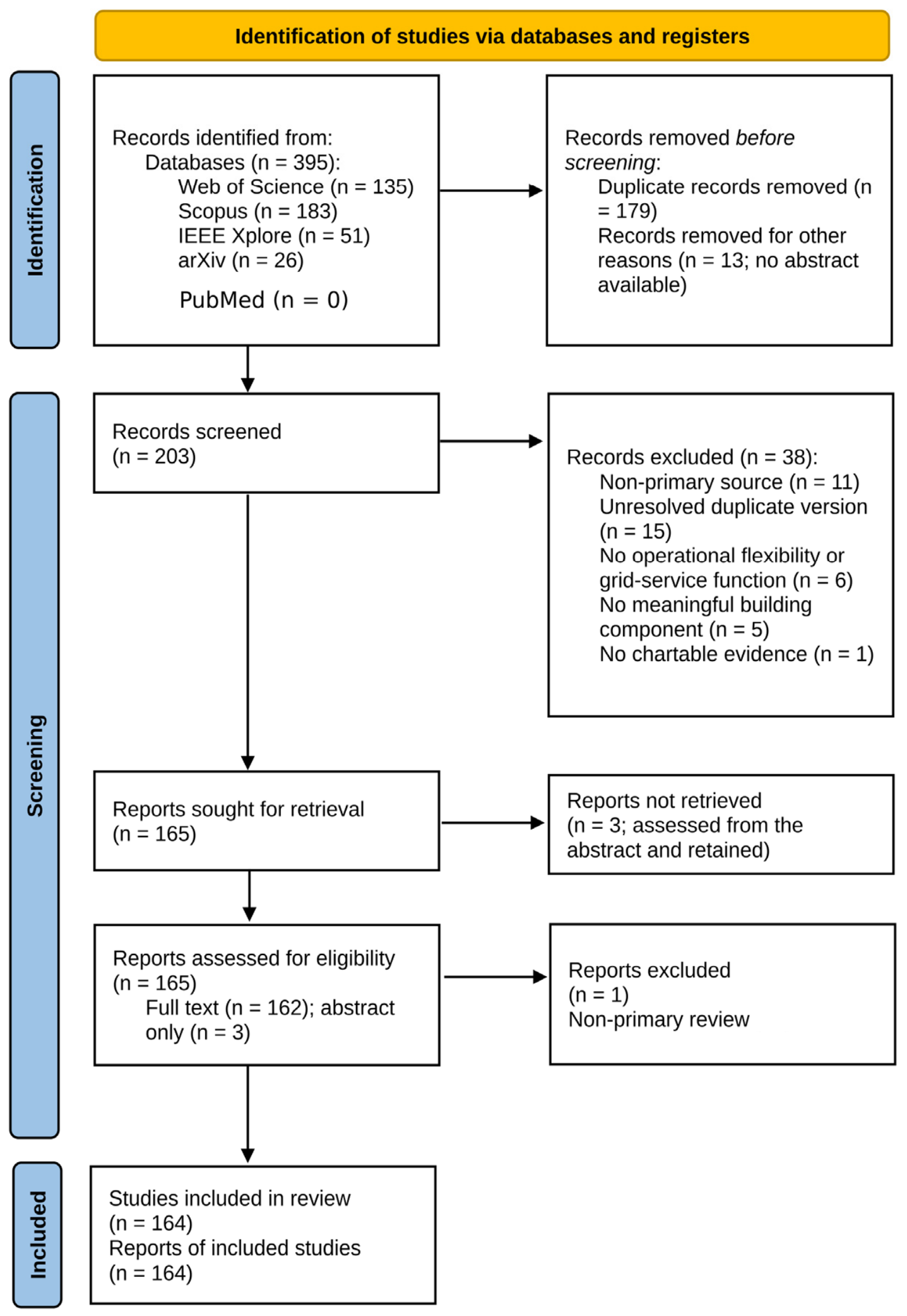
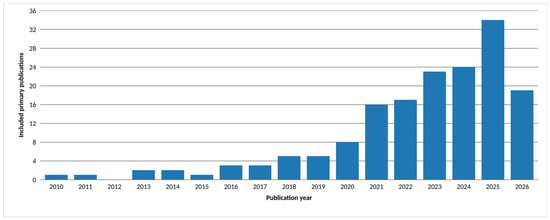
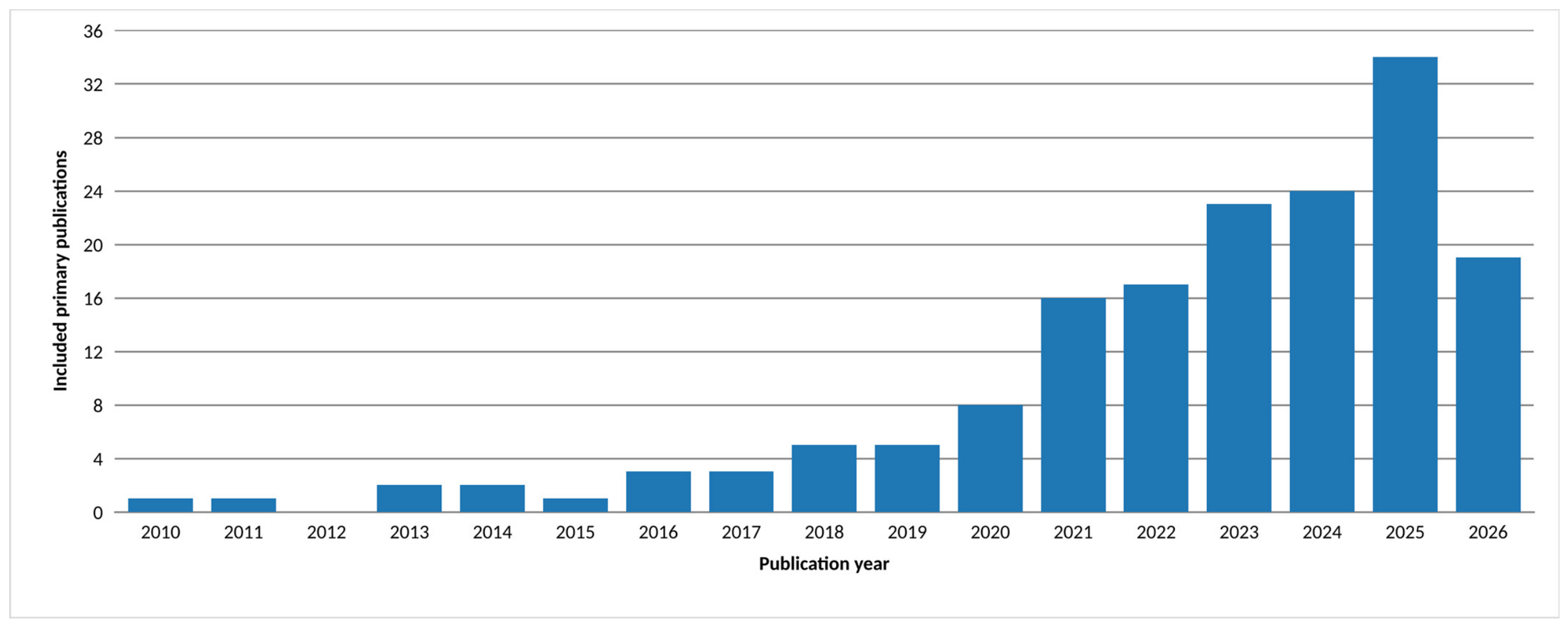
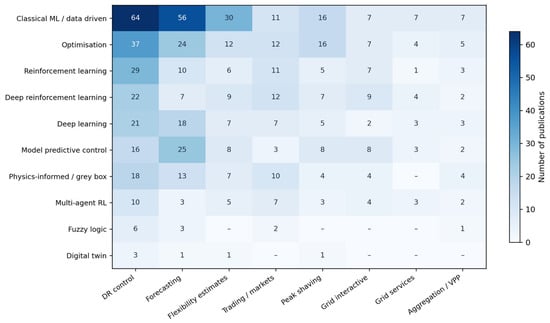
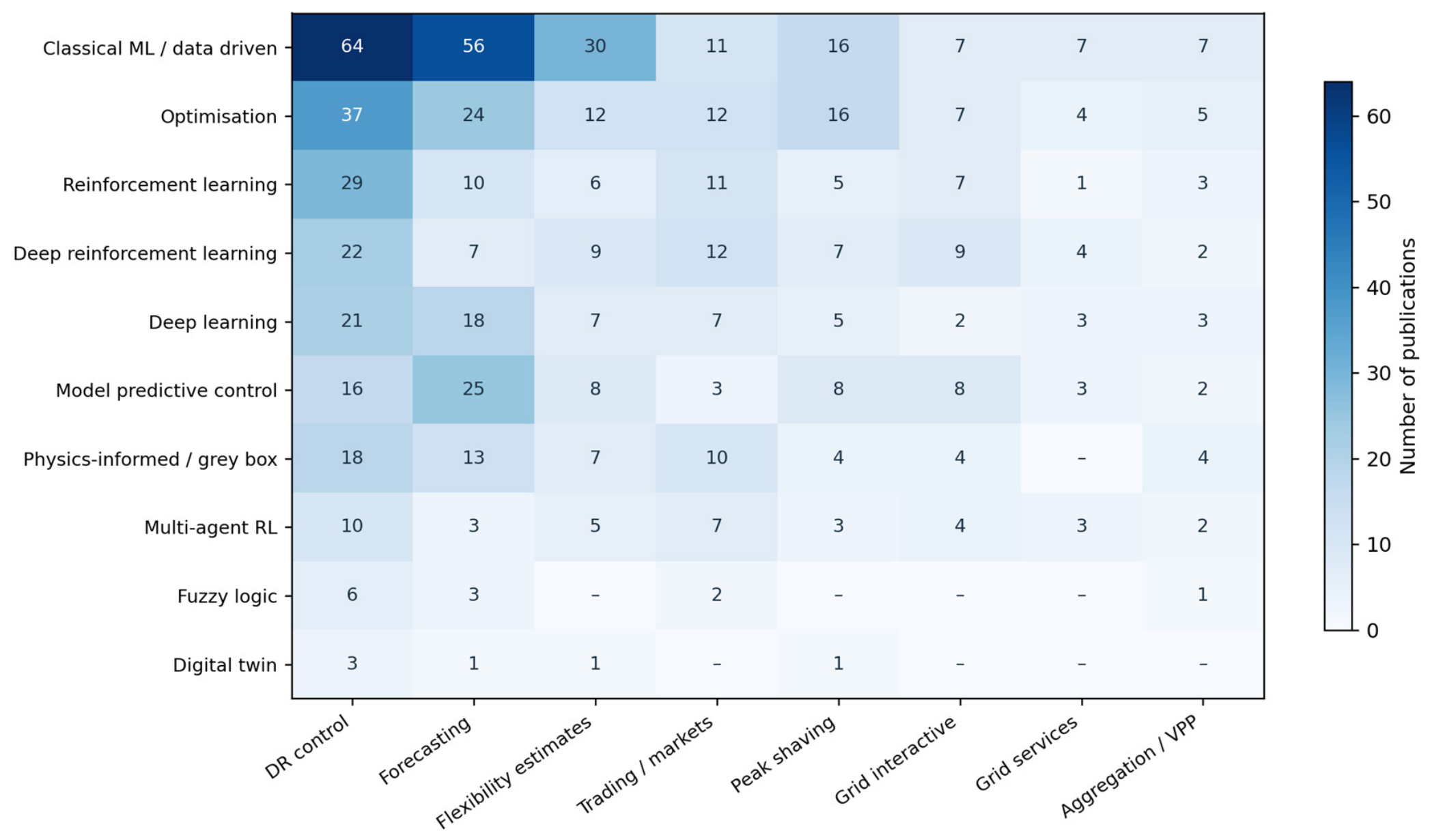
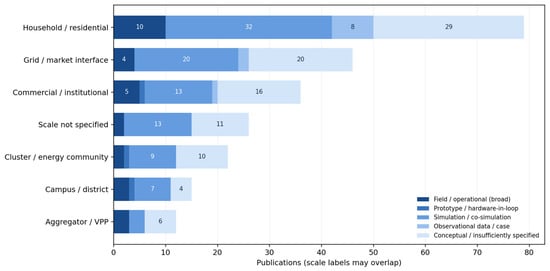
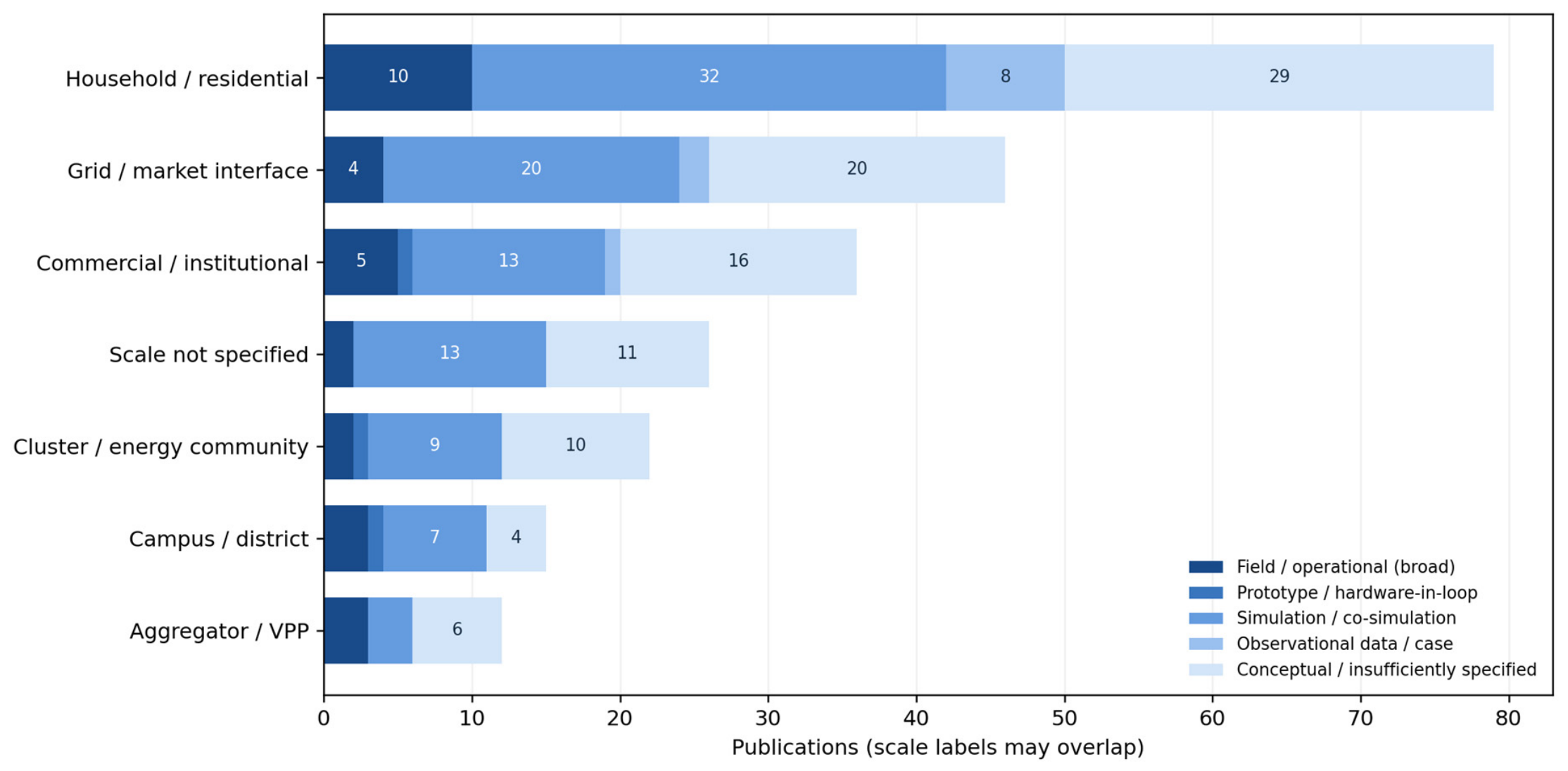
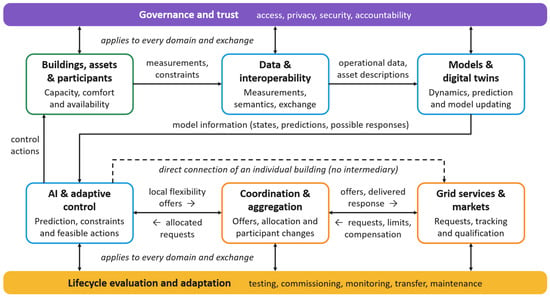
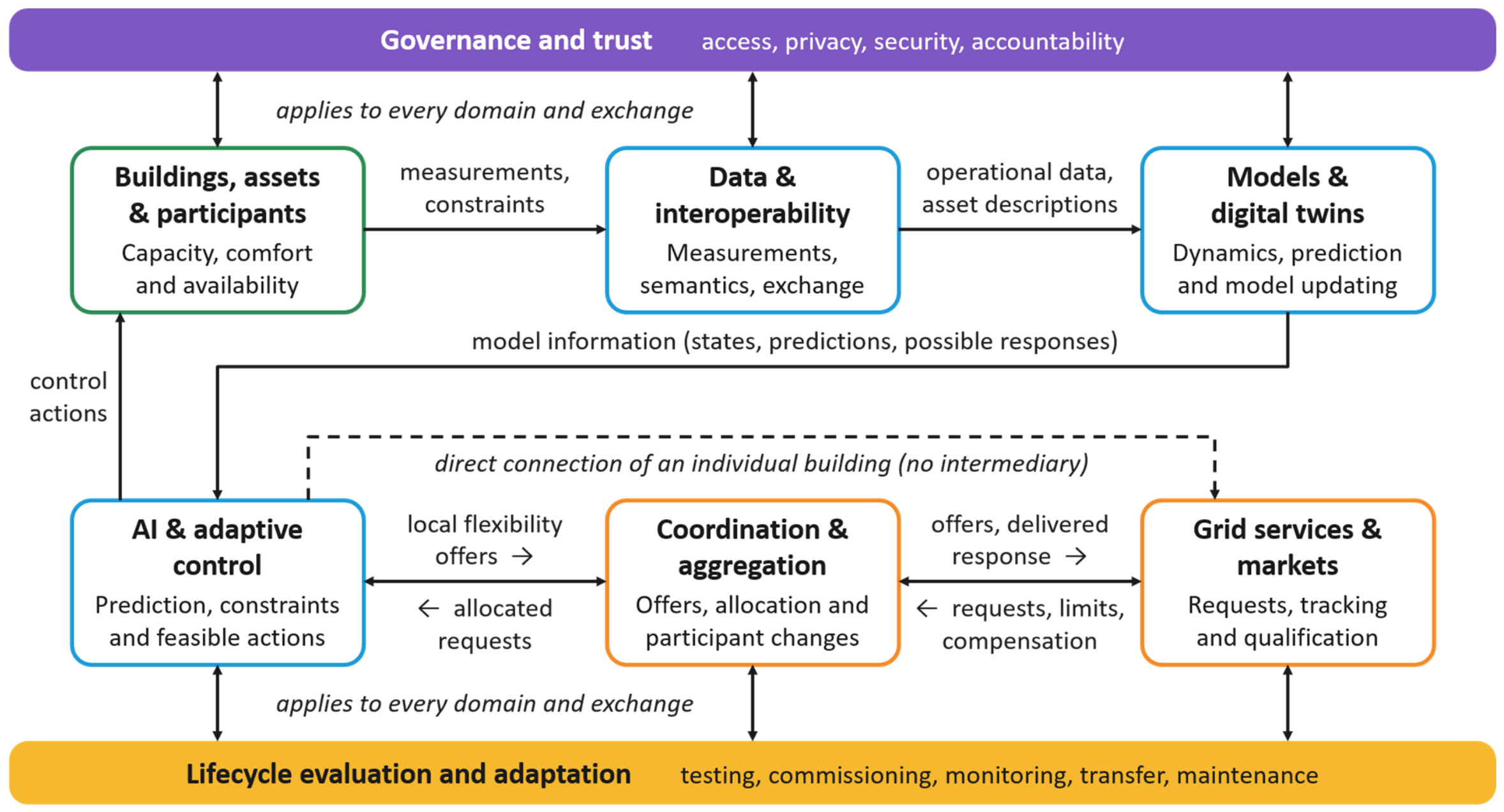

Disclaimer/Publisher’s Note: The statements, opinions and data contained in all publications are solely those of the individual author(s) and contributor(s) and not of MDPI and/or the editor(s). MDPI and/or the editor(s) disclaim responsibility for any injury to people or property resulting from any ideas, methods, instructions or products referred to in the content. |
© 2026 by the authors. Licensee MDPI, Basel, Switzerland. This article is an open access article distributed under the terms and conditions of the Creative Commons Attribution (CC BY) license.