


Abstract
This article is aimed at assessing energy–economy models with a focus on their ability to capture the dynamic structural changes of economic systems and the related energy supply chains. A narrative literature review approach was employed, synthesizing relevant peer-reviewed research. The search yielded 229 publications spanning from 2015 to 2024. After applying screening criteria based on methodological transparency, quantitative modelling, and explicit energy–economy integration, 120 articles were retained, from which 23 representative modelling frameworks were selected. The review identifies five key dimensions shaping the realism and applicability of integrated models: geographical and temporal scope, technological detail, modelling approach, and the degree of micro- and macroeconomic realism. Results show a growing adoption of multi-scale modelling and a gradual shift toward hybrid structures combining technological and macroeconomic components. However, significant gaps remain: only 26% of the models move beyond equilibrium assumptions; 17% incorporate behavioural or heterogeneous agents; and almost half rely on exogenous technological change. Moreover, the representation of policy instruments—particularly performance standards, sectoral benchmarks, and public investment mechanisms—remains incomplete across most frameworks. Overall, this analysis highlights the need for more transparent coupling strategies, enhanced behavioural realism, and improved representation of financial and transition risks. These findings inform the methodological development of next-generation models and indicate priority areas for future research aimed at improving the robustness of policy-relevant transition assessments.
1. Introduction
Measures aimed at improving energy efficiency and promoting renewable energy alone are not sufficient for achieving the sustainable development goals and the long-term targets set by the European Union [1]. Indeed, considering the urgency and scale of the mentioned targets, a comprehensive transformation of both supply and demand sides of the energy supply chain is nowadays essential [2].
The process of defining and implementing energy policies must be supported by quantitative model-based insights that must be able to consider the intertwined nature of the energy supply chain with all other sectors of the economy, hence being able to unveil implications and spillovers of structural technology changes.
Modelling the evolution of the energy supply chain calls for models with a technology-rich perspective, able to reproduce the realistic behavior of energy-related technologies and considering physical and natural constraints alongside economic considerations. The family of Energy Systems Optimization Models (ESOMs) broadly includes such kind of approaches, which are widely adopted by public and private entities to perform scenario analyses related to energy systems evolution at the national scale [3]. Several ESOM modelling frameworks are available, with different features and specifications. However, all of them are built essentially around fundamental laws of nature (i.e., energy conservation principle); for such reason, research advances are mostly focused on their practical implementation, rather than discussing fundamental operating principles.
On the other hand, the available economic systems modelling frameworks are built on different underlying economic paradigms and theories, such as Classical, Keynesian and Post-Keynesian, Neoclassical, Monetarist, etc. [4]: the use of different models highly depends on the economic theory that is embraced by the researcher.
Integrated energy–economy models aim at supporting the decision-making process by determining which policy actions and instruments may enable a technically feasible structural technology change while, at the same time, ensuring the economic and social sustainability of the defined policy actions. Besides the possible integration strategies across the models (discussed in the following), the fundamental idea is to capture the complex interactions between energy supply and demand, alongside their macroeconomic implications [5].
The objective of this research is to understand trends in integrated energy–economy modeling and to highlight gaps in existing approaches, to guide future research aiming to develop robust tools for energy policy analysis. This objective is pursued through a two-phase approach:
- -
- In the first phase, a detailed taxonomy outlining the main characteristics of integrated energy–economy models is developed. This taxonomy facilitates model comparison using standardized criteria and provides a clear framework for assessing the applicability and relevance of these models in energy transition policymaking.
- -
- In the second phase, a systematic review of integrated energy–economy models published since 2015 is conducted. Each model is classified and described according to the established taxonomy, enabling the identification of strengths and limitations in current integrated energy–economy models.
The paper is organized as follows: Section 2 presents a literature review that provides a general overview of existing different energy–economy models and their analytical approaches. Section 3 outlines the methodology, offering an overview of the criteria and approaches used to select the integrated energy–economy models under consideration. Section 4 discusses the results of the analysis, including the proposed taxonomy of integrated energy–economy models. Finally, Section 5 concludes by summarizing the key findings and outlining the limitations of the research.
2. Historical Development of Energy–Economy Models
Energy–economy models have evolved since the early 20th century, driven by the need to understand the complex relationship between the economy and energy production and consumption. Their evolution reflects progressive attempts to address structural limitations in representing technological change, behavioural responses, and macroeconomic feedback.
The origins of economic energy modelling can be traced back to the 1950s and 1960s. Early linear-programming models focused on energy supply optimisation during industrial expansion [6], while simple econometric demand models linked energy use to GDP [7]. These early contributions were foundational but limited in their ability to capture behavioural feedback, sectoral interdependencies, or technological discontinuities.
In response to the oil crisis and concerns about energy security, the 1970s witnessed growing interest in understanding the influence of the rise in oil prices on the energy system and the broader economy. Developed in the late 1970s by the International Energy Agency (IEA) in collaboration with the Energy Technology Systems Analysis Program (ETSAP), MARKAL (Market Allocation Model) represents one of the earliest examples of energy–economic models designed to help decision makers evaluate various technology pathways to meet energy demand [8]. This marked a shift towards more integrated representations, although economic responses remained stylized.
During the same period, the basic input–output framework focused on energy use has been expanded to account for inter-industry energy flows [9]. However, as energy policies have grown increasingly complex, alongside the need to account for price adjustments and behavioral responses, CGE models have become more widely adopted. In this context, one of the earliest applied CGE models was developed by Norwegian economist Leif Johansen, who employed it to analyze the Norwegian economy, specifically to evaluate the economic impacts of changes in energy prices and related policies [10]. CGE approaches strengthened economic realism but remained constrained by static equilibrium assumptions, limiting their ability to represent transitional frictions.
In the 1990s, environmental and climate concerns drove the expansion of modelling frameworks. Models like TIMES (an evolution of MARKAL) represented a significant step forward, integrating technology-rich energy system modelling with economic analysis [11]. Despite these improvements, the integration between technological detail and macroeconomic feedback remained partial.
Integrated assessment models (IAMs) were developed in response to the challenges posed by climate change, aiming to combine multiple disciplines. Pioneers in this field include William Nordhaus, who developed the DICE model [12], and Richard S. J. Tol, creator of the FUND model [13]. Over the years, the International Institute for Applied System Analysis (IIASA) has further refined and advanced these models, particularly with the development of the MESSAGE (Model for Energy Supply Strategy Alternatives and their General Environmental Impact) model [14]. This progress has led to their extensive application in international assessments, including those conducted by the Intergovernmental Panel on Climate Change (IPCC) [15]. Yet many IAMs relied on simplified economic structures and exogenous technological trajectories, limiting their capacity for transition analysis.
Since the 2000s, models increasingly incorporated behavioural and dynamic mechanisms. System dynamics, e.g., C-ROADS [16], Energy Transition Model and agent-based models, e.g., EMLab-Generation and AMES Wholesale Power Market and hybrid models like REMIND [17] improved the representation of non-linear feedback, market interactions, and policy effects. These innovations helped narrow the gap between engineering detail and macroeconomic realism.
Today, energy–economy models increasingly address feedback loops between technology, markets and policy [18]. These improvements allow for better evaluation of climate policies and renewable energy incentives, ensuring that models continue to provide valuable insights for a sustainable energy transition. Still, key tensions persist, such as balancing behavioural realism with computational tractability, which continue to shape the design and applicability of modern modelling frameworks.
3. Methodology
3.1. Criteria for Taxonomy
A narrative review approach is employed to develop a taxonomy for describing and comparing energy–economic models, synthesizing relevant peer-reviewed literature. To identify relevant literature, the ScienceDirect database was used as the primary source, formulating the following query: ((“energy economy model” OR “energy environment economy model”) AND TITLE-ABS-KEY (“review” OR “criteria” OR “taxonomy”)). “Climate-economy” and “energy-transition” keywords were left out to avoid retrieving papers centred exclusively on climate dynamics, since the first step of the study focuses on comparing models to aspects of the energy economy and how they were integrated, rather than characteristics relating to climate science.
The literature review identified five key criteria and sub-criteria frequently used to evaluate energy–economy models: (1) Geographical scale, (2) Time resolution, (3) Policy representation, (4) Technological detail, and (5) Modelling approach. To support the selection of these criteria, recent model review studies were compared. This framework allows for a structured, transparent comparison while remaining flexible enough to accommodate methodological diversity across models.
Geographical coverage and time resolution are often discussed together, because both shape the model’s ability to reflect spatial heterogeneity and short-term system dynamics. For example, Kangxin An et al. and Prina et al. emphasize the importance of these aspects in balancing precision and applicability across different spatial and temporal contexts [19,20]. Similarly, S. Chatterjee et al. and Rhodes et al. highlight that the capacity to reflect policy implementation—such as interactions between overlapping policies—plays a crucial role in ensuring that models align with real-world policy landscapes [21,22].
The technological dimension also features prominently, with Prina et al. and Rhodes et al., underlining how detailed representations of technology can improve the accuracy of transition scenarios [21,23].
In addition, several studies emphasise that the modelling approach and underlying mathematical structure strongly influence how models capture behavioural dynamics, structural transitions, and feedback effects [20,24].
Some studies draw attention to less commonly discussed aspects. Temporal scale (i.e., model horizon length) is highlighted as critical for long-term transition assessment [23,24]. Furthermore, Chang M. et al. explore the value of model coupling, where multiple models are linked to provide more integrated insights [25]. Finally, Sanders et al. underline the importance of incorporating economic and financial mechanisms to capture market behaviors and policy impacts accurately [26]. These additional dimensions enrich the taxonomy by linking technological, behavioural, and structural dynamics.
The criteria selected for this study—geographical scale, time resolution and temporal scale, policy representation, technological and sectoral detail, modelling approach and coupling, and micro- and macro-level realism—were chosen for their prominence in the literature and relevance to this research. These criteria ensure the models capture spatial and temporal dynamics, represent policy frameworks and sectoral transitions, integrate technological change, and employ rigorous methodologies. Additionally, they enhance the ability to link micro-level behaviours with macroeconomic trends, providing a comprehensive framework for assessing sectoral impacts, emissions footprints, and the economic effects of climate policies. Overall, the taxonomy is designed to facilitate transparent cross-model comparison and to highlight methodological strengths and gaps relevant for energy transition analysis.
To ensure transparency and replicability, the criteria used to classify models as having high, medium, or low levels of micro-realism, macro-realism, technological change, and policy representation follow conceptual definitions provided in Section 3. These levels reflect, respectively: (i) the degree of behavioural heterogeneity and deviation from purely rational decision-making; (ii) the extent of endogenous macroeconomic feedback and disequilibrium dynamics; (iii) the endogeneity and structural treatment of technological change; and (iv) the scope and interaction of policy instruments represented. The comparative table presented in Section 4 applies these definitions consistently across the 23 models reviewed.
3.1.1. Geographical Scale
Models vary significantly in their geographical scope, typically spanning global, national, and regional levels. Kangxin An et al. highlight that global models are often employed to evaluate international energy trends and cross-border trade flows, helping policymakers align local policies with global sustainability goals [20]. At the national level, models offer detailed insights into the energy dynamics within a single country, sometimes including sub-national analyses for individual provinces or states [27]. Prina et al. emphasize that adopting a regional perspective allows for more nuanced assessments of energy distribution and policy impacts, as it captures differences in resource availability, energy infrastructure, and economic conditions between regions [23]. Overall, geographical scale determines the level of granularity with which spatial heterogeneity and policy relevance can be analysed.
3.1.2. Time Resolution and Temporal Modeling Approach
The term temporal resolution refers to the time-steps or time-slices employed to divide the simulation year [28]. Models with lower temporal granularity, often suitable for traditional fossil-based systems, rely on broad averages such as annual or seasonal values. This may suffice when short-term variability is less limited. However, as variable renewable energy sources gain prominence, higher temporal granularity becomes essential. Hourly or sub-hourly resolution allows models to represent intermittency and short-term system balancing, increasing the realism and robustness of model output.
Temporal modeling approaches can be categorized into dynamic and static models. Static models assess the system at a single point in time, dynamic models simulate changes over multiple periods and incorporate intertemporal optimization. Within dynamic models, the resolution technique can further be classified as either forward-looking or recursive. According to Cantele et al., forward-looking models solve the entire time horizon in a single optimization, enabling agents to anticipate expected future outcomes. This yields consistent investment and technology pathways but increases computational burden.
Recursive models instead solve sequentially, where each period depends on the results of the previous one.
Rolling-horizon implementations update the planning window over time, integrating new information and allowing adaptive optimisation [29]. These differing approaches strongly affect how models represent investment behaviour, technological diffusion, and policy timing.
3.1.3. Technological Change
The degree to which a model captures technological processes and depicts technical information is referred to as its treatment of technology. Key aspects include the explicitness of technology representation and the mechanisms for modelling technological change [30].
Explicit representation provides detailed, technology-specific data but increases computational cost. Balancing detail and scalability is therefore a central challenge.
Technological change can be exogenous or endogenous. Exogenous change assumes fixed technological trajectories, such as the widely used “autonomous energy efficiency improvement” metric [31]. While simple to implement, this approach cannot simulate interactions between policy, markets, and innovation.
Endogenous technological change incorporates feedback mechanisms, where innovation is influenced by learning, R&D, and economies of scale [32]. Endogenous learning enables a more realistic assessment of how policy instruments accelerate technology uptake and cost reductions, making such models more suitable for long-term transition analysis.
3.1.4. Modelling Approach and Coupling
Energy–economic models are commonly classified into two main approaches: top-down and bottom-up [33], with hybrid models bridging their strengths [27]. Top-down models adopt a macroeconomic perspective, using aggregated data and historical trends. Approaches include CGE models, input–output models, econometric models, system dynamics, and stock–flow consistent models [34]. They are well-suited for analysing macro-level policies but often lack the detail needed to evaluate technology-specific measures.
Conversely, bottom-up models emphasize detailed technological representation using disaggregated data. They are suited for assessing technologies, efficiency measures, and emissions pathways, but often omit behavioural and macroeconomic feedback [21].
Hybrid models combine the technological specificity of bottom-up approaches with the behavioural realism and macroeconomic feedback loops of top-down models [35].
Coupling enhances the capacity to capture multi-sectoral interactions and policy impacts across scales [36]. Strategies include soft-linking, where data is exchanged manually, hard-linking, where exchange is automated, and full integration, where models interact during simulation. However, full integration increases model complexity and reduces transparency, a recurrent challenge in hybrid frameworks.
3.1.5. Policy Representation
The transition to a low-carbon economy requires robust frameworks to evaluate climate policies. Economic–energy models differ widely in their capacity to represent instruments such as government investment, subsidies, regulations, and carbon pricing [37].
To systematically compare economic–energy models in their ability to simulate transition policies, we propose a classification based on four key dimensions:
- -
- Carbon Pricing Mechanisms: endogenous vs. exogenous CO2 pricing.
- -
- Regulatory Instruments: emission caps, standards, mandates.
- -
- Market-Based Incentives: subsidies, feed-in tariffs, tax incentives.
- -
- Public Investment Strategies: government-funded infrastructure or technology deployment [38].
This structure highlights differences in how models capture policy stringency, behavioural responses, and sectoral interactions.
3.1.6. Micro Realism
One of the key criteria for classifying economic–energy models concerns the degree of microeconomic realism they incorporate. Rhodes et al. emphasize that real-world energy-related decisions often deviate from the assumptions of traditional rational choice models [21]. Individuals display loss aversion, bounded rationality, imperfect information, and habitual behavior. The literature identifies two primary ways to enhance the microeconomic realism of these models [39].
The first involves recognizing market diversity and capturing the heterogeneous behaviors of agents, reflecting the range of choices and actions among various actors.
The second focuses on incorporating non-monetary factors, such as social, psychological, and qualitative elements, which shape decisions beyond financial considerations alone. This structure highlights differences in how models capture policy stringency, behavioural responses, and sectoral interactions.
3.1.7. Macro Realism
The assessment of macroeconomic realism in energy–economic models relies on a set of conceptual and structural criteria that determine the extent to which a model can realistically represent the interactions between the energy system and the broader economy. A first and fundamental aspect concerns the treatment of the energy sector as endogenous to the economic system. In macro-realistic frameworks, energy production and consumption are not externally imposed but evolve in response to economic variables such as prices, technological change, and policy incentives. This allows for capturing how energy dynamics influence and are influenced by broader economic trends in employment, investment, and trade [40]. Closely related is the integration of feedback mechanisms between the economy and the physical system. Models that aspire to macroeconomic realism must represent two-way interactions in which economic activities affect environmental conditions (e.g., through emissions and resource depletion), while in turn physical and environmental constraints shape economic output, productivity, and welfare [18]. Such feedback is essential for assessing long-term sustainability and the resilience of transition pathways.
Equally important is the model’s ability to move beyond equilibrium assumptions and represent disequilibrium states and transitional dynamics. Traditional general equilibrium models typically assume optimal allocation of resources, fully rational agents, and instantaneous market clearing. In contrast, more realistic models recognize that frictions, institutional rigidity, imperfect information, and suboptimal behaviors are structural features of real-world economies, especially during periods of major transformation such as energy transitions [41]. Representing disequilibrium allows models to capture unemployment, underutilised capital, and labour–investment mismatches that strongly influence the feasibility and socio-economic costs of decarbonisation.
Furthermore, macroeconomic realism is enhanced by a detailed representation of sectoral interactions, where the energy system is explicitly linked to different segments of the economy, allowing for the analysis of structural shifts and distributional effects [42]. In this review, sectoral detail is therefore recorded as a key dimension of macro-realistic model design.
3.2. Criteria for Systematic Models Review
To finalize the research, a second targeted review was conducted to identify studies on integrated energy–economic models published between 2015 and 2024. The objective was to analyse how recent literature conceptualises and implements methodological linkages between energy systems and economic dynamics, with a particular focus on quantitative frameworks suitable for long-term transition analysis.
The search procedure followed a structured, stepwise screening logic to ensure transparency and reproducibility. The initial database query returned 229 publications. All records were screened at the title and abstract level to exclude studies that did not address the energy–economy interface, papers focused exclusively on climate science, qualitative-only assessments, or duplicates. This stage resulted in the exclusion of 154 studies, primarily due to thematic misalignment or insufficient methodological detail.
The remaining 75 publications underwent full-text evaluation. Articles were excluded when they lacked:
- (i)
- an explicit integration between economic drivers (e.g., prices, macroeconomic indicators, behavioural assumptions) and energy–system behaviour (e.g., supply–demand dynamics, technological adoption, structural transitions);
- (ii)
- a quantitative or model-based structure; or
- (iii)
- sufficient methodological transparency to allow meaningful comparison.
Following this step, 55 additional articles were removed.
A total of 120 studies satisfied all inclusion criteria and were retained for the methodological synthesis. From these, a final set of 23 representative modelling frameworks was selected for in-depth comparative analysis. Selection was based on their methodological relevance, diversity in modelling approaches (top-down, bottom-up, hybrid, system dynamics), and influence within the energy-transition literature. These 23 models constitute the analytical core of the review and are examined in the following sections to assess their structure, underlying assumptions, and capacity to capture the interactions between technological change, policy mechanisms, and macroeconomic dynamics.
4. Results
Table 1 presents a concise summary of the models that qualified under the criteria, based on the latest publicly accessible documentation. These models represent a diverse set of methodologies and classifications, reflecting the ongoing evolution of energy–economy modeling frameworks. While the descriptions provide an overview of their core characteristics, they are not definitive; frequent updates and methodological shifts in these models often occur.
Table 1.
Summary of the models resulting from the literature review.
This categorization highlights the methodological diversity and complementary strengths of the reviewed models. Further assessment of their capabilities and applications is detailed in Table 2, providing insights into their suitability for specific analytical contexts while Table 3 provides a comparative assessment of the reviewed models based on the classification criteria introduced in this study.
Table 2.
Comparative overview of policy representation in energy–economy models.
Table 3.
Comparison of integrated assessment and energy–economy models against selected criteria.
4.1. Geographical Scale
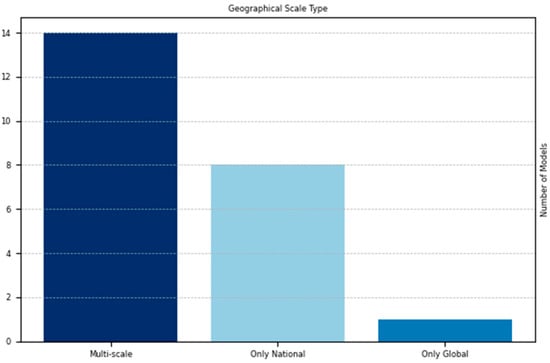
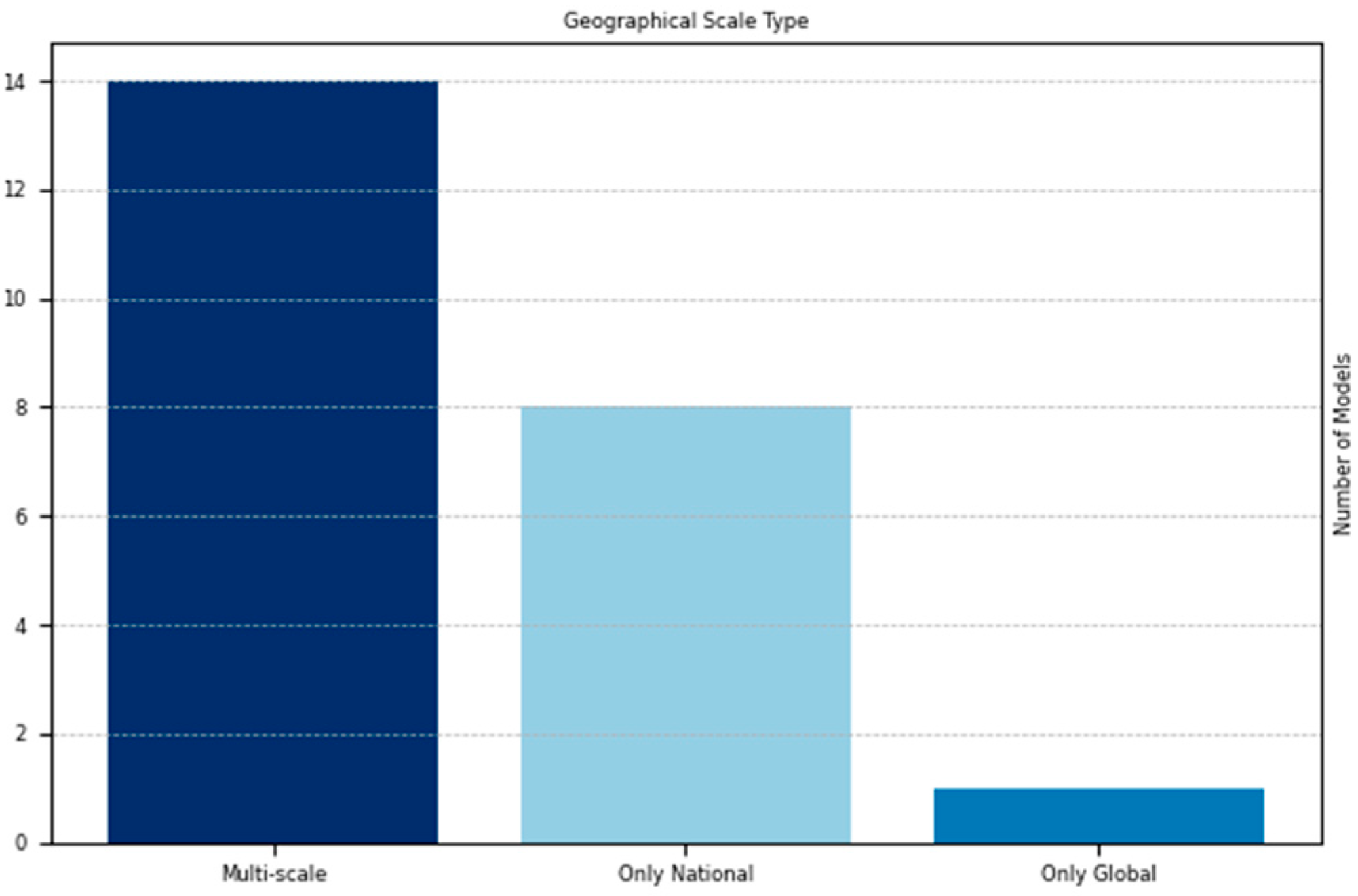
In recent reviews of models that integrate economics and energy to study the transition, scholars have emphasized how the choice of geographical scale is not merely a technical detail but a fundamental factor that shapes model outcomes and policy implications. Our analysis of 23 models illustrates this point vividly. For example, a subset of these models (8 in total) is designed to operate exclusively at the national level. These models, such as AIM, IPAC, IMED/CGE, IntE3-ISL, MAPLE-KLEM, and ThreeME/IESA-Opt, focus deeply on local dynamics, offering detailed insights into specific country contexts. However, by honing in on the national perspective, they may overlook broader cross-border or international interactions.
At the other extreme, we found only one model (GCAM/EXIOMOD/BENCH) that works solely at a global level. Although this approach provides a broad view useful for international comparisons, it can sometimes miss the finer details of regional or local differences.
Interestingly, most models (roughly 70%) embrace a multi-scale approach (see Figure 1). Eight models, including GCAM, MEDEAS, MESSAGE, WITCH, TIAM, and TIMES, integrate global, regional, and national perspectives, thereby offering a flexible framework that captures the intricate interplay across different scales. Additionally, a couple of models (GEM-E3 and MUSE) combine global and regional scales, while one model (IMACLIM/LEAP) bridges global and national levels, and three models (EPPA, NEMESIS, and PRIMES) focus on both regional and national scales.
Figure 1.
Geographical Scale.
This quantitative breakdown underscores a clear trend in the literature: modelers are increasingly recognizing that energy transitions are complex and interconnected phenomena that cannot be adequately addressed by focusing on a single geographical level. The move toward multi-scale and hybrid models reflects an evolving understanding that detailed local analyses must be complemented by broader, synthesized perspectives. Such approaches not only enhance the robustness of the models but also provide decision-makers with a more complex view, one that supports both international strategy formulation and the practicalities of local policy implementation. In essence, this trend towards multi-scale integration is seen as a necessary evolution to better capture the realities of the energy transition in an increasingly interconnected world.
4.2. Time Resolution and Temporal Modelling Approach
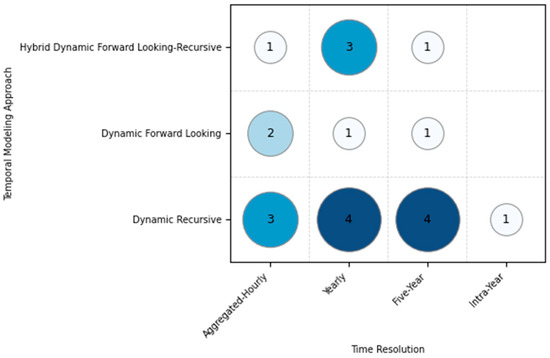
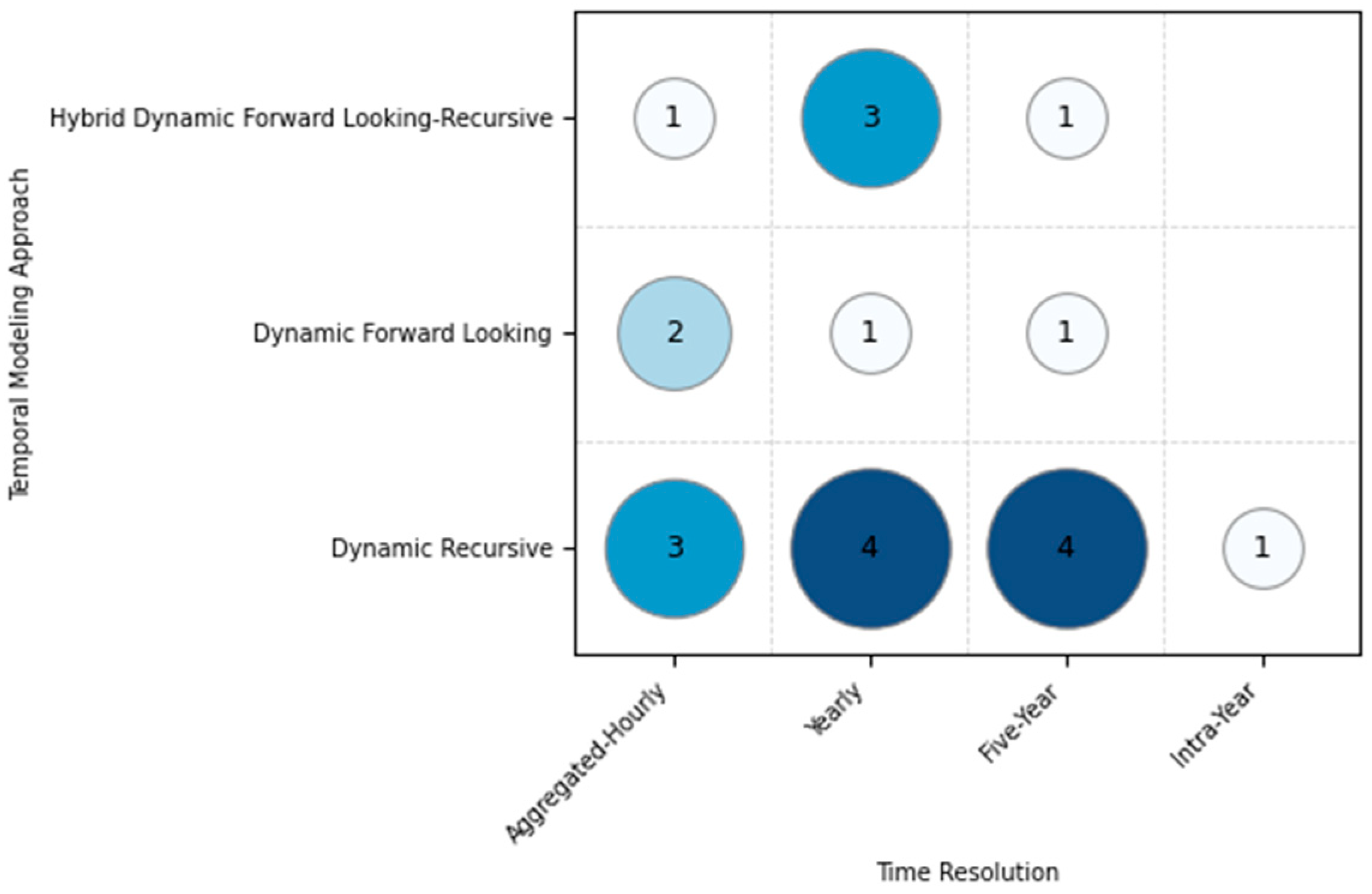
Time resolution and dynamic modelling choices substantially influence how energy–economy models capture system behaviour and respond to policy questions. As shown in Figure 2, models differ along two main dimensions: temporal granularity and dynamic structure.
Figure 2.
Time Resolution and Temporal Modelling Approach.
Models using annual time steps—such as AIM, WITCH, EU-TIMES/NEMESIS, GCAM/EXIOMOD/BENCH, IMACLIM/LEAP, IMED/CGE, NEMESIS, and POLES—offer a long-term perspective but may miss short-term patterns relevant for flexibility and system reliability. Models operating on multi-year steps (GCAM, IPAC, MESSAGE, EPPA, GEM-E3, MAPLE-KLEM) capture medium- to long-term trends while reducing computational complexity, but cannot represent short-term policy or operational effects. Hybrid frameworks—such as IntE3-ISL, LEAP, MUSE, PRIMES, ThreeME/IESA-Opt, TIAM, TIMES, and MEDEAS—combine annual resolution with intra-year elements to link long-term planning to short-term system behaviour, though they require careful harmonisation across time scales. GIBM, the only model with full intra-year resolution, highlights a largely unexplored area with potential for improving short-term dynamics representation.
Dynamic modelling approaches further shape model behaviour. Recursive dynamic models (AIM, GCAM, IPAC, MEDEAS, EPPA, GEM-E3, GIBM, IMED/CGE, IntE3-ISL, LEAP, MUSE, NEMESIS, POLES) update decisions sequentially based on past states. This mirrors real-world incremental adjustment but cannot anticipate long-term optimisation paths. Forward-looking models (MESSAGE, WITCH, PRIMES, TIAM, TIMES) employ intertemporal optimisation, enabling strategic decisions aligned with long-term targets; however, their reliability depends on assumptions that may be uncertain in the context of energy transitions.
Hybrid dynamic approaches—used in EU-TIMES/NEMESIS, GCAM/EXIOMOD/BENCH, IMACLIM/LEAP, MAPLE-KLEM, ThreeME/IESA-Opt—attempt to combine both paradigms but remain constrained by methodological challenges, particularly in defining which variables follow intertemporal optimisation and which follow sequential dynamics. This choice directly affects investment trajectories and technology adoption.
Ultimately, selecting temporal granularity and dynamic structure involves a trade-off between representational accuracy, computational feasibility, and robustness under uncertainty. Improving multi-scale harmonisation and clarifying hybrid optimisation rules remain key areas for methodological advancement.
4.3. Technological Change
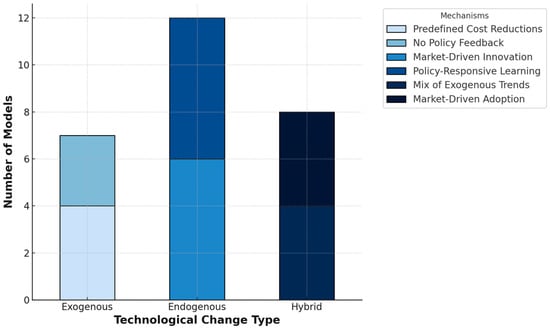
Technological change plays a fundamental role in determining the cost and feasibility of climate mitigation strategies. Models used for climate–energy–economy analysis incorporate technological change through different approaches, primarily categorized as exogenous, endogenous, or hybrid. Exogenous models assume predefined cost reductions and efficiency improvements over time, independent of market dynamics or policy interventions. This approach, employed in models such as AIM, TIMES, and TIAM, simplifies projections but fails to capture feedback effects from economic conditions or innovation-driven learning. As a result, exogenous models often overestimate mitigation costs by underestimating the capacity of policy instruments to accelerate technological progress.
In contrast, endogenous models, such as EPPA, WITCH, and POLES, incorporate price signals, research and development investments, and learning-by-doing mechanisms, allowing technological costs to evolve dynamically in response to policy incentives and market conditions. These models better reflect real-world innovation cycles, where cumulative deployment and targeted research and development support lead to self-reinforcing cost declines. However, while endogenous models improve policy responsiveness, they introduce complexity and parameter uncertainty, particularly in estimating the elasticity of innovation with respect to policy stimuli. Some risk overstating the impact of climate policies if they assume overly optimistic rates of technological advancement or fail to account for structural barriers to adoption.
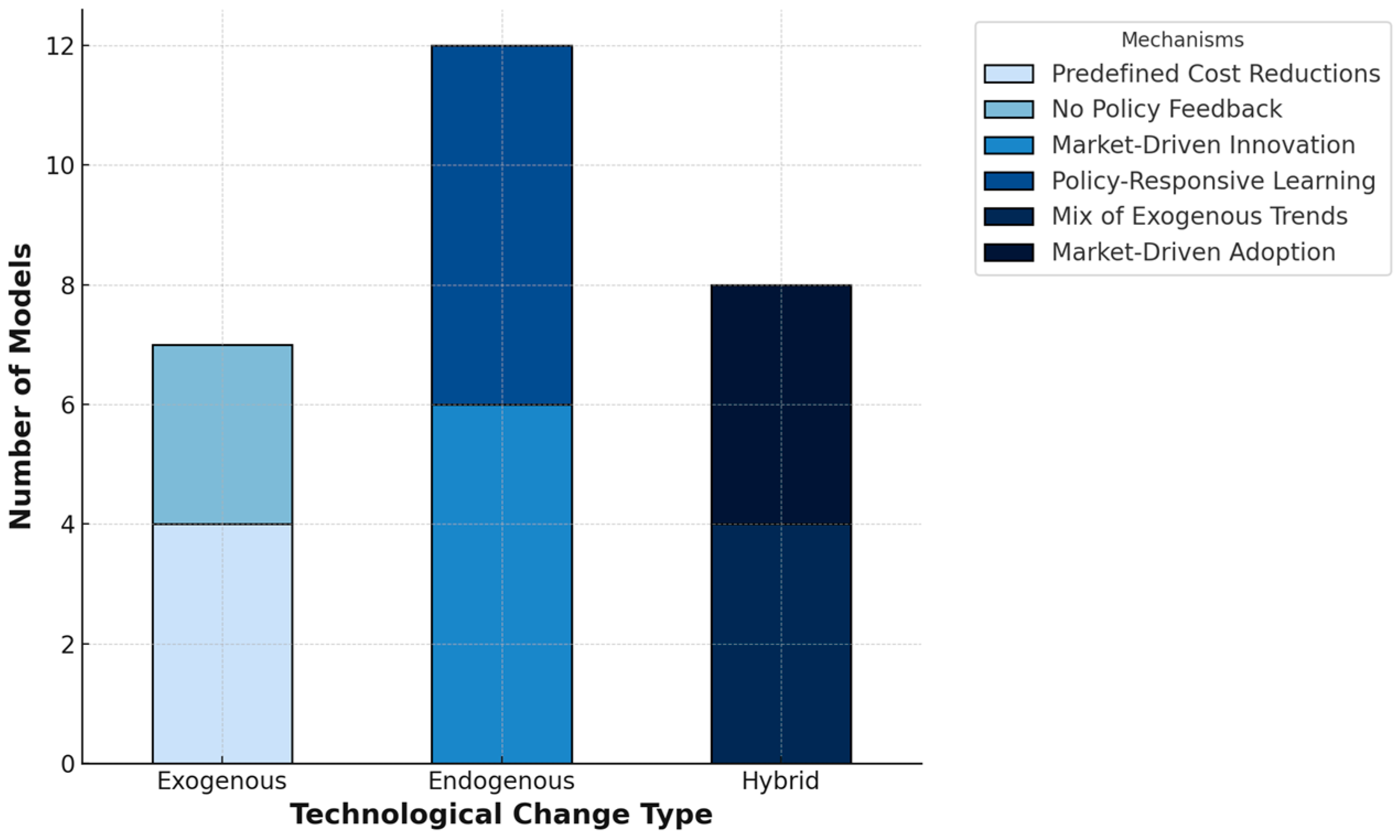
Hybrid models, such as GCAM, PRIMES, and GEM-E3, attempt to balance computational simplicity with policy sensitivity by combining exogenous cost reductions with endogenous adoption dynamics. These models typically assume predefined cost trends for certain technologies while allowing market competition and policy interventions to influence diffusion rates. This approach improves adaptability compared to fully exogenous models but may still underestimate rapid technological breakthroughs or overestimate the inertia of high-carbon technologies in response to aggressive mitigation strategies. In some cases, the coexistence of exogenous and endogenous components introduces inconsistencies, particularly when the assumed cost trajectories diverge from observed learning rates under strong policy intervention. Figure 3 visually represents how different models incorporate technological change mechanisms, highlighting the relative prevalence of predefined cost reductions, market-driven innovation, and policy-responsive learning within exogenous, endogenous, and hybrid frameworks.
Figure 3.
Technological change.
The way technological change is modeled has significant implications for policy assessments, particularly under carbon pricing scenarios. Exogenous models tend to project higher mitigation costs due to their rigid assumptions about technological evolution, whereas endogenous models show stronger emissions reductions at lower costs by capturing the reinforcing effects of innovation and market expansion. Hybrid models provide intermediate estimates but may still be constrained by their reliance on predefined cost assumptions. Empirical trends suggest that models incorporating endogenous learning and research and development investment better align with observed historical cost declines in renewable energy and energy efficiency technologies, particularly under strong policy support.
Despite advances in technological change modeling, several gaps remain. Many models underestimate the potential for disruptive technologies, such as advanced nuclear, direct air capture, or next-generation hydrogen systems, which do not follow historical learning trends but could emerge rapidly under targeted innovation policies. Additionally, most technological change models focus primarily on cost reductions, neglecting behavioral factors, risk perceptions, and institutional barriers that influence technology adoption.
Future research should aim to integrate more sophisticated approaches, such as agent-based modeling and stochastic simulations, to capture the uncertainty of technological evolution and improve the robustness of policy assessments. Enhancing these elements will ensure that climate policy evaluations reflect both the constraints and opportunities of real-world innovation dynamics.
4.4. Modeling Approach and Coupling
Integrated energy–economy models adopt diverse methodological strategies, significantly influencing their capability to represent socio-technical transitions. Three overarching trends emerge: a progressive hybridisation of modelling frameworks, the predominance of standalone bottom-up optimisation tools, and the limited diffusion of fully integrated energy–economy coupling.
The first trend is the growing adoption of hybrid modelling structures that integrate features from top-down and bottom-up approaches. Examples include IPAC, which employs a CGE hybrid simulation approach with hard-linked integration; IMACLIM/LEAP, which combines a CGE structure with bottom-up optimisation through soft-linking; and GCAM/EXIOMOD/BENCH, which couples a partial-equilibrium IAM with input–output modules via soft-linking. In soft-linked frameworks such as GCAM/EXIOMOD/BENCH, EU-TIMES/NEMESIS, and IMACLIM/LEAP, information flows iteratively across modules but without simultaneous solving, limiting real-time feedback and constraining the representation of policy shocks or structural adjustments. Hard-linked models such as IPAC and EPPA, by contrast, solve interconnected components jointly and therefore provide more consistent system-wide responses.
A second trend is the widespread use of standalone bottom-up optimisation models, which offer detailed technological representations but limited macroeconomic feedback. MESSAGE and TIMES emphasise cost-optimal system configurations under technical and environmental constraints, while LEAP provides granular sectoral detail without economic integration. TIAM and PRIMES focus on technology-rich system dynamics, and MUSE incorporates behavioural elements through an agent-based framework, although without direct macroeconomic coupling. As standalone tools, these models cannot represent economy-wide consequences such as GDP, labour, or price adjustments, weakening their usefulness for policies requiring economic consistency.
The third trend concerns the limited implementation of fully integrated dynamic coupling. Only a few models—WITCH, MESSAGE, EPPA, IPAC, IMED/CGE, MAPLE-KLEM—adopt tightly integrated structures enabling simultaneous solving of energy and economic modules. These frameworks support the analysis of structural shifts, lock-ins, and cross-sectoral feedback. By contrast, soft-linked models such as EU-TIMES/NEMESIS, GCAM/EXIOMOD/BENCH, IMACLIM/LEAP, and ThreeME/IESA-Opt provide only partial integration, while standalone models like POLES, LEAP, TIAM, and TIMES lack direct coupling to macroeconomic components, constraining their capacity to assess systemic economic implications.
Three main limitations emerge from this assessment. First, methodological fragmentation persists: bottom-up models excel in technological detail but lack economic realism, while CGE and econometric models (GEM-E3, IMED/CGE, EPPA, NEMESIS) often oversimplify technological mechanisms. Second, behavioural and microeconomic realism remains limited, found mainly in models like MUSE and MEDEAS, while most frameworks rely on optimising or equilibrium-driven assumptions. Third, coupling mechanisms between economic and energy modules are frequently underdeveloped, inconsistently documented, or heavily reliant on exogenous assumptions, reducing transparency and robustness.
In summary, although hybridisation efforts are increasing, dynamic integration, behavioural realism, and methodological coherence remain limited. Advancing these dimensions is essential for producing models capable of supporting policy design in complex socio-technical transitions.
4.5. Policy Representation
The analysis of policy representation in energy–economy models reveals important trends and critical gaps that influence their applicability for climate policy assessment (see Table 2 for a comparative overview). One of the most significant findings is the dominance of endogenous carbon pricing across most models, including GCAM, MESSAGE, WITCH, EPPA, PRIMES, and TIAM, where CO2 prices emerge dynamically in response to market interactions and policy constraints. In contrast, models such as AIM, MEDEAS, and MUSE treat carbon pricing as an exogenous input, limiting their ability to simulate feedback effects between economic activity and carbon markets. This distinction suggests that while many models are equipped to analyze carbon pricing mechanisms like emissions trading systems (ETS) and carbon taxes, they may struggle to fully capture the complexities of hybrid approaches that combine both market-driven and policy-imposed pricing.
The representation of regulatory instruments further highlights the strengths and limitations of these models. Emission caps and carbon budgets are widely incorporated, as seen in MESSAGE, PRIMES, GEM-E3, and TIAM, allowing for robust analyses of macro-level emission reduction pathways. Similarly, technology mandates and renewable portfolio standards are integrated into models such as AIM, GCAM, and IMACLIM/LEAP, reflecting their role in driving sectoral transitions. Market-based compliance mechanisms, including ETS and carbon taxes, are well represented in EPPA, PRIMES, and GEM-E3, reinforcing the centrality of carbon pricing in decarbonization strategies. However, a notable gap exists in the treatment of performance-based regulations, such as sectoral efficiency targets and industrial CO2 intensity benchmarks, which are only marginally addressed in models like IPAC and MAPLE-KLEM. The limited focus on such mechanisms suggests that most models prioritize broad economy-wide constraints over the detailed policy instruments needed to decarbonize specific sectors.
A further area of divergence is the modeling of market-based incentives and public investments. Models such as MEDEAS, EPPA, and PRIMES explicitly incorporate subsidies, green finance mechanisms, and investment tax credits, enabling detailed analysis of policy-induced investment behavior. Conversely, public investment representation is inconsistent across models; while MESSAGE, PRIMES, and TIAM include state-driven infrastructure funding, models like GCAM and WITCH focus primarily on private investment responses. GIBM and IMACLIM/LEAP stand out in their integration of green finance flows, particularly in modeling capital markets and investment shifts necessary for energy transitions. Despite these advances, few models explicitly account for policy-driven investment risks, such as stranded assets, carbon leakage, and financial instability due to rapid decarbonization. Furthermore, public investment modeling remains largely aggregated, lacking sectoral granularity to distinguish between infrastructure investments in power grids, innovative energy supply chains, and industrial decarbonization.
4.6. Micro Realism
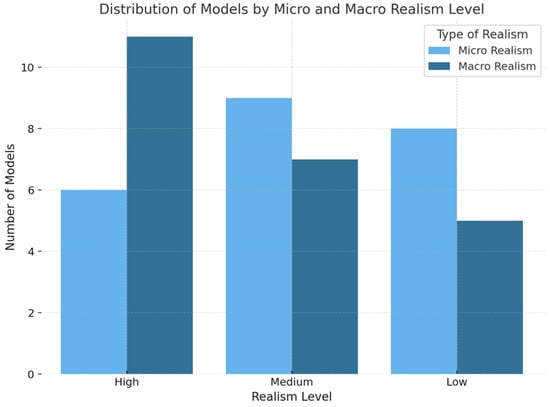
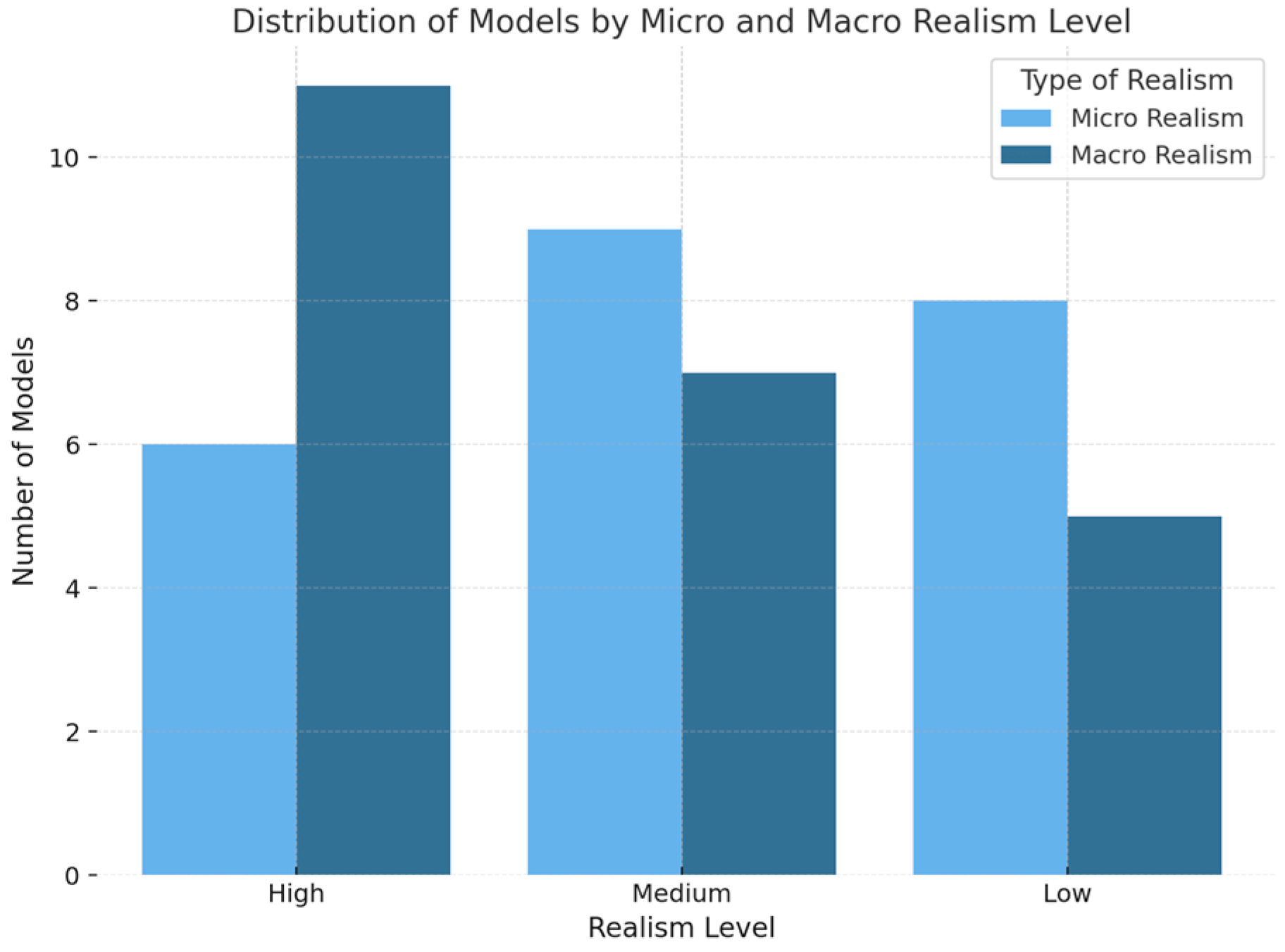
The evaluation of microeconomic realism across integrated energy–economy models reveals growing attention to behavioural aspects, although significant limitations remain (Figure 4). Models such as AIM, MEDEAS, MUSE, and IMACLIM/LEAP incorporate agent heterogeneity and non-monetary drivers of decision-making, integrating factors such as social influence, bounded rationality, and behavioural inertia. MUSE employs an agent-based structure to capture diverse behaviours, while MEDEAS includes social and psychological dynamics.
Figure 4.
Micro and Macro realism.
Conversely, models including GCAM, MESSAGE, WITCH, EPPA, TIMES, and TIAM largely rely on representative, rational agents guided by price signals and cost optimisation, limiting their ability to reflect frictions and deviations from optimal behaviour. Some models, such as PRIMES and ThreeME/IESA-Opt, introduce partial heterogeneity through consumer segmentation or sector-specific responses, but these enhancements remain limited within predominantly optimisation-based frameworks.
Despite recent progress, behavioural inertia, learning processes, lock-in dynamics, and distributional heterogeneity remain weakly represented across most models, reducing their capacity to capture gradual, path-dependent transitions. Enhancing the representation of heterogeneous and boundedly rational agents is therefore essential to strengthen the credibility of future policy assessments and better reflect real-world decision-making complexity.
4.7. Macro Realism
The analysis of macroeconomic realism across integrated energy–economy models highlights encouraging trends as well as persistent gaps (Figure 4). An increasing number of models, including AIM, MESSAGE, WITCH, EPPA, GEM-E3, IMED/CGE, PRIMES, and ThreeME/IESA-Opt, treat the energy sector as an endogenous component of the economy, improving the representation of interactions between energy prices, investment, employment, and growth. However, macroeconomic realism varies considerably: WITCH, EPPA, PRIMES, and GEM-E3 display higher levels of integration, whereas MEDEAS, MUSE, LEAP, POLES, GIBM, TIMES, and TIAM retain more limited macroeconomic structures focused primarily on technological pathways.
A positive trend is the gradual shift away from static equilibrium assumptions. IMACLIM/LEAP and ThreeME/IESA-Opt introduce frictions, delays, and imperfect information, enhancing their ability to simulate non-linear transitions and shocks. By contrast, models such as AIM, GCAM, GCAM/EXIOMOD/BENCH, GIBM, and MAPLE-KLEM continue to rely on assumptions of rapid market adjustment, potentially underestimating the socio-economic challenges associated with deep decarbonisation.
Sectoral disaggregation is another important element: PRIMES, WITCH, and GEM-E3 allow the analysis of differentiated transition effects across industries, trade, and employment, while models with a strong technological focus (MUSE, MEDEAS, LEAP) offer more limited macroeconomic representation.
Despite these advances, several limitations persist. Only a few models (e.g., GIBM, ThreeME/IESA-Opt) incorporate financial dynamics, credit constraints, or investment risks. Stranded assets and capital reallocation processes remain largely absent, and technological change is often represented as gradual, underestimating disruptive innovation. Labour-market frictions and socio-political constraints are also rarely included.
In summary, although models such as WITCH, EPPA, PRIMES, and GEM-E3 offer advanced macroeconomic capabilities, the broader landscape remains heterogeneous. Strengthening the integration of economic, energy, financial, and labour dynamics is essential for improving the robustness of transition policy assessments.
5. Conclusions
This review critically assessed 23 integrated energy–economy models developed between 2015 and 2024 to evaluate their ability to represent the structural, behavioural, and macroeconomic transformations required for deep energy transitions. The analysis relied on a structured taxonomy encompassing five dimensions: geographical coverage, temporal and temporal–scale resolution, technological representation, modelling approach, and the degree of micro- and macroeconomic realism.
The results highlight positive developments, including the growing adoption of multi-scale modelling frameworks and the partial introduction of endogenous economic feedback. An increasing share of models now integrates the energy system within the broader economy and moves beyond static equilibrium assumptions. However, microeconomic realism remains limited, with only a small subset incorporating behavioural heterogeneity or non-optimal decision processes—an important gap given the inertia and social dynamics that shape real-world transitions.
Several critical limitations persist. Many models continue to rely on exogenous technological change, provide only a partial representation of financial risks and stranded assets, and inadequately capture disruptive innovation or adaptive behaviour. These gaps reduce the predictive capacity of current modelling frameworks and risk overestimating the smoothness and reversibility of transition processes.
The taxonomy and comparative assessment presented here support both informed model selection for policy analysis and the identification of priority areas for future model development. Enhancing the integration between technological, behavioural, financial, and macroeconomic dynamics emerges as a necessary step toward stronger and more credible modelling tools. Future research should prioritise:
- developing richer behavioural foundations that incorporate heterogeneity and bounded rationality;
- strengthening the representation of financial systems, capital reallocation mechanisms, and investment risks;
- improving endogenous modelling of technological disruption and innovation;
- enhancing the transparency and reproducibility of policy representation;
- expanding multi-sector and multi-scale coupling to reflect systemic interdependencies.
In conclusion, without these methodological advancements, model-based policy advice may underestimate systemic and distributional barriers to deep decarbonisation. Strengthening behavioural, technological, macroeconomic, and financial realism is essential for producing robust and policy-relevant transition pathways.
Funding
This research received no external funding.
Data Availability Statement
No new data were created or analyzed in this study.
Conflicts of Interest
The authors declare no conflicts of interest.
References
- European Commission. A Clean Planet for All—A European Strategic Long-Term Vision for a Prosperous, Modern, Competitive and Climate Neutral Economy; European Commission: Brussels, Belgium, 2018.
- International Energy Agency. World Energy Outlook 2023. 2023. Available online: www.iea.org/terms (accessed on 20 December 2024).
- DeCarolis, J.; Daly, H.; Dodds, P.; Keppo, I.; Li, F.; McDowall, W.; Pye, S.; Strachan, N.; Trutnevyte, E.; Usher, W.; et al. Formalizing best practice for energy system optimization modelling. Appl. Energy 2017, 194, 184–198. [Google Scholar] [CrossRef] [Scilit]
- Gilboa, I.; Postlewaite, A.; Samuelson, L.; Schmeidler, D. Economic models as analogies. Econ. J. 2014, 124, F513–F533. [Google Scholar] [CrossRef] [Scilit]
- Nieto, J.; Carpintero, Ó.; Miguel, L.J.; de Blas, I. Macroeconomic modelling under energy constraints: Global low carbon transition scenarios. Energy Policy 2020, 137, 111090. [Google Scholar] [CrossRef] [Scilit]
- Koopmans, C.T. Three Essay on the State of Economic Science. Br. J. Philos. Sci. 1957, 10, 58–69. [Google Scholar]
- Wright, R.; Shin, H.; Trentmann, F. From World Power Conference to World Energy Council: 90 Years of Energy Cooperation, 1923–2013; World Energy Council: London, UK, 2013. [Google Scholar]
- Loulou, R.; Goldstein, G.; Noble, K. Energy Technology Systems Analysis Programme Documentation for the MARKAL Family of Models. 2004. Available online: https://iea-etsap.org/MrklDoc-III_SAGE.pdf (accessed on 20 December 2024).
- Miller, R.E.; Blair, P.D. Input-Output Analysis—Foundations and Extensions; Cambridge University Press: Cambridge, UK, 2009. [Google Scholar]
- Dixon, P.B.; Rimmer, M.T. Johansen’s legacy to CGE modelling: Originator and guiding light for 50 years. J. Policy Model. 2016, 38, 421–435. [Google Scholar] [CrossRef] [Scilit]
- Vaillancourt, K.; Bahn, O.; El Maghraoui, N.; Uyar, T.S. History and Recent State of TIMES Optimization Energy Models and Their Applications for a Transition Towards Clean Energies. in Accelerating the Transition to a 100% Renewable Energy Era. 2020. Available online: http://www.springer.com/series/8874 (accessed on 20 December 2024).
- Nordhaus, W.D. An Optimal Transition Path for Controlling Greenhouse Gases. Science 1992, 258, 1315–1319. [Google Scholar] [CrossRef] [Scilit]
- Tol, R.S.J. The damage costs of climate change towards a dynamic representation. Ecol. Econ. 1996, 19, 67–90. [Google Scholar] [CrossRef] [Scilit]
- Schrattenholzer, L. The Energy Supply Model Message; IIASA: Laxenburg, Austria, 1981. [Google Scholar]
- Edenhofer, O.; Madruga, R.P.; Sokona, Y. Renewable Energy Sources and Climate Change Mitigation: Special Report of the Intergovernmental Panel on Climate Change; Cambridge University Press: Cambridge, UK, 2012. [Google Scholar]
- Sterman, J.D.; Fiddaman, T.; Franck, T.; Jones, A.; McCauley, S.; Rice, P.; Sawin, E.; Siegel, L. Management flight simulators to support climate negotiations. Environ. Model. Softw. 2013, 44, 122–135. [Google Scholar] [CrossRef] [Scilit]
- Luderer, G.; Pehl, M.; Arvesen, A.; Gibon, T.; Bodirsky, B.L.; de Boer, H.S.; Fricko, O.; Hejazi, M.; Humpenöder, F.; Iyer, G.; et al. Environmental co-benefits and adverse side-effects of alternative power sector decarbonization strategies. Nat. Commun. 2019, 10, 5229. [Google Scholar] [CrossRef] [Scilit]
- Hafner, S.; Anger-Kraavi, A.; Monasterolo, I.; Jones, A. Emergence of New Economics Energy Transition Models: A Review. Ecol. Econ. 2020, 177, 106779. [Google Scholar] [CrossRef] [Scilit]
- Prina, M.G.; Manzolini, G.; Moser, D.; Nastasi, B.; Sparber, W. Classification and challenges of bottom-up energy system models—A review. Renew. Sustain. Energy Rev. 2020, 129, 109917. [Google Scholar] [CrossRef] [Scilit]
- An, K.; Zhang, S.; Zhou, J.; Wang, C. How can computable general equilibrium models serve low-carbon policy? A systematic review. Environ. Res. Lett. 2023, 18, 033002. [Google Scholar] [CrossRef] [Scilit]
- Rhodes, E.; Hoyle, A.; McPherson, M.; Craig, K. Understanding climate policy projections: A scoping review of energy-economy models in Canada. Renew. Sustain. Energy Rev. 2022, 153, 111739. [Google Scholar] [CrossRef] [Scilit]
- Chatterjee, S.; Stavrakas, V.; Oreggioni, G.; Süsser, D.; Staffell, I.; Lilliestam, J.; Molnar, G.; Flamos, A.; Ürge-Vorsatz, D. Existing tools, user needs and required model adjustments for energy demand modelling of a carbon-neutral Europe. Energy Res. Soc. Sci. 2022, 90, 102662. [Google Scholar] [CrossRef] [Scilit]
- Prina, M.G.; Nastasi, B.; Groppi, D.; Misconel, S.; Garcia, D.A.; Sparber, W. Comparison methods of energy system frameworks, models and scenario results. Renew. Sustain. Energy Rev. 2022, 167, 112719. [Google Scholar] [CrossRef] [Scilit]
- Cantele, M.; Bal, P.; Kompas, T.; Hadjikakou, M.; Wintle, B. Equilibrium Modeling for Environmental Science: Exploring the Nexus of Economic Systems and Environmental Change. Earths Future 2021, 9, e2020EF001923. [Google Scholar] [CrossRef] [Scilit]
- Gillingham, K.; Newell, R.G.; Pizer, W.A. Modeling endogenous technological change for climate policy analysis. Energy Econ. 2008, 30, 2734–2753. [Google Scholar] [CrossRef] [Scilit]
- Sanders, M.; Serebriakova, A.; Fragkos, P.; Polzin, F.; Egli, F.; Steffen, B. Representation of financial markets in macro-economic transition models-a review and suggestions for extensions. Environ. Res. Lett. 2022, 17, 083001. [Google Scholar] [CrossRef] [Scilit]
- Lopion, P.; Markewitz, P.; Robinius, M.; Stolten, D. A review of current challenges and trends in energy systems modeling. Renew. Sustain. Energy Rev. 2018, 96, 156–166. [Google Scholar] [CrossRef] [Scilit]
- Gargiulo, M.; Gallachóir, B.Ó. Long-term energy models: Principles, characteristics, focus, and limitations. WIREs Energy Environ. 2013, 2, 158–177. [Google Scholar] [CrossRef] [Scilit]
- Venturini, G.; Tattini, J.; Mulholland, E.; Gallachóir, B.Ó. Improvements in the representation of behavior in integrated energy and transport models. Int. J. Sustain. Transp. 2019, 13, 294–313. [Google Scholar] [CrossRef] [Scilit]
- Cuisinier, É.; Lemaire, P.; Penz, B.; Ruby, A.; Bourasseau, C. New rolling horizon optimization approaches to balance short-term and long-term decisions: An application to energy planning. Energy 2022, 245, 122773. [Google Scholar] [CrossRef] [Scilit]
- Sanchez-Escobar, M.O.; Noguez, J.; Molina-Espinosa, J.M.; Lozano-Espinosa, R.; Vargas-Solar, G. The contribution of bottom-up energy models to support policy design of electricity end-use efficiency for residential buildings and the residential sector: A systematic review. Energies 2021, 14, 6466. [Google Scholar] [CrossRef] [Scilit]
- Grübler, A.; Messner, S. Technological change and the timing of mitigation measures. Energy Econ. 1998, 20, 495–512. [Google Scholar] [CrossRef] [Scilit]
- Köhler, J.; de Haan, F.; Holtz, G.; Kubeczko, K.; Moallemi, E.; Papachristos, G.; Chappin, E. Modelling Sustainability Transitions: An Assessment of Approaches and Challenges. J. Artif. Soc. Soc. Simul. 2018, 21, 8. [Google Scholar] [CrossRef] [Scilit]
- Fattahi, A.; Sijm, J.; Faaij, A. A systemic approach to analyze integrated energy system modeling tools: A review of national models. Renew. Sustain. Energy Rev. 2020, 133, 110195. [Google Scholar] [CrossRef] [Scilit] [PubMed]
- Nakata, T. Energy-economic models and the environment. Prog. Energy Combust. Sci. 2004, 30, 417–475. [Google Scholar] [CrossRef] [Scilit]
- Chang, M.; Thellufsen, J.Z.; Zakeri, B.; Pickering, B.; Pfenninger, S.; Lund, H.; Østergaard, P.A. Trends in tools and approaches for modelling the energy transition. Appl. Energy 2021, 290, 116731. [Google Scholar] [CrossRef] [Scilit]
- Jaccard, M.; Dennis, M. Estimating home energy decision parameters for a hybrid energy—Economy policy model. Environ. Model. Assess. 2006, 11, 91–100. [Google Scholar] [CrossRef] [Scilit]
- Su, X.; Ghersi, F.; Teng, F.; Le Treut, G.; Liang, M. The economic impact of a deep decarbonisation pathway for China: A hybrid model analysis through bottom-up and top-down linking. Mitig. Adapt. Strateg. Glob. Change 2022, 27, 11. [Google Scholar] [CrossRef] [Scilit]
- Goulder, L.H.; Parry, I.W.H. Instrument choice in environmental policy. Rev. Environ. Econ. Policy 2008, 2, 152–174. [Google Scholar] [CrossRef] [Scilit]
- Bhardwaj, C.; Axsen, J.; Kern, F.; McCollum, D. Why have multiple climate policies for light-duty vehicles? Policy mix rationales, interactions and research gaps. Transp. Res. Part A Policy Policy 2020, 135, 309–326. [Google Scholar] [CrossRef] [Scilit]
- Gao, Z.; Zhao, Y.; Li, L.; Hao, Y. Economic effects of sustainable energy technology progress under carbon reduction targets: An analysis based on a dynamic multi-regional CGE model. Appl. Energy 2024, 363, 123071. [Google Scholar] [CrossRef] [Scilit]
- Kanitkar, T. An Integrated Modeling Framework (IMF) for Energy-Economy-Environment Modeling; Springer International Publishing: Berlin/Heidelberg, Germany, 2019. [Google Scholar]
- Mercure, J.-F.; Knobloch, F.; Pollitt, H.; Paroussos, L.; Scrieciu, S.S.; Lewney, R. Modelling innovation and the macroeconomics of low-carbon transitions: Theory, perspectives and practical use. Clim. Policy 2019, 19, 1019–1037. [Google Scholar] [CrossRef] [Scilit]
- Nikas, A.; Doukas, H.; Papandreou, A. A detailed overview and consistent classification of climate-economy models. In Understanding Risks and Uncertainties in Energy and Climate Policy: Multidisciplinary Methods and Tools for a Low Carbon Society; Springer International Publishing: Berlin/Heidelberg, Germany, 2018; pp. 1–54. [Google Scholar] [CrossRef] [Scilit]
- Luo, Y.; Wang, W.; Zhao, D. The impacts of carbon emission trading mechanism on the power transition pathway-taking Guangdong-Hong Kong-Macao Greater Bay Area as an example. J. Clean. Prod. 2022, 330, 129894. [Google Scholar] [CrossRef] [Scilit]
- Dewi, R.G.; Zunita, M.; Sevie, G.N.; Kurniawati, F.W. AIM/End-use Model for Selecting of Low-Carbon Technology in Indonesia’s Iron and Steel Industry. In IOP Conference Series: Earth and Environmental Science; Institute of Physics Publishing: Bristol, UK, 2019. [Google Scholar] [CrossRef] [Scilit]
- Vishwanathan, S.S.; Garg, A. Energy system transformation to meet NDC, 2 °C, and well below 2 °C targets for India. Clim. Change 2020, 162, 1877–1891. [Google Scholar] [CrossRef] [Scilit]
- Arriet, A.; Flores, F.; Matamala, Y.; Feijoo, F. Chilean pathways for mid-century carbon neutrality under high renewable potential. J. Clean. Prod. 2022, 379, 134483. [Google Scholar] [CrossRef] [Scilit]
- Bergero, C.; Binsted, M.; Younis, O.; Davies, E.G.; Siddiqui, M.-S.; Xing, R.; Arbuckle, E.J.; Chiappori, D.V.; Fuhrman, J.; McJeon, H.; et al. Technology, technology, technology: An integrated assessment of deep decarbonization pathways for the Canadian oil sands. Energy Strat. Rev. 2022, 41, 100804. [Google Scholar] [CrossRef] [Scilit]
- Amin, A.; Liu, X.-H.; Abbas, Q.; Hanif, I.; Vo, X.V. Globalization, sustainable development, and variation in cost of power plant technologies: A perspective of developing economies. Environ. Sci. Pollut. Res. 2020, 28, 11158–11169. [Google Scholar] [CrossRef] [Scilit]
- He, C.; Jiang, K.; Chen, S.; Jiang, W.; Liu, J. Zero CO2 emissions for an ultra-large city by 2050: Case study for Beijing. Curr. Opin. Environ. Sustain. 2019, 36, 141–155. [Google Scholar] [CrossRef] [Scilit]
- Jiang, K.; He, C.; Dai, H.; Liu, J.; Xu, X. Emission scenario analysis for China under the global 1.5 °C target. Carbon Manag. 2018, 9, 481–491. [Google Scholar] [CrossRef] [Scilit]
- Fragkos, P.; Fragkiadakis, K.; Paroussos, L.; Pierfederici, R.; Vishwanathan, S.S.; Köberle, A.C.; Iyer, G.; He, C.-M.; Oshiro, K. Coupling national and global models to explore policy impacts of NDCs. Energy Policy 2018, 118, 462–473. [Google Scholar] [CrossRef] [Scilit]
- Samsó, R.; de Blas, I.; Perissi, I.; Martelloni, G.; Solé, J. Scenario analysis and sensitivity exploration of the MEDEAS Europe energy-economy-environment model. Energy Strat. Rev. 2020, 32, 100582. [Google Scholar] [CrossRef] [Scilit]
- Perissi, I.; Martelloni, G.; Bardi, U.; Natalini, D.; Jones, A.; Nikolaev, A.; Eggler, L.; Baumann, M.; Samsó, R.; Solé, J. Cross-validation of the MEDEAS energy-economy- environment model with the integrated MARKAL-EFOM system (TIMES) and the long-range energy alternatives planning system (LEAP). Sustainability 2021, 13, 1967. [Google Scholar] [CrossRef] [Scilit]
- Parrado-Hernando, G.; Pfeifer, A.; Frechoso, F.; González, L.J.M.; Duić, N. A novel approach to represent the energy system in integrated assessment models. Energy 2022, 258, 124743. [Google Scholar] [CrossRef] [Scilit]
- Maïzi, N.; Kang, S.; Selosse, S. Is GHG mitigation policy enough to develop bioenergy in Asia: A long-term analysis with TIAM-FR. Int. J. Oil Gas Coal Technol. 2017, 14, 5–31. [Google Scholar] [CrossRef] [Scilit] [PubMed]
- Huppmann, D.; Gidden, M.; Fricko, O.; Kolp, P.; Orthofer, C.; Pimmer, M.; Kushin, N.; Vinca, A.; Mastrucci, A.; Riahi, K.; et al. The MESSAGEix Integrated Assessment Model and the ix modeling platform (ixmp): An open framework for integrated and cross-cutting analysis of energy, climate, the environment, and sustainable development. Environ. Model. Softw. 2019, 112, 143–156. [Google Scholar] [CrossRef] [Scilit]
- Zhang, G.; Niu, D.; Shi, Y.; Xu, G.; Li, G.; Zhang, H.; Li, J.; Cao, L.; Guo, Z.; Wang, Z.; et al. Nuclear fuel cycle modelling using MESSAGE. J. Radioanal. Nucl. Chem. 2016, 311, 1435–1440. [Google Scholar] [CrossRef] [Scilit]
- Chan, Y.T.; Punzi, M.T.; Zhao, H. Navigating geopolitical crises for energy security: Evaluating optimal subsidy policies via a Markov switching DSGE model. J. Environ. Manag. 2024, 349, 119619. [Google Scholar] [CrossRef] [Scilit]
- Nwachukwu, C.M.; Olofsson, E.; Lundmark, R.; Wetterlund, E. Evaluating fuel switching options in the Swedish iron and steel industry under increased competition for forest biomass. Appl. Energy 2022, 324, 119878. [Google Scholar] [CrossRef] [Scilit]
- Li, M.-F.; Hu, H.; Zhao, L.-T. Key factors affecting carbon prices from a time-varying perspective. Environ. Sci. Pollut. Res. 2022, 29, 65144–65160. [Google Scholar] [CrossRef] [Scilit]
- Sokolov, A.; Kicklighter, D.; Schlosser, A.; Wang, C.; Monier, E.; Brown-Steiner, B.; Prinn, R.; Forest, C.; Gao, X.; Libardoni, A.; et al. Description and Evaluation of the MIT Earth System Model (MESM). J. Adv. Model. Earth Syst. 2018, 10, 1759–1789. [Google Scholar] [CrossRef] [Scilit]
- Gurgel, A.; Mignone, B.K.; Morris, J.; Kheshgi, H.; Mowers, M.; Steinberg, D.; Herzog, H.; Paltsev, S. Variable renewable energy deployment in low-emission scenarios: The role of technology cost and value. Appl. Energy 2023, 344, 121119. [Google Scholar] [CrossRef] [Scilit]
- Prinn, R.G.; Chen, Y.-H.H.; Paltsev, S.; Gurgel, A.; Reilly, J.M.; Morris, J. MIT Joint Program on the Science and Policy of Global The MIT EPPA7: A Multisectoral Dynamic Model for Energy, Economic, and Climate Scenario Analysis The MIT EPPA7: A Multisectoral Dynamic Model for Energy, Economic, and Climate Scenario Analysis. 2022. Available online: http://globalchange.mit.edu/ (accessed on 20 December 2024).
- Cassetti, G.; Boitier, B.; Elia, A.; Le Mouël, P.; Gargiulo, M.; Zagamé, P.; Nikas, A.; Koasidis, K.; Doukas, H.; Chiodi, A. The interplay among COVID-19 economic recovery, behavioural changes, and the European Green Deal: An energy-economic modelling perspective. Energy 2023, 263, 125798. [Google Scholar] [CrossRef] [Scilit]
- Belete, G.F.; Voinov, A.; Arto, I.; Dhavala, K.; Bulavskaya, T.; Niamir, L.; Moghayer, S.; Filatova, T. Exploring low-carbon futures: A web service approach to linking diverse cli-mate-energy-economy models. Energies 2019, 12, 2880. [Google Scholar] [CrossRef] [Scilit]
- Karkatsoulis, P.; Siskos, P.; Paroussos, L.; Capros, P. Simulating deep CO2 emission reduction in transport in a general equilibrium framework: The GEM-E3T model. Transp. Res. Part D Transp. Environ. 2017, 55, 343–358. [Google Scholar] [CrossRef] [Scilit]
- van de Ven, D.-J.; Mittal, S.; Gambhir, A.; Lamboll, R.D.; Doukas, H.; Giarola, S.; Hawkes, A.; Koasidis, K.; Köberle, A.C.; McJeon, H.; et al. A multimodel analysis of post-Glasgow climate targets and feasibility challenges. Nat. Clim. Change 2023, 13, 570–578. [Google Scholar] [CrossRef] [Scilit]
- Hafner, S.; Jones, A.; Anger-Kraavi, A.; Monasterolo, I. Modelling the macroeconomics of a ‘closing the green finance gap’ scenario for an energy transition. Environ. Innov. Soc. Transit. 2021, 40, 536–568. [Google Scholar] [CrossRef] [Scilit]
- Hafner, S.; Jones, A.; Anger-Kraavi, A. Economic impacts of achieving a net-zero emissions target in the power sector. J. Clean. Prod. 2021, 312, 127610. [Google Scholar] [CrossRef] [Scilit]
- Le Treut, G.; Lefèvre, J.; Lallana, F.; Bravo, G. The multi-level economic impacts of deep decarbonization strategies for the energy system. Energy Policy 2021, 156, 112423. [Google Scholar] [CrossRef] [Scilit]
- Guo, C.; Dai, H.; Liu, X.; Wu, Y.; Liu, X.; Liu, Y. Impacts of climate change mitigation on agriculture water use: A provincial analysis in China. Geogr. Sustain. 2020, 1, 189–199. [Google Scholar] [CrossRef] [Scilit]
- Liu, X.; Guo, C.; Ma, X.; Wu, K.; Wang, P.; Huang, Z.; Zhou, Z.; Huang, C.; Zhang, S.; Wang, M.; et al. Uncovering the key mechanisms of how deep decarbonization benefits air pollution alleviation in China. Environ. Res. Lett. 2022, 17, 115002. [Google Scholar] [CrossRef] [Scilit]
- Flessa, A.; Fragkiadakis, D.; Zisarou, E.; Fragkos, P. Developing an Integrated Energy–Economy Model Framework for Islands. Energies 2023, 16, 1275. [Google Scholar] [CrossRef] [Scilit]
- Meng, L.; Li, M.; Asuka, J. A scenario analysis of the energy transition in Japan’s road transportation sector based on the LEAP model. Environ. Res. Lett. 2024, 19, 044059. [Google Scholar] [CrossRef] [Scilit]
- Wan, F.; Li, J. Exploring hydrogen metallurgy to CO2 emissions reduction in China’s iron and steel production: An analysis based on the life cycle CO2 emissions—LEAP model. Energy Rep. 2024, 11, 4552–4563. [Google Scholar] [CrossRef] [Scilit]
- Han, H.; Ye, X.; Bian, Y.; Lin, S.; Shen, Y.-S.; Huang, Z.; Lin, J. Decomposing high uncertainty in greenhouse gas mitigation pathways in emerging regions: An approach to evaluate risks toward carbon neutrality. Sci. Total. Environ. 2024, 953, 176152. [Google Scholar] [CrossRef] [Scilit]
- Yang, X.; Pang, J.; Teng, F.; Gong, R.; Springer, C. The environmental co-benefit and economic impact of China’s low-carbon pathways: Evidence from linking bottom-up and top-down models. Renew. Sustain. Energy Rev. 2021, 136, 110438. [Google Scholar] [CrossRef] [Scilit]
- Giarola, S.; Sachs, J.; D’aVezac, M.; Kell, A.; Hawkes, A. MUSE: An open-source agent-based integrated assessment modelling framework. Energy Strat. Rev. 2022, 44, 100964. [Google Scholar] [CrossRef] [Scilit]
- Riemer, M.; Wachsmuth, J.; Boitier, B.; Elia, A.; Al-Dabbas, K.; Alibaş, Ş.; Chiodi, A.; Neuner, F. How do system-wide net-zero scenarios compare to sector model pathways for the EU? A novel approach based on benchmark indicators and index decomposition analyses. Energy Strategy Rev. 2023, 50, 101225. [Google Scholar] [CrossRef] [Scilit]
- Nikas, A.; Elia, A.; Boitier, B.; Koasidis, K.; Doukas, H.; Cassetti, G.; Anger-Kraavi, A.; Bui, H.; Campagnolo, L.; De Miglio, R.; et al. Where is the EU headed given its current climate policy? A stakeholder-driven model inter-comparison. Sci. Total Environ. 2021, 793, 148549. [Google Scholar] [CrossRef] [Scilit] [PubMed]
- Boitier, B.; Nikas, A.; Gambhir, A.; Koasidis, K.; Elia, A.; Al-Dabbas, K.; Alibaş, Ş.; Campagnolo, L.; Chiodi, A.; Delpiazzo, E.; et al. A multi-model analysis of the EU’s path to net zero. Joule 2023, 7, 2760–2782. [Google Scholar] [CrossRef] [Scilit]
- Kitous, A.; Criqui, P.; Bellevrat, E.; Chateau, B. Transformation Patterns of the Worldwide Energy System-Scenarios for the Century with the POLES Model. Available online: www.enerdata.fr (accessed on 20 December 2024).
- Russ, P.; Criqui, P. Post-Kyoto CO2 emission reduction: The soft landing scenario analysed with POLES and other world models. Energy Policy 2007, 35, 786–796. [Google Scholar] [CrossRef] [Scilit]
- Kannavou, M.; Zampara, M.; Capros, P. Modelling the EU internal electricity market: The PRIMES-IEM model. Energies 2019, 12, 2887. [Google Scholar] [CrossRef] [Scilit]
- Siskos, P.; Zazias, G.; Petropoulos, A.; Evangelopoulou, S.; Capros, P. Implications of delaying transport decarbonisation in the EU: A systems analysis using the PRIMES model. Energy Policy 2018, 121, 48–60. [Google Scholar] [CrossRef] [Scilit]
- Siskos, P.; Moysoglou, Y. Assessing the impacts of setting CO2 emission targets on truck manufacturers: A model implementation and application for the EU. Transp. Res. Part A Policy Pract. 2019, 125, 123–138. [Google Scholar] [CrossRef] [Scilit]
- Fattahi, A.; Reynès, F.; van der Zwaan, B.; Sijm, J.; Faaij, A. Soft-linking a national computable general equilibrium model (ThreeME) with a detailed energy system model (IESA-Opt). Energy Econ. 2023, 123, 106750. [Google Scholar] [CrossRef] [Scilit]
- Lippkau, F.; Franzmann, D.; Addanki, T.; Buchenberg, P.; Heinrichs, H.; Kuhn, P.; Hamacher, T.; Blesl, M. Global Hydrogen and Synfuel Exchanges in an Emission-Free Energy System. Energies 2023, 16, 3277. [Google Scholar] [CrossRef] [Scilit]
- Few, S.; Gambhir, A.; Napp, T.; Hawkes, A.; Mangeon, S.; Bernie, D.; Lowe, J. The impact of shale gas on the cost and feasibility of meeting climate targets—A global energy system model analysis and an exploration of uncertainties. Energies 2017, 10, 158. [Google Scholar] [CrossRef] [Scilit]
- Avellaneda, J.A.C.; Rodriguez, A.U.; Yañez, E.; Rey, R.M. Assessment of the Colombian long-term energy planning scenarios for the national hydrocarbon value chain: Insights from the TIMES-O&G model. Energy Convers. Manag. 2024, 306, 118317. [Google Scholar] [CrossRef] [Scilit]

Disclaimer/Publisher’s Note: The statements, opinions and data contained in all publications are solely those of the individual author(s) and contributor(s) and not of MDPI and/or the editor(s). MDPI and/or the editor(s) disclaim responsibility for any injury to people or property resulting from any ideas, methods, instructions or products referred to in the content. |
© 2026 by the authors. Licensee MDPI, Basel, Switzerland. This article is an open access article distributed under the terms and conditions of the Creative Commons Attribution (CC BY) license.