Article

Experimental Study on Variable Operating Characteristics of Two-Stage Absorption Lithium Bromide Refrigeration Chiller


1
Petrochina Shenzheng New Energy Research Institute Co., Ltd., Shenzhen 518052, China
2
Guangzhou Institute of Energy Conversion, Chinese Academy of Sciences, Guangzhou 510640, China
*
Author to whom correspondence should be addressed.
Energies 2026, 19(2), 401; https://doi.org/10.3390/en19020401
Submission received: 18 December 2025 / Revised: 9 January 2026 / Accepted: 12 January 2026 / Published: 14 January 2026
(This article belongs to the Special Issue Advanced Heating and Cooling Technologies for Sustainable Buildings)

Abstract

Two-stage absorption lithium bromide (Li-Br) refrigeration technology can utilize low-temperature heat sources to achieve refrigeration, thus it holds promising application prospects in the utilization of low-temperature waste heat. However, the performance of two-stage lithium bromide absorption chillers during variable operating conditions is difficult to accurately predict, necessitating further research. Unlike existing simulation-based studies, this paper employs an experimental approach for the first time to investigate the variable-condition performance of a two-stage lithium bromide absorption chiller. A 10 kW two-stage absorption Li-Br chiller was tested under variable operating conditions, including variations in chilled water outlet temperature, cooling water inlet temperature, hot water inlet temperature, and hot water flow rate. The experimental results indicate that each 1 °C increase in the chilled water outlet temperature leads to an additional 0.282 kW in cooling capacity and a 0.0071 increase in coefficient of performance (COP). Similarly, a 1 °C decrease in the cooling water inlet temperature results in a 0.366 kW increase in cooling capacity and a 0.0055 improvement in COP. When the hot water inlet temperature rises by 1 °C, the cooling capacity increases by 0.324 kW, while the COP remains nearly unchanged. Furthermore, a 10% increase in the hot water mass flow rate enhances the cooling capacity by approximately 5% and improves the COP by about 1%.

1. Introduction

Due to the fact that absorption lithium bromide (Li-Br) refrigeration machines can be directly driven by heat with minimal electricity consumption, they have been widely used in scenarios where abundant low-cost heat is available [1,2,3]. Compared with compression refrigeration systems, Li-Br absorption refrigeration systems consist of more components, involve complex heat and mass transfer processes, exhibit strong coupling effects, and display pronounced dynamic characteristics [4]. Therefore, variations in performance under different operating conditions must be carefully considered in system design. At present, most studies on the performance of Li-Br absorption refrigeration units under variable operating conditions focus on single-effect or double-effect absorption chillers [5,6,7]. Due to the high cost and time requirements of experimental investigations, research has primarily relied on the development of mathematical models [8,9].
Most solar refrigeration systems use Li-Br absorption chillers driven by solar hot water [10,11]. Due to the inherent intermittency of solar energy, numerous studies have investigated the variable operating performance of solar refrigeration systems [12,13,14]. A dynamic numerical model was utilized by Liu et al. [15] to explore a solar-powered absorption chiller equipped with an absorption thermal energy storage system. Nonlinear programming and a second-order iterative numerical integration technique were applied to solve the model. Khana et al. [16] examined a single-effect, solar-assisted absorption cooling system through simulation. Comprehensive models for two distinct system arrangements were developed within the TRNSYS environment, with dynamic analyses conducted over the full summer period. To refine principal design parameters—encompassing collector tilt, storage capacity, and solar collector specifications—metrics including solar fraction, collector performance, and primary energy conservation were assessed. Zheng et al. [17] developed a Li-Br absorption chiller of double-effect configuration coupled with a parabolic trough solar collector. A theoretical model was employed to evaluate its year-round operation, along with analyses of energy efficiency, economic viability, and environmental impact.
In addition to the overall refrigeration system combined with specific heat sources (e.g., solar), studies have also been conducted on performance of the Li-Br chillers in variable operating conditions. Research has focused on developing and evaluating a multivariable PI controller, which is applied to manage single-, double-, and triple-effect absorption refrigeration systems [18]. Goyal et al. [19,20] introduced a controller based on multi-variable feedback. To maintain the required cooling output despite variations in thermal load and system conditions, adjustments are made to the temperature of the hot source, the flow rate of the concentrated solution, and its mass flow rate. Evola et al. [21] examined the operational characteristics of a water-cooled Li-Br chiller with low capacity. The system’s behavior was analyzed using a basic ON/OFF control strategy under varying cooling loads and operational disturbances. Xu et al. [22] formulated a discretized numerical model for a single-effect Li-Br absorption chiller with a 4.5 kW capacity. To meet the required cooling load, a PID control scheme was applied. The primary adjusted parameter was the hot thermal source’s mass flow rate, regulated by a valve. The analysis introduced stepwise variations in the inlet temperatures of both the cooling water and the hot heat source.
Dynamic process modeling is employed to forecast system transient responses and to devise effective control approaches. Frequently regulated outputs encompass cooling power and chilled fluid outlet temperature, as well as metrics characterizing operational efficiency (such as temperatures within the absorber and condenser). The primary adjusted input typically involves the heat supply to the generator, specifically its flow rate or temperature. A state-space representation of a sun-driven, single-stage lithium bromide–water absorption cooling system was constructed by Shuai Zhao et al. [23] using a lumped parameter approach. This formulation enables effective operation under varying conditions, accounting for fluctuations in both solar availability and cooling load. Delac et al. [24] developed a dynamic simulation for a hot water-powered single-effect absorption system. This model was verified using experimental data collected over one week, alongside typical summer cooling demand profiles. Xu et al. [25] examined lithium bromide absorption refrigeration systems, covering single-effect, double-effect, and an innovative variable-effect configuration. Simulations were conducted using the TRNSYS platform. The variable-effect chiller’s representation was initially created within MATLAB’s artificial neural network toolbox, leveraging experimental datasets, before being implemented in the TRNSYS environment.
Regardless of whether commercial software or self-developed programs are employed, accurately predicting and analyzing the variable performance of Li-Br absorption refrigeration systems is not feasible without extensive and reliable experimental data for model calibration or training. At present, the vast majority of the literature is focused on single-effect or multi effect units, and there are few studies on two-stage absorption units, which are suitable for lower heat source temperatures. Due to the complex coupling among the components of a two-stage Li-Br absorption chiller unit, the time required to reach steady-state operation under variable conditions is relatively long. Therefore, experimental research on the variable-condition performance of two-stage lithium bromide absorption chillers remains virtually non-existent. To address this research gap, this study presents the design and construction of a small-scale two-stage lithium bromide absorption chiller, on which experimental investigations under variable operating conditions were conducted. The experimental results presented herein also provide valuable data for validating the reliability of computer simulation models.

2. Chiller Description

2.1. Configuration Design

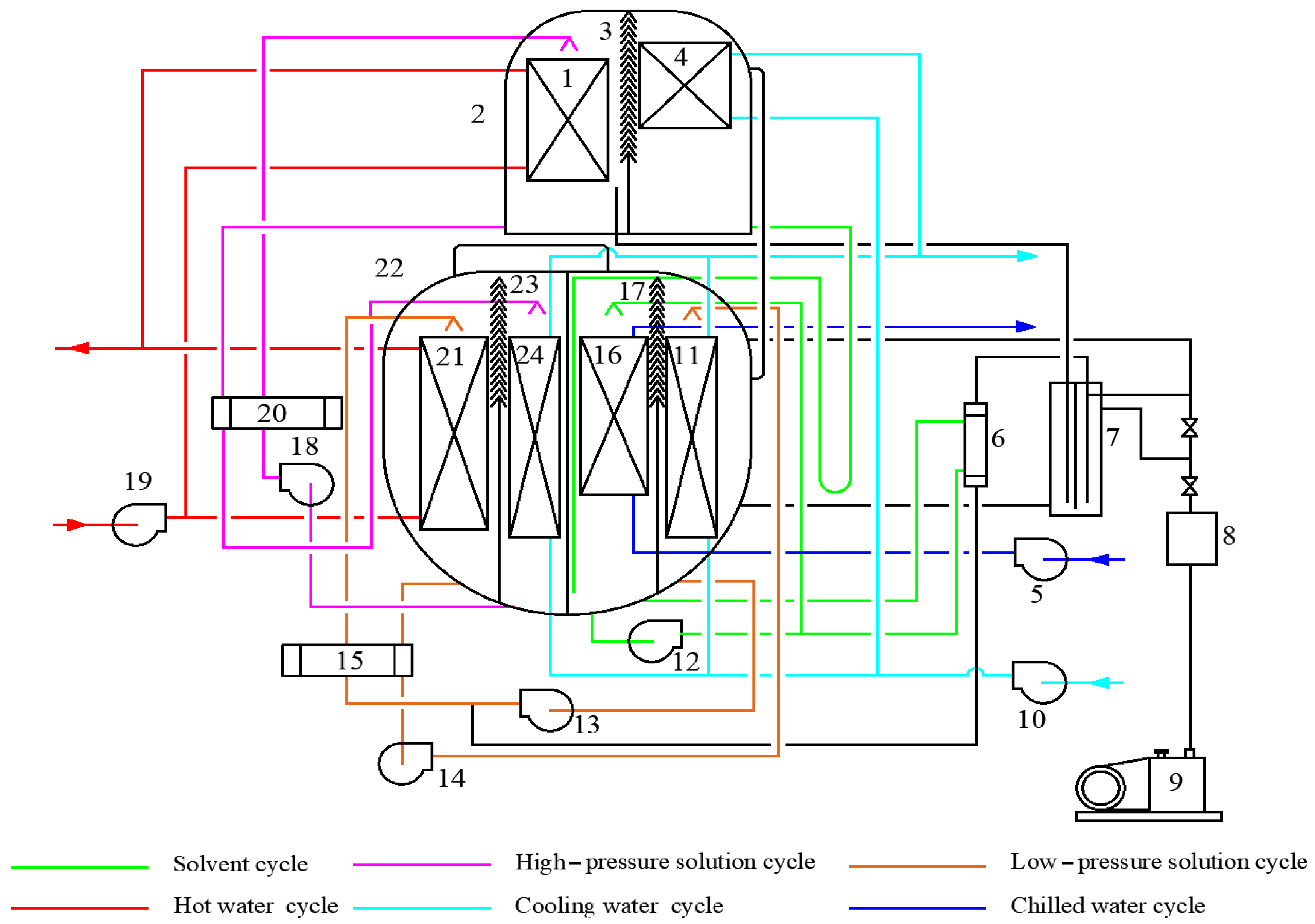
As shown in Figure 1, the two-stage Li-Br absorption chiller consists of four main sections: the high-pressure chamber (2), the low-pressure chamber (22), heat exchangers, and pumps. The high-pressure chamber contains two components: the high-pressure generator (1) and the condenser (4). The low-pressure chamber includes four components: the low-pressure absorber (11), the evaporator (16), the low-pressure generator (21), and the high-pressure absorber (24). In addition, two solution heat exchangers (15 and 20) are located outside the chambers. The aforementioned components are inter-connected by pipelines to form six fluid cycles: the solvent cycle, low-pressure solution cycle, high-pressure solution cycle, hot water cycle, cooling water cycle, and chilled water cycle. The solution and solvent cycles are driven by built-in pumps (12, 13, 14, and 18), while the water cycles are powered by external pumps (5, 10, and 19). To maintain the vacuum environment within the chiller, infiltrated air must be continuously removed. For this purpose, the chiller is equipped with a vacuum maintenance system consisting of a vacuum pump (9), an oil baffle (8), and an air ejector (7).

2.2. Working Principle

In the hot water cycle, hot water is pumped into the heat exchange tubes of the high-pressure generator and low-pressure generator by an external pump. Hot water transfers heat to Li-Br solution, causing a decrease in temperature, and then returns to the heat source to absorb heat again.
In the high-pressure solution cycle, Li-Br solution is sprayed onto the outer surface of the heat exchange tubes in the high-pressure generator. As the solution absorbs heat, water vapor is generated and the solution concentration increases. The concentrated Li-Br solution then exits the high-pressure generator and is delivered to the high-pressure absorber by Pump-2. There, it absorbs water vapor, leading to a decrease in concentration. The resulting weak solution subsequently flows back to the high-pressure generator, where it is reheated and the cycle is repeated.
In the solvent cycle, the vapor from the high-pressure generator enters the condenser, where it is condensed into liquid water. Then the condensed water flows into the evaporator and is evaporated into vapor. Chilled water flowing through the heat exchange tubes of the evaporator is cooled during this process. The resulting water vapor is finally directed into the low-pressure absorber.
In the low-pressure solution cycle, weak solutions produce vapor in the low-pressure generator and then enter into the low-pressure absorber to absorb water vapor from the evaporator. Cooling water flows inside the heat exchange tubes of the high-pressure absorber, low-pressure absorber, and condenser. The high concentration solution is pumped into the absorbers and sprayed on the outer surface of the heat exchange tubes of the absorbers.
The desorption process of lithium bromide solution in single-effect Li-Br absorption chillers requires sufficient heat source temperature (usually above 80 °C) to provide the required heat for refrigerant desorption. The lower the temperature of the heat source, the less refrigerant is desorbed from the solution, and the refrigerant circulation volume will significantly decrease. When the temperature of the heat source is too low, it will be impossible to maintain sufficient pressure difference between the generator and the condenser, resulting in the refrigerant stopping circulating. Therefore, the coefficient of performance (COP) of a single-effect system directly depends on the temperature of the heat source. Low-temperature heat sources can cause a significant reduction in COP, thereby diminishing the overall economic performance of the system. Compared with single-effect absorption refrigeration machines, two-stage absorption refrigeration machines have an additional low-pressure solution cycle. In this cycle, the low-pressure generator and high-pressure absorber have the same pressure, which is less than the condensing pressure and greater than the evaporating pressure, hence it is called the intermediate pressure. When the temperature of the heat source is low, the concentration of the solution generated by the generator is not high, and it is not easy to absorb refrigerant vapor unless the absorption pressure is increased or the cooling water temperature is lowered. The absorption pressure is determined by the temperature of chilled water, while the temperature of cooling water is determined by the ambient temperature. Neither parameter can be freely adjusted. The intermediate pressure is the internal pressure of the system and is independent of the external environment. The intermediate pressure can be used as the absorption pressure for high-pressure cycles or as the condensation pressure for low-pressure cycles. Therefore, the intermediate pressure is a key factor in the absorption refrigeration cycle driven by low-temperature heat sources, which divides the solution circulation into high-pressure circulation and low-pressure circulation and will be explained in detail in the next section.

2.3. Refrigeration Cycle and State Parameters

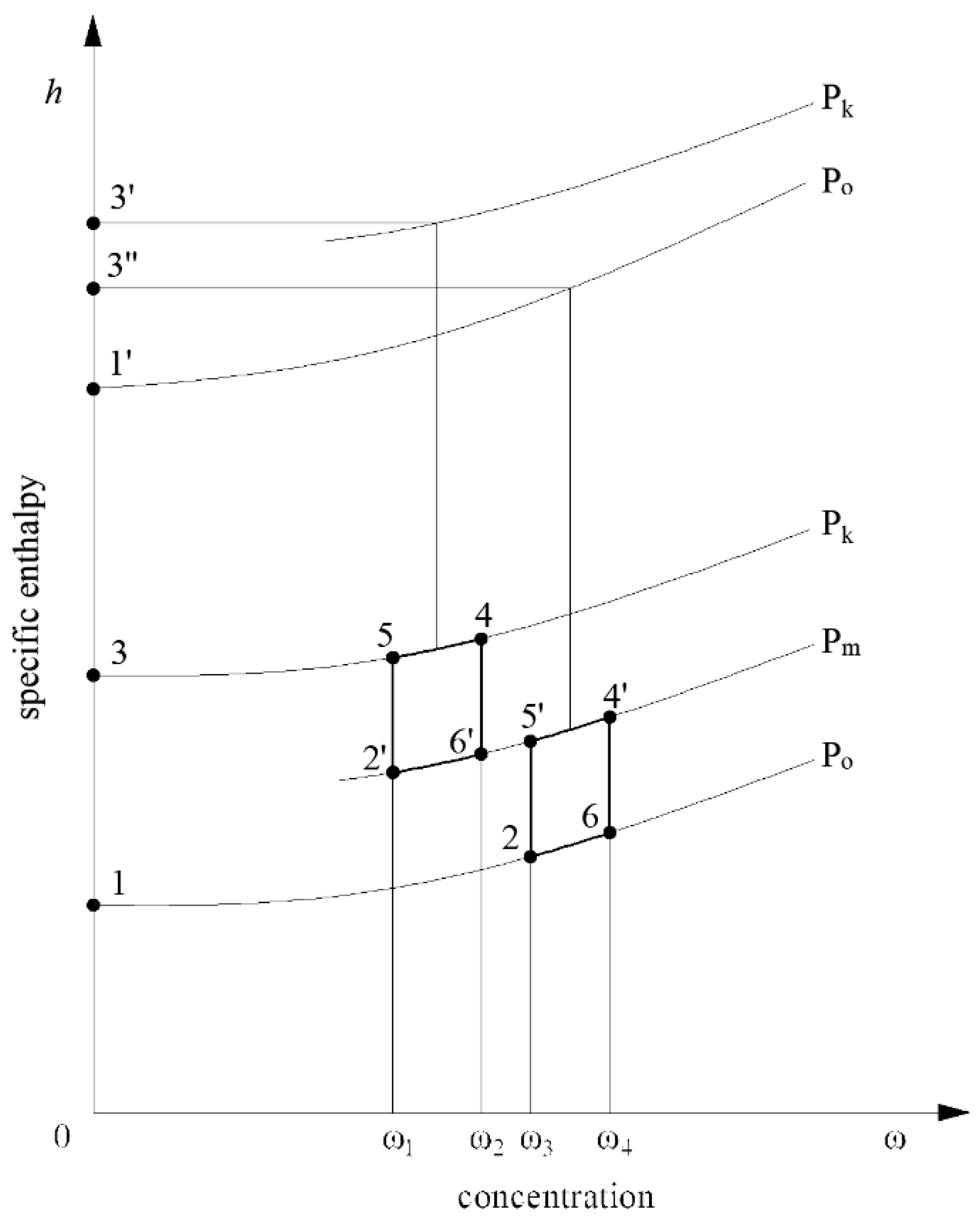
In order to accurately describe the different states of each fluid during the circulation process, each status point is assigned a number in the specific enthalpy–concentration diagram shown in Figure 2. Each status point is determined by three parameters: temperature, pressure, and concentration. By calculating the thermodynamic parameters of each status point, the performance of the Li-Br refrigeration system can be predicted and analyzed. The curves marked ‘Pk’, ‘Pm’, and ‘Po’ in Figure 2 are the constant pressure lines. Pk, Pm, and Po represent condensation pressure, intermediate pressure, and evaporation pressure, respectively.
The high-pressure solution cycle is in turn composed of the status point 5→4→6′→2′→5. Here, 5→4 is the process of evaporation of water vapor from Li-Br solution in high-pressure generator. Furthermore, 4→6′ is the process that the concentrated solution of the high-pressure generator enters the high-pressure absorber. Also, 6′→2′ describes the process of high concentration Li-Br solution absorbing water vapor at intermediate pressure in the high-pressure absorber. The process of the dilute solution at the outlet of the high-pressure absorber flowing into the high-pressure generator again is shown in 2′→5. In this cycle, the solution circulates between two pressures (Pk and Pm) and two concentrations (ω2 and ω1). Its heat and mass changes can be reflected through the status point parameters. The low-pressure solution cycle consists sequentially of the status point 5′→4′→6→2→5′. Similarly to the high-pressure cycle, 5′→4′ shows the water vapor evaporation process of the solution in the low-pressure generator. In addition, 6→2 shows the process of water vapor absorption by the solution in the low-pressure absorber. In this cycle, the solution circulates between two pressures (Pm and Po) and two concentrations (ω4 and ω3). The state of water (refrigerant) vapor can be represented, respectively, by the status points 1, 1′, 3, 3′, 3″. The specific values of the above status points are listed in Table 1.
In two-stage absorption refrigeration cycles, intermediate pressure is the key parameter to promote the heat and mass transfer of solution under small concentration difference. The desorption process of lithium bromide solution in single-effect Li-Br absorption chillers requires sufficient heat source temperature (usually above 80 °C) to provide the required heat for refrigerant desorption. The lower the temperature of the heat source, the less refrigerant is desorbed from the solution, and the refrigerant circulation volume will significantly decrease. When the temperature of the heat source is too low, it will be im-possible to maintain sufficient pressure difference between the generator and the condenser, resulting in the refrigerant stopping circulating.

3. Experimental Setup

3.1. Testing Refrigeration Unit

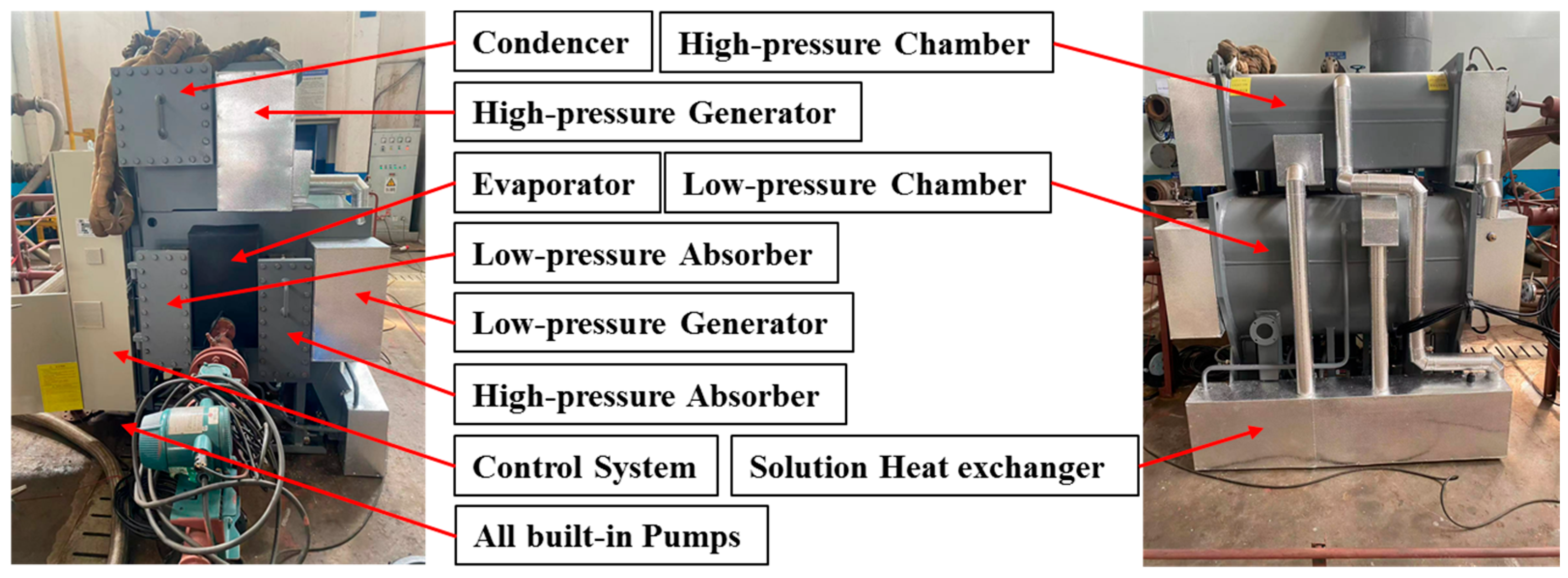
In this study, in order to conduct refrigeration performance tests, a small two-stage Li-Br absorption refrigeration unit with a cooling capacity of 10 kW was developed. The configuration of the unit is shown in Figure 3 and its design parameters are given in Table 2.

3.2. Experimental Devices

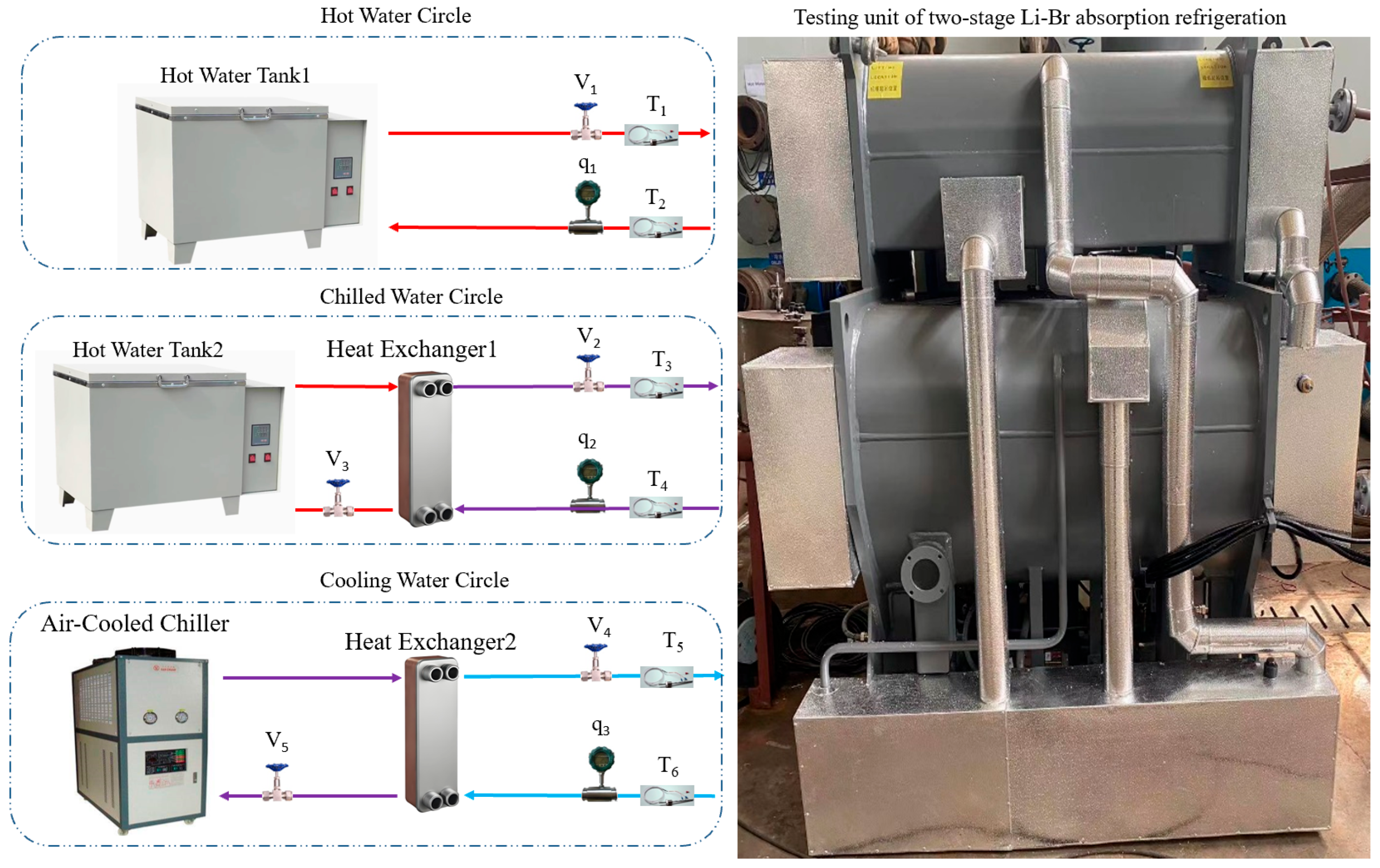
The schematic diagram of the experimental setup is shown in Figure 4. The experimental setup consists of three water circulation systems, which are hot water, chilled water, and cooling water cycles. The main equipment includes one two-stage Li-Br absorption refrigeration unit, one air-cooled chiller, two hot water tanks (constant temperature), two plate heat exchangers, five flow control valves (V1, V2, V3, V4, V5), three flow meters (q1, q2, q3), and six temperature sensors (T1, T2, T3, T4, T5, T6). The specific parameters of the above parts are shown in Table 3.
The hot water tank 1 provides heat source water for a high-pressure generator and low-pressure generator. The hot water tank 2 and the heat exchanger 1 are used to reheat the chilled water from the evaporator to the specified inlet temperature. The air-cooled chiller is similar to a cooling tower in that it cools down the cooling water. Since the chiller and hot water tanks can supply water at a constant temperature, the testing unit is capable of performing variable-condition experiments by setting the desired water outlet temperature according to the specified environmental parameters. In addition to water temperature, the flow rate can also be adjusted through a flow control valve.

3.3. Calculation Method

This paper studies the influence of external conditions on the refrigeration performance of two-stage Li-Br refrigeration unit. The external conditions mainly refer to hot water, cooling water, and chilled water. The change in hot water can represent the change in the heat source. Absorption refrigeration machines generally use cooling towers for heat dissipation, so changes in cooling water can reflect changes in environmental temperature and humidity. Chilled water represents the cooling output of the refrigeration unit, and variations in its temperature reflect changes in the refrigeration demand. Based on findings from previous studies, small variations in the flow rates of the aforementioned fluids have a limited effect on the unit’s refrigeration performance, as such changes only minimally influence the heat transfer coefficient. Therefore, this study focuses on investigating the relationship between fluid temperature and the refrigeration performance of the unit. The refrigeration performance of a unit is primarily characterized by two parameters: the refrigeration capacity and the COP. The definitions and calculation formulas of various parameters involved in this study are as follows:
  • Heating load
    Q h e a t = q 1 T 1 T 2 C w
    where Qheat is the heating load provided by the hot water tank-1; q1 is the mass flow rate of hot water; T1 is the inlet temperature of hot water; T2 is the outlet temperature of hot water; Cw is the specific heat of water, taken as 4.2 kJ/(kg.°C).
  • Refrigeration capacity
    Q r e f r i = q 2 T 3 T 4 C w
    where Qrefri is the refrigeration capacity of the testing unit; q2 is the mass flow rate of chilled water; T3 is the inlet temperature of chilled water; T4 is the outlet temperature of chilled water.
  • Heat dissipation capacity
    Q d i s s i = q 3 T 6 T 5 C w
    where Qdissi is the heat dissipation capacity of the testing unit; q3 is the mass flow rate of cooling water; T5 is the inlet temperature of cooling water; T6 is the outlet temperature of cooling water.
  • Coefficient of performance
    C O P = Q r e f r i Q h e a t
  • Capacity ratio
    φ = Q r e f r i a c t Q r e f r i r a t e d
    where φ is the capacity ratio of the testing unit; Qrefri-rated is the rated refrigeration capacity of the testing unit, defined as 10 kW; Qrefri-act is the actual refrigeration capacity of the testing unit in different conditions.

3.4. Operation Method

Due to the strong coupling among the fluid cycles in a two-stage absorption refrigeration unit, changes in a single parameter can rapidly propagate and influence other components. The unit’s heat and mass transfer processes—such as solution concentration balance and temperature distribution—are highly sensitive to variations in operating conditions. Although modern units are equipped with automatic control functions, they may struggle to reach a new optimal balance autonomously when the magnitude or speed of change is large. In such cases, manual intervention is required to ensure stable and efficient operation. The primary methods of manual adjustment include the following:
  • Adjusting the driving heat source
Adjusting the driving heat source means changing the heating load (Qheat). In this testing unit, hot water is its driving heat source. The hot water temperature can be set by the hot water tank 1. The flow of hot water can be changed by adjusting the flow control valve V1.
2.
Adjusting the circulation flow of the solution
Controlling the circulation flow of the solution is a key method for adjusting the concentration difference in the solution. Excessive flow may lead to a too-small concentration difference and low efficiency in the solution. If the flow rate is too small, it may lead to high concentration of concentrated solution, which is prone to crystallization. In this testing device, every circulation flow rate of the solution can be adjusted through a flow control valve installed in the solution pipeline.
3.
Adjusting the cooling water
The heat dissipation of this unit is achieved by replacing the cooling tower with an air-cooled chiller and a plate heat exchanger. By adjusting the temperature of the cold water output from the air-cooled chiller and the opening of valves V4 and V5, the inlet temperature and flow rate of the cooling water can be changed.
4.
Adjusting the chilled water
The refrigeration load of this unit is achieved by cooling a stream of hot water from hot water tank 2. By adjusting the temperature of the hot water and valves V2 and V3, the outlet temperature and flow rate of the chilled water can be controlled.

3.5. Uncertainty

The performance parameters of the unit include direct measured parameters and calculated parameters. According to the literature [26], the uncertainty of direct measured values and calculated values is determined by Formula (6) and Formula (7), respectively.
U x = Δ x 3
where x is a direct measured value, Ux is the uncertainty of x, and Δx is the allowable error of the measuring equipment to test x.
U y = i = 1 N f x i δ x i 2 y × 100 %
where y is a calculated value, U(y) is the uncertainty of y, xi is a direct measured value, f is the functional relationship between y and xi, and δxi is the uncertainty of xi.
By Formulas (6) and (7), the uncertainty of experimental results can be calculated. The calculation results of the uncertainty of each parameter are listed in Table 4.

4. Results and Discussion

This study primarily investigates the performance of a two-stage absorption refrigeration unit under conditions deviating from its design parameters. Due to the strong coupling within the two-stage system, changing one operating parameter while maintaining stable operation does not guarantee that other parameters remain unchanged. Therefore, experiments can only be conducted while controlling certain parameters to remain constant.

4.1. Experiment Case 1

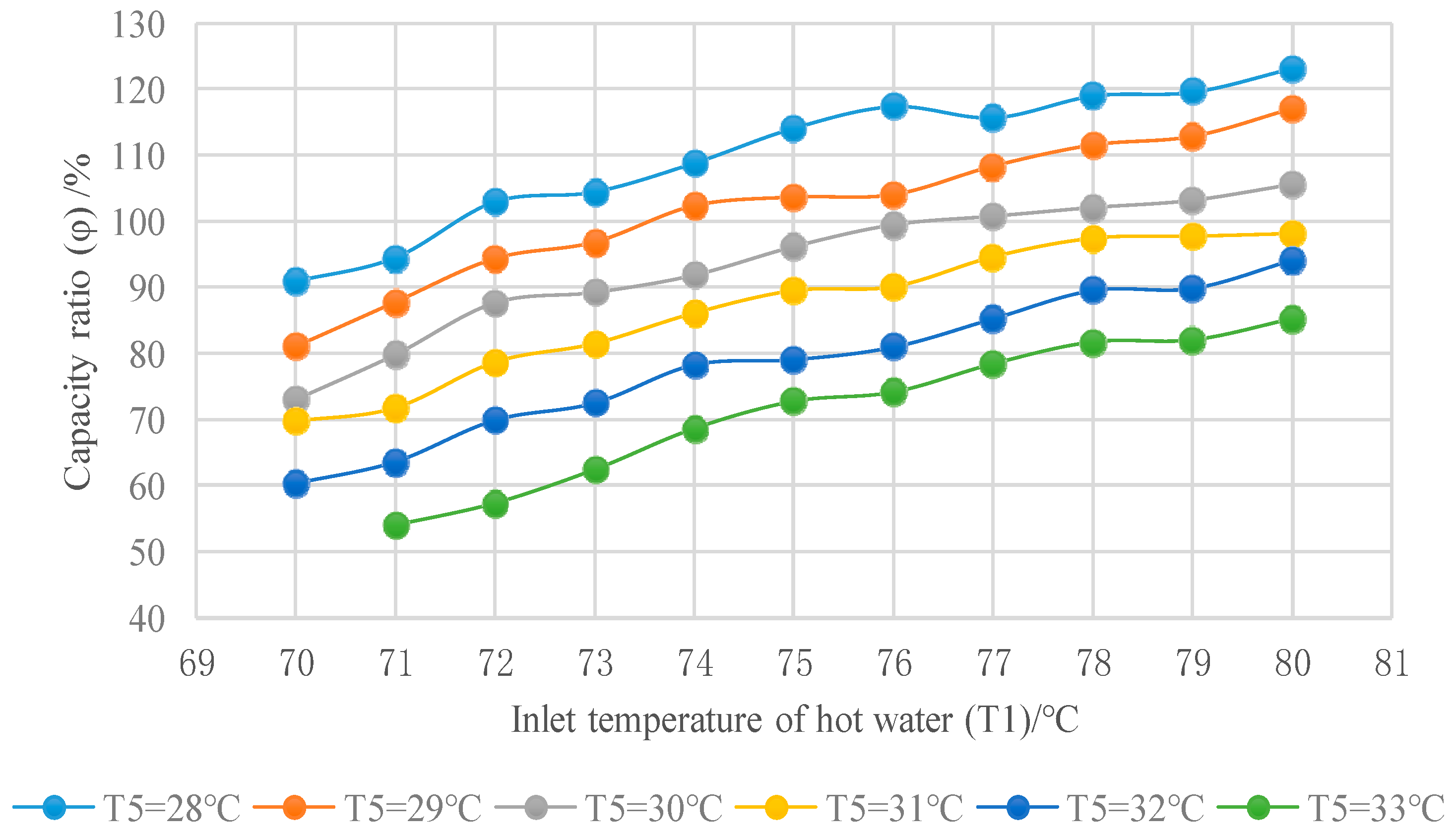
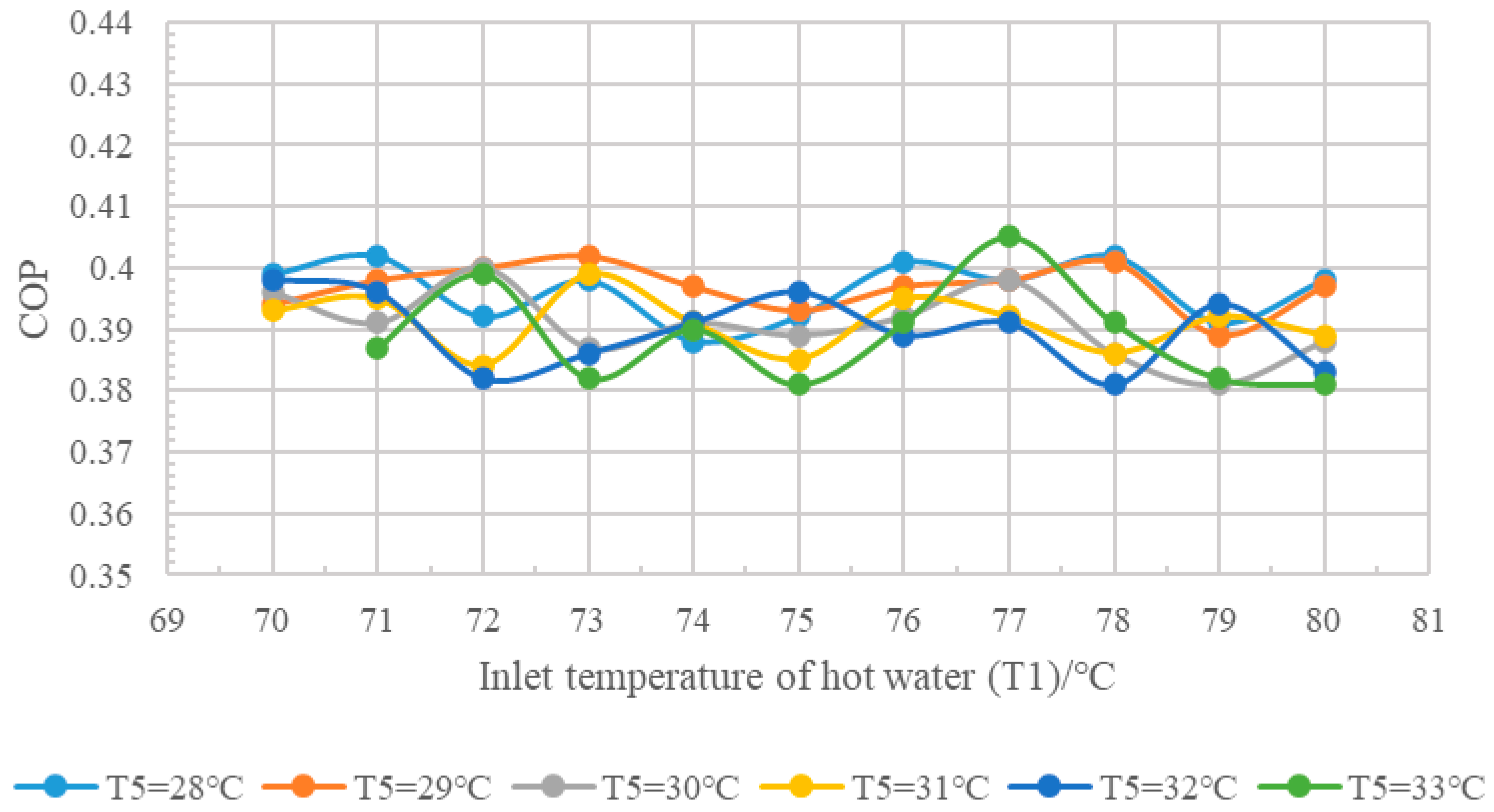
The purpose of this experiment is to determine the corresponding relationship between inlet temperature of hot water (T1) and capacity ratio (φ) and COP of the chiller. The constant and variable parameters are set according to the values listed in Table 5. Based on the data from the experiment, the φ-T1 curve shown in Figure 5 and the COP-T1 curve shown in Figure 6 can be plotted, respectively. It is clear from Figure 5 that φ increases as T1 increases. At the same T1 value, the lower the T5 value, the higher the φ value. When T1 is increased from 70 °C to 80 °C, the φ increases by approximately 32% on average. When T5 drops from 33 °C to 28 °C, the φ increases by about 41%. This result indicates that for a two-stage absorption refrigeration unit, both increasing the heat source temperature and reducing the cooling water temperature can enhance the refrigeration capacity. However, for the COP shown in Figure 6, there is no significant correlation between the COP value and the temperature of hot water and cooling water. This conclusion is inconsistent with many simulation results. The reason is that when the unit reaches thermal equilibrium in actual testing, it cannot be guaranteed that all parameters meet the design values, whereas in simulation calculations, certain values can be assumed to remain constant. When T1 and T5 are changed, the COP remains between 0.38 and 0.41. It shows that when the two-stage absorption chiller is in thermal equilibrium, even under varying operating conditions, the COP does not vary significantly and stabilizes around 0.4. It should be noted that when the operating parameters deviate significantly from the standard design values, it may be impossible to adjust the unit to a stable thermal equilibrium state. For example, when T5 = 33 °C and T1 = 70 °C, there is no corresponding data in Figure 5 and Figure 6, indicating that under this operating condition, the system cannot be adjusted to stable operation.

4.2. Experiment Case 2

This experiment investigates the impact of outlet temperature of chilled water on refrigerating capacity (Qrefri) and COP of the chiller. In this experiment, some constant and variable parameters were also set, as shown in Table 6. The inlet and outlet temperatures of hot water, as well as the temperature difference between the inlet and outlet of cooling water and cold water, were set as constant parameters according to the design parameters. The outlet temperature of chilled water and the inlet temperature of cooling water were variable parameters.
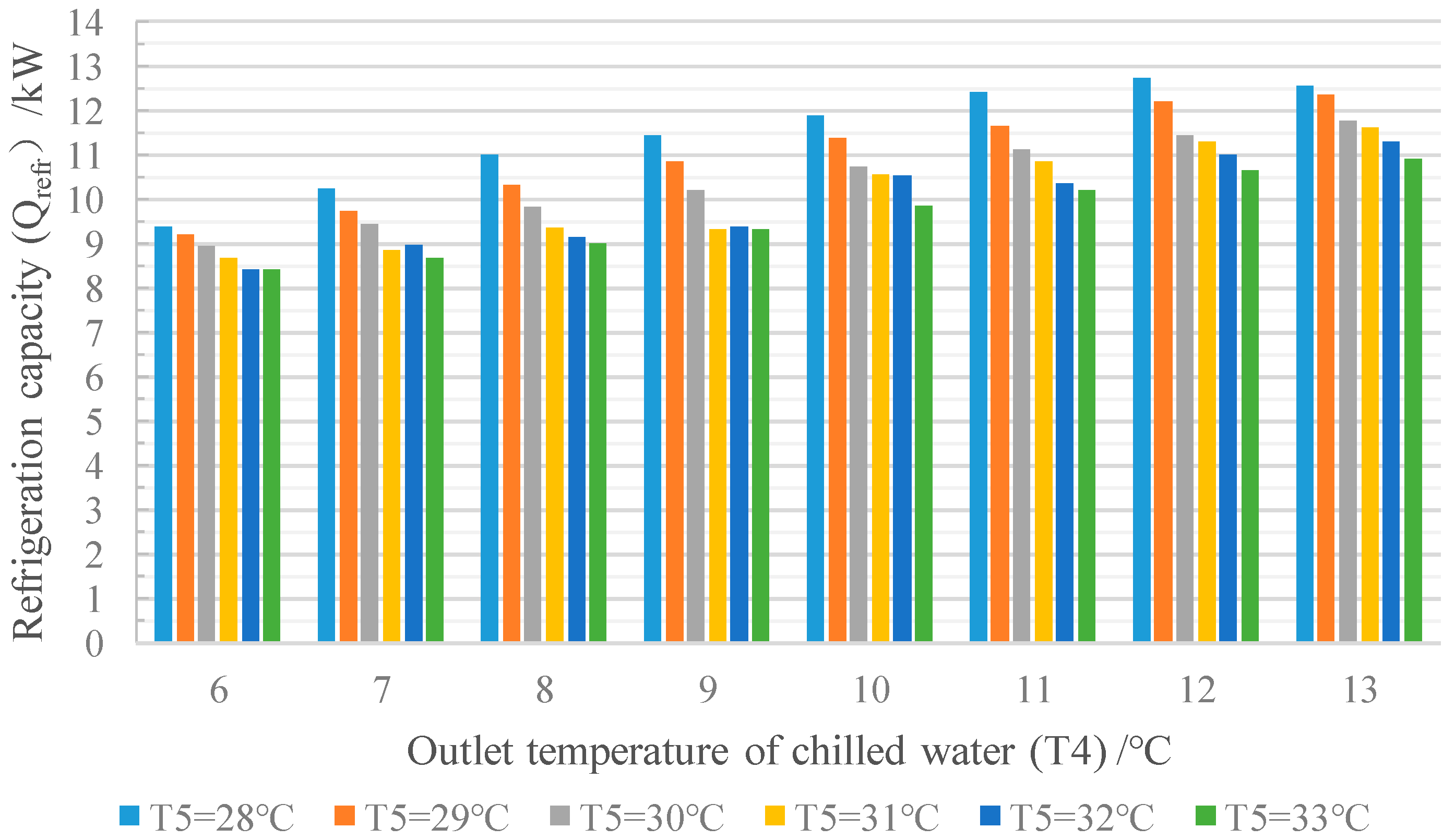
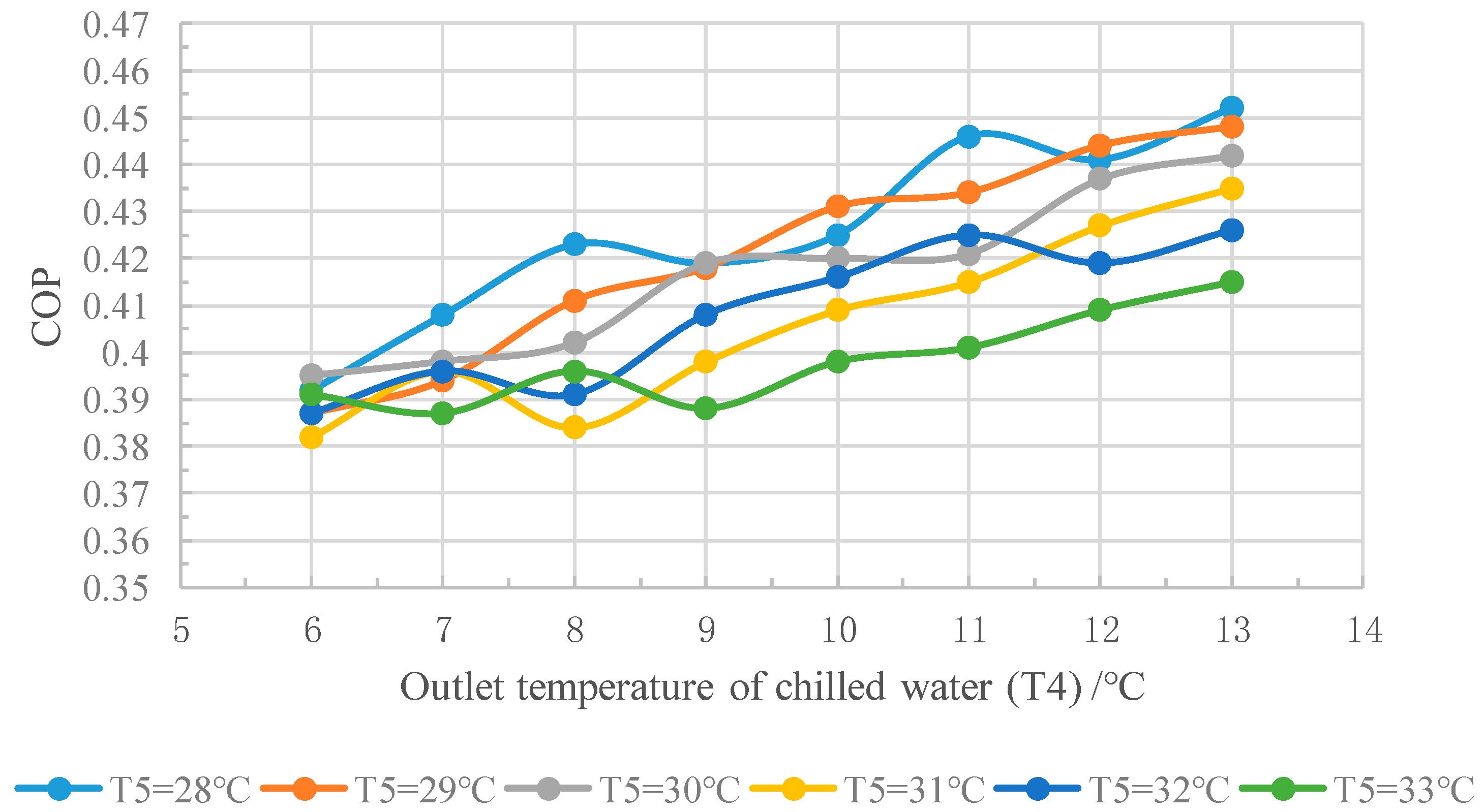
As can be seen from Figure 7, the refrigeration capacity (Qrefri) decreases as the outlet temperature of chilled water (T4) decreases. When T4 is equal to 6 °C, the Qrefri corresponding to the six different T5 are all lower than 10 kW, which is the rated refrigeration capacity. Similarly to Figure 5, the six Qrefri corresponding to each T4 value also decrease as the T5 increases. When T4 is greater than 7 °C, the Qrefri under varying operating conditions exceeds the rated refrigeration capacity. In contrast to the results shown in Figure 6, the COP in Figure 8 generally increases with the rise in T4 and the reduction in T5. This result indicates that COP is more sensitive to T4 compared to T1.

4.3. Comparative Analysis of Water Temperature Impact

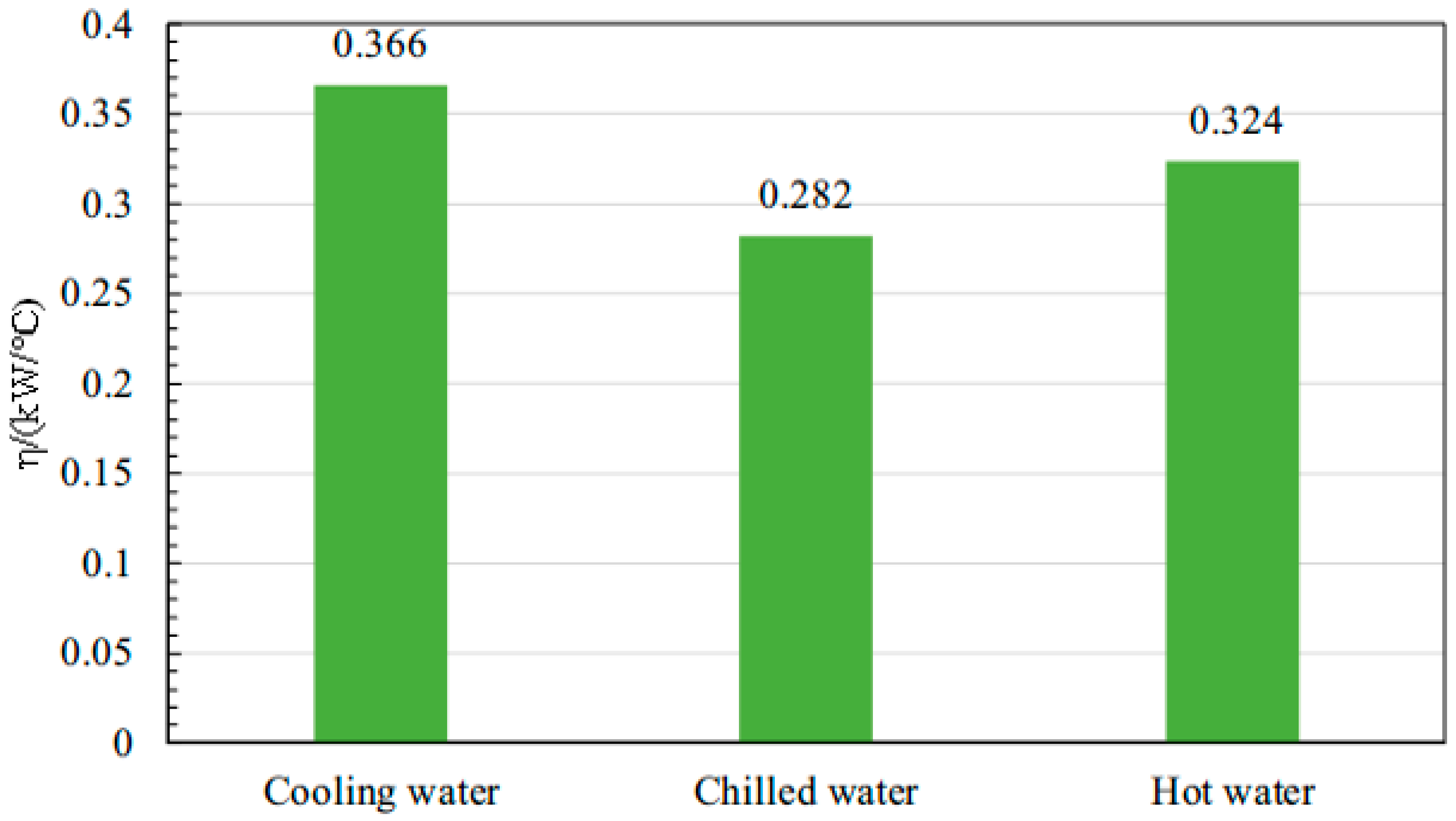
During actual operation of the chiller, the inlet temperature of hot water, the outlet temperature of chilled water, and the inlet temperature of cooling water are all determined by external conditions. From the data of the above two experiments, it can be seen that their changes have an impact on the refrigeration performance of the refrigeration unit. In order to quantify the magnitude of the impact of these temperature changes on refrigeration performance, this section conducted a comparative analysis of them. The change in refrigeration capacity per unit temperature change is denoted as η, which can be calculated from Equation (8).
η = Q r e f r i max Q r e f r i min T max T min
where Qrefri-max and Qrefri-min are the maximum and minimum values of refrigeration capacity in the temperature variation range, respectively; Tmax and Tmin are the maximum and minimum values of temperature in the temperature variation range, respectively.
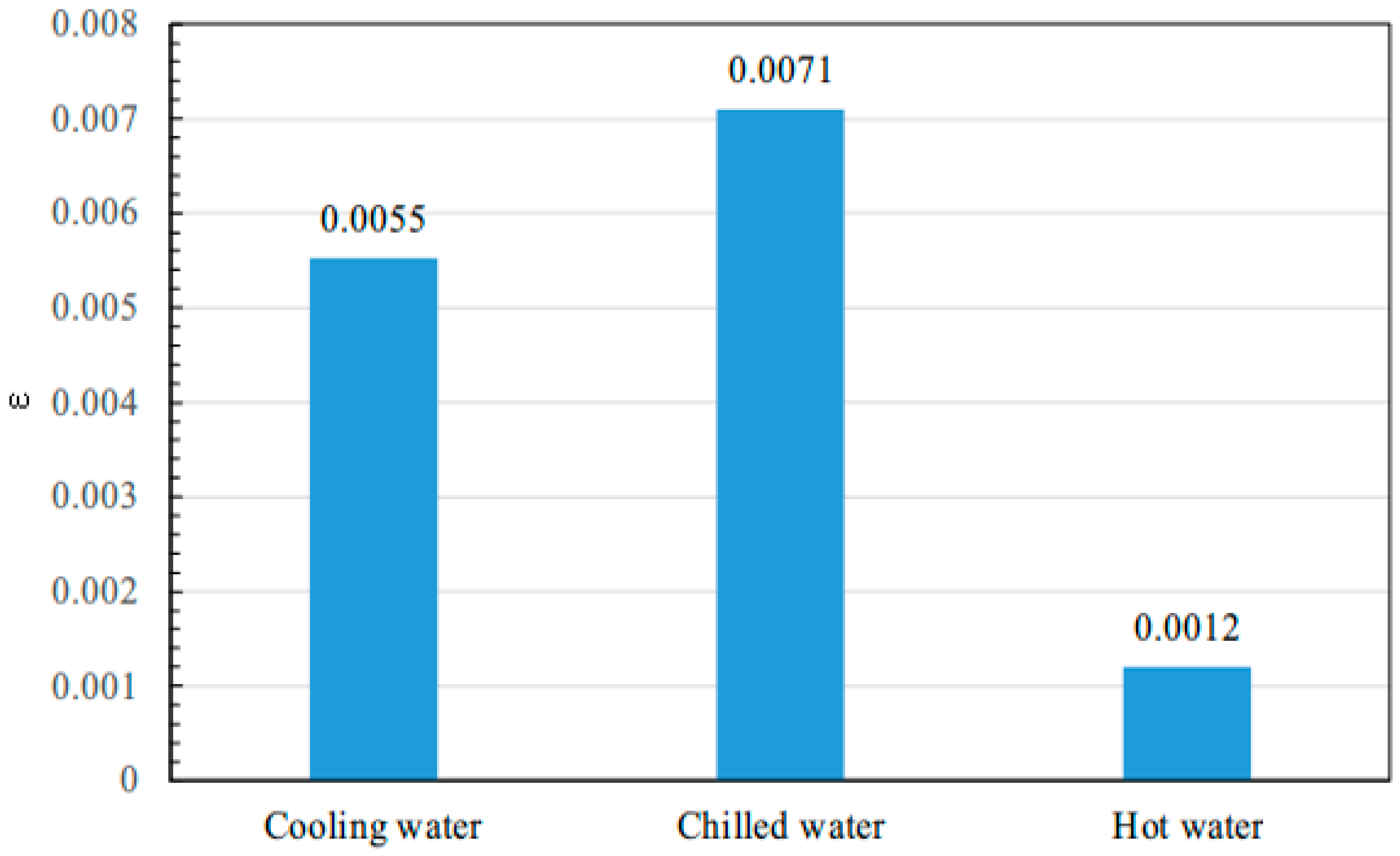
The change in COP per unit temperature change is denoted as ε, and the calculation formula is shown in Equation (9).
η = C O P max C O P min T max T min
where COPmax and COPmin are, respectively, the maximum and minimum values in the temperature variation range.
Based on Equations (6) and (7), the data from the aforementioned two experiments were calculated and Figure 9 and Figure 10 were plotted. As shown in Figure 9, the temperature change in cooling water has the greatest impact on the refrigeration capacity, followed by hot water, and finally cold water. The reason is that the temperature of the cooling water directly affects the flow rate of condensate water in the condenser. Changes in the temperature of hot and chilled water can only affect the heat transfer temperature difference in generator and evaporator. The evaporation rate of water and heat exchange in the evaporator will increase with the growth of flow rate of condensate water. Since the refrigeration capacity is equivalent to the heat exchange of the evaporator, the impact of cooling water temperature on refrigeration capacity is the greatest.
According to Figure 10, it is found that chilled water has the greatest impact on COP, followed by cooling water, and finally hot water. Both the refrigeration capacity and the heat supply influence the COP. An increase in refrigeration capacity does not necessarily lead to an increase in COP. When the temperature of the chilled water rises, the absorption pressure increases accordingly, enhancing the absorption capacity and leading to an increase in the circulation volume of the refrigerant. This increase does not come from the temperature difference in the hot water, so the heat supply does not significantly increase. Absorption enhancement significantly increases the refrigeration capacity, but has a smaller impact on the heating capacity. Therefore, chilled water temperature has the greatest impact on COP.

4.4. Experiment Case 3

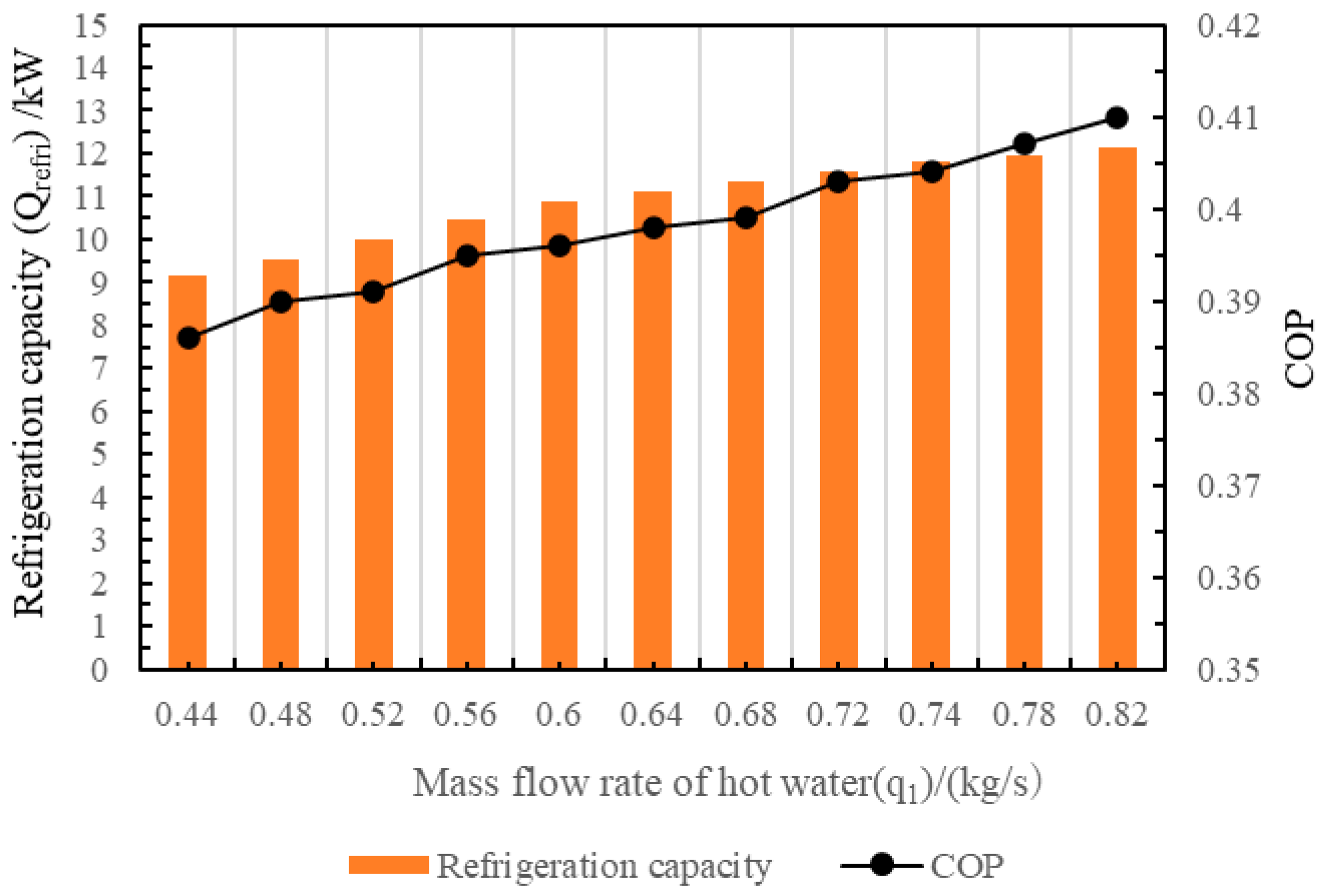
Since the flow rate of the heat source water is another key parameter that may vary in actual operation, this experiment investigates the relationship between changes in hot water flow rate and both the refrigeration capacity and COP. The constant and variable parameters are set according to the values listed in Table 7. According to the testing data of the experiment, a curve depicting the performance variation in the chiller can be plotted as shown in Figure 11. As it can be seen from the figure, both the refrigeration capacity and COP of the absorption chiller increase with the addition of mass flow rate of hot water. Quantitative analysis shows that a 10% increase in the mass flow rate of hot water will result in an approximate 5% raise in refrigeration capacity and 1% improvement in COP. When the flow rate of hot water increases, it enhances the flow velocity inside the tube and improves the heat transfer coefficient. At the same time, the temperature drop of hot water in the generator decreases, which is equivalent to increasing the temperature of the hot water. It should be noted that higher flow rate is not necessarily better. If the flow rate exceeds the design value significantly, it will cause excessive velocity in the heat transfer tube, leading to erosion and corrosion on the water side, which will reduce the service life of the absorption chiller. Generally, the flow rate should not exceed 130% of the design flow rate.

5. Conclusions

Nowadays, two-stage absorption refrigeration machines driven by hot water are increasingly used in the fields of medium- and low-temperature heat source refrigeration such as solar refrigeration, industrial waste heat refrigeration, and geothermal refrigeration. However, the heat sources and operating conditions in these fields often vary greatly. Accurately predicting the refrigeration performance of absorption chillers under variable operating conditions is challenging. However, for air conditioning design, this is a very critical issue that urgently needs to be addressed. Accurate numerical simulations of variable-condition performance require sufficient experimental data under varying conditions to serve as a reference for model validation and calibration. In this study, a two-stage absorption lithium bromide refrigeration unit with a cooling capacity of 10 kW was developed for variable operating condition experiments. Under four common variable operating conditions (i.e., changes in chilled water outlet temperature, cooling water inlet temperature, hot water inlet temperature, and hot water flow rate), the refrigeration capacity and COP of the refrigeration unit corresponding to different parameters were obtained. Based on the above experimental results, the following conclusions can be drawn:
  • The refrigeration capacity and COP will rise with the increase in the chilled water outlet temperature. For every 1 °C increase in the chilled water outlet temperature, the refrigeration capacity of the 10 kW chiller will increase 0.282 kW and its COP will raise 0.0071.
  • The cooling water inlet temperature is negatively correlated with the refrigeration capacity and COP. For every 1 °C decrease in the cooling water inlet temperature, the refrigeration capacity will increase 0.366 kW and the COP will increase by 0.0055.
  • An increase in hot water inlet temperature significantly enhances the refrigeration capacity, while its effect on COP remains insignificant. As the hot water inlet temperature increases by 1 °C, the refrigeration capacity will increase by 0.324 KW, while the COP remains almost unchanged.
  • Increasing the hot water flow rate also improves refrigeration performance. Experimental data shows that a 10% increase in the mass flow rate of hot water results in an approximate 5% increase in refrigeration capacity and 1% improvement in COP. However, the flow rate should generally not exceed 130% of the design value, as higher rates may reduce the unit’s operational lifespan.
The experimental results presented in this study were obtained from a custom-designed 10 kW two-stage LiBr absorption chiller. Given the relatively small cooling capacity of this chiller, the findings are more applicable to residential solar-powered air-conditioning systems, single-well geothermal cooling units, and other distributed waste-heat air-conditioning applications. For large-scale industrial waste-heat cooling systems, such as those in power plants or steel mills, the coefficient of performance (COP) reported in this paper may be lower than actual operational values. This is because, as a general principle, chillers with larger cooling capacities tend to achieve higher COPs. In future research, the miniaturization of absorption chillers represents an important direction. By integrating multiple small-capacity units, the cooling system can more effectively adapt to fluctuations on both the load side and the energy supply side.

Author Contributions

Conceptualization, B.C.; methodology, Y.Y.; validation, C.F.; formal analysis, B.X.; investigation, Z.L.; resources, B.C.; data curation, Z.L.; writing—original draft preparation, Y.Y.; writing—review and editing, Y.Y.; visualization, C.F.; supervision, B.C.; project administration, B.C.; funding acquisition, B.C. All authors have read and agreed to the published version of the manuscript.

Funding

This research was funded by Petrochina Shenzheng New Energy Research Institute Corporation, grant number SZ2024ZT004.

Data Availability Statement

The authors confirm that the data supporting the findings of this study are available within the article.

Acknowledgments

The authors have reviewed and edited the output and take full responsibility for the content of this publication.

Conflicts of Interest

Authors Bingbing Chen, Chaohe Fang and Bo Xiong were employed by the company Petrochina Shenzheng New Energy Research Institute Co., Ltd. The remaining authors declare that the research was conducted in the absence of any commercial or financial relationships that could be construed as a potential conflict of interest.

References

  1. Gkouletsos, D.; Hoppe, A.; Papadopoulos, A.I.; Kyriakides, A.S.; Seferlis, P.; Hassan, I. Techno-economic assessment of novel and conventional working fluid mixtures for two-stage double- and triple-effect absorption refrigeration systems. Int. J. Energy Res. 2021, 45, 12784–12805. [Google Scholar] [CrossRef]
  2. Al-Falahi, A.; Alobaid, F.; Epple, B. Thermo-economic comparisons of environmentally friendly solar assisted absorption air conditioning systems. Appl. Sci. 2021, 11, 2442. [Google Scholar] [CrossRef]
  3. Okwose, C.F.; Abid, M.; Ratlamwala, T.A.H. Performance analysis of compressor-assisted two-stage triple effect absorption refrigeration cycle for power and cooling. Energy Convers. Manag. 2021, 227, 113547. [Google Scholar] [CrossRef]
  4. Nikbakhti, R.; Wang, X.; Hussein, A.K.; Iranmanesh, A. Absorption cooling systems—Review of various techniques for energy performance enhancement. Alex. Eng. J. 2020, 59, 707–738. [Google Scholar] [CrossRef]
  5. Zhang, S.; Yu, W.; Wang, D.; Song, Q.; Zhou, S.; Li, J.; Li, Y. Thermodynamic characteristics of a novel solar single and double effect absorption refrigeration cycle. Energy 2024, 308, 132674. [Google Scholar] [CrossRef]
  6. Alhamid, M.I. Operation strategy of a solar-gas fired single/double effect absorption chiller for space cooling in Indonesia. Appl. Therm. Eng. 2020, 178, 115524. [Google Scholar] [CrossRef]
  7. Zhou, L.; Li, X.; Zhao, Y.; Dai, Y. Performance assessment of a single/double hybrid effect absorption cooling system driven by linear Fresnel solar collectors with latent thermal storage. Sol. Energy 2017, 151, 82–94. [Google Scholar] [CrossRef]
  8. Bataineh, K.; Taamneh, Y. Review and recent improvements of solar sorption cooling systems. Energy Build. 2016, 128, 22–37. [Google Scholar] [CrossRef]
  9. Shirazi, A.; Taylor, R.A.; Morrison, G.L.; White, S.D. A comprehensive, multiobjective optimization of solar-powered absorption chiller systems for airconditioning applications. Energy Convers. Manag. 2017, 132, 281–306. [Google Scholar] [CrossRef]
  10. Bellos, E.; Tzivanidis, C. Energetic and financial analysis of solar cooling systems with single effect absorption chiller in various climates. Appl. Therm. Eng. 2017, 126, 809–821. [Google Scholar] [CrossRef]
  11. Sheikhani, H.; Barzegarian, R.; Heydari, A.; Kianifar, A.; Kasaeian, A.; Grof, G.; Mahian, O. A review of solar absorption cooling systems combined with various auxiliary energy devices. J. Therm. Anal. Calorim. 2018, 4, 2197–2212. [Google Scholar] [CrossRef]
  12. Shirazi, A.T.; Morrison Robert, A.; White Graham, L.; Stephen, D. Solar-powered absorption chillers: A comprehensive and critical review. Energy Convers. Manag. 2018, 171, 59–81. [Google Scholar] [CrossRef]
  13. Xu, Z.Y.; Wang, R.Z. Simulation of solar cooling system based on variable effect LiBr-water absorption chiller. Renew Energ. 2017, 113, 907–914. [Google Scholar] [CrossRef]
  14. Huang, B.; Leng, C.; Zhao, J. Low carbon optimized scheduling and operation of combined cooling, heating and power generation energy considering uncertainty. Power Syst. Big Data 2025, 28, 1–9. [Google Scholar] [CrossRef]
  15. Liu, M.; Cheng, Y.; Cheng, W.; Zhan, C. Dynamic performance analysis of a solar driving absorption chiller integrated with absorption thermal energy storage. Energy Convers. Manag. 2021, 247, 114769. [Google Scholar] [CrossRef]
  16. Khana, M.S.A.; Badarb, A.W.; Talhaa, T.; Khan, M.W.; Butt, F.S. Configuration based modeling and performance analysis of single effect solar absorption cooling system in TRNSYS. Energy Convers. Manag. 2018, 157, 351–363. [Google Scholar] [CrossRef]
  17. Zheng, X.; Shi, R.; Wang, Y.; You, S.; Zhang, H.; Xia, J.; Wei, S. Mathematical modeling and performance analysis of an integrated solar heating and cooling system driven by parabolic trough collector and double-effect absorption chiller. Energy Build. 2020, 202, 109400. [Google Scholar] [CrossRef]
  18. Kyriakides, A.S.; Papadopoulos, A.I.; Seferlis, P.; Hassan, I. Dynamic modelling and control of single, double and triple effect absorption refrigeration cycles. Energy 2020, 210, 118529. [Google Scholar] [CrossRef]
  19. Goyal, A.; Garimella, S. Multivariable feedback control of small-capacity ammonia-water absorption systems. Energy Convers. Manag. 2019, 191, 159–173. [Google Scholar] [CrossRef]
  20. Goyal, A.; Rattner, A.S.; Garimella, S. Model-based feedback control of an ammonia-water absorption chiller. Sci. Technol. Built Environ. 2015, 21, 357–364. [Google Scholar] [CrossRef]
  21. Evola, G.; Le Pierrès, N.; Marletta, L. Simulation of a low capacity absorption cooling system for indoor air-conditioning. Int. J. Heat Technol. 2015, 33, 203–210. [Google Scholar] [CrossRef]
  22. Xu, Y.; Zhang, S.; Xiao, Y. Modeling the dynamic simulation and control of a single effect LiBr–H2O absorption chiller. Appl. Therm. Eng. 2016, 107, 1183–1191. [Google Scholar] [CrossRef]
  23. Zhao, S.; Li, X.; Wang, L.; Chang, M. State-space model development and dynamic performance simulation of solar-powered single-effect LiBr-H2O absorption chiller. Renew. Energy 2025, 241, 122327. [Google Scholar] [CrossRef]
  24. Delač, B.; Pavković, B.; Lenić, K. Design, monitoring and dynamic model development of a solar heating and cooling system. Appl. Therm. Eng. 2018, 142, 489–501. [Google Scholar] [CrossRef]
  25. Xu, Z.Y.; Wang, R.Z. Comparison of CPC driven solar absorption cooling systems with single, double and variable effect absorption chillers. Sol. Energy 2017, 158, 511–519. [Google Scholar] [CrossRef]
  26. Kuyatt, T. Guidelines for Evaluating and Expressing the Uncertainty of NIST Measurement Results; NIST TN 1297; National Institute of Standards and Technology: Gaithersburg, MD, USA, 1994. [Google Scholar]
Figure 1. Flow chart of two-stage Li-Br absorption chiller. 1. High-pressure generator; 2. High-pressure chamber; 3. Liquid blocking shutter 1; 4. Condenser; 5. Chilled water pump; 6. Cooler; 7. Air extractor; 8. Oil baffle; 9. Vacuum pump; 10. Cooling water pump; 11. Low-pressure absorber; 12. Evaporator pump; 13. Low-pressure absorber pump; 14. Low-pressure generator pump; 15. Low-temperature solution heat exchanger; 16. Evaporator; 17. Liquid blocking shutter 2; 18. High-pressure absorber pump; 19. Hot water pump; 20. High-temperature solution heat exchanger; 21. Low-pressure generator; 22. Low-pressure chamber; 23. Liquid blocking shutter 3; 24. High-pressure absorber.
Energies 19 00401 g001
Figure 2. Specific enthalpy–concentration diagram of two-stage Li-Br absorption cycle.
Energies 19 00401 g002
Figure 3. The testing refrigeration unit of the two-stage Li-Br absorption cycle.
Energies 19 00401 g003
Figure 4. Schematic diagram of experimental device.
Energies 19 00401 g004
Figure 5. Effects of inlet temperature of hot water on capacity ratio.
Energies 19 00401 g005
Figure 6. Effects of inlet temperature of hot water on COP.
Energies 19 00401 g006
Figure 7. Effects of outlet temperature of chilled water (T4) on refrigeration capacity (Qrefri).
Energies 19 00401 g007
Figure 8. Effects of outlet temperature of chilled water (T4) on COP.
Energies 19 00401 g008
Figure 9. Effects of temperature changes in different water on η.
Energies 19 00401 g009
Figure 10. Effects of temperature changes in different water on ε.
Energies 19 00401 g010
Figure 11. Effects of mass flow rate of hot water (q1) on refrigeration capacity and COP.
Energies 19 00401 g011
Table 1. The specific values of the status points of Figure 2.
Status PointFluid and PositionConcentration (ω)
%
Specific Enthalpy (h)
kJ/Kg
1Water in evaporator0447
1′Vapor in evaporator02927
2Li-Br solution at outlet of low-pressure absorber57275
2′Li-Br solution at outlet of high-pressure absorber46311
3Water in condenser0581
3′Vapor in condenser02985
3″Vapor in low-pressure generator02951
4Li-Br solution at outlet of high-pressure generator 50347
4′Li-Br solution at outlet of low-pressure generator60.5322
5Li-Br solution at inlet of high-pressure generator46353
5′Li-Br solution at inlet of low-pressure generator57309
6Li-Br solution at inlet of low-pressure absorber60.5298
6′Li-Br solution at inlet of high-pressure absorber50315
Table 2. Design parameters of the testing refrigeration unit.
Design ParametersValues
Rated refrigeration capacity (kW)10
Inlet temperature of chilled water (°C)12
Outlet temperature of chilled water (°C)7
Mass flow of chilled water (kg/s)0.472
Inlet temperature of cooling water (°C)30
Outlet temperature of cooling water (°C)36
Mass flow of cooling water (kg/s)1.388
Inlet temperature of hot water (°C)75
Outlet temperature of hot water (°C)63
Mass flow of hot water (kg/s)0.611
Table 3. Main parameters of experimental device components.
NameMain ParameterNotes
Two-stage Li-Br absorption refrigeration unitRated refrigeration capacity: 10 kWSee Table 1 for details
Air-cooled chillerRefrigeration capacity: 40 kW
Water temperature range: 5~20 °C
Control accuracy: ±1 °C
Hot water tank 1Heating power: 25 kW
Water temperature range: 40~99 °C
Control accuracy: ±0.5 °C
Hot water tank 2Heating power:10 kW
Temperature range: 40~99 °C
Control accuracy: ±0.5 °C
Heat exchanger 1Rated heat exchange: 10 kW
Heat exchanger 2Rated heat exchange: 35 kW
Temperature sensorTemperature measuring range: −200~260 °C
Measurement accuracy: ±0.1 °C
Type: K-type thermocouple
Flow metersMaximum fluid temperature: 120 °C
Flow measuring range: 0~100 m3/h
Measurement accuracy: ±0.5%
Table 4. Uncertainty of measurement parameters.
No.ParametersSymbolUnitUncertainty
1TemperatureT°C±0.06 °C
2Mass flow rateqkg/s±0.3%
3Heating loadQheatkW±0.4%
4Refrigeration capacityQrefrikW±0.4%
5Heat dissipation capacityQdissikW±0.4%
6Coefficient of performanceCOP ±0.5%
7Capacity ratioφ ±0.6%
Table 5. The constant and variable parameters of experiment 1.
Constant ParametersValuesVariable ParametersValues
T2 (°C)58T1 (°C)70, 71, 72, 73, 74, 75, 76, 77, 78, 79, 80
T4 (°C)6T5 (°C)28, 29, 30, 31, 32, 33
T3–T45
T6–T56
Table 6. The constant and variable parameters of experiment 2.
Constant ParametersValuesVariable ParametersValues
T1 (°C)75T4 (°C)6, 7, 8, 9, 10, 11, 12, 13
T2 (°C)63T5 (°C)28, 29, 30, 31, 32, 33
T3–T45
T6–T56
Table 7. The constant and variable parameters of experiment 3.
Constant ParametersValuesVariable ParametersValues
T1 (°C)75q1 (kg/s)0.44, 0.48, 0.52, 0.56, 0.6, 0.64, 0.68, 0.72, 0.74, 0.78, 0.82
T3 (°C)12q2 (kg/s)Not applicable
T4 (°C)7Q3 (kg/s)Not applicable
T5 (°C)30
T6 (°C)36
Disclaimer/Publisher’s Note: The statements, opinions and data contained in all publications are solely those of the individual author(s) and contributor(s) and not of MDPI and/or the editor(s). MDPI and/or the editor(s) disclaim responsibility for any injury to people or property resulting from any ideas, methods, instructions or products referred to in the content.