


Abstract
Universal electricity access remains elusive in Lesotho, with only a 53% connection rate. This statistic highlights a significant urban–rural gap of 60% to 18%, favouring urban areas mainly served by the main grid. The rugged terrain renders extending the grid to most rural areas impractical. To address this, the energy policy and electrification master plans aim to leverage abundant renewable energy resources and deploy mini-grids in rural regions. However, progress has been slow since the first advanced mini-grid projects began in 2018. The paper reviewed policy and framework documents from 2010 to 2025 that are pertinent to the deployment of mini-grids. It employed a hybrid qualitative-quantitative approach of SWOT-TOWS-AHP, which is rarely applied in energy policy analysis. It used the SWOT analysis tool to identify the Strengths, Weaknesses, Opportunities, and Threats faced in implementing sustainable renewable energy mini-grids. This was followed by the TOWS-AHP (Threats, Opportunities, Weaknesses, and Strengths-Analytical Hierarchy Process) method to develop strategies that utilize strengths and seize opportunities while tackling weaknesses and mitigating threats. These strategies were ranked based on their potential impact on mini-grid deployment. Despite supporting policies for mini-grids, the lack of political will from the government has emerged as a major obstacle. The three top strategies suggested to accelerate the deployment of sustainable mini-grids and advance efforts to achieve Sustainable Development Goal no. 7 by 2030 are establishing a mini-grid financing fund, reviewing the mini-grid regulatory framework, and reforming rural electrification institutions to improve coordination and collaboration. The top strategies carry weights of 8.5%, 7.8%, and 7.7%, respectively.
1. Introduction
Complete national electricity coverage is still farfetched for most countries in Sub-Saharan Africa (SSA) [1]. There exists a bias in electricity access between urban and rural areas in the region [2]. Out of the 600 million people living without electricity in SSA, 451.1 million live in rural areas [3]. The grid usually serves the urban centres, while it seldom extends to the remotest, sparsely populated regions, where rural areas are found [4]. Grid expansion to these regions is usually costly for several reasons: capital and operational costs cannot be recovered due to the rural people’s low purchasing power [5], the complex terrain, and the inaccessibility issues [6], which render increased costs of electrification. Settlements are also scattered with low population densities, leading to increased infrastructure costs [7].
Mini-grids are considered a suitable option to bridge the gap because they utilize locally available renewable energy resources [8]. The mini-grid initiative was pioneered by Asian countries, including China, India, Sri Lanka, Indonesia, the Philippines, and Nepal [8]. They have achieved significant success in providing electricity services to rural communities [9]. This success was mainly driven by strong policies and programs that the countries implemented to support mini-grid deployment [8,9]. They also established effective stakeholder and regulatory institutions that collaborate well, and developed efficient financial mechanisms [8]. The success in Asia has not been replicated in Sub-Saharan Africa (SSA). There are fragmented institutional roles in SSA. The policies are not effective in de-risking the market, and grid arrival regulations are still nascent [10]. The Asian governments injected capital into the development of mini-grids [8], while there has been a heavy reliance on external funding in SSA [11]. The rural areas in Asia are densely populated and have a high enterprise footprint, a catalyst for the economic sustainability of mini-grids. They also benefit from local manufacturing of renewable energy components and have technical expertise in associated technologies [12]. Capital costs are higher in SSA due to the importation of components [13].
In SSA, a significant ratio favouring sustainably operating mini-grids has not yet been achieved [5]. Sustainable mini-grid operation is described by the condition where operation and maintenance costs are covered through cost-reflective tariffs or institutionalized subsidies [5]. Efforts to deploy mini-grids have focused heavily on the technological setup but have often overlooked providing economic incentives to operate the mini-grids in a way that covers the gap between the low revenue collected from customers and the minimum cash flows needed for operation, maintenance, and profitability [14].
Unelectrified rural communities that present opportunities for mini-grid deployment are typical of low-income settlements, low population densities, and scattered settlements. This situation challenges the business viability of privately operated mini-grids. Policies that balance users’ social objectives with developers’ economic goals are necessary to attract private investment and promote higher social and transformative electricity use [15]. The mini-grid rollout in Lesotho has been slow, with only a few projects commissioned since the government and international donor organizations embarked on the third generation or solar/solar hybrid PV mini-grids in 2018. Robust and enabling policies, effective institutions, and well-designed incentives are crucial for speeding up mini-grid deployment and seeing the country move toward universal electricity access.
The Lesotho Energy Policy 2015–2025 supports the integration of renewable energy (RE) sources into the national energy mix [16]. The Lesotho Electrification Master Plan (off-grid version) also envisages rural electrification by RE mini-grids [17]. The preliminary observations from the existing projects suggest that electricity is supplied with satisfactory quality amid low user consumption due to unaffordable cost-reflective tariffs. The Linakeng and Motete mini-grid developers told us that an average household consumption is around 1 kWh/day in 2025. The low electricity consumption levels impede rural users from fully benefiting from electricity. Inadequate household electricity consumption hinders electricity’s social and economic transformative potential amongst rural livelihoods [18].
Most authors have not explicitly dedicated research to comprehensively evaluating the policy environment of Sub-Saharan African countries individually, despite policy inefficiencies being dubbed as a common mini-grid deployment impediment. Most narrowly state policy limitations in studies that have specific objectives. We have identified only one study with the same scope as ours, conducted in Ghana and published in 2025 [19]. Our study aims to evaluate Lesotho’s policy environment in line with improving electricity access by sustainable mini-grids in rural communities and meeting national electrification targets. Electricity access in this study is not limited to bringing electricity to communities. It further includes affordable electricity that warrants adequate consumption. Therefore, the policy environment is evaluated for its conduciveness to the accelerated development and sustainable operation of mini-grids to provide better, reliable, and affordable electricity supply service to users. The paper highlights the novel qualitative-quantitative approach; it exhumes mini-grid constraints and formulates prioritised strategies to cultivate an enabling environment and accelerate the deployment of mini-grids.
The objectives of this study are as follows:
- To identify current policy and framework documents that advocate for rural electrification through renewable energy mini-grids.
- To assess institutional and policy effectiveness in the deployment of mini-grids.
- To undertake a SWOT analysis of the policy environment concerning the successful mini-grids’ implementation.
- To come up with effective strategies for deploying mini-grids.
The following subsection briefly describes the status of current mini-grid development in Lesotho. The Section 2 follows. The results are revealed and discussed in Section 3. The Section 4 presents the conclusions.
Overview of the Current Mini-Grid Deployment Status in Lesotho
The Semonkong mini-grid is the longest existing in Lesotho. It is a hybrid of hydropower (180 kWp) and a diesel generator (400 kWp). It serves the Semonkong town area in the district of Maseru. It is operated by the Lesotho Electricity Company (LEC), hence a uniform tariff with the grid. The first third-generation solar PV private mini-grid pilot project was the Ha Makebe mini-grid in the rural region of the Berea district. It is a 50 kWp solar PV, a battery backup of 152 kWh, and a diesel generator. It was developed by OnePower Lesotho (1PWR) with technical and community engagement support from the National University of Lesotho, Appropriate Technology Services, and the Rural Electrification Unit. The project was financed through a USD 450,000.00 loan from the Renewable Energy Performance Platform (REPP) and EDFI ElectriFI [20]. It was a spearhead project for the additional 10 sites with a collective total debt of LSL 150 million (≈USD 8,420,000) that 1PWR must develop under a 25-year concession by the government [21,22]. 1PWR is currently developing the other 10 solar PV and battery backup mini-grids.
The pact of the developed mini-grids includes the Motete (Botha-Bothe district) and Linkakeng (Thaba-Tseka district) sites. They were developed with funding from Innovate UK, which is part of UK Research and Innovation. It is the United Kingdom’s innovation agency. It supports new products and services in the United Kingdom and globally through funding. A consortium consisting of the Science Technology & Innovation for Development (STI4D)/Smart Villages Research Group, a local mini-grid developer; Mos-Sun Clean Energy Technologies (MOSCET), Energy Research Centre (National University of Lesotho), and Gram Oorja from India applied for funding to build these mini-grids to test community-based mini-grid models. Therefore, the two mini-grids were developed with intensive community engagement that involved door-to-door visits. The tariff collection is also administered by the community. The projects are expected to be fully handed over to the community after two years. The two mini-grids are therefore community-based. They are also solar PV mini-grids with a capacity of 58 kWp each and a battery capacity of around 150 kWh each. The mini-grids also aimed at powering the productive use of electricity (PUE) as they catered to a setup of electric mills, water pumps, and welding facilities.
The Lesotho Renewable Energy and Energy Access Project (LREEAP) was established with financial assistance from the World Bank to coordinate the procurement of World Bank-supported rural electrification projects. It is divided into two components: component 1 is within LEC and is focused on grid extension to rural areas and industrial zones. Component 2 is directly coordinated by LREEAP and is focused on rural electrification by mini-grids. This component is allocated USD 20,000,000.00 to procure mini-grids and grant capital to private companies to start projects. However, despite the LREEAP being established in 2020, it has not procured a single mini-grid thus far. The World Bank has barred LREEAP from developing projects until work has been completed on one of the grid extension projects to an economic zone from component 1, where full payments were made to a contractor despite work not being complete.
2. Methodology
2.1. SWOT Analysis
The Strengths, Weaknesses, Opportunities, and Threats (SWOT) is a tool that organizations use to assess their standing in achieving their goals [23,24]. SWOT has expanded to strategic planning, and it is widely used in the public sector to evaluate policies for implementing related development initiatives [23,25]. It has been used in several studies in the energy sector to assess policy effectiveness [24,25,26,27], and specifically for the mini-grids’ implementation [19]. The SWOT analysis identifies the internal factors: strengths and weaknesses, and external factors: opportunities and threats, that are poised to influence the conduciveness of the policy environment [26].
2.2. Identifying SWOT for Mini-Grids’ Deployment
To identify SWOT for the successful implementation and sustainable operation of mini-grids, the policy documents that relate to development programs in Lesotho were accessed from the portals of the government and international development organisations such as the World Bank, International Renewable Energy Agency (IRENA), United Nations Development Programme (UNDP), Sustainable Energy for All (SE4ALL), Deutsche Gesellschaft für Internationale Zusammenarbeit (GIZ), European Commission (EU), and International Energy Agency (IEA). The collection was filtered to remain with only the relevant documents or those potentially impacting the implementation of mini-grids in Lesotho. These documents were reviewed to identify the SWOT regarding the implementation of mini-grids. The energy sector experts were interviewed during the identification of the SWOT factors associated with the country’s goal of mini-grids’ implementation and operation. The experts consisted of representatives from the government departments and agencies under the jurisdiction of the Department of Energy (DoE), the international organisations that are stakeholders in pushing mini-grids in Lesotho, such as LREEAP, and the researchers from local academic institutions, such as those from the National University of Lesotho’s (NUL) Energy Research Centre (ERC), Lerotholi Polytechnic and the University of Johannesburg in South Africa. The seven expert profiles are provided in Table A1 in Appendix A. The authors identified the SWOT factors and asked experts to provide those they identified. Common SWOT factors pertinent to mini-grids were observed from peer-reviewed journals; their relevance to the context of Lesotho was verified before they were included for this study. A review of the Ha Makebe pilot and other commissioned mini-grids was another reference for identifying SWOT factors. A shortcoming of SWOT analysis is that its task is limited to diagnosis and does not suggest interventions to overcome the negative factors [28]. A total of 11 policy framework documents were identified and accessed (see Table 1). These documents have relevant provisions that could influence efforts towards realising the goal of sustainable rural electrification by mini-grids.
Table 1.
Documents considered for policy review.
2.3. TOWS Matrix (Devising Strategies from SWOT)
Weihrich [37] conceived the TOWS matrix. It was formulated to devise strategies by matching the internal factors: strengths (S) and weaknesses (W) with the external factors: opportunities (O) and threats (T). The advantage of engaging in TOWS after SWOT is to formulate operational strategies [38]. By doing so, four groups of strategies emerge:
- The maxi-maxi (SO) strategies: these strategies leverage strengths to maximise the opportunities.
- The mini-maxi (WO) strategies: these strategies address internal weaknesses to maximise opportunities.
- The maxi-mini (ST) strategies: these strategies leverage strengths to reduce threats.
- The mini-mini (WT) strategies: these strategies mitigate both weaknesses and threats.
The SWOT factors are presented in a manner such that closely related factors are placed on the same level and denoted with the same number (e.g., S1, W1, O1, and T1), enabling a convenient and simple matching matrix to devise strategies. This can only be achieved when a factor in one group can be related to a satisfactory extent with another SWOT factor in another group. Since the six factors were identified for each SWOT group, the strategies ought to have been 24 in total, but a total of 20 strategies were devised, as the matching of factors sometimes replicated prior strategies on the list, rendering latter strategies redundant. If every internal factor (S) and (W) were to be paired with every external factor (O) and (T), then there could have been many strategies that would be impractical to implement. Indeed, the devised strategies in Section 3.4 are comprehensive in mitigating all the negative (W) and (T) factors; the strategies formulation even replicated other strategies.
2.4. Analytical Hierarchy Process (AHP)
The AHP was developed by Saaty [39]. It was conceived as a tool for applying quantitative techniques in decision-making [23,40]. It arranges alternative decisions into a hierarchy [23]. AHP is beneficial, as it succeeds the qualitative SWOT-TOWS process; it quantifies different decisions and ranks them based on weights assigned by experts in the niche under which decision-making is undertaken. Because of the ease in its use, AHP is a widely used tool for strategic planning in several sectors, namely conservation, healthcare, agriculture, physical planning, and energy [23]. The AHP uses pairwise comparison matrices to weight different decisions. This weighting criterion reduces bias and reliably recognises the most influential decisions by first testing them one-to-one and eventually finding their relative strength in a group rather than the arbitrary assignation of weights [23].
Some studies undertake a pairwise comparison at the SWOT analysis level (SWOT-AHP), hence ranking SWOT factors before formulating strategies in TOWS [26]. Contrastingly, we have applied the TOWS-AHP, thereby ranking strategies. The rationale behind this choice is that, despite an enormous weight assumed to be carried by a factor, a strategy devised from its merger with another factor may not replicate a similar weight. We followed a route similar to that of Escalona et al. [23], where they formulated priority strategies in model-based software engineering. The pairwise comparison is then presented in a matrix of reciprocal values representing a relative weight and its multiple with reference to the product of the value 1 on the opposite side of the diagonal, given by as shown in Equation (1).
For the pairwise comparison of the matrix of size in Equation (1), the geometric mean for each strategy’s pairwise comparison with other strategies on the -th row is
The normalised weight for each strategy on its respective row is
While most properties of the AHP are adopted, Saaty’s scale of 1–9 has been avoided. The experts agreed that the rigid scale of integers from 1 to 9 does not reflect the finer gradations of the pairwise comparisons between strategies. The experts further agreed that in the real world, transitions in a comparison depending on a case may be explained by decimals, such as 1.2, to capture fine-resolution relationships in a pair. Indeed, some authors suggest formulating flexible scales to mitigate the intransitivity challenge in the standard AHP [41,42]. The interval or fuzzy methods are also preferred to permit judgments that can be precisely defined by fractions, thereby extricating decision makers from a situation where a low-resolution scale has to be used [43].
The experts were further tasked with providing their perspectives on the pairwise comparisons of the strategies formulated. Therefore, each expert provided five pairwise comparison matrices for maxi-maxi, mini-maxi, maxi-mini, and mini-mini strategies, and the final matrix, which is a pairwise comparison for the four strategy groups. However, consistency must be checked for the pairwise comparison matrices so that relationships amongst strategies are not assigned inconsistently in a matrix. Inconsistencies are inevitable when several people reflect their views independently. To overcome this shortcoming, all initial comparison values for all matrices were blindly redistributed to the experts so that they voted for a more realistic comparison matrix for all five matrix groupings. The values were redistributed with justifications from each expert for their initial matrices. The experts were barred from voting for their own initial comparisons. The most voted matrices in each group provided a consensual benchmark for establishing consistency. The experts devised comparison matrices again based on the voted role model matrices (see Table A2 in Appendix B). The final pairwise comparison values in Section 3.5 are averages of experts’ pairwise values. The whole process spanned 5 weeks.
To check the matrix consistency, the maximum eigenvalue is evaluated as
where is the matrix-vector multiplication. The Consistency Index is given by
The Consistency Ratio is ultimately calculated from Equation (6), where is the Random Index:
The Random Index depends on the number of strategies in a matrix. For any -strategy matrix, the corresponding values for each value are assigned in table in Section 3.5.
Saaty [39] ruled that if is equal to or less than 0.1, then the matrix is consistent, and if not, it is inconsistent. The consistency ratios are shown in Section 3.5; they are well below 0.10. The four strategy groups of maxi-maxi (SO), mini-maxi (WO), maxi-mini (ST), and mini-mini (WT) were reviewed with the experts and compared against one another in a pairwise matrix to evaluate the group weights towards realising the goal of mini-grids’ deployment, as was done with individual strategies under each group. Ultimately, all the 20 strategies were ranked together by multiplying a strategy’s weight in its group (local priority) by the group’s weight to which it belongs to attain its overall weight amongst all strategies from different groups (global priority). The global weights were normalized from 1 to percentages. Microsoft Excel® software was used to rank and plot strategies. The general methodology followed in this paper is illustrated in Figure 1.
Figure 1.
A schematic of a SWOT-TOWS-AHP process.
3. Results
3.1. Insights from the Documents’ Review
- NSDP II
This broad national policy framework gives direction for the path that the Basotho seek to follow to realise development goals. These goals are employment, poverty eradication, shared prosperity, lasting peace and security, a strengthened human capital base, and the protection of fragile ecosystems and cultural heritage. NSDP II continues the aspirations of NSDP I, which covered the period 2012/13–2016/17. The NSDP II is influenced by the Sustainable Development Goals (SDGs), the African Union Agenda 2063, and the Southern African Development Community (SADC) Regional Indicative Strategic Development Plan 2015–2020. It mentions aspirations of achieving clean, affordable energy access. It aims to exploit renewable energy sources to increase generation capacity. It suggests having a conducive environment for private sector renewable energy projects [44]. Its strategic objectives under the energy sector include the following [44]:
- “Establish a public entity duly mandated to lead, supervise, and monitor rural electrification development, and create a regulatory framework”.
- “Promote renewable energy use in particular for rural, productive, and social use”.
- “Promote private sector participation in sustainable mini-grid models”.
- “Elaborate enabling regulatory framework for affordable access to basic electricity in rural areas”.
- LEP
This document gives directions for all the energy sector development initiatives. The vision of the energy policy states that energy shall be universally accessible and affordable in a sustainable manner, with minimal negative environmental impact. It has the following goals [16]:
- Contributing towards the improvement of livelihoods.
- Contributing towards economic growth and investment.
- Ensuring security of supply.
- Contributing towards the protection of the environment.
Its policy statements point to increasing access to modern energy for decentralised areas, facilitating the establishment of Rural Energy Service Companies (RESCOS), and developing conducive frameworks for privately supported electricity generation. It further reveals that the government will increase access to socio-economic sectors to achieve electrification within the framework of reliability, affordability, and efficiency. It mentions the assurance of transparent electricity pricing that reflects the costs of generation, transmission, and distribution. It assures a fair and competitive market where participants have equal opportunities. It guarantees area planning of rural and urban electrification schemes, thereby developing an electrification masterplan and formulating an electricity connection policy. It pledges the extension of the financial mechanism applied to the grid for accelerating connections to include off-grid solutions. It states that levies and taxes on imported components of renewable energy systems of solar, hydro, and wind will be reduced. It plans to consolidate all existing energy funds and accounts and establish a single energy fund for administering and financing all energy programs under the DoE, and to formulate guidelines for accessing funds from it [16]. It proposes the institutional energy sector structure reflected in Figure 2 [16].
Figure 2.
The energy sector structure proposed in LEP.
- LEMP
The Lesotho Electrification Master Plan was formulated to draw a roadmap for electrification expansion for 20 years, spanning from 2017 to 2036. It was formulated to allow systematic, predictable, and equitable grid expansion and off-grid electricity roll-out. Therefore, it has two reports: LEMP (grid) for grid expansion and LEMP (off-grid) for off-grid electrification [30].
- LEMP (GRID)
The Grid Development Plan focuses on all areas that exhibit economic feasibility for the expansion of the grid. From an annual electrification budget of M150 million committed to LEMP, M120 million is allocated to grid extension, while the remaining M30 million is allocated to off-grid electrification per year. The prioritisation of grid projects follows a two-stage process. First, it delineates grid and off-grid areas based on the economic feasibility of grid extension. The second stage is the ranking of grid areas on agreed weighting. This document helps to understand the delineation criteria for the grid and off-grid electrification territories [30].
- LEMP (OFF-GRID)
The Off-Grid Master Plan focuses on all Lesotho areas that will not (initially) be reached by the main grid. These areas are planned to be serviced by off-grid electrification solutions. Stand-alone solar PV would mostly suit small-scale applications, and mini-grids powered by solar PV, wind, biomass, or hydro would suit larger, high-density communities remote from the grid. The planned budget allocation by the Ministry of Energy for these off-grid projects is M30 million; from this amount, the mini-grid systems are eventually allocated only M1.8 million, while stand-alone solar systems take a greater share of M25.5 million. The operations and maintenance of systems are allocated M2.1 million, and the remaining M600,000.00 is for capacity building and promotion campaigns. The LEMP delineated grid and off-grid territories. Because there are no demographic data for villages, like the number of households, the LEMP used the enumerator area (EA) from the 2016 census as a primary building block for electrification planning. The EAs were priority-ranked based on the number of households, public buildings, anchor customers, and other agreed-upon weighting factors. The EAs with higher scores were ranked higher accordingly. For each EA, an average demand was estimated by factoring in energy demand and affordability, which differ from customer to customer. Each EA would be qualified under the typical, off-grid electricity systems (OGS 1 to OGS 6) (see Table A3 in Appendix C). The mini-grids are categorised as OGS 6 [17]. The document recognises 30 sites planned for mini-grid deployment. Three studies identified these sites: 2001 Access-to-Electricity Study, 2007 National Electrification Master Plan (NEMP), and 2016 SE4All-UNDP Project. The Off-Grid Master Plan estimated that it could take 30 years, starting from 2017, to achieve universal electrification with the 80%:20% grid/off-grid electrification budget allocation, which it deems conservative towards the desired accelerated electrification coverage expansion. It advocates for an increased budget for off-grid solutions, appropriate policies and directives, promotion of better standards for off-grid systems, and the focus on system after-sales services like appliances and the provision of micro-finance to customers. However, the document also advocates for lower OGS levels. It suggests that lower system costs per connection would accelerate the attainment of universal electricity access, which the country may be able to claim as soon as possible. For example, it suggests households may be provided with solar lanterns so that after universal electrification has been achieved, only then can the country work on elevating the OGS levels. This plan, however, is against the desired acceleration of the mini-grids’ deployment [30].
- LREBRE
The LREBRE was a project financed by the government of Lesotho and the Global Environment Facility (GEF). Its goal was a reduction of the national energy-related carbon emissions by substituting fossil fuels (mainly paraffin and diesel) with renewable energy sources of solar PV, wind, and hydro for households and productive uses. The broad development objective of the program was to ameliorate the people’s livelihoods by introducing renewable energy to provide basic electricity to the rural people of the three districts of Mokhotlong, Thaba Tseka, and Qacha’s Nek [45]. The project had envisaged six outcomes [45]:
- To adopt several models for rural electrification by RE technologies for the diversity of end users.
- To raise awareness amongst the general public, policymakers, and rural customers of the potential of REs in meeting basic energy needs.
- To support the public and private players involved in the RE sector in providing improved-quality services to rural areas.
- To assist in the development of policy and institutional arrangements necessary for the wide development of RE sources for off-grid electricity services.
- To provide suitable financing mechanisms for deploying larger-scale renewable energy technologies (RETs) to rural areas.
- To engage in continuous learning so that successful methods are replicated in upcoming projects
It suggested the reduction of the LEC service territory to only the areas that are considered financially viable. It further suggested that LEC distribution assets outside its service territory be either transferred to the relevant local government entities or outsourced under contract to appropriate operators [31].
- FPSIEGDS
The framework was formulated as a preparation tool for private sector investment in electricity. It outlines the opportunities associated with renewable energy electricity development in Lesotho. It further outlines the procurement processes for independent power producers (IPPs) and specifically for mini-grid development. Notably, just like the RFDRERL, the framework proposes incentives for private developers. Particularly for the mini-grids, it concedes that the socio-economic status prevalent in the rural areas undermines the economic viability of projects. To address this, it states that mini-grids will receive fiscal incentives from the government and donors, and the DoE will manage such [32].
- LNDCs
The LNDCs give the national climate action plan under the Paris Agreement as the country’s commitment towards the reduction of greenhouse gas emissions (GHG) and adaptation to climate change impacts. Lesotho submitted its first NDCs in 2017 and the second in 2025. The first NDCs were strongly aligned with the energy policy for GHG emissions within the energy sector. They had mentioned solar mini-grids as a strategy to introduce cleaner energy technologies to mitigate emissions from the traditional carbon-intensive methods used in rural areas [46]. However, the second NDCs mention grid extension to rural areas and the deployment of SHS [29].
- SREP
The Scaling Up Renewable Energy Program (SREP) is an initiative in low-income countries steered by the Climate Investment Funds (CIF). Its objective is to assist the world’s poorest countries in expanding energy access through clean energy technologies [47]. SREP extended its initiative in Lesotho in 2015 to support the government in preparing a renewable energy investment plan for SREP’s consideration and funding. Therefore, a study was conducted in two phases to meet the objective. Phase 1 focused on assessing renewable energy sources and prioritizing renewable energy projects to be considered for SREP funding. Phase 2 focused on preparing the Investment Plan (IP), which SREP funding will consider. The IP identified two on-grid technologies: solar and small hydro. It also identified the off-grid technologies of microgrids, solar home systems, and improved cookstoves. The SREP finally delivered its assignment, and in 2017, a joint mission convened to verify the accuracy of the deliverables. There were consultations with the DoE, private sector, non-governmental organisations (NGOs), and donor agencies to ensure that the technologies and systems proposed in the plan were aligned with the ongoing RE development and the energy access expansion program. The preparation of the SREP IP for Lesotho was finalised in October 2017. The Government of Lesotho endorsed it in November 2017. In December 2017, the SREP Sub-Investment Committee approved the SREP IP for Lesotho. It determined a technical potential of 31 MW to be exploited for solar-powered microgrids with a battery backup. The SREP IP developed a financing plan with estimates of commitments from development banks, the government, philanthropies, and the private sector to the sum of USD 86.7 million. The SREP committed USD 18.5 million, which was forecasted to bring over three times the SREP’s investment. From the USD 86.7 million from different financiers, the SREP pre-allocated a total of USD 54.6 million to distributed RE solutions, with USD 36.3 million, USD 0.9 million, and USD 17.4 million to be invested in microgrids, small hydropower, and other distributed RE technologies, respectively, and the rest invested in on-grid RE initiatives. The SREP work paved the way for the establishment of the LREEAP by the World Bank to carry out the mini-grids’ roll-out [33].
- RFDRERL
It is a Lesotho Electricity and Water Authority’s (LEWA) document for the RE-produced electricity developers’ regulatory framework. The formulation of a regulatory framework for exploiting renewable energy resources for electricity generation was not only done to support energy security and increased access to modern energy services, but also to contribute to socio-economic development. The project objectives include the formulation of power producer (IPP) frameworks and legislation tools, the formulation of documents for licensing of small, medium, and large-scale RE electricity generation projects, factoring in the legal provisions, and the formulation of template documents for licensing small-, medium-, and large-scale RE electricity projects. It proposes the off-grid concessions as one of the mechanisms for RE electricity generation [34].
The report had several annexures, which include procedures for off-grid concessions, an analysis of alternatives, recommendations for setting up a regulatory framework to develop RE generation projects, and the distribution license templates. The objectives of the framework relating to off-grid systems are to enable access to modern electricity for rural, decentralised areas of Lesotho, to ensure affordable electricity, and to ensure environmental protection by reducing GHG emissions. The report identifies the roles of the DoE as to develop and approve, with the advice of LEWA, the tendering process of off-grid concessions and to monitor the development of off-grid concessions according to standards and rules defined in the concession agreement. LEWA’s role was identified as awarding licences for RE electricity generation. The document also ordered the development of a tool to assist in the monitoring and evaluation of RE electricity production targets [34].
The following DoE provisions will govern the off-grid concessions [34]:
- DoE shall earmark territories for off-grid electrification and prepare tenders to select the concessionaires.
- Consumers shall pay the same tariff as on-grid customers. However, LEWA may decide otherwise depending on the quality of service; for example, if service is not provided for 24 h daily, then a lower rate may suffice.
- Subsidies shall cover a fraction of customers’ tariff to match the on-grid tariff.
- The National Electrification Fund will cover subsidies.
- Subsidies shall be paid to concessionaires throughout the lifetime of the project.
- The payment of the subsidies shall be subject to the continuity and quality of the electricity supply service.
- The DoE may prioritise local ventures and communities for project development.
- Criteria for selecting the concessionaires shall be transparent and known before any tender is developed. A set of technical qualifications shall be prescribed.
- Concessions shall be awarded for a period of 20 years. After the period, the concessions shall be retendered.
- NECKoL
This is the latest document published in 2025. The document insists that the government is committed to ensuring sustainable, reliable, affordable, inclusive, and clean energy for all. It is the latest roadmap to pace up the initiatives towards this goal. The country will delineate the regions into off-grid mini-grids, stand-alone systems, clean cooking solutions, and on-grid (grid densification) territories. The document acknowledges the need for a comprehensive subsidy framework for investments to be economically viable. This could benefit mini-grids greatly. It confirms that the government is currently revising the mini-grid regulations (MPGDSR) and is exploring the establishment of a National Energy Fund to support financing for rural electrification solutions. It looks further to devise support mechanisms in capital investment, subsidies, results-based financing (RBF), and connection fee subsidies to encourage public sector participation [35].
Mini-Grid Power Generation, Distribution, and Supply Regulations (MPGDSR)
It is a LEWA document for the regulation of mini-grid enterprise development and operation. MPGDSR establishes legal and operational rules for renewable-energy mini-grids, including licensing, tariffs, and service standards. The document also explains the arrangements to be followed when the main grid encroaches into the mini-grid territory. The document states that tariffs will be cost-reflective [36]. The document omits governance issues necessary for meeting the goals of the energy policy document beyond energy security, which include livelihood transformations as the RFDRERL proposed. One of the core responsibilities of any regulating authority in any sector is to oversee a fair market between different service providers [48]. The document also has provisions for what will happen when the main grid arrives.
3.2. Key Barriers Identified
3.2.1. Biased Support for the Central Grid and the Mini-Grids
The Lesotho Energy Policy is declarative and not mandatory. It points out that off-grid renewable energy systems are favoured for the electrification of the rural areas of Lesotho. However, the central grid is more favoured for rural electrification, as it receives M120 million (80%) of the national annual budget intended for electrification, while off-grid programs only receive M30 million [17], with the mini-grids only being allocated M1.8 million per annum from that [30]. As mentioned in Section Overview of the Current Mini-Grid Deployment Status in Lesotho, none of the recently developed state-of-the-art mini-grids under this study have been initiated with financial support from the government. The Rural Electrification Unit (REU) is responsible for developing government-funded grid extension projects, but it sidelines the mini-grid deployment initiatives.
The tariff set for the national grid is only now nearing cost-reflective levels [49]. The tariff introduced since the implementation of mini-grids is cost-reflective. The mini-grid tariff has been set at M5/kWh since 2021, when the Ha Makebe mini-grid opened, while the main grid tariff has been M1.62/kWh during the same period. There are no subsidies for the mini-grids. The grid has several subsidies: The development credit for the Muela hydropower plant, which feeds the grid, is repaid by the government. The feed-in tariff from Muela has never changed from M0.12/kWh since 1998; it is rumoured that it may only change anytime now. The isolated Semonkong mini-grid charges a uniform grid tariff because it is operated by LEC, and the Ha Ramarothole solar plant loan is also being covered by the government [50].
The Universal Access Fund, which is financed by the national budget, rural electrification levy collected from LEC through power tariffs, regulation fees collected from LEWA, and development partners, is almost all used for grid extension projects, sidelining mini-grids. There is political influence on the REU’s administration of the Fund. This leads to a politically expedient grid extension to some areas, undermining economic feasibility. This risks the LEC’s financial distress and further deprives the opportune territory for the mini-grid enterprise. For this reason, LEC reportedly does not give all the money collected from the rural electrification levy to the Fund. The politicians have set the lowest household connection fee at M2000.00 against the LEC’s determined M6000.00 connection fee for the REU’s grid extension projects.
The current regulation of mini-grids in terms of tariffs and subsidies is not consistent with the provisions of the RFDRERL document, which paved the way for the MPGDSR LEWA document to govern the mini-grid market. The document had provisions that the mini-grid and main grid tariffs should be the same or lower if service quality is not at par with the main grid’s. It further provided that subsidies accessed from the National Electrification Fund would bridge the gap between tariff revenue and the true cost needed to maintain the mini-grids’ financial sustainability throughout the projects’ lifetime [34].
The lifeline tariff of 35–42% lower than the operating tariff for a threshold of 30 kWh/month was proposed for the grid [49]. It is currently operational, and it excludes mini-grids. While the mini-grid connection fee is cheaper than the lowest connection fee to the grid, the grid electrification program schemes offer flexible post-connection instalment arrangements that are sometimes incorporated into the tariff. Despite earmarking areas for mini-grids, the grid still rapidly extends to some of these areas (not after several years, even), or they are planned under both (e.g., Sehong-hong) [17,30]. While the Electrification Master Plan separates the grid and off-grid territories with the rationale that off-grid projects will be in areas that will not be reached by the grid initially, or those whose grid feasibility is not currently satisfied, a timeframe is not given within which to assess feasibility.
3.2.2. Non-Comprehensive Policy Framework
The MPGDSR exists as a framework that was meant to govern the mini-grids’ development from licensing to the operation of the mini-grids. It is detailed on the legal issues of mini-grids, such as licensing, but lacks comprehensive provisions for the operation of the mini-grids that ensure sustainable operation necessary to meet their objectives. Currently, there exist mini-grids of more than one model operating in the country, and the document does not recognize all the models. The regulations are only specific to privately owned mini-grids. The long-existing Semonkong mini-grid is operated by the LEC. The Ha Makebe, Matsoaing, Tlhanyaku, and all other mini-grids under construction by 1PWR are commercial. The Motete and Linakeng mini-grids are community-based. The MPGDSR seems to be only thoughtful about privately owned mini-grids in its provisions. For example, its regulations surrounding the licensing and steps to be followed when the grid arrives describe procedures for privately owned mini-grids.
Seemingly, the ownership models of mini-grids are influenced by the lenders or grant-givers’ regulations. While that is not a problem, it would be vital for the framework to provide for different potential models. Therefore, it could characterise communities for the best-suited models. This would complement the proposed establishment of a mini-grid financing fund to apply for and bid for grants, describe the communities planned for mini-grid deployment, and justify the models proposed for such projects. The characteristics determining the market attractiveness are different from community to community and should be categorised under fitting models. A model-flexible framework would facilitate access to a broad range of renewable energy finance. This would accelerate the deployment of mini-grids.
The framework largely focuses on the legal steps of licensing and technical issues covered by the grid’s distribution code. It misses the key challenges of customers’ tariff affordability and business viability for privately operated mini-grids. Considering the inevitable challenge of conflicting social and business objectives between the users and developers, it does not mention subsidies and incentive mechanisms for mini-grid transactions. In many cases, there exist some portable self-generation facilities such as solar PV for pumping water in rural water supply systems, electricity generation facilities at clinics, and woolsheds. These provide an opportunity for the PUE, which has potential for market stimulation. These assets usually go unmaintained for longer periods until the relevant ministries budget for their repairs. The framework does not mention any arrangement regarding their absorption into the mini-grid’s network.
There is no clear delineation between the mini-grids and the main grid territories. Some of the recently developed mini-grids are very close to the central grid. The Matsoaing mini-grid is 3.7 km from Mojakisane village, which is electrified from the grid. The Linakeng mini-grid is 7 km from the electrified area of Ha Makunyapane. The universal justification for earmarking mini-grid areas is the farther distance from the grid and a scarcer chance of grid encroachment in mini-grid regions in the foreseeable future. Therefore, the expansion of the grid to Matsoaing and Linakeng should have been well anticipated. Exacerbating the threat of earlier grid encroachment are the unpredictable grid extension projects in Lesotho, which are sometimes influenced by political expediency. There are instances where the grid was extended over tens of kilometres, bypassing other communities to reach a target village. The MPGDSR does not have environmental protection regulations despite the broader national policies stating it as a goal. For example, guidelines on the disposal of batteries do not exist in the governing document. The mini-grids are viewed as an opportunity to avert the carbon emissions from biomass use in rural areas. Therefore, it would be fitting to stipulate an emissions cap depending on system size, in cases of hybridization with fossil fuels, e.g., the Ha Makebe mini-grid.
3.2.3. Institutional Shortcomings
The rural energy and renewable energy development institutions, which appear in Figure 2 as proposed by the Lesotho Energy Policy, do not exist or are defunct. These are the SRE and REA. Despite its omission in Figure 2, the REU exists and administers the Universal Access Fund for grid rural electrification. The consultations with developers revealed that there is no clear bureaucratic coordination between institutions. They showed frustration about the unwillingness to coordinate the development phase of the mini-grids. The Linakeng and Motete mini-grid developers mentioned that the delayed finalisation of necessary arrangements hindered the timely commencement of works. They only continued the works when the then-incumbent Principal Secretary of the Ministry of Energy wrote a letter to guarantee support for the development of the mini-grids. The DoE apparently still reiterated that they developed mini-grids without their approval. The problems they faced could have possibly been heightened by the lack of guidelines for the community-based mini-grid model attributed to a non-comprehensive mini-grid framework.
Some projects are seemingly implemented without proper stakeholder agreements. While the mini-grids’ rationale is deployment where grid extension is unfeasible, the grid continues to extend, and the DoE is aware that LEC is still inevitably going to compensate mini-grid developers in the foreseeable future,, hence the DoE’s reluctant engagement in mini-grid coordination. This scenario is similar to that of the Ha Ramarothole utility solar PV plant without energy storage, which the government approved without proper consultations with the LEC, and which LEC feels does not effectively solve their power supply deficit challenge because it does not generate power during the peak periods when they need the most power. The consequence is that LEC has not made any power purchase payment to the Lesotho Generation Company (LeGCo) since operations started in 2023 until the time this paper was written. The institutions that are currently active in mini-grid development and operation are LEWA, REU, and LREEAP.
LEWA is the regulator of electricity and water utilities. It is responsible for the licensing, tariff setting, and standards oversight. It has approved the cost-reflective tariffs as applied for by the developers without subsidies, which were proposed in the RFDRERL document to ensure electricity affordability. LEWA uses the MPGDSR as the mini-grid governing framework. There are no mini-grid-specific standards, as the MPGDSR declares that the main grid’s distribution code shall be used. The REU is established within the DoE. It has always been responsible for grid extension projects to rural areas in collaboration with LEC. REU is limitedly involved in mini-grid development, as it is responsible for the inspection of works during development. This is different from what happens in REU’s grid extension projects, which LEC inspects during work. LREEAP was formed with World Bank support to administer another pact of privately developed mini-grids. It has its own mini-grid engineer despite not having implemented a single project. It therefore implies they will be inspecting projects by themselves, creating a disconnect between LREEAP projects and the REU. Seemingly, the oversight of mini-grids will not be uniform but rather conform to their respective projects’ capital source development blueprints. That scenario is likely to cause governance inconsistencies.
3.2.4. Framework Formulation and Project Delivery Delays
There are delays in the formulation of policies in Lesotho. Mini-grid Power Generation, Distribution and Supply 2021 has been under review until the time of writing of this paper. The updated version is not ready. However, if the possible impediment to a speedy review is the delayed construction of mini-grids, as their operation would provide lessons to the document, then updating parts of the document would be the right step. The Lesotho Renewable Energy Policy has been in draft phase for many years now. The first Lesotho Energy Policy document was only ratified in 2015, highlighting national delays in policy formulation. The current electrification rate of Lesotho (53%) [35] disproportionately affects the rural areas and can be attributed to the long-standing policy vacuum. There have been no goals or set targets. The heavy reliance on imported electricity despite the abundance of renewable energy resources of wind, solar, and hydropower is consequent to the absence of an energy strategy for achieving energy security. The RFDRERL document had proposed the development of a tool that would monitor and evaluate the RE electricity production targets, but it has not been developed [34]. There has been a long-standing plan to establish an energy commission and enact the energy bill, but nothing had materialised as of the time this paper was written. The policy framework delays transcend to the development of mini-grids; there is no effective supervision of construction works and stipulated completion timeframes. The most recently published document (NECKoL) merely reiterates ambitions that have long been echoed in the previous documents. Most of these aspirations, including subsidies for off-grid projects, have not been implemented.
3.3. The Mini-Grid SWOT Factors for Deploying Sustainable RE Mini-Grids in Lesotho
Table 2 is a summary of the internal and external factors that have the potential to influence the deployment of mini-grids either positively or negatively. They are arranged under the SWOT framework: strengths, weaknesses, opportunities, and threats. Strengths are conducive elements within the current policy and institutional environment that enable mini-grid deployment. Weaknesses are internal hindrances that stifle the effectiveness of existing strengths. Opportunities are external factors that Lesotho can utilize to accelerate mini-grid development. Threats are external risks that could hurt efforts to deploy mini-grids.
Table 2.
The mini-grids’ SWOT matrix.
3.4. Formulating the Mini-Grids’ Deployment Strategies
While many strengths and opportunities are directly linked to the mini-grid environment, addressing weaknesses and threats is essential for accelerating mini-grid implementation and expanding energy access. Consequently, SWOT factors serve as a basis for developing strategies in the TOWS (see Table 3) and AHP analyses.
Table 3.
The mini-grids’ TOWS matrix.
3.5. Ranking of the Mini-Grids’ Deployment Strategies
We present the pairwise comparison matrices of different sizes n in this Section. The Random Indices RI are shown for each matrix size (see Table 4) [40].
Table 4.
Random indices for different matrix sizes.
The results in Table 5, Table 6, Table 7, Table 8 and Table 9 show strategy pairwise comparison values from the averaged expert values. The diagonal cells that contain 1-values denote a strategy pairwise comparison against itself, hence the value of parity that is 1. The corresponding cells on either side of the diagonal portray a pairwise comparison between two strategies. The two values symmetrically differentiated by the diagonal are reciprocals of each other. A strategy bearing a value greater than 1 on its side holds superiority over its counterpart. In each table, calculations stemming from the pairwise matrices produced the strategy weights as described in the methodology.
Table 5.
Pairwise comparisons of maxi-maxi strategies.
Table 6.
Pairwise comparisons of mini-maxi strategies.
Table 7.
Pairwise comparisons of maxi-mini strategies.
Table 8.
Pairwise comparisons of mini-mini strategies.
Table 9.
Pairwise comparisons of strategy groups.
The results in Table 9 imply that maxi-maxi strategies would be the most effective in deploying mini-grids and therefore ought to be prioritised. These strategies are brave; they utilise strengths to seize opportunities in the midst of internal weaknesses and external threats. This suggests commencing initiatives is a major step in development programs. Strengths and opportunities are, in this regard, adequate resources. While it is conceded that weaknesses and threats encumber the realisation of the ultimate goal of the mini-grid deployment, leveraging the positive factors ensures a continuous process of deployment, which then exposes even the concealed negative factors that would not be visible if the deployment process had not begun. This finding is backed by the current national mini-grid status, which shows the development of several projects despite the weaknesses and threats, despite the slow rollout. These projects help in comprehending these challenges and, therefore, in formulating precise mitigation strategies. A graphic representation of all strategy weights within their groups is depicted in Figure 3. The strategies are linearly presented to display their comparative weights. The length from the origin to the strategy points depicts the magnitude of their weights. The farthest strategies are the strongest. This visualization clearly reflects quantifiable superiority amongst strategies on a single line. Nevertheless, Table 10 presents the global weights of all the strategies, which rank them altogether for an accurate depiction of the priority strategies to implement.
Figure 3.
Graphic representation of the strategies’ weights.
Table 10.
Ranked TOWS strategies.
3.6. The Implementation of the Top Ten Strategies
3.6.1. S1O1: Setting Up a Mini-Grid Financing Fund
To date, the government has not financially supported any of the recently commissioned mini-grids or those under construction. The projects have been supported by development finance institutions (DFIs) and grants, as reflected in Section Overview of the Current Mini-Grid Deployment Status in Lesotho. Some of these financiers approach governments to bridge development gaps, while in some cases, bidding and proposals are required to unlock finance. Examples of the latter are the Motete and Linakeng mini-grids. In the former case, an established financing fund would be a convenient channel between financiers and the country. In both scenarios, a mini-grid financing fund would be key in securing external finance. Despite the NECKoL revealing government plans to establish a National Energy Fund for rural electrification solutions, it is recommended that a mini-grid-focused fund be established. A general initiatives fund might be prone to manipulation and favour other options like the grid extension projects. An independent mini-grid fund with clear descriptions of its functions will speed up the process of accessing finance, as much time is wasted when lenders and grantors try to establish a common ground in clarifying the terms and conditions of finance. These external financiers would also see a mini-grid financing fund as a sign of the country’s vision and aspiration towards mini-grid development. In the latter case, an agency whose staff are skilled in both renewable energy and development or climate finance would see the country unlocking vast climate finance to deploy mini-grids. The World Bank highly suggests that government-established rural electrification agencies/funds help secure finance, especially from the World Bank [60]. The World Bank commends the Cambodian Rural Electrification Fund. It was legally established in 2004 to mitigate the high capital costs of electricity services for the underserved rural households and businesses. It explicitly explains the governance structure, roles, and internal procedures [60]. Since its inception, the fund, through finances sourced from the power electricity company of Cambodia and the German investment bank, Kreditanstalt für Wiederaufbau (KfW), has helped accelerate and elevate the household electricity access rate [61]. The list of programmes supported by the fund includes (1) a programme for helping improve existing and develop electricity infrastructure in rural areas, (2) a programme for solar home systems (SHS), and (3) a programme for electrifying pumping for agricultural irrigation uses [61]. Tanzania enacted a law similar to the Cambodian law, which established the rural electrification board, agency, and fund, but with more details explaining the functions and interactions of the respective entities [60]. The international donor agencies, DFIs, levies from commercial generation, and the annual government budget fund the Tanzanian Rural Energy Fund. It is effective in assisting mini-grid programmes in Tanzania, with the country having built over 209 mini-grids. It finances feasibility studies for up to USD 100,000.00 or 80% of the cost, USD 500 grants per mini-grid household connection, or up to 80% of the projects’ distribution costs, and capital loans of up to 85% for projects smaller than 3 MW in scale and 70% for projects greater than 3 MW in scale [62]. In 2010, the World Bank approached Tanzania and extended a line of credit that provided access to prolonged and lower-cost loans to augment the grants provided by the Rural Electrification Fund [60].
3.6.2. S2O2: Reviewing the Mini-Grid Framework
The MPGDSR is a gazetted mini-grid framework document under the jurisdiction of LEWA [36]. The document merely describes the licensing procedures for mini-grids from application to granting. It also outlines measures for setting tariffs. It ties the technical standards for mini-grids to the main grid’s distribution code. Additionally, it lists options and arrangements to be followed when the grid integrates a mini-grid. It was primarily designed around a single model of private ownership. A revised document should cover all possible ownership models and explain the attributes that determine which model a mini-grid adopts. For example, private mini-grids are preferred in communities with high energy demand and PUE entities where returns can cover investment and operational costs, whereas community-based mini-grids are suitable for villages with scattered households and lower energy demand [5,63]. A comprehensive framework in this respect will easily accommodate future mini-grid development aid, regardless of the model-based terms. It should balance the governance of all mini-grid types and ensure fairness in issues like tariffs. It should also support initiatives encouraging private participation, as DFIs are attracted to such policies [63]. DFIs are similarly drawn to comprehensive, strong policies, as seen in Tanzania, Rwanda [60,64], and Nigeria [64]. The framework should go beyond developing mini-grids; current issues like tariff affordability and low consumption are neglected. The Lesotho Energy Policy and the MPGDSR indicate that tariffs should be set to ensure business viability. However, this often compromises customer affordability. The two goals are mutually conflicting; therefore, a third party is needed to facilitate agreements beneficial to both customers and developers. The third party should be the government. It should incur costs to neutralise these conflicting objectives.
The Lesotho mini-grid regulations omit important provisions compared to regulations in other SSA countries. The Nigerian mini-grid regulations describe the preconditions for granting permits. These include confirmation that the mini-grid project will not interfere with the national distribution company’s (DisCo) network expansion plans. Written consent from the DisCo is mandatory if the project is within their territory. Therefore, the DisCo is not excluded from these initial negotiations to avoid future conflicts. It further rules that there should be an agreement between the community and the mini-grid developer for service provision before registration by the commission. The tariff determination process is inclusive and transparent; first, the developer and the community may reach an agreement, which the commission approves. The regulations critically protect the interests of the mini-grid developer by stating that even after the assets have been transferred to the DisCo, the developer may continue operating the mini-grid when portions of the compensation are still pending. These Nigerian mini-grid regulations have been reviewed and amended. SSA countries, including Lesotho, must review the mini-grid regulations from time to time to address challenges encountered in the implementation phase [65].
3.6.3. W3O3: Reforming the Rural Electrification-Focused Energy Sector Institutions
The institutions LEWA, REU, LEC, and the proposed mini-grid financing fund should be enough for inclusion in the implementation and management of the mini-grids. The LEWA’s roles of licensing, tariff setting, and oversight of standards should prevail. However, LEWA, in collaboration with the REU, should implement tariff subsidies to bridge the gap between user revenue and adequate revenue for business viability. After a licence has been granted to a developer, the REU should bear the coordination responsibility of liaising between the developer and the community throughout the mini-grid’s development phase. The LEC’s role should be limited to the initial mini-grid ambit confirmations, to avoid territory conflicts, and the inspection of the mini-grid works during the mini-grid construction. It makes sense, as they will absorb the mini-grids in the future. This institutional buy-in will avoid future complications where the LEC may claim that the mini-grids have not been constructed to specifications. The REU should bear the logistical costs incurred by the LEC throughout the inspection process. This is practical in Nigeria and Tanzania, where national utility operators are consulted in the development of mini-grids and, in some cases, oversee standards during construction [62,66]. All the other institutions proposed in the Lesotho Energy Policy are redundant and may create role overlaps.
It is possible that the LREEAP may not have been established if the mini-grid fund had already been in place. The LREEAP was established as a procurement body for the World Bank-funded mini-grids. The LREEAP has not procured any mini-grid due to bureaucratic delays in one of its components. It was barred from operations until corruption allegations were resolved on the other component. The funds allocated to the project would have likely been channelled into the mini-grid fund. The project will most likely work in isolation with other institutions, which may create future coordination problems. However, the World Bank probably saw it fitting to establish the LREEAP in the absence of the fund because channelling funds into a general rural electrification fund amidst the grid bias over mini-grids would be detrimental to mini-grid projects. There should be clear collaboration guidelines and roles for all the stakeholder institutions.
3.6.4. W1O1: Increasing the National Budget for Off-Grid Projects
The national budget for rural electrification is limited for off-grid projects, with most funds going towards grid extension. Grants significantly cover the capital costs of mini-grids. The low profitability of mini-grids and the perception that investors see them as highly risky usually discourage investment [67]. Public sector financing is therefore essential to encourage private sector participation by reducing risks in the mini-grid market [11]. While external funding covers capital costs, the government should allocate funds to the DoE for market-catalysing initiatives such as PUE and tariff subsidies. Compared to other regions, mini-grids in SSA have primarily been implemented through grants and DFIs, with very little private sector investment [63]. This trend is also evident in Lesotho; so far, no project has been developed with 100% private financing. Additionally, commercial banks are hesitant to support private sector efforts in this emerging market [67], emphasizing the need for public sector financing to make the mini-grid market more attractive. It has also been observed that funding from DFIs predominantly targets countries with active private sector participation [68].
National funding for development projects is predictable. It can ensure steady annual development and expansion [8]. With measurable anticipated funding annually, the mini-grids’ deployment would be accelerated as an alternative that complements grid extension rather than a marginal, aid-dependent experiment that leads to a sporadic erection of mini-grids over time and space. The national funding could mostly be invested in productive use of electricity programmes and result-based incentives. The Asian countries achieved financial sustainability in the mini-grid market because they formulated resilient financial mechanisms that they financially supported [8]. Tanzania has achieved the greatest progress in mini-grid development in the region. Funds are devolved from the national budget into the Rural Energy Fund to augment external funding. The money is used for capital costs of mini-grids and further supports subsidy mechanisms, such as connection incentives [62].
3.6.5. S4O4: Using External RE Finance for Capital Expenditure
External funding is often used for various purposes in developing countries, such as administration and coordination, and not infrastructure development [69]. These often include deployment administration costs, such as salaries for the project team. Most external funding, if not all, should be allocated to the capital costs of installing the mini-grid infrastructure, as this is the most expensive part of the deployment. The government should cover other costs associated with project deployment that are outside of asset acquisition and installation. The government should also show great commitment by preparing all the needed policy frameworks that enable and attract investment. Most of the technical assistance for carrying out projects described by policy frameworks in Table 1 was supported by external funding. If there were advanced efforts within policy frameworks funded by the government, then external funding would have directly gone to infrastructure development.
3.6.6. S1T1: Developing Legally Binding Arrangements for the Arrival of the Grid
It is contended that effective grid arrival regulations should cover the five categories: “(i) technical requirements, (ii) legal protection, (iii) variety of business models for the post encroachment period, (iv) financial compensation mechanisms for mini-grids, and (v) protection of customer interests upon changes of supplier, should this result from grid encroachment” [10]. Out of the 24 African countries whose mini-grid regulations were evaluated against the five categories, Lesotho was ranked in the top six [10]. A report by Get.transform reviewing the MPGDSR recommended that it should stipulate the time of notice to the mini-grid operators for the grid encroachment [70]. It further recommends that the notice should clarify the planned expansion activities, scope of work, timelines, and expected impacts to the assets and services under the licence to enable the operators to decide on the options provided by the MPGDSR when the grid arrives [70]. It further suggests that for the option where the MPGDSR suggests coexistence of both networks, there should be an effort to clearly address conflicting issues, such as tariff disparities, which would affect the mini-grid, as they currently have a higher tariff [70]. This undermines the customers’ interests, hence a score of 0% under this category by Mambwe et al. [10]. Another MPGDSR provision is that when there are standard deficiencies, the mini-grid absorption by the grid may be hindered. This is contradictory, considering that the MPGDSR is a LEWA document and the LEWA oversees standards, which should always be at the desired levels.
3.6.7. S2T2: Swiftly Finalise the Laws and Relevant Mini-Grid Policies
The review of the MPGDSR should be fast. A policy vacuum should be avoided at all costs, as it leads to a lack of strategic direction and is a critical challenge to the global energy transition [71]. The MPGDSR reviewing document states the pending formation of the energy commission and the gazetting of the energy bill. These activities should happen quickly and influence the positive outcomes of planned energy sector initiatives. All the institutional overlapping roles foreseen in the contents of the energy bill should be redefined before its ratification, as they are pinpointed in the MPGDSR review [70]. Analysis of the possible impact of the energy bill and the energy commission was avoided in this paper because they may never see the light of day. It is common in Lesotho that the establishment of institutions or the adoption of frameworks takes forever. Private investors evaluate the regulatory framework to consider potential risks before investing in a country [72]. The laws and regulations should always be readily established for faster private sector-led mini-grid deployment.
3.6.8. S6O6: Setting Mini-Grid Electrification Targets
Preset, time-framed, realistic mini-grid targets will accelerate the deployment of projects. It is argued that thoughtful, threshold targets reduce investor uncertainty and unlock finance, a mechanism necessary for accelerating initiatives [73]. It will be ensured that works are undertaken in a timely and forward-looking manner to mitigate foreseen challenges proactively. It is further suggested that having targets in RE mini-grids provides direction in their deployment, it is easy to track the progress made in specific projects, and it helps in resource optimization and distribution to ensure that all the targets are met promptly [19]. The 11 SE4all mini-grid sites, which were all awarded to one developer, have remained under construction since 2018. There were no targets set despite the available funds to develop all sites. Setting electrification targets by mini-grids would also avoid an apparent territory competition between mini-grids and the main grid because there would be a definite list of areas earmarked for mini-grids, which should not be electrified by the grid, as governed by targets. Targets guide investment in mini-grids and are considered an enabling factor [56,74].
3.6.9. S5O5: Supporting Community Involvement and Job Creation for Locals
Community participation is important at any phase of mini-grid development, irrespective of the ownership model [75]. For the project development stage, community participation is often regarded as a main factor associated with costs and time savings surrounding the projects [56,76]. The literature suggests that local monitoring, regulation enforcement, and local labour and technicians can avert some costs of the projects [9,77]. The local community best comprehends the surrounding environment and resources [78]. This helps the mini-grid operator decide on the optimal technology mix and ownership model [56]. Community engagement fosters a sense of ownership of a project, which then ensures the safety of its assets and further enhances the acceptance of the technology [75]. Community participation extends to the labour involvement by community members, which will see jobs secured for them. Training and technical capacitation by the developer will help the system attain a virtuous cycle [75]. Any form of community engagement is bound to succeed because of the close-knit rural communities in Lesotho.
3.6.10. W5O5: Developing a Mini-Grid Standards Code
It may look surprising that this strategy is ranked 10th. However, even though a mini-grid-specific standards code does not exist, the standards for mini-grids are covered by the distribution code that governs the public utility [36]. It is proposed that a mini-grid-specific standards code should be formulated; it may be unfair to have uniform standards that control quality elements such as reliability, while the two have different energy sources and technologies. For example, in Peru, the technical and commercial service quality standards differ for urban and rural contexts. Service quality standards are lenient for isolated electricity service providers in rural areas. The rationale for the lower standards of service in rural areas is that it is harder and costlier to provide comparable service in rural areas at a price that would be acceptable to generally poorer rural customers [60]. In doing so, it is rational that the mini-grid system will be ensured to only maintain the standards that will enable it to be analogous to the central grid’s infrastructure should it be absorbed by it, nonetheless [10].
4. Conclusions
The authors concede that the study has shortcomings in expert engagement. The experts relinquished their initial strategies’ pairwise values to conform to top-voted matrices under each group of strategies to manage consistency. Despite its weakness, this process of expert views neutralised subjectivity to a certain degree, as experts had to consider better strategies that excluded their own. The study also merged internal factors with target external factors in devising strategies, ignoring the possibility of testing certain internal factors against other external factors. That was going to be extremely tedious, nonetheless. The case here specifically had 12 internal and 12 external factors. By applying a Cartesian product between the 12 internal and 12 external factors, such that each internal factor is merged with each external factor, 144 strategies would have been devised. Most of the resulting strategies would be similar. Indeed, authors tend to devise generic strategies that represent several strategies borne from the Cartesian product.
Recommended future research includes the categorization framework of the ownership models for the variable spatial and socio-economic attributes within areas, which are consequential to the financial sustainability of projects. The study identified policy and framework documents with provisions for mini-grid deployment. Most are supportive of the initiative and even provide its development pathways. Nonetheless, the current mini-grid rollout is very slow amid the lagging political and institutional will to deploy mini-grids. There is biased political support for rural electrification options, as the main grid continues to be extended to remote areas that do not satisfy economic feasibility. Testimony to this effect is the favouring of grid electrification by 80% of the national electrification budget against 20% for off-grid solutions, with mini-grids specifically receiving less than 6% of the off-grid budget. While donor initiatives such as SREP have leveraged fund commitments of over USD 80 million, such commitments are in jeopardy given the delayed implementation and corruption, which have led to a halt in some projects. The current mini-grid deployment is only through external donor support. This implies that without external support, only grid extension-based electrification would prevail. The regulator’s mini-grid governing framework is not comprehensive; it mainly covers the licensing, tariffs, and standards aspects. It is silent on subsidies and affordability issues, thereby creating a scenario where electricity access will be near to people, yet still so far. Missing are precise targets that would motivate accelerated action to deploy mini-grids. If the government’s commitment to mini-grid deployment matched the policy aspirations and was motivated by preset targets, the rollout would be in a positive direction toward transforming the rural electricity sector. A successful rollout would immediately transform the rural energy sources from unclean, unsustainable biomass to clean electricity that would socially and economically transform rural livelihoods. Therefore, the policy environment in SSA should be routinely reviewed, and the identified strategies should be implemented to accelerate energy access in the region.
Author Contributions
Conceptualization, N.M. and K.Y.; Data curation, N.M.; Formal analysis, N.M., K.Y. and N.N.; Investigation, N.M.; Methodology, N.M. and K.Y.; Resources, N.M.; Supervision, K.Y. and N.N.; Validation, N.M., K.Y. and N.N.; Writing—original draft, N.M.; Writing—review and editing, N.M., K.Y. and N.N. All authors have read and agreed to the published version of the manuscript.
Funding
This research received no external funding.
Data Availability Statement
The original contributions presented in the study are included in the article, further inquiries can be directed to the corresponding author.
Acknowledgments
We thank all the expert panel members who agreed to give their views.
Conflicts of Interest
The authors declare no conflicts of interest.
Abbreviations
| 1PWR | One Power |
| DFIs | Development Finance Institutions |
| DisCo | Distribution Company |
| DoE | Department of Energy |
| ERC | Energy Research Centre |
| EU | European Commission |
| GEF | Global Environment Facility |
| IEA | International Energy Agency |
| IP | Investment Plan |
| IPPs | Independent Power Producers |
| IRENA | International Renewable Energy Agency |
| kW | kilowatt |
| kWh | kilowatt hour |
| kWp | kilowatt power |
| LEC | Lesotho Electricity Company |
| LEWA | Lesotho Electricity and Water Authority |
| LREEAP | Lesotho Renewable Energy and Energy Access Project |
| MOSCET | Mos-Sun Clean Energy Technologies |
| MW | Mega-Watt |
| NGOs | Non-Governmental Organisations |
| NUL | National University of Lesotho |
| OGS | Off-Grid System |
| PUE | Productive Use of Electricity |
| RE | Renewable Energy |
| RETs | Renewable Energy Technologies |
| REU | Rural Electrification Unit |
| SE4ALL | Sustainable Energy for All |
| SSA | Sub-Saharan Africa |
| STI4D | Science Technology & Innovation for Development |
| UNDP | United Nations Development Programme |
Appendix A
Table A1.
Expert profiles.
Appendix B
Table A2.
Individual scores by seven experts for strategies’ pairwise comparisons.
Appendix C
Table A3.
Off-grid system types and associated costs.
“With demand for energy and affordability varying from consumer to consumer, an average off-grid energy demand profile was established for each EA, based on the number and combination of consumer types and six typical off-grid electricity systems—OGS 1 to OGS 6—offering increasing levels of energy service”.LEMP (off-grid).
References
- IEA. Key Findings—Africa Energy Outlook 2022—Analysis. Available online: https://www.iea.org/reports/africa-energy-outlook-2022/key-findings (accessed on 30 July 2025).
- Dianda, I.; Tou, D.; Zidouemba, P.R. Narrowing the urban-rural electricity gap in Sub-Saharan Africa: Does equal distribution of political power matter? Electr. J. 2025, 38, 107485. [Google Scholar] [CrossRef] [Scilit]
- IEA; IRENA; UNSD; World Bank. WHO Tracking SDG7: The Energy Progress Report. Available online: https://www.iea.org/reports/tracking-sdg7-the-energy-progress-report-2025 (accessed on 28 October 2025).
- Kersey, J.; Miles, S.; Sakhrani, V.; Koo, B.B.; Pelz, S. A geospatial perspective on electrification strategy in urbanizing Africa. Appl. Geogr. 2025, 180, 103647. [Google Scholar] [CrossRef] [Scilit]
- Peters, J.; Sievert, M.; Toman, M.A. Rural electrification through mini-grids: Challenges ahead. Energy Policy 2019, 132, 27–31. [Google Scholar] [CrossRef] [Scilit]
- Thamae, L.Z. Simulation and Optimization of Renewable Energy Hybrid Power System for Semonkong, Lesotho. In Proceedings of the Africa-EU Renewable Energy Research and Innovation Symposium 2018 (RERIS 2018); Mpholo, M., Steuerwald, D., Kukeera, T., Eds.; Springer International Publishing: Cham, Switzerland, 2018; pp. 105–115. [Google Scholar] [CrossRef] [Scilit]
- Zvoleff, A.; Kocaman, A.S.; Huh, W.T.; Modi, V. The impact of geography on energy infrastructure costs. Energy Policy 2009, 37, 4066–4078. [Google Scholar] [CrossRef] [Scilit]
- Come Zebra, E.I.; van der Windt, H.J.; Nhumaio, G.; Faaij, A.P.C. A review of hybrid renewable energy systems in mini-grids for off-grid electrification in developing countries. Renew. Sustain. Energy Rev. 2021, 144, 111036. Available online: https://ideas.repec.org/a/eee/rensus/v144y2021ics1364032121003269.html (accessed on 19 April 2022). [CrossRef] [Scilit]
- Bhattacharyya, S.C.; Palit, D. Mini-grid based off-grid electrification to enhance electricity access in developing countries: What policies may be required? Energy Policy 2016, 94, 166–178. [Google Scholar] [CrossRef] [Scilit]
- Mambwe, C.; Schröder, K.-W.; Kügel, L.; Jain, P. Benchmarking and comparing effectiveness of mini-grid encroachment regulations of 24 African countries ✦ A guide for governments and energy regulators to develop effective grid encroachment regulations. Sol. Compass 2022, 1, 100008. [Google Scholar] [CrossRef] [Scilit]
- AMDA. Benchmarking Africa’s Mini Grids Report 2022. Nairobi: Africa Minigrid Developers Association; AMDA: Nairobi, Kenya, 2022; Available online: https://africamda.org/wp-content/uploads/2024/09/AMDAs-Benchmarking-Africas-Minigrids-Report_2022.pdf (accessed on 4 August 2024).
- Palit, D.; Sarangi, K. Renewable Energy-Based Rural Electrification: The Mini-Grid Experience from India; Global Network on Energy for Sustainable Development: Copenhagen, Denmark, 2014; ISBN 978-87-93130-17-3. [Google Scholar]
- Babayomi, O.O.; Olubayo, B.; Denwigwe, I.H.; Somefun, T.E.; Adedoja, O.S.; Somefun, C.T.; Olukayode, K.; Attah, A. A review of renewable off-grid mini-grids in Sub-Saharan Africa. Front. Energy Res. 2023, 10, 1089025. [Google Scholar] [CrossRef] [Scilit]
- Lwakatare, B.; Vyavahare, P.; Mehta, K.; Zörner, W. Electrification Planning for Off-Grid Communities in Sub-Saharan Africa: Advancing Energy Access. Energies 2024, 17, 5994. [Google Scholar] [CrossRef] [Scilit]
- Tesfamichael, M.; Bastille, C.; Leach, M. Eager to connect, cautious to consume: An integrated view of the drivers and motivations for electricity consumption among rural households in Kenya. Energy Res. Soc. Sci. 2020, 63, 101394. [Google Scholar] [CrossRef] [Scilit]
- DoE. Lesotho Energy Policy 2015–2025. 2015. Available online: https://doe.gov.ls/post/view/5 (accessed on 11 March 2020).
- DoE. Formulation of the Lesotho Electrification Master Plan: Grid Development Plan Report (Draft). 2018. Available online: https://doe.gov.ls/download/2 (accessed on 11 March 2020).
- Lee, K.; Miguel, E.; Wolfram, C. Does Household Electrification Supercharge Economic Development? J. Econ. Perspect. 2020, 34, 122–144. [Google Scholar] [CrossRef] [Scilit]
- Nyarko, K.; Urmee, T.; Whale, J.; Simsek, Y.; Haigh, Y. Assessing the effectiveness of energy policies in accelerating renewable energy-based mini-grid deployment: A case study. Energy Sustain. Dev. 2025, 85, 101631. [Google Scholar] [CrossRef] [Scilit]
- REPP. ‘Ha Makebe Solar Mini-Grid Pilot Project, Lesotho’, REPP. Available online: https://repp.energy/project/ha-makebe-lesotho/ (accessed on 22 August 2025).
- Smith, T. ‘Financing for 11 New Minigrids: Lesotho’, ESI-Africa.com. Available online: https://www.esi-africa.com/finance-and-policy/lesotho-financing-for-11-new-minigrids/ (accessed on 12 September 2025).
- UNDP. Energy and the Poor: Making Access Possible. Lesotho. Available online: https://files.acquia.undp.org/public/migration/africa/UNDP-UNCDF-Lesotho-Energy-and-the-Poor.pdf (accessed on 12 September 2025).
- Escalona, M.-J.; Parcus De Koch, N.; Rossi, G. A Quantitative SWOT-TOWS Analysis for the Adoption of Model-Based Software Engineering. J. Object Technol. 2022, 21, 4. [Google Scholar] [CrossRef] [Scilit]
- Kabak, M.; Dağdeviren, M.; Burmaoğlu, S. A hybrid SWOT-FANP model for energy policy making in Turkey. Energy Sources Part B Econ. Plan. Policy 2016, 11, 487–495. [Google Scholar] [CrossRef] [Scilit]
- Terrados, J.; Almonacid, G.; Hontoria, L. Regional energy planning through SWOT analysis and strategic planning tools. Renew. Sustain. Energy Rev. 2007, 11, 1275–1287. [Google Scholar] [CrossRef] [Scilit]
- Kaoma, M.; Gheewala, S.H. Evaluation of the enabling environment for the sustainable development of rural-based bioenergy systems in Zambia. Energy Policy 2021, 154, 112337. [Google Scholar] [CrossRef] [Scilit]
- Melo Dos Santos, M.E.; Nem Singh, J.; Castro, R.; Santos, H.; Costa, H.K.D.M.; Dos Santos, E.M. SWOT analysis of Brazilian energy policy: A comparative panel data analysis of the twenty largest economies. Energy Policy 2024, 191, 114172. [Google Scholar] [CrossRef] [Scilit]
- Gürel, E. Swot analysis: A theoretical review. J. Int. Soc. Res. 2017, 10, 994–1006. [Google Scholar] [CrossRef] [Scilit]
- Government of Lesotho. Second Nationally Determined Contributions of Lesotho. United Nations Climate Change. Available online: https://unfccc.int/documents/497667 (accessed on 20 August 2025).
- DoE. Formulation of the Lesotho Electrification Master Plan: Off-Grid Master Plan Report (Draft). 2018. Available online: https://doe.gov.ls/download/2 (accessed on 11 March 2020).
- GEF. Renewable Energy-based Rural Electrification: Project Document. Global Environment Facility. Available online: https://www.thegef.org/projects-operations/projects/1245 (accessed on 2 September 2025).
- DoE. Framework for Private Sector Investment for Electricity Generation, Distribution and Supply: A Guide for IPP (Independent Power Producers) and PPP (PublicPrivate Partnership) for On-Grid and Off-Grid Development. Lesotho Ministry of Natural Resources, Department of Energy. 2021. Available online: http://doe.gov.ls/download/5 (accessed on 4 July 2025).
- World Bank. ‘Scaling-up Renewable Energy Program Lesotho’. Available online: https://documents1.worldbank.org/curated/en/973931593508357535/pdf/Lesotho-Scaling-Renewable-Energy-Program-SREP-Investment-Plan-IP-Project.pdf (accessed on 20 August 2025).
- SEA. Regulatory Framework for the Development of Renewable Energy Resources in Lesotho; Sustainable Energy Africa: Cape Town, South Africa, 2023. [Google Scholar]
- DoE. National Energy Compact for the Kingdom of Lesotho: Mission 300. World Bank. 2025. Available online: https://thedocs.worldbank.org/en/doc/038fd851752251bbd12392aa2a6d263c-0010012025/original/Lesotho-National-Energy-Compact-Mission-300.pdf (accessed on 3 September 2025).
- LEWA. Mini-Grid Power Generation, Distribution and Supply Regulations, 2021. Maseru. Lesotho Electricity and Water Authority. 2021. Available online: https://www.lewa.org.ls/download/mini-grid-power-generation-distribution-and-supply-regulation-2021-2/ (accessed on 15 October 2024).
- Weihrich, H. The TOWS matrix—A tool for situational analysis. Long Range Plann. 1982, 15, 54–66. [Google Scholar] [CrossRef] [Scilit]
- Maity, R.; Sudhakar, K.; Abdul Razak, A.; Karthick, A.; Barbulescu, D. Agrivoltaic: A Strategic Assessment Using SWOT and TOWS Matrix. Energies 2023, 16, 3313. [Google Scholar] [CrossRef] [Scilit]
- Saaty, T.L. A scaling method for priorities in hierarchical structures. J. Math. Psychol. 1977, 15, 234–281. [Google Scholar] [CrossRef] [Scilit]
- Saaty, T.L. How to make a decision: The Analytic Hierarchy Process. Eur. J. Oper. Res. 1990, 48, 9–26. [Google Scholar] [CrossRef] [Scilit]
- Cavallo, B.; Ishizaka, A. Evaluating scales for pairwise comparisons. Ann. Oper. Res. 2023, 325, 951–965. [Google Scholar] [CrossRef] [Scilit]
- Ji, P.; Jiang, R. Scale transitivity in the AHP. J. Oper. Res. Soc. 2003, 54, 896–905. [Google Scholar] [CrossRef] [Scilit]
- Faramondi, L.; Oliva, G.; Setola, R.; Bozóki, S. Evaluating the effects of uncertainty in interval pairwise comparison matrices. Int. J. Approx. Reason. 2023, 163, 109034. [Google Scholar] [CrossRef] [Scilit]
- Government of Lesotho. National Strategic Development Plan II 2018/19-2022/23: In Pursuit of Economic and Institutional Transformation for Private Sector-led Jobs and Inclusive Growth. 2018. Available online: https://www.gov.ls/wp-content/uploads/2021/06/National-Strategic-Development-Plan-II-2018-19-2022-23.pdf (accessed on 4 July 2025).
- GEF. Lesotho Renewable Energy-Based Rural Electrification Project (LREBRE): DRAFT Terminal Evaluation Report. 2013. Available online: https://info.undp.org/docs/pdc/Documents/LSO/LREBRE%20Terminal%20Evaluation%20Report%20FINAL.pdf (accessed on 5 July 2025).
- Government of Lesotho. Lesotho’s Nationally Determined Contributions 2017 (Greenhouse Gas Emissions Mitigation Strategy). GEF. 2017. Available online: https://unfccc.int/sites/default/files/NDC/2022-06/Lesotho%20First%20NDC.pdf (accessed on 5 July 2025).
- CIF. Scaling Up Renewable Energy Program in Low Income Countries: Climate Investment Funds. Available online: https://www.cif.org/topics/energy-access (accessed on 31 August 2025).
- Eroğlu, D.M. Regulating Electricity Markets via Competition Regulation rather than Sector-Specific Regulation: What are the Consequences in Turkey? SSRN 2015, 17, 13–18. [Google Scholar]
- Mpholo, M. Determination of the lifeline electricity tariff for Lesotho. Energy Policy 2020, 140, 111381. [Google Scholar] [CrossRef] [Scilit]
- Thamae, A.L.Z. Erasmus+ LETSEMA and critical questions in national and regional energy development. Energy Res. Cent. Httpsercnulls 2024, 2, 1–13. [Google Scholar]
- Taele, B.M.; Gopinathan, K.K.; Mokhuts’oane, L. The potential of renewable energy technologies for rural development in Lesotho. Renew. Energy 2007, 32, 609–622. [Google Scholar] [CrossRef] [Scilit]
- Tsoeu-Ntokoane, S.; Kali, M.; Lemaire, X. Community engagement and sustainability: Two cases of implementation of mini-grids in Lesotho. Oxf. Open Energy 2023, 2, oiad002. [Google Scholar] [CrossRef] [Scilit]
- Mpholo, M.; Mothala, M.; Mohasoa, L.; Eager, D.; Thamae, R.I.; Molapo, T.; Jardine, T. Lesotho electricity demand profile from 2010 to 2030. J. Energy S. Afr. 2021, 32, 41–57. [Google Scholar] [CrossRef] [Scilit]
- Thamae, L.Z.; Thamae, R.I.; Thamae, T.M. Assessing a decade of regulatory performance for the Lesotho electricity industry. Util. Policy 2015, 35, 91–101. [Google Scholar] [CrossRef] [Scilit]
- Nepal, R.; Liu, Y.; Dong, K.; Jamasb, T. Green Financing, Energy Transformation, and the Moderating Effect of Digital Economy in Developing Countries. Environ. Resour. Econ. 2024, 87, 3357–3386. [Google Scholar] [CrossRef] [Scilit]
- ESMAP. Mini Grids for Half a Billion People: Market Outlook and Handbook for Decision Makers; World Bank: Washington, DC, USA, 2022; Available online: https://www.esmap.org/mini_grids_for_half_a_billion_people_the_report (accessed on 6 July 2025).
- Malefane, M.R. Determinants of foreign direct investment in Lesotho: Evidence from co-integration and error correction modeling: Economics. S. Afr. J. Econ. Manag. Sci. 2007, 10, 99–106. Available online: https://journals.co.za/doi/10.10520/EJC21800 (accessed on 30 October 2025).
- Toeba, T. Corruption in Public Procurement in Lesotho. Law Dev. Rev. 2018, 11, 397–431. [Google Scholar] [CrossRef] [Scilit]
- Shumba, T.; Mukorera, S. Monetary Policy Implications on Macroeconomic Performance in the Common Monetary Area: A Panel-SVAR Framework. Economies 2023, 11, 144. [Google Scholar] [CrossRef] [Scilit]
- World Bank. Rural Electrification Funds: Sample Operational Documents and Resources. Public-Private-Partnership Legal Resource Center’, Public-Private-Partnership Legal Resource Center. Available online: https://ppp.worldbank.org (accessed on 17 August 2025).
- IEA. Rural Electrification Fund’s Programmes—Policies. Available online: https://www.iea.org/policies/17463-rural-electrification-funds-programmes (accessed on 17 August 2025).
- Mini-Grids Partnership. State of the Global Mini-Grids Market Report 2020: Case Study—Tanzania. 2020. Available online: https://minigrids.org/wp-content/uploads/2020/06/Tanzania-_Case_Study.pdf (accessed on 30 October 2025).
- Fajardo, A.; Baker, L.H.; Sesan, T.; Bhattacharyya, S.; Kerr, D.; Katyega, M.; Barnett, A. Business models and access to finance for mini grid development in sub-Saharan Africa. Energy Sustain. Dev. 2025, 85, 101666. [Google Scholar] [CrossRef] [Scilit]
- Odarno, L.; Sawe, E.; Swai, M.; Katyega, M.J.J.; Lee, A. Accelerating Mini-grid Deployment in Sub-Saharan Africa: Lessons from Tanzania; World Resources Institute: Washington, DC, USA, 2017. [Google Scholar]
- Okediya, P.O. The 2023 mini-grid regulations: Amendments, project development procedures and permit requirements. SSRN 2023, 1–9. [Google Scholar] [CrossRef] [Scilit]
- NERC. Nigerian Electricity Regulatory Commission Regulation for Mini-Grids 2016. 2016. Available online: https://nerc.gov.ng/need-help/services/apply-for-mini-grid-permit-2/ (accessed on 30 October 2025).
- Bhattacharyya, S. Mini-Grids for the Base of the Pyramid Market: A Critical Review. Energies 2018, 11, 813. [Google Scholar] [CrossRef] [Scilit]
- Bukari, D.; Kemausuor, F.; Quansah, D.A.; Adaramola, M.S. Towards accelerating the deployment of decentralised renewable energy mini-grids in Ghana: Review and analysis of barriers. Renew. Sustain. Energy Rev. 2021, 135, 110408. [Google Scholar] [CrossRef] [Scilit]
- Hijazi, I.; Isikdag, U.; Abunemeh, M.; Li, X.; Hashash, M.; El Meouche, R.; Cansiz, S. Mapping the Processes of Donor-Funded Construction Projects. Sustainability 2018, 10, 2355. [Google Scholar] [CrossRef] [Scilit]
- Get.transform. Lesotho Mini-Grid Power Generation, Distribution and Supply Regulations 2021—Updated Assessment Report; Lesotho Electricity and Water Authority (LEWA): Maseru, Lesotho, 2024. [Google Scholar]
- Pastukhova, M.; Westphal, K. Governing the Global Energy Transformation. Geopolit. Glob. Energy Transit. 2020, 73, 341–364. [Google Scholar] [CrossRef] [Scilit]
- Zigah, E.; Barry, M.; Creti, A. Are Mini-Grid Projects in Tanzania Financially Sustainable? In Electricity Access, Decarbonization, and Integration of Renewables: Insights and Lessons from the Energy Transformation in Bangladesh, South Asia, and Sub-Sahara Africa; Groh, S., Barner, L., Heinemann, G., von Hirschhausen, C., Eds.; Springer Fachmedien: Wiesbaden, Germany, 2023; pp. 233–261. ISBN 978-3-658-38215-5. [Google Scholar]
- Abbott, B.W.; Abrahamian, C.; Newbold, N.; Smith, P.; Merritt, M.; Sayedi, S.S.; Bekker, J.; Greenhalgh, M.; Gilbert, S.; King, M.; et al. Accelerating the Renewable Energy Revolution to Get Back to the Holocene. Earths Future 2023, 11, e2023EF003639. [Google Scholar] [CrossRef] [Scilit]
- IRENA. Policies and Regulations for Private Sector Renewable Energy Mini-Grids; International Renewable Energy Agency: Abu Dhabi, United Arab Emirates, 2016; Available online: https://www.irena.org/-/media/Files/IRENA/Agency/Publication/2016/IRENA_Policies_Regulations_minigrids_2016.pdf (accessed on 16 February 2022).
- Gill-Wiehl, A.; Miles, S.; Wu, J.; Kammen, D.M. Beyond customer acquisition: A comprehensive review of community participation in mini grid projects. Renew. Sustain. Energy Rev. 2022, 153, 111778. [Google Scholar] [CrossRef] [Scilit]
- Kottász, E. Renewable Energy-Based Mini-Grids: The UNIDO Experience. United Nations Industrial Development Organisation. 2017. Available online: https://www.unido.org/sites/default/files/2017-03/Minigrid_report_Jan2017.v19_FINAL29906_0.pdf (accessed on 30 October 2025).
- Kirubi, C.; Jacobson, A.; Kammen, D.M.; Mills, A. Community-Based Electric Micro-Grids Can Contribute to Rural Development: Evidence from Kenya. World Dev. 2009, 37, 1208–1221. [Google Scholar] [CrossRef] [Scilit]
- Mishra, A.; Sarangi, G.K.; Wadehra, S. Off-grid Energy Development in India: An Approach towards Sustainability. Econ. Polit. Wkly. 2016, 51, 105–114. [Google Scholar]
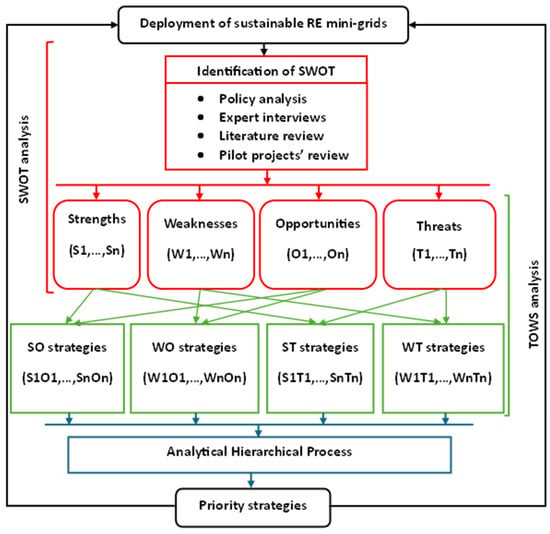
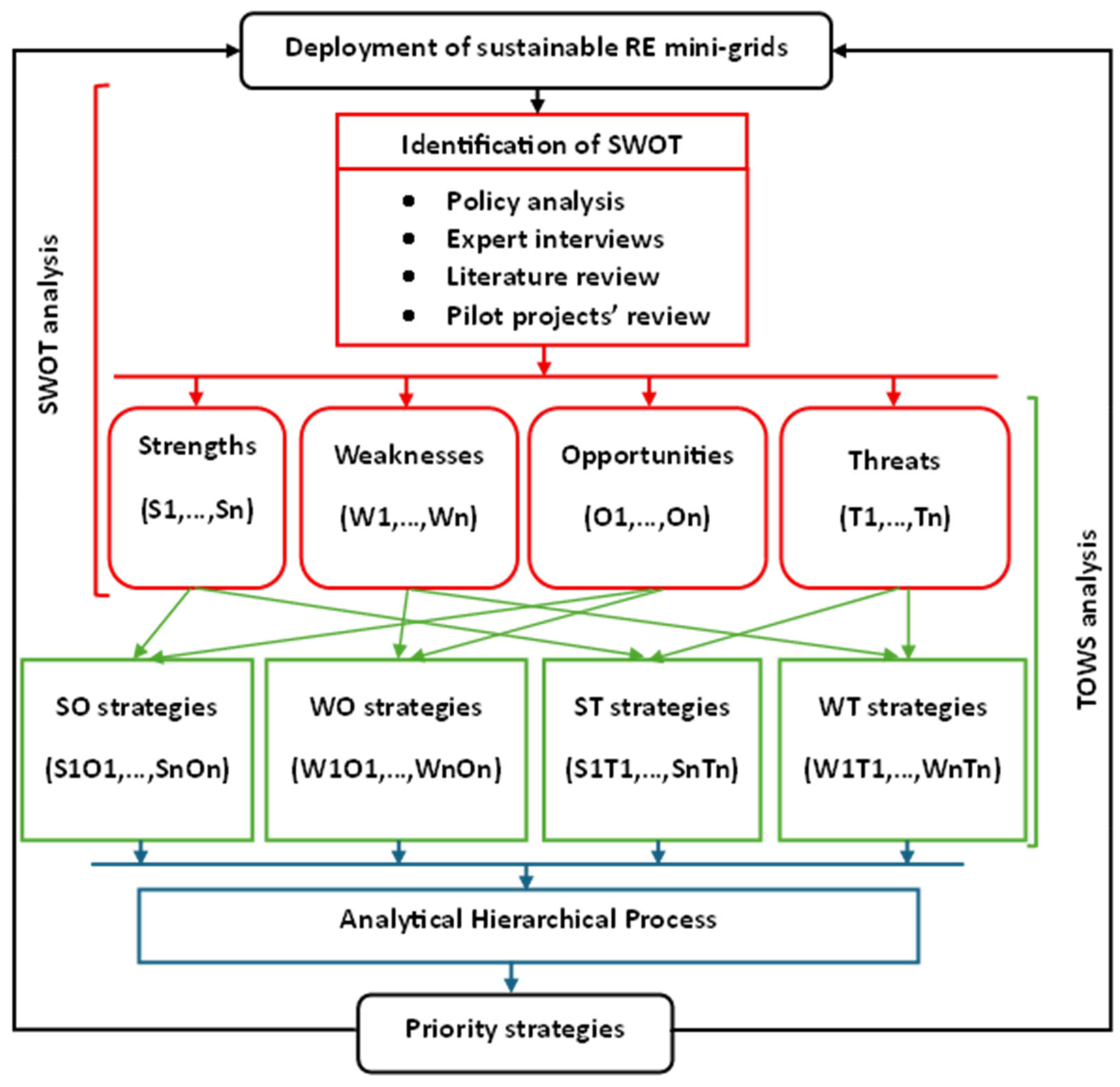
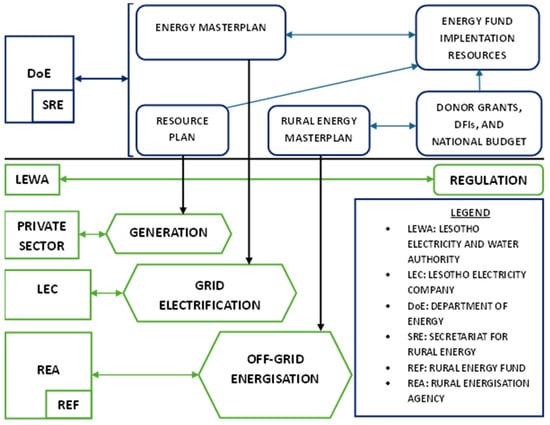
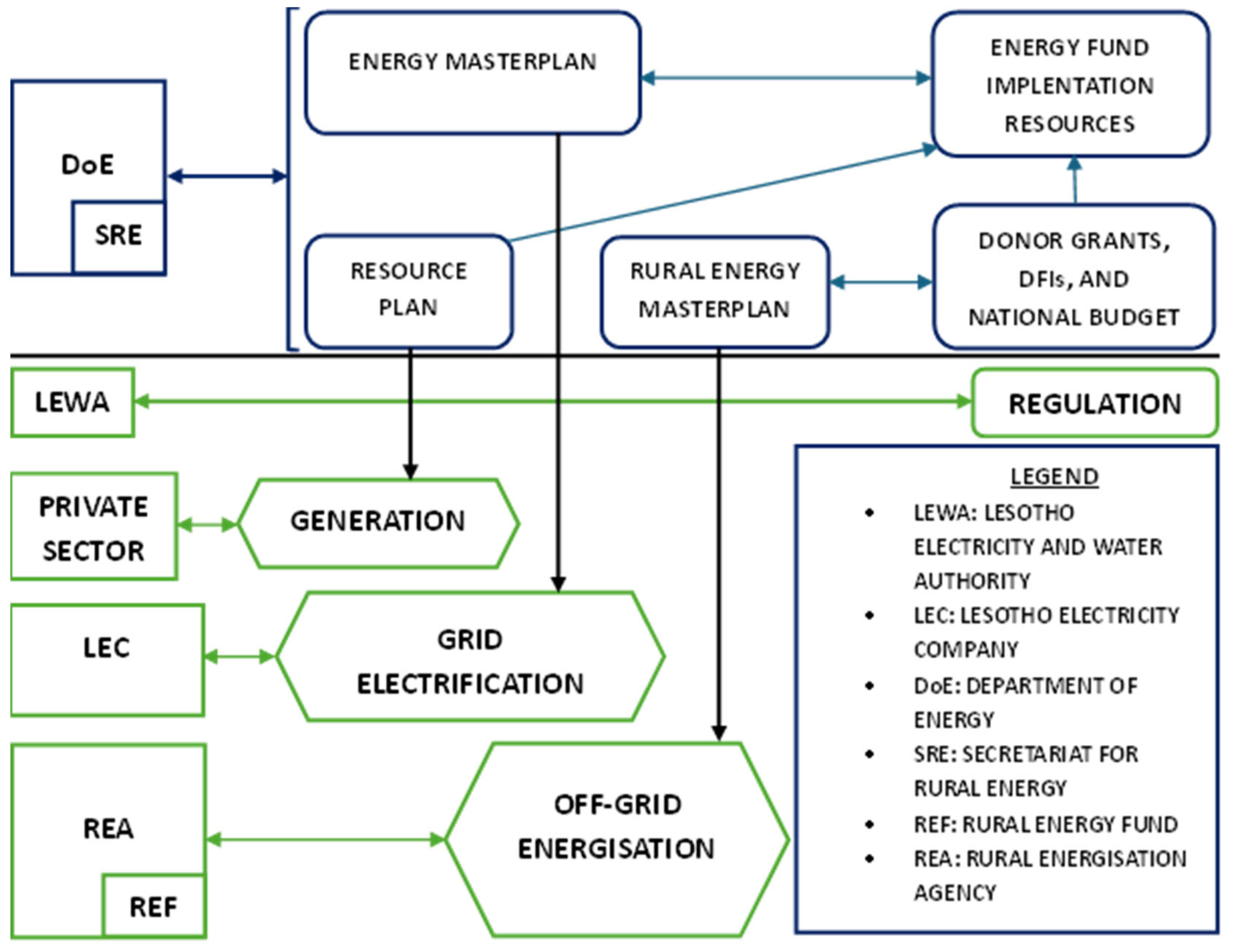
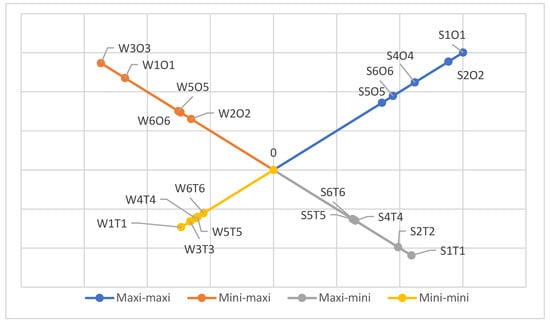
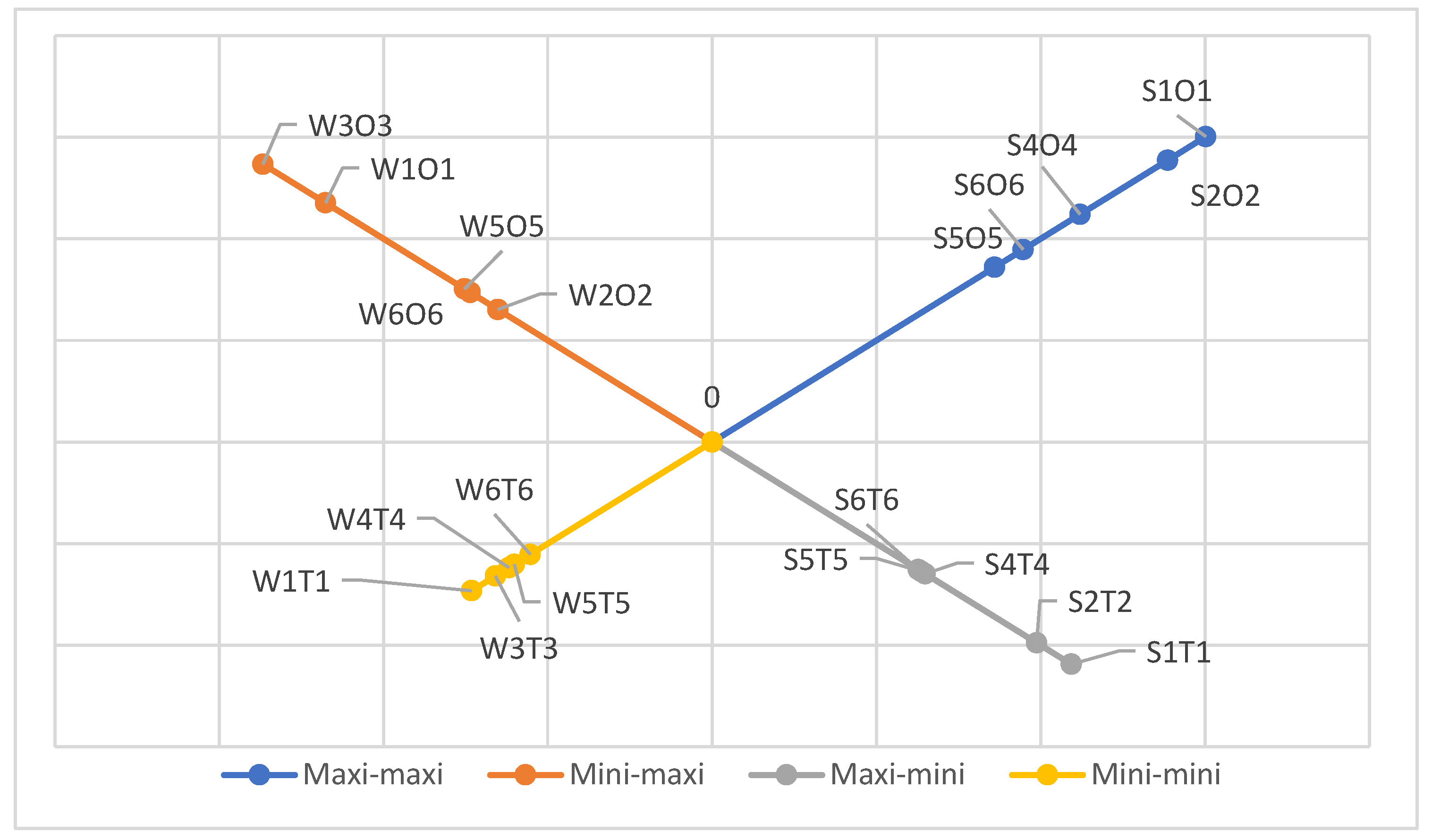

Disclaimer/Publisher’s Note: The statements, opinions and data contained in all publications are solely those of the individual author(s) and contributor(s) and not of MDPI and/or the editor(s). MDPI and/or the editor(s) disclaim responsibility for any injury to people or property resulting from any ideas, methods, instructions or products referred to in the content. |
© 2026 by the authors. Licensee MDPI, Basel, Switzerland. This article is an open access article distributed under the terms and conditions of the Creative Commons Attribution (CC BY) license.