Article

Study of Co-Combustion of Pellets and Briquettes from Lignin in a Mixture with Sewage Sludge

1
Polytechnic School, Siberian Federal University, 79, Svobodny Avenue, Krasnoyarsk 660041, Russia
2
Institute of Chemistry and Chemical Technology, Siberian Branch of RAS, 50/24, Akademgorodok, Krasnoyarsk 660036, Russia
3
Thermo and Fluid Dynamics (FLOW), Faculty of Engineering, Vrije Universiteit Brussel (VUB), Pleinlaan 2, 1050 Brussels, Belgium
4
Brussels Institute for Thermal-Fluid Systems and Clean Energy (BRITE), Vrije Universiteit Brussel (VUB) and Université Libre de Bruxelles (ULB), 1050 Brussels, Belgium
*
Author to whom correspondence should be addressed.
Energies 2026, 19(2), 397; https://doi.org/10.3390/en19020397 (registering DOI)
Submission received: 6 December 2025 / Revised: 1 January 2026 / Accepted: 8 January 2026 / Published: 14 January 2026
(This article belongs to the Section I2: Energy and Combustion Science)

Abstract

Improving the thermal utilisation of organic production waste to generate energy is integral to solving one of the most pressing issues of our time: transitioning away from fossil fuels. In this context, the thermal utilisation of organic waste, particularly sewage sludge (SS) and lignin-containing by-products from the biochemical industry, is of considerable scientific and practical interest. This study provides a thorough analysis of the co-combustion processes involving SS, lignin-based pellets and briquettes, and their mixtures with various component ratios. The aim of the work is to evaluate the fuel properties, thermokinetic characteristics, and potential for synergistic interactions during joint fuel combustion, considering the mechanical impact on lignin during granulation. The aim is to optimise conditions for the thermal utilisation of industrial waste. The study employed standard analytical methods: the thermophysical properties of the fuels were determined; morphological analysis of the particle surface was conducted using scanning electron microscopy; and X-ray fluorescence analysis was performed to identify the inorganic oxide phase. It has been established that lignin briquettes have the highest lower heating value, exceeding that of lignin pellets and sewage sludge by 7% and 27%, respectively. Thermogravimetric analysis (TGA) in an oxidising atmosphere (air, heating rate of 10 °C/min) made it possible to determine the following key combustion parameters: the ignition temperature of the coke residue (Ti); the temperature at which oxidation is complete (Tb); the maximum combustion rate (Rmax); and the combustion efficiency index (Q). The ignition temperature of the coke residue was 262.1 °C for SS, 291.8 °C for lignin pellets, and 290.0 °C for lignin briquettes. Analysis of co-combustion revealed non-linear behaviour in the thermograms, indicating synergistic effects, which are manifested by a decrease in the maximum combustion rate compared to the additive prediction, particularly in mixtures with a moderate lignin content (25–50%). It was established that the main synergistic interactions between the mixture components occurred during moisture evaporation and the combustion of coke residue. These results are valuable for designing and operating power plants that focus on co-combusting industrial organic waste, and they contribute to the development of thermal utilisation technologies within closed production cycles.

1. Introduction

The continuous development of global industrialisation has underscored the importance of sustainable technology development for the environmentally safe and energy-efficient disposal of carbon-containing industrial waste. The generation of industrial carbon-containing waste is a significant environmental problem, as such waste often contains toxic and decomposition-resistant compounds that can pollute the soil, water, and air. Their accumulation in landfills or inefficient disposal leads to greenhouse gas emissions, primarily methane and carbon dioxide, which exacerbate global warming. Additionally, the processing of many carbon-containing wastes, such as lignin and sewage sludge, is both costly and energy-intensive [1,2,3,4,5,6,7].
The generation of large amounts of lignin waste is associated with the specific technological processes in certain industries, primarily the pulp-and-paper, biofuel, and woodworking industries. Lignin is a natural polymer found in wood and other plant tissues. It provides plants with strength and resistance to decomposition. In pulp production (especially using the sulphate or sulphite method), wood is treated with alkaline or acidic solutions to separate the cellulose fibres from the lignin. Lignin dissolves and ends up in wastewater or remains as a by-product (‘black liquor’ in the sulphate process) [8,9,10]. Despite the potential uses of lignin (as fuel, an additive in building materials, a chemical raw material, etc.), its processing is often economically unprofitable due to the complexity of purification, the heterogeneity of its composition, and the high cost of modification. Many enterprises simply burn lignin for energy or send it to landfill, as there are no technologies or markets for its effective use [11,12,13,14].
Sewage sludge (or sludge) is solid waste produced during the treatment of industrial and municipal sewage. Industrial, municipal, and agricultural sewage contains significant amounts of suspended solids, organic matter, nutrients (nitrogen, phosphorus), toxic compounds, and microbial biomass. When these sewage streams are treated, pollutants concentrate in the solid phase, forming sludge. Urbanisation, population growth, and the expansion of industrial production lead to an increase in sewage volumes, and consequently, a greater amount of sludge is produced. Stricter requirements for treated water quality necessitate the use of more advanced treatment methods, which in turn increase sludge production. Many regions lack the technology or infrastructure to utilise sludge (e.g., as a fertiliser, raw material for construction, or a source of biogas). As a result, sludge accumulates as waste, often undergoing only dewatering and disposal [15,16,17,18].
Thermal disposal (co-combustion) is a promising method of industrial waste disposal, as it can be used to generate heat or electrical energy. This is why studying the co-combustion of industrial waste is one of the most pressing issues of our time. Thermogravimetric analysis is one of the most widely used methods for studying the combustion, pyrolysis, and oxidation processes of solid fuels such as coal, biomass, waste, and lignocellulosic materials. Thermogravimetric analysis involves the continuous measurement of changes in the mass of a sample as it is heated uniformly (or held at a constant temperature) in a controlled atmosphere (inert, e.g., N2, or oxidising, e.g., air or O2) [19,20,21,22]. The mass change curve (thermogram) shows the following characteristic stages: drying (moisture loss at 50–150 °C), pyrolysis/devolatilisation (release of volatile substances at 200–600 °C in an inert environment), combustion of volatile components (in an oxidising environment) and combustion of coke residue (fix)—slow oxidation of carbon at 400–800 °C. In co-combustion of coal with biomass or waste, TGA helps to identify synergistic effects—acceleration or deceleration of combustion compared to individual components [23,24,25].
Park et al. [26] investigated the feasibility of producing high-calorie solid fuel with improved environmental characteristics from sewage sludge and bioethanol-lignin derived from lignocellulose. They found that adding bioethanol-lignin from lignocellulose increased the heat transfer of sewage sludge and reduced the concentration of carbon dioxide in flue gases. They also found that impregnating lignin with vapours from the combustion products of sewage sludge ensured uniform combustion.
A bibliographic analysis revealed that no studies have been conducted on the co-combustion of briquetted lignin and sewage sludge. Therefore, a comprehensive study of the combustion process of these fuels is required. This study aimed to evaluate the fuel properties, thermokinetic characteristics, and potential for synergistic interactions during co-combustion, taking into account the mechanical impact on lignin during granulation, to optimise conditions for the thermal utilisation of industrial waste. The results presented here can inform the development of a closed waste utilisation cycle and can be applied in the design of energy equipment.

2. Materials and Methods

2.1. Preparing Fuels for Research

The following organic waste (hereinafter referred to as fuel) was studied in the work:
  • No. 1—sewage sludge (SS);
  • No. 2—lignin pellets (LP);
  • No. 3—lignin briquettes (LB).
The sewage sludge was collected from the sludge fields near the municipal treatment plants (Abakan, Russia). No preliminary treatment of the sewage sludge (SS) was carried out. It was only while the SS was stored in the laboratory that its moisture content reached a state of hygroscopic equilibrium with the environment.
Lignin was collected at a landfill site containing waste from an alcohol production plant (Abakan, Russia). Lignin pellets and briquettes were produced in a laboratory using experimental equipment. The pellets were produced using an experimental granulator (roller press, Polytechnic School, Krasnoyarsk, Russia), with a pressure in the forming zone reaching 50 MPa at a temperature of 100–120 °C, and with diameters of 8 mm and length of 25 mm. Lignin briquettes were produced using an experimental extruder (screw press, Polytechnic School, Krasnoyarsk, Russia) with a pressure of 150 MPa at a temperature range of 180–200 °C. The briquettes had a diameter of 50 mm and a length of 200 mm.
Solid fuel mixtures were formed on the basis of fuels No. 1–3, the decryption of which is presented in Table 1.
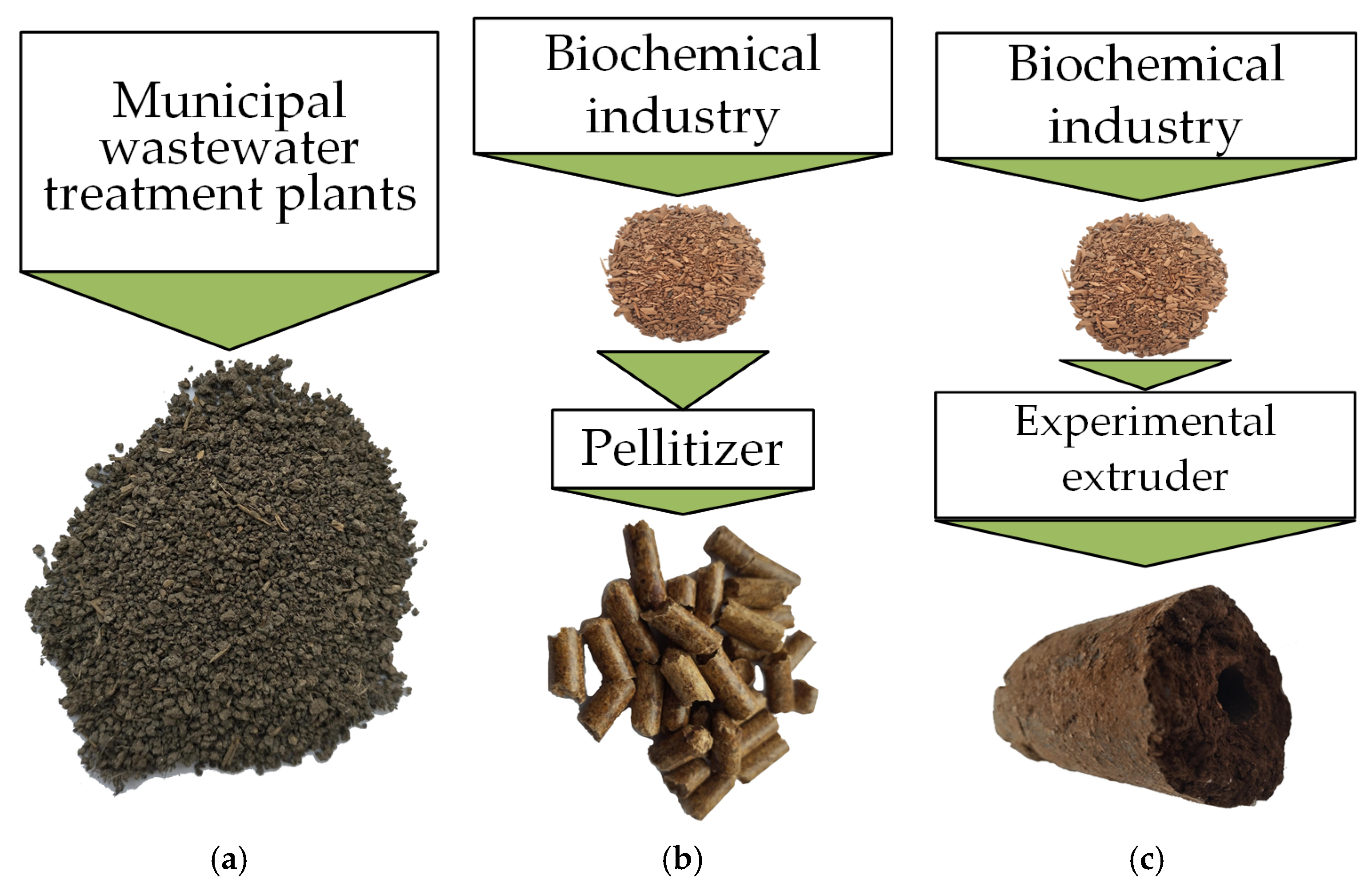
Figure 1 shows the diagrams illustrating how the production waste under investigation is obtained.
Before conducting thermal analysis, all fuels were ground to the size used for pulverised fuel combustion in boilers. Thermotechnical analysis was conducted to assess the thermotechnical properties of the fuels under investigation. The main stages of fuel preparation for research and determination of their thermotechnical characteristics, with a description of the equipment and methods used, are presented in Table 2. Table 3 shows the thermophysical properties of fuels.

2.2. Analysis of Fuel Particle Surface and Chemical Composition of Ash

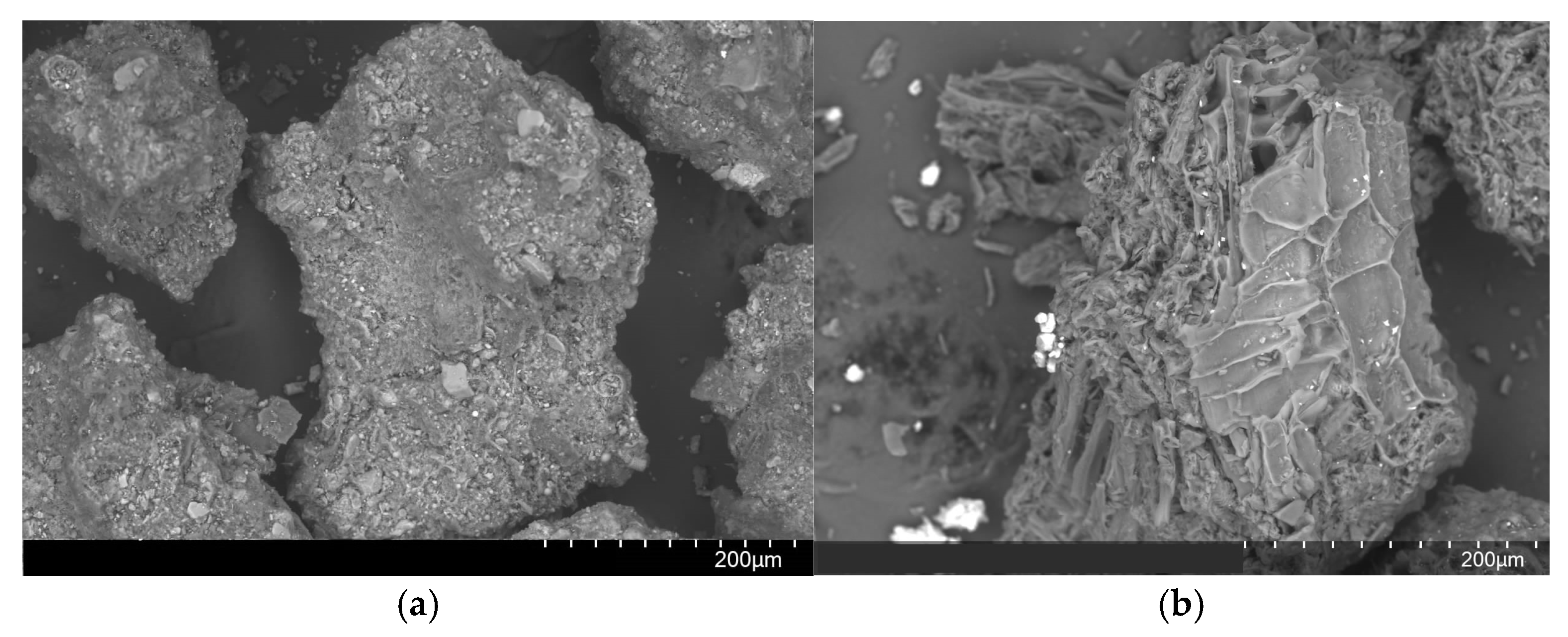
A TM-4000 microscope (HITACHI High-Technologies Corporation, Chiba, Japan) was used to analyse the surface of fuel particles. Sewage sludge and lignin, from which pellets and briquettes were obtained, were examined (Figure 2). The chemical composition of the ash of the fuels under investigation was analysed using the S2 RANGER spectrometer (Bruker, Berlin, Germany) (Table 4).

2.3. Methodology for Conducting TGA

The main combustion characteristics of fuels and their kinetic parameters were determined using a NETZSCH STA449F1 Jupiter analyzer (NETZSCH, Selb, Germany). The conditions for conducting experiments under non-isothermal heating were as follows: an oxidising environment, an airflow rate of ±40 mL/min, a heating rate of ±10 °C/min, and a sample weight of 7 ± 0.3 mg. NETZSCH Proteus Thermal Analysis 5.1.0 software (NETZSCH, Selb, Germany), supplied with the device, was used to process the TGA results. All experiments were duplicated to assess the reproducibility and consistency of the results.
The combustion efficiency index (Q, min−2 °C−3) was used to assess the quality of combustion of the samples. An increase in the combustion index indicates that the fuel burns more efficiently. The values were calculated using expression (1) [35,36,37]:
Q = R max R mean T i 2 T b × 10 7 ,   min 2   ° C 3
where Rmax is the maximum combustion rate, %/min; Rmean is the average combustion rate in the temperature range from Ti to Tb, %/min; Ti and Tb are the temperatures at which the coke residue of fuels ignites and oxidation completes, °C. Ti and Tb were found using the known method of curve intersection [38,39].
The presence of synergistic effects was determined by graphically comparing the differential thermogravimetry (DTGex) results obtained during thermal analysis with the theoretical (DTGtr) differential thermogravimetry curves, using a known mathematical expression (2) [40,41]:
D T G t r = v 1 D T G 1 + v 2 D T G 2 ,   % / min
where ν1 and ν2 are the percentage content of components in the mixture, %; DTG1 and DTG2 are the differential thermogravimetric values for the fuels included in the solid fuel mixture throughout the entire heating period, %/min.

3. Results and Discussion

3.1. Results of the Thermal, Morphological, and Chemical Analysis of the Ash

Currently, one of the factors limiting the use of sewage sludge in agriculture, as a fertiliser, is its high ash content; so one solution for its use is thermal utilisation. Granulated lignin also has a high ash content (Table 3). Inorganic residues from various types of production waste are currently widely used in various construction industries [42,43]. An analysis of Table 1 reveals that, at an operating moisture content (Wr) and dry ash content (Ad), sewage sludge has a low calorific value; however, its high volatile matter content makes it a highly reactive fuel. Granulated lignin has a lower moisture content in the working state compared to sewage sludge (Table 3). At the same time, the high ash content in lignin affects its low calorific value, as is the case with sewage sludge. All fuels in a dry, ash-free state have a sufficiently high calorific value, confirming their potential as a promising energy source. The carbon content in granulated lignin is 16% higher than in sewage sludge, and there is no nitrogen content at all. The disadvantage of granulated lignin compared to sewage sludge is its high sulphur content (Table 3).
Analysing the results of scanning electron microscopy, the images of which are shown in Figure 2, it can be noted that there is a high content of inorganic impurities in sewage sludge and lignin. Inorganic elements in sewage sludge are found inside fuel particles.
The lignin that is obtained through biochemical processing of lignin-containing biomaterials (primarily wood) contains minimal levels of inorganic elements. These elements are acquired during the subsequent storage of lignin in open-air environments at specialised landfills.
Silicon oxide, calcium, iron, and phosphorus predominate in sewage sludge ash. Lignin ash mainly contains calcium, silicon, and iron oxides. The high silicon oxide content in the ash of the fuels studied may be due to the storage conditions at specialised landfills.

3.2. Analysis of TGA Curves During Heating of Individual Fuels

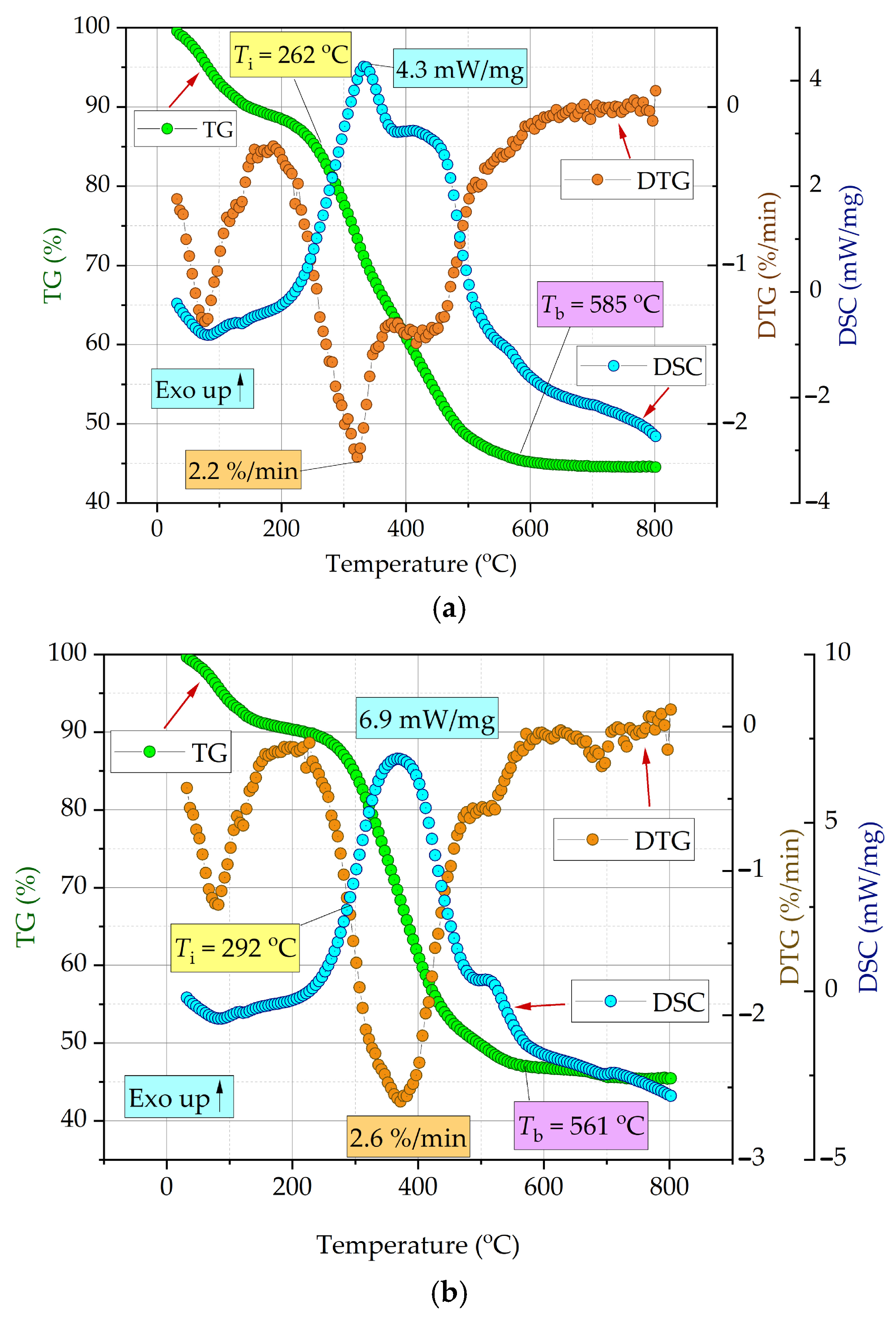
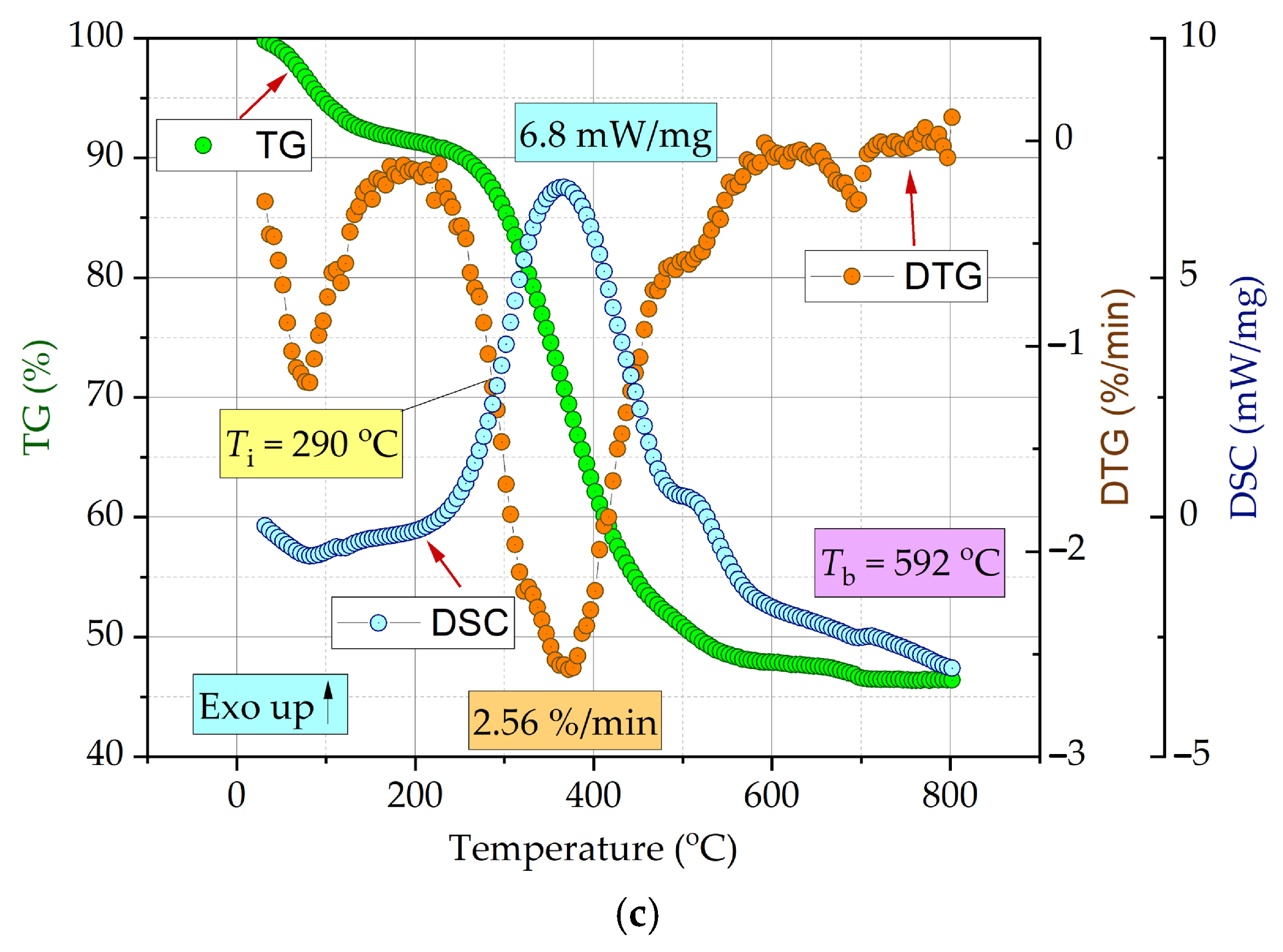
Figure 3 illustrates the heating process of fuels using thermogravimetric (TG), differential thermogravimetric (DTG), and differential scanning calorimetric (DSC) curves. The temperature range in all cases was 30 to 800 °C.
The heating process of fuels can be divided into three main temperature intervals, each corresponding to a specific stage of thermal transformation: the evaporation of moisture, the initiation of thermal decomposition and the release of volatile gaseous products, and the combustion of coke residue. The first interval, associated with moisture removal, was observed for all the studied fuels within the 30–120 °C range. Within this range, a decrease in the mass of the samples was recorded, corresponding to their initial moisture content (Figure 3). This process manifests as characteristic peaks on differential thermogravimetric (DTG) curves where the maximum mass loss rates are achieved: 1.35%/min for SS, 1.23%/min for LP, and 1.17%/min for LB. The evaporation of moisture is accompanied by weak endothermic effects reflected in the form of small downward-directed peaks on differential scanning calorimetry (DSC) thermograms, as shown in Figure 3.
As the temperature continues to rise, the weakest intermolecular bonds in the fuel break down, releasing volatile components. Subsequent heating creates favourable conditions for the ignition of these volatiles. The second characteristic temperature interval corresponding to this stage of thermal degradation is 120–262 °C for SS, 120–291.8 °C for LP, and 120–290 °C for LB (Figure 3). The end of this interval is marked by a sharp rise in mass loss and the beginning of heat emission, as shown by an exothermic effect on DSC curves (Figure 3).
The third main temperature interval corresponds to the ignition stage and subsequent combustion of the coke residue. For SS, LP and LB fuels, this interval runs at temperatures ranging from 262.1 to 585.4 °C for SS, from 291.8 to 561.0 °C for LP, and from 290.0 to 592.2 °C for LB (Figure 3). The ignition temperature (Ti) of the coke residue is 262.1 °C for SS, 291.8 °C for LP, and 290.0 °C for LB. SS coke residue ignites at a lower temperature than granulated lignin residue (LP and LB) due to its high volatile content (Table 3). Similar results have been obtained by other authors, who noted low ignition temperatures and high burning temperatures in SS [44]. The ignition temperatures obtained for LP and LB are slightly lower than those reported by other researchers for pulp and paper industry waste [45,46]. This is explained by the fact that this study investigated biochemical industry waste from the production of ethyl alcohol from (LP and LB) wood, which differs in its physicochemical and thermal properties from pulp and paper industry waste. It is also noted that pulp and paper waste has a higher burnout temperature compared to (LP and LB) [45,46].
The main stage of coke residue combustion in all the studied fuels is characterised by a single, noticeable peak on the DTG and DSC curves (Figure 3), indicating that one major oxidation process dominates. The maximum combustion rate (Rmax) is 2.22%/min for SS, 2.60%/min for LP, and 2.56%/min for LB. The corresponding maximum values of heat flux intensity (DSCmax) are 4.3 mW/mg for SS, 6.9 mW/mg for LP and 6.8 mW/mg for LB. The lower DSCmax value for SS is due to its lower specific heat of combustion compared to granulated lignin (see Table 3). Analysis of the combustion efficiency index (Q) shows that its highest value is observed for LB—1.12 min−2 °C−3, for LP it is slightly lower—1.11 min−2 °C−3, while for SS the minimum value is recorded—min−2 °C−3. The results obtained by other authors confirm the low combustion efficiency index values for SS [47]. This difference is due to the lower maximum burning rate of SS compared to lignite fuels. Table 5 provides the basic thermal parameters for the combustion of individual fuels and their mixtures.

3.3. Analysis of TGA Curves During Heating of Fuel Mixtures

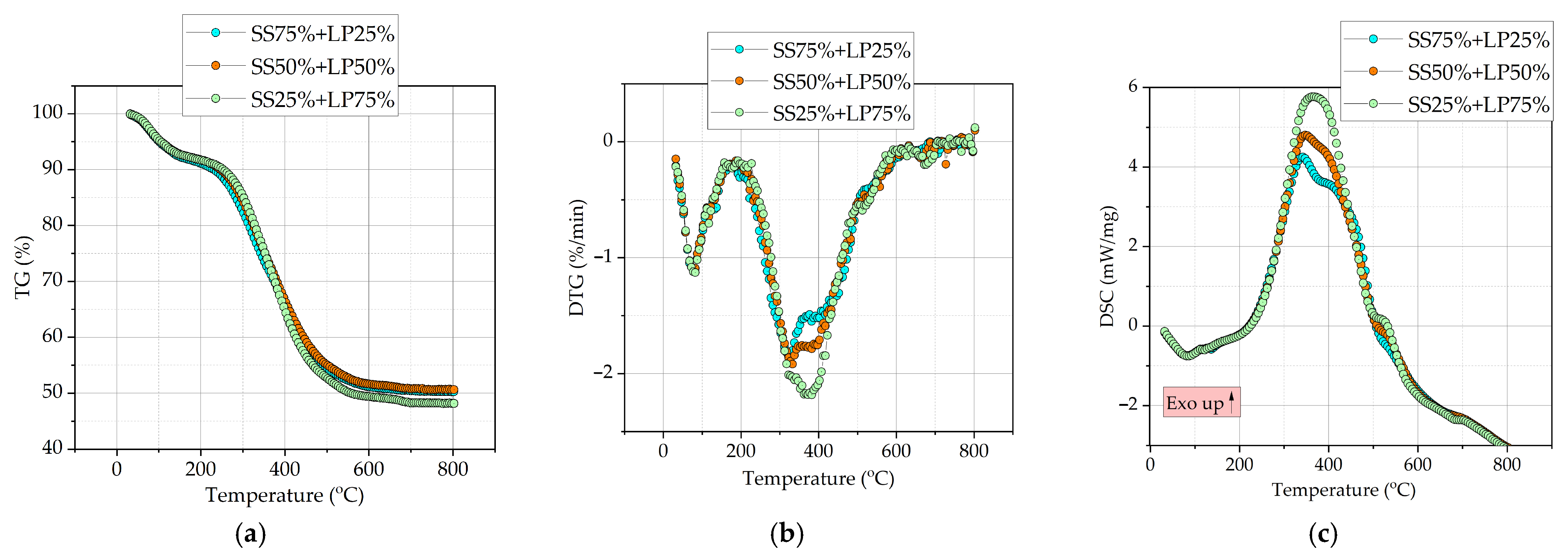
The heating curve profiles for SS- and LP-based solid fuel mixtures are shown in Figure 4.
When the fuel mixtures are heated within the initial temperature range of 30–120 °C, the thermogravimetry (TG), differential thermometry (DTG), and differential scanning calorimetry (DSC) curves shown in Figure 4 exhibit a high degree of similarity. This is due to the similar moisture content values in the analytical state (Wa) of the original components (SS and LP), as well as in their mixtures (Table 3). In the second temperature range, from the completion of moisture removal to the coke residue ignition point, the TG, DTG, and DSC curves also have similar inclinations (Figure 4), indicating that the volatile components in the mixtures under study have similar thermal properties and characteristics. Only at the third stage, which corresponds to the combustion of the coke residue, are significant differences in thermal performance revealed. This stage is characterised by a single, noticeable peak on the DTG and DSC curves, indicating the dominance of a primary carbon oxidation process. For the SS75% + LP25% mixture, ignition of the coke residue begins at 256.5 °C. The maximum burning speed (Rmax) is 324.1 °C, equivalent to 1.87%/min. This process is accompanied by an exothermic effect, with peak heat emission (DSCmax) of 4.2 mW/mg observed at 337.0 °C (Table 5).
Adding 50% LP to the fuel mixture containing SS increases the ignition temperature of the coke residue to 267.2 °C. The maximum combustion rate (Rmax) is 330.9 °C, with an accompanying exothermic effect and peak heat flux value of 4.5 mW/mg at 347.3 °C (Table 5).
Increasing the LP fraction further to 75% results in an additional rise in the ignition temperature to 284.8 °C. At the same time, the maximum coking residue burning rate increases to 2.19%/min, and the temperature at which this is achieved increases to 364.3 °C. The maximum heat flux intensity (DSCmax) also increases, reaching 5.8 MW/mg at 367.3 °C. Thus, increasing the amount of granulated lignin (LP) in the fuel mixture significantly affects the thermal performance of the combustion process, shifting key thermal events to higher temperatures and increasing exothermic reactions.
Increasing the mass fraction of LP in the mixture by 25%, 50%, and 75% shifts the temperature at which the combustion process ends to a lower temperature range, corresponding to 595.1, 582.9, and 572.5 °C, respectively. The lowest combustion index value is observed in mixtures based on SS75% + LP25% and SS50% + LP50% (Table 5).
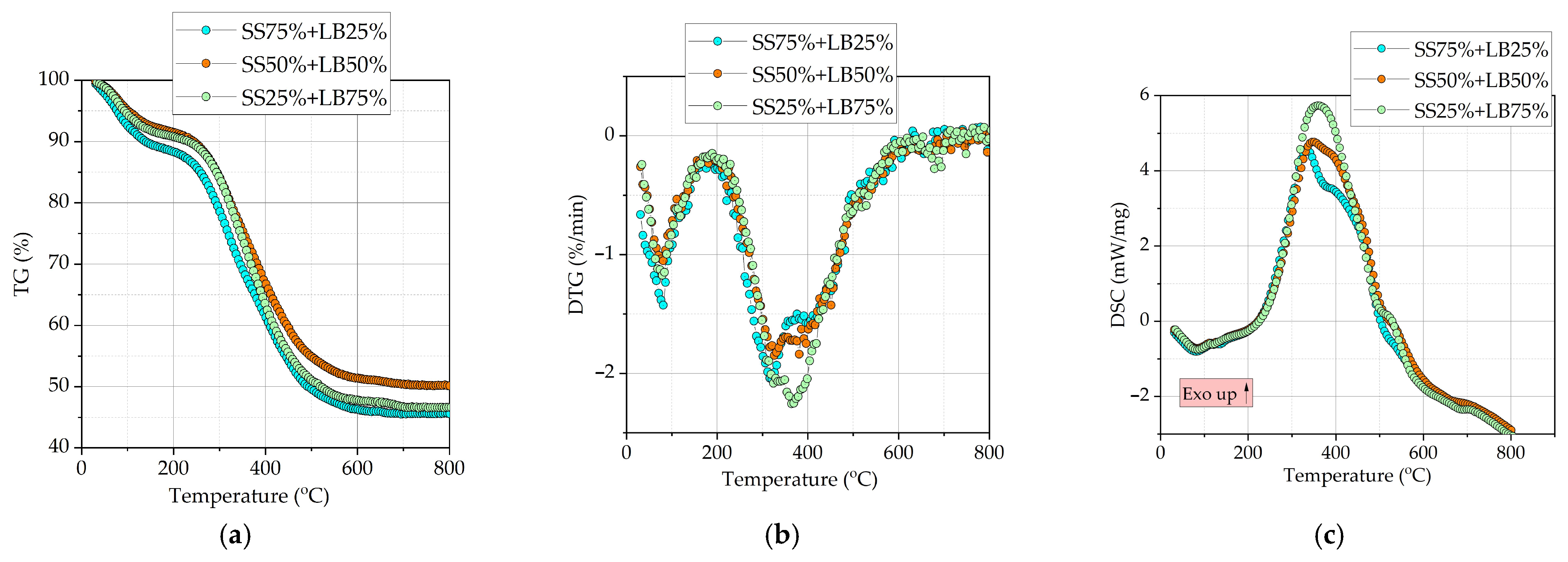
The heating curve profiles of solid fuel mixtures based on SS and LB are shown in Figure 5.
The analytical moisture content of SS fuel is 29% higher than that of LB, resulting in observed differences in thermogravimetric (TG) curve profiles when heating appropriate mixtures (Figure 5). The most marked disparities in the behaviour of TG-, DTG-, and DSC-curves are evident at the stage of ignition and subsequent combustion of the coke residue. This stage is characterised by the presence of a single, pronounced peak on both DTG and DSC thermograms, indicating the dominance of one major carbon oxidation process. The ignition temperature (Ti) of the fuel mixture (SS: 75% + LB: 25%) is 251.4 °C. The maximum combustion rate (Rmax) was found to be 2.05%/min at 321.4 °C, accompanied by an exothermic effect with a peak heat intensity (DSCmax) of 4.5 mW/mg, which remained constant at 331.0 °C. The combustion process is completed at 586.5 °C. The calculated burning efficiency index (Q) for this mixture is 0.89 min−2 °C−3, which reflects the relatively moderate intensity and speed of the oxidation reaction of the coke residue in relation to the other compositions studied.
It has been demonstrated that increasing the mass fraction of LB in the fuel mixture to 50% results in a shift in the Ti values to higher values up to 273.0 °C. Concurrently, the maximum combustion rate (Rmax) is reduced to 1.85%/min at 326.0 °C. Despite the oxidation kinetics being slower, the exothermic effect is increasing, as evidenced by the rise in peak heat flux (DSCmax) to 4.8 mW/mg at 351.0 °C. This could be indicative of a more complete combustion of carbon residue or a shift in the oxidation reaction mechanism. The combustion process is complete at 601.7 °C. The reduction in the combustion efficiency index (Q) to 0.61 min−2 °C−3 indicates a deterioration in the combined combustion performance of this mixture compared to compositions with a lower LB content, which is due primarily to the reduced maximum reaction speed and the shift in thermal events to elevated temperatures.
In the fuel mixture SS25% + LB75%, there is a shift in Ti to higher values up to 276.3 °C, which indicates an increased thermal stability of the carbon residue compared with mixtures containing a lower proportion of lignite. The maximum combustion rate (Rmax) was found to be 2.27%/min at 366.1 °C, indicating an increase in the kinetics of oxidation processes at the late stages of thermal destruction. It has been demonstrated that increasing the mass percentage of granulated lignin (LB) to 75% leads to a significant increase in the intensity of the exothermic effect: the peak heat flux value (DSCmax) increases to 5.7 mW/mg at 359.0 °C, reflecting the more pronounced nature of the coke residue oxidation reaction. The oxidation completion temperature (Tb) has been determined to be 573.8 °C, and the combustion efficiency index (Q) has been shown to increase to 0.92 min−2 °C−3, indicating an increase in overall combustion efficiency compared to mixtures with a lower LB content.
It can thus be concluded that the incorporation of granulated lignin into the fuel mixture with SS exerts a substantial influence on the thermokinetic characteristics of coke residue combustion. The process is shifted to a higher temperature range, accompanied by an increase in reaction rate, and the intensity of heat emission is increased. The findings of the present study demonstrate that the presence of lignite components within biofuel mixtures is instrumental in enhancing their combustible properties. This enhancement is achieved by the formation of a more reactive coke residue and the optimisation of the thermal combustion profile.

3.4. Analysis of the Influence of Mixture Components on the Combustion Rate of Coke Residue

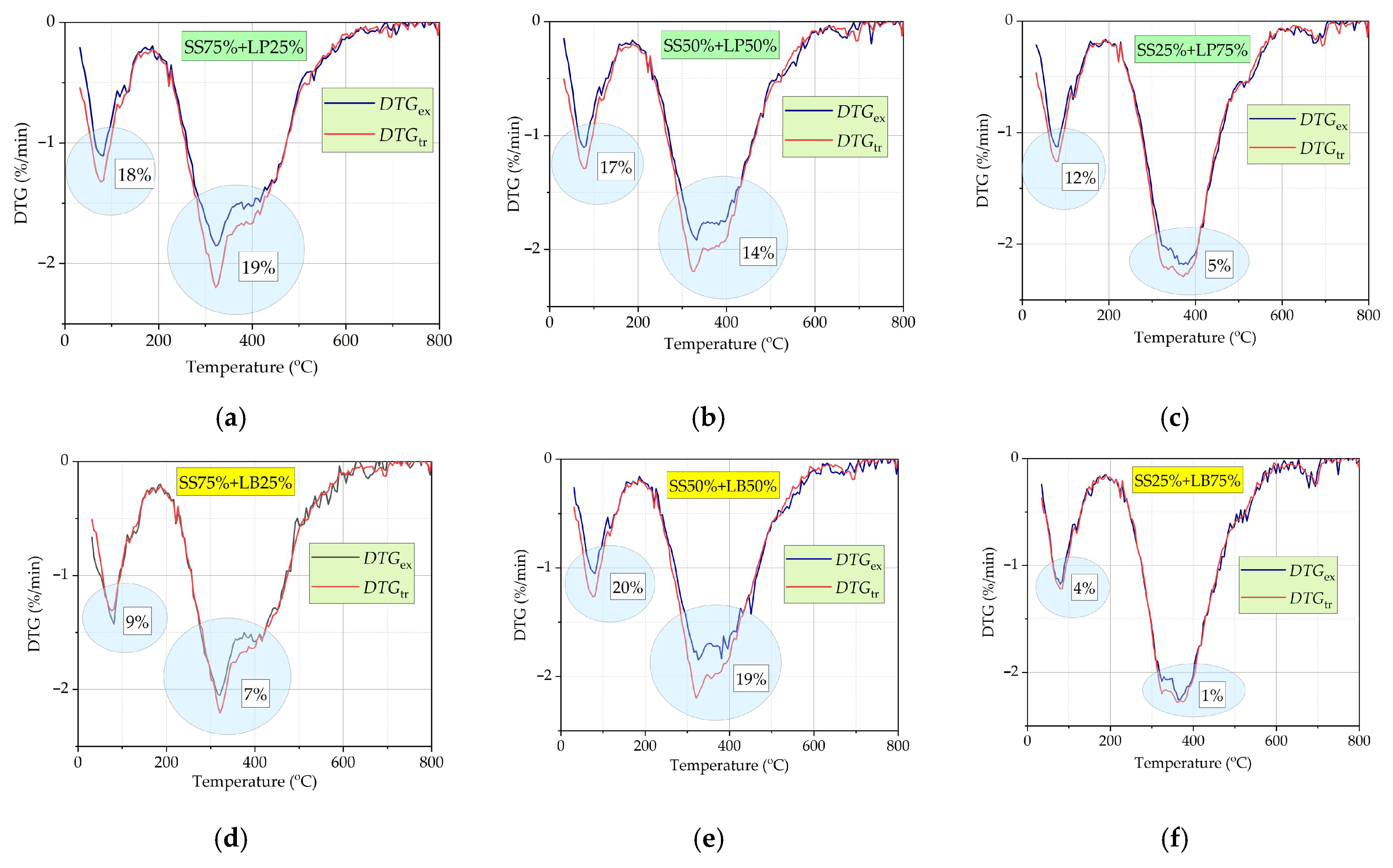
Figure 6 shows comparisons of DTG curve profiles for solid fuel mixtures based on SS, LP, and LB obtained experimentally and by calculation (the blue circle indicates the area of divergence between the DTGex and DTGtr curve profiles).
The comparison of experimental and theoretically calculated profiles of differential thermogravimetric curves (DTGex and DTGtr) allows for the evaluation of the presence or absence of interaction between fuel mixture components during thermal heating. If the experimental and calculated DTG profiles coincide, it can be concluded that the principle of additivity is observed, implying the absence of significant chemical or physicochemical interactions between components. In this instance, the thermal behaviour of the mixture, including key combustion parameters (e.g., maximum rate of coke residue combustion), can be reliably predicted based on the proportional contribution of the source components. Conversely, the discrepancy between DTGex and DTGtr indicates the occurrence of synergistic effects resulting from the interaction of components, making it impossible to predict combustion characteristics without conducting experimental studies.
A close examination of the data presented in Table 3 and Table 5, as well as Figure 3, reveals a striking similarity between the thermal burning characteristics of granulated lignin (LP) and lignite briquettes (LBs). This similarity can be attributed to the homogeneous chemical nature of both materials, despite the differences in their granulation conditions (pressure, temperature). However, when co-burning with sewage sludge (SS), a deviation from the additive behaviour is observed. As demonstrated in Figure 6, a marked divergence is evident in the DTGex and DTGtr profiles when equivalent mass proportions of granulated lignin (LP or LB) are incorporated into the SS, suggesting the presence of a synergistic effect. The most significant deviations are evident during the stages of moisture evaporation and coke residue combustion.
In SS + LP mixtures, an increase in the LP content to 25, 50, and 75% has been observed to result in a decrease in the maximum rate of coke residue combustion by 19, 14, and 5%, respectively, in comparison with the additive forecast (Figure 6a–c). This indicates the inhibitory effect of the mixture’s components on the kinetics of coke oxidation. A similar trend is observed in SS + LB mixtures: when 25 and 50% lignite briquettes are added, the maximum burning speed decreases by 7 and 19%, respectively (Figure 6d,e). It is noteworthy that at LB 75% the DTGex and DTGtr profiles are almost identical (Figure 6f), indicating a predominance of additive combustion. It is hypothesised that, given the high proportion of lignite, the influence of SS components becomes negligible. The thermal behaviour of the mixture is therefore determined by the properties of lignite as the dominant component.
Consequently, the mixture of sewage sludge and granulated lignin has been shown to produce a marked synergistic effect, resulting in a reduction in the intensity of coke residue combustion. These interactions are non-linear and dependent on component ratios, which emphasises the necessity for experimental determination of the kinetic parameters of biofuel mixtures’ combustion, especially at moderate concentrations of lignite.

4. Conclusions

An experimental study of the joint combustion of sewage sludge, lignin pellets, and lignin briquettes has established that the ignition temperature of sewage sludge is 11% lower than that of granulated lignin, indicating a higher tendency to initiate combustion. At the same time, the burnout temperatures of both components are comparable (561–586 °C), indicating that similar mechanisms are involved in the final stages of thermal destruction. The introduction of granular lignin into mixtures with sewage sludge leads to a slight decrease in the kinetic characteristics of combustion, but is accompanied by an increase in the specific heat of combustion. The optimal ratio of components, ensuring maximum energy efficiency, is achieved with a lignin content of 25% by mass. The formation of lignin pellets is not significantly affected by the technological parameters (pressure and temperature), but these parameters determine the manifestation of synergistic effects when the pellets are co-combusted with sediments. This study significantly advances our understanding of the fundamental and applied aspects of biomass use. It expands our knowledge of thermochemical interactions during the co-combustion of different types of waste, providing a scientific basis for developing energy-efficient disposal technologies that align with modern renewable energy requirements.

Author Contributions

Conceptualization, A.Z.; Methodology, O.F. and T.P.; Software (NETZSCH. Proteus Thermal Analysis 5.1.0), S.C. and O.F.; Validation, A.Z. and I.G.; Formal analysis, M.K.; Resources, T.P. and M.K.; Data curation, P.K. and S.C.; Writing—original draft, A.Z. and P.K.; Writing—review and editing, A.Z. and M.K.; Supervision, A.Z. and P.K.; Project administration, A.Z. All authors have read and agreed to the published version of the manuscript.

Funding

This research received no external funding.

Data Availability Statement

The original contributions presented in this study are included in the article. Further inquiries can be directed to the corresponding author.

Conflicts of Interest

The authors declare no conflict of interest.

Abbreviations

Adash a dry state (%)
Cdaf, Hdaf, Ndaf, Odaf, Sdaffraction of carbon, hydrogen, nitrogen, oxygen, and sulfur converted to a dry ash-free state (%)
DTGexDTG curves obtained during thermal analysis (%/min)
DTGtrDTG curves theoretically obtained (%/min)
DSCmaxmaximum heat flux value (W/g)
Q i r lower heating value in working condition (MJ/kg)
Q s daf higher heating value in dry ash-free state (MJ/kg)
Wrmoisture in working condition (%)
Wamoisture content in the analytical state (%)
Qcombustion efficiency index (min−2 °C−3)
Tbending-oxidation temperature (°C)
TRtemperature DTGmax (°C)
TDSCtemperature DSCmax (°C)
Tiignition temperature (°C)
Vdafgaseous content in dry ash-free state (%)
Rmaxmaximum combustion rate (%/min)
Rmeanaverage combustion rate in the temperature range from Ti to Tb (%/min)

References

  1. Ling, Z.S.; Jaafar, M.H.; Ismail, N. The knowledge, attitudes and practices in circular economy: A review of industrial waste management in China. Clean. Waste Syst. 2025, 11, 100276. [Google Scholar] [CrossRef]
  2. Daneshmand-Jahromi, S.; Sedghkerdar, M.H.; Mahinpey, N. A review of chemical looping combustion technology: Fundamentals, and development of natural, industrial waste, and synthetic oxygen carriers. Fuel 2023, 341, 127626. [Google Scholar] [CrossRef]
  3. Wei, T.; Zhang, J.; An, K.; Shi, N.; Li, P.; Li, B. Recent advances in recycle of industrial solid waste for the removal of SO2 and NOx based on solid waste sorts, removal technologies and mechanism. Sep. Purif. Technol. 2025, 364, 132338. [Google Scholar] [CrossRef]
  4. Zhao, Y.; Liang, T.; Cheng, M.; Chen, L.; Mei, C.; Dai, S.; Liu, Z.; Li, B. Recent advances in CO2 mineralization by alkaline industrial solid waste: Mechanisms, applications and perspectives. Renew. Sustain. Energy Rev. 2026, 226, 116355. [Google Scholar] [CrossRef]
  5. Zhang, C.; Su, C.; Hu, S.; Li, L.; Li, X. Environmental and life cycle assessment of organic Rankine cycle technology for industrial waste heat recovery. J. Environ. Chem. Eng. 2025, 13, 117758. [Google Scholar] [CrossRef]
  6. Wan Normazlan, W.M.D.; Buthiyappan, A.; Mohd Jais, F.; Abdul Raman, A.A. Exploring the potential of industrial and municipal wastes for the development of alternative fuel source: A review. Process Saf. Environ. Prot. 2025, 194, 904–926. [Google Scholar] [CrossRef]
  7. Chen, G.; Yang, K.; Sun, X.; Zhu, X.; Chen, W.; Hou, D.; Cheng, Z.; Yan, B. Advances in biomass chemical looping combustion technology: Process control and comprehensive evaluation. J. Environ. Chem. Eng. 2025, 13, 118142. [Google Scholar] [CrossRef]
  8. Munir, M.T.; Naqvi, M.; Li, B.; Raza, R.; Khan, A.; Taqvi, S.A.A.; Nizami, A.-S. From Waste to Watts: Emerging role of waste lignin-derived materials for energy storage. J. Energy Storage 2024, 82, 110477. [Google Scholar] [CrossRef]
  9. Libretti, C.; Santos Correa, L.; Meier, M.A.R. From waste to resource: Advancements in sustainable lignin modification. Green Chem. 2024, 26, 4358–4386. [Google Scholar] [CrossRef]
  10. Jiju, P.S.; Singhania, R.R.; Shruthy, N.S.; Shalu, S.; Dong, C.-D.; Patel, A.K. Lignin-derived biomaterials for environmental application, advancements in sustainable leather and bioplastic production: A review. Int. J. Biol. Macromol. 2025, 322, 146887. [Google Scholar] [CrossRef]
  11. Ni, Z.; Bi, H.; Shi, H.; Liu, X.; Tian, J.; Yao, Y.; He, L.; Meng, K.; Lin, Q. Effect of lignin on coal slime combustion characteristics and carbon dioxide emission. J. Clean. Prod. 2024, 441, 140884. [Google Scholar] [CrossRef]
  12. Aniza, R.; Chen, W.-H.; Herrera, C.J.A.; Quirino, R.; Petrissans, M.; Petrissans, A. Bioenergy and bioexergy analyses with artificial intelligence application on combustion of recycled hardwood and softwood wastes. Renew. Energy 2024, 237, 121885. [Google Scholar] [CrossRef]
  13. Taylor, M.J.; Hornsby, K.; Cheah, K.W.; Hurst, P.; Walker, S.; Skoulou, V. Repurposing lignin rich biorefinery waste streams into the next generation of sustainable solid fuels. Sustain. Chem. Environ. 2024, 7, 100123. [Google Scholar] [CrossRef]
  14. Chen, T.; Zhao, Y.; Chen, J.; Zhu, G.; Yin, J.; Jin, Z.; Jin, Y.; Yu, Z.; Zhu, Z.; Tang, X. Optimized co-combustion of paper-making solid wastes via, genetic algorithm: Synergistic enhancement and coal-substitution potential. Waste Manag. 2025, 207, 115114. [Google Scholar] [CrossRef] [PubMed]
  15. Waseem, M.; Khan, M.U.; Bokhary, A.; Ahring, B.K. Emerging trends in sewage sludge pretreatment: Enhancing treatment efficiency and sustainable waste management. Clean. Water 2025, 3, 100080. [Google Scholar] [CrossRef]
  16. Leino, O.; Äystö, L.; Fjäder, P.; Perkola, N.; Lehtoranta, S. Contaminants of environmental concern in sewage sludge in the Nordic countries. Environ. Pollut. 2025, 381, 126604. [Google Scholar] [CrossRef]
  17. Brandstätter, G.; Fürsatz, K.; Long, A.; Hannl, T.K.; Schubert, T. Exploring the potential of sewage sludge for gasification and resource recovery: A review. Environ. Technol. Innov. 2025, 40, 104346. [Google Scholar] [CrossRef]
  18. Dubinin, Y.V.; Yazykov, N.A.; Lyulyukin, A.P.; Yakovlev, V.A. Combustion of sewage sludge in a fluidized bed of catalyst: From laboratory to the pilot plant. Waste Manag. 2025, 204, 114944. [Google Scholar] [CrossRef]
  19. Aniza, R.; Chen, W.-H.; Kwon, E.E.; Bach, Q.-V.; Hoang, A.T. Lignocellulosic biofuel properties and reactivity analyzed by thermogravimetric analysis (TGA) toward zero carbon scheme: A critical review. Energy Convers. Manag. X 2024, 22, 100538. [Google Scholar] [CrossRef]
  20. Rago, Y.P.; Collard, F.-X.; Görgens, J.F.; Surroop, D.; Mohee, R. Co-combustion of torrefied biomass-plastic waste blends with coal through TGA: Influence of synergistic behaviour. Energy 2022, 239, 121859. [Google Scholar] [CrossRef]
  21. Kieush, L.; Koveria, A.; Sommersacher, P.; Retschitzegger, S.; Kienzl, N. Co-Pyrolysis of Biomass with Bituminous Coal in a Fixed-Bed Reactor for Biofuel and Bioreducing Agents Production. Sustainability 2025, 17, 7654. [Google Scholar] [CrossRef]
  22. Alvez-Tovar, B.; Scalize, P.S.; Angiolillo-Rodríguez, G.; Albuquerque, A.; Ebang, M.N.; de Oliveira, T.F. Agro-Industrial Waste Upcycling into Activated Carbons: A Sustainable Approach for Dye Removal and Wastewater Treatment. Sustainability 2025, 17, 2036. [Google Scholar] [CrossRef]
  23. Deng, S.; Xu, K.; Hui, B.; Li, Z.; Xia, Z.; Yu, S.; Wang, X.; Tan, H.; Zhang, X.; Du, Z. Investigation on co-combustion characteristics of sewage sludge char with biomass: Thermal behavior, synergistic effect, ash melting characteristics and kinetic analysis. Biomass Bioenergy 2025, 202, 108239. [Google Scholar] [CrossRef]
  24. Urbancl, D.; Agačević, D.; Gradišnik, E.; Šket, A.; Štajnfelzer, N.; Goričanec, D.; Petrovič, A. The Torrefaction of Agricultural and Industrial Residues: Thermogravimetric Analysis, Characterization of the Products and TG-FTIR Analysis of the Gas Phase. Energies 2025, 18, 4648. [Google Scholar] [CrossRef]
  25. Yang, J.; Li, Z.; Wei, R.; Zhou, D.; Long, H.; Li, J.; Xu, C. Co-Combustion of Food Solid Wastes and Pulverized Coal for Blast Furnace Injection: Characteristics, Kinetics, and Superiority. Sustainability 2022, 14, 7156. [Google Scholar] [CrossRef]
  26. Park, J.-H.; Jin, M.-H.; Lee, Y.-J.; Song, G.-S.; Choi, J.W.; Lee, D.-W.; Choi, Y.-C.; Park, S.-J.; Song, K.H.; Kim, J.-G. Two-in-One Fuel Synthetic Bioethanol-Lignin from Lignocellulose with Sewage Sludge and Its Air Pollutants Reduction Effects. Energies 2019, 12, 3072. [Google Scholar] [CrossRef]
  27. ISO 3310-1:2016; Test Sieves—Technical Requirements and Testing—Part 1: Test Sieves of Metal Wire Cloth. ISO: Geneva, Switzerland, 2016.
  28. ISO 18134-1:2022; Solid Biofuels—Determination of Moisture Content. ISO: Geneva, Switzerland, 2016.
  29. ISO 18122:2022; Solid Biofuels—Determination of Ash Content. ISO: Geneva, Switzerland, 2016.
  30. ISO 18123:2023; Solid Biofuels—Determination of Volatile Matter. ISO: Geneva, Switzerland, 2016.
  31. ISO 18125:2017; Solid Biofuels—Determination of Calorific Value. ISO: Geneva, Switzerland, 2016.
  32. ISO 16948:2015; Solid Biofuels—Determination of Total Content of Carbon, Hydrogen and Nitrogen. ISO: Geneva, Switzerland, 2016.
  33. ISO 16994:2016; Solid Biofuels—Determination of Total Content of Sulfur and Chlorine. ISO: Geneva, Switzerland, 2016.
  34. ISO/TS 20048-1:2020; Solid Biofuels—Determination of Off-Gassing and Oxygen Depletion Characteristics. ISO: Geneva, Switzerland, 2016.
  35. Oladejo, J.M.; Adegbite, S.; Pang, C.H.; Liu, H.; Parvez, A.M.; Wu, T. A novel index for the study of synergistic effects during the co-processing of coal and biomass. Appl. Energy 2017, 188, 215–225. [Google Scholar] [CrossRef]
  36. Zhuikov, A.; Pyanykh, T.; Kolosov, M.; Grishina, I.; Zhuikova, Y.; Kuznetsov, P.; Chicherin, S. Improving Energy Efficiency of Wastewater Residue Biomass Utilisation by Co-Combustion with Coal. Energies 2025, 18, 2906. [Google Scholar] [CrossRef]
  37. Zhu, G.; Wen, C.; Liu, T.; Xu, M.; Ling, P.; Wen, W.; Li, R. Combustion and co-combustion of biochar: Combustion performance and pollutant emissions. Appl. Energy 2024, 376, 124292. [Google Scholar] [CrossRef]
  38. Raza, M.; Abu-Jdayil, B.; Al-Marzouqi, A.H.; Inayat, A. Kinetic and thermodynamic analyses of date palm surface fibers pyrolysis using Coats-Redfern method. Renew. Energy 2022, 183, 67–77. [Google Scholar] [CrossRef]
  39. Zhuikov, A.V.; Glushkov, D.O.; Kuznetsov, P.N.; Grishina, I.I.; Samoilo, A.S. Ignition of two-component and three-component fuel mixtures based on brown coal and char under slow heating conditions. J. Therm. Anal. Calorim. 2022, 147, 11965–11976. [Google Scholar] [CrossRef]
  40. Armakan, S.; Civan, M.; Yurdakul, S. Determining co-combustion characteristics, kinetics and synergy behaviors of raw and torrefied forms of two distinct types of biomass and their blends with lignite. J. Therm. Anal. Calorim. 2022, 147, 12855–12869. [Google Scholar] [CrossRef]
  41. Yuan, Y.; Zuo, H.; Wang, J.; Gao, Y.; Xue, Q.; Wang, J. Co-combustion behavior, kinetic and ash melting characteristics analysis of clean coal and biomass pellet. Fuel 2022, 324, 124727. [Google Scholar] [CrossRef]
  42. Sidhu, A.S.; Siddique, R.; Singh, G. Review on the effect of sewage sludge ash on the properties of concrete. Constr. Build. Mater. 2024, 449, 138296. [Google Scholar] [CrossRef]
  43. Sun, L.; Xu, X.; Gu, X.; Hu, D.; Zhou, Z. Enhanced antioxidant activity of lignin for improved asphalt binder performance and aging resistance in sustainable road construction. Constr. Build. Mater. 2025, 471, 140364. [Google Scholar] [CrossRef]
  44. Ni, Z.; Zhang, Y.; Liu, X.; Shi, H.; Yao, Y.; Tian, J.; Hu, P.; He, L.; Lin, Q.; Liu, L. Co-combustion of sewage sludge with corn stalk based on TG-MS and TG-DSC: Gas products, interaction mechanisms, and kinetic behavior. Energy 2024, 308, 132747. [Google Scholar] [CrossRef]
  45. Cai, Z.; Ma, X.; Fang, S.; Yu, Z.; Lin, Y. Thermogravimetric analysis of the co-combustion of eucalyptus residues and paper mill sludge. Appl. Therm. Eng. 2016, 106, 938–943. [Google Scholar] [CrossRef]
  46. Hu, S.; Ma, X.; Lin, Y.; Yu, Z.; Fang, S. Thermogravimetric analysis of the co-combustion of paper mill sludge and municipal solid waste. Energy Convers. Manag. 2015, 99, 112–118. [Google Scholar] [CrossRef]
  47. Liu, X.; Bi, H.; Tian, J.; Ni, Z.; Shi, H.; Yao, Y.; Meng, K.; Wang, J.; Lin, Q. Thermogravimetric analysis of co-combustion characteristics of sewage sludge and bamboo scraps combined with artificial neural networks. Renew. Energy 2024, 226, 120338. [Google Scholar] [CrossRef]
Figure 1. Schemes for obtaining production waste under investigation: (a)—sewage sludge; (b)—lignin pellets; (c)—lignin briquettes.
Energies 19 00397 g001
Figure 2. Surface of fuels under investigation: (a)—sewage sludge 200×; (b)—lignin 250×.
Energies 19 00397 g002
Figure 3. Thermogravimetric (TG), differential thermogravimetric (DTG), and differential scanning calorimetry (DSC) profiles for all individual fuels: (a)—SS; (b)—LP; (c)—LB.
Energies 19 00397 g003aEnergies 19 00397 g003b
Figure 4. Profile of thermogravimetry (TG), differential thermogravimetry (DTG), and differential calorimetry (DSC) curves for mixtures based on SS and LP: (a)—TG; (b)—DTG; (c)—DSC.
Energies 19 00397 g004
Figure 5. Profile of thermogravimetry (TG), differential thermogravimetry (DTG), and differential calorimetry (DSC) curves for mixtures based on SS and LB: (a)—TG; (b)—DTG; (c)—DSC.
Energies 19 00397 g005
Figure 6. Comparison of DTG curve profiles for solid fuel mixtures based on SS, LP and LB obtained experimentally and by calculation (The blue circle indicates the area of divergence between DTGex and DTGtr): (a)—SS75% + LP25%; (b)—SS50% + LP50%; (c)—SS25% + LP75%; (d)—SS75% + LB25%; (e)—SS50% + LB50%; (f)—SS25% + LB75%.
Energies 19 00397 g006
Table 1. Indicators and decoding of the composition of solid fuel mixtures.
Names of Mixtures Decoding of Names
SS75% + LP25%75% sewage sludge + 25% lignin pellets
SS50% + LP50%50% sewage sludge + 50% lignin pellets
SS25% + LP75%25% sewage sludge + 75% lignin pellets
SS75% + LB25%75% sewage sludge + 25% lignin briquette
SS50% + LB50%50% sewage sludge + 50% lignin briquette
SS25% + LB75%25% sewage sludge + 75% lignin briquette
Table 2. The description of equipment and methods for preparing fuels for research.
No.Main StagesEquipmentMethodology
The preparation of fuels for thermogravimetric analysis
1Grinding fuel in a mill Retsch DM200 (Haan, Germany)ISO 3310-1:2016 “Test sieves—Technical requirements and testing—Part 1: Test sieves of metal wire cloth” [27]
2Sieving of fuels on an analytical machine to sizes of 150–250 μm Retsch AS200 (Haan, Germany)ISO 3310-1:2016 “Test sieves—Technical requirements and testing—Part 1: Test sieves of metal wire cloth” [27]
Conducting a thermotechnical analysis of fuels
3Humidity determination (status: Wr—working; Wa—analytical) Moisture analyser MA-150 Sartorius, Göttingen, GermanyISO 18134-1:2022 “Solid biofuels—Determination of moisture content” [28]
4Determination of ash content (status: Ad—dry) Muffle furnace Snol 7.2/1300 (AB ‘Umega’, Utena, Lithuania)ISO 18122:2022 “Solid biofuels—Determination of ash content” [29]
5Determination of volatile substances (status: Vdaf—dry ash-free) Muffle furnace Snol 7.2/1300 (AB ‘Umega’, Utena, Lithuania)ISO 18123:2023 “Solid biofuels—Determination of volatile matter” [30]
6Determination of combustion heat (status: Q i r —lowest, working; Q s daf —highest, dry, ash-free) Calorimeter C6000 (IKA, Staufen, Germany)ISO 18125:2017 “Solid biofuels—Determination of calorific value” [31]
7Determination of carbon, hydrogen, and nitrogen (status: Cdaf, Hdaf, Ndaf—dry ash-free)Vario MACRO cube device (Elementar Analysensysteme GmbH, Langenselbold, Germany)ISO 16948:2015 “Solid biofuels—Determination of total content of carbon, hydrogen and nitrogen” [32]
8Determination of sulphur (status: Sdaf—dry ash-free)Chemical method ISO 16994:2016 “Solid biofuels—Determination of total content of sulfur and chlorine” [33]
9Oxygen determination (status: Odaf—dry ash-free)Subtraction method ISO/TS 20048-1:2020 “Solid biofuels—Determination of off-gassing and oxygen depletion characteristics” [34]
Table 3. Results of thermotechnical analysis.
FuelsWrWaAdVdafCdafHdafNdafSdafOdaf Q i r Q s daf
%MJ/kg
SS35.27.144.583.555.16.36.01.432.29.622.7
LP19.06.245.570.363.94.103.828.211.423.2
LB9.45.546.472.065.04.204.028.812.223.1
Table 4. Chemical analysis of ash from the fuels under study.
Chemical Composition%Sewage SludgeLignin
SiO245.222.3
Al2O35.262.44
Fe2O310.712.5
CaO11.427.4
MgO--
TiO21.711.55
K2O1.981.82
P2O517.52.67
ZnO0.17-
Table 5. The main thermal parameters for combustion of the individual fuels and their mixtures.
FuelsTiTRTbTDSCRmaxDSCmaxS
°C%/minmW/mgmin−2 °C−3
SS262.1323.0585.4331.82.224.31.02
LP291.8372.1561.0372.02.606.91.11
SS75% + LP25%256.5324.1595.1337.01.874.20.68
SS50% + LP50%267.2330.9582.9347.31.934.80.69
SS25% + LP75%284.8364.3572.5367.32.195.80.84
LB290.0373.9592.2367.02.566.81.12
SS75% + LB25%251.4321.4586.5331.02.054.50.89
SS50% + LB50%273.0326.0601.7351.01.854.80.61
SS25% + LB75%276.3366.1573.8359.02.275.70.92
Disclaimer/Publisher’s Note: The statements, opinions and data contained in all publications are solely those of the individual author(s) and contributor(s) and not of MDPI and/or the editor(s). MDPI and/or the editor(s) disclaim responsibility for any injury to people or property resulting from any ideas, methods, instructions or products referred to in the content.