


Abstract
Asphaltene deposition is a key issue constraining the field application of CO2 flooding, yet the deposition characteristics and formation damage mechanisms under different CO2 dissolution concentrations remain unclear. In this study, the asphaltene deposition behavior of heavy oil under different CO2 dissolution concentrations was systematically investigated under realistic reservoir conditions. Static deposition experiments and core flood tests were performed to quantitatively characterize the deposition amount, particle size distribution, and the extent of permeability impairment. The results show that the asphaltene deposition amount increases monotonically with CO2 dissolution concentration, reaching 2.12 wt.% at 50 m3/m3. The particle size increases significantly with increasing CO2 dissolution concentration, with the mean diameter increasing from 0.70 μm to 6.72 μm at 50 m3/m3. Based on a pore-scale evaluation model correlating deposition thickness with permeability impairment, the deposition effect was quantitatively assessed. According to the model, permeability loss reaches 59% when the deposition thickness attains 20% of the pore radius. Low-permeability cores exhibit significantly higher sensitivity to asphaltene deposition, with permeability reduction reaching 52.3% at 50 m3/m3 CO2, compared to only 20.8% in high-permeability cores. This disparity is attributed to the smaller pore throat radii, higher specific surface area, and more complex pore structures of low-permeability formations. This study provides a quantitative theoretical framework for predicting asphaltene-induced formation damage and optimizing CO2 injection strategies in heavy oil reservoirs.
1. Introduction
CO2 injection has become an effective enhanced oil recovery technique for heavy oil reservoirs through mechanisms including viscosity reduction and light component extraction [1,2,3,4,5,6]. However, the dissolution of CO2 in heavy oil can induce asphaltene precipitation and subsequent deposition, leading to formation damage and productivity decline [7,8,9]. Asphaltene deposition has become one of the key factors constraining the field application of CO2 flooding [10,11,12]. Therefore, a thorough understanding of asphaltene deposition behavior during CO2 dissolution and its damaging mechanisms on reservoir physical properties is of great significance for the optimal design of CO2 flooding processes.
Considerable research efforts have been devoted to elucidating the influence of CO2–heavy oil interaction on asphaltene deposition. At the mechanistic level, Gonzalez [13] pointed out that the presence of CO2 can disrupt the colloidal equilibrium between resins and asphaltenes in crude oil systems, thereby exacerbating asphaltene deposition. Srivastava et al. [14,15,16] further argued that CO2 addition enhances the colloidal instability of asphaltenes in heavy oil systems, leading to more severe deposition. In contrast, Marques et al. [17] proposed a different perspective regarding CO2–asphaltene interactions, suggesting that the stability of asphaltenes under CO2 exposure remains uncertain. These divergent views indicate that, given the complexity and diversity of interactions between asphaltenes and CO2 as well as other chemical components in different crude oils, it is of practical necessity to conduct reservoir-specific asphaltene deposition studies before drawing general conclusions. In the meantime, researchers have endeavored to develop mathematical models for quantitative prediction of CO2-induced asphaltene deposition. Idem and Ibrahim [18] employed a modified Arrhenius equation to evaluate the temperature dependence of asphaltene precipitation rate, achieving a correlation coefficient as high as 0.98. Takahashi et al. [19] applied a solid fugacity model and obtained good agreement between calculated values and experimental results. Lei et al. [20] constructed the phase envelope of precipitated asphaltenes using an association equation of state, with prediction errors ranging from 0.58% to 8.78%. Although these models have provided important tools for predicting CO2-induced asphaltene deposition from different theoretical perspectives, most of them are based on static thermodynamic equilibrium assumptions and have not adequately accounted for the coupling mechanisms under dynamic flow conditions during CO2 dissolution processes. Some researchers have employed core flooding and nuclear magnetic resonance (NMR) techniques to investigate the impact of asphaltene deposition on formation damage during CO2 flooding. Wang et al. [21] studied the effect of asphaltene precipitation on CO2 flooding performance in low-permeability sandstones using NMR, but focused primarily on recovery performance rather than quantitative characterization of deposition amount and permeability impairment. Yin et al. [22] investigated asphaltene precipitation and deposition in ultra-low permeability reservoirs during CO2 enhanced oil recovery, but did not establish a quantitative relationship between deposition thickness and permeability damage. Wu et al. [23] characterized asphaltene deposition during CO2 miscible/immiscible flooding using NMR T1-T2 techniques, but did not address the staged evolution of deposition with CO2 dissolution concentration or the dynamic pore utilization mechanism. These studies indicate that, although previous work has addressed asphaltene deposition during CO2 flooding, systematic studies that use CO2 dissolution concentration as the sole variable under constant temperature and pressure conditions to establish quantitative correlations among deposition amount, particle size, permeability impairment, and dynamic pore utilization remain scarce.
To address the above issues, this study systematically investigates the characteristics of asphaltene deposition and formation damage mechanisms in heavy oil under realistic reservoir conditions, with CO2 dissolution concentration as the sole variable. Through static deposition experiments, core flood tests, nuclear magnetic resonance (NMR) analysis, and theoretical modeling, the deposition amount, particle size distribution, and permeability impairment under different CO2 dissolution concentrations were quantitatively characterized. The staged evolution of asphaltene deposition under different CO2 dissolution concentrations and its controlling mechanisms on reservoir seepage capacity were revealed. The findings are expected to provide a theoretical basis and quantitative tools for the prediction and prevention of asphaltene deposition damage during CO2 flooding.
2. Experimental Section
2.1. Materials
The crude oil used in this chapter was ordinary heavy oil from the Xinjiang Oilfield, and its basic physical properties measured at ambient temperature and pressure are listed in Table 1. High-purity CO2 with a purity of no less than 99.9% was used as the test gas. The synthetic formation water was prepared based on the ionic composition of the formation water from the Xinjiang Oilfield, with a total salinity of 7489.99 mg/L. Detailed ion concentrations are shown in Table 2.
Table 1.
SARA components and basic properties of heavy crude oils.
Table 2.
Basic parameters of the experimental water.
The cores used for the flow experiments were unconsolidated sandstone artificial cores. The cores were drilled, cut, solvent-extracted, and dried to prepare standard plug samples with a diameter of 2.5 cm and a length of 10 cm. The average porosity of the cores ranged from 24% to 26%, and the gas permeability was classified into three levels: 100–110 mD, 500–510 mD, and 1000–1010 mD.
2.2. Static Deposition Experiments
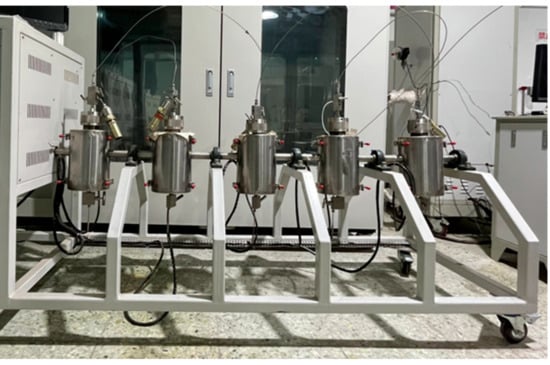
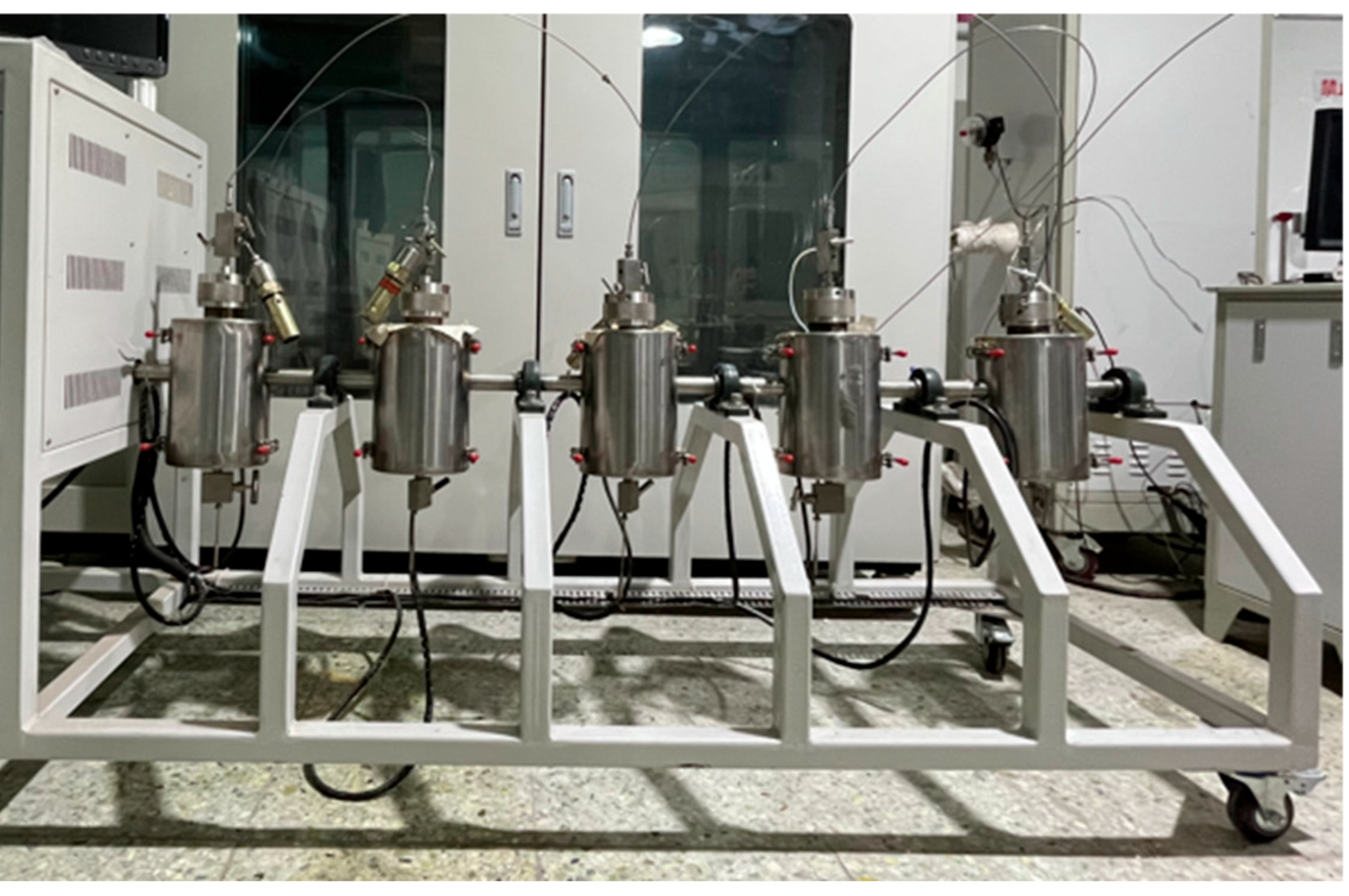
The schematic diagram of the static deposition experimental setup is shown in Figure 1. The system primarily consists of a rotatable high-temperature and high-pressure reactor, a gas pressurization unit, gas and liquid chromatographs, a data acquisition system, and associated auxiliary glass apparatus. The core component, a high-pressure reactor with a volume of 400 mL, is designed for a maximum operating temperature of 450 °C and a maximum working pressure of 70 MPa. A built-in heating system enables precise control of the internal temperature.
Figure 1.
High-temperature and high-pressure deposition experimental setup.
The static deposition experiments were performed according to the following procedures: (1) A 200 mL crude oil sample was placed into the reactor. The temperature was set to 20 °C using the temperature control system, and the reactor was evacuated with a vacuum pump. (2) A predetermined amount of CO2 was injected into the reactor, after which the injection valve was closed. (3) The pressure monitoring system was activated to continuously record the pressure variation in the reactor until the pressure stabilized and no longer decreased, indicating that dissolution equilibrium was reached. The pressure inside the reactor was then adjusted to 5 MPa by pushing the piston with a constant-pressure device. The reactor was rotated clockwise by 180° every 1 h and then returned to its original position. The experiment was terminated after maintaining these conditions for 72 h. (4) The upper crude oil residual sample and the precipitated sediment were separately collected from the reactor. The compositional changes and particle size distributions of the samples were characterized using chromatography and particle size analysis, respectively.
The CO2 dissolution concentrations were set at 0, 10, 20, 30, 40, and 50 m3/m3, respectively, all referring to the amount of CO2 dissolved in the heavy oil. All experiments were repeated three times under identical conditions to ensure data reliability and reproducibility.
2.3. Core Deposition Experiment of Heavy Oil
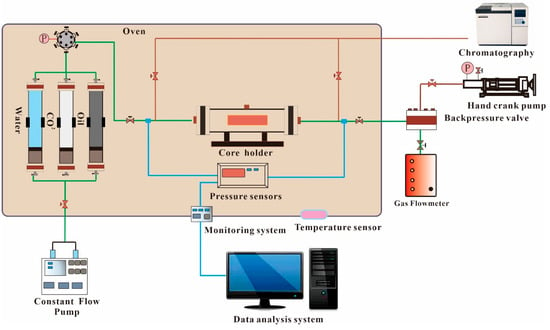
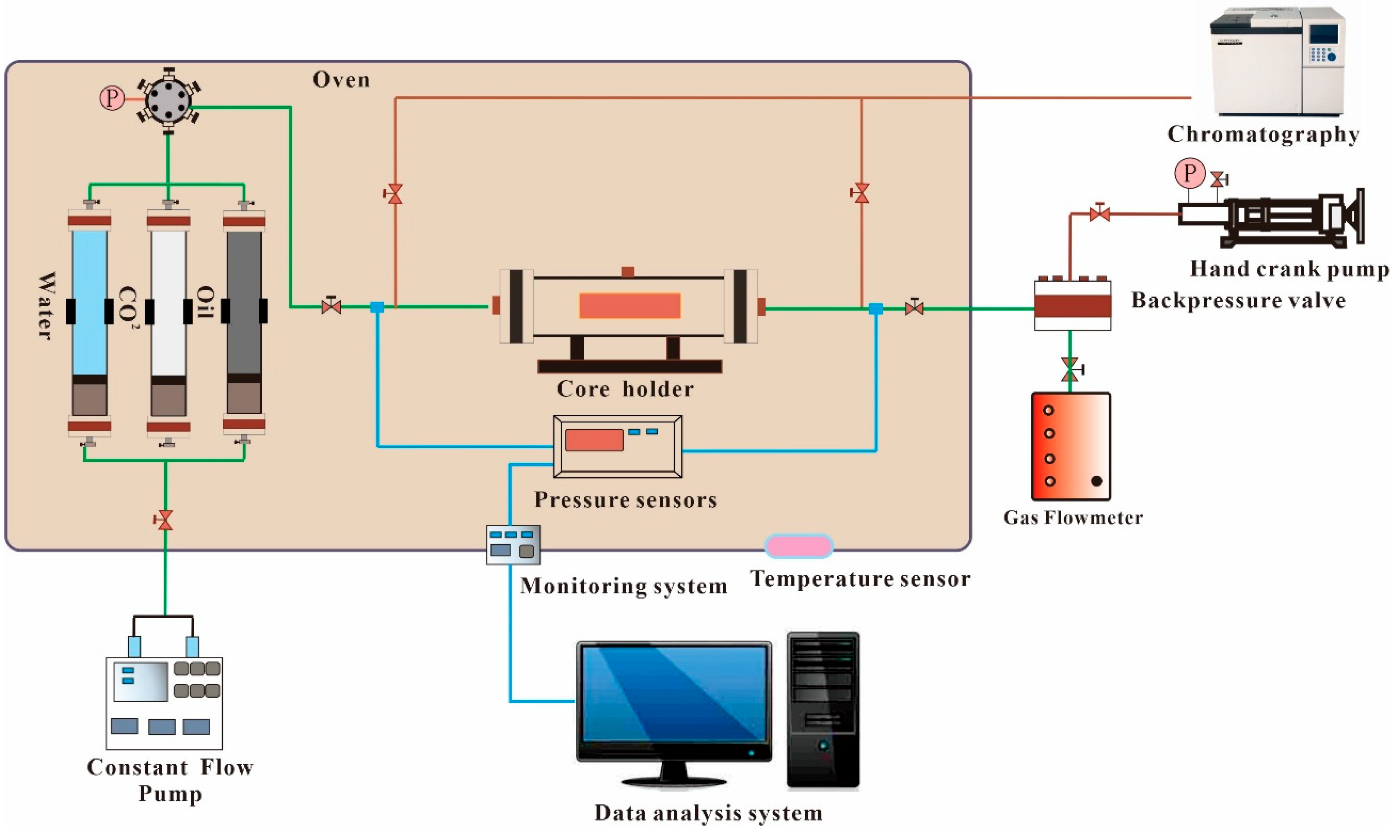
To simulate the asphaltene deposition process under reservoir conditions, dynamic core flow experiments were conducted at 50 °C in consideration of actual production and development conditions. The experimental system was assembled according to the flow chart shown in Figure 2. The core assembly was placed entirely in a high-precision oven to ensure precise control of the experimental temperature. After the prepared core was loaded into the core holder, dynamic displacement experiments were carried out under continuous fluid flow conditions to investigate the dynamic response characteristics of the pore-throat structure.
Figure 2.
Flowchart of the experimental process. (Coreldraw).
The experimental procedures were as follows: (1) The core was fully evacuated in a vacuum apparatus and then saturated with synthetic formation water. The porosity of the core was calculated based on the mass difference before and after saturation. (2) The fluid pressure was stabilized at the target value using a back-pressure control system to simulate actual reservoir pressure. Meanwhile, the confining pressure was set at 2 MPa above the back pressure to ensure that the fluid flowed strictly through the pore spaces of the core and to prevent bypass flow along the core holder wall. (3) The oven was heated to the target temperature and maintained isothermally for 2.0 h to allow the core, fluids, and instrumentation to reach complete thermal equilibrium. (4) Heavy oil containing different CO2 dissolution concentrations was injected into the core at an initial flow rate of 0.05 mL/min. After continuous displacement until no further water was produced at the outlet, the injection rate was gradually increased, and displacement was continued for 1.0–2.0 PV. The initial oil saturation of the core was calculated from the volume difference between the injected and produced fluids. (5) According to the experimental scheme, heavy oil containing different CO2 dissolution concentrations was injected at a constant flow rate of 0.02 mL/min. Oil and gas production were monitored and recorded in real time. (6) The experimental conditions were adjusted as required, and steps (1) through (5) were repeated under each new condition to obtain comparative experimental data.
In the core flood experiments, the fluid used for oil saturation was replaced by heavy oil, and the displacing fluids were replaced by CO2 and N2, with all other procedures remaining the same. The complete experimental procedure was independently repeated three times under each condition, and the experimental data were averaged for analysis to ensure statistical significance and scientific reliability.
2.4. Nuclear Magnetic Resonance Experiment
To quantitatively characterize the distribution and production of oil within pores of different sizes in the core during CO2 flooding, nuclear magnetic resonance (NMR) technology was employed in the core flood experiments. All aqueous fluids used in these experiments were MnCl2 solutions with a concentration of 20,000 mg/L, which were applied to suppress the hydrogen signal from the water phase, ensuring that the NMR signals exclusively reflected the oil phase distribution. The main experimental apparatus included an NMR spectrometer, a core holder, a confining pressure pump, a displacement pump, and piston vessels.
The experimental procedures were as follows: (1) A core was placed into the core holder and saturated with MnCl2 solution. The porosity of the core was calculated based on NMR signal calibration. (2) Crude oil was injected at a flow rate of 0.1 mL/min at the experimental temperature until no further water was produced at the outlet, establishing the initial oil saturation. (3) The core was aged at the experimental temperature for 24 h to restore the oil-wet state and establish the initial oil distribution. The initial oil signal was then acquired by NMR T2 spectrum scanning. (4) CO2 was injected into the core at a constant flow rate. NMR T2 spectra were recorded in real time at different displacement stages to characterize the dynamic changes in oil phase distribution within the core under various conditions. (5) After each experiment, the experimental conditions were varied, and steps (1) through (4) were repeated to obtain comparative experimental data under different conditions.
3. Results and Discussion
3.1. Characteristics of Asphaltene Deposition Under Different CO2 Dissolution Concentrations
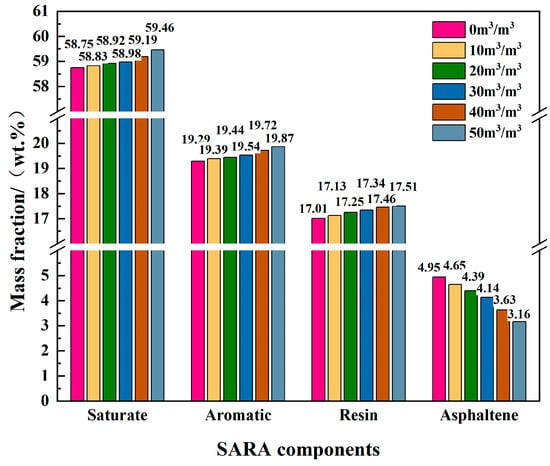
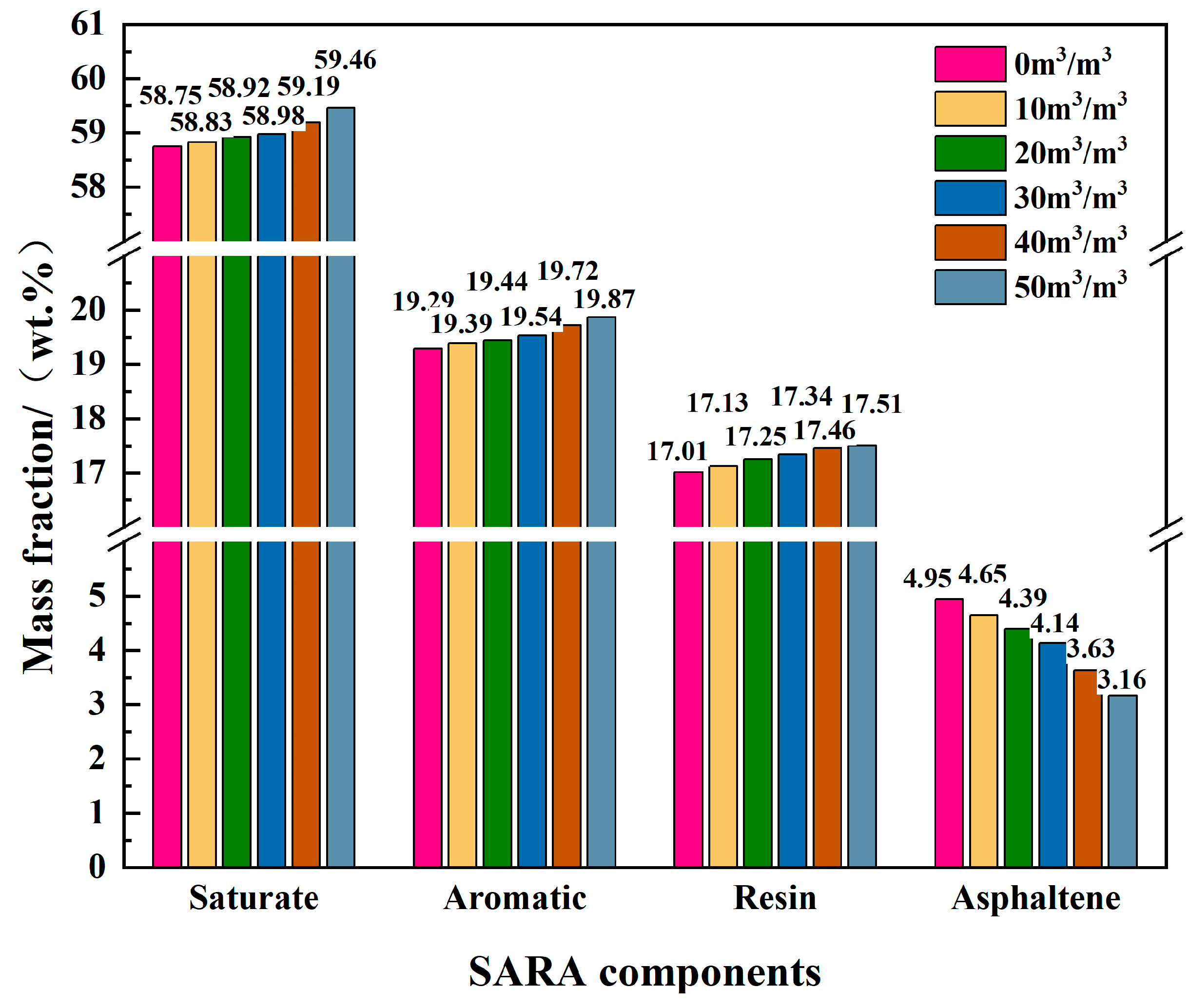
Figure 3 presents the effect of CO2 dissolution concentration on the SARA (saturates, aromatics, resins, and asphaltenes) composition of heavy oil at 20 °C. With increasing CO2 dissolution concentration, the relative contents of saturates and aromatics exhibit a continuous increasing trend, while the resin content shows a slight increase. In contrast, the asphaltene content decreases significantly, dropping from 4.95% to 3.16% as the CO2 dissolution concentration increases from 0 to 50 m3/m3, corresponding to a reduction of 36.4%. This variation pattern reveals the deep reconstruction mechanism of CO2 on the compositional distribution of heavy oil. On one hand, dissolved CO2 exhibits an extraction capability toward light components in the crude oil, selectively extracting saturates and small-molecule aromatics, thereby increasing their relative contents in the SARA analysis [3,24,25,26,27]. On the other hand, CO2 molecules diffuse into the intermolecular spaces of the resin-asphaltene network, weakening the van der Waals forces and π-π stacking interactions that maintain the network structure, thus promoting the dissociation of resin-asphaltene aggregates [28,29,30]. Meanwhile, the interaction between CO2 and asphaltene molecules alters the dissolution state of asphaltenes, converting a portion of asphaltenes from a stable micellar state to an unstable state, which subsequently precipitates from the oil phase.
Figure 3.
The components of crude oil under different CO2 concentrations. (Origin).
It is noteworthy that the magnitude of asphaltene content reduction is substantially greater than that of other components, exhibiting a monotonic decreasing trend. This phenomenon originates from the unique molecular structure of asphaltenes: asphaltenes possess condensed aromatic ring structures and relatively large molecular sizes, rendering their π-π stacking and hydrogen bonding networks most sensitive to CO2 invasion [31,32,33]. In contrast, saturates and aromatics, with smaller molecular sizes and weaker polarity, are primarily affected by the CO2 extraction effect, resulting in relatively limited compositional variations. The slight increase in resin content may be attributed to the release of resins upon the dissociation of resin-asphaltene aggregates, which are subsequently detected during analysis. The significant reduction in asphaltene content indicates that a substantial portion of asphaltenes has precipitated from the oil phase, providing the material basis for subsequent deposition phenomena.
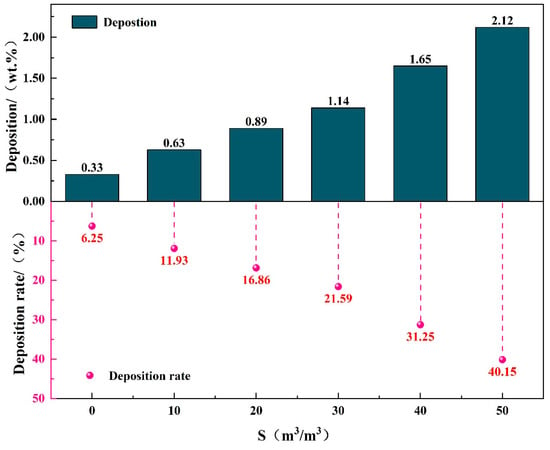
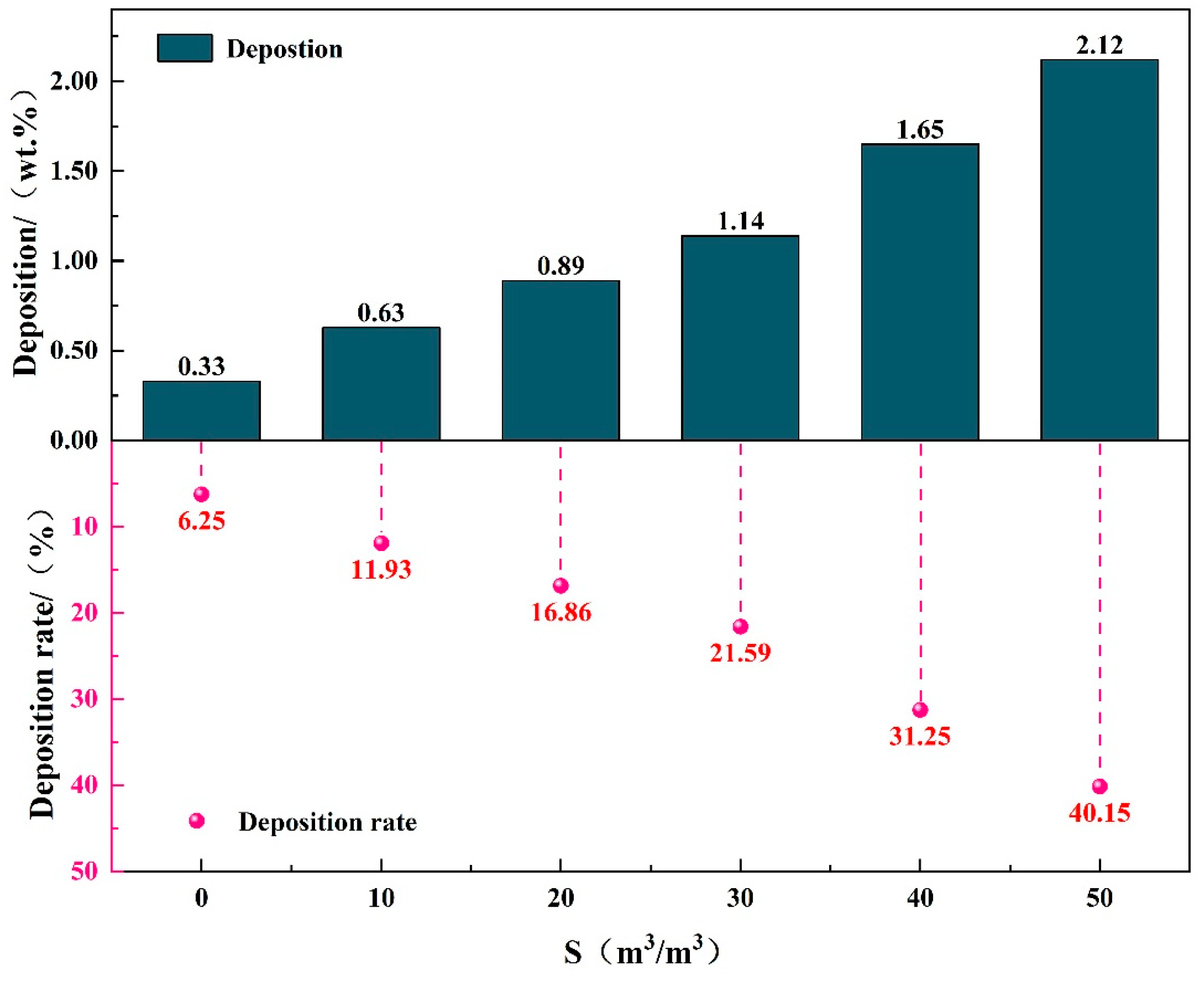
Figure 4 quantitatively presents the variation in asphaltene deposition amount with CO2 dissolution concentration at 20 °C. The asphaltene deposition amount exhibits a monotonically increasing trend with rising CO2 dissolution concentration. The elevated CO2 dissolution concentration directly acts on the resin-asphaltene network structure through dual mechanisms of physical dissolution and intermolecular force disruption, resulting in a sustained and substantial increase in deposition amount. This finding provides an important basis for optimizing CO2 flooding process parameters: although high-concentration CO2 injection is beneficial for enhanced oil recovery, the risk of severe asphaltene deposition should be carefully considered.
Figure 4.
The amount of crude oil deposition under different CO2 concentrations.
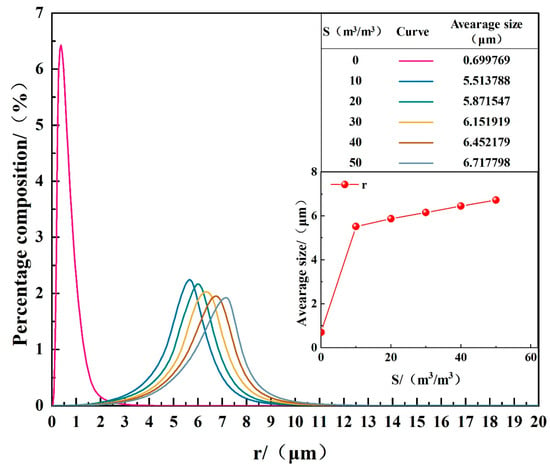
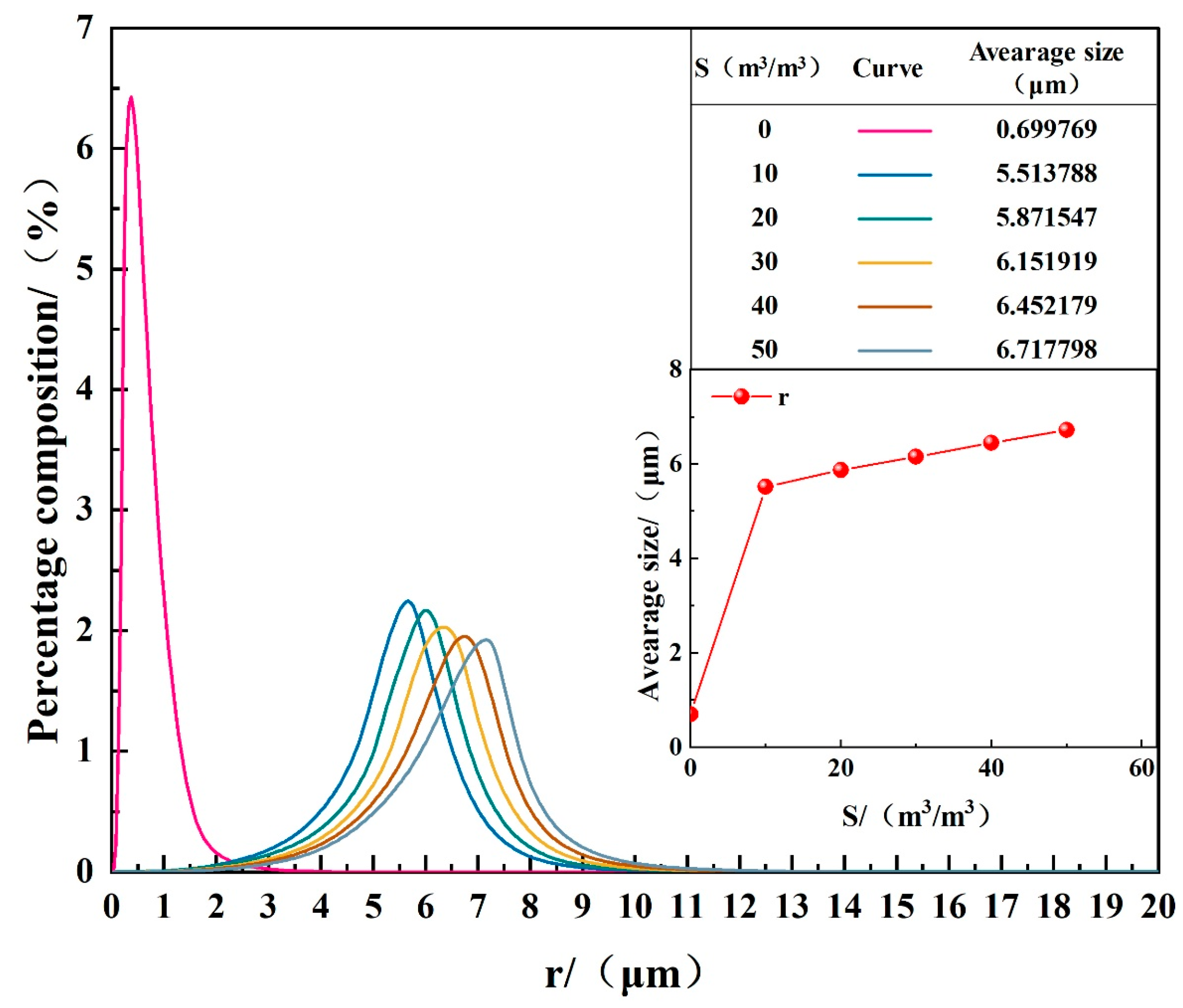
Figure 5 presents the variation in mean particle size of asphaltene deposits with CO2 dissolution concentration at 20 °C. With increasing CO2 dissolution concentration, the mean particle size exhibits a characteristic of rapid initial growth followed by gradual increase: when the CO2 dissolution concentration increases from 0 to 10 m3/m3, the mean particle size surges from 0.70 μm to 5.51 μm, representing a 7.9-fold increase. Thereafter, the particle size growth moderates, with the mean particle size gradually increasing from 5.51 μm to 6.72 μm as the dissolution concentration further rises from 10 to 50 m3/m3, corresponding to an increase of approximately 22%.
Figure 5.
Deposition particle size under different CO2 concentrations.
The above evolutionary pattern reveals the staged regulation mechanism of CO2 dissolution concentration on asphaltene aggregation behavior. In the low-concentration range (0–10 m3/m3), the sharp increase in mean particle size is primarily attributed to CO2-induced massive asphaltene precipitation and initial aggregation. When CO2 is first introduced into the heavy oil system, a large number of CO2 molecules rapidly dissolve and intercalate into the resin-asphaltene network, weakening the van der Waals forces and π-π stacking interactions that maintain the network structure, thereby leading to the dissociation of the originally stable resin-asphaltene aggregates [34,35,36]. The asphaltene molecules released upon dissociation possess high surface activity and collide with each other to fuse into primary aggregates, resulting in a rapid increase in mean particle size. In the high-concentration range (10–50 m3/m3), the steady growth of mean particle size reflects the establishment of a dynamic aggregation-fragmentation equilibrium. As the CO2 dissolution concentration continues to rise, the number of asphaltene particles precipitating from the oil phase increases continuously, leading to higher particle concentration in the system and more frequent inter-particle collisions. While large particles undergo fragmentation, newly generated small particles continuously replenish the system, forming a dynamic aggregation-fragmentation equilibrium. This equilibrium mechanism moderates the growth rate of mean particle size, preventing it from increasing dramatically.
3.2. Relationship Between Asphaltene Deposition and Pore Structure Evolution
The preceding sections have systematically elucidated the static regulation of CO2 dissolution concentration on asphaltene deposition, revealing the mechanisms of asphaltene precipitation, aggregation, and deposition. However, in actual reservoir development, the fluid is always in a flowing state, and the deposition behavior is closely related to the hydrodynamic factors during flow.
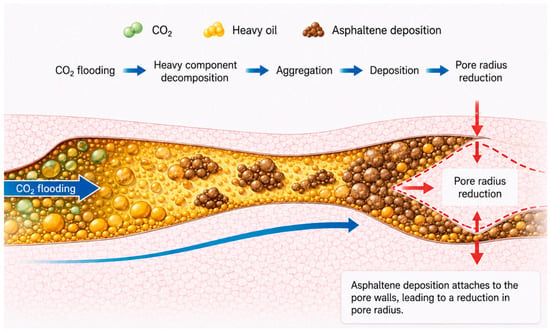
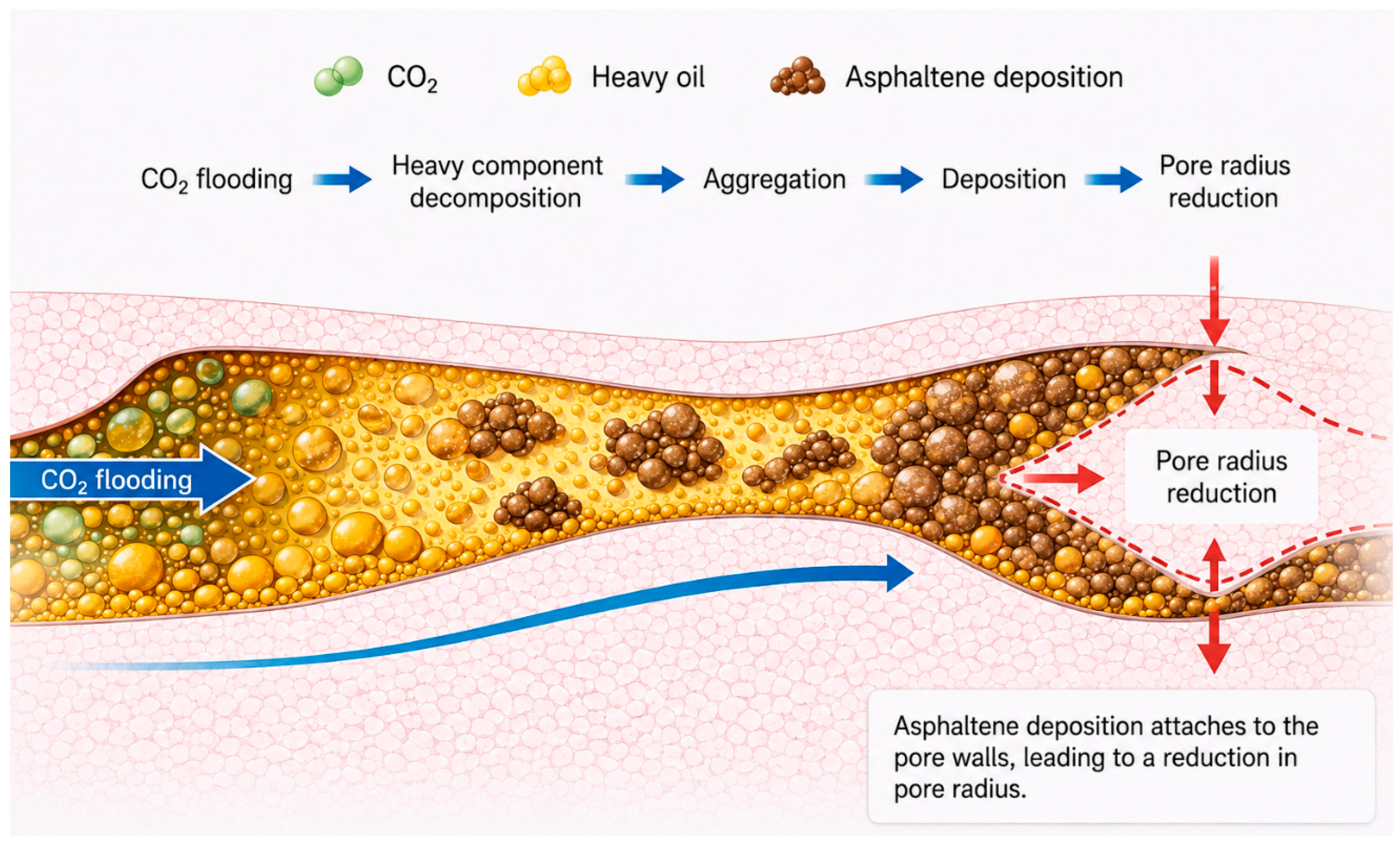
Figure 6 schematically illustrates the dynamic evolution of pore structure damage induced by asphaltene deposition during heavy oil flow through porous media. The asphaltene deposition at the pore scale can be divided into three progressive stages. The first stage is the asphaltene precipitation stage: as heavy oil flows through the formation, the stability of the resin-asphaltene network is disrupted by the synergistic effects of flow shear and CO2 mass transfer, causing a portion of asphaltenes to precipitate from the oil phase and form fine particles. The second stage is the aggregation-growth stage: the precipitated asphaltene particles are transported along the pore spaces under fluid entrainment, during which inter-particle collision and fusion occur, gradually forming large-size aggregates. The third stage is the deposition-plugging stage: when the size of asphaltene aggregates approaches or exceeds the pore throat diameter, bridging blockage occurs at the pore throats, leading to particle retention and deposition, resulting in pore structure damage.
Figure 6.
Deposition mechanism diagram.
To quantitatively evaluate the damage degree of asphaltene deposition on reservoir permeability, this section performs a quantitative assessment of the deposition effect based on the previously established pore-scale model correlating deposition thickness with permeability impairment. The model assumes that the deposited asphaltenes uniformly cover the pore wall surfaces, leading to a reduction in the effective flow radius. Accordingly, the deposition layer thickness h is defined as the reduction in pore radius, as shown in Equation (1) [37]. Furthermore, the unit-volume deposition amount σ is defined as the volume of pore space lost per unit volume of rock due to asphaltene deposition, as presented in Equation (2) [37].
where h is the deposition layer thickness, m; K0 and K1 are the core permeability before and after asphaltene deposition, respectively, mD; r0 and r1 are the pore radius before and after deposition, respectively, m; ϕ0 and ϕ1 are the porosity before and after deposition, respectively, %.
It should be noted that the capillary-bundle model adopted in Equations (1) and (2) is based on several simplified assumptions, including cylindrical pores, uniform wall deposition, and a fourth-power relationship between pore radius and permeability. These assumptions are somewhat restrictive, particularly because asphaltene deposition in real porous media is dominated by aggregation and pore-throat bridging rather than uniform wall coating. Therefore, this model should be regarded as a simplified engineering tool for estimating deposition thickness, rather than a precise representation of pore-scale deposition morphology. The value of r0 was provided by the core manufacturer based on the measured porosity and permeability. Caution should be exercised when applying this model to heterogeneous sandstone.
Based on the theoretical model of deposition thickness (Equation (1)), combined with the distribution of deposition thickness h and the relative deposition intensity parameter R (R = h/r0) in cores with different permeabilities, the potential of asphaltene deposition to regulate the seepage field in heterogeneous reservoirs can be thoroughly analyzed. This model quantifies pore volume loss and deposition amount under various conditions through permeability variation, providing both an effective tool for quantitative evaluation of formation damage and a theoretical basis for understanding the engineering implications of asphaltene deposition. In this study, the model is applied to process the core flood experimental data under varying CO2 dissolution concentrations. The equivalent deposition thickness and relative deposition intensity under different experimental conditions are calculated to reveal the influence of various factors on deposition characteristics, and further to investigate the controlling mechanism of deposition distribution on reservoir seepage capacity.
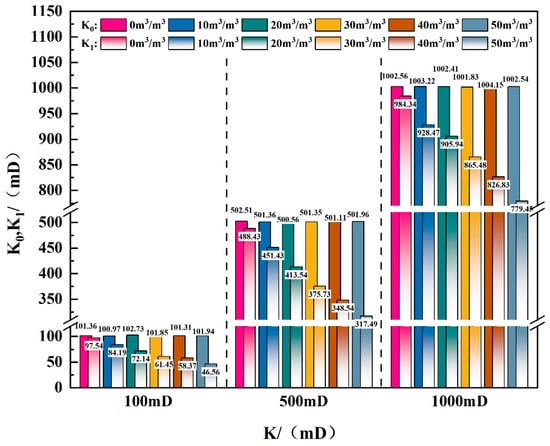
Figure 7 presents the permeability variation with CO2 concentration for cores with different initial permeabilities. As shown in the figure, the permeability of all cores decreases to varying degrees, with the magnitude of reduction exhibiting a continuous increasing trend as CO2 concentration rises.
Figure 7.
The changes in permeability before and after displacement under different CO2 concentrations.
The significant permeability reduction after CO2 treatment indicates that asphaltene deposition is most sensitive to CO2. Taking the 100 mD low-permeability core as an example, the permeability decreases from an initial value of 101.94 mD to 46.56 mD at a CO2 concentration of 50 m3/m3, representing a reduction of 54.3%. The introduction of CO2 exacerbates asphaltene deposition through a dual mechanism. On one hand, the extraction effect induced by CO2 dissolution in heavy oil increases the relative concentration of asphaltenes in the remaining oil phase, promoting their dissociation from stable micellar states and generating active particles that are more prone to deposition. On the other hand, the asphaltenes precipitated by CO2 exhibit larger particle sizes, which further intensify pore plugging. The synergistic action of these mechanisms leads to substantial permeability reduction, confirming the high sensitivity of asphaltene deposition to CO2.
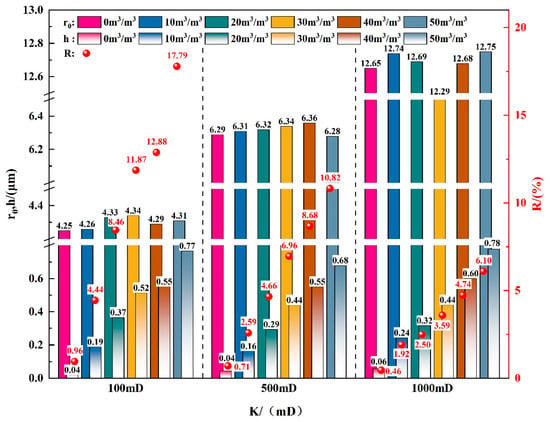
In terms of deposition thickness h (Figure 8), all three groups of cores exhibit a continuous increasing trend with rising CO2 concentration, with more pronounced growth observed in the high-concentration range.
Figure 8.
The influence of different CO2 concentrations on deposition thickness.
In terms of deposition thickness, the h values of all three core groups increase continuously with rising CO2 concentration, with the low-permeability core exhibiting the most significant increase. For the 100 mD low-permeability core, the deposition thickness increases from 0.04 μm to 0.77 μm, representing a 17.9-fold increase; for the 500 mD medium-permeability core, from 0.04 μm to 0.68 μm, with an approximately 14.2-fold increase; and for the 1000 mD high-permeability core, from 0.06 μm to 0.78 μm, showing a 12.4-fold increase. This variation pattern is consistent with the continuous growth trend of mean particle size with increasing CO2 concentration observed in the static experiments. In terms of the relative deposition intensity R, the low-permeability core also exhibits the highest sensitivity. The R value of the 100 mD core increases from 0.96% to 17.79%, representing a 17.6-fold increase; that of the 500 mD core increases from 0.71% to 10.82%, with an approximately 14.3-fold increase; and that of the 1000 mD core increases from 0.46% to 6.10%, showing a 12.3-fold increase. At high CO2 concentrations, the R value of the low-permeability core is approximately 2.9 times that of the high-permeability core.
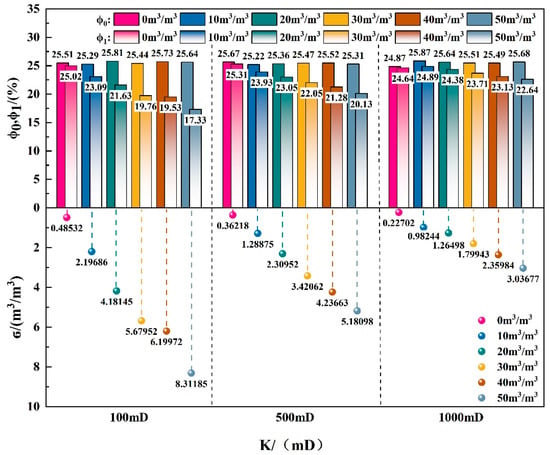
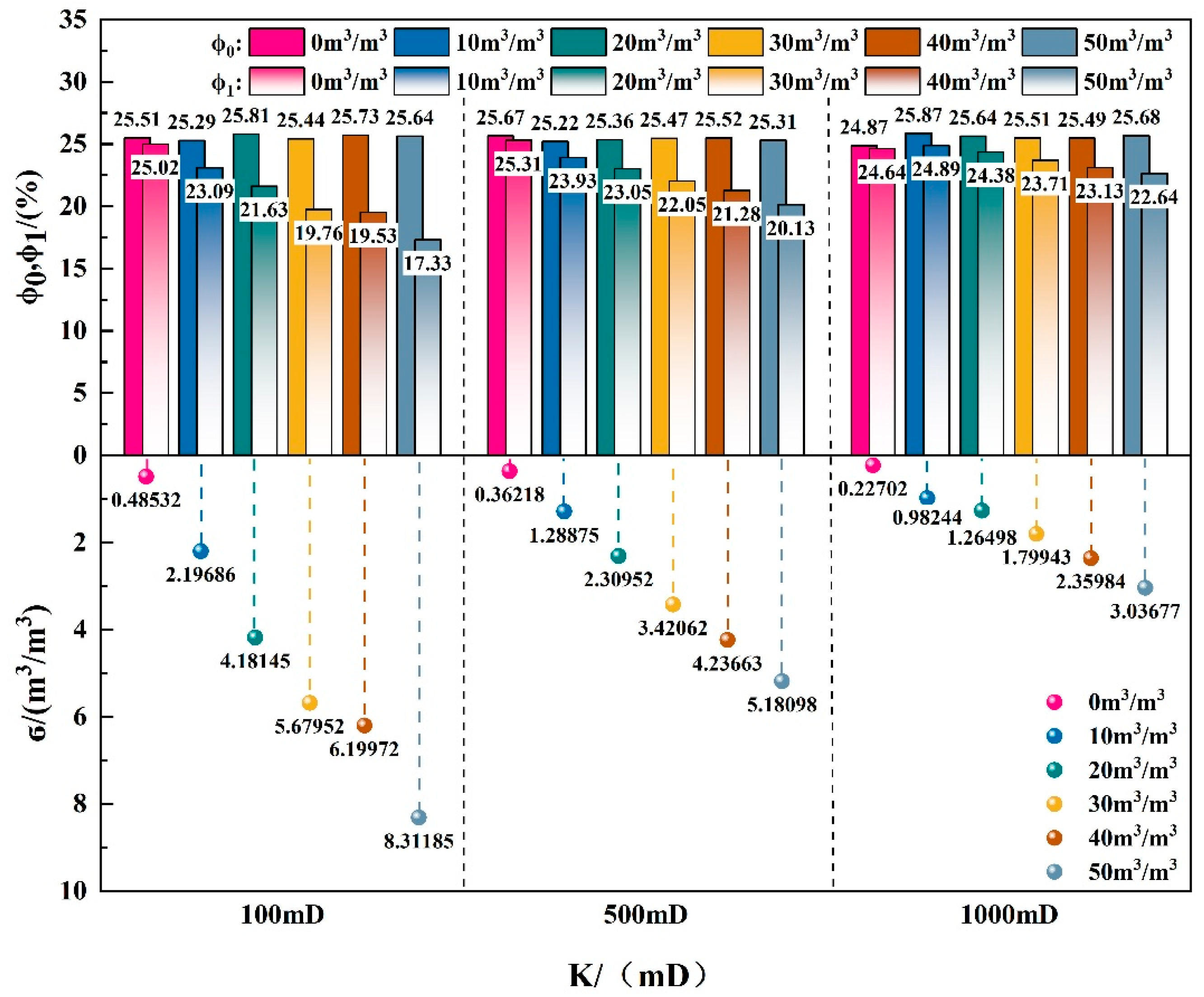
Figure 9 presents the variation in porosity with CO2 concentration. After CO2 treatment, the porosity of all three core groups decreases significantly, with the reduction amplitude exhibiting a continuous increasing trend as CO2 concentration rises.
Figure 9.
The influence of different CO2 concentrations on deposition volume.
Figure 9 presents the variation in porosity with CO2 concentration. For the 100 mD low-permeability core, the porosity decreases continuously from an initial value of approximately 25.5% to 17.33% at 50 m3/m3, representing a reduction of 8.2 percentage points. For the 500 mD medium-permeability core, the porosity decreases from approximately 25.4% to 20.13%, with a reduction of approximately 5.3 percentage points. For the 1000 mD high-permeability core, the porosity decreases from approximately 24.9% to 22.64%, with a reduction of approximately 2.3 percentage points. The extent of porosity damage varies significantly among cores with different permeabilities. The porosity reduction in the low-permeability core (8.2 percentage points) is approximately 1.5 times that of the medium-permeability core (5.3 percentage points) and 3.6 times that of the high-permeability core (2.3 percentage points), indicating that CO2 concentration exerts a significant promoting effect on porosity damage, and that low-permeability reservoirs are more sensitive to CO2-induced asphaltene deposition. In terms of unit-volume deposition amount, all three core groups exhibit a continuous increasing trend with rising CO2 concentration, with more pronounced growth observed at higher concentration ranges. The unit-volume deposition amount of the 100 mD low-permeability core increases from 0.49% to 8.31%, representing approximately a 16.1-fold increase; that of the 500 mD medium-permeability core increases from 0.36% to 5.18%, with approximately a 13.3-fold increase; and that of the 1000 mD high-permeability core increases from 0.23% to 3.04%, showing approximately a 12.4-fold increase.
It should be noted that the deposition thickness, relative deposition intensity, post-treatment porosity, and unit-volume deposition amount presented in Figure 8 and Figure 9 were calculated from the measured permeability data using the capillary-bundle model, rather than measured independently. In particular, the result that a relative deposition thickness of 20% corresponds to a 59% permeability loss is a model prediction rather than an independently validated experimental value.
In summary, CO2 concentration exerts a pronounced increasing regulation on asphaltene deposition. This strong induction capability originates from the multiple synergistic mechanisms of CO2, including dissolution, extraction, dissociation, and aggregation, which thoroughly disrupt the resin-asphaltene network structure. Furthermore, low-permeability cores remain the most sensitive reservoir type to deposition damage, exhibiting substantially higher relative deposition intensity and permeability impairment than high-permeability cores. These findings provide an important basis for optimizing CO2 flooding process parameters.
The results of this study differ to some extent from those reported by Marques et al. [17], Wang et al. [29], and Rogel & Moir [30]. Rogel & Moir showed that the deposit amount is not monotonic but passes through a maximum. In this study, deposition was measured only at the dissolution equilibrium point rather than as a function of time; therefore, the monotonic trend observed here reflects the equilibrium state under our specific experimental conditions. Marques et al. indicated that asphaltenes may start to dissolve rather than precipitate at CO2 concentrations above 40 m3/m3. This discrepancy may be attributed to differences in crude oil composition, pressure–temperature conditions, and contact time. Wang et al. reported a permeability reduction not exceeding 20%, while the reduction in low-permeability cores in this study reached 52.3%. This difference may be related to the core type (low-permeability unconsolidated sandstone with small pore throats and high specific surface area) and the confining pressure setup (only 2 MPa above the back pressure, so wall-bypass flow could not be completely ruled out). Therefore, the findings of this study are valid only for the specific heavy oil system and experimental conditions tested and should be generalized with caution.
3.3. Pore Utilization Performance Under Dynamic Deposition Conditions
The preceding sections have systematically analyzed the effects of CO2 on reservoir permeability based on core flood experiments. However, the mechanism by which asphaltene deposition affects pore utilization during the displacement process remains unclear. To address this issue, CO2 core flooding experiments were conducted at 50 °C, representing actual reservoir production conditions, to evaluate the effects of different injection schemes on oil recovery. Nuclear magnetic resonance (NMR) technology was also employed to reveal the distribution of remaining oil at the pore scale, aiming to provide experimental evidence for optimizing CO2 flooding process parameters.
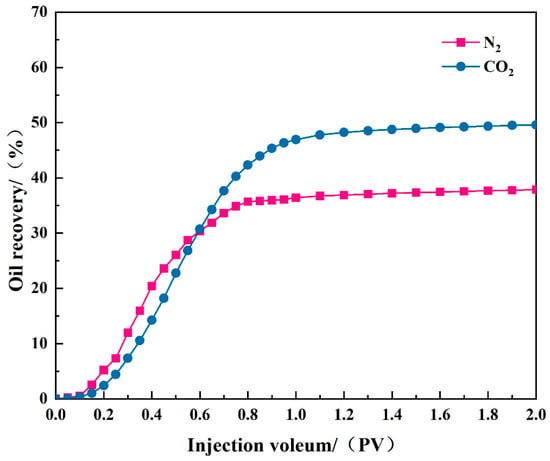
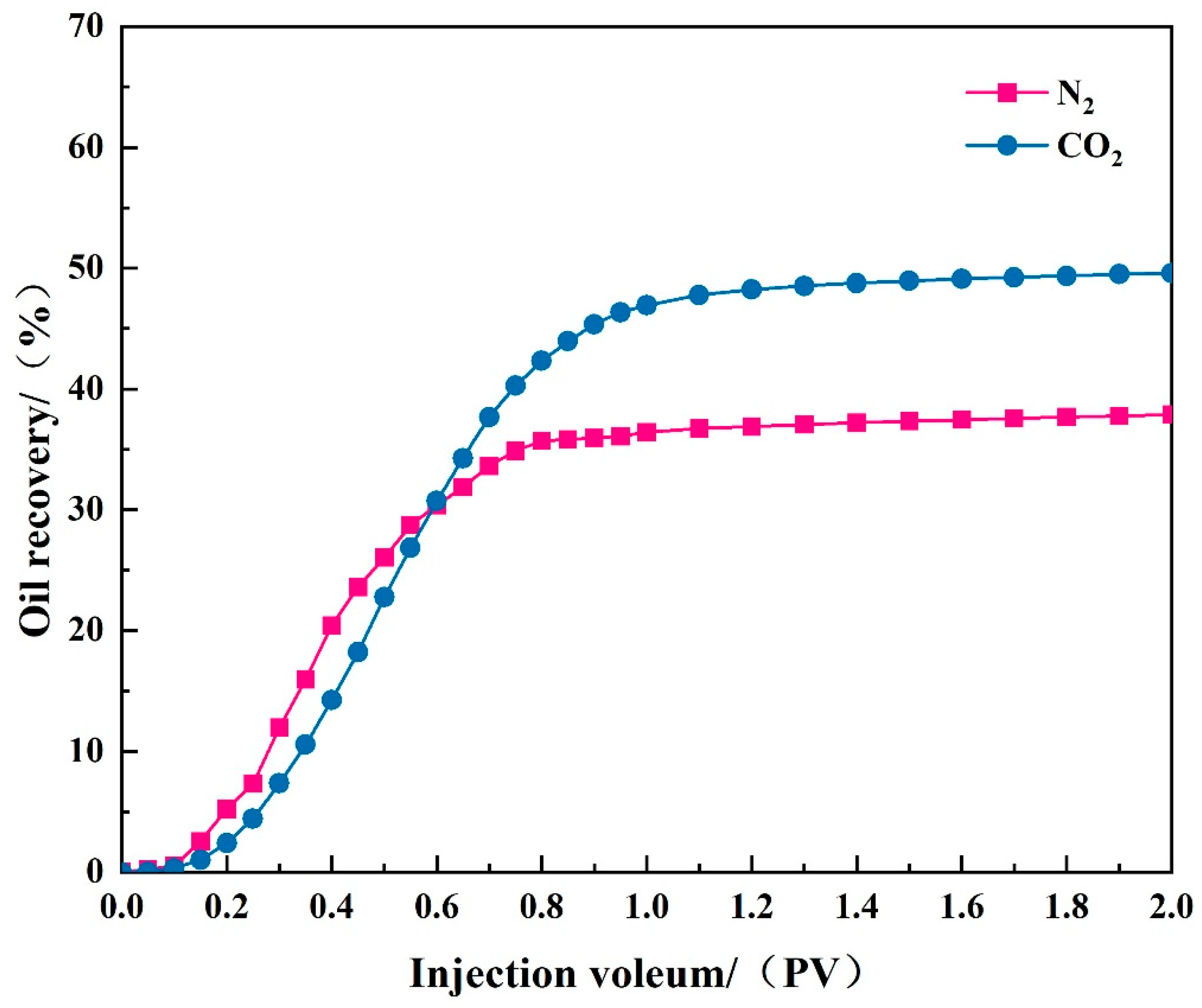
Figure 10 presents the oil recovery variation during CO2 and N2 flooding at 50 °C. As shown in the figure, the ultimate recovery of CO2 flooding is significantly higher than that of N2 flooding. In the initial stage, the recovery of N2 flooding increases relatively rapidly but subsequently levels off. In contrast, CO2 flooding exhibits a relatively slower recovery increase at the early stage, yet maintains a steady and continuous growth throughout the process, ultimately achieving superior displacement performance. The rapid initial recovery increase in N2 flooding may be attributed to the formation of a gas cap within the core, which partially displaces oil through gravity and capillary forces, rather than through dissolution-induced viscosity reduction. However, owing to its weak solubility in heavy oil, N2 cannot effectively reduce the oil viscosity, thereby limiting further recovery improvement. In comparison, CO2 possesses strong dissolution capability and can continuously enhance oil recovery through dissolution-induced viscosity reduction and solution gas drive, exhibiting more stable and efficient displacement performance throughout the process. Therefore, although N2 shows a certain production advantage in the early stage, CO2 flooding achieves more significant long-term performance with a higher ultimate recovery in heavy oil reservoirs.
Figure 10.
The recovery rate curves for N2 and CO2 displacement.
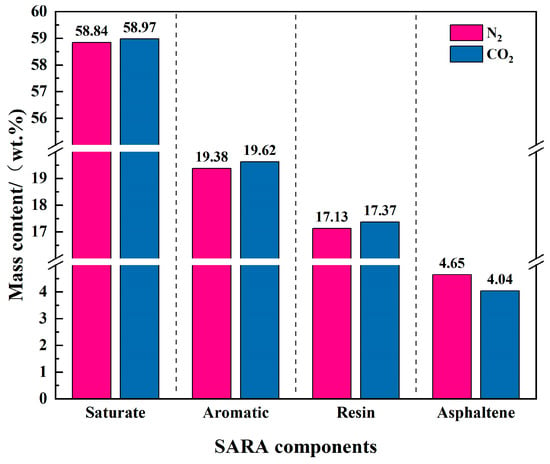
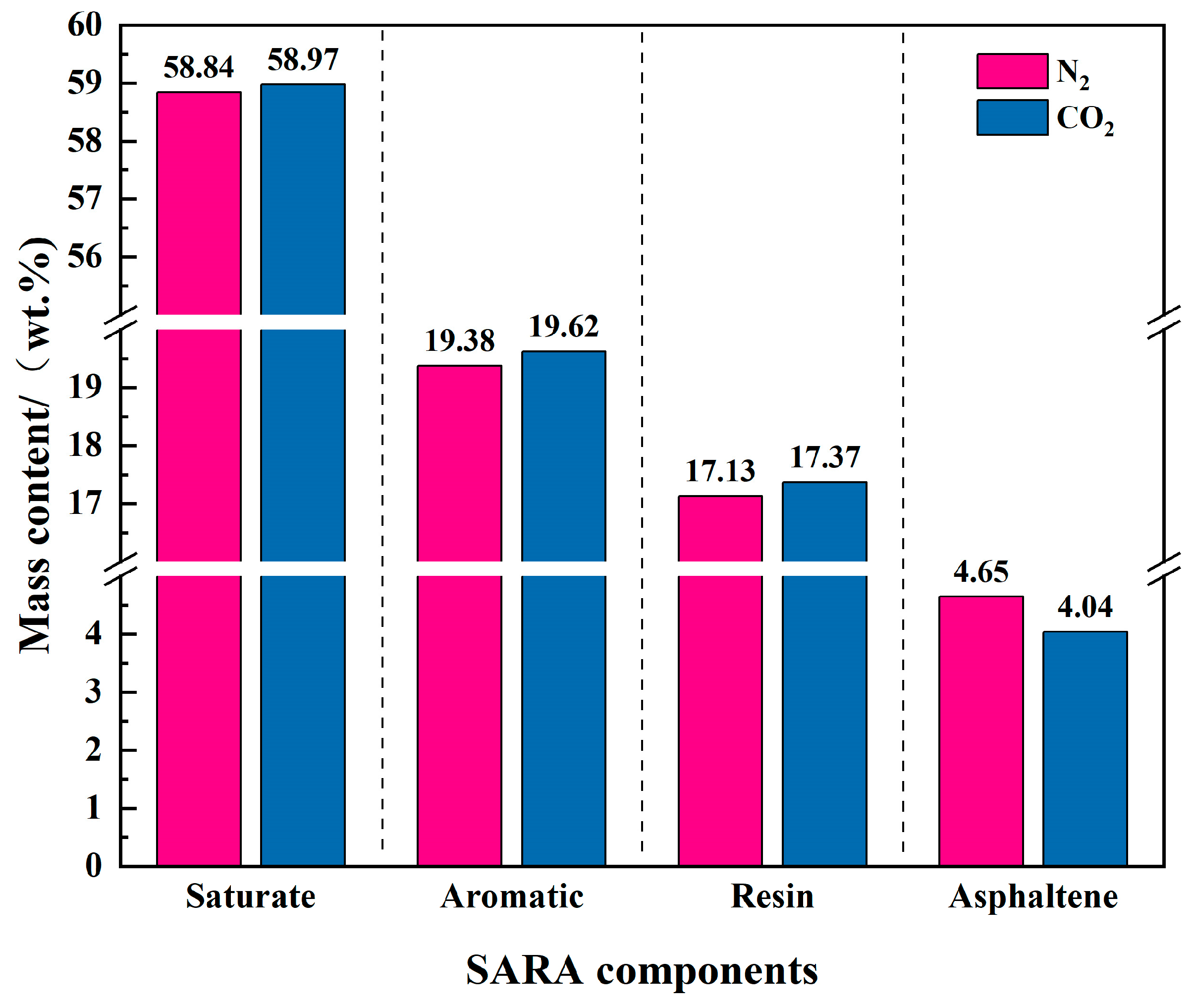
Figure 11 presents the variations in SARA fractions of produced oil after N2 and CO2 flooding. The results indicate that CO2 flooding leads to increased contents of aromatics and resins, along with a noticeable reduction in asphaltene content, compared to N2 flooding. In contrast, N2 flooding exhibits a relatively limited effect on the compositional alteration of heavy oil, primarily due to its weak solubility in heavy oil, which renders it incapable of substantially modifying the proportion of heavy components. The above comparison further confirms that CO2 flooding not only enhances oil recovery but also effectively optimizes the composition of produced oil, demonstrating distinct technical advantages.
Figure 11.
The components of crude oil after displacement of N2 and CO2.
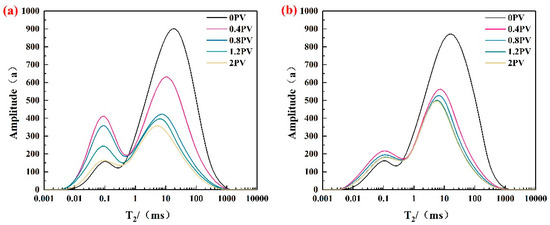
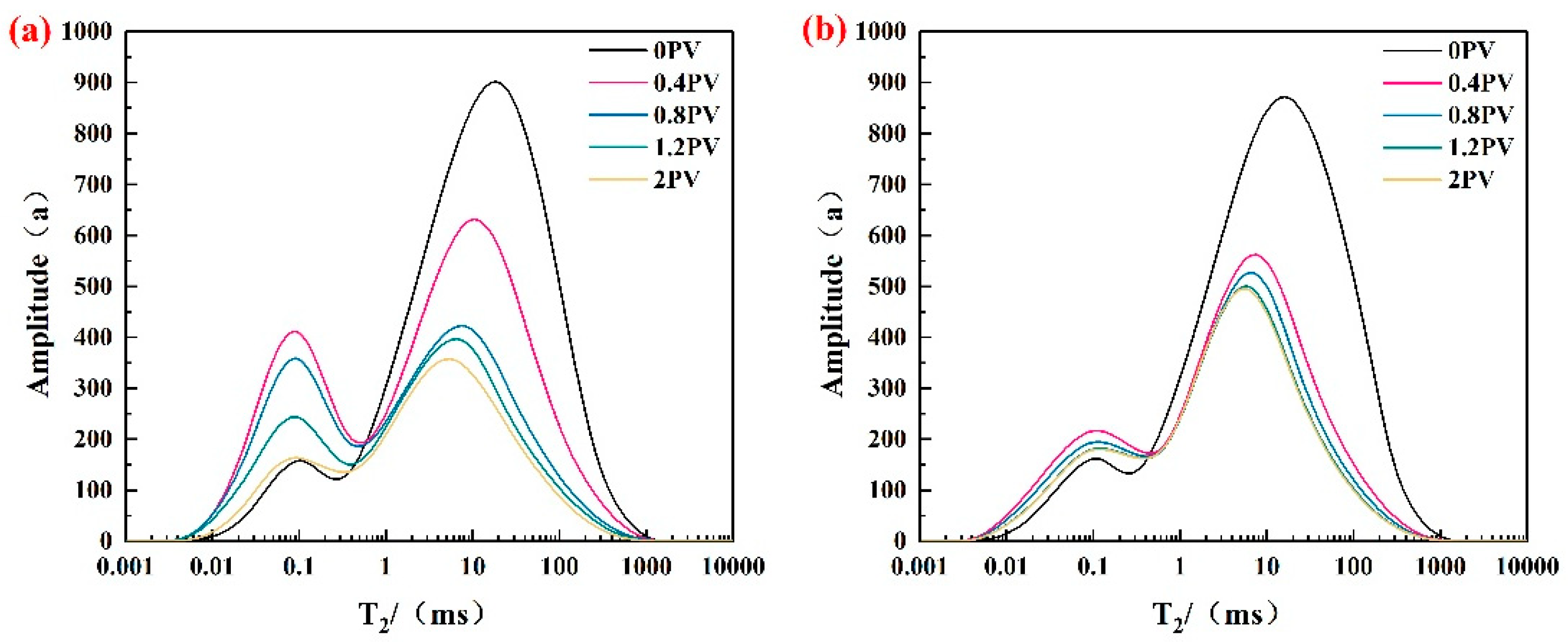
The nuclear magnetic resonance (NMR) T2 spectra of crude oil during CO2 and N2 flooding exhibit distinct differences (Figure 12). During CO2 flooding, with increasing CO2 injection volume, the T2 relaxation time corresponding to macropores gradually decreases, and the signal peak in the high-T2 region weakens considerably. This indicates that CO2 can effectively dissolve light components and displace the mobile oil in macropores, resulting in a more concentrated distribution of the remaining fluid within the pore space. In contrast, during N2 flooding, the T2 spectrum declines rapidly at the initial stage but levels off later, reflecting the weak solubility of N2 and its limited capacity to substantially alter the pore-scale fluid distribution in heavy oil. The above comparison demonstrates that CO2 flooding exhibits a distinct advantage in improving fluid distribution at the pore scale.
Figure 12.
T2 of N2 and CO2 displacement process. (a) CO2 (b) N2.
During CO2 flooding, the oil production from pores of different sizes exhibits a distinct temporal sequence. As displacement proceeds, the oil content in small pores shows an initial increase followed by a subsequent decrease. At the early stage, CO2 penetrates into small pores through dissolution and diffusion, and the combined effects of viscosity reduction and pressure enhancement initiate the flow of heavy oil, resulting in a temporary increase in oil content within small pores. As flooding continues, the CO2 concentration in small pores rises further, fully activating the viscosity-reducing effect. At this stage, asphaltene deposition in small pores remains relatively weak, and the seepage channels remain unobstructed, leading to progressive oil production and a corresponding decrease in oil content. However, owing to the high sensitivity of small pores to asphaltene deposition, the gradual accumulation of deposits at pore throats increases seepage resistance. Consequently, the relative permeability of small pores, after an initial improvement, gradually deteriorates, forcing the displacing fluid to redirect into macropores and reinitiate oil production from these larger pores. In contrast, during N2 flooding, the variation in oil content within small pores is relatively minor, and the trend is more gradual, indicating a limited ability to improve the production efficiency of small pores. The above process illustrates the temporal sequence of asphaltene deposition across different pore scales: macropores are preferentially produced at the early stage but are later affected by deposition-induced plugging; small pores are produced with a delay and become the main contributing regions during the middle stage; as deposition intensifies in small pores, macropores can be reinitiated for further production.
Compared with static deposition experiments, the deposition behavior under dynamic displacement conditions exhibits significant differences. In static experiments, asphaltene deposition is primarily governed by thermodynamic equilibrium, resulting in a relatively uniform distribution. In contrast, during dynamic displacement, one possible interpretation is that CO2 preferentially enters macropores, leading to relatively higher CO2 concentrations and more pronounced asphaltene deposition in these larger pores, which may create a selective plugging effect, force the fluid to divert into smaller pores, and consequently expand the swept volume and contribute to improved oil recovery. It should be noted, however, that this sequence remains a speculative interpretation based on NMR signal changes and requires direct imaging or quantitative characterization evidence for confirmation. Therefore, CO2 flooding may improve sweep efficiency through a selective plugging effect, but the underlying mechanism still needs further verification.
4. Conclusions
This paper presents a systematic investigation of asphaltene deposition characteristics and formation damage in heavy oil during CO2 injection, through static deposition experiments, core flood tests, and theoretical modeling. The following major conclusions are drawn:
- The regulatory mechanism of CO2 dissolution concentration on static asphaltene deposition amount is clarified. CO2 dissolution concentration exerts a significant promoting effect on deposition amount, with the unit-volume deposition amount reaching 8.31% when the CO2 dissolution concentration increases to 50 m3/m3.
- The staged regulation of CO2 dissolution concentration on asphaltene particle size is revealed. CO2 dissolution concentration exhibits a strong influence on particle size, with the mean particle diameter increasing from 0.70 μm to 6.72 μm at 50 m3/m3, representing a 9.6-fold increase. In the low-concentration range, particle size increases sharply, while in the high-concentration range, it grows steadily.
- Based on the capillary bundle model, a quantitative relationship between deposition thickness and permeability impairment is established, revealing the strong sensitivity of permeability damage to deposition layer thickness. When the deposition thickness reaches 20% of the pore radius, permeability loss can reach 59%.
- The differential sensitivity of cores with varying permeability to asphaltene deposition was observed. Under a CO2 concentration of 50 m3/m3, the permeability reduction in the 100 mD low-permeability core reached 52.3%, while that of the 1000 mD high-permeability core was only 20.8%. If the observed permeability reduction is indeed dominated by asphaltene deposition, then low-permeability reservoirs may require more cautious injection strategies to control potential deposition damage; however, further studies under realistic flow conditions are needed to confirm this.
- Based on the changes in NMR signals, a possible interpretation is proposed for the influence of deposition on pore utilization during CO2 flooding. Asphaltene deposition may preferentially occur in macropores, reducing their permeability and forcing the injected fluid to divert into small pores, thereby facilitating oil production from macropores. As the CO2 dissolution concentration in small pores increases, the deposition effect may be further enhanced, and given the higher sensitivity of small pores to deposition, a cyclic process of deposition plugging and flow diversion may occur. This process may expand the swept volume and improve overall pore utilization. It should be noted, however, that the above sequence remains a speculative interpretation based on NMR signal changes and requires direct imaging or quantitative characterization evidence for confirmation.
Author Contributions
Conceptualization, Q.L. and Z.Z.; methodology, Q.L.; validation, P.Z., C.Z. and M.C.; formal analysis, Q.L., P.Z., C.Z., B.Z. and M.C.; resources, Z.Z.; data curation, Q.L., P.Z. and C.Z.; writing—original draft preparation, Q.L.; writing—review and editing, Z.Z., B.Z. and M.C.; supervision, B.Z. and M.C.; funding acquisition, Z.Z. All authors have read and agreed to the published version of the manuscript.
Funding
This research received no external funding.
Data Availability Statement
The data presented in this study are available on request from the corresponding authordue to commercial confidentiality imposed by our industry collaborators.
Conflicts of Interest
Authors Zhaohui Zhou and Bo Zhang were employed by the company PetroChina Research Institute of Petroleum Exploration & Development. Author Peng Zhang was employed by the company Yumen Oilfield Branch, PetroChina. Author Chenyi Zhang was employed by the company Yumen Drilling Company of XDEC, PetroChina. The remaining authors declare that the research was conducted in the absence of any commercial or financial relationships that could be construed as a potential conflict of interest.
Abbreviation
The following abbreviation is used in this manuscript:
| SARA | Saturates, Aromatics, Resins, and Asphaltenes |
References
- Bagci, A.S.; Olushola, S.; Mackay, E. Performance Analysis of SAGD Wind-Down Process with CO2 Injection. In Proceedings of the SPE Symposium on Improved Oil Recovery; One Petro: Richardson, TX, USA, 2008. [Google Scholar]
- Davarpanah, A.; Mirshekari, B. Experimental study of CO2 solubility on the oil recovery enhancement of heavy oil reservoirs. J. Therm. Anal. Calorim. 2020, 139, 1161–1169. [Google Scholar] [CrossRef] [Scilit]
- Simon, R.; Graue, D.J. Generalized correlations for predicting solubility, swelling and viscosity behavior of CO2-crude oil systems. J. Pet. Technol. 1965, 17, 102–106. [Google Scholar] [CrossRef] [Scilit]
- Dong, X.; Liu, H.; Chen, Z.; Wu, K.; Lu, N.; Zhang, Q. Enhanced oil recovery techniques for heavy oil and oilsands reservoirs after steam injection. Appl. Energy 2019, 239, 1190–1211. [Google Scholar] [CrossRef] [Scilit]
- Miller, J.S.; Jones, R.A. A laboratory study to determine physical characteristic of heavy oil after CO2 saturation. In Proceedings of the SPE/DOE Enhanced Oil Recovery Symposium, Tulsa, OK, USA, 5–8 April 1981. [Google Scholar]
- Geng, H.Z.; Chen, J.W.; Sun, R.Y.; Li, D.X. Effect of dissolved carbon dioxide on the viscosity of crude oil. J. Univ. Pet. China (Nat. Sci. Ed.) 2004, 28, 78–80. [Google Scholar]
- Kord, S.; Mohammadzadeh, O.; Miri, R.; Soulgani, B.S. Further investigation into the mechanisms of asphaltene deposition and permeability impairment in porous media using a modified analytical model. Fuel 2014, 117, 259–268. [Google Scholar] [CrossRef] [Scilit]
- AlHammadi, A.A.; Chen, Y.; Yen, A.; Wang, J.; Creek, J.L.; Vargas, F.M.; Chapman, W.G. Effect of the gas composition and gas/oil ratio on Asphaltene deposition. Energy Fuels 2017, 31, 3610–3619. [Google Scholar] [CrossRef] [Scilit]
- Mohammed, I.; Mahmoud, M.; Al Shehri, D.; El-Husseiny, A.; Alade, O. Asphaltene precipitation and deposition: A critical review. J. Pet. Sci. Eng. 2021, 197, 107956. [Google Scholar] [CrossRef] [Scilit]
- Tazikeh, S.; Shafiei, A.; Yerkenov, T.; Abenov, A.; Seitmaganbetov, N.; Atabaev, T.S. A systematic and critical review of asphaltene adsorption from macroscopic to microscopic scale: Theoretical, experimental, statistical, intelligent, and molecular dynamics simulation approaches. Fuel 2022, 329, 125379. [Google Scholar] [CrossRef] [Scilit]
- Rashid, Z.; Wilfred, C.D.; Gnanasundaram, N.; Arunagiri, A.; Murugesan, T. A comprehensive review on the recent advances on the petroleum asphaltene aggregation. J. Pet. Sci. Eng. 2019, 176, 249–268. [Google Scholar] [CrossRef] [Scilit]
- Maqbool, T.; Balgoa, A.T.; Fogler, H.S. Revisiting Asphaltene Precipitation from Crude Oils: A Case of Neglected Kinetic Effects. Energy Fuels 2009, 23, 3681–3686. [Google Scholar] [CrossRef] [Scilit]
- Gonzalez, K.; Nasrabadi, H.; Barrufet, M. Modeling asphaltene precipitation in a compositional reservoir simulator using three-phase equilibrium. J. Pet. Sci. Eng. 2017, 154, 602–611. [Google Scholar] [CrossRef] [Scilit]
- Srivastava, R.K.; Huang, S.S. Asphaltene deposition during CO2 flooding: A laboratory assessment. In Proceedings of the SPE Production and Operations Symposium; SPE: Richardson, TX, USA, 1997; pp. 617–635. [Google Scholar]
- Cao, M.; Gu, Y. Oil recovery mechanisms and asphaltene precipitation phenomenon in immiscible and miscible CO2 flooding processe. Fuel 2013, 109, 157–166. [Google Scholar] [CrossRef] [Scilit]
- Zanganeh, P.; Dashti, H.; Ayatollahi, S. Visual investigation and modeling of asphaltene precipitation and deposition during CO2 miscible injection into oil reservoirs. Fuel 2015, 160, 132–139. [Google Scholar] [CrossRef] [Scilit]
- Marques, L.C.C.; Oliveira, M.C.K.; Karnitz, O., Jr.; Lima, G.S.V. A review on carbon dioxide (CO2)-Asphaltenes interactions. Braz. J. Pet. Gas 2024, 18, 53–65. [Google Scholar] [CrossRef] [Scilit]
- Idem, R.O.; Ibrahim, H.H. Kinetics of CO2-induced asphaltene precipitation from various Saskatchewan crude oils during CO2 miscible flooding. J. Pet. Sci. Eng. 2002, 35, 233–246. [Google Scholar] [CrossRef] [Scilit]
- Takahashi, S.; Hayashi, Y.; Takahashi, S.; Yazawa, N.; Sarma, H. Characteristics and i MPact of asphaltene precipitation during CO2 injection in sandstone and carbonate cores: An investigative analysis through laboratory tests and compositional simulation. In Proceedings of the SPE International Improved Oil Recovery Conference in Asia Pacific; SPE: Richardson, TX, USA, 2003; pp. 339–351. [Google Scholar]
- Lei, H.; Pingping, S.; Ying, J.; Jigen, Y.; Shi, L.; Aifang, B. Prediction of asphaltene precipitation during CO2 injection. Pet. Explor. Dev. 2010, 37, 349–353. [Google Scholar] [CrossRef] [Scilit]
- Wang, C.; Li, T.; Gao, H.; Zhao, J.; Li, H.A. Effect of asphaltene precipitation on CO2-flooding performance in low-permeability sandstones: A nuclear magnetic resonance study. RSC Adv. 2017, 7, 38367. [Google Scholar] [CrossRef] [Scilit]
- Yin, D.; Li, Q.; Zhao, D. Investigating Asphaltene Precipitation and Deposition in Ultra-Low Permeability Reservoirs during CO2-Enhanced Oil Recovery. Sustainability 2024, 16, 4303. [Google Scholar] [CrossRef] [Scilit]
- Wu, Z.; Feng, Q.; Meng, X.; Zhou, D.; Xu, Y.; Yan, G.; Ren, J.; Cheng, Q.; Xiao, W. Characterization of asphaltene deposition and formation damage during CO2 miscible/immiscible flooding in low-permeability sandstones using NMR T1–T2. Sci. Rep. 2025, 15, 33455. [Google Scholar] [CrossRef] [Scilit] [PubMed]
- Shi, L.; Lu, T.; Wei, Z.; Dang, F.; Sun, X.; Shi, X.; Hou, J.; Du, Q. Reducing Heavy Oil Flow Resistance in Porous Media Using the Chemical Energy of Supersaturated CO2. Energy Fuels 2025, 39, 182–190. [Google Scholar] [CrossRef] [Scilit]
- Du, X.; Xi, C.; Shi, L.; Wang, B.; Qi, Z.; Liu, T.; Zhou, Y.; Lee, J.; Babadagli, T.; Li, H. A Review on the Use of Chemicals as Steam Additives for Thermal Oil Recovery Applications. J. Energy Resour. Technol. 2022, 144, 113004. [Google Scholar] [CrossRef] [Scilit]
- Liu, Y.L.; Zhang, C.; Li, S.Y.; Li, Z.M. Study of steam heat transfer enhanced by CO2 and chemical agents: In heavy oil production. Pet. Sci. 2023, 20, 1030–1040. [Google Scholar] [CrossRef] [Scilit]
- Su, H.; Wang, H.; Li, D.; Zhang, D. Diffusion and Dissolution Behaviors of CO2, CH4, and N2 in Heavy Oil under High Temperature and Pressure Conditions: Insights into Heavy Oil Production via Multithermal Fluid Stimulation. Energy Fuels 2023, 37, 15753–15756. [Google Scholar] [CrossRef] [Scilit]
- Zanganeh, P.; Ayatollahi, S.; Alamdari, A.; Zolghadr, A.; Dashti, H.; Kord, S. Asphaltene deposition during CO2 injection and pressure depletion: A visual study. Energy Fuels 2012, 26, 1412–1419. [Google Scholar] [CrossRef] [Scilit]
- Wang, T.; Song, Y.; Liu, Y.; Zhu, N. Measurement of immiscible CO2 flooding processes and permeability reduction due to asphaltene precipitation by X-ray CT imaging. Energy Procedia 2013, 37, 6920–6927. [Google Scholar] [CrossRef] [Scilit]
- Rogel, E.; Moir, M. Effect of precipitation time and solvent power on asphaltene characteristics. Fuel 2017, 208, 271–280. [Google Scholar] [CrossRef] [Scilit]
- Zhang, J.; Zhu, B.; Yuan, H.; Peng, H.; Zhong, J.; Yan, Y.; Li, Z. Nonlinear relationship between heavy oil viscosity and asphaltene dispersion: A molecular dynamics simulation study. Chem. Eng. Sci. 2024, 295, 120173. [Google Scholar] [CrossRef] [Scilit]
- Sun, Y.; Zhang, W.; Tian, J.; Meng, Y.; Zhang, L. Research Progress on Displacement Mechanism of Supercritical CO2 in Low-Permeability Heavy Oil Reservoir and Improvement Mechanism of Displacement Agents. Molecules 2023, 28, 6154. [Google Scholar] [CrossRef] [Scilit] [PubMed]
- Hu, R.E.; Crawshaw, J.P.; Trusler, J.P.M. Rheology and Phase Behavior of Carbon Dioxide and Crude Oil Mixtures. Energy Fuels 2017, 31, 5776–5784. [Google Scholar] [CrossRef] [Scilit]
- Su, X.; Yue, X.A. Mechanism study of the relation between the performance of CO2 immiscible flooding and rock permeability. J. Pet. Sci. Eng. 2021, 195, 107891. [Google Scholar] [CrossRef] [Scilit]
- Arinina, M.; Zuev, K.; Kulichikhin, V.; Malkin, A. Superposition of temperature and diluent concentration for the viscosity reduction of heavy crude oil. J. Dispers. Sci. Technol. 2021, 42, 270–277. [Google Scholar] [CrossRef] [Scilit]
- Jin, F.; Jiang, T.; Yuan, C.; Varfolomeev, M.A.; Wan, F.; Zheng, Y.; Li, X. An improved viscosity prediction model of extra heavy oil for high temperature and high pressure. Fuel 2022, 319, 123852. [Google Scholar] [CrossRef] [Scilit]
- Li, Q.; Li, Y.; Zhang, B.; Yuan, C.; Wang, Z.; Liu, Z. Autonomous Profile Control Induced by Low-Temperature Oxidation and Associated Reservoir Pore Response during Oxygen-Reduced Air Flooding of Light Oil. Energy Fuels 2026, 40, 15740–15753. [Google Scholar] [CrossRef] [Scilit]

Disclaimer/Publisher’s Note: The statements, opinions and data contained in all publications are solely those of the individual author(s) and contributor(s) and not of MDPI and/or the editor(s). MDPI and/or the editor(s) disclaim responsibility for any injury to people or property resulting from any ideas, methods, instructions or products referred to in the content. |
© 2026 by the authors. Licensee MDPI, Basel, Switzerland. This article is an open access article distributed under the terms and conditions of the Creative Commons Attribution (CC BY) license.