


Abstract
Modern agricultural systems heavily rely on carbon-intensive energy inputs, emphasizing the urgent need to assess and optimize specific crop supply chains from thermodynamic and environmental perspectives. This study presents a comprehensive cumulative assessment of the energy, exergy, and carbon emissions of onion production in Türkiye, utilizing mass, energy, and entropy balance formulations combined with field-survey data from Adıyaman province. The results indicate that the total cumulative energy consumption is 722.28 MJ/ton, with nitrogen fertilizer contributing 61%. The thermodynamic analysis reveals that nitrogen fertilizer, irrigation water, and diesel fuel drive a cumulative exergy consumption of 465.83 MJ/ton, while irrigation water dominates the carbon emission at 20.65 kg CO2/ton. Based on these streams, integrated sustainability indicators specifically the Cumulative Degree of Perfection (CDP) and the Renewability Index (RI) were calculated under conventional and solar modernization scenarios. A renewable energy scenario incorporating photovoltaic-powered irrigation and electrified machinery substantially enhanced thermodynamic perfection and process renewability, increasing CDP from 3.33 to 6.22 and RI from 0.70 to 0.84. These findings offer actionable insights for scaling local solar-driven modernization to mitigate grid dependency and support global Sustainable Development Goals (SDGs) by reducing fossil-fuel integration.
1. Introduction
Efficient energy use in agriculture has emerged as a key determinant of food security amid a growing global population [1]. With the widespread adoption of modern agricultural practices such as intensive mechanized tillage, synthetic fertilization, and automated drip irrigation systems, production systems have become increasingly energy-intensive due to extensive mechanization, chemical fertilizers, and irrigation inputs [2,3]. While this transition has contributed to improvements in agricultural productivity, it has also increased dependence on fossil fuels, raising production costs and posing significant threats to environmental sustainability through greenhouse gas emissions [4]. In this context, agricultural production processes should be evaluated not only in terms of quantitative energy consumption but also in terms of energy quality and environmental impacts, within a holistic analytical framework.
Onion (Allium cepa L.) is a crop of considerable strategic importance, not only as an essential component of diets worldwide but also due to its substantial production volume [5]. According to global vegetable production datasets, dry onion cultivation represents a substantial share of the international agricultural market, with global output reaching approximately 111 million tons in 2023. Within this global framework, Türkiye maintains a critical strategic position; ranking fifth worldwide with a significant production capacity of 2.6 million tons reported in 2024, following India, China, Egypt, and the United States [6,7,8]. Amasya and its surrounding regions are a major production hub of significant importance to the national agricultural economy [9,10]. This high production volume necessitates a detailed evaluation of onion production systems with respect to energy use, exergy efficiency, and environmental impacts.
Energy input and output analyses have traditionally been employed to evaluate the performance of agricultural production systems, with total energy use commonly expressed through the Cumulative Energy Consumption (CEnC) indicator. However, CEnC addresses only the quantitative dimension of energy use, neglecting energy quality, the potential of energy to perform useful work, and the irreversibilities inherent in real processes. For this reason, the concept of Cumulative Exergy Consumption (CExC), grounded in the second law of thermodynamics, has gained increasing attention in the assessment of agricultural systems [11,12]. Unlike traditional first-law quantitative variables, the deployment of CExC captures how far the investigated crop production tracks deviate from thermodynamic equilibrium, providing clearer insights into authentic energy quality, useful work potential, and active process destruction trends [13,14]. On a macro-structural scale, extending these exergy frameworks allows for a unified accounting of regional resource flows, socio-economic inputs, and cumulative emission burdens from an overall ecosystem perspective [15].
The theoretical foundation for shifting from first-law energy accounting to second-law thermodynamic frameworks within socio-economic and production systems is deeply rooted in the pioneering bioeconomic literature of Nicholas Georgescu-Roegen [16]. In this work, Roegen demonstrated that all productive and material transformation processes are fundamentally non-mechanistic and irrevocably governed by the Entropy Law, meaning that sustainable development cannot be evaluated solely through quantitative energy quantities but must focus on resource quality degradation and process irreversibilities.
Failure to consider energy and exergy analyses alongside environmental dimensions limits the full assessment of sustainability. Consequently, the Cumulative Carbon Dioxide Emission (CCO2E) indicator has been widely adopted as a complementary metric to quantify greenhouse gas emissions associated with agricultural production processes [17,18]. CCO2E enables a direct evaluation of the climate impact of production inputs by capturing the overall contribution of resource use to global warming, thereby offering clearer insight into the environmental burden of agricultural systems.
To contextualize these thermodynamic metrics within contemporary agricultural planning, a summarized status of global and regional research on alternative crop production systems must be established. Over the few years, advanced second-law thermodynamic and environmental lifecycle accounting has been successfully deployed to isolate hidden process irreversibilities across varied agro-ecosystems [19,20]. For instance, cumulative exergy and carbon dioxide emission assessments were applied to map resource degradation profiles in Italian rice cultivation across nine distinct varieties, where cumulative exergy consumption ranged between 16.09 and 25.80 GJ/ha [12]. Under similar arid and desert-based agricultural conditions, researchers quantified that intensive date palm production in Iran’s Khuzestan region generated a cumulative exergy demand of 697 MJ/Mg, primarily driven by chemical fertilization and fossil-fuel footprints [17]. Furthermore, regional comparative thermodynamic frameworks have highlighted significant spatial efficiency variations; a comparative assessment of wheat production in the Samsun and Tokat provinces of Türkiye revealed that wheat cultivation in Samsun was approximately twice as energy-intensive (7262.93 MJ/ton) as that in Tokat (3502.97 MJ/ton), demonstrating the profound impact of regional mechanization, soil properties, and localized pumping parameters on systemic exergy destruction rates [21].
Furthermore, supporting these diagnostic tools with integrated sustainability indicators is of great importance for systematically benchmarking alternative production processes. The Cumulative Degree of Perfection (CDP) and the Renewability Index (RI) serve as core metrics to measure a system’s true biophysical efficiency and its subsequent reliance on non-renewable fossil inputs.
For instance, recent assessments of industrial oilseed supply chains (specifically rapeseed cultivation) established a baseline CDP of 2.19 and an RI of 0.72 under conventional strategies, demonstrating that semi-mechanized crop lines with higher structural optimization yield naturally lower cumulative thermodynamic degradation rates [11]. In comparison, macro-level evaluations of intensive grain infrastructures, such as Italian paddy rice systems, exhibited significant variety-driven variations, where the Luna variety achieved a highly efficient baseline CDP of 7.96 and an RI of 0.88, while the Mare variety recorded a lower renewability footprint of 0.75 due to extreme direct urea and fuel dependencies [12]. Additionally, specialized thermodynamic studies on diverse food systems have documented a baseline CDP of 2.68 and an RI of 0.62 for desert-based date palm production [17]. Traditional orchard frameworks like apple cultivation in Türkiye further demonstrate structural variations, where unoptimized conventional models exhibit a baseline CDP of 1.18 in Niğde due to diesel-intensive pumping, compared to a highly efficient baseline CDP of 3.80 and an RI of 0.74 in Isparta [22]. Recent hybrid frameworks combining cumulative exergy consumption with artificial intelligence and optimization algorithms confirm that active input management significantly enhances CDP and RI baselines by reducing non-renewable fossil reliance [23].
In recent years, the integration of renewable energy sources has become a prominent approach for improving the energy and environmental performance of agricultural production systems [24,25,26]. Photovoltaic (PV) systems based on solar energy, in particular, offer an environmentally clean, locally applicable, and increasingly affordable option for electricity generation in the agricultural sector. The application of PV-generated electricity to irrigation, field operations, and pre- and post-harvest processes has significant potential to reduce fossil fuel consumption and associated greenhouse gas emissions [27]. Beyond lowering total energy demand, PV integration contributes to reductions in both CEnC and CExC values while enhancing system renewability. Renewable energy-driven agricultural practices, particularly those that replace diesel-powered machinery with electrified alternatives, represent a strategic pathway for mitigating CO2E levels [22].
While the vast majority of existing research focuses primarily on traditional energy metrics or carbon footprints, this study is the first to go beyond energy-based assessments and examine the onion production system in Türkiye through an exergy-based sustainability framework. Utilizing field data from Adıyaman province, this framework characterizes the system’s physical and environmental profiles by coupling CEnC, CExC, and CCO2E. Furthermore, by comparing conventional practices with a proposed PV-based renewable scenario, the study quantifies the potential of solar integration to minimize exergy destruction and expand the system’s CDP and RI boundaries. In this regard, the research represents a pioneering analysis specific to onion production in Türkiye, offering strategic insights for low-carbon food systems. To unfold these findings, the remainder of this manuscript is organized as follows: Section 2 details the data collection boundaries and thermodynamic balance formulations; Section 3 presents the empirical results and a conceptual discussion of the calculated indices; and Section 4 summarizes the core engineering takeaways and regional policy implications.
2. Materials and Methods
This study aims to evaluate the energy, exergy, and environmental performance of the onion production process through a holistic analytical framework. In this context, the term “holistic analytical framework” refers to a coupled thermodynamic-environmental diagnostic approach that evaluates production inputs not merely as static on-site parameters, but as part of a dynamic, upstream supply chain [17]. Grounded in established biophysical and thermodynamic paradigms, this framework shifts agricultural auditing beyond conventional first-law energy accounting, which treats all energy inputs as functionally equivalent [21]. Instead, the framework integrates mass, energy, and entropy balance relations to simultaneously evaluate energy quantity, energy quality (exergy metrics), and material degradation (exergy destruction) across the full crop lifecycle [26]. By linking CEnC, and CExC metrics with CCO2E this multi-dimensional approach prevents the shifting of environmental or thermodynamic burdens between different operational segments [28]. Consequently, it establishes a comprehensive reference system to isolate process irreversibilities and mathematically evaluate agro-ecosystem sustainability via integrated indices like the CDP and RI [11]. Using these fundamental relations, key indicators such as CEnC, CExC, CCO2E, CDP, and RI were analyzed in this study.
2.1. Data Collection Method and System Boundaries
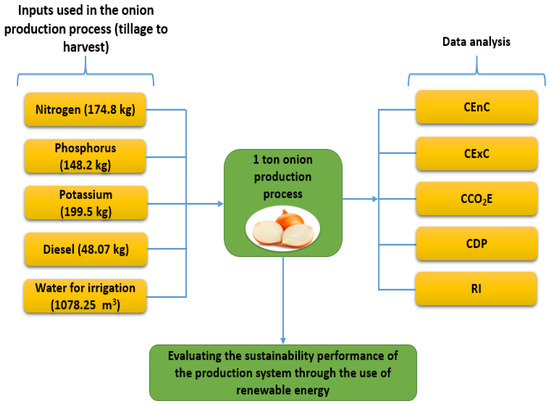
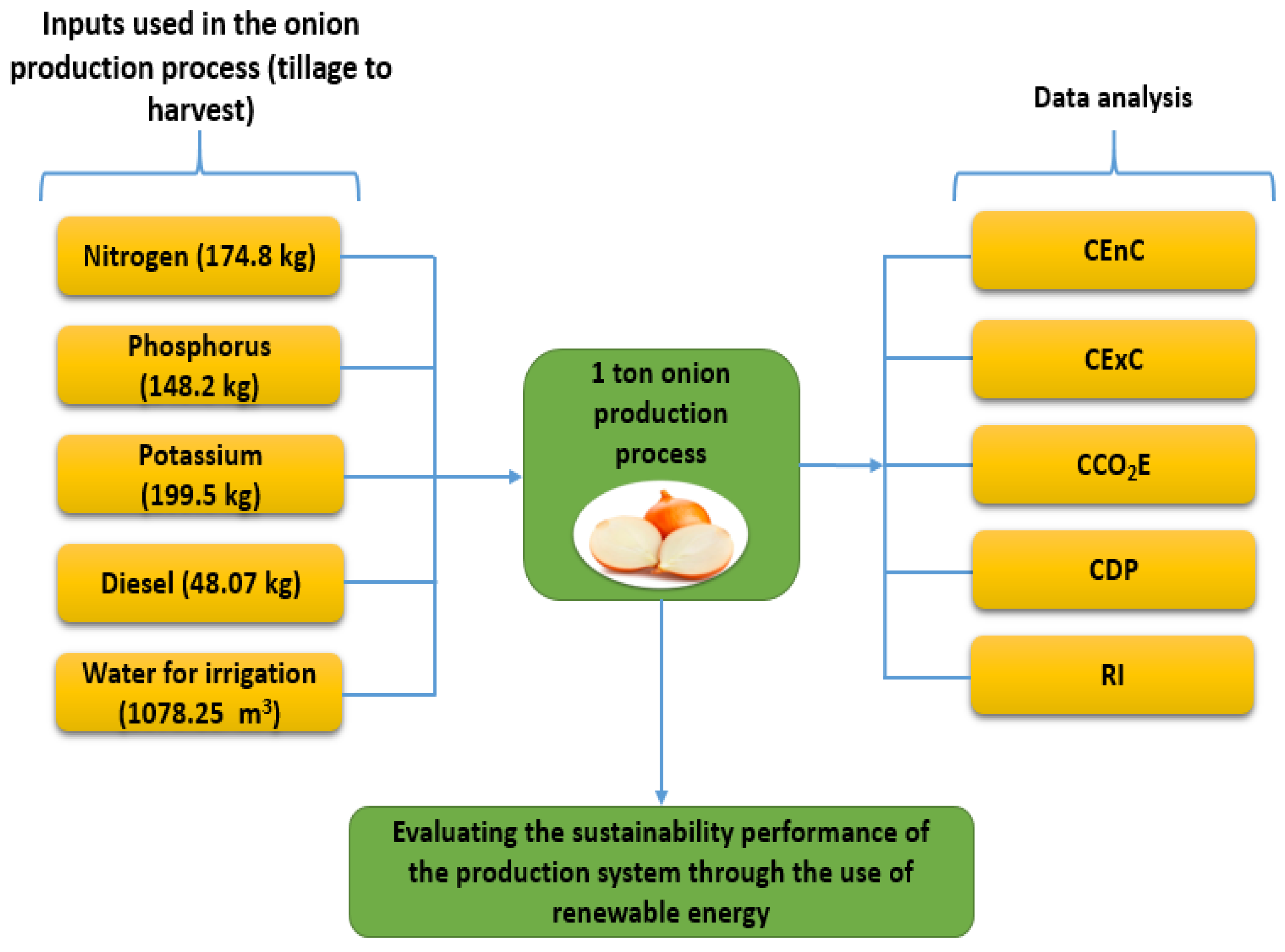
The selection of dry onion as the target crop for this thermodynamic assessment is motivated by its status as an indispensable global dietary staple and Türkiye’s strategic position as the world’s fifth-largest producer, reaching an annual output of 2.6 million tons in 2024 [7]. The primary data employed in this research were compiled from the field study conducted by Ozbek et al. (2021), which provides detailed documentation of onion production practices (Figure 1) [29]. The referenced study was conducted in Adıyaman province, located in southern Türkiye and known for its agricultural diversity. Production patterns in the region represent agricultural ecosystems that combine modern and traditional methods.
Figure 1.
System boundary and investigation procedure of the onion production system.
To ensure accurate determination of input utilization and output generation, face-to-face surveys were conducted with 20 farmers actively engaged in onion cultivation within the study area [29]. Based on the collected data, the inputs required for onion production were standardized within the defined system boundaries using one metric ton of product as the functional unit. This approach was adopted to ensure comparability across different production systems and is consistent with input–output analysis methodologies based on unit production. Furthermore, the classification of inputs was structured to maintain methodological consistency across energy, exergy, and environmental impact assessments, in accordance with commonly applied practices in agricultural system analysis.
As shown in Figure 1, the system boundaries of the study encompass all agricultural operations, from tillage to harvesting. Processes such as transportation, storage, and post-harvest operations were excluded from the analysis. The rationale for this boundary restriction is twofold: firstly, to create a highly focused “cradle-to-farm gate” system boundary that isolates the direct biophysical and thermodynamic behaviors of the primary growing stage; and secondly, to prevent confusion in the calculation of cumulative indicators due to extreme logistical variations and high data uncertainty regarding post-harvest supply chains among regional producers.
The principal inputs considered in the analyses include diesel fuel, chemical fertilizers (nitrogen, phosphorus, and potassium), and irrigation water. As presented in Table 1, the CEnC, CExC, and CCO2E values for each input were calculated using coefficients validated in the literature.
Table 1.
Specific thermodynamic (energy, exergy, and CO2) coefficients for resource utilization in onion production.
2.2. Thermodynamic and Sustainability Metric Analysis
To evaluate the thermodynamic performance and environmental sustainability of onion production, a holistic framework based on mass, energy, entropy, and exergy balance equations was adopted. Using these fundamental relations, sustainability indicators including CEnC, CExC, CCO2E, CDP, and RI were determined. The thermodynamic equivalence factors and balance formulations employed in the calculations (mass, energy, exergy, and entropy) were established in accordance with widely accepted methodologies reported in the literature.
The fundamental conservation laws used to characterize resource flows and efficiency losses within the onion production system are given below [32,38]. The conservation of material streams entering and leaving the system is described by the mass balance (Equation (1)). In contrast, the energy balance derived from the first law of thermodynamics (Equation (2)) defines the energy interactions within the system:
where min and mout denote the mass flows entering and leaving the system (kg), W represents work (kJ), and Q denotes heat transfer (kJ).
The exergy balance, based on the second law of thermodynamics (Equation (3)), is used to determine the actual work potential and the exergy losses (Xloss) within the system. To quantify system irreversibilities and disorder, the entropy balance (Equation (4)) was applied:
In these relations, b denotes specific flow exergy (kJ/kg), T0 is the ambient temperature (K), Tk is the source temperature (K), and Xloss represents exergy destruction (kJ). The total specific exergy associated with onion products and inputs is defined as the sum of chemical (bch) and physical (bth) exergy components (Equation (5)):
b = bch + bth
Both are evaluated using Equation (6):
bth = Ru T0 Σi yi ln(yi)
One of the most critical indicators for assessing the thermodynamic efficiency of onion production is CDP. This parameter is defined as the ratio of the chemical exergy of the onion product to the cumulative exergy of all natural resources consumed throughout the production process (Equation (7)) [31]. To evaluate the environmental implications of the system and its dependence on renewable resources, the Net Exergy Consumption (CNEx) and the Restoration Work (Wr) were introduced. CNEx represents the total cumulative exergy losses occurring during the process (Equation (8)). Wr establishes the relationship between non-renewable resource consumption (CNExp) and waste-related exergy terms (CNExwaste) (Equation (9)) [39].
RI, defined as the ratio of the useful work generated (Wp) to the restoration work required to compensate for the environmental degradation caused by the system, is calculated as follows (Equation (10)) [40]:
Based on different RI value ranges, the system’s sustainability level can be classified as follows: for a system to be considered fully renewable, the RI value must be 1, implying that Wᵣ is zero. RI values between 0 and 1 indicate that the process exhibits a partially renewable structure. An RI value of 0 represents a thermodynamic equilibrium condition in which the useful work generated merely compensates for the required restoration work. Negative RI values (RI < 0), on the other hand, signify that the energy required for system restoration exceeds the useful work produced, indicating that the system is fundamentally non-renewable.
3. Results and Discussion
In this section, the resource use efficiency and environmental performance of the onion production process in Adıyaman province, Türkiye, are examined in detail within the framework of the first and second laws of thermodynamics and environmental impact assessment principles. The analyses quantitatively reveal the energy intensity of the production system, the locations of exergy destruction, and the associated carbon footprint. Based on the obtained results, a comprehensive sustainability evaluation is presented using the CDP and RI indicators. The thermodynamic and environmental dimensions of onion production are comparatively discussed below.
3.1. Energy Analysis
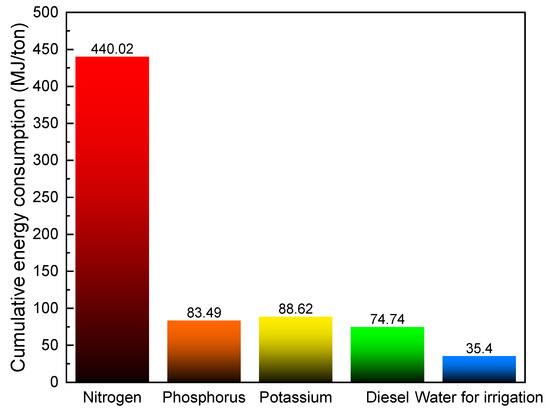
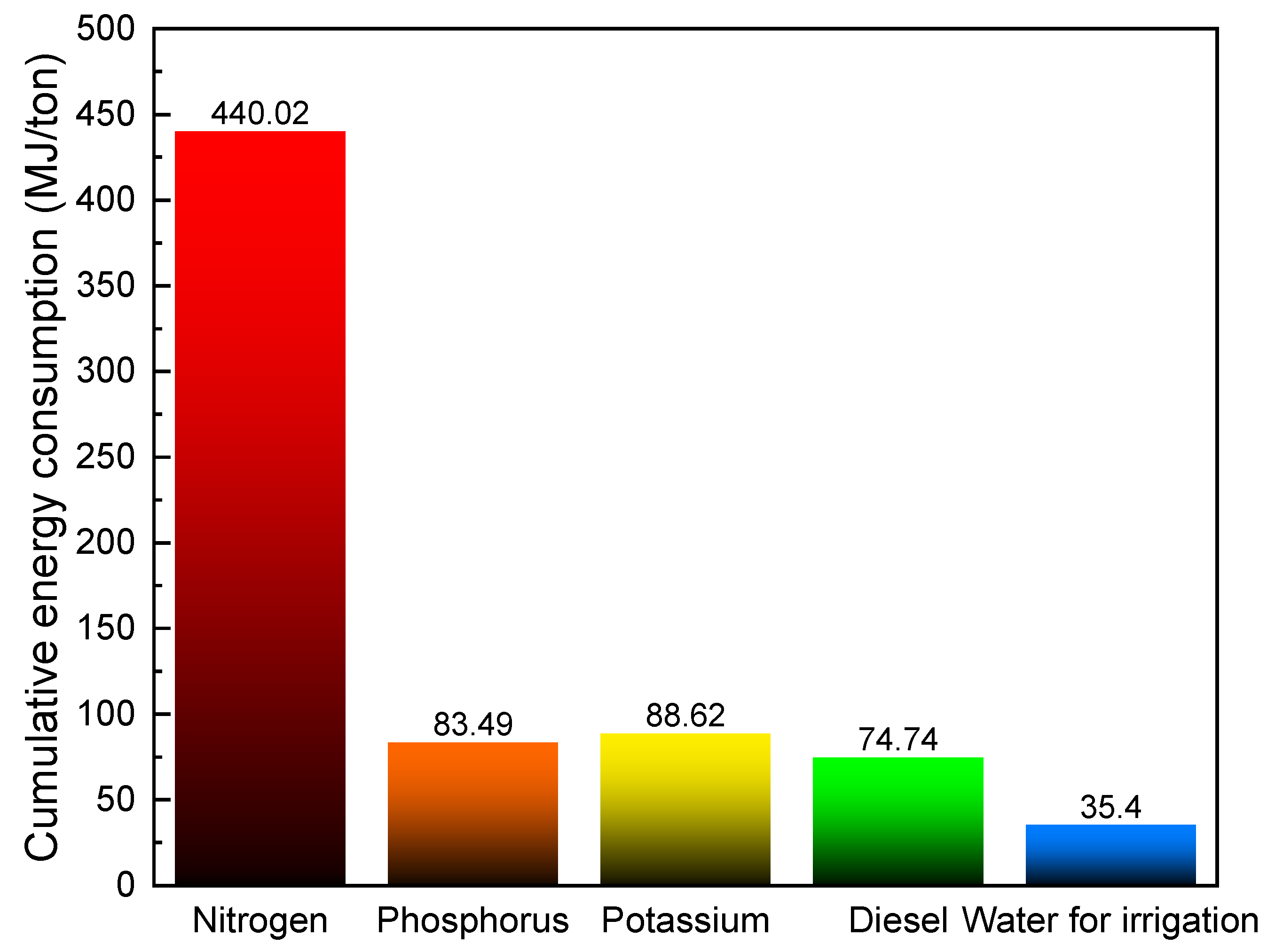
CEnC of onion production, calculated on an input basis, is illustrated in Figure 2. According to the results, the total CEnC required to produce 1 ton of onions is 722.28 MJ/ton, with the majority of this consumption arising from chemical fertilizer use. Notably, nitrogen fertilizer accounts for 440.02 MJ/ton and approximately 61% of the total cumulative energy demand. This finding clearly reflects the substantial indirect energy burden imposed on agricultural production systems by the energy-intensive industrial processes used to manufacture nitrogen fertilizer.
Figure 2.
Cumulative energy consumption of one ton of onion production by input type.
The cumulative energy consumption associated with potassium and phosphorus fertilizers was calculated at 88.62 MJ/ton and 83.49 MJ/ton, respectively, indicating that their energy contributions are comparable. When considered jointly, the combined energy demand of these fertilizers exceeds that of diesel fuel, highlighting that energy use in agricultural production is influenced not only by direct field operations but also significantly by upstream input manufacturing processes. The cumulative energy consumption of diesel fuel was estimated at 74.74 MJ/ton, corresponding to approximately 10% of the total CEnC. This finding suggests that although agricultural mechanization is an important energy component, it is not the dominant driver of overall energy demand within the system.
The cumulative energy consumption for irrigation water was determined to be 35.40 MJ/ton, accounting for less than 5% of total energy use. This result indicates that, under the regional conditions considered, irrigation activities exhibit relatively low energy intensity and exert a limited influence on the overall energy performance of the production process. Overall, fertilizer inputs accounted for approximately 84% of the total cumulative energy consumption in onion production, highlighting a critical sustainability issue.
These findings imply that strategies to improve energy efficiency in onion production should primarily focus on fertilizer management. In particular, optimizing nitrogen fertilizer application offers substantial potential not only to reduce energy consumption but also to mitigate exergy losses and environmental impacts. Although substituting diesel-powered agricultural machinery with electric machinery powered by renewable energy may yield only modest reductions in total energy consumption, it may nonetheless provide significant benefits by lowering carbon emissions and enhancing overall system sustainability. In this respect, the results clearly demonstrate that agricultural sustainability assessments must extend beyond on-site production stages to encompass the entire input supply chain.
The CEnC results obtained in this study indicate that the energy profile of onion production is strongly fertilizer-dependent, consistent with observations from comparable agricultural systems. The CEnC value calculated for nitrogen fertilizer (approximately 440 MJ/ton) aligns with findings widely documented in the literature, underscoring the substantial energy implications of crop nutrient requirements. Nadi and Campbell (2023), in their assessment of onion production in Iran, similarly identified chemical fertilizers as the primary contributors to energy consumption [41]. Öztürk et al. (2025) reported that nitrogen fertilizer represented the largest energy input in apple production systems in Antalya, Türkiye [22]. Degerli et al. (2015) likewise emphasized the dominant role of diesel fuel and chemical fertilizers in wheat production under Turkish conditions [18]. Comparable patterns have also been observed in rapeseed production, where chemical fertilizers were found to be responsible for significant energy demand [11].
In general, while the total cumulative energy consumption of onion production appears comparable to or lower than that of many common crops, the distribution of energy use among inputs is notably uneven. The dominant contribution of nitrogen fertilizer identifies fertilizer management as the most critical area for sustainability improvement, suggesting that optimization efforts targeting this input would exert a decisive influence on overall system performance.
3.2. Exergy Analysis
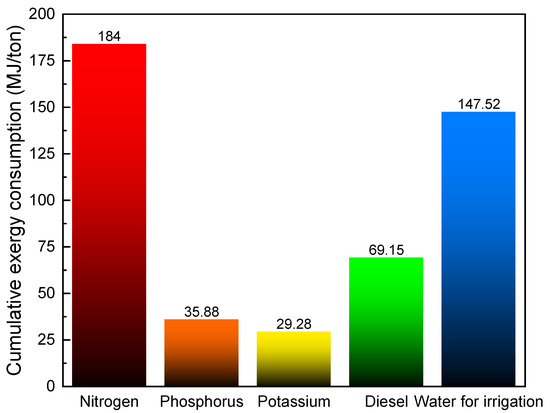
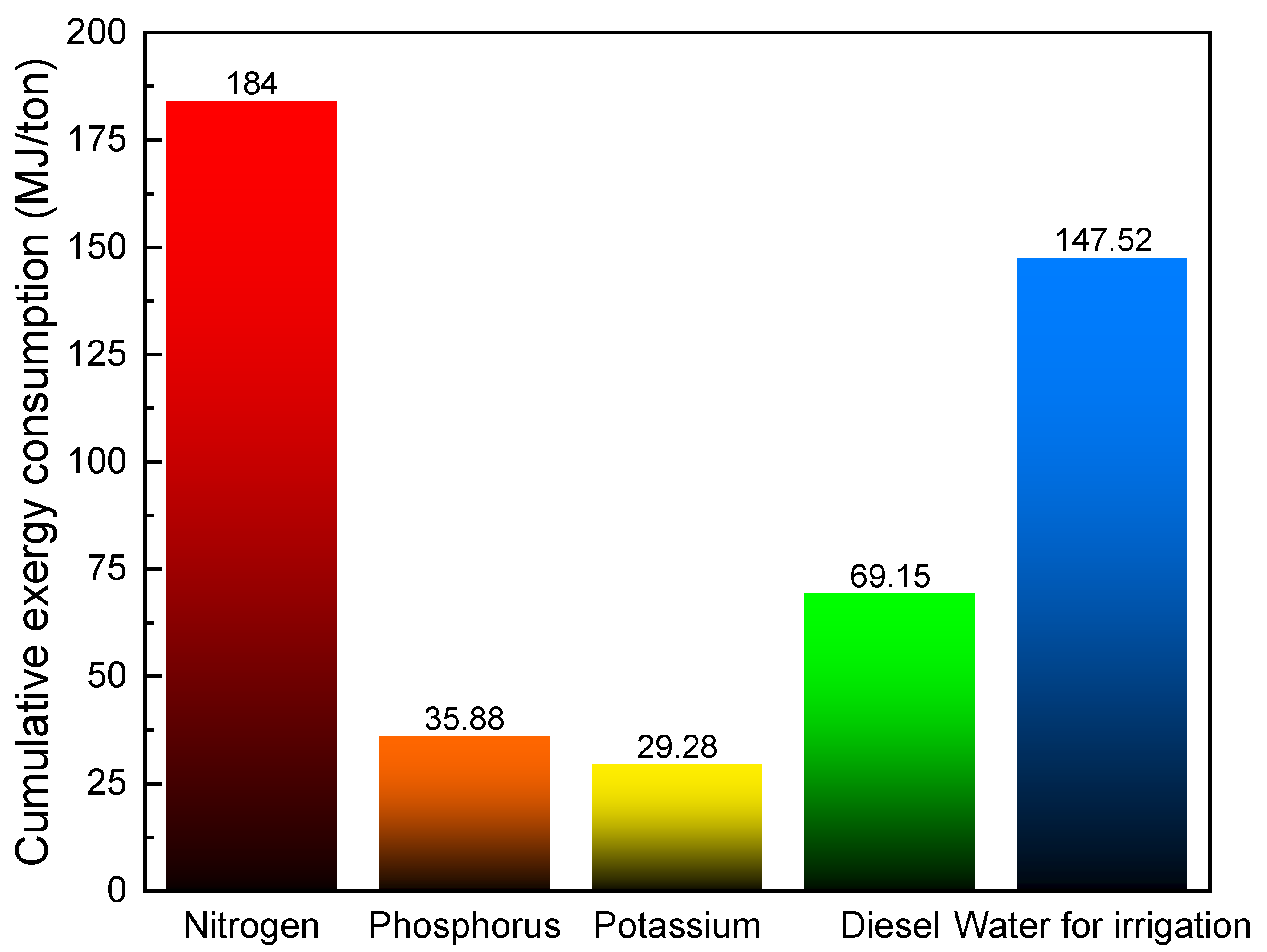
CExC results obtained in this study (465.83 MJ/kg) demonstrate that production inputs play distinct roles not only in terms of energy quantity but also in terms of energy quality and useful work potential. As illustrated in Figure 3, nitrogen fertilizer emerges as the largest contributor to cumulative exergy consumption, with a value of approximately 184 MJ/ton. This is followed by irrigation water (147.52 MJ/ton) and diesel fuel (69.15 MJ/ton). In contrast, the exergy contributions of phosphorus and potassium fertilizers remain comparatively lower, estimated at 35.88 MJ/ton and 29.28 MJ/ton, respectively.
Figure 3.
Cumulative exergy consumption of one ton of onion production by input type.
This distribution reveals a pattern that partially diverges from the results obtained in the energy analysis. While the contribution of irrigation water to total energy consumption remains limited, its relatively high share in the exergy analysis indicates its low usability relative to environmental reference conditions and its association with significant irreversibilities introduced into the system. Similarly, although diesel fuel plays a secondary role in the energy analysis, its more pronounced contribution in the exergy assessment suggests that, despite their high exergy content, fossil fuels lead to substantial exergy destruction during utilization. Nitrogen fertilizer, by contrast, remains the dominant input in both energy and exergy perspectives, continuing to play a decisive role in determining the thermodynamic performance of onion production.
When the results obtained in the onion crop production process are compared with studies in the literature, it is observed that the CExC value (465.83 MJ/kg) is lower. Similarly, in calculations for Iran, the total CExC value of onion crops showed that chemical fertilizers caused the greatest exergy loss, as in this study [41]. In calculations made by Öztürk et al. (2025) for wheat, the total CExC value was determined to be 10,514.76 MJ/ton in Samsun and 5400.88 MJ/ton in Tokat, Türkiye [21]. In another study, the total CExC value for dates was reported to be 5576 MJ/Mg, with the highest consumption being from diesel inputs [17].
Although diesel-related exergy consumption in onion production is lower compared with certain perennial crops, the relatively high exergy contribution of irrigation water indicates a distinctive water exergy interaction profile for onion cultivation. Studies addressing wheat production similarly emphasize nitrogen fertilizer as a primary determinant in both energy and exergy analyses, a tendency clearly corroborated by the present results.
The joint evaluation of CEnC and CExC outcomes demonstrates that the impacts of production inputs cannot be adequately explained by quantitative energy consumption alone. Although nitrogen fertilizer accounts for the overwhelming share of cumulative energy consumption, its relative increase in cumulative exergy consumption is less pronounced, a phenomenon that may be attributed to the comparatively high quality of the energy used in nitrogen fertilizer production. Conversely, irrigation water, despite its modest contribution to energy demand, emerges as a major contributor in the exergy analysis, representing a significant source of irreversibilities within the system. Diesel fuel, while secondary in terms of energy consumption, exhibits a comparatively higher thermodynamic burden from an exergy perspective. These findings underscore the need to consider not only total energy use but also exergy losses and energy quality to enhance sustainability in onion production systems.
3.3. Carbon Dioxide Emission Analysis
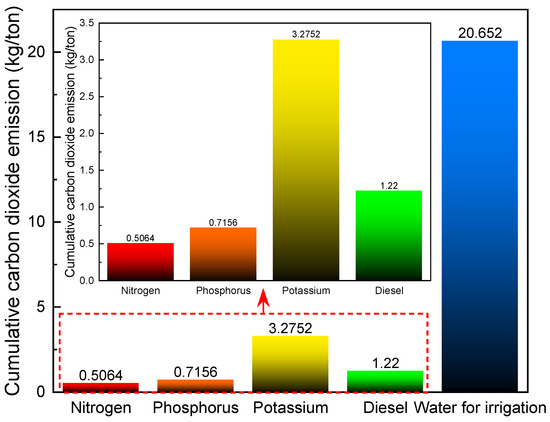
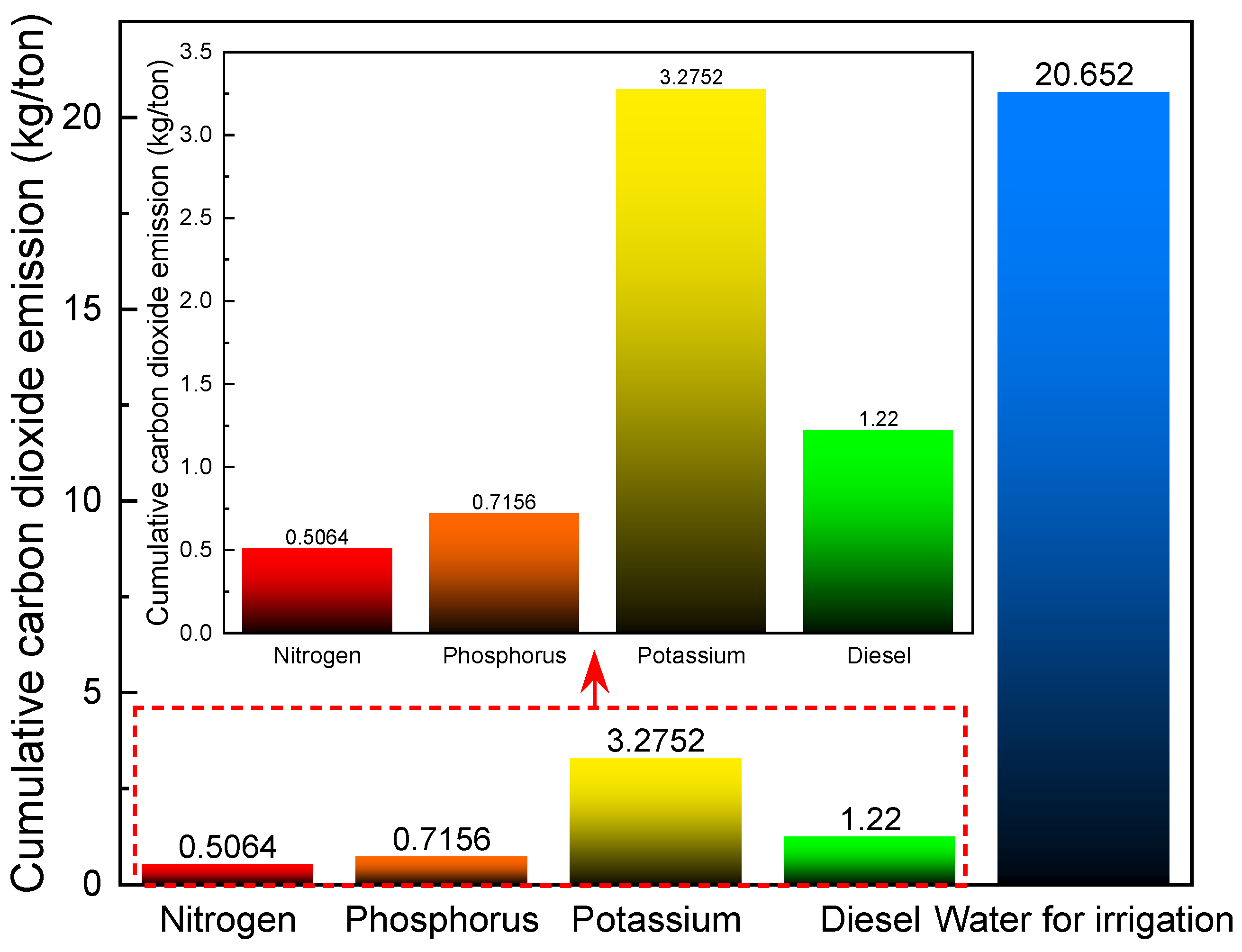
The CCO2E results obtained in this study clearly identify the inputs responsible for the environmental burden associated with onion production. As illustrated in Figure 4, irrigation water constitutes the dominant emission source, with a value of 20.65 kg CO2/ton. In contrast, potassium fertilizer (3.28 kg CO2/ton), diesel fuel (1.22 kg CO2/ton), phosphorus fertilizer (0.72 kg CO2/ton), and nitrogen fertilizer (0.51 kg CO2/ton) exhibit comparatively lower emission contributions. This distribution indicates an environmental impact profile that differs markedly from those observed in the energy and exergy analyses. The relatively low diesel-related CO2 emissions may be attributed to the limited mechanization intensity of onion production. In contrast, the dominant role of irrigation water reflects the production system’s water-dependent structure.
Figure 4.
Cumulative carbon dioxide emission of one ton of onion production by input type.
These findings are consistent with trends reported in previous studies. Öztürk et al. (2025) similarly identified irrigation water as the largest contributor to carbon dioxide emissions in strawberry production systems [24]. In rapeseed production, irrigation water was likewise reported as a major emission source [11]. Yildizhan and Taki (2019) also emphasized that irrigation-related processes account for the highest emission shares in agricultural production systems [42].
The results obtained emphasize the decisive role of irrigation water in determining carbon emissions. Although irrigation water makes a limited contribution to the energy analysis and a substantial contribution to the exergy analysis, it emerges as the most critical input from a carbon-emission perspective. This finding indicates that the environmental impacts associated with the specific CO2 emission coefficient attributed to irrigation water, as well as the indirect energy consumption embedded in water supply processes, cannot be adequately explained solely by energy quantities. The comparatively higher CO2 emissions associated with potassium fertilizer relative to nitrogen and phosphorus fertilizers further suggest the carbon-intensive nature of potassium fertilizer production pathways.
The conceptualization of the carbon footprint has emerged as a cornerstone of modern sustainability assessments, serving as an integrated biophysical accounting mechanism that goes beyond traditional emission tracking to quantify the comprehensive global warming potential (GWP) of agricultural systems. In this context, relying exclusively on conventional energy analysis creates a significant analytical blind spot; first-law thermodynamic indicators treat all resources based solely on their static caloric equivalents, failing to capture resource quality, process irreversibilities, or the true ecological burdens associated with upstream supply chains. For instance, as shown in our empirical distribution, while an energy-centric evaluation might portray intensive inputs like nitrogen fertilizer as the sole dominant stressor, it risks underestimating the profound environmental implications of segments like deep-well groundwater pumping. By contrast, integrating advanced second-law exergy calculations alongside carbon footprint accounting allows for a precise mapping of cumulative resource degradation and localized exergy destruction rates. This dual thermodynamic-environmental approach uncovers the exact pathways where physical quality losses correlate with elevated emission trajectories, providing a vital methodological safeguard against “burden-shifting” across system boundaries. Ultimately, defining the carbon footprint through an exergy-based sustainability lens guarantees that operational modernizations genuinely optimize the structural efficiency of the agro-ecosystem without inadvertently inflating the hidden, upstream carbon load.
When the CEnC, CExC, and CCO2E results are jointly evaluated, it becomes evident that the influence of production inputs varies significantly across analytical dimensions. Nitrogen fertilizer, while representing the dominant contributor to cumulative energy consumption, accounts for a relatively minor share of total carbon emissions. In contrast, irrigation water, despite its modest energy contribution, plays a determining role in both cumulative exergy consumption and carbon emissions, thereby constituting the most influential factor in the system’s environmental performance. Diesel fuel, although moderately significant in the energy and exergy analyses, shows a lower-than-expected contribution to CO2 emissions. This integrated assessment highlights that sustainability strategies for onion production should not focus exclusively on energy reduction but must also prioritize water management and the mitigation of the carbon intensity of irrigation infrastructure.
3.4. Sustainability Analysis
The integrated indicators used in this study, the CDP and the RI, directly align with the United Nations Sustainable Development Goals (SDGs). Optimizing resource-use efficiency to maximize the CDP value addresses SDG 12 (Responsible Consumption and Production), while shifting toward zero-emission processes to elevate the RI metric supports SDG 7 (Affordable and Clean Energy) and SDG 13 (Climate Action). Thus, these thermodynamic indices serve as practical tools to measure an agricultural system’s contribution to global sustainability targets.
In this study, the chemical exergy value of onions was set at 1.55 MJ/kg, based on the work of Nadi and Campbell (2023) [41]. The calculated sustainability indicators for onion production (CDP = 3.33 and RI = 0.70) indicate that the system exhibits a moderate yet improvable level of thermodynamic and environmental sustainability. A CDP value substantially greater than unity suggests that the chemical exergy of the final product is relatively high compared with the cumulative exergy consumed during production, implying that the system is not thermodynamically inefficient in absolute terms. Nevertheless, the CDP value not reaching significantly higher levels indicates the persistence of notable exergy destruction and irreversibilities within the production chain.
An RI value of 0.70 indicates that the onion production system is partially renewable. This value implies that the useful work generated within the system does not fully compensate for the restoration work required to offset environmental degradation. However, the system cannot be classified as fundamentally non-renewable. In other words, while onion production under prevailing conditions generates environmental burdens, it retains the potential for significant sustainability improvements through appropriate intervention strategies.
These results are consistent with observations reported for comparable agricultural systems. Studies on wheat production frequently report RI values of 0.5–0.9, with CDP values of similar magnitude [24,42]. This comparison suggests that onion production may demonstrate comparable thermodynamic performance, although its sustainability remains constrained by input dependencies. A similar study on rapeseed production reported CDP and RI values of 2.19 and 0.72, respectively, closely aligning with the present findings [11].
In contrast, investigations on apple production systems, particularly those involving intensive irrigation and mechanization, have documented RI values frequently below 0.5, indicating a more pronounced non-renewable character [22]. Within this context, the RI value for onion production (RI = 0.70) indicates a more favorable renewability profile. However, renewable energy scenarios, such as agrivoltaic integration, have been shown to substantially improve RI values, suggesting that similar approaches could yield considerable benefits for onion production systems.
Overall, the CDP and RI results indicate that onion production is not fully sustainable in its current state, but that it has the potential to approach this level with the right interventions. In particular, if scenarios such as reducing nitrogen fertilizer use, improving irrigation system efficiency, lowering carbon and exergy intensity, and replacing diesel-powered agricultural vehicles with electric vehicles powered by renewable energy are implemented, the CDP value is expected to increase, and the RI is expected to approach 1. In this respect, onion production can be considered a production system with high potential for transition to sustainability compared to many agricultural products studied in the literature.
3.5. New Scenario: Renewable Energy-Based Agricultural Production Model
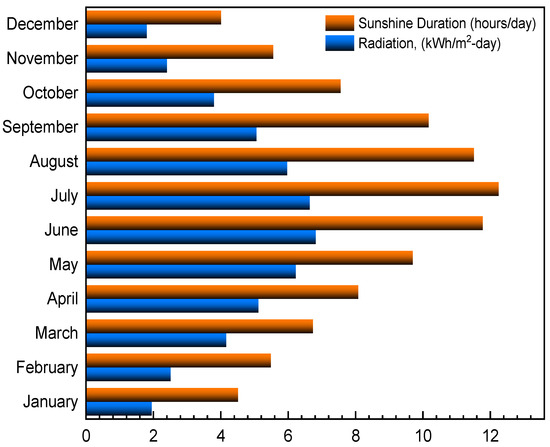
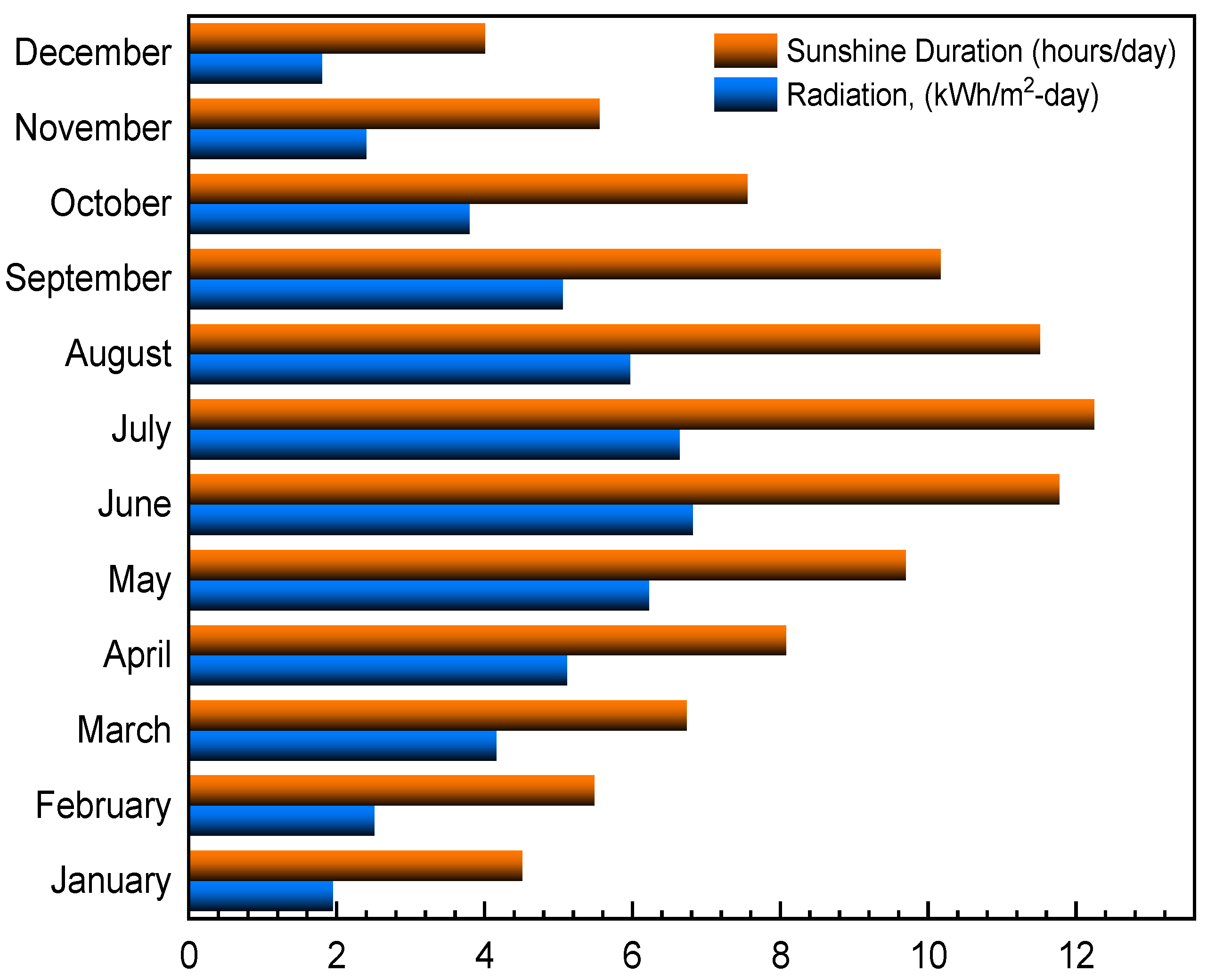
The technical potential of renewable energy sources, particularly solar energy, is quite high across Türkiye. This potential provides a strong infrastructure for the widespread adoption of renewable energy production systems in the agricultural sector [43]. In this context, the scenario proposed specifically for Adıyaman is a scalable model for reducing the carbon footprint and increasing the thermodynamic sustainability of agricultural production systems not only at the local level but also across Türkiye. In terms of applicability, the renewable energy potential of Adıyaman province offers a significant advantage. Located in the Southeastern Anatolia Region, Adıyaman has above-average sunshine duration and high irradiation values for Türkiye. The annual irradiation intensity and sunshine duration for Adıyaman province are shown in Figure 5. Adıyaman Province’s annual radiation and sunshine duration values are 1595 kWh/m2-day and 2961 h/day, respectively, which are significantly higher than Turkey’s average of 1527.46 kWh/m2-day and 2741 h/day [44]. It can be said that photovoltaic systems integrated into agricultural areas in this region can meet both the energy required for irrigation pumping and the energy needs of electric agricultural vehicles. This situation indicates that electric agricultural mechanization is not only a theoretical improvement but also a realistic, feasible solution given regional conditions.
Figure 5.
Annual solar irradiation and sunshine duration of Adıyaman province [44].
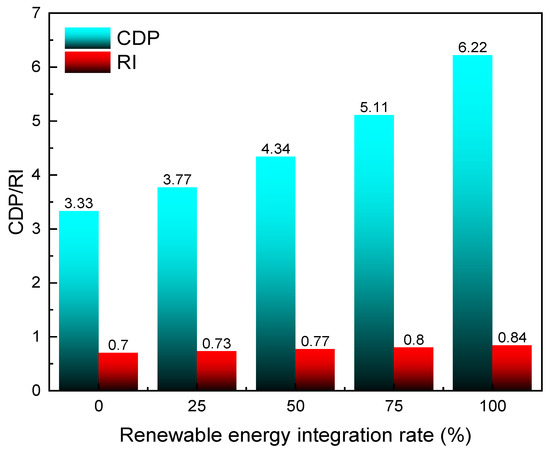
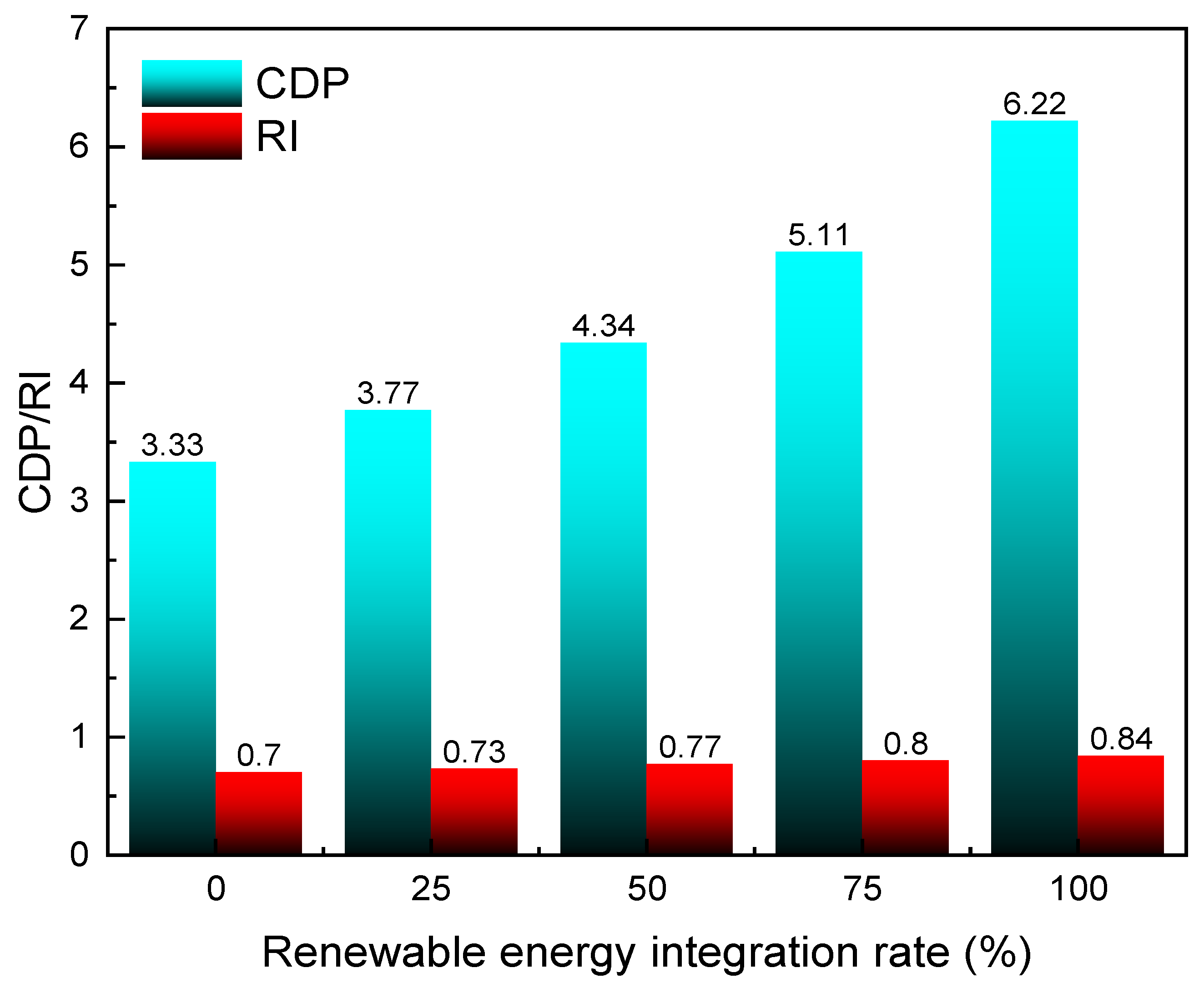
Under the new scenario proposed in this study, we evaluate the theoretical thermodynamic trajectory of the system under the assumption that conventional diesel-powered agricultural machinery is progressively replaced with electrified alternatives integrated with a farm-scale PV infrastructure. We explicitly clarify that this scenario does not assume an immediate 100% displacement of liquid fossil fuels; rather, it establishes a predictive scenario framework where the system’s primary electricity substitution and mechanical electrification are coupled. As illustrated by the sensitivity trend curves in Figure 6, a continuous integration of renewable-energy-driven electric agricultural machinery from 0% to 100% shifts the thermodynamic boundaries systematically. While conventional production conditions (0% integration) yield a baseline of CDP = 3.33 and RI = 0.70, a fully realized electrification scheme (100% integration) pushes these indicators to a theoretical maximum of CDP = 6.22 and RI = 0.84, respectively. This gradual increase demonstrates that even partial electrification significantly reduces localized exergy destruction, progressively optimizing the useful output relative to the cumulative exergy consumed during the onion production timeline.
Figure 6.
Variations in CDP and RI indicators based on the renewable energy integration.
The nearly twofold increase in the CDP value indicates that exergy destruction associated with fossil-fuel-dependent mechanization is significantly reduced, enabling the production process to approach a more thermodynamically “perfect” configuration. The increase in the RI value from 0.70 to 0.84 further suggests that, although the system cannot yet be classified as fully renewable, it moves considerably closer to offsetting the restoration work required to compensate for environmental degradation. This improvement reflects a transition from a partially renewable structure to a system with a higher degree of renewability.
Overall, substituting diesel-powered machinery and conventionally supplied electricity for irrigation with PV-driven agricultural technologies results in substantial improvements in both CDP and RI indicators, thereby advancing the production system toward greater sustainability. Considering Adıyaman’s high solar energy potential and Türkiye’s broader renewable energy capacity, this scenario represents a viable pathway for achieving environmental, thermodynamic, and policy-oriented benefits in onion production. Table 2 compares the key sustainability and environmental performance results obtained from the comparison of traditional and renewable energy-based agricultural systems examined in this study, across different agricultural products. The integration of renewable energy in this study shows similarities to other studies in the literature, resulting in more efficient sustainability indicators.
Table 2.
Quantitative benchmarking of thermodynamic sustainability indicators (CDP/RI) across conventional and renewable-integrated agricultural systems.
4. Conclusions
This study presents a holistic evaluation of the energy, exergy, and environmental performance of onion production in Adıyaman province. The results indicate that the total CEnC for producing one ton of onions is 722.28 MJ/ton, with a substantial portion of this demand attributed to nitrogen fertilizer use. The approximately 61% share of nitrogen fertilizer in total energy consumption highlights the dominant influence of indirect energy inputs in agricultural production systems.
The CExC value of the production process was 465.83 MJ/ton, with nitrogen fertilizer (184 MJ/ton) and irrigation water (147.52 MJ/ton) as the inputs with the highest contributions. The fact that irrigation water has a low share in the energy analysis but a high share in the exergy analysis underscores the critical importance of energy quality and irreversibility in sustainability assessments. In the carbon emission analysis, irrigation water accounted for the largest environmental burden, with a value of 20.65 kg CO2/ton.
The baseline analysis under conventional management revealed that the onion production system operates under a partially sustainable yet improvable matrix (CDP = 3.33, RI = 0.70), largely due to inherent inefficiencies in fossil-fuel-driven water pumping and traditional field practices. The proposed renewable scenario, driven by operational PV electrification and machinery substitution, significantly optimized the system’s thermodynamic balance by driving the indicators to CDP = 6.22 and RI = 0.84. These quantitative improvements highlight the core contribution of this work, demonstrating that managing input optimization curves directly mitigates cumulative exergy degradation, elevates authentic biophysical renewability, and provides a scalable baseline model applicable to other intensive horticultural tracks.
Overall, the findings identify fertilizer management optimization, reduction in the carbon intensity of irrigation systems, and broader integration of renewable energy technologies as key strategic priorities for sustainable onion production. The study clearly demonstrates the need to jointly consider energy, exergy, and environmental indicators in evaluating agricultural production systems.
The thermodynamic and environmental milestones demonstrated in this study offer critical policy implications for agricultural energy planning in Türkiye. To accelerate the transition toward low-carbon food supply chains, governmental frameworks should leverage regional data to expand targeted financial subsidy structures and agro-solar incentive packages, particularly in high-solar-radiation zones like Adıyaman. Prioritizing capital cost support for smallholder farmers to integrate PV-driven irrigation and machinery electrification will directly foster the realization of national sustainability targets and international climate directives, such as United Nations SDG 7 and SDG 13.
Nevertheless, certain operational limitations within the scope of this research must be acknowledged. First, the system boundaries were strictly limited to operational agricultural phases (from tillage to harvest) and operational electricity substitution scenario, thereby excluding the embodied exergy and life-cycle environmental impacts associated with the manufacturing, transportation, and decommissioning stages of PV panels and electric machinery. Second, the thermodynamic performance indicators were calculated based on current regional resource configurations and seasonal averages, which may exhibit temporal variations under dynamic climate change patterns and fluctuating ground-water levels over long-term operations. Future research tracks will focus on integrating full life-cycle assessments (LCA) and dynamic thermo-economic optimizations to address these boundaries.
Funding
This research received no external funding.
Data Availability Statement
The original contributions presented in the study are included in the article, further inquiries can be directed to the corresponding author.
Conflicts of Interest
The author declares no conflicts of interest.
References
- Kumaran, G.S.; Rathinakumari, A.C.; Venu, S.A.; Surendra, A.R. Energy use pattern in rose onion (Allium cepa L.) cultivation. J. Hortic. Sci. 2024, 19. [Google Scholar] [CrossRef] [Scilit]
- Elfadil, A.D.; Mohamed, M.A.; Moheldin, O.A. Energy Use Efficiency of Onion and Tomato Production in the Gezira Scheme. J. Agric. Sci. 2021, 6, 49–62. [Google Scholar]
- Nikan, S.; Dashti, G. Energy use and economic analysis of onion production in Iran: A case study of East Azerbaijan province. SSRN 2022. [Google Scholar] [CrossRef] [Scilit]
- Aditya, K.; Bharti Das, P.; Banerjee, R.; Rathinakumari, A.C.; Ahmad, T.; Venu, S.A. Sampling design and estimation procedure for energy audit and carbon footprints for onion crop in India. Sci. Rep. 2025, 15, 39195. [Google Scholar] [CrossRef] [Scilit] [PubMed]
- Hanci, F. A comprehensive overview of onion production: Worldwide and Turkey. J. Agric. Vet. Sci. 2018, 11, 17–27. [Google Scholar]
- FAO. Food and Agrıculture Organızatıon of the Unıted Natıons Statistics Division. 2024. Available online: https://www.fao.org/faostat/en/#home (accessed on 10 January 2026).
- Republic of Türkiye Ministry of Agriculture and Forestry. Onion Product Report. Available online: https://arastirma.tarimorman.gov.tr/tepge/Menu/37/Urun-Raporlari (accessed on 20 January 2026).
- Turkish Statistical Institute. Plant Production Statistics. Available online: https://veriportali.tuik.gov.tr/tr/press/53939 (accessed on 14 December 2025).
- Sevik, M.A.; Akcura, C. Viruses occurring in the onion crop in Amasya province, the major onion-producing region in Turkey. Indian J. Virol. 2013, 24, 78–81. [Google Scholar] [PubMed]
- Erper, I.; Karaca, G.H.; Turkkan, M.; Ozkoc, I. Characterization and pathogenicity of Rhizoctonia spp. from onion in Amasya, Turkey. J. Phytopathol. 2006, 154, 75–79. [Google Scholar] [CrossRef] [Scilit]
- Esmaeilpour-Troujeni, M.; Rohani, A.; Khojastehpour, M. Optimization of rapeseed production using exergy analysis methodology. Sustain. Energy Technol. Assess. 2021, 43, 100959. [Google Scholar] [CrossRef] [Scilit]
- Nikkhah, A.; Kosari-Moghaddam, A.; Troujeni, M.E.; Bacenetti, J.; Van Haute, S. Exergy flow of rice production system in Italy: Comparison among nine different varieties. Sci. Total Environ. 2021, 781, 146718. [Google Scholar] [CrossRef] [Scilit] [PubMed]
- Righetto, F.G.; Mady, C.E.K. Exergy Analysis of a Sugarcane Crop: A Planting-to-Harvest Approach. Sustainability 2023, 15, 14686. [Google Scholar] [CrossRef] [Scilit]
- Alzaben, H.; Fraser, R. Energy and Exergy analyses applied to a crop plant system. Thermo 2025, 5, 3. [Google Scholar] [CrossRef] [Scilit]
- Qi, H.; Dong, Z.; You, X.; Zhou, S.; Zhu, Y. Extended exergy accounting of agricultural resources in China’s four provinces of mountains and rivers. Sci. Rep. 2025, 15, 22213. [Google Scholar] [CrossRef] [Scilit] [PubMed]
- Georgescu-Roegen, N. The Entropy Law and the Economic Process; Harvard University Press: Cambridge, MA, USA, 1971. [Google Scholar]
- Hesampour, R.; Hassani, M.; Yildizhan, H.; Failla, S.; Gorjian, S. Exergoenvironmental damages assessment in a desert-based agricultural system: A case study of date production. Agron. J. 2022, 114, 3155–3172. [Google Scholar] [CrossRef] [Scilit]
- Degerli, B.; Nazir, S.; Sorgüven, E.; Hitzmann, B.; Özilgen, M. Assessment of the energy and exergy efficiencies of farm-to-fork grain cultivation and bread making processes in Turkey and Germany. Energy 2015, 93, 421–434. [Google Scholar] [CrossRef] [Scilit]
- Nadi, F.; Hepbasli, A. Evaluation of sustainability of a prune production process from farm to fork approach based on thermodynamic principles and actual operational data. Glob. Chall. 2022, 6, 2100071. [Google Scholar] [CrossRef] [Scilit] [PubMed]
- Sorgüven, E.; Özilgen, M. Energy utilization, carbon dioxide emission, and exergy loss in flavored yogurt production process. Energy 2012, 40, 214–225. [Google Scholar] [CrossRef] [Scilit]
- Öztürk, M.; Yildizhan, H.; Ameen, A. Resource efficiency and environmental sustainability of wheat production in Türkiye. Sci. Rep. 2025, 15, 43264. [Google Scholar] [CrossRef] [Scilit] [PubMed]
- Öztürk, M.; Kayabaşi, R.; Yildizhan, H.; Ameen, A. Thermodynamic and environmental assessment of apple production in Türkiye: Regional comparison and agrivoltaic integration. Sci. Rep. 2025, 15, 43263. [Google Scholar] [CrossRef] [Scilit] [PubMed]
- Rasoolizadeh, M.; Salarpour, M.; Borazjan, M.A.; Nikkhah, A.; Mohamadi, H.; Sarani, V. Modeling and optimizing the exergy flow of tropical crop production in Iran. Sustain. Energy Technol. Assess. 2022, 49, 101683. [Google Scholar] [CrossRef] [Scilit]
- Öztürk, M.; Kayabaşı, R.; Yildizhan, H.; Ameen, A. Resource use efficiency and environmental impacts in strawberry production: An energy–exergy analysis. Energies 2025, 18, 5572. [Google Scholar] [CrossRef] [Scilit]
- Karami, H.; Kaveh, M.; Golpour, I.; Khalife, E.; Rusinek, R.; Dobrzański, B., Jr.; Gancarz, M. Thermodynamic evaluation of the forced convective hybrid-solar dryer during drying process of rosemary (Rosmarinus officinalis L.) leaves. Energies 2021, 14, 5835. [Google Scholar] [CrossRef] [Scilit]
- Yildizhan, H.; Taki, M.; Özilgen, M.; Gorjian, S. Renewable energy utilization in apple production process: A thermodynamic approach. Sustain. Energy Technol. Assess. 2021, 43, 100956. [Google Scholar] [CrossRef] [Scilit]
- Juillion, P.; Lopez, G.; Fumey, D.; Chopard, J.; Vercambre, G. Shading apple trees with an agrivoltaic system: Impact on water relations, leaf morphophysiological characteristics and yield determinants. Sci. Hortic. 2022, 306, 111434. [Google Scholar] [CrossRef] [Scilit]
- Juárez-Hernández, S.; Usón, S.; Pardo, C.S. Assessing maize production systems in Mexico from an energy, exergy and greenhouse-gas emissions perspective. Energy 2019, 170, 199–211. [Google Scholar] [CrossRef] [Scilit]
- Ozbek, O.; Gokdogan, O.; Baran, M.F. Investigation on energy use efficiency and greenhouse gas emissions (GHG) of onion cultivation. Fresenius Environ. Bull. 2021, 30, 1125–1133. [Google Scholar]
- Helsel, Z.R. Energy and alternatives for fertilizer and pesticide use. In Energy in Farm Production; Fluck, R.C., Ed.; Elsevier: Amsterdam, The Netherlands, 1992; pp. 177–201. [Google Scholar]
- Szargut, J.; Morris, D.R. Cumulative exergy consumption and cumulative degree of perfection of chemical processes. Int. J. Energy Res. 1987, 11, 245–261. [Google Scholar] [CrossRef] [Scilit]
- Kongshaug, G. Energy consumption and greenhouse gas emissions in fertilizer production. In Proceedings of the IFA Technical Conference, Marrakech, Morocco, 28 September–1 October 1998. [Google Scholar]
- Wittmus, H.; Olson, L.; Lane, D. Energy requirements for conventional versus minimum tillage. J. Soil Water Conserv. 1975, 3, 72–75. [Google Scholar]
- Pimentel, D. Ethanol fuels: Energy, security, economics and the environment. J. Agric. Environ. Ethics 1991, 4, 1–13. [Google Scholar] [CrossRef] [Scilit]
- Banaeian, N.; Omid, M.; Ahmadi, H. Energy and economic analysis of greenhouse strawberry production in Tehran Province of Iran. Energy Convers. Manag. 2011, 52, 1020–1025. [Google Scholar] [CrossRef] [Scilit]
- Lal, R. Carbon emission from farm operations. Environ. Int. 2004, 30, 981–990. [Google Scholar] [CrossRef] [Scilit] [PubMed]
- Özilgen, M.; Sorgüven, E. Biothermodynamics; CRC Press: Boca Raton, FL, USA, 2016. [Google Scholar]
- Çengel, Y.A.; Boles, M.A. Thermodynamics: An Engineering Approach, 5th ed.; McGraw-Hill: Columbus, OH, USA, 2006. [Google Scholar]
- Berthiaume, R.; Bouchard, C. Exergy analysis of the environmental impact of paving material manufacture. Trans. Can. Soc. Mech. Eng. 1999, 23, 187–196. [Google Scholar] [CrossRef] [Scilit]
- Berthiaume, R.; Bouchard, C.; Rosen, M.A. Exergetic evaluation of the renewability of a biofuel. Exergy Int. J. 2001, 1, 256–268. [Google Scholar] [CrossRef] [Scilit]
- Nadi, F.; Campbell, D. Assessment of the thermodynamic, environmental and economic output of agro-ecosystems: Onion set versus onion production. Clean Technol. Environ. Policy 2023, 25, 1223–1240. [Google Scholar] [CrossRef] [Scilit]
- Yildizhan, H.; Taki, M. Sustainable management and conservation of resources for different wheat production processes: Cumulative exergy consumption approach. Int. J. Exergy 2019, 28, 404–422. [Google Scholar] [CrossRef] [Scilit]
- Aktaş, M.; Şevik, S.; Doğan, H.; Öztürk, M. Drying of Tomato in a Photovoltaic and Thermal Solar-Powered Continuous Dryer. J. Agric. Sci. 2012, 18, 287–298. [Google Scholar]
- General Directorate of Renewable Energy. Solar Energy Potential Atlas GEPA. Available online: https://gepa.enerji.gov.tr/pages/2.aspx (accessed on 10 January 2026).

Disclaimer/Publisher’s Note: The statements, opinions and data contained in all publications are solely those of the individual author(s) and contributor(s) and not of MDPI and/or the editor(s). MDPI and/or the editor(s) disclaim responsibility for any injury to people or property resulting from any ideas, methods, instructions or products referred to in the content. |
© 2026 by the author. Licensee MDPI, Basel, Switzerland. This article is an open access article distributed under the terms and conditions of the Creative Commons Attribution (CC BY) license.