


Abstract
Considering the implementation of the circular economy and the concept of sustainable development, there is a growing need to reduce resource consumption and the environmental impact of industrial processes. This is particularly important in the sugar industry, which is characterized by high energy intensity and a complex process structure. The aim of this paper is to conduct a narrative review of the latest research from 2021–2026 on the assessment of technological processes in the sugar industry from an energy and environmental perspective. The analysis includes approaches such as life-cycle assessment, carbon footprint analysis, energy indicators, and methods related to the circular economy. The results of the review indicate that existing research focuses primarily on selected process aspects, such as greenhouse gas emissions, energy consumption, or by-product management. However, approaches integrating environmental, energy, cost, and process analysis are lacking. This paper identifies a significant research gap and proposes a direction for filling it by integrating dynamic life-cycle assessment, exergy analysis, material flow and energy costing (MFCA), and process–energy modeling. This approach provides a comprehensive framework for process evaluation and supports the identification of improvement strategies that minimize energy consumption, environmental burdens, and production costs while preserving process efficiency.
1. Introduction
The sugar industry is an important element of the global food sector, the importance of which stems not only from the production of sugar as a final product, but above all from the implementation of complex and highly integrated technological processes [1,2]. Sugar beet production involves a few unit operations, such as raw material preparation, diffusion, juice purification, evaporation, crystallization, and drying, which require precise control of process parameters. For many years, researchers around the world have focused their research on improving the efficiency and effectiveness of technological processes related to the sugar industry.
Sugar beet has long been recognized as a valuable crop in crop rotation systems, particularly in the Mediterranean region, from where its cultivation gradually expanded to northern coastal areas. A breakthrough came in the 18th century with the development of technology for extracting sugar from beets with increased sucrose content, a significant step in the development of agriculture and the food industry in Northern Europe. The development of the sugar beet industry began in Germany, where intensive experimental research was conducted, and its dynamic growth coincided with the Napoleonic Wars. At that time, due to limited access to cane sugar, sugar beet became a key alternative raw material for sugar production. Particularly favorable conditions for the development of this industry were created in France, where appropriate state policies contributed to its rapid expansion [3,4].
Research conducted in the first decade of the 21st century in many countries has shown that sugar beet yields are high, reaching several dozen tons per hectare. At the same time, it is characterized by a relatively high sugar content of approximately 16%, which exceeds the typical values for sugarcane. This makes sugar beet a significant source of raw material for the sugar industry, accounting for a significant portion of global sugar production [5,6].
The European Union (EU) is a leading producer of beet sugar, accounting for nearly half of global production [7]. Poland ranks third among sugar producers in the European Union, behind only France and Germany, and remains a country that exports more sugar than it imports. According to the National Association of Sugar Beet Growers [8], sugar production in Poland has shown a clear upward trend in recent years. Data from subsequent sugar production campaigns confirm a systematic increase in the volume of the product produced—in the 2021/2022 season, production reached 2300.7 thousand tons per year, while in the 2024/2025 campaign, it increased to 2.58 million tons per year. This trend indicates the need for detailed analyses of energy consumption, raw materials, and the environmental impact of technological processes in the sugar industry, aimed at their optimization.
A commonly used method for analyzing the environmental impact of industrial systems is life cycle assessment (LCA), regulated by ISO 14040 [9] and ISO 14044 [10]. This approach allows for a comprehensive and systematic assessment of the environmental impact of products and processes throughout their life cycles—from raw material acquisition to the final phase. LCA is labor-intensive because it requires obtaining detailed input and output data for the analyzed system [11,12]. In many cases, the impact of transportation, which occurs at various stages of the life cycle and can significantly influence the final analysis result, is also considered [13,14]. Where access to real-world data is limited, specialized databases such as Ecoinvent, Agri-footprint, AGRIBALYSE, Carbon Minds, the Environmental Footprint database, and the US Life Cycle Inventory Database are helpful. Although these databases provide valuable background data, their representativeness may be limited for specific regional or country-level production conditions, including those of the Polish sugar industry [15,16].
Energy is a key element in the production of many products in the food industry [17,18]. Due to its widespread use in industry, uninterrupted energy supplies are essential for maintaining and further developing production levels and the efficiency of production plants. Energy shortages can limit economic growth, while energy consumption is considered a prerequisite for long-term development in production processes. At the same time, it is noted that energy consumption is a major source of carbon dioxide emissions, which significantly contributes to the formation of greenhouse gases [19,20,21]. To meet the challenges of sustainable development and a circular economy, and to mitigate the negative impacts of the sugar industry, transformation of production processes is necessary. This primarily involves increasing energy efficiency through the modernization of technological installations, heat recovery, and optimizing the use of energy carriers. Rational management of raw materials and by-products, such as sugar beet pulp or molasses, is also crucial, as they can be used in the production of feed, bioethanol, or biogas, among other applications [22,23]. In this context, methods enabling the simultaneous analysis of material and energy flows, as well as the related environmental and process costs, are gaining increasing importance. One such approach is material flow cost accounting (MFCA), which allows for the identification of material and energy losses occurring in technological processes and their impact on the economic and environmental efficiency of the production system [24,25].
This study was conducted as a narrative literature review aimed at identifying research trends, methodological approaches, and research gaps related to energy and environmental assessment in sugar production systems. Therefore, a formal systematic review protocol and quality assessment procedure were not applied. The article analyzes scientific publications from 2021–2026, with particular emphasis on research on energy consumption, greenhouse gas emissions, life cycle assessment, and the management of sugar industry by-products. The literature analysis was conducted based on publications indexed in databases such as Scopus and Web of Science, using the keywords sugar beet, sugar production, LCA, and energy consumption. The search was conducted from January to May 2026. Initial search results were analyzed based on titles and abstracts. Full-text articles were then assessed according to predefined inclusion and exclusion criteria. Only papers directly related to the environmental, energy, or technological assessment of sugar production processes were selected for further analysis. Scientific articles published in peer-reviewed journals, available in English, and directly related to technological processes in the sugar industry were included in the review. However, general papers unrelated to energy or environmental analysis, as well as publications with limited data access, were excluded. First, titles and abstracts were analyzed, followed by the full text of publications meeting the thematic criteria. Ultimately, 16 articles were analyzed. This work is limited by the narrative nature of the review and the dependence of the results on the availability of publications meeting the adopted selection criteria. The analyzed studies differ in system scope, functional unit, allocation methods, and process data availability, making direct comparison of results difficult. This article identifies existing research gaps, particularly in the integration of energy, environmental, and technological analyses, and proposes directions for further research aimed at developing more efficient and sustainable solutions in the sugar industry. This includes, in particular, the development of methods integrating process modeling, exergy analysis, and dynamic life-cycle assessment (DLCA), which may provide a conceptual basis for future optimization of technological processes. The contribution of this paper is to organize the latest research on the energy and environmental assessment of beet sugar production and to indicate the need to integrate LCA, exergy analysis, MFCA, and process modeling within a single analytical approach.
2. Aspects of Mechanical Engineering in the Technological Processes of the Sugar Industry
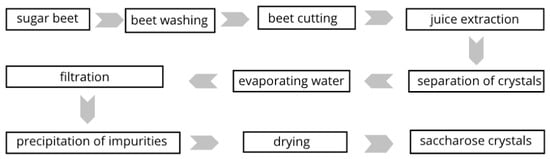
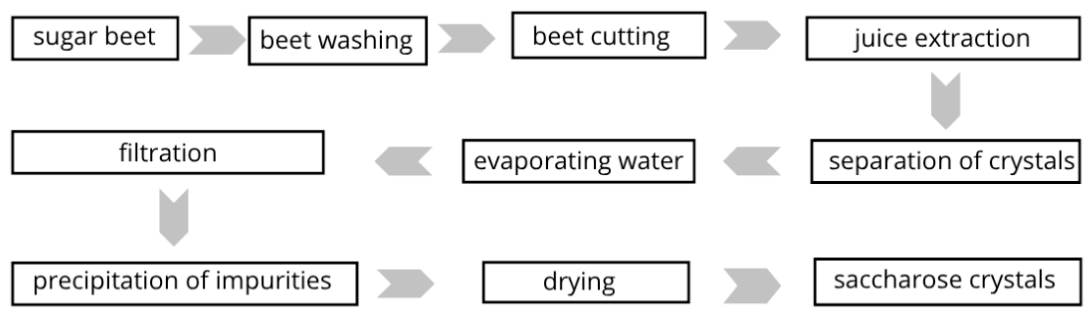
In Europe, the sugar beet harvesting season begins in September and lasts until January [26]. Sugar beets, being root crops, are extracted from the soil, so after harvesting their surface remains covered with a significant number of mineral impurities [27,28]. Despite the use of modern harvesting technologies that limit the amount of soil transferred, its share in the raw material delivered to the sugar factory is usually within a few percent and depends on the soil conditions of the given region [29]. The presence of these impurities is undesirable because it contributes to accelerated wear of equipment, introduces microflora into the technological process, and can increase the ash content in products and production residues. For this reason, a purification process is carried out at the stage of receiving the raw material at the plant. In the case of light soils, dry methods can be used, but water-based technologies, supported by mechanical separation, are most often used to remove stones, plant debris, and root fragments [30]. The water used in this process is purified and reused in the process circuit, while the separated mineral and organic fractions can be utilized, for example, in agriculture or by local entities. The next step is grinding the beets into thin slices. This increases the contact surface area and facilitates the sugar extraction process. In the case of sugar beets, sugar is extracted through a diffusion process, where the slices are passed through a diffuser, where water flows through them at an elevated temperature (approx. 65–75 °C). During this process, sucrose and other soluble components dissolve, creating what is known as raw juice. At the same time, non-sugar substances, such as mineral salts and nitrogen compounds, are partially washed out. The resulting raw juice, containing a significant amount of sucrose, forms the basis for further processing. The juice is then purified to remove non-sugar substances, using methods such as coagulation, sedimentation, filtration, and flotation. Once the clear juice is obtained, it is concentrated by evaporating the water, which increases the sugar concentration and produces a syrup. Next, controlled cooling causes the sucrose to crystallize. The sugar crystals are separated from the mother liquor using centrifuges, and the remaining syrup is sent for further concentration. The resulting sugar (Figure 1) is dried to reduce the moisture content to a very low level and then sent for packaging and distribution [31,32].
Figure 1.
Diagram of the process of producing sugar from sugar beets.
The complex and multi-stage nature of the sugar beet processing process means that its analysis cannot be limited solely to technological aspects. It is necessary to consider energy consumption, emissions, and the management of by-products, which form the basis for further analyses from an energy and environmental perspective. Analyzing the energy consumption of operations such as diffusion, evaporation, and drying is particularly important, as they require significant inputs of thermal and electrical energy. At the same time, greenhouse gas emissions associated with both the technological processes and the energy carriers used must also be considered. Water management, encompassing water consumption and wastewater generation and treatment, is also crucial. The management of by-products such as beet pulp, molasses, and lime sludge is also crucial, as they can be valuable raw materials in other industries or a source of renewable energy. Their efficient use not only reduces waste but also improves the overall resource efficiency of the process. Considering all these elements allows for a more comprehensive assessment of the sugar industry’s operations. This forms the basis for the use of advanced analytical methods such as life cycle analysis, mass–energy balances and exergy analysis, which allow for the identification of key areas for optimization and support the development of more sustainable and efficient technologies in the sugar industry.
3. The State of Research on Environmental and Energy Assessment of Technological Processes in the Sugar Industry and Their Theoretical Background
3.1. Environmental Assessment of Sugar Production Using LCA and Carbon Footprint
A significant body of research in the literature utilizes life cycle assessment and carbon footprint analysis to determine the environmental impact of sugar production. Namdari et al. [33] conducted an LCA of the sugar beet production process, considering both the cultivation and processing stages at a sugar mill in Iran. The studied system boundaries encompassed the entire process from beet planting to white sugar production. Various impact categories were calculated, including global warming, toxicity, and eutrophication. The results showed that electricity consumption during cultivation and the use of natural gas in the industrial process have the greatest environmental impact. Based on this, it was indicated that improving the efficiency of irrigation, fertilization, and energy consumption can reduce the negative impact of production. A similar approach was taken by Cedano et al. [34], who analyzed the sugar industry in the Dominican Republic from a sustainability perspective, with a particular focus on energy consumption and environmental impact. To this end, they used LCA to evaluate the sugar production process at local mills. Based on the results, strategies were proposed to reduce negative environmental impacts and improve production efficiency. The study also identified opportunities for implementing more environmentally and socially responsible practices in this sector. Overall, it identified the main challenges and development directions for a more sustainable sugar industry. Li et al. [35] focused on greenhouse gas emissions associated with sugar production in China, using the IPCC methodology. The authors determined the carbon footprint of a product unit, compared beet and cane sugar production, and developed emission projections for 2030 and 2060. Arangasamy et al. [36] assessed the carbon footprint of sugar production using a gate-to-gate LCA approach. The authors determined total greenhouse gas emissions and energy consumption during the production process. They identified the main sources of emissions, indicating that the raw material crushing process and electricity consumption are the largest contributors. They also analyzed the contribution of individual production stages to energy costs and consumption. Based on this, they proposed short- and long-term measures to reduce emissions and improve energy efficiency. Güereca et al. [37] analyzed sugar production in Mexico using an LCA approach for various production systems, sugar types, and technological levels. The authors considered three types of sugar and three technological levels, assessing their environmental impacts in terms of climate change, soil acidification, eutrophication, and human toxicity. They compared nine production systems, identifying differences in energy and fertilizer use and emissions. Based on these results, they identified improvement opportunities, such as optimizing fertilization, increasing yields, and better utilization of byproducts. Gonzales and Björnsson [38] estimated emissions associated with the production of white sugar and its byproducts throughout the entire production process, from beet cultivation to the factory floor. The analysis considered environmental impacts in terms of global warming, eutrophication, and dust emissions, based on actual data from Nordic Sugar A/S in Sweden. The authors compared various emission allocation methods between sugar and by-products, demonstrating that their inclusion lowers the attributed emissions for white sugar. Furthermore, they compared the results with the literature, obtaining a relatively low environmental impact. They also demonstrated that replacing natural gas with biomass can significantly reduce greenhouse gas emissions during the production process.
3.2. Modeling, Optimization and Analysis of Energy Indicators
Another important research area involves modeling, production scheduling, and the assessment of energy indicators. Balandin et al. [39] demonstrated that the problem of optimal sugar beet processing scheduling can be effectively solved using mathematical models. The authors analyzed the problem, reducing it to an assignment problem and selecting appropriate solution algorithms. They then performed calculations and simulations on real data to verify the model’s performance. As a result, they demonstrated the potential for increasing sugar production efficiency by optimizing the sugar beet processing schedule in a sugar refinery. The importance of assessing energy and environmental indicators was also emphasized by Gholamrezaee et al. [40]. The authors indicated that analyzing such indicators allows for quantifying energy consumption, identifying the main sources of losses, and assessing the environmental impact of production processes. This approach provides a basis for identifying areas requiring modernization and optimization. Recent studies have also highlighted the role of advanced thermal and process modeling in improving energy efficiency in industry. Li et al. [41] applied a numerical model based on porous media to optimize the performance of a low-emission heating boiler, demonstrating that process modifications such as waste heat recovery and improved flue gas management can significantly improve thermal efficiency and reduce emissions. The study confirms the usefulness of process energy modeling as a tool for identifying inefficiencies and supporting the optimization of industrial thermal systems.
3.3. Management of Sugar Industry By-Products
In addition to the sugar production process itself, the proper management of the resulting by-products is also crucial. In this context, increasing attention is being paid to beet pulp, which can be a valuable raw material for further processing. Numerous studies in the literature indicate its broad potential for use in the production of both biofuels and other bioproducts. These analyses emphasize the growing role of beet pulp in the development of a circular bioeconomy and in reducing the negative impact of the sugar industry on the environment. Usmani et al. [42] presented the possibilities of using beet pulp as a valuable raw material instead of waste in the sugar industry. The authors analyzed processing methods such as acid, hydrothermal, and enzymatic hydrolysis, which enable its decomposition into simple sugars. They indicated that enzymatic hydrolysis is particularly effective and environmentally friendly. The use of beet pulp to produce biofuels, biochemicals, and other value-added products is also discussed. Based on this, it was demonstrated that beet pulp has significant potential in modern biotechnological processes. Ptak et al. [43] described the possibilities of using beet pulp as a raw material to produce value-added products within a circular bioeconomy. The authors presented the concept of this economy and characterized the properties of the pulp with a view to its potential use. They analyzed the scale of its production, particularly in Poland, and current management methods. They then discussed methods for processing the pulp into bioproducts and renewable energy. They demonstrated that beet pulp can be a valuable raw material in various biotechnological processes. Câmara-Salim et al. [44] analyzed beet pulp and corn stover as potential raw materials for biorefineries, assessing their environmental and economic impacts. They conducted LCA and cost analyses for four scenarios in various European countries. They compared the environmental impacts across multiple categories, such as climate change, eutrophication, and resource consumption. The results showed that corn stover has a lower environmental impact and production costs than beet pulp. This study demonstrated that the choice of feedstock is crucial for the efficiency and sustainability of biorefinery processes. Rana et al. [45] prepared a review article discussing alternative uses for beet pulp generated in sugar production. The authors analyzed its use not only as feedstock but also as a raw material in bioenergy, the production of polymer composites, and wastewater treatment. They presented modern processing methods, such as hydrolysis, pyrolysis, nanofiber extraction, and carbonization. They highlighted the growing volume of sugar beets and the associated increase in waste that needs to be managed. Kaim [46] demonstrated in her work that waste management in the agri-food sector is a significant challenge today, but also offers opportunities for its reuse in line with the circular economy. The author presents the concepts and legal framework for this model in the European Union, emphasizing the importance of converting waste into secondary raw materials. Particular attention is paid to waste from the sugar industry, such as beet pulp and molasses, which can be used to produce feed, biogas, biochemicals, and biodegradable materials. The article demonstrates that beet pulp is a source of many valuable chemicals and can be used in various industries, including food, pharmaceutical, and materials. Furthermore, the author highlights the broad potential for biotechnological applications of molasses, including the production of biofuels, bioplastics, and single-cell protein. Dhodduraj et al. [47] presented beet pulp as a promising renewable raw material to produce high-value bioproducts. The authors analyzed its composition and fractionation and bioconversion strategies. Modern technologies, including advanced solvents and tools for metabolic engineering and synthetic biology, are also discussed. The article highlights the potential for increasing process efficiency through microbial modifications and the integration of processing steps. Based on this, it was demonstrated that the development of new technologies could transform beet pulp into a key raw material for modern bioproduction. Jiménez-Islas et al. [48] presented beet pulp as a major byproduct of sugar production and discussed its potential for further use. Various directions for its development were indicated, such as the production of biofuels, fertilizers, and industrial materials. Processes and processing conditions enabling the production of these products were also presented. Based on this, it was demonstrated that sugar beet pulp can increase the economic value of the entire sugar production process. The literature highlights the growing importance of environmental cost accounting in the sugar industry using the MFCA method [49]. Wang and Fu [50] point out that this sector is less analyzed than heavy industry, despite its significant environmental impact. The use of MFCA allowed for the identification of significant material and energy losses, particularly in extraction and clarification processes. The authors emphasize that this method allows for the identification of optimization measures, such as reducing raw material losses, improving energy efficiency, and increasing water recycling. Although only one MFCA-based study was identified in the reviewed literature, this method was included in the proposed framework because it enables simultaneous assessment of material losses, resource consumption, environmental impacts, and related costs, thereby complementing environmental and energy assessment methods. Additionally, its effective use in other branches of the food industry indicates the potential for use in the sugar sector as well [51,52].
3.4. Synthesis of the Results and Limitations of Previous Research
The selection of literature was based on its compliance with the aim of the work and was aimed at identifying the most important research directions and existing research gaps, rather than collecting the largest possible number of publications. In the reviewed literature, issues related to technological processes in the sugar industry are most often discussed in selected aspects. Some studies address the environmental assessment of sugar production, utilizing tools such as LCA, carbon footprinting, and greenhouse gas emission analysis. Others focus on energy consumption in individual stages of the production process, identifying the main sources of energy consumption in each stage, such as evaporation, drying, and crystallization. There are also studies that analyze the management of by-products, particularly beet pulp and molasses, which can be used in the production of feed, biogas, bioethanol, biochemicals, and other value-added products. Despite the growing number of studies, a comprehensive approach combining energy and environmental assessments, as well as analysis of the potential for by-product valorization in a single, coherent research approach, is still lacking. Previous studies often address single production stages or selected impact categories, neglecting the interdependencies between energy consumption, emissions, water and wastewater management, raw material quality, and waste stream management. This limits the ability to fully assess the efficiency of technological processes in the sugar industry and identify the most beneficial solutions from a sustainability perspective. Although integration efforts have been reported in the literature, the combined application of MFCA, exergy analysis, environmental assessment, and process modeling within a single analytical framework remains limited, particularly in the sugar industry. Their parallel development has only rarely resulted in coherent methodological frameworks enabling the simultaneous assessment of technological process flow, energy efficiency, environmental costs, and environmental impacts. Such an approach could help identify the main sources of environmental and energy burdens and indicate directions for optimizing sugar beet processing technologies. To organize and compare the most important research directions, Table 1 summarizes the analyzed publications, including the scope of research, methods used, and main conclusions.
Table 1.
A compilation of selected publications on the energy and environmental assessment of technological processes in the sugar industry.
Of the 16 articles analyzed, three addressed the global warming potential, three focused on greenhouse gas emissions, and two analyzed the carbon footprint of sugar production. Some studies also considered energy efficiency indicators, environmental costs, material losses, and the environmental impact of different production systems. A significant portion of the publications addressed the management of sugar industry by-products, such as sugar beet pulp, focusing on resource recovery, waste valorization, and the potential for biofuel and biochemical production. The analysis revealed that most studies focus on single environmental, energy, or economic aspects, while integrated approaches combining different assessment methods remain limited in articles related to the sugar industry. Most of the studies reviewed were based on LCA and carbon footprinting, with only a few studies using MFCA or process modeling. No studies were identified that used dynamic life-cycle analysis (DLCA) or integrated DLCA, exergy analysis, MFCA, and process modeling within a single, coherent analytical framework. It should be emphasized that the goal of this study was not to collect as many publications as possible, but rather to select studies most relevant to the research problem under consideration. The review focused on studies relating to the environmental and energy assessment of sugar production and methods that could be incorporated into a future integrated analytical framework.
For technological processes characterized by significant seasonality and variability in operating parameters, such as sugar beet processing, traditional static life cycle assessment (LCA) may have limitations in capturing temporal variations in operating conditions. Therefore, dynamic LCA, which allows for the analysis of environmental impacts considering changes over time, is gaining increasing importance. As Bahramian et al. [53] point out in their research, the number of studies applying dynamic LCA to food waste, among others, is still limited, and existing studies are characterized by significant methodological heterogeneity, particularly regarding system boundaries, functional units, and data quality. They also pointed to the need for further development and standardization of DLCA methods and their broader integration with process and environmental analyses. According to Shen et al. [54], DLCA, unlike classical static LCA, enables a more realistic representation of system performance by considering real-time variability in operating conditions and energy consumption. This approach also allows for the identification of areas with the greatest potential for reducing operating costs and environmental impacts, thus supporting the optimization of technological processes. Ghannadzadeh and Meer [55] confirmed the potential of dynamic life cycle assessment (DLCA) in more realistically representing the variability in industrial processes over time. However, they did not consider the integration of DLCA with process modeling and energy quality analysis, which constitutes a significant research gap in the context of energy-intensive processes in the sugar industry. Similarly, Qiu et al. [56] and Miao et al. [57] focused primarily on the environmental assessment of technological options and the identification of environmental impact sources, omitting a comprehensive analysis of the relationships between technological process flow, energy consumption, and energy quality over time.
4. Identification of the Research Gap
Based on literature analysis, the primary source of emissions in sugar beet production is the raw material preparation stage, which is characterized by high energy consumption. Therefore, it is crucial to thoroughly analyze process variables, such as energy consumption, to identify opportunities for efficiency improvement. Optimizing these parameters can contribute to reducing greenhouse gas emissions and the environmental impact of the production process.
The studies discussed point to several significant limitations of current approaches. First, most studies using LCA methods are still based on averaged data, which do not reflect the variability of operating conditions of technical systems. In processes such as sugar beet processing, a significant aspect is the variable process intensity depending on the season. This is primarily due to the seasonality of harvesting, raw material availability, and beet storage conditions. During the sugar season, plants operate at a much higher load, as the inflow of fresh raw material is at its peak. After harvesting, production intensity decreases, and activities focus more on utilizing reserves, maintaining infrastructure, and preparing installations for the next season. Seasonal variability affects not only the scale of production but also the organization of work, energy consumption, supply logistics, and resource planning.
A second noticeable gap is the fact that environmental analyses are conducted without linking them to process models. This prevents changes to process variables—including energy consumption, process efficiency, and material consumption—that could optimize the technological process under study. Combining environmental considerations with process models enables scenario analyses and process optimization not only in terms of production efficiency but also in minimizing the environmental footprint, in accordance with the principles of sustainable development.
The integration of environmental assessment with exergy-based evaluation of energy quality appears to be limited in the reviewed literature. This simplification may lead to a less comprehensive assessment of the process’s environmental performance, as different forms of energy have different capacities to perform work, known as exergy. Compared to traditional analyses, exergy analysis provides the opportunity to obtain important information regarding the sources of process losses. Without taking energy quality into account, it is difficult to consciously optimize the process to simultaneously improve its energy efficiency and reduce its environmental impact.
The fourth important aspect is the current limitation of the approach to the concept of using dynamic LCA. Although this approach represents an extension of classic, static LCA, its practical application remains largely conceptual and is not widely integrated with actual process models or operational data. Dynamic LCA assumes the consideration of temporal variability, for example, in energy consumption, emissions, and raw material availability. This is particularly important in seasonal processes, such as sugar beet processing, where process conditions can vary significantly depending on the campaign period. However, in many studies, this approach is not developed into a tool for implementing process optimization. Developing this approach by integrating dynamic LCA with process models and operational data could significantly increase its usefulness. This would allow for a more precise analysis of the impact of process variables over time.
5. Proposed Research Methodology
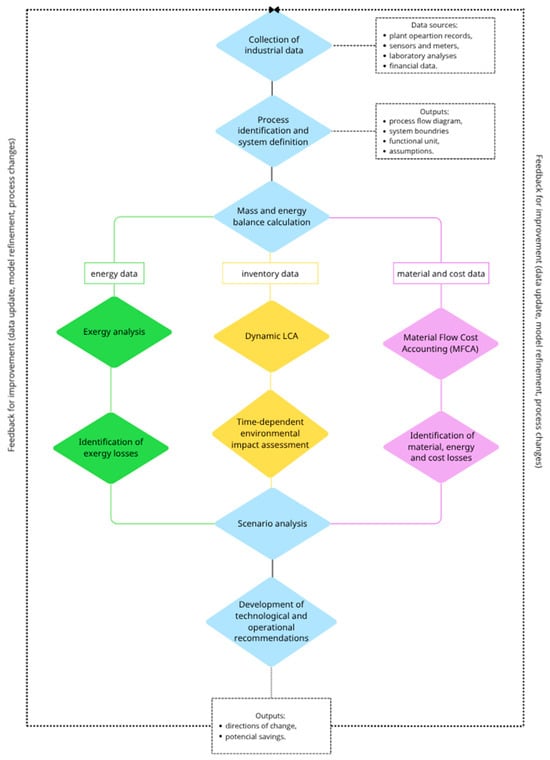
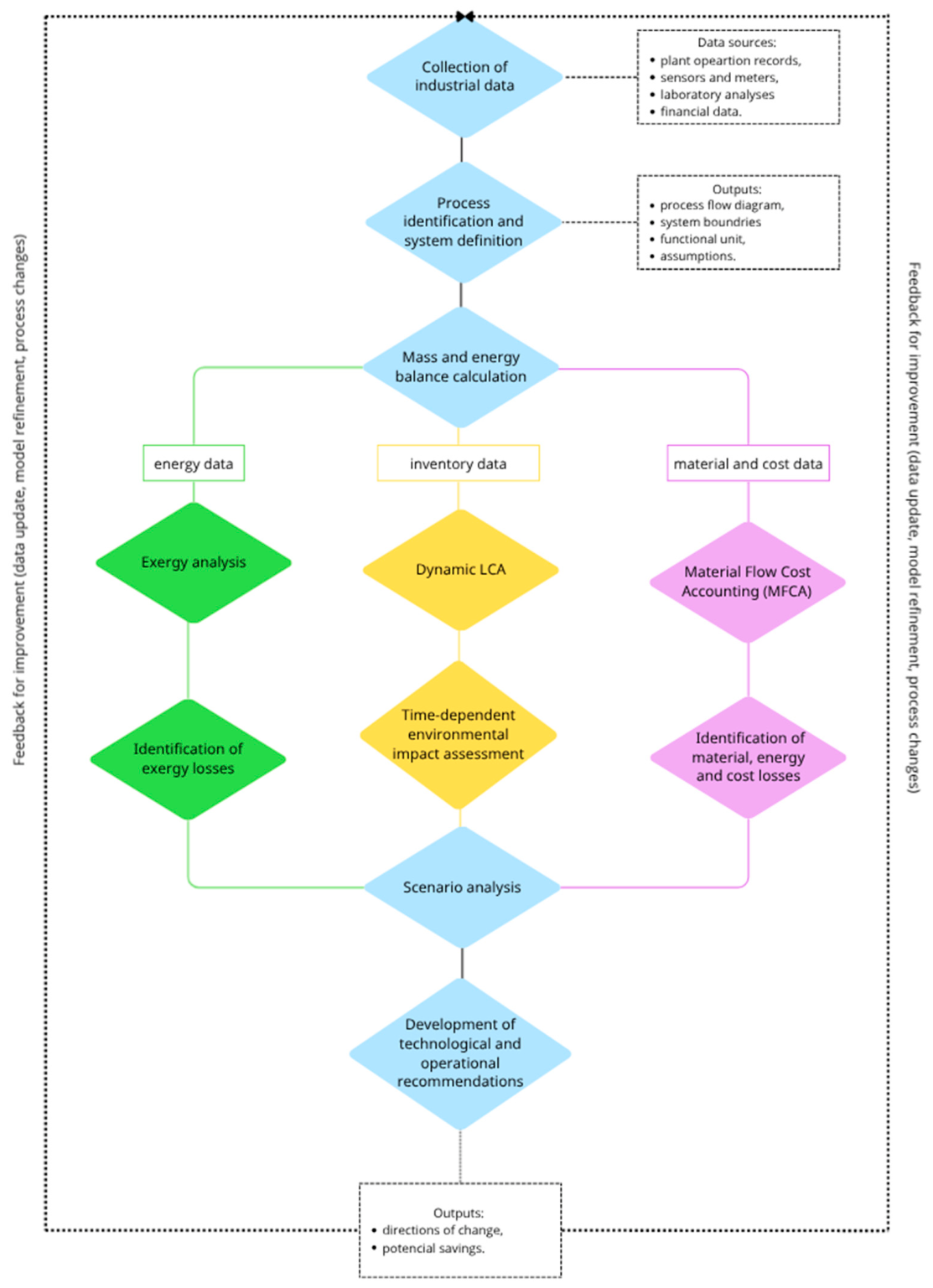
To address the research gap outlined above, the following framework for planned analysis is proposed: process modeling, exergy analysis, and dynamic life cycle assessment (Figure 2). Process modeling allows for the representation of actual operating conditions of industrial installations and the analysis of the impact of operational parameters on the course and efficiency of individual production stages. Exergy analysis, in turn, enables the identification of energy quality losses and the location of areas with the greatest potential for improving thermodynamic efficiency. These methods are complemented by dynamic life cycle assessment, which allows for the consideration of process variability over time and a more realistic assessment of their environmental impact throughout the production cycle. Integrating these three approaches enables a comprehensive assessment of technological processes in the sugar industry, considering resource consumption, emissions, and energy efficiency. The proposed analytical framework represents a conceptual approach that may support future research on the optimization of sugar production processes from environmental and energy perspectives.
Figure 2.
Integrated research framework for the evaluation and optimization of sugar processing processes (green line—exergy-related flow, yellow line—dynamic LCA-related flow, purple line—MFCA-related flow).
Process modeling is a key element of the proposed framework, providing detailed information on mass flows, energy consumption, operating parameters, and process efficiency for individual production steps. This data is then used as input for exergy analysis, enabling the identification of energy quality losses and thermodynamic inefficiencies. The results of both process modeling and exergy analysis are then incorporated into a dynamic life-cycle analysis, enabling the assessment of environmental impacts that take into account temporal variations in operating conditions. This integration allows for the simultaneous assessment of technological efficiency, energy efficiency, resource consumption, and environmental impact within a unified analytical framework. The proposed framework should be considered a conceptual research framework. Its practical implementation and validation using industrial data remain subjects of future research.
6. Discussion
The aim of the proposed approach in the planned research, which integrates dynamic life cycle analysis, exergy analysis, and process modeling, is to eliminate the limitations of traditional methods for assessing industrial systems, which are usually static and fragmented in nature, and to identify previously unexplored areas in the mechanical engineering and energy aspects of industrial processing in the sugar industry. Using this combination of tools enables a much more realistic representation of the actual operating conditions of sugar beet processing, where fluctuations in process variables are a natural and inherent element of system operation. A significant advantage of the proposed research is the ability to simultaneously analyze the relationships between the technological process and its energy and environmental impacts. This allows for the identification of key process points where the greatest energy losses or the highest environmental impacts occur, as well as the assessment of the impact of operational changes on the overall system efficiency. As a result, the analysis ceases to be solely descriptive and begins to be used as a tool supporting decision-making, optimizing operating parameters, and designing more efficient and sustainable technologies. Using process modeling with exergy and dynamic LCA analysis in research allows for scenario simulations that allow for the assessment of various variants of the technical system under study, based on the use of alternative energy sources or changes in by-product management. This approach allows not only for the identification of current problems but also for forecasting the effects of potential modernizations and investments. However, it should be noted that implementing such advanced methods poses significant challenges. Among the most important is the need to acquire high-resolution data covering various stages of the technological process. Despite these limitations, the research and application potential of the proposed approach is significant, as it enables a comprehensive assessment of processes and indicates directions for their further optimization in line with the principles of sustainable development.
A limitation of this work is the narrative nature of the review and the dependence of the results on the availability of publications meeting the adopted selection criteria. Furthermore, the analyzed studies differ in terms of system scope, functional unit, allocation methods, and process data availability, which makes direct comparison of results difficult.
7. Conclusions
The literature review conducted indicates that:
- (a)
- Technological processes in the sugar industry are multi-stage and characterized by significant energy consumption and significant environmental impact. Stages requiring large amounts of thermal and electrical energy, such as diffusion, evaporation, crystallization, and drying, are of crucial importance. The management of by-products, including beet pulp, molasses, and limestone sludge, remains an important element of the overall process assessment.
- (b)
- Existing studies most often focus on selected aspects of specific processes, such as environmental assessment using the LCA method, carbon footprint, energy consumption of individual operations, material flow and energy costing (MFCA), or the possibility of by-product valorization. These aspects are usually treated separately. As is well known, LCA allows for the assessment of environmental impacts and MFCA identifies material, energy, and cost losses, while process modeling enables the analysis of technological parameters.
- (c)
- There is a lack of a coherent approach that would integrate environmental, energy, cost, and process assessments into a single framework or analytical model, which limits the ability to fully identify the relationships between technological parameters, energy consumption, emission levels, material loss costs, and the efficiency of side stream management.
Given the facts and observations presented above, the following forward-looking suggestions arise:
- (a)
- It is justified to develop integrated methods for assessing technological processes in the sugar industry, encompassing dynamic life cycle assessment, exergy analysis, material and energy flow costing, and process-energy modeling.
- (b)
- The integration of the approaches presented above may provide a basis for the simultaneous assessment of environmental impacts, energy efficiency, material and cost losses, and process operating conditions. This will lead to the identification of stages with the greatest potential for modernization and the assessment of the effects of implementing alternative technological solutions.
- (c)
- Further research should focus on obtaining real-world industrial data with high time resolution, building process models of individual production stages, and integrating these models with environmental and exergy analysis.
- (d)
- A thorough analysis and evaluation of scenarios involving heat recovery, the use of renewable energy sources, reduced water consumption, and efficient management of by-products is desirable, providing a basis for developing tools supporting process optimization in the sugar industry, in accordance with the principles of sustainable development and the circular economy.
Author Contributions
Conceptualization, P.W., A.T. and Z.K.; methodology, P.W. and A.T. software, P.W.; validation, P.W.; formal analysis, P.W., A.T. and Z.K.; investigation, P.W.; resources, P.W.; data curation, P.W., A.T. and Z.K.; writing—original draft preparation, P.W., A.T. and Z.K.; writing—review and editing, P.W., A.T. and Z.K.; visualization, P.W.; supervision, A.T. and Z.K.; project administration, P.W. All authors have read and agreed to the published version of the manuscript.
Funding
This research received no external funding.
Data Availability Statement
The raw data supporting the conclusions of this article will be made available by the authors upon request.
Conflicts of Interest
The authors declare no conflicts of interest.
References
- Bharadva, D. Growth and development of indian sugar industry. Int. J. Manag. Public Policy Res. 2026, 5, 82–86. [Google Scholar] [CrossRef] [Scilit]
- Gkaliouri, C.M.; Ioannou, Z.; Rigopoulos, N.; Sarris, D. Sustainable Management of Agro-Food Wastes Derived from the Olive Mill and Sugar Industry and Clinoptilolite to Produce Novel Adsorptive Materials. Sustainability 2024, 16, 9204. [Google Scholar] [CrossRef] [Scilit]
- Bahrami, M.E.; Honarvar, M.; Ansari, K.; Jamshidi, B. Measurement of quality parameters of sugar beet juices using near-infrared spectroscopy and chemometrics. J. Food Eng. 2020, 271, 109775. [Google Scholar] [CrossRef] [Scilit]
- Chen, S.; Zhang, C.; Liu, J.; Ni, H.; Wu, Z. Current status and prospects of the global sugar beet industry. Sugar Tech. 2024, 26, 1199–1207. [Google Scholar] [CrossRef] [Scilit]
- Tayyab, M.; Wakeel, A.; Mubarak, M.U.; Artyszak, A.; Ali, S.; Hakki, E.E.; Mahmood, K.; Song, B.; Ishfaq, M. Sugar beet cultivation in the tropics and subtropics: Challenges and opportunities. Agronomy 2023, 13, 1213. [Google Scholar] [CrossRef] [Scilit]
- Wimmer, S.; Sauer, J. Profitability development and resource reallocation: The case of sugar beet farming in Germany. J. Agric. Econ. 2020, 71, 816–837. [Google Scholar] [CrossRef] [Scilit]
- Bručienė, I.; Savickas, D.; Šarauskis, E. Comparative environmental analysis of sugar beet production using a solar-driven robot and conventional systems from a sustainability perspective. Clean. Environ. Syst. 2024, 13, 100186. [Google Scholar] [CrossRef] [Scilit]
- Website of Krajowy Związek Plantatorów Buraka Cukrowego. Available online: www.kzpbc.com.pl/wyniki-produkcyjne-w-polsce,29,pl.html (accessed on 25 March 2026).
- PN-EN ISO 14044:2009; Environmental Management—Life Cycle Assessment—Requirements and Guidelines. Polish Committee for Standardization: Warsaw, Poland, 2009.
- PN-EN ISO 14040:2009; Environmental Management—Life Cycle Assessment—Principles and Framework. Polish Committee for Standardization: Warsaw, Poland, 2009.
- Walichnowska, P.; Mazurkiewicz, A.; Martínez Valle, J.M.; Polishchuk, O. Environmental analysis of the impact of changing shrink film in the mass bottle packaging process. Appl. Sci. 2024, 14, 6641. [Google Scholar] [CrossRef] [Scilit]
- Marques, C.; Güneş, S.; Vilela, A.; Gomes, R. Life-cycle assessment in agri-food systems and the wine industry—A circular economy perspective. Foods 2025, 14, 1553. [Google Scholar] [CrossRef] [Scilit] [PubMed]
- Boenzi, F.; Digiesi, S.; Facchini, F.; Silvestri, B. Life cycle assessment in the agri-food supply chain: Fresh versus semi-finished based production process. Sustainability 2022, 14, 13010. [Google Scholar] [CrossRef] [Scilit]
- Guillaume, A.; Hubatová-Vacková, A.; Kočí, V. Environmental impacts of egg production from a life cycle perspective. Agriculture 2022, 12, 355. [Google Scholar] [CrossRef] [Scilit]
- Gu, C.; Gu, H.; Gong, M.; Blackadar, J.; Zahabi, N. Comparison of using two LCA software programs to assess the environmental impacts of two institutional buildings. J. Sustain. Struct. 2024, 4, 1–13. [Google Scholar] [CrossRef] [Scilit]
- Carlsen, M.H.; Bjøntegaard, M.M.; van Oort, B.; Jafarzadeh, S.; Mehta, S.; Wright, E.C.; Andersen, L.F. Environmental impact of Norwegian food and beverages: Compilation of a life cycle assessment food database. Food Nutr. Res. 2025, 68, 10–29219. [Google Scholar] [CrossRef] [Scilit]
- Walichnowska, P.; Idzikowski, A. Assessment and analysis of the environmental impact of the thermo-shrinkable packaging process on the way the packaging machine is powered based on LCA. Manag. Syst. Prod. Eng. 2023, 31, 355–360. [Google Scholar] [CrossRef] [Scilit]
- Walichnowska, P.; Kruszelnicka, W.; Piasecka, I.; Flizikowski, J.; Tomporowski, A.; Mazurkiewicz, A.; Valle, J.M.; Opielak, M.; Polishchuk, O. Analysis of the Impact of the Post-Consumer Film Waste Scenario and the Source of Electricity on the Harmfulness of the Mass Packaging Process. Polymers 2024, 16, 3467. [Google Scholar] [CrossRef] [Scilit] [PubMed]
- Rehman, A.; Ma, H.; Ozturk, I.; Ulucak, R. Sustainable development and pollution: The effects of CO2 emission on population growth, food production, economic development, and energy consumption in Pakistan. Environ. Sci. Pollut. Res. 2022, 29, 17319–17330. [Google Scholar]
- Altın, H. The impact of energy efficiency and renewable energy consumption on carbon emissions in G7 countries. Int. J. Sustain. Eng. 2024, 17, 134–142. [Google Scholar] [CrossRef] [Scilit]
- Leda, P.; Piasecka, I.; Leda, A.; Szala, G.; Tomporowski, A.; Walichnowska, P.; Bałdowska-Witos, P.; Kruszelnicka, W. Investigating and Analyzing the Influence of a Solar Power Plant’s Life Cycle on the Depletion of Natural Materials and Mineral Resources. Eng. 2024, 5, 2695–2708. [Google Scholar] [CrossRef] [Scilit]
- Osmolak, K.; Mikulski, D.; Kłosowski, G. Efficient production of fuel ethanol via the simultaneous use of distillery stillage biomass and beet molasses. Energies 2025, 18, 312. [Google Scholar] [CrossRef] [Scilit]
- Ayas, S. Effects of different irrigation and fertilization levels on the yield and quality of sugar beet molasses. Sugar Tech. 2025, 27, 1039–1055. [Google Scholar] [CrossRef] [Scilit]
- Dekamin, M.; Sadeghimofrad, T.; Ahmadloo, A. Energy, economic, and environmental (3E) assessment of the major greenhouse crops: MFCA-LCA approach. Environ. Sci. Pollut. Res. 2024, 31, 21894–21912. [Google Scholar] [CrossRef] [Scilit]
- Liu, S.; Xie, Y.; Liang, W.; Liu, T.; Luo, S. Study on Eco-Efficiency Optimization Based on LCA-MFCA Integration Method: A Case Study on the Cement Industry. J. Environ. Dev. 2025, 34, 988–1020. [Google Scholar]
- Muir, B.M.; Anderson, A.R. Development and diversification of sugar beet in Europe. Sugar Tech. 2022, 24, 992–1009. [Google Scholar]
- Wolfgang, A.; Temme, N.; Tilcher, R.; Berg, G. Understanding the sugar beet holobiont for sustainable agriculture. Front. Microbiol. 2023, 14, 1151052. [Google Scholar] [CrossRef] [Scilit] [PubMed]
- Hanhur, V.; Filonenko, V. Effect of soil cultivation systems and the degree of saturation of crop rotations with sugar beet on the level of yield and quality of sugar beet roots. Sci. Prog. Innov. 2024, 27, 24–29. [Google Scholar]
- Du, J.; Song, B.; Li, X.; Huang, W. Long-term cultivation of sugar beet: Effect on rhizosphere micro-flora, soil fertility and beet productivity. Sugar Tech. 2022, 24, 1821–1831. [Google Scholar] [CrossRef] [Scilit]
- Rezaei, J.; Fasahat, P. Autumn-sown sugar beet cultivation in semiarid regions. In Sugar Beet Cultivation, Management and Processing; Springer Nature: Singapore, 2022; pp. 275–290. [Google Scholar]
- Eggleston, G.; Lima, I. Sustainability issues and opportunities in the sugar and sugar-bioproduct industries. Sustainability 2015, 7, 12209–12235. [Google Scholar] [CrossRef] [Scilit]
- Bordonal, R.D.O.; Carvalho, J.L.N.; Lal, R.; De Figueiredo, E.B.; De Oliveira, B.G.; La Scala, N., Jr. Sustainability of sugarcane production in Brazil. A review. Agron. Sustain. Dev. 2018, 38, 13. [Google Scholar] [CrossRef] [Scilit]
- Namdari, M.; Rafiee, S.; Notarnicola, B.; Tassielli, G.; Renzulli, P.A.; Hosseinpour, S. Use of LCA indicators to assess Iranian sugar production systems: Case study—Hamadan Province. Biomass Convers. Biorefinery 2024, 14, 6759–6772. [Google Scholar] [CrossRef] [Scilit]
- Cedano, D.C.; Ramos Ciprián, R.D.; Bastante Ceca, M.J.; Viñoles Cebolla, R. Sustainable development analysis in the sugar industry: Assessing environmental energy impact in sugar production through lifecycle assessment. WIT Trans. Ecol. Environ. 2024, 262, 683–692. [Google Scholar] [CrossRef] [Scilit]
- Li, K.; Zhao, M.; Li, Y.; He, Y.; Han, X.; Ma, X.; Ma, F. Spatiotemporal trends of the carbon footprint of sugar production in China. Sustain. Prod. Consum. 2024, 46, 502–511. [Google Scholar] [CrossRef] [Scilit]
- Arangasamy, D.B.; Subramaniam, M.; Rangasamy, S.; Veeraswamy, D.; Dananjeyan, B.; Desikan, R. Carbon Footprint and Embodied Energy for Sugar Production: A case Study of Sugar Industry, Tamil Nadu, India. Sugar Tech. 2024, 26, 1096–1107. [Google Scholar] [CrossRef] [Scilit]
- Güereca, L.P.; Padilla-Rivera, A.; Aguilar-Rivera, N. Life cycle assessment of nine representative agroindustrial systems of sugar production in Mexico. Food Bioprod. Process. 2022, 131, 164–175. [Google Scholar] [CrossRef] [Scilit]
- Gonzalez, M.N.G.; Björnsson, L. Life cycle assessment of the production of beet sugar and its by-products. J. Clean. Prod. 2022, 346, 131211. [Google Scholar] [CrossRef] [Scilit]
- Balandin, D.; Egamov, A.; Kuzenkov, O.; Pristavchenko, O.; Vildanov, V. Mathematical modelling and optimization of scheduling for processing beet in sugar production. Int. Conf. Math. Model. Supercomput. 2022, 1750, 227–238. [Google Scholar] [CrossRef] [Scilit]
- Gholamrezaee, H.; Kheiralipour, K.; Rafiee, S. Investigation of energy and environmental indicators in sugar production from sugar beet. J. Environ. Sci. Stud. 2021, 6, 3540–3548. [Google Scholar]
- Li, Z.B.; Yu, Y.; Jia, L.; Wu, Y.W.; Cheng, P.; Zhang, Z.; Li, Z.K.; Fan, C.H.; Guo, X.M. Thermal characteristic analysis and performance optimization of a novel heating boiler based on a porous media model. Appl. Therm. Eng. 2026, 289, 130035. [Google Scholar] [CrossRef] [Scilit]
- Usmani, Z.; Sharma, M.; Diwan, D.; Tripathi, M.; Whale, E.; Jayakody, L.N.; Moreau, B.; Thakur, V.K.; Tuohy, M.; Gupta, V.K. Valorization of sugar beet pulp to value-added products: A review. Bioresour. Technol. 2022, 346, 126580. [Google Scholar] [CrossRef] [Scilit] [PubMed]
- Ptak, M.; Skowrońska, A.; Pińkowska, H.; Krzywonos, M. Sugar beet pulp in the context of developing the concept of circular bioeconomy. Energies 2021, 15, 175. [Google Scholar] [CrossRef] [Scilit]
- Câmara-Salim, I.; Conde, P.; Feijoo, G.; Moreira, M.T. The use of maize stover and sugar beet pulp as feedstocks in industrial fermentation plants–an economic and environmental perspective. Clean. Environ. Syst. 2021, 2, 100005. [Google Scholar] [CrossRef] [Scilit]
- Rana, A.K.; Gupta, V.K.; Newbold, J.; Roberts, D.; Rees, R.M.; Krishnamurthy, S.; Thakur, V.K. Sugar beet pulp: Resurgence and trailblazing journey towards a circular bioeconomy. Fuel 2022, 312, 122953. [Google Scholar] [CrossRef] [Scilit]
- Kaim, U. Methods for the valorisation of agri-food waste according to the circular bioeconomy concept. Nauk. Inżynierskie I Technol. 2021, 1, 37. [Google Scholar]
- Dhodduraj, K.; Narisetty, V.; Nabavi, S.A.; Saldivar, R.P.; Coulon, F.; Agrawal, D.; Maity, S.K.; Balan, V.; Kumar, V. Beets beyond sugar: Potential and limitations of sugar beet pulp as a feedstock for biorefineries. Ind. Crops Prod. 2026, 240, 122559. [Google Scholar] [CrossRef] [Scilit]
- Jiménez-Islas, D.; Pérez-Romero, M.E.; Ventura-Cruz, I.; Flores-Romero, M.B. Sugar beet pulp and research efforts to diversify its use. In Sugar Beet Cultivation, Management and Processing; Springer Nature: Singapore, 2022; pp. 955–969. [Google Scholar]
- ISO 14051:2011; Environmental Management—Material Flow Cost Accounting—General Framework. International Organization for Standardization: Geneva, Switzerland, 2011.
- Wang, C.; Fu, X. Environmental Cost Accounting in the Sugar Industry: An MFCA Perspective on “Sweet” Environmental Burdens. J. Green Econ. Low-Carbon Dev. 2024, 3, 45–55. [Google Scholar] [CrossRef] [Scilit]
- Marco-Fondevila, M.; Moneva, J.M.; Llena-Macarulla, F. Accounting for carbon footprint flows in wine production process. Case study in Spanish winery. Appl. Sci. 2020, 10, 8381. [Google Scholar] [CrossRef] [Scilit]
- Dekamin, M.; Nabavi-Pelesaraei, A.; Rezaei, H. Economic and environmental dynamics of tea production through material flow cost accounting (MFCA). Clean. Eng. Technol. 2025, 26, 100971. [Google Scholar] [CrossRef] [Scilit]
- Bahramian, M.; Hynds, P.D.; Priyadarshini, A. Dynamic life cycle assessment of commercial and household food waste: A critical global review of emerging techniques. Sci. Total Environ. 2024, 921, 170853. [Google Scholar] [CrossRef] [Scilit] [PubMed]
- Shen, K.; Bolis, N.; Yuan, C.; Donovan, R.; Li, G.P.; Li, B. Dynamic life cycle assessment framework of cold food storage facilities. Procedia CIRP 2024, 122, 976–981. [Google Scholar] [CrossRef] [Scilit]
- Ghannadzadeh, A.; van Der Meer, Y. Combining dynamic life cycle assessment and net ecosystem exchange through the framework of biobased materials and products-life cycle assessment (BBM-LCA): Application to polylactic acid. Biofuels Bioprod. Biorefining 2025, 19, 1075–1087. [Google Scholar] [CrossRef] [Scilit]
- Qiu, J.; Tao, K.; Yang, Y.; Miao, Y.; Li, H.; Lin, C.S.K.; Wang, X.; Hu, Y. Environmental impacts of polylactic acid synthesis via diverse biorefinery strategies: Progressive analysis based on dynamic lifecycle assessment. ACS Sustain. Chem. Eng. 2025, 13, 898–910. [Google Scholar] [CrossRef] [Scilit]
- Miao, Y.; Hu, X.; To, M.H.; Wang, H.; Qin, Z.; Mou, J.; Yan, W.; Kaur, G.; Roelants, S.L.; Lin, C.S.K.; et al. Environmental evaluation of emerging bakery waste oil-derived sophorolipids production by performing a dynamic life cycle assessment. Sustain. Prod. Consum. 2024, 47, 59–70. [Google Scholar] [CrossRef] [Scilit]

Disclaimer/Publisher’s Note: The statements, opinions and data contained in all publications are solely those of the individual author(s) and contributor(s) and not of MDPI and/or the editor(s). MDPI and/or the editor(s) disclaim responsibility for any injury to people or property resulting from any ideas, methods, instructions or products referred to in the content. |
© 2026 by the authors. Licensee MDPI, Basel, Switzerland. This article is an open access article distributed under the terms and conditions of the Creative Commons Attribution (CC BY) license.