


Abstract
Energy communities (ECs) are becoming a key institutional instrument for decentralizing the European energy transition, yet their implementation remains constrained by fragmented legal interpretation, uneven national transposition, and unresolved socio-technical coordination problems. This review synthesizes the peer-reviewed literature, EU primary legal texts, and national legislation to clarify the distinction between Renewable Energy Communities (RECs) and Citizen Energy Communities (CECs), alongside the amendment relationship between the RED II and RED III directives. The analysis demonstrates that the scalability of these initiatives depends less on theoretical legal recognition and more on aligning operational frameworks, including metering, settlement, cybersecurity, and equitable allocation rules. The Romanian case illustrates this challenge clearly: rapid prosumer growth creates valuable distributed generation but also exposes physical grid constraints, asymmetric socio-economic participation capacity, and weak experience with cooperative energy governance. To address these vulnerabilities, this paper contributes a focused analytical framework linking energy justice, peer-to-peer game-theoretic modeling, and the strategic integration of “anchor-prosumers.” The study argues that larger renewable self-consumers can act as stabilizing community anchors when internal energy prices are designed between wholesale export values and retail import prices, thereby improving both producer incentives and consumer affordability. Future research developments, including targeted surveys and longitudinal empirical validations, will sustain this claim and optimize the socio-economic resilience of decentralized energy markets.
1. Introduction
The global energy transition is currently driven by the urgent need to achieve carbon neutrality by 2050 as a means to mitigate the impacts of climate change [1,2]. In this landscape, the traditional top-down production model is being supplemented by decentralized systems known as energy communities (ECs), which empower citizens and prosumers to participate actively in the energy market [3,4]. The European Union has formalized this shift through the “Clean Energy for All Europeans” package, establishing a comprehensive legal framework for two distinct entities: Renewable Energy Communities (RECs) and Citizen Energy Communities (CECs) [5]. In contrast, Citizen Energy Communities are defined under the IEMD Directive (2019/944) [6] and focus specifically on the internal electricity market. Unlike RECs, CECs are not strictly limited to renewable sources and do not generally impose a proximity requirement at the European level, allowing for more flexible participation across wider regions [1,7]. Both models operate as legal entities based on open and voluntary participation, prioritizing social and environmental benefits for their members over profit maximization [1]. By transforming passive consumers into “prosumers”, actors who both produce and consume energy, these communities enhance the social acceptance of green technologies and provide economic relief through shared local resources [3,4]. The long-term viability of these initiatives depends on integrating advanced technical solutions, such as Battery Energy Storage Systems (BESS) and intelligent multi-agent management frameworks, to ensure grid stability and equitable benefit distribution [8]. Despite the growing body of literature on decentralized energy, a significant research gap remains regarding the practical alignment of EU directives with national regulatory frameworks and socio-technical realities, particularly in emerging markets like Romania. Existing reviews often remain at a theoretical level, without addressing the specific economic bottlenecks caused by national net-metering schemes or mandatory cybersecurity compliance. Therefore, the primary objective of this review is to bridge this gap by providing a structured synthesis of the legal, economic, and behavioral dimensions of energy communities. The specific contribution of this paper is twofold: first, it critically analyzes the transposition of the RED II, RED III, and IEMD directives within the uniquely constrained Romanian context; second, it introduces the “anchor prosumer” integration model, supported by a price-spread analysis, as a novel socio-economic mechanism to mitigate adverse selection and ensure the financial viability of localized energy markets.
2. Methodology
To ensure a comprehensive and replicable analysis of the legal, economic, and technical dimensions of energy communities, this review was conducted as a structured narrative review. This qualitative approach was explicitly selected over a quantitative meta-analysis to accommodate the highly interdisciplinary nature of the data, which spans dynamic legal frameworks, socio-economic theories, and microgrid engineering metrics. No physical equipment, laboratory materials, proprietary datasets, or analytical software were used in this review; consequently, manufacturer locations and software version numbers are not applicable. Bibliographic searches were conducted through the web interfaces of Web of Science, Scopus, and IEEE Xplore, while legal texts were retrieved from EUR-Lex and the Romanian legislative portal.
2.1. Search Strategy and Databases
A systematic literature search was conducted utilizing primary academic databases, including Web of Science, Scopus, and IEEE Xplore. To accurately capture the complex regulatory framework, this academic search was supplemented by a direct analysis of primary legal texts sourced from the EUR-Lex database and the Romanian Ministry of Justice portal. The search queries utilized Boolean operators to combine terms related to community structures with regulatory and technical concepts: (“energy communities” OR “renewable energy communities” OR “citizen energy communities”) AND (“RED II” OR “RED III” OR “IEMD” OR “peer-to-peer trading” OR “game theory” OR “anchor prosumer”).
2.2. Inclusion and Exclusion Criteria
The temporal scope of the search was restricted to literature and legislation published between 2018 (the year the RED II Directive was introduced) and early 2026. Inclusion criteria required documents to be peer-reviewed academic articles, official European Union directives, or national legislative acts. The selection process prioritized studies addressing the intersection of policy frameworks, socio-economic barriers, and microgrid stochastic modeling. Purely technical engineering papers lacking an economic or regulatory context, as well as non-peer-reviewed opinion pieces, were excluded from the final qualitative synthesis.
2.3. Data Extraction and Thematic Synthesis
Following the screening process, the selected literature was categorized into three primary analytical dimensions to structure the review: (i) the comparative European legal framework (RED vs. IEMD); (ii) socio-economic and behavioral modeling (game theory and Markov chains applied to prosumer cooperation); and (iii) regional implementation challenges. The latter focuses specifically on the transposition of European directives into Romanian national law (e.g., Government Emergency Ordinance No. 59/2025) and the consequent formulation of the “anchor prosumer” strategic integration model.
3. European Legal and Organizational Framework
3.1. Legal and Conceptual Framework: RED vs. IEMD
The European Union’s legislative architecture for energy communities is established through the “Clean Energy for All Europeans” package, which aims to place consumers at the center of the energy transition [9]. This framework is built upon two distinct legal pillars: the Renewable Energy Directive (RED II, amended by RED III) and the Internal Electricity Market Directive (IEMD) [6,10,11]. While both models operate as legal entities based on open and voluntary participation—prioritizing socio-environmental benefits over financial profit—they differ significantly in scope, technological neutrality, and geographic constraints.
Renewable Energy Communities (RECs), governed by Directive (EU) 2023/2413 (RED III), are characterized by:
- Energy Vectors and Sources: Strictly limited to 100% renewable sources, covering electricity, heating, cooling, gas, and water [1,3,12].
- Proximity and Control: Geographically bound; members must be located in proximity to the renewable projects, ensuring the entity is effectively controlled by local shareholders [9].
- Membership: Participation is restricted to natural persons, SMEs, and local authorities [3,9].
In contrast, Citizen Energy Communities (CECs), introduced by Directive (EU) 2019/944 (IEMD), focus specifically on the internal electricity market. Their framework differs through:
- Geographic Flexibility: CECs are not constrained by geographical proximity at the EU level, allowing them to operate across wider regions [1,9].
- Sector Focus and Technological Neutrality: Primarily dedicated to the electricity sector (generation, distribution, aggregation, and storage). They are not strictly limited to renewables, allowing the use of high-efficiency traditional systems for grid stability if necessary [3,7].
The framework was further enhanced by RED III, which raised the mandatory EU renewable energy target to 42.5% by 2030 [13]. Once Member States transpose these directives, they must ensure that energy communities can share energy using the public grid transparently, granting “prosumers” the legal right to consume, store, or sell energy produced on their premises [4,6].
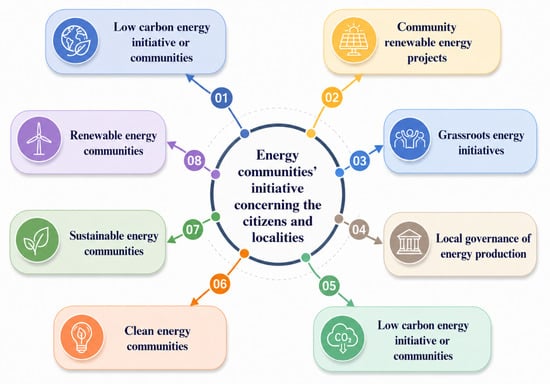
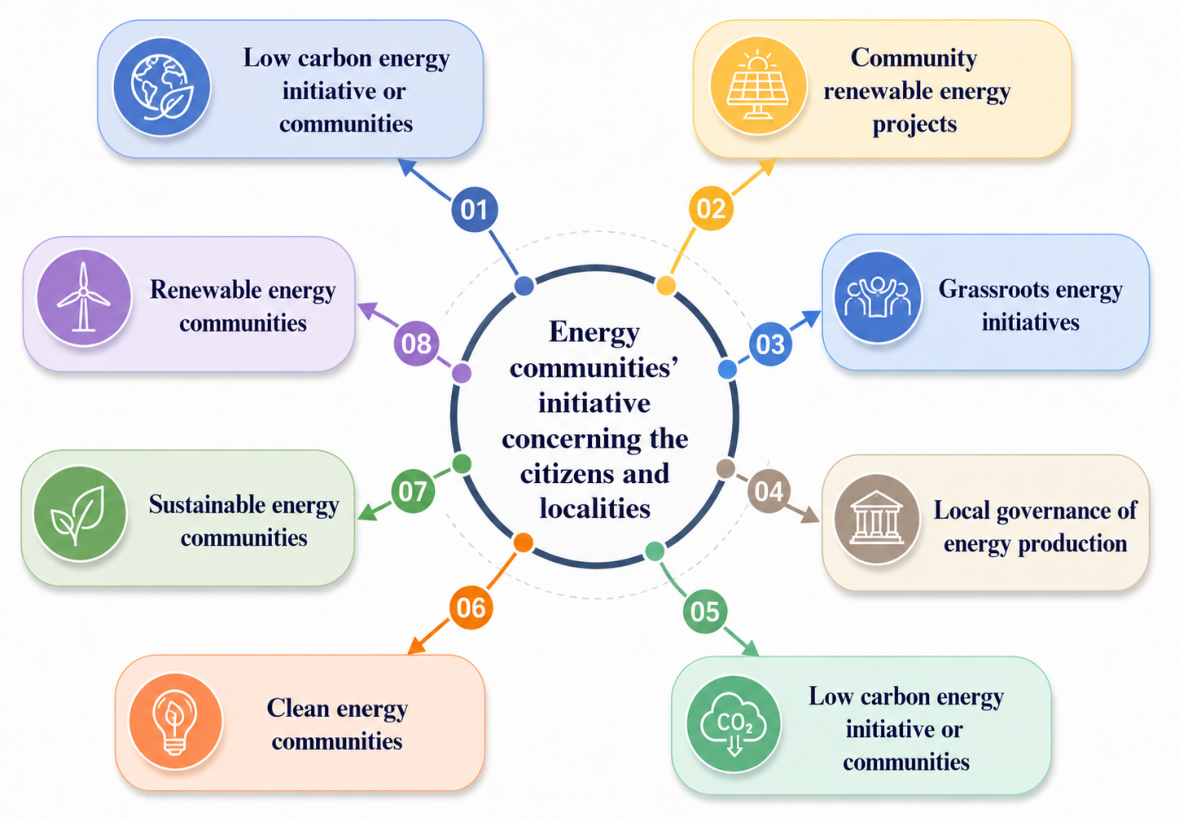
A critical interpretation of this dual framework reveals profound regulatory contradictions that affect scalability. One primary conflict exists between the strict geographic “proximity” requirements of RECs and the actual physical topology of distribution grids. While proximity fosters local social cohesion, it often restricts communities from optimizing energy flows across broader, less congested grid nodes, thereby limiting grid flexibility. Furthermore, significant implementation asymmetries exist across EU Member States. While mature markets (e.g., Germany, Netherlands) interpret these directives to allow seamless integration of aggregators, emerging markets often strictly limit community operations to behind-the-meter boundaries. This contradiction—promoting citizen empowerment while imposing rigid spatial and operational boundaries—remains a fundamental barrier to scaling decentralized energy initiatives from isolated pilot projects to systemic market actors. To navigate this complex conceptual landscape, Figure 1 illustrates the broader terminology and various concepts frequently used interchangeably to describe citizen-led energy initiatives across different European contexts.
Figure 1.
Various terms used for citizen-led energy initiatives.
3.2. Organizational Models and Business Typologies
Energy communities can be classified into two broad categories: grassroots initiatives and market-based models. Grassroots projects are typically initiated by local citizens or interest groups to meet local needs, while market-based models may involve external firms initiating projects where community members participate as shareholders [14].
Research has identified several successful business archetypes within these frameworks, whose technical and economic characteristics, advantages, and challenges are detailed in Table 1:
- Energy Cooperatives: The most traditional form, emphasizing democratic governance (one member, one vote) [4,15].
- Community Prosumerism: Focused on households that both produce and consume energy through shared installations [15].
- Local Energy Markets (LEM): Facilitating decentralized trading between participants [10,15].
- Collective Generation: Shared ownership of a single large asset, such as a wind turbine or a large PV array [10,15].
- Aggregators and ESCOs: Providing technical management and efficiency services to the community [10,15].
Table 1.
Technical and economic characteristics of energy community business archetypes.
A morphological analysis of 90 pioneering energy communities suggests that while “generating renewable energy” and “reducing energy costs” are the primary value propositions, emerging models are increasingly looking toward sector coupling (integrating heat and mobility) and providing grid flexibility services [15].
4. Cybersecurity and Legislative Implementation in Romania
4.1. The Legislative Framework and the NIS2 Directive in Romania
The European NIS2 Directive [20] was transposed into Romanian national legislation through Emergency Ordinance No. 155/2024 [21] and subsequently ratified by Law No. 124/2025 [22]. This regulatory framework aims to bolster resilience against cyber threats by placing the energy sector at the core of national defense, mandating stringent protection for critical infrastructures, including Operational Technology (OT) and IT networks [23].
4.2. Impact on Energy Communities and Compliance Controversies
The legislation classifies organizations as “essential” or “important” entities based on their criticality to the national grid [23]. Energy communities fall under these obligations—often as “important” entities—depending on their size or if they provide specific market services such as energy aggregation, demand response, or storage [21,24].
The practical implementation of these protocols in Romania has spurred significant debate. A major point of contention involves the proposal that energy entities must comply with cybersecurity norms developed by the National Cyber Security Directorate (DNSC) and the Romanian Energy Regulatory Authority (ANRE), which could include mandatory compliance audits for local equipment, such as prosumer inverters [25].
The Association of Prosumers and Energy Communities (APCE) challenged these measures, expressing concerns over the potential for remote interference or unauthorized dispatching of decentralized systems. However, ANRE has formally rejected these claims, characterizing them as misinterpretations of the technical safety standards intended to protect the integrity of the energy ecosystem [26].
Depending on their structural and net energy balance, these initiatives can be classified into Homogeneous Energy Communities (HECs), Mixed Energy Communities (MECs), and Self-Sufficient Energy Communities (SECs).
5. Technological Foundations and Socio-Economic Impact
5.1. Technological Foundations and Energy Management
The technical core of most energy communities consists of Distributed Generation (DG), dominated by Solar Photovoltaic (PV) systems due to their scalability and urban compatibility [3,13]. However, achieving high levels of self-sufficiency remains a challenge due to the temporal mismatch between production and consumption [27,28].
To mitigate this, communities must move beyond basic self-consumption and integrate advanced orchestration technologies. Table 2 provides a comparative analytical matrix of the primary technological alternatives, detailing their operational metrics, optimization strategies, and deployment limitations.
Table 2.
Comparative technical performance and operational metrics of community-scale technologies.
The deployment of these technologies demonstrates that community optimization requires transitioning from rule-based local controllers to predictive, data-driven modeling approaches. For instance, MAS architectures rely on model predictive control (MPC) to anticipate solar generation drops and pre-emptively dispatch BESS, thereby preventing the voltage degradation that frequently plagues unmanaged community grids [12].
5.2. Socio-Economic Impact, Energy Justice, and Public Acceptance
Energy communities represent a paradigm shift from passive consumption to active prosumerism [1,3]. Beyond environmental goals, they play a critical role in addressing energy poverty by providing vulnerable households with access to affordable clean energy [1,9].
The concept of Energy Justice is central to these initiatives, involving two key dimensions:
- Procedural Justice: Ensuring democratic decision-making and transparency in how the community is governed [13].
- Distributional Justice: Implementing fair sharing rules (such as the Weighted Constrained Equal Awards (WCEA) or Shapley Value) to ensure that benefits and costs are distributed equitably. This prevents situations where benefits are concentrated strictly among “asset-rich” members (those owning PVs or EVs) at the expense of vulnerable households [6,13,31,32,33].
Achieving a “just transition” and ensuring implementation success also heavily depends on managing five distinct dimensions of public acceptance:
- Attitudinal: Trust in technology and environmental awareness [34].
- Behavioral: Willingness to adopt new demand-reduction habits (e.g., shifting appliance use to match peak solar generation) [34].
- Market: Confidence in the financial viability of investments [34].
- Community: Perception of fairness in benefit distribution [34].
- Socio-political: Trust in institutions and regulatory standards [34].
5.3. Challenges and Implementation Barriers
Despite the robust policy support at the EU level, implementation progress varies significantly across Member States [3]. Germany, Denmark, and the Netherlands lead with thousands of active initiatives, while countries like Romania and Bulgaria are in the early stages of development [3].
Key barriers identified in the literature include:
- Administrative and Legal Hurdles: Complex registration processes, vague legislative definitions in national laws, and time-consuming bureaucratic procedures [3,4,19].
- Grid Connection Barriers: Difficulties in dealing with Distribution System Operators (DSOs) and a lack of clear rules for “behind-the-meter” energy sharing [3,4].
- Grid Impacts: Simulations show that unmanaged ECs can lead to deteriorated voltage profiles and higher line loads [3]. A Grid Perturbation Index is often used to measure these impacts, which can be mitigated through smart storage management [12].
- Financing Issues: High initial investment costs and a lack of dedicated bankable financing tools for non-profit community models [3,4,34].
- Social Acceptance and Awareness: Skepticism toward cooperative structures in some regions and a lack of technical knowledge among citizens [4,19,34].
- Regulated Charges: Fiscal policy is a major determinant of success. In countries like Sweden, energy taxes and VAT are applied to shared electricity as it passes through the meter, creating a disadvantage compared to individual ownership [4]. In contrast, Italy and Germany provide direct premiums for self-consumption that effectively exempt members from most regulated charges [35].
6. Comparative Analysis and National Transposition
6.1. Comparison of Energy Community Entities
The evolution of the European legislative framework reflects an acceleration of climate ambitions under the influence of the “Fit for 55” package and the REPowerEU plan, the latter representing a direct response to the energy crisis triggered by the current geopolitical context [6,14]. While RED II introduced, for the first time, legal definitions for Renewable Energy Communities (RECs) and Citizen Energy Communities (CECs), their implementation has often been fragmented and hindered by administrative barriers at the national level [10,12,13,29].
RED III seeks to address these shortcomings by increasing the binding target for the share of renewable energy in the Union’s gross final energy consumption by 2030, complemented by an additional indicative objective that could raise the overall share to 45% [19]. This new directive shifts the energy transition from a planning-oriented exercise to an implementation-driven process [19]. One of the key mechanisms introduced is the presumption of “overriding public interest” for all renewable energy projects, granting them legal priority over competing interests and thereby facilitating permitting and grid connection procedures. For energy communities, this represents a fundamental change, as it enables them to navigate more efficiently through the administrative complexities that, under the RED II framework, often resulted in prolonged approval processes with uncertain outcomes [10,12,19,27].
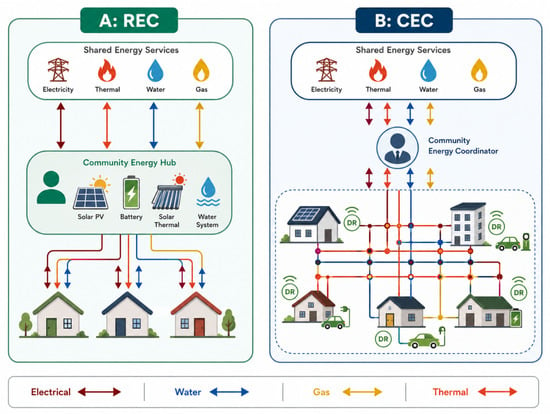
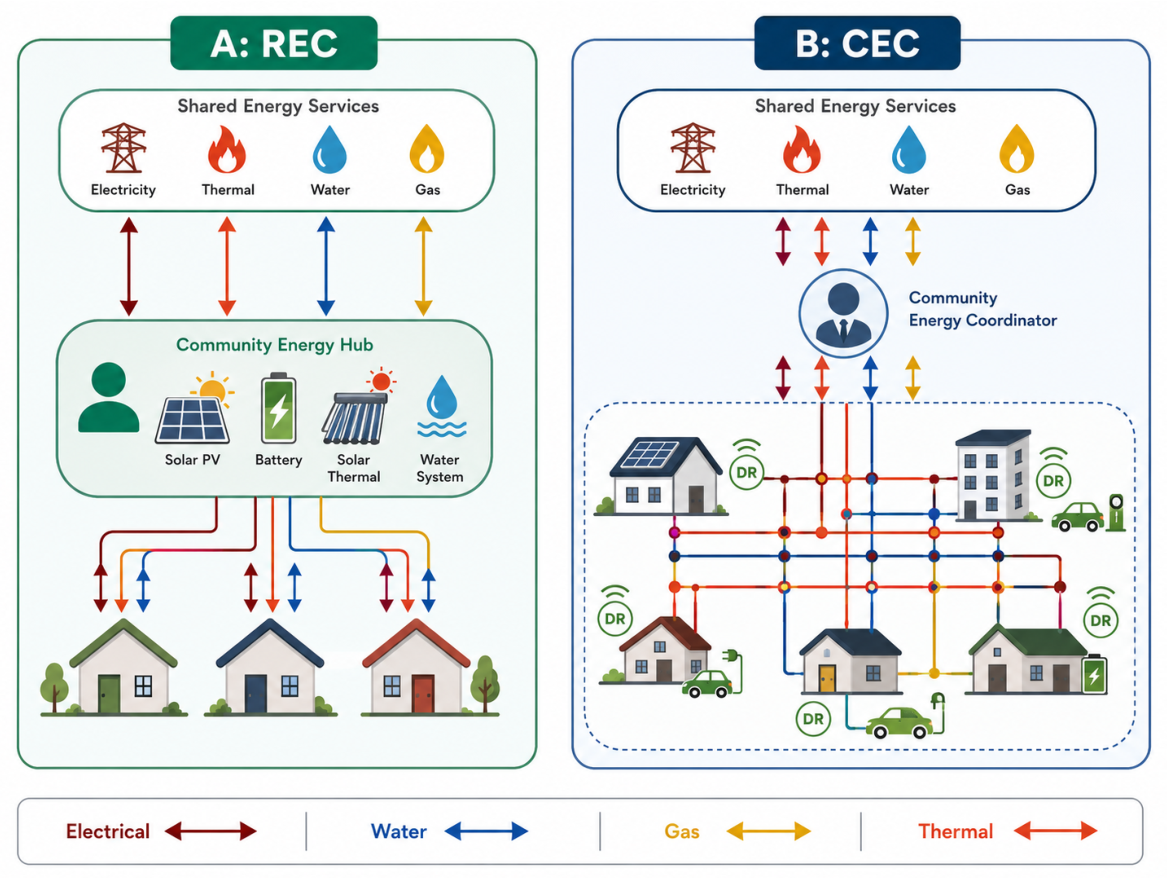
To synthesize these distinct regulatory pathways, Table 3 summarizes the main differences and comparative constraints between the current models of energy communities. Furthermore, Figure 2 provides a visual representation of this structural dichotomy between RECs and CECs.
Table 3.
Main differences and comparison between current models of Energy Communities.
Figure 2.
Structural Comparison (REC vs. CEC).
6.2. Transposition in Romania: Government Emergency Ordinance No. 59/2025 and the New Regulatory Framework
In Romania, the transposition of RED III was initiated through Government Emergency Ordinance No. 59/2025. Sectoral associations regard this legislative act as one of the most progressive regulatory instruments ever adopted in the national energy domain. This ordinance incorporates the provisions of European directives. Importantly, it also seeks to address the structural and administrative barriers that historically hindered the development of energy communities under the RED II framework.
A central feature of Government Emergency Ordinance No. 59/2025 is the formal recognition of energy communities as legal entities entitled to independently generate, consume, store, and distribute energy. This provision effectively dismantles the de facto monopoly previously held by large distribution operators over small-scale energy processes. Through the establishment of the National Energy Communities Register, administered by the Romanian National Energy Regulatory Authority (ANRE), the legislation provides these entities with a clear institutional identity. Consequently, they are transformed from theoretical constructs into operational actors within the energy market. Furthermore, the ordinance stipulates that system operators (distribution operators) are required to prioritize the deployment of smart metering infrastructure for members of energy communities. This requirement represents a sine qua non condition for the effective functioning of real-time energy-sharing algorithms, which underpin the operational viability of such communities.
A major innovation introduced by the new legislative framework is its explicit emphasis on the social dimension of the energy transition. Energy communities are now conceived as instruments for addressing energy poverty, being legally entitled to offer preferential tariffs to vulnerable members. In a context where a significant share of energy community initiatives in Romania is motivated by the need to reduce costs for disadvantaged individuals, this provision redefines energy communities from a purely business-oriented model into a pillar of social protection and energy security. In addition, homeowners’ associations (condominiums) and non-governmental organizations are permitted to operate as internal energy suppliers for their members without being subject to complex licensing requirements, provided that the energy is used for collective self-consumption.
6.3. The “Anchor Prosumer” Model: Mitigating Socio-Economic Barriers
In the specific context of the Romanian energy market, the transition toward functional energy communities faces a significant structural barrier: the existing 1:1 net metering scheme for prosumers with an installed capacity below 400 kW. From a strictly individualistic perspective, this guaranteed compensation theoretically offers superior financial predictability compared to the complexities of peer-to-peer (P2P) trading with vulnerable consumers. However, this financial security is frequently undermined by power quality degradation, such as over-voltage events during peak generation, which trigger automated inverter disconnections and grid-induced curtailment.
To mitigate the risk of socio-economic segregation, where communities might be composed exclusively of vulnerable consumers and thereby rendering the model non-viable, this study proposes the strategic inclusion of “anchor prosumers” with capacities exceeding 400 kW. Because these larger entities do not benefit from the 1:1 compensation and must sell their surplus at Day-Ahead Market (DAM) prices, they represent the ideal economic engine for decentralized communities.
To formally illustrate this economic mechanism, consider a representative numerical example based on the Romanian market. During peak PV generation hours (e.g., summer midday), the DAM clearing price frequently drops to 0 EUR/MWh or even registers negative values, offering no return for >400 kW prosumers exporting their surplus. Concurrently, regular community members import baseload electricity at a standard retail price of approximately 260 EUR/MWh (inclusive of grid fees and taxes). By establishing an internal P2P community price of 100 EUR/MWh, the anchor prosumer secures a highly profitable off-take compared to the wholesale market, while vulnerable members access electricity at a roughly 60% discount relative to their standard retail rate.
To assess the addressable scale of this proposed approach, data from national transmission and distribution operators indicates a rapidly growing cohort of industrial and commercial prosumers exceeding the 400 kW threshold in Romania, representing a substantial capacity pool for localized integration. Furthermore, a sensitivity assessment reveals that this mechanism remains highly viable even under non-peak conditions. For instance, when the DAM clearing price stabilizes at 20, 50, or 100 EUR/MWh outside summer midday hours, the price spread naturally narrows. However, the anchor prosumer still benefits from securing a localized off-taker, while the community retains a competitive alternative to standard retail rates. This model provides a compelling, mutually beneficial financial incentive that sustains the energy community, particularly when integrating large-scale infrastructure such as logistics warehouses, small industrial consumers, and municipal water companies into local citizen networks.
While formulated within the Romanian context, the “anchor-prosumer” model holds strong generalized applicability for other emerging energy community markets across Central and Southeastern Europe (e.g., Bulgaria, Croatia, Greece). These regions share common structural bottlenecks: historical underinvestment in distribution grids, restrictive top-down regulatory cultures, and rigid net-metering schemes that inadvertently incentivize grid defection by high-capacity users. By demonstrating how targeted price-spread design can retain large commercial assets within the community microgrid, this framework provides a universally adaptable blueprint. It allows transitioning markets to leverage private commercial capital (the anchor) to subsidize the integration of energy-poor households, bridging the gap between EU decentralized ambitions and local infrastructural constraints.
6.4. Discussion: The Pathway to Scalability and European Union Funding Programs
The success of energy communities depends on moving beyond simple “pilot projects” to integrated, scalable models. While individual building retrofits are common, community-scale interventions have proven more cost-effective, offering up to an 18% advantage in cost per unit of energy reduced [38]. For the energy community movement to mature, researchers emphasize the transition toward sector-coupled systems [39]. Integrating local electricity production with district heating and electric vehicle charging allows for higher synergistic gains, reducing communal external costs by up to 33% [39]. However, this complexity requires intelligent coordination; simulations show that without smart management, the benefits of community assets often concentrate among those who already own flexible technologies, potentially reinforcing social inequalities [32].
Several key EU financial instruments are dedicated to supporting the energy transition and community-led initiatives:
- European Structural and Investment Funds: This includes the European Regional Development Fund (ERDF) and the Cohesion Fund, which provide essential capital for local infrastructure [1].
- Horizon Europe and LIFE Programme: These programs co-fund research and implementation projects like ENERGIZE and BECoop to accelerate the adoption of collective energy models [1].
- European Investment Bank (EIB): The EIB provides larger-scale financing and technical assistance for energy demonstration projects [1].
- Specialized Projects: Initiatives such as the Energy Communities Repository, the Rural Energy Community Advisory Hub, and Citizen-Led Renovation provide technical and financial assistance to help citizens start and grow their communities [1].
A significant portion of financing is currently channeled through the Next Generation EU recovery package [12].
- Italy: The Italian National Recovery and Resilience Plan (NPRR) has allocated approximately 2.2 billion euros to promote renewable energy communities and self-consumption, aiming to increase PV production by 2500 GWh/year [4,12].
- Poland: The government has set up a plan to be financed by 97 million euros from the EU Recovery and Resilience Facility to create over 5000 energy communities [5].
In Romania, the implementation of energy communities (ECs) is currently in an early, transitionary stage, supported by the Next Generation EU initiative through the National Recovery and Resilience Plan (NPRR) [1,17]. While Romania currently has a very low number of established energy communities compared to Western European leaders like Germany or Denmark, the NPRR is providing the financial and structural framework to accelerate their development [3,17]. NPRR is actively used to fund research and digitalization projects aimed at creating viable models for energy communities in the Romanian context. Specific research projects, such as those led by the Bucharest University of Economic Studies, are supported by the Ministry of Research, Innovation and Digitalization under NPRR-C9-I8 funding [1]. These initiatives focus on developing archetypes and operational scenarios for both urban (e.g., existing apartment blocks and new residential districts) and rural areas to determine the most cost-effective ways to implement ECs in Romania [17].
Romania has officially integrated the requirements of the EU Clean Energy Package into its national legal order through Government Emergency Ordinances:
- The legal basis was established via the Emergency Ordinance of 28 December 2021 and the Emergency Ordinance of 29 November 2022 [37].
- Lenient Membership Rules: Romania has adopted a “rather lenient regime” compared to other states; for instance, large enterprises are permitted to join Renewable Energy Communities (RECs). This is intended to leverage corporate expertise and financial interest to kickstart the movement, though it may risk prioritizing financial interests over community autonomy [37].
The application of Next Generation EU funds in Romania must navigate unique cultural and structural legacies:
- Institutional Legacy: As an ex-communist country, Romania faces lower levels of civic engagement and a lack of trust in “cooperative” models due to past misuse of the term [17].
- Infrastructure Constraints: Many urban communities in Romania operate within aging, inefficient residential infrastructure from the communist era, which requires specific retrofitting strategies and conservative investment modeling [17].
Simulations focused on the Romanian market (using local electricity prices of approximately 1 RON/kWh, equivalent to 0.20 EUR/kWh) suggest that ECs can offer substantial benefits:
- Cost Savings: Integrated scenarios that replace gas heating with heat pumps and introduce electric vehicle charging can result in cost savings between 20% and 59% [17].
- Payback Periods: For medium-scale solar PV systems (up to 200 kWp), the investment payback period in Romania is estimated to be between 1 and 9 years [17].
- Environmental Impact: These community projects could reduce CO2 emissions by up to 25% when replacing traditional gas heating and up to 60% when incorporating electric transportation [17].
While other countries like Italy have allocated massive direct sums (e.g., 2.2 billion euros from their NPRR) specifically for ECs in small municipalities, Romania’s approach currently emphasizes strategic modeling and legislative enabling to ensure the long-term sustainability of the model without excessive reliance on permanent subsidies [4,12,17].
EU Directives (RED II and IEMD) oblige Member States to ensure RECs can compete for support on an equal footing with large market players [9]. Common national mechanisms include:
- Premium Tariffs: Italy provides a feed-in premium of roughly 110 EUR/MWh for electricity shared virtually within a community [4,35]. Germany offers a premium between 23.7 and 37.9 EUR/MWh for self-consumed electricity in multi-apartment buildings [35].
- Grants and Subsidies: Ireland’s “Better Energy Communities” scheme provides grants of up to 80% of total installation costs [5].
- Tax Incentives: The revised RED III directive encourages Member States to implement tax incentives and streamlined administrative processes to boost community participation [19].
Energy communities often utilize a mix of community-driven and external private financing:
- Equity Financing: Members contribute their own capital through shares, becoming co-owners and receiving dividends or reduced energy bills [9,15].
- Crowdfunding and Crowdlending: Innovative communities like Balenyà Sostenible in Spain use crowdfunding to gain investment for their sustainable projects.
- Debt Financing: Projects often secure bank loans, which may be supported by municipal guarantees to lower the risk for lenders [9].
- Third-Party Investment: In some models, an ESCO or utility provider pays for the installation and maintains ownership while community members benefit from reduced energy prices [10,33].
To ensure a “just transition,” recent policy advice suggests that EU funding calls should include mandatory equity KPIs to ensure that benefits reach vulnerable or low-income households rather than just “asset-rich” prosumers [32,37].
6.5. A Standardized Roadmap for Implementation
Recent research has introduced a four-phase roadmap to standardize the implementation of Renewable Energy Communities (RECs), providing a clear pathway for stakeholders to navigate regulatory and technical complexities [9]. This roadmap consists of:
- Feasibility Study: An initial energy audit to characterize end-users’ consumption, followed by sizing RES-based plants using specialized software (e.g., HOMER, PVsyst) to assess primary energy savings and avoided costs [9].
- Aggregation and Legal Constitution: Grouping participants—as producers, consumers, or prosumers—into a legal entity such as a cooperative or association. This phase also involves securing funding from public-driven projects or private capital [9].
- Operating Phase: This includes the physical construction of production plants and the validation of the project by national competent authorities to allow for the distribution of incentives [9].
- Management and Dissemination: Long-term technical and economic management, including real-time monitoring, plant maintenance, and activities to increase community engagement and transparency [9].
6.6. Institutional Maturity and Regional Disparities
The maturity of energy communities varies significantly across Europe, leading to a distinction between “mature” and “immature” systems [4].
- Mature Contexts (Northwestern Europe): Countries like Germany, Denmark, and the Netherlands have a long history of institutional support and established energy cooperatives. In these regions, challenges focus on navigating complex auction models and grid sharing “behind the meter” [4].
- Immature Contexts (Central and Southeastern Europe): Countries like Greece, Croatia, and Romania have only recently acknowledged community energy as a social movement. These initiatives often lack professional support networks and are over-dependent on a few “champions” or volunteers [4].
- Transposition Gaps: In Finland, the legal definition of “local energy communities” is currently restricted to members connected to the same grid connection point, effectively limiting the scope for detached houses compared to the broader REC definition [4].
7. Advanced Paradigms, Financial Models, and Game Theory
7.1. Positive and Net-Zero Energy Paradigms
Technical goals are evolving from simple self-consumption to achieving Positive Energy Communities (PEC) and Net-Zero Energy Communities (NZEC) status.
- Positive Energy Communities (PEC): These districts aim to establish an annual energy balance where renewable production exceeds local demand. By retrofitting existing communities with Building Integrated Photovoltaic (BIPV) and Photovoltaic–Thermal (PVT) systems, sharing rates can reach over 140% of the community’s demand [40].
- Multi-Community Microgrid Systems (MCMS): Emerging research suggests that neighboring communities can form an alliance, sharing resources through a Peer-to-Peer (P2P) bridge to reduce dependence on external markets and minimize communal external costs [31].
- The UN Sustainable Neighborhood Indices: The success of these communities is increasingly measured using three UN indices: self-sufficiency (production capacity), community plot ratio (spatial and digital interaction), and civic generosity (the willingness to share excess energy for public services like transport) [2].
7.2. Advanced Financial Models and Market Mechanisms
The economic viability of energy communities is being supported by diversified investment strategies and new market participation tools.
Investment Archetypes: Communities can choose between self-investment, which yields the highest long-term benefits for members, and third-party investment. While self-investment requires high upfront capital, third-party models are profitable for investors when payback periods are set at approximately 15 years [33].
Carbon-Green Trading: Innovative co-optimization frameworks now integrate carbon emission quotas (CEQ) and renewable energy certificates (REC) into community management. Integrating these trading mechanisms can enhance a community alliance’s economic performance by approximately 12.15% to 15.77% [31].
Cost Allocation and Equity: To ensure fairness, algorithms like the Weighted Constrained Equal Awards (WCEA) or Shapley Value are employed to distribute the benefits of shared energy equitably, preventing “asset-rich” prosumers from capturing a disproportionate share of community savings [13,39].
Strategic Interactions and Stochastic Modeling: Expanding on these allocation mechanisms, game theory provides the analytical apparatus necessary to understand strategic interactions, specifically how participants choose to “cooperate” or “defect” within peer-to-peer (P2P) trading frameworks [41]. In parallel, stochastic modeling techniques—particularly Markov chains and Markov Decision Processes (MDPs)—are implemented to forecast unpredictable variables, such as household appliance usage, electric vehicle state of charge, and the probabilistic reliability of community assets [42]. Furthermore, ensuring the long-term viability of these communities requires an equitable distribution of the generated financial and energy benefits. This imperative has led to the innovative integration of cooperative game theory with stochastic modeling, culminating in novel algorithmic frameworks such as the Markov Shapley Value [43].
7.3. The Cooperate and Defect Paradigm: Applicability to Energy Communities
The economic viability of peer-to-peer (P2P) trading frameworks requires understanding the strategic interactions between participants. This dynamic is best conceptualized through the Prisoner’s Dilemma, where the collective benefit of mutual cooperation conflicts with the rational incentive to defect for short-term, localized gain [44].
In a community microgrid, “cooperation” involves injecting surplus energy into the local reserve or modulating demand to align with community constraints [45]. Conversely, “defection” manifests as hoarding energy in personal BESS for absolute self-sufficiency, bypassing the P2P network to purchase baseload power centrally, or refusing to participate in load-shifting [46]. Rather than treating defection as malicious behavior, empirical data—such as blockchain-based P2P trials in grid-constrained environments—shows it is a highly rational response to physical energy deficits. When community generation cannot cover baseline demand, hoarding becomes the dominant strategy, leading to cascading defection and the collapse of the localized market [47,48].
To preempt this collapse, stochastic modeling techniques, particularly Markov Decision Processes (MDPs), are applied to govern community operations. Instead of relying on static aggregated load profiles, Markov chains simulate the probabilistic micro-behaviors of occupants (e.g., appliance usage, EV charging) based on Time Use Surveys [42,49]. For instance, multi-agent frameworks employing Markov chains can model user “enthusiasm” or compliance fatigue in response to automated energy-saving prompts [50]. Analytical results demonstrate that universal compliance is unnecessary; securing a critical mass (e.g., 25%) of highly responsive cooperators is sufficient to reduce the Levelized Cost of Energy (LCOE) by up to 40% and maintain microgrid stability [50].
Crucially, this theoretical risk of rational defection underscores the necessity of the “anchor prosumer” mechanism introduced in Section 6.3. By integrating a high-liquidity participant, the community fundamentally alters the localized payoff matrix. The anchor prosumer absorbs excess generation and provides baseload reliability, which raises the relative cost of defection for other members. This strategic inclusion mitigates the vulnerabilities of asset-heterogeneous communities and transforms theoretical game-theoretic optimal models into actionable governance structures [43].
7.4. Multi-Vector Systems and Multi-Agent Management
The technical scope of communities is expanding beyond electricity to sector coupling, integrating heating, cooling, and mobility [39].
- Biomass-Based RECs: The case of Tirano, Italy, demonstrates how combining programmable biomass/hydro with non-programmable PV can cover 68.1% of a municipality’s thermo-electric demand [9,12]. This model creates local supply chains for forest maintenance and has generated over 80 jobs [12].
- Green Hydrogen Integration: Emerging frameworks utilize Robust Optimization (RO) to manage PV uncertainty, converting surplus power into hydrogen. Innovative incentive-driven tariffs link higher hydrogen exports to tiered electricity discounts for community members [7].
- Multi-Agent Systems (MAS): These decentralized control frameworks use intelligent coordination to manage BESS, EV charging, and flexible loads, improving community self-sufficiency and ensuring grid friendliness [11].
8. Conclusions and Future Research Directions
Energy communities represent a critical institutional instrument for decentralizing the European energy transition, yet their scalability remains hindered by the disconnect between legislative ambition and operational reality. This structured review consolidates the legal, technological, and socio-economic dimensions of Renewable (RECs) and Citizen Energy Communities (CECs), demonstrating that legal recognition under RED III and IEMD is insufficient without precise alignment of smart metering, transparent settlement rules, and equitable governance structures.
The principal synthesis of this study reveals that the primary barrier to community scalability is not merely administrative, but structural: rigid net-metering schemes and grid congestion inadvertently incentivize rational defection by high-capacity prosumers. To address this unresolved research gap, this manuscript proposes the “anchor-prosumer” mechanism. By leveraging the price spread between wholesale export values and retail import prices, larger commercial self-consumers can be economically incentivized to remain within the community. This mechanism transforms asset asymmetry from a vulnerability into a stabilizing force, effectively solving the cooperative dilemma modeled by game theory and providing a highly applicable blueprint for emerging markets across Europe, such as Romania.
However, transitioning to highly digitalized, decentralized architectures introduces profound scientific and operational implications, particularly regarding cyber–physical resilience. The mandate of the NIS2 Directive shifts microgrid cybersecurity from an optional IT layer to a fundamental governance pillar, highlighting an urgent need for interoperable standards that secure peer-to-peer transactions without stifling citizen participation.
Future research should focus on three critical pathways to sustain this transition. First, empirical validation using high-resolution hourly generation and consumption data is required to quantify real-time price spreads and optimize dynamic allocation rules under specific energy-justice criteria. Second, longitudinal studies utilizing Markovian stochastic models must investigate user compliance fatigue and trust erosion over extended operational periods. Finally, subsequent engineering research must explore the integration of non-intrusive cybersecurity compliance frameworks into multi-agent energy management systems, ensuring that decentralized communities remain both economically viable and digitally secure.
Author Contributions
Conceptualization, A.G. and I.N.; methodology, A.G. and I.N.; investigation, M.S. and C.G.; writing—original draft preparation, A.G. and I.N.; writing—review and editing, M.S. and C.G.; supervision, M.S. All authors have read and agreed to the published version of the manuscript.
Funding
This research received no external funding.
Institutional Review Board Statement
Not applicable. This review did not involve humans or animals.
Informed Consent Statement
Not applicable.
Data Availability Statement
No new data were created or analyzed in this study. Data sharing is not applicable to this article.
Acknowledgments
The authors would like to acknowledge the administrative and technical support provided by the National University of Science and Technology POLITEHNICA Bucharest. All acknowledged contributors consented to being named.
Conflicts of Interest
The authors declare no conflicts of interest. Specifically, the authors confirm that they do not hold any official positions, affiliations, or financial interests with the Romanian Energy Regulatory Authority (ANRE), the Association of Prosumers and Energy Communities (APCE), or any regulated entities within the energy sector that could influence the analysis of the regulatory framework and disputes presented in this manuscript.
Abbreviations
The following abbreviations are used in this manuscript:
| CECs | Citizen Energy Communities |
| IEMD | Internal Electricity Market Directive |
| CEP | Clean Energy for All Europeans package |
| LEM | Local Energy Markets |
| ESCO | Energy Service Company |
| DNSC | National Cyber Security Directorate |
| DG | Distributed Generation |
| PV | Solar Photovoltaic |
| BESS | Battery Energy Storage Systems |
| TES | Thermal Energy Storage |
| MAS | Intelligent Multi-Agent Systems |
| ICT | Information and Communication Technology |
| HEC | Homogeneous Energy Communities |
| MEC | Mixed Energy Communities |
| SEC | Self-Sufficient Energy Communities |
| EV | Electric Vehicle |
| WCEA | Weighted Constrained Equal Awards |
| DSOs | Distribution System Operators |
| EU | European Union |
| ERDF | European Regional Development Fund |
| EIB | European Investment Bank |
| NPRR | National Recovery and Resilience Plan |
| KPI | Key Performance Indicator |
| NZEC | Net-Zero Energy Communities |
| PEC | Positive Energy Communities |
| BIPV | Building Integrated Photovoltaic |
| PVT | Photovoltaic–Thermal |
| MCMS | Multi-Community Microgrid Systems |
| P2P | Peer-to-Peer |
| CEQ | Carbon Emission Quotas |
| MDPs | Markov Decision Processes |
| HETUS | Harmonized European Time Use Surveys |
| DAM | Day-Ahead Market |
| IT | Information Technology |
| OT | Operational Technology |
References
- Lazaroiu, A.C.; Roscia, M.; Lazaroiu, G.C.; Siano, P. Review of Energy Communities: Definitions, Regulations, Topologies, and Technologies. Smart Cities 2025, 8, 8. [Google Scholar] [CrossRef] [Scilit]
- Llewellyn, J.; Katzeff, C.; Johansson, F.; Pargman, D. Aligning European Union Ambitions of Renewable Energy Communities with Citizens Actions Using United Nations Sustainable Neighbourhood Indexes. Energy Policy 2025, 209, 114960. [Google Scholar] [CrossRef] [Scilit]
- Ahmed, S.; Ali, A.; D’Angola, A. A Review of Renewable Energy Communities: Concepts, Scope, Progress, Challenges, and Recommendations. Sustainability 2024, 16, 1749. [Google Scholar] [CrossRef] [Scilit]
- Neij, L.; Palm, J.; Busch, H.; Bauwens, T.; Becker, S.; Bergek, A.; Buzogány, A.; Candelise, C.; Coenen, F.; Devine-Wright, P.; et al. Energy Communities—Lessons Learnt, Challenges, and Policy Recommendations. Oxf. Open Energy 2025, 4, oiaf002. [Google Scholar] [CrossRef] [Scilit]
- Haji Bashi, M.; De Tommasi, L.; Le Cam, A.; Relaño, L.S.; Lyons, P.; Mundó, J.; Pandelieva-Dimova, I.; Schapp, H.; Loth-Babut, K.; Egger, C.; et al. A Review and Mapping Exercise of Energy Community Regulatory Challenges in European Member States Based on a Survey of Collective Energy Actors. Renew. Sustain. Energy Rev. 2022, 172, 113055. [Google Scholar] [CrossRef] [Scilit]
- Gianaroli, F.; Preziosi, M.; Ricci, M.; Sdringola, P.; Ancona, M.A.; Melino, F. Exploring the Academic Landscape of Energy Communities in Europe: A Systematic Literature Review. Clean. Prod. 2024, 451, 141932. [Google Scholar] [CrossRef] [Scilit]
- Dorahaki, S.; Rashidinejad, M.; Fatemi Ardestani, S.F.; Abdollahi, A.; Salehizadeh, M.R. An Integrated Model for Citizen Energy Communities and Renewable Energy Communities Based on Clean Energy Package: A Two-Stage Risk-Based Approach. Energy 2023, 277, 127727. [Google Scholar] [CrossRef] [Scilit]
- Belmar-Baptista, J.; Baptista, P.; Neves, D. Modelling Renewable Energy Communities: Assessing the Impact of Different Configurations, Technologies and Types of Participants. Energy Sustain. Soc. 2023, 13, 18. [Google Scholar] [CrossRef] [Scilit]
- Esposito, P.; Marrasso, E.; Martone, C.; Pallotta, G.; Roselli, C.; Sasso, M.; Tufo, M. A Roadmap for the Implementation of a Renewable Energy Community. Heliyon 2024, 10, e28269. [Google Scholar] [CrossRef] [Scilit] [PubMed]
- Barabino, E.; Fioriti, D.; Guerrazzi, E.; Mariuzzo, I.; Poli, D.; Raugi, M.; Razaei, E.; Schito, E.; Thomopulos, D. Energy Communities: A Review on Trends, Energy System Modelling, Business Models, and Optimisation Objectives. Sustain. Energy Grids Netw. 2023, 36, 101187. [Google Scholar] [CrossRef] [Scilit]
- Pizzuti, I.; Delibra, G. Integration of Battery Energy Storage Systems in Renewable Energy Communities: Optimal Configurations and Strategies. J. Energy Storage 2026, 153, 120857. [Google Scholar] [CrossRef] [Scilit]
- Ceglia, F.; Marrasso, E.; Roselli, C.; Sasso, M. Energy and Environmental Assessment of a Biomass-Based Renewable Energy Community Including Photovoltaic and Hydroelectric Systems. Energy 2023, 282, 128348. [Google Scholar] [CrossRef] [Scilit]
- Boccard, N.; Goetz, R. Sharing Rules and the Promotion of Energy Communities: A Normative Comparative Analysis. Energy 2026, 344, 140068. [Google Scholar] [CrossRef] [Scilit]
- Klein, S.J.; Coffey, S. Building a Sustainable Energy Future, One Community at a Time. Renew. Sustain. Energy Rev. 2016, 60, 867–880. [Google Scholar] [CrossRef] [Scilit]
- Kubli, M.; Puranik, S. A Typology of Business Models for Energy Communities: Current and Emerging Design Options. Renew. Sustain. Energy Rev. 2023, 176, 113165. [Google Scholar] [CrossRef] [Scilit]
- Ghasemnejad, H.; Rashidinejad, M.; Abdollahi, A.; Dorahaki, S. Energy Management in Citizen Energy Communities: A Flexibility-Constrained Robust Optimization Approach Considering Prosumers Comfort. Appl. Energy 2024, 356, 122456. [Google Scholar] [CrossRef] [Scilit]
- Bâra, A.; Oprea, S.V.; Murafa, C. Energy Communities’ Archetypes and Operational Scenarios Using Agents and Embedding Heating and Transportation. Environ. Model. Assess. 2025, 30, 1195–1216. [Google Scholar] [CrossRef] [Scilit]
- Cao, J.; Xu, X.; Yao, W.; Xue, F.; Long, C. A Distributed Dynamic Multi-Agent Reinforcement Learning Based Cooperative Game Framework for Multi-Sectoral Transaction in Electricity Markets Considering Dynamic Revenue Allocation Optimisation and Renewable Energy Certificate Trading. Energy 2025, 335, 138123. [Google Scholar] [CrossRef] [Scilit]
- Delcea, C.; Oprea, S.V.; Dima, A.M.; Domenteanu, A.; Bara, A.; Cotfas, L.A. Energy Communities: Insights from Scientific Publications. Oeconomia Copernic. 2024, 15, 1101–1155. [Google Scholar] [CrossRef] [Scilit]
- European Parliament and Council of the European Union. Directive (EU) 2022/2555 of the European Parliament and of the Council of 14 December 2022 on Measures for a High Common Level of Cybersecurity across the Union. Off. J. Eur. Union 2022, 333, 80–152. [Google Scholar]
- Government of Romania. Ordonanta de urgenta nr. 155 din 30 decembrie 2024 privind instituirea unui cadru pentru securitatea cibernetica a retelelor si sistemelor informatice din spatiul cibernetic national civil. Monitorul Oficial al României, Part I, 31 December 2024; No. 1332.
- Parliament of Romania. Lege nr. 124 din 7 iulie 2025 pentru aprobarea Ordonantei de urgenta a Guvernului nr. 155/2024. Monitorul Oficial al României, Part I, 7 July 2025.
- Deloitte Romania. NIS2 Directive: Cybersecurity Requirements and Implementation in Romania. Available online: https://www.deloitte.com/ro/en/services/risk-advisory/services/nis2-directive.html (accessed on 3 June 2026).
- National Cyber Security Directorate. Registration of Essential and Important Entities under Government Emergency Ordinance No. 155/2024. Available online: https://www.dnsc.ro/citeste/comunicat-presa-inregistrare-entitati-esentiale-importante-oug155 (accessed on 3 June 2026).
- Profit.ro. ANRE Proposes Cybersecurity Rules for Essential and Important Energy Entities, Including Prosumers. Available online: https://www.profit.ro/povesti-cu-profit/energie/anre-vrea-norme-de-securitate-cibernetica-nu-doar-pentru-prosumatori-ci-pentru-toate-entitatile-esentiale-si-importante-din-energie-vrea-si-sa-participe-la-elaborarea-lor-22242854 (accessed on 3 June 2026).
- Romanian Energy Regulatory Authority. Comunicat de Presa: Acuzatiile APCE Sunt Eronate si Tradeaza Comunicarea Superficiala Facuta cu Inteligenta Artificiala de Slaba Calitate; Romanian Energy Regulatory Authority: Bucharest, Romania, 2025.
- Nicolini, A.; Mateu, C.; Cabeza, L.F. Thermal Energy Storage in Energy Communities: A Perspective Overview through a Bibliometric Analysis. Sustainability 2024, 16, 5895. [Google Scholar] [CrossRef] [Scilit]
- Zou, Y.; Čepin, M. Costs of a Self-Sufficient Renewable Energy Community. Reliab. Eng. Syst. Saf. 2025, 261, 111096. [Google Scholar] [CrossRef] [Scilit]
- Tabanêz Patrício, J.; Lopes, T.; Rocha, A.; Martins, J.; Amaral Lopes, R. Development and Real-World Deployment of a Multi-Agent System to Support the Operation of Renewable Energy Communities. Energy Rep. 2026, 15, 108967. [Google Scholar] [CrossRef] [Scilit]
- European Committee for Electrotechnical Standardization (CENELEC). EN 50160:2022; Voltage Characteristics of Electricity Supplied by Public Electricity Networks. CENELEC: Brussels, Belgium, 2022.
- Li, Y.; Zhou, Y.; Wang, J.; Ding, J.; Wei, C.; Liu, Z. Co-Optimization of Configuration and Energy Scheduling of Multi-Communities Microgrid Systems Considering Carbon-Green Certificate Trading Mechanism. Energy 2025, 344, 139864. [Google Scholar] [CrossRef] [Scilit]
- Fonseca, T.; Sousa, C.; Ferreira, L.; Rodrigues, P.; Paiva, P.; Venâncio, R.; Severino, R.; Matos, L. Can Intelligent Renewable Energy Communities Deliver on Equity for a Just Energy Transition? A Policy Oriented Demonstrator Analysis. Energy Res. Soc. Sci. 2026, 133, 104584. [Google Scholar] [CrossRef] [Scilit]
- Li, N.; Okur, Ö. Economic Analysis of Energy Communities: Investment Options and Cost Allocation. Appl. Energy 2023, 336, 120706. [Google Scholar] [CrossRef] [Scilit]
- Jagoda, S.; Hewage, K.; Kotagodahetti, R.; Sadiq, R. Transition to Net-Zero Energy Communities: Investigating Techno-Financial Feasibility and Social Acceptance. Build. Environ. 2026, 290, 114184. [Google Scholar] [CrossRef] [Scilit]
- Gjorgievski, V.Z.; Velkovski, B.; Minuto, F.D.; Cundeva, S.; Markovska, N. Energy Sharing in European Renewable Energy Communities: Impact of Regulated Charges. Energy 2023, 281, 128333. [Google Scholar] [CrossRef] [Scilit]
- Barrachina i Salleras, O.; Chàfer, M.; Granollers, J.M.; Verdaguer, S. Review of Existing Energy Communities; ENERGIZE Project: Barcelona, Spain, 2025. Available online: https://zenodo.org/records/15254329 (accessed on 3 June 2026).
- Hoops, B. Different Notions of Community in Energy Community Legislation. J. Energy Nat. Resour. Law 2025, 43, 311–335. [Google Scholar] [CrossRef] [Scilit]
- Q. Hamdan, M.; Gillott, M.; Calautit, J.; Mirzaei, P.A. Building Community Energy Retrofitting in Urban Neighbourhoods: A Novel Conceptual Paradigm. Energy Build. 2025, 353, 116897. [Google Scholar] [CrossRef] [Scilit]
- Wanapinit, N.; Thomsen, J. Benefits and Allocation Principles of Sector-Coupled Energy Communities. Appl. Energy 2026, 410, 127497. [Google Scholar] [CrossRef] [Scilit]
- An, Y.S.; Kim, J.; Joo, H.J.; Han, G.w.; Kim, H.; Lee, W.; Kim, M.H. Retrofit of Renewable Energy Systems in Existing Community for Positive Energy Community. Energy Rep. 2023, 9, 3733–3744. [Google Scholar] [CrossRef] [Scilit]
- Paudel, A.; Chaudhari, K.; Long, C.; Gooi, H.B. Peer-to-Peer Energy Trading in a Prosumer-Based Community Microgrid: A Game-Theoretic Model. IEEE Trans. Ind. Electron. 2018, 66, 6087–6097. [Google Scholar] [CrossRef] [Scilit]
- Munkhammar, J. Markov-Chain Modeling of Energy Users and Electric Vehicles: Applications to Distributed Photovoltaics. Ph.D. Thesis, Uppsala University, Uppsala, Sweden, 2012. [Google Scholar]
- Wang, K.; Cheng, L.; Yin, M.; Zhang, K.; Wang, R.; Zhang, M.; Sun, R. Evolutionary Game Theory in Energy Storage Systems: A Systematic Review of Collaborative Decision-Making, Operational Strategies, and Coordination Mechanisms for Renewable Energy Integration. Sustainability 2025, 17, 7400. [Google Scholar] [CrossRef] [Scilit]
- Tushar, W.; Yuen, C.; Mohsenian-Rad, H.; Saha, T.; Poor, H.; Wood, A. Transforming Energy Networks via Peer to Peer Energy Trading: Potential of Game Theoretic Approaches. IEEE Signal Process. Mag. 2018, 35, 90–111. [Google Scholar] [CrossRef] [Scilit]
- Malik, S.; Duffy, M.; Thakur, S.; Hayes, B.; Breslin, J.G. Cooperative Game Theory Based Peer to Peer Energy Trading Algorithm. IET Conf. Proc. 2021, 2020, 135–142. [Google Scholar] [CrossRef] [Scilit]
- Karakoyun, E.C.; Avci, H.; Kocaman, A.S.; Nadar, E. Deviations from Commitments: Markov Decision Process Formulations for the Role of Energy Storage. Int. J. Prod. Econ. 2022, 255, 108711. [Google Scholar] [CrossRef] [Scilit]
- Krayem, A.; Ahmad, A.; Najem, S. A Game-Theoretic Approach to Assess Peer-to-Peer Rooftop Solar PV Electricity Trading under Constrained Power Supply. Energy Syst. 2021, 14, 67–87. [Google Scholar] [CrossRef] [Scilit]
- Schumacher, I. The Impact of Socially Enforced Norms on the Environment and the Role of Public Policy. Int. Rev. Environ. Resour. Econ. 2024, 18, 237–284. [Google Scholar] [CrossRef] [Scilit]
- Arabzadeh, V.; Frank, R. Stochastic Markov-Based Modelling of Residential Lighting Demand in Luxembourg: Integrating Occupant Behavior and Energy Efficiency. Energies 2025, 18, 5133. [Google Scholar] [CrossRef] [Scilit]
- Simoiu, M.S.; Fagarasan, I.; Ploix, S.; Calofir, V.; Iliescu, S.S. Markov Chain Model for Energy Community Member Reaction to Recommendations: A Multi-Agent Case Study. In Proceedings of the 2023 24th International Conference on Control Systems and Computer Science (CSCS); IEEE: New York, NY, USA; pp. 519–525. [CrossRef] [Scilit]

Disclaimer/Publisher’s Note: The statements, opinions and data contained in all publications are solely those of the individual author(s) and contributor(s) and not of MDPI and/or the editor(s). MDPI and/or the editor(s) disclaim responsibility for any injury to people or property resulting from any ideas, methods, instructions or products referred to in the content. |
© 2026 by the authors. Licensee MDPI, Basel, Switzerland. This article is an open access article distributed under the terms and conditions of the Creative Commons Attribution (CC BY) license.