Lithium-Ion Battery Thermal Runaway Propagation Simulation Using Joint Model of Lumped-Parameter Method for Shell and 3D Modeling for Jelly Roll


Abstract
1. Introduction
2. Numerical Simulation
2.1. Battery Jelly Roll Model
2.1.1. Governing Equation
2.1.2. Nail Penetration Model
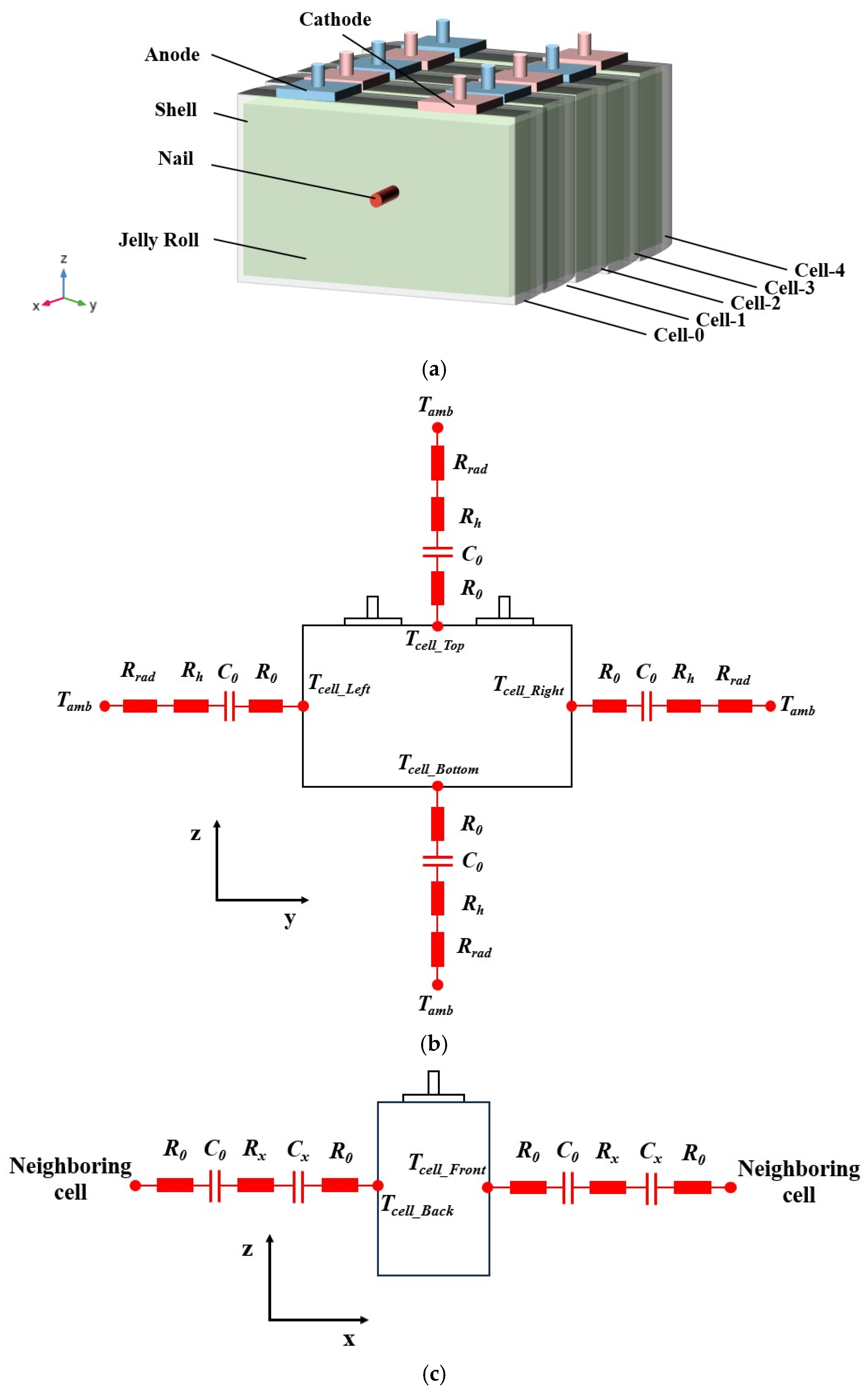
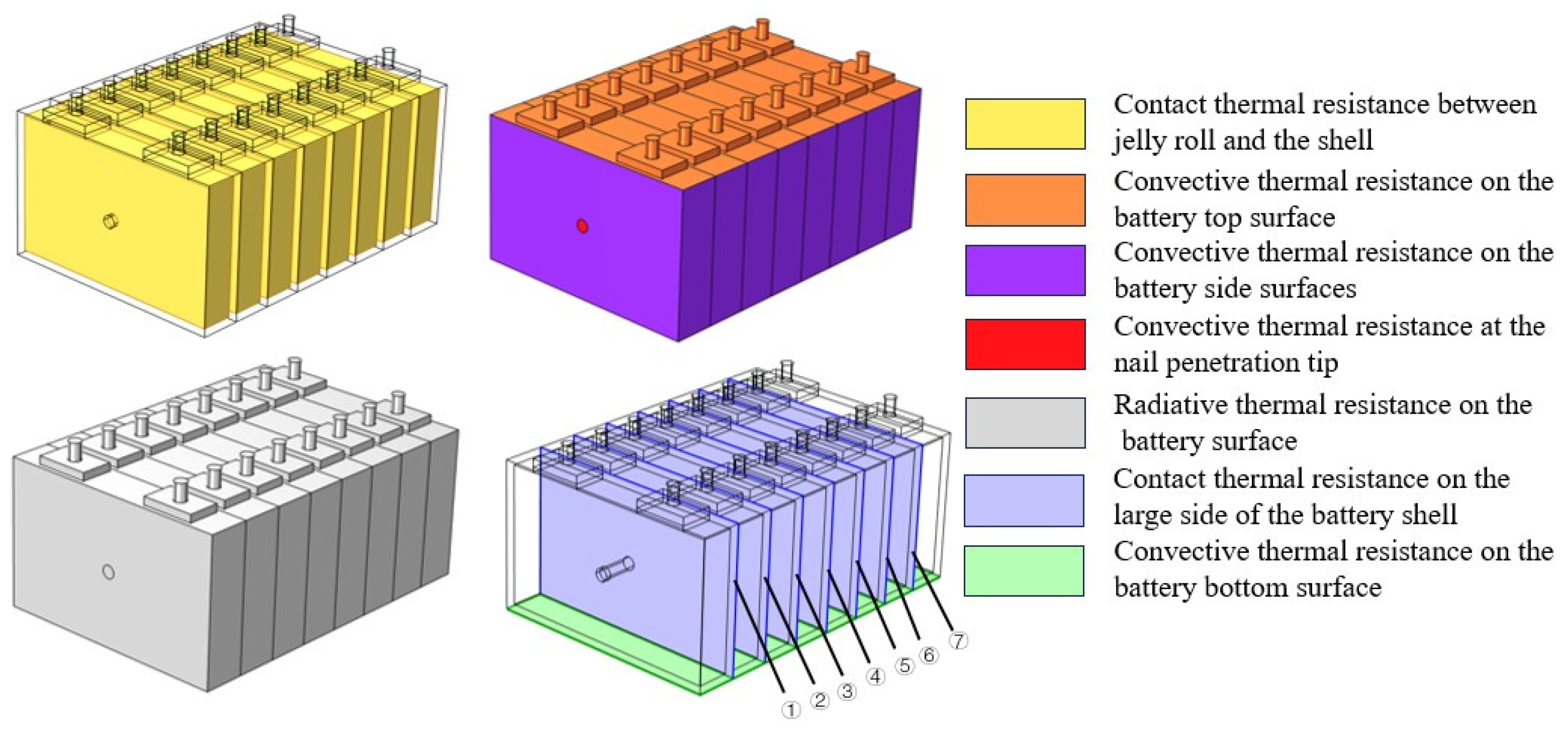
2.2. Battery Shell Model
2.3. Boundary Conditions
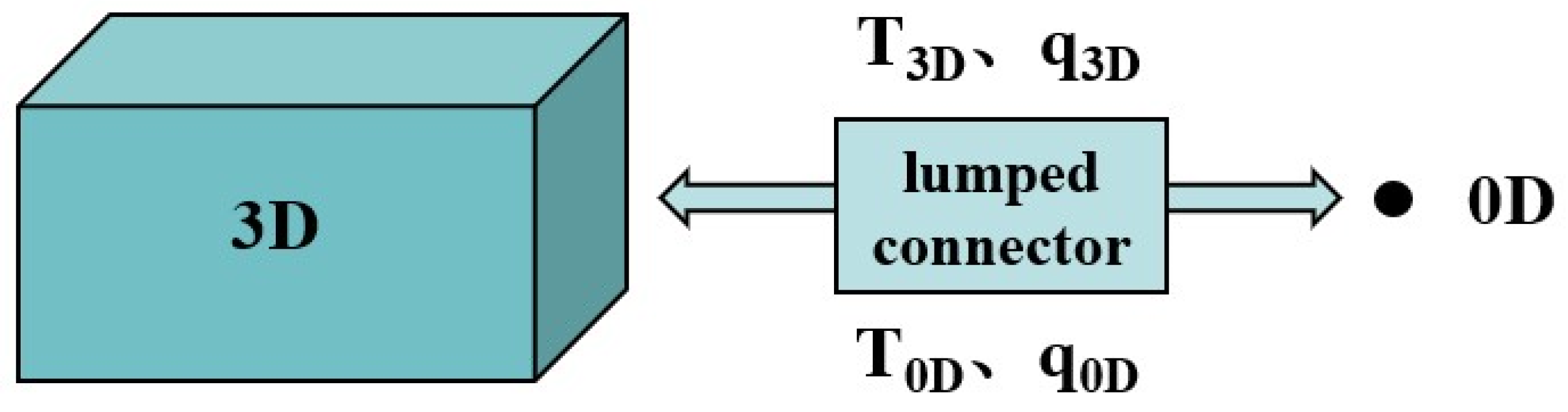
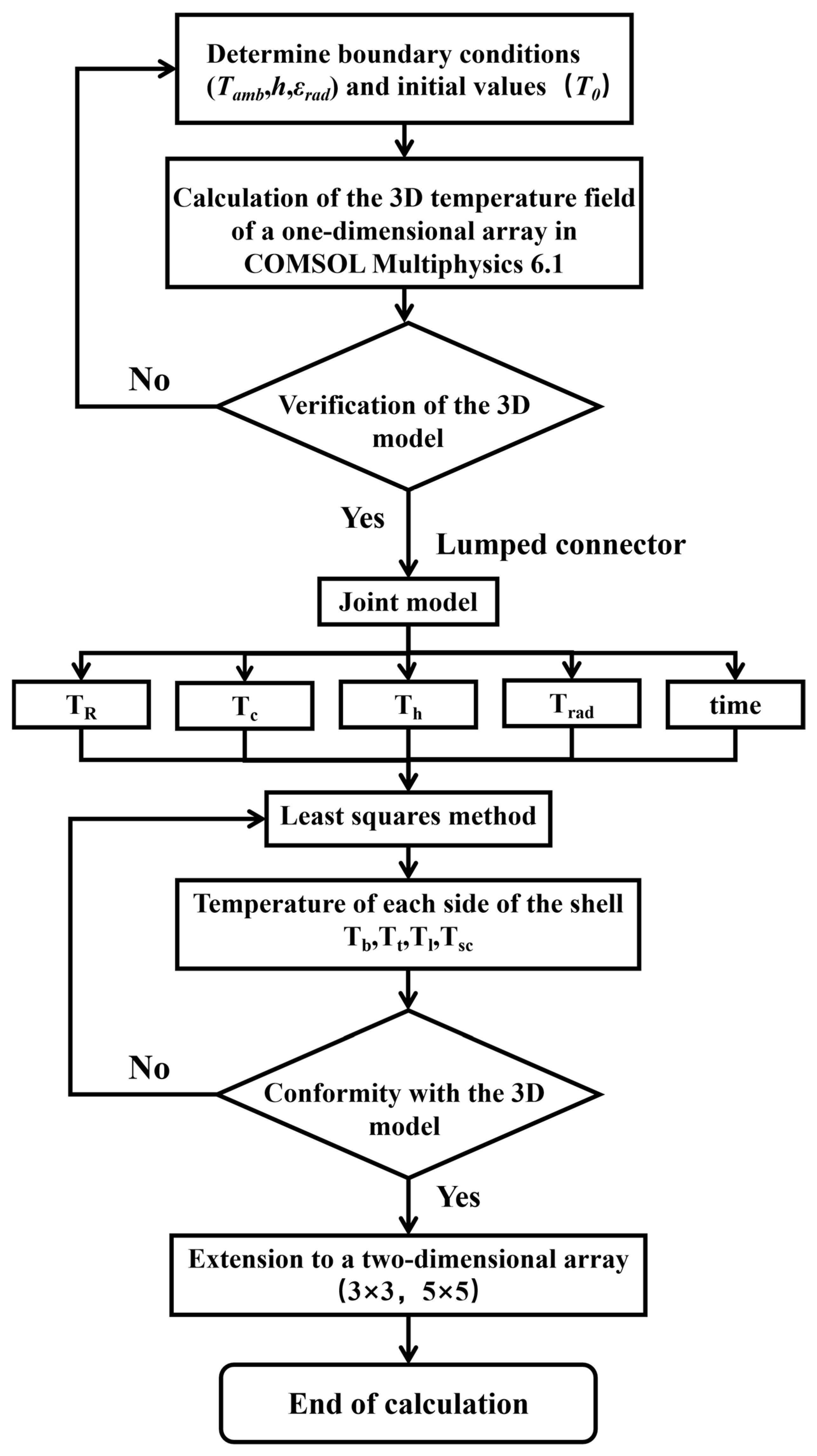
2.4. Model Solving
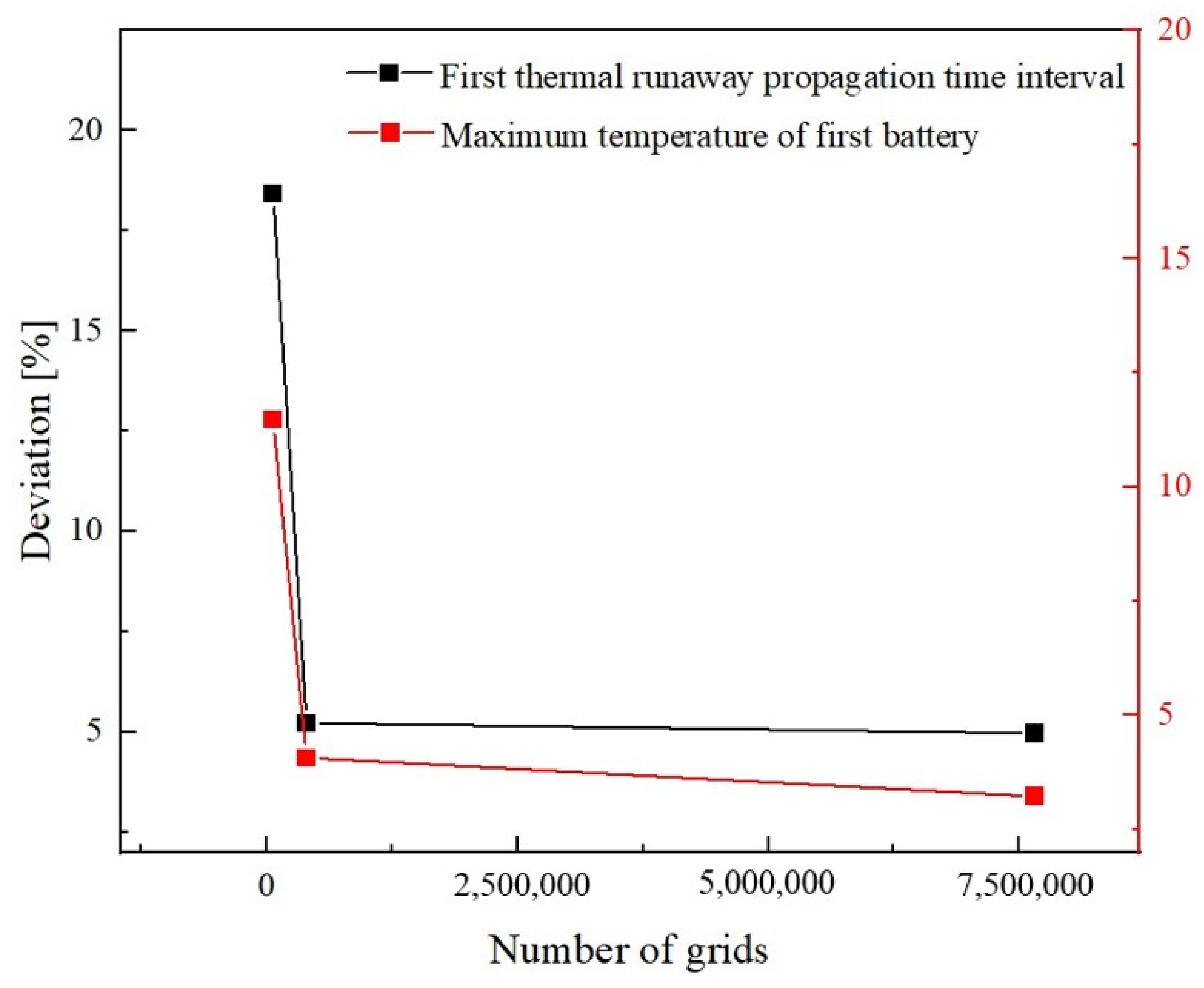
2.5. Mesh Independence Verification
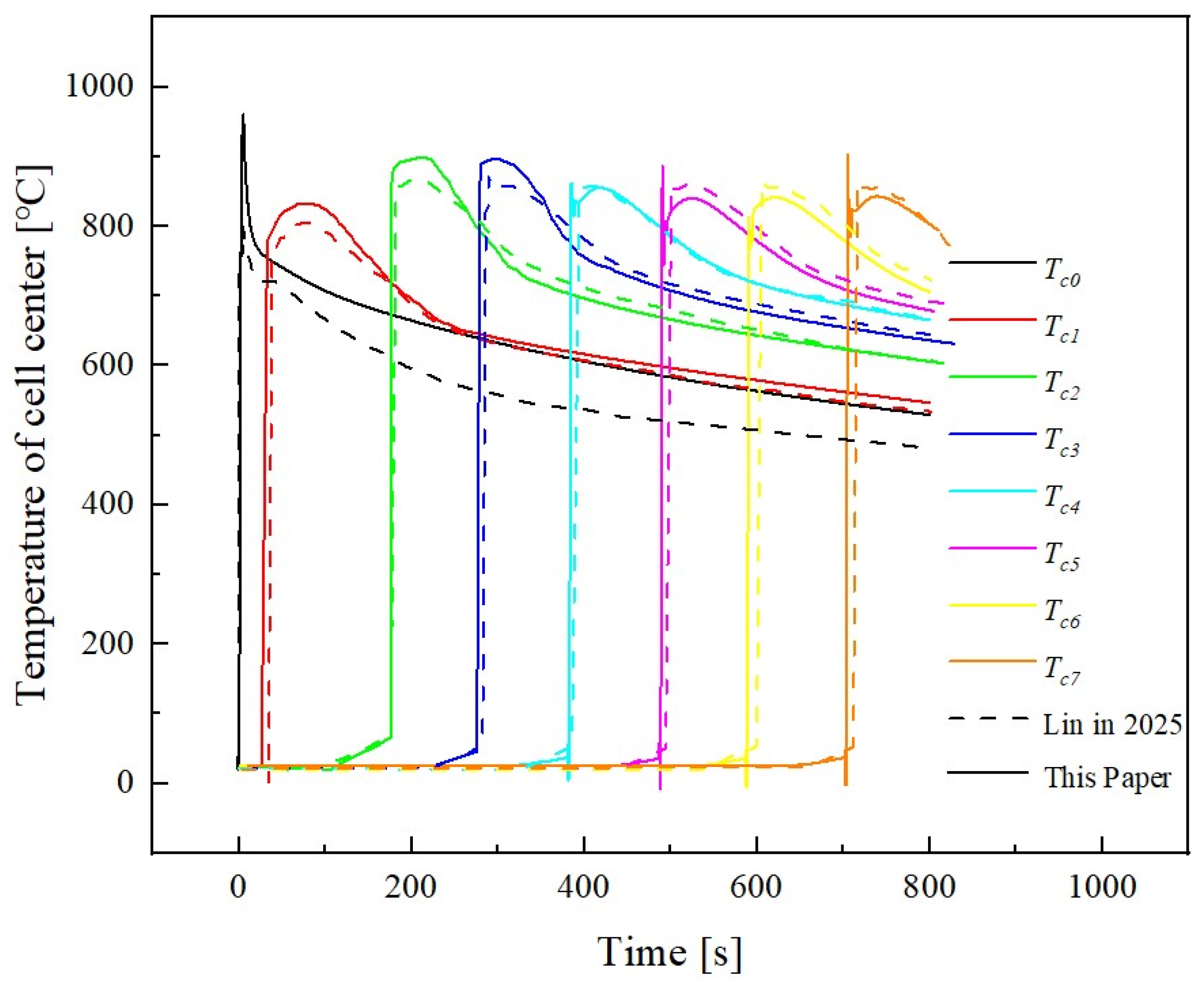
2.6. Model Validation
3. Results and Discussion
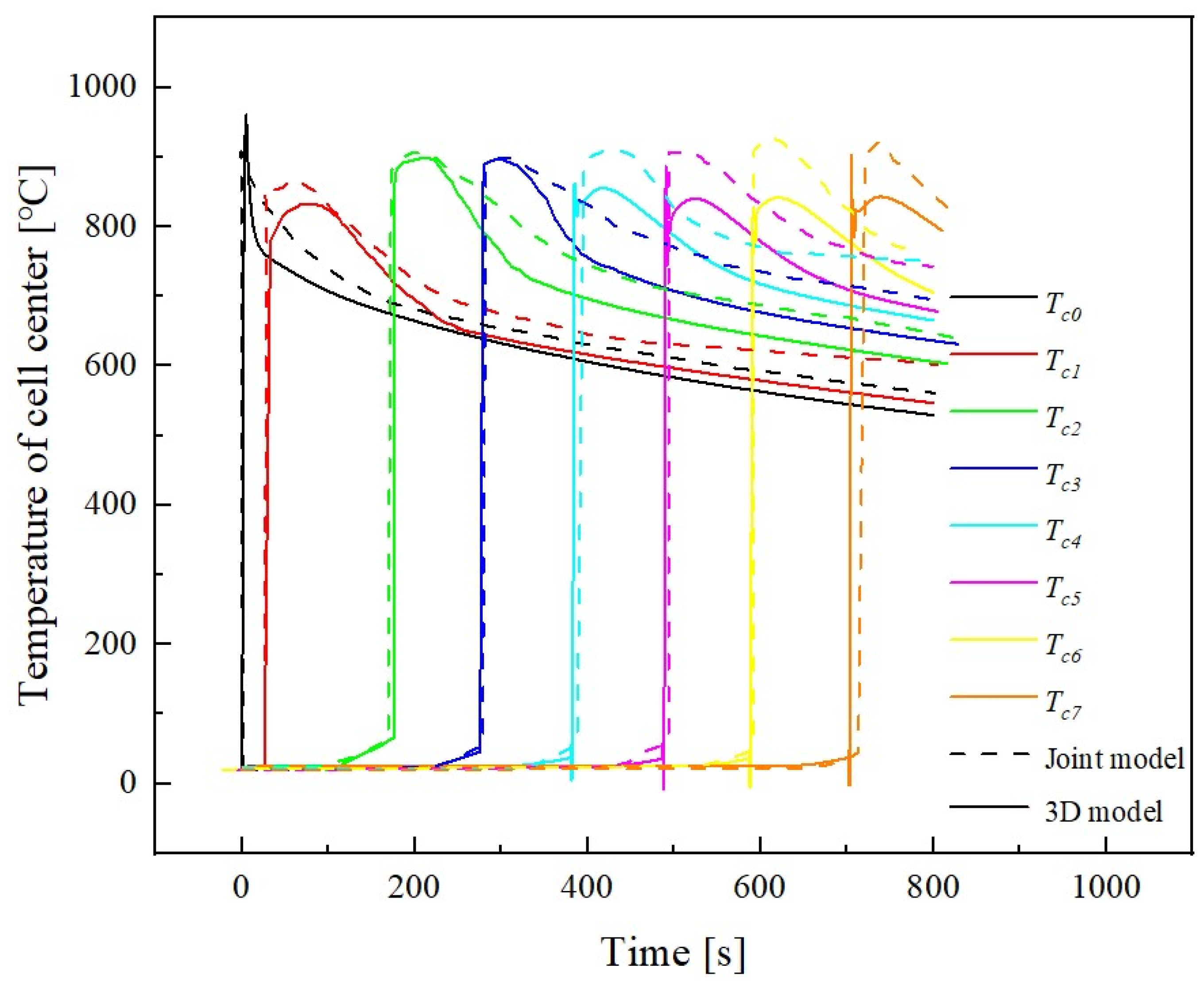
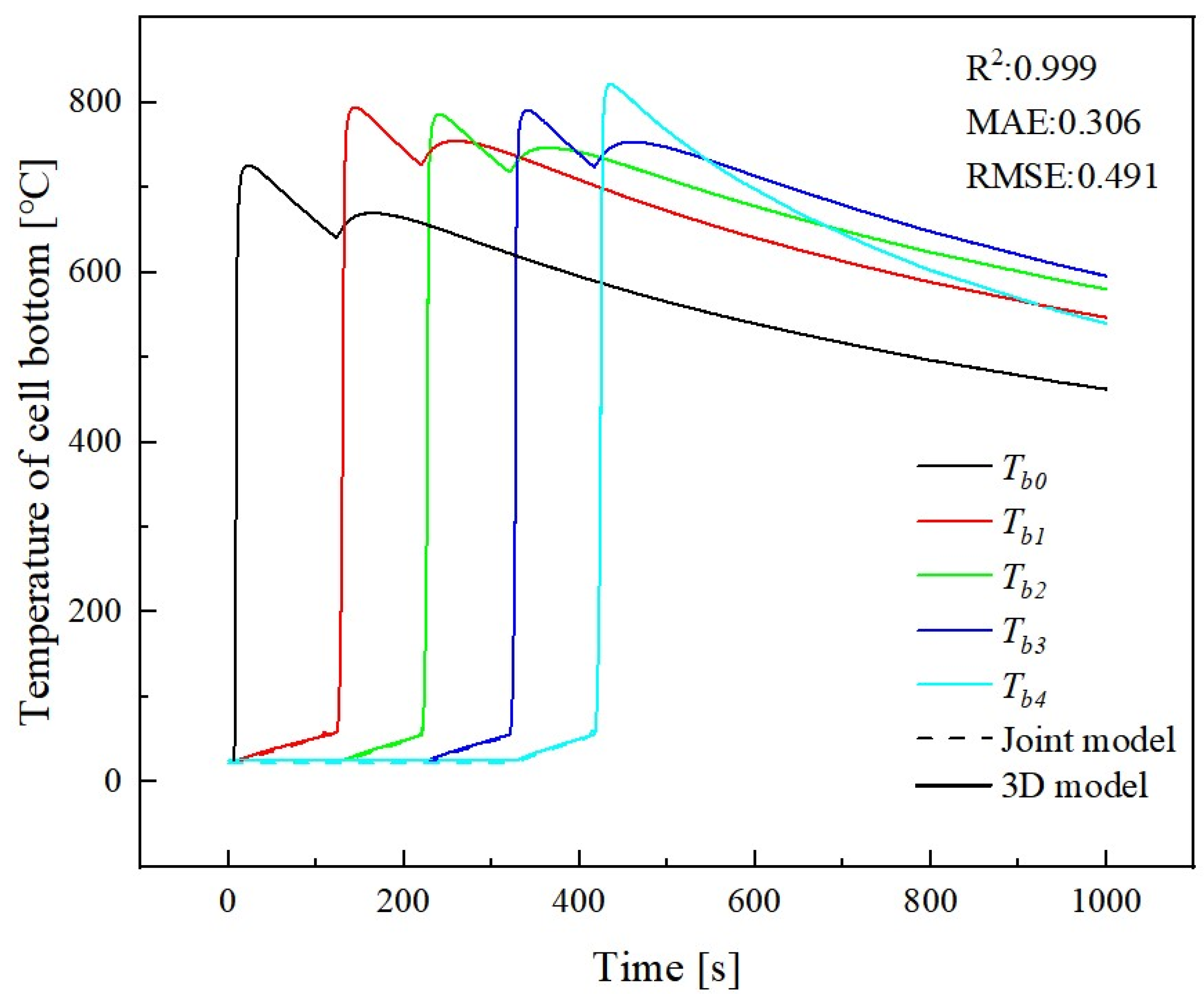
3.1. Thermal Runaway Propagation in a One-Dimensional Battery Array
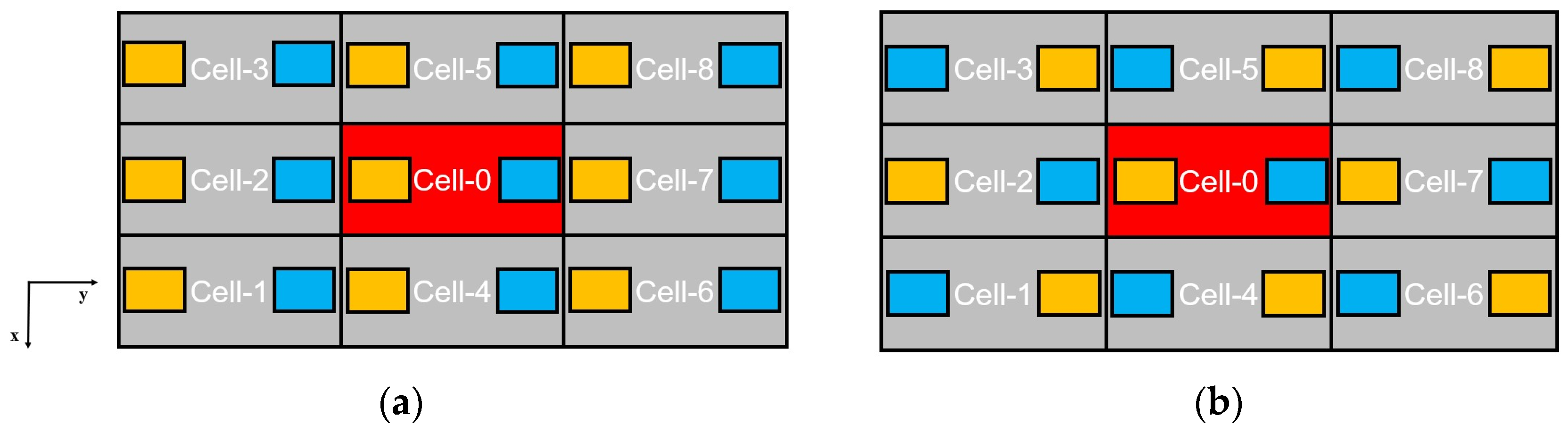
3.2. Thermal Runaway Propagation Characteristics of a Two-Dimensional Array
3.2.1. A 3 × 3 Two-Dimensional Array
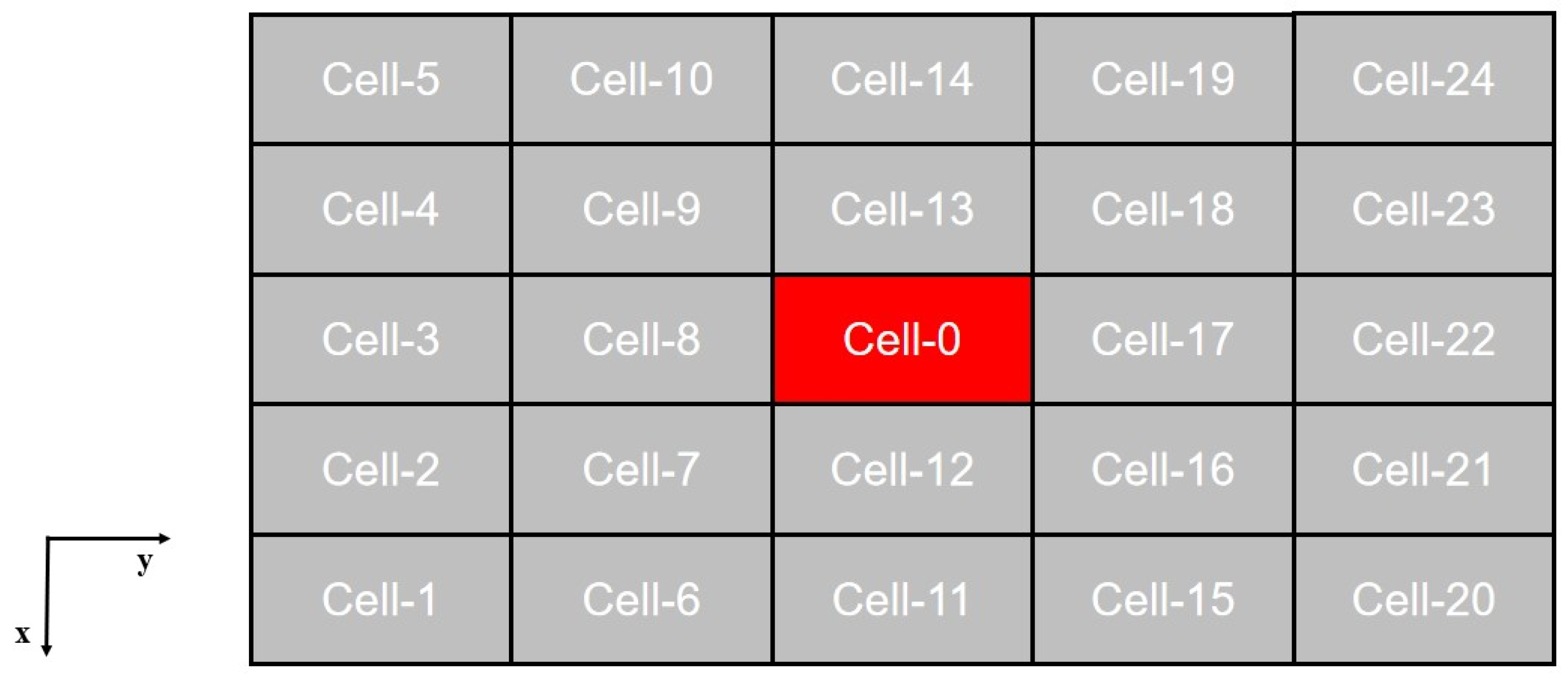
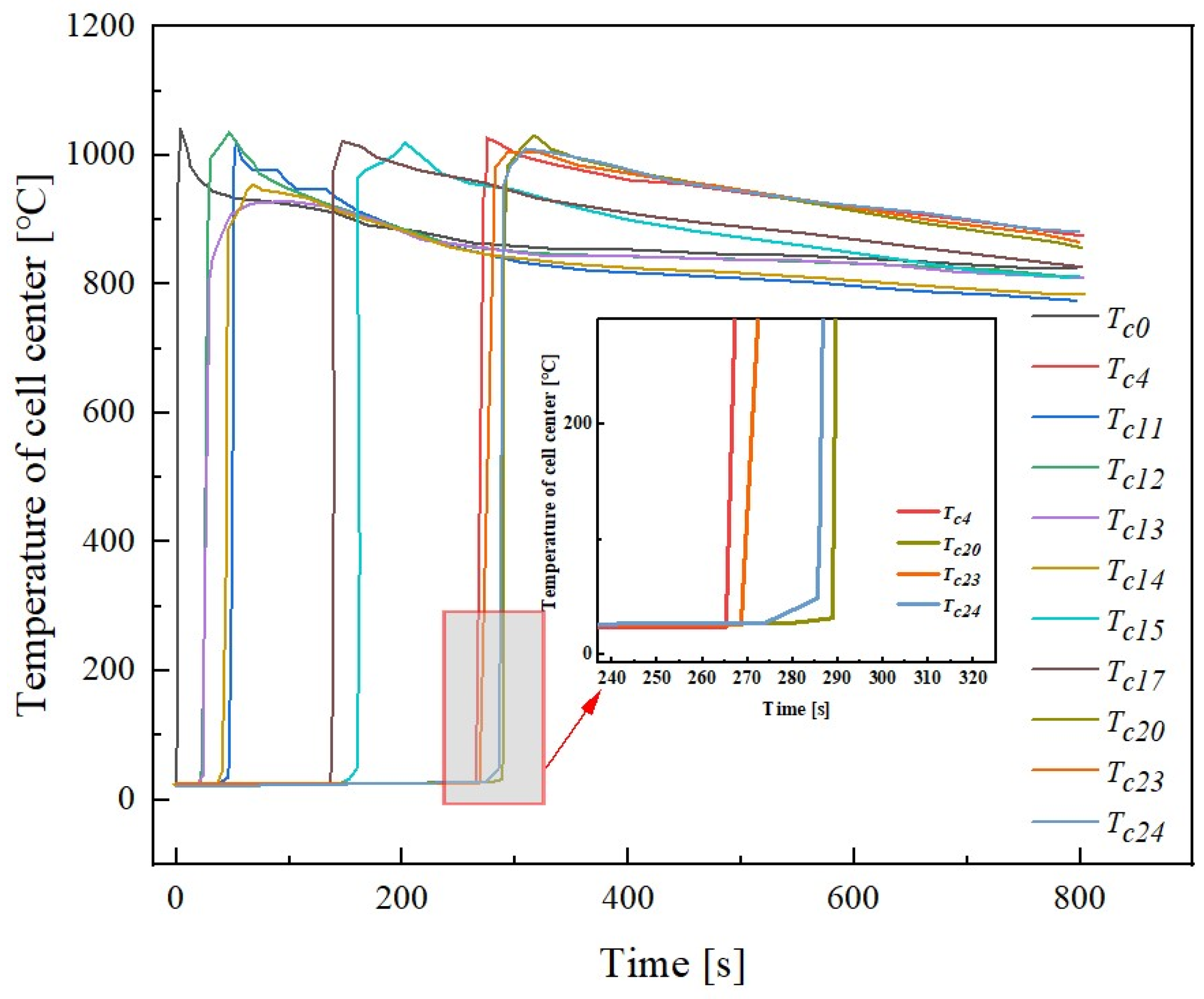
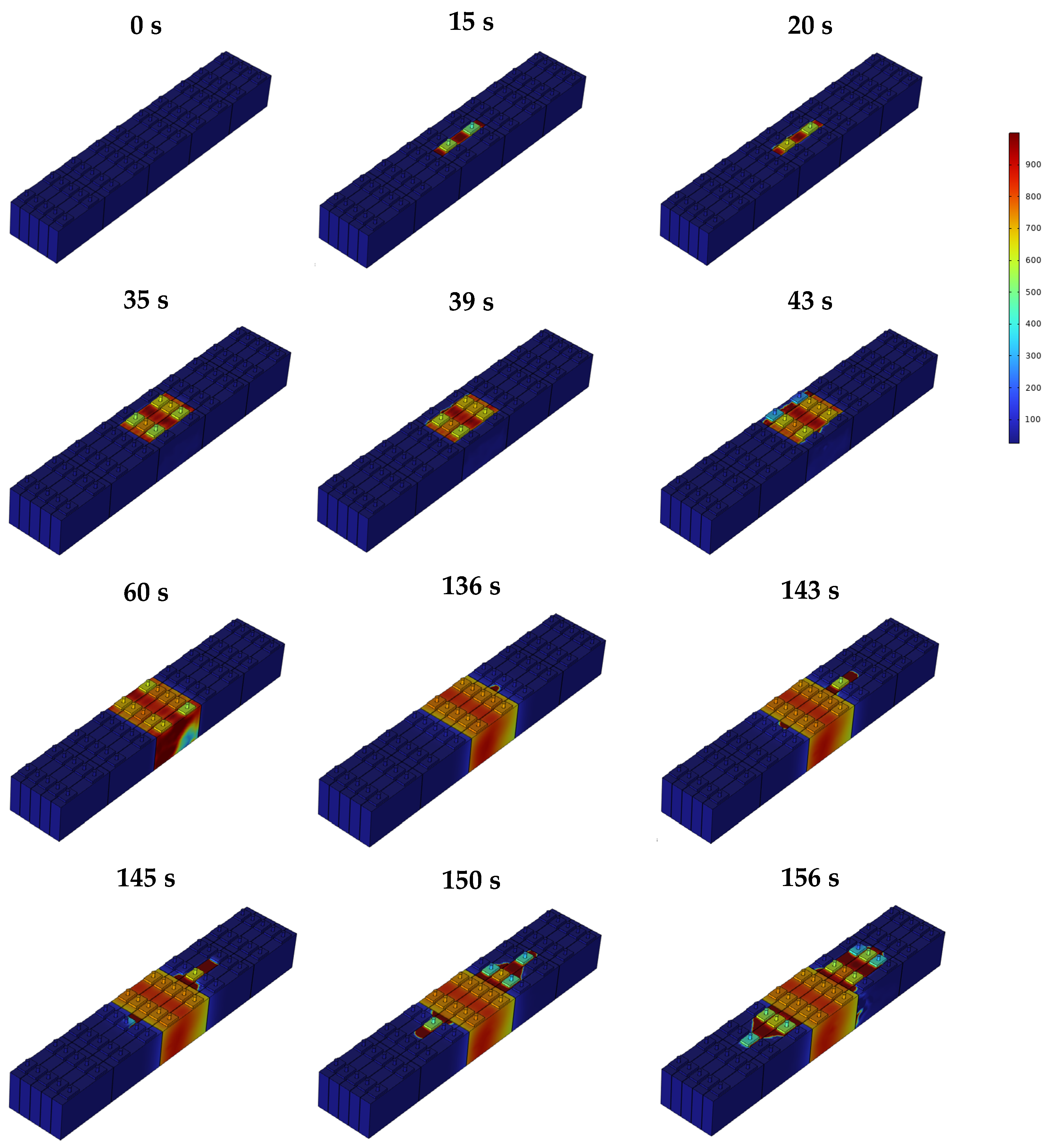
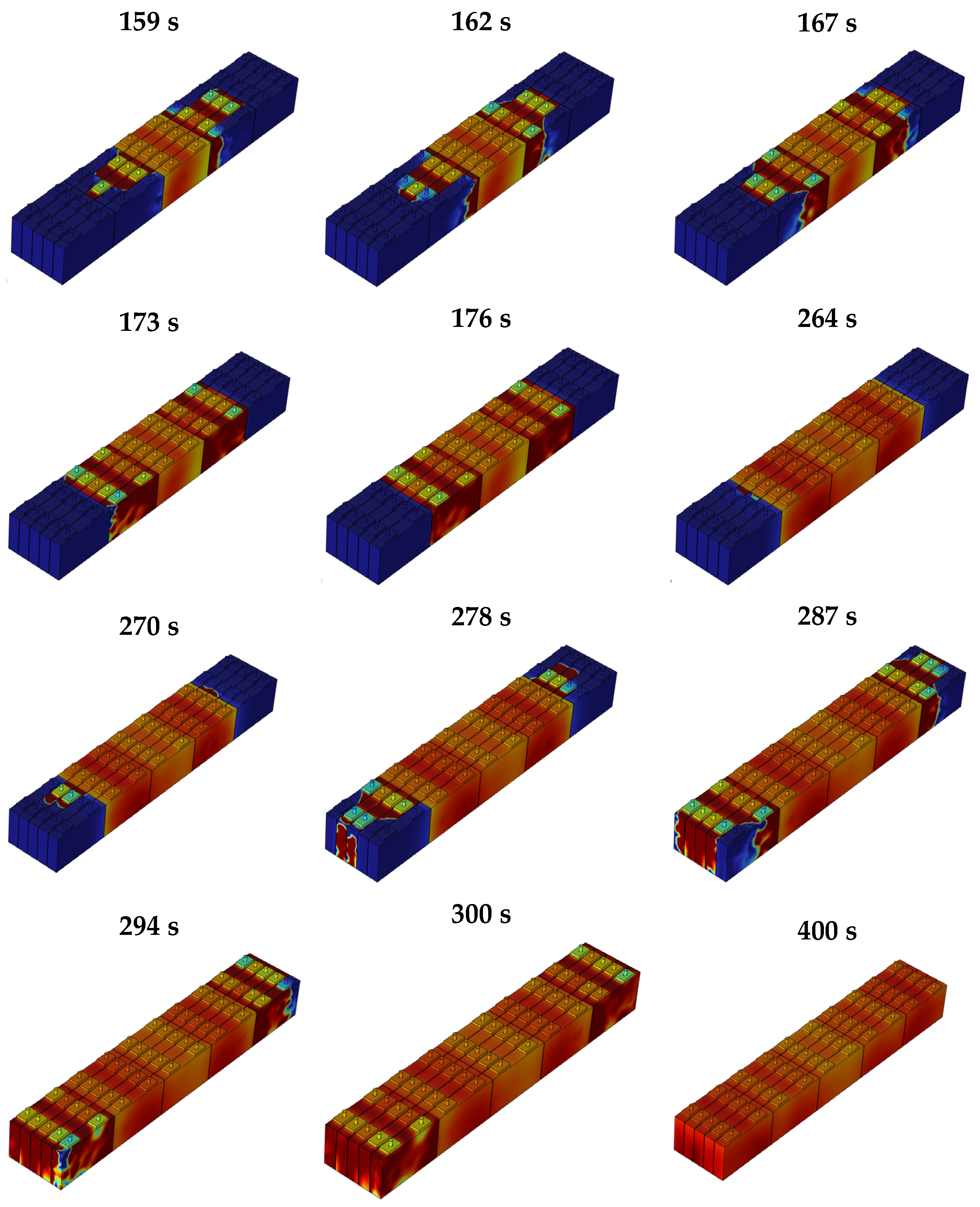
3.2.2. A 5 × 5 Two-Dimensional Array
4. Outlook and Challenges
- (1)
- The current model has only completed the accuracy verification for the single battery model, fixed electrode material, specific cell size, and module arrangement form used in this experiment. It has not yet fully expanded the verification and parameter adaptation under various cell specifications, different electrode materials, and different module structure forms. In future research, more common models and different arrangement methods of batteries will be studied for their thermal runaway propagation.
- (2)
- The thermal properties of the battery core vary nonlinearly with temperature. To simplify the model calculation, linear interpolation is used in this model to describe these properties. Future work will involve experimental measurements of the changes in the thermal properties during thermal runaway propagation to improve the nonlinear model of the battery core’s thermal properties. For example, we will use the methodological approach for inverse thermophysical parameter identification [39] to improve the physical consistency and predictive robustness of the 3D model and joint model during thermal runaway.
- (3)
- During the process of heat runaway propagation, the battery shell may deform or undergo phase changes, and the physical properties such as conductivity and density of each component will also change, thereby causing a change in its heat capacity. In this study, for the sake of simplicity, these changes were ignored, and it was assumed that the heat capacity remained constant. Future work will incorporate mechanical deformation simulations into the combined model to achieve more accurate predictions.
- (4)
- In this study, it is assumed that the environmental conditions during thermal runaway propagation in the battery array remain constant, using natural cooling boundary conditions. Future modeling will take into account the effects of airflow in open environments or the influence of closed environments.
- (5)
- This model takes into account the radiation heat exchange between the battery and the environment, but it does not consider internal radiation. In subsequent research, we will further improve the calculation of radiation heat exchange to enhance the model’s completeness and prediction accuracy.
- (6)
- This study on the thermal runaway propagation path in two-dimensional arrays is limited to small-scale arrays and does not consider scenarios beyond the 5 × 5 array. Future research will include larger-scale two-dimensional arrays to better represent the number of cells in real-world battery storage systems.
- (7)
- This study focuses solely on the thermal runaway propagation characteristics of the array and does not apply these characteristics to guide the battery pack design process. In future work, some key components will be added, including busbars and connection pieces, to provide guidance for the design and practical application of the battery pack.
- (8)
- This study adopts a hierarchical indirect verification approach: First, the full three-dimensional model is verified based on the measured data; then, using the verified and reliable three-dimensional simulation results as the benchmark, the accuracy of the combined model under one-dimensional array is checked; on this basis, all subsequent studies on two-dimensional arrays will be conducted based on the fully verified three-dimensional model as the reference benchmark. The deficiency of this study in model verification lies in not directly comparing and verifying with the experimental data of two-dimensional arrays. In subsequent research, we will conduct a thermal runaway propagation simulation experiment for two-dimensional arrays to lay a foundation for model verification.
- (9)
- This study clearly defines the temperature at which the battery enters the self-generated heat stage and the temperature at which the actual heat runaway is determined. However, the process of battery heat runaway is complex. Future research will strictly distinguish the temperature ranges corresponding to the four different stages of the battery heat runaway, namely, separator failure, self-generated heat initiation, internal short circuit occurrence, and heat runaway explosion. It will also clearly state the precise numerical temperature standard used in this article to determine the triggering moment of heat runaway, thereby improving the basis for judgment.
5. Conclusions
- (1)
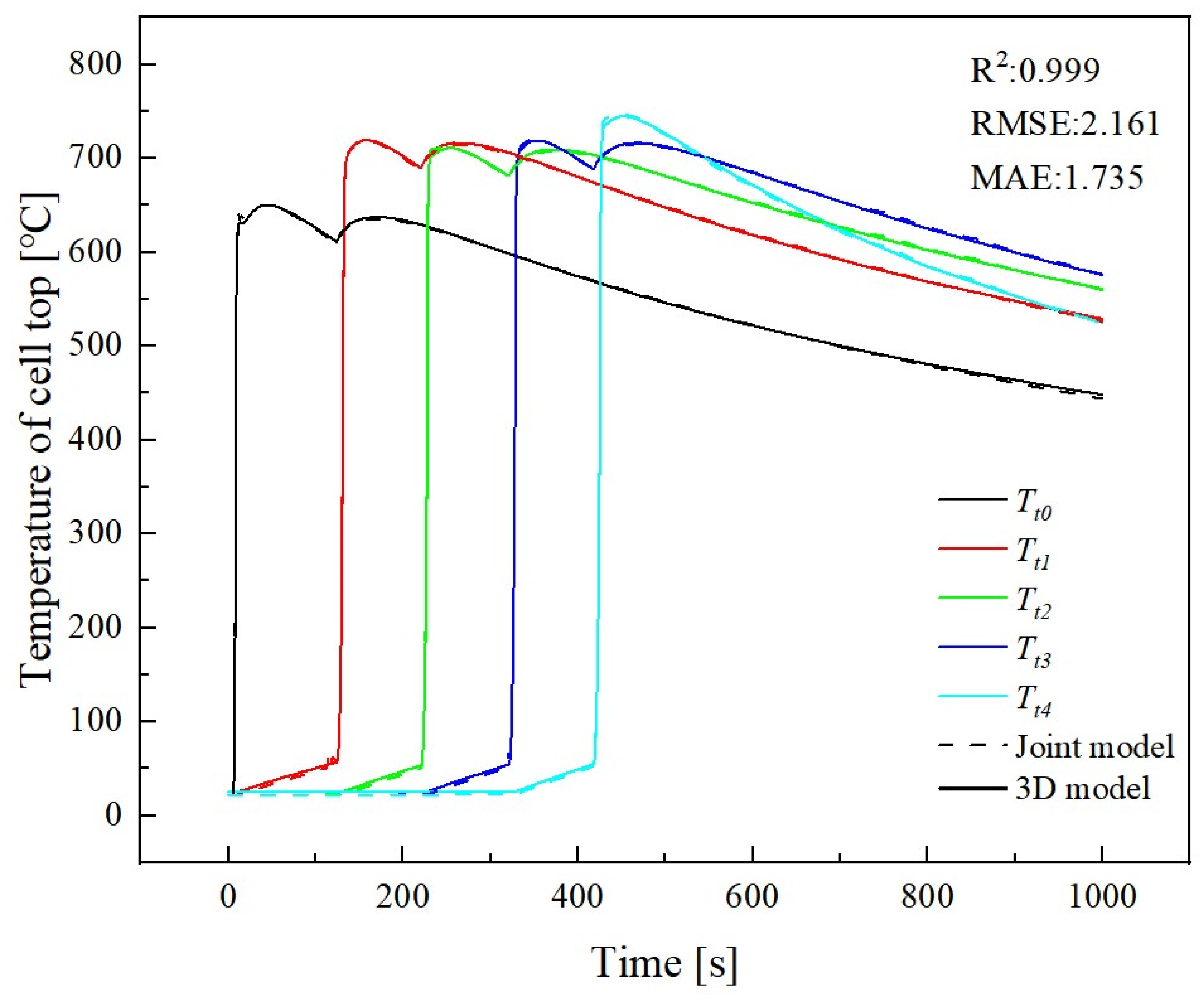
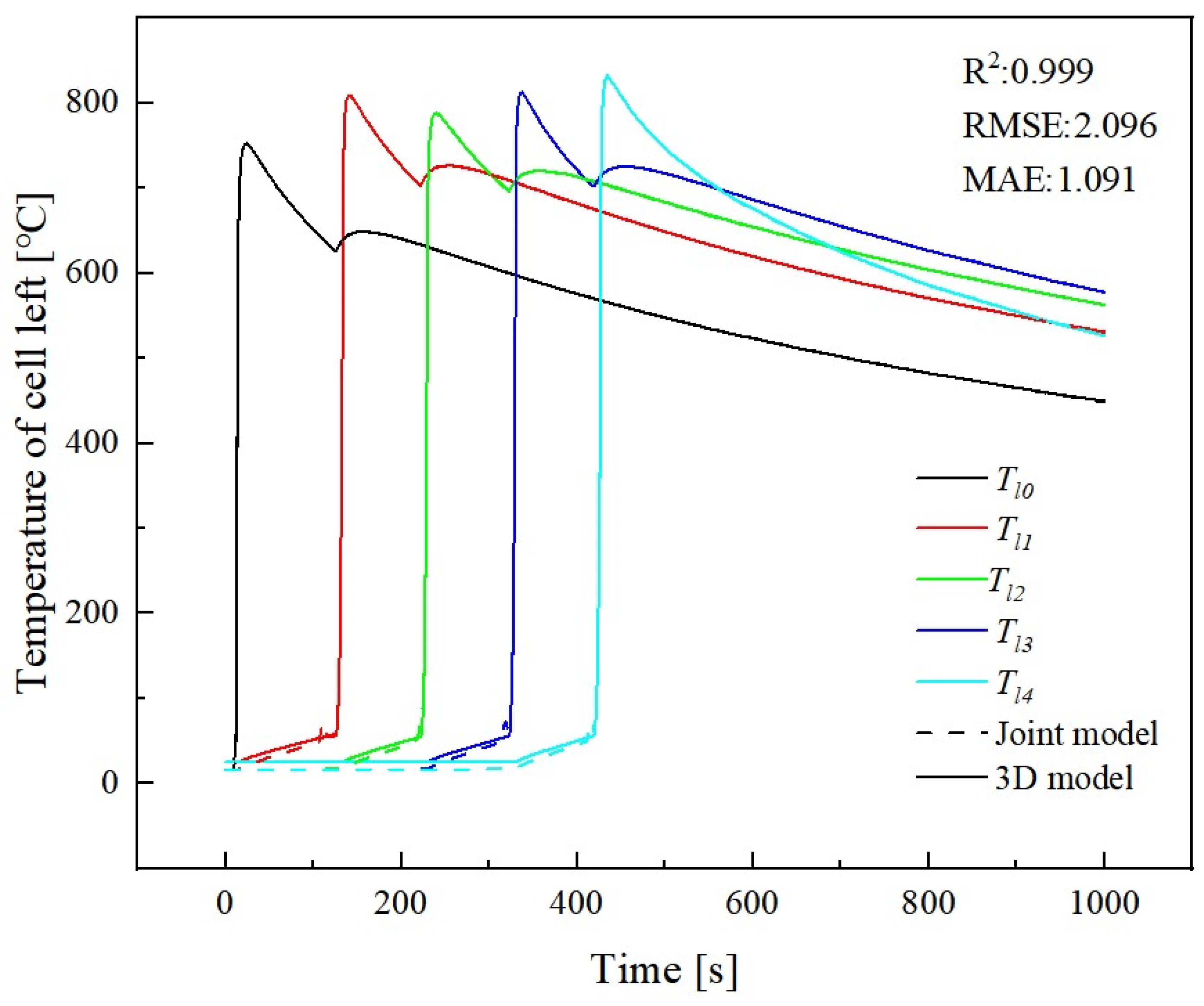
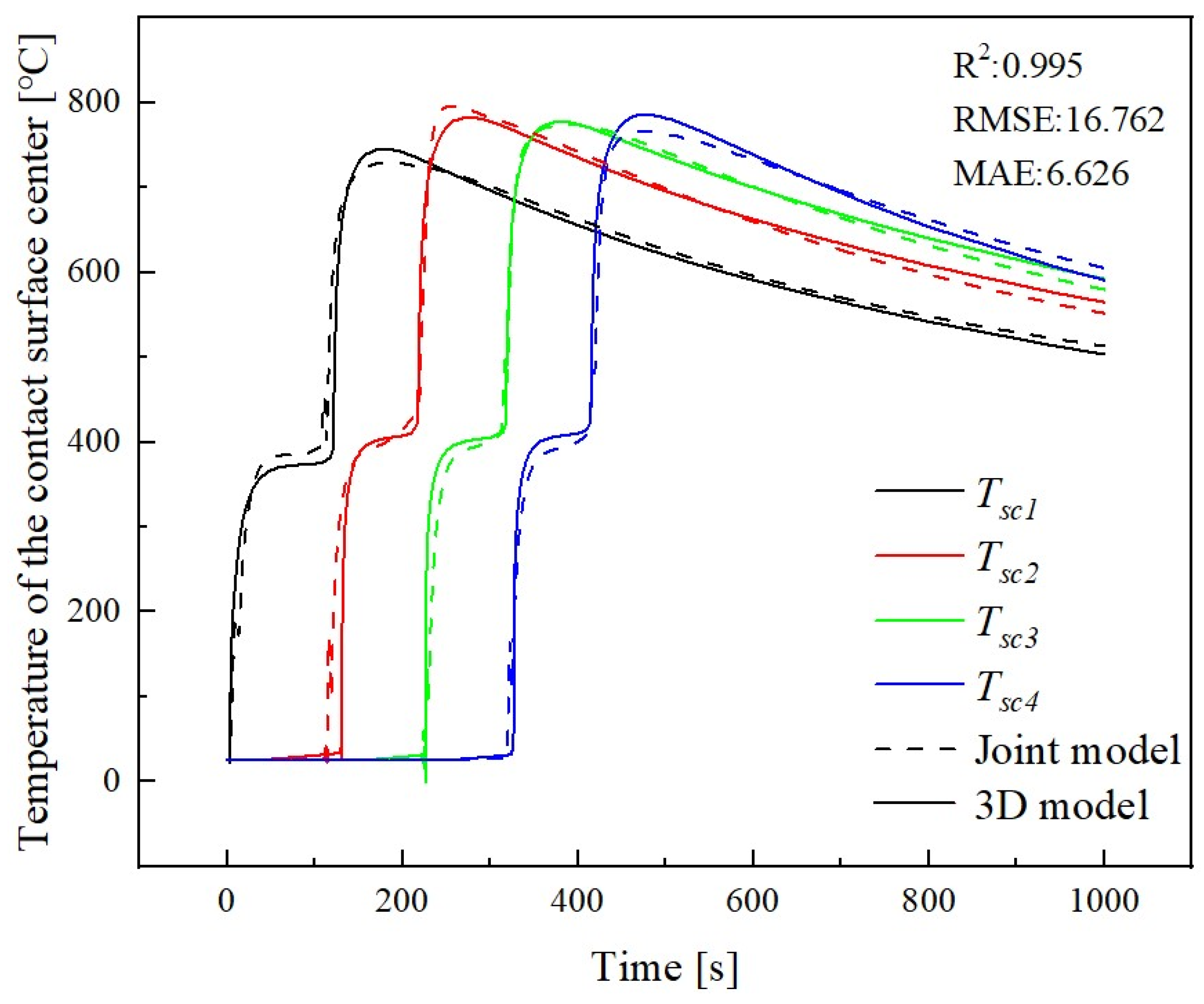
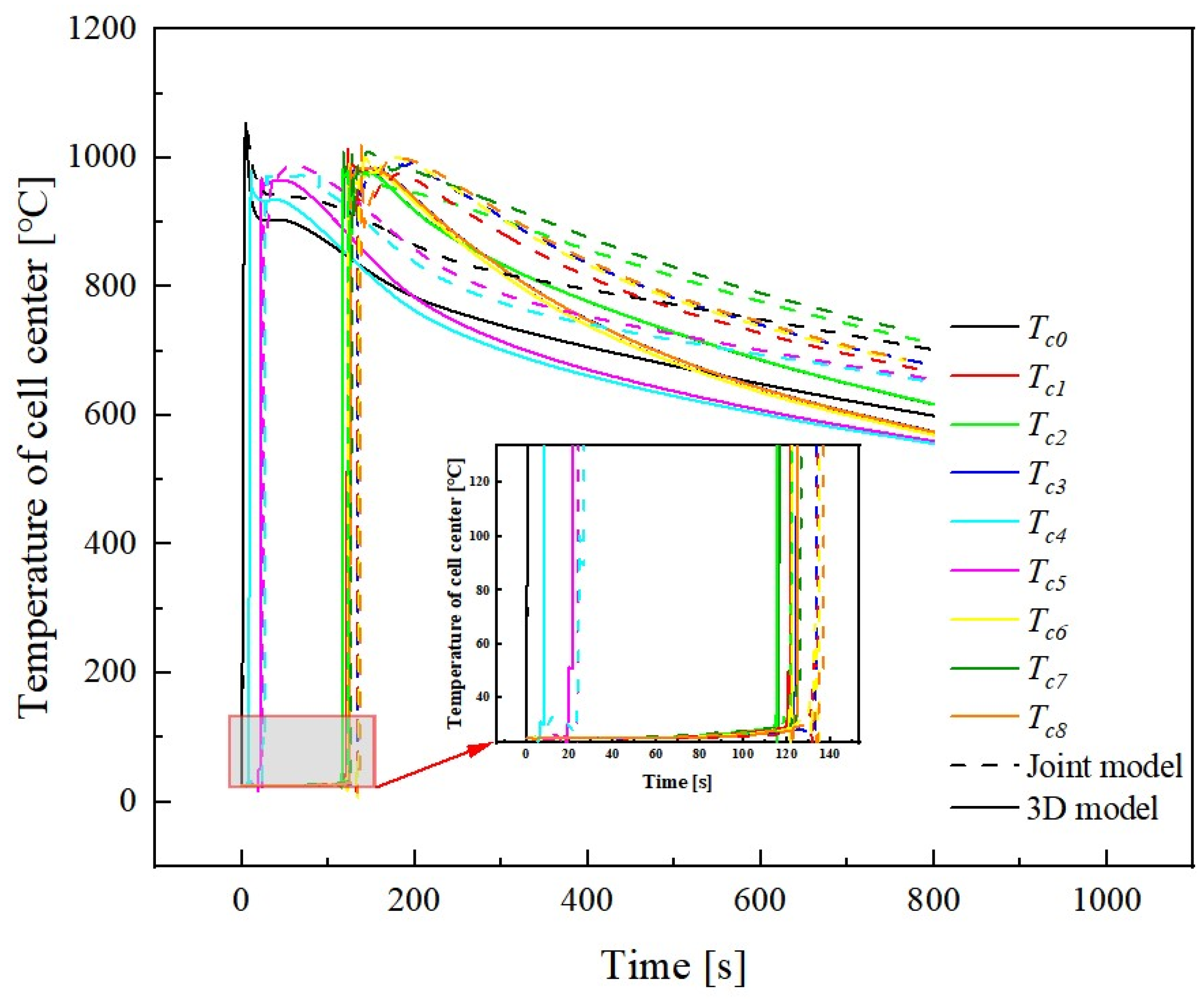
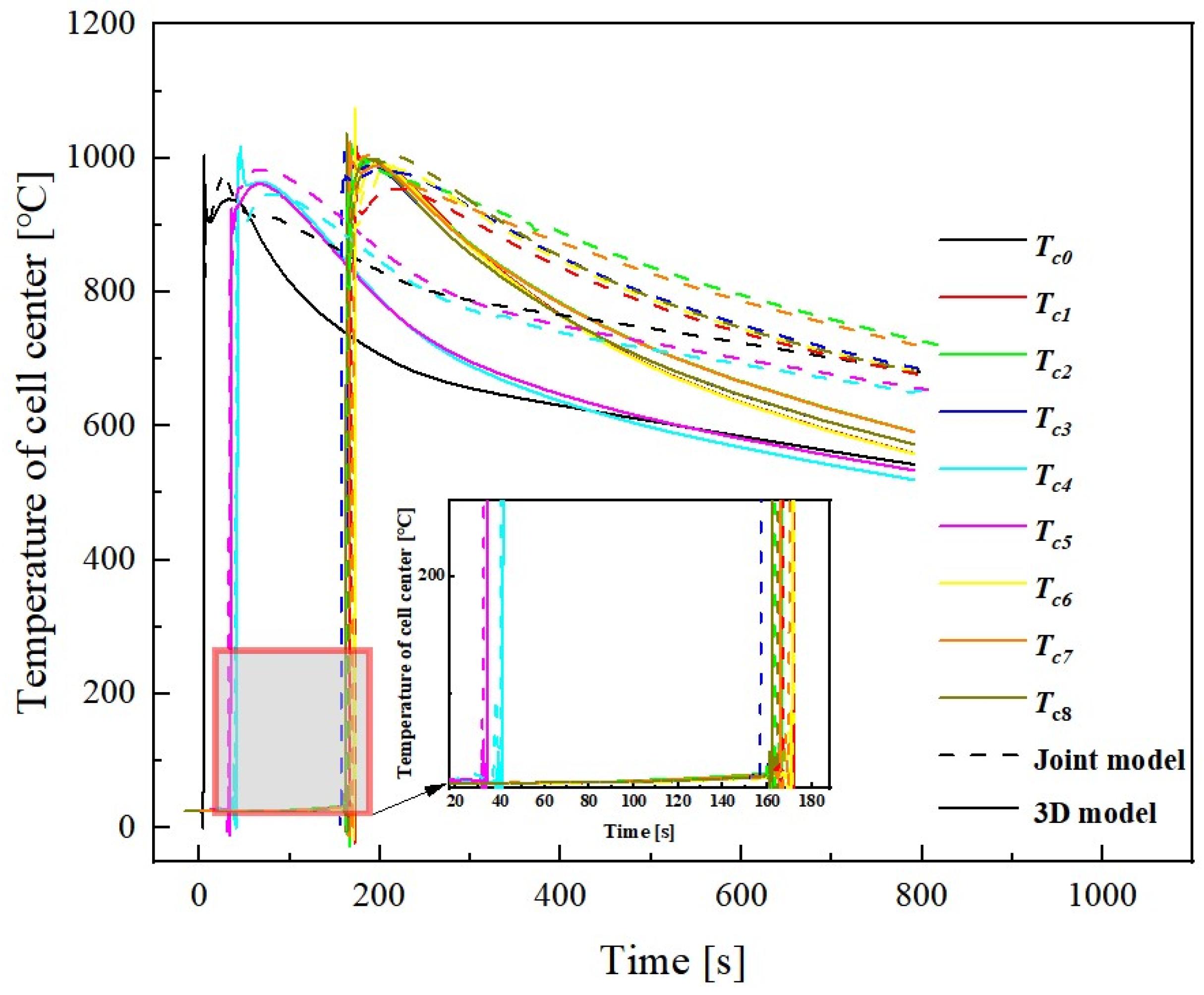
- The joint modeling approach primarily simplifies the shell model by representing it as a thermal capacitance connected in series with multiple thermal resistances, and the shell temperature is calculated through a weighted summation based on the temperatures of the thermal capacitance and the thermal resistances. For a one-dimensional battery array, compared with the three-dimensional model, the average deviation of the thermal runaway propagation time is 1.32%, the average deviation of the maximum temperature is 4.78%, and the average error of the time reaching the highest temperature is 7.63%. The solution time of the joint model is 6 h and 23 min, while that of the 3D model is 21 h and 26 min. Thus, the solution time has been shortened by 70.22%.
- (2)
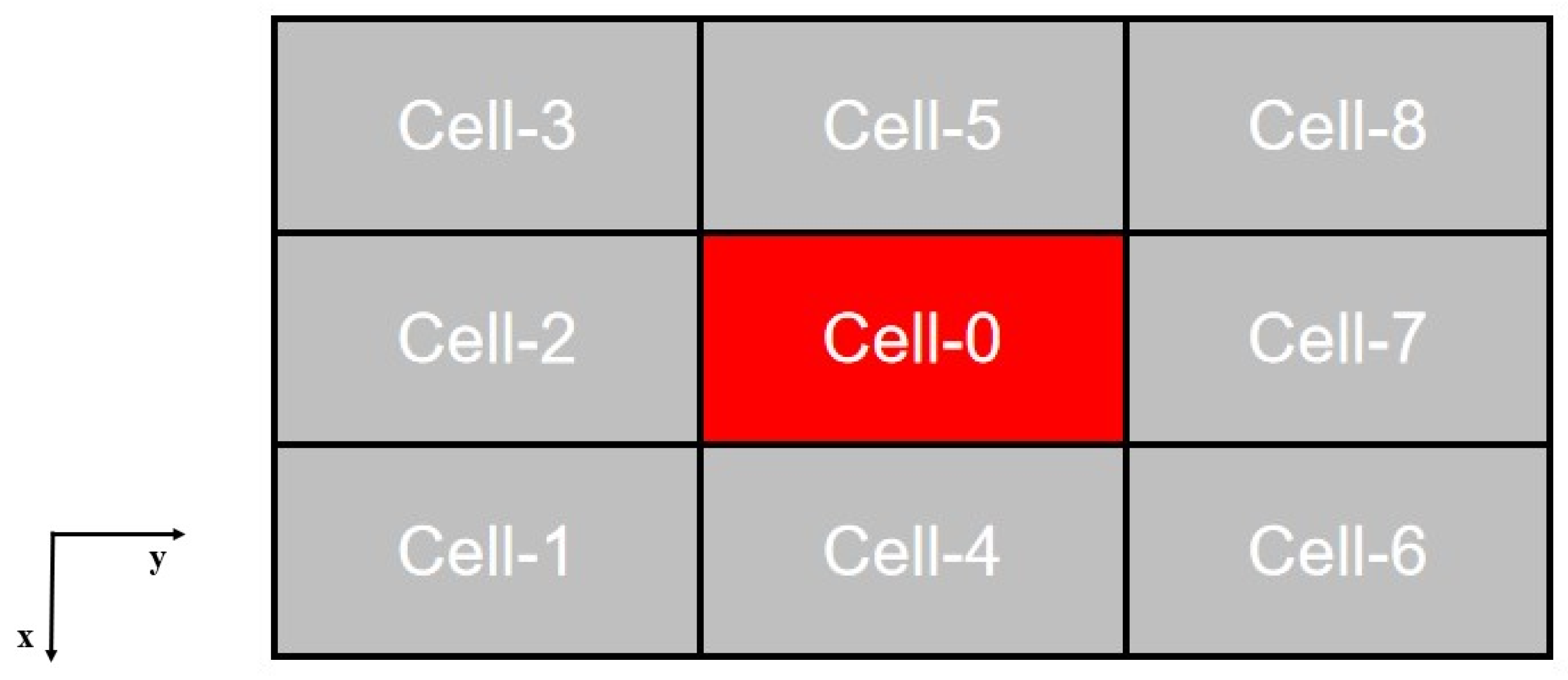
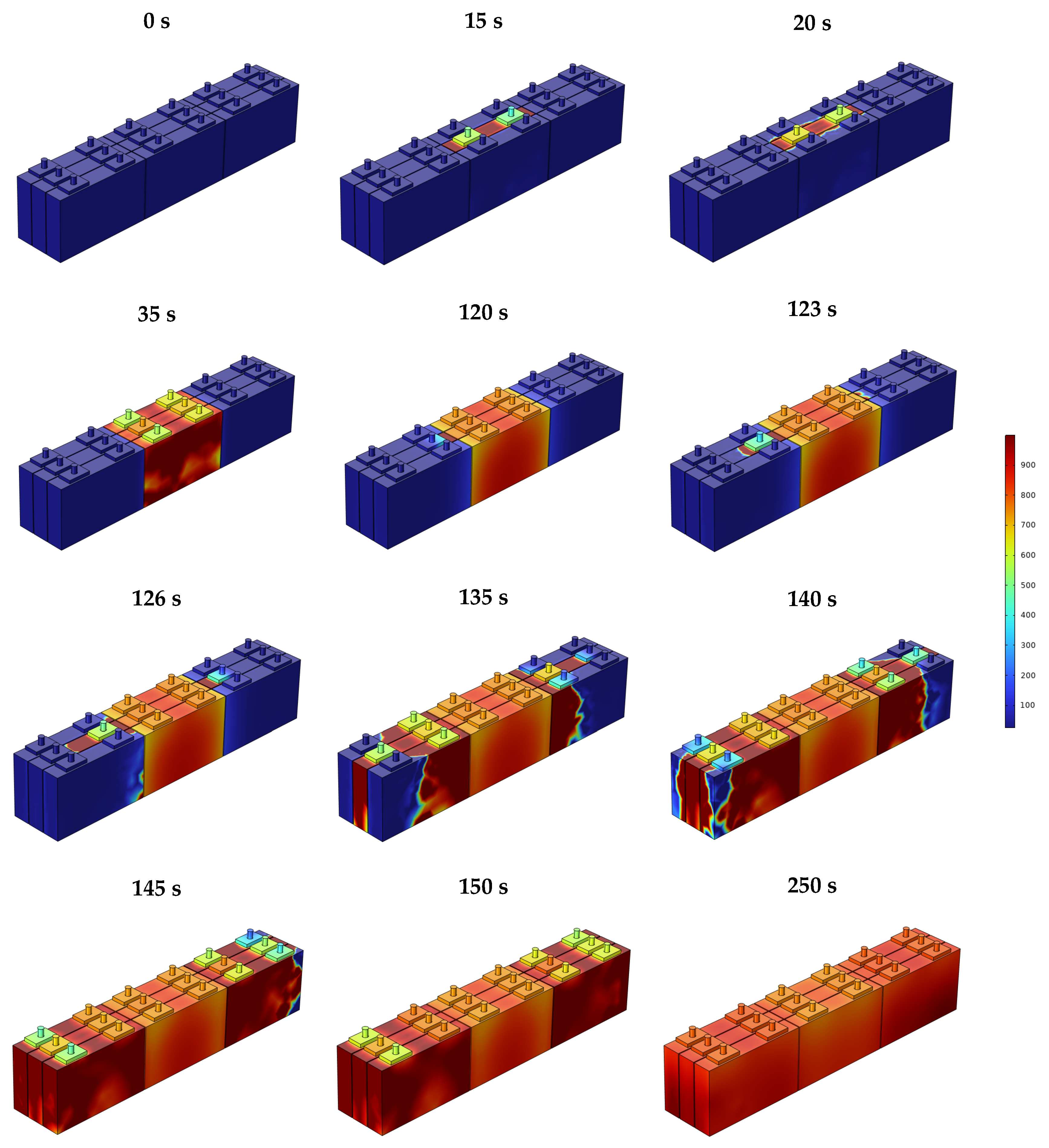
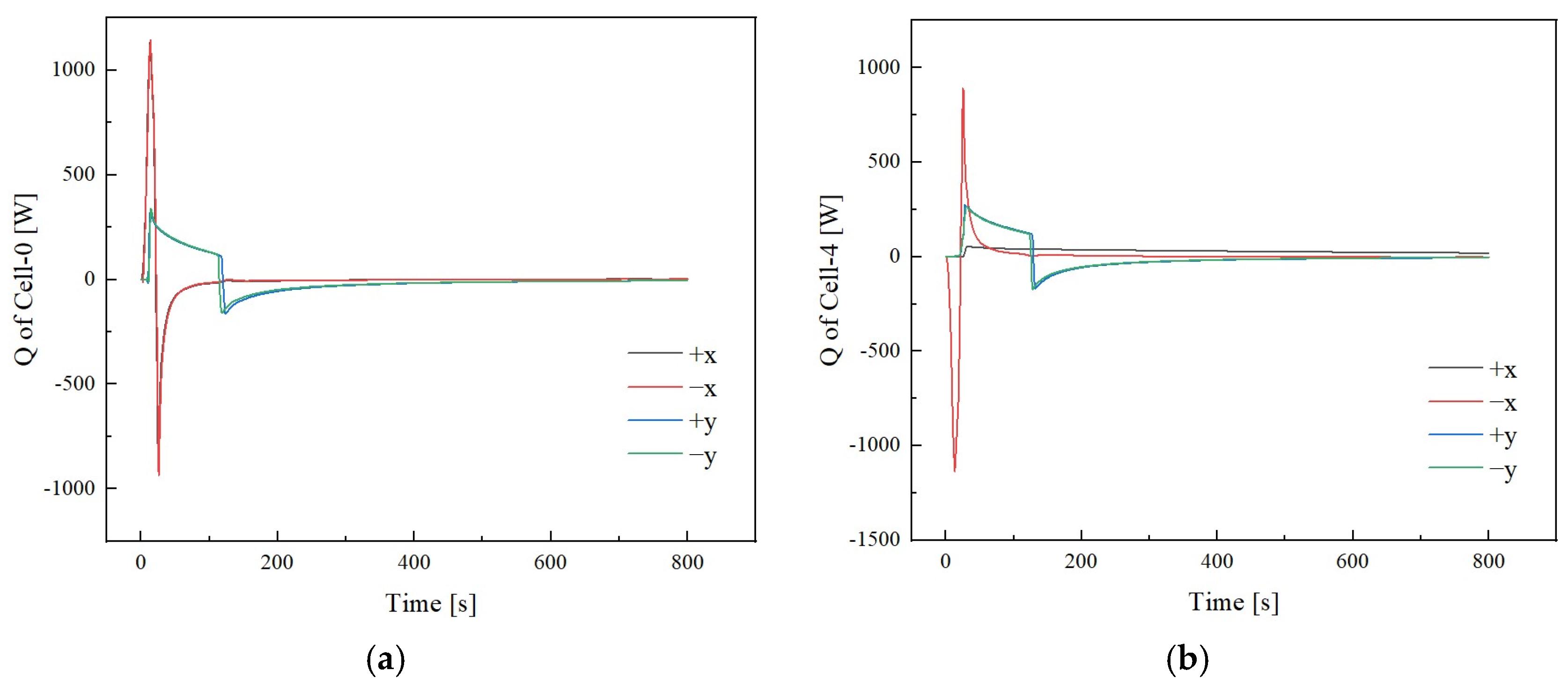
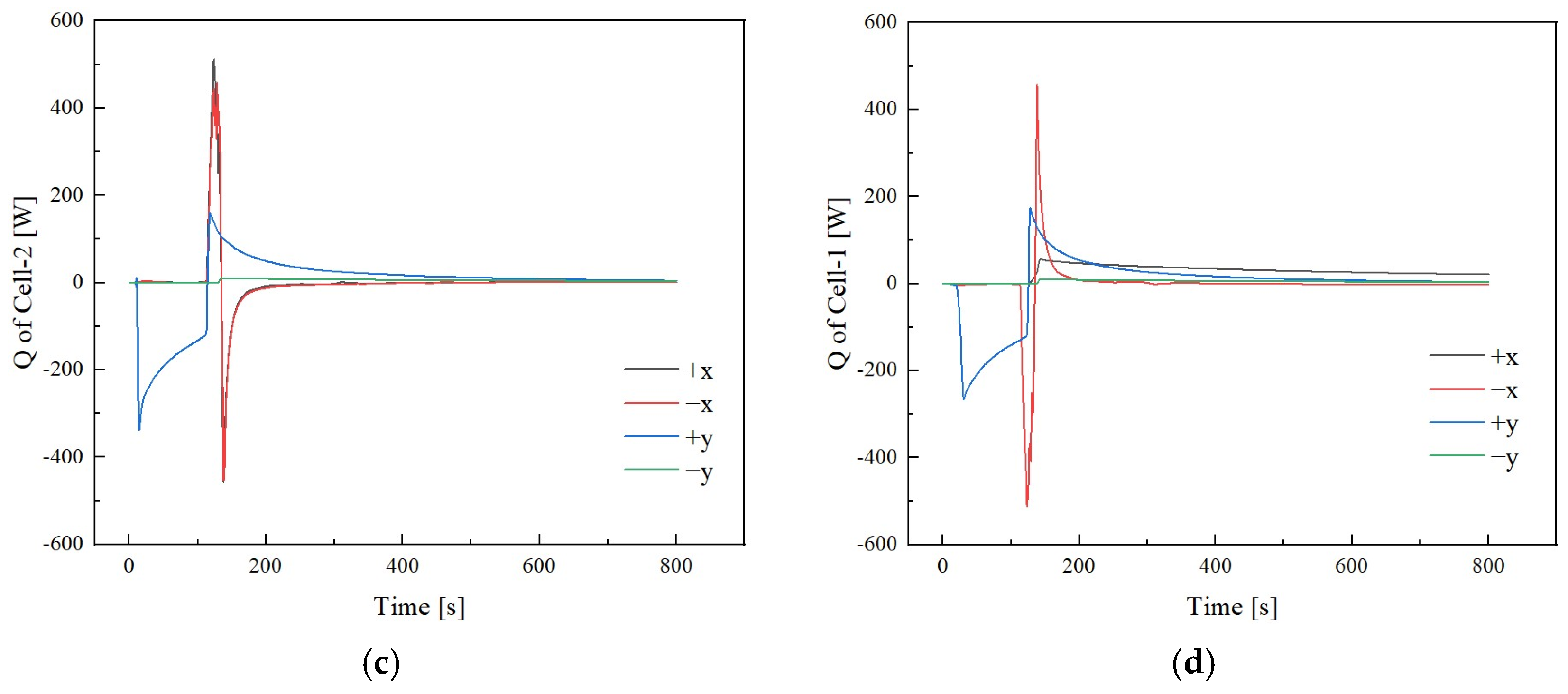
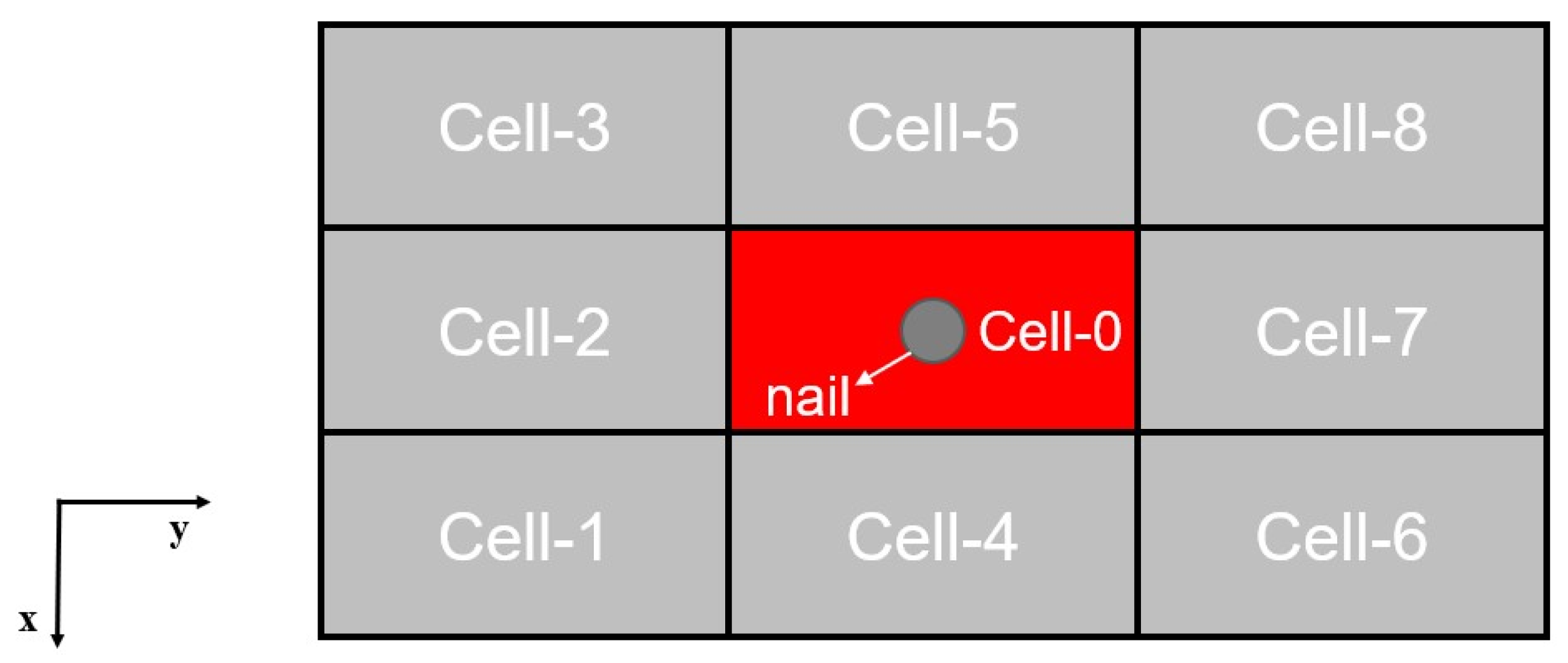
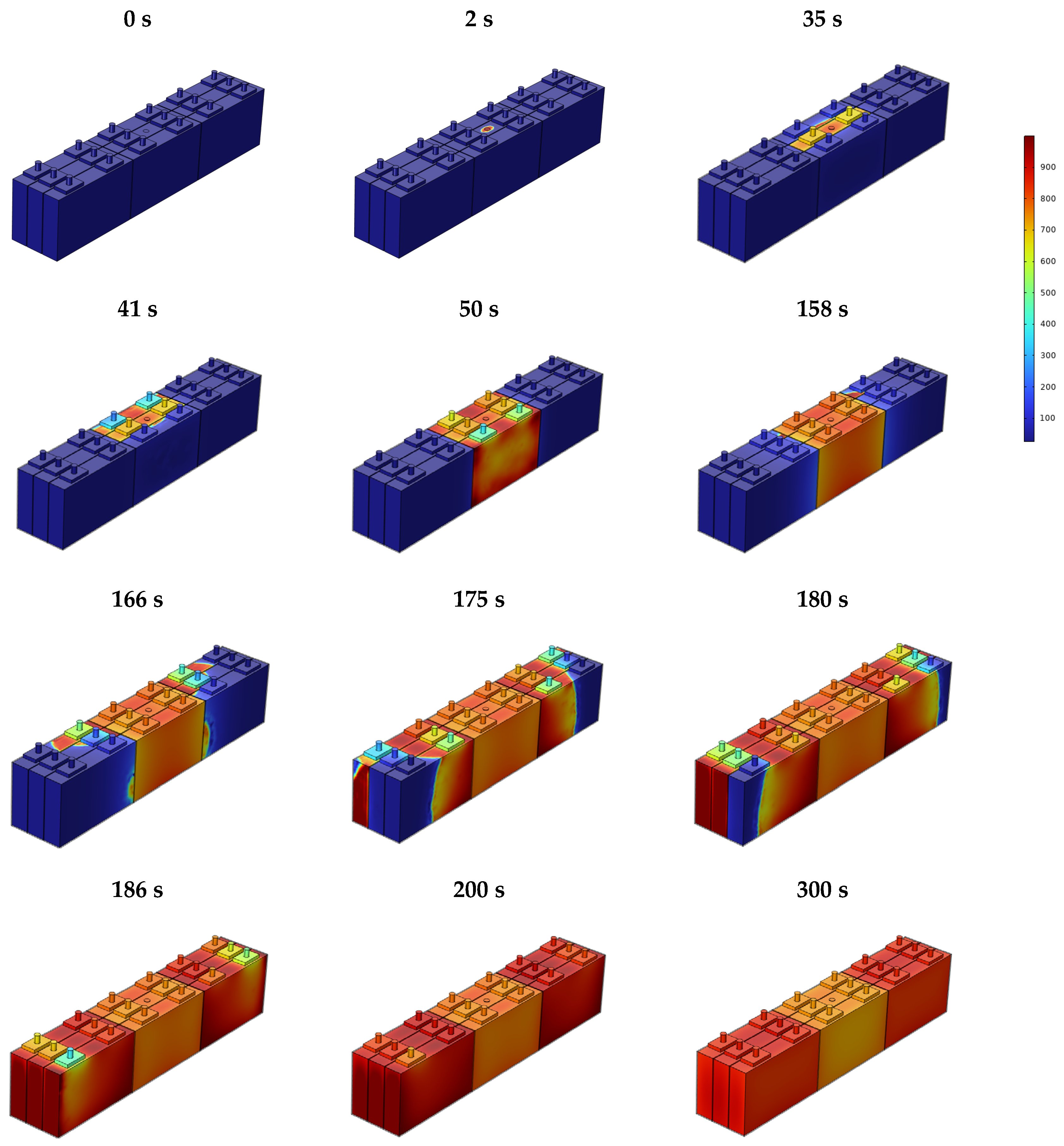
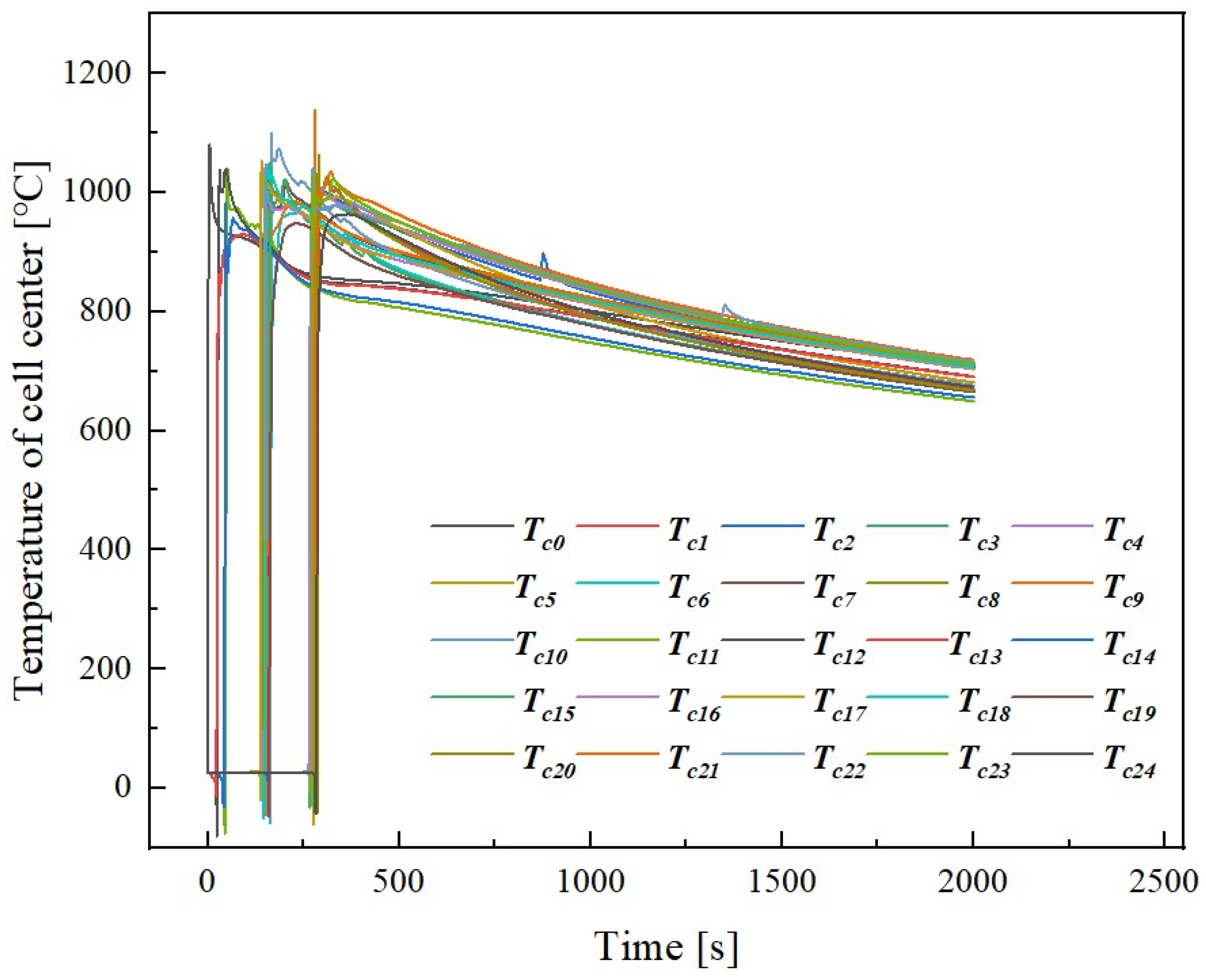
- For the two-dimensional battery array, when the central cell of the array is the first to undergo thermal runaway, the propagation initially occurs along the direction of the large-side surfaces, extending to all cells aligned in this direction. Subsequently, thermal runaway spreads outward along the direction perpendicular to the large-side surfaces toward both sides. This process is repeated until all cells in the array experience thermal runaway. Additionally, for a 3 × 3 battery array, the 3D model calculation took 38 h and 40 min, while the combined model only required 9 h and 44 min. For a 5 × 5 battery array, the 3D model calculation took 111 h and 33 min, and the combined model only needed 38 h and 27 min, saving 74.84% and 65.5% of the calculation time, respectively.
Author Contributions
Funding
Data Availability Statement
Conflicts of Interest
Nomenclature
| Symbols | |
| R | thermal resistance [W/(m2·K)] |
| Ru | gas constant (8.3145 J/(mol·K)) |
| C | heat capacity [J/K] |
| T | temperature (°C) |
| V | volume (m3) |
| Cp | specific heat capacity (kJ/(kg·K)) |
| A | area (m2), pre-exponential factor (-) |
| u | normalized concentration (-) |
| τ | time (s) |
| Const | constant (-) |
| E | activation energy (J/mol) |
| H | heat (J) |
| h | heat transfer coefficient [W/(m·K)] |
| Q | heat transfer rate (W) |
| q | heating power (W/m3) |
| ri | thermophysical parameters (-) |
| n | vector direction |
| Subscripts | |
| a | activation |
| Bat | battery |
| l | left |
| t | top |
| b | bottom |
| JR | jelly roll |
| TR | thermal runaway |
| v | volume |
| amb | ambient |
| rad | radiation |
| p | hot junction |
| sc | contact surface center |
| 0 | initial value; Cell-0 |
| x | a certain one |
| Greek symbols | |
| λ | thermal conductivity [W/(m·K)] |
| δ | thickness (mm) |
| Δ | difference (-) |
| α | ratio (-) |
| ε | emissivity (-) |
| ρ | density (kg/m3) |
| σ | Stefan–Boltzmann constant [W/(m2·K4)] |
Appendix A



| Battery | Joint Model Trigger Time [s] | 3D Model Trigger Time [s] | Joint Model Maximum Temperature [°C] | 3D Model Maximum Temperature [°C] |
|---|---|---|---|---|
| Cell-0 | 0.64 | 0.64 | 969.47 | 1004.15 |
| Cell-1 | 166.99 | 172.13 | 954.21 | 1004.94 |
| Cell-2 | 163.32 | 166.46 | 996.86 | 993.32 |
| Cell-3 | 157.03 | 162.11 | 979.96 | 988.71 |
| Cell-4 | 40.29 | 41.22 | 946.03 | 1017.12 |
| Cell-5 | 32.53 | 34.26 | 981.69 | 961.31 |
| Cell-6 | 171.82 | 171.23 | 987.91 | 994.27 |
| Cell-7 | 169.82 | 164.61 | 1004.64 | 988.53 |
| Cell-8 | 164.64 | 162.13 | 1001.99 | 999.03 |
| Average error | 2.26% | 2.38% | ||

Appendix B


| Battery | Cross Arrangement [s] | Symmetric Arrangement [s] | Time Difference [s] |
|---|---|---|---|
| Cell-0 | 0.64 | 0.64 | 0 |
| Cell-1 | 131.39 | 131.11 | 0.28 |
| Cell-2 | 120.81 | 120.20 | 0.61 |
| Cell-3 | 131.18 | 130.73 | 0.45 |
| Cell-4 | 24.07 | 24.37 | −0.3 |
| Cell-5 | 23.89 | 23.91 | −0.02 |
| Cell-6 | 135.91 | 133.96 | 1.95 |
| Cell-7 | 126.99 | 124.09 | 2.9 |
| Cell-8 | 138.33 | 134.78 | 3.55 |
References
- Mallick, S.; Gayen, D. Thermal behaviour and thermal runaway propagation in lithium-ion battery systems—A critical review. J. Energy Storage 2023, 62, 106894. [Google Scholar] [CrossRef]
- Jiang, Z.Y.; Qu, Z.G.; Zhang, J.F.; Rao, Z.H. Rapid prediction method for thermal runaway propagation in battery pack based on lumped thermal resistance network and electric circuit analogy. Appl. Energy 2020, 268, 115007. [Google Scholar] [CrossRef]
- Tai, L.D.; Lee, M.Y. Advances in the Battery Thermal Management Systems of Electric Vehicles for Thermal Runaway Prevention and Suppression. Batteries 2025, 11, 216. [Google Scholar] [CrossRef]
- Chen, Z.; Xiong, R.; Sun, F. Research status and analysis for battery safety accidents in electric vehicles. J. Mech. Eng. 2020, 55, 93–104+116. [Google Scholar]
- Zheng, S.; Wang, L.; Feng, X.; He, X. Probing the heat sources during thermal runaway process by thermal analysis of different battery chemistries. J. Power Sources 2018, 378, 527–536. [Google Scholar] [CrossRef]
- Zhou, Z.; Zhou, X.; Li, M.; Cao, B.; Liew, K.; Yang, L. Experimentally exploring prevention of thermal runaway propagation of large-format prismatic lithium-ion battery module. Appl. Energy 2022, 327, 120119. [Google Scholar] [CrossRef]
- Miao, W.; Quan, R.; Ju, J.; Hu, M.; Cao, H.; Xu, Q.; Xiong, Y.; Zhao, Y.; Ding, Y.; Ling, X. Calcium chloride hexahydrate based composite phase change/thermochemical material for wide-temperature range passive battery thermal management. Chem. Eng. J. 2025, 508, 160800. [Google Scholar] [CrossRef]
- Qiu, H.; Zhang, Z.; Ling, Z.; Fang, X. Developing a flame-retardant flexible composite phase change material to realize both temperature control and thermal runaway prevention for lithium-ion battery pack. Appl. Therm. Eng. 2024, 248, 123301. [Google Scholar] [CrossRef]
- Chen, M.; Zhu, M.; Zhao, L.; Chen, Y. Study on thermal runaway propagation inhibition of battery module by flame-retardant phase change material combined with aerogel felt. Appl. Energy 2024, 367, 123394. [Google Scholar] [CrossRef]
- Zhou, S.; Lin, S.; Zhang, W.; Ling, Z.; Zhang, Z.; Fang, X. Kinetics study on inhibiting battery thermal runaway using an inorganic phase change material with a super high thermochemical storage capacity. Process Saf. Environ. Prot. 2024, 191, 643–657. [Google Scholar] [CrossRef]
- Li, R.R.; Liu, Z.; Zheng, S.; Xu, C.; Sun, J.; Chen, S.; Wang, H.; Lu, L.; Deng, T.; Feng, X. Trifunctional composite thermal barrier mitigates the thermal runaway propagation of large-format prismatic lithium-ion batteries. J. Energy Storage 2023, 73, 109178. [Google Scholar] [CrossRef]
- Sun, Z.; Guo, Y.; Zhang, C.; Xu, H.; Zhou, Q.; Wang, C. A novel hybrid battery thermal management system for prevention of thermal runaway propagation. IEEE Trans. Transp. Electrif. 2022, 9, 5028–5038. [Google Scholar] [CrossRef]
- Xiao, H.; E, J.; Tian, S.; Huang, Y.; Song, X. Effect of composite cooling strategy including phase change material and liquid cooling on the thermal safety performance of a lithium-ion battery pack under thermal runaway propagation. Energy 2024, 295, 131093. [Google Scholar] [CrossRef]
- Ouyang, T.; Liu, B.; Xu, P.; Wang, C.; Ye, J. Electrochemical-thermal coupled modelling and multi-measure prevention strategy for Li-ion battery thermal runaway. Int. J. Heat Mass Transf. 2022, 194, 123082. [Google Scholar] [CrossRef]
- Yu, Y.; Tian, J.; Wang, J.; Li, Z.; Jin, K.; Mei, W.; Wang, Q. In-depth analysis of synergistic suppression of thermal runaway propagation in lithium-ion battery modules via combined active cooling and passive insulation. Process Saf. Environ. Prot. 2025, 197, 107026. [Google Scholar] [CrossRef]
- Xie, J.; Li, J.; Li, C.; Huang, X.; Zhang, G.; Yang, X. Multi-level passive-active thermal control for battery thermal runaway prevention and suppression in electric vehicles. eTransportation 2025, 26, 100467. [Google Scholar] [CrossRef]
- Deng, J.; Li, Z.; Chen, J. Experiment study of pseudo-passive heat removal system for power battery thermal runaway propagation inhibition. Appl. Therm. Eng. 2024, 253, 123777. [Google Scholar] [CrossRef]
- Lin, Z.; Li, Z.; Chen, J.; Deng, J.; Wu, H. Simulation and analysis of pseudo-passive power battery thermal runaway propagation inhibition system. J. Energy Storage 2025, 128, 117120. [Google Scholar] [CrossRef]
- Mishra, S.N.; Sarkar, S.; Mukhopadhyay, A.; Sen, S. A lumped electrochemical-thermal model for simulating detection and mitigation of thermal runaway in lithium-ion batteries under different ambient conditions. Therm. Sci. Eng. Prog. 2024, 53, 102764. [Google Scholar] [CrossRef]
- He, C.; Liu, Y.; Huang, X.; Wan, S.; Lin, P.; Huang, B.; Sun, J.; Zhao, T. A reduced-order thermal runaway network model for predicting thermal propagation of lithium-ion batteries in large-scale power systems. Appl. Energy 2024, 373, 123955. [Google Scholar] [CrossRef]
- Sorensen, A.; Utgikar, V.; Belt, J. A study of thermal runaway mechanisms in lithium-ion batteries and predictive numerical modeling techniques. Batteries 2024, 10, 116. [Google Scholar] [CrossRef]
- Lu, D.; Cui, N.; Zhou, J.; Li, C. Hybrid cooling system with phase change material and liquid microchannels to prevent thermal runaway propagation within lithium-ion battery packs. Appl. Therm. Eng. 2024, 247, 123118. [Google Scholar] [CrossRef]
- Sadeghi, H.; Restuccia, F. Kinetic modelling of thermal decomposition in lithium-ion battery components during thermal runaway. J. Power Sources 2025, 629, 236026. [Google Scholar] [CrossRef]
- Sun, Z.; Read, E.; Chen, Y.; Dai, Y.; Marco, J.; Shearing, P.R. Numerical and experimental characterization of nail penetration induced thermal runaway propagation in 21700 lithium-ion batteries: Exploring the role of interstitial thermal barrier materials. J. Energy Chem. 2025, 109, 576–589. [Google Scholar] [CrossRef]
- Menz, F.; Bausch, B.; Barillas, J.K.; Böse, O.; Danzer, M.A.; Hölzle, M. Preventing thermal runaway propagation in lithium-ion batteries: Model-based optimization of interstitial heat-absorbing thermal barriers. J. Power Sources 2023, 584, 233578. [Google Scholar] [CrossRef]
- Uwitonze, H.; Ni, A.; Nagulapati, V.M.; Kim, H.; Lim, H. CFD study of nail penetration induced thermal runaway propagation in Lithium-Ion battery cell pack. Appl. Therm. Eng. 2024, 243, 122649. [Google Scholar] [CrossRef]
- Jindal, P.; Kumar, B.S.; Bhattacharya, J. Coupled electrochemical-abuse-heat-transfer model to predict thermal runaway propagation and mitigation strategy for an EV battery module. J. Energy Storage 2021, 39, 102619. [Google Scholar] [CrossRef]
- Hong, Y.; Wu, H.; Wong, S.K.; Jin, C.; Xu, C.; Wang, H.; Peng, Y.; Zheng, Y.; Feng, X.; Ouyang, M. Dynamic thermophysical modeling and parametric sensitivity analysis of flood cooling suppressing the thermal runaway propagation for electric bicycle battery. J. Energy Storage 2024, 98, 113084. [Google Scholar] [CrossRef]
- Zhang, Y.; Song, L.; Tian, J.; Mei, W.; Jiang, L.; Sun, J.; Wang, Q. Modeling the propagation of internal thermal runaway in lithium-ion battery. Appl. Energy 2024, 362, 123004. [Google Scholar] [CrossRef]
- Choi, H.J.; Kim, S.A.; Kim, C.H.; Shin, B.S. Machine learning–based on analysis of EV battery thermal runaway simulation. J. Mech. Sci. Technol. 2025, 39, 3667–3677. [Google Scholar] [CrossRef]
- Zhao, Y.; Zhao, J. The effects of tab cooling on thermal behavior and thermal runaway suppression in lithium-ion cell module. J. Power Sources 2026, 661, 238657. [Google Scholar] [CrossRef]
- Liu, X.; Zhang, T.; Gao, Q.; Han, Z.; Huang, H.; Xu, Y.; Chen, H.; Xu, X. The suppression of thermal propagation using spray cooling with R410A in overheated lithium battery pack. Case Stud. Therm. Eng. 2024, 58, 104339. [Google Scholar] [CrossRef]
- Chen, S.; Wei, X.; Zhu, Z.; Wu, H.; Ou, Y.; Zhang, G.; Wang, X.; Zhu, J.; Feng, X.; Dai, H.; et al. Thermal runaway front propagation characteristics, modeling and judging criteria for multi-jelly roll prismatic lithium-ion battery applications. Renew. Energy 2024, 231, 121045. [Google Scholar] [CrossRef]
- Tan, W.; Ren, L.B.; Tian, T.; Ma, K.; Wang, S.-L.; Zhang, Z.-Y. Thermal runaway propagation and suppression in mobile energy storage lithium battery module. J. Energy Storage 2025, 131, 117615. [Google Scholar] [CrossRef]
- Zhang, T.; Qiu, X.; Li, M.; Yin, Y.; Jia, L.; Dai, Z.; Guo, X.; Wei, T. Thermal runaway propagation characteristics and preventing strategies under dynamic thermal transfer conditions for lithium-ion battery modules. J. Energy Storage 2023, 58, 106463. [Google Scholar] [CrossRef]
- Feng, X.; Sun, J.; Ouyang, M.; Wang, F.; He, X.; Lu, L.; Peng, H. Characterization of penetration induced thermal runaway propagation process within a large format lithium ion battery module. J. Power Sources 2015, 275, 261–273. [Google Scholar] [CrossRef]
- Rui, X.; Feng, X.; Wang, H.; Yang, H.; Zhang, Y.; Wan, M.; Wei, Y.; Ouyang, M. Synergistic effect of insulation and liquid cooling on mitigating the thermal runaway propagation in lithium-ion battery module. Appl. Therm. Eng. 2021, 199, 117521. [Google Scholar] [CrossRef]
- Lai, X.; Wang, S.; Wang, H.; Zheng, Y.; Feng, X. Investigation of thermal runaway propagation characteristics of lithium-ion battery modules under different trigger modes. Int. J. Heat Mass Transf. 2021, 171, 121080. [Google Scholar] [CrossRef]
- Sanin-Villa, D.; Montoya, O.D.; Gil-González, W.; Grisales-Noreña, L.F.; Perea-Moreno, A.-J. Parameter estimation of a thermoelectric generator by using salps search algorithm. Energies 2023, 16, 4304. [Google Scholar] [CrossRef]


| Reference | Modeling Method | Precision |
|---|---|---|
| A lumped | ||
| Mishra et al. [19] in 2024 | electrochemical–thermal model | Error < 6% |
| He et al. [20] in 2024 | A reduced-order TR model that distributes the TR heat source proportionally | Featuring less than a 1 min error in the TR moment |
| Sorensen et al. [21] in 2024 | Heat accumulation with radiation and convection (no conduction) | Within 1.98% relative error |
| Lu et al. [22] in 2024 | A lumped thermal resistance model based on electrical circuit analogy | Good temperature and thermal runaway onset time agreement |
| Sadeghi et al. [23] in 2025 | Electrochemical/thermal coupled modeling with inverse parameter estimation via Genetic Algorithm | Optimization errors range from 0.039% to 1.531% |
| Sun et al. [24] in 2025 | A hybrid model coupling a lumped model, a P2D model, and a 3D computational fluid dynamics (CFD) model | The simulation results are within the experimental data range and exhibit a consistent evolution trend |
| Menz et al. [25] in 2023 | A lumped-element thermal network model with integrated heat-absorbing barrier effects | Good temperature and thermal runaway onset time agreement |
| A 3D model | ||
| Uwitonze et al. [26] in 2024 | ignoring the casing structure and integrating the NTGK-ISC-thermal runaway kinetics model | T-test p-value = 0.461 (≫0.05) |
| Jindal et al. [27] in 2021 | A 3D-1D coupled model with a 3D conjugate heat transfer model coupling with a 1D electrochemical model | Good temperature and thermal runaway onset time agreement |
| Hong et al. [28] in 2024 | Ignored casing structure and simplified a two-phase boiling heat transfer model based on heat flux/superheat relationship | Maximum error on the maximum temperature is 14.8% |
| Zhang et al. [29] in 2024 | A 3D unsteady heat conduction model based on experimental data | Acceptable simulation errors: 3.2% for TR onset temperature and 2.9% for onset time |
| Choi et al. [30] in 2025 | An NTGK electrochemical model integrated with an NREL thermal runaway model, and analyzed via Random Forest and LSTM | Time error ≈ 3.7%, temperature error ≈ 0.3% |
| Zhao et al. [31] in 2026 | An electrochemical/thermal model coupled with a thermal runaway model | Error < 2.8% |
| Liu et al. [32] in 2024 | An electrochemical–thermal abuse model integrated with a discrete-phase spray model and Navier–Stokes equations | Good temperature and thermal runaway onset time agreement |
| Chen et al. [33] in 2024 | Considering the coupling of temperature gradient, chemical reactions, and gas flow | The simulation data compared with the experimental data show an R2 ≥ 99.35% |
| Tan et al. [34] in 2025 | Ignoring casing structure and coupling multi-stage thermal abuse reactions | Good temperature and thermal runaway onset time agreement |
| Zhang et al. [35] in 2023 | 3D heterogeneous heat source modeling | Error < 6.3% |
| T | Thermal Elements and Weighting Factors |
|---|---|
| Tb | |
| Tt | |
| Tl | |
| Tsc |
| Type | λ/W·m−1·K−1 | δ/mm | h/W·m−2·K−1 | εrad |
|---|---|---|---|---|
 | 0.22 | 0.4 | / | / |
 | 0.04 | 0.2 | / | / |
 | / | / | 10 | / |
 | / | / | 10 | / |
 | / | / | 8 | / |
 | / | / | 1 | / |
 | / | / | / | 0.03 |
| Parameter | Value |
|---|---|
| Material of cathode/anode | Li(NiCoMn)1/3O2/graphite |
| Capacity of battery | 37 Ah |
| SOC of battery | 100% |
| Cut-off voltages for charging/discharging | 4.2 V/2.8 V |
| Weight of battery/mass loss after TR | 830 g/210 g |
| Dimensions of battery | 146 × 91 × 26.5 mm |
| Thickness of shell | 0.7 mm |
| Height of jelly roll/gas layer | 80.3 mm/9.3 mm |
| Density of jelly roll | Before TR: 2680 kg·m−3 After TR: 1990.7 kg·m−3 |
| Heat capacity of jelly roll | Before TR: 1100 J·kg−1·K−1 After TR: 788.47 J·kg−1·K−1 |
| Thermal conductivity of jelly roll in the x direction/y direction/z direction | Before TR: 0.84/15.30/15.30 W·m−1·K−1 After TR: 0.35/8.18/8.18 W·m−1·K−1 |
| Density of shell/nail/cathode/anode | 2700/7850/8522/2700 kg·m−3 |
| Heat capacity of shell/nail/cathode/anode | 900/475/385/900 J·kg−1·K−1 |
| Thermal conductivity of shell/nail/cathode/anode | 160/44.5/146/160 W·m−1·K−1 |
| Heat capacity of equivalent thermal resistance between shell and shell | 66 J·kg−1·K−1 |
| Temperature of ambiance/self-generating heat/TR triggering/TR maximum | 25/102/250/821 °C |
| Pre-exponential factor | 1.75 × 10¹² s−1 |
| Universal gas constant | 8.3145 J/(mol·K) |
| Activation energy of the chemical reaction | 1.20227 × 10⁵ J/mol |
| Diameter of nail | 8 mm |
| Battery | This Study Time Interval [s] | Ref. [18] Time Interval [s] | This Study Maximum Temperature [°C] | Ref. [18] Maximum Temperature [°C] |
|---|---|---|---|---|
| Cell-0 | 26.06 | 29.8 | 959.6 | 824.4 |
| Cell-1 | 149 | 154 | 831.84 | 805.1 |
| Cell-2 | 100 | 107.5 | 898.7 | 865.9 |
| Cell-3 | 108.7 | 109.3 | 895.4 | 858.3 |
| Cell-4 | 102 | 111.1 | 855.3 | 853.8 |
| Cell-5 | 100.7 | 109.9 | 840.2 | 859.9 |
| Cell-6 | 116.3 | 111.6 | 841.8 | 855.1 |
| Cell-7 | - | - | 843.4 | 856.8 |
| Average error | 6.30% | 3.71% | ||
| Battery | Trigger Time [s] | Maximum Temperature [°C] | Time to Reach Maximum Temperature [s] | |||
|---|---|---|---|---|---|---|
| Joint Model | 3D Model | Joint Model | 3D Model | Joint Model | 3D Model | |
| Cell-0 | 0.64 | 0.64 | 913.0 | 959.6 | 3.2 | 5.1 |
| Cell-1 | 26.1 | 26.7 | 865.9 | 831.84 | 66.3 | 78.1 |
| Cell-2 | 168.9 | 175.7 | 905.4 | 898.7 | 195.9 | 209.3 |
| Cell-3 | 278.6 | 275.7 | 899.3 | 895.4 | 312.4 | 299.8 |
| Cell-4 | 388.2 | 384.4 | 908.6 | 855.3 | 420.9 | 414.7 |
| Cell-5 | 493.6 | 486.4 | 907.0 | 840.2 | 511.3 | 527.4 |
| Cell-6 | 592.5 | 587.1 | 922.1 | 841.8 | 624.2 | 628.8 |
| Cell-7 | 712.7 | 703.4 | 920.8 | 843.4 | 735.1 | 738.2 |
| Average error | 1.32% | 4.78% | 7.63% | |||
| Battery | Joint Model Trigger Time [s] | 3D Model Trigger Time [s] | Joint Model Maximum Temperature [°C] | 3D Model Maximum Temperature [°C] |
|---|---|---|---|---|
| Cell-0 | 0.64 | 0.64 | 1078.93 | 1035.45 |
| Cell-1 | 131.37 | 121.45 | 911.31 | 983.18 |
| Cell-2 | 120.81 | 115.65 | 1000.12 | 976.84 |
| Cell-3 | 131.16 | 124.43 | 985.95 | 983.81 |
| Cell-4 | 24.07 | 8.31 | 965.64 | 934.42 |
| Cell-5 | 23.9 | 21.3 | 991.45 | 965.23 |
| Cell-6 | 135.91 | 122.14 | 999.13 | 977.26 |
| Cell-7 | 126.99 | 116.35 | 1005.96 | 978.2 |
| Cell-8 | 138.33 | 124.79 | 977.32 | 983.8 |
| Average error | 27.91% | 2.88% | ||
Disclaimer/Publisher’s Note: The statements, opinions and data contained in all publications are solely those of the individual author(s) and contributor(s) and not of MDPI and/or the editor(s). MDPI and/or the editor(s) disclaim responsibility for any injury to people or property resulting from any ideas, methods, instructions or products referred to in the content. |
© 2026 by the authors. Licensee MDPI, Basel, Switzerland. This article is an open access article distributed under the terms and conditions of the Creative Commons Attribution (CC BY) license.
Share and Cite
Liu, X.; Li, Z.; Lin, Z. Lithium-Ion Battery Thermal Runaway Propagation Simulation Using Joint Model of Lumped-Parameter Method for Shell and 3D Modeling for Jelly Roll. Energies 2026, 19, 2912. https://doi.org/10.3390/en19122912
Liu X, Li Z, Lin Z. Lithium-Ion Battery Thermal Runaway Propagation Simulation Using Joint Model of Lumped-Parameter Method for Shell and 3D Modeling for Jelly Roll. Energies. 2026; 19(12):2912. https://doi.org/10.3390/en19122912
Chicago/Turabian StyleLiu, Xinying, Zeyu Li, and Zhantang Lin. 2026. "Lithium-Ion Battery Thermal Runaway Propagation Simulation Using Joint Model of Lumped-Parameter Method for Shell and 3D Modeling for Jelly Roll" Energies 19, no. 12: 2912. https://doi.org/10.3390/en19122912
APA StyleLiu, X., Li, Z., & Lin, Z. (2026). Lithium-Ion Battery Thermal Runaway Propagation Simulation Using Joint Model of Lumped-Parameter Method for Shell and 3D Modeling for Jelly Roll. Energies, 19(12), 2912. https://doi.org/10.3390/en19122912