Article

Analysis of MMC Circulation Phase Sequence Separation and Research on Flexible Sliding Mode Circulation Suppression Method

1
School of Electronics and Information Engineering, Shanghai University of Electric Power, Shanghai 201306, China
2
State Grid Shanxi Electric Power Co., Ltd., Xi’an 710048, China
3
State Grid Electric Power Research Institute, Nanjing 211106, China
*
Author to whom correspondence should be addressed.
Energies 2025, 18(4), 960; https://doi.org/10.3390/en18040960
Submission received: 13 January 2025 / Revised: 11 February 2025 / Accepted: 14 February 2025 / Published: 17 February 2025
(This article belongs to the Section F3: Power Electronics)

Abstract

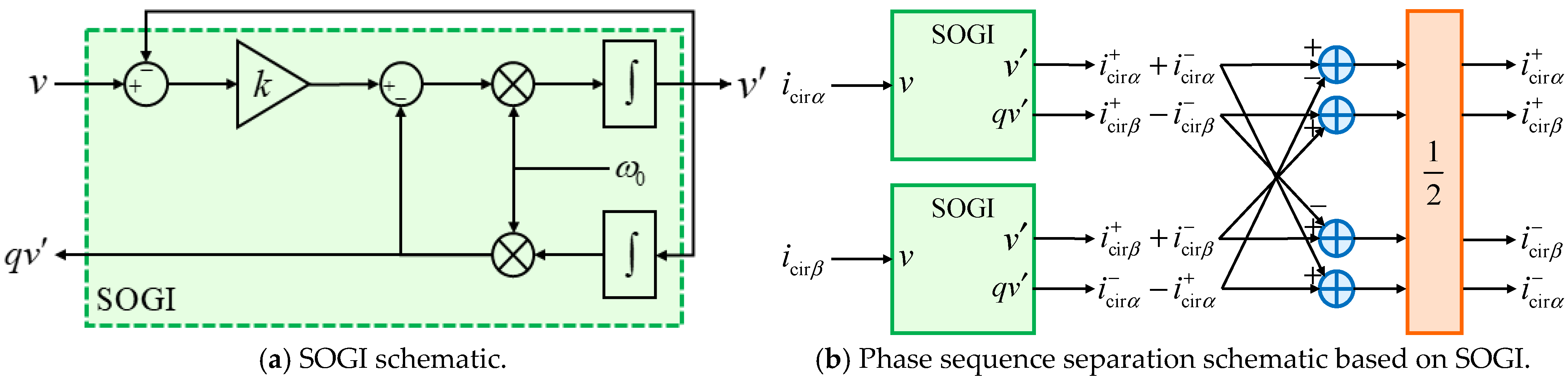
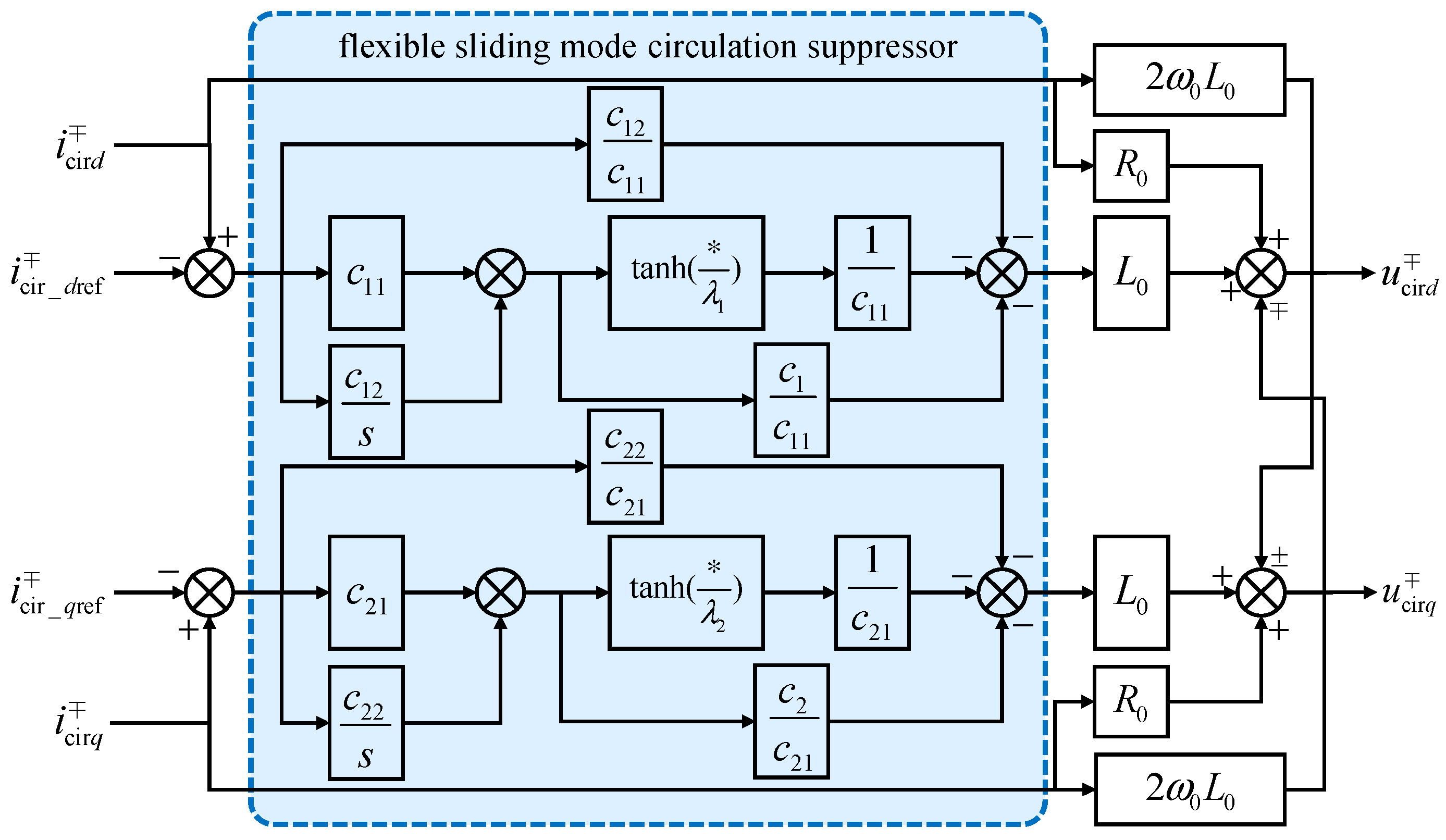
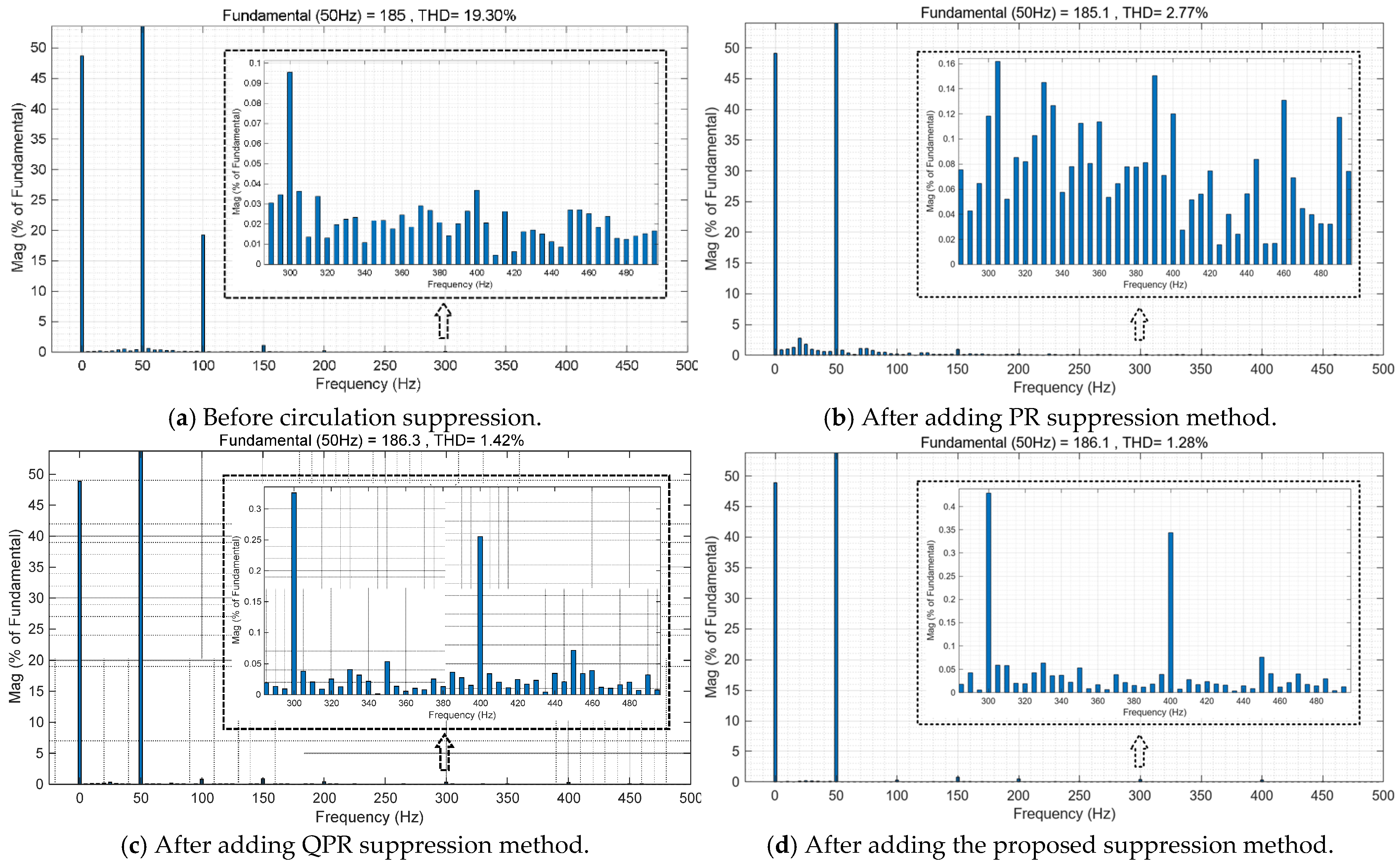
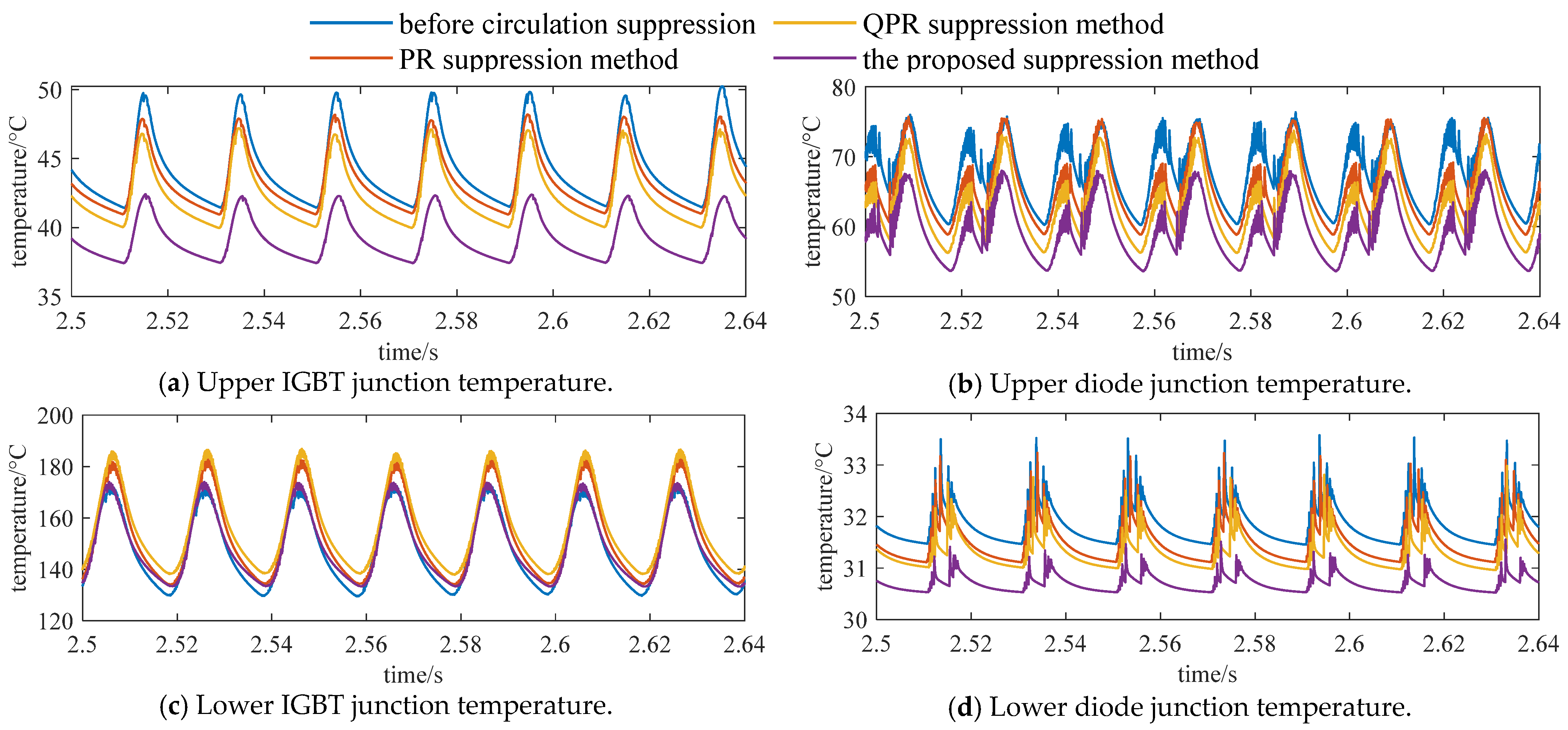
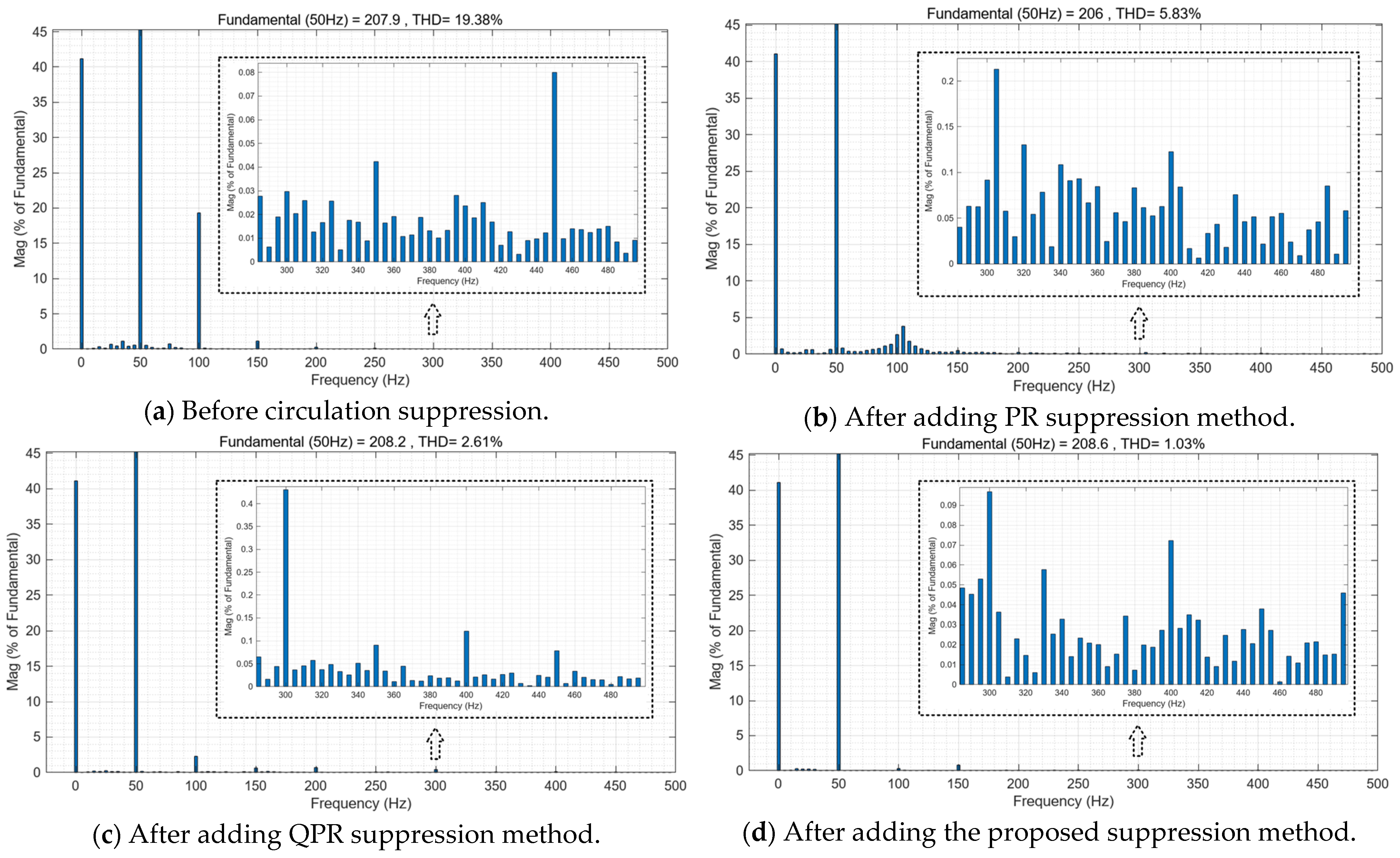
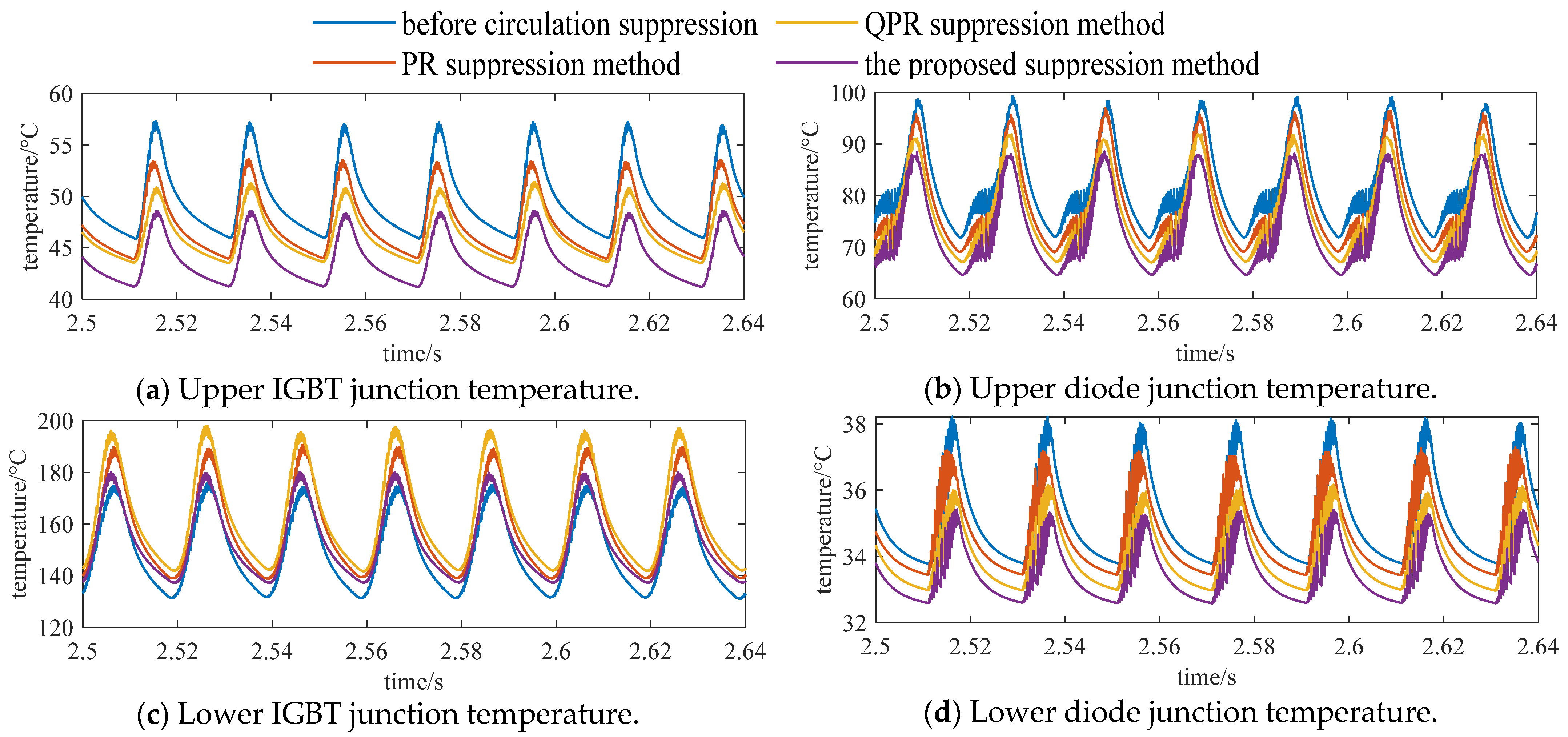
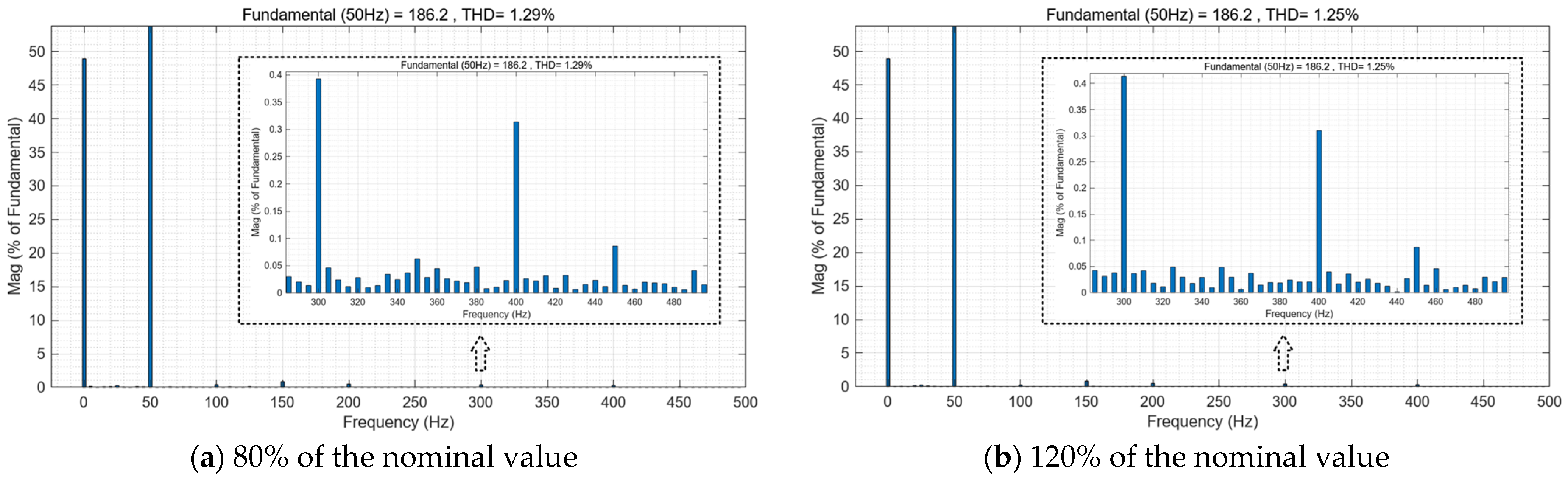
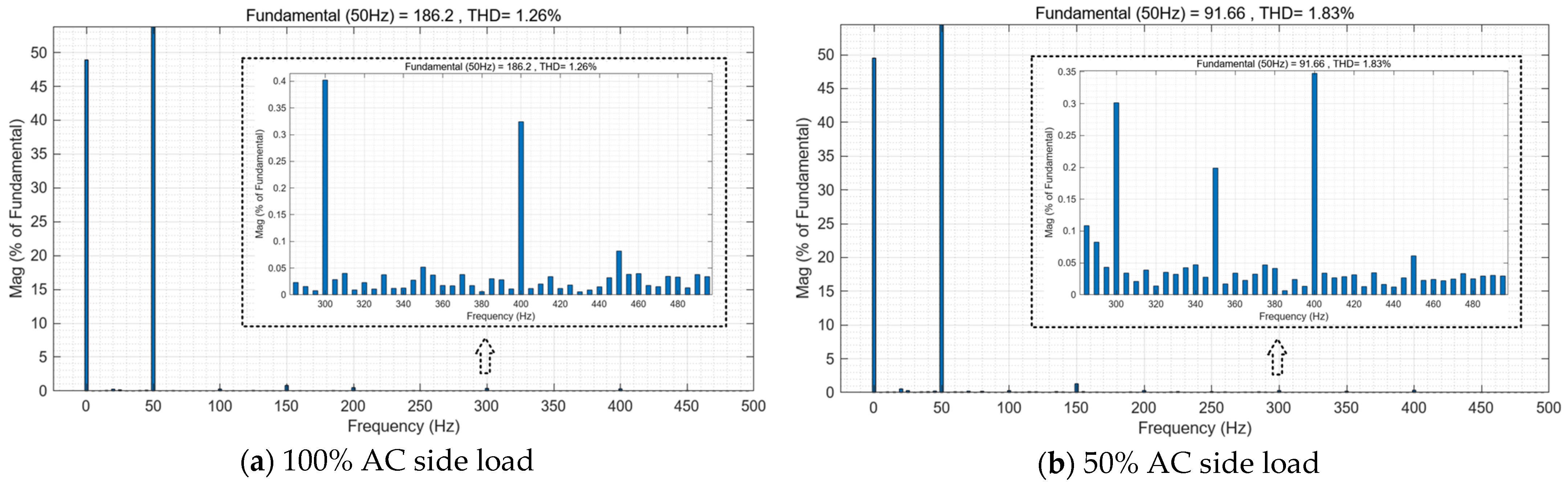
Modular multilevel converter (MMC) circulating current suppression is an effective method in improving power conversion quality. However, due to the complex composition of circulation under a three-phase imbalanced state, as well as the limitations of existing sliding mode circulation suppression methods that can easily cause high-frequency oscillation in the system, the circulation suppression effectiveness still needs to be further improved. Firstly, this article clarifies the phase sequence law and key control factors of the circulation by separating the MMC circulation phase sequence and decoupling the model. Secondly, the generalized proportional integral sliding surface and the hyperbolic tangent convergence law are introduced into sliding mode control to improve the system’s ability to flexibly suppress the circulating current. Then, the proposed method is evaluated using the system power quality and insulated-gate bipolar transistor (IGBT) junction temperature amplitude. The results show that the proposed method reduces the total harmonic distortion of the bridge arm current to 1.28% and 1.03%, respectively, under three-phase balanced and imbalanced states, and effectively smooths the IGBT junction temperature fluctuation of submodules. It also improves the stability and robustness of MMC system to circulation suppression gain variations, sudden load changes, and switching failures. This article provides an effective method for the synchronous implementation of MMC circulation suppression and IGBT junction temperature smoothing under complex and variable operating conditions.
Keywords: modular multilevel converter; circulating current harmonic suppression; sliding mode control; temperature fluctuation; insulated-gate bipolar transistor modular multilevel converter; circulating current harmonic suppression; sliding mode control; temperature fluctuation; insulated-gate bipolar transistor