Next Article in Journal
Convolutional Autoencoder-Based Anomaly Detection for Photovoltaic Power Forecasting of Virtual Power Plants
Next Article in Special Issue
Nucleation of a Vapor Phase and Vapor Front Dynamics Due to Boiling-Up on a Solid Surface
Previous Article in Journal
Generalized Regression Neural Network Based Meta-Heuristic Algorithms for Parameter Identification of Proton Exchange Membrane Fuel Cell
Previous Article in Special Issue
Experimental Study of Mass Transfer in a Plug Regime of Immiscible Liquid–Liquid Flow in a T-Shaped Microchannel
 
 
Correction published on 5 December 2025, see Energies 2025, 18(24), 6375.
Article

Effect of Monodisperse Coal Particles on the Maximum Drop Spreading After Impact on a Solid Wall

Heat Mass Transfer Laboratory, School of Energy & Power Engineering, National Research Tomsk Polytechnic University, 30 Lenin Ave., 634050 Tomsk, Russia
*
Author to whom correspondence should be addressed.
Energies 2023, 16(14), 5291; https://doi.org/10.3390/en16145291
Submission received: 24 June 2023 / Revised: 5 July 2023 / Accepted: 6 July 2023 / Published: 10 July 2023 / Corrected: 5 December 2025
(This article belongs to the Special Issue Heat Transfer and Fluid Dynamics in Boiling Systems)

Abstract

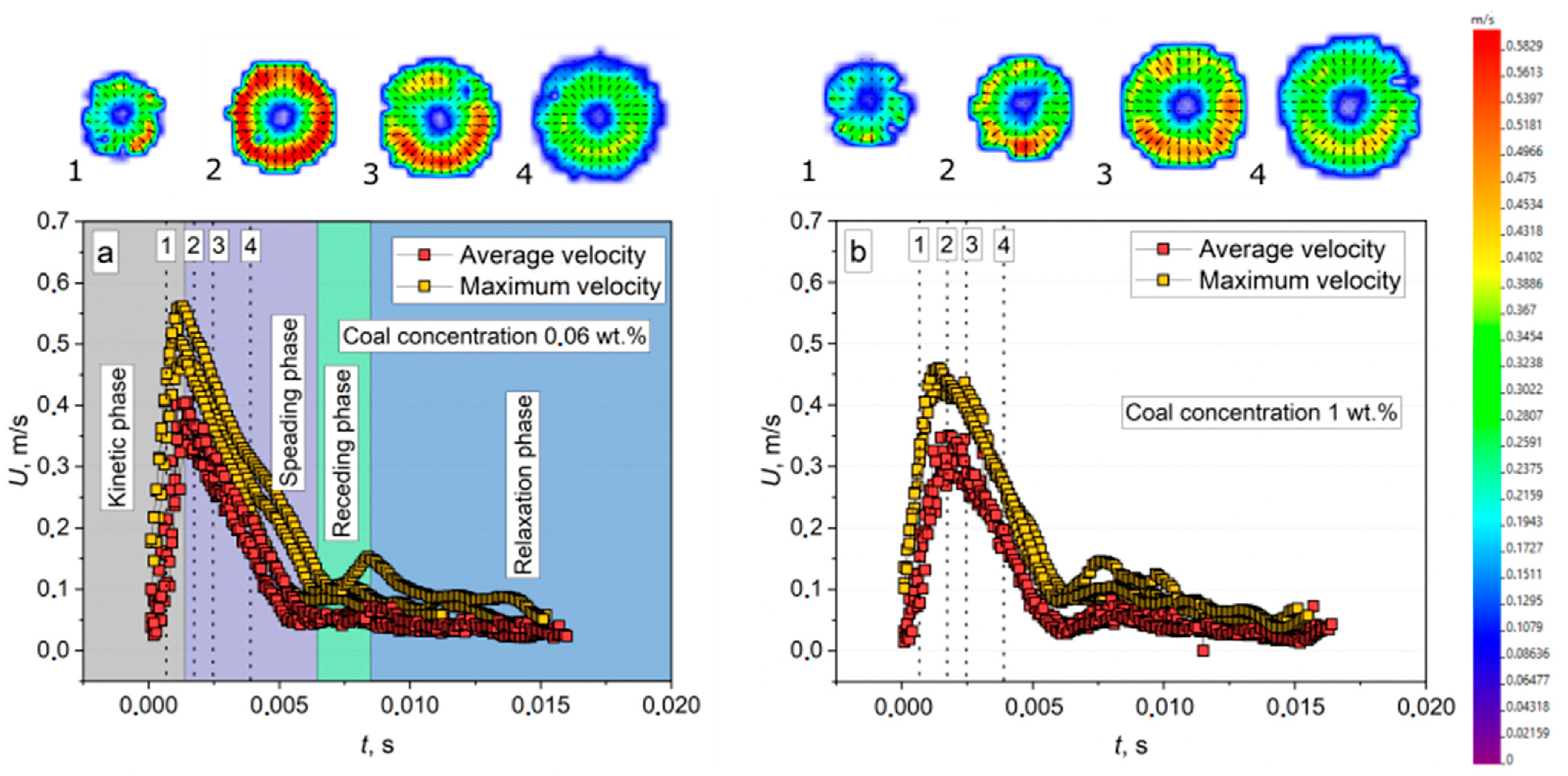
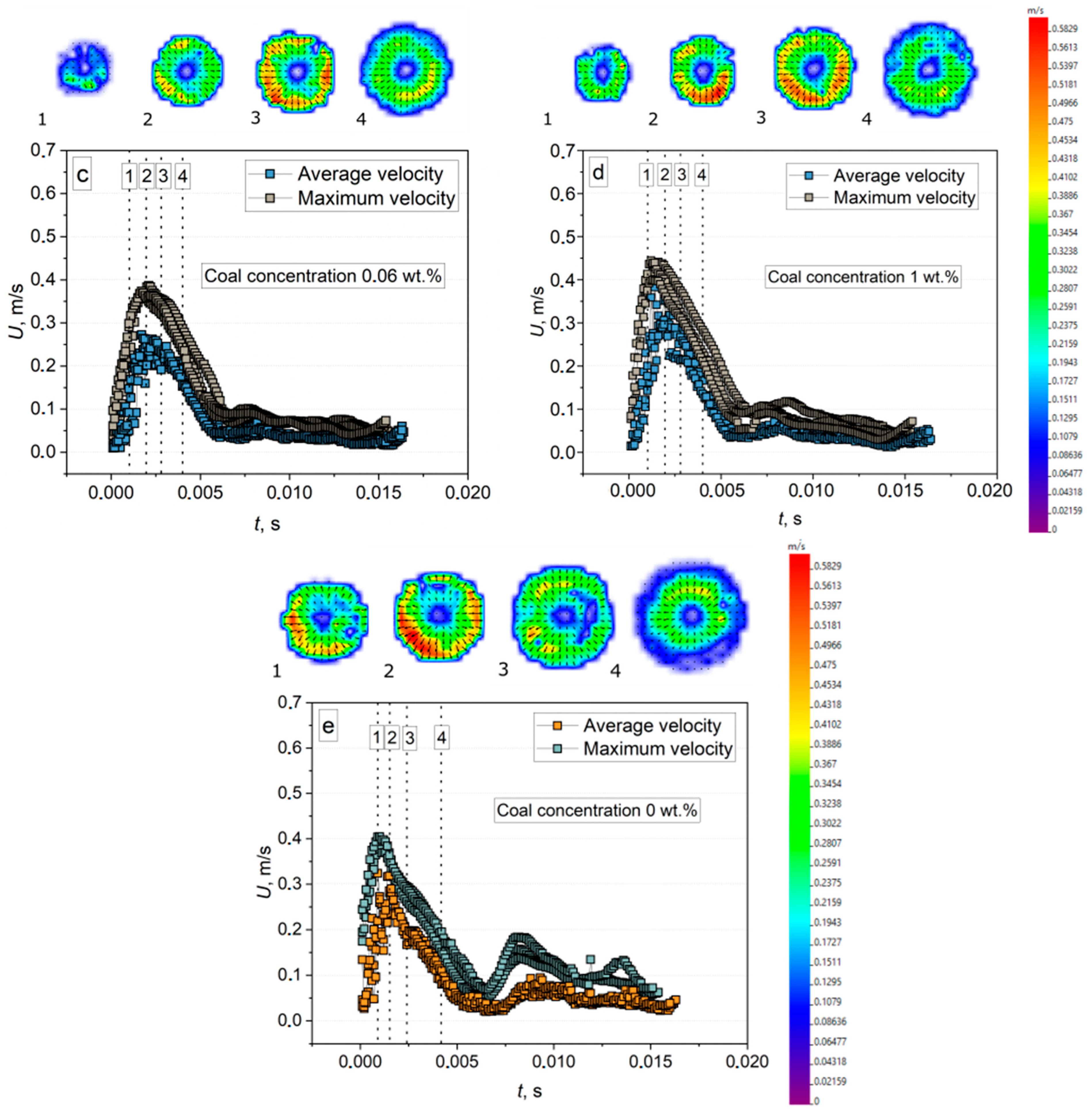
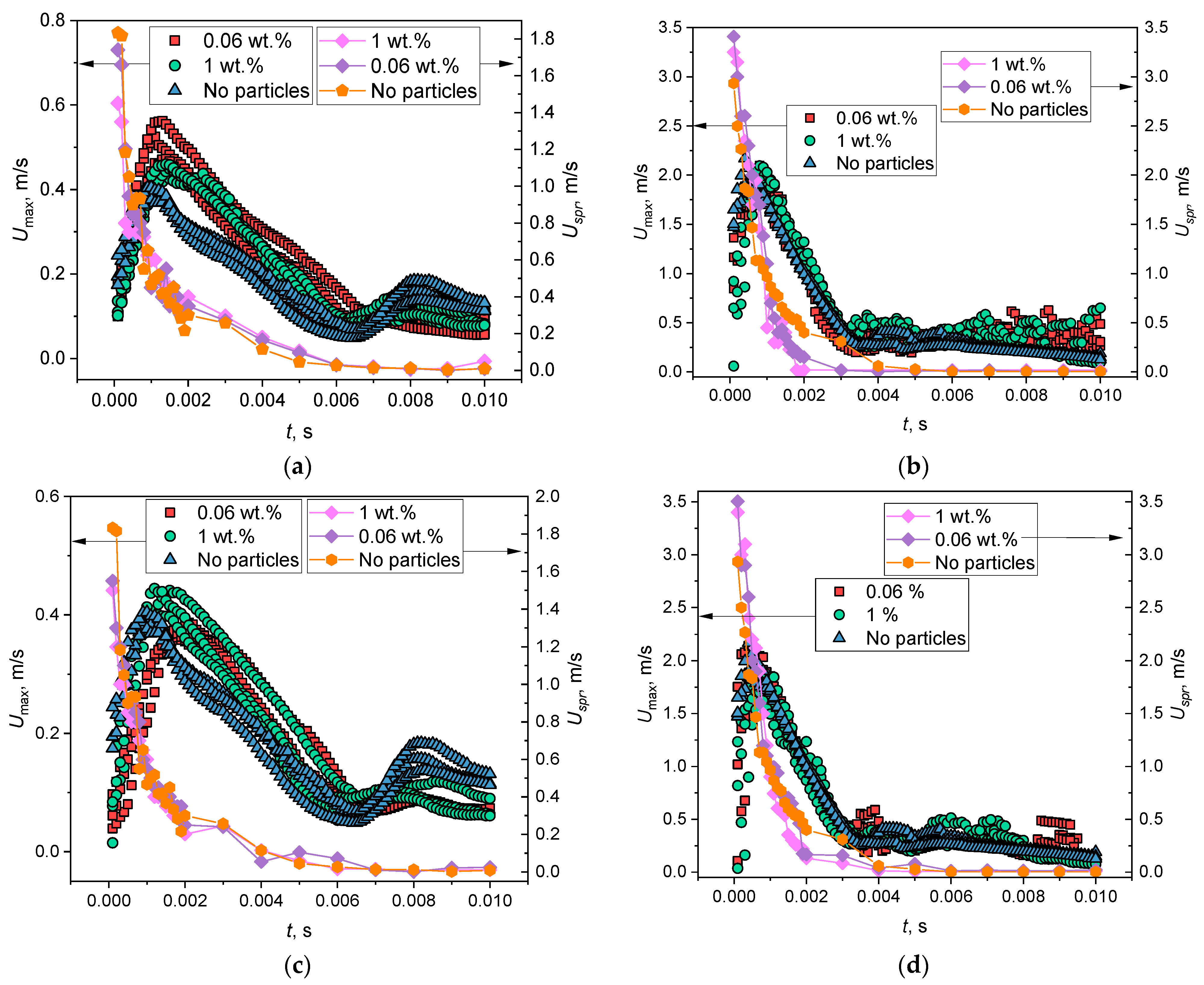
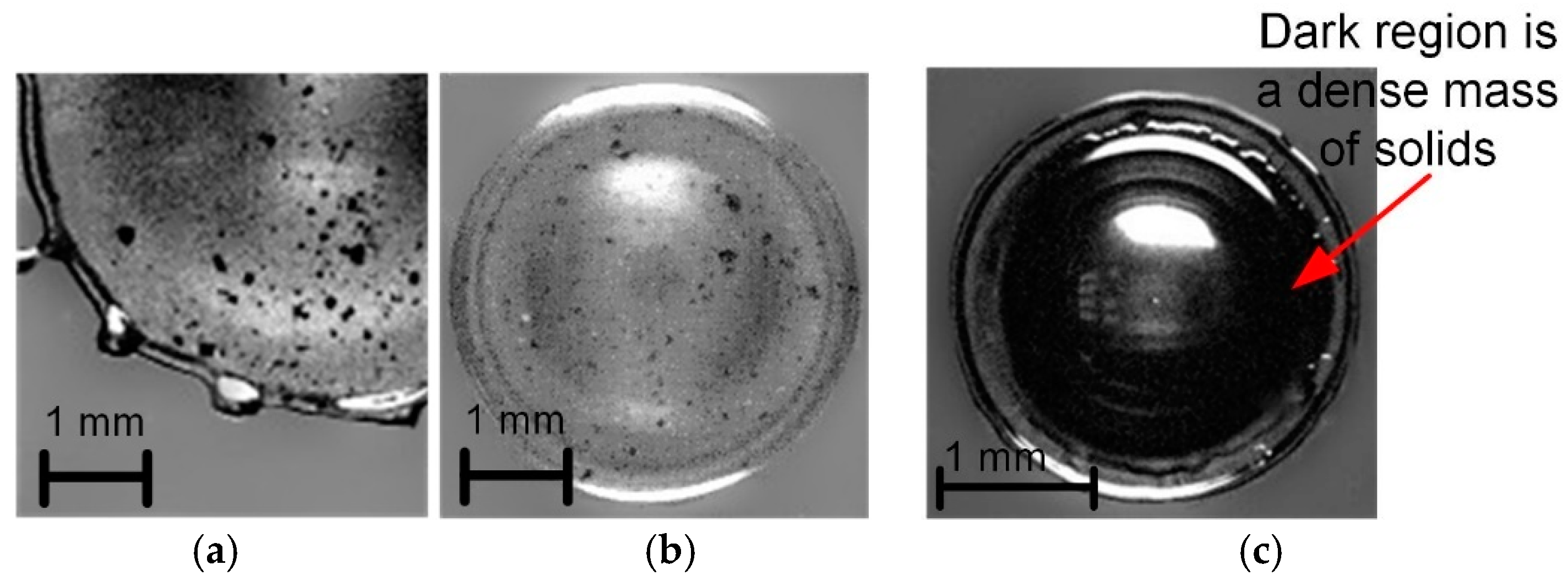
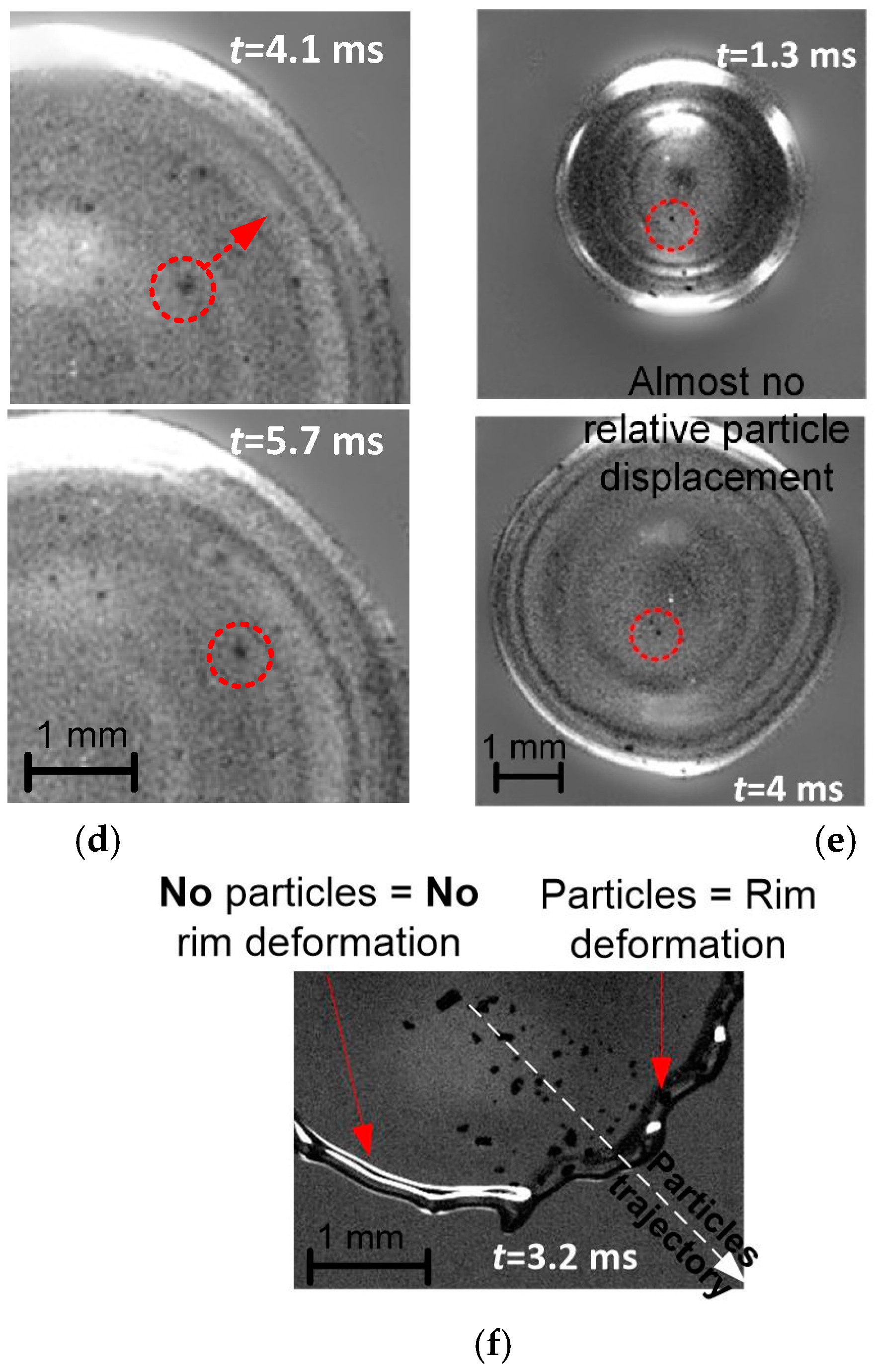
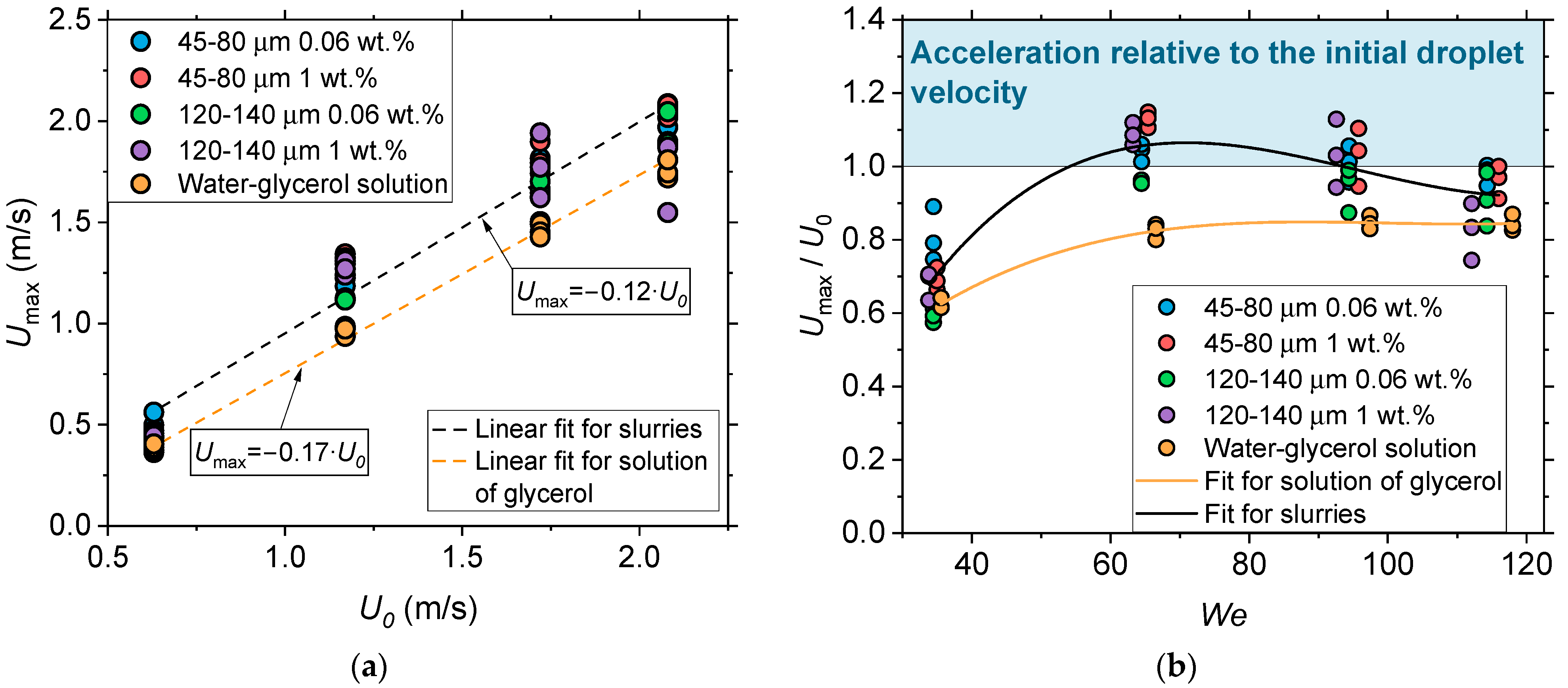
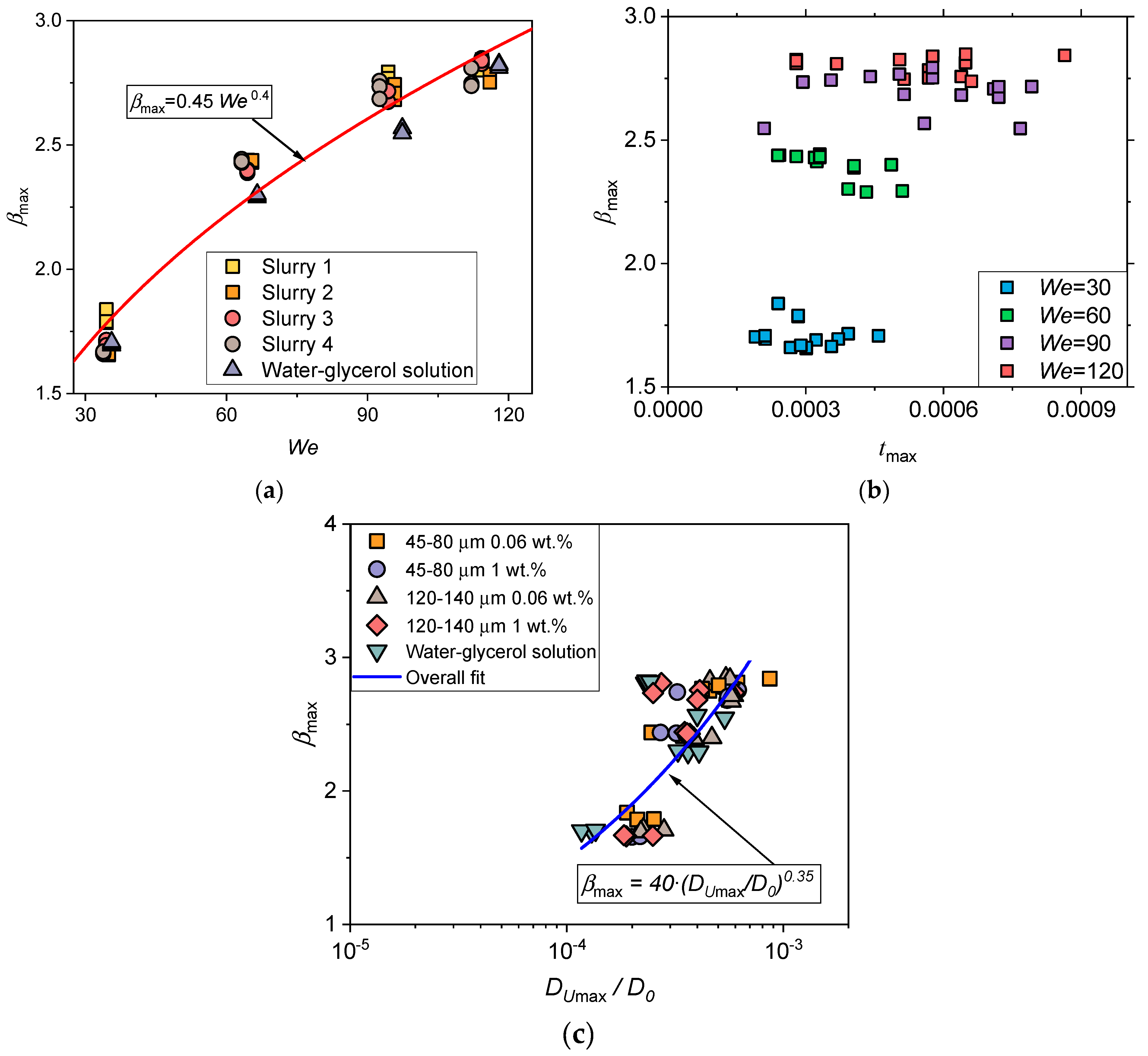
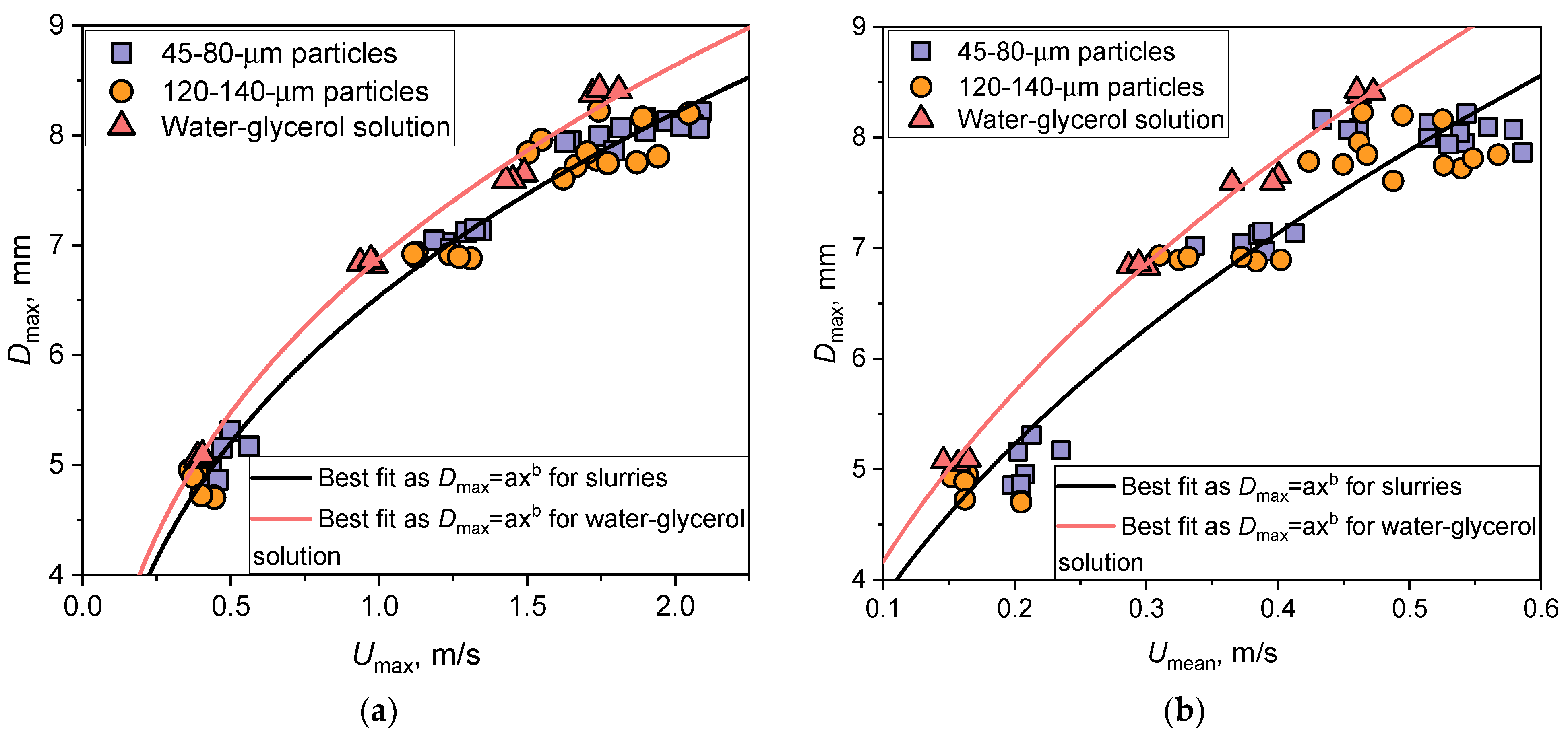
The effect of coal hydrophilic particles in water-glycerol drops on the maximum diameter of spreading along a hydrophobic solid surface is experimentally studied by analyzing the velocity of internal flows by Particle Image Velocimetry (PIV). The grinding fineness of coal particles was 45–80 μm and 120–140 μm. Their concentration was 0.06 wt.% and 1 wt.%. The impact of particle-laden drops on a solid surface occurred at Weber numbers (We) from 30 to 120. It revealed the interrelated influence of We and the concentration of coal particles on changes in the maximum absolute velocity of internal flows in a drop within the kinetic and spreading phases of the drop-wall impact. It is explored the behavior of internal convective flows in the longitudinal section of a drop parallel to the plane of the solid wall. The kinetic energy of the translational motion of coal particles in a spreading drop compensates for the energy expended by the drop on sliding friction along the wall. At We = 120, the inertia-driven spreading of the particle-laden drop is mainly determined by the dynamics of the deformable Taylor rim. An increase in We contributes to more noticeable differences in the convection velocities in spreading drops. When the drop spreading diameter rises at the maximum velocity of internal flows, a growth of the maximum spreading diameter occurs. The presence of coal particles causes a general tendency to reduce drop spreading.
Keywords: coal particle; drop impact; maximum spreading; PIV; slurry; velocity field coal particle; drop impact; maximum spreading; PIV; slurry; velocity field