


Abstract
Postural stability is an important component of skilled athletic activity. However, the effects of foot orthoses on stability have not been adequately addressed. This study measured postural sway in 30 asymptomatic professional soccer players in three standing positions and four underfoot conditions. The results revealed that the underfoot condition had no significant effect on sway in the mediolateral or anteroposterior planes; however, there was a trend toward less mediolateral sway when subjects stood in a unipedal position with prefabricated orthoses. These results suggest that insoles and foot orthoses have no significant beneficial or detrimental effects on postural stability in asymptomatic subjects. Clinically, this suggests that no improvements in balance performance could be expected with prophylactic use of insoles or orthoses but that clinicians may prescribe insoles and foot orthoses without fear of impairing postural performance in elite athletes.
The ability to control body displacements during functional tasks is a fundamental requirement of skilled athletic activity. In soccer, players must be able to perform rapid sideways cutting movements, respond to forces applied externally by other players, and maintain stability on one leg when kicking the ball. These tasks present considerable challenges to the body’s postural control system, and there is evidence to suggest that impaired postural stability in soccer players is associated with an increased risk of injury. [1] There is also evidence to suggest that lower-extremity injury, particularly lateral ankle sprain, leads to impaired lower-extremity proprioception [2-4] and measurable deficits in postural stability. [1,5,6]
In recognition of the interrelationship between postural stability and injury, a number of investigations have been performed to determine whether externally applied braces and orthoses influence proprioception and stability in athletes. Ankle support (including taping and semirigid bracing) has been reported to improve ankle position sense in both injured [7] and uninjured subjects [6,8]; however, the evidence for a beneficial effect on postural stability is equivocal. While improvements in standing stability (as evidenced by reductions in postural sway) have been reported, [5,9] some studies suggest no significant effect [7,10-12] or even significant detrimental effects. [13] The most likely explanation for these different results is that the devices tested differ considerably with regard to their motion-restricting properties. It has been suggested that some external ankle supports may be too restrictive and may therefore impair postural stability by reducing sensory input normally provided by foot and ankle movements. [13]
The effects of foot orthoses on postural stability have received limited attention. Orteza et al [14] evaluated performance on a balance board when subjects with and without a recent ankle sprain wore semirigid molded orthoses and soft, unmolded orthoses. Wearing the semirigid molded orthoses produced a significant improvement in balance performance in the injured subjects, but had no effect on uninjured subjects. The soft, unmolded orthoses had no effect on balance in either group. In a similar investigation, Guskiewicz and Perrin [15] reported that custom-made foot orthoses improved balance performance in response to platform perturbation in subjects with a recent ankle sprain, but had no effect on uninjured subjects. Contrary to these findings, Stude and Brink [16] reported that flexible molded foot orthoses improved balance in injury-free experienced golfers both before and after activity and suggested that the benefits of foot orthoses may not be restricted to people with ankle instability.
Two separate mechanisms have been proposed to explain the apparently beneficial effects of ankle supports and foot orthoses on postural stability. First, external bracing has been found to significantly restrict movements of the foot and ankle, which may improve mechanical stability. [17,18] Second, these devices may influence proprioceptive awareness of limb position by stimulating cutaneous mechanoreceptors when in contact with the skin. [6,19] However, there is also evidence to suggest that placing compliant materials under the foot reduces proprioceptive awareness [20,21] and impairs postural stability. [22-24] The aim of this study was therefore to evaluate the effects of compliant materials (soft cushioning insoles) and hard materials (rigid prefabricated orthoses) on postural stability in asymptomatic professional soccer players.
Methods
Subjects
Ethical approval for the study was obtained from the Faculty Ethics Review Committee (Human Subjects) of the University of Western Sydney–Macarthur, and informed consent was obtained from 30 male subjects (mean [±SD] age, 23.3 ± 3.6 years) who were recruited from the New South Wales Super League soccer competition. The subjects were of average height (mean, 180.2 ± 7.6 cm) and weight (mean, 77 ± 9.9 kg). Subjects were excluded from the study if they had worn hard foot orthoses in the previous 6 months or were currently experiencing any lower-extremity symptoms.
Footwear and Orthoses
The four underfoot conditions were barefoot, soccer shoes only, soccer shoes with soft insoles, and soccer shoes with hard orthoses (Fig. 1). The soccer shoes used (Asics Inspire NX, Asics Tiger Corporation, Irvine, California) had molded cleats and minimal midsole cushioning. Subjects chose their own comfortable shoe size and were provided with polyester sports socks. The soft insoles were constructed of 6-mm polyurethane foam (PPT, Langer Biomechanics Group, Deer Park, New York) to fit each pair of soccer shoes. The prefabricated orthoses used (Orthopro Ultra, Peninsula Podiatric Laboratory, Braeside, Victoria, Australia) were constructed from hard 3-mm polypropylene, incorporating a 4° inverted rearfoot post. The orthoses came in four sizes and were fitted to subjects by the author (M.L.P.). While the subject’s foot was held in a nonweightbearing position, the orthoses were placed against the plantar surface of the foot and were fitted as described by Anthony. [25]
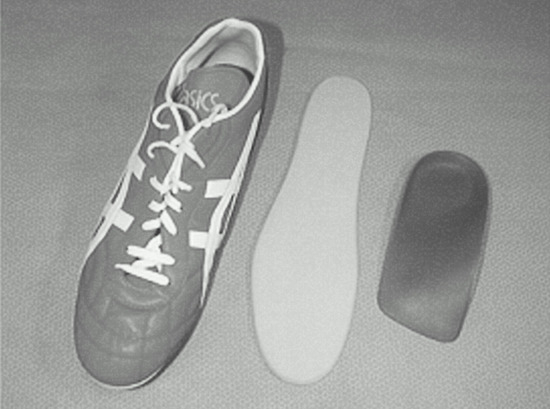
Figure 1.
Soccer shoe, soft insole, and prefabricated orthosis used in the study.
Experimental Protocol
Postural stability was measured in the anteroposterior and mediolateral planes by recording body movements at the waist level by means of two opto-electronic displacement devices (Wilhelm Mikroelektronik GmbH, Lunen, Germany). Testing was performed with subjects standing on short-pile carpet with a 5-mm foam underlay, covered with 1-m square artificial grass commonly used for synthetic playing surfaces (Poligrass, Balsam Pacific Pty Ltd, Silverwater, New South Wales, Australia). The artificial grass consisted of polypropylene 13 mm long and 44 microns thick, with 841 stitches in every square 10 cm. The grass was joined and backed by two 1-mm layers of polypropylene. Subjects stood in three positions: 1) bipedal stance, in which the subject stood in a relaxed posture with both feet on the ground; 2) tandem stance, in which the subject’s dominant foot was placed directly in front of the nondominant foot; and 3) unipedal stance, in which the subject stood on the dominant leg with the contralateral leg raised from the ground by flexing the knee. In each standing posture, subjects were asked to lightly clasp their hands in front of them and stand as still as possible for 30 seconds (Fig. 2). Two trials of each condition—barefoot, wearing soccer shoes only, wearing soccer shoes and soft insoles, and wearing soccer shoes with rigid orthoses—were recorded in random order. This protocol provided 24 trials per subject.
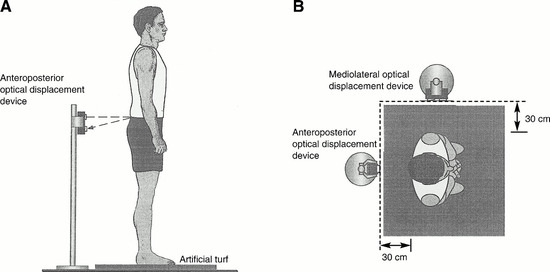
Figure 2.
Experimental setup. A, Sagittal view; B, aerial view.
Statistical Analysis
Data for each trial were recorded as Microsoft Excel (Microsoft Corp, Redmond, Washington) files for further analysis. Each 30-second sway recording was then low-pass filtered, and the root mean square (RMS) and range values were calculated for anteroposterior and mediolateral movements. The RMS and range values of sway were averaged across subjects for each standing posture/underfoot condition. By means of SigmaStat (SPSS Science, Chicago, Illinois) for Windows, a two-way repeated-measures analysis of variance (ANOVA) was then performed to assess the effects of standing position and the underfoot conditions for both anteroposterior and mediolateral sway. Power analysis was performed with α = 0.05. Associations between subject characteristics (age, weight, and height) and the sway values were determined by means of the Pearson product moment correlation coefficient.
Results
Descriptive statistics for RMS sway are shown in Figures 3 and 4. The two-way repeated-measures ANOVA for RMS mediolateral sway revealed a significant standing posture effect (F = 186.01, df = 2, P < .001). However, the effect of the underfoot condition was not statistically significant (F = 1.01, df = 3, P = .39). Subjects swayed significantly more in tandem than in bipedal stance, and more in unipedal than in tandem stance. For RMS anteroposterior sway, the ANOVA revealed a significant standing posture effect (F = 202.4, df = 2, P < .01), although the effect of the underfoot condition was not statistically significant (F = 1.2, df = 3, P = .31). There was, however, a trend toward less sway in the unipedal position when the prefabricated orthoses were worn. Subjects swayed significantly more in unipedal stance than in bipedal or tandem stance; however, there was no significant difference in sway between the bipedal and tandem positions.
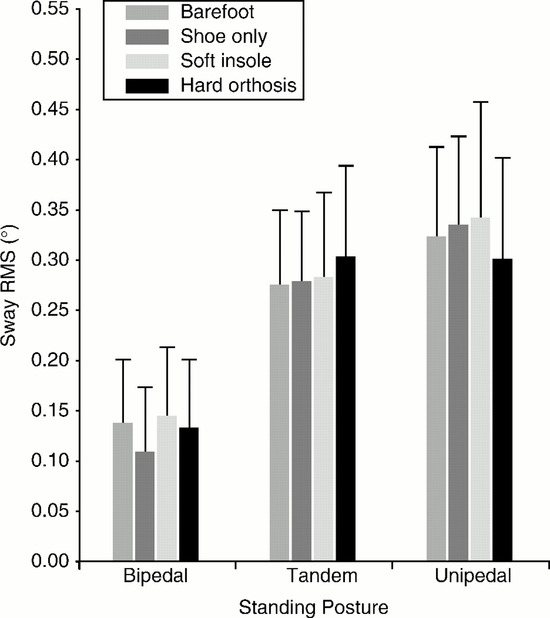
Figure 3.
Root mean square (RMS) mediolateral sway for each standing posture/underfoot condition.
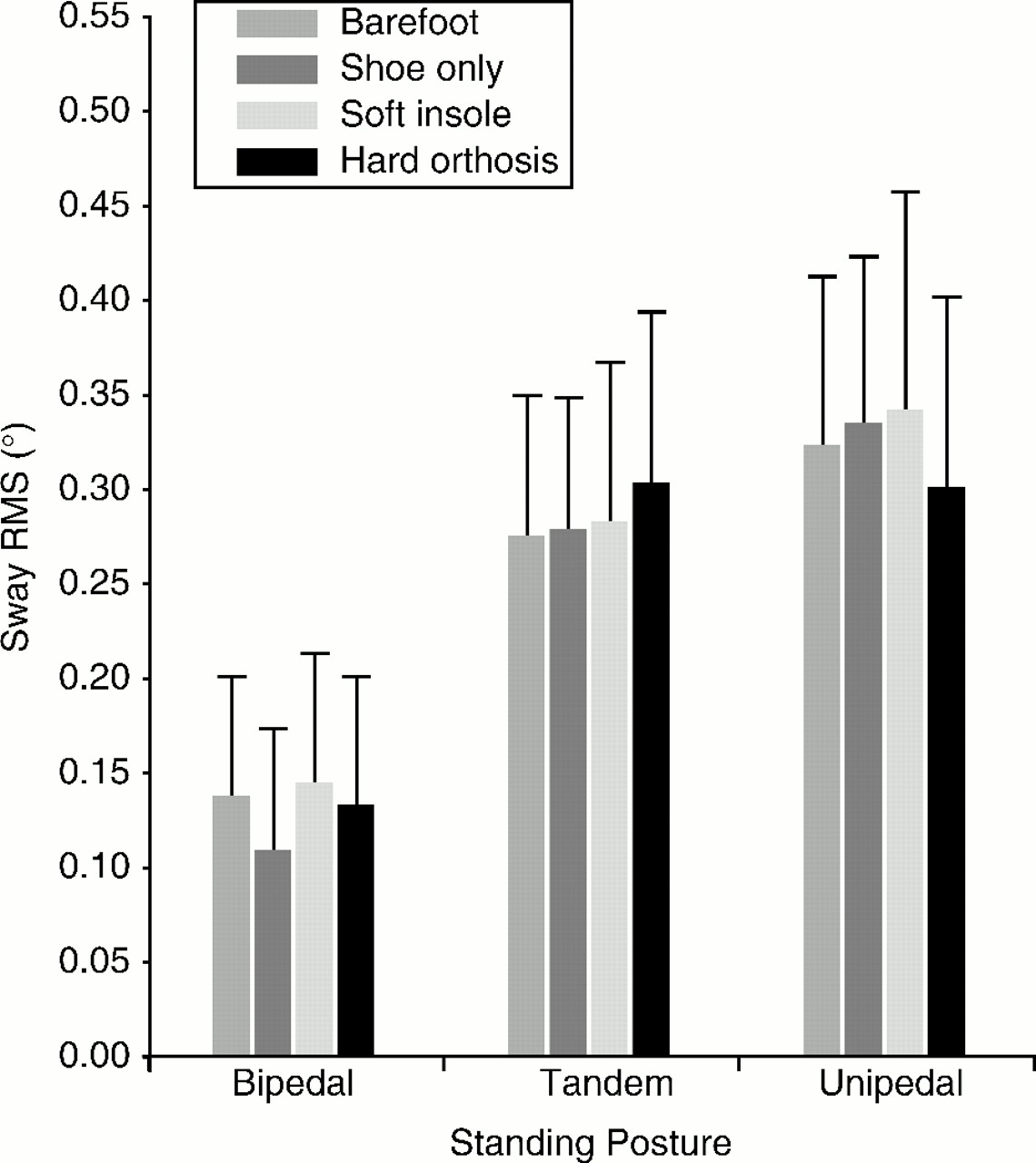
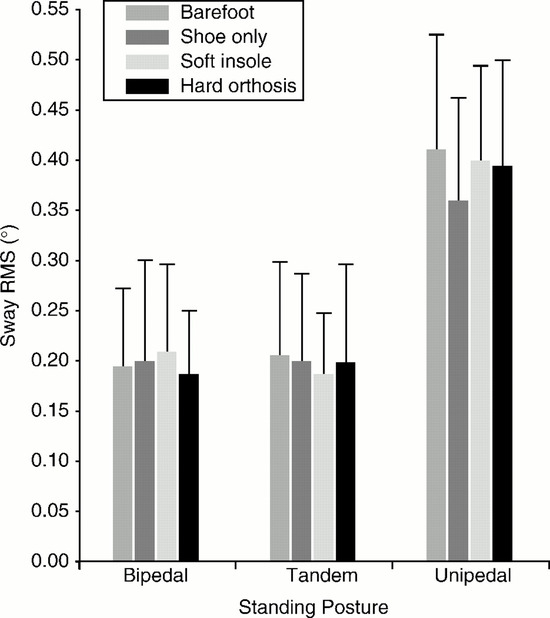
Figure 4.
Root mean square (RMS) anteroposterior sway for each standing posture/underfoot condition.
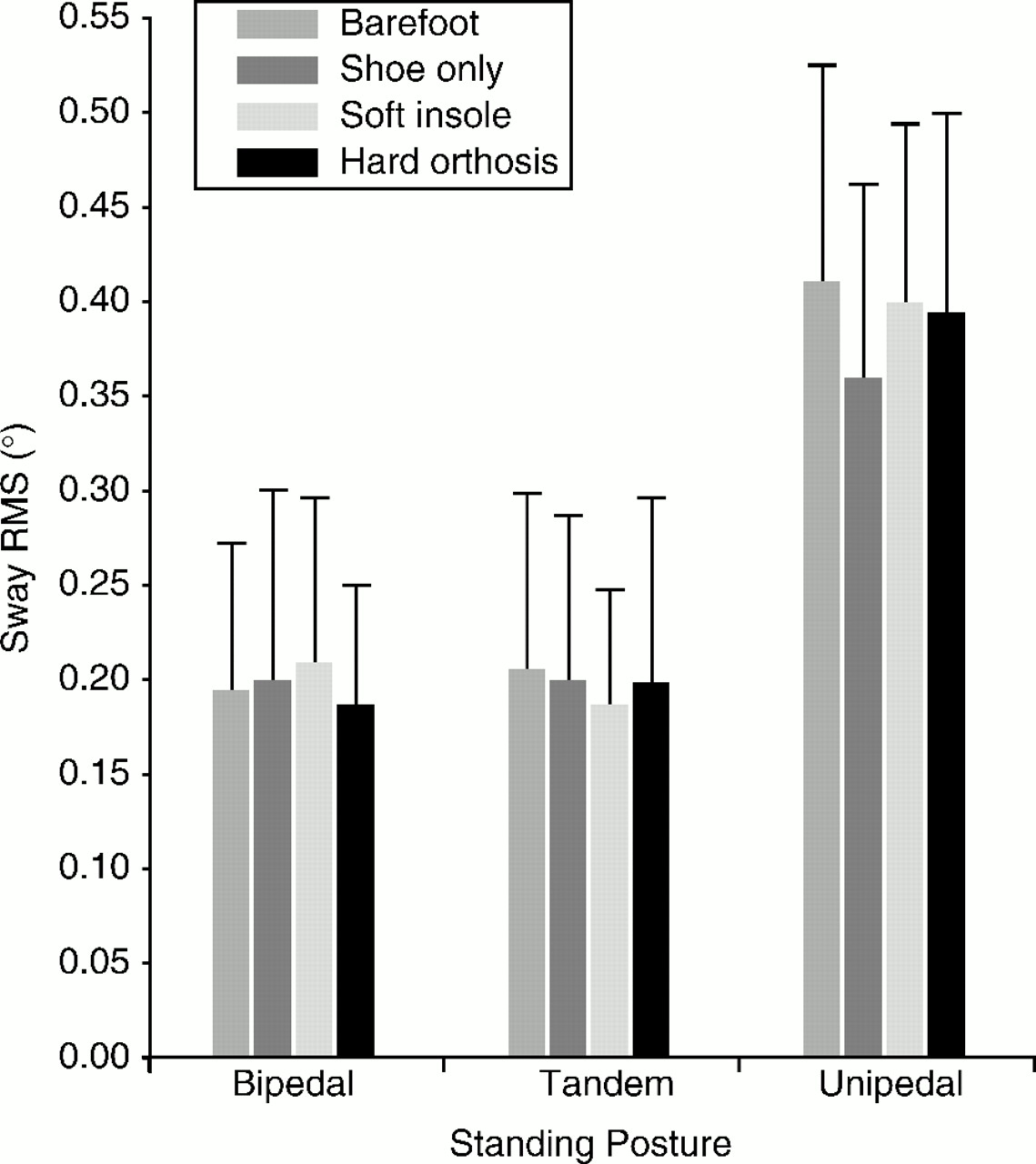
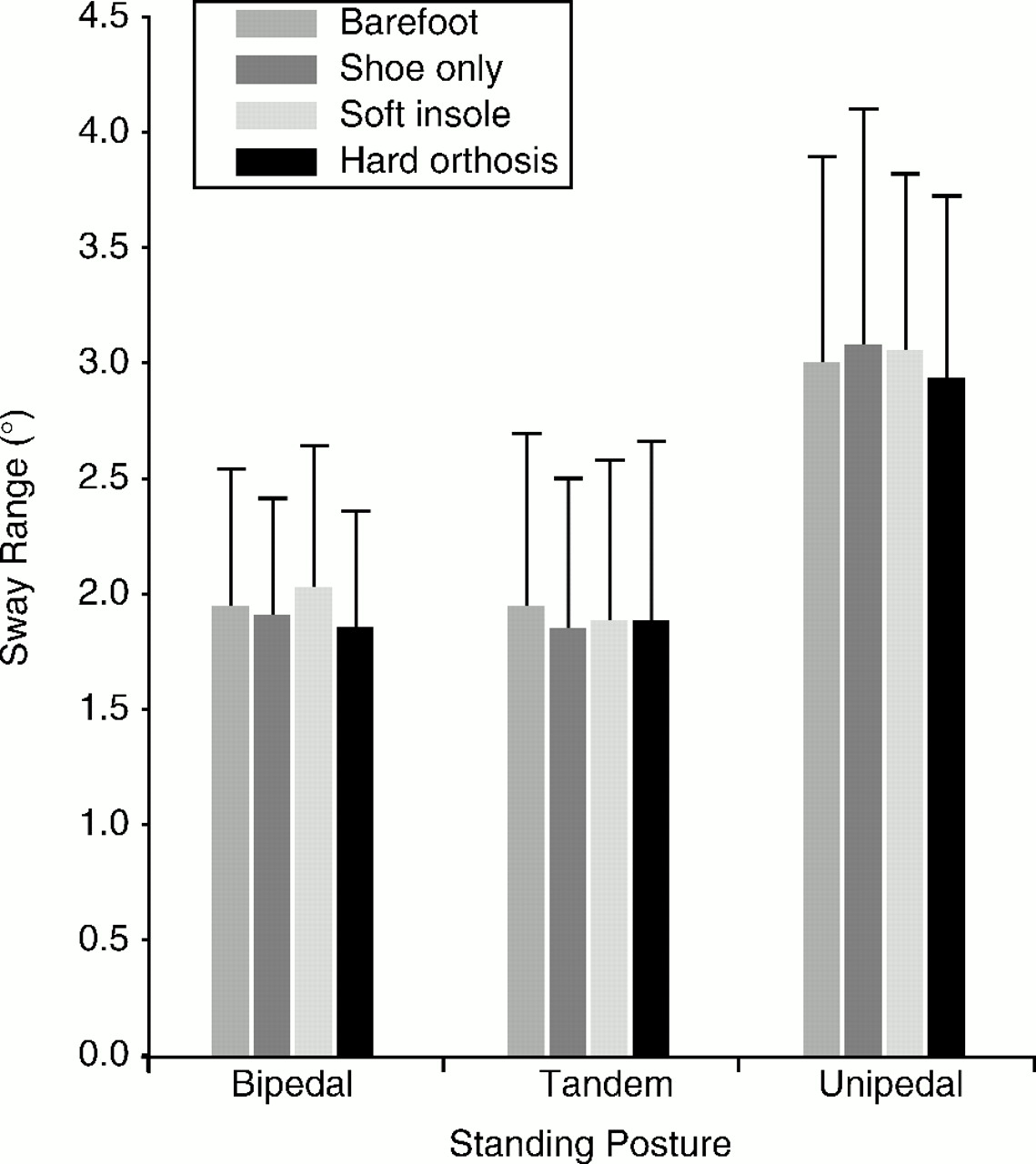
Descriptive statistics for the range of sway are shown in Figures 5 and 6. The two-way repeated-measures ANOVA for the range of mediolateral sway revealed a significant standing posture effect (F = 89.28, df = 2, P < .01); however, the effect of the underfoot condition was not statistically significant (F = 1.07, df = 3, P = .37). Subjects swayed significantly more in tandem than in bipedal stance, and more in unipedal than in tandem stance. For the range of anteroposterior sway, the ANOVA revealed a significant standing posture effect (F = 89.9, df = 2, P < .0001); however, the effect of the underfoot condition was not statistically significant (F = 0.6, df = 3, P = .61). Subjects swayed significantly more in unipedal than in bipedal or tandem stance; however, there was no significant difference in sway between the bipedal and tandem positions.
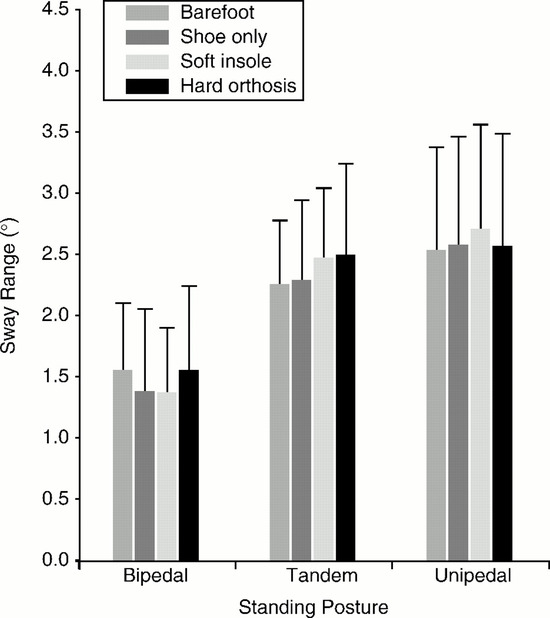
Figure 5.
Range of mediolateral sway for each standing posture/underfoot condition.
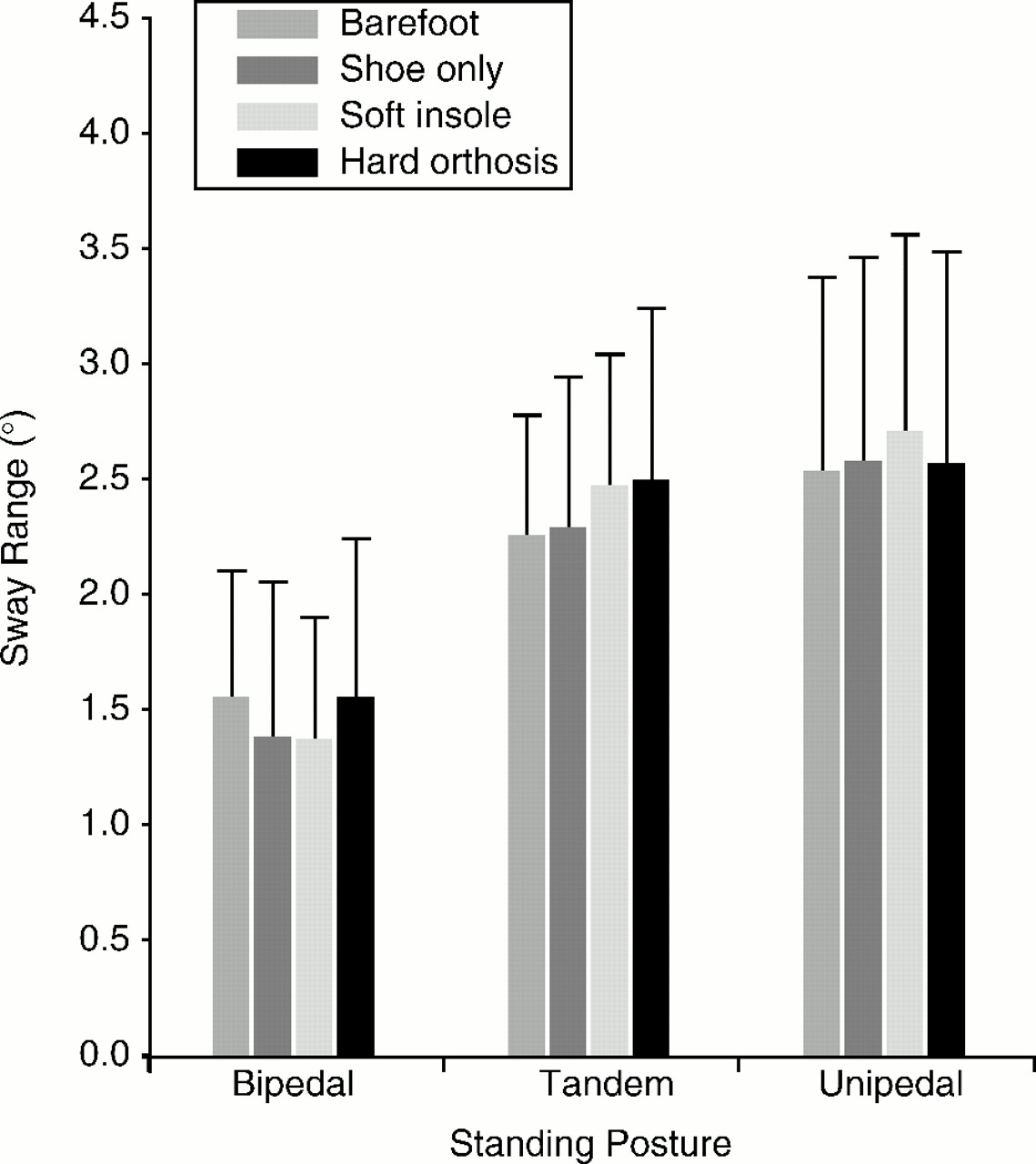
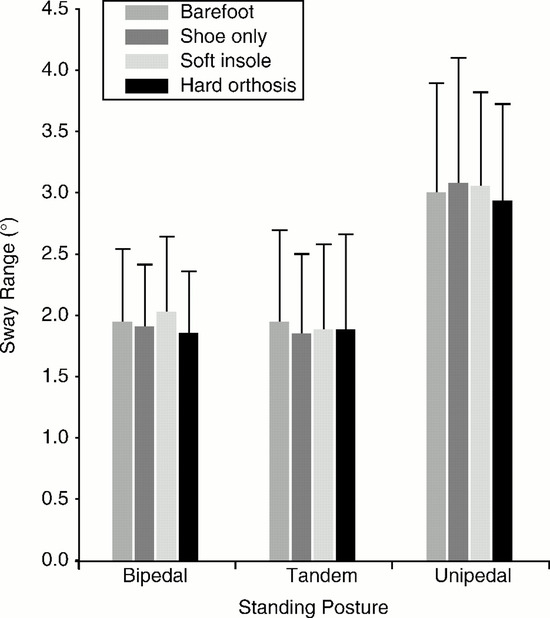
Figure 6.
Range of anteroposterior sway for each standing posture/underfoot condition.
The power of the alpha performed for all comparisons of the standing posture was 1.00. However, the power for underfoot comparisons was considerably smaller: 0.05 for RMS and range comparisons of mediolateral sway, and 0.08 for RMS and range comparisons of anteroposterior sway.
Few significant correlations were evident between subject characteristics and sway values. Age was significantly associated with RMS mediolateral sway in unipedal stance when the subject was barefoot (r = 0.46); with range of sway in tandem stance when the prefabricated orthoses were worn (r = 0.37); and with range of sway in unipedal stance when the subject was barefoot (r = 0.49) or in soccer shoes (r = 0.36). Height was significantly associated with RMS anteroposterior sway in unipedal stance when the subject was barefoot (r = 0.44), and weight was associated with RMS anteroposterior sway in unipedal stance when the subject was barefoot (r = 0.38).
Discussion
Effect of Standing Posture on Postural Sway
Standing posture influenced postural sway significantly. The increase in mediolateral sway in tandem stance is in agreement with results from Kirby et al, [26] who found significant increases in mediolateral sway when the right foot was placed anteriorly or posteriorly with respect to the left foot. The increase in mediolateral sway when comparing tandem with bipedal stance is also supported by studies that have reported increased sway when stance width is reduced. [26-29] Anteroposterior sway did not differ when subjects stood in bipedal versus tandem postures. The similar anteroposterior sway in bipedal and tandem stance is again in agreement with results from Kirby et al, [26] who found no significant increases in anteroposterior sway when the right foot was placed anteriorly or posteriorly with respect to the left foot. Furthermore, several studies suggest that stance width does not have a significant influence on anteroposterior sway. [26-29]
During unipedal stance, there was an increase in mediolateral and anteroposterior sway compared with tandem and bipedal stances. Unipedal stance is characterized by a doubling of the stance limb’s gravitational load, with more than a 50% reduction in the area of base of support of the body. [30] The impact of unipedal stance on mediolateral sway was analyzed by Hoogvliet et al, [31] who suggested that during unipedal standing, limited frontal plane compensation is available at the knee. Therefore, the hips and ankles are linked together, and stabilizing strategies occur through foot perturbations and large compensatory movements at the hip. The increase in anteroposterior sway during unipedal stance occurs because the stability limit of unipedal stance is considerably smaller than in the other stances, as the base of support is markedly reduced. Owing to this reduction in the stability limit, unipedal stance is an inherently more challenging task, requiring greater equilibrium reactions to maintain postural stability in the sagittal plane.
Effect of Underfoot Condition on Postural Sway
The various underfoot conditions had no effect on postural sway. It was expected that more sway would occur when subjects wore soccer shoes as compared with going barefoot. The reasoning behind this is that soccer shoes, with cleats, offer a smaller base of support than the sole of the foot. [32] However, the lack of significant difference in sway may have been due to the ankle and rearfoot support offered by the soccer shoe. [33,34] Pintsaar et al [35] have previously found that wearing shoes improves postural stability as compared with standing barefoot. Therefore, any detrimental effect from the reduction in the base of support when soccer shoes are worn may have been neutralized by other stabilizing effects that soccer shoes offer.
The lack of difference between going barefoot and wearing soft insoles was surprising, as many studies have reported decreased stability when subjects stand on compliant surfaces or wear shoes with soft midsoles. [20,22-24,36] There are two possible explanations for the null result. First, it is possible that the subjects’ degree of stability was such that small perturbations provided by the soft material could be corrected for within the lower extremity without producing measurable displacements at the waist level. However, the considerable variability in individual responses to the soft insoles suggests that subjects were affected in different ways, which nullified an overall effect. While most subjects responded to the soft insoles by swaying more, other subjects appeared to derive some benefit. Analysis of individual trends revealed considerable variation; this was demonstrated in mediolateral range of sway in unipedal stance, where there were reductions in sway up to 52% in some subjects and increases in sway up to 85% in others. Although no assessment of foot type was undertaken, it is possible that abrupt postural movements of the lower limb in subjects with rigid feet were effectively “dampened” by the soft insoles, which reduced body displacements at the waist level. It has previously been shown that in unipedal stance, excursions of the foot into eversion and inversion contribute significantly to movements of the center of pressure. [35,37] Therefore, a yielding material placed under the foot may have acted to absorb large postural corrections in some subjects.
A second explanation for the insignificant effect of the soft insoles is that the material may have been maximally compressed in the shoe, thereby canceling out any destabilizing effect of the material’s lack of resilience. The relationship between material compression and balance was recently explored by Robbins et al, [38] who found that if a shoe material remains compressed between steps, it has little effect on sway, whereas if it recoils, it may impair stability. Given that the material used in the insoles was fairly thin and compressible compared with materials used in previous studies, it is possible that when the subject was standing, body weight maximally compressed the insole for the duration of the trial. Additionally, many subjects described the footwear as being quite tight when the soft insoles were worn, suggesting that the insoles may have been in a continuously compressed state.
The absence of any significant differences in stability with the hard foot orthoses is in agreement with Orteza et al [14] and Guskiewicz and Perrin, [15] who found that although foot orthoses improved stability in subjects with ankle instability, uninjured subjects derived no benefits from the orthoses. An alternative explanation for the lack of significant differences between the hard orthoses and the barefoot condition is again that the responses to the foot orthoses were highly variable. It is possible that subjects with more flexible feet reduced their sway when wearing hard orthoses, while subjects with more rigid feet increased their sway as the hard orthoses made them less laterally stable. This variability may have been further compounded through the use of prefabricated devices, rather than the customized devices used in previous studies. [14-16]
Future investigations into the effects of hard orthoses on postural stability in subjects with different morphologic foot types would help clarify this issue. However, the difficulty of reliably classifying foot types is a considerable impediment, [39] and the suggestion that different foot types influence postural stability is purely speculative. Furthermore, the degree of individual variability in response to orthotic implementation is similar to that in previous reports using plantar pressure, [40] electromyographic, [41,42] and kinematic measurements, [43,44] suggesting that predictable, stereotypical responses to foot orthoses are unlikely.
Limitations
Although each of the explanations regarding the null result is plausible, the results also need to be viewed in the context of the limitations of the study design. It is likely that the sample size prevented the detection of significant effects of the underfoot condition. While the statistical power for detecting a difference in sway between the standing postures was high, the power for detecting a difference in the underfoot condition was low. Thus it is feasible that the null result was caused by a type II error, rather than there actually being no real differences, and that a larger sample could have detected these differences.
Even though testing variables were randomized for each subject, the duration of data collection ranged between 45 and 90 minutes per subject and may have influenced results. A number of subjects suggested that their muscles were becoming fatigued during testing; it was also noticed that toward the end of a session, some subjects were easily distracted, with their eyes glancing around the room. It has been demonstrated that both muscle fatigue [45,46] and eye tracking [47] have detrimental effects on postural control. Therefore, it is suggested that future investigations using this method limit the number of standing postures and increase sample size to keep the total data-collection time at a reasonable level while decreasing the likelihood of a type II error.
Examining subjects with interventions that have no effect on visual input may also have had an influence on the results. Research suggests that when the visual system is blocked, the somatosensory system has a more influential role in maintaining postural stability. [13,48] As a result, many researchers have blocked visual input when examining the effect of externally applied devices on postural control. [6,27,30,49] As the purpose of this experiment was to examine whether foot orthoses had an effect on postural stability in professional soccer players, it was thought that the total removal of visual input would not provide a realistic account of the orthoses’ effects during soccer participation. However, asking the subject to focus on a stationary object while maintaining balance leads to a visual situation quite different from the visual stimuli the subject experiences when participating in a soccer match. Less dramatic reductions in visual information can have an effect on postural stability, as has been shown in experiments using moving visual environments. [50] Furthermore, when dynamic visual cues are coupled with reduced or incorrect proprioceptive inputs from the feet and ankles, visually induced postural sway is greatly increased. [24,51] Hence a moving visual environment not only may have made the experiment more like actual soccer participation but may also have increased the effects of the underfoot interventions.
Lack of habituation is another possible experimental flaw, as the testing procedure began immediately after foot orthoses were fitted and the subjects were given no time to adjust to orthotic wear. Stude and Brink [16] suggested that subjects require a period of time to adapt to the change in function induced by the application of hard foot orthoses. Subsequently, the Stude and Brink [16] subjects were tested for 6- and 8-week periods, respectively. Finally, it could be argued that the subjects in this study, being asymptomatic professional soccer players, already function at near optimum levels of stability and that therefore any additional mechanical support or sensory input is largely redundant. This concept is supported by two previous studies that have found that orthoses improved postural stability only in injured subjects. [14,15]
Indications for Further Research
The effect of foot orthoses on postural sway has proven to be a valid question with substantial clinical implications. However, on the conclusion of this study, the research question has not been thoroughly answered. An obvious solution would be for future investigations to increase the sample size in an attempt to obtain adequate statistical power. Unfortunately, although this is possible for RMS measures of sway, it is not feasible for range measures, which would require very large sample sizes. However, it is the authors’ opinion that several modifications to the original study design would increase subject sensitivity to the effects of the underfoot interventions, reduce the impact of individual variability, and enhance the effectiveness of the underfoot interventions, thereby increasing the likelihood of producing a significant result.
Improvements in sensitivity to underfoot interventions might be obtained by incorporating a moving environment to reduce visual input and examining subjects who had inferior postural stability. Subjects with inferior postural stability could be injured subjects or simply asymptomatic subjects who performed poorly in a previous measurement of postural stability. Limiting the number of standing postures, of underfoot conditions, or both, could decrease the duration of the subject testing. A shorter testing time might reduce the detrimental effects of muscle fatigue and eye tracking. Perhaps the most influential individual variant would be foot type. Although the reliability of foot classification is in question, the use of customized orthoses may have accounted for any differences in foot type among the subjects.
Conclusion
Hard prefabricated foot orthoses and soft insoles do not significantly influence postural stability in asymptomatic professional soccer players. Clinically, this suggests that no improvements in stability could be expected with prophylactic use of orthoses in uninjured subjects. Conversely, these results also suggest that no significant impairments in stability would be expected, and therefore clinicians may prescribe these devices for other purposes without fear of impeding athletic performance. However, the high degree of intersubject variability in sway when orthoses were worn highlights the individual nature of the body’s postural response and suggests that prescription of these devices may need to be specifically tailored to individual needs on the basis of a thorough assessment of lower-extremity morphology and function.
References
- Tropp H, Ekstrand J, Gillquist J: Stabilometry in functional instability of the ankle and its value in predicting injury. Med Sci Sports Exerc 16: 64, 1984.
- Freeman MAR, Dean MRE, Hanham IWF: The etiology and prevention of functional instability of the foot. J Bone Joint Surg Br 47: 678, 1965.
- Glencross D, Thornton E: Position sense following joint injury. J Sports Med 21: 23, 1981.
- Garn SN, Newton RA: Kinesthetic awareness in subjects with multiple ankle sprains. Phys Ther 68: 1667, 1988.
- Friden T, Zatterstrom R, Lindstrand A, et al: A stabilometric technique for evaluation of lower limb instabilities. Am J Sports Med 17: 118, 1989.
- Feuerbach JW, Grabiner MD, Koh TJ, et al: Effect of an ankle orthosis and ankle ligament anesthesia on ankle joint proprioception. Am J Sports Med 22: 223, 1994.
- Jerosch J, Hoffstetter I, Bork H, et al: The influence of orthoses on the proprioception of the ankle joint. Knee Surg Sports Traumatol Arthrosc 3: 39, 1995.
- Robbins SE, Waked E, Rappel R: Ankle taping improves proprioception before and after exercise. Br J Sports Med 29: 242, 1995.
- Baier M, Hopf T: Ankle orthoses effect on single-limb standing balance in athletes with functional ankle instability. Arch Phys Med Rehabil 79: 939, 1998.
- Tropp H, Ekstrand J, Gillquist J: Factors affecting stabilometry recordings of single leg stance. Am J Sports Med 12: 185, 1984.
- Calmels P, Escafit M, Domenach M, et al: Posturographic evaluation of the proprioceptive effect of ankle orthoses in healthy volunteers. Int Disabil Stud 13: 42, 1991.
- Hamer P, Munt A, Harris C, et al: The influence of ankle strapping on wobbleboard performance, before and after exercise. Aust J Physiother 38: 85, 1992.
- Bennell K, Goldie PA: The differential effects of external ankle support on postural control. J Orthop Sports Phys Ther 20: 287, 1994.
- Orteza LC, Vogelbach WD, Denegar CR: The effects of molded and unmolded orthotics on balance and pain while jogging following inversion ankle sprain. J Athlet Train 27: 80, 1992.
- Guskiewicz K, Perrin D: Effect of orthotics on postural sway following inversion ankle sprain. J Orthop Sports Phys Ther 23: 326, 1996.
- Stude DE, Brink DK: Effects of nine holes of simulated golf and orthotic intervention on balance and proprioception in experienced golfers. J Manipulative Physiol Ther 20: 590, 1997.
- Anderson DL, Sanderson DJ, Hennig EM: The role of external nonrigid ankle bracing in limiting ankle inversion. Clin J Sports Med 5: 18, 1995.
- Thonnard JL, Bragard D, Willems PA: Stability of the braced ankle: a biomechanical investigation. Am J Sports Med 12: 356, 1996.
- Robbins SE, Waked E: Factors associated with ankle injuries. Sports Med 25: 63, 1998.
- Robbins SE, Waked E, McClaran J: Proprioception and stability: foot position awareness as a function of age and footwear. Age Ageing 24: 67, 1995.
- Robbins SE, Waked E, Allard P, et al: Foot position awareness in younger and older men: the influence of footwear sole properties. J Am Geriatr Soc 45: 61, 1997.
- Robbins SE, Waked E, Gouw GJ, et al: Athletic footwear affects balance in men. Br J Sports Med 28: 117, 1994.
- Chiang J-H, Wu G: The influence of foam surfaces on biomechanical variables contributing to postural control. Gait Posture 5: 239, 1997.
- Redfern MS, Moore PL, Yarsky CM: The influence of flooring on standing balance among older persons. Hum Factors 39: 445, 1997.
- Anthony RJ: THE MANUFACTURE AND USE OF THE FUNCTIONAL FOOT ORTHOSIS, Karger, Basel, Switzerland, 1991..
- Kirby RL, Price NA, MacLeod DA: Influence of foot position on standing balance. J Biomech 20: 423, 1987.
- Goldie PA, Bach TM, Evans OM: Force platform measures for evaluating postural control: reliability and validity. Arch Phys Med Rehabil 70: 510, 1989.
- Kollegger H, Wober C, Baumgartner C, et al: Stabilizing and destabilizing effects of vision and foot position on body sway of healthy young subjects: a posturographic study. Eur Neurol 29: 241, 1989.
- Day BL, Steiger MJ, Thompson PD, et al: Effect of vision and stance width on human body motion when standing: implications for afferent control of lateral sway. J Physiol 469: 479, 1993.
- Ashton-Miller JA, Yeh MWL, Richardson JK, et al: A cane reduces loss of balance in patients with peripheral neuropathy: results from a challenging unipedal balance test. Arch Phys Med Rehabil 77: 446, 1996.
- Hoogvliet P, Duyl WAV, Bakker JVD, et al: A model for the relation between the displacement of the ankle and the centre of pressure in the frontal plane, during one leg stance. Gait Posture 6: 39, 1997.
- Johnson G, Dowson D, Wrights V: A biomechanical approach to the design of football boots. J Biomech 9: 581, 1976.
- Stacoff A, Steger J, Stussi E, et al: Lateral stability in sideward cutting movements. Med Sci Sports Exerc 28: 350, 1996.
- Ottaviani RA, Ashton-Miller JA, Kothari SU, et al: Basketball shoe height and maximal muscular resistance to applied ankle inversion and eversion moments. Am J Sports Med 23: 418, 1995.
- Pintsaar A, Brynhildsen J, Tropp H: Postural corrections after standardised perturbations of single limb stance: effect of training and orthotic devices in patients with ankle instability. Br J Sports Med 30: 151, 1996.
- Robbins SE, Waked E: Balance and vertical impact in sports: role of shoe sole materials. Arch Phys Med Rehabil 78: 463, 1997.
- Leanderson J, Ekstam S, Salomonsson C: Taping of the ankle: the effect on postural sway during perturbation, before and after a training session. Knee Surg Sports Traumatol Arthrosc 4: 53, 1996.
- Robbins S, Waked E, Krouglicof N: Improving balance. J Am Geriatr Soc 46: 1363, 1998.
- Menz HB: Alternative techniques for the clinical assessment of foot pronation. JAPMA 88: 119, 1998.
- Cornwall MW, McPoil TG: Effect of foot orthotics on the initiation of plantar surface loading. Foot 7: 148, 1997.
- Tomaro J, Burdett RG: The effects of foot orthotics on the EMG activity of selected leg muscles during gait. J Orthop Sports Phys Ther 18: 532, 1993.
- Nawoczenski DA, Ludewig PM: Electromyographic effects of foot orthotics on selected lower extremity muscles during running. Arch Phys Med Rehabil 80: 540, 1999.
- Nigg BM, Khan A, Fisher V, et al: Effect of shoe insert construction on foot and leg movement. Med Sci Sports Exerc 30: 550, 1998.
- Stacoff A, Reinschmidt C, Nigg BM, et al: Effects of foot orthoses on skeletal motion during running. Clin Biomech 15: 54, 2000.
- Nardone A, Tarantola J, Giordano A, et al: Fatigue effects on body balance. Electroencephalogr Clin Neurophysiol 105: 309, 1997.
- Adlerton AK, Moritz U: Does calf-muscle fatigue affect standing balance. ?Scand J Med Sci Sports 6: 211, 1996.
- Schulmann DL, Godfrey B, Fisher AG: Effect of eye movements on dynamic equilibrium. Phys Ther 67: 1054, 1987.
- Tarantola J, Nardone A, Tacchini E, et al: Human stance stability improves with the repetition of the task: effect of foot position and visual coordination. Neurosci Lett 228: 75, 1997.
- Hagemon PA: Age and gender effects on postural control measures. Arch Phys Med Rehabil 76: 961, 1995.
- Lestienne F, Soechting JF, Berthoz A: Postural readjustments induced by linear motions of visual scenes. Exp Brain Res 38: 362, 1977.
- Peterka RJ, Black FO: Age-related changes in human posture control: sensory organization tests. J Vestib Res 1: 73, 1990.
© 2001 American Podiatric Medical Association