


Abstract
This report presents the results of analyses of statistical data from 3,368 members of the American Podiatric Medical Association (APMA) who responded to the 1997 Diabetes Survey, conducted from February through March 1997. The purpose of the survey was to determine the extent and methods of treatment of patients with diabetes by doctors of podiatric medicine.
Background
This survey was conducted by the American Podiatric Medical Association (APMA) to obtain an understanding of the extent and methods of treatment of patients with diabetes by doctors of podiatric medicine. The survey examined the types of foot conditions found in patients with diabetes, the kind of medical care they receive, and the types of procedures performed and medications prescribed. The survey also looked at referral patterns among podiatrists and other health-care professionals in the treatment of patients with diabetes. Demographic questions such as those pertaining to years in practice and board certification were included at the end of the survey.
Information from this survey will help health-care professionals and third-party payers understand the role that podiatric physicians play in the treatment of diabetic foot conditions.
Methods
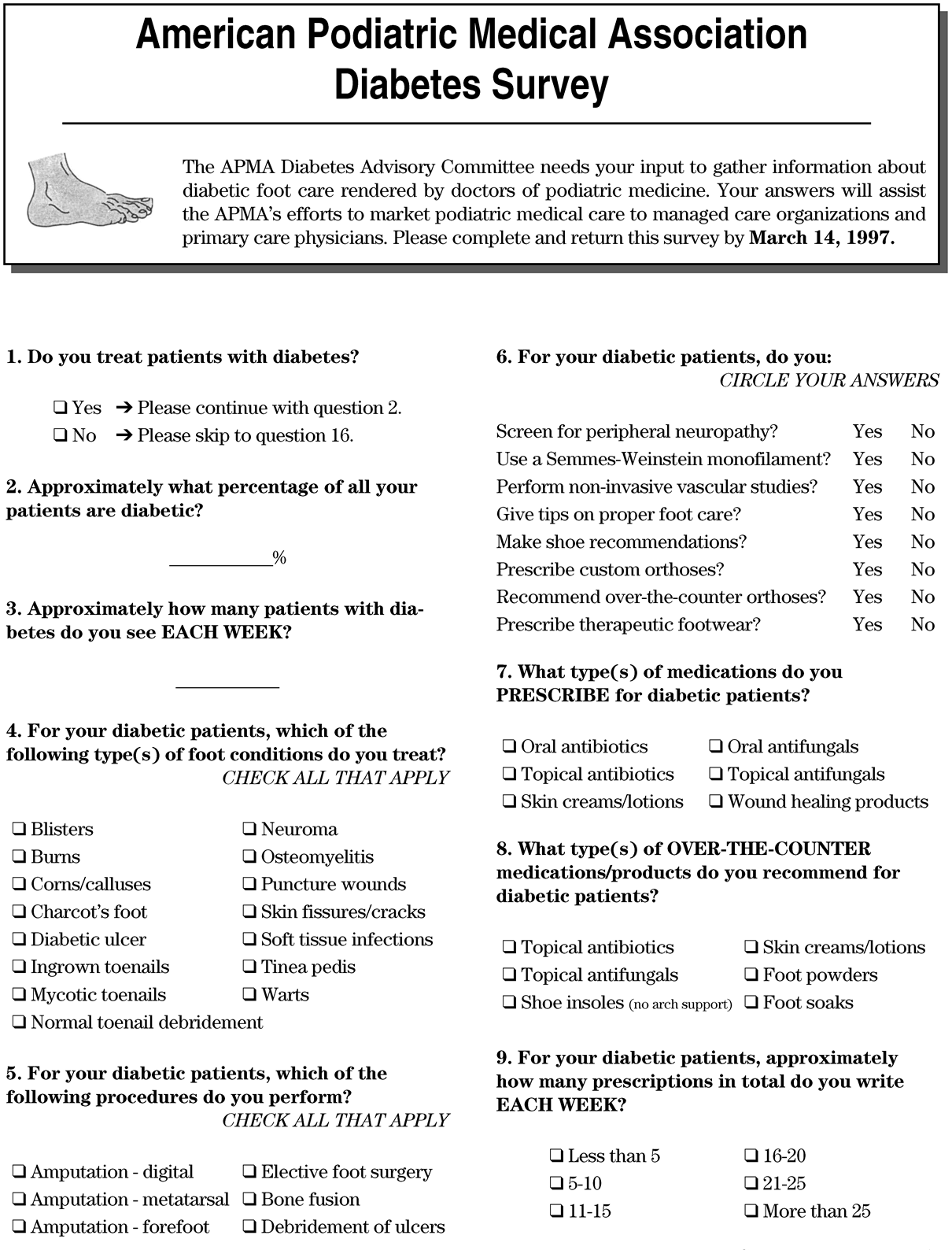
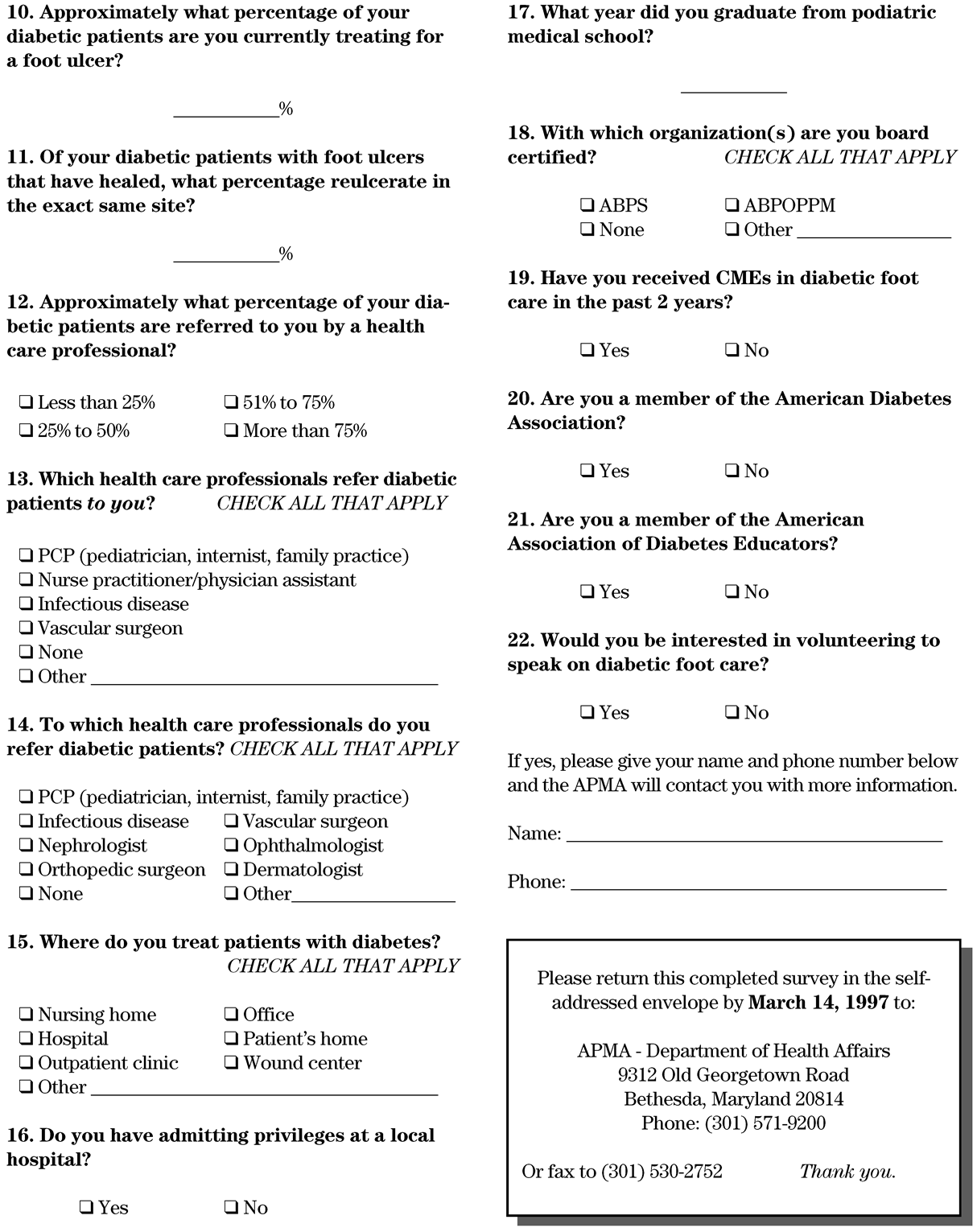
A two-page, 22-question survey form was designed by the APMA Diabetes Advisory Committee to collect information about diabetic foot care rendered by doctors of podiatric medicine. The entire active membership of the APMA was surveyed, amounting to 9,023 members. The survey was anonymous, although members interested in volunteering to speak on the topic of diabetic foot care were asked to provide their names and addresses. The data-collection instrument appears in the Appendix.
The survey elicited information about the current experience of APMA members in treating patients with diabetes. The survey indicated the types of foot conditions such patients present with and the treatments rendered by APMA members, including procedures performed and medications prescribed. The survey also collected data on the referral sources of these patients, their treatment locations, and the types of specialists to whom APMA members refer these patients for treatment. Demographic data on the members were obtained for use in analyzing the results: practice experience and recent education in diabetic foot care, board certification, and membership in organizations such as the American Diabetes Association and the American Association of Diabetes Educators.
The survey was administered by mail in February 1997. A target response date of March 14, 1997, was specified. A reminder announcement in the APMA Alert newsletter was used to increase the rate of participation. Respondents were provided with a return envelope; however, they were required to use their own postage to send the response. Responses were obtained from 3,368 members. The overall response rate was 37.3%.
Data were weighted by the respondents’ years in practice to compensate for overrepresentation of members with more years in practice and underrepresentation of members with fewer years in practice. Membership-experience statistics from 1996 were used to weight the data [1].
Results
Prevalence of Patients with Diabetes
Patients with diabetes are seen in nearly all podiatric medical offices around the country. Nearly all survey respondents (99.9%) indicated that they treat patients with diabetes. Only 5 of the 3,368 members who responded to the survey said that they do not treat patients with diabetes.
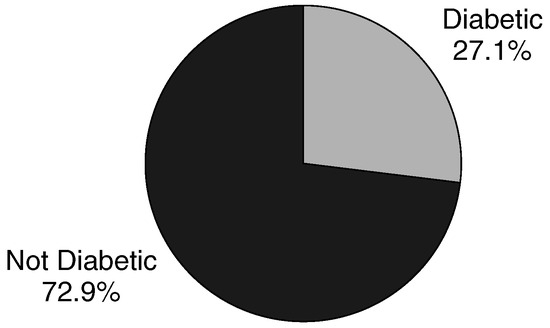
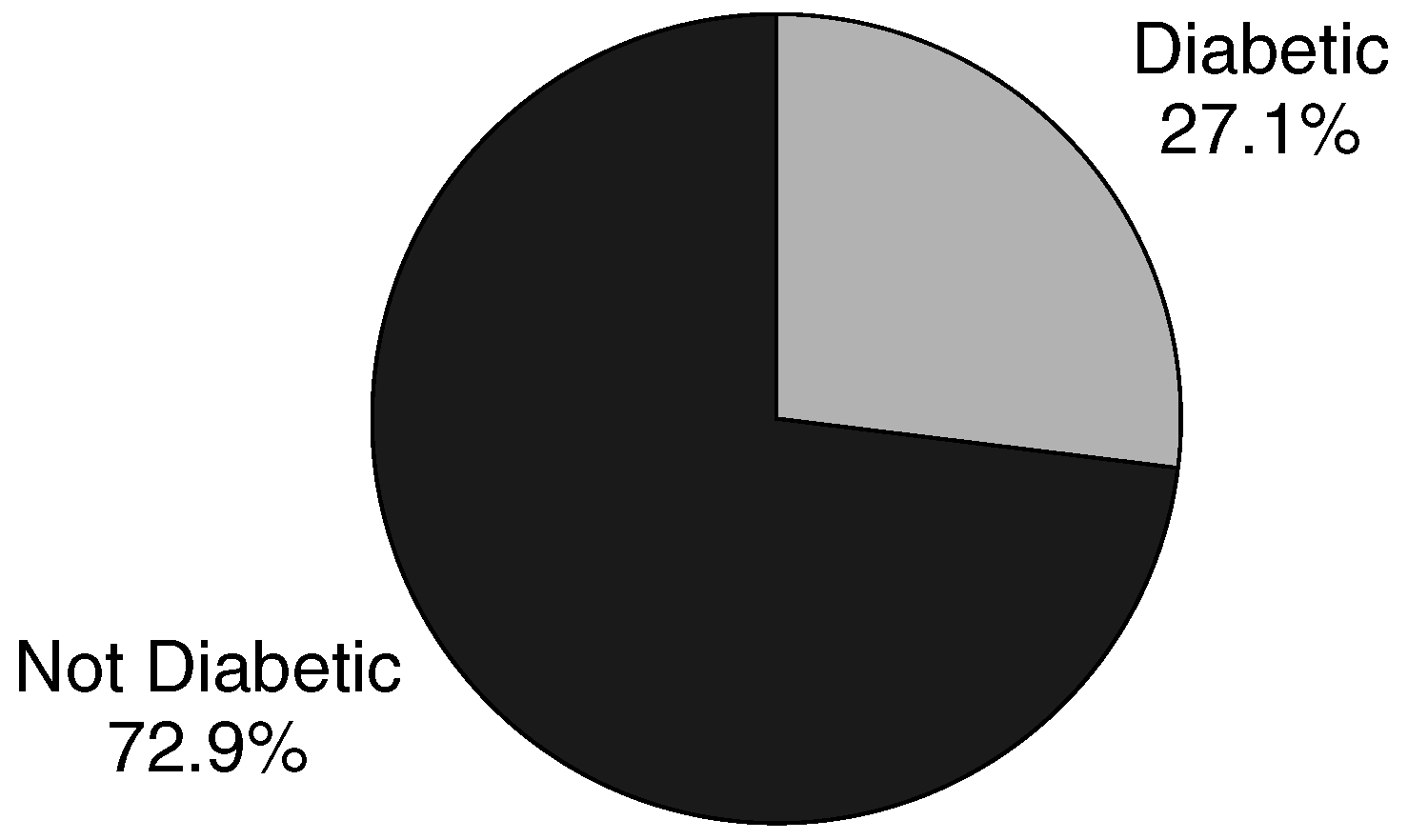
Patients with Diabetes as a Percentage of All Patients. On average, patients with diabetes constituted a substantial percentage (27.1%) of the total number of patients treated by respondents (Figure 1). The median proportion of patients with diabetes was 25%, ie, half of the respondents said that patients with diabetes constitute more than 25% of their practice, while the other half of respondents said that such patients constitute less than 25% of their practice.
Figure 1.
Patients with diabetes as a percentage of all patients treated by respondents.
The range of the percentage of patients with diabetes was large and noteworthy. The proportion of patients with diabetes ranged from 1% of the total number of patients to 98%. However, half of the respondents reported that patients with diabetes constitute between 15% and 35% of their patient population.
Number of Patients with Diabetes Treated Each Week. On average, 26 patients with diabetes are seen by respondents each week. The median number is 20 patients, with half of the respondents treating more than 20 patients with diabetes each week and half treating fewer.
The range in volume of patients with diabetes treated was also noteworthy. The number of such patients ranged from as few as 1 per week to as many as 200 per week. However, half of the respondents reported that they saw between 13 and 30 patients with diabetes each week.
Some respondents gave only an estimated range of patients with diabetes seen, either as a percentage of their total patient population or as their weekly patient volume, eg, “5% to 10%” or “25 to 30 per week.” The midpoint value of each range was used to compute the statistics in this report, ie, 7.5% or 27.5 patients using the previous data examples.
Foot Conditions of Patients with Diabetes
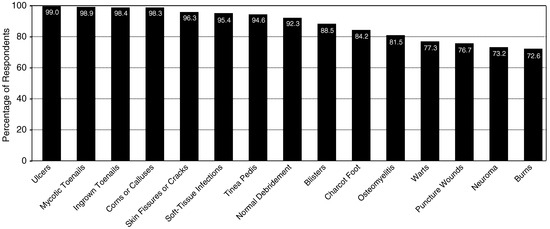
Most respondents reported treating patients with diabetes for a wide variety of foot conditions. In fact, the majority of respondents reported treating all 15 conditions specified on the survey (Figure 2).
Figure 2.
Foot conditions treated in patients with diabetes.
Almost all of the respondents treated their patients with diabetes for ulcers (99.0%), mycotic toenails (98.9%), ingrown toenails (98.4%), and corns or calluses (98.3%). Approximately 95% treated patients with diabetes for skin fissures or cracks (96.3%), soft-tissue infections (95.4%), and tinea pedis (94.6%). About 90% treated patients with diabetes for normal debridement (92.3%) and blisters (88.5%), while 84.2% treated them for Charcot foot.
More than 75% of respondents treated patients with diabetes for osteomyelitis (81.5%), warts (77.3%), and puncture wounds (76.7%). Over 70% treated patients with diabetes for neuroma (73.2%) and burns (72.6%).
Treatments Provided to Patients with Diabetes
The wide range of surgical procedures, medications, and consultative services provided to patients with diabetes by podiatrists was documented in this survey.
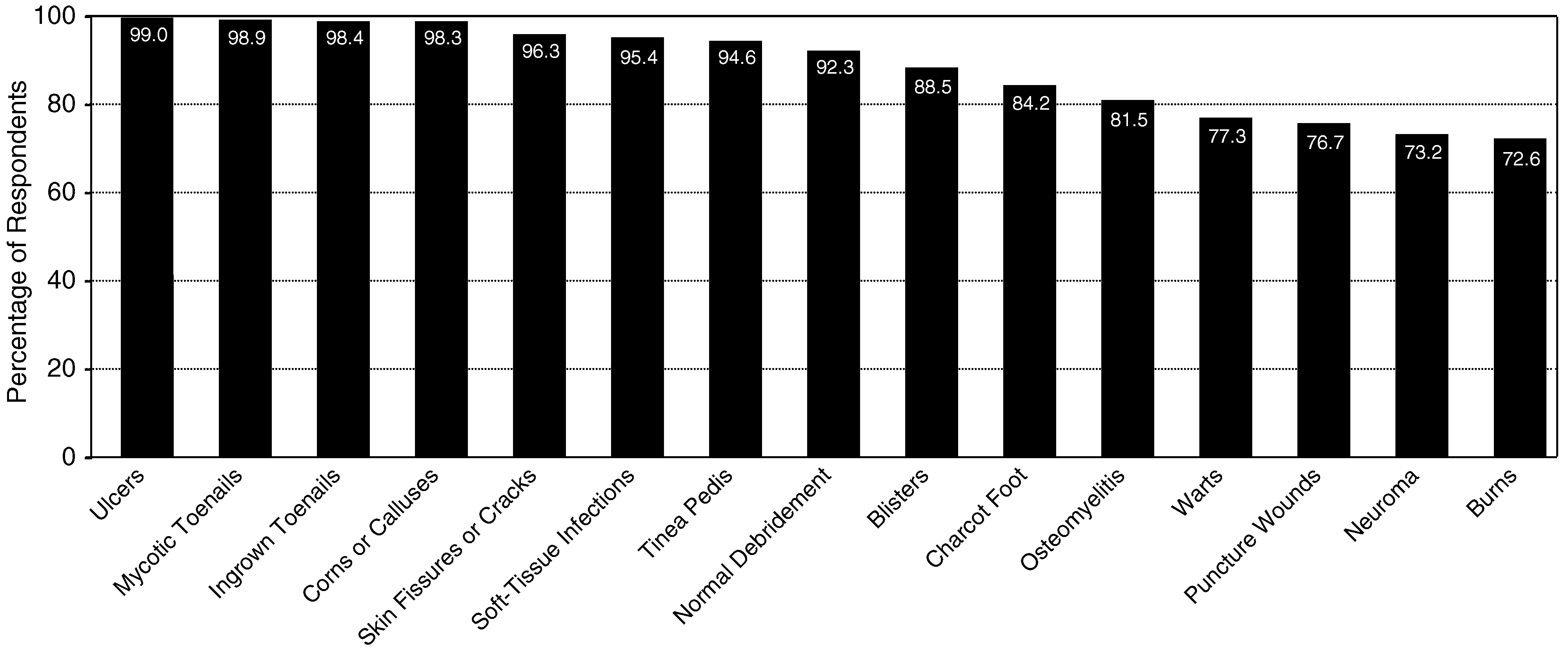
Procedures Performed on Patients with Diabetes. Most respondents performed debridement of ulcers for their patients with diabetes (98.0%). Elective foot surgery was performed for patients with diabetes by 86.8% (Figure 3).
Figure 3.
Procedures performed on patients with diabetes.
Amputations were performed on patients with diabetes by many respondents: 71.5% of respondents reported performing digital amputations, 53.1% reported performing metatarsal amputations, and 38.6% reported performing forefoot amputations. Scope-of-practice limitations in various states may have reduced the extent to which respondents reported performing certain surgical procedures.
Bone-fusion procedures were performed by 49.0% of respondents.
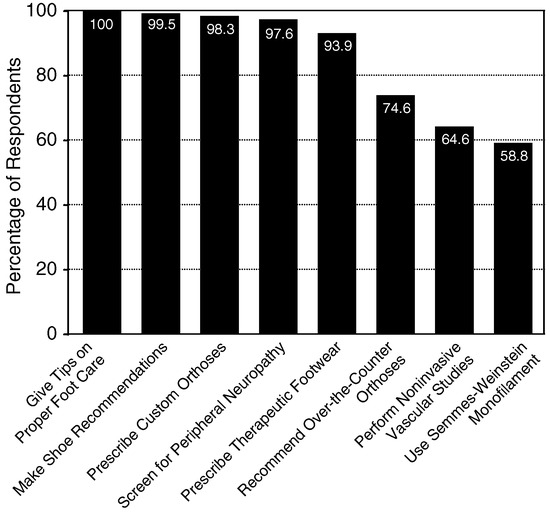
Services Provided to Patients with Diabetes. Almost all of the respondents reported providing four services to their patients with diabetes: 1) giving tips on proper foot care; 2) making shoe recommendations; 3) prescribing custom orthoses; and 4) screening for peripheral neuropathy. Each of these services was provided by 98% or more of the respondents (Figure 4).
Figure 4.
Services provided to patients with diabetes.
In addition, 93.9% of the respondents prescribe therapeutic footwear, 74.6% recommend over-the-counter (OTC) orthoses, and 64.6% perform or order noninvasive vascular studies. Nearly 60% of podiatrists responding indicated that they use a Semmes-Weinstein monofilament (58.8%).
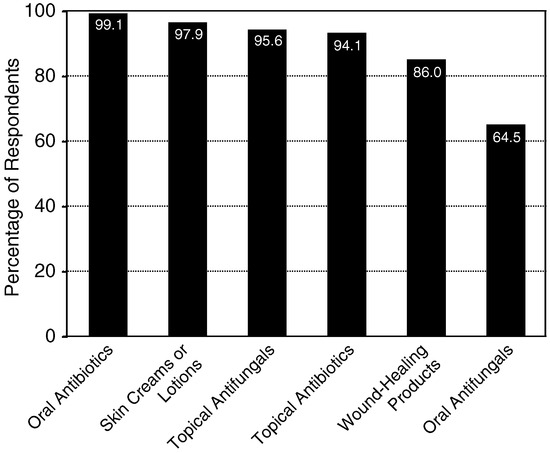
Medications Prescribed for Patients with Diabetes. Almost all of the respondents reported prescribing antibiotics for their patients with diabetes: 99.1% prescribe oral antibiotics and 94.1% prescribe topical antibiotics. Also, 97.9% of respondents prescribe skin creams or lotions for their patients with diabetes (Figure 5).
Figure 5.
Types of medications prescribed for patients with diabetes.
Some 95.6% of respondents prescribe topical antifungal agents for patients with diabetes. In contrast, 64.5% prescribe oral antifungals for their patients with diabetes. Wound-healing products are prescribed for patients with diabetes by 86.0% of respondents.
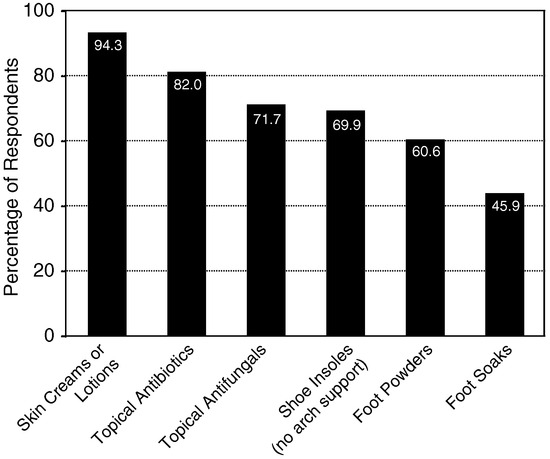
OTC Medications and Products Recommended to Patients with Diabetes. Most respondents recommend OTC products or medications to their patients with diabetes (Figure 6). For example, 94.3% recommend OTC skin creams or lotions. Some 82.0% recommend OTC topical antibiotics. Approximately 7 in 10 recommend OTC topical antifungal agents to patients with diabetes (71.7%), and 69.9% recommend OTC shoe insoles.
Figure 6.
Over-the-counter medications and products recommended for patients with diabetes.
Six out of ten (60.6%) respondents recommend OTC foot powders to patients with diabetes, while only 45.9% indicated that they have recommended OTC foot soaks.
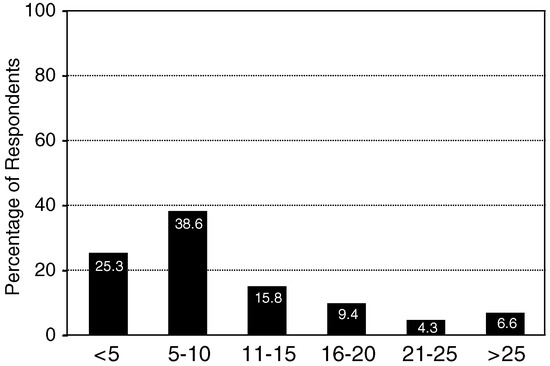
Number of Prescriptions Written for Patients with Diabetes. Respondents who treat patients with diabetes typically write no more than 10 prescriptions per week for these patients (63.9%). Of these, 38.6% write 5 to 10 prescriptions per week, and 25.3% write fewer than 5 per week (Figure 7).
Figure 7.
Number of prescriptions written each week for patients with diabetes.
Of the 36.1% who write more than 10 prescriptions weekly, 15.8% write 11 to 15 prescriptions each week and 9.4% write 16 to 20, while 10.9% write more than 20 per week. This includes 6.6% who write more than 25 prescriptions per week and 4.3% who write 21 to 25 each week.
Foot Ulcers in Patients with Diabetes
Respondents who treat patients with diabetes estimated that, on average, 13.8% were currently being treated for a foot ulcer. The median percentage of patients with diabetes being treated for a foot ulcer was 10%, with half of the respondents treating more than 10% of their patients with diabetes for this condition and half treating fewer.
The range of the percentage of patients with diabetes being treated for foot ulcers was large and noteworthy. The proportion of patients with diabetes treated for this condition ranged from 0% to 90%. However, half of the respondents reported that the percentage of patients with diabetes currently being treated for a foot ulcer was between 5% and 20%.
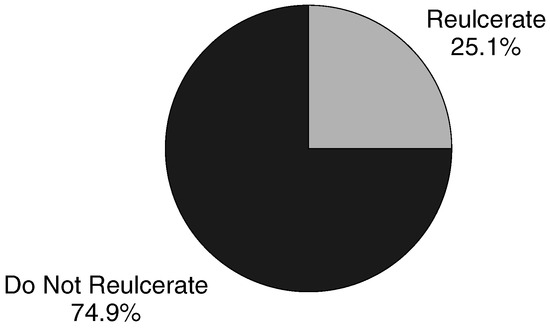
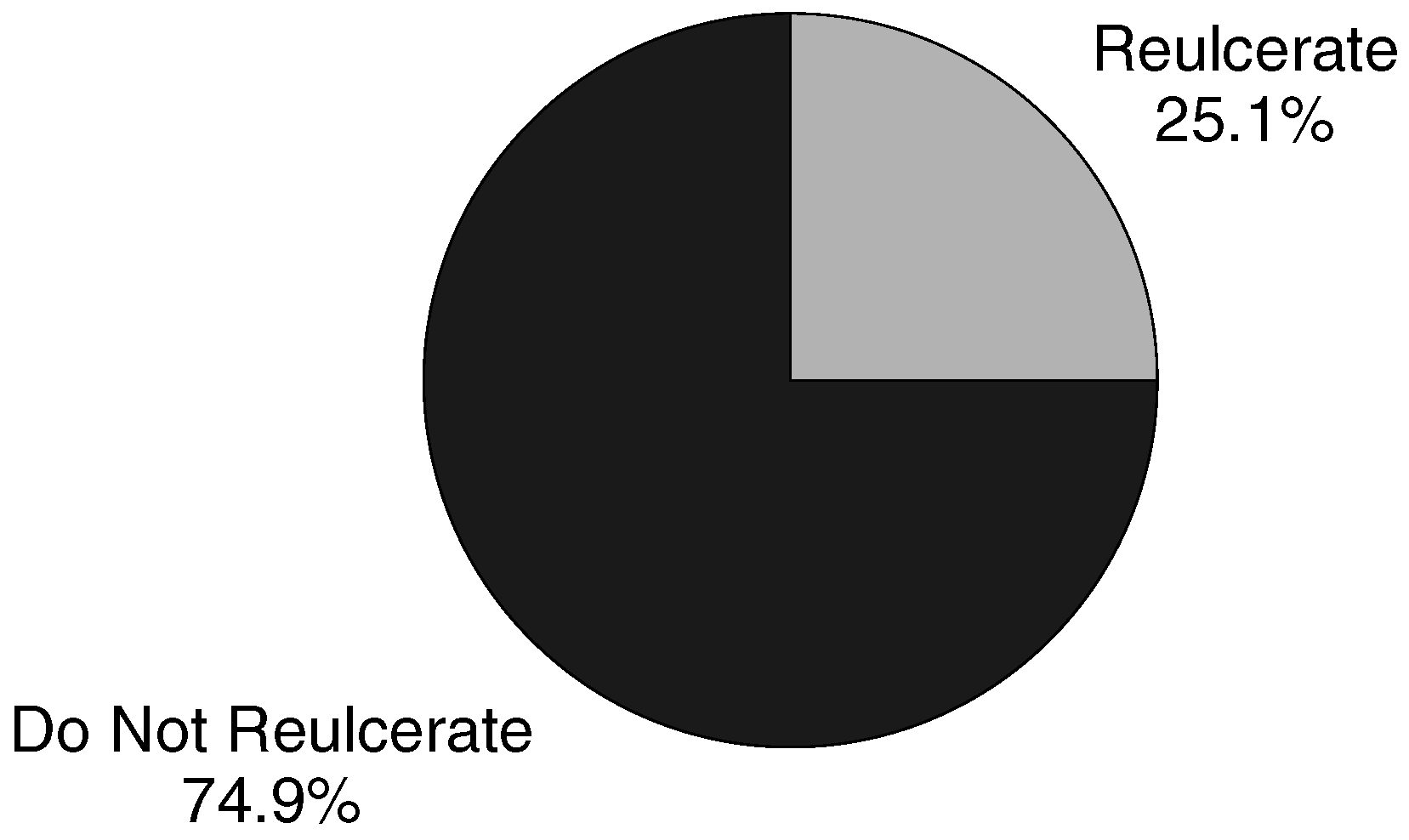
Reulceration in Patients with Diabetes. On average, respondents reported that 25.1% of their diabetic patients with healed foot ulcers experience subsequent reulceration at the same site (Figure 8). The median reulceration rate was 20%, with half of the respondents reporting that more than 20% of their patients with diabetes experience reulceration and the other half reporting that less than 20% experience reulceration.
Figure 8.
Average rate of reulceration at the same site.
Rates of reulceration for patients with diabetes ranged from 0% to 100%. However, half of the respondents reported reulceration rates of 5% to 40% for their patients.
Referrals Involving Patients with Diabetes
The survey documented the extent to which patients with diabetes are referred to podiatrists by other health-care specialists, and the extent to which the respondents in turn referred their patients with diabetes to other health-care specialists.
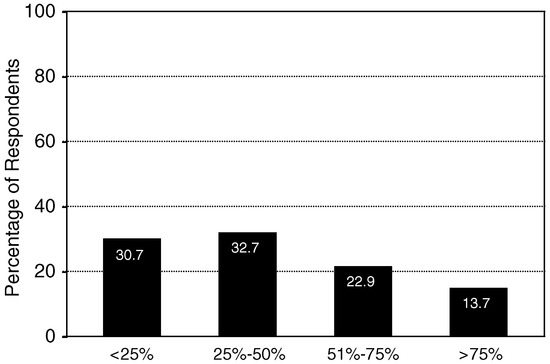
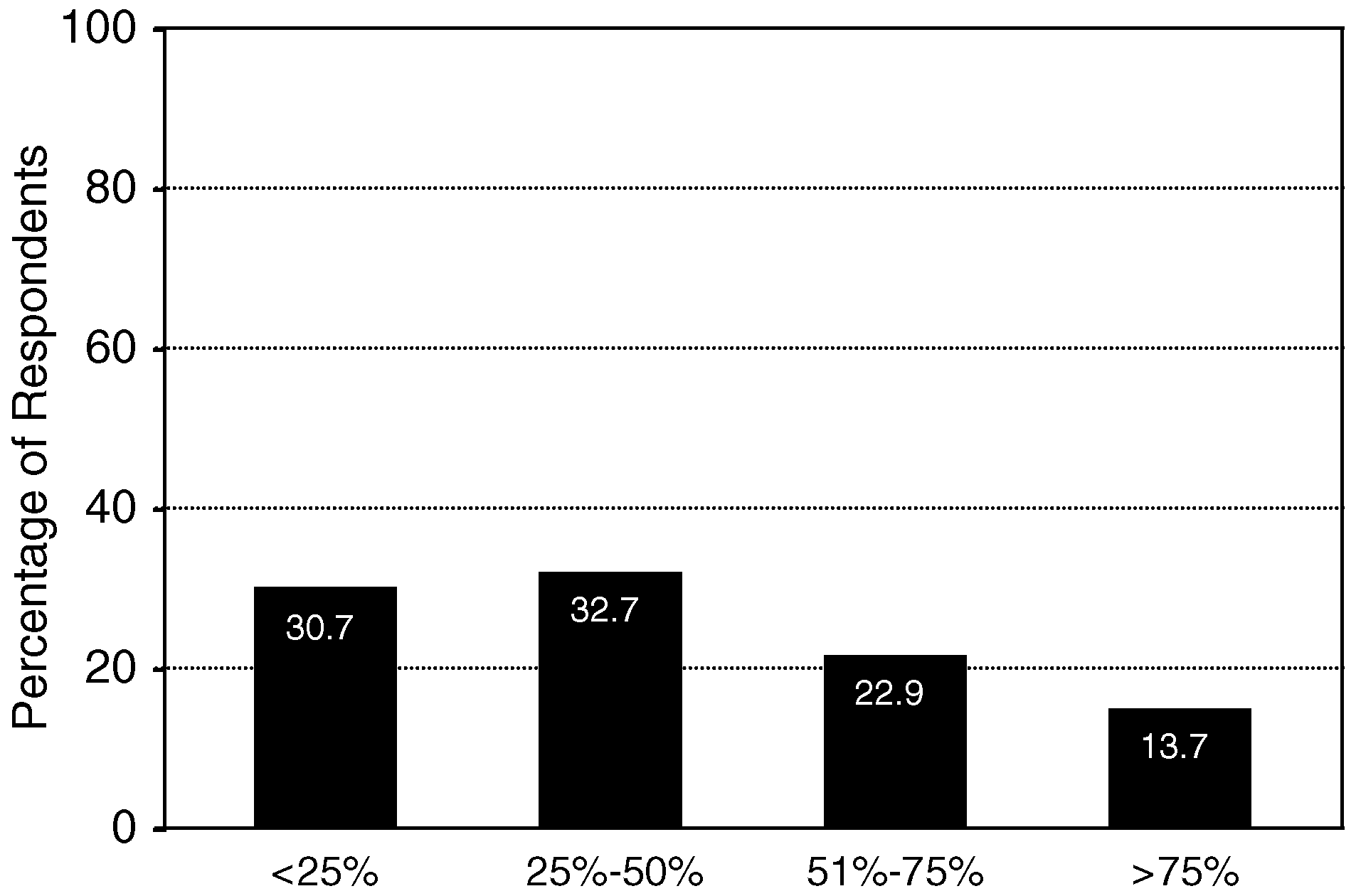
Percentage of Patients with Diabetes Referred to Respondents. Most respondents (63.4%) who treat patients with diabetes receive referrals from other health-care professionals for half or fewer of these patients. Of these, 30.7% receive less than 25% of their patients with diabetes as referrals from health-care professionals, while 32.7% indicated that health-care professionals refer 25% to 50% of their patients with diabetes (Figure 9).
Figure 9.
Percentage of patients with diabetes referred by health-care professionals.
Only 36.6% of respondents reported getting referrals for over half of their patients with diabetes from other health-care professionals. Of these, 22.9% of respondents reported referrals for 51% to 75% of their patients with diabetes, while 13.7% reported that more than three-quarters of their diabetic patients were referred to them by other health-care professionals.
Sources of Patient Referrals. Almost all of the respondents reported referrals of patients with diabetes from other health-care professionals (98.6%). The base of respondents for the analysis varied but exceeded 3,337 respondents for each specialty.
The major source of referrals of patients with diabetes was primary-care physicians (PCPs) such as pediatricians, internists, and family practitioners.
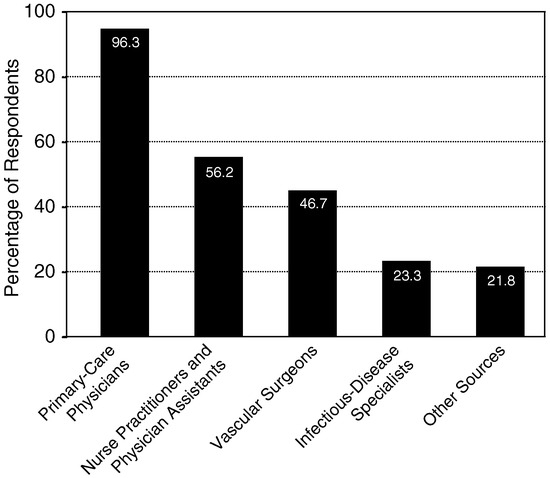
Most respondents (96.3%) cited PCPs as a source of referrals (Figure 10).
Figure 10.
Sources of patient referrals.
About half of the respondents reported referrals of patients with diabetes from two other categories: nurse practitioners or physician assistants (56.2%), and vascular surgeons (46.7%). In contrast, 23.3% cited infectious-disease specialists as a source of referrals.
Other sources of patient referrals were listed by 21.8% of the respondents. The primary additional source of referrals was endocrinologists, followed by orthopedic surgeons, home health-care nurses, aides, and agencies, visiting nurses, registered nurses and nursing homes, other patients, general surgeons, nephrologists, dermatologists, and chiropractors.
Sources mentioned less frequently included emergency-medicine physicians, family-practice clinics, wound-care centers, and other specialists such as dentists, pharmacists, cardiologists, plastic surgeons, and psychiatrists. A few respondents cited other podiatrists and diabetes specialists.
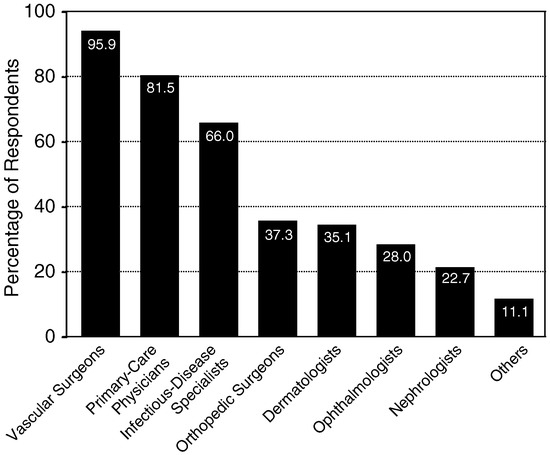
Health-Care Professionals to Whom Diabetic Patients Are Referred. Almost all of the respondents who treat patients with diabetes refer these patients to other health-care professionals (99.5%). The specialists cited most frequently were vascular surgeons (95.9% refer to them) and PCPs (81.5% refer to them) (Figure 11).
Figure 11.
Health-care professionals to whom patients with diabetes are referred.
About two-thirds of the respondents refer their patients with diabetes to infectious-disease specialists (66.0%). Fewer respondents refer their patients with diabetes to orthopedic surgeons (37.3%), dermatologists (35.1%), ophthalmologists (28.0%), and nephrologists (22.7%). Some 11.1% indicated referrals to other types of health-care professionals. The main category of other specialists to whom respondents refer their patients with diabetes was endocrinologists, followed by neurologists, diabetologists, general surgeons, plastic surgeons, and rheumatologists. A few cited orthotists, physical therapists, dieticians, wound-care centers, and others.
Treatment Sites for Patients with Diabetes
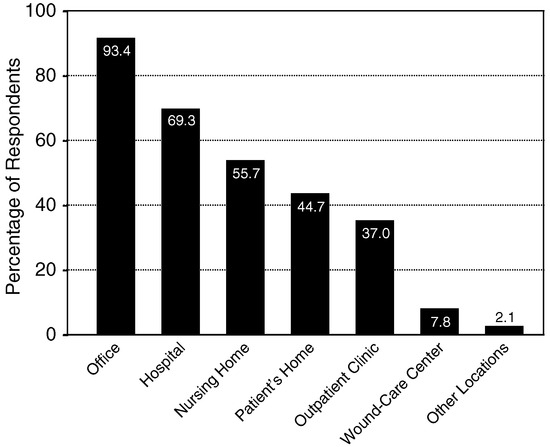
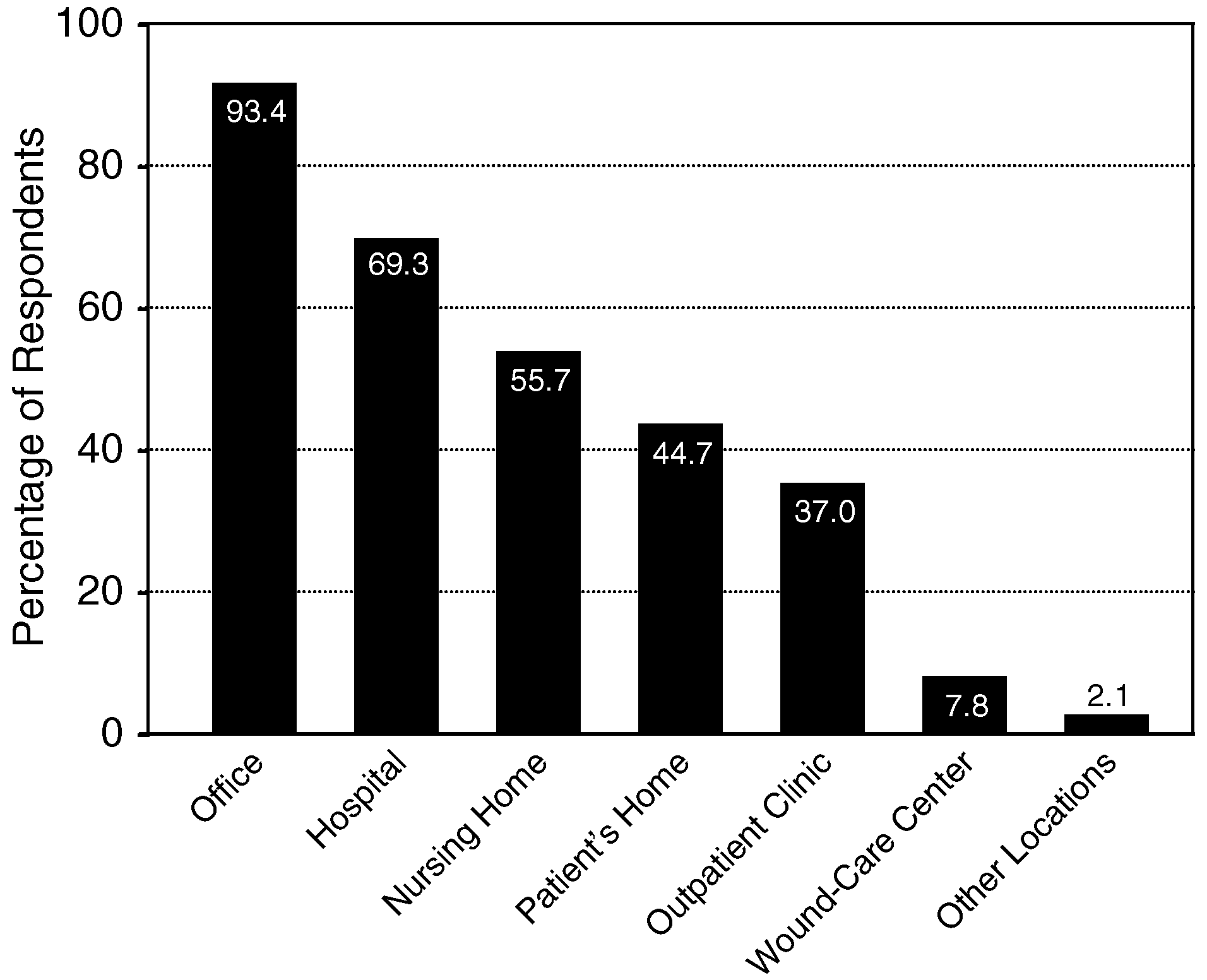
Most respondents treat their patients with diabetes in their offices (93.4%). Many reported also treating patients with diabetes in a hospital (69.3%), a nursing home (55.7%), or the patient’s home (44.7%). Roughly one-third (37.0%) indicated that they treat some of their patients with diabetes in an outpatient clinic. Only 7.8% reported treating patients with diabetes at a wound-care center, and 2.1% described using some other treatment location (Figure 12).
Figure 12.
Treatment sites for patients with diabetes.
Other treatment sites included adult-care centers and residence facilities, senior centers, assisted-living facilities, ambulatory surgery centers, multispecialty clinics and surgery centers, operating rooms, diabetic clinics and centers, free-standing health maintenance organizations, free clinics, Indian health services, skilled-nursing facilities, university medical clinics, hyperbaric medical and wound-care centers, prisons, and Veterans Administration hospitals.
Demographic Data
Demographic data were obtained to determine the characteristics of respondents and the extent to which they were representative of APMA members in general. All survey respondents were asked to answer the demographic questions regardless of whether they treat patients with diabetes.
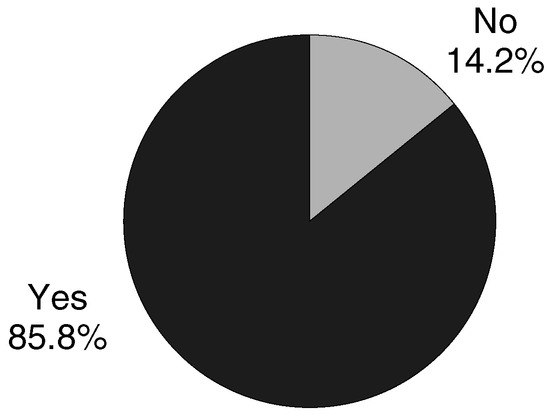
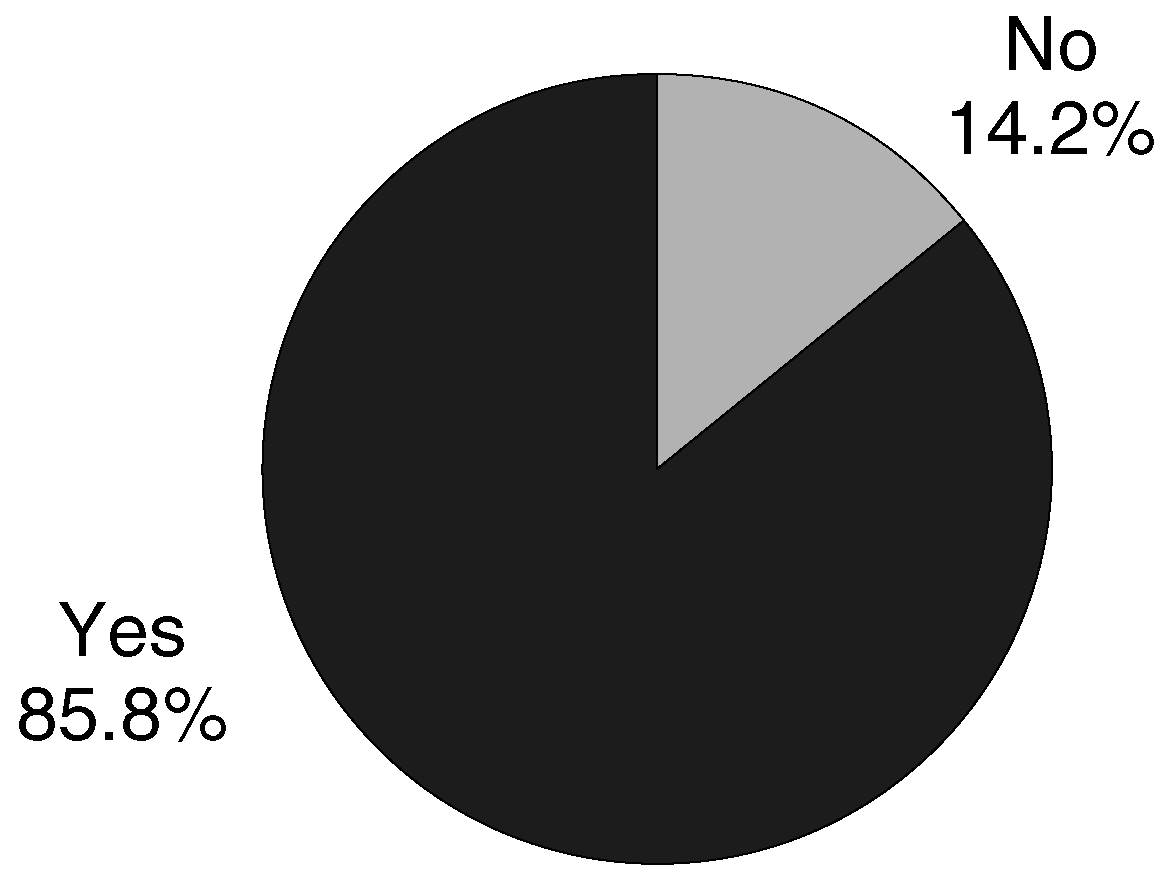
Hospital Admitting Privileges. Most respondents (85.8%) reported having admitting privileges at a local hospital (Figure 13). Note that respondents who wrote “co-admit” were considered to have hospital admitting privileges.
Figure 13.
Percentage of respondents with hospital admitting privileges.
Extent of Experience. The extent of respondents’ practice experience was inferred from their year of graduation from podiatric medical school. Experience was computed as the difference between 1997 and the date of graduation.
Respondents averaged 13.3 years of practice experience. The median was 11 years of experience, with half having more experience and half having less. The range was from 1 year to 68 years. Half of the respondents had between 9 and 21 years of experience.
Board-Certification Rates. Most respondents indicated that they are board certified (62.8%). Of these, 42.8% said that they are certified by the American Board of Podiatric Surgery (ABPS), and 20.5% said that they are certified by the American Board of Podiatric Orthopedics and Primary Podiatric Medicine (ABPOPPM). A total of 54.8% indicated that they are certified by either ABPS or ABPOPPM, or by both organizations. Another 6.4% said that they are board certified by some other organization.
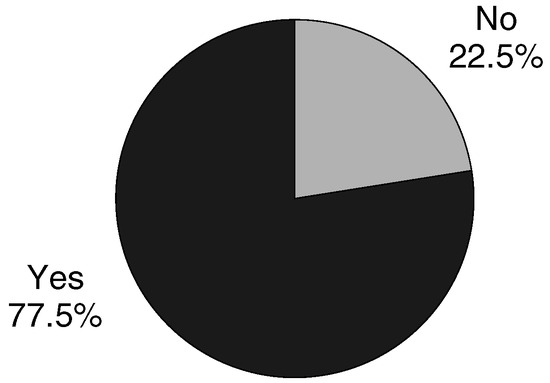
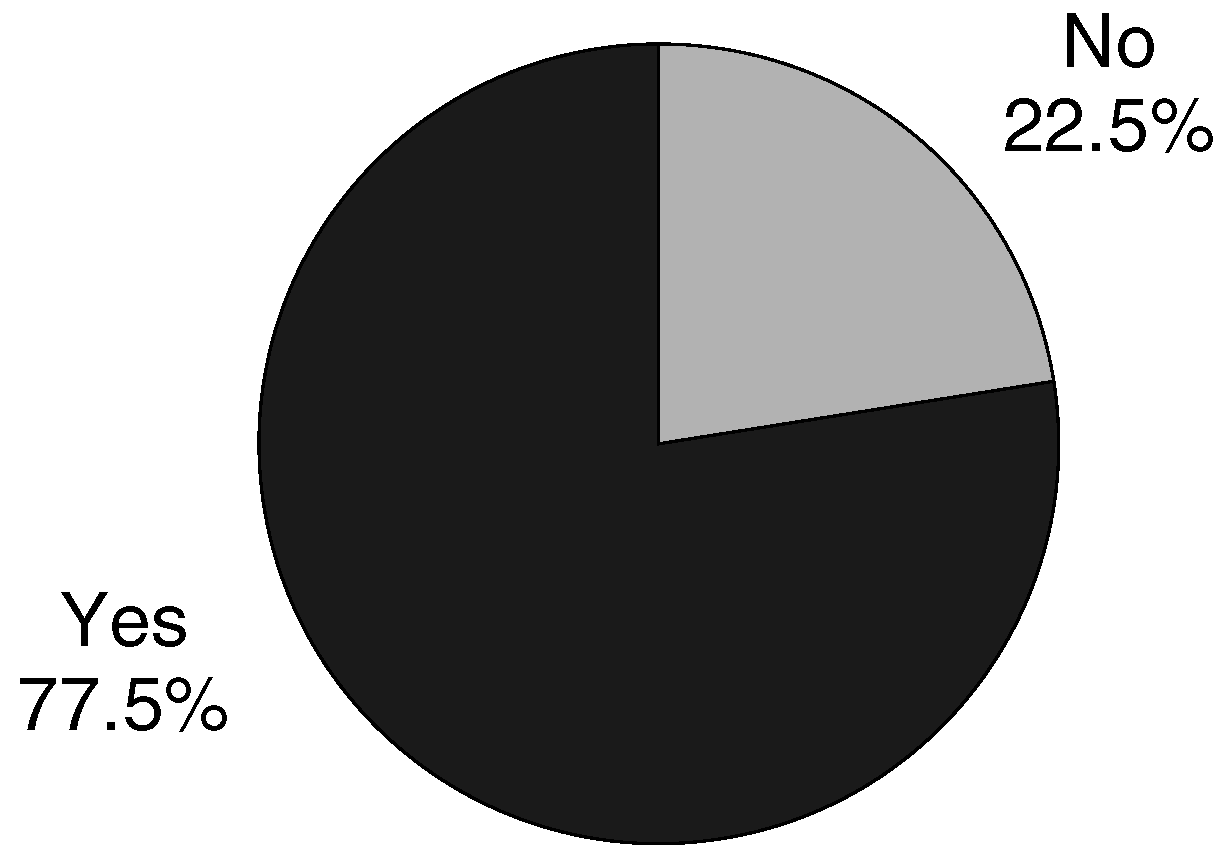
Recent Education in Diabetic Foot Care. Within the preceding two years (1995–1996), 77.5% of respondents received education in diabetic foot care that earned them continuing medical education (CME) credits (Figure 14).
Figure 14.
Percentage of respondents receiving continuing medical education (CME) credits in the preceding two years.
Membership in Diabetes Associations. Most respondents did not belong to diabetes associations: 25.2% belonged to the American Diabetes Association, while 1.9% belonged to the American Association of Diabetes Educators.
Interest in Speaking About Diabetic Foot Care. Each respondent was asked to express his or her interest in volunteering to speak on diabetic foot care. In total, 65.3% of those answering this question indicated an interest in speaking on this topic, amounting to 2,028 APMA members. Each interested respondent was asked to provide his or her name and telephone number so that APMA could provide more information about speaking on this topic.
The enthusiasm of some members was reflected in comments such as “Absolutely. [I] provide ongoing lectures as Counsel for the International Diabetes Center of Tennessee” and “I do!! Education is important for the diabetic patient (foot care).”
Discussion
This survey provides an excellent source of information on the foot care provided by podiatric physicians to patients with diabetes. The database generated by the survey contains current information on 3,363 members of the APMA who treat patients with diabetes. It includes detailed information on the treatments provided, surgical procedures performed, medications prescribed or recommended, and products and services delivered. Because the entire active membership of the APMA was surveyed (no sampling was used), the most reasonable and defensible interpretation of the results is that the database represents APMA members with a strong interest in the treatment of patients with diabetes.
The following survey findings are noteworthy:
- Patients with diabetes constituted approximately 27% of the total number of patients of these respondents, amounting to 26 patients per week on average;
- Patients with diabetes presented with a wide range of foot conditions to be treated, including normal foot problems as well as problems unique to their illness, such as diabetic ulcers;
- Patients with diabetes required surgical treatments in the form of amputations and bone fusion, as well as debridement of ulcers and elective foot surgery;
- Patients with diabetes received a wide variety of tests and consultative services from respondents (foot-care tips, shoe recommendations), as well as noninvasive vascular studies; and
- Patients with diabetes received prescriptions for a variety of oral and topical medications (antibiotics, antifungals), as well as recommendations for OTC products and services, including OTC antibiotics and antifungals, shoe insoles, skin creams and lotions, and so on.
Most patients with diabetes seemed to contact respondents directly: Only 37% of respondents reported that more than half of their patients with diabetes were referred to them by other health-care professionals. Respondents reported receiving patient referrals from a variety of specialists, including vascular surgeons and nurse practitioners or physician assistants as well as PCPs. In turn, respondents referred their patients with diabetes to vascular surgeons and infectious-disease specialists and others for specialized treatment.
Patients with diabetes were treated in a variety of practice settings, in addition to offices and hospitals. Treatment in nursing homes and in the patient’s home was indicated frequently. A variety of other settings were also mentioned, including adult-care centers and assisted-living facilities, medical centers on Indian reservations, and even prisons.
To What Extent Do APMA Members Treat Patients with Diabetes?
A total of 3,363 members of the APMA indicated in this survey that they treat patients with diabetes. This number represents a conservative estimate of the number of members who treat patients with diabetes, ie, it is a lower bound limit on the number of members treating patients with diabetes. In total, over 99% of all respondents claimed to treat patients with diabetes.
Because 37.3% of APMA members responded to this survey, the estimate of 99.8% treating such patients is very accurate (± 1.36%), assuming an unbiased response. By extrapolation, a projected 9,005 members could be treating patients with diabetes, assuming a total membership of 9,023 and no response bias. This number represents the maximum number of members treating patients with diabetes, ie, it constitutes a theoretical upper bound limit on the number of members who treat patients with diabetes.
The actual number of APMA members who treat patients with diabetes most likely falls somewhere between 3,363 and 9,005. It is likely that most podiatrists treat patients with diabetes, given the prevalence of diabetes in the US population. More than half of the patients undergoing leg amputations each year have diabetes. The National Institute of Diabetes and Digestive and Kidney Diseases estimates that 54,000 amputations are performed each year on patients with diabetes.2 Anecdotal evidence of the prevalence of patients with diabetes in podiatric medical practice came from one member who answered the question about whether he treated patients with diabetes by writing, “Are you for real?” — implying that every podiatrist does.
Patient Visits per Week
The representativeness of respondents to the present survey was also examined by comparison with data collected on APMA members in the 1996 Podiatric Practice Survey.
This diabetes survey found that respondents saw an average of 25.8 patients with diabetes per week, which amounted to 27.1% of their total number of patients. Using these weighted data, total patient visits per week were estimated to be about 95 on average (25.8 ÷ 0.271 = 95.2).
This estimated caseload of 95 patients per week in the diabetes survey compares closely to the average of 92 patient visits per week found in the 1996 Podiatric Practice Survey,1 in which the data were also weighted to adjust for the experience of respondents.
Conclusion
This survey shows that patients with diabetes constitute a large portion of the patient population of doctors of podiatric medicine. It gives a broad overview of types of conditions seen in persons with diabetes, methods of treatment, and referral patterns, as well as practice settings and membership in diabetes-related organizations.
The doctor of podiatric medicine is a foot-care specialist with skills in the recognition and treatment of diabetic foot conditions. Individuals with diabetes are prone to many complications, both acute and chronic. About 15 percent of those with diabetes will develop an open wound (ulceration) on a foot during their lifetimes. Twenty percent of these ulcerations will lead to amputations. For the person with diabetes, a number of practices and precautions are warranted. Periodic visits to a podiatric physician for foot screenings, no less frequent than annually, are recommended. Regular foot care is imperative in the prevention of lower-extremity complications associated with diabetes.
APPENDIX: Data-Collection Instrument
References
© 1997 American Podiatric Medical Association