


Abstract
Dislocations or subluxations of the metatarsophalangeal joints are rare, and open reduction is necessary in exceptional cases. In this case report, we present the case of a 30-year-old man who had chronic dislocation of the fifth metatarsophalangeal joint after a motorcycle accident. Stiffening of the joint capsule prevented closed reduction; therefore, the patient underwent surgery. After performing a Gauthier-type osteotomy, the joint was stabilized by Kirschner wire. The patient had an excellent recovery with no new dislocation episodes.
Dislocation or subluxation of the metatarsophalangeal joint (MTPJ) is uncommon[1] and usually follows traumatic events. Irreducible dislocation of an MTPJ of the lesser toe is much rarer.[2]
Nontraumatic causes usually include inflammatory arthritis (rheumatoid arthritis), connective tissue disorders, crowded shoe wear, or flexor digitorum longus (FDL) tendon contracture.[3] In dislocation injuries of the fifth MTPJ, the direction of the dislocation is most frequently dorsal as the result of a forced hyperextension of the joint. In rare cases, dislocation occurs in a plantar direction, secondary to forced hyperflexion.
More rarely still, in the event of medially or laterally directed force, dislocation occurs in either the medial or lateral direction, respectively.[4–8] Traumatic dislocation of an isolated lesser MTPJ is uncommon. When MTPJ dislocation does occur as a result of trauma, it most frequently involves the first ray, with the fifth MTPJ being the second most prevalent joint to be involved.
In 1994, Hynes et al[4] reported the case of a young patient who required relocation of the FDL tendon before fifth MTPJ realignment was suitable and stable.[2] According to a case report of Hynes,[4] most fifth MTPJ dislocations can be reduced by means of closed reduction, but this may not be possible in situations that involve incarceration of the head of the metatarsal under the FDL tendon.[4,9] In a case report by Rao and Banzon,[10] the fibrocartilaginous plate was found to be the main obstacle to close reduction. Nakano et al[11] reported that the deep transverse metatarsal ligament interfered with the manipulative reduction.[12]
Other causes of unsuccessful closed reduction are fibrocartilaginous plate and lumbrical tendon medially.[4,13,14] This fibrocartilaginous structure known as plantar plate has often been associated with the volar plate of the hand. If injured, the MTPJ and metacarpophalangeal joint are irreducible, respectively.[15] The plantar plate complex appears to maintain joint stability due to the different insertions starting from the periosteum of the inferior metatarsal neck to the base of the corresponding phalanx, and due to its composition being composed of 75% type 1 collagen and 21% type 2 collagen.[16] Regardless of the surgical approach, if stability of the reduction cannot be achieved with bandaging or splinting, internal fixation using an axial Kirschner wire is recommended. The use of Kirschner wires in dislocation stabilization is widely described in the literature as the treatment of choice in unstable dislocations,[17] as represented by Stephenson et al[7] for a third MTPJ joint dislocation. The fibrocartilage complex is essential for the stability of the MTPJ joint and can break after trauma.[18] Once ruptured, the joint will be unstable even after an attempt at reduction, so the use of Kirschner wires is necessary.
In the case that we describe in this article, we present a very unusual case of subluxation of the fifth MTPJ joint following a motorcycle accident. A 30-year-old patient sustained a dorsolateral dislocation of the fifth MTPJ 1 month prior, and due to capsular contraction and soft-tissue fibrosis, could not be reduced by closed manipulation. Instead, the patient required open reduction with retrocapital dorsal base subtraction wedge osteotomy of the fifth metatarsal and fixation with a Kirschner wire to maintain anatomic alignment of the joint, as described by Gauthier and Elbaz.[19]
Surgical treatment was performed 1 month after the accident, and the particularity of this case is related to the inveterate presentation of this dislocation, which caused soft-tissue retraction that did not allow intraoperative reduction without an osteotomy.
The patient was followed-up with clinical examination and radiographs. The first follow‐up was at 2 weeks for removal of the stitches, then reevaluated at 1 month with a radiographic examination. Another follow-up was performed 6 months after surgery, where the patient reported that he was back to performing normal daily activities and sports.
Case Report
A 30‐year‐old male patient presented with varus subluxation of the fifth toe. The patient reported a motorcycle accident that occurred in February 2022 without any medical treatment. The patient came to our observation 1 month after the accident, reporting difficulty wearing shoes and difficulty walking long distances. On objective examination, the proximal phalanx of the fifth ray was shown to be dorsally subluxated. The dislocation appeared to be nonreducible. Radiography confirmed the diagnosis (Fig. 1).
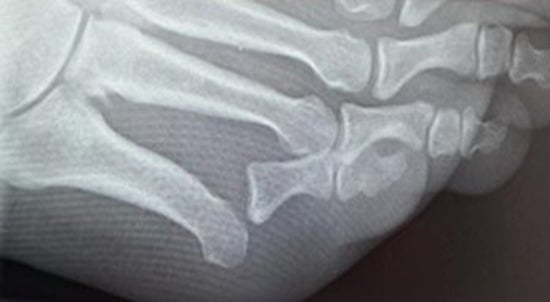
Figure 1.
Preoperative radiograph showing dislocation of the fifth metatarsophalangeal joint.
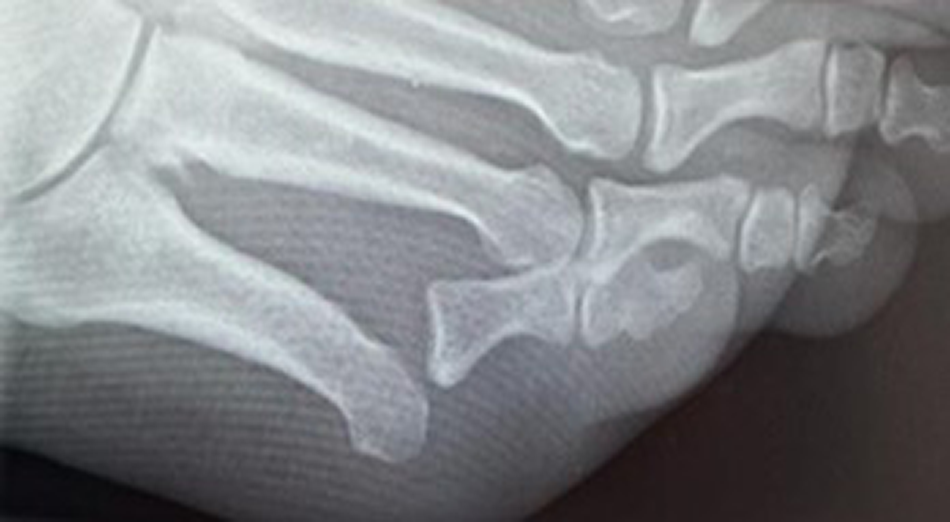
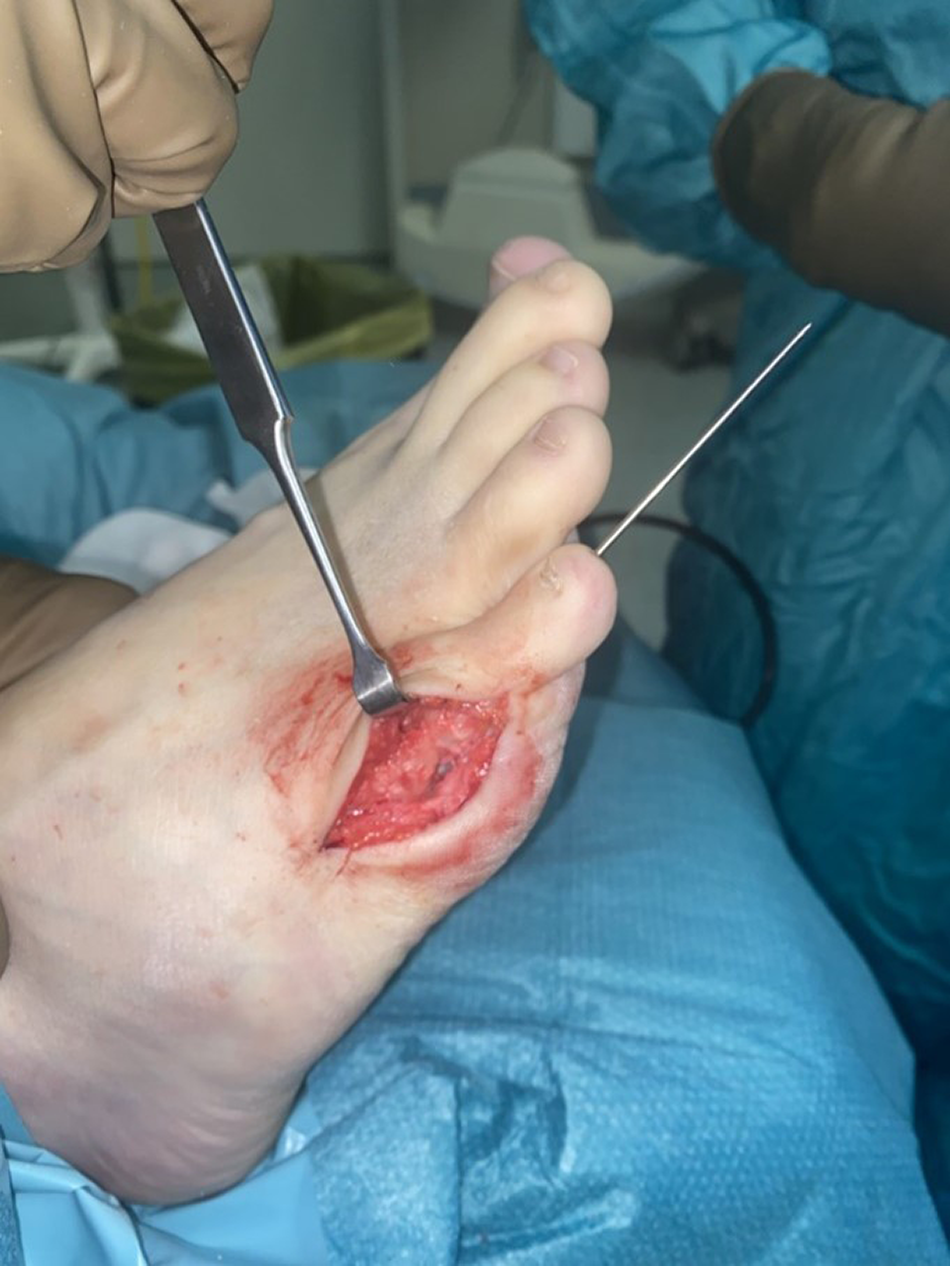
In March 2022, the patient had loco‐regional anesthesia and open reduction surgery. A dorsolateral approach was used at the fifth MTPJ (Fig. 2). Intraoperatively, there was no evidence of incarceration of the FDL tendon of the head of the metatarsal, different than the finding in the case described by Hynes.[4] After several attempts at reduction, the soft tissues would not allow the phalanx to return to anatomical position. In order to stabilize it with a Kirschner wire, an osteotomy of the distal fifth metatarsal had to be performed to allow for adequate stabilization.
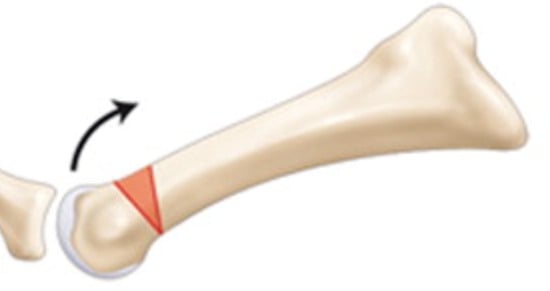
Figure 2.
Illustration showing the Gauthier-type dorsomedial wedge osteotomy.
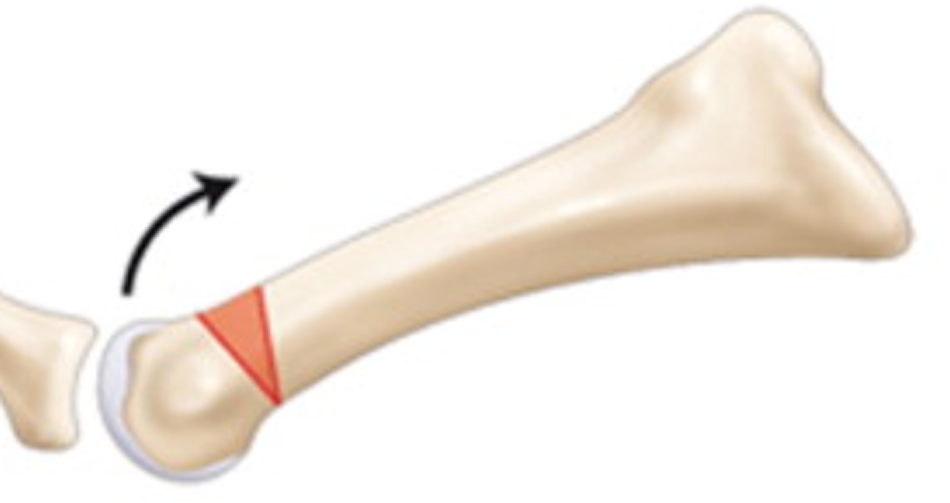
Once the phalanges were fixated using a Kirschner wire, a Gauthier‐type dorsomedial wedge osteotomy was performed on the fifth metatarsal to realign the head (Figs. 3 and 4) and to reduce the proximal phalanx. Once reduced, the joint was stabilized using a Kirschner wire (Fig. 5). This type of osteotomy allows resection of a wedge of bone in the dorsal portion of the metatarsal, with minimal retraction and raises the head of the metatarsal. Few cases of patients undergoing Gauthier’s osteotomies are described in the literature, especially for the treatment of Freiberg disease and the treatment of metatarsal phalangeal dislocation of the second ray.[19–21]
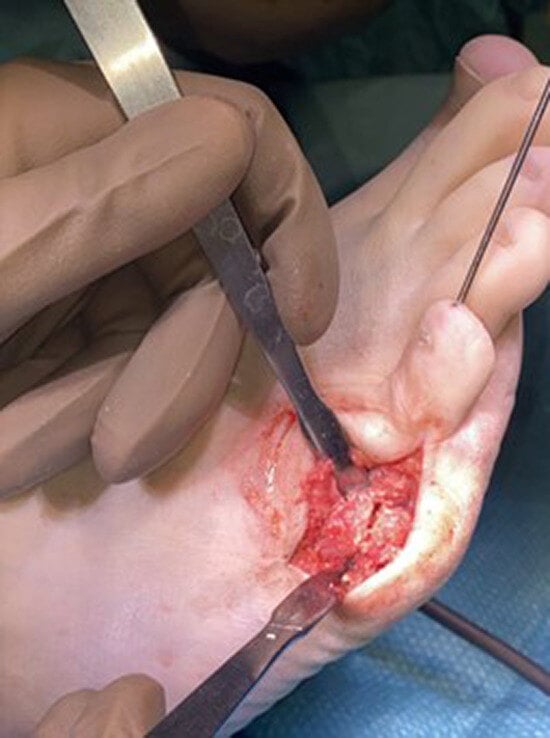
Figure 3.
Dorsolateral approach to the fifth metatarsophalangeal joint.
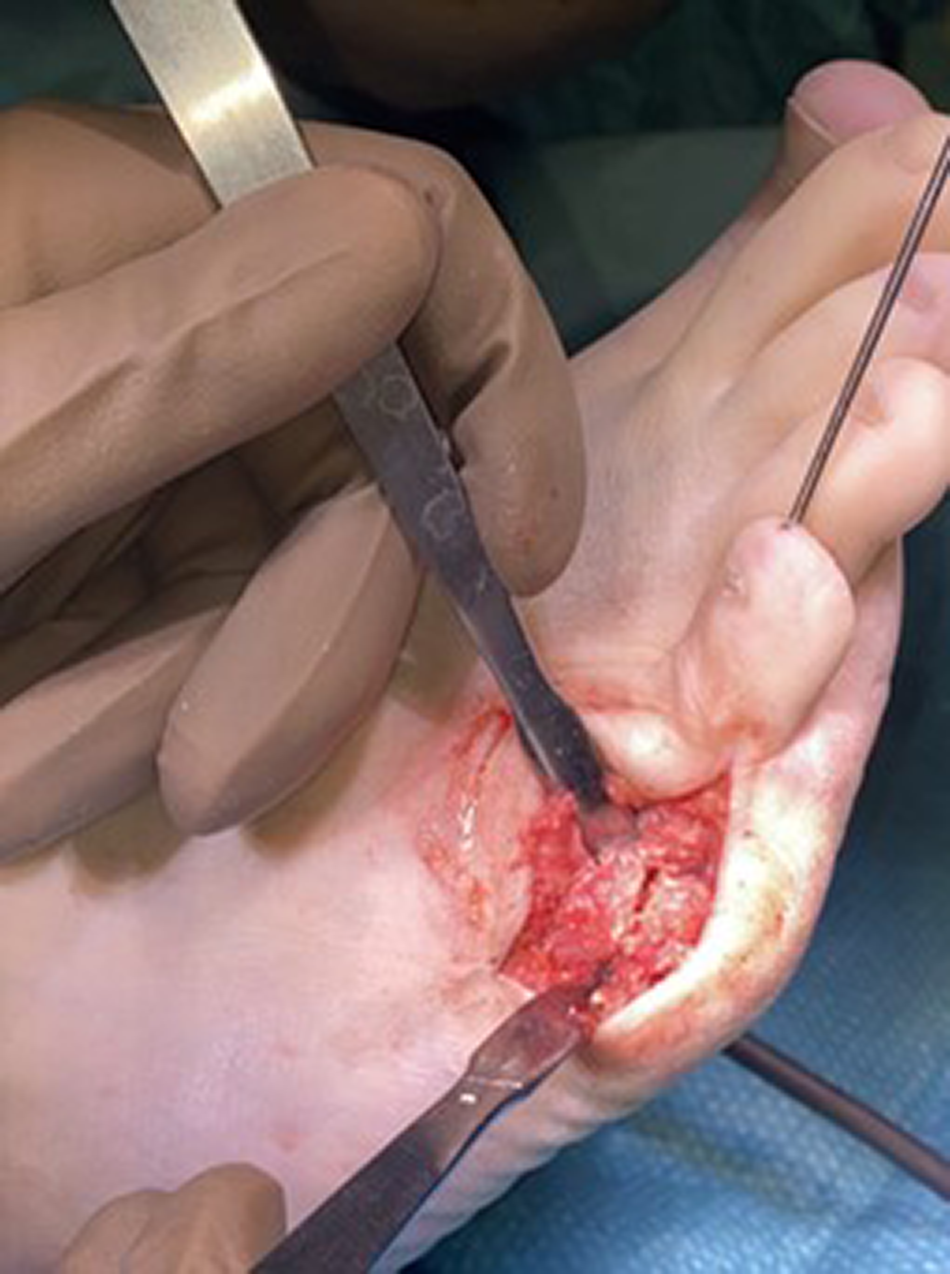
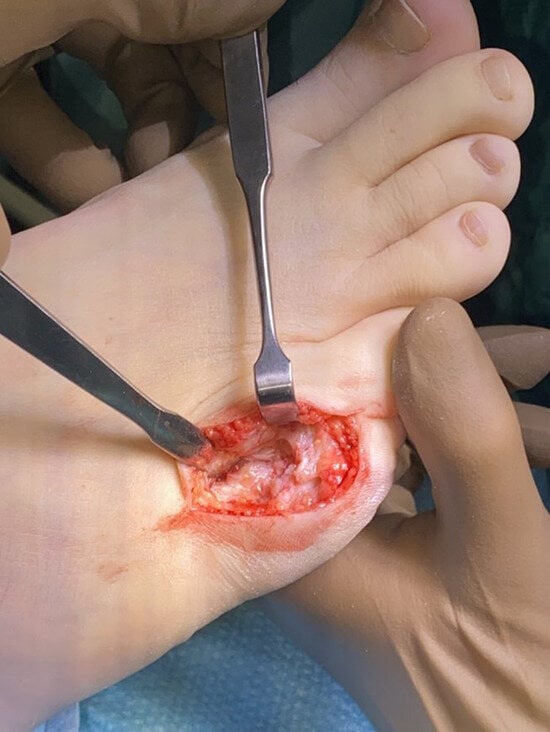
Figure 4.
Gauthier‐type dorsomedial wedge osteotomy.
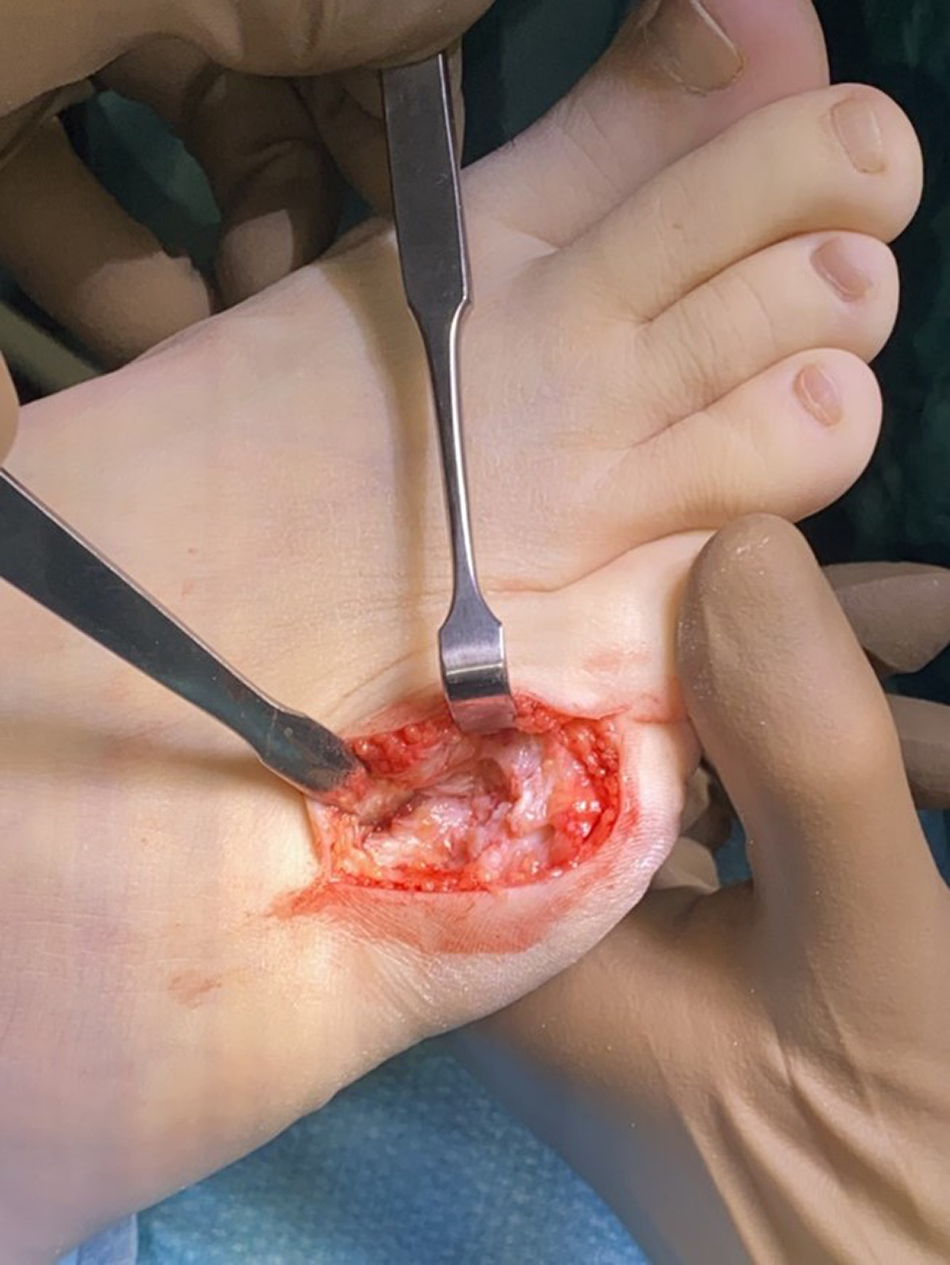
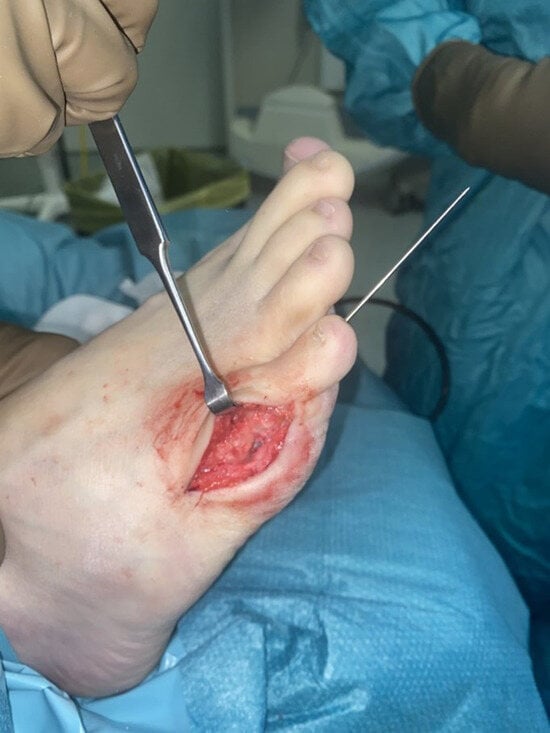
Figure 5.
Stabilized fifth metatarsophalangeal joint using Kirschner wire.
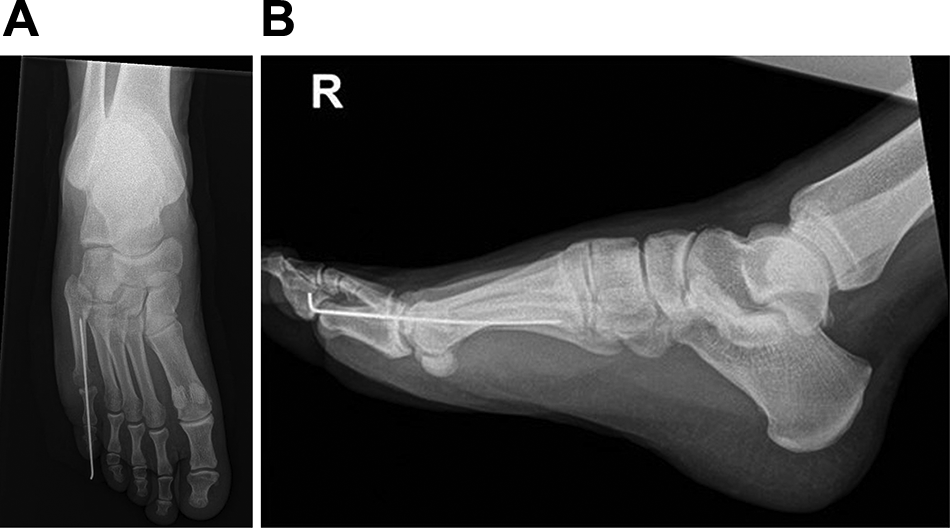
Radiographs were taken after surgery (Fig. 6). The patient was discharged the following day, able to bear weight on the heel while using a special postoperative shoe that prevented pressure on the forefoot. The first clinical follow‐up took place 2 weeks after surgery for stitch removal. One month after surgery, the patient underwent a follow-up radiograph to assess the position of the wire and evaluate any changes in the position of the metatarsal head that were not evident during the postoperative checkup.
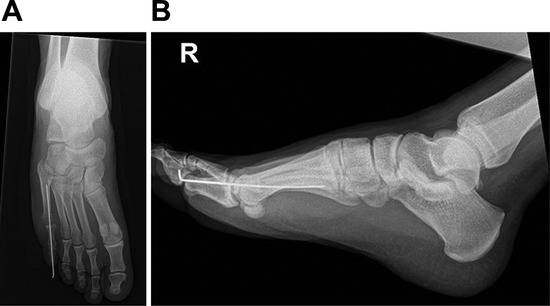
Figure 6.
Dorsoplantar (A) and lateral (B) postoperative radiographs.
Once the radiographs were reviewed, the Kirschner wire was removed without need for surgery or anesthesia. The patient was then able to walk in a comfortable shoe with a soft upper and a stiff sole without any recurrence. The patient was reexamined at 6 months and reported physical well-being and a complete return to his previously practiced sport.
Conclusions
In this case of a 30-year-old man with dorsal dislocation of the fifth MTPJ, subluxation was not possible by closed reduction because the chronic nature of the injury stiffened the capsule. Isolated fifth MTPJ dislocation is unusual, and the ability to adequately reduce and maintain the deformity without operative intervention is rare. In this particular case, Gauthier-type osteotomy proved to be an excellent alternative for reduction.
Financial Disclosure: None reported.
Conflict of Interest: None reported.
References
- Gentless J, Joshi P, Caselli M, et al: First and second metatarsophalangeal joint dislocation. A case report. JAPMA 82: 630, 1992.
- Boussouga M, Boukhriss J, Jaafar A, et al: Irreducible dorsal metatarsophalangeal joint dislocation of the fifth toe: a case report. J Foot Ankle Surg 49: 298.e17, 2010.
- Prakash J, Mehtani A. Postinfective skin contracture: a rare cause of fifth metatarsophalangeal joint subluxation. BMJ Case Rep 2014: bcr2014206176, 2014.
- Hynes D, D'Souza LG, Stephens M: Irreducible dislocation of the fifth metatarsophalangeal joint: a case report. Foot Ankle Int 15: 625, 1994.
- Murphy JL: Isolated dorsal dislocation of the second metatarsophalangeal joint. Foot Ankle 1: 30, 1980.
- De Palma L, Santucci A, Marinelli M: Traumatic dislocation of metatarsophalangeal joints: report of three different cases. Foot Ankle Surg 7: 229, 2001.
- Stephenson KA, Beck TL, Richardson EG: Plantar dislocation of the metatarsophalangeal joint: case report. Foot Ankle Int 15: 446, 1994.
- Biyani A, Sharma JC, Mathur NC: Plantar panmetatarsophalangeal dislocation—a hyperflexion injury. J Trauma 28: 868, 1988.
- Kamath S, Savur A, Pramod S: Irreducible traumatic dislocation of the fourth metatarsophalangeal joint - A case report. Injury Extra 36: 212, 2005.
- Rao JP, Banzon MT: Irreducible dislocation of the metatarsophalangeal joints of the foot. Clin Orthop Relat Res 145: 224, 1979.
- Nakano Y, Mogami A, Kaneko K, et al: Irreducible dorsal MTP joint dislocation in the second and third toes. Injury 34: 870, 2003.
- Hibino N, Amari R, Aoki M, et al: Irreducible dislocation of the fourth and fifth toes metatarsophalangeal joints: A case report and anatomical study. Foot Ankle Int 31: 339, 2010.
- Jahss MH: Traumatic dislocations of the first metatarsophalangeal joint. Foot Ankle 1: 15, 1980.
- DeLuca FN, Kenmore PI: Bilateral dorsal dislocations of the metatarsophalangeal joints of the great toes with a loose body in one of the metatarsophalangeal joints. J Trauma 15: 737, 1975.
- Müller M, Reik M, Sauerbier M, et al: A new bone-ligament-bone autograft from the plantar plates of the toes and its potential use in scapholunate reconstruction: An anatomical study. Ann Plast Surg 61: 463, 2008.
- Hatch DJ: Anatomy: Plantar plate. Clin Podiatr Med Surg 39: 411, 2022.
- Lo H, Liu PC, Shen PC, et al: Irreducible metatarsophalangeal joint dislocation of the lesser toes: A case report. JAPMA 103: 236, 2013.
- Clanton TO, Butler JE, Eggert A: Injuries to the metatarsophalangeal joints in athletes. Foot Ankle 7: 162, 1986.
- Gauthier G, Elbaz R: Freiberg’s infraction: A subchondral bone fatigue fracture. A new surgical treatment. Clin Orthop Relat Res 142: 93, 1979.
- Daoudi A, Abbassi N, Yahyaoui M, et al: Ostéotomie de Gauthier et fixation par ostéo-sutures dans le traitement de la maladie de Freiberg [Gauthier's osteotomy and fixation using osteosuture in the treatment of Freiberg's disease]. Pan Afr Med J 29: 33, 2018.
- Helix-Giordanino M, Randier E, Frey S, et al: Treatment of Freiberg’s disease by Gauthier’s dorsal cuneiform osteotomy: Retrospective study of 30 cases. Orthop Traumatol Surg Res 101(6 Suppl): S221, 2015.
© 2025 American Podiatric Medical Association