


Abstract
Background: Online health-related information has become increasingly popular. Social media platforms have great potential to support and change patients’ perspective. Plantar fasciitis (PF) is a common disease that is one of the most frequently researched subjects among foot problems. This study aimed to assess the content, quality, and reliability of YouTube videos related to PF and to evaluate whether they reflect current PF treatment guidelines. Methods: The descriptive cross-sectional study analyzed the most viewed 79 YouTube videos retrieved by using the keyword “plantar fasciitis.” The quality, reliability, and content of the videos were analyzed using Global Quality Scale (GQS), the modified DISCERN instrument, the Journal of the American Medical Association instrument, and a content scoring system by two independent physiotherapists. The analyzed videos were divided into three groups according to their GQS score as high, intermediate, and low quality. Also, video parameters were compared between the useful and misleading groups. Results: Of the 79 analyzed videos, 26 (32.9%) were of low quality, 29 (36.7%) were of intermediate quality, and 24 were of (30.3%) high quality. Most high-quality videos were uploaded by allied health professionals (39.4%). The view ratio and video power index scores were highest in patients. There were significant differences between useful and misleading videos in terms of DISCERN, GQS, and Journal of the American Medical Association scores (P = .000, P = .000, and P = .020, respectively). Almost all of the evaluated videos contain at least one treatment approach. Conclusions: This study demonstrates that the vast of majority of YouTube videos on PF are useful and comprehensive; also, our results may lead us to propose that the vast majority of the videos reflect current treatment guidelines. Video-based information about PF may provide valuable insight to patients, especially in the absence of direct access to health care by stakeholders.
Plantar fasciitis (PF) is the most common cause of heel pain in adults, and one in 10 people is diagnosed with PF in their lifetime [1,2]. Plantar fascia is a band of tissue that runs from the plantar medial tubercle of the calcaneus to the forefoot. The fascial band supports the medial longitudinal arch of the foot and provides force transfer during walking [3]. Although terminology refers to inflammation, it is considered a degenerative disease [4]. Instead of PF, the use of the term fasciosis or fasciopathy is increasing in the literature [5]. PF can be detected in athletes performing various types of sports, especially runners. The incidence is higher in active women aged between 40 and 60 years [6]. The disease is characterized by pain commonly located in the medial heel after a long rest period or nonweightbearing [7]. Heel pain is described by exacerbation of pain after the first step in the morning [8]. PF is often described as a chronic injury because of the ongoing symptoms that persist for more than 1 year [9]. PF affects the perceived quality of life of many people [10].
According to a systematic review, PF was the second most frequently published topic in the foot and ankle literature in many high-impact medicine journals between 2000 and 2017 [11]. Plantar fasciitis can be perceived as a significant and common health problem leading to approximately 1 million patient visits per year [2]. Seeking medical sources on the Internet is increasing [12]. In particlar, sharing videos on various platforms has become widespread to satisfy people’s information needs. YouTube is a well-known, international, and most popular online video platform reached by over 2 billion viewers every month [13,14]. Because the population can easily access YouTube for health-related videos, the number of medical information videos is increasing rapidly [15]. However, there is no sufficient control mechanism about the usefulness, content, accuracy, quality, and reliability of the videos uploaded on YouTube [16,17]. YouTube can be used to disseminate health-related information in different diseases such as breast cancer, rheumatoid arthritis, hallux valgus, and diabetic foot [18,19,20,21]. To the best of our knowledge, there is no study examining the quality and accuracy of PF videos on YouTube. Thus, our study aimed to evaluate the quality, reliability, and content of the videos related to PF on YouTube in the English language.
Methods
This study was exempted from ethics approval because all obtained data are freely available by the public. In this cross-sectional study, YouTube (www.youtube.com) was searched on January 15, 2022, for the keyword “plantar fasciitis” in English. The Google Chrome browser was used while searching videos. Before starting to search, all cookies were removed to avoid bias in the videos. The goal of our search was to determine the most popular videos that people prefer to watch. Studies show that a large percentage of users watch the videos on the first three pages of the search results [22]. Therefore videos were sorted by view, and the most viewed 100 videos were evaluated by two researchers on the same day. Inclusion criteria of the videos were as follows: 1) language used was English and 2) primary content was related to plantar fasciitis. The exclusion criteria were as follows: 1) use of language other than English, 2) music-only videos, 3) poor audio and video quality, and 4) duplicate videos [23,24].
All videos were analyzed in terms of their content, reliability, and quality. The following information related to the analyzed videos were as follows: duration, upload date, uploader’s name, view count, number of comments, number of likes, number of dislikes, like ratio, view ratio, video power index (VPI), Global Quality Score (GQS), DISCERN score, and Journal of the American Medical Association (JAMA) benchmark score. The reliability, content, and quality of information were extracted by two authors on the same day and the same time. Based on the source of content, the videos were categorized into six groups: 1) academic, 2) physician, 3) patient, 4) commercial, 5) health-related Web site, and 6) allied health professionals. The videos were divided into six groups according to the speaker of the video: 1) physical therapist, 2) physician, 3) massage therapist, 4) chiropractor, 5) patient, or 6) other (layperson, personal trainer, yoga therapist). We have separated the uploader source and speaker to not cause confusion in the video analysis and to conduct a clearer data analysis.
All selected videos were classified based on the following: useful information (group 1) (if the videos contained useful, scientifically correct, and accurate information about the topic, they were included in this group); and misleading information (group 2) (if the videos shared any inaccurate or scientifically unproven information according to currently available scientifc evidence, they were classifed as misleading). If the videos included partially misleading and partially useful information, it was accepted and classified as misleading [2,25,26,27].
The VPI was calculated using the formula as follows: (number of likes × 100)/(number of likes + dislikes) × (views per day)/100 [28,29]. A comprehensive checklist was prepared to record the video-related information by the authors according to the literature, and the videos were scored for general information and treatment recommendations of PF (Table 1).

Table 1.
Evaluation Tools for Global QualityReliability and Content Coverage of the YouTube Videos on Plantar Fasciitis
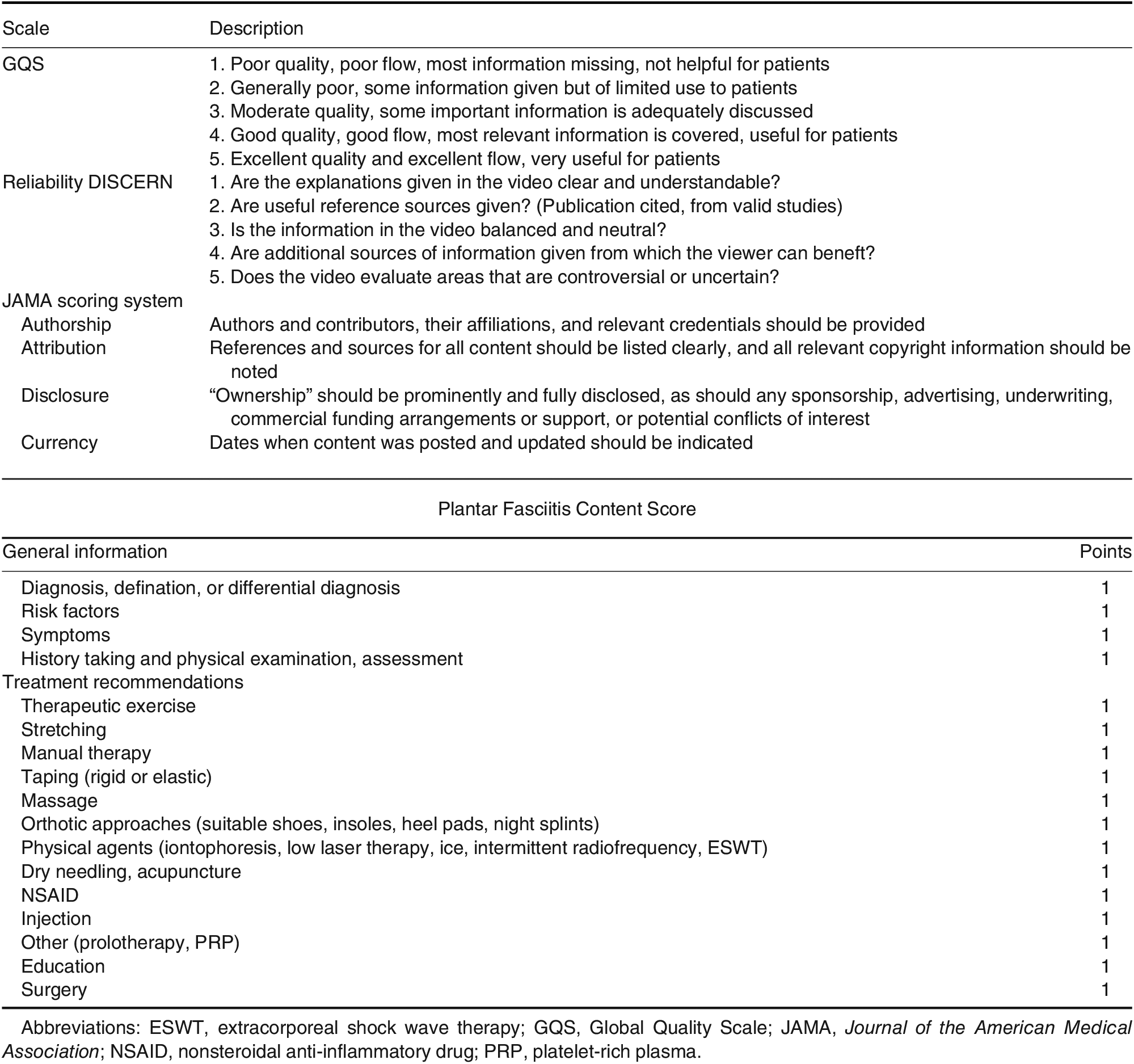
The reliability of the videos was evaluated with the modified DISCERN scale, which was adapted by Singh et al [19]. The modified DISCERN score contains yes/no responses for five questions. Each yes response gets 1 point, each no response gets 0 points, and the maximum score is 5. A higher score is an indication of better reliability [30] (Table 1).
The GQS was used to analyze the video quality on a five-point scale. The worst score is 1, which means the video is of poor quality, and most information is missing and not helpful for patients. The best score is 5, which means that the video is of excellent quality and flow and very useful for patients (Table 1) [28]. The videos rated with 4 or 5 were considered high-quality videos, those rated with 3 were considered moderate-quality videos, and those rated with 1 or 2 were considered low-quality videos.
JAMA benchmark was used to evaluate the quality of videos [31]. JAMA benchmark assesses online Web sites and consists of four individual items (authorship, attribution, currency, and disclosure); each item has 1 point. A maximum score of 4 indicates high reliability and a minimum score of 0 indicates poor quality [32] (Table 1).
Statistical Analysis
The analysis was performed using IBM SPSS Statistics for Windows, version 22.0 (IBM Corp, Armonk, New York). Data distribution for normality was assessed using a Shapiro-Wilks test. Descriptive data were reported as mean, standard deviation, and median. Cohen kappa (κ) coefficient was calculated to assess the degree of agreement between the two reviewers. For the comparison of categorical variables, the χ2 test was used. The Mann-Whitney U test was used for the comparison of two groups and the Kruskal-Wallis test was used for the comparison of more than two groups in terms of nonnormally distributed data. The Dunn-Bonferroni post hoc test was carried out for pairwise comparisons following the Kruskal-Wallis test to determine which groups were significantly different. A value of P < .05 was accepted as statistically significant.
Results
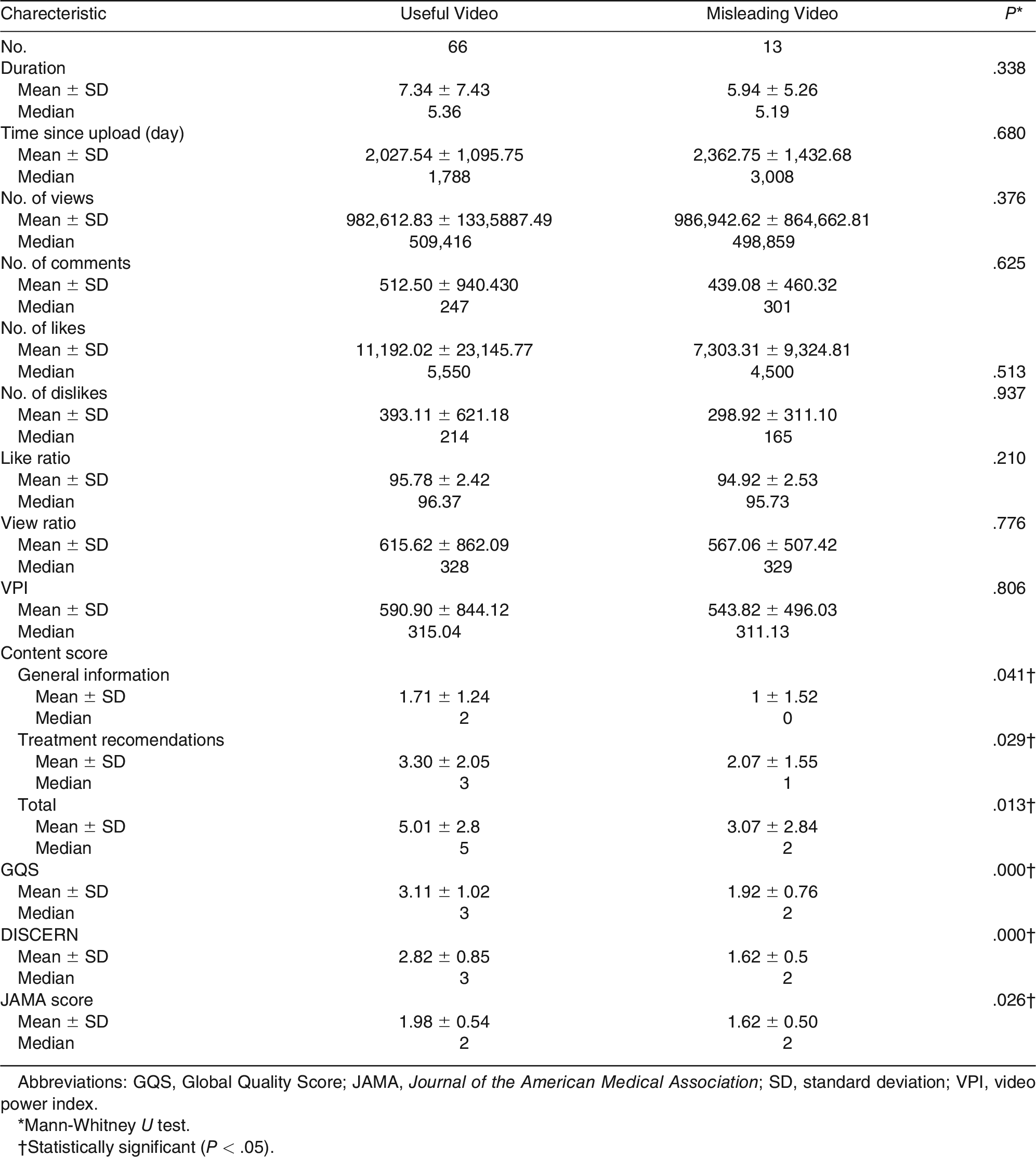
The top 100 most watched videos were screened, and 79 videos were included in the final analysis. The 21 videos that were off-topic or had audiovisual problems, duplicate content, and a language other than English were eliminated. The videos were divided into two groups that contain misleading information and useful information. Descriptive data of groups are presented in Table 2. There were significant differences between the groups in terms of DISCERN, GQS, and JAMA benchmark scores (P = .000, P = .000, and P = .026, respectively). In addition, general information, treatment recommendation, and total content scores of the videos in the useful information group were significantly higher than in the misleading information group (P < .05).
Table 2.
General of Features of Videos
According to the GQS, of the 79 videos, 26 (32.9%) were of poor quality, 29 (36.7%) were of moderate quality, and 24 (30.3%) were of high quality. The high-quality videos were mostly uploaded by allied health professionals (39.4%), whereas the low-quality videos were uploaded by commercial entities (56.3%). No significant differences were found in terms of the quality of the videos according to the upload sources (P > .214) (Fig. 1 and Table 3).
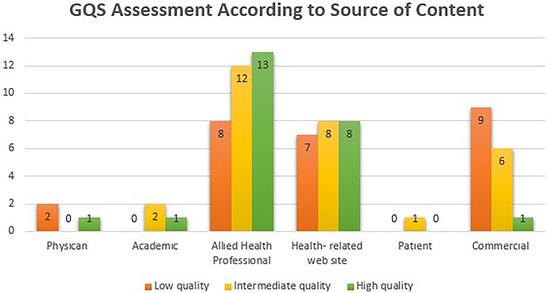
Figure 1.
Global Quality Scale assessment according to source of content.
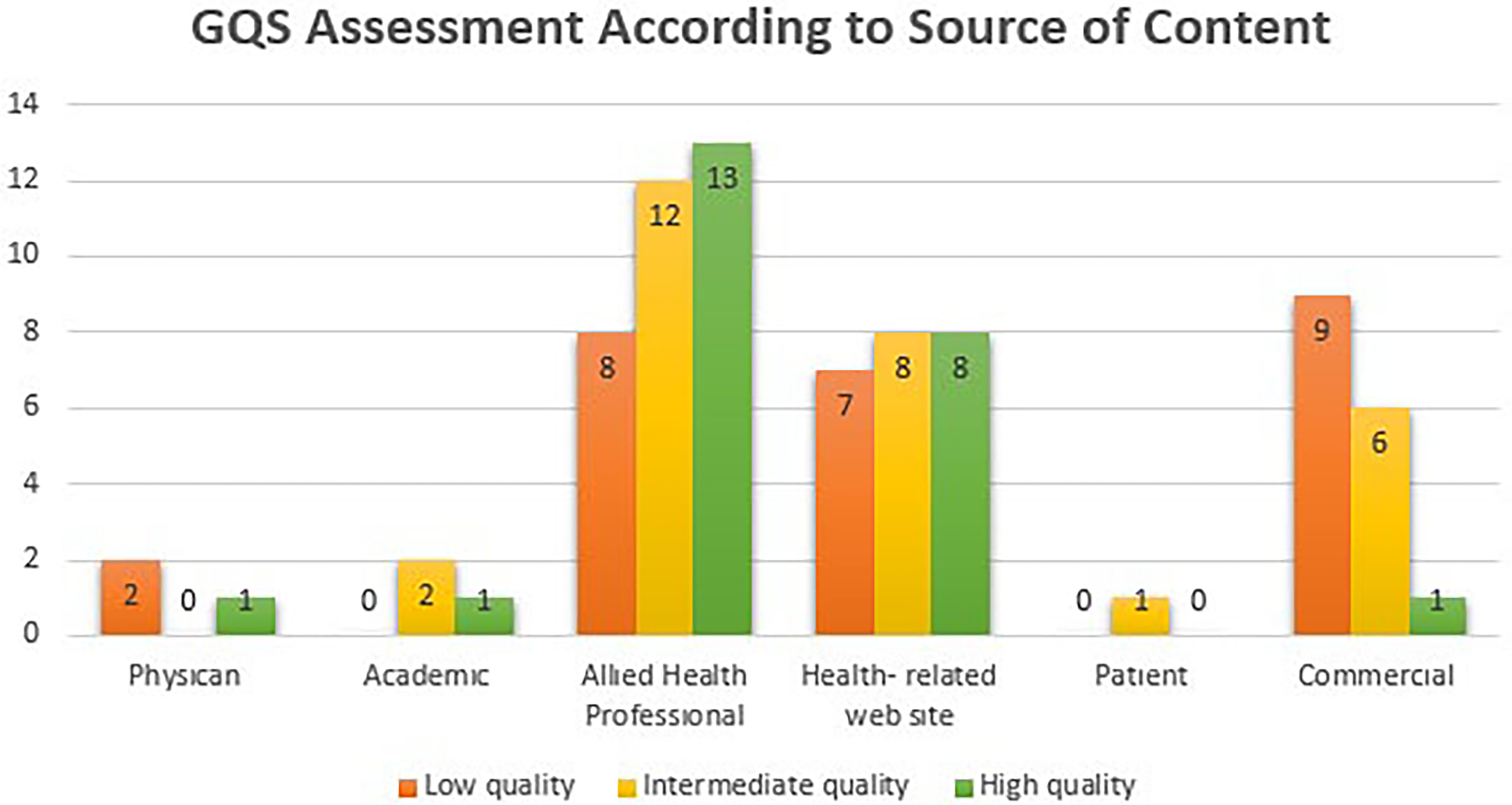
Table 3.
Global Quality Scale Assessment According to the Source of Content

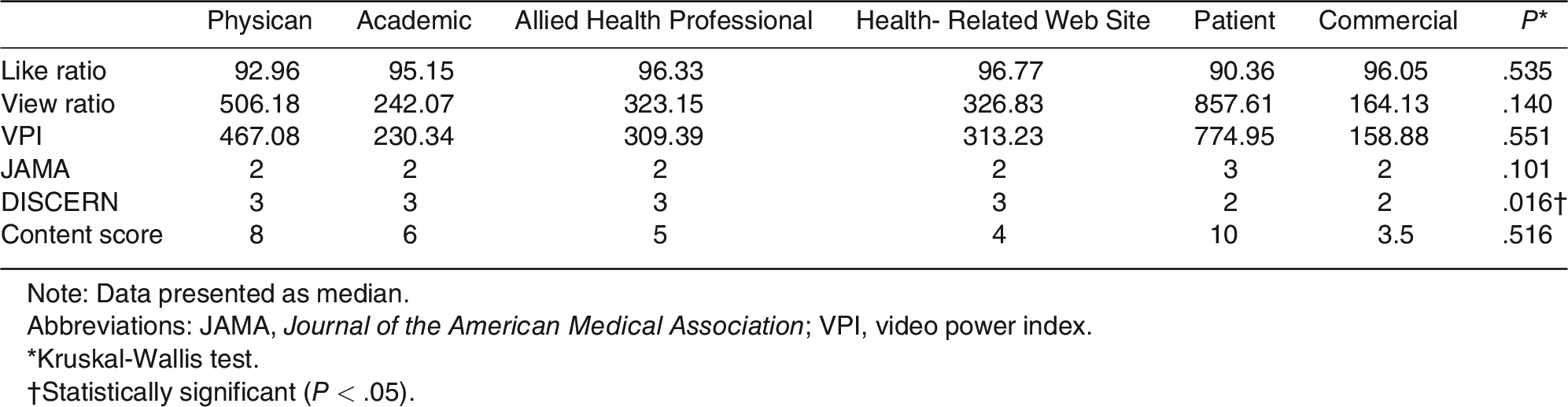
A significant difference was found for the DISCERN score between the sources of content (P < .05); however, VPI, like ratio, view ratio, JAMA, and content scores, failed to show a statistically significant difference (P > .05) (Table 4). DISCERN scores of the commercial videos were lower than the allied health professionals (P = .010) and health-related Web sites (P = .020).
Table 4.
Video Quality Assessments According to the Source of the Video
When the videos were analyzed according to the speaker, nearly half of the videos were presented by physical therapists (44.3%). Chiropractors made up 16%; physicians, 8%; massage therapists, 5%; patients, 3%; and 24% were presented by “others.” According to the treatment recommendations, the most handled treatment approach was stretching (65.8%), followed by massage (44.30%), orthotic approaches (40.5%), and physical agents (30.37%). The least used treatment approach in the videos was dry needling (Fig. 2). Only three of the 79 videos reviewed did not have treatment recommendations. Finally, κ was calculated to assess the interobserver reliability and found to be 0.83, 0.84, and 0.87 for GQS, DISCERN, and JAMA, respectively (Table 2, Table 3, Table 4).
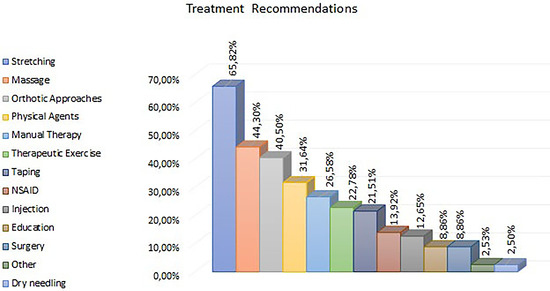
Figure 2.
Treatment recommendations.
Discussion
The present study evaluated the quality, reliability, and content of YouTube videos for patients with PF according to the information source. Our results showed that the proportion of the videos was similar in terms of their quality. Also, nearly half of the analyzed videos were uploaded by allied health professionals, which showed higher quality compared with other sources. It was determined that the groups that uploaded the fewest videos were patients, physicians, and academicians.
YouTube is a popular social media platform where patients access right or wrong information about their diseases. Also, they may share their experiences to help other people who suffer from the same condition. Patients tend to get information from online platforms. Some researchers have reported that patients believe that the reliability of information obtained from online sources is equal to or even greater than that provided by physicians [33]. The quality of online information varies. General information and treatment options about diseases disseminated from different health-care sources may lead to misdirection of patients and deterioration of the relationship between clinician and patient. In contrast, accurate and valid information enables patients to make the right decisions about the disease process and to reduce their anxiety levels [34,35]. Thus, it is important to evaluate the reliability, accuracy, and quality of the content of the information provided through the YouTube platform.
When we examine the literature, different classifications are used in the analysis of YouTube videos. Similar to the study conducted by Elangovan et al [27], we categorized the analyzed videos into two groups as useful and misleading according to their content. Our results showed that the useful videos had higher GQS, DISCERN, and JAMA benchmark scores compared to misleading videos, which is in line with the results of the study by Singh et al [36].
Also, the number of comments, number of likes, and view ratio of the useful videos were higher and the durations were longer than misleading videos. However, the number of views was higher in the misleading videos. The reason for this may be that the upload dates of the misleading videos are older; thus, they may reach more people over a longer period.
People can leave comments freely and explain their feelings as like or dislike on the YouTube platform. Useful videos had a significantly higher number of likes in many studies [37]. In our study, the number of likes of the useful videos was higher than misleading videos; however, the number of dislikes of the useful videos was higher than misleading videos. We think that people find misleading videos more entertaining and interesting. In constrast, the reason for the high dislike numbers may be related to the duration of the useful videos, which were longer than the misleading videos.
Examination of the most-watched YouTube videos revealed that the rates of low-, intermediate-, and high-quality videos were very close to each other. PF is a common abnormality with a high incidence among foot problems, and PF accounts for 15% of foot disease; therefore [38], demand for PF videos is expected to be high. However, very few reports have been published investigating the quality and reliability of YouTube videos about foot problems. When our study was compared with the studies on foot problems, the number of views of PF videos was found to be higher than other studies [21,39,40]. From this point of view, 67% of the uploaded videos in our study are of medium and high quality, which enables patients to be informed appropriately by these videos.
In our study, a high proportion of the videos were uploaded by allied health professionals, and 75.8% of these videos were of medium and high quality. Commercial and physician videos were found to be of low quality. The literature shows that the source of the upload was important; academic and physician videos had relatively higher quality [41]. In our study, the ratio of low-quality physician videos is greater. The reason for this may be that physicians uploaded only three videos. In addition, although the number of physician videos is low, the view ratio, VPI, and total content scores were higher compared to other videos, except the patient videos.
When the analysis results of the videos were examined, it was seen that the JAMA score of useful and misleading videos was below 2. Also, when the videos were assessed according to the source of content, no differences were detected between the videos in terms of JAMA score. JAMA score was found lower than in the literature [42]. We think that uploading videos with higher scores in terms of JAMA scores and examining the videos in this respect is necessary for future videos.
Treatment steps of PF include conservative and nonconservative treatment approaches, and PF is a foot problem in which different treatment options are used. A comprehensive checklist including these treatment approaches has been prepared by us according to the literature [25]. Calf and plantar fascia stretching (65.82%) are the most included methods in the analyzed videos. Moderate evidence has been shown that the effect of plantar fascia or calf stretching has a great effect in the treatment of plantar fascia according to the literature [43]. In this respect, the video content is in parallel with the literature.
In the literature, intraclass correlation coefficient values or κ scores are used for interobserver reliability. We preferred to use the κ score in our study. Kidy et al [44] reported the κ value as 0.74 for DISCERN in their similar study. Gaş et al [45] reported an average κ score of 0.84 for overall interobserver agreement. The interobserver reliability assessed by the κ score for all three (ie, GQS, DISCERN, and JAMA) scorings in the present study was similar to the literature.
There is a need to evaluate the quality and reliability of YouTube videos with more objective methods by establishing multidisciplinary teamworks. Also, it may be a better choice to create videos including more accurate information. Secondary problems may occur because of misdirecting patients, especially with the videos uploaded in the medical field.
Limitations
The present study has several limitations. The videos were searched only in the English language; the instruments were subjective and may be infuenced by the researchers’ perspectives. Our study was a cross-sectional study that evaluated YouTube videos at a certain moment. Because of the nature of YouTube, new videos are currently uploading, and video interaction parameters can change rapidly.
Conclusions
This is the first study to analyze the reliability, quality, and content of PF videos uploaded on YouTube. The present study demonstrated that PF YouTube videos present useful and comprehensive information for patients. More than half of the videos were moderate and high quality. The number of physican and academic videos is very low in contrast to the high number of videos uploaded by health-related professionals and health-related Web sites. These findings may indicate that PF videos in the English language appear to be sufficient to increase awareness and knowledge of the disease and may provide supplementary information to patients.
Financial Disclosure
None reported.
Conflict of Interest
None reported.
References
- Riddle DL, Scahappert SM: Volume of ambulatory care visits and patterns of care for patients diagnosed with plantar fasciitis: a national study of medical doctors. Foot Ankle Int 25: 303, 2004.
- Trojian T, Tucker AK: Plantar fasciitis. Am Fam Physician 99: 744, 2019.
- Motley T: Plantar fasciitis/fasciosis. Clin Podiatr Med Surg 38: 193, 2021.
- Wearing SC, Smeathers JE, Urry SR, et al: The pathomechanics of plantar fasciitis. Sports Med 36: 585, 2006.
- Ostermann S, Olesen JL, Holden S, et al: Stretching and relaxing the plantar fascia may change plantar fascia thickness but not pressure pain thresholds: a cross-sectional study of patients with plantar fasciopathy. BMC Musculoskelet Disord 21: 804, 2020.
- Petraglia F, Ramazzina I, Costantino C: Plantar fasciitis in athletes: diagnostic and treatment strategies. A systematic review. Muscles Ligaments Tendons J 7: 107, 2017.
- Lareau CR, Sawyer GA, Wang JH: Plantar and medial heel pain: diagnosis and management. J Am Acad Orthop Surg 22: 372, 2014.
- Latt LD, Jaffe DE, Tang Y, et al: Evaluation and treatment of chronic plantar fasciitis. Foot Ankle Orthop 5: 2473011419896763, 2020.
- Klein SE, Dale AM, Hayes MH, et al: Clinical presentation and self-reported patterns of pain and function in patients with plantar heel pain. Foot Ankle Int 33: 693, 2012.
- Lai W-F, Yoon CH, Chiang MT, et al: The effectiveness of dextrose prolotherapy in plantar fasciitis: a systemic review and meta-analysis. Medicine (Baltimore) 100: e28216, 2021.
- Karhade AV, Kwon JY: Trends in foot and ankle studies published in high-impact general medical journals: a systematic review. J Foot Ankle Surg 58: 540, 2019.
- Li HO-Y, Bailey A, Huynh D, et al: YouTube as a source of information on COVID-19: a pandemic of misinformation? BMJ Glob Health 5: e002604, 2020.
- Solsman JE: YouTube crosses 2 billion viewers a month. Available at: https://www.cnet.com/news/youtube-crosses-2-billion-viewers-a-month/. Accessed May 2, 2019.
- Karlsen R, Borrás Morell JE, Fernández Luque L, et al: A domain-based approach for retrieving trustworthy health videos from YouTube. Study Health Technol Inform 192: 1008, 2013.
- Raikos A, Waidyasekara P: How useful is YouTube in learning heart anatomy? Anat Sci Educ 7: 12, 2014.
- Koller U, Waldstein W, Schatz K-D, et al: YouTube provides irrelevant information for the diagnosis and treatment of hip arthritis. Int Orthop 40: 1995, 2016.
- Aydin MF, Aydin MA: Quality and reliability of information available on YouTube and Google pertaining gastroesophageal reflux disease. Int J Med Inform 137: 104107, 2020.
- Ayoub G, Chalhoub E, Sleilaty G, et al: YouTube as a source of information on breast cancer in the Arab world. Support Care Cancer 29: 8009, 2021.
- Singh AG, Singh S, Singh PP: YouTube for information on rheumatoid arthritis—a wakeup call? J Rheumatol 39: 899, 2012.
- Uzun M, Cingoz T, Duran ME, et al: The videos on YouTube related to hallux valgus surgery have insufficient information. Foot Ankle Surg 28: 414, 2022.
- Abedin T, Ahmed S, Al Mamun M, et al: YouTube as a source of useful information on diabetes foot care. Diabetes Res Clin Pract 110: e1, 2015.
- Rittberg R, Dissanayake T, Katz SJ: A qualitative analysis of methotrexate self-injection education videos on YouTube. Clin Rheumatol 35: 1329, 2016.
- Chan C, Sounderajah V, Daniels E, et al: The reliability and quality of YouTube videos as a source of public health information regarding COVID-19 vaccination: cross-sectional study. JMIR Public Health Surveill 7: e29942, 2021.
- Lee K-N, Joo YJ, Choi SY, et al: Content analysis and quality evaluation of cesarean delivery-related videos on YouTube: cross-sectional study. J Med Internet Res 23: e24994, 2021.
- Martin RL, Davenport TE, Reischl SF, et al: Heel pain-plantar fasciitis: revision 2014. J Orthop Sports Phys Ther 44: A1, 2014.
- Çintesun FNİ, Çintesun E, Seçilmiş Ö. YouTube as a source of information on gonadotropin self-injections. Eur J Obstet Gynecol Reprod Biol 264: 135, 2021.
- Elangovan S, Kwan YH, Fong W: The usefulness and validity of English-language videos on YouTube as an educational resource for spondyloarthritis. Clin Rheumatol 40: 1567, 2021.
- Erdem MN, Karaca S: Evaluating the accuracy and quality of the information in kyphosis videos shared on YouTube. Spine (Phila Pa 1976) 43: E1334, 2018.
- Oztermeli A, Karahan N: Evaluation of YouTube video content about developmental dysplasia of the hip. Cureus 12: e9557, 2020.
- Onder ME, Onder CE, Zengin O: Quality of English-language videos available on YouTube as a source of information on osteoporosis. Arch Osteoporos 17: 19, 2022.
- Aydin MA, Akyol H: Quality of information available on YouTube videos pertaining to thyroid cancer. J Cancer Educ 35: 599, 2020.
- Silberg WM, Lundberg GD, Musacchio RA: Assessing, controlling, and assuring the quality of medical information on the Internet: caveant lector et viewor—let the reader and viewer beware. JAMA 277: 1244, 1997.
- Kwakernaak J, Eekhof JA, De Waal MW, et al: Patients’ use of the Internet to find reliable medical information about minor ailments: vignette-based experimental study. J Med Internet Res 21: e12278, 2019.
- Longtin Y, Sax H, Leape LL, et al: Patient participation: current knowledge and applicability to patient safety. Mayo Clin Proc 85: 53, 2010.
- Ketelaars PJ, Buskes M, Bosgraaf R, et al: The effect of video information on anxiety levels in women attending colposcopy: a randomized controlled trial. Acta Oncol 56: 1728, 2017.
- Singh AG, Singh S, Singh PS: YouTube for information on rheumatoid arthritis—a wakeup call. J Rheumatol 39: 899, 2012.
- Şahin A, Şahin M, Türkcü FM: YouTube as a source of information in retinopathy of prematurity. Ir J Med Sci 188: 613, 2019.
- Agyekum EK, Ma K: Heel pain: a systematic review. Chin J Traumatol 18: 164, 2015.
- Uzun M, Cingoz T, Duran ME, et al: The videos on YouTube related to hallux valgus surgery have insufficient information. Foot Ankle Surg 28: 414, 2022.
- Smith PE, McGuire J, Falci M, et al: Analysis of YouTube as a source of information for diabetic foot care. JAPMA 109: 122, 2019.
- Kocyigit BF, Akaltun MS: Does YouTube provide high quality information? Assessment of secukinumab videos. Rheumatol Int 39: 1263, 2019.
- Mert A, Bozgeyik B: Quality and content analysis of carpal tunnel videos on YouTube. Indian J Orthop 56: 73, 2022.
- Siriphorn A, Eksakulkla S: Calf stretching and plantar fascia-specific stretching for plantar fasciitis: a systematic review and meta-analysis. J Bodyw Mov Ther 24: 222, 2020.
- Kidy S, McGoldrick DM, Stockton P: YouTube as a source of information on extraction of third molars. Oral Maxillofac Surg 25: 519, 2021.
- Gaş S, Zincir ÖÖ, Bozkurt AP: Are YouTube videos useful for patients interested in botulinum toxin for bruxism? J Oral Maxillofac Surg 77: 1776, 2019.
© 2023 American Podiatric Medical Association