


Abstract
Although sprains of the hallux metatarsophalangeal (MTP) joint ligaments occur in barefooted martial arts athletes, few studies discuss the surgical treatments for lateral collateral ligament damage. We report herein a case of lateral collateral ligament repair for chronic hallux MTP joint instability. A 21-year-old male collegiate sumo wrestler injured his left hallux by snagging it on a sumo straw bale at 14 years of age. After entering university (4 years after the injury), he could no longer put weight on his foot at the left hallux; his athletic performance deteriorated, and he was referred to our department by his doctor. He had instability in the MTP joint of the left hallux, and magnetic resonance imaging revealed a tear in the attachment of the lateral collateral ligament to the metatarsal bone. Conservative treatment, such as taping, did not improve the symptoms; thus, surgery was performed, which consisted of passing a strong suture attached to the capsular ligament through a burr hole made in the metatarsal bone and fixing it to the burr-hole wall using an anchor. Postoperatively, the patient’s joint instability improved, and he returned to competitive wrestling 4 months after surgery. He was able to put weight on his left hallux, and his athletic performance improved. The follow-up period after surgery was 2 years. In competitive sumo wrestling, hallux weakness and joint instability lead to a significant reduction in performance. Thus, ligament repair is an effective treatment for hallux MTP joint instability that cannot be treated by conservative means.
Metatarsophalangeal (MTP) joint ligament sprain is common among athletes who compete barefoot in martial arts or among those who play sports wearing spiked shoes for grassy surfaces[1]; however, there are few reports of surgical treatment for injuries of the lateral collateral ligament. We present herein the case of a collegiate sumo wrestler who underwent lateral collateral ligament repair for chronic hallux MTP joint instability. This study makes a significant contribution to the literature because we were able to repair the collateral ligament using a combination of knotless and soft anchors; we achieved a good outcome following the failure of conservative treatment.
Case Report
The patient was a 21-year-old man, 178 cm tall and weighing 115 kg. His chief complaint was lateral instability of the left hallux. He had an unremarkable medical history, and had practiced sumo wrestling since the age of 7.
The patient injured his left hallux by snagging his toe on a straw bale at 14 years of age. He was diagnosed with a sprain in the left hallux MTP joint ligament and varus instability. However, the injury had no immediate detrimental effect on the patient’s sumo wrestling. After entering university, the left hallux was unable to support his weight, leading to a deterioration in athletic performance, and the patient was referred to our department after an examination.
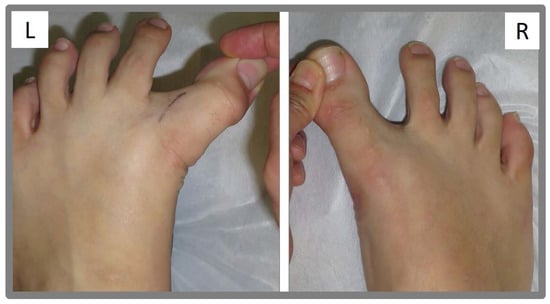
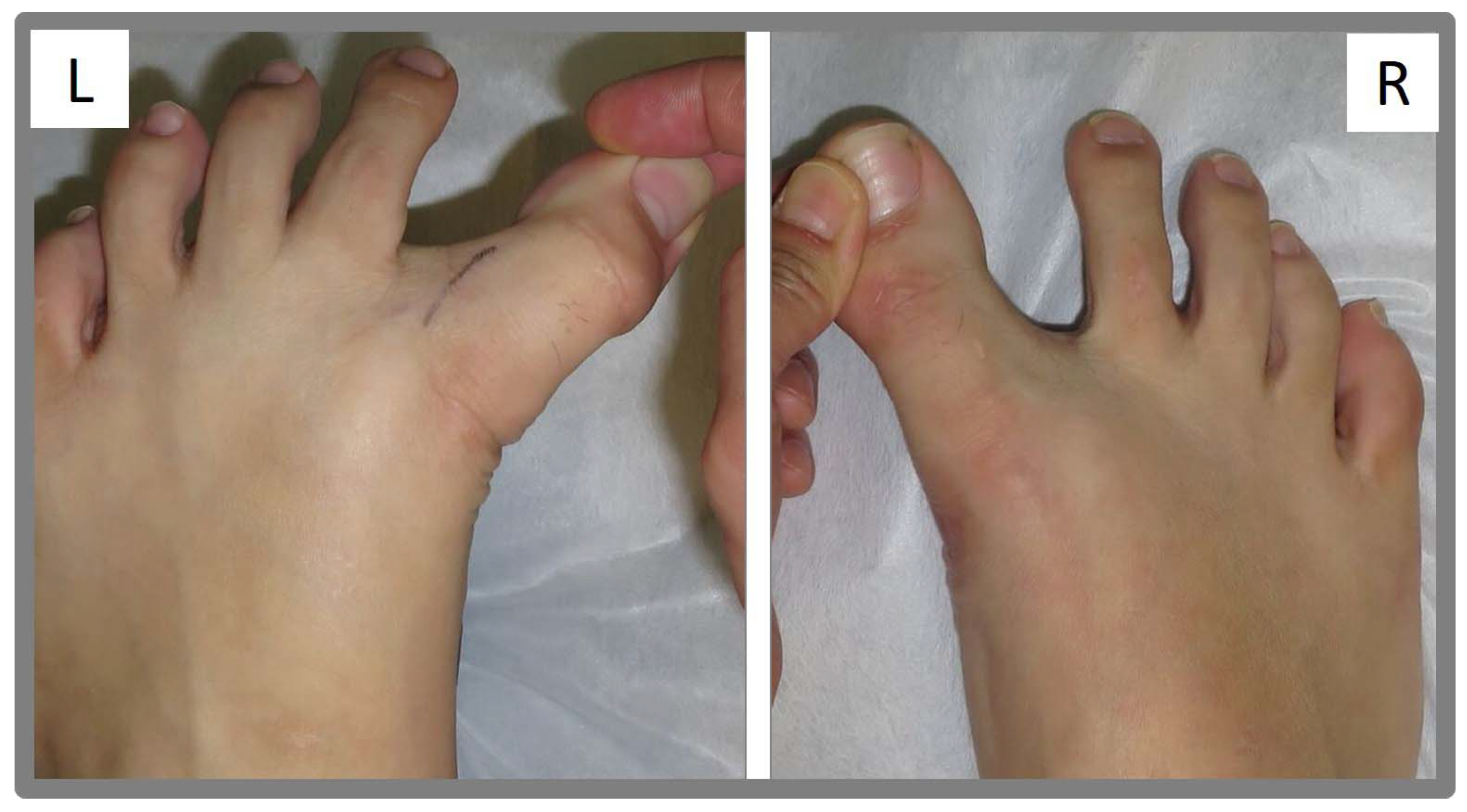
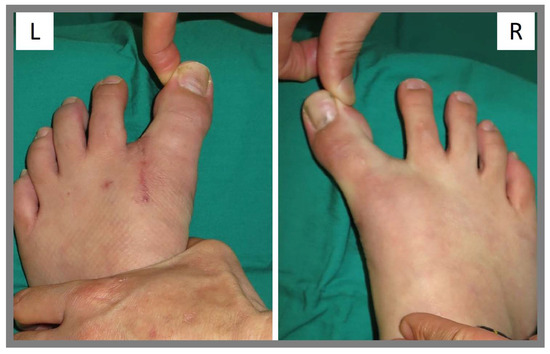
At the initial visit, the patient presented with pain and varus instability on the lateral side of the left hallux joint (Figure 1). There was no limitation of the range of motion in the MTP-interphalangeal (IP) joints (Table 1). The American Orthopedic Foot and Ankle Society hallux MTP-IP score was 82 of 100 (Table 2).
Figure 1.
Preoperative varus instability of the left hallux metatarsophalangeal joint.
Table 1.
Range of motion in the metatarsophalangeal and interphalangeal joints.
Table 2.
American Orthopedic Foot and Ankle Society Hallux Metatarsophalangeal-Interphalangeal score.
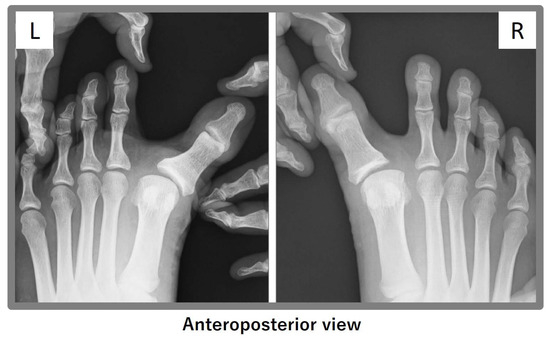
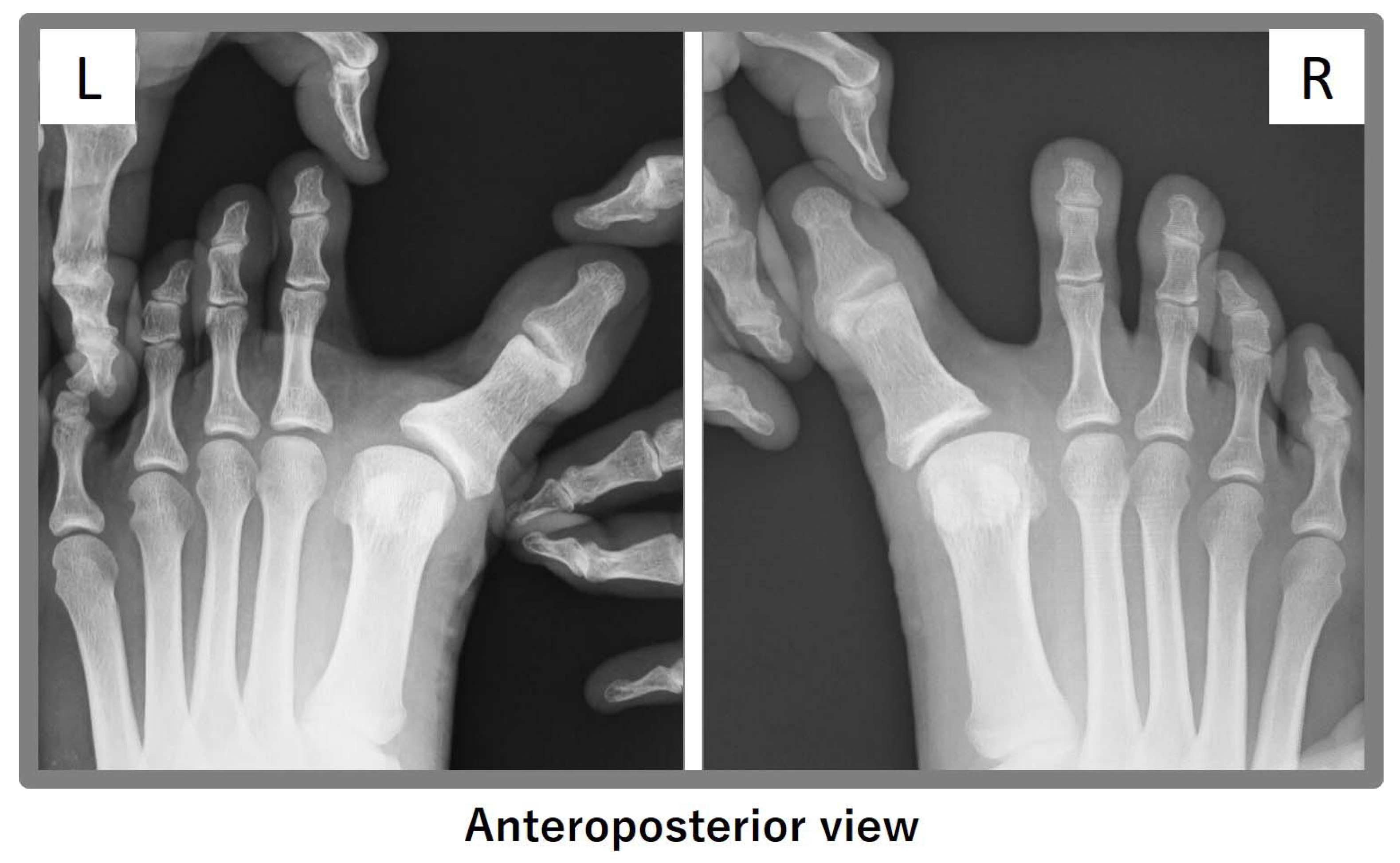
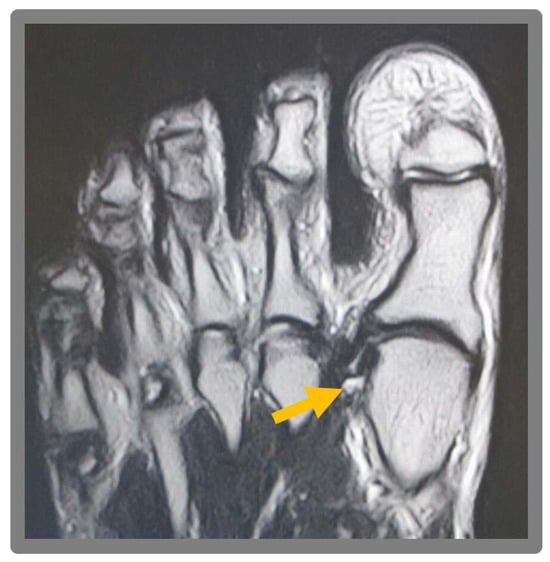
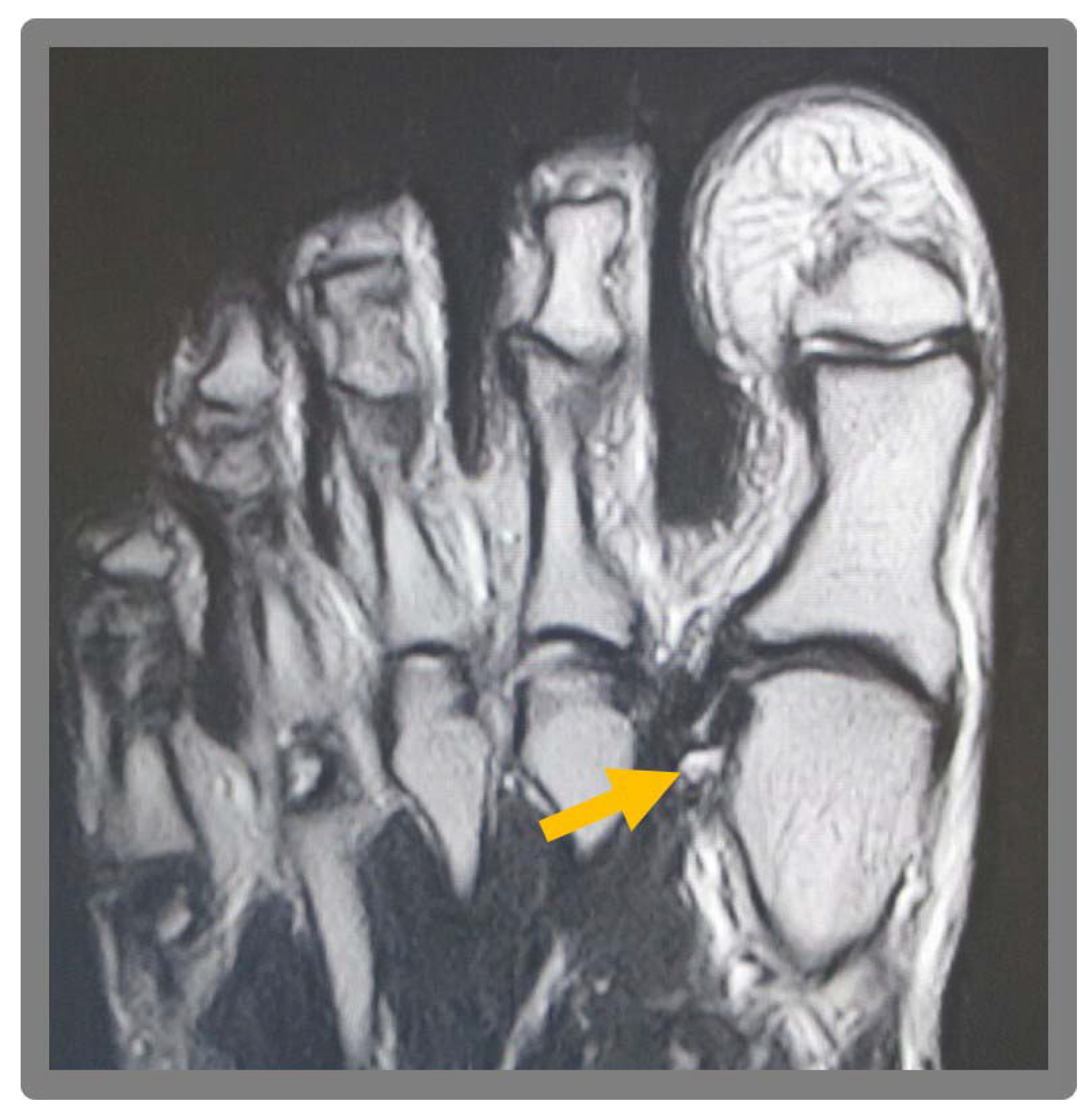
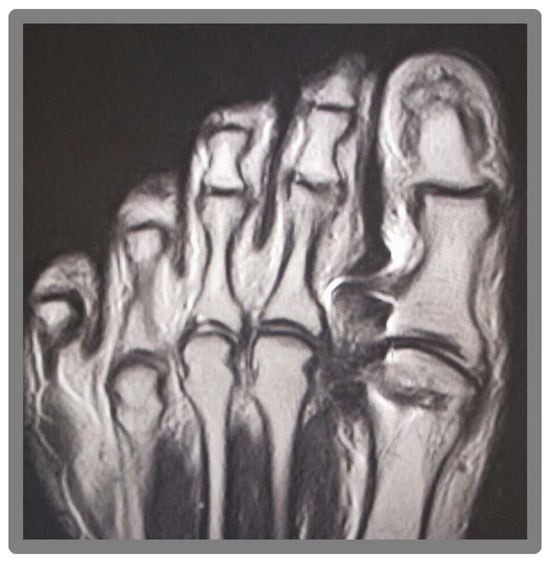
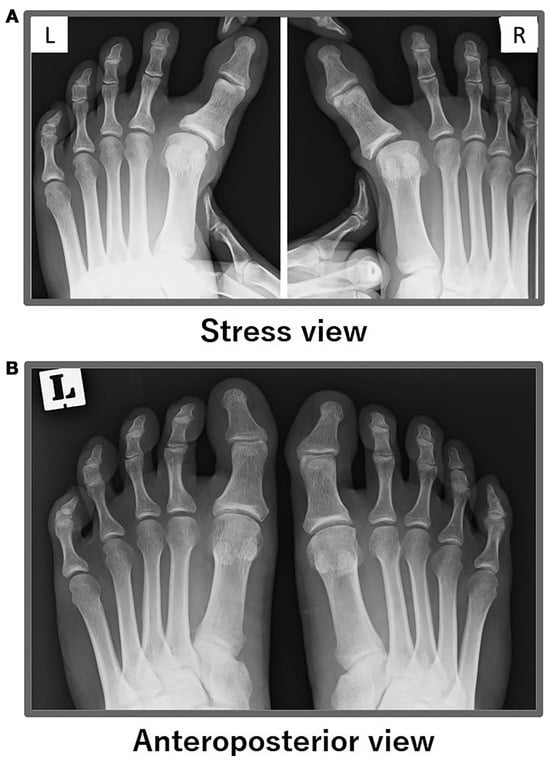
A stress-view radiograph revealed widening of the lateral joint space (Figure 2). Magnetic resonance imaging findings were suggestive of a tear in the attachment of the lateral collateral ligament to the metatarsal bone (Figure 3). The condition was diagnosed as a chronic lateral collateral ligament injury of the left MTP joint. Symptoms did not improve with conservative treatments such as taping; thus, the decision was made to proceed with surgical treatment.
Figure 2.
Preoperative stress view radiographs of bilateral hallux metatarsophalangeal joints.
Figure 3.
Preoperative coronal view magnetic resonance imaging scan. The arrow indicates the ruptured lateral collateral ligament.
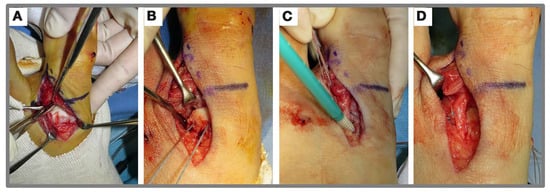
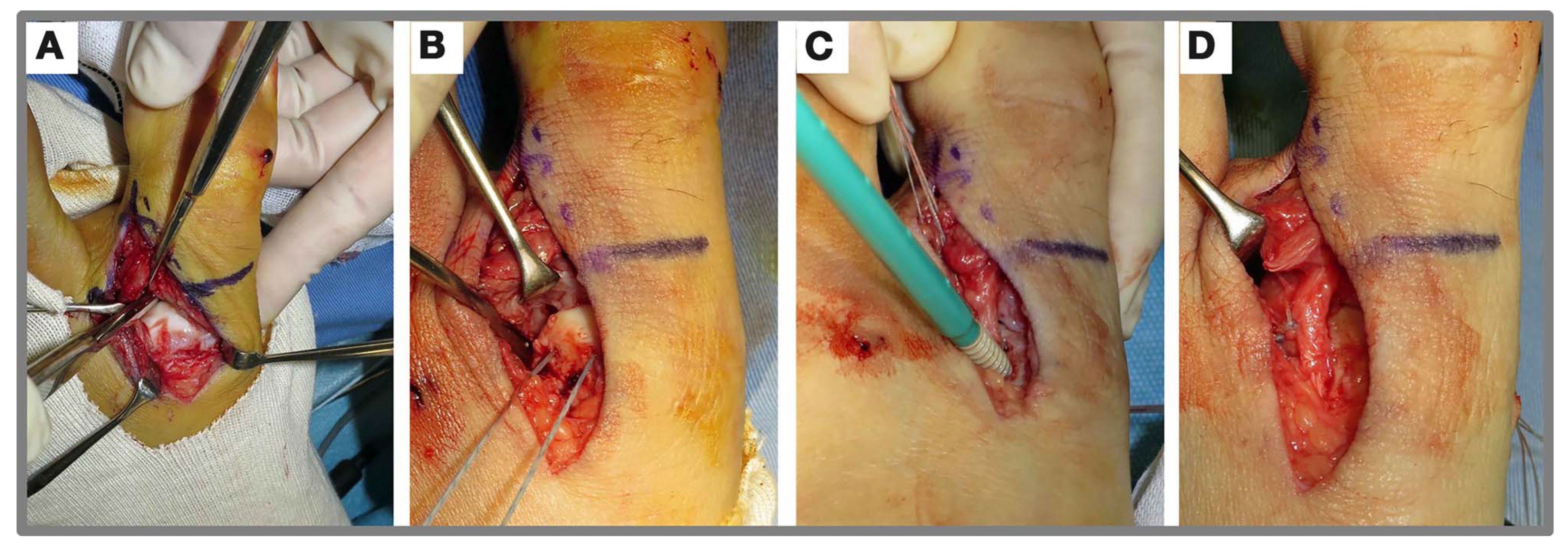
Repair of the hallux MTP joint ligament was performed under general anesthesia with the patient in the supine position. An air tourniquet was not used. The repair procedure was as follows: The lateral collateral ligament had detached from the metatarsal bone (Figure 4A). We rejuvenated the plantar portion of the metatarsal using an orthopedic air drill burr, inserted a 1.0-mm suture anchor at both the distal dorsal side and plantar side, and sutured them to the proximal part of the collateral ligament. A No. 2 strong loop suture was placed in the medial part of the collateral ligament, and a burr hole with a diameter of 3.2 mm was created in the neck of the metatarsal bone. Next, with the No. 2 strong loop suture threaded through the burr hole and traction on the medial side, we inserted the 4.75-mm interference screw and fixed it in place (Figure 4C). With the collateral ligament set in place, we sutured the anchor thread from the 1.0-mm suture anchor to the proximal part of the ligament (Figure 4D).
Figure 4.
Operative findings. A, Avulsed lateral collateral ligament from the metatarsal side. B, JuggerKnot (Zimmer Biomet, Warsaw, Indiana) soft anchors inserted into the plantar of the metatarsal bone. C, SwiveLock (Arthrex, Naples, Florida) anchor inserted into the bone tunnel of the metatarsal bone. D, Stitches from JuggerKnot sutured to the proximal site of the collateral ligament.
As postoperative therapy, the hallux and second toe were externally fixed together using a lowtemperature thermoplastic splint, and heel walking was permitted from the day after surgery. Active exercise for toe movement was permitted from 2 weeks after surgery, and weightbearing walking was permitted from 6 weeks after surgery.
The times to resumption of regular activities and to bone-tendon healing were 6 weeks and 3 months, respectively. The patient restarted sumo wrestling practice 3 months after surgery and entered competitive bouts 4 months after surgery.
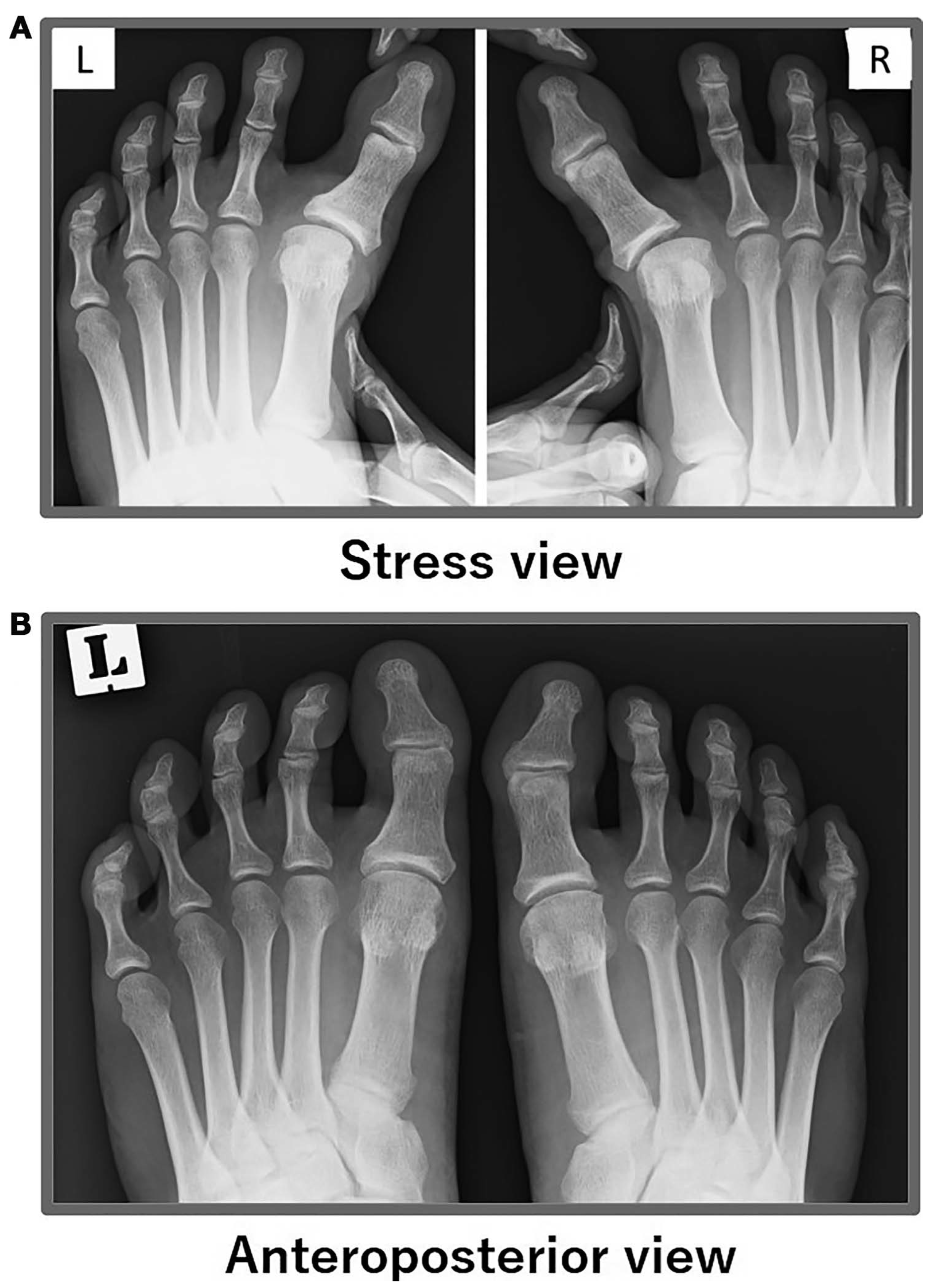
The total duration of follow-up was 25 months (November of 2016 to December of 2018), and the follow-up period was 24 months after surgery. There was no pain in the MTP joint of the left hallux, and varus instability had disappeared completely (Figure 5). As before the procedure, there was no limitation of the range of motion in the hallux MTP-IP joints. No complications were encountered after surgery, and magnetic resonance imaging findings showed the repaired lateral collateral ligament to be in good condition (Figure 6). Moreover, a postoperative stress view radiograph showed that the width of the lateral joining space had reduced, indicating improvement (Figure 7A). The American Orthopedic Foot and Ankle Society Hallux MTP-IP score improved to 100 points (Table 2). This report was approved by our hospital’s institutional review board, and written informed consent was obtained from the patient.
Figure 5.
Varus instability of the left hallux metatarsophalangeal joint shows improvement after surgery.
Figure 6.
Postoperative coronal view magnetic resonance imaging scan. The repaired lateral collateral ligament is observed.
Figure 7.
Postoperative radiographs of the bilateral hallux metatarsophalangeal joint. A, Postoperative stress view radiograph. B, Postoperative radiograph.
Discussion
Damage and trauma to the toes tend to be trivialized; however, these injuries can significantly affect sporting activities.[1] Bowers and Martin[2] defined American football–related joint ligament injury of the plantar side of the hallux MTP as ‘‘turf toe.’’ From that point on, there were many reports on turf toe, including hyperextension-hyperflexion injuries of the hallux MTP joint in American football players, particularly among those wearing spiked shoes on artificial turf.[2,3] Although this condition is strictly defined as a soft-tissue injury between the plantar side of the hallux MTP joint and the sesamoid bone,[4] Nery et al[5] have recently argued that soft-tissue injuries in the vicinity of the hallux MTP joint should be collectively referred to as turf toe.
In this case study, although the injury to the hallux MTP joint was chronic, we presume that it led to hyperextension-hyperflexion of the MTP joint in addition to varus sprain. From the imaging and surgical findings, this case would be classified as a grade III injury in the system proposed by Mc-Cormick and Anderson.[6] There are few reports on surgical treatment of instability of the hallux MTP joint, particularly regarding surgical treatment of collateral ligament damage. Mullis and Miller[7] and Ryan et al[8] published reports on collateral ligament repair. Gong et al[9] also reported a case of ligament reconstruction using the palmaris longus tendon for instability in the hallux IP joint of a taekwondo athlete. Because of the chronic nature of the injury in the present case, we also considered options for transfer of the palmaris longus tendon. However, tendon transfer was not performed; the hallux MTP joint was stabilized by ligament repair using the less-invasive suture anchor technique.
A unique characteristic of competitive sumo wrestling is the need for athletes to grip the sand in the sumo ring with their hallux. Thus, weakness and joint instability in the hallux lead to a significant deterioration in performance. Jones et al[10] described open hallux IP joint dislocations sustained during barefoot combative training that would require surgical intervention. Stability of the hallux MTP and IP joints are important for barefoot athletes to be able to hold their ground; however, participation in those barefoot sports is associated with the risk of toe injury. Based on our experience of treating sumo wrestlers at our hospital for the past 38 years, we understand that many sumo wrestlers, both professional and amateur, are plagued by instability in the hallux MTP joint, typically because of sprains of the collateral ligament. However, it appears that many wrestlers do not seek medical help. Instead, they use conservative treatments such as taping. In the present case, we repaired the collateral ligament using a combination of knotless and soft anchors. We achieved a good outcome and stabilized the hallux MTP joint. Thus, we conclude that ligament repair is an effective treatment for hallux MTP joint instability that does not improve with conservative treatments. This is the first report on surgical treatment for an injury of the lateral collateral ligament in a sumo wrestler with chronic hallux MTP joint instability.
Financial Disclosure
None reported.
Conflicts of Interest
None reported.
References
- KAZUYA S: Sports injuries in the toes. MB Orthop 2010, 23, 66.
- BOWERS, KD, JR.; MARTIN, RB. Turf-toe: a shoe-surface related football injury. Med Sci Sports 1976, 8, 81. [Google Scholar] [CrossRef] [Scilit] [PubMed]
- CLANTON, TO; BUTLER, JE. EGGERT A: Injuries to the metatarsophalangeal joints in athletes. Foot Ankle 1986, 7, 162. [Google Scholar] [CrossRef] [Scilit] [PubMed]
- NAJEFI, AA; JEYASEELAN, L. WELCK M: Turf toe: a clinical update. EFORT Open Rev 2018, 3, 501. [Google Scholar] [CrossRef] [Scilit] [PubMed]
- NERY, C; FONSECA, LF; GONC¸ALVES, JP. ET AL: First MTP joint instability—expanding the concept of ‘‘turf-toe’’ injuries. Foot Ankle Surg 2020, 26, 47. [Google Scholar] [CrossRef] [Scilit] [PubMed]
- MCCORMICK, JJ; ANDERSON, RB. Turf toe anatomy, diagnosis, and treatment. Sport Health 2010, 2, 487. [Google Scholar] [CrossRef] [Scilit] [PubMed]
- MULLIS DL, MILLER WE: A disabling sports injury of the great toe. Foot Ankle 1980, 1, 22. [CrossRef] [Scilit] [PubMed]
- RYAN, PM; JOHNSTON, A; GUN, BK. Post-traumatic dynamic hallux varus instability. J Clin Orthop Trauma 2014, 5, 94. [Google Scholar] [CrossRef] [Scilit] [PubMed]
- GONG, HS; KIM, YH; PARK, MS. Varus instability of the hallux interphalangeal joint in a taekwondo athlete. Br J Sports Med 2007, 41, 917. [Google Scholar] [CrossRef] [Scilit] [PubMed]
- JONES, MD; MAY, IC; SWEET, KJ. Rare open hallux interphalangeal joint dislocations sustained in combatives training: a case series. Mil Med 2014, 179, e253. [Google Scholar] [CrossRef] [Scilit] [PubMed]

© 2021 American Podiatric Medical Association