


Abstract
Background: The aim of this study was to determine the type of medial longitudinal arch (MLA) in students of Krakow universities, investigate the relationship between physical activity and the shaping of the feet, and examine the relationship between hallux valgus angle and the type of footwear chosen most often. Methods: The study group consisted of 120 students, of which 56 respondents were students of the University School of Physical Education in Krakow, whereas the remaining 64 respondents were students of the Pedagogical University of Krakow. To evaluate the MLA, a podoscope was used, which allowed us to determine the length and width of the foot, and calculation of the Clarke angle, heel angle γ, and the angle of hallux valgus. All students were also subjected to a measurement of body weight and height. Results: There was a statistically significant relationship between physical activity and the Clarke angle in the group of women studying at the University School of Physical Education. There was no correlation between the hallux valgus angle and the type of footwear chosen most often in the research groups. Conclusions: The most frequently diagnosed type of longitudinal and transverse arch foot in the research group was normal MLA. There was no relationship between physical activity and transverse arch foot in any of the research groups.
The foot plays a crucial role in human locomotion. It is responsible for maintaining body weight and performs an extremely important static-dynamic function. The correct performance of the foot is affected by many elements, such as the right shape of transverse and longitudinal arches, the shape of the bones, angles of articular surfaces, the tension of tendons, and muscle strength. Among these factors, the arching of the foot plays an especially important role: it absorbs shock and is also responsible for protection of the internal organs and the central nervous system against microdamage that may occur during ambulation. [1] Foot arches also maintain body weight; spread the weight along the entire length of the foot; and ensure that the gait is fluent, elastic, and solid. In addition, foot arches help the foot to adapt to changing ground conditions. Pathologic conditions of the foot arches (ie, flat foot) can lead to foot pain, skin lesions on the foot, problems with wearing shoes, and even toe pathology and spine pain syndromes. [2] The shape of the arches also depends on many factors related to physical activity (ie, physical activity duration, type of sport, and size of the training load). [3]
A complex structure of the foot provides a compromise between flexibility and flaccidity required while moving, and a rigid system that guarantees stable support. The foot possesses an internal mechanism of stability of the structure, and its efficiency depends on the content of connective tissue elements (ie, joint capsules, ligaments, and plantar fascia). [4]
Amid the elements that affect the shape of the feet in adults, we can distinguish between genetic factors, gender, and environmental factors. Very important is the role of lifestyle, which molds, inter alia, our body weight or determines the selection of footwear. [5-7] High heels, hard soles that do not absorb shock, and narrow tips are only some of the characteristics that lead to the formation of foot pathology associated with longitudinal and transverse arch, the position of toes, or changes in the skin. [8-10] Many authors also emphasize the fact that exercising has a significant impact on the shape of the foot. [3,11-13] They notice that the training load affects (among other things) foot arching, and also that a very important role is played by the type of training to which the player and thus his or her feet are subjected. [3,13-15] The aim of this study was to assess the medial longitudinal arch (MLA) in students, to determine the relationship between longitudinal and transverse arch feet in students and their physical activity, and to evaluate the relationship between hallux valgus angle and the most frequently chosen type of footwear.
Materials and Methods
The study group comprised 120 students attending Krakow universities, of which 56 respondents (47%) were students at the University School of Physical Education (AWF), with a specialization in physical education, and currently in the second year of full-time first-cycle studies. Sixty-four respondents (53%) were students of the Pedagogical University of Krakow (UP), with a specialization in teaching, also in the second year of full-time first-cycle studies. In the group of students at the AWF, there were 12 women (10%) and 44 men (37%), whereas in the group of students at UP, there were 54 women (45%) and 10 men (8%). Overall, the test group comprised 66 women (55%) and 54 men (45%). The study included only those students 1) with no injuries of the pelvis or lower limb within 1 year before the present research; 2) with no neurologic, rheumatologic, or orthopedic dysfunction that could affect the results of this research; 3) with no conservative or surgical treatment in the pelvis or lower limb within 1 year before the present research; and 4) who gave written consent to participate in research. The characteristics of the research group are listed in Table 1.
Table 1.
Characteristics of the Research Group.
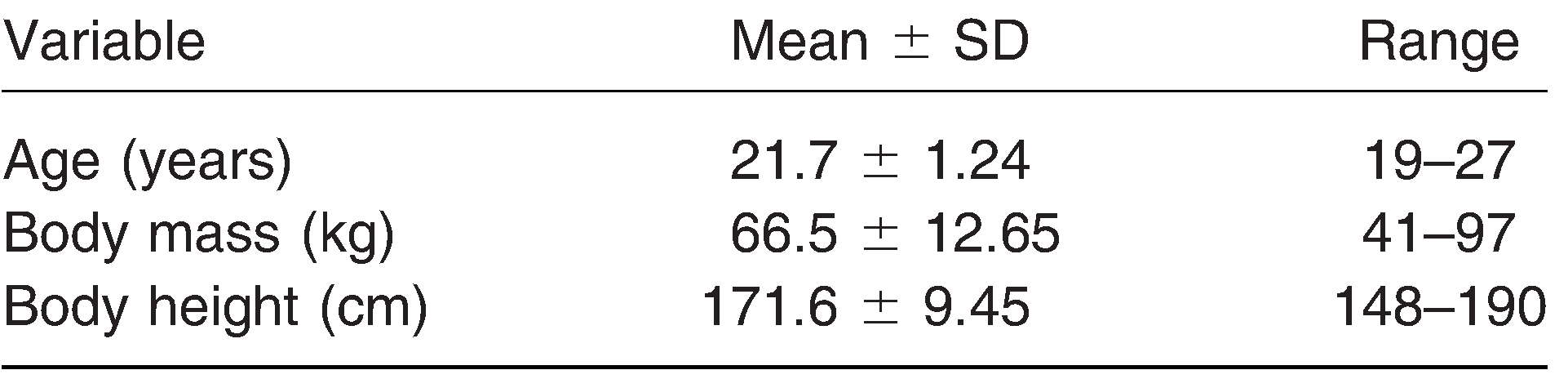
Tests were carried out in February and March 2014. Before the start of research, consent from the university authorities to carry out a research project was obtained. In addition, every tested student expressed written consent to participate in the research. The consent of the Ethics Commission to carry out the research experiment (No. 23/KBL/OIL/2014) was obtained as well.
The average length of the right foot in women was 235 mm, and the average width was 88 mm. The values for the left foot were as follows: average length, 236 mm; average width, 88 mm. For men, the average length of the right foot was 258 mm and the average width was 99 mm. The average length of the left foot was 262 mm and the average width was 98 mm. During the course of research, body height and weight were measured, assessment of the feet was performed, and the respondents were asked to complete a survey prepared by the authors.
The Questionnaire
The questionnaire was administered to all tested persons, immediately before the measurements, in the presence of the examiner. The research questionnaire included 16 questions of different types: closed single-choice questions, open questions, and semiopen questions. It also contained questions concerning physical activity, the number of hours of physical activity during the week, regularity of participation in physical activities, practicing other sports (ie, type of activity, frequency of activity, duration of activity), the incidence of foot injuries (ie, type of injury, location of injury, time from injury occurrence), the most frequently used form of transport to the university, and the preferred footwear (ie, during summer and winter).
Body Weight and Height Measurements
Measurement of body height was performed with a Martin-type anthropometer. The students were measured in the standing position, without shoes, with the head set in the Frankfurt plane. Body height was measured from the base to the vertex point, with an accuracy of 1 mm. The measurements of body weight were performed with Tanita scales, with an accuracy of 100 g.
Evaluation of Feet
To assess the relevant foot parameters, a podoscope was used, equipped with a two-dimensional scanner which, because of the connection with the computer with analyzing software, enabled the preview and saving of the image of the sole. The student was placed on the device barefoot, in upright position, with his arms along the body, looking straight ahead, with feet set parallel to each other, slightly apart. A single measurement was obtained for each person. On the basis of the obtained image, the following indicators were calculated: the length and width of the foot (in millimeters), the Clarke angle, the heel angle (γ), and the hallux valgus angle (α).
Determination of the Clarke angle, the heel angle γ, and the hallux valgus was made with the guidelines and standards provided by Kasperczyk [16] and Lizis. [1] Foot length was measured as the distance between the calcaneus and the end of the longest toe pad. The width of the feet was measured from the head of the first metatarsal bone to the head of the V metatarsal bone. Results of the research were developed separately for the left and right foot because of foot asymmetry. [17,18]
For the characterization of the collected data descriptive statistics such as the arithmetic mean, standard deviation, minimum and maximum, and the methods of statistical analysis were used. In the first place, the compatibility of the distribution with the normal one was examined with the Shapiro-Wilk test. In each case, P ≤ .05 was taken as statistically significant. For the variables for which distribution was consistent with the normal distribution, the Pearson correlation was used, but when the distribution was different from the normal, the Spearman correlation was used.
Results
Descriptive Statistics
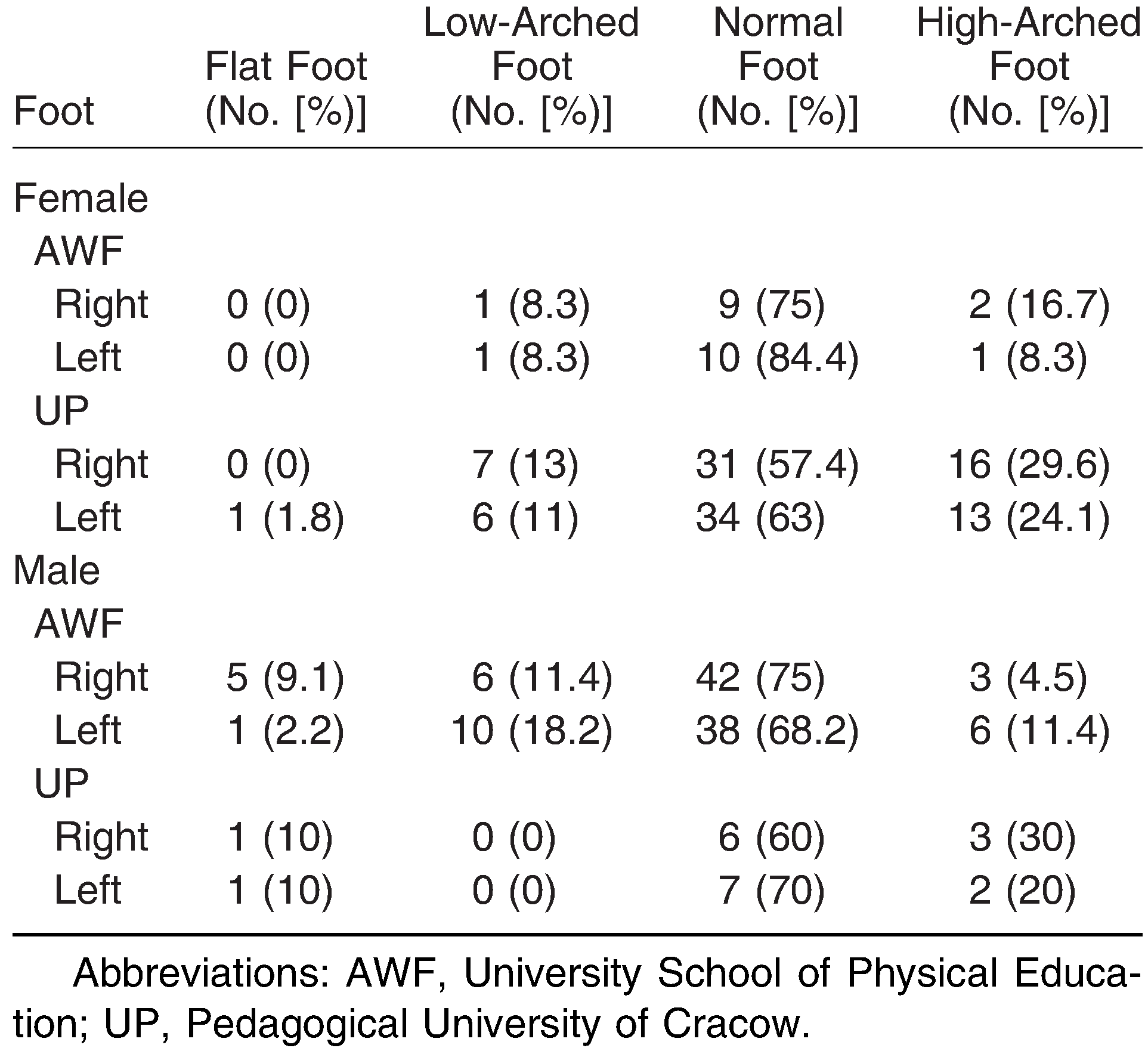
While analyzing the values of the Clarke angle in students, it was found that the average angle for the right and left foot was 48° and 47°, respectively (SD, 8.18° and 7.77°, respectively) (Table 2). Referring to the standards for evaluation of the longitudinal arch proposed by Nadolska-Ćwikła, [18] respondents' feet were divided into four groups: flat, low arch; normal; and high-arched. Among the tested students, the largest percentage in the case of both right (65.8%) and left (67.5%) feet consisted of normally arched feet. Low arch in the right foot was diagnosed in 10.8% of the respondents, whereas low-arched left foot was identified in 12.5%. Flat right foot was found in 4.2% of the respondents, whereas flat left foot was found in 2.5%. High-arched foot made up 19.2% and 17.5% of the right and left feet, respectively (Table 3).
Table 2.
Characteristics of the Clarke Angle Among Students of AWF and UP Universities.
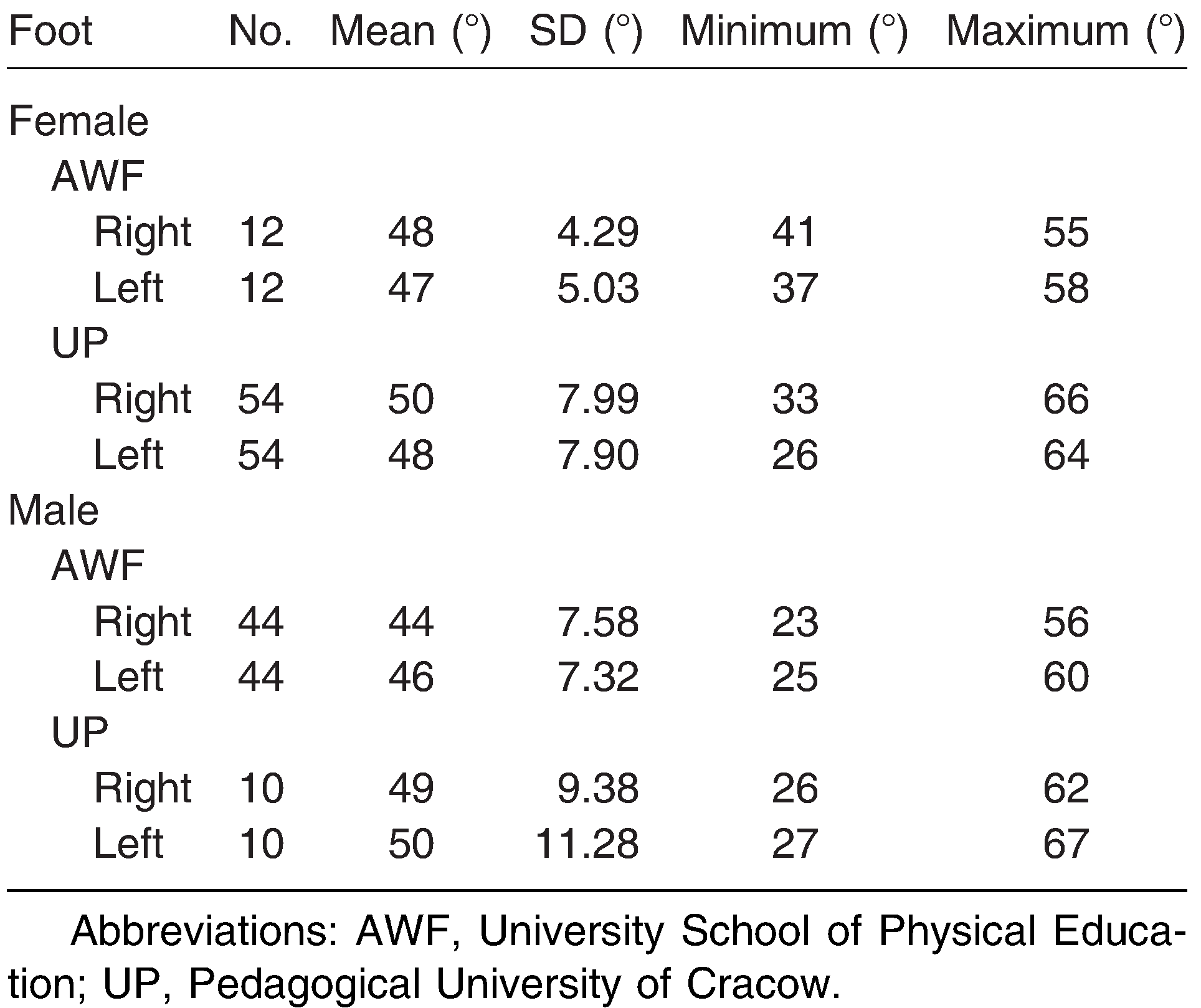
Table 3.
Characteristics of the Longitudinal Arch Feet in Tested Students.
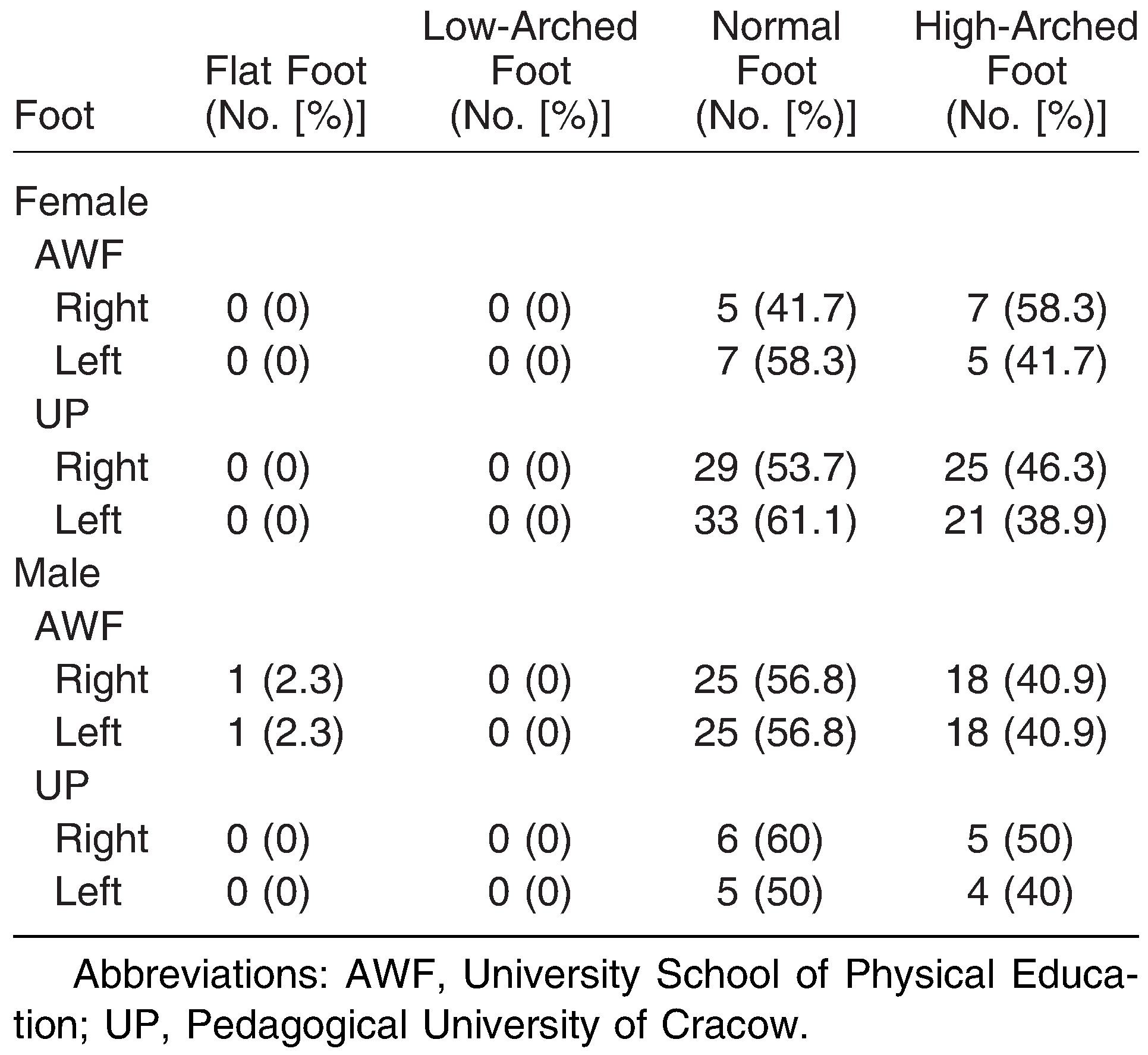
From the obtained data, it has been calculated that the average heel angle γ of the right foot in women was 14.3 (SD, 1.63°). In turn, the average heel angle γ of the left foot amounted to 14.5° (SD, 1.77°). In men, the mean value of heel angle γ was 15.1° (SD, 1.59°), whereas for the left foot, it was 14.7° (SD, 1.63°) (Table 4).
Table 4.
Characteristics of the Heel Angle γ in the Tested Students.
Among tested women, the mean value of the hallux valgus of the right toe amounted to 6.6° (SD, 4.2°). The mean value of the hallux valgus of the left toe was 6.7° (SD, 3.8°). In men, the mean value of the hallux valgus was 4.4° for the right foot (SD, 3.3°). In the left toe, the value was the same, 4.4° (SD, 3.3°) (Table 5).
Table 5.
Characteristics of the Hallux Valgus in Tested Subjects.
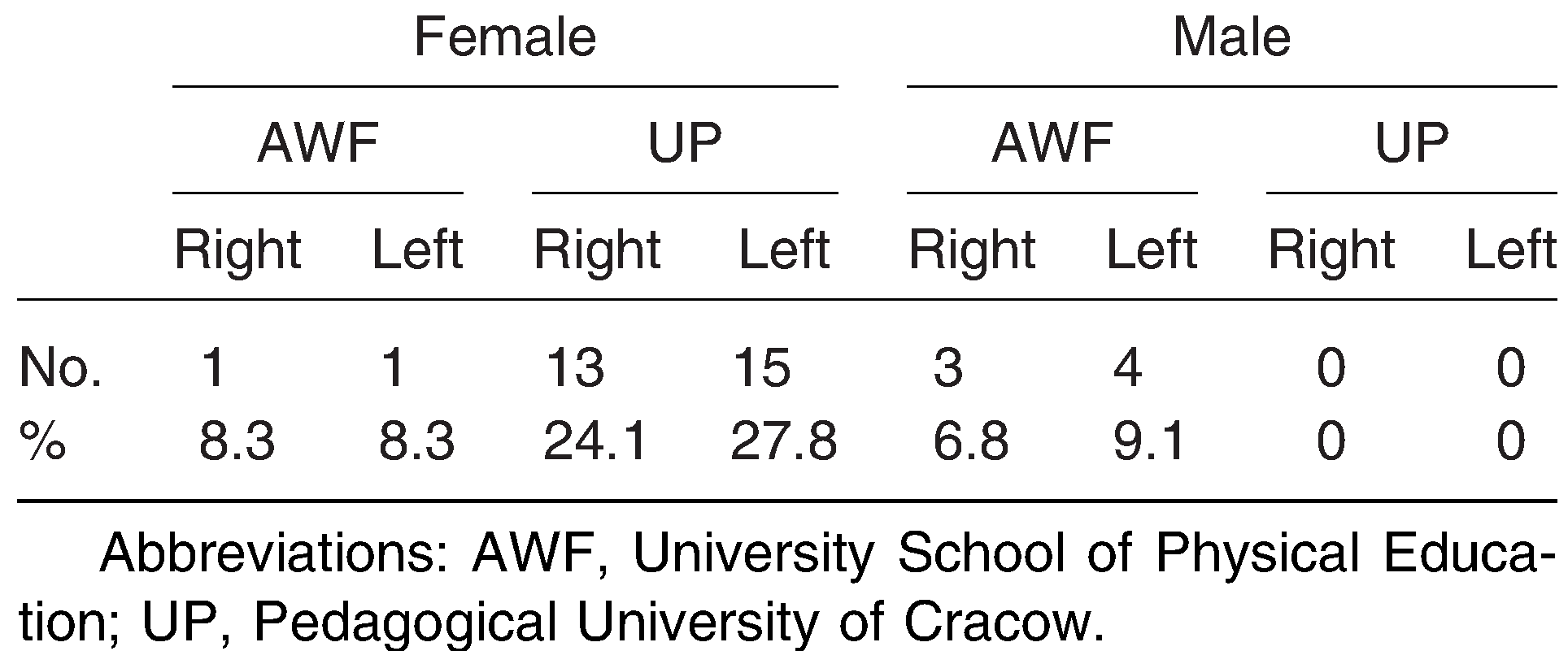
One of the questions that appeared in the questionnaire completed by the students considered the number of hours spent on physical activities within the framework of university classes. Among the female students of the AWF, the declared average time spent on such activities during the week amounted to 6.5 hours; among the female students of the UP, the average time was 1.8 hours. In the case of male students of the AWF, the average time was 5.9 hours; whereas amid the students of the UP, it was 1.6 hours/week.
Another question concerned physical activities undertaken in free time, such as football, handball, basketball, swimming, or fitness and gym. Among the surveyed students of the AWF, 10 women (83%) and 42 men (95%) responded that they practiced sports apart from the classes at the university. Only 14 women (26%) and three men (30%) from the UP declared participation in such activities.
The students were also asked how many hours per week they devoted to additional physical activities. The greatest amount of time was recorded in the case of the students of the AWF, who spent on average 5.8 hours/week. Female students of the AWF spent 5.1 hours, whereas female and male students of the UP spent 3.2 and 3.1 hours, respectively.
The next question concerned the period for which they have been practicing those activities. The students of the AWF most often declared 2 years or longer (79% and 70% of the questioned, respectively). Among male and female students of the UP, the most popular response was 6 months and less (67% and 50% of the respondents, respectively).
Another question was related to the type of footwear preferred during the summer. The largest group (83%) of female students of the AWF chose casual footwear. In the case of women studying at the UP, the vast majority (81%) responded that they used shoes with a flat sole. However, both men and women studying at the AWF and UP answered that they most often chose casual footwear (70% of the respondents in each group).
An analogous question referred to winter footwear. The same number of women studying at the AWF responded that they preferred casual footwear and shoes with a flat sole (50% each). In the case of female students of the UP, the vast majority of women indicated they preferred shoes with a flat sole (68%). The men studying at the AWF most frequently chose athletic footwear and shoes with a flat sole (45% each). The most common answers among men studying at the UP were flat-sole and low-heel footwear (40% each).
Statistical Analysis
Statistical analysis showed statistically significant differences between number of hours spent on physical activities in research groups from the AWF and UP (Table 6). Statistical analysis in the group of female students of the AWF showed statistically significant correlation between level of physical activity and the mean value of the Clarke angle. Among female students of the UP and in all examined men, there was no statistically significant correlation between these variables (Table 7).
Table 6.
Statistical Differences Between Number of Hours Spent on Physical Activities in the Research Groups.
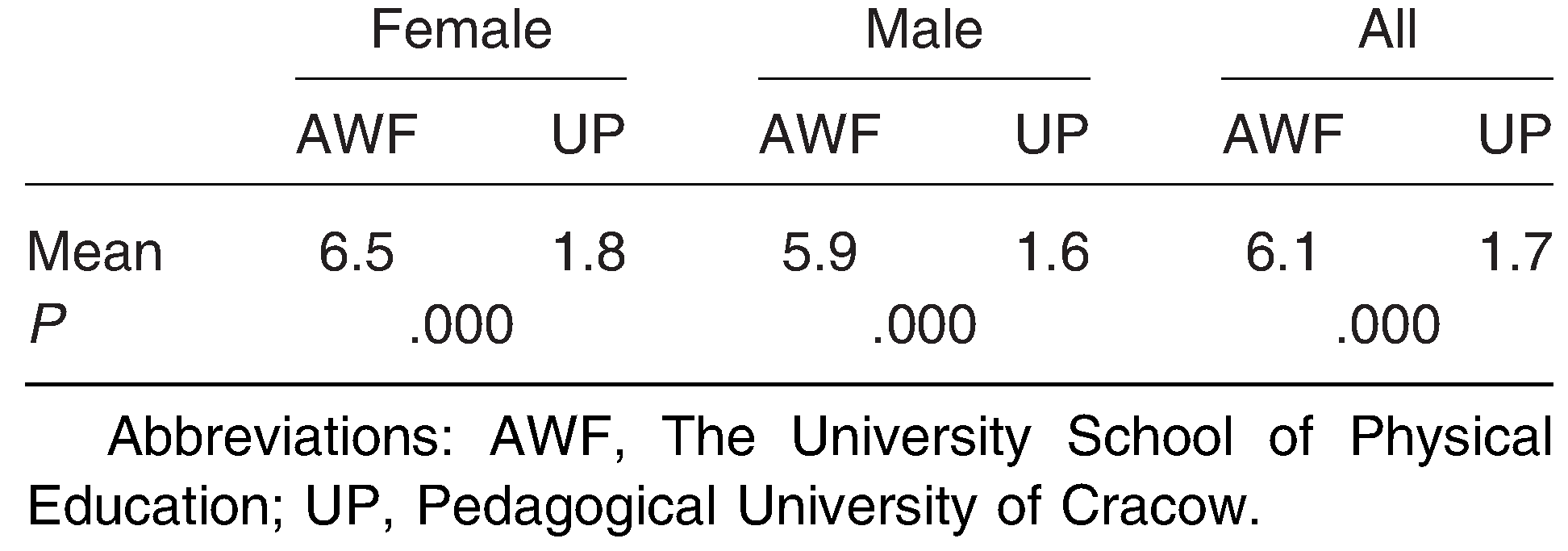
Table 7.
Correlation Between Level of Physical Activity and the Mean Value of the Clarke Angle in Tested Students.
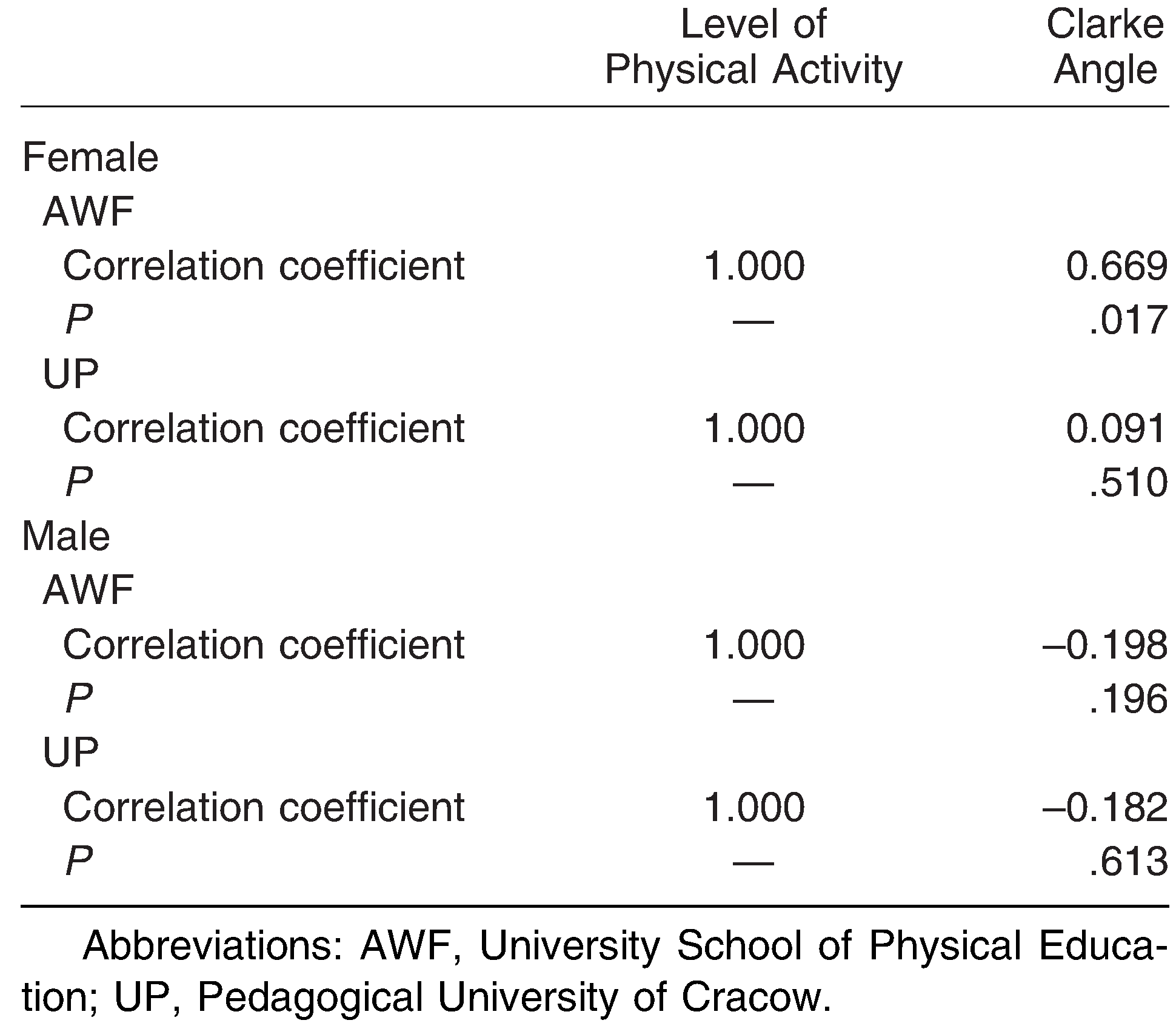
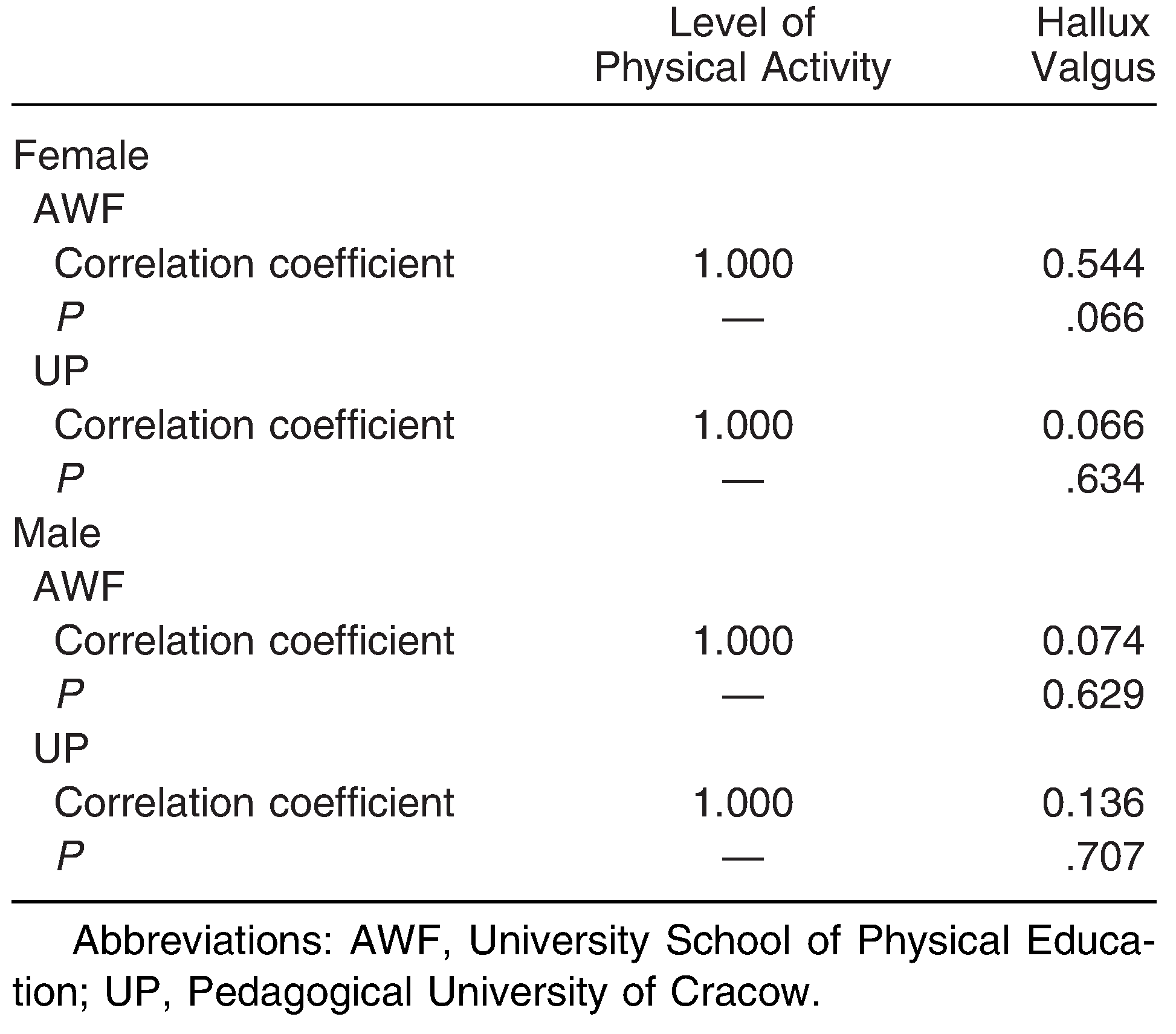
Statistical analysis of level of physical activity and the mean value of the heel angle γ did not show statistically significant correlation between the data in the groups of men and women from both universities (Table 8). Similar to the above-mentioned relation, the correlation between the hallux valgus α and the type of preferred footwear also did not show a statistically significant relationship in any of the tested subjects (Table 9).
Table 8.
Correlation Between Level of Physical Activity and the Mean Value of Heel Angle γ in Tested Students.
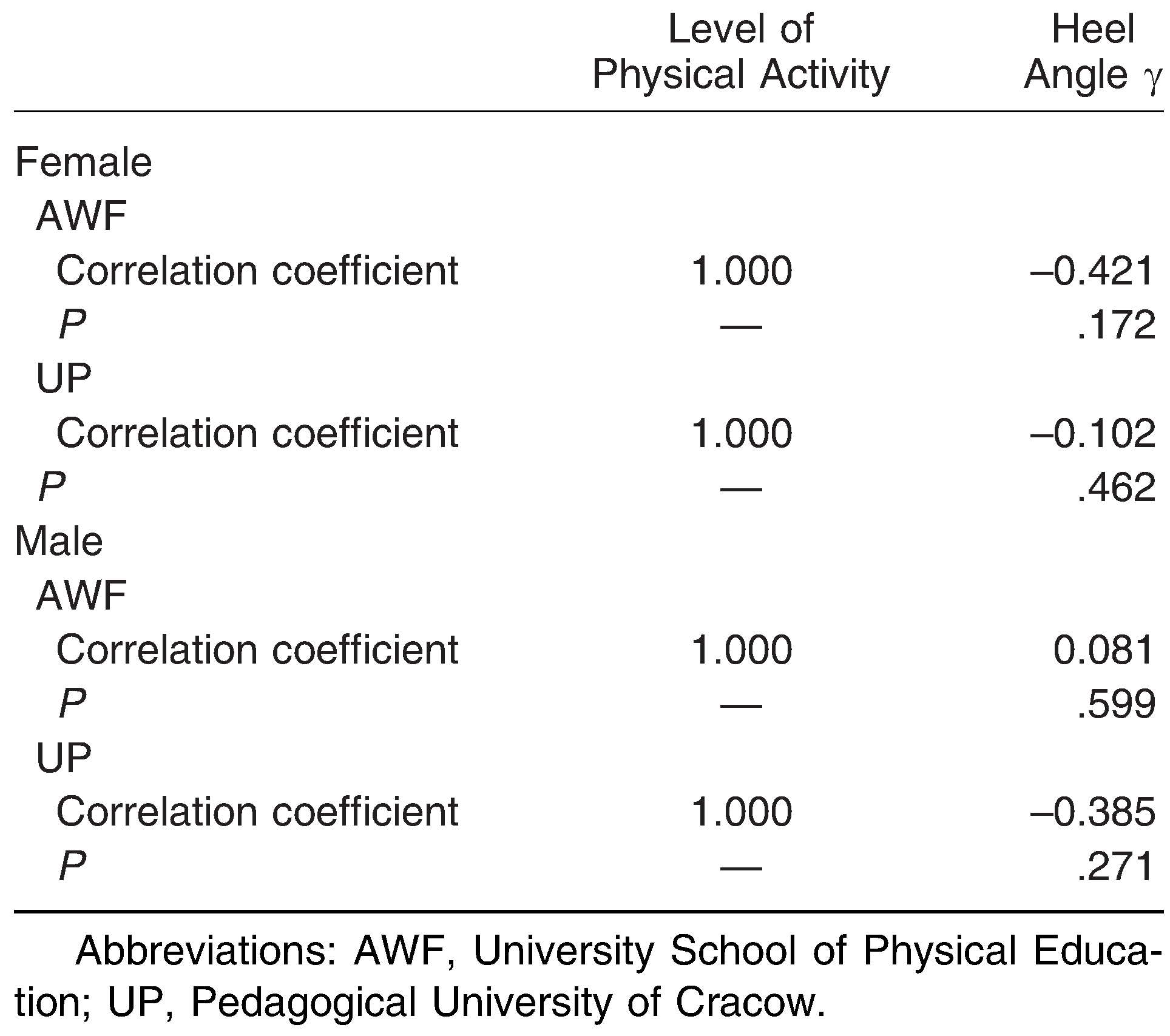
Table 9.
Correlation Between Level of Physical Activity and the Mean Value of the Hallux Valgus in Tested Students.
Discussion
Issues related to the foot are a common subject undertaken in a variety of academic studies and research. In scientific publications, there are attempts to find links between the morphology of the foot and variables such as sex, age, and body weight. [14,15] However, the most frequent publications are studies concerning the frequency of flat feet, among both children and adults. [17-20]
Puszczałowska-Lizis and Kwolek, [21] in a study conducted on a group of 280 students, making use of, inter alia, the Clarke angle, noted a small percentage of longitudinal flat feet, whereas in more than one-third of those surveyed, high-arched feet were diagnosed. Ukoha et al, [22] by examining a group of 620 young Nigerians, similarly stated the occurrence of longitudinal flat feet in the case of a small number of tested subjects. Flat feet occurred comparatively often among women and men. Research carried out by Przysada et al [23] on a group of 108 students of the University of Rzeszów, also basing on the Clarke angle, noted that in the majority of cases, correct MLA, high-arched feet were definitely less common, whereas flat feet made up only a small percentage. Jankowicz-Szymańska et al [24] examined a group of 90 students; to determine the shape of the feet they used the Foot Posture Index method. The results showed that in the case of the vast majority of both men and women, foot arching was shown to be correct. Our own studies have proven to be in accordance with the research cited above. In the group of students, the dominant type was normal MLA, whereas the most common pathologic condition, found in almost one-third of those surveyed, was longitudinal high-arched feet. Longitudinal flat feet appeared in only few cases.
Transverse flat feet is very rarely described in scientific publications. Based on a group of nearly 300 students and using her research (ie, the heel angle), Puszczałowska-Lizis [25] determined the prevalence of transverse flat feet. She observed that transverse arch foot occurred in almost one-third of the respondents, whereas transverse flat foot appeared in a small number of students. A similar situation has been observed in our own studies, where transverse arch feet were diagnosed in nearly half of the respondents, whereas transverse flat feet was found in only one student.
Some authors perceive physical activity as an important factor influencing foot arching. Physical effort is frequently associated with basic prevention of different pathologic changes in the foot, such as flat feet. [6,11] Our research has shown that, for the students of the AWF, the average time spent on physical activities during the week amounted to almost 12 hours, whereas in the case of the students of the UP it was less than 5 hours.
The studies show that, in the case of foot arching, both the physical activity and the nature of that activity are important. Milenković et al [11] examined a group of 108 physically active students, and indicated that longitudinal flat feet occurred in more than half of them. In the control group, comprising 120 physically inactive students, longitudinal flat feet were found in almost half of the subjects as well. Studies by Lichota et al [26] also revealed the presence of longitudinal flat feet in fewer than half of the athletes from the Academic Sports Association in Biała Podlaska and high-arched feet in a quarter of them. In the test group, practitioners of taekwondo (among other activities) turned out to have the best arches which, according to the author of the research, is probably the result of systematic daily workouts on a soft surface (a mat). Socha [27] observed higher values of the Clarke angle among swimmers and an increased tendency toward longitudinal high-arched foot in other physically active people. The studies carried out by Mosór and Kromka-Szydek, [19] showed that properly arched feet prevailed among students practicing different types of sport. Stawczyk [14] noted that the jumping foot of long jumpers and high jumpers shows a lowering of the longitudinal arch in comparison with the opposite leg. A survey by Gradek et al [13] carried out on young practitioners of athletics demonstrated that, despite several years of training, lowering of the longitudinal arch occurred only in the case of several people. Firak et al [28] examined the foot arches of 110 sport acrobats and reported that the longitudinal arch foot in this group was properly shaped. At the same time, they observed that the best arched feet occurred in top-class jumpers and players, and the least arched occurred in average players. Walaszek et al [15] found significant differences between short-distance female runners and a group of women not training. In the case of sprinters, longitudinal flat feet or low-arched feet were not observed, contrary to the nontraining women. Also, high longitudinal arching was more commonly diagnosed in female sprinters than in the other group. A plantographic study of the world's best wrestlers, carried out by Ślężyński and Dębska, [29] using the Clarke angle, demonstrated that these people generally have feet with a raised arch. Nadolska-Ćwikła, [30] also with the Clarke angle, has conducted research on wrestlers of the national Polish team, in which she showed that most of those athletes have properly arched feet, with a small percentage of subjects with flat feet. Aydog et al, [3] by comparing the arch indices in wrestlers and people who train gymnastics, reported a higher value of the indicator in the first group compared with the other group. In other work, the same authors observed a significantly lower arch index in a group of gymnasts in comparison with the nonathletic controls. [3] Boguszewska [12] examined the longitudinal arch (based on the Clarke angle) in athletes training judo. She noted lowering of the longitudinal arch; however, neither of the players crossed the lower limit. A similar observation was reported by Andrzejewska et al [31] who, by analyzing the morphologic construction of the feet also in judo players (using the Clarke angle), found in most cases a normal longitudinal arch. At the same time, slightly worse results were detected in the case of a heavyweight group. The lowering of the longitudinal arch of the foot was explained by the impact of greater body weight, not the physical activities. Research carried out by Trocińska [32] on a group of karate competitors also showed a normal longitudinal arch in the vast majority of the athletes analyzed; however, that phenomenon was more common in men than in women. In the authors' own research, analyzing the relationship between the number of hours spent on physical exercises and the shaping of the foot arch, only in the case of female students of the AWF was a statistically significant correlation between physical activity and the mean value of the Clarke angle found. Such a relationship was not observed in other groups.
Results of the research carried out by Gradek et al [13] demonstrated the presence of a normal transverse arch in long jumpers, whereas the majority of high jumpers had a raised foot arch. Firak et al [28] examined the feet of 110 sport acrobats and reported a normal transverse arch in this group. Our own research did not show a statistically significant association between physical activity and transverse arch foot in any of the groups.
Important factors affecting the formation of pathologic changes within the foot are shoes. Kurup et al [33] found that wearing shoes much wider than a normal foot width causes calluses on toes, deepening of hallux valgus, or aches and pains. At the same time, they observed that footwear shorter than the length of the foot causes smaller deformations within the toes compared with shoes that are too narrow. In addition, wearing heels higher than 25 mm is linked to the formation of hallux valgus and calluses in women. Al-Abdulwahab and Al-Dosry [8] investigated the effect of wearing all sorts of shoes on the feet of young women. They found that the vast majority of subjects with excessive hallux valgus wore mainly narrow shoes, especially at the front, whereas a comparable number of women in whom deformities were not found wore shoes with a wide round toe box. Glasoe et al [34] describe that wearing high-heeled shoes increases the pressure on the forefoot. Maintaining this state for an extended period causes shortening of the ankle plantarflexor muscles. As a result, decreased ankle dorsiflexion occurs, which is considered to be one of the factors causing the formation of hallux valgus. Speksnijder et al [35] observed in their studies that wearing high-heeled shoes moves the pressure from the heel to the central and medial forefoot. According to their results, pressure on this part of the foot increases up to 40%. Eisenhardt et al [9] compared feet without shoes, sneakers with a 0.2-cm heel, and elegant shoes with a 4.2-cm heel. They found that in the case of high-heeled footwear, the duration of the load increases in the area of the head of the first metatarsal bone, and decreases around the head of the fifth metatarsal bone, compared to the load on the feet in sneakers. Similarly, the load time in the same area was longer in those wearing sneakers than in people standing barefoot. Nguyenyz et al [10] found that in women who wore shoes with high heels, the most commonly chosen footwear between ages 20 and 64 years, there has been an increase in the prevalence of hallux valgus compared with the group of women who did not report such shoes as their major footwear over the same period. Menz et al [36] reported a significant relationship between a heel height of more than 25 mm and the occurrence of hallux valgus but found no significant association between foot problems and wearing high-heeled shoes in the past. Wu and Louie, [7] after examining 1,056 Chinese female subjects, found that wearing a high heel is not a predisposing factor to hallux valgus among Asian women; however, a crucial role in this matter is played by genetic predispositions. The vast majority of women who were diagnosed with this deformation replied that the problem of hallux valgus had occurred in their families before. Almost three-quarters of those women said they did not wear high-heeled shoes on a regular basis. The percentage of great toe deformities among women who admitted that they regularly wore high-heeled shoes and also reported that their families had not encountered this problem previously was significantly low (3%). Our own research did not show a statistically significant correlation between the most preferred type of footwear and deformation of the great toe. It should be noted, however, that in the case of female students of the UP, who most frequently chose inflexible shoes with a flat sole, the hallux valgus angle was greater than in female students of the AWF, who most often wore casual footwear.
Conclusions
The most frequently diagnosed type of longitudinal and transverse arch foot in the research group was normal MLA. Only in the group of women studying at the AWF was there a statistically significant association between increased physical activity and raised longitudinal arches. There was no relationship between physical activity and transverse arch foot in any of the research groups. In the test groups, there was no correlation between the hallux valgus angle and the type of footwear chosen most often.
Financial Disclosure: None reported.
Conflict of Interest: None reported.
References
- Lizis, P. Evolution of longitudinal arch and problems of correcting of flat feet in children and adolescents. Books and Scripts No. 10 2000. [Google Scholar]
- Bac, A. Feet morphological construction of children and adolescents from Cracow taking into consideration the factors affecting their formation. Books and Scripts No. 17 2013. [Google Scholar]
- Aydog, ST.; Tetik, O.; Demirel, HA.; et al. Differences in sole arch indices in various sports. Br J Sports Med 2005, 39, e5. [Google Scholar]
- Brotzman, B.; Wilk, E. Orthopedic Rehabilitation, Elsevier Urban & Partner: Wrocław, 2008.
- Hills, A.; Hennig, E.; Byrne, N.; et al. The biomechanics of adiposity: structural and functional limitations of obesity and implications for movement. Int Assoc Study Obes 2002, 3, 35. [Google Scholar]
- Mignardot, J.; Oliver, I.; Promyon, E.; et al. Obesity impact on the attentional cost for controlling posture. PLoS One 2010, 5, 1. [Google Scholar]
- Wu, D.; Louie, L. Does wearing high-heeled shoe cause hallux valgus? A survey of 1,056 Chinese females. Foot Ankle Online J 2010, 3, 3. [Google Scholar]
- Al-Abdulwahab, S.; Al-Dosry, R. Hallux valgus and preferred shoe types among young healthy Saudi Arabian females. Ann Saudi Med 2000, 20, 319. [Google Scholar]
- Eisenhardt, J.; Cook, D.; Pregler, I.; et al. Changes in temporal gait characteristics and pressure distribution for bare feet versus heel heights. Gait Post 1996, 4, 280. [Google Scholar]
- Nguyenyz, U.; Hillstromx, H.; Lik, W.; et al. Factors associated with hallux valgus in a population-based study of older women and men: the MOBILIZE Boston Study. Osteoarthritis Cartilage 2010, 18, 41. [Google Scholar]
- Milenković, S.; Živković, M.; Bubanj, S.; et al. Incidence of flat foot in high school students. Phys Educ Sport 2011, 9, 275. [Google Scholar]
- Boguszewska, K. Evaluation of medial longitudinal arch in judo players of AZS AWF Warsaw. Med Sci Papers Phys Educ Katowice 2008, 25, 255. [Google Scholar]
- Gradek, J.; Mleczko, M.; Bora, P. Medial longitudinal arch in young female athletes. Wych Fiz Zdrow 2004, 6, 11. [Google Scholar]
- Stawczyk, Z. Jumping and medial longitudinal arch. Sci Anna WSWF 1965, 10, 229. [Google Scholar]
- Walaszek, R.; Mucha, T.; Dworak, D.; et al. Comparison of arch of foot between women sprinters and non-training women. Medicinsko-osetrovatelske listy Sarisa 2008, 5, 197. [Google Scholar]
- Kasperczyk, T. Faulty postures: Diagnosis and Treatment, Kasper Publisher: Kraków, 1994.
- Umbraško, S.; Vētra, J.; Dulevska, I.; et al. Specificities of foot growth among schoolchildren of Riga and Latvian regions. Papers Anthrop 2007, 16, 283. [Google Scholar]
- Nadolska-Ćwikła, I. Medial longitudinal arch in children and 7-14 years young people from Koszalins' schools. In. Polish Child Ontogeny. Monograph of The University of Physical Education in Poznań 1994, 315, 93. [Google Scholar]
- Mosór, K.; Kromka-Szydek, M. The influence of selected factors on foot parameters based on a podoscopy study. Cur Iss Biomech 2012, 6, 99. [Google Scholar]
- Woźniacka, R.; Bac, A.; Matusik, S. Effect of obesity level on the longitudinal arch in 7- to 12-year-old rural and urban children. JAPMA 2015, 105, 484. [Google Scholar]
- Puszczałowska-Lizis, E.; Kwolek, A. The incidence of flat feet in adolescent academic in the light of techniques of plantography preparations. Prz Med Uniw Rzesz Inst Leków 2011, 3, 305. [Google Scholar]
- Ukoha, U.; Egwu, O.; Okafor, I.; et al. Pes planus: incidence among an adult population in anambra state, southeast Nigeria. IJBAR 2012, 3, 166. [Google Scholar]
- Przysada, G.; Drużbicki, M.; Łyszczak, N. The effect of body weight on the formation of defects in the foot in the fifth year students of physiotherapy, University of Rzeszow. Prz Med Uniw Rzesz Inst Leków 2013, 3, 319. [Google Scholar]
- Jankowicz-Szymańska, A.; Rojek, R.; Kołpa, M.; et al. Relationship between body building and foot architecture in young adults. Probl Hig Epidemiol 2013, 94, 734. [Google Scholar]
- Puszczałowska-Lizis, E. Frequency of transverse flat feet occurrence in students in the light of two techniques of plantography preparations. Kwart Ortop 2011, 3, 267. [Google Scholar]
- Lichota, M.; Plandowska, M.; Mil, P. The arch of the feet of competitors in selected sporting disciplines. Pol J Sport Tour 2013, 20, 135. [Google Scholar]
- Socha, O. Structure and function of the foot in swimmers and non-swimmers. Dissertations WSWF 1970, 8, 61. [Google Scholar]
- Firak, R.; Wilusz, K.; Głowacka, M.; et al. Sexual dimorphism in medial longitudinal arch in acrobats. Dissertations of Physical Education in Wroclaw 2009, 29, 555. [Google Scholar]
- Ślężyński, J.; Dębska, H. Pantomographic research in top wrestlers in the world. Wych Fiz Sport 1977, 1, 75. [Google Scholar]
- Nadolska-Ćwikła, I. Medial longitudinal arch in wrestlers under the influence of training. Sci Mater 1998, 3, 43. [Google Scholar]
- Andrzejewska, J.; Burdukiewicz, A.; Chromik, K.; et al. Morphological structure and characteristics of judo contestants' feet. Acta Bio-Opt Inf Med 2010, 16, 21. [Google Scholar]
- Trocińska, A. “Characteristics of selected parameters of the construction of the feet of men and women practicing karate,”. in. Sport and Tourism in the Modern Lifestyle 2009. [Google Scholar]
- Kurup, H.; Clark, C.; Dega, R. Footwear and orthopaedics. Foot Ankle Surg 2012, 18, 79. [Google Scholar]
- Glasoe, W.; Nuckley, D.; Ludewig, P. Hallux valgus and the first metatarsal arch segment: a theoretical biomechanical perspective. Phys Ther 2010, 90, 110. [Google Scholar]
- Speksnijder, C.; Munckhof, R.; Moonenb, S.; et al. The higher the heel the higher the forefoot-pressure in ten healthy women. Foot 2005, 15, 17. [Google Scholar]
- Menz, H.; Fotoohabadi, M.; Wee, E.; et al. Visual categorization of the arch index: a simplified measure of foot posture in older people. J Foot Ankle Res 2012, 5, 10. [Google Scholar]
© 2018 American Podiatric Medical Association