


Abstract
Background: We sought to assess the perceptions that podiatric medical students had of the use of simulators after completing a third-year simulation rotation. This type of analysis has not been reported in the podiatric medicine educational literature. Another goal of this study was to influence the podiatric medical community to increase studies that help demonstrate the effectiveness of simulation in the podiatric medical curriculum. Methods: Data from rotation evaluations of 44 students from the 2011-2012 academic year included student responses to 11 quantitative items and textual analysis of the students' written comments. Basic descriptive statistics of student responses to the quantitative items allowed for the analysis of central tendencies and variations. Textual analysis was performed on comments that were coded into themes based on similar properties and characteristics that the comments shared. Results: The analysis revealed that the simulation sessions were well liked. All of the students who responded to the survey rated the overall simulation rotation as “superior.” Textual analysis of the students' comments showed that students enjoy simulation as an educational tool because it helps enhance their clinical skills while also applying their didactic education to a practical experience. Clear evidence was presented that students want more cases and time to spend in the simulation laboratory to continue increasing their medical skills. Conclusions: The student perception of simulation is that it is an effective educational tool. Further testing is needed to prove simulation efficacy in a podiatric medical curriculum.
The use of simulation in medical education has greatly expanded in the past 20 years to the point where it has now become a realistic solution for meeting the demand of increased patient safety [1]. Simulation is defined by Merriam-Webster as “the imitative representation of the functioning of one system or process by means of the functioning of another.” [2] Simulators have been used in medicine as an educational tool that allows students to enhance their clinical skills without risking patient injury. Simulation is commonly broken into levels of fidelity ranging from low to high [3]. The higher the fidelity, the more realistic the simulator is to the behavior that it is supposed to mimic. As technology advances, high-fidelity mannequin simulators have been developed that combine advanced simulators with cutting-edge computer programs to mimic life-like physiologic events [3].
Integrating simulators into various medical school curricula has several distinctive benefits that make simulation attractive to medical institutions: increased student confidence, the ability to practice without risk [4], increased training in a teamwork environment [5,6], the students' ability to learn from mistakes [7-9], and the opportunity to create clinical scenarios on demand [3], all of which can be used to enhance a student's clinical skills. Although simulation seems to be a great solution in clinical teaching, there is still a lack of scientific evidence demonstrating the efficacy of simulation in medical curricula [7,8,10]. In a meta-analysis by Issenberg et al [10], most high-fidelity simulation articles found were published in surgical, biomedical engineering, and anesthesiology journals, showing that more studies need to be completed in other areas of medicine to increase simulation validity in a given field. Expansion in volume, quality, and variety of literature is needed to move forward in proving high-fidelity simulation effectiveness.
Previously, there have been only a few articles in podiatric medicine related to simulation: a literature review that noted possible uses for simulation in podiatric medical education [11], a discussion of a case scenario computer program in 1991 [12], and a pilot study of interprofessional podiatric surgical simulation [13]. It is crucial to note that simulation can play a powerful role in podiatric medical education [11] and that simulation needs to be evaluated for its effectiveness in podiatric medicine as it is in other fields of medicine.
Podiatric Medical Simulation Curriculum
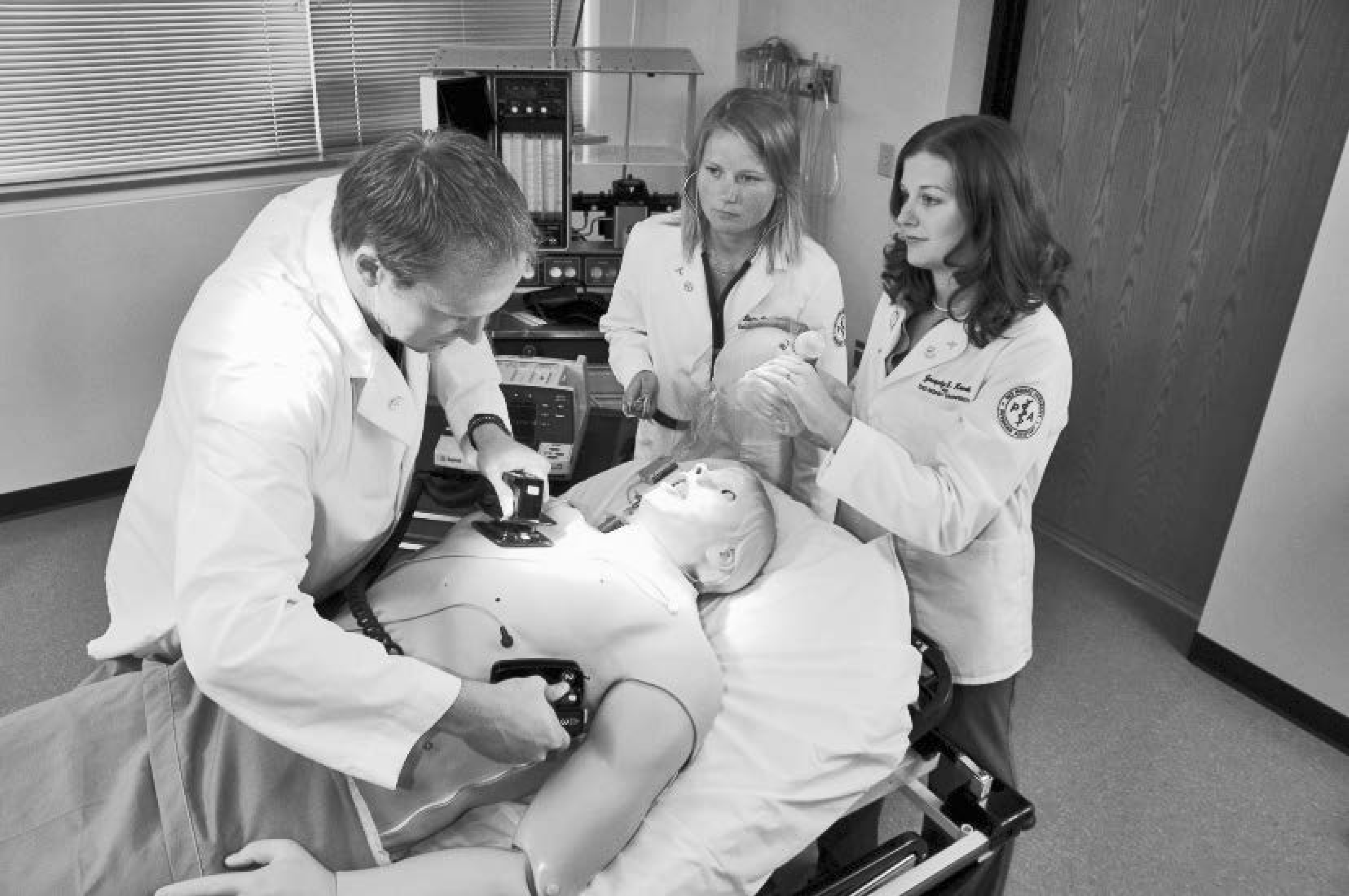
Des Moines University (DMU) has devoted 15,000 square feet of floor space to the Iowa Simulation Center located on campus. This facility is used as the DMU simulation center and contains a surgical skills laboratory, a basic life support laboratory, and a standardized performance assessment laboratory while also dedicating 3,500 square feet to the simulation laboratory that can be used for simulating and debriefing cases. The Iowa Simulation Center is used to help train DMU students in the osteopathic, podiatric medical, physician assistant, and physical therapy programs. Students are able to use any of DMU's five high-fidelity medical mannequins, including one birthing mother, one infant, one adolescent, and two adult mannequins [14]. The high-fidelity mannequins are SimMan 3G simulators (Laerdal Medical, Wappingers Falls, New York) that are full-body models that can produce reactive pupils, working tear ducts, lung sounds, heart sounds, pulses, and intravenous access, among other effects (Fig. 1). These physiologic effects can be changed by the use of computers at the technical coordinator's will to make the experience as close to realistic as possible. Any time physiologic changes are made, the mannequin will change accordingly, and a monitor that students have access to will show changes in vital signs and electrocardiographic traces.
Figure 1.
An example of a mannequin used during a simulated case scenario. (Photo reprinted with permission from University of Des Moines Library Archives.)
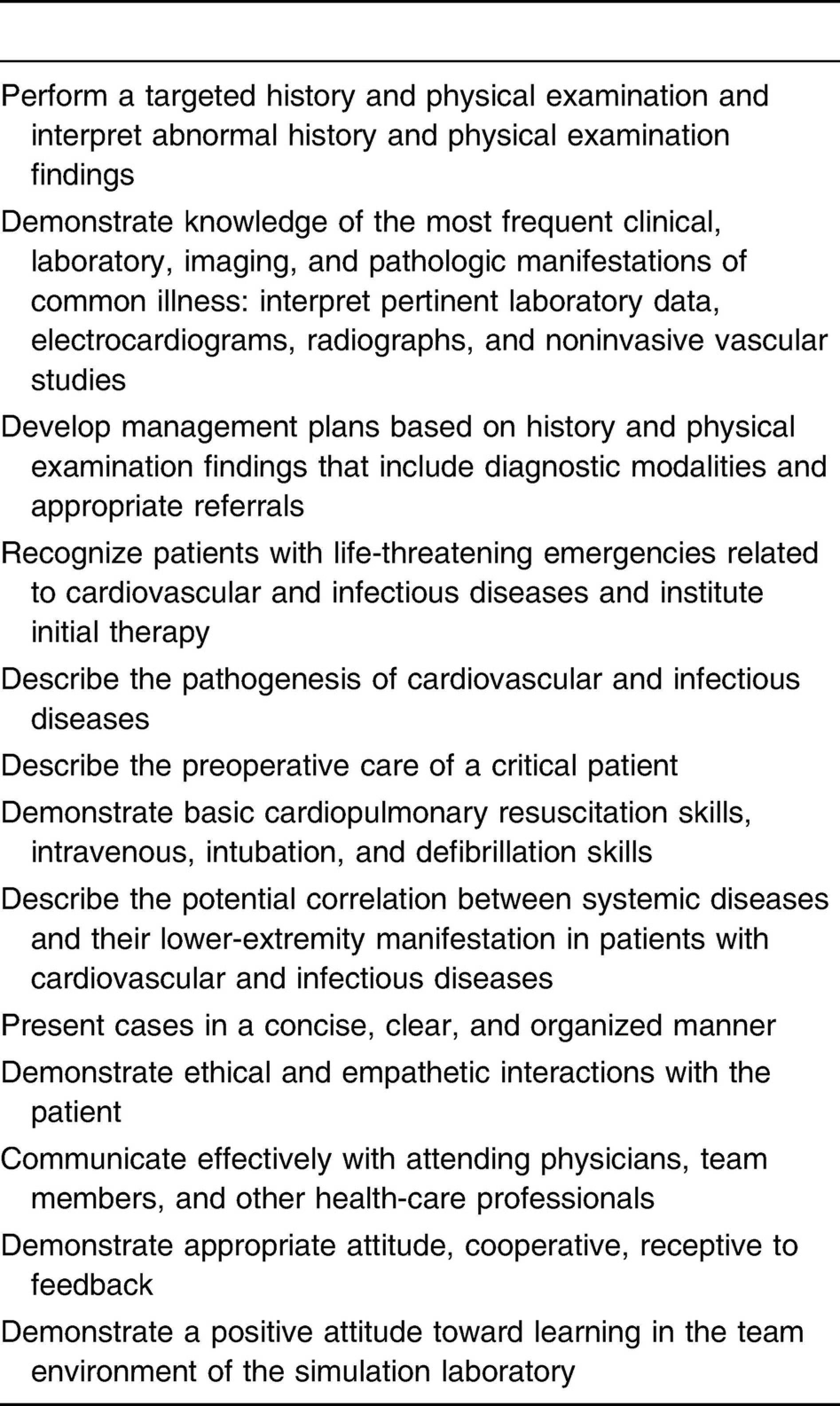
The DMU College of Podiatric Medicine and Surgery currently includes simulation in its 4-year curriculum in various stages. First-year podiatric medical students experience approximately 5 hours of exposure to simulation to reinforce basic science lecture content and during their basic life support training. Second-year podiatric medical students receive 14 hours of exposure to simulators. Students are taught eight individual systems during their second year, such as the renal, cardiovascular, and respiratory systems. At the end of each system, the students receive a 1-hour interactive simulation lecture where a mannequin is brought into the classroom and they review common clinical cases for that specific system. Second-year students also receive two heart sound lectures with a mannequin, followed by a practical examination, for a total of 3 more hours of exposure. One hour of simulation is devoted to a heart and lung sound laboratory, and two simulation cases are also provided. Third-year students receive a 2-week rotation at the simulation laboratory in which they cover ten core cases over a 12-hour period. Each case can take approximately 30 minutes, followed by a debriefing session with supervising clinical faculty. Students are put in groups of three to four students per case, each having a certain responsibility. For example, there is typically a team leader, a history taker, a student in charge of physical examinations, a student responsible for performing ordered procedures, and a faculty member as a recorder. These core cases are varied and are based on common situations seen in clinical medicine. Skills required for each case are techniques and procedures already taught to the students previously in the curriculum. Examples of these cases may include chest pain, trauma, asthma, abdominal discomfort, and various others that allow for a broad spectrum of differential diagnoses. Students are evaluated based on specific expectations (Table 1). At the end of the 2-week rotation, students are required to all fill out an evaluation of the simulation experience.
Table 1.
Expectations of Third-Year Podiatric Medical Students for Simulation Rotation
Although there has been an increase in publications related to simulation, more emphasis needs to be placed on the effectiveness of high-fidelity simulation [7,8,10]. We analyze the perceptions that podiatric medical students have of simulation after completing a third-year simulation rotation while also attempting to influence the podiatric medical community to increase the number of studies to help test the effectiveness of simulation in the podiatric medical curriculum.
Methods
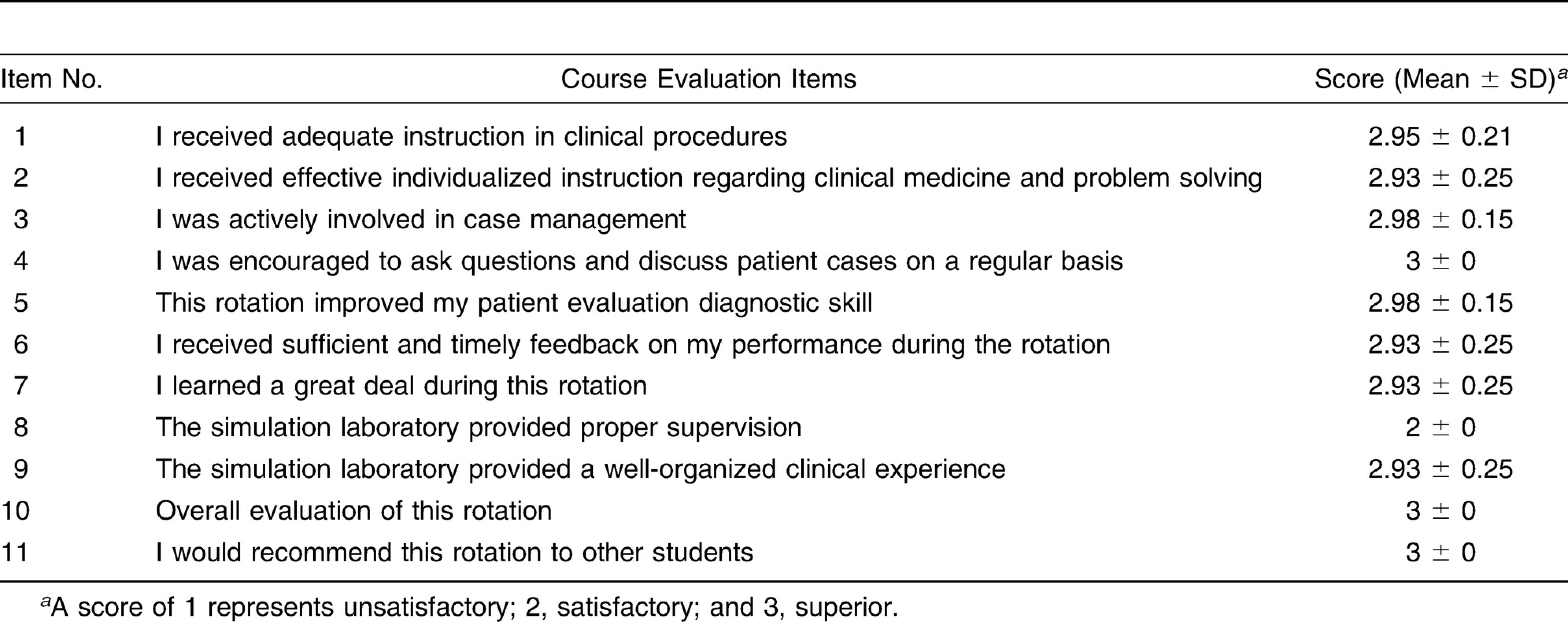
Forty-four third-year podiatric medical students at DMU College of Podiatric Medicine and Surgery completed evaluations of the simulation laboratory rotation that used the Laerdal SimMan 3G mannequin models during the 2011-2012 academic year. The student rotation evaluation is designed to allow the student to rate his or her experience during the rotation. The evaluation consists of two separate components. The first portion includes 11 questionnaire items through which students indicate the extent of their satisfaction with each item on a 9-point scale, with 1 representing unsatisfactory and 9 representing superior. For the purpose of this study, the 9-point scale items were recoded to a 3-point scale, with 1 representing unsatisfactory, 2 representing satisfactory, and 3 representing superior (Table 2). The recoding of scales has been completed successfully in previous research [15]. The second part of the evaluation solicited written comments to three questions that were posed to the students regarding ways to improve the rotation and weaknesses and strengths of the rotation. Students were also able to provide additional comments.
Table 2.
Descriptive Statistics for Student Rotation Evaluations Using a Recoded 3-Point Scale
The analysis relied on a mixture of the scale items and a textual analysis of the students' written comments. Basic descriptive statistics are used to summarize student responses to an 11-item questionnaire that measured students' feelings about their experiences in the simulation laboratory. Qualitative analysis was then performed on the second portion of the rotation evaluation by a technique inspired by Malterud [16] and Gordon et al [4]. Comments from the evaluation were recorded and then coded into themes based on similar properties and characteristics that the comments shared.
Results
Descriptive statistics used to analyze responses to the first portion of the rotation evaluations are shown in Table 2. The overall high ratings show a general conception that the simulation rotation was well liked. All 44 students rated the overall simulation rotation as being superior. There was a 2.98 average response score by the students to the item stating that simulation improves the student's patient evaluation diagnostic skills. This shows the students' perception toward this rotation as having a superior educational strategy for improving diagnostic skills. The third-year students also agreed that they learned a great deal from the simulation rotation by giving a 2.93 average rating score to this item.
The qualitative analysis in the second portion of the rotation evaluations is reported in Table 3. The strength of simulation providing a realistic environment was commented on by 11 students as being one of the major strengths of their simulation experience. One third-year student stated, “A strength of this rotation is that we run cases that we will probably be presented with later in our career, so this helps us to prepare for those situations.” The second most common comment regarding the strengths of the simulation rotation was that it provides hands-on experience for the student. In one example, a student replied to the evaluation question asking for strengths of the rotation by answering, “The hands-on nature and opportunity to directly apply classroom knowledge to a more real-world scenario.”
Table 3.
Analysis of the Coded Responses of 44 Podiatric Medical Students by Themes
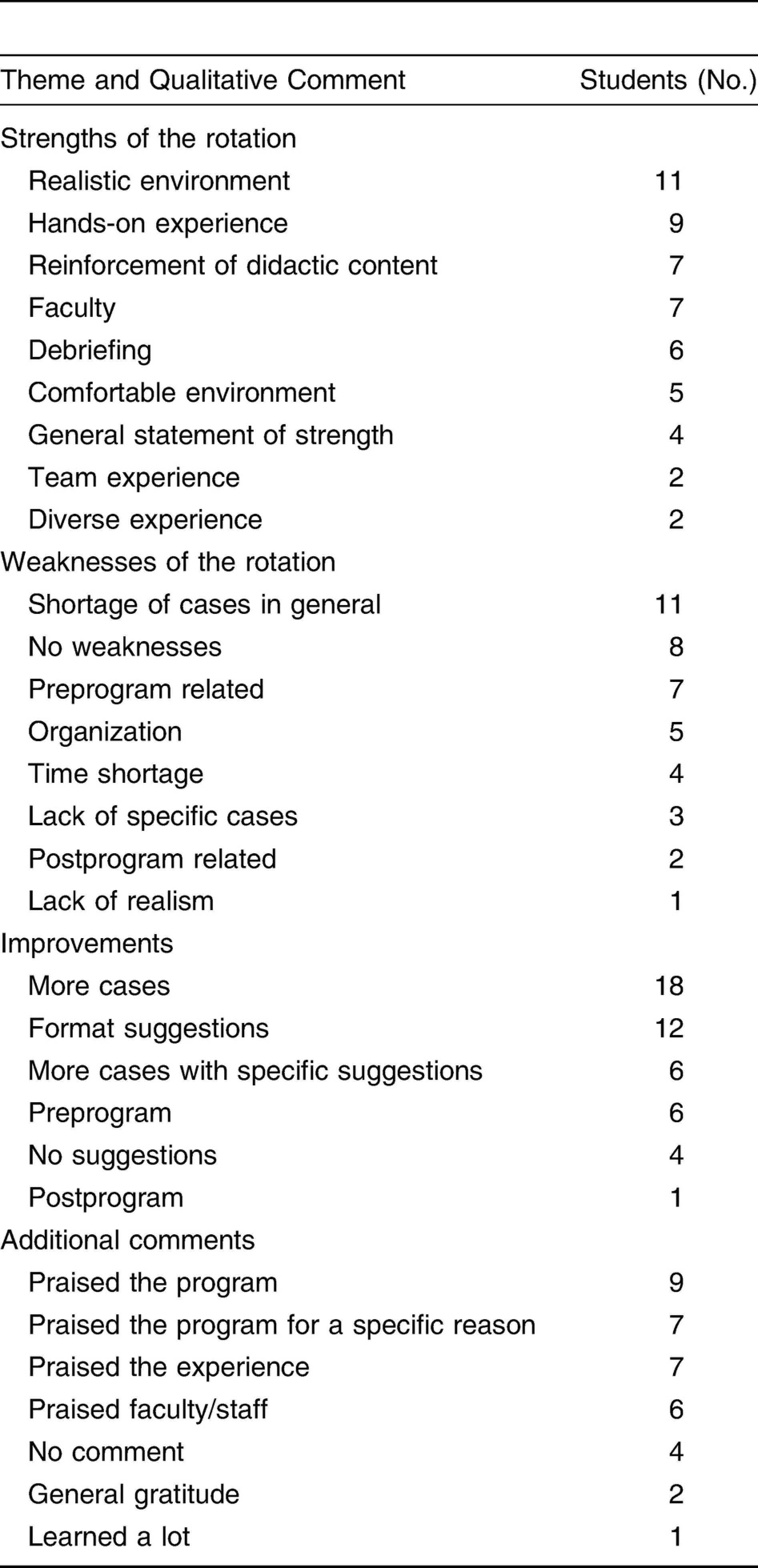
The desire for more cases and more time in the simulation laboratory was a common issue in the responses to not only weaknesses but also ways to improve the 2-week simulation rotation. Some comments made included, “Just increase the number of cases, I learn by experiences” and “Not enough time is spent with this rotation.” Only one comment was made about the lack of realism during the simulation experience: “The only way that this rotation would be better was if the situations were more realistic. However, I understand the limits of the lab and I am also thankful that the situations aren't more realistic in some circumstances.”
Of the additional comments made, 23 praised the program in general, praised the program for a specific reason, or praised the experience: “It was a good rotation; I learned a lot and began feeling more and more comfortable in the case scenarios.”
Discussion
It is unavoidable that a medical trainee will sometimes make an error diagnosing or treating a patient, but it is important that the error itself and the volume of errors are minimized to abide by the ethical imperative to first do no harm [1]. The publication To Err Is Human is a cornerstone in bringing public attention to the many preventable mistakes in medicine [17] and has helped force health-care institutions to find new ways to protect patient safety [18]. The Institute of Medicine concluded that it is not acceptable for patients to be harmed by the health-care system, and it reacted by suggesting the need for movement toward enhancing team-based medical care [17]. Teamwork in medicine is critical for quality health care, and by enhancing teamwork it increases coordination and communication among multidisciplinary team members and ultimately leads to improved patient safety [19]. Simulation may be able to play a key role in increasing interprofessional team-based training and has proved to be an effective clinical teamwork exercise [5,6]. Two students from the third-year simulation rotation expressed this by citing teamwork experience as a strength of the simulation laboratory. Simulation allows for realistic practice in a teamwork environment and for the recognition of where certain communication errors might occur [6].
Among the many appealing benefits that make simulation attractive to medical institutions is that it provides medical trainees the ability to practice a new technique or treatment without the fear of harming the patient [4]. The student perception covering this simulation rotation showed us that a comfortable environment is a common strength of simulation. If the students were to harm the patient simulator, the scenario can still be allowed to continue. Learning from these types of errors benefits the trainees by allowing them to experience the consequences of that error, which otherwise would be ethically erroneous in a real clinical experience with a supervisor [7]. The debriefing techniques of the simulation laboratory were also suggested as a strength in this study and are useful in enhancing clinical education by allowing students to reflect on their mistakes [8,9]. Learning a new procedure can now be completed at the trainee's own pace; the clinical experience can be manipulated to boost the skills of an individual who is struggling in a specific clinical area or with a certain technique [8]. Simulation also allows training scenarios to be created immediately and decreases the issue of waiting to see a real patient with a specific problem [3]. Another benefit that was addressed by the students' comments is that simulation provides a way to transform skills learned in the classroom to a real clinical setting [8,18].
Although simulation seems to be a great solution in clinical teaching, there are still several factors that prevent it from being used in medical education. One of these factors includes simulation cost-effectiveness. The cost of these high-fidelity simulators can be very expensive, ranging from $30,000 to more than $200,000, while also needing to factor in the costs of creating a real-world setting [20]. These costs, among other factors, can scare away medical institutions from making the commitment to include simulators into their educational programs. For some institutions, lower-fidelity simulation may be a more cost-effective route. If training a certain task can be completed by a less expensive, low-fidelity simulator, then there is no need for spending more on a high-fidelity simulator. A study conducted by Frost and Sullivan [21] discovered that costs can be reduced by implementing simulation. These savings accrue from a decrease in required instructor time and expenses, reduced operating room time, error reduction, students reaching competency quicker, and saving on alternative training costs, such as cadavers and animal models, allowing the initial cost of the simulator to be paid back within 170 days [21]. For these reasons, cost efficiency has emerged as a benefit in medical simulation [18,22].
One drawback of simulation is that it is unable to enhance the one-on-one patient-clinician interaction that would be present with a real patient owing to the simulator not being able to communicate as well [18]. A student from this study commented on this by mentioning that a weakness of the simulation experience was a lack of realism in certain cases. This brings up the concern that during training, physicians will lose the humanistic component of their medical practice [18]. It is important to note that simulation is not meant to replace clinical training but to be used as a supplemental training technique to enhance clinical skills without potential risk. This way, patient-clinician interaction does not have to be sacrificed with the implementation of simulation into a curriculum.
There is a lack of scientific evidence proving the efficacy of simulation in medical curricula, and it is imperative that more research and evaluation of this educational method are completed [7,8,10]. Issenberg et al [10] performed a meta-analysis by reviewing 109 studies that were related to high-fidelity medical simulation. It was determined that high-fidelity simulation can facilitate learning under certain conditions, including providing feedback, repetitive practice, curriculum integration, range of difficulty level, and clinical variation [10]. Evaluating the effectiveness of simulation is still a challenge though, and a small percentage of articles from the study by Issenberg et al were proved to have “clear” and “true” outcomes [10]. This shows that although there has been an increase in publications related to simulation, more emphasis needs to be placed on the outcomes of these studies [8]. Proving high-fidelity simulation effectiveness remains a challenge and requires increases in the volume, quality, and variety of literature to accomplish this task [7,8,10].
Conclusions
When the meta-analysis by Issenberg et al [10] took place, most high-fidelity simulation articles were published in surgical, biomedical engineering, and anesthesiology journals. As the scope of the use of simulation in medical education expands, more studies need to investigate other areas of the practice to examine the effectiveness of simulation in a given individual field. Our study showed that the student perception of simulation in a podiatric medical curriculum is that simulation is enjoyable and helpful. Students enjoy simulation as an educational tool because it helps enhance their clinical skills while also applying their didactic education into a practical experience. It was made clear that students want more cases and time in the simulation laboratory to continue increasing their medical skills. From here it is necessary to try to develop studies that address the validity of simulation in a podiatric medical curriculum and further test its effectiveness as an educational tool.
Acknowledgment
The staff at the Iowa Simulation Center at DMU for their assistance with the manuscript.
Financial Disclosure
None reported.
Conflict of Interest
None reported.
References
- ZivA, WolpeP, SmallS, et al: Simulation-based medical education: an ethical imperative. Acad Med78: 783, 2003.
- Merriam-Webster: Free Merriam-Webster Dictionary, 2012. Available at: http://www.merriam-webster.com/dictionary/simulation. Accessed June 4, 2012.
- MaranN, GlavinR: Low- to high-fidelity simulation: a continuum of medical education?Med Educ37: 22, 2003.
- GordonJ, WilkersonW, ShafferD, et al: “Practicing” medicine without risk: student's and educators' responses to high-fidelity patient simulation. Acad Med76: 469, 2001.
- ShapiroM, MoreyJ, SmallS, et al: Simulation based teamwork training for emergency department staff: does it improve clinical team performance when added to an existing didactic teamwork curriculum. Qual Saf Health Care13: 417, 2004.
- DeVitaM, ShaeferJ, LutzJ, et al: Improving medical emergency team (MET) performance using a novel curriculum and a computerized human patient simulator. Qual Saf Health Care14: 326, 2005.
- ZivA, Ben-DavidS, ZivM: Simulation based medical education: an opportunity to learn from errors. Med Teach27: 193, 2005.
- BradleyP: The history of simulation in medical education and possible future directions. Med Educ40: 254, 2006.
- SavoldelliG, NaikV, ParkJ, et al: Value of debriefing during simulated crisis management. Anethesiology105: 279, 2006.
- IssenbergS, McGaghieW, PetrusaE, et al: Features and uses of high-fidelity medical simulations that lead to effective learning: a BEME systematic review. Med Teach27: 10, 2005.
- MuscarellaVJ: The use of patient simulators in podiatric medical/surgical education. Clin Podiatr Med Surg24: 57, 2007.
- ConwayFJ, BocSF, DacusJB: Diagnosis of a computer-simulated podiatric patient. JAPMA81: 181, 1991.
- 13.MendelS, CurtisD, PageJC: Interprofessional podiatric surgical simulation: a pilot study. JAPMA105: 331, 2015.
- Des Moines University: Simulation lab, 2012. Available at: http://www.dmu.edu/simulation-center/simulation-lab. Accessed June 11, 2012.
- NusbaumM, GambleG, SkinnerB, et al: The high prevalence of sexual concerns among women seeking routine gynecological care. J Fam Pract49: 229, 2000.
- MalterudK: Shared understanding of the qualitative research process: guidelines for the medical researcher. Fam Pract10: 201, 1993.
- KohnLT, CorriganJM, DonaldsonMS(eds): To Err Is Human: Building a Safer Health System, National Academy Press, Washington, DC, 1999.
- KunklerK: The role of medical simulation: an overview. Int J Med Robot2: 203, 2006.
- BakerD, DayR, SalasE: Teamwork as an essential component of high-reliability organizations. Health Serv Res41: 1576, 2006.
- RodgersD: “Development of Manikin-Based Patient Simulation Technology,”inHigh-Fidelity Patient Simulation: A Descriptive White Paper Report, edited byDRodgers, p4, Healthcare Simulation Strategies, Charleston, WV, 2007.
- “Return on Investment Study for Medical Simulation Training,”Immersion Medical, Inc and Frost and Sullivan, Palo Alto, CA, 2004. Available at: http://www.healthleadersmedia.com/content/138774.pdf. Accessed May 27, 2015.
- GordonJ, OriolN, CooperJ: Bringing good teaching cases “to life”: a simulator-based medical education service. Acad Med79: 23, 2004.
© 2015 American Podiatric Medical Association