


Abstract
Background: Randomized trials must be of high methodological quality to yield credible, actionable findings. The main aim of this project was to evaluate whether there has been an improvement in the methodological quality of randomized trials published in the Journal of the American Podiatric Medical Association (JAPMA). Methods: Randomized trials published in JAPMA during a 15-year period (January 1999 to December 2013) were evaluated. The methodological quality of randomized trials was evaluated using the PEDro scale (scores range from 0 to 10, with 0 being lowest quality). Linear regression was used to assess changes in methodological quality over time. Results: A total of 1,143 articles were published in JAPMA between January 1999 and December 2013. Of these, 44 articles were reports of randomized trials. Although the number of randomized trials published each year increased, there was only minimal improvement in their methodological quality (mean rate of improvement = 0.01 points per year). The methodological quality of the trials studied was typically moderate, with a mean ± SD PEDro score of 5.1 ± 1.5. Although there were a few high-quality randomized trials published in the journal, most (84.1%) scored between 3 and 6. Conclusions: Although there has been an increase in the number of randomized trials published in JAPMA, there is substantial opportunity for improvement in the methodological quality of trials published in the journal. Researchers seeking to publish reports of randomized trials should seek to meet current best-practice standards in the conduct and reporting of their trials..
Scientific journals such as the Journal of the American Podiatric Medical Association (JAPMA) publish studies that investigate a variety of interventions. Readers of the journal need to be confident that the findings of these studies can be believed. Journals have a responsibility to disseminate good-quality research that provides valid findings.[1] Equally, they also have a responsibility to filter out poor-quality research that provides findings that are not valid. Accordingly, journals should aim to publish studies that provide the highest level of evidence possible.
More than a decade ago, Turlik and Kushner[2] found that most articles in two podiatric medical journals—JAPMA and the Journal of Foot and Ankle Surgery—provided only low-level evidence (eg, case series or case studies). Of the articles they reviewed, only 1% provided level 1 evidence, which they defined as randomized trials or meta-analyses of randomized trials. Porthouse and Torgerson[3] raised a similar issue in 2004 after they searched the Cochrane database for randomized trials in podiatric medicine and found only six since 1997. They also found that the methodological quality of the trials was variable and concluded that the practice of podiatric medicine is not adequately informed by high-quality evidence, and they called for more high-quality randomized trials to be undertaken in podiatric medical research. Since then, there have been several letters to the editor in foot and ankle journals regarding poor clinical trial methods and reporting, with suggestions on how to improve methodological quality.[4-11]
The randomized controlled trial is generally considered the gold standard method by which to evaluate the effectiveness of an intervention.[12] The randomized trial sits at the pinnacle of the evidence hierarchy because it can provide unbiased estimates of the effectiveness of interventions.[13] Properly conducted randomized trials provide the most credible findings of all trial designs. However, poorly conducted trials are prone to confounding and may be seriously biased, compromising credibility.[14] That is, the effectiveness of the intervention being evaluated may be overestimated (or sometimes underestimated) by poor-quality trials.[15] The unfortunate consequence of low-quality trials may be that clinicians do not adopt treatments that do work or may adopt treatments that do not work or worse still, that cause harm.
To assist investigators in their efforts toward better trial design, there have been several positive developments. Clinical trial registries, methodological evaluation instruments, and guidelines have been developed in the past two decades to address this issue. For example, quality scales such as the PEDro scale have been established to evaluate the internal validity (or methodological quality) of randomized trials.[16] By considering the items in a scale such as the PEDro scale, investigators can better plan high-quality, valid research.
However, little is known about the current state of clinical trial methodological quality in foot and ankle journals and whether quality has improved. It is timely, therefore, to reflect on the quality and reporting of randomized trials in JAPMA. The main aim of this study was to evaluate whether there has been an improvement in the methodological quality of randomized trials published in the journal.
Methods
This study assessed articles that have reported findings from randomized trials in JAPMA. Randomized trials published in the journal were evaluated for their methodological quality during a 15-year period (January 1999 to December 2013).
Sourcing Articles
The Contents pages of JAPMA were searched for randomized trials published in the journal between 1999 and 2013. This was supported by a systematic search of the journal using the online search function; the search term randomized was searched for in titles and abstracts between January 1999 and December 2013. Articles were included if the authors stated that the study was a randomized trial (or randomized controlled trial or randomized clinical trial), or, if this was not explicitly stated, participants were randomly allocated to one of two (or more) intervention groups. Randomized crossover trials were also included in the analysis. Retrospective evaluations, trials where multiple interventions were evaluated in a random order on the same participants on the same day (ie, without prospective evaluation), single-subject experimental studies (also called n-of-1 studies), and trials that were not conducted on humans were excluded. Initially, titles and abstracts of articles were searched, and then the full text version of the article was evaluated.
Evaluation Instruments
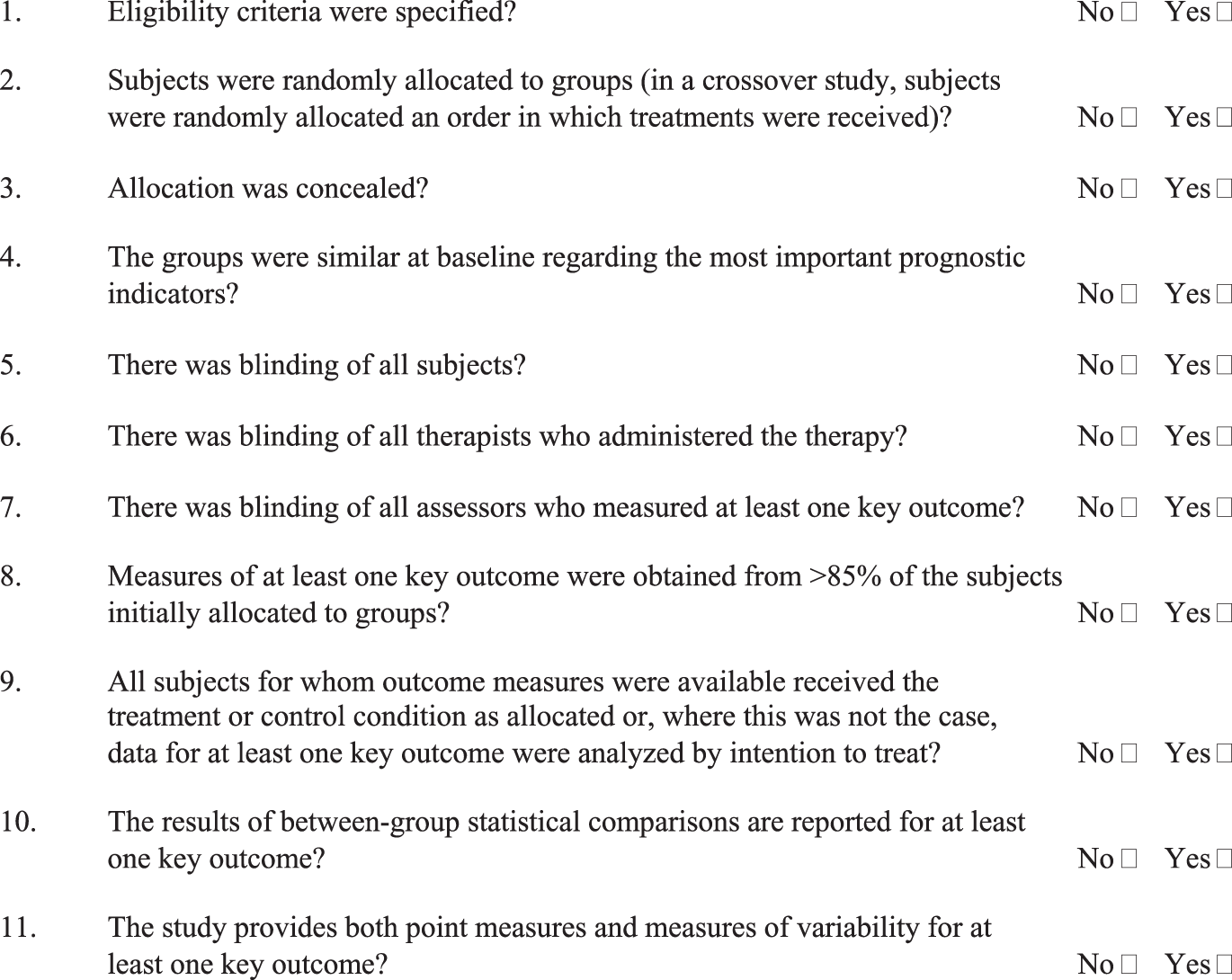
Methodological quality was measured using the PEDro scale, which is a widely used assessment tool for rating randomized trials (Fig. 1).[16] It has been found to be a valid and reliable instrument to evaluate the internal validity and statistical interpretability of parallel-group randomized trials.[17-19] The PEDro scale consists of 11 items (Fig. 1). Item 1 is not included in the overall score (range, 0–10 points). Item 1, unlike the other ten items, relates to external validity or generalizability of the sample. Each item (phrased as a question) is answered yes or no depending on whether the trial clearly achieved the specified requirement. A score of 10 indicates that the trial satisfied the maximum number of items, and a score of 0 indicates that the trial satisfied no items. High scores signify that the trial has good internal validity and statistical interpretability, which is suggestive of a minimum of confounding and bias and, consequently, more credible findings. Low scores signify that the trial has low internal validity and statistical interpretability, which is suggestive of more serious threats of confounding and bias and, consequently, less credible findings.
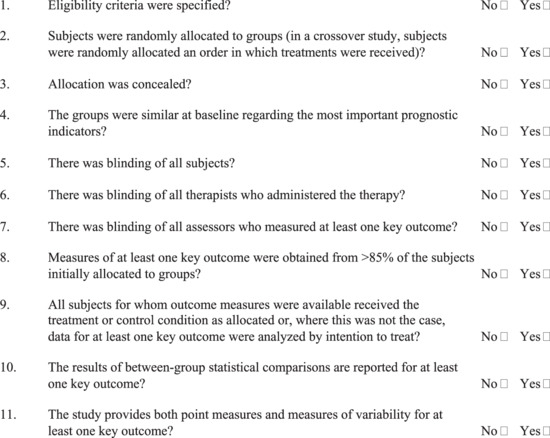
Figure 1.
The PEDro scale (note that item 1, which relates to external validity, is not counted in the overall score, which ranges from 0 to 10).
Data Analysis
The number of reports of randomized trials and the number of all articles published each year were determined. When counting the total number of articles published each year, we did not include introductions to special issues/series of articles, book reviews, letters to the editor, “What’s Your Diagnosis?,” reports of meetings, guidelines for authors, or President’s Messages.
All of the data were considered to be continuous.[19] Data are presented as mean ± SD, and ranges are also presented where appropriate. Scores were plotted over time using a scatterplot, and a line of best fit was applied to the data. Linear regression was used to determine whether PEDro scores had improved during the 15-year data collection period. An r value was calculated to quantify the linear relationship of the independent variable (year) with the dependent variable (PEDro score). A corresponding r2 value was calculated to determine the extent that the year of publication explained variance in the PEDro scores.
Results
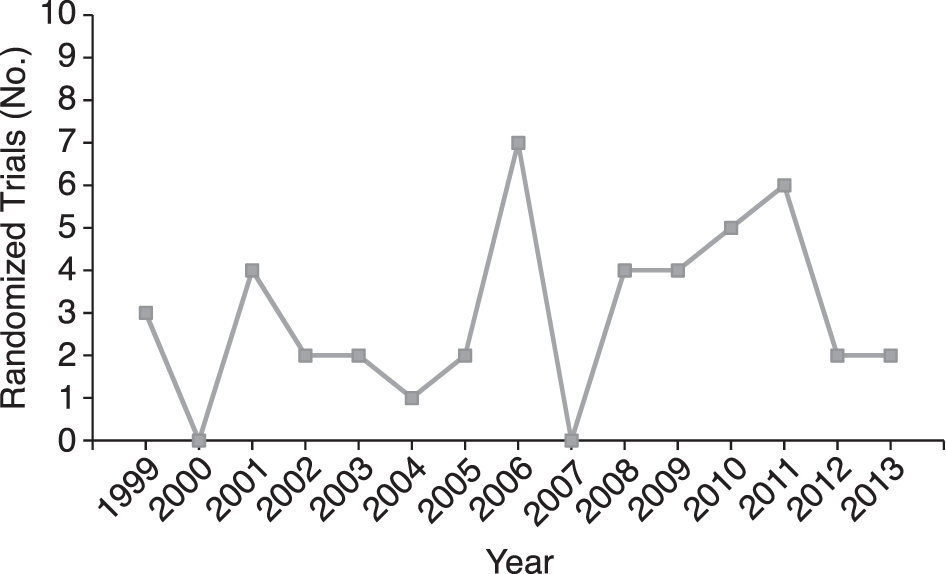
A total of 1,143 articles were published in JAPMA between January 1999 and December 2013. Of these, 44 articles were reports of randomized trials, equating to 3.8% of all articles published. Figure 2 illustrates the number of randomized trials published in each year during the 15-year data collection period. There was an increase in the number of randomized trials published in the journal during the 15-year data collection period: there were 11 randomized trials published in the journal during 1999 to 2003, 14 during 2004 to 2008, and 19 during 2009 to 2013.
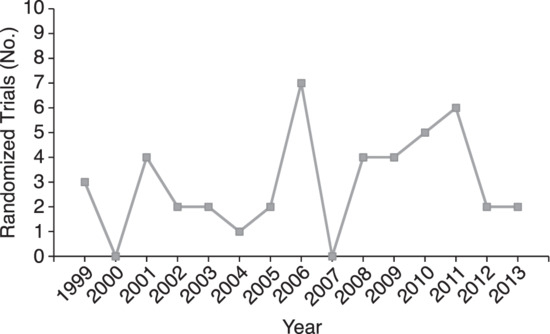
Figure 2.
Number of randomized trials published in the journal each year that study data were collected (ie, 1999–2013).
When considered as a percentage of all of the articles published in the journal, there has also been an increase. Again, when 5-year periods are considered, 2.9% of articles published in the journal during 1999 to 2003 were randomized trials, 3.6% during 2004 to 2008, and 5.1% during 2009 to 2013, indicating an increase in the percentage of randomized trials relative to all articles published.
Of the randomized trials included in the analysis, the first author was from the United States in 65.9% (29 of 44 trials). For the remaining trials, the first authors were from Australia, 9.1% (4 of 44); England, 6.8% (3 of 44); Turkey, 6.8% (3 of 44); Canada, 2.3% (1 of 44); Germany, 2.3% (1 of 44); Hong Kong, 2.3% (1 of 44); Italy, 2.3% (1 of 44); and Spain, 2.3% (1 of 44). First authors were a doctor of podiatric medicine in 54.5% of trials (24 of 44), with the rest of the first authors being a combination of podiatric physicians qualified in other countries, physical therapists, medical physicians, chiropractors, orthopedic surgeons, and scientists.
Regarding funding, 50.0% of trials (22 of 44) were supported by some type of industry funding (not all of these were funded by a company whose product was being evaluated), 31.8% (14 of 44) were funded by a company whose product was being evaluated, and 22.7% (10 of 44) declared that one or more authors had been paid as a consultant or speaker for the company whose product was being evaluated. Only 15.9% of trials (7 of 44) specified the sample size required to adequately power the trial, and only one trial specified that the trial was registered with a recognized clinical trial registry.
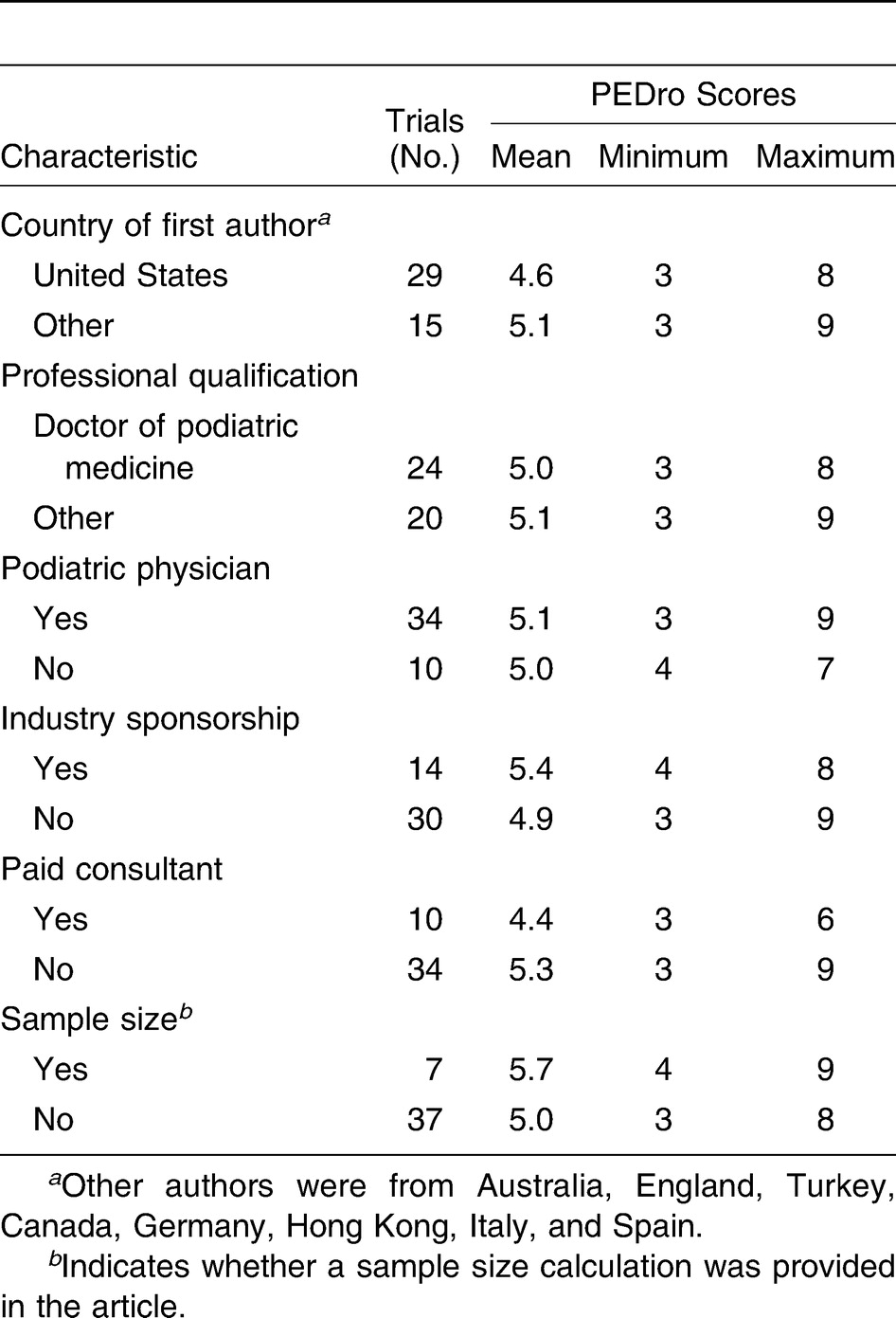
PEDro scores for the randomized trials included in the study (Table 1) were typically moderate, with a mean ± SD score of 5.1 ± 1.5. The range of scores was from 3 to 9 (of a possible 10), but 84.1% of the trials (37 of 44) scored in the range of 3 to 6, which is indicative of only low-to-moderate quality (Fig. 3). Only 6.8% of the trials (3 of 44) scored greater than 8, which is considered to be high quality. Table 2 presents PEDro scores relative to author and trial characteristics.
Table 1.
PEDro Scale Item Scores and Total Scores for All 44 Randomized Trials Included in the Study
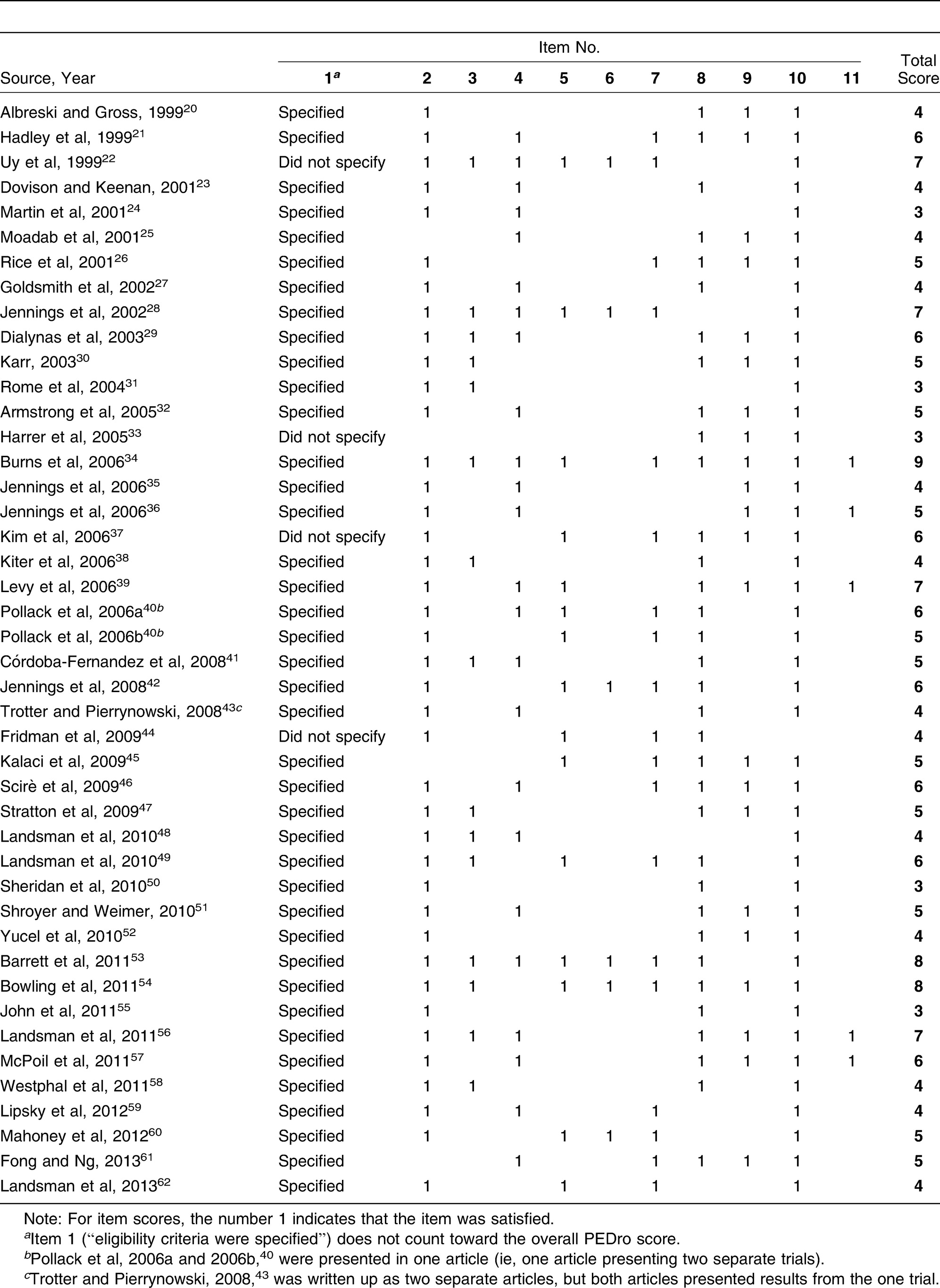
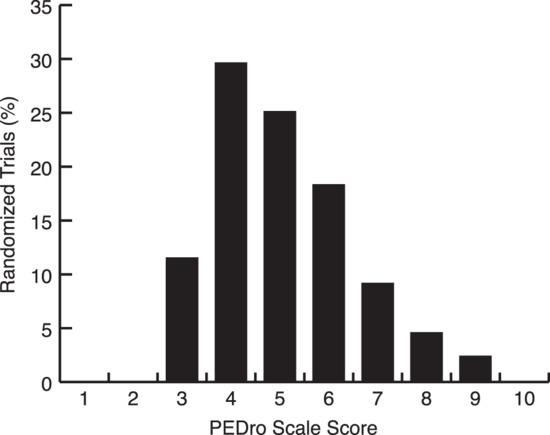
Figure 3.
Distribution of PEDro scores for all 44 randomized trials analyzed in the study. Note that 84.1% of the randomized trials scored in the range of 3 to 6 (ie, low-to-moderate quality), and only 6.8% of trials scored 8 or 9 of a possible 10 (ie, high quality).
Table 2.
PEDro Scores Relative to Author and Trial Characteristics
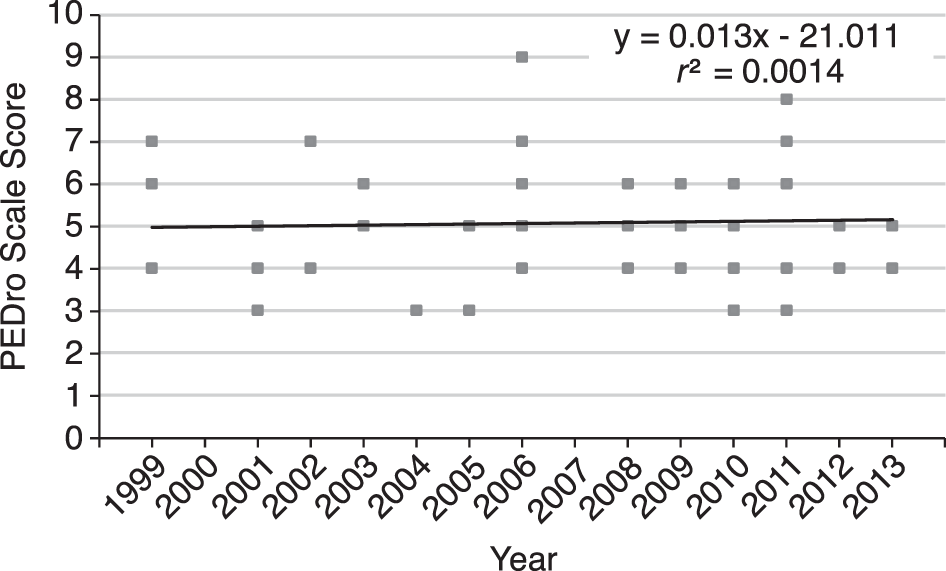
The regression analysis shows that there has been minimal improvement in methodological quality of the randomized trials published in JAPMA. On average, the PEDro score increased by just 0.01 points per year (of a possible 10 points). The r2 value is 0.0014, which indicates that the year of publication explained only 0.14% of the variance in PEDro scale scores. This means that there was only a very weak linear relationship between year and score (Fig. 4).
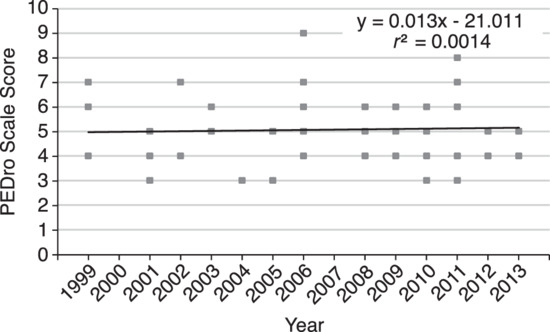
Figure 4.
Scatterplot with trendline of PEDro scale scores for the 44 randomized trials published in each year of the journal that study data were collected (ie, 1999–2013). Note that some years have two or more data points superimposed on top of each other because there may be two or more trials with the same score in that year.
Discussion
The number of randomized trials and their percentage of all articles published in JAPMA are small but increasing. Of concern, however, we found that the methodological quality of the randomized trials published was typically only moderate (mean, 5.1), with only minimal improvement with time. Such a small improvement—only 0.01 point per year—would not translate into more credible findings being published in the foreseeable future. To our knowledge, this is the first time that empirical evidence, using a validated instrument, has shown that the methodological quality of randomized trials in the journal is only moderate and not improving appreciably.
In 2000, Turlik and Kushner[2] found that only 1% of articles in the podiatric medicine journals were randomized trials or meta-analyses of randomized trials, so it is promising to find that the percentage for JAPMA seems to be increasing (5.1% of articles were randomized trials for 2009–2013). However, it is clear from the data presented in this study that although the number (and percentage) of randomized trials published in JAPMA is increasing, improvements in the methodological quality of these trials has not kept pace.
Although the mean PEDro score in this study is indicative of only moderate quality, there were three trials[34,53,54] that scored high (ie, 8 or 9 of a possible 10) on the PEDro scale, which signifies higher quality from a methodological standpoint and more credible findings. However, most trials (84.1%) scored between 3 and 6, which indicates low-to-moderate quality and, as a consequence, less credible findings. These data further support that the methodological quality of randomized trials published in the journal is suboptimal and improving at only an extremely slow rate. This is somewhat disappointing given that there have been several calls for better methodological quality and reporting of clinical trials in foot and ankle journals during the past 12 years.[4-7,9]
Suboptimal methodological quality of randomized trials is almost certainly not isolated to JAPMA or even to the podiatric medical profession. For example, similar methodological quality has been found in randomized trials relating to physical therapy practice using the PEDro database (of which some are related to podiatric medicine).[63] However, Turlik and colleagues[64] found that randomized trials published in podiatric medical journals, specifically, JAPMA and the Journal of Foot and Ankle Surgery, were less valid than those published in the mainstream medical journal Journal of the American Medical Association.
Suboptimal methodological quality is most probably a reflection of where the podiatric medical profession, and foot and ankle researchers more widely, are currently positioned relative to understanding how to undertake high-quality trials. Although it is commendable that randomized trials are being published in JAPMA, there is still some way to go before the overall quality of these trials is optimal. In light of these findings, there is room for improvement in methodological quality of randomized trials that are published in the journal. Although there is no single “recipe book” to guide the conduct of high-quality randomized trials, there are many textbooks that outline issues related to methodological quality that are relevant to randomized trials.[12,65-69]
The PEDro scale rates the main methodological and statistical issues that relate to the quality of randomized trials. Areas such as randomization, allocation concealment, similarity between groups at baseline, blinding, follow-up, intention-to-treat analysis, and statistical interpretability are evaluated by the scale. Although many of these issues (eg, randomization and allocation concealment) should be straightforward to achieve, others (eg, blinding) can be more difficult. For example, it is recognized that in trials of nonpharmacological interventions (eg, interventions involving rehabilitation or physical devices), blinding may be difficult, particularly blinding of participants and therapists providing the intervention.[70] Nevertheless, some nonpharmacological trials related to podiatric medicine have incorporated sham intervention or placebo arms into the trial,[34,71-75] so blinding can sometimes be achieved, which will assist in overall methodological quality. Whatever intervention a randomized trial evaluates, it is best that all methodological avenues be pursued to ensure the best quality possible.
There may also be other factors that influence the methodological quality of randomized trials in the journal. In a retrospective analysis of publication patterns published in JAPMA in 2002, Menz[76] found that there were two significant trends. First, there had been a gradual increase in the proportion of original research articles—the findings from the present study partially support this. Second, there had been a steady increase in the number of articles by authors outside the United States. Although we did not directly collect data on this, 34.1% of the randomized trials analyzed in this study were by authors from outside the United States.
To investigate some of these issues further, we also investigated whether any author or trial characteristics may have been associated with methodological quality. There were some differences that are worth noting. Trials where the first author was from outside the United States scored higher (mean, 5.1) compared with trials where the first author was from the United States (mean, 4.6). To an extent, this supports the finding by Menz[76] that authors from the United States were less likely than those from outside the United States to publish original research (28% versus 63%) and more likely to publish literature reviews (34% versus 23%) or case reports (38% versus 14%). He also found that doctors of podiatric medicine were less likely than physical therapists to publish original research (27% versus 81%) and more likely to publish literature reviews (31% versus 11%) and case reports (41% versus 7%). In addition, trials that were industry sponsored scored higher (mean, 5.4) than trials without industry sponsorship (mean, 4.9). This is somewhat of a counterintuitive finding given that industry sponsorship is frequently cited as compromising the findings of clinical trials. There have now been several systematic reviews that have shown that pharmaceutical company funding favors the sponsor’s interests.[77-80] However, because the average quality of trials in the present study was only moderate, any industry involvement, where clinical trial expertise may have been on offer, may have improved quality. The findings from a Cochrane Review found that industry sponsorship leads to more favorable results and conclusions, but this is suggestive of biases that are not reflected in standard methodological assessment tools (eg, tools that measure methodological quality issues).[81] Therefore, there may be biases other than purely methodological that need to be accounted for regarding industry sponsorship that can lead to more favorable findings. Trials where no author declared a paid consultancy with the company whose product was being tested also scored higher (mean, 5.3) compared with trials where an author or authors were paid consultants (mean, 4.4). Finally, trials that provided a sample size calculation scored higher (mean, 5.7) than trials that did not (mean, 5.0).
A limitation of this study is that we investigated only randomized trials in the 15-year period, up to 2013, so we cannot make wider inferences to trials that were published outside of these dates. Strengths of the study include that we used a valid and reliable quality assessment tool (the PEDro scale), we used a systematic search method to capture randomized trials, and the trials we analyzed represented those published over a relatively long period (15 years).
Conclusions
The number of randomized trials published in JAPMA has increased during the past 15 years; however, the methodological quality of these trials is typically only of moderate methodological quality. Furthermore, there has been only a minimal improvement in methodological quality during this period. Clearly, there is room for improved methodological quality in randomized trials published in the journal. Researchers seeking to publish reports of randomized trials in the journal should seek to meet current best-practice standards in the conduct and reporting of their trials.
Financial Disclosure
Dr. Menz is currently a National Health and Medical Research Council of Australia Senior Research Fellow (ID: 1020925). Dr. Herbert is a National Health and Medical Research Council of Australia Principal Research Fellow (ID: 1020622).
Conflict of Interest
Drs. Landorf and Menz are deputy-editor and editor-in-chief, respectively, of the Journal of Foot and Ankle Research. Dr. Menz is a contributing editor and Dr. Armstrong is a member of the editorial advisory board of JAPMA. Dr. Landorf is on the international advisory board of The Foot (International Journal of Foot Science) and the advisory board of the Australian Editorial Base of the Cochrane Musculoskeletal Group. Dr. Herbert is chair of the editorial board of the Journal of Physiotherapy. All of the authors have published articles in JAPMA, and Drs. Landorf and Armstrong have published articles previously in the journal on this topic and either serve as editors or are members of the Cochrane Collaboration. All of the authors have also published randomized trials in other journals unrelated to JAPMA.
References
- LandorfKB, MenzHB, BorthwickAM, et al: JFAR’s role in publishing believable research findings. J Foot Ankle Res6: 49, 2013.
- TurlikM, KushnerD: Levels of evidence of articles in podiatric medical journals. JAPMA90: 300, 2000.
- PorthouseJ, TorgersonDJ: The need for randomized controlled trials in podiatric medical research. JAPMA94: 221, 2004.
- LandorfKB: Re: a clinical longitudinal evaluation of pre-fabricated, semi-rigid foot orthoses prescribed to improve foot function by Springett et al. [Foot 17 (2007) 184-189]. Foot (Edinb)18: 120, 2008.
- ArmstrongDG, LaveryLA: A retrospective study of patients with diabetes mellitus after partial foot amputation and hyperbaric oxygen treatment [letter]. J Foot Ankle Surg45: 58, 2006.
- LandorfKB, MenzHB, RadfordJA: Effectiveness of extracorporeal shockwave treatment in 353 patients with chronic plantar fasciitis [letter]. JAPMA96: 269, 2006.
- LandorfKB: Cimetidine as a first-line therapy for pedal verruca [letter]. JAPMA96: 184, 2006.
- LandorfKB: Commentary: ensuring adequate reporting of randomized, controlled trials: the CONSORT Statement. JAPMA91: 435, 2001.
- LandorfKB: Extracorporeal shockwave therapy for interdigital neuroma: a randomized, placebo-controlled, double-blind trial [letter]. JAPMA99: 472, 2009.
- TurlikM: Cimetidine as a first-line therapy for pedal verruca [letter]. JAPMA95: 508, 2005.
- TurlikMA: Onychauxic dystrophic toenails requiring debridement in medicare patients. JAPMA94: 74, 2004.
- PocockSJ: Clinical Trials: A Practical Approach, John Wiley & Sons, New York, 1983.
- HerbertR, JamtvedtG, Birger HagenK, et al: Practical Evidence-Based Physiotherapy,Elsevier, Edinburgh,2011.
- LandorfKB: “Clinical Trials: The Good, the Bad and the Ugly,” in Research Methods in Health: Foundations for Evidence-based Practice, edited byPLiamputtong, p 252, Oxford University Press, Melbourne,2010.
- SchulzKF, ChalmersI, HayesRJ, et al: Empirical evidence of bias: dimensions of methodological quality associated with estimates of treatment effects in controlled trialsJ Am Med Assoc273: 408, 1995.
- PEDro: PEDro scaleAvailable at: http://www.pedro.org.au/english/downloads/pedro-scale. Accessed December 21, 2013.
- MaherCG, SherringtonC, HerbertRD, et al: Reliability of the PEDro scale for rating quality of randomized controlled trials. Phys Ther83: 713, 2003.
- BhogalSK, TeasellRW, FoleyNC, et al: The PEDro scale provides a more comprehensive measure of methodological quality than the Jadad scale in stroke rehabilitation literature. J Clin Epidemiol58: 668, 2005.
- de MortonNA: The PEDro scale is a valid measure of the methodological quality of clinical trials: a demographic study. Aust J Physiother55: 129, 2009.
- AlbreskiDA, GrossEG: The safety of itraconazole in the diabetic population. JAPMA89: 339, 1999.
- HadleyA, GriffithsS, GriffithsL, et al: Antipronation taping and temporary orthoses: effects on tibial rotation position after exercise. JAPMA89: 118, 1999.
- UyJ, JoyceA, NelsonJ, et al: Ammonium lactate 12% lotion versus a liposome-based moisturizing lotion for plantar xerosis: a double-blind comparison study. JAPMA89: 502, 1999.
- DovisonR, KeenanAM: Wound healing and infection in nail matrix phenolization wounds: does topical medication make a difference?JAPMA91: 230, 2001.
- MartinJE, HoschJC, GoforthWP, et al: Mechanical treatment of plantar fasciitis: a prospective study. JAPMA91: 55, 2001.
- MoadabA, RupleyKF, WadhamsP: Effectiveness of a nonrinse, alcohol-free antiseptic hand wash. JAPMA91: 288, 2001.
- RiceB, KalkerAJ, SchindlerJV, et al: Effect of biofeedback-assisted relaxation training on foot ulcer healing. JAPMA91: 132, 2001.
- GoldsmithJR, LidtkeRH, ShottS: The effects of range-of-motion therapy on the plantar pressures of patients with diabetes mellitus. JAPMA92: 483, 2002.
- JenningsMB, LoganL, AlfieriDM, et al: A comparative study of lactic acid 10% and ammonium lactate 12% lotion in the treatment of foot xerosis. JAPMA92: 143, 2002.
- DialynasM, HollingsworthSJ, CooperD, et al: Use of a needleless injection system for digital ring block anesthesia. JAPMA93: 23, 2003.
- KarrJC: External thermoregulation of wounds associated with lower-extremity osteomyelitis: a pilot study. JAPMA93: 18, 2003.
- RomeK, GrayJ, StewartF, et al: Evaluating the clinical effectiveness and cost-effectiveness of foot orthoses in the treatment of plantar heel pain: a feasibility study. JAPMA94: 229, 2004.
- ArmstrongDG, SangalangMB, JolleyD, et al: Cooling the foot to prevent diabetic foot wounds. JAPMA95: 103, 2005.
- HarrerJ, SchöfflV, HohenbergerW, et al: Treatment of ingrown toenails using a new conservative method. JAPMA95: 542, 2005.
- BurnsJ, CrosbieJ, OuvrierR, et al: Effective orthotic therapy for the painful cavus foot: a randomized controlled trial. JAPMA96: 205, 2006.
- JenningsMB, RickettiJ, GuadaraJ, et al: Treatment for simple plantar verrucae: monochloroacetic acid and 10% formaldehyde versus 10% formaldehyde alone. JAPMA96: 53, 2006.
- JenningsMB, PollakR, HarklessLB, et al: Treatment of toenail onychomycosis with oral terbinafine plus aggressive debridement: IRON-CLAD, a large, randomized, open-label, multicenter trial. JAPMA96: 465, 2006.
- KimPJ, BallingerLC, KushnerD: Effect of a nitroglycerin patch on perfusion to the foot in healthy subjects. JAPMA96: 318, 2006.
- KiterE, CelikbasE, AkkayaS, et al: Comparison of injection modalities in the treatment of plantar heel pain: a randomized controlled trial. JAPMA96: 293, 2006.
- LevyPD, HileDC, HileLM, et al: A prospective analysis of the treatment of friction blisters with 2-octylcyanoacrylate. JAPMA96: 232, 2006.
- PollakR, RaymondGA, JayRM, et al: Analgesic efficacy of valdecoxib for acute postoperative pain after bunionectomy. JAPMA96: 393, 2006.
- Córdoba-FernandezA, Rayo-RosadoR, Juarez-JiménezJM: Platelet gel for the surgical treatment of onychocryptosis. JAPMA98: 296, 2008.
- JenningsMB, LesczczynskiC, GoodwinS: The safety and efficacy of Pain Checker socks in the treatment of mild-to-moderate foot pain: a clinical trial. JAPMA98: 278, 2008.
- TrotterLC, PierrynowskiMR: The short-term effectiveness of full-contact custom-made foot orthoses and prefabricated shoe inserts on lower-extremity musculoskeletal pain: a randomized clinical trial. JAPMA98: 357, 2008.
- FridmanR, CainJD, WeilLJr: Extracorporeal shockwave therapy for interdigital neuroma: a randomized, placebo-controlled, double-blind trial. JAPMA99: 191, 2009.
- KalaciA, CakiciH, HapaO, et al: Treatment of plantar fasciitis using four different local injection modalities: a randomized prospective clinical trial. JAPMA99: 108, 2009.
- ScirèV, LeporatiE, TeobaldiI, et al: Effectiveness and safety of using Podikon digital silicone padding in the primary prevention of neuropathic lesions in the forefoot of diabetic patients. JAPMA99: 28, 2009.
- StrattonM, McPoilTG, CornwallMW, et al: Use of low-frequency electrical stimulation for the treatment of plantar fasciitis. JAPMA99: 481, 2009.
- LandsmanA, AgnewP, ParishL, et al: Diabetic foot ulcers treated with becaplermin and TheraGauze, a moisture-controlling smart dressing: a randomized, multicenter, prospective analysis. JAPMA100: 155, 2010.
- LandsmanAS, RobbinsAH, AngeliniPF, et al: Treatment of mild, moderate, and severe onychomycosis using 870- and 930-nm light exposure. JAPMA100: 166, 2010.
- SheridanL, LopezA, PerezA, et al: Plantar fasciopathy treated with dynamic splinting: a randomized controlled trial. JAPMA100: 161, 2010.
- ShroyerJF, WeimarWH: Comparative analysis of human gait while wearing thong-style flip-flops versus sneakers. JAPMA100: 251, 2010.
- YucelI, OzturanKE, DemiraranY, et al: Comparison of high-dose extracorporeal shockwave therapy and intralesional corticosteroid injection in the treatment of plantar fasciitis. JAPMA100: 105, 2010.
- BarrettSL, MaxkaJ, MierasJN, et al: Reducing the pain of local 1% lidocaine infiltration with a preceding bacteriostatic saline injection: a double-blind prospective trial. JAPMA101: 223, 2011.
- BowlingFL, CrewsRT, SalgamiE, et al: The use of superoxidized aqueous solution versus saline as a replacement solution in the versajet lavage system in chronic diabetic foot ulcers: a pilot study. JAPMA101: 124, 2011.
- JohnMM, KalishS, PernsSV, et al: Dynamic splinting for postoperative hallux limitus: a randomized, controlled trial. JAPMA101: 285, 2011.
- LandsmanA, BlumePA, JordanDA, et al: An open-label, three-arm pilot study of the safety and efficacy of topical Microcyn Rx wound care versus oral levofloxacin versus combined therapy for mild diabetic foot infections. JAPMA101: 484, 2011.
- McPoilTG, VicenzinoB, CornwallMW: Effect of foot orthoses contour on pain perception in individuals with patellofemoral pain. JAPMA101: 7, 2011.
- WestphalC, NeameIM, HarrisonJC, et al: A diabetic foot ulcer pilot study: does silicone gel sheeting reduce the incidence of reulceration?JAPMA101: 116, 2011.
- LipskyBA, KussM, EdmondsM, et al: Topical application of a gentamicin-collagen sponge combined with systemic antibiotic therapy for the treatment of diabetic foot infections of moderate severity: a randomized, controlled, multicenter clinical trial. JAPMA102: 223, 2012.
- MahoneyJM, VardaxisV, MooreJL, et al: Topical ketamine cream in the treatment of painful diabetic neuropathy: a randomized, placebo-controlled, double-blind initial study. JAPMA102: 178, 2012.
- FongSS, NgSS: Can Taekwondo footwear affect postural stability in young adults?JAPMA103: 291, 2013.
- LandsmanAS, CataneseDJ, WienerSN, et al: A prospective, randomized, double-blinded study with crossover to determine the efficacy of radio-frequency nerve ablation for the treatment of heel pain. JAPMA103: 8, 2013.
- MaherCG, MoseleyAM, SherringtonC, et al: A description of the trials, reviews, and practice guidelines indexed in the PEDro database. Phys Ther88: 1068, 2008.
- TurlikMA, KushnerD, StockD: Assessing the validity of published randomized controlled trials in podiatric medical journals. JAPMA93: 392, 2003.
- FriedmanLM, FurbergCD, DeMets DL: Fundamentals of Clinical Trials,Springer, New York,2010.
- MatthewsJNS: An Introduction to Randomized Controlled Clinical Trials, Chapman & Hall/CRC, Boca Raton, FL, 2006.
- PiantadosiS: Clinical Trials: A Methodologic Perspective, Wiley Interscience, New York, 2005.
- TorgersonDJ, Torgerson CJ: Designing Randomised Trials in Health, Education and the Social Sciences: An Introduction,Palgrave MacMillan, London,2008.
- WangD, BakhaiA: Clinical Trials: A Practical Guide to Design, Analysis, and Reporting, Remidica, London, 2006.
- BoutronI, GuittetL, EstellatC, et al: Reporting methods of blinding in randomized trials assessing nonpharmacological treatmentsPLoS Med4: e61, 2007.
- LandorfKB, KeenanA-M, HerbertRD: Effectiveness of foot orthoses to treat plantar fasciitis: a randomized trial. Arch Intern Med166: 1305, 2006.
- RadfordJA, LandorfKB, BuchbinderR, et al: Effectiveness of low-Dye taping for the short-term treatment of plantar heel pain: a randomised trial. BMC Musculoskelet Disord7: 64, 2006.
- RadfordJ, LandorfK, BuchbinderR, et al: Effectiveness of calf muscle stretching for the short term treatment of plantar heel pain: a randomised trial. BMC Musculoskelet Disord8: 36, 2007.
- DavysHJ, TurnerDE, HelliwellPS, et al: Debridement of plantar callosities in rheumatoid arthritis: a randomized controlled trial. Rheumatology (Oxford)44: 207, 2005.
- LandorfKB, MorrowA, SpinkMJ, et al: Effectiveness of scalpel debridement for painful plantar calluses in older people: a randomized trial. Trials14: 243, 2013.
- MenzHB: A retrospective analysis of JAPMA publication patterns, 1991–2000. JAPMA92: 308, 2002.
- BekelmanJE, LiY, GrossCP: Scope and impact of financial conflicts of interest in biomedical research: a systematic review. JAMA289: 454, 2003.
- LexchinJ, BeroLA, DjulbegovicB, et al: Pharmaceutical industry sponsorship and research outcome and quality: systematic review. BMJ326: 1167, 2003.
- SchottG, PachlH, LimbachU, et al: The financing of drug trials by pharmaceutical companies and its consequences: part 1. A qualitative, systematic review of the literature on possible influences on the findings, protocols, and quality of drug trials. Dtsch Arztebl Int107: 279, 2010.
- SismondoS: Pharmaceutical company funding and its consequences: a qualitative systematic review. Contemp Clin Trials29: 109, 2008.
- LundhA, SismondoS, LexchinJ, et al: Industry sponsorship and research outcome. Cochrane Database Syst Rev12: MR000033,2012.
© 2015 American Podiatric Medical Association