


Abstract
Purpose: This study provides a comprehensive bibliometric analysis of AI integration in banking, mapping research trends, intellectual structures, and performance-related themes. While AI’s growing importance in financial services has attracted scholarly attention, bibliometric studies specifically focusing on the AI-banking-performance triad remain limited. This study addresses this gap by systematically mapping the research dynamics, intellectual structure, and thematic evolution of this domain. Materials and Methods: Publications were retrieved from the Scopus database using predefined search criteria, resulting in 891 articles published between 2014 and 2024. Bibliometric indicators were employed to examine publication trends, authorship patterns, and institutional contributions. VOSviewer (version 1.6.20) and the R-based Bibliometrix (version 4.3.3) package were used to construct co-authorship networks, keyword co-occurrence maps, co-citation structures, and thematic maps. Results: Findings reveal exponential growth, particularly after 2018, with a peak of 277 articles in 2024. IEEE Access and Expert Systems with Applications are the leading sources, while Baesens B. emerges as a highly influential author. China and India dominate output, though European countries achieve higher per-article impact. Highly cited works focus on credit scoring, fraud detection, fintech, and financial inclusion. Conceptual mapping identifies five thematic clusters, with “AI in banking” as a motor theme, NLP as a niche, and credit detection as emerging. Conclusions: AI research in banking is rapidly expanding, interdisciplinary, and globally distributed. Theoretically, the findings are framed by TAM, TPB, DOI, and Dynamic Capabilities Theory, revealing that AI adoption represents a multi-level phenomenon spanning individual acceptance, institutional diffusion, and strategic reconfiguration. These theoretical lenses explain why fraud detection and credit scoring dominate as early adoptions while NLP and governance remain underdeveloped. The study highlights key contributors, emerging themes, and future research directions. However, findings are constrained by reliance on a single database (Scopus), exclusion of non-English and non-peer-reviewed sources, and inherent limitations of bibliometric methods.
1. Introduction
Over the past decade, Artificial Intelligence (AI) has become a pivotal driver of digital transformation in global financial services, with investment in AI within the financial domain reaching approximately USD 45 billion in 2024, of which banking institutions accounted for USD 31.3 billion, a substantial increase from USD 20.65 billion in 2023 (Statista, 2025). The broader AI-in-finance market is projected to grow from USD 38.36 billion in 2024 to nearly USD 190 billion by 2030 (CAGR 30.6%), underscoring the strategic imperative for banks to integrate AI deeply into operations to enhance efficiency, customer experience, and competitive advantage (MarketsandMarkets, 2025). AI-driven applications, from algorithmic trading and fraud detection to personalised advisory services, are reshaping financial workflows, pushing institutions to invest in both technological infrastructure and talent (Statista, 2025; MarketsandMarkets, 2025).
The banking industry has historically embraced technological innovation, evolving through telegraphy, magnetic strips, ATMs, mainframe computing, and internet/mobile banking (Consoli, 2005; Gomber et al., 2018; Lee & Chen, 2022; Manser Payne et al., 2021). Today, AI represents a new paradigm shift (Rymarczyk, 2020), defined as systems that learn from external data, make decisions, and adapt to tasks (Haenlein et al., 2019). Lichtenthaler (2020) distinguishes seven AI dimensions, including perception, cognition, and interaction, emphasising that AI spans multiple technological and organisational domains. Adoption has gained traction across manufacturing, marketing, retail, hospitality, supply chains, telecommunications, education, insurance, and finance (Dwivedi et al., 2021; Huang & Rust, 2021; Davenport & Ronanki, 2018; Loureiro et al., 2021). However, banking faces unique challenges due to its highly regulated nature; central banks adopt cautious, risk-focused approaches, slowing AI implementation (Truby et al., 2020).
Strategic AI adoption is no longer optional for banks. The rapid rise of fintech firms offering convenient, low-cost, round-the-clock AI-powered services has placed traditional banks under pressure (Dell’Ariccia et al., 2021; Jakšič & Marinč, 2019; Gomber et al., 2017; Palmié et al., 2020), while customer expectations for seamless, personalised services intensify the imperative to adopt AI. Although several studies have examined AI adoption across industries (Chintalapati & Pandey, 2022; Sestino & De Mauro, 2022; Toorajipour et al., 2021; Zawacki-Richter et al., 2019), comprehensive investigations in banking remain limited. Existing reviews often focus on single perspectives, bank-side (Ghandour, 2021), customer-facing (Hentzen et al., 2022), or commercial banking (Königstorfer & Thalmann, 2020), leaving the field fragmented and lacking a consolidated knowledge structure.
The banking literature on AI remains fragmented and dispersed (Jáuregui-Velarde et al., 2024), with existing reviews focusing on single perspectives or broad financial services rather than providing a banking-specific synthesis (Kalyani & Gupta, 2023; Königstorfer & Thalmann, 2020). This fragmentation, combined with the rapid pace of AI innovation, necessitates a comprehensive, up-to-date mapping of the field’s intellectual structure and evolution.
This study contributes to the literature in three key ways: First, it provides a comprehensive, system-level picture of the AI-banking-performance triad, bringing order to a fast-growing but scattered body of work. Second, it identifies five thematic clusters and five co-citation communities, revealing the field’s conceptual, intellectual, and collaborative structure. Third, it interprets bibliometric findings through established theoretical lenses (TAM, TPB, DOI, Dynamic Capabilities Theory), providing a stronger theoretical foundation for understanding AI adoption and performance in banking.
This study conducts a bibliometric analysis to map the research landscape of AI in banking, with a particular focus on identifying trends, intellectual structures, and performance-related themes. Rather than measuring banking performance directly, we systematically examine how academic literature has addressed the relationship between AI technologies and various performance outcomes in banking, including efficiency, profitability, risk management, customer satisfaction, fraud detection, and compliance.
Bibliometric analysis has emerged as a robust, objective method for mapping scientific knowledge, identifying influential works, and uncovering thematic trends in rapidly evolving domains (Donthu et al., 2021; Aria & Cuccurullo, 2017; Zupic & Čater, 2015; Van Eck & Waltman, 2014). As Donthu et al. (2021) emphasise, bibliometric analysis is increasingly used in business research to explore and analyse large volumes of scientific data, providing a rigorous method for mapping the intellectual architecture of a literature stream. Their guidelines highlight the importance of combining performance analysis with science mapping to obtain a comprehensive understanding of a research field, an approach we adopt in this study. This study employs Scopus, a comprehensive, multidisciplinary database indexing over 28,000 active peer-reviewed journals, with high correlation to Web of Science (R2 ≈ 0.99) and broader coverage of conference proceedings, non-English journals, and diverse geographic representation (Doug, 2025; Archambault et al., 2009; Mongeon & Paul-Hus, 2016). The search was limited to peer-reviewed “Articles” and “Reviews” in English, ensuring high-quality, thematically relevant contributions. Conference proceedings were excluded to maintain consistency with the journal-based citation analysis and to ensure a focus on rigorously peer-reviewed, mature research contributions.
The timeframe 2014–2024 was deliberately chosen to capture the full evolution of AI adoption in banking, from early machine learning and big data analytics (Gomber et al., 2017; Jagtiani & Lemieux, 2019) through predictive models, algorithmic trading, and fraud detection (A. Kumar, 2024; Pattnaik et al., 2024; Bahoo et al., 2024; Fares et al., 2023) to recent developments in NLP, robotic process automation, deep learning, explainable AI, regulatory considerations, and generative AI (Mhlanga, 2020; Brynjolfsson & McAfee, 2017; Černevičienė & Kabašinskas, 2024; Comunale, 2024; Saha et al., 2025). Few bibliometric studies have addressed this domain; Pattnaik et al. (2024) analysed AI applications in financial services, while P. Kumar et al. (2023) explored AI/ML in insurance.
This study contributes a comprehensive bibliometric analysis of AI adoption in banking, combining quantitative science mapping with qualitative assessment. By examining publication trends, intellectual structures, thematic clusters, and collaboration networks, it synthesises existing knowledge, highlights emerging themes and underexplored areas, and offers valuable implications for academics, practitioners, and policymakers.
The study is guided by a central research question: How has AI adoption in banking evolved over the past decade in terms of research trends, intellectual structure, collaboration networks, and thematic development as revealed through bibliometric analysis? Four sub-questions operationalise this inquiry:
What are the key publication trends, including influential journals, authors, institutions, and citation patterns?
Which research themes and topics dominate the literature, as identified through keyword co-occurrence, thematic mapping, and co-citation analysis?
How have collaboration patterns among researchers, institutions, and countries evolved over time?
What are the emerging research gaps, underexplored areas, and potential directions for future studies?
The remainder of this paper is structured as follows: Section 2 reviews the theoretical foundations and prior literature; Section 3 details the research methodology; Section 4 presents the bibliometric results; Section 5 discusses theoretical and managerial implications, identifies research gaps, and proposes future avenues; and Section 6 concludes with a summary of contributions and limitations.
2. Literature Review: Artificial Intelligence Adoption in the Banking Sector
2.1. Theoretical Foundations and Determinants of Adoption
AI adoption in banking has been examined through complementary theoretical perspectives. At the individual level, the Technology Acceptance Model (TAM) explains users’ willingness to adopt AI-enabled banking services through perceived usefulness and perceived ease of use (Ajzen, 1991; Belanche et al., 2019). The Theory of Planned Behavior (TPB) extends this by incorporating subjective norms and perceived behavioral control (Featherman & Pavlou, 2003). At the organizational level, Diffusion of Innovations (DOI) theory (Rogers, 2003) explains how AI technologies spread according to relative advantage, compatibility, and complexity. From a strategic perspective, Dynamic Capabilities Theory (Teece, 2007) provides a framework for understanding how banks transform AI investments into sustainable competitive advantages through sensing, seizing, and transforming capabilities.
Recent empirical evidence supports these perspectives. Alassuli et al. (2026) demonstrated that AI-enabled financial forecasting significantly improves forecasting accuracy in banking platforms. Alassuli et al. (2025) showed that accounting digital transformation enhances financial transparency through good governance mediation. These theories provide the interpretive lens for our bibliometric findings discussed in Section 5.
2.2. Evolution, Thematic Clusters, and Critical Debates in AI-Finance Literature
2.2.1. Broad AI-in-Finance Bibliometric Mapping
A small but important group of studies reviews AI use in finance at the field level rather than in banking alone. Within this stream, Goodell et al. (2021) describeda notable benchmark because it mapped AI and ML in finance over a long period, from 1986 to April 2021, and identified major thematic groups through co-citation and bibliometric-coupling analysis. The study found clusters around portfolio construction and valuation, fraud and distress, and sentiment, forecasting, and planning, which gives later banking reviews a general finance backdrop. However, as Kudelić et al. (2025) point out, Goodell et al.’s finance review used a “small sample of documents (N = 283),” which may miss newer applications and niche banking use cases.
Several other systematic reviews have examined AI applications in financial trading markets and stock market prediction. Y. Li et al. (2016) conducted a pilot survey of machine learning for quantitative trading from 1988 to 2014, addressing portfolio selection, price and trend prediction. Henrique et al. (2019) reviewed 57 articles on machine learning for financial market predictions, highlighting SVM and neural network methods. A. W. Li and Bastos (2020) systematically analysed technical analysis and deep learning in the stock market (2017–2020), finding LSTM to be the most popular method. Other notable reviews include those by Bustos and Pomares-Quimbaya (2020), Ketsetsis et al. (2020), Le et al. (2020), Millea (2021), Ferreira et al. (2021), D. Kumar et al. (2022), and Kurani et al. (2023).
Milana and Ashta (2021) provided an overview of AI techniques in finance and financial markets from 1985 to 2021, examining studies on the effects of AI on growth, risk management, and market value. Ashta and Herrmann (2021) covered the potential and hazards of AI in banking, investment, and microfinance. Bayramoğlu (2021) discussed AI’s impact, benefits for regulatory authorities, and risks in FinTech and RegTech. Ahmed et al. (2022), Aziz et al. (2022), M.-Y. Chen et al. (2022), and Pallathadka et al. (2023) conducted bibliometric reviews and overviews of AI applications in finance.
Oke and Cavus (2025) conducted a bibliometric analysis of AI in financial services using CiteSpace and VOSviewer, finding growth in scholarly interest. Gujrati and Biradar (2023) examined the application of AI in banking and finance through a bibliometric study of 756 Scopus documents from 1972 to 2021, identifying the USA, China, UK, India, and Taiwan as major contributing countries.
2.2.2. Banking-Specific Review Work
Banking-performance and bank-condition assessment reviews predate current AI banking syntheses. Manta et al. (2024) highlight highly cited work on neural networks for bank failure prediction and a survey by Fethi and Pasiouras (2010) covering 179 studies on operational research and AI techniques for assessing bank efficiency and performance. These studies deal with outcomes such as bank conditions, efficiency, failure prediction, and solvency assessment, which makes them relevant predecessors to today’s AI-banking-performance literature.
A narrower banking stream focuses on specific functions such as risk management. Kuanova and Otegen (2026) conducted a bibliometric analysis specifically on AI in banking risk management, analysing 83 peer-reviewed articles from the Web of Science Core Collection (2020–2024) using Bibliometrix and Biblioshiny. Their findings revealed an annual publication growth of 41.4% and identified five major thematic clusters: AI-enabled credit risk assessment, fraud detection, operational and cyber-risk mitigation, FinTech adoption, and regulatory compliance.
Padilla Hernández (2024) presented a comprehensive bibliometric review of 2916 articles on AI in banking services extracted from Web of Science. The study revealed exponential growth since 2016, with the United States leading research, followed by European countries. The absence of scientific production in Central America was noted as a significant opportunity for fostering research in that region. Rodriguez-Donaire et al. (2024) analysed the evolution of AI applications in the banking sector through a bibliometric study of 552 Scopus documents, identifying two distinct periods: an early phase (1988–2017) focused on bank failure prediction and fraud detection, and a recent phase (2018–2023) shifting towards risk management, customer service, advisory services, and distribution channels.
Nnaomah et al. (2024) provide a comparative review of AI in banking risk management in the United States and Nigeria, evaluating outcomes such as financial stability, cost efficiency, regulatory compliance, and customer trust.
2.2.3. Critical Synthesis of Prior Work: Consensus, Divergence, and Gaps
Despite methodological differences, prior reviews converge on several key findings. First, there is universal agreement that AI-banking research has experienced exponential growth since approximately 2016–2018, with the pace accelerating significantly during and after the COVID-19 pandemic (Manta et al., 2024; Padilla Hernández, 2024; Rodriguez-Donaire et al., 2024; Trigkas et al., 2025). Second, credit scoring and fraud detection consistently emerge as the most researched application areas, reflecting their immediate business value and regulatory importance (Lessmann et al., 2015; Randhawa et al., 2018; West & Bhattacharya, 2016). Third, the United States, China, India, and the United Kingdom are repeatedly identified as the most productive countries, though European nations demonstrate higher average citation impact (Gujrati & Biradar, 2023; Goodell et al., 2021; Manta et al., 2024). Fourth, interdisciplinary publishing patterns are consistently observed, with computer science, operations research, and finance journals all contributing significantly to the knowledge base.
Despite these convergences, several areas of disagreement remain unresolved. First, there is no consensus on how to measure AI’s contribution to banking performance. Some studies focus on technical metrics such as prediction accuracy, precision, and recall (Lessmann et al., 2015; Randhawa et al., 2018), while others emphasise business outcomes including profitability, efficiency, and customer satisfaction (Manta et al., 2024; Climent et al., 2024). This methodological divergence makes cross-study comparison challenging. Second, the geographic pattern of research impact is contested. While emerging economies (China, India) dominate publication volume, developed economies (Germany, France, UK) show higher per-article citation counts. However, the interpretation of this pattern is debated: some researchers view it as evidence of quality disparities (Manta et al., 2024), while others argue it reflects differences in research maturity, publication practices, and citation dynamics rather than fundamental quality gaps (Padilla Hernández, 2024). Third, the role of governance mechanisms in AI adoption remains contested. While some studies emphasise regulatory compliance as a primary driver of AI adoption (Truby et al., 2020; Comunale, 2024), others argue that market forces and competitive pressures are more influential (Dell’Ariccia et al., 2021; Jakšič & Marinč, 2019). Similarly, there is disagreement about whether robust governance frameworks enhance or constrain AI innovation (Nikolaidis & Doumpos, 2022; Svetlova, 2022; Camilleri, 2024).
Several unresolved debates warrant scholarly attention. The trade-off between explainability and predictive accuracy remains a central tension in AI-banking research. Some studies suggest that simpler, interpretable models are preferable for regulatory compliance (Kozodoi et al., 2022; Bueff et al., 2022), while others argue that sophisticated black-box models achieve superior performance and should be adopted despite transparency concerns (Gunnarsson et al., 2021; Gambacorta et al., 2024). The appropriate regulatory approach to AI in banking is also contested. Some scholars advocate for proactive, harmonised international regulation (Truby et al., 2020; Comunale, 2024), while others argue for flexible, principle-based frameworks that can adapt to rapid technological change (Camilleri, 2024; Svetlova, 2022). Similarly, the extent to which AI contributes to financial inclusion versus exacerbating exclusion remains debated (Mhlanga, 2020; Daud & Ahmad, 2023). The contextual validity of findings is another unresolved issue. Most research originates from developed economies or large emerging markets, with limited evidence from Africa, Latin America, or small island economies (Padilla Hernández, 2024). Whether findings from these contexts generalise to underrepresented regions remains uncertain.
Prior bibliometric reviews exhibit several methodological constraints. Most rely on a single database (Scopus or Web of Science), potentially introducing coverage bias (Mongeon & Paul-Hus, 2016). Conference proceedings, book chapters, and grey literature are typically excluded, potentially omitting valuable insights and emerging research (Snyder, 2019). English-language restrictions limit coverage of non-English contributions. Furthermore, prior reviews rarely combine bibliometric findings with empirical validation or qualitative case studies, limiting their ability to explain causal mechanisms and contextual nuances.
The most significant gap in prior reviews is the limited application of theoretical frameworks to interpret findings. While bibliometric analyses describe what has been published, they rarely explain why particular patterns emerge or how AI adoption translates into performance outcomes. The Technology Acceptance Model, Theory of Planned Behavior, Diffusion of Innovations, and Dynamic Capabilities Theory offer complementary lenses that could explain adoption patterns, diffusion trajectories, and strategic outcomes, yet these frameworks remain underexplored in bibliometric studies. This study addresses this gap by explicitly integrating theoretical perspectives to interpret bibliometric findings.
2.2.4. Summary of Related Work
Table 1 provides a comprehensive summary of related survey and review studies in the AI-finance domain, highlighting their survey type, range of studies, financial domain, and prediction techniques employed. Table 2 provides a comparative overview of prior bibliometric and review studies in adjacent domains, highlighting their scope, database, period, sample size, and key findings.
Table 1.
Comparative overview of prior bibliometric and review studies.
Table 2.
Summary of related work in AI and finance reviews.
To further distinguish our contribution, we explicitly position our study against prior bibliometric reviews. Unlike Goodell et al. (2021), which mapped AI/ML in finance broadly using a sample of 283 documents, our study focuses specifically on banking and performance outcomes with a larger corpus of 891 documents. Unlike Pattnaik et al. (2024), which covered the broader financial services industry, we narrow our scope to banking institutions. Unlike Königstorfer and Thalmann (2020), which focused on commercial banking, we adopt a comprehensive perspective encompassing retail, corporate, and Islamic banking. Unlike Manta et al. (2024) and Trigkas et al. (2025), which focused on AI more broadly or computational risk analytics, we specifically examine the AI-banking-performance triad. This targeted yet comprehensive scope enables us to provide a more nuanced understanding of AI’s performance implications in banking specifically, while addressing the fragmentation noted by Jáuregui-Velarde et al. (2024) and Kalyani and Gupta (2023).
2.3. Performance Outcomes in Prior Reviews
Across the earlier review base, the most visible performance outcomes are bank condition evaluation and predictive accuracy in distress-related tasks. Manta et al. (2024) highlight the highly cited neural-network study on bank failure prediction as a key example, noting that neural networks were presented as useful for evaluating bank conditions because of their high predictive accuracy, adaptability, and robustness.
A second major outcome area is bank efficiency and overall performance assessment. Manta et al. (2024) also summarise the survey by Fethi and Pasiouras (2010), which reviewed 179 studies using operational research and AI techniques to assess bank performance, with strong attention to data envelopment analysis as well as neural networks, support vector machines, and multicriteria decision aids.
Recent empirical research has contributed to understanding AI’s impact on performance outcomes in specific banking contexts. Alassuli et al. (2026) examined the relationship between AI applications and financial forecasting accuracy in banking platforms, finding that AI-driven tools significantly enhance predictive accuracy and decision-making capabilities. Alassuli et al. (2025) examined the mediating role of good governance in the relationship between digital transformation (including AI adoption) and financial transparency.
Closely tied to this is a third outcome cluster around failure prediction and solvency assessment. In the same account, Manta et al. (2024) note that AI and related techniques were applied not only to efficiency questions but also to studies of bank failure prediction and solvency, making financial soundness one of the clearest performance lenses in the prior literature.
Pattnaik et al. (2024) identified nine distinct clusters in their BFSI review, including fintech, risk management, anti-money laundering, and actuarial science. Their analysis of performance metrics revealed that the most cited articles covered topics such as bank failure predictions, financial fraud detection, bank telemarketing success prediction, and the fintech revolution.
Kuanova and Otegen (2026) found that research on AI in banking risk management concentrates on credit risk modelling and fraud detection. They identified that AI contributes to enhanced predictive accuracy, real-time anomaly detection, and supervisory efficiency, while persistent challenges relate to model transparency, data quality, and regulatory adaptation.
Taken together, prior reviews and empirical studies suggest that the performance side of AI-in-banking research has been framed mainly in terms of internal strength and risk-adjusted viability rather than broader strategic outcomes. The emphasis falls on whether AI can help identify weak banks, measure efficiency, detect sub-optimal performance, and support solvency judgments, while softer outcomes such as service quality, innovation gains, or long-run competitive advantage appear less central. However, studies such as Alassuli et al. (2026) and Alassuli et al. (2025) demonstrate growing attention to governance, transparency, and forecasting accuracy as important performance dimensions. This reveals a fundamental gap: despite extensive research on technical performance metrics (accuracy, precision, recall), there is limited empirical evidence on how AI translates into measurable business outcomes such as market share growth, customer lifetime value, or innovation performance in banking contexts. This gap is particularly pronounced in emerging economies where financial inclusion outcomes are paramount but under-researched.
2.4. Applications and Benefits of AI Integration
The literature illustrates a wide range of AI applications that have reshaped the operational and strategic dynamics of banking. Chatbots and virtual assistants enhance customer interaction and service responsiveness, while AI-driven personalisation supports targeted marketing and cross-selling strategies. Fraud detection models powered by machine learning significantly outperform traditional rule-based systems, and robo-advisors democratise investment management by providing low-cost, algorithmic financial advice (Mogaji et al., 2021; Belanche et al., 2019; Rodrigues et al., 2022). From an organisational perspective, AI strengthens efficiency, predictive capabilities, and decision-making, while simultaneously generating competitive advantages in terms of productivity, cost reduction, and customer satisfaction (Climent et al., 2024; Ali Mohamad et al., 2023; Ramachandran et al., 2022).
Prior bibliometric studies have identified key application areas. Gujrati and Biradar (2023) highlighted AI chatbots, automation and seamless processes, information collection and analysis, fraud detection, and compliance as the most prominent uses of AI in banking and finance. Rodriguez-Donaire et al. (2024) identified six main areas of research from 2018–2023: improvement and process automation, efficiency improvement, fraud detection and prevention, service customisation, decision-making support for lending, and improvement in customer support. Manta et al. (2024) emphasised that AI technologies have made a significant impact on banking operations, providing increased reliability and accuracy, while contributing to increased speed in data processing and banking transactions.
Table 3 provides an updated overview of AI technologies in banking, with clearer evidence-based wording on contribution to performance and more recent references.
Table 3.
AI technologies in banking: applications and performance contributions.
2.5. Challenges, Contextual Dynamics, and Future Trajectories
Despite its potential, AI adoption raises significant challenges related to governance, ethics, and systemic risks. Concerns over algorithmic transparency, fairness, cybersecurity, and workforce disruption have become central in both academic and practitioner debates, prompting calls for explainable AI, robust monitoring mechanisms, and regulatory safeguards (Nikolaidis & Doumpos, 2022; Svetlova, 2022; Camilleri, 2024; Nazareno & Schiff, 2021). The COVID-19 pandemic further accelerated AI-driven transformation, intensifying the reliance on mobile and online banking services, though adoption trajectories diverge across regions: in emerging markets, AI is primarily linked to financial inclusion and trust-building, whereas in developed economies it is associated with advanced analytics and fintech integration (Tut, 2023; Byambaa et al., 2025; Thottoli et al., 2023; Daud & Ahmad, 2023). Moreover, the convergence of AI with blockchain and fintech innovations is increasingly emphasised, with synergies that foster automation, transparency, and systemic efficiency while simultaneously raising new challenges for regulation and financial stability (Choi & Kim, 2024; Almaqtari et al., 2025; Garg et al., 2021; Murinde et al., 2022).
Prior bibliometric studies have identified specific challenges. Padilla Hernández (2024) highlighted critical challenges such as biases and vulnerabilities to cyberattacks. Kuanova and Otegen (2026) emphasised persistent challenges related to model transparency, data quality, and regulatory adaptation. Rodriguez-Donaire et al. (2024) noted challenges related to data privacy, security, ethical considerations, and the need for effective regulation. Manta et al. (2024) identified gaps in skills and knowledge of both the general population and those providing digital services.
Despite growing recognition of governance as a critical success factor, the literature reveals significant unresolved debates. First, there is no consensus on what constitutes “effective” AI governance in banking, with different studies emphasising different dimensions (transparency, fairness, accountability, explainability). Second, the relationship between governance mechanisms and performance outcomes remains poorly understood; do robust governance frameworks enhance or constrain AI innovation? Third, cross-country and cross-regional comparisons of governance approaches are lacking, limiting the transferability of findings. This unresolved debate points to a critical knowledge gap that requires urgent scholarly attention, particularly as regulators worldwide grapple with creating frameworks for responsible AI deployment in financial services.
Looking ahead, Rodriguez-Donaire et al. (2024) expected to see increased research on how social and market changes can impact banking business strategy. Kuanova and Otegen (2026) highlighted the need for research on explainable AI, algorithmic fairness, and governance structures in high-risk AI applications. Trigkas et al. (2025) identified future research directions including Explainable AI (XAI), integration of Environmental, Social, and Governance (ESG) factors, advanced data analytics for unstructured data, Decentralized Finance (DeFi), Regulatory Technology (RegTech), and the dynamic interaction between human intelligence and AI in decision support systems.
3. Methodology
3.1. Study Objective
This bibliometric study systematically explores how academic literature has addressed the intersection between artificial intelligence (AI) technologies and performance outcomes in the banking sector over 2014–2024. Following the tradition of bibliometric analysis in business, management, and technology research (Donthu et al., 2021; Aria & Cuccurullo, 2017), it identifies influential authors, key publications, dominant themes, and the transformation of the research agenda from purely technical adoption toward measurable operational and strategic performance outcomes, including efficiency, profitability, customer satisfaction, and fraud detection.
As Donthu et al. (2021) outline, effective bibliometric analysis should combine performance analysis (evaluating the productivity and impact of research constituents) with science mapping (visualising the relationships among research constituents). Following their guidelines, our study employs both approaches: performance analysis through publication and citation metrics, and science mapping through co-authorship, co-citation, and keyword co-occurrence networks.
3.2. Search Strategy
A replicable, transparent search protocol was followed (Zupic & Čater, 2015) using Scopus, a comprehensive and authoritative bibliographic database for peer-reviewed literature in business, management, and technology (Mongeon & Paul-Hus, 2016). The Scopus database was searched on 20 August 2025 to ensure currency and reproducibility. The search query combined three thematic clusters, AI technologies, banking/financial institutions, and performance outcomes, applied to titles, abstracts, and keywords.
(“artificial intelligence” OR “machine learning” OR “deep learning” OR “predictive analytics” OR “natural language processing” OR “robo-advisors”) AND (“banking” OR “financial institutions” OR “retail banking” OR “corporate banking”) AND (“performance” OR “efficiency” OR “profitability” OR “customer satisfaction” OR “fraud detection”)
The search terms were deliberately chosen to capture the core AI technologies most prevalent in banking applications (machine learning, deep learning, predictive analytics, natural language processing, and robo-advisors). While emerging terms such as generative AI, explainable AI (XAI), large language models (LLMs), and reinforcement learning are gaining traction, their presence in the peer-reviewed banking literature before 2024 was limited. A supplementary search using these terms yielded fewer than 15 additional documents, confirming that their exclusion does not materially affect the core findings. This limitation is acknowledged in Section 5.8.
The initial search returned 3100 documents without temporal restriction. Scopus was selected for its extensive coverage, rigorous indexing, structured export format compatible with Bibliometrix (R) and VOSviewer, and broader coverage than Web of Science for emerging technology topics. To assess database coverage, we randomly selected 50 articles from our Scopus corpus and cross-verified their presence in the Web of Science Core Collection. The overlap was 84% (42 of 50 articles). This high convergence confirms that Scopus provides comprehensive coverage of the field and that the inclusion of WoS-only documents would not significantly alter the core findings. Scopus was preferred for its broader coverage of emerging technology topics, including non-English and regional journals, and its structured export format compatible with Bibliometrix and VOSviewer.
3.3. Inclusion and Exclusion Criteria
Systematic filters (Figure 1) were applied to refine the dataset: (1) timeframe restricted to 2014–2024 (reducing to 2370 documents); (2) only peer-reviewed journal articles and reviews retained, excluding conference papers, book chapters, and editorials (916 documents remaining); (3) English-language publications only; (4) manual screening of titles and abstracts to ensure thematic relevance to AI technologies, banking, and performance outcomes.
Figure 1.
PRISMA flow diagram of the study selection process.
Conference proceedings were excluded for three reasons: (i) to maintain consistency with the journal-based citation analysis, which relies on the more stable and rigorously peer-reviewed nature of journal publications; (ii) to avoid the heterogeneity in quality and review standards characteristic of conference proceedings; and (iii) to align with the methodological conventions of bibliometric studies in business and management (Donthu et al., 2021; Zupic & Čater, 2015).
3.4. Data Processing and Cleaning
Metadata from 901 Scopus documents were exported in CSV format. Duplicate records were removed (10 automatically via Bibliometrix R-package, 10 manually verified), yielding 891 final documents. Author name variants were harmonised, and keyword standardisation was performed using a VOSviewer thesaurus merging equivalent terms (e.g., “AI”/”artificial intelligence”; “ML”/”machine learning”; “credit scoring”/”credit rating”). Self-citations were included in citation analyses, consistent with standard bibliometric practice.
Manual screening of titles, abstracts, and keywords was conducted against inclusion criteria: (1) explicit AI technologies in banking; (2) performance-related outcomes; (3) peer-reviewed articles/reviews (2014–2024); (4) English language. Ambiguous cases were resolved through full-text examination. To ensure consistency, a detailed screening protocol was established, 10% of excluded records were randomly re-reviewed, and uncertainties were discussed with co-authors. The final dataset was validated by cross-checking key bibliometric indicators against original search results.
3.5. Analytical Tools and Techniques
Bibliometric analysis was performed using three complementary tools:
- Bibliometrix (R package) (version 4.3.3): For descriptive statistics, annual production trends, source analysis, author impact metrics, and thematic mapping (Aria & Cuccurullo, 2017).
- VOSviewer (version 1.6.20): For co-authorship networks, keyword co-occurrence maps, and co-citation analysis (Van Eck & Waltman, 2014).
- Microsoft Excel: For data organisation, preliminary calculations, and table preparation.
3.6. Types of Analyses Performed
The study employed two analytical layers. Performance analysis identified productive and cited authors, journals, institutions, and countries using bibliometric indicators (total citations, average citations, H-index, G-index, M-index). Science mapping detected conceptual linkages through co-authorship, co-citation, and keyword co-occurrence networks. Following Donthu et al. (2021), we adopted a three-step procedure: (1) data collection and cleaning; (2) performance analysis; (3) science mapping.
- VOSviewer thresholds: Keyword co-occurrence: min 5 occurrences (187 of 4286 met threshold), clustering resolution 1.00, min cluster size 3.
- Co-citation: min 20 citations (124 of 21,543 met threshold).
- Co-authorship: min 2 documents, min 1 citation.
Thematic evolution examined shifts over 2014–2024, segmented at 2020 (COVID-19 inflection point). Early studies focused on credit scoring and fraud detection; recent research shifted toward robo-advisors, NLP, and deep learning. Sensitivity analyses using alternative timeframes confirmed stable trends.
Table 4 summarises the key methodological parameters for transparency and reproducibility.
Table 4.
Methodological summary.
4. Results Analysis
4.1. Scientific Production
Figure 2 reveals exponential growth in AI-banking research. Output remained limited (<15 articles/year) during 2014–2017, reflecting an exploratory phase focused on fraud detection and risk assessment. From 2018, a marked acceleration occurred, with publications rising from 27 in 2018 to 61 in 2019, driven by FinTech growth and adoption of big data, machine learning, and NLP. Growth continued through 2020–2021 (72 and 94 articles), stimulated by COVID-19-induced digital banking interest. A significant surge followed in 2022–2024, reaching 131 (2022), 185 (2023), and a peak of 277 in 2024, reflecting AI’s strategic and transformative role in banking.
Figure 2.
Annual scientific production from 2014 to 2024.
This exponential growth trajectory (CAGR of approximately 45% since 2018) indicates that AI-banking research has evolved from an exploratory stage into a phase of rapid expansion and increasing scholarly maturity. The marked acceleration observed after 2020, coinciding with the digital transformation accelerated by the COVID-19 pandemic, suggests that major external disruptions can stimulate research activity and innovation in the banking sector. At the same time, this rapid growth may also increase the risk of research fragmentation, underscoring the importance of future integrative and systematic reviews to synthesize the expanding body of literature and facilitate cumulative knowledge development.
4.2. Source Analysis
Table 5 shows that AI-banking research is published across a diverse range of scientific journals, reflecting the field’s multidisciplinary nature and varied applications. IEEE Access leads with 49 articles, highlighting its role as a key platform for innovative AI research. It is followed by Expert Systems with Applications (30 articles), a journal traditionally focused on applied AI and decision-support systems. The International Journal of Advanced Computer Science and Applications ranks third (19 articles), confirming the relevance of computer science contributions. Other notable outlets include Mathematics (12 articles) and the European Journal of Operational Research (11 articles), underscoring the importance of quantitative modelling and operational decision-making.
Table 5.
Most relevant sources.
The diversity of publishing outlets, spanning computer science, operations research, and sustainability, confirms that AI-banking research is inherently interdisciplinary. This diversity is both a strength (reflecting multiple perspectives) and a challenge (fragmenting the knowledge base). The prominence of IEEE Access and Expert Systems with Applications suggests that rapid dissemination and applied relevance are highly valued in this field.
Figure 3 provides a bibliometric analysis of citation sources, visually representing the impact and interconnectivity of key journals in the field.
Figure 3.
Bibliometric analysis of citation sources.
Table 6 highlights key journals in AI-banking research dissemination. Expert Systems with Applications leads in influence (h-index 21, 1792 citations, 30 articles), confirming its reputation for applied AI solutions. IEEE Access shows remarkable visibility (g-index 39, m-index 2.375) despite its relatively recent inception (2018), indicating rapid citation accumulation. The European Journal of Operational Research demonstrates exceptional impact per article (1722 citations from only 11 articles). Newer outlets like Multimedia Tools and Applications and Journal of Big Data exhibit high m-index values, signalling emerging roles.
Table 6.
Source impact metrics.
The contrast between productivity (Table 5) and impact (Table 6) is instructive. While IEEE Access is the most prolific, Expert Systems with Applications and the European Journal of Operational Research exert disproportionate influence per article, suggesting that methodological rigour and applied relevance remain the primary drivers of scholarly impact.
4.3. Author Analysis
Table 7 highlights the main contributors to the field. Li J appears as the most prolific author with 7 articles (fractionalized contribution 1.64), followed by Chen Y with 6 articles (1.95). Several authors, including Li Y, Liu L, Liu X, and Wang Z, each contributed 5 publications, indicating a strong presence of Chinese scholars who dominate the authorship landscape. In addition, Baesens B, known for his work on data analytics and credit risk modelling, and Kim J are among the leading contributors with 4 articles each, bringing an international dimension beyond the Chinese dominance.
Table 7.
Most influential and prolific authors.
The dominance of Chinese authors reflects the country’s massive investment in AI research and digital banking infrastructure. However, the fractionalized article counts (substantially lower than raw counts) indicate that these authors frequently collaborate in large teams, which may dilute individual contribution. The presence of Baesens B, a European scholar with foundational contributions to credit scoring, alongside emerging authors like Kumar P and Kim J, illustrates the field’s transition from established pioneers to a new generation of researchers.
Table 8 highlights the coexistence of pioneering and emerging scholars. Baesens B stands out with exceptional citation impact (1171 citations from 4 publications), indicating a foundational role, though his low m-index (0.364) reflects slower recent progression. In contrast, newer authors such as Kumar P (m-index 1.0 since 2022), Kim J, and Singh A (both m-index 0.8) demonstrate strong upward dynamics and rapid visibility.
Table 8.
Author impact indicators.
The contrast between Baesens B’s foundational impact and the high m-index values of newer authors illustrates a healthy research ecosystem where established paradigms coexist with emerging voices. The high citations-per-article of Bravo C and Carminati M suggest that specialised contributions in niche areas (potentially robo-advisors or NLP in banking) can achieve significant influence even with limited publication output.
4.4. Institutional and Country Contributions
4.4.1. Most Relevant Affiliations
Figure 4 shows research productivity concentrated in Middle Eastern and Asian institutions. King Abdulaziz University, The University of Jordan, and Universiti Teknologi MARA lead with 11 publications each, followed by Bucharest University of Economic Studies, Islamic Azad University, King Saud University, and the University of Southampton (9 each). Specialised entities like the Department of Computer Science and Engineering and King Faisal University (8 each) further underscore the interdisciplinary nature of this research.
Figure 4.
Most influential affiliations.
4.4.2. Country-Level Analysis
Table 9 highlights geographic concentration and international collaboration dynamics. China (123 articles, 13.8%) and India (122, 13.7%) dominate the field, reflecting strong AI investment, though China shows higher international collaboration (24.4% MCP) than India (14.8% MCP). The UK (32 articles) stands out with 40.6% MCP, underscoring its bridging role in global networks. Saudi Arabia and the USA (30 each) differ markedly: the USA shows balanced collaboration (33.3% MCP), while Saudi Arabia leads with 50% MCP.
Table 9.
Most relevant countries by corresponding author.
The high MCP rates observed for the UK, Saudi Arabia, and Malaysia indicate strong international research collaboration, facilitating the global dissemination of AI-banking research. In contrast, India’s relatively low MCP rate (14.8%) suggests lower levels of international collaboration, highlighting opportunities to further enhance the global visibility and impact of its substantial research output.
Table 10 underscores the prominence of emerging economies, particularly India and China, in driving research. India leads with 380 publications, followed by China with 286, together accounting for a substantial share of global output. Developed countries such as the United States (113 publications) and the United Kingdom (93) maintain strong positions.
Table 10.
Country production and collaboration patterns.
The raw publication counts (Table 10) confirm the “volume leadership” of emerging economies, but this must be read alongside citation impact data (Table 11) to avoid overstating their influence. The substantial output from India and China reflects their demographic and economic scale, but the moderate citation impact suggests that quantity does not always translate into quality or global influence.
Table 11.
Most cited countries.
Table 11 reveals a striking contrast between publication volume and citation impact. China and India lead in total citations but show moderate average article citations. In contrast, Germany (96.90), France (66.70), and Australia (66.80) exhibit exceptionally high average citations despite fewer articles, reflecting strong influence and research quality.
The citation impact data (Table 11) suggest a quality–quantity trade-off. Although China and India account for the highest publication output, their average citations per article remain lower than those of several Western countries. This pattern may reflect differences in publication maturity, international visibility, collaboration networks, or citation dynamics across research communities. Conversely, the strong citation performance of Germany, France, and Australia indicates that smaller but well-connected research communities can achieve substantial scientific influence.
4.5. Highly Cited Documents
Table 12 presents the most globally cited documents. The benchmark contribution is Lessmann et al. (2015) with 834 citations (75.82/year), establishing the methodological foundation for credit scoring classification algorithms. A second cluster focuses on fraud detection: Randhawa et al. (2018) (366 citations, normalized 6.33), alongside Correa Bahnsen et al. (2016) and Makki et al. (2019). West and Bhattacharya (2016) (365 citations) provide a comprehensive review consolidating fragmented fraud detection insights. Beyond fraud and credit scoring, a distinct domain centres on AI’s transformative role in financial inclusion and fintech. Mhlanga (2020) (342 citations, highest normalized impact 10.68) exemplifies rapid uptake of Industry 4.0 and digital inclusion studies.
Table 12.
Most globally cited documents.
Figure 5 provides a bibliometric analysis of document citations, visually representing the citation impact and interconnectivity of key publications in the field.
Figure 5.
Bibliometric analysis of document citations.
4.6. Intellectual and Conceptual Structure
The keyword co-occurrence network (Figure 6, Table 13) delineates five interdependent clusters that collectively constitute the field’s intellectual architecture, revealing not a mere taxonomic exercise but a profound epistemic stratification, where algorithmic innovation, applied predictive engineering, and strategic governance converge around machine learning as the central conceptual nucleus.
Figure 6.
Keyword co-occurrence network.
Table 13.
Co-occurrence network of keywords.
Cluster 1 (Red, 29 items) forms the technological vanguard, centring on deep learning architectures (convolutional neural networks, feature extraction) for anomaly detection and network security. Foundational benchmarks (Lessmann et al., 2015) have been progressively augmented by hybrid CNN-LSTM frameworks and Transformer-based models to capture spatiotemporal dependencies in network traffic (Randhawa et al., 2018; Tyagi & Boyang, 2023; Bahaghighat et al., 2023), while the nascent integration of quantum machine learning (Innan et al., 2024) signals a radical computational frontier. This cluster’s thematic coherence underscores its role as the primary source of methodological spillover into adjacent domains.
Cluster 2 (Green, 27 items) anchors applied predictive analytics, blending conventional statistical learning (decision trees, logistic regression, support vector machines) with contemporary ensemble paradigms for credit scoring and financial forecasting. While decision trees and SVMs remain prevalent due to their interpretability, a regulatory imperative in banking (Hentzen et al., 2022), recent empirical evidence demonstrates a decisive shift toward XGBoost and hybrid LSTM-GRU architectures that outperform traditional models in volatile financial time-series (Kozodoi et al., 2022; Doumpos et al., 2023). The persistent accuracy-explainability trade-off (Bueff et al., 2022; Gambacorta et al., 2024) drives the integration of explainable AI protocols, particularly for credit risk assessment (Liang et al., 2015, 2016; Katsafados et al., 2024).
Cluster 3 (Blue, 25 items) emerges as the most empirically substantiated domain, addressing fraud detection and financial security through ensemble learning (adaptive boosting), oversampling, and anomaly detection. Landmark contributions (Correa Bahnsen et al., 2016; Mhlanga, 2020) have been extended by sophisticated hybrid models (Forough & Momtazi, 2021; Pławiak et al., 2020) that achieve superior predictive performance in imbalanced fraud datasets. This cluster is evolving beyond performance maximisation toward critical socio-technical dimensions: algorithmic fairness, adversarial robustness, and class-imbalance mitigation (Beutel et al., 2019; Gunnarsson et al., 2021). The rising prominence of fairness-aware machine learning and privacy-preserving architectures (Fioretto et al., 2022; Hayble-Gomes, 2023; Chang et al., 2025) signals a maturation toward ethical and regulatory accountability.
Cluster 4 (Yellow, 13 items) represents the strategic apex, encapsulating AI integration in managerial contexts, decision-making, risk management, and enterprise governance. Despite its modest size, this cluster carries disproportionate epistemological weight, marking a paradigmatic transition: AI is no longer a passive computational instrument but a strategic enabler of organisational cognition and governance (Trivedi et al., 2020; Ashta & Herrmann, 2021). Systematic studies categorise this research stream into strategic portfolio optimisation, robo-advisory systems, and AI-driven regulatory compliance (Martens et al., 2016; Baesens et al., 2021), confirming the cluster’s role as the locus where technical feasibility intersects with institutional legitimacy.
Cluster 5 (Purple, 6 items) fulfils a critical bridging function through network-based prediction and forecasting, linking the methodological sophistication of Clusters 1 and 3 with the applied exigencies of Clusters 2 and 4. Its limited size is theoretically telling; it indicates a nascent but structurally indispensable research avenue. Contemporary work transitions from conventional neural forecasting toward probabilistic AI and attention-based architectures (Bogetoft et al., 2024; Petropoulos et al., 2020), poised for accelerated growth as causal inference and hybrid time-series models mature (Zhu et al., 2019; Kong et al., 2024; Zhang et al., 2024).
This five-cluster architecture delineates a dynamic trajectory, from foundational algorithmic development (Cluster 1) through validated applications (Cluster 2) and financial security (Cluster 3), to strategic governance (Cluster 4), with Cluster 5 acting as the crucial translational interface. The distinct emergence of Cluster 4 as a salient yet interconnected node confirms a paradigm shift: AI has transcended its instrumental origins to become a foundational pillar of organisational decision-making and risk governance. Simultaneously, the peripheral and underdeveloped nature of Cluster 5 identifies a critical lacuna, the translational gap between algorithmic forecasting and actionable strategy, which constitutes fertile ground for future interdisciplinary inquiry. Collectively, this structural configuration calls for a research agenda that rigorously balances predictive performance, fairness, explainability, and strategic alignment within an increasingly data-driven and regulated financial ecosystem.
The intellectual and conceptual structure identified through the co-occurrence analysis provides the foundation for the discussion presented in the next section. Building on these findings, the discussion interprets the evolution of AI research in banking through established theoretical perspectives, including the Technology Acceptance Model (TAM), Diffusion of Innovations (DOI), and Dynamic Capabilities Theory, while highlighting their implications for banking practice, governance, and future research.
4.6.1. Collaborative Structures and Co-Authorship Clusters
Figure 7 reveals three distinct collaborative communities. The red cluster, anchored by Hameed I.A., forms a dense transnational network of Middle Eastern and South Asian researchers, expert in biometric authentication for financial security (Hameed et al., 2021). The blue cluster (centred on Nallakaruppan M.K.) and the green cluster (led by Chaturvedi H.) represent more geographically concentrated Indian groups specialising in deep learning and cybersecurity. Despite this visual partition, these clusters intersect via a joint publication on explainable AI for credit risk assessment, uniting Hameed with members of the blue and green communities (Nallakaruppan et al., 2024).
Figure 7.
Co-authorship network analysis.
This configuration illustrates two archetypal collaboration models. Dense transnational coalitions, like the red cluster, leverage diversified expertise to tackle cross-border regulatory and financial-inclusion challenges. Conversely, insular national teams, as seen in the blue and green clusters, benefit from cohesive specialisation and scale but risk constrained international visibility and cross-jurisdictional reach.
4.6.2. Co-Citation Mapping of Authors
Figure 8 reveals a structured intellectual landscape organised into five “hidden colleges.” The red cluster (Wang X., Zhang Y., Li J.) forms a deep learning college focused on advanced computational architectures for financial security. The green cluster (Baesens B., Thomas L.C.) constitutes the European credit scoring college, recognised for methodologically rigorous predictive modelling and risk assessment. The blue cluster (Bengio Y., Hall L.O.) represents the fraud detection and AI methodology college. The yellow cluster focuses on AI-supported decision-making and risk management, while the purple cluster specialises in neural network-based forecasting.
Figure 8.
Author co-citation mapping.
The co-citation map confirms the intellectual structure implied by the keyword clusters. The green college (Baesens B., Thomas L.C.) represents the methodological foundation of the field: rigorous, citation-rich, and established. The blue and red colleges represent the technical frontier, while the yellow college signals the growing importance of strategic and governance-oriented research. The purple college, though the smallest, may represent an emerging methodological specialisation (neural network-based forecasting) that could grow in importance.
4.6.3. Thematic Map Analysis
The thematic map (Figure 9) reveals a heterogeneous field with four distinct quadrants reflecting the evolution and interconnectedness of AI-banking research.
Figure 9.
Thematic mapping analysis.
Niche Themes (NLP): High density but limited centrality indicates well-developed but poorly integrated research. NLP’s isolation reflects technical complexity, scarce datasets, and regulatory constraints (Piris & Gay, 2021; Mogaji et al., 2021; Truby et al., 2020). Untapped potential exists for integration with fraud detection, risk management, and customer service.
Motor Themes (Banking AI): High density and centrality signify a well-developed, influential hub encompassing strategic applications, compliance, decision-making, and performance enhancement (Lichtenthaler, 2020; Dwivedi et al., 2021). This unifying theme reflects the convergence of technology, finance, and governance.
Basic Themes (Machine Financial Prediction): High centrality but low density indicates fundamental yet underdeveloped knowledge. This backbone of banking AI research spans credit scoring, market prediction, and risk assessment (Lessmann et al., 2015; Liang et al., 2016) but suffers from methodological fragmentation and limited interpretability (Černevičienė & Kabašinskas, 2024). Strengthening requires deeper theoretical development addressing bias mitigation and transparency.
Emerging Themes (Learning Credit Detection): Moderate density and centrality signal a developing theme gaining traction. Research focuses on credit scoring innovations, anomaly detection, and hybrid ensemble methods (Randhawa et al., 2018; Roseline et al., 2022), intersecting with financial inclusion priorities in emerging markets and Islamic banking (Mhlanga, 2020; Ali et al., 2024).
5. Discussion
The bibliometric findings confirm that artificial intelligence (AI) has become a cornerstone of innovation in the banking sector, transforming both academic inquiry and professional practice. The literature has evolved from an exploratory phase, primarily focused on fraud detection and credit scoring, to a broader strategic role encompassing risk management, financial inclusion, regulatory compliance, and customer experience (Dwivedi et al., 2021; Loureiro et al., 2021). This trajectory reflects both technological maturity and the pressing demand for resilient, data-driven solutions in an increasingly digital financial ecosystem. The field’s interdisciplinary orientation, drawing on computer science, operations research, management, and finance, reinforces its status as a convergent domain where technical innovation and strategic application intersect (Zupic & Čater, 2015; Aria & Cuccurullo, 2017).
This study addresses the fragmentation noted by Jáuregui-Velarde et al. (2024) and the banking-specific synthesis gap identified by (Kalyani & Gupta, 2023). Unlike prior bibliometric reviews that focused on AI in finance broadly (Goodell et al., 2021) or on specific banking functions (Königstorfer & Thalmann, 2020; Nnaomah et al., 2024), our analysis provides a comprehensive, system-level picture of the AI-banking-performance triad, bringing order to a fast-growing but scattered body of work. By synthesising insights from a comprehensive range of prior reviews and bibliometric studies, we offer a consolidated view of the field that transcends the fragmentation noted in earlier work.
The following discussion is structured around the four research questions that guided this study: (RQ1) publication trends and influential contributors; (RQ2) research themes and topics dominating the literature; (RQ3) collaboration patterns among researchers, institutions, and countries; and (RQ4) emerging research gaps and potential directions for future studies.
5.1. Evolution of AI-Banking Research: Publication Trends and Growth Dynamics (RQ1)
The exponential growth of scientific production during 2018–2024 illustrates AI’s accelerating integration into banking. Early research (2014–2016) produced few but highly cited works establishing methodological foundations (Lessmann et al., 2015; Liang et al., 2016), while the post-2018 period saw rapid expansion fuelled by FinTech growth and COVID-19 digital transformation (Gomber et al., 2017; Jagtiani & Lemieux, 2019; Fares et al., 2023; A. Kumar, 2024).
The growth pattern closely follows Rogers’ (2003) Diffusion of Innovations curve. The 2014–2017 period corresponds to the “innovator” and “early adopter” stages, with pioneering researchers and institutions developing foundational methodologies. The post-2018 acceleration reflects the “early majority” stage, as AI technologies gained relative advantage, compatibility, and observability (see Section 2.1), driving wider adoption. The COVID-19 pandemic acted as an external “facilitating condition,” forcing rapid digital transformation and accelerating the diffusion process.
Citation dynamics reveal a dispersion effect: recent publication surges have diluted citation averages, reflecting shorter citation windows and thematic diversification. This suggests a field in transition, core foundations are firmly established (Davenport & Ronanki, 2018; Brynjolfsson & McAfee, 2017; Rymarczyk, 2020), yet the academic community continues identifying the next generation of seminal contributions.
This growth pattern is consistent with findings from prior bibliometric studies. Manta et al. (2024) found that over 65% of publications were published between 2020 and 2023, while Trigkas et al. (2025) identified a transition from an emerging to an expanding domain after 2019. Rodriguez-Donaire et al. (2024) similarly identified two distinct periods in AI-banking research, with a significant shift occurring post-2018.
The compound annual growth rate of approximately 45% since 2018 signals that AI-banking research has moved beyond an exploratory phase into a period of rapid consolidation. However, this rapid growth raises concerns about research fragmentation and the dilution of cumulative knowledge building, as the sheer volume of publications may outpace the field’s ability to synthesise and integrate findings.
5.2. Dominant Intellectual Foundations: Sources, Authors, and Citation Structures (RQ1 & RQ2)
The analysis of publishing outlets reveals a field that is inherently interdisciplinary, spanning computer science (IEEE Access), operations research (European Journal of Operational Research), applied AI (Expert Systems with Applications), and sustainability (Sustainability). This diversity is both a strength (reflecting multiple perspectives) and a challenge (fragmenting the knowledge base).
The contrast between productivity and impact is instructive. While IEEE Access is the most prolific, Expert Systems with Applications and the European Journal of Operational Research exert disproportionate influence per article, suggesting that methodological rigour and applied relevance remain the primary drivers of scholarly impact. The high m-index values of newer journals indicate that emerging outlets are rapidly gaining visibility, reflecting the field’s dynamism.
At the author level, the dominance of Chinese scholars (Li J., Chen Y., Liu L.) reflects China’s massive investment in AI research and digital banking infrastructure. However, fractionalized article counts (substantially lower than raw counts) indicate that these authors frequently collaborate in large teams, which may dilute individual contribution. The presence of Baesens B, a European scholar with foundational contributions to credit scoring, alongside emerging authors like Kumar P and Kim J, illustrates the field’s transition from established pioneers to a new generation of researchers.
The dominance of fraud detection and credit scoring research can be explained through the Technology Acceptance Model (Davis, 1989). These applications exhibit high perceived usefulness, they directly address critical banking challenges (fraud losses, default risk) and demonstrate clear performance improvements. The high ease of use relative to alternative methods (e.g., rule-based systems) made them attractive early applications. TPB adds that institutional pressures (subjective norms) and regulatory requirements (perceived behavioural control) further encouraged adoption, explaining why these applications diffused more rapidly than, say, NLP in customer service (perceived as more complex and less immediately useful).
The co-citation network reveals five “hidden colleges” representing distinct intellectual traditions: (1) a deep learning college focused on advanced computational architectures; (2) a European credit scoring college known for methodologically rigorous predictive modelling; (3) a fraud detection and AI methodology college bridging ensemble learning with practical applications; (4) a strategic management and AI integration college; and (5) a neural network-based forecasting college. These colleges illustrate how methodological innovation, strategic integration, and performance-oriented applications converge to shape AI adoption in banking.
5.3. Collaboration Patterns and Geographical Dynamics (RQ3)
The analysis reveals a dual production structure. Emerging economies, particularly China and India, dominate publication volume, reflecting large-scale national investments in digital banking (Z. Chen et al., 2017; Murinde et al., 2022), yet their moderate average citations suggest challenges in global impact. AI adoption in emerging markets is often tied to financial inclusion and trust-building rather than advanced analytics (Tut, 2023; Byambaa et al., 2025).
In contrast, Western countries (Germany, France, Australia) produce fewer articles but exhibit high citation intensity, reflecting institutional maturity and focus on customer-facing or regulatory applications (Königstorfer & Thalmann, 2020; Hentzen et al., 2022). International collaboration enhances impact: the UK, Saudi Arabia, and Malaysia show high multi-country co-authorship, serving as global knowledge bridges (Bahoo et al., 2024; Pattnaik et al., 2024; Lee & Chen, 2022; Manser Payne et al., 2021).
The country-level patterns can be interpreted through the lens of Rogers’ Diffusion of Innovations Theory. The high-output emerging economies (China, India) represent early adopters at the institutional level, driven by government investment and large-scale deployment. From the perspective of DOI, this finding suggests that countries with stronger institutional support and technological readiness facilitate faster diffusion of AI-related banking research. In contrast, Western countries with higher per-article impact represent later adopters who have developed more mature, quality-focused research ecosystems.
Emerging economies exhibit strong “sensing” capabilities, they have invested heavily in identifying and developing AI technologies for banking applications. However, their relatively lower citation impact may reflect weaker “seizing” and “transforming” capabilities, less ability to integrate AI research into globally influential publications, collaborate with international partners, or translate research into widely applicable frameworks. Conversely, Western countries with higher per-article impact demonstrate more mature “seizing” and “transforming” capabilities, effectively embedding AI research into global scholarly networks and practice.
The co-authorship network reveals two distinct collaboration cultures: (i) dense, transnational clusters, exemplified by the red cluster centred on Hameed I.A., that bridge regions and address diverse regulatory and inclusion challenges, and (ii) more insular, national clusters, represented by the blue and green clusters, centred on Nallakaruppan M.K. and Chaturvedi H., respectively, predominantly comprising Indian researchers, that may benefit from scale but risk limited international visibility.
African-affiliated authors and institutions are underrepresented. This is striking given the continent’s unique financial landscape, high mobile money penetration, widespread unbanked populations, and urgent need for innovative credit-scoring models (Mhlanga, 2020; Daud & Ahmad, 2023). The high centrality of financial inclusion and fraud detection themes echoes these challenges. While European methodological rigour and deep learning innovations offer valuable tools, their applicability to African contexts requires critical adaptation and localised research (Truby et al., 2020; Camilleri, 2024). Cultural and religious barriers, particularly in Islamic banking (Ali et al., 2024; Zouari & Abdelhedi, 2021), also demand specific attention.
This underrepresentation of African authors and institutions was also noted by Padilla Hernández (2024), who highlighted the absence of scientific production in Central America as a significant opportunity for fostering research in that region. The need for more inclusive and geographically diverse research is a recurring theme across prior bibliometric studies.
5.4. Thematic Structure and Emerging Research Themes (RQ2 & RQ4)
The keyword co-occurrence analysis identifies five distinct thematic clusters, revealing a field that is simultaneously technical (Clusters 1, 3, 5), applied (Cluster 2), and strategic (Cluster 4). The central position of machine learning as a hub confirms its role as the field’s intellectual nucleus. The emergence of Cluster 4 (AI in managerial contexts) as a distinct but connected cluster signals a maturation of the field: AI is no longer viewed as a purely technical tool but as a strategic enabler of organisational decision-making and governance.
The cluster structure directly maps to Teece’s (2007) framework. The technical clusters (1, 2, 3) represent “sensing” capabilities, the ability to identify and develop AI technologies for banking applications, including deep learning architectures (Cluster 1), predictive modelling techniques (Cluster 2), and fraud detection algorithms (Cluster 3). Cluster 4 (managerial contexts) represents “seizing” and “transforming” capabilities, the ability to integrate AI into organisational decision-making and governance structures. This suggests that the field has progressed beyond purely technical considerations toward a more holistic understanding of AI as a strategic capability that requires continuous organisational reconfiguration.
The dominance of customer-facing clusters (chatbots, robo-advisors) can be explained through TAM and TPB. Perceived usefulness drives adoption when customers perceive clear benefits (e.g., 24/7 availability, lower fees). Perceived ease of use is critical for adoption, particularly for older or less digitally literate customers. Subjective norms (e.g., peer recommendations, social media influence) and perceived behavioural control (digital literacy, trust in technology) moderate the relationship, explaining why adoption rates vary across customer segments and regions.
The thematic map provides a strategic diagnosis of the field’s health. The presence of a strong “motor theme” (Banking AI) indicates that the field has a coherent, influential core. The “basic theme” (Machine Financial Prediction) is the field’s workhorse, fundamental but underdeveloped, requiring more theoretical and methodological depth. The “niche theme” (NLP) represents an underexploited opportunity; its integration with other clusters could unlock significant value. The “emerging theme” (Learning Credit Detection) signals where the field is heading, particularly in the context of financial inclusion and emerging markets.
The highly cited documents reveal three distinct intellectual pillars: (i) methodological foundations in credit scoring (Lessmann et al., 2015), (ii) fraud detection using ensemble methods (Randhawa et al., 2018; West & Bhattacharya, 2016), and (iii) the emerging socio-economic dimension of financial inclusion (Mhlanga, 2020). The high normalized impact of Mhlanga (2020), the highest among all documents, suggests that financial inclusion and Industry 4.0 themes are currently the most dynamic and rapidly cited areas, reflecting broader societal concerns about equitable access to digital financial services.
Collectively, this thematic architecture reveals a field in transition: from algorithm-centric optimisation toward socially embedded, strategically oriented, and inclusion-driven research agendas demanding interdisciplinary engagement and methodological pluralism.
5.5. Implications for Banks, Regulators, and Researchers (RQ4)
5.5.1. Implications for Banking Practitioners
For banking practitioners, the findings highlight several strategic priorities. First, the dominance of fraud detection and credit scoring clusters indicates that these areas remain the primary applications where AI delivers measurable value. Banks should prioritise AI investments in these domains while building capabilities for emerging applications such as NLP for customer service and robo-advisors for wealth management. From a TAM perspective, banks should focus on enhancing perceived usefulness and ease of use of AI applications for both employees and customers, addressing concerns about trust, transparency, and fairness.
Second, the contrast between publication volume and citation impact across countries suggests that banks in emerging economies should focus on quality and impact rather than quantity when developing AI research and implementation strategies. Collaborating with international partners, particularly from high-impact countries such as Germany and the UK, could enhance the effectiveness of AI adoption.
Third, the underrepresentation of governance and ethical AI themes in the literature highlights a critical gap. Banks should proactively develop governance frameworks for AI deployment, addressing transparency, fairness, and regulatory compliance, rather than waiting for regulatory mandates. Dynamic Capabilities Theory suggests that banks with superior “transforming” capabilities, the ability to reconfigure organisational structures and governance systems around AI, will achieve sustainable competitive advantage.
5.5.2. Implications for Regulators and Policymakers
For regulators, the findings underscore the need for adaptive regulatory frameworks that can keep pace with rapid AI innovation. The dispersion of research across multiple disciplines and countries suggests that regulatory approaches should be harmonised internationally to avoid fragmentation.
The emergence of AI governance and explainability as emerging themes in recent publications (post-2022) indicates that regulators should prioritise the development of standards for AI transparency and accountability in banking. The growing attention to ESG factors and sustainability suggests that regulators should consider the environmental and social implications of AI deployment in banking.
Specific regulatory actions could include: (1) developing industry-wide standards for AI explainability and fairness in credit scoring and fraud detection; (2) establishing sandbox environments for testing AI applications in banking; (3) promoting international cooperation on AI governance frameworks; and (4) supporting research on AI ethics and responsible AI deployment in banking.
From a DOI perspective, regulators can accelerate responsible AI adoption by reducing complexity (clear standards) and increasing trialability (regulatory sandboxes), while TPB suggests that clear behavioural expectations and enabling conditions (perceived behavioural control) will encourage compliance.
5.5.3. Implications for Researchers
For academic researchers, the findings provide a roadmap for future inquiry. The identification of niche themes (NLP) and basic themes (Machine Financial Prediction) with low density suggests opportunities for theoretical and methodological development. Researchers should focus on integrating these themes with the motor theme (Banking AI) to advance the field.
The fragmentation of the literature across multiple disciplines suggests that interdisciplinary research approaches are essential. Collaborations between computer science, finance, management, and regulatory studies could yield more comprehensive insights into AI adoption and performance outcomes in banking.
The underrepresentation of African and Central American authors in the literature presents an opportunity for researchers to conduct context-specific studies in these regions, addressing unique financial inclusion challenges and contributing to a more globally representative knowledge base.
5.6. Future Research Agenda: Specific Research Questions (RQ4)
Based on the identified gaps and thematic analysis, the following specific research questions are proposed for future inquiry:
How can Dynamic Capabilities Theory be operationalised to explain AI adoption outcomes across different banking contexts?
How can explainable AI (XAI) frameworks be adapted to meet specific transparency requirements of banking regulators?
How do regulatory frameworks in emerging economies influence AI adoption and performance outcomes compared to developed economies?
What governance mechanisms effectively balance innovation, fairness, and stability in AI-driven banking?
How can bibliometric analysis be combined with qualitative methods to provide a more comprehensive understanding of AI adoption and performance outcomes?
5.7. Theoretical and Practical Contributions
Table 14 summarises the study’s theoretical and practical contributions, providing a concise overview of its scholarly and managerial significance.
Table 14.
Summary of theoretical and practical contributions.
5.8. Study Constraints and Considerations
Several constraints must be acknowledged. First, exclusive reliance on Scopus may have excluded relevant research from other databases; future studies could integrate complementary sources like Web of Science or Google Scholar (Martín-Martín et al., 2018). To mitigate this, we conducted a robustness check showing 84% overlap with the Web of Science, confirming the stability of our core findings. Second, limiting analysis to peer-reviewed journal articles and reviews excluded conference proceedings, book chapters, and dissertations that may contain valuable insights (Snyder, 2019). Third, restricting to English-language publications likely excluded important non-English contributions. Fourth, citation counts indicate scientific influence but not direct quality or practical relevance; altmetrics could capture wider societal and professional engagement. Fifth, inherent time lags in database indexing may exclude very recent studies. Sixth, keyword-based analyses depend on author-chosen terms, which may not fully reflect research content breadth. Seventh, the inclusion of self-citations in the main analysis, while standard practice, may inflate the citation counts of some authors. Eighth, the search strategy, while comprehensive for established AI technologies, may have under-represented emerging concepts such as generative AI, large language models, and reinforcement learning, which gained prominence after 2023. A supplementary search confirmed that these terms would have yielded fewer than 15 additional documents, but their growing importance should be noted. Finally, the descriptive nature of bibliometric analysis means that causal relationships and qualitative nuances cannot be captured; future research should complement bibliometric findings with in-depth qualitative or case-based studies. As Alassuli et al. (2025) and Alassuli et al. (2026) demonstrate, empirical research can provide valuable context-specific insights that bibliometric analysis alone cannot capture. Future studies could integrate bibliometric mapping with empirical investigations to provide a more comprehensive understanding of AI adoption and performance outcomes in banking.
6. Conclusions
This study provides a comprehensive bibliometric assessment of the AI-banking literature, synthesising 891 Scopus-indexed publications (2014–2024). The findings reveal exponential growth, reflecting AI’s strategic role in decision-making, risk management, and financial innovation. The intellectual structure identifies a transition from foundational credit scoring and fraud detection towards fintech ecosystems, financial inclusion, deep learning, and responsible AI, organised into five thematic clusters and five “hidden colleges.”
Theoretically, these findings are coherently framed by the Technology Acceptance Model (TAM), Theory of Planned Behavior (TPB), Diffusion of Innovations (DOI), and Dynamic Capabilities Theory, which together explain individual adoption, institutional diffusion, and strategic reconfiguration. This multi-theoretical perspective advances understanding of AI adoption in banking by revealing that (1) perceived usefulness and ease of use (TAM) drive customer and employee acceptance; (2) social norms and perceived control (TPB) moderate adoption intentions; (3) diffusion patterns (DOI) explain cross-country and cross-organisational differences; and (4) sensing, seizing, and transforming capabilities (Dynamic Capabilities) determine strategic performance outcomes. These insights are corroborated by empirical evidence linking AI to enhanced forecasting accuracy (Alassuli et al., 2026) and financial transparency through governance mechanisms (Alassuli et al., 2025).
For practitioners and policymakers, the evidence prioritises AI investments in fraud detection and credit scoring as primary value drivers, while emerging applications in NLP, robo-advisors, and governance frameworks present significant opportunities. Collaboration networks reveal “knowledge bridges,” notably the UK, Saudi Arabia, and Malaysia, that can facilitate international partnerships. However, the field remains fragmented, with limited cross-country collaboration and insufficient attention to ethical, regulatory, and governance dimensions. Notably, the underrepresentation of African and Central American authors highlights a critical gap in financial inclusion research, while Islamic banking contexts remain underexplored.
Several limitations constrain generalisability: (1) exclusive Scopus reliance (84% WoS overlap confirmed), (2) exclusion of conference proceedings, (3) English-language bias, (4) citation metrics as proxies for influence, not quality, (5) indexing time lags, (6) author-dependent keyword choices, (7) inclusion of self-citations, and (8) under-representation of post-2023 emerging technologies (GenAI, LLMs, reinforcement learning).
Addressing these limitations, future research should integrate qualitative case studies and complementary databases, focusing on explainable AI (XAI), algorithmic fairness, governance structures for responsible AI, and comparative cross-regional analyses between developed/emerging economies and conventional/Islamic banking systems, thereby responding to synthesis calls by Jáuregui-Velarde et al. (2024), Kalyani and Gupta (2023), and Rodríguez Valencia et al. (2025). Specifically, we propose a research agenda that operationalises Dynamic Capabilities Theory to examine AI-performance relationships, extends TAM and TPB to include trust and perceived risk, and investigates cross-cultural variations in AI adoption patterns and performance outcomes.
Author Contributions
Conceptualization, H.B.; Data curation, H.B.; Formal analysis, H.B.; Funding acquisition, H.B.; Investigation, H.B.; Methodology, H.B.; Project administration, H.B., S.E.G. and T.Y.; Resources, H.B.; Software, H.B.; Supervision, S.E.G. and T.Y.; Validation, H.B., S.E.G. and T.Y.; Visualization, H.B.; Writing, original draft preparation, H.B.; Writing, review and editing, H.B. All authors have read and agreed to the published version of the manuscript.
Funding
This research received no external funding.
Institutional Review Board Statement
Not applicable.
Informed Consent Statement
Not applicable.
Data Availability Statement
The data in this study were obtained from Scopus. Available from the corresponding author upon reasonable request.
Acknowledgments
The corresponding author acknowledges the support of the National Centre for Scientific and Technical Research (CNRST) through the PhD Associate Scholarship (PASS) program (grant number 66USMS2024).
Conflicts of Interest
The authors declare no conflicts of interest.
Abbreviations
| AI | Artificial Intelligence |
| TAM | Technology Acceptance Model |
| TPB | Theory of Planned Behavior |
| DOI | Diffusion of Innovations |
| NLP | Natural Language Processing |
| XAI | Explainable Artificial Intelligence |
| ESG | Environmental, Social, and Governance |
| FinTech | Financial Technology |
| AML | Anti-Money Laundering |
| BFSI | Banking, Financial Services, and Insurance |
| CAGR | Compound Annual Growth Rate |
| MCP | Multi-Country Publication |
| SCP | Single-Country Publication |
References
- Abuhamad, M., Abuhmed, T., Mohaisen, D., & Nyang, D. (2020). AUTosen: Deep-learning-based implicit continuous authentication using smartphone sensors. IEEE Internet of Things Journal, 7(6), 5008–5020. [Google Scholar] [CrossRef] [Scilit]
- Ahmed, S., Alshater, M. M., Ammari, A. E., & Hammami, H. (2022). Artificial intelligence and machine learning in finance: A bibliometric review. Research in International Business and Finance, 61, 101646. [Google Scholar] [CrossRef] [Scilit]
- Ajzen, I. (1991). The theory of planned behavior. Organizational Behavior and Human Decision Processes, 50(2), 179–211. [Google Scholar] [CrossRef] [Scilit]
- Alassuli, A., Eltweri, A., Thuneibat, N. S., Al-Hajaya, K., & Ismail, S. M. (2026). Artificial intelligence applications and financial forecasting accuracy in banking platforms: Evidence from Jordan. Administrative Sciences, 16(3), 122. [Google Scholar] [CrossRef] [Scilit]
- Alassuli, A., Thuneibat, N. S., Eltweri, A., Al-Hajaya, K., & Alghraibeh, K. (2025). the impact of accounting digital transformation on financial transparency: Mediating role of good governance. Journal of Risk and Financial Management, 18(5), 272. [Google Scholar] [CrossRef] [Scilit]
- Ali, Q., Parveen, S., Aspiranti, T., Nurhayati, N., & Rusgianto, S. (2024). Barriers to the adoption of Islamic banking: A bibliometric analysis. International Journal of Ethics and Systems, 40(3), 628–650. [Google Scholar] [CrossRef] [Scilit]
- Ali Mohamad, T., Bastone, A., Bernhard, F., & Schiavone, F. (2023). How artificial intelligence impacts the competitive position of healthcare organizations. Journal of Organizational Change Management, 36(8), 49–70. [Google Scholar] [CrossRef] [Scilit]
- Almaqtari, F. A., Yahya, A. T., Al-Maskari, N., Farhan, N. H. S., & Al-Aamri, A.-M. Y. Y. (2025). Assessing the integrated role of IT governance, fintech, and blockchain in enhancing sustainability performance and mitigating organizational risk. Risks, 13(6), 105. [Google Scholar] [CrossRef] [Scilit]
- Alzahrani, A. O., & Alenazi, M. J. F. (2021). Designing a network intrusion detection system based on machine learning for software defined networks. Future Internet, 13(5), 111. [Google Scholar] [CrossRef] [Scilit]
- Archambault, É., Campbell, D., Gingras, Y., & Larivière, V. (2009). Comparing bibliometric statistics obtained from the web of science and Scopus. Journal of the American Society for Information Science and Technology, 60(7), 1320–1326. [Google Scholar] [CrossRef] [Scilit]
- Aria, M., & Cuccurullo, C. (2017). bibliometrix: An R-tool for comprehensive science mapping analysis. Journal of Informetrics, 11(4), 959–975. [Google Scholar] [CrossRef] [Scilit]
- Ashta, A., & Herrmann, H. (2021). Artificial intelligence and fintech: An overview of opportunities and risks for banking, investments, and microfinance. Strategic Change, 30(3), 211–222. [Google Scholar] [CrossRef] [Scilit]
- Aziz, S., Dowling, M., Hammami, H., & Piepenbrink, A. (2022). Machine learning in finance: A topic modeling approach. European Financial Management, 28(3), 744–770. [Google Scholar] [CrossRef] [Scilit]
- Baesens, B., Hoppner, S., & Verdonck, T. (2021). Data engineering for fraud detection. Decision Support Systems, 150, 113492. [Google Scholar] [CrossRef] [Scilit]
- Bahaghighat, M., Ghasemi, M., & Ozen, F. (2023). A high-accuracy phishing website detection method based on machine learning. Journal of Information Security and Applications, 77, 103553. [Google Scholar] [CrossRef] [Scilit]
- Bahoo, S., Cucculelli, M., Goga, X., & Mondolo, J. (2024). Artificial intelligence in finance: A comprehensive review through bibliometric and content analysis. SN Business & Economics, 4(2), 23. [Google Scholar] [CrossRef] [Scilit]
- Bayramoğlu, G. (2021). An overview of the artificial intelligence applications in fintech and regtech. In S. Bozkuş Kahyaoğlu (Ed.), The impact of artificial intelligence on governance, economics and finance (Vol. I, pp. 291–298). Springer Nature. [Google Scholar] [CrossRef] [Scilit]
- Belanche, D., Casaló, L. V., & Flavián, C. (2019). Artificial intelligence in FinTech: Understanding robo-advisors adoption among customers. Industrial Management & Data Systems, 119(7), 1411–1430. [Google Scholar] [CrossRef] [Scilit]
- Beutel, J., List, S., & Von Schweinitz, G. (2019). Does machine learning help us predict banking crises? Journal of Financial Stability, 45, 100693. [Google Scholar] [CrossRef] [Scilit]
- Bhatia, A., Chandani, A., Atiq, R., Mehta, M., & Divekar, R. (2021). Artificial intelligence in financial services: A qualitative research to discover robo-advisory services. Qualitative Research in Financial Markets, 13(5), 632–654. [Google Scholar] [CrossRef] [Scilit]
- Bhimani, A. (2020). Digital data and management accounting: Why we need to rethink research methods. Journal of Management Control, 31(1–2), 9–23. [Google Scholar] [CrossRef] [Scilit]
- Bogetoft, P., Ramírez-Ayerbe, J., & Romero Morales, D. (2024). Counterfactual analysis and target setting in benchmarking. European Journal of Operational Research, 315(3), 1083–1095. [Google Scholar] [CrossRef] [Scilit]
- Brock, J. K.-U., & Von Wangenheim, F. (2019). Demystifying AI: What digital transformation leaders can teach you about realistic artificial intelligence. California Management Review, 61(4), 110–134. [Google Scholar] [CrossRef] [Scilit]
- Brynjolfsson, E., & McAfee, A. (2017). Machine, platform, crowd: Harnessing our digital future (p. 564). Norton & Company. [Google Scholar]
- Bueff, A. C., Cytryński, M., Calabrese, R., Jones, M., Roberts, J., Moore, J., & Brown, I. (2022). Machine learning interpretability for a stress scenario generation in credit scoring based on counterfactuals. Expert Systems with Applications, 202, 117271. [Google Scholar] [CrossRef] [Scilit]
- Bustos, O., & Pomares-Quimbaya, A. (2020). Stock market movement forecast: A Systematic review. Expert Systems with Applications, 156, 113464. [Google Scholar] [CrossRef] [Scilit]
- Byambaa, O., Yondon, C., Rentsen, E., Darkhijav, B., & Rahman, M. (2025). An empirical examination of the adoption of artificial intelligence in banking services: The case of Mongolia. Future Business Journal, 11(1), 76. [Google Scholar] [CrossRef] [Scilit]
- Camilleri, M. A. (2024). Artificial intelligence governance: Ethical considerations and implications for social responsibility. Expert Systems, 41(7), e13406. [Google Scholar] [CrossRef] [Scilit]
- Cardillo, G., & Chiappini, H. (2024). Robo-advisors: A systematic literature review. Finance Research Letters, 62, 105119. [Google Scholar] [CrossRef] [Scilit]
- Chang, V., Xu, Q. A., Akinloye, S. H., Benson, V., & Hall, K. (2025). Prediction of bank credit worthiness through credit risk analysis: An explainable machine learning study. Annals of Operations Research, 354, 247–271. [Google Scholar] [CrossRef] [Scilit]
- Chen, M.-Y., Sangaiah, A. K., Chen, T.-H., Lughofer, E. D., & Egrioglu, E. (2022). Deep learning for financial engineering. Computational Economics, 59(4), 1277–1281. [Google Scholar] [CrossRef] [Scilit] [PubMed]
- Chen, Z., Li, Y., Wu, Y., & Luo, J. (2017). The transition from traditional banking to mobile internet finance: An organizational innovation perspective—A comparative study of Citibank and ICBC. Financial Innovation, 3(1), 12. [Google Scholar] [CrossRef] [Scilit]
- Chintalapati, S., & Pandey, S. K. (2022). Artificial intelligence in marketing: A systematic literature review. International Journal of Market Research, 64(1), 38–68. [Google Scholar] [CrossRef] [Scilit]
- Choi, N., & Kim, H. (2024). Technological convergence of blockchain and artificial intelligence: A review and challenges. Electronics, 14(1), 84. [Google Scholar] [CrossRef] [Scilit]
- Chopra, R., & Sharma, G. D. (2021). Application of artificial intelligence in stock market forecasting: A critique, review, and research agenda. Journal of Risk and Financial Management, 14(11), 526. [Google Scholar] [CrossRef] [Scilit]
- Climent, R. C., Haftor, D. M., & Staniewski, M. W. (2024). AI-enabled business models for competitive advantage. Journal of Innovation & Knowledge, 9(3), 100532. [Google Scholar] [CrossRef] [Scilit]
- Comunale, M. (2024). The economic impacts and the regulation of AI: A review of the academic literature and policy actions. IMF Working Papers, 2024(065), 1–69. [Google Scholar] [CrossRef] [Scilit]
- Consoli, D. (2005). The dynamics of technological change in UK retail banking services: An evolutionary perspective. Research Policy, 34(4), 461–480. [Google Scholar] [CrossRef] [Scilit]
- Correa Bahnsen, A., Aouada, D., Stojanovic, A., & Ottersten, B. (2016). Feature engineering strategies for credit card fraud detection. Expert Systems with Applications, 51, 134–142. [Google Scholar] [CrossRef] [Scilit]
- Černevičienė, J., & Kabašinskas, A. (2024). Explainable artificial intelligence (XAI) in finance: A systematic literature review. Artificial Intelligence Review, 57(8), 216. [Google Scholar] [CrossRef] [Scilit]
- Daud, S. N. M., & Ahmad, A. H. (2023). Financial inclusion, economic growth and the role of digital technology. Finance Research Letters, 53, 103602. [Google Scholar] [CrossRef] [Scilit]
- Davenport, T. H., & Ronanki, R. (2018). Artificial intelligence for the real world. Harvard Business Review, 96(1), 108–116. [Google Scholar]
- Davis, F. D. (1989). Perceived usefulness, perceived ease of use, and user acceptance of information technology. MIS Quarterly, 13(3), 319–340. [Google Scholar] [CrossRef] [Scilit] [PubMed]
- Dell’Ariccia, G., Kadyrzhanova, D., Minoiu, C., & Ratnovski, L. (2021). Bank lending in the knowledge economy. The Review of Financial Studies, 34(10), 5036–5076. [Google Scholar] [CrossRef] [Scilit]
- Donthu, N., Kumar, S., Mukherjee, D., Pandey, N., & Lim, W. M. (2021). How to conduct a bibliometric analysis: An overview and guidelines. Journal of Business Research, 133, 285–296. [Google Scholar] [CrossRef] [Scilit]
- Doug, L. (2025, March 3). Scopus data crosses the 100 million item threshold! Elsevier Scopus Blog. Available online: https://blog.scopus.com/100-million-reasons-to-trust-scopus/ (accessed on 15 September 2025).
- Doumpos, M., Zopounidis, C., Gounopoulos, D., Platanakis, E., & Zhang, W. (2023). Operational research and artificial intelligence methods in banking. In European journal of operational research (Vol. 306, Number 1, pp. 1–16). ELSEVIER. [Google Scholar] [CrossRef] [Scilit]
- Dwivedi, Y. K., Hughes, L., Ismagilova, E., Aarts, G., Coombs, C., Crick, T., Duan, Y., Dwivedi, R., Edwards, J., Eirug, A., Galanos, V., Ilavarasan, P. V., Janssen, M., Jones, P., Kar, A. K., Kizgin, H., Kronemann, B., Lal, B., Lucini, B., … Williams, M. D. (2021). Artificial intelligence (AI): Multidisciplinary perspectives on emerging challenges, opportunities, and agenda for research, practice and policy. International Journal of Information Management, 57, 101994. [Google Scholar] [CrossRef] [Scilit]
- Fares, O. H., Butt, I., & Lee, S. H. M. (2023). Utilization of artificial intelligence in the banking sector: A systematic literature review. Journal of Financial Services Marketing, 28(4), 835–852. [Google Scholar] [CrossRef] [Scilit]
- Featherman, M. S., & Pavlou, P. A. (2003). Predicting e-services adoption: A perceived risk facets perspective. International Journal of Human-Computer Studies, 59(4), 451–474. [Google Scholar] [CrossRef] [Scilit]
- Ferreira, F. G. D. C., Gandomi, A. H., & Cardoso, R. T. N. (2021). Artificial intelligence applied to stock market trading: A review. IEEE Access, 9, 30898–30917. [Google Scholar] [CrossRef] [Scilit]
- Fethi, M. D., & Pasiouras, F. (2010). Assessing bank efficiency and performance with operational research and artificial intelligence techniques: A survey. European Journal of Operational Research, 204(2), 189–198. [Google Scholar] [CrossRef] [Scilit]
- Fioretto, F., Tran, C., Van Hentenryck, P., & Zhu, K. (2022). Differential privacy and fairness in decisions and learning tasks: A survey. arXiv. [Google Scholar] [CrossRef] [Scilit]
- Forough, J., & Momtazi, S. (2021). Ensemble of deep sequential models for credit card fraud detection. Applied Soft Computing, 99, 106883. [Google Scholar] [CrossRef] [Scilit]
- Gambacorta, L., Huang, Y., Qiu, H., & Wang, J. (2024). How do machine learning and non-traditional data affect credit scoring? New evidence from a Chinese fintech firm. Journal of Financial Stability, 73, 101284. [Google Scholar] [CrossRef] [Scilit]
- Garg, P., Gupta, B., Chauhan, A. K., Sivarajah, U., Gupta, S., & Modgil, S. (2021). Measuring the perceived benefits of implementing blockchain technology in the banking sector. Technological Forecasting and Social Change, 163, 120407. [Google Scholar] [CrossRef] [Scilit]
- Ghandour, A. (2021). Opportunities and challenges of artificial intelligence in banking: Systematic literature review. TEM Journal, 10(4), 1581–1587. [Google Scholar] [CrossRef] [Scilit]
- Gogas, P., & Papadimitriou, T. (2021). Machine learning in economics and finance. Computational Economics, 57(1), 1–4. [Google Scholar] [CrossRef] [Scilit]
- Gomber, P., Kauffman, R. J., Parker, C., & Weber, B. W. (2018). On the fintech revolution: Interpreting the forces of innovation, disruption, and transformation in financial services. Journal of Management Information Systems, 35(1), 220–265. [Google Scholar] [CrossRef] [Scilit]
- Gomber, P., Koch, J.-A., & Siering, M. (2017). Digital Finance and FinTech: Current research and future research directions. Journal of Business Economics, 87(5), 537–580. [Google Scholar] [CrossRef] [Scilit]
- Goodell, J. W., Kumar, S., Lim, W. M., & Pattnaik, D. (2021). Artificial intelligence and machine learning in finance: Identifying foundations, themes, and research clusters from bibliometric analysis. Journal of Behavioral and Experimental Finance, 32, 100577. [Google Scholar] [CrossRef] [Scilit]
- Gujrati, P., & Biradar, J. (2023). Application of artificial intelligence in banking and finance: Bibliometric review and emerging research agenda. Indian Journal of Computer Science, 8(5), 27. [Google Scholar] [CrossRef] [Scilit]
- Gunnarsson, B. R., Vanden Broucke, S., Baesens, B., Óskarsdóttir, M., & Lemahieu, W. (2021). Deep learning for credit scoring: Do or don’t? European Journal of Operational Research, 295(1), 292–305. [Google Scholar] [CrossRef] [Scilit]
- Haenlein, M., Kaplan, A., Tan, C.-W., & Zhang, P. (2019). Artificial intelligence (AI) and management analytics. Journal of Management Analytics, 6(4), 341–343. [Google Scholar] [CrossRef] [Scilit]
- Hameed, M. M., Ahmad, R., Kiah, M. L. M., & Murtaza, G. (2021). Machine learning-based offline signature verification systems: A systematic review. Signal Processing: Image Communication, 93, 116139. [Google Scholar] [CrossRef] [Scilit]
- Hayble-Gomes, E. (2023). The use of predictive modeling to identify relevant features for suspicious activity reporting. Journal of Money Laundering Control, 26(4), 806–830. [Google Scholar] [CrossRef] [Scilit]
- Henrique, B. M., Sobreiro, V. A., & Kimura, H. (2019). Literature review: Machine learning techniques applied to financial market prediction. Expert Systems with Applications, 124, 226–251. [Google Scholar] [CrossRef] [Scilit]
- Hentzen, J. K., Hoffmann, A., Dolan, R., & Pala, E. (2022). Artificial intelligence in customer-facing financial services: A systematic literature review and agenda for future research. International Journal of Bank Marketing, 40(6), 1299–1336. [Google Scholar] [CrossRef] [Scilit]
- Huang, M.-H., & Rust, R. T. (2021). Engaged to a robot? The role of AI in service. Journal of Service Research, 24(1), 30–41. [Google Scholar] [CrossRef] [Scilit]
- Innan, N., Sawaika, A., Dhor, A., Dutta, S., Thota, S., Gokal, H., Patel, N., Khan, M. A.-Z., Theodonis, I., & Bennai, M. (2024). Financial fraud detection using quantum graph neural networks. Quantum Machine Intelligence, 6(1), 7. [Google Scholar] [CrossRef] [Scilit]
- Jagtiani, J., & Lemieux, C. (2019). The roles of alternative data and machine learning in fintech lending: Evidence from the LendingClub consumer platform. Financial Management, 48(4), 1009–1029. [Google Scholar] [CrossRef] [Scilit]
- Jakšič, M., & Marinč, M. (2019). Relationship banking and information technology: The role of artificial intelligence and FinTech. Risk Management, 21(1), 1–18. [Google Scholar] [CrossRef] [Scilit]
- Jáuregui-Velarde, R., Andrade-Arenas, L., Molina-Velarde, P., & Yactayo-Arias, C. (2024). Financial revolution: A systemic analysis of artificial intelligence and machine learning in the banking sector. International Journal of Electrical and Computer Engineering (IJECE), 14(1), 1079. [Google Scholar] [CrossRef] [Scilit]
- Kalyani, S., & Gupta, N. (2023). Is artificial intelligence and machine learning changing the ways of banking: A systematic literature review and meta analysis. Discover Artificial Intelligence, 3(1), 41. [Google Scholar] [CrossRef] [Scilit]
- Katsafados, A. G., Leledakis, G. N., Pyrgiotakis, E. G., Androutsopoulos, I., & Fergadiotis, M. (2024). Machine learning in bank merger prediction: A text-based approach. European Journal of Operational Research, 312(2), 783–797. [Google Scholar] [CrossRef] [Scilit]
- Ketsetsis, A. P., Kourounis, C., Spanos, G., Giannoutakis, K. M., Pavlidis, P., Vazakidis, D., Champeris, T., Thomas, D., & Tzovaras, D. (2020, December 16–18). Deep learning techniques for stock market prediction in the European union: A systematic review. 2020 International Conference on Computational Science and Computational Intelligence (CSCI) (pp. 605–610), Las Vegas, NV, USA. Available online: https://ieeexplore.ieee.org/abstract/document/9458031/ (accessed on 9 July 2026).
- Khandani, A. E., Kim, A. J., & Lo, A. W. (2010). Consumer credit-risk models via machine-learning algorithms. Journal of Banking & Finance, 34(11), 2767–2787. [Google Scholar] [CrossRef] [Scilit]
- Kong, L., Zheng, G., & Brintrup, A. (2024). A federated machine learning approach for order-level risk prediction in supply chain financing. International Journal of Production Economics, 268, 109095. [Google Scholar] [CrossRef] [Scilit]
- Kozodoi, N., Jacob, J., & Lessmann, S. (2022). Fairness in credit scoring: Assessment, implementation and profit implications. European Journal of Operational Research, 297(3), 1083–1094. [Google Scholar] [CrossRef] [Scilit]
- Königstorfer, F., & Thalmann, S. (2020). Applications of artificial intelligence in commercial banks—A research agenda for behavioral finance. Journal of Behavioral and Experimental Finance, 27, 100352. [Google Scholar] [CrossRef] [Scilit]
- Kuanova, L. A., & Otegen, A. N. (2026). Artificial intelligence in banking risk management: A bibliometric analysis. International Journal of Financial Studies, 14(4), 93. [Google Scholar] [CrossRef] [Scilit]
- Kudelić, R., Šmaguc, T., & Robinson, S. (2025). Artificial intelligence in the service of entrepreneurial finance: Knowledge structure and the foundational algorithmic paradigm. Financial Innovation, 11, 72. [Google Scholar] [CrossRef] [Scilit]
- Kumar, A. (2024). Redefining finance: The influence of artificial intelligence (AI) and machine learning (ML). arXiv. [Google Scholar] [CrossRef] [Scilit]
- Kumar, D., Sarangi, P. K., & Verma, R. (2022). A systematic review of stock market prediction using machine learning and statistical techniques. Materials Today: Proceedings, 49, 3187–3191. [Google Scholar] [CrossRef] [Scilit]
- Kumar, P., Taneja, S., Özen, E., & Singh, S. (2023). Artificial intelligence and machine learning in insurance: A bibliometric analysis. In P. Tyagi, S. Grima, K. Sood, B. Balamurugan, E. Özen, & T. Eleftherios (Eds.), Contemporary studies in economic and financial analysis (pp. 191–202). Emerald Publishing Limited. [Google Scholar] [CrossRef] [Scilit]
- Kurani, A., Doshi, P., Vakharia, A., & Shah, M. (2023). A comprehensive comparative study of artificial neural network (ANN) and support vector machines (SVM) on stock forecasting. Annals of Data Science, 10(1), 183–208. [Google Scholar] [CrossRef] [Scilit]
- Le, D. Y. N., Maag, A., & Senthilananthan, S. (2020, November 25–27). Analysing stock market trend prediction using machine & deep learning models: A comprehensive review. 2020 5th International Conference on Innovative Technologies in Intelligent Systems and Industrial Applications (CITISIA) (pp. 1–10), Sydney, Australia. Available online: https://ieeexplore.ieee.org/abstract/document/9371852/ (accessed on 9 July 2026).
- LeCun, Y., Bengio, Y., & Hinton, G. (2015). Deep learning. Nature, 521, 436–444. [Google Scholar] [CrossRef] [Scilit] [PubMed]
- Lee, J.-C., & Chen, X. (2022). Exploring users’ adoption intentions in the evolution of artificial intelligence mobile banking applications: The intelligent and anthropomorphic perspectives. International Journal of Bank Marketing, 40(4), 631–658. [Google Scholar] [CrossRef] [Scilit]
- Lessmann, S., Baesens, B., Seow, H.-V., & Thomas, L. C. (2015). Benchmarking state-of-the-art classification algorithms for credit scoring: An update of research. European Journal of Operational Research, 247(1), 124–136. [Google Scholar] [CrossRef] [Scilit]
- Li, A. W., & Bastos, G. S. (2020). Stock market forecasting using deep learning and technical analysis: A systematic review. IEEE Access, 8, 185232–185242. [Google Scholar] [CrossRef] [Scilit]
- Li, Y., Wu, J., & Bu, H. (2016, June 24–26). When quantitative trading meets machine learning: A pilot survey. 2016 13th International Conference on Service Systems and Service Management (ICSSSM) (pp. 1–6), Kunming, China. [Google Scholar] [CrossRef] [Scilit]
- Liang, D., Lu, C.-C., Tsai, C.-F., & Shih, G.-A. (2016). Financial ratios and corporate governance indicators in bankruptcy prediction: A comprehensive study. European Journal of Operational Research, 252(2), 561–572. [Google Scholar] [CrossRef] [Scilit]
- Liang, D., Tsai, C.-F., & Wu, H.-T. (2015). The effect of feature selection on financial distress prediction. Knowledge-Based Systems, 73, 289–297. [Google Scholar] [CrossRef] [Scilit]
- Lichtenthaler, U. (2020). Beyond artificial intelligence: Why companies need to go the extra step. Journal of Business Strategy, 41(1), 19–26. [Google Scholar] [CrossRef] [Scilit]
- Loureiro, S. M. C., Guerreiro, J., & Tussyadiah, I. (2021). Artificial intelligence in business: State of the art and future research agenda. Journal of Business Research, 129, 911–926. [Google Scholar] [CrossRef] [Scilit]
- Makki, S., Assaghir, Z., Taher, Y., Haque, R., Hacid, M.-S., & Zeineddine, H. (2019). An experimental study with imbalanced classification approaches for credit card fraud detection. IEEE Access, 7, 93010–93022. [Google Scholar] [CrossRef] [Scilit]
- Manser Payne, E. H., Peltier, J., & Barger, V. A. (2021). Enhancing the value co-creation process: Artificial intelligence and mobile banking service platforms. Journal of Research in Interactive Marketing, 15(1), 68–85. [Google Scholar] [CrossRef] [Scilit]
- Manta, A. G., Bădîrcea, R. M., Doran, N. M., Badareu, G., Gherțescu, C., & Popescu, J. (2024). Industry 4.0 transformation: Analysing the impact of artificial intelligence on the banking sector through bibliometric trends. Electronics, 13(9), 1693. [Google Scholar] [CrossRef] [Scilit]
- MarketsandMarkets. (2025). AI in finance market size, share, growth report, 2030. MarketsandMarkets. Available online: https://www.marketsandmarkets.com/Market-Reports/ai-in-finance-market-90552286.html (accessed on 29 August 2025).
- Martens, D., Provost, F., Clark, J., & de Fortuny, E. J. (2016). Mining massive fine-grained behavior data to improve predictive analytics. MIS Quarterly, 40(4), 869–888. [Google Scholar] [CrossRef] [Scilit]
- Martín-Martín, A., Orduna-Malea, E., Thelwall, M., & Delgado López-Cózar, E. (2018). Google scholar, web of science, and Scopus: A systematic comparison of citations in 252 subject categories. Journal of Informetrics, 12(4), 1160–1177. [Google Scholar] [CrossRef] [Scilit]
- Mhlanga, D. (2020). Industry 4.0 in finance: The impact of artificial intelligence (AI) on digital financial inclusion. International Journal of Financial Studies, 8(3), 45. [Google Scholar] [CrossRef] [Scilit]
- Milana, C., & Ashta, A. (2021). Artificial intelligence techniques in finance and financial markets: A survey of the literature. Strategic Change, 30(3), 189–209. [Google Scholar] [CrossRef] [Scilit]
- Millea, A. (2021). Deep reinforcement learning for trading, A critical survey. Data, 6(11), 119. [Google Scholar] [CrossRef] [Scilit]
- Mogaji, E., Balakrishnan, J., Nwoba, A. C., & Nguyen, N. P. (2021). Emerging-market consumers’ interactions with banking chatbots. Telematics and Informatics, 65, 101711. [Google Scholar] [CrossRef] [Scilit]
- Mongeon, P., & Paul-Hus, A. (2016). The journal coverage of Web of Science and Scopus: A comparative analysis. Scientometrics, 106(1), 213–228. [Google Scholar] [CrossRef] [Scilit]
- Murinde, V., Rizopoulos, E., & Zachariadis, M. (2022). The impact of the FinTech revolution on the future of banking: Opportunities and risks. International Review of Financial Analysis, 81, 102103. [Google Scholar] [CrossRef] [Scilit]
- Nallakaruppan, M., Chaturvedi, H., Grover, V., Balusamy, B., Jaraut, P., Bahadur, J., Meena, V., & Hameed, I. (2024). Credit risk assessment and financial decision support using explainable artificial intelligence. Risks, 12(10), 164. [Google Scholar] [CrossRef] [Scilit]
- Nazareno, L., & Schiff, D. S. (2021). The impact of automation and artificial intelligence on worker well-being. Technology in Society, 67, 101679. [Google Scholar] [CrossRef] [Scilit]
- Ngai, E. W., Hu, Y., Wong, Y. H., Chen, Y., & Sun, X. (2011). The application of data mining techniques in financial fraud detection: A classification framework and an academic review of literature. Decision Support Systems, 50(3), 559–569. [Google Scholar] [CrossRef] [Scilit]
- Nikolaidis, D., & Doumpos, M. (2022). Credit scoring with drift adaptation using local regions of competence. Operations Research Forum, 3(4), 67. [Google Scholar] [CrossRef] [Scilit]
- Nnaomah, U. I., Aderemi, S., Olutimehin, D. O., Orieno, O. H., & Ogundipe, D. O. (2024). Digital banking and financial inclusion: A review of practices in the USA and Nigeria. Finance & Accounting Research Journal, 6(3), 463–490. [Google Scholar] [CrossRef] [Scilit]
- Oke, O. A., & Cavus, N. (2025). The role of AI in financial services: A bibliometric analysis. Journal of Computer Information Systems, 65(4), 518–530. [Google Scholar] [CrossRef] [Scilit]
- Padilla Hernández, S. G. (2024). Artificial intelligence in banking services. A bibliometric review. RegiónCientífica, 3, 2024335. [Google Scholar] [CrossRef] [Scilit]
- Pallathadka, H., Ramirez-Asis, E. H., Loli-Poma, T. P., Kaliyaperumal, K., Ventayen, R. J. M., & Naved, M. (2023). Applications of artificial intelligence in business management, e-commerce and finance. Materials Today: Proceedings, 80, 2610–2613. [Google Scholar] [CrossRef] [Scilit]
- Palmié, M., Wincent, J., Parida, V., & Caglar, U. (2020). The evolution of the financial technology ecosystem: An introduction and agenda for future research on disruptive innovations in ecosystems. Technological Forecasting and Social Change, 151, 119779. [Google Scholar] [CrossRef] [Scilit]
- Pattnaik, D., Ray, S., & Raman, R. (2024). Applications of artificial intelligence and machine learning in the financial services industry: A bibliometric review. Heliyon, 10(1), e23492. [Google Scholar] [CrossRef] [Scilit] [PubMed]
- Petropoulos, A., Siakoulis, V., Stavroulakis, E., & Vlachogiannakis, N. E. (2020). Predicting bank insolvencies using machine learning techniques. International Journal of Forecasting, 36(3), 1092–1113. [Google Scholar] [CrossRef] [Scilit]
- Piris, Y., & Gay, A.-C. (2021). Customer satisfaction and natural language processing. Journal of Business Research, 124, 264–271. [Google Scholar] [CrossRef] [Scilit]
- Pławiak, P., Abdar, M., Pławiak, J., Makarenkov, V., & Acharya, U. R. (2020). DGHNL: A new deep genetic hierarchical network of learners for prediction of credit scoring. Information Sciences, 516, 401–418. [Google Scholar] [CrossRef] [Scilit]
- Ramachandran, K. K., Apsara Saleth Mary, A., Hawladar, S., Asokk, D., Bhaskar, B., & Pitroda, J. R. (2022). Machine learning and role of artificial intelligence in optimizing work performance and employee behavior. Materials Today: Proceedings, 51, 2327–2331. [Google Scholar] [CrossRef] [Scilit]
- Randhawa, K., Loo, C. K., Seera, M., Lim, C. P., & Nandi, A. K. (2018). Credit card fraud detection using adaboost and majority voting. IEEE Access, 6, 14277–14284. [Google Scholar] [CrossRef] [Scilit]
- Reher, M., & Sokolinski, S. (2024). Robo advisors and access to wealth management. Journal of Financial Economics, 155, 103829. [Google Scholar] [CrossRef] [Scilit]
- Rodrigues, J. F. C., Ferreira, F. A. F., Pereira, L. F., Carayannis, E. G., & Ferreira, J. J. M. (2022). Banking digitalization: (Re)thinking strategies and trends using problem structuring methods. IEEE Transactions on Engineering Management, 69(4), 1517–1531. [Google Scholar] [CrossRef] [Scilit]
- Rodriguez-Donaire, S., Callau-Berenguer, A., & Castelló-Sirvent, F. (2024). The impact of artificial intelligence in the banking sector: A bibliometric analysis. In Estrategias y transiciones socio-técnicas para la era de la inteligencia artificial. Dykinson. [Google Scholar]
- Rodríguez Valencia, L., Ochoa Arellano, M. J., Gutiérrez Figueroa, S. A., Mur Nuño, C., Monsalve Piqueras, B., Corrales Paredes, A. D. V., Bemposta Rosende, S., López López, J. M., Puertas Sanz, E., & Levi Alfaroviz, A. (2025). A systematic review of artificial intelligence applied to compliance: Fraud detection in cryptocurrency transactions. Journal of Risk and Financial Management, 18(11), 612. [Google Scholar] [CrossRef] [Scilit]
- Rogers, E. M. (2003). Diffusion of innovations (5th ed.). Free Press. [Google Scholar]
- Roseline, J. F., Naidu, G., Pandi, V. S., alias Rajasree, S. A., & Mageswari, N. (2022). Autonomous credit card fraud detection using machine learning approach. Computers and Electrical Engineering, 102, 108132. [Google Scholar] [CrossRef] [Scilit]
- Rymarczyk, J. (2020). Technologies, opportunities and challenges of the industrial revolution 4.0: Theoretical considerations. Entrepreneurial Business and Economics Review, 8(1), 185–198. [Google Scholar] [CrossRef] [Scilit]
- Saha, B., Rani, N., & Shukla, S. K. (2025). Generative AI in financial institution: A global survey of opportunities, threats, and regulation (version 1). arXiv. [Google Scholar] [CrossRef] [Scilit]
- Sestino, A., & De Mauro, A. (2022). Leveraging artificial intelligence in business: Implications, applications and methods. Technology Analysis & Strategic Management, 34(1), 16–29. [Google Scholar] [CrossRef] [Scilit]
- Snyder, H. (2019). Literature review as a research methodology: An overview and guidelines. Journal of Business Research, 104, 333–339. [Google Scholar] [CrossRef] [Scilit]
- Statista. (2025). Topic: Artificial intelligence (AI) in finance. Statista. Available online: https://www.statista.com/topics/7083/artificial-intelligence-ai-in-finance (accessed on 29 August 2025).
- Svetlova, E. (2022). AI ethics and systemic risks in finance. AI and Ethics, 2(4), 713–725. [Google Scholar] [CrossRef] [Scilit] [PubMed]
- Teece, D. J. (2007). Explicating dynamic capabilities: The nature and microfoundations of (sustainable) enterprise performance. Strategic Management Journal, 28(13), 1319–1350. [Google Scholar] [CrossRef] [Scilit]
- Thottoli, M. M., Islam, M. A., Yusof, M. F. B., Hassan, M. S., & Hassan, M. A. (2023). Embracing digital transformation in financial services: From past to future. Sage Open, 13(4), 21582440231214590. [Google Scholar] [CrossRef] [Scilit]
- Toorajipour, R., Sohrabpour, V., Nazarpour, A., Oghazi, P., & Fischl, M. (2021). Artificial intelligence in supply chain management: A systematic literature review. Journal of Business Research, 122, 502–517. [Google Scholar] [CrossRef] [Scilit]
- Trigkas, S. J., Toudas, K., & Chasiotis, I. (2025). Mapping the intellectual structure of computational risk analytics in banking and finance: A bibliometric and thematic evolution study. Computation, 13(7), 172. [Google Scholar] [CrossRef] [Scilit]
- Trivedi, N. K., Simaiya, S., Lilhore, U. K., & Sharma, S. K. (2020). An efficient credit card fraud detection model based on machine learning methods. International Journal of Advanced Science and Technology, 29(5), 3414–3424. [Google Scholar]
- Truby, J., Brown, R., & Dahdal, A. (2020). Banking on AI: Mandating a proactive approach to AI regulation in the financial sector. Law and Financial Markets Review, 14(2), 110–120. [Google Scholar] [CrossRef] [Scilit]
- Tut, D. (2023). FinTech and the COVID-19 pandemic: Evidence from electronic payment systems. Emerging Markets Review, 54, 100999. [Google Scholar] [CrossRef] [Scilit]
- Tyagi, S. K. S., & Boyang, Q. (2023). An intelligent internet-of-things-aided financial crisis prediction model in fintech. IEEE Internet of Things Journal, 10(3), 2183–2193. [Google Scholar] [CrossRef] [Scilit]
- Van Eck, N. J., & Waltman, L. (2014). Visualizing bibliometric networks. In Y. Ding, R. Rousseau, & D. Wolfram (Eds.), Measuring scholarly impact (pp. 285–320). Springer International Publishing. [Google Scholar] [CrossRef] [Scilit]
- West, J., & Bhattacharya, M. (2016). Intelligent financial fraud detection: A comprehensive review. Computers & Security, 57, 47–66. [Google Scholar] [CrossRef] [Scilit]
- Zawacki-Richter, O., Marín, V. I., Bond, M., & Gouverneur, F. (2019). Systematic review of research on artificial intelligence applications in higher education—Where are the educators? International Journal of Educational Technology in Higher Education, 16(1), 39. [Google Scholar] [CrossRef] [Scilit]
- Zhang, Y., Liang, M., & Ou, H. (2024). Prediction of precious metal index based on ensemble learning and SHAP interpretable method. Computational Economics, 64(6), 3243–3278. [Google Scholar] [CrossRef] [Scilit]
- Zhu, Y., Zhou, L., Xie, C., Wang, G.-J., & Nguyen, T. V. (2019). Forecasting SMEs’ credit risk in supply chain finance with an enhanced hybrid ensemble machine learning approach. International Journal of Production Economics, 211, 22–33. [Google Scholar] [CrossRef] [Scilit]
- Zouari, G., & Abdelhedi, M. (2021). Customer satisfaction in the digital era: Evidence from Islamic banking. Journal of Innovation and Entrepreneurship, 10(1), 9. [Google Scholar] [CrossRef] [Scilit]
- Zupic, I., & Čater, T. (2015). Bibliometric methods in management and organization. Organizational Research Methods, 18(3), 429–472. [Google Scholar] [CrossRef] [Scilit]
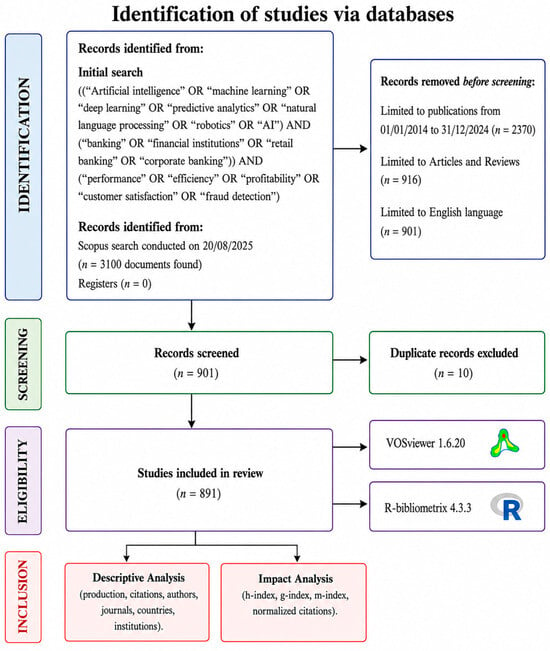
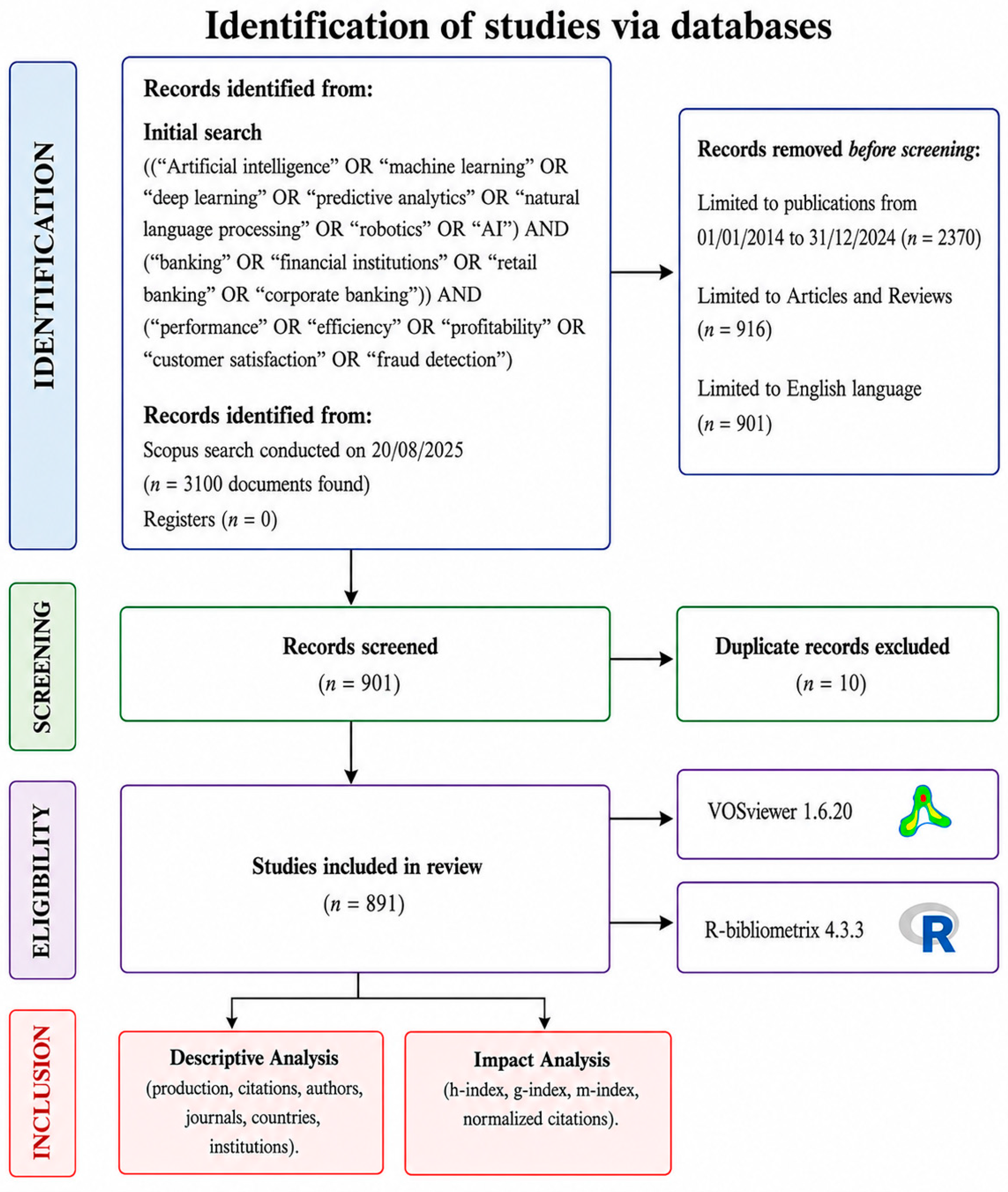
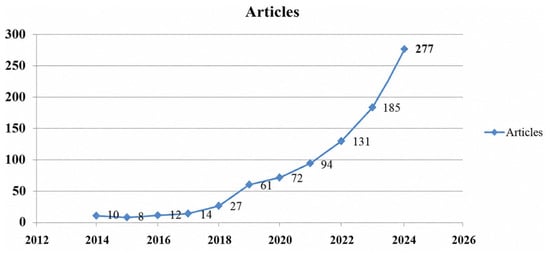
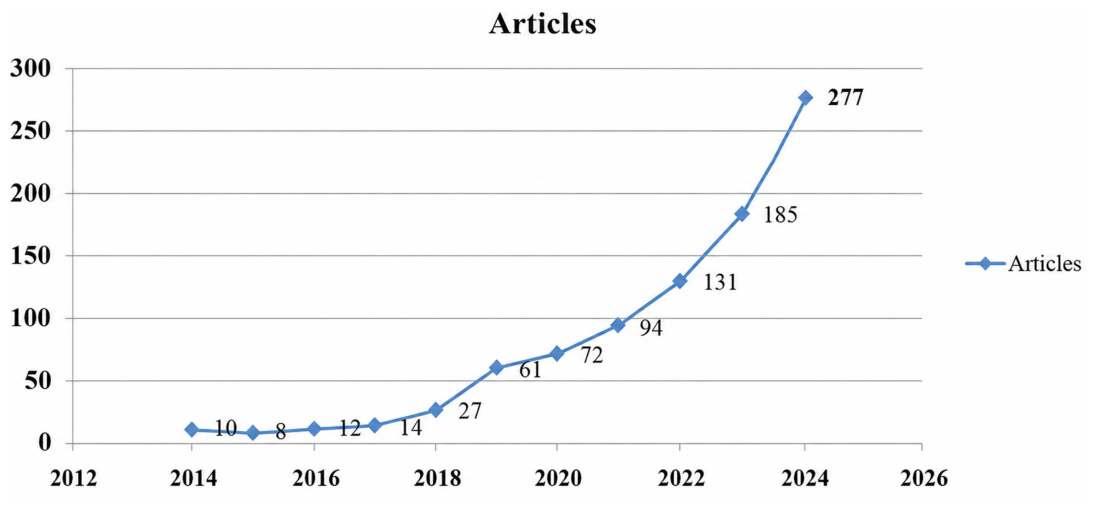
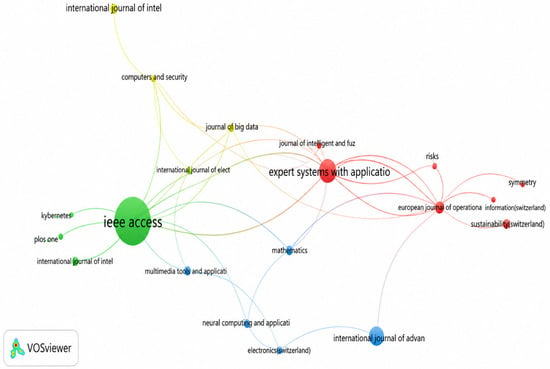
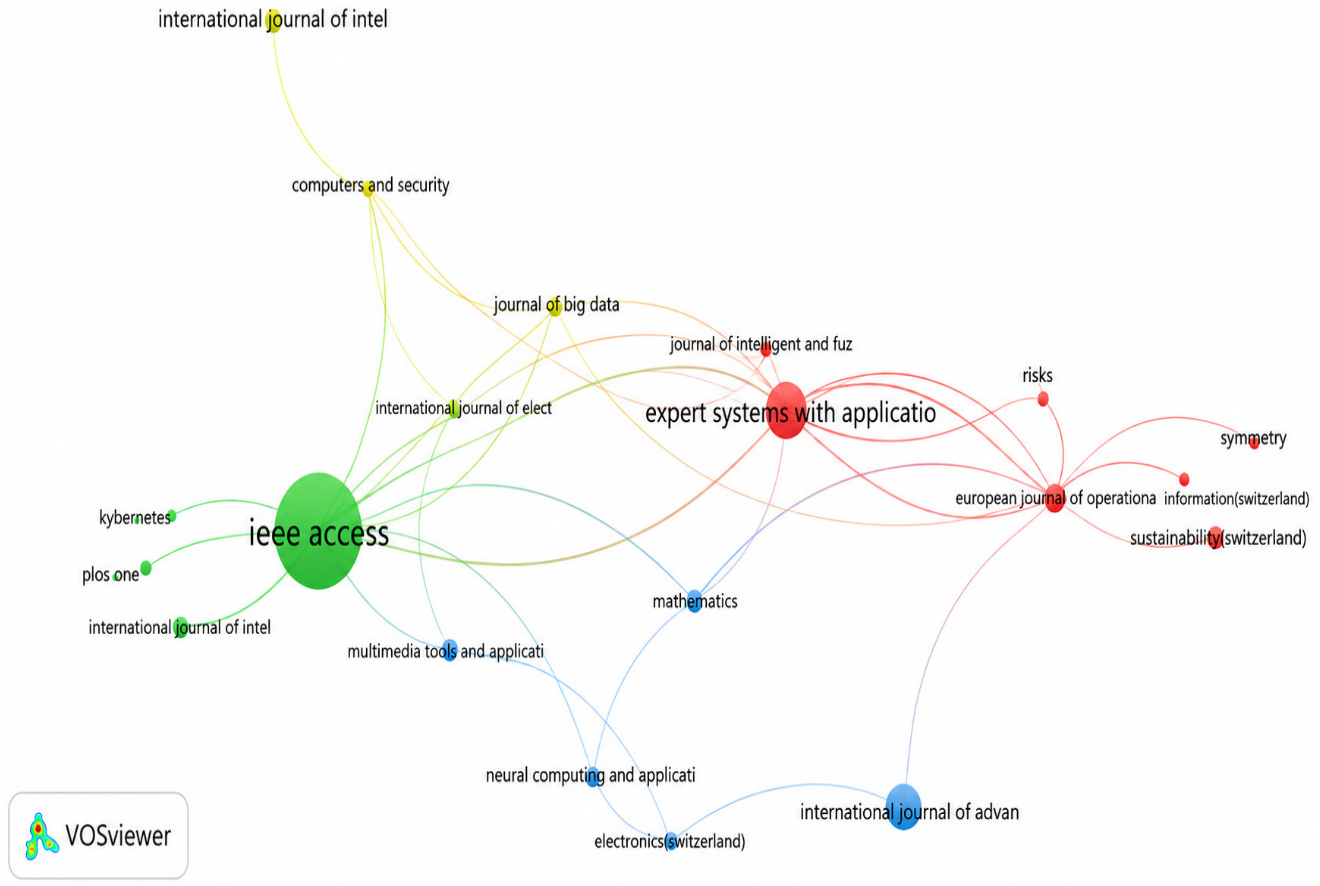
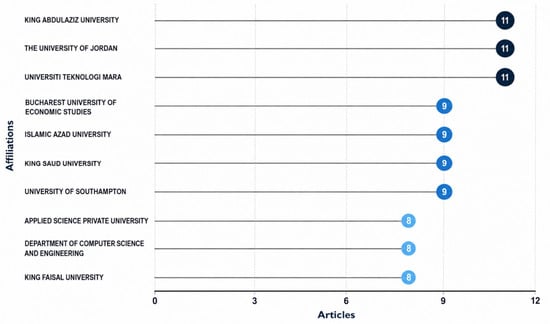
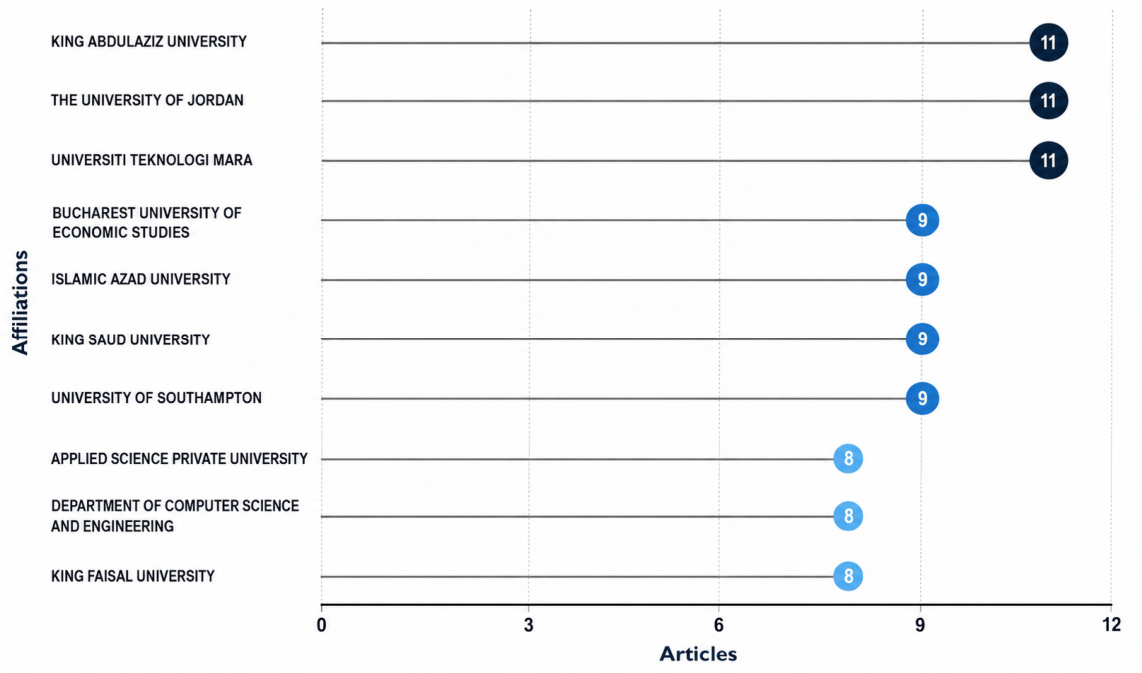
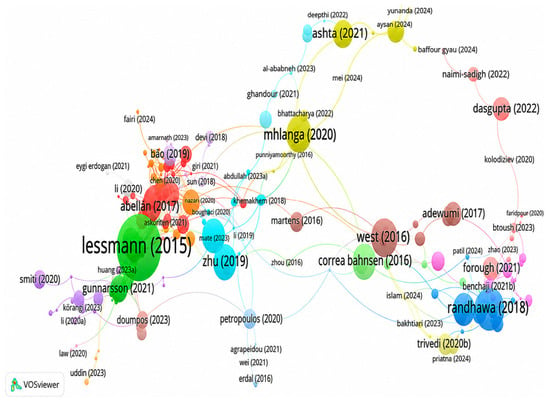
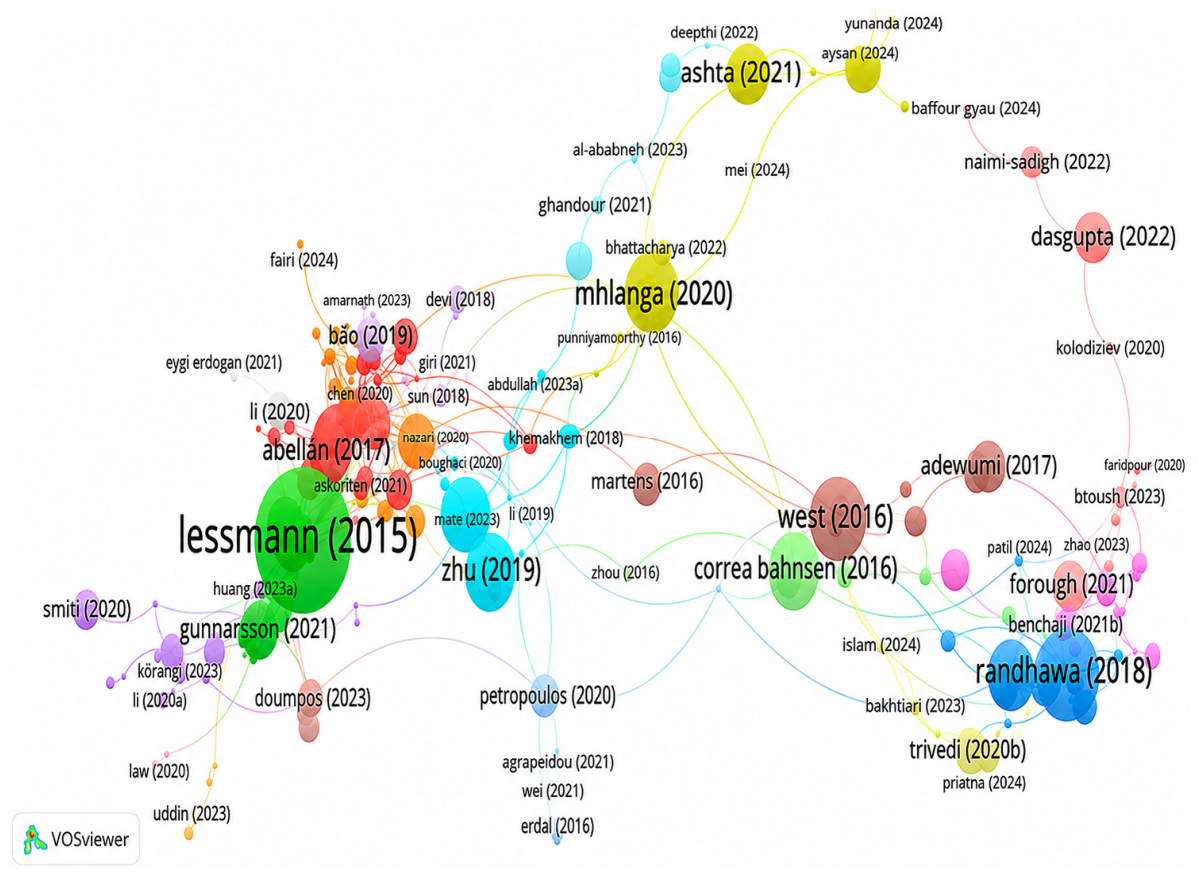
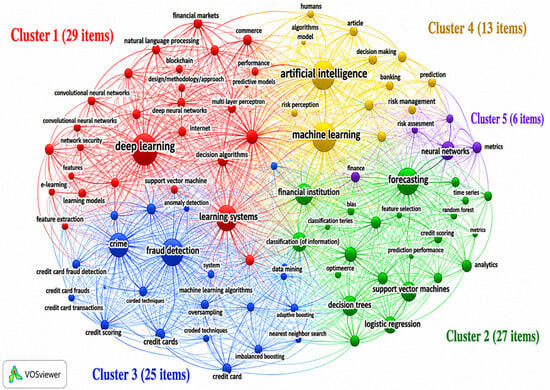
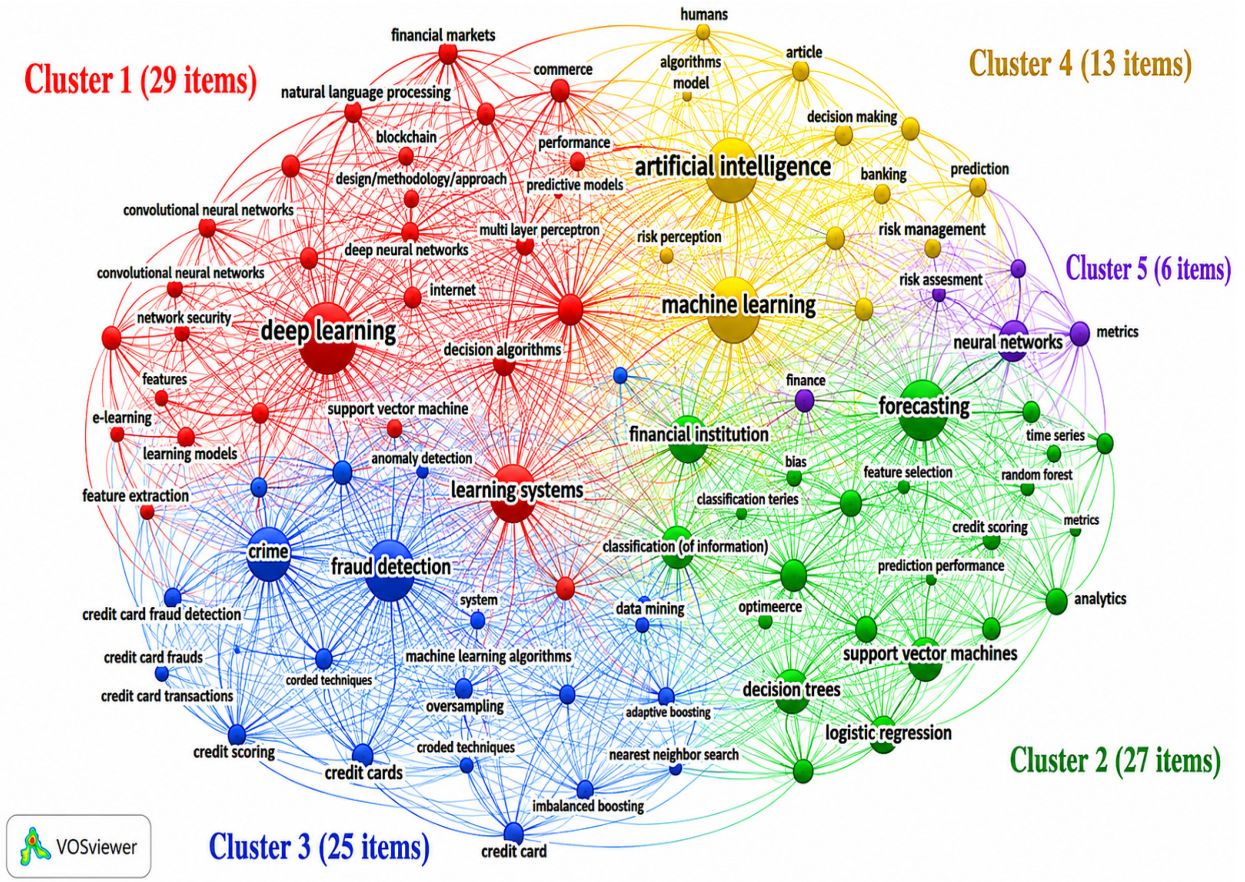
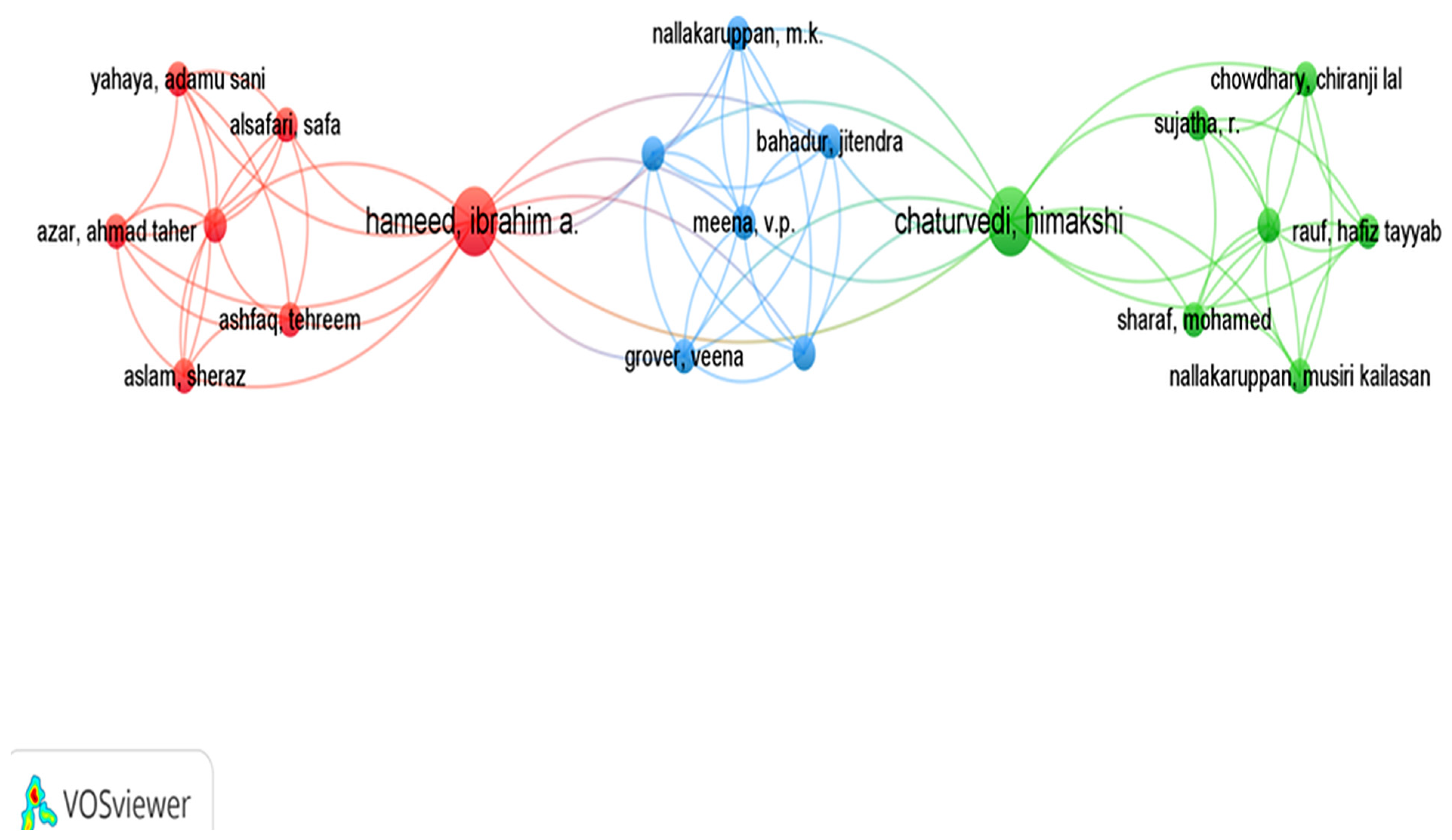
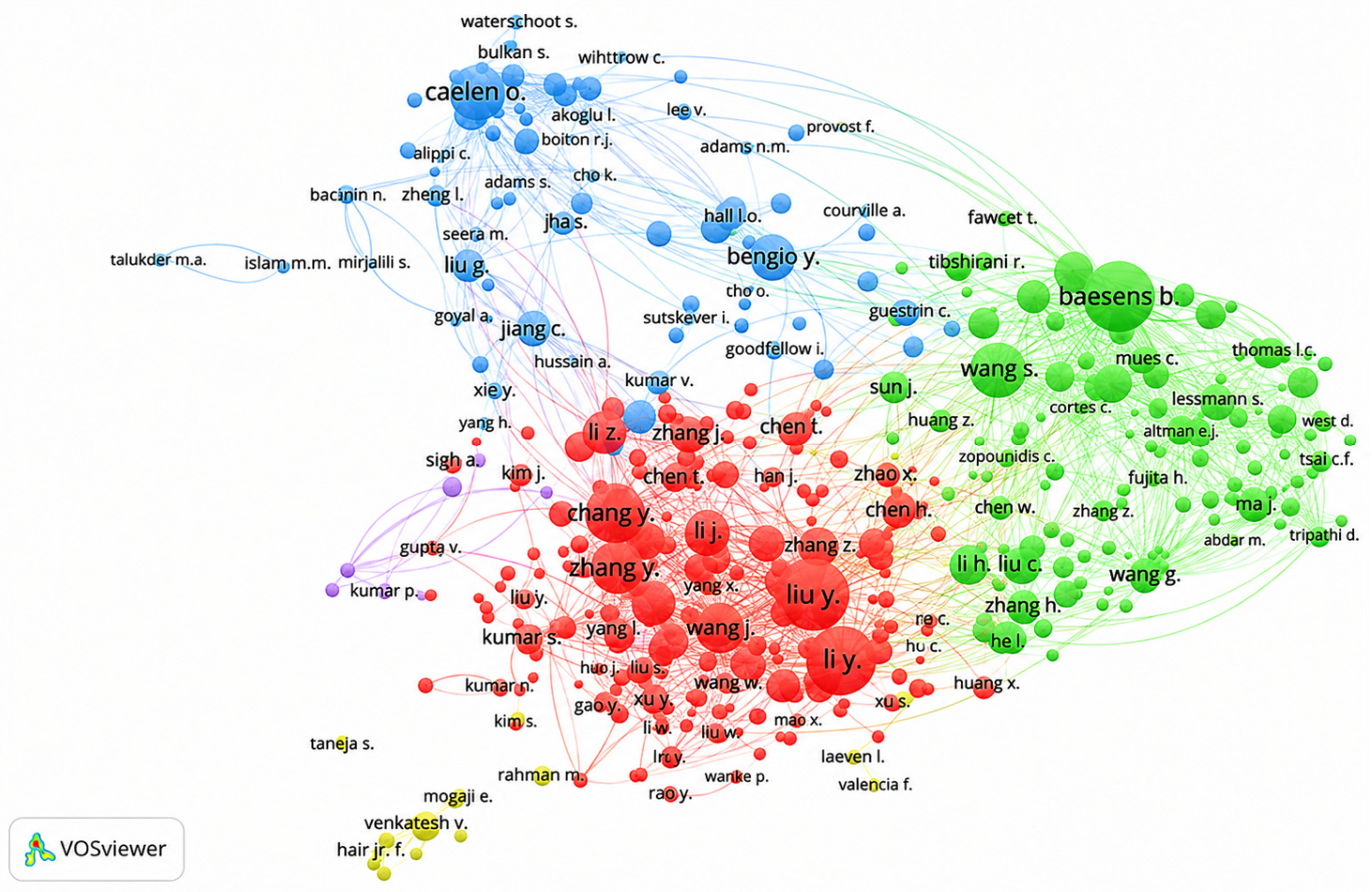
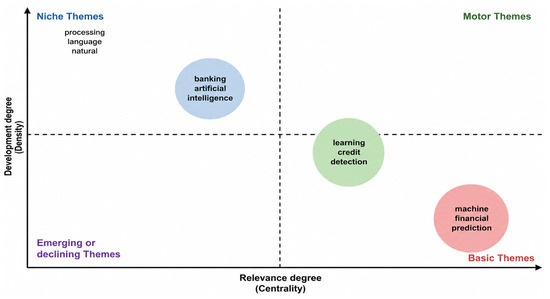
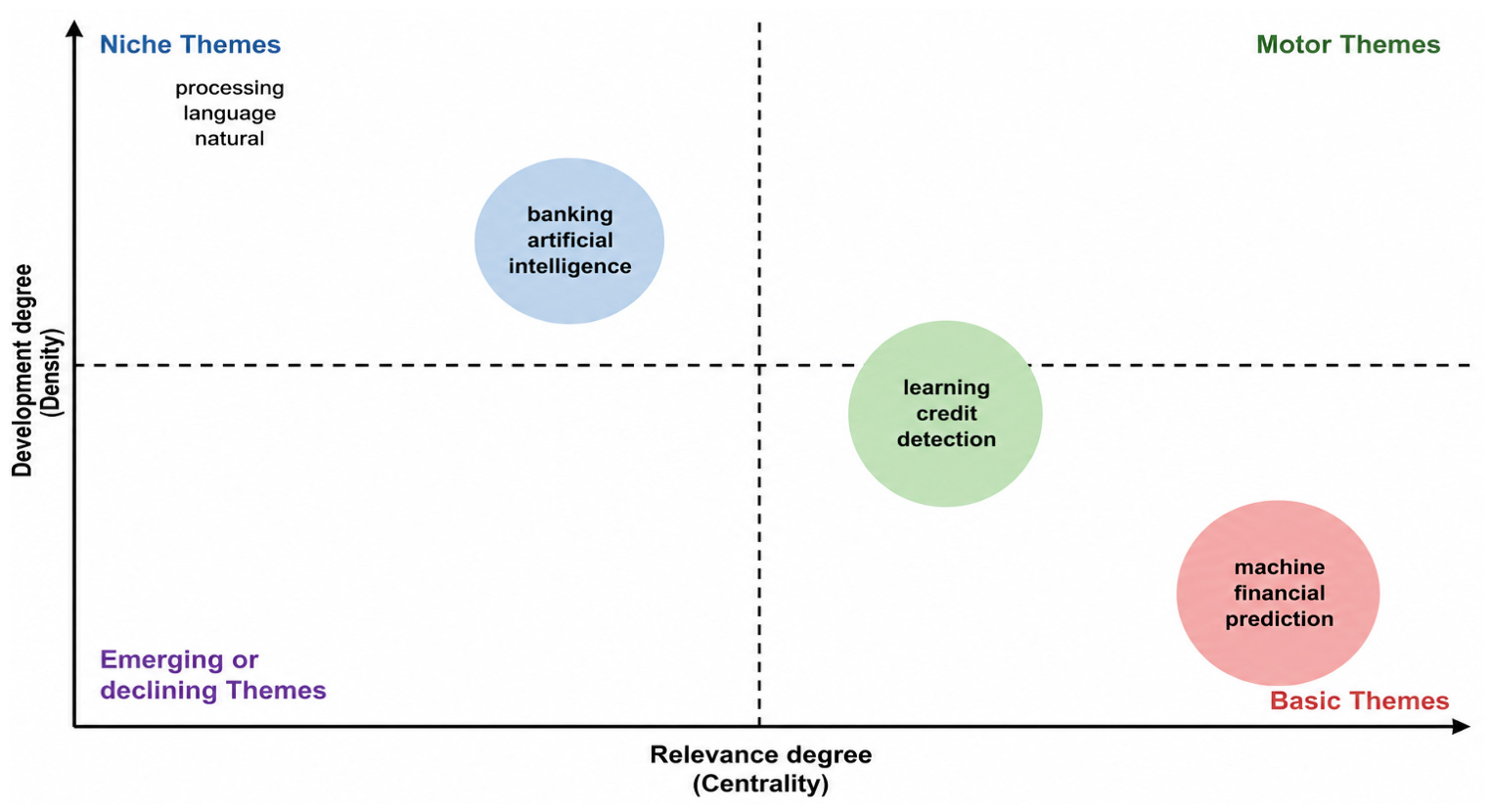

Disclaimer/Publisher’s Note: The statements, opinions and data contained in all publications are solely those of the individual author(s) and contributor(s) and not of MDPI and/or the editor(s). MDPI and/or the editor(s) disclaim responsibility for any injury to people or property resulting from any ideas, methods, instructions or products referred to in the content. |
© 2026 by the authors. Licensee MDPI, Basel, Switzerland. This article is an open access article distributed under the terms and conditions of the Creative Commons Attribution (CC BY) license.