


Abstract
This study examines the interplay between CEO overconfidence, strategic risk-taking, and financial performance within Indonesian digital banks. Grounded in Upper Echelons Theory and behavioral corporate finance, we investigate whether strategic risk-taking serves as an organizational pathway through which CEO overconfidence is more likely to be associated with specific financial outcomes. We analyzed a census-based, longitudinal dataset of seven Indonesian digital banks from 2014 to 2024. Using Partial Least Squares Structural Equation Modeling (PLS-SEM), we tested a moderated mediation framework incorporating CEO age and gender as contextual characteristics. The empirical results reveal a nuanced pattern: while CEO overconfidence is positively associated with strategic risk-taking, such risk-taking tends to correlate negatively with financial performance. Since these direct and indirect pathways operate in opposite directions, the total association between overconfidence and performance is not statistically significant. This structure suggests that strategic risk-taking represents a primary channel through which the potential downside of CEO overconfidence may be translated into financial outcomes. Furthermore, this negative association appears more pronounced under male leadership, while CEO age exhibits no significant moderating association. Overall, the findings suggest that while CEO overconfidence may align with strategic ambition, its financial implications appear contingent upon the specific risk posture through which it is expressed.
1. Introduction
Digital banks have emerged as a consequence of rapid advances in information technology, fundamentally reshaping the structure and delivery of financial services (Allen et al., 2021). The integration of digital infrastructure has transformed traditional banking models by redefining cost structures, operational processes, and customer interfaces, while enabling platform-based intermediation and data-driven service provision (Bueno et al., 2024; Gomber et al., 2017; Xuan et al., 2025). Through automated lending systems and mobile ecosystems, digital banks have expanded access to financial services and contributed to broader financial inclusion, particularly among underserved populations (Kitsios et al., 2021; Ozili, 2018).
Concurrently, digital banks operate in environments characterized by elevated uncertainty, compressed strategic cycles, and intensified competition (Citterio et al., 2025; Vives, 2019). In such settings, organizational outcomes are unlikely to be fully explained by structural or institutional factors alone. Instead, they may also be associated with how top executives interpret uncertainty, evaluate trade-offs, and translate judgment into strategic action. This perspective aligns with Upper Echelons Theory, which suggests that firm-level outcomes reflect the cognitive frames and interpretive orientations of top decision-makers (Hambrick & Mason, 1984).
The Indonesian digital banking sector provides a highly relevant empirical context. Despite operating under broadly similar regulatory and macroeconomic conditions, digital banks in Indonesia exhibit persistent variations in asset quality, reflected in relatively higher non-performing loan (NPL) ratios compared to conventional banks. This pattern suggests that differing financial outcomes cannot be fully attributed to environmental conditions alone. In this regard, such outcomes may also be associated with variations in strategic choices regarding growth, lending posture, and risk exposure (Ho et al., 2016; Y. Liu et al., 2021). In business models defined by rapid scaling and technology-enabled lending, such strategic orientations are likely to be closely linked to executive judgment.
Within this landscape, CEO overconfidence represents a critical managerial characteristic for understanding variations in strategic behavior. In the behavioral finance literature, overconfidence refers to a tendency to overestimate the precision of judgments, underestimate downside risk, and overstate control over uncertain outcomes (Goel & Thakor, 2008; Malmendier & Tate, 2008). Although prior studies show that overconfident CEOs are more likely to pursue aggressive and uncertainty-intensive strategies, limited attention has been devoted to the organizational processes through which such tendencies are reflected in firm-level financial outcomes.
Accordingly, the present study addresses a central yet underexplored question in the executive and banking literature: How does CEO overconfidence become financially consequential in digital banking? To address this issue, we examine whether strategic risk-taking acts as the organizational pathway linking CEO overconfidence to financial performance. Importantly, we treat these as conceptually distinct constructs. In this regard, CEO overconfidence is defined as a behaviorally revealed cognitive orientation reflecting biased managerial judgment. In contrast, strategic risk-taking captures observable organizational exposure to uncertainty through strategic commitments (Ben-David et al., 2013; Hodgkinson et al., 2023; Kaplan et al., 2022). Maintaining this distinction allows more precise examination of whether CEO overconfidence is directly associated with financial performance, indirectly associated through strategic risk-taking, or related through a combination of pathways.
Additionally, this study investigates whether CEO demographic characteristics, specifically gender and age, are associated with variations in these relationships. Diverging from deterministic interpretations, we conceptualized these attributes as contextual factors that may condition how executive cognition is expressed and how strategic actions relate to firm outcomes (Adams & Ferreira, 2009; Barberis et al., 2021).
This study contributes to the behavioral corporate finance and strategic leadership literatures in three primary ways. First, while existing literature links CEO overconfidence to investment behavior and firm performance (Ben-David et al., 2013; Hirshleifer et al., 2012; Malmendier & Tate, 2005), the processes driving this association in rapidly materializing risk environments remain opaque. We extend the literature by formally examining strategic risk-taking as a primary mechanism through which managerial bias is associated with financial outcomes. Second, by explicitly distinguishing CEO overconfidence as a cognitive orientation and strategic risk-taking as realized organizational exposure, this study advances a more precise, process-oriented perspective on how executive cognition manifests at the firm level. Third, by testing CEO gender and age as boundary conditions, this study adopts a context-contingent approach, offering a nuanced understanding of how the implications of managerial bias may differ across leadership profiles.
Empirically, using a census-based longitudinal dataset of Indonesian digital banks (2014–2024) and a moderated mediation framework estimated via PLS-SEM, the findings reveal a nuanced pattern. CEO overconfidence is positively associated with strategic risk-taking, which in turn correlates negatively with financial performance. Since the direct and indirect pathways operate in opposite directions, the overall association is not statistically significant. These findings indicate an inconsistent mediation structure. Further results suggest that the negative association between strategic risk-taking and financial performance is more pronounced under male CEO leadership, while CEO age exhibits no significant moderating effect. Taken together, these findings indicate that CEO overconfidence is neither uniformly beneficial nor detrimental. Fundamentally, its financial implications appear contingent upon the firm’s strategic risk posture and broader leadership context.
The remainder of the paper is organized as follows. Section 2 reviews the theoretical background and develops the hypotheses. Section 3 outlines the data, variable operationalization, and empirical methodology. Section 4 presents and discusses the empirical findings. Finally, Section 5 concludes by summarizing the main findings, discussing practical implications, and identifying directions for future research.
2. Hypotheses Development
Digital banking institutions operate in environments characterized by technological turbulence, rapid strategic cycles, regulatory evolution, and intense competitive pressure (Arner et al., 2016; Buchak et al., 2018; Vučinić & Luburić, 2022). Unlike conventional banking models, which rely on established infrastructures and stable operating routines, digital banks must continuously adapt to shifting technological trajectories and rapidly changing business-model logics. Such conditions create a strategic environment in which managerial judgment assumes paramount importance, as critical decisions regarding growth, innovation, and market positioning must be made under substantial uncertainty (Osses et al., 2025; Yang et al., 2025).
Within such settings, the role of the Chief Executive Officer (CEO) extends beyond routine administration; it becomes central to how the organization interprets opportunities, calibrates uncertainty, and commits to strategic action. Grounded in Upper Echelons Theory, which posits that organizational strategies reflect the cognitive bases and interpretive frames of top executives (Hambrick & Mason, 1984), firm outcomes in high-velocity environments are unlikely to be explained solely by structural factors. Instead, they are likely to be systematically associated with how senior leaders cognitively frame and act on uncertainty.
Among the managerial characteristics shaping these strategic responses, CEO overconfidence represents a particularly salient mechanism. In this regard, while overconfidence may encourage strategic boldness and accelerate organizational momentum (J. Li & Tang, 2010), it may also skew risk perception and increase exposure to unfavorable outcomes (Zeitoun et al., 2019). This duality is especially critical in digital banking, where confidence may support rapid expansion but can also be associated with financially adverse consequences if translated into excessive risk-bearing behavior. Accordingly, this study develops a framework to examine the interplay among CEO overconfidence, strategic risk-taking, and financial performance, while accounting for variations across leadership contexts.
2.1. CEO Overconfidence and Strategic Risk Taking
The cognitive foundations of CEO overconfidence are widely documented in the behavioral finance and strategic management literatures. Overconfidence refers to a systematic tendency among decision-makers to overestimate the precision of their judgments, exaggerate their influence over uncertain outcomes, and underestimate the likelihood of adverse events (Malmendier & Tate, 2005; Roll, 1986). In executive contexts, this bias shapes how CEOs interpret strategic opportunities, which often leads to overly optimistic assessments of firm capabilities and market conditions (Burkhard et al., 2023; Goldberg et al., 2020).
In this study, CEO overconfidence is conceptualized not as a directly observed psychological trait, but as a behaviorally revealed managerial orientation inferred from observable patterns in strategic and financial policies (Ge et al., 2024; Hirshleifer et al., 2012; Malmendier & Tate, 2008). This approach preserves the construct’s identity as a cognitive bias while enabling empirical examination. Crucially, this distinction separates overconfidence from strategic risk-taking: the former concerns how executives perceive uncertainty, whereas the latter reflects the organization’s realized commitment to uncertainty-bearing actions (Hodgkinson et al., 2023; Kaplan et al., 2022; Rajabalizadeh, 2023).
Given this distinction, overconfidence is likely to be associated with higher levels of strategic risk-taking. In this context, biased executives tend to interpret risky opportunities as manageable or disproportionately rewarding. By discounting downside risk, they may exhibit a higher propensity to pursue aggressive, expansion-oriented strategies—such as rapid market scaling, accelerated customer acquisition, and large-scale digital investments (Finkelstein et al., 2009). Empirical evidence supports this view by indicating that overconfident CEOs frequently adopt riskier strategic postures (Lai et al., 2017; Zhang & Song, 2025; Zhu et al., 2024). In banking, where strategic decisions quickly embed themselves in balance-sheet structures and credit risk, these tendencies are particularly consequential.
Accordingly, we expect that CEO overconfidence is associated with greater tolerance for uncertainty and a higher propensity to engage in risk-bearing strategic actions.
Hypothesis 1:
CEO overconfidence is positively associated with strategic risk-taking in digital banks.
2.2. CEO Overconfidence and Financial Performance
Although frequently discussed in relation to excessive risk, CEO overconfidence may also foster strategic decisiveness that supports organizational performance. Viewed through the dynamic capabilities framework, firms sustain competitive advantage by sensing opportunities and rapidly reconfiguring resources (Teece, 2018). In this context, confident executives may facilitate timely decision-making and reduce organizational hesitation.
In digital banking, such decisiveness is highly valuable. Firms frequently confront uncertain but potentially high-return decisions regarding platform development and technology-enabled financial services (Saesen et al., 2024; Zhu et al., 2024). While inherently uncertain, these initiatives can strengthen innovation capabilities and long-term positioning (Guo & Wang, 2025; Yue & Shi, 2026). Strategic leadership literature corroborates this, suggesting that executive confidence supports organizational adaptability in rapidly evolving industries (Finkelstein et al., 2009).
However, the overall association between confidence and performance remains theoretically ambiguous. If confidence translates into disciplined, value-enhancing initiatives, it may yield favorable outcomes; if it translates into excessive exposure, it may prove detrimental. Therefore, this study retains a direct-effect hypothesis to empirically evaluate this baseline association before isolating the underlying organizational mechanisms.
Hypothesis 2:
CEO overconfidence is positively associated with the financial performance of digital banks.
2.3. Strategic Risk-Taking and Financial Performance
Notwithstanding its potential role in supporting strategic ambition, elevated strategic risk-taking is frequently associated with weaker financial outcomes under conditions of high uncertainty. One influential explanation is Bowman’s Paradox, which posits that higher levels of risk-taking tend to correlate with lower financial returns in specific contexts (Bowman, 1980; Wiseman & Bromiley, 1991).
This paradox is highly relevant to the volatile digital banking environment, where aggressive commitments expose firms to disproportionate downside risks. For example, rapid loan portfolio expansion may increase non-performing loans, while aggressive infrastructure investments may entail high fixed costs before stable revenue streams are established. Such experimentation introduces execution risk, regulatory exposure, and operational complexity (Mogaji, 2023; Tarawneh et al., 2024), highlighting an inherent trade-off between expansionary growth and financial sustainability. In this study, strategic risk-taking is conceptualized as a realized organizational posture (Engelen et al., 2015; Hoskisson et al., 2017), allowing us to expect a negative association with financial performance independent of managerial intent.
Hypothesis 3:
Strategic risk-taking is negatively associated with the financial performance of digital banks.
2.4. The Mediating Role of Strategic Risk-Taking
Since CEO overconfidence shapes the interpretation of uncertainty, while strategic risk-taking reflects the organizational enactment of those interpretations, strategic risk-taking plausibly functions as the primary mediating mechanism. If overconfident CEOs systematically underestimate downside risk, the financial implications of their cognitive bias may not be fully captured by a direct performance association. Instead, these implications are likely channeled through the firm’s willingness to engage in uncertainty-bearing activities.
This mediating logic is critical in digital banking, where decisions like platform scaling and credit expansion are both performance-relevant and highly uncertain. While overconfidence may initially support strategic boldness, its financial consequences materialize when translated into excessive risk exposure.
Hypothesis 4:
Strategic risk-taking mediates the relationship between CEO overconfidence and the financial performance of digital banks.
2.5. The Moderating Roles of CEO Age and Gender
The organizational consequences of executive cognition rarely unfold uniformly. Consistent with Upper Echelons Theory, demographic characteristics serve as contextual boundary conditions that shape how strategic issues are interpreted and enacted (Hambrick & Mason, 1984).
CEO age may correlate with variations in career concerns and risk preferences. In this context, younger CEOs often face stronger incentives to establish reputations, which may be associated with more aggressive strategic behavior. Conversely, older CEOs may prioritize stability and downside risk management (Prendergast & Stole, 1996; Serfling, 2014). Similarly, prior research indicates that male and female executives frequently exhibit differences in confidence calibration, loss sensitivity, and risk preferences (Adams & Ferreira, 2009; Barber & Odean, 2001).
Instead of treating these demographic variables as deterministic traits, this study conceptualizes them as contextual factors that condition both the translation of overconfidence into risk-taking and the subsequent association between risk-taking and financial performance. Accordingly, the following moderating hypotheses are proposed:
Hypothesis 5a:
CEO age moderates the relationship between CEO overconfidence and strategic risk-taking.
Hypothesis 5b:
CEO gender moderates the relationship between CEO overconfidence and strategic risk-taking.
Hypothesis 5c:
CEO age moderates the relationship between strategic risk-taking and financial performance.
Hypothesis 5d:
CEO gender moderates the relationship between strategic risk-taking and financial performance.
Figure 1 presents the conceptual model discussed in this paper.
Figure 1.
Conceptual model of the study. Source(s): Authors.
3. Methodology
3.1. Sample Selection and Data Collection Procedures
This study adopts a population-based design focusing on the Indonesian digital banking sector between 2014 and 2024. Digital banking represents one of the most dynamic segments of the financial services industry, characterized by rapid technological adoption, platform-based intermediation, and evolving regulatory frameworks. In such settings, a population-based approach is appropriate as it captures the full structural variation of the industry, avoiding the selection biases often introduced by partial sampling (Petersen, 2009; Wooldridge, 2016). This design is particularly suitable for contexts where a limited number of core institutions account for the vast majority of market activity.
To ensure institutional comparability, panel consistency, and theoretical relevance, the sample was identified using purposive selection criteria. Such sampling is standard in corporate governance research when the objective is to isolate firms that satisfy strictly defined institutional conditions (Etikan et al., 2016). Specifically, institutions were included in the dataset only if they satisfied four essential criteria. First, the institution must operate under the formal oversight of the Financial Services Authority of Indonesia (OJK) to ensure a common regulatory framework that reduces cross-sectional variation in oversight and reporting.
Second, the bank must have consistently published externally audited annual financial statements throughout the observation period to provide a high degree of reliability, thereby minimizing measurement error (Dechow et al., 2010). Third, the institution must operate as a pure-play digital bank or as a conventional bank that has fully completed its digital transformation during the study period. Restricting the sample to digitally oriented business models strengthens the validity of inferences regarding technology-enabled strategic risk postures. Fourth, the institution must not have undergone major corporate discontinuities—such as large-scale mergers, acquisitions, or structural reorganizations—during the observation window, as these events can distort firm-level behavioral inferences (Petersen, 2009).
Applying these criteria yields a final sample of seven digital banking institutions: PT Bank Seabank Indonesia, PT Bank Jago Tbk, PT Bank Neo Commerce Tbk, PT Hibank, PT BCA Digital, PT Bank Raya Indonesia Tbk, and PT Allo Bank. Although the absolute number of firms is limited, these institutions collectively represent the core of Indonesia’s digital banking ecosystem in terms of assets, transaction volume, and innovation initiatives. Consequently, this census-based design strengthens internal validity by effectively capturing the target population without the distortions of sub-sampling.
To minimize common method bias, this study relies exclusively on archival secondary data rather than self-reported surveys (Podsakoff et al., 2003). The primary dataset was constructed by manually extracting financial and governance data from audited annual reports, supplemented with qualitative insights from the Management Discussion and Analysis (MD&A) sections on strategic priorities. To ensure measurement reliability, financial variables were cross-validated across multiple authoritative sources, including regulatory disclosures and Refinitiv. Since the core constructs—CEO overconfidence, strategic risk-taking, and firm performance—are behaviorally inferred rather than directly observed, this triangulated archival design provides a highly credible empirical foundation for structural analysis.
3.2. Sample Size Justification, Data Quality, and Statistical Power
Pooling the financial and governance data from the seven sampled institutions over the 2014–2024 period yields a balanced panel of 77 firm-year observations. From a methodological standpoint, this sample size is highly appropriate for Partial Least Squares Structural Equation Modeling (PLS-SEM). Unlike covariance-based structural equation modeling (CB-SEM), which typically requires large samples and strict distributional assumptions, PLS-SEM employs a variance-based estimation approach. This makes it substantially more robust when handling limited sample sizes, non-normal data, and theoretically emergent constructs (Ali et al., 2018; Hair et al., 2021). These attributes make PLS-SEM ideally suited for examining executive behavioral orientations within the bounded population of Indonesian digital banking.
The adequacy of the sample size is formally supported by the widely utilized “10-times rule” (Barclay et al., 1995; Hair et al., 2021). This guideline posits that the minimum required sample size should be at least ten times the maximum number of indicators used to measure a single construct. In this study, the most complex formative construct (CEO overconfidence) is operationalized using six indicators, establishing a minimum threshold of 60 observations. The dataset’s 77 firm-year observations comfortably exceed this requirement.
Beyond rule-based benchmarks, the statistical reliability of the analysis is anchored in the quality and structure of the data. Since the dataset relies entirely on audited, regulator-validated archival records, the threat of measurement noise is heavily mitigated (Dechow et al., 2010). Furthermore, the balanced panel structure enhances estimation efficiency by leveraging both cross-sectional variations across banks and longitudinal variations over time—an approach recognized for yielding greater analytical precision than purely cross-sectional designs (Wooldridge, 2010).
Ultimately, the combination of a census-based design, triangulated archival data, and a variance-based estimation framework provides a robust empirical foundation. The objective of this methodology is not to claim universal generalizability across all global banking systems, but rather to rigorously explain how executive cognition, strategic risk exposure, and financial performance associate within the specific, high-uncertainty context of digital banking.
3.3. Operational Definitions and Variable Measurement
3.3.1. CEO Overconfidence
CEO overconfidence refers to a systematic cognitive bias whereby executives tend to overestimate the likelihood of favorable outcomes, underestimate downside risk, and overstate their ability to influence uncertain strategic environments. In the behavioral finance and strategic leadership literatures, this bias is widely recognized as a key mechanism shaping investment policy, financing behavior, and organizational exposure to uncertainty (Hirshleifer et al., 2012; Malmendier & Tate, 2005).
In this study, CEO overconfidence is conceptualized as a behaviorally revealed managerial orientation. Rather than being directly measured as a psychological trait, it is inferred from observable strategic and financial-policy patterns. This approach aligns with the archival behavioral corporate finance tradition (e.g., Malmendier & Tate, 2005; Hirshleifer et al., 2012), which captures executive cognitive bias through realized organizational decisions when psychometric data are unavailable.
Accordingly, CEO overconfidence is operationalized using a comparative abnormality logic. The indicators are interpreted as manifestations of overconfidence only when the focal bank exhibits financial-policy behavior that is unusually expansionary, aggressive, or optimistic relative to its institutional context. Thus, the construct captures managerial bias through its deviation from sector-consistent behavior rather than through the absolute presence of high growth, leverage, or lending intensity. Since overconfidence is expected to manifest across multiple strategic dimensions, the construct is modeled as formative, with the indicators jointly defining the latent concept rather than reflecting a single underlying state.
To capture this multidimensional phenomenon, a CEO Overconfidence Index (OC Index) is constructed using six financial indicators grouped into three theoretically grounded dimensions. The first dimension, expansionist behavior, reflects the tendency of overconfident executives to pursue aggressive growth strategies that may exceed underlying capacity. Confident executives often accelerate asset accumulation and credit expansion due to optimistic expectations regarding future growth and risk-management capabilities (Foos et al., 2010; Pathan, 2009). This dimension is measured using Abnormal Asset Growth (AAG), Abnormal Credit Growth (CAG), and the Abnormal Loan-to-Deposit Ratio (AbLDR).
The second dimension, aggressive financing posture, captures managerial preferences for capital structures that increase leverage and compress prudential buffers. Because overconfident executives may underestimate liquidity risk and overstate institutional resilience, they may lean toward more aggressive financing choices (Laeven & Levine, 2009; Malmendier & Tate, 2005). This is measured using Abnormal Leverage (AbLev) and the Abnormal Capital Adequacy Ratio (AbCAR). Finally, the third dimension, efficiency gambles, reflects attempts to achieve unusually high operating efficiency despite the risks associated with rapid expansion, assuming costs can be reduced without weakening internal controls (Berger & DeYoung, 1997). This dimension is measured using the Abnormal Cost-to-Income Ratio (AbCIR).
The use of abnormal indicators is theoretically critical. These measures do not directly capture realized organizational risk; instead, they identify whether the institution’s behavior departs meaningfully from sectoral norms. To construct the CEO Overconfidence Index, a three-stage transformation procedure is applied (Dominguez-Gil et al., 2022). First, all indicators are normalized using a min–max transformation to rescale variables to a 0–1 interval, ensuring comparability while limiting the influence of extreme values:
Second, indicators with an inverse interpretation—specifically AbCAR and AbCIR—are directionally adjusted to ensure that higher values consistently reflect higher levels of overconfidence:
Third, the overall composite index is computed as the arithmetic mean of the indicators, where denotes the total number of indicators included in the index:
The resulting index represents a composite behavioral signal rather than a psychological diagnosis. In this regard, higher index values indicate a stronger tendency toward unusually aggressive managerial positioning across multiple financial dimensions.
3.3.2. Strategic Risk Taking
Strategic risk-taking refers to the realized level of organizational risk exposure arising from managerial decisions regarding asset allocation, capital structure, liquidity posture, and credit provisioning. In contrast to CEO overconfidence, which represents a manager-centered cognitive antecedent, strategic risk-taking captures the firm-centered organizational consequences of strategic choices. This distinction is fundamental to the study’s identification strategy. Although both constructs are operationalized using archival financial data, they are conceptually and methodologically distinct. CEO overconfidence is inferred from comparative, behaviorally revealing deviations in financial policy, whereas strategic risk-taking is measured directly as the institution’s realized exposure profile in a given year.
In the banking literature, risk-taking is commonly conceptualized as a latent organizational orientation, as reflected in multiple indicators of exposure to credit risk, leverage, liquidity vulnerability, and provisioning behavior (Ho et al., 2016; Laeven & Levine, 2009; Pathan, 2009). Following this logic, strategic risk-taking is modeled as a reflective construct, assuming that changes in the underlying risk posture manifest consistently across observable dimensions. Unlike the overconfidence construct, these indicators are not benchmarked as abnormal deviations from peer behavior; instead, they are interpreted at face value as direct manifestations of the institution’s balance-sheet structure and liquidity position (Jankensgård, 2019). To ensure discriminant validity and prevent mechanical contamination, indicators were selected according to a strict non-overlap principle. Financial variables already embedded in the overconfidence index were not duplicated in the mediator.
Accordingly, strategic risk-taking is operationalized using four indicators. The Loan-to-Assets Ratio (LAR) measures the proportion of total assets allocated to the loan portfolio, with higher values indicating greater exposure to borrower default risk. The Leverage Ratio (LEV) captures the reliance on debt financing relative to equity, reflecting the embedded financial risk in the capital structure. Furthermore, the Loan Loss Provision to Total Assets (LLP) ratio reflects expected credit-loss exposure and the resources allocated to absorb asset quality deterioration. Finally, the Liquidity Ratio (LR) reflects the institution’s ability to meet short-term obligations, serving as an indicator of tolerance for liquidity-related exposure. Within this reflective measurement framework, increases in the latent level of strategic risk-taking are expected to reflect systematic variation across these four financial dimensions.
3.3.3. Financial Performance
Financial performance refers to the ability of digital banking institutions to generate sustainable profitability through effective asset utilization, sound intermediation, and prudent strategic execution. Within the banking literature, profitability is widely regarded as a central indicator of managerial effectiveness, reflecting the capacity to convert financial resources into economic returns while maintaining operational viability (Athanasoglou et al., 2008). In this study, financial performance is conceptualized as a reflective construct, grounded in the assumption that improvements in underlying profitability will consistently reflect across multiple accounting-based indicators.
A critical methodological consideration is the choice between market-based and accounting-based performance measures. Although market-based metrics, such as Tobin’s Q, are frequent in corporate finance, their appropriateness is limited when firms demonstrate low trading volumes, diminished stock-market liquidity, or complex subsidiary arrangements (Butt et al., 2023). In emerging sectors like digital banking, market prices may also be disproportionately influenced by speculative expectations and information asymmetry rather than realized operating fundamentals (Barberis et al., 2021; Morck et al., 2000).
Given that the majority of Indonesian digital banks exhibit valuation patterns that do not always align with operational efficiency, accounting-based profitability indicators are considered more robust for capturing substantive financial outcomes attributable to strategic execution. Consequently, financial performance is measured using Return on Assets (ROA), which captures managerial efficiency in utilizing total assets to generate earnings, and Return on Equity (ROE), which reflects the return generated specifically on shareholder capital.
3.3.4. CEO Age and Gender
This study includes CEO age and CEO gender as contextual leadership attributes that potentially influence how executive cognition translates into strategic behavior and organizational outcomes. Consistent with Upper Echelons Theory, demographic attributes are not interpreted as deterministic behavioral traits, but rather as observable characteristics that shape how leaders process information, evaluate uncertainty, and respond to strategic challenges (Hambrick & Mason, 1984).
CEO age is operationalized as the chronological age of the executive, measured in years for each firm-year observation. In the strategic leadership literature, age frequently serves as a proxy for differences in career stage, managerial experience, risk orientation, and strategic time horizon (Serfling, 2014). It is treated here as a continuous moderator to reflect the possibility that the behavioral consequences of overconfidence and risk-taking may vary according to the executive’s professional maturity.
CEO gender is operationalized as a binary categorical variable (coded 1 for male CEOs and 0 for female CEOs). While previous studies indicate that gender may correlate with variations in confidence calibration and strategic caution under uncertainty (Adams & Ferreira, 2009; Barber & Odean, 2001), this study strictly conceptualizes gender as a boundary condition within the leadership context rather than an inherent determinative characteristic. Together, these moderating variables enable a nuanced examination of whether the organizational consequences of executive bias and strategic exposure differ across varying leadership profiles.
3.4. Analytical Method and Model Specification
3.4.1. Empirical Model Specification
To empirically evaluate the hypothesized relationships among executive cognition, strategic decision-making, and organizational outcomes, this study specifies a structural model capturing both the direct and indirect associations between CEO overconfidence and financial performance, with strategic risk-taking functioning as the principal organizational transmission mechanism. Furthermore, the model incorporates CEO demographic characteristics—specifically age and gender—as contextual moderators that may condition the strength of these behavioral relationships. Formally, the structural model comprises two linked equations.
First-stage equation (mediator model) is specified as:
Second-stage equation (outcome model) is specified as:
where denotes the financial performance of bank in year , represents strategic risk-taking, and denotes the CEO overconfidence index. and capture CEO age and gender, respectively. The interaction terms and capture the moderating effects of CEO characteristics on the overconfidence–risk relationship, while and capture the moderating effects on the risk–performance relationship. The disturbance terms and denote idiosyncratic errors.
Conceptually, this specification reflects the study’s central theoretical argument: CEO overconfidence may associate with financial performance not only directly but also indirectly through the strategic risk posture shaped by managerial cognition. Furthermore, by incorporating moderation at both stages of the structural pathway, the model assesses whether the consequences of executive cognition vary across differing leadership contexts.
3.4.2. Panel Data Structure Diagnostics: Testing for Unobserved Heterogeneity
As the dataset consists of repeated firm-year observations, preliminary econometric diagnostics were conducted to assess whether unobserved firm-specific heterogeneity is sufficiently pronounced to necessitate conventional panel estimators, such as Fixed Effects (FE) or Random Effects (RE). Ignoring such heterogeneity can lead to biased estimates if unobserved bank-specific characteristics systematically correlate with the explanatory variables (Wooldridge, 2016).
To evaluate the appropriate treatment of the panel structure, two standard diagnostics were performed. First, a Hausman specification test was employed to assess the relative appropriateness of the FE versus RE estimators. The test yielded a chi-square statistic of 6.57 with a p-value of 0.3625, indicating that the null hypothesis could not be rejected and suggesting that a Random Effects framework would be statistically consistent relative to a Fixed Effects alternative.
Second, a Breusch–Pagan Lagrangian Multiplier test was utilized to determine whether the panel structure contained statistically meaningful between-firm variance relative to a pooled specification. This test produced a chi-square statistic of 0.00 with a p-value of 1.0000, demonstrating that the variance component associated with unobserved firm-specific effects is statistically indistinguishable from zero. Substantively, this result indicates that the dataset lacks meaningful unobserved individual heterogeneity that would compromise pooled estimation.
Consequently, the panel structure is deemed sufficiently poolable for the present analysis. The empirical objective of this study is not to isolate time-invariant firm effects via a conventional panel-causal model, but to evaluate a behavioral transmission mechanism utilizing a systematic collection of firm-year indicators. In this capacity, the longitudinal structure enriches the available variation, while the absence of strong unobserved heterogeneity formally supports the application of a pooled latent-variable modeling approach.
3.4.3. Partial Least Squares Structural Equation Modeling (PLS-SEM)
Given the poolable structure of the dataset and the complexity of the conceptual framework, this study employs Partial Least Squares Structural Equation Modeling (PLS-SEM) using SmartPLS as the primary analytical technique. PLS-SEM is uniquely appropriate for research designs characterized by complex structural relationships, mixed formative and reflective constructs, moderate sample sizes, and an emphasis on predictive explanation rather than strict covariance reproduction (Hair et al., 2021; Shmueli et al., 2019).
The primary justification for employing PLS-SEM stems from the study’s measurement architecture. The conceptual model simultaneously integrates a formative latent construct (CEO overconfidence) with reflective latent constructs (strategic risk-taking and financial performance). This mixed measurement configuration presents a challenge for covariance-based SEM approaches, which often impose restrictive identification conditions on formative indicators. Conversely, variance-based SEM accommodates such architectures without imposing unnecessary estimation constraints (Shmueli et al., 2019). This capability is critical, given that CEO overconfidence is theorized as a behaviorally inferred composite orientation, whereas strategic risk-taking and financial performance are modeled as organizational outcomes reflected through observable indicators.
A secondary justification concerns the study’s analytical objective. This research adopts a theory-building and mechanism-testing approach designed to examine how executive cognitive bias translates into organizational consequences, rather than strictly confirming a narrowly specified covariance structure. This objective aligns closely with the advantages of PLS-SEM in modeling behavioral transmission processes and maximizing the explained variance of endogenous constructs (Henseler et al., 2016). A tertiary methodological advantage pertains to sample size and distributional flexibility. While the 77 firm-year observations appropriately capture the bounded population of Indonesian digital banks, this moderate sample size remains limited relative to the demands of many covariance-based techniques.
In addition, relying on nonparametric bootstrapping to estimate standard errors and statistical significance, PLS-SEM relaxes strict distributional assumptions while maintaining adequate statistical power (Hair et al., 2021). Crucially, the utilization of PLS-SEM should not be interpreted as an attempt to assert strong causal claims or substitute for conventional panel econometrics. The emphasis remains firmly on construct modeling, path estimation, and mechanism evaluation within an associative framework, making PLS-SEM a substantively and methodologically coherent approach for this investigation.
3.5. Measurement Model Evaluation
In line with PLS-SEM procedures, the reliability and validity of the measurement model (outer model) are assessed prior to evaluating the structural model. Given the mixed measurement specification, the evaluation is conducted separately for reflective and formative constructs (Ali et al., 2018; Hair et al., 2021).
3.5.1. Validity and Reliability of Reflective Constructs
This study evaluated the reflective constructs—Strategic Risk-Taking and Financial Performance—based on three standard criteria: indicator reliability (outer loadings), internal consistency reliability, and Average Variance Extracted (AVE) for convergent validity. The empirical results are summarized in Table 1. The Financial Performance construct, assessed using Return on Assets (ROA) and Return on Equity (ROE), demonstrates high reliability, with outer loading values of 0.947 and 0.950, respectively. Such values easily exceed the established 0.708 threshold. Furthermore, the construct exhibits strong internal consistency and convergent validity, reflected in a Cronbach’s Alpha of 0.888, a rho_A of 0.894, a Composite Reliability of 0.947, and an AVE of 0.899.
Table 1.
Validity and Reliability of Reflective Constructs. This table presents the results of the reliability and validity assessments of the reflective constructs. Financial Performance demonstrates strong reliability and convergent validity, with all loadings exceeding 0.708 and an AVE of 0.899. Strategic Risk-Taking meets acceptable thresholds (CR = 0.821; AVE = 0.501); lower loadings for LLP and LR are retained for theoretical coverage. All VIF values are below 5, indicating no multicollinearity concerns.
The Strategic Risk-Taking construct similarly demonstrates acceptable psychometric properties. Two indicators, the Loan-to-Assets Ratio (LAR) and the Leverage Ratio (LEV), yield strong loadings of 0.814 and 0.793, respectively. While the Loan Loss Provision (LLP) and Liquidity Ratio (LR) exhibit more moderate loadings (0.609 and 0.604), all four indicators were retained. This retention is methodologically sound, as indicators with loadings between 0.40 and 0.708 may be preserved if the overall construct demonstrates acceptable validity and reliability (Hair et al., 2021).
In this regard, the construct yields an AVE of 0.501, a Composite Reliability of 0.821, and a rho_A of 0.813, which satisfies accepted standard thresholds. More importantly, the retention of LLP and LR is theoretically imperative, as both capture vital dimensions of banking-sector risk, specifically, credit-loss exposure and liquidity vulnerability. Preserving these indicators ensures content validity, guaranteeing that strategic risk-taking is measured as a comprehensive organizational posture rather than a narrow institutional exposure.
3.5.2. Validity of Formative Constructs
Unlike reflective models, the formative construct—CEO Overconfidence—was not assessed using AVE or internal consistency reliability, as these metrics are conceptually incompatible with formative measurement architectures. Instead, the evaluation prioritized two specific criteria: the absence of severe multicollinearity among indicators and the statistical significance of outer weights (Ali et al., 2018). The first step ensures that indicators are not excessively collinear, which could distort the estimated contribution of individual components. Variance Inflation Factor (VIF) analysis confirms that all formative indicators exhibit VIF values below 3.5, with the highest observed value at 3.416 (AbCAR). Remaining well below the conventional threshold of 5, these results indicate that multicollinearity does not compromise the CEO Overconfidence Index.
The second step evaluates whether each indicator contributes significantly to the formation of the construct, tested utilizing a bias-corrected and accelerated (BCa) bootstrapping procedure with 5000 subsamples. As detailed in Table 2, all six indicators—spanning expansionist behavior, aggressive financing posture, and efficiency gambles—exhibit statistically significant outer weights at the 5% significance level. These findings empirically validate that each indicator contributes uniquely and substantively to the measurement of executive overconfidence.
Table 2.
Validity of Formative Construct. This table presents the formative construct (CEO Overconfidence) measured by Abnormal Asset Growth (AAG), Abnormal Capital Adequacy Ratio (AbCAR), Credit Abnormal Growth (CAG), Abnormal Cost-to-Income Ratio (AbCIR), Abnormal Loan-to-Deposit Ratio (AbLDR), and Abnormal Leverage (AbLev). All VIF values are below 5, and all outer weights are positive and significant, indicating no multicollinearity and meaningful indicator contributions. ***, **, and * represent significance at the 1%, 5%, and 10% levels, respectively.
3.5.3. Discriminant Validity
The final stage of the measurement model evaluation addresses discriminant validity, verifying whether the latent constructs are empirically distinct. This study relies primarily on the Heterotrait–Monotrait Ratio of Correlations (HTMT), widely considered more robust and sensitive than the traditional Fornell–Larcker criterion in detecting conceptual overlap (Henseler et al., 2015). As reported in Table 3, all inter-construct HTMT ratios remain below the conservative 0.85 threshold and well below the more liberal 0.90 boundary. The strongest observed relationship (0.822) occurs between CEO Overconfidence and Strategic Risk-Taking. However, it remains squarely within acceptable empirical bounds, refuting concerns of problematic conceptual overlap.
Table 3.
Heterotrait–Monotrait Ratio of Correlations Test Result. This table presents the HTMT ratios for CEO Overconfidence (CO), CEO Age (AGE), Financial Performance (FP), CEO Gender (GEN), and Strategic Risk-Taking (SRT). All values are below 0.90, indicating satisfactory discriminant validity across constructs.
As a supplementary diagnostic, the Fornell–Larcker criterion was examined (see Table 4). Consistent with accepted standards, the square root of the AVE for each reflective construct exceeds its corresponding off-diagonal correlations with all other constructs, providing convergent evidence of discriminant validity. Collectively, these analyses confirm that the measurement model is robust, empirically valid, and sufficiently distinct to support structural path estimation.
Table 4.
Fornell–Larcker Criterion Test Result. This table presents the Fornell–Larcker criterion for CEO Overconfidence (CO), CEO Age (AGE), Financial Performance (FP), CEO Gender (GEN), and Strategic Risk-Taking (SRT). The square roots of AVE (diagonal elements) exceed inter-construct correlations, indicating satisfactory discriminant validity.
3.6. Model Fit and Predictive Assessment
Following the validation of the measurement architecture, the structural model fit and its predictive capabilities were evaluated. In contrast to Covariance-Based SEM (CB-SEM), which relies heavily on global goodness-of-fit indices to reproduce covariance matrices, PLS-SEM prioritizes minimizing prediction error and maximizing explanatory and predictive relevance (Hair et al., 2021). Accordingly, the model is assessed through three complementary lenses: approximate model fit, out-of-sample predictive performance, and in-sample predictive relevance.
To assess the approximate fit of the estimated model, the Standardized Root Mean Square Residual (SRMR) and the Normed Fit Index (NFI) were calculated (see Table 5). The model yields an SRMR of 0.073, sitting comfortably below the conservative 0.08 threshold and indicating an acceptable discrepancy between the empirical correlation matrix and the model-implied matrix (Henseler et al., 2016). While the NFI value of 0.707 does not meet the stringent 0.90 threshold typically demanded by CB-SEM, it remains firmly within acceptable ranges for PLS-SEM estimations—particularly for models characterized by moderate sample sizes and mixed measurement specifications. Together, these indices confirm an acceptable degree of approximate structural fit.
Table 5.
Approximate Fit of the Model. This table presents the approximate model fit. The SRMR values are below 0.08, indicating acceptable fit, while the NFI values are within the acceptable range for PLS-SEM. Overall, the model demonstrates adequate fit.
To rigorously evaluate the out-of-sample predictive performance, the PLSpredict procedure was applied using cross-validation (Shmueli et al., 2019). Predictive efficacy is established by comparing the Root Mean Squared Error (RMSE) generated by the PLS model against a naïve linear regression benchmark (LM). As demonstrated in Table 6, all indicators of the endogenous constructs produce Q2predict values greater than zero, satisfying the baseline requirement for predictive relevance beyond the naïve mean. Furthermore, the RMSE values generated by the PLS model are consistently lower than or equal to the linear benchmark across all indicators. Under the prevailing PLSpredict evaluation guidelines, this pattern signals that the proposed structural model possesses high out-of-sample predictive power.
Table 6.
Out-of-Sample Prediction (PLSpredict) Results. This table presents the PLSpredict results for Financial Performance (ROA = Return on Assets; ROE = Return on Equity) and Strategic Risk-Taking (LLP = Loan Loss Provision; LAR = Loan-to-Assets Ratio; LEV = Leverage Ratio; LR = Liquidity Ratio). All Q2predict values are greater than zero, and RMSE (PLS) values are equal to or lower than RMSE (LM) for most indicators, indicating high out-of-sample predictive performance.
To complement these findings, a blindfolding procedure was executed to assess in-sample predictive relevance (Q2). The results highlight a Q2 of 0.292 for Strategic Risk-Taking, indicating moderate predictive relevance, and a Q2 of 0.092 for Financial Performance, denoting weak but non-zero relevance (Chin, 1998). This relatively lower value for Financial Performance is theoretically consistent. Financial outcomes within the digital banking sector are structurally dictated by a confluence of external variables beyond mere executive cognition, including evolving regulatory conditions, intense market competition, and operational constraints. Because the sampled private digital banks are insulated from market-based valuation signals, their performance is captured through less volatile accounting-based indicators.
As a final supplementary diagnostic, the Global Goodness-of-Fit (GoF) index was computed. Proposed by Tenenhaus et al. (2005), this index is calculated as the geometric mean of the average communality (AVE) and the average coefficient of determination (R2):
Using an average and an average , the resulting value is:
When calculated utilizing the model’s empirical parameters, the resulting GoF metric exceeds the 0.36 benchmark, a threshold conventionally interpreted in the literature as signaling a large overall fit (Akter et al., 2011). Although the GoF index has receded as a primary decision criterion in contemporary variance-based modeling, it remains a valuable descriptive indicator of systemic adequacy. Ultimately, the synthesis of approximate fit indices, cross-validated predictive capabilities, and rigorous measurement validation confirms that the specified model is robust and methodologically sound for testing the hypothesized behavioral relationships.
4. Results and Discussion
4.1. Descriptive Statistics and Empirical Context
Table 7 presents the descriptive statistics for the principal financial indicators and behavioral constructs analyzed in this study, detailing the averages, minimum and maximum values, and standard deviations. Overall, the descriptive profile reveals substantial heterogeneity across Indonesian digital banks during the observation period. Instead of treating this variance as statistical noise, this study interprets it as a substantive characteristic of the sector, reflecting divergent institutional maturity, capitalization strategies, growth phases, and business models. Such variation is theoretically critical in the digital banking context, where firms frequently operate under markedly different strategic conditions despite sharing the same industry boundary.
Table 7.
Descriptive Statistics of Digital Banks in Indonesia (2014–2024). This table presents descriptive statistics of key indicators. LEV = Leverage Ratio; CAR = Capital Adequacy Ratio; CIR = Cost-to-Income Ratio; LDR = Loan-to-Deposit Ratio; NPL = Non-Performing Loans ratio; LAR = Loan-to-Assets Ratio; LLP = Loan Loss Provision ratio; ROA = Return on Assets; ROE = Return on Equity; CO = CEO Overconfidence Index.
A focal construct of this study, the CEO Overconfidence Index, yields an average value of 0.5494, with observed values ranging from 0.0920 to 0.7839. This distribution highlights meaningful cross-bank variation in behaviorally revealed managerial orientations. It suggests that the sampled institutions differ substantially in the degree to which their strategic and financial policy patterns reflect executive overconfidence. This dispersion substantiates the theoretical premise that executive cognition is heterogeneous across the digital banking sector, contributing to varying strategic postures and organizational outcomes.
The descriptive statistics also illuminate the sector’s transitional financial architecture. The average Leverage Ratio (LEV) of 72.32% indicates a strong reliance on debt-based funding. Concurrently, the Capital Adequacy Ratio (CAR) exhibits extraordinary dispersion, averaging 72.94% but reaching a maximum of 820.88%. While seemingly extreme, these figures reflect the institutional reality of early-stage digital banks, which frequently secure massive capital injections from parent conglomerates or strategic investors before fully scaling their risk-weighted assets. Similarly, the Loan-to-Deposit Ratio (LDR) averages 101.21% and peaks at 972.07%. In conventional banking, such figures would signal severe distress or data contamination; however, in digital banking, they denote transitional funding structures where rapid credit expansion is financed through interbank liquidity, shareholder equity, and strategic funding arrangements rather than traditional deposit gathering.
Crucially, extreme observations such as hyper-elevated CAR or LDR metrics are retained for both theoretical and methodological reasons. First, excluding them would eliminate the very forms of institutional asymmetry and strategic aggressiveness central to this study’s behavioral hypotheses. Second, the potential for distortion is mathematically neutralized during the construction of the CEO Overconfidence Index, as all underlying indicators undergo min–max normalization into a bounded [0, 1] interval, preserving relative informational value without raw-scale dominance. Third, the variance-based PLS-SEM technique, which utilizes nonparametric bootstrapping, is inherently robust to distributional irregularities compared to covariance-based estimators.
The intermediation and risk indicators further reflect an industry operating under aggressive expansionary conditions. The mean Loan-to-Assets Ratio (LAR) of 52.13% confirms a heavy allocation toward lending. Encouragingly, the average Non-Performing Loan (NPL) ratio remains contained at 2.46%, well below the 5% regulatory threshold, suggesting that while credit is expanding rapidly, asset deterioration has not yet reached destabilizing levels. Meanwhile, the Loan Loss Provision (LLP) ratio averages 3.04% with notable dispersion, indicating diverse approaches to risk recognition and provisioning discipline.
From a profitability standpoint, the data confirm that Indonesia’s digital banking sector remains in an investment-intensive maturation phase. Average ROA (−1.06%) and ROE (−4.03%) are negative, and the mean Cost-to-Income Ratio (CIR) of 108.89% demonstrates that operating expenses frequently exceed revenues. These metrics align with the “J-curve” dynamic typical of technology-intensive platform economies, wherein heavy upfront expenditures in ecosystem scaling, customer acquisition, and infrastructure precede the realization of scale efficiencies. Consequently, short-term accounting losses represent the economic reality of platform development rather than immediate managerial failure, making this an ideal context to examine how CEO overconfidence influences both bold scaling strategies and latent financial fragility.
4.2. Structural Model Evaluation and Hypothesis Testing
Following the validation of the measurement model and the assessment of predictive adequacy, the structural model was estimated to examine the hypothesized relationships. Path coefficients, t-statistics, and p-values were generated utilizing a bias-corrected and accelerated (BCa) bootstrapping procedure with 10,000 resamples, following current PLS-SEM recommendations. The direct, indirect, and total effects are presented in Table 8.
Table 8.
PLS-SEM Path Coefficients and Hypothesis Testing. This table presents the PLS-SEM path coefficients for direct, total, and indirect effects. CO = CEO Overconfidence; SRT = Strategic Risk-Taking; FP = Financial Performance; AGE = CEO Age; GEN = CEO Gender. Significance levels are indicated as follows: *** denotes p < 0.01, ** denotes p < 0.05, and * denotes p < 0.10.
4.2.1. Direct Effects
As demonstrated in Panel A of Table 8 and Figure 2, CEO Overconfidence exhibits a positive and statistically significant direct association with Strategic Risk-Taking (, ). This finding provides support for H1, suggesting that digital banks led by highly overconfident executives are more likely to display elevated levels of realized organizational risk exposure. This aligns with Upper Echelons Theory (Hambrick & Mason, 1984), which proposes that executive cognition may fundamentally shape strategic orientation. In a sector characterized by rapid technological deployment, ambiguous market scaling, and aggressive credit expansion, overconfidence appears to act as a meaningful catalyst for risk-bearing strategic action. Substantively, the magnitude of this coefficient suggests that executive bias is likely central to shaping institutional risk architectures.
Figure 2.
Structural Model: Direct Effects. Note: ***, **, and * represent significance at the 1%, 5%, and 10% levels, respectively.
The analysis further indicates a positive and highly significant direct association between CEO Overconfidence and Financial Performance (, ), supporting H2. This finding suggests that, holding the risk-taking mechanism constant, executive overconfidence may be directly associated with enhanced performance outcomes. Overconfident leaders are theorized to be more decisive, potentially reducing organizational inertia and seizing growth opportunities that more cautious leaders might forgo. In the highly competitive digital banking landscape, this strategic momentum appears to be associated with tangible, albeit partial, performance rewards.
Conversely, Strategic Risk-Taking demonstrates a significant negative association with Financial Performance (, ), supporting H3. This result indicates that elevated levels of realized structural risk are negatively associated with accounting-based performance. While aggressive scaling and high leverage may project strategic ambition, they appear to be economically burdensome. Rapid loan growth and structural vulnerability may impose heavy operational friction, potentially outpacing the institution’s capacity to absorb the associated complexity and costs.
Together, these direct relationships illuminate a theoretical tension: the identical cognitive bias associated with beneficial strategic momentum may concurrently contribute to a financially erosive risk posture.
4.2.2. Mediation Analysis: The Behavioral Transmission Mechanism
Panel B of Table 8 reports the specific indirect effect of CEO Overconfidence on Financial Performance through the mediating channel of Strategic Risk-Taking. This indirect pathway is negative and statistically significant (, ), providing support for H4. This finding aligns with the study’s central theoretical proposition, suggesting that the association of cognitive bias may manifest not just through leadership style, but through the organizational risk structures it tends to generate.
Understanding this transmission mechanism requires examining the interplay between direct, indirect, and total effects. While the direct association between overconfidence and performance is positive (, ), the total effect—which aggregates both the potential direct benefit and the indirect cost—becomes statistically insignificant (, ) once the negative indirect pathway through Strategic Risk-Taking is incorporated, as illustrated in Figure 3.
Figure 3.
Structural Model: Total Effects. Note: ***, **, and * represent significance at the 1%, 5%, and 10% levels, respectively.
The potential positive momentum associated with overconfident leadership appears to be largely offset by the negative financial associations of the excessive risk-taking it induces. This pattern is indicative of a competitive mediation structure. Substantively, it suggests that while overconfident CEOs may generate short-term value through decisive action, they simultaneously tend to contribute to a fragile risk posture that could gradually erode profitability. In the digital banking sector, CEO overconfidence appears neither universally detrimental nor unambiguously beneficial; its ultimate association with performance seems contingent on the strategic channels through which it is operationalized.
4.2.3. Moderating Effects of CEO Age and Gender
The moderation analysis indicates that leadership demographics may conditionally influence these behavioral pathways, though not uniformly. The interaction between CEO Age and CEO Overconfidence on Strategic Risk-Taking is statistically insignificant (, ), as is the interaction between Age and Strategic Risk-Taking on Financial Performance (, ). Consequently, H5a and H5c are not supported. While traditional corporate finance often uses age as a proxy for risk aversion or mature conservatism (Serfling, 2014), the data suggest chronological age may hold limited explanatory power in the digital banking sector. Instead, attributes such as digital fluency, technological adaptability, and tolerance for ecosystem ambiguity are likely more relevant than age-based conservatism in associating with strategic behavior.
In contrast, CEO Gender appears to function as a consequential boundary condition. The interaction between Gender and CEO Overconfidence on Strategic Risk-Taking is positive and marginally significant (, ), offering limited support for H5b. This finding suggests that the tendency for overconfidence to be associated with aggressive risk-taking may be slightly more pronounced under male leadership, which is generally consistent with prior behavioral literature (Barber & Odean, 2001).
More notably, the interaction between Gender and Strategic Risk-Taking on Financial Performance is negative and highly significant (, ), strongly supporting H5d. Since male CEOs are coded as 1, this parameter suggests that the negative financial associations of high strategic risk-taking may be significantly more pronounced under male leadership. While risk-taking is generally associated with depressed performance across the sample, female leadership appears to moderate this negative association. This aligns with governance literature suggesting female executives may deploy more robust risk mitigation frameworks, potentially maintaining tighter operational control even when executing aggressive strategic mandates (Adams & Ferreira, 2009). This finding suggests that a critical factor may not merely be the willingness to accept risk, but the potential capacity to manage the downside of that risk once it materializes.
4.2.4. Summary of Structural Findings
In summation, the empirical results provide robust support for the core theoretical model. CEO Overconfidence appears to be concurrently associated with two opposing pathways: a positive direct relationship with financial performance potentially linked to decisive execution, and a negative indirect pathway operating through elevated strategic risk exposure. The interaction between these pathways is associated with a neutralized total effect, suggesting that the organizational implications of executive cognitive bias are highly contingent on its structural translation. Furthermore, the conditional analysis indicates that while CEO age does not appear to alter this behavioral dynamic, CEO gender may meaningfully moderate the institutional capacity to absorb strategic risk. Ultimately, executive cognition, structural risk exposure, and leadership composition appear to interact as an integrated system that relates to the financial trajectory of emerging digital banks.
4.3. Discussion
This study contributes to the existing literature by demonstrating that executive cognitive biases cannot be universally characterized as either strictly advantageous or inherently detrimental to firm performance. Instead, the findings suggest that the organizational impact of CEO overconfidence is largely shaped by the specific strategic pathways through which this bias influences decision-making and actions. This perspective closely aligns with contemporary behavioral corporate finance, which emphasizes that managerial traits do not affect performance in a vacuum, but rather through the financial and strategic policy choices they shape (Ben-David et al., 2013; Hirshleifer et al., 2012; Malmendier & Tate, 2005).
Instead of adopting a simplified trait-to-performance explanation, this study evaluates CEO Overconfidence as a behavioral antecedent embedded within the firm’s risk architecture. This perspective is particularly relevant in the digital banking sector, where strategic decisions concerning technological scaling, customer acquisition, platform development, and credit expansion are not merely operational choices; they represent the core organizational mechanisms through which executive cognition becomes economically consequential.
4.3.1. CEO Overconfidence as a Strategic Amplifier of Risk
The strong positive association between CEO Overconfidence and Strategic Risk-Taking aligns well with prior work in behavioral finance and strategic leadership. Malmendier and Tate (2005) indicate that overconfident CEOs are more likely to overinvest and pursue corporate policies that expose firms to greater downside risk, while Hirshleifer et al. (2012) note that such executives may stimulate innovation but also elevate strategic uncertainty. This study extends this inquiry by demonstrating that these behavioral tendencies are not limited to industrial firms or innovation-driven manufacturing sectors; they are equally prominent in financial institutions, where risk-taking decisions directly shape profitability and prudentiality.
This finding is also consistent with J. Li and Tang (2010), who suggest that CEO overconfidence tends to increase firm risk-taking by biasing managerial interpretation of uncertainty. However, the present results add an important contextual nuance: in digital banking, strategic risk is not merely abstract or market-facing. It is embedded in concrete organizational exposures such as rapid loan growth, high leverage, operational strain, liquidity posture, and provisioning behavior. The significance of this research lies in illustrating how this risk dynamically integrates within a fast-paced financial environment.
Furthermore, this finding also resonates with emerging work on fintech and digital transformation, which suggests that technology-driven financial institutions are structurally inclined toward rapid implementation, strategic experimentation, and bold growth models (Buchak et al., 2018; Vives, 2019). In such settings, executive overconfidence may become especially consequential since the environment tends to reward decisiveness while simultaneously obscuring the longer-run costs of strategic overreach.
4.3.2. Reassessing the Performance Consequences of CEO Overconfidence
The positive direct association between CEO Overconfidence and Financial Performance is broadly consistent with literature suggesting that confidence may function as a strategically productive leadership attribute, under specific conditions. For example, Galasso and Simcoe (2011) argue that overconfident CEOs may stimulate innovation and experimentation, while Finkelstein et al. (2009) propose that executive confidence can facilitate strategic decisiveness and organizational mobilization. In fast-moving sectors, such decisiveness may create value by enabling firms to commit to opportunities more quickly than cautious competitors.
The present findings support this interpretation, particularly in digital banking, where strategic advantage often depends on the willingness to invest heavily in digital infrastructure, customer acquisition, and business-model scaling before opportunities are fully validated (Verhoef et al., 2021; Weill & Woerner, 2015). This aligns with dynamic capabilities theory, which highlights that sensing and seizing opportunities frequently demands action amid uncertainty rather than waiting for complete information (Teece, 2018). In this respect, overconfidence may function as a vital catalyst for strategic commitment.
Simultaneously, the present study diverges from universally optimistic interpretations by showing that this positive direct correlation appears unstable once the strategic transmission mechanism is factored in. Specifically, the total effect of CEO overconfidence on financial performance becomes statistically insignificant when strategic risk-taking is included as a mediator. This finding indicates that the apparent benefits of executive confidence may be conditional and potentially misleading if examined without considering the organizational pathways through which they manifest.
4.3.3. Strategic Risk-Taking as the Organizational Transmission Mechanism
The identification of Strategic Risk-Taking as a negative and statistically significant mediator represents a central contribution of this study. While existing literature frequently suggests that risk-taking is a likely channel for executive overconfidence, relatively few studies have explicitly modeled this mechanism in a banking context, and even fewer within a digital financial environment. The present results advance beyond simple trait–outcome correlations, demonstrating that strategic risk-taking functions as the primary organizational pathway through which CEO overconfidence becomes financially consequential.
This result resonates with the Bowman risk–return paradox (Bowman, 1980) and subsequent work suggesting that in high-uncertainty environments, elevated strategic risk does not necessarily yield superior financial performance (Wiseman & Bromiley, 1991). In digital banking, this paradox appears particularly acute. Institutions that aggressively pursue scale, technological deployment, and loan expansion may increase their strategic visibility, yet such actions often generate fragile earnings structures, elevated cost burdens, and deteriorating asset quality before the anticipated benefits of scale materialize.
The findings are also consistent with banking risk literature, which suggests that aggressive growth strategies can become financially destabilizing if not balanced with strong governance, provisioning discipline, and prudential control (Foos et al., 2010; Pathan, 2009). This study shows that strategic risk-taking is not simply a by-product of executive boldness; it is the active mechanism through which behavioral bias embeds itself into financial vulnerability. Consequently, the costs of overconfidence may not arise from a single isolated decision, but from the gradual accumulation of risk-bearing commitments that reshape the institution’s exposure profile over time.
4.3.4. Why Overconfidence Can Both Help and Harm
One of the study’s most important theoretical implications is its ability to help explain why prior literature has produced mixed conclusions regarding whether CEO overconfidence is value-enhancing or value-destructive. Earlier studies often reached divergent conclusions, where some portraying overconfidence as a source of entrepreneurial energy (Galasso & Simcoe, 2011; Hirshleifer et al., 2012), while others characterized it as a driver of overinvestment and governance failure (Hayward & Hambrick, 1997; Malmendier & Tate, 2008).
By demonstrating that the direct and indirect associations of CEO Overconfidence with performance move in opposite directions, this study provides empirical support for the view that executive confidence can be simultaneously beneficial and harmful. In strategic environments like digital banking—where rapid growth, technological experimentation, and intense competition coexist with substantial execution risk—both sides of this dynamic are likely to emerge. Overconfidence may initially support vital strategic momentum, yet the same orientation can produce fragility if translated into poorly governed risk exposure. Therefore, CEO overconfidence is better understood as a conditional managerial orientation whose outcomes depend on whether the strategic actions it encourages are institutionally supportable and prudentially governed.
4.3.5. Why the Digital Banking Context Matters
The digital banking context is not merely a passive empirical setting; it likely helps explain why these relationships emerge so sharply. Relative to conventional banks, digital banks typically face intense pressure to scale rapidly, lower tolerance for strategic delay, and a heavier dependence on technology-driven growth models (Buchak et al., 2018; Gomber et al., 2017). These structural features create an environment where executive boldness is more likely to be promptly rewarded, but also swiftly penalized if strategic ambition outpaces organizational capacity (O’Reilly & Tushman, 2013; Teece, 2018; Zahra & Covin, 1995).
This context helps explain why CEO Overconfidence exhibits a positive direct association with performance while simultaneously generating a negative indirect association through risk-taking. In this respect, confidence may initially support speed and strategic coherence, which are valuable traits in platform-based markets. However, the same environment magnifies the downside cost of overreach, as errors in lending aggressiveness, technology scaling, or cost structure can rapidly translate into financial underperformance.
4.3.6. Demographic Contingencies and Executive Heterogeneity
The moderation analysis provides valuable insights into how executive heterogeneity may conditionally influence these behavioral pathways. Specifically, the statistically insignificant role of CEO age suggests that chronological age may be too coarse a proxy for the executive characteristics that matter most in digitally intensive banking environments. In such settings, strategic adaptability, platform orientation, and tolerance for technological uncertainty are likely more behaviorally relevant than life-cycle stage alone. This interpretation contrasts with traditional corporate finance perspectives that often portray older executives as systematically more conservative and younger executives as more risk-tolerant (Serfling, 2014). Instead, the data indicate that in digitally dynamic sectors, leadership effectiveness and strategic posture may depend more on cognitive adaptability and openness to transformation than on age per se (M. Liu et al., 2025; Z. Liu et al., 2024).
Conversely, the significant moderating role of CEO gender appears to function as a more consequential boundary condition, aligning closely with prior behavioral finance research. Existing studies often suggest that male executives and investors exhibit greater overconfidence and lower downside sensitivity than their female counterparts (Barber & Odean, 2001; Huang & Kisgen, 2013). The present findings extend this literature by suggesting that gender may shape not only risk appetite but also the organizational consequences of risk once it has been assumed. Specifically, strategic risk-taking appears to be significantly more financially damaging under male leadership. This indicates that executive heterogeneity matters not only in determining how much risk is undertaken, but also in how effectively that risk is governed, mitigated, and absorbed (Y. Li & Zeng, 2019). Ultimately, this shifts the focus from simply asking whether some leaders are more cautious to exploring how leadership diversity might improve governance discipline and decision quality in complex digital environments (Adams & Ferreira, 2009; Nguyen et al., 2020; Tran et al., 2020).
4.3.7. Broader Theoretical Contribution
Taken together, the discussion highlights three contributions to the literature. First, the study enriches behavioral corporate finance by demonstrating that CEO overconfidence may be best understood as a multi-pathway managerial orientation, with its consequences being highly contingent upon the organizational channels through which it manifests. Second, it contributes to strategic leadership research by identifying strategic risk-taking as a pivotal organizational mechanism through which executive cognition becomes financially consequential within the banking environment. Third, it enriches the emerging literature on digital financial institutions by indicating that executive behavioral biases may be especially consequential in sectors characterized by compressed strategic cycles, technological uncertainty, and aggressive growth imperatives.
More broadly, these findings suggest that the influence of executive cognition on firm outcomes is likely strongest in environments where strategic action is rapid, difficult to reverse, and structurally risk-bearing. In such settings, managerial bias appears to become embedded not merely in isolated decisions, but within the institution’s foundational risk architecture and operating logic. This perspective offers a productive avenue for future research at the intersection of behavioral finance, strategic management, and financial technology.
5. Conclusions, Implication, Limitation, and Future Research Agenda
5.1. Conclusions
This study examines how CEO overconfidence is associated with the financial performance of Indonesian digital banks and whether this relationship may operate through strategic risk-taking as a key organizational transmission mechanism. Drawing on Upper Echelons Theory and the behavioral corporate finance literature, the study suggests that executive cognitive bias may become organizationally consequential not only through direct strategic influence but also through the risk structures embedded in managerial decision-making. Using a census-based longitudinal sample of Indonesian digital banks from 2014 to 2024 and estimating the proposed framework with PLS-SEM, the findings suggest consistent support for this core behavioral mechanism.
Several principal conclusions emerge from the analysis. First, CEO overconfidence is positively associated with strategic risk-taking, indicating that behaviorally overconfident executives are more likely to position their firms in higher-risk strategic postures, especially in a highly uncertain environment. Furthermore, strategic risk-taking appears to be negatively associated with financial performance, suggesting that aggressive exposure in digital banking may impose substantial profitability costs when governance, prudential discipline, and execution capability are insufficient. While CEO overconfidence exhibits a positive direct association with financial performance, this potential benefit appears to be substantially offset by its negative indirect association through strategic risk-taking, rendering the total effect statistically insignificant. Taken together, these findings indicate that CEO overconfidence is likely neither uniformly beneficial nor uniformly harmful; instead, its organizational consequences appear to depend heavily on the strategic pathways through which it becomes expressed.
The study also indicates that the organizational consequences of strategic risk-taking may vary across leadership contexts. While CEO age does not appear to significantly condition the proposed relationships, CEO gender meaningfully moderates the association between strategic risk-taking and financial performance, with the negative performance consequences of risk-taking appearing more severe under male leadership. This suggests that executive heterogeneity may matter not only for setting strategic orientation but also for determining how effectively strategic risk is governed, absorbed, and translated into organizational outcomes. Overall, the study advances a more process-oriented understanding of executive behavior, suggesting that managerial overconfidence is best understood as a conditional and strategically consequential orientation rather than a universally positive or negative trait.
5.2. Theoretical Implications
The findings generate several important theoretical implications for the broader academic literature. Primarily, the study suggests that CEO overconfidence should not be evaluated solely by its direct association with firm performance, as much of the existing literature has tended to portray this trait in a binary manner—either as a value-enhancing entrepreneurial attribute or a value-destroying liability. By explicitly modeling strategic risk-taking as an intervening mechanism, the study indicates that executive overconfidence may simultaneously create and erode value through different organizational pathways, helping to reconcile previously mixed empirical findings. Additionally, the findings suggest that executive cognition may not only be reflected in broad strategic orientations but could also become concretely embedded in the firm’s risk architecture. This demonstrates that the consequences of executive characteristics can be observed in measurable organizational exposure profiles with direct financial implications, which is particularly relevant in banking contexts where strategic decisions rapidly translate into risk-bearing structures.
The study further contributes to strategic management and banking literature by identifying strategic risk-taking as a distinct organizational mechanism linking executive cognition to financial outcomes. It illustrates that strategic risk-taking is not merely a descriptive feature of digital banks, but likely a theoretically central transmission channel through which executive bias becomes economically consequential. Finally, the research enriches the emerging literature on digital financial institutions by indicating that executive behavioral traits may be especially consequential in sectors characterized by rapid scaling, technological uncertainty, and compressed strategic cycles. This suggests that the potential effects of executive cognition may be particularly pronounced in fintech and digital banking environments, bridging the gaps between behavioral finance, strategic leadership, and digital financial transformation.
5.3. Practical and Managerial Implications
The findings generate several practical implications for boards of directors, regulators, investors, and top management teams operating in digital financial institutions. For boards of directors and nomination committees, the results suggest that executive evaluation should likely extend beyond conventional indicators of competence or growth ambition. While confidence and strategic boldness may initially appear desirable in high-velocity sectors, these traits may also introduce latent downside risk if not balanced by sufficient prudential discipline; therefore, boards may benefit from paying closer attention to how leaders calibrate strategic exposure under uncertainty. Governance systems in digital banking should ideally be designed to detect and constrain excessive strategic boldness before it becomes structurally embedded, which may involve stronger internal risk oversight, independent challenge functions, and tighter alignment between growth objectives and risk-bearing capacity. The primary governance challenge may not be overconfidence itself, but rather the absence of mechanisms capable of preventing confidence from escalating into excessive risk-taking.
Financial regulators and supervisory authorities may also benefit from assessing digital bank risk through the evaluation of strategic conduct in executive leadership alongside conventional prudential ratios. Because digital banks often pursue rapid expansion under intense pressure, they may be particularly vulnerable to strategic overreach, meaning supervisory frameworks could benefit from incorporating assessments of governance quality and leadership decision processes. For investors and market analysts, the findings imply that executive charisma and aggressive digital expansion strategies should not automatically be interpreted as guarantees of future value creation. While such signals may reflect strategic opportunity, they might also mask rising fragility if growth ambitions outpace risk governance. Finally, the moderating role of CEO gender suggests that leadership diversity may matter substantively in shaping how strategic risk translates into performance outcomes, implying that executive heterogeneity could help improve the balance between strategic ambition and strategic discipline in environments characterized by high uncertainty.
5.4. Limitations and Future Research Agenda
Notwithstanding its contributions, this study is subject to several limitations that offer meaningful directions for future research. The study is based on a relatively small but population-complete census of Indonesian digital banks, which strengthens internal contextual validity but naturally limits the extent to which the findings might be generalized across different banking systems or regulatory environments. Future studies could extend this framework through cross-country comparisons or broader fintech samples to examine whether these behavioral mechanisms operate similarly elsewhere. Furthermore, although the study employs high-quality archival financial data, CEO overconfidence is behaviorally inferred rather than directly observed. Future research could strengthen construct triangulation by combining archival proxies with textual analysis, psychometric surveys, or experimental approaches to capture the psychological dimensions of overconfidence more directly.
While the study identifies strategic risk-taking as a principal mechanism, it is unlikely to be the sole organizational pathway; therefore, testing multi-pathway behavioral transmission models incorporating innovation intensity or governance quality represents a promising future direction. The present analysis also focuses primarily on accounting-based financial performance, but future research could enrich this perspective by incorporating market-based valuation measures or platform adoption indicators to clarify whether overconfidence exerts differential effects on short-term versus long-term value creation. Finally, the analysis of executive heterogeneity remains limited to a narrow set of observable demographic characteristics. Future studies could examine a richer range of attributes—such as educational background, entrepreneurial experience, or CEO–board power dynamics—to better understand the specific conditions under which executive confidence becomes strategically productive rather than financially destructive. Taken together, these limitations underscore that executive behavioral bias in digital banking remains a complex phenomenon offering substantial opportunities for future advancement.
Author Contributions
Conceptualization, A.M.; methodology, A.M. and I.R.S.; software, A.M.; validation, H.M. and I.R.S.; formal analysis, A.M. and R.Y.P.; investigation, A.M.; resources, H.M.; data curation, A.M.; writing—original draft preparation, A.M.; writing—review and editing, H.M., I.R.S. and R.Y.P.; visualization, R.Y.P.; supervision, H.M. and I.R.S.; project administration, A.M. All authors have read and agreed to the published version of the manuscript.
Funding
This research received no external funding.
Institutional Review Board Statement
Not applicable.
Informed Consent Statement
Not applicable.
Data Availability Statement
The data used in this study are derived from publicly available audited annual reports and regulatory disclosures from the Indonesian Financial Services Authority (OJK). Selected variables were cross-validated using the Refinitiv database to ensure consistency, with priority given to audited financial statements. Due to licensing restrictions associated with Refinitiv, the full dataset cannot be made publicly available. However, the underlying public sources are accessible, and the data construction procedures are described to enable replication by researchers with similar data access. Processed data are available from the corresponding author upon reasonable request, subject to data usage restrictions.
Acknowledgments
The authors would like to thank Universitas Tarumanagara for providing the academic support necessary to complete this research.
Conflicts of Interest
The authors declare no conflicts of interest.
References
- Adams, R. B., & Ferreira, D. (2009). Women in the boardroom and their impact on governance and performance. Journal of Financial Economics, 94(2), 291–309. [Google Scholar] [CrossRef] [Scilit]
- Akter, S., D’Ambra, J., & Ray, P. (2011, August 4–8). An evaluation of PLS based complex models: The roles of power analysis, predictive relevance and GoF index. 17th Americas Conference on Information Systems 2011, AMCIS 2011 (Vol. 2, pp. 1313–1319), Detroit, MI, USA. [Google Scholar]
- Ali, F., Rasoolimanesh, S. M., Sarstedt, M., Ringle, C. M., & Ryu, K. (2018). An assessment of the use of partial least squares structural equation modeling (PLS-SEM) in hospitality research. International Journal of Contemporary Hospitality Management, 30(1), 514–538. [Google Scholar] [CrossRef] [Scilit]
- Allen, F., Gu, X., & Jagtiani, J. (2021). A survey of fintech research and policy discussion. Review of Corporate Finance, 1(3–4), 259–339. [Google Scholar] [CrossRef] [Scilit]
- Arner, D. W., Barberis, J., & Buckey, R. P. (2016). FinTech, RegTech, and the reconceptualization of financial regulation. Northwestern Journal of International Law and Business, 37, 371. [Google Scholar]
- Athanasoglou, P. P., Brissimis, S. N., & Delis, M. D. (2008). Bank-specific, industry-specific and macroeconomic determinants of bank profitability. Journal of International Financial Markets, Institutions and Money, 18(2), 121–136. [Google Scholar] [CrossRef] [Scilit]
- Barber, B. M., & Odean, T. (2001). Boys will be boys: Gender, overconfidence, and common stock investment. The Quarterly Journal of Economics, 116(1), 261–292. [Google Scholar] [CrossRef] [Scilit]
- Barberis, N., Jin, L. J., & Wang, B. (2021). Prospect theory and stock market anomalies. The Journal of Finance, 76(5), 2639–2687. [Google Scholar] [CrossRef] [Scilit]
- Barclay, D., Higgins, C., & Thompson, R. (1995). The partial least squares (PLS) approach to casual modeling: Personal computer adoption ans use as an Illustration. Technology Studies, 2, 285–309. [Google Scholar]
- Ben-David, I., Graham, J. R., & Harvey, C. R. (2013). Managerial miscalibration. The Quarterly Journal of Economics, 128(4), 1547–1584. [Google Scholar] [CrossRef] [Scilit]
- Berger, A. N., & DeYoung, R. (1997). Problem loans and cost efficiency in commercial banks. Journal of Banking & Finance, 21(6), 849–870. [Google Scholar] [CrossRef] [Scilit]
- Bowman, E. H. (1980). A risk/return paradox for strategic management. MIT Sloan Management Review, 21, 17–31. [Google Scholar]
- Buchak, G., Matvos, G., Piskorski, T., & Seru, A. (2018). Fintech, regulatory arbitrage, and the rise of shadow banks. Journal of Financial Economics, 130(3), 453–483. [Google Scholar] [CrossRef] [Scilit]
- Bueno, L. A., Sigahi, T. F. A. C., Rampasso, I. S., Leal Filho, W., & Anholon, R. (2024). Impacts of digitization on operational efficiency in the banking sector: Thematic analysis and research agenda proposal. International Journal of Information Management Data Insights, 4(1), 100230. [Google Scholar] [CrossRef] [Scilit]
- Burkhard, B., Sirén, C., van Essen, M., Grichnik, D., & Shepherd, D. A. (2023). Nothing ventured, nothing gained: A meta-analysis of CEO overconfidence, strategic risk taking, and performance. Journal of Management, 49(8), 2629–2666. [Google Scholar] [CrossRef] [Scilit]
- Butt, M. N., Baig, A. S., & Seyyed, F. J. (2023). Tobin’s Q approximation as a metric of firm performance: An empirical evaluation. Journal of Strategic Marketing, 31(3), 532–548. [Google Scholar] [CrossRef] [Scilit]
- Chin, W. W. (1998). Commentary: Issues and opinion on structural equation modeling. MIS Quarterly, 22(1), vii–xvi. [Google Scholar] [CrossRef] [Scilit]
- Citterio, A., Marques, B. P., & Tanda, A. (2025). The early days of neobanks in Europe: Identification, performance, and riskiness. Journal of Financial Services Research, 68(2), 153–199. [Google Scholar] [CrossRef] [Scilit]
- Dechow, P., Ge, W., & Schrand, C. (2010). Understanding earnings quality: A review of the proxies, their determinants and their consequences. Journal of Accounting and Economics, 50(2), 344–401. [Google Scholar] [CrossRef] [Scilit]
- Dominguez-Gil, C., Segovia-Gonzalez, M. M., & Contreras, I. (2022). A multiplicative composite indicator to evaluate educational systems in OECD countries. Compare: A Journal of Comparative and International Education, 52(8), 1296–1313. [Google Scholar] [CrossRef] [Scilit]
- Engelen, A., Neumann, C., & Schwens, C. (2015). “Of course I can”: The effect of CEO overconfidence on entrepreneurially oriented firms. Entrepreneurship Theory and Practice, 39(5), 1137–1160. [Google Scholar] [CrossRef] [Scilit]
- Etikan, I., Musa, S. A., & Alkassim, R. S. (2016). Comparison of convenience sampling and purposive sampling. American Journal of Theoretical and Applied Statistics, 5(1), 1–4. [Google Scholar] [CrossRef] [Scilit]
- Finkelstein, S., Hambrick, D. C., & Cannella, A. A. (2009). Strategic leadership: Theory and research on executives, top management teams, and boards. Oxford University Press. [Google Scholar]
- Foos, D., Norden, L., & Weber, M. (2010). Loan growth and riskiness of banks. Journal of Banking & Finance, 34(12), 2929–2940. [Google Scholar] [CrossRef] [Scilit]
- Galasso, A., & Simcoe, T. S. (2011). CEO overconfidence and innovation. Management Science, 57(8), 1469–1484. [Google Scholar] [CrossRef] [Scilit]
- Ge, L., Jamil, T., & Yu, J. (2024). CEO overconfidence and the choice of debt issuance. Journal of Banking & Finance, 161, 107099. [Google Scholar] [CrossRef] [Scilit]
- Goel, A. M., & Thakor, A. V. (2008). Overconfidence, CEO selection, and corporate governance. The Journal of Finance, 63(6), 2737–2784. [Google Scholar] [CrossRef] [Scilit]
- Goldberg, C. S., Graham, C. M., & Ha, J. (2020). CEO overconfidence and corporate risk taking: Evidence from pension policy. Journal of Corporate Accounting & Finance, 31(4), 135–153. [Google Scholar] [CrossRef] [Scilit]
- Gomber, P., Koch, J.-A., & Siering, M. (2017). Digital finance and FinTech: Current research and future research directions. Journal of Business Economics, 87(5), 537–580. [Google Scholar] [CrossRef] [Scilit]
- Guo, X., & Wang, Y. (2025). Effects of digital finance on enterprise total factor productivity: Evidence from the perspective of innovation level. Finance Research Letters, 72, 106569. [Google Scholar] [CrossRef] [Scilit]
- Hair, J. F., Jr., Hult, G. T. M., Ringle, C. M., & Sarstedt, M. (2021). A primer on partial least squares structural equation modeling (PLS-SEM). Sage Publications. [Google Scholar]
- Hambrick, D. C., & Mason, P. A. (1984). Upper echelons: The organization as a reflection of its top managers. The Academy of Management Review, 9(2), 193–206. [Google Scholar] [CrossRef] [Scilit]
- Hayward, M. L. A., & Hambrick, D. C. (1997). Explaining the premiums paid for large acquisitions: Evidence of CEO hubris. Administrative Science Quarterly, 42(1), 103–127. [Google Scholar] [CrossRef] [Scilit]
- Henseler, J., Hubona, G., & Ray, P. A. (2016). Using PLS path modeling in new technology research: Updated guidelines. Industrial Management & Data Systems, 116(1), 2–20. [Google Scholar] [CrossRef] [Scilit]
- Henseler, J., Ringle, C. M., & Sarstedt, M. (2015). A new criterion for assessing discriminant validity in variance-based structural equation modeling. Journal of the Academy of Marketing Science, 43(1), 115–135. [Google Scholar] [CrossRef] [Scilit]
- Hirshleifer, D., Low, A., & Teoh, S. H. (2012). Are overconfident CEOs better innovators? The Journal of Finance, 67(4), 1457–1498. [Google Scholar] [CrossRef] [Scilit]
- Ho, P.-H., Huang, C.-W., Lin, C.-Y., & Yen, J.-F. (2016). CEO overconfidence and financial crisis: Evidence from bank lending and leverage. Journal of Financial Economics, 120(1), 194–209. [Google Scholar] [CrossRef] [Scilit]
- Hodgkinson, G. P., Burkhard, B., Foss, N. J., Grichnik, D., Sarala, R. M., Tang, Y., & Van Essen, M. (2023). The heuristics and biases of top managers: Past, present, and future. Journal of Management Studies, 60(5), 1033–1063. [Google Scholar] [CrossRef]
- Hoskisson, R. E., Chirico, F., Zyung, J., & Gambeta, E. (2017). Managerial risk taking: A multitheoretical review and future research agenda. Journal of Management, 43(1), 137–169. [Google Scholar] [CrossRef] [Scilit]
- Huang, J., & Kisgen, D. J. (2013). Gender and corporate finance: Are male executives overconfident relative to female executives? Journal of Financial Economics, 108(3), 822–839. [Google Scholar] [CrossRef] [Scilit]
- Jankensgård, H. (2019). A theory of enterprise risk management. Corporate Governance, 19(3), 565–579. [Google Scholar] [CrossRef] [Scilit]
- Kaplan, S. N., Sørensen, M., & Zakolyukina, A. A. (2022). What is CEO overconfidence? Evidence from executive assessments. Journal of Financial Economics, 145(2, Part B), 409–425. [Google Scholar] [CrossRef] [Scilit]
- Kitsios, F., Giatsidis, I., & Kamariotou, M. (2021). Digital transformation and strategy in the banking sector: Evaluating the acceptance rate of E-services. Journal of Open Innovation: Technology, Market, and Complexity, 7(3), 204. [Google Scholar] [CrossRef] [Scilit]
- Laeven, L., & Levine, R. (2009). Bank governance, regulation and risk taking. Journal of Financial Economics, 93(2), 259–275. [Google Scholar] [CrossRef] [Scilit]
- Lai, J.-H., Lin, W.-C., & Chen, L.-Y. (2017). The influence of CEO overconfidence on ownership choice in foreign market entry decisions. International Business Review, 26(4), 774–785. [Google Scholar] [CrossRef] [Scilit]
- Li, J., & Tang, Y. (2010). CEO Hubris and firm risk taking in China: The moderating role of managerial discretion. Academy of Management Journal, 53(1), 45–68. [Google Scholar] [CrossRef] [Scilit]
- Li, Y., & Zeng, Y. (2019). The impact of top executive gender on asset prices: Evidence from stock price crash risk. Journal of Corporate Finance, 58, 528–550. [Google Scholar] [CrossRef] [Scilit]
- Liu, M., Zhao, J., & Liu, H. (2025). Digital transformation, employee and executive compensation, and sustained green innovation. International Review of Financial Analysis, 97, 103873. [Google Scholar] [CrossRef] [Scilit]
- Liu, Y., Luan, L., Wu, W., Zhang, Z., & Hsu, Y. (2021). Can digital financial inclusion promote China’s economic growth? International Review of Financial Analysis, 78, 101889. [Google Scholar] [CrossRef] [Scilit]
- Liu, Z., Xu, Y., Yu, Z., Wu, B., & Wang, Z. (2024). Stretch goals and radical creativity: Cognitive flexibility as a key contingency. Management and Organization Review, 20(4), 566–585. [Google Scholar] [CrossRef] [Scilit]
- Malmendier, U., & Tate, G. (2005). CEO overconfidence and corporate investment. The Journal of Finance, 60(6), 2661–2700. [Google Scholar] [CrossRef] [Scilit]
- Malmendier, U., & Tate, G. (2008). Who makes acquisitions? CEO overconfidence and the market’s reaction. Journal of Financial Economics, 89(1), 20–43. [Google Scholar] [CrossRef] [Scilit]
- Mogaji, E. (2023). Redefining banks in the digital era: A typology of banks and their research, managerial and policy implications. International Journal of Bank Marketing, 41(7), 1899–1918. [Google Scholar] [CrossRef] [Scilit]
- Morck, R., Yeung, B., & Yu, W. (2000). The information content of stock markets: Why do emerging markets have synchronous stock price movements? Journal of Financial Economics, 58(1), 215–260. [Google Scholar] [CrossRef] [Scilit]
- Nguyen, T. H. H., Ntim, C. G., & Malagila, J. K. (2020). Women on corporate boards and corporate financial and non-financial performance: A systematic literature review and future research agenda. International Review of Financial Analysis, 71, 101554. [Google Scholar] [CrossRef] [Scilit]
- O’Reilly, C. A., & Tushman, M. L. (2013). Organizational ambidexterity: Past, present, and future. Academy of Management Perspectives, 27(4), 324–338. [Google Scholar] [CrossRef] [Scilit]
- Osses, L. D., von Nitzsch, J., & Engelen, A. (2025). Do external founder CEOs place strategic emphasis on innovation? An upper echelons perspective. Journal of Product Innovation Management, 42(3), 475–501. [Google Scholar] [CrossRef] [Scilit]
- Ozili, P. K. (2018). Impact of digital finance on financial inclusion and stability. Borsa Istanbul Review, 18(4), 329–340. [Google Scholar] [CrossRef] [Scilit]
- Pathan, S. (2009). Strong boards, CEO power and bank risk-taking. Journal of Banking & Finance, 33(7), 1340–1350. [Google Scholar] [CrossRef] [Scilit]
- Petersen, M. A. (2009). Estimating standard errors in finance panel data sets: Comparing approaches. The Review of Financial Studies, 22(1), 435–480. [Google Scholar] [CrossRef] [Scilit]
- Podsakoff, P. M., MacKenzie, S. B., Lee, J.-Y., & Podsakoff, N. P. (2003). Common method biases in behavioral research: A critical review of the literature and recommended remedies. Journal of Applied Psychology, 88(5), 879–903. [Google Scholar] [CrossRef] [Scilit]
- Prendergast, C., & Stole, L. (1996). Impetuous youngsters and jaded old-timers: Acquiring a reputation for learning. Journal of Political Economy, 104(6), 1105–1134. [Google Scholar] [CrossRef] [Scilit]
- Rajabalizadeh, J. (2023). CEO overconfidence and financial reporting complexity: Evidence from textual analysis. Management Decision, 61(13), 356–385. [Google Scholar] [CrossRef] [Scilit]
- Roll, R. (1986). The hubris hypothesis of corporate takeovers. The Journal of Business, 59(2), 197–216. [Google Scholar] [CrossRef] [Scilit]
- Saesen, J., Vera Hedwig Schmidt, C., & Strese, S. (2024). The more, the better: The influence of overconfident CEOs on their firms’ digital orientation. Journal of Business Research, 183, 114809. [Google Scholar] [CrossRef] [Scilit]
- Serfling, M. A. (2014). CEO age and the riskiness of corporate policies. Journal of Corporate Finance, 25, 251–273. [Google Scholar] [CrossRef] [Scilit]
- Shmueli, G., Sarstedt, M., Hair, J. F., Cheah, J.-H., Ting, H., Vaithilingam, S., & Ringle, C. M. (2019). Predictive model assessment in PLS-SEM: Guidelines for using PLSpredict. European Journal of Marketing, 53(11), 2322–2347. [Google Scholar] [CrossRef] [Scilit]
- Tarawneh, A., Abdul-Rahman, A., Mohd Amin, S. I., & Ghazali, M. F. (2024). A systematic review of fintech and banking profitability. International Journal of Financial Studies, 12(1), 3. [Google Scholar] [CrossRef] [Scilit]
- Teece, D. J. (2018). Business models and dynamic capabilities. Long Range Planning, 51(1), 40–49. [Google Scholar] [CrossRef] [Scilit]
- Tenenhaus, M., Vinzi, V. E., Chatelin, Y.-M., & Lauro, C. (2005). PLS path modeling. Computational Statistics & Data Analysis, 48(1), 159–205. [Google Scholar] [CrossRef] [Scilit]
- Tran, C.-D., Phung, M.-T., Yang, F.-J., & Wang, Y.-H. (2020). The role of gender diversity in downside risk: Empirical evidence from vietnamese listed firms. Mathematics, 8(6), 933. [Google Scholar] [CrossRef] [Scilit]
- Verhoef, P. C., Broekhuizen, T., Bart, Y., Bhattacharya, A., Qi Dong, J., Fabian, N., & Haenlein, M. (2021). Digital transformation: A multidisciplinary reflection and research agenda. Journal of Business Research, 122, 889–901. [Google Scholar] [CrossRef] [Scilit]
- Vives, X. (2019). Digital disruption in banking. Annual Review of Financial Economics, 11, 243–272. [Google Scholar] [CrossRef] [Scilit]
- Vučinić, M., & Luburić, R. (2022). Fintech, risk-based thinking and cyber risk. Journal of Central Banking Theory and Practice, 11(2), 27–53. [Google Scholar] [CrossRef] [Scilit]
- Weill, P., & Woerner, S. L. (2015). Thriving in an increasingly digital ecosystem. MIT Sloan Management Review, 56(4), 27–34. [Google Scholar]
- Wiseman, R. M., & Bromiley, P. (1991). Risk-return associations: Paradox or artifact? An empirically tested explanation. Strategic Management Journal, 12(3), 231–241. [Google Scholar] [CrossRef] [Scilit]
- Wooldridge, J. M. (2010). Econometric analysis of cross section and panel data. MIT Press. [Google Scholar]
- Wooldridge, J. M. (2016). Introductory econometrics a modern approach. South-Western Cengage Learning. [Google Scholar]
- Xuan, B. M., Huy, T. N., Thanh, H. P., & Đoan, L. H. (2025). An overview of digital transformation in the banking sector through bibliometric analysis. International Journal of Knowledge and Systems Science, 16(1). [Google Scholar] [CrossRef] [Scilit]
- Yang, M.-J., Christensen, M., Bloom, N., Sadun, R., & Rivkin, J. (2025). How do chief executive officers make strategy? Management Science. ahead of print. [CrossRef] [Scilit]
- Yue, X., & Shi, Q. (2026). Digital economy, innovation capability, and new quality productivity. Finance Research Letters, 88, 109112. [Google Scholar] [CrossRef] [Scilit]
- Zahra, S. A., & Covin, J. G. (1995). Contextual influences on the corporate entrepreneurship-performance relationship: A longitudinal analysis. Journal of Business Venturing, 10(1), 43–58. [Google Scholar] [CrossRef] [Scilit]
- Zeitoun, H., Nordberg, D., & Homberg, F. (2019). The dark and bright sides of hubris: Conceptual implications for leadership and governance research. Leadership, 15(6), 647–672. [Google Scholar] [CrossRef] [Scilit]
- Zhang, L., & Song, X. (2025). Managerial overconfidence and corporate digital transformation. Finance Research Letters, 75, 106828. [Google Scholar] [CrossRef] [Scilit]
- Zhu, C., Li, N., & Ma, J. (2024). Impact of CEO overconfidence on enterprise digital transformation: Moderating effect based on digital finance. Finance Research Letters, 59, 104688. [Google Scholar] [CrossRef] [Scilit]
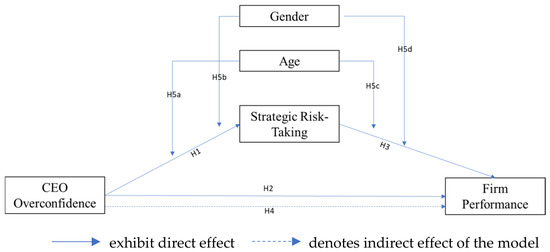
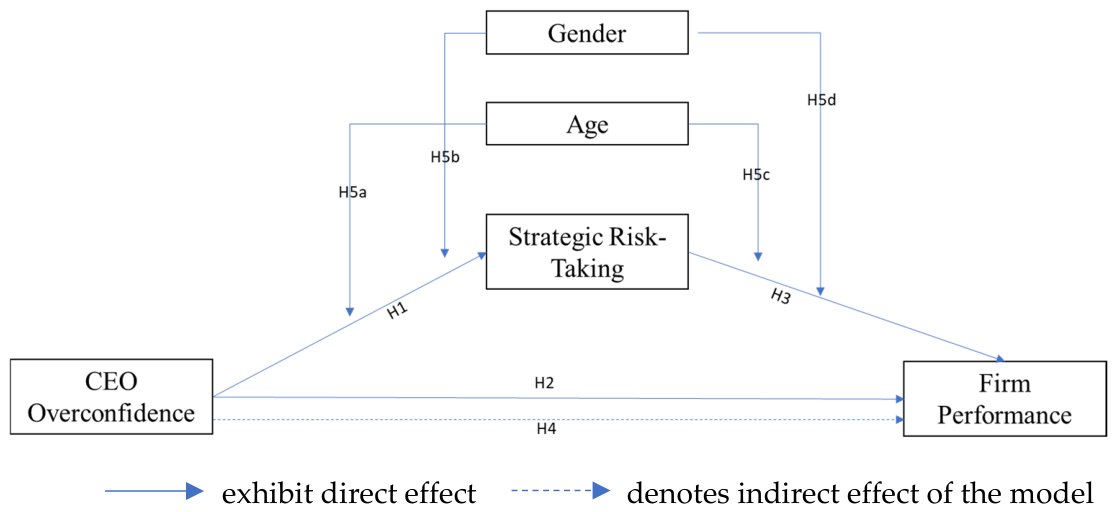
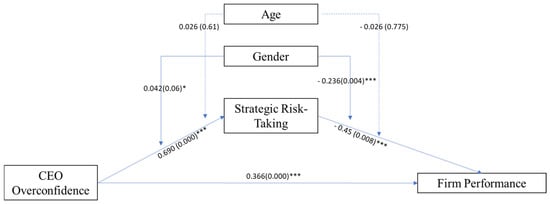
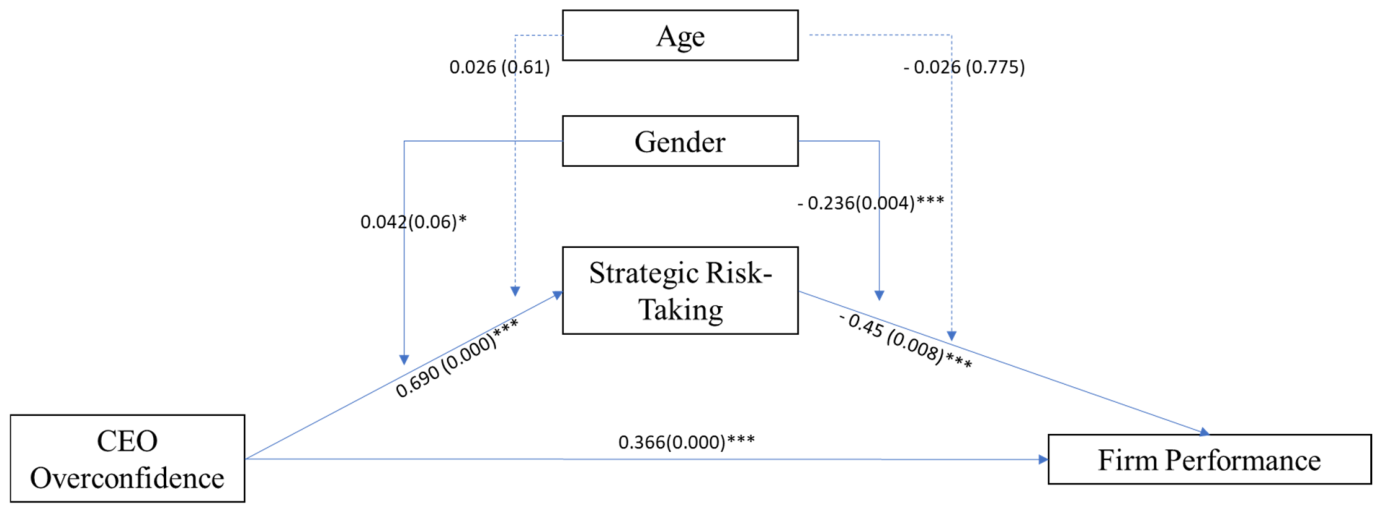
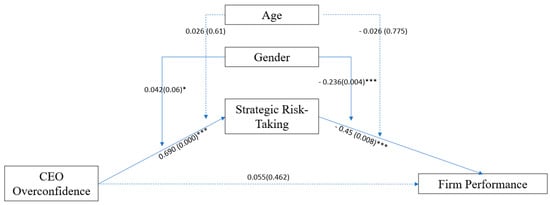
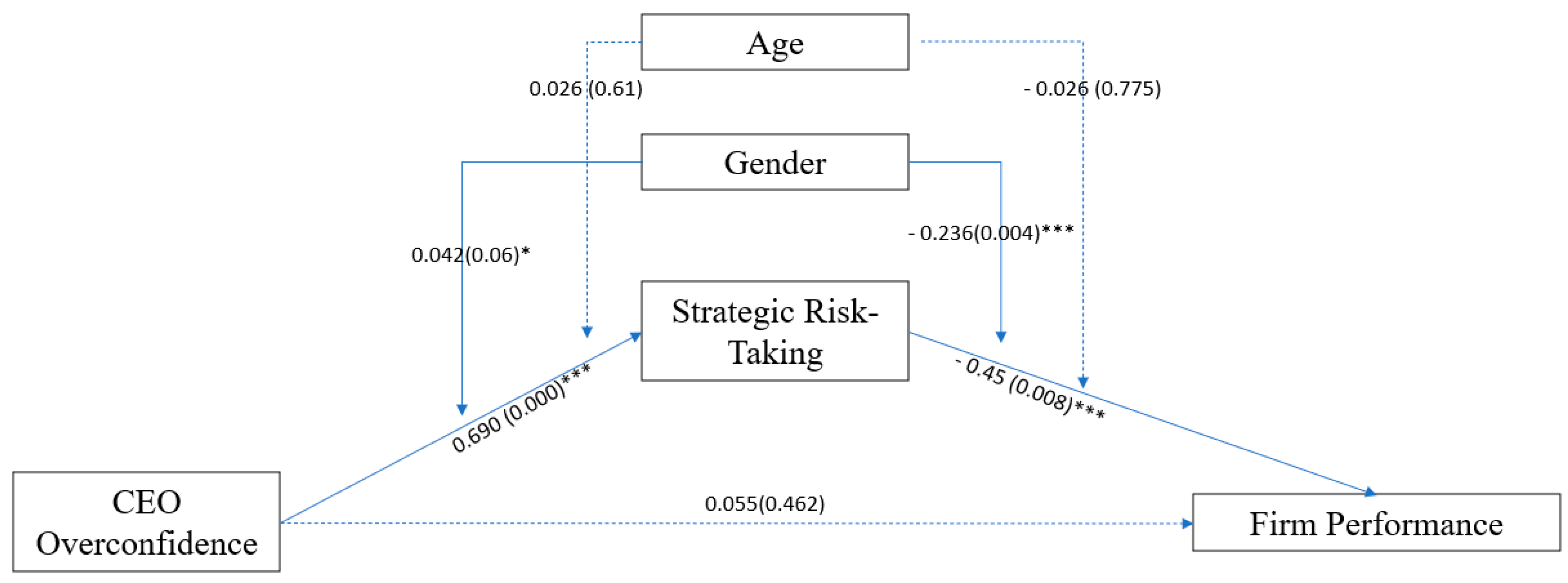

Disclaimer/Publisher’s Note: The statements, opinions and data contained in all publications are solely those of the individual author(s) and contributor(s) and not of MDPI and/or the editor(s). MDPI and/or the editor(s) disclaim responsibility for any injury to people or property resulting from any ideas, methods, instructions or products referred to in the content. |
© 2026 by the authors. Licensee MDPI, Basel, Switzerland. This article is an open access article distributed under the terms and conditions of the Creative Commons Attribution (CC BY) license.