


Abstract
This paper examines the relationship between artificial intelligence (AI) innovation and bank performance, the organizational channels through which these relationships operate, and the role of firm-wide adoption in shaping outcomes. Using patent-based measures of AI innovation for 31 large U.S. commercial banks from 2015 to 2024 based on the Federal Reserve’s Large Bank classification and employing panel regressions with bank and year fixed effects, we find that AI innovation is associated with improved asset quality but higher operating costs and lower profitability in the short run. Our two-step mediation analysis implies that AI innovation induces organizational changes through diminishing employee scale and branch networks, which mitigates management efficiency and profitability. Importantly, firm-wide AI adoption mitigates the adverse association between AI innovation and both management and profitability prior to adoption, suggesting that the realization of AI’s benefits requires organizational adaptation and coordinated deployment. Dynamic tests further support the productivity “J-curve” of AI innovation. Our findings suggest that bank managers should align AI investment with organizational restructuring and coordinated deployment, while regulators should account for short-term adjustment costs when evaluating the performance implications of AI adoption.
1. Introduction
Artificial intelligence (AI) has long been used in financial services. However, the rate of AI adoption has accelerated in recent years, particularly with the advances in machine learning, large language models, and generative AI. This acceleration is reflected in the rapid growth of AI innovation and related patenting activities (Leitner et al., 2024). The existing literature highlights that AI enhances efficiency, reduces costs, and improves decision-making by leveraging large-scale data analytics and predictive modeling (Fares et al., 2022; Dhashanamoorthi, 2023). At the same time, banks face increasing pressure to utilize AI innovation in a highly competitive and regulated environment. From the supply side, rapid advances in computing power, cloud infrastructure, and modular AI architectures have significantly reduced the cost and complexity of deploying AI technologies, making AI a more accessible and scalable input for banks.
Beyond banking, a growing body of research examines AI as a general-purpose technology that improves firm innovation and productivity. Empirical evidence shows that firms adopting AI tend to exhibit higher productivity and stronger innovation outcomes, although these benefits depend critically on complementary investments in skills, data infrastructure, and organizational capabilities (Czarnitzki et al., 2023, Babina et al., 2024; Calvino & Fontanelli, 2023). Importantly, AI adoption is uneven and concentrated among large, technologically advanced firms, suggesting that scale and organizational readiness are key determinants of AI-driven performance gains (McElheran et al., 2024).
Despite these advances, the economic impact of AI in banking remains ambiguous and underexplored. On one hand, AI-related innovation builds an intangible technological reserve that can enhance automation, information processing, and decision-making. For example, prior studies document that AI techniques improve prediction accuracy in mortgage lending and credit risk assessment (Fuster et al., 2019; Jagtiani and Lemieux, 2019; Cheng & Qu, 2020). Commercial banks have also introduced AI-driven customer service platforms. For example, Bank of America’s “Erica” virtual assistant, which has facilitated 3 billion user interactions since its launch in 2018, automates routine client inquiries and has significantly reduced human call-center demand.1 On the other hand, developing and integrating AI technologies requires substantial investment. For example, JPMorgan Chase reported $15 billion in annual technology spending2, while Bank of America invests about $13 billion per year in technology and digital capabilities3, much of which supports artificial intelligence, data infrastructure, and cloud computing initiatives. McKinsey reports large global banks spend around $650 billion on technology with an increased focus on AI in 2024.4 An increased investment may lead to short-term pressure on earnings.
The growing adoption and investment in AI highlight the need to address important gaps in the existing literature. First, existing studies primarily examine AI applications in isolated banking functions, such as lending (Cheng & Qu, 2020), mortgage screening (Fuster et al., 2019), or customer service (Trivedi, 2019), rather than evaluating their impact on overall bank performance across multiple dimensions. Second, prior research rarely distinguishes between AI innovation capability and firm-wide AI adoption, even though theory suggests that performance gains depend on complementary organizational restructure (Babina et al., 2024). Third, limited evidence exists on the organizational mechanisms through which AI affects bank outcomes, particularly whether changes in workforce structure and branch networks mediate these effects. Finally, the dynamics of AI innovation remain underexplored, especially whether AI generates short-term adjustment costs but long-term performance benefits.
This study addresses these gaps by examining the relationship between AI innovation and bank performance using 31 large U.S. commercial banks from 2015 to 2024. We measure AI innovation using bank-level AI patent data, which captures internally developed technological capabilities, and combine this with financial performance based on the CAMEL framework. We also incorporate organizational variables, including employee scale and branch networks, and a firm-wide AI adoption indicator. This empirical design allows us to distinguish between AI innovation capability and AI deployment, and to analyze both the direct and indirect effects of AI on bank performance. Our analysis is organized into the following five areas.
The first is whether banks’ AI-related innovations are associated with superior performance. We proxy a bank’s AI innovation using its AI-related patent portfolio, capturing the accumulated AI knowledge and technical know-how that can be deployed in business operations. We find that greater AI innovation is associated with better asset quality, but also with weaker profitability, capital strength, and diminishing management efficiency. Overall, the baseline evidence suggests that AI innovation is linked to meaningful but mixed changes in bank CAMEL performance, including capital adequacy, asset quality, management, earnings, and liquidity.
Second, we study how AI innovation maps to bank outcomes by testing operational channels. We focus on the employment levels and branches, and find that a greater number of AI patents predicts fewer employees and fewer branches. The reductions in labor costs and branches are significantly associated with performance measures, indicating that part of the AI innovation and performance relationship operates through organizational restructuring, e.g., shifting away from labor- and branch-intensive models. Consistent with the channel logic, the mediation decompositions in the lagged specifications suggest economically meaningful indirect effects. This implies that AI innovation may affect asset quality and cost outcomes partly through changes in the workforce and branch footprint, not only through a direct technology effect.
Third, we examine the dynamic relationship between AI innovation and bank performance. Consistent with the productivity “J-curve” (Brynjolfsson et al., 2021), we find that AI innovation associates with higher operating costs and lower profitability per branch in the short run, but these relationships gradually reverse in the long run. This pattern suggests that a bank investing heavily in AI experiences temporary adjustment costs before gaining improvements. We also find large banks that incur more AI expenses realize gains in operating costs and profitability earlier than medium-size banks.
Fourth, we distinguish having AI knowledge from deploying AI at scale. Using a firm-wide AI adoption indicator, we test whether a full-scale adoption changes the payoff associated with AI innovation. The interaction results show that adoption reshapes the baseline pattern: after firm-wide adoption, the previous adverse association with cost efficiency is significantly mitigated, and the negative association with the return on assets (ROA) is largely offset. In contrast, the asset quality result is similar with or without adoption. This distinction provides new insights into the role of complementary investments and organizational alignment in the returns to AI.
Finally, we conduct several robustness tests. We include controlling for non-AI patent activity to isolate the effects of AI-specific innovation and use alternative measures of AI intensity. The results remain qualitatively consistent, suggesting that the documented relationships are not driven by broader technological innovation or measurement choices.
Our findings have important implications for bank managers, bank regulators, and investors. The evidence highlights that AI innovation generates meaningful performance trade-offs and that its economic benefits depend on organizational adjustment and firm-wide deployment rather than technology alone. For bank managers, our results underscore the importance of coordinating AI investments with workforce and branch adjustments to realize management and earning gains. For bank regulators, AI innovations in asset quality may coexist with short-run pressure on capital and earnings, calling for supervisory attention to transition dynamics over static performance measures. Investors should be aware that AI-related patents signal long-run potential but not immediate returns.
Our work contributes to the expanding literature on technology as an intangible asset and its impact on bank performance. While the existing studies emphasize the potential of AI to enhance prediction and risk management (Fuster et al., 2019, 2022; Jagtiani & Lemieux, 2019), less is known about the relationship between AI innovation and overall bank performance across multiple dimensions. Our baseline analysis shows that AI innovation is associated with improved asset quality but adversely affects management efficiency and earnings in the short run. This finding advances existing research by demonstrating that AI has multi-dimensional and potentially offsetting effects at the bank level rather than uniformly positive outcomes.
Second, this study contributes to theories of organizational resource reallocation induced by technology advances. Existing studies predict that new technologies reshape firms’ input mix by substituting capital and algorithms for routine labor and physical infrastructure (Autor et al., 2003; Acemoglu & Restrepo, 2020). Consistent with this view, we provide empirical evidence that AI innovation is associated with reductions in workforce and branch networks. Furthermore, our mediation analysis demonstrates that these organizational adjustments partially explain the relationship between AI innovation and bank performance outcomes, providing new evidence on the organizational transmission channels of AI in banking. By linking AI-related restructuring to measurable banking outcomes, this study bridges the broader labor and organization literature to financial intermediation, extending prior work on bank branch contraction (Nguyen, 2019; Keil & Ongena, 2024).
Third, we contribute to the literature on complementary investments and technology adoption by distinguishing AI capability from firm-wide deployment. An implication from organizational economics and productivity research is that the returns to advanced technologies depend on complementary investments in managerial practices, human capital, and process integration, rather than technology alone (Tambe et al., 2020; Garicano & Heaton, 2010). Our empirical analysis shows that firm-wide AI adoption mitigates the negative short-term effects of AI innovation on management efficiency and profitability. In addition, our dynamic analysis indicates that while AI innovation initially increases operating costs and reduces profitability per branch, these effects diminish over time, suggesting a transition from short-term adjustment costs to longer-term performance gains. These findings advance the understanding of organizational alignment and implementation in realizing the value of AI, and help explain why banks continue to invest heavily in AI despite short-run cost pressures.
The remainder of the paper is organized as follows. Section 2 reviews the related literature and develops hypotheses. Data and sample coverage are presented in Section 3. Section 4 explores the relationship between AI innovation and banks’ CAMEL performance. Section 5 discusses organizational channels of AI innovation on bank performance. Section 6 analyzes the dynamic relationship between AI innovation and operating costs and profitability per branch. Section 7 discusses the role of firm-wide deployment on the relationship between AI innovation and bank performance. Section 8 provides the robustness analysis. Section 9 concludes this study.
2. Hypothesis Development and Literature Review
2.1. AI Innovation and Bank Performance
Advances in AI have created new tools available to financial institutions for information processing, decision-making, risk management, etc. Prior research shows that data-related technology innovation improves prediction accuracy and decision quality in credit assessment, fraud detection, trading, and portfolio management (Bussmann et al., 2021; Jagtiani & Lemieux, 2019; Alonso & Ordieres-Meré, 2025). In banking, these innovations are expected to affect performance by reducing information friction and allocating resources more efficiently. Recent studies further document that AI-driven models enhance credit screening and risk monitoring, particularly in data-intensive financial environments, reinforcing the role of AI as a core analytical technology in financial intermediation (Cheng & Qu, 2020; Fuster et al., 2019).
AI-related knowledge constitutes an intangible asset that may generate a competitive advantage when accumulated and deployed across business functions (Begenau et al., 2018; Cockburn et al., 2018). Patent-based measures have been widely used to capture firms’ capability and innovation intensity, including in studies of financial institutions (Francis et al., 2012; Lerner et al., 2024).
However, the performance implications of AI innovation are theoretically ambiguous. While AI may improve asset quality, liquidity management, and risk control, developing and integrating AI technologies requires substantial investment and organizational adjustment, which can generate short-term frictions in profitability and operations (Brynjolfsson & Hitt, 2000). Recent banking evidence suggests that AI adoption improves efficiency and risk assessment but does not always translate into immediate profitability gains, reflecting implementation costs and learning dynamics (Mor & Gupta, 2021; Shiyyab et al., 2023). These factors suggest that AI innovation may positively relate to certain dimensions of bank performance, though not necessarily uniformly across dimensions.
Hypothesis 1:
Banks with stronger AI innovation are associated with improved CAMEL performance relative to banks with weaker AI innovation.
2.2. Organizational Channels Linking AI Innovation to Bank Performance
Existing studies provide limited evidence on how AI innovation translates into bank-level outcomes through organizational channels. The existing literature primarily documents the functional benefits of AI in banking, showing that AI improves earnings, enhances lending decisions, reduces fraud, and increases operational efficiency (Shiyyab et al., 2023; Königstorfer & Thalmann, 2020; Ris et al., 2020; Chhaidar et al., 2023). However, this body of work focuses primarily on application-level or functional improvements, rather than examining how AI innovation affects bank performance through changes in organizational structure. As a result, the mechanisms through which AI innovation influences broader performance dimensions—such as asset quality, management efficiency, and earnings—remain insufficiently understood.
Theoretically, AI may affect performance through both direct and indirect channels. Direct effects arise when AI innovation improves automation, analysis efficiency, risk management, and decision-making quality without changing the existing organizational structure (Fuster et al., 2019; Jagtiani et al., 2021). Indirect effects operate through adjustments in firm structure and resource allocation. Recent evidence emphasizes that AI functions as a general-purpose technology whose productivity effects depend on organizational coordination (Czarnitzki et al., 2023; Babina et al., 2024).
In addition, AI-driven advances may alter bank resource allocations. Existing studies on technology changes document that firms often respond by restructuring operations, reducing labor scale, and consolidating physical assets (Autor et al., 2003; Beaudry et al., 2016). In banking, employment levels and branch networks are closely linked to cost efficiency, profitability, and risk exposure, suggesting that organizational changes may act as mediating mechanisms between AI innovation and performance (Nguyen, 2019; Doerr et al., 2023).
Hypothesis 2:
Organizational changes in employee scale and branch networks partially mediate the relationship between AI innovation and bank performance in asset quality, management efficiency, and earnings.
2.3. Firm-Wide AI Adoption and Performance Effects
Technological innovation alone does not guarantee economic benefits. The economic gains of new technologies depend on complementary investment, organizational integration, and firm-wide adoption (Bresnahan et al., 2002; Brynjolfsson et al., 2021). Firms may possess substantial AI knowledge yet deploy it only narrowly, limiting its impact on performance. Recent work emphasizes that AI adoption may exacerbate differences between firms that successfully integrate technology at scale and those that adopt it in a fragmented manner (Aghion et al., 2019; Bessen, 2019).
In banking, AI technologies can be implemented at the level of individual applications or adopted broadly across lending, operations, risk management, and customer-facing activities. Existing empirical studies often capture only partial aspects of this process (Königstorfer & Thalmann, 2020; Gyau et al., 2024; Shiyyab et al., 2023). For example, Gyau et al. (2024) examine the relationship between AI innovation and bank return on assets without accounting for the breadth of AI deployment across business functions, which limits insight into whether and how firm-wide adoption influences the translation of AI innovation into broader performance outcomes. Firm-wide adoption may enhance the payoff to AI innovation by facilitating data sharing, process standardization, and learning across business lines (Bresnahan et al., 2002). Conversely, partial adoption may constrain the translation of AI-related knowledge into performance improvements, particularly for outcomes that require coordination across units (Brynjolfsson & Hitt, 2000; Bloom et al., 2012). These insights suggest that firm-wide adoption plays a crucial moderating role in determining whether AI innovation translates into improved bank performance.
Hypothesis 3:
Firm-wide AI adoption strengthens the relationship between AI innovation and bank performance in asset quality, management efficiency, and earnings.
3. Data and Sample
This study uses large U.S. commercial banks as the research sample. Patent data are obtained from the United States Patent and Trademark Office (USPTO), the official agency responsible for granting U.S. patents and registering trademarks. Bank financial and performance data are collected from quarterly Reports of Condition and Income (Call Reports) filed with the Federal Financial Institutions Examination Council (FFIEC). Our sample consists of 31 large commercial banks with available patent data over the period 2015–2024. These banks collectively account for 71% of the total capitalization of all U.S. commercial banks, based on the Federal Reserve’s Large Bank classification (https://www.federalreserve.gov/releases/lbr/current/, accessed on 1 January 2025). They are also the primary institutions with the capability to invest in frontier AI-related research, making them a natural setting to study the relationship between AI innovation and bank performance. However, the focus on large banks may limit the generalizability of our findings to smaller financial institutions, which may face resource constraints and different technology adoption dynamics.
3.1. AI-Related Metrics
We use patent data to measure banks’ AI-related innovation capacity for the following rationale. First, a patent is a legal document granting exclusive rights to an invention, reflecting formal inventive activity. Second, AI-related patents reflect R&D efforts in the field, showing the resources and emphasis of a bank spending on AI. Francis et al. (2012) use patent activity to measure firms’ innovation capability. Lerner et al. (2024) study the evolution of financial innovation using U.S. patent data. Inspired by Francis et al. (2012) and Lerner et al. (2024), we measure a bank’s AI innovation by the percentage of AI-related patents over the total number of its patents,
To identify whether a patent is AI-related or not, we detect if the patent relates to any mainstream AI technologies, including GenAI, machine learning, deep learning, reinforcement learning, natural language processing, computer vision, and optimization.
The keyword selection is based on industry reports and the existing literature (e.g., WIPO, 2019; Cockburn et al., 2018; Yang, 2022), and includes commonly used techniques such as neural networks, large language models, sentiment analysis, image recognition, and optimization algorithms. The full list of keywords used in the classification procedure is reported in Appendix A Table A1.
As shown in Table 1, the average AI innovation measure is 0.0426, suggesting that approximately 1 out of 24 patents are AI-related. Among the 31 large commercial banks in our sample, 20 banks hold at least one AI-related patent, while the remaining 11 report no AI-related patent activity during the sample period. AI-related patenting is highly concentrated among larger institutions, with banks such as Bank of America, Capital One, and Wells Fargo holding the largest number of AI-related patents relative to their peers. It is important to note that patent activity captures a firm’s AI-related innovation capacity (Cockburn et al., 2018; Babina et al., 2024), rather than the full extent of AI adoption in operations. Banks may adopt AI technologies through external vendors, partnerships with AI firms, or licensed software solutions that do not necessarily involve patent filings. Thus, our patent-based measure may underestimate the overall application of AI technologies within banks. Our AI innovation variable should therefore be interpreted as a proxy of banks’ AI innovation capacity, rather than the comprehensive adoption of AI tools. To address this distinction, our empirical analysis later includes a separate measure for AI adoption, allowing us to distinguish between AI knowledge creation and organizational deployment of AI technologies.
Table 1.
Summary statistics. This table reports the statistics for the variables used in our analysis. Panel A reports the definitions or resources of CAMEL performance, AI innovation, and control variables of 31 large U.S. commercial banks with available patent data from 2015 to 2024. Panel B reports the correlations among the variables in Panel A.
Investment and progress in AI innovation do not automatically translate into operational deployment. There is often a lag between AI innovation accumulation and deployment, especially in highly regulated industries like banking. If AI innovation does affect bank performance, we expect an amplified impact after the bank’s official adoption of AI. To facilitate the hypothesis testing, we establish a dummy variable, AI_adoption, which equals 0 before a bank adopts AI and 1 afterwards.
We collect banks’ AI adoption information from credible news reports and the annual and quarterly filings of the corresponding bank holding companies. For example, Wells Fargo disclosed the establishment of an enterprise artificial intelligence team on 17 February 2017.5 Wells Fargo also first mentions artificial intelligence in its 2017 Form 10-K, stating that “Another important area of innovation is … leveraging artificial intelligence to help strengthen our risk management and fraud detection capabilities.” Thus, we code 2017Q1 as the start of Wells Fargo’s adoption of AI in its operation.
3.2. Bank Performance and Control Variables
We adopt the CAMEL framework to measure bank performance. Since supervisory CAMEL ratings are not publicly available, we construct bank-level performance variables for each CAMEL component using standard accounting-based measures. Capital adequacy (C) is measured by the ratio of equity to assets, asset quality (A) is proxied by the ratio of non-performing loans to total loans, management (M) is captured by the non-interest expenses over net interest income and non-interest income, earnings (E) is represented by the ROA, and liquidity (L) is assessed by the loan-to-deposit ratio. A detailed formula for each CAMEL component is listed in Table 1 Panel A.
In addition, to examine potential transmission channels, we include two bank-level operational variables, the number of employees and the number of branches obtained from the FDIC Summary of Deposits, which capture differences in organizational scale, geographic outreach, and operating capacity. We also construct operating cost per branch and profitability per branch variables to further examine the potential dynamics of the transmission channels.
Following Gaul and Jones (2021), we include the following control variables in our empirical analysis. The bank size is measured as the logarithm of total assets. We control for subordinated debt by including the subordinated notes and debentures scaled by the total assets, and loan intensity using the total loans to assets. We also include brokered deposits to assets, cash to assets, and non-core deposit funding to assets.
Macroeconomic conditions can affect banks’ innovation activities and performance. We include the federal funds rate target as the benchmark interest rate to capture the monetary policy dynamics, the Consumer Price Index (CPI) to control for inflation conditions, and real GDP growth for aggregate economic activity.
4. AI Innovation and CAMEL: Baseline Evidence
This section examines the baseline relationship between banks’ AI innovation and performance, corresponding to Hypothesis 1. We estimate panel regressions of CAMEL components on AI innovation, controlling for bank characteristics and macroeconomic conditions.
All specifications include bank fixed effects and time fixed effects, which absorb time-invariant heterogeneity across banks and common macroeconomic shocks. Standard errors are clustered at both the bank and year levels. To mitigate concerns that innovation and performance are jointly determined, AI innovation is lagged by one period in all baseline regressions.
We present the baseline relationship between AI innovation and CAMEL performance in Table 2. First, AI innovation is significantly associated with lower capital adequacy, with a one standard deviation increase in AI innovation corresponding to a 0.28% drop in capital adequacy. Although this finding contradicts Hypothesis 1 in terms of capital adequacy performance, it is not necessarily a negative signal. Bank capital is chosen optimally subject to regulatory constraints, and observed capital ratios reflect both regulatory buffers and banks’ internal risk management choices rather than a monotonic measure of financial strength (Van den Heuvel, 2008). In the context of AI innovation, improvements in data processing, credit risk modeling, and real-time monitoring by AI technologies may enhance banks’ ability to manage portfolio risks. Such technological capabilities can allow banks to operate with more precisely calibrated capital buffers while maintaining regulatory compliance. Thus, lower capital ratios among AI-intensive banks may reflect more efficient capital allocation and balance sheet optimization rather than worsening financial conditions (Begenau et al., 2018).
Table 2.
AI innovation and bank performance: baseline evidence. This table represents the panel regression of CAMEL performance on AI innovation: . The dependent variables are CAMEL components, and the independent variable of interest is AI innovation, measured by the number of AI patents over the number of total patents. Control variables are as described in Table 1 Panel A. Standard errors are clustered at both the bank and year levels. p values are in parentheses. *, ** and *** denote significance at 10%, 5%, and 1%, respectively.
Second, the negative and statistically significant coefficient of AI innovation in the asset quality specification indicates that greater AI innovation is linked to lower non-performing loan ratios. This finding supports Hypothesis 1 in terms of asset quality performance. It is also consistent with the evidence that technology advances enhance banks’ screening, underwriting, and monitoring capabilities, leading to improved credit risk management. Among the CAMEL components, asset quality is one dimension where the benefits of AI capability appear to materialize relatively early and robustly (Fuster et al., 2019; Jagtiani & Lemieux, 2019).
Third, AI innovation is positively related to management cost, implying that AI-intensive banks exhibit higher operating costs relative to income. This result rejects Hypothesis 1 in terms of management performance. It points to significant costs associated with developing and integrating AI innovations. Prior research finds that general purpose technologies such as AI often increase operating expenses in the short run due to investment in data infrastructure, highly specialized human capital, regulatory compliance, and organizational restructuring, with efficiency gains materializing gradually in the long run (Bresnahan et al., 2002; Brynjolfsson et al., 2021).
Fourth, AI innovation is associated with lower earnings, indicating that AI-intensive banks experience weaker short-term profitability and contradicting Hypothesis 1 in terms of earnings. Together with the management cost results, this pattern suggests that the economic returns to AI capability may be delayed, reflecting a productivity J-curve in which upfront investment and organizational frictions precede longer-term performance improvements.
Finally, liquidity, like capital adequacy, reflects an optimization trade-off rather than a monotonic measure of strength. Banks must maintain liquidity buffers to satisfy regulatory requirements and manage funding stability, and excessive liquidity may indicate underutilized funding capacity rather than greater prudence (Gatev et al., 2009). AI innovation may influence liquidity management through improved forecasting of cash flows, deposit behavior, and funding needs, which allow banks to manage liquidity buffers more efficiently. However, AI innovation has no statistically significant association with the loan-to-deposit ratio in the baseline specification, suggesting that its potential benefits on liquidity management are either limited or offset by regulatory constraints and banks’ funding practices.
Collectively, the baseline evidence suggests a complicated picture of AI in banking. While AI innovation is associated with improving asset quality, higher management costs, and lower profitability, its relationship with capital adequacy and liquidity reflects certain trade-offs rather than monotonic indicators of strength or weakness. Because both capital and liquidity are endogenously chosen subject to regulatory constraints and business considerations, higher or lower levels cannot be interpreted as superior or inferior performance. Thus, we focus on performance indicators with clearer directional interpretations, including asset quality, management efficiency, and profitability, in the subsequent analysis.
The R-squared values reported in Table 2 vary across five CAMEL component regressions, from 0.0318 for earnings to 0.6299 for liquidity. This variation indicates that liquidity, capital adequacy, and asset quality, with higher R-squared, are better explained by control variables measuring bank characteristics and macroeconomic conditions. However, earnings and management, which correspond to lower R-squared, are more influenced by factors not included in our model and deserve more in-depth analysis. We dive into a detailed analysis of earnings and management costs in Section 6.
It is worth noting that though the empirical specification includes lagged explanatory variables, bank fixed effects, and year fixed effects, potential endogeneity concerns still remain. For example, banks with stronger financial performance, superior managerial capability, or greater technological orientation may be more likely to invest in AI-related innovation. As a result, the estimated coefficients should primarily be interpreted as associations between AI innovation and bank performance, rather than strict causal effects.
5. Employee Scale and Branch Network Channels
To test Hypothesis 2, this section investigates two organizational channels, employee scale and branch networks, through which AI innovation affects bank performance. Rather than treating the two channels as additional controls, we examine them as intermediate outcomes that potentially transmit the effects of AI innovation to bank performance. Specifically, a two-step mediation framework is adopted. First, we estimate the effect of lagged AI innovation on the mediator, e.g., the number of employees or number of branches, as follows:
In the second step, we regress bank performance on both AI innovation and the mediator,
allowing us to assess whether the organizational changes transmit the effect of AI innovation to performance outcomes. The indirect effect is measured as the product of the estimated coefficients from the two steps, , while the direct effect corresponds to the coefficient on AI innovation conditional on the mediator, . The total effect is the sum of indirect and direct effects, . We scale the numbers of employees and branches by asset size to mitigate the size effect. The empirical results presented in Table 3 directly address Hypothesis 2. Panel A shows that AI innovation is significantly associated with a reduced employee scale and branch networks, which suggests that banks with greater AI capability reallocate resources away from labor- and branch-intensive operating models.
Table 3.
Mediation channels of AI innovation: employee scale and branch network. This table represents the empirical results of mediation channel analysis. Panel A documents the effect of lagged AI innovation on the two mediators, employee scale and branch networks, as follows: . Panel B presents the regression of asset quality, management, and earnings performance on both AI innovation and the mediator, . Control variables are as described in Table 1 Panel A. Standard errors are clustered at both the bank and year levels. p values are in parentheses. ** and *** denote significance at 5% and 1%, respectively.
The reductions in branch networks and employee scale have also been documented in the broader context of digital banking trends, including the expansion of online and mobile financial services (Nguyen, 2019; Amberg & Becker, 2024; Keil & Ongena, 2024). Though these trends can result in organizational restructuring across the banking sector, AI innovation represents a more specific technological capability related to automation, predictive analytics, and decision-making. In this sense, AI innovation can be viewed as a key component of the broader digital transformation process that facilitates the substitution of labor-intensive and branch-based operations within the banking industry.
5.1. Employee Scale
Theoretically, AI and related information technologies are widely viewed as a general purpose technology whose payoff depends on supporting organizational adjustments, e.g., task reallocation, automation, and reductions in labor-intensive processes (Bresnahan et al., 2002). This perspective implies that AI innovation should be associated with changes in organizational inputs such as employment and that these changes in turn link to performance outcomes. Consistent with this logic, Table 3 Panel A Column (1) shows that AI innovation is significantly associated with a reduced employee scale. This suggests that banks with greater AI capability reallocate resources away from labor-intensive operating models.
Turning to asset quality performance, Table 3 Panel B Column (1) shows that AI innovation is associated with lower non-performing loans with a magnitude of significant at the 1% level. It implies fewer non-performing loans even after conditioning on employee scale and controls. Employee scale itself is positively related to non-performing loans (0.0221), suggesting that banks with larger workforces exhibit weaker loan performance, potentially due to higher organizational complexity and agency frictions. However, the combination of first step and second step estimates produces an indirect effect of ). The negative effect indicates that part of the asset quality improvement is from labor downsizing. This finding aligns with evidence that technology improves screening and monitoring in credit markets and reduces reliance on labor-intensive processes (Fuster et al., 2019).
Column (2) of Panel B presents the results for management, measured by non-interest expenses to income. The significant positive coefficient of AI innovation, 0.8909, suggests a direct negative impact of AI innovation on management performance. This finding is consistent with the substantial upfront expenditure on data infrastructure, technology development, and integration that can raise operating expenses before benefits are fully realized. This pattern fits the productivity “J-curve” view that general-purpose technologies often depress measured productivity and efficiency in the short run (Brynjolfsson et al., 2021). At the same time, the coefficient on employee scale is strongly positive (2.7646), implying that larger workforces are associated with higher cost-to-income ratios. Combined with the negative first-stage effect of AI on employment, the implied indirect effect is negative (−0.2217), meaning that AI improves cost efficiency through labor downsizing even as the direct effect remains cost-increasing. This “offsetting” effect suggests that AI innovation adoption can simultaneously require costly investment and reduce labor costs through technology improvements.
A similar decomposition appears for profitability, as shown in Column (3) of Panel B. AI innovation has a negative direct effect on the ROA (−0.0173), consistent with near-term investment and transition costs. Employee scale is negatively related to the ROA (−0.0327), and since AI innovation reduces employment, the implied indirect effect on the ROA is positive (0.0026). Taken together, our results provide direct support for Hypothesis 2 in terms of employee scale, indicating a partial mediation of AI innovation. This affects performance both directly through technology-related expenditures and indirectly through labor reallocation that improves cost discipline and, in turn, profitability and loan outcomes.
5.2. Branch Networks
Advances in information and communication technologies reduce the importance of location in financial intermediation. As a result, banks can increasingly substitute physical branches with digital platforms, leading to consolidation of branch networks (Nguyen, 2019; Amberg & Becker, 2024). This logic implies that AI-intensive banks may operate with smaller branch networks, and that such restructuring can, in turn, affect performance.
Consistent with this logic, Column (2) of Panel A shows that AI innovation is strongly associated with a smaller branch network, as measured by the number of branches in the U.S. This finding suggests that AI innovation facilitates a shift away from branch-centric models toward more centralized and digital ones, a pattern documented by Tranfaglia (2018) and Keil and Ongena (2024).
Regarding bank performance outcomes, Column (1) of Panel C shows that AI innovation continues to exert a significant negative effect on non-performing loans (−0.0059), even after conditioning on branch networks. Branch intensity itself is positively related to non-performing loans (0.0002), indicating that banks with more extensive branch networks tend to exhibit weaker asset quality. Combining the first step and second step estimates yields an implied indirect effect of −0.0024 , suggesting that part of the asset-quality improvement associated with AI innovation operates through branch consolidation. This finding aligns with evidence that branch reductions can sharpen lending standards and reallocate activity toward more information-efficient channels (Fuster et al., 2019).
The management results in Column (2) of Panel C further highlight the organizational nature of the branch channel. The direct effect of AI innovation on the cost-to-income ratio is positive (1.0341), reflecting the substantial AI-related investment. At the same time, branch networks are significantly positively related to operating costs (0.0199), consistent with the fixed costs of maintaining physical locations. Since AI innovation is associated with branch contraction, the implied indirect effect through branches is negative , indicating that branch consolidation partially offsets the cost pressures induced by AI investment.
A similar finding emerges for profitability in Column (3) of Panel C. AI innovation has a negative direct effect on the ROA (−0.0195), consistent with transitional costs, while the number of branches is negatively associated with profitability (−0.0003). Given the negative effect of AI innovation on branch numbers, the implied indirect effect on the ROA is positive (0.0032 = ). These results provide direct support for Hypothesis 2 in terms of branch networks, indicating that branch network shrinkage acts as a meaningful channel through which AI innovation reshapes banks’ physical presence. This in turn contributes to improved asset quality and profitability, and mitigates management inefficiency.
The R-squared values reported in Table 3 vary across specifications, reflecting differences in explanatory power. The first-stage regressions show relatively high R-squared values, indicating that bank characteristics, fixed effects, and AI innovation jointly explain a large portion of variation in organizational structure. This is expected, as employment and branch decisions are relatively persistent and closely tied to bank characteristics. In contrast, the second-stage regressions show more moderate R-squared values, particularly for earnings and management. This suggests that the independent and control variables have limited explanatory power for the variations of earnings and management. This finding underscores the importance of a detailed analysis for earnings and management in Section 6.
6. Dynamic Relationship Between AI Innovation and Operating Costs and Profitability
The results above show that AI innovation associates with higher operating costs and lower profitability in the short run. Though this pattern is consistent with substantial upfront investment in AI infrastructure, one would expect these costs partially offset over time as AI innovation reduces the demand for employees and physical branches.
6.1. Operating Costs per Branch
We first examine how the relationship between AI innovation and operating costs evolves over a three-year horizon. Specifically, we regress the operating cost per branch on AI innovation lagged by one, two, and three years, as the operational benefits of AI innovation may take time to materialize. Because the Call Report data are quarterly, these correspond to lags of 4, 8, and 12 quarters, respectively:
where equals 4, 8, and 12, corresponding to one-year, two-year, and three-year lags. The operating cost per branch, is measured as the ratio of non-interest expenses and the number of branches. It captures the average operating cost associated with human capital and infrastructure. We further estimate a distributed lag specification to assess the joint effect of AI innovation over multiple horizons:
This specification includes the same bank-level controls, bank fixed effects, and year fixed effects as in the baseline regressions.
Table 4 reports the results. In the short run, AI innovation is positively related to the operating cost per branch, as shown in Column (1) using the one-year lag. However, the coefficient becomes statistically insignificant at the two-year horizon (Column (2)) and turns significantly negative at the three-year horizon (Column (3)). This pattern suggests that AI innovation initially increases operating costs due to technology investment and organizational adjustments, and its cost efficiencies gradually materialize over time. The distributed lag setting generates a similar result, that the adverse impact of AI innovation on the operating cost in the first two years reverses in the third year (Column (4)), suggesting that such adverse impact is a temporary adjustment. Our findings are consistent with the productivity “J-curve” for general-purpose technologies, where banks bear short-term pain in operating costs before a longer-term gain in efficiency emerges (Brynjolfsson et al., 2021).
Table 4.
Dynamic effects of AI innovation on the operating cost per branch. The first three columns of this table represent the regressions examining the dynamic relationship between AI innovation and the operation cost per branch: . The last column is for: . The dependent variable is the operating cost per branch, measured as the non-income expenses divided by the number of branches. The independent variable is AI innovation lagged by one, two, and three years, measured by the number of AI patents over the number of total patents. Control variables are as described in Table 1 Panel A. Standard errors are clustered at both the bank and year levels. p values are in parentheses. * denotes significance at 10%.
6.2. Profitability per Branch
Next, we examine whether the short-run cost increases associated with AI innovation are eventually reflected in profitability. Specifically, we regress the profitability per branch on AI innovation using the same lag structure as in the operating cost analysis above. The profitability per branch, PB, is measured as the net income divided by the number of branches, capturing the average profit generated at the branch level. Table 5 documents the regression results. We find that, in the short run, AI innovation associates with lower profitability per branch, reflecting the initial costs and operational adjustments required to adopt AI technologies. When AI innovation is lagged by multiple years, the coefficients become smaller and lose statistical significance, as shown in Columns (1–3). The initial profitability pressure gradually diminishes as banks adapt their operations. The distributed lag specification in Column (4) provides consistent evidence that the short-term decline in profitability does not persist, and AI innovation exerts a positive impact on bank earnings in the long run. Together with the operating cost results in Table 4, these findings support the interpretation that AI innovation brings a temporary adjustment cost but can generate longer-term efficiency and earning gains.
Table 5.
Dynamic effects of AI innovation on the profit per branch. The first three columns of this table represent the regressions examining the dynamic relationship between AI innovation and the profitability per branch: . The last column is for: . The dependent variable is the profit per branch, measured as the net income divided by the number of branches. The independent variable is AI innovation lagged by one, two, and three years, measured by the number of AI patents over the number of total patents. Control variables are as described in Table 1 Panel A. Standard errors are clustered at both the bank and year levels. p values are in parentheses. * and ** denote significance at 10% and 5%, respectively.
6.3. Does Bank Size Matter?
The influence of AI innovation may differ across banks of different sizes. Large banks possess more technological resources, more advanced infrastructure, and stronger economies of scale, which may allow them to adopt AI technologies faster and more efficiently. In contrast, relatively smaller banks may face more implementation hurdles and slower integration of new technologies. To explore this possibility, we divide our sample banks into two groups by asset size as of 2024Q4 and estimate the distributed lag specifications separately for the top 10 largest banks and the remaining banks ranked 11–31.
We apply the same empirical framework used in the previous subsections and report the results in Table 6. As shown by the first two columns, the operating costs of large banks exhibit a stronger relationship with AI innovation, with a large magnitude of estimated coefficients. This pattern suggests that large bank operations initially experience a stronger increase in AI-related costs, likely reflecting substantial investments and organizational adjustments. However, the magnitude of the coefficients declines more quickly over time, indicating that large banks may also be better positioned to absorb these costs and convert them into efficiency gains. For banks ranked 11–31, their operating costs appear less strongly related to AI-related costs initially, and their efficiency gains are not statistically nor economically significant over time.
Table 6.
Dynamic effects of AI innovation by bank size. The first two columns of this table represent the regressions examining the dynamic relationship between AI innovation and the operation cost per branch: The dependent variable is the operating cost per branch, measured as the non-income expenses divided by the number of branches. The last two columns are for the profitability per branch: The dependent variable is the profit per branch, measured as the net income divided by the number of branches. The independent variable is AI innovation lagged by one, two, and three years, measured by the number of AI patents over the number of total patents. Control variables are as described in Table 1 Panel A. Standard errors are clustered at both the bank and year levels. p values are in parentheses. * and ** denote significance at 10% and 5%, respectively.
We find a similar trend when examining the profitability per branch, reported in the last two columns of Table 6. AI innovation does not generate immediate profitability gains for either group of banks. However, the coefficients for large banks become positive faster and are larger in magnitude than those for smaller banks. This suggests that the earning benefits of AI innovation may take longer to materialize for banks with smaller sizes.
7. Firm-Wide AI Adoption and Payoff of AI Innovation
The preceding analysis focuses on AI innovation proxied by banks’ AI-related patenting activities. However, technology capability does not automatically translate into economic value. The existing literature emphasizes that the performance effects of technology advances depend on the level of adoption, rather than knowledge accumulation alone (Brynjolfsson & Hitt, 2000; Aghion et al., 2019). In this section, we distinguish between having AI knowledge and deploying AI at scale, and examine whether firm-wide AI adoption alters the relationship between AI innovation and bank performance.
We take advantage of the dummy variable AI_adoption defined in Section 3.1, which equals zero before a bank adopts AI and one afterwards, and estimate the following regression:
This specification allows us to examine whether the association between AI capability and bank performance differs before and after a bank commits to enterprise-level AI deployment. All regressions include bank and time fixed effects.
The results in Table 7 address Hypothesis 3, revealing that adoption plays an important role in reshaping, rather than uniformly amplifying, the performance outcomes of AI innovation. Starting with asset quality, AI innovation remains negatively correlated with non-performing loans, indicating that banks with stronger AI capabilities have better credit performance even before firm-wide adoption. The interaction between AI innovation and its adoption is statistically insignificant, suggesting that improvements in asset quality materialize relatively early and do not need a full organizational deployment. This finding does not support Hypothesis 3 in terms of asset quality.
Table 7.
AI adoption and the performance effects of AI innovation. This table represents results for the regression of bank performance on the interaction of AI innovation and its adoption: . The dependent variables include asset quality, management, and earnings performance. Dummy variable AI_adoption equals zero before a bank adopts AI and one afterwards. Control variables are as described in Table 1 Panel A. Standard errors are clustered at both the bank and year levels. p values are in parentheses. ** and *** denote significance at 5% and 1%, respectively.
In contrast, the results for management efficiency and profitability show a different pattern. The baseline results suggest that AI innovation is associated with a higher cost-to-income ratio and lower profitability, consistent with our previous analysis in Section 4. However, once AI adoption is taken into account, the interaction term is large and significantly negative for management, and significantly positive for earnings. Economically, this indicates that firm-wide adoption substantially mitigates, and in some cases reverses, the adverse short-run relationship between AI innovation and operating efficiency and profitability. This finding supports Hypothesis 3 in terms of management efficiency and earnings.
Similar to Table 2, the R-squared values reported in Table 7 vary from 0.0548 for management and 0.0804 for earnings to 0.6299 for asset quality. This variation reinforces our results that asset quality is better explained by control variables while explaining earnings and management is more challenging.
To better illustrate these interaction effects, Figure 1 plots the marginal effects of AI innovation on bank performance before and after firm-wide AI adoption. The figure highlights that though AI innovation is associated with higher management costs and lower profitability prior to adoption, these negative effects are substantially reduced once banks implement AI at the enterprise level. In particular, the marginal effect of AI innovation on management efficiency declines sharply after adoption, while the negative association with profitability becomes much smaller.
Figure 1.
Marginal effects of AI innovation before and after firm-wide AI adoption. This figure shows the marginal effects of AI innovation on bank performance before and after firm-wide AI adoption based on the interaction specification in Table 7. The bars labeled “Before Adoption” represent the estimated marginal effect of AI innovation (), while the bars labeled “After Adoption” represent the marginal effect once a bank adopts AI at the enterprise level ().
Our findings highlight the importance of the conceptual distinction between AI innovation capacity and AI adoption in operations. Banks that fund and hold AI patents but fail to integrate them into operations are less likely to realize economic payoffs. In contrast, banks with limited AI technology accumulation can benefit from deployment at scale. While our analysis focuses on a patent-based proxy for AI innovation, this interpretation also suggests that banks without strong AI research capability may still benefit from accessing AI technologies through external solutions or partnerships, provided that they are effectively integrated with appropriate organizational support.
This result aligns with theories emphasizing that the productivity effects of digital and AI technologies depend on organizational investments and coordinated deployment. Firm-wide adoption allows banks to leverage economies of scale in data infrastructure, standardize processes across business lines, and avoid duplication of AI development efforts. Without such integration, AI innovation may remain fragmented, raising costs without delivering meaningful efficiency gains. This interpretation is consistent with recent evidence that the performance impact of advanced digital technologies is highly contingent on managerial coordination (Nucci et al., 2023). This pattern helps reconcile why major banks actively adopt AI technologies despite facing higher costs in the short run, as the returns to AI innovation materialize once firm-wide deployment and organizational alignment are in place.
8. Robustness Analysis
This section compares the robustness of our main findings to an alternative timing assumption and measure of AI innovation.
8.1. Longer-Horizon Effects of AI Innovation
Our analysis uses quarterly lagged AI innovation to capture the short-run association between AI capability and bank outcomes. However, AI-related patents may not translate immediately into operational changes, particularly in the highly regulated banking sector. To address this concern, we re-estimate the baseline and channel analysis.
Panel A of Table 8 reports the CAMEL regression on yearly lagged AI innovation. The estimates basically mirror those obtained under the quarterly lagged AI innovation. One-year lagged AI innovation is significantly associated with improved asset quality, as reflected in lower non-performing loan ratios, while also exhibiting a positive association with management costs and a negative association with profitability. The results for capital adequacy and liquidity are also consistent with the baseline findings, supporting the view that these dimensions reflect balance-sheet optimization rather than monotonic performance improvements.
Table 8.
Longer-horizon effects of AI innovation on bank performance. This table reports robustness tests using AI innovation lagged by one year to account for potential delayed implementation of patented AI technologies in banking operations. Panel A repeats the baseline regression of CAMEL performance on one-year lagged AI innovation. Panel B examines the effect of one-year lagged AI innovation on employee scale and branch networks. Panels C and D report regressions of bank performance on lagged AI innovation and organizational channels, with employee scale and branch networks included as mediating variables. All regressions include bank and year fixed effects and the full set of control variables. Standard errors are reported in parentheses. *, **, and *** denote statistical significance at the 10%, 5%, and 1% levels, respectively.
We then examine the channel analysis. As the results in Panels B, C, and D of Table 5 show, yearly lagged AI innovation continues to predict significant reductions in both employee scale and branch networks. In addition, both employee scale and branch networks continue to be significantly related to performance outcomes, with signs consistent with the mediation interpretation developed in the baseline analysis.
8.2. Non-AI Innovation
Because of rapid technological changes, non-AI technology advances can also have substantial impacts on corporations alone, as examined in existing studies (Yang, 2022). Ignoring the impact of non-AI patents may confound the estimated effects of AI innovation if banks that invest heavily in AI are also more innovative in other technological areas. To address this concern, we construct an additional variable, Other_Innovation, which captures banks’ non-AI patent activity. We define Other_Innovation as logarithm (1 + number of non-AI patents), and incorporate it into the baseline regression as follows:
Table 9 presents the results. After controlling for non-AI patent activity, the coefficients on AI innovation remain consistent with the baseline results in Table 2. AI innovation is still associated with lower capital adequacy, improved asset quality, and higher management costs, while its relationship with earnings and liquidity remains statistically insignificant. The coefficients on Other_Innovation suggest broader technology innovation contributes to loan quality and management efficiency. The finding suggests that the effects of AI innovation on CAMEL performance are not driven by general technological advances. It supports the interpretation that AI innovation has a distinct impact on bank operations and performance. It is also consistent with the enthusiasm and large investment into AI technology in the industry.
Table 9.
AI innovation and non-AI innovation on bank performance. This table reports robustness tests controlling for non-AI patent activity: . The dependent variables are CAMEL components, and the independent variables of interest are AI innovation, measured by the number of AI patents over the number of total patents, and Other_Innovation, defined as Log(1 + Number of Non-AI patents). Control variables are as described in Table 1 Panel A. Standard errors are clustered at both the bank and year levels. p values are in parentheses. *, ** and *** denote significance at 10%, 5%, and 1%, respectively.
8.3. Excluding the Largest Banks
AI-related patent activities in banking concentrate among the large institutions, raising the concern that our empirical findings may be driven by a small subset of highly innovative banks. To address it, we repeat our baseline analysis excluding the top 10 largest banks in our sample. The results reported in Table 10 are consistent with our previous findings. AI innovation remains significantly associated with lower capital adequacy, improved asset quality, lower management efficiency, and lower profitability, while its relationship with liquidity remains statistically insignificant. The magnitude of the coefficients is comparable to those in the full sample estimates.
Table 10.
AI innovation and bank performance: excluding the largest 10 banks. This table repeats the baseline regression in Table 2 using only banks ranked 11–31 by asset size. Standard errors are clustered at both the bank and year levels. p values are in parentheses. *, ** and *** denote significance at 10%, 5%, and 1%, respectively.
8.4. Alternative Measures of AI Innovation
Our AI innovation measure, defined as the ratio of AI-related patents to the total number of its patents, captures the relative importance of AI technologies within a bank’s innovation. One potential concern with this ratio-based metric is its sensitivity to small patent portfolios. This may generate extreme values that do not reflect the meaningful AI capacity. To address this concern, we construct an alternative AI innovation measure as Log(1 + Number of AI patents). This measure mitigates the influence of skewness in patent counts and still captures banks’ AI innovation activity.
We repeat the baseline regression using this new measure and report the corresponding results in Table 11. The estimated coefficients are largely consistent with the baseline results using a ratio-based metric in Table 2. AI innovation continues to be significantly associated with lower capital adequacy, improved asset quality, higher management costs, and lower profitability; its coefficient on liquidity keeps the same sign but turns statistically significant.
Table 11.
AI innovation and bank performance based on Log(1 + Number of AI patents). This table repeats the baseline regression in Table 2 using an alternative AI innovation measure: Log(1 + Number of AI patents). Standard errors are clustered at both the bank and year levels. p values are in parentheses. ** and *** denote significance at 5%, and 1%, respectively.
8.5. COVID-19 as Control
As an additional robustness check, we include a COVID-19 indicator to control for the potential impact of the pandemic on bank performance. We define a dummy variable COVID, which equals one from March 2020 to May 2023 and zero otherwise, following the official announcements by the WTO6. The results in Table 12 remain consistent with the baseline findings, with AI innovation continuing to be associated with improved asset quality but higher costs and lower profitability. The COVID control captures an increase in management costs and earnings during the pandemic period.
Table 12.
COVID-19 shock and the performance effects of AI innovation. This table represents results for the regression of bank performance on the interaction of AI innovation and COVID-19 shock: . The dependent variables are CAMEL components. Dummy variable COVID-19 equals one from March 2020 to May 2023 and zero otherwise. Control variables are as described in Table 1 Panel A. Standard errors are clustered at both the bank and year levels. p values are in parentheses. ** and *** denote significance at 5%, and 1%, respectively.
9. Conclusions
This paper examines the relationship between AI innovation and bank performance, the organizational channels through which AI operates, and the role of firm-wide adoption in shaping performance outcomes. We first provide comprehensive evidence on how AI innovation, measured by pattern-based data, is associated with multiple dimensions of bank performance within the CAMEL framework, which advances the existing literature that focuses on specific applications of AI, e.g., lending, risk management, or customer service.
Second, we identify two organizational channels, employee scale and branch networks, through which AI innovation translates into bank outcomes in asset quality, management efficiency, and profitability. Our mediation analysis demonstrates that AI-related restructuring partially mitigates performance effects, extending prior work on technological change and resource allocation in the banking sector. The dynamic analysis further indicates that the cost and profitability pressures weaken and eventually reverse over time, revealing the productivity “J-curve” for AI innovation among large commercial banks.
Third, our work on firm-wide deployment shows that the benefits of AI innovation depend on organizational adaptation and firm-wide deployment, providing new empirical evidence that helps explain the persistence of AI investment among large banks and offers guidance for stakeholders evaluating the long-run implications of AI-driven transformation in the financial sector.
Our findings have several important implications for practitioners and policymakers. For bank managers, our results suggest that AI investment should not be viewed as a standalone technology upgrade but as part of a broader organizational transformation. Aligning AI innovation with workforce restructuring, branch optimization, and firm-wide deployment is essential to realizing long-term efficiency and profitability gains.
For regulators, our results highlight that AI adoption may temporarily depress traditional performance metrics such as earnings and management efficiency. Supervisory frameworks should account for these transition dynamics. Policies that reduce barriers to AI adoption and promote organizational readiness can help banks more effectively translate innovation into economic value.
We reiterate the limitations of our work and hope to shed light on future research. First, our sample focuses on large U.S. commercial banks, limiting the generalizability of our findings to smaller institutions or banks in other countries. Further research could examine whether similar dynamics hold for a broader scope. Second, our measure of AI innovation is based on patent activity, which may underestimate AI adoption in banks with limited R&D resources but holding external AI access. Future studies could incorporate alternative measures of AI technology. Third, while our empirical design controls for observable characteristics, fixed effects, and lagged variables, potential endogeneity concerns remain. Our results should be interpreted as associations rather than causal effects. Future research may explore causal identification methods to better isolate the impact of AI innovation. Finally, additional work exploring the broader implications of AI in banking, such as financial stability and competition, may expand our understanding of AI in the banking sector.
Author Contributions
Conceptualization, Y.N. and M.N.; methodology, Y.N.; software, Y.N.; validation, Y.N., J.N. and D.T.; formal analysis, Y.N.; investigation, Y.N. and M.N.; resources, Y.N.; data curation, Y.N.; writing—original draft preparation, Y.N.; writing—review and editing, J.N., M.N. and D.T.; visualization, Y.N.; supervision, Y.N.; project administration, Y.N., J.N., M.N. and D.T. All authors have read and agreed to the published version of the manuscript.
Funding
This research received no external funding.
Institutional Review Board Statement
Not applicable.
Informed Consent Statement
Not applicable.
Data Availability Statement
The raw data supporting the conclusions of this article will be made available by the authors on request.
Conflicts of Interest
The authors declare no conflict of interest.
Appendix A
Table A1.
Artificial intelligence keywords used to identify AI patents.
Notes
References
- Acemoglu, D., & Restrepo, R. (2020). Robots and jobs: Evidence from US labor markets. Journal of Political Economy, 128(6), 2188–2244. [Google Scholar] [CrossRef] [Scilit]
- Aghion, P., Antonin, C., & Bunel, S. (2019). Artificial intelligence, growth and employment: The role of policy. Economics and Statistics, 510–512, 150–164. [Google Scholar]
- Alonso, A. M., & Ordieres-Meré, J. (2025). Stock portfolio management based on AI technology. Journal of Forecasting, 45, 458–469. [Google Scholar] [CrossRef] [Scilit]
- Amberg, N., & Becker, B. (2024). Banking without branches (No. 430. Sveriges riksbank working paper series). Sveriges Riksbank (Central Bank of Sweden). [Google Scholar]
- Autor, D. H., Levy, F., & Murnane, R. J. (2003). The skill content of recent technological change: An empirical exploration. The Quarterly Journal of Economics, 118(4), 1279–1333. [Google Scholar] [CrossRef] [Scilit]
- Babina, T., Fedyk, A., He, A., & Hodson, J. (2024). Artificial intelligence, firm growth, and product innovation. Journal of Financial Economics, 151(1), 1–29. [Google Scholar] [CrossRef] [Scilit]
- Beaudry, P., Green, D. A., & Sand, B. M. (2016). The great reversal in the demand for skill and cognitive tasks. Journal of Labor Economics, 34(Suppl. S1), S199–S247. [Google Scholar] [CrossRef] [Scilit]
- Begenau, J., Farboodi, M., & Veldkamp, L. (2018). Big data in finance and the growth of large firms. Journal of Monetary Economics, 97, 71–87. [Google Scholar] [CrossRef] [Scilit]
- Bessen, J. (2019). Automation and jobs: When technology boosts employment. Economic Policy, 34(100), 589–626. [Google Scholar] [CrossRef] [Scilit]
- Bloom, N., Sadun, R., & Van Reenen, J. (2012). Americans do IT better: US multinationals and the productivity miracle. American Economic Review, 102(1), 167–201. [Google Scholar] [CrossRef] [Scilit]
- Bresnahan, T. F., Brynjolfsson, E., & Hitt, L. M. (2002). Information technology, workplace organization, and the demand for skilled labor: Firm-level evidence. The Quarterly Journal of Economics, 117(1), 339–376. [Google Scholar] [CrossRef] [Scilit]
- Brynjolfsson, E., & Hitt, L. M. (2000). Beyond computation: Information technology, organizational transformation and business performance. Journal of Economic Perspectives, 14(4), 23–48. [Google Scholar] [CrossRef] [Scilit]
- Brynjolfsson, E., Rock, D., & Syverson, C. (2021). The productivity J-curve: How intangibles complement general purpose technologies. American Economic Journal: Macroeconomics, 13(1), 333–372. [Google Scholar] [CrossRef] [Scilit]
- Bussmann, N., Giudici, P., Marinelli, D., & Papenbrock, J. (2021). Explainable machine learning in credit risk management. Computational Economics, 57(1), 203–216. [Google Scholar] [CrossRef] [Scilit]
- Calvino, F., & Fontanelli, L. (2023). A portrait of AI adopters across countries: Firm characteristics, assets’ complementarities and productivity. In OECD science, technology and industry working papers 2023. OECD. [Google Scholar]
- Cheng, M., & Qu, Y. (2020). Does bank FinTech reduce credit risk? Evidence from China. Pacific-Basin Finance Journal, 63, 101398. [Google Scholar] [CrossRef] [Scilit]
- Chhaidar, A., Abdelhedi, M., & Abdelkafi, I. (2023). The effect of financial technology investment level on European banks’ profitability. Journal of the Knowledge Economy, 14(3), 2959–2981. [Google Scholar] [CrossRef] [Scilit]
- Cockburn, I. M., Henderson, R., & Stern, S. (2018). The impact of artificial intelligence on innovation. In NBER working paper no. 24449. NBER. [Google Scholar]
- Czarnitzki, D., Fernández, G. P., & Rammer, C. (2023). Artificial intelligence and firm-level productivity. Journal of Economic Behavior & Organization, 211, 188–205. [Google Scholar] [CrossRef] [Scilit]
- Dhashanamoorthi, B. (2023). Opportunities and challenges of artificial intelligence in banking and financial services. International Journal of Science and Research Archive, 10(2), 272–279. [Google Scholar] [CrossRef] [Scilit]
- Doerr, S., Frost, J., Gambacorta, L., & Shreeti, V. (2023). Big techs in finance. Bank for International Settlements (BIS). [Google Scholar]
- Fares, O. H., Butt, I., Hwan, S., & Lee, M. (2022). Utilization of artificial intelligence in the banking sector: A systematic literature review. Journal of Financial Services Marketing, 1, 835–852. [Google Scholar] [CrossRef] [Scilit]
- Francis, B., Hasan, I., Huang, Y., & Sharma, S. (2012). Do banks value innovation? Evidence from US firms. Financial Management, 41(1), 159–185. [Google Scholar] [CrossRef] [Scilit]
- Fuster, A., Goldsmith-Pinkham, P., Ramadorai, T., & Walther, A. (2022). Predictably unequal? The effects of machine learning on credit markets. The Journal of Finance, 77(1), 5–47. [Google Scholar] [CrossRef] [Scilit]
- Fuster, A., Plosser, M., Schnabl, P., & Vickery, J. (2019). The role of technology in mortgage lending. The Review of Financial Studies, 32(5), 1854–1899. [Google Scholar] [CrossRef] [Scilit]
- Garicano, L., & Heaton, P. (2010). Information technology, organization, and productivity in the public sector: Evidence from police departments. Journal of Labor Economics, 28(1), 167–201. [Google Scholar] [CrossRef] [Scilit]
- Gatev, E., Schuermann, T., & Strahan, P. E. (2009). Managing bank liquidity risk: How deposit-loan synergies vary with market conditions. The Review of Financial Studies, 22(3), 995–1020. [Google Scholar] [CrossRef] [Scilit]
- Gaul, L., & Jones, J. (2021). CAMELS ratings and their information content. Office of the Comptroller of the Currency (OCC).
- Gyau, E. B., Appiah, M., Gyamfi, B. A., Achie, T., & Naeem, M. A. (2024). Transforming banking: Examining the role of AI technology innovation in boosting banks financial performance. International Review of Financial Analysis, 96, 103700. [Google Scholar] [CrossRef] [Scilit]
- Jagtiani, J., Lambie-Hanson, L., & Lambie-Hanson, T. (2021). Fintech lending and mortgage credit access. The Journal of FinTech, 1(1), 2050004. [Google Scholar] [CrossRef] [Scilit]
- Jagtiani, J., & Lemieux, C. (2019). The roles of alternative data and machine learning in fintech lending: Evidence from the LendingClub consumer platform. Financial Management, 48(4), 1009–1029. [Google Scholar] [CrossRef] [Scilit]
- Keil, J., & Ongena, S. (2024). The demise of branch banking–technology, consolidation, bank fragility. Journal of Banking & Finance, 158, 107038. [Google Scholar]
- Königstorfer, F., & Thalmann, S. (2020). Applications of artificial intelligence in commercial banks—A research agenda for behavioral finance. Journal of Behavioral and Experimental Finance, 27, 100352. [Google Scholar] [CrossRef] [Scilit]
- Leitner, G., Singh, J., van der Kraaij, A., & Zsámboki, B. (2024). The rise of artificial intelligence: Benefits and risks for financial stability. Financial Stability Review, 1, 104–119. [Google Scholar]
- Lerner, J., Seru, A., Short, N., & Sun, Y. (2024). Financial innovation in the twenty-first century: Evidence from us patents. Journal of Political Economy, 132(5), 1391–1449. [Google Scholar] [CrossRef] [Scilit]
- McElheran, K., Li, J. F., Brynjolfsson, E., Kroff, Z., Dinlersoz, E., Foster, L., & Zolas, N. (2024). AI adoption in America: Who, what, and where. Journal of Economics & Management Strategy, 33(2), 375–415. [Google Scholar] [CrossRef] [Scilit]
- Mor, S., & Gupta, G. (2021). Artificial intelligence and technical efficiency: The case of Indian commercial banks. Strategic Change, 30(3), 235–245. [Google Scholar] [CrossRef] [Scilit]
- Nguyen, H.-L. Q. (2019). Are credit markets still local? Evidence from bank branch closings. American Economic Journal: Applied Economics, 11(1), 1–32. [Google Scholar] [CrossRef] [Scilit]
- Nucci, F., Puccioni, C., & Ricchi, O. (2023). Digital technologies and productivity: A firm-level investigation. Economic Modelling, 128, 106524. [Google Scholar] [CrossRef] [Scilit]
- Ris, K., Stanković, Ž., & Avramović, Z. Ž. (2020). Implications of implementation of artificial intelligence in the banking business in relation to the human factor. Journal of Information Technology & Applications, 10(1), 49–57. [Google Scholar]
- Shiyyab, F. S., Bader Alzoubi, A., Mohammad Obidat, Q., & Alshurafat, H. (2023). The impact of artificial intelligence disclosure on financial performance. International Journal of Financial Studies, 11(3), 115. [Google Scholar] [CrossRef] [Scilit]
- Tambe, P., Hitt, L., Rock, D., & Brynjolfsson, E. (2020). Digital capital and superstar firms. No. w28285. National Bureau of Economic Research. [Google Scholar]
- Tranfaglia, A. (2018). Shrinking networks: A spatial analysis of bank branch closures. Federal Reserve Bank of Philadelphia. [Google Scholar]
- Trivedi, J. (2019). Examining the customer experience of using banking chatbots and its impact on brand love: The moderating role of perceived risk. Journal of internet Commerce, 18(1), 91–111. [Google Scholar] [CrossRef] [Scilit]
- Van den Heuvel, S. J. (2008). The welfare cost of bank capital requirements. Journal of Monetary Economics, 55(2), 298–320. [Google Scholar] [CrossRef] [Scilit]
- World Intellectual Property Organization (WIPO). (2019). WIPO technology trends 2019: Artificial intelligence. World Intellectual Property Organization. [Google Scholar]
- Yang, C.-H. (2022). How artificial intelligence technology affects productivity and employment: Firm-level evidence from Taiwan. Research Policy, 51(6), 104536. [Google Scholar] [CrossRef] [Scilit]
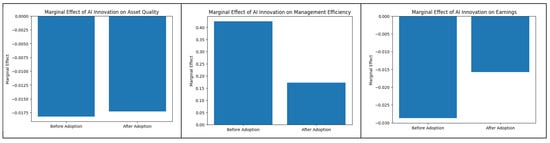
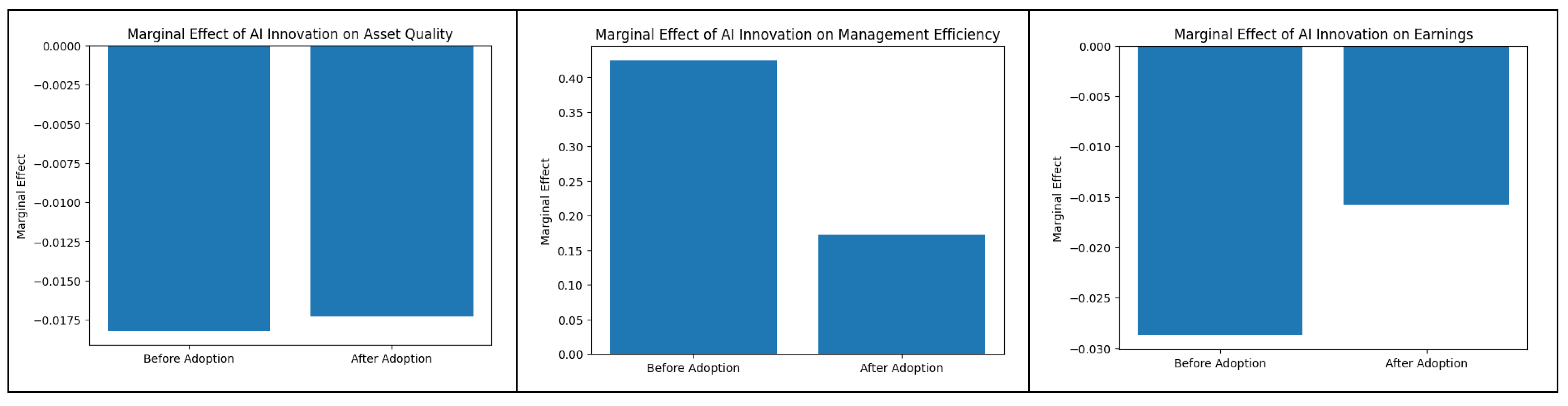

Disclaimer/Publisher’s Note: The statements, opinions and data contained in all publications are solely those of the individual author(s) and contributor(s) and not of MDPI and/or the editor(s). MDPI and/or the editor(s) disclaim responsibility for any injury to people or property resulting from any ideas, methods, instructions or products referred to in the content. |
© 2026 by the authors. Licensee MDPI, Basel, Switzerland. This article is an open access article distributed under the terms and conditions of the Creative Commons Attribution (CC BY) license.