1. Introduction
Cryptocurrencies, despite their relatively recent emergence, have experienced widespread market acceptance and rapid development. The growing adoption of cryptocurrencies is evidenced by the increasing inclusion of cryptocurrency-related assets in the portfolios and strategies of hedge funds and asset managers (
Jackson et al., 2023;
Buterin et al., 2024;
Kukman & Gričar, 2025). Simultaneously, academic research has intensified, focusing on various aspects of cryptocurrency trading. Central to this transformation is the advancement of blockchain technology, which has reshaped cryptocurrency trading by introducing cutting-edge applications and platforms that facilitate the buying and selling of digital financial assets (
Balcerzak et al., 2022;
Ibrahimy et al., 2024;
Buterin et al., 2024;
Kukman & Gričar, 2025). These platforms empower traders with streamlined access to market data, advanced analytical tools, and portfolio management capabilities, thereby transforming the traditional trading experience (
Fang et al., 2022).
An essential element in this evolving landscape is the role of cryptocurrency exchanges, or markets, which serve as critical infrastructures for digital asset trading. According to
Hileman and Rauchs (
2017), cryptocurrency exchanges provide a platform for buying and selling cryptocurrencies and other digital assets for national currencies. By enabling the exchange of digital and fiat assets, these entities function as gateways for traders and investors to access liquidity, market data, and essential trading tools (
Reiff, 2023). This highlights their central role in the cryptocurrency ecosystem, ensuring the seamless facilitation of trading activities. In recent years, cryptocurrency trading exchanges have undergone significant transformation, driven by advancements in blockchain technology (
Hyvärinen et al., 2017;
Balcerzak et al., 2022). The rapid evolution of these exchanges has spurred the emergence of diverse trading applications and platforms, catering to a broad range of trading preferences and strategies. From centralized exchanges offering robust user interfaces to decentralized platforms emphasizing transparency and control, the cryptocurrency ecosystem continues to expand (
Ante et al., 2023;
Fang et al., 2022;
Hileman & Rauchs, 2017;
Reiff, 2023;
Kukman & Gričar, 2025). Such developments underscore the growing need to evaluate these platforms’ effectiveness in meeting user demands.
According to data from Bappebti (Indonesian Commodity Futures Trading Regulatory Agency), the number of registered cryptocurrency users in Indonesia reached over 18.51 million as of late 2023, surpassing the total number of stock market investors in the country. Monthly crypto transaction volume exceeded IDR 30 trillion, demonstrating strong user interest despite market volatility. This rapid growth reflects increasing digital financial inclusion, particularly among millennials and Gen Z. A report by
Statista (
2023) also projects that the Indonesian crypto market will continue to grow in the coming years, driven by regulatory support, fintech adoption, and public interest in alternative investments. These trends underline the relevance of investigating platform performance, particularly through user-centric models such as the DeLone and McLean Information Systems Success Model, to ensure these platforms meet the expectations of a growing and digitally literate user base.
Understanding the success and effectiveness of cryptocurrency trading platforms is essential for users, developers, and regulators. As users increasingly demand efficient and user-friendly trading solutions, the need to evaluate these platforms becomes more urgent. Stakeholders require insights into the critical dimensions that contribute to a platform’s success, such as system quality, information quality, and service quality, to make informed decisions regarding platform selection, investment strategies, and regulatory compliance (
Davis et al., 2023;
Azgad-Tromer et al., 2023;
Buterin et al., 2024;
Ibrahimy et al., 2024). However, significant challenges persist, even for leading platforms such as Binance. Preliminary interviews and observations of user feedback on the Binance trading application reveal ongoing issues. User complaints on platforms such as Google Play Store and Product Review highlight two major challenges: unsatisfactory customer service and frequent force-closing of the application. Users have expressed dissatisfaction with Binance’s customer support, which often redirects them to a Frequently Asked Questions (FAQ) section rather than providing responsive, personalized assistance. This lack of direct support can leave users frustrated and unable to resolve critical issues efficiently, ultimately impacting their satisfaction (
Balcerzak et al., 2022). Additionally, the frequent force-closing of the application disrupts the user experience, causing frustration and potential financial losses for users engaged in critical transactions. Such instability not only harms user satisfaction but also risks damaging the platform’s reputation (
Azmi et al., 2019).
Despite the increasing adoption of cryptocurrency platforms, user dissatisfaction with system performance and service quality remains prevalent, as seen in widespread user complaints on forums and app reviews. Unlike many traditional digital platforms, cryptocurrency exchanges operate in environments characterized by high price volatility, cybersecurity risks, regulatory uncertainty, and the possibility of immediate financial losses resulting from delayed or inaccurate transaction execution. In such settings, system reliability, execution speed, and platform stability become critical determinants of user engagement and perceived platform benefits. However, limited empirical research has examined how information systems’ quality dimensions—particularly within cryptocurrency exchanges—affect user satisfaction and system use. Moreover, there is a lack of consensus on the relative importance of these factors in driving net benefits. This study addresses this gap by applying the DeLone & McLean Information Systems Success Model to evaluate the Binance trading platform from the users’ perspective, providing insights into how system quality, service quality, and information quality contribute to user satisfaction and platform success in the Indonesian context. The motivation for this study arises from the need to address these challenges and to evaluate cryptocurrency trading exchange platforms, particularly from the perspective of user experience. This study also aims to assess the effectiveness of trading platforms by identifying weaknesses and areas for improvement while providing feedback to developers for system optimization. Additionally, this study applies the DeLone & McLean Information System Success Model, a widely recognized theoretical framework, to evaluate key dimensions of platform performance, including system quality, information quality, service quality, user satisfaction, intention to use, and net benefits. By employing this model, the study seeks to advance intellectual discussions and provide empirical evidence regarding the success of cryptocurrency trading platforms. Apart from that, this study does not merely represent a contextual application of the ISSM but highlights how the model’s relationships may shift in high-risk financial environments where volatility, security concerns, and financial loss exposure shape user priorities. This contributes to the broader literature by demonstrating that the relative influence of ISSM constructs may vary depending on the technological and economic risks associated with the digital platform.
This study focuses on the Binance cryptocurrency exchange platform due to its leading position in the global and Indonesian cryptocurrency markets. Binance consistently records some of the highest trading volumes among cryptocurrency exchanges and offers extensive features, including spot trading, derivatives, staking, and integrated mobile and web applications. In Indonesia, Binance is among the most frequently accessed platforms, attracting a broad user base of both retail and institutional investors. These factors make Binance an ideal case for applying the DeLone & McLean Information Systems Success Model, as the platform’s extensive functionalities and diverse user interactions provide a robust basis for evaluating system quality, information quality, service quality, usage, user satisfaction, and net benefits. The findings from this context are expected to yield insights that are relevant not only to Binance users but also to the broader cryptocurrency exchange industry.
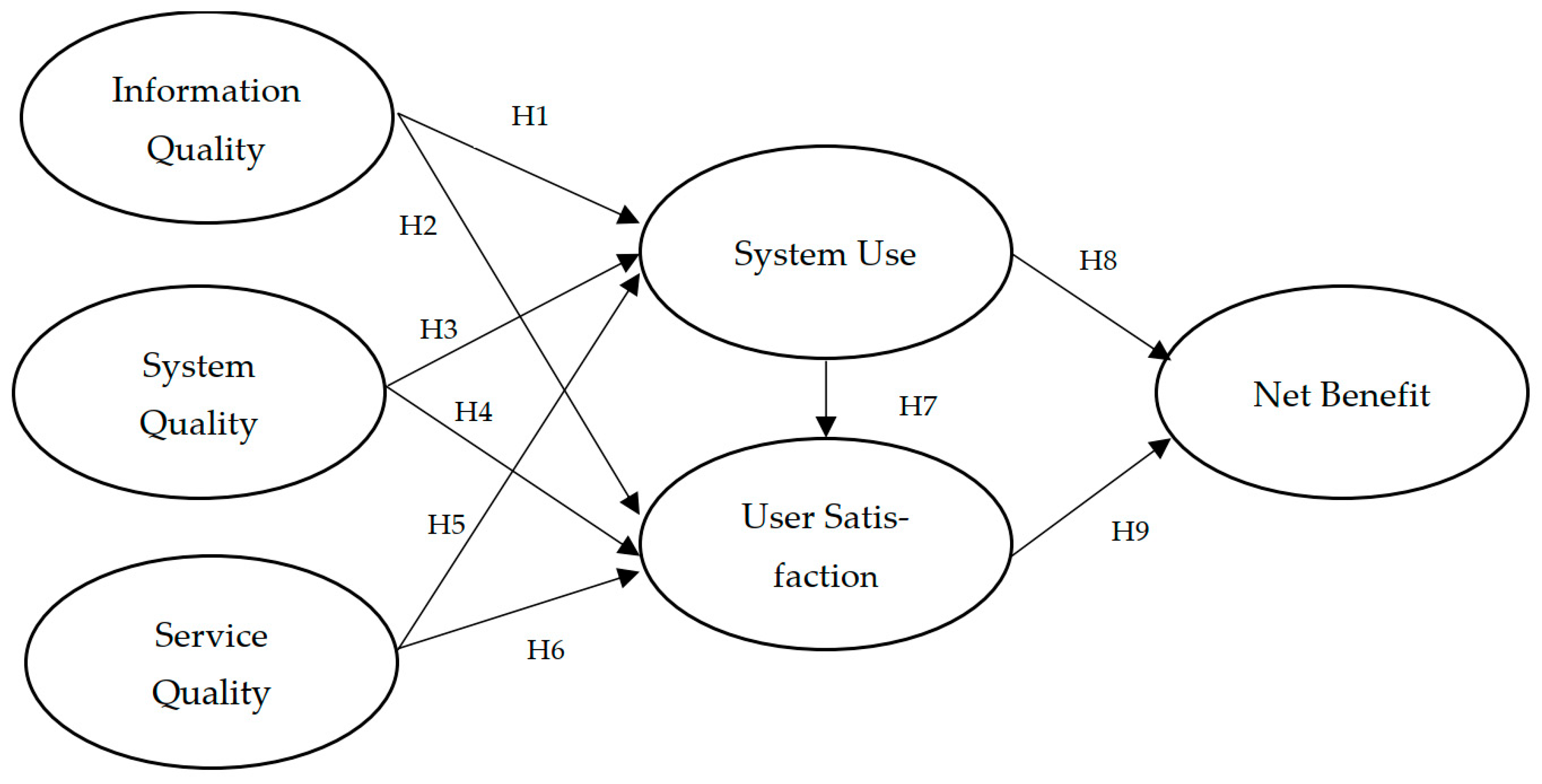
This study adopts the DeLone and McLean Information Systems Success Model (ISSM) as a comprehensive and integrative framework for evaluating the performance and effectiveness of cryptocurrency trading platforms. The ISSM comprises six interrelated dimensions—system quality, information quality, service quality, system use, user satisfaction, and net benefits—which collectively enable a holistic assessment of both technical and experiential factors influencing user behavior and perceived benefits (
DeLone & McLean, 1992,
2003).
Compared to alternative models such as the Technology Acceptance Model (TAM), which primarily emphasizes behavioral intention, or the Unified Theory of Acceptance and Use of Technology (UTAUT), which focuses on adoption determinants, the ISSM offers a post-adoption performance evaluation that integrates both technical and user-centric dimensions. Similarly, while SERVQUAL is widely applied for measuring service quality, it does not capture the full spectrum of technical and informational factors critical to cryptocurrency exchanges. The ISSM’s multidimensional structure is therefore particularly well-suited for high-stakes, technology-driven systems like Binance, where platform usability, information reliability, and service responsiveness are crucial to user experience.
Given the growing concerns regarding service quality and system stability in the cryptocurrency sector, the ISSM provides a validated and adaptable framework capable of identifying performance shortcomings and guiding targeted improvements. Its successful application across diverse digital contexts—including e-commerce, fintech, and online learning—further supports its relevance for emerging financial technologies. By bridging theoretical insights with practical evaluation, this study seeks to contribute to a deeper understanding of the digital asset trading ecosystem while offering actionable recommendations for developers and stakeholders. Accordingly, this research is guided by the following research question: how do system quality, information quality, and service quality influence system use, user satisfaction, and net benefits in cryptocurrency trading platforms? Meanwhile, the research objectives are: (i) RO1: To examine the influence of system quality, information quality, and service quality on system use and user satisfaction. (ii) RO2: To assess the role of system use and user satisfaction in determining net benefits. (iii) RO3: To identify the most significant performance drivers in the context of cryptocurrency trading platforms.
Moreover, the subsequent sections of this study present the theoretical framework underpinning the research, followed by a detailed methodology outlining the study’s approach. The empirical findings and discussion offer insights into the dimensions influencing platform success. The study concludes with practical implications, theoretical contributions, and recommendations for future research, thereby providing a comprehensive examination of the cryptocurrency trading exchange landscape.
4. Results
4.1. Respondents
The demographic profile of the respondents sheds light on the key characteristics of cryptocurrency trading platform users, providing essential context for the study’s findings. From the 389 valid responses collected, the sample represents a diverse mix of gender, age, occupation, education, location, and income levels. This diversity allows for a deeper understanding of how different user groups interact with the platform, showcasing variations in usage patterns, preferences, and satisfaction levels. By examining these attributes, the study identifies important trends and factors shaping user behavior, offering a well-rounded perspective on the cryptocurrency trading landscape. Detailed demographic data is presented in the accompanying
Table 2.
As reflected in
Table 2, the demographic profile of respondents provides a clear understanding of the typical users of cryptocurrency trading platforms like Binance. The majority of respondents are male (69%) and aged between 26–30 years (42%), followed by those aged 31–50 years (28%), indicating a predominantly young adult audience. This aligns with the digital-savvy and investment-driven nature of this age group. Respondents also exhibit a high level of education, with 70% holding a bachelor’s degree and 25% possessing a master’s degree, reflecting the technical and financial literacy often required for cryptocurrency trading. According to recent national reports and market research (e.g.,
Bappebti, 2023;
Statista, 2023), the majority of cryptocurrency investors and traders in Indonesia are male and hold at least an undergraduate degree. These users typically have the digital literacy and financial background necessary to engage with complex financial technologies such as cryptocurrency trading platforms. Moreover, in the occupation-wise, the user base is diverse, with entrepreneurs (28%) and civil servants/military/police (27%) forming the largest groups, alongside private sector employees (21%) and students (19%). These findings suggest the platform appeals to both established professionals and younger users exploring investment opportunities.
Geographically, most respondents are concentrated in Java (60%), followed by Bali (21%), Sumatra (15%), and Kalimantan (4%), highlighting the dominance of users from Indonesia’s urban and economically active regions. Income data reveals that 91% of respondents earn above IDR 3,500,000, with nearly half (47%) earning more than IDR 5,000,000, reflecting the platform’s appeal to middle-to-upper-income individuals with disposable income for investments. Collectively, the demographic insights highlight a predominantly young, educated, and financially capable user base concentrated in urban areas, offering a valuable foundation for tailoring platform strategies to better serve this core audience.
4.2. Outer Model
The empirical data for this study were analyzed using SmartPLS software to ensure robust and reliable results. The first step involved verifying that the measurement instruments demonstrated strong reliability and validity. Reliability reflects the consistency and stability of measurement outcomes, while validity assesses whether the instruments accurately measure the intended concepts. Convergent validity focuses on the correlation between the measurement instrument and the concept it is designed to measure. To ensure rigorous validation of the measurement model, the study analyzed key indicators, including factor loadings, average variance extracted (AVE), and reliability values. As shown in
Table 3, all measurement items in the study achieved factor loadings above 0.7 (except item IQ3, which has to be excluded as its outer loading falls under 0.5), indicating strong item-level correlations. In refining the measurement model, one item from the Information Quality construct (IQ3) was removed due to its low standardized loading of 0.48, which falls below the commonly accepted threshold of 0.70 (
Hair et al., 2021). Although IQ3 was theoretically relevant, representing the aspect of
information satisfaction, the low loading suggests that respondents did not strongly associate this element with their perception of information quality in the context of cryptocurrency exchange platforms. This may be due to the high-paced and transactional nature of such platforms, where accuracy, clarity, and timeliness of information are prioritized over broader satisfaction-based considerations. The removal of IQ3 thus improves construct reliability while providing a substantive insight: certain satisfaction-related attributes may have less salience in digital finance environments, a finding that warrants further investigation in future research. Additionally, the reliability and AVE values for each construct exceeded the thresholds of 0.7 and 0.5, respectively, confirming that the instruments used were both reliable and valid. These results demonstrate that the measurement tools effectively captured the study concepts and provided a solid foundation for further analysis (
Hair et al., 2019).
The constructs in the study were assessed for reliability and validity using factor loadings, composite reliability (CR), and average variance extracted (AVE). Information Quality, with factor loadings ranging from 0.869 to 0.936, achieved a CR of 0.938 and an AVE of 0.791, demonstrating strong reliability and validity. Similarly, Service Quality, measured by three items, exhibited factor loadings of 0.768 to 0.919, a CR of 0.893, and an AVE of 0.737. System Quality, represented by five items with loadings between 0.725 and 0.874, achieved a CR of 0.916 and an AVE of 0.688, confirming its robustness. For User Satisfaction, loadings ranged from 0.830 to 0.884, with a CR of 0.884 and an AVE of 0.719, while System Use demonstrated high reliability with loadings between 0.837 and 0.864, a CR of 0.903, and an AVE of 0.700. Net Benefits, assessed through five items, achieved loadings from 0.771 to 0.885, a CR of 0.929, and an AVE of 0.725. All constructs exceed the thresholds for CR (>0.7) and AVE (>0.5), ensuring internal consistency and convergent validity. These findings validate the measurement model and confirm that the constructs are reliably and accurately represented by their indicators, providing a strong foundation for further analysis, as illustrated in
Table 4.
Furthermore, the discriminant validity was also assessed using additional established approaches; the Fornell–Larcker criterion and the Heterotrait–Monotrait (HTMT) ratio. Based on the Fornell–Larcker criterion, the square root of the Average Variance Extracted (AVE) for each construct exceeded its correlations with all other constructs, indicating that each construct shared more variance with its own indicators than with other constructs in the model. This suggests adequate discriminant validity across the latent variables. Additionally, cross-loading analysis confirmed that all indicators loaded more strongly on their respective constructs than on any others, further supporting construct distinctiveness. Finally, HTMT values for all construct pairs were below the conservative threshold of 0.85, as recommended by
Henseler et al. (
2015), providing additional evidence for discriminant validity.
Discriminant validity was assessed using both the Fornell–Larcker criterion and the Heterotrait–Monotrait (HTMT) ratio, as recommended by
Henseler et al. (
2015) and
Fornell and Larcker (
1981).
Table 5 presents the Fornell–Larcker results, where the square root of the average variance extracted (AVE) for each construct (bold diagonal values) exceeded its correlations with all other constructs, confirming that each construct shared more variance with its own indicators than with other constructs.
Table 6 reports the HTMT ratios for all construct pairs, with values ranging from 0.553 to 0.813—well below the conservative threshold of 0.85—indicating satisfactory discriminant validity. Together, these results demonstrate that the latent constructs in the model are empirically distinct and appropriately measured.
To address potential Common Method Bias (CMB), both procedural and statistical remedies were applied. Anonymity and confidentiality were maintained throughout the survey process, and items were carefully worded to reduce ambiguity and social desirability effects. Additionally, Harman’s single-factor test was conducted to statistically assess CMB. The results of the unrotated exploratory factor analysis indicated that the first factor explained 36.4% of the total variance, which is below the commonly accepted threshold of 50%. This suggests that common method bias is unlikely to have affected the validity of the results.
4.3. Inner Model
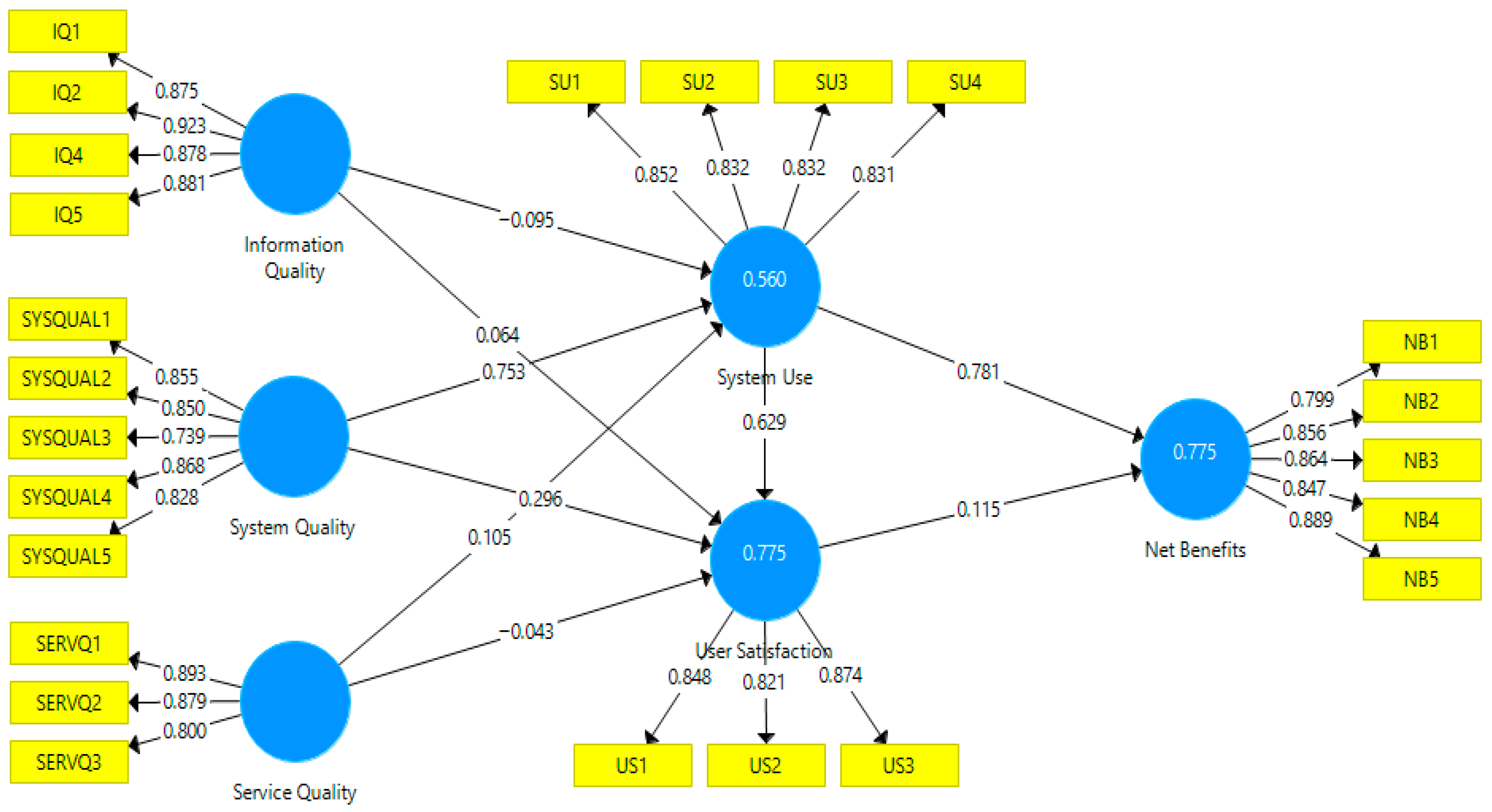
The inner model outcomes offer a detailed understanding of the relationships between key constructs in the study, guided by the DeLone & McLean Information System Success Model, as shown in
Figure 2 and
Table 5. Information Quality has a mixed impact, showing a weak negative relationship with System Use (−0.095) but a significant positive influence on User Satisfaction (0.629). This highlights the value of accurate and relevant information in fostering user satisfaction by supporting decision-making and building trust. System Quality emerges as a critical driver of System Use (0.753), emphasizing the importance of reliability, usability, and performance in encouraging regular engagement. Although its direct effect on User Satisfaction is weaker (0.105), it indirectly contributes through increased system interaction.
Service Quality moderately impacts User Satisfaction (0.629), reflecting the importance of responsive support, but its effect on System Use is negligible (−0.043), indicating that users prioritize technical performance over service in routine use. System Use plays a pivotal role in predicting both User Satisfaction (0.781) and Net Benefits (0.781), highlighting that frequent engagement drives satisfaction and tangible advantages like improved efficiency and cost savings. While User Satisfaction also positively influences Net Benefits (0.115), its impact is less direct. Overall, the findings underscore the centrality of System Use in achieving satisfaction and benefits, with System Quality being the most significant predictor, alongside the supporting roles of Information Quality and Service Quality. These insights stress the need for platforms to prioritize reliability, usability, and user-centric features to maximize benefits and satisfaction.
4.4. Hypothesis Testing
To test the proposed hypotheses, the study utilized a bootstrap algorithm to calculate t-statistics, which helped determine the significance of the path coefficients. A hypothesis was considered valid if the t-statistic exceeded 1.96 and the
p-value was below 0.025 (two-tailed). Each path’s significance was carefully analyzed to ensure robustness. The final results of the path analysis, as shown in
Figure 2 and
Table 7, provide a solid foundation for validating the hypotheses and conducting further analysis in this research.
Starting with H1, the relationship between Information Quality and System Use was found to be insignificant, with a path coefficient of −0.095, a t-statistic of 1.031, and a p-value of 0.303. This suggests that Information Quality does not directly motivate frequent use of the system. Users may prioritize other factors, such as system functionality or ease of use, over information quality when deciding how often to engage with the platform. Similarly, H2, which examines the relationship between Information Quality and User Satisfaction, was also not supported, as indicated by a path coefficient of 0.064, a t-statistic of 0.824, and a p-value of 0.410. While information relevance and accuracy are essential, their direct impact on satisfaction appears minimal in this context, as satisfaction may be more strongly influenced by technical system attributes.
In contrast, System Quality emerges as a significant predictor in the model. H3, which evaluates the relationship between System Quality and System Use, showed strong support with a path coefficient of 0.753, a t-statistic of 9.809, and a p-value of 0.000. This finding highlights the importance of a reliable, high-performing platform in driving user engagement. Similarly, H4 demonstrates that System Quality significantly impacts User Satisfaction (path coefficient: 0.296, t-statistic: 3.661, p-value: 0.000). A user-friendly and reliable system fosters satisfaction by meeting user expectations and enhancing their overall experience.
However, Service Quality did not exhibit a significant impact on either System Use or User Satisfaction. For H5, the relationship between Service Quality and System Use was insignificant, with a path coefficient of 0.105, a t-statistic of 1.061, and a p-value of 0.289. This indicates that while responsive and empathetic support services are valued, they do not directly encourage users to engage with the platform more frequently. Similarly, H6, which explores the relationship between Service Quality and User Satisfaction, was also unsupported (path coefficient: −0.043, t-statistic: 0.524, p-value: 0.601). This suggests that customer support services play a minimal role in determining satisfaction, as users may prioritize technical system features over service quality.
The role of System Use in the model is particularly noteworthy. H7, which examines the impact of System Use on User Satisfaction, was strongly supported with a path coefficient of 0.629, a t-statistic of 6.846, and a p-value of 0.000. This highlights that consistent and meaningful engagement with the platform enhances satisfaction, as users who frequently interact with the system are likely to derive greater value from its features. H8, evaluating the relationship between System Use and Net Benefits, revealed the strongest support in the model (path coefficient: 0.781, t-statistic: 10.867, p-value: 0.000). This demonstrates that frequent and effective use of the platform significantly contributes to tangible outcomes, such as improved trading efficiency, cost savings, and better decision-making. Finally, H9, which investigates the relationship between User Satisfaction and Net Benefits, was found to be insignificant (path coefficient: 0.115, t-statistic: 1.557, p-value: 0.120). While satisfaction positively correlates with net benefits, its influence is less direct compared to System Use. This suggests that active engagement with the platform plays a more critical role in driving net benefits than satisfaction alone.
The predictive relevance of the structural model was assessed using the Stone–Geisser Q
2 statistic obtained through the blindfolding procedure. According to the PLS-SEM literature, Q
2 values greater than zero indicate that the model has predictive relevance for the endogenous constructs (
Chin, 1998;
Hair et al., 2021). The results show that all endogenous constructs exhibit Q
2 values above zero, confirming the predictive capability of the model. Specifically, the Q
2 values for System Use (Q
2 = 0.214), User Satisfaction (Q
2 = 0.287), and Net Benefits (Q
2 = 0.319) indicate moderate predictive relevance, suggesting that the structural model has adequate predictive accuracy in explaining user perceptions of cryptocurrency exchange platform performance. Model fit was further evaluated using the standardized root mean square residual (SRMR). The estimated SRMR value of the model is 0.062, which is below the recommended threshold of 0.08, indicating an acceptable model fit (
Henseler et al., 2014;
Hair et al., 2021). This result suggests that the difference between the observed correlation matrix and the model-implied correlation matrix is sufficiently small, supporting the adequacy of the structural model. The acceptable SRMR value together with the positive Q
2 values also indicates that the model demonstrates satisfactory model fit and predictive relevance in explaining the relationships among the constructs examined in this study.
4.5. Additional Analysis (Multi Group Analysis PLS–MGA)
To further examine potential heterogeneity in the proposed model, a Multigroup Analysis (MGA) was conducted using SmartPLS. The analysis compared structural path coefficients across key demographic subgroups, including gender, education level, income level, and occupational background. Prior to conducting MGA, partial measurement invariance was established using the MICOM (Measurement Invariance of Composite Models) procedure, allowing for meaningful comparison of path coefficients across groups as pointed by
Henseler et al. (
2015) and
Otiniano León et al. (
2025).
Table 8, based on gender (Panel A), indicates that most structural relationships are stable across male and female respondents. No statistically significant differences were observed for the relationships between information quality and system use (H1), information quality and user satisfaction (H2), system quality and system use (H3), or system quality and user satisfaction (H4). Similarly, the effects of system use on user satisfaction (H7) and net benefits (H8) remain consistent across gender groups. However, a significant difference emerges for the relationship between service quality and user satisfaction (H6), which is stronger among female respondents compared to male respondents. The relationship between user satisfaction and net benefits (H9) shows a marginal difference, suggesting a slightly stronger effect for female users, although this difference does not reach conventional significance levels. Overall, gender-based heterogeneity is limited and concentrated primarily in service-related paths.
Moreover, the MGA results based on occupational background (Panel B) reveal the most pronounced heterogeneity among the examined groups. Information quality has a significantly stronger effect on both system use (H1) and user satisfaction (H2) for respondents from the private sector compared to those from the public sector. Similarly, service quality exerts a significantly stronger influence on system use (H5) and user satisfaction (H6) among private-sector users. Conversely, system quality demonstrates a significantly stronger effect on both system use (H3) and user satisfaction (H4) for respondents from the public sector. No significant differences are observed for the relationship between system use and net benefits (H8). However, the effect of user satisfaction on net benefits (H9) is significantly stronger for private-sector respondents.
Meanwhile, the MGA based on education level (Panel C) reveals several significant differences between undergraduate and postgraduate respondents. The effects of information quality on system use (H1) and user satisfaction (H2) are significantly stronger among postgraduate users. In contrast, no significant differences are observed for system quality–related paths (H3 and H4) or service quality–related paths (H5 and H6). Additionally, the relationships between system use and net benefits (H8) and between user satisfaction and net benefits (H9) are significantly stronger for postgraduate respondents. These findings indicate that education level differentiates how informational inputs and system outcomes translate into perceived benefits, while the core effects of system quality remain stable across educational groups.
The MGA comparing low-income and high-income respondents (Panel D) also demonstrates meaningful heterogeneity in several structural relationships. System quality has a significantly stronger effect on both system use (H3) and user satisfaction (H4) among low-income users. The relationship between information quality and system use (H1) shows a marginal difference, suggesting a slightly stronger effect for higher-income users. In contrast, the relationships between system use and net benefits (H8) and between user satisfaction and net benefits (H9) are significantly stronger for high-income respondents. These results suggest that while lower-income users place greater emphasis on system reliability and performance, higher-income users are more effective in translating usage and satisfaction into perceived net benefits.
The empirical additional analysis using Multigroup Analysis (MGA) results indicate that the proposed research model demonstrates strong structural stability across demographic subgroups, with heterogeneity observed only in the magnitude of selected path relationships rather than in their direction. Among the examined grouping variables, occupational background exhibits the most pronounced differences. Respondents from public sectors show stronger effects of system quality on system use and user satisfaction, whereas private-sector users display stronger relationships involving information quality, service quality, and the translation of user satisfaction into net benefits. Education level and income level also reveal moderate heterogeneity, with postgraduate and higher-income respondents exhibiting stronger benefit-oriented relationships, while gender-based differences are relatively limited and primarily confined to service-related paths. These findings suggest that although the core structure of the information systems success model remains robust across user groups, the relative importance of system, information, and service attributes varies according to users’ institutional and socio-economic contexts.
5. Discussion
This research provides valuable insights into the ways system-related factors shape user perceptions of cryptocurrency trading platforms, which operate in environments marked by volatility, decentralization, and limited regulatory control. In contrast to traditional e-commerce or healthcare systems—where service quality is often a dominant success driver—our results indicate that, for cryptocurrency exchanges such as Binance, system quality—encompassing transaction speed, security, and operational reliability—has a more pronounced impact on both system use and user satisfaction. This finding supports prior studies that highlight the critical role of resilient infrastructure and responsive regulation in digital asset trading (
Ante et al., 2023;
Ibrahimy et al., 2024). Moreover, although information quality is generally an important factor in conventional systems, its influence in cryptocurrency settings may be shaped by users’ preference for real-time, precise market data and automation-enabled decision-making. Evidence from research on platforms like Coinbase and Binance suggests that users place greater value on efficiency and trust-building features—such as compliance with security standards and transparent transaction records—than on traditional customer service (
Azgad-Tromer et al., 2023;
Buterin et al., 2024;
Kukman & Gričar, 2025). By framing our findings within this specific body of literature, we contribute a more context-sensitive understanding of how the ISSM framework functions in blockchain-based financial ecosystems.
To add to the findings, Information Quality was found to have no significant impact on System Use. This result is consistent with the studies of
McGill et al. (
2003) and
Iivari (
2005), which state that Information Quality does not necessarily have a significant influence on System Use. In the context of this study, users may perceive that while the information provided by the platform is accurate and complete, it is insufficient for addressing urgent or complex issues during transactions. Users may rely more heavily on other features, such as technical reliability or real-time assistance. This finding contrasts with studies in traditional digital settings—such as e-learning and e-commerce—which often emphasize the central role of information clarity and relevance (
DeLone & McLean, 2003;
Y.-S. Wang & Liao, 2008). These contradictory results highlight the need for a more contextualized application of the ISSM, especially in environments characterized by high uncertainty and technical complexity like cryptocurrency trading platforms.
Similarly, Information Quality did not affect User Satisfaction, aligning with previous research by
Koo et al. (
2013),
Prameswara and Wirasedana (
2018), and
Susanty (
2013). However, this finding diverges from studies that emphasize the positive effect of information relevance and accuracy on user contentment in more stable digital environments. One plausible explanation is that crypto users may prioritize transactional efficiency, error resolution, and platform usability over the mere quality of content. This reinforces the argument that in volatile fintech ecosystems, satisfaction hinges more on operational support and system functionality than on the perceived quality of information alone.
System Quality had a significant positive effect on System Use, consistent with the findings of
Abdillah et al. (
2020),
Fitriani and Suaryana (
2022), and
Y.-Y. Wang et al. (
2019). According to
DeLone and McLean (
2003), System Quality encompasses usability, availability, reliability, response time, and adaptability. This study reaffirms that improvements in these areas are likely to enhance system use by providing users with a seamless and efficient experience. For Binance, this indicates that continuing to optimize system responsiveness and reducing downtime can positively influence usage behavior. Moreover, System Quality also had a significant positive effect on User Satisfaction, in line with the results of
Abdillah et al. (
2020),
Fitriani and Suaryana (
2022),
Rai et al. (
2002), and
Y.-S. Wang and Liao (
2008). Enhanced system features—such as ease of access, minimal latency, and interface intuitiveness—play a pivotal role in improving satisfaction levels among users. This finding underlines the importance of crypto platforms to maintain a high-performing digital environment that addresses both technical and user-centric needs.
Service Quality did not significantly influence System Use, diverging from several earlier studies that associate Service Quality with enhanced user perceptions of empathy, responsiveness, and assurance (
Sharma & Lijuan, 2015). This result could stem from the nature of crypto users, who may be more self-directed and less dependent on service interactions, or from the fact that customer service expectations are lower in decentralized financial services. The finding prompts a re-evaluation of how Service Quality is operationalized in such contexts and suggests that traditional service constructs may require adaptation for blockchain-based platforms. In addition to this, Service Quality did not significantly influence User Satisfaction, which partially supports
Sharma and Lijuan’s (
2015) and
Hairudin et al.’s (
2020) argument that external conditions—such as market volatility or user skepticism—may moderate the relationship between service support and user contentment. While Service Quality has been found to drive satisfaction in traditional e-commerce platforms, it appears to play a less central role in user evaluations of crypto services. Future research may benefit from employing alternative measurement models that capture platform-specific service interactions, such as AI chatbots, dispute resolution efficiency, and peer support mechanisms.
System Use had a positive and significant effect on User Satisfaction, reaffirming the ISSM proposition that active engagement with a system enhances user perceptions of its value. This finding is supported by
Rahayu et al. (
2018) and
Y.-S. Wang and Liao (
2008), who both documented the reinforcing effects of usage on satisfaction. For Binance, promoting more frequent and deeper engagement through personalized features and user-centric tools may further elevate satisfaction levels and strengthen user loyalty. Apart from that, System Use also had a significant positive effect on Net Benefits, echoing findings from various domains including e-learning (
Park, 2009), e-commerce (
Schaupp et al., 2009), and e-government (
Y.-S. Wang & Liao, 2008). This demonstrates that frequent and purposeful interaction with the platform leads to tangible outcomes such as increased efficiency, better decision-making, and financial gains. In the case of Binance, these benefits underscore the platform’s effectiveness in delivering value to its users, thereby justifying investments in feature enhancement and user interface design.
Interestingly, User Satisfaction did not have a significant effect on Net Benefits, a finding that contrasts with previous studies identifying satisfaction as a precursor to perceived and realized value (
Lee et al., 2007). This divergence may be explained by external factors unique to the crypto environment, such as price volatility (
Hairudin et al., 2020), regulatory uncertainty (
Buterin et al., 2024), or platform competition. It also suggests that user perceptions of benefit are more closely tied to actual performance outcomes than to emotional or experiential satisfaction. This complexity highlights the need for further investigation into the nonlinear relationships within the ISSM framework when applied to disruptive financial technologies.
The results point out to the critical role of System Quality in shaping user satisfaction and net benefits. While technical performance, reliability, and usability are fundamental, user experience in cryptocurrency trading also heavily depends on the quality of user support. Timely, accessible, and knowledgeable customer support can mitigate user frustration, foster trust, and encourage continued platform engagement—especially in situations involving transaction disputes, technical errors, or urgent trading needs. Integrating superior user support alongside strong system quality can therefore amplify the overall success of a cryptocurrency exchange platform.
The unsupported hypotheses (see
Table 7) in this study (H1, H2, H5, H6, and H9) should not be interpreted merely as non-significant statistical outcomes but rather as contextually meaningful findings shaped by respondents’ institutional backgrounds and decision-making environments. A salient characteristic of the sample is that approximately 27% of respondents are employed in military, police, or civil service sectors—occupational groups typically operating within hierarchical structures, strict procedural compliance, and high sensitivity to security and risk. This respondent profile provides an important lens through which the lack of support for Hypothesis H1 (Information Quality → System Use) can be understood. Prior research suggests that system usage in highly regulated or command-driven environments is often task-oriented or mandated, rather than driven by discretionary evaluation of informational attributes (
Iivari, 2005;
McGill et al., 2003). For such users, engagement with a system is more strongly influenced by operational reliability and security assurance than by the perceived richness or completeness of information. In the context of cryptocurrency trading platforms, this implies that even high-quality information may not directly translate into increased system use when users prioritize system robustness under high-stakes conditions.
Similarly, the non-significant relationship between Information Quality and User Satisfaction (H2) suggests that satisfaction among these respondents is less dependent on informational attributes and more contingent on system performance outcomes. While information quality is a central determinant of satisfaction in conventional information systems (
DeLone & McLean, 2003;
Y.-S. Wang & Liao, 2008), fintech environments—particularly cryptocurrency exchanges—introduce heightened concerns related to volatility, transaction security, and execution speed. As noted by
Ante et al. (
2023) and
Hairudin et al. (
2020), crypto users often evaluate platforms based on their ability to manage risk and ensure transactional reliability, rather than informational completeness alone.
The absence of significant effects involving Service Quality (H5 and H6) can also be explained through respondent-centric considerations. Users with military or law-enforcement backgrounds may exhibit lower reliance on interactive or empathetic customer service, given their familiarity with standardized procedures, self-reliance, and formal protocols. This aligns with prior findings indicating that in technology-intensive or security-sensitive systems, service quality may play a secondary role relative to system quality (
Abdillah et al., 2020;
Y.-S. Wang & Liao, 2008). In cryptocurrency exchanges, users may perceive customer support as reactive rather than value-creating, particularly when core trading functions operate autonomously.
Finally, the lack of support for Hypothesis H9 (User Satisfaction → Net Benefits) suggests that perceived benefits in cryptocurrency trading are primarily performance-driven rather than affect-driven. In volatile financial environments, users may continue to realize net benefits—such as efficiency gains, portfolio optimization, or reduced transaction costs—even in the absence of strong affective satisfaction. This finding echoes prior studies in fintech and enterprise systems, which show that system use and performance outcomes often exert a stronger influence on realized benefits than subjective satisfaction alone (
DeLone & McLean, 2003;
McGill et al., 2003). These findings also reveal the importance of contextualizing the DeLone and McLean Information Systems Success Model within user-specific institutional and occupational settings. In high-risk, performance-oriented, and security-sensitive environments such as cryptocurrency trading platforms, system quality and actual system use emerge as dominant drivers of success, while information quality, service quality, and satisfaction play more contingent roles. This respondent-centric interpretation extends the ISSM by demonstrating that its causal mechanisms are not uniform across contexts, thereby offering a more nuanced theoretical understanding of information system success in emerging fintech ecosystems.
This study also offers meaningful contributions to both academic research and practical application. From a theoretical perspective, it advances the DeLone and McLean Information Systems Success Model (ISSM) by extending its application to the underexplored context of cryptocurrency trading platforms. While prior ISSM studies have largely focused on traditional e-commerce and e-learning environments, this research demonstrates the model’s relevance in high-risk, technology-intensive fintech settings such as cryptocurrency exchanges. The findings highlight System Quality and System Use as the most dominant drivers of user satisfaction and net benefits, thereby refining the relative importance of ISSM constructs in emerging digital finance ecosystems. By contextualizing the model within blockchain-based trading environments, this study provides a foundation for future research seeking to adapt and extend ISSM to evolving fintech applications.
From a practical and technical perspective, the results offer clear guidance for developers and architects of cryptocurrency exchange platforms. The consistently strong role of system quality across user groups underscores the critical importance of core technical attributes, including system reliability, transaction processing speed, uptime stability, and security architecture. Developers should therefore prioritize scalable backend infrastructures capable of handling high-frequency and high-volume transactions, supported by cloud-based architectures, load-balancing mechanisms, and robust API stability to ensure seamless integration with third-party trading tools. The implementation of multi-layer authentication, cold-wallet integration, real-time threat monitoring, and periodic encryption upgrades is essential to safeguard user assets and data in increasingly complex cybersecurity environments. In addition, real-time error detection and automated recovery mechanisms can reduce downtime and minimize trading disruptions.
The results of the multigroup analysis (MGA) provide important insights into how different user segments evaluate cryptocurrency trading platforms. In particular, differences across income groups suggest that users with higher income levels appear more capable of translating platform satisfaction into perceived net benefits. This may reflect greater trading experience, higher financial literacy, and larger investment capacity, which allow these users to leverage platform functionalities more effectively when executing trading strategies. In contrast, users in lower-income groups tend to place stronger emphasis on system reliability and platform stability when evaluating system performance. For these users, reliable system operation and consistent platform functionality represent critical prerequisites for engaging in cryptocurrency trading activities.
Beyond income differences, the multigroup analysis further indicates that users from different occupational backgrounds also prioritize different system attributes. Users from public and uniformed sectors place greater emphasis on system reliability and procedural robustness, suggesting the value of modular system architectures and configurable interfaces that support institutional or professional usage requirements. In contrast, private-sector and higher-income users demonstrate stronger responsiveness to information quality and service-related features, highlighting the importance of advanced analytics dashboards, real-time market insights, and responsive support functionalities.
These findings highlight the importance of financial and professional segmentation in cryptocurrency platform design. Platform developers may need to consider differentiated user needs across income and occupational groups. Advanced analytical tools, sophisticated trading functionalities, and market intelligence features may appeal more strongly to higher-income or experienced traders, while system reliability, usability, and operational stability remain critical for users with lower financial exposure or less trading experience. Although service quality plays a comparatively weaker and more context-dependent role overall, it remains strategically relevant when integrated selectively. Automated support tools—such as AI-driven chatbots and rule-based troubleshooting systems—may effectively assist experienced users, while optional premium support and personalized services can enhance engagement among discretionary traders.
Finally, the finding that perceived net benefits are driven more strongly by actual system use and performance outcomes than by affective satisfaction suggests that platform developers should prioritize task efficiency, execution accuracy, and performance optimization rather than focusing primarily on aesthetic interface improvements. Embedding performance monitoring tools, usage analytics, and continuous system optimization into the platform lifecycle can ensure that technical improvements translate directly into tangible user benefits. Overall, these implications underscore the importance of adopting a performance-oriented and context-aware development strategy that aligns system architecture and platform functionality with the heterogeneous needs of cryptocurrency exchange users.
6. Conclusions
This study set out to examine the relationships among system quality, information quality, and service quality and their influence on system use, user satisfaction, and net benefits in the context of cryptocurrency trading platforms, with a focus on Binance. Guided by the DeLone and McLean Information Systems Success Model, the research addressed three objectives: (RO1) to examine the influence of system, information, and service quality on system use and user satisfaction; (RO2) to assess the role of system use and user satisfaction in determining net benefits; and (RO3) to identify the most significant performance drivers in cryptocurrency trading platforms. All objectives were met, with findings showing that system quality emerged as the most influential determinant of platform success, followed by service quality and information quality. Key system quality attributes—adaptability, availability, reliability, response time, and usability—were particularly critical in driving both system use and user satisfaction, which in turn significantly enhanced perceived net benefits.
While this study contributes to the limited body of literature applying the DeLone and McLean Information Systems Success Model (ISSM) to cryptocurrency exchange platforms, several limitations should be acknowledged. First, the scope of the study is confined to users of the Binance platform in Indonesia, which may limit the generalizability of the findings to other geographical regions, cultural contexts, and technological ecosystems. In particular, most respondents in this study are concentrated on Java Island, one of the fastest-growing regions in Indonesia in terms of economic development and digital infrastructure, which may influence the demographic and behavioral characteristics of the sample. Second, the current research design focuses primarily on users’ perceptions of system characteristics rather than incorporating objective financial risk indicators. As a result, variables such as transaction execution errors, price slippage, realized trading losses, or market volatility exposure are not directly captured in the analysis. Future research could address these limitations by expanding the sample to include users from different countries and cryptocurrency trading platforms (e.g., Coinbase, Kraken, and Huobi), enabling cross-country and cross-platform comparative analyses that may reveal variations in user behavior, platform performance perceptions, and determinants of system success. In addition, future studies could integrate financial market variables and transaction-level trading data to examine more explicitly how system characteristics interact with financial risk exposure in cryptocurrency trading environments. Furthermore, incorporating additional influencing factors and adopting diverse data collection approaches—such as interviews, observations, or behavioral and transactional datasets—may provide deeper and more nuanced insights into user engagement and platform effectiveness.