


Abstract
The transition from cash-based transactions to digital wallet usage represents a structural change in the business practices of micro and small enterprises (MSEs) in emerging economies. This study aims to synthesize scientific evidence on digital wallet adoption among microentrepreneurs, analyze the geographical distribution of research, and consolidate key empirical findings, with a specific focus on Asia and Latin America. These regions are of particular interest because they share high levels of economic informality, strong reliance on cash-based transactions, and rapid expansion of digital financial technologies, while also facing institutional, regulatory, and infrastructural constraints that shape technology adoption among microentrepreneurs. A systematic review was conducted following the PRISMA 2020 guidelines. Searches were performed in the Scopus and Web of Science databases, including open access empirical studies published between 2021 and 2025 in English or Spanish. After applying predefined eligibility criteria and removing duplicates, 39 studies were included in the final analysis. The results indicate that most publications originate from Asian countries, particularly India, Indonesia, Malaysia, and Vietnam, whereas Latin America is mainly represented by Colombia and Peru. Across both regions, digital wallet adoption is consistently influenced by trust, perceived security, perceived usefulness, and ease of use, while perceived risk and institutional weaknesses emerge as contextual barriers. Although several primary studies adopt a consumer-level analytical perspective, their findings are extrapolated to microentrepreneur contexts by emphasizing transaction-related behaviors directly linked to business operations. This review acknowledges that the predominance of consumer-focused evidence represents a limitation when interpreting firm-level outcomes. Overall, the findings suggest that digital wallet adoption among microentrepreneurs is a socio-technical process shaped by behavioral, institutional, and regulatory factors rather than technology alone.
1. Introduction
Traditionally, commercial transactions in micro and small enterprises, particularly in countries with emerging economies, have relied heavily on cash. Although this type of transaction is easy and accessible for many merchants, it also involves operational risks and high transaction costs (Rababah et al., 2024). In the same vein, Kınış and Tanova (2022) note that cash-based transactions expose merchants to physical insecurity, risk of theft, and limitations in counting and managing large volumes of cash. Additionally, Gomez-Hurtado et al. (2025) indicate that dependence on cash is identified as a barrier to the growth and formalization of the commercial sector, as it restricts financial traceability and access to banking services. As shown in prior research, this situation represents a structural problem; therefore, firms have increasingly adopted digital wallets (e-wallets or mobile payments) as a primary alternative to reduce transaction costs (Rababah et al., 2024).
The adoption of these tools transforms traditional commercial transactions from physical cash to electronic payments. However, although this transformation is efficient and secure, it also presents challenges for firms. Research conducted by Kınış and Tanova (2022) and Gomez-Hurtado et al. (2025) highlights that entrepreneurs’ decisions to adopt digital wallets are not driven solely by the reduction in cash-handling costs or operational gains, but rather by the need to build trust in the platforms where these commercial transactions take place. Therefore, in economic contexts characterized by high levels of informality, there is a need to identify, consolidate, and synthesize scientific evidence that demonstrates the changes experienced by firms as they shift from traditional transaction methods to digital wallets, particularly in relation to profitability, physical security, and perceived physical or virtual security, including cash protection and digital fraud.
At present, the wide availability of mobile wallets (e-wallets) has generated an extensive body of research examining adoption, acceptance, and continued use, predominantly from a consumer perspective. These studies commonly rely on established behavioral frameworks such as the Technology Acceptance Model (TAM), the Unified Theory of Acceptance and Use of Technology (UTAUT), and Diffusion of Innovations (DOI), which emphasize perceptions of usefulness, ease of use, social influence, and facilitating conditions. While these theories have proven robust in explaining individual-level adoption decisions, their application to microenterprise contexts remains theoretically underdeveloped, as microentrepreneurs face additional operational, financial, and institutional constraints that differ from those of individual consumers. (Guo & Bouwman, 2016).
A significant portion of this research is grounded in the Unified Theory of Acceptance and Use of Technology (UTAUT), as proposed by Nik Azman and Md Zabri (2022) and Padma Kiran and Vedala (2025), which provides a model for evaluating behavioral intention. Analyses of diverse studies on mobile payment platforms reveal that firms hold high expectations regarding the performance benefits derived from the use of this technology, as well as the availability of technical support resources that facilitate its use. Together, these factors generate a positive and significant impact on entrepreneurs’ intention to adopt Fintech solutions (Nik Azman & Md Zabri, 2022; Padma Kiran & Vedala, 2025). Despite extensive empirical research on mobile payments and digital wallets, no prior systematic review has synthesized evidence specifically focused on microentrepreneurs in Asia and Latin America, nor critically examined how consumer-oriented adoption models translate into firm-level outcomes such as profitability, operational efficiency, and financial sustainability.
In the same line of analysis, ease of use and the influence of other actors who already use this technology have been identified as key drivers encouraging the adoption of systems such as the Unified Payments Interface (UPI) in emerging economies (Padma Kiran & Vedala, 2025; Kunal et al., 2025). Additionally, extensions of the Technology Acceptance Model (TAM) have been examined in traditional markets, emphasizing the need to integrate contextual variables such as religiosity in order to better understand mobile payment adoption among certain segments of small enterprises (Natakusumah et al., 2023). Sustained adoption of digital wallets is strongly conditioned by psychological and risk-related factors, with trust serving as a central mediating element (Haider et al., 2024). As merchants migrate from cash to electronic payments, they replace physical risk, such as theft, with perceived digital risks related to fraud, security, and privacy (Kınış & Tanova, 2022; Rababah et al., 2024). The literature confirms that perceived risk has a significant influence on the intention to use e-wallets, even among highly digitalized demographic groups such as Generation Z (Gomez-Hurtado et al., 2025).
Taken together, the reviewed theoretical frameworks converge on a common explanatory core in which perceived usefulness and ease of use shape initial adoption, while trust and perceived risk critically condition sustained use in microentrepreneurial settings. TAM and UTAUT explain the functional and cognitive dimensions of adoption, DOI contextualizes diffusion dynamics within informal markets, and trust-based frameworks capture institutional fragility and security concerns prevalent in emerging economies. Rather than operating in isolation, these models interact to explain how microentrepreneurs evaluate digital wallets not only as technologies, but as risk-management and income-stabilization tools embedded in broader socio-institutional environments.
In response to these concerns, technological research has proposed advanced solutions. Specifically, the development of fraud detection systems based on machine learning promises to enhance transaction security across major mobile wallet platforms (Abdirahman et al., 2024). Likewise, several studies highlight the implementation of blockchain technology, which features decentralization and immutability, to improve security and foster trust in mobile transactions (Rattanawiboonsom & Khan, 2024). Addressing these challenges is critical not only for users and merchants who adopt this technology, but also for Fintech firms and B2C startups operating in this market (Fatorachian et al., 2025).
Scientific research shows that Fintech adoption has a strong effect on the sustainability and economic performance of micro and small enterprises (Nik Azman & Md Zabri, 2022). A study conducted in India indicates that digital wallet adoption among informal merchants, commonly referred to as hawkers, is driven by security and ease of use, with findings showing an average increase of 15 percent in daily sales (Kunal et al., 2025). This evidence demonstrates that the use of digital wallets is not merely an efficiency measure, but also a lever for improving business profitability. Similarly, research by Malone and Thomsen (2025) shows that the implementation of electronic payment systems, such as credit cards and e-payments, in agricultural retail businesses operating under a direct-to-consumer model in the United States leads to increased customer payment compliance. This use of mobile wallets consolidates their role as a disruptive innovation that transforms traditional business models, for example, in the hospitality industry (Lew et al., 2020), while also highlighting the importance of financing for micro and small enterprises across different contexts (Ivashchenko et al., 2018). Taken together, this body of evidence reaffirms that the adoption of digital wallets has a positive impact by generating greater profitability and income sustainability for entrepreneurs (Nik Azman & Md Zabri, 2022).
The importance of the present study, conducted through a systematic review, lies primarily in its academic contribution, as it provides new knowledge on the adoption of mobile payments by firms (Guo & Bouwman, 2016). Accordingly, by applying the PRISMA protocol, this study seeks to integrate different theoretical models, such as Diffusion of Innovations (DOI) and the Technology Acceptance Model (TAM), within the context of micro and small enterprises (Caffaro et al., 2020; Shaw et al., 2022). It is essential to develop a rigorous and in-depth analysis that allows for an understanding of the success or failure of digital platform adoption, as well as the levels of security and privacy present in each country and across different contexts (Shaw et al., 2022). In addition, this study highlights the use of digital wallets as a tool for commercial operations (Lew et al., 2020).
Given this analysis of diverse academic publications, it becomes necessary and relevant to conduct a systematic review using the PRISMA protocol. This methodological approach enables the organization, selection, and synthesis of valuable information regarding the migration of financial transactions toward the use of electronic wallets by microentrepreneurs. Through this process, it is possible to identify the advantages and/or disadvantages associated with the substantial changes resulting from the adoption of this new way of conducting transactions. Consequently, this study aims to address the following research questions:
- What scientific research exists on the migration of commercial transactions to the use of digital wallets by microentrepreneurs?
- In which countries were the scientific articles published on this topic?
- What are the most important findings derived from this literature review?
These questions will be addressed through a literature review of scientific publications from Southeast Asian countries such as India, Indonesia, Malaysia, and Vietnam, as well as Latin American countries including Peru, Colombia, and Brazil. All selected studies belong to specialized academic journals, are written in Spanish or English, and were retrieved from the Scopus and Web of Science databases. It is important to note that the selection of publications from these countries is based on several factors. In the case of Southeast Asian countries, they account for a high volume of research on mobile payment usage, largely due to weaknesses in traditional banking infrastructure. This context has driven research on the adoption of digital financial technologies. Additionally, these countries often exhibit high levels of informality, and commercial transactions have historically relied on cash, which may lead to increased physical insecurity in such operations.
In the case of Latin American countries, microentrepreneurs have increasingly adopted virtual or mobile payment platforms. This adoption raises the need to examine perceived security among merchants, as well as to determine whether improvements in profitability or reductions in operational costs have occurred, among other factors. Therefore, this analysis will make it possible to identify key aspects resulting from changes in how commercial transactions are conducted.
The objectives of this research are:
- To identify and analyze existing scientific research on the migration of commercial transactions to the use of digital wallets by microentrepreneurs.
- To determine the geographical distribution of scientific articles published on the topic of digital wallet adoption among microentrepreneurs.
- To synthesize the most important findings from the scientific literature on the adoption of digital wallets by microentrepreneurs.
The expected results aim to identify whether the use of mobile wallets in commercial transactions by entrepreneurs reduces cash usage and the risks associated with it. Furthermore, the findings may enable financial institutions, Fintech firms, and entrepreneurs to identify multiple mechanisms that facilitate this adaptation (Pathak & Kaushik, 2024). Finally, the study will contribute to understanding perceptions of security in commercial transactions, including payment processes and e-commerce risks (Wu & Chang, 2020). In this context, the role of a regulatory system that promotes financial inclusion, reduces operational and financial vulnerability, and builds trust among merchants to facilitate their formalization is also emphasized (Shaw et al., 2022).
2. Materials and Methods
In the search, analysis, and development of this study, it is important to note that only research published in high-impact journals indexed in the Scopus and Web of Science databases was used. These platforms are widely recognized for applying rigorous standards to ensure the quality and reliability of their publications. Accordingly, the following criteria were applied to select the studies included in this review.
2.1. Eligibility Criteria
Once the available articles were identified, eligibility criteria were established, considering the following aspects and their corresponding rationale:
- (a)
- Criterion 1: Time frame. Regarding the time-period criterion, the review covers studies published between 2021 and 2025. This period was selected to include updated, significant, and relevant research that supports a rigorous and comprehensive examination of the migration of cash-based commercial transactions to the use of electronic wallets. This approach allows for the identification of advantages and disadvantages associated with this shift in microenterprises. Consequently, any publication outside this date range was excluded from the study. A total of 372 scientific publications were initially identified.
- (b)
- Criterion 2: Country of origin. With respect to the country-of-origin criterion, scientific articles published in India, Indonesia, Malaysia, Vietnam, Peru, Colombia, and Brazil were selected. These countries present a degree of homogeneity in relation to the MSE market, and their publications address the migration from cash to electronic wallets in microenterprises, highlighting issues such as security, growth, and operational costs, among others. In addition, these countries have produced a considerable volume of research on the proposed topic. As a result, 180 scientific publications from countries characterized by large and well-structured firms, where digital commercial transactions are already traditional and business growth is stable, were excluded. After applying this criterion, a total of 192 scientific articles remained.
- (c)
- Criterion 3: Language. Regarding the language criterion, the 192 studies conducted in Southeast Asian and Latin American countries were published in English or Spanish. To ensure the thoroughness of the review, all publications in these two languages were considered, resulting in a total of 192 records.
- (d)
- Criterion 4: Type of article. For the document-type criterion, only original scientific articles addressing the migration of cash-based commercial transactions to the use of digital wallets in microenterprises, including their advantages and disadvantages, were included. A total of 69 publications were excluded, including documentary studies, literature reviews, editorials, letters to the editor, similar documents, and publications that deviated substantially from the objective of this systematic review. After applying this criterion, 123 scientific publications remained.
- (e)
- Criterion 5: Accessibility. In relation to the open-access criterion, only scientific publications that were freely available and downloadable from the Scopus and Web of Science platforms were included. Due to access restrictions imposed by certain paid publishers that do not allow free downloads, 71 scientific articles were excluded. As a result, a total of 52 records were retained for this study.
- (f)
- Criterion 6: Duplicates. For the duplicates criterion, all scientific publications downloaded from the Scopus and Web of Science databases were carefully reviewed to identify duplicate records. During this process, six duplicate scientific articles were detected and excluded. After this step, a total of 46 valid and unique articles remained, all of which complied with the previously established inclusion criteria.
- (g)
- Criterion 7: Regarding the relevance criterion, each article was individually and thoroughly reviewed to exclude studies corresponding to systematic reviews or opinion articles. As a result of this process, seven articles that did not meet the criteria were identified and excluded, leaving a final sample of 39 relevant records.
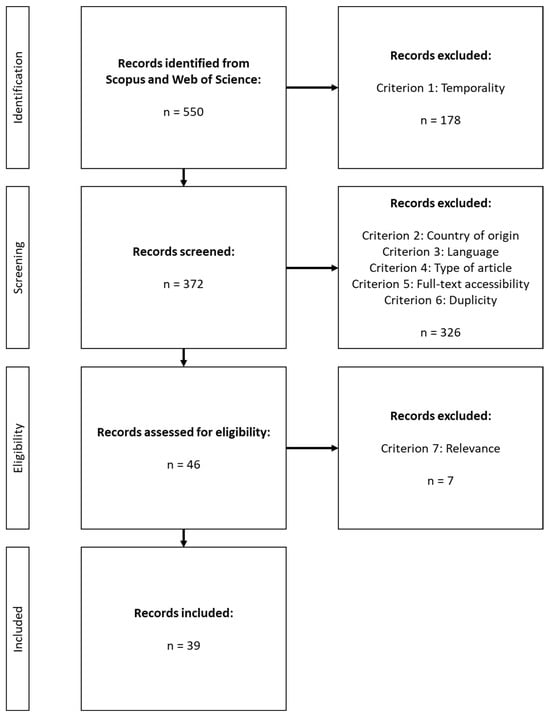
In addition, Figure 1 illustrates the flow diagram according to the Preferred Reporting Items for Systematic Reviews and Meta-Analyses (PRISMA) guidelines (Moher et al., 2010).
Figure 1.
Flow diagram prepared in accordance with the PRISMA 2020 Statement.
2.2. Protocol and Registration
The review protocol was not registered in an international prospective register such as PROSPERO because this platform is primarily intended for systematic reviews in health and clinical research. Given that the present study focuses on digital wallet adoption, financial behavior, and microenterprise dynamics within the fields of economics, finance, and management, protocol registration was not applicable. Nevertheless, the review was conducted in strict accordance with the PRISMA 2020 guidelines, with predefined eligibility criteria, a transparent search strategy, and a clearly documented selection process. The PRISMA checklist used is provided as Supplementary Materials.
2.3. Information Sources
The process of searching for scientific studies was conducted using Scopus and Web of Science databases. These platforms were selected because their publications have international reach and include indexed scientific journals with high-impact research. In addition, this methodological approach enables a strategic selection of literature by allowing the identification of institutional origin and geographic location of publication. It also facilitates the identification of research approaches, study depth, and scientific conclusions, as well as the extraction of the most relevant findings. Through this process, it is possible to identify the various factors associated with the migration from cash-based transactions to the use of digital wallets in microenterprises.
This research focuses primarily on microenterprises and the changes in how they conduct commercial transactions. Based on this analysis, the study highlights substantial changes related to business growth, profitability, cost reduction, and security generated by the adoption of digital payment solutions by microentrepreneurs in Southeast Asian and Latin American countries.
To identify scientific publications related to the topic of this study, research was conducted on 29 October 2025, using the Scopus and Web of Science platforms. Access to these databases and the literature search were carried out using the institutional credentials of Universidad César Vallejo (UCV). This process yielded a total of 550 records, to which the seven selection criteria established under the PRISMA protocol were subsequently applied.
2.4. Search Strategy
The search for publications related to the topic was conducted using Boolean operators in the Scopus and Web of Science databases, as presented in Table 1.
Table 1.
Boolean search strategy applied in Scopus and Web of Science.
2.5. Selection Process of Studies
In this process, to carefully select the publications downloaded from the databases, the selection criteria were applied with the aim of determining whether each study met the inclusion criteria. This procedure made it possible to select valid, relevant, and unique information. The details of this process are presented in Table 2.
Table 2.
Initial and Final Search Results.
2.6. Data Extraction
Regarding data extraction, this process was carried out by three reviewers, which ensured consistency throughout the procedure. Each research article was manually verified without the use of systematic extraction tools. The data recorded included the article title and year of publication, study design details such as thematic categories, type of research, and quantitative and/or qualitative approach, as well as methodological aspects including population, sample, and data collection instruments. This manual and detailed process ensured the integrity and accuracy of the compiled database.
To ensure reliability in the selection and extraction process, all articles were independently reviewed by three reviewers. Discrepancies were discussed collectively until consensus was reached. This procedure minimized subjective bias and strengthened the internal validity of the review. Finally, 7 documents were excluded because of relevance (see Table 3).
Table 3.
Studies excluded at the final stage that initially appeared to meet the inclusion criteria.
2.7. Data Items
For data selection and extraction, inclusion and exclusion criteria were applied. This analysis made it possible to focus on the migration of traditional commercial transactions toward the use of digital wallets and to identify key factors such as operational profitability, trust, security, and financial inclusion. Accordingly, studies that were inconsistent or contained incomplete data or information, which prevented adequate analysis, were excluded.
2.8. Assessment of Bias Risk in Individual Studies
At this stage, the assessment of risk of bias in the analysis of individual studies involved the use of methodological instruments tailored to each research approach. For qualitative studies, the framework titled “Validity criteria for qualitative research: three epistemological axes for a common purpose” was applied. For quantitative studies, the criteria outlined in the article “Evaluation of survey research in articles published in library science journals” were followed, allowing for a systematic assessment of data analysis.
2.9. Synthesis Methods
In this process of synthesis and inclusion of the selected studies, a comparison was carried out between the previously defined inclusion criteria and the main characteristics of each investigation. The information from each study was recorded in a matrix including the article title, reference, year of publication, and the journal in which it was published. This tabulation facilitated the organization of the studies and the identification of key findings.
3. Results
This section presents a structured summary of the empirical evidence identified in the systematic review. To enhance clarity, results are reported descriptively, focusing on recurring patterns and microentrepreneur-relevant outcomes, while interpretative analysis and theoretical implications are reserved for the discussion section. Emphasis is placed on business-level impacts, including transaction efficiency, profitability, cost reduction, and financial inclusion.
A total of thirty-nine scientific studies were included. For clearer visualization, Table 4 presents in the first column a code (S1 for SCOPUS and S2 for Web of Science) with sequential numbering to identify each study, along with the citation, research title, authors, and the journal in which each study was published.
Table 4.
Scientific studies selected in the systematic review.
3.1. Scientific Research on the Migration of Commercial Transactions to the Use of Digital Wallets by Microentrepreneurs
Table 4 displays the 39 studies selected through the systematic search, detailing each record’s code, citation, title and journal.
The studies presented in Table 4 primarily examine the factors that influence acceptance, adoption, and continued use of digital wallets and mobile payment systems. A central topic across the literature is the role of users’ perceptions regarding the usefulness of these technologies and the ease with which they can be used, as these perceptions strongly shape intention to adopt. Closely related to this, many studies emphasize the importance of trust, analyzing it as a key driver that directly affects adoption decisions, user satisfaction, loyalty, and continued usage over time.
Another prominent research topic is perceived risk, including concerns related to security, privacy, and financial loss, which are frequently identified as barriers to adoption, particularly in emerging and developing economies. Several studies also focus on user experience, satisfaction, and emotional responses, reflecting a shift in the literature from initial adoption toward sustained and habitual use of digital payment platforms. In addition, the literature addresses demographic and contextual dimensions, such as differences across age groups, income levels, gender, low-income users, small business owners, and retailers. Finally, emerging topics (such as gamified payment systems, promotional incentives, deferred payment options, quick response code payments, near-field communication, and virtual environment-based payments) highlight the evolving and innovative nature of digital payment research.
3.2. Geographical Distribution of Scientific Articles Published on the Topic of Digital Wallet Adoption Among Microentrepreneurs
It is important to specify the language in which each study was conducted and to indicate the location, country, or region where the scientific publications were produced. This type of information is of great value and usefulness, as it allows for a better understanding and interpretation of these findings across different languages and geographic contexts.
Table 5 summarizes the language of publication and the countries in which the selected studies were conducted. The results show a strong predominance of publications written in English, which reflects its role as the primary language of scientific communication in the field of digital payments and financial technology. Only one study was published in Spanish, indicating limited representation of non-English language research despite the relevance of digital payment adoption in diverse linguistic contexts.
Table 5.
Language and country of publication of scientific articles included in the systematic review.
From a geographic perspective, the studies are largely concentrated on emerging and developing economies. South and Southeast Asia account for the highest number of publications, particularly India, Indonesia, Malaysia, and Vietnam, highlighting these regions as major focal points of research on mobile payments and digital wallets. Latin America is represented mainly by Colombia and Peru, while Africa is represented by Somalia and Nigeria. This distribution suggests that scholarly attention is strongly oriented toward regions experiencing rapid growth in digital financial services, while also indicating potential gaps in research from developed economies and other underrepresented regions.
3.3. Most Important Findings from the Scientific Literature on the Adoption of Digital Wallets by Microentrepreneurs
Table 6 summarizes the most important findings from the scientific literature on the adoption of digital wallets by microentrepreneurs, including the main characteristics, geographical contexts, and key results of the analyzed studies.
Table 6.
Findings and lessons of scientific articles included in the systematic review.
4. Discussion
The migration of commercial transactions from cash-based systems to digital wallets represents not merely a technological shift, but a profound structural transformation in the operational models of micro and small enterprises (MSEs) in emerging economies. Based on the synthesis of evidence from 39 scientific studies published between 2021 and 2025, this systematic review (conducted in accordance with the PRISMA 2020 guidelines) identifies consistent adoption patterns, cross-cutting determinants, and contextual lessons that enhance the understanding of digital wallet adoption across diverse socio-economic and geographic settings.
Overall, the findings confirm that the adoption of digital wallets is a multidimensional and context-dependent process, shaped by the interaction of psychological, social, technological, and regulatory factors rather than by technological availability alone.
4.1. Thematic Analysis
The thematic analysis presented in this section was conducted through an in-depth qualitative synthesis of the studies included, following an inductive, theory-informed approach. Rather than relying on automated bibliometric or topic-modeling tools, themes were identified through systematic reading, comparison, and interpretation of empirical findings reported in the selected articles. Recurrent constructs, explanatory variables, and outcome patterns were coded and grouped based on conceptual similarity and analytical relevance, drawing on established theoretical frameworks such as the Technology Acceptance Model (TAM), trust-based adoption models, and financial inclusion literature. This approach allowed for a nuanced integration of evidence across heterogeneous contexts and methodologies, ensuring that the resulting themes reflect substantive theoretical convergence rather than purely statistical co-occurrence.
4.1.1. Trust as the Cornerstone of Digital Wallet Adoption
One of the most consistent and robust findings across the reviewed studies is the central role of trust as the primary driver of digital wallet adoption. Multiple studies (S1-2, S1-6, S1-17, S2-2, S2-5, S2-19) demonstrate that trust not only has a direct effect on intention to use but also acts as a mediating mechanism between perceived security, perceived risk, and behavioral intention.
When MSEs transition from cash to electronic payments, they effectively exchange physical risk (such as theft or loss of cash) for digital risk, including concerns related to data privacy, transaction integrity, and system reliability. This transition occurs only when users perceive that digital wallet platforms are secure, transparent, and institutionally credible. Trust is therefore constructed through a combination of robust technical safeguards, provider reputation, transparent governance, and clear consumer protection policies.
Importantly, trust emerges as a multidimensional construct, encompassing technological trust (system security and reliability), institutional trust (regulatory frameworks and legal protection), and relational trust (past experiences and provider behavior). This finding reinforces the notion that strengthening trust requires coordinated efforts across technological design, regulation, and communication strategies.
4.1.2. Perceived Usefulness and Ease of Use as Pragmatic Adoption Drivers
The review confirms that perceived usefulness and perceived ease of use, as proposed in the Technology Acceptance Model (TAM), remain fundamental predictors of digital wallet adoption. However, their relative influence varies according to user experience, generational cohort, and contextual maturity.
In several contexts—such as Generation Z users in Vietnam (S1-5) and QR wallet users in Indonesia (S2-14)—ease of use did not emerge as a decisive standalone factor. Instead, its effect was largely indirect, operating through perceived convenience and usefulness. Once users become familiar with technology, functional benefits such as transaction speed, operational efficiency, and integration into daily business routines become more salient than interface simplicity.
This suggests that ease of use functions as a baseline requirement, while perceived usefulness represents the primary value-generating mechanism sustaining adoption. For MSEs, usefulness is closely linked to tangible business outcomes, including reduced transaction costs, improved cash flow management, and enhanced customer reach.
4.1.3. The Conditional Role of Promotions and Economic Incentives
Another relevant insight concerns the moderating role of promotions and economic incentives in driving adoption (S1-10, S2-6). While incentives such as discounts, cashback programs, and rewards can accelerate initial adoption, their effectiveness is significantly amplified when combined with high levels of perceived security and trust.
The evidence indicates that incentive-based strategies alone are insufficient to sustain adoption if users perceive the system as insecure or unreliable. Security acts as an enabling condition that legitimizes promotional efforts, whereas weak security perceptions undermine the credibility of incentives. Consequently, adoption strategies should prioritize security and trust as foundational elements, using promotions as complementary rather than primary drivers.
4.1.4. Ecosystem-Level Challenges and Systemic Risks
From an ecosystem perspective, the review highlights structural challenges arising from misalignments among key actors within the digital payment ecosystem. The study on the “dark side” of mobile money in Nigeria (S2-15) illustrates how issues such as fraud, digital exclusion, and financial vulnerability stem from failures in client–developer, client–agent, and developer–regulator relationships.
These findings underscore the necessity of adopting a systemic and governance-oriented approach to digital wallet implementation. Weak regulatory adaptation, insufficient oversight, and fragmented stakeholder coordination can erode trust and amplify risks, particularly in vulnerable populations. Therefore, effective adoption requires not only technological robustness, but also regulatory clarity, agent accountability, and institutional alignment tailored to local contexts.
4.1.5. Digital Wallets as Enablers of Financial Inclusion and MSE Sustainability
The reviewed evidence consistently demonstrates that digital wallet adoption generates tangible benefits for financial inclusion and MSE sustainability. Studies conducted in Somalia (S1-1) and India (S1-18) show that digital wallets enhance transactional efficiency while facilitating access to formal financial services for previously excluded groups, including women, informal entrepreneurs, and low-income populations.
Digital wallets function as gateways to the formal financial system, enabling savings, credit access, and financial traceability. For MSEs, these tools contribute to operational resilience, improved financial planning, and greater participation in digital economic ecosystems, particularly in fragile and developing environments.
4.2. Integrative Implications of the Review
Taken together, the findings suggest that the migration toward digital wallets among MSEs in Latin America and Asia should not be interpreted merely as a technological trend, but as a complex socio-technical transformation. Adoption outcomes depend on the dynamic interaction of user perceptions, social influence, technological design, and regulatory frameworks.
The evidence clearly indicates that no single, unilateral strategy (whether technological, promotional, or regulatory) is sufficient on its own. Instead, successful adoption requires a holistic and context-sensitive approach that integrates:
- (i)
- clear communication of practical usefulness and business value;
- (ii)
- sustained trust-building through security, transparency, and governance;
- (iii)
- adaptation to local socio-economic and cultural conditions.
4.3. Policy Recommendations
Based on the synthesized evidence from this PRISMA 2020–compliant systematic review, several policy-relevant recommendations can be derived to support the effective, secure, and inclusive adoption of digital wallets among micro and small enterprises (MSEs) in emerging economies. These recommendations address regulatory design, institutional coordination, capacity building, and inclusive governance.
4.3.1. Strengthen Regulatory Frameworks Focused on Trust and Consumer Protection
Policymakers should prioritize the development and enforcement of clear, adaptive, and user-centered regulatory frameworks that enhance trust in digital wallet ecosystems. Regulations should explicitly address data protection, transaction security, fraud prevention, and dispute resolution mechanisms. Transparent consumer protection policies (including liability allocation and accessible complaint channels) are essential to reduce perceived digital risk and increase adoption confidence among MSEs.
Given the fast pace of financial technological innovation, regulatory agility is critical. Sandbox-based approaches and iterative regulation can help regulators balance innovation with risk mitigation, particularly in markets where institutional trust remains fragile.
4.3.2. Promote Ecosystem Coordination and Institutional Alignment
The findings highlight the need for improved coordination among key ecosystem actors, including digital wallet providers, financial institutions, agents, and regulators. Policymakers should foster interoperability standards and shared governance mechanisms to reduce fragmentation and inefficiencies within digital payment systems.
Public–private partnerships can play a strategic role in aligning incentives, clarifying responsibilities, and ensuring accountability across the ecosystem. Strong institutional alignment reduces systemic risks such as fraud, service discontinuity, and exclusion of vulnerable users.
4.3.3. Support Digital and Financial Literacy for MSEs
Adoption policies should go beyond infrastructure deployment and include targeted digital and financial literacy programs for MSE owners. Training initiatives should focus not only on how to use digital wallets, but also on understanding security practices, transaction records, and basic financial management enabled by digital tools.
Such programs are particularly important for informal entrepreneurs, women-led businesses, and first-time users of formal financial services. Capacity-building interventions increase perceived usefulness, reduce uncertainty, and improve long-term sustainability of adoption.
4.3.4. Design Incentive Schemes Aligned with Security and Long-Term Use
While economic incentives can accelerate initial adoption, policy-led incentive schemes should be conditional on minimum security and transparency standards. Subsidies, tax benefits, or transaction fee reductions should prioritize platforms that demonstrate strong consumer protection and regulatory compliance.
Rather than short-term promotional campaigns, policymakers should encourage incentive structures that support continued productive use, such as rewards linked to transaction history, savings behavior, or access to complementary financial services.
4.3.5. Advance Digital Wallets as Tools for Financial Inclusion
Governments should explicitly integrate digital wallets into national financial inclusion strategies, recognizing their role as gateways to formal financial services. Policies should encourage wallet designs that accommodate low-income users, limited connectivity environments, and diverse literacy levels.
Special attention should be given to reducing gender and income-based digital divides by supporting inclusive onboarding processes, simplified user interfaces, and agent-assisted models where appropriate.
4.3.6. Encouragement-Sensitive and Evidence-Based Policymaking
Finally, policymakers should avoid one-size-fits-all solutions. The reviewed evidence underscores that digital wallet adoption is highly context dependent. Policies should be grounded in local socio-economic realities, usage patterns, and institutional capacities.
Continuous monitoring, data collection, and impact evaluation are essential to refine policies over time. Leveraging empirical evidence from systematic reviews, such as the present study, can support evidence-informed decision-making and reduce the risk of policy failure.
4.4. Limitations
Despite strict adherence to the PRISMA 2020 guidelines and the application of rigorous inclusion and exclusion criteria, the findings of this systematic review must be interpreted with caution due to several substantive limitations that affect the scope, depth, and generalizability of the evidence.
First, the evidence base is inherently constrained by database, geographical, linguistic, and accessibility restrictions. The review includes only studies indexed in Scopus and Web of Science, published between 2021 and 2025, written in English or Spanish, conducted in seven selected emerging economies, and available in open access format. While these criteria ensured methodological quality, transparency, and cross-contextual comparability, they inevitably excluded potentially relevant empirical studies published in regional databases, local journals, subscription-based outlets, or other languages. As a result, the synthesized findings should be understood as reflecting patterns within high-impact and readily accessible academic research rather than providing an exhaustive representation of global evidence on digital wallet adoption among microentrepreneurs.
Second, the predominance of cross-sectional quantitative designs among the included studies constitutes a significant methodological limitation. Most primary studies focus on adoption intention and early-stage usage, with limited use of longitudinal, experimental, or mixed-method approaches. Consequently, this review cannot robustly assess causal relationships, behavioral evolution over time, or the long-term business effects of digital wallet adoption, such as sustained profitability, productivity growth, or enterprise resilience. This limitation restricts the ability to draw conclusions about persistence and dynamic impacts in real-world microenterprise settings.
Third, substantial heterogeneity in theoretical frameworks and construct operationalization further limits comparability across studies. Core constructs such as trust, perceived security, perceived usefulness, perceived risk, and social influence are conceptualized and measured inconsistently, reflecting the application of multiple models, including TAM, UTAUT, TPB, and various extended or hybrid frameworks. Although this theoretical diversity enriches conceptual understanding, it precludes quantitative aggregation and meta-analytic synthesis. Accordingly, the conclusions of this review rely on thematic convergence and qualitative pattern identification rather than standardized effect-size estimation.
4.5. Future Research
Building on the findings and limitations of this PRISMA 2020-compliant systematic review, future research should move beyond intention-based models and address empirically grounded questions related to sustained digital wallet use and firm-level outcomes among micro and small enterprises (MSEs) in emerging economies.
First, future studies should employ longitudinal and panel research designs to examine how digital wallet adoption evolves over time and to identify causal relationships between usage intensity and business performance indicators. Specifically, researchers should track microentrepreneurs across multiple periods to assess changes in sales growth, operating costs, cash-flow stability, tax compliance, and financial resilience, rather than relying solely on self-reported adoption intention.
Second, researchers should expand geographical and institutional coverage by incorporating underrepresented regions, particularly additional Latin American, African, and Middle Eastern economies. Comparative cross-country studies should explicitly model differences in regulatory frameworks, interoperability standards, levels of informality, and digital infrastructure quality, enabling systematic evaluation of how institutional environments condition adoption and outcomes.
Third, future research should prioritize the standardization and validation of measurement instruments for core constructs such as trust, perceived security, perceived risk, perceived usefulness, and social influence. Developing harmonized scales tailored to microenterprise contexts would facilitate replication, cross-study comparability, and meta-analytic synthesis, thereby strengthening cumulative knowledge and theory development.
Fourth, greater use of mixed-method and qualitative approaches is needed to capture contextual and institutional dynamics that quantitative models may overlook. In-depth interviews, case studies, and field-based ethnographic research should focus on informal business practices, trust-building mechanisms, merchant–customer interactions, and technology-mediated power asymmetries within microenterprise ecosystems.
Fifth, future studies should explicitly examine the post-adoption phase, including habit formation, user loyalty, platform switching, and discontinuance behavior among microentrepreneurs. Research designs should distinguish between initial adoption, sustained use, and abandonment, identifying economic, technological, and regulatory factors that influence long-term engagement with digital wallet platforms.
Finally, interdisciplinary research designs integrating perspectives from information systems, economics, regulation, and social inclusion are strongly encouraged. Future studies should analyze the interactions between fintech providers, traditional financial institutions, regulators, and microentrepreneurs, particularly in contexts characterized by high informality and low institutional trust. Such approaches would support the design of inclusive, secure, and context-sensitive digital payment ecosystems that align technological innovation with development objectives.
5. Conclusions
This study sets out to synthesize and critically analyze the scientific evidence on the migration of commercial transactions from cash to digital wallets among microentrepreneurs in Asia and Latin America. By applying the PRISMA 2020 protocol and reviewing 39 empirical studies published between 2021 and 2025, the review provides an integrated overview of adoption patterns, geographical research concentration, and the main determinants influencing digital wallet use in microentrepreneurial contexts. Overall, the findings confirm that digital wallet adoption represents a structural transformation in how micro and small enterprises conduct transactions, manage risk, and interact with the formal financial system.
In relation to the research questions posed in the introduction, the results of this systematic review provide clear answers. First, regarding the question of what scientific research exists on the migration of commercial transactions toward digital wallet use by microentrepreneurs, the evidence shows a growing body of empirical studies focused on adoption, acceptance, and continued use of digital wallets in emerging economies. Although a considerable share of the literature adopts a consumer-level perspective, its findings are frequently extended to microentrepreneurial settings, as transaction behaviors, trust formation, and perceived risks are directly connected to everyday business operations.
Second, with respect to the geographical distribution of research, the results reveal a strong concentration of scientific production in Southeast Asia, particularly in India, Indonesia, Malaysia, and Vietnam, while Latin America is mainly represented by Colombia and Peru. This distribution reflects both the rapid diffusion of digital payment technologies in these regions and the structural conditions that characterize their microenterprise sectors, including high levels of informality, reliance on cash-based transactions, and limited access to traditional banking services.
Third, concerning the most important findings derived from the reviewed literature, the synthesis indicates that digital wallet adoption among microentrepreneurs is primarily driven by perceived usefulness, ease of use, trust, and perceived security. In contrast, perceived risk, regulatory uncertainty, and institutional weaknesses emerge as key barriers to adoption and sustained use. Across both regions, the evidence suggests that adoption is not merely a technological decision, but a socio-technical process that affects transaction efficiency, physical and digital security, and, in several cases, business performance and income stability. Taken together, these findings directly address the research questions and confirm that the transition from cash to digital wallets among microentrepreneurs is shaped by behavioral, institutional, and contextual factors rather than by technology alone.
Despite these contributions, this study has certain limitations. The review is restricted to articles indexed in Scopus and Web of Science and to publications written in English or Spanish, which may exclude relevant evidence published in other languages or databases. In addition, the predominance of consumer-oriented studies limits the extent to which firm-level outcomes can be fully assessed. Future research should therefore prioritize microentrepreneur-focused empirical designs, longitudinal analyses, and comparative studies across regions to deepen understanding of the long-term economic and institutional impacts of digital wallet adoption.
Supplementary Materials
The following supporting information can be downloaded at: https://www.mdpi.com/article/10.3390/jrfm19030232/s1, The PRISMA checklist used is provided as Supplementary Material. Page et al. (2021) is cited in the Supplementary Materials.
Author Contributions
Conceptualization, L.M.V.-V. and V.H.F.-B.; methodology, L.M.V.-V.; data curation, V.H.F.-B. and L.M.V.-V.; writing—original draft preparation, L.M.V.-V., E.J.A.-C., J.A.C.-M. and V.H.F.-B.; writing—review and editing, L.M.V.-V., E.J.A.-C., J.A.C.-M. and V.H.F.-B.; supervision, L.M.V.-V.; project administration, L.M.V.-V.; funding acquisition, L.M.V.-V. All authors have read and agreed to the published version of the manuscript.
Funding
This research was funded by Universidad César Vallejo, project code P-2025-145, RVI N° P-2025-163-VI-UCV.
Institutional Review Board Statement
Not applicable.
Informed Consent Statement
Not applicable.
Data Availability Statement
No new data were created or analyzed in this study. Data sharing is not applicable to this article.
Conflicts of Interest
The authors declare no conflicts of interest.
References
- Abdirahman, A. A., Hashi, A. O., Dahir, U. M., Elmi, M. A., & Rodriguez, O. E. R. (2024). Enhancing security in mobile wallet payments: Machine learning-based fraud detection across prominent wallet platforms. SSRG International Journal of Electronics and Communication Engineering, 11(3), 96–105. [Google Scholar] [CrossRef] [Scilit]
- Abegao Neto, F. L., & de Figueiredo, J. C. B. (2023). Effects of age and income moderation on adoption of mobile payments in Brazil. Innovation and Management Review, 20(4), 353–364. [Google Scholar] [CrossRef] [Scilit]
- Adam, M. A., Kulmie, D. A., & Mudey, M. H. (2025). A perceptual study on fintech awareness, trust, and satisfaction in Somalia: Case of premier wallet. Journal of Asian Scientific Research, 15(3), 608–621. [Google Scholar] [CrossRef] [Scilit]
- Aguilar-Herreras, S., & Libaque-Sáenz, C. F. (2023). Factors driving NFC-based mobile payment adoption: The case of Peru. Issues in Information Systems, 24(1), 55–69. [Google Scholar] [CrossRef] [Scilit]
- Ahmad, A., Madsen, D. Ø., & Garg, S. (2025). How satisfied am I with mobile wallets? Exploring the nexus between MSQual, hedonism, and satisfaction. Future Business Journal, 11(1), 9. [Google Scholar] [CrossRef] [Scilit]
- Ahmed, W., Rasool, A., Javed, A. R., Kumar, N., Gadekallu, T. R., Jalil, Z., & Kryvinska, N. (2021). Security in next generation mobile payment systems: A comprehensive survey. IEEE Access, 9, 115932–115950. [Google Scholar] [CrossRef] [Scilit]
- Ansori, A. D., & Nugroho, S. S. (2024). The role of trust on the continuance usage intention of indonesian mobile payment application. Gadjah Mada International Journal of Business, 26(2), 231–257. [Google Scholar] [CrossRef] [Scilit]
- Aswathy, K. M., Aruna, K., & Priya, K. L. (2025). Women fintech adoption—A base tam framework. International Journal of Applied Mathematics, 38(4S), 129–137. [Google Scholar] [CrossRef] [Scilit]
- Bhattacharya, S. (2023). The role of mobile payment apps in inclusive financial growth. Australasian Accounting, Business and Finance Journal, 17(1), 9–31. [Google Scholar] [CrossRef] [Scilit]
- Caffaro, F., Micheletti Cremasco, M., Roccato, M., & Cavallo, E. (2020). Drivers of farmers’ intention to adopt technological innovations in Italy: The role of information sources, perceived usefulness, and perceived ease of use. Journal of Rural Studies, 76, 264–271. [Google Scholar] [CrossRef] [Scilit]
- Chang, A., Gunawan, T., & Sumarwan, U. (2023). A conceptual framework of mobile payment system adoption and use in Southeast Asia. Journal of ASEAN Studies, 11(2), 417–433. [Google Scholar] [CrossRef] [Scilit]
- Chawla, U., Mohnot, R., Singh, H. V., & Banerjee, A. (2023). The mediating effect of perceived trust in the adoption of cutting-edge financial technology among digital natives in the post-COVID-19 era. Economies, 11(12), 286. [Google Scholar] [CrossRef] [Scilit]
- Chellappan, K., Elanchselvan, T., & Abu-Samah, A. (2025). E-wallet delivery technology architecture adoption: A review. Jurnal Kejuruteraan, 37(1), 219–232. [Google Scholar] [CrossRef] [Scilit]
- Chen, C. F.-Y., Chan, T. J., & Hashim, N. H. (2023). Factor influencing continuation intention of using fintech from the users’ perspectives: Testing of unified theory of acceptance and use of technology (UTAUT2). International Journal of Technology, 14(6), 1277–1287. [Google Scholar] [CrossRef] [Scilit]
- Dang, T.-Q., Duc, D. T. V., Tran, L.-H. P., & Nguyen, L.-T. (2025). Examining the impact of trust on customer intention to use metaverse payments: A next-gen transactions strategic outlook. Corporate and Business Strategy Review, 6(1), 166–177. [Google Scholar] [CrossRef] [Scilit]
- Ebubedike, A. H., Mohammed, T. A., Nellikunnel, S., & Seng Teck, T. S. (2022). Factors influencing consumer’s behavioural intention towards the adoption of mobile payment in Kuala Lumpur. International Journal of Professional Business Review, 7(6), e0584. [Google Scholar] [CrossRef] [Scilit]
- Fatorachian, H., O’Higgins, B., Maldonado, A., Lyons, C., Willis, H., Abbott, L., & Brooks, M. (2025). Navigating the challenges of FinTech startups in the B2C market. Cogent Business & Management, 12(1), 2446696. [Google Scholar] [CrossRef] [Scilit]
- Fuquen Gonzalez, H. S., Ayala Paez, E. L., Sánchez Rodríguez, C. M., Vargas Muñoz, L. M., & Rojas Barreto, M. (2023). Desarrollo e implementación de tecnologías informáticas para procesos de pago inmediato de bajo monto a través de transferencias electrónicas. Entre Ciencia e Ingeniería, 17(34), 15–22. [Google Scholar] [CrossRef] [Scilit]
- Gomez-Hurtado, C., Gálvez-Sánchez, F. J., Prados-Peña, M. B., & Ortiz-Zamora, A. F. (2025). Adoption of e-wallets: Trust and perceived risk in Generation Z in Colombia. Spanish Journal of Marketing–ESIC, 29(4), 425–443. [Google Scholar] [CrossRef] [Scilit]
- Guo, J., & Bouwman, H. (2016). An analytical framework for an m-payment ecosystem: A merchants׳ perspective. Telecommunications Policy, 40(2–3), 147–167. [Google Scholar] [CrossRef] [Scilit]
- Haider, A., Khan, M. A., Khoja, M., Alharthi, S., & Minhaj, S. M. (2024). The role of e-banking, mobile-banking, and e-wallet with response to e-payment and customer trust as a mediating factor using a structural equation modelling approach. Journal of Infrastructure, Policy and Development, 8(9), 6644. [Google Scholar] [CrossRef] [Scilit]
- Ivashchenko, A., Britchenko, I., Dyba, M., Polishchuk, Y., Sybirianska, Y., & Vasylyshen, Y. (2018). Fintech platforms in SME’s financing: EU experience and ways of their application in Ukraine. Investment Management and Financial Innovations, 15(3), 83–96. [Google Scholar] [CrossRef] [Scilit]
- Jena, R. K. (2022). Investigating and predicting intentions to continue using mobile payment platforms after the COVID-19 pandemic: An empirical study among retailers in India. Journal of Risk and Financial Management, 15(7), 314. [Google Scholar] [CrossRef] [Scilit]
- Joshi, R. (2024). A mixed methods UTAUT2-based approach to understanding unified payments interface adoption among low-income users. Banks and Bank Systems, 19(1), 58–73. [Google Scholar] [CrossRef] [Scilit]
- Josua Sembiring, M., Wibowo, W., & Citra Dewi, G. (2022). Adoption of innovative mobile payment technologies in Indonesia: The role of attitude. Innovative Marketing, 18(2), 186–197. [Google Scholar] [CrossRef] [Scilit]
- Kınış, F., & Tanova, C. (2022). Can I trust my phone to replace my wallet? The determinants of e-wallet adoption in North Cyprus. Journal of Theoretical and Applied Electronic Commerce Research, 17(4), 1696–1715. [Google Scholar] [CrossRef] [Scilit]
- Kunal, K., Ramprakash, K. R., & Prasad R, A. (2025). Enhancing livelihoods through digital finance: A study on the impact of FinTech adoption on the financial performance of hawkers. Qubahan Academic Journal, 5(1), 565–579. [Google Scholar] [CrossRef] [Scilit]
- Lai, P. C., & Liew, E. J. Y. (2021). Towards a cashless society: The effects of perceived convenience and security on gamified mobile payment platform adoption. Australasian Journal of Information Systems, 25, 1–25. [Google Scholar] [CrossRef] [Scilit]
- Lew, S., Tan, G. W.-H., Loh, X.-M., Hew, J.-J., & Ooi, K.-B. (2020). The disruptive mobile wallet in the hospitality industry: An extended mobile technology acceptance model. Technology in Society, 63, 101430. [Google Scholar] [CrossRef] [Scilit]
- Linh, T. T., & Huyen, N. T. T. (2025). An extension of Trust and TAM model with TPB in the adoption of digital payment: An empirical study in Vietnam. F1000Research, 14, 127. [Google Scholar] [CrossRef] [Scilit]
- Malarvizhi, C. A., Al Mamun, A., Jayashree, S., Naznen, F., & Abir, T. (2022). Predicting the intention and adoption of near field communication mobile payment. Frontiers in Psychology, 13, 870793. [Google Scholar] [CrossRef] [Scilit]
- Malik, G., & Singh, D. (2022). Go digital! Determinants of continuance usage of mobile payment apps: Focusing on the mediating role of gamification. Pacific Asia Journal of the Association for Information Systems, 14, 94–126. [Google Scholar] [CrossRef] [Scilit]
- Malone, T., & Thomsen, A. (2025). The digital pivot: Exploring credit card and e-payment utilization in direct-to-consumer U.S. agriculture. Journal of Small Business Strategy, 35(2), 52–66. [Google Scholar] [CrossRef] [Scilit]
- Meiryani, M., Soepriyanto, G., Elvani, A., & Wahyuningtias, D. (2022). The factors affecting consumer behavior on sustainable use intentions of financial technology payments. Corporate Governance and Organizational Behavior Review, 6(3), 19–33. [Google Scholar] [CrossRef] [Scilit]
- Memon, M. A., Thurasamy, R., Ting, H., & Cheah, J.-H. (2025). Purposive sampling: A review and guidelines for quantitative research. Journal of Applied Structural Equation Modeling, 9(1), 1–23. [Google Scholar] [CrossRef] [Scilit] [PubMed]
- Mogaji, E., & Nguyen, N. P. (2022). The dark side of mobile money: Perspectives from an emerging economy. Technological Forecasting and Social Change, 185, 122045. [Google Scholar] [CrossRef] [Scilit]
- Moher, D., Liberati, A., Tetzlaff, J., & Altman, D. G. (2010). Preferred reporting items for systematic reviews and meta-analyses: The PRISMA statement. International Journal of Surgery, 8(5), 336–341. [Google Scholar] [CrossRef] [Scilit] [PubMed]
- Natakusumah, K., Maulina, E., Muftiadi, A., & Purnomo, M. (2023). Integrating religiosity into a technology acceptance model for the adoption of mobile payment technology. International Journal of Data and Network Science, 7(1), 305–312. [Google Scholar] [CrossRef] [Scilit]
- Navena Nesa Kumari, J. N. N., Joe Arun, C. J., & Mary, A. I. V. (2021). Mobile payment technology adoption in SME owners in India—An empirical study. Indian Journal of Finance, 15(1), 36–54. [Google Scholar] [CrossRef] [Scilit]
- Nik Azman, N. H., & Md Zabri, M. Z. (2022). Sharīʿah-compliant fintech usage among microentrepreneurs in Malaysia: An extension of utaut model. Journal of Islamic Monetary Economics and Finance, 8(2), 305–324. [Google Scholar] [CrossRef] [Scilit]
- Padma Kiran, K., & Vedala, N. S. (2025). Assessing Unified Payments Interface (UPI) adoption and usage through the interplay of UTAUT factors. Humanities and Social Sciences Communications, 12(1), 1060. [Google Scholar] [CrossRef] [Scilit]
- Page, M. J., McKenzie, J. E., Bossuyt, P. M., Boutron, I., Hoffmann, T. C., Mulrow, C. D., Shamseer, L., Tetzlaff, J. M., Akl, E. A., Brennan, S. E., & Chou, R. (2021). The PRISMA 2020 statement: An updated guideline for reporting systematic reviews. BMJ, 372, n71. [Google Scholar] [CrossRef] [Scilit] [PubMed]
- Pathak, A. A., & Kaushik, K. (2024). Driving consumer engagement for digital payment brands: Content strategy on instagram. Journal of Retailing and Consumer Services, 79, 103821. [Google Scholar] [CrossRef] [Scilit]
- Pizzan-Tomanguillo, N. D. P., Pereyra-Gonzales, T. V., León-Ramírez, S. V., Bautista-Fasabi, J., Rosales-Bardalez, C. D., Gómez-Apaza, R. D., & Pizzán-Tomanguillo, S. L. (2024). Evolution and trends in digital wallet research: A bibliometric analysis in scopus and web of science. Publications, 12(4), 34. [Google Scholar] [CrossRef] [Scilit]
- Prasad, K. D. V., Soni, H., Chitta, C., Singh, S., & Srinivas, V. (2025). The impact of mobile-wallet factors on customer satisfaction and customer loyalty: A study of B-schools in Hyderabad. Qubahan Academic Journal, 5(1), 351–367. [Google Scholar] [CrossRef] [Scilit]
- Prasetyani, A., Mustika, M. D., Sjabadhyni, B., Adira, N., Dali, N. R. S. B. M., & Nandan, M. (2024). Unlocking paylater preferences: Exploring gen z’s trust dynamics in Indonesia and Malaysia. Cogent Psychology, 11(1), 2352962. [Google Scholar] [CrossRef] [Scilit]
- P.S, R., & Doshi, A. (2025). Incentivising innovation: The moderating role of promotions in shaping millennials’ mobile payments adoption. Cogent Business and Management, 12(1), 2463575. [Google Scholar] [CrossRef] [Scilit]
- Rababah, A., Alkasasbeh, I., & Khan, A. A. (2024). Environmental factors and risks affecting the adoption of e-wallets by small and medium-sized enterprises during disasters: The case of COVID-19 pandemic. Risk Governance and Control: Financial Markets and Institutions, 14(4), 78–88. [Google Scholar] [CrossRef] [Scilit]
- Rahardja, U., Sigalingging, C. T., Putra, P. O. H., Nizar Hidayanto, A., & Phusavat, K. (2023). The impact of mobile payment application design and performance attributes on consumer emotions and continuance intention. Sage Open, 13(1), 21582440231151919. [Google Scholar] [CrossRef] [Scilit]
- Rahman, S. U., Nguyen-Viet, B., Nguyen, Y. T. H., & Kamran, S. (2024). Promoting fintech: Driving developing country consumers’ mobile wallet use through gamification and trust. International Journal of Bank Marketing, 42(5), 841–869. [Google Scholar] [CrossRef] [Scilit]
- Ramli, F. A. A., Hamzah, M. I., Wahab, S. N., & Shekhar, R. (2023). Modeling the brand equity and usage intention of QR-code e-wallets. FinTech, 2(2), 205–220. [Google Scholar] [CrossRef] [Scilit]
- Rattanawiboonsom, V., & Khan, N. (2024). Blockchain technology in mobile payments: A systematic review of security enhancements in mobile commerce. International Journal of Interactive Mobile Technologies, 18(21), 134–148. [Google Scholar] [CrossRef] [Scilit]
- Razi-ur-Rahim, M., Rabbani, M. R., Uddin, F., & Shaikh, Z. H. (2024). Adoption of UPI among Indian users: Using extended meta-UTAUT model. Digital Business, 4(2), 100093. [Google Scholar] [CrossRef] [Scilit]
- Sang, N. M. (2024). Examining the adoption of apple pay among generation Z in Vietnam. Banks and Bank Systems, 19(1), 34–47. [Google Scholar] [CrossRef] [Scilit]
- Setiawan, A. A., Silaen, Y. E., Andreas, T., & Oktavia, T. (2022). Analysis of intention to use on pay later payment system during COVID-19 pandemic. International Journal of Emerging Technology and Advanced Engineering, 12(3), 119–129. [Google Scholar] [CrossRef] [Scilit]
- Shahzad, A., Zahrullail, N., Akbar, A., Mohelska, H., & Hussain, A. (2022). COVID-19’s impact on fintech adoption: Behavioral intention to use the financial portal. Journal of Risk and Financial Management, 15(10), 428. [Google Scholar] [CrossRef] [Scilit]
- Shaw, N., Eschenbrenner, B., & Brand, B. M. (2022). Towards a mobile app diffusion of innovations model: A multinational study of mobile wallet adoption. Journal of Retailing and Consumer Services, 64, 102768. [Google Scholar] [CrossRef] [Scilit]
- Sun, W., She, C., Khalilzadeh, M., Mao, H.-Z., & Xu, Y.-P. (2023). A new method for solving the mobile payment scheduling problem using harris hawks optimization algorithm during the COVID-19 pandemic. Information Systems and E-Business Management. [Google Scholar] [CrossRef] [Scilit]
- Tan, K.-L., Leong, C.-M., & Richter, N. F. (2024). Navigating trust in mobile payments: Using necessary condition analysis to identify must-have factors for user acceptance. International Journal of Human–Computer Interaction, 41, 3325–3339. [Google Scholar] [CrossRef] [Scilit]
- Thangavel, P., & Chandra, B. (2023). Two decades of M-commerce consumer research: A bibliometric analysis using R biblioshiny. Sustainability, 15(15), 11835. [Google Scholar] [CrossRef] [Scilit]
- Tian, Y., & Chan, T. J. (2024). Predictors of mobile payment use applications from the extended technology acceptance model: Does self-efficacy and trust matter? SAGE Open, 14(4), 21582440241292525. [Google Scholar] [CrossRef] [Scilit]
- Tian, Y., Chan, T. J., Suki, N. M., & Kasim, M. A. (2023). Moderating role of perceived trust and perceived service quality on consumers’ use behavior of Alipay e-wallet system: The perspectives of technology acceptance model and theory of planned behavior. Human Behavior and Emerging Technologies, 2023, 5276406. [Google Scholar] [CrossRef] [Scilit]
- Widayat, W., Marsudi, & Masudin, I. (2023). QR-code-based payment. Does the consumer intend to adopt a retail buying transaction? Banks and Bank Systems, 18(3), 1–13. [Google Scholar] [CrossRef] [Scilit]
- Wu, J.-J., & Chang, S.-T. (2020). Exploring customer sentiment regarding online retail services: A topic-based approach. Journal of Retailing and Consumer Services, 55, 102145. [Google Scholar] [CrossRef] [Scilit]

Disclaimer/Publisher’s Note: The statements, opinions and data contained in all publications are solely those of the individual author(s) and contributor(s) and not of MDPI and/or the editor(s). MDPI and/or the editor(s) disclaim responsibility for any injury to people or property resulting from any ideas, methods, instructions or products referred to in the content. |
© 2026 by the authors. Licensee MDPI, Basel, Switzerland. This article is an open access article distributed under the terms and conditions of the Creative Commons Attribution (CC BY) license.