


Summary
Tetrahydrobiopterin is an essential cofactor required for catalytic activity of nitric oxide synthases. A close link between tetrahydrobiopterin and nitric oxide synthesis has been recently demonstrated in a number of different cell types, including endothelial cells. The precise role of tetrahydrobiopterin in regulation of nitric oxide synthase activity is not completely understood, however, it may function as both an allosteric and a redox cofactor. In vitro and in vivo studies demonstrated that impairment of nitric oxide production can be restored by administration of tetrahydrobiopterin. Indeed, existing evidence indicates that decreased availability of tetrahydrobiopterin may be responsible for dysfunction of nitric oxide synthase leading to a shift in the balance between the production of protective nitric oxide and deleterious oxygen-derived free radicals. This concept may have important implications in understanding the mechanisms of endothelial dysfunction and oxidative vascular injury described in a number of vascular disease, including hypertension and atherosclerosis. This article will discuss the complex interaction between tetrahydrobiopterin and nitric oxide synthase and its role in control of vascular tone.
Introduction
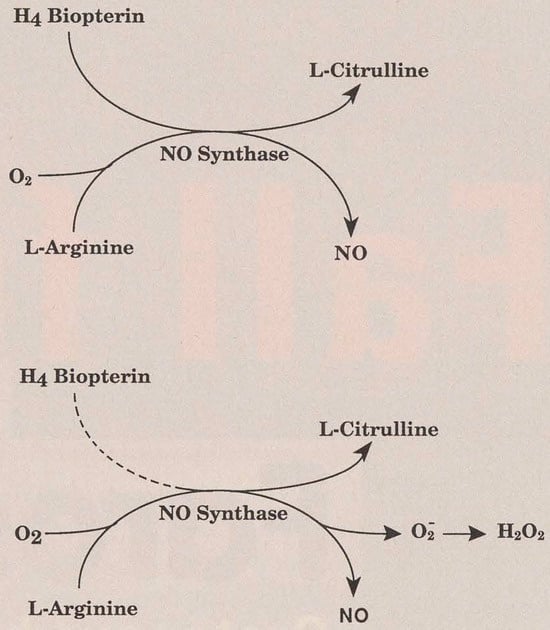
Nitric oxide plays a crucial role in the regulation of vascular tone and maintenance of vascular integrity [1,2,3]. Indeed, nitric oxide reduces vascular tone, inhibits leucocytes adhesion to the endothelium, platelet-vessel wall interaction, as well as vascular smooth muscle cell proliferation and migration. Accordingly, major risk factors for atherosclerotic vascular disease such as hypercholesterolemia, diabetes, hypertension and smoking, have been associated with impaired nitric oxide activity [4,5,6,7,8,9,10,11]. Nitric oxide is synthesized from L-arginine by nitric oxide synthase through a five electrons oxidation. Three distinct nitric oxide synthase isoforms have been identified by molecular cloning [12]. Two of them are expressed constitutively in neurones (neuronal) and vascular endothelial cells (endothelial) and are activated by increased intracellular calcium levels [13,14]. The expression of a third isoform is induced, in a calcium-independent fashion, by various cytokines in macrophages and a number of other nucleated mammalian cells including hepatocytes and vascular smooth muscle (inducible [15]). The availability of tetrahydrobiopterin is essential for catalytic activity of all nitric oxide synthases (Figure 1, top) [16,17,18]. Tetrahydrobiopterin is known to be a cofactor of aromatic amino acid monooxygenases, which are regarded as key enzymes in the biosynthesis of several neurotransmitters, including catecholamines and serotonin [19]. The precise role of tetrahydrobiopterin in nitric oxide synthesis is not completely understood, but current experimental evidence suggests that it may function as both an allosteric and a redox cofactor [20].
Figure 1.
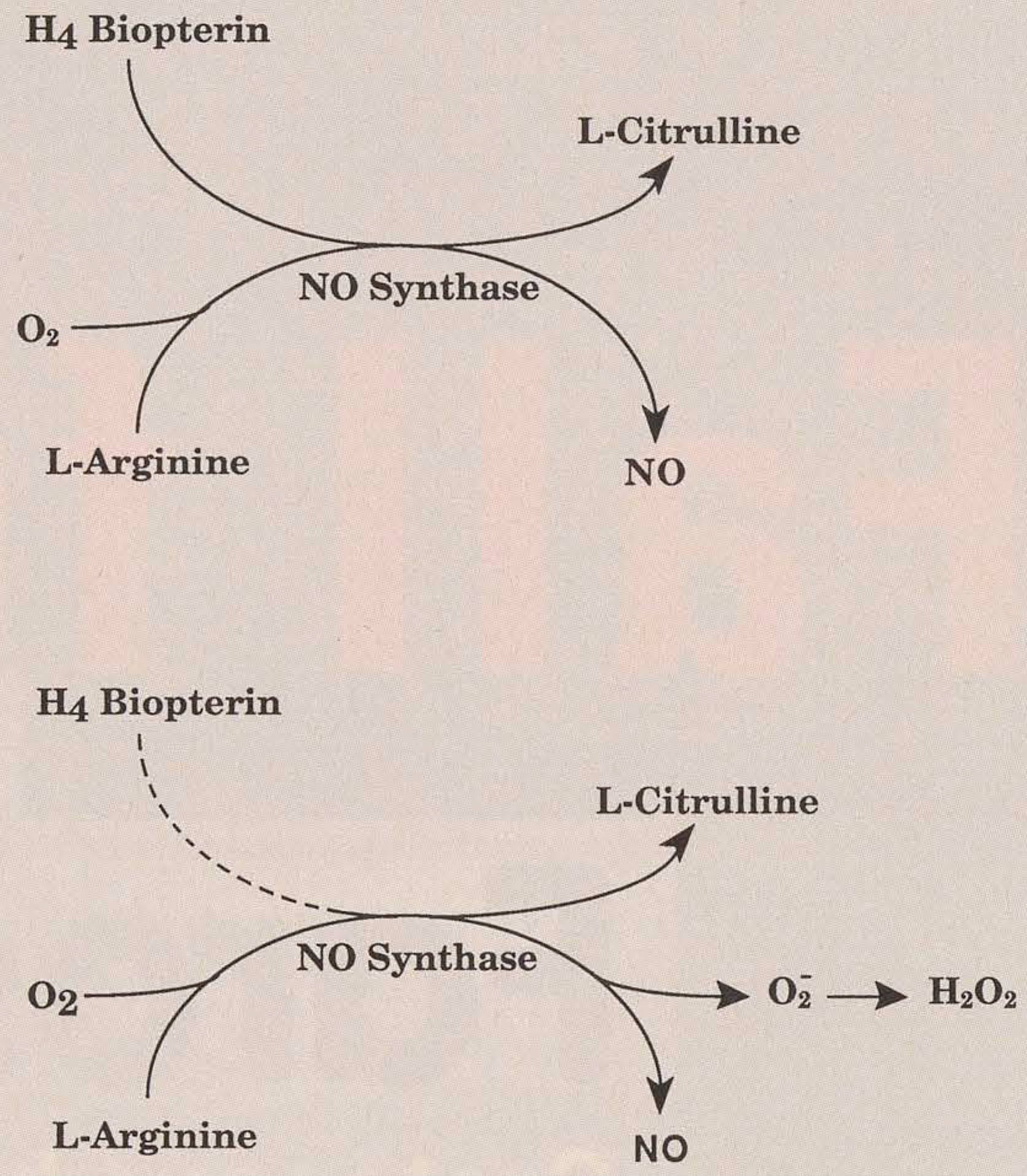
Schematic representation of nitric oxide synthase (NO synthase) reaction leading to L-citrulline and nitric oxide (NO) from L-arginine and oxygen (O2) (top). The activation of NO synthase at suboptimal levels (dashed line) of (6R)5,6,7,8-tetrahydrobiopterin (H4 Biopterin) generates superoxide anion (O2−) followed by the production of hydrogen peroxide (H2O2) (reprinted from [47]).
It is well established that inborn errors of tetrahydrobiopterin metabolism lead to cofactor deficiency, hyperphenylalaninemia, and neurological impairment [21]. In contrast, an important role of tetrahydrobiopterin in cardiovascular system has been recognized only recently. We will discuss the complex interaction between tetrahydrobiopterin and nitric oxide synthase and its role in the control of vascular tone.
Effects of Tetrahydrobiopterin on NOS Activity
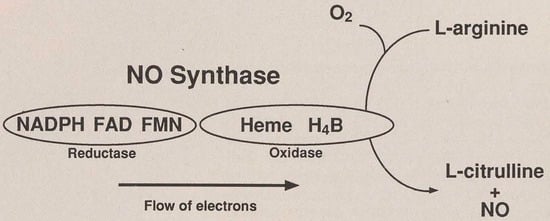
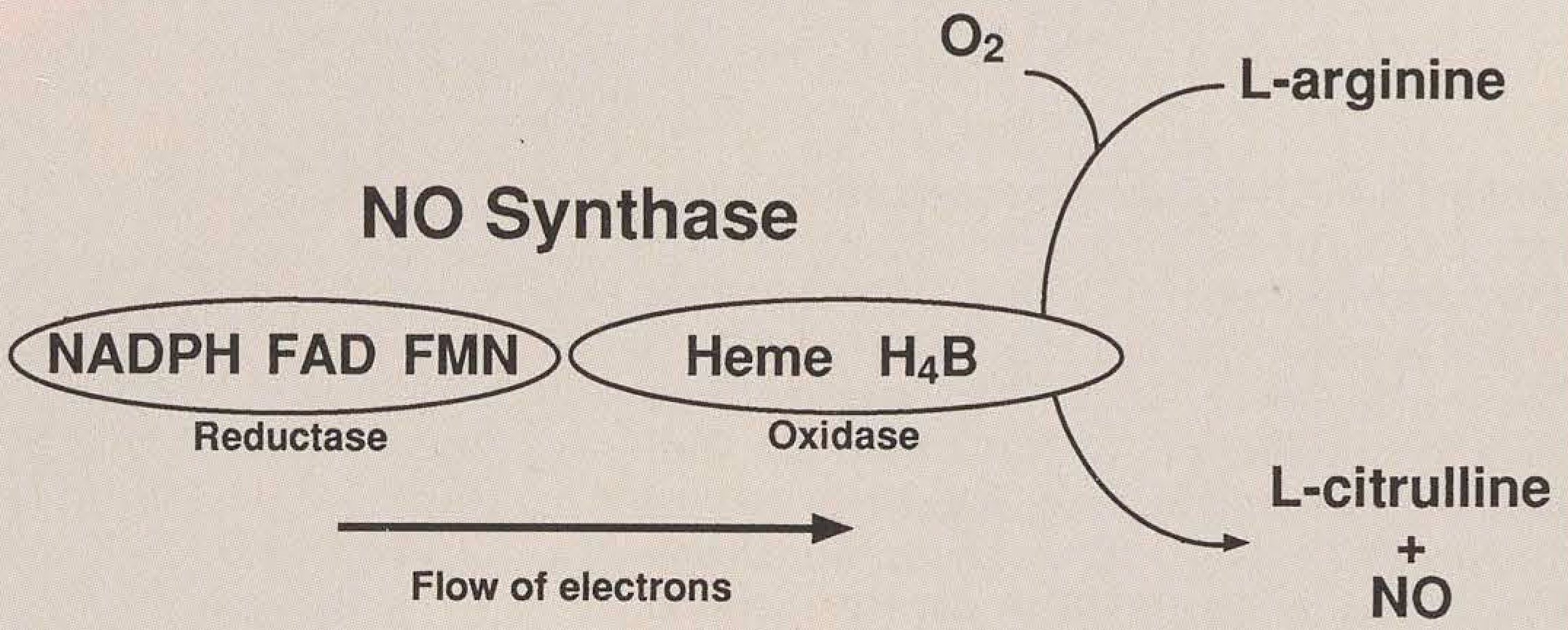
Purification and cloning of NOS isoforms have revealed that they are self-sufficient one-component cytochrome P-450s, which contain a prosthetic heme group catalyzing the reductive activation of molecular oxygen requisite for L-arginine oxidation, as well as tightly bound flavins shuttling NADPH-derived electrons to the heme (Figure 2) [13]. Classical cytochrome P-450 hydroxylating systems would operate perfectly with these cofactors being properly bound, but NO synthases do not. All three NOS isoforms additionally require tetrahydrobiopterin for catalytic activity. Tetrahydrobiopterin (H4B) appears to mediate coupling of oxygen reduction to heme-catalyzed L-arginine oxidation to form NO and L-citrulline, but the molecular mechanism of this effect is still unknown. It could involve either an allosteric effect on the NOS protein or redox activity of H4B, or both [20]. A close link between cellular H4B availability and NO synthesis was recently demonstrated for a number of different cell types including endothelial cells [18,22,23], suggesting that the pathways for H4B and NO synthesis are tightly coupled. Indeed, inhibition of H4B synthesis reduces production of NO in response to the calcium ionophore A23187 or bradykinin [18,22]. These studies provided evidence that in cultured endothelial cells, an optimal concentration of tetrahydrobiopterin is essential for agonist-induced, calcium-dependent production of nitric oxide. Although the precise role of this cofactor in regulation of NOS catalytic activity is still not completely understood [20], it has been postulated that H4B plays an important role in whether the electron flow, within the enzyme, can be directed to L-arginine. Indeed, several biochemical studies demonstrated that activation of purified constitutive NOS in the presence of suboptimal levels of tetrahydrobiopterin results in uncoupling of oxygen reduction and arginine oxidation, thereby generating superoxide anions and subsequently hydrogen peroxide (Figure 1, bottom) [24,25]. In agreement with these results, we recently demonstrated that in isolated canine coronary arteries depleted of tetrahydrobiopterin endothelial nitric oxide synthase may become a source of oxygen-free radicals [26].
Figure 2.
NO is produced by NOS, which incorporates molecular oxygen into the substrate L-arginine. The NOS itself has binding sites for tetrahydrobiopterin (H4B), L-arginine and heme. Electrons donated by reduced nicotinamide-adenine dinucleotide phosphate (NADPH) are shuttled through the reduced flavins, flavin adenine dinucleotide (FAD) and flavin mononucleotide (FMN) towards the oxidase domain. The built-in electron transport system is used to oxidize L-arginine to NO and L-citrulline. This reaction is dependent on the presence of H4B. O2, molecular oxygen.
Ever since, growing evidence indicates that, under certain pathological conditions, decreased tetrahydrobiopterin availability may be responsible for dysfunction of endothelial NOS. An enhanced oxidative degradation of NO can be regarded as a major determinant of impaired NO activity. Deficiency of tetrahydrobiopterin causes both impaired NO activity and increased oxygen radical formation [26,27]. In this regard, we demonstrated that infuSion of tetrahydrobiopterin into the brachial artery of patients with hypercholesterolemia restores endothelial dysfunction by increasing production of NO [28]. Therefore, increased breakdown of nitric oxide could be explained from a decreased availability of tetrahydrobiopterin. Cofactor supplementation may restore NO activity by decreasing oxygen radical formation. Tetrahydrobiopterin can also improve abnormal endothelium-dependent coronary vasomotion in response to acetylcholine in patients with coronary artery disease [29]. Furthermore, administration of tetrahydrobiopterin is capable of restoring endotheliumdependent vasodilation in experimental diabetes [30], smoking [31,32], and reperfusion injury [33]. Such effect of exogenous tetrahydrobiopterin is consistent with the concept of an altered tetrahydrobiopterin-NOS interaction which may lead to the above-mentioned dysfunctional activity of the enzyme.
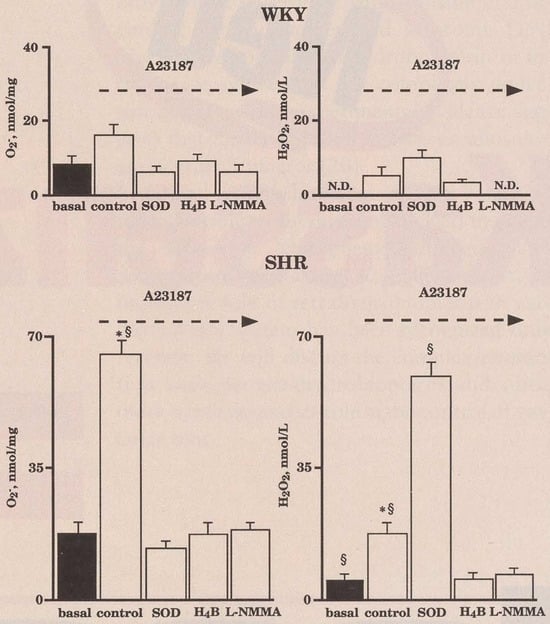
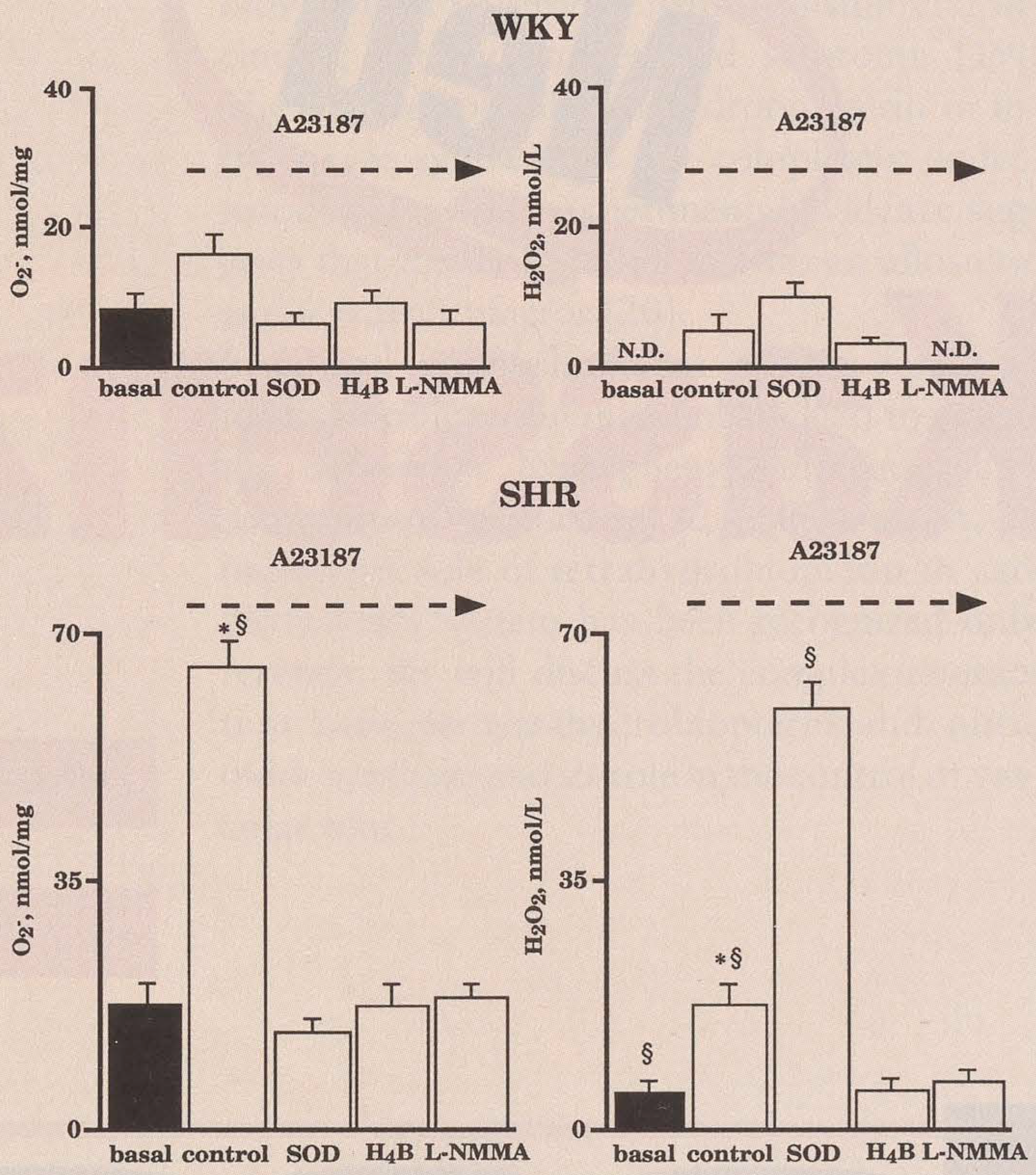
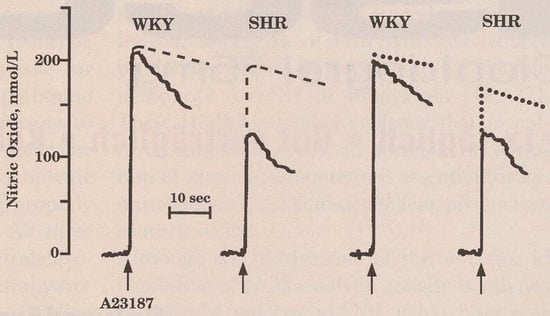
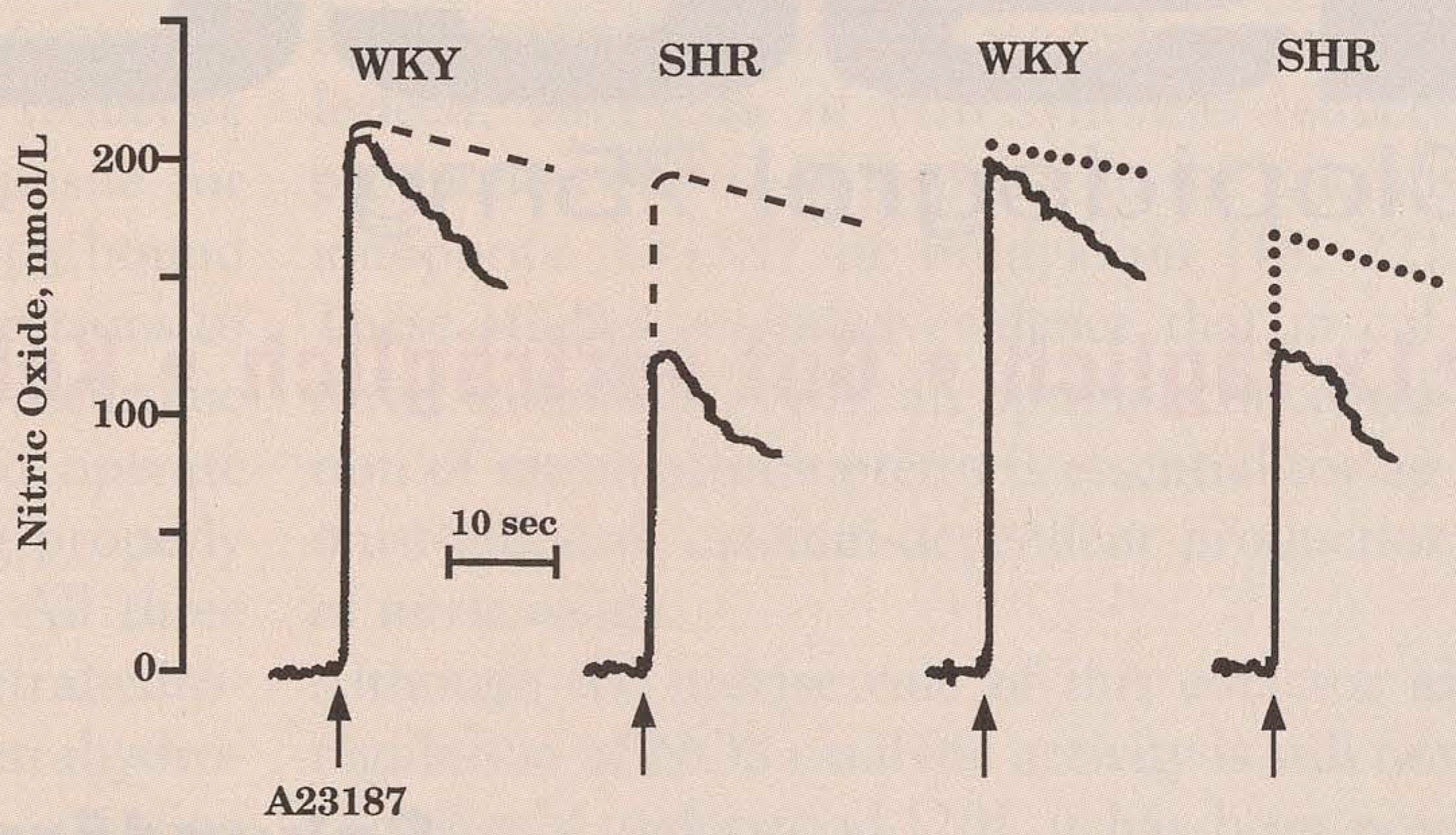
Interestingly enough, an impaired synthesis of H4B occurs in adrenal cortex of spontaneously hypertensive rats (SHR) [34]. This metabolic dysfunction was detected in prehypertensive animals suggesting that it may contribute to the development of hypertension and/or its complications. We demonstrated that in isolated aortas from prehypertensive SHR, H4B supplementation diminished the NOS-dependent generation of superoxide and its dismutase product hydrogen peroxide, while it increased the net production of NO (Figure 3 and Figure 4) [27]. Although the levels of H4B from SHR were not different when compared to Wistar-Kyoto (WKY) aortas, NOS activity in response to exogenous H4B was significantly higher in the latter. These results suggest that an increased requirement for H4B may trigger an uncoupling of the oxidative and reductive domain of the enzyme resulting in dysfunctional NOS activity. Whether oxygen free radicals formed via NOS plays a role in the development of hypertension remains to be determined.
Figure 3.
Bar graphs showing the basal and calcium ionophore A23187-stimulated concentration of superoxide (O2-) and hydrogen peroxide (H2O2) in aortic tissue from 4-week-old Wistar-Kyoto rats (WKY, top) and spontaneously hypertensive rats (SHR, bottom). Note that after tetrahydrobiopterin (I-LB) supplementation and in the presence of NOS inhibitor NG-monomethyl-L-arginine (L-NMMA) the A23187-induced concentrations of O2- and its dismutase product H2O2 were significantly reduced only in SHR (reprinted from [47]).
Figure 4.
Typical amperograms showing changes of nitric oxide (NO) concentrations near the surface of endothelial cells from the aorta of 4-week-old Wistar-Kyoto (WKY) and spontaneously hypertensive rats (SHR) assessed by porphyrinic microsensor. NO release was stimulated with calcium ionophore A23187 (8 × 10⁻⁶ mol/l, solid line). Amperograms obtained during stimulation with A23187 in the presence of superoxide dismutase (SOD, 100 U/ml, dashed line) or after incubation with H4B (10-4 molll, dotted line) are shown (reprinted from [47]).
Conclusions
In the last decade, the L-arginine-nitric oxide pathway has definitely reached the clinical arena and nitric oxide can be regarded as a major determinant of the antiatherosclerotic properties of the endothelium. Tetrahydrobiopterin is an essential cofactor for catalytic activity of nitric oxide synthases. The availability of tetrahydrobiopterin plays a key role in regulation of nitric oxide production and control of vascular tone. Evidence continues to accumulate on the intriguing concept of a dysfunctional nitric oxide synthase as a source of oxygen-derived free radicals. A decreased availability of tetrahydrobiopterin may, indeed, cause a shift in the balance between the production of protective nitric oxide and toxic oxygen-free radicals and, in turn, contribute to endothelial dysfunction and oxidative vascular injury described in a number of vascular diseases.
The role of tetrahydrobiopterin in regulation of vascular endothelial function deserves further investigation. Better understanding of the complex interaction between tetrahydrobiopterin and nitric oxide synthase is needed to address the question how tetrahydrobiopterin becomes rate limiting in pathological conditions. Eventually, this will provide the basis for a new therapeutic approach to prevent initiation and progression of atherosclerotic vascular disease.
References
- Furchgott, R.; Zawadzki, J.V. The obligatory role of endothelial cells in the relaxation of arterial smooth muscle by acetylcholine. Nature 1980, 299, 373–6. [Google Scholar] [CrossRef] [Scilit]
- Palmer, R.M.J.; Ferrige, A.G.; Moncada, S. Nitric release accounts for the biological activity of endothelial-derived relaxing factor. Nature 1987, 327, 534–6. [Google Scholar] [CrossRef] [Scilit] [PubMed]
- Lüscher, T.F.; Noll, G. The pathogenesis of cardiovascular disease: role of the endothelium as target and mediator. Atherosclerosis 1995, 188 (Suppl), S81–90. [Google Scholar] [CrossRef]
- Creager, M.; Cooke, J.P.; Mendelsohn, M.E.; Gallagher, S.J.; Coleman, S.M.; Loscalzo, J.; et al. Impaired vasodilation of forearm resistance vessels in hypercholesterolemic patients. J. Clin. Invest 1990, 86, 228–34. [Google Scholar] [CrossRef] [Scilit]
- Egashira, K.; Inou, T.; Hirooka, Y.; et al. Impaired coronary blood flow response to acethylcholine in patients with coronary risk factors and proximal atherosclerotic lesions. J. Clin. Invest 1993, 91, 29–37. [Google Scholar] [CrossRef] [Scilit] [PubMed]
- Egashira, K.; Inou, T.; Hirooka, Y.; et al. Effects of age on endothelium-dependent vasodilation of resistance coronary artery by acetylcholine in humans. Circulation 1993, 88, 77–81. [Google Scholar] [CrossRef] [Scilit]
- Stroes, E.S.G.; Koomans, H.A.; de Bruin, T.W.A.; Rabelink, T.J. Vascular function in the forearm of hypercholesterolemic patients off and on lipid-lowering medication. Lancet 1995, 346, 467–71. [Google Scholar] [CrossRef] [Scilit]
- Panza, J.A.; Garcia, C.E.; Kilcoyne, C.M.; Quyyumi, A.A.; Cannon, R.O. Impaired endothelium-dependent vasodilation in essential hypertension. Circulation 1995, 91, 1732–38. [Google Scholar] [CrossRef] [Scilit]
- Johnstone, M.T.; Creager, S.J.; Scales, K.M.; Cusco, J.A.; Lee, B.K.; Creager, M.A. Impaired endothelium-dependent vasodilation in patients with insulin-dependent diabetes. Circulation 1993, 88, 2510–6. [Google Scholar] [CrossRef] [Scilit]
- Ting, H.A.T.; Timimi, F.K.; Boles, K.S.; Creager, S.J.; Ganz, P.; Creager, M.A. Vitamins C improves endothelium-dependent vasodilation in patients with non insulin-dependent diabetes mellitus. J. Clin. Invest 1996, 97, 22–8. [Google Scholar] [CrossRef] [Scilit] [PubMed]
- Heitzer, T.S.; Yla-Herttuala, S.; Luoma, J.; Kurz, S.; Munzel, T.; Just, H.; et al. Cigarette smoking potentiates endothelial dysfunction of forearm resistance vessels in patients with hypercholesterolemia. Circulation 1996, 93, 1346–53. [Google Scholar] [CrossRef] [Scilit]
- Knowles, R.G.; Moncada, S. Mammalian nitric oxide synthase. Biochem J. 1994, 298, 249–58. [Google Scholar] [CrossRef] [Scilit]
- Bredt, D.S.; Hwang, P.M.; Glatt, C.E.; Lowenstein, C.; Reed, R.; Snyder, S.H. Cloned and expressed nitric oxide synthase structurally resembles cytochrome P-450 reductase. Nature 1991, 351, 714–8. [Google Scholar] [CrossRef] [Scilit]
- Lamas, S.; Marsden, P.A.; Li, G.K.; Tempst, P.; Thomas, M. Endothelial nitric oxide synthase: molecular cloning and characterization of a distinct constitutive isoform. Proc. Natl. Acad. Sci. USA 1992, 89, 6348–52. [Google Scholar] [CrossRef] [Scilit]
- Xie, Q.-W.; Cho, H.J.; Calaycay, J.; et al. Cloning and characterization of inducible nitric oxide synthase from mouse macrophages. Science 1992, 256, 225–8. [Google Scholar] [CrossRef] [Scilit]
- Giovanelli, J.; Campos, K.L.; Kaufmann, S. Tetrahydrobiopterin, a cofactor for rat cerebellar nitric oxide synthase, does not function as a reactant in the oxygenation of arginine. Proc. Natl. Acad. Sci. USA 1991, 88, 7091–5. [Google Scholar] [CrossRef] [Scilit] [PubMed]
- Schmidt, K.; Werner, E.R.; Mayer, B.; Wachter, H.; Kukowetz, W.R. Tetrahydrobiopterin-dependent formation of endotheliumderived relaxing factor (nitric oxide) in aortic endothelial cells. Biochem J. 1992, 281, 297–300. [Google Scholar] [CrossRef] [Scilit]
- Kaufmann, S. New tetrahydrobiopterin-dependent systems. Annu Rev. Nutr. 1993, 13, 261–86. [Google Scholar] [CrossRef] [PubMed]
- Mayer, B.; Werner, E.R. In search of a function for tetrahydrobiopterin in the biosynthesis of nitric oxide. NaunynSchmied Arch. Pharmacol. 1995, 351, 453–63. [Google Scholar] [CrossRef] [Scilit]
- Blau, N.; Thony, B.; Heizmann, C.W.; Dhont, J.L. Tetrahydrobiopterin deficiency: from phenotype to genotype. Pteridines 1993, 4, 1–10. [Google Scholar] [CrossRef] [Scilit]
- Werner-Felmayer, G.; Werner, E.G.; Fuchs, D.; Hausen, A.; Reibnegger, G.; Schmidt, K.; et al. Pteridine biosynthesis in human endothelial cells: impact on nitric oxide-mediated formation of cGMP. J. Biol. Chem. 1993, 268, 1842–6. [Google Scholar] [CrossRef] [Scilit]
- Rosenkranz-Weiss, P.; Sessa, W.C.; Milstein, S.; Kaufmann, S.; Watson, C.A.; Pober, J.S. Regulation of nitric oxide synthesis by proinflammatory cytokines in human umbilical vein endothelial cells. J. Clin. Invest 1994, 93, 2236–43. [Google Scholar] [CrossRef] [Scilit]
- Heinzel, B.; John, M.; Klatt, P.; Bohme, E.; Mayer, B. Ca/calmodulin dependent formation of hydrogen peroxide by brain nitric oxide synthase. Biochem J. 1992, 281, 627–30. [Google Scholar] [CrossRef] [Scilit]
- Pou, S.; Pou, W.S.; Bredt, D.S.; Snyder, S.H.; Rosen, G.M. Generation of superoxide by purified brain nitric oxide synthase. J. Biol. Chem. 1992, 267, 24173–6. [Google Scholar] [CrossRef] [Scilit]
- Cosentino, E.; Katusic, Z.S. Tetrahydrobiopterin and dysfunction of endothelial nictric oxide synthase in coronary arteries. Circulation 1995, 91, 139–44. [Google Scholar] [CrossRef] [Scilit]
- Cosentino, F.; Patton, S.; d'Uscio, L.V.; et al. Tetrahydrobiopterin alters superoxide and nitric oxide release in prehypertensive rats. J. Clin. Invest 1998, 101, 1530–7. [Google Scholar] [CrossRef] [Scilit] [PubMed]
- Stroes, E.; Kastelein, J.; Cosentino, E.; et al. Tetrahydrobiopterin restores endothelial function in hypercholesterolemia. J. Clin. Invest 1997, 99, 41–6. [Google Scholar]
- Maier, W.; Cosentino, F.; Seiler, C.; et al. Tetrahydrobiopterin improves endothelial function in patients with coronary artery disease. Eur. Heart J. 1997, 18, 15. [Google Scholar]
- Pieper, G.M. Acute amelioration of diabetic endothelial dysfunction with a derivative of the nitric oxide synthase cofactor, tetrahydrobiopterin. J. Cardiovasc Pharmacol. 1997, 29, 8–15. [Google Scholar] [CrossRef] [Scilit] [PubMed]
- Higman, D.J.; Strachan, A.M.J.; Buttery, L.; Hicks, R.C.J.; Springall, D.R.; Greehalgh, R.M.; et al. Smoking impairs the activity of endothelial nitric oxide synthase in saphenous vein. Arter. Thromb. Vasc. Biol. 1996, 16, 546–52. [Google Scholar] [CrossRef] [Scilit]
- Heitzer, T.; Munzel, T. The cofactor of the nitric oxide synthase tetrahydrobiopterin improves endothelial dysfunction in smokers. Circulation 1998, 98(17), 1–735. [Google Scholar]
- Tiefenbacher, C.P.; Chilian, W.M.; Mitchell, M.; DeFily, D.V. Restoration of endothelium-dependent vasodilation after reperfusion injury by tetrahydrobiopterin. Circulation 1996, 94, 1423–9. [Google Scholar] [CrossRef] [Scilit] [PubMed]
- Abou-Donia, M.M.; Daniels, J.A.; Nichol, C.A.; Viveros, H.L. Regulation of adrenocortical guanosine triphosphate cyclohydrolase and tetrahydrobiopterin in normal and spontancously hypertensive rats. In Chemistry and Biology of Pteridines; Blair, J.A., Ed.; Walter de Gruyter and Co: New York, 1983; pp. 783–7. [Google Scholar]
© 1999 by the author. Attribution - Non-Commercial - NoDerivatives 4.0.