


Abstract
Hops (Humulus lupulus L.) is a plant species with a multitude of uses in medicine, food science and agriculture. Xanthohumol, the major prenylflavonoid in hop cone extract, possesses anti-cancer activity. Xanthohumol also exhibits strong antimicrobial activity against Gram-positive bacteria (e.g., S. aureus), but not against Gram-negative bacteria. Xanthohumol can reduce blood glucose levels and body fat in obese male rats (not females), and mature hop bitter acids (MHBAs) have been found to decrease visceral and abdominal human fat. Xanthohumol can increase bone mineral density, decrease osteoclast numbers, and protect osteoblasts from oxidative stress in osteoporotic mice. Further clinical research, xanthohumol and bitter acids could be sourced from hop cone extracts to formulate novel drugs that can successfully treat a variety of diseases and potentially replace current therapies that have negative effects. In the food industry, hop cone extracts are mainly used in the brewing industry, with 98% of the world’s hop cones being used in brewing beer. Hop cone extracts are also used as food/drink preservatives due to their antimicrobial abilities, as previously mentioned, although there is less of a need for hops in extending food/drink shelf-life. Finally, hop cone extracts have several uses in agriculture, mainly as pesticides. For example, hop extracts can kill varroa mites, a parasite that impairs honeybee health. This benefits honeybee farmers as increased bee survival means more honey production, increasing profits. Overall, this review paper brings together recent studies that highlight hop extracts as valuable bioactive compound mixtures with many useful applications.
1. Introduction
1.1. Hops: Biology and Cultivation
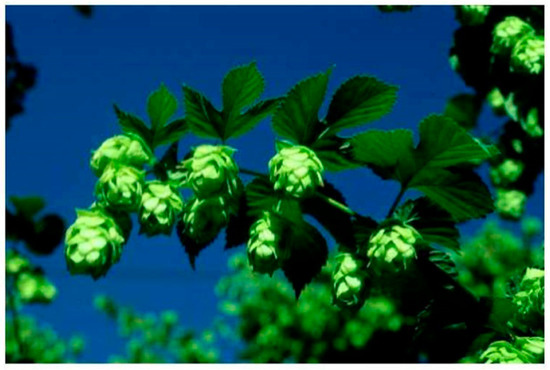
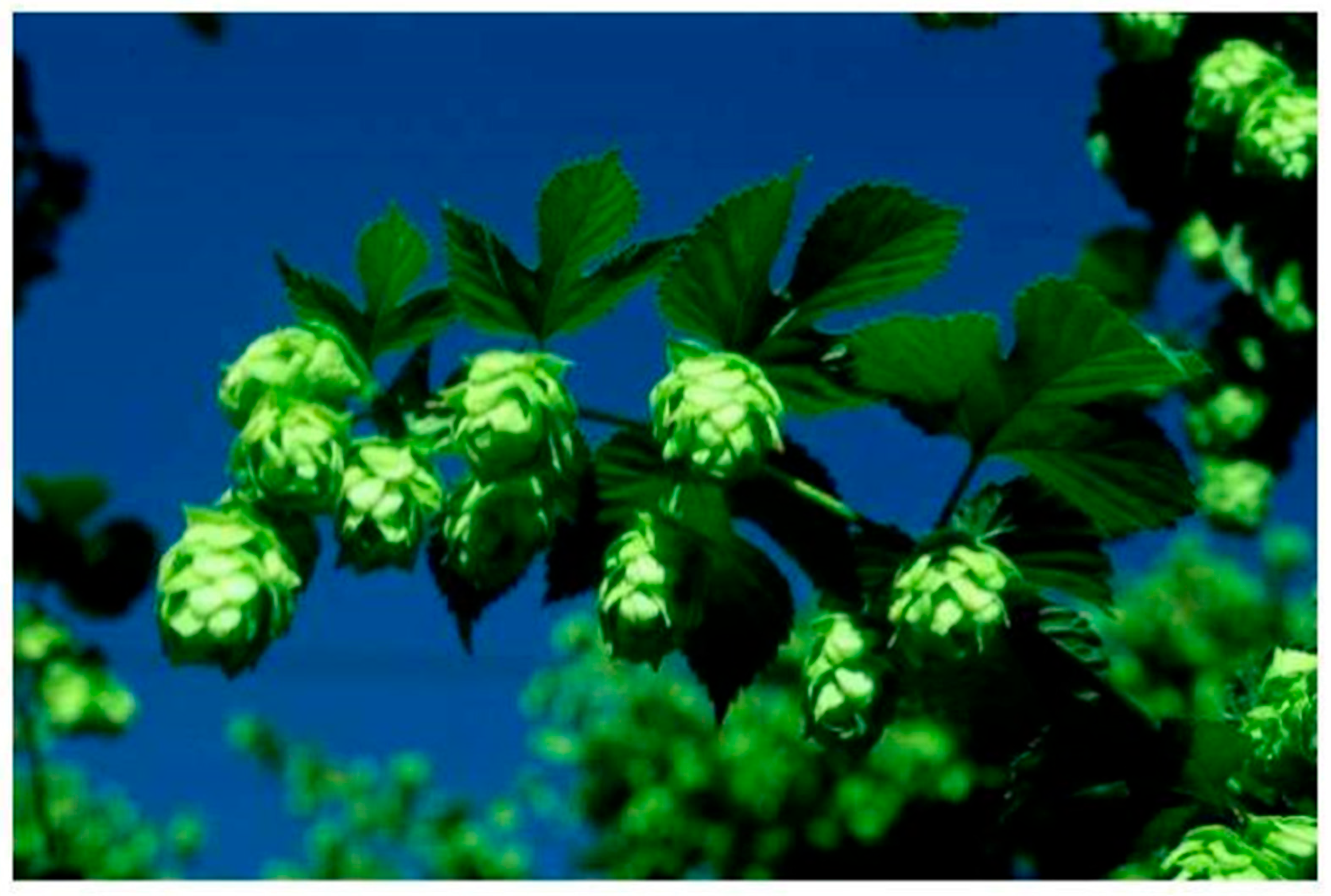
Hops (Humulus lupulus L.) are a plant species in which only the female, infertile plant is cultured to produce hop cones (Figure 1), which are made of a footstalk and bracts with glands that synthesise yellow lupulin [1]. They are usually employed as a bittering, flavouring, and stability agent in beer, and impart a floral, fruity, or citrus flavour and aroma. Hops are also used for other beverages and herbal medicine [2]. The hop plants have separate female and male plants, and only female plants are used for commercial applications [3].
Figure 1.
Photograph of hop cones that have stemmed from cultivating the female, infertile hop (H. lupulus L.) plant. Reproduced from Figure 2 in the study by Knez Hrnčič et al. (2019) [4].
Cultivation of hops for commercial production requires particular environmental conditions. As hops are a climbing plant, they can be trained to grow up trellises made from strings or wires that support the plants and allow them to grow significantly more under the same sunlight intensity [5]. Male and female flowers develop on separate plants, although sometimes a fertile individual plant that contains both male and female flowers will develop. Female plants are propagated vegetatively, while male plants are culled if plants are grown from seeds. Each spring, new bines grow from the roots that are started up by strings that span from the ground to an overhead trellis [5,6]. In the past, these cones were picked by hand. Harvesting of hops became much more efficient with the invention of the mechanical hops separator, patented by Emil Clemens Horst in 1909 [7].
1.2. Preparation Methods of Hop Extracts
The traditional method of extracting essential oils from hops is distillation. Steam is passed through ground hops, then the essential oils are removed from the condensate using ether. A limitation, however, is that it is a time-consuming process. Distillation of 100 g of ground hops in 3 L of water takes ~4 h [8].
Another method involves obtaining hop extract using liquid carbon dioxide (LCO2) at a temperature below a critical temperature (~31 °C), but at a pressure higher than a critical pressure (73.25 bar = 7325 kPa). LCO2 is a replacement solvent for non-polar organic solvents (e.g., hexane). Hop extract can also be obtained using ethanol. Ethanol is a polar organic solvent dissolving a wide range of hop bioactive compounds, such as polyphenols, although the total amount of polyphenols extracted is lower in comparison to other organic solvents. Alternatives to ethanol include methanol and acetone. There is evidence showing that if water is not added, organic solvents, like ethanol, are poor solvents for extracting polyphenols from hops. A key strength of using LCO2 over ethanol is that the extract contains very little/no traces of unwanted organic solvents, thus making supercritical LCO2 the main extraction method in industry (e.g., breweries) [4].
Finally, a sequential solid–liquid extraction method from hop pellets was recently reported, with subsequent fractionation steps. A methanol–dichloromethane mixture was selected, and the extraction variables were optimised to maximise the recovery of valuable hop compounds separated into different streams (α- and β-acids in soft resins, xanthohumol in hard resins, and phenolics in spent solids) after fractionation steps. The optimisation results showed that extraction of hop pellets, performed at room temperature with 19.7% (v/v) methanol for 89 min, yielded recoveries of 86.57% α-acids and 89.14% β-acids in soft resins, 78.48% xanthohumol in hard resins, and 67.10% phenolics in spent solids [9].
1.3. Bioactive Compounds in Hops
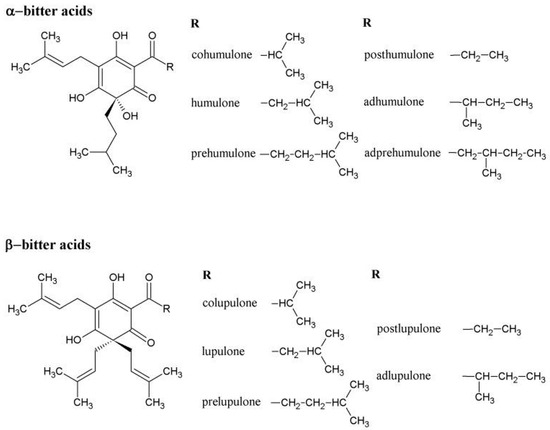
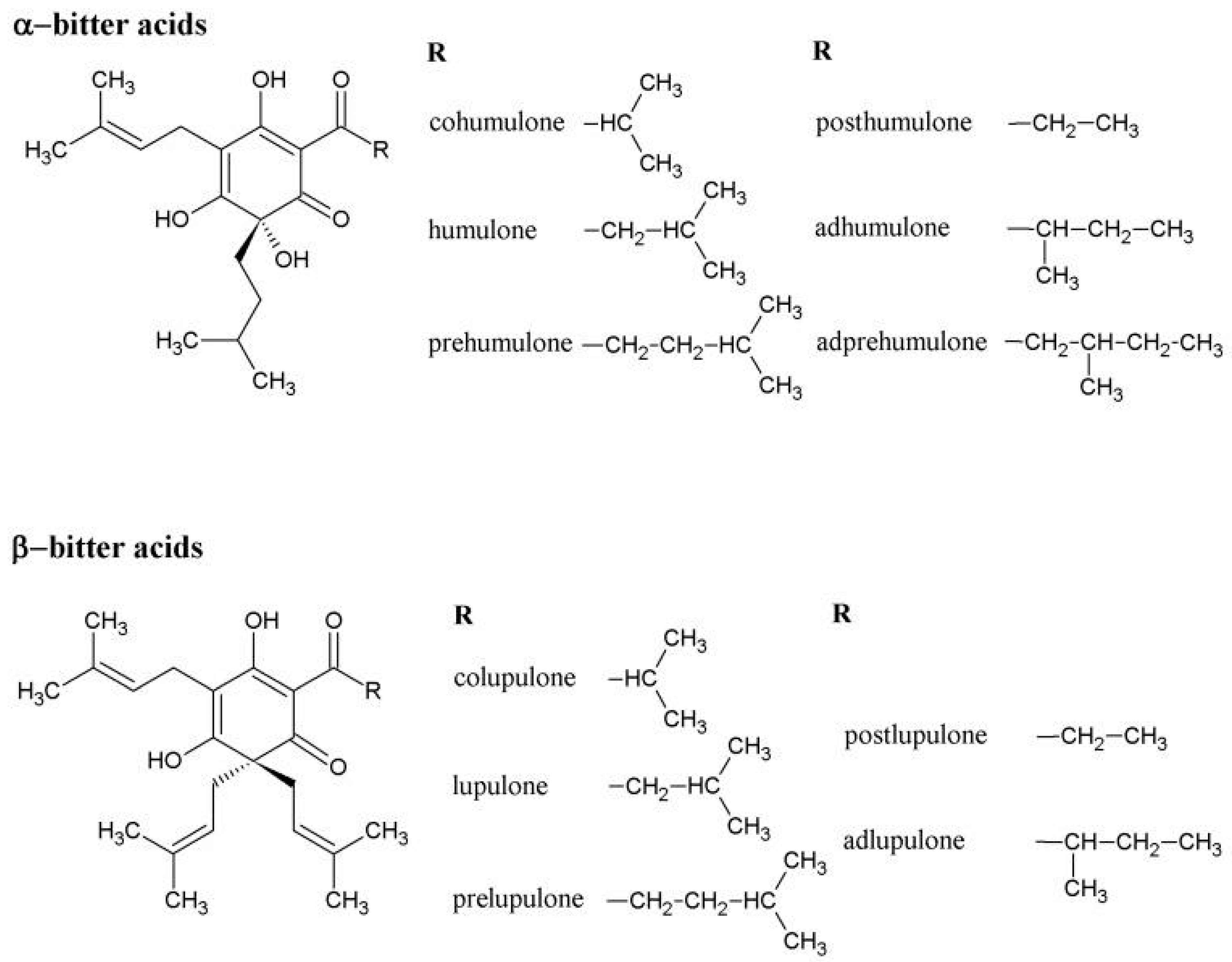
Hop resins are primarily divided into soft and hard fractions based on their solubility in organic solvents (like hexane or methanol), a distinction that directly correlates to their value in brewing. Soft resins contain the critical bittering and aromatic compounds, while hard resins are generally considered oxidised, less valuable byproducts [4]. Soft resins contain α-lupulic acids, which constitute the larger portion of bitter acids, and β-lupulic acids (Figure 2). The major representative of α-acids is humulone, making up 70% of all α-acids, and the major representative of β-acids is lupulones, constituting 30–55% of all β-acids [4]. Β-acids display low solubility in water, which is why they are used less during the brewing of beer [1]. When hops are boiled at high temperatures (100–130 °C), and at a high pH (8–10) during brewing, α-acids isomerise, becoming iso-α-acids which, along with humulinones, are what cause the bitter taste in beer [4].
Figure 2.
Diagram showing the chemical structures of hop bitter acids (α and β) and their analogues. Reproduced from Figure 1 in the study by Dostálek et al. (2017) [1].
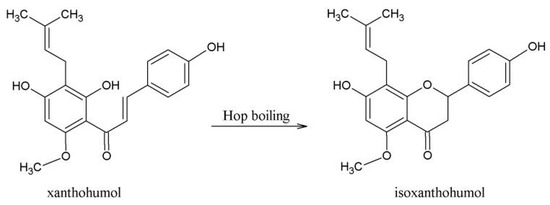
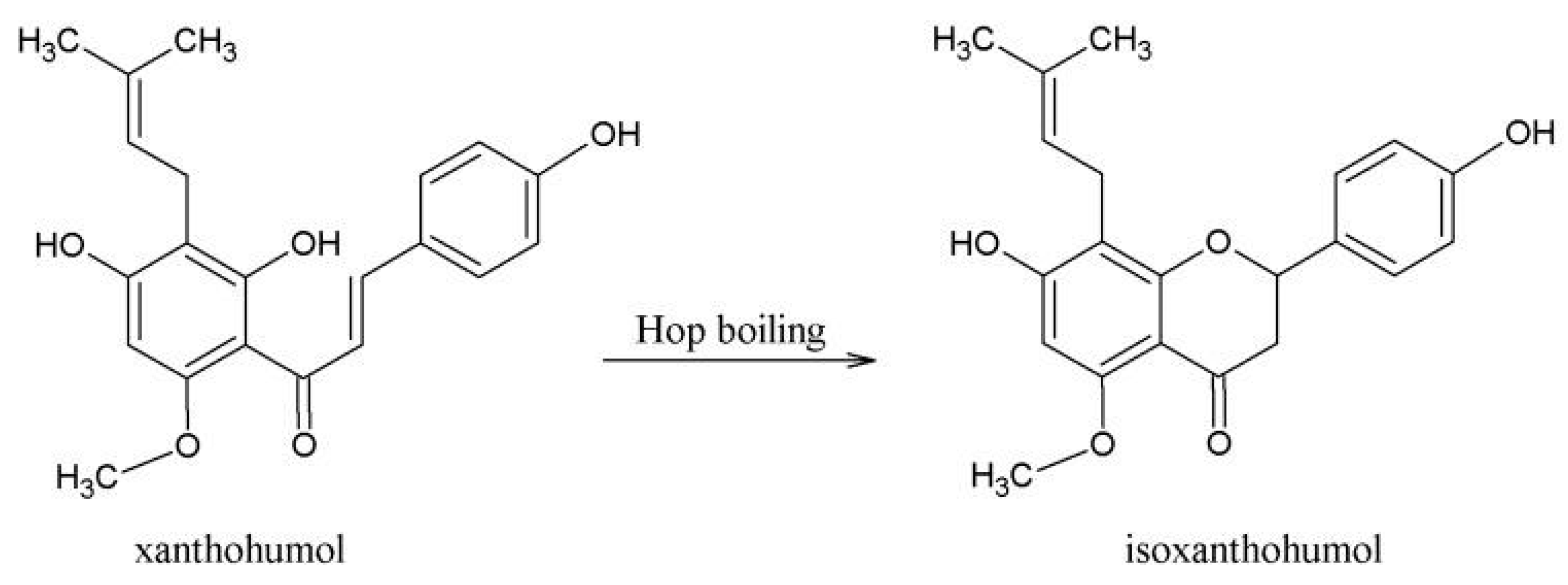
Polyphenols (found in hard resins) are secondary metabolites that protect hops from external environmental factors. Ethanolic hop cone extract reportedly contains a 10-times larger number of polyphenolic compounds than hop leaves. One subclass of polyphenols is prenylflavonoids, which are flavonoids containing a minimum of one prenyl/geranyl substituent in the ring. Prenylflavonoids are present in lupulin granules. The most biologically important prenylflavonoid is xanthohumol. Although xanthohumol makes up ~1% of a hop cone’s weight, it is highly hydrophobic and possesses low solubility in beer. During boiling, xanthohumol is isomerized into isoxanthohumol [4] (Figure 3).
Figure 3.
Diagram showing the chemical structure of the prenylflavonoid, xanthohumol, and its chemical structure when isomerized (isoxanthohumol) following hop boiling. Reproduced from Figure 6 in the study by Dostálek et al. (2017) [1].
1.4. Aims and Objectives
Nowadays, there is a very high demand for new, safe, eco-friendly and effective bioactive products for a variety of applications, as it has become clear that many of the synthetic products that are currently on the market often have toxic side effects for their users after long exposure or are harmful for the environment and need to be replaced by milder approaches. The purpose of this review paper is to collect, present and discuss all key recent advancements in the use of hop extracts in the fields of medicine, food science and agriculture. Our study was performed by using popular scientific databases such as PubMed, Scopus and Google Scholar, limiting the hits to those from 2015 onwards and focusing on the three fields mentioned above. Keywords included ‘hop’, followed by ‘medicine’, ‘food’ or ‘agriculture’. Manuscripts published before 2015 or written in a non-English language were excluded. In total, out of the 332 papers that were initially found, 274 were excluded, and 58 were used in this review article. We aspire that our paper will promote and expand hop extract applications in health, the food industry and crop development, and help the discovery of new innovative ones, based on science-informed materials in addition to traditional practice approaches.
2. Medicine
2.1. Antioxidant Activity
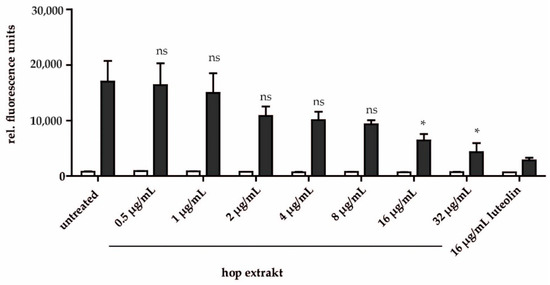
There is evidence of hop extract displaying antioxidant and anti-inflammatory activity. Weber et al. (2019) [10] irradiated human primary keratinocytes (HPKs) with 8 J/cm2 of ultraviolet (UV) radiation to generate reactive oxygen species (ROS) in the HPKs without inducing cytotoxic effects. They then incubated (30 min) the HPKs with different concentrations (µg/mL) of hop–CO2-extract containing 50% humulone and lupulones, and found that the higher the concentration of the extract, the greater the reduction in ROS-induced dichlorofluorescein (DCF), i.e., smaller fluorescence emitted by free-radical sensitive fluorescent dye, CM-H2DCFDA (Figure 4). Additionally, irradiation-induced IL-6 (pro-inflammatory cytokine) production was lower the greater the hop–CO2-extract concentration was.
Figure 4.
Column chart showing that as hop–CO2-extract concentration (µg/mL) increased, fluorescence from free-radical sensitive fluorescent dye, CM-H2DCFDA, decreased, indicating that the bioactive compounds (50% humulones and lupulones) within the extract scavenge ROS within human primary keratinocytes (HPKs) post-irradiation. * indicates a p value < 0.05. Adapted from Figure 1a in the study Weber et al. (2019) [10].
Another study that supports the antioxidant potential of hops was published by Kolenc et al. (2023) [11]. The antioxidant activity of purified hydroacetonic hop extracts was analysed using the ferric reducing ability of plasma (FRAP), oxygen radical absorption capacity (ORAC) and intracellular antioxidant (IA) methods. The FRAP values in different hop genotypes ranged between 63.5 and 101.6 μmol Trolox equivalent (TE)/g dry weight (DW), the ORAC values ranged between 1069 and 1910 μmol TE/g DW, and the IA potential values ranged between 52.7 and 118.0 mmol TE/g DW.
2.2. Anti-Cancer Activity
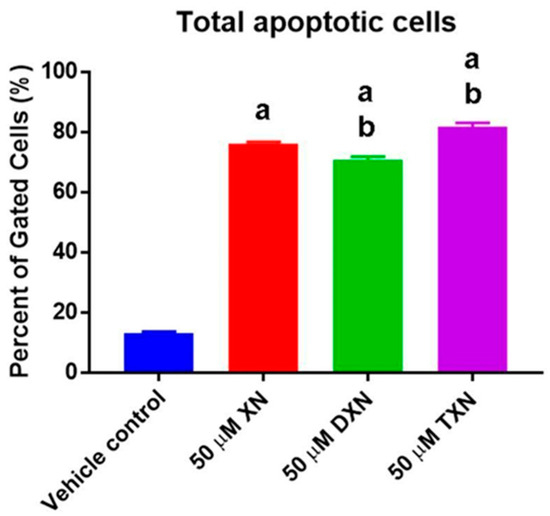
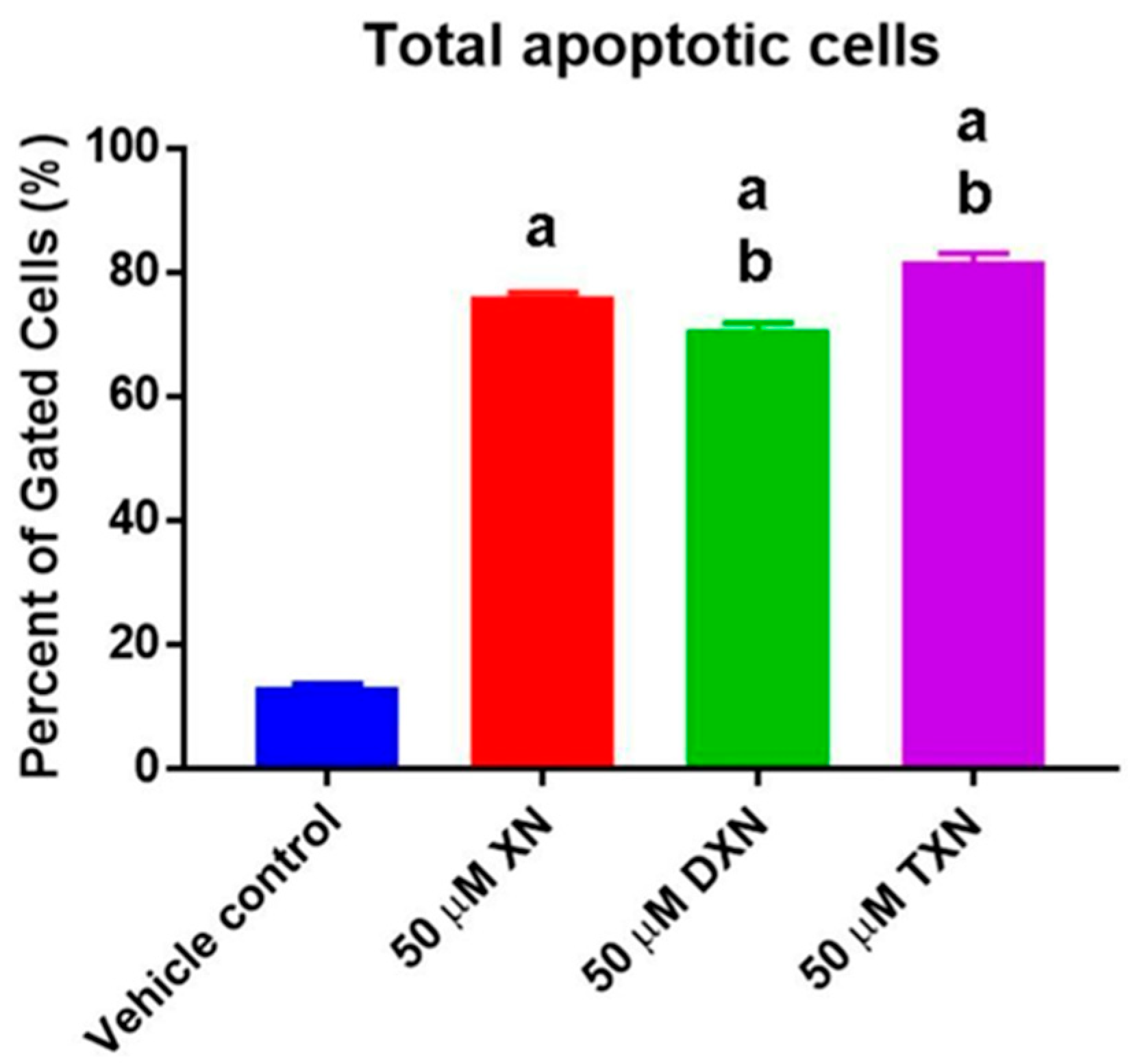
There is evidence of bioactive compounds in hop extract displaying anti-cancer activity. Abnormal activation of the Ras/MEK/ERK signal pathway has been reported in non-small-cell lung carcinoma (NSCLC). Sławińska-Brych et al. (2016) [12] discovered that xanthohumol, the most common prenylated flavonoid in hop cone extract, was able to decrease the viability of NSCLC cells, with A549 cells displaying greater susceptibility than H1565 cells, via inhibiting extracellular-signal-regulated kinase (ERK)1/2 and ribosomal p90RSK kinase activity, as well as phosphorylation of cyclic AMP-responsive element-binding protein (CREB), resulting in decreased proliferation of the NSCLC cell lines. Moreover, xanthohumol was able to upregulate the expression of pro-apoptotic proteins, p53 and p21, resulting in increased apoptosis of the NSCLC cell lines. Logan et al. (2019) [13] discovered that xanthohumol and its derivatives (dihydroxanthohumol and tetrahydroxanthohumol) were able to induce apoptosis of HT29 (human colon adenocarcinoma) cells (Figure 5). They found a higher percentage of annexin V(+) 7-AAD(-) (early apoptotic) and annexin V(+) 7-AAD(+) (late apoptotic) HT29 cells with 50 µM of xanthohumol in comparison to 10 µM xanthohumol and the negative control. These studies show that xanthohumol and its derivatives display a strong anti-cancer ability against various cancer types.
Figure 5.
Column chart showing the total % of apoptotic HT29 (human colon adenocarcinoma) cells is higher with 50 µM xanthohumol, dihydroxanthohumol, and tetrahydroxanthohumol in comparison to the negative vehicle control. The letter “a” indicates a statistically significant difference from vehicle control, the letter “b” indicates a statistically significant difference from 50 µM XN (p < 0.05). Reproduced from Figure 4 in the study by Logan et al. (2019) [13].
2.3. Antimicrobial Activity
Hop bitter acids (humulones and lupulones) and flavonoids in hop plant extracts have been found to display antimicrobial activity. Bartmańska et al. (2018) [14] discovered flavonoid α,β,2′,3′-tetrahydroxyanthohumol produced the lowest minimum concentration required to inhibit the growth of 80% of Staphylococcus aureus ATCC19095 (5 µg/mL), with the MIC80 being twice as small as ampicillin (positive control). The most active natural flavonoid, α,β-dihydroxanthohumol, inhibited the growth of all S. aureus strains tested, including those that are methicillin-resistant (e.g., ATCC43300 = 12.5 µg/mL). Rozalski et al. (2013) [15] identified, via the microdilution broth assay, that spent hop cones extract, containing 51% xanthohumol, had an MIC and MBC of >2 mg/mL against Enterococcus faecalis ATCC29212, whereas pure (100%) xanthohumol had a smaller MIC (0.062 mg/mL) and MBC (>0.5 mg/mL), suggesting the major antibacterial constituent in hop cones extract is xanthohumol. Bocquet et al. (2019) [16] discovered that only the hop hydro-ethanolic crude extract, rhizomes (Rh), exhibited antimicrobial activity against Acinetobacter baumannii (Gram-negative) 9011, with an MIC of 625 µg/mL. Other hop extracts (e.g., cones) displayed no antimicrobial activity, suggesting hops are only effective against Gram-positive bacteria. With further work, bioactive compounds in hop extract could be administered as a natural antimicrobial drug to treat patients with Gram-positive bacterial infections, minimising the use of antibiotics, and thus, hopefully, decreasing the incidence of antibiotic-resistant bacterial strains emerging worldwide. Another study that supports the antimicrobial potential of hops was published by Kolenc et al. (2022) [17]. The antimicrobial activity of hop extracts obtained from different hop genotypes against Staphylococcus aureus and Lactobacillus acidophilus was examined. The hop hydroacetonic extracts were more effective against Staphylococcus aureus than against Lactobacillus acidophilus (up to five times). Strong inverse correlations of MIC and MBC values were obtained with xanthohumol, cohumulone, n+adhumulone, colupulone and n+adlupulone contents, suggesting that the identified hop compounds are directly responsible for the antibacterial impact. Lastly, Khaliullina et al. (2024) [18] found that 40 mg/mL of hops extract (created via acetone extraction from hop infructescences, purification, and solubilization in ethanol) displayed antimicrobial activity against Staphylococcus aureus in both planktonic and biofilm embedded states.
Hop extract has also been found to display antiviral activity. Di Sotto et al. (2018) [19] found a 140 µg/mL sample of hydroalcoholic hop extract, containing 7.1 µg/mg of polyphenols and 3.8 µg/mg of flavonoids, was able to partially reduce the % viral titre of different strains of influenza A virus (PR8, NWS, ULSTER) in human lung epithelial A549 cells (46%, 50%, 29%) during 1 h of infection, and significantly reduced pH1N1, PR8, and ULSTER viral titres post-infection (75%, 44%, 29%). Influenza A virus induces oxidative stress in cells to activate redox-sensitive pathways that are beneficial to the virus’s replication. Viral-infected cells contain depleted levels (% nmol/mg proteins) of glutathione (GSH), a biomarker of redox changes. Untreated, influenza A virus-infected cells experienced significant GSH depletion. A549 cells treated with 140 µg/mL hop extract post-infection experienced an increase of 30% in GSH levels, and when treated before, during, and post-infection (b.d.p.i), a significant increase of 73% was determined. With further work, polyphenols and flavonoids from hop extract could be administered as an antiviral drug to treat patients with viral infections.
Lastly, another study used a mixture of hydroalcoholic extracts from Echinacea purpurea (purple coneflower) and hop extracts that demonstrated strong cytoprotective, immunomodulatory, and antiviral properties (Percaccio et al., 2023) [20]. The authors suggest a possible nutraceutical usefulness of this product in counteracting the damage caused by different stressors, including viral infections.
2.4. Reduction in Metabolic Syndrome (MS) Disorders
Metabolic syndrome (MS) is a medical condition in which a person has a combination of diabetes, hypertension, and obesity. There is evidence of bioactive compounds in hop extract being able to prevent/treat MS. Legette et al. (2013) [21] administered daily doses (mg/kg body weight (BW)) of xanthohumol to 4-week-old obese Zucker fa/fa rats for 6 weeks, and found that the highest-dose group (16.9 mg/kg BW) had significantly lower levels of plasma glucose compared to the negative control (0 mg/kg BW of xanthohumol) group, but this was only seen in male rats, not female rats. Moreover, males (not females) in the highest-dose group experienced a significant decrease in BW compared to the negative control. Other biomarkers of MS (e.g., cholesterol levels), however, were unaffected by xanthohumol treatment. Mature bitter acids (MHBAs) have also been shown to be effective at treating MS. Morimoto-Kobayashi et al. (2016) [22] conducted a randomised, double-blind, placebo-controlled clinical trial, which involved 200 subjects drinking 350 mL of a test drink containing either 35 mg MHBAs or no MHBAs (placebo/control group) every day for 12 weeks. The MHBA-positive group experienced significant reductions in visceral fat area and total abdominal fat area in comparison to the MHBA-negative group at 8 and 12 weeks of treatment. With further clinical trials, a drug containing a combination of xanthohumol and MHBAs from hop cone extract could be developed and administered to MS patients to treat the medical condition.
2.5. Anti-Osteoporosis
Osteoporosis is a metabolic disease in which bone mineral density (BMD) is reduced (osteopenia). It is also characterised by bone micro-structure degeneration and fracturing. Iron (Fe) is one of the major risk factors for developing osteoporosis. There is evidence of hop extract and its bioactive compounds, displaying anti-osteoporosis activity. Sun et al. (2022) [23] discovered that treatment for 3 months with hop extract containing 0.55% xanthohumol, as well as xanthohumol on its own, significantly increased BMD in osteoporotic mice that experienced iron dextran (ID)-induced iron overload. Osteoclasts dissolve and degrade old/damaged osteoblasts. ID on its own significantly increased osteoclast numbers, whereas hop extract and xanthohumol significantly reduced osteoclast numbers in osteoporotic mice femurs. When activated (phosphorylated), Akt promotes the inactivation of GSK3b by phosphorylating GSK3b, inhibiting osteoblast apoptosis. Active Akt also inhibits caspase-3 release and activates antioxidant protein Nrf2, protecting bone cells from oxidative stress-induced damage. ID significantly inhibited activation of Akt, whereas hop extract and xanthohumol significantly enhanced phosphorylation of Akt and GSK3b. Although ID upregulated Nrf2 expression, hop extract and xanthohumol upregulated its expression much more significantly, providing mice osteoblasts with greater protection from oxidative stress. To conclude, hop extract and xanthohumol improved iron-induced bone loss in osteoporotic mice via activating the Akt/GSK3b/Nrf2 pathway. In the future, hop extract could be used to formulate a novel anti-osteoporotic drug in humans, but clinical trials in humans need to occur first. In addition, Lecomte et al. (2023) [24] found postmenopausal women—who were given hop extract standardised in 8-prenylnaringenin (8-PN) for 48 weeks—experienced a greater mean change in bone mineral density (BMD) at the L2-L4 lumbar spine (0.0063 ± 0.0371 g/cm2) vs. postmenopausal women who received a placebo for 48 weeks (0.0002 ± 0.0002 g/cm2), although the difference between the two groups was statistically insignificant. Finally, β-amyloid (AΒ) deposition is a key cause of osteoporosis in the elderly. Xia et al. (2023) [25] found that as the dosage of hops extract (μg/mL) increased, the bone mineralization nodule in AΒ-injured mice osteoblasts, and significantly reversed the decreased expression of oxidative stress-related pathway markers (e.g., FoxO1) by AΒ.
2.6. Phyto-Estrogenic Properties
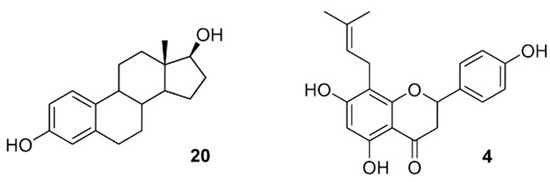
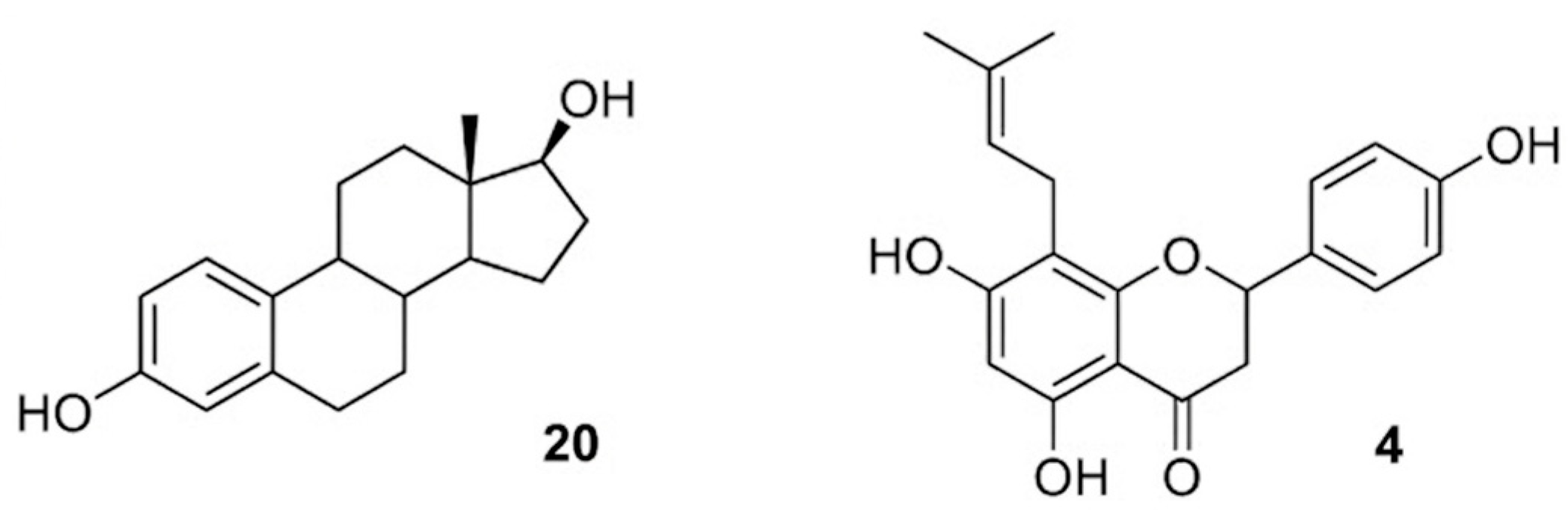
Hop cone extracts have been found to contain phytoestrogens, which are bioactive molecules that are similar in structure and function to oestrogen in that they are able to bind to oestrogen receptors (ERs). The major phytoestrogen in hop extract is 8-prenylnaringenin (8-PN), which has a higher affinity for binding to ERα, whereas most other phytoestrogens have a stronger binding affinity to ERβ. Other hop extract phytoestrogens (e.g., 6-prenylanaringenin (6-PN)) display poor oestrogenic activity (<1%) in comparison to 8-PN [26] (Figure 6). Several studies have investigated the potential of 8-PN from hop extract to be used as a natural alternative to hormone replacement therapy (HRT) in the treatment of menopause in women. Bowe et al. (2006) [27] discovered that subcutaneous administration of 400 µg/kg 8-PN per day significantly reduced elevated tail skin temperature (TST) in a rat model of menopausal hot flushes. Erkkola et al. (2010) [28] conducted a double-blind, placebo-controlled study on menopausal women and found that those who received a placebo for 8 weeks, followed by another 8 weeks of standardised hop extract (10 µg/day of 8-PN) treatment, experienced a reduction in all outcome measures (e.g., menopause rating scale, MRS). These findings are promising that in the future, phytoestrogens from hop extract could replace HRT, although further work needs to be done to increase their efficacy to a similar level as oestrogen, because several studies have found 8-PN, for example, to exhibit 10–20,000 times lower potency than 17-estradiol [28]. Moreover, Overk et al. (2008) found that the higher the concentration of 8-PN (mg/(kg·d)), the outcome measures of estrogenicity in ovariectomized adult rats (e.g., increased uterus luminal epithelial cell height) were greater and more comparable to the outcomes with estradiol (hormone replacement therapy) [29].
Figure 6.
Chemical molecular structures of oestrogen (20, left) and the phytoestrogen, 8-PN (4, right). 8-PN’s prenyl group increases its hydrophobicity, potentially explaining why it can bind with such a strong affinity to ERα’s hydrophobic pocket. Adapted from Figure 5 in the study by Tronina et al. (2020) [26].
2.7. Calming Agent
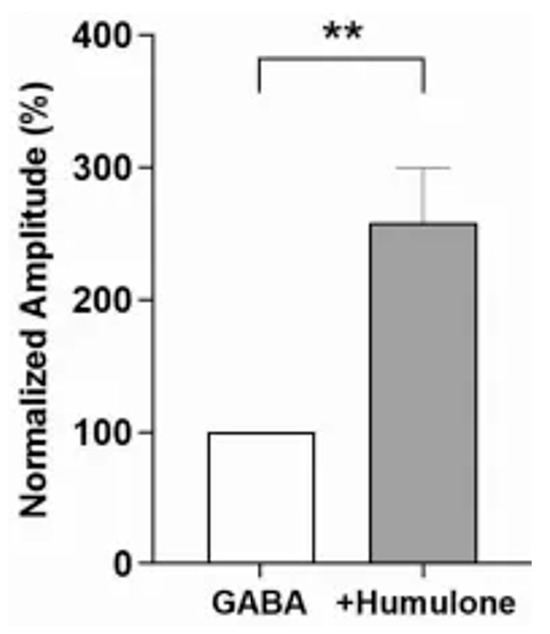
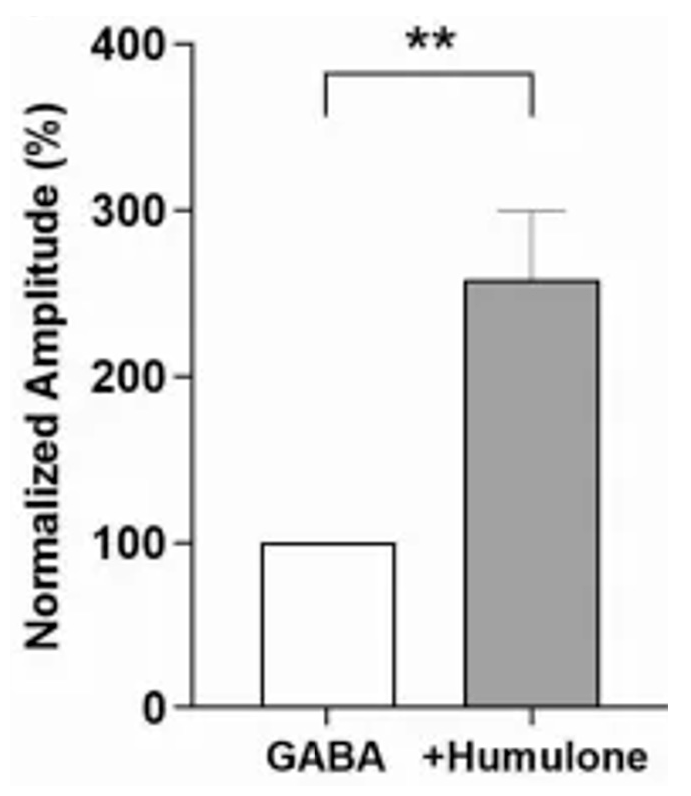
Hop extract has been found to possess neuroactive properties, making it useful as a calming agent. Humulones, 35–70% of the α-acids found in hops, enhance γ-aminobutyric acid type A (GABAA) receptor function at low micromolar concentrations. When activated, the GABAA receptor’s intrinsic chloride channel opens, resulting in Cl- influx, hyperpolarizing membrane potential, inhibiting neuron activity, thus resulting in a sedative effect. Benkherouf et al. (2020) [30] found that 1 µM of humulone from hop extract enhances GABA-induced currents in recombinant α1β3γ2 GABAA receptors expressed by HEK293 cells in comparison to when no humulone was present (negative control) (Figure 7). Moreover, they found that the higher the concentration of humulone (mg/kg), the less time it took for mice to fall asleep after administering 3.5 g/kg of ethanol, and the duration of sleep was significantly longer. These findings clearly show that humulone from hops exerts sedative effects, and that its positive modulation of GABAA receptors can potentially be increased with ethanol, thus could potentially be used to enhance ethanol’s intoxicating effects in hops-containing beer.
Figure 7.
Column chart showing the peak current amplitude normalised to that induced by 1 µM GABA on its own binding to recombinant α1β3γ2 GABAA receptors expressed by HEK293 cells. It is clear to see that in the presence of 10 µM of humulone, the GABA-induced peak current amplitude is significantly higher than without 10 µM humulone. ** indicates p value < 0.01. Adapted from Figure 1c in the study by Benkherouf et al. (2020) [30].
2.8. Against Obesity and Liver Steatosis
Extracts from Humulus japonicus were also recently found to be effective in inhibiting lipogenesis and enhancing lipolysis [31] and liver steatosis [32], indicating that they can be applied in obesity prevention and protection of liver health. The scientists were also able to elucidate the biological pathways leading to these effects, namely the PKA/p38 signalling route and a PPARα-mediated suppression of alcohol-induced oxidative stress, respectively. Furthermore, Mahli et al. (2018) [33] found that mice, which had a non-alcoholic fatty liver disease (NAFLD)-inducing Western-type diet (WTD) that was supplemented with 0.5% w/w freeze-dried potassium salt of isohumulone, exhibited significantly reduced hepatic steatosis vs WTD-only mice. Hege et al. (2018) [34] found female mice, pre-treated with approximately 30% iso-α-acids (0.75 mg/kg body weight) from hops for 4 days, displayed lower levels of alcohol-induced liver damage after being fed ethanol (6 g/kg body weight).
3. Food Science
3.1. Brewing Beer
Hop cone plants’ most common use is in the brewing of beer. A total of 98% of hop cones worldwide are used by the beer brewing industry [35]. Isomerised products of hop resins (bitter acids) provide a bitter taste to beer, hop polyphenols promote the precipitation of proteins in beer, and hop essential oils provide beer with a distinctive taste of hops [1]. Hop bitter acids also stabilise foam in beer. Of the bitter acids, α-acids contribute the most to the distinctive bitter taste of beer due to β-acids having low solubility [35]. Hop extract also prevents spoilage of beer, mainly through the high antimicrobial activity of hop β-acids. Gregory et al. (2022) [36] found that biofilm formation of S. mutans strains was significantly inhibited by several different hop extract dilutions ranging from 1:2 to 1:32, and that, on average, the higher the β-acid concentration within a hop extract, the lower the S. mutans growth and biofilm formation. The antimicrobial properties of hop extract in beer, however, have become less important over time due to improvements in pasteurisation and storage. A limitation of using hops in brewing is that only 15% of its constituents end up in the final beer product, with lots of spent byproducts produced (waste) [35].
3.2. Food Preservative
As previously mentioned, bioactive compounds in hop extract have been shown to possess antimicrobial properties. Because of this, several studies have investigated whether hop extract can be used as a natural preservative of food to extend shelf-life and safety. Kramer et al. (2015) [37] tested the antibacterial activity of three hop extracts against Listeria monocytogenes in a meat marinade model at 2 °C and 8 °C, as well as on marinated pork tenderloins. They found that the inhibitory activity of the hop extracts against L. monocytogenes in the meat marinade model was largely reduced in comparison to L. monocytogenes on its own (in vitro). However, the antimicrobial potency of the β-acids in the hop extracts was increased by reducing the pH of the extracts (enhancing acidity). Hop extract containing 0.5% β-acid at a pH of five decreased the total number of aerobic bacteria in marinated pork tenderloins up to 0.9 log10 compared to untreated marinated pork tenderloins. Nionelli et al. (2018) [38] enriched sourdough (hS) with hop extract to create hop-sourdough (hE). In comparison to hS, during breadmaking, hE inhibited fungal growth for 2 weeks, producing a bread that contained higher antioxidant and phytase activities. Moreover, the total volume of bread produced was higher when made from hE compared to hS. Similar applications were more recently suggested by Khatib et al. (2020) [39] and Carballo et al. (2019) [40] for sausage preservation. The first study attempted the replacement of nitrite with lupulon–xanthohumol-loaded nanoliposome in cooked beef-sausage, while the second study tested the impact of a Zataria multiflora essential oil and hops extract mix on the microbial load in a Balkan-style fresh sausage during refrigerated storage under a CO2-containing anaerobic atmosphere. Both papers show strong preservative action by the hop compounds or whole extracts.
3.3. Food Storage Materials
Lately, there have been many studies in which natural extracts have been incorporated into nano constructs or biopolymers to create food storage materials such as wrapping films or boxes with antimicrobial properties. Two such studies have used hop extracts in such applications [41,42]. The first paper describes a nano chitosan matrix with a hop extract, which proved active against several Gram-positive and Gram-negative bacteria, as well as several Candida strains. All nanoparticles demonstrated good stability over several months. The second study presented the development of a multifunctional polylactic acid-based food packaging with a hop extract rich in β-acids, which was effective against Staphylococcus aureus and Listeria monocytogenes, with a 5% hop extract content.
4. Agriculture
4.1. Bee Health
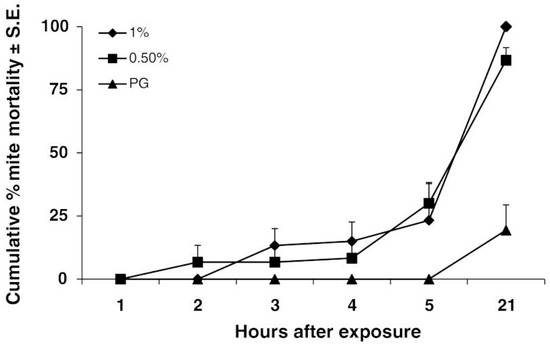
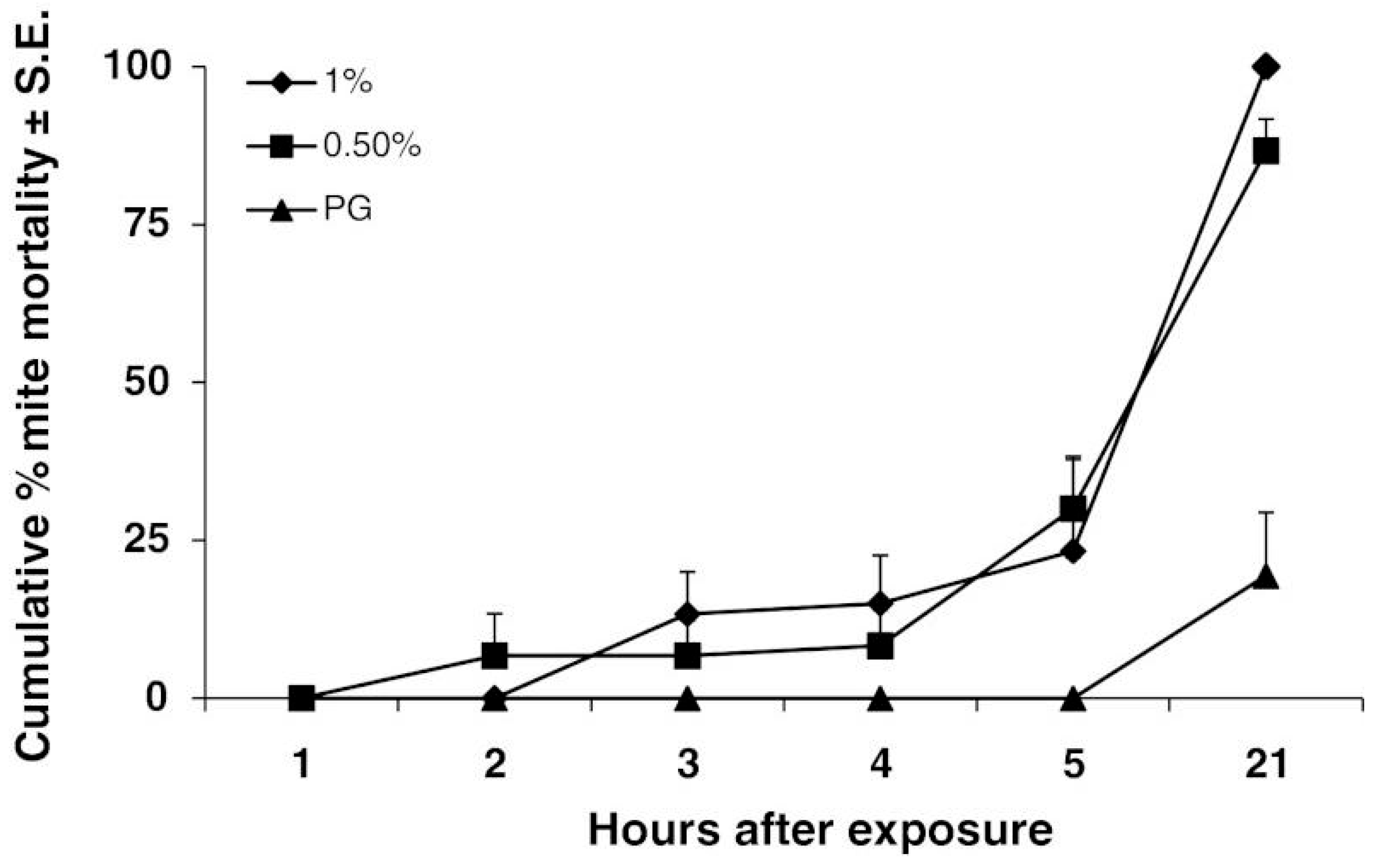
The varroa mite (Varroa destuctor Anderson and Trueman) is an ectoparasite that causes major honeybee (Apis mellifera L.) colony losses worldwide, inflicting a massive financial strain on honey farmers. There is evidence of hop β-acids having miticidal effects on the varroa mite, thus preserving honeybee health. Degrandi-Hoffman et al. (2012) [43] discovered that varroa mite mortality was 100% 21 h after 1% hop β-acid had been topically applied to the abdomen of honeybees (0.5% hop β-acid = 86.7% mortality, control/propylene glycol (PG)-only = 19%) (Figure 8). Moreover, hop β-acid was safe for the bees as there was a 0% mortality rate with honeybees and a colony’s queen who had received 1% and 0.5% hop β-acid treatment. A total of 9% hop-β-acid, however, was toxic to the honeybees.
Figure 8.
Line graph showing the total varroa mite mortality % during a 21 h period post-topical application of 0.5% and 1% hop β-acid, diluted in propylene glycol (PG), on the abdomens of honeybees (0.5 µL per honeybee). Adapted from Figure 2 in the study by Degrandi-Hoffman et al. (2012) [43].
In addition, Iglesias et al. (2021) [44] found that the ethanolic extract of the ‘Victoria’ H. lupulus variety—containing the highest concentration of phenolic compounds out of the three varieties tested (Cascade, Victoria, Spalt)—was most toxic against the V. destructor mite (24 hrs: 48% mortality, 48 hrs: 80% mortality). Finally, Rademacher et al. (2015) [45] found that as the topical dosage (μg/bee) of beta acids—from the hops plant—applied to bees (Apis mellifera) infected with V. destructor mite increased, the percentage of mortality of the Varroa destructor mite increased. However, a dosage of above 25 μg/bee did result in a bee mortality rate of 5%.
4.2. Chicken Breeding
Hop extracts have also been used in feeding material for broiler chicks, leading to increased growth performance [46]. In this study, wheat germ, hops, and grape seed extracts were made into a mixture (BX), which was fed to a certain chick group. Dietary supplementation with a 0.2% BX was shown to improve the growth performance of broilers and reduce faecal H2S and NH3 emissions, as well as faecal levels of E. coli and Salmonella, and increased levels of Lactobacillus. A similar effect was observed by Meng et al. (2023) [47] when hop extracts were used as supplements in the feed. Dietary supplementation of an herbal extract blend increased cecal Lactobacillus and Enterococcus abundance, whereas it decreased pathogenic Dysgonomonas abundance. Moreover, it was observed that cecal Dysgonomonas abundance synergistically decreased after treating drinking water with sodium dichlorocyanurate and supplementing the feed with a herbal extract blend. These findings indicate that hop extracts could replace antibiotics in chicks destined for organic meat production.
4.3. Pesticide Effects
The use of hop extract as a pesticidal agent is also well supported by several recent papers. Hop extracts, together with other herbal extracts, were found to be effective against crop-borne fungi. The herbal extracts that were tested displayed antifungal activities against the wheat- and buckwheat-borne fungi Alternaria alternata, Epicoccum nigrum, Botrytis cinerea, Fusarium oxysporum and Fusarium poae. The Chamomilla recutita and Helichrysum arenarium extracts were the most efficacious, and these inhibited the growth of most of the fungi by 80% to 100%. The hops extract inhibited the growth of most of the fungi by 65% to 80%, but was only able to inhibit the growth of F. poae by 21.46% [48]. In addition, hop extracts were able to decrease Nosema sp. spore load by 58% and increased the expression of protective genes vg and sod-1 g in infected honeybees. Nose-Go, which contained a hop extract, had a negative effect on the Lactobacillus population compared to other substances. However, Nose-Go had the potential to treat nosemosis in bees if the necessary Lactobacillus population is provided in the gut [49]. Finally, Xanthohumol, Isoxanthohumol, and their derivatives demonstrated strong anti-insect potential [50]. More particularly, Xanthohumol and isoxanthohumol, derived from hop (Humulus lupulus L., Cannabaceae) and selected chalcone and chromene derivatives, obtained by chemical synthesis, were studied for antifeedant activity against the peach-potato aphid (Myzus persicae [Sulz.]). They demonstrated increased insect antifeedant activity, and this activity was observed for a longer time. Among the compounds examined, the strongest deterrents were isoxanthohumol, 7-methoxy-2,2-dimethylchroman-4-one, 7-aminoflavone (9), and 4-ethyl-4′-methoxychalcone. These findings show that hop-derived compounds can help fight crop pathogens and improve agricultural yields.
5. Discussion and Conclusions
To summarise, the main use of hop extracts is in the brewing of beer, with its various bioactive compounds having different beneficial effects on the beer product (Table 1). However, hop extracts have great potential to be used in the future for multiple medical purposes. Hop α-acids and xanthohumol have been found to exhibit antioxidant and anti-cancer activity in various cancer cell lines; thus, with further clinical research in humans, if found to generate successful results, α-acids and xanthohumol in hop extracts could potentially replace traditional anti-cancer treatments (e.g., chemotherapy) in the future. Xanthohumol, its derivatives (e.g., dihydroxanthohumol), and β-acids have been found to display strong antimicrobial activity against Gram-positive bacteria (e.g., S. aureus) and viruses (e.g., influenzae A). Xanthohumol and β-acids from hop extracts could potentially replace antibiotics and antivirals in the future when treating nosocomial bacterial/viral infections, reducing incidences of multidrug-resistant pathogens. They could also be used as natural preservatives of food/drinks, minimising the need for artificial preservatives in the food industry. Xanthohumol and MHBAs have been found to reduce blood glucose levels and body weight. With further clinical research on humans, xanthohumol and MHBAs from hop extracts could be used to treat diabetes and metabolic syndrome (MS). Xanthohumol has been found to alleviate signs/symptoms of osteoporosis in rats/mice. Clinical research now needs to be conducted on humans to see whether xanthohumol from hops can successfully treat osteoporosis in humans like it does in animals. Xanthohumol in hops can be converted into 8-PN, a phytoestrogen, by gut microbiota/cytochrome P450 enzymes. Phytoestrogens from hops, predominantly 8-PN, have been shown to reduce signs/symptoms of menopause in both female rats and humans. With further research, 8-PN from hops could potentially replace HRT in the treatment of menopause in the future. Hop α-acids could potentially be used as a sleeping pill in the future due to their ability to activate GABAA receptors, inhibiting neuron activity. Furthermore, several food industry applications can benefit from hop extract use, such as brewing, natural meat preservation (instead of the use of nitrites) and development of antimicrobial food wrapping products made of nano chitosan and polylactic acid. Hop extracts also have great potential to be used in agriculture as natural pesticides. For example, hop β-acids have been shown to destroy the varroa mite, a parasite that kills honeybees, and they can be applied in chicken breeding or for killing crop fungal pathogens and insect parasites.
Table 1.
A summary of the beneficial actions of hop extracts and their compounds.
Overall, hop extracts seem to be valuable sources of bioactive compounds with very significant benefits for the areas of medicine, food industry, and agriculture. No adverse effects have been reported so far, showing that hops are a safe and eco-friendly source of effective natural chemicals. Of course, larger clinical studies on animals and humans are required before establishing such plant extracts in the medical field. Future research can focus on investigating the effects of hops on other important diseases (diabetes, hypertension, other cardiovascular disorders), mental health, preservation of various food-related or other products and a wider range of agricultural pests. Our review has presented and discussed key recent advancements on this topic, providing critically analysed evidence-backed information that will help promote new innovative natural applications of hops in these three fields. This work can also encourage the creation of new companies focusing on the production of new natural products and the development of new biotechnological innovations, improving the bioeconomy status and impact of certain regions or countries, as well as reducing unemployment and boosting local and national economies.
Author Contributions
Conceptualization, J.B. and G.E.; methodology, J.B. and O.A.; investigation, J.B. and O.A.; resources, J.B. and O.A.; writing—original draft preparation, J.B. and O.A.; writing—review and editing, J.B., O.A., M.K. and S.F.; visualisation, J.B.; supervision, G.E.; formal analysis, M.K. and S.F.; project administration, G.E.; funding acquisition, G.E. and M.K. All authors have read and agreed to the published version of the manuscript.
Funding
This research was funded by UKRI Research England’s THYME project (2021-22).
Institutional Review Board Statement
Not applicable.
Informed Consent Statement
Not applicable.
Data Availability Statement
No new data were created or analyzed in this study. Data sharing is not applicable to this article.
Conflicts of Interest
Authors Michail Karavolos and Sami Faour are employed by BetaTec, UK. The remaining authors declare that the research was conducted in the absence of any commercial or financial relationships that could be construed as a potential conflict of interest. All authors declare that they have no known competing financial interests or personal relationships that could have appeared to influence the work reported in this paper.
Abbreviations
| LCO2 | liquid carbon dioxide |
| HPK | human primary keratinocytes |
| UV | ultra violet |
| ROS | reactive oxygen species |
| DCF | dichlorofluorescein |
| FRAP | ferric reducing ability of plasma |
| ORAC | oxygen radical absorption capacity |
| IA | intracellular antioxidant |
| TE | trolox equivalent |
| DW | dry weight |
| NSCLC | non-small-cell lung carcinoma |
| ERK | extracellular-signal-regulated kinase |
| CREB | cyclic AMP-responsive element-binding protein |
| MIC | minimal inhibitory concentration |
| MBC | minimal bacteriocidal concentration |
| GSH | glutathione |
| MS | metabolic syndrome |
| BW | body weight |
| MHBA | mature bitter acids |
| BMD | bone mineral density |
| ID | iron dextran |
| HRT | hormone replacement therapy |
| PG | propylene glycol |
| TST | tail skin temperature |
| MRS | menopause rating scale |
| 8-PN | 8-prenylnaringenin |
| ER | oestrogen receptors |
| GABA | γ-aminobutyric acid type A |
| AB | β-amyloid |
| WTD | Western-type diet |
| NAFLD | non-alcoholic fatty liver disease |
| hE | hop-sourdough |
References
- Dostálek, P.; Karabín, M.; Jelínek, L. Hop Phytochemicals and Their Potential Role in Metabolic Syndrome Prevention and Therapy. Molecules 2017, 22, 1761. [Google Scholar] [CrossRef] [Scilit]
- Lin, M.; Xiang, D.; Chen, X.; Huo, H. Role of Characteristic Components of Humulus lupulus in Promoting Human Health. J. Agric. Food Chem. 2019, 67, 8291–8302. [Google Scholar] [CrossRef] [Scilit] [PubMed]
- Verheye, W.H. (Ed.) Hops and Hop Growing. In Soils, Plant Growth and Crop Production Volume II; EOLSS Publishers: Cardiff, UK, 2010; p. 194. ISBN 978-1-84826-368-0. [Google Scholar]
- Knez Hrnčič, M.; Španinger, E.; Košir, I.J.; Knez, Ž.; Bren, U. Hop Compounds: Extraction Techniques, Chemical Analyses, Antioxidative, Antimicrobial, and Anticarcinogenic Effects. Nutrients 2019, 11, 257. [Google Scholar] [CrossRef] [Scilit]
- Paguet, A.S.; Siah, A.; Lefèvre, G.; Sahpaz, S.; Rivière, C. Agronomic, genetic and chemical tools for hop cultivation and breeding. Phytochem. Rev. 2022, 21, 667–708. [Google Scholar] [CrossRef] [Scilit]
- Ruggeri, R.; Rossini, F.; Roberto, S.R.; Sato, A.J.; Loussert, P.; Rutto, L.K.; Agehara, S. Development of hop cultivation in new growing areas: The state of the art and the way forward. Eur. J. Agron. 2024, 161, 127335. [Google Scholar] [CrossRef] [Scilit]
- Horst, E.C. Apparatus for Picking Hops. U.S. Patents US1054119A, 1910. Available online: https://patents.google.com/patent/US1054119A (accessed on 1 February 2026).
- Green, C.P.; Osborne, P. Rapid methods for obtaining essential oil from hops. J. Inst. Brew. 1993, 99, 335–339. [Google Scholar] [CrossRef] [Scilit]
- Paniagua-García, A.I.; Ruano-Rosa, D.; Díez-Antolínez, R. Fractionation of High-Value Compounds from Hops Using an Optimised Sequential Extraction Procedure. Antioxidants 2023, 13, 45. [Google Scholar] [CrossRef] [Scilit] [PubMed]
- Weber, N.; Biehler, K.; Schwabe, K.; Haarhaus, B.; Quirin, K.W.; Frank, U.; Schempp, C.M.; Wölfle, U. Hop Extract Acts as an Antioxidant with Antimicrobial Effects against Propionibacterium Acnes and Staphylococcus Aureus. Molecules 2019, 24, 223. [Google Scholar] [CrossRef] [Scilit]
- Kolenc, Z.; Hribernik, T.L.; Langerholc, T.; Pintarič, M.; Prevolnik Povše, M.; Bren, U. Antioxidant Activity of Different Hop (Humulus lupulus L.) Genotypes. Plants 2023, 12, 3436. [Google Scholar] [CrossRef] [Scilit]
- Sławińska-Brych, A.; Zdzisińska, B.; Dmoszyńska-Graniczka, M.; Jeleniewicz, W.; Kurzepa, J.; Gagoś, M.; Stepulak, A. Xanthohumol inhibits the extracellular signal regulated kinase (ERK) signalling pathway and suppresses cell growth of lung adenocarcinoma cells. Toxicology 2016, 357, 65–73. [Google Scholar] [CrossRef] [Scilit] [PubMed]
- Logan, I.E.; Miranda, C.L.; Lowry, M.B.; Maier, C.S.; Stevens, J.F.; Gombart, A.F. Antiproliferative and Cytotoxic Activity of Xanthohumol and Its Non-Estrogenic Derivatives in Colon and Hepatocellular Carcinoma Cell Lines. Int. J. Mol. Sci. 2019, 20, 1203. [Google Scholar] [CrossRef] [Scilit]
- Bartmańska, A.; Wałecka-Zacharska, E.; Tronina, T.; Popłoński, J.; Sordon, S.; Brzezowska, E.; Bania, J.; Huszcza, E. Antimicrobial Properties of Spent Hops Extracts, Flavonoids Isolated Therefrom, and Their Derivatives. Molecules 2018, 23, 2059. [Google Scholar] [CrossRef] [Scilit]
- Rozalski, M.; Micota, B.; Sadowska, B.; Stochmal, A.; Jedrejek, D.; Wieckowska-Szakiel, M.; Rozalska, B. Antiadherent and antibiofilm activity of Humulus lupulus L. derived products: New pharmacological properties. BioMed Res. Int. 2013, 2013, 101089. [Google Scholar] [CrossRef] [Scilit]
- Bocquet, L.; Sahpaz, S.; Bonneau, N.; Beaufay, C.; Mahieux, S.; Samaillie, J.; Roumy, V.; Jacquin, J.; Bordage, S.; Hennebelle, T.; et al. Phenolic Compounds from Humulus lupulus as Natural Antimicrobial Products: New Weapons in the Fight against Methicillin Resistant Staphylococcus aureus, Leishmania mexicana and Trypanosoma brucei Strains. Molecules 2019, 24, 1024. [Google Scholar] [CrossRef] [Scilit]
- Kolenc, Z.; Langerholc, T.; Hostnik, G.; Ocvirk, M.; Štumpf, S.; Pintarič, M.; Košir, I.J.; Čerenak, A.; Garmut, A.; Bren, U. Antimicrobial Properties of Different Hop (Humulus lupulus) Genotypes. Plants 2022, 12, 120. [Google Scholar] [CrossRef] [Scilit] [PubMed]
- Khaliullina, A.; Kolesnikova, A.; Khairullina, L.; Morgatskaya, O.; Shakirova, D.; Patov, S.; Nekrasova, P.; Bogachev, M.; Kurkin, V.; Trizna, E.; et al. The Antimicrobial Potential of the Hop (Humulus lupulus L.) Extract against Staphylococcus aureus and Oral Streptococci. Pharmaceuticals 2024, 17, 162. [Google Scholar] [CrossRef] [Scilit]
- Di Sotto, A.; Checconi, P.; Celestino, I.; Locatelli, M.; Carissimi, S.; De Angelis, M.; Rossi, V.; Limongi, D.; Toniolo, C.; Martinoli, L.; et al. Antiviral and Antioxidant Activity of a Hydroalcoholic Extract from Humulus lupulus L. Oxidative Med. Cell. Longev. 2018, 2018, 5919237. [Google Scholar] [CrossRef] [Scilit]
- Percaccio, E.; De Angelis, M.; Acquaviva, A.; Nicotra, G.; Ferrante, C.; Mazzanti, G.; Di Giacomo, S.; Nencioni, L.; Di Sotto, A. ECHOPvir: A Mixture of Echinacea and Hop Extracts Endowed with Cytoprotective, Immunomodulatory and Antiviral Properties. Nutrients 2023, 15, 4380. [Google Scholar] [CrossRef] [Scilit]
- Legette, L.L.; Luna, A.Y.; Reed, R.L.; Miranda, C.L.; Bobe, G.; Proteau, R.R.; Stevens, J.F. Xanthohumol lowers body weight and fasting plasma glucose in obese male Zucker fa/fa rats. Phytochemistry 2013, 91, 236–241. [Google Scholar] [CrossRef] [Scilit] [PubMed]
- Morimoto-Kobayashi, Y.; Ohara, K.; Ashigai, H.; Kanaya, T.; Koizumi, K.; Manabe, F.; Kaneko, Y.; Taniguchi, Y.; Katayama, M.; Kowatari, Y.; et al. Matured hop extract reduces body fat in healthy overweight humans: A randomized, double-blind, placebo-controlled parallel group study. Nutr. J. 2016, 15, 25. [Google Scholar] [CrossRef] [Scilit] [PubMed]
- Sun, X.; Xia, T.; Zhang, S.; Zhang, J.; Xu, L.; Han, T.; Xin, H. Hops extract and xanthohumol ameliorate bone loss induced by iron overload via activating Akt/GSK3β/Nrf2 pathway. J. Bone Miner. Metab. 2022, 40, 375–388. [Google Scholar] [CrossRef] [Scilit]
- Lecomte, M.; Tomassi, D.; Rizzoli, R.; Tenon, M.; Berton, T.; Harney, S.; Fança-Berthon, P. Effect of a Hop Extract Standardized in 8-Prenylnaringenin on Bone Health and Gut Microbiome in Postmenopausal Women with Osteopenia: A One-Year Randomized, Double-Blind, Placebo-Controlled Trial. Nutrients 2023, 15, 2688. [Google Scholar] [CrossRef] [Scilit]
- Xia, T.; Zhang, J.; Guo, Y.; Jiang, Y.; Qiao, F.; Li, K.; Wang, N.; Han, T.; Xin, H. Humulus lupulus L. Extract Protects against Senior Osteoporosis through Inhibiting Amyloid β Deposition and Oxidative Stress in APP/PS1 Mutated Transgenic Mice and Osteoblasts. Molecules 2023, 28, 583. [Google Scholar] [CrossRef] [Scilit]
- Tronina, T.; Popłoński, J.; Bartmańska, A. Flavonoids as Phytoestrogenic Components of Hops and Beer. Molecules 2020, 25, 4201. [Google Scholar] [CrossRef] [Scilit]
- Bowe, J.; Li, X.F.; Kinsey-Jones, J.; Heyerick, A.; Brain, S.; Milligan, S.; O’Byrne, K. The hop phytoestrogen, 8-prenylnaringenin, reverses the ovariectomy-induced rise in skin temperature in an animal model of menopausal hot flushes. J. Endocrinol. 2006, 191, 399–405. [Google Scholar] [CrossRef] [Scilit] [PubMed]
- Erkkola, R.; Vervarcke, S.; Vansteelandt, S.; Rompotti, P.; De Keukeleire, D.; Heyerick, A. A randomized, double-blind, placebo-controlled, cross-over pilot study on the use of a standardized hop extract to alleviate menopausal discomforts. Phytomedicine 2010, 17, 389–396. [Google Scholar] [CrossRef] [Scilit]
- Overk, C.R.; Guo, J.; Chadwick, L.R.; Lantvit, D.D.; Minassi, A.; Appendino, G.; Chen, S.N.; Lankin, D.C.; Farnsworth, N.R.; Pauli, G.F.; et al. In vivo estrogenic comparisons of Trifolium pratense (red clover) Humulus lupulus (hops), and the pure compounds isoxanthohumol and 8-prenylnaringenin. Chem.-Biol. Interact. 2008, 176, 30–39. [Google Scholar] [CrossRef] [Scilit]
- Benkherouf, A.Y.; Eerola, K.; Soini, S.L.; Uusi-Oukari, M. Humulone Modulation of GABAA Receptors and Its Role in Hops Sleep-Promoting Activity. Front. Neurosci. 2020, 14, 594708. [Google Scholar] [CrossRef] [Scilit] [PubMed]
- Sun, J.L.; Kim, Y.J.; Cho, W.; Park, S.S.; Abd El-Aty, A.M.; Mobarak, E.H.; Jung, T.W.; Jeong, J.H. The Extract of Humulus japonicus Inhibits Lipogenesis and Promotes Lipolysis via PKA/p38 Signaling. Obes. Facts 2024, 17, 513–523. [Google Scholar] [CrossRef] [Scilit] [PubMed]
- Cho, W.; Park, S.Y.; Oh, H.; Abd El-Aty, A.M.; Hacimüftüoğlu, A.; Kim, D.S.; Jung, T.W.; Jeong, J.H. Humulus japonicus Extract Ameliorates Hepatic Steatosis Through the PPARα-Mediated Suppression of Alcohol-Induced Oxidative Stress. J. Med. Food 2023, 26, 193–200. [Google Scholar] [CrossRef] [Scilit] [PubMed]
- Mahli, A.; Koch, A.; Fresse, K.; Schiergens, T.; Thasler, W.E.; Schönberger, C.; Bergheim, I.; Bosserhoff, A.; Hellerbrand, C. Iso-alpha acids from hops (Humulus lupulus) inhibit hepatic steatosis, inflammation, and fibrosis. Lab. Investig. 2018, 98, 1614–1626. [Google Scholar] [CrossRef] [Scilit]
- Hege, M.; Jung, F.; Sellmann, C.; Jin, C.; Ziegenhardt, D.; Hellerbrand, C.; Bergheim, I. An iso-α-acid-rich extract from hops (Humulus lupulus) attenuates acute alcohol-induced liver steatosis in mice. Nutrition 2018, 45, 68–75. [Google Scholar] [CrossRef] [Scilit] [PubMed]
- Korpelainen, H.; Pietiläinen, M. Hop (Humulus lupulus L.): Traditional and Present Use, and Future Potential. Econ. Bot. 2021, 75, 302–322. [Google Scholar] [CrossRef] [Scilit]
- Gregory, E.R.; Bakhaider, R.F.; Gomez, G.F.; Huang, R.; Moser, E.A.S.; Gregory, R.L. Evaluating hop extract concentrations found in commercial beer to inhibit Streptococcus mutans biofilm formation. J. Appl. Microbiol. 2022, 133, 1333–1340. [Google Scholar] [CrossRef] [Scilit] [PubMed]
- Kramer, B.; Thielmann, J.; Hickisch, A.; Muranyi, P.; Wunderlich, J.; Hauser, C. Antimicrobial activity of hop extracts against foodborne pathogens for meat applications. J. Appl. Microbiol. 2015, 118, 648–657. [Google Scholar] [CrossRef] [Scilit]
- Nionelli, L.; Pontonio, E.; Gobbetti, M.; Rizzello, C.G. Use of hop extract as antifungal ingredient for bread making and selection of autochthonous resistant starters for sourdough fermentation. Int. J. Food Microbiol. 2018, 266, 173–182. [Google Scholar] [CrossRef] [Scilit]
- Khatib, N.; Varidi, M.J.; Mohebbi, M.; Varidi, M.; Hosseini, S.M.H. Replacement of nitrite with lupulon-xanthohumol loaded nanoliposome in cooked beef-sausage: Experimental and model based study. J. Food Sci. Technol. 2020, 57, 2629–2639. [Google Scholar] [CrossRef] [Scilit]
- Carballo, D.E.; Mateo, J.; Andrés, S.; Giráldez, F.J.; Quinto, E.J.; Khanjari, A.; Operta, S.; Caro, I. Microbial Growth and Biogenic Amine Production in a Balkan-Style Fresh Sausage during Refrigerated Storage under a CO2-Containing Anaerobic Atmosphere: Effect of the Addition of Zataria multiflora Essential Oil and Hops Extract. Antibiotics 2019, 8, 227. [Google Scholar] [CrossRef] [Scilit]
- Leonida, M.D.; Belbekhouche, S.; Benzecry, A.; Peddineni, M.; Suria, A.; Carbonnier, B. Antibacterial hop extracts encapsulated in nanochitosan matrices. Int. J. Biol. Macromol. 2018, 120, 335–1343. [Google Scholar] [CrossRef] [Scilit]
- Arruda, T.R.; Bernardes, P.C.; Moraes, A.R.F.E.; Marques, C.S.; Pinheiro, P.F.; de Oliveira, T.V.; Ferreira, S.O.; Naves, E.A.A.; Soares, N.F.F. Beyond brewing: β-acid rich hop extract in the development of a multifunctional polylactic acid-based food packaging. Int. J. Biol. Macromol. 2023, 228, 23–39. [Google Scholar] [CrossRef] [Scilit]
- Degrandi-Hoffman, G.; Ahumada, F.; Probasco, G.; Schantz, L. The effects of beta acids from hops (Humulus lupulus) on mortality of Varroa destructor (Acari: Varroidae). Exp. Appl. Acarol. 2012, 58, 407–421. [Google Scholar] [CrossRef] [Scilit]
- Iglesias, A.; Gimenez Martinez, P.; Ramirez, C.; Mitton, G.; Meroi Arcerito, F.R.; Fangio, M.F.; Churio, M.S.; Fuselli, S.; Fanovich, A.; Eguaras, M.; et al. Valorization of hop leaves for development of eco-friendly bee pesticides. Apidologie 2021, 52, 186–198. [Google Scholar] [CrossRef] [Scilit]
- Rademacher, E.; Harz, M.; Schneider, S. The development of HopGuard® as a winter treatment against Varroa destructor in colonies of Apis mellifera. Apidologie 2015, 46, 748–759. [Google Scholar] [CrossRef] [Scilit]
- Zou, Q.; Meng, W.; Li, C.; Wang, T.; Li, D. Feeding broilers with wheat germ, hops and grape seed extract mixture improves growth performance. Front. Physiol. 2023, 14, 1144997. [Google Scholar] [CrossRef] [Scilit] [PubMed]
- Meng, W.S.; Zou, Q.; Xiao, Y.; Ma, W.; Zhang, J.; Wang, T.; Li, D. Growth performance and cecal microbiota of broiler chicks as affected by drinking water disinfection and/or herbal extract blend supplementation. Poult. Sci. 2023, 102, 102707. [Google Scholar] [CrossRef] [Scilit]
- Schoss, K.; Kočevar Glavač, N.; Dolenc Koce, J.; Anžlovar, S. Supercritical CO2 Plant Extracts Show Antifungal Activities against Crop-Borne Fungi. Molecules 2022, 27, 1132. [Google Scholar] [CrossRef] [Scilit]
- Farhadi, Z.; Sadeghi, A.A.; Motamedi Sedeh, F.; Chamani, M. The effects of thymol, oxalic acid (Api-Bioxal) and hops extract (Nose-Go) on viability, the Nosema sp. spore load and the expression of vg and sod-1 genes in infected honey bees. Anim. Biotechnol. 2023, 34, 4736–4745. [Google Scholar] [CrossRef] [Scilit]
- Stompor, M.; Dancewicz, K.; Gabryś, B.; Anioł, M. Insect Antifeedant Potential of Xanthohumol, Isoxanthohumol, and Their Derivatives. J. Agric. Food Chem. 2015, 63, 6749–6756. [Google Scholar] [CrossRef] [Scilit]
- Bolton, J.L.; Dunlap, T.L.; Hajirahimkhan, A.; Mbachu, O.; Chen, S.N.; Chadwick, L.; Nikolic, D.; van Breemen, R.B.; Pauli, G.F.; Dietz, B.M. The Multiple Biological Targets of Hops and Bioactive Compounds. Chem. Res. Toxicol. 2019, 32, 222–233. [Google Scholar] [CrossRef] [Scilit] [PubMed]
- Zugravu, C.A.; Bohiltea, R.E.; Salmen, T.; Pogurschi, E.; Otelea, M.R. Antioxidants in Hops: Bioavailability, Health Effects and Perspectives for New Products. Antioxidants 2022, 11, 241. [Google Scholar] [CrossRef] [Scilit]
- Aghababaei, F.; Hadidi, M. Recent Advances in Potential Health Benefits of Quercetin. Pharmaceuticals 2023, 16, 1020. [Google Scholar] [CrossRef] [Scilit]
- Akter, M.; Parvin, M.S.; Hasan, M.M.; Rahman, M.A.A.; Islam, M.E. Anti-tumor and antioxidant activity of kaempferol-3-O-alpha-L-rhamnoside (Afzelin) isolated from Pithecellobium dulce leaves. BMC Complement. Med. Ther. 2022, 22, 169. [Google Scholar] [CrossRef] [Scilit] [PubMed]
- Yu, A.; Sun, L.; Chen, L.; Wang, D.; Li, Z.; Wang, Y.; Wang, Z.; Lin, S. The biological functions of proanthocyanidin and its application in pig production. Front. Vet. Sci. 2025, 12, 1565501. [Google Scholar] [CrossRef] [Scilit] [PubMed]
- Surendran, S.; Qassadi, F.; Surendran, G.; Lilley, D.; Heinrich, M. Myrcene-What Are the Potential Health Benefits of This Flavouring and Aroma Agent? Front. Nutr. 2021, 8, 699666. [Google Scholar]
- Mallmann, M.P.; Oliveira, M.S. Beta-caryophyllene in psychiatric and neurological diseases: Role of blood-brain barrier. Vitam. Horm. 2024, 126, 125–168. [Google Scholar]
- Dalavaye, N.; Nicholas, M.; Pillai, M.; Erridge, S.; Sodergren, M.H. The Clinical Translation of α-humulene—A Scoping Review. Planta Med. 2024, 90, 664–674. [Google Scholar] [CrossRef] [Scilit] [PubMed]

Disclaimer/Publisher’s Note: The statements, opinions and data contained in all publications are solely those of the individual author(s) and contributor(s) and not of MDPI and/or the editor(s). MDPI and/or the editor(s) disclaim responsibility for any injury to people or property resulting from any ideas, methods, instructions or products referred to in the content. |
© 2026 by the authors. Licensee MDPI, Basel, Switzerland. This article is an open access article distributed under the terms and conditions of the Creative Commons Attribution (CC BY) license.