


Highlights
Public health relevance—How does this work relate to a public health issue?
- Text-based interventions provide an accessible and low-cost digital solution to support mental health care and treatment.
- This can improve medication adherence, appointment attendance, and patient engagement, which can help address barriers to mental health service delivery.
Public health significance—Why is this work of significance to public health?
- Mental health is a major public health challenge, and text-based interventions allow a scalable solution to improve access to support and care.
Public health implications—What are the key implications or messages for practitioners, policymakers and/or researchers in public health?
- Health providers and systems can incorporate text-based interventions as a practical adjunct to routine mental health care, especially for improving adherence and appointment attendance.
- Future research should prioritize personalized, interactive, and long-term text-based interventions, as well as expand access for underserved and underrepresented populations.
Abstract
Introduction: Mobile phone text messaging (Short Message Service; SMS) interventions are digital health strategies that may support mental health care. This scoping review examined related study designs, outcomes, and gaps across the literature. Methods: Systematic searches identified 38 eligible studies from 1542 abstracts. Data were extracted and thematically analyzed to identify trends and outcomes. Texting interventions were categorized as cognitive, motivational, instrumental/practical, or combined approaches. Results: Study design included randomized controlled trials (RCTs), quasi-experimental pilots and systematic reviews, with RCTs providing the strongest evidence for improvements in adherence and relapse prevention. Outcomes included behavioral measures (e.g., medication adherence, therapy homework completion, and reduced non-attendance) alongside clinical measures (e.g., symptom reduction and relapse prevention). Cognitive reminders that were most common reduced non-attendance and improved adherence, particularly for medication and appointments, although they were less effective in severe depression. Motivational and combined interventions demonstrated higher acceptability and engagement, particularly in adolescents and high-risk individuals. Success was influenced by diagnosis, age, gender, and social status, including adherence at baseline. Conclusions: Overall, text-based interventions were generally acceptable, accessible, and cost-effective for improving mental health engagement. Limitations included lack of long-term evaluations, technological barriers, and lack of personalization. Future research should address these gaps and include underrepresented populations.
1. Introduction
1.1. Rationale
Mental disorders pose a substantial global burden of disease [1]. The World Health Organization (WHO) scientific brief reported a 27.6% increase in the global rate of major depressive disorder (MDD) and a 25.6% increase in anxiety disorders since the onset of the COVID-19 pandemic [2]. From 2019 to 2021, the incidence rate of mental disorders escalated by 16.08% [1]. Findings from the Mental Health and Access to Care Survey suggest that accessibility to mental health services remains a major challenge [3]. Healthcare systems need affordable, scalable, and feasible interventions to address this gap [4].
Digital technology and health are steadily growing fields. Delivering health-related information via various types of digital communication is a recent area of innovation and interest [5]. Digital health products and services are envisioned to improve populations’ health and quality of care, boost individuals’ engagement, change clinical outcomes, and provide more personalized patient care [6]. Despite this focus, their usefulness in improving communities’ health is still developing and under-researched [5]. Mobile health (mHealth) is a new field of eHealth, defined as medical and public health practice supported by mobile devices, such as mobile phones, patient monitoring devices, personal digital assistants (PDAs), and other wireless devices [7]. As mobile phones are the most widely used digital communication device globally [8], their application in health has been increasing [6]. Although technologies are becoming more common in healthcare settings, the unsystematic development of such solutions limits their impact on health improvement and mental health support [9]. Text-based interventions are an affordable and direct method of communication between clients and mental health professionals. The recent literature suggests that text messaging interventions may improve mental health outcomes, including treatment adherence [10]. Text messaging continues to be a convenient solution to enhance health and well-being, which may extend beyond adherence [11]. An advantage of text messaging is its widespread preference as a communication tool [12]. Additionally, this method can provide proactive mental health support and deliver direct information without demanding effort or internet access from individuals [11,12]. Text-based interventions could also expand to collect responses from clients through two-way communication, which impacts behaviour and contributes to change [13].
Studies exploring the use of text messaging for mental health, particularly to support mental health care, have investigated diverse outcomes, patient populations, and demographic characteristics [14]. There is a considerable difference in various components of those studies, such as the wide range of mental disorders explored (e.g., severe mental illness (SMI) and depression), as well as broad intervention types, frequency, and duration. Study methodology is also vastly diverse [10]. This heterogeneity of the existing literature makes it difficult to understand the role of texting support in mental health care.
1.2. Objectives
Therefore, we conducted a scoping review to better understand the overall scope of utilization of text messaging interventions for mental health. This review aims to examine the types and design characteristics of existing texting solutions used in mental health; describe the population demographics, clinical conditions, methodological and comparator characteristics of the included studies; summarize the outcomes assessed; and identify factors associated with implementation and effectiveness.
In line with the aims described above, the following research questions were addressed:
- What types of text-based interventions have been used in mental health care, and what populations and mental disorders have been studied?
- What outcomes have been reported for these interventions, including medication adherence, appointment attendance, engagement with treatment, and clinical symptoms, as well as acceptability among participants?
- What are the reported predictors of success, facilitators, and barriers that influence the implementation and effectiveness of text-based mental health interventions?
Given that our scoping review is primarily exploratory in nature, no specific hypotheses were formulated. This review was intended to map the available evidence and was guided by research questions.
2. Materials and Methods
2.1. Eligibility Criteria
Researchers included studies and databases that were either solely focused on mental health or solely focused on texting solutions in order to reflect the growing literature on the integration of mobile or digital interventions in mental health and to avoid omitting applied use cases. Studies that were not primarily centered on either area but contained a substantial component of mental health were also included. This included studies where text messaging was used as a mental health intervention, either as the sole component or as part of a multi-component intervention.
We excluded studies that were not related to mental health or not related to texting solutions. Non-English publications were excluded because of limited translation facilities. Studies primarily focused on smoking cessation or alcohol consumption were excluded because their primary focus did not align with the objectives of this review. Studies in which these topics were addressed as components of broader substance-use interventions were retained when they met the other eligibility criteria. In addition, dissertations, theses, and protocol trials were excluded due to prioritizing peer-reviewed research. During screening, “wrong study design” referred to publications that did not meet the eligible study or publication-type criteria, including dissertations, theses, and protocol trials. “Wrong intervention” referred to studies in which the intervention did not meet our definition of a texting-based mental health intervention, meaning that text messaging was not a substantial component of the intervention. “Wrong indication” referred to studies in which the indication or primary purpose of the intervention did not align with the mental health focus of the review, even when participants had a mental health condition.
2.2. Information Sources
The following pre-defined databases were searched: PsycINFO, PubMed–MEDLINE, PubMed, Cochrane–Reviews, Cochrane–Protocols, Cochrane, and CINAHL. The gray literature search was conducted through the following sources: Canadian Best Practices Portal, Canadian Institute for Health Information, Canada Psychiatry and Neurology Resource Center, Government of Canada Publications Search, Gallop portal, Dalhousie library, Statistics Canada, Substance Abuse and Mental Health Services Administration, and Canadian Alliance on Mental Illness and Mental Health. All sources were searched for documents published up to 31 July 2024. The search strategy and relevant keywords were drafted through team discussion and collaboration. The final search results were exported into Covidence [15], a web-based tool used to organize and conduct the literature review. Duplicate results were flagged and excluded automatically using this tool.
2.3. Search Strategy
The initial search questions facilitated the drafting of specific keywords for the search strategy (provided in Appendix A). The search strategy was then conducted independently by two researchers. The white literature search was conducted by one researcher (F.T.Z.), while the gray literature search was conducted by another researcher (A.J.B.F.) simultaneously. All searches were conducted in July 2024, with the only search filter applied being a publication date filter, restricting results to sources published on or before 31 July 2024. Search results were subsequently exported into Covidence for duplicate removal and screening.
2.4. Selection of Sources of Evidence
Data extraction was conducted using Covidence. The first stage was title and abstract screening, which was started in August 2024. The second stage was full-text screening, and articles were divided so that each of the two reviewers screened independently. During both review stages, documents were independently reviewed by two researchers and identified for inclusion or exclusion in this review. Following independent screening, conflicts were resolved through regular meetings in which consensus was reached, and collaborative discussions were held according to the inclusion and exclusion criteria.
2.5. Data Collection Process
In a third stage of analysis, data were extracted using a data charting form in Covidence, customized by the research team. Two reviewers independently extracted the data from five articles as a pilot test. The reviewers then compared the extracted data and discussed any discrepancies in interpretation through regular meetings. Through these discussions, the reviewers agreed on standardized definitions and extraction procedures, and the data charting form was updated accordingly. The agreed-upon procedures were then applied to the remaining studies. The two reviewers then divided and independently extracted data from the rest of the included studies. Revisions to the charting form and the rationale for changes were documented throughout the process to maintain transparency. In this scoping review, we aimed to map the nature of all included available evidence rather than assess quality, which is consistent with scoping review methodology. There was no statistical pooling or meta-analysis conducted.
2.6. Data Items
Data items that we extracted to the data charting form described above included Covidence ID No., the year of the study, first author, the title of the study, objective(s), the intervention (texting) solution, the category of the intervention (which we categorized as cognitive, motivational, instrumental/practical, or combined), primary and secondary outcome(s), the presence of comparators, possible predictors (potential predictors of outcomes proposed by the included studies), actual predictors (identified as statistically significant), and limitations. The classification of outcomes and predictors also involved the reviewer(s) interpretation because the outcomes were not consistently labeled across studies. To ensure consistency, researchers developed definitions for each data item within the charting form. The final version of the charted data and their definations are provided in Table S1.
2.7. Synthesis of Results
The research team adopted a hypothetico-deductive approach to analyze the extracted data. In this context, the approach was used to examine patterns and relationships within the extracted data and to refine the categorization and interpretation of findings rather than to test formal hypotheses or establish causal relationships. We created broad analytical categories such as intervention type and focus (cognitive, motivational, or instrumental/practical), target population characteristics, study design, intervention outcomes, predictors of success, facilitators and barriers to implementation, and recommendations for further research. These broad analytical categories were developed based on the review objectives and the data items extracted from the included studies. The intervention categories were determined based on the primary focus and purpose of the texting intervention described in each included study. Studies were categorized according to whether the intervention primarily focused on cognitive, motivational, or instrumental/practical functions. Where an intervention focused on more than one function, it was classified under multiple categories or an “Other” category was also included to add additional information.
Where needed, studies were grouped into more than one category. Two researchers wrote a descriptive document that presented the data in narrative and structured table sections, and it was then used as a key findings summary to synthesize the results and discussion sections of this scoping review. The distinction between cognitive, motivational, and instrumental/practical functions reflects established conceptual distinctions in the human sciences [16,17]. Definitions and examples of the intervention categories used in this review are provided in Table S2 of the Supplementary Materials.
The extracted information was then examined in relation to our review objectives about how text-based interventions for mental health function and what their outcomes are. This review was conducted and reported according to the PRISMA extension for Scoping Reviews (PRISMA-ScR) guidelines [18]. These values were computed using a custom Python-based (version 3.14.4) computational algorithm with Visual Studio Code (VS Code) as the integrated development environment developed specifically for this study that is available in the Supplementary Materials. Covidence was used for the screening and study selection process [15].
3. Results
3.1. Article Selection
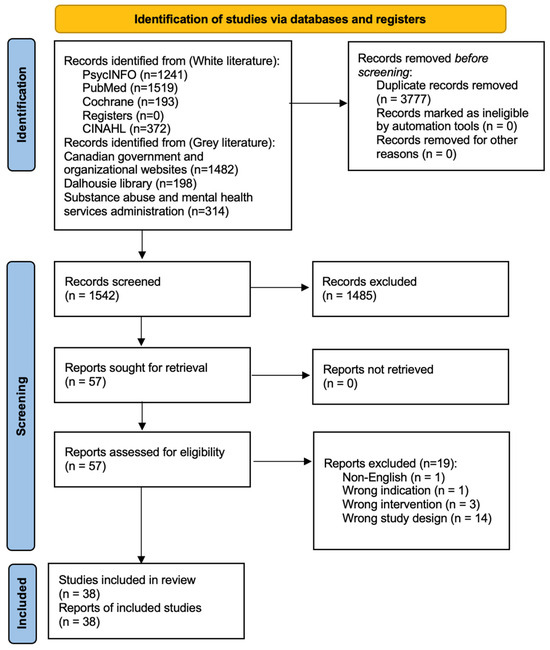
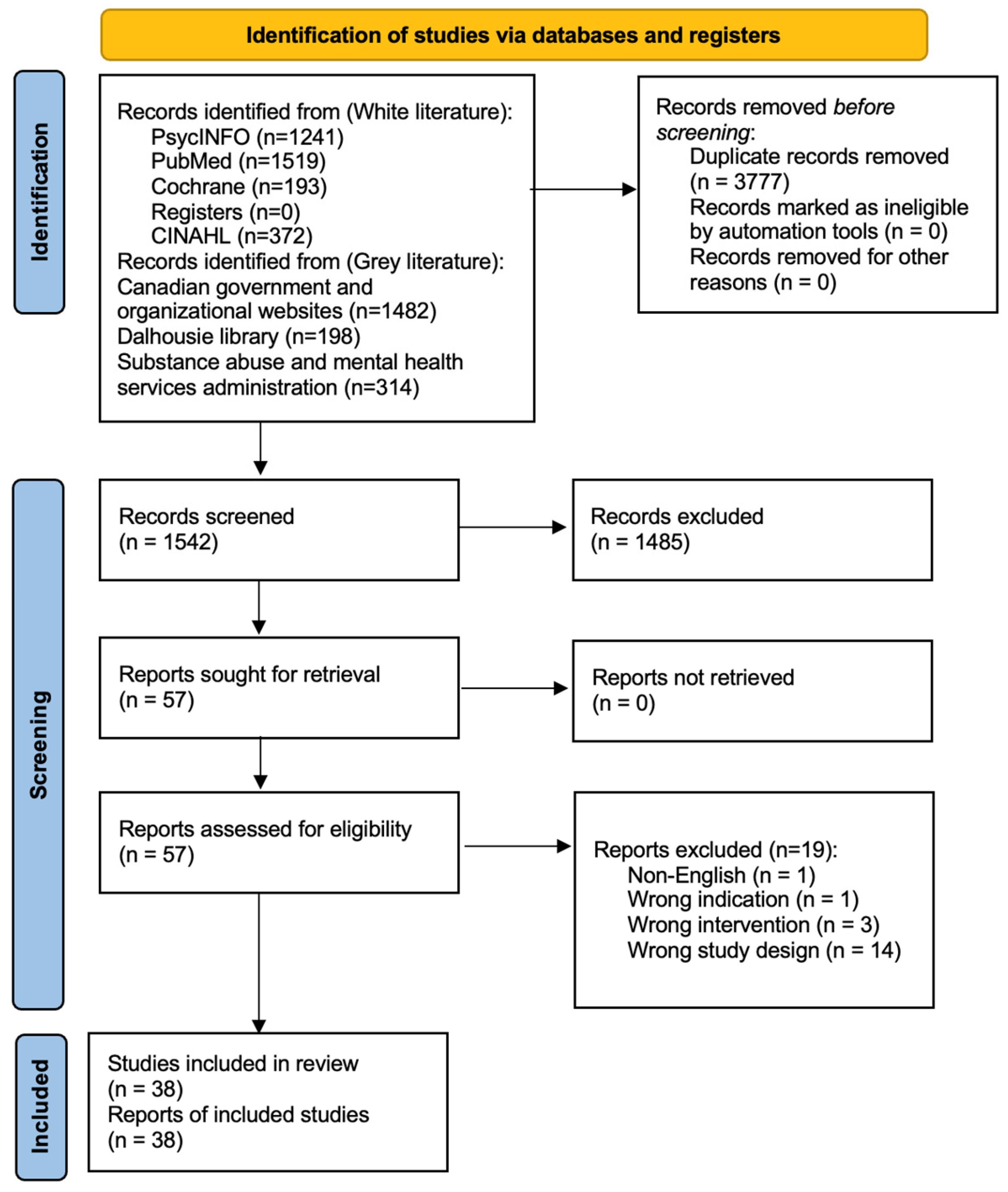
See Figure 1 for the PRISMA flowchart. The systematic search resulted in a total of 5319 records imported into Covidence. A total of 3777 duplicate articles were removed, and two reviewers screened 1542 publications. Of these, 1485 studies were excluded during title and abstract screening. Full-text review was completed for the remaining 57 studies, and 19 publications were excluded. The final number of studies that met the criteria of this review and were included in the data extraction was 38.
Figure 1.
PRISMA flowchart.
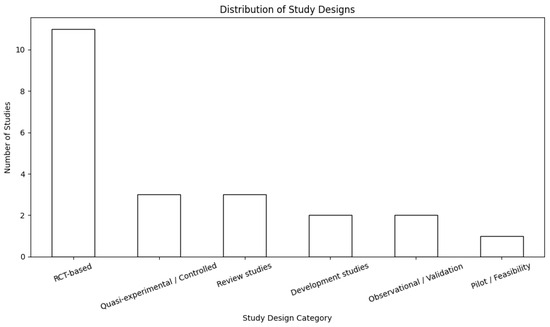
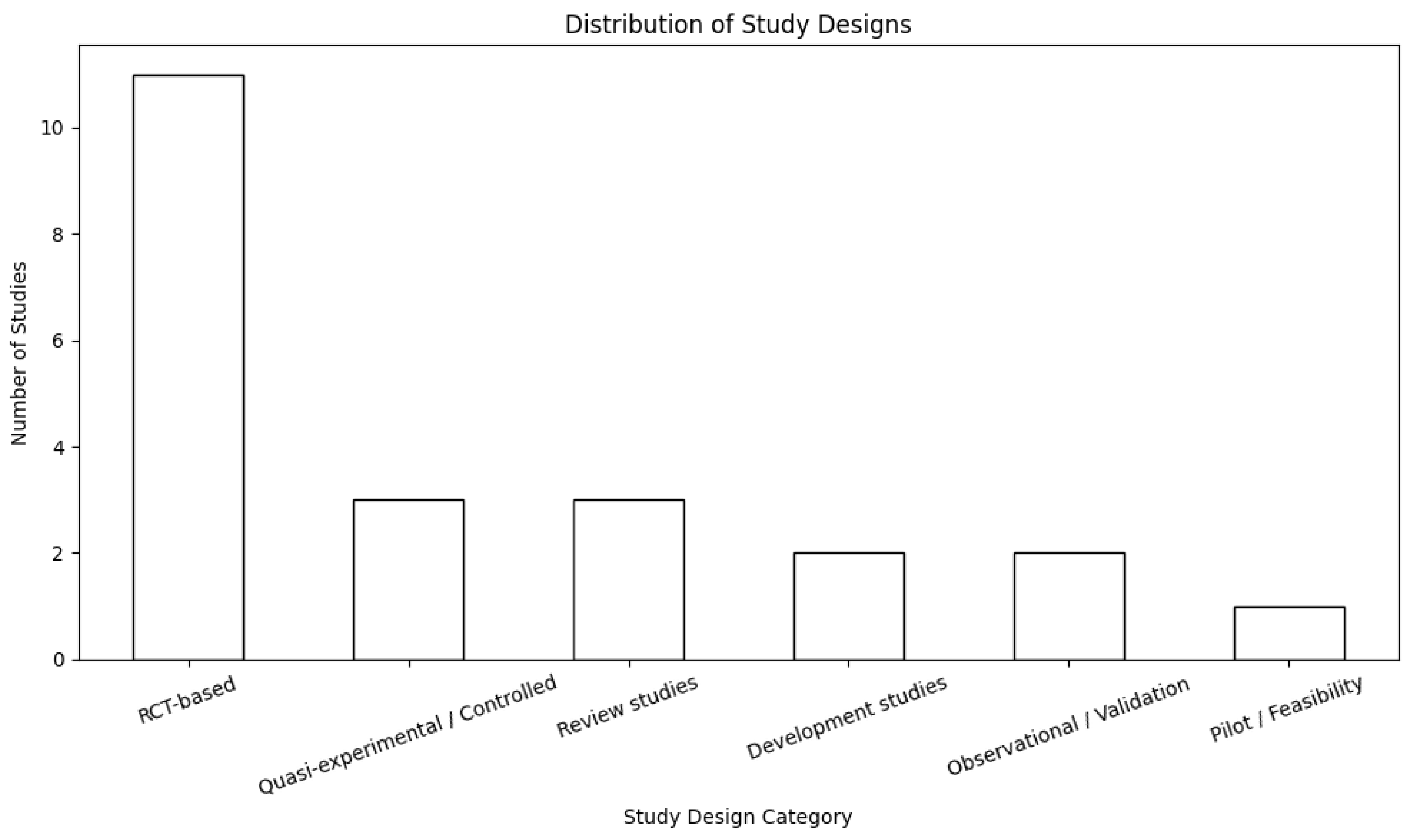
Table 1 presents the characteristics of the included studies, including study design, setting, intervention, follow-up duration, and target population. The studies varied in methodological designs, including non-empirical, experimental, and RCTs (empirical). See the graph below for different types of study designs (Figure 2). They were published between 2006 and 2024 and were conducted across various countries. Country information was reported for 31 of the 38 included studies, representing 18 countries. The United States contributed the largest number of studies (n = 9), followed by the United Kingdom (n = 3). Australia, China, and the Netherlands each contributed two studies. While many studies included active or usual-care comparators, some feasibility and acceptability studies did not include control groups.
Table 1.
Characteristics of included studies.
Figure 2.
Distribution of Study Designs.
3.2. Article Descriptors
Studies were divided into four categories: Cognitive, Motivational, Instrumental/Practical, Combined approaches, and Other (Table 2). Most studies employed a combined approach. Primary outcomes in the combined approaches (Cognitive, Motivational, and Instrumental/Practical; n = 11) were most frequently medication adherence, adherence to assignments, acceptability and feasibility, and effectiveness. They were usually seen to be implemented in adolescents, patients with serious mental illness, and patients starting new psychiatric treatments. A subset of combined approaches (Cognitive, Instrumental/Practical; n = 7) additionally looked at topics including reducing non-attendance and engagement, with other studies (Cognitive, Motivational, and Other; n = 5) specifically focusing on reminder-based cognitive strategies with motivational support messages.
Table 2.
Categorical results.
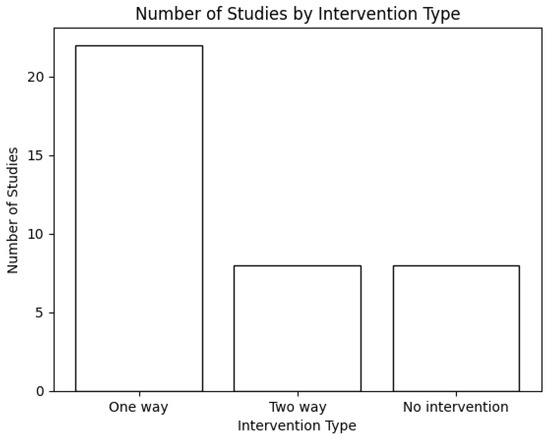
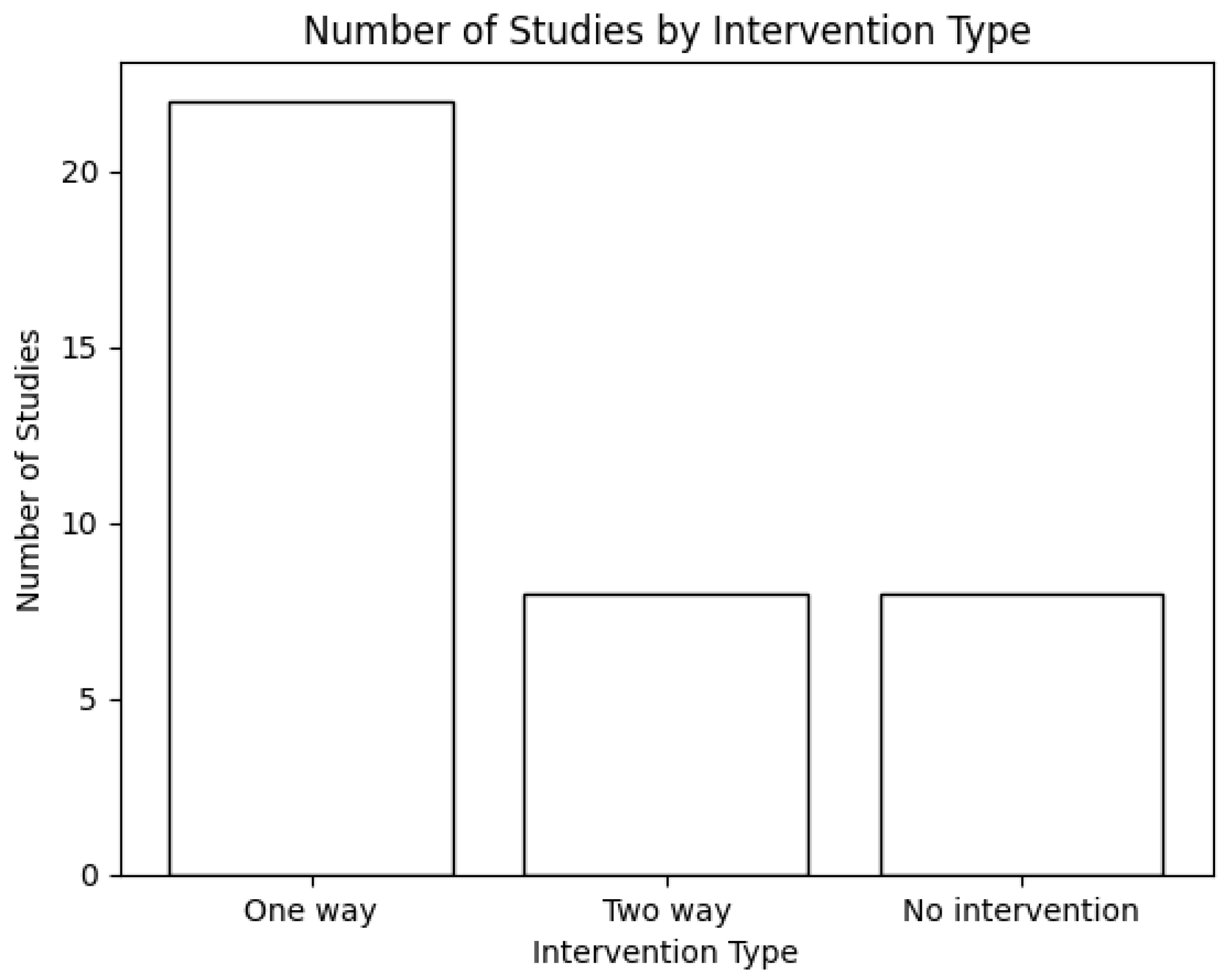
In addition, the directionality of text messaging varied across the included studies. Of the 38 included studies, 22 (57.9%) used one-way messaging, 8 (21.1%) used two-way messaging, and 8 (21.1%) did not involve an intervention because they were reviews or other non-interventional studies (Figure 3). Thus, one-way messaging was the most frequently reported intervention format. Messaging frequency varied across the included studies, ranging from daily and weekly messages to messages delivered in relation to scheduled appointments or other intervention-specific schedules. Although multiple text-based modalities were represented, SMS was the most used modality among the included studies.
Figure 3.
Number of studies by intervention type.
Study populations varied in age, gender, diagnosis, clinical conditions, and sociocultural backgrounds. Across the studies reviewed, several studies targeted youth populations specifically. For example, the scoping review by MacDougall et al. explored interventions for adolescent mental health, specifically exploring age, gender, and baseline symptom severity as factors [46]. Similarly, Montes et al. involved youth with schizophrenia in treatment adherence programs [23]. Others focused on adults and some on older populations, including veterans [51]. Gender distribution was variably reported; some studies included mixed-gender populations. One study targeted gender-diverse individuals.
Clinical characteristics included individuals diagnosed with depression, anxiety, bipolar disorder, schizophrenia, ADHD, and substance use disorders. Some studies included participants experiencing comorbid conditions. Several studies focused on adults with schizophrenia-spectrum disorders and examined the effect of SMS reminders on adherence to antipsychotic medications; e.g., Chen et al. examined text message reminders for long-acting injectable antipsychotics [50]. Pijnenborg et al. evaluated SMS support for individuals with schizophrenia and cognitive impairments. Baseline cognitive functioning was assessed as a predictor of intervention efficacy [18]. Välimäki et al. studied patients discharged from psychiatric care, implementing aftercare SMS interventions [29].
This diversity in target populations illustrated both the adaptability and breadth of SMS-based mental health interventions. Overall, age, clinical diagnosis, gender, and social status were commonly reported characteristics used to shape and evaluate text message-based mental health interventions.
3.3. Outcomes
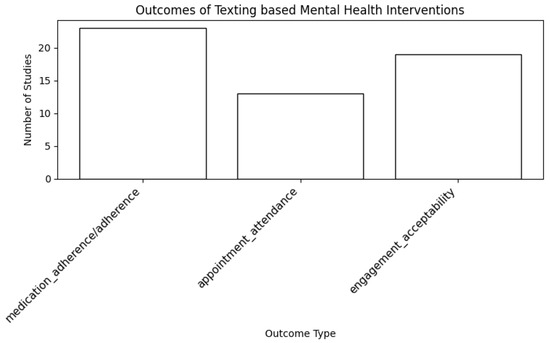
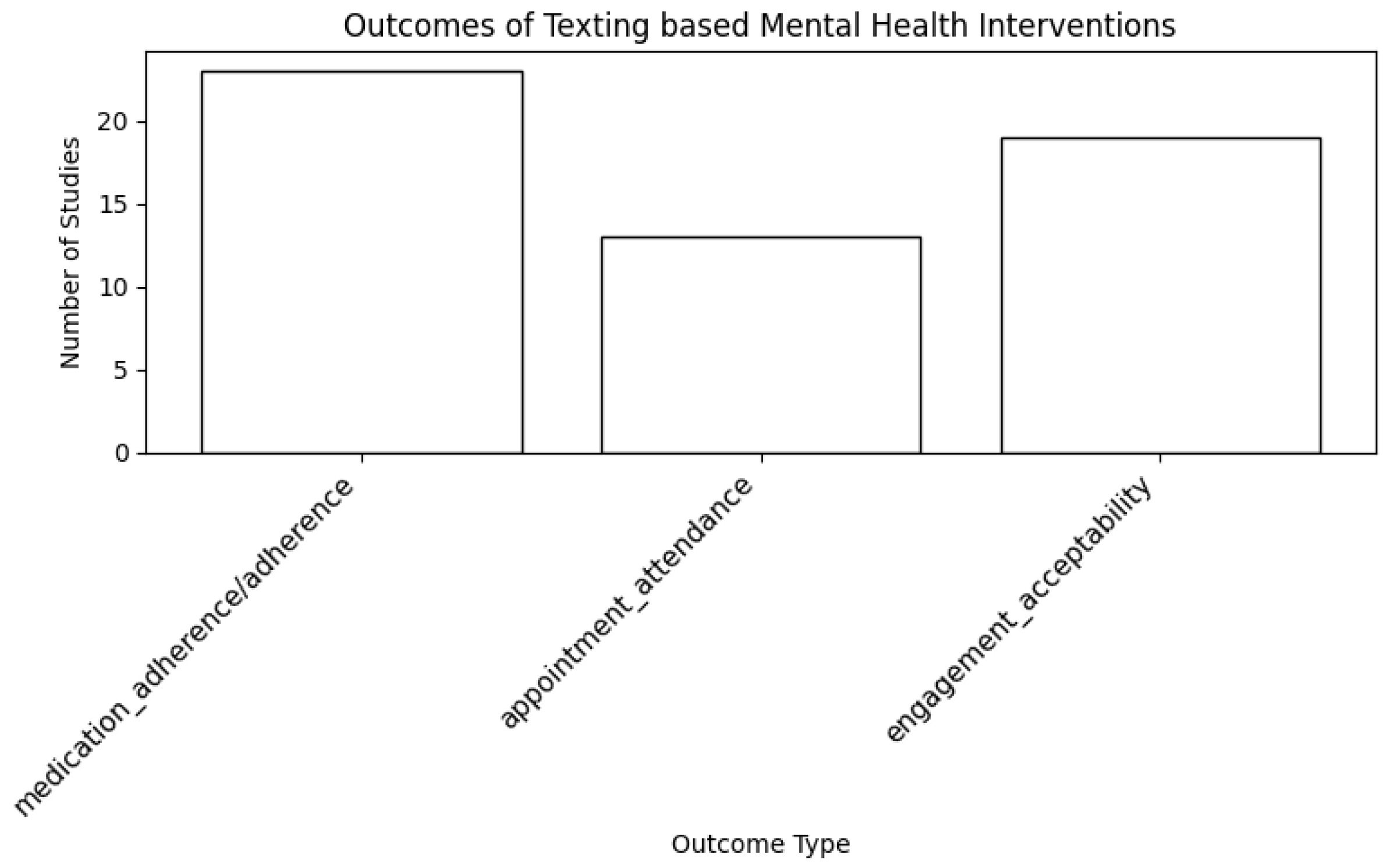
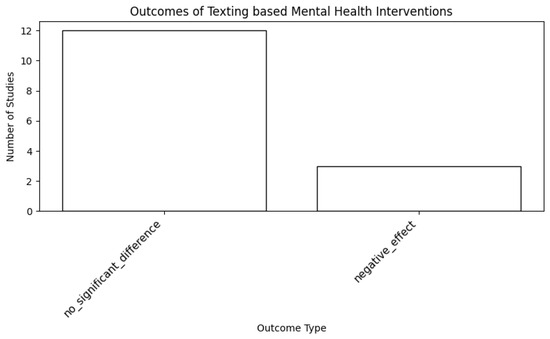
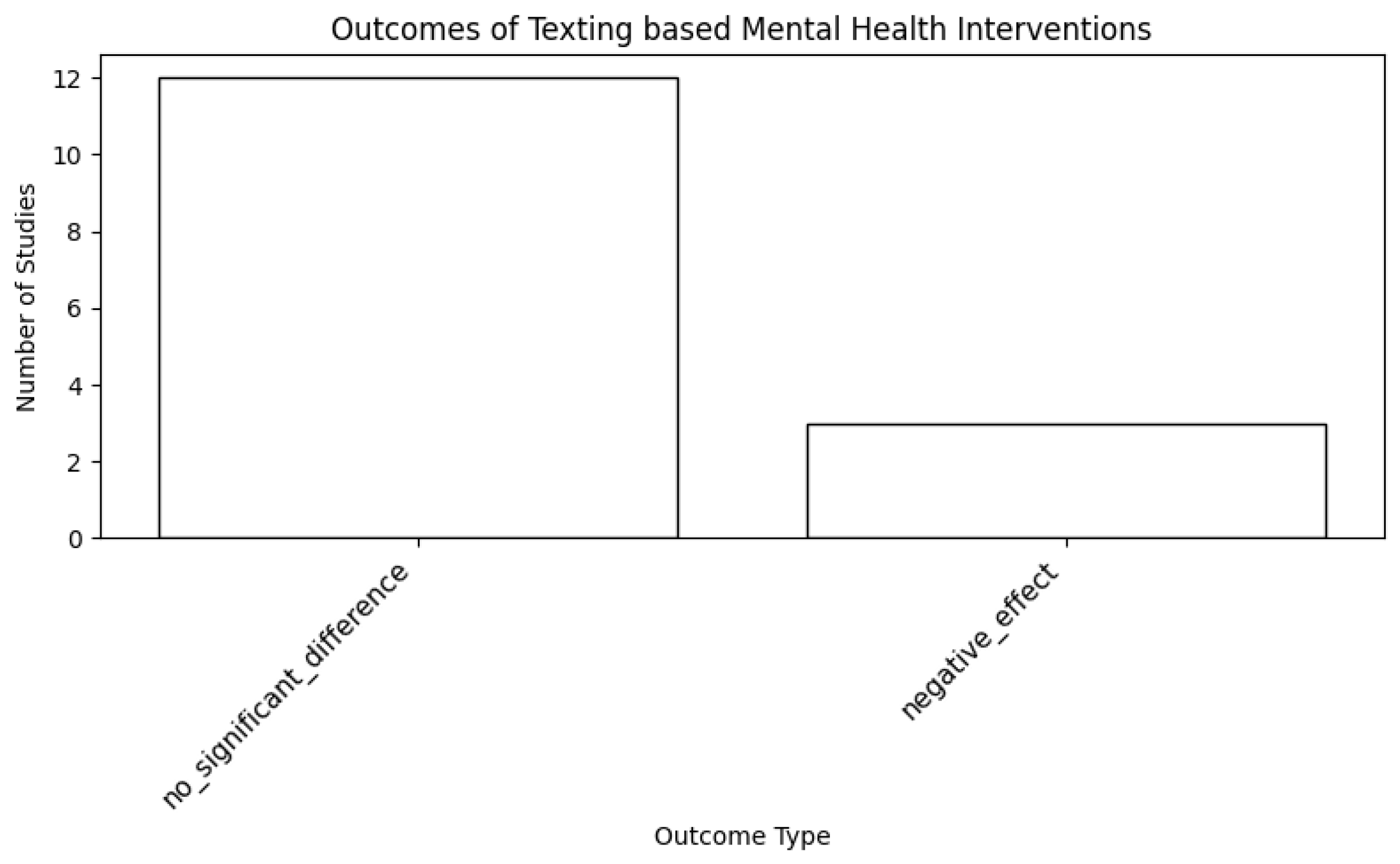
Overall, 60.5% of studies reported results related to adherence/medication adherence (n = 23), 34.2% reported attendance at appointments (n = 13), and 50% reported engagement acceptability (n = 19). A total of 31.6% of the studies reported no significant difference (n = 12), with 7.89% reporting negative effects of SMS interventions (n = 3) shown in Figure 4 and Figure 5. Unfavorable results that reported negative outcomes of SMS interventions represented only a small proportion of the data, while the majority of the findings were positive (Figure 5).
Figure 4.
Outcomes of texting-based mental health interventions.
Figure 5.
Outcomes of texting-based mental health interventions.
3.4. Predictors
Predictors that influenced the effectiveness and success of texting-based mental health interventions, such as reminders, varied across studies and were often tied to demographic, behavioral, or intervention-specific factors. Age, race-ethnicity, and occupation significantly influenced appointment attendance. Being female was negatively associated with responsiveness to the intervention in one study, but this was not consistent across all studies. Participant openness to reminders was a predictor of adherence. Clinical predictors included lower baseline severity of illness and absence of comorbidities, which sometimes correlated with better outcomes. Significant predictors of appointment attendance included the patient’s diagnosis; meanwhile, a larger number of hospitalizations and the presence of at least one previous hospitalization are negative predictors associated with lower improvement in appointment attendance.
4. Discussion
4.1. Intervention Outcomes
4.1.1. Attendance
Texting-based interventions demonstrated a generally positive impact on appointment attendance across different mental health settings, with multiple studies reporting reductions in non-attendance and improved attendance rates following the introduction of reminder systems [24,25,32,35,45]. However, findings were not entirely consistent, as some studies found no significant benefits of SMS as reminders [26]. Although short-term improvements were observed, long-term sustainability was not observed, with attendance rates declining over extended follow-up periods [32]. Moreover, complex-messaging interventions did not result in improved attendance outcomes, although they were associated with improvements in treatment-related attitudes [53]. These mixed findings suggest that reminders may effectively address practical barriers such as forgetfulness, but their long-term impact depends on intervention design, population characteristics, and attitudes.
4.1.2. Clinical Outcomes
Findings related to clinical outcomes were mixed. Several studies reported improvements in medication adherence and, in some cases, symptom severity or quality of life [23,32,38,45], while others reported no significant difference between SMS and control conditions [28,29,47]. The literature reviews generally report improved adherence with text messaging interventions [30,48], although effects on broader psychiatric outcomes such as depression severity, hospital utilization, and sustained medication outcomes appear less consistent [28,29,47,48]. Additionally, interventions that implemented an additional therapeutic component tended to demonstrate stronger effects than reminder-only approaches [22,50,51], suggesting that SMS may function best as a supportive tool rather than a standalone treatment. Overall, the variability in findings highlights the importance of intervention design and population characteristics in determining effectiveness.
4.1.3. Acceptability and Feasibility
Overall, texting-based interventions demonstrated high levels of acceptability and feasibility across diverse populations. In this review, acceptability refers to participants’ perceptions of texting-based interventions, including whether the messages were perceived positively. Participants generally reported that the text messages were easy to understand, adaptable to treatment contexts, and helpful in supporting engagement [25,43,49]. Similarly, digital tools such as a WhatsApp-based chatbot system utilizing text and audio messaging were also viewed as generally positive, especially among adolescents [52]. Our findings suggest a growing evidence base regarding text message interventions for adolescent mental health care as well as addiction services [44]. Although one study reported a moderate acceptability within the bulimia nervosa population, the broader pattern suggests that texting-based interventions are generally well tolerated and considered a feasible adjunct to care [21].
4.1.4. Categorical Outcomes
The included studies were classified into cognitive, motivational, instrumental/practical, and combined intervention categories based on their primary design. Cognitive-only approaches consisted of medication reminders to reduce non-attendance and improve medication adherence. These studies generally reported improved attendance and medication adherence [30,50], although effects were inconsistent across different settings, with some trials reporting no significant benefit [26,48]. Motivational-focused interventions were less common than others and focused mainly on incorporating supportive messaging or feedback systems, particularly in aftercare contexts [19]. These approaches seemed to demonstrate acceptable feasibility although clinical effects varied. No studies employed an exclusively instrumental/practical strategy; rather, such components were integrated within other multi-component interventions. Combined approaches, particularly incorporating cognitive and motivational elements, were the most prevalent. These aimed to target multiple barriers simultaneously and reported improved adherence and engagement outcomes [14,22,41].
4.2. Limitations (Of the Studies Reviewed and of Our Study of Them)
Technological barriers included loss of interest expressed by patients, causing delayed responses or irregular timing of the text messages [19,48]. Negative effects on platforms were noticed due to changes in policies [52], with messages sent without counterchecking and some queries not being answered due to the nature of the program as one-way reminders [45]. Some patients with schizophrenia found it difficult to navigate the platform [22], and another study reported that they could not check if patients received the reminders [43]. Feasibility and integration in clinical settings concerns include limited access to cell phones for each clinician to send reminders; confidentiality concerns require careful measures in messaging apps and treatment reminders, as well as protection of patient privacy [25]. This also includes barriers in implementing the intervention during COVID-19, such as a shorter intervention period and difficulty in patient transportation [50], as well as limited grounding in theoretical frameworks during intervention development [46].
Study design limitations include the nature of studies such as pilot studies [22] and studies that focus on a specific group such as adults with self-reported ADHD, clinically stable patients, or outpatients only [30,36,48]. Other studies employ only non-randomized allocation of participants [20,25,28], with some having sample sizes too small for statistical power [28,43,49]. Exclusion criteria may bias toward adherent participants, such as clinically stable, high-baseline adherence [30], and the absence of two-way interactivity, with content not tailored to the individual [27,34]. Additionally, the included studies did not directly compare texting-based interventions with other reminder approaches, limiting conclusions regarding the relative effectiveness of texting-based interventions compared with alternative modalities. Finally, patient preferences and perception limitations include familiarity with technology beforehand [21], risk of inconvenience if messages arrive at inopportune times [13], and some participants requiring more intensive support [22]. Moreover, prompts may have short-term effects, with possible negative impacts and messages that are not individualized [34]. The absence of patient-initiated messaging, tailored content, and interactivity was seen in some studies, which serve as better strategies in prior research. Addressing these barriers is critical for broader and more sustainable implementation of text message mental health interventions. Our study has various limitations. Non-English trials were excluded because of limited translation facilities that may have resulted in underrepresentation of certain geographic regions. Although the included studies represented multiple regions, including North America, Europe, Asia, Africa, South America, and Oceania, the selected databases and the gray literature sources may also have resulted in under coverage of studies from some regions.
Dissertations and protocol trials were also excluded to prioritize peer-reviewed research. In addition, studies on smoking cessation and alcohol consumption were excluded because they did not align with the aim of this review. Since our review is a scoping review, the heterogeneity across the studies in terms of study designs, populations, and interventions limits direct comparison of the findings. Another limitation is that most studies did not include long-term effects except one, which limits the ability to analyze the sustained impact of text messaging over time.
4.3. Strengths
A key strength in this scoping review is its broad examination of texting-based interventions across various mental health care contexts, allowing for the identification of common intervention characteristics, outcomes, and gaps in the existing literature. In contrast to reviews focused on specific outcomes or populations, this review maps multiple outcomes, including medication adherence, appointment attendance, treatment engagement, acceptability, and clinical outcomes, while also examining predictors of intervention success. The categorization of interventions according to their primary functions (cognitive, motivational, instrumental/practical, other, and combined approaches) provides additional insight into how different intervention designs have been applied in mental health care. By synthesizing available evidence across diverse populations and intervention approaches, this review provides an overview of how texting has been used to support mental health care and highlights areas requiring further investigation. These findings may help inform the development and evaluation of future texting interventions and guide research towards understudied populations, outcomes, and intervention designs.
4.4. Recommendations for Further Research
Future studies on texting-based mental health interventions are needed. They should prioritize personalization and tailoring message content and other specifics to individual needs, which may improve acceptability and clinical outcomes. Additionally, the majority of the current texting solutions are one-way messages; further work is needed to explore two-way communication and interactive interventions to determine if they enhance engagement and adherence. With the rapidly growing digital health field, studies that design newer platforms, such as AI chat systems and messaging apps that protect individuals’ privacy, will help clarify the evolving role of texting-based interventions in mental health settings. Another essential aspect is long-term sustainability. The persistence of effects beyond the current studies’ period remains unclear. Future trials should include extended follow-up and examine strategies for maintaining the benefits. Methodologically, there is a need for more RCTs with comparators.
Finally, further research should expand to diverse and underrepresented populations, including older adults, low-resource settings, and rural communities. We also recommend evaluating how texting-based interventions could be embedded into real-world clinical systems.
5. Conclusions
Overall, texting-based interventions were rated as an acceptable, accessible, and cost-effective method that improves adherence and engagement in mental health care across various studies improving mental health engagement. Combined approaches involving cognitive, motivational, and other elements were the most prevalent and were seen to improve adherence and engagement. Limitations included study design constraints, lack of long-term evaluations, technological barriers, and lack of personalization. Future research should address these gaps, such as the lack of long-term evaluations, clinical workflow integration, and the inclusion of underrepresented populations.
Supplementary Materials
The following supporting information can be downloaded at: https://www.mdpi.com/article/10.3390/ijerph23091190/s1, File S1: Study_type; File S2: Intervention_Categories [10,14,19,20,21,22,23,24,25,26,27,28,29,30,31,32,33,34,35,36,37,38,39,40,41,42,43,44,45,46,47,48,49,50,51,52,53]; File S3: PRISMA-ScR-Fillable-Checklist_11Sept2019; Code S1: Python_code.rtf, Table S1: Definitions for data items; Table S2: Explanation of categories.
Author Contributions
Conceptualization, F.T.Z., A.J.B.F., D.N., and A.R.; methodology, F.T.Z., A.J.B.F., D.N., and A.R.; validation, F.T.Z. and A.J.B.F.; formal analysis, F.T.Z. and A.J.B.F.; investigation, F.T.Z., A.J.B.F., D.N., and A.R.; data curation, F.T.Z. and A.J.B.F.; writing—original draft preparation, F.T.Z., A.J.B.F., D.N., and A.R.; writing—review and editing, F.T.Z., A.J.B.F., D.N., and A.R. All authors have read and agreed to the published version of the manuscript.
Funding
This research received no external funding.
Institutional Review Board Statement
Not applicable.
Informed Consent Statement
Not applicable.
Data Availability Statement
The original contributions presented in this study are included in the article and the Supplementary Materials. Further inquiries can be directed to the corresponding author.
Conflicts of Interest
The authors declare no conflicts of interest.
Appendix A. Search Keywords
Texting solution in mental health
Global
OR Canada, Canadian, international
AND
Texting Solution
OR Apps, Applications, interventions, Messaging APIs
AND
Mental Health
References
- Fan, Y.; Fan, A.; Yang, Z.; Fan, D. Global Burden of Mental Disorders in 204 Countries and Territories, 1990–2021: Results from the Global Burden of Disease Study. BMC Psychiatry 2025, 25, 486. [Google Scholar] [CrossRef] [Scilit]
- Mental Health and COVID-19: Early Evidence of the Pandemic’s Impact: Scientific Brief, 2 March 2022. Available online: https://www.who.int/publications/i/item/WHO-2019-nCoV-Sci_Brief-Mental_health-2022.1 (accessed on 9 August 2026).
- Stephenson, E. Mental Disorders and Access to Mental Health Care; Statistics Canada: Ottawa, ON, Canada, 2023. Available online: https://www.suicideinfo.ca/wp-content/uploads/2023/09/Mental-disorders-and-access-to-mental-health-care.pdf (accessed on 9 August 2026).
- Faria, M.; Zin, S.T.P.; Chestnov, R.; Novak, A.M.; Lev-Ari, S.; Snyder, M. Mental Health for All: The Case for Investing in Digital Mental Health to Improve Global Outcomes, Access, and Innovation in Low-Resource Settings. J. Clin. Med. 2023, 12, 6735. [Google Scholar] [CrossRef] [Scilit]
- Digital Health. Available online: https://www.who.int/health-topics/digital-health (accessed on 4 January 2026).
- Bhavnani, S.P.; Narula, J.; Sengupta, P.P. Mobile Technology and the Digitization of Healthcare. Eur. Heart J. 2016, 37, 1428–1438. [Google Scholar] [CrossRef] [Scilit]
- WHO|Regional Office for Africa. mHealth: New Horizons for Health through Mobile Technologie. Available online: https://www.afro.who.int/publications/mhealth-new-horizons-health-through-mobile-technologie (accessed on 20 August 2026).
- International Telecommunication Union Facts and Figures 2023—Mobile Phone Ownership. Available online: https://www.itu.int/itu-d/reports/statistics/2023/10/10/ff23-mobile-phone-ownership (accessed on 4 August 2026).
- Ryan, R.; Hill, S. Qualitative Evidence Synthesis Informing Our Understanding of People’s Perceptions and Experiences of Targeted Digital Communication. Cochrane Database Syst. Rev. 2019, 10, ED000141. [Google Scholar] [CrossRef] [Scilit]
- Watson, T.; Simpson, S.; Hughes, C. Text Messaging Interventions for Individuals with Mental Health Disorders Including Substance Use: A Systematic Review. Psychiatry Res. 2016, 243, 255–262. [Google Scholar] [CrossRef] [Scilit]
- Berrouiguet, S.; Baca-García, E.; Brandt, S.; Walter, M.; Courtet, P. Fundamentals for Future Mobile-Health (mHealth): A Systematic Review of Mobile Phone and Web-Based Text Messaging in Mental Health. J. Med. Internet Res. 2016, 18, e135. [Google Scholar] [CrossRef] [Scilit]
- Suffoletto, B. Deceptively Simple yet Profoundly Impactful: Text Messaging Interventions to Support Health. J. Med. Internet Res. 2024, 26, e58726. [Google Scholar] [CrossRef] [Scilit]
- Hull, T.D.; Malgaroli, M.; Connolly, P.S.; Feuerstein, S.; Simon, N.M. Two-Way Messaging Therapy for Depression and Anxiety: Longitudinal Response Trajectories. BMC Psychiatry 2020, 20, 297. [Google Scholar] [CrossRef] [Scilit]
- Simon, E.; Edwards, A.M.; Sajatovic, M.; Jain, N.; Montoya, J.L.; Levin, J.B. Systematic Literature Review of Text Messaging Interventions to Promote Medication Adherence Among People with Serious Mental Illness. Psychiatr. Serv. 2022, 73, 1153–1164. [Google Scholar] [CrossRef] [Scilit]
- Veritas Health Innovation. Covidence Systematic Review Software. Melbourne, Australia. Available online: https://www.covidence.org (accessed on 4 September 2026).
- Busch-Jensen, N. Cognition and Motivation—Bringing Them Together. In Human Assessment: Cognition and Motivation; Newstead, S.E., Irvine, S.H., Dann, P.L., Eds.; Springer: Dordrecht, The Netherlands, 1986; pp. 405–406. [Google Scholar]
- Böhm, G.; Pfister, H.-R. Instrumental or Emotional Evaluations: What Determines Preferences? Acta Psychol. 1996, 93, 135–148. [Google Scholar] [CrossRef] [Scilit]
- Tricco, A.C.; Lillie, E.; Zarin, W.; O’Brien, K.K.; Colquhoun, H.; Levac, D.; Moher, D.; Peters, M.D.; Horsley, T.; Weeks, L.; et al. PRISMA extension for scoping reviews (PRISMA-ScR): Checklist and explanation. Ann. Intern. Med. 2018, 169, 467–473. [Google Scholar] [CrossRef] [Scilit]
- Robinson, S.; Perkins, S.; Bauer, S.; Hammond, N.; Treasure, J.; Schmidt, U. Aftercare Intervention through Text Messaging in the Treatment of Bulimia Nervosa—Feasibility Pilot. Int. J. Eat. Disord. 2006, 39, 633–638. [Google Scholar] [CrossRef] [Scilit]
- Pijnenborg, G.H.M.; Withaar, F.K.; Brouwer, W.H.; Timmerman, M.E.; van den Bosch, R.J.; Evans, J.J. The Efficacy of SMS Text Messages to Compensate for the Effects of Cognitive Impairments in Schizophrenia. Br. J. Clin. Psychol. 2010, 49, 259–274. [Google Scholar] [CrossRef] [Scilit]
- Agyapong, V.I.O.; Farren, C.K.; McLoughlin, D.M. Mobile Phone Text Message Interventions in Psychiatry—What Are the Possibilities? Curr. Psychiatry Rev. 2011, 7, 50–56. [Google Scholar] [CrossRef] [Scilit]
- Granholm, E.; Ben-Zeev, D.; Link, P.C.; Bradshaw, K.R.; Holden, J.L. Mobile Assessment and Treatment for Schizophrenia (MATS): A Pilot Trial of an Interactive Text-Messaging Intervention for Medication Adherence, Socialization, and Auditory Hallucinations. Schizophr. Bull. 2012, 38, 414–425. [Google Scholar] [CrossRef] [Scilit]
- Montes, J.M.; Medina, E.; Gomez-Beneyto, M.; Maurino, J. A Short Message Service (SMS)-Based Strategy for Enhancing Adherence to Antipsychotic Medication in Schizophrenia. Psychiatry Res. 2012, 200, 89–95. [Google Scholar] [CrossRef] [Scilit]
- Sims, H.; Sanghara, H.; Hayes, D.; Wandiembe, S.; Finch, M.; Jakobsen, H.; Tsakanikos, E.; Okocha, C.I.; Kravariti, E. Text Message Reminders of Appointment: A Pilot Intervention at Four Community Mental Health Clinics in London. Psychiatr. Serv. 2012, 63, 161–168. [Google Scholar] [CrossRef] [Scilit]
- Branson, C.E.; Clemmey, P.; Mukherjee, P. Text Message Reminders to Improve Outpatient Therapy Attendance among Adolescents: A Pilot Study. Psychol. Serv. 2013, 10, 298–303. [Google Scholar] [CrossRef] [Scilit]
- Clough, B.A.; Casey, L.M. Using SMS Reminders in Psychology Clinics: A Cautionary Tale. Behav. Cogn. Psychother. 2014, 42, 257–268. [Google Scholar] [CrossRef] [Scilit]
- Bjørnholt, K.; Christiansen, E.; Atterman Stokholm, K.; Hvolby, A. The Effect of Daily Small Text Message Reminders for Medicine Compliance amongst Young People Connected with the Outpatient Department for Child and Adolescent Psychiatry A Controlled and Randomized Investigation. Nord. J. Psychiatry 2016, 70, 285–289. [Google Scholar] [CrossRef] [Scilit]
- Mohammadi, A.; Zolfaghari, M.; Nikfarjam, M.; Parvin, N.; Fard, N.S. The Effect of Supportive Text Message on the Adherence to Medication in Depression: An Experimental Study. Nurs. Pract. Today 2016, 3, 91–98. [Google Scholar]
- Välimäki, M.; Kannisto, K.A.; Vahlberg, T.; Hätönen, H.; Adams, C.E. Short Text Messages to Encourage Adherence to Medication and Follow-up for People with Psychosis (mobileNet): Randomized Controlled Trial in Finland. J. Med. Internet Res. 2017, 19, 76–91. [Google Scholar] [CrossRef] [Scilit]
- Bright, C.E. Integrative Review of Mobile Phone Contacts and Medication Adherence in Severe Mental Illness. J. Am. Psychiatr. Nurses Assoc. 2018, 24, 209–222. [Google Scholar] [CrossRef] [Scilit]
- Menon, V.; Selvakumar, N.; Kattimani, S.; Andrade, C. Therapeutic Effects of Mobile-Based Text Message Reminders for Medication Adherence in Bipolar I Disorder: Are They Maintained after Intervention Cessation? J. Psychiatr. Res. 2018, 104, 163–168. [Google Scholar] [CrossRef] [Scilit]
- Moran, L.; O’Loughlin, K.; Kelly, B.D. The Effect of SMS (Text Message) Reminders on Attendance at a Community Adult Mental Health Service Clinic: Do SMS Reminders Really Increase Attendance? Ir. J. Med. Sci. 2018, 187, 561–564. [Google Scholar] [CrossRef] [Scilit]
- Adewuya, A.O.; Momodu, O.; Olibamoyo, O.; Adegbaju, A.; Adesoji, O.; Adegbokun, A. The Effectiveness and Acceptability of Mobile Telephone Adherence Support for Management of Depression in the Mental Health in Primary Care (MeHPriC) Project, Lagos, Nigeria: A Pilot Cluster Randomised Controlled Trial. J. Affect. Disord. 2019, 253, 118–125. [Google Scholar] [CrossRef] [Scilit]
- Alfonsson, S.; Englund, J.; Parling, T. Tailored Text Message Prompts to Increase Therapy Homework Adherence: A Single-Case Randomised Controlled Study. Behav. Change 2019, 36, 180–191. [Google Scholar] [CrossRef] [Scilit]
- Blaauw, E.; Riemersma, Y.; Hartsuiker, C.; Hoiting, J.; Venema, S. The Influence of a Short Message Service Reminder on Non-Attendance in Addiction Care. Subst. Use Misuse 2019, 54, 2420–2424. [Google Scholar] [CrossRef] [Scilit]
- Truzoli, R.; Rovetta, C.; Nola, E.; Matteucci, L.; Viganò, C. Effectiveness of Text Messaging for the Management of Psychological and Somatic Distress in Depressed and Anxious Outpatients. Open Psychol. J. 2019, 12, 12–19. [Google Scholar] [CrossRef] [Scilit]
- Cai, Y.; Gong, W.; He, H.; Hughes, J.P.; Simoni, J.; Xiao, S.; Gloyd, S.; Lin, M.; Deng, X.; Liang, Z.; et al. Mobile Texting and Lay Health Supporters to Improve Schizophrenia Care in a Resource-Poor Community in Rural China (LEAN Trial): Randomized Controlled Trial Extended Implementation. J. Med. Internet Res. 2020, 22, e22631. [Google Scholar] [CrossRef] [Scilit]
- Cullen, B.A.; Rodriguez, K.; Eaton, W.W.; Mojtabai, R.; Von Mach, T.; Ybarra, M.L. Clinical Outcomes from the Texting for Relapse Prevention (T4RP) in Schizophrenia and Schizoaffective Disorder Study. Psychiatry Res. 2020, 292, 113346. [Google Scholar] [CrossRef] [Scilit]
- Czyz, E.K.; Arango, A.; Healy, N.; King, C.A.; Walton, M. Augmenting Safety Planning with Text Messaging Support for Adolescents at Elevated Suicide Risk: Development and Acceptability Study. JMIR Ment. Health 2020, 7, e17345. [Google Scholar] [CrossRef] [Scilit]
- D’Arcey, J.; Collaton, J.; Kozloff, N.; Voineskos, A.N.; Kidd, S.A.; Foussias, G. The Use of Text Messaging to Improve Clinical Engagement for Individuals with Psychosis: Systematic Review. JMIR Ment. Health 2020, 7, e16993. [Google Scholar] [CrossRef] [Scilit]
- Fried, R.; DiSalvo, M.; Kelberman, C.; Adler, A.; McCafferty, D.; Woodworth, K.Y.; Green, A.; Biederman, I.; Faraone, S.V.; Biederman, J. An Innovative SMS Intervention to Improve Adherence to Stimulants in Children with ADHD: Preliminary Findings. J. Psychopharmacol. 2020, 34, 883–890. [Google Scholar] [CrossRef] [Scilit]
- Jin, H.; Wu, S. Text Messaging as a Screening Tool for Depression and Related Conditions in Underserved, Predominantly Minority Safety Net Primary Care Patients: Validity Study. J. Med. Internet Res. 2020, 22, e17282. [Google Scholar] [CrossRef] [Scilit]
- Clough, B.A.; Casey, L.M. Will Patients Accept Daily SMS as a Communication to Support Adherence to Mental Health Treatment? Daily SMS: Acceptance, Feasibility, & Satisfaction. In Research Anthology on Rehabilitation Practices and Therapy: Concepts, Methodologies, Tools, and Applications; Medical Information Science Reference/IGI Global: Hershey, PA, USA, 2021; pp. 926–939. [Google Scholar]
- Liu, Z.; Peach, R.L.; Lawrance, E.L.; Noble, A.; Ungless, M.A.; Barahona, M. Listening to Mental Health Crisis Needs at Scale: Using Natural Language Processing to Understand and Evaluate a Mental Health Crisis Text Messaging Service. Front. Digit. Health 2021, 3, 779091. [Google Scholar] [CrossRef] [Scilit]
- Low, P.T.; Ng, C.G.; Kadir, M.S.; Tang, S.L. Reminder through Mobile Messaging Application Improves Outpatient Attendance and Medication Adherence among Patients with Depression: An Open-Label Randomised Controlled Trial. Med. J. Malays. 2021, 76, 617–623. [Google Scholar]
- MacDougall, S.; Jerrott, S.; Clark, S.; Campbell, L.A.; Murphy, A.; Wozney, L. Text Message Interventions in Adolescent Mental Health and Addiction Services: Scoping Review. JMIR Ment. Health 2021, 8, e16508. [Google Scholar] [CrossRef] [Scilit]
- Cai, Y.; Gong, W.; He, W.; He, H.; Hughes, J.P.; Simoni, J.; Xiao, S.; Gloyd, S.; Lin, M.; Deng, X.; et al. Residual Effect of Texting to Promote Medication Adherence for Villagers with Schizophrenia in China: 18-Month Follow-up Survey after the Randomized Controlled Trial Discontinuation. JMIR mHealth uHealth 2022, 10, e33628. [Google Scholar] [CrossRef] [Scilit]
- Nordby, E.S.; Gjestad, R.; Kenter, R.M.F.; Guribye, F.; Mukhiya, S.K.; Lundervold, A.J.; Nordgreen, T. The Effect of SMS Reminders on Adherence in a Self-Guided Internet-Delivered Intervention for Adults With ADHD. Front. Digit. Health 2022, 4, 821031. [Google Scholar] [CrossRef] [Scilit]
- Ybarra, M.L.; Rodriguez, K.M.; Fehmie, D.A.; Mojtabai, R.; Cullen, B. Acceptability of Texting 4 Relapse Prevention, Text Messaging-Based Relapse Prevention Program for People with Schizophrenia and Schizoaffective Disorder. J. Nerv. Ment. Dis. 2022, 210, 123–128. [Google Scholar] [CrossRef] [Scilit]
- Chen, C.J.; Hilliard, W. Text Message Reminders for Long-Acting Injectable Antipsychotics in Patients with Schizophrenia Spectrum Disorders. J. Am. Psychiatr. Nurses Assoc. 2024, 30, 828–833. [Google Scholar] [CrossRef] [Scilit]
- Turvey, C.; Fuhrmeister, L.; Klein, D.; McCoy, K.; Moeckli, J.; Stewart Steffensmeier, K.R.; Suiter, N.; Van Tiem, J. Secure Messaging Intervention in Patients Starting New Antidepressant to Promote Adherence: Pilot Randomized Controlled Trial. JMIR Form. Res. 2023, 7, e51277. [Google Scholar] [CrossRef] [Scilit]
- Viduani, A.; Cosenza, V.; Fisher, H.L.; Buchweitz, C.; Piccin, J.; Pereira, R.; Kohrt, B.A.; Mondelli, V.; van Heerden, A.; Araújo, R.M.; et al. Assessing Mood with the Identifying Depression Early in Adolescence Chatbot (IDEABot): Development and Implementation Study. JMIR Hum. Factors 2023, 10, e44388. [Google Scholar] [CrossRef] [Scilit]
- D’Arcey, J.N.; Zhao, H.; Wang, W.; Voineskos, A.N.; Kozloff, N.; Kidd, S.A.; Foussias, G. An SMS Text Messaging Intervention to Improve Clinical Engagement in Early Psychosis: A Pilot Randomized-Controlled Trial. Schizophr. Res. 2024, 264, 416–423. [Google Scholar] [CrossRef] [Scilit]

Disclaimer/Publisher’s Note: The statements, opinions and data contained in all publications are solely those of the individual author(s) and contributor(s) and not of MDPI and/or the editor(s). MDPI and/or the editor(s) disclaim responsibility for any injury to people or property resulting from any ideas, methods, instructions or products referred to in the content. |
© 2026 by the authors. Licensee MDPI, Basel, Switzerland. This article is an open access article distributed under the terms and conditions of the Creative Commons Attribution (CC BY) license.