


Highlights
Public health relevance—How does this work relate to a public health issue?
- Depression is a significant public health concern among migrant workers, who frequently experience psychosocial stressors and face barriers to accessing culturally appropriate mental health services.
- This study was conducted to evaluate a culturally adapted LINE-application-based “PASS” intervention derived from the World Health Organization’s Problem Management Plus (PM+) program, representing an accessible digital approach to depression prevention and management in an underserved population.
Public health significance—Why is this work of significance to public health?
- This research demonstrates that a brief, five-week mobile health (mHealth) intervention based on WHO PM+ can reduce depressive scores among Myanmar migrant factory workers.
- The findings support the use of widely available messaging applications to deliver evidence-based psychological interventions, offering an effective, scalable, and low-cost approach to improving mental health outcomes in resource-constrained and hard-to-reach populations.
Public health implications—What are the key implications or messages for practitioners, policy makers and/or researchers in public health?
- Occupational health practitioners, employers, and public health professionals should consider integrating culturally and linguistically tailored digital mental health programs, such as the LINE-based PASS intervention, into workplace health promotion for migrant workers.
- Policy makers and researchers should support the implementation and further evaluation of WHO PM+-based digital interventions to expand equitable access to mental health care and reduce mental health disparities among migrant populations.
Abstract
Depression is a common mental health issue among migrant workers. This study was designed to investigate the effectiveness of a LINE-application-based PASS program on depression scores among Myanmar migrant factory workers in Samut Prakan, Thailand. This randomized controlled trial was conducted in nine factories in Samut Prakan, Thailand. One hundred and forty-four factory workers were randomly allocated between the intervention and control groups (72 participants in each group). The PASS program was implemented in the intervention group. A self-administered method was used at three time points—baseline, immediately after the intervention, and at the three-month follow-up. The generalized linear mixed model was used for statistical analysis. There were no statistically significant between-group differences in sociodemographic characteristics or depression at baseline. According to the generalized linear mixed model, the intervention group demonstrated a significantly greater reduction in depression scores than the control group (p < 0.001). The PASS program intervention significantly reduced depression scores, with sustained effects at three months. It also provides a suggestion for stakeholders, particularly public health organizations, that they need to implement measures to reduce depression and to prevent more serious psychological health issues among Myanmar migrant factory workers in the future.
1. Introduction
Migration has emerged as a major global phenomenon in the modern era. Increasing population mobility, expanding international trade, and advances in communication technologies are collectively influencing global health patterns [1]. Overall, the number of international migrants has risen substantially over the past five decades [2]. Thailand is one of the five largest migrant-receiving countries in Southeast Asia. According to the UN Migration Report, the migrant population in Thailand reached approximately 4.9 million in 2018. The majority of migrants originate from neighboring countries, namely Cambodia, the Lao People’s Democratic Republic, Myanmar, and Vietnam. The largest proportion of migrants come from Myanmar, with approximately 1,453,438 documented migrants according to the Thai Foreign Workers Administration Office under the Department of Employment [3].
Migrant workers are often reported as having unfavorable working conditions, with low income, prolonged working hours, insecure employment, discrimination, and abuse in the workplace. It is well-known that they are normally employed for three types of work: occupations that are dangerous, difficult, or dirty [4]. In Thailand, migrant workers from Myanmar suffer several forms of mistreatment, including restrictions on their mobility, stress in the workplace and daily life situations, separation from their families and home societies, and discrimination. All these problems can lead to common mental health problems including depression [5].
Depression is widely recognized as a significant public health concern in low- and middle-income countries, affecting both migrant and local populations, and represents a major cause of disability and disease burden [6,7]. In 2019, the number of Disability-Adjusted Life Years (DALYs) due to depression was 1.85% of all DALYs globally [8]. This burden leads to impaired functioning and interpersonal relationships, decreased quality of life and productivity, and is linked to an increased risk of suicidal ideation and suicide [9]. In one recent literature review, 42.6% of subjects had mild to moderate depression [10].
Enhancing access to mental health services is identified as an important target under the Sustainable Development Goals. Within the Sustainable Development Goals’ framework, SDG Target 3.4 seeks to achieve a one-third reduction in premature mortality from noncommunicable diseases by 2030 and to promote mental health and well-being [11]. Various psychotherapies have been developed for depression. These consist of structured psychological interventions including Cognitive Behavioral Therapy (CBT), Behavioral Activation (BA), Cognitive Behavioral Therapy (CBT), and Interpersonal Psychotherapy (IPT) [12]. Developed by the World Health Organization (WHO) under the Mental Health Gap Action Programme (mhGAP), Problem Management Plus (PM+) is a transdiagnostic, low-intensity psychological intervention designed to address common mental disorders, particularly depression and anxiety. Evidence indicates that PM+ is more effective in reducing depressive symptoms than enhanced usual care (EUC) [13]. The PASS program is a form of PM+ modified according to Myanmar culture and context. Therefore, if this program is integrated into a LINE-application-based intervention, people can learn coping strategies and access information anywhere at any time, easing stress and providing comfort in their daily lives. It is expected to be beneficial, especially for Myanmar migrant factory workers who have to move frequently from one area to another and lead busy lives.
Accordingly, this study was conducted to evaluate the effectiveness of the LINE-application-based PASS program on depression scores among Myanmar migrants working in factories in Samut Prakan, Thailand.
2. And Methods
2.1. Study Design
A two-group randomized controlled trial with repeated measures was conducted to assess the effectiveness of the “PASS” program in reducing depression scores among Myanmar migrant factory workers recruited from small- and medium-sized factories located in Samut Prakan Province, Thailand. The inclusion criteria were Myanmar migrant workers who (i) were aged 18–50 years and (ii) chose to participate in the study, (iii) had a CES-D total score of 16–25 at screening, indicating mild to moderate depression, (iv) had a mobile phone, tablet or computer/laptop in order to use the Line®-application-based “PASS” intervention, and (v) held legal work authorization in Thailand. The exclusion criteria included Myanmar migrant workers who (i) had been working in a factory for less than 6 months prior to consenting to participate in the intervention, (ii) had serious physical impairments, (iii) self-reported taking any kind of mental health medication, namely antidepressants, antipsychotics, and mood stabilizers, and (iv) could not communicate in Burmese by listening, speaking, reading, or writing. The sample size was estimated using G*Power 3.1.9.4 software based on an alpha level of 0.05, a statistical power of 80%, an assumed effect size of 0.20, and three repeated measurements, resulting in a minimum required sample size of 114 participants. After adjusting for a 25% non-participation and attrition rate, the final required sample size was calculated to be 144. Participants were randomized in a 1:1 allocation ratio, with 72 participants assigned to each study group.
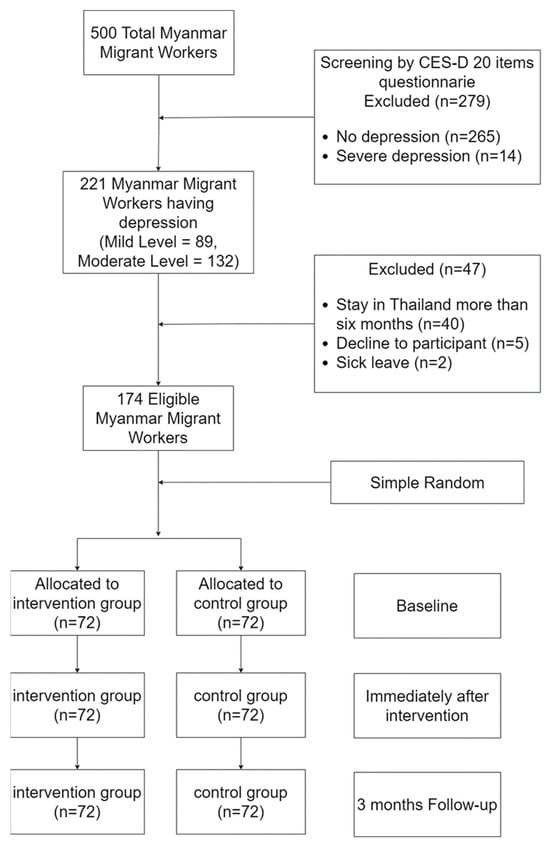
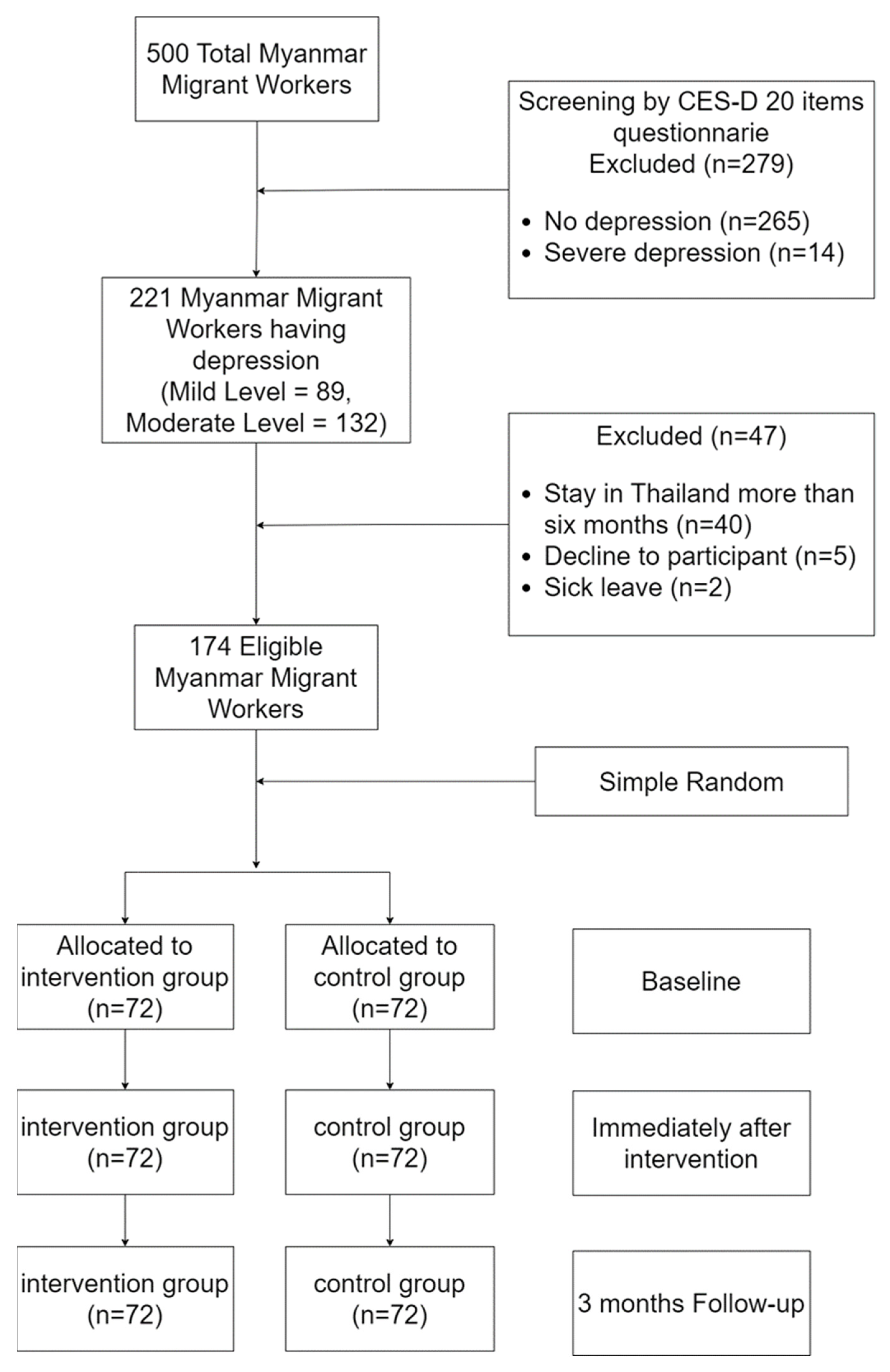
Factory workers assigned to the intervention group participated in the LINE-application-based “PASS” program, whereas the control group received a standard nutrition-focused health behavior intervention. The study workflow is presented in the following Figure 1.
Figure 1.
CONSORT flow diagram of study participants.
2.2. Procedure
Participants were assessed at baseline (T1), immediately after intervention (T2), and at three months post-intervention (T3). At baseline, Myanmar migrant factory workers from the intervention group were gathered at their factories. The principal researcher and trained research assistants informed the participants about the study and assured them that the confidentiality of the collected data and the anonymity of their participation would be strictly maintained. Participants were instructed on how to use the LINE®-application-based “PASS” program, and installation support was provided. Sociodemographic characteristics and baseline depression levels were assessed at baseline prior to randomization (T1) by a self-administered method. Depression outcome was reassessed at T2 and at T3 using the questionnaire uploaded/available in the LINE-application to evaluate the short-term and long-term effects of the intervention. The same validated depression assessment tool was used at all time points. All Myanmar migrant workers were free to contact the main research investigator at any time by using the LINE-application or via phone call throughout the whole study period.
The principal researcher encouraged the participants to continue until the end of the three-month follow-up using methods such as (1) providing the intervention method in the LINE application, meaning that it could be used anytime, anywhere, with no burden or effect on the participants’ work and daily life, (2) contacting participants to remind them even after the completion of the five-week intervention period, (3) getting in contact with the primary person to contact about Myanmar migrant factory workers, and (4) presenting an award after completion of the three-month follow up to improve motivation for participation in the study.
2.3. Intervention
The LINE-application-based “PASS” intervention period lasted for five weeks (one session per week), and was adapted from Problem Management Plus, which is used by the WHO as part of its mhGAP Program [13]. Each session lasted 20–25 min. The intervention schedule is shown in the figure above. The content of each session was created using motion graphics videos. After each session, there was an evaluation and feedback session. In addition, there were pre- and post-tests, which included in-course assessments and award sessions to encourage full participation from the participants (Table 1).
Table 1.
Component and content of LINE-application-based “PASS” intervention.
The principal researcher distributed the VDO every Sunday, and after that the participants could see the content and participate at any time, including via evaluation and feedback, but they needed to finish before the next session, the following Sunday. The first session covered introductory topics, psychoeducation on depression, and instructions for stress management breathing exercises. The second session focused on how depression affects problem-solving abilities, defining and categorizing problems, generating solutions through brainstorming, and creating action plans. The third session addressed the impact of depression on activity levels, introducing a list of enjoyable activities, and guiding participants through activity activation techniques. In the fourth session, the participants learned about the effects of depression on social interaction, distinguishing between trustworthy and untrustworthy individuals, and strengthening social support networks. The fifth session provided strategies for maintaining progress, self-encouragement, understanding depression relapse rates, developing schedules, and planning for the future.
2.4. Measurements
2.4.1. Socio-Demographic Variables
The socio-demographic characteristics assessed included age, sex, ethnicity, duration of stay in Thailand, monthly income, marital status, education level, and Thai language proficiency. The questionnaire was multiple choice except for the age variable.
2.4.2. Depression
The depression scale used was the CESD Scale (Center for Epidemiologic Studies Depression) adopted from Carleton [14]. It was measured during the eligibility screening for depression at T1, T2 and T3. The scale assessed depressive symptoms that occurred within the past week, including depressed mood, excessive guilt or feelings of worthlessness, helplessness or hopelessness, psychomotor delays, decreased appetite, and disturbances in sleep. It was composed of 20 items with 4 Likert scales. The total score was from 0 to 60.
2.5. Ethics Approval
The study received ethical approval from the Ethics Committee of Chulalongkorn University (COA No. 143/66; approval date: 1 July 2023). The trial was prospectively registered with the Thai Clinical Trials Registry (Registration No. TCTR20230516003) on 16 May 2023. Participation among Myanmar migrant factory workers was voluntary, and participants’ decisions to take part in the study were kept confidential and not disclosed to any authorities. Ethical principles were rigorously adhered to throughout the data collection process. Participants who required medication were referred to and assisted in obtaining care from Samut Prakan Hospital. The principal researcher monitored the situation using a screening questionnaire and the participants could access a live chat with the principal researcher if they felt stress during activities or evaluation. If the intervention resulted in a reduction in depression, the waiting-list active control group would receive the full package of the PASS program intervention. For the 3-month follow-up period, the application sent a reminder to the participants about participating in the review and watching the sessions again if they were in a bad mood or feeling more depressed than usual.
2.6. Statistical Analysis
All statistical analyses were performed using Stata software version 17. Descriptive statistics were used to summarize the study variables. Comparisons of baseline socio-demographic characteristics and depression scores between the intervention and control groups were conducted using the chi-square test for categorical variables and the independent t-test for continuous variables. A generalized linear mixed model (GLMM) was applied to determine any statistically significant difference in depression scores between two groups at baseline, immediately after intervention and at the 3-month follow up. It was also performed for any statistically significant difference in depression scores within the intervention and control groups.
3. Results
The mean age of the participants was 28.47 years (SD = 6.62), with the majority aged 25–34 years (63.5%); most were male (54.1%), single (81.2%), of Burmese ethnicity (93.0%), Buddhist (95.1%), had resided in Thailand for more than five years (32.6%), reported a monthly individual income ≤ 769 USD (PPP) (56.9%), completed primary education (91.6%), and had poor Thai language proficiency (81.2%; Table 2).
Table 2.
Distribution and comparison of socio-demographic characteristics and depression in the intervention and control groups at baseline (N = 144).
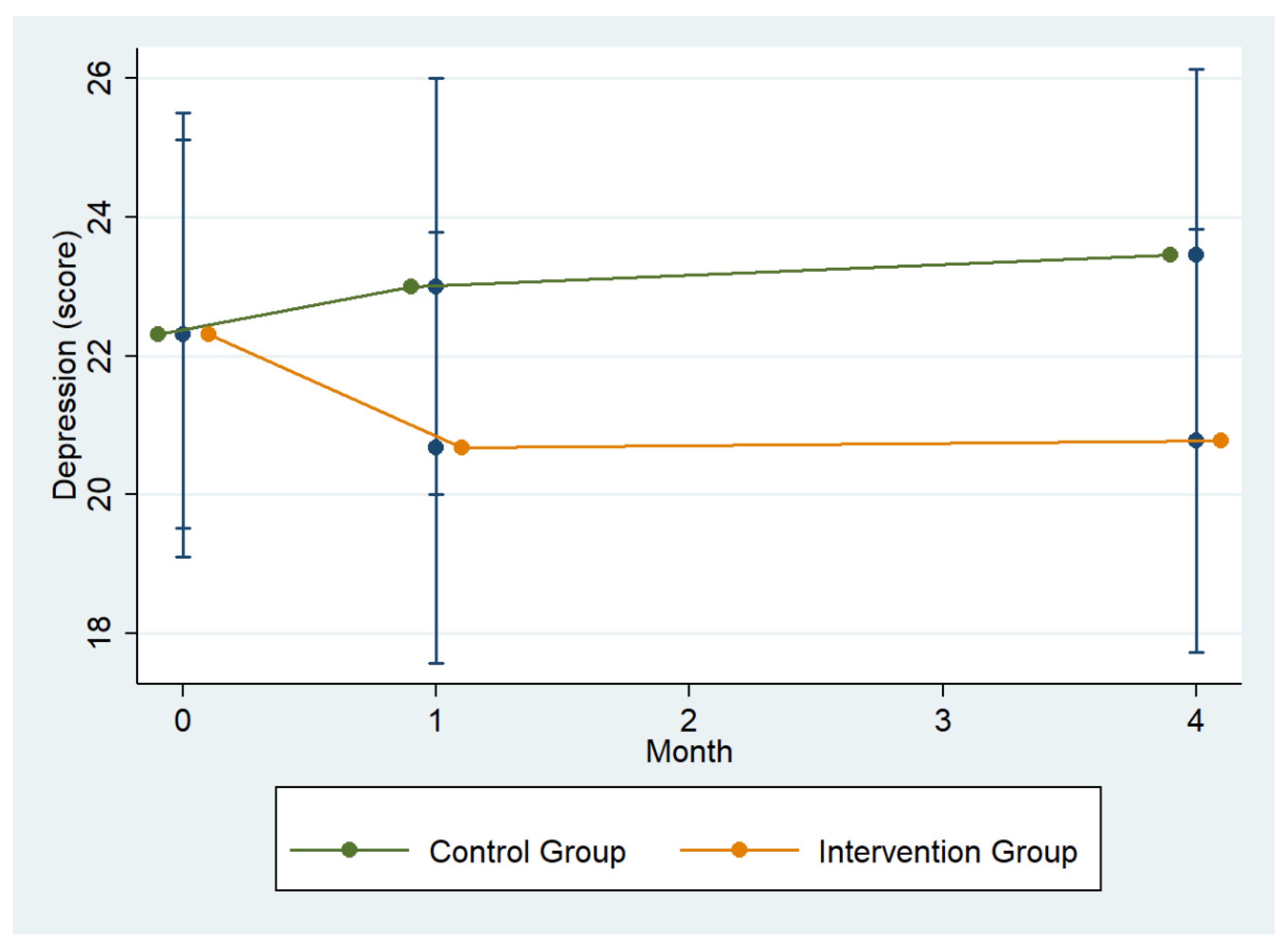
No significant differences were observed in terms of baseline sociodemographic characteristics or depression scores between the intervention and control groups (all p > 0.05). Following the intervention, participants in the intervention group exhibited a significantly greater reduction in depression scores than those in the control group (mean difference = 2.319, p < 0.001). This beneficial effect remained evident at the three-month follow-up, as participants in the intervention group continued to have significantly lower depression scores than those in the control group (20.78 ± 3.05 vs. 23.46 ± 2.68, p < 0.001).
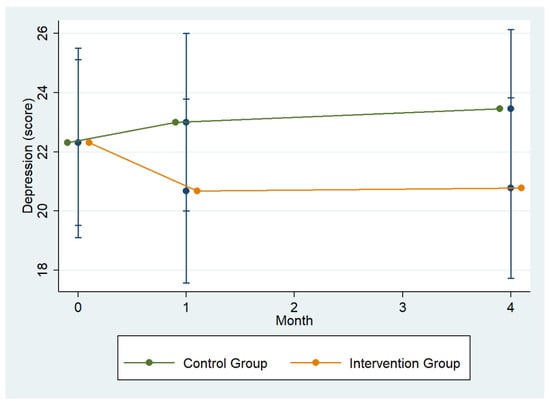
Generalized linear mixed model analysis showed no significant main effect for group (p = 0.977), whereas a significant main effect of time was observed (p < 0.001). A significant group × time interaction was also identified (p < 0.01), indicating that changes in depression scores over time varied between the intervention and control groups. Compared with the control group, participants in the intervention group showed an estimated reduction of approximately two points in depression scores. Post hoc between-group comparisons showed no significant between-group difference at baseline (p = 0.978), whereas significantly lower depression scores were observed in the intervention group immediately after the intervention and at the three-month follow-up (both p < 0.001). Within-group analyses further demonstrated a significant decline in depression scores across the three assessment time points in the intervention group (p < 0.001), while no significant changes over time were observed in the control group (p > 0.05) (Table 3; Figure 2).
Table 3.
Comparison of depression by group and time with generalized linear mixed models at 95% confidence interval (N = 144).
Figure 2.
Comparison of mean depression scores between two groups at baseline, immediately after intervention, and at the 3-month follow-up.
4. Discussion
Our study suggests that the LINE-application-based “PASS” program was effective in reducing depression among migrant factory workers from Myanmar in Samut Prakan within the Bangkok Metropolitan Region of Thailand. At screening, this research found that 47% of the participants were classified as depressed. According to the categorization, 17.8% of the participants had mild depression, 26.4% moderate and 2.8% severe. The prevalence observed in the present study was lower than that reported in a 2011 study involving 300 Myanmar migrant workers in Ratchaburi Province, Thailand, where the prevalence of mild, moderate, and severe depression was 42.6%, 36.7%, and 16.7%, respectively [10]. This may be because the tool used to measure depression was different or because the participants had different characteristics. In Phyo et al.’s study, 19% of the participants were employed in temporary positions, which appeared to be significantly associated with greater depressive symptoms [15]. The result was higher than that of one cross-sectional study among 414 Myanmar migrant workers from the factory, agriculture, construction, and cleaning industries in Chiang Mai, Northern Thailand, in 2017, in which the prevalence of depression was around 13% [16]. Inconsistencies in depression prevalence may result from the use of different assessment tools or variations across study populations. Another possible explanation is that this study was conducted after the COVID-19 pandemic. Post-acute sequelae of COVID-19 (PASC) refer to persistent symptoms that remain after acute COVID-19 infection, with depression being one of the commonly reported manifestations [17]. This result is similar to that of the above-mentioned study, in which the prevalence of depression was around 46.98% [18]. At T1, the mean depression score was 22.3 ± 2.7 (range: 16–26) in the intervention group and 22.3 ± 3.1 (range: 16–26) in the control group. No statistically significant difference was found between the groups, indicating that randomization was successful.
At T2, the effect of the intervention on participants’ depression status was evaluated. The mean depression score in the intervention group decreased from 22.3 ± 2.7 (range: 16–26) to 20.6 ± 3.1 (range: 16–26), whereas the control group demonstrated a slight increase in mean depression scores, rising from 22.3 ± 3.1 (range: 16–26) to 23.0 ± 2.9 (range: 16–26). After the intervention, significantly lower mean depression scores were observed in the intervention group compared with the control group, supporting the effectiveness of the intervention. These findings are consistent with those reported in a previous randomized controlled trial evaluating the effect of Problem Management Plus (PM+) on reducing depression in China [19]. Participants in the intervention group received PM+ psychological management (PM+ group), whereas those in the control group underwent assessment only and did not receive any psychological intervention (non-PM+ group). The intervention was delivered across five sessions over a six-month period. Data were collected at T1 and T2. No follow-up assessment was performed; therefore, the sustainability of the intervention effect was not evaluated. In that study, the mean depression score in the intervention group decreased from 10.9 ± 2.6 (range: 0–21) to 5.4 ± 0.7 (range: 0–21), while the control group showed a modest reduction from 11.4 ± 2.6 to 10.3 ± 2.8. The mean difference between baseline and post-intervention in that study was −5 points, whereas the corresponding mean difference observed in this study was −2 points. It can be assumed that the discrepancies in the mean difference scores were due to differences in the components and duration of the intervention between studies. Different administration methods for interventions may produce different results in terms of effectiveness.
At T3, the participants’ depression status was assessed to evaluate the sustainability of the intervention effect. Significantly lower depression scores were maintained in the in-tervention group compared with the control group. Between T1 and T3, the intervention group demonstrated a 2-point reduction in mean depression scores, whereas the control group exhibited a 1-point increase, yielding an overall between-group difference of 3 points. These results are similar to those of a previous randomized controlled trial in post-conflict primary healthcare settings in Pakistan (n = 172 intervention; n = 174 control) [20]. In a prior study, the intervention group received PM+ alongside enhanced usual care, whereas the control group was provided with enhanced usual care only. The intervention was implemented through five weekly face-to-face sessions, each lasting approximately 90 min. Outcome assessments were conducted at T1, T2, and T3. At T1, the prevalence of depression was high in both the intervention and control groups, affecting 94.2% and 89.4% of participants, respectively. By T3, the prevalence of depression had decreased markedly in the intervention group (26.9%) and was significantly lower than in the control group (58.9%). The greater reduction in depression prevalence reported in that study compared with the present findings may be explained by differences in intervention intensity and delivery format. Although face-to-face psychological interventions may produce stronger effects than digital interventions [21], digital approaches offer important advantages, including wider reach, lower cost, reduced stigma, and improved feasibility for migrant populations and resource-constrained settings. The interventions can be accessed from anywhere, making them ideal for individuals in remote or underserved areas, they provide a level of anonymity that may reduce stigma and increase participation, and they also require fewer resources, including office space and staff time, making them more cost-effective; additionally, patients can engage in interventions at their own pace and at times that suit their schedules, reducing barriers related to time and travel [22].
For larger-scale implementation, the LINE-application-based PASS program could retain its asynchronous delivery model, whereby standardized weekly motion-graphic sessions are centrally distributed through LINE to multiple groups of migrant workers across workplaces or communities. Local occupational health personnel, community health workers, or migrant health volunteers could support participant enrollment, orien-tation, and weekly engagement without having to deliver the intervention content them-selves. A digital monitoring system could be incorporated to track session access, comple-tion of weekly assessments, and participant feedback. This approach could allow the same standardized intervention materials to reach larger populations while limiting the need for additional intervention personnel. Scale-up should initially be implemented in phases across multiple workplaces, with intervention fidelity, participant engagement, accepta-bility, and implementation workload monitored. Clear referral pathways should also be established for participants requiring more intensive mental health assessment or treat-ment.
There are several limitations to this study. First, the follow-up period was limited to three months; therefore, the long-term effects of the intervention and their sustainability could not be determined. Second, the evaluation relied solely on participants’ self-reported out-comes without the assessment of biological markers potentially associated with depression, such as cortisol, oxytocin, and corticotropin-releasing hormone. Third, there may have been contamination between the intervention and control groups because participants were recruited from the same geographical area. In addition, external co-interventions, such as information about depression received from local healthcare providers or mass media, could not be controlled. Fourth, the present study evaluated the effectiveness of the PASS program as a complete five-week intervention but did not examine the intervention’s dose–response relationship. Although the participants received weekly intervention sessions, individual differences in exposure to and engagement with the digital content, such as the extent to which participants viewed or revisited the intervention materials, were not systematically assessed. Therefore, the minimum level of exposure required to achieve a meaningful reduction in depressive symptoms cannot be determined from the present study. Furthermore, implementation-related factors, including participant engagement, adherence, acceptability, facilitator support, and contextual fac-tors within individual workplaces, may have influenced the observed intervention effects. Future studies should incorporate process evaluations and objective measures of digital engagement, such as session completion, viewing duration, frequency of access, and re-peated viewing of intervention materials, to examine potential dose–response relation-ships and identify the minimum effective intervention dose. Such information would help determine the level of exposure necessary to achieve and sustain intervention effects and support the optimization and scaling-up of the PASS program.
5. Conclusions
In summary, this randomized controlled trial proved that the intervention significantly reduced depression scores compared with the control group. The beneficial effects of the intervention were observed immediately after its completion and persisted through the three-month follow-up, suggesting short- and medium-term benefits. Overall, the intervention appears to be a feasible and effective approach for addressing depression in the target population. Given its favorable outcomes and practicality, the intervention may be integrated into routine practice or community-based mental health programs to enhance mental health outcomes. Future research should include longer follow-up periods and more diverse populations to determine the long-term sustainability and scalability of the intervention.
Author Contributions
Conceptualization, N.W. and P.T.; methodology, N.W. and P.T.; software, W.K.; validation, N.W. and P.T.; formal analysis, N.W., P.T. and W.K.; investigation, P.T.; resources, N.W. and P.T.; data curation, N.W., P.T. and W.M.T.; writing—original draft preparation, N.W., P.T. and W.K.; writing—review and editing, N.W., P.T. and W.M.T.; visualization, P.T.; supervision, P.T.; project administration, N.W. and P.T. All authors have read and agreed to the published version of the manuscript.
Funding
This research received no external funding.
Institutional Review Board Statement
The study was conducted in accordance with the Declaration of Helsinki, and approved by the Research Ethics Review Committee for Research Involving Human Research Participants, Group I, Chulalongkorn University (COA No. 143/66; approved 1 July 2023). The trial was prospectively registered with the Thai Clinical Trials Registry (TCTR20230516003) on 16 May 2023.
Informed Consent Statement
Informed consent was obtained from all subjects involved in the study.
Data Availability Statement
The data presented in this study are available on request from the corresponding author due to ethical and privacy restrictions related to the protection of participant confidentiality.
Acknowledgments
This research was supported by the 90th Anniversary of Chulalongkorn University Scholarship under the Ratchadapisek Somphot Endowment Fund.
Conflicts of Interest
The authors declare no conflicts of interest.
References
- Macpherson, D.W.; Gushulak, B.D.; Macdonald, L. Health and foreign policy: Influences of migration and population mobility. Bull. World Health Organ. 2007, 85, 200–206. [Google Scholar] [CrossRef] [Scilit] [PubMed]
- International Organization for Migration. World Migration Report 2020; International Organization for Migration: Geneva, Switzerland, 2019. [Google Scholar] [CrossRef] [Scilit]
- International Organization for Migration. Impact of COVID-19 on Migrants in Thailand: Situation Report September 2021; International Organization for Migration: Bangkok, Thailand, 2021. [Google Scholar]
- Orrenius, P.M.; Zavodny, M. Do immigrants work in riskier jobs? Demography 2009, 46, 535–551. [Google Scholar] [CrossRef] [Scilit] [PubMed]
- Kusakabe, K.; Pearson, R. Transborder migration, social reproduction and economic development: A case study of Burmese women workers in Thailand. Int. Migr. 2010, 48, 13–43. [Google Scholar] [CrossRef] [Scilit]
- Ball, H.A.; Siribaddana, S.H.; Kovas, Y.; Glozier, N.; McGuffin, P.; Sumathipala, A.; Hotopf, M. Epidemiology and symptomatology of depression in Sri Lanka: A cross-sectional population-based survey in Colombo District. J. Affect. Disord. 2010, 123, 188–196. [Google Scholar] [CrossRef] [Scilit] [PubMed]
- Jacob, K.S.; Patel, V. Classification of mental disorders: A global mental health perspective. Lancet 2014, 383, 1433–1435. [Google Scholar] [CrossRef] [Scilit] [PubMed]
- Li, S.; Xu, Y.; Zheng, L.; Pang, H.; Zhang, Q.; Lou, L.; Huang, X. Sex difference in global burden of major depressive disorder: Findings from the Global Burden of Disease Study 2019. Front. Psychiatry 2022, 13, 789305. [Google Scholar] [CrossRef] [Scilit] [PubMed]
- Pincus, H.A.; Pettit, A.R. The societal costs of chronic major depression. J. Clin. Psychiatry 2001, 62, 5–9. [Google Scholar] [PubMed]
- Phyo, A.Z. Factors Inducing Anxiety and Depression among Adult Myanmar Migrant Workers: A Case Study in Ratchaburi Province, Thailand. Master’s Thesis, Chulalongkorn University, Bangkok, Thailand, 2010. [Google Scholar]
- Votruba, N.; Thornicroft, G. Sustainable development goals and mental health: Learnings from the contribution of the FundaMentalSDG global initiative. Glob. Ment. Health 2016, 3, e26. [Google Scholar] [CrossRef] [Scilit] [PubMed]
- Dua, T.; Barbui, C.; Clark, N.; Fleischmann, A.; Poznyak, V.; van Ommeren, M.; Yasamy, M.T.; Ayuso-Mateos, J.L.; Birbeck, G.L.; Drummond, C.; et al. Evidence-based guidelines for mental, neurological, and substance use disorders in low- and middle-income countries: Summary of WHO recommendations. PLoS Med. 2011, 8, e1001122. [Google Scholar] [CrossRef] [Scilit] [PubMed]
- Bryant, R.A.; Schafer, A.; Dawson, K.S.; Anjuri, D.; Mulili, C.; Ndogoni, L.; Koyiet, P.; Sijbrandij, M.; Ulate, J.; Harper Shehadeh, M.; et al. Effectiveness of a brief behavioural intervention on psychological distress among women with a history of gender-based violence in urban Kenya: A randomised clinical trial. PLoS Med. 2017, 14, e1002371. [Google Scholar] [CrossRef] [Scilit] [PubMed]
- Carleton, R.N.; Thibodeau, M.A.; Teale, M.J.N.; Welch, P.G.; Abrams, M.P.; Robinson, T.; Asmundson, G.J.G. The Center for Epidemiologic Studies Depression Scale: A review with a theoretical and empirical examination of item content and factor structure. PLoS ONE 2013, 8, e58067. [Google Scholar] [CrossRef] [Scilit] [PubMed]
- Quesnel-Vallée, A.; DeHaney, S.; Ciampi, A. Temporary work and depressive symptoms: A propensity score analysis. Soc. Sci. Med. 2010, 70, 1982–1987. [Google Scholar] [CrossRef] [Scilit] [PubMed]
- Aung, T.N.N.; Kham, N.P.E.; Kurniasari, M.D.; Htet, H.H.; Tanaka, H.; Honda, S. Health risk behaviors, musculoskeletal disorders and associated cultural adaptation and depression: A survey among Myanmar migrant workers in Chiang Mai, Northern Thailand. Int. J. Gen. Med. 2019, 12, 283–292. [Google Scholar] [CrossRef] [Scilit] [PubMed]
- Taquet, M.; Luciano, S.; Geddes, J.R.; Harrison, P.J. Bidirectional associations between COVID-19 and psychiatric disorder: Retrospective cohort studies of 62,354 COVID-19 cases in the USA. Lancet Psychiatry 2021, 8, 130–140. [Google Scholar] [CrossRef] [Scilit] [PubMed]
- Khai, T.S.; Asaduzzaman, M. ‘I doubt myself and am losing everything I have since COVID came’—A case study of mental health and coping strategies among undocumented Myanmar migrant workers in Thailand. Int. J. Environ. Res. Public Health 2022, 19, 15022. [Google Scholar] [CrossRef] [Scilit] [PubMed]
- Zhang, H.; Wu, F.; Shen, W.; Liang, J.; Liu, Y.; Hu, C.; Zhao, H.; Chen, Z.; Wang, J. Problem Management Plus in the treatment of mental disorders in patients with multiple myeloma. Support. Care Cancer 2020, 28, 4721–4727. [Google Scholar] [CrossRef] [Scilit] [PubMed]
- Hamdani, S.U.; Huma, Z.-E.; Rahman, A.; Wang, D.; Chen, T.; van Ommeren, M.; Chisholm, D.; Farooq, S. Cost-effectiveness of WHO Problem Management Plus for adults with mood and anxiety disorders in a post-conflict area of Pakistan: Randomised controlled trial. Br. J. Psychiatry 2020, 217, 623–629. [Google Scholar] [CrossRef] [Scilit] [PubMed]
- Kambeitz-Ilankovic, L.; Rzayeva, U.; Völkel, L.; Wenzel, J.; Weiske, J.; Jessen, F.; Reininghaus, U.; Uhlhaas, P.J.; Alvarez-Jimenez, M.; Kambeitz, J. A systematic review of digital and face-to-face cognitive behavioral therapy for depression. npj Digit. Med. 2022, 5, 144. [Google Scholar] [CrossRef] [Scilit] [PubMed]
- Przybylko, G.; Morton, D.; Renfrew, M.; Hinze, J.; Beamish, P.; Kent, L.; Morton, J. The effectiveness of an online interdisciplinary intervention for mental health promotion: A randomized controlled trial. BMC Psychol. 2021, 9, 77. [Google Scholar] [CrossRef] [Scilit] [PubMed]

Disclaimer/Publisher’s Note: The statements, opinions and data contained in all publications are solely those of the individual author(s) and contributor(s) and not of MDPI and/or the editor(s). MDPI and/or the editor(s) disclaim responsibility for any injury to people or property resulting from any ideas, methods, instructions or products referred to in the content. |
© 2026 by the authors. Licensee MDPI, Basel, Switzerland. This article is an open access article distributed under the terms and conditions of the Creative Commons Attribution (CC BY) license.