


Highlights
Public health relevance—How does this work relate to a public health issue?
- The COVID-19 pandemic created a prolonged, unprecedented global challenge to the mental health and retention of frontline workers in healthcare, public safety, and education. We anticipate disasters of increasing intensity and frequency, with limited governmental response capacity.
- There will be a critical need to field highly motivated, effective, and resilient Volunteer efforts, as demonstrated in this study, and to support their participation through a Culture of self-care and reform of professional liability protection.
Public health significance—Why is this work of significance to public health?
- It introduces the Emerging Volunteer Engagement (EVE) framework, which shifts the view of Volunteers from “fungible assets” to principal drivers of a disaster response, fostering higher levels of commitment and resilience.
- This study demonstrates how systemic betrayal can adversely impact Volunteer efforts and identifies Calling and an intentional organizational Culture (e.g., the daily Check-In) as the decisive factors that sustain Volunteer engagement even in the face of systemic challenge.
Public health implications—What are the key implications or messages for practitioners, policy makers and/or researchers in public health?
- Future disaster response architecture should include a transition from primarily rigid, top-down hierarchies to horizontally structured, adaptive networks that empower Volunteers to each develop their individual sense of Calling and to evolve their mission in real time.
- There is a critical need for further study into Disaster Ecology and how professional Calling can be respectfully cultivated, enhancing associated outcomes without leading to exploitation or burnout during prolonged emergencies.
Abstract
The COVID-19 pandemic placed prolonged, multi-year demands on the systems supporting frontline workers in healthcare, public safety, and education. In response, approximately 150 licensed behavioral-health professionals and credentialed educators, trained in Psychological First Aid (PFA), built and staffed the Maine FrontLine WarmLine (MFLWL) as unpaid Volunteers from 21 March 2020 through 31 May 2021 and began fielding calls in April 2020, contributing approximately 33,000 h of service. Although the MFLWL fielded 100 calls in aggregate, engagement persisted and expanded into Community Outreach, reaching approximately 250 frontline workers. To understand that paradox, this narrative case study analyzed two waves of open-ended Volunteer surveys (n = 22; n = 20) using consensus-based thematic analysis. Four themes emerged: a specific COVID-19 frontline focus; personal and professional Calling; an intentionally cultivated Culture of self-care and relational support; and stakeholder relationships marked by experienced systemic betrayal and moral injury. Low call volume, rather than eroding engagement, appears to have activated Volunteers’ sense of Calling, converting frustrated readiness into new capability and new avenues of service. From these findings, we derive Emerging Volunteer Engagement (EVE), a values-and-process framework situated within Disaster Ecology that positions Volunteers as principal drivers of disaster response rather than interchangeable resources, with implications for Volunteer organization, support, and liability policy in future disasters.
1. Introduction
This case study examines an emerging Volunteer-driven creation and activation of a tele- and text-based support warmline in response to frontline personnel coping with the impact of COVID-19. The Maine FrontLine WarmLine (MFLWL) was conceived as a flexible, sustainable resource within the continuously evolving context of the healthcare, first responder, and education workforce experience in Maine during the early stages of the COVID-19 pandemic. We believed a rigid, less adaptive approach based on historical or clinical precedent would be insufficient given the unique parameters of the COVID-19 response. (Please note: The authors chose to write volunteers with an uppercase “V” out of deep respect and appreciation for the critical roles filled by trained individuals who contributed their time and skills without expectation of financial compensation).
The COVID-19 pandemic placed unprecedented demand on existing systems supporting frontline populations in health [1], safety, and education [2,3,4,5,6,7,8,9,10,11,12,13,14,15]. Based on early international experience with COVID-19 [16], effective support for frontline workers and their families was considered vital to maintaining the wellbeing and retention of those in critical frontline roles. This was the primary focus of the MFLWL. Its Volunteers, each independently licensed in a behavioral health or health discipline (i.e., LCSW, LCPC, PhD, MD, APRN, and NP) or a professional educator, were trained in Psychological First Aid (PFA) [17,18] and provided telephone and text “warmline” support to frontline personnel in Maine beginning 21 March 2020 through 31 May 2021.
Volunteers coming together to meet a community need in times of disaster is not new [19,20], and existing typologies describe how such groups form and organize [21,22,23,24]. The MFLWL’s structure, however, did not map cleanly onto these established categories. It combined the situational adaptability of a spontaneous Volunteer effort with the coordinated, multi-organizational reach of a more formal network, while also placing the Volunteer, rather than the organization, at the center of the response. In Section 4.3, we develop this observation into Emerging Volunteer Engagement (EVE), an approach that reframes Volunteers as principal drivers of disaster response rather than interchangeable (“fungible”) assets and situates it within the broader concept of Disaster Ecology [25].
We undertook this exploratory study with the aim of identifying key factors associated with exceptional volunteering success, evidenced by Volunteer engagement and sustained participation, and of noting the challenges encountered in providing that assistance. Reviewing both the literature and responses from two waves of surveys of former Volunteers, we found that cultivating the MFLWL community and a sense of individual Calling proved central to sustained Volunteer involvement. This case study examines the MFLWL Volunteer experience to better understand disaster response generally, and the role of Volunteers specifically, with the goal of informing the organization of Volunteers in future disaster response. Current practice can impede highly motivated, resilient Volunteer efforts that might otherwise be more effective and sustainable over time.
The case study analyzed the personal narrative responses of MFLWL Volunteers surveyed, identifying four primary themes. First, context proved critical in shaping the experience of the event: a unique aspect of the MFLWL’s COVID-19 frontline focus was that Volunteers were experiencing the pandemic themselves even as they staffed the MFLWL in support of their frontline colleagues. Second, a personal and professional “Calling” to Volunteer emerged as a consistent motivator [26,27]. Third, a central organizational Culture prioritized self-care and emotional, relational, and clinical support. Fourth, stakeholder relationships played a critical role, with Volunteers describing experiencing systemic betrayal or injury [28,29] and moral injury [30,31] as challenges in providing MFLWL services. To the definitions in the literature, we add an emphasis on relationships and breaches in relational fidelity.
This study asks the following: (1) What factors are associated with sustained, high-intensity Volunteer engagement in the MFLWL experience over an extended disaster response, even under conditions of low service utilization? (2) How do MFLWL Volunteers experience and describe the organizational Culture and stakeholder relationships that shape that engagement? (3) What do these factors suggest for organizing future Volunteer-centered disaster response? Section 4 returns to these questions directly, considering the findings presented in Section 3.
2. Materials and Methods
2.1. Study Design and Rationale
This study used an exploratory qualitative narrative case study design [32] to examine Volunteer experience within the MFLWL. A case study design was appropriate because the MFLWL was a single, bounded, time-limited initiative whose organizational form did not correspond to established typologies of disaster volunteering (see Section 4.3). Case study methodology is suited to the close, contextually grounded examination such a novel phenomenon requires, particularly before its transferability to other settings can be assessed. Within that design, we adopted a narrative approach because our research questions centered on how Volunteers described and made sense of their own experience in their own words, rather than on measuring predetermined variables against a hypothesis; narrative inquiry treats participants’ own accounts as the primary unit of analysis [33]. Consistent with case study methodology, a single well-developed narrative inquiry can constitute a meaningful case; the value of this design lies in depth rather than statistical generalizability, a distinction we return to in Section 4.7.
Methodologically, the study proceeded in two stages. Narrative data were analyzed using a consensus-based (codebook-style) thematic analysis [34], with codes and themes developed inductively from the data rather than applied from any predetermined framework (Section 2.8). The EVE framework presented in Section 4.3 was then derived de novo from those four themes: its criteria were generated from this case study data and the team’s documented practice, not adapted from existing typologies of disaster volunteering [21,22,23,24], which we employ only as a contrast frame to locate what EVE is not. This framework-building step follows the exploratory logic of theory generation rather than theory testing [35]; we do not claim a complete grounded theory methodology, having undertaken neither theoretical sampling nor coding to declare satisfaction of that process in totality [36,37].
2.2. Setting, Program Background, and Eligibility Criteria
The MFLWL was organized beginning 21 March 2020, in response to a call to the first author from his professional organization, prompted by an anticipated need to support frontline healthcare and public safety staff and informed by early observations (e.g., overwhelmed Emergency Rooms, Morgues, Staff exhaustion, Staff shortages, PPE shortages) of COVID-19’s impact in more heavily affected regions (e.g., Italy, New York City). The first major Volunteer training was held via Zoom on 6 April 2020; daily Check-In meetings via Zoom began on 10 April 2020; the MFLWL began fielding calls on 14 April 2020; and the state of Maine publicly announced the service on 22 April 2020. The initial call for Volunteers drew respondents from across Maine, representing multiple licensed behavioral health and health disciplines; the Volunteer cohort was later expanded to include professional educators. It is important to note that the relational infrastructure (i.e., daily Check-Ins) preceded the service of fielding calls itself. Volunteers were meeting daily 12 days before the MFLWL was announced publicly.
For the purposes of this study, “frontline workers” refers to healthcare, public safety services, and education personnel working in Maine during the COVID-19 pandemic, the population the MFLWL was created to support. “Callers” refers to members of that frontline population who contacted the MFLWL for support; “Volunteers” refers to the licensed and credentialed professionals who staffed the MFLWL. These terms are used consistently throughout this article to distinguish the two populations.
Inclusion criteria for MFLWL Volunteers were independent licensure in a behavioral health or health discipline (e.g., Licensed Clinical Social Worker [LCSW], Licensed Clinical Professional Counselor [LCPC], Doctor of Philosophy [PhD], Doctor of Medicine [MD], Advanced Practice Registered Nurse [APRN], Nurse Practitioner [NP]) or credentialed status as a professional educator, plus completion of Psychological First Aid (PFA) training [17,18] prior to fielding calls. This licensure or credentialing requirement was initially set by the MFLWL’s primary institutional stakeholder, the state of Maine, to ensure a baseline level of consumer protection for callers; the authors additionally required PFA training as a condition of participation. No further exclusion criteria applied. We recognize that requiring professional licensure yielded a comparatively homogeneous Volunteer cohort relative to more heterogeneous spontaneous Volunteer populations. We address this as a limitation in Section 4.7, alongside the resulting question of what these findings may or may not indicate about non-licensed or non-professional Volunteers.
Vetting new Volunteers against these criteria was, at times, slowed by limited government processing capacity during the pandemic. Some Volunteers experienced delays of days to weeks between application and activation, a dynamic reflected in narrative responses (Section 3).
2.3. Research Team, Positionality, and Management of Multiple Roles
The Maine FrontLine Connection (MFLC) Research Team was composed of a Psychiatrist (MD), two Clinical Social Workers (LCSW), and a Clinical Mental Health Counselor (LCPC), all independently licensed in the state of Maine. Team members each had over 30 years of combined Volunteer and professional experience across government, hospital, education, community agency, and private-practice settings. The MFLWL itself operated by consensus, reflecting a non-hierarchical group structure. This extended to every role the authors occupied, as MFLWL Faculty supervisors, as Volunteers fielding calls, as supervisors supporting other Volunteers fielding calls, and, later, as the Research Team analyzing this study’s data and presenting its findings.
This multiplicity of roles is a direct and unavoidable feature of the case study design, not an incidental limitation. Understanding the MFLWL from the outside, without the access this dual role provided, would have foreclosed exactly the kind of contextually grounded account a case study is meant to produce. It is also a genuine conflict of interest that requires active management rather than disclosure alone. We addressed it in three ways. First, each author’s own survey responses (all four authors were also MFLWL Volunteers and thus eligible respondents) were treated no differently from other respondents’ data in coding or analysis. All narrative data were de-identified prior to review. Second, all four authors coded independently before any collective discussion, so that no single author’s dual role could unilaterally shape how a theme was named or which quotations represented it. Disagreements were resolved by consensus discussion. Third, we treated our own insider status as something to examine rather than to trust uncritically. Where our shared experience as Volunteers and faculty pulled toward a particular reading of the findings, we named that pull and discussed it as a team rather than allowing it to pass unexamined. This is the sense in which we consider our process reflexive, not as an appeal to a specific named analytic framework, but as a structured practice of examining how our position inside the MFLWL shaped what we were able to see in the data. This practice was carried out across the three review cycles described in Section 2.8. We return to the limits of this approach, including the absence of a researcher entirely outside the MFLWL, in Section 4.7.
2.4. Participant Recruitment
We used a purposive sampling strategy approximating, as closely as practicable, a total-population sample of MFLWL Volunteers registered and active between March 2020 and May 2021, irrespective of whether an individual Volunteer had personally fielded a call or text. Recruitment used the email roster maintained for MFLWL Volunteer scheduling and communication throughout the program.
We emailed all 150 enrolled Volunteers an invitation to participate, a study description, and an informed consent form (see Supplementary Materials S1 and S2, for informed consent language). Volunteers returned informed consent prior to receiving survey access; 111 Volunteers who returned informed consent were eligible for both survey waves reported here.
2.5. Data Collection: Survey Waves and Instrument
Data were collected in two survey waves using the SurveyMonkey platform (https://www.surveymonkey.com, San Mateo, CA, USA, URL accessed on 26 August 2026), each constructed by the authors (Section 2.3). Both surveys combined structured demographic items (reported in Table 1) with open-ended narrative questions. Where possible, we deliberately used open-text response fields rather than multiple-choice items, and set no maximum response length, to impose as little structure as possible on how Volunteers described their experience. Full item wording for both waves, and complete response frequencies for every closed-ended item, are provided in Table 1 and Table 2. We originally hoped to utilize a technology-supported speech recognition program for data collection, as reflected in the informed consent, but ultimately abandoned that approach due to technological complexity and unresolvable concerns regarding confidentiality and control of data.
Table 1.
Survey questions—wave 1 and wave 2.
Table 2.
Demographics and closed-ended response frequencies, n (%)—wave 1 and wave 2.
The first survey opened 15 March 2022 and closed 16 April 2022, yielding 22 responses. It focused on Volunteers’ general MFLWL experience, including any challenges or difficulties encountered. Based on themes emerging from that first wave, we developed a second survey, opened 18 January 2023, and closed 31 January 2023, yielding 20 responses. It included a rationale for the follow-up and required a new, affirmative informed consent. Seven invitation emails for the second wave were undeliverable due to closed accounts in the interim (e.g., role turnover and employer account deactivation). Two reminder emails were sent for each wave.
Respondents were not required to have completed the first survey to complete the second. While the second survey was thematically grounded in the first, we treat it as sufficiently independent in content to analyze alongside first-wave responses. We included Volunteers who completed both surveys and those who completed only one.
We note that Volunteers who self-selected into an MFLWL Faculty role, or who covered shifts at a particular frequency, likely had a qualitatively different experience of Stakeholder Interaction and administrative dynamics than other Volunteers (Section 2.3).
2.6. Ethical Approval and Confidentiality
This study was approved by the University of Southern Maine (USM) COVID-19 Institutional Review Board (Office of Research Integrity and Outreach; IORG0001507; COVID-19 IRB Registration #: IRB00012537; Federalwide Assurance #FWA00001748). Approval date was 16 December 2021. Written informed consent was obtained from all participants prior to both waves of survey access, as described in Section 2.4 (see Supplementary Materials S1 and S2, for copies of both informed consent forms). To protect caller and Volunteer confidentiality, any potentially identifying information was removed from narrative data prior to analysis, and any caller-related data discussed in this article are presented only in aggregate; all Volunteer survey responses were similarly de-identified before review.
2.7. Response Rate and Nonresponse Considerations
Narratives were collected at a single point in time within a specific historical and geographic context. That was the COVID-19 pandemic as lived in the state of Maine in 2020–2021, within a population of licensed frontline health, behavioral health, and education professionals. Of 150 invited Volunteers, 111 (74%) returned informed consent; of those eligible, approximately 19% completed each survey (22 of 111 for wave 1; 20 of 111 for wave 2). No formal target response rate was pre-specified for either wave; the ~19% figure is reported here for transparency rather than against a benchmark. This response rate leaves open the possibility of nonresponse bias. Volunteers who did not respond may have had systematically different experiences than those who did, and we cannot rule this out with the data collected. We consider the implications of this limitation further in Section 4.7.
2.8. Data Analysis
Returned survey narratives were analyzed using a consensus-based (codebook-style) thematic analysis [34]: all four authors independently reviewed each narrative for content, theme, and narrative pattern in response to each survey prompt. Each author generated an initial, independent set of codes and candidate themes before any group discussion. The team then met collectively to compare independently generated codes, discuss areas of disagreement, and reach consensus on which themes the data supported and how best to group respondent statements under each theme. We treated this as a consensus process, rather than a quantitative intercoder-agreement statistic, as our mechanism for establishing analytic agreement. We did not calculate a formal reliability coefficient (e.g., Cohen’s kappa). A third, final review confirmed that the data supported the primary domains reported in Section 3. This iterative process (independent coding, collective consensus discussion, and final confirmation) was repeated across three review cycles and prompted additional targeted literature review on constructs the data surfaced (e.g., Calling [26,38]; systemic betrayal [29]; moral injury [30]).
Coding was inductive throughout: codes and candidate themes were generated directly from the narrative data itself rather than from a pre-existing coding frame [34]. We considered trustworthiness throughout this process along four dimensions [39]. Credibility was supported by investigator triangulation (four independent coders reconciled through consensus) and by the depth of engagement the authors’ own MFLWL roles provided, though we treat that same engagement as a limitation on independence (Section 2.3 and Section 4.7). Dependability was supported by the consistent, three-cycle review procedure applied across both survey waves. Confirmability was supported by de-identification of all narrative data and by grounding thematic claims in consensus among four independent reviewers rather than a single analyst’s interpretation. We did not use an external auditor or maintain a formal decision-trail log, which we note as a constraint on confirmability. Any transferability is supported by the contextual detail provided throughout this article about the MFLWL, its Volunteers, and the pandemic period in which it operated, so that readers can judge for themselves which aspects of this case may apply elsewhere. Consistent with case study methodology, we make no claim that our findings generalize beyond this case without further study.
2.9. Use of Generative AI
In the preparation of this article, we have mindfully used GenAI (i.e., Claude-Sonnet, Opus, Fable and Gemini) only after the four human authors did essential work including study design, individual and collective review of data, writing and developing our conclusions. GenAI helped us accomplish a focused search of the relevant literature, review our options for harmonizing and condensing multiple drafts from each of us into a single, more readable manuscript and facilitated reference and format checking. We, the human authors, stand behind our process, our conclusions, and every sentence of this manuscript. Any failings are our own.
3. Results
Consensus-based thematic analysis of the narrative responses across both survey waves produced four themes: (1) COVID-19 Frontline Focus, (2) Calling, (3) MFLWL Culture, and (4) Stakeholder Interaction. Figure 1 presents a thematic map of the four themes and their inter-relationships, which the following subsections trace: a specific pandemic context that activated Calling; an intentionally cultivated Culture that sustained it; and stakeholder relationships whose breaches threatened, but did not extinguish, engagement.
Figure 1.
Thematic map of the four themes and their inter-relationships.
Structured (closed-ended) survey responses are reported first (Section 3.2), both to characterize Volunteers’ preparation, participation, and appraisals and because they quantitatively corroborate several of the narrative themes. Each theme is then presented as an analytic summary followed by representative quotations, tagged by survey wave (W1/W2). Quotations are reproduced verbatim, including [sic] annotations and bracketed redactions protecting confidentiality. The complete de-identified quotation corpus, organized by theme, sub-theme, and wave, is provided in Table A1, Table A2, Table A3 and Table A4; full item content and response frequencies for every closed-ended item are provided in Table 2. De-identified raw data is available on request.
3.1. Respondent Characteristics
Survey questions from wave 1 and wave 2 are presented in Table 1. Demographic characteristics of respondents, in addition to closed-ended response frequencies in both waves, are presented in Table 2. Respondents were predominantly women (82% of wave 1; 70% of wave 2), largely aged 65 or older (77%; 65%), and deeply experienced in their fields, with roughly two-thirds reporting more than 25 years of practice. Social work, clinical counseling, psychology, medicine, and education were all represented, consistent with the interdisciplinary design of the MFLWL. This profile indicates that the service, and more cautiously its survey respondents, drew disproportionately on late-career and retired professionals, a pattern with substantive implications. Such Volunteers brought decades of clinical judgment, held professional identities secure enough to absorb an unfamiliar and, as it proved, low-volume role, and, as one respondent put it, “had the time to commit.” The interaction of Calling with late-career capacity is examined in Section 4.4, as is the caution (Section 4.7) that the experiences of a predominantly older, experienced, self-selected cohort may not transfer to younger or less-established Volunteer populations. Item nonresponse is reported per row so that all items tally to each wave’s n; percentages may not total 100 due to rounding.
Table 1 gives the survey questions (wave 1 and wave 2) as administered (item wording and response-option format).
Table 2 gives complete closed-ended question response frequencies, n (%), for every item asked, including options no respondent selected, so the record is exhaustive rather than curated. Question wording and response-option format are reproduced verbatim from the SurveyMonkey export. For “select as many as apply” items, percentages are the share of respondents selecting each option and can sum to more than 100%. “No response” = item skipped.
3.2. Structured Survey Responses: Preparation, Participation, and Perceived Value
Wave 1 combined its narrative prompts with closed-ended items on preparation, participation, and appraisal of the MFLWL experience. These responses are descriptive only; no inferential statistics are appropriate at this sample size, but they add a quantitative dimension to the themes that follow. In the complete frequencies for every closed-ended item, the pattern, not any single figure, is the finding.
3.2.1. Preparation and Prior Experience
The cohort was professionally seasoned but largely new to formal disaster response. In total, 9 of 22 respondents (41%) reported no prior disaster-specific professional training, and 13 (59%) reported no prior personal experience with disaster response. Asked what supported their confidence in providing PFA, respondents most often credited their prior general professional training (19 of 22; 86%), MFLWL training (18; 82%), and consultation and supervision in the daily Check-In meetings (16; 73%). Self-rated confidence in using the PFA model itself was more measured; 10 of 22 (45%) reported being very or extremely confident and 9 (41%) somewhat confident, and respondents’ attached comments repeatedly tie the difference not to preparation but to opportunity: several who had never fielded a call noted that confidence could not consolidate without practice, one observing, “I think if I had [taken a call], I would, most likely, [have] gained confidence in my ability” (W1). The preparation-rich, practice-poor pattern is the quantitative face of the underutilization narrative in Section 3.6.
3.2.2. Participation: Duration, Intensity, and Voluntary Engagement
Reported involvement was long. In total, 13 of 22 respondents (59%) reported involvement of 10 months or more, and 9 (41%) of 13 months or more; four respondents (18%) selected the top category, 16+ months, a duration that exceeds the MFLWL’s own operational window (21 March 2020–31 May 2021) and is consistent with involvement continuing into Community Outreach after the MFLWL closed. Most respondents (17 of 22; 77%) covered one to five shifts weekly.
Against this backdrop of sustained service and, as Section 3.6 details, few calls, participation in non-required activities is the more revealing engagement measure. The daily Check-In was voluntary; 18 of 22 respondents (82%) nonetheless reported participating about once a week or more often, including three who participated every day. Optional training participation showed the same pattern: beyond the required PFA training (19 of 22; 86%), 18 respondents (82%) participated in Check-In role-playing, 15 (68%) in mindfulness training, and 12 (55%) in supervision, with none required. Twelve respondents (55%) took part in or delivered Community Outreach programming at least once, three of them 26 or more times. Sustained voluntary participation in preparation and community activities, maintained for a year or more by many respondents despite a near-absence of the activity they had trained for, is itself a primary observation of this study: engagement here was evidently not being sustained by call volume.
Two candor notes belong beside that observation. First, participation was not static: 11 of 22 respondents (50%) reported that their Check-In participation decreased over time (nine stable, two increased), with attached comments citing returning work obligations, vaccination-era reopening, and family, ordinary life resuming, rather than disaffection. Second, willingness outlasted activity. In total, 19 of 22 (86%) reported being likely or very likely to respond affirmatively to a future request for similar disaster response assistance.
3.2.3. Perceived Value of the Model, the Medium, and the Culture
Respondents’ appraisals of the service model were strongly favorable. In total, 18 of 22 (82%) rated PFA very or extremely effective as a primary disaster response model, and 19 (86%) rated PFA as delivered by phone or text very or extremely effective—an endorsement of remote PFA specifically, from a cohort whose formative professional experience was overwhelmingly in-person. The remote infrastructure itself drew the corpus’s only unanimous rating. All 22 respondents (100%) rated the use of remote technology (Zoom) for Check-In meetings and training very or extremely effective.
The Culture items anticipate Theme 3. Seventeen of 22 respondents (77%) rated the Culture of the MFLWL, defined in the item as relationships with colleagues, Check-In peer support, and availability of supervision, as mattering “a great deal” to their participation. Asked what was helpful about the daily Check-In meetings, respondents’ most-selected options were a sense of community (20 of 22; 91%), connection with colleagues (19; 86%), and, tied at 18 (82%), respectful dialogue and listening, developing and sharing resources, and a sense of helping and efficacy in the pandemic response. That respondents’ sense of efficacy attached to the Check-In community at more than double the rate they were fielding calls (16 of 22 took a call; 6 fielded none) is examined in Section 4.2 as central to how engagement survived underutilization. Overall, 19 of 22 (86%) rated their participation very or extremely valuable, and 18 (82%) rated the MFLWL’s stated purpose extremely important.
3.2.4. Reading These Numbers
These frequencies warrant the same caution as the narratives, stated here so it travels with the data. They describe 22 self-selected respondents from a consented pool of 111 Volunteers (a 19.8% response), and 20 respondents (18.0%) in wave 2; nonrespondents may have differed systematically, and the four authors were themselves eligible, anonymous respondents within the corpus. The uniformly high appraisals are therefore best read as the appraisals of those who remained engaged enough to answer a survey one to two years later, the population this study set out to understand, not as an evaluation of the MFLWL’s effect on all 150 Volunteers. No comparison group exists, percentages on a base of 22 shift by 4.5 points per respondent, and the risk that insider investigators find what they hope to find is addressed procedurally in Section 2.3 and Section 2.8 and taken up again in Section 4.7. With those cautions in place, the closed-ended data do constrain interpretation in one direction: whatever sustained this cohort, it was not call volume.
3.3. Theme 1: COVID-19 Frontline Focus
The first theme captures the specificity of the moment. Volunteers were not responding to disaster in the abstract but to COVID-19 as they were living it, in Maine, in real time. Three strands run through these narratives. The first is an urgency to act that arose precisely out of personal disruption, and respondents describe the early pandemic as destabilizing and describe volunteering as the answer to a self-directed question, posed by one respondent in eight words:
“What can I do to help—right now?”(W1)
“At the beginning of COVID, I was somewhat aimless and disoriented in terms of needing to figure out how to ‘do’ life under a new set of rules.”(W1)
The second strand is an expansion and activation of an existing professional identity toward a novel need. Respondents did not experience PFA-based warmline work as a new vocation but as a situational application of skills built over decades. In one account, a redirection experienced as both immediate and expansive:
“I have training, experience, and a background in responding to both healthcare and emotional health emergencies and I kept thinking ‘there must be some way that I can assist others.’ … When I read that, I was ‘all in’ and couldn’t wait to get home to open up my laptop and apply to volunteer. I was amazed at the speed with which this warm-line began to take shape and also with my actual and virtual ‘leap’ from working with patients at the micro level to being involved with assisting in the development and implementation of the MFLWL at the macro level.”(W1)
The third strand is solidarity with frontline peers, with fellow Volunteers, and with the state’s collective effort:
“To join a concerned group of professionals who are willing to walk alongside the first responders during the pandemic.”(W1)
Notably, the same pandemic conditions that created the need also shaped the responders. Every Volunteer was simultaneously experiencing the disaster they were staffing a service to address. This duality recurs in the Culture theme (Section 3.5) as the rationale for mutual care.
3.4. Theme 2: Calling
Calling emerged early and persistently in the narratives, in forms that map onto both poles of the definitional literature examined in Section 4.4: the externally summoned, neoclassical sense, a call issued by the moment, by a leader, and the modern, internally anchored sense of work as identity. The full range of the theme is visible in the distance between its longest narrative and its shortest:
“…being a member of a community is a privilege and with it comes responsibility to step up when a need arises. There are several reasons I volunteered: 1. my father, a foreman of a crew of 30, who was 25 yrs. old at the time working at [a Maine Navy shipyard] during WWI, experienced the death of all but 3 workers during the pandemic of 1918. He carried (unspoken for years) the trauma, guilt of surviving, sadness and grief for his lifetime. When the ME Chapter of NASW put out an email notice in the chapter newsletter for volunteers for MFLWL to provide support to frontline workers, it was obvious this would be a way to honor my father’s experience.”(W1)
“It’s what I do.”(W1)
Two features of these accounts merit emphasis. First, Calling in this cohort was not passive receptivity but an active, at times combative disposition, with respondents describing grit, persistence, and endurance as constitutive of the call rather than incidental to it:
“I’ve come to appreciate that a certain ‘fierce’ attitude is a key part of the sense of ‘calling’ that makes for very effective, resilient Volunteers.”(W2)
Second, Calling interacted with capacity. Several respondents, predominantly late-career or retired, noted that they had both the skills and, perhaps critically, the time to answer:
“My skills had value at this time and I was retired and had the time to commit.”(W1)
This connects the theme directly to the cohort’s demographic profile (Section 3.1) and raises the possibility, developed in Section 4.4, that late-career professionals may experience or enact Calling differently than early-career colleagues. The structured responses give this theme a behavioral signature where the Calling described in these narratives is visible in Section 3.2.2 as sustained, voluntary, non-required participation, with weekly-or-better Check-In attendance for 82% of respondents, and optional training uptake far beyond the required PFA, maintained across involvement that for most respondents ran ten months or longer.
3.5. Theme 3: MFLWL Culture
The Culture theme is the largest in the corpus and the one that respondents most often credited for their sustained participation. It is also the theme with the strongest quantitative support. In total, 77% of respondents rated the Culture as mattering “a great deal” to their participation; a sense of community was the single most-selected helpful aspect of the daily Check-In (91%), and a sense of helping and efficacy in the pandemic response (82%) was attached to that community, even among respondents who never fielded a call (Section 3.2.3). Four strands are distinguishable. First, the daily 4:00 PM virtual Check-In functioned as the Culture’s load-bearing structure, simultaneously call review, training, clinical supervision, and, in respondents’ own framing, something more:
“The regular check-in’s, in addition to providing call reviews, training and supervision, also provided a support group of sorts. At 4:00 PM, there was a place to check in virtually with others who cared about all of those on the frontlines and who cared about each other. In many ways, that helped me deal with the realities of the pandemic because I knew that I had a regular place where people genuinely cared about each other and their peers.”(W1)
Second, respondents describe a deliberately cultivated ethic of belonging and mutual care, organized around the maxim “never worry alone,” and experienced as extending beyond the work into their own lives as people living through the pandemic:
“There was an intent to create a supportive culture for volunteers so that nobody had to ‘worry alone’ about any aspect of the work.”(W1)
“…I’m filled with a lightness, joy, a connection-a sense of belonging-community, a group of well trained clinicians who are generous, kind, funny, compassionate people who supported each other and had each others’ backs.”(W1)
Third, the interdisciplinary composition of the cohort produced a learning environment in which psychological safety enabled risk-taking and growth across professional boundaries:
“A sense of respect for our colleagues skills and experience as well as unconditional support helped me to take more risks, participate more in roll plays [sic], develop confidence and become a better MWLFL [sic] worker.”(W1)
Fourth, and analytically central to this study’s paradox, respondents explicitly describe the Culture as a buffer. The community is credited with maintaining emotional energy and call-readiness despite the low volume of calls, connecting this theme causally to the sustained-engagement outcome examined in Section 4.2:
“Fortunately, the MFLWL culture helped to support and maintain my emotional energy despite receiving few calls. In addition, the culture provided important relational support.”(W2)
3.6. Theme 4: Stakeholder Interaction
The stakeholder theme carries the corpus’s most intense affect and its most consistent single pattern. Respondents distinguish, implicitly but reliably, between operational failures and the meaning of those failures. The operational accounts are concrete: delayed Volunteer activation, erratic third-party call handling, and, most often cited, a promised marketing campaign that never materialized:
“As something of a leader responsible to fellow Volunteers, I had great difficulty with situations that I couldn’t fix or justify. Volunteers who were left waiting days or weeks for their Maine Volunteers’ status to be activated. Volunteers who would go for days or weeks getting called when they weren’t on call, or NOT called when they were on-call. Call center initial handling of calls that was frequently erratic or way off script. Worst of all, consistent prolonged failure of stakeholders (OBH) [Office of Behavioral Health] to provide the promised, much-needed marketing and promotion- This greatly limited our ability to meet the needs of the front line and squandered the efforts of so many highly motivated, skilled and very ready Volunteers.”(W2)
The emotional toll of the resulting underutilization is described with unusual precision:
“My only disappointment centered on the lack of calls to our service. It was like showing up for an exam prepared and continually having the exam postponed.”(W2)
The structured responses quantify that image. Respondents’ preparation was extensive (Section 3.2.1), while 6 of 22 never fielded a call, and most who did took four or fewer. The “prepared for an exam continually postponed” experience was, numerically, the modal one.
Beyond frustration, respondents name the meaning of these failures in the language of betrayal, language that entered the study from the participants’ own narratives, one rendering it in capitals:
“But the most difficult experience for frontline workers has to do with SYSTEMIC BETRAYAL.”(W1)
Respondents connect frustrated readiness to moral injury, distress at being unable to deliver help they knew was needed, while, notably, extending generosity to the systems that frustrated them. That balance strengthens rather than softens the credibility of their accounts:
“It’s important to note that the COVID-19 Pandemic has adversely impacted everyone; no one and no entities knew a best-approaches way to react and respond initially. … So there was moral injury on the part of the Volunteers that were not able to provide the kind of support we know would have been helpful and easily accessible to more people. … The lack of active and regular support from the ‘system’ under which we were ‘housed’ i.e., the State, DHHS, OBH, and StrengthenME, was, in a sense, a betrayal…”(W2)
The accounts are not uniformly negative. Respondents identify specific stakeholders whose engagement they experienced as honoring, including StrengthenME, Maine Responds, and Disaster Behavioral Health leadership, whose late-2020 request for support opened the Outreach expansion described in Section 4.5:
“I did have the opportunity to work with a stakeholder from the Office of Behavioral Health who had spent many years in the disaster response field. As a member of MFLWL working with her and her teams I felt fully supported and honored as a disaster behavioral health professional.”(W2)
These repair experiences, alongside the breaches, ground the account of relational fidelity developed in Section 4.6. What respondents describe is not a generalized grievance against “the system” but a differentiated map of which relationships honored their contribution and which did not, and what each did to their capacity to serve.
4. Discussion
4.1. Principal Findings in Relation to Prior Work
This case study asked how an emergent cohort of licensed professionals organized, sustained, and experienced a statewide Volunteer warmline through fourteen months of a pandemic (March 2020–May 2021). Four themes organized the Volunteers’ narratives: The lived COVID-19 frontline context, Calling, an intentionally cultivated Culture, and stakeholder relationships marked by both breach and repair. Together they frame the case study’s central paradox as an engagement that persisted and expanded into Community Outreach, despite low utilization of the warmline itself.
Several findings are consistent with prior work. The protective role of relational support among frontline and helping professionals is well documented internationally, including in qualitative studies of moral injury among UK healthcare workers [30], accounts of frontline doctors across pandemic waves [40], and paramedic experiences in Wales [41]; our Volunteers’ descriptions of the daily Check-In extend that pattern from employed workers to Volunteers. The closest documented comparator to the MFLWL is a German peer-based telephone support service for medical staff [42], which found high perceived helpfulness of peer telephone contacts and identified connectedness, validation, and self-efficacy among its effect factors. That study captured the caller’s side of such a service, where ours captures the Volunteer’s side, and we read the two as complementary. A comparable Volunteer-staffed hotline for hospital workers was also rapidly stood up in France during the same period [43]. Recent evaluations of Stress First Aid among U.S. healthcare workers are also instructive. A cluster-randomized trial found no overall effect on distress or posttraumatic symptoms, with benefits concentrated where implementation adherence was high and, notably, among the youngest workers [44]. Its companion mixed-methods study found a strong dose–response between booster session attendance and perceived helpfulness, with the intervention providing “a common language” for mutual support [45]. Read against that literature, the MFLWL’s distinctive structural feature stands out. Where reviewed peer-support interventions typically delivered hours of training with occasional boosters, the MFLWL’s Check-In was, functionally, a daily booster sustained for the life of the service, a point we develop in Section 4.5.
Other findings diverge from the literature in informative ways. Volunteer studies commonly report waning enthusiasm, burnout, and attrition over time [46,47,48,49]. Our respondents describe deepening engagement across the service period, including mission expansion, and a small group that continued meeting after the service ended. The spontaneous-Volunteer literature characterizes typical disaster Volunteers as untrained, organized around heroic self-images, and prone to isolated, impulsive action until absorbed into formal structures [22,50]. The MFLWL cohort, fully licensed or credentialed, self-aware about self-care, and organized around team Culture from its first days, is atypical against that baseline, which both limits transferability (Section 4.7) and constitutes part of the case study’s contribution. Finally, our stakeholder findings echo, at the organizational level, what community mutual-aid studies found at the civic level during COVID-19: that helpers experienced government systems as absent or unresponsive while communities organized themselves [51]. The PFA evidence base itself warrants a candid note that recent systematic and integrative reviews conclude that PFA is promising for anxiety and adaptive functioning but remains “evidence-informed” rather than evidence-based, with essentially all evaluated delivery occurring in person [52,53]. Our case therefore documents a delivery mode, including telephone and text PFA by licensed Volunteers, for which published accounts remain scarce, while claiming no outcome evidence for callers, whom we did not study due to promised confidentiality of any call and its content or disposition.
The MFLWL was an interdisciplinary group of licensed behavioral health and health professionals and professional educators and, as such, was a particularly homogeneous population of Volunteers already identified professionally and, we suggest, with a degree of extant self-direction. We assert that the Emerging Volunteer Engagement values represent a novel approach that opens new possibilities for Volunteer participation, effectiveness, resilience, and satisfaction. Each individual disaster response requires a previously unappreciated flexibility in recognizing the complexity of any event. The approach we developed during COVID extends beyond a pandemic context and more traditional models of disaster response with their inherent structural limitations [24].
4.2. The Utilization Paradox: Low Call Volume as a Pivotal Event
The service’s low call volume is, in our analysis, not background context but the pivotal event of the case. It is significant not as a service-delivery statistic, but for what it set in motion. The MFLWL fielded 100 calls in aggregate over fourteen months. By design, the MFLWL kept no per-call process records to protect caller confidentiality and lower any barrier to seeking service. The call total reported in this study (100) is the documented count provided to the MFLWL by the Maine Office of Behavioral Health. This count incorporated calls handled by the MFLWL and calls handled at the contracted call-service front end that were not otherwise reported or reviewed. Disposition of that category of call was not reliably recorded by the contracted call-service used by the state. At the respondent level, 6 of 22 wave 1 respondents reported taking no calls, and ten reported two or fewer. Two consequences followed, and their divergence organizes much of what this case study suggests.
The first consequence is interpretive. Volunteers overwhelmingly attributed the low volume not to absent need but to stakeholders’ failure to deliver the promised marketing and promotion that would have connected the service to the frontline workers it was built for. Low call volume thereby became the daily, visible evidence of the breach; it was the experiential core of the systemic betrayal perceptions examined in Section 4.6.
The second consequence is behavioral, and it is the paradox. Engagement did not dwindle. Rather than the attrition the Volunteer-management literature would predict under sustained underutilization, the structured responses (Section 3.2) show sustained voluntary participation, weekly-or-better Check-In attendance for 82% of respondents, and optional training uptake far beyond the required PFA. The narratives show frustrated readiness being converted into capability and new avenues of service: deepening skills through role-playing and interdisciplinary learning, and, when a stakeholder invitation opened the path, redirecting capacity into Community Outreach supporting approximately 250 frontline workers. Volunteers describe the Check-In as what “helped to support and maintain my emotional energy despite receiving few calls” (W2). Low call volume, in short, simultaneously fed the case’s deepest wound and its most distinctive achievement; that both grew from the same event is the strongest evidence this case offers that engagement was being sustained by Culture and Calling rather than by utilization.
How the model would have functioned under substantially greater demand is a question our data cannot answer, and we resist the temptation to answer it by extrapolation. What can be said structurally is that the service was over-provisioned relative to observed demand, approximately 150 trained Volunteers against 100 calls. Several design features were built for surge rather than for the demand that materialized, including distributed self-scheduling, a protocolized intervention (PFA), continuous training, and a daily forum that functioned simultaneously as clinical supervision and load-balancing. Other features might strain under sustained high volume, most obviously the intimacy of an all-hands daily Check-In, which at greater scale would likely require more structured, less spontaneous structuring to accommodate larger numbers. We therefore frame high-demand performance as a remaining empirical question and note only that the failure mode observed, readiness outlasting demand, is the one the Volunteer-management literature least prepares organizers for, and the one our findings speak to most directly.
4.3. Toward Emerging Volunteer Engagement (EVE)
Having presented the case study and its findings, we can now state the framework they suggest. We name it Emerging Volunteer Engagement (EVE) to mark a deliberate distinction from the established vocabulary of emergent organization, including utilization of what Dynes [54] described as language that carried limiting connotations from a more militaristic history and lexicon. Volunteers coming together to respond to a community need in times of disaster is not new [19,20], and how such groups form and organize has been well documented, for example, the Dynes Typology [21]. In that foundational work, the type of organization that best represents the MFLWL structure falls primarily under Type IV, Emergent Organizations, which include groups working with a new or non-typical task in a new and developing structure created to meet the needs of the situation. Two subcategories are identified. Spontaneous Volunteer Organizations (SVOs) are the least formally organized and more situationally determined emergent groups, with highly adaptive forms of leadership or work approach, and frequently begin as a stand-alone effort, at least initially [22]. They can also lack accountability in the larger response architecture or be limited with respect to Volunteer training. Emergent Multi-Organizational Networks (EMONs) [19,23] organize existing groups or entities into a responsive structure that is itself a novel and adaptive framework to meet the needs of a disaster response. While EMONs maintain a degree of adaptability, they remain potentially constrained by their individual organizational requirements, or by whatever structural element serves to coordinate the overall effort to produce the intended response [24]. Both forms continue to receive active attention, and recent work examines how institutional trust shapes strategies for managing unaffiliated Volunteers [55], and how spontaneous Volunteer groups sustain themselves beyond the initial response phase through ongoing needs assessment, resource organization, and leadership continuity [56].
Spontaneous Volunteer Organizations (SVOs) and Emergent Multi-Organizational Networks (EMONs) as the two structural forms occupying Dynes’ Type IV cell (i.e., new tasks performed through a new structure) are diagrammed in Figure 2. Both figures below have been expanded to include a third category, Emerging Volunteer Engagement (EVE), which describes Volunteer-centric groups that form in sustained, cooperative response to contextual need, rather than fitting either the transient, task-bound SVO pattern or the multi-organizational EMON pattern.
Figure 2.
Structural comparison: SVO, EMON, and EVE.
The key contribution of EVE is that it does not resolve into the traditional binary outcome set of “absorbed into the formal system” versus “isolated from it.” Instead, EVE groups retain autonomy and fidelity to their own values while building a cooperative, collaborative association with stakeholder resources, a durable middle path documented in both figures below.
Figure 2 is based on Dynes’ DRC typology of organized disaster response [21] and the literature on spontaneous Volunteer organizations (SVOs) and emergent multi-organizational networks (EMONs), including Twigg & Mosel [20], Harris et al. [57], and Drabek & McEntire [19]. The EVE category is drawn from the submitted criteria for Emerging Volunteer Engagement (EVE) and presented as a third classification.
SVO and EMON are shown as the paired continuum from the earlier work on novel structures performing new tasks. EVE is deliberately placed below, not as a third column between them, to graphically assert that it is not a midpoint on that continuum. Its criteria are drawn directly from the submitted EVE document and organized under the same seven dimensions for cross-reference, but the separation signals a category distinguished by values and relationship (cooperation, consensus, appreciative inquiry, fidelity to group values) rather than by degree of formalization or organizational scale.
Figure 3 presents post-emergence pathways for spontaneous Volunteer groups: absorption, isolation, and cooperative sustainment. Unlike the binary absorption/isolation outcomes described in the spontaneous-Volunteer literature, EVE names a third, sustained pathway, Volunteer-centric engagement that neither dissolves into the formal system nor is excluded from it. The criteria defining that pathway were derived de novo from this case (Section 2.1).
Figure 3.
Post-emergence pathways [57].
The original conceptualization traces two pathways after SVO emergence. Absorption is where trust develops with formal responders through liaison contact and coordinated task assignment until the SVO is folded into an EMON. Isolation, according to Harris et al. [57], is a dynamic of the involvement or exclusion paradox where the group is left operating in parallel, unrecognized by the formal system.
The added middle pathway reflects the EVE model where the group negotiates a cooperative association with stakeholder resources through consensus and appreciative inquiry, and the stakeholder ultimately assumes a support role. Unlike Absorption, the group’s flat hierarchy and autonomy persist. Unlike Isolation, the relationship is formally acknowledged and cooperative rather than distrustful or unrecognized. The result is a structure that is rapidly formed, fully scalable, and sustained, a durability profile distinct from either binary outcome.
The MFLWL’s structure, and our Volunteers’ experience of it, fell outside standard conceptualizations of both SVOs and EMONs. While much of that typology literature refers to emergent organizations, we prefer “emerging.” While the two terms share an etymology, we view emergent as arising out of some extant resources in a novel structure to meet a contextual need, whereas emerging is a more process-based dynamic that is quite literally forming as events are unfolding, with the structure of the organization mutually arising with the specific parameters of the disaster event (e.g., the addition of professional educators as Volunteers, the shift to Community Outreach presentations, support for state epidemiology teams).
Emerging Volunteer Engagement (EVE) incorporates aspects of both SVOs and EMONs as necessary in the full scope of the COVID response, with novel organizational process dynamics. The most impactful of these is a primary appreciative focus on the Volunteers as human beings; appreciation is essential to Volunteer satisfaction and retention (Section 4.5). EVE more accurately reflects the dynamic, rapidly evolving dynamics of a disaster response than static organizational models, adding the critical impact of an engaged Volunteer cohort in the formation and operational aspects of that new structure. Much of the existing work on disaster organization has been captured under the label “Disaster Sociology” [58,59]. We prefer the more inclusive organizational descriptor Disaster Ecology, as per Shultz et al. [25]. We favor a more inclusive and porous conception of structural boundaries with an accelerated process of adaptive evolution, unbound by narrow discipline-specific focus and welcoming of all contributions or challenges in system operation, however they are experienced.
Figure 4 positions Disaster Sociology and Disaster Ecology across five dimensions and locates EVE within that broader movement, not as a third structural type alongside SVOs and EMONs, but on a different axis altogether. SVOs and EMONs partially define what structure emerges from that binary formulation. EVE addresses how Volunteers are fully engaged within whatever novel structure develops.
Figure 4.
Disaster Sociology vs. Disaster Ecology.
Disaster Ecology requires a willingness to embrace more complex challenges and resources that may seemingly fall outside conceptualized discipline-specific parameters. This includes the experience Volunteers themselves bring to the process and how they continue to expand their own and the organization’s capacity through the evolution of their activity. Our experience with more traditional organizations is that Volunteers are often regarded as fungible assets, essentially interchangeable commodities that can be plugged into roles and positions as needed, with differences in training, experience, interests, and passions, if noticed at all, treated as complications to be overcome through standardization. We instead see each Volunteer as unique, flexible, and creative, and together, able to connect with a disaster, a community, and each other in ways that are unexpected and unexpectedly effective in meeting the need. Our findings—the persistence of the Volunteers, the expansion into Outreach, and the depth of narrative engagement—are consistent with this reframing.
Table 3 summarizes the contrasts of EVE with traditional practice. Consistent with grounded theory’s foundational premise that theory should emerge from close engagement with data rather than be imposed upon it [36,37], we present EVE as an initial, single-case theoretical proposition generated through this process, a first, grounded, theory-adjacent step toward the framework, rather than a fully adherent grounded theory.
Table 3.
Contrasting a Traditional Disaster Response Model with Emerging Volunteer Engagement (EVE) Framework.
The engagement of Volunteers as unique whole persons versus interchangeable assets derives from the Culture theme’s accounts of belonging and from the Calling theme’s insistence that motivation was identity-focused (“It’s what I do”). Non-hierarchical, reciprocal leadership and consensus decision-making derive from Culture narratives in which faculty supported the organization’s evolution rather than directing it. Volunteer-driven mission evolution, the warmline-to-Outreach expansion, derives jointly from Calling (frustrated readiness seeking expression) and from the one strongly positive Stakeholder relationship that invited it. Self-scheduling and scaling through cohort commitment derive from the operational record; sustainment through Culture and relational fidelity derives from the buffer strand of the Culture theme and is corroborated externally by the dose–response findings of the Stress First Aid evaluations [45]. Information symmetry, the intentional sharing of operational information, including unflattering information, across the whole cohort, derives from the Stakeholder theme by contrast. It is the internal practice that Volunteers experienced the external system failing to reciprocate.
We are explicit about what is and is not claimed as novel. Individually, several EVE elements echo established principles of Volunteer engagement, adaptability, autonomy, non-hierarchy, community-led response, documented across the disaster and emergency management literature [19,20,22,23,55,56], and increasingly examined through frameworks of collaborative, multi-stakeholder governance [60]. What we advance as the framework’s contribution is fourfold.
The first is the integration of these elements into a values-and-process account in which the Volunteer is the principal driver of the response. Second, its demonstration in a population the spontaneous-Volunteer literature treats as atypical, an emergent cohort composed entirely of licensed and credentialed professionals. Third, its coupling of engagement to relational fidelity between Volunteers and the systems that host them, with systemic betrayal named as the failure mode (Section 4.6). And finally, its documentation of the utilization paradox, in which Culture sustained readiness that demand did not (Section 4.2). EVE is presented throughout as a framework derived from one case. Its effectiveness relative to traditional Volunteer management is an empirical question, one that the null overall result of the most rigorous peer-support trial to date [44] cautions us not to prejudge. We propose designs for testing it in Section 5.
4.4. Operationalizing Calling in the Disaster Context
Our findings suggest that the Emerging Volunteer Engagement succeeded because it operationalized the concept of Calling, not as a static trait, but as a dynamic, relational process. Calling was respectfully nurtured and supported. Narrative responses in Section 3, such as the question “What can I do to help, right now?” illustrate the activation of three critical components.
The first is urgency, which is the individual Volunteer’s belief that something vitally important is at stake (e.g., the threat of significant loss of life or deterioration of mental health). The second is agency, the understanding that the individual has the specific skills and capacity to address the urgency and make a change. The third is inner direction, the personal conviction and sense of ownership that makes participation a priority based on one’s own identity rather than external pressure.
By encouraging Volunteers to define their own “missions” and personal commitments to action, the model sustained high levels of engagement. However, this deep sense of Calling also exposes Volunteers to a “dark side” of service. There is a potential for exploitation by systems that rely on this inner drive without providing commensurate support or using the product of that commitment for purposes that are not in line with the Volunteer’s Calling [27]. This dynamic is not unique to disaster response. It applies to any entity that benefits from the Calling of the individual or subordinate without a good faith effort at relational fidelity.
Calling is a construct with some definitional challenges. It is in common usage and just as frequently not defined in any agreed-upon way [61,62], with roots deep in spiritual practice and the worldviews associated with it. More recent scholarship has sought definitional consensus [27], though consensus remains somewhat elusive; what does appear to have some measure of agreement is acknowledgement of both an externally driven Calling (i.e., a neoclassical perspective) and a more internal, transcendent aspect (i.e., a modern perspective) [38,62]. We believe both perspectives reflect a prosocial orientation. Dalla Rosa et al. [63] describe a seven-factor account of Calling, to include: Passion, Purposefulness, Sacrifice, Pervasiveness, Prosocial Orientation, Transcendent Summons, and Identity, that is prominent in the extant literature and maps closely onto the urgency-agency and inner direction pattern we observed. Urgency and agency correspond most closely to Purposefulness and Passion, while inner direction spans Transcendent Summons and Identity. Rather than fitting our narrative data to that seven-factor model, we note its consistency with what we independently observed. We also note the high percentage of respondents over the age of 65 in our sample. It is possible that later-career professionals, whether still active or retired, experience Calling, or the practical capacity to sustain engagement, differently than early- or mid-career professionals. This is a question we return to in Section 4.7.
4.5. Emerging Volunteer Engagement in Practice: Culture and Community Outreach
Central to our findings was the intentional cultivation of a specific organizational Culture that functioned as a protective buffer mitigating stress [64]. This Culture was grounded in the maxim “never worry alone” and centered on the regular Check-In: a daily, facilitated afternoon virtual gathering that provided a space for collective processing, countering the isolation often found in telehealth or remote volunteering. An egalitarian stance among all Volunteers presumed peer status across disciplines; this fostered a sense of belonging and mutual respect. Effective self-care support was created for the Volunteers as human beings, acknowledging that they were also members of families and communities directly exposed to the COVID-19 pandemic. It remains important to note that, while relying on narratives received, the data may include a factor of sample bias in that those who responded had a different experience than those Volunteers whose experience is unrecorded. It is only possible to assert congruence with survey data supported by anecdotal experience gathered during the history of the Check-Ins.
This Culture proved generative rather than merely protective. Many of our skilled and experienced Volunteers had existing relationships with state and nonprofit organizations prior to joining the MFLWL. By late 2020, the MFLWL was approached by leadership from the Office of Disaster Behavioral Health, a division of the Maine Department of Health and Human Services, seeking support for frontline workers. The MFLWL Volunteers, in exploring this request, agreed to expand our services and add an Outreach component that aligned with our shared Calling, ultimately providing virtual Outreach support to approximately 250 frontline workers through online presentations to staff at community-based agencies on topics such as loss, change and transition, “hitting the pandemic wall,” and compassion for oneself and others. Volunteers presented information, fielded questions, and facilitated breakout sessions for participants to discuss resiliency and stress-reduction strategies. In their narratives, Volunteers described this Outreach involvement as further enhancing their knowledge, training, and technical skills; Outreach, while not envisioned in the MFLWL’s early phases, ultimately helped sustain and bolster purpose and satisfaction for the Volunteers and stands as a clear example of Emerging Volunteer Engagement in practice:
“I did have the opportunity to work with a stakeholder from the Office of Behavioral Health who had spent many years in the disaster response field. As a member of MFLWL working with her and her teams I felt fully supported and honored as a disaster behavioral health professional. Inclusivity, follow up, feedback and involvement in the planning of self-care events for her teams were fully embraced.”(W2)
“These meetings provided the most challenges and growth, the most joys, and genuine connection filled with compassion and kindness. MFLWL calls were few and nonexistent and these presentations and resets were a way to feel useful and provide support to frontline work-ers.”(W1)
“At this point although the effort has ended, a small group of us continues to meet regu-larly in an effort to seek opportunities for community outreach and to respond to organizations seeking support for their employees.”(W1)
Read together with Section 4.2, and the quotes above, the Outreach expansion illustrates the mechanism by which Culture converted frustrated readiness into sustained engagement: where the warmline provided too few calls to absorb Volunteers’ capacity, the Check-In surfaced that frustration collectively, and an inclusive stakeholder relationship gave it a new channel.
4.6. Systemic Betrayal, Moral Injury, and Relational Fidelity
Volunteers’ narratives repeatedly returned to their relationships with external stakeholders, state agencies, partner organizations, and the systems the MFLWL was created to serve. We initially chose the term “stakeholder” to encompass this broad range of interactions and how they were perceived by our responding Volunteers; the term seemed, at first, sufficient for the context, perhaps naively so. Closer engagement with the literature [65,66,67,68] persuaded us it requires some explanation, both for accuracy and for consistency with contemporary use of the term.
Common usage of “stakeholder” captures the vested interest of any individual, entity, or organization in the operation or outcome of an action, but it lacks any notion of the degree of that interest or the relative power of different entities in decision-making (e.g., control of funding, operational activity), and it presumes a shared, uniformly positive understanding of the outcome. Standard definitions do not account for the fact that stakeholder groups can hold differing points of view about the same problem. Darke and Shanks address the importance of identifying and understanding stakeholders’ perspectives and how conflicts among them are managed, defining stakeholder development as “the process of identifying, understanding and representing differing viewpoints” [65] (p. 88). Cots brings a social capital lens to the relationships among stakeholders [69]. McGrath and Whitty offer category and role definitions that modify the core relational process of an interest in an activity [67], and Mainardes, Alves, and Raposo propose a relationally based definition guided by stakeholder roles rather than simple taxonomy [66]. Yamak and Süer examine the complexity introduced when the state itself is a stakeholder, with its financial, regulatory, and implicit political demands [68].
Accordingly, we treat a stakeholder as the interest in an activity held by any entity, ranging from institutional or governmental bodies to community-based entities, to the frontline population targeted, to individuals themselves. That interest is expressed within a relational space and shaped by variable social capital [69] between stakeholder entities and the activity. It reflects varying degrees of operational or decision-making power and potential benefit. Our findings suggest that attention to those interests is critical to the outcome of any activity for any stakeholder. Any outcome must be understood broadly enough to include the relational dynamics themselves; not all outcomes are experienced as uniformly positive, and this view must also account for breaches in those relationships. It is to those breaches, experienced by MFLWL Volunteers as systemic betrayal and moral injury, that we turn next.
The most consistent single pattern in the Stakeholder Interaction data requires careful definition, and we begin by noting its provenance. The term systemic betrayal entered this study from the participants’ own narratives, one respondent rendering it in capitals, before it organized our analysis. We define it operationally as follows: the experienced breach, by an organizing or resourcing entity, of the relational-fidelity expectations on which members’ participation depends. Four observable indicators anchor the construct in our data, each linked to specific narrative evidence in Section 3.6: (i) failure to deliver committed logistical and marketing support; (ii) non-inclusion of the Volunteer body in operational decisions affecting it; (iii) erratic third-party call handling left unresolved; and (iv) use of Volunteer participation data for funding purposes without reciprocal support. We locate the construct within the established institutional-betrayal literature [28,29] rather than advancing it as novel in itself; its application to Volunteers rather than employees, patients, or students is, to our knowledge, the extension this case contributes.
Three boundary statements discipline the construct’s use. First, it is defined by experience, not intent. Respondents themselves observed that “no one and no entities knew a best-approaches way to react and respond initially,” and a Volunteer’s experience of betrayal does not by itself establish that any entity acted in bad faith. The responsibility we do assign is what the institutional-courage literature assigns [70]. Organizing systems are responsible for monitoring for, and repairing, breaches in their relationships with members, whatever the intent behind them. Second, the construct connects to moral injury [30,31,71,72] through a specific mechanism visible in our data: Volunteers experienced distress not primarily from what they did but from what they were prevented from doing; trained readiness meeting institutional obstruction was experienced as “showing up for an exam prepared and continually having the exam postponed.” Third, the construct is falsifiable in practice because its repair condition was also observed: where a stakeholder engaged the cohort with inclusion, follow-up, and feedback, Volunteers reported feeling “fully supported and honored,” and that relationship generated the Outreach expansion described in Section 4.5. Relational fidelity is not a sentiment but a set of observable practices: kept commitments, shared information, and included members, whose presence and absence produced measurably different trajectories within the same case.
Emerging Volunteer Engagement mitigates these harms through informational symmetry. By sharing information openly during Check-Ins and email communication, the Volunteer community helped protect individuals from the common human habit of internalizing systemic failures as personal failings, which supported shared resilience [73].
4.7. What This Case Can and Cannot Claim: Transferability and Limitations
The cohort’s composition limits transferability in both directions. Because every Volunteer held licensure or professional credentials, the findings do not transfer wholesale to lay Volunteer groups. Our respondents’ sense of Calling emerged from and shaped decades of professional identity, and the Check-In’s clinical depth presupposed peers who could supervise one another. Recent reviews report that lay providers of PFA experience real implementation difficulties, diluted delivery and trouble recognizing complex needs [53]. A study of Indonesian community disaster Volunteers similarly documents wide variation in how Volunteers themselves understand and deliver psychosocial support [74]. A fully credentialed cohort is comparatively insulated from both problems. We would hypothesize that EVE’s relational elements, the daily gathering, the “never-worry-alone” ethic, information symmetry, and relational fidelity, are candidates for transfer to non-professional groups, while peer clinical supervision and credential-based consumer protection are not. This is a hypothesis for future work, not a finding. The respondent profile further bounds the transferability of the findings: predominantly women, largely aged 65 and older, deeply experienced, and self-selected twice over, into the MFLWL and into survey response. Late-career and retired professionals may experience both Calling and capacity differently than early-career colleagues, several said as much (“I was retired and had the time to commit”), and younger cohorts facing caseloads and other phases-of-life demands (e.g., childcare) might sustain engagement differently. Notably, the one rigorous trial in this area found its clearest benefits among the youngest workers [44,75], which cautions against assuming our late-career professional findings set the ceiling for what engagement frameworks can do.
This study’s limitations are those of a single retrospective case, examined from within. The first consideration is transferability. Our work examined the experience of one state, one disaster, one all-professional and predominantly late-career cohort. Our findings are propositions for analogous settings, not generalizations, and other explanations for the cohort’s persistence, including fortunate self-selection among the 150 who volunteered, certainly remain plausible. The second consideration is researcher involvement. All four authors served as MFLWL Faculty and Volunteers, were within the surveyed population, and their own anonymous responses were included in the analyzed corpus, where de-identification made them indistinguishable; independent parallel coding, documented consensus, and the review process described in Section 2 mitigate, but cannot eliminate, confirmation bias and shared-perspective effects. The third is data constraints. Our findings rest on two waves of self-report surveys (n = 22; n = 20) with response rates near 19%, vulnerable to engagement-biased nonresponse. Those who answered were plausibly those most attached to the service. Anonymity precluded linking narratives to individual characteristics. Caller-level data were limited to aggregate counts, so nothing here speaks to caller outcomes. The wave 2 instrument asked directly about difficulties with stakeholders, which shaped, though, given the wave 1 corpus, did not create, the prominence of the stakeholder theme. The fourth is no triangulation. Beyond operational records used descriptively, no observational or documentary sources independently corroborate the survey narratives. A future design should add contemporaneous documentation, caller-side data, and comparison cohorts.
5. Conclusions
5.1. Principal Conclusions
This case study documents a fully credentialed (i.e., independently licensed behavioral health and health providers and credentialed professional educators) emerging Volunteer cohort that sustained, and in important respects deepened, its engagement across more than a year of service in which the activity it had trained for largely failed to arrive. The evidence for that conclusion is now both narrative and numerical. Approximately 150 licensed behavioral health and health professionals and credentialed educators staffed the MFLWL over its operational window, 21 March 2020 through 31 May 2021. The service fielded 100 calls in aggregate, and yet 82% of surveyed Volunteers attended the voluntary daily Check-In weekly or more often; optional training uptake ran far beyond the required PFA, reporting that involvement for many outlasted the service’s own operational window, and 86% remained likely or very likely to answer a future call to serve. What sustained them, by their own account and based on the convergence of every closed-ended survey, was the MFLWL Culture. In total, 91% named a sense of community as what was helpful, 77% rated the Culture as mattering “a great deal,” and 82% located a sense of helping and efficacy in the Check-In community itself. This was an intentionally cultivated Culture interacting with a strong sense of personal and professional Calling. The same low call volume that Volunteers experienced as evidence of systemic betrayal became, through that Culture, the occasion for skill-building and for the Community Outreach expansion that supported approximately 250 frontline workers. Engagement, in this case, was sustained by Culture and Calling, not by utilization, and it survived a breach of relational fidelity that the Volunteer-management literature would predict should have ended it.
5.2. Implications for Practice and Policy
Four implications follow directly from these findings. First, Volunteers with professional credentials, late-career capacity, and an experienced Calling can build and operate a resilient, sustainable and engaged statewide clinical service with striking speed. Disaster planning should treat such cohorts as principal drivers to be enabled, not interchangeable resources to be tasked [76]. The second is Culture as infrastructure. A daily, facilitated Check-In functioning simultaneously as supervision, training, and community was the load-bearing structure of this response and was rated as effective in fully remote form by every respondent. Organizers should budget for relational infrastructure with the same seriousness as telephony. The third is relational fidelity. The most damaging failures in this case were breaches of commitments, above all, promised marketing never delivered, whose cost was borne by Volunteers as underutilization and moral injury. Agencies engaging Volunteer capacity should treat marketing, activation, and utilization commitments as obligations of the same rank as funding. The fourth is liability policy and protection. Sustained professional volunteering of this kind depends on liability protection commensurate with the professional skills being volunteered [77,78,79]. Reform here is a precondition for repeating this model at scale.
5.3. A Research Agenda for Emerging Volunteer Engagement
The proposed framework this case study suggests, Emerging Volunteer Engagement, now requires testing beyond it. Five possible directions are identified: (1) Multi-state replication with comparable credentialed cohorts, to establish whether the dynamics of Culture, Calling, and engagement recur outside Maine’s professional community. (2) International support from the spontaneous-Volunteer and peer-support literatures now emerging from Germany [42,43], Scandinavia [76], Chile [50], Southeast Asia [74,80], and Australia [81]. (3) Longitudinal designs that follow Volunteer cohorts through and beyond a disaster’s operational window, since this case suggests engagement outlives the service that occasioned it. (4) Expanded qualitative exploration of identified themes, alongside mindful quantitative operationalization and testing of EVE’s constituent constructs. These are Calling, cultural buffering, relational fidelity, and experienced systemic betrayal, including under conditions of high demand, where this case study is silent. (5) Mixed-methods evaluation embedded prospectively in future warmline and Outreach deployments, so that the next emergent cohort is studied in real time rather than in retrospect. We advance EVE not as a finished theory but as a values and process-based framework with a unique empirical origin. Whether it generalizes is now a perhaps more answerable question, and we invite the field to answer it.
Supplementary Materials
The following supporting information can be downloaded at https://www.mdpi.com/article/10.3390/ijerph23091189/s1: Supplementary S1: ORIO IRB consent form, wave 1. Supplementary S2: ORIO IRB consent form, wave 2.
Author Contributions
Conceptualization, E.P., R.L., S.P. and P.C.-C.; resources, E.P., R.L., S.P. and P.C.-C.; methodology, E.P., R.L., S.P. and P.C.-C.; investigation, E.P., R.L., S.P. and P.C.-C.; data curation, E.P., R.L., S.P. and P.C.-C.; analysis, E.P., R.L., S.P. and P.C.-C.; writing—original draft, E.P., R.L., S.P. and P.C.-C.; review, E.P., R.L., S.P. and P.C.-C.; editing, E.P., R.L., S.P. and P.C.-C. All authors have read and agreed to the published version of the manuscript.
Funding
This research was privately funded by the authors. No outside funding was received for this research.
Institutional Review Board Statement
This study was approved by the USM COVID-19 IRB Regulatory Compliance Administrator (Office of Research Integrity and Outreach (ORIO): University of Southern Maine (USM); IORG0001507; COVID-19 IRB Registration #: IRB00012537; Federalwide Assurance (FWA) #: FWA00001748). Approval date: 16 December 2021.
Informed Consent Statement
Written informed consent was obtained from all participants (see Supplementary Materials S1 and S2).
Data Availability Statement
The original contributions presented in this study are included in the article or Supplementary Materials. Further inquiries can be directed to the corresponding author. All de-identified data are available on request.
Acknowledgments
We are deeply indebted to the University of Southern Maine Office’s COVID-19 Institutional Review Board (IRB) funded through Robert Wood Johnson for reviewing the research protocol, numerous colleagues in the MFLWL for encouragement and guidance, and members of the community that is Maine for support and guidance at multiple points of creation and operation of the MFLWL, including this research. We were profoundly impacted by the work of the Nocturnists, a medical-story-sharing podcast [82,83]. Our thanks to our incredibly supportive families. And finally, to every Volunteer with the MFLWL, whatever their contribution, and to the courageous callers to the MFLWL practicing the revolutionary act of self-care in the turbulent time of the COVID-19 pandemic.
Conflicts of Interest
The authors declare no conflicts of interest.
Appendix A
These four appendices reproduce every respondent quotation the originally submitted manuscript associated with each of the four narrative themes (COVID Frontline Focus, Calling, MFLWL Culture, and Stakeholder Interaction). Quotations are reproduced verbatim.
An asterisk (*) marks quotations that were retained in the corresponding table of the revised manuscript’s Results section (Section 3.3, Section 3.4, Section 3.5 and Section 3.6). Unmarked quotations were part of the original submission’s data corpus but were not carried into the revised main text; they are provided here for completeness and transparency.
Table A1.
COVID FrontLine Focus—Complete Respondent-Quote Corpus.
Table A2.
Calling—Complete Respondent-Quote Corpus.
Table A3.
MFLWL Culture—Complete Respondent-Quote Corpus.
Table A4.
Stakeholder Interaction—Complete Respondent-Quote Corpus.
References
- Nahvi, F.A. Code Gray: Death, Life, and Uncertainty in the ER; Simon & Schuster: New York, NY, USA, 2023. [Google Scholar]
- Chirico, F.; Nucera, G.; Magnavita, N. Protecting the mental health of healthcare workers during the COVID-19 emergency. BJPsych Int. 2021, 18, E1. [Google Scholar] [CrossRef] [Scilit]
- De Kock, J.H.; Latham, H.A.; Leslie, S.J.; Grindle, M.; Munoz, S.A.; Ellis, L.; Polson, R.; O’Malley, C.M. A rapid review of the impact of COVID-19 on the mental health of healthcare workers: Implications for supporting psychological well-being. BMC Public Health 2021, 21, 104. [Google Scholar] [CrossRef] [Scilit]
- Dobson, H.; Malpas, C.B.; Burrell, A.J.; Gurvich, C.; Chen, L.; Kulkarni, J.; Winton-Brown, T. Burnout and psychological distress amongst Australian healthcare workers during the COVID-19 pandemic. Australas. Psychiatry 2021, 29, 26–30. [Google Scholar] [CrossRef] [Scilit]
- Elkholy, H.; Tawfik, F.; Omar, A.N.; Ibrahim, I.; El-din, W.S.; Sabry, M.; Mohammed, S.; Hamza, M.; Alaa, M.; Fawzy, A.Z.; et al. Mental health of frontline healthcare workers exposed to COVID-19 in Egypt: A call for action. Int. J. Soc. Psychiatry 2021, 67, 522–531. [Google Scholar] [CrossRef] [Scilit]
- Greenberg, N.; Docherty, M.; Gnanapragasam, S.; Wessely, S. Managing mental health challenges faced by healthcare workers during COVID-19 pandemic. BMJ 2020, 368, m1211. [Google Scholar] [CrossRef] [Scilit]
- Gupta, S.; Sahoo, S. Pandemic and mental health of the front-line healthcare workers: A review and implications in the Indian context amidst COVID-19. Gen. Psychiatr. 2020, 33, e100284. [Google Scholar] [CrossRef] [Scilit]
- Kinman, G.; Teoh, K.; Harriss, A. Supporting the well-being of healthcare workers during and after COVID-19. Occup. Med. 2020, 70, 294–296. [Google Scholar] [CrossRef] [Scilit]
- Rossi, R.; Socci, V.; Pacitti, F.; Mensi, S.; Di Marco, A.; Siracusano, A. Mental health outcomes among healthcare workers and the general population during the COVID-19 in Italy. Front. Psychol. 2020, 11, 608986. [Google Scholar] [CrossRef] [Scilit]
- Shaukat, N.; Ali, D.M.; Razzak, J. Physical and mental health impacts of COVID-19 on healthcare workers: A scoping review. Int. J. Emerg. Med. 2020, 13, 40. [Google Scholar] [CrossRef] [Scilit]
- Søvold, L.E.; Naslund, J.A.; Kousoulis, A.A.; Saxena, S.; Qoronfleh, M.W.; Grobler, C. Prioritizing the mental health and well-being of healthcare workers: An urgent global Public health priority. Front. Public Health 2021, 9, 679397. [Google Scholar] [CrossRef] [Scilit]
- Spoorthy, M.S.; Pratapa, S.K.; Mahant, S. Mental health problems faced by healthcare workers due to the COVID-19 pandemic–A review. Asian J. Psychiatr. 2020, 51, 102119. [Google Scholar] [CrossRef] [Scilit]
- Visagie, N. Mitigating the psychological and mental health impact on frontline workers during COVID-19. Belitung Nurs. J. 2020, 6, 141–142. [Google Scholar] [CrossRef] [Scilit]
- Vizheh, M.; Quorbani, M.; Arzaghi, S.M.; Muhidin, S.; Javanmard, Z.; Esmaeili, M. The mental health of healthcare workers in the COVID-19 pandemic: A systematic review. J. Diabetes Metab. Disord. 2020, 19, 1967–1978. [Google Scholar] [CrossRef] [Scilit]
- Sokal, L.; Trudel, L.E.; Babb, J. I’ve had it! Factors associated with burnout and low organizational commitment in Canadian teachers during the second wave of the COVID-19 pandemic. Int. J. Educ. Res. Open 2021, 2, 100023. [Google Scholar] [CrossRef] [Scilit]
- Romagnani, P.; Gnone, G.; Guzzi, F.; Negrini, S.; Guastalla, A.; Annunziato, F.; Romagnani, S.; DePalma, R. The COVID-19 infection: Lessons from the Italian experience. J. Public Health Policy 2020, 41, 238–244. [Google Scholar] [CrossRef] [Scilit]
- Hobfoll, S.E.; Watson, P.; Bell, C.C.; Bryant, R.A.; Brymer, M.J.; Friedman, M.J.; Friedman, M.; Gersons, B.P.R.; DeJong, J.T.V.M.; Layne, C.M.; et al. Five Essential Elements of Immediate and Mid–Term Mass Trauma Intervention: Empirical Evidence. Psychiatry 2007, 70, 283–315. [Google Scholar] [CrossRef] [Scilit]
- Ruzek, J.I.; Brymer, M.J.; Jacobs, A.K.; Layne, C.M.; Vernberg, E.M.; Watson, P.J. Psychological First Aid. J. Ment. Health Couns. 2007, 29, 17–49. [Google Scholar] [CrossRef] [Scilit]
- Drabek, T.L.; McEntire, D.A. Emergent Phenomena and Multiorganizational Coordination in Disasters: Lessons from the Research Literature. Int. J. Mass Emerg. Disasters 2002, 20, 197–224. [Google Scholar] [CrossRef] [Scilit]
- Twigg, J.; Mosel, I. Emergent groups, and spontaneous volunteers in urban disaster response. Environ. Urban. 2017, 29, 443–458. [Google Scholar] [CrossRef] [Scilit]
- Dynes, R.R. Organized Behavior in Disaster; Heath Lexington Books: Lexington, MA, USA, 1970. [Google Scholar]
- Yükseler, M.; Yazgan, J. Spontaneous volunteers in emergencies and disasters. In Natural Hazards-New Insights; Mokhtari, M., Ed.; IntechOpen: London, UK, 2023. [Google Scholar] [CrossRef] [Scilit]
- Kweit, M.G.; Kweit, R.W. Alternative patterns of decision-making in emergent disaster response networks. Int. J. Mass Emerg. Disasters 1983, 1, 277–305. [Google Scholar] [CrossRef] [Scilit]
- Takeda, M.B.; Helms, M.M. “Bureaucracy, meet catastrophe”: Analysis of Hurricane Katrina relief efforts and their implications for emergency response governance. Int. J. Public Sect. Manag. 2006, 19, 397–411. [Google Scholar] [CrossRef] [Scilit]
- Shultz, J.M.; Reissman, D.B.; Espinel, Z.; Galea, S. Disaster ecology: Implications for disaster psychiatry. In Textbook of Disaster Psychiatry; Ursano, R.J., Fullerton, C.S., Weisaeth, L., Raphael, B., Eds.; Cambridge University Press: Cambridge, UK, 2007; pp. 69–96. [Google Scholar]
- Dobrow, S.R.; Tosti-Kharas, J. Calling: The Development of a Scale Measure. Pers. Psychol. 2011, 64, 1001–1049. [Google Scholar] [CrossRef] [Scilit]
- Duffy, R.D.; Dik, B.J. Research on calling: What have we learned and where are we going? J. Vocat. Behav. 2013, 83, 428–436. [Google Scholar] [CrossRef] [Scilit]
- Smidt, A.M.; Freyd, J.J. Government-mandated institutional betrayal. J. Trauma Dissociation 2018, 19, 491–499. [Google Scholar] [CrossRef] [Scilit]
- Smith, C.P.; Freyd, J.J. Institutional betrayal. Am. Psychol. 2014, 69, 575–587. [Google Scholar] [CrossRef] [Scilit]
- Hegarty, S.; Lamb, D.; Stevelink, S.A.M.; Bhundia, R.; Raine, R.; Doherty, M.J.; Scott, H.R.; Rafferty, A.M.; Williamson, V.; Dorrington, S.; et al. “It hurts your heart”: Frontline healthcare worker experiences of moral injury during the COVID-19 pandemic. Eur. J. Psychotraumatol. 2022, 13, 2128028. [Google Scholar] [CrossRef] [Scilit]
- Hughes, M.T.; Rushton, C.H. Ethics and Well-Being: The Health Professions and the COVID-19 Pandemic. Acad. Med. 2022, 97, S98–S103. [Google Scholar] [CrossRef] [Scilit]
- Yin, R.K. Case Study Research and Applications: Design and Methods, 6th ed.; SAGE Publications: Thousand Oaks, CA, USA, 2018. [Google Scholar]
- Bold, C. Using Narrative in Research; Sage Publications: Thousand Oaks, CA, USA, 2012. [Google Scholar] [CrossRef] [Scilit]
- Braun, V.; Clarke, V. Thematic Analysis: A Practical Guide; SAGE Publications: Thousand Oaks, CA, USA, 2022. [Google Scholar]
- Stebbins, R.A. Exploratory Research in the Social Sciences; Sage Publications: Thousand Oaks, CA, USA, 2001. [Google Scholar] [CrossRef] [Scilit]
- Charmaz, K. Constructing Grounded Theory, 2nd ed.; Sage Publications: London, UK, 2014. [Google Scholar]
- Chun Tie, Y.; Birks, M.; Francis, K. Grounded theory research: A design framework for novice researchers. SAGE Open Med. 2019, 7, 2050312118822927. [Google Scholar] [CrossRef] [Scilit]
- Tosti-Kharas, J.; Dobrow, S. When the Stars Align: Career and Life Consequences of Calling. Acad. Manag. Proc. 2021, 2021, 13488. [Google Scholar] [CrossRef] [Scilit]
- Lincoln, Y.S.; Guba, E.G. Naturalistic Inquiry; SAGE Publications: Newbury Park, CA, USA, 1985. [Google Scholar]
- Harris, S.; Jenkinson, E.; Carlton, E.; Roberts, T.; Daniels, J. “It’s Been Ugly”: A Large-Scale Qualitative Study into the Difficulties Frontline Doctors Faced across Two Waves of the COVID-19 Pandemic. Int. J. Environ. Res. Public Health 2021, 18, 13067. [Google Scholar] [CrossRef] [Scilit]
- Rees, N.; Smythe, L.; Hogan, C.; Williams, J. Paramedic experiences of providing care in Wales (UK) during the 2020 COVID-19 pandemic (PECC-19): A qualitative study using evolved grounded theory. BMJ Open 2021, 11, e048677. [Google Scholar] [CrossRef] [Scilit]
- Hinzmann, D.; Forster, A.; Koll-Krüsmann, M.; Schießl, A.; Schneider, F.; Sigl-Erkel, T.; Igl, A.; Heininger, S.K. Calling for Help—Peer-Based Psychosocial Support for Medical Staff by Telephone—A Best Practice Example from Germany. Int. J. Environ. Res. Public Health 2022, 19, 15453. [Google Scholar] [CrossRef] [Scilit]
- Geoffroy, P.A.; Le Goanvic, V.; Sabbagh, O.; Richoux, C.; Weinstein, A.; Dufayet, G.; Lejoyeux, M. Psychological Support System for Hospital Workers During the COVID-19 Outbreak: Rapid Design and Implementation of the Covid-Psy Hotline. Front. Psychiatry 2020, 11, 511. [Google Scholar] [CrossRef] [Scilit]
- Meredith, L.S.; Ahluwalia, S.C.; Chen, P.G.; Dong, L.; Farmer, C.M.; Bouskill, K.E.; Dalton, S.; Qureshi, N.; Blagg, T.; Timmins, G.; et al. Testing an Intervention to Improve Health Care Worker Well-Being During the COVID-19 Pandemic: A Cluster Randomized Clinical Trial. JAMA Netw. Open 2024, 7, e244192. [Google Scholar] [CrossRef] [Scilit]
- Timmins, G.; Williamson, S.; Cassells, A.; Davis, K.; Dong, L.; Tobin, J.N.; Gidengil, C.; Meredith, L.S.; Chen, P.G. Health Care Worker Experiences with a Brief Peer Support and Well-Being Intervention During the COVID-19 Pandemic. BMC Health Serv. Res. 2025, 25, 1253. [Google Scholar] [CrossRef] [Scilit]
- Allen, J.A.; Mueller, S.L. The revolving door: A closer look at major factors in volunteers’ intention to quit. J. Community Psychol. 2013, 41, 139–155. [Google Scholar] [CrossRef] [Scilit]
- Vecina, M.L.; Chacon, F.; Sueiro, M.; Barron, A. Volunteer engagement: Does engagement predict the degree of satisfaction among new volunteers and the commitment of those who have been active longer? Appl. Psychol. 2012, 61, 130–148. [Google Scholar] [CrossRef] [Scilit]
- Yanay, G.V.; Yanay, N. The decline of motivation?: From commitment to dropping out of volunteering. Nonprofit Manag. Leadersh. 2008, 19, 65–78. [Google Scholar] [CrossRef] [Scilit]
- Prytz, E.; Norrblom, P.; Pilemalm, S.; Andersson Granberg, T.; Jonson, C.-O. What motivates and demotivates emergency response volunteers? A survey-based factor analysis study. Scand. J. Trauma Resusc. Emerg. Med. 2023, 31, 38. [Google Scholar] [CrossRef] [Scilit]
- Peña-Garay, M.; Sandoval-Díaz, J.; Cuadra-Martínez, D. Social Representations of Formal Volunteers and Spontaneous Volunteers in Socio-Natural Disaster Risk Management Contexts. Behav. Sci. 2025, 15, 497. [Google Scholar] [CrossRef] [Scilit]
- Bender, K.; Saavedra, K.; Milligan, T.; Littman, D.M.; Becker-Hafnor, T.; Dunbar, A.Z.; Boyett, M.; Holloway, B.; Morris, K. How Mutual Aid Proliferation Developed Solidarity and Sense of Collective Responsibility in the Early Months of COVID-19. Am. J. Community Psychol. 2024, 73, 431–445. [Google Scholar] [CrossRef] [Scilit]
- Hermosilla, S.; Forthal, S.; Sadowska, K.; Magill, E.B.; Watson, P.; Pike, K.M. We Need to Build the Evidence: A Systematic Review of Psychological First Aid on Mental Health and Well-Being. J. Trauma. Stress 2023, 36, 5–16. [Google Scholar] [CrossRef] [Scilit]
- Wang, L.; Norman, I.; Edleston, V.; Oyo, C.; Leamy, M. The Effectiveness and Implementation of Psychological First Aid as a Therapeutic Intervention After Trauma: An Integrative Review. Trauma Violence Abus. 2024, 25, 2638–2656. [Google Scholar] [CrossRef] [Scilit]
- Dynes, R.R. Community Emergency Planning: False Assumptions and Inappropriate Analogies. Int. J. Mass Emerg. Disasters 1994, 12, 141–158. [Google Scholar] [CrossRef] [Scilit]
- Krogh, A.H.; Lo, C. Managing Spontaneous Volunteers During Emergency Response: The Role of Trust. Int. J. Disaster Risk Reduct. 2023, 97, 104010. [Google Scholar] [CrossRef] [Scilit]
- Shaw, D.; Zanjirani Farahani, R.; Scully, J. Sustaining Spontaneous Volunteer Groups Following Their Response to a Disaster. Int. J. Oper. Prod. Manag. 2025, 45, 246–268. [Google Scholar] [CrossRef] [Scilit]
- Harris, M.; Shaw, D.; Scully, J.; Smith, C.M.; Hieke, G. The Involvement/Exclusion Paradox of Spontaneous Volunteering: New Lessons and Theory From Winter Flood Episodes in England. Nonprofit Volunt. Sect. Q. 2017, 46, 352–371. [Google Scholar] [CrossRef] [Scilit]
- Quarantelli, E.L.; Dynes, R.R. Response to Social Crisis and Disaster. Annu. Rev. Sociol. 1977, 3, 23–49. [Google Scholar] [CrossRef] [Scilit]
- Kreps, G.A. Sociological Inquiry and Disaster Research. Annu. Rev. Sociol. 1984, 10, 309–330. [Google Scholar] [CrossRef]
- Dai, J.; Azhar, A. Collaborative Governance in Disaster Management and Sustainable Development. Public Adm. Dev. 2024, 44, 358–380. [Google Scholar] [CrossRef] [Scilit]
- Dobrow, S.R. Extreme subjective career success: A new integrated view of having a calling. Acad. Manag. Proc. 2004, 2004, B1–B6. [Google Scholar] [CrossRef] [Scilit]
- Dobrow, S.R.; Weisman, H.; Heller, D.; Tosti-Kharas, J. Calling and the Good Life: A Meta-Analysis and Theoretical Extension. Adm. Sci. Q. 2023, 68, 508–550. [Google Scholar] [CrossRef] [Scilit]
- Dalla Rosa, A.; Galliani, E.M.; Vianello, M. Theories and Measures of Occupational Calling: A Review and Research Agenda. Educ. Reflective Pract. 2014, 2, 99–121. [Google Scholar] [CrossRef] [Scilit]
- Zhao, G.; Xu, X.; Zhao, F.; Feng, L.; Lu, Y.; Zhang, Y. How does social capital facilitate community disaster resilience? A systematic review. Front. Environ. Sci. 2025, 12, 1496813. [Google Scholar] [CrossRef] [Scilit]
- Darke, P.; Shanks, G. Stakeholder viewpoints in requirements definition: A framework for understanding viewpoint development approaches. Requir. Eng. 1996, 1, 88–105. [Google Scholar] [CrossRef] [Scilit]
- Mainardes, E.M.; Alves, H.; Raposo, M. A model for stakeholder classification and stakeholder relationships. Manag. Decis. 2012, 50, 1851–1859. [Google Scholar] [CrossRef] [Scilit]
- McGrath, S.; Whitty, S.J. Stakeholder defined. Int. J. Manag. Proj. Bus. 2017, 10, 721–748. [Google Scholar] [CrossRef] [Scilit]
- Yamak, S.; Süer, Ö. State as a stakeholder. Corp. Gov. Int. J. Bus. Soc. 2005, 5, 111–120. [Google Scholar] [CrossRef] [Scilit]
- Cots, E.G. Stakeholder social capital: A new approach to stakeholder theory. Bus. Ethics Eur. Rev. 2011, 20, 328–341. [Google Scholar] [CrossRef] [Scilit]
- Smidt, A.M.; Adams-Clark, A.A.; Freyd, J.J. Institutional courage buffers against institutional betrayal, protects employee health, and fosters organizational commitment following workplace sexual harassment. PLoS ONE 2023, 18, e0278830. [Google Scholar] [CrossRef] [Scilit]
- VanderWeele, T.J.; Wortham, J.S.; Carey, L.B.; Case, B.W.; Cowden, R.G.; Duffee, C.; Jackson-Meyer, K.; Lu, F.; Mattson, S.A.; Padgett, R.N.; et al. Moral trauma, moral distress, moral injury, and moral injury disorder: Definitions and assessments. Front. Psychol. 2025, 16, 1422441. [Google Scholar] [CrossRef] [Scilit]
- Jinkerson, J.D. Defining and assessing moral injury: A syndrome perspective. Traumatology 2016, 22, 122–130. [Google Scholar] [CrossRef] [Scilit]
- Wang, L.; Li, X.; Jian, C.; Wang, J.; Liu, T.; Zeng, L.; Zhong, Z.; Xiao, T.; Norman, I.; Leamy, M. Tailoring Psychological First Aid for frontline healthcare workers to manage trauma and stress beyond emergency response to routine healthcare settings: A qualitative multi-stakeholder consultation study in China. SSM Ment. Health 2025, 8, 100461. [Google Scholar] [CrossRef] [Scilit]
- Arianti, N.K.; Baiquni, M.; Koentjoro, K.; Nur Afni, I.A. Helping Behaviour of Volunteers in Providing Post-Disaster Psychosocial Assistance. Jàmbá J. Disaster Risk Stud. 2025, 17, a1792. [Google Scholar] [CrossRef] [Scilit]
- Lee-Cheong, S.; Alaverdashvili, M.; Jardine, M.; Maharaj, V.S.; Kolla, N. Burnout and Professional Quality of Life Amongst Crisis Hotline Responders: A Cross-Sectional Survey in Canada During COVID-19. Healthcare 2025, 13, 1025. [Google Scholar] [CrossRef] [Scilit]
- Enjolras, B.; Hansen, V.W.; Winsvold, M.S. Collaborative governance and effectiveness during emergency response actions in Norway. Int. J. Disaster Risk Reduct. 2024, 111, 104651. [Google Scholar] [CrossRef] [Scilit]
- Volunteer Protection Act of 1997, 42 U.S.C. §§ 14501–14505 (1997). Available online: https://www.govinfo.gov/app/details/USCODE-2010-title42/USCODE-2010-title42-chap139-sec14501 (accessed on 22 August 2026).
- Abdel-Monem, T.; Bulling, D. Liability of professional and volunteer mental health practitioners in the wake of disasters: A framework for further considerations. Behav. Sci. Law 2005, 23, 573–590. [Google Scholar] [CrossRef] [Scilit]
- Rosenbaum, S.; Harty, M.B.; Sheer, J. State laws extending comprehensive legal liability protections for professional health-care volunteers during public health emergencies. Public Health Rep. 2008, 123, 238–241. [Google Scholar] [CrossRef] [Scilit]
- Robredo, J.P.; Naguit, R.J.; Mangalili, K.C. Bayanihan E-Konsulta: A volunteer driven response to the COVID-19 pandemic in the Philippines. Humanit. Lead. 2023, 5, 034. [Google Scholar] [CrossRef] [Scilit]
- Horn, C.; Kelly, L.M.; Kijevcanin, J. Community-led disaster resilience: Strengthening preparedness and recovery in regional Australia. Int. J. Disaster Risk Reduct. 2026, 132, 105938. [Google Scholar] [CrossRef] [Scilit]
- Silverman, Emily (Host). The Nocturnists [Audio Podcast Episode 1]. (March 2020). Available online: https://thenocturnists.org/storiesfromapandemic1 (accessed on 22 August 2026).
- Silverman, Emily (Host). The Nocturnists [Audio Podcast Episode 2]. (March 2021). Available online: https://thenocturnists.org/storiesfromapandemic2 (accessed on 22 August 2026).
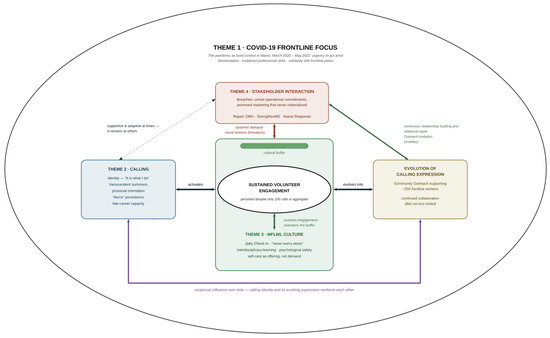
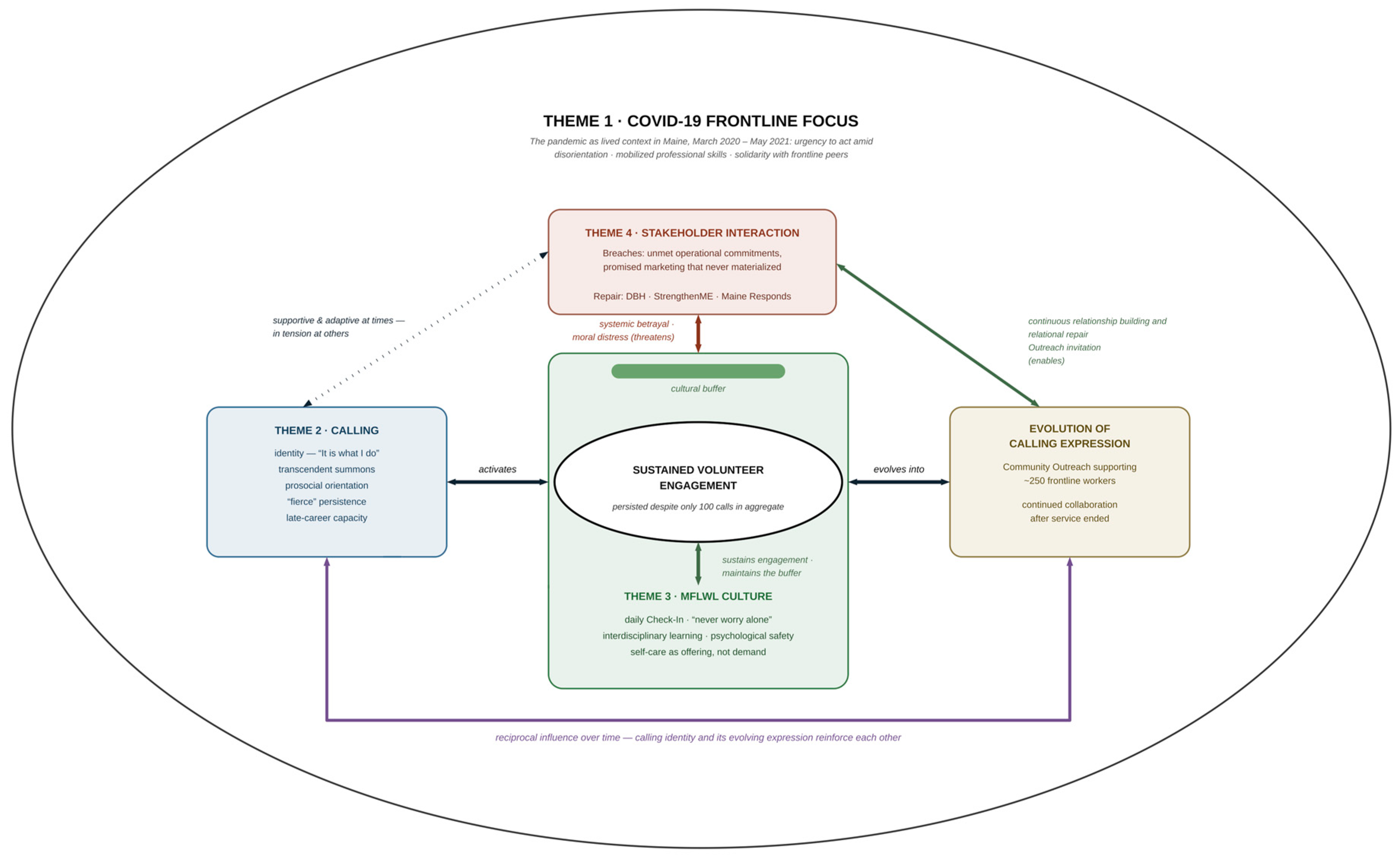
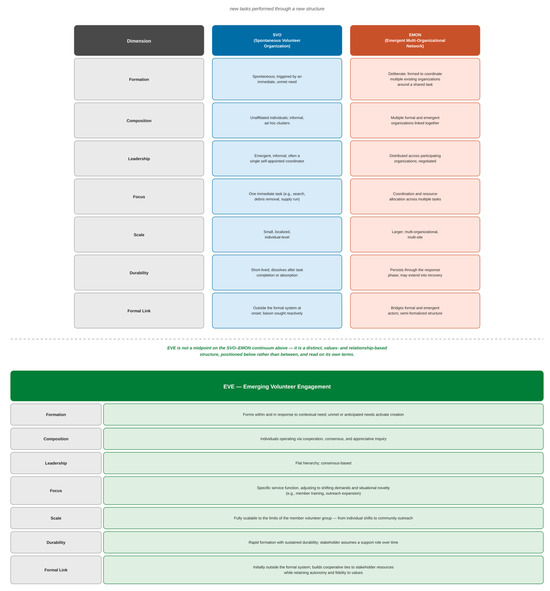
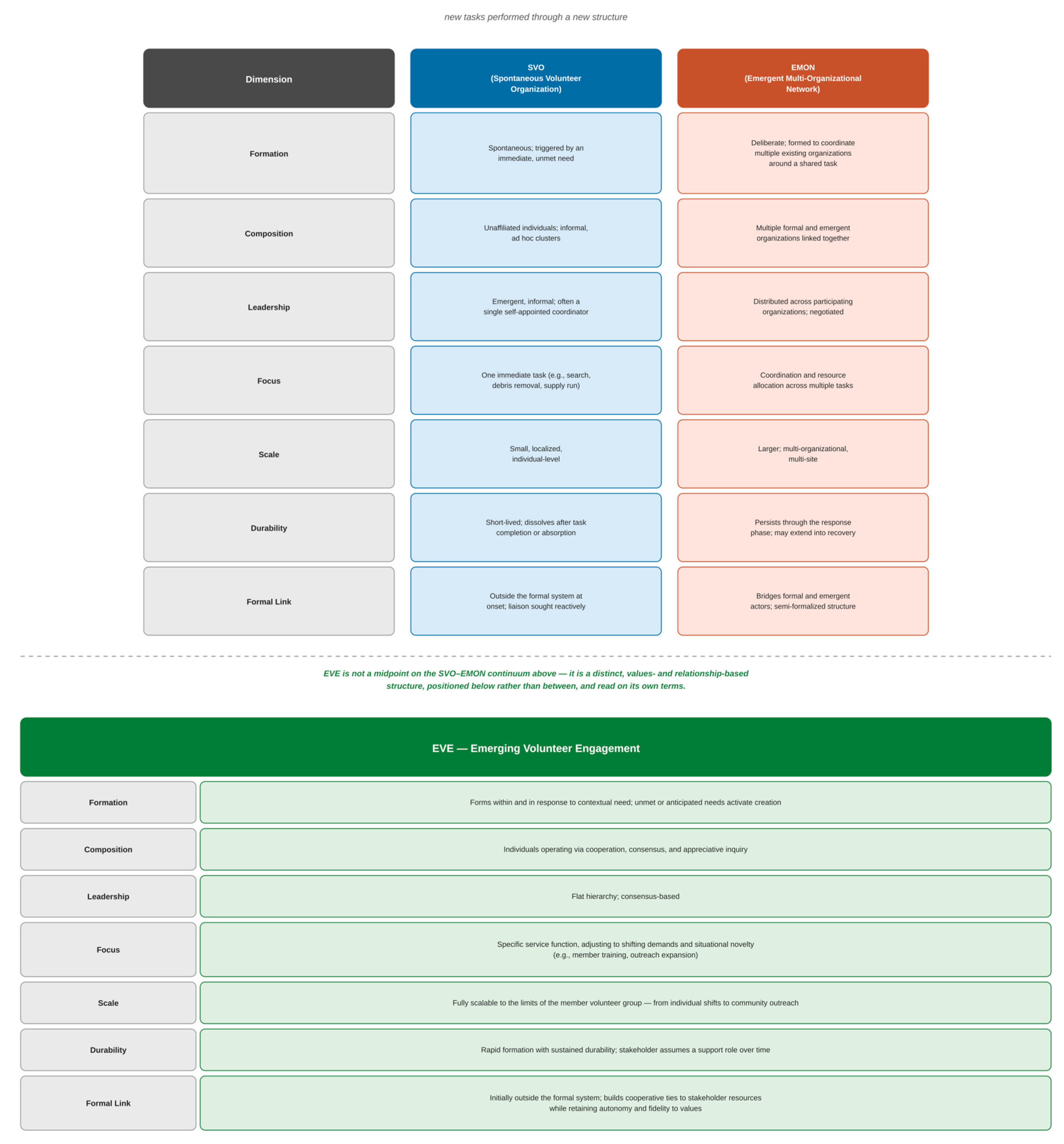
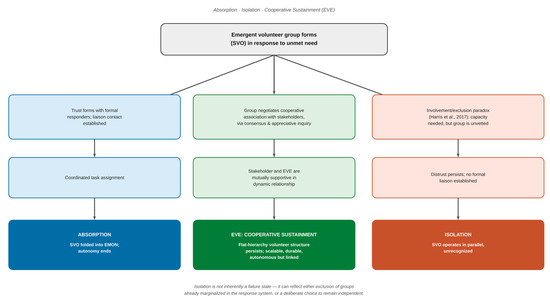
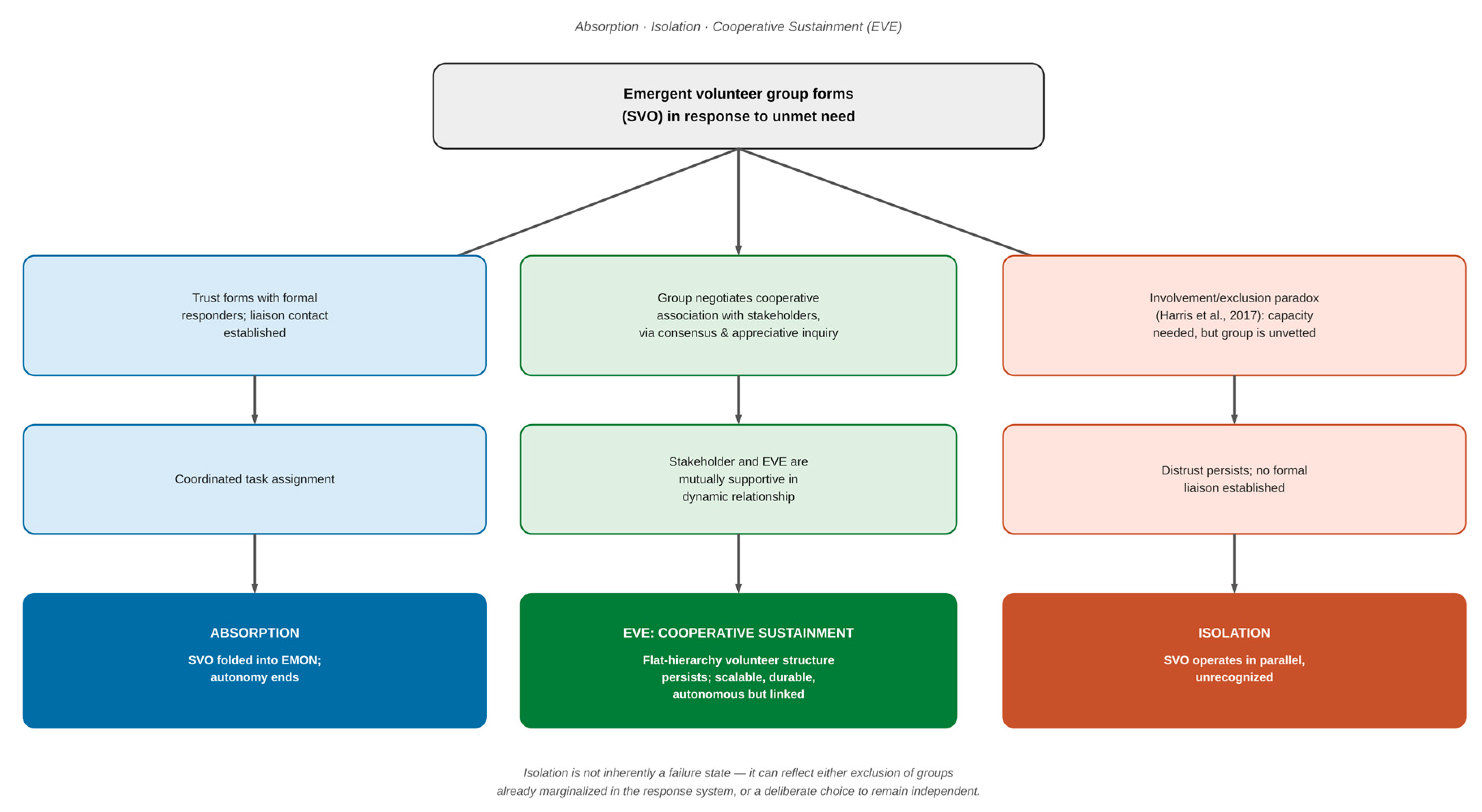
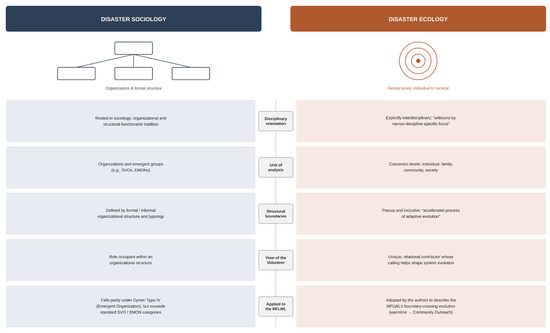
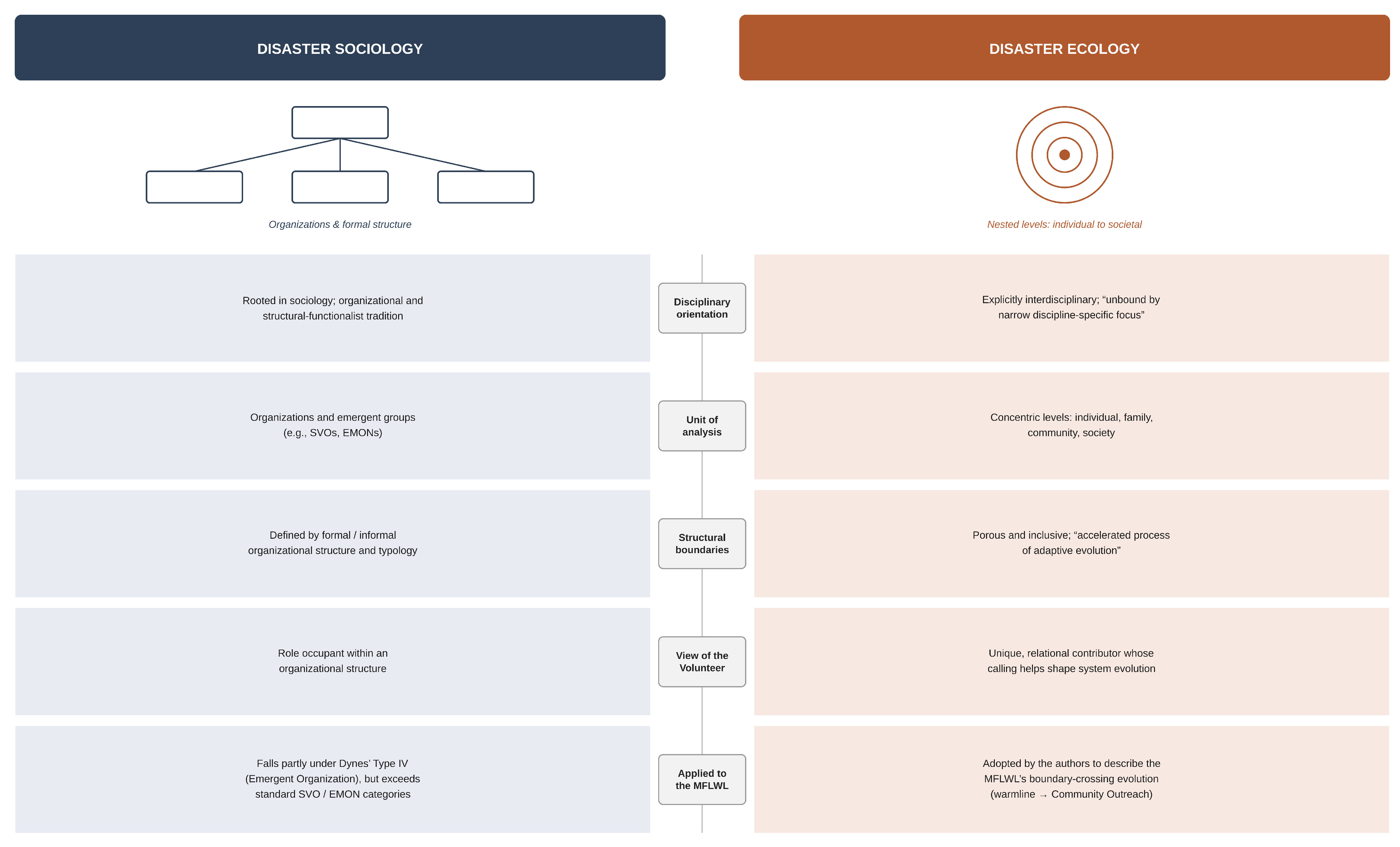

Disclaimer/Publisher’s Note: The statements, opinions and data contained in all publications are solely those of the individual author(s) and contributor(s) and not of MDPI and/or the editor(s). MDPI and/or the editor(s) disclaim responsibility for any injury to people or property resulting from any ideas, methods, instructions or products referred to in the content. |
© 2026 by the authors. Licensee MDPI, Basel, Switzerland. This article is an open access article distributed under the terms and conditions of the Creative Commons Attribution (CC BY) license.