


Highlights
Public health relevance—How does this work relate to a public health issue?
- Loneliness, psychological stress, and low self-esteem are important public health concerns among rapidly growing aging populations.
- This study examines psychosocial outcomes associated with participation in a community-based hybrid reminiscence program among community-dwelling older adults.
Public health significance—Why is this work of significance to public health?
- Participants receiving the Hybrid Happy Reminiscence Program showed higher post-intervention self-esteem and lower loneliness scores than those receiving routine community care.
- The findings provide preliminary evidence that combining face-to-face reminiscence activities with digital support may represent a promising approach to community-based mental health promotion for older adults, although causal effects cannot be established from the present quasi-experimental design.
Public health implications—What are the key implications or messages for practitioners, policy makers and/or researchers in public health?
- Hybrid reminiscence approaches warrant further evaluation as a potential strategy for supporting psychosocial well-being among community-dwelling older adults.
- Larger randomized controlled trials with longer follow-up are needed before conclusions can be made regarding intervention effectiveness, scalability, sustainability, or broader implementation in community-based public health services.
Abstract
Background: Loneliness, psychological stress, and low self-esteem are important mental health concerns among community-dwelling older adults and may negatively affect healthy ageing and quality of life. This study examined psychosocial outcomes associated with participation in a 4-week Hybrid Happy Reminiscence Program among community-dwelling older adults. Methods: A quasi-experimental pretest–posttest control group study was conducted between September and November 2025 among community-dwelling older adults in Don Tako Subdistrict, Ratchaburi Province, Thailand. Participants were recruited using purposive sampling based on predefined eligibility criteria and were subsequently assigned to either an experimental group (n = 30), which received the Hybrid Happy Reminiscence Program combining bi-weekly face-to-face group sessions with a digital intervention delivered through the LINE application, or a control group (n = 30), which received routine community care. No statistically significant between-group differences were detected in the measured baseline demographic characteristics (all p > 0.05). Primary outcomes included self-esteem, loneliness, and psychological stress. Results: Within the experimental group, self-esteem increased from baseline to posttest (t(29) = −8.07, p < 0.001), while loneliness (t(29) = 5.11, p < 0.001, Cohen’s d = 0.93) and psychological stress (t(29) = 6.59, p < 0.001, Cohen’s d = 1.20) decreased. At posttest, the experimental group had higher self-esteem than the control group (mean difference = 4.73, 95% CI: 3.23–6.23, t(58) = 6.32, p < 0.001) and lower loneliness scores (mean difference = −2.13, 95% CI: −3.27 to −1.00, t(58) = −3.78, p < 0.001). For psychological stress, the experimental group also had a lower mean score than the control group at posttest, although the confidence interval included zero (mean difference = −0.73, 95% CI: −1.51 to 0.04, t(58) = −1.89, p = 0.063). Conclusions: Participants receiving the Hybrid Happy Reminiscence Program showed greater post-intervention self-esteem and lower loneliness scores than those receiving routine community care. Although psychological stress decreased within the intervention group, the post-intervention between-group difference was not statistically significant. Given the quasi-experimental design and the non-random allocation procedure, these findings should be interpreted as group differences consistent with a possible beneficial effect of the program rather than definitive evidence of causality. Larger randomized controlled studies with longer follow-up periods are needed to confirm these findings and to distinguish intervention-specific effects from non-specific influences.
1. Introduction
Population ageing has emerged as one of the most significant public health challenges of the twenty-first century. Globally, individuals aged 60 years and older accounted for approximately 13.5% of the population in 2020, and this proportion is projected to reach nearly 20% by 2050 [1]. In Southeast Asia, Thailand is experiencing one of the most rapid demographic transitions toward an ageing society. According to recent estimates, older adults constitute approximately 22% of the Thai population [2]. National statistics further indicate that 13.45 million older adults, representing 20.38% of the population, currently reside in Thailand, and this proportion is expected to increase to 28% by 2033 and 36% by 2050 [3]. Although increased longevity reflects improvements in healthcare, living conditions, and socioeconomic development, population ageing also presents substantial public health challenges, particularly regarding mental health, psychosocial well-being, and healthy ageing.
Mental health has been recognized as a fundamental component of healthy ageing by the World Health Organization. Community-dwelling older adults frequently experience age-related transitions, including retirement, bereavement, declining physical function, reduced social participation, and shrinking social networks. These circumstances often contribute to loneliness, psychological stress, and diminished self-esteem, which adversely affect quality of life and overall well-being [4,5,6]. Evidence suggests that loneliness and poor psychosocial well-being are increasingly prevalent among older adults and constitute important public health concerns because they are associated with depression, reduced resilience, increased healthcare utilization, and poorer health outcomes [7,8]. In Thailand, approximately one-fifth of older adults have been reported to experience poor mental health status, with advanced age significantly associated with greater psychological vulnerability [8]. Consequently, identifying effective community-based interventions that promote mental well-being among older adults has become an important public health priority.
Among the psychosocial factors influencing healthy ageing, self-esteem plays a particularly important role. Self-esteem reflects an individual’s overall evaluation of self-worth and contributes substantially to psychological adjustment, emotional resilience, and life satisfaction [5]. Previous longitudinal studies have demonstrated that self-esteem tends to decline during later life, particularly among older adults experiencing health deterioration, social role changes, or reduced social participation [6,9,10]. Low self-esteem has been associated with loneliness, poor mental health, reduced life satisfaction, and diminished quality of life among older adults [7,11,12]. Furthermore, loneliness itself has emerged as a significant public health issue due to its negative effects on mental health, emotional functioning, social participation, and successful ageing [7]. Psychological stress may further exacerbate these adverse outcomes by impairing emotional regulation and reducing coping capacity among ageing populations. One theoretical explanation for the effectiveness of reminiscence-based interventions is Robert N. Butler’s Life Review Theory [13], which proposes that reviewing and integrating past life experiences is a natural developmental process in later life. According to Butler, reflecting on meaningful autobiographical memories enables older adults to achieve greater self-understanding, reconcile unresolved experiences, and develop a coherent sense of identity and life meaning. Although formal life review therapy often involves reconstructing both positive and negative experiences, simpler forms of positive reminiscence focus primarily on recalling pleasant and meaningful memories, thereby promoting positive affect while minimizing emotional distress.
The intervention is also supported by Socioemotional Selectivity Theory (SST) [14], which suggests that as individuals perceive their remaining lifetime as increasingly limited, they become more motivated to pursue emotionally meaningful experiences and relationships. Consequently, older adults tend to prioritize emotionally rewarding interactions and positive memories over information-oriented goals. Structured reminiscence activities that encourage recalling joyful life events are therefore consistent with age-related motivational changes and may enhance emotional well-being.
Furthermore, positive reminiscence has been proposed to improve psychological well-being through several complementary mechanisms. Recalling successful experiences and meaningful personal achievements can reinforce self-worth and strengthen self-esteem. Sharing autobiographical memories within a supportive group environment promotes interpersonal connection, mutual understanding, and social belonging, thereby reducing feelings of loneliness and perceived social isolation. In addition, focusing attention on positive life experiences may facilitate adaptive emotional regulation by increasing positive emotions, reducing rumination, and fostering gratitude and optimism. Together, these theoretical perspectives provide a conceptual foundation for expecting reminiscence-based interventions to improve psychological outcomes among community-dwelling older adults.
To address these psychosocial challenges, increasing attention has been directed toward non-pharmacological interventions that promote mental health and psychosocial well-being among older adults. Among these approaches, Reminiscence Therapy (RT) has received considerable attention as an evidence-based intervention that encourages individuals to recall, share, and reflect upon meaningful life experiences [13]. Rooted in Butler’s Life Review Theory, reminiscence-based interventions facilitate self-reflection, reinforce personal identity, and enhance emotional integration by helping older adults recognize achievements, strengths, and meaningful life experiences accumulated throughout the lifespan [14]. Previous reviews have consistently demonstrated that reminiscence interventions improve psychological well-being, increase self-esteem, reduce loneliness, and alleviate emotional distress among older adults [13,15,16].
Evidence from Thailand also supports the effectiveness of reminiscence-based interventions. Previous studies have reported that reminiscence programs improved psychological well-being among vulnerable populations, reduced depressive symptoms, and enhanced self-esteem among community-dwelling older adults [17,18,19]. These findings suggest that reminiscence-based interventions may serve as practical community-level mental health promotion strategies capable of addressing multiple psychosocial outcomes simultaneously. However, despite the growing evidence supporting reminiscence therapy, its implementation within routine community and primary healthcare services remains limited.
Several barriers restrict the widespread adoption of psychosocial interventions in community settings. Sub-district Health Promotion Hospitals frequently face shortages of mental health professionals, limited resources, and increasing service demands from rapidly ageing populations. In addition, many older adults living in rural communities experience transportation difficulties and mobility limitations that reduce participation in community-based health programs. Therefore, innovative intervention models that are accessible, scalable, cost-effective, and sustainable are urgently needed.
Digital health technologies provide promising opportunities to overcome these barriers. Mobile health interventions can increase accessibility, facilitate continuous engagement, and extend psychosocial support beyond conventional face-to-face services. Furthermore, engagement with digital technology has been associated with increased self-esteem, self-efficacy, and social connectedness among older adults [20]. Integrating digital technology with reminiscence-based interventions may therefore enhance both intervention accessibility and effectiveness while supporting broader public health goals related to healthy ageing.
To address these challenges, the present study developed a Hybrid Happy Reminiscence Program that combined face-to-face reminiscence group activities with a mobile-based intervention delivered through the LINE application. By integrating evidence-based reminiscence therapy with accessible digital technology, the program was designed to promote self-esteem, reduce loneliness and psychological stress, and enhance psychosocial well-being among community-dwelling older adults. Although previous studies have examined reminiscence therapy and digital interventions separately, evidence regarding the effectiveness of a technology-integrated reminiscence intervention among Thai older adults remains limited. Therefore, this study aimed to examine changes in self-esteem, loneliness, and psychological stress associated with participation in the Hybrid Happy Reminiscence Program among community-dwelling older adults in Thailand.
2. Method
2.1. Study Area
Ratchaburi Province, located in the western region of Thailand, is characterized by a combination of traditional rural communities, agricultural landscapes, and expanding urban settlements. Don Ta Ko Subdistrict, situated in Muang District, represents a semi-urban community where older adults continue to live within close-knit social and cultural environments while experiencing the social transitions associated with modernization and demographic aging. Similar to many communities in Thailand, older adults residing in this area may encounter psychosocial challenges, including reduced social interaction, loneliness, emotional stress, and declining self-esteem resulting from retirement, health limitations, loss of social roles, and changing family structures. These issues have become increasingly important as Thailand progresses toward an aging society.
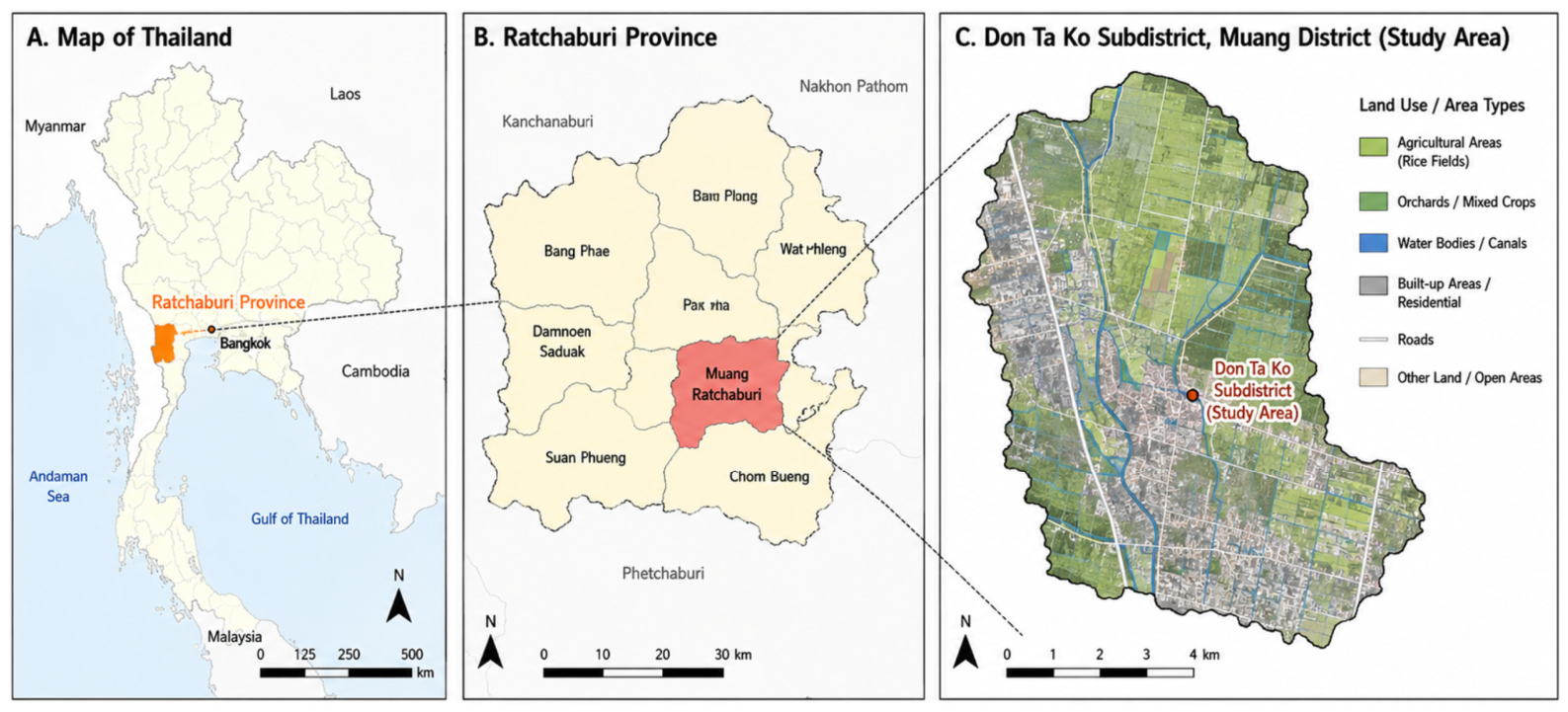
Figure 1 shows the selected research site in Don Ta Ko Subdistrict, Muang District, Ratchaburi Province, which was chosen due to its substantial population of community-dwelling older adults and its strong community-based social structure. The area reflects a coexistence of traditional lifestyles and gradually changing socio-economic conditions, creating a relevant setting for examining psychosocial well-being among the elderly. Older adults in this community commonly participate in local cultural and religious activities; however, many still experience emotional isolation, stress, and feelings of loneliness due to reduced family interaction and age-related life changes. The selection of Don Ta Ko Subdistrict as the study area was strategically important for investigating the effectiveness of reminiscence therapy on self-esteem, loneliness, and stress among community-dwelling older adults. The cultural characteristics of the community, including strong interpersonal relationships, shared historical experiences, and collective memories, provide an appropriate environment for reminiscence-based interventions. Reminiscence therapy encourages older adults to reflect on meaningful life experiences, personal achievements, and positive memories, which may strengthen emotional well-being, enhance self-worth, and foster social connectedness. Furthermore, conducting the study within this community context allows for a deeper understanding of how culturally grounded psychosocial interventions can support healthy aging among Thai older adults. The findings of this intervention study are expected to contribute to the development of community-based mental health promotion programs, support psychosocial care strategies for older adults, and inform public health policies aimed at improving quality of life in aging populations within Thailand.
Figure 1.
The location of the study area in Ratchaburi Province, Thailand. (A) Map of Thailand highlighting Ratchaburi Province; (B) map of Ratchaburi Province highlighting Muang District; and (C) detailed view of Don Ta Ko Subdistrict, illustrating the community landscape and residential environments of the study participants.
2.2. Research Design
This study employed a quasi-experimental, two-group pretest–posttest design. Participants were not randomly allocated to study groups. Group allocation was determined according to the study procedures implemented within the participating community setting. Therefore, although pretest and posttest comparisons were performed, the design does not provide the same level of control over selection bias and confounding as a randomized controlled trial. Neither participants nor facilitators were blinded to group assignment because of the nature of the behavioral intervention.
2.3. Population and Sample Selection
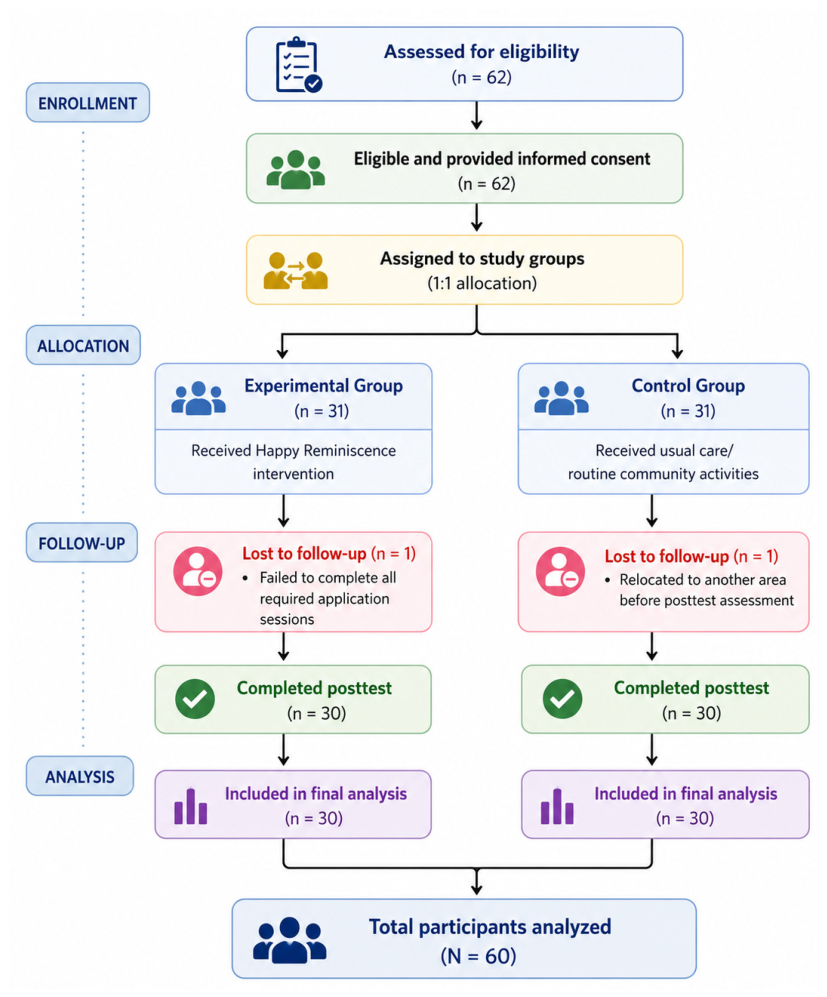
The target population comprised older adults aged 60 years and older residing in Don Ta Ko Subdistrict, Muang District, Ratchaburi Province, Thailand, which encompasses a total elderly population of 2725 individuals [3]. (The required sample size was determined a priori using G*Power software (Version 3.1.9.7). Based on the empirical findings of Alaviani et.al. [7], an effect size (Cohen’s d) of 0.75 was assumed. With an alpha level (alpha) of 0.05 and a statistical power (1-beta) of 0.80, the minimum required sample size was calculated to be approximately 29 participants per group. To accommodate a projected 5% attrition rate, the initial recruitment targeted 31 participants per arm, totaling 62 participants. During the course of the study, structural attrition occurred: one participant in the experimental group failed to complete all required application sessions, and one participant in the control group relocated to another area and was unavailable for the posttest evaluation. Consequently, the final analyzed sample consisted of 60 participants, evenly distributed with 30 individuals in the experimental group and 30 individuals in the control group (Figure 2).
Figure 2.
CONSORT-style flow diagram illustrating participant recruitment, group assignment, follow-up, attrition, and final analysis. Sixty-two eligible older adults were assigned to the experimental (n = 31) and control (n = 31) groups. One participant in the experimental group discontinued participation because the required digital application sessions were not completed, while one participant in the control group relocated before the posttest assessment. Consequently, data from 60 participants (30 per group) were included in the final analysis.
Inclusion and Exclusion Criteria
Participants were screened for eligibility based on the following pre-defined criteria:
- (1)
- Inclusion Criteria
- Aged 60 years or older.
- No prior or current clinical diagnosis of dementia or severe cognitive impairment.
- Exhibited low-to-moderate psychological well-being as indicated by a score of ≤3 on the Self-Reported Mental Health (SRMH) single-item screening tool.
- Expressed willingness and availability to participate in all scheduled group and digital application sessions.
- (2)
- Exclusion Criteria
- Currently receiving specialized psychiatric treatment for major mental illnesses, including schizophrenia, bipolar disorders, or clinical depression.
- Presenting active substance abuse or chemical dependency.
- Exhibited an SRMH screening score of >3.
- Experiencing acute, severe physical illness or medical crises during the recruitment period.
- Demonstrating discontinuity or expressing a desire to withdraw prior to the completion of the baseline assessment.
2.4. Research Instruments
The research instrumentation utilized for data collection comprised five distinct components, systematically structured into eligibility screening, baseline demographic profiles, and validated psychological outcome measurement scales. First, to determine initial study eligibility, the Self-Rated Mental Health (SRMH) single-item global screening question was employed. Participants were asked, “In general, how would you rate your mental health status?” This screening tool is widely established in population-based epidemiological health surveys for capturing subjective psychological well-being. Participants rated their status on a 5-point Likert scale: 5 (Excellent), 4 (Very good/Good), 3 (Fair), 2 (Poor), and 1 (Very poor). A strict cut-off score of less than or equal to 3, denoting fair to very poor self-perceived mental health, served as the mandatory inclusion criterion. Second, a structured Demographic Questionnaire was administered to document the baseline characteristics of eligible participants. This instrument captured critical socio-demographic covariates, including chronological age, biological sex, marital status, educational attainment, current occupational status, average monthly income (quantified in Thai Baht), and documented history of underlying chronic diseases. Third, global self-esteem was evaluated using the Thai version of the 10-item Rosenberg Self-Esteem Scale (RSES). This scale utilizes a 4-point Likert response format ranging from 1 to 4. To ensure psychometric alignment, where higher scores reflect superior levels of global self-esteem, the items were systematically structured with a balanced combination of positively and negatively phrased statements, with negative items appropriately reverse-scored during data processing. Cumulative scores range mathematically from 10 to 40, with higher scores indicating higher levels of self-esteem, without a designated clinical cut-off threshold.
Fourth, subjective feelings of loneliness and perceived social isolation were quantified using a 6-item Loneliness Scale, adapted from the Revised UCLA Loneliness Scale (RULS-6). This abbreviated 6-item instrument rates responses on a 4-point Likert scale: 1 (Never), 2 (Rarely), 3 (Sometimes), and 4 (Regularly). The cumulative score range spans from 4 to 24. Higher total scores mathematically represent greater degrees of subjective loneliness and social disconnectedness, with no clinical cut-off point assigned. Fifth, current psychological stress experienced during the past 2 to 4 weeks was assessed via the 5-item Stress Test Questionnaire (ST-5), developed and validated by the Department of Mental Health, Ministry of Public Health, Thailand. Individual items are scored on a 4-point rating scale: 0 (Almost never), 1 (Sometimes), 2 (Often), and 3 (Regularly), generating an objective composite score ranging from 0 to 15. The clinical interpretations of the composite scores are stratified into four severity thresholds. The clinical interpretations of the composite scores are stratified into four rigorous severity thresholds. Specifically, scores ranging from 0 to 4 indicate mild stress, which is considered manageable within daily life contexts, while scores from 5 to 7 reflect moderate stress that can be effectively addressed through standard relaxation techniques. Conversely, scores between 8 and 9 denote high stress, signaling a level that significantly impacts daily functioning and indicates a clear need for professional counseling or targeted stress-reduction interventions. Lastly, scores from 10 to 15 represent severe or the highest level of stress, highlighting a critical status that requires urgent clinical or medical assessment. Consistent with the guidelines of the Department of Mental Health, a composite score of 8 or higher, coupled with a manifest disruption in daily functioning, signals a recommended referral for professional clinical consultation.
2.5. Intervention Program
The experimental group participated in the Hybrid Happy Reminiscence Program, which was implemented between 16 September and 15 November 2025. This protocol explicitly adopted a simple positive reminiscence framework rather than an extensive or reconstructive life review therapy, intentionally focusing on eliciting, validating, and sharing joyful and meaningful past memories. To optimize intervention delivery and maintain manageable group dynamics, participants were allocated into three distinct subgroups, each facilitated by a trained leader. The intervention team comprised three professional nurses, including two investigators specializing in psychiatric nursing and one research assistant who served as a community nurse at the Don Ta Ko Subdistrict Health Promotion Hospital (HPH).
2.5.1. Intervention Structure and Session Processes
The intervention spanned a total of eight sessions (Table 1), utilizing a hybrid delivery structure that combined structured onsite interactions with an independent, home-based digital phase. The onsite component consisted of Sessions 1 through 6 and Session 8, which were delivered bi-weekly at the Don Ta Ko Subdistrict HPH, with each interactive session lasting approximately one hour. During Session 7, participants engaged in a structured 14-day home-based digital reminiscence program delivered through a customized LINE Official Account, the most widely used messaging platform in Thailand. The digital intervention was designed to reinforce the positive memories and emotional benefits developed during the face-to-face sessions while encouraging continued reflection in participants’ daily lives.
Table 1.
Structure and Operational Details of the Happy Reminiscence Intervention Program.
Each day, participants automatically received one reminiscence activity at approximately the same time (09:00 a.m.). The daily content followed a pre-planned rotation schedule covering themes that paralleled the previous onsite sessions, including childhood memories, family relationships, school experiences, friendships, working life, personal achievements, overcoming life challenges, gratitude, and meaningful life events. Each activity consisted of a nostalgic photograph or illustration, a short reflective message, and one or two open-ended questions encouraging participants to recall and describe a positive personal memory. Participants were encouraged to spend approximately 10–15 min per day completing each activity and to respond by typing short narratives, uploading photographs, or sending voice messages according to their preference.
To maintain engagement, participants received an automated reminder if no response had been submitted by the evening of the same day. The facilitators reviewed participants’ responses daily and provided brief supportive feedback, positive reinforcement, or encouragement within 24 h. No psychotherapy or individualized counseling was provided through the platform; facilitator interactions were limited to promoting participation and maintaining motivation.
Intervention fidelity was maintained through the use of standardized digital materials, identical daily content for all participants, and a predefined intervention schedule. The LINE Official Account automatically recorded message delivery, message opening, response submission, and completion status for each daily activity. These digital logs were reviewed regularly by the research team to monitor participant adherence throughout the 14-day intervention period. Participants who missed two consecutive daily activities received a brief telephone reminder from the research assistant to encourage continued participation. Overall intervention dosage was defined as the number of completed daily activities during the 14-day program. Most participants completed the majority of daily activities, demonstrating a high level of engagement with the digital component.
Every onsite interactive session followed a rigorous, standardized three-step procedural algorithm. First, during the Stimulus Selection phase, facilitators introduced tangible historical triggers, including visual vintage cards depicting childhood games, historic school environments, retro public transportation such as overcrowded student song-thaews with roof riders, vintage motorcycles, local cinemas, and retro advertisements for consumer goods like nostalgic soap, hair oil, and washing powder alongside physical vintage artifacts such as traditional combs, galvanized tin candy containers, dip fountain pens, old leather school bags, and magnetic cassette tapes. Second, in the Internal Reflection and Meaning Extraction phase, participants engaged in a structured relaxation exercise consisting of closing their eyes and taking three deep diaphragmatic breaths, after which they opened their eyes to cognitively reflect on the unique emotions, personal values, and existential meanings attached to the selected stimulus. Third, during the Peer Sharing and Mutual Support phase, participants verbalized or transcribed their narratives, sharing them collectively with their peers utilizing adhesive notes and physical display boards to actively foster group validation, peer encouragement, and social connectedness.
2.5.2. Session-by-Session Timeline
The chronological trajectory of the intervention was systematically structured across the eight sessions to ensure progressive emotional development. Session 1 focused on group introduction, orientation, establishing operational ground rules, mastering the structured relaxation and reflection steps, executing self-introductions via the selected vintage materials, and administering the baseline psychometric pretest. Session 2, entitled Days of Happiness, explored joyous memories across major life stages utilizing visual prompts of childhood homes, old classrooms, and early vocational environments. Session 3, Days of Love, guided participants through the recollection and sharing of early affective milestones, including first romantic experiences, deep peer friendships, and foundational family bonds. Session 4, Days of Pride, celebrated personal triumphs and socio-economic achievements using images of educational certificates, professional pins, medals, career-specific tools, traditional musical instruments, or significant life acquisitions such as property and vehicles.
Subsequent stages of the program shifted toward internal growth and synthesis. Session 5, Valuable Life Lessons, prompted participants to reflect on past adversities with a definitive focus on psychological resilience, mechanisms for overcoming trauma, and wisdom accumulated over the lifespan. Session 6, Sharing Advantages of Reminiscence, involved a collective group synthesis regarding the subjective emotional and psychological benefits discovered throughout the interactive reflection process. Session 7 represented the daily home-based digital reminiscence phase, during which participants engaged with the LINE Official Account daily for 14 consecutive days. This digital module required participants to independently review tailored visual content, reflect on the emotional sentiments shared during prior onsite sessions, execute a daily digital self-check, and submit brief qualitative textual responses to the tracking investigators to verify protocol compliance. Finally, Session 8 served as the conclusion and final reflection phase, where participants synthesized cumulative feelings of current happiness and personal growth before undergoing the posttest psychometric evaluation.
2.6. Instrument Quality Verification
2.6.1. Content Validity
The content validity of the compiled demographic questionnaire, the screening criteria, and the structured Happy Reminiscence intervention manual was evaluated by a panel of three external experts specializing in psychiatric nursing, gerontology, and public health epidemiology. The experts assessed the items based on the Index of Item-Objective Congruence (IOC). Items yielding an IOC score of 0.952 were retained without modification, while minor linguistic adjustments were made to the demographic variables based on expert consensus to ensure total comprehension among Thai older adults.
2.6.2. Reliability and Internal Consistency
Because the outcome measurement scales used in this study, namely the Revised Thai Rosenberg Self-Esteem Scale (RSES-TR), the 6-item Revised UCLA Loneliness Scale (RULS-6), and the 5-item Stress Test Questionnaire (ST-5), are pre-established, translated, and standardized instruments in Thailand, their structural validity was maintained as per their original validation studies. To confirm internal consistency within the specific context of community-dwelling older adults in Ratchaburi Province, a pilot study (try-out) was conducted with 30 older adults sharing identical inclusion and exclusion criteria but residing in a neighboring subdistrict to avoid sample contamination. The internal consistency was statistically quantified using Cronbach’s alpha coefficient (alpha) for each Likert-type multidimensional scale, which yielded highly satisfactory reliability indices across all measures. Specifically, the RSES-TR for evaluating global self-esteem demonstrated a Cronbach’s alpha = 0.88, indicating strong internal consistency. Concurrently, the abbreviated RULS-6 for assessing subjective loneliness yielded a Cronbach’s alpha = 0.83, confirming acceptable reliability for a shortened psychometric scale. Finally, the ST-5 for measuring psychological stress yielded a Cronbach’s alpha = 0.80, thereby indicating satisfactory scale homogeneity and appropriateness for this study population.
2.6.3. Statistical Analysis
All quantitative data were coded, cleaned, and statistical analyses were performed using Stata version 18 (StataCorp LLC, College Station, TX, USA). The significance level for all inferential statistical analyses was set a priori at alpha = 0.05. Descriptive statistics were utilized to summarize the baseline demographic profiles of the participants. Continuous variables (e.g., age) were expressed as means and standard deviations. Categorical variables (e.g., sex, marital status, educational attainment, occupation, monthly income brackets, and underlying diseases) were summarized using frequencies (n) and percentages (%). Baseline demographic and clinical characteristics were compared between the experimental and control groups using chi-square tests for categorical variables and independent-samples t-tests for continuous variables. To examine within-group changes and posttest between-group differences in the psychological outcomes, paired-samples t-tests were used to examine within-group changes in self-esteem, loneliness, and psychological stress from pretest to posttest. Independent-samples t-tests were used to compare mean outcome scores between the experimental and control groups at posttest. Because the study employed a quasi-experimental design without random allocation, these analyses were intended to describe within-group changes and between-group differences rather than to estimate a definitive causal effect of the intervention. The statistical analyses did not fully account for potential residual or unmeasured confounding; therefore, the findings were interpreted cautiously.
2.7. Ethical Considerations
This study was conducted in strict accordance with the international ethical principles governing human subject research. The research protocol was formally reviewed and officially approved by the Institutional Review Board (IRB)/Institutional Ethics Committee of Boromarajonani College of Nursing, Ratchaburi, Faculty of Nursing, Praboromarajchanok Institute, Thailand. Institutional approval was obtained under Project Code BCNR-IRB2025-015 on 15 August 2025, and remains valid until 14 August 2026.
The implementation of the intervention and data collection processes adhered rigorously to international standards, including the Declaration of Helsinki, the Belmont Report, the Council for International Organizations of Medical Sciences (CIOMS) Guidelines, and the International Council for Harmonisation Good Clinical Practice (ICH-GCP) Guidelines. Prior to enrollment, all prospective eligible participants were fully informed of the study’s objectives, procedures, potential risks, and their right to withdraw at any stage without consequence. Written informed consent was voluntarily obtained from each participant before the initiation of the pretest assessment and intervention sessions.
2.8. Informed Consent Statement
Written informed consent was obtained from all participants prior to their enrollment in the study. Participants were provided with detailed information regarding the study objectives, procedures, potential risks and benefits, data confidentiality, and their rights as research participants. They were informed that participation was entirely voluntary and that they could refuse to participate or withdraw from the study at any time without penalty or loss of benefits to which they were otherwise entitled. All personal information and research data were treated confidentially and anonymized prior to analysis. No identifying information was disclosed in any reports or publications arising from this study.
3. Results
Table 2 presents the baseline demographic characteristics of the participants (n = 60) and the results of between-group comparisons for the experimental (n = 30) and control (n = 30) groups. The study sample consisted primarily of male participants in both the experimental group (66.7%) and the control group (63.3%). The mean age was 68.40 years (SD = 7.02) in the experimental group and 71.13 years (SD = 7.78) in the control group. Most participants were married or cohabiting (experimental: 60.0%; control: 53.3%). In the experimental group, equal proportions had completed primary and secondary education (46.7% each), whereas secondary education was the most common educational level in the control group (60.0%). Housewives or unemployed participants constituted the largest occupational subgroup in both groups (36.7% each), and most participants reported monthly incomes of 10,000 Thai Baht or less. Baseline demographic characteristics were compared using Pearson’s chi-square tests for categorical variables and an independent-samples t-test for age. No statistically significant between-group differences were detected for biological sex (χ2(1) = 0.07, p = 0.791), age (t(58) = −1.43, p = 0.158), marital status (χ2(3) = 0.85, p = 0.837), educational attainment (χ2(2) = 1.01, p = 0.371), current occupation (χ2(4) = 0.23, p = 0.935), or monthly income category (χ2(5) = 8.19, p = 0.073). These findings indicate that no statistically significant differences were detected in the measured baseline demographic characteristics. However, given the quasi-experimental design and non-random allocation, the absence of statistically significant baseline differences should not be interpreted as evidence that the groups were equivalent, and residual or unmeasured baseline differences cannot be excluded.
Table 2.
Baseline Demographic Characteristics and Homogeneity Testing Between the Experimental and Control Groups (n = 60).
Table 3 presents the within-group comparisons of psychological outcomes for the experimental group (n = 30) before and after participating in the 4-week Happy Reminiscence intervention program. A paired-samples t-test was conducted to examine changes in mean scores of global self-esteem, subjective loneliness, and psychological stress. The inferential analysis revealed statistically significant improvements across all three primary outcome dimensions following program completion. First, the mean global self-esteem score increased significantly from 28.80 (SD = 3.26) at baseline to 34.63 (SD = 2.94) at posttest (t(29) = −8.07, p < 0.001, 95% CI [−7.31, −4.36]). Second, the mean loneliness score decreased significantly from 11.93 (SD = 3.75) at baseline to 8.67 (SD = 2.47) at posttest, representing a mean reduction of 3.27 points (t(29) = 5.11, p < 0.001, 95% CI [1.96, 4.57]). Third, the mean psychological stress score decreased significantly from 5.53 (SD = 1.41) at baseline to 4.33 (SD = 1.35) at posttest (t(29) = 6.59, p < 0.001, 95% CI [0.83, 1.57]). According to the ST-5 scoring criteria, the group mean therefore shifted descriptively from the moderate-stress range at baseline to the mild-stress range at posttest. These within-group changes describe the pattern observed among participants receiving the program; however, they should not be interpreted in isolation as evidence that the intervention caused the changes.
Table 3.
Within-Group Comparisons of Psychological Outcomes Before and After the Intervention (n = 30).
Prior to the intervention (Table 4), independent-samples t-tests were conducted to compare baseline psychological outcomes between the experimental and control groups. No statistically significant baseline differences were detected in global self-esteem (t(58) = −0.85, p = 0.400), subjective loneliness (t(58) = 0.69, p = 0.490), or psychological stress (t(58) = −0.08, p = 0.933). However, the absence of statistically significant baseline differences should not be interpreted as evidence of equivalence between the groups, particularly given the quasi-experimental design and non-random allocation.
Table 4.
Independent-Samples t-Test Comparisons of Psychological Outcomes Between the Experimental and Control Groups at Pretest and Posttest (n = 60).
Following the 4-week intervention period, statistically significant posttest differences were observed between the experimental and control groups for self-esteem and loneliness. The experimental group had significantly higher self-esteem scores (M = 34.63, SD = 2.94) than the control group (M = 29.90, SD = 2.86), with a mean difference of 4.73 points (95% CI [3.23, 6.23], t(58) = 6.32, p < 0.001). This favorable between-group difference is consistent with a possible beneficial effect of the program; however, given the quasi-experimental design and non-random allocation, it should not be interpreted as definitive evidence of a causal intervention effect.
Similarly, the experimental group had significantly lower loneliness scores (M = 8.67, SD = 2.47) than the control group (M = 10.80, SD = 1.86), with a mean difference of −2.13 points (95% CI [−3.27, −1.00], t(58) = −3.78, p < 0.001). This finding indicates a favorable between-group difference in loneliness following the intervention period. However, the study design does not permit this difference to be attributed specifically to the reminiscence activities, group interaction, or digital component. Non-specific influences, including participant engagement, attention, expectancy, peer interaction, and contextual factors, cannot be excluded.
For psychological stress, the experimental group had a lower mean posttest score (M = 4.33, SD = 1.35) than the control group (M = 5.07, SD = 1.64). However, the between-group difference was not statistically significant (mean difference = −0.73, 95% CI [−1.51, 0.04], t(58) = −1.89, p = 0.063). Thus, although psychological stress decreased within the experimental group from pretest to posttest, the between-group comparison at posttest does not provide sufficient statistical evidence of an intervention-specific effect on psychological stress.
4. Discussion
The present study identified favorable changes in psychosocial outcomes among older adults who participated in the 4-week Hybrid Happy Reminiscence Program. Compared with the control group, participants in the intervention group had higher self-esteem and lower loneliness scores at posttest, whereas the between-group difference in psychological stress was not statistically significant. These findings are consistent with a possible beneficial effect of the program and broadly align with previous studies of reminiscence-based interventions [13,15,16]. However, because this was a quasi-experimental study without random allocation, the observed differences should not be interpreted as definitive evidence of a causal intervention effect.
The observed changes should also not be attributed exclusively to the specific reminiscence components of the program. The intervention combined structured reminiscence activities, face-to-face group interaction, facilitator attention, peer support, and continued engagement through the LINE application. Consequently, improvements in self-esteem and loneliness may have reflected not only reminiscence-specific processes but also non-specific influences such as increased social contact, participant expectations, facilitator attention, differential engagement, peer interaction, or contextual factors. Because these mechanisms were not separately manipulated or measured, the present study cannot determine which intervention components were primarily responsible for the observed changes. Explanations concerning specific mechanisms should therefore be considered tentative.
A significant improvement in self-esteem was observed among participants who participated in the Hybrid Happy Reminiscence Program. This finding is consistent with previous studies indicating that reminiscence activities can enhance self-worth, strengthen personal identity, and promote positive self-perceptions among older adults [18,19,21]. According to life-review theory, recalling meaningful experiences allows individuals to reinterpret past events, recognize personal achievements, and develop a coherent sense of identity throughout the lifespan [14]. During the intervention, participants reflected on successful life experiences, important accomplishments, and valuable lessons learned. Such reflections may have reinforced perceptions of competence, resilience, and personal value, thereby contributing to increased self-esteem. This finding is particularly important because low self-esteem has been associated with poorer mental health outcomes, loneliness, and reduced life satisfaction among older adults [7,11,12].
A significant reduction in loneliness was observed among participants in the intervention group. Several mechanisms may potentially contribute to the observed reduction in loneliness, although these mechanisms were not directly tested in the present study. This finding aligns with previous evidence suggesting that reminiscence-based activities foster social connectedness, strengthen interpersonal relationships, and reduce social isolation among older adults [13,22]. Loneliness has become an increasingly important public health concern because it is associated with depression, reduced quality of life, impaired social functioning, and increased healthcare utilization [7]. Several mechanisms may explain the observed reduction in loneliness. First, group reminiscence sessions created opportunities for meaningful social interaction, allowing participants to share personal experiences and develop emotional connections with peers facing similar life circumstances. Second, the LINE-based digital component facilitated ongoing communication and engagement between face-to-face sessions, extending opportunities for social interaction beyond the formal intervention setting. This continuous social support may have strengthened participants’ sense of belonging and reduced perceptions of social isolation.
Psychological stress decreased significantly within the intervention group from pretest to posttest. However, the posttest between-group difference did not reach statistical significance. Therefore, the observed within-group reduction should not be interpreted as evidence of an intervention-specific effect on psychological stress [23,24]. Several explanations may account for this effect. The intervention incorporated relaxation activities at the beginning of each session, which may have reduced physiological arousal and promoted emotional regulation [24]. Furthermore, the program emphasized positive reminiscence rather than intensive life-review therapy, encouraging participants to focus on pleasant memories, personal achievements, and meaningful relationships. Such positive reflections may have shifted attention away from current stressors and age-related concerns, thereby reducing psychological distress and enhancing emotional well-being [25].
The positive effects observed in the present study may be explained by several complementary theoretical perspectives. First, the findings are consistent with Butler’s Life Review Theory [13], which suggests that reflecting on meaningful life experiences enables older adults to integrate their personal history into a coherent life narrative. Although the Happy Reminiscence program emphasized positive memories rather than comprehensive life review therapy, recalling enjoyable and personally significant experiences may have reinforced participants’ sense of identity, personal accomplishment, and life meaning, thereby contributing to improved self-esteem.
Second, the findings are congruent with Socioemotional Selectivity Theory [14], which proposes that older adults increasingly prioritize emotionally meaningful experiences as they perceive time as more limited. The intervention encouraged participants to revisit positive autobiographical memories and share these experiences with peers, thereby satisfying emotional goals that become particularly important in later life. This process may explain the observed reductions in loneliness and improvements in psychological well-being.
Another plausible mechanism involves the enhancement of emotional regulation through positive reminiscence. Recalling positive autobiographical memories has been shown to activate adaptive cognitive reappraisal, increase positive affect, reduce negative emotional arousal, and strengthen resilience. Furthermore, the group-sharing component likely enhanced perceived social support by providing opportunities for empathy, mutual validation, and meaningful interpersonal interactions. The digital LINE-based reminiscence activities may have further reinforced these psychological benefits by encouraging continuous reflection between face-to-face sessions, thereby extending the therapeutic effects beyond the group meetings.
An important feature of this study is the integration of reminiscence activities with digital health technology. The LINE-based component provided additional opportunities for participants to engage with intervention content between face-to-face sessions. However, because the digital and face-to-face components were delivered as a combined intervention and were not evaluated separately, the present study cannot determine the independent contribution of the digital component to the observed outcomes. Future factorial or component-specific studies are needed to examine whether digital support provides benefits beyond those associated with face-to-face reminiscence activities alone.
From a public health perspective, the findings have important implications for community healthcare systems in ageing societies. Thailand is rapidly transitioning toward a super-aged society, and mental health promotion among older adults has become a national public health priority [2,3]. Community-based interventions that are low-cost, scalable, and sustainable are urgently needed to address increasing psychosocial health demands. The Hybrid Happy Reminiscence Program offers a promising model that can be integrated into existing services provided by Sub-district Health Promotion Hospitals, community health centers, and local older-adult clubs. Because the intervention combines structured group activities with widely available mobile technology, it may improve accessibility while reducing the burden on limited mental health resources.
Several limitations should be considered when interpreting the findings. First, this study employed a quasi-experimental design and participants were not randomly allocated to the experimental and control groups. Although measured baseline demographic and outcome characteristics did not show statistically significant between-group differences, the absence of randomization means that selection bias, residual confounding, and unmeasured baseline differences cannot be excluded. Therefore, the observed post-intervention group differences should not be interpreted as definitive causal effects of the Hybrid Happy Reminiscence Program. Second, the statistical analyses primarily relied on within-group pretest–posttest comparisons and between-group comparisons of outcome scores. These analyses demonstrate changes over time and differences between groups but do not fully isolate the intervention effect from potential baseline imbalance or other time-varying influences. More rigorous analytical approaches and randomized allocation would provide stronger evidence for causal inference. Third, the intervention combined several components, including structured positive reminiscence, face-to-face group interaction, facilitator attention, peer support, and digital engagement through the LINE application. The study was not designed to separate the effects of these individual components. Consequently, non-specific factors such as increased attention, social interaction, expectancy, differential engagement, or contextual influences may have contributed to the observed changes. The specific mechanisms through which the intervention may influence psychosocial outcomes therefore remain uncertain. Fourth, the sample size was modest (n = 60), which may have limited statistical power, particularly for detecting smaller between-group differences such as that observed for psychological stress. The study was also conducted in a single community, limiting generalizability to older adults in other geographical, socioeconomic, or cultural settings. Fifth, outcomes were assessed using self-reported measures and immediately following the intervention. Responses may therefore have been influenced by reporting or social desirability effects, and the absence of longer-term follow-up prevents conclusions regarding the durability of the observed changes.
Finally, participation required access to a smartphone and sufficient digital literacy to engage with the LINE-based component. This requirement may have selected relatively technologically engaged older adults and may limit generalizability to populations with lower digital access or digital literacy. Future randomized controlled trials with larger and more diverse samples, longer follow-up periods, adjustment for relevant baseline covariates, and designs capable of distinguishing specific reminiscence effects from non-specific intervention effects are needed to confirm and extend these findings.
5. Conclusions
This quasi-experimental study found that older adults participating in the 4-week Hybrid Happy Reminiscence Program showed favorable changes in self-esteem and loneliness, with significant post-intervention differences compared with the control group. Psychological stress decreased within the intervention group, but the post-intervention difference between groups was not statistically significant. These findings suggest a possible beneficial effect of the program on selected psychosocial outcomes; however, they should not be interpreted as definitive evidence of causality because participants were not randomly allocated and residual confounding and non-specific intervention effects cannot be excluded. The findings therefore provide preliminary support for further evaluation of hybrid reminiscence approaches rather than definitive evidence of intervention effectiveness. Larger randomized controlled trials with longer follow-up and more rigorous analytical approaches are needed to confirm these findings and determine the specific contribution of reminiscence and digital components.
Implications
The findings provide preliminary implications for community-based mental health promotion among older adults. Hybrid approaches combining structured reminiscence activities with accessible digital communication may warrant further evaluation within community healthcare settings. However, given the quasi-experimental design, non-random allocation, modest sample size, and inability to distinguish intervention-specific from non-specific effects, the present findings are not sufficient to support routine or large-scale implementation. Future randomized controlled trials and implementation studies should evaluate effectiveness, feasibility, acceptability, resource requirements, and sustainability before broader policy or clinical recommendations are made.
Author Contributions
Conceptualization, Y.M. and K.K.; methodology, Y.M., K.K. and P.T.; software, Y.M.; validation, K.K. and P.T.; formal analysis, Y.M.; investigation, Y.M. and P.T.; resources, Y.M. and K.K.; data curation, Y.M.; writing—original draft preparation, Y.M.; writing—review and editing, K.K. and P.T.; visualization, Y.M.; supervision, K.K.; project administration, Y.M.; All authors have read and agreed to the published version of the manuscript.
Funding
This research received no external funding.
Institutional Review Board Statement
The study was conducted in accordance with the Declaration of Helsinki and was approved by the Institutional Review Board (IRB) of Boromarajonani College of Nursing, Ratchaburi, Faculty of Nursing, Praboromarajchanok Institute, Thailand (protocol code BCNR-IRB2025-015; date of approval: 15 August 2025). All study procedures were conducted in accordance with applicable ethical principles and guidelines for research involving human participants.
Informed Consent Statement
Prior to enrollment, all eligible participants were informed of the study objectives, procedures, potential risks, benefits, confidentiality measures, and their right to withdraw from the study at any time without penalty. Written informed consent was obtained from all participants before the pretest assessment and implementation of the intervention.
Data Availability Statement
The data supporting the findings of this study are available from the corresponding author upon reasonable request. The data are not publicly available due to privacy and ethical considerations related to the protection of research participants.
Acknowledgments
The authors express their deepest gratitude to all the older adult participants from Don Tako Subdistrict for their invaluable time, active engagement, and profound dedication throughout the implementation of this study. Their willingness to share lifelong experiences and actively learn within the hybrid Happy Reminiscence program not only enriched the empirical depth of this research but also made every session deeply meaningful and truly memorable. This study would not have been possible without their vibrant spirit, mutual support, and inspiring resilience.
Conflicts of Interest
The authors declare no conflict of interest.
References
- World Health Organization. Decade of Healthy Ageing: Baseline Report; World Health Organization: Geneva, Switzerland, 2020. [Google Scholar]
- World Health Organization. Demographic Profile and Aging Indicators in the South-East Asia Region: Focus on Thailand; World Health Organization Regional Office for South-East Asia: New Delhi, India, 2024. [Google Scholar]
- Ministry of Social Development and Human Security. Statistics on the Thai Elderly Population and Demographic Projections (2025–2050); Department of Older Persons, Ministry of Social Development and Human Security: Bangkok, Thailand, 2025.
- Essid, N.; Anes, I. Low self-esteem in older adults and associated factors: A descriptive and analytical study. Med. Res. Online 2025, 4, 45–53. [Google Scholar] [CrossRef] [Scilit] [PubMed]
- Orth, U.; Robins, R.W. The development of self-esteem. Curr. Dir. Psychol. Sci. 2014, 23, 381–387. [Google Scholar] [CrossRef] [Scilit]
- Robins, R.W.; Trzesniewski, K.H.; Tracy, J.L.; Gosling, S.D.; Potter, J. Global self-esteem across the life span. Psychol. Aging 2002, 17, 423–434. [Google Scholar] [CrossRef] [Scilit]
- Alaviani, M.; Parizad, N.; Hemmati Maslakpak, M.; Alinejad, V. The relationship of self-esteem and mental health among older adults with the mediating role of loneliness. BMC Geriatr. 2025, 25, 233. [Google Scholar] [CrossRef] [Scilit] [PubMed]
- Prasansri, A.; Hachawi, C.; Chaiwcharn, T. Health status and mental health among elderly in rural Thailand: A community-based cross-sectional study. Int. J. Community Med. Public Health 2024, 11, 3413–3419. [Google Scholar] [CrossRef] [Scilit]
- Wagner, J.; Hoppmann, C.; Ram, N.; Gerstorf, D. Self-esteem is relatively stable late in life: The role of resources in the health, self-regulation, and social domains. Dev. Psychol. 2015, 51, 136–149. [Google Scholar] [CrossRef] [Scilit] [PubMed]
- Orth, U.; Trzesniewski, K.H.; Robins, R.W. Self-esteem development from young adulthood to old age: A cohort-sequential longitudinal study. J. Pers. Soc. Psychol. 2010, 98, 645–658. [Google Scholar] [CrossRef] [Scilit] [PubMed]
- Knuutila, M.T.; Lehti, T.E.; Karppinen, H.; Kautiainen, H.; Strandberg, T.E.; Öhman, H.; Savikko, N.M.; Jansson, A.H.; Pitkälä, K.H. Determinants of a sense of insecurity among home-dwelling older people. Scand. J. Public Health 2024, 52, 64–70. [Google Scholar] [CrossRef] [Scilit] [PubMed]
- Szcześniak, M.; Bielecka, G.; Madej, D.; Pieńkowska, E.; Rodzeń, W. The role of self-esteem in the relationship between loneliness and life satisfaction in late adulthood: Evidence from Poland. Psychol. Res. Behav. Manag. 2020, 13, 1201–1212. [Google Scholar] [CrossRef] [Scilit] [PubMed]
- Butler, R.N. The life review: An interpretation of reminiscence in the aged. Psychiatry 1963, 26, 65–76. [Google Scholar] [CrossRef] [Scilit] [PubMed]
- Carstensen, L.L.; Isaacowitz, D.M.; Charles, S.T. Taking time seriously: A theory of socioemotional selectivity. Am. Psychol. 1999, 54, 165–181. [Google Scholar] [CrossRef] [Scilit] [PubMed]
- Yan, Z.; Dong, M.; Lin, L.; Wu, D. Effectiveness of reminiscence therapy interventions for older people: Evidence mapping and qualitative evaluation. J. Psychiatr. Ment. Health Nurs. 2023, 30, 375–388. [Google Scholar] [CrossRef] [Scilit] [PubMed]
- Zeleníková, R. The effect of reminiscence therapy on the assessment of depression, anxiety and self-esteem in community-dwelling older adults: An intervention study. Int. J. Older People Nurs. 2025, 20, e12845. [Google Scholar] [CrossRef] [Scilit] [PubMed]
- Chao, S.Y.; Liu, H.Y.; Wu, C.Y.; Jin, S.F.; Chu, T.L.; Huang, T.S.; Clark, M. The effects of group reminiscence therapy on depression, self esteem, and life satisfaction of elderly nursing home residents. J. Nurs. Res. 2006, 14, 36–45. [Google Scholar] [CrossRef] [Scilit] [PubMed]
- Meléndez-Moral, J.C.; Charco-Ruiz, L.; Mayordomo-Rodríguez, T.; Sales-Galán, A. Effects of a reminiscence program among institutionalized elderly adults. Psicothema 2013, 25, 319–323. [Google Scholar] [CrossRef] [Scilit] [PubMed]
- Zhou, W.; He, G.; Gao, J.; Yuan, Q.; Feng, H.; Zhang, C.K. The effects of group reminiscence therapy on depression, self-esteem, and affect balance of Chinese community-dwelling elderly. Arch. Gerontol. Geriatr. 2012, 54, e440–e447. [Google Scholar] [CrossRef] [Scilit] [PubMed]
- Zhu, W.; Jusoh, N.H.M.; Alan, R.; Latip, M.; Saad, J.M. Unlocking self-esteem in older adults: A conceptual exploration of technological proficiency and its effects. Behav. Sci. 2025, 15, 306. [Google Scholar] [CrossRef] [Scilit] [PubMed]
- Wongpakaran, T.; Wongpakaran, N. A comparison of reliability and construct validity between the original and revised versions of the Rosenberg Self-Esteem Scale. Psychiatry Investig. 2012, 9, 54–58. [Google Scholar] [CrossRef] [Scilit] [PubMed]
- Wongpakaran, N.; Wongpakaran, T.; Pinyopornpanish, M.; Simcharoen, S.; Suradom, C.; Varnado, P.; Kuntawong, P. Development and validation of a 6-item Revised UCLA Loneliness Scale (RULS-6) using Rasch analysis. Br. J. Health Psychol. 2020, 25, 233–256. [Google Scholar] [CrossRef] [Scilit] [PubMed]
- Enggalita, D.A.; Yuniartika, W. Reminiscence techniques in reducing stress in the elderly: Literature review. Open Access Res. J. Sci. Technol. 2024, 10, 59–64. [Google Scholar] [CrossRef] [Scilit]
- Kurian, A.C.; Srisudha, B.; Ganesan, M.P.; Johnson, S.L. Reviving memories, revitalizing minds: The impact of group reminiscence therapy on well-being of elderly residents in care facility. J. Fam. Med. Prim. Care 2025, 14, 963–970. [Google Scholar] [CrossRef] [Scilit] [PubMed]
- Silpakit, O. Srithanya Stress Scale. J. Ment. Health Thail. 2008, 16, 177–185. [Google Scholar]

Disclaimer/Publisher’s Note: The statements, opinions and data contained in all publications are solely those of the individual author(s) and contributor(s) and not of MDPI and/or the editor(s). MDPI and/or the editor(s) disclaim responsibility for any injury to people or property resulting from any ideas, methods, instructions or products referred to in the content. |
© 2026 by the authors. Licensee MDPI, Basel, Switzerland. This article is an open access article distributed under the terms and conditions of the Creative Commons Attribution (CC BY) license.