


Highlights
Public health relevance—How does this work relate to a public health issue?
- HIV-related stigma in Tunisia operates as a structural determinant of health, embedded within punitive legal frameworks, conservative cultural norms, and discriminatory institutional practices that concentrate the epidemic among marginalized key populations.
- Despite comparatively strong antiretroviral coverage (92.5%), critically low HIV testing rates (26%) and persistent mental health comorbidities reveal the unaddressed public health burden of stigma among people living with HIV in Tunisia.
Public health significance—Why is this work of significance to public health?
- Structural stigma drives depression, anxiety, social withdrawal, and treatment non-adherence among people living with HIV, constituting a measurable and modifiable determinant of health inequity in the MENA region.
- Women and older adults living with HIV face intersecting layers of discrimination—combining gender norms, ageism, and HIV-related stigma—that produce disproportionate mental health burdens and remain largely unaddressed by current health systems.
Public health implications—What are the key implications or messages for practitioners, policy makers and/or researchers in public health?
- Healthcare providers, policymakers, and programme designers must adopt trauma-informed, intersectional approaches that integrate mental health services into HIV care pathways, mandate anti-discrimination training, and enforce legal protections for people living with HIV.
- Sustained multisectoral responses—spanning legal reform, community engagement, digital health tools, and culturally adapted psychosocial interventions—are essential to dismantle structural stigma and achieve equitable HIV outcomes in Tunisia and across the MENA region.
Abstract
HIV-related stigma constitutes a critical structural determinant that adversely affects mental health and treatment outcomes among people living with HIV (PLWH) in Tunisia. Rooted in cultural conservatism, legal criminalization, and institutional discrimination, this stigma engenders social exclusion, the systematic removal of individuals from community participation. It further fosters internalized shame, precipitating depression, anxiety, and treatment non-adherence. Evidence was synthesized from English- and French-language literature published between 2014 and 2026, identified through targeted searches of PubMed, Scopus, Web of Science, Google Scholar, and grey literature sources from UNAIDS, WHO, and Tunisian governmental authorities. This narrative review synthesizes recent epidemiological data indicating a 0.1% general population prevalence but 13% among men who have sex with men (MSM), with only 26% testing coverage. Situated within trauma-informed, social determinants of health, and public health frameworks, this analysis identifies specific vulnerabilities for women and older adults living with HIV. Integrated approaches combining healthcare-provider training, legal reform, and culturally tailored mental health services are essential to mitigate the harms of stigma and improve equitable health outcomes in Tunisia.
1. Introduction
HIV-related stigma remains a critical structural determinant undermining mental health, treatment adherence, and quality of life among PLWH, particularly in low- and middle-income countries (LMICs) [1]. In Tunisia, conservative socio-cultural norms, punitive legal frameworks, including the 1992 Law on Communicable Diseases and Penal Code Articles 230 and 226 criminalizing same-sex relations, and institutional discrimination, such as breaches of medical confidentiality and denial of care reported in clinical settings, create adverse contexts that amplify trauma, social exclusion, and internalized shame among affected individuals [2,3,4,5]. These dimensions are examined in greater depth in Section 4 and Section 6.
Tunisia’s early HIV response, initiated in the 1980s under a centralized public health authority, emphasized epidemiological surveillance and biomedical containment, with limited attention to community engagement or the rights of affected individuals. This top-down, control-oriented legacy, reinforced by the 1992 Law on Communicable Diseases and Penal Code provisions criminalizing same-sex conduct and drug use, continues to shape the structural landscape within which PLWH navigate diagnosis and care today [4,5]. Fear of legal repercussions and institutional exposure, particularly among MSM, sex workers, and PWID, discourages voluntary testing and undermines retention in care, contributing directly to the low national testing coverage of 26% reported in 2024 [6,7]. This historical and legal context underscores that stigma in Tunisia is not merely attitudinal but structurally embedded, with direct downstream consequences for early diagnosis and sustained treatment engagement, as examined in detail in Section 6.
Tunisia’s HIV epidemic is classified as low-level, with a prevalence of 0.1% among adults aged 15–49 years. However, it remains highly concentrated among key populations, with men who have sex with men (MSM) reporting a prevalence of 13.0% (up from 4.9% in 2009) and people who inject drugs (PWID) reporting a prevalence of approximately 6% [8], alongside sex workers (SW), for whom a Tunisia-specific prevalence estimate was not identified in the sources consulted, consistent with broader regional gaps in surveillance data for this population [6,9,10,11]. This increase among MSM should be interpreted with caution, as it may reflect both a genuine rise in transmission, consistent with the broader upward trend in new HIV infections observed across the MENA region among key populations [8,12], and, potentially, improvements in case detection over the period; disentangling these contributing factors is not possible with currently available surveillance data. Legal criminalization of same-sex conduct, which restricts access to prevention and harm-reduction services for MSM in Tunisia, may further compound this trend [11,13]. As of 2024, Tunisia was monitoring 2233 PLWH under care (male-to-female ratio 2.3:1; 9% foreigners), with 92.5% treatment coverage and 83.5% viral suppression among diagnosed cases, although testing coverage remains at only 26% [6,7]. This gap between high treatment and viral suppression outcomes among diagnosed individuals and low overall testing coverage suggests that Tunisia’s reported successes apply only to a limited, already-diagnosed subset of PLWH, while a substantial proportion of the epidemic likely remains undiagnosed and outside the reach of care, a pattern consistent with the stigma-driven barriers to testing examined throughout this review.
Tunisia’s epidemic mirrors broader MENA regional challenges, where structural stigma, legal criminalization of same-sex conduct and drug use, and healthcare-based discrimination similarly constrain key populations’ access to prevention and treatment across countries such as Egypt, Morocco, Lebanon, and Jordan [11,12,13]. Despite advances in antiretroviral therapy, these shared structural barriers have contributed to a 116% increase in new HIV infections across the MENA region between 2010 and 2023, the only region to diverge from the global downward trend [8,12]. Women living with HIV in Tunisia face a dual burden, combining HIV-related stigma with gendered social norms governing sexuality and family honour, which elevate their risk of abandonment, intimate partner violence, and reduced access to care; they consistently report higher levels of anxiety, depression, and social isolation than their male counterparts [3,14]. Older adults living with HIV face a distinct compounded burden, in which ageism intersects with HIV-related discrimination, contributing to social isolation and clinical complexity related to age-associated comorbidities and neurocognitive decline, needs that Tunisian health services largely neglect [15,16]. Despite these documented vulnerabilities, empirical research on the mental health impacts of structural stigma remains scarce in this context, particularly among women and older adults who face intersecting forms of discrimination related to age, gender, and HIV serostatus.
This narrative review synthesizes multidisciplinary evidence on how structural, social, and legal HIV stigma shapes trauma and mental health outcomes among Tunisian PLWH. It highlights gender and age intersections and proposes trauma-informed multisectoral strategies for a more equitable response. This analysis is grounded in three complementary theoretical perspectives: a trauma-informed care framework, which foregrounds the psychological sequelae of chronic stigma-related stress; a social-determinants-of-health perspective, which situates mental health outcomes within the structural conditions, legal, institutional, and socio-cultural, that shape PLWH’s lives; and a structural stigma framework, drawing on Goffman’s distinction between concealable and discredited identities and its extensions by Link and Phelan and by Kleinman, which explains how stigma operates beyond individual attitudes to become embedded in law and institutions. These frameworks are presented in greater detail in Section 3, immediately following the Methods, and are applied throughout the thematic sections that follow.
2. Methods
This narrative review synthesizes multidisciplinary evidence on HIV stigma, trauma, and mental health in Tunisia and the broader MENA region. Targeted searches were conducted in PubMed, Scopus, Web of Science, Google Scholar, and grey literature sources from UNAIDS, WHO, and Tunisian governmental authorities, using the following search terms: “HIV/AIDS,” “stigma,” “mental health,” “Tunisia,” “MENA,” “trauma,” “older adults,” and “structural determinants,” applied in combination.
English- and French-language publications from 2014 to 2026 reporting empirical data, policy analyses, or conceptual frameworks relevant to Tunisia were prioritized. Arabic-language sources were not included in the search strategy. In the Tunisian context, official governmental, legal, and public health publications relating to HIV—including those from the Ministry of Health and the Primary Health Care Department—are predominantly issued in French, which remains the primary language of administrative, legal, and academic publication in Tunisia; the peer-reviewed literature specific to Tunisia is likewise overwhelmingly published in French or English. Nonetheless, this approach may have resulted in the omission of Arabic-language grey literature, community-level reports, or media commentary not captured through this search strategy, which we acknowledge as a limitation of this review. The 2014–2026 time frame was selected to capture the most recent literature on HIV stigma and mental health in Tunisia, applying a ten-year retrospective window to balance thematic comprehensiveness with the currency of available evidence. This period also follows a significant phase of political transition in Tunisia: the adoption of a new Constitution in January 2014, subsequent to the 2011 revolution and a transitional coalition government led by the Islamist Ennahda party, redefined the country’s legal and human rights landscape, providing a meaningful contextual anchor for examining the evolution of HIV-related stigma and policy thereafter. Recent data from Tunisia’s Primary Health Care Department and legal analyses were specifically incorporated [6,7].
A narrative rather than systematic approach was selected to enable integration of heterogeneous sources across disciplines and to accommodate the limited volume of Tunisia-specific empirical literature. Explicit inclusion criteria were as follows: (1) publications in English or French; (2) published between 2014 and 2026; and (3) reporting empirical data, policy analysis, or conceptual/theoretical content relevant to HIV-related stigma, trauma, or mental health among PLWH in Tunisia or, where Tunisia-specific literature was limited, the broader MENA region. Exclusion criteria were: (1) content too general or not specific to HIV-related stigma; (2) no engagement with mental health outcomes; (3) no focus on people living with HIV; and (4) editorials or commentaries without empirical or conceptual content. Study selection was conducted independently by multiple authors at both the title/abstract and full-text screening stages, applying the inclusion and exclusion criteria described above. Disagreements regarding study eligibility were resolved by a third author, with reference to the same criteria, throughout the selection process. While no formal risk-of-bias assessment was applied, consistent with the narrative review design, this dual independent screening process was intended to reduce subjectivity in the identification and evaluation of conceptually relevant sources. This review followed the SANRA (Scale for the Assessment of Narrative Review Articles) framework rather than PRISMA, consistent with its classification as a narrative rather than systematic review. Findings were organized thematically across three domains established a priori, on the basis of the theoretical frameworks underpinning this review (Section 3): drivers of stigma (social, cultural, legal, and institutional), consequences (mental health and trauma), and responses (evidence and strategies).
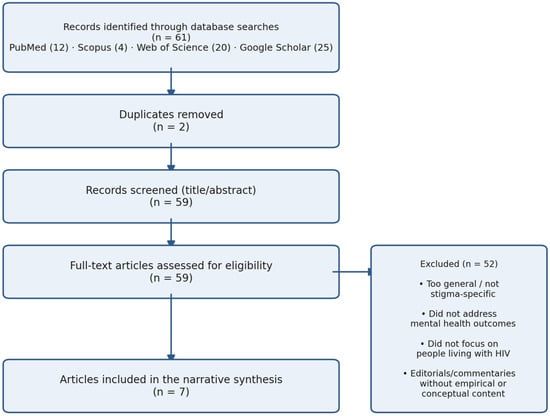
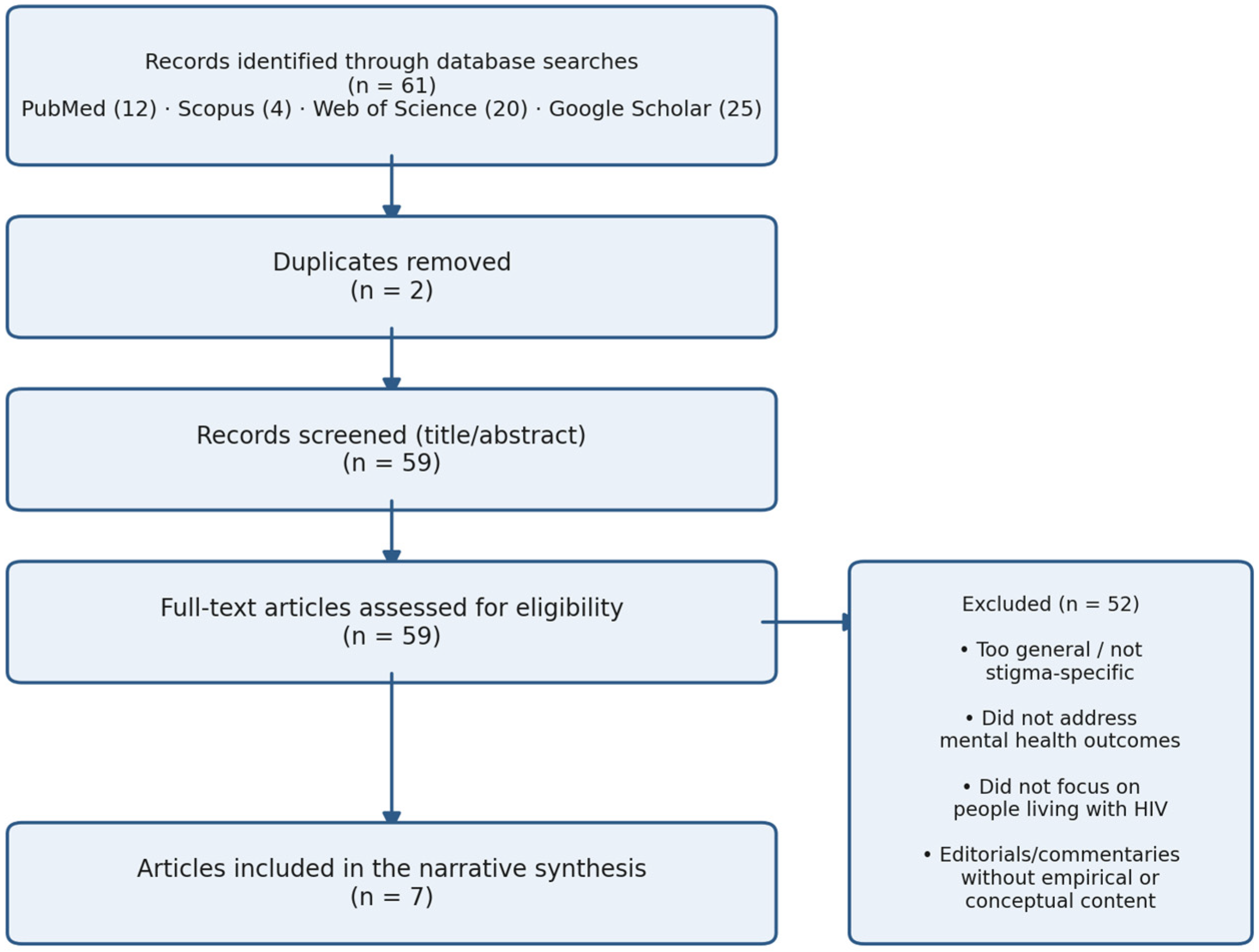
For transparency, the exact Boolean search strings applied across databases, and the number of records identified, are presented in Table 1. A simplified, adapted flowchart summarizing the article identification and selection process is presented in Figure 1.
Table 1.
Search strings by database.
Figure 1.
Simplified study selection flowchart (adapted, non-PRISMA). The seven articles included in the narrative synthesis are summarized in Table 2. Institutional and governmental reports, legal analyses, and theoretical/conceptual frameworks cited throughout the review (e.g., Section 3, Section 6 and Section 9) were consulted as contextual and conceptual sources but were not counted among the records tracked through the systematic search and screening process reported in this flowchart.
Table 2.
Overview of stigma drivers and mental health impacts among PLHIV and healthcare providers in the Middle East and North Africa.
Given the scarcity of empirical studies specifically addressing HIV-related stigma and mental health in Tunisia and the broader MENA region, a gap itself documented in the regional literature (Section 5), this review also drew on empirical studies conducted in other countries sharing comparable structural conditions, namely Muslim-majority countries with religiously and legally conservative approaches to sexuality and drug use, comparable to those described for Tunisia in Section 4 and Section 6. This approach follows established practice in narrative reviews addressing under-researched national contexts, whereby comparable-context evidence is used to inform interpretation in the absence of direct data, while findings drawn from non-Tunisian sources are explicitly flagged as such throughout the review and are not treated as equivalent to direct Tunisian evidence (see Section 11 for a full discussion of this limitation). The seven empirical studies identified through the systematic search and screening process described above, and summarized in Table 2, include both Tunisia-specific and comparable-context studies; institutional and governmental reports, legal analyses, and theoretical/conceptual frameworks cited throughout the review were identified through separate targeted searches and are addressed narratively rather than through this systematic screening process.
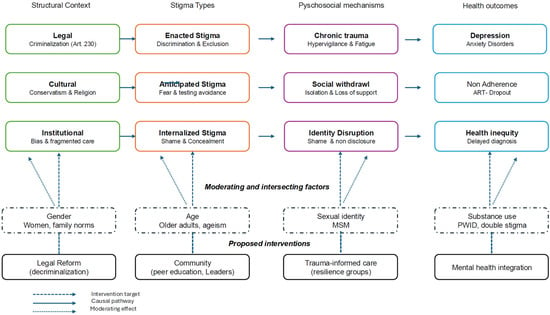
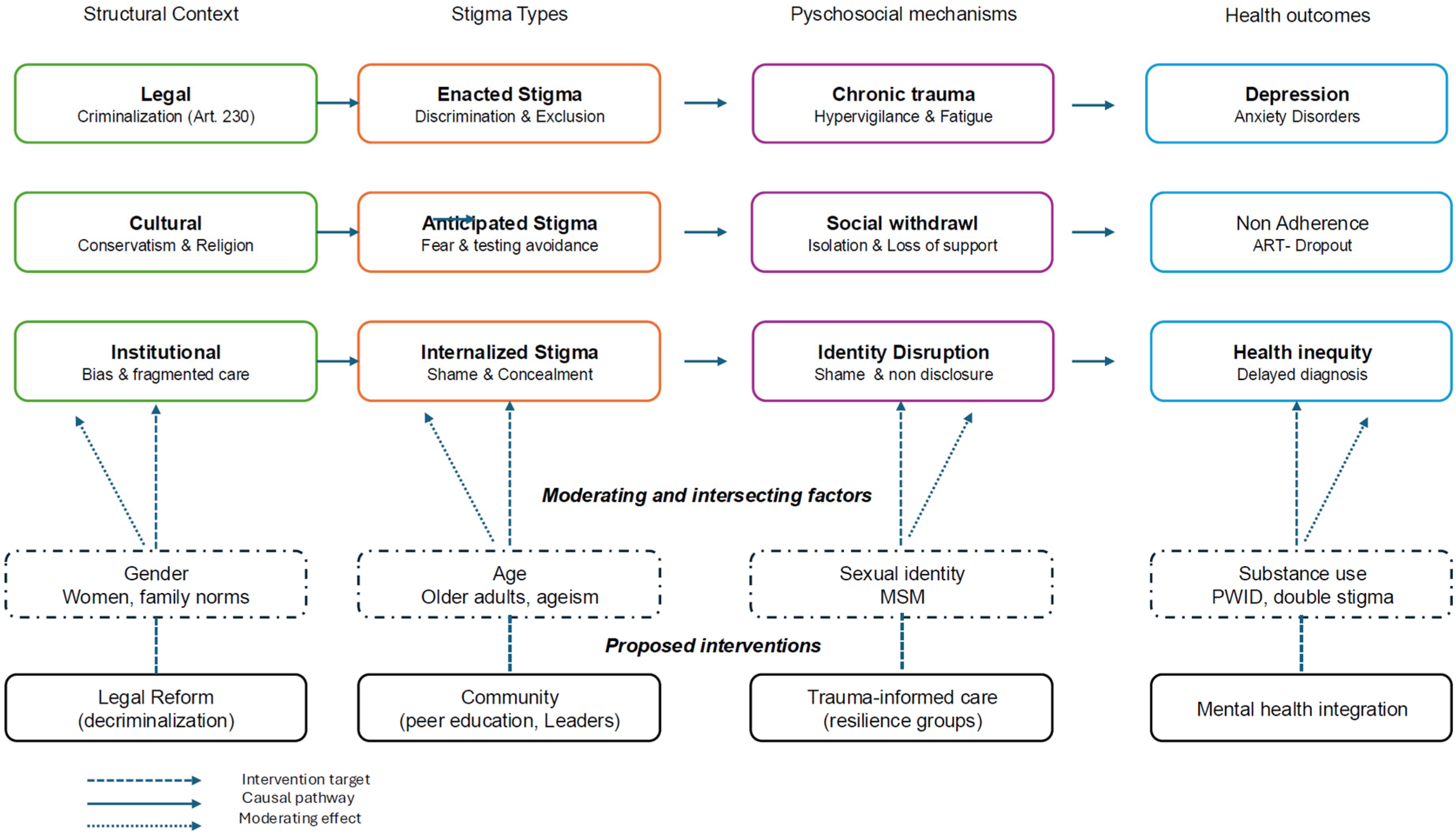
For a visual synthesis of how these structural stigma pathways connect to mental health consequences and the response strategies proposed in this review, see Figure 2 at the end of Section 2.
Figure 2.
Conceptual framework illustrating structural pathways from HIV-related stigma to mental health consequences among PLWH in Tunisia, and the multisectoral response strategies proposed in this review. The following thematic Section 4, Section 5, Section 6, Section 7 and Section 8 apply this theoretical lens, particularly the concealable/discredited distinction and the structural stigma model, to interpret the social, legal, institutional, and intersectional findings presented below.
3. Theoretical Framework: Stigma, Trauma, and Identity Management
Erving Goffman’s seminal conceptualization of stigma distinguishes between discreditable (concealable) and discredited (visible) identities, offering an analytic framework for understanding the psychological burden faced by PLWH in Tunisia [19]. The ongoing management of a concealable stigmatized identity, continuously weighing the risks and benefits of disclosure, generates profound psychological distress and trauma that disrupts identity coherence and undermines resilience.
This perspective highlights the need for stigma mitigation strategies operating on two complementary fronts: transforming public attitudes to reduce enacted discrimination and providing targeted psychosocial support to enable positive identity reconstruction and reduce internalized stigma.
Contemporary extensions of Goffman’s framework further illuminate how legal and institutional structures embed and perpetuate stigma beyond individual interactions, reinforcing the case for multisectoral, systems-level intervention. Link and Phelan’s structural stigma model conceptualizes stigma as a social process, encompassing labelling, stereotyping, status loss, and discrimination, that unfolds within, and is reinforced by, structures of unequal power, rather than as a series of isolated interpersonal encounters [20]. Complementarily, Kleinman’s concept of social suffering situates such stigma-related distress within the broader human consequences of political, economic, and institutional power, framing psychological harm not merely as an individual clinical phenomenon but as a condition actively produced by social structures [21].
Drawing together the three a priori thematic domains guiding this review (drivers, consequences, and responses) with the theoretical perspectives outlined above, Figure 2 presents an original conceptual synthesis developed by the authors as an outcome of this review. It visually maps the structural pathways through which HIV-related stigma in Tunisia, rooted in socio-cultural, legal, and institutional drivers, produces trauma and mental health consequences, and situates the multisectoral response strategies proposed in Section 10 as points of intervention along these pathways.
4. Social and Cultural Dimensions of HIV Stigma in Tunisia
Tunisia’s HIV response since the 1980s has evolved within a conservative social context characterized by constrained public discourse on sexuality, despite comparatively high national literacy rates [17]. This juxtaposition is analytically significant: literacy expands access to information but does not, on its own, dismantle the moral and religious frameworks through which that information is interpreted. The socio-cultural environment therefore constitutes fertile ground for HIV-related stigma, which permeates familial, social, and communal relationships, profoundly disadvantaging PLWH and exacerbating psychological distress.
Two analytically distinct, though mutually reinforcing, mechanisms underlie this stigma. The first operates through fear and misinformation: despite public health education campaigns, persistent misconceptions, including unfounded fears of casual contact, continue to perpetuate social rejection, leaving PLWH isolated not only from broader society but frequently from family networks that would otherwise constitute vital sources of support [10,13]. Because this pathway is rooted in factual misunderstanding, it is, in principle, responsive to accurate information; yet its persistence despite existing campaigns suggests that correcting misinformation alone is insufficient to dislodge it. The second mechanism operates through moral and religious attribution rather than factual error: HIV infection is frequently framed within moral and religious narratives as a consequence of transgressive behaviour, particularly illicit drug use or same-sex relations, both of which are socially and legally stigmatized [11,22]. Within prevailing interpretations of Islamic teaching in Tunisia, HIV is sometimes construed as divine punishment or a marker of personal failure [2]. Unlike the fear-based pathway, this moral pathway is not dislodged by factual correction, since it concerns judgments of deservingness rather than beliefs about transmission risk; it therefore requires engagement with the moral and religious authorities who sustain it, rather than health education alone. Both pathways converge to erode social capital, undermining psychological resilience and treatment adherence.
This moral pathway also reveals a structural asymmetry with implications for intervention. The same religious authority that currently legitimizes social exclusion and amplifies internalized shame could, in principle, be redirected toward compassion and inclusion, given the moral weight such authority carries in Tunisian society. Yet empirical evidence suggests limited substantive engagement by religious leaders in HIV destigmatization to date [18,23,24], representing not merely an absence of support but a missed structural lever: the moral authority capable of legitimizing exclusion is, by the same logic, capable of legitimizing inclusion, if engaged deliberately, a possibility taken up in the multisectoral strategies proposed in Section 10.
Gender further compounds stigma’s impact, producing a dual burden in which HIV-specific discrimination intersects with social expectations governing female sexuality and family honour; this intersection, and its distinct mechanisms relative to men’s experiences of stigma, is examined in depth in Section 7. These gendered dynamics are compounded by the intersecting marginalization experienced by sexual minorities and PWID, whose HIV-related stigma layers onto pre-existing, independently criminalized identities. Consistent with Link and Phelan’s structural stigma model (Section 3), this layering is not merely additive: each stigmatized status independently triggers labelling, stereotyping, and exclusion, such that individuals holding multiple such statuses face compounding, rather than simply cumulative, marginalization, legal persecution, and healthcare discrimination [13].
5. Comparative Perspectives: HIV Stigma and Mental Health in Tunisia Within the MENA Region
Tunisia’s HIV epidemic and its associated challenges of stigma and mental health must be situated within the broader MENA regional context. Unlike the global trend of declining new HIV infections, the MENA region witnessed a 116% increase in new cases between 2010 and 2023 [8,12]. This rise in incidence is especially pronounced among MSM, PWID, and sex workers, groups similarly marginalized across the region, and Tunisia aligns with this regional pattern of a concentrated epidemic [7].
A notable tension emerges when comparing Tunisia’s outcomes to those of its regional peers. Tunisia reports comparatively robust HIV service coverage and higher viral suppression rates than many regional peers, even though systemic barriers, including pervasive stigma, legal non-acceptance of homosexuality and drug use, and institutional discrimination, persist across MENA countries including Egypt, Morocco, Lebanon, and Jordan in ways broadly similar to Tunisia [11,12]. This apparent paradox is resolvable by distinguishing two separate stages of the care pathway: downstream health system performance for individuals already diagnosed and engaged in care, where Tunisia performs comparatively well (Section 1), and upstream barriers to ever reaching diagnosis in the first place—testing access, disclosure risk, and legal exposure—where Tunisia’s legal and structural environment resembles that of its regional peers. Tunisia’s relatively strong outcomes therefore appear to describe the experience of a limited, already-diagnosed subset of PLWH rather than evidence that stigma-related barriers to entering care have been resolved.
Iran and Morocco offer an instructive contrast in how upstream barriers can be addressed: sustained harm-reduction programmes targeting PWID in both countries have successfully reduced new infections by structurally decoupling service access from moral or legal judgement of the underlying behaviour; for example, needle exchange does not require disclosure, confession, or cessation of drug use as a precondition for care [11]. This decoupling mechanism is precisely what Tunisia’s current criminalization framework forecloses, since accessing prevention or treatment services can itself expose individuals to legal risk tied to the behaviours being addressed. Conversely, Tunisia’s ongoing legal restrictions and socio-cultural conservatism mirror broader regional challenges that impede engagement with at-risk populations and obstruct stigma mitigation [13].
Region-wide deficiencies in HIV surveillance and data completeness further hamper targeted responses and obscure the epidemic’s true scope, particularly among marginalized groups [11], a limitation directly reflected in this review’s own inability to identify a Tunisia-specific prevalence estimate for sex workers (Section 1). Tunisia’s comparatively proactive civil society engagement and incremental policy reforms represent promising trajectories; however, achieving meaningful regional progress requires harmonized political commitment, expanded funding, culturally sensitive community engagement, and legal reforms anchored in human rights and the integration of mental health [8,12].
6. Legal and Institutional Reinforcement of Stigma
Legal and institutional stigma in Tunisia operates through two analytically distinct layers: a de jure layer, embedded directly in statute, and a de facto layer, produced through everyday institutional practice regardless of what the law formally requires. Tunisia’s 1992 Law on Communicable Diseases criminalizes the “deliberate” transmission of HIV, while Penal Code Articles 230 and 226 criminalize same-sex relations, with direct implications for MSM and sex workers [4,5]. These legal provisions do not operate in isolation: they entrench and amplify socio-cultural stigmas by formalizing exclusion and sanctioning discrimination against PLWH. Criminalization of behaviours perceived as associated with HIV transmission, including same-sex relations and drug use, creates a pervasive climate of fear that deters individuals from HIV testing, early diagnosis, disclosure, and treatment engagement [13]. This structural repression prolongs transmission risk, worsens disease prognosis, and reinforces stigma as an instrument of social control.
The de facto layer operates independently of, though often in tandem with, this legal architecture. Within healthcare institutions, stigma manifests concretely through discriminatory provider attitudes and practices: quantitative and qualitative studies document that PLWH in Tunisia frequently encounter breaches of confidentiality, segregated services, denial of care, and implicit or explicit hostility from healthcare professionals, independent of whether any specific law is being enforced [2,3]. These institutional forms of stigma erode patient trust, heighten fears surrounding disclosure, and discourage sustained treatment adherence. The fragmentation and lack of integration between HIV services and mental health care compounds these difficulties, forcing many PLWH to navigate disjointed systems devoid of psychosocial support [25].
These two layers combine into a self-reinforcing cycle with a specific structural logic: legal criminalization discourages testing, which concentrates diagnosis among those who present at later, more clinically complex disease stages; this clinical complexity, in turn, reinforces institutional perceptions of PLWH as high-risk or difficult patients, providing an informal justification for the discriminatory institutional practices described above, which then further discourage testing and disclosure among those not yet diagnosed, closing the loop. Significant gaps in healthcare-worker training on HIV and mental health, combined with weak enforcement of anti-discrimination policies in clinical settings, normalize the prejudicial attitudes and behaviours that sustain this cycle [26,27]. Mandatory testing policies and instances of coercive isolation conflict with international human rights standards; moreover, nurses, who form the backbone of day-to-day HIV care, frequently lack HIV-specific clinical and communication training [18,23]. Breaking this cycle accordingly requires intervention at both layers simultaneously, legal reform to address the de jure driver, and provider training and enforcement mechanisms to address the de facto driver, since addressing either in isolation leaves the other available to sustain the cycle, a logic reflected in the multisectoral strategies proposed in Section 10.
7. Intersectionality: Gender, Age, and Other Identities
As discussed above, women bear the intersection of disease-related stigma and socially enforced gender norms, producing disproportionate mental health burdens and barriers to service access [14]. This intersection operates through mechanisms that are structurally distinct from those shaping men’s experiences of HIV stigma in Tunisia. Whereas stigma toward men living with HIV is often organized around presumed transgression against religious or legal norms, particularly same-sex conduct or drug use [11,22], stigma toward women is additionally mediated by prevailing norms of family honour, in which a woman’s HIV status is interpreted not only as a personal failing but as a collective breach threatening her family’s social standing. This distinction matters clinically: disclosure decisions for women are rarely individual but are shaped by anticipated consequences for the family unit, including the marriageability of unmarried female relatives and the social standing of the household as a whole [3,14].
This structural dynamic produces at least three distinguishable barriers to mental health care access for women that are less salient, or absent, for men. First, care-seeking itself may be constrained by mobility restrictions rooted in patriarchal household authority, particularly for married or widowed women dependent on a male relative for transportation or financial resources to attend appointments [3]. Second, confidentiality concerns are amplified: because a woman’s HIV status carries reputational consequences for her broader family network rather than herself alone, fear of disclosure, even inadvertent, through clinic visibility or record-keeping practices, deters sustained engagement with mental health services more acutely than it does for men [2,3]. Third, women face an elevated risk that disclosure, whether voluntary or coerced, will trigger abandonment or intimate partner violence, converting a mental-health support-seeking act into a physical safety risk, a compounding threat with no direct male equivalent documented in the Tunisian context [3,14].
Tunisian women living with HIV consistently report higher levels of anxiety, depression, and social isolation than their male counterparts [14], a disparity that this structural analysis suggests is not incidental but a direct consequence of gender-differentiated exposure to stigma’s social and material consequences. Gender-responsive interventions must therefore move beyond simply extending existing mental health services to women, and instead address the structural preconditions, mobility, confidentiality, and safety, that shape whether such services can be accessed at all.
Older adults living with HIV constitute another underserved population, facing compounded stigma arising from the simultaneous experience of ageism and HIV-related discrimination. This intersection operates through mechanisms distinct from those affecting younger PLWH. First, diagnosis itself is frequently delayed, as both patients and providers may not consider older adults to be at meaningful risk of HIV, resulting in later-stage diagnosis and reduced opportunity for early psychosocial support [15,16]. Second, disclosure carries a distinct relational burden: unlike younger PLWH navigating disclosure to partners, older adults often face decisions about whether to disclose to adult children or extended family who may occupy caregiving roles, complicating an already sensitive process [16]. Third, the co-occurrence of HIV-related stigma with age-associated comorbidities and neurocognitive decline creates a compounded clinical and psychosocial burden that generalist HIV services are not structured to address, while geriatric services in Tunisia are not structured to address HIV-specific needs, leaving older PLWH caught between two service systems, neither of which is designed for their intersecting needs [15,16]. This structural gap results in significant social isolation and heightened marginalization for older adults living with HIV. Tunisian health services largely neglect the unique psychosocial and medical needs of this group, revealing a critical gap and an urgent need for integrated geriatric and mental health models within HIV care—a recommendation developed further in Section 10. We note that the empirical evidence base specific to older PLWH in Tunisia remains limited to a small number of sources, underscoring the research gap identified in Section 9.5.
Sexual minorities and PWID face additional, intersecting forms of stigma exacerbated by socio-legal exclusion [28,29]. Understanding and addressing these complex intersections is foundational to developing inclusive, culturally attuned HIV responses capable of dismantling stigma and improving mental health outcomes for the most marginalized.
8. Mental Health Consequences of HIV Stigma
The psychological consequences of HIV-related stigma among PLWH in Tunisia extend across emotional, cognitive, and social domains, yet the available evidence suggests these consequences are not uniform: they appear to operate through at least two distinguishable, though interacting, pathways. The first is a direct pathway, in which perceived external discrimination (enacted or anticipated) produces measurable psychological distress; the second is an internalized pathway, in which stigma is absorbed into self-concept and generates shame independent of any specific discriminatory encounter [15,16]. Existing Tunisian data do not yet disentangle the relative contribution of each pathway, which limits the ability to determine whether interventions should prioritize reducing enacted discrimination (a structural target) or mitigating internalized stigma (a psychosocial target), a distinction with direct implications for the design of the multisectoral strategies proposed in Section 10.
A second analytical tension concerns the temporality of stigma-related distress. Rather than resulting solely from discrete discriminatory events, the evidence points to a pattern of chronic anticipatory stress: PLWH remain in a state of heightened vigilance against potential rejection, even in the absence of an active stigmatizing encounter [15,16]. This anticipatory dimension helps explain why stigma’s psychological toll appears to persist, and in some cases intensify, independently of actual treatment access or clinical stability, suggesting that viral suppression and treatment adherence, while necessary, are insufficient markers of psychological wellbeing among Tunisian PLWH.
Social withdrawal illustrates a further paradox embedded in the available evidence: it functions simultaneously as a protective coping strategy, shielding individuals from anticipated rejection, and as a risk factor that depletes the relational and emotional support networks (social capital) necessary for psychological recovery and sustained treatment engagement [15,16]. This dual function suggests that interventions aiming simply to “reduce isolation” without addressing the underlying fear driving withdrawal risk may be ineffective, or even counterproductive, if they expose PLWH to stigmatizing environments before those environments have been made safer.
The concept of “double stigma”, the compounding of HIV-related and mental-illness-related stigma, adds a further layer of complexity rather than a simple additive burden [25,30]. Because mental health symptoms and HIV status can each independently trigger concealment behaviours, individuals experiencing both may face a compounding concealment burden: the psychological cost of managing two discreditable identities simultaneously, each complicating disclosure decisions related to the other. This dynamic likely explains, at least in part, the persistent gap between the availability of psychosocial support and its actual uptake among Tunisian PLWH, an association that current data can document but not yet fully explain mechanistically.
Taken together, this body of evidence indicates that HIV-related stigma does not produce a single, uniform mental health outcome, but a cluster of interacting vulnerabilities, direct and internalized, chronic and event-triggered, protective and isolating, singular and compounded, that likely require correspondingly differentiated intervention strategies rather than a uniform psychosocial response. Trauma-informed interventions targeting empowerment, resilience-building, and adaptive coping have shown promise in addressing several of these pathways simultaneously [29], but the extent to which they address internalized versus enacted stigma, or short-term distress versus chronic anticipatory stress, remains insufficiently evaluated in the Tunisian context, a gap we identify as a priority for future research (Section 9.5).
9. Additional Considerations to Strengthen Tunisia’s Response to HIV Stigma
9.1. Local Data and Case Examples
Tunisia’s national HIV prevalence of approximately 0.1% masks significant heterogeneity among key populations. MSM experience an estimated prevalence of 9.1%, and PWID approximately 6%, with many individuals unaware of their serostatus and engaging in inconsistent condom use, reflecting persistent gaps in prevention and service coverage [8]. Qualitative accounts enrich this epidemiological picture by documenting the lived realities of PLWH. Social rejection following HIV status disclosure, as reported by MSM in urban Tunis, frequently leads to familial abandonment and severe psychological distress, while isolation combined with cognitive decline can have devastating consequences for older adults living with HIV [2,16]. These experiences underscore the need for contextually sensitive, evidence-based interventions tailored to lived realities rather than aggregate statistics.
9.2. Implementation Barriers and Facilitators
Despite broad recognition of stigma as a primary barrier to HIV care, systemic obstacles continue to impede effective stigma reduction in Tunisia. Healthcare workers frequently lack specialized training in HIV and mental health, contributing to persistent discriminatory attitudes [25]. Enforcement of anti-discrimination policies remains inconsistent, and resource constraints limit psychosocial service provision, particularly outside urban centres [26,27]. Social taboos surrounding sexuality and HIV restrict open community dialogue, complicating awareness and attitude-change efforts [3]. Legal frameworks criminalizing same-sex conduct and drug use create pervasive fear that deters at-risk populations from accessing care [13]. Encouragingly, growing involvement of civil society organizations, peer support networks, and selected religious and community leaders has proven effective in shifting social norms and building resilience [31]. Sustained multisectoral collaboration, cultural competence, and political commitment will be required to overcome remaining barriers.
9.3. Digital and Media Strategies
Advances in digital technology and expanding internet access in Tunisia present novel platforms for stigma reduction and mental health support. Mobile applications and social media campaigns provide confidential channels for disseminating accurate HIV information, countering misinformation, and facilitating anonymous peer support, benefits particularly relevant to youth and socially marginalized groups [31,32]. Telepsychiatry extends these possibilities by delivering culturally sensitive mental health counselling beyond geographic and social barriers [27]. Challenges inherent to digital approaches include persistent digital divides in rural areas and privacy concerns requiring robust data security measures. When strategically integrated with conventional approaches, digital and media tools hold considerable promise as complements to established stigma reduction and mental health initiatives.
9.4. Ethics and Human Rights Framing
The imperative to address HIV stigma transcends public health rationale and is rooted in fundamental ethical and human rights commitments. Stigma and discrimination against PLWH violate core rights to dignity, health equity, and freedom from prejudice, as enshrined in global instruments including the Universal Declaration of Human Rights and UNAIDS’ zero discrimination framework [33]. Stigmatizing laws and practices constitute profound social injustices that exacerbate psychosocial harm and entrench health disparities [32]. Healthcare professionals bear an ethical obligation to provide non-discriminatory, respectful care, while policymakers must enact and enforce legal protections for PLWH’s rights. Global evidence indicates that decriminalization of drug use and HIV transmission reduces infections—the experiences of Portugal and Iran offer instructive models [34]. Embedding these principles within health systems and broader society fosters empowerment, counters exclusion, and affirms the human dignity of all affected individuals.
9.5. Research Gaps and Future Directions
Although the literature on HIV stigma and mental health in Tunisia has expanded in recent years, important gaps persist. Insufficient data on youth, rural populations, LGBTQ+ individuals, and incarcerated PLWH limit comprehensive understanding and the design of targeted interventions [13]. Longitudinal research is urgently needed to track the evolving mental health impacts of stigma over time, while rigorous evaluation of intervention effectiveness within Tunisia’s specific socio-legal context remains limited. Exploration of culturally specific resilience factors holds potential to inform effective psychosocial supports. Development and implementation of stigma and mental health monitoring frameworks would strengthen programmatic feedback and support policy refinement. Engaging PLWH in participatory research designs would further ensure the relevance and ethical integrity of future studies. Cross-disciplinary collaboration spanning public health, sociology, psychology, and law will be foundational to advancing these research priorities.
10. Strategies for Stigma Mitigation: Toward a Multisectoral Response
Comprehensive mitigation of HIV stigma in Tunisia requires a coordinated, multisectoral approach spanning healthcare training, community engagement, legislative reform, and mental health service enhancement (see Table 3). Healthcare providers require ongoing, trauma-informed stigma-reduction training embedded within professional education frameworks, aimed at dismantling prejudice, cultivating empathy, and strengthening patient-centred care. Communities themselves constitute powerful drivers of change: peer education initiatives, collaboration with trusted religious and civic leaders, and culturally tailored public awareness campaigns can reshape harmful social norms and normalize HIV discourse.
Table 3.
Multisectoral strategies for mitigating HIV-related stigma and improving mental health outcomes among people living with HIV in Tunisia.
Structural reforms are indispensable to this effort. These include enacting and rigorously enforcing anti-discrimination legislation, mandating stigma-sensitivity training for all healthcare workers, integrating mental health into standard HIV care pathways, and establishing transparent accountability mechanisms to monitor compliance. Robust mental health programming, featuring culturally adapted cognitive-behavioural therapy (CBT), resilience-building groups, and empowerment sessions delivered through partnerships with local NGOs, holds considerable promise for alleviating stigma’s psychological burden and reinforcing coping capacity.
Specialized attention to older adults living with HIV calls for integrated care models combining geriatric, HIV, and mental health expertise, supported by peer networks to counteract social isolation and promote clinical adherence. The overarching framework must embed trauma-informed care principles throughout HIV prevention, treatment, and support services, directly addressing stigma’s psychological sequelae and fostering sustained engagement with care.
11. Strengths and Limitations
This review offers several strengths. It provides, to our knowledge, one of the first multidisciplinary syntheses focused specifically on the intersection of structural stigma, trauma, and mental health among PLWH in Tunisia, integrating epidemiological, legal, sociological, and psychological evidence within a single analytical framework. The review is explicitly grounded in established theoretical perspectives, trauma-informed care, social determinants of health, and structural stigma theory (Section 3), which were defined a priori and applied consistently across the thematic sections, rather than being introduced post hoc to rationalize findings. Methodological transparency was strengthened through explicit inclusion and exclusion criteria, a documented search strategy with reported Boolean search strings, a simplified selection flowchart, and independent dual screening with third-author arbitration of disagreements (Section 2).
This review also has several limitations. First, as a narrative rather than systematic review, it does not apply a formal risk-of-bias assessment to individual studies, and the selection of conceptually relevant sources, while conducted independently by multiple authors, retains an inherent degree of interpretive judgement. Second, the empirical literature specific to Tunisia remains limited in volume, particularly for sex workers, youth, incarcerated PLWH, and, as discussed in Section 7, older adults, constraining the depth of evidence-based analysis possible for these subgroups and increasing reliance on a small number of recurrently cited sources. This scarcity led us to draw, where necessary, on empirical studies from other Muslim-majority countries with broadly comparable religious and legal approaches to sexuality and drug use (Section 2, Table 2); while this approach helps contextualize the Tunisian findings, evidence drawn from other national contexts cannot be assumed to generalize directly to Tunisia, and findings of this kind are flagged as such throughout the review. Third, the search strategy was restricted to English- and French-language sources; Arabic-language grey literature, community reports, or media commentary were not systematically searched, which may have resulted in the omission of locally relevant evidence (Section 2). Fourth, much of the available Tunisia-specific empirical evidence is cross-sectional or descriptive in design, limiting causal inference regarding the pathways linking stigma to mental health outcomes proposed in Figure 2. Finally, as with any literature synthesis, this review may be subject to publication bias, as studies documenting more severe stigma-related harms may be more likely to be published or cited than null or contrary findings.
12. Conclusions
HIV stigma in Tunisia represents a deeply entrenched structural determinant that amplifies social exclusion, exacerbates mental health disparities, and impedes equitable access to healthcare for PLWH. Embedded across conservative cultural attitudes, religious moralism, punitive legal frameworks, and discriminatory institutional practices, stigma functions as a formidable barrier to both health and human dignity. Addressing this challenge requires rigorous, trauma-informed, culturally nuanced, and multisectoral interventions integrating healthcare worker education, community participation, enforceable legal protections, and comprehensive mental health services—with particular attention to the distinct vulnerabilities of women and older adults. Through sustained and coordinated efforts grounded in human rights principles and ethical imperatives, Tunisia can dismantle the structural barriers sustained by stigma, promote resilience and equity, and affirm the well-being of all people living with HIV.
Author Contributions
Conceptualization, H.L., M.E., W.M., I.S. and H.G.; Data Curation, H.L., M.E., W.M. and I.S.; Methodology, H.L., I.S., A.B.H. and A.A.; Project administration, H.L., I.S., A.B.H., A.A. and F.T.; Validation, H.L., M.E., W.M., I.S., A.B.H., A.A., F.T. and H.G.; Visualization, H.L., M.E., W.M., I.S., A.B.H., A.A., F.T. and H.G.; Writing—original draft, H.L., M.E., W.M. and I.S.; Writing—review & editing, H.L., M.E., W.M., I.S., A.B.H., A.A., F.T. and H.G.; Supervision, H.L. All authors have read and agreed to the published version of the manuscript.
Funding
This research received no external funding.
Institutional Review Board Statement
Not applicable.
Informed Consent Statement
Not applicable.
Data Availability Statement
No new data were created or analyzed in this study. Data sharing is not applicable to this article.
Conflicts of Interest
The authors declare no conflict of interest.
References
- Rao, D.; Elshafei, A.; Nguyen, M.; Hatzenbuehler, M.L.; Frey, S.; Go, V.F. A systematic review of multi-level stigma interventions: State of the science and future directions. BMC Med. 2019, 17, 41. [Google Scholar] [CrossRef] [Scilit] [PubMed]
- Sweileh, W. Stigma research in Arab countries: A rapid review. Ment. Health Soc. Incl. 2024, 28, 1014–1024. [Google Scholar] [CrossRef] [Scilit]
- Tran, B.X.; Phan, H.T.; Latkin, C.A.; Nguyen, H.L.T.; Hoang, C.L.; Ho, C.S.H.; Ho, R.C.M. Understanding Global HIV Stigma and Discrimination: Are Contextual Factors Sufficiently Studied? (GAPRESEARCH). Int. J. Environ. Res. Public Health 2019, 16, 1899. [Google Scholar] [CrossRef] [Scilit] [PubMed]
- HIV Justice, Network. Countries: Tunisia. 2024. Available online: https://www.hivjustice.net/country/tn/ (accessed on 10 January 2025).
- Khouili, R.; Levine-Spound, D. Article 230: A History of the Criminalization of Homosexuality in Tunisia. 2019. Available online: https://article230.com/wp-content/uploads/2019/07/Livre-Article-230-Eng-WEB.pdf (accessed on 27 November 2025).
- Laroussi, H.; Elghali, M.; Marrakchi, W.; Ben Hassine, A.; Abbassi, A.; Souli, I.; Mokrani, S.; Chakroun, M. Critical Analysis and Exploring Stigma, Legal Barriers, Healthcare Access, and Rights Advocacy Challenges of People Living with HIV in Tunisia. J. Assoc. Nurses AIDS Care 2026, 37, 366–374. [Google Scholar] [CrossRef] [Scilit] [PubMed]
- Primary Health Care Department in Tunisia. HIV/AIDS National Report; ONU SIDA: Geneva, Switzerland, 2024; in press. [Google Scholar]
- UNAIDS. Tunisia 2022–2023 Summary of the Joint Programme’s Support to the National HIV Response in 2022–2023. UNAIDS. 2024. Available online: https://open.unaids.org/sites/default/files/2025/Tunisia-country-report_2022-2023.pdf (accessed on 12 April 2025).
- World Health Organization. Tunisia HIV/AIDS Country Profile 2020; World Health Organizationl: Geneva, Switzerland, 2020; Available online: https://www.emro.who.int/asd/country-activities/tunisia.html (accessed on 19 August 2025).
- Mumtaz, G.R.; Riedner, G.; Abu-Raddad, L.J. The emerging face of the HIV epidemic in the Middle East and North Africa. Curr. Opin. HIV AIDS 2014, 9, 183–191. [Google Scholar] [CrossRef] [Scilit] [PubMed]
- Karbasi, A.; Fordjuoh, J.; Abbas, M.; Iloegbu, C.; Patena, J.; Adenikinju, D.; Vieira, D.; Gyamfi, J.; Peprah, E. An evolving HIV epidemic in the Middle East and North Africa (MENA) region: A scoping review. Int. J. Environ. Res. Public Health 2023, 20, 3844. [Google Scholar] [CrossRef] [Scilit] [PubMed]
- Frontline AIDS. The Escalating HIV Epidemic in MENA: Key Populations and Structural Barriers. *Frontline AIDS Policy Brief*. 2025. Available online: https://frontlineaids.org/report-warns-of-escalating-hiv-epidemic-in-the-middle-east-and-north-africa/ (accessed on 10 February 2025).
- Eddahiri, S.; Johnson, K. Mental Health Literacy, Stigma, and Access to Services among Young Adults in Tunisia. Columbia Univ. J. Glob. Health 2021, 10, 1–9. [Google Scholar] [CrossRef] [Scilit]
- Mumtaz, G.R.; Hilmi, N.; Majed, E.Z.; Abu-Raddad, L.J. Characterising HIV/AIDS knowledge and attitudes in the Middle East and North Africa: Systematic review and data synthesis. Glob. Public Health 2020, 15, 275–298. [Google Scholar] [CrossRef] [Scilit] [PubMed]
- Rubenstein, L.; Amon, J.; McLemore, M.; Eba, P.; Dolan, K.; Lines, R.; Beyrer, C. HIV, prisoners, and human rights. Lancet 2016, 388, 1202–1214. [Google Scholar] [CrossRef] [Scilit] [PubMed]
- Quinn, K.G.; Murphy, M.K.; Nigogosyan, Z.; Petroll, A.E. Stigma, isolation, and depression among older adults living with HIV in rural areas. Ageing Soc. 2019, 40, 1352–1370. [Google Scholar] [CrossRef] [Scilit] [PubMed]
- Hakawi, A.; Mokhbat, J. The current challenges affecting the quality of care of HIV/AIDS in the Middle East: Perspectives from local experts and future directions. J. Infect. Public Health 2022, 15, 1508–1513. [Google Scholar] [CrossRef] [Scilit] [PubMed]
- Hamidi, A.; Regmi, P.; van Teijlingen, E. Islamic perspectives on HIV: A scoping review. Discov. Soc. Sci. Health 2024, 4, 6. [Google Scholar] [CrossRef] [Scilit]
- Goffman, E. Stigma: Notes on the Management of Spoiled Identity; Prentice-Hall: Hoboken, NJ, USA, 1963. [Google Scholar]
- Link, B.G.; Phelan, J.C. Conceptualizing Stigma. Annu. Rev. Sociol. 2001, 27, 363–385. [Google Scholar] [CrossRef] [Scilit]
- Kleinman, A.; Das, V.; Lock, M.M. (Eds.) Social Suffering; University of California Press: Berkeley, CA, USA, 1997. [Google Scholar]
- Fauk, N.K.; Ward, P.R.; Hawke, K.; Mwanri, L. HIV stigma and discrimination: Perspectives and personal experiences of healthcare providers in Yogyakarta and Belu, Indonesia. Front. Med. 2021, 8, 625787. [Google Scholar] [CrossRef] [Scilit] [PubMed]
- Gichuru, E.; Kombo, B.; Mumba, N.; Sariola, S.; Sanders, E.J.; van der Elst, E.M. Engaging religious leaders to support HIV prevention and care for gays, bisexual men, and other men who have sex with men in coastal Kenya. Crit. Public Health 2018, 28, 294–305. [Google Scholar] [CrossRef] [Scilit] [PubMed]
- Parker, R.; Aggleton, P. HIV- and AIDS-related stigma and discrimination: A conceptual framework and implications for action. In Culture, Society and Sexuality; Routledge: London, UK, 2007; pp. 459–474. [Google Scholar] [CrossRef] [Scilit]
- Karamouzian, M.; Akbari, M.; Haghdoost, A.A.; Setayesh, H.; Zolala, F. I am dead to them”: HIV-related stigma experienced by people living with HIV in Kerman, Iran. J. Assoc. Nurses AIDS Care 2015, 26, 46–56. [Google Scholar] [CrossRef] [Scilit] [PubMed]
- Spagnolo, J. Global Mental Health: Building the Capacity for the Integration of Mental Health in Primary Care in Tunisia. Ph.D. Thesis, Montreal University, Montreal, QC, Canada, 2018. Available online: https://umontreal.scholaris.ca/items/ab17f681-5307-49d0-9cd1-ffb53430c335 (accessed on 28 February 2025).
- World Health Organization. World Mental Health Report: Transforming Mental Health for All; World Health Organization: Geneva, Switzerland, 2022; Available online: https://books.google.com/books?hl=en&lr=&id=lnkOEQAAQBAJ&oi=fnd&pg=PR10&dq=Stigma+structural+determinant+mental+health+HIV+Tunisia+commentary&ots=TTi-WSQo0p&sig=OznUliqVqptMY0D7Z0mfUuVz-Vw (accessed on 5 May 2025).
- Logie, C.H.; James, L.; Tharao, W.; Loutfy, M.R. HIV, Gender, Race, Sexual Orientation, and Sex Work: A Qualitative Study of Intersectional Stigma Experienced by HIV Positive Women in Ontario, Canada. PLoS Med. 2011, 8, e1001124. [Google Scholar] [CrossRef] [Scilit] [PubMed]
- Dada, D.; Abu-Ba’are, G.R.; Turner, D.; Mashoud, I.W.; Owusu-Dampare, F.; Apreku, A.; Ni, Z.; Djiadeu, P.; Aidoo-Frimpong, G.; Zigah, E.Y.; et al. Scoping review of HIV-related intersectional stigma among sexual and gender minorities in sub-Saharan Africa. BMJ Open 2024, 14, e078794. [Google Scholar] [CrossRef] [Scilit] [PubMed]
- Smith, J.M.; Knaak, S.; Szeto, A.C.H.; Chan, E.C.; Smith, J. Individuals to Systems: Methodological and Conceptual Considerations for Addressing Mental Illness Stigma Holistically. Int. J. Ment. Health Addict 2022, 20, 3368–3380. [Google Scholar] [CrossRef] [Scilit] [PubMed]
- Kola, L.; Kohrt, B.A.; Hanlon, C.; Naslund, J.A.; Sikander, S.; Balaji, M.; Benjet, C.; Cheung, E.Y.L.; Eaton, J.; Gonsalves, P.; et al. COVID-19 mental health impact and responses in low-income and middle-income countries: Reimagining global mental health. Lancet Psychiatry 2021, 8, 535–550. [Google Scholar] [CrossRef] [Scilit] [PubMed]
- Mumtaz, G.R.; Chemaitelly, H.; AlMukdad, S.; Osman, A.; Fahme, S.; Rizk, N.A.; El Feki, S.; Abu-Raddad, L.J. Status of the HIV epidemic in key populations in the Middle East and north Africa: Knowns and unknowns. Lancet HIV 2022, 9, e506–e516. [Google Scholar] [CrossRef] [Scilit] [PubMed]
- UNAIDS. A Framework for Understanding and Addressing HIV-Related Inequalities. 2022. Available online: https://www.unaids.org/sites/default/files/media_asset/framework-understanding-addressing-hiv-related-inequalities_en.pdf (accessed on 5 May 2025).
- DeBeck, K.; Cheng, T.; Montaner, J.S.; Beyrer, C.; Elliott, R.; Sherman, S.; Wood, E.; Baral, S. HIV and the criminalisation of drug use among people who inject drugs: A systematic review. Lancet HIV 2017, 4, e357–e374. [Google Scholar] [CrossRef] [Scilit] [PubMed]

Disclaimer/Publisher’s Note: The statements, opinions and data contained in all publications are solely those of the individual author(s) and contributor(s) and not of MDPI and/or the editor(s). MDPI and/or the editor(s) disclaim responsibility for any injury to people or property resulting from any ideas, methods, instructions or products referred to in the content. |
© 2026 by the authors. Licensee MDPI, Basel, Switzerland. This article is an open access article distributed under the terms and conditions of the Creative Commons Attribution (CC BY) license.