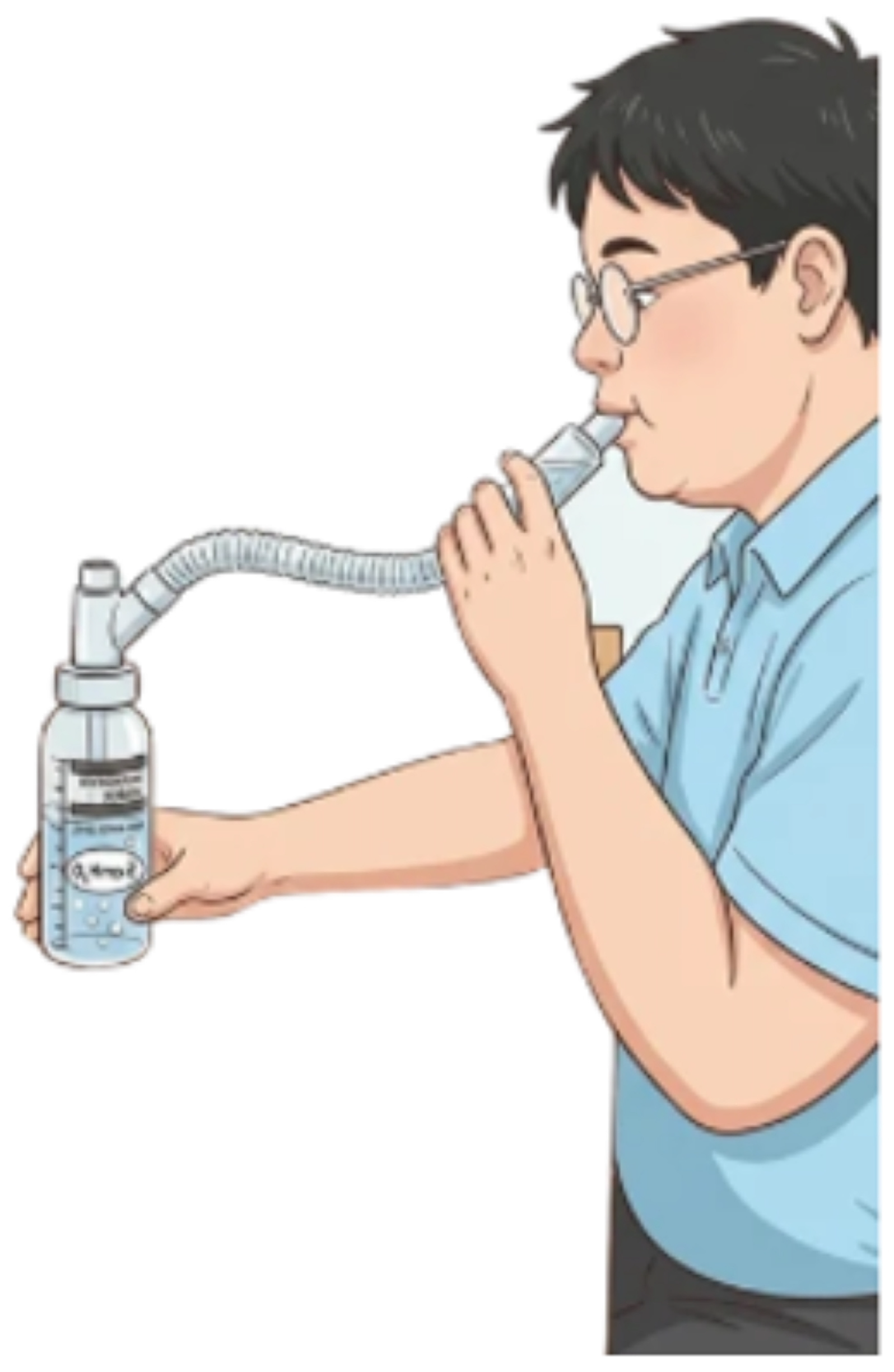
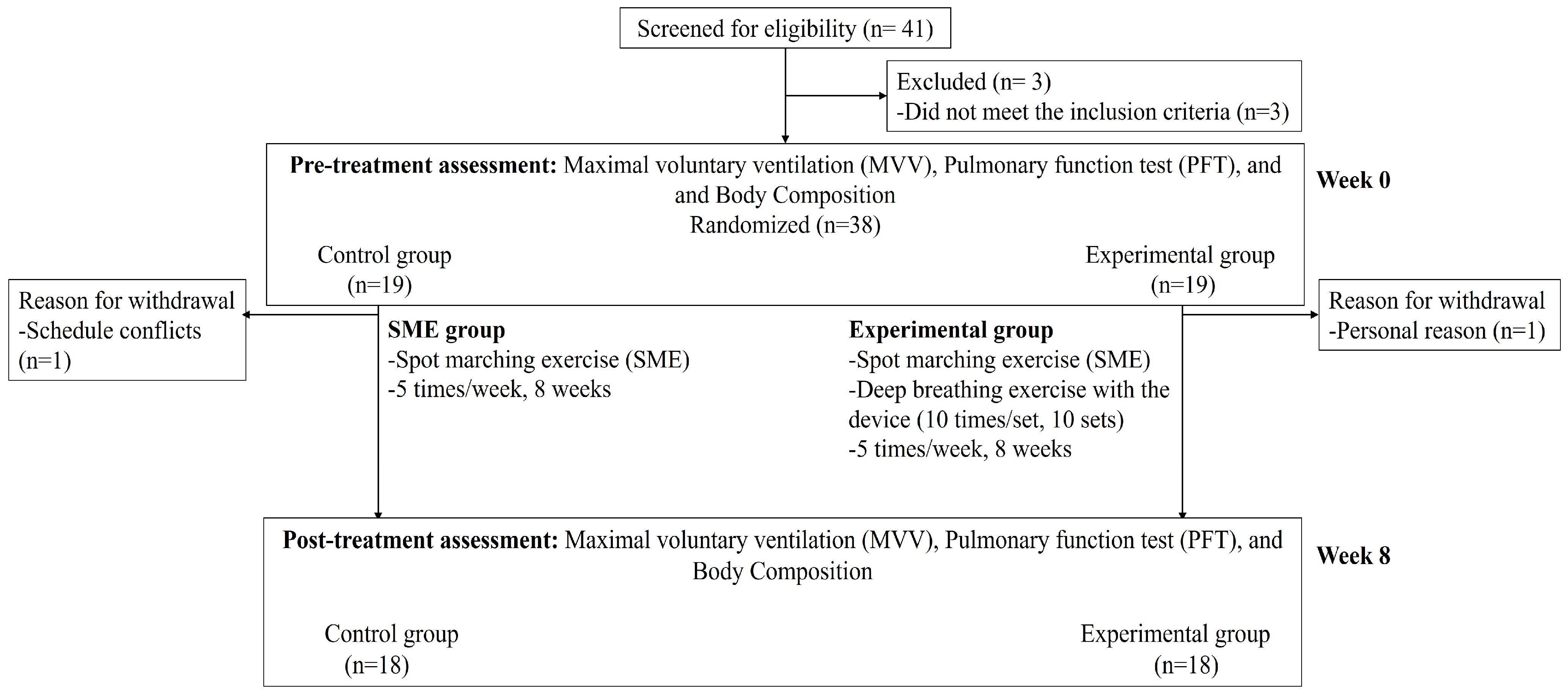
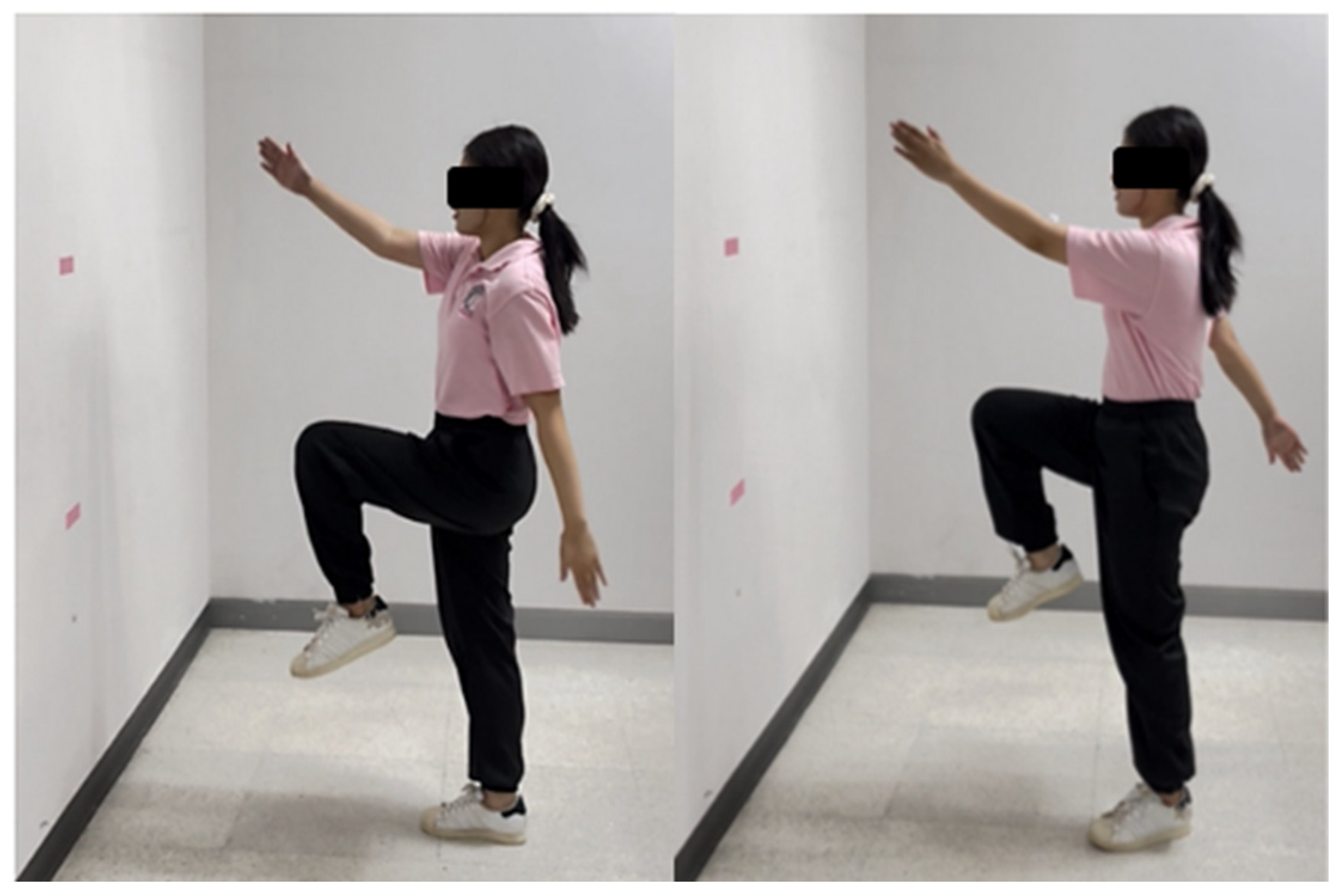
Effects of Adding BreatheMAX-Assisted Deep Breathing to Home-Based Spot Marching on Maximal Voluntary Ventilation and Peak Expiratory Flow in Young Adults with Overweight or Obesity: A Randomized Controlled Trial

 ,
,
Highlights
- Overweight and obesity represent critical global public health concerns that adversely affect respiratory mechanics and ventilatory function. This study addresses these issues by demonstrating that an accessible, home-based exercise and breathing regimen effectively enhances pulmonary outcomes in young adults (aged 18–25 years) with overweight or class I–II obesity. While our findings specifically emphasize the utility of early intervention in this young adult demographic, this low-barrier protocol offers a promising framework for future public health strategies targeting obesity-related respiratory impairment across broader age groups.
- This work is significant because it evaluates a low-impact, home-based strategy designed to support ventilatory capacity without requiring specialized gym equipment or facilities.
- The Combined Spot Marching Exercise (SME) and BreatheMAX-assisted deep breathing (CSMEB) protocol demonstrated greater improvements in maximal voluntary ventilation (MVV) and peak expiratory flow rate (PEFR) compared to SME alone. Furthermore, the intervention was practical and well-tolerated with no reported adverse events during the 8-week trial, making it a feasible approach for young adults seeking targeted respiratory enhancements.
- The CSMEB program represents a practical, home-based strategy that could be integrated into community health initiatives to promote targeted respiratory endurance in young, relatively healthy adults with overweight or mild-to-moderate obesity.
- While body composition parameters remained unchanged over the 8 weeks, this study provides a foundation for future research into combined aerobic and resistive breathing modalities. Future long-term studies with larger cohorts, direct physiological measurements, strict nutritional controls, and diverse clinical populations are recommended to evaluate broader therapeutic utility and safety.
Abstract
1. Introduction
2. Materials and Methods
2.1. Study Design and Setting
2.2. Participants
2.3. Sample Size Calculation
2.4. Outcome Measures
2.4.1. Primary Outcome
Maximal Voluntary Ventilation (MVV)
2.4.2. Secondary Outcomes
Pulmonary Function Testing (PFT)
Body Composition
2.5. Interventions: The Study Included Two Intervention Groups: The SME Group and the CSMEB Group
2.5.1. SME Group
2.5.2. CSMEB Group
2.5.3. Intervention Monitoring, Compliance, and Fidelity Verification
2.6. Statistical Analysis
3. Results
4. Discussion
4.1. Effects of SME with Deep Breathing Exercise on MVV and PFT
4.2. Effects of SME with Deep Breathing Exercise on Body Composition
4.3. Limitations of This Study
5. Conclusions
Author Contributions
Funding
Institutional Review Board Statement
Informed Consent Statement
Data Availability Statement
Acknowledgments
Conflicts of Interest
Abbreviations
| CSMEB | Combination of Spot Marching Exercise and deep-breathing training |
| SME | Spot Marching Exercise |
References
- Shah, N.M.; Kaltsakas, G. Respiratory complications of obesity: From early changes to respiratory failure. Breathe 2023, 19, 220263. [Google Scholar] [CrossRef] [Scilit] [PubMed]
- Salome, C.M.; King, G.G.; Berend, N. Physiology of obesity and effects on lung function. J. Appl. Physiol. 2010, 108, 206–211. [Google Scholar] [CrossRef] [Scilit] [PubMed]
- Malini, M.; Baljoshi, V.S.; Kammar, K.F. A comparative study of the impact of obesity on maximum voluntary ventilation in young adult women. Natl. J. Physiol. Pharm. Pharmacol. 2017, 7, 174–177. [Google Scholar] [CrossRef] [Scilit]
- Mahajan, S.; Arora, A.K.; Gupta, P. Obesity and spirometric ventilatory status correlation in adult male population of Amritsar. Natl. J. Physiol. Pharm. Pharmacol. 2012, 2, 93–101. [Google Scholar] [CrossRef] [Scilit]
- Elagizi, A.; Kachur, S.; Carbone, S.; Lavie, C.J.; Blair, S.N. A review of obesity, physical activity, and cardiovascular disease. Curr. Obes. Rep. 2020, 9, 571–581. [Google Scholar] [CrossRef] [Scilit] [PubMed]
- Armstrong, A.; Jungbluth Rodriguez, K.; Sabag, A.; Mavros, Y.; Parker, H.M.; Keating, S.E.; Johnson, N.A. Effect of aerobic exercise on waist circumference in adults with overweight or obesity: A systematic review and meta-analysis. Obes. Rev. 2022, 23, e13446. [Google Scholar] [CrossRef] [Scilit] [PubMed]
- Davidson, L.E.; Hunt, S.C.; Adams, T.D. Fitness versus adiposity in cardiovascular disease risk. Eur. J. Clin. Nutr. 2019, 73, 225–230. [Google Scholar] [CrossRef] [Scilit] [PubMed]
- van Baak, M.A.; Pramono, A.; Battista, F.; Beaulieu, K.; Blundell, J.E.; Busetto, L.; Carraça, E.V.; Dicker, D.; Encantado, J.; Ermolao, A.; et al. Effect of different types of regular exercise on physical fitness in adults with overweight or obesity: Systematic review and meta-analyses. Obes. Rev. 2021, 22, e13239. [Google Scholar] [CrossRef] [Scilit] [PubMed]
- Berge, J.; Hjelmesæth, J.; Kolotkin, R.L.; Randby, A.; Småstuen, M.C.; Hertel, J.K.; Støren, Ø. Effect of aerobic exercise intensity on health-related quality of life in severe obesity: A randomized controlled trial. Health Qual. Life Outcomes 2022, 20, 34. [Google Scholar] [CrossRef] [Scilit] [PubMed]
- Donnelly, J.E.; Blair, S.N.; Jakicic, J.M.; Manore, M.M.; Rankin, J.W.; Smith, B.K. American College of Sports Medicine Position Stand. Appropriate physical activity intervention strategies for weight loss and prevention of weight regain for adults. Med. Sci. Sports Exerc. 2009, 41, 459–471. [Google Scholar] [CrossRef] [Scilit] [PubMed]
- Swift, D.L.; Johannsen, N.M.; Lavie, C.J.; Earnest, C.P.; Church, T.S. The role of exercise and physical activity in weight loss and maintenance. Prog. Cardiovasc. Dis. 2014, 56, 441–447. [Google Scholar] [CrossRef] [Scilit] [PubMed]
- Garber, C.E.; Blissmer, B.; Deschenes, M.R.; Franklin, B.A.; Lamonte, M.J.; Lee, I.M.; Nieman, D.C.; Swain, D.P.; American College of Sports Medicine. American College of Sports Medicine position stand. Quantity and quality of exercise for developing and maintaining cardiorespiratory, musculoskeletal, and neuromotor fitness in apparently healthy adults: Guidance for prescribing exercise. Med. Sci. Sports Exerc. 2011, 43, 1334–1359. [Google Scholar] [CrossRef] [Scilit] [PubMed]
- Limphatcharaporn, J.; Chidnok, W.; Suntrapiwat, K.; Jones, C. A new cardiopulmonary exercise testing with the incremental spot marching exercise test in patients with chronic obstructive pulmonary disease: A pilot study. Thai J. Phys. Ther. 2019, 42, 69–82. [Google Scholar]
- Pukdeechat, M.; Phimphasak, C.; Jones, C. Effect of breathing with a new positive expiratory pressure device during exercise-on-exercise capacity and cardiopulmonary responses in patients with chronic obstructive pulmonary disease: Preliminary study. Thai J. Phys. Ther. 2017, 39, 97–110. [Google Scholar]
- Wiangkham, T.; Khatkhamwong, C.; Chimsud, N.; Posuwan, M.; Sathupak, S.; Jones, C.; Chidnok, W. The Comparison of Oxygen Consumption Between Spot Marching Exercise Testing with and Without Arm Swing. J. Sports Sci. Technol. 2018, 18, 16–26. [Google Scholar]
- Rekha, K.; Anandh, V.; Alagesan, J. Effects of inspiratory muscle training for obesity. Int. J. Biol. Pharm. Allied Sci. 2013, 2, 1571–1578. [Google Scholar]
- Kaeotawee, P.; Udomittipong, K.; Nimmannit, A.; Tovichien, P.; Palamit, A.; Charoensitisup, P.; Mahoran, K. Effect of Threshold Inspiratory Muscle Training on Functional Fitness and Respiratory Muscle Strength Compared to Incentive Spirometry in Children and Adolescents With Obesity: A Randomized Controlled Trial. Front. Pediatr. 2022, 10, 942076. [Google Scholar] [CrossRef] [Scilit] [PubMed]
- Kluayhomthong, S.; Ubolsakka-Jones, C.; Domthong, P.; Reechaipichitkul, W.; Jones, D.A. The immediate effects of breathing with oscillated inspiratory and expiratory airflows on secretion clearance in intubated patients with cervical spinal cord injury. Spinal Cord. 2019, 57, 308–316. [Google Scholar] [CrossRef] [Scilit] [PubMed]
- Kluayhomthong, S.; Khrisanapant, W.; Chaisuksant, S.; Jones, C.U. Effectiveness of a new breathing device “BreatheMAX®” to increase airway secretion clearance in patients with ventilatory dependence. J. Med. Technol. Phys. Ther. 2011, 23, 95–108. [Google Scholar]
- Ubolsakka-Jones, C.; Srithep, N.; Tantisuwat, A.; Ratanapun, P. Comparative effects of diaphragmatic breathing, flow-oriented incentive spirometry and pressure-based breathing trainer on ventilatory parameters in healthy individuals. J. Med. Assoc. Thai 2019, 102, S89–S95. [Google Scholar]
- Miller, M.R.; Hankinson, J.; Brusasco, V.; Burgos, F.; Casaburi, R.; Coates, A.; Crapo, R.; Enright, P.; van der Grinten, C.P.; Gustafsson, P.; et al. Standardisation of spirometry. Eur. Respir. J. 2005, 26, 319–338. [Google Scholar] [CrossRef] [Scilit] [PubMed]
- Silva, J.C.; Carvalho, I.E.; Dal Corso, S.; Lanza, F.C. Reference equation for maximal voluntary ventilation in children and adolescents. Pediatr. Pulmonol. 2020, 55, 426–432. [Google Scholar] [CrossRef] [Scilit] [PubMed]
- Graham, B.L.; Steenbruggen, I.; Miller, M.R.; Barjaktarevic, I.Z.; Cooper, B.G.; Hall, G.L.; Hallstrand, T.S.; Kaminsky, D.A.; McCarthy, K.; McCormack, M.C.; et al. Standardization of Spirometry 2019 Update. An Official American Thoracic Society and European Respiratory Society Technical Statement. Am. J. Respir. Crit. Care Med. 2019, 200, e70–e88. [Google Scholar] [CrossRef] [Scilit] [PubMed]
- Park, H.J.; Rhee, C.K.; Yoo, K.H.; Park, Y.B. Reliability of Portable Spirometry Performed in the Korea National Health and Nutrition Examination Survey Compared to Conventional Spirometry. Tuberc. Respir. Dis. 2021, 84, 274–281. [Google Scholar] [CrossRef] [Scilit] [PubMed]
- Kuriyan, R. Body composition techniques. Indian J. Med. Res. 2018, 148, 648–658. [Google Scholar] [CrossRef] [Scilit] [PubMed]
- Jones, P.W.; Beeh, K.M.; Chapman, K.R.; Decramer, M.; Mahler, D.A.; Wedzicha, J.A. Minimal clinically important differences in pharmacological trials. Am. J. Respir. Crit. Care Med. 2014, 189, 250–255. [Google Scholar] [CrossRef] [Scilit] [PubMed]
- Santanello, N.C.; Zhang, J.; Seidenberg, B.; Reiss, T.F.; Barber, B.L. What are minimal important changes for asthma measures in a clinical trial? Eur. Respir. J. 1999, 14, 23–27. [Google Scholar] [CrossRef] [Scilit] [PubMed]
- Dugan, D.; Walker, R.; Monroe, D.A. The effects of a 9-week program of aerobic and upper body exercise on the maximal voluntary ventilation of chronic obstructive pulmonary disease patients. J. Cardiopulm. Rehabil. 1995, 15, 130–133. [Google Scholar] [CrossRef] [Scilit] [PubMed]
- McKeough, Z.J.; Alison, J.A.; Bye, P.T. Arm exercise capacity and dyspnea ratings in subjects with chronic obstructive pulmonary disease. J. Cardiopulm. Rehabil. 2003, 23, 218–225. [Google Scholar] [CrossRef] [Scilit] [PubMed]
- Cesanelli, L.; Cesanelli, F.; Degens, H.; Satkunskiene, D. Obesity-related reduced spirometry and altered breathing pattern are associated with mechanical disadvantage of the diaphragm. Respir. Physiol. Neurobiol. 2024, 325, 104267. [Google Scholar] [CrossRef] [Scilit] [PubMed]
- Sembera, M.; Busch, A.; Kobesova, A.; Hanychova, B.; Sulc, J.; Kolar, P. The effect of abdominal bracing on respiration during a lifting task: A cross-sectional study. BMC Sports Sci. Med. Rehabil. 2023, 15, 112. [Google Scholar] [CrossRef] [Scilit] [PubMed]
- Volianitis, S.; Secher, N.H. Arm blood flow and metabolism during arm and combined arm and leg exercise in humans. J. Physiol. 2002, 544, 977–984. [Google Scholar] [CrossRef] [Scilit] [PubMed]
- Azad, A.; Gharakhanlou, R.; Niknam, A.; Ghanbari, A. Effects of aerobic exercise on lung function in overweight and obese students. Tanaffos 2011, 10, 24–31. [Google Scholar] [PubMed]
- Chaitra, B.; Vijay, M. Effect of aerobic exercise training on peak expiratory flow rate: A pragmatic randomized controlled trial. Int. J. Biol. Med. Res. 2011, 2, 789–792. [Google Scholar]
- El-Kosery, S.M.A.; Abd El-Aziz, K.S.; Badr, N.M.; El-Begawy, A.F.; Mohamed, R.O. Efficacy of inspiratory muscle training on ventilatory functions in postmenopausal asthmatic women. J. Am. Sci. 2011, 7, 46–53. [Google Scholar]
- Geddes, E.L.; O’Brien, K.; Reid, W.D.; Brooks, D.; Crowe, J. Inspiratory muscle training in adults with chronic obstructive pulmonary disease: An update of a systematic review. Respir. Med. 2008, 102, 1715–1729. [Google Scholar] [CrossRef] [Scilit] [PubMed]
- Illi, S.K.; Held, U.; Frank, I.; Spengler, C.M. Effect of respiratory muscle training on exercise performance in healthy individuals: A systematic review and meta-analysis. Sports Med. 2012, 42, 707–724. [Google Scholar] [CrossRef] [Scilit] [PubMed]
- Womack, C.J.; Harris, D.L.; Katzel, L.I.; Hagberg, J.M.; Bleecker, E.R.; Goldberg, A.P. Weight loss, not aerobic exercise, improves pulmonary function in older obese men. J. Gerontol. Ser. A Biol. Sci. Med. Sci. 2000, 55, M453–M457. [Google Scholar] [CrossRef] [Scilit] [PubMed]
- Ho, S.S.; Dhaliwal, S.S.; Hills, A.P.; Pal, S. The effect of 12 weeks of aerobic, resistance or combination exercise training on cardiovascular risk factors in the overweight and obese in a randomized trial. BMC Public Health 2012, 12, 704. [Google Scholar] [CrossRef] [Scilit] [PubMed]
- Willis, L.H.; Slentz, C.A.; Bateman, L.A.; Shields, A.T.; Piner, L.W.; Bales, C.W.; Houmard, J.A.; Kraus, W.E. Effects of aerobic and/or resistance training on body mass and fat mass in overweight or obese adults. J. Appl. Physiol. 2012, 113, 1831–1837. [Google Scholar] [CrossRef] [Scilit] [PubMed]



| Characteristic | Randomized (n = 36) | |
|---|---|---|
| SME (n = 18) | CSMEB (n = 18) | |
| Age (years) | 22.55 ± 1.04 | 22.66 ± 1.41 |
| Gender (%) | ||
| Male | 10 (55.6%) | 9 (50%) |
| Female | 8 (44.4%) | 9 (50%) |
| BMI (kg/m2) | 30.19 ± 4.47 | 29.78 ± 3.74 |
| Heart rate (beat/min) | 74.17 ± 9.84 | 69.5 ± 10.78 |
| Systolic blood pressure (mm Hg) | 126.17 ± 11.84 | 127.50 ± 13.97 |
| Diastolic blood pressure (mm Hg) | 82.11 ± 7.11 | 79.28 ± 7.74 |
| Weight (kg) | 87.01 ± 15.53 | 86.12 ± 20.61 |
| Height (m) | 170.11 ± 8.20 | 167.77 ± 10.66 |
| MVV (L/min) | 128.28 ± 24.22 | 123.88 ± 28.03 |
| FVC (L) | 4.17 ± 0.91 | 3.83 ± 0.89 |
| FEV1 (L) | 3.53 ± 0.77 | 3.35 ± 0.78 |
| FEV1/FVC (%) | 84.81 ± 6.14 | 86.71 ± 6.00 |
| PEFR (L/s) | 5.58 ± 1.84 | 6.12 ± 1.76 |
| Muscle mass (kg) | 30.63 ± 6.49 | 30.47 ± 8.24 |
| Body fat (%) | 36.79 ± 8.02 | 36.67 ± 5.85 |
| Outcome | Groups | Baseline | Post-Test | Difference (95% CI) |
|---|---|---|---|---|
| MVV (L/min) | SME | 128.28 ± 24.22 | 138.03 ± 23.22 | 9.75 * (5.86–13.81) |
| CSMEB | 123.88 ± 28.03 | 140.12 ± 29.68 | 16.25 * (11.32–21.18) | |
| FVC (L) | SME | 4.17 ± 0.91 | 4.26 ± 0.88 | 0.09 * (0.03–0.14) |
| CSMEB | 3.83 ± 0.89 | 3.98 ± 0.96 | 0.15 * (0.05–0.23) | |
| FVC (% pred) | SME | 93.83 ± 11.74 | 96.06 ± 10.42 | 2.22 * (1.01–3.44) |
| CSMEB | 87.67 ± 8.74 | 90.72 ± 8.88 | 3.06 * (1.68–4.44) | |
| FEV1 (L) | SME | 3.53 ± 0.77 | 3.60 ± 0.79 | 0.06 (−0.03–0.16) |
| CSMEB | 3.35 ± 0.78 | 3.42 ± 0.79 | 0.08 * (0.02–0.13) | |
| FEV1 (% pred) | SME | 92.78 ± 12.01 | 94.50 ± 12.78 | 1.72 (−0.79–4.24) |
| CSMEB | 88.71 ± 7.20 | 90.83 ± 8.02 | 2.11 * (0.80–3.42) | |
| FEV1/FVC (%) | SME | 84.81 ± 6.14 | 85.05 ± 6.37 | 0.24 (−3.41–3.89) |
| CSMEB | 86.71 ± 6.00 | 87.14 ± 6.19 | 0.42 (−1.15–1.99) | |
| PEFR (L/s) | SME | 5.58 ± 1.84 | 6.19 ± 1.82 | 0.59 * (0.04–1.15) |
| CSMEB | 6.12 ± 1.76 | 7.34 ± 1.81 | 1.22 * (0.76–1.68) | |
| Muscle mass (kg) | SME | 30.63 ± 6.49 | 31.12 ± 6.76 | 0.48 (−0.00–0.97) |
| CSMEB | 30.47 ± 8.24 | 30.54 ± 8.67 | 0.08 (−0.38–0.54) | |
| Body fat (%) | SME | 36.79 ± 8.02 | 36.21 ± 8.45 | −0.58 (−1.45–0.28) |
| CSMEB | 36.67 ± 5.85 | 36.93 ± 6.14 | 0.27 (−0.53–1.06) |
| Outcome | Week 8 (Post-Test) | ||
|---|---|---|---|
| SME Means (95% CI) | CSMEB Means (95% CI) | Difference (95% CI; ηp2) | |
| MVV (L/min) | 135.92 (131.53–140.32) | 142.24 (137.84–146.63) | 6.31 * (0.08–12.55; 0.114) |
| FVC (L) | 4.09 (4.02–4.17) | 4.15 (4.07–4.22) | 0.06 (−0.05–0.17; 0.036) |
| FEV1 (L) | 3.50 (3.43–3.58) | 3.51 (3.44–3.59) | 0.01 (−0.10–0.12; 0.001) |
| FEV1/FVC (%) | 85.62 (83.12–88.12) | 86.56 (84.06–89.06) | 0.94 (−2.62–4.49; 0.009) |
| PEFR (L/s) | 6.41 (5.93–6.90) | 7.12 (6.63–7.60) | 0.71 * (0.02–1.39; 0.117) |
| Muscle mass (kg) | 31.03 (30.59–31.47) | 30.63 (30.19–31.07) | −0.40 (−1.02–0.22; 0.049) |
| Body fat (%) | 36.15 (35.34–36.96) | 37.00 (36.19–37.81) | 0.85 (−0.29–2.00; 0.065) |
Disclaimer/Publisher’s Note: The statements, opinions and data contained in all publications are solely those of the individual author(s) and contributor(s) and not of MDPI and/or the editor(s). MDPI and/or the editor(s) disclaim responsibility for any injury to people or property resulting from any ideas, methods, instructions or products referred to in the content. |
© 2026 by the authors. Licensee MDPI, Basel, Switzerland. This article is an open access article distributed under the terms and conditions of the Creative Commons Attribution (CC BY) license.
Share and Cite
Kluayhomthong, S.; Sathaporn, N.; Pipatbanjong, P.; Panpang, U.; Kanka, K.; Promman, N.; Inthajark, P.; Sutawong, S.; Thamwiwat, P.; Prachumkhong, S.; et al. Effects of Adding BreatheMAX-Assisted Deep Breathing to Home-Based Spot Marching on Maximal Voluntary Ventilation and Peak Expiratory Flow in Young Adults with Overweight or Obesity: A Randomized Controlled Trial. Int. J. Environ. Res. Public Health 2026, 23, 1098. https://doi.org/10.3390/ijerph23091098
Kluayhomthong S, Sathaporn N, Pipatbanjong P, Panpang U, Kanka K, Promman N, Inthajark P, Sutawong S, Thamwiwat P, Prachumkhong S, et al. Effects of Adding BreatheMAX-Assisted Deep Breathing to Home-Based Spot Marching on Maximal Voluntary Ventilation and Peak Expiratory Flow in Young Adults with Overweight or Obesity: A Randomized Controlled Trial. International Journal of Environmental Research and Public Health. 2026; 23(9):1098. https://doi.org/10.3390/ijerph23091098
Chicago/Turabian StyleKluayhomthong, Sujittra, Nontanat Sathaporn, Parkpoom Pipatbanjong, Umaporn Panpang, Kanyanat Kanka, Noppasorn Promman, Phanpan Inthajark, Sasit Sutawong, Pakhin Thamwiwat, Suntichai Prachumkhong, and et al. 2026. "Effects of Adding BreatheMAX-Assisted Deep Breathing to Home-Based Spot Marching on Maximal Voluntary Ventilation and Peak Expiratory Flow in Young Adults with Overweight or Obesity: A Randomized Controlled Trial" International Journal of Environmental Research and Public Health 23, no. 9: 1098. https://doi.org/10.3390/ijerph23091098
APA StyleKluayhomthong, S., Sathaporn, N., Pipatbanjong, P., Panpang, U., Kanka, K., Promman, N., Inthajark, P., Sutawong, S., Thamwiwat, P., Prachumkhong, S., & Buttagat, V. (2026). Effects of Adding BreatheMAX-Assisted Deep Breathing to Home-Based Spot Marching on Maximal Voluntary Ventilation and Peak Expiratory Flow in Young Adults with Overweight or Obesity: A Randomized Controlled Trial. International Journal of Environmental Research and Public Health, 23(9), 1098. https://doi.org/10.3390/ijerph23091098