


Highlights
Public health relevance—How does this work relate to a public health issue?
- Brazil experienced population-level improvement in older adults’ oral health between 2010 and 2023, yet substantial territorial inequalities in untreated caries remain.
- The findings show why national averages should not be interpreted as evidence that oral-health inequities have been resolved.
Public health significance—Why is this work of significance to public health?
- Structural vulnerability is used as a literature-informed interpretive framework; socioeconomic, racial, geographic, transportation, and service-access mechanisms were not directly measured in the present aggregate analysis.
- The analysis identifies a 25.3-percentage-point gap in untreated caries between Brazilian states, illustrating the territorial concentration of unmet need.
Public health implications—What are the key implications or messages for practitioners, policy makers and/or researchers in public health?
- The present analysis directly supports territorial monitoring of oral-health indicators; specific service responses are discussed as literature-informed policy options rather than effects demonstrated by this study.
- Implications for rural, remote, riverside, quilombola, and other underserved populations are contextual and draw on previous Brazilian studies rather than direct subgroup comparisons in the aggregate SB Brasil data.
Abstract
Oral diseases in later life reflect cumulative biological, social, and health-system exposures. This documentary, descriptive, comparative secondary analysis used published aggregate estimates from SB Brasil 2010 and SB Brasil 2023, two nationwide cross-sectional oral-health surveys conducted by the Brazilian Ministry of Health. Official survey reports were the quantitative data sources, while a structured narrative review of PubMed, SciELO, LILACS, and Ministry of Health documents was used only for contextual interpretation. Published estimates for adults aged 65–74 years were extracted and harmonized across survey editions and compared descriptively using means, percentages, absolute and relative changes, territorial ranges, and, where available in the official reports, 95% confidence intervals; no individual-level records or statistically pooled study-level effect estimates were analyzed. The national mean DMFT declined from 27.53 in 2010 to 23.55 in 2023. At the national level, the mean missing-teeth component declined from 25.29 (91.9% of DMFT) to 19.86 (84.32%), whereas the restored-without-caries component increased from 1.62 to 2.78. Poor self-perceived oral health declined from 25.2% to 10.9%, while positive ratings remained nearly unchanged (52.6% vs. 52.7%). In 2023, untreated caries ranged from 44.27% in Maranhão (95% CI 34.85–53.70) to 19.07% in Santa Catarina (95% CI 12.00–26.14). These findings document temporal improvement together with geographic heterogeneity. Structural-vulnerability mechanisms and implications for underserved populations are interpreted from the previous literature and were not directly tested in the present aggregate analysis.
1. Introduction
Oral health is an integral component of healthy ageing because it affects mastication, nutrition, speech, appearance, social participation, self-esteem, and overall quality of life. Yet oral diseases remain among the most prevalent noncommunicable conditions worldwide and are disproportionately concentrated among people experiencing socioeconomic disadvantage, older age, minority status, and geographic isolation [1,2]. The World Health Organization has therefore positioned oral health within the broader agenda of universal health coverage, emphasizing that preventable oral conditions are sustained by unequal exposure to risk factors and unequal access to timely preventive, restorative, and rehabilitative care [1].
A structural-vulnerability framework is useful for understanding this pattern because it shifts explanation away from individual behavior alone and toward the social and institutional arrangements that shape feasible choices. Structural vulnerability refers to the ways in which economic hierarchies, political decisions, discrimination, historical exclusion, labor conditions, place of residence, and institutional organization expose groups to different levels of risk and different capacities to obtain care [2,3,4]. Applied to oral health, this perspective suggests that delayed treatment or low preventive use may emerge from transport barriers, indirect costs, insufficient local workforce, weak referral systems, inaccessible service schedules, functional limitations, the need for a caregiver, or long-standing expectations that tooth loss is an unavoidable part of ageing. These mechanisms may operate simultaneously and reinforce one another.
Brazil provides an important setting in which to examine the tension between population-level progress and persistent inequality. The National Oral Health Policy (Política Nacional de Saúde Bucal—PNSB), known as Brasil Sorridente, expanded the inclusion of dentistry in the Brazilian Unified Health System (Sistema Único de Saúde—SUS), strengthened oral-health teams in Primary Health Care (PHC), and broadened access to Dental Specialty Centers, Regional Dental Prosthesis Laboratories, and mobile dental services [5,6,7]. Evidence indicates that this policy contributed to greater public-sector participation and to reductions in some inequalities in dental-service use, although differences by income, education, race/skin color, and territory remain [8,9,10,11,12].
The comparison of 2010 and 2023 is justified because these are the two most recent completed editions of Brazil’s national oral-health survey series that provide comparable estimates for the 65–74-year age group; the survey initially planned for 2020 was delayed and extended because of the COVID-19 public-health emergency. The interval is also policy-relevant. It spans the consolidation of Brasil Sorridente and its primary- and specialized-care network, subsequent changes in primary health care organization and financing, marked disruptions in dental service delivery during the COVID-19 pandemic, and the legal institutionalization of the National Oral Health Policy within the SUS through Federal Law No. 14,572/2023 [6,7,10]. These changes may have influenced access to preventive, restorative, and rehabilitative care over the life course. However, because the present analysis is ecological and based on two repeated cross-sectional surveys, they are treated as contextual factors rather than as causal explanations for the observed temporal differences. These inequalities accumulate across the life course. In older adults, untreated caries, periodontal destruction, extensive tooth loss, edentulism, pain, and prosthetic need are rarely the result of a single recent exposure. Rather, they reflect decades of opportunities—or missed opportunities—for prevention, fluoride exposure, routine dental attendance, restorative treatment, continuity of primary care, and access to rehabilitation. Cohorts who reached older age in settings historically characterized by extraction-oriented and episodic dental care may therefore present a paradoxical profile in which current caries activity is lower than in previous decades while severe tooth loss and functional impairment remain highly prevalent [13,14].
Territory is particularly important in a country with major geographic, socioeconomic, and infrastructural heterogeneity. Rural and remote populations may face long travel distances, limited public transportation, seasonal or weather-related constraints, lower density of health professionals, difficulties in maintaining referral and counter-referral pathways, and restricted access to specialty and prosthetic services. Brazilian studies have reported poorer self-perceived oral health, fewer remaining teeth, high levels of edentulism, and lower recent use of dental services among rural older adults [15,16,17]. In riverine Amazonian communities, territorial conditions have also been associated with oral-health-related quality of life, underscoring the importance of place and mobility in shaping effective access [18].
National oral-health surveys are indispensable for monitoring these trends. SB Brasil constitutes Brazil’s principal epidemiological surveillance series for oral health and provides information on dental caries, tooth loss, periodontal conditions, treatment need, prosthesis use and need, service utilization, and self-perception [19,20,21]. However, broad national and macroregional estimates can conceal severe subnational inequalities. Moreover, the methodological design of SB Brasil 2023 provides national, regional, capital, and interior estimates but does not support a direct rural–urban comparison using the aggregate results analyzed here; methodological descriptions indicate that interior sampling was concentrated in urban census sectors of selected municipalities [21]. This limitation is not merely technical: it raises a broader question about the epidemiological visibility of populations that may face the greatest territorial barriers.
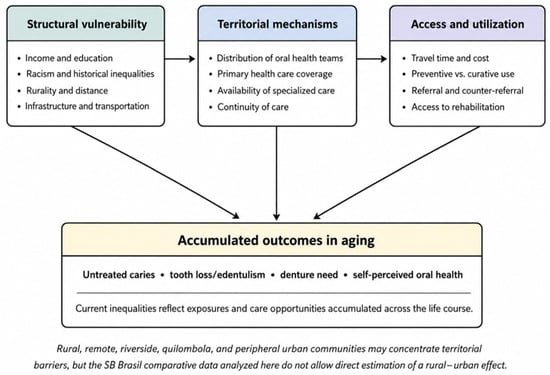
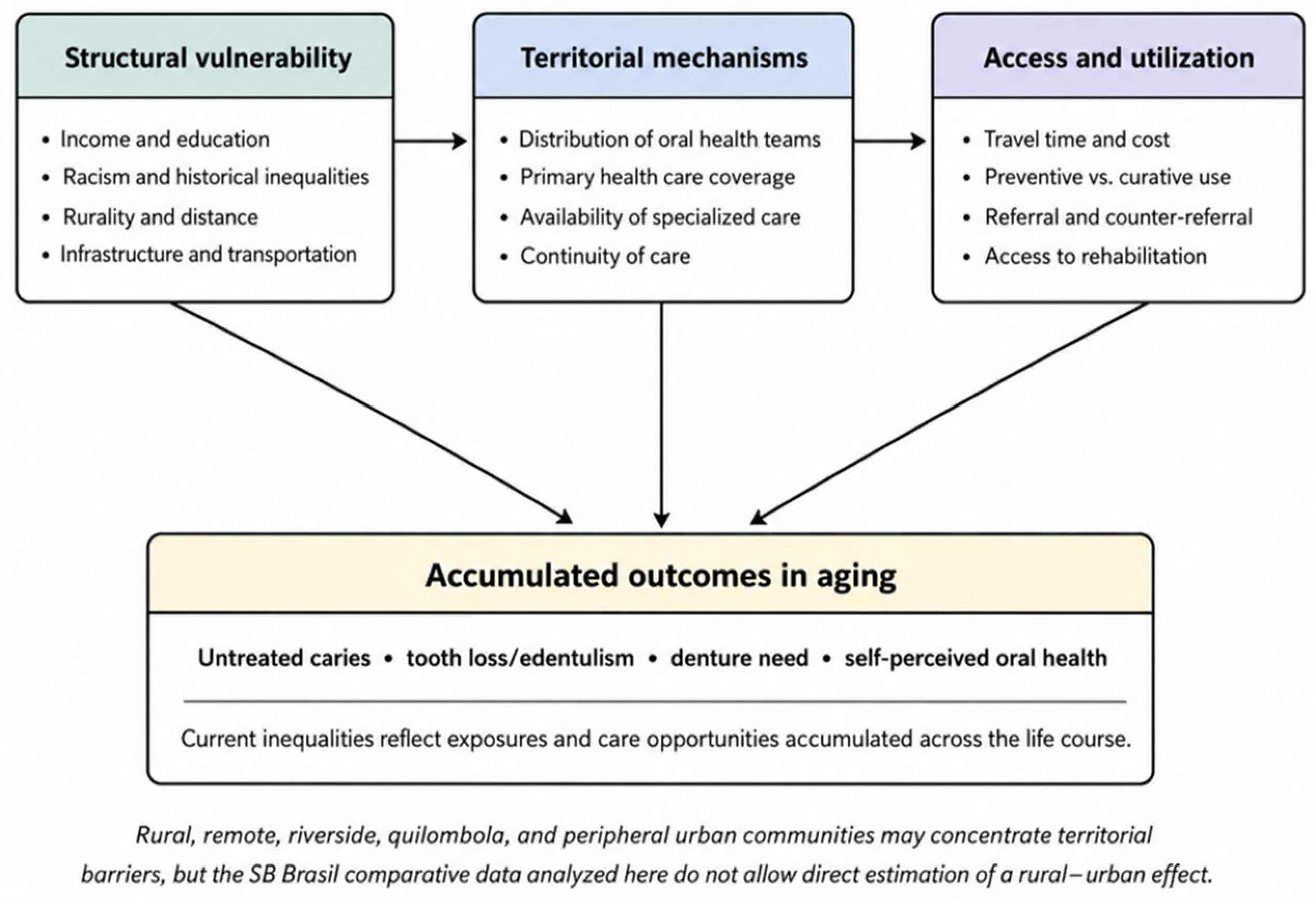
Against this background, the present study aimed to (i) compare selected oral-health indicators among Brazilians aged 65–74 years between SB Brasil 2010 and SB Brasil 2023; (ii) describe regional and state-level heterogeneity in untreated dental caries in 2023; and (iii) use structural-vulnerability literature to contextualize, rather than causally explain, the observed patterns. Throughout the manuscript, findings derived directly from the SB Brasil aggregate estimates are distinguished from mechanisms and implications supported by external literature. Rurality, socioeconomic position, race/skin color, transportation, service organization, and other structural factors were not directly analyzed as exposures in the present comparison (Figure 1).
Figure 1.
Conceptual framework for interpreting oral-health inequalities in ageing through structural vulnerability. Structural conditions operate through territorial mechanisms and access/utilization pathways, producing cumulative oral-health outcomes across the life course. Source: authors’ conceptual synthesis based on structural-vulnerability and health-services-access frameworks [3,4,22].
2. Materials and Methods
2.1. Study Design and Two-Component Analytical Structure
This study comprised two analytically distinct but complementary components. Component 1 was a descriptive secondary analysis of published aggregate estimates from the Brazilian National Oral Health Surveys (SB Brasil) 2010 and 2023. Component 2 was a structured narrative synthesis of external literature used to contextualize the descriptive findings through structural-vulnerability and health-services-access perspectives. The two components were kept analytically separate: SB Brasil estimates generated the quantitative results, whereas the literature synthesis was used only for contextual interpretation and was not pooled with survey values. The quantitative component was deliberately ecological and descriptive and did not reproduce survey-weighted individual-level estimates, estimate causal effects, or conduct hypothesis testing from aggregate values. Because no study-specific effect sizes were statistically pooled, the study should not be interpreted as a conventional meta-analysis.
2.2. Quantitative Component: Data Sources and Survey Context
SB Brasil is coordinated within Brazil’s National Oral Health Policy and uses standardized clinical oral examinations and household interviews to characterize oral conditions and access to care [19,20,21]. SB Brasil 2010 examined approximately 38,000 participants in 177 municipalities across the age groups 5 years, 12 years, 15–19 years, 35–44 years, and 65–74 years [19]. SB Brasil 2023 retained the same key age groups, expanded the sampling and estimation domains, and completed fieldwork in the first semester of 2024 [20,21]. The quantitative data used here were extracted from the official final reports of SB Brasil 2010 and SB Brasil 2023, with the Ministry of Health SB Brasil portal used to verify source provenance and public availability [19,20,23,24,25]. The SB Brasil 2023 sampling plan was designed to support estimates for the 27 Federative Units and their capitals, with interior municipalities contributing to state-level estimates; its reference population comprised residents of permanent private households in urban areas [20,21]. For temporal comparison, the present analysis was restricted to adults aged 65–74 years and to indicators that could be aligned across survey editions. Estimates were interpreted only within geographic domains supported by the original survey designs.
2.3. Narrative Component: Search Strategy, Selection, and Synthesis
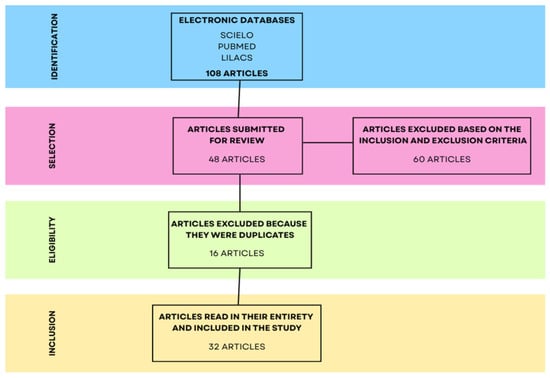
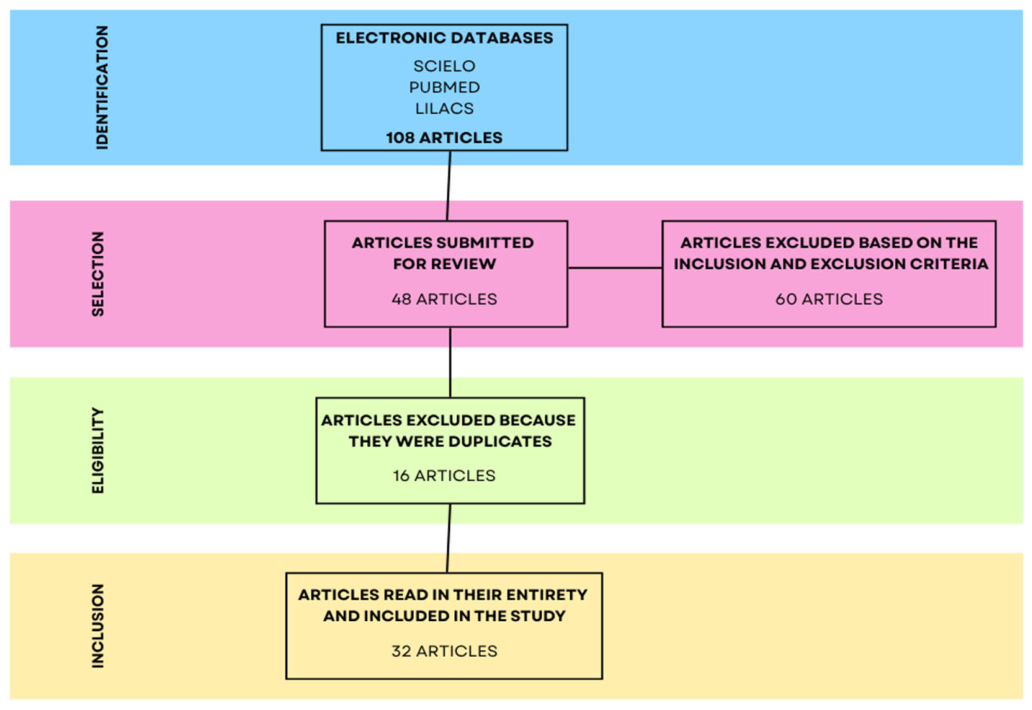
The narrative component was designed as a structured contextual synthesis rather than a systematic review or quantitative evidence synthesis. Searches were conducted in PubMed, SciELO, and Latin American and Caribbean Health Sciences Literature (LILACS), complemented by official documents from the Brazilian Ministry of Health. Searches covered publications from 2008 through 2026 and combined the concepts (“oral health” OR “dental care”) AND (“older adults” OR elderly OR ageing) AND Brazil AND (“health inequalities” OR “structural vulnerability” OR rural OR remote OR “health services accessibility”), with Portuguese and Spanish equivalents used when appropriate. Empirical studies were eligible when they addressed Brazil and contributed evidence on oral-health outcomes, dental-service use or access, socioeconomic or territorial inequalities, rurality, or vulnerability among adults or older adults. Official policy and surveillance documents and systematic or scoping reviews were also eligible, while foundational conceptual papers on structural vulnerability and health-services access were retained irrespective of country. Records were excluded when duplicated, outside the thematic scope, not relevant to the target population or Brazilian context, or published in languages other than English, Portuguese, or Spanish. Of 108 records identified, 60 were excluded after title/abstract screening, 48 were assessed in full text, and 16 were excluded after full-text assessment or duplicate verification, leaving 32 sources in the contextual synthesis (Figure 2).
Figure 2.
Flow diagram of identification, screening, full-text assessment, and inclusion of literature and official documents used in the contextual narrative synthesis. The quantitative comparison itself was based exclusively on official aggregate results from SB Brasil 2010 and SB Brasil 2023 [19,20].
The retained literature was then synthesized narratively by identifying recurring mechanisms relevant to the descriptive SB Brasil findings and organizing them into four interpretive domains: (i) socioeconomic and racialized inequalities; (ii) geographic isolation, rurality, transport, and territorial barriers; (iii) organization and continuity of oral-health services, including Primary Health Care and referral pathways; and (iv) cumulative tooth loss, prosthetic need, and rehabilitation. These domains were used to structure the contextual Results and Discussion. No pooled effect measure was calculated, and no formal risk-of-bias score was assigned because the narrative component was intended as an interpretive synthesis. To reduce subjective selection, prespecified eligibility criteria were applied across databases, official sources were prioritized for survey methods and policy context, and external literature was kept explicitly separate from the findings generated by the SB Brasil aggregate analysis.
2.4. Indicator Selection and Operational Definitions
Indicators were selected a priori using four criteria: public-health relevance for older adults, availability in the official SB Brasil reports, sufficient conceptual and operational comparability between 2010 and 2023 for temporal analyses, and ability to represent complementary dimensions of oral health. Mean DMFT was selected as a cumulative measure of caries experience and tooth loss; its national components—decayed, restored/filled with caries, restored/filled without caries, and missing teeth—were also extracted when comparably reported to improve interpretation in older adults. Self-perceived oral health was selected as a subjective population-level indicator and was analyzed only using response categories that could be aligned across the two official reports. Untreated dental caries was selected as an indicator of current unmet treatment need and territorial heterogeneity in 2023.
In SB Brasil 2023, coronal caries was assessed according to World Health Organization criteria adopted by the survey [20]. The official report calculated the total number of teeth with untreated caries by summing teeth classified as decayed and teeth restored/filled with caries. The untreated-caries prevalence therefore corresponds to the survey-weighted percentage of examined participants aged 65–74 years with at least one tooth meeting either condition (number of teeth with untreated caries ≥ 1) among participants with valid coronal-caries data in the corresponding geographic domain. The values analyzed here were extracted directly from published SB Brasil 2023 tables and were not reconstructed from individual-level variables. Official 95% confidence intervals were transcribed where available for the national and key state-level estimates.
2.5. Data Extraction, Harmonization, and Quality Checks
Published values were extracted directly from the tables and figures of the official SB Brasil 2010 and SB Brasil 2023 reports [19,20] into a structured extraction matrix organized by survey year, indicator, and geographic level. Extracted values were cross-checked against the corresponding source tables or figures before calculation. No individual-level records were accessed, and estimates from the contextual literature review were not combined with the SB Brasil values. Region names, decimal notation, and category labels were harmonized for presentation in English. For DMFT, absolute change was calculated as the 2023 value minus the 2010 value, and relative change as [(DMFT2023 − DMFT2010)/DMFT2010] × 100. For untreated caries, the territorial range was calculated as the difference between the highest and lowest published percentages at macroregional and state levels, and the ratio between the highest and lowest state values was calculated descriptively. For self-perceived oral health, emphasis was placed on changes in the complete response distribution rather than interpreting the decline in the ‘poor’ category alone as equivalent to a proportional increase in positive ratings.
2.6. Explicit Assessment of Comparability Between SB Brasil 2010 and SB Brasil 2023
Comparability was assessed before extracting temporal contrasts. Similarities included the inclusion of adults aged 65–74 years, standardized household-based clinical examination, use of the DMFT framework for permanent dentition, examiner training and calibration, and field quality-control procedures [19,20,21]. For the indicators analyzed here, total DMFT and its core components were based on clinically classified decayed, missing, and filled/restored permanent teeth in both editions, and self-perceived oral-health categories were compared only when they could be matched conceptually across reports. Important differences were also identified. SB Brasil 2010 examined approximately 38,000 people in 177 municipalities, whereas SB Brasil 2023 included 40,720 participants in 430 municipalities. In 2010, calibration relied mainly on in-person regional and local workshops, with Kappa ≥ 0.60 and re-examination of approximately 5–10% of the sample. In 2023, post-pandemic training incorporated remote activities and an automated agreement system, with Kappa ≥ 0.61; field re-examination of approximately 5–10% was maintained. The 2023 survey additionally expanded geographic estimation to all 27 Federative Units and their capitals, with interior municipalities included in state-level estimates, whereas the 2010 design did not provide an equivalent basis for state-level temporal comparison.
These similarities and differences were incorporated into the analytical strategy. Temporal comparisons were restricted to national and macroregional indicators whose operational definitions could be aligned across editions. State-level untreated-caries estimates were treated as a cross-sectional description of 2023 only and were not used to infer state-specific improvement or deterioration since 2010. No mathematical transformation was used to force equivalence between non-identical response categories. Residual differences in sampling, calibration, response composition, field procedures, and reporting precision remain possible sources of non-comparability; consequently, changes between 2010 and 2023 are described as observed differences in published survey estimates rather than effects attributable to time, policy, or territory.
2.7. Development of the Conceptual Framework and Narrative Interpretation
Structural vulnerability was used exclusively as a literature-based interpretive framework rather than as a measured exposure or explanatory model. The development of Figure 2 followed an iterative synthesis of the retained conceptual and empirical literature. Foundational structural-vulnerability papers [3,4] were used to identify upstream dimensions related to economic hierarchy, racialized disadvantage, historical exclusion, geography, and institutional organization; the health-services-access framework [22] was used to organize pathways involving enabling resources, service availability, utilization, and continuity. Brazilian oral-health studies retained in the narrative synthesis were then used to identify context-specific mechanisms relevant to older adults, including transport barriers, workforce distribution, Primary Health Care coverage, referral pathways, tooth loss, and rehabilitation. These constructs were grouped into three linked levels—structural conditions, territorial/service mechanisms, and access/utilization pathways—leading to cumulative oral-health outcomes.
The framework was reviewed by the author team as an interpretive model, and the final organization was agreed through discussion. The arrows in Figure 1 represent hypothesized, the literature-supported pathways rather than causal associations estimated from the SB Brasil data. In this integration, the social-determinants perspective identifies broad upstream conditions associated with unequal health, whereas structural vulnerability adds emphasis on how social position, institutional arrangements, and historical power relations constrain feasible choices and exposure to risk in concrete care pathways. The access framework complements this perspective by organizing how these constraints may be translated into delayed attendance, discontinuity, unmet need, and incomplete rehabilitation. Socioeconomic position, race/skin color, rurality, transportation, infrastructure, PHC coverage, and specialist availability were not modeled as variables in the present aggregate comparison.
2.8. Geographic Representativeness, Rurality, and Underserved Communities
Representativeness derives from the original probability-sampling designs of SB Brasil rather than from the contextual literature review. For SB Brasil 2023, the study population comprised residents of permanent private households in urban areas, and the predefined geographic domains were the 27 Federative Units and their capitals, totaling 53 geographic domains [20,21]. Capital and interior strata were combined to support Federative Unit estimates; therefore, state-level estimates used in the present manuscript are supported by the 2023 sampling design. National and macroregional estimates were also reported in the official survey outputs. The term “interior” should not be interpreted as equivalent to “rural”: the survey reference population was urban, and the aggregate results analyzed here do not provide rural-specific stratification. Consequently, the present study is not a rural–urban comparison, and implications for rural, remote, riverside, quilombola, and other underserved populations are based on external literature rather than direct subgroup estimates from SB Brasil.
2.9. Statistical Analysis
The quantitative analysis was descriptive. No new confidence intervals, survey-weighted regression models, or null-hypothesis tests were calculated from individual-level data because only published aggregate values were analyzed. Results are presented as means, percentages, absolute differences, relative percentage changes, and territorial ranges. Where the official SB Brasil 2023 report provided design-based 95% confidence intervals for published estimates, these intervals were transcribed directly and are reported for the national and key state-level untreated-caries estimates. Comparable measures of precision were not consistently available in both official summary reports for every 2010–2023 indicator used here; therefore, temporal contrasts in DMFT and self-perceived oral health are interpreted strictly as observed descriptive differences in published point estimates. All calculations were independently checked against the reported source values before manuscript preparation.
2.10. Ethical Considerations and Data Availability
The study used only publicly available, aggregate, non-identifiable data from national surveys and published literature; therefore, no new contact with human participants, access to identifiable records, or additional ethics review was required for this secondary documentary analysis. The principal quantitative sources are the official SB Brasil 2010 and SB Brasil 2023 final reports [19,20], and the Ministry of Health maintains the corresponding survey documentation and database-access information through the SB Brasil data portal [25].
3. Results
3.1. Changes in Mean DMFT Between 2010 and 2023
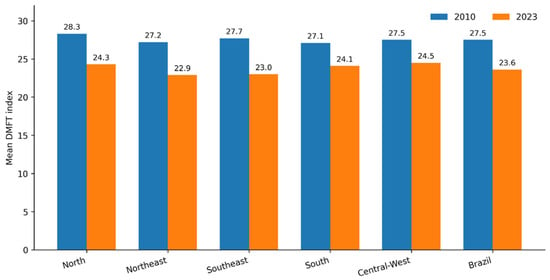
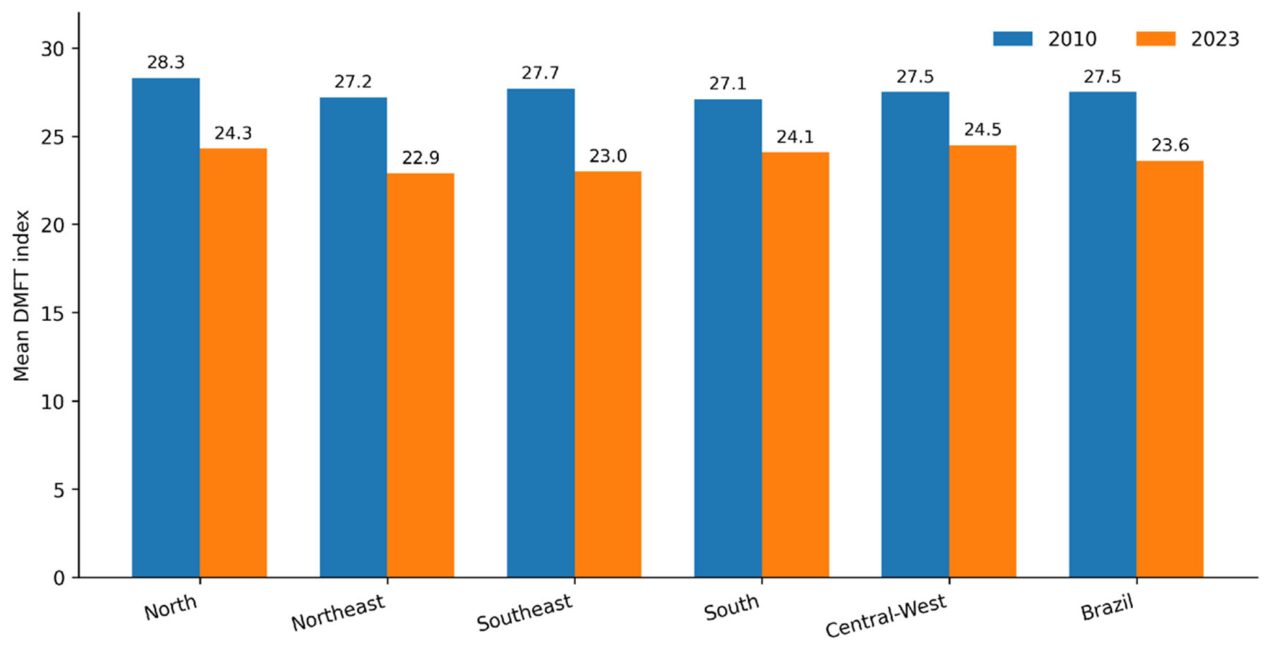
The national mean DMFT among adults aged 65–74 years was 27.53 in 2010 and 23.55 in 2023, an observed descriptive difference of −3.98 index units (−14.5%) (Table 1). All five Brazilian macroregions had lower published mean DMFT values in 2023 than in 2010. The Southeast showed the largest observed absolute difference, followed by the Northeast and North. These contrasts should be interpreted descriptively because comparable design-based confidence intervals were not available in both official summary reports for all DMFT estimates used in the side-by-side comparison. Despite the lower 2023 values, mean DMFT remained high in every macroregion. Because total DMFT can obscure which component drives change in older adults, the national component distribution is presented separately below (Table 2).
Table 1.
Mean DMFT among adults aged 65–74 years in Brazil and macroregions, 2010 and 2023.
Table 2.
National mean DMFT components and proportional contribution among adults aged 65–74 years, Brazil, 2010 and 2023.
National Composition of the DMFT Index in 2010 and 2023
The decomposition of national DMFT (Figure 3) estimates shows that the temporal decline was driven mainly by a reduction in missing teeth. The mean missing-teeth component decreased from 25.29 in 2010 (91.9% of DMFT) to 19.86 in 2023 (84.32%). In contrast, the mean restored/filled-without-caries component increased from 1.62 (5.9%) to 2.78 (11.79%). The mean decayed component changed only modestly, from 0.52 (1.9%) to 0.62 (2.63%), while restored/filled teeth with caries increased from 0.10 (0.4%) to 0.30 (1.26%). Thus, the lower total DMFT in 2023 should not be interpreted simply as lower current caries activity; it primarily reflects fewer teeth classified as missing within the cumulative index.
Figure 3.
Mean DMFT among adults aged 65–74 years in Brazil and macroregions, 2010 and 2023. Source: SB Brasil 2010 and SB Brasil 2023 [19,20].
3.2. Changes in Self-Perceived Oral Health
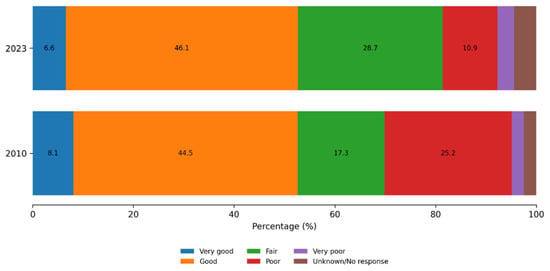
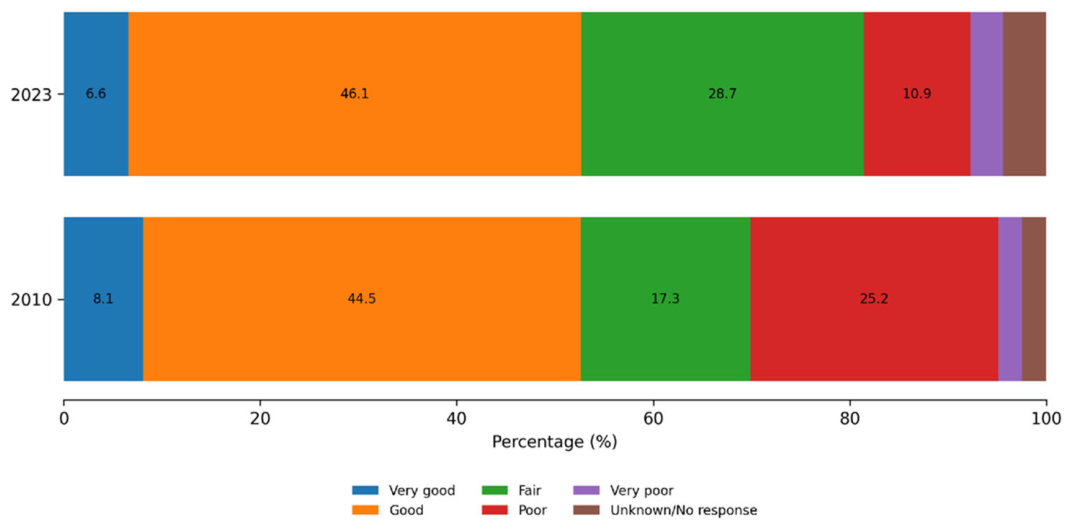
Nationally, the published proportion of older adults rating their oral health as ‘poor’ was 25.2% in 2010 and 10.9% in 2023, an observed difference of −14.3 percentage points. At the same time, the ‘fair’ category increased from 17.3% to 28.7% (+11.4 percentage points). The proportion rating oral health as ‘good’ increased modestly from 44.5% to 46.1%, while ‘very good’ declined from 8.1% to 6.6%. When the two positive categories were combined, the distribution was essentially unchanged (52.6% vs. 52.7%). Because equivalent measures of precision were not consistently available for both survey editions in the summary reports used here, these changes are interpreted as descriptive differences rather than statistically tested temporal effects. The dominant distributional shift was from a clearly negative assessment toward the intermediate ‘fair’ category rather than a large increase in positive self-perception (Figure 4).
Figure 4.
Distribution of self-perceived oral health among adults aged 65–74 years in Brazil, 2010 and 2023. Source: SB Brasil 2010 and SB Brasil 2023 [19,20].
3.3. Untreated Dental Caries and Territorial Inequality in 2023
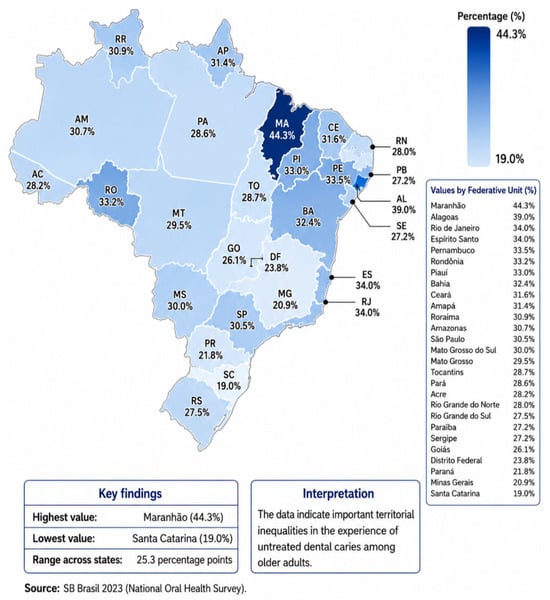
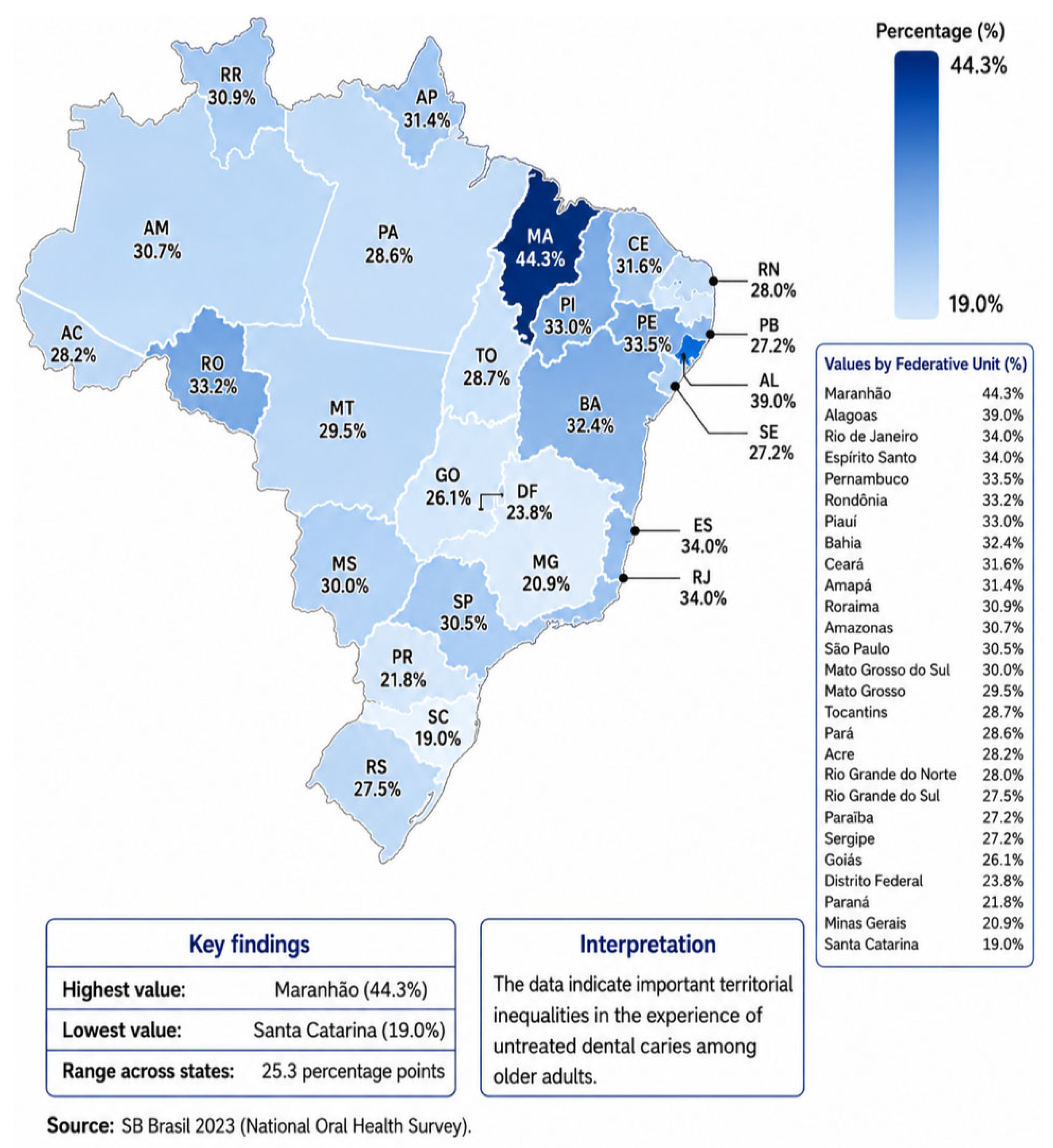
Untreated dental caries (Figure 5) showed marked geographic heterogeneity in 2023. Nationally, 29.04% of adults aged 65–74 years had at least one untreated carious tooth (95% CI 26.07–32.01) [20]. At the macroregional level, the Northeast had the highest published prevalence (33.22%), followed by the North (29.7%), Southeast (29.03%), Central-West (27.11%), and South (22.86%). State-level variation was wider. Maranhão had the highest published estimate, 44.27% (95% CI 34.85–53.70), whereas Santa Catarina had the lowest, 19.07% (95% CI 12.00–26.14), yielding a descriptive difference of 25.20 percentage points. These confidence intervals are survey-based estimates reported by SB Brasil 2023 and were not recalculated in the present study. The geographic difference should therefore be interpreted with attention to sampling precision and not as an adjusted comparison between states.
Figure 5.
Untreated dental caries among older adults in Brazil: percentage of adults aged 65–74 years with at least one untreated carious tooth by Federative Unit, SB Brasil 2023. Maranhão had the highest published estimate (44.27%; 95% CI 34.85–53.70) and Santa Catarina the lowest (19.07%; 95% CI 12.00–26.14). The mapped values are descriptive survey estimates and do not identify the causes of interstate differences. Source: SB Brasil 2023 [20].
3.4. Separation of Temporal Change and 2023 Territorial Variation
The quantitative findings address two distinct descriptive questions and should not be combined into a single territorial trend interpretation. First, temporal comparisons at the national and macroregional levels show lower published DMFT values and a lower frequency of poor self-perceived oral health in 2023 than in 2010; the national DMFT decomposition suggests that the difference was driven mainly by fewer missing teeth. Second, the 2023 untreated-caries estimates show substantial cross-sectional geographic heterogeneity across Federative Units. Because comparable state-level untreated-caries estimates were not analyzed for 2010, the present data cannot determine whether particular states or territories improved more or less than others between survey editions. The state-level analysis therefore describes geographic variation in 2023 only.
3.5. Narrative Synthesis Supporting the Public-Health Interpretation
The 32 sources retained in the contextual narrative synthesis were used to interpret, but not causally explain, the descriptive survey patterns. Evidence was organized into four domains. First, studies on socioeconomic and racialized inequalities documented persistent differences in oral-health status and dental-service use according to income, education, and race/skin color [8,9,10,11,12,26,27,28,29,30,31,32,33]. Second, studies focused on rurality, geographic isolation, and mobility reported poorer oral-health conditions, lower recent service use, and barriers related to distance and territorial context in rural and riverine populations [15,16,17,18]. Third, health-services research highlighted Primary Health Care coverage, public dental-service use, workforce distribution, referral continuity, and specialized care as relevant dimensions of effective access [10,11,26,27,28,34]. Fourth, studies of tooth loss and prosthetic need emphasized the cumulative and socially patterned nature of edentulism and rehabilitation needs in older adults [13,14,34,35].
Across these domains, the literature suggests a multilevel pathway in which upstream social and historical conditions may shape territorial resources and service organization, which in turn influence the feasibility, timing, continuity, and completion of dental care. This synthesis provides the public-health context for the structural-vulnerability framework used in the Discussion. It does not establish that any of these mechanisms caused the temporal or interstate differences observed in the SB Brasil aggregate estimates.
4. Discussion
The results deliberately separate the descriptive SB Brasil analysis from the narrative synthesis. Directly observed survey findings were lower published national and macroregional DMFT values in 2023 than in 2010, a lower frequency of poor self-perceived oral health, and substantial geographic heterogeneity in untreated caries across Federative Units in 2023. These are descriptive survey findings, and the available data do not establish why they occurred. The narrative synthesis provides a second evidentiary layer by identifying socioeconomic, racialized, geographic, and health-service mechanisms that previous studies have associated with oral-health inequalities. Structural vulnerability, rurality, transportation, and service organization are therefore used to interpret plausible pathways, not as causes demonstrated by the present aggregate analysis.
The DMFT component analysis adds important nuance to the temporal comparison. At the national level, the mean missing-teeth component declined from 25.29 in 2010 to 19.86 in 2023, and its share of total DMFT fell from 91.9% to 84.32%. The restored/filled-without-caries component increased from 1.62 to 2.78, while the decayed component was similar in magnitude (0.52 in 2010 and 0.62 in 2023). These data indicate that the lower total DMFT primarily reflects a reduction in the accumulated burden represented by missing teeth together with a larger restored component, rather than a simple reduction in untreated decay. Nevertheless, DMFT remains a cumulative index and does not capture functional dentition, edentulism, prosthetic status, periodontal conditions, pain, or oral-health-related quality of life.
The state-level heterogeneity in untreated caries is descriptive rather than explanatory. Maranhão had a published prevalence of 44.27% (95% CI 34.85–53.70) and Santa Catarina 19.07% (95% CI 12.00–26.14) in SB Brasil 2023 [20]. The present analysis does not test which individual or contextual factors generated this difference, nor does it adjust the interstate comparison for socioeconomic or service characteristics. Previous Brazilian and international literature indicates that income, education, racialized disadvantage, fluoridation and prevention environments, availability of dental professionals, travel capacity, and continuity of public services can shape oral-health outcomes and use of care [1,2,8,9,10,11,12]. These factors are therefore plausible literature-supported mechanisms, not variables demonstrated by the current analysis.
Accordingly, structural vulnerability is used here as a conceptual lens for organizing hypotheses raised by prior evidence, not as an explanatory result of the SB Brasil comparison itself. The framework highlights how economic constraints, discrimination, geographic distance, transportation, workforce distribution, referral pathways, and functional dependence may limit effective access to care [3,4]. Such mechanisms can help generate questions for subsequent multilevel or individual-level analyses, but the present aggregate data cannot quantify their contribution to the observed temporal or territorial patterns.
The same distinction is essential when discussing rural, remote, riverside, quilombola, and other underserved communities. These populations were not directly compared in the present aggregate analysis. Evidence cited here comes from external Brazilian studies: rural residence has been associated with poorer self-perceived oral health and fewer remaining teeth in Southern Brazil [15], high edentulism and low recent service use have been reported in rural older populations [16,17], and territorial context has been associated with oral-health-related quality of life in Amazonian riverine communities [18]. These studies support the relevance of investigating within-region and rural–urban inequalities, but they should not be interpreted as subgroup findings from the current SB Brasil analysis.
External evidence also helps contextualize possible health-system pathways. A recent population-based analysis of SB Brasil 2023 reported that 39.2% of older adults who used dental services did so in the public sector and that public use was more frequent among Black, mixed-race, and Indigenous older adults, people with edentulism or prosthetic need, and residents of municipalities with high PHC oral-health coverage [26]. These associations were reported in that separate study and were not estimated in the present analysis. They are cited here only to illustrate mechanisms that may be examined in future analyses linking oral-health outcomes to contextual and service variables.
Coverage alone, however, is not synonymous with timely, continuous, and resolutive access. For older adults with multimorbidity, frailty, mobility restrictions, or dependence in activities of daily living, the care pathway may require coordination with family caregivers, community health workers, home-care teams, and social-support services. In dispersed territories, mobile dental units and itinerant actions can reduce geographic barriers, but their equity effect depends on integration with a longitudinal network. A mobile visit that identifies disease without ensuring follow-up, specialist referral, prosthetic rehabilitation, and maintenance risks reproducing episodic emergency-oriented care in a different location.
Prosthetic rehabilitation is a central component of this agenda. Extensive tooth loss is both a clinical condition and a marker of cumulative inequality, affecting chewing, dietary choices, speech, facial appearance, social interaction, and autonomy. National studies have shown that prosthetic need is socially patterned and that access to rehabilitation is unequally distributed [14,34,35]. For underserved communities, strengthening Regional Dental Prosthesis Laboratories must therefore be accompanied by practical logistical pathways for impressions, try-ins, delivery, adjustments, repairs, and periodic reassessment. Rehabilitation cannot be reduced to the production of a prosthesis; it requires continuity and the capacity to solve problems after delivery.
The change in self-perceived oral health also deserves careful interpretation. A fall in the ‘poor’ category is favorable, but the simultaneous increase in ‘fair’ and the near stability of combined ‘good/very good’ ratings indicate that the population shift was primarily toward an intermediate category. Subjective oral health in older adults is influenced by expectations, adaptation, functional status, prosthesis use, pain, and social comparison. People who have lived for decades in settings where edentulism was common may rate an objectively compromised condition as acceptable. Recent evidence from the 2019 Brazilian National Health Survey confirms strong income- and education-related inequalities in self-rated oral health among older adults and suggests that oral-health conditions—particularly eating difficulty—account for a substantial part of these gaps [32].
Service use is likewise socially patterned. A 2025 decomposition analysis of older Brazilians found lower recent and preventive dental-service use among those with no formal education and those in the lowest income group; rural residence contributed to widening inequalities in service use [33]. These findings reinforce the interpretation that individual and territorial disadvantages are interconnected. A person’s ability to retain teeth, perceive a need, attend preventively, and complete treatment depends on both personal resources and the organization of the local health system.
From a surveillance perspective, the findings reveal an important equity challenge. If national monitoring is intended to guide reduction of inequalities, it must be sensitive to populations whose experiences are likely to disappear within broad categories such as ‘interior’. Rural, remote, riverside, quilombola, Indigenous, and peripheral urban communities may require targeted sampling, oversampling, or linkage of survey data with contextual measures such as PHC coverage, travel time, road accessibility, social vulnerability, fluoridation, and specialist availability. Improving epidemiological visibility is itself an equity intervention because what is not measured is less likely to become a planning priority.
The policy discussion should therefore be read as literature-informed rather than as evidence of intervention effectiveness generated by this descriptive study. The present analysis directly supports the need to monitor temporal and territorial variation in oral-health indicators. On the basis of the wider literature, potential equity-oriented responses include territorial planning, stable PHC oral-health teams, active case finding, facilitated scheduling, transportation support, domiciliary care when clinically indicated, mobile services integrated into longitudinal pathways, timely referral and counter-referral, and rehabilitative capacity. Whether these strategies reduce the specific inequalities documented here requires dedicated evaluative studies.
The theoretical contribution of the structural-vulnerability perspective is not simply to add more determinants to a list; it links levels of determination. At an upstream level, income distribution, education, racism, historical exclusion, and allocation of public resources shape unequal exposure to oral disease and unequal capacity to mobilize resources. At a territorial and service-system level, these conditions may be translated into the geographic distribution of oral-health teams, travel requirements, appointment availability, referral pathways, and access to prosthetic rehabilitation. At the household and individual interface, mobility limitations, caregiving dependence, indirect costs, and prior experiences with services can further condition whether a recognized need becomes completed care. These levels are analytically distinct but mutually reinforcing.
This approach complements broader social-determinants-of-health frameworks by focusing on how social position and institutional arrangements constrain the set of practically available choices for specific groups. The health-services-access model [22] adds a complementary service-use perspective, helping to organize how enabling resources, perceived need, service availability, and continuity may mediate the relationship between structural conditions and care. In the present manuscript, this integrated framework is used to generate testable hypotheses from the descriptive inequalities observed. Empirical evaluation of these pathways would require individual-level and contextual variables analyzed with the original survey weights and appropriate multilevel models.
4.1. Implications for Policy and Services
To gain a better and broader understanding of the findings from the comparison of SB Brasil 2010/2023, this study presents literature-based considerations and potential equity-oriented responses relevant to rural and underserved communities (Table 3).
Table 3.
Literature-informed contextual pathways and potential equity-oriented responses relevant to rural and underserved communities. These mechanisms and responses are not effects estimated by the present descriptive analysis.
4.2. Strengths and Limitations
A strength of this study is the integration of a national historical comparison with state-level visualization of current untreated caries and an explicit structural framework. Presenting both average improvement and territorial heterogeneity helps avoid a common interpretive error in which favorable national trends are assumed to represent equitable progress. The use of published national survey data also increases transparency and reproducibility of the descriptive calculations.
Several limitations must nevertheless be emphasized. First, the study used published aggregate data and therefore did not reproduce the complex sampling design, calculate new confidence intervals, or estimate adjusted associations. Comparable measures of precision were not consistently available for every indicator in both survey summary reports, so the 2010–2023 contrasts are descriptive observed differences rather than statistically tested changes. Second, differences between survey editions in sampling domains, calibration procedures, field organization, response composition, and reporting may contribute to observed temporal contrasts despite restriction to conceptually comparable indicators. Third, DMFT is cumulative and remains dominated by the missing-teeth component in older adults; it does not capture functional dentition, periodontal status, pain, prosthetic function, or oral-health-related quality of life. Fourth, state-level untreated-caries differences describe 2023 only and cannot be used to infer which territories improved more or less since 2010. Fifth, SB Brasil 2023 was designed for urban residents and for Federative Unit and capital domains; “interior” is not synonymous with “rural,” and the present analysis does not provide direct rural–urban comparisons. Sixth, although the narrative component used a structured search, prespecified eligibility criteria, and an explicit synthesis framework, it was not a systematic review with formal risk-of-bias assessment. Finally, the conceptual framework is literature-based and hypothesis-generating; none of its structural or service pathways were directly estimated in the aggregate analysis.
5. Conclusions
Between SB Brasil 2010 and 2023, published estimates for Brazilian adults aged 65–74 years showed lower national and macroregional mean DMFT values and a lower frequency of poor self-perceived oral health. The national DMFT decomposition indicates that the observed difference was driven mainly by a lower missing-teeth component together with a larger restored component. These temporal contrasts are descriptive because comparable measures of precision were not consistently available for all indicators in both survey reports. Separately, SB Brasil 2023 documented substantial cross-sectional variation in untreated caries across Federative Units, including Maranhão at 44.27% (95% CI 34.85–53.70) and Santa Catarina at 19.07% (95% CI 12.00–26.14). These 2023 differences should not be interpreted as evidence that some states improved more or less than others since 2010.
The public-health interpretation is supplied by the narrative synthesis rather than by direct measurement of structural exposures. The previous literature supports plausible pathways linking socioeconomic and racialized inequality, geographic barriers, service organization, continuity of care, and rehabilitation to oral-health outcomes, but the present study does not quantify those effects. Structural vulnerability is therefore best understood here as a hypothesis-generating framework that connects upstream social conditions to territorial resources and concrete access pathways. Future analyses using individual-level SB Brasil data, survey weights, contextual indicators, and multilevel methods are needed to test these mechanisms directly and to determine how inequalities change within and between territories over time.
Author Contributions
Conceptualization, G.C.P.L., L.E.G. and A.V.J.; methodology, G.C.P.L., L.E.G. and A.V.J.; validation, F.L.R. and W.A.R.; formal analysis, W.A.R.; investigation, F.L.R.; resources, W.A.R.; data curation, G.C.P.L., L.E.G. and A.V.J.; writing—original draft preparation, G.C.P.L. and A.V.J.; writing—review and editing, L.E.G., F.L.R. and W.A.R.; visualization, F.L.R.; supervision, W.A.R.; project administration, A.V.J. and F.L.R.; funding acquisition, G.C.P.L., A.V.J. and L.E.G. All authors have read and agreed to the published version of the manuscript.
Funding
This research was funded in part by the Coordenação de Aperfeiçoamento de Pessoal de Nível Superior—Brasil (CAPES)—grant number Finance Code 001.
Institutional Review Board Statement
Not applicable. This study used publicly available aggregate data and published literature and did not involve new collection or analysis of identifiable individual-level data.
Informed Consent Statement
Not applicable to this secondary documentary analysis of aggregate public data.
Data Availability Statement
The aggregate data analyzed in this study are available in the official public reports of SB Brasil 2010 and SB Brasil 2023 [19,20]. Survey documentation and information on access to the corresponding databases are available through the Brazilian Ministry of Health SB Brasil data portal [25]. The source manuscript also indicated the following public repository: https://osf.io/qw2ay/overview?view_only=06b9076439cd4f1d8d8c55683149a3af (accessed on 8 March 2026).
Conflicts of Interest
The authors declare no conflict of interest.
References
- World Health Organization. Global Oral Health Status Report: Towards Universal Health Coverage for Oral Health by 2030; WHO: Geneva, Switzerland, 2022. [Google Scholar]
- Peres, M.A.; Macpherson, L.M.D.; Weyant, R.J.; Daly, B.; Venturelli, R.; Mathur, M.R.; Listl, S.; Celeste, R.K.; Guarnizo-Herreño, C.C.; Kearns, C.; et al. Oral diseases: A global public health challenge. Lancet 2019, 394, 249–260, Correction in Lancet 2019, 394, 1010. [Google Scholar] [CrossRef] [Scilit] [PubMed]
- Quesada, J.; Hart, L.K.; Bourgois, P. Structural vulnerability and health: Latino migrant laborers in the United States. Med. Anthropol. 2011, 30, 339–362. [Google Scholar] [CrossRef] [Scilit] [PubMed]
- Bourgois, P.; Holmes, S.M.; Sue, K.; Quesada, J. Structural vulnerability: Operationalizing the concept to address health disparities in clinical care. Acad. Med. 2017, 92, 299–307. [Google Scholar] [CrossRef] [Scilit] [PubMed]
- Brasil. Ministério da Saúde. Diretrizes da Política Nacional de Saúde Bucal; Ministério da Saúde: Brasília, Brazil, 2004.
- Pucca, G.A., Jr.; Gabriel, M.; Araujo, M.E.; Almeida, F.C. Ten years of a National Oral Health Policy in Brazil: Innovation, boldness, and numerous challenges. J. Dent. Res. 2015, 94, 1333–1337. [Google Scholar] [CrossRef] [Scilit] [PubMed]
- Scherer, C.I.; Scherer, M.D.A. Advances and challenges in oral health after a decade of ‘Smiling Brazil’. Rev. Saude Publica 2015, 49, 98. [Google Scholar] [CrossRef] [Scilit] [PubMed]
- Antunes, J.L.F.; Narvai, P.C. Políticas de saúde bucal no Brasil e seu impacto sobre as desigualdades em saúde. Rev. Saude Publica 2010, 44, 360–365. [Google Scholar] [CrossRef] [Scilit] [PubMed]
- Peres, K.G.; Peres, M.A.; Boing, A.F.; Bertoldi, A.D.; Bastos, J.L.; Barros, A.J.D. Redução das desigualdades sociais na utilização de serviços odontológicos no Brasil entre 1998 e 2008. Rev. Saude Publica 2012, 46, 250–258. [Google Scholar] [CrossRef] [Scilit] [PubMed]
- Galvão, M.H.R.; Roncalli, A.G. Does the implementation of a national oral health policy reduce inequalities in oral health services utilization? The Brazilian experience. BMC Public Health 2021, 21, 541. [Google Scholar] [CrossRef] [Scilit] [PubMed]
- Galvão, M.H.R.; Medeiros, A.A.; Roncalli, A.G. Contextual and individual factors associated with public dental services utilisation in Brazil: A multilevel analysis. PLoS ONE 2021, 16, e0254310. [Google Scholar] [CrossRef] [Scilit] [PubMed]
- Coube, M.; Nikoloski, Z.; Mrejen, M.; Mossialos, E. Persistent inequalities in health care services utilisation in Brazil (1998–2019). Int. J. Equity Health 2023, 22, 25. [Google Scholar] [CrossRef] [Scilit] [PubMed]
- Peres, M.A.; Barbato, P.R.; Reis, S.C.G.B.; Freitas, C.H.S.M.; Antunes, J.L.F. Perdas dentárias no Brasil: Análise da Pesquisa Nacional de Saúde Bucal 2010. Rev. Saude Publica 2013, 47, 78–89. [Google Scholar] [CrossRef] [Scilit] [PubMed]
- Azevedo, J.S.; Azevedo, M.S.; Oliveira, L.J.C.; Correa, M.B.; Demarco, F.F. Uso e necessidade de prótese dentária em idosos brasileiros segundo a Pesquisa Nacional de Saúde Bucal (SBBrasil 2010): Prevalências e fatores associados. Cad. Saude Publica 2017, 33, e00054016. [Google Scholar] [CrossRef] [Scilit] [PubMed][Green Version]
- Cericato, G.O.; Agostini, B.A.; Costa, F.S.; Thomson, W.M.; Demarco, F.F. Rural-urban differences in oral health among older people in Southern Brazil. Braz. Oral Res. 2021, 35, e135. [Google Scholar] [CrossRef] [Scilit] [PubMed]
- Schroeder, F.M.M.; Mendoza-Sassi, R.A.; Meucci, R.D. Condição de saúde bucal e utilização de serviços odontológicos entre idosos em área rural no sul do Brasil. Cien. Saude Colet. 2020, 25, 2093–2102. [Google Scholar] [CrossRef] [Scilit] [PubMed]
- Martins, A.M.E.B.L.; Haikal, D.S.A.; Pereira, S.M.; Barreto, S.M. Uso de serviços odontológicos por rotina entre idosos brasileiros: Projeto SB Brasil. Cad. Saude Publica 2008, 24, 1651–1666. [Google Scholar] [CrossRef] [Scilit] [PubMed]
- Maia, C.V.; Mendes, F.M.; Normando, D. The impact of oral health on quality of life of urban and riverine populations of the Amazon: A multilevel analysis. PLoS ONE 2018, 13, e0208096. [Google Scholar] [CrossRef] [Scilit] [PubMed]
- Brasil. Ministério da Saúde. SB Brasil 2010: Pesquisa Nacional de Saúde Bucal: Resultados Principais; Ministério da Saúde: Brasília, Brazil, 2012.
- Brasil. Ministério da Saúde. SB Brasil 2023: Pesquisa Nacional de Saúde Bucal: Relatório Final; Ministério da Saúde: Brasília, Brazil, 2024.
- Vargas, A.M.D.; Teixeira, D.S.C.; Ferreira, R.C. SB Brasil 2023: Methodological insights and key oral health findings. Braz. Oral Res. 2025, 39, e051. [Google Scholar] [CrossRef] [Scilit] [PubMed]
- Andersen, R.M. Revisiting the behavioral model and access to medical care: Does it matter? J. Health Soc. Behav. 1995, 36, 1–10. [Google Scholar] [CrossRef] [Scilit]
- Santos, L.P.S.; Lima, A.M.F.S.; Chaves, S.C.L.; Vilela, D.M.O.C.; Valente, A.P.P.C.; Rossi, T.R.A. Oral Health Policy in Brazil: Changes and ruptures during the period 2018–2021. Cien. Saude Colet. 2023, 28, 1575–1587. [Google Scholar] [CrossRef] [Scilit]
- Brasil. Presidência da República. Lei nº 14.572, de 8 de maio de 2023. Institui a Política Nacional de Saúde Bucal no âmbito do Sistema Único de Saúde (SUS) e altera a Lei nº 8.080, de 19 de setembro de 1990; Diário Oficial da União: Brasília, Brazil, 2023. Available online: https://www.planalto.gov.br/ccivil_03/_ato2023-2026/2023/lei/l14572.htm (accessed on 29 September 2026).
- Brasil. Ministério da Saúde. Dados SB Brasil—Pesquisa Nacional de Saúde Bucal; Ministério da Saúde: Brasília, Brazil. Available online: https://www.gov.br/saude/pt-br/composicao/saps/brasil-sorridente/sb-brasil/dados/dados/ (accessed on 29 September 2026).
- Mello, B.M.; Monteiro, D.L.A.; Oliveira, A.M.; Teixeira, B.R.F.; Lopes, R.T.A.; Silva, R.O.; Cavalcanti, Y.W.; Bomfim, R.A. Inequalities in the use of public oral health services among older adults in Brazil: A national population-based study, 2023. Rev. Bras. Epidemiol. 2026, 29, e260004supl1. [Google Scholar] [CrossRef] [Scilit] [PubMed]
- Bomfim, R.A.; Lucena, E.H.G.; Cavalcanti, Y.W.; Celeste, R.K. Racial inequality in complete dental prosthesis delivered: Can public services reduce inequities? Clin. Oral Investig. 2024, 28, 17. [Google Scholar] [CrossRef] [Scilit] [PubMed]
- Ghanbari-Jahromi, M.; Bastani, P.; Jalali, F.S.; Delavari, S. Factors affecting oral and dental services utilization among elderly: A scoping review. BMC Oral Health 2023, 23, 597. [Google Scholar] [CrossRef] [Scilit] [PubMed]
- Fagundes, M.L.B.; Bastos, L.F.; Amaral Júnior, O.L.; Menegazzo, G.R.; Cunha, A.R.; Stein, C.; Abreu, L.G.; Hugo, F.N.; Giordani, J.M.A.; Malta, D.C.; et al. Socioeconomic inequalities in the use of dental services in Brazil: An analysis of the 2019 National Health Survey. Rev. Bras. Epidemiol. 2021, 24, e210004. [Google Scholar] [CrossRef] [Scilit] [PubMed]
- Andrade, F.B.; Andrade, F.C.D.; Noronha, K. Measuring socioeconomic inequalities in the use of dental care services among older adults in Brazil. Community Dent. Oral Epidemiol. 2017, 45, 559–566. [Google Scholar] [CrossRef] [Scilit] [PubMed]
- Dantas, M.N.P.; Souza, D.L.B.; Souza, A.M.G.; Aiquoc, K.M.; Souza, T.A.; Barbosa, I.R. Fatores associados ao acesso precário aos serviços de saúde no Brasil. Rev. Bras. Epidemiol. 2021, 24, e210004. [Google Scholar] [CrossRef] [Scilit] [PubMed]
- Andrade, F.B.; Antunes, J.L.F. Evaluating socioeconomic inequalities in self-rated oral health and its contributing factors in Brazilian older adults. PLoS ONE 2025, 20, e0316145. [Google Scholar] [CrossRef] [Scilit] [PubMed]
- Andrade, F.B.; Antunes, J.L.F.; Boing, A.C.; Andrade, F.C.D.; Teixeira, D.S.C.; Pavez, P.C.; Noronha, B.P. Factors associated with socioeconomic inequalities in the use of dental services among Brazilian older adults: An Oaxaca-Blinder decomposition analysis. BMC Oral Health 2025, 25, 1392. [Google Scholar] [CrossRef] [Scilit] [PubMed]
- Martins, A.M.E.D.B.L.; Oliveira, R.F.R.D.; Haikal, D.S.; Santos, A.S.F.; Souza, J.G.S.; Alecrim, B.P.A.; Ferreira, E.F. Uso de serviços odontológicos públicos entre idosos brasileiros: Uma análise multinível. Cien. Saude Colet. 2020, 25, 2113–2126. [Google Scholar] [CrossRef] [Scilit] [PubMed]
- Azevedo, M.S.; Correa, M.B.; Azevedo, J.S.; Demarco, F.F. Dental prosthesis use and/or need impacting the oral health-related quality of life in Brazilian adults and elders: Results from a national survey. J. Dent. 2015, 43, 1436–1441. [Google Scholar] [CrossRef] [Scilit] [PubMed]

Disclaimer/Publisher’s Note: The statements, opinions and data contained in all publications are solely those of the individual author(s) and contributor(s) and not of MDPI and/or the editor(s). MDPI and/or the editor(s) disclaim responsibility for any injury to people or property resulting from any ideas, methods, instructions or products referred to in the content. |
© 2026 by the authors. Licensee MDPI, Basel, Switzerland. This article is an open access article distributed under the terms and conditions of the Creative Commons Attribution (CC BY) license.