


Abstract
Postpartum body image is a critical aspect of maternal well-being, influenced by sociocultural, psychological, and relational factors. Theoretical models offer a broader framework for understanding these influences, whereas regression analyses identify specific associations. This systematic review aimed to identify theoretical models assessing postpartum body image and to examine its association with relevant constructs using regression analysis. A search was conducted of four databases (PubMed, EMBASE, Web of Science, and American Psychological Association) between August 2022 and March 2024. Studies including mothers over 18 years old, within 0–24 months postpartum, that applied theoretical models and/or regression analyses were included. Of 169 articles retrieved from databases and 1 identified through backward snowballing, 18 studies met the inclusion criteria. Three theoretical models were identified, and highlighted sociocultural influences, social support, and breastfeeding as key determinants of body dissatisfaction. Regression analysis identified association between postpartum body image and maternal weight, depression, mode of delivery, sexual function, breastfeeding, and social support. Given these influences, the review emphasizes the importance of adopting holistic approaches to support maternal well-being. Interventions addressing postpartum body image should integrate strategies that consider cultural expectations, promote adequate social support, and address physical and emotional health challenges, such as weight management and mental health care. PROSPERO (CRD42022352992).
1. Introduction
The postpartum period is generally defined as the time following childbirth during which the maternal physiological and anatomical changes return to a non-pregnant state [1]. However, this timeframe varies across clinical and academic contexts. Some sources divide it into immediate, late, and remote phases [2,3], while others define it more narrowly, emphasizing the first 12 weeks after birth as a critical period for maternal care [4]. Several studies extend the postpartum period up to one year [2,5,6]. In the academic context, the term is sometimes applied in broader contexts, encompassing extended periods after childbirth [7]. Although it is recognized to begin immediately after childbirth, maternal recovery does not necessarily follow a linear course [2,3,5]. This process is influenced by physiological, hormonal, and psychosocial factors, underscoring the temporal imprecision of this stage [2,5,6,8]. It represents a critical moment for women, marked by significant physical and emotional changes, including body weight fluctuations, anxiety symptoms, concerns about infant care, feelings of sadness, and stress related to adapting to a new routine [9].
Women’s adaptation to these shifts has significant repercussions on their overall well-being and psychological health [10]. Psychological stressors inherent to motherhood, combined with heightened concerns about body image due to residual postpartum changes, can lead to significant emotional distress and an increased risk of eating disorders [11,12,13]. Body image is a complex construct conceptualized as the mental representation individuals have of their body, encompassing perceptions, thoughts, and feelings. Its complexity lies in the fact that it is shaped not only by internal factors such as emotions and cognition, but also by external psychological, social, and cultural influences that interact and vary across time and context [14,15]. The thin-body ideal as a sociocultural beauty standard can lead postpartum women to experience high levels of body dissatisfaction [16,17]. Negative evaluation of body size and shape are often due to increased pressure to achieve an unrealistic figure shortly after giving birth and the expectation to return to a pre-pregnancy state [15,16,17,18].
In recent years, the research interest in postpartum body image [19] has been increased. However, only a few systematic reviews [12,19,20,21,22,23] have specifically analyze the experiences of postpartum women, addressing body image in both quantitative and qualitative ways [12,20,21]. Evidence indicates that the transition to motherhood is often perceived as incompatible with other roles, such as those of wife, sexually attractive woman, or professional, with body dissatisfaction and efforts to regain the pre-pregnancy body being common [12,21]. Body dissatisfaction has been associated with prenatal and postpartum depression [20] and to an increased risk of depression and anxiety in the first year postpartum [22]. Greater body satisfaction, in turn, has been associated with higher likelihood of breastfeeding [23]. More recently, Lee et al. (2023) [19] conducted a systematic review using a socioecological framework, showing that postpartum body image is influenced by multiple interrelated factors, including mental health challenges, such as depression and anxiety, breastfeeding experiences and self-efficacy, and broader socioecological pressures related to cultural norms, media exposure, and partner expectations. These findings highlight the need for a comprehensive, multilevel approach to understanding and supporting postpartum body image.
Given the complexity of the construct, in-depth approach is essential to fully understand its multidimensional nature [10,14,15,24]. Theoretical models are valuable approach for studying and understanding body image as they offer a hypothetical framework that can be tested through obtained experiences and practices. This allows for a deeper understanding of the complex interaction between variables [25,26]. Regression based analysis, by using a pre-established theory, can specify the association between an outcome of interest and one or more variables, thus aiding in the explanation of the events in question [27,28]. These analyses are particularly valuable in understanding, predicting, and controlling how different variables are associated with body image [29,30,31,32].
Despite increasing interest in postpartum body image, there remains a lack of synthesis regarding how associated variables are explored through both theoretical frameworks and regression-based analyses. Previous systematic reviews have largely focused on descriptive or qualitative aspects, leaving a gap in understanding the statistical relationships and conceptual models underpinning this construct. Addressing this gap is essential to advance the field and support the development of effective interventions for postpartum women. This review therefore aims to identify and analyze existing theoretical models used to assess postpartum body image and to determine which variables have been statistically associated with this construct through regression-based analyses. Accordingly, this review is guided by the following research question: What theoretical models with diagrams have been used to assess postpartum body image, and which variables have been identified as significantly associated with this construct through regression-based analyses? For this review, regression-based analyses include both traditional regression methods and multivariate techniques such as path analysis and structural equation modeling (SEM), given their foundation in regression principles and their capacity to examine complex relationships among variables. By integrating these two approaches, the review provides a comprehensive perspective on methodological patterns, key influencing factors, and conceptual gaps—laying a foundation for future research and evidence-informed strategies to promote maternal well-being.
2. Materials and Methods
This review was conducted in accordance with the Preferred Reporting Items for Systematic Reviews and Meta-Analysis (PRISMA) [33] guidelines for reporting and was prospectively registered on PROSPERO (CRD42022352992).
2.1. Search Strategy
The search strategy was structured according to the PICO framework (Patient, Intervention, Comparison, and Outcome), tailoring subject headings for each database. Although the search covered studies from database inception to March 2024, the included studies were published between 2002 and 2023. Searches were conducted in the following databases: PubMed, EMBASE, Web of Science, and American Psychological Association (APA). All eligible primary studies published between database inception and March 2024 were included. For all databases, filters used in the search were studies on “humans”; articles in “Portuguese”, “English”, or “Spanish”. Additionally, studies identified through a backward snowball hand-search were also considered, meaning that the reference lists of the selected articles were examined to identify further relevant studies. The search terms combined related to the postpartum period (e.g., “postpartum”, “puerperium”), body image (e.g., “body dissatisfaction”, “body representation”), and statistical or theoretical modeling (e.g., “regression analysis”, “theoretical models”, “structural equation modeling”). The terms were adapted for each database. Full details of the search strategy are available in Appendix A.
2.2. Eligibility Criteria
Eligibility criteria applied were (a) studies with a population of women over 18 years of age; (b) postpartum period between 0 and 24 months [34,35]; (c) inclusion of body image components as a dependent and/or independent variable; and (d) studies that used theoretical model (with or without a diagrams) and/or regression analysis.
2.3. Data Collection and Analyses
Duplicate records were removed using Rayyan® software. Two researchers (MRS and TML) independently and blindly reviewed the titles and abstracts of the citations retrieved by the search strategy, and the inclusion or exclusion decision was based on the eligibility criteria. The studies selected for full-text reading were compared and discussed, with agreement between the researchers regarding their inclusion or exclusion in this systematic review. A third reviewer (EBS) resolved any discrepancies. Data extraction was performed by one researcher (MRS) using a pilot form and verified by a second review (EBS) to ensure consistency. Extracted information included: authors, year of publication, country, sample size, age of the participants, postpartum period, instruments used, statistical analyses type performed, and main outcomes related to body image.
The studies were grouped according to the data analyses methods used to assess the content. A systematic narrative synthesis was used to present the review results in the form of text and table (see Table 1).
2.4. Risk of Bias Assessment
Risk of bias analyses were conducted by three independent researchers (MRS, TML, EBS) using standardized tools from the Joanna Briggs Institute (JBI). For cross-sectional observational studies, JBI Critical Appraisal Checklist for Analytical Cross-Sectional Studies (9 items) was applied, and for cohort studies, JBI Critical Appraisal Checklist for Cohort Studies (11 items) was used (see Table 2 and Table 3). Both tools share a similar structure, addressing methodological aspects such as sample adequacy, clarity of inclusion and exclusion criteria, validity and standardization of outcome measurements, identification and control of confounding factors, and consistency in analytical methods. Each item was rated as “yes,” “no,” “unclear,” or “not applicable,” allowing for a systematic and transparent appraisal of study quality. Cross-sectional studies were classified as high (7–9 “yes” responses), moderate (4–6), or low (1–3), while cohort studies were rated as high (8–11 “yes” responses), moderate (4–7), or low (0–3) [36,37,38].
3. Results
The initial database search yielded 169 records, with one additional study identified in the backward snowball hand-search. In the screening process, a total 114 articles were assessed for eligibility. At the end of the entire process of screening, 18 studies were included. Figure 1 shows the PRISMA flowchart.
Most of the included studies (61.1%), were conducted in the United Stated of America [16,31,39,40,41,42,43,44,45,46,47], followed by Iran (11.1%) [18,48]. One study was identified from each of the following countries: China [49], Norway [34], Kenya [32], Turkey [29], and one study developed between Israel and the United Kingdom [50]. Regarding methodological strategies for data collection, the majority of the studies (88.8%) employed self-reported questionnaires, except for two studies [29,34] that used interviews responses.
The postpartum period in the studies ranged from immediate postpartum to 24 months, with a total sample of 44,360 women with sample sizes ranging from 61 to 39,915 participants, and an average age ranging from 21.9 to 34.4 years. Out of the total, 83.3% of the studies used regression analyses, while the remaining 16.6% developed theoretical models with diagrams [16,45,47]. The most common variables related to body image were weight, depression, age, type of delivery, sexual function, breastfeeding, social support, and sociocultural influences. The characteristics of the selected studies, the variables analyzed in relation to body image, the main instruments used, the statistical analyses, and the main outcomes are represented in Table 1.
Figure 1.
PRISMA flowchart. * Identified through a backward snowball hand-search [46].
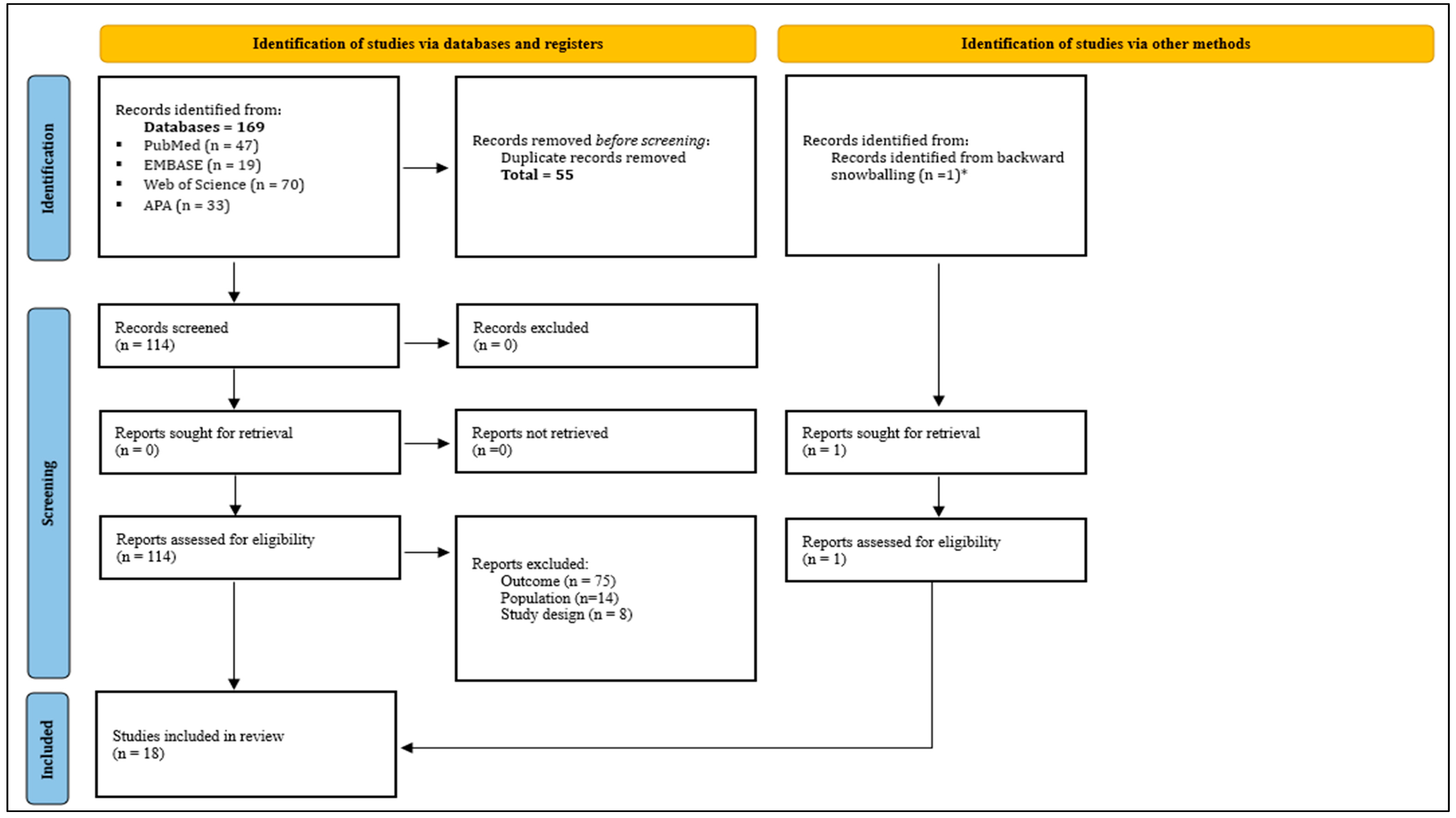
Table 1.
Characteristics of the included studies.
The relationships between postpartum body image and other variables were examined in three studies that developed theoretical models with visual diagrams [16,45,47]. One model was an adaptation of the Tripartite Influence Model [16], while the other two focused on developing a biopsychosocial model [45,47]. The Tripartite Influence Model, based on sociocultural theory, posits those sociocultural pressures (parents, friends, media) mediated by social comparison and internalization of appearance ideals, predict body image-related outcomes [51]. Lovering et al. [16] adapted the original model for postpartum women, incorporating partners as a sociocultural influence. The adapted model by Lovering et al. [16] revealed that sociocultural pressures from media, partners, and friends significantly predicted body dissatisfaction through the mediating of the thin ideal, with media influence emerging as the strongest predictor [16].
Rodgers et al. (2018) [45] proposed the biopsychosocial model of body image and eating attitudes for postpartum women up to six months. The model included psychological factors, analyzed through depressive symptoms, and biological factors related to concerns about body weight. As a sociocultural variable, the model highlights body surveillance through self-objectification [45]. Within this framework, body dissatisfaction emerged as the outcome of desired weight loss, body surveillance, depressive symptoms, and breastfeeding barriers. In turn, body dissatisfaction was a predictor of lower breastfeeding self-efficacy and an increased risk of eating disorders.
The third study with a theoretical model aimed to expand the biopsychosocial model of body image, eating concerns, and breastfeeding, including the partner. Greater postpartum partner support significantly predicted greater breastfeeding self-efficacy, lower depressive symptoms, and less body dissatisfaction. Conversely, greater internalization of the thin ideal predicted higher levels of depression and body dissatisfaction, and lower breastfeeding self-efficacy. Additionally, greater partner pressure related to appearance was significant predictor of greater body dissatisfaction [47].
Fifteen articles [18,29,32,34,39,40,41,42,44,46,48,49,50] assessed the relationship between variables using regression analysis. The findings showed that variables associated with body image included: weight and body mass index (BMI), depressive symptoms, age, mode of delivery, sexual functioning, breastfeeding, and social support.
Fifteen articles [18,29,32,34,39,40,41,42,44,46,48,49,50] assessed the relationship between variables using regression analysis. The findings showed that variables associated with body image using regression analysis included: maternal weight and body mass index (BMI), depressive symptoms, age, type of delivery, sexual functioning, breastfeeding, and social support.
Two studies analyzed the association between postpartum body image, age, and mode of delivery, as well as their relationship with sexual function [29,44]. The findings of Jawed-Wessel et al. (2017) indicated that older maternal age and cesarean delivery were predictors of greater body dissatisfaction [29,44], and that women with a more positive genital self-image tended to report lower body dissatisfaction, which could significantly influence sexual function [29,44]. One study examined the relationship between self-efficacy, breastfeeding experiences, and body image [31], demonstrating that higher breastfeeding self-efficacy and more positive breastfeeding experiences were predictors of lower body dissatisfaction. Finally, one study explored the association between social support and body image, finding that greater social support was a significant predictor of lower body dissatisfaction [43].
Most studies employed descriptive correlational (cross-sectional) designs [16,18,29,31,32,39,42,43,44,45,46,47,48,49], while the remaining studies used prospective longitudinal cohort designs [34,40,41,50].
The risk of bias assessment for the 18 included studies is summarized in Table 2 and Table 3. Among the cross-sectional studies, the majority were rated as having moderate risk of bias (n = 9; 69%), with most employing descriptive correlational designs [29,31,39,42,43,44,45,46,47,48,49]. Only one cross-sectional study was rated as having low risk of bias [49]. Regarding the cohort studies, half were rated as having low risk of bias [34,40], while the remaining two were classified as moderate risk of bias [41,50].
Table 2.
Risk of bias analysis of the included studies—JBI Critical appraisal checklist for analytical cross-sectional studies.
Table 3.
Risk of bias analysis of the included studies—JBI Critical appraisal checklist for cohort studies.
4. Discussion
The aim of this review was to identify and analyze available theoretical models with diagrams to assess body image in postpartum women and understand the relationship between body image and the main constructs associated with it through regression models. This was done to identify which variables may have a significant impact on body image perception during the postpartum period.
This review identified three studies [16,45,47] that developed theoretical models to explain the relationships between body image and other variables. The model proposed by Lovering et al. [16] suggests that postpartum women experience sociocultural pressures to achieve unrealistic body shapes/sizes. The biopsychosocial model [45] demonstrated that self-surveillance contributed to body dissatisfaction, increasing barriers to breastfeeding. The expanded version of biopsychosocial model [47] highlights the influence of the partner, where greater appearance-related pressure reported by the partner was significantly correlated with greater body dissatisfaction. A common aspect among the analyses was the evaluation of breastfeeding and social support variables. Two of the three studies included partner support [16,47], while two assessed breastfeeding [45,47], highlighting key aspects of the postpartum period. These findings highlight the importance of considering not only individual variables but also social and relational factors when analyzing postpartum body image.
These models reveal a complex dynamic that can significantly impact the postpartum experience for women. The pressure to conform to unrealistic body standards, amplified by the media and social networks, intensifies concerns about body image, compromising both the psychological well-being and eating behaviors of new mothers [16]. Heightened self-surveillance to meet these sociocultural expectations not only increases body dissatisfaction, but also creates barriers to breastfeeding, a vital practice for maternal and infant health [45]. While partner support can alleviate body dissatisfaction, reduce the risk of depression, and enhance the likelihood of breastfeeding, any pressure from the partner regarding appearance can exacerbate these insecurities [47]. The interplay of these factors underscores the importance of valuing the body’s functions, reducing sociocultural pressures, and fostering a positive role for partners in promoting the physical and mental well-being of postpartum women [16].
Theoretical frameworks are fundamental for advancing the understanding of body image in the postpartum period, as they enable a more in-deep exploration of the associations among variables [45,47]. Although the Tripartite Influence Model was not directly applied in any of the included studies, its core principles underpinned the conceptual adaptation proposed by Lovering et al. (2018) [16], reflecting its foundational role in body image research. Within the studies reviewed, the sociocultural framework [16] was evaluated using structural equation modeling (SEM), whereas the biopsychosocial frameworks [45,47] applied path analysis. Although both approaches were grounded in cross-sectional designs, path analysis can offer insights into potential causal pathways, while SEM supports causal inference and the testing and validation of models involving intricately interrelated variables [16,26]. The findings of this review emphasize the need for more rigorous methodological strategies that integrate conceptual models with advanced statistical techniques to deepen the understanding of the complex set of factors influencing women during this period.
Variables related to body image in postpartum women were identified through studies using regression techniques. While these techniques have distinct characteristics and specific applications, they all specify the association between an outcome and one or more variables based on a pre-established theory [27,28]. Employing this type of analysis, most studies reported outcomes related to maternal weight and depressive symptoms, while a smaller number investigated age, mode of delivery, and sexual function [18,29,32,34,39,40,41,42,44,46,48,49,50].
Key points of convergence emerged between regression analyses and the reviewed theoretical models. Body mass index (BMI) was identified as an important predictor of body dissatisfaction in postpartum women, appearing both in the postpartum-adapted model [16] and in several regression studies [18,34,39,42,49,50]. Findings by Huang and Dai (2007) [49] also indicated that body image predicts postpartum weight retention, with higher levels of retained weight associated with greater body dissatisfaction. Although the biopsychosocial model [45] did not directly include BMI, it identified the desire for weight loss as a predictor of body dissatisfaction.
Depressive symptoms represent another common finding. Most regression analyses indicated that body dissatisfaction predicts depressive symptoms [32,40,45,48]. Longitudinal studies [34,41] suggest that body dissatisfaction may act as a risk factor for the development of depressive symptoms, particularly during the postpartum period. In the biopsychosocial model [45], depressive symptoms were direct predictors of body dissatisfaction. Furthermore, depressive symptoms are important indicators of maternal emotional well-being and, when neglected, can compromise caregiving practices and mother–infant interactions [39,42]. Therefore, assessing body image and depressive symptoms during pregnancy and the postpartum period is crucial, as a positive body image may serve as a protective factor against the development of depression [34].
Other outcomes analyzed include maternal social support and breastfeeding. Walker et al. (2016) [43] demonstrated that social support is associated with lower body dissatisfaction. In the expanded biopsychosocial model [47], greater partner support during the postpartum period was significantly associated with lower body dissatisfaction and higher breastfeeding self-efficacy. Complementarily, Kapa et al. (2022) [31] showed that higher breastfeeding self-efficacy and more positive maternal experiences during this period were associated with lower body dissatisfaction.
In the original biopsychosocial model [45], body dissatisfaction predicted lower breastfeeding self-efficacy. Considering that the postpartum period involves adaptation and acceptance of bodily changes, perceived social support—from partners, family, or friends—may promote a more positive evaluation of appearance and overall body health [52], fostering greater attention to bodily functions, such as breastfeeding, and less focus on physical appearance [31].
The studies included in this systematic review did not justify the temporal cutoff used to define the postpartum period. However, the literature applies different temporal boundaries, such as up to 12 months postpartum, or broader and less precise periods often referred to as remote postpartum, which may vary according to the duration of lactation and the return of menstruation [2]. These considerations highlight the need for greater clarity in defining the postpartum period, and it is important that future studies explicitly report this delimitation.
Most of the included studies were rated as having a moderate risk of bias, while one was classified as low risk and four as high risk. Common sources of bias included unclear reporting of sample size adequacy, insufficient detail in data analysis coverage, and standardization of condition measurement. These limitations affect the overall strength and reliability of the findings, particularly when interpreting associations identified in regression models. While the consistency of certain variables across studies adds weight to the conclusions, the moderate to high risk of bias in several cases underscores the need for cautious interpretation and highlights the importance of improving study design and reporting in future research.
While this systematic review provides valuable insights into the relationship between postpartum body image and associated factors, some limitations warrant consideration. First, most studies did not provide adequate details on the sampling method, raising concerns about the representativeness of the participants and limiting the interpretation and generalization of the results. Second, a disproportionate sample size contributed by a single study, which accounted for the majority of participants included in this review, potentially introducing bias in the overall findings. Third, the variety of instruments used to assess body image and other constructs, including author-developed questionnaires, represents a limitation. Moreover, the lack of detailed sociodemographic information made it difficult to characterize the respondents’ profiles. Another limitation is that our analysis could not account for the impact of different sociocultural norms on body image, as the included studies were conducted across diverse countries. Furthermore, most studies were cross-sectional, which restricts the ability to assess changes in body image over time and to capture how women’s expectations and experiences may shift across different stages of the postpartum period. This variability can influence how body image is perceived and reported and should be considered when interpreting the findings. Since the included studies were conducted in different cultural contexts, it is also important to recognize that body image expectations are shaped by sociocultural norms, which may differ widely and influence how women perceive and relate to their bodies during the postpartum period.
The findings of this study underscore the complexity of postpartum body image and the need for approaches that integrate individual, social, and cultural factors. Theoretical models provide a comprehensive framework for understanding these multiple influences, whereas regression analyses identify specific associations among relevant variables, particularly maternal weight (BMI), depressive symptoms, breastfeeding experiences, and social support. These results highlight the importance of early assessment of body dissatisfaction and interventions that promote realistic expectations regarding bodily changes, strengthen maternal self-efficacy, and encourage social support throughout the postpartum period. For clinical practice, these findings emphasize the value of integrated care strategies that include mental health screening and culturally sensitive guidance related to body image and breastfeeding. They may also help patients normalize their experiences, reduce stigma, and foster self-compassion. Finally, future research should use longitudinal designs to further explore these relationships and examine how factors such as culture, socioeconomic status, and partner dynamics shape body image over time.
5. Conclusions
This systematic review highlights the complex interaction between postpartum body image and various factors, including sociocultural pressures, psychological variables, and relational dynamics. Theoretical models emphasize the role of media influence, self-surveillance, and partner support in shaping body dissatisfaction, while regression analyses reveal consistent associations with maternal weight, depressive symptoms, mode of delivery, and breastfeeding experiences. Several of these findings, such as the impact of BMI and perceived social support, align with constructs present in the identified theoretical frameworks. However, other variables, like breastfeeding experiences and maternal self-efficacy, are less frequently represented in traditional models. This underscores the need to expand or adapt existing theories to better account for the postpartum context and to guide future research and intervention strategies.
Author Contributions
Conceptualization, M.R.d.S., T.M.L., E.B.S., A.P.D.B., J.F.F.M. and C.M.N.; methodology, M.R.d.S., J.F.F.M. and C.M.N.; formal analysis, M.R.d.S., T.M.L., E.B.S., A.P.D.B., J.F.F.M. and C.M.N.; investigation, M.R.d.S. and T.M.L.; resources, M.R.d.S.; data curation, M.R.d.S., T.M.L., E.B.S., J.F.F.M. and C.M.N.; writing—original draft preparation, M.R.d.S.; writing—review and editing, A.P.D.B., J.F.F.M. and C.M.N.; visualization, A.P.D.B.; supervision, J.F.F.M. and C.M.N. All authors have read and agreed to the published version of the manuscript.
Funding
This study was financed in part by the Coordenação de Aperfeiçoamento de Pessoal de Nível Superior—Brasil (CAPES)—Finance Code 001.
Institutional Review Board Statement
Not applicable.
Informed Consent Statement
Not applicable.
Data Availability Statement
No new data were created or analyzed in this study. Data sharing is not applicable to this article.
Acknowledgments
We thank the Federal University of Juiz de Fora.
Conflicts of Interest
The authors declare no conflicts of interest.
Abbreviations
The following abbreviations are used in this manuscript:
| PRISMA | Preferred Reporting Items for Systematic Reviews and Meta-Analysis |
| PICO | Patient, Intervention, Comparison, and Outcome |
| APA | American Psychological Association |
| BCS | Body Cathexis Scale |
| CEDS | Center for Epidemiologic Studies Depression Scale |
| BIS | Body Image Scale |
| BDI | Beck’s Depression Inventory |
| BSS | Body Satisfaction Scale |
| BAQ | Body Attitudes Questionnaire |
| EPDS | Edinburgh Postpartum Depression Inventory |
| MBSRQ | Multidimensional Self-Body Relationships |
| RSES | Rosenberg Self-Esteem Scale |
| FGSIS | Female Genital Self-Image Scale |
| BSES | Breastfeeding Self-Efficacy Scale |
| EDI | Eating Disorder Inventory |
| BMI | body mass index |
| NR | Not reported |
| USA | United States of America |
| SEM | Structural Equation Modeling |
Appendix A
Search strategy—PUBMED
- ((Postpartum Period) OR (Period, Postpartum)) OR (Postpartum)) OR (Postpartum Women)) OR (Women, Postpartum)) OR (Puerperium)
- (((((((((((((((((((((((((((((((((((((((((((Latent Class Analysis) OR (Latent Class Analysis)) OR (LatentClass Analyses)) OR (Latent Variable Modeling)) OR (Latent Variable Modelings)) OR (Modeling, Latent Variable)) OR (Variable Modeling, Latent)) OR (Structural Equation Modeling)) OR (Modeling, Structural Equation)) OR (Structural Equation Modelings)) OR (Probabilistic Latent SemanticAnalysis)) OR (Latent Class Model)) OR (Latent Class Models)) OR (Model, Latent Class)) OR (Models, Theoretical)) OR (Models, Theoretical)) OR (Model, Theoretical)) OR (Theoretical Model)) OR (Theoretical Models)) OR (Models, Theoretic)) OR (Models (Theoretical))) OR (Experimental Model)) OR (Model, Experimental)) OR (Models, Experimental)) OR (Experimental Models)) OR (Mathematical Model)) OR (Mathematical Models)) OR (Model, Mathematical)) OR (Models, Mathematical)) OR (Theoretical Study)) OR (Studies, Theoretical)) OR (Study, Theoretical)) OR (Theoretical Studies)) OR (Regression Analysis)) OR (Regression Analysis)) OR (Analysis, Regression)) OR (Analyses, Regression)) OR (Regression Analyses)) OR (Regression Diagnostics)) OR (Diagnostics, Regression)) OR (Statistical Regression)) OR (Regression, Statistical)) OR (Regressions, Statistical)) OR (Statistical Regression)
- ((((((((((((((((((((((Body Images) OR (Image, Body)) OR (Body Identity)) OR (Identity, Body)) OR (Body Representation)) OR (Body Representations)) OR (Representation, Body)) OR (Body Schema)) OR (Body Schemas)) OR (Schema, Body)) OR (Dissatisfaction, Body)) OR (Body ImageDissatisfaction)) OR (Body Image Dissatisfactions)) OR (Dissatisfaction, Body Image)) OR (Dissatisfactions, Body Image)) OR (Image Dissatisfaction, Body)) OR (Image Dissatisfactions, Body)) OR (Negative Body Image)) OR (Body Image, Negative)) OR (Body Images, Negative)) OR (Image, Negative Body)) OR (Images, Negative Body)) OR (Negative Body Image)
- 1 AND 2 AND 3
Search strategy—WEB OF SCIENCE
ALL = ((((((Postpartum Period) OR (Period, Postpartum)) OR (Postpartum)) OR (Postpartum Women)) OR (Women, Postpartum)) OR (Puerperium))
- (((((((((((((((((((((((((ALL = (Latent Class Analysis)) OR ALL = (Latent Class Analysis)) OR ALL = (Latent Class Analyses)) OR ALL = (Latent Variable Modeling)) OR ALL = (Latent Variable modeling)) OR ALL = (Modeling, Latent Variable)) OR ALL = (Variable Modeling, Latent)) OR ALL = (Structural Equation Modeling)) OR ALL = (Modeling, Structural Equation)) OR ALL = (Structural Equation modeling)) OR ALL = (Probabilistic Latent Semantic Analysis)) OR ALL = (Latent Class Model)) OR ALL = (Latent Class Models)) OR ALL = (Model, Latent Class)) OR ALL = (Models, Theoretical)) OR ALL = (Models, Theoretical)) OR ALL = (Model, Theoretical)) OR ALL = (Theoretical Model)) OR ALL = (Theoretical Models)) OR ALL = (Models, Theoretic)) OR ALL = (Models (Theoretical))) OR ALL = (Experimental Model)) OR ALL = (Model, Experimental)) OR ALL = (Models, Experimental)) OR ALL = (Experimental Models))
- ((((((((((((((((((((((ALL = (Mathematical Model)) OR ALL = (Mathematical Models)) OR ALL = (Model, Mathematical)) OR ALL = (Models, Mathematical)) OR ALL = (Theoretical Study)) OR ALL = (Studies, Theoretical)) OR ALL = (Study, Theoretical)) OR ALL = (Theoretical Studies)) OR ALL = (Regression Analysis)) OR ALL = (Regression Analysis)) OR ALL = (Analysis, Regression)) OR ALL = (Analyses, Regression)) OR ALL = (Regression Analyses)) OR ALL = (Regression Diagnostics)) OR ALL = (Diagnostics, Regression)) OR ALL = (StatisticalRegression)) OR ALL = (Regression, Statistical)) OR ALL = (Regressions, Statistical)) OR ALL = (Statistical Regression)) OR ALL = (Biopsychosocial Models)) OR ALL = (Model, Biopsychosocial)) OR ALL = (Biopsychosocial Model)
- (((((((((((((((((((((((ALL = (Body Images)) OR ALL = (Image, Body)) OR ALL = (Body Identity)) OR ALL = (Identity, Body)) OR ALL = (Body Representation)) OR ALL = (Body Representations)) OR ALL = (Representation, Body)) OR ALL = (Body Schema)) OR ALL = (Body Schemas)) OR ALL = (Schema, Body)) OR ALL = (Dissatisfaction, Body)) OR ALL = (Body Image Dissatisfaction)) OR ALL = (Body Image dissatisfaction)) OR ALL = (Dissatisfaction, Body Image)) OR ALL = (dissatisfaction, Body Image)) OR ALL = (ImageDissatisfaction, Body)) OR ALL = (Image dissatisfaction, Body)) OR ALL = (Negative Body Image)) OR ALL = (Body Image, Negative)) OR ALL = (Body Images, Negative)) OR ALL = (Image, Negative Body)) OR ALL = (Images, Negative Body)) OR ALL = (Negative Body Image)) OR ALL = (body image)
Search strategy—EMBASE
((‘postpartum’/exp OR postpartum) AND period OR (period, AND (‘postpartum’/exp OR postpartum)) OR ‘postpartum’/exp OR postpartum OR ((‘postpartum’/exp OR postpartum) AND (‘women’/expOR women)) OR ((‘women,’/exp OR women,) AND (‘postpartum’/exp OR postpartum)) OR ‘puerperium’/exp OR puerperium) AND (latent AND class AND (‘analysis’/exp OR analysis) OR (latent AND class AND analyses) OR (latent AND variable AND (‘modeling’/exp OR modeling)) OR (latent AND variable AND modelings) OR ((‘modeling,’/exp OR modeling,) AND latent AND variable) OR (variable AND (‘modeling,’/exp OR modeling,) AND latent) OR (structural AND (‘equation’/expOR equation) AND (‘modeling’/exp OR modeling)) OR ((‘modeling,’/exp OR modeling,) AND structural AND (‘equation’/exp OR equation)) OR (structural AND (‘equation’/exp OR equation) AND modelings) OR (probabilistic AND latent AND semantic AND (‘analysis’/exp OR analysis)) OR (latent AND class AND (‘model’/exp OR model)) OR (latent AND class AND (‘models’/exp OR models)) OR ((‘model,’/exp OR model,) AND latent AND class) OR (models, AND theoretical) OR ((‘model,’/expOR model,) AND theoretical) OR (theoretical AND (‘model’/exp OR model)) OR (theoretical AND (‘models’/exp OR models)) OR (models, AND theoretic) OR ((‘models’/exp OR models) AND theoretical) OR (experimental AND (‘model’/exp OR model)) OR ((‘model,’/exp OR model,) AND experimental) OR (models, AND experimental) OR (experimental AND (‘models’/exp OR models)) OR (mathematical AND (‘model’/exp OR model)) OR (mathematical AND (‘models’/exp OR models)) OR ((‘model,’/exp OR model,) AND mathematical) OR (models, AND mathematical) OR (theoretical AND (‘study’/exp OR study)) OR (studies, AND theoretical) OR ((‘study,’/exp OR study,) AND theoretical) OR (theoretical AND (‘studies’/exp OR studies)) OR ((‘regression’/exp OR regression) AND (‘analysis’/expOR analysis)) OR ((‘analysis,’/exp OR analysis,) AND (‘regression’/exp OR regression)) OR (analyses, AND (‘regression’/exp OR regression)) OR ((‘regression’/exp OR regression) AND analyses) OR ((‘regression’/exp OR regression) AND (‘diagnostics’/exp OR diagnostics)) OR ((‘diagnostics,’/expOR diagnostics,) AND (‘regression’/exp OR regression)) OR (regression, AND statistical) OR (regressions, AND statistical) OR (statistical AND (‘regression’/exp OR regression)) OR (biopsychosocial AND (‘models’/exp OR models)) OR ((‘model,’/exp OR model,) AND biopsychosocial) OR (biopsychosocial AND (‘model’/exp OR model))) AND ((‘body’/exp OR body) AND images OR (image, AND (‘body’/exp OR body)) OR ((‘body’/exp OR body) AND (‘identity’/exp OR identity)) OR ((‘identity,’/exp OR identity,) AND (‘body’/exp OR body)) OR ((‘body’/exp OR body) AND representation) OR ((‘body’/exp OR body) AND representations) OR (representation, AND (‘body’/exp OR body)) OR ((‘body’/exp OR body) AND schema) OR ((‘body’/exp OR body) AND schemas) OR (schema, AND (‘body’/exp OR body)) OR (dissatisfaction, AND (‘body’/expOR body)) OR ((‘body’/exp OR body) AND (‘image’/exp OR image) AND (‘dissatisfaction’/expOR dissatisfaction)) OR ((‘body’/exp OR body) AND (‘image’/exp OR image) AND dissatisfactions) OR (dissatisfaction, AND (‘body’/exp OR body) AND (‘image’/exp OR image)) OR (dissatisfactions, AND (‘body’/exp OR body) AND (‘image’/exp OR image)) OR ((‘image’/exp OR image) AND dissatisfaction, AND (‘body’/exp OR body)) OR ((‘image’/exp OR image) AND dissatisfactions, AND (‘body’/exp OR body)) OR ((‘body’/exp OR body) AND image, AND negative) OR ((‘body’/exp OR body) AND images, AND negative) OR (image, AND negative AND (‘body’/exp OR body)) OR (images, AND negative AND (‘body’/expOR body)) OR (negative AND (‘body’/exp OR body) AND (‘image’/exp OR image)) OR ((‘body’/expOR body) AND (‘image’/exp OR image)))
Search strategy—American Psychological Association
(((((((Postpartum Period) OR (Period, Postpartum)) OR (Postpartum)) OR (Postpartum Women)) OR (Women, Postpartum)) OR (Puerperium)) AND (((((((((((((((((((((((((((((((((((((((((((((((Latent ClassAnalysis) OR (Latent Class Analysis)) OR (Latent Class Analyses)) OR (Latent Variable Modeling)) OR (Latent Variable Modelings)) OR (Modeling, Latent Variable)) OR (Variable Modeling, Latent)) OR (Structural Equation Modeling)) OR (Modeling, Structural Equation)) OR (Structural EquationModelings)) OR (Probabilistic Latent Semantic Analysis)) OR (Latent Class Model)) OR (Latent ClassModels)) OR (Model, Latent Class)) OR (Models, Theoretical)) OR (Models, Theoretical)) OR (Model, Theoretical)) OR (Theoretical Model)) OR (Theoretical Models)) OR (Models, Theoretic)) OR (Models (Theoretical))) OR (Experimental Model)) OR (Model, Experimental)) OR (Models, Experimental)) OR (Experimental Models)) OR (Mathematical Model)) OR (Mathematical Models)) OR (Model, Mathematical)) OR (Models, Mathematical)) OR (Theoretical Study)) OR (Studies, Theoretical)) OR (Study, Theoretical)) OR (Theoretical Studies)) OR (Regression Analysis)) OR (Regression Analysis)) OR (Analysis, Regression)) OR (Analyses, Regression)) OR (Regression Analyses)) OR (RegressionDiagnostics)) OR (Diagnostics, Regression)) OR (Statistical Regression)) OR (Regression, Statistical)) OR (Regressions, Statistical)) OR (Statistical Regression)) OR (Biopsychosocial Models)) OR (Model, Biopsychosocial)) OR (Biopsychosocial Model))) AND ((((((((((((((((((((((((Body Images) OR (Image, Body)) OR (Body Identity)) OR (Identity, Body)) OR (Body Representation)) OR (Body Representations)) OR (Representation, Body)) OR (Body Schema)) OR (Body Schemas)) OR (Schema, Body)) OR (Dissatisfaction, Body)) OR (Body Image Dissatisfaction)) OR (Body ImageDissatisfactions)) OR (Dissatisfaction, Body Image)) OR (Dissatisfactions, Body Image)) OR (ImageDissatisfaction, Body)) OR (Image Dissatisfactions, Body)) OR (Negative Body Image)) OR (Body Image, Negative)) OR (Body Images, Negative)) OR (Image, Negative Body)) OR (Images, Negative Body)) OR (Negative Body Image)) OR (body image))
References
- Chauhan, G.; Tadi, P. Physiology, postpartum changes. In StatPearls; StatPearls Publishing LLC.: Treasure Island, FL, USA, 2020. [Google Scholar]
- Rezende Filho, J. Obstetrícia fundamental. In Obstetrícia Fundamental; Guanabara Koogan: Rio de Janeiro, Brazil, 2024; pp. 295–304. [Google Scholar]
- Brasil. Parto, Aborto e Puerpério: Assistência Humanizada à Mulher; Ministério da Saúde: Brasília, Brazil, 2001. [Google Scholar]
- Mckinney, J.; Keyser, L.; Clinton, S.P.; Pagliano, C. ACOG Committee Opinion No. 736: Optimizing postpartum care. Obstet. Gyneco 2018, 132, 784–785. [Google Scholar] [CrossRef] [Scilit]
- Berens, P. Overview of the postpartum period: Normal physiology and routine maternal care. In UptoDate; UpToDate, Inc.: Waltham, MA, USA, 2020; Volume 15, pp. 1–34. [Google Scholar]
- Ricci, S.S. Enfermagem Materno-Neonatal e Saúde da Mulher; Grupo Gen-Guanabara Koogan: Rio de Janeiro, Brazil, 2015. [Google Scholar]
- Lee, M.F.; Target, C.; Liddelow, C.; Burke, K.J. Bouncing back with bliss: Nurturing body image and embracing intuitive eating in the postpartum: A cross-sectional replication study. J. Reprod. Infant Psychol. 2024, 1–14. [Google Scholar] [CrossRef] [Scilit]
- Evenson, K.R.; Mottola, M.F.; Artal, R. Review of recent physical activity guidelines during pregnancy to facilitate advice by health care providers. Obstet. Gynecol. Surv. 2019, 74, 481–489. [Google Scholar] [CrossRef] [Scilit] [PubMed]
- Javadekar, A.; Karmarkar, A.; Chaudhury, S.; Saldanha, D.; Patil, J. Biopsychosocial correlates of emotional problems in women during pregnancy and postpartum period. Ind. Psychiatry J. 2023, 32 (Suppl. S1), S141–S146. [Google Scholar] [CrossRef] [Scilit] [PubMed]
- Spinoni, M.; Solorzano, C.S.; Grano, C. A prospective study on body image disturbances during pregnancy and postpartum: The role of cognitive reappraisal. Front. Psychol. 2023, 14, 1200819. [Google Scholar] [CrossRef] [Scilit]
- Astrachan-Fletcher, E.; Veldhuis, C.; Lively, N.; Fowler, C.; Marcks, B. The reciprocal effects of eating disorders and the postpartum period: A review of the literature and recommendations for clinical care. J. Womens Health 2008, 17, 227–239. [Google Scholar] [CrossRef] [Scilit]
- Hodgkinson, E.L.; Smith, D.M.; Wittkowski, A. Women’s experiences of their pregnancy and postpartum body image: A systematic review and meta-synthesis. BMC Pregnancy Childbirth 2014, 14, 330. [Google Scholar] [CrossRef] [Scilit]
- O’loghlen, E.; Galligan, R. Disordered eating in the postpartum period: Role of psychological distress, body dissatisfaction, dysfunctional maternal beliefs and self-compassion. J. Health Psychol. 2022, 27, 1084–1098. [Google Scholar] [CrossRef] [Scilit]
- Slade, P.D. What is body image? Behav. Res. Ther. 1994, 32, 497–502. [Google Scholar] [CrossRef] [Scilit]
- Cash, T.F.; Smolak, L. Body Image: A Handbook of Science, Practice, and Prevention, 2nd ed.; Guilford Press: New York, NY, USA, 2011. [Google Scholar]
- Lovering, M.E.; Rodgers, R.F.; George, J.E.; Franko, D.L. Exploring the tripartite influence model of body dissatisfaction in postpartum women. Body Image 2018, 24, 44–54. [Google Scholar] [CrossRef] [Scilit]
- Bergmeier, H.; Hill, B.; Haycraft, E.; Blewitt, C.; Lim, S.; Meyer, C.; Skouteris, H. Maternal body dissatisfaction in pregnancy, postpartum and early parenting: An overlooked factor implicated in maternal and childhood obesity risk. Appetite 2020, 147, 104525. [Google Scholar] [CrossRef] [Scilit]
- Tavakoli, M.; Hasanpoor-Azghady, S.B.; Farahani, L.A. Predictors of mothers’ postpartum body dissatisfaction based on demographic and fertility factors. BMC Pregnancy Childbirth 2021, 21, 8. [Google Scholar] [CrossRef] [Scilit]
- Lee, M.F.; Bolton, K.; Madsen, J.; Burke, K.J. A systematic review of influences and outcomes of body image in postpartum via a socioecological framework. J. Reprod. Infant Psychol. 2023, 43, 789–826. [Google Scholar] [CrossRef] [Scilit]
- Silveira, M.L.; Ertel, K.A.; Dole, N.; Chasan-Taber, L. The role of body image in prenatal and postpartum depression: A critical review of the literature. Arch. Womens Ment. Health 2015, 18, 409–421. [Google Scholar] [CrossRef] [Scilit] [PubMed]
- Watson, B.; Fuller-Tyszkiewicz, M.; Broadbent, J.; Skouteris, H. The meaning of body image experiences during the perinatal period: A systematic review of the qualitative literature. Body Image 2015, 14, 102–113. [Google Scholar] [CrossRef] [Scilit] [PubMed]
- Hartley, E.; Hill, B.; McPhie, S.; Skouteris, H. The associations between depressive and anxiety symptoms, body image, and weight in the first year postpartum: A rapid systematic review. J. Reprod. Infant Psychol. 2018, 36, 81–101. [Google Scholar] [CrossRef] [Scilit]
- Morley-Hewitt, A.G.; Owen, A.L. A systematic review examining the association between female body image and lithe intention, initiation and duration of post-partum infant feeding methods (breastfeeding vs bottle-feeding). J. Health Psychol. 2020, 25, 207–226. [Google Scholar] [CrossRef] [Scilit]
- Schilder, P.; Wertman, R. Body Image: The Constructive Energies of the Psyche; Martins Fontes: São Paulo, Brazil, 1999. [Google Scholar]
- Amorim, L.D.A.F.; Fiaccone, R.; Santos, C.; Moraes, L.; Oliveira, N.; Oliveira, S.; dos Santos, T.N.L. Modelagem com Equações Estruturais: Princípios Básicos e Aplicações; Universidade Federal da Bahia: Salvador, Brazil, 2012; Available online: https://repositorio.ufba.br/handle/ri/17684 (accessed on 20 January 2025).
- Neves, J.A.B. Modelo de Equações Estruturais: Uma Introdução Aplicada; Escola Nacional de Administração Pública: Brasília, Brazil, 2018. Available online: https://repositorio.enap.gov.br/handle/1/3334 (accessed on 20 January 2025).
- Lewis, S. Regression analysis. Pract. Neurol. 2007, 7, 259–264. [Google Scholar] [CrossRef] [Scilit]
- Souza Filho, B.A.B.D.; Struchiner, C.J. Uma proposta teórico-metodológica para elaboração de modelos teóricos. Cad. Saúde Coletiva 2021, 29, 86–97. [Google Scholar] [CrossRef] [Scilit]
- Acar Bektaş, H.; Öcalan, D. The relationship between women’s mode of delivery, body image, self-respect, and genital self-image. Int. Urogynecology J. 2023, 34, 2885–2892. [Google Scholar] [CrossRef] [Scilit] [PubMed]
- Guimarães, P.R.B. Análise de Correlação e Medidas de Associação; Universidade Federal do Paraná: Curitiba, Brazil, 2017. [Google Scholar]
- Kapa, H.M.; Litteral, J.L.; Keim, A.S.; Jackson, J.L.; Schofield, K.A.; Crerand, C.E. Body image dissatisfaction, breastfeeding experiences, and self-efficacy in postpartum women with and without eating disorder symptoms. J. Hum. Lact. 2022, 38, 633–643. [Google Scholar] [CrossRef] [Scilit]
- Kariuki, E.W.; Kuria, M.W.; Were, F.N.; Ndetei, D.M. Predictors of postnatal depression in the slums Nairobi, Kenya: A cross-sectional study. BMC Psychiatry 2022, 22, 242. [Google Scholar] [CrossRef] [Scilit] [PubMed]
- Page, M.J.; McKenzie, J.E.; Bossuyt, P.M.; Boutron, I.; Hoffmann, T.C.; Mulrow, C.D.; Shamseer, L.; Tetzlaff, J.M.; Akl, E.A.; Brennan, S.E.; et al. The PRISMA 2020 statement: An updated guideline for reporting systematic reviews. BMJ 2021, 372, 71. [Google Scholar] [CrossRef] [Scilit] [PubMed]
- Han, S.Y.; Brewis, A.A.; Wutich, A. Body image mediates the depressive effects of weight gain in new mothers, particularly for women already obese: Evidence from the Norwegian mother and child cohort study. BMC Public Health 2016, 16, 664. [Google Scholar] [CrossRef] [Scilit] [PubMed]
- Lee, M.F.; Madsen, J.; Williams, S.L.; Browne, M.; Burke, K.J. Differential effects of intuitive and disordered eating on physical and psychological outcomes for women with young children. Matern. Child. Health J. 2022, 26, 407–414. [Google Scholar] [CrossRef] [Scilit]
- Joanna Briggs Institute (JBI). JBI Manual for Evidence Synthesis; Aromataris, E., Munn, Z., Eds.; Joanna Briggs Institute: Adelaide, Australia, 2020. [Google Scholar]
- Barker, T.H.; Stone, J.C.; Sears, K.; Klugar, M.; Tufanaru, C.; Leonardi-Bee, J.; Aromataris, E.; Munn, Z. The revised JBI critical appraisal tool for the assessment of risk of bias for randomized controlled trials. JBI Evid. Synth. 2023, 21, 494–506. [Google Scholar] [CrossRef] [Scilit]
- Canto, G.L.; Stefani, C.M.; Massignan, C. Risco de Viés em Revisões Sistemáticas: Guia Prático; Centro Brasileiro de Pesquisas Baseadas em Evidências—Cobe UFSC: Florianópolis, Brazil, 2021. [Google Scholar]
- Walker, L.; Timmerman, G.M.; Kim, M.; Sterling, B. Relationships between body image and depressive symptoms during postpartum in ethnically diverse, low-income women. Women Health 2002, 36, 101–121. [Google Scholar] [CrossRef] [Scilit]
- Downs, D.S.; Dinallo, J.M.; Kirner, T.L. Determinants of pregnancy and postpartum depression: Prospective influences of depressive symptoms, body image satisfaction, and exercise behavior. Ann. Behav. Med. 2008, 36, 54–63. [Google Scholar] [CrossRef] [Scilit]
- Sweeney, A.C.; Fingerhut, R. Examining relationships between body dissatisfaction, maladaptive perfectionism, and postpartum depression symptoms. J. Obstet. Gynecol. Neonatal Nurs. 2013, 42, 551–561. [Google Scholar] [CrossRef] [Scilit]
- Walker, L.O.; Sterling, B.S.; Guy, S.; Mahometa, M.J. Cumulative poor psychosocial and behavioral health among low-income women at 6 weeks postpartum. Nurs. Res. 2013, 62, 233–242. [Google Scholar] [CrossRef] [Scilit]
- Walker, L.O.; Xie, B.; Hendrickson, S.G.; Sterling, B.S. Behavioral and psychosocial health of new mothers and associations with contextual factors and perceived health. J. Obstet. Gynecol. Neonatal Nurs. 2016, 45, 3–16. [Google Scholar] [CrossRef] [Scilit] [PubMed]
- Jawed-Wessel, S.; Herbenick, D.; Schick, V. The relationship between body image, female genital self-image, and sexual function among first-time mothers. J. Sex Marital. Ther. 2017, 43, 618–632. [Google Scholar] [CrossRef] [Scilit] [PubMed]
- Rodgers, R.F.; O’Flynn, J.L.; Bourdeau, A.; Zimmerman, E. A biopsychosocial model of body image, disordered eating, and breastfeeding among postpartum women. Appetite 2018, 126, 163–168. [Google Scholar] [CrossRef] [Scilit] [PubMed]
- Schlaff, R.A.; Baruth, M.; Laframboise, F.C.; Deere, S.J. Examining the impact of body satisfaction and physical activity change on postpartum depressive symptoms. J. Phys. Act. Health 2020, 17, 141–148. [Google Scholar] [CrossRef] [Scilit]
- Rodgers, R.F.; Fischer, L.E.; Zimmerman, E. Partner influences, breastfeeding, and body image and eating concerns: An expanded biopsychosocial model. Appetite 2022, 169, 105833. [Google Scholar] [CrossRef] [Scilit]
- Bakhteh, A.; Salari, N.; Jaberghaderi, N.; Khosrorad, T. Investigating the relationship between self-compassion and body image with postpartum depression in women referring to health centres in Iran. Iran. J. Nurs. Midwifery Res. 2023, 28, 411–416. [Google Scholar] [CrossRef] [Scilit]
- Huang, T.T.; Dai, F.T. Weight retention predictors for Taiwanese women at six-month postpartum. J. Nurs. Res. 2007, 15, 11–20. [Google Scholar] [CrossRef] [Scilit]
- Shloim, N.; Rudolf, M.; Feltbower, R.G.; Blundell-Birtill, P.; Hetherington, M. Israeli and British women’s well-being and eating behaviours in pregnancy and postpartum. J. Reprod. Infant Psychol. 2019, 37, 123–138. [Google Scholar] [CrossRef] [Scilit]
- Thompson, J.K.; Heinberg, L.J.; Altabe, M.; Tantleff-Dunn, S. Exacting Beauty: Theory, Assessment, and Treatment of Body Image Disturbance; American Psychological Association: Washington, DC, USA, 1999. [Google Scholar] [CrossRef] [Scilit]
- Izydorczyk, B.; Walenista, W.; Kamionka, A.; Lizińczyk, S.; Ptak, M. Connections Between Perceived Social Support and the Body Image in the Group of Women With Diastasis Recti Abdominis. Front. Psychol. 2021, 12, 707775. [Google Scholar] [CrossRef] [Scilit]
Disclaimer/Publisher’s Note: The statements, opinions and data contained in all publications are solely those of the individual author(s) and contributor(s) and not of MDPI and/or the editor(s). MDPI and/or the editor(s) disclaim responsibility for any injury to people or property resulting from any ideas, methods, instructions or products referred to in the content. |
© 2025 by the authors. Licensee MDPI, Basel, Switzerland. This article is an open access article distributed under the terms and conditions of the Creative Commons Attribution (CC BY) license (https://creativecommons.org/licenses/by/4.0/).