Article

Time-Use Sequences: A Mixed-Methods Study Exploring How, When, and Where Spatiotemporal Patterns of Everyday Routines Can Strengthen Public Health Interventions


by
Brittany V. Barber
1,*,
George Kephart
2,
Michael Vallis
3,
Stephen A. Matthews
4,
Ruth Martin-Misener
5 and
Daniel G. Rainham
6,7
1
Faculty of Health, Dalhousie University, 5968 College Street, Halifax, NS B3H 4R2, Canada
2
Department of Community Health and Epidemiology, Dalhousie University, 5790 University Avenue, Halifax, NS B3H 1V7, Canada
3
Department of Family Medicine, Dalhousie University, 1465 Brenton Street, Suite 402, Halifax, NS B3J 3T4, Canada
4
Department of Sociology & Criminology, The Pennsylvania State University, 211 Oswald Tower, University Park, PA 16802, USA
5
School of Nursing, Dalhousie University, 5869 University Avenue, Halifax, NS B3H 4R2, Canada
6
School of Health and Human Performance, Dalhousie University, 6230 South Street, Halifax, NS B3H 4R2, Canada
7
Healthy Populations Institute, Dalhousie University, Halifax, NS B3H 4R2, Canada
*
Author to whom correspondence should be addressed.
Int. J. Environ. Res. Public Health 2024, 21(9), 1128; https://doi.org/10.3390/ijerph21091128

Submission received: 6 July 2024 / Revised: 21 August 2024 / Accepted: 22 August 2024 / Published: 27 August 2024

Abstract

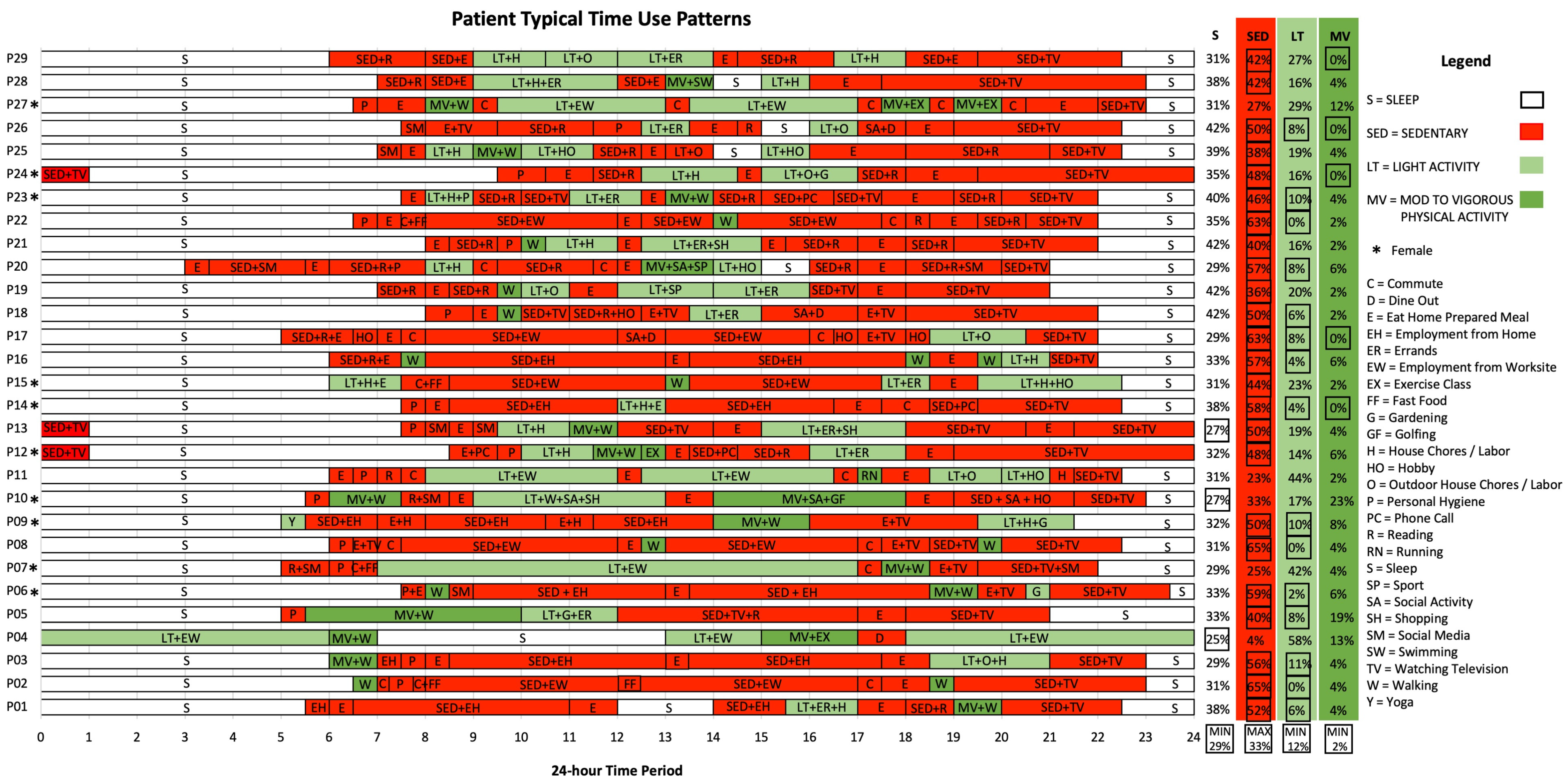
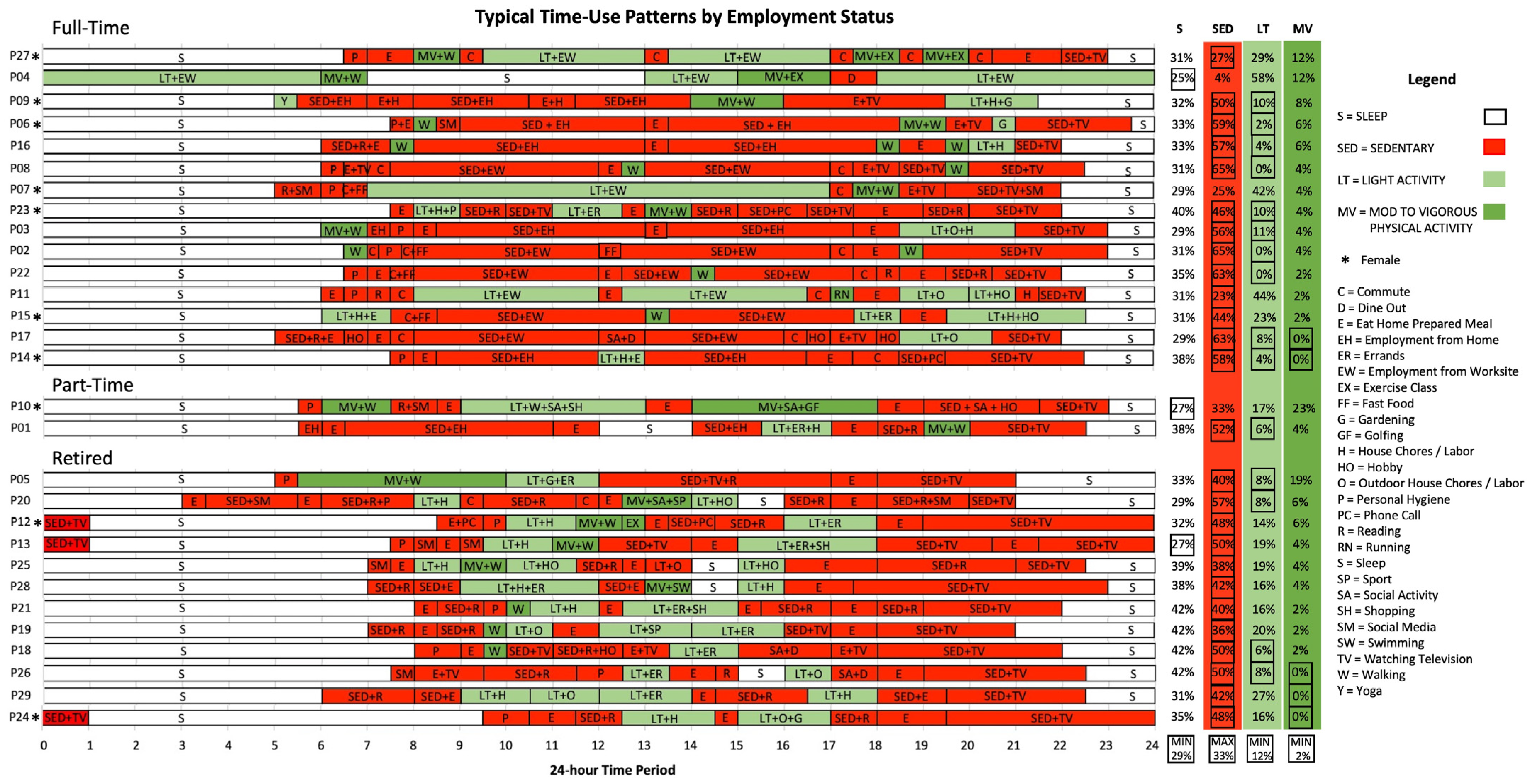
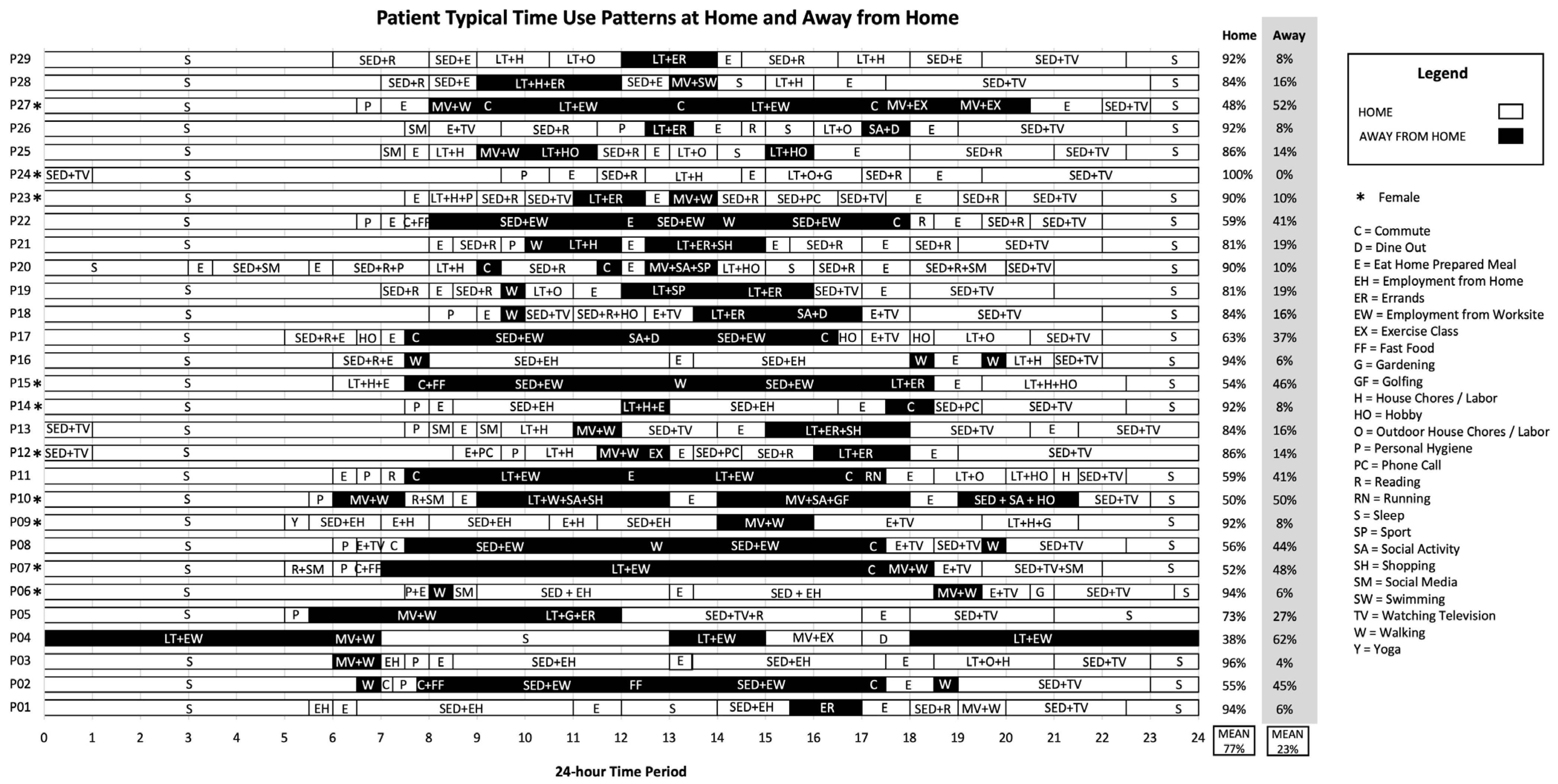
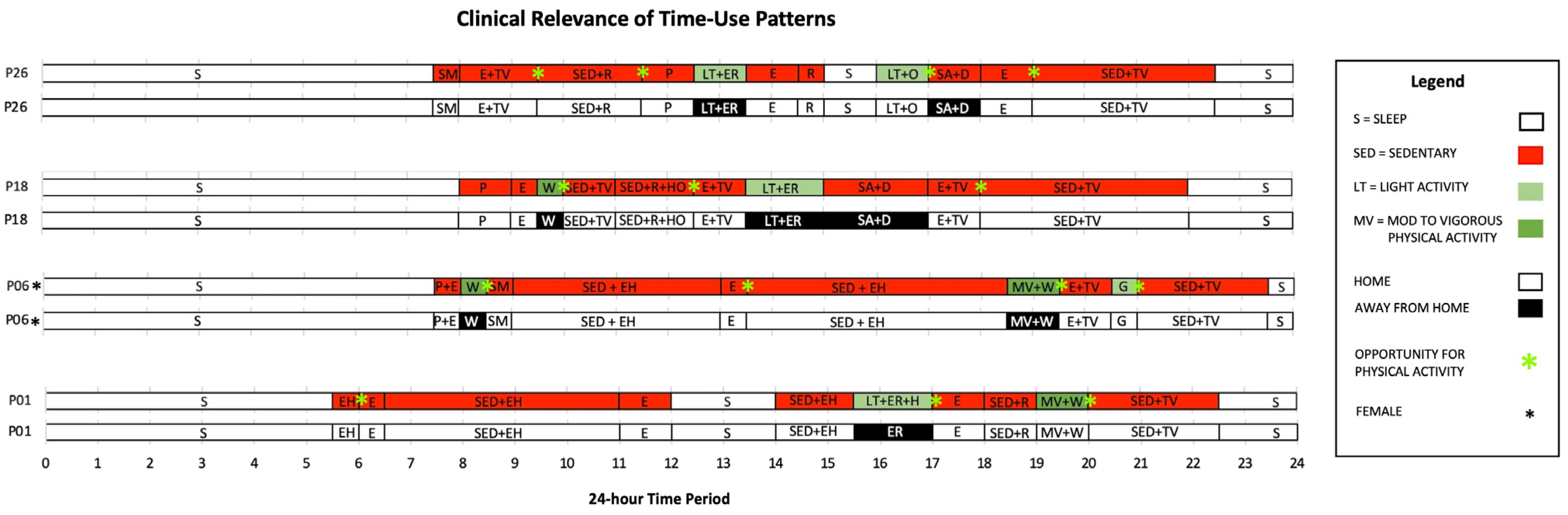
Background: Behavior change interventions are critical for the secondary prevention of cardiovascular disease and for reducing the risk of a repeat event or mortality. However, the effectiveness of behavior change interventions is challenged by a lack of spatiotemporal contexts, limiting our understanding of factors that influence the timing and location in which day-to-day activities occur and the maintenance of behavior change. This study explored how behavior change interventions could incorporate spatiotemporal contexts of patient activities for modifying behaviors. Methods: A mixed-methods approach with adapted geo-ethnography techniques was used to solicit detailed descriptions of patients’ day-to-day routines, including where, when, and how patients spend time. Data were gathered from patients in one cardiac intervention program in Nova Scotia, Canada, from June to September 2021. Results: A total of 29 individuals (19 men and 10 women) between the ages of 45 and 81 and referred to the program after a cardiac event participated. The results show three key findings: (1) most patients exceeded the minimum guidelines of 30 min of daily physical activity but were sedentary for long periods of time, (2) patient time-use patterns are heterogenous and unique to contexts of individual space-time activity paths, and (3) time-use patterns reveal when, where, and how patients spend significant portions of time and opportunities for adapting patients’ day-to-day health activities. Conclusions: This study demonstrates the potential for interventions to integrate tools for collecting and communicating spatial and temporal contexts of patient routines, such as the types of activities that characterize how patients spend significant portions of time and identification of when, where, and how to encourage health-promoting changes in routine activities. Time-use patterns provide insight for tailoring behavior change interventions so that clinic-based settings are generalizable to the contexts of where, when, and how patient routines could be adapted to mitigate cardiovascular risk factors.
Keywords: spatiotemporal contexts; behavior change intervention; physical activity; geo-ethnography; mixed methods; time-use patterns; cardiovascular risk factors spatiotemporal contexts; behavior change intervention; physical activity; geo-ethnography; mixed methods; time-use patterns; cardiovascular risk factors