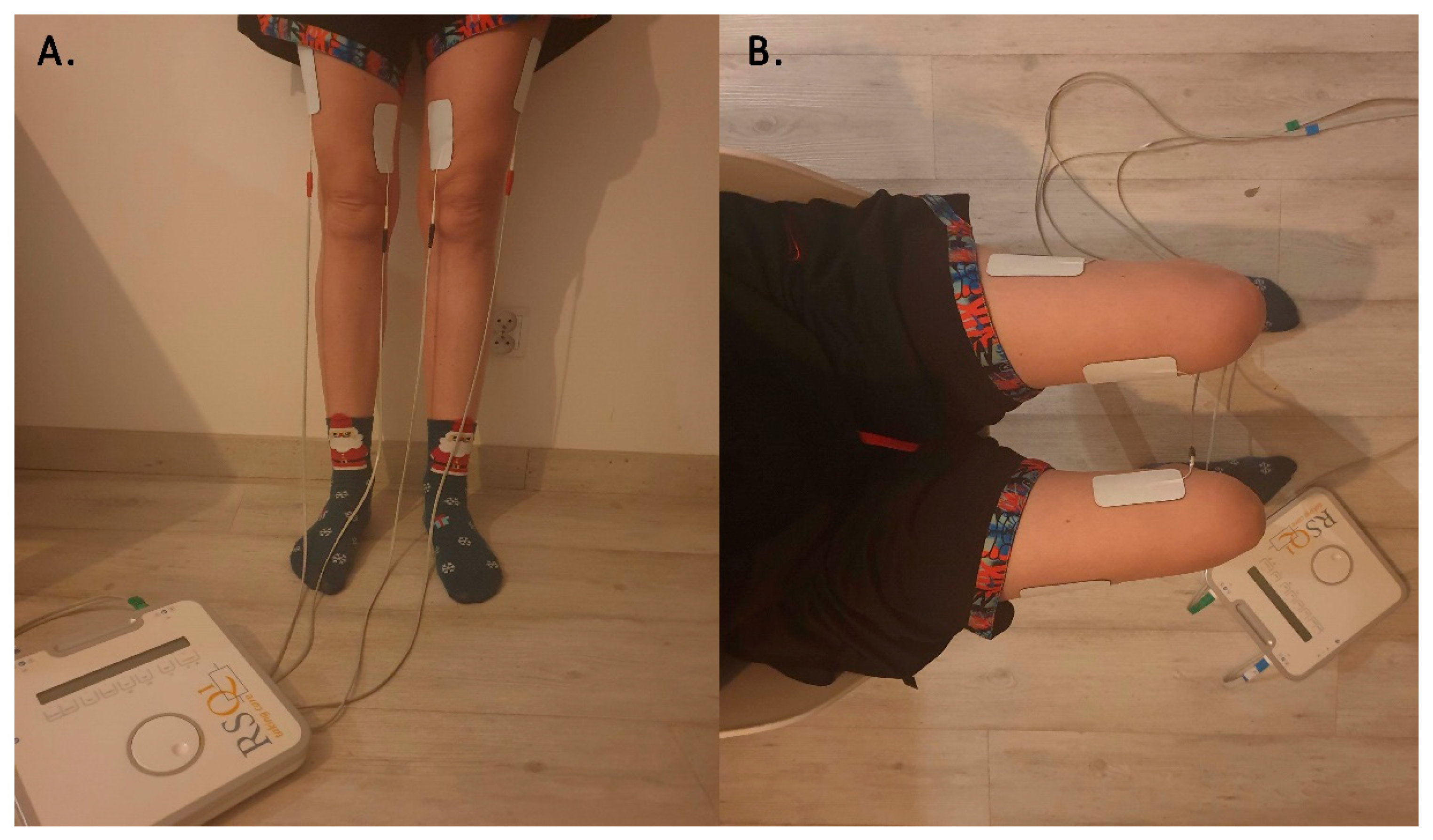
Assessment of the Strength Parameters of the Quadriceps Femoris Muscles in Polish University Students after a 3-Week Program of Neuromuscular Electrical Stimulation Using the RSQ1 Method


Abstract
Share and Cite
Rywacka, A.; Stefańska, M.; Dziuba-Słonina, A. Assessment of the Strength Parameters of the Quadriceps Femoris Muscles in Polish University Students after a 3-Week Program of Neuromuscular Electrical Stimulation Using the RSQ1 Method. Int. J. Environ. Res. Public Health 2021, 18, 11717. https://doi.org/10.3390/ijerph182111717
Rywacka A, Stefańska M, Dziuba-Słonina A. Assessment of the Strength Parameters of the Quadriceps Femoris Muscles in Polish University Students after a 3-Week Program of Neuromuscular Electrical Stimulation Using the RSQ1 Method. International Journal of Environmental Research and Public Health. 2021; 18(21):11717. https://doi.org/10.3390/ijerph182111717
Chicago/Turabian StyleRywacka, Aleksandra, Małgorzata Stefańska, and Alicja Dziuba-Słonina. 2021. "Assessment of the Strength Parameters of the Quadriceps Femoris Muscles in Polish University Students after a 3-Week Program of Neuromuscular Electrical Stimulation Using the RSQ1 Method" International Journal of Environmental Research and Public Health 18, no. 21: 11717. https://doi.org/10.3390/ijerph182111717
APA StyleRywacka, A., Stefańska, M., & Dziuba-Słonina, A. (2021). Assessment of the Strength Parameters of the Quadriceps Femoris Muscles in Polish University Students after a 3-Week Program of Neuromuscular Electrical Stimulation Using the RSQ1 Method. International Journal of Environmental Research and Public Health, 18(21), 11717. https://doi.org/10.3390/ijerph182111717